

CoinoMedia
11.2k Posts

CoinoMedia
 Square Verified+
Report
Block User
Stay updated with Coinomedia, your one-stop destination for the latest cryptocurrency news, blockchain updates, market trends, and in-depth analysis.
0 Following
10.3K+ Followers
16.8K+ Liked
Posts
·
--

Article
ZEC Spot ETF Outflows Hit $93.56M in a Single WeekThe ZEC spot ETF recorded $93.56 million in net outflows in one week.
The weekly figure points to substantial selling or redemptions from the Zcash-linked fund.
ETF flows can signal investor activity but do not determine ZEC’s future price direction.
The ZEC spot ETF saw $93.56 million in net outflows over a single week, marking a significant withdrawal of capital from the Zcash-linked investment product.
A net outflow occurs when more money leaves an ETF through redemptions than enters through new investment during a given period. In this case, the weekly figure shows that withdrawals outweighed inflows by nearly $94 million.
The size of the move puts attention on investor activity surrounding ZEC investment products. ETF flows are often monitored to understand whether capital is moving toward or away from exposure to a particular cryptocurrency.
However, one week of negative flows does not necessarily establish a longer-term trend.
What ZEC Spot ETF Outflows Could Signal
The latest ZEC spot ETF outflows indicate weaker net demand for the investment product during the reported week.
Large withdrawals can occur for several reasons. Investors may take profits, reduce their exposure, rebalance portfolios or move capital into other assets. The flow data alone does not reveal which of these factors drove the $93.56 million weekly outflow.
It is also important to distinguish ETF flows from activity in the broader ZEC market. An ETF represents one channel through which investors can gain exposure to an asset, while ZEC itself continues to trade across other markets.
As a result, ETF outflows should be considered alongside spot trading volumes, market liquidity and broader investor sentiment.
HUGE: The $ZEC spot ETF bled $93.56M in a single week. pic.twitter.com/avjwsh1Bvx
— Cointelegraph (@Cointelegraph) October 3, 2026
ZEC ETF Flows Remain in Focus
The next several trading sessions could provide more context on whether the ZEC spot ETF outflows were a short-term event or part of a broader shift in investor positioning.
If net withdrawals continue, they could point to sustained reductions in ETF exposure. A return to inflows, however, would indicate that demand through the investment product has improved.
For now, the weekly figure stands out: the ZEC spot ETF recorded $93.56 million in net outflows in just one week.
The data highlights a notable change in capital flows, but it does not by itself determine where ZEC’s market price will move next.
ZEC Spot ETF Outflows Hit $93.56M in a Single Week
The ZEC spot ETF recorded $93.56 million in net outflows in one week.
The weekly figure points to substantial selling or redemptions from the Zcash-linked fund.
ETF flows can signal investor activity but do not determine ZEC’s future price direction.
The ZEC spot ETF saw $93.56 million in net outflows over a single week, marking a significant withdrawal of capital from the Zcash-linked investment product.
A net outflow occurs when more money leaves an ETF through redemptions than enters through new investment during a given period. In this case, the weekly figure shows that withdrawals outweighed inflows by nearly $94 million.
The size of the move puts attention on investor activity surrounding ZEC investment products. ETF flows are often monitored to understand whether capital is moving toward or away from exposure to a particular cryptocurrency.
However, one week of negative flows does not necessarily establish a longer-term trend.
What ZEC Spot ETF Outflows Could Signal
The latest ZEC spot ETF outflows indicate weaker net demand for the investment product during the reported week.
Large withdrawals can occur for several reasons. Investors may take profits, reduce their exposure, rebalance portfolios or move capital into other assets. The flow data alone does not reveal which of these factors drove the $93.56 million weekly outflow.
It is also important to distinguish ETF flows from activity in the broader ZEC market. An ETF represents one channel through which investors can gain exposure to an asset, while ZEC itself continues to trade across other markets.
As a result, ETF outflows should be considered alongside spot trading volumes, market liquidity and broader investor sentiment.
HUGE: The $ZEC spot ETF bled $93.56M in a single week. pic.twitter.com/avjwsh1Bvx
— Cointelegraph (@Cointelegraph) October 3, 2026
ZEC ETF Flows Remain in Focus
The next several trading sessions could provide more context on whether the ZEC spot ETF outflows were a short-term event or part of a broader shift in investor positioning.
If net withdrawals continue, they could point to sustained reductions in ETF exposure. A return to inflows, however, would indicate that demand through the investment product has improved.
For now, the weekly figure stands out: the ZEC spot ETF recorded $93.56 million in net outflows in just one week.
The data highlights a notable change in capital flows, but it does not by itself determine where ZEC’s market price will move next.
The weekly figure points to substantial selling or redemptions from the Zcash-linked fund.
ETF flows can signal investor activity but do not determine ZEC’s future price direction.
The ZEC spot ETF saw $93.56 million in net outflows over a single week, marking a significant withdrawal of capital from the Zcash-linked investment product.
A net outflow occurs when more money leaves an ETF through redemptions than enters through new investment during a given period. In this case, the weekly figure shows that withdrawals outweighed inflows by nearly $94 million.
The size of the move puts attention on investor activity surrounding ZEC investment products. ETF flows are often monitored to understand whether capital is moving toward or away from exposure to a particular cryptocurrency.
However, one week of negative flows does not necessarily establish a longer-term trend.
What ZEC Spot ETF Outflows Could Signal
The latest ZEC spot ETF outflows indicate weaker net demand for the investment product during the reported week.
Large withdrawals can occur for several reasons. Investors may take profits, reduce their exposure, rebalance portfolios or move capital into other assets. The flow data alone does not reveal which of these factors drove the $93.56 million weekly outflow.
It is also important to distinguish ETF flows from activity in the broader ZEC market. An ETF represents one channel through which investors can gain exposure to an asset, while ZEC itself continues to trade across other markets.
As a result, ETF outflows should be considered alongside spot trading volumes, market liquidity and broader investor sentiment.
HUGE: The $ZEC spot ETF bled $93.56M in a single week. pic.twitter.com/avjwsh1Bvx
— Cointelegraph (@Cointelegraph) October 3, 2026
ZEC ETF Flows Remain in Focus
The next several trading sessions could provide more context on whether the ZEC spot ETF outflows were a short-term event or part of a broader shift in investor positioning.
If net withdrawals continue, they could point to sustained reductions in ETF exposure. A return to inflows, however, would indicate that demand through the investment product has improved.
For now, the weekly figure stands out: the ZEC spot ETF recorded $93.56 million in net outflows in just one week.
The data highlights a notable change in capital flows, but it does not by itself determine where ZEC’s market price will move next.
432
·
--

Article
Bitcoin Exchange Outflows Top 40,000 BTC Since Sept. 22More than 40,000 BTC has left exchanges since September 22, per Coinglass.
The movement points to a notable reduction in Bitcoin held on trading platforms.
Large exchange outflows can suggest accumulation or transfers to private custody, but do not reveal holder intent.
More than 40,000 Bitcoin has moved off cryptocurrency exchanges since September 22, according to data from Coinglass.
The large decline in exchange-held BTC has attracted attention because traders often monitor exchange balances for clues about potential market behavior.
When Bitcoin moves away from exchanges, those coins are no longer immediately available for trading on those platforms. Holders may transfer BTC to private wallets, institutional custody services or other destinations.
The latest Bitcoin exchange outflows therefore point to a significant movement of coins away from centralized trading venues over a relatively short period.
Why Bitcoin Exchange Outflows Matter
Exchange balances can provide useful information about the amount of BTC readily available for trading.
Large inflows to exchanges are sometimes associated with increased potential selling activity, since holders may transfer assets to a platform before selling. Outflows can have the opposite interpretation, particularly when investors move Bitcoin into longer-term storage.
However, an exchange withdrawal does not automatically mean the holder intends to keep the BTC for an extended period. Transfers can also occur because of custody changes, internal wallet management or movements between trading platforms.
For this reason, the 40,000 BTC outflow should be viewed as an on-chain supply signal rather than direct proof of buying or long-term accumulation.
CEX: Over 40,000 $BTC left exchanges since September 22nd, per Coinglass.
Where did it go? pic.twitter.com/rZtsTrlvri
— Cointelegraph (@Cointelegraph) October 3, 2026
Bitcoin Supply on Exchanges Draws Attention
The scale of the recent movement makes Bitcoin exchange outflows an important metric to watch in the coming days.
If BTC continues leaving exchanges while demand remains steady or increases, the amount of Bitcoin immediately available for trading could tighten. On the other hand, coins can return to exchanges at any time, meaning the trend can quickly reverse.
Exchange balance data should therefore be considered alongside other indicators, including spot trading activity, ETF flows and broader market demand.
For now, Coinglass data highlights one clear development: more than 40,000 BTC has left exchanges since September 22, representing a substantial shift in where Bitcoin is being held.
Bitcoin Exchange Outflows Top 40,000 BTC Since Sept. 22
More than 40,000 BTC has left exchanges since September 22, per Coinglass.
The movement points to a notable reduction in Bitcoin held on trading platforms.
Large exchange outflows can suggest accumulation or transfers to private custody, but do not reveal holder intent.
More than 40,000 Bitcoin has moved off cryptocurrency exchanges since September 22, according to data from Coinglass.
The large decline in exchange-held BTC has attracted attention because traders often monitor exchange balances for clues about potential market behavior.
When Bitcoin moves away from exchanges, those coins are no longer immediately available for trading on those platforms. Holders may transfer BTC to private wallets, institutional custody services or other destinations.
The latest Bitcoin exchange outflows therefore point to a significant movement of coins away from centralized trading venues over a relatively short period.
Why Bitcoin Exchange Outflows Matter
Exchange balances can provide useful information about the amount of BTC readily available for trading.
Large inflows to exchanges are sometimes associated with increased potential selling activity, since holders may transfer assets to a platform before selling. Outflows can have the opposite interpretation, particularly when investors move Bitcoin into longer-term storage.
However, an exchange withdrawal does not automatically mean the holder intends to keep the BTC for an extended period. Transfers can also occur because of custody changes, internal wallet management or movements between trading platforms.
For this reason, the 40,000 BTC outflow should be viewed as an on-chain supply signal rather than direct proof of buying or long-term accumulation.
CEX: Over 40,000 $BTC left exchanges since September 22nd, per Coinglass.
Where did it go? pic.twitter.com/rZtsTrlvri
— Cointelegraph (@Cointelegraph) October 3, 2026
Bitcoin Supply on Exchanges Draws Attention
The scale of the recent movement makes Bitcoin exchange outflows an important metric to watch in the coming days.
If BTC continues leaving exchanges while demand remains steady or increases, the amount of Bitcoin immediately available for trading could tighten. On the other hand, coins can return to exchanges at any time, meaning the trend can quickly reverse.
Exchange balance data should therefore be considered alongside other indicators, including spot trading activity, ETF flows and broader market demand.
For now, Coinglass data highlights one clear development: more than 40,000 BTC has left exchanges since September 22, representing a substantial shift in where Bitcoin is being held.
The movement points to a notable reduction in Bitcoin held on trading platforms.
Large exchange outflows can suggest accumulation or transfers to private custody, but do not reveal holder intent.
More than 40,000 Bitcoin has moved off cryptocurrency exchanges since September 22, according to data from Coinglass.
The large decline in exchange-held BTC has attracted attention because traders often monitor exchange balances for clues about potential market behavior.
When Bitcoin moves away from exchanges, those coins are no longer immediately available for trading on those platforms. Holders may transfer BTC to private wallets, institutional custody services or other destinations.
The latest Bitcoin exchange outflows therefore point to a significant movement of coins away from centralized trading venues over a relatively short period.
Why Bitcoin Exchange Outflows Matter
Exchange balances can provide useful information about the amount of BTC readily available for trading.
Large inflows to exchanges are sometimes associated with increased potential selling activity, since holders may transfer assets to a platform before selling. Outflows can have the opposite interpretation, particularly when investors move Bitcoin into longer-term storage.
However, an exchange withdrawal does not automatically mean the holder intends to keep the BTC for an extended period. Transfers can also occur because of custody changes, internal wallet management or movements between trading platforms.
For this reason, the 40,000 BTC outflow should be viewed as an on-chain supply signal rather than direct proof of buying or long-term accumulation.
CEX: Over 40,000 $BTC left exchanges since September 22nd, per Coinglass.
Where did it go? pic.twitter.com/rZtsTrlvri
— Cointelegraph (@Cointelegraph) October 3, 2026
Bitcoin Supply on Exchanges Draws Attention
The scale of the recent movement makes Bitcoin exchange outflows an important metric to watch in the coming days.
If BTC continues leaving exchanges while demand remains steady or increases, the amount of Bitcoin immediately available for trading could tighten. On the other hand, coins can return to exchanges at any time, meaning the trend can quickly reverse.
Exchange balance data should therefore be considered alongside other indicators, including spot trading activity, ETF flows and broader market demand.
For now, Coinglass data highlights one clear development: more than 40,000 BTC has left exchanges since September 22, representing a substantial shift in where Bitcoin is being held.
1
225
·
--
Verified

Article
HSBC RedCoin Stablecoin Targets P2P and Merchant PaymentsHSBC has named its forthcoming stablecoin HSBC RedCoin.
The initial rollout will focus on P2P transfers and P2M payments before expanding to corporate and institutional uses.
An HSBC survey found 74% of more than 1,000 Hong Kong customers could identify at least one stablecoin use case.
HSBC, Hong Kong’s largest bank and one of the city’s three note-issuing banks, has named its forthcoming stablecoin HSBC RedCoin.
The bank plans to initially focus the HSBC RedCoin stablecoin on everyday payment applications, including person-to-person (P2P) transfers and person-to-merchant (P2M) payments.
The strategy suggests HSBC wants to establish practical consumer payment uses before expanding the stablecoin into more complex financial applications.
Corporate and institutional use cases are expected to follow after the initial rollout, potentially widening RedCoin’s role within HSBC’s digital-asset strategy.
HSBC Survey Shows Stablecoin Interest in Hong Kong
Alongside the RedCoin announcement, HSBC released findings from a survey involving more than 1,000 customers in Hong Kong.
The survey found that 74% of respondents could identify at least one use case for stablecoins, suggesting a significant level of awareness around how the technology could be used.
Digital-asset trading and tokenized investments ranked as the most commonly identified use case at 57%.
P2P transfers followed at 53%, while both cross-border remittances and merchant payments reached 52%.
These results cover several areas where stablecoins are increasingly being explored, from investment-related activity to everyday payments and international money transfers.
HSBC, Hong Kong’s Largest Bank, Names Stablecoin ‘RedCoin’
HSBC, Hong Kong’s largest bank and one of the city’s three note-issuing banks, has named its forthcoming stablecoin HSBC RedCoin, with an initial rollout focused on person-to-person (P2P) transfers and person-to-merchant… pic.twitter.com/DwvfIGMiCX
— Wu Blockchain (@WuBlockchain) September 30, 2026
HSBC RedCoin Stablecoin Could Expand Beyond Consumers
The planned rollout indicates that the HSBC RedCoin stablecoin will begin with relatively straightforward payment functions before moving toward business and institutional applications.
Starting with P2P and merchant payments could give HSBC an opportunity to introduce customers to stablecoin-based transactions through familiar financial activities.
The later expansion into corporate and institutional uses could broaden RedCoin’s potential role, although details about those applications have not yet been specified in the information provided.
HSBC’s customer survey also highlights why the bank may see opportunities beyond one type of transaction. More than half of respondents identified several potential stablecoin applications, including investments, transfers, remittances and merchant payments.
For now, HSBC RedCoin represents the bank’s forthcoming stablecoin initiative, with consumer payments positioned as its initial focus before a wider expansion.
HSBC RedCoin Stablecoin Targets P2P and Merchant Payments
HSBC has named its forthcoming stablecoin HSBC RedCoin.
The initial rollout will focus on P2P transfers and P2M payments before expanding to corporate and institutional uses.
An HSBC survey found 74% of more than 1,000 Hong Kong customers could identify at least one stablecoin use case.
HSBC, Hong Kong’s largest bank and one of the city’s three note-issuing banks, has named its forthcoming stablecoin HSBC RedCoin.
The bank plans to initially focus the HSBC RedCoin stablecoin on everyday payment applications, including person-to-person (P2P) transfers and person-to-merchant (P2M) payments.
The strategy suggests HSBC wants to establish practical consumer payment uses before expanding the stablecoin into more complex financial applications.
Corporate and institutional use cases are expected to follow after the initial rollout, potentially widening RedCoin’s role within HSBC’s digital-asset strategy.
HSBC Survey Shows Stablecoin Interest in Hong Kong
Alongside the RedCoin announcement, HSBC released findings from a survey involving more than 1,000 customers in Hong Kong.
The survey found that 74% of respondents could identify at least one use case for stablecoins, suggesting a significant level of awareness around how the technology could be used.
Digital-asset trading and tokenized investments ranked as the most commonly identified use case at 57%.
P2P transfers followed at 53%, while both cross-border remittances and merchant payments reached 52%.
These results cover several areas where stablecoins are increasingly being explored, from investment-related activity to everyday payments and international money transfers.
HSBC, Hong Kong’s Largest Bank, Names Stablecoin ‘RedCoin’
HSBC, Hong Kong’s largest bank and one of the city’s three note-issuing banks, has named its forthcoming stablecoin HSBC RedCoin, with an initial rollout focused on person-to-person (P2P) transfers and person-to-merchant… pic.twitter.com/DwvfIGMiCX
— Wu Blockchain (@WuBlockchain) September 30, 2026
HSBC RedCoin Stablecoin Could Expand Beyond Consumers
The planned rollout indicates that the HSBC RedCoin stablecoin will begin with relatively straightforward payment functions before moving toward business and institutional applications.
Starting with P2P and merchant payments could give HSBC an opportunity to introduce customers to stablecoin-based transactions through familiar financial activities.
The later expansion into corporate and institutional uses could broaden RedCoin’s potential role, although details about those applications have not yet been specified in the information provided.
HSBC’s customer survey also highlights why the bank may see opportunities beyond one type of transaction. More than half of respondents identified several potential stablecoin applications, including investments, transfers, remittances and merchant payments.
For now, HSBC RedCoin represents the bank’s forthcoming stablecoin initiative, with consumer payments positioned as its initial focus before a wider expansion.
The initial rollout will focus on P2P transfers and P2M payments before expanding to corporate and institutional uses.
An HSBC survey found 74% of more than 1,000 Hong Kong customers could identify at least one stablecoin use case.
HSBC, Hong Kong’s largest bank and one of the city’s three note-issuing banks, has named its forthcoming stablecoin HSBC RedCoin.
The bank plans to initially focus the HSBC RedCoin stablecoin on everyday payment applications, including person-to-person (P2P) transfers and person-to-merchant (P2M) payments.
The strategy suggests HSBC wants to establish practical consumer payment uses before expanding the stablecoin into more complex financial applications.
Corporate and institutional use cases are expected to follow after the initial rollout, potentially widening RedCoin’s role within HSBC’s digital-asset strategy.
HSBC Survey Shows Stablecoin Interest in Hong Kong
Alongside the RedCoin announcement, HSBC released findings from a survey involving more than 1,000 customers in Hong Kong.
The survey found that 74% of respondents could identify at least one use case for stablecoins, suggesting a significant level of awareness around how the technology could be used.
Digital-asset trading and tokenized investments ranked as the most commonly identified use case at 57%.
P2P transfers followed at 53%, while both cross-border remittances and merchant payments reached 52%.
These results cover several areas where stablecoins are increasingly being explored, from investment-related activity to everyday payments and international money transfers.
HSBC, Hong Kong’s Largest Bank, Names Stablecoin ‘RedCoin’
HSBC, Hong Kong’s largest bank and one of the city’s three note-issuing banks, has named its forthcoming stablecoin HSBC RedCoin, with an initial rollout focused on person-to-person (P2P) transfers and person-to-merchant… pic.twitter.com/DwvfIGMiCX
— Wu Blockchain (@WuBlockchain) September 30, 2026
HSBC RedCoin Stablecoin Could Expand Beyond Consumers
The planned rollout indicates that the HSBC RedCoin stablecoin will begin with relatively straightforward payment functions before moving toward business and institutional applications.
Starting with P2P and merchant payments could give HSBC an opportunity to introduce customers to stablecoin-based transactions through familiar financial activities.
The later expansion into corporate and institutional uses could broaden RedCoin’s potential role, although details about those applications have not yet been specified in the information provided.
HSBC’s customer survey also highlights why the bank may see opportunities beyond one type of transaction. More than half of respondents identified several potential stablecoin applications, including investments, transfers, remittances and merchant payments.
For now, HSBC RedCoin represents the bank’s forthcoming stablecoin initiative, with consumer payments positioned as its initial focus before a wider expansion.
1
754
·
--

Article
September 29 ETF Flows: Bitcoin Leads With $66M InflowBitcoin spot ETFs recorded $66.19 million in net inflows on September 29.
Solana spot ETFs attracted $5.44 million in net inflows.
Ethereum spot ETFs saw $2.81 million in net outflows.
U.S. crypto spot ETF flows were mixed on September 29, with Bitcoin and Solana products attracting fresh capital while Ethereum ETFs recorded net outflows.
Bitcoin spot ETFs led the session with $66.19 million in net inflows. The positive figure indicates that more money entered Bitcoin funds than left them during the trading day.
Solana spot ETFs also finished in positive territory, recording $5.44 million in net inflows.
Ethereum moved in the opposite direction. Spot ETH ETFs posted $2.81 million in net outflows, making Ethereum the only one of the three reported assets to finish the session with negative flows.
Bitcoin and Solana ETFs Attract Capital
The latest September 29 ETF flows show a clear difference in the amount of capital attracted by Bitcoin and Solana products.
Bitcoin’s $66.19 million inflow was more than 12 times Solana’s $5.44 million total. Combined, BTC and SOL spot ETFs attracted approximately $71.63 million during the session.
After accounting for Ethereum’s $2.81 million outflow, the three categories recorded a combined net inflow of roughly $68.82 million.
ETF flows are closely monitored because they provide a daily view of investor activity through regulated crypto investment products. However, a single session does not necessarily establish a longer-term trend.
ETF FLOWS: BTC and SOL spot ETFs saw net inflows on Sept. 29, while ETH spot ETFs saw net outflows.
BTC: $66.19M
ETH: – $2.81M
SOL: $5.44M pic.twitter.com/9rl4qQsLC6
— Cointelegraph (@Cointelegraph) September 30, 2026
Ethereum ETFs Record Modest Outflows
While BTC and SOL attracted new capital, Ethereum’s $2.81 million net outflow was relatively small compared with Bitcoin’s inflow for the day.
Daily ETF numbers can move between positive and negative territory as investors add or redeem shares. As a result, traders typically examine flows over several sessions rather than relying on one day’s figures alone.
The September 29 ETF flows ultimately showed positive overall activity across the three reported assets, primarily driven by Bitcoin.
For the session, BTC led with $66.19 million in inflows, SOL added $5.44 million, and ETH recorded $2.81 million in outflows.
September 29 ETF Flows: Bitcoin Leads With $66M Inflow
Bitcoin spot ETFs recorded $66.19 million in net inflows on September 29.
Solana spot ETFs attracted $5.44 million in net inflows.
Ethereum spot ETFs saw $2.81 million in net outflows.
U.S. crypto spot ETF flows were mixed on September 29, with Bitcoin and Solana products attracting fresh capital while Ethereum ETFs recorded net outflows.
Bitcoin spot ETFs led the session with $66.19 million in net inflows. The positive figure indicates that more money entered Bitcoin funds than left them during the trading day.
Solana spot ETFs also finished in positive territory, recording $5.44 million in net inflows.
Ethereum moved in the opposite direction. Spot ETH ETFs posted $2.81 million in net outflows, making Ethereum the only one of the three reported assets to finish the session with negative flows.
Bitcoin and Solana ETFs Attract Capital
The latest September 29 ETF flows show a clear difference in the amount of capital attracted by Bitcoin and Solana products.
Bitcoin’s $66.19 million inflow was more than 12 times Solana’s $5.44 million total. Combined, BTC and SOL spot ETFs attracted approximately $71.63 million during the session.
After accounting for Ethereum’s $2.81 million outflow, the three categories recorded a combined net inflow of roughly $68.82 million.
ETF flows are closely monitored because they provide a daily view of investor activity through regulated crypto investment products. However, a single session does not necessarily establish a longer-term trend.
ETF FLOWS: BTC and SOL spot ETFs saw net inflows on Sept. 29, while ETH spot ETFs saw net outflows.
BTC: $66.19M
ETH: – $2.81M
SOL: $5.44M pic.twitter.com/9rl4qQsLC6
— Cointelegraph (@Cointelegraph) September 30, 2026
Ethereum ETFs Record Modest Outflows
While BTC and SOL attracted new capital, Ethereum’s $2.81 million net outflow was relatively small compared with Bitcoin’s inflow for the day.
Daily ETF numbers can move between positive and negative territory as investors add or redeem shares. As a result, traders typically examine flows over several sessions rather than relying on one day’s figures alone.
The September 29 ETF flows ultimately showed positive overall activity across the three reported assets, primarily driven by Bitcoin.
For the session, BTC led with $66.19 million in inflows, SOL added $5.44 million, and ETH recorded $2.81 million in outflows.
Solana spot ETFs attracted $5.44 million in net inflows.
Ethereum spot ETFs saw $2.81 million in net outflows.
U.S. crypto spot ETF flows were mixed on September 29, with Bitcoin and Solana products attracting fresh capital while Ethereum ETFs recorded net outflows.
Bitcoin spot ETFs led the session with $66.19 million in net inflows. The positive figure indicates that more money entered Bitcoin funds than left them during the trading day.
Solana spot ETFs also finished in positive territory, recording $5.44 million in net inflows.
Ethereum moved in the opposite direction. Spot ETH ETFs posted $2.81 million in net outflows, making Ethereum the only one of the three reported assets to finish the session with negative flows.
Bitcoin and Solana ETFs Attract Capital
The latest September 29 ETF flows show a clear difference in the amount of capital attracted by Bitcoin and Solana products.
Bitcoin’s $66.19 million inflow was more than 12 times Solana’s $5.44 million total. Combined, BTC and SOL spot ETFs attracted approximately $71.63 million during the session.
After accounting for Ethereum’s $2.81 million outflow, the three categories recorded a combined net inflow of roughly $68.82 million.
ETF flows are closely monitored because they provide a daily view of investor activity through regulated crypto investment products. However, a single session does not necessarily establish a longer-term trend.
ETF FLOWS: BTC and SOL spot ETFs saw net inflows on Sept. 29, while ETH spot ETFs saw net outflows.
BTC: $66.19M
ETH: – $2.81M
SOL: $5.44M pic.twitter.com/9rl4qQsLC6
— Cointelegraph (@Cointelegraph) September 30, 2026
Ethereum ETFs Record Modest Outflows
While BTC and SOL attracted new capital, Ethereum’s $2.81 million net outflow was relatively small compared with Bitcoin’s inflow for the day.
Daily ETF numbers can move between positive and negative territory as investors add or redeem shares. As a result, traders typically examine flows over several sessions rather than relying on one day’s figures alone.
The September 29 ETF flows ultimately showed positive overall activity across the three reported assets, primarily driven by Bitcoin.
For the session, BTC led with $66.19 million in inflows, SOL added $5.44 million, and ETH recorded $2.81 million in outflows.
753
·
--

Article
Ethereum Whale Accumulation: New Wallet Buys $24M ETHA newly created wallet withdrew 9,132 ETH from Binance in three hours.
The Ethereum was valued at approximately $24.37 million at the reported time.
The large exchange withdrawal adds to signs of Ethereum whale accumulation, though the wallet owner’s intentions remain unknown.
A newly created cryptocurrency wallet has withdrawn 9,132 ETH worth approximately $24.37 million from Binance over a three-hour period, according to the reported on-chain activity.
The wallet, identified by the shortened address 0x4876, moved the sizable Ethereum balance away from the centralized exchange shortly after its creation.
Large exchange withdrawals often attract attention from crypto traders because they can indicate that a holder is moving assets into private custody rather than keeping them immediately available for trading.
The transaction adds to market interest around Ethereum whale accumulation, particularly when large amounts of ETH move from exchanges to individual wallets.
New Wallet Withdraws 9,132 ETH From Binance
The movement of 9,132 ETH represents a substantial single-wallet transaction. Based on the reported value of $24.37 million, the ETH involved was worth roughly $2,669 per coin at the time of the report.
The fact that the receiving wallet was newly created makes the transaction particularly noticeable to on-chain observers.
However, an exchange withdrawal alone does not prove that a new investor purchased the entire amount at that moment. The transaction could represent a purchase, transfer, custody change or another type of asset movement.
Without confirmed information about who controls the wallet, its owner’s identity and longer-term intentions remain unknown.
Whales keep buying $ETH!
A newly created wallet, 0x4876, withdrew 9,132 $ETH($24.37M) from #Binance over the past 3 hours.https://t.co/upS2zwI58V pic.twitter.com/I9W6cnjSHx
— Lookonchain (@lookonchain) September 29, 2026
What Ethereum Whale Accumulation Could Mean
Large withdrawals are often viewed as a potential accumulation signal because ETH moved into private wallets is no longer sitting directly on an exchange order book.
If multiple large holders continue removing Ethereum from exchanges while demand remains strong, the amount of ETH readily available for trading could decline. That dynamic can become significant when evaluating market supply.
Still, Ethereum whale accumulation should be considered alongside other indicators, including exchange balances, spot trading activity and broader market conditions.
For now, the on-chain activity shows one clear development: a newly created wallet withdrew 9,132 ETH, valued at $24.37 million, from Binance within just three hours.
Ethereum Whale Accumulation: New Wallet Buys $24M ETH
A newly created wallet withdrew 9,132 ETH from Binance in three hours.
The Ethereum was valued at approximately $24.37 million at the reported time.
The large exchange withdrawal adds to signs of Ethereum whale accumulation, though the wallet owner’s intentions remain unknown.
A newly created cryptocurrency wallet has withdrawn 9,132 ETH worth approximately $24.37 million from Binance over a three-hour period, according to the reported on-chain activity.
The wallet, identified by the shortened address 0x4876, moved the sizable Ethereum balance away from the centralized exchange shortly after its creation.
Large exchange withdrawals often attract attention from crypto traders because they can indicate that a holder is moving assets into private custody rather than keeping them immediately available for trading.
The transaction adds to market interest around Ethereum whale accumulation, particularly when large amounts of ETH move from exchanges to individual wallets.
New Wallet Withdraws 9,132 ETH From Binance
The movement of 9,132 ETH represents a substantial single-wallet transaction. Based on the reported value of $24.37 million, the ETH involved was worth roughly $2,669 per coin at the time of the report.
The fact that the receiving wallet was newly created makes the transaction particularly noticeable to on-chain observers.
However, an exchange withdrawal alone does not prove that a new investor purchased the entire amount at that moment. The transaction could represent a purchase, transfer, custody change or another type of asset movement.
Without confirmed information about who controls the wallet, its owner’s identity and longer-term intentions remain unknown.
Whales keep buying $ETH!
A newly created wallet, 0x4876, withdrew 9,132 $ETH($24.37M) from #Binance over the past 3 hours.https://t.co/upS2zwI58V pic.twitter.com/I9W6cnjSHx
— Lookonchain (@lookonchain) September 29, 2026
What Ethereum Whale Accumulation Could Mean
Large withdrawals are often viewed as a potential accumulation signal because ETH moved into private wallets is no longer sitting directly on an exchange order book.
If multiple large holders continue removing Ethereum from exchanges while demand remains strong, the amount of ETH readily available for trading could decline. That dynamic can become significant when evaluating market supply.
Still, Ethereum whale accumulation should be considered alongside other indicators, including exchange balances, spot trading activity and broader market conditions.
For now, the on-chain activity shows one clear development: a newly created wallet withdrew 9,132 ETH, valued at $24.37 million, from Binance within just three hours.
The Ethereum was valued at approximately $24.37 million at the reported time.
The large exchange withdrawal adds to signs of Ethereum whale accumulation, though the wallet owner’s intentions remain unknown.
A newly created cryptocurrency wallet has withdrawn 9,132 ETH worth approximately $24.37 million from Binance over a three-hour period, according to the reported on-chain activity.
The wallet, identified by the shortened address 0x4876, moved the sizable Ethereum balance away from the centralized exchange shortly after its creation.
Large exchange withdrawals often attract attention from crypto traders because they can indicate that a holder is moving assets into private custody rather than keeping them immediately available for trading.
The transaction adds to market interest around Ethereum whale accumulation, particularly when large amounts of ETH move from exchanges to individual wallets.
New Wallet Withdraws 9,132 ETH From Binance
The movement of 9,132 ETH represents a substantial single-wallet transaction. Based on the reported value of $24.37 million, the ETH involved was worth roughly $2,669 per coin at the time of the report.
The fact that the receiving wallet was newly created makes the transaction particularly noticeable to on-chain observers.
However, an exchange withdrawal alone does not prove that a new investor purchased the entire amount at that moment. The transaction could represent a purchase, transfer, custody change or another type of asset movement.
Without confirmed information about who controls the wallet, its owner’s identity and longer-term intentions remain unknown.
Whales keep buying $ETH!
A newly created wallet, 0x4876, withdrew 9,132 $ETH($24.37M) from #Binance over the past 3 hours.https://t.co/upS2zwI58V pic.twitter.com/I9W6cnjSHx
— Lookonchain (@lookonchain) September 29, 2026
What Ethereum Whale Accumulation Could Mean
Large withdrawals are often viewed as a potential accumulation signal because ETH moved into private wallets is no longer sitting directly on an exchange order book.
If multiple large holders continue removing Ethereum from exchanges while demand remains strong, the amount of ETH readily available for trading could decline. That dynamic can become significant when evaluating market supply.
Still, Ethereum whale accumulation should be considered alongside other indicators, including exchange balances, spot trading activity and broader market conditions.
For now, the on-chain activity shows one clear development: a newly created wallet withdrew 9,132 ETH, valued at $24.37 million, from Binance within just three hours.
1
239
·
--
Article
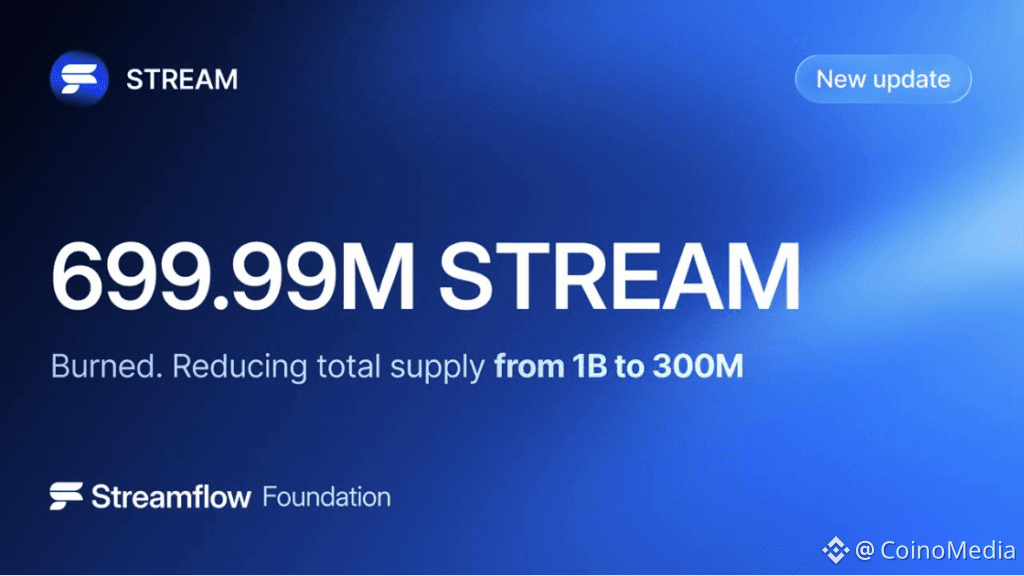
Streamflow Foundation Burns 70% of Total STREAM Supply, Permanently Removing STREAM Holdings from...New York City, USA, 23.09.2026. Streamflow Foundation today announced that it has burned 699.99 million STREAM, permanently removing 70% of total token supply from circulation in a single on-chain transaction. The burn covers 100% of the Foundation’s allocation, both locked and unlocked, as well as a significant portion of the founder and future team allocation. Total supply now stands at 300 million STREAM, down from 1 billion.
The tokens were destroyed through Solana’s programmatic burn instruction, which reduces total supply directly at the mint level. Nothing was moved to a wallet. There is nothing to recover, unfreeze, or reissue, and no future decision by Streamflow Foundation, Streamflow, or any affiliate can restore the tokens to supply.
The burn is irreversible. It is recorded on-chain and can be independently verified by any observer on Solscan.
Foundation treasury holdings typically represent the largest single variable in a token’s forward supply schedule. They can be distributed, sold, or emitted at the holder’s discretion, and the market has to price in every one of those possibilities. Streamflow Foundation has chosen to eliminate that variable outright rather than defer it through locks or policies that still depend on future decisions.
“A treasury that can be spent is a treasury the market has to price in. Burning it outright is the only version of this commitment that doesn’t depend on anyone’s continued good intentions. The tokens are gone, the transaction is public, and no future decision can bring them back.” – Mališa Stanojević, CEO of Streamflow.
With the overhang removed, every remaining STREAM is accounted for. Of the original total supply, the following remains:
11.47% in existing vesting contracts for private investors and early contributors
4.03% reserved for current and future team members to continue contributing
3.42% currently in the Active Staking Rewards program
11.08% freely circulating supply
The full holder breakdown is public on Solscan and on the Streamflow Token Dashboard, where vesting contracts, staking positions, and circulating supply can be tracked in real time. Updated supply figures will be reflected on standard Solana token trackers and data aggregators as they index the transaction.
Streamflow’s product operations are unaffected by the burn. The platform continues to operate token locks, vesting, staking, airdrops, payouts, and treasury tooling for projects building on Solana, with more than $650 million in total value locked across 40,000+ projects and 1.3 million users.
About Streamflow
Streamflow is a Solana-native token operations infrastructure platform that automates token distribution, locks, vesting, staking, airdrops, and payouts using on-chain smart contracts. More than 40,000 projects and 1.3 million users have used Streamflow, with over $650 million in total value locked. Streamflow’s contracts are audited by Neodyme, FYEO, and OPCODES, and the company is backed by Jump Crypto, Solana Ventures, IVC, John Lilic, and others.
Media Contact: Andrija R., marketing@streamflow.finance
Disclaimer:
This announcement is for informational purposes only. It is not an offer to sell or a solicitation of an offer to buy any security in any jurisdiction where such an offer would be unlawful, and nothing in this announcement constitutes investment advice. The token burn described is a supply-management measure. It is not a price commitment, a guarantee of liquidity, or a representation regarding the future value, returns, or performance of STREAM. Readers should assess their own objectives and risk tolerance and seek full information before making any decisions.
Streamflow Foundation Burns 70% of Total STREAM Supply, Permanently Removing STREAM Holdings from...
New York City, USA, 23.09.2026. Streamflow Foundation today announced that it has burned 699.99 million STREAM, permanently removing 70% of total token supply from circulation in a single on-chain transaction. The burn covers 100% of the Foundation’s allocation, both locked and unlocked, as well as a significant portion of the founder and future team allocation. Total supply now stands at 300 million STREAM, down from 1 billion.
The tokens were destroyed through Solana’s programmatic burn instruction, which reduces total supply directly at the mint level. Nothing was moved to a wallet. There is nothing to recover, unfreeze, or reissue, and no future decision by Streamflow Foundation, Streamflow, or any affiliate can restore the tokens to supply.
The burn is irreversible. It is recorded on-chain and can be independently verified by any observer on Solscan.
Foundation treasury holdings typically represent the largest single variable in a token’s forward supply schedule. They can be distributed, sold, or emitted at the holder’s discretion, and the market has to price in every one of those possibilities. Streamflow Foundation has chosen to eliminate that variable outright rather than defer it through locks or policies that still depend on future decisions.
“A treasury that can be spent is a treasury the market has to price in. Burning it outright is the only version of this commitment that doesn’t depend on anyone’s continued good intentions. The tokens are gone, the transaction is public, and no future decision can bring them back.” – Mališa Stanojević, CEO of Streamflow.
With the overhang removed, every remaining STREAM is accounted for. Of the original total supply, the following remains:
11.47% in existing vesting contracts for private investors and early contributors
4.03% reserved for current and future team members to continue contributing
3.42% currently in the Active Staking Rewards program
11.08% freely circulating supply
The full holder breakdown is public on Solscan and on the Streamflow Token Dashboard, where vesting contracts, staking positions, and circulating supply can be tracked in real time. Updated supply figures will be reflected on standard Solana token trackers and data aggregators as they index the transaction.
Streamflow’s product operations are unaffected by the burn. The platform continues to operate token locks, vesting, staking, airdrops, payouts, and treasury tooling for projects building on Solana, with more than $650 million in total value locked across 40,000+ projects and 1.3 million users.
About Streamflow
Streamflow is a Solana-native token operations infrastructure platform that automates token distribution, locks, vesting, staking, airdrops, and payouts using on-chain smart contracts. More than 40,000 projects and 1.3 million users have used Streamflow, with over $650 million in total value locked. Streamflow’s contracts are audited by Neodyme, FYEO, and OPCODES, and the company is backed by Jump Crypto, Solana Ventures, IVC, John Lilic, and others.
Media Contact: Andrija R., marketing@streamflow.finance
Disclaimer:
This announcement is for informational purposes only. It is not an offer to sell or a solicitation of an offer to buy any security in any jurisdiction where such an offer would be unlawful, and nothing in this announcement constitutes investment advice. The token burn described is a supply-management measure. It is not a price commitment, a guarantee of liquidity, or a representation regarding the future value, returns, or performance of STREAM. Readers should assess their own objectives and risk tolerance and seek full information before making any decisions.
The tokens were destroyed through Solana’s programmatic burn instruction, which reduces total supply directly at the mint level. Nothing was moved to a wallet. There is nothing to recover, unfreeze, or reissue, and no future decision by Streamflow Foundation, Streamflow, or any affiliate can restore the tokens to supply.
The burn is irreversible. It is recorded on-chain and can be independently verified by any observer on Solscan.
Foundation treasury holdings typically represent the largest single variable in a token’s forward supply schedule. They can be distributed, sold, or emitted at the holder’s discretion, and the market has to price in every one of those possibilities. Streamflow Foundation has chosen to eliminate that variable outright rather than defer it through locks or policies that still depend on future decisions.
“A treasury that can be spent is a treasury the market has to price in. Burning it outright is the only version of this commitment that doesn’t depend on anyone’s continued good intentions. The tokens are gone, the transaction is public, and no future decision can bring them back.” – Mališa Stanojević, CEO of Streamflow.
With the overhang removed, every remaining STREAM is accounted for. Of the original total supply, the following remains:
11.47% in existing vesting contracts for private investors and early contributors
4.03% reserved for current and future team members to continue contributing
3.42% currently in the Active Staking Rewards program
11.08% freely circulating supply
The full holder breakdown is public on Solscan and on the Streamflow Token Dashboard, where vesting contracts, staking positions, and circulating supply can be tracked in real time. Updated supply figures will be reflected on standard Solana token trackers and data aggregators as they index the transaction.
Streamflow’s product operations are unaffected by the burn. The platform continues to operate token locks, vesting, staking, airdrops, payouts, and treasury tooling for projects building on Solana, with more than $650 million in total value locked across 40,000+ projects and 1.3 million users.
About Streamflow
Streamflow is a Solana-native token operations infrastructure platform that automates token distribution, locks, vesting, staking, airdrops, and payouts using on-chain smart contracts. More than 40,000 projects and 1.3 million users have used Streamflow, with over $650 million in total value locked. Streamflow’s contracts are audited by Neodyme, FYEO, and OPCODES, and the company is backed by Jump Crypto, Solana Ventures, IVC, John Lilic, and others.
Media Contact: Andrija R., marketing@streamflow.finance
Disclaimer:
This announcement is for informational purposes only. It is not an offer to sell or a solicitation of an offer to buy any security in any jurisdiction where such an offer would be unlawful, and nothing in this announcement constitutes investment advice. The token burn described is a supply-management measure. It is not a price commitment, a guarantee of liquidity, or a representation regarding the future value, returns, or performance of STREAM. Readers should assess their own objectives and risk tolerance and seek full information before making any decisions.
129
·
--

Article
Bitget Restores Bitcoin Withdrawals After Security IncidentBitget has started restoring withdrawals following its September 24 security incident.
Bitcoin withdrawals through the Bitcoin network are among the first to resume.
The restoration indicates a phased return of withdrawal services rather than an immediate reopening of all assets and networks.
Bitget has started restoring cryptocurrency withdrawals following the security incident it experienced on September 24, beginning with Bitcoin.
Users can once again withdraw BTC through the Bitcoin network, marking an important step in the exchange’s efforts to restore normal services after the incident.
The move appears to be part of a gradual restoration process rather than a full reopening of every withdrawal option at the same time. Starting with Bitcoin allows the exchange to bring services back online in stages while monitoring the process.
For users who have been waiting to move BTC from the platform, the resumption means withdrawals through Bitcoin’s native network are becoming available again.
Bitget Bitcoin Withdrawals Follow Sept. 24 Incident
The restoration of Bitget Bitcoin withdrawals comes several days after the September 24 security incident disrupted normal operations.
Crypto exchanges sometimes temporarily restrict certain services following security incidents while technical teams investigate systems and assess potential risks. Restoring withdrawals is therefore an important part of returning an exchange to regular operations.
However, the resumption of BTC withdrawals should not automatically be interpreted as confirmation that every cryptocurrency and blockchain network supported by Bitget is available for withdrawal.
Users should check the current status of the specific asset and network they intend to use before initiating a transaction.
JUST IN: Bitget has begun restoring withdrawals after its Sept. 24 security incident, starting with $BTC on the Bitcoin network. pic.twitter.com/0KVIgYD41V
— Cointelegraph (@Cointelegraph) September 28, 2026
More Bitget Withdrawal Services Could Follow
With Bitget Bitcoin withdrawals beginning to return, attention will now turn to the restoration of other assets and blockchain networks.
A phased approach can allow an exchange to test services and address technical issues before expanding withdrawal availability. The timing for additional assets will depend on Bitget’s restoration process.
Users should also pay close attention to the network selected when withdrawing cryptocurrency. Sending assets through an unsupported or unavailable network can result in delays or other complications.
For now, the key development is that Bitget has begun restoring withdrawals after its September 24 security incident, starting with BTC on the Bitcoin network. The move represents an initial step toward bringing withdrawal services back online.
Bitget Restores Bitcoin Withdrawals After Security Incident
Bitget has started restoring withdrawals following its September 24 security incident.
Bitcoin withdrawals through the Bitcoin network are among the first to resume.
The restoration indicates a phased return of withdrawal services rather than an immediate reopening of all assets and networks.
Bitget has started restoring cryptocurrency withdrawals following the security incident it experienced on September 24, beginning with Bitcoin.
Users can once again withdraw BTC through the Bitcoin network, marking an important step in the exchange’s efforts to restore normal services after the incident.
The move appears to be part of a gradual restoration process rather than a full reopening of every withdrawal option at the same time. Starting with Bitcoin allows the exchange to bring services back online in stages while monitoring the process.
For users who have been waiting to move BTC from the platform, the resumption means withdrawals through Bitcoin’s native network are becoming available again.
Bitget Bitcoin Withdrawals Follow Sept. 24 Incident
The restoration of Bitget Bitcoin withdrawals comes several days after the September 24 security incident disrupted normal operations.
Crypto exchanges sometimes temporarily restrict certain services following security incidents while technical teams investigate systems and assess potential risks. Restoring withdrawals is therefore an important part of returning an exchange to regular operations.
However, the resumption of BTC withdrawals should not automatically be interpreted as confirmation that every cryptocurrency and blockchain network supported by Bitget is available for withdrawal.
Users should check the current status of the specific asset and network they intend to use before initiating a transaction.
JUST IN: Bitget has begun restoring withdrawals after its Sept. 24 security incident, starting with $BTC on the Bitcoin network. pic.twitter.com/0KVIgYD41V
— Cointelegraph (@Cointelegraph) September 28, 2026
More Bitget Withdrawal Services Could Follow
With Bitget Bitcoin withdrawals beginning to return, attention will now turn to the restoration of other assets and blockchain networks.
A phased approach can allow an exchange to test services and address technical issues before expanding withdrawal availability. The timing for additional assets will depend on Bitget’s restoration process.
Users should also pay close attention to the network selected when withdrawing cryptocurrency. Sending assets through an unsupported or unavailable network can result in delays or other complications.
For now, the key development is that Bitget has begun restoring withdrawals after its September 24 security incident, starting with BTC on the Bitcoin network. The move represents an initial step toward bringing withdrawal services back online.
Bitcoin withdrawals through the Bitcoin network are among the first to resume.
The restoration indicates a phased return of withdrawal services rather than an immediate reopening of all assets and networks.
Bitget has started restoring cryptocurrency withdrawals following the security incident it experienced on September 24, beginning with Bitcoin.
Users can once again withdraw BTC through the Bitcoin network, marking an important step in the exchange’s efforts to restore normal services after the incident.
The move appears to be part of a gradual restoration process rather than a full reopening of every withdrawal option at the same time. Starting with Bitcoin allows the exchange to bring services back online in stages while monitoring the process.
For users who have been waiting to move BTC from the platform, the resumption means withdrawals through Bitcoin’s native network are becoming available again.
Bitget Bitcoin Withdrawals Follow Sept. 24 Incident
The restoration of Bitget Bitcoin withdrawals comes several days after the September 24 security incident disrupted normal operations.
Crypto exchanges sometimes temporarily restrict certain services following security incidents while technical teams investigate systems and assess potential risks. Restoring withdrawals is therefore an important part of returning an exchange to regular operations.
However, the resumption of BTC withdrawals should not automatically be interpreted as confirmation that every cryptocurrency and blockchain network supported by Bitget is available for withdrawal.
Users should check the current status of the specific asset and network they intend to use before initiating a transaction.
JUST IN: Bitget has begun restoring withdrawals after its Sept. 24 security incident, starting with $BTC on the Bitcoin network. pic.twitter.com/0KVIgYD41V
— Cointelegraph (@Cointelegraph) September 28, 2026
More Bitget Withdrawal Services Could Follow
With Bitget Bitcoin withdrawals beginning to return, attention will now turn to the restoration of other assets and blockchain networks.
A phased approach can allow an exchange to test services and address technical issues before expanding withdrawal availability. The timing for additional assets will depend on Bitget’s restoration process.
Users should also pay close attention to the network selected when withdrawing cryptocurrency. Sending assets through an unsupported or unavailable network can result in delays or other complications.
For now, the key development is that Bitget has begun restoring withdrawals after its September 24 security incident, starting with BTC on the Bitcoin network. The move represents an initial step toward bringing withdrawal services back online.
180
·
--

Article
Ethereum Hegotá Upgrade May Be Last Normal ForkVitalik Buterin says the Ethereum Hegotá upgrade may be the network’s last “normal” fork.
Hegotá is expected in 2027, according to Buterin’s comments.
Ethereum could then place greater emphasis on quantum-safe technology.
Ethereum co-founder Vitalik Buterin says the network’s planned Hegotá upgrade in 2027 could be its final “normal” fork before Ethereum begins a broader shift toward quantum-safe technology.
The comment points to a potentially important transition in Ethereum’s technical roadmap. Network upgrades have historically introduced changes aimed at improving areas such as scalability, efficiency and Ethereum’s underlying protocol.
If Hegotá becomes the last upgrade in that familiar cycle, subsequent changes could increasingly focus on preparing Ethereum for a future in which powerful quantum computers may pose new challenges to existing cryptographic systems.
Ethereum Hegotá Upgrade and Quantum-Safe Technology
The Ethereum Hegotá upgrade could therefore represent more than another routine network update.
Quantum-safe, or post-quantum, cryptography refers to cryptographic methods designed to remain secure against attacks involving sufficiently capable quantum computers. Current blockchain networks rely heavily on cryptographic signatures to verify ownership and authorize transactions.
A sufficiently advanced quantum computer could potentially challenge some cryptographic techniques used across today’s digital infrastructure. This does not mean Ethereum faces an immediate quantum attack. Instead, preparing early could give developers more time to design, test and eventually deploy new security systems.
Buterin’s comments suggest that this long-term issue could become a more prominent part of Ethereum’s development priorities after Hegotá.
LATEST: Vitalik Buterin says Ethereum's 2027 Hegotá upgrade may be its last "normal" fork before a shift toward quantum-safe tech.https://t.co/jBvL3auFNV pic.twitter.com/8brQT9bLLD
— Cointelegraph (@Cointelegraph) September 28, 2026
What Comes After Ethereum’s 2027 Fork?
A move toward quantum-safe technology would likely require careful planning because Ethereum supports a large ecosystem of wallets, applications and smart contracts.
Any major cryptographic transition would need to consider how users prove ownership of assets and how existing infrastructure adapts to new security standards.
Buterin’s statement does not mean Ethereum will become fully quantum-safe immediately after the Ethereum Hegotá upgrade. Rather, it signals a possible change in emphasis for the network’s future development.
For Ethereum users, the key point is that 2027 could become an important dividing line in the network’s roadmap. Hegotá may close one era of more conventional Ethereum forks while opening another focused increasingly on long-term cryptographic resilience.
Ethereum Hegotá Upgrade May Be Last Normal Fork
Vitalik Buterin says the Ethereum Hegotá upgrade may be the network’s last “normal” fork.
Hegotá is expected in 2027, according to Buterin’s comments.
Ethereum could then place greater emphasis on quantum-safe technology.
Ethereum co-founder Vitalik Buterin says the network’s planned Hegotá upgrade in 2027 could be its final “normal” fork before Ethereum begins a broader shift toward quantum-safe technology.
The comment points to a potentially important transition in Ethereum’s technical roadmap. Network upgrades have historically introduced changes aimed at improving areas such as scalability, efficiency and Ethereum’s underlying protocol.
If Hegotá becomes the last upgrade in that familiar cycle, subsequent changes could increasingly focus on preparing Ethereum for a future in which powerful quantum computers may pose new challenges to existing cryptographic systems.
Ethereum Hegotá Upgrade and Quantum-Safe Technology
The Ethereum Hegotá upgrade could therefore represent more than another routine network update.
Quantum-safe, or post-quantum, cryptography refers to cryptographic methods designed to remain secure against attacks involving sufficiently capable quantum computers. Current blockchain networks rely heavily on cryptographic signatures to verify ownership and authorize transactions.
A sufficiently advanced quantum computer could potentially challenge some cryptographic techniques used across today’s digital infrastructure. This does not mean Ethereum faces an immediate quantum attack. Instead, preparing early could give developers more time to design, test and eventually deploy new security systems.
Buterin’s comments suggest that this long-term issue could become a more prominent part of Ethereum’s development priorities after Hegotá.
LATEST: Vitalik Buterin says Ethereum's 2027 Hegotá upgrade may be its last "normal" fork before a shift toward quantum-safe tech.https://t.co/jBvL3auFNV pic.twitter.com/8brQT9bLLD
— Cointelegraph (@Cointelegraph) September 28, 2026
What Comes After Ethereum’s 2027 Fork?
A move toward quantum-safe technology would likely require careful planning because Ethereum supports a large ecosystem of wallets, applications and smart contracts.
Any major cryptographic transition would need to consider how users prove ownership of assets and how existing infrastructure adapts to new security standards.
Buterin’s statement does not mean Ethereum will become fully quantum-safe immediately after the Ethereum Hegotá upgrade. Rather, it signals a possible change in emphasis for the network’s future development.
For Ethereum users, the key point is that 2027 could become an important dividing line in the network’s roadmap. Hegotá may close one era of more conventional Ethereum forks while opening another focused increasingly on long-term cryptographic resilience.
Hegotá is expected in 2027, according to Buterin’s comments.
Ethereum could then place greater emphasis on quantum-safe technology.
Ethereum co-founder Vitalik Buterin says the network’s planned Hegotá upgrade in 2027 could be its final “normal” fork before Ethereum begins a broader shift toward quantum-safe technology.
The comment points to a potentially important transition in Ethereum’s technical roadmap. Network upgrades have historically introduced changes aimed at improving areas such as scalability, efficiency and Ethereum’s underlying protocol.
If Hegotá becomes the last upgrade in that familiar cycle, subsequent changes could increasingly focus on preparing Ethereum for a future in which powerful quantum computers may pose new challenges to existing cryptographic systems.
Ethereum Hegotá Upgrade and Quantum-Safe Technology
The Ethereum Hegotá upgrade could therefore represent more than another routine network update.
Quantum-safe, or post-quantum, cryptography refers to cryptographic methods designed to remain secure against attacks involving sufficiently capable quantum computers. Current blockchain networks rely heavily on cryptographic signatures to verify ownership and authorize transactions.
A sufficiently advanced quantum computer could potentially challenge some cryptographic techniques used across today’s digital infrastructure. This does not mean Ethereum faces an immediate quantum attack. Instead, preparing early could give developers more time to design, test and eventually deploy new security systems.
Buterin’s comments suggest that this long-term issue could become a more prominent part of Ethereum’s development priorities after Hegotá.
LATEST: Vitalik Buterin says Ethereum's 2027 Hegotá upgrade may be its last "normal" fork before a shift toward quantum-safe tech.https://t.co/jBvL3auFNV pic.twitter.com/8brQT9bLLD
— Cointelegraph (@Cointelegraph) September 28, 2026
What Comes After Ethereum’s 2027 Fork?
A move toward quantum-safe technology would likely require careful planning because Ethereum supports a large ecosystem of wallets, applications and smart contracts.
Any major cryptographic transition would need to consider how users prove ownership of assets and how existing infrastructure adapts to new security standards.
Buterin’s statement does not mean Ethereum will become fully quantum-safe immediately after the Ethereum Hegotá upgrade. Rather, it signals a possible change in emphasis for the network’s future development.
For Ethereum users, the key point is that 2027 could become an important dividing line in the network’s roadmap. Hegotá may close one era of more conventional Ethereum forks while opening another focused increasingly on long-term cryptographic resilience.
134
·
--

Article
China Warns Crypto Anonymity Is an IllusionChina’s Ministry of State Security says perceived crypto anonymity is a misconception.
The ministry says blockchain records can help authorities trace transactions and identify users.
It warned that digital assets do not provide criminals with a legal “safe haven.”
China’s Ministry of State Security (MSS) has warned that the perceived anonymity of cryptocurrencies does not make digital assets beyond the reach of law enforcement.
According to a ministry statement reported by the Global Times, some people incorrectly assume that crypto transactions can completely separate their identities from financial transfers. The MSS argued that blockchain’s transparency and immutable transaction records undermine the idea that cryptocurrencies are truly untraceable.
While wallet addresses may initially hide the identity of the person behind them, the ministry said this does not provide permanent anonymity.
Why Crypto Anonymity May Be Limited
The MSS said blockchain transactions are permanently recorded on public ledgers and generally cannot be deleted or changed after being confirmed.
Authorities and specialist organizations can also use on-chain analysis and other digital information to trace movements between wallets. According to the ministry, interactions with trading platforms and payment interfaces can leave additional digital traces, including device and IP information.
The ministry highlighted money laundering, online gambling, telecom fraud, ransomware and cross-border smuggling among criminal activities where virtual currencies may be used to conceal or transfer funds. It also warned about the potential use of crypto in espionage-related payments.
NOW: China's Ministry of State Security warns that crypto's anonymity is an illusion and digital assets offer no legal escape for criminals, per Global Times. pic.twitter.com/TsbWM9Z6gJ
— Cointelegraph (@Cointelegraph) September 28, 2026
China’s Crypto Anonymity Warning Reflects Strict Policy
The warning comes against the backdrop of China’s restrictive approach toward virtual currencies. In February 2026, Chinese authorities reiterated that virtual currencies such as Bitcoin and Ether do not have the same legal status as fiat currency and that specified virtual-currency business activities conducted domestically are prohibited as illegal financial activities.
The latest MSS statement focuses specifically on the idea that digital assets can provide an escape from legal accountability.
Its central message is that crypto anonymity should not be confused with immunity from tracing or enforcement. Although cryptocurrency transactions can obscure identities in some circumstances, the ministry says blockchain records and other digital evidence can still be used to follow the movement of funds.
China Warns Crypto Anonymity Is an Illusion
China’s Ministry of State Security says perceived crypto anonymity is a misconception.
The ministry says blockchain records can help authorities trace transactions and identify users.
It warned that digital assets do not provide criminals with a legal “safe haven.”
China’s Ministry of State Security (MSS) has warned that the perceived anonymity of cryptocurrencies does not make digital assets beyond the reach of law enforcement.
According to a ministry statement reported by the Global Times, some people incorrectly assume that crypto transactions can completely separate their identities from financial transfers. The MSS argued that blockchain’s transparency and immutable transaction records undermine the idea that cryptocurrencies are truly untraceable.
While wallet addresses may initially hide the identity of the person behind them, the ministry said this does not provide permanent anonymity.
Why Crypto Anonymity May Be Limited
The MSS said blockchain transactions are permanently recorded on public ledgers and generally cannot be deleted or changed after being confirmed.
Authorities and specialist organizations can also use on-chain analysis and other digital information to trace movements between wallets. According to the ministry, interactions with trading platforms and payment interfaces can leave additional digital traces, including device and IP information.
The ministry highlighted money laundering, online gambling, telecom fraud, ransomware and cross-border smuggling among criminal activities where virtual currencies may be used to conceal or transfer funds. It also warned about the potential use of crypto in espionage-related payments.
NOW: China's Ministry of State Security warns that crypto's anonymity is an illusion and digital assets offer no legal escape for criminals, per Global Times. pic.twitter.com/TsbWM9Z6gJ
— Cointelegraph (@Cointelegraph) September 28, 2026
China’s Crypto Anonymity Warning Reflects Strict Policy
The warning comes against the backdrop of China’s restrictive approach toward virtual currencies. In February 2026, Chinese authorities reiterated that virtual currencies such as Bitcoin and Ether do not have the same legal status as fiat currency and that specified virtual-currency business activities conducted domestically are prohibited as illegal financial activities.
The latest MSS statement focuses specifically on the idea that digital assets can provide an escape from legal accountability.
Its central message is that crypto anonymity should not be confused with immunity from tracing or enforcement. Although cryptocurrency transactions can obscure identities in some circumstances, the ministry says blockchain records and other digital evidence can still be used to follow the movement of funds.
The ministry says blockchain records can help authorities trace transactions and identify users.
It warned that digital assets do not provide criminals with a legal “safe haven.”
China’s Ministry of State Security (MSS) has warned that the perceived anonymity of cryptocurrencies does not make digital assets beyond the reach of law enforcement.
According to a ministry statement reported by the Global Times, some people incorrectly assume that crypto transactions can completely separate their identities from financial transfers. The MSS argued that blockchain’s transparency and immutable transaction records undermine the idea that cryptocurrencies are truly untraceable.
While wallet addresses may initially hide the identity of the person behind them, the ministry said this does not provide permanent anonymity.
Why Crypto Anonymity May Be Limited
The MSS said blockchain transactions are permanently recorded on public ledgers and generally cannot be deleted or changed after being confirmed.
Authorities and specialist organizations can also use on-chain analysis and other digital information to trace movements between wallets. According to the ministry, interactions with trading platforms and payment interfaces can leave additional digital traces, including device and IP information.
The ministry highlighted money laundering, online gambling, telecom fraud, ransomware and cross-border smuggling among criminal activities where virtual currencies may be used to conceal or transfer funds. It also warned about the potential use of crypto in espionage-related payments.
NOW: China's Ministry of State Security warns that crypto's anonymity is an illusion and digital assets offer no legal escape for criminals, per Global Times. pic.twitter.com/TsbWM9Z6gJ
— Cointelegraph (@Cointelegraph) September 28, 2026
China’s Crypto Anonymity Warning Reflects Strict Policy
The warning comes against the backdrop of China’s restrictive approach toward virtual currencies. In February 2026, Chinese authorities reiterated that virtual currencies such as Bitcoin and Ether do not have the same legal status as fiat currency and that specified virtual-currency business activities conducted domestically are prohibited as illegal financial activities.
The latest MSS statement focuses specifically on the idea that digital assets can provide an escape from legal accountability.
Its central message is that crypto anonymity should not be confused with immunity from tracing or enforcement. Although cryptocurrency transactions can obscure identities in some circumstances, the ministry says blockchain records and other digital evidence can still be used to follow the movement of funds.
195
·
--

Article
Crypto ETF Inflows Surge as Bitcoin Funds Add $2.39BBitcoin spot ETFs led weekly inflows with $2.39 billion.
Ethereum spot ETFs added $689.88 million, while Solana funds gained $188.22 million.
XRP spot ETFs recorded $75.59 million, taking combined inflows across the four assets to about $3.34 billion.
Spot crypto ETFs tied to Bitcoin, Ethereum, Solana and XRP all recorded net inflows last week, with Bitcoin products attracting the largest share of new capital.
Bitcoin spot ETFs posted $2.39 billion in net inflows, making BTC the clear leader among the four assets. Ethereum spot ETFs followed with $689.88 million.
Solana spot ETFs recorded another $188.22 million, while XRP spot ETFs attracted $75.59 million.
Combined, the four categories brought in approximately $3.34 billion in net inflows during the week. The figures show that positive ETF demand was not limited to Bitcoin, with capital also flowing into products linked to major altcoins.
Bitcoin Leads Weekly Crypto ETF Inflows
Bitcoin accounted for most of the week’s crypto ETF inflows. Its $2.39 billion total represented more than two-thirds of the combined inflows reported across BTC, ETH, SOL and XRP products.
Ethereum also had a strong week, attracting nearly $690 million. Although significantly below Bitcoin’s total, the positive figure shows that ETH investment products participated in the broader inflow trend.
Solana and XRP ETFs attracted smaller amounts but still finished the week with positive net flows. Together, SOL and XRP products added approximately $263.81 million.
Positive flows across all four assets suggest that investor demand through spot ETF products was spread across several major cryptocurrencies rather than concentrated entirely in BTC.
ETF FLOWS: BTC, ETH, SOL and XRP spot ETFs saw net inflows last week.
BTC: $2.39B
ETH: $689.88M
SOL: $188.22M
XRP: $75.59M pic.twitter.com/jVsV6NSO81
— Cointelegraph (@Cointelegraph) September 28, 2026
What the Crypto ETF Inflows Show
Weekly crypto ETF inflows are closely monitored because they provide a measure of how much capital is entering or leaving exchange-traded products linked to digital assets.
Last week’s numbers were positive across every asset in the reported group: BTC at $2.39 billion, ETH at $689.88 million, SOL at $188.22 million and XRP at $75.59 million.
However, ETF flows can shift quickly from one week to another and do not guarantee future cryptocurrency price movements.
For now, the figures point to broad positive flows across major spot crypto ETF products, with Bitcoin remaining the dominant destination for new capital.
Crypto ETF Inflows Surge as Bitcoin Funds Add $2.39B
Bitcoin spot ETFs led weekly inflows with $2.39 billion.
Ethereum spot ETFs added $689.88 million, while Solana funds gained $188.22 million.
XRP spot ETFs recorded $75.59 million, taking combined inflows across the four assets to about $3.34 billion.
Spot crypto ETFs tied to Bitcoin, Ethereum, Solana and XRP all recorded net inflows last week, with Bitcoin products attracting the largest share of new capital.
Bitcoin spot ETFs posted $2.39 billion in net inflows, making BTC the clear leader among the four assets. Ethereum spot ETFs followed with $689.88 million.
Solana spot ETFs recorded another $188.22 million, while XRP spot ETFs attracted $75.59 million.
Combined, the four categories brought in approximately $3.34 billion in net inflows during the week. The figures show that positive ETF demand was not limited to Bitcoin, with capital also flowing into products linked to major altcoins.
Bitcoin Leads Weekly Crypto ETF Inflows
Bitcoin accounted for most of the week’s crypto ETF inflows. Its $2.39 billion total represented more than two-thirds of the combined inflows reported across BTC, ETH, SOL and XRP products.
Ethereum also had a strong week, attracting nearly $690 million. Although significantly below Bitcoin’s total, the positive figure shows that ETH investment products participated in the broader inflow trend.
Solana and XRP ETFs attracted smaller amounts but still finished the week with positive net flows. Together, SOL and XRP products added approximately $263.81 million.
Positive flows across all four assets suggest that investor demand through spot ETF products was spread across several major cryptocurrencies rather than concentrated entirely in BTC.
ETF FLOWS: BTC, ETH, SOL and XRP spot ETFs saw net inflows last week.
BTC: $2.39B
ETH: $689.88M
SOL: $188.22M
XRP: $75.59M pic.twitter.com/jVsV6NSO81
— Cointelegraph (@Cointelegraph) September 28, 2026
What the Crypto ETF Inflows Show
Weekly crypto ETF inflows are closely monitored because they provide a measure of how much capital is entering or leaving exchange-traded products linked to digital assets.
Last week’s numbers were positive across every asset in the reported group: BTC at $2.39 billion, ETH at $689.88 million, SOL at $188.22 million and XRP at $75.59 million.
However, ETF flows can shift quickly from one week to another and do not guarantee future cryptocurrency price movements.
For now, the figures point to broad positive flows across major spot crypto ETF products, with Bitcoin remaining the dominant destination for new capital.
Ethereum spot ETFs added $689.88 million, while Solana funds gained $188.22 million.
XRP spot ETFs recorded $75.59 million, taking combined inflows across the four assets to about $3.34 billion.
Spot crypto ETFs tied to Bitcoin, Ethereum, Solana and XRP all recorded net inflows last week, with Bitcoin products attracting the largest share of new capital.
Bitcoin spot ETFs posted $2.39 billion in net inflows, making BTC the clear leader among the four assets. Ethereum spot ETFs followed with $689.88 million.
Solana spot ETFs recorded another $188.22 million, while XRP spot ETFs attracted $75.59 million.
Combined, the four categories brought in approximately $3.34 billion in net inflows during the week. The figures show that positive ETF demand was not limited to Bitcoin, with capital also flowing into products linked to major altcoins.
Bitcoin Leads Weekly Crypto ETF Inflows
Bitcoin accounted for most of the week’s crypto ETF inflows. Its $2.39 billion total represented more than two-thirds of the combined inflows reported across BTC, ETH, SOL and XRP products.
Ethereum also had a strong week, attracting nearly $690 million. Although significantly below Bitcoin’s total, the positive figure shows that ETH investment products participated in the broader inflow trend.
Solana and XRP ETFs attracted smaller amounts but still finished the week with positive net flows. Together, SOL and XRP products added approximately $263.81 million.
Positive flows across all four assets suggest that investor demand through spot ETF products was spread across several major cryptocurrencies rather than concentrated entirely in BTC.
ETF FLOWS: BTC, ETH, SOL and XRP spot ETFs saw net inflows last week.
BTC: $2.39B
ETH: $689.88M
SOL: $188.22M
XRP: $75.59M pic.twitter.com/jVsV6NSO81
— Cointelegraph (@Cointelegraph) September 28, 2026
What the Crypto ETF Inflows Show
Weekly crypto ETF inflows are closely monitored because they provide a measure of how much capital is entering or leaving exchange-traded products linked to digital assets.
Last week’s numbers were positive across every asset in the reported group: BTC at $2.39 billion, ETH at $689.88 million, SOL at $188.22 million and XRP at $75.59 million.
However, ETF flows can shift quickly from one week to another and do not guarantee future cryptocurrency price movements.
For now, the figures point to broad positive flows across major spot crypto ETF products, with Bitcoin remaining the dominant destination for new capital.
1
502
·
--

Article
Ethereum Exchange Supply Hits Record Low of 3.49%Ethereum exchange supply has dropped to a record low of 3.49% of total supply.
About 1.16% of ETH supply has moved off exchanges since June 1.
The decline suggests more ETH is being held away from centralized trading platforms.
The share of Ethereum held on exchanges has fallen to a new record low, according to data from Santiment.
Only 3.49% of Ethereum’s total supply is now held on exchanges. The data also shows that 1.16% of ETH’s total supply has moved off exchanges since June 1, highlighting a notable decline in exchange-held balances.
Crypto traders closely monitor exchange supply because it can provide insight into how much cryptocurrency is readily available for trading. A decline means a smaller percentage of the circulating asset is sitting on exchange platforms.
However, moving ETH away from exchanges does not necessarily mean every holder plans to keep it for the long term.
Ethereum Exchange Supply Declines Since June
The latest Ethereum exchange supply data points to a sustained shift away from exchanges since the beginning of June.
ETH can leave exchanges for several reasons. Holders may transfer coins into self-custody wallets, use them within decentralized finance applications, or move them for other on-chain activities.
Because blockchain transfers do not always reveal the intention behind each transaction, declining exchange balances should not automatically be interpreted as direct evidence of long-term accumulation.
Even so, the scale of the decline is notable. With another 1.16% of total ETH supply moving away from exchanges since June 1, the proportion remaining on trading platforms has reached its lowest recorded level.
NOW: Ethereum's exchange supply has hit a record low of 3.49% of total supply, with 1.16% moving off exchanges since June 1, per Santiment. pic.twitter.com/jcR6FhTffP
— Cointelegraph (@Cointelegraph) September 25, 2026
What Record-Low Ethereum Exchange Supply Means
A lower Ethereum exchange supply can become important for market liquidity because fewer coins are immediately available on exchanges.
In theory, reduced available supply combined with stronger demand could create favorable conditions for price appreciation. But exchange balances are only one market indicator, and ETH’s price will continue to depend on demand, investor behavior and broader crypto conditions.
The record low therefore does not guarantee that Ethereum will rise. Instead, it provides a clearer picture of where ETH is being held.
For now, Santiment’s figures show a significant milestone: just 3.49% of Ethereum’s total supply remains on exchanges, following a further decline since June.
Ethereum Exchange Supply Hits Record Low of 3.49%
Ethereum exchange supply has dropped to a record low of 3.49% of total supply.
About 1.16% of ETH supply has moved off exchanges since June 1.
The decline suggests more ETH is being held away from centralized trading platforms.
The share of Ethereum held on exchanges has fallen to a new record low, according to data from Santiment.
Only 3.49% of Ethereum’s total supply is now held on exchanges. The data also shows that 1.16% of ETH’s total supply has moved off exchanges since June 1, highlighting a notable decline in exchange-held balances.
Crypto traders closely monitor exchange supply because it can provide insight into how much cryptocurrency is readily available for trading. A decline means a smaller percentage of the circulating asset is sitting on exchange platforms.
However, moving ETH away from exchanges does not necessarily mean every holder plans to keep it for the long term.
Ethereum Exchange Supply Declines Since June
The latest Ethereum exchange supply data points to a sustained shift away from exchanges since the beginning of June.
ETH can leave exchanges for several reasons. Holders may transfer coins into self-custody wallets, use them within decentralized finance applications, or move them for other on-chain activities.
Because blockchain transfers do not always reveal the intention behind each transaction, declining exchange balances should not automatically be interpreted as direct evidence of long-term accumulation.
Even so, the scale of the decline is notable. With another 1.16% of total ETH supply moving away from exchanges since June 1, the proportion remaining on trading platforms has reached its lowest recorded level.
NOW: Ethereum's exchange supply has hit a record low of 3.49% of total supply, with 1.16% moving off exchanges since June 1, per Santiment. pic.twitter.com/jcR6FhTffP
— Cointelegraph (@Cointelegraph) September 25, 2026
What Record-Low Ethereum Exchange Supply Means
A lower Ethereum exchange supply can become important for market liquidity because fewer coins are immediately available on exchanges.
In theory, reduced available supply combined with stronger demand could create favorable conditions for price appreciation. But exchange balances are only one market indicator, and ETH’s price will continue to depend on demand, investor behavior and broader crypto conditions.
The record low therefore does not guarantee that Ethereum will rise. Instead, it provides a clearer picture of where ETH is being held.
For now, Santiment’s figures show a significant milestone: just 3.49% of Ethereum’s total supply remains on exchanges, following a further decline since June.
About 1.16% of ETH supply has moved off exchanges since June 1.
The decline suggests more ETH is being held away from centralized trading platforms.
The share of Ethereum held on exchanges has fallen to a new record low, according to data from Santiment.
Only 3.49% of Ethereum’s total supply is now held on exchanges. The data also shows that 1.16% of ETH’s total supply has moved off exchanges since June 1, highlighting a notable decline in exchange-held balances.
Crypto traders closely monitor exchange supply because it can provide insight into how much cryptocurrency is readily available for trading. A decline means a smaller percentage of the circulating asset is sitting on exchange platforms.
However, moving ETH away from exchanges does not necessarily mean every holder plans to keep it for the long term.
Ethereum Exchange Supply Declines Since June
The latest Ethereum exchange supply data points to a sustained shift away from exchanges since the beginning of June.
ETH can leave exchanges for several reasons. Holders may transfer coins into self-custody wallets, use them within decentralized finance applications, or move them for other on-chain activities.
Because blockchain transfers do not always reveal the intention behind each transaction, declining exchange balances should not automatically be interpreted as direct evidence of long-term accumulation.
Even so, the scale of the decline is notable. With another 1.16% of total ETH supply moving away from exchanges since June 1, the proportion remaining on trading platforms has reached its lowest recorded level.
NOW: Ethereum's exchange supply has hit a record low of 3.49% of total supply, with 1.16% moving off exchanges since June 1, per Santiment. pic.twitter.com/jcR6FhTffP
— Cointelegraph (@Cointelegraph) September 25, 2026
What Record-Low Ethereum Exchange Supply Means
A lower Ethereum exchange supply can become important for market liquidity because fewer coins are immediately available on exchanges.
In theory, reduced available supply combined with stronger demand could create favorable conditions for price appreciation. But exchange balances are only one market indicator, and ETH’s price will continue to depend on demand, investor behavior and broader crypto conditions.
The record low therefore does not guarantee that Ethereum will rise. Instead, it provides a clearer picture of where ETH is being held.
For now, Santiment’s figures show a significant milestone: just 3.49% of Ethereum’s total supply remains on exchanges, following a further decline since June.
209
·
--

Article
Crypto Market Is on the Rise – HYPE Is Up 20%, Solana Rises 16%, While INVEST Network (INVST) Pre...The mood across crypto has shifted. A week ago, traders were cautious and volumes were thin. Now, green candles are stacking up across the board, leverage is returning, and some of the market’s biggest names are posting double-digit weekly gains. Hyperliquid’s HYPE has just set a new all-time high, and Solana has turned a slow month into one of its best weeks in a while. Momentum like this tends to feed on itself, and when large-caps start running, sharp buyers begin looking one step ahead for the projects that have not been priced in yet.
One name drawing that attention is INVEST Network (INVST). Its crypto presale has now passed $7 million, with the project sitting in Stage 3 of 25 at just $0.00048. It targets one of the biggest themes of this cycle, decentralized AI, and it gives ordinary people a way to take part through a home device that earns rewards. Below is a closer look at all three and why the timing matters.
HYPE Price Hits Fresh All-Time Highs
Hyperliquid is one of the standout performers of the moment. HYPE trades around $93.50, about 20% higher than a week ago, and it reached a new all-time high near $98 on September 23. Over the past year, the token has more than doubled.
The fundamentals are keeping pace with the price. Hyperliquid’s open interest has climbed to $18 billion, and ongoing HYPE buybacks alongside ecosystem growth are fueling the move. The platform now ranks among the top 10 apps by fees and leads on year-to-date revenue. For traders who want exposure to a revenue-generating DeFi leader in price discovery, HYPE is one of the strongest large-cap stories in the market right now.
Solana Price Gains 16% This Week
Solana has found its stride again. SOL is trading near $114, up about 16% on the week and roughly 22% over the past month, after spending much of the summer below $100. Its market capitalization sits at around $66.5 billion, with daily trading volume near $4.8 billion.
That kind of activity reflects how central Solana remains to crypto. Its high-speed, low-cost chain supports a wide range of DeFi apps, payments, and token launches, and rising prices usually bring more users and builders onto the network. With its record high of $294.85 still far above current levels, SOL has meaningful room to grow as the rally broadens. It remains a reliable core holding for anyone positioning for the next leg up.
INVEST Network: The Crypto Presale Leading AI
The INVEST Network (INVST) presale has pulled in $7.13 million so far, and the price has already risen 20% from its $0.0004 opening stage to the current $0.00048. The listing target is $0.04, which puts today’s buyers roughly 83x below the planned exchange price. With 22 stages still remaining and the price stepping up at each one, early participants hold a clear edge over those who wait.
What sits behind that demand is a real product. INVEST Network is a blockchain designed so that AI no longer belongs only to Big Tech. Instead of giant data centers, the network draws compute from everyday households through the INVEST Miner, a $249 device that connects to a home internet setup in minutes. It processes genuine AI workloads, and each finished job produces a zero-knowledge proof that confirms the work automatically before INVST is paid to the owner’s wallet. That turns a small piece of hardware into a steady source of passive income.
The wider ecosystem adds more layers of value. A Data Marketplace will allow people to package their datasets and collect $DTK through access fees or per-query royalties, all while the raw data stays hidden. Security comes from a hybrid Proof of Intelligence and Proof of Space model, and proofs settle on-chain in about 2 milliseconds. On the supply side, 55% of all INVST is reserved for miners and provers, with only 3% set aside for the team. It is a structure built for the people running the network, and a big reason this crypto presale keeps gaining ground.
Why This Crypto Presale Stands Out
The market is clearly back in motion. HYPE is breaking records on the strength of real revenue, and Solana is climbing with the full weight of its ecosystem behind it. Both are proven, liquid assets that reward holders when sentiment turns bullish, as it has this week.
INVEST Network (INVST) offers a different kind of opportunity: the chance to get in before the market sets the price. With $7.13 million raised, a $249 miner that earns rewards for powering private AI, and a $0.04 listing target sitting roughly 83x above today’s $0.00048, the setup favors those who act early. Stage 3 is moving, and each new stage raises the cost of entry. For buyers looking to pair large-cap strength with presale upside, INVEST Network is the crypto presale to secure now.
Explore INVEST Network:
Website: https://invest.net/
Buy: https://purchase.invest.net/
X: https://x.com/Invest_Network_
Telegram: https://t.me/InvestNetworkOfficial
Crypto Market Is on the Rise – HYPE Is Up 20%, Solana Rises 16%, While INVEST Network (INVST) Pre...
The mood across crypto has shifted. A week ago, traders were cautious and volumes were thin. Now, green candles are stacking up across the board, leverage is returning, and some of the market’s biggest names are posting double-digit weekly gains. Hyperliquid’s HYPE has just set a new all-time high, and Solana has turned a slow month into one of its best weeks in a while. Momentum like this tends to feed on itself, and when large-caps start running, sharp buyers begin looking one step ahead for the projects that have not been priced in yet.
One name drawing that attention is INVEST Network (INVST). Its crypto presale has now passed $7 million, with the project sitting in Stage 3 of 25 at just $0.00048. It targets one of the biggest themes of this cycle, decentralized AI, and it gives ordinary people a way to take part through a home device that earns rewards. Below is a closer look at all three and why the timing matters.
HYPE Price Hits Fresh All-Time Highs
Hyperliquid is one of the standout performers of the moment. HYPE trades around $93.50, about 20% higher than a week ago, and it reached a new all-time high near $98 on September 23. Over the past year, the token has more than doubled.
The fundamentals are keeping pace with the price. Hyperliquid’s open interest has climbed to $18 billion, and ongoing HYPE buybacks alongside ecosystem growth are fueling the move. The platform now ranks among the top 10 apps by fees and leads on year-to-date revenue. For traders who want exposure to a revenue-generating DeFi leader in price discovery, HYPE is one of the strongest large-cap stories in the market right now.
Solana Price Gains 16% This Week
Solana has found its stride again. SOL is trading near $114, up about 16% on the week and roughly 22% over the past month, after spending much of the summer below $100. Its market capitalization sits at around $66.5 billion, with daily trading volume near $4.8 billion.
That kind of activity reflects how central Solana remains to crypto. Its high-speed, low-cost chain supports a wide range of DeFi apps, payments, and token launches, and rising prices usually bring more users and builders onto the network. With its record high of $294.85 still far above current levels, SOL has meaningful room to grow as the rally broadens. It remains a reliable core holding for anyone positioning for the next leg up.
INVEST Network: The Crypto Presale Leading AI
The INVEST Network (INVST) presale has pulled in $7.13 million so far, and the price has already risen 20% from its $0.0004 opening stage to the current $0.00048. The listing target is $0.04, which puts today’s buyers roughly 83x below the planned exchange price. With 22 stages still remaining and the price stepping up at each one, early participants hold a clear edge over those who wait.
What sits behind that demand is a real product. INVEST Network is a blockchain designed so that AI no longer belongs only to Big Tech. Instead of giant data centers, the network draws compute from everyday households through the INVEST Miner, a $249 device that connects to a home internet setup in minutes. It processes genuine AI workloads, and each finished job produces a zero-knowledge proof that confirms the work automatically before INVST is paid to the owner’s wallet. That turns a small piece of hardware into a steady source of passive income.
The wider ecosystem adds more layers of value. A Data Marketplace will allow people to package their datasets and collect $DTK through access fees or per-query royalties, all while the raw data stays hidden. Security comes from a hybrid Proof of Intelligence and Proof of Space model, and proofs settle on-chain in about 2 milliseconds. On the supply side, 55% of all INVST is reserved for miners and provers, with only 3% set aside for the team. It is a structure built for the people running the network, and a big reason this crypto presale keeps gaining ground.
Why This Crypto Presale Stands Out
The market is clearly back in motion. HYPE is breaking records on the strength of real revenue, and Solana is climbing with the full weight of its ecosystem behind it. Both are proven, liquid assets that reward holders when sentiment turns bullish, as it has this week.
INVEST Network (INVST) offers a different kind of opportunity: the chance to get in before the market sets the price. With $7.13 million raised, a $249 miner that earns rewards for powering private AI, and a $0.04 listing target sitting roughly 83x above today’s $0.00048, the setup favors those who act early. Stage 3 is moving, and each new stage raises the cost of entry. For buyers looking to pair large-cap strength with presale upside, INVEST Network is the crypto presale to secure now.
Explore INVEST Network:
Website: https://invest.net/
Buy: https://purchase.invest.net/
X: https://x.com/Invest_Network_
Telegram: https://t.me/InvestNetworkOfficial
One name drawing that attention is INVEST Network (INVST). Its crypto presale has now passed $7 million, with the project sitting in Stage 3 of 25 at just $0.00048. It targets one of the biggest themes of this cycle, decentralized AI, and it gives ordinary people a way to take part through a home device that earns rewards. Below is a closer look at all three and why the timing matters.
HYPE Price Hits Fresh All-Time Highs
Hyperliquid is one of the standout performers of the moment. HYPE trades around $93.50, about 20% higher than a week ago, and it reached a new all-time high near $98 on September 23. Over the past year, the token has more than doubled.
The fundamentals are keeping pace with the price. Hyperliquid’s open interest has climbed to $18 billion, and ongoing HYPE buybacks alongside ecosystem growth are fueling the move. The platform now ranks among the top 10 apps by fees and leads on year-to-date revenue. For traders who want exposure to a revenue-generating DeFi leader in price discovery, HYPE is one of the strongest large-cap stories in the market right now.
Solana Price Gains 16% This Week
Solana has found its stride again. SOL is trading near $114, up about 16% on the week and roughly 22% over the past month, after spending much of the summer below $100. Its market capitalization sits at around $66.5 billion, with daily trading volume near $4.8 billion.
That kind of activity reflects how central Solana remains to crypto. Its high-speed, low-cost chain supports a wide range of DeFi apps, payments, and token launches, and rising prices usually bring more users and builders onto the network. With its record high of $294.85 still far above current levels, SOL has meaningful room to grow as the rally broadens. It remains a reliable core holding for anyone positioning for the next leg up.
INVEST Network: The Crypto Presale Leading AI
The INVEST Network (INVST) presale has pulled in $7.13 million so far, and the price has already risen 20% from its $0.0004 opening stage to the current $0.00048. The listing target is $0.04, which puts today’s buyers roughly 83x below the planned exchange price. With 22 stages still remaining and the price stepping up at each one, early participants hold a clear edge over those who wait.
What sits behind that demand is a real product. INVEST Network is a blockchain designed so that AI no longer belongs only to Big Tech. Instead of giant data centers, the network draws compute from everyday households through the INVEST Miner, a $249 device that connects to a home internet setup in minutes. It processes genuine AI workloads, and each finished job produces a zero-knowledge proof that confirms the work automatically before INVST is paid to the owner’s wallet. That turns a small piece of hardware into a steady source of passive income.
The wider ecosystem adds more layers of value. A Data Marketplace will allow people to package their datasets and collect $DTK through access fees or per-query royalties, all while the raw data stays hidden. Security comes from a hybrid Proof of Intelligence and Proof of Space model, and proofs settle on-chain in about 2 milliseconds. On the supply side, 55% of all INVST is reserved for miners and provers, with only 3% set aside for the team. It is a structure built for the people running the network, and a big reason this crypto presale keeps gaining ground.
Why This Crypto Presale Stands Out
The market is clearly back in motion. HYPE is breaking records on the strength of real revenue, and Solana is climbing with the full weight of its ecosystem behind it. Both are proven, liquid assets that reward holders when sentiment turns bullish, as it has this week.
INVEST Network (INVST) offers a different kind of opportunity: the chance to get in before the market sets the price. With $7.13 million raised, a $249 miner that earns rewards for powering private AI, and a $0.04 listing target sitting roughly 83x above today’s $0.00048, the setup favors those who act early. Stage 3 is moving, and each new stage raises the cost of entry. For buyers looking to pair large-cap strength with presale upside, INVEST Network is the crypto presale to secure now.
Explore INVEST Network:
Website: https://invest.net/
Buy: https://purchase.invest.net/
X: https://x.com/Invest_Network_
Telegram: https://t.me/InvestNetworkOfficial
1
301
·
--

Article
KelpDAO Sues LayerZero Over rsETH Bridge ExploitKelpDAO has filed a lawsuit against LayerZero and co-founder Bryan Pellegrino.
The KelpDAO LayerZero lawsuit alleges security failures caused the rsETH bridge exploit.
The claims are allegations in a lawsuit and have not been established as fact.
KelpDAO has sued LayerZero and its co-founder Bryan Pellegrino, alleging that security failures were responsible for the rsETH bridge exploit that occurred earlier this year.
The lawsuit puts responsibility for the incident at the center of a legal dispute between projects operating within the crypto ecosystem. KelpDAO’s allegations focus on the security surrounding the infrastructure used to bridge rsETH.
At this stage, the claims should be treated as allegations made by KelpDAO rather than established findings. The filing of a lawsuit does not by itself determine whether LayerZero or Pellegrino is legally responsible for the exploit.
rsETH Bridge Exploit Becomes Legal Dispute
The KelpDAO LayerZero lawsuit highlights the legal questions that can emerge after a crypto bridge suffers a security incident.
Blockchain bridges allow assets or information to move between different networks. Because they connect separate blockchain environments, their security can involve multiple protocols, smart contracts and infrastructure providers.
When an exploit occurs, determining responsibility can therefore become complicated. Investigations may need to examine which systems were affected, how the attacker gained access and whether any party failed to meet its technical or contractual responsibilities.
KelpDAO is now seeking to address those questions through legal action by alleging that LayerZero’s security failures caused the rsETH incident.
JUST IN: KelpDAO sues LayerZero and co-founder Bryan Pellegrino, alleging their security failures caused this year's rsETH bridge exploit. pic.twitter.com/H5Ox8DYyMx
— Cointelegraph (@Cointelegraph) September 25, 2026
What Comes Next in the KelpDAO LayerZero Lawsuit?
The case could bring greater attention to how responsibility is divided among crypto projects when cross-chain infrastructure is compromised.
Further court filings may provide more detail about KelpDAO’s allegations, the damages it is seeking and the specific security failures it claims led to the exploit. LayerZero and Pellegrino will also have the opportunity to respond to the allegations through the legal process.
Until the dispute develops further, conclusions about responsibility would be premature.
For now, the key development is that the rsETH bridge exploit has moved beyond a technical security incident and into a legal battle, with KelpDAO pursuing claims against LayerZero and its co-founder.
KelpDAO Sues LayerZero Over rsETH Bridge Exploit
KelpDAO has filed a lawsuit against LayerZero and co-founder Bryan Pellegrino.
The KelpDAO LayerZero lawsuit alleges security failures caused the rsETH bridge exploit.
The claims are allegations in a lawsuit and have not been established as fact.
KelpDAO has sued LayerZero and its co-founder Bryan Pellegrino, alleging that security failures were responsible for the rsETH bridge exploit that occurred earlier this year.
The lawsuit puts responsibility for the incident at the center of a legal dispute between projects operating within the crypto ecosystem. KelpDAO’s allegations focus on the security surrounding the infrastructure used to bridge rsETH.
At this stage, the claims should be treated as allegations made by KelpDAO rather than established findings. The filing of a lawsuit does not by itself determine whether LayerZero or Pellegrino is legally responsible for the exploit.
rsETH Bridge Exploit Becomes Legal Dispute
The KelpDAO LayerZero lawsuit highlights the legal questions that can emerge after a crypto bridge suffers a security incident.
Blockchain bridges allow assets or information to move between different networks. Because they connect separate blockchain environments, their security can involve multiple protocols, smart contracts and infrastructure providers.
When an exploit occurs, determining responsibility can therefore become complicated. Investigations may need to examine which systems were affected, how the attacker gained access and whether any party failed to meet its technical or contractual responsibilities.
KelpDAO is now seeking to address those questions through legal action by alleging that LayerZero’s security failures caused the rsETH incident.
JUST IN: KelpDAO sues LayerZero and co-founder Bryan Pellegrino, alleging their security failures caused this year's rsETH bridge exploit. pic.twitter.com/H5Ox8DYyMx
— Cointelegraph (@Cointelegraph) September 25, 2026
What Comes Next in the KelpDAO LayerZero Lawsuit?
The case could bring greater attention to how responsibility is divided among crypto projects when cross-chain infrastructure is compromised.
Further court filings may provide more detail about KelpDAO’s allegations, the damages it is seeking and the specific security failures it claims led to the exploit. LayerZero and Pellegrino will also have the opportunity to respond to the allegations through the legal process.
Until the dispute develops further, conclusions about responsibility would be premature.
For now, the key development is that the rsETH bridge exploit has moved beyond a technical security incident and into a legal battle, with KelpDAO pursuing claims against LayerZero and its co-founder.
The KelpDAO LayerZero lawsuit alleges security failures caused the rsETH bridge exploit.
The claims are allegations in a lawsuit and have not been established as fact.
KelpDAO has sued LayerZero and its co-founder Bryan Pellegrino, alleging that security failures were responsible for the rsETH bridge exploit that occurred earlier this year.
The lawsuit puts responsibility for the incident at the center of a legal dispute between projects operating within the crypto ecosystem. KelpDAO’s allegations focus on the security surrounding the infrastructure used to bridge rsETH.
At this stage, the claims should be treated as allegations made by KelpDAO rather than established findings. The filing of a lawsuit does not by itself determine whether LayerZero or Pellegrino is legally responsible for the exploit.
rsETH Bridge Exploit Becomes Legal Dispute
The KelpDAO LayerZero lawsuit highlights the legal questions that can emerge after a crypto bridge suffers a security incident.
Blockchain bridges allow assets or information to move between different networks. Because they connect separate blockchain environments, their security can involve multiple protocols, smart contracts and infrastructure providers.
When an exploit occurs, determining responsibility can therefore become complicated. Investigations may need to examine which systems were affected, how the attacker gained access and whether any party failed to meet its technical or contractual responsibilities.
KelpDAO is now seeking to address those questions through legal action by alleging that LayerZero’s security failures caused the rsETH incident.
JUST IN: KelpDAO sues LayerZero and co-founder Bryan Pellegrino, alleging their security failures caused this year's rsETH bridge exploit. pic.twitter.com/H5Ox8DYyMx
— Cointelegraph (@Cointelegraph) September 25, 2026
What Comes Next in the KelpDAO LayerZero Lawsuit?
The case could bring greater attention to how responsibility is divided among crypto projects when cross-chain infrastructure is compromised.
Further court filings may provide more detail about KelpDAO’s allegations, the damages it is seeking and the specific security failures it claims led to the exploit. LayerZero and Pellegrino will also have the opportunity to respond to the allegations through the legal process.
Until the dispute develops further, conclusions about responsibility would be premature.
For now, the key development is that the rsETH bridge exploit has moved beyond a technical security incident and into a legal battle, with KelpDAO pursuing claims against LayerZero and its co-founder.
124
·
--

Article
Bitcoin ETF Inflows Hit $191M as Streak Reaches Six DaysU.S. spot Bitcoin ETFs recorded $191 million in net inflows on September 24.
Bitcoin ETF inflows have now remained positive for six consecutive days.
Spot Ethereum ETFs added $66.01 million, extending their inflow streak to five days.
U.S. spot Bitcoin ETFs recorded $191 million in total net inflows on September 24 (ET), extending their run of positive daily flows to six consecutive trading days.
The latest figures show that fresh capital continues to move into Bitcoin-focused exchange-traded funds. A six-day inflow streak indicates that the funds have collectively attracted more money than they have lost through redemptions on each of those trading days.
For the crypto market, ETF flows are closely watched because they provide a window into demand through regulated investment products. Persistent inflows can indicate continued interest from investors seeking Bitcoin exposure without directly buying and storing BTC.
Still, ETF flows represent only one part of overall Bitcoin demand and should not be viewed as a guarantee of future price performance.
Bitcoin ETF Inflows Continue as Ether Funds Gain
Ethereum investment products also had a positive session. U.S. spot Ethereum ETFs posted $66.01 million in net inflows on September 24.
That extended the Ethereum ETF inflow streak to five consecutive days, one day shorter than the current Bitcoin ETF run.
Together, the figures show that both major crypto ETF categories attracted net new capital during the latest session. Bitcoin funds received the larger amount, with $191 million compared with Ethereum ETFs’ $66.01 million.
The simultaneous inflows are notable because daily flows can vary significantly between Bitcoin and Ethereum products. On September 24, however, both groups finished firmly in positive territory.
U.S. Spot Bitcoin ETFs Record $191M in Net Inflows, Extending Inflow Streak to Six Days
On September 24 (ET), U.S. spot Bitcoin ETFs recorded total net inflows of $191 million, marking six consecutive days of net inflows. Spot Ethereum ETFs posted $66.01 million in net inflows,… pic.twitter.com/k2vCSiYyka
— Wu Blockchain (@WuBlockchain) September 25, 2026
Why the Six-Day Bitcoin ETF Inflows Streak Matters
The continuation of Bitcoin ETF inflows gives traders another metric to monitor when assessing demand in the U.S. market.
Rather than focusing on a single strong day, consecutive inflows can provide a clearer picture of whether positive demand is being sustained over several sessions. The latest data now puts Bitcoin’s streak at six days and Ethereum’s at five.
However, ETF demand can change quickly. Future sessions could see inflows slow, accelerate or turn into net outflows depending on investor activity and broader market conditions.
For now, the September 24 figures show continued positive flows into both assets, led by $191 million entering U.S. spot Bitcoin ETFs.
Bitcoin ETF Inflows Hit $191M as Streak Reaches Six Days
U.S. spot Bitcoin ETFs recorded $191 million in net inflows on September 24.
Bitcoin ETF inflows have now remained positive for six consecutive days.
Spot Ethereum ETFs added $66.01 million, extending their inflow streak to five days.
U.S. spot Bitcoin ETFs recorded $191 million in total net inflows on September 24 (ET), extending their run of positive daily flows to six consecutive trading days.
The latest figures show that fresh capital continues to move into Bitcoin-focused exchange-traded funds. A six-day inflow streak indicates that the funds have collectively attracted more money than they have lost through redemptions on each of those trading days.
For the crypto market, ETF flows are closely watched because they provide a window into demand through regulated investment products. Persistent inflows can indicate continued interest from investors seeking Bitcoin exposure without directly buying and storing BTC.
Still, ETF flows represent only one part of overall Bitcoin demand and should not be viewed as a guarantee of future price performance.
Bitcoin ETF Inflows Continue as Ether Funds Gain
Ethereum investment products also had a positive session. U.S. spot Ethereum ETFs posted $66.01 million in net inflows on September 24.
That extended the Ethereum ETF inflow streak to five consecutive days, one day shorter than the current Bitcoin ETF run.
Together, the figures show that both major crypto ETF categories attracted net new capital during the latest session. Bitcoin funds received the larger amount, with $191 million compared with Ethereum ETFs’ $66.01 million.
The simultaneous inflows are notable because daily flows can vary significantly between Bitcoin and Ethereum products. On September 24, however, both groups finished firmly in positive territory.
U.S. Spot Bitcoin ETFs Record $191M in Net Inflows, Extending Inflow Streak to Six Days
On September 24 (ET), U.S. spot Bitcoin ETFs recorded total net inflows of $191 million, marking six consecutive days of net inflows. Spot Ethereum ETFs posted $66.01 million in net inflows,… pic.twitter.com/k2vCSiYyka
— Wu Blockchain (@WuBlockchain) September 25, 2026
Why the Six-Day Bitcoin ETF Inflows Streak Matters
The continuation of Bitcoin ETF inflows gives traders another metric to monitor when assessing demand in the U.S. market.
Rather than focusing on a single strong day, consecutive inflows can provide a clearer picture of whether positive demand is being sustained over several sessions. The latest data now puts Bitcoin’s streak at six days and Ethereum’s at five.
However, ETF demand can change quickly. Future sessions could see inflows slow, accelerate or turn into net outflows depending on investor activity and broader market conditions.
For now, the September 24 figures show continued positive flows into both assets, led by $191 million entering U.S. spot Bitcoin ETFs.
Bitcoin ETF inflows have now remained positive for six consecutive days.
Spot Ethereum ETFs added $66.01 million, extending their inflow streak to five days.
U.S. spot Bitcoin ETFs recorded $191 million in total net inflows on September 24 (ET), extending their run of positive daily flows to six consecutive trading days.
The latest figures show that fresh capital continues to move into Bitcoin-focused exchange-traded funds. A six-day inflow streak indicates that the funds have collectively attracted more money than they have lost through redemptions on each of those trading days.
For the crypto market, ETF flows are closely watched because they provide a window into demand through regulated investment products. Persistent inflows can indicate continued interest from investors seeking Bitcoin exposure without directly buying and storing BTC.
Still, ETF flows represent only one part of overall Bitcoin demand and should not be viewed as a guarantee of future price performance.
Bitcoin ETF Inflows Continue as Ether Funds Gain
Ethereum investment products also had a positive session. U.S. spot Ethereum ETFs posted $66.01 million in net inflows on September 24.
That extended the Ethereum ETF inflow streak to five consecutive days, one day shorter than the current Bitcoin ETF run.
Together, the figures show that both major crypto ETF categories attracted net new capital during the latest session. Bitcoin funds received the larger amount, with $191 million compared with Ethereum ETFs’ $66.01 million.
The simultaneous inflows are notable because daily flows can vary significantly between Bitcoin and Ethereum products. On September 24, however, both groups finished firmly in positive territory.
U.S. Spot Bitcoin ETFs Record $191M in Net Inflows, Extending Inflow Streak to Six Days
On September 24 (ET), U.S. spot Bitcoin ETFs recorded total net inflows of $191 million, marking six consecutive days of net inflows. Spot Ethereum ETFs posted $66.01 million in net inflows,… pic.twitter.com/k2vCSiYyka
— Wu Blockchain (@WuBlockchain) September 25, 2026
Why the Six-Day Bitcoin ETF Inflows Streak Matters
The continuation of Bitcoin ETF inflows gives traders another metric to monitor when assessing demand in the U.S. market.
Rather than focusing on a single strong day, consecutive inflows can provide a clearer picture of whether positive demand is being sustained over several sessions. The latest data now puts Bitcoin’s streak at six days and Ethereum’s at five.
However, ETF demand can change quickly. Future sessions could see inflows slow, accelerate or turn into net outflows depending on investor activity and broader market conditions.
For now, the September 24 figures show continued positive flows into both assets, led by $191 million entering U.S. spot Bitcoin ETFs.
401
·
--

Article
Binance to List Hyperliquid’s HYPE for Spot TradingBinance plans to list Hyperliquid’s HYPE token for spot trading.
The listing will give Binance users access to HYPE through its spot market.
The announcement does not specify a trading start time or supported trading pairs.
Binance has announced plans to list HYPE, the token associated with Hyperliquid, for spot trading.
The Binance HYPE listing will give users of the exchange another venue to buy and sell the token. Spot trading allows users to trade an asset at the prevailing market price rather than taking a position through a futures contract.
For HYPE holders and prospective buyers, the addition of a major exchange could make the token easier to access. However, the announcement alone does not establish how trading activity or the token’s price will change after the listing.
What the HYPE Spot Listing Means
Hyperliquid is known for its crypto trading ecosystem, and HYPE is its native token. Adding HYPE to Binance’s spot market will introduce another way for traders to access the asset.
An exchange listing can draw attention from market participants who prefer to trade through a platform they already use. It can also create a new source of trading activity as buyers and sellers begin placing orders.
Still, greater trading access does not guarantee stronger demand. HYPE’s price will continue to depend on the balance between buyers and sellers, along with wider crypto market conditions.
The information provided does not include a confirmed start time, trading pairs or deposit schedule for the new listing.
TODAY: Binance will list Hyperliquid’s $HYPE for spot trading. pic.twitter.com/3mctKbnYC4
— Cointelegraph (@Cointelegraph) September 24, 2026
Traders Await Binance HYPE Listing Details
The next important update will be Binance’s full trading announcement, including when HYPE spot trading is scheduled to begin and which pairs will be available.
Users planning to trade should check the exchange’s official listing details before depositing funds or placing orders. Token prices can move sharply around new listings, particularly when trading first opens.
For now, the central development is straightforward: Binance plans to add Hyperliquid’s HYPE to its spot market, expanding the token’s availability to the exchange’s users.
Binance to List Hyperliquid’s HYPE for Spot Trading
Binance plans to list Hyperliquid’s HYPE token for spot trading.
The listing will give Binance users access to HYPE through its spot market.
The announcement does not specify a trading start time or supported trading pairs.
Binance has announced plans to list HYPE, the token associated with Hyperliquid, for spot trading.
The Binance HYPE listing will give users of the exchange another venue to buy and sell the token. Spot trading allows users to trade an asset at the prevailing market price rather than taking a position through a futures contract.
For HYPE holders and prospective buyers, the addition of a major exchange could make the token easier to access. However, the announcement alone does not establish how trading activity or the token’s price will change after the listing.
What the HYPE Spot Listing Means
Hyperliquid is known for its crypto trading ecosystem, and HYPE is its native token. Adding HYPE to Binance’s spot market will introduce another way for traders to access the asset.
An exchange listing can draw attention from market participants who prefer to trade through a platform they already use. It can also create a new source of trading activity as buyers and sellers begin placing orders.
Still, greater trading access does not guarantee stronger demand. HYPE’s price will continue to depend on the balance between buyers and sellers, along with wider crypto market conditions.
The information provided does not include a confirmed start time, trading pairs or deposit schedule for the new listing.
TODAY: Binance will list Hyperliquid’s $HYPE for spot trading. pic.twitter.com/3mctKbnYC4
— Cointelegraph (@Cointelegraph) September 24, 2026
Traders Await Binance HYPE Listing Details
The next important update will be Binance’s full trading announcement, including when HYPE spot trading is scheduled to begin and which pairs will be available.
Users planning to trade should check the exchange’s official listing details before depositing funds or placing orders. Token prices can move sharply around new listings, particularly when trading first opens.
For now, the central development is straightforward: Binance plans to add Hyperliquid’s HYPE to its spot market, expanding the token’s availability to the exchange’s users.
The listing will give Binance users access to HYPE through its spot market.
The announcement does not specify a trading start time or supported trading pairs.
Binance has announced plans to list HYPE, the token associated with Hyperliquid, for spot trading.
The Binance HYPE listing will give users of the exchange another venue to buy and sell the token. Spot trading allows users to trade an asset at the prevailing market price rather than taking a position through a futures contract.
For HYPE holders and prospective buyers, the addition of a major exchange could make the token easier to access. However, the announcement alone does not establish how trading activity or the token’s price will change after the listing.
What the HYPE Spot Listing Means
Hyperliquid is known for its crypto trading ecosystem, and HYPE is its native token. Adding HYPE to Binance’s spot market will introduce another way for traders to access the asset.
An exchange listing can draw attention from market participants who prefer to trade through a platform they already use. It can also create a new source of trading activity as buyers and sellers begin placing orders.
Still, greater trading access does not guarantee stronger demand. HYPE’s price will continue to depend on the balance between buyers and sellers, along with wider crypto market conditions.
The information provided does not include a confirmed start time, trading pairs or deposit schedule for the new listing.
TODAY: Binance will list Hyperliquid’s $HYPE for spot trading. pic.twitter.com/3mctKbnYC4
— Cointelegraph (@Cointelegraph) September 24, 2026
Traders Await Binance HYPE Listing Details
The next important update will be Binance’s full trading announcement, including when HYPE spot trading is scheduled to begin and which pairs will be available.
Users planning to trade should check the exchange’s official listing details before depositing funds or placing orders. Token prices can move sharply around new listings, particularly when trading first opens.
For now, the central development is straightforward: Binance plans to add Hyperliquid’s HYPE to its spot market, expanding the token’s availability to the exchange’s users.
391
·
--

Article
Bitcoin Realized Profits Reach $5.1B, Below Past Market TopsBitcoin holders locked in $5.1 billion in net profit over the past week.
The figure is relatively modest compared with profit-taking near previous market tops.
Current Bitcoin realized profits are closer to levels seen in late 2023.
Bitcoin holders have realized approximately $5.1 billion in net profit over the past week, according to the reported on-chain figures.
Realized profit is recorded when Bitcoin moves onchain at a price above its previous acquisition price. Net realized profit accounts for realized gains and losses, offering a view of whether holders are collectively locking in gains or losses.
Although $5.1 billion is a substantial amount, the latest reading is described as relatively modest compared with profit-taking seen near previous Bitcoin market tops.
That distinction matters because large profit-taking events can reveal how aggressively holders are selling into a rising market.
Profit-Taking Resembles Late 2023
The current level of Bitcoin realized profits is reportedly closer to conditions seen in late 2023 than to the elevated readings associated with past market peaks.
When Bitcoin rises, holders who bought at lower prices may decide to sell and secure their gains. If many investors do so at once, realized profits can increase sharply.
The latest weekly figure suggests that holders are taking profits, but not at the extreme levels observed around some previous market tops.
However, realized profit data alone cannot determine where Bitcoin stands in its market cycle. A lower reading does not guarantee that prices will keep rising or that a market peak is far away.
UPDATE: Bitcoin holders have locked in $5.1B in net profit over the past week, a modest level closer to late 2023 than to past market tops, per @glassnode. pic.twitter.com/cODYNj7ZEo
— Cointelegraph (@Cointelegraph) September 24, 2026
What Bitcoin Realized Profits Mean for the Market
Traders monitor Bitcoin realized profits to assess how much selling activity may be coming from holders who are already in profit.
The latest $5.1 billion reading suggests that profit-taking is occurring without reaching the intensity associated with some earlier market peaks. Whether that remains the case will depend on how holders respond to future price movements.
A rise in realized profits alongside weakening demand could indicate growing selling pressure. If demand remains strong enough to absorb coins being sold, profit-taking may have a smaller effect on price.
For now, the reported data points to measured profit-taking rather than the unusually elevated levels seen near past Bitcoin market tops.
Bitcoin Realized Profits Reach $5.1B, Below Past Market Tops
Bitcoin holders locked in $5.1 billion in net profit over the past week.
The figure is relatively modest compared with profit-taking near previous market tops.
Current Bitcoin realized profits are closer to levels seen in late 2023.
Bitcoin holders have realized approximately $5.1 billion in net profit over the past week, according to the reported on-chain figures.
Realized profit is recorded when Bitcoin moves onchain at a price above its previous acquisition price. Net realized profit accounts for realized gains and losses, offering a view of whether holders are collectively locking in gains or losses.
Although $5.1 billion is a substantial amount, the latest reading is described as relatively modest compared with profit-taking seen near previous Bitcoin market tops.
That distinction matters because large profit-taking events can reveal how aggressively holders are selling into a rising market.
Profit-Taking Resembles Late 2023
The current level of Bitcoin realized profits is reportedly closer to conditions seen in late 2023 than to the elevated readings associated with past market peaks.
When Bitcoin rises, holders who bought at lower prices may decide to sell and secure their gains. If many investors do so at once, realized profits can increase sharply.
The latest weekly figure suggests that holders are taking profits, but not at the extreme levels observed around some previous market tops.
However, realized profit data alone cannot determine where Bitcoin stands in its market cycle. A lower reading does not guarantee that prices will keep rising or that a market peak is far away.
UPDATE: Bitcoin holders have locked in $5.1B in net profit over the past week, a modest level closer to late 2023 than to past market tops, per @glassnode. pic.twitter.com/cODYNj7ZEo
— Cointelegraph (@Cointelegraph) September 24, 2026
What Bitcoin Realized Profits Mean for the Market
Traders monitor Bitcoin realized profits to assess how much selling activity may be coming from holders who are already in profit.
The latest $5.1 billion reading suggests that profit-taking is occurring without reaching the intensity associated with some earlier market peaks. Whether that remains the case will depend on how holders respond to future price movements.
A rise in realized profits alongside weakening demand could indicate growing selling pressure. If demand remains strong enough to absorb coins being sold, profit-taking may have a smaller effect on price.
For now, the reported data points to measured profit-taking rather than the unusually elevated levels seen near past Bitcoin market tops.
The figure is relatively modest compared with profit-taking near previous market tops.
Current Bitcoin realized profits are closer to levels seen in late 2023.
Bitcoin holders have realized approximately $5.1 billion in net profit over the past week, according to the reported on-chain figures.
Realized profit is recorded when Bitcoin moves onchain at a price above its previous acquisition price. Net realized profit accounts for realized gains and losses, offering a view of whether holders are collectively locking in gains or losses.
Although $5.1 billion is a substantial amount, the latest reading is described as relatively modest compared with profit-taking seen near previous Bitcoin market tops.
That distinction matters because large profit-taking events can reveal how aggressively holders are selling into a rising market.
Profit-Taking Resembles Late 2023
The current level of Bitcoin realized profits is reportedly closer to conditions seen in late 2023 than to the elevated readings associated with past market peaks.
When Bitcoin rises, holders who bought at lower prices may decide to sell and secure their gains. If many investors do so at once, realized profits can increase sharply.
The latest weekly figure suggests that holders are taking profits, but not at the extreme levels observed around some previous market tops.
However, realized profit data alone cannot determine where Bitcoin stands in its market cycle. A lower reading does not guarantee that prices will keep rising or that a market peak is far away.
UPDATE: Bitcoin holders have locked in $5.1B in net profit over the past week, a modest level closer to late 2023 than to past market tops, per @glassnode. pic.twitter.com/cODYNj7ZEo
— Cointelegraph (@Cointelegraph) September 24, 2026
What Bitcoin Realized Profits Mean for the Market
Traders monitor Bitcoin realized profits to assess how much selling activity may be coming from holders who are already in profit.
The latest $5.1 billion reading suggests that profit-taking is occurring without reaching the intensity associated with some earlier market peaks. Whether that remains the case will depend on how holders respond to future price movements.
A rise in realized profits alongside weakening demand could indicate growing selling pressure. If demand remains strong enough to absorb coins being sold, profit-taking may have a smaller effect on price.
For now, the reported data points to measured profit-taking rather than the unusually elevated levels seen near past Bitcoin market tops.
156
·
--

Article
Bitcoin Whale Accumulation Adds 113,950 BTC Since JulyWallets holding 100 to 1,000 BTC have accumulated 113,950 BTC since mid-July.
Their combined holdings have reached approximately 5.24 million BTC, according to Santiment.
The increase suggests continued accumulation among large Bitcoin holders, though it does not guarantee a price rally.
Large Bitcoin holders have been adding to their balances since mid-July, according to data from blockchain analytics platform Santiment.
Wallets holding between 100 and 1,000 BTC have accumulated a combined 113,950 BTC during that period. Their total holdings now stand at approximately 5.24 million BTC.
The increase is a notable sign of accumulation among wallets with substantial Bitcoin balances. Traders often monitor this group because changes in its holdings can offer clues about how larger market participants are positioning themselves.
Why the 100–1,000 BTC Wallet Group Matters
The latest Bitcoin whale accumulation figures show that this wallet category has increased its holdings rather than reduced them over the reported period.
A sustained rise in balances can suggest that more Bitcoin is being held by large addresses instead of being moved out of them. If the trend continues while market demand remains firm, it could influence the amount of BTC available for trading.
However, wallet balances do not reveal every owner’s intentions. One investor may control several addresses, while an exchange or custodian may hold assets on behalf of many customers. The data therefore measures activity within a wallet-size group, not necessarily purchases by a known number of individual whales.
BULLISH: Bitcoin wallets holding 100 to 1,000 BTC have scooped up 113,950 BTC since mid-July, bringing their total holdings to about 5.24 million BTC, per Santiment. pic.twitter.com/8rvNHcmBfe
— Cointelegraph (@Cointelegraph) September 24, 2026
What Bitcoin Whale Accumulation Could Signal
The 113,950 BTC increase provides a useful on-chain indicator for assessing Bitcoin’s broader market structure.
Accumulation by large holders is often viewed as a positive sign because it suggests that sizable balances are being maintained or expanded. Still, the figures alone cannot establish whether Bitcoin’s price will rise. Spot demand, selling activity and wider market conditions also affect price movements.
For now, Santiment’s data points to one clear development: wallets holding 100 to 1,000 BTC have increased their collective balance to about 5.24 million BTC since mid-July.
Bitcoin Whale Accumulation Adds 113,950 BTC Since July
Wallets holding 100 to 1,000 BTC have accumulated 113,950 BTC since mid-July.
Their combined holdings have reached approximately 5.24 million BTC, according to Santiment.
The increase suggests continued accumulation among large Bitcoin holders, though it does not guarantee a price rally.
Large Bitcoin holders have been adding to their balances since mid-July, according to data from blockchain analytics platform Santiment.
Wallets holding between 100 and 1,000 BTC have accumulated a combined 113,950 BTC during that period. Their total holdings now stand at approximately 5.24 million BTC.
The increase is a notable sign of accumulation among wallets with substantial Bitcoin balances. Traders often monitor this group because changes in its holdings can offer clues about how larger market participants are positioning themselves.
Why the 100–1,000 BTC Wallet Group Matters
The latest Bitcoin whale accumulation figures show that this wallet category has increased its holdings rather than reduced them over the reported period.
A sustained rise in balances can suggest that more Bitcoin is being held by large addresses instead of being moved out of them. If the trend continues while market demand remains firm, it could influence the amount of BTC available for trading.
However, wallet balances do not reveal every owner’s intentions. One investor may control several addresses, while an exchange or custodian may hold assets on behalf of many customers. The data therefore measures activity within a wallet-size group, not necessarily purchases by a known number of individual whales.
BULLISH: Bitcoin wallets holding 100 to 1,000 BTC have scooped up 113,950 BTC since mid-July, bringing their total holdings to about 5.24 million BTC, per Santiment. pic.twitter.com/8rvNHcmBfe
— Cointelegraph (@Cointelegraph) September 24, 2026
What Bitcoin Whale Accumulation Could Signal
The 113,950 BTC increase provides a useful on-chain indicator for assessing Bitcoin’s broader market structure.
Accumulation by large holders is often viewed as a positive sign because it suggests that sizable balances are being maintained or expanded. Still, the figures alone cannot establish whether Bitcoin’s price will rise. Spot demand, selling activity and wider market conditions also affect price movements.
For now, Santiment’s data points to one clear development: wallets holding 100 to 1,000 BTC have increased their collective balance to about 5.24 million BTC since mid-July.
Their combined holdings have reached approximately 5.24 million BTC, according to Santiment.
The increase suggests continued accumulation among large Bitcoin holders, though it does not guarantee a price rally.
Large Bitcoin holders have been adding to their balances since mid-July, according to data from blockchain analytics platform Santiment.
Wallets holding between 100 and 1,000 BTC have accumulated a combined 113,950 BTC during that period. Their total holdings now stand at approximately 5.24 million BTC.
The increase is a notable sign of accumulation among wallets with substantial Bitcoin balances. Traders often monitor this group because changes in its holdings can offer clues about how larger market participants are positioning themselves.
Why the 100–1,000 BTC Wallet Group Matters
The latest Bitcoin whale accumulation figures show that this wallet category has increased its holdings rather than reduced them over the reported period.
A sustained rise in balances can suggest that more Bitcoin is being held by large addresses instead of being moved out of them. If the trend continues while market demand remains firm, it could influence the amount of BTC available for trading.
However, wallet balances do not reveal every owner’s intentions. One investor may control several addresses, while an exchange or custodian may hold assets on behalf of many customers. The data therefore measures activity within a wallet-size group, not necessarily purchases by a known number of individual whales.
BULLISH: Bitcoin wallets holding 100 to 1,000 BTC have scooped up 113,950 BTC since mid-July, bringing their total holdings to about 5.24 million BTC, per Santiment. pic.twitter.com/8rvNHcmBfe
— Cointelegraph (@Cointelegraph) September 24, 2026
What Bitcoin Whale Accumulation Could Signal
The 113,950 BTC increase provides a useful on-chain indicator for assessing Bitcoin’s broader market structure.
Accumulation by large holders is often viewed as a positive sign because it suggests that sizable balances are being maintained or expanded. Still, the figures alone cannot establish whether Bitcoin’s price will rise. Spot demand, selling activity and wider market conditions also affect price movements.
For now, Santiment’s data points to one clear development: wallets holding 100 to 1,000 BTC have increased their collective balance to about 5.24 million BTC since mid-July.
111
·
--
Article
Streamflow Foundation Burns 70% of Total STREAM Supply, Permanently Removing STREAM Holdings from...New York City, USA, 23.09.2026. Streamflow Foundation today announced that it has burned 699.99 million STREAM, permanently removing 70% of total token supply from circulation in a single on-chain transaction. The burn covers 100% of the Foundation’s allocation, both locked and unlocked, as well as a significant portion of the founder and future team allocation. Total supply now stands at 300 million STREAM, down from 1 billion.
The tokens were destroyed through Solana’s programmatic burn instruction, which reduces total supply directly at the mint level. Nothing was moved to a wallet. There is nothing to recover, unfreeze, or reissue, and no future decision by Streamflow Foundation, Streamflow, or any affiliate can restore the tokens to supply.
The burn is irreversible. It is recorded on-chain and can be independently verified by any observer on Solscan.
Foundation treasury holdings typically represent the largest single variable in a token’s forward supply schedule. They can be distributed, sold, or emitted at the holder’s discretion, and the market has to price in every one of those possibilities. Streamflow Foundation has chosen to eliminate that variable outright rather than defer it through locks or policies that still depend on future decisions.
“A treasury that can be spent is a treasury the market has to price in. Burning it outright is the only version of this commitment that doesn’t depend on anyone’s continued good intentions. The tokens are gone, the transaction is public, and no future decision can bring them back.” – Mališa Stanojević, CEO of Streamflow.
With the overhang removed, every remaining STREAM is accounted for. Of the original total supply, the following remains:
11.47% in existing vesting contracts for private investors and early contributors
4.03% reserved for current and future team members to continue contributing
3.42% currently in the Active Staking Rewards program
11.08% freely circulating supply
The full holder breakdown is public on Solscan and on the Streamflow Token Dashboard, where vesting contracts, staking positions, and circulating supply can be tracked in real time. Updated supply figures will be reflected on standard Solana token trackers and data aggregators as they index the transaction.
Streamflow’s product operations are unaffected by the burn. The platform continues to operate token locks, vesting, staking, airdrops, payouts, and treasury tooling for projects building on Solana, with more than $650 million in total value locked across 40,000+ projects and 1.3 million users.
About Streamflow
Streamflow is a Solana-native token operations infrastructure platform that automates token distribution, locks, vesting, staking, airdrops, and payouts using on-chain smart contracts. More than 40,000 projects and 1.3 million users have used Streamflow, with over $650 million in total value locked. Streamflow’s contracts are audited by Neodyme, FYEO, and OPCODES, and the company is backed by Jump Crypto, Solana Ventures, IVC, John Lilic, and others.
Media Contact: Andrija R., marketing@streamflow.finance
Disclaimer:
This announcement is for informational purposes only. It is not an offer to sell or a solicitation of an offer to buy any security in any jurisdiction where such an offer would be unlawful, and nothing in this announcement constitutes investment advice. The token burn described is a supply-management measure. It is not a price commitment, a guarantee of liquidity, or a representation regarding the future value, returns, or performance of STREAM. Readers should assess their own objectives and risk tolerance and seek full information before making any decisions.
Streamflow Foundation Burns 70% of Total STREAM Supply, Permanently Removing STREAM Holdings from...
New York City, USA, 23.09.2026. Streamflow Foundation today announced that it has burned 699.99 million STREAM, permanently removing 70% of total token supply from circulation in a single on-chain transaction. The burn covers 100% of the Foundation’s allocation, both locked and unlocked, as well as a significant portion of the founder and future team allocation. Total supply now stands at 300 million STREAM, down from 1 billion.
The tokens were destroyed through Solana’s programmatic burn instruction, which reduces total supply directly at the mint level. Nothing was moved to a wallet. There is nothing to recover, unfreeze, or reissue, and no future decision by Streamflow Foundation, Streamflow, or any affiliate can restore the tokens to supply.
The burn is irreversible. It is recorded on-chain and can be independently verified by any observer on Solscan.
Foundation treasury holdings typically represent the largest single variable in a token’s forward supply schedule. They can be distributed, sold, or emitted at the holder’s discretion, and the market has to price in every one of those possibilities. Streamflow Foundation has chosen to eliminate that variable outright rather than defer it through locks or policies that still depend on future decisions.
“A treasury that can be spent is a treasury the market has to price in. Burning it outright is the only version of this commitment that doesn’t depend on anyone’s continued good intentions. The tokens are gone, the transaction is public, and no future decision can bring them back.” – Mališa Stanojević, CEO of Streamflow.
With the overhang removed, every remaining STREAM is accounted for. Of the original total supply, the following remains:
11.47% in existing vesting contracts for private investors and early contributors
4.03% reserved for current and future team members to continue contributing
3.42% currently in the Active Staking Rewards program
11.08% freely circulating supply
The full holder breakdown is public on Solscan and on the Streamflow Token Dashboard, where vesting contracts, staking positions, and circulating supply can be tracked in real time. Updated supply figures will be reflected on standard Solana token trackers and data aggregators as they index the transaction.
Streamflow’s product operations are unaffected by the burn. The platform continues to operate token locks, vesting, staking, airdrops, payouts, and treasury tooling for projects building on Solana, with more than $650 million in total value locked across 40,000+ projects and 1.3 million users.
About Streamflow
Streamflow is a Solana-native token operations infrastructure platform that automates token distribution, locks, vesting, staking, airdrops, and payouts using on-chain smart contracts. More than 40,000 projects and 1.3 million users have used Streamflow, with over $650 million in total value locked. Streamflow’s contracts are audited by Neodyme, FYEO, and OPCODES, and the company is backed by Jump Crypto, Solana Ventures, IVC, John Lilic, and others.
Media Contact: Andrija R., marketing@streamflow.finance
Disclaimer:
This announcement is for informational purposes only. It is not an offer to sell or a solicitation of an offer to buy any security in any jurisdiction where such an offer would be unlawful, and nothing in this announcement constitutes investment advice. The token burn described is a supply-management measure. It is not a price commitment, a guarantee of liquidity, or a representation regarding the future value, returns, or performance of STREAM. Readers should assess their own objectives and risk tolerance and seek full information before making any decisions.
The tokens were destroyed through Solana’s programmatic burn instruction, which reduces total supply directly at the mint level. Nothing was moved to a wallet. There is nothing to recover, unfreeze, or reissue, and no future decision by Streamflow Foundation, Streamflow, or any affiliate can restore the tokens to supply.
The burn is irreversible. It is recorded on-chain and can be independently verified by any observer on Solscan.
Foundation treasury holdings typically represent the largest single variable in a token’s forward supply schedule. They can be distributed, sold, or emitted at the holder’s discretion, and the market has to price in every one of those possibilities. Streamflow Foundation has chosen to eliminate that variable outright rather than defer it through locks or policies that still depend on future decisions.
“A treasury that can be spent is a treasury the market has to price in. Burning it outright is the only version of this commitment that doesn’t depend on anyone’s continued good intentions. The tokens are gone, the transaction is public, and no future decision can bring them back.” – Mališa Stanojević, CEO of Streamflow.
With the overhang removed, every remaining STREAM is accounted for. Of the original total supply, the following remains:
11.47% in existing vesting contracts for private investors and early contributors
4.03% reserved for current and future team members to continue contributing
3.42% currently in the Active Staking Rewards program
11.08% freely circulating supply
The full holder breakdown is public on Solscan and on the Streamflow Token Dashboard, where vesting contracts, staking positions, and circulating supply can be tracked in real time. Updated supply figures will be reflected on standard Solana token trackers and data aggregators as they index the transaction.
Streamflow’s product operations are unaffected by the burn. The platform continues to operate token locks, vesting, staking, airdrops, payouts, and treasury tooling for projects building on Solana, with more than $650 million in total value locked across 40,000+ projects and 1.3 million users.
About Streamflow
Streamflow is a Solana-native token operations infrastructure platform that automates token distribution, locks, vesting, staking, airdrops, and payouts using on-chain smart contracts. More than 40,000 projects and 1.3 million users have used Streamflow, with over $650 million in total value locked. Streamflow’s contracts are audited by Neodyme, FYEO, and OPCODES, and the company is backed by Jump Crypto, Solana Ventures, IVC, John Lilic, and others.
Media Contact: Andrija R., marketing@streamflow.finance
Disclaimer:
This announcement is for informational purposes only. It is not an offer to sell or a solicitation of an offer to buy any security in any jurisdiction where such an offer would be unlawful, and nothing in this announcement constitutes investment advice. The token burn described is a supply-management measure. It is not a price commitment, a guarantee of liquidity, or a representation regarding the future value, returns, or performance of STREAM. Readers should assess their own objectives and risk tolerance and seek full information before making any decisions.
393
·
--
Verified

Article
Looking for the Best Crypto to Buy Right Now? BlockDAG, DOGE, SHIB, & PEPE Lead the Charge!With thousands of coins on the market and new projects launching every week, figuring out the best crypto to buy right now has become harder than ever. Between established meme coins, shifting presale prices, and constant hype around “the next big thing,” most buyers end up more confused than when they started.
This list cuts through that noise. It breaks down four cryptocurrencies currently getting attention- Dogecoin, Shiba Inu, PEPE, and BlockDAG- covering what each one actually offers right now, from community size and track record to presale structure and network performance. No filler, no guesswork, just the current numbers and details buyers need to compare their options and decide where their money is best placed this year.
1. BlockDAG: Live Buyback Balance Hits $0.03
For the next 7 days, BlockDAG’s dashboard is showing something buyers have not seen before: a live USDT Buyback Balance that now includes any previously eligible amount, paired with a Buyback Price that has jumped from $0.02 to $0.03, a 2.5X increase for this limited window.
Direct BDAG remains available at $0.00000017, and purchases of both BDAG Legacy and New BDAG made during the window count toward a buyer’s eligible Buyback Allocation. Legacy and New BDAG will combine under one balance the dashboard calculates automatically. Settlements are processed in batches under the revised requirements, which is why buyers are acting now rather than waiting.
The offer is backed by infrastructure that sets BlockDAG apart from a typical presale project. Its DAG-based network recently reached 7,000 transactions per second, and updated RPC infrastructure has handled 100,000 transactions in 24 hours! This is thanks to an upgraded BDAGSCAN that supports instant claims, faster transactions, and better smart wallet handling. That kind of backend matters once a network starts seeing real volume rather than test activity.
Looking ahead, a Super App is said to be in the works, aiming to bring mining, claiming, staking, trading, storage, gaming, transfers, payment cards, and everyday spending into a single place, which would simplify things considerably for holders once it arrives.
With that combination of working technology, a live buyback structure, and more utility on the way, this current window has become a golden opportunity for those seeking the best crypto to buy right now.
2. Dogecoin: The Meme Coin That Refused to Fade
Dogecoin stands out because it has something many newer cryptocurrencies are still trying to build: a long track record and a massive, recognizable community. Launched in 2013 as a joke inspired by the famous Shiba Inu “Doge” meme, Dogecoin unexpectedly became one of the world’s best-known cryptocurrencies. Unlike many tokens created primarily around trends, DOGE was designed as a peer-to-peer digital currency that allows users to transfer value directly through its blockchain.
Its straightforward purpose, memorable branding, and loyal community have helped it remain relevant for more than a decade. Dogecoin is also widely traded and continues to be one of the largest meme cryptocurrencies by market value. For newcomers exploring meme coins, DOGE offers familiarity, longevity, and strong market visibility.
3. Shiba Inu: Building Past the Meme With Shibarium
Shiba Inu has grown far beyond its beginnings as a Dogecoin-inspired meme coin. Its expanding ecosystem is one of the main reasons SHIB continues to attract attention. Built on Ethereum, Shiba Inu has developed additional products and services around its token, including Shibarium, a Layer-2 blockchain designed to support faster and more affordable transactions.
The wider ecosystem also explores decentralized applications, DeFi, governance, and other Web3-focused uses. This gives Shiba Inu a broader story than simply being a popular internet meme. Its enormous global community and widespread recognition have also helped SHIB maintain a strong presence in the cryptocurrency market.
For people looking beyond the entertainment value of meme coins, SHIB is interesting because it combines viral branding with ongoing ecosystem development and attempts to create practical uses around its community.
4. PEPE: Internet Culture as a Market Force
Pepe represents a different side of the meme-coin phenomenon. Its biggest strength is the power of internet culture and community-driven attention. Based on the widely recognized Pepe meme, PEPE became popular without trying to position itself primarily as a traditional payment cryptocurrency or a large utility-focused blockchain. Instead, its identity revolves around humor, online culture, and a highly active crypto community.
Built on Ethereum, PEPE has developed substantial trading activity and attracted a large number of holders. Its rise demonstrates how quickly a cryptocurrency can gain visibility when a familiar internet symbol connects with the crypto market.
For people interested in meme coins, PEPE offers exposure to the highly speculative, trend-driven side of the industry. Its appeal comes largely from strong branding, community participation, and the viral nature of internet culture.
Final Thoughts
Dogecoin, Shiba Inu, and PEPE each bring years of community strength and market visibility to the table, and all three remain reliable picks for traders drawn to meme coin volatility. Dogecoin offers longevity, Shiba Inu keeps building out Shibarium, and PEPE thrives on viral attention. None of them, though, currently offers a live buyback mechanism.
That’s where BlockDAG stands out. Its dashboard now shows a live USDT Buyback Balance, with the Buyback Price raised to $0.03 for a 7-day window, backed by a network running at 7,000 TPS and handling 100,000 transactions in 24 hours. Direct BDAG remains available at $0.00000017, making it the clear choice for anyone weighing the best crypto to buy right now.
Looking for the Best Crypto to Buy Right Now? BlockDAG, DOGE, SHIB, & PEPE Lead the Charge!
With thousands of coins on the market and new projects launching every week, figuring out the best crypto to buy right now has become harder than ever. Between established meme coins, shifting presale prices, and constant hype around “the next big thing,” most buyers end up more confused than when they started.
This list cuts through that noise. It breaks down four cryptocurrencies currently getting attention- Dogecoin, Shiba Inu, PEPE, and BlockDAG- covering what each one actually offers right now, from community size and track record to presale structure and network performance. No filler, no guesswork, just the current numbers and details buyers need to compare their options and decide where their money is best placed this year.
1. BlockDAG: Live Buyback Balance Hits $0.03
For the next 7 days, BlockDAG’s dashboard is showing something buyers have not seen before: a live USDT Buyback Balance that now includes any previously eligible amount, paired with a Buyback Price that has jumped from $0.02 to $0.03, a 2.5X increase for this limited window.
Direct BDAG remains available at $0.00000017, and purchases of both BDAG Legacy and New BDAG made during the window count toward a buyer’s eligible Buyback Allocation. Legacy and New BDAG will combine under one balance the dashboard calculates automatically. Settlements are processed in batches under the revised requirements, which is why buyers are acting now rather than waiting.
The offer is backed by infrastructure that sets BlockDAG apart from a typical presale project. Its DAG-based network recently reached 7,000 transactions per second, and updated RPC infrastructure has handled 100,000 transactions in 24 hours! This is thanks to an upgraded BDAGSCAN that supports instant claims, faster transactions, and better smart wallet handling. That kind of backend matters once a network starts seeing real volume rather than test activity.
Looking ahead, a Super App is said to be in the works, aiming to bring mining, claiming, staking, trading, storage, gaming, transfers, payment cards, and everyday spending into a single place, which would simplify things considerably for holders once it arrives.
With that combination of working technology, a live buyback structure, and more utility on the way, this current window has become a golden opportunity for those seeking the best crypto to buy right now.
2. Dogecoin: The Meme Coin That Refused to Fade
Dogecoin stands out because it has something many newer cryptocurrencies are still trying to build: a long track record and a massive, recognizable community. Launched in 2013 as a joke inspired by the famous Shiba Inu “Doge” meme, Dogecoin unexpectedly became one of the world’s best-known cryptocurrencies. Unlike many tokens created primarily around trends, DOGE was designed as a peer-to-peer digital currency that allows users to transfer value directly through its blockchain.
Its straightforward purpose, memorable branding, and loyal community have helped it remain relevant for more than a decade. Dogecoin is also widely traded and continues to be one of the largest meme cryptocurrencies by market value. For newcomers exploring meme coins, DOGE offers familiarity, longevity, and strong market visibility.
3. Shiba Inu: Building Past the Meme With Shibarium
Shiba Inu has grown far beyond its beginnings as a Dogecoin-inspired meme coin. Its expanding ecosystem is one of the main reasons SHIB continues to attract attention. Built on Ethereum, Shiba Inu has developed additional products and services around its token, including Shibarium, a Layer-2 blockchain designed to support faster and more affordable transactions.
The wider ecosystem also explores decentralized applications, DeFi, governance, and other Web3-focused uses. This gives Shiba Inu a broader story than simply being a popular internet meme. Its enormous global community and widespread recognition have also helped SHIB maintain a strong presence in the cryptocurrency market.
For people looking beyond the entertainment value of meme coins, SHIB is interesting because it combines viral branding with ongoing ecosystem development and attempts to create practical uses around its community.
4. PEPE: Internet Culture as a Market Force
Pepe represents a different side of the meme-coin phenomenon. Its biggest strength is the power of internet culture and community-driven attention. Based on the widely recognized Pepe meme, PEPE became popular without trying to position itself primarily as a traditional payment cryptocurrency or a large utility-focused blockchain. Instead, its identity revolves around humor, online culture, and a highly active crypto community.
Built on Ethereum, PEPE has developed substantial trading activity and attracted a large number of holders. Its rise demonstrates how quickly a cryptocurrency can gain visibility when a familiar internet symbol connects with the crypto market.
For people interested in meme coins, PEPE offers exposure to the highly speculative, trend-driven side of the industry. Its appeal comes largely from strong branding, community participation, and the viral nature of internet culture.
Final Thoughts
Dogecoin, Shiba Inu, and PEPE each bring years of community strength and market visibility to the table, and all three remain reliable picks for traders drawn to meme coin volatility. Dogecoin offers longevity, Shiba Inu keeps building out Shibarium, and PEPE thrives on viral attention. None of them, though, currently offers a live buyback mechanism.
That’s where BlockDAG stands out. Its dashboard now shows a live USDT Buyback Balance, with the Buyback Price raised to $0.03 for a 7-day window, backed by a network running at 7,000 TPS and handling 100,000 transactions in 24 hours. Direct BDAG remains available at $0.00000017, making it the clear choice for anyone weighing the best crypto to buy right now.
This list cuts through that noise. It breaks down four cryptocurrencies currently getting attention- Dogecoin, Shiba Inu, PEPE, and BlockDAG- covering what each one actually offers right now, from community size and track record to presale structure and network performance. No filler, no guesswork, just the current numbers and details buyers need to compare their options and decide where their money is best placed this year.
1. BlockDAG: Live Buyback Balance Hits $0.03
For the next 7 days, BlockDAG’s dashboard is showing something buyers have not seen before: a live USDT Buyback Balance that now includes any previously eligible amount, paired with a Buyback Price that has jumped from $0.02 to $0.03, a 2.5X increase for this limited window.
Direct BDAG remains available at $0.00000017, and purchases of both BDAG Legacy and New BDAG made during the window count toward a buyer’s eligible Buyback Allocation. Legacy and New BDAG will combine under one balance the dashboard calculates automatically. Settlements are processed in batches under the revised requirements, which is why buyers are acting now rather than waiting.
The offer is backed by infrastructure that sets BlockDAG apart from a typical presale project. Its DAG-based network recently reached 7,000 transactions per second, and updated RPC infrastructure has handled 100,000 transactions in 24 hours! This is thanks to an upgraded BDAGSCAN that supports instant claims, faster transactions, and better smart wallet handling. That kind of backend matters once a network starts seeing real volume rather than test activity.
Looking ahead, a Super App is said to be in the works, aiming to bring mining, claiming, staking, trading, storage, gaming, transfers, payment cards, and everyday spending into a single place, which would simplify things considerably for holders once it arrives.
With that combination of working technology, a live buyback structure, and more utility on the way, this current window has become a golden opportunity for those seeking the best crypto to buy right now.
2. Dogecoin: The Meme Coin That Refused to Fade
Dogecoin stands out because it has something many newer cryptocurrencies are still trying to build: a long track record and a massive, recognizable community. Launched in 2013 as a joke inspired by the famous Shiba Inu “Doge” meme, Dogecoin unexpectedly became one of the world’s best-known cryptocurrencies. Unlike many tokens created primarily around trends, DOGE was designed as a peer-to-peer digital currency that allows users to transfer value directly through its blockchain.
Its straightforward purpose, memorable branding, and loyal community have helped it remain relevant for more than a decade. Dogecoin is also widely traded and continues to be one of the largest meme cryptocurrencies by market value. For newcomers exploring meme coins, DOGE offers familiarity, longevity, and strong market visibility.
3. Shiba Inu: Building Past the Meme With Shibarium
Shiba Inu has grown far beyond its beginnings as a Dogecoin-inspired meme coin. Its expanding ecosystem is one of the main reasons SHIB continues to attract attention. Built on Ethereum, Shiba Inu has developed additional products and services around its token, including Shibarium, a Layer-2 blockchain designed to support faster and more affordable transactions.
The wider ecosystem also explores decentralized applications, DeFi, governance, and other Web3-focused uses. This gives Shiba Inu a broader story than simply being a popular internet meme. Its enormous global community and widespread recognition have also helped SHIB maintain a strong presence in the cryptocurrency market.
For people looking beyond the entertainment value of meme coins, SHIB is interesting because it combines viral branding with ongoing ecosystem development and attempts to create practical uses around its community.
4. PEPE: Internet Culture as a Market Force
Pepe represents a different side of the meme-coin phenomenon. Its biggest strength is the power of internet culture and community-driven attention. Based on the widely recognized Pepe meme, PEPE became popular without trying to position itself primarily as a traditional payment cryptocurrency or a large utility-focused blockchain. Instead, its identity revolves around humor, online culture, and a highly active crypto community.
Built on Ethereum, PEPE has developed substantial trading activity and attracted a large number of holders. Its rise demonstrates how quickly a cryptocurrency can gain visibility when a familiar internet symbol connects with the crypto market.
For people interested in meme coins, PEPE offers exposure to the highly speculative, trend-driven side of the industry. Its appeal comes largely from strong branding, community participation, and the viral nature of internet culture.
Final Thoughts
Dogecoin, Shiba Inu, and PEPE each bring years of community strength and market visibility to the table, and all three remain reliable picks for traders drawn to meme coin volatility. Dogecoin offers longevity, Shiba Inu keeps building out Shibarium, and PEPE thrives on viral attention. None of them, though, currently offers a live buyback mechanism.
That’s where BlockDAG stands out. Its dashboard now shows a live USDT Buyback Balance, with the Buyback Price raised to $0.03 for a 7-day window, backed by a network running at 7,000 TPS and handling 100,000 transactions in 24 hours. Direct BDAG remains available at $0.00000017, making it the clear choice for anyone weighing the best crypto to buy right now.
1.1k
·
--
Verified

Article
BitMEX Shuts Down Exchange Operations, Withdrawals Remain OpenBitMEX has shut down its exchange operations.
Users can still log in and withdraw their funds.
New deposits are no longer credited to user accounts.
BitMEX has shut down its exchange operations, ending trading activity on the platform while keeping account access and withdrawals available to users.
Customers can still log in to their accounts and withdraw their remaining funds. However, the exchange is no longer crediting deposits, meaning users should not send additional assets to their BitMEX deposit addresses.
The distinction matters for anyone who still holds funds on the platform. Although exchange operations have stopped, the withdrawal function remains available, giving users a way to move their assets elsewhere.
What BitMEX Users Need to Know
Following the BitMEX exchange shutdown, users with balances on the platform can continue accessing their accounts to request withdrawals.
Deposits are a different matter. Because incoming transfers are no longer credited, sending cryptocurrency to the exchange could create problems for users expecting those funds to appear in their accounts.
Anyone withdrawing assets should check the destination wallet address and network carefully before confirming a transfer. Users should also rely on official BitMEX communications for any updates to withdrawal procedures or availability.
The information provided does not specify a final withdrawal deadline or explain whether the exchange plans to introduce additional account restrictions.
TODAY: BitMEX has shut down exchange operations. Users can still log in and withdraw their funds, but deposits are no longer credited. pic.twitter.com/07flLPhBFP
— Cointelegraph (@Cointelegraph) September 23, 2026
What Comes Next After the BitMEX Exchange Shutdown?
The BitMEX exchange shutdown marks a major change for a platform long associated with cryptocurrency derivatives trading.
For existing customers, the immediate priority is understanding which account functions remain available. At present, users can log in and withdraw funds, while exchange operations have stopped and deposits are no longer credited.
Questions remain about the longer-term handling of customer accounts, including whether BitMEX will announce a withdrawal deadline or provide further instructions for users with remaining balances.
Until more details are available, customers should monitor official announcements and avoid making new deposits to the platform.
BitMEX Shuts Down Exchange Operations, Withdrawals Remain Open
BitMEX has shut down its exchange operations.
Users can still log in and withdraw their funds.
New deposits are no longer credited to user accounts.
BitMEX has shut down its exchange operations, ending trading activity on the platform while keeping account access and withdrawals available to users.
Customers can still log in to their accounts and withdraw their remaining funds. However, the exchange is no longer crediting deposits, meaning users should not send additional assets to their BitMEX deposit addresses.
The distinction matters for anyone who still holds funds on the platform. Although exchange operations have stopped, the withdrawal function remains available, giving users a way to move their assets elsewhere.
What BitMEX Users Need to Know
Following the BitMEX exchange shutdown, users with balances on the platform can continue accessing their accounts to request withdrawals.
Deposits are a different matter. Because incoming transfers are no longer credited, sending cryptocurrency to the exchange could create problems for users expecting those funds to appear in their accounts.
Anyone withdrawing assets should check the destination wallet address and network carefully before confirming a transfer. Users should also rely on official BitMEX communications for any updates to withdrawal procedures or availability.
The information provided does not specify a final withdrawal deadline or explain whether the exchange plans to introduce additional account restrictions.
TODAY: BitMEX has shut down exchange operations. Users can still log in and withdraw their funds, but deposits are no longer credited. pic.twitter.com/07flLPhBFP
— Cointelegraph (@Cointelegraph) September 23, 2026
What Comes Next After the BitMEX Exchange Shutdown?
The BitMEX exchange shutdown marks a major change for a platform long associated with cryptocurrency derivatives trading.
For existing customers, the immediate priority is understanding which account functions remain available. At present, users can log in and withdraw funds, while exchange operations have stopped and deposits are no longer credited.
Questions remain about the longer-term handling of customer accounts, including whether BitMEX will announce a withdrawal deadline or provide further instructions for users with remaining balances.
Until more details are available, customers should monitor official announcements and avoid making new deposits to the platform.
Users can still log in and withdraw their funds.
New deposits are no longer credited to user accounts.
BitMEX has shut down its exchange operations, ending trading activity on the platform while keeping account access and withdrawals available to users.
Customers can still log in to their accounts and withdraw their remaining funds. However, the exchange is no longer crediting deposits, meaning users should not send additional assets to their BitMEX deposit addresses.
The distinction matters for anyone who still holds funds on the platform. Although exchange operations have stopped, the withdrawal function remains available, giving users a way to move their assets elsewhere.
What BitMEX Users Need to Know
Following the BitMEX exchange shutdown, users with balances on the platform can continue accessing their accounts to request withdrawals.
Deposits are a different matter. Because incoming transfers are no longer credited, sending cryptocurrency to the exchange could create problems for users expecting those funds to appear in their accounts.
Anyone withdrawing assets should check the destination wallet address and network carefully before confirming a transfer. Users should also rely on official BitMEX communications for any updates to withdrawal procedures or availability.
The information provided does not specify a final withdrawal deadline or explain whether the exchange plans to introduce additional account restrictions.
TODAY: BitMEX has shut down exchange operations. Users can still log in and withdraw their funds, but deposits are no longer credited. pic.twitter.com/07flLPhBFP
— Cointelegraph (@Cointelegraph) September 23, 2026
What Comes Next After the BitMEX Exchange Shutdown?
The BitMEX exchange shutdown marks a major change for a platform long associated with cryptocurrency derivatives trading.
For existing customers, the immediate priority is understanding which account functions remain available. At present, users can log in and withdraw funds, while exchange operations have stopped and deposits are no longer credited.
Questions remain about the longer-term handling of customer accounts, including whether BitMEX will announce a withdrawal deadline or provide further instructions for users with remaining balances.
Until more details are available, customers should monitor official announcements and avoid making new deposits to the platform.
820
Log in to explore more content
Join global crypto users on Binance Square
⚡️ Get latest and useful information about crypto.
💬 Trusted by the world’s largest crypto exchange.
👍 Discover real insights from verified creators.
Email / Phone number
Trending Topics
ZcashETFPostsFirstWeeklyOutflow$93.6M
44,493 views
139 Discussing
#ZcashETFPostsFirstWeeklyOutflow$93.6M
Zcash ETF’s first weekly outflow of $93.6 million signals weakening investor demand and possible profit-booking. This could put short-term pressure on ZEC’s price and hurt sentiment across privacy-focused cryptocurrencies. Traders should watch support levels and further fund flows before taking positions.
Eram Trading Lab
·1 Likes
·164 views
GreekPoliceBustCryptoScamRingArrest17
112,535 views
837 Discussing
BitcoinRejectedAt$87K
138,968 views
196 Discussing