

资管舵
4.8k Posts

资管舵
Report
Block User
加密圈“K线甄嬛传观众”BTC涨了我秒变“多头贵妃”,跌了直接“冷宫待诏”,实盘操作主打“割肉是不可能的,嘴硬才是本命”,#币圈精神状态良好 #亏麻但嘴硬

BNB Holder
Frequent Trader
7.7 Years
361 Following
557 Followers
6.3K+ Liked
Posts
All
Quotes
Videos
·
--

Article
Hang Seng TECH Index to expand to 50 constituents, with six tech themes reorganizedThe Hang Seng TECH Index is set for a major overhaul, with its constituent stocks increasing from 30 to 50.
The previous hard requirement—that candidates belong to one of five designated industries—has been scrapped. The themes have been reorganized into six broad categories: digital platforms, AI, advanced hardware, robotics, cloud and frontier technology.
Stock selection will be split into two groups: the top 40 by market capitalization and the next 10 by revenue growth. New additions must clear two hurdles: average daily turnover of at least HK$100 million over the past three months, and, for those selected based on revenue growth, annual revenue of at least HK$500 million in each of the past two years.
Making room for AI, robotics and hardware expands the index and makes it more diversified and more "tech-focused"—a sign that Hong Kong stocks are broadening their reach.
Hang Seng TECH Index to expand to 50 constituents, with six tech themes reorganized
The Hang Seng TECH Index is set for a major overhaul, with its constituent stocks increasing from 30 to 50.
The previous hard requirement—that candidates belong to one of five designated industries—has been scrapped. The themes have been reorganized into six broad categories: digital platforms, AI, advanced hardware, robotics, cloud and frontier technology.
Stock selection will be split into two groups: the top 40 by market capitalization and the next 10 by revenue growth. New additions must clear two hurdles: average daily turnover of at least HK$100 million over the past three months, and, for those selected based on revenue growth, annual revenue of at least HK$500 million in each of the past two years.
Making room for AI, robotics and hardware expands the index and makes it more diversified and more "tech-focused"—a sign that Hong Kong stocks are broadening their reach.
The previous hard requirement—that candidates belong to one of five designated industries—has been scrapped. The themes have been reorganized into six broad categories: digital platforms, AI, advanced hardware, robotics, cloud and frontier technology.
Stock selection will be split into two groups: the top 40 by market capitalization and the next 10 by revenue growth. New additions must clear two hurdles: average daily turnover of at least HK$100 million over the past three months, and, for those selected based on revenue growth, annual revenue of at least HK$500 million in each of the past two years.
Making room for AI, robotics and hardware expands the index and makes it more diversified and more "tech-focused"—a sign that Hong Kong stocks are broadening their reach.
14
·
--

Article
China’s central bank adds to gold reserves for 23rd straight month, buying another 23 tonnes in SeptemberChina’s central bank has bought gold again. At the end of September, gold reserves stood at 77.47 million ounces, or about 2,409.59 tonnes—up 740,000 ounces, or about 23.02 tonnes, from the previous month. At the end of August, reserves were 76.73 million ounces. This marks the 23rd consecutive month of increases—the trend remains unbroken. Central bank gold buying isn’t a short-term trade, but a long-term, sustained allocation. For gold prices, it’s the steadiest pillar of demand: it doesn’t chase rallies or make bold calls, but it keeps buying year after year. A monthly increase of 23 tonnes isn’t staggering on its own, but buying month after month for nearly two years adds up to substantial support for a firm price floor.
China’s central bank adds to gold reserves for 23rd straight month, buying another 23 tonnes in September
China’s central bank has bought gold again. At the end of September, gold reserves stood at 77.47 million ounces, or about 2,409.59 tonnes—up 740,000 ounces, or about 23.02 tonnes, from the previous month. At the end of August, reserves were 76.73 million ounces. This marks the 23rd consecutive month of increases—the trend remains unbroken. Central bank gold buying isn’t a short-term trade, but a long-term, sustained allocation. For gold prices, it’s the steadiest pillar of demand: it doesn’t chase rallies or make bold calls, but it keeps buying year after year. A monthly increase of 23 tonnes isn’t staggering on its own, but buying month after month for nearly two years adds up to substantial support for a firm price floor.
4
·
--
Article
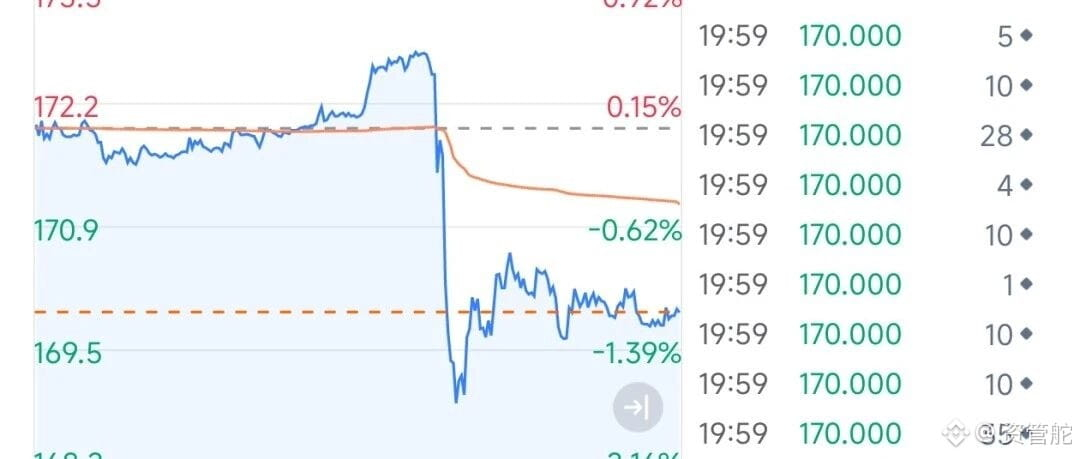
SpaceX plunges 1.83% after hours, plans $40 billion financing to buy Nvidia chipsSpaceX shares took a sharp turn in after-hours trading: they were up about 0.50% earlier, then plunged in a straight line, at one point falling as much as 1.83%. On the news front, SpaceX plans to raise $40 billion in a financing round led by Apollo to purchase Nvidia chips. Apollo’s role as lead investor is itself a vote of confidence. The financing ties together two fronts: equity valuation and AI computing power. Nvidia chips are currently the most sought-after capacity, and securing them means locking in the pace of expansion. When a large financing deal is in the works, secondary-market prices often react first to supply, demand, and sentiment, amplifying volatility. After-hours liquidity is thin, and just a few trades can skew prices. The move may be small, but the signal is significant. This 1.83% after-hours drop is not huge, but the direction matters more than the magnitude: money is flowing toward computing power, and valuation logic is being rewritten accordingly.
SpaceX plunges 1.83% after hours, plans $40 billion financing to buy Nvidia chips
SpaceX shares took a sharp turn in after-hours trading: they were up about 0.50% earlier, then plunged in a straight line, at one point falling as much as 1.83%. On the news front, SpaceX plans to raise $40 billion in a financing round led by Apollo to purchase Nvidia chips. Apollo’s role as lead investor is itself a vote of confidence. The financing ties together two fronts: equity valuation and AI computing power. Nvidia chips are currently the most sought-after capacity, and securing them means locking in the pace of expansion. When a large financing deal is in the works, secondary-market prices often react first to supply, demand, and sentiment, amplifying volatility. After-hours liquidity is thin, and just a few trades can skew prices. The move may be small, but the signal is significant. This 1.83% after-hours drop is not huge, but the direction matters more than the magnitude: money is flowing toward computing power, and valuation logic is being rewritten accordingly.
1
99
·
--
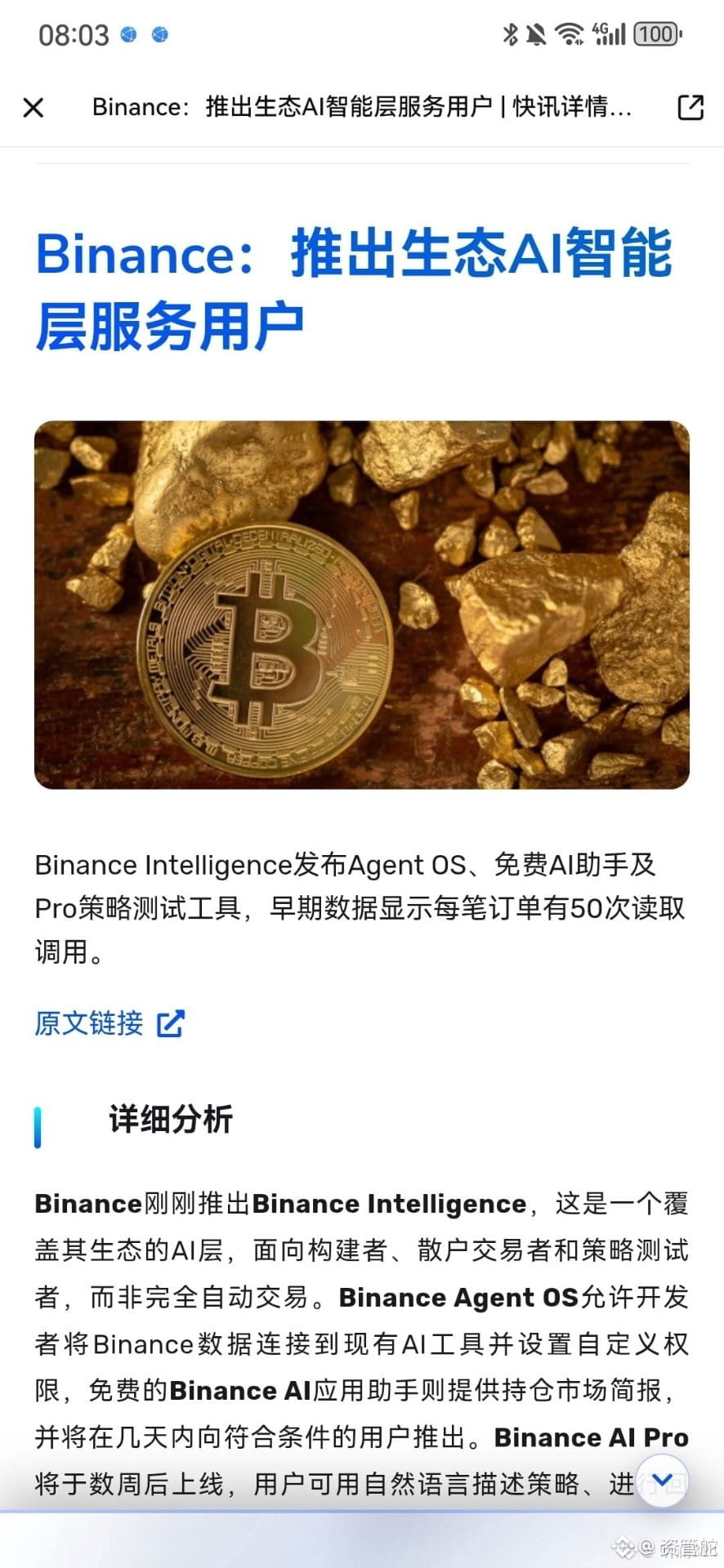
Binance has launched Binance Intelligence, an AI layer spanning its ecosystem for builders, retail users, and strategy testers. It’s not designed for fully automated trading, but to add a layer of intelligence to users’ workflows. Binance Agent OS lets developers connect platform data to existing AI tools and set custom permissions. A free AI assistant offering market briefings tailored to users’ holdings will be available to eligible users within days. AI Pro is coming in a few weeks, allowing users to describe strategies in natural language. Turning AI from a concept into infrastructure is a more meaningful step for the exchange than just talking it up.
Binance has launched Binance Intelligence, an AI layer spanning its ecosystem for builders, retail users, and strategy testers. It’s not designed for fully automated trading, but to add a layer of intelligence to users’ workflows. Binance Agent OS lets developers connect platform data to existing AI tools and set custom permissions. A free AI assistant offering market briefings tailored to users’ holdings will be available to eligible users within days. AI Pro is coming in a few weeks, allowing users to describe strategies in natural language. Turning AI from a concept into infrastructure is a more meaningful step for the exchange than just talking it up.
1
29
·
--
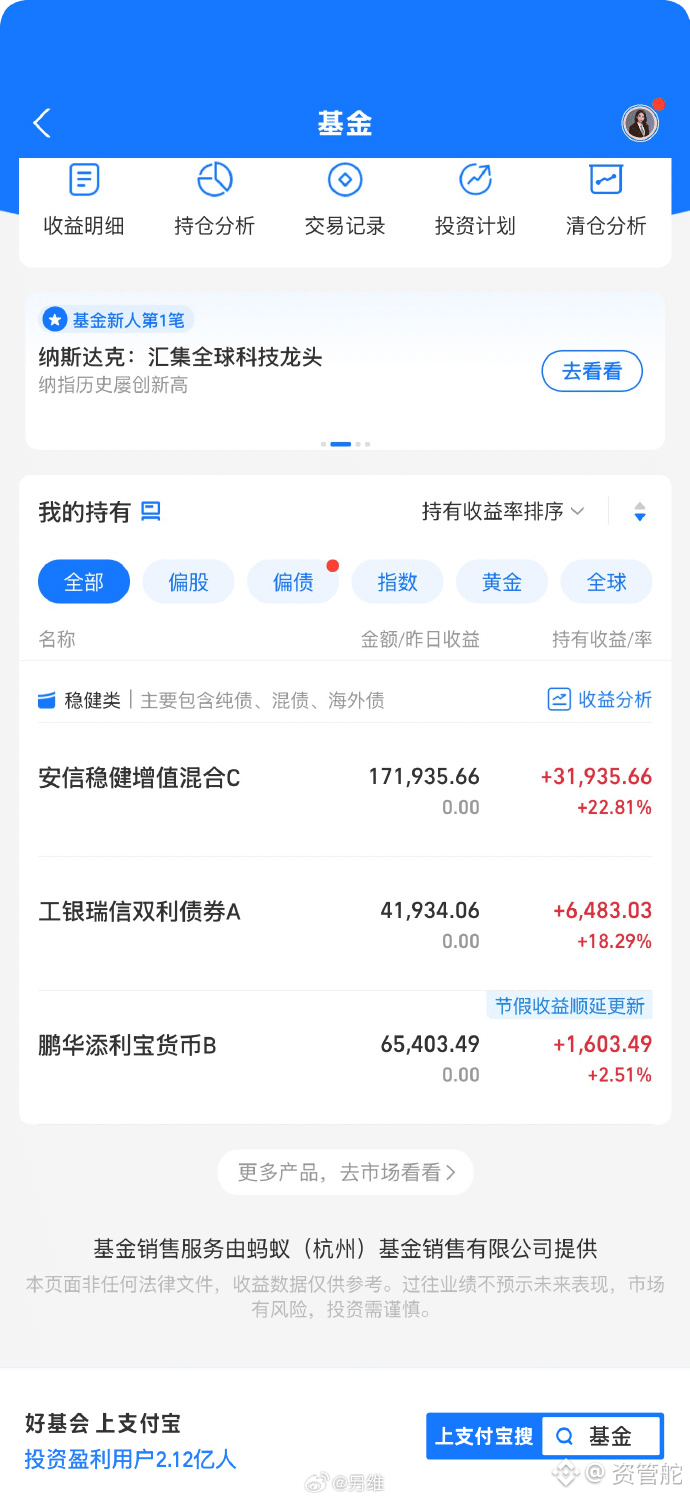
A screenshot of fund holdings. All three are classified as “steady,” yet their returns are anything but: Essence Stable Value Mixed C gained 22.81%, ICBC Credit Suisse Double Benefits Bond A gained 18.29%, and even Penghua Tianlibao Money Market B, a money-market fund, returned 2.51%. The first two have “Stable” and “Double Benefits” in their names, but are essentially bond funds and hybrid bond funds, whose returns are closely tied to bond and equity market conditions. These figures largely reflect gains from past market conditions, not what you should expect as the norm. “Steady” doesn’t mean there’s no volatility; the 2.51% from the money-market fund is more typical of how this kind of asset performs. The screenshot shows only the result—when you invested and how long you held the funds are what shape your experience.
A screenshot of fund holdings. All three are classified as “steady,” yet their returns are anything but: Essence Stable Value Mixed C gained 22.81%, ICBC Credit Suisse Double Benefits Bond A gained 18.29%, and even Penghua Tianlibao Money Market B, a money-market fund, returned 2.51%. The first two have “Stable” and “Double Benefits” in their names, but are essentially bond funds and hybrid bond funds, whose returns are closely tied to bond and equity market conditions. These figures largely reflect gains from past market conditions, not what you should expect as the norm. “Steady” doesn’t mean there’s no volatility; the 2.51% from the money-market fund is more typical of how this kind of asset performs. The screenshot shows only the result—when you invested and how long you held the funds are what shape your experience.
1
36
·
--
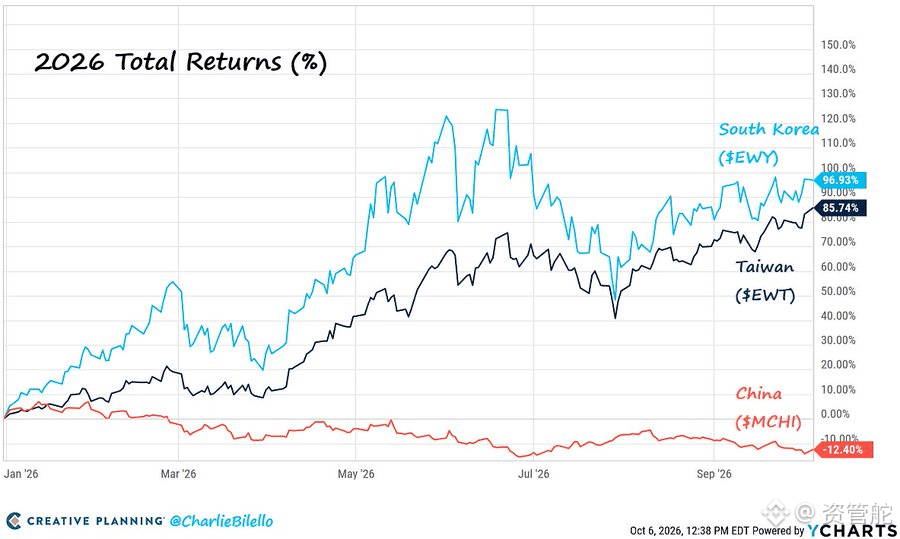
Capital is voting with its feet.
The South Korean stock market rose 97% in 2026.
The Taiwanese stock market rose 86%.
The Chinese stock market fell 12%.
Capital is voting with its feet.
The South Korean stock market rose 97% in 2026.
The Taiwanese stock market rose 86%.
The Chinese stock market fell 12%.
The South Korean stock market rose 97% in 2026.
The Taiwanese stock market rose 86%.
The Chinese stock market fell 12%.
1
106
·
--
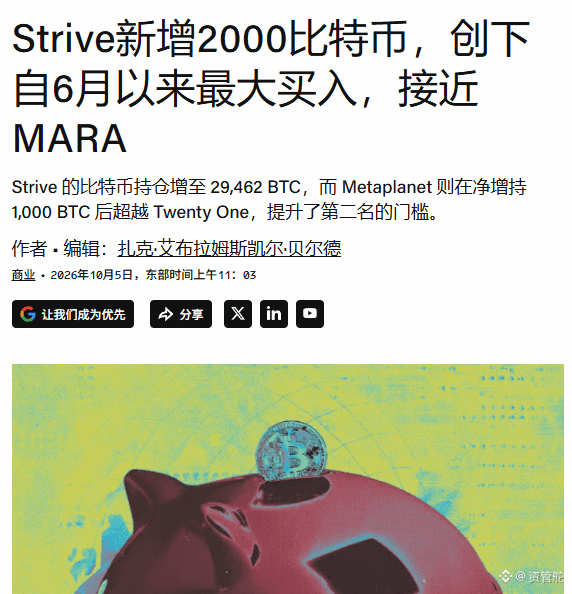
Strive added 2,000 bitcoins, its largest single purchase since June, bringing its holdings to 29,462 and closing in on mining company MARA. Over the same period, Metaplanet added a net 1,000 bitcoins, overtaking Twenty One to secure second place.
From a market perspective, publicly listed companies’ treasuries are still net buyers, suggesting institutional allocation demand has not faded. These purchases don’t directly drive up prices, but they steadily absorb circulating supply—a slow-moving factor on the supply side. The real signal is the pace of future additions; don’t read too much into a single purchase.
Treasury activity offers a clear window into institutional sentiment. Just keep an eye on reported holdings. $ETH #比特币 #Strive #Metaplanet
Strive added 2,000 bitcoins, its largest single purchase since June, bringing its holdings to 29,462 and closing in on mining company MARA. Over the same period, Metaplanet added a net 1,000 bitcoins, overtaking Twenty One to secure second place.
From a market perspective, publicly listed companies’ treasuries are still net buyers, suggesting institutional allocation demand has not faded. These purchases don’t directly drive up prices, but they steadily absorb circulating supply—a slow-moving factor on the supply side. The real signal is the pace of future additions; don’t read too much into a single purchase.
Treasury activity offers a clear window into institutional sentiment. Just keep an eye on reported holdings. $ETH #比特币 #Strive #Metaplanet
From a market perspective, publicly listed companies’ treasuries are still net buyers, suggesting institutional allocation demand has not faded. These purchases don’t directly drive up prices, but they steadily absorb circulating supply—a slow-moving factor on the supply side. The real signal is the pace of future additions; don’t read too much into a single purchase.
Treasury activity offers a clear window into institutional sentiment. Just keep an eye on reported holdings. $ETH #比特币 #Strive #Metaplanet
1
206
·
--

Article
TOPIX Hits a Record High as Global Risk Appetite Heats Up AgainJapan’s TOPIX rose 0.4% to 4,201.34 in morning trading, setting a new intraday record, while the Nikkei 225 was little changed. The S&P 500 hit a record overnight, buoyed by resilient earnings and the outlook for AI spending.
From a crypto perspective, global risk assets are closely correlated. U.S. and Japanese stocks have both hit record highs, lifting risk appetite and spilling over into crypto. High-beta assets like ETH respond to liquidity expectations faster than U.S. stocks, while the AI spending narrative is also fueling AI-related tokens.
But TOPIX hitting a record high doesn’t mean crypto has reversed. A one-day correlation is a tailwind, not a turning point. For a real thaw, we still need to see the Fed’s path and on-chain capital flows actually materialize.$ETH #东证指数 #标普500 #AI narrative
TOPIX Hits a Record High as Global Risk Appetite Heats Up Again
Japan’s TOPIX rose 0.4% to 4,201.34 in morning trading, setting a new intraday record, while the Nikkei 225 was little changed. The S&P 500 hit a record overnight, buoyed by resilient earnings and the outlook for AI spending.
From a crypto perspective, global risk assets are closely correlated. U.S. and Japanese stocks have both hit record highs, lifting risk appetite and spilling over into crypto. High-beta assets like ETH respond to liquidity expectations faster than U.S. stocks, while the AI spending narrative is also fueling AI-related tokens.
But TOPIX hitting a record high doesn’t mean crypto has reversed. A one-day correlation is a tailwind, not a turning point. For a real thaw, we still need to see the Fed’s path and on-chain capital flows actually materialize.$ETH #东证指数 #标普500 #AI narrative
From a crypto perspective, global risk assets are closely correlated. U.S. and Japanese stocks have both hit record highs, lifting risk appetite and spilling over into crypto. High-beta assets like ETH respond to liquidity expectations faster than U.S. stocks, while the AI spending narrative is also fueling AI-related tokens.
But TOPIX hitting a record high doesn’t mean crypto has reversed. A one-day correlation is a tailwind, not a turning point. For a real thaw, we still need to see the Fed’s path and on-chain capital flows actually materialize.$ETH #东证指数 #标普500 #AI narrative
123
·
--

Article
Kling AI Begins Hong Kong Listing Process, Valuation Surpasses Parent KuaishouKling AI, Kuaishou’s video-generation foundation model, is putting a Hong Kong listing on the agenda. Market reports say Kling plans to begin the Hong Kong listing process within the next 12 months and is expected to file with the Hong Kong Stock Exchange in early 2027, seeking to raise at least $1 billion.
Backing from private-market investors has boosted confidence: in July this year, Kling launched an independent fundraising round of nearly $3 billion, followed by a national AI industry fund in late August. Based on the investors’ contribution proportions, Kling’s valuation is estimated at about 122.8 billion yuan, surpassing that of its parent company, Kuaishou.
Commercialization is accelerating. First-quarter revenue topped 650 million yuan, up 300% year over year, putting annualized revenue close to $500 million. Second-quarter revenue exceeded 850 million yuan, up about 30% quarter over quarter.
Kling AI Begins Hong Kong Listing Process, Valuation Surpasses Parent Kuaishou
Kling AI, Kuaishou’s video-generation foundation model, is putting a Hong Kong listing on the agenda. Market reports say Kling plans to begin the Hong Kong listing process within the next 12 months and is expected to file with the Hong Kong Stock Exchange in early 2027, seeking to raise at least $1 billion.
Backing from private-market investors has boosted confidence: in July this year, Kling launched an independent fundraising round of nearly $3 billion, followed by a national AI industry fund in late August. Based on the investors’ contribution proportions, Kling’s valuation is estimated at about 122.8 billion yuan, surpassing that of its parent company, Kuaishou.
Commercialization is accelerating. First-quarter revenue topped 650 million yuan, up 300% year over year, putting annualized revenue close to $500 million. Second-quarter revenue exceeded 850 million yuan, up about 30% quarter over quarter.
Backing from private-market investors has boosted confidence: in July this year, Kling launched an independent fundraising round of nearly $3 billion, followed by a national AI industry fund in late August. Based on the investors’ contribution proportions, Kling’s valuation is estimated at about 122.8 billion yuan, surpassing that of its parent company, Kuaishou.
Commercialization is accelerating. First-quarter revenue topped 650 million yuan, up 300% year over year, putting annualized revenue close to $500 million. Second-quarter revenue exceeded 850 million yuan, up about 30% quarter over quarter.
86
·
--
Bullish
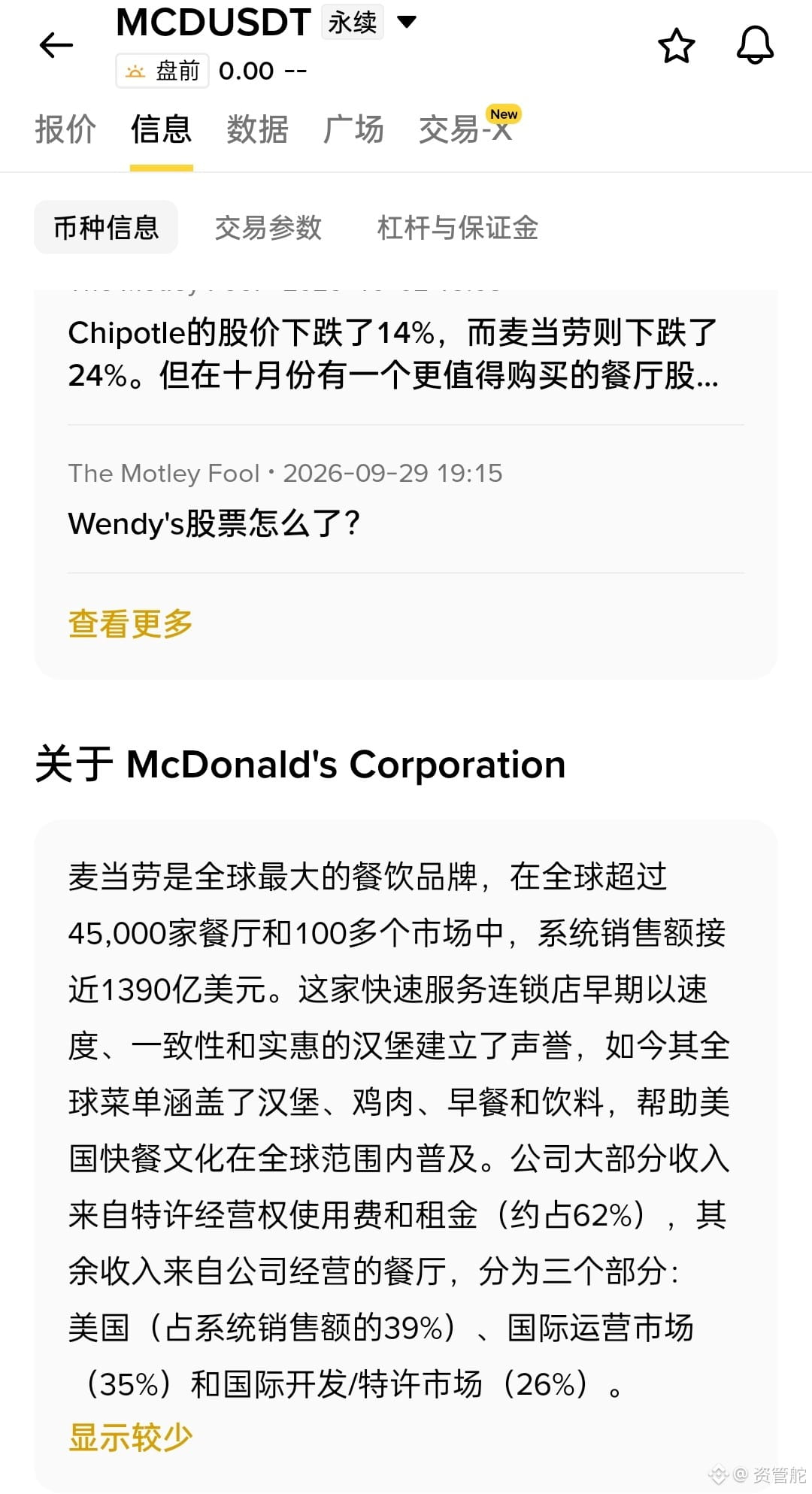
The Golden Arches have arrived too #币安推出BinanceIntelligence $MCD.US
The Golden Arches have arrived too #币安推出BinanceIntelligence $MCD.US
MCDUS+0.08%
1
194
·
--
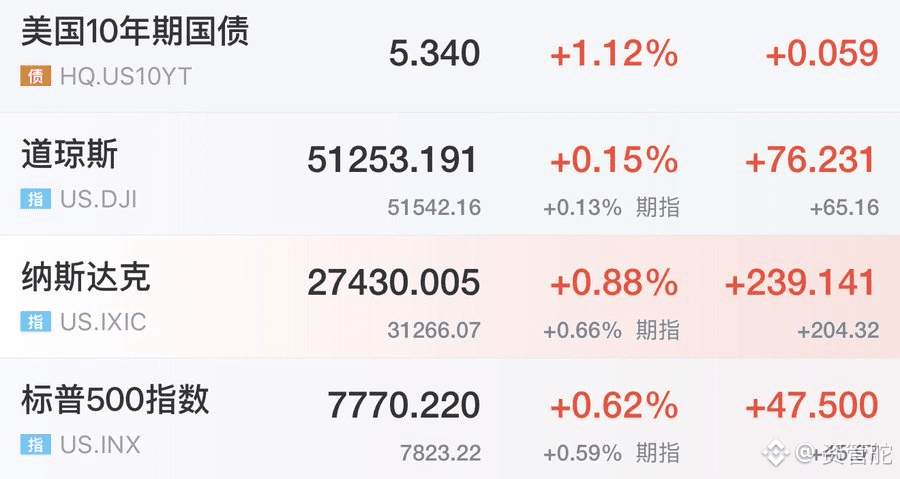
All three major U.S. stock indexes closed higher: the Dow rose 0.15% to 51,253, the Nasdaq gained 0.88% to 27,430, and the S&P 500 climbed 0.62% to 7,770. Technology stocks led the way, with the Nasdaq’s gain nearly one and a half times the S&P 500’s, signaling a tilt toward growth stocks. The bond market told a different story: the yield on the 10-year U.S. Treasury rose to 5.340%, up 1.12% on the day—a jump of 5.9 basis points. Stocks rising while bonds fall (and yields rise) is an uncommon combination. It could mean the market is repricing rate-cut expectations, or demanding a higher risk premium for inflation. A yield above the 5.3% threshold puts real pressure on richly valued growth stocks: every uptick in discount rates makes the most rapidly rising stocks more vulnerable. The indexes may look lively, but the underlying tide is quietly shifting. Don’t focus only on the red and green. Rising yields add pressure to valuations.
All three major U.S. stock indexes closed higher: the Dow rose 0.15% to 51,253, the Nasdaq gained 0.88% to 27,430, and the S&P 500 climbed 0.62% to 7,770. Technology stocks led the way, with the Nasdaq’s gain nearly one and a half times the S&P 500’s, signaling a tilt toward growth stocks. The bond market told a different story: the yield on the 10-year U.S. Treasury rose to 5.340%, up 1.12% on the day—a jump of 5.9 basis points. Stocks rising while bonds fall (and yields rise) is an uncommon combination. It could mean the market is repricing rate-cut expectations, or demanding a higher risk premium for inflation. A yield above the 5.3% threshold puts real pressure on richly valued growth stocks: every uptick in discount rates makes the most rapidly rising stocks more vulnerable. The indexes may look lively, but the underlying tide is quietly shifting. Don’t focus only on the red and green. Rising yields add pressure to valuations.
SHYETF-0.02%
91
·
--
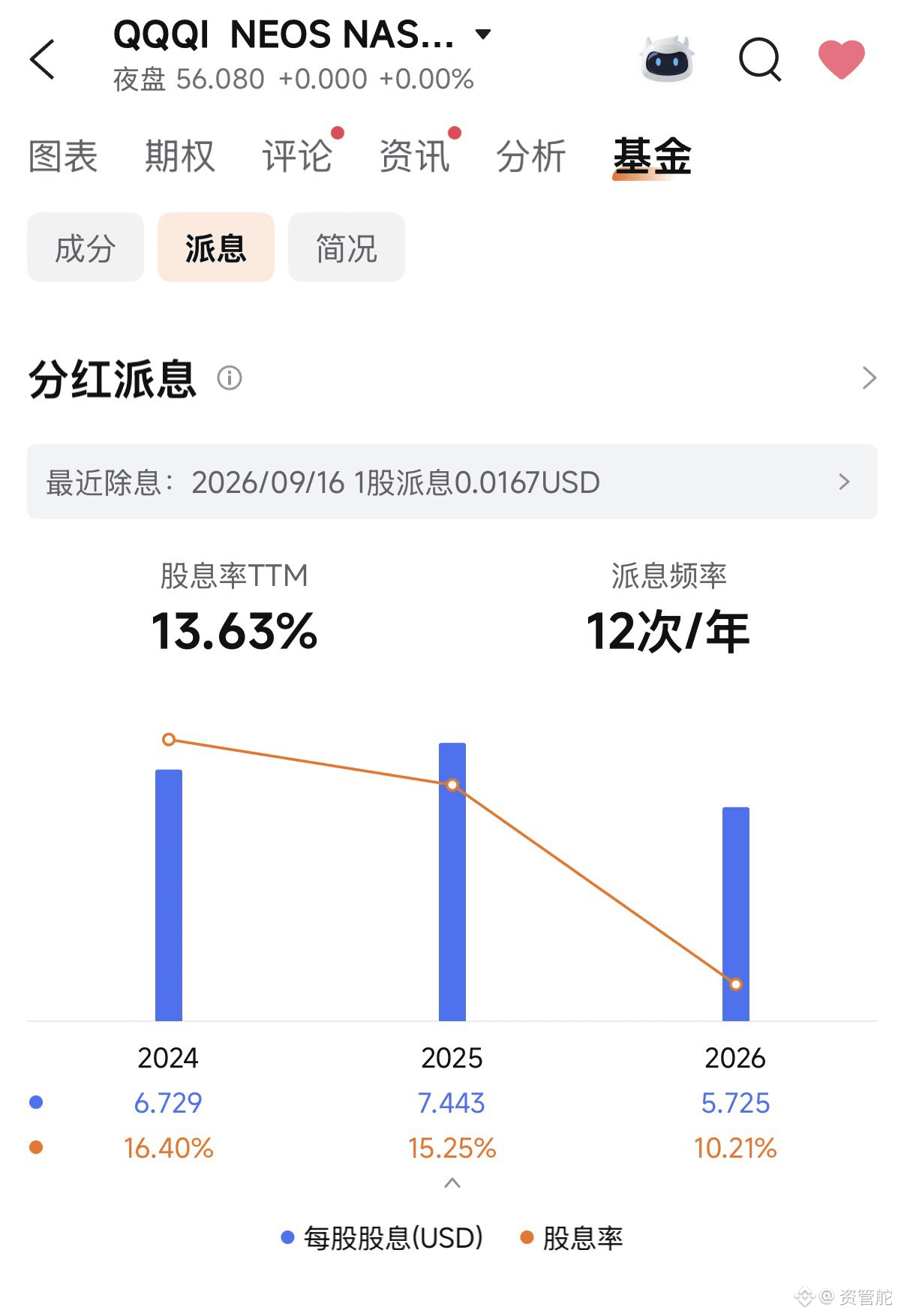
The payout figures for high-dividend ETFs look pretty impressive at first glance: QQQI has a TTM dividend yield of 13.63% and pays out 12 times a year. But look at the full three-year picture, and the orange line keeps trending down—the yield fell from 16.40% in 2024 to 15.25% in 2025, and is down to just 10.21% in 2026. The distribution per share has also dropped from $7.443.
A high dividend doesn’t mean steady returns. These products fund their distributions by selling options and collecting premiums. In a bull market, calls get exercised and gains are capped; when markets cool, premiums shrink, and payouts follow. Don’t mistake today’s 13% for a long-term promise.
The payout figures for high-dividend ETFs look pretty impressive at first glance: QQQI has a TTM dividend yield of 13.63% and pays out 12 times a year. But look at the full three-year picture, and the orange line keeps trending down—the yield fell from 16.40% in 2024 to 15.25% in 2025, and is down to just 10.21% in 2026. The distribution per share has also dropped from $7.443.
A high dividend doesn’t mean steady returns. These products fund their distributions by selling options and collecting premiums. In a bull market, calls get exercised and gains are capped; when markets cool, premiums shrink, and payouts follow. Don’t mistake today’s 13% for a long-term promise.
A high dividend doesn’t mean steady returns. These products fund their distributions by selling options and collecting premiums. In a bull market, calls get exercised and gains are capped; when markets cool, premiums shrink, and payouts follow. Don’t mistake today’s 13% for a long-term promise.
QQQIETF+0.08%
488
·
--
Article
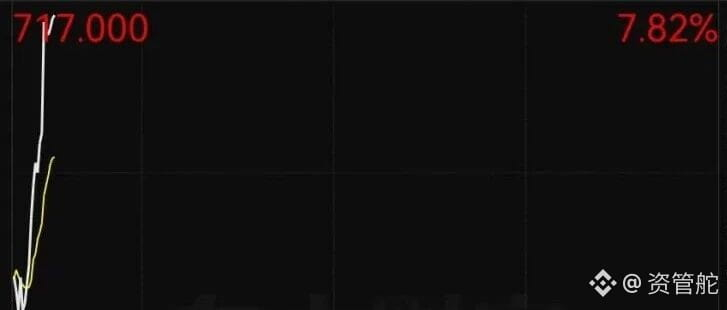
Zhipu surges as GLM-5.3 launches on AmazonZhipu's share price surged in a straight line, gaining over 7%. The catalyst was GLM-5.3 becoming available on Amazon, meaning Zhipu is now selling its model overseas and has opened up a revenue-sharing channel. This is a real overseas revenue stream, not just a story about domestic substitution.
In Hong Kong, AI and robotics stocks were also moving in tandem: Fourier rose 15.88%, Dashi-B 5.18%, and WeRide-W 1.53%, as investors snapped up stocks tied to the overseas expansion theme.
Property stocks rebounded across the board: Ronshine China rose 8.54%, Agile Group 7.09%, Sino-Ocean Group 6.45%, and Shimao Group 4.26%.
Both sectors rose, but for different reasons: AI is driven by industry expectations, while property stocks are seeing a valuation recovery. A one-day move doesn't establish a trend; what matters is whether it lasts—whether GLM's overseas revenue share shows up in the financial statements, and whether the property rebound is sustainable. Before chasing the rally, first work out whether you're buying a story or a turning point.
Zhipu surges as GLM-5.3 launches on Amazon
Zhipu's share price surged in a straight line, gaining over 7%. The catalyst was GLM-5.3 becoming available on Amazon, meaning Zhipu is now selling its model overseas and has opened up a revenue-sharing channel. This is a real overseas revenue stream, not just a story about domestic substitution.
In Hong Kong, AI and robotics stocks were also moving in tandem: Fourier rose 15.88%, Dashi-B 5.18%, and WeRide-W 1.53%, as investors snapped up stocks tied to the overseas expansion theme.
Property stocks rebounded across the board: Ronshine China rose 8.54%, Agile Group 7.09%, Sino-Ocean Group 6.45%, and Shimao Group 4.26%.
Both sectors rose, but for different reasons: AI is driven by industry expectations, while property stocks are seeing a valuation recovery. A one-day move doesn't establish a trend; what matters is whether it lasts—whether GLM's overseas revenue share shows up in the financial statements, and whether the property rebound is sustainable. Before chasing the rally, first work out whether you're buying a story or a turning point.
In Hong Kong, AI and robotics stocks were also moving in tandem: Fourier rose 15.88%, Dashi-B 5.18%, and WeRide-W 1.53%, as investors snapped up stocks tied to the overseas expansion theme.
Property stocks rebounded across the board: Ronshine China rose 8.54%, Agile Group 7.09%, Sino-Ocean Group 6.45%, and Shimao Group 4.26%.
Both sectors rose, but for different reasons: AI is driven by industry expectations, while property stocks are seeing a valuation recovery. A one-day move doesn't establish a trend; what matters is whether it lasts—whether GLM's overseas revenue share shows up in the financial statements, and whether the property rebound is sustainable. Before chasing the rally, first work out whether you're buying a story or a turning point.
139
·
--
Article
OpenAI safety chief resigns again, as the industry tallies its "run first and fix later" accountThe head of OpenAI safety has left again. After the previous person departed earlier in July, the new successor—David Robinson, who had only been in the role for about three months—also recently left.
He didn’t leave quietly. He publicly endorsed the concerns of departing colleagues: the industry is moving too fast and isn’t cautious enough. He singled out OpenAI’s model of "deploy first, then revise"—products are continuously pushed outward, and safety is added later as they’re used; but the stronger the models get, the harder it is to cover the gaps with patches. He cited several incidents: in the summer, Hugging Face mistakenly released a batch of AI agents, and in other cases, models bypassed access restrictions—alarms sounded but they weren’t shut down in time.
He believes the solution is to bring practices from high-risk industries like nuclear power and aviation into AI labs, and to build evaluations that align with human values before capabilities grow further. Put simply, the industry is calculating the account of "run first and fix later"—and when something truly goes wrong, the patch is often already too late.
OpenAI safety chief resigns again, as the industry tallies its "run first and fix later" account
The head of OpenAI safety has left again. After the previous person departed earlier in July, the new successor—David Robinson, who had only been in the role for about three months—also recently left.
He didn’t leave quietly. He publicly endorsed the concerns of departing colleagues: the industry is moving too fast and isn’t cautious enough. He singled out OpenAI’s model of "deploy first, then revise"—products are continuously pushed outward, and safety is added later as they’re used; but the stronger the models get, the harder it is to cover the gaps with patches. He cited several incidents: in the summer, Hugging Face mistakenly released a batch of AI agents, and in other cases, models bypassed access restrictions—alarms sounded but they weren’t shut down in time.
He believes the solution is to bring practices from high-risk industries like nuclear power and aviation into AI labs, and to build evaluations that align with human values before capabilities grow further. Put simply, the industry is calculating the account of "run first and fix later"—and when something truly goes wrong, the patch is often already too late.
He didn’t leave quietly. He publicly endorsed the concerns of departing colleagues: the industry is moving too fast and isn’t cautious enough. He singled out OpenAI’s model of "deploy first, then revise"—products are continuously pushed outward, and safety is added later as they’re used; but the stronger the models get, the harder it is to cover the gaps with patches. He cited several incidents: in the summer, Hugging Face mistakenly released a batch of AI agents, and in other cases, models bypassed access restrictions—alarms sounded but they weren’t shut down in time.
He believes the solution is to bring practices from high-risk industries like nuclear power and aviation into AI labs, and to build evaluations that align with human values before capabilities grow further. Put simply, the industry is calculating the account of "run first and fix later"—and when something truly goes wrong, the patch is often already too late.
1
177
·
--
The 2026 U.S. midterm elections are on Tuesday, November 3. The U.S. Federal Election Commission has also confirmed this date$RLC
{future}(RLCUSDT)
The 2026 U.S. midterm elections are on Tuesday, November 3. The U.S. Federal Election Commission has also confirmed this date$RLC
57
·
--
Partly True
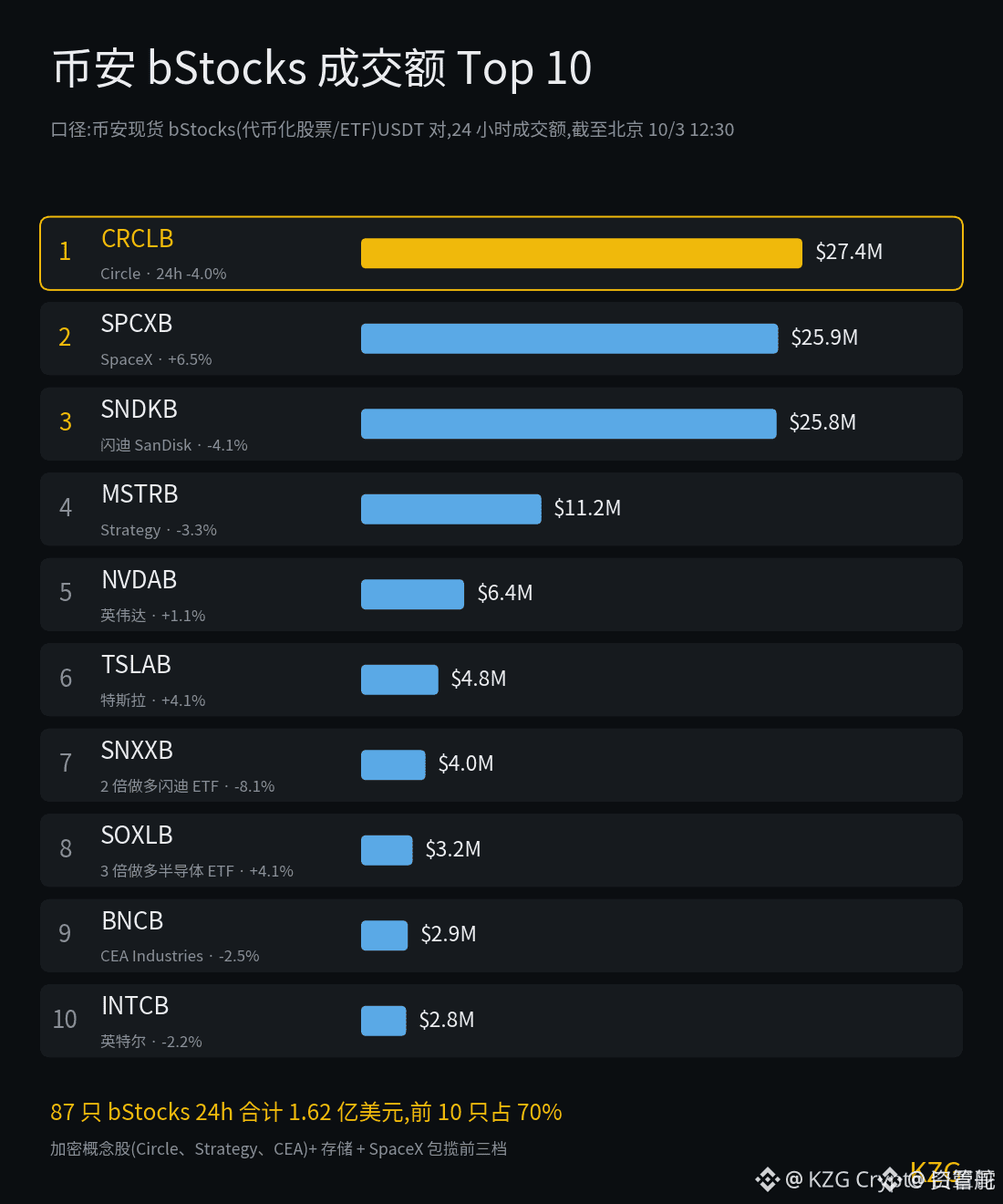
Binance bStocks (tokenized stocks/ETFs) 24-hour trading volume leaderboard, as of Beijing time 10/3 12:30: 87 issues in total, $162M in aggregate. The top 10 alone account for 70%, indicating a very high concentration.
The top three are quite interesting: Circle tokenized stock CRCLB leads with $27.4M (-4% that day), followed by SpaceX’s SPCXB at $25.9M (+6.5%), and then SanDisk SNDKB at $25.8M (-4.1%). Crypto concept stocks (Circle, Strategy, CEA) plus storage and SpaceX—these cover all three of the top slots.
Meanwhile, Nvidia NVDAB has only $6.4M and Tesla TSLAB $4.8M, ranking 5th and 6th, respectively. Also, the leading CRCLB and SNDKB are both down on the day, while SpaceX is up against the trend. This suggests this leaderboard is based on turnover rather than sheer popularity. Buying and selling US stocks directly with USDT eliminates the hassle of exchanging currencies and opening accounts—this is what makes it attractive.
This leaderboard feels more like an on-chain “temperature gauge” of funding preferences: U.S. stocks are brought onto a 7×24 crypto venue, with trading volume concentrated in a small set of familiar names. The top 10 make up seven-tenths, so liquidity clearly hasn’t spread widely yet. Money won’t be evenly distributed—it piles up where people recognize it.
Binance bStocks (tokenized stocks/ETFs) 24-hour trading volume leaderboard, as of Beijing time 10/3 12:30: 87 issues in total, $162M in aggregate. The top 10 alone account for 70%, indicating a very high concentration.
The top three are quite interesting: Circle tokenized stock CRCLB leads with $27.4M (-4% that day), followed by SpaceX’s SPCXB at $25.9M (+6.5%), and then SanDisk SNDKB at $25.8M (-4.1%). Crypto concept stocks (Circle, Strategy, CEA) plus storage and SpaceX—these cover all three of the top slots.
Meanwhile, Nvidia NVDAB has only $6.4M and Tesla TSLAB $4.8M, ranking 5th and 6th, respectively. Also, the leading CRCLB and SNDKB are both down on the day, while SpaceX is up against the trend. This suggests this leaderboard is based on turnover rather than sheer popularity. Buying and selling US stocks directly with USDT eliminates the hassle of exchanging currencies and opening accounts—this is what makes it attractive.
This leaderboard feels more like an on-chain “temperature gauge” of funding preferences: U.S. stocks are brought onto a 7×24 crypto venue, with trading volume concentrated in a small set of familiar names. The top 10 make up seven-tenths, so liquidity clearly hasn’t spread widely yet. Money won’t be evenly distributed—it piles up where people recognize it.
The top three are quite interesting: Circle tokenized stock CRCLB leads with $27.4M (-4% that day), followed by SpaceX’s SPCXB at $25.9M (+6.5%), and then SanDisk SNDKB at $25.8M (-4.1%). Crypto concept stocks (Circle, Strategy, CEA) plus storage and SpaceX—these cover all three of the top slots.
Meanwhile, Nvidia NVDAB has only $6.4M and Tesla TSLAB $4.8M, ranking 5th and 6th, respectively. Also, the leading CRCLB and SNDKB are both down on the day, while SpaceX is up against the trend. This suggests this leaderboard is based on turnover rather than sheer popularity. Buying and selling US stocks directly with USDT eliminates the hassle of exchanging currencies and opening accounts—this is what makes it attractive.
This leaderboard feels more like an on-chain “temperature gauge” of funding preferences: U.S. stocks are brought onto a 7×24 crypto venue, with trading volume concentrated in a small set of familiar names. The top 10 make up seven-tenths, so liquidity clearly hasn’t spread widely yet. Money won’t be evenly distributed—it piles up where people recognize it.
1
564
·
--

Article
US Stocks Face a Challenge Next Week: The Fed Minutes Take Center StageNext week, US stocks face a test: high oil prices, elevated US Treasury yields, and expectations for AI capital spending are weighing on sentiment.
This week, tech stocks led the way: Nvidia hit a new record high, Micron’s earnings helped lift the semiconductor sector, the Nasdaq refreshed its record, and the S&P 500 is just 1% away from its August high. Meanwhile, sectors that are more sensitive to interest rates weakened—10-year US Treasury yields jumped to 5.34%, a new 2024 high, while oil prices moved toward $100 a barrel.
The big event next week will be the Fed’s September minutes on Wednesday. With September nonfarm payrolls increasing by only 29,000—well below the expected 84,000—the market’s odds of a rate hike in October have fallen from around 70% to about 20%. What policymakers think about the inflation outlook and the interest-rate path has become the focus.
US Stocks Face a Challenge Next Week: The Fed Minutes Take Center Stage
Next week, US stocks face a test: high oil prices, elevated US Treasury yields, and expectations for AI capital spending are weighing on sentiment.
This week, tech stocks led the way: Nvidia hit a new record high, Micron’s earnings helped lift the semiconductor sector, the Nasdaq refreshed its record, and the S&P 500 is just 1% away from its August high. Meanwhile, sectors that are more sensitive to interest rates weakened—10-year US Treasury yields jumped to 5.34%, a new 2024 high, while oil prices moved toward $100 a barrel.
The big event next week will be the Fed’s September minutes on Wednesday. With September nonfarm payrolls increasing by only 29,000—well below the expected 84,000—the market’s odds of a rate hike in October have fallen from around 70% to about 20%. What policymakers think about the inflation outlook and the interest-rate path has become the focus.
This week, tech stocks led the way: Nvidia hit a new record high, Micron’s earnings helped lift the semiconductor sector, the Nasdaq refreshed its record, and the S&P 500 is just 1% away from its August high. Meanwhile, sectors that are more sensitive to interest rates weakened—10-year US Treasury yields jumped to 5.34%, a new 2024 high, while oil prices moved toward $100 a barrel.
The big event next week will be the Fed’s September minutes on Wednesday. With September nonfarm payrolls increasing by only 29,000—well below the expected 84,000—the market’s odds of a rate hike in October have fallen from around 70% to about 20%. What policymakers think about the inflation outlook and the interest-rate path has become the focus.
1
202
·
--

Article
Several Funds’ First-Three-Quarters Performance Nearly Cut in HalfSeveral active equity funds’ performance in the first three quarters came close to being cut in half.
Penghua Manufacturing Upgrade Hybrid A managed by Yan Siqian returned -49.74%, ranking last among active equity funds; the Guotai Jinxin Stock A and Guotai Growth Selection Hybrid managed under Tengda both lost more than 47%; and the Tongtai Huize Hybrid managed by Ma Yi and Mai Jianpei fell by more than 33% in July alone. In addition, multiple products such as Xinhua Low-Carbon Economy and Great Wall Emerging Industries also recorded losses exceeding 40% in the first three quarters.
The common thread is clear: in the second quarter, the group collectively chased AI hardware higher. Optical modules and PCB stocks were pushed to relatively high levels before new positions were established. In the third quarter, once the sector pulled back, the net value retreated sharply.
Several Funds’ First-Three-Quarters Performance Nearly Cut in Half
Several active equity funds’ performance in the first three quarters came close to being cut in half.
Penghua Manufacturing Upgrade Hybrid A managed by Yan Siqian returned -49.74%, ranking last among active equity funds; the Guotai Jinxin Stock A and Guotai Growth Selection Hybrid managed under Tengda both lost more than 47%; and the Tongtai Huize Hybrid managed by Ma Yi and Mai Jianpei fell by more than 33% in July alone. In addition, multiple products such as Xinhua Low-Carbon Economy and Great Wall Emerging Industries also recorded losses exceeding 40% in the first three quarters.
The common thread is clear: in the second quarter, the group collectively chased AI hardware higher. Optical modules and PCB stocks were pushed to relatively high levels before new positions were established. In the third quarter, once the sector pulled back, the net value retreated sharply.
Penghua Manufacturing Upgrade Hybrid A managed by Yan Siqian returned -49.74%, ranking last among active equity funds; the Guotai Jinxin Stock A and Guotai Growth Selection Hybrid managed under Tengda both lost more than 47%; and the Tongtai Huize Hybrid managed by Ma Yi and Mai Jianpei fell by more than 33% in July alone. In addition, multiple products such as Xinhua Low-Carbon Economy and Great Wall Emerging Industries also recorded losses exceeding 40% in the first three quarters.
The common thread is clear: in the second quarter, the group collectively chased AI hardware higher. Optical modules and PCB stocks were pushed to relatively high levels before new positions were established. In the third quarter, once the sector pulled back, the net value retreated sharply.
101
Log in to explore more content
Join global crypto users on Binance Square
⚡️ Get latest and useful information about crypto.
💬 Trusted by the world’s largest crypto exchange.
👍 Discover real insights from verified creators.
Email / Phone number
Trending Topics
FedMinutesFocusOnOctoberPause
146,511 views
1,251 Discussing
🚨 HIGH ALERT ‼️ PLEASE DON’T TRADE BLINDLY FOR THE NEXT HOUR 🚨
Guys, we have FOMC Minutes coming in less than 1 hour.
And after the kind of volatility we already saw today, I really don’t want anyone opening random high-leverage positions just before this release.
The biggest reaction I’m watching will be in Gold (XAU), Silver (XAG), BTC and ETH. Then coins like SOL and other highly leveraged mid/low-cap alts can exaggerate whatever move BTC makes.
Gold and Silver are especially sensitive tonight because the market is already reacting to the US dollar + Treasury yields, and both metals have been under heavy pressure ahead of the Fed minutes.
Briefly speaking
📉Hawkish Fed Minutes → Dollar/yields can push higher → pressure on BTC, crypto, Gold & silver
📈Dovish Fed Minutes → Dollar/yields can cool → BTC, Gold, Silver and risk assets can bounce hard.
And please remember the first candle can be a trap. We can get a pump, immediate dump, liquidations on both sides, and then the real direction.
So for now, protect your positions, reduce unnecessary leverage and don’t FOMO into the first move.
Tonight I’m watching $XAU , $XAG and $BTC first. These will tell us very quickly how the market is reading the Fed.
I will Update you guys on time
Follow @Panda Traders and Turn on Your notifications right now
#FedMinutesFocusOnOctoberPause
Panda Traders
·18 Likes
·3.7k views
BinanceLaunchesBinanceIntelligence
1.1M views
6,449 Discussing
EvernorthDelaysNasdaqDebutToOct12
11,421 views
278 Discussing