

蜻蜓队长前来觐见
630 Posts

蜻蜓队长前来觐见
Report
Block User
第一!绝不意气用事!
46 Following
166 Followers
649 Liked
Posts
All
Quotes
·
--
Today I came across a photo of the first floor of the Duanjiang Left River oblique pagoda in Guangxi being flooded. This more-than-400-year-old tower was originally built intentionally crooked—to relieve the force when the water level rises. Later people always want to prove it’s sturdier by making it taller or adding more supports, but what’s written first is still that original stroke. As I stared at the picture, I suddenly felt it was very much like Dusk’s temperament for handling forks.
Dusk’s network is asynchronous. In the same round, occasionally two candidate blocks both manage to get confirmations. Dusk isn’t interested in who stacks more length later; it only recognizes the one with the lower iteration number—that is, the one whose proposer was selected earlier in that round. Even if the later one gathered enough votes at the time, the nodes would still roll back, using Dusk’s Fallback, to before the fork—discarding the entire subsequent segment built on the block that appeared later. In Dusk’s world, whoever shows up first has the better claim; the later one’s lively activity doesn’t count.@Dusk_Foundation #dusk
Dusk writes it this way—not out of technical fetishism, but to prevent the people coming later from deliberately stirring things up. If the fork were won by whoever arrives later, that would be an incentive for the people selected in later rounds to muddy the waters, betting that their version can last to the end. By pinning priority to earlier iterations, Dusk narrows the space for this kind of cut-in. I thought at first that Dusk was just “on the axis” of earlier—later I realized, $DUSK it isn’t afraid of forks; it’s afraid that the rules will turn into something computable and therefore open to speculation. The materials don’t explain clearly whether Dusk would promote an earlier but worse block—this part I still haven’t figured out. In Dusk, iteration zero is relatively steadier, but if the parent block is withdrawn, it has to go too. Have you seen an ending on other chains where the earlier-arriving side is also more in the right? Comment below and let’s talk.$BTC
{spot}(DUSKUSDT)
Today I came across a photo of the first floor of the Duanjiang Left River oblique pagoda in Guangxi being flooded. This more-than-400-year-old tower was originally built intentionally crooked—to relieve the force when the water level rises. Later people always want to prove it’s sturdier by making it taller or adding more supports, but what’s written first is still that original stroke. As I stared at the picture, I suddenly felt it was very much like Dusk’s temperament for handling forks.
Dusk’s network is asynchronous. In the same round, occasionally two candidate blocks both manage to get confirmations. Dusk isn’t interested in who stacks more length later; it only recognizes the one with the lower iteration number—that is, the one whose proposer was selected earlier in that round. Even if the later one gathered enough votes at the time, the nodes would still roll back, using Dusk’s Fallback, to before the fork—discarding the entire subsequent segment built on the block that appeared later. In Dusk’s world, whoever shows up first has the better claim; the later one’s lively activity doesn’t count.@Dusk #dusk
Dusk writes it this way—not out of technical fetishism, but to prevent the people coming later from deliberately stirring things up. If the fork were won by whoever arrives later, that would be an incentive for the people selected in later rounds to muddy the waters, betting that their version can last to the end. By pinning priority to earlier iterations, Dusk narrows the space for this kind of cut-in. I thought at first that Dusk was just “on the axis” of earlier—later I realized, $DUSK it isn’t afraid of forks; it’s afraid that the rules will turn into something computable and therefore open to speculation. The materials don’t explain clearly whether Dusk would promote an earlier but worse block—this part I still haven’t figured out. In Dusk, iteration zero is relatively steadier, but if the parent block is withdrawn, it has to go too. Have you seen an ending on other chains where the earlier-arriving side is also more in the right? Comment below and let’s talk.$BTC
Dusk’s network is asynchronous. In the same round, occasionally two candidate blocks both manage to get confirmations. Dusk isn’t interested in who stacks more length later; it only recognizes the one with the lower iteration number—that is, the one whose proposer was selected earlier in that round. Even if the later one gathered enough votes at the time, the nodes would still roll back, using Dusk’s Fallback, to before the fork—discarding the entire subsequent segment built on the block that appeared later. In Dusk’s world, whoever shows up first has the better claim; the later one’s lively activity doesn’t count.@Dusk #dusk
Dusk writes it this way—not out of technical fetishism, but to prevent the people coming later from deliberately stirring things up. If the fork were won by whoever arrives later, that would be an incentive for the people selected in later rounds to muddy the waters, betting that their version can last to the end. By pinning priority to earlier iterations, Dusk narrows the space for this kind of cut-in. I thought at first that Dusk was just “on the axis” of earlier—later I realized, $DUSK it isn’t afraid of forks; it’s afraid that the rules will turn into something computable and therefore open to speculation. The materials don’t explain clearly whether Dusk would promote an earlier but worse block—this part I still haven’t figured out. In Dusk, iteration zero is relatively steadier, but if the parent block is withdrawn, it has to go too. Have you seen an ending on other chains where the earlier-arriving side is also more in the right? Comment below and let’s talk.$BTC
151
·
--
While waiting for the bus, I scrolled past news about the U.S.-Canada trade frictions escalating again. Over there, Trump half-jokingly mentioned renaming Lake Ontario to the “American Lake.” I stared at that post for two seconds, and suddenly felt that once rules get tied up with eligibility and boundaries, it’s no longer just back-and-forth. That tangled feeling is what made me pull Dusk’s materials back up and read through them again. @Dusk_Foundation
A regulated securities transaction is never just a transfer. The buyer has to first prove eligibility; the transfer has to get stuck within all kinds of restrictions; the relationship between holdings can’t be fully exposed. Meanwhile, the issuer and the regulators must still be able to obtain the proof when needed, and in the end the transaction has to complete with finality settlement. Following this chain, what Dusk wants to do is to put eligibility checks, privacy protection, proof generation, rule execution, and final settlement into a single base infrastructure that works in coordination. Identity can be disclosed selectively, sensitive details can be hidden with zero-knowledge, and public channels are still there too—no matter the execution environment, everything ultimately lands on the same settlement layer. The real key isn’t how many modules there are, but whether the rules themselves are actually enforced. #dusk $DUSK
When I sit at my desk thinking about this, I sometimes joke to myself. After working on on-chain things for so many years, I used to think transparency was everything. Later I realized that in the financial world, what’s truly hard is selective transparency. Turning assets into tokens is relatively easy; what’s hard is constraining who can hold them, who can receive them, and when a handover must be settled—making those constraints become an actual part of the on-chain process. So when I look at $DUSK now, I’m no longer focused on some performance number, but whether it can truly make these things work end to end. The road is still long, and how many frictions show up during implementation will only become clear slowly—but at least the idea itself is worth thinking about seriously for a while. $BTC
{spot}(DUSKUSDT)
While waiting for the bus, I scrolled past news about the U.S.-Canada trade frictions escalating again. Over there, Trump half-jokingly mentioned renaming Lake Ontario to the “American Lake.” I stared at that post for two seconds, and suddenly felt that once rules get tied up with eligibility and boundaries, it’s no longer just back-and-forth. That tangled feeling is what made me pull Dusk’s materials back up and read through them again. @Dusk
A regulated securities transaction is never just a transfer. The buyer has to first prove eligibility; the transfer has to get stuck within all kinds of restrictions; the relationship between holdings can’t be fully exposed. Meanwhile, the issuer and the regulators must still be able to obtain the proof when needed, and in the end the transaction has to complete with finality settlement. Following this chain, what Dusk wants to do is to put eligibility checks, privacy protection, proof generation, rule execution, and final settlement into a single base infrastructure that works in coordination. Identity can be disclosed selectively, sensitive details can be hidden with zero-knowledge, and public channels are still there too—no matter the execution environment, everything ultimately lands on the same settlement layer. The real key isn’t how many modules there are, but whether the rules themselves are actually enforced. #dusk $DUSK
When I sit at my desk thinking about this, I sometimes joke to myself. After working on on-chain things for so many years, I used to think transparency was everything. Later I realized that in the financial world, what’s truly hard is selective transparency. Turning assets into tokens is relatively easy; what’s hard is constraining who can hold them, who can receive them, and when a handover must be settled—making those constraints become an actual part of the on-chain process. So when I look at $DUSK now, I’m no longer focused on some performance number, but whether it can truly make these things work end to end. The road is still long, and how many frictions show up during implementation will only become clear slowly—but at least the idea itself is worth thinking about seriously for a while. $BTC
A regulated securities transaction is never just a transfer. The buyer has to first prove eligibility; the transfer has to get stuck within all kinds of restrictions; the relationship between holdings can’t be fully exposed. Meanwhile, the issuer and the regulators must still be able to obtain the proof when needed, and in the end the transaction has to complete with finality settlement. Following this chain, what Dusk wants to do is to put eligibility checks, privacy protection, proof generation, rule execution, and final settlement into a single base infrastructure that works in coordination. Identity can be disclosed selectively, sensitive details can be hidden with zero-knowledge, and public channels are still there too—no matter the execution environment, everything ultimately lands on the same settlement layer. The real key isn’t how many modules there are, but whether the rules themselves are actually enforced. #dusk $DUSK
When I sit at my desk thinking about this, I sometimes joke to myself. After working on on-chain things for so many years, I used to think transparency was everything. Later I realized that in the financial world, what’s truly hard is selective transparency. Turning assets into tokens is relatively easy; what’s hard is constraining who can hold them, who can receive them, and when a handover must be settled—making those constraints become an actual part of the on-chain process. So when I look at $DUSK now, I’m no longer focused on some performance number, but whether it can truly make these things work end to end. The road is still long, and how many frictions show up during implementation will only become clear slowly—but at least the idea itself is worth thinking about seriously for a while. $BTC
205
·
--
In recent days, news that Xu Jiayin has been sentenced to life imprisonment has been everywhere. The assets that had been polished over and the debts that had been concealed for years have finally been uncovered. Looking at all this, I suddenly thought about how, after an on-chain transaction is completed, that global state should be placed—something that can’t be hidden too deeply, but also can’t be completely exposed at once.
I pulled Dusk back up and looked at it again. What interests me isn’t privacy itself, but how @Dusk_Foundation handles the state in a transaction that’s easiest to overlook. One approach puts the balance, both parties, and the amount into a public account. Another approach locks funds into encrypted credentials; the transaction only reveals proof that the funds are sufficient and haven’t been reused, and only when an audit is truly needed does it disclose the keys for verification. The two models are very far apart, but ultimately they answer the same question: after a transaction ends, what should the overall state on the chain become.
What made me think a bit longer is that contract responsible for receiving different types of data packets. It routes each kind of input to its corresponding verification logic, then writes them all into the same unified global state, so that privacy transactions don’t get shoved into some isolated ledger. #dusk $DUSK
Following the state downward, DuskDS handles consensus, finality, and settlement; DuskVM runs the contracts close to the base layer; DuskEVM provides another compatible path; and Hedger, on top of the compatibility layer, uses homomorphic encryption and zero-knowledge proofs to enable confidential transactions. When you connect it all, the truly interesting part isn’t simply hiding transactions—it’s enabling transactions with different visibility levels to still enter the same state update and settlement system. Tokens simultaneously bear gas and staking, placing execution cost and network security on the same economic layer.
For someone like me, who’s seen too many projects, the first reaction is always to frown. No matter how elegant the design is, it has to be able to keep what needs to be hidden hidden in real financial scenarios, and what needs to be verified verifiable—ultimately, whether the resulting final state is sufficiently deterministic to be usable. Sometimes I feel like I’m overthinking it, but seeing the consequences of a traditional ledger being glossed over makes me look a little longer. $BTC
{spot}(DUSKUSDT)
In recent days, news that Xu Jiayin has been sentenced to life imprisonment has been everywhere. The assets that had been polished over and the debts that had been concealed for years have finally been uncovered. Looking at all this, I suddenly thought about how, after an on-chain transaction is completed, that global state should be placed—something that can’t be hidden too deeply, but also can’t be completely exposed at once.
I pulled Dusk back up and looked at it again. What interests me isn’t privacy itself, but how @Dusk handles the state in a transaction that’s easiest to overlook. One approach puts the balance, both parties, and the amount into a public account. Another approach locks funds into encrypted credentials; the transaction only reveals proof that the funds are sufficient and haven’t been reused, and only when an audit is truly needed does it disclose the keys for verification. The two models are very far apart, but ultimately they answer the same question: after a transaction ends, what should the overall state on the chain become.
What made me think a bit longer is that contract responsible for receiving different types of data packets. It routes each kind of input to its corresponding verification logic, then writes them all into the same unified global state, so that privacy transactions don’t get shoved into some isolated ledger. #dusk $DUSK
Following the state downward, DuskDS handles consensus, finality, and settlement; DuskVM runs the contracts close to the base layer; DuskEVM provides another compatible path; and Hedger, on top of the compatibility layer, uses homomorphic encryption and zero-knowledge proofs to enable confidential transactions. When you connect it all, the truly interesting part isn’t simply hiding transactions—it’s enabling transactions with different visibility levels to still enter the same state update and settlement system. Tokens simultaneously bear gas and staking, placing execution cost and network security on the same economic layer.
For someone like me, who’s seen too many projects, the first reaction is always to frown. No matter how elegant the design is, it has to be able to keep what needs to be hidden hidden in real financial scenarios, and what needs to be verified verifiable—ultimately, whether the resulting final state is sufficiently deterministic to be usable. Sometimes I feel like I’m overthinking it, but seeing the consequences of a traditional ledger being glossed over makes me look a little longer. $BTC
I pulled Dusk back up and looked at it again. What interests me isn’t privacy itself, but how @Dusk handles the state in a transaction that’s easiest to overlook. One approach puts the balance, both parties, and the amount into a public account. Another approach locks funds into encrypted credentials; the transaction only reveals proof that the funds are sufficient and haven’t been reused, and only when an audit is truly needed does it disclose the keys for verification. The two models are very far apart, but ultimately they answer the same question: after a transaction ends, what should the overall state on the chain become.
What made me think a bit longer is that contract responsible for receiving different types of data packets. It routes each kind of input to its corresponding verification logic, then writes them all into the same unified global state, so that privacy transactions don’t get shoved into some isolated ledger. #dusk $DUSK
Following the state downward, DuskDS handles consensus, finality, and settlement; DuskVM runs the contracts close to the base layer; DuskEVM provides another compatible path; and Hedger, on top of the compatibility layer, uses homomorphic encryption and zero-knowledge proofs to enable confidential transactions. When you connect it all, the truly interesting part isn’t simply hiding transactions—it’s enabling transactions with different visibility levels to still enter the same state update and settlement system. Tokens simultaneously bear gas and staking, placing execution cost and network security on the same economic layer.
For someone like me, who’s seen too many projects, the first reaction is always to frown. No matter how elegant the design is, it has to be able to keep what needs to be hidden hidden in real financial scenarios, and what needs to be verified verifiable—ultimately, whether the resulting final state is sufficiently deterministic to be usable. Sometimes I feel like I’m overthinking it, but seeing the consequences of a traditional ledger being glossed over makes me look a little longer. $BTC
185
·
--
After news spread that Tesla was recently required in China to recall nearly three million vehicles, people were both complaining and感慨 at how even detailed issues can pause an otherwise mature product. That sudden sense of real-world impact made me, while scrolling through information, feel that the market here is slowly coming back to awareness from its long silence. In some overlooked directions, fresh traces of funding have reappeared, and discussions are shifting from waiting to looking for opportunities. #dusk
But in moments like this, the easiest thing to get carried away with is everyone scrambling to find the next moving name. @Dusk_Foundation When I’m flipping through things myself, I’m actually a bit conflicted: I feel relieved, yet I don’t dare to chase the hype too quickly. I’ve stepped into too many traps in the past, so I’m no longer willing to focus only on things that are shining. The factor that truly determines the next round of capital flow is often what the market is still missing when it reprices. That’s also why I’ve pulled Dusk back up to look at again recently. When many people mention it, they immediately think about privacy. But what truly made me stop is its attempt to strike a balance between privacy needs in finance and the requirement to remain compliant. Institutions don’t want to fully expose their position strategies, yet they still have to meet disclosure requirements. Dusk uses privacy technologies and zero-knowledge proofs to protect sensitive parts, while using compliance-oriented design to ensure that the necessary information can still be seen. Along with XSC and DuskEVM, it lowers the development barrier. The narrative is evolving from simple privacy toward privacy-focused finance and compliant assets. $DUSK
If the market can truly spread its re-pricing from narrative to applications, then projects with a clear roadmap at least deserve to be watched. I don’t of course think it will be up tomorrow. And the tension between privacy and compliance hasn’t been resolved cleanly yet. But when the market is hottest, everyone only chases what’s already risen. The stories that haven’t been explained fully yet but are stuck on real needs are, paradoxically, more likely to be noticed again. When it’s late and quiet, I still can’t help pulling them up to take another look—maybe because I’ve fallen for so many traps, I’d rather put my attention on things that might truly be needed. $BTC
{spot}(DUSKUSDT)
After news spread that Tesla was recently required in China to recall nearly three million vehicles, people were both complaining and感慨 at how even detailed issues can pause an otherwise mature product. That sudden sense of real-world impact made me, while scrolling through information, feel that the market here is slowly coming back to awareness from its long silence. In some overlooked directions, fresh traces of funding have reappeared, and discussions are shifting from waiting to looking for opportunities. #dusk
But in moments like this, the easiest thing to get carried away with is everyone scrambling to find the next moving name. @Dusk When I’m flipping through things myself, I’m actually a bit conflicted: I feel relieved, yet I don’t dare to chase the hype too quickly. I’ve stepped into too many traps in the past, so I’m no longer willing to focus only on things that are shining. The factor that truly determines the next round of capital flow is often what the market is still missing when it reprices. That’s also why I’ve pulled Dusk back up to look at again recently. When many people mention it, they immediately think about privacy. But what truly made me stop is its attempt to strike a balance between privacy needs in finance and the requirement to remain compliant. Institutions don’t want to fully expose their position strategies, yet they still have to meet disclosure requirements. Dusk uses privacy technologies and zero-knowledge proofs to protect sensitive parts, while using compliance-oriented design to ensure that the necessary information can still be seen. Along with XSC and DuskEVM, it lowers the development barrier. The narrative is evolving from simple privacy toward privacy-focused finance and compliant assets. $DUSK
If the market can truly spread its re-pricing from narrative to applications, then projects with a clear roadmap at least deserve to be watched. I don’t of course think it will be up tomorrow. And the tension between privacy and compliance hasn’t been resolved cleanly yet. But when the market is hottest, everyone only chases what’s already risen. The stories that haven’t been explained fully yet but are stuck on real needs are, paradoxically, more likely to be noticed again. When it’s late and quiet, I still can’t help pulling them up to take another look—maybe because I’ve fallen for so many traps, I’d rather put my attention on things that might truly be needed. $BTC
But in moments like this, the easiest thing to get carried away with is everyone scrambling to find the next moving name. @Dusk When I’m flipping through things myself, I’m actually a bit conflicted: I feel relieved, yet I don’t dare to chase the hype too quickly. I’ve stepped into too many traps in the past, so I’m no longer willing to focus only on things that are shining. The factor that truly determines the next round of capital flow is often what the market is still missing when it reprices. That’s also why I’ve pulled Dusk back up to look at again recently. When many people mention it, they immediately think about privacy. But what truly made me stop is its attempt to strike a balance between privacy needs in finance and the requirement to remain compliant. Institutions don’t want to fully expose their position strategies, yet they still have to meet disclosure requirements. Dusk uses privacy technologies and zero-knowledge proofs to protect sensitive parts, while using compliance-oriented design to ensure that the necessary information can still be seen. Along with XSC and DuskEVM, it lowers the development barrier. The narrative is evolving from simple privacy toward privacy-focused finance and compliant assets. $DUSK
If the market can truly spread its re-pricing from narrative to applications, then projects with a clear roadmap at least deserve to be watched. I don’t of course think it will be up tomorrow. And the tension between privacy and compliance hasn’t been resolved cleanly yet. But when the market is hottest, everyone only chases what’s already risen. The stories that haven’t been explained fully yet but are stuck on real needs are, paradoxically, more likely to be noticed again. When it’s late and quiet, I still can’t help pulling them up to take another look—maybe because I’ve fallen for so many traps, I’d rather put my attention on things that might truly be needed. $BTC
146
·
--
This week Bitcoin surged ahead first, and today it started to fall back again—most of the gains are slowly giving themselves back. The mood in the group chat rises and falls with it. I originally wanted to keep staring at the charts, but in the middle of the night I still pulled my attention back to Dusk’s materials. What makes me stop isn’t that Dusk has stacked up how much privacy technology—it’s that it thinks about something even more fundamental: after financial assets are put on-chain, how should their state be expressed and proven? @Dusk_Foundation
I used to think privacy was simply about hiding numbers. But after reading this through, Phoenix and Moonlight aren’t just about hiding versus not hiding. Moonlight handles scenarios that require transparency by using public accounts, while Phoenix uses zero-knowledge proofs to shield sensitive information—yet still keeps transaction validity verifiable. Both live in the same system, more like an acknowledgment that real financial activity naturally has different transparency requirements. For bonds, securities, and fund shares, behind them come qualification checks and compliance requirements. Full transparency won’t work, and fully hiding everything would also remove verifiability. I’ve seen too many projects simply sidestep this dilemma. #dusk
Going further, DuskDS is responsible for settlement, data availability, and consensus, and together with Succinct Attestation it completes final confirmation—so that the states produced by different models ultimately land in the same trusted framework. $DUSK You pay gas, and you also stake to participate in network security, tying incentives and system continuity together. By the end of the research, the long-term question I care about most is still this: once financial assets are on-chain in the future, how will sensitive data be protected, and how will the state continue to be verified? Dusk at least asks the right questions. Whether it can truly be used in practice still depends on time and the market. As an old retail investor, I’m still occasionally moved by attempts that actually think through the underlying layers. $BTC
{spot}(DUSKUSDT)
This week Bitcoin surged ahead first, and today it started to fall back again—most of the gains are slowly giving themselves back. The mood in the group chat rises and falls with it. I originally wanted to keep staring at the charts, but in the middle of the night I still pulled my attention back to Dusk’s materials. What makes me stop isn’t that Dusk has stacked up how much privacy technology—it’s that it thinks about something even more fundamental: after financial assets are put on-chain, how should their state be expressed and proven? @Dusk
I used to think privacy was simply about hiding numbers. But after reading this through, Phoenix and Moonlight aren’t just about hiding versus not hiding. Moonlight handles scenarios that require transparency by using public accounts, while Phoenix uses zero-knowledge proofs to shield sensitive information—yet still keeps transaction validity verifiable. Both live in the same system, more like an acknowledgment that real financial activity naturally has different transparency requirements. For bonds, securities, and fund shares, behind them come qualification checks and compliance requirements. Full transparency won’t work, and fully hiding everything would also remove verifiability. I’ve seen too many projects simply sidestep this dilemma. #dusk
Going further, DuskDS is responsible for settlement, data availability, and consensus, and together with Succinct Attestation it completes final confirmation—so that the states produced by different models ultimately land in the same trusted framework. $DUSK You pay gas, and you also stake to participate in network security, tying incentives and system continuity together. By the end of the research, the long-term question I care about most is still this: once financial assets are on-chain in the future, how will sensitive data be protected, and how will the state continue to be verified? Dusk at least asks the right questions. Whether it can truly be used in practice still depends on time and the market. As an old retail investor, I’m still occasionally moved by attempts that actually think through the underlying layers. $BTC
I used to think privacy was simply about hiding numbers. But after reading this through, Phoenix and Moonlight aren’t just about hiding versus not hiding. Moonlight handles scenarios that require transparency by using public accounts, while Phoenix uses zero-knowledge proofs to shield sensitive information—yet still keeps transaction validity verifiable. Both live in the same system, more like an acknowledgment that real financial activity naturally has different transparency requirements. For bonds, securities, and fund shares, behind them come qualification checks and compliance requirements. Full transparency won’t work, and fully hiding everything would also remove verifiability. I’ve seen too many projects simply sidestep this dilemma. #dusk
Going further, DuskDS is responsible for settlement, data availability, and consensus, and together with Succinct Attestation it completes final confirmation—so that the states produced by different models ultimately land in the same trusted framework. $DUSK You pay gas, and you also stake to participate in network security, tying incentives and system continuity together. By the end of the research, the long-term question I care about most is still this: once financial assets are on-chain in the future, how will sensitive data be protected, and how will the state continue to be verified? Dusk at least asks the right questions. Whether it can truly be used in practice still depends on time and the market. As an old retail investor, I’m still occasionally moved by attempts that actually think through the underlying layers. $BTC
138
·
--
These past few days, the White House invited people from the crypto industry in for a meeting. In front of the president, lawmakers were urged to push the market-structure bill. The moment the news broke, market sentiment clearly relaxed. While I was scrolling through these articles, TermMax’s airdrop query also went live. After I connected my wallet and checked it in the afternoon, I actually became quieter. #TermMax
At today’s approximate market cap of about $180 million and a total supply of around 1 billion coins, the community portion on the optimistic side is only about 1.4–1.5 million U—so roughly 20 to 30 U per person. If the threshold is set around the 200-plus score range, then pushing it higher just isn’t that cost-effective. The funds locked in the protocol are close to $90 million; the registered wallets are 1.5 million and daily active users are 90,000. In the end, the final ratio may tighten a bit further. $BTC
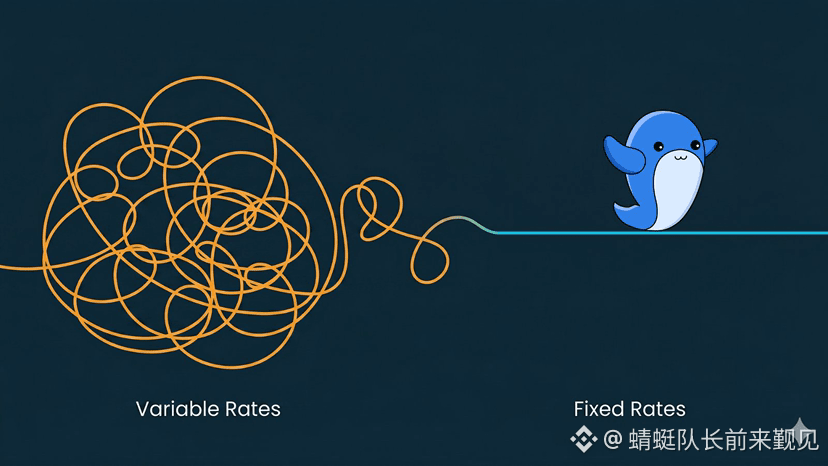
Compared to the numbers, @termmax I’d rather take a closer look at TermMax itself. Back when it was only fixed-rate lending and borrowing, it seemed straightforward. Now it feels more like it’s building a fund-matching venue on-chain. FT and XT break up the return, term, and risk. Limit-price orders let lenders and borrowers essentially set their own prices and find their own counterparties—so interest rates aren’t determined entirely by an algorithm anymore. I’ve placed a few orders myself, and the experience really is different.
The real test is still ahead. Even if order placement becomes more flexible, if there isn’t enough depth, you may end up with a price but no market. After the airdrop, I’ll keep an eye on the order book thickness, the aggregator’s slippage, and whether XT can truly reflect market sentiment. Having scale doesn’t necessarily mean liquidity can actually be used.
Let the airdrop be an unexpected bonus. What I really want to see is whether TermMax can make the matching process smoother. Get as much as you can; the rest depends on whether, over the next few months, it can get more people genuinely willing to put their money in and use it.
These past few days, the White House invited people from the crypto industry in for a meeting. In front of the president, lawmakers were urged to push the market-structure bill. The moment the news broke, market sentiment clearly relaxed. While I was scrolling through these articles, TermMax’s airdrop query also went live. After I connected my wallet and checked it in the afternoon, I actually became quieter. #TermMax
At today’s approximate market cap of about $180 million and a total supply of around 1 billion coins, the community portion on the optimistic side is only about 1.4–1.5 million U—so roughly 20 to 30 U per person. If the threshold is set around the 200-plus score range, then pushing it higher just isn’t that cost-effective. The funds locked in the protocol are close to $90 million; the registered wallets are 1.5 million and daily active users are 90,000. In the end, the final ratio may tighten a bit further. $BTC
Compared to the numbers, @TermMax I’d rather take a closer look at TermMax itself. Back when it was only fixed-rate lending and borrowing, it seemed straightforward. Now it feels more like it’s building a fund-matching venue on-chain. FT and XT break up the return, term, and risk. Limit-price orders let lenders and borrowers essentially set their own prices and find their own counterparties—so interest rates aren’t determined entirely by an algorithm anymore. I’ve placed a few orders myself, and the experience really is different.
The real test is still ahead. Even if order placement becomes more flexible, if there isn’t enough depth, you may end up with a price but no market. After the airdrop, I’ll keep an eye on the order book thickness, the aggregator’s slippage, and whether XT can truly reflect market sentiment. Having scale doesn’t necessarily mean liquidity can actually be used.
Let the airdrop be an unexpected bonus. What I really want to see is whether TermMax can make the matching process smoother. Get as much as you can; the rest depends on whether, over the next few months, it can get more people genuinely willing to put their money in and use it.
At today’s approximate market cap of about $180 million and a total supply of around 1 billion coins, the community portion on the optimistic side is only about 1.4–1.5 million U—so roughly 20 to 30 U per person. If the threshold is set around the 200-plus score range, then pushing it higher just isn’t that cost-effective. The funds locked in the protocol are close to $90 million; the registered wallets are 1.5 million and daily active users are 90,000. In the end, the final ratio may tighten a bit further. $BTC
Compared to the numbers, @TermMax I’d rather take a closer look at TermMax itself. Back when it was only fixed-rate lending and borrowing, it seemed straightforward. Now it feels more like it’s building a fund-matching venue on-chain. FT and XT break up the return, term, and risk. Limit-price orders let lenders and borrowers essentially set their own prices and find their own counterparties—so interest rates aren’t determined entirely by an algorithm anymore. I’ve placed a few orders myself, and the experience really is different.
The real test is still ahead. Even if order placement becomes more flexible, if there isn’t enough depth, you may end up with a price but no market. After the airdrop, I’ll keep an eye on the order book thickness, the aggregator’s slippage, and whether XT can truly reflect market sentiment. Having scale doesn’t necessarily mean liquidity can actually be used.
Let the airdrop be an unexpected bonus. What I really want to see is whether TermMax can make the matching process smoother. Get as much as you can; the rest depends on whether, over the next few months, it can get more people genuinely willing to put their money in and use it.
189
·
--
Many people judge whether a blockchain can truly support real-world assets by first checking whether the virtual machine and tooling are complete. These prerequisites are relatively easy to fill. DuskEVM’s support for mainstream wallets and developer environments is fairly straightforward—onboarding isn’t steep. @Dusk_Foundation What really makes me pause for a few more steps is that Dusk tries to address two forces that constrain each other at once: the two transaction parties don’t want to fully disclose asset details, yet regulators must be able to verify that the transaction hasn’t deviated from the rules. #dusk
Dusk splits this challenge into two parallel models. Phoenix uses zero-knowledge proofs to confirm validity, while keeping sensitive information within a verifiable boundary; Moonlight is designed for asset scenarios that must be made public. The two then move value through Transfer Contracts on the same settlement layer, so you don’t have to make a hard choice between privacy and transparency. For me, the value isn’t merely combining two sets of requirements—it’s turning on-demand disclosure into a default protocol capability. $BTC
When I look at XSC and Zedger, I care even more about the entire lifecycle of securities—from issuance through ongoing existence. Areas that used to be repeatedly checked by intermediaries—qualification, compliance, voting, revenue distribution—can, in theory, be encoded into on-chain logic for continuous execution. DuskDS is responsible for committing these state changes according to the agreed terms. No matter how familiar the toolchain is or how well-structured the architecture is, those are only entry tickets. What I truly want to keep observing is the engineering safety of zero-knowledge proofs, long-term robustness on the mainnet, and whether institutions are willing to put real assets into this environment for validation. Whether a chain can ultimately carry real-world assets doesn’t depend on whether development feels convenient—it depends on whether privacy, compliance, and asset rules can coexist sustainably. That’s also why I’m still watching $DUSK .
{spot}(DUSKUSDT)
Many people judge whether a blockchain can truly support real-world assets by first checking whether the virtual machine and tooling are complete. These prerequisites are relatively easy to fill. DuskEVM’s support for mainstream wallets and developer environments is fairly straightforward—onboarding isn’t steep. @Dusk What really makes me pause for a few more steps is that Dusk tries to address two forces that constrain each other at once: the two transaction parties don’t want to fully disclose asset details, yet regulators must be able to verify that the transaction hasn’t deviated from the rules. #dusk
Dusk splits this challenge into two parallel models. Phoenix uses zero-knowledge proofs to confirm validity, while keeping sensitive information within a verifiable boundary; Moonlight is designed for asset scenarios that must be made public. The two then move value through Transfer Contracts on the same settlement layer, so you don’t have to make a hard choice between privacy and transparency. For me, the value isn’t merely combining two sets of requirements—it’s turning on-demand disclosure into a default protocol capability. $BTC
When I look at XSC and Zedger, I care even more about the entire lifecycle of securities—from issuance through ongoing existence. Areas that used to be repeatedly checked by intermediaries—qualification, compliance, voting, revenue distribution—can, in theory, be encoded into on-chain logic for continuous execution. DuskDS is responsible for committing these state changes according to the agreed terms. No matter how familiar the toolchain is or how well-structured the architecture is, those are only entry tickets. What I truly want to keep observing is the engineering safety of zero-knowledge proofs, long-term robustness on the mainnet, and whether institutions are willing to put real assets into this environment for validation. Whether a chain can ultimately carry real-world assets doesn’t depend on whether development feels convenient—it depends on whether privacy, compliance, and asset rules can coexist sustainably. That’s also why I’m still watching $DUSK .
Dusk splits this challenge into two parallel models. Phoenix uses zero-knowledge proofs to confirm validity, while keeping sensitive information within a verifiable boundary; Moonlight is designed for asset scenarios that must be made public. The two then move value through Transfer Contracts on the same settlement layer, so you don’t have to make a hard choice between privacy and transparency. For me, the value isn’t merely combining two sets of requirements—it’s turning on-demand disclosure into a default protocol capability. $BTC
When I look at XSC and Zedger, I care even more about the entire lifecycle of securities—from issuance through ongoing existence. Areas that used to be repeatedly checked by intermediaries—qualification, compliance, voting, revenue distribution—can, in theory, be encoded into on-chain logic for continuous execution. DuskDS is responsible for committing these state changes according to the agreed terms. No matter how familiar the toolchain is or how well-structured the architecture is, those are only entry tickets. What I truly want to keep observing is the engineering safety of zero-knowledge proofs, long-term robustness on the mainnet, and whether institutions are willing to put real assets into this environment for validation. Whether a chain can ultimately carry real-world assets doesn’t depend on whether development feels convenient—it depends on whether privacy, compliance, and asset rules can coexist sustainably. That’s also why I’m still watching $DUSK .
202
·
--
Recently, in my circle, the way TermMax handles range orders for lending has been linked to the old “rigid redemption” games used by some large companies back then—manufacturing rigid payouts through paper promises and shifting funds around. After hearing that, I still opened the TermMax whitepaper first, broke down the on-chain logic, and found that the rumors are far from the actual mechanism. #TermMax
TermMax splits each individual funding amount in the contract into two separate certificates: one corresponds to the principal for rigid redemption at maturity, and the other corresponds to floating interest. The security of the principal does not rely on verbal guarantees; it is underpinned by real assets that are locked in the underlying layer of the smart contract—no “cycle” of using new funds to redeem old promises. @termmax I tested TermMax with small amounts a few times: after orders were filled, I checked the reserve and lock status, and the numbers matched. That eased my guard a bit. $牛来
On the interest-rate side, TermMax allows range limit orders—only trades within the set boundaries; it won’t touch anything outside them. It can also split the funds into several parts and place orders across different ranges, which feels as flexible as placing limit orders in the usual way. I split into two or three intervals and placed orders across them. Watching each one wait independently, the sense of control is much better than the one-size-fits-all interest rate of traditional lending pools.
The two are easy to confuse because on the surface they both talk about fixed returns. But those old models relied on paper guarantees and internal fund shuffling, with unclear and opaque accounting; with TermMax, orders, interest rates, and reserves are all verifiable on-chain. Matching is completed by the market within the predefined intervals, and risk controls are executed automatically by the contract. Instead of trust decided by people, it becomes trust decided by mathematics and code.
My experience using TermMax is that, at least mechanically, it returns principal safety and interest-rate choice power to users. Liquidity depth still needs time to be validated, and I’ll continue to observe TermMax’s trade executions and reserve changes with small positions.
Recently, in my circle, the way TermMax handles range orders for lending has been linked to the old “rigid redemption” games used by some large companies back then—manufacturing rigid payouts through paper promises and shifting funds around. After hearing that, I still opened the TermMax whitepaper first, broke down the on-chain logic, and found that the rumors are far from the actual mechanism. #TermMax
TermMax splits each individual funding amount in the contract into two separate certificates: one corresponds to the principal for rigid redemption at maturity, and the other corresponds to floating interest. The security of the principal does not rely on verbal guarantees; it is underpinned by real assets that are locked in the underlying layer of the smart contract—no “cycle” of using new funds to redeem old promises. @TermMax I tested TermMax with small amounts a few times: after orders were filled, I checked the reserve and lock status, and the numbers matched. That eased my guard a bit. $牛来
On the interest-rate side, TermMax allows range limit orders—only trades within the set boundaries; it won’t touch anything outside them. It can also split the funds into several parts and place orders across different ranges, which feels as flexible as placing limit orders in the usual way. I split into two or three intervals and placed orders across them. Watching each one wait independently, the sense of control is much better than the one-size-fits-all interest rate of traditional lending pools.
The two are easy to confuse because on the surface they both talk about fixed returns. But those old models relied on paper guarantees and internal fund shuffling, with unclear and opaque accounting; with TermMax, orders, interest rates, and reserves are all verifiable on-chain. Matching is completed by the market within the predefined intervals, and risk controls are executed automatically by the contract. Instead of trust decided by people, it becomes trust decided by mathematics and code.
My experience using TermMax is that, at least mechanically, it returns principal safety and interest-rate choice power to users. Liquidity depth still needs time to be validated, and I’ll continue to observe TermMax’s trade executions and reserve changes with small positions.
TermMax splits each individual funding amount in the contract into two separate certificates: one corresponds to the principal for rigid redemption at maturity, and the other corresponds to floating interest. The security of the principal does not rely on verbal guarantees; it is underpinned by real assets that are locked in the underlying layer of the smart contract—no “cycle” of using new funds to redeem old promises. @TermMax I tested TermMax with small amounts a few times: after orders were filled, I checked the reserve and lock status, and the numbers matched. That eased my guard a bit. $牛来
On the interest-rate side, TermMax allows range limit orders—only trades within the set boundaries; it won’t touch anything outside them. It can also split the funds into several parts and place orders across different ranges, which feels as flexible as placing limit orders in the usual way. I split into two or three intervals and placed orders across them. Watching each one wait independently, the sense of control is much better than the one-size-fits-all interest rate of traditional lending pools.
The two are easy to confuse because on the surface they both talk about fixed returns. But those old models relied on paper guarantees and internal fund shuffling, with unclear and opaque accounting; with TermMax, orders, interest rates, and reserves are all verifiable on-chain. Matching is completed by the market within the predefined intervals, and risk controls are executed automatically by the contract. Instead of trust decided by people, it becomes trust decided by mathematics and code.
My experience using TermMax is that, at least mechanically, it returns principal safety and interest-rate choice power to users. Liquidity depth still needs time to be validated, and I’ll continue to observe TermMax’s trade executions and reserve changes with small positions.
378
·
--
After work, in the evening, I deliberately took a detour to a small noodle shop that has been around for more than a dozen years and ordered a bowl of beef noodles. When the steaming broth was set down in front of me, I suddenly remembered how it feels to sort through Dusk lately—things that look simple on the surface often turn out to be completely different once you take them apart. Many people, the moment they hear “privacy,” immediately equate it with anonymous transfers, then start arguing about regulatory risks. But from the very beginning, Dusk wasn’t designed to hide transfers for on-chain users; it’s its own separate layer network, targeting the most essential settlement layer of traditional finance.
#dusk Its technical architecture is pointed very clearly: a confidential transaction mechanism to protect sensitive information, a ledger structure that ensures records are complete and verifiable, and security contract standards that let real financial assets move on-chain while meeting compliance audits—without having to expose every detail to the public. This is completely different from privacy projects that default to full anonymity and only get traced afterward. The token release schedule is stretched out; inflation pressure is intentionally spread thin. The team clearly isn’t in a rush to create liquidity by offloading short-term holdings. But solid technology doesn’t automatically mean the business has been proven. In public partnerships, institutional resources do exist—yet between the “strategic partnerships” mentioned in promotional materials and the actual number of on-chain settlement transactions, there’s still a significant gap. What can truly show whether the ecosystem has taken root is still things like governance vote participation, the frequency of contract deployments, and the organic trading activity of users who weren’t just airdropped.
@Dusk_Foundation $DUSK
In the end, Dusk’s value depends entirely on whether there are enough real financial assets—and whether they’re willing to complete issuance, trading, and settlement on this chain. If this closed loop never really forms, no matter how clever the design is, it’s only a narrative framework. Being able to run technically and having real people willing to run it are two different things. It’s too early to draw conclusions now; I’d rather wait for the on-chain data to speak for itself. Do you think these compliance-focused privacy chains can eventually grow an ecosystem with real vitality?$BTC
{spot}(DUSKUSDT)
After work, in the evening, I deliberately took a detour to a small noodle shop that has been around for more than a dozen years and ordered a bowl of beef noodles. When the steaming broth was set down in front of me, I suddenly remembered how it feels to sort through Dusk lately—things that look simple on the surface often turn out to be completely different once you take them apart. Many people, the moment they hear “privacy,” immediately equate it with anonymous transfers, then start arguing about regulatory risks. But from the very beginning, Dusk wasn’t designed to hide transfers for on-chain users; it’s its own separate layer network, targeting the most essential settlement layer of traditional finance.
#dusk Its technical architecture is pointed very clearly: a confidential transaction mechanism to protect sensitive information, a ledger structure that ensures records are complete and verifiable, and security contract standards that let real financial assets move on-chain while meeting compliance audits—without having to expose every detail to the public. This is completely different from privacy projects that default to full anonymity and only get traced afterward. The token release schedule is stretched out; inflation pressure is intentionally spread thin. The team clearly isn’t in a rush to create liquidity by offloading short-term holdings. But solid technology doesn’t automatically mean the business has been proven. In public partnerships, institutional resources do exist—yet between the “strategic partnerships” mentioned in promotional materials and the actual number of on-chain settlement transactions, there’s still a significant gap. What can truly show whether the ecosystem has taken root is still things like governance vote participation, the frequency of contract deployments, and the organic trading activity of users who weren’t just airdropped.
@Dusk $DUSK
In the end, Dusk’s value depends entirely on whether there are enough real financial assets—and whether they’re willing to complete issuance, trading, and settlement on this chain. If this closed loop never really forms, no matter how clever the design is, it’s only a narrative framework. Being able to run technically and having real people willing to run it are two different things. It’s too early to draw conclusions now; I’d rather wait for the on-chain data to speak for itself. Do you think these compliance-focused privacy chains can eventually grow an ecosystem with real vitality?$BTC
#dusk Its technical architecture is pointed very clearly: a confidential transaction mechanism to protect sensitive information, a ledger structure that ensures records are complete and verifiable, and security contract standards that let real financial assets move on-chain while meeting compliance audits—without having to expose every detail to the public. This is completely different from privacy projects that default to full anonymity and only get traced afterward. The token release schedule is stretched out; inflation pressure is intentionally spread thin. The team clearly isn’t in a rush to create liquidity by offloading short-term holdings. But solid technology doesn’t automatically mean the business has been proven. In public partnerships, institutional resources do exist—yet between the “strategic partnerships” mentioned in promotional materials and the actual number of on-chain settlement transactions, there’s still a significant gap. What can truly show whether the ecosystem has taken root is still things like governance vote participation, the frequency of contract deployments, and the organic trading activity of users who weren’t just airdropped.
@Dusk $DUSK
In the end, Dusk’s value depends entirely on whether there are enough real financial assets—and whether they’re willing to complete issuance, trading, and settlement on this chain. If this closed loop never really forms, no matter how clever the design is, it’s only a narrative framework. Being able to run technically and having real people willing to run it are two different things. It’s too early to draw conclusions now; I’d rather wait for the on-chain data to speak for itself. Do you think these compliance-focused privacy chains can eventually grow an ecosystem with real vitality?$BTC
147
·
--
As the 25th approaches, TMX is about to officially launch. Over these past few days, I squeezed all the scattered free time I had into careful, repeated reviews of TermMax’s design details. The deeper I go, the more I feel that what truly makes me want to stay isn’t that familiar governance token name, @termmax , but how it re-arranges a pool of funds that would otherwise just sit and quietly grow, into a yield flow structure that can be actively competed for and continuously measured with numbers. #TermMax $BTC
What I keep stopping at again and again is the Curator Vaults layer. It splits fund allocation permissions and yield rates into multiple strategy spaces, letting them mesh together—forming a network that shifts slowly as the amount of capital changes. When capital flows in and out, the underlying support moves along visible curves. Instead of making distant promises to the community, it directly writes the correspondence between governance weight and fund flow direction into the contract rules. As funds circulate, the idle portion is divided into protective buffers and deployable exposure; the exposure, pulled by TMX parameters, exchanges with external markets to capture returns, and then—together with the buffer assets—gets woven into Vault credentials. I ran through it several times in the interface and parameter simulations, and it feels like governance truly enters the fund routing and yield distribution process, turning abstract rights into a computable structure. The protocol ledger continuously records Vault health and asset exposures. Once yield is pushed below the warning line, Automated Rebalancing will let those who have staked TMX receive compensation and draw from underlying assets in proportion to their weights from the insurance reserve. I adjusted some extreme parameters a few times in the test environment, watching the compensation logic automatically run through—some predictable sense of order feels steadier than just slogans. Only after I got the entire logic straight did I clearly see that it doesn’t leave TMX sitting merely as a symbol; instead, it carries TMX all the way into treasury management, cross-protocol routing, and risk backstopping procedures. Of course, all of this is still mostly in design and early validation for now—the actual capital curves and market pressure haven’t fully unfolded yet. I’ll keep observing with small positions, watching whether the mechanism stays clear, and reminding myself not to equate the cleverness on paper directly with real-world stability once it’s live.
As the 25th approaches, TMX is about to officially launch. Over these past few days, I squeezed all the scattered free time I had into careful, repeated reviews of TermMax’s design details. The deeper I go, the more I feel that what truly makes me want to stay isn’t that familiar governance token name, @TermMax , but how it re-arranges a pool of funds that would otherwise just sit and quietly grow, into a yield flow structure that can be actively competed for and continuously measured with numbers. #TermMax $BTC
What I keep stopping at again and again is the Curator Vaults layer. It splits fund allocation permissions and yield rates into multiple strategy spaces, letting them mesh together—forming a network that shifts slowly as the amount of capital changes. When capital flows in and out, the underlying support moves along visible curves. Instead of making distant promises to the community, it directly writes the correspondence between governance weight and fund flow direction into the contract rules. As funds circulate, the idle portion is divided into protective buffers and deployable exposure; the exposure, pulled by TMX parameters, exchanges with external markets to capture returns, and then—together with the buffer assets—gets woven into Vault credentials. I ran through it several times in the interface and parameter simulations, and it feels like governance truly enters the fund routing and yield distribution process, turning abstract rights into a computable structure. The protocol ledger continuously records Vault health and asset exposures. Once yield is pushed below the warning line, Automated Rebalancing will let those who have staked TMX receive compensation and draw from underlying assets in proportion to their weights from the insurance reserve. I adjusted some extreme parameters a few times in the test environment, watching the compensation logic automatically run through—some predictable sense of order feels steadier than just slogans. Only after I got the entire logic straight did I clearly see that it doesn’t leave TMX sitting merely as a symbol; instead, it carries TMX all the way into treasury management, cross-protocol routing, and risk backstopping procedures. Of course, all of this is still mostly in design and early validation for now—the actual capital curves and market pressure haven’t fully unfolded yet. I’ll keep observing with small positions, watching whether the mechanism stays clear, and reminding myself not to equate the cleverness on paper directly with real-world stability once it’s live.
What I keep stopping at again and again is the Curator Vaults layer. It splits fund allocation permissions and yield rates into multiple strategy spaces, letting them mesh together—forming a network that shifts slowly as the amount of capital changes. When capital flows in and out, the underlying support moves along visible curves. Instead of making distant promises to the community, it directly writes the correspondence between governance weight and fund flow direction into the contract rules. As funds circulate, the idle portion is divided into protective buffers and deployable exposure; the exposure, pulled by TMX parameters, exchanges with external markets to capture returns, and then—together with the buffer assets—gets woven into Vault credentials. I ran through it several times in the interface and parameter simulations, and it feels like governance truly enters the fund routing and yield distribution process, turning abstract rights into a computable structure. The protocol ledger continuously records Vault health and asset exposures. Once yield is pushed below the warning line, Automated Rebalancing will let those who have staked TMX receive compensation and draw from underlying assets in proportion to their weights from the insurance reserve. I adjusted some extreme parameters a few times in the test environment, watching the compensation logic automatically run through—some predictable sense of order feels steadier than just slogans. Only after I got the entire logic straight did I clearly see that it doesn’t leave TMX sitting merely as a symbol; instead, it carries TMX all the way into treasury management, cross-protocol routing, and risk backstopping procedures. Of course, all of this is still mostly in design and early validation for now—the actual capital curves and market pressure haven’t fully unfolded yet. I’ll keep observing with small positions, watching whether the mechanism stays clear, and reminding myself not to equate the cleverness on paper directly with real-world stability once it’s live.
183
·
--
This is a bit tangled to explain. For the past few years, on-chain privacy—at least in my impression—has always been slow, expensive, and felt like something only geek toys would play with. Until recently, when I tried it out on Dusk myself, I realized the cost curve has quietly passed the turning point. #dusk
Dusk didn’t do it by making things transparent first and then patching in privacy. Instead, it makes privacy the default on the main network from the start. The most tangible part of the Hedger module for me is that restrained kind of balance: transactions are verifiable, but amounts and balances can only be seen clearly by the authorized party—like adding a layer of adjustable frosted glass over the data. After using it, I found that selective disclosure satisfies audits while still protecting business secrets, removing the old dilemma of having to choose between being fully public or fully hidden. It also happens to land right on a clear node of the MiCA rules, turning compliance into predictable rules rather than a shackle. In Europe, regulated securitized assets and compliant euro electronic money assets already operate based on Dusk, and the scale is not small. DuskEVM is compatible with Solidity; starting up on @Dusk_Foundation is almost zero additional cost—your existing toolchain can be used directly, which was especially smooth in testing. $DUSK
Of course, we still need to stay calm. Even though the proving system has been accelerated, whether the real mainnet latency and fees can pass the C-end threshold still needs to be validated with data. Between theoretical feasibility and large-scale adoption, there’s the reality that every single transaction runs on the main network. I currently view Dusk’s design rationally—and I’m also keeping a bit of expectation. What do you think? $BTC
{spot}(DUSKUSDT)
This is a bit tangled to explain. For the past few years, on-chain privacy—at least in my impression—has always been slow, expensive, and felt like something only geek toys would play with. Until recently, when I tried it out on Dusk myself, I realized the cost curve has quietly passed the turning point. #dusk
Dusk didn’t do it by making things transparent first and then patching in privacy. Instead, it makes privacy the default on the main network from the start. The most tangible part of the Hedger module for me is that restrained kind of balance: transactions are verifiable, but amounts and balances can only be seen clearly by the authorized party—like adding a layer of adjustable frosted glass over the data. After using it, I found that selective disclosure satisfies audits while still protecting business secrets, removing the old dilemma of having to choose between being fully public or fully hidden. It also happens to land right on a clear node of the MiCA rules, turning compliance into predictable rules rather than a shackle. In Europe, regulated securitized assets and compliant euro electronic money assets already operate based on Dusk, and the scale is not small. DuskEVM is compatible with Solidity; starting up on @Dusk is almost zero additional cost—your existing toolchain can be used directly, which was especially smooth in testing. $DUSK
Of course, we still need to stay calm. Even though the proving system has been accelerated, whether the real mainnet latency and fees can pass the C-end threshold still needs to be validated with data. Between theoretical feasibility and large-scale adoption, there’s the reality that every single transaction runs on the main network. I currently view Dusk’s design rationally—and I’m also keeping a bit of expectation. What do you think? $BTC
Dusk didn’t do it by making things transparent first and then patching in privacy. Instead, it makes privacy the default on the main network from the start. The most tangible part of the Hedger module for me is that restrained kind of balance: transactions are verifiable, but amounts and balances can only be seen clearly by the authorized party—like adding a layer of adjustable frosted glass over the data. After using it, I found that selective disclosure satisfies audits while still protecting business secrets, removing the old dilemma of having to choose between being fully public or fully hidden. It also happens to land right on a clear node of the MiCA rules, turning compliance into predictable rules rather than a shackle. In Europe, regulated securitized assets and compliant euro electronic money assets already operate based on Dusk, and the scale is not small. DuskEVM is compatible with Solidity; starting up on @Dusk is almost zero additional cost—your existing toolchain can be used directly, which was especially smooth in testing. $DUSK
Of course, we still need to stay calm. Even though the proving system has been accelerated, whether the real mainnet latency and fees can pass the C-end threshold still needs to be validated with data. Between theoretical feasibility and large-scale adoption, there’s the reality that every single transaction runs on the main network. I currently view Dusk’s design rationally—and I’m also keeping a bit of expectation. What do you think? $BTC
298
·
--
The captain has been studying TermMax’s liquidation mechanism for nearly two months, and the more I look, the more I feel that many people, the moment they hear “liquidation,” automatically apply the traditional logic of lending. They start off wrong from step one. What people are used to is: once the collateral ratio drops below a certain threshold, robots rush in, the lender quickly gets back the principal plus compensation, and they exit cleanly. But TermMax’s starting point is completely different. #TermMax It assumes that, in extreme cases, the lender may not be able to fully recover the assets lent out. The system requires that the books be squared first—even if the method is to hand the collateral directly to you. $BTC
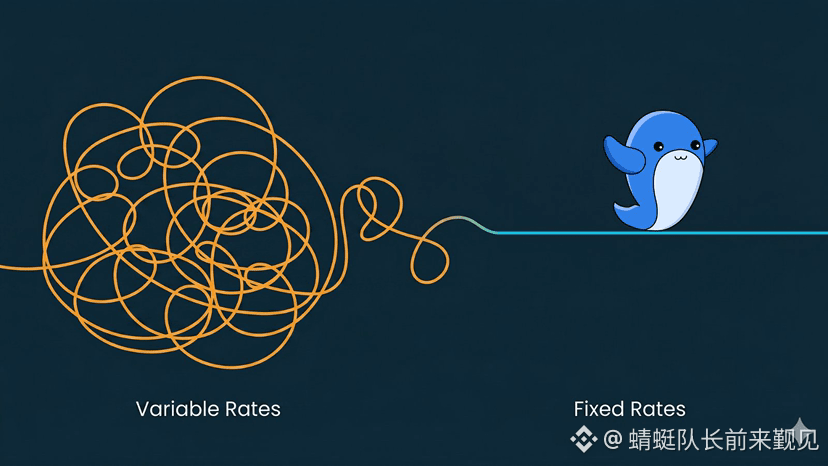
@termmax Technically, it has two layers. The first is a two-hour buffer window, during which the liquidator can step in and earn an incentive of about five percentage points. After the window closes, if the situation still hasn’t been handled cleanly, it triggers in-kind settlement. The redemption pool is no longer a single expected asset, but a packaged mix of the underlying and the collateral in proportion. You can’t just get back only the “thing that was lent.” You must take both the underlying exposure and the collateral together. This pulls the lender out of their comfort zone of focusing only on yield. In bad scenarios, you’re not simply exiting with principal and interest—you suddenly end up holding a bunch of assets that might still be dropping. After that, whether to hold, sell, or wait is up to your own judgment. At first, I also thought this wasn’t friendly to lenders. But the more I think about it, the more I feel it’s the only solution that makes sense. You either sacrifice protection for speed, or sacrifice speed for a backstop. If you want to have both, you have to force the lender to bear risk during the in-kind settlement step. TermMax doesn’t pretend it can protect you from everything. Instead, when pressure comes, it lays bare the asset composition and its exposure. I’ve run through several liquidation paths under different kinds of volatility, and what I feel most strongly is that risk-sharing is relatively honest—it doesn’t use an intermediate layer to hide the gap. What’s truly worth watching isn’t the modest fixed returns in calm periods, but what the redemption pool actually contains under stress, and whether the real trades can execute smoothly. These are what determine whether it can withstand a real round of downturn.
The captain has been studying TermMax’s liquidation mechanism for nearly two months, and the more I look, the more I feel that many people, the moment they hear “liquidation,” automatically apply the traditional logic of lending. They start off wrong from step one. What people are used to is: once the collateral ratio drops below a certain threshold, robots rush in, the lender quickly gets back the principal plus compensation, and they exit cleanly. But TermMax’s starting point is completely different. #TermMax It assumes that, in extreme cases, the lender may not be able to fully recover the assets lent out. The system requires that the books be squared first—even if the method is to hand the collateral directly to you. $BTC
@TermMax Technically, it has two layers. The first is a two-hour buffer window, during which the liquidator can step in and earn an incentive of about five percentage points. After the window closes, if the situation still hasn’t been handled cleanly, it triggers in-kind settlement. The redemption pool is no longer a single expected asset, but a packaged mix of the underlying and the collateral in proportion. You can’t just get back only the “thing that was lent.” You must take both the underlying exposure and the collateral together. This pulls the lender out of their comfort zone of focusing only on yield. In bad scenarios, you’re not simply exiting with principal and interest—you suddenly end up holding a bunch of assets that might still be dropping. After that, whether to hold, sell, or wait is up to your own judgment. At first, I also thought this wasn’t friendly to lenders. But the more I think about it, the more I feel it’s the only solution that makes sense. You either sacrifice protection for speed, or sacrifice speed for a backstop. If you want to have both, you have to force the lender to bear risk during the in-kind settlement step. TermMax doesn’t pretend it can protect you from everything. Instead, when pressure comes, it lays bare the asset composition and its exposure. I’ve run through several liquidation paths under different kinds of volatility, and what I feel most strongly is that risk-sharing is relatively honest—it doesn’t use an intermediate layer to hide the gap. What’s truly worth watching isn’t the modest fixed returns in calm periods, but what the redemption pool actually contains under stress, and whether the real trades can execute smoothly. These are what determine whether it can withstand a real round of downturn.
@TermMax Technically, it has two layers. The first is a two-hour buffer window, during which the liquidator can step in and earn an incentive of about five percentage points. After the window closes, if the situation still hasn’t been handled cleanly, it triggers in-kind settlement. The redemption pool is no longer a single expected asset, but a packaged mix of the underlying and the collateral in proportion. You can’t just get back only the “thing that was lent.” You must take both the underlying exposure and the collateral together. This pulls the lender out of their comfort zone of focusing only on yield. In bad scenarios, you’re not simply exiting with principal and interest—you suddenly end up holding a bunch of assets that might still be dropping. After that, whether to hold, sell, or wait is up to your own judgment. At first, I also thought this wasn’t friendly to lenders. But the more I think about it, the more I feel it’s the only solution that makes sense. You either sacrifice protection for speed, or sacrifice speed for a backstop. If you want to have both, you have to force the lender to bear risk during the in-kind settlement step. TermMax doesn’t pretend it can protect you from everything. Instead, when pressure comes, it lays bare the asset composition and its exposure. I’ve run through several liquidation paths under different kinds of volatility, and what I feel most strongly is that risk-sharing is relatively honest—it doesn’t use an intermediate layer to hide the gap. What’s truly worth watching isn’t the modest fixed returns in calm periods, but what the redemption pool actually contains under stress, and whether the real trades can execute smoothly. These are what determine whether it can withstand a real round of downturn.
91
·
--
After dinner, the captain was bored and went through a few privacy-compliant infrastructure basics, and Dusk had me pause a bit longer. It didn’t rush to shove itself into a popular narrative; instead, it directly confronted the hardest-to-avoid contradiction when tokenizing securities, funds, and RWA on-chain: how can something be both publicly verifiable and a trade secret at the same time? A typical public chain is transparent by default and cheap to verify, but financial institutions can’t accept having their positions and counterparties fully exposed. Conversely, if everything is hidden, regulators can’t accept a black box. @Dusk_Foundation Dusk from the start treated both as two sides of the same problem.
Phoenix uses zero-knowledge proofs to hide the transaction amounts and the parties involved in the notes, while also properly handling public outputs such as change, preventing the privacy boundaries from being torn open. Zedger is a hybrid model: it preserves UTXO privacy characteristics while introducing account-level controllability, enabling issuers to manage the full lifecycle of securities without exposing holder-level details. XSC then encodes these constraints directly into contract standards, so that compliance rules can be verified and executed. I spent a few evenings cross-checking the documentation, and I can feel the engineering effort and sincerity. The onboarding barrier isn’t low, but for teams that truly need to handle regulated assets, this cost may well be worth it. $DUSK
Getting the technology to run is only the first step. Whether actual securities and RWAs will really migrate onto the system—whether the settlement cadence and the depth of institutional participation can sustain operations—are the real tests. After getting burned, I’ve become more skeptical about any next-generation financial infrastructure. Dusk at least defines the problem clearly, and it doesn’t use exaggerated wording to mask the difficulty. I’ll keep using an engineer’s habit to verify the documentation and on-chain behavior. Be cautious, but not outright negative—if this channel really can work, it at least provides positive answers to many projects’ reasons for choosing to sidestep the issue. #dusk $BTC
{spot}(DUSKUSDT)
After dinner, the captain was bored and went through a few privacy-compliant infrastructure basics, and Dusk had me pause a bit longer. It didn’t rush to shove itself into a popular narrative; instead, it directly confronted the hardest-to-avoid contradiction when tokenizing securities, funds, and RWA on-chain: how can something be both publicly verifiable and a trade secret at the same time? A typical public chain is transparent by default and cheap to verify, but financial institutions can’t accept having their positions and counterparties fully exposed. Conversely, if everything is hidden, regulators can’t accept a black box. @Dusk Dusk from the start treated both as two sides of the same problem.
Phoenix uses zero-knowledge proofs to hide the transaction amounts and the parties involved in the notes, while also properly handling public outputs such as change, preventing the privacy boundaries from being torn open. Zedger is a hybrid model: it preserves UTXO privacy characteristics while introducing account-level controllability, enabling issuers to manage the full lifecycle of securities without exposing holder-level details. XSC then encodes these constraints directly into contract standards, so that compliance rules can be verified and executed. I spent a few evenings cross-checking the documentation, and I can feel the engineering effort and sincerity. The onboarding barrier isn’t low, but for teams that truly need to handle regulated assets, this cost may well be worth it. $DUSK
Getting the technology to run is only the first step. Whether actual securities and RWAs will really migrate onto the system—whether the settlement cadence and the depth of institutional participation can sustain operations—are the real tests. After getting burned, I’ve become more skeptical about any next-generation financial infrastructure. Dusk at least defines the problem clearly, and it doesn’t use exaggerated wording to mask the difficulty. I’ll keep using an engineer’s habit to verify the documentation and on-chain behavior. Be cautious, but not outright negative—if this channel really can work, it at least provides positive answers to many projects’ reasons for choosing to sidestep the issue. #dusk $BTC
Phoenix uses zero-knowledge proofs to hide the transaction amounts and the parties involved in the notes, while also properly handling public outputs such as change, preventing the privacy boundaries from being torn open. Zedger is a hybrid model: it preserves UTXO privacy characteristics while introducing account-level controllability, enabling issuers to manage the full lifecycle of securities without exposing holder-level details. XSC then encodes these constraints directly into contract standards, so that compliance rules can be verified and executed. I spent a few evenings cross-checking the documentation, and I can feel the engineering effort and sincerity. The onboarding barrier isn’t low, but for teams that truly need to handle regulated assets, this cost may well be worth it. $DUSK
Getting the technology to run is only the first step. Whether actual securities and RWAs will really migrate onto the system—whether the settlement cadence and the depth of institutional participation can sustain operations—are the real tests. After getting burned, I’ve become more skeptical about any next-generation financial infrastructure. Dusk at least defines the problem clearly, and it doesn’t use exaggerated wording to mask the difficulty. I’ll keep using an engineer’s habit to verify the documentation and on-chain behavior. Be cautious, but not outright negative—if this channel really can work, it at least provides positive answers to many projects’ reasons for choosing to sidestep the issue. #dusk $BTC
107
·
--
If borrowers can lock in the highest cost they’re willing to pay in advance, and lenders can lock in the lowest return, and interest rates are only revealed later as mere numbers—could it be that interest rates have already turned into something that starts a bidding-game between both sides before they even complete the trade?
At first, I thought of TermMax as a tool that simply locks floating interest rates directly, and didn’t think much of it. But after reading the 2026 whitepaper and splitting it apart with FT and XT, my thoughts changed. The @termmax debt is divided into two negotiable instruments: one matures and must be settled for a fixed amount, while the other carries the remainder subject to interest-rate fluctuations. Together, the two parts make up the complete debt, and the entries in the ledger become assets that can be priced and bought and sold. #TermMax $BTC
What truly changed my mind was the capped pricing in TermMax V2. Lenders post their own lowest return, borrowers post their highest cost, and the system finds a more suitable match from these orders. Users are no longer passively assigned a ready-made annualized rate; instead, they proactively write their price expectations into the system. TermMax isn’t just about producing a fixed interest rate—it’s about letting the market price of funding costs emerge over the coming period on its own. The risk is very real, too. If the order volume stays thin, the so-called market interest rate may just be a surface number propped up by a small amount of capital. Locking in the cost doesn’t necessarily make it fair. Next, I’ll be watching to see whether, across different terms, a relatively stable curve can gradually form; whether there is ongoing competition between the capped-price limits; and whether the pricing of these instruments can line up with floating interest rates. Only if these things slowly become solid can we say we’ve truly moved toward an on-chain interest-rate market—not merely a lending product that locks in costs ahead of time.
If borrowers can lock in the highest cost they’re willing to pay in advance, and lenders can lock in the lowest return, and interest rates are only revealed later as mere numbers—could it be that interest rates have already turned into something that starts a bidding-game between both sides before they even complete the trade?
At first, I thought of TermMax as a tool that simply locks floating interest rates directly, and didn’t think much of it. But after reading the 2026 whitepaper and splitting it apart with FT and XT, my thoughts changed. The @TermMax debt is divided into two negotiable instruments: one matures and must be settled for a fixed amount, while the other carries the remainder subject to interest-rate fluctuations. Together, the two parts make up the complete debt, and the entries in the ledger become assets that can be priced and bought and sold. #TermMax $BTC
What truly changed my mind was the capped pricing in TermMax V2. Lenders post their own lowest return, borrowers post their highest cost, and the system finds a more suitable match from these orders. Users are no longer passively assigned a ready-made annualized rate; instead, they proactively write their price expectations into the system. TermMax isn’t just about producing a fixed interest rate—it’s about letting the market price of funding costs emerge over the coming period on its own. The risk is very real, too. If the order volume stays thin, the so-called market interest rate may just be a surface number propped up by a small amount of capital. Locking in the cost doesn’t necessarily make it fair. Next, I’ll be watching to see whether, across different terms, a relatively stable curve can gradually form; whether there is ongoing competition between the capped-price limits; and whether the pricing of these instruments can line up with floating interest rates. Only if these things slowly become solid can we say we’ve truly moved toward an on-chain interest-rate market—not merely a lending product that locks in costs ahead of time.
At first, I thought of TermMax as a tool that simply locks floating interest rates directly, and didn’t think much of it. But after reading the 2026 whitepaper and splitting it apart with FT and XT, my thoughts changed. The @TermMax debt is divided into two negotiable instruments: one matures and must be settled for a fixed amount, while the other carries the remainder subject to interest-rate fluctuations. Together, the two parts make up the complete debt, and the entries in the ledger become assets that can be priced and bought and sold. #TermMax $BTC
What truly changed my mind was the capped pricing in TermMax V2. Lenders post their own lowest return, borrowers post their highest cost, and the system finds a more suitable match from these orders. Users are no longer passively assigned a ready-made annualized rate; instead, they proactively write their price expectations into the system. TermMax isn’t just about producing a fixed interest rate—it’s about letting the market price of funding costs emerge over the coming period on its own. The risk is very real, too. If the order volume stays thin, the so-called market interest rate may just be a surface number propped up by a small amount of capital. Locking in the cost doesn’t necessarily make it fair. Next, I’ll be watching to see whether, across different terms, a relatively stable curve can gradually form; whether there is ongoing competition between the capped-price limits; and whether the pricing of these instruments can line up with floating interest rates. Only if these things slowly become solid can we say we’ve truly moved toward an on-chain interest-rate market—not merely a lending product that locks in costs ahead of time.
106
·
--
After some time of settling, I pulled Dusk Network out again and had another look. #dusk What truly attracted me this time is how they use zero-knowledge proofs. Dusk doesn’t throw every transaction detail onto the chain. Instead, using their own contract standards designed for compliance scenarios, they leave on-chain only evidence that proves the operation was carried out fully according to the rules. Outsiders can confirm that “this is legal and compliant,” but they can’t see how large the order was, who the address belongs to, or how much is left in the account. @Dusk_Foundation $DUSK
That way, identity verification, qualification confirmation, and even some tax-related conditions can be fulfilled without laying sensitive financial data bare. Put simply, it gives you a proof that’s sufficient for you to trust that everything was done according to regulations—without revealing the full picture of the entire on-chain workflow. For institutions that need verifiability but fiercely protect commercial secrets, Dusk’s approach is more targeted than simply stacking up technical specifications. $BTC
Still, I don’t dare to treat this path as completely stable. No matter how beautifully zero-knowledge proofs are described in the documentation, when market sentiment runs hot, the network suddenly gets congested, or the regulatory winds shift, whether proof generation and verification can remain reliably robust is the real question. On a more practical level, financial institutions want a compliant channel that can be verified—but they absolutely don’t want their fund movements and position changes to be tracked one by one from the public ledger by peers. In the end, the industry probably won’t swing to either total transparency or complete obscurity. Instead, it may evolve into selective disclosure: make the proofs when you should, and keep the financial details that should be hidden hidden. If Dusk can truly keep this working reliably under real market pressure, then I’ll keep watching.
{spot}(DUSKUSDT)
After some time of settling, I pulled Dusk Network out again and had another look. #dusk What truly attracted me this time is how they use zero-knowledge proofs. Dusk doesn’t throw every transaction detail onto the chain. Instead, using their own contract standards designed for compliance scenarios, they leave on-chain only evidence that proves the operation was carried out fully according to the rules. Outsiders can confirm that “this is legal and compliant,” but they can’t see how large the order was, who the address belongs to, or how much is left in the account. @Dusk $DUSK
That way, identity verification, qualification confirmation, and even some tax-related conditions can be fulfilled without laying sensitive financial data bare. Put simply, it gives you a proof that’s sufficient for you to trust that everything was done according to regulations—without revealing the full picture of the entire on-chain workflow. For institutions that need verifiability but fiercely protect commercial secrets, Dusk’s approach is more targeted than simply stacking up technical specifications. $BTC
Still, I don’t dare to treat this path as completely stable. No matter how beautifully zero-knowledge proofs are described in the documentation, when market sentiment runs hot, the network suddenly gets congested, or the regulatory winds shift, whether proof generation and verification can remain reliably robust is the real question. On a more practical level, financial institutions want a compliant channel that can be verified—but they absolutely don’t want their fund movements and position changes to be tracked one by one from the public ledger by peers. In the end, the industry probably won’t swing to either total transparency or complete obscurity. Instead, it may evolve into selective disclosure: make the proofs when you should, and keep the financial details that should be hidden hidden. If Dusk can truly keep this working reliably under real market pressure, then I’ll keep watching.
That way, identity verification, qualification confirmation, and even some tax-related conditions can be fulfilled without laying sensitive financial data bare. Put simply, it gives you a proof that’s sufficient for you to trust that everything was done according to regulations—without revealing the full picture of the entire on-chain workflow. For institutions that need verifiability but fiercely protect commercial secrets, Dusk’s approach is more targeted than simply stacking up technical specifications. $BTC
Still, I don’t dare to treat this path as completely stable. No matter how beautifully zero-knowledge proofs are described in the documentation, when market sentiment runs hot, the network suddenly gets congested, or the regulatory winds shift, whether proof generation and verification can remain reliably robust is the real question. On a more practical level, financial institutions want a compliant channel that can be verified—but they absolutely don’t want their fund movements and position changes to be tracked one by one from the public ledger by peers. In the end, the industry probably won’t swing to either total transparency or complete obscurity. Instead, it may evolve into selective disclosure: make the proofs when you should, and keep the financial details that should be hidden hidden. If Dusk can truly keep this working reliably under real market pressure, then I’ll keep watching.
87
·
--
I keep rereading Dusk’s ecosystem, and the more I look, the more I’m concerned about a more practical question: the partnership roster is already quite respectable, but how many of these partnerships actually become assets, users, and liquidity on the Dusk chain? The @Dusk_Foundation official numbers aren’t bad—confirming an issuance of more than 300 million euros, channel coverage reaching over 50,000 investors, and more than 210 million DUSK tokens staked. The partners involve issuance, oracles, and compliance technology—everything seems to be covered. But when you look further, some of these deals have been discussed for more than two years, yet Dusk Trade is still under construction, and DuskEVM and the privacy modules are still stuck in the testnet. What I find most striking is that even Dusk’s August 15th article admits that tokenization can reduce issuance and settlement friction, but it can’t conjure up buyers, sellers, reasonable prices, and market depth out of thin air. The sentence #dusk hits the exact core of my doubts about Dusk. More cooperation doesn’t automatically mean the ecosystem is already running. $DUSK In the next phase, what I want to see more is the specifics: how many assets are actually issued, how many users are truly trading, and how much volume and depth the secondary market has. Once those numbers come out, the institutional narrative can finally start delivering. Otherwise, between “a lot of partnerships” and “a thriving Dusk ecosystem,” there’s still a long road ahead. I’ve been watching Dusk for a long time, and I’m clear that this kind of gap isn’t uncommon—ultimately it still has to be proven with verifiable data. Maintain cautious expectations—it’s more solid than staring at a list with nothing to back it up. $BTC
{spot}(DUSKUSDT)
I keep rereading Dusk’s ecosystem, and the more I look, the more I’m concerned about a more practical question: the partnership roster is already quite respectable, but how many of these partnerships actually become assets, users, and liquidity on the Dusk chain? The @Dusk official numbers aren’t bad—confirming an issuance of more than 300 million euros, channel coverage reaching over 50,000 investors, and more than 210 million DUSK tokens staked. The partners involve issuance, oracles, and compliance technology—everything seems to be covered. But when you look further, some of these deals have been discussed for more than two years, yet Dusk Trade is still under construction, and DuskEVM and the privacy modules are still stuck in the testnet. What I find most striking is that even Dusk’s August 15th article admits that tokenization can reduce issuance and settlement friction, but it can’t conjure up buyers, sellers, reasonable prices, and market depth out of thin air. The sentence #dusk hits the exact core of my doubts about Dusk. More cooperation doesn’t automatically mean the ecosystem is already running. $DUSK In the next phase, what I want to see more is the specifics: how many assets are actually issued, how many users are truly trading, and how much volume and depth the secondary market has. Once those numbers come out, the institutional narrative can finally start delivering. Otherwise, between “a lot of partnerships” and “a thriving Dusk ecosystem,” there’s still a long road ahead. I’ve been watching Dusk for a long time, and I’m clear that this kind of gap isn’t uncommon—ultimately it still has to be proven with verifiable data. Maintain cautious expectations—it’s more solid than staring at a list with nothing to back it up. $BTC
126
·
--
After mulling over Dusk’s Moonlight and Phoenix a few times, I always circle back to the key points related to permissions. Previously, I simply understood privacy as blocking information; now I care more about default closure, verifiability when proof is required, and disclosure that can still follow the predetermined path to deliver information to specific parties. Dusk makes this controllable way of “opening” access feel more aligned with real business needs than mere information blocking. Moonlight in Dusk uses a publicly visible account system; Phoenix uses an output model with a masking layer. With zero-knowledge techniques, it can confirm that transactions are legitimate, that the funding conditions are satisfied, and prevent double spending—yet it isolates the specific amounts and identities from observers. The key that selectively opens visibility is precisely what makes Dusk’s privacy into a core, manageable capability. In the official requirements for regulated assets, Dusk puts on the table things like permission management, transfer verification, post-event auditability, and settlement coordination. Who can hold, who can transfer, and how much information is made public can all be written directly into the asset rules.@Dusk_Foundation #dusk $BTC
Dusk’s network base layer handles consensus and finality, while the upper-layer execution environment provides different routes.$DUSK What I really care about isn’t the specific execution approach, but whether Dusk can make the entire chain—from issuance to settlement and to information disclosure—work end to end. Dusk is also working with a European asset trading institution with a sizable current footprint, exploring collaboration to complete compliant trading and settlement of already-listed stocks and bonds on-chain. Public data from that institution shows financing volumes over 200 million euros, and active users exceeding 17,000—at least giving Dusk a concrete scenario, though a scenario isn’t the same as sustained demand already having materialized. In the end, I’m focused on whether Dusk’s rules can truly run in practice, and whether real trading volume can translate into the consumption of network tokens and the incentives for staking. The first determines whether the product is usable, and the second determines whether the network can retain real value. Dusk’s overall design strikes a relatively solid balance between privacy protection and compliance requirements. In actual rollout, it may face issues like a slower deployment cadence and insufficient early activity, but based on the direction I’ve seen so far, I still hold a cautious but positive view.
{spot}(DUSKUSDT)
After mulling over Dusk’s Moonlight and Phoenix a few times, I always circle back to the key points related to permissions. Previously, I simply understood privacy as blocking information; now I care more about default closure, verifiability when proof is required, and disclosure that can still follow the predetermined path to deliver information to specific parties. Dusk makes this controllable way of “opening” access feel more aligned with real business needs than mere information blocking. Moonlight in Dusk uses a publicly visible account system; Phoenix uses an output model with a masking layer. With zero-knowledge techniques, it can confirm that transactions are legitimate, that the funding conditions are satisfied, and prevent double spending—yet it isolates the specific amounts and identities from observers. The key that selectively opens visibility is precisely what makes Dusk’s privacy into a core, manageable capability. In the official requirements for regulated assets, Dusk puts on the table things like permission management, transfer verification, post-event auditability, and settlement coordination. Who can hold, who can transfer, and how much information is made public can all be written directly into the asset rules.@Dusk #dusk $BTC
Dusk’s network base layer handles consensus and finality, while the upper-layer execution environment provides different routes.$DUSK What I really care about isn’t the specific execution approach, but whether Dusk can make the entire chain—from issuance to settlement and to information disclosure—work end to end. Dusk is also working with a European asset trading institution with a sizable current footprint, exploring collaboration to complete compliant trading and settlement of already-listed stocks and bonds on-chain. Public data from that institution shows financing volumes over 200 million euros, and active users exceeding 17,000—at least giving Dusk a concrete scenario, though a scenario isn’t the same as sustained demand already having materialized. In the end, I’m focused on whether Dusk’s rules can truly run in practice, and whether real trading volume can translate into the consumption of network tokens and the incentives for staking. The first determines whether the product is usable, and the second determines whether the network can retain real value. Dusk’s overall design strikes a relatively solid balance between privacy protection and compliance requirements. In actual rollout, it may face issues like a slower deployment cadence and insufficient early activity, but based on the direction I’ve seen so far, I still hold a cautious but positive view.
Dusk’s network base layer handles consensus and finality, while the upper-layer execution environment provides different routes.$DUSK What I really care about isn’t the specific execution approach, but whether Dusk can make the entire chain—from issuance to settlement and to information disclosure—work end to end. Dusk is also working with a European asset trading institution with a sizable current footprint, exploring collaboration to complete compliant trading and settlement of already-listed stocks and bonds on-chain. Public data from that institution shows financing volumes over 200 million euros, and active users exceeding 17,000—at least giving Dusk a concrete scenario, though a scenario isn’t the same as sustained demand already having materialized. In the end, I’m focused on whether Dusk’s rules can truly run in practice, and whether real trading volume can translate into the consumption of network tokens and the incentives for staking. The first determines whether the product is usable, and the second determines whether the network can retain real value. Dusk’s overall design strikes a relatively solid balance between privacy protection and compliance requirements. In actual rollout, it may face issues like a slower deployment cadence and insufficient early activity, but based on the direction I’ve seen so far, I still hold a cautious but positive view.
114
·
--
I dug up and re-read the bridge permission incident from mid-January 2026 for Dusk. After the signing wallet was taken over, the assets left in rhythm—millions to tens of millions in value were transferred out one after another—until the team cut off the service. Only then did the last, larger attempt stop. The issue was confined to the bridging layer; the consensus and the protocol itself weren’t implicated. This outcome isn’t surprising, but it nudged my earlier default trust in its modular design back by half a step. @Dusk_Foundation $DUSK
From the start, Dusk deliberately separates consensus, settlement, and external execution—keeping DuskDS and native settlement within controllable bounds and pushing EVM as far outward as possible. In theory, if any one layer fails, it shouldn’t directly drag the other two layers down. But what actually failed was the lightweight path left in place for speed: signing, events, and the network were tied together, and once the permissions slipped, the whole line stopped with it. The more independent the architecture is, the easier it is to overlook the human trust assumptions at the boundaries. #dusk $BTC
After reviewing the timeline, the shutdown actions were effective, and the losses didn’t spread to the chain itself. This kind of “bad” that stays at the interface—where the damage is stopped at the interface—is colder than I expected. Dusk’s isolation at least demonstrates that splitting can contain problems. But once assets leave native settlement, new trust assumptions resurface. The costs at the boundaries won’t disappear because a single successful shutdown happened; however, at least this time they weren’t proven to be completely invalid. That’s enough to justify continuing to observe.
{spot}(DUSKUSDT)
I dug up and re-read the bridge permission incident from mid-January 2026 for Dusk. After the signing wallet was taken over, the assets left in rhythm—millions to tens of millions in value were transferred out one after another—until the team cut off the service. Only then did the last, larger attempt stop. The issue was confined to the bridging layer; the consensus and the protocol itself weren’t implicated. This outcome isn’t surprising, but it nudged my earlier default trust in its modular design back by half a step. @Dusk $DUSK
From the start, Dusk deliberately separates consensus, settlement, and external execution—keeping DuskDS and native settlement within controllable bounds and pushing EVM as far outward as possible. In theory, if any one layer fails, it shouldn’t directly drag the other two layers down. But what actually failed was the lightweight path left in place for speed: signing, events, and the network were tied together, and once the permissions slipped, the whole line stopped with it. The more independent the architecture is, the easier it is to overlook the human trust assumptions at the boundaries. #dusk $BTC
After reviewing the timeline, the shutdown actions were effective, and the losses didn’t spread to the chain itself. This kind of “bad” that stays at the interface—where the damage is stopped at the interface—is colder than I expected. Dusk’s isolation at least demonstrates that splitting can contain problems. But once assets leave native settlement, new trust assumptions resurface. The costs at the boundaries won’t disappear because a single successful shutdown happened; however, at least this time they weren’t proven to be completely invalid. That’s enough to justify continuing to observe.
From the start, Dusk deliberately separates consensus, settlement, and external execution—keeping DuskDS and native settlement within controllable bounds and pushing EVM as far outward as possible. In theory, if any one layer fails, it shouldn’t directly drag the other two layers down. But what actually failed was the lightweight path left in place for speed: signing, events, and the network were tied together, and once the permissions slipped, the whole line stopped with it. The more independent the architecture is, the easier it is to overlook the human trust assumptions at the boundaries. #dusk $BTC
After reviewing the timeline, the shutdown actions were effective, and the losses didn’t spread to the chain itself. This kind of “bad” that stays at the interface—where the damage is stopped at the interface—is colder than I expected. Dusk’s isolation at least demonstrates that splitting can contain problems. But once assets leave native settlement, new trust assumptions resurface. The costs at the boundaries won’t disappear because a single successful shutdown happened; however, at least this time they weren’t proven to be completely invalid. That’s enough to justify continuing to observe.
83
·
--
These past few years, watching compliance infrastructure has left me a bit numb. Many projects talk about privacy and regulation, but when it comes to real deployment, things always get stuck at some point in the process. Dusk’s positioning is very clear: it’s designed specifically for regulated financial markets—blending programmable privacy with full compliance. It supports encryption and transparency on demand, allows authorized parties to selectively disclose information, keeps settlement deterministic, and goes straight after real-world assets and compliant securities. The native token $DUSK handles the underlying orchestration.
What really got me to sit down and test it was DuskEVM. The testnet is already up and running. Institutional developers can plug in directly using Solidity and Hardhat, with almost no tool changes. Down below, Hedger uses homomorphic encryption plus zero-knowledge proofs to keep things both confidential and auditable—so business logic can stay private while still being verifiable. I deployed a few asset-transfer logic flows using contract templates I’m familiar with; the feel is pretty much like mainstream EVM. The only extra bits are a handful of configuration lines for calling the privacy interfaces. @Dusk_Foundation ’s ramp-up cost is mostly about understanding the business boundaries, not the syntax itself.
On the partnership side, it’s equally pragmatic: they’ve already tied up with multiple EU-licensed institutions. One entity regulated by the AFM in the Netherlands plans to issue and trade native on-chain assets totaling more than €300 million, completing the entire lifecycle on-chain. The advantage is that the balance between privacy and transparency is handled quite cleanly. The main risk is that the mainnet has not been switched over yet; the pace of regulation and the real scale of funds still need time to be validated. I’ve stepped into the trap before—pretty testnet, but the mainnet never quite materialized—so now I’ll only proceed cautiously and keep a close watch. At least the direction is honest. #dusk $BTC
{spot}(DUSKUSDT)
These past few years, watching compliance infrastructure has left me a bit numb. Many projects talk about privacy and regulation, but when it comes to real deployment, things always get stuck at some point in the process. Dusk’s positioning is very clear: it’s designed specifically for regulated financial markets—blending programmable privacy with full compliance. It supports encryption and transparency on demand, allows authorized parties to selectively disclose information, keeps settlement deterministic, and goes straight after real-world assets and compliant securities. The native token $DUSK handles the underlying orchestration.
What really got me to sit down and test it was DuskEVM. The testnet is already up and running. Institutional developers can plug in directly using Solidity and Hardhat, with almost no tool changes. Down below, Hedger uses homomorphic encryption plus zero-knowledge proofs to keep things both confidential and auditable—so business logic can stay private while still being verifiable. I deployed a few asset-transfer logic flows using contract templates I’m familiar with; the feel is pretty much like mainstream EVM. The only extra bits are a handful of configuration lines for calling the privacy interfaces. @Dusk ’s ramp-up cost is mostly about understanding the business boundaries, not the syntax itself.
On the partnership side, it’s equally pragmatic: they’ve already tied up with multiple EU-licensed institutions. One entity regulated by the AFM in the Netherlands plans to issue and trade native on-chain assets totaling more than €300 million, completing the entire lifecycle on-chain. The advantage is that the balance between privacy and transparency is handled quite cleanly. The main risk is that the mainnet has not been switched over yet; the pace of regulation and the real scale of funds still need time to be validated. I’ve stepped into the trap before—pretty testnet, but the mainnet never quite materialized—so now I’ll only proceed cautiously and keep a close watch. At least the direction is honest. #dusk $BTC
What really got me to sit down and test it was DuskEVM. The testnet is already up and running. Institutional developers can plug in directly using Solidity and Hardhat, with almost no tool changes. Down below, Hedger uses homomorphic encryption plus zero-knowledge proofs to keep things both confidential and auditable—so business logic can stay private while still being verifiable. I deployed a few asset-transfer logic flows using contract templates I’m familiar with; the feel is pretty much like mainstream EVM. The only extra bits are a handful of configuration lines for calling the privacy interfaces. @Dusk ’s ramp-up cost is mostly about understanding the business boundaries, not the syntax itself.
On the partnership side, it’s equally pragmatic: they’ve already tied up with multiple EU-licensed institutions. One entity regulated by the AFM in the Netherlands plans to issue and trade native on-chain assets totaling more than €300 million, completing the entire lifecycle on-chain. The advantage is that the balance between privacy and transparency is handled quite cleanly. The main risk is that the mainnet has not been switched over yet; the pace of regulation and the real scale of funds still need time to be validated. I’ve stepped into the trap before—pretty testnet, but the mainnet never quite materialized—so now I’ll only proceed cautiously and keep a close watch. At least the direction is honest. #dusk $BTC
122
·
--
Tonight I read through Babylon’s native Bitcoin lending proposal again, focusing specifically on the repeatedly emphasized highlights. While reading, I wrote down details of the liquidation process in my notebook—trying to distinguish which parts truly move things forward and which are just made to sound more appealing. On the use of funds: the generated instruments are sent directly into the main liquidity hub, shared with other branches using the same pool. This architecture is designed to minimize losses caused by fragmentation. The interest rates aren’t simply copied from elsewhere either. They first anchor to the pricing framework of the main pool, then are fine-tuned according to Babylon’s own risk parameters. @babylonlabs_io I ran several rounds of scenario reasoning against the documentation, and it feels, at least logically, more robust than pricing that is completely independent. $BABY
Self-custody on this part is what slightly put my mind at ease. The Bitcoin is locked in a specific script; redemption relies entirely on on-chain conditions and zero-knowledge proofs—there’s no third party holding the private key. The proposal says the underlying cryptographic scheme comes from a collaboration with a well-known university, and the paper is also planned to appear at next year’s top-tier conference. At minimum, this isn’t just empty slogan. During collateralization, you don’t need to first swap the Bitcoin into another asset. The circulation scope of the generated instruments is strictly limited: they can only move between the main hub, Babylon’s core branch, and compatible contracts. This is indeed different from the traditional approach of wrapping and then re-collateralizing, in terms of risk exposure. For liquidation: liquidators first take over using a wrapped asset with a premium, and then arbitrageurs use economic incentives to complete the actual redemption. Throughout the process, there’s no centralized party stepping in as a backstop, keeping intermediaries to the absolute minimum. #baby $BTC
When you connect all these pieces, Babylon’s direction still holds up. But there’s one detail in the timeline that left me a bit stunned. At the end of last year they said it would be live in the spring of this year. Now it’s August, and progress has stalled after the initial confirmation in early May. The rest still needs to go through review and voting. With a pace this slow, it’s somewhat like they drew an overly optimistic schedule themselves. Whether it ultimately can run as envisioned still depends on me checking the details a few more times before I make a final judgment.
{spot}(BABYUSDT)
Tonight I read through Babylon’s native Bitcoin lending proposal again, focusing specifically on the repeatedly emphasized highlights. While reading, I wrote down details of the liquidation process in my notebook—trying to distinguish which parts truly move things forward and which are just made to sound more appealing. On the use of funds: the generated instruments are sent directly into the main liquidity hub, shared with other branches using the same pool. This architecture is designed to minimize losses caused by fragmentation. The interest rates aren’t simply copied from elsewhere either. They first anchor to the pricing framework of the main pool, then are fine-tuned according to Babylon’s own risk parameters. @BabylonLabs_io I ran several rounds of scenario reasoning against the documentation, and it feels, at least logically, more robust than pricing that is completely independent. $BABY
Self-custody on this part is what slightly put my mind at ease. The Bitcoin is locked in a specific script; redemption relies entirely on on-chain conditions and zero-knowledge proofs—there’s no third party holding the private key. The proposal says the underlying cryptographic scheme comes from a collaboration with a well-known university, and the paper is also planned to appear at next year’s top-tier conference. At minimum, this isn’t just empty slogan. During collateralization, you don’t need to first swap the Bitcoin into another asset. The circulation scope of the generated instruments is strictly limited: they can only move between the main hub, Babylon’s core branch, and compatible contracts. This is indeed different from the traditional approach of wrapping and then re-collateralizing, in terms of risk exposure. For liquidation: liquidators first take over using a wrapped asset with a premium, and then arbitrageurs use economic incentives to complete the actual redemption. Throughout the process, there’s no centralized party stepping in as a backstop, keeping intermediaries to the absolute minimum. #baby $BTC
When you connect all these pieces, Babylon’s direction still holds up. But there’s one detail in the timeline that left me a bit stunned. At the end of last year they said it would be live in the spring of this year. Now it’s August, and progress has stalled after the initial confirmation in early May. The rest still needs to go through review and voting. With a pace this slow, it’s somewhat like they drew an overly optimistic schedule themselves. Whether it ultimately can run as envisioned still depends on me checking the details a few more times before I make a final judgment.
Self-custody on this part is what slightly put my mind at ease. The Bitcoin is locked in a specific script; redemption relies entirely on on-chain conditions and zero-knowledge proofs—there’s no third party holding the private key. The proposal says the underlying cryptographic scheme comes from a collaboration with a well-known university, and the paper is also planned to appear at next year’s top-tier conference. At minimum, this isn’t just empty slogan. During collateralization, you don’t need to first swap the Bitcoin into another asset. The circulation scope of the generated instruments is strictly limited: they can only move between the main hub, Babylon’s core branch, and compatible contracts. This is indeed different from the traditional approach of wrapping and then re-collateralizing, in terms of risk exposure. For liquidation: liquidators first take over using a wrapped asset with a premium, and then arbitrageurs use economic incentives to complete the actual redemption. Throughout the process, there’s no centralized party stepping in as a backstop, keeping intermediaries to the absolute minimum. #baby $BTC
When you connect all these pieces, Babylon’s direction still holds up. But there’s one detail in the timeline that left me a bit stunned. At the end of last year they said it would be live in the spring of this year. Now it’s August, and progress has stalled after the initial confirmation in early May. The rest still needs to go through review and voting. With a pace this slow, it’s somewhat like they drew an overly optimistic schedule themselves. Whether it ultimately can run as envisioned still depends on me checking the details a few more times before I make a final judgment.
1
154
Log in to explore more content
Join global crypto users on Binance Square
⚡️ Get latest and useful information about crypto.
💬 Trusted by the world’s largest crypto exchange.
👍 Discover real insights from verified creators.
Email / Phone number
Trending Topics
BinanceLaunchesBinanceIntelligence
469,832 views
3,287 Discussing
Binance Intelligence is Binance's suite of AI-powered tools and infrastructure integrated directly into the Binance ecosystem. It is designed to assist traders and investors by automating market analysis, risk monitoring, and decision-making tools
#BinanceLaunchesBinanceIntelligence
CryptofactswithFARAZ
·1 Likes
·111 views
BitcoinTargets2026OpenAt$87570
3,239 views
84 Discussing
BitcoinRejectedAt$87KThirdTime
2,998 views
66 Discussing