

FernFin
5 Posts

FernFin
Report
Block User
#crypto #trading #futuretrading
32 Following
9 Followers
11 Liked
Posts
Portfolio
·
--
Bullish
Hi Guys,
Some important points for avoiding more losses while doing future trading.From my future trading experience 👊😊
Simple Futures Trading Guidelines (Risk-Focused & Practical)
1. Observe before you act
Spend at least an hour watching the price movement of a trading pair. Look for patterns—how it rises, falls, and reacts to support/resistance levels. This helps you avoid impulsive entries.
2. Focus on one trade at a time
Avoid juggling multiple positions. Concentrating on a single pair improves decision-making and reduces emotional stress.
3. Define your profit and loss before entry
Before placing a trade, decide:
Your target profitYour stop-loss (maximum loss you’re willing to accept)
This is a core principle of risk management in futures trading.
4. Use low leverage wisely
Lower leverage reduces the chance of liquidation during sudden market swings. High leverage may look attractive, but it significantly increases risk.
5. Never risk all your capital on one trade
Instead of using all your funds on a single position, allocate only a small percentage (commonly 1–5% per trade). This protects you from major losses and keeps you in the game longer.
6. Protect your capital first
Your main goal isn’t just profit—it’s survival. Consistent small gains with controlled risk are more sustainable than chasing big wins.
7. Stay disciplined, not emotional
Stick to your plan. Avoid revenge trading or increasing position size after a loss.
#ProfitableTrades #CopytradingSuccess #ProfitWithConfidence #MarketReboundd $PEPE
{future}(BTCUSDT)
{spot}(PEPEUSDT)
Hi Guys,
Some important points for avoiding more losses while doing future trading.From my future trading experience 👊😊
Simple Futures Trading Guidelines (Risk-Focused & Practical)
1. Observe before you act
Spend at least an hour watching the price movement of a trading pair. Look for patterns—how it rises, falls, and reacts to support/resistance levels. This helps you avoid impulsive entries.
2. Focus on one trade at a time
Avoid juggling multiple positions. Concentrating on a single pair improves decision-making and reduces emotional stress.
3. Define your profit and loss before entry
Before placing a trade, decide:
Your target profitYour stop-loss (maximum loss you’re willing to accept)
This is a core principle of risk management in futures trading.
4. Use low leverage wisely
Lower leverage reduces the chance of liquidation during sudden market swings. High leverage may look attractive, but it significantly increases risk.
5. Never risk all your capital on one trade
Instead of using all your funds on a single position, allocate only a small percentage (commonly 1–5% per trade). This protects you from major losses and keeps you in the game longer.
6. Protect your capital first
Your main goal isn’t just profit—it’s survival. Consistent small gains with controlled risk are more sustainable than chasing big wins.
7. Stay disciplined, not emotional
Stick to your plan. Avoid revenge trading or increasing position size after a loss.
#ProfitableTrades #CopytradingSuccess #ProfitWithConfidence #MarketReboundd $PEPE
Some important points for avoiding more losses while doing future trading.From my future trading experience 👊😊
Simple Futures Trading Guidelines (Risk-Focused & Practical)
1. Observe before you act
Spend at least an hour watching the price movement of a trading pair. Look for patterns—how it rises, falls, and reacts to support/resistance levels. This helps you avoid impulsive entries.
2. Focus on one trade at a time
Avoid juggling multiple positions. Concentrating on a single pair improves decision-making and reduces emotional stress.
3. Define your profit and loss before entry
Before placing a trade, decide:
Your target profitYour stop-loss (maximum loss you’re willing to accept)
This is a core principle of risk management in futures trading.
4. Use low leverage wisely
Lower leverage reduces the chance of liquidation during sudden market swings. High leverage may look attractive, but it significantly increases risk.
5. Never risk all your capital on one trade
Instead of using all your funds on a single position, allocate only a small percentage (commonly 1–5% per trade). This protects you from major losses and keeps you in the game longer.
6. Protect your capital first
Your main goal isn’t just profit—it’s survival. Consistent small gains with controlled risk are more sustainable than chasing big wins.
7. Stay disciplined, not emotional
Stick to your plan. Avoid revenge trading or increasing position size after a loss.
#ProfitableTrades #CopytradingSuccess #ProfitWithConfidence #MarketReboundd $PEPE
My Futures Portfolio
0 / 200
Minimum 10USDT
Public
7D PNL
(USDT)
0.00
7D ROI
0.00%
AUM
$0.00
Win Rate
64.44%
106
·
--
Bullish
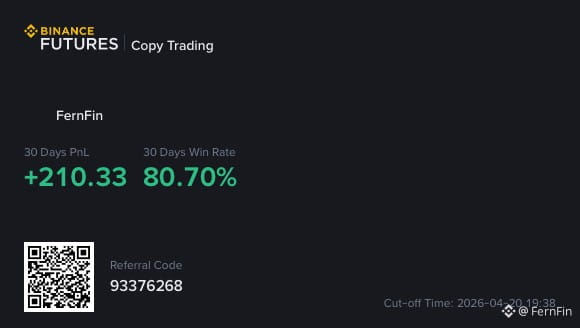
Start Futures Copy Trading and follow top-performing traders automatically — no guesswork, just smart strategy.
💰 Potential to earn more than you invest
⚡ No experience needed — just copy & earn
Join the future of trading today. Don’t just watch the market — benefit from it.
[Future Copy Trading](https://www.binance.com/copy-trading/lead-details/5000775244893245696?ref=93376268)
#FuturesTrading #Binance #CopytradingSuccess #WinRateStats
Start Futures Copy Trading and follow top-performing traders automatically — no guesswork, just smart strategy.
💰 Potential to earn more than you invest
⚡ No experience needed — just copy & earn
Join the future of trading today. Don’t just watch the market — benefit from it.
Future Copy Trading
#FuturesTrading #Binance #CopytradingSuccess #WinRateStats
💰 Potential to earn more than you invest
⚡ No experience needed — just copy & earn
Join the future of trading today. Don’t just watch the market — benefit from it.
Future Copy Trading
#FuturesTrading #Binance #CopytradingSuccess #WinRateStats
34
·
--
Bearish
🚨 PEPE/USDT Strategy Setups – Choose Your Side! 🚨
The PEPE market is currently sitting at a key decision zone. Momentum is slowing, and a breakout in either direction could define the next major move.
I’ve prepared three ready-to-use Grid Trading strategies on Binance for different market conditions 👇
📉 Bearish Setup – Expecting a breakdown / downside move
👉 [Open Bearish Grid](https://app.binance.com/uni-qr/spotgrid?at=spotGrid&symbol=PEPEUSDT&ref=A6KN7ORD&opt=cz1QRVBFVVNEVCZndD1hcml0aCZ0dT0xJmdjPTE0JmxwPTAuMDAwMDA4MzYmdXA9MC4wMDAwMTAyNSZjcHM9ZmFsc2UmY3NpPTg2NjkwOTA=)
📈 Bullish Setup – Targeting upside breakout & accumulation
👉 [Open Bullish Grid](https://app.binance.com/uni-qr/spotgrid?at=spotGrid&symbol=PEPEUSDT&ref=A6KN7ORD&opt=cz1QRVBFVVNEVCZndD1hcml0aCZ0dT0xJmdjPTgmbHA9MC4wMDAwMDkzOCZ1cD0wLjAwMDAxMDMyJmNwcz1mYWxzZSZjc2k9ODY0MzA1Mg==)
📊 Peak Setup – Aiming to sell into strength near possible top zones
👉 [Open Peak Grid](https://app.binance.com/uni-qr/spotgrid?at=spotGrid&symbol=PEPEUSDT&ref=A6KN7ORD&opt=cz1QRVBFVVNEVCZndD1hcml0aCZ0dT0xJmdjPTI3JmxwPTAuMDAwMDA5NDcmdXA9MC4wMDAwMTA2OSZjcHM9ZmFsc2UmY3NpPTg2NTI1MzA=)
⸻
🔸 Why these setups?
• PEPE is at a critical zone — next move could be decisive.
• Each grid is designed for a different market scenario (bear, bull, peak).
• You can deploy depending on your view or combine for diversification
#TradingStrategies💼💰 $PEPE
Stay tune for more .Have a great day
🚨 PEPE/USDT Strategy Setups – Choose Your Side! 🚨
The PEPE market is currently sitting at a key decision zone. Momentum is slowing, and a breakout in either direction could define the next major move.
I’ve prepared three ready-to-use Grid Trading strategies on Binance for different market conditions 👇
📉 Bearish Setup – Expecting a breakdown / downside move
👉 Open Bearish Grid
📈 Bullish Setup – Targeting upside breakout & accumulation
👉 Open Bullish Grid
📊 Peak Setup – Aiming to sell into strength near possible top zones
👉 Open Peak Grid
⸻
🔸 Why these setups?
• PEPE is at a critical zone — next move could be decisive.
• Each grid is designed for a different market scenario (bear, bull, peak).
• You can deploy depending on your view or combine for diversification
#TradingStrategies💼💰 $PEPE
Stay tune for more .Have a great day
The PEPE market is currently sitting at a key decision zone. Momentum is slowing, and a breakout in either direction could define the next major move.
I’ve prepared three ready-to-use Grid Trading strategies on Binance for different market conditions 👇
📉 Bearish Setup – Expecting a breakdown / downside move
👉 Open Bearish Grid
📈 Bullish Setup – Targeting upside breakout & accumulation
👉 Open Bullish Grid
📊 Peak Setup – Aiming to sell into strength near possible top zones
👉 Open Peak Grid
⸻
🔸 Why these setups?
• PEPE is at a critical zone — next move could be decisive.
• Each grid is designed for a different market scenario (bear, bull, peak).
• You can deploy depending on your view or combine for diversification
#TradingStrategies💼💰 $PEPE
Stay tune for more .Have a great day
11
130
Log in to explore more content
Join global crypto users on Binance Square
⚡️ Get latest and useful information about crypto.
💬 Trusted by the world’s largest crypto exchange.
👍 Discover real insights from verified creators.
Email / Phone number