

律动BlockBeats
114.6k Posts

律动BlockBeats
 Square Verified+
Report
Block User
律动BlockBeats是最具有影响力的中文媒体之一。为满足区块链初学者、爱好者、从业者、投资者等多种类型读者需求,内容类型囊括区块链及数字货币入门学习文章、热门事件报道、律动原创研究、行业现象深度剖析、知名大 V 观点分享、一线高质量采访等,内容展示形式包括图文、音频及视频。
6 Following
26.2K+ Followers
183.7K+ Liked
1 Badges
Posts
·
--
Aurelion, Bitget, and its RWA protocol Reality form strategic partnership to launch tokenized shares of a publicly listed company with gold reservesBlockBeats News, October 26: According to an official announcement, Bitget, its tokenized U.S. stock protocol Reality, and Aurelion (NASDAQ: AURE), a Nasdaq-listed company with gold reserves, have announced a strategic partnership. They plan to launch the tokenized stock rAURE, with Bitget serving as its primary trading platform after launch. rAURE will be issued by Reality and pegged 1:1 to the underlying AURE shares held in custody.
Aurelion is a publicly listed company whose primary reserve asset is tokenized gold, XAU₮ (Tether Gold). This partnership will bring tokenized shares of a Nasdaq-listed company with gold reserves to Web3 trading markets, fostering greater convergence between listed company shares, asset tokenization, and gold. After rAURE launches, users will be able to trade it on Bitget 5×24 hours a week and combine it with other tokenized stocks and digital assets in their portfolios, expanding cross-asset trading opportunities and improving portfolio flexibility and capital efficiency.
Aurelion, Bitget, and its RWA protocol Reality form strategic partnership to launch tokenized shares of a publicly listed company with gold reserves
BlockBeats News, October 26: According to an official announcement, Bitget, its tokenized U.S. stock protocol Reality, and Aurelion (NASDAQ: AURE), a Nasdaq-listed company with gold reserves, have announced a strategic partnership. They plan to launch the tokenized stock rAURE, with Bitget serving as its primary trading platform after launch. rAURE will be issued by Reality and pegged 1:1 to the underlying AURE shares held in custody.
Aurelion is a publicly listed company whose primary reserve asset is tokenized gold, XAU₮ (Tether Gold). This partnership will bring tokenized shares of a Nasdaq-listed company with gold reserves to Web3 trading markets, fostering greater convergence between listed company shares, asset tokenization, and gold. After rAURE launches, users will be able to trade it on Bitget 5×24 hours a week and combine it with other tokenized stocks and digital assets in their portfolios, expanding cross-asset trading opportunities and improving portfolio flexibility and capital efficiency.
Aurelion is a publicly listed company whose primary reserve asset is tokenized gold, XAU₮ (Tether Gold). This partnership will bring tokenized shares of a Nasdaq-listed company with gold reserves to Web3 trading markets, fostering greater convergence between listed company shares, asset tokenization, and gold. After rAURE launches, users will be able to trade it on Bitget 5×24 hours a week and combine it with other tokenized stocks and digital assets in their portfolios, expanding cross-asset trading opportunities and improving portfolio flexibility and capital efficiency.
215
·
--
BlockBeats News, Oct. 26: Bloomberg Intelligence analyst Mike McGlone wrote that gold has fallen back to support near $4,000 per ounce, while silver is approaching $50 per ounce. However, both metals’ performance relative to U.S. Treasuries may be at an extreme not seen in about 40 years, and precious metals may have peaked relative to Treasuries.
McGlone noted that rate hikes by most central banks, along with some pullback and volatility in U.S. stocks, could drive a shift in precious metals’ performance relative to Treasuries. By contrast, U.S. Treasuries and Treasury bills yielding close to 5% may once again look attractive.
BlockBeats News, Oct. 26: Bloomberg Intelligence analyst Mike McGlone wrote that gold has fallen back to support near $4,000 per ounce, while silver is approaching $50 per ounce. However, both metals’ performance relative to U.S. Treasuries may be at an extreme not seen in about 40 years, and precious metals may have peaked relative to Treasuries.
McGlone noted that rate hikes by most central banks, along with some pullback and volatility in U.S. stocks, could drive a shift in precious metals’ performance relative to Treasuries. By contrast, U.S. Treasuries and Treasury bills yielding close to 5% may once again look attractive.
McGlone noted that rate hikes by most central banks, along with some pullback and volatility in U.S. stocks, could drive a shift in precious metals’ performance relative to Treasuries. By contrast, U.S. Treasuries and Treasury bills yielding close to 5% may once again look attractive.
266
·
--
BlockBeats News, October 26: Paradigm CTO Georgios Konstantopoulos said that Solar's EVM code generation (codegen) feature will be released this week. It is over 100 times faster than solc and generates more gas-efficient bytecode without requiring any assembly code.
BlockBeats News, October 26: Paradigm CTO Georgios Konstantopoulos said that Solar's EVM code generation (codegen) feature will be released this week. It is over 100 times faster than solc and generates more gas-efficient bytecode without requiring any assembly code.
219
·
--
BlockBeats News, Oct. 26: Charlie Bilello, chief market strategist at Creative Planning, wrote that Bitcoin is down 7.3% year to date and gold is down 7.5%, making them the two worst-performing major assets so far in 2026. He said this has never happened in any previous year.
BlockBeats News, Oct. 26: Charlie Bilello, chief market strategist at Creative Planning, wrote that Bitcoin is down 7.3% year to date and gold is down 7.5%, making them the two worst-performing major assets so far in 2026. He said this has never happened in any previous year.
201
·
--
Security researcher exploits PHP2Shell vulnerability to break into bounty website and claim about $2,000 in Bitcoin rewardsBlockBeats news, on October 26, security researcher killa (GitHub username KillaBoi) successfully exploited the recently disclosed high-risk PHP vulnerability PHP2Shell (CVE-2026-109618 and CVE-2026-109619), compromised the bounty website stealmybitcoin[.]com, and claimed a Bitcoin reward worth about $2,021 (0.02511679 BTC).
It is reported that after the PHP core remote code execution vulnerability was disclosed on October 20, and because no reliable public exploit code had yet emerged, someone set up the website on October 24, deliberately using an unpatched version of PHP, and posted about $500 worth of Bitcoin as a "bounty reward" to invite hackers to verify the vulnerability's real-world exploitability. The reward later rose to about $2,000 due to donations. About 19.5 hours after the challenge began, killa wrote usable exploit code and successfully obtained the private key on the server. The website creator later confirmed the challenge had been solved and noted that placing the key there was a mistake, but acknowledged the attack succeeded. killa then 공개ed the complete PoC on GitHub.
Security researcher exploits PHP2Shell vulnerability to break into bounty website and claim about $2,000 in Bitcoin rewards
BlockBeats news, on October 26, security researcher killa (GitHub username KillaBoi) successfully exploited the recently disclosed high-risk PHP vulnerability PHP2Shell (CVE-2026-109618 and CVE-2026-109619), compromised the bounty website stealmybitcoin[.]com, and claimed a Bitcoin reward worth about $2,021 (0.02511679 BTC).
It is reported that after the PHP core remote code execution vulnerability was disclosed on October 20, and because no reliable public exploit code had yet emerged, someone set up the website on October 24, deliberately using an unpatched version of PHP, and posted about $500 worth of Bitcoin as a "bounty reward" to invite hackers to verify the vulnerability's real-world exploitability. The reward later rose to about $2,000 due to donations. About 19.5 hours after the challenge began, killa wrote usable exploit code and successfully obtained the private key on the server. The website creator later confirmed the challenge had been solved and noted that placing the key there was a mistake, but acknowledged the attack succeeded. killa then 공개ed the complete PoC on GitHub.
It is reported that after the PHP core remote code execution vulnerability was disclosed on October 20, and because no reliable public exploit code had yet emerged, someone set up the website on October 24, deliberately using an unpatched version of PHP, and posted about $500 worth of Bitcoin as a "bounty reward" to invite hackers to verify the vulnerability's real-world exploitability. The reward later rose to about $2,000 due to donations. About 19.5 hours after the challenge began, killa wrote usable exploit code and successfully obtained the private key on the server. The website creator later confirmed the challenge had been solved and noted that placing the key there was a mistake, but acknowledged the attack succeeded. killa then 공개ed the complete PoC on GitHub.
169
·
--
Gold Long and Short Liquidation Clusters Revealed: How Are Top On-Chain Whales Positioned?BlockBeats News, Oct. 26: According to monitoring by TradingBeats, gold (xyz:GOLD) perpetuals on Hyperliquid briefly fell below the $4,000 mark and are now trading at around $4,014. On-chain data shows that potential liquidations of long positions total approximately $4.93 million in the $3,950–$4,000 range, with another $7.25 million in the $3,900–$3,950 range, bringing the combined total to around $12.18 million. The nearest short-side liquidation cluster worth tens of millions of dollars is in the $4,250–$4,300 range, with potential liquidations of approximately $15.43 million.
Among the largest on-chain positions, gold’s biggest long, “0xec0b,” holds approximately $19.38 million in gold longs at 25x leverage, with an average entry price of $4,157.43 and an unrealized loss of around $694,000. On the short side, an “Abraxas Capital subaccount” holds approximately $22.95 million in gold shorts at 5x leverage, with an average entry price of $4,234.49 and a current unrealized profit of around $1.26 million.
Gold Long and Short Liquidation Clusters Revealed: How Are Top On-Chain Whales Positioned?
BlockBeats News, Oct. 26: According to monitoring by TradingBeats, gold (xyz:GOLD) perpetuals on Hyperliquid briefly fell below the $4,000 mark and are now trading at around $4,014. On-chain data shows that potential liquidations of long positions total approximately $4.93 million in the $3,950–$4,000 range, with another $7.25 million in the $3,900–$3,950 range, bringing the combined total to around $12.18 million. The nearest short-side liquidation cluster worth tens of millions of dollars is in the $4,250–$4,300 range, with potential liquidations of approximately $15.43 million.
Among the largest on-chain positions, gold’s biggest long, “0xec0b,” holds approximately $19.38 million in gold longs at 25x leverage, with an average entry price of $4,157.43 and an unrealized loss of around $694,000. On the short side, an “Abraxas Capital subaccount” holds approximately $22.95 million in gold shorts at 5x leverage, with an average entry price of $4,234.49 and a current unrealized profit of around $1.26 million.
Among the largest on-chain positions, gold’s biggest long, “0xec0b,” holds approximately $19.38 million in gold longs at 25x leverage, with an average entry price of $4,157.43 and an unrealized loss of around $694,000. On the short side, an “Abraxas Capital subaccount” holds approximately $22.95 million in gold shorts at 5x leverage, with an average entry price of $4,234.49 and a current unrealized profit of around $1.26 million.
281
·
--
Bitunix Analyst: High Interest Rates Undermine U.S. Housing Affordability; European Fiscal Concerns Widen Market DivisionsBlockBeats News, October 26: Market pressures are spreading from interest-rate expectations to physical supply chains, household financing, and government finances. The U.S. Department of Energy has designated helium as its 20th critical material, highlighting supply bottlenecks behind the expansion of AI and semiconductor production. The U.S. accounts for around 43% of global helium production, but extraction facilities are nearing their capacity limits, and building new plants takes years. Meanwhile, supplies from Qatar have been disrupted by conflict in the Middle East, and one of Polar’s three suppliers to wafer fabs has already limited deliveries. As data centers continue to drive demand for chips, shortages of critical materials could directly constrain production capacity.
Bitunix Analyst: High Interest Rates Undermine U.S. Housing Affordability; European Fiscal Concerns Widen Market Divisions
BlockBeats News, October 26: Market pressures are spreading from interest-rate expectations to physical supply chains, household financing, and government finances. The U.S. Department of Energy has designated helium as its 20th critical material, highlighting supply bottlenecks behind the expansion of AI and semiconductor production. The U.S. accounts for around 43% of global helium production, but extraction facilities are nearing their capacity limits, and building new plants takes years. Meanwhile, supplies from Qatar have been disrupted by conflict in the Middle East, and one of Polar’s three suppliers to wafer fabs has already limited deliveries. As data centers continue to drive demand for chips, shortages of critical materials could directly constrain production capacity.
212
·
--
BlockBeats News, Oct. 26: According to Lookonchain, three days after removing pump.fun from the bio of crypto influencer kimchi, it has now been added back. The price of the Kimchi token briefly surged by more than 150%. Coincidentally, a few hours before kimchi added pumpfun back to the bio, trader ja2trader spent $28,900 to buy 4.61 million $Kimchi. The trader is currently up $11,000.
BlockBeats News, Oct. 26: According to Lookonchain, three days after removing pump.fun from the bio of crypto influencer kimchi, it has now been added back. The price of the Kimchi token briefly surged by more than 150%. Coincidentally, a few hours before kimchi added pumpfun back to the bio, trader ja2trader spent $28,900 to buy 4.61 million $Kimchi. The trader is currently up $11,000.
174
·
--
BlockBeats News, Oct. 26 — According to monitoring by @ai_9684xtpa, an ancient whale address from the Ethereum ICO era, 0x6C6…d2941, has recently deposited a total of 1,500 ETH to exchanges, worth approximately $3.46 million.
The address originally bought 100,000 ETH at a cost of $0.31 each. In February 2016, it appears to have sold 50,000 ETH at an average price of $5.47, worth approximately $273,000, for a return of about 1,664% at the time. If the ETH deposited this time is sold, the return would reach approximately 744,017%.
BlockBeats News, Oct. 26 — According to monitoring by @ai_9684xtpa, an ancient whale address from the Ethereum ICO era, 0x6C6…d2941, has recently deposited a total of 1,500 ETH to exchanges, worth approximately $3.46 million.
The address originally bought 100,000 ETH at a cost of $0.31 each. In February 2016, it appears to have sold 50,000 ETH at an average price of $5.47, worth approximately $273,000, for a return of about 1,664% at the time. If the ETH deposited this time is sold, the return would reach approximately 744,017%.
The address originally bought 100,000 ETH at a cost of $0.31 each. In February 2016, it appears to have sold 50,000 ETH at an average price of $5.47, worth approximately $273,000, for a return of about 1,664% at the time. If the ETH deposited this time is sold, the return would reach approximately 744,017%.
177
·
--
Major Shake-Up at House of Doge: Ends Official Dogecoin Authorization, Replaces CEO, and Plans to Acquire McQueen LabsBlockBeats News, October 26: Nasdaq-listed House of Doge Inc. (ticker: HODO) filed an 8-K on October 23, disclosing several significant developments:
Leadership Changes: Former CEO Marco Margiotta and CFO Charles Park resigned on October 22. The board appointed McQueen Labs CEO Curtis Hopkins as interim CEO and interim CFO.
Termination of Official Dogecoin Authorization: The company reached an agreement with the Dogecoin Foundation and MadeUpNumbers Ltd. to terminate the previously amended trademark license agreement. The company must change its name by December 31, 2026, and stop using terms such as “official corporate arm” or “official business partner.” It also signed a new non-exclusive trademark license agreement, limited to designated 21Shares Dogecoin-related products and new products approved in writing, and subject to revenue sharing.
Major Shake-Up at House of Doge: Ends Official Dogecoin Authorization, Replaces CEO, and Plans to Acquire McQueen Labs
BlockBeats News, October 26: Nasdaq-listed House of Doge Inc. (ticker: HODO) filed an 8-K on October 23, disclosing several significant developments:
Leadership Changes: Former CEO Marco Margiotta and CFO Charles Park resigned on October 22. The board appointed McQueen Labs CEO Curtis Hopkins as interim CEO and interim CFO.
Termination of Official Dogecoin Authorization: The company reached an agreement with the Dogecoin Foundation and MadeUpNumbers Ltd. to terminate the previously amended trademark license agreement. The company must change its name by December 31, 2026, and stop using terms such as “official corporate arm” or “official business partner.” It also signed a new non-exclusive trademark license agreement, limited to designated 21Shares Dogecoin-related products and new products approved in writing, and subject to revenue sharing.
Leadership Changes: Former CEO Marco Margiotta and CFO Charles Park resigned on October 22. The board appointed McQueen Labs CEO Curtis Hopkins as interim CEO and interim CFO.
Termination of Official Dogecoin Authorization: The company reached an agreement with the Dogecoin Foundation and MadeUpNumbers Ltd. to terminate the previously amended trademark license agreement. The company must change its name by December 31, 2026, and stop using terms such as “official corporate arm” or “official business partner.” It also signed a new non-exclusive trademark license agreement, limited to designated 21Shares Dogecoin-related products and new products approved in writing, and subject to revenue sharing.
234
·
--
BlockBeats News, October 26: According to an official announcement, Binance will launch the USDC/AED spot trading pair on October 28, 2026, at 16:00 (UTC+8) and enable spot trading bot services for algorithmic orders on the pair.
BlockBeats News, October 26: According to an official announcement, Binance will launch the USDC/AED spot trading pair on October 28, 2026, at 16:00 (UTC+8) and enable spot trading bot services for algorithmic orders on the pair.
191
·
--
Film Hurricane’s Tim gives away 100 iPhones on X; Web3 airdrop-farming groups may be the biggest winnersBlockBeats News, Oct. 26 — The well-known Chinese social media account “Film Hurricane” recently expanded onto X. For its first promotional campaign since launching on the platform, Film Hurricane offered 100 iPhones in a giveaway, asking participants to follow the account, repost and like the relevant post. As of publication, the promotional video had received 4.87 million views, with both likes and reposts topping 100,000. Tim Pan’s account also quickly grew to 302,000 followers. Judging by the reach, engagement and follower growth, the overseas debut had a direct impact.
However, while the campaign generated plenty of traffic, the list of winners sparked a different discussion.
Film Hurricane’s Tim gives away 100 iPhones on X; Web3 airdrop-farming groups may be the biggest winners
BlockBeats News, Oct. 26 — The well-known Chinese social media account “Film Hurricane” recently expanded onto X. For its first promotional campaign since launching on the platform, Film Hurricane offered 100 iPhones in a giveaway, asking participants to follow the account, repost and like the relevant post. As of publication, the promotional video had received 4.87 million views, with both likes and reposts topping 100,000. Tim Pan’s account also quickly grew to 302,000 followers. Judging by the reach, engagement and follower growth, the overseas debut had a direct impact.
However, while the campaign generated plenty of traffic, the list of winners sparked a different discussion.
However, while the campaign generated plenty of traffic, the list of winners sparked a different discussion.
310
·
--
Article
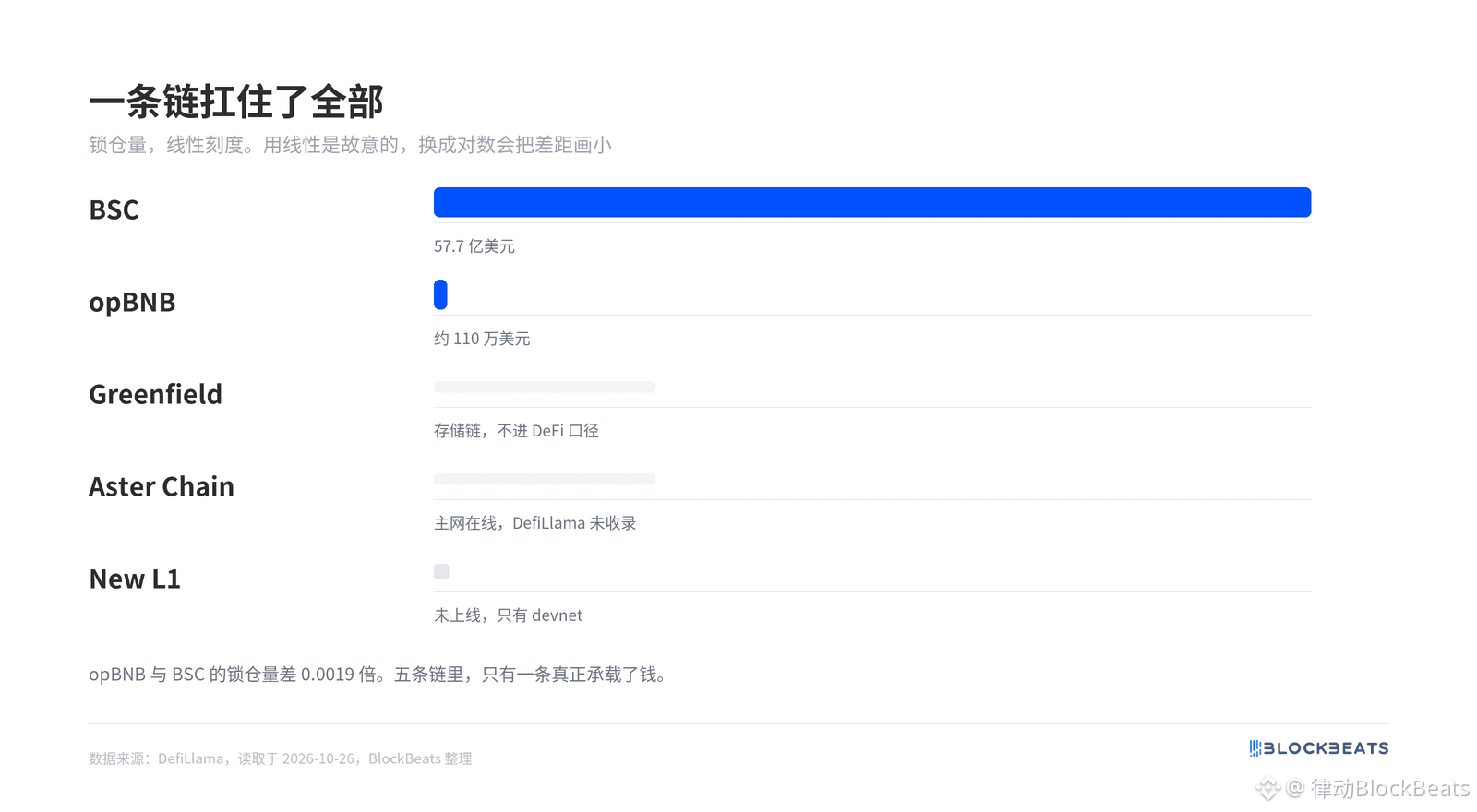
Why Is Binance Building a New Chain?Binance founder CZ quoted a post on X about a new BNB Chain L1, saying, “Multiple chains, one coin.”
This is the most straightforward description of the chain’s positioning so far. The new chain won’t issue its own token; Gas fees, staking, and governance will all continue to use BNB. No matter how many more chains BNB launches, there’s only one account that ultimately collects the fees.
In fact, the new chain was announced in the official technical roadmap on July 8. The official documentation describes it as “a vertically optimized, general-purpose L1 designed for trading, payments, privacy, and AI.”
Why Is Binance Building a New Chain?
Binance founder CZ quoted a post on X about a new BNB Chain L1, saying, “Multiple chains, one coin.”
This is the most straightforward description of the chain’s positioning so far. The new chain won’t issue its own token; Gas fees, staking, and governance will all continue to use BNB. No matter how many more chains BNB launches, there’s only one account that ultimately collects the fees.
In fact, the new chain was announced in the official technical roadmap on July 8. The official documentation describes it as “a vertically optimized, general-purpose L1 designed for trading, payments, privacy, and AI.”
This is the most straightforward description of the chain’s positioning so far. The new chain won’t issue its own token; Gas fees, staking, and governance will all continue to use BNB. No matter how many more chains BNB launches, there’s only one account that ultimately collects the fees.
In fact, the new chain was announced in the official technical roadmap on July 8. The official documentation describes it as “a vertically optimized, general-purpose L1 designed for trading, payments, privacy, and AI.”
326
·
--
BlockBeats News, Oct. 26 — According to an official announcement, OKX’s “Prophet Season 3” earnings-season predictions are ongoing. This week, companies including Robinhood, SK hynix, Microsoft, Alphabet, Strategy, Amazon and SanDisk will report their earnings in succession. OKX has launched related prediction events, covering whether earnings will beat expectations and whether share prices will rise or fall on the first full trading day after the reports.
Users can view earnings analysis and take part in prediction events via “Planet” → “Play to Earn: U.S. Stocks Earnings Season” in the OKX App, with a chance to share a prize pool worth a total of $250,000.
BlockBeats News, Oct. 26 — According to an official announcement, OKX’s “Prophet Season 3” earnings-season predictions are ongoing. This week, companies including Robinhood, SK hynix, Microsoft, Alphabet, Strategy, Amazon and SanDisk will report their earnings in succession. OKX has launched related prediction events, covering whether earnings will beat expectations and whether share prices will rise or fall on the first full trading day after the reports.
Users can view earnings analysis and take part in prediction events via “Planet” → “Play to Earn: U.S. Stocks Earnings Season” in the OKX App, with a chance to share a prize pool worth a total of $250,000.
Users can view earnings analysis and take part in prediction events via “Planet” → “Play to Earn: U.S. Stocks Earnings Season” in the OKX App, with a chance to share a prize pool worth a total of $250,000.
196
·
--
A Closer Look at the “Paper” Support in Bitcoin’s Order Book: Could a Break Below $80,000 Lead to Further Pullbacks?BlockBeats News, October 26: BTC is currently hovering around $80,000, with large-scale buying plans interspersed among long liquidation levels. In the derivatives market, an apparently thick “buy wall” could trigger a cascade of forced liquidations if a price drop breaches the long liquidation levels, instantly turning what were buy orders into forced sell orders.
To assess “where strong support may lie,” we analyzed the cost basis of nearly 200 whales holding long positions worth at least $1 million each in the Hyperliquid market. We examined 557 addresses that had previously held positions worth over $1 million, and modeled the interplay between preset buy orders, exit sell orders, and liquidation pressure from long positions.
A Closer Look at the “Paper” Support in Bitcoin’s Order Book: Could a Break Below $80,000 Lead to Further Pullbacks?
BlockBeats News, October 26: BTC is currently hovering around $80,000, with large-scale buying plans interspersed among long liquidation levels. In the derivatives market, an apparently thick “buy wall” could trigger a cascade of forced liquidations if a price drop breaches the long liquidation levels, instantly turning what were buy orders into forced sell orders.
To assess “where strong support may lie,” we analyzed the cost basis of nearly 200 whales holding long positions worth at least $1 million each in the Hyperliquid market. We examined 557 addresses that had previously held positions worth over $1 million, and modeled the interplay between preset buy orders, exit sell orders, and liquidation pressure from long positions.
To assess “where strong support may lie,” we analyzed the cost basis of nearly 200 whales holding long positions worth at least $1 million each in the Hyperliquid market. We examined 557 addresses that had previously held positions worth over $1 million, and modeled the interplay between preset buy orders, exit sell orders, and liquidation pressure from long positions.
293
·
--
Unitree Robotics surges over 60% in seven days; Nomura says the real moat in robotics is changingUnitree Robotics is becoming one of the most closely watched technology companies in the recent A-share market.
On October 26, Unitree Robotics (688836.SH) continued its sharp rally, rising more than 9% at one point in morning trading and reaching a high of 682 yuan per share. By midday, the stock was trading at 674.01 yuan, giving the company a total market capitalization of 2.726 trillion yuan. Earlier, on October 23, Unitree Robotics had hit the 20% daily limit. Since October 16, it has gained more than 60% over seven trading days.
Behind the market enthusiasm is growing optimism about advances in humanoid robot technology. On October 21, Unitree Robotics unveiled its H2-X humanoid robot, demonstrating complex moves such as platform jumps and forward rolls. The following day, Unitree founder Wang Xingxing said at the World Physical AI Conference that, as large models continue to improve, physical AI is showing signs of making key breakthroughs.
Unitree Robotics surges over 60% in seven days; Nomura says the real moat in robotics is changing
Unitree Robotics is becoming one of the most closely watched technology companies in the recent A-share market.
On October 26, Unitree Robotics (688836.SH) continued its sharp rally, rising more than 9% at one point in morning trading and reaching a high of 682 yuan per share. By midday, the stock was trading at 674.01 yuan, giving the company a total market capitalization of 2.726 trillion yuan. Earlier, on October 23, Unitree Robotics had hit the 20% daily limit. Since October 16, it has gained more than 60% over seven trading days.
Behind the market enthusiasm is growing optimism about advances in humanoid robot technology. On October 21, Unitree Robotics unveiled its H2-X humanoid robot, demonstrating complex moves such as platform jumps and forward rolls. The following day, Unitree founder Wang Xingxing said at the World Physical AI Conference that, as large models continue to improve, physical AI is showing signs of making key breakthroughs.
On October 26, Unitree Robotics (688836.SH) continued its sharp rally, rising more than 9% at one point in morning trading and reaching a high of 682 yuan per share. By midday, the stock was trading at 674.01 yuan, giving the company a total market capitalization of 2.726 trillion yuan. Earlier, on October 23, Unitree Robotics had hit the 20% daily limit. Since October 16, it has gained more than 60% over seven trading days.
Behind the market enthusiasm is growing optimism about advances in humanoid robot technology. On October 21, Unitree Robotics unveiled its H2-X humanoid robot, demonstrating complex moves such as platform jumps and forward rolls. The following day, Unitree founder Wang Xingxing said at the World Physical AI Conference that, as large models continue to improve, physical AI is showing signs of making key breakthroughs.
198
·
--
Altcoin Sentiment Diverges: How Whales Are Acting Amid Market PanicEditor's note: A notable feature of the recent crypto market has been the divergence between price movements, social sentiment, and on-chain investor behavior.
On October 24, on-chain data analytics platform Santiment released its latest weekly market report, focusing on the market panic triggered by recent security incidents and how different types of investors responded.
While most altcoins were underperforming, privacy coins Monero (XMR) and Zcash (ZEC) rose 6.6% and 6.2%, respectively, making them the two best-performing large-cap crypto assets this week. Meanwhile, social discussion of Monero increased by nearly 50% from the previous week, reflecting a marked rise in market interest in privacy-related narratives.
Altcoin Sentiment Diverges: How Whales Are Acting Amid Market Panic
Editor's note: A notable feature of the recent crypto market has been the divergence between price movements, social sentiment, and on-chain investor behavior.
On October 24, on-chain data analytics platform Santiment released its latest weekly market report, focusing on the market panic triggered by recent security incidents and how different types of investors responded.
While most altcoins were underperforming, privacy coins Monero (XMR) and Zcash (ZEC) rose 6.6% and 6.2%, respectively, making them the two best-performing large-cap crypto assets this week. Meanwhile, social discussion of Monero increased by nearly 50% from the previous week, reflecting a marked rise in market interest in privacy-related narratives.
On October 24, on-chain data analytics platform Santiment released its latest weekly market report, focusing on the market panic triggered by recent security incidents and how different types of investors responded.
While most altcoins were underperforming, privacy coins Monero (XMR) and Zcash (ZEC) rose 6.6% and 6.2%, respectively, making them the two best-performing large-cap crypto assets this week. Meanwhile, social discussion of Monero increased by nearly 50% from the previous week, reflecting a marked rise in market interest in privacy-related narratives.
250
·
--
BlockBeats reports that, according to Bitget market data, South Korea’s KOSPI index closed down 80.71 points on Monday, October 26, a decline of 1.45%, at 5,469.59 points.
BlockBeats reports that, according to Bitget market data, South Korea’s KOSPI index closed down 80.71 points on Monday, October 26, a decline of 1.45%, at 5,469.59 points.
175
·
--
Franklin Templeton plans to launch two “dividend reinvestment Bitcoin” ETFsBlockBeats reports that on October 26, asset management giant Franklin Templeton filed Form 8-A with the U.S. Securities and Exchange Commission (SEC), completing Nasdaq listing registrations for two new exchange-traded funds. The prospectuses show that the products are set to become effective on October 27, and the market broadly expects trading to begin soon.
The two products are the Franklin US Equity Bitcoin DRIP Index ETF (ticker: FBEQ) and the Franklin US Innovation Bitcoin DRIP Index ETF (ticker: FIBT). The former tracks the VettaFi US Large-Cap 500 Bitcoin DRIP Index, covering approximately 500 of the largest U.S. companies by market capitalization; the latter tracks the VettaFi US Innovation 100 Bitcoin DRIP Index, focusing on the 100 largest non-financial companies listed on Nasdaq. Both funds follow passive index strategies, with initial allocations of approximately 95% to U.S. equities and 5% to Bitcoin exposure.
Franklin Templeton plans to launch two “dividend reinvestment Bitcoin” ETFs
BlockBeats reports that on October 26, asset management giant Franklin Templeton filed Form 8-A with the U.S. Securities and Exchange Commission (SEC), completing Nasdaq listing registrations for two new exchange-traded funds. The prospectuses show that the products are set to become effective on October 27, and the market broadly expects trading to begin soon.
The two products are the Franklin US Equity Bitcoin DRIP Index ETF (ticker: FBEQ) and the Franklin US Innovation Bitcoin DRIP Index ETF (ticker: FIBT). The former tracks the VettaFi US Large-Cap 500 Bitcoin DRIP Index, covering approximately 500 of the largest U.S. companies by market capitalization; the latter tracks the VettaFi US Innovation 100 Bitcoin DRIP Index, focusing on the 100 largest non-financial companies listed on Nasdaq. Both funds follow passive index strategies, with initial allocations of approximately 95% to U.S. equities and 5% to Bitcoin exposure.
The two products are the Franklin US Equity Bitcoin DRIP Index ETF (ticker: FBEQ) and the Franklin US Innovation Bitcoin DRIP Index ETF (ticker: FIBT). The former tracks the VettaFi US Large-Cap 500 Bitcoin DRIP Index, covering approximately 500 of the largest U.S. companies by market capitalization; the latter tracks the VettaFi US Innovation 100 Bitcoin DRIP Index, focusing on the 100 largest non-financial companies listed on Nasdaq. Both funds follow passive index strategies, with initial allocations of approximately 95% to U.S. equities and 5% to Bitcoin exposure.
BTC-0.27%
EZBCETF-1.02%
231
·
--
BlockBeats News, October 26: According to Bitget market data, A-share-listed Unitree Technology rose 11.97% intraday, with its current price at 698.68 yuan.
TradingBeats data also shows that the UNITREE perpetual contract on Trade.xyz briefly broke above $100, gaining 3.97% over 24 hours, with 24-hour trading volume reaching $28.82 million.
BlockBeats News, October 26: According to Bitget market data, A-share-listed Unitree Technology rose 11.97% intraday, with its current price at 698.68 yuan.
TradingBeats data also shows that the UNITREE perpetual contract on Trade.xyz briefly broke above $100, gaining 3.97% over 24 hours, with 24-hour trading volume reaching $28.82 million.
TradingBeats data also shows that the UNITREE perpetual contract on Trade.xyz briefly broke above $100, gaining 3.97% over 24 hours, with 24-hour trading volume reaching $28.82 million.
321
Log in to explore more content
Join global crypto users on Binance Square
⚡️ Get latest and useful information about crypto.
💬 Trusted by the world’s largest crypto exchange.
👍 Discover real insights from verified creators.
Email / Phone number
Trending Topics
BinancePick
2.7M views
143,238 Discussing
Join #EarningsSeason: Predict Earnings on Binance Pick, Share Your Take on Binance Square!
Binance Square Official
·402 Likes
·339k views
EarningsSeason
5M views
24,587 Discussing
SouthKoreaReportedlyWeighsFourthCryptoTaxDelay
689 views
64 Discussing