
比特跃马
216 Posts

比特跃马
Report
Block User
人要有 All in 的勇气 也要有 Nice fold 的能力

BTC Holder
Frequent Trader
8.8 Years
12 Following
124 Followers
244 Liked
Posts
All
Quotes
Videos
·
--
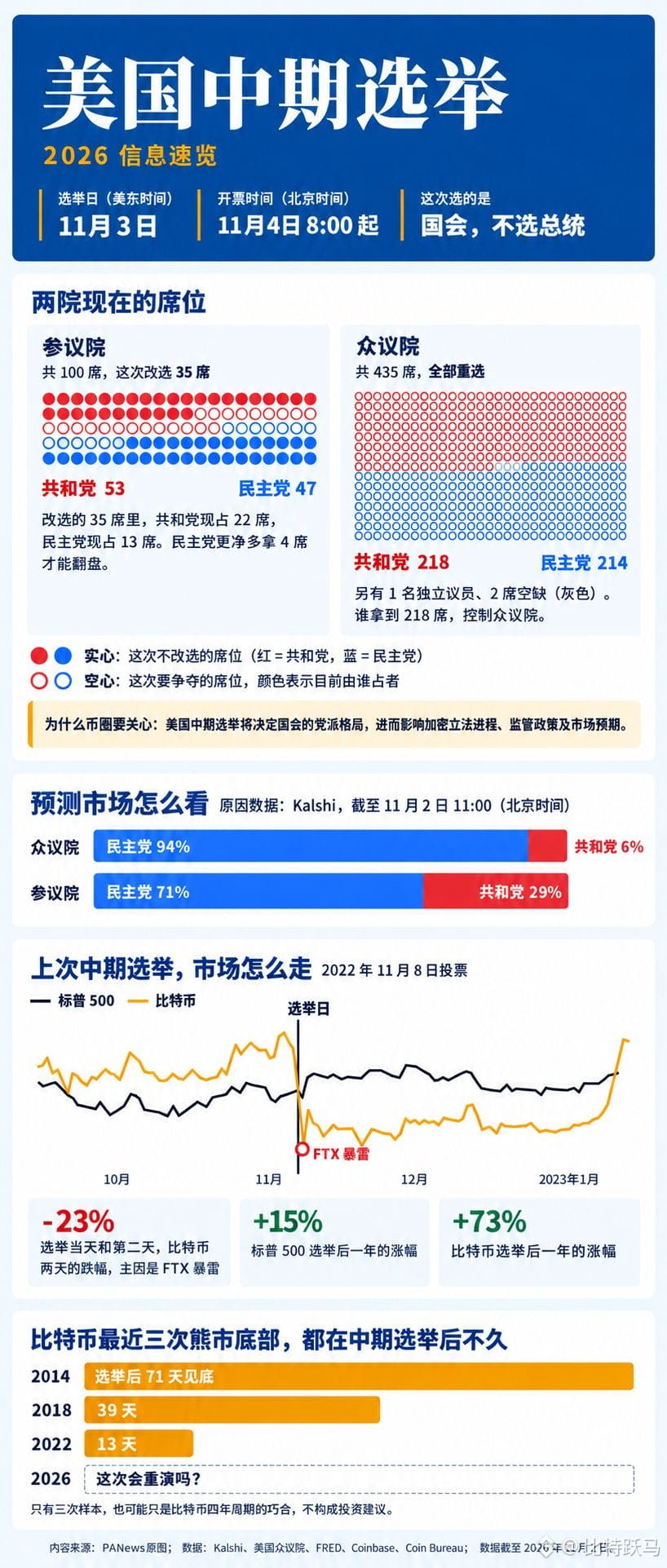
🇺🇸 U.S. midterm elections: How will U.S. stocks and Bitcoin perform?
One chart to understand the key takeaways—will history repeat itself? 👇
🇺🇸 U.S. midterm elections: How will U.S. stocks and Bitcoin perform?
One chart to understand the key takeaways—will history repeat itself? 👇
One chart to understand the key takeaways—will history repeat itself? 👇
2
6
8.6k
·
--
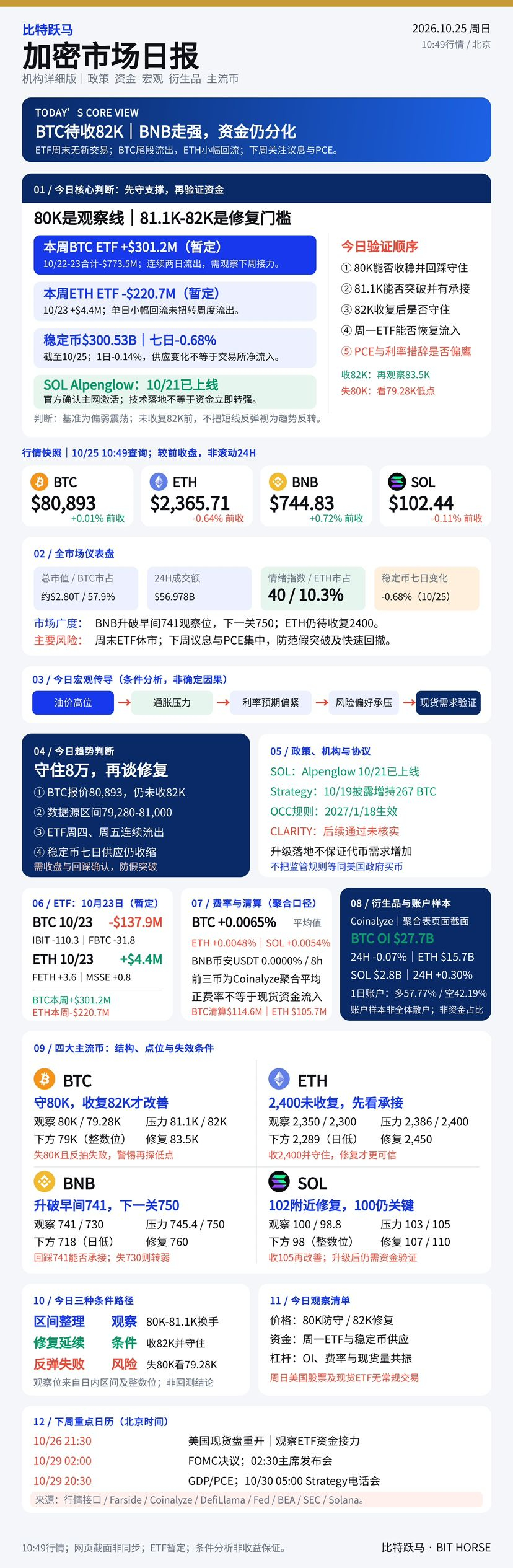
BTC is holding above 80,000—is the rebound on solid footing?
Over the past week, BTC ETFs saw estimated net inflows of $301 million, but recorded combined outflows of $774 million over the last two trading days. ETH ETFs still saw net outflows of $221 million for the week.
Prices are recovering, but fund flows have yet to strengthen across the board.
Keep a close eye on BTC at 82,000, ETH at 2,400, BNB at 750, and SOL at 105. The Fed’s decision and PCE data are both due next week. Whether the rebound can continue will depend on sustained buying after prices break through.
2
111
·
--
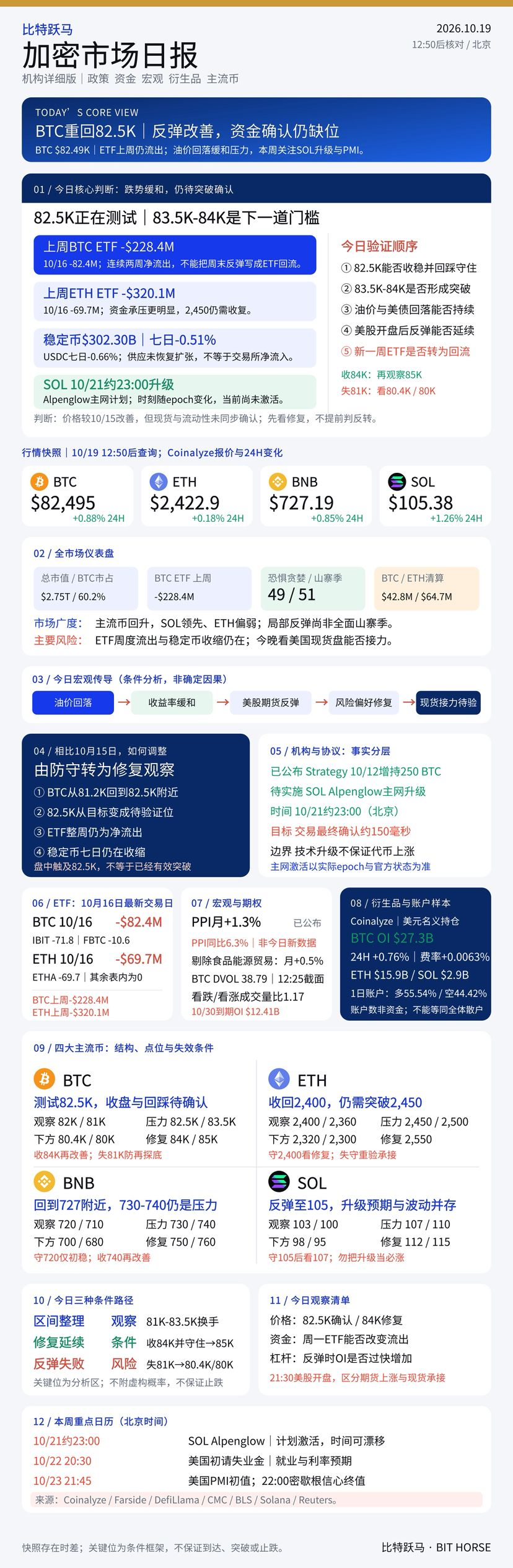
BTC rebounds—is the market turning bullish?
The key is whether capital can keep flowing in. See the key levels for four major coins and this week’s important events at a glance.
BTC rebounds—is the market turning bullish?
The key is whether capital can keep flowing in. See the key levels for four major coins and this week’s important events at a glance.
The key is whether capital can keep flowing in. See the key levels for four major coins and this week’s important events at a glance.
1
327
·
--
🧧 Don’t just stare at the K-line—go claim a red envelope first!
🧧 Don’t just stare at the K-line—go claim a red envelope first!

大吉大利!
From 比特跃马
21
·
--
Verified
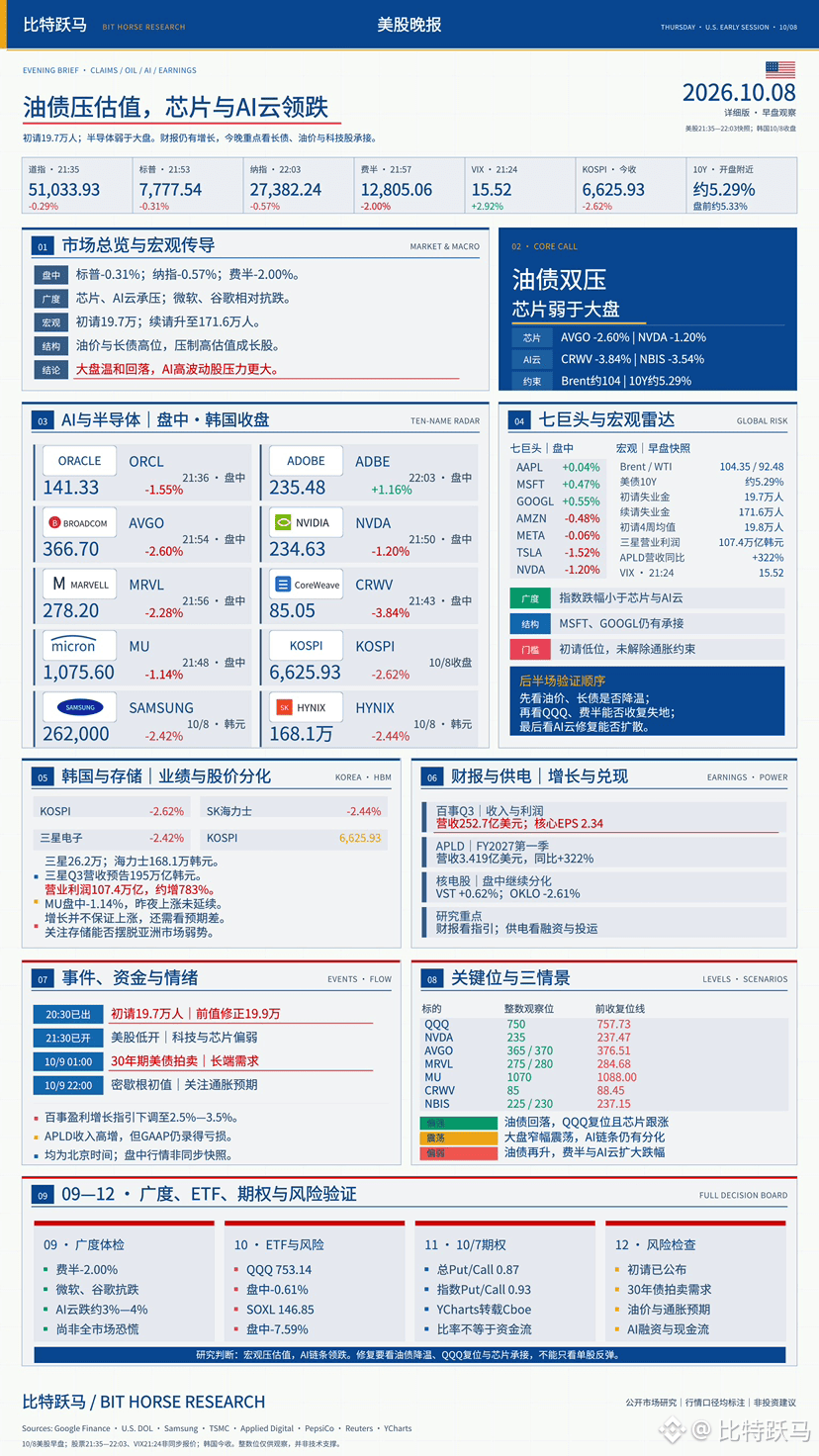
🇺🇸 The stronger the performance, the lower the stock price? Tonight’s US stock market divergence is more worth watching than the index.
The S&P in the morning was down only about 0.3%, semiconductors fell about 2%, and AI cloud dropped more than 3%—if you look only at the broader index, it’s easy to underestimate the pressure on tech stocks.
Samsung’s profit surged, APLD’s revenue jumped 322%—why didn’t the growth numbers still manage to lift the AI supply chain?
Oil prices, interest rates, and financing costs are raising the bar for what counts as “good performance” in the market: after revenue growth, how much profit and cash is actually left?
Is this pullback an opportunity, or is the correction not over yet? The signals to watch tonight, the core stocks, and key levels—explained clearly in one poster below 👇
#USStocks #Nvidia #Semiconductors #AI
1
275
·
--
Keep BUIDLing. 🏗️
No matter bull or bear, focus on building.
Put on your hard hat, manage your own risk control well—time will give the best answer to those who persist.$BNB
Keep BUIDLing. 🏗️
No matter bull or bear, focus on building.
Put on your hard hat, manage your own risk control well—time will give the best answer to those who persist.$BNB
No matter bull or bear, focus on building.
Put on your hard hat, manage your own risk control well—time will give the best answer to those who persist.$BNB

2
380
·
--
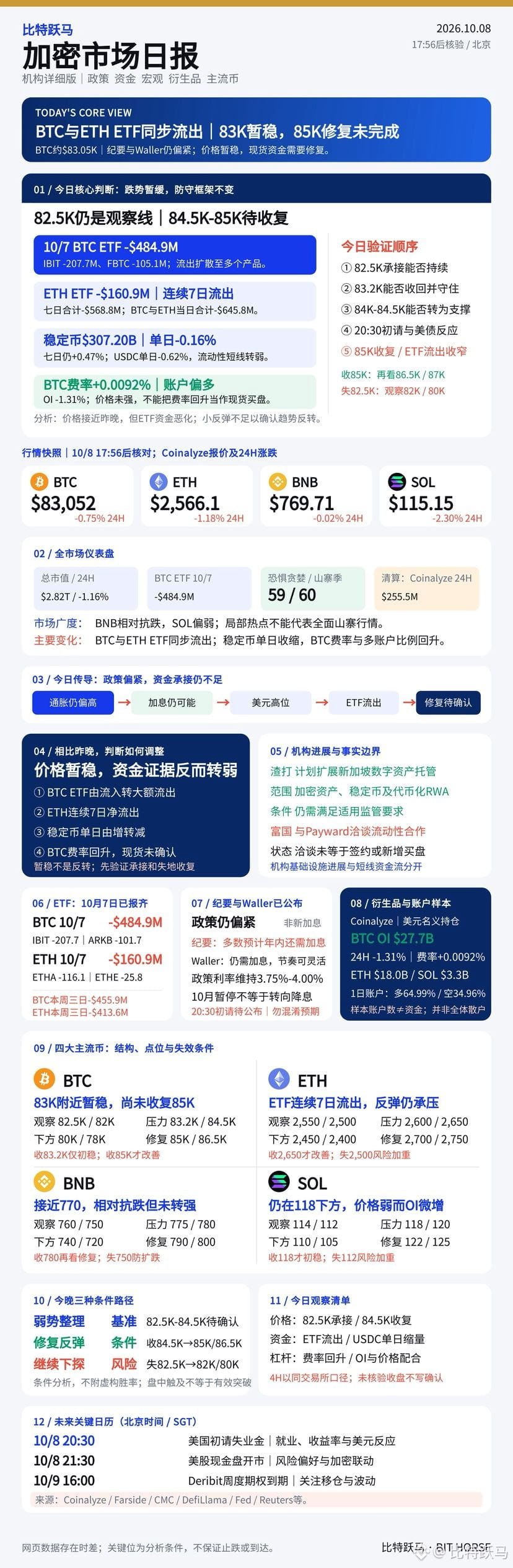
BTC is hovering around 83K, but funds are flowing out: Is this a dip-buying opportunity or just a pause before another leg down?
On October 7, spot BTC and ETH ETFs saw combined net outflows of $645.8 million, with ETH recording outflows for seven consecutive trading days. Meanwhile, the Fed is still inclined to raise rates further.
Prices have stabilized for now. The key question is whether spot buyers can step in next.
I’m watching three key levels:
🔹 82.5K: Can support below hold?
🔹 84K–84.5K: Can the rebound reclaim lost ground?
🔹 85K: A convincing recovery needs price to hold above this level and defend it on a retest.
There’s still a gap between “it’s fallen a lot” and “the bottom is in”—we need confirmation from both fund flows and price action.
Tonight’s initial jobless claims data at 20:30 and tomorrow’s options expiry will put this support to the test. The macro picture, ETF flows, leverage, and key levels for the four major coins are all laid out in the chart below 👇
Do you think BTC will reclaim 85K first, or test 82K again?
BitYueMa | October 8 Crypto Daily
#BTC #Bitcoin #ETH #CryptoMarket
1
92
·
--
CZ: I encourage everyone to compete in health, not on wealth rankings or Lamborghinis.
More health, more family = real wealth and happiness.$BNB
CZ: I encourage everyone to compete in health, not on wealth rankings or Lamborghinis.
More health, more family = real wealth and happiness.$BNB
More health, more family = real wealth and happiness.$BNB

2
374
·
--
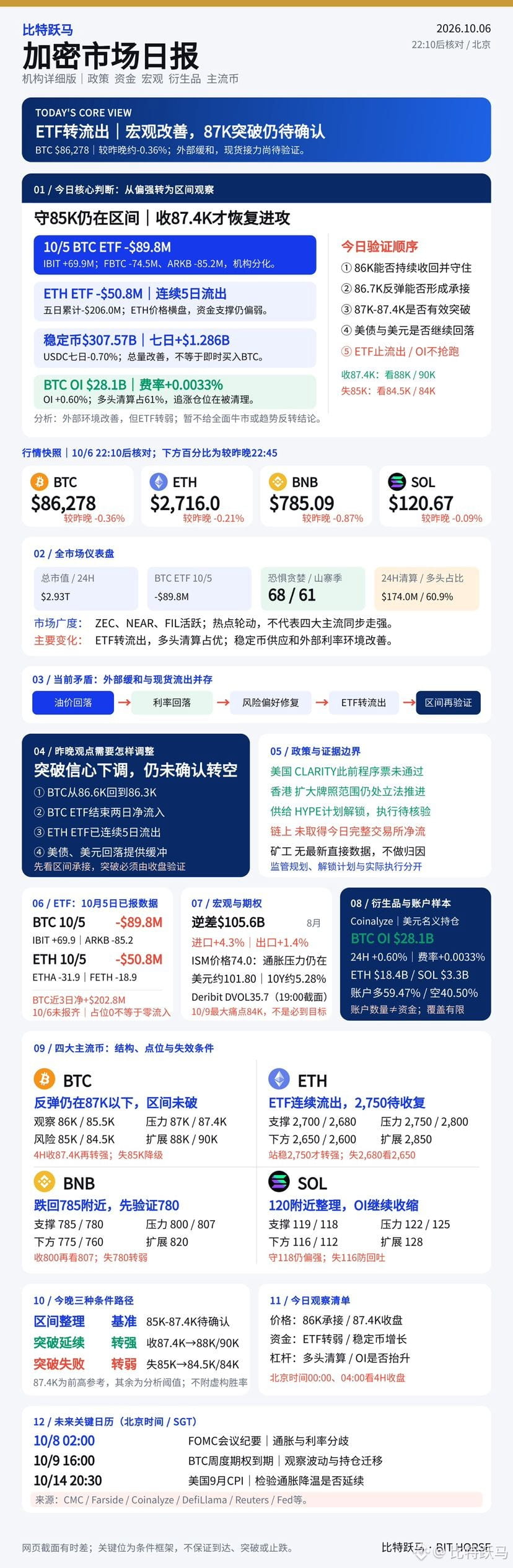
At the 87K threshold, the market is still waiting for capital flows to provide an answer.
The pullback in the dollar, Treasury yields, and oil prices has given markets some breathing room. But BTC ETFs have turned to net outflows, while ETH ETFs have seen outflows for five consecutive days. Spot flows have yet to show a united trend.
The key levels to watch next are whether 87K–87.4K can hold firmly, and whether support emerges around 85K. Whether improving macro conditions can translate into sustained buying will determine how far this consolidation can go.
1
352
·
--
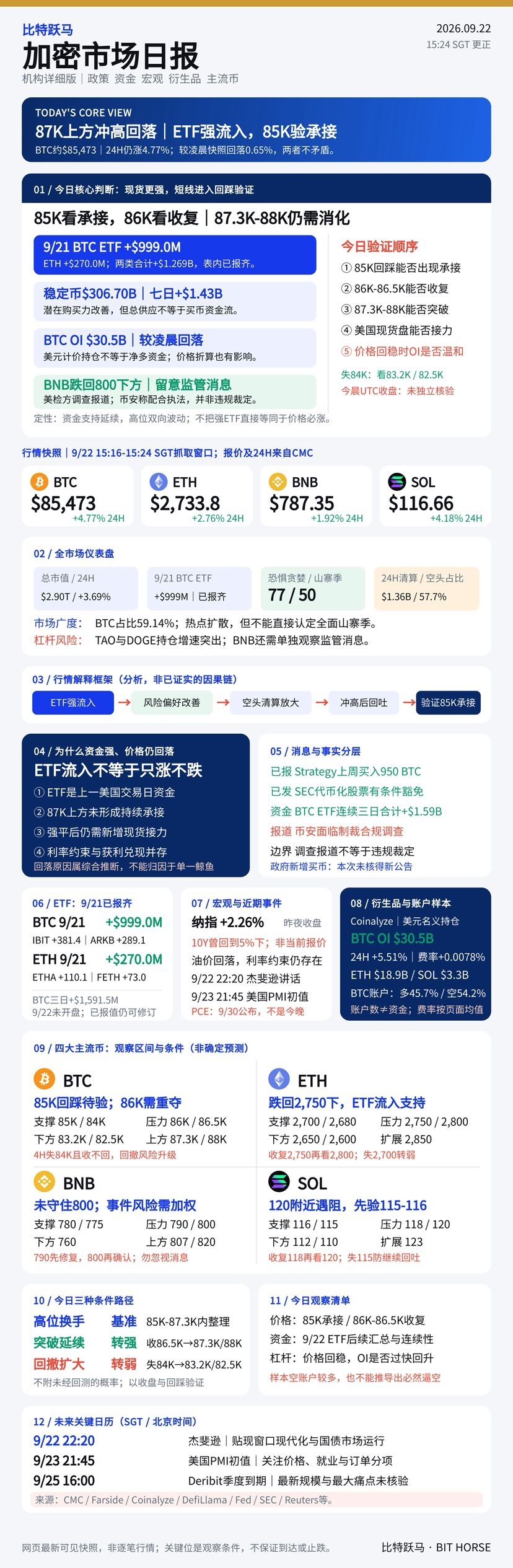
[Strong capital inflows—why did BTC spike and then fall back?]
On September 21, US spot BTC ETFs saw net inflows of about $999 million, while ETH ETFs saw net inflows of about $270 million. The combined net inflows for the two asset classes totaled $1.269 billion in a single day. Meanwhile, the stablecoin supply expanded in tandem, indicating that the market’s capital base is still improving.
However, after BTC broke above $87,000, it fell back to around $85,000—meaning the market has shifted from a “fast push higher” phase to a “high-level consolidation and validation” phase.
Next, the key to watch is:
Whether 85K can hold as support;
Whether 86K–86.5K can reclaim on the way back up;
Whether 87.3K–88K can break through effectively.
The funding backdrop remains bullish, but strong capital does not mean prices only rise and never fall. What truly matters isn’t how high it trades intraday, but whether it can hold its ground after a breakout.
1
117
·
--
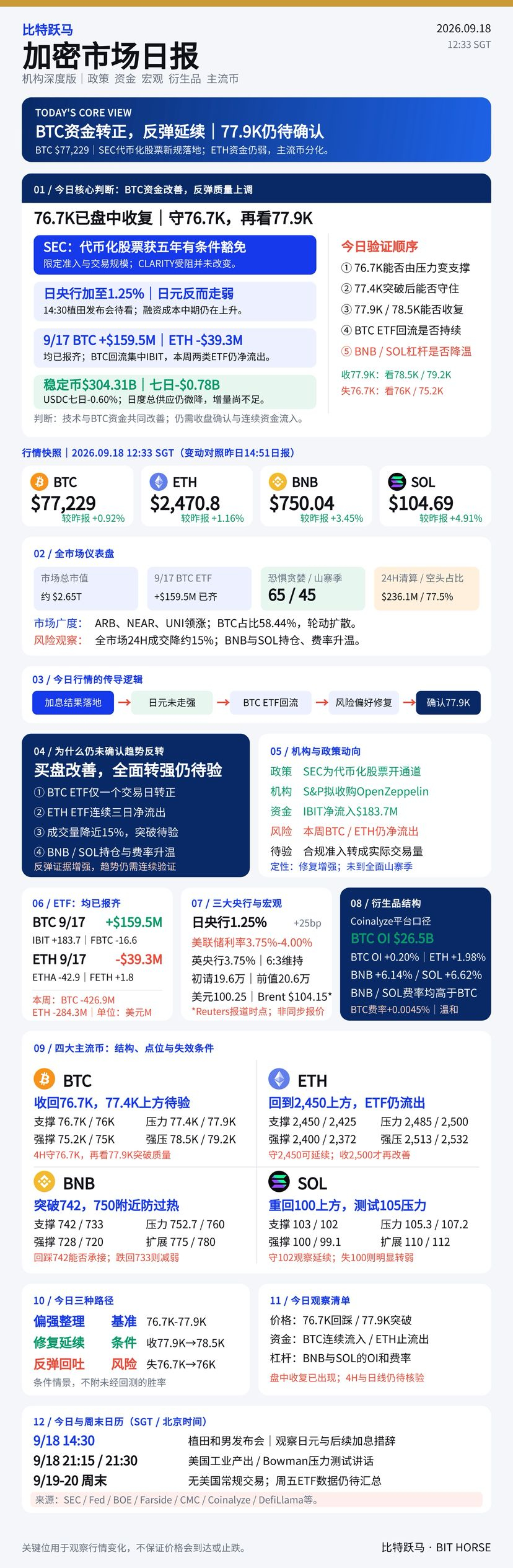
BTC ETF returns to net inflows, the SEC introduces conditional exemptions for tokenized stocks, and BNB and SOL show active performance—giving the crypto market’s rebound more funding and policy support.
However, ETH funds are still flowing out, and leverage is warming up in some coins. Next, the focus is on whether BTC can hold 76.7K, further reclaim 77.9K, and whether the return of capital can be sustained.
For today’s poster: macro changes, ETF capital flows, sector rotation, and the key levels for the four major mainstream coins.
1
1
785
·
--
The policy vote did not reach 60 votes. After expectations were dashed, BTC briefly fell to around $75,000, and in the past 24 hours the market saw more than $500 million in long liquidations.
But the most important thing now is not to be emotionally bearish, but to verify whether, after the policy bearishness is fully priced in, 75K can form real support. Holding 75K is only a temporary pause in the downtrend—recovering 76.7K would constitute an initial repair, and breaking above 77.2K would clearly reduce the risk of a second dip.
Tonight’s retail sales and tomorrow morning’s Fed rate decision are coming in sequence. ETF inflows, the U.S. dollar, and U.S. Treasury yields remain key variables.
One chart to understand it all: the policy vote result, ETF flows, stablecoin changes, leveraged liquidations, and the key levels ahead for BTC, ETH, BNB, and SOL.

1
469
·
--
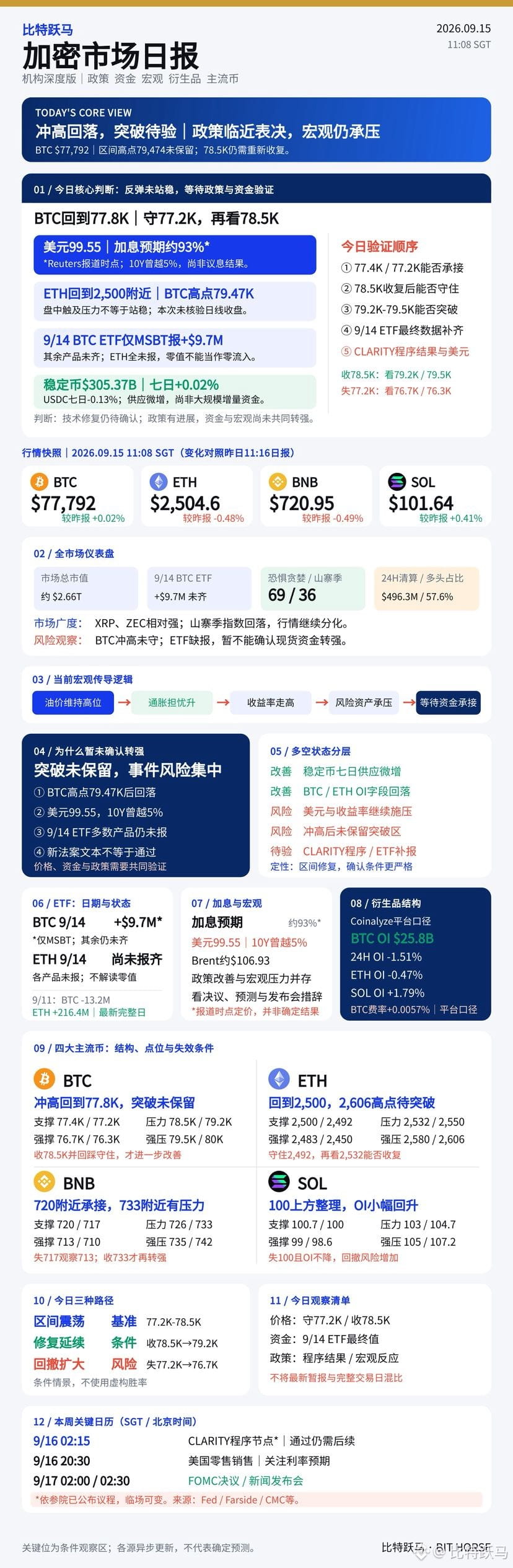
Bit Surges and Horses Run|Crypto Market Daily
Policy expectations and interest rate pressure intertwine, and the market has reached a key validation window. Whether CLARITY can advance, how the Fed will guide future rates, and whether ETF inflows can keep returning will all affect the sustainability of this rebound. After BTC spikes higher, focus on whether key levels can be held. For ETH, BNB, and SOL, assess based on their respective capital flows and price performance. Today’s poster organizes the macro backdrop, policy developments, fund flows, and key levels for the four major coins. One chart to see the current disagreements and the key things to watch next.$BTC
Policy expectations and interest rate pressure intertwine, and the market has reached a key validation window. Whether CLARITY can advance, how the Fed will guide future rates, and whether ETF inflows can keep returning will all affect the sustainability of this rebound. After BTC spikes higher, focus on whether key levels can be held. For ETH, BNB, and SOL, assess based on their respective capital flows and price performance. Today’s poster organizes the macro backdrop, policy developments, fund flows, and key levels for the four major coins. One chart to see the current disagreements and the key things to watch next.$BTC
259
·
--
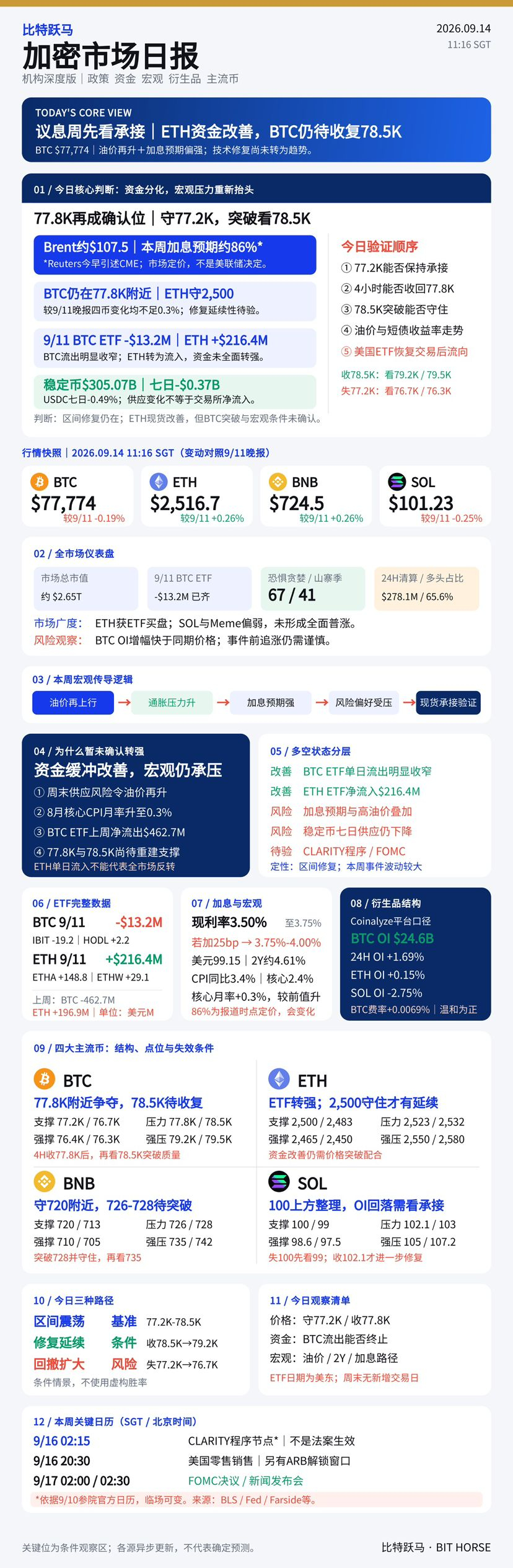
The Crypto Market Enters a Critical Week: The Federal Reserve’s interest-rate decision and the procedural milestones of the CLARITY Act arrive back-to-back. Ongoing high oil prices and continued rate-hike expectations keep putting pressure on market follow-through. Money flows have started to diverge: BTC ETF outflows are clearly narrowing, while ETH has seen strong net inflows. However, a broad-based turnaround still requires confirmation from both price action and sustained buying. Key to watch for BTC are the 77.2K support level and whether the 77.8K–78.5K range can be effectively reclaimed. This week, we need to see how policy develops and also what the Fed signals about the future interest-rate path. For the macro backdrop, capital flows, and key levels of the four major mainstream coins, see today’s poster.
The Crypto Market Enters a Critical Week: The Federal Reserve’s interest-rate decision and the procedural milestones of the CLARITY Act arrive back-to-back. Ongoing high oil prices and continued rate-hike expectations keep putting pressure on market follow-through. Money flows have started to diverge: BTC ETF outflows are clearly narrowing, while ETH has seen strong net inflows. However, a broad-based turnaround still requires confirmation from both price action and sustained buying. Key to watch for BTC are the 77.2K support level and whether the 77.8K–78.5K range can be effectively reclaimed. This week, we need to see how policy develops and also what the Fed signals about the future interest-rate path. For the macro backdrop, capital flows, and key levels of the four major mainstream coins, see today’s poster.
1
269
·
--
After CPI: How do rate-hike risks affect US stocks and crypto?
Headline inflation's month-over-month figure came in above expectations, bringing renewed attention to the risk of high interest rates persisting for longer. In the short term, the market needs to digest valuation and liquidity pressures; in the long run, it still depends on whether inflation can cool, corporate earnings hold up, and whether funding demand can support prices.
Rising expectations for rate hikes do not necessarily mean a selloff on the day the move is actually implemented. What truly drives market performance is the gap between actual policy and market expectations, as well as the subsequent interest-rate path.
This poster explains the meaning of CPI data, the logic behind rate hikes, and the short-term and long-term impacts on both US stocks and crypto—clearly and in one place.

1
527
·
--
Tonight we focus on US CPI
Tonight at 20:30, the US will release the August CPI, bringing an important test to the crypto market. Whether inflation can cool will affect market expectations for the Fed’s rate path, and it’s also a key factor in whether BTC can stop falling and start to rebound.
Pay special attention to how the data changes versus expectations, as well as the combined reaction of the US dollar, Treasury yields, and BTC after the release. After the first wave of gains or losses, whether the move can continue is what’s worth watching. $BTC

131
·
--
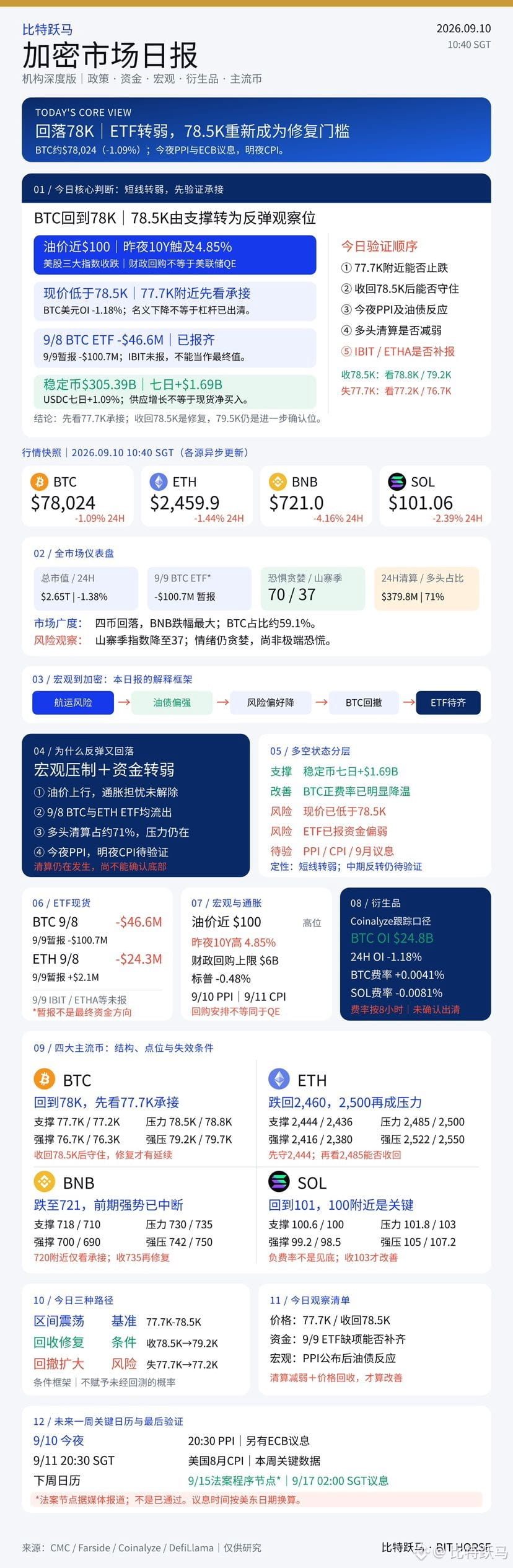
Today Crypto Watch|BTC Drops 78K, Re-testing Support
As of this morning’s daily report timestamp, BTC is back around $78,000. ETH, BNB, and SOL are also falling in tandem. The latest ETF data is still somewhat weak, stablecoin supply continues to grow, and the divergence between capital flows and price has not disappeared.
Next, the focus is on whether support near 77.7K can attract and absorb selling, and whether 78.5K can be reclaimed and held. Once the repair is confirmed, look again at the resistance zone of 79.2K—79.7K. If support keeps failing, then attention should turn to whether the pullback expands.
Tonight’s PPI and the European Central Bank rate decision, and tomorrow night’s CPI will be key validation points for the week. Whether the rebound can sustain depends on answers from price action, spot capital, and the broader macro environment together.$BTC $ETH $BNB
For detailed data and key levels for the four major coins, see today’s poster.
#Bitcoin #CryptoMarket #BitJumpingHorse
181
·
--
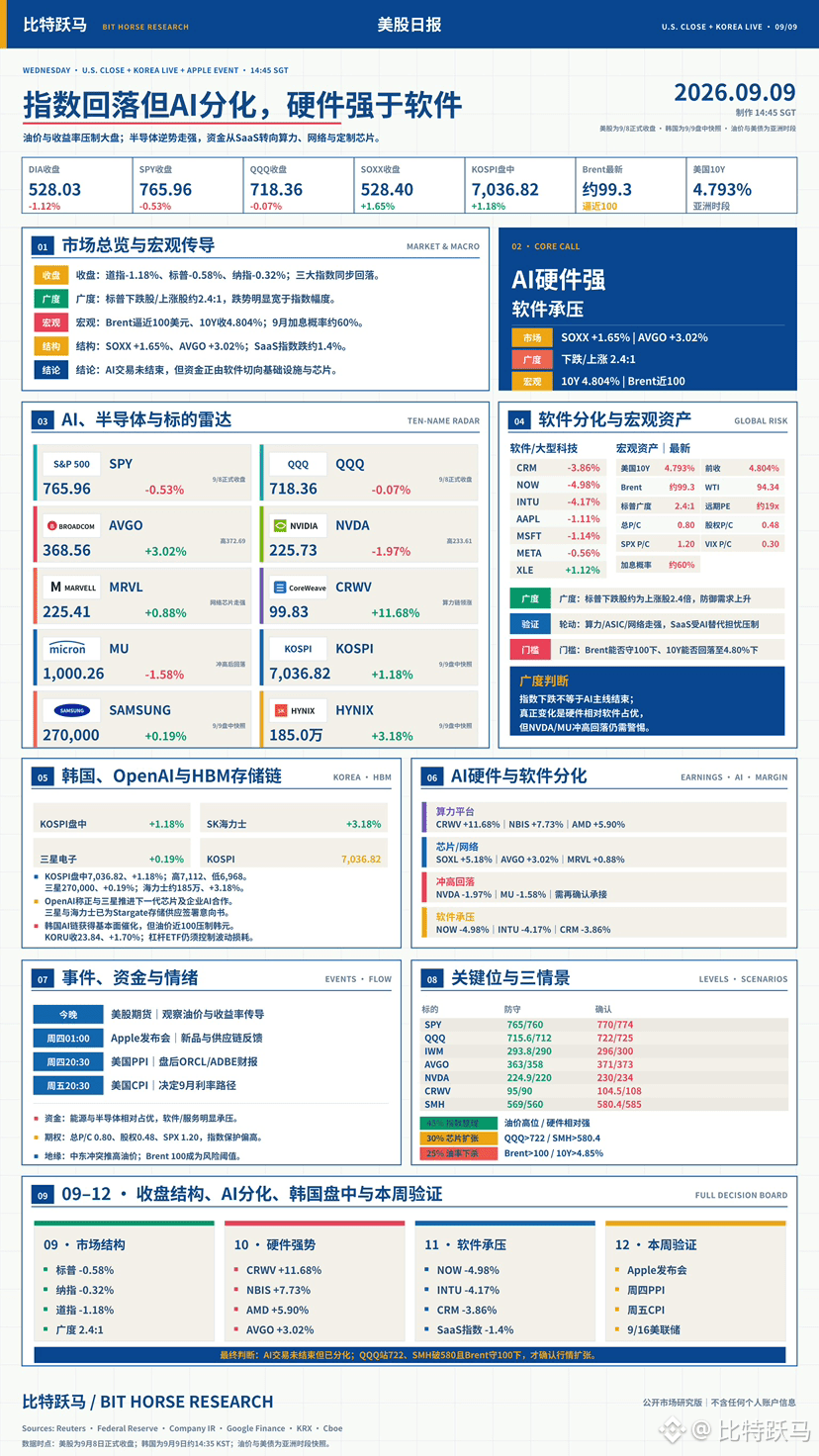
Oil Prices Approaching $100, the Three Major US Stock Indexes Fall Together, but the AI Rally Isn’t Over.
Last night, the market showed a very clear split in fund flows: traditional software stocks came under heavy pressure, while capital continued to flow into compute power, ASICs, network chips, and data-center infrastructure. CRWV, NBIS, AMD, and AVGO all strengthened against the trend, suggesting that the AI theme is moving from the phase of “all companies rising together” into a new repricing stage of “hardware strong, software weak.”
Next, focus on three signals: whether Brent can hold below $100, whether QQQ can stay above 722, and whether SMH can break through 580.4. If all three are confirmed at once, the semiconductor uptrend could upgrade from localized rotation to a full-scale expansion.
All the detailed data, key levels, and this week’s risk validation are compiled in the poster.
— Bit Jue Ma | US Stock Daily
127
·
--
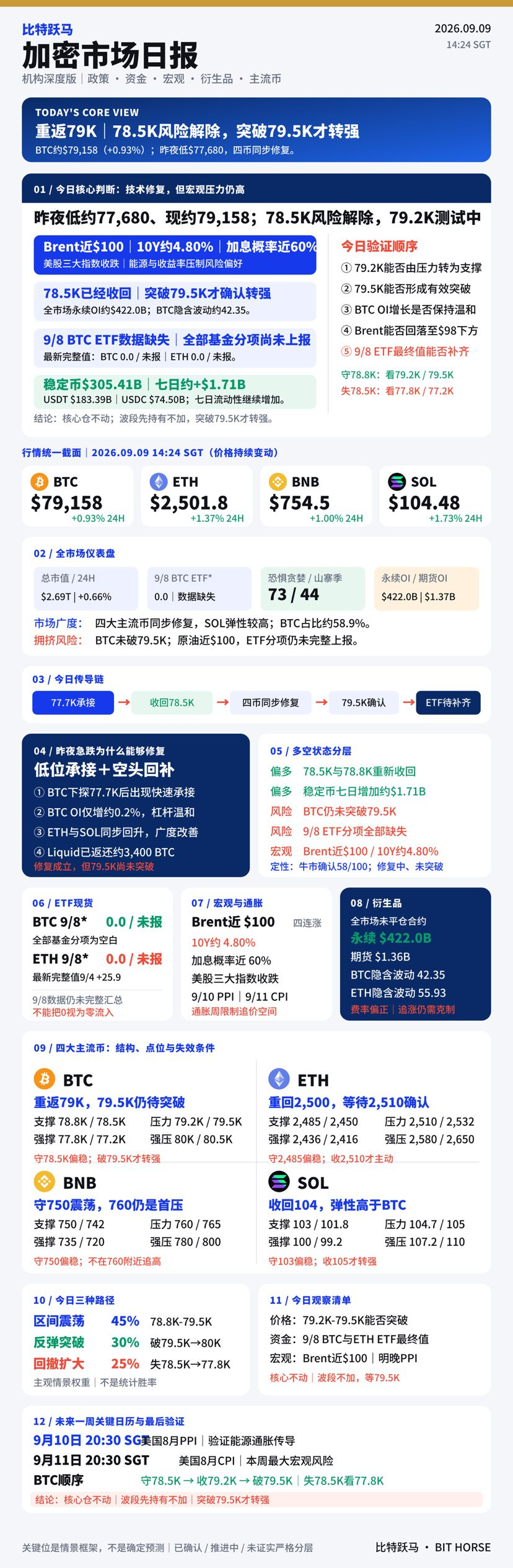
The core of today’s crypto market isn’t whether it’s “up or not,” but whether the rebound can be confirmed.
After two pullbacks to 76.3K, BTC has rebounded and is now once again nearing 79K. However, the ETF data has not been fully caught up, and the macro side is still constrained by high oil prices and high interest rates.
Next, watch for three steps:
Hold above 78.5K to maintain a strong consolidation;
Break and hold 79.2K—79.5K to confirm that the rebound repairs are in place;
Only when it breaks above 80K—80.5K will there be a chance to continue challenging the area above 81.2K.
Short-term sentiment has somewhat recovered, but the real direction decision still hasn’t been completed. The market can have emotions—your judgment must be based on conditions.
#Bitcoin #BTC #CryptoMarket #MarketAnalysis #比特跃马 $BTC
1
118
·
--
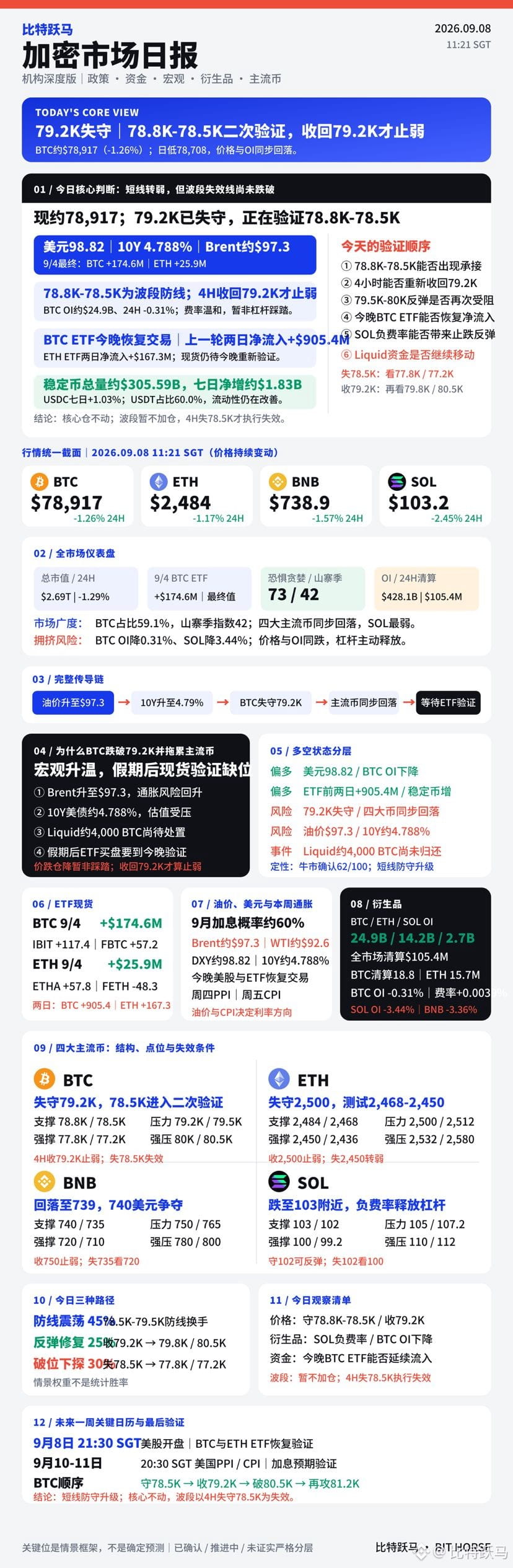
After BTC surged to 80.5K and then pulled back, the 79.2K level has already been breached, and the 78.8K–78.5K range has become today’s most critical swing support. The current selloff is accompanied by a decline in OI; for now, it looks more like a proactive deleveraging rather than a full-scale liquidation cascade. However, with oil prices rising above $97 and U.S. Treasury yields staying elevated, the direction of capital tonight after ETFs resume trading will determine whether this pullback is merely a second confirmation or a failed breakout.
If 78.5K holds and price reclaims 79.2K, there is still a chance to repair the structure. If there is a valid 4-hour breakdown below 78.5K, then we’ll need to switch to a stricter defensive posture. Core holdings will not be easily changed due to short-term fluctuations; swing positions will only be adjusted based on confirmed validation conditions—no guessing bottoms, and no chasing rallies.$BTC
{future}(BTCUSDT)
After BTC surged to 80.5K and then pulled back, the 79.2K level has already been breached, and the 78.8K–78.5K range has become today’s most critical swing support. The current selloff is accompanied by a decline in OI; for now, it looks more like a proactive deleveraging rather than a full-scale liquidation cascade. However, with oil prices rising above $97 and U.S. Treasury yields staying elevated, the direction of capital tonight after ETFs resume trading will determine whether this pullback is merely a second confirmation or a failed breakout.
If 78.5K holds and price reclaims 79.2K, there is still a chance to repair the structure. If there is a valid 4-hour breakdown below 78.5K, then we’ll need to switch to a stricter defensive posture. Core holdings will not be easily changed due to short-term fluctuations; swing positions will only be adjusted based on confirmed validation conditions—no guessing bottoms, and no chasing rallies.$BTC
If 78.5K holds and price reclaims 79.2K, there is still a chance to repair the structure. If there is a valid 4-hour breakdown below 78.5K, then we’ll need to switch to a stricter defensive posture. Core holdings will not be easily changed due to short-term fluctuations; swing positions will only be adjusted based on confirmed validation conditions—no guessing bottoms, and no chasing rallies.$BTC
1
166
Log in to explore more content
Join global crypto users on Binance Square
⚡️ Get latest and useful information about crypto.
💬 Trusted by the world’s largest crypto exchange.
👍 Discover real insights from verified creators.
Email / Phone number
Trending Topics
BinanceReopensWithdrawalsForMoreAssets
978,211 views
5,018 Discussing
Recovery Update #9: Withdrawals for More Assets to Reopen (2026-11-06)
Binance Announcement
·13 Likes
·22.4k views
AnthropicIPOValuationDoubts
628 views
40 Discussing
USStocksSlipandCryptoMarketUnderBroadPressure
52,327 views
457 Discussing