

Erica 1
149 Posts

Erica 1
Report
Block User
Binance KOL | Crypto Analyst | #BTC Holder | #SOL and #ETH
0 Following
6 Followers
13 Liked
Posts
·
--
Offline mindshare is becoming real competition 🔥
Communities around $SOL and $HYPE dominate digital conversations, but conference season shows that attention now has a physical layer too.
Being visible on the timeline is different from becoming the community people keep seeing across cities, stages and side events.
The recent $Trump Coin Club run combined keynote appearances at KBW and TOKEN2049 with private experiences across Seoul and Singapore.
That repeated presence matters because every setting introduces the community in a different social context.
Someone may first notice the Club during a conference before understanding it through the experiences happening around the same week.
To me, offline mindshare grows when a community becomes part of the wider event conversation across multiple settings.
The next attention battle may happen after people close the app 👀
#Macro Insights#
Offline mindshare is becoming real competition 🔥
Communities around $SOL and $HYPE dominate digital conversations, but conference season shows that attention now has a physical layer too.
Being visible on the timeline is different from becoming the community people keep seeing across cities, stages and side events.
The recent $Trump Coin Club run combined keynote appearances at KBW and TOKEN2049 with private experiences across Seoul and Singapore.
That repeated presence matters because every setting introduces the community in a different social context.
Someone may first notice the Club during a conference before understanding it through the experiences happening around the same week.
To me, offline mindshare grows when a community becomes part of the wider event conversation across multiple settings.
The next attention battle may happen after people close the app 👀
#Macro Insights#
Communities around $SOL and $HYPE dominate digital conversations, but conference season shows that attention now has a physical layer too.
Being visible on the timeline is different from becoming the community people keep seeing across cities, stages and side events.
The recent $Trump Coin Club run combined keynote appearances at KBW and TOKEN2049 with private experiences across Seoul and Singapore.
That repeated presence matters because every setting introduces the community in a different social context.
Someone may first notice the Club during a conference before understanding it through the experiences happening around the same week.
To me, offline mindshare grows when a community becomes part of the wider event conversation across multiple settings.
The next attention battle may happen after people close the app 👀
#Macro Insights#

84
·
--
A Token Launch Is A Funding Round With Better Hours 💼
$VIRTUAL made that argument for agents and $BNKR built the machinery underneath it. The part most people miss is that the mechanism is open to anyone, not just to teams with a deck.
Launch a token and the trading it generates produces fees. The majority of that swap fee routes to the creator rather than to the platform.
Set beside the alternatives, that is a strange and interesting instrument.
Raising capital means giving up equity, finding people who already know you, and spending months on a process with a low hit rate. Grants mean applications and committees. Revenue means having a product first.
A launch produces working capital from attention, which is the one resource an early project usually has before it has anything else. Whether that is healthy depends entirely on what gets built with it.
The obvious caveat applies with force. Fees need volume, volume needs a reason to exist, and most launches produce neither past the first week. This is a funding mechanism with a survivorship problem, and nobody should read it as free money.
But a creator who can fund development from the market they created, without asking permission, is a genuinely new category of participant.
#DeFi #AI
A Token Launch Is A Funding Round With Better Hours 💼
$VIRTUAL made that argument for agents and $BNKR built the machinery underneath it. The part most people miss is that the mechanism is open to anyone, not just to teams with a deck.
Launch a token and the trading it generates produces fees. The majority of that swap fee routes to the creator rather than to the platform.
Set beside the alternatives, that is a strange and interesting instrument.
Raising capital means giving up equity, finding people who already know you, and spending months on a process with a low hit rate. Grants mean applications and committees. Revenue means having a product first.
A launch produces working capital from attention, which is the one resource an early project usually has before it has anything else. Whether that is healthy depends entirely on what gets built with it.
The obvious caveat applies with force. Fees need volume, volume needs a reason to exist, and most launches produce neither past the first week. This is a funding mechanism with a survivorship problem, and nobody should read it as free money.
But a creator who can fund development from the market they created, without asking permission, is a genuinely new category of participant.
#DeFi #AI
$VIRTUAL made that argument for agents and $BNKR built the machinery underneath it. The part most people miss is that the mechanism is open to anyone, not just to teams with a deck.
Launch a token and the trading it generates produces fees. The majority of that swap fee routes to the creator rather than to the platform.
Set beside the alternatives, that is a strange and interesting instrument.
Raising capital means giving up equity, finding people who already know you, and spending months on a process with a low hit rate. Grants mean applications and committees. Revenue means having a product first.
A launch produces working capital from attention, which is the one resource an early project usually has before it has anything else. Whether that is healthy depends entirely on what gets built with it.
The obvious caveat applies with force. Fees need volume, volume needs a reason to exist, and most launches produce neither past the first week. This is a funding mechanism with a survivorship problem, and nobody should read it as free money.
But a creator who can fund development from the market they created, without asking permission, is a genuinely new category of participant.
#DeFi #AI
65
·
--
Custom Basket Up +24.07%! :chart_with_upwards_trend: Sometimes lazy traders know all the tips and tricks. With $DRV and PRL recently added to Pear Protocol, the top traders wasted no time putting new strategies to work. 2 traders I follow made a custom basket with $HYPE and PRL, and you could literally join it with 1-click. Already up +24.07% with minimal work. If you trust the trader, Pear Protocol's new features make it super easy to follow their trades. Even if you're not convinced, you can ask their AI trader, Agent Pear, to analyze the setup based on sentiment and quant data before you decide. Sometimes you don't always have time to do all the research or stay glued to the charts. Having access to other traders' strategies, with AI analysis to help you evaluate them, makes staying on top of the market much easier. pear.garden/trade #Altcoin Season#
Custom Basket Up +24.07%! :chart_with_upwards_trend: Sometimes lazy traders know all the tips and tricks. With $DRV and PRL recently added to Pear Protocol, the top traders wasted no time putting new strategies to work. 2 traders I follow made a custom basket with $HYPE and PRL, and you could literally join it with 1-click. Already up +24.07% with minimal work. If you trust the trader, Pear Protocol's new features make it super easy to follow their trades. Even if you're not convinced, you can ask their AI trader, Agent Pear, to analyze the setup based on sentiment and quant data before you decide. Sometimes you don't always have time to do all the research or stay glued to the charts. Having access to other traders' strategies, with AI analysis to help you evaluate them, makes staying on top of the market much easier. pear.garden/trade #Altcoin Season#
·
--
Tokenized stocks are becoming rewards 👀
The market normally discusses tokenized stocks through narratives around $STONK and equity perpetuals gaining attention across $HYPE , but most of that conversation focuses on access and trading volume.
I think the next step is using tokenized equities as a distribution tool that gives communities a reason to participate.
Stocks are already familiar to mainstream users, which makes them an interesting bridge between traditional markets and crypto-native reward systems.
Injective is testing that model through Stockdrop.
The first Stockdrop rewards have now reached eligible Community BuyBack participants, with the program continuing throughout October.
Allocation is not guaranteed, but the structure connects community participation, the recurring INJ burn, and RWA rewards inside one program.
For me, this is a smart way to give tokenized stocks utility beyond another market people can trade 🔥
#Altcoin Season#
Tokenized stocks are becoming rewards 👀
The market normally discusses tokenized stocks through narratives around $STONK and equity perpetuals gaining attention across $HYPE , but most of that conversation focuses on access and trading volume.
I think the next step is using tokenized equities as a distribution tool that gives communities a reason to participate.
Stocks are already familiar to mainstream users, which makes them an interesting bridge between traditional markets and crypto-native reward systems.
Injective is testing that model through Stockdrop.
The first Stockdrop rewards have now reached eligible Community BuyBack participants, with the program continuing throughout October.
Allocation is not guaranteed, but the structure connects community participation, the recurring INJ burn, and RWA rewards inside one program.
For me, this is a smart way to give tokenized stocks utility beyond another market people can trade 🔥
#Altcoin Season#
The market normally discusses tokenized stocks through narratives around $STONK and equity perpetuals gaining attention across $HYPE , but most of that conversation focuses on access and trading volume.
I think the next step is using tokenized equities as a distribution tool that gives communities a reason to participate.
Stocks are already familiar to mainstream users, which makes them an interesting bridge between traditional markets and crypto-native reward systems.
Injective is testing that model through Stockdrop.
The first Stockdrop rewards have now reached eligible Community BuyBack participants, with the program continuing throughout October.
Allocation is not guaranteed, but the structure connects community participation, the recurring INJ burn, and RWA rewards inside one program.
For me, this is a smart way to give tokenized stocks utility beyond another market people can trade 🔥
#Altcoin Season#
68
·
--
Destinations Become Community Shorthand Over Time 🌏
Communities around $PEPE and $WIF show how a single reference can carry meaning that outsiders may not immediately understand, and while online culture creates this shorthand through shared jokes and recurring images, I do think IRL communities create it through places.
Once a group shares an experience in one city, the destination can become a name for that entire chapter.
The $Trump Coin Club for example now has New York and Singapore in its completed 2026 event history.
The Singapore experience concluded after its October 9 to 11 window, while approved recaps will eventually shape how that weekend is remembered in greater detail.
The destination already gives the Club another completed chapter its community can reference.
With a gala dinner planned next, the calendar continues adding new settings to the same story.
#Altcoin Season#
Destinations Become Community Shorthand Over Time 🌏
Communities around $PEPE and $WIF show how a single reference can carry meaning that outsiders may not immediately understand, and while online culture creates this shorthand through shared jokes and recurring images, I do think IRL communities create it through places.
Once a group shares an experience in one city, the destination can become a name for that entire chapter.
The $Trump Coin Club for example now has New York and Singapore in its completed 2026 event history.
The Singapore experience concluded after its October 9 to 11 window, while approved recaps will eventually shape how that weekend is remembered in greater detail.
The destination already gives the Club another completed chapter its community can reference.
With a gala dinner planned next, the calendar continues adding new settings to the same story.
#Altcoin Season#
Communities around $PEPE and $WIF show how a single reference can carry meaning that outsiders may not immediately understand, and while online culture creates this shorthand through shared jokes and recurring images, I do think IRL communities create it through places.
Once a group shares an experience in one city, the destination can become a name for that entire chapter.
The $Trump Coin Club for example now has New York and Singapore in its completed 2026 event history.
The Singapore experience concluded after its October 9 to 11 window, while approved recaps will eventually shape how that weekend is remembered in greater detail.
The destination already gives the Club another completed chapter its community can reference.
With a gala dinner planned next, the calendar continues adding new settings to the same story.
#Altcoin Season#
52
·
--
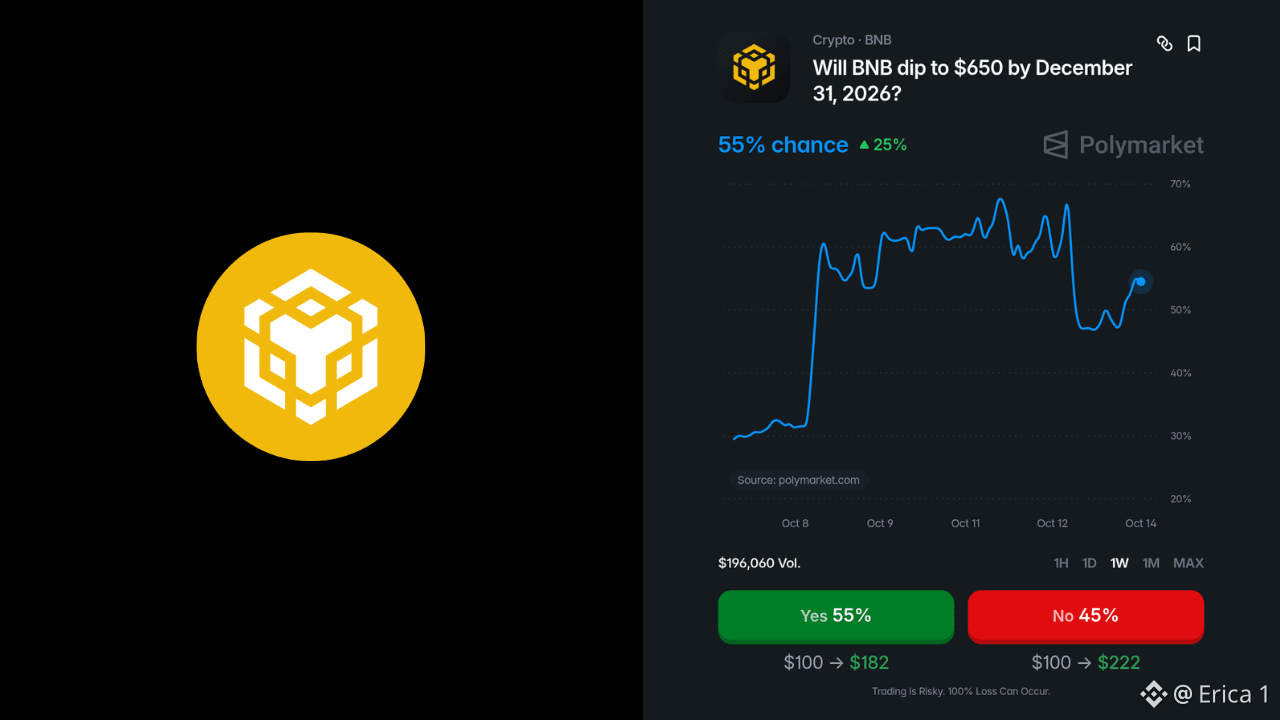
$BNB Downside Odds Just Surged 🚨
A 25-percentage-point jump in one week!
Polymarket traders now assign a 55% probability to BNB touching $650 before December 31, 2026.
That's a major change in market expectations.
And there's something important about how this prediction works.
The market isn't asking whether BNB finishes the year below $650.
It's asking whether the price touches that level before the deadline.
That distinction matters.
📉 YES at 55% → Approximately 1.82x payout.
💰 NO at 45% → Approximately 2.22x payout.
Now consider what happens if bearish sentiment strengthens.
A YES position entered at 55% could appreciate by approximately 27% if the probability climbs to 70%.
No need to wait for BNB to actually touch $650 to potentially exit with a profit.
Personally, I'm watching whether this sudden increase in downside expectations continues.
Polymarket offers an interesting alternative to directly shorting the cryptocurrency, although positions can still lose their entire value.
#Altcoin Season#
$BNB Downside Odds Just Surged 🚨
A 25-percentage-point jump in one week!
Polymarket traders now assign a 55% probability to BNB touching $650 before December 31, 2026.
That's a major change in market expectations.
And there's something important about how this prediction works.
The market isn't asking whether BNB finishes the year below $650.
It's asking whether the price touches that level before the deadline.
That distinction matters.
📉 YES at 55% → Approximately 1.82x payout.
💰 NO at 45% → Approximately 2.22x payout.
Now consider what happens if bearish sentiment strengthens.
A YES position entered at 55% could appreciate by approximately 27% if the probability climbs to 70%.
No need to wait for BNB to actually touch $650 to potentially exit with a profit.
Personally, I'm watching whether this sudden increase in downside expectations continues.
Polymarket offers an interesting alternative to directly shorting the cryptocurrency, although positions can still lose their entire value.
#Altcoin Season#
A 25-percentage-point jump in one week!
Polymarket traders now assign a 55% probability to BNB touching $650 before December 31, 2026.
That's a major change in market expectations.
And there's something important about how this prediction works.
The market isn't asking whether BNB finishes the year below $650.
It's asking whether the price touches that level before the deadline.
That distinction matters.
📉 YES at 55% → Approximately 1.82x payout.
💰 NO at 45% → Approximately 2.22x payout.
Now consider what happens if bearish sentiment strengthens.
A YES position entered at 55% could appreciate by approximately 27% if the probability climbs to 70%.
No need to wait for BNB to actually touch $650 to potentially exit with a profit.
Personally, I'm watching whether this sudden increase in downside expectations continues.
Polymarket offers an interesting alternative to directly shorting the cryptocurrency, although positions can still lose their entire value.
#Altcoin Season#
66
·
--
The Next 100x Privacy Trade? 🔐
The AI trade has been all about GPUs and models.
But as billions flow into AI infrastructure, another narrative is emerging.
Privacy and ownership.
$VVV is already tackling the first half.
Venice separates standard private inference from hardware-verified, encrypted execution.
In its strongest privacy mode, prompts are encrypted on your device and only decrypted inside verified hardware.
But who actually owns the GPU processing it?
That's where $B3 comes in.
Through B3IQ, customers own dedicated NVIDIA machines while B3 handles hosting and operations.
And the rules are simple:
• API keys only access GPUs owned by the account.
• No available GPU? Requests fail instead of being routed to third parties.
• Machines in Earn Mode leave the private serving environment entirely.
Now think about the upside.
Banks, hedge funds and enterprises aren't going to stop using AI. They'll need more of it, and much of it will involve sensitive information.
Here's the moon math:
Neither project needs to capture the entire AI market.
Even a small slice of enterprise demand shifting toward private inference and customer-owned GPUs could represent a massive opportunity.
Two different plays on the same trillion-dollar AI narrative.
And private AI could still be in its early innings.
#Altcoin Season#
The Next 100x Privacy Trade? 🔐
The AI trade has been all about GPUs and models.
But as billions flow into AI infrastructure, another narrative is emerging.
Privacy and ownership.
$VVV is already tackling the first half.
Venice separates standard private inference from hardware-verified, encrypted execution.
In its strongest privacy mode, prompts are encrypted on your device and only decrypted inside verified hardware.
But who actually owns the GPU processing it?
That's where $B3 comes in.
Through B3IQ, customers own dedicated NVIDIA machines while B3 handles hosting and operations.
And the rules are simple:
• API keys only access GPUs owned by the account.
• No available GPU? Requests fail instead of being routed to third parties.
• Machines in Earn Mode leave the private serving environment entirely.
Now think about the upside.
Banks, hedge funds and enterprises aren't going to stop using AI. They'll need more of it, and much of it will involve sensitive information.
Here's the moon math:
Neither project needs to capture the entire AI market.
Even a small slice of enterprise demand shifting toward private inference and customer-owned GPUs could represent a massive opportunity.
Two different plays on the same trillion-dollar AI narrative.
And private AI could still be in its early innings.
#Altcoin Season#
The AI trade has been all about GPUs and models.
But as billions flow into AI infrastructure, another narrative is emerging.
Privacy and ownership.
$VVV is already tackling the first half.
Venice separates standard private inference from hardware-verified, encrypted execution.
In its strongest privacy mode, prompts are encrypted on your device and only decrypted inside verified hardware.
But who actually owns the GPU processing it?
That's where $B3 comes in.
Through B3IQ, customers own dedicated NVIDIA machines while B3 handles hosting and operations.
And the rules are simple:
• API keys only access GPUs owned by the account.
• No available GPU? Requests fail instead of being routed to third parties.
• Machines in Earn Mode leave the private serving environment entirely.
Now think about the upside.
Banks, hedge funds and enterprises aren't going to stop using AI. They'll need more of it, and much of it will involve sensitive information.
Here's the moon math:
Neither project needs to capture the entire AI market.
Even a small slice of enterprise demand shifting toward private inference and customer-owned GPUs could represent a massive opportunity.
Two different plays on the same trillion-dollar AI narrative.
And private AI could still be in its early innings.
#Altcoin Season#
62
·
--
The Model That Never Leaves Your Phone 📱
$ZEC made privacy a category and $ICP made the case that execution location is a design decision. Bankr's founder is now working on the version where the model runs on the device.
He has described training a small model on anonymised agent sessions so the conversation stays local.
Treat it as a stated plan rather than a shipped feature, because that is what it is. The interesting part is the reasoning behind it.
An agent that manages money reads things a chat assistant does not. Balances, positions, intentions, the sequence of what you are trying to do and when. That is a profile, and it is a more revealing one than most people think they are handing over when they type a sentence into a box.
Cloud inference means that sequence leaves your device. Private execution environments narrow the exposure. A local model removes the trip entirely for whatever it can handle.
The tradeoff is capability. A small on-device model will not match a frontier one, so the realistic design is local for routine work and remote for the hard questions, with the routing decided for you.
Which raises the question worth asking of anyone who ships this: what gets routed out, who decides, and can you see it after the fact.
The direction is right regardless. The least private thing about most agent products is not the chain. It is the conversation.
#AI #Privacy
The Model That Never Leaves Your Phone 📱
$ZEC made privacy a category and $ICP made the case that execution location is a design decision. Bankr's founder is now working on the version where the model runs on the device.
He has described training a small model on anonymised agent sessions so the conversation stays local.
Treat it as a stated plan rather than a shipped feature, because that is what it is. The interesting part is the reasoning behind it.
An agent that manages money reads things a chat assistant does not. Balances, positions, intentions, the sequence of what you are trying to do and when. That is a profile, and it is a more revealing one than most people think they are handing over when they type a sentence into a box.
Cloud inference means that sequence leaves your device. Private execution environments narrow the exposure. A local model removes the trip entirely for whatever it can handle.
The tradeoff is capability. A small on-device model will not match a frontier one, so the realistic design is local for routine work and remote for the hard questions, with the routing decided for you.
Which raises the question worth asking of anyone who ships this: what gets routed out, who decides, and can you see it after the fact.
The direction is right regardless. The least private thing about most agent products is not the chain. It is the conversation.
#AI #Privacy
$ZEC made privacy a category and $ICP made the case that execution location is a design decision. Bankr's founder is now working on the version where the model runs on the device.
He has described training a small model on anonymised agent sessions so the conversation stays local.
Treat it as a stated plan rather than a shipped feature, because that is what it is. The interesting part is the reasoning behind it.
An agent that manages money reads things a chat assistant does not. Balances, positions, intentions, the sequence of what you are trying to do and when. That is a profile, and it is a more revealing one than most people think they are handing over when they type a sentence into a box.
Cloud inference means that sequence leaves your device. Private execution environments narrow the exposure. A local model removes the trip entirely for whatever it can handle.
The tradeoff is capability. A small on-device model will not match a frontier one, so the realistic design is local for routine work and remote for the hard questions, with the routing decided for you.
Which raises the question worth asking of anyone who ships this: what gets routed out, who decides, and can you see it after the fact.
The direction is right regardless. The least private thing about most agent products is not the chain. It is the conversation.
#AI #Privacy
65
·
--
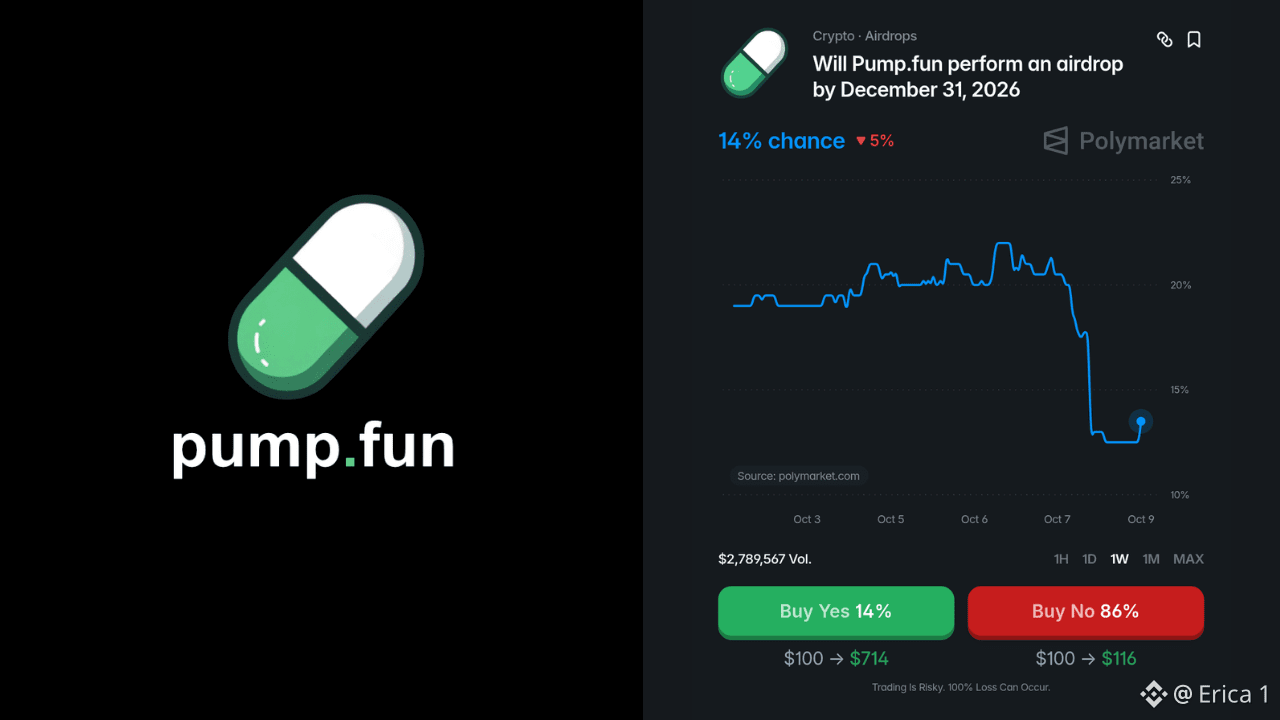
$PUMP Airdrop Incoming? 💊
14% YES. 86% NO. And nearly $2.8 million in trading volume.
Polymarket traders aren't particularly confident that Pump Fun will conduct an airdrop before December 31.
The probability has dropped by 5 percentage points over the past week, suggesting expectations are cooling.
But let's look at the numbers.
💊 YES at 14% → $100 could return approximately $714.
❌ NO at 86% → $100 could return approximately $116.
That's a significant difference in potential payouts.
And considering how much attention Pump Fun has attracted within the memecoin ecosystem, I wouldn't be surprised to see this market react strongly to any credible airdrop-related announcement.
Here's what makes it interesting to me.
I don't necessarily need an airdrop to happen.
If speculation increases and YES odds move from 14% to 28%, an existing YES position could approximately double in market value.
That means I could potentially exit before any actual distribution takes place.
It's similar to how traders speculate on token launches, except Polymarket lets you trade the likelihood of a specific event instead.
With Pump Fun continuing to attract attention from memecoin traders, I'm watching how expectations develop.
The possibility of trading these probabilities offers another angle for anyone following the broader Solana memecoin ecosystem.
Would you bet on an airdrop before the year ends?
#Altcoin Season#
$PUMP Airdrop Incoming? 💊
14% YES. 86% NO. And nearly $2.8 million in trading volume.
Polymarket traders aren't particularly confident that Pump Fun will conduct an airdrop before December 31.
The probability has dropped by 5 percentage points over the past week, suggesting expectations are cooling.
But let's look at the numbers.
💊 YES at 14% → $100 could return approximately $714.
❌ NO at 86% → $100 could return approximately $116.
That's a significant difference in potential payouts.
And considering how much attention Pump Fun has attracted within the memecoin ecosystem, I wouldn't be surprised to see this market react strongly to any credible airdrop-related announcement.
Here's what makes it interesting to me.
I don't necessarily need an airdrop to happen.
If speculation increases and YES odds move from 14% to 28%, an existing YES position could approximately double in market value.
That means I could potentially exit before any actual distribution takes place.
It's similar to how traders speculate on token launches, except Polymarket lets you trade the likelihood of a specific event instead.
With Pump Fun continuing to attract attention from memecoin traders, I'm watching how expectations develop.
The possibility of trading these probabilities offers another angle for anyone following the broader Solana memecoin ecosystem.
Would you bet on an airdrop before the year ends?
#Altcoin Season#
14% YES. 86% NO. And nearly $2.8 million in trading volume.
Polymarket traders aren't particularly confident that Pump Fun will conduct an airdrop before December 31.
The probability has dropped by 5 percentage points over the past week, suggesting expectations are cooling.
But let's look at the numbers.
💊 YES at 14% → $100 could return approximately $714.
❌ NO at 86% → $100 could return approximately $116.
That's a significant difference in potential payouts.
And considering how much attention Pump Fun has attracted within the memecoin ecosystem, I wouldn't be surprised to see this market react strongly to any credible airdrop-related announcement.
Here's what makes it interesting to me.
I don't necessarily need an airdrop to happen.
If speculation increases and YES odds move from 14% to 28%, an existing YES position could approximately double in market value.
That means I could potentially exit before any actual distribution takes place.
It's similar to how traders speculate on token launches, except Polymarket lets you trade the likelihood of a specific event instead.
With Pump Fun continuing to attract attention from memecoin traders, I'm watching how expectations develop.
The possibility of trading these probabilities offers another angle for anyone following the broader Solana memecoin ecosystem.
Would you bet on an airdrop before the year ends?
#Altcoin Season#
68
·
--
Verified
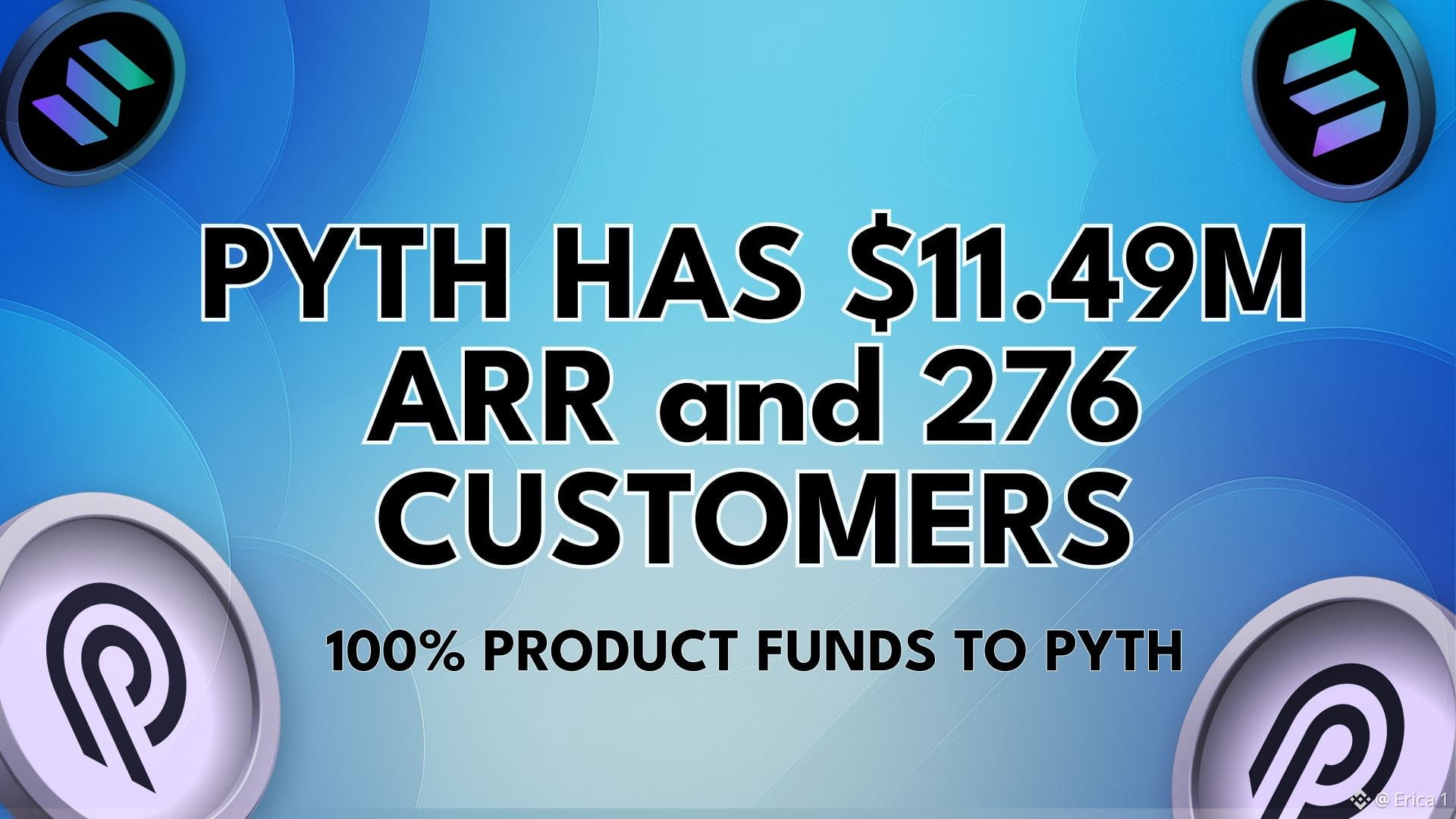
$PYTH has 276 paying accounts, $11.49M ARR, and 100% product funds to PYTH 🔥
$SOL holders have seen enough infrastructure cycles to know the difference between “ecosystem potential” and actual demand, and that is the lens I would use for Pyth after this Q3 update.
Pyth is not asking the market to believe customers might show up someday.
The business already has 276 paying accounts, $11.49M in active ARR, and 86% quarter-over-quarter growth. Pyth Pro alone reached $9.68M ARR, while Pyth Indices reached $1.81M by the end of September.
Then the DAO added the part that makes the update much more relevant for $PYTH holders.
Under the 100% Rule, every dollar the DAO receives from Pyth products now goes into PYTH bought on the open market.
That is the line I would keep repeating until the market understands it.
Pyth is growing as a market-data business, and the product-linked funds received by the DAO now have a direct route into PYTH accumulation instead of sitting as a vague treasury detail.
The broader context makes it stronger: Q3 RWA perps did $2.09T in volume, 94.1% ran on Pyth-powered venues, Nasdaq Basic is available through the Pyth Data Marketplace, and Kalshi, Coinbase and Polymarket are already using Pyth across real-world market products.
I think the old oracle label is too small now.
$PYTH looks more like a revenue-backed market-data infrastructure story where the token mechanism finally became easier for investors to understand.
#Altcoin Season# #SOL
$PYTH has 276 paying accounts, $11.49M ARR, and 100% product funds to PYTH 🔥
$SOL holders have seen enough infrastructure cycles to know the difference between “ecosystem potential” and actual demand, and that is the lens I would use for Pyth after this Q3 update.
Pyth is not asking the market to believe customers might show up someday.
The business already has 276 paying accounts, $11.49M in active ARR, and 86% quarter-over-quarter growth. Pyth Pro alone reached $9.68M ARR, while Pyth Indices reached $1.81M by the end of September.
Then the DAO added the part that makes the update much more relevant for $PYTH holders.
Under the 100% Rule, every dollar the DAO receives from Pyth products now goes into PYTH bought on the open market.
That is the line I would keep repeating until the market understands it.
Pyth is growing as a market-data business, and the product-linked funds received by the DAO now have a direct route into PYTH accumulation instead of sitting as a vague treasury detail.
The broader context makes it stronger: Q3 RWA perps did $2.09T in volume, 94.1% ran on Pyth-powered venues, Nasdaq Basic is available through the Pyth Data Marketplace, and Kalshi, Coinbase and Polymarket are already using Pyth across real-world market products.
I think the old oracle label is too small now.
$PYTH looks more like a revenue-backed market-data infrastructure story where the token mechanism finally became easier for investors to understand.
#Altcoin Season# #SOL
$SOL holders have seen enough infrastructure cycles to know the difference between “ecosystem potential” and actual demand, and that is the lens I would use for Pyth after this Q3 update.
Pyth is not asking the market to believe customers might show up someday.
The business already has 276 paying accounts, $11.49M in active ARR, and 86% quarter-over-quarter growth. Pyth Pro alone reached $9.68M ARR, while Pyth Indices reached $1.81M by the end of September.
Then the DAO added the part that makes the update much more relevant for $PYTH holders.
Under the 100% Rule, every dollar the DAO receives from Pyth products now goes into PYTH bought on the open market.
That is the line I would keep repeating until the market understands it.
Pyth is growing as a market-data business, and the product-linked funds received by the DAO now have a direct route into PYTH accumulation instead of sitting as a vague treasury detail.
The broader context makes it stronger: Q3 RWA perps did $2.09T in volume, 94.1% ran on Pyth-powered venues, Nasdaq Basic is available through the Pyth Data Marketplace, and Kalshi, Coinbase and Polymarket are already using Pyth across real-world market products.
I think the old oracle label is too small now.
$PYTH looks more like a revenue-backed market-data infrastructure story where the token mechanism finally became easier for investors to understand.
#Altcoin Season# #SOL
61
·
--
A Busier Crypto Market Makes Edge More Interesting 📈
$2Z gets more compelling as crypto activity spreads across more markets.
$HYPE is already part of an Edge catalog that now reaches across several different categories of real-time data.
Solana.
Hyperliquid.
Phoenix.
Binance futures market data.
All different markets under one growing distribution layer.
That is the part I think fits the altseason setup best.
As traders start watching more ecosystems and more venues, the value of getting more of that information through the same connection increases.
More market activity gives Edge more to connect.
And every new feed makes the network more useful.
#AltcoinSeason #DeFi
A Busier Crypto Market Makes Edge More Interesting 📈
$2Z gets more compelling as crypto activity spreads across more markets.
$HYPE is already part of an Edge catalog that now reaches across several different categories of real-time data.
Solana.
Hyperliquid.
Phoenix.
Binance futures market data.
All different markets under one growing distribution layer.
That is the part I think fits the altseason setup best.
As traders start watching more ecosystems and more venues, the value of getting more of that information through the same connection increases.
More market activity gives Edge more to connect.
And every new feed makes the network more useful.
#AltcoinSeason #DeFi
$2Z gets more compelling as crypto activity spreads across more markets.
$HYPE is already part of an Edge catalog that now reaches across several different categories of real-time data.
Solana.
Hyperliquid.
Phoenix.
Binance futures market data.
All different markets under one growing distribution layer.
That is the part I think fits the altseason setup best.
As traders start watching more ecosystems and more venues, the value of getting more of that information through the same connection increases.
More market activity gives Edge more to connect.
And every new feed makes the network more useful.
#AltcoinSeason #DeFi
62
·
--
A Fee Share Nobody Can Quietly Switch Off 📜
$INJ holders know what it means when a revenue mechanic lives in the protocol rather than in a policy page. $BNKR is testing the same idea at the launch layer, on Arbitrum and Arc.
Two experimental features there. Tokens can vest directly to holders, and a launch can route some or all of its fees to holders, payable in the quote token, the base token, or both.
The implementation detail is the story. Both are baked in at the smart contract level.
That distinction decides whether anything can be built on top of it.
A platform policy is a promise maintained by whoever runs the platform. It can change with a roadmap decision, and no third party can verify it without trusting the operator. A contract-level guarantee can be read directly, integrated against, and relied on by an application that has no relationship with the issuer at all.
Which is exactly what a fee-sharing product needs. Nobody builds a dashboard, an index or a structured position on top of a rule that might be edited next quarter.
Scope, stated plainly. Arbitrum and Arc only, described by the team as experimental, with Base and Robinhood Chain mentioned as a rollout if the features land.
What I would watch is not how many launches use it. It is whether a third party reads these fields and ships something that depends on them.
Contract-level design pays for itself only when somebody downstream actually consumes it.
#DeFi #Arbitrum
A Fee Share Nobody Can Quietly Switch Off 📜
$INJ holders know what it means when a revenue mechanic lives in the protocol rather than in a policy page. $BNKR is testing the same idea at the launch layer, on Arbitrum and Arc.
Two experimental features there. Tokens can vest directly to holders, and a launch can route some or all of its fees to holders, payable in the quote token, the base token, or both.
The implementation detail is the story. Both are baked in at the smart contract level.
That distinction decides whether anything can be built on top of it.
A platform policy is a promise maintained by whoever runs the platform. It can change with a roadmap decision, and no third party can verify it without trusting the operator. A contract-level guarantee can be read directly, integrated against, and relied on by an application that has no relationship with the issuer at all.
Which is exactly what a fee-sharing product needs. Nobody builds a dashboard, an index or a structured position on top of a rule that might be edited next quarter.
Scope, stated plainly. Arbitrum and Arc only, described by the team as experimental, with Base and Robinhood Chain mentioned as a rollout if the features land.
What I would watch is not how many launches use it. It is whether a third party reads these fields and ships something that depends on them.
Contract-level design pays for itself only when somebody downstream actually consumes it.
#DeFi #Arbitrum
$INJ holders know what it means when a revenue mechanic lives in the protocol rather than in a policy page. $BNKR is testing the same idea at the launch layer, on Arbitrum and Arc.
Two experimental features there. Tokens can vest directly to holders, and a launch can route some or all of its fees to holders, payable in the quote token, the base token, or both.
The implementation detail is the story. Both are baked in at the smart contract level.
That distinction decides whether anything can be built on top of it.
A platform policy is a promise maintained by whoever runs the platform. It can change with a roadmap decision, and no third party can verify it without trusting the operator. A contract-level guarantee can be read directly, integrated against, and relied on by an application that has no relationship with the issuer at all.
Which is exactly what a fee-sharing product needs. Nobody builds a dashboard, an index or a structured position on top of a rule that might be edited next quarter.
Scope, stated plainly. Arbitrum and Arc only, described by the team as experimental, with Base and Robinhood Chain mentioned as a rollout if the features land.
What I would watch is not how many launches use it. It is whether a third party reads these fields and ships something that depends on them.
Contract-level design pays for itself only when somebody downstream actually consumes it.
#DeFi #Arbitrum
73
·
--
Crypto Governance Has A Major Problem 👇
Protocols such as $UNI turned token ownership into voting power. For $VFY the overlooked opportunity is what happens when those votes need privacy without sacrificing confidence in the result.
Most onchain governance exposes the voter, wallet and decision permanently.
That visibility can invite social pressure, retaliation and copy voting from larger wallets.
A private ballot fixes the exposure problem only if participants can still verify that the election was legitimate.
Veravote offers a working model.
Its voting application generates Zero Knowledge proofs that can confirm:
• The voter was eligible
• The ballot was not duplicated
• The final tally matched the submitted votes
The identity and individual vote remain hidden.
zkVerify independently checks the ballot and tally proofs instead of asking participants to trust the voting platform’s own verdict.
It does not choose eligible voters, create ballot privacy or decide the outcome.
It verifies the cryptographic evidence produced by the application.
VFY is used when those proofs are submitted to the specialised verification network.
I think private, auditable voting has potential far beyond DAOs. Companies, universities and online communities all face the same conflict between confidentiality and credible results.
Veravote already integrates zkVerify, turning that wider use case into something tangible.
#Altcoin Season#
Crypto Governance Has A Major Problem 👇
Protocols such as $UNI turned token ownership into voting power. For $VFY the overlooked opportunity is what happens when those votes need privacy without sacrificing confidence in the result.
Most onchain governance exposes the voter, wallet and decision permanently.
That visibility can invite social pressure, retaliation and copy voting from larger wallets.
A private ballot fixes the exposure problem only if participants can still verify that the election was legitimate.
Veravote offers a working model.
Its voting application generates Zero Knowledge proofs that can confirm:
• The voter was eligible
• The ballot was not duplicated
• The final tally matched the submitted votes
The identity and individual vote remain hidden.
zkVerify independently checks the ballot and tally proofs instead of asking participants to trust the voting platform’s own verdict.
It does not choose eligible voters, create ballot privacy or decide the outcome.
It verifies the cryptographic evidence produced by the application.
VFY is used when those proofs are submitted to the specialised verification network.
I think private, auditable voting has potential far beyond DAOs. Companies, universities and online communities all face the same conflict between confidentiality and credible results.
Veravote already integrates zkVerify, turning that wider use case into something tangible.
#Altcoin Season#
Protocols such as $UNI turned token ownership into voting power. For $VFY the overlooked opportunity is what happens when those votes need privacy without sacrificing confidence in the result.
Most onchain governance exposes the voter, wallet and decision permanently.
That visibility can invite social pressure, retaliation and copy voting from larger wallets.
A private ballot fixes the exposure problem only if participants can still verify that the election was legitimate.
Veravote offers a working model.
Its voting application generates Zero Knowledge proofs that can confirm:
• The voter was eligible
• The ballot was not duplicated
• The final tally matched the submitted votes
The identity and individual vote remain hidden.
zkVerify independently checks the ballot and tally proofs instead of asking participants to trust the voting platform’s own verdict.
It does not choose eligible voters, create ballot privacy or decide the outcome.
It verifies the cryptographic evidence produced by the application.
VFY is used when those proofs are submitted to the specialised verification network.
I think private, auditable voting has potential far beyond DAOs. Companies, universities and online communities all face the same conflict between confidentiality and credible results.
Veravote already integrates zkVerify, turning that wider use case into something tangible.
#Altcoin Season#
62
·
--
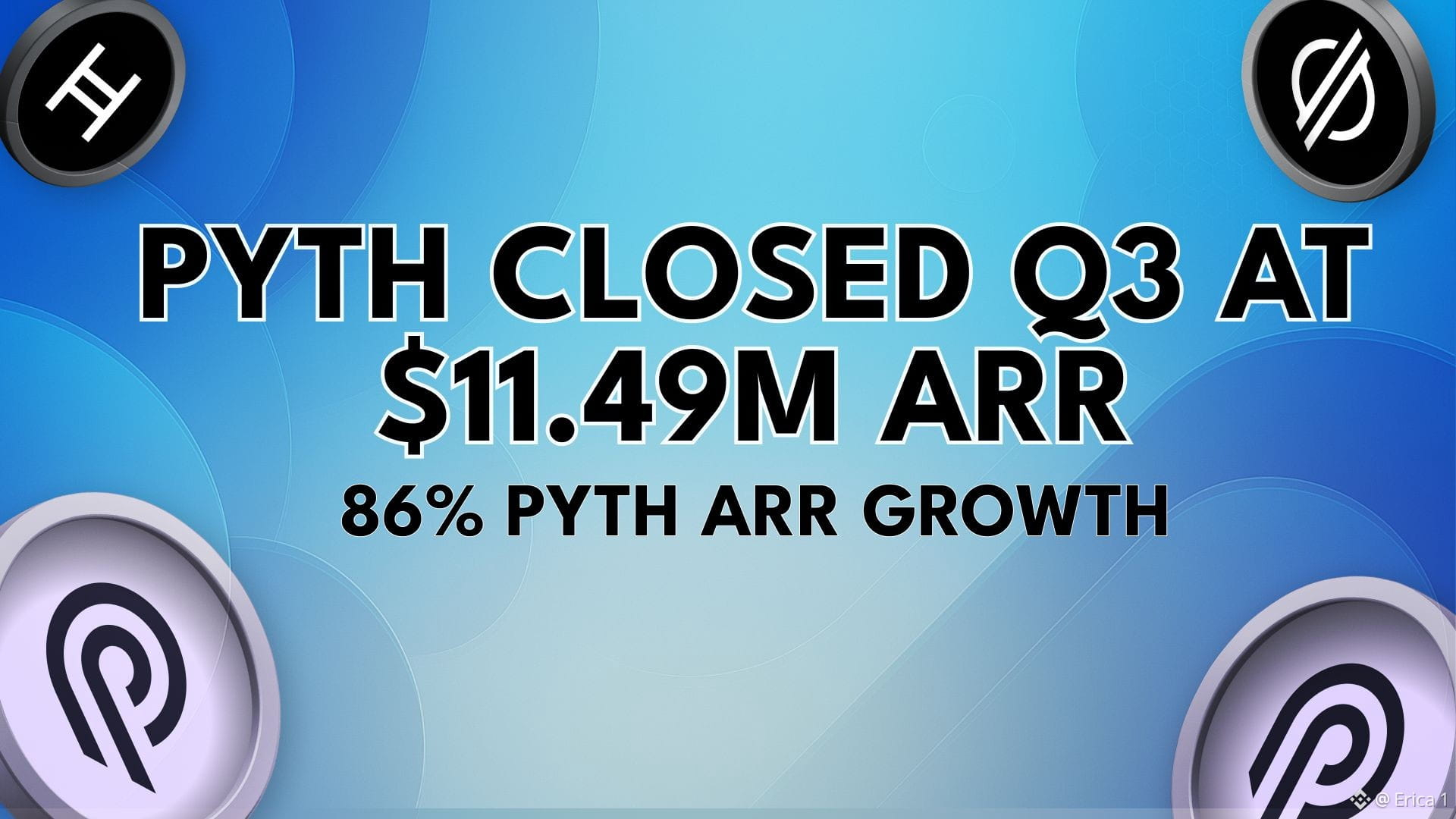
$12.61B RWA open interest now sits beside 86% Pyth ARR growth 📊
$HBAR and $XLM communities understand real-world rails better than most crypto crowds, so the important signal here is not only volume. It is the amount of exposure traders are now willing to keep open in RWA perp markets.
September RWA perp volume cooled from August, but average daily open interest rose 12% and reached a record $12.61B on September 30.
That means the market did not simply trade and disappear.
Traders carried more open exposure across the month, and that makes the pricing layer underneath these markets much more important.
Now connect that to Pyth’s Q3 update.
Pyth closed Q3 at $11.49M ARR, up 86% from Q2, and the DAO approved the 100% Rule, where every dollar it receives from Pyth products now goes into PYTH bought on the open market.
This is why I do not see the open interest record as a random side stat.
If traders are holding more exposure across stocks, gold, oil and index perps, then margin, funding, liquidation logic and risk engines all become more dependent on reliable reference prices.
That is exactly where Pyth wants to be.
My read is that Pyth’s revenue growth and the RWA open-interest trend strengthen each other. One shows the business is scaling, while the other shows the market it serves is becoming deeper and more serious.
The 100% Rule makes that combination more relevant for PYTH holders because product traction now has a cleaner path back into open-market accumulation.
#Altcoin Season# #RWA
$12.61B RWA open interest now sits beside 86% Pyth ARR growth 📊
$HBAR and $XLM communities understand real-world rails better than most crypto crowds, so the important signal here is not only volume. It is the amount of exposure traders are now willing to keep open in RWA perp markets.
September RWA perp volume cooled from August, but average daily open interest rose 12% and reached a record $12.61B on September 30.
That means the market did not simply trade and disappear.
Traders carried more open exposure across the month, and that makes the pricing layer underneath these markets much more important.
Now connect that to Pyth’s Q3 update.
Pyth closed Q3 at $11.49M ARR, up 86% from Q2, and the DAO approved the 100% Rule, where every dollar it receives from Pyth products now goes into PYTH bought on the open market.
This is why I do not see the open interest record as a random side stat.
If traders are holding more exposure across stocks, gold, oil and index perps, then margin, funding, liquidation logic and risk engines all become more dependent on reliable reference prices.
That is exactly where Pyth wants to be.
My read is that Pyth’s revenue growth and the RWA open-interest trend strengthen each other. One shows the business is scaling, while the other shows the market it serves is becoming deeper and more serious.
The 100% Rule makes that combination more relevant for PYTH holders because product traction now has a cleaner path back into open-market accumulation.
#Altcoin Season# #RWA
$HBAR and $XLM communities understand real-world rails better than most crypto crowds, so the important signal here is not only volume. It is the amount of exposure traders are now willing to keep open in RWA perp markets.
September RWA perp volume cooled from August, but average daily open interest rose 12% and reached a record $12.61B on September 30.
That means the market did not simply trade and disappear.
Traders carried more open exposure across the month, and that makes the pricing layer underneath these markets much more important.
Now connect that to Pyth’s Q3 update.
Pyth closed Q3 at $11.49M ARR, up 86% from Q2, and the DAO approved the 100% Rule, where every dollar it receives from Pyth products now goes into PYTH bought on the open market.
This is why I do not see the open interest record as a random side stat.
If traders are holding more exposure across stocks, gold, oil and index perps, then margin, funding, liquidation logic and risk engines all become more dependent on reliable reference prices.
That is exactly where Pyth wants to be.
My read is that Pyth’s revenue growth and the RWA open-interest trend strengthen each other. One shows the business is scaling, while the other shows the market it serves is becoming deeper and more serious.
The 100% Rule makes that combination more relevant for PYTH holders because product traction now has a cleaner path back into open-market accumulation.
#Altcoin Season# #RWA
46
·
--
Count The Steps Before The Click 📱
A $SOL user sees a project they recognize.
They open the page.
Then comes the important part.
Can they understand what it is and explore it using tools they already know?
Every extra decision asks for more attention.
DeLorean’s DMC availability on Solana gives existing users a familiar ecosystem in which to start.
That is a useful distribution choice.
Now the brand, the explanation, and the product experience need to work together.
This is how I look at the IP opportunity through a product lens.
Altcoin Season may generate the first visit.
A clear experience gives that visit a better chance of turning into something more.
Small details matter when curiosity is brief.
#Altcoin Season#
Count The Steps Before The Click 📱
A $SOL user sees a project they recognize.
They open the page.
Then comes the important part.
Can they understand what it is and explore it using tools they already know?
Every extra decision asks for more attention.
DeLorean’s DMC availability on Solana gives existing users a familiar ecosystem in which to start.
That is a useful distribution choice.
Now the brand, the explanation, and the product experience need to work together.
This is how I look at the IP opportunity through a product lens.
Altcoin Season may generate the first visit.
A clear experience gives that visit a better chance of turning into something more.
Small details matter when curiosity is brief.
#Altcoin Season#
A $SOL user sees a project they recognize.
They open the page.
Then comes the important part.
Can they understand what it is and explore it using tools they already know?
Every extra decision asks for more attention.
DeLorean’s DMC availability on Solana gives existing users a familiar ecosystem in which to start.
That is a useful distribution choice.
Now the brand, the explanation, and the product experience need to work together.
This is how I look at the IP opportunity through a product lens.
Altcoin Season may generate the first visit.
A clear experience gives that visit a better chance of turning into something more.
Small details matter when curiosity is brief.
#Altcoin Season#
75
·
--
Privacy Might Be One Of Crypto's Most Underrated Narratives 🌙
$ZEC proved that zero-knowledge privacy could work at the transaction level. $NIGHT is taking that idea much further by making privacy programmable at the application level.
That's a bigger distinction than it sounds.
Most blockchains effectively give developers two choices: Make information public, or hide it
.
Midnight gives applications another option: decide exactly what should be private, what should be public and what only needs to be proven.
That means an application could verify that:
→ A user meets a collateral requirement
→ An institution followed a compliance rule
→ A wallet satisfies an eligibility condition
Without exposing all the private information behind those facts.
That's where I think the privacy narrative gets much bigger.
The next generation of privacy infrastructure isn't just about hiding transactions.
It's about letting applications use sensitive information without putting that information permanently on-chain.
If privacy becomes a core primitive for the next wave of crypto applications, Midnight is building directly into that thesis.
#Privacy #DeFi
Privacy Might Be One Of Crypto's Most Underrated Narratives 🌙
$ZEC proved that zero-knowledge privacy could work at the transaction level. $NIGHT is taking that idea much further by making privacy programmable at the application level.
That's a bigger distinction than it sounds.
Most blockchains effectively give developers two choices: Make information public, or hide it
.
Midnight gives applications another option: decide exactly what should be private, what should be public and what only needs to be proven.
That means an application could verify that:
→ A user meets a collateral requirement
→ An institution followed a compliance rule
→ A wallet satisfies an eligibility condition
Without exposing all the private information behind those facts.
That's where I think the privacy narrative gets much bigger.
The next generation of privacy infrastructure isn't just about hiding transactions.
It's about letting applications use sensitive information without putting that information permanently on-chain.
If privacy becomes a core primitive for the next wave of crypto applications, Midnight is building directly into that thesis.
#Privacy #DeFi
$ZEC proved that zero-knowledge privacy could work at the transaction level. $NIGHT is taking that idea much further by making privacy programmable at the application level.
That's a bigger distinction than it sounds.
Most blockchains effectively give developers two choices: Make information public, or hide it
.
Midnight gives applications another option: decide exactly what should be private, what should be public and what only needs to be proven.
That means an application could verify that:
→ A user meets a collateral requirement
→ An institution followed a compliance rule
→ A wallet satisfies an eligibility condition
Without exposing all the private information behind those facts.
That's where I think the privacy narrative gets much bigger.
The next generation of privacy infrastructure isn't just about hiding transactions.
It's about letting applications use sensitive information without putting that information permanently on-chain.
If privacy becomes a core primitive for the next wave of crypto applications, Midnight is building directly into that thesis.
#Privacy #DeFi

119
·
--
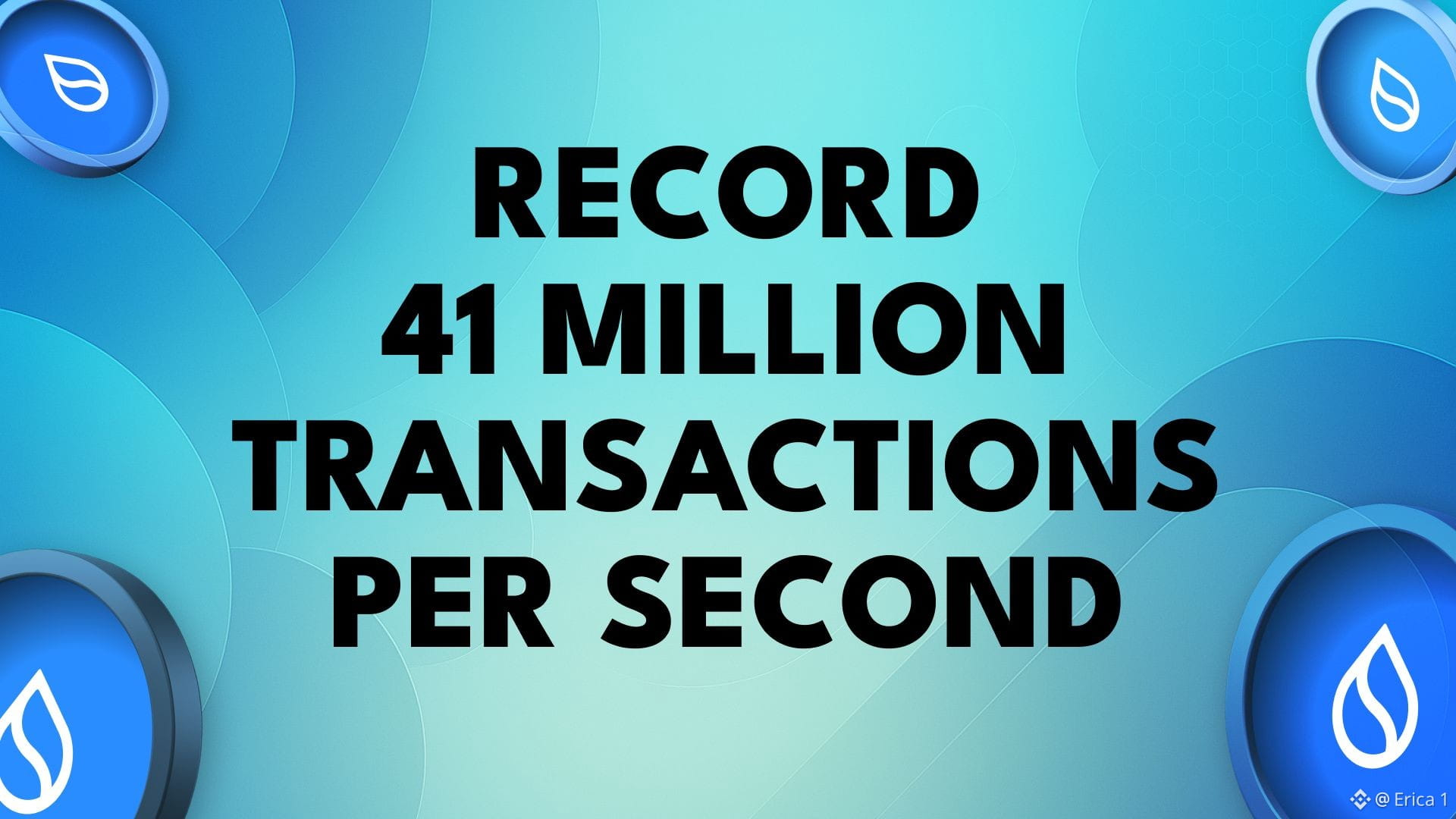
$SUI Just Smashed 41 Million TPS 🤯
People laughed when Sui claimed it was built for internet-scale activity.
$SUI just gave them a much harder number to laugh at.
During the live Basecamp experiment, the display reportedly climbed to around 41 million effective transactions per second.
Sui’s previous record was 6,086,766 TPS.
That means today’s displayed result was nearly seven times higher than the record set just three months ago.
CertiK still needs to confirm the final audited figure, and the test used programmable tunnels that ultimately settle back to Sui.
This should not be underestimated!
But so does demonstrating this kind of capacity live, in public and under independent observation.
Most Layer 1 performance claims live inside technical documents that ordinary users will never read.
Sui turned its performance into the biggest moment on the Basecamp stage.
The real bull case is the amount of headroom this creates for applications built around machine-speed activity.
AI agents will transact far more frequently than humans ever could.
If CertiK confirms a figure close to 41 million effective TPS, Sui has moved the blockchain performance conversation into completely new territory.
I’m extremely bullish on what this means for the network’s position in the agentic economy.
#DeFi #AI
$SUI Just Smashed 41 Million TPS 🤯
People laughed when Sui claimed it was built for internet-scale activity.
$SUI just gave them a much harder number to laugh at.
During the live Basecamp experiment, the display reportedly climbed to around 41 million effective transactions per second.
Sui’s previous record was 6,086,766 TPS.
That means today’s displayed result was nearly seven times higher than the record set just three months ago.
CertiK still needs to confirm the final audited figure, and the test used programmable tunnels that ultimately settle back to Sui.
This should not be underestimated!
But so does demonstrating this kind of capacity live, in public and under independent observation.
Most Layer 1 performance claims live inside technical documents that ordinary users will never read.
Sui turned its performance into the biggest moment on the Basecamp stage.
The real bull case is the amount of headroom this creates for applications built around machine-speed activity.
AI agents will transact far more frequently than humans ever could.
If CertiK confirms a figure close to 41 million effective TPS, Sui has moved the blockchain performance conversation into completely new territory.
I’m extremely bullish on what this means for the network’s position in the agentic economy.
#DeFi #AI
People laughed when Sui claimed it was built for internet-scale activity.
$SUI just gave them a much harder number to laugh at.
During the live Basecamp experiment, the display reportedly climbed to around 41 million effective transactions per second.
Sui’s previous record was 6,086,766 TPS.
That means today’s displayed result was nearly seven times higher than the record set just three months ago.
CertiK still needs to confirm the final audited figure, and the test used programmable tunnels that ultimately settle back to Sui.
This should not be underestimated!
But so does demonstrating this kind of capacity live, in public and under independent observation.
Most Layer 1 performance claims live inside technical documents that ordinary users will never read.
Sui turned its performance into the biggest moment on the Basecamp stage.
The real bull case is the amount of headroom this creates for applications built around machine-speed activity.
AI agents will transact far more frequently than humans ever could.
If CertiK confirms a figure close to 41 million effective TPS, Sui has moved the blockchain performance conversation into completely new territory.
I’m extremely bullish on what this means for the network’s position in the agentic economy.
#DeFi #AI
81
·
--
Your Strategy Is Only As Good As Its Execution ⚙️
Having specialized traders manage your capital is one thing, but backing them with a suite of automated tools and profit-incentivized infrastructure is the pro edge most traders can't access.
Pear Vault managers get access to the same automated trading infrastructure Pear has built for sophisticated long/short strategies.
Say a manager sees an opportunity between $LINK and $ZEC .
They can build the pair, size each side around beta and volatility, set stops and profit targets on the relationship between the two assets, and systematically rebalance the position as it changes.
They also have access to backtesting, funding analysis, trigger orders, TWAPs, laddered execution and trailing stops on the ratio.
That means much of the sizing, execution, monitoring and adjustment behind a sophisticated long/short strategy can be handled systematically instead of manually.
I've seen plenty of vaults where depositing your money is basically the whole product. What I like here is the infrastructure being put behind the people actually managing it.
Specialists with the tools to actually run it, with performance fees structured around creating new profits for depositors too.
Vaults.pear.garden
#Altcoin Season#
Your Strategy Is Only As Good As Its Execution ⚙️
Having specialized traders manage your capital is one thing, but backing them with a suite of automated tools and profit-incentivized infrastructure is the pro edge most traders can't access.
Pear Vault managers get access to the same automated trading infrastructure Pear has built for sophisticated long/short strategies.
Say a manager sees an opportunity between $LINK and $ZEC .
They can build the pair, size each side around beta and volatility, set stops and profit targets on the relationship between the two assets, and systematically rebalance the position as it changes.
They also have access to backtesting, funding analysis, trigger orders, TWAPs, laddered execution and trailing stops on the ratio.
That means much of the sizing, execution, monitoring and adjustment behind a sophisticated long/short strategy can be handled systematically instead of manually.
I've seen plenty of vaults where depositing your money is basically the whole product. What I like here is the infrastructure being put behind the people actually managing it.
Specialists with the tools to actually run it, with performance fees structured around creating new profits for depositors too.
Vaults.pear.garden
#Altcoin Season#
Having specialized traders manage your capital is one thing, but backing them with a suite of automated tools and profit-incentivized infrastructure is the pro edge most traders can't access.
Pear Vault managers get access to the same automated trading infrastructure Pear has built for sophisticated long/short strategies.
Say a manager sees an opportunity between $LINK and $ZEC .
They can build the pair, size each side around beta and volatility, set stops and profit targets on the relationship between the two assets, and systematically rebalance the position as it changes.
They also have access to backtesting, funding analysis, trigger orders, TWAPs, laddered execution and trailing stops on the ratio.
That means much of the sizing, execution, monitoring and adjustment behind a sophisticated long/short strategy can be handled systematically instead of manually.
I've seen plenty of vaults where depositing your money is basically the whole product. What I like here is the infrastructure being put behind the people actually managing it.
Specialists with the tools to actually run it, with performance fees structured around creating new profits for depositors too.
Vaults.pear.garden
#Altcoin Season#
76
·
--
Over 10% Of Supply Sits Outside 🔥
Following $SUI and $AVAX taught me to separate permanently removed supply from tokens that are temporarily locked.
A burn removes tokens for good.
Staking takes tokens out of circulation today, but they can return after the lock ends.
The mechanics are different, so combining them without explaining that difference can be misleading.
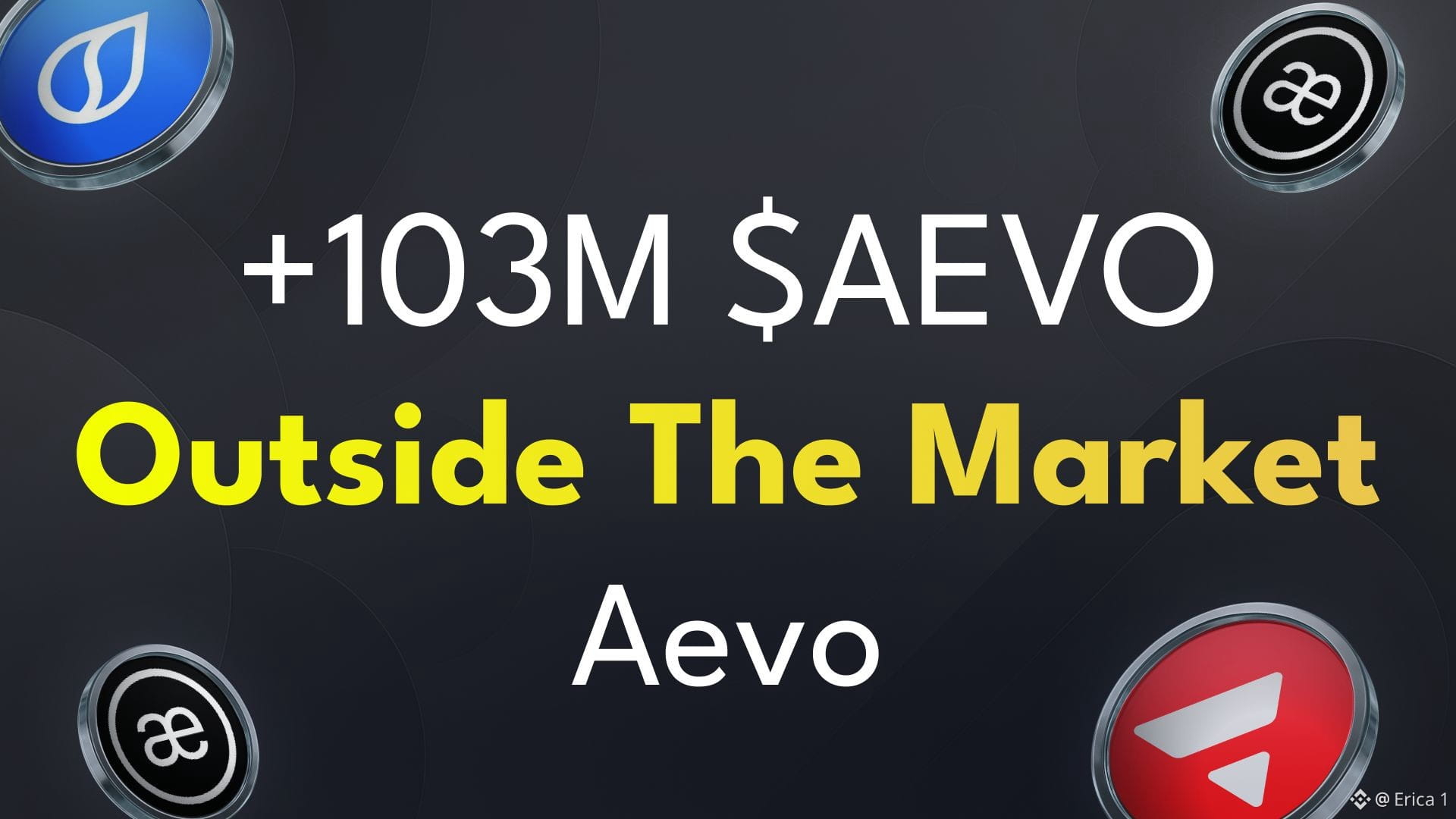
Aevo currently has 77m AEVO permanently burned through AGP-3 and its monthly buyback program.
More than 26m AEVO is also locked across its staking tiers.
Together, that places more than 103m AEVO outside the liquid market today.
That is over 10% of the original supply, HUGE! ⚡️
#Altcoin Season#
Over 10% Of Supply Sits Outside 🔥
Following $SUI and $AVAX taught me to separate permanently removed supply from tokens that are temporarily locked.
A burn removes tokens for good.
Staking takes tokens out of circulation today, but they can return after the lock ends.
The mechanics are different, so combining them without explaining that difference can be misleading.
Aevo currently has 77m AEVO permanently burned through AGP-3 and its monthly buyback program.
More than 26m AEVO is also locked across its staking tiers.
Together, that places more than 103m AEVO outside the liquid market today.
That is over 10% of the original supply, HUGE! ⚡️
#Altcoin Season#
Following $SUI and $AVAX taught me to separate permanently removed supply from tokens that are temporarily locked.
A burn removes tokens for good.
Staking takes tokens out of circulation today, but they can return after the lock ends.
The mechanics are different, so combining them without explaining that difference can be misleading.
Aevo currently has 77m AEVO permanently burned through AGP-3 and its monthly buyback program.
More than 26m AEVO is also locked across its staking tiers.
Together, that places more than 103m AEVO outside the liquid market today.
That is over 10% of the original supply, HUGE! ⚡️
#Altcoin Season#
43
·
--
Here's The Aha Moment 💡
You don't necessarily need to redo a calculation to verify that it was done correctly.
That's the concept that made Space and Time click for me.
Think about a huge SQL query involving blockchain history and external datasets.
Instead of pushing the entire workload into a smart contract:
1️⃣ Run the computation
2️⃣ Generate cryptographic proof
3️⃣ Verify the proof
4️⃣ Use the result
Proof of SQL is what enables that model.
And as decentralized compute networks such as $RENDER push the conversation around where computation happens, I think another question becomes equally interesting:
How do we verify the output?
Compute anywhere.
Trust shouldn't have to follow blindly.
#Altcoin Season#
Here's The Aha Moment 💡
You don't necessarily need to redo a calculation to verify that it was done correctly.
That's the concept that made Space and Time click for me.
Think about a huge SQL query involving blockchain history and external datasets.
Instead of pushing the entire workload into a smart contract:
1️⃣ Run the computation
2️⃣ Generate cryptographic proof
3️⃣ Verify the proof
4️⃣ Use the result
Proof of SQL is what enables that model.
And as decentralized compute networks such as $RENDER push the conversation around where computation happens, I think another question becomes equally interesting:
How do we verify the output?
Compute anywhere.
Trust shouldn't have to follow blindly.
#Altcoin Season#
You don't necessarily need to redo a calculation to verify that it was done correctly.
That's the concept that made Space and Time click for me.
Think about a huge SQL query involving blockchain history and external datasets.
Instead of pushing the entire workload into a smart contract:
1️⃣ Run the computation
2️⃣ Generate cryptographic proof
3️⃣ Verify the proof
4️⃣ Use the result
Proof of SQL is what enables that model.
And as decentralized compute networks such as $RENDER push the conversation around where computation happens, I think another question becomes equally interesting:
How do we verify the output?
Compute anywhere.
Trust shouldn't have to follow blindly.
#Altcoin Season#
47
Log in to explore more content
Join global crypto users on Binance Square
⚡️ Get latest and useful information about crypto.
💬 Trusted by the world’s largest crypto exchange.
👍 Discover real insights from verified creators.
Email / Phone number