

Adrien Insights
464 Posts

Adrien Insights
Report
Block User
Analizo los mercados para identificar oportunidades reales. 📊 Comparto mi perspectiva diaria, análisis técnico y estrategias de gestión de liquidez.
Occasional Trader
4.6 Years
11 Following
49 Followers
169 Liked
Posts
All
Videos
PINNED
Article
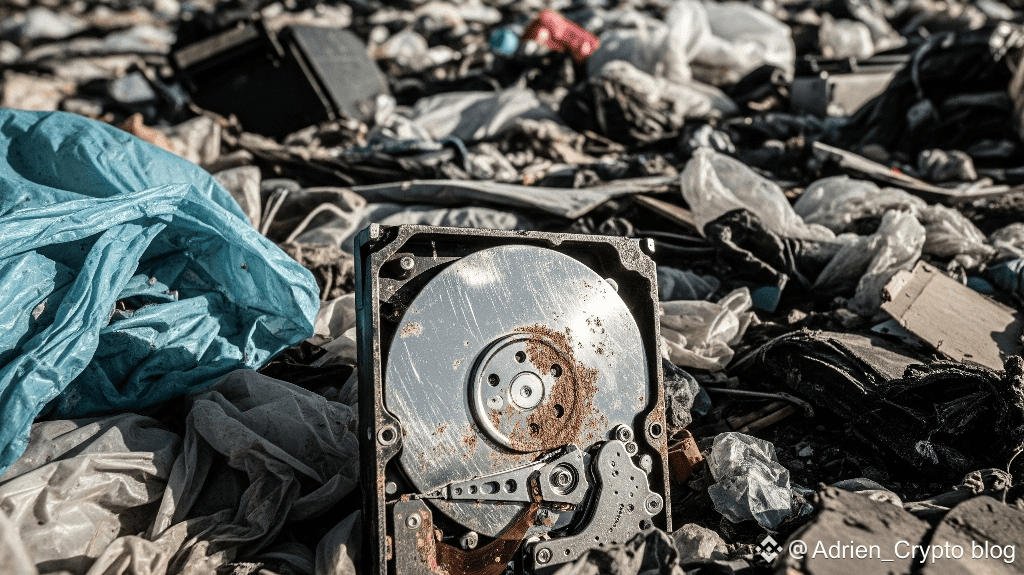
The Boy Who Threw Away Billions: The Fascinating and Tragic Story of James Howells and His BitcoinsImagine this: you have a small fortune in your pocket and, due to a mishap, you throw it in the trash. Now imagine that this "small fortune" is billions of dollars in bitcoins, and that the "mishap" was a forgotten hard drive in a landfill. That is the distressing yet surreal story of James Howells, the British computer scientist who became a modern legend for losing access to one of the largest Bitcoin fortunes in history.
In 2013, Howells, an early pioneer of cryptocurrency, had 8,000 bitcoins stored on a computer hard drive. At that time, the value of a single bitcoin was significantly lower, and for him, it was simply an interesting digital asset. However, during an office cleanup, the hard drive was accidentally discarded along with other old electronic items. A mistake that, over time, would become one of the most expensive anecdotes in history.
The Boy Who Threw Away Billions: The Fascinating and Tragic Story of James Howells and His Bitcoins
Imagine this: you have a small fortune in your pocket and, due to a mishap, you throw it in the trash. Now imagine that this "small fortune" is billions of dollars in bitcoins, and that the "mishap" was a forgotten hard drive in a landfill. That is the distressing yet surreal story of James Howells, the British computer scientist who became a modern legend for losing access to one of the largest Bitcoin fortunes in history.
In 2013, Howells, an early pioneer of cryptocurrency, had 8,000 bitcoins stored on a computer hard drive. At that time, the value of a single bitcoin was significantly lower, and for him, it was simply an interesting digital asset. However, during an office cleanup, the hard drive was accidentally discarded along with other old electronic items. A mistake that, over time, would become one of the most expensive anecdotes in history.
In 2013, Howells, an early pioneer of cryptocurrency, had 8,000 bitcoins stored on a computer hard drive. At that time, the value of a single bitcoin was significantly lower, and for him, it was simply an interesting digital asset. However, during an office cleanup, the hard drive was accidentally discarded along with other old electronic items. A mistake that, over time, would become one of the most expensive anecdotes in history.
2
518
🇻🇪 Don’t see the option to deposit bolívares on Binance? That’s normal.
In Venezuela, direct VES deposits via a fiat on-ramp may not be available for all accounts or at all times. This depends on factors such as local coverage, enabled payment methods, and applicable regulatory requirements.
That doesn’t mean you can’t use Binance. Many Venezuelan users use alternatives available on the platform, such as the P2P market, to exchange bolívares for assets like USDT with other verified users.
🔐 Before trading, always check:
The payment method and limits shown in the app.
The advertiser’s reputation, number of trades, and completion rate.
That payment and release take place only within Binance P2P.
Never send funds outside the platform’s process.
Options may vary depending on your account and location, so check the features enabled in your app directly.
#VES
1.5k
🟢 LONG $BNB /USDT: Buyers defend support and aim higher
Many doubted the resistance, but bullish momentum in the Binance ecosystem is gaining strength.
Bias: LONG · Moderate-Strong
Entry: 732.00 - 735.50
TP1: 750.00 (+2.1%)
TP2: 768.00 (+4.5%)
TP3: 790.00 (+7.5%)
SL: 718.50 (-2.2%)
Plan: Enter only within the specified zone, secure 50% of profits at TP1, scale out another 25% at TP2, and let the remainder run toward TP3, moving the stop loss to the entry price once the first target is reached.
Note: The structure is recovering; maintain strict risk management and a position size appropriate to your capital.
Why LONG? What the current technical analysis confirms:
Clear rebound pattern on the 4-hour chart above previous accumulation zones.
Increase in buying volume on the 1-hour timeframe, surpassing key moving averages.
The 4-hour RSI is recovering toward 58, showing bullish strength without reaching critical overbought levels.
Caution: The bullish outlook is invalidated if selling pressure pushes the price below the stop loss at 718.50.
Verdict: Short-term momentum favors buyers, with a solid structure that supports aiming for higher targets in the coming sessions.
Do you think $BNB will break its current resistance this week, or will there be a retest first? I’d love to hear your thoughts in the comments! 👇
{spot}(BNBUSDT)
🟢 LONG $BNB /USDT: Buyers defend support and aim higher
Many doubted the resistance, but bullish momentum in the Binance ecosystem is gaining strength.
Bias: LONG · Moderate-Strong
Entry: 732.00 - 735.50
TP1: 750.00 (+2.1%)
TP2: 768.00 (+4.5%)
TP3: 790.00 (+7.5%)
SL: 718.50 (-2.2%)
Plan: Enter only within the specified zone, secure 50% of profits at TP1, scale out another 25% at TP2, and let the remainder run toward TP3, moving the stop loss to the entry price once the first target is reached.
Note: The structure is recovering; maintain strict risk management and a position size appropriate to your capital.
Why LONG? What the current technical analysis confirms:
Clear rebound pattern on the 4-hour chart above previous accumulation zones.
Increase in buying volume on the 1-hour timeframe, surpassing key moving averages.
The 4-hour RSI is recovering toward 58, showing bullish strength without reaching critical overbought levels.
Caution: The bullish outlook is invalidated if selling pressure pushes the price below the stop loss at 718.50.
Verdict: Short-term momentum favors buyers, with a solid structure that supports aiming for higher targets in the coming sessions.
Do you think $BNB will break its current resistance this week, or will there be a retest first? I’d love to hear your thoughts in the comments! 👇
105
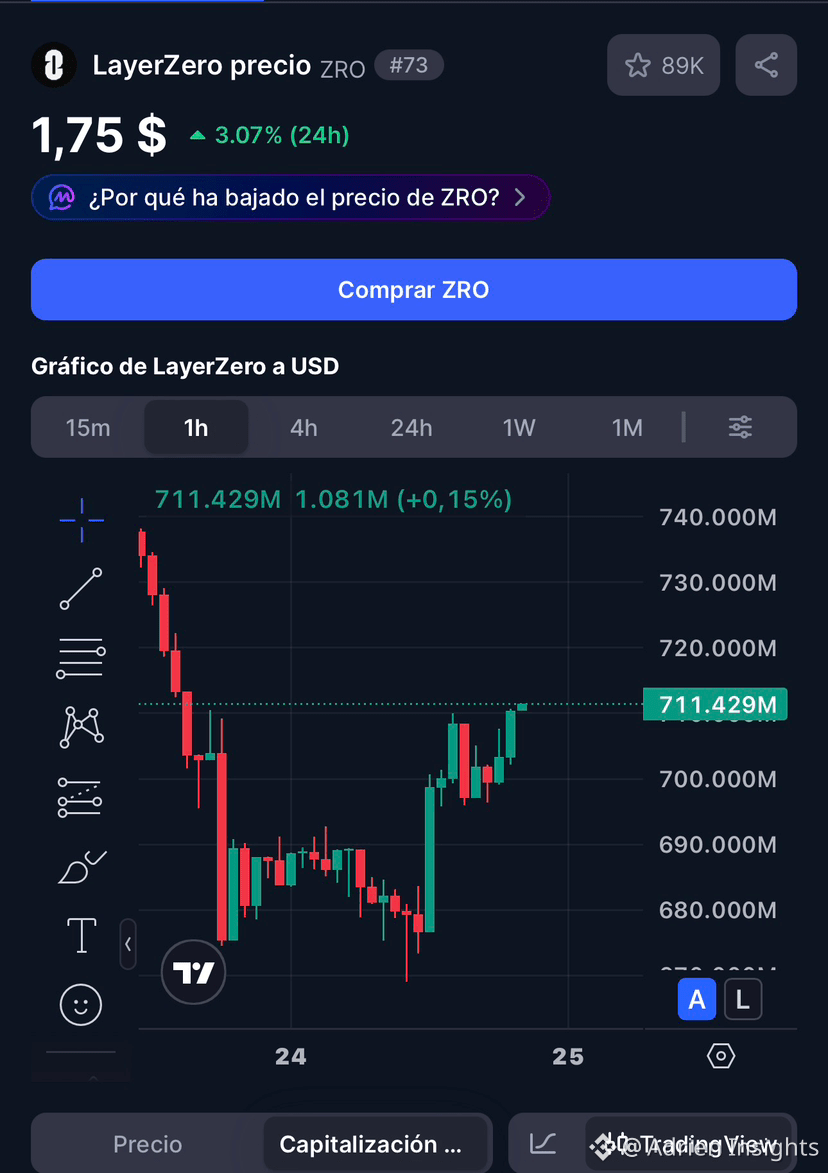
🚀 $ZRO (LayerZero) is in the green today: trading around $1.757, up approximately +3.1% over the last 24 hours. The move was accompanied by more than $5.2M in trading volume, a sign of real activity behind the momentum.
{spot}(ZROUSDT)
🚀 $ZRO (LayerZero) is in the green today: trading around $1.757, up approximately +3.1% over the last 24 hours. The move was accompanied by more than $5.2M in trading volume, a sign of real activity behind the momentum.
178
$ZEC closed above 1,150. The next test is whether buyers can hold that level.
Long entry: 1,150 – 1,160
TP1: 1,185 | TP2: 1,210 | TP3: 1,240
SL: 1,130
The breakout candle recorded a volume 2.21 times higher than the average volume of the previous 20 completed 5m candles. The latest completed 15m candle also closed above its 20-period moving average. A drop below 1,150 would weaken the breakout; 1,130 is the planned stop.
Would you enter on the breakout or wait for the price to retest 1,150?
Simulated trade. The entry is recorded within 30 minutes of publication; this does not claim that a position exists in an account.
#BinanceSquare #zec #BitGuru
{spot}(ZECUSDT)
$ZEC closed above 1,150. The next test is whether buyers can hold that level.
Long entry: 1,150 – 1,160
TP1: 1,185 | TP2: 1,210 | TP3: 1,240
SL: 1,130
The breakout candle recorded a volume 2.21 times higher than the average volume of the previous 20 completed 5m candles. The latest completed 15m candle also closed above its 20-period moving average. A drop below 1,150 would weaken the breakout; 1,130 is the planned stop.
Would you enter on the breakout or wait for the price to retest 1,150?
Simulated trade. The entry is recorded within 30 minutes of publication; this does not claim that a position exists in an account.
#BinanceSquare #zec #BitGuru
698
The man who threw $700 million in the trash (and the lesson that changed crypto)
In 2013, a British computer scientist named James Howells was cleaning his house. Among old cables and used computer parts, he found a worn-out hard drive. Without thinking much of it, he tossed it into a trash bag and took it outside.
What James forgot in that moment was that the private keys to 7,500 Bitcoin ($BTC), which he had mined himself in the network’s early days, when Bitcoin was practically worthless, were stored on that old hard drive.
A few years later, when the price of Bitcoin began to soar, James realized the devastating mistake he had made. He rushed to the local landfill in his city, Newport, but it was already too late: the hard drive was buried beneath thousands of tons of compacted garbage.
Since then, James has spent years requesting municipal permits to excavate the landfill. He even offered the city 25% of the fortune and proposed using robot dogs and artificial intelligence to locate the drive. However, local authorities have consistently denied him access for environmental reasons.
Today, those 7,500 Bitcoins are worth a real fortune and are still there, buried underground and forever inaccessible.
💡 The big lesson for our community.
This story isn’t just about a tragic loss of money; it’s about the golden rule of the entire Web3 ecosystem: "Not your keys, not your coins."
Unlike the traditional banking system, where customer service can reset your password, with blockchain technology, you are 100% responsible for custody. One careless mistake can make your assets disappear forever.
$BTC
{spot}(BTCUSDT)
The man who threw $700 million in the trash (and the lesson that changed crypto)
In 2013, a British computer scientist named James Howells was cleaning his house. Among old cables and used computer parts, he found a worn-out hard drive. Without thinking much of it, he tossed it into a trash bag and took it outside.
What James forgot in that moment was that the private keys to 7,500 Bitcoin ($BTC ), which he had mined himself in the network’s early days, when Bitcoin was practically worthless, were stored on that old hard drive.
A few years later, when the price of Bitcoin began to soar, James realized the devastating mistake he had made. He rushed to the local landfill in his city, Newport, but it was already too late: the hard drive was buried beneath thousands of tons of compacted garbage.
Since then, James has spent years requesting municipal permits to excavate the landfill. He even offered the city 25% of the fortune and proposed using robot dogs and artificial intelligence to locate the drive. However, local authorities have consistently denied him access for environmental reasons.
Today, those 7,500 Bitcoins are worth a real fortune and are still there, buried underground and forever inaccessible.
💡 The big lesson for our community.
This story isn’t just about a tragic loss of money; it’s about the golden rule of the entire Web3 ecosystem: "Not your keys, not your coins."
Unlike the traditional banking system, where customer service can reset your password, with blockchain technology, you are 100% responsible for custody. One careless mistake can make your assets disappear forever.
$BTC
271
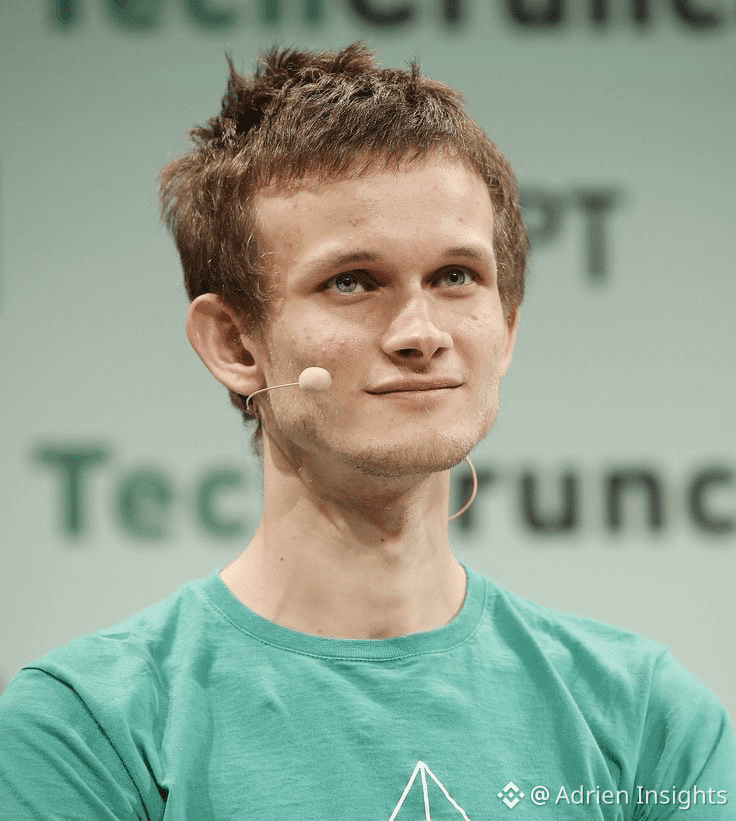
A few years ago, this guy with a distant gaze and weird T-shirts was the target of ridicule on internet forums. Many told him he was wasting his time and that his idea of a “world computer” was a utopia.
Vitalik Buterin turned down a $100,000 fellowship from Peter Thiel to pursue his dream. He slept on friends’ couches and traveled the world explaining something almost no one understood: smart contracts.
Today, the vision everyone ridiculed is the foundation of the DeFi and Web3 ecosystem, and his net worth exceeds a billion dollars. History teaches us that popular consensus is often wrong. 🤔
Do you think $ETH will remain the undisputed king of altcoins, or is its time at the top running out? 👇
{spot}(ETHUSDT)
A few years ago, this guy with a distant gaze and weird T-shirts was the target of ridicule on internet forums. Many told him he was wasting his time and that his idea of a “world computer” was a utopia.
Vitalik Buterin turned down a $100,000 fellowship from Peter Thiel to pursue his dream. He slept on friends’ couches and traveled the world explaining something almost no one understood: smart contracts.
Today, the vision everyone ridiculed is the foundation of the DeFi and Web3 ecosystem, and his net worth exceeds a billion dollars. History teaches us that popular consensus is often wrong. 🤔
Do you think $ETH will remain the undisputed king of altcoins, or is its time at the top running out? 👇

191
Everyone, analyzing $ETH (Ethereum) as we approach the end of 2026 and the first half of 2027, I see one of the strongest theses for seeking short- and medium-term returns in the current market.
Beyond the daily noise, the case for $ETH is built on three fundamental pillars that are beginning to mature:
1. Quiet institutional absorption (the real catalyst)
The major driver many retail investors are overlooking is accumulation by treasury companies (publicly traded companies that buy crypto for their balance sheets). Tom Lee, chairman of BitMine, says these firms already control close to 7% of the total supply of $ETH and expects that figure to double to 15% in this cycle. By trading above their net asset value (NAV), these companies can issue shares to buy more $ETH, creating structural buying pressure and reducing the liquidity available on the open market. BitMine, in fact, has already accumulated more than 6 million ETH (nearly 5% of the supply).
2. Absolute dominance in the tokenization of real-world assets (RWA)
While other chains compete on speed or meme narratives, Ethereum has established itself as the institutional standard for tokenization. Tom Lee is unequivocal: close to 99% of tokenization projects from giants such as JPMorgan and BlackRock run on $ETH. Tokenization is not a passing fad; it is emerging as the main growth avenue for banks in the coming years, and Ethereum is the rail on which that infrastructure is being built.
3. Price outlook and analyst validation
Projections call for 5,500** by the end of 2026. Tom Lee does not rule out a rise above 62,000, noting that in past cycles ETH has risen between 50 and 200 times.
#Ethereum #ETH #BinanceSquare #Crypto2026 #InversiónCripto
{spot}(ETHUSDT)
Everyone, analyzing $ETH (Ethereum) as we approach the end of 2026 and the first half of 2027, I see one of the strongest theses for seeking short- and medium-term returns in the current market.
Beyond the daily noise, the case for $ETH is built on three fundamental pillars that are beginning to mature:
1. Quiet institutional absorption (the real catalyst)
The major driver many retail investors are overlooking is accumulation by treasury companies (publicly traded companies that buy crypto for their balance sheets). Tom Lee, chairman of BitMine, says these firms already control close to 7% of the total supply of $ETH and expects that figure to double to 15% in this cycle. By trading above their net asset value (NAV), these companies can issue shares to buy more $ETH , creating structural buying pressure and reducing the liquidity available on the open market. BitMine, in fact, has already accumulated more than 6 million ETH (nearly 5% of the supply).
2. Absolute dominance in the tokenization of real-world assets (RWA)
While other chains compete on speed or meme narratives, Ethereum has established itself as the institutional standard for tokenization. Tom Lee is unequivocal: close to 99% of tokenization projects from giants such as JPMorgan and BlackRock run on $ETH . Tokenization is not a passing fad; it is emerging as the main growth avenue for banks in the coming years, and Ethereum is the rail on which that infrastructure is being built.
3. Price outlook and analyst validation
Projections call for 5,500** by the end of 2026. Tom Lee does not rule out a rise above 62,000, noting that in past cycles ETH has risen between 50 and 200 times.
#Ethereum #ETH #BinanceSquare #Crypto2026 #InversiónCripto
99
·
--
Bearish
Zcash ($ZEC ) has fallen 2.65% to $1,251.35 over the past 24 hours, underperforming an already weaker crypto market. The decline is mainly due to a broad pullback in risk assets, driven by macroeconomic factors. Its high correlation with the S&P 500 (94.5%) suggests the move is heavily influenced by interest rates and the macroeconomic environment.
Primary reason: a broad market pullback, with Bitcoin falling 2.07%. Investors are cautious ahead of the Federal Reserve’s October 28 interest rate decision and the U.S. midterm elections.
Secondary reasons: reduced positions in derivatives. ZEC saw liquidations worth $3.41 million, and top traders shifted to a net short position over the past 24 hours, adding selling pressure.
Short-term outlook: if ZEC holds above the $1,235–$1,210 support zone—where its 200-period exponential moving average (EMA) sits—it could consolidate. If it falls below this zone, it could retest the October low near $1,072.
{spot}(ZECUSDT)
Zcash ($ZEC ) has fallen 2.65% to $1,251.35 over the past 24 hours, underperforming an already weaker crypto market. The decline is mainly due to a broad pullback in risk assets, driven by macroeconomic factors. Its high correlation with the S&P 500 (94.5%) suggests the move is heavily influenced by interest rates and the macroeconomic environment.
Primary reason: a broad market pullback, with Bitcoin falling 2.07%. Investors are cautious ahead of the Federal Reserve’s October 28 interest rate decision and the U.S. midterm elections.
Secondary reasons: reduced positions in derivatives. ZEC saw liquidations worth $3.41 million, and top traders shifted to a net short position over the past 24 hours, adding selling pressure.
Short-term outlook: if ZEC holds above the $1,235–$1,210 support zone—where its 200-period exponential moving average (EMA) sits—it could consolidate. If it falls below this zone, it could retest the October low near $1,072.
111
🚨 AI’S BEST-KEPT SECRET IS IN A CRYPTOCURRENCY NOBODY’S WATCHING! 🚨
While everyone is losing their minds over the same old coins, there’s a small-cap project (just $52 million) that’s becoming the guardian of the planet’s most valuable data: Artificial Intelligence data. 🤖🔒
Its name? Phala Network ($PHA). And no, it’s not just any coin.
The story nobody’s telling you:
Just a few days ago, Phala suffered an attempted hack. Panic gripped the market. But here’s the bombshell: the network held strong. The attackers couldn’t access the master keys or users’ files. The company stepped up, published a full transparency report, and patched the vulnerability in record time.
The result? Confidence soared. The price of $PHA rose +25% in just 24 hours, and trading volume multiplied, proving that smart investors don’t run from the fire... they buy when the smoke clears! 🔥📈
Why is $PHA a different beast?
Because it’s not a vaporware coin. Phala uses TEE (Trusted Execution Environment), a hardware technology that lets AI process data without anyone else seeing it. It’s like having an invisible safe in the cloud for the secrets of the world’s biggest companies. As AI continues to grow, the need for privacy and security will become essential. And Phala is there, ready to collect a toll.
⚠️ THE FACT THAT WILL BLOW YOUR MIND:
Its market capitalization is just $52 million, while other “privacy” coins are already worth billions. If Phala manages to capture even a fraction of the activity in the AI sector, its growth potential is TERRIFYING.
Are you going to let someone else ride the next wave of gains just because you didn’t look beyond the same 10 coins?
👇 Click the link in my profile, search for $PHA
{spot}(PHAUSDT)
🚨 AI’S BEST-KEPT SECRET IS IN A CRYPTOCURRENCY NOBODY’S WATCHING! 🚨
While everyone is losing their minds over the same old coins, there’s a small-cap project (just $52 million) that’s becoming the guardian of the planet’s most valuable data: Artificial Intelligence data. 🤖🔒
Its name? Phala Network ($PHA ). And no, it’s not just any coin.
The story nobody’s telling you:
Just a few days ago, Phala suffered an attempted hack. Panic gripped the market. But here’s the bombshell: the network held strong. The attackers couldn’t access the master keys or users’ files. The company stepped up, published a full transparency report, and patched the vulnerability in record time.
The result? Confidence soared. The price of $PHA rose +25% in just 24 hours, and trading volume multiplied, proving that smart investors don’t run from the fire... they buy when the smoke clears! 🔥📈
Why is $PHA a different beast?
Because it’s not a vaporware coin. Phala uses TEE (Trusted Execution Environment), a hardware technology that lets AI process data without anyone else seeing it. It’s like having an invisible safe in the cloud for the secrets of the world’s biggest companies. As AI continues to grow, the need for privacy and security will become essential. And Phala is there, ready to collect a toll.
⚠️ THE FACT THAT WILL BLOW YOUR MIND:
Its market capitalization is just $52 million, while other “privacy” coins are already worth billions. If Phala manages to capture even a fraction of the activity in the AI sector, its growth potential is TERRIFYING.
Are you going to let someone else ride the next wave of gains just because you didn’t look beyond the same 10 coins?
👇 Click the link in my profile, search for $PHA
113
Despite regulatory pressure, $XRP rises by +2.74% and remains resilient. The token is trading at $1.33, showing that investors continue to trust its use case for cross-border payments.
{spot}(XRPUSDT)
Despite regulatory pressure, $XRP rises by +2.74% and remains resilient. The token is trading at $1.33, showing that investors continue to trust its use case for cross-border payments.
44
Solana ($SOL ) is up +3.35% and remains the strongest alternative to Ethereum. The token is trading at $107.84, leading the rebound among high-performance layer 1s.
{spot}(SOLUSDT)
Solana ($SOL ) is up +3.35% and remains the strongest alternative to Ethereum. The token is trading at $107.84, leading the rebound among high-performance layer 1s.
33
Pepe ($PEPE ): The frog doesn’t give up
PEPE keeps jumping. Up 8.67% in 24 hours, it shows that cult memecoins have a community that won’t abandon them. The token remains among the top 100’s biggest gainers, outperforming many “utility” altcoins.
{spot}(PEPEUSDT)
Pepe ($PEPE ): The frog doesn’t give up
PEPE keeps jumping. Up 8.67% in 24 hours, it shows that cult memecoins have a community that won’t abandon them. The token remains among the top 100’s biggest gainers, outperforming many “utility” altcoins.
PEPE keeps jumping. Up 8.67% in 24 hours, it shows that cult memecoins have a community that won’t abandon them. The token remains among the top 100’s biggest gainers, outperforming many “utility” altcoins.
1
98
Hyperliquid is not just an exchange; its token is in the green, up 3.68% on a challenging day for Bitcoin. The token is trading at $81.47, showing relative strength amid BTC’s indecision.
$HYPE
{spot}(HYPEUSDT)
Hyperliquid is not just an exchange; its token is in the green, up 3.68% on a challenging day for Bitcoin. The token is trading at $81.47, showing relative strength amid BTC’s indecision.
$HYPE
$HYPE
24
Venice Token ($VVV ): Decentralized AI breaks through resistance
Venice Token (VVV) keeps climbing. It’s up +6.58% today and is already testing the 200-day EMA. The token is trading at $25.16, with trading volume nearly tripling in 24 hours. The next technical target is $30.90, where liquidity stands at $35.9M.
{alpha}(84530xacfe6019ed1a7dc6f7b508c02d1b04ec88cc21bf)
Venice Token ($VVV ): Decentralized AI breaks through resistance
Venice Token (VVV) keeps climbing. It’s up +6.58% today and is already testing the 200-day EMA. The token is trading at $25.16, with trading volume nearly tripling in 24 hours. The next technical target is $30.90, where liquidity stands at $35.9M.
Venice Token (VVV) keeps climbing. It’s up +6.58% today and is already testing the 200-day EMA. The token is trading at $25.16, with trading volume nearly tripling in 24 hours. The next technical target is $30.90, where liquidity stands at $35.9M.
44
The Base ecosystem is waking up. Aerodrome Finance ($AERO ) is up +11.56%, making it the second-biggest gainer in the top 100. The token is riding the momentum of Layer 2s and the Coinbase ecosystem.
{spot}(AEROUSDT)
The Base ecosystem is waking up. Aerodrome Finance ($AERO ) is up +11.56%, making it the second-biggest gainer in the top 100. The token is riding the momentum of Layer 2s and the Coinbase ecosystem.
52
While everyone is watching AI, Worldcoin has climbed into the top gainers with an 11.01% increase. The digital identity token is trading at $0.543, making it one of the biggest gainers of the day among the top 100.
📊 The key takeaway:
Sam Altman’s project continues to capture capital flowing into identity verification in the AI era.
💬 The million-dollar question:
Is this the moment for digital identity, or just a technical bounce? 🤖
$WLD #Worldcoin #IA #Crypto
{spot}(WLDUSDT)
While everyone is watching AI, Worldcoin has climbed into the top gainers with an 11.01% increase. The digital identity token is trading at $0.543, making it one of the biggest gainers of the day among the top 100.
📊 The key takeaway:
Sam Altman’s project continues to capture capital flowing into identity verification in the AI era.
💬 The million-dollar question:
Is this the moment for digital identity, or just a technical bounce? 🤖
$WLD #Worldcoin #IA #Crypto
📊 The key takeaway:
Sam Altman’s project continues to capture capital flowing into identity verification in the AI era.
💬 The million-dollar question:
Is this the moment for digital identity, or just a technical bounce? 🤖
$WLD #Worldcoin #IA #Crypto
140
This market isn’t for everyone, but some narratives are breaking the mold. While Bitcoin struggles to break above $83,000, a group of altcoins isn’t looking back. Today, I’m bringing you the rundown of the ones in the green.
📊 The numbers don’t lie:
• MemeCore (M): +15.98% 🚀
• Aerodrome Finance ($AERO ): +11.56% 📈
• Worldcoin ($WLD ): +11.01% 🧠
• Pepe (PEPE): +8.67% 🐸
• Venice Token (VVV): +6.58% 🎨
🤔 Why are they rising so much?
It’s not just hype. The investment thesis is clear: money is rotating into AI, memecoin, and privacy narratives, as investors seek exposure that doesn’t depend solely on Bitcoin.
💬 The million-dollar question:
Which of these five gives you the most confidence for the rest of the week? Let me know in the comments. 👇
$WLD $PEPE $VVV #crypto #altcoins #IA #writetoearn
{spot}(WLDUSDT)
{spot}(AEROUSDT)
This market isn’t for everyone, but some narratives are breaking the mold. While Bitcoin struggles to break above $83,000, a group of altcoins isn’t looking back. Today, I’m bringing you the rundown of the ones in the green.
📊 The numbers don’t lie:
• MemeCore (M): +15.98% 🚀
• Aerodrome Finance ($AERO ): +11.56% 📈
• Worldcoin ($WLD ): +11.01% 🧠
• Pepe (PEPE): +8.67% 🐸
• Venice Token (VVV): +6.58% 🎨
🤔 Why are they rising so much?
It’s not just hype. The investment thesis is clear: money is rotating into AI, memecoin, and privacy narratives, as investors seek exposure that doesn’t depend solely on Bitcoin.
💬 The million-dollar question:
Which of these five gives you the most confidence for the rest of the week? Let me know in the comments. 👇
$WLD $PEPE $VVV #crypto #altcoins #IA #writetoearn
152
Zcash is no relic. Today it’s up +8.5% and leading the market rebound. The privacy coin is trading at $1,215.85, bringing its market cap to $20.57 billion.
📊 The key takeaway:
While Bitcoin recovers to $83,000, ZEC is showing that privacy is back on institutional investors’ radar.
💬 The million-dollar question:
Is ZEC the new decentralized hedge in an increasingly regulated market? 🕵️
$ZEC #Zcash #Privacy #Crypto
{spot}(ZECUSDT)
Zcash is no relic. Today it’s up +8.5% and leading the market rebound. The privacy coin is trading at $1,215.85, bringing its market cap to $20.57 billion.
📊 The key takeaway:
While Bitcoin recovers to $83,000, ZEC is showing that privacy is back on institutional investors’ radar.
💬 The million-dollar question:
Is ZEC the new decentralized hedge in an increasingly regulated market? 🕵️
$ZEC #Zcash #Privacy #Crypto
📊 The key takeaway:
While Bitcoin recovers to $83,000, ZEC is showing that privacy is back on institutional investors’ radar.
💬 The million-dollar question:
Is ZEC the new decentralized hedge in an increasingly regulated market? 🕵️
$ZEC #Zcash #Privacy #Crypto
116
🚨 While Bitcoin sleeps, this AI altcoin is soaring: +1,300% YTD 🚨
The market isn’t for everyone, but some narratives are breaking the mold. While most people keep one eye on BTC, $VVV (Venice Token) has become the quiet workhorse of decentralized AI.
📊 The numbers don’t lie:
• YTD performance: +1,300% 📈
• Context: While the broader market struggles, Venice Token is cementing its place as the favorite gateway for investing in the future of decentralized AI.
🤔 Why is it rising so much?
It’s not just hype. The investment thesis is clear: people want exposure to AI without relying on centralized giants. Venice is capturing that flow of capital in a way few projects are managing to do.
⚠️ A word of caution (and risk):
A +1,300% gain is a powerful sign of strength, but also of extreme volatility. Entering a project with solid fundamentals isn’t the same as chasing a green candle without a plan. Do your own research (DYOR).
💬 The million-dollar question:
Do you think this is a sustainable trend or just the buildup to an AI bubble? I’d love to hear your thoughts in the comments. 👇
$VVV #VeniceToken #IA #Crypto #Altcoins #WriteToEarn
{alpha}(84530xacfe6019ed1a7dc6f7b508c02d1b04ec88cc21bf)
🚨 While Bitcoin sleeps, this AI altcoin is soaring: +1,300% YTD 🚨
The market isn’t for everyone, but some narratives are breaking the mold. While most people keep one eye on BTC, $VVV (Venice Token) has become the quiet workhorse of decentralized AI.
📊 The numbers don’t lie:
• YTD performance: +1,300% 📈
• Context: While the broader market struggles, Venice Token is cementing its place as the favorite gateway for investing in the future of decentralized AI.
🤔 Why is it rising so much?
It’s not just hype. The investment thesis is clear: people want exposure to AI without relying on centralized giants. Venice is capturing that flow of capital in a way few projects are managing to do.
⚠️ A word of caution (and risk):
A +1,300% gain is a powerful sign of strength, but also of extreme volatility. Entering a project with solid fundamentals isn’t the same as chasing a green candle without a plan. Do your own research (DYOR).
💬 The million-dollar question:
Do you think this is a sustainable trend or just the buildup to an AI bubble? I’d love to hear your thoughts in the comments. 👇
$VVV #VeniceToken #IA #Crypto #Altcoins #WriteToEarn
137
Log in to explore more content
Join global crypto users on Binance Square
⚡️ Get latest and useful information about crypto.
💬 Trusted by the world’s largest crypto exchange.
👍 Discover real insights from verified creators.
Email / Phone number