
Patrick Star
411 Posts

Patrick Star
Report
Block User
Patrick Star
Frequent Trader
5.7 Years
93 Following
18.0K+ Followers
4.7K+ Liked
Posts
All
Quotes
·
--
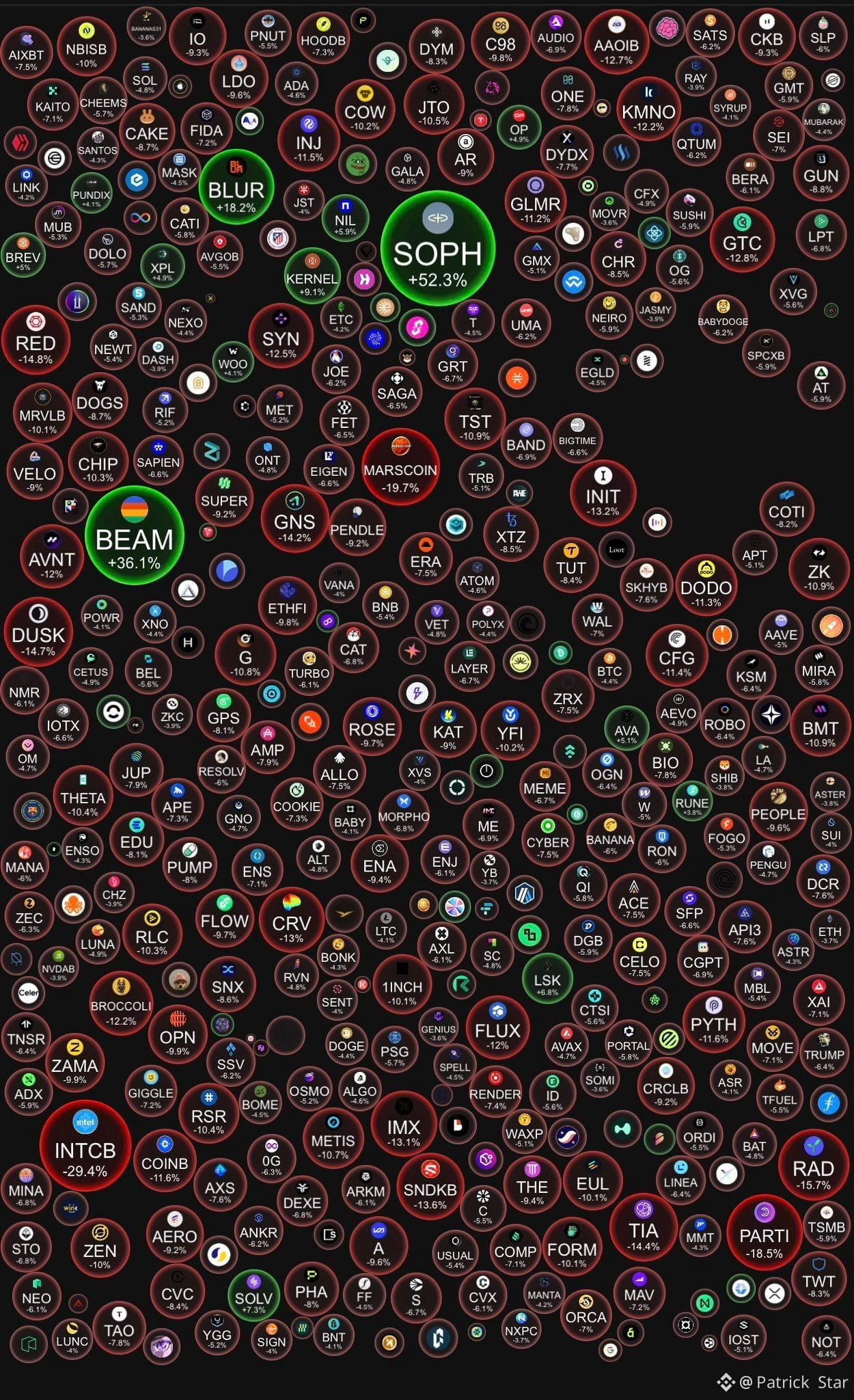
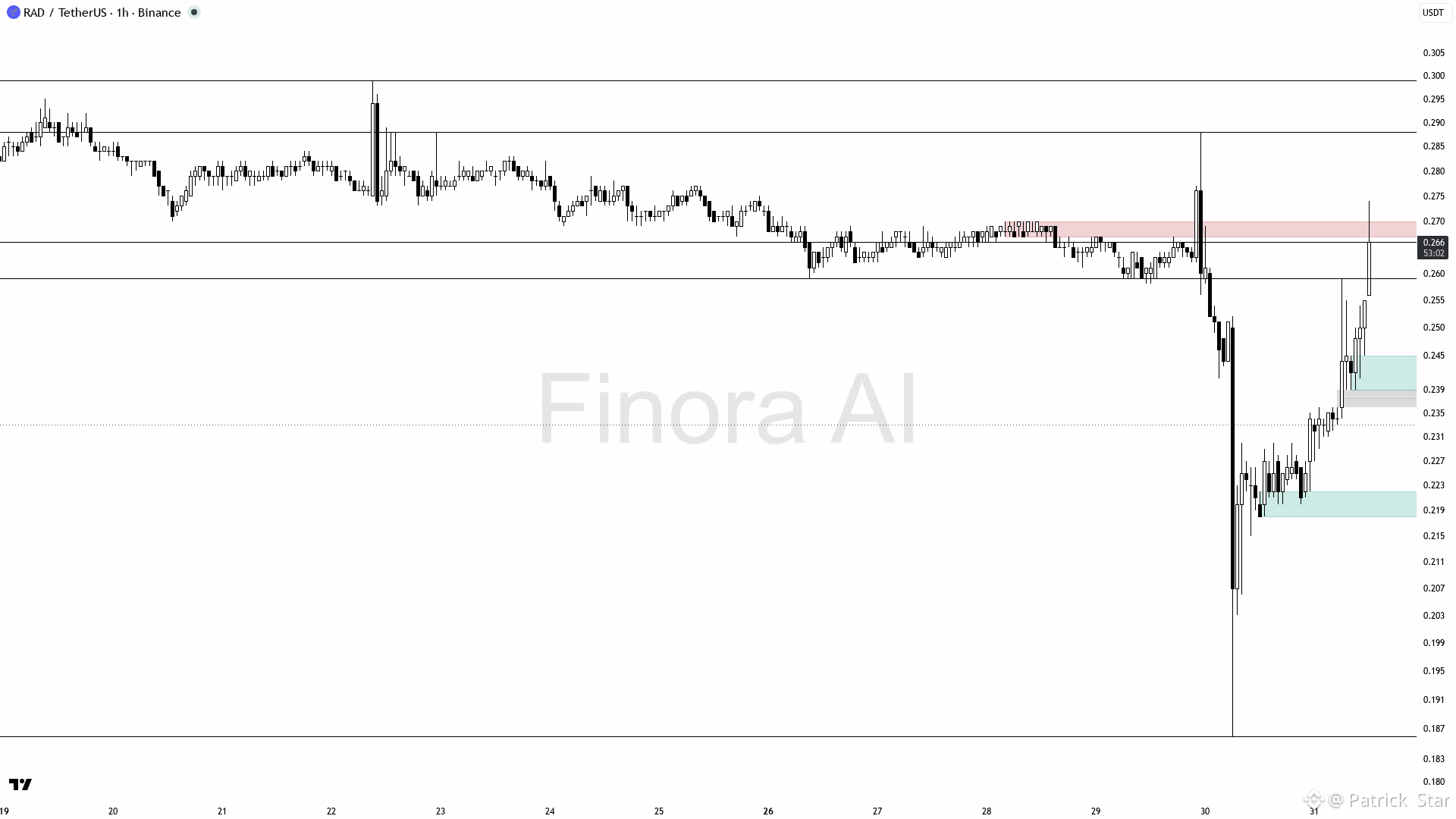
It hit a new all-time low just yesterday, then rebounded 30% today. That wick at $RAD is pretty interesting.
On October 30, it fell to $0.1943, a new all-time low. The trigger wasn’t a problem with the project itself, but a hacker address linked to the Binance security incident dumping tokens on-chain. In a thin market, that set off a cascade of stop-losses and panic selling, sending it down 15% that day.
Today, it bounced back from the low to around $0.28, up 25–30% in 24 hours. But don’t rush to call it a reversal: no one knows how many tokens the hacker still holds, and whether the selling pressure has cleared is the biggest wild card.
The project itself isn’t bad: decentralized GitHub (Radicle) plus an open-source funding network (Drips). The governance token’s developer activity even ranked first among its peers this year, and contributions haven’t stopped. The issue is that token holdings are highly concentrated, with the top 10 wallets holding 76.89%.
Key levels: support at $0.2228 and $0.1968, resistance at $0.2886. If it can’t hold above $0.2886, this is just an oversold bounce. Do you think this is a golden opportunity created by the hacker’s sell-off, or just a pause before more declines? Let’s discuss in the comments.
2
134
·
--
On the day the chain shut down, $LSK instead surged into the top two gainers.
Today is the day Lisk Chain shuts down, but the token price followed a completely opposite script: it shot from $0.195 to $0.295, gaining 45% intraday and briefly climbing to second place on the futures gainers list. It’s up 43% over 7 days, but still down 28% over the past month.
The fuel for this rally came from derivatives: 24-hour spot trading volume was $160 million, open interest in perpetual futures surged in a short time, and the short funding rate was driven down to an annualized -2,716%—the most extreme across the market. Shorts are paying longs sky-high interest: a classic short squeeze setup.
But don’t forget what day it is: the chain is shutting down, and any assets that haven’t been migrated can never be recovered from today onward. The team has also urged liquidity providers to temporarily withdraw, and the foundation’s buyback has been paused due to a Binance security incident, with plans to resume next week.
So this rally looks more like event-driven speculation on the shutdown day than a fundamental reversal. RSI(6) is already at 87, deep in overbought territory. Do you think this is the “last hurrah” or “the beginning of a new Lisk”? Let’s discuss in the comments.
11
·
--
Article
Put simply, RED is a token issued by a company that provides “price feeds” to blockchains—and it specifically caters to wealthy institutions.First, let’s talk about the price.
It’s currently around $0.13. It fell 11% yesterday, and its total market cap is roughly $70–80 million. There are 560 million tokens available to trade, out of a total supply of 1 billion. It surged to $0.22 in April this year, but it’s still down 85% from its all-time high.
What does it do?
Blockchains can’t tell how much things in the outside world are worth on their own—they need someone to tell them. That’s the job of “providing price feeds.” That’s what RedStone does, and it specializes in a particularly tricky category: figuring out the value of yield-bearing collateral (such as staked ETH and restaked assets). Lending platforms rely on its data to issue loans and liquidate positions.
Put simply, RED is a token issued by a company that provides “price feeds” to blockchains—and it specifically caters to wealthy institutions.
First, let’s talk about the price.
It’s currently around $0.13. It fell 11% yesterday, and its total market cap is roughly $70–80 million. There are 560 million tokens available to trade, out of a total supply of 1 billion. It surged to $0.22 in April this year, but it’s still down 85% from its all-time high.
What does it do?
Blockchains can’t tell how much things in the outside world are worth on their own—they need someone to tell them. That’s the job of “providing price feeds.” That’s what RedStone does, and it specializes in a particularly tricky category: figuring out the value of yield-bearing collateral (such as staked ETH and restaked assets). Lending platforms rely on its data to issue loans and liquidate positions.
226
·
--
Article
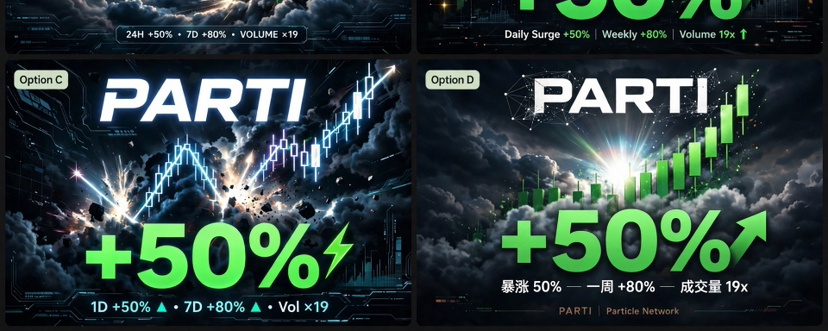
PARTI Surges 50% in a Day: Is It Finally Time for the Chain Abstraction Story to Take Off?Yesterday at noon, PARTI was still trading sideways around $0.039. By evening, it had surged above $0.06, gaining more than 50% in 24 hours. It was up 80% over the week and 130% over the month. But zoom out a little, and it was still down 45% over the past year—let alone its all-time high of $0.43 in March 2025, from which it had fallen by 90%.
The most unusual thing about this rally wasn’t the size of the gains, but the volume. Spot trading volume over 24 hours rose from $157 million to $180 million, roughly 19 times the previous day’s figure; derivatives volume was about $560 million, with open interest at $22.16 million. Price and volume were both up, but even after combing through the latest news, it’s hard to find any single piece of positive news that can explain the rally.
PARTI Surges 50% in a Day: Is It Finally Time for the Chain Abstraction Story to Take Off?
Yesterday at noon, PARTI was still trading sideways around $0.039. By evening, it had surged above $0.06, gaining more than 50% in 24 hours. It was up 80% over the week and 130% over the month. But zoom out a little, and it was still down 45% over the past year—let alone its all-time high of $0.43 in March 2025, from which it had fallen by 90%.
The most unusual thing about this rally wasn’t the size of the gains, but the volume. Spot trading volume over 24 hours rose from $157 million to $180 million, roughly 19 times the previous day’s figure; derivatives volume was about $560 million, with open interest at $22.16 million. Price and volume were both up, but even after combing through the latest news, it’s hard to find any single piece of positive news that can explain the rally.
The most unusual thing about this rally wasn’t the size of the gains, but the volume. Spot trading volume over 24 hours rose from $157 million to $180 million, roughly 19 times the previous day’s figure; derivatives volume was about $560 million, with open interest at $22.16 million. Price and volume were both up, but even after combing through the latest news, it’s hard to find any single piece of positive news that can explain the rally.
231
·
--
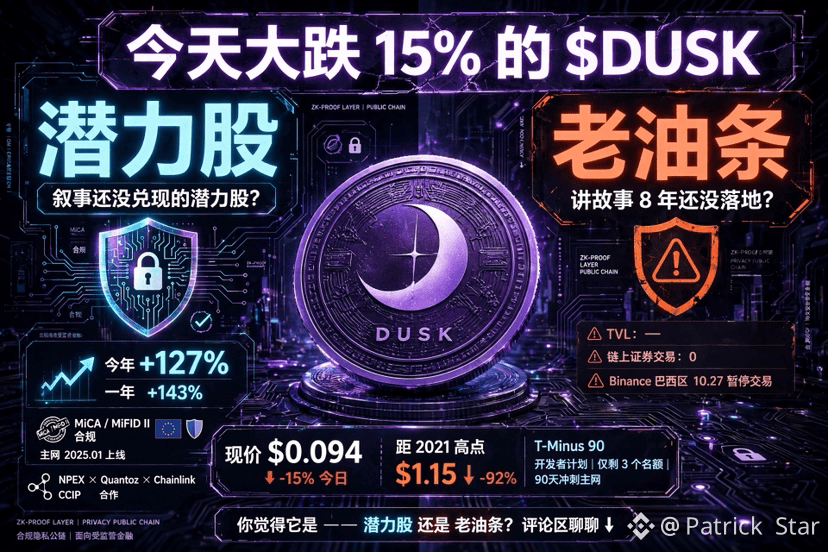
$DUSK , down 15% today, may be the most long-undervalued privacy coin—or the one that’s been telling its story for 8 years without delivering.
First, the exciting part: it’s up 127% year to date and 143% over the past year, but plunged 12–15% today and is now hovering around $0.094. It’s still 92% below its 2021 peak of $1.15.
There was a direct trigger for today’s drop: Binance suspended trading of the token in Brazil on October 27, putting short-term liquidity under pressure.
What does the project actually do? In a nutshell, it’s building a privacy-focused public blockchain for regulated finance in Europe. Zero-knowledge proofs allow securities to be issued and traded on-chain while remaining auditable for compliance and keeping transaction details private. It’s targeting EU regulatory frameworks such as MiCA and MiFID II. The project was founded in 2018, spent six years in development, and finally launched its mainnet in January 2025.
Its partners look impressive: the licensed Dutch exchange NPEX and the compliant electronic money institution Quantoz. It also integrated Chainlink CCIP with NPEX.
But here’s the twist: after all these years of promises, there still aren’t any real securities trading on the chain, and DefiLlama doesn’t even have TVL data for it. Registration for the T-Minus 90 developer program also closes tomorrow. There are just three spots, and the goal is to take a dApp from idea to mainnet in 90 days.
272
·
--
Bullish
BMT’s price action over the past few days has been a classic case of opening high and then sliding back down: it got listed on a major Korean exchange, only to return to square one within five days.
First, the price: it’s currently around $0.026–0.027, down roughly 8–13% today. Its market cap is about $20M, with around 756 million tokens in circulation and a total supply of 1 billion. It’s up 56% over the past month and about 90% over the past six months, but it’s still roughly 92% below its all-time high of $0.32 in March 2025.
The key event came on October 24: South Korea’s largest exchange listed the $BMT Korean won trading pair. It opened at around 57.7 won, briefly surged to 98.1 won intraday, and gained roughly 70% on the day. Its 24-hour trading volume soared 754% to $355 million. But the excitement didn’t last: from its October 24 high of $0.0515, the price has fallen to $0.026, giving back about half its gains and returning to its pre-listing level.
What does the project actually do? Bubblemaps is an on-chain data analysis tool that visualizes token holder distribution as a bubble map, making it easy to see who holds a large share of the tokens and whether there might be insider trading. Its recent viral moments have come from “exposing insiders”—for example, on October 26, it posted that wallets linked to a certain KOL had made around $270,000 from several meme coins they promoted. The token is used for governance voting and unlocking premium features, and is available on both Solana and BNB Chain.
The risks are worth spelling out, too: circulating supply figures vary between sources, and future unlocks could create considerable dilution pressure. Some trading volume comes from low-trust exchanges, so the figures may be inflated. At the end of the day, this is still a small-cap, highly volatile coin, and most people who bought in at the top are now underwater.

1
417
·
--
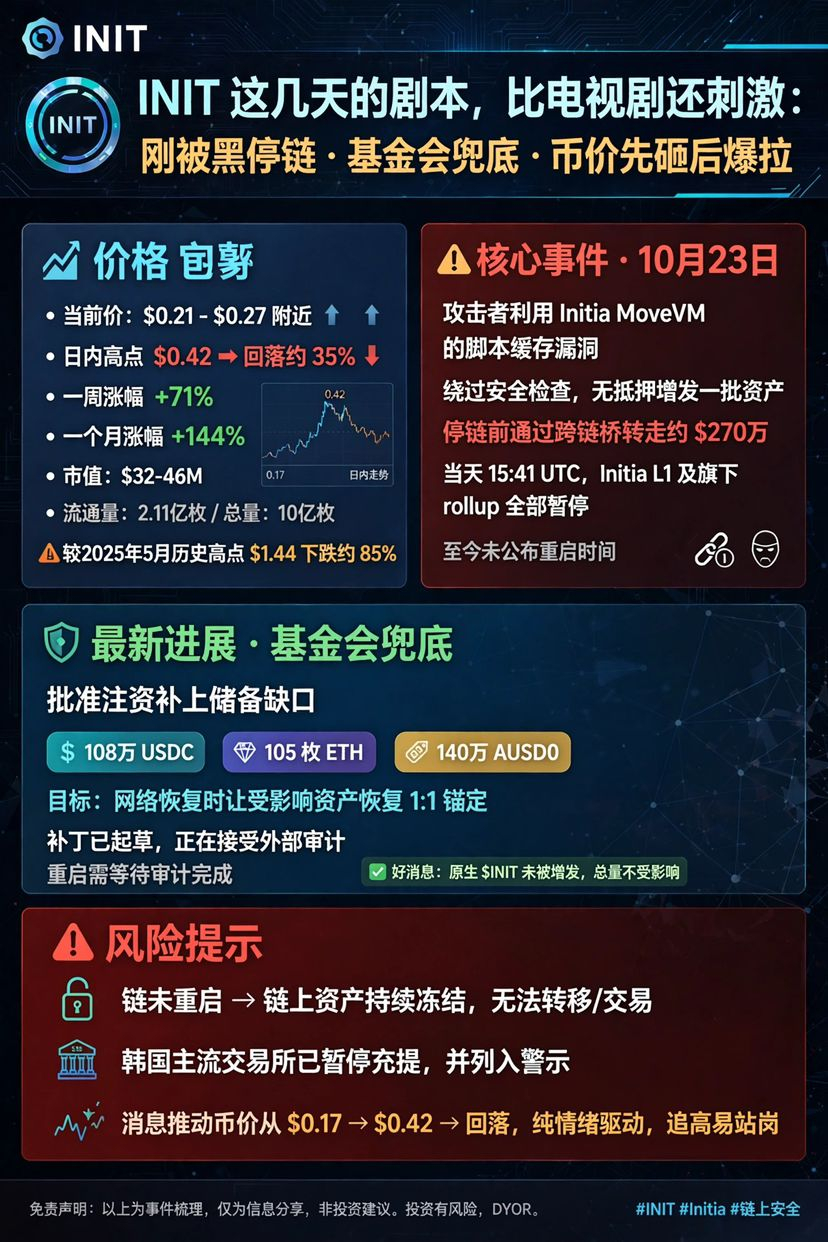
The past few days have been more thrilling than a TV drama for INIT: the chain was halted by a hack, then the foundation stepped in to backstop it, and the token price plunged before surging.
First, the price: it’s currently around $0.21–0.27, after briefly spiking to $0.42 intraday before falling back about 35%. It’s up about 71% in a week and about 144% in a month. Market cap is $32–46M, with 211 million tokens in circulation and a total supply of 1 billion. It’s still about 85% below its all-time high of $1.44 in May 2025.
The key event happened on October 23: attackers exploited a script-cache vulnerability in Initia MoveVM to bypass security checks and mint a batch of assets without collateral. Before the chain was halted, about $2.7 million was bridged out. At 15:41 UTC that day, Initia L1 and all its rollups were paused, and no restart time has been announced yet. The good news is that no additional $INIT was minted, so the total supply is unaffected.
The latest development is the foundation’s backstop: it approved an injection of about 1.08 million USDC, 105 ETH, and 1.4 million AUSD0 to fill the reserve shortfall, aiming to restore a 1:1 peg for affected assets when the network comes back online. A patch has been drafted and is undergoing an external audit; the restart will have to wait until the audit is complete.
The risks are worth spelling out, too: every day the chain remains offline is another day that on-chain assets can’t be moved. Major South Korean exchanges have also suspended deposits and withdrawals and placed the token on alert. After the news broke, the price surged from $0.17 to $0.42 before falling back—purely sentiment-driven, so chasing the rally could easily leave you holding the bag. $INIT
{spot}(INITUSDT)
The past few days have been more thrilling than a TV drama for INIT: the chain was halted by a hack, then the foundation stepped in to backstop it, and the token price plunged before surging.
First, the price: it’s currently around $0.21–0.27, after briefly spiking to $0.42 intraday before falling back about 35%. It’s up about 71% in a week and about 144% in a month. Market cap is $32–46M, with 211 million tokens in circulation and a total supply of 1 billion. It’s still about 85% below its all-time high of $1.44 in May 2025.
The key event happened on October 23: attackers exploited a script-cache vulnerability in Initia MoveVM to bypass security checks and mint a batch of assets without collateral. Before the chain was halted, about $2.7 million was bridged out. At 15:41 UTC that day, Initia L1 and all its rollups were paused, and no restart time has been announced yet. The good news is that no additional $INIT was minted, so the total supply is unaffected.
The latest development is the foundation’s backstop: it approved an injection of about 1.08 million USDC, 105 ETH, and 1.4 million AUSD0 to fill the reserve shortfall, aiming to restore a 1:1 peg for affected assets when the network comes back online. A patch has been drafted and is undergoing an external audit; the restart will have to wait until the audit is complete.
The risks are worth spelling out, too: every day the chain remains offline is another day that on-chain assets can’t be moved. Major South Korean exchanges have also suspended deposits and withdrawals and placed the token on alert. After the news broke, the price surged from $0.17 to $0.42 before falling back—purely sentiment-driven, so chasing the rally could easily leave you holding the bag. $INIT
278
·
--
Verified
LSK is in the bizarre state of “the chain is shutting down, but the coin is still around.”
First, the price: it’s currently around $0.17–0.21. It briefly surged to $0.22 intraday today, up about 29%, but prices vary from platform to platform and volatility is extremely high. Its market cap is $36–41M. It’s down 44% over the past month but still up 33% over six months, and has fallen more than 99% from its 2018 high of $39.31.
The key point: Lisk Chain will shut down on October 31—that’s the day after tomorrow. The decade-old chain is officially ceasing operations, and Lisk is pivoting to become a corporate treasury management platform. $LSK will become the new platform’s “loyalty token,” which users will be able to earn and spend on the platform starting in 2027. There will also be a buyback from October 26 to December 31.
For token holders, there are two scenarios:
If your tokens are on Ethereum or held on an exchange, you don’t need to do anything and won’t be affected.
If your tokens are still on Lisk’s native chain or staked, the team says to bridge them to Ethereum before October 31. But the bridging process takes about eight days (three days to unstake plus a seven-day bridge challenge period), so the practical deadline has already passed. Any tokens that haven’t been migrated will be permanently inaccessible after the shutdown.
Two other changes have already taken place: on September 28, 100 million tokens were burned from the DAO treasury, reducing the total supply from 400 million to 300 million; and the Lisk DAO is also being gradually wound down.
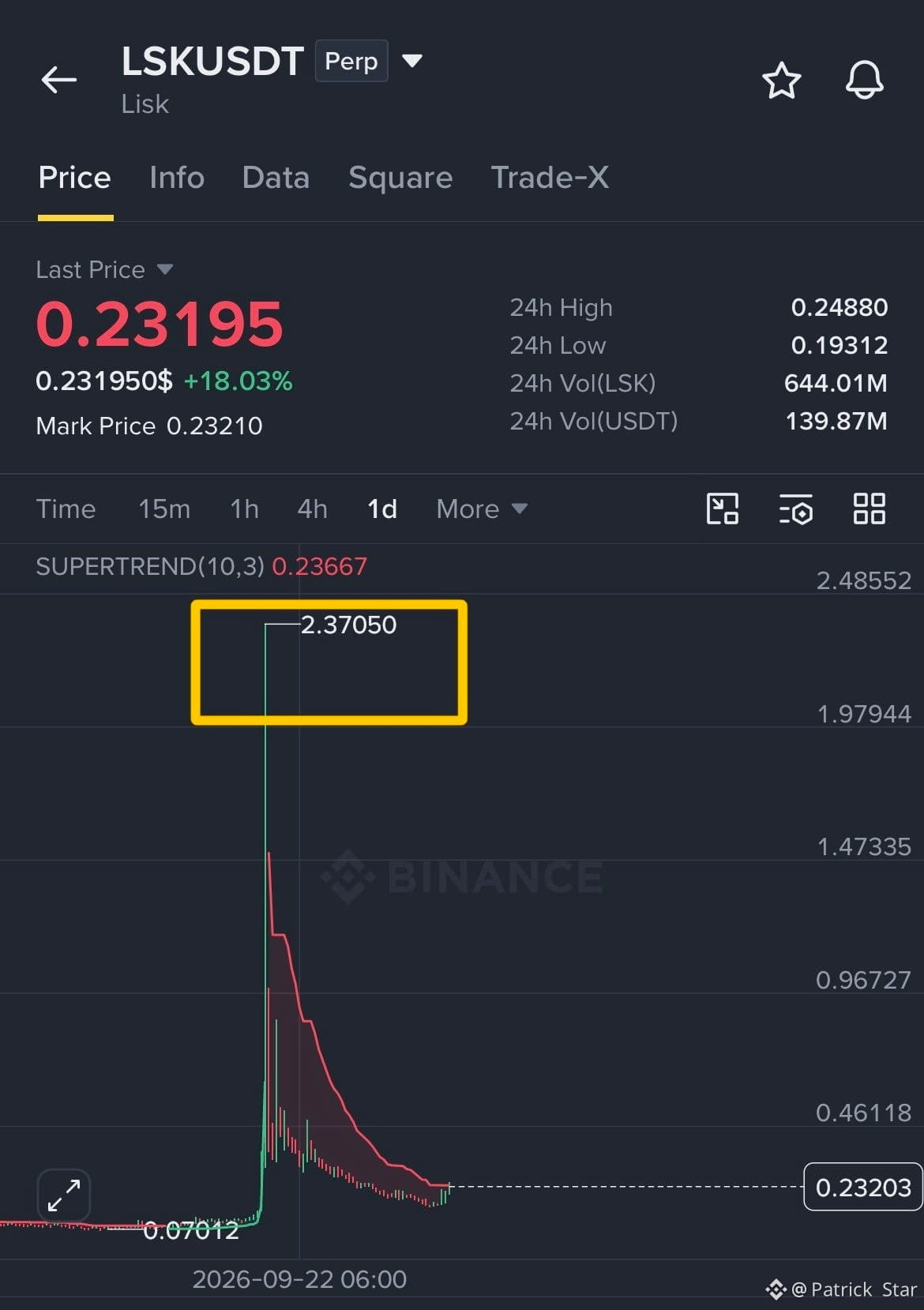
And one more curious tidbit: when the “death announcement” came out on September 10, LSK actually rocketed from $0.1 to $1.8, then fell back down. Volatility now is largely sentiment-driven, so chasing rallies or panic-selling can easily leave you losing on both ends. $LSK
585
·
--
The official LINUX DO app has been updated to 1.0.3, and the biggest change this time is that it finally works properly on Mac.
Version 1.0.2 could already run on Mac, but there were some issues with font size and device display. This release has optimized the macOS (Designed for iPad) version to a usable state. It requires macOS 27, and you can download it directly from the App Store. The Mac version can even earn you a badge.
The other changes are all aimed at improving the experience: the emoji system has been revamped, performance and network stability have both been improved, and according to the official announcement, “it should feel more responsive.” They’ve also fixed a bunch of bugs reported by fellow users. If you want the latest version, you can still get it through TestFlight.
The comments are pretty entertaining too: Mac users are cheering, “Finally, no more VPN!” and “I can finally bring my Mac out again.” Android users are lining up to ask, “What about Android?” and “Waiting here for Android,” while others are warning that the first release of macOS 27 is riddled with bugs, so there’s no need to rush the update.
The funniest part is the official account’s final plea: “You all just download it without leaving a review? Leave an honest review! Don’t we deserve a little love?”
$BNB

116
·
--
The high-profile saga between Wingtech and Nexperia has finally moved from trading barbs at a distance to the negotiating table.
*ST Wingtech said today on an investor interaction platform that it has reached a confidentiality agreement with the administrators of Dutch semiconductor maker Nexperia regarding negotiations. The negotiation process will be kept strictly confidential. If the talks involve major decisions or trigger disclosure requirements, the company will review and disclose them in accordance with the rules.
The signals are positive: the share price surged nearly 8% over the past two days, China’s Ministry of Commerce also called on the Dutch side to maintain stability in the semiconductor supply chain and promote a proper resolution to the dispute, and Zhang Xuezheng, the company’s actual controller, bought an additional 499,900 shares.
But let’s be clear: the company itself has said the matter involves cross-border legal proceedings and corporate governance, and the outcome is uncertain. The confidentiality agreement is about “how to negotiate,” not whether a deal has been reached. Until the uncertainty is resolved, the rally may be driven by expectations alone.
$BNB

349
·
--
Partly True
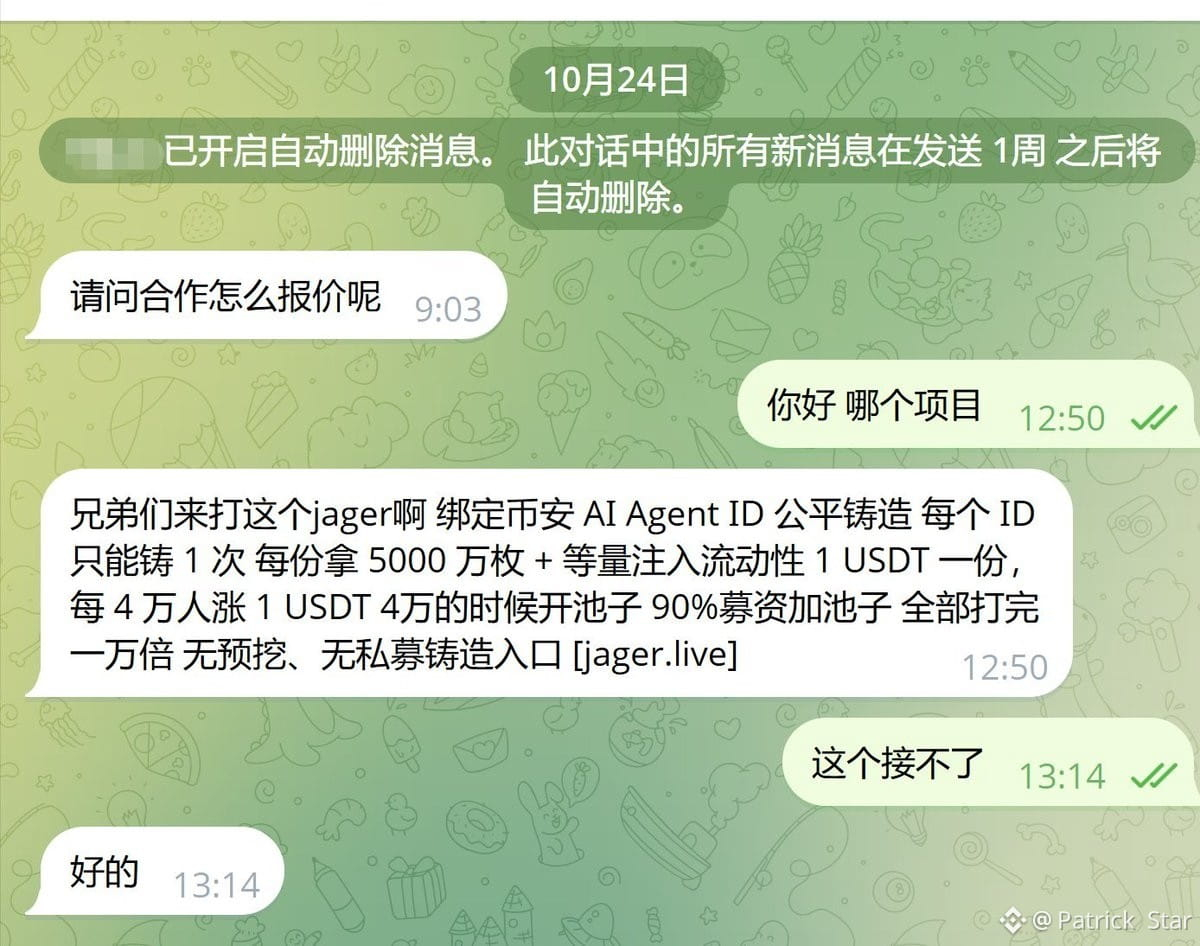
The Agent ID ecosystem has another example of a token exploding right after its liquidity pool opened.
$JAGENT was still repeatedly changing contracts a few days ago, but after officially opening its pool last night, it took off: its market cap surged to around $1.45 million, with 24-hour trading volume reaching $2.21 million. One trader shared that they put in 10U and made 326U by selling in batches—about a 32x return. Others said they managed to farm as much as 1,000U from a single account.
Still, even with a token like this, which took off right after its pool opened, it’s worth staying level-headed: early market caps are small and volatility is huge, so chasing a pump can easily leave you holding the bag. Those who benefited from the early upside were already waiting before the pool opened. It’s fine to watch from the sidelines, but if you do get in, only use money you can afford to lose.
#BNB
529
·
--
Verified
$SOL The Shanghai event was called off.
Some reports say there were two reasons: 80% of it was likely due to the widespread public backlash sparked by the advertising, and 20% may have been because rumors circulated that the event details filed with the authorities did not match what actually took place.
In short: make a big splash with the event, but keep compliance low-key. As offline events get bigger, any mismatch between the filings, publicity, and on-site execution can easily lead to trouble.

119
·
--
Whales are accumulating, buying more as the price falls.
The number of wallets holding 10–10,000 $BTC has hit an all-time high: 20,338. It’s been rising since mid-July, and price swings haven’t scared them off.
Whales are quietly accumulating while retail investors panic-sell. The script is always the same.
$BTC
The number of wallets holding 10–10,000 $BTC has hit an all-time high: 20,338. It’s been rising since mid-July, and price swings haven’t scared them off.
Whales are quietly accumulating while retail investors panic-sell. The script is always the same.
$BTC

145
·
--
@nillionnetwork With Dusk launching, what matters most to me is that it turns the “crypto market” from a narrative into usable infrastructure.
The logic behind Covenants is straightforward: you set conditions such as “if BTC rises to X, I’ll buy Y,” encrypt them, and put them on-chain. Before the conditions are triggered, all that can be seen on-chain is an encrypted Covenant—no one knows your direction, position, or trigger price. Once triggered, decentralized nodes decrypt and execute it. There’s no centralized matching, and you don’t have to worry about your strategy being copied in advance.
The biggest difference from traditional limit orders is that Covenants can’t be canceled and expire automatically. If they aren’t triggered within the 30-day window, they expire while still sealed, and your intentions remain private throughout. For large capital and strategic trading, this matters more than privacy alone.
$NIL #NIL
@Nillion With Dusk launching, what matters most to me is that it turns the “crypto market” from a narrative into usable infrastructure.
The logic behind Covenants is straightforward: you set conditions such as “if BTC rises to X, I’ll buy Y,” encrypt them, and put them on-chain. Before the conditions are triggered, all that can be seen on-chain is an encrypted Covenant—no one knows your direction, position, or trigger price. Once triggered, decentralized nodes decrypt and execute it. There’s no centralized matching, and you don’t have to worry about your strategy being copied in advance.
The biggest difference from traditional limit orders is that Covenants can’t be canceled and expire automatically. If they aren’t triggered within the 30-day window, they expire while still sealed, and your intentions remain private throughout. For large capital and strategic trading, this matters more than privacy alone.
$NIL #NIL

59
·
--
@nillionnetwork has turned privacy into an executable product, and I really appreciate that.
Privacy used to mostly mean “data doesn’t leak.” Covenants go a step further: the conditional instructions themselves are encrypted on-chain, so even the intent stays hidden until they’re triggered. Want to automatically buy ETH when BTC reaches a certain price? You can lock the instruction in advance as a Covenant. When the time comes and the conditions are met, decentralized nodes unlock and execute it. No one can see it or front-run it beforehand.
Dusk is the starting point for the seven eras of Encrypted Markets, and it’s already live on Ethereum mainnet. Turning privacy from a slogan into an executable layer that can be used on-chain—that’s what makes this phase of Nillion especially worth watching.
$NIL #NIL
@Nillion has turned privacy into an executable product, and I really appreciate that.
Privacy used to mostly mean “data doesn’t leak.” Covenants go a step further: the conditional instructions themselves are encrypted on-chain, so even the intent stays hidden until they’re triggered. Want to automatically buy ETH when BTC reaches a certain price? You can lock the instruction in advance as a Covenant. When the time comes and the conditions are met, decentralized nodes unlock and execute it. No one can see it or front-run it beforehand.
Dusk is the starting point for the seven eras of Encrypted Markets, and it’s already live on Ethereum mainnet. Turning privacy from a slogan into an executable layer that can be used on-chain—that’s what makes this phase of Nillion especially worth watching.
$NIL #NIL
67
·
--
What traders fear most isn’t getting the direction wrong—it’s having the whole internet watch their order before it even fills. Place a conditional order, and before the price gets there, your strategy is already exposed, with a crowd in the mempool waiting to sandwich you.
Nillion’s Covenants are designed to tackle exactly this: encrypt conditional instructions into a Covenant and put it on-chain. No one can see what’s inside before it’s triggered; only then can a decentralized committee of nodes unlock and settle it. No reliance on a single custodian, and no revealing your intent ahead of time.
Dusk is the first stop on this Encrypted Markets roadmap, already live on Ethereum mainnet. Up next are Darkfall for multichain support and Skyglow for cross-chain settlement, leading all the way to Neon, a dedicated language for Covenants. The possibilities are only just opening up.
$NIL #NIL @nillionnetwork
What traders fear most isn’t getting the direction wrong—it’s having the whole internet watch their order before it even fills. Place a conditional order, and before the price gets there, your strategy is already exposed, with a crowd in the mempool waiting to sandwich you.
Nillion’s Covenants are designed to tackle exactly this: encrypt conditional instructions into a Covenant and put it on-chain. No one can see what’s inside before it’s triggered; only then can a decentralized committee of nodes unlock and settle it. No reliance on a single custodian, and no revealing your intent ahead of time.
Dusk is the first stop on this Encrypted Markets roadmap, already live on Ethereum mainnet. Up next are Darkfall for multichain support and Skyglow for cross-chain settlement, leading all the way to Neon, a dedicated language for Covenants. The possibilities are only just opening up.
$NIL #NIL @Nillion
1
83
·
--
I’ve recently taken a deep dive into Nillion’s Covenants, and what impresses me most is the idea of encrypting conditional instructions on-chain: your transaction intent remains sealed until it’s triggered. Others can tell that a Covenant exists, but they can’t see what you want to buy or at what price it will trigger. Once the conditions are met, decentralized nodes unlock settlement, so there’s no need to rely on a single custodian or expose your strategy in the public mempool where it could be sandwiched.
Dusk, the first of the seven eras of Encrypted Markets, is already live on Ethereum mainnet, turning encrypted execution from a concept into a usable product. I’m most excited about Darkfall’s upcoming multichain expansion and Nightside’s support for conditions based on arbitrary data sources. Conditional execution could evolve beyond price triggers toward more general on-chain logic.
$NIL #NIL @nillionnetwork
I’ve recently taken a deep dive into Nillion’s Covenants, and what impresses me most is the idea of encrypting conditional instructions on-chain: your transaction intent remains sealed until it’s triggered. Others can tell that a Covenant exists, but they can’t see what you want to buy or at what price it will trigger. Once the conditions are met, decentralized nodes unlock settlement, so there’s no need to rely on a single custodian or expose your strategy in the public mempool where it could be sandwiched.
Dusk, the first of the seven eras of Encrypted Markets, is already live on Ethereum mainnet, turning encrypted execution from a concept into a usable product. I’m most excited about Darkfall’s upcoming multichain expansion and Nightside’s support for conditions based on arbitrary data sources. Conditional execution could evolve beyond price triggers toward more general on-chain logic.
$NIL #NIL @Nillion
1
88
·
--
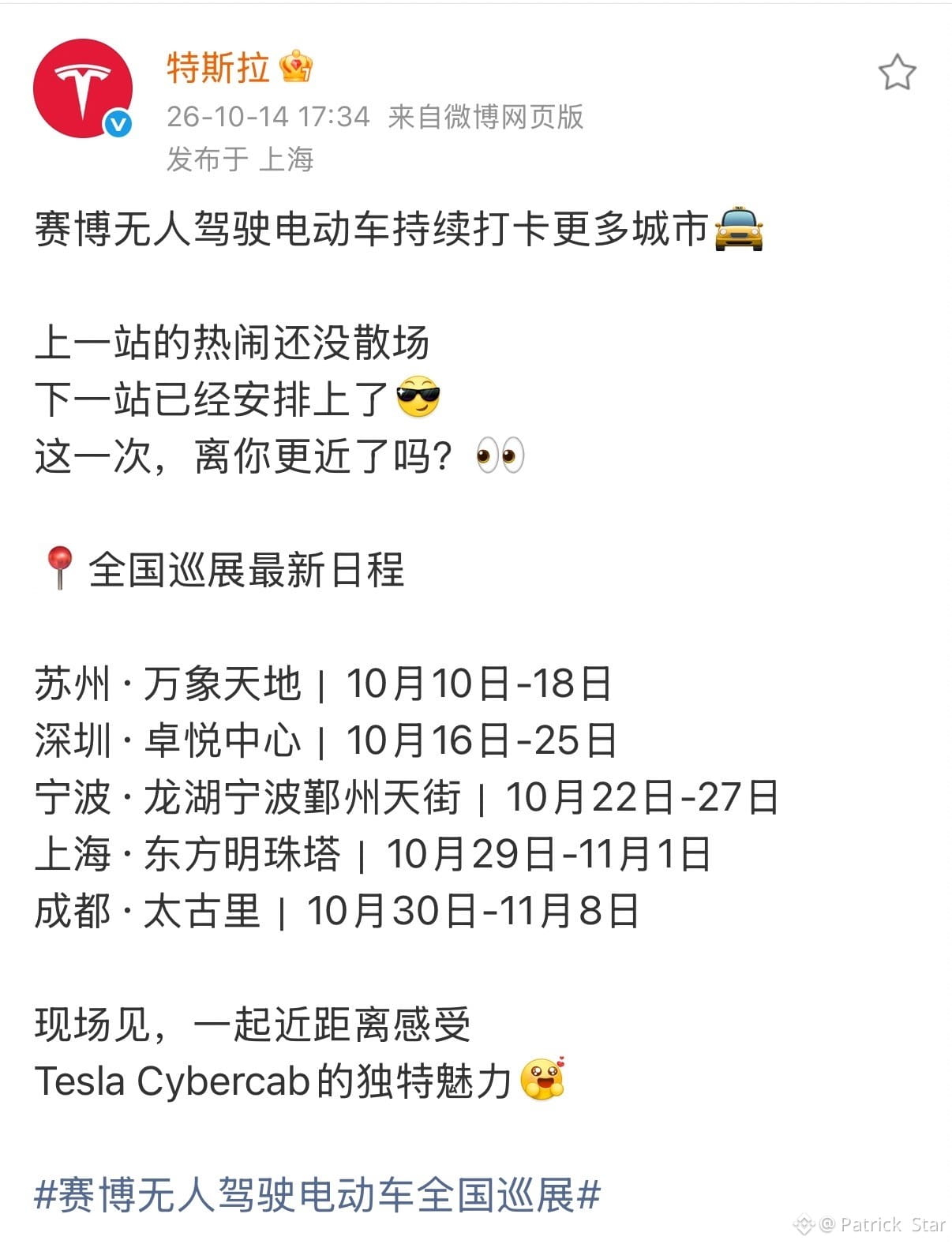
It's here, it's here! The Tesla Cybercab, a self-driving electric vehicle, is visiting even more cities on its nationwide tour.
Suzhou 10/10–18, Shenzhen 10/16–25, Ningbo 10/22–27, Shanghai 10/29–11/1, Chengdu 10/30–11/8.
No steering wheel, no pedals—just open the gull-wing doors and step into the future. Which stop is closest to you?
$BNB #Cybercab
Suzhou 10/10–18, Shenzhen 10/16–25, Ningbo 10/22–27, Shanghai 10/29–11/1, Chengdu 10/30–11/8.
No steering wheel, no pedals—just open the gull-wing doors and step into the future. Which stop is closest to you?
$BNB #Cybercab

138
·
--
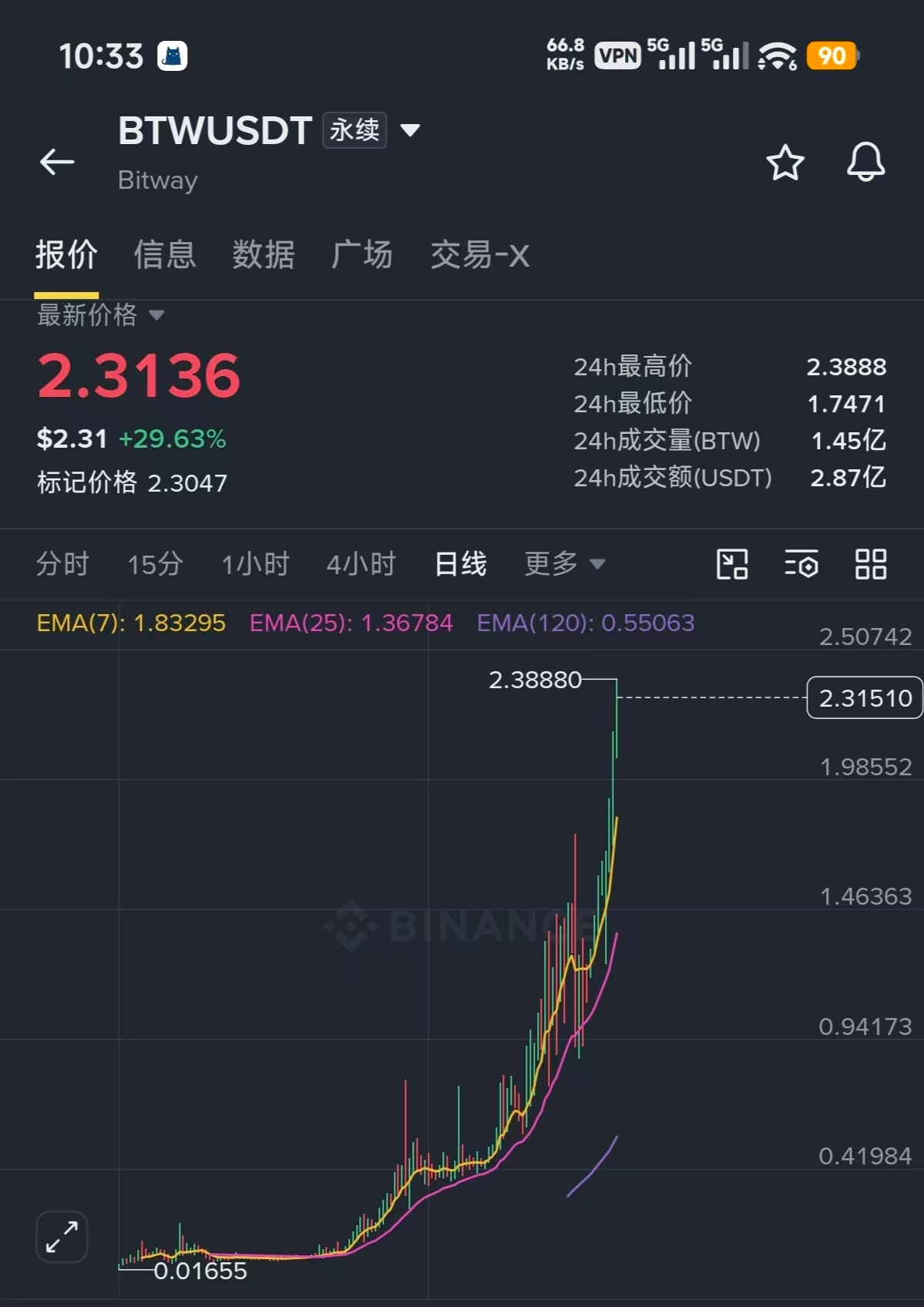
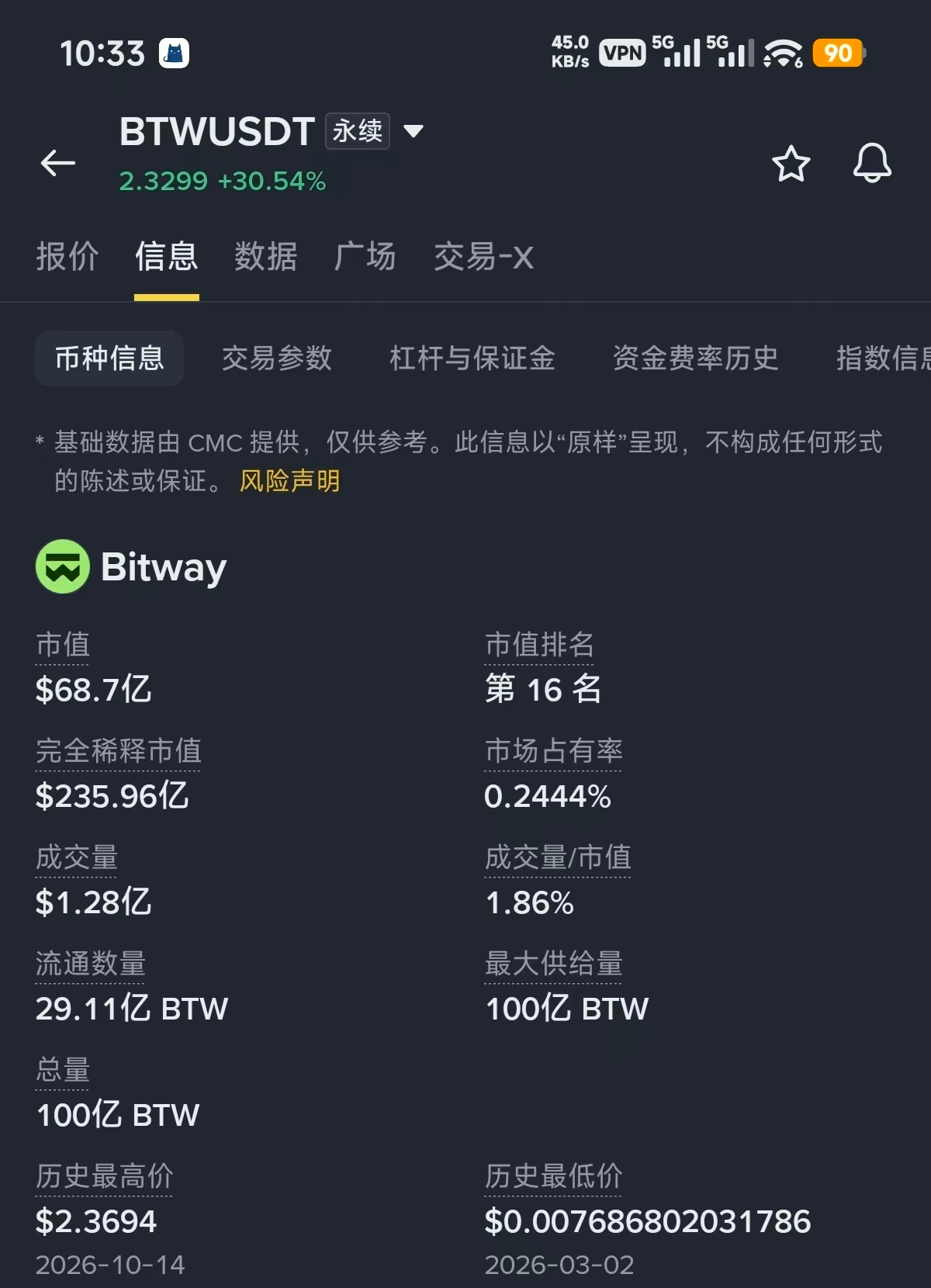
The little-known Bitway (BTW) surged 140x in 3 months.
With a circulating market cap of $6.87 billion, it ranks 16th globally. From $0.0076 to $2.36—doesn’t this price action and pumping style look familiar?
I’m not the only one getting ready to make a move, am I?
$BNB $BTC $BTW
The little-known Bitway (BTW) surged 140x in 3 months.
With a circulating market cap of $6.87 billion, it ranks 16th globally. From $0.0076 to $2.36—doesn’t this price action and pumping style look familiar?
I’m not the only one getting ready to make a move, am I?
$BNB $BTC $BTW
With a circulating market cap of $6.87 billion, it ranks 16th globally. From $0.0076 to $2.36—doesn’t this price action and pumping style look familiar?
I’m not the only one getting ready to make a move, am I?
$BNB $BTC $BTW
785
Log in to explore more content
Join global crypto users on Binance Square
⚡️ Get latest and useful information about crypto.
💬 Trusted by the world’s largest crypto exchange.
👍 Discover real insights from verified creators.
Email / Phone number
Trending Topics
BTCRemainsUnderPressureAfterHawkishFOMCMinutes
57,463 views
846 Discussing
FOMC Minutes | Fed Minutes Show Almost All Officials Expect More Rate Hikes, With Some Open to a Larger December Move
Binance News
·49 Likes
·58.9k views
AnthropicToDebutAfter$83IPOPricing
15,333 views
89 Discussing
NvidiaBoardReportedlySplitOverHuang’sReturn
19,065 views
387 Discussing