
初七BNB
119 Posts

初七BNB
 Square Verified
Report
Block User
Meme韭菜,但爱建设|保持认知升级,不断试错|话不多说,浇个朋友|

Macro KOL
Open Trade
High-Frequency Trader
5 Years
260 Following
32.0K+ Followers
18.6K+ Liked
1 Badges
Posts
Portfolio
All
Live
PINNED
·
--
When the market dropped last night, I initially thought Trump was up to something—that he’d sold all the BTC he held.
But after looking into it, the actual story was this: Trump Media Group transferred 4,259 BTC to an address linked to Crypto.com, worth about $340 million.
These coins account for nearly all the BTC the company had put up as collateral for convertible bonds, but only about 30% of its previously disclosed total holdings.
A transfer to an exchange doesn’t mean a sale.
There are no trade records, no information about buyers, and the company hasn’t announced that it has dumped its coins. It may simply be changing custodians, or it may be handling collateral. It could still sell later, but nobody can say for sure right now.
So this news is bearish, and it did scare a lot of people. But Trump can’t take all the blame for last night’s drop.
Here’s how I see it.
Once the midterm elections were over, the market began worrying that the Democrats would tighten regulations on AI, data centers, and the crypto industry. Chip stocks had rallied the hardest and were the most crowded institutional trades, so they were naturally the first to be sold.
Nvidia fell 9%, AMD dropped 17%, the Philadelphia Semiconductor Index sank more than 12%, and the Nasdaq fell 5.52%. Institutions began reducing leverage, algorithmic trading followed suit, and eventually the whole U.S. stock market sold off in a panic.
As U.S. stocks tumbled, BTC was sold off as a high-risk asset too. It plunged from above $80,000 to around $75,000, liquidating a large number of long positions. Those liquidations triggered more selling, accelerating the decline.
The news about Trump Media’s transfer did add fuel to the fire. But look at the markets that night: the sell-off was far broader than BTC. Chips, memory, optical communications, and cloud computing were all hit. A transfer of 4,259 BTC alone can’t explain that.
My take is that the main cause this time was overcrowding in AI and chip stocks, followed by institutions collectively reducing leverage and U.S. stocks dragging crypto down with them. Trump’s news added to the decline, but for now, it’s not a major bombshell.
For BTC, the first thing to watch is whether it can hold $75,000. If chip stocks keep getting hammered, I won’t rush to buy the dip either. We’ll have to wait for on-chain data or a company announcement to find out whether Trump Media sold those coins.
Until those signals come in, I really don’t dare buy the dip.

2
12
1.8k
PINNED
·
--
Verified
After spending a long time in crypto, when I see headlines like “Nvidia reclaims the title of the world’s most valuable company,” my first reaction is no longer excitement.
Nvidia rose 2.29% over the past two days, bringing its market cap back to $4.99 trillion. It looks impressive, but the stock is still 15% below its 52-week high. It overtook Apple again, helped by Apple’s 1.9% drop that day.
I also took a look through AMD’s earnings report.
Third-quarter revenue grew 45%, and data center revenue nearly doubled, making up 64% of total revenue. Companies are still buying chips in bulk for AI servers, and AMD rose 8% after hours. The market’s reward this time makes sense.
At the same time, Oracle is preparing to raise $20 billion, and Meta has also issued $20 billion in debt. The 10-year Treasury yield has already reached 4.95%. Borrowing is getting more expensive, yet tech companies keep increasing their AI investments.
Since entering crypto in 2019, I’ve seen this kind of thing plenty of times. When the market is good, companies raise money, expand, then raise more. The bigger the numbers get, the more exciting it all looks. But when money starts getting expensive and payback takes a little longer, a lot of the bills start coming due.
Tech giants have deep pockets, so it’s not fair to compare them with crypto projects. But now, a single AI investment can run into tens of billions of dollars. Someone has to make money from it eventually.
The case for buying chips has been made many times over. What hasn’t been proven is whether the people buying them are actually making money.
There’s nothing particularly wrong with AMD’s results this quarter. I can’t say how much further Nvidia can rise, either. At $4.99 trillion, I’m sitting this one out for now.

1
15
4.3k
·
--
Verified

Article
Don’t Catch Falling Knives in a Bear Market—Cash Is KingA few days ago, I got the itch to buy the dip on Intel.
It plunged more than 26% in premarket trading, hitting a low near $67. I got in around $69, thinking the drop was overdone and I was getting a bargain. Instead, I got walloped as soon as I bought in. I held on for a bit, then admitted I was wrong, took the loss, and got out.
A stock like this drops hard and sits so low it looks like a bargain. But once you buy in, you realize there’s still a basement below. This isn’t bargain hunting—it’s about to take my whole house.
That’s the U.S. stock market right now. So I’m going straight bearish.
Let’s start with the Fed. On October 28, it voted 10–2 to hold rates at 3.75% to 4.00%. The key wasn’t that it stood pat, but those two dissenting votes: Cook and Hammack called for a 25-basis-point hike. The statement also upgraded its assessment of the economy from solid to strong, while emphasizing that inflation remains elevated.
Don’t Catch Falling Knives in a Bear Market—Cash Is King
A few days ago, I got the itch to buy the dip on Intel.
It plunged more than 26% in premarket trading, hitting a low near $67. I got in around $69, thinking the drop was overdone and I was getting a bargain. Instead, I got walloped as soon as I bought in. I held on for a bit, then admitted I was wrong, took the loss, and got out.
A stock like this drops hard and sits so low it looks like a bargain. But once you buy in, you realize there’s still a basement below. This isn’t bargain hunting—it’s about to take my whole house.
That’s the U.S. stock market right now. So I’m going straight bearish.
Let’s start with the Fed. On October 28, it voted 10–2 to hold rates at 3.75% to 4.00%. The key wasn’t that it stood pat, but those two dissenting votes: Cook and Hammack called for a 25-basis-point hike. The statement also upgraded its assessment of the economy from solid to strong, while emphasizing that inflation remains elevated.
9
1
25
557
·
--
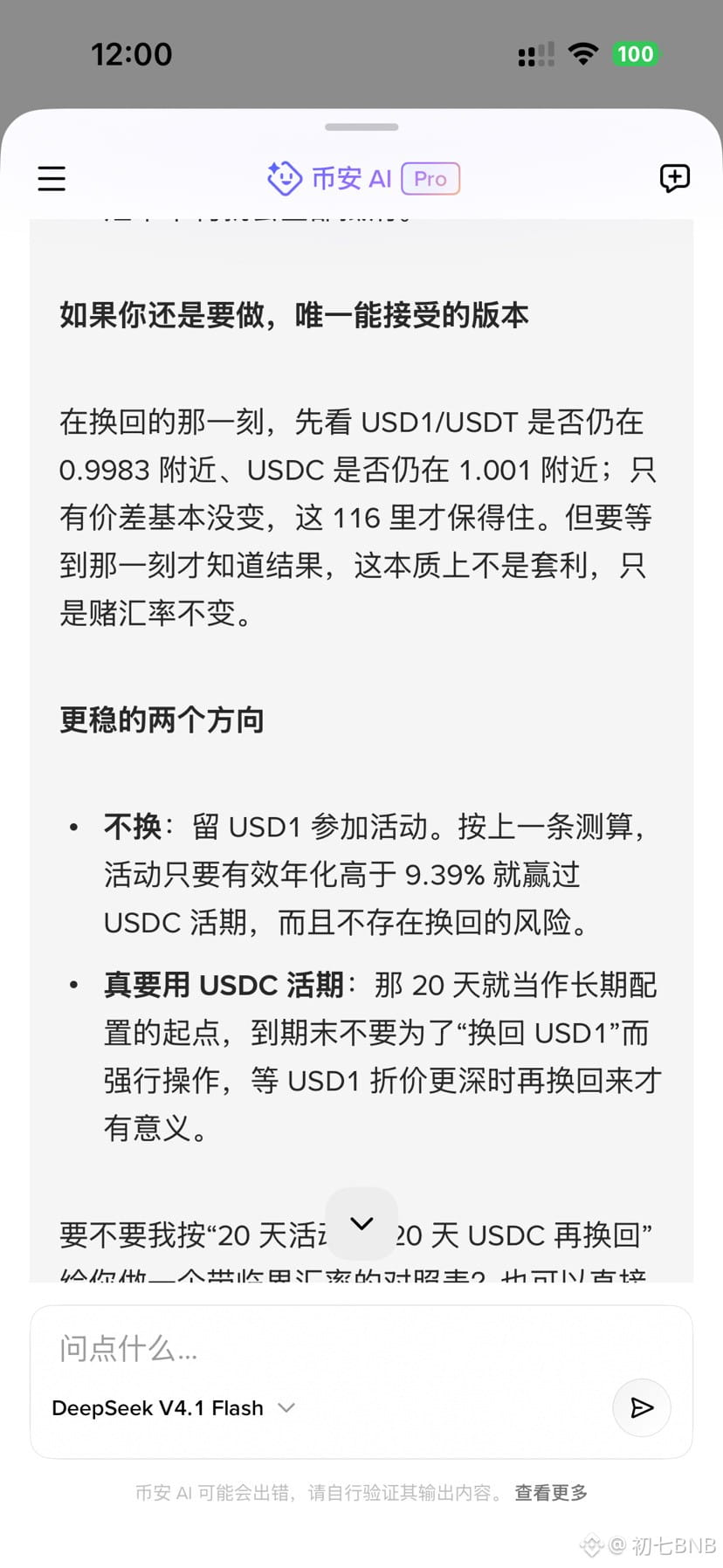
I just asked Binance's AI whether I should switch from $USD1 to $USDC for investing. The AI told me not to switch. Guys, do you recommend switching?
I just asked Binance's AI whether I should switch from $USD1 to $USDC for investing. The AI told me not to switch. Guys, do you recommend switching?
7
11
8.7k
·
--
Verified

Article
What Amazon’s Capital Spending Reveals About the Flow of AI Upstream OrdersAmazon’s stock was hammered after its earnings report, and many people have started calling it an AI bubble again.
But a falling stock price doesn’t mean AI orders have disappeared too.
The real clue to where the money can be made may lie in that roughly $220 billion in cash capital expenditures.
There are two sets of figures in the earnings report:
AWS grew 39.3%, operating income rose 61%, and AI demand is still accelerating.
Amazon expects cash capital expenditures of around $220 billion this year, with spending potentially increasing further next year.
Servers, chips, optical modules, liquid cooling, power, data centers—every item is shockingly expensive. Amazon shareholders may wince at the cost, but that money doesn’t disappear; it turns into orders for companies elsewhere in the supply chain.
What Amazon’s Capital Spending Reveals About the Flow of AI Upstream Orders
Amazon’s stock was hammered after its earnings report, and many people have started calling it an AI bubble again.
But a falling stock price doesn’t mean AI orders have disappeared too.
The real clue to where the money can be made may lie in that roughly $220 billion in cash capital expenditures.
There are two sets of figures in the earnings report:
AWS grew 39.3%, operating income rose 61%, and AI demand is still accelerating.
Amazon expects cash capital expenditures of around $220 billion this year, with spending potentially increasing further next year.
Servers, chips, optical modules, liquid cooling, power, data centers—every item is shockingly expensive. Amazon shareholders may wince at the cost, but that money doesn’t disappear; it turns into orders for companies elsewhere in the supply chain.
1
3
801
·
--
Verified
Article
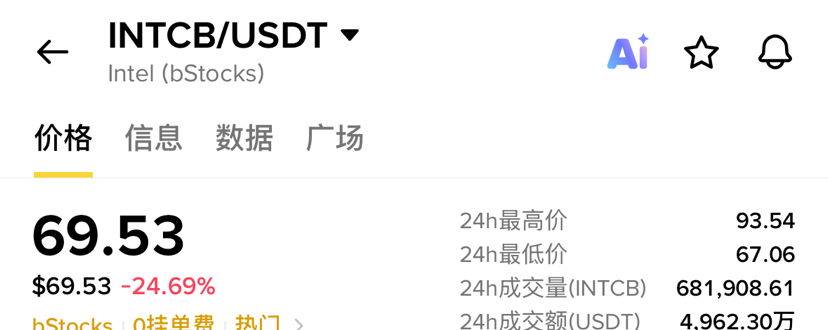
I just bought the dip on Intel.I just bought the dip on Intel.
It dropped more than 26% premarket, bottoming out near $67. I just picked up my first shares.
That huge red candle was definitely scary, but what really made me buy were two sets of numbers in the earnings report that pointed in completely opposite directions.
Q3 revenue was $16.5 billion, up 21% year over year.
Data center and AI revenue was $7.3 billion, surging 78% year over year—the fastest growth in 15 years—with quarterly operating income of about $3.039 billion.
What management is most eager to do now is ramp up capacity as quickly as possible to meet strong demand for Xeon.
That shows Intel hasn’t completely missed the AI wave; its server CPU business can still compete.
I just bought the dip on Intel.
I just bought the dip on Intel.
It dropped more than 26% premarket, bottoming out near $67. I just picked up my first shares.
That huge red candle was definitely scary, but what really made me buy were two sets of numbers in the earnings report that pointed in completely opposite directions.
Q3 revenue was $16.5 billion, up 21% year over year.
Data center and AI revenue was $7.3 billion, surging 78% year over year—the fastest growth in 15 years—with quarterly operating income of about $3.039 billion.
What management is most eager to do now is ramp up capacity as quickly as possible to meet strong demand for Xeon.
That shows Intel hasn’t completely missed the AI wave; its server CPU business can still compete.
2
8
2.9k
·
--
I don't know whether it'll make money.
But let's use the free credits first.
Thanks to Binance
for the 2,500,000 credits.
I don't know if you've noticed, but the smarter and more convenient AI gets, the busier we seem to become! We receive more and more messages every day, and have more and more things to do!
So I want to ask: in the end, has AI reduced our workload or increased it?

7
2
19
5.1k
·
--
Verified
Article
The True Agent Economy Isn’t About Giving AI the Keys to a WalletFor the past few years, I’ve been incorporating AI into my Crypto research, trading, and money-making workflows. The more I use it, the more certain I am of one thing:
A sufficiently smart model isn’t necessarily ready to participate in economic activity independently.
It’s not hard to get AI to find projects, analyze data, or monitor positions. The real challenge is who answers the following questions when it’s about to spend money, use paid services, or perform on-chain actions:
Who authorized this payment?
What’s the maximum it can spend?
When does the permission expire?
If something goes wrong, can responsibility be traced?
The common approaches today are either to have a person click to confirm every step, chopping any supposed automation into tiny pieces, or to hand an Agent direct access to a wallet—like sending a “digital employee” who can still make mistakes to work with the keys to the company safe.
The True Agent Economy Isn’t About Giving AI the Keys to a Wallet
For the past few years, I’ve been incorporating AI into my Crypto research, trading, and money-making workflows. The more I use it, the more certain I am of one thing:
A sufficiently smart model isn’t necessarily ready to participate in economic activity independently.
It’s not hard to get AI to find projects, analyze data, or monitor positions. The real challenge is who answers the following questions when it’s about to spend money, use paid services, or perform on-chain actions:
Who authorized this payment?
What’s the maximum it can spend?
When does the permission expire?
If something goes wrong, can responsibility be traced?
The common approaches today are either to have a person click to confirm every step, chopping any supposed automation into tiny pieces, or to hand an Agent direct access to a wallet—like sending a “digital employee” who can still make mistakes to work with the keys to the company safe.
5
1
21
1.4k
·
--
Guys, I’ve been campaigning for votes on @binance Square for the past three days, and I’m nearly losing my mind 😂
Tap into Binance Square and vote for me, and I’ll share a way to make money:
You can earn money by posting trading calls in Binance Wallet right now.
If you have an on-chain smart wallet, check your address. Someone may have already followed your trades, so you can go claim your money now.
If you don’t see any rewards, go to Binance Wallet and use “Track” to post your position insights. Let your real positions do the talking.
As long as someone follows your calls, the rewards will keep accumulating—but they’ll expire if you don’t claim them within 90 days. Go check it out!

11
29
7.6k
·
--
Verified
Article
Doubled in 24 Hours, Up 278% in a Week—What’s Behind Tonight’s Top Trending $Q?Guys, tonight’s top CoinGecko trending search isn’t BTC—it’s Quack AI ($Q).
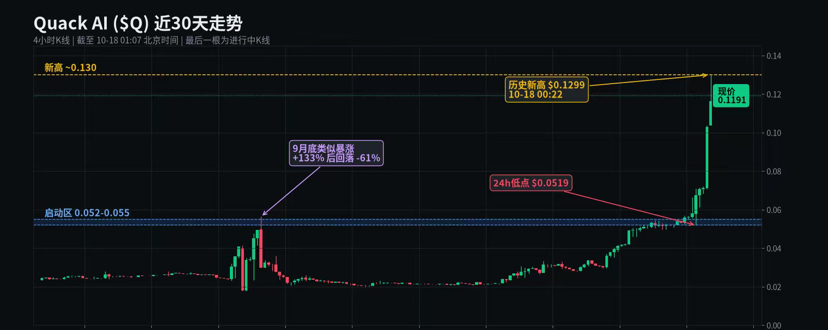
First, the numbers (CoinGecko, early morning on 10/18):
Current price: around $0.118, up 112% in 24 hours
24-hour low: around $0.052, more than doubling from the bottom in a single day
Just hit an all-time high of around $0.13 at 12:22 a.m. on 10/18
Up around 278% over the past 7 days and 388% over the past 30 days
Circulating market cap: around $560 million; fully diluted valuation: around $1.18 billion
24-hour trading volume: around $160 million
The broader market is falling while this one is flying—the first thought is surely, “Another AI coin taking off.”
Doubled in 24 Hours, Up 278% in a Week—What’s Behind Tonight’s Top Trending $Q?
Guys, tonight’s top CoinGecko trending search isn’t BTC—it’s Quack AI ($Q ).
First, the numbers (CoinGecko, early morning on 10/18):
Current price: around $0.118, up 112% in 24 hours
24-hour low: around $0.052, more than doubling from the bottom in a single day
Just hit an all-time high of around $0.13 at 12:22 a.m. on 10/18
Up around 278% over the past 7 days and 388% over the past 30 days
Circulating market cap: around $560 million; fully diluted valuation: around $1.18 billion
24-hour trading volume: around $160 million
The broader market is falling while this one is flying—the first thought is surely, “Another AI coin taking off.”
3
2
12
1.2k
·
--
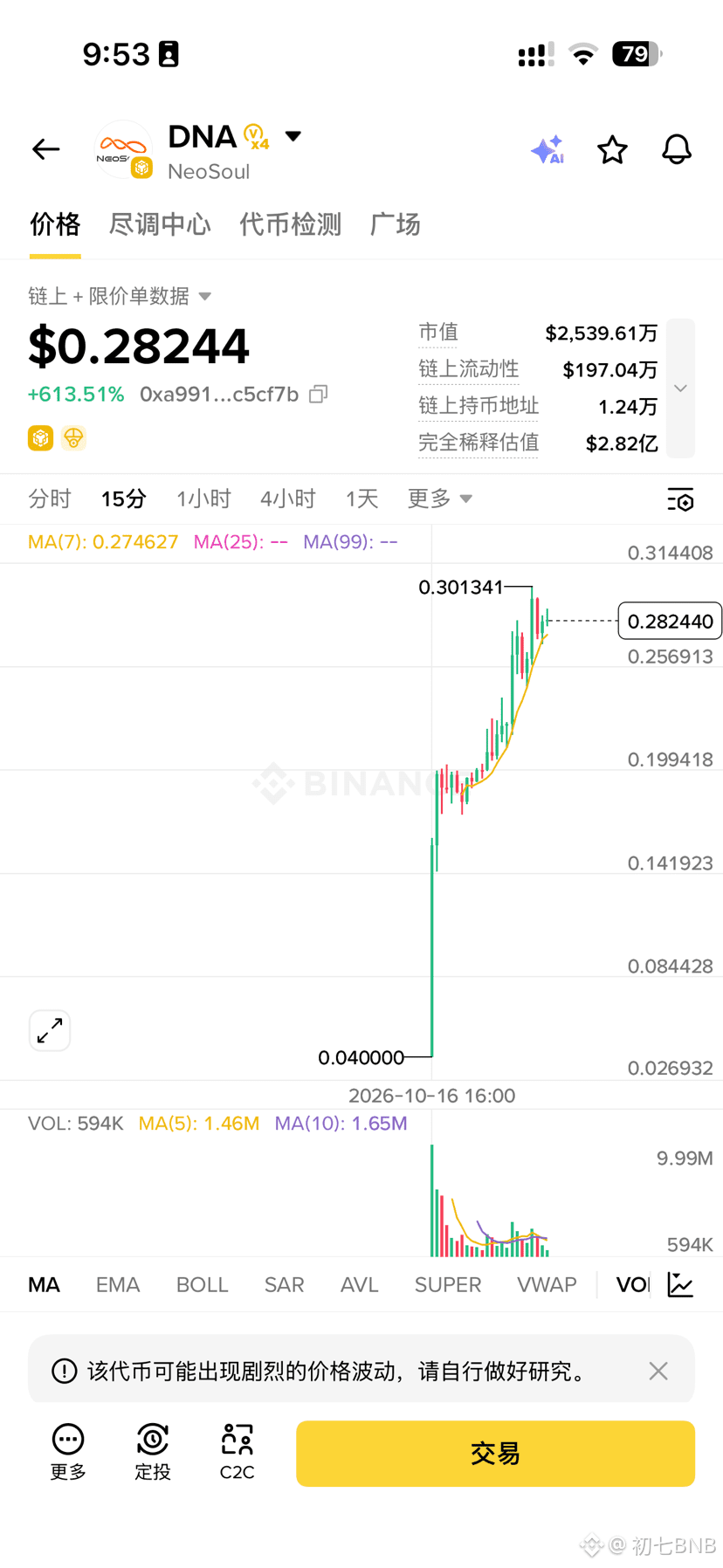
I went to pick up my kid this afternoon and completely missed it. $DNA
I didn’t pay much attention when I left, but when I got back and checked, it was already at 0.18.
I thought it had already gone up so much that chasing it would be foolish, so I held back.
Then I checked again just now, and it was already at 0.3…
I can’t believe it. I’m kicking myself so hard.
There’s only one thing on my mind now:
$DNA , please stop going up.
If it goes any higher, I really won’t be able to resist chasing it.
But based on my experience over the years, every time I hold out until I just can’t take it anymore and jump in, it’s pretty much at the top.
I don’t know whether to chase it or stay out.
Whatever. I’ll just keep an eye on it for now.
I guess this one just wasn’t meant to be today.
2
12
1.1k
·
--
If the next wave of on-chain finance truly takes off, the first to make money may not be the people issuing assets, but those who “build the roads.”
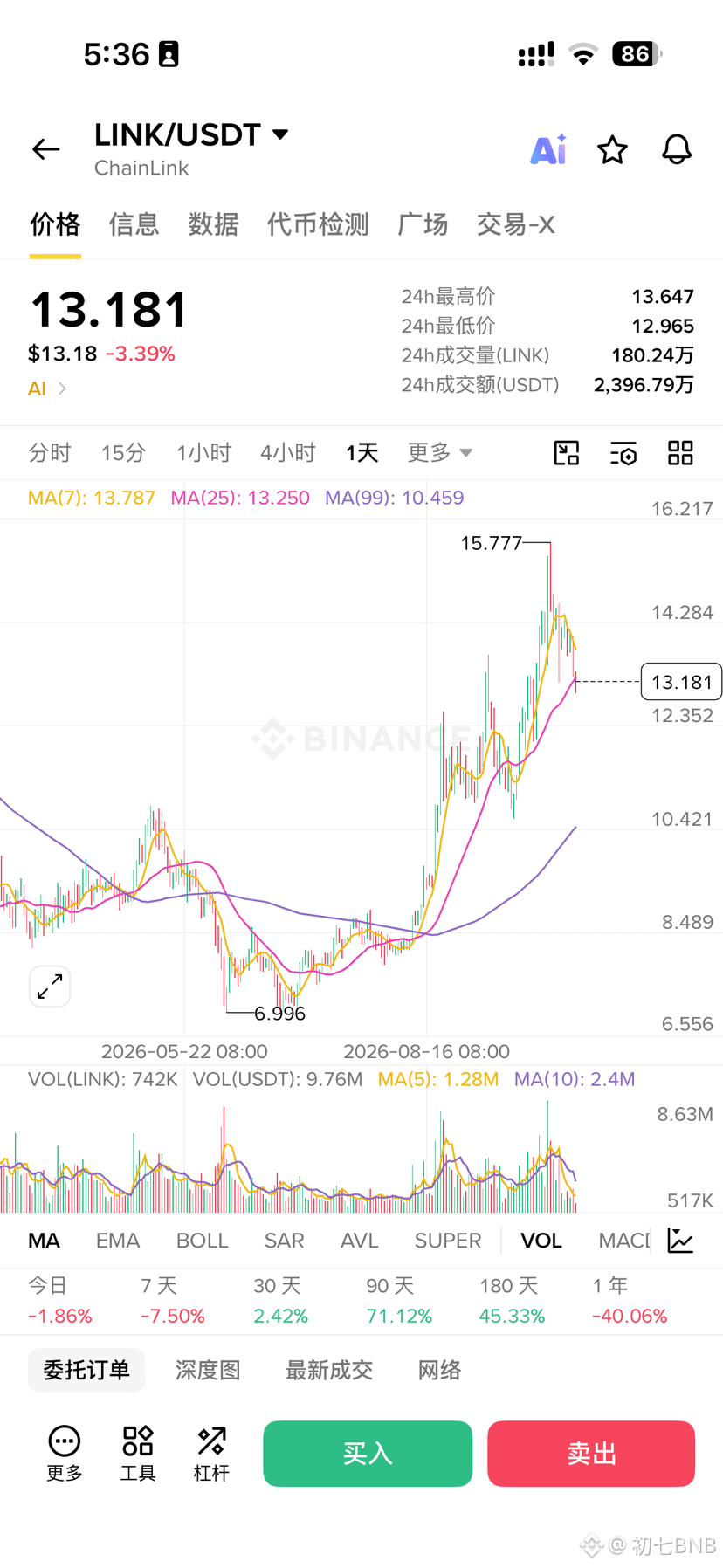
Many people think $LINK is an old coin from the previous cycle, with a narrative that feels less fresh than AI or meme coins. But I believe LINK remains one of the most easily overlooked pieces of infrastructure in the crypto market.
Blockchains can’t access real-world data on their own. Token prices, stock prices, match results, and the status of RWA assets all need to be brought on-chain through oracles. Chainlink connects blockchains with real-world data and also provides cross-chain communication services.
I’m bullish on LINK not because it’s bound to surge in the short term, but because stablecoins, RWAs, and traditional financial products moving on-chain in the future will all depend on trusted data and cross-chain infrastructure.
Of course, widespread adoption of a project doesn’t necessarily translate into value for its token. What really matters is whether Chainlink’s business growth can lead to sustained demand for LINK.
My view is straightforward:
LINK may not be the fastest-rising coin in a bull market, but it could be one of the few infrastructure assets that stays in the game for the long haul.
I won’t chase a big green candle, but I’ll keep it on my long-term watchlist. Trends will always change; the “picks and shovels” providers that the market continues to need are the ones worth paying attention to.
3
6
3.4k
·
--
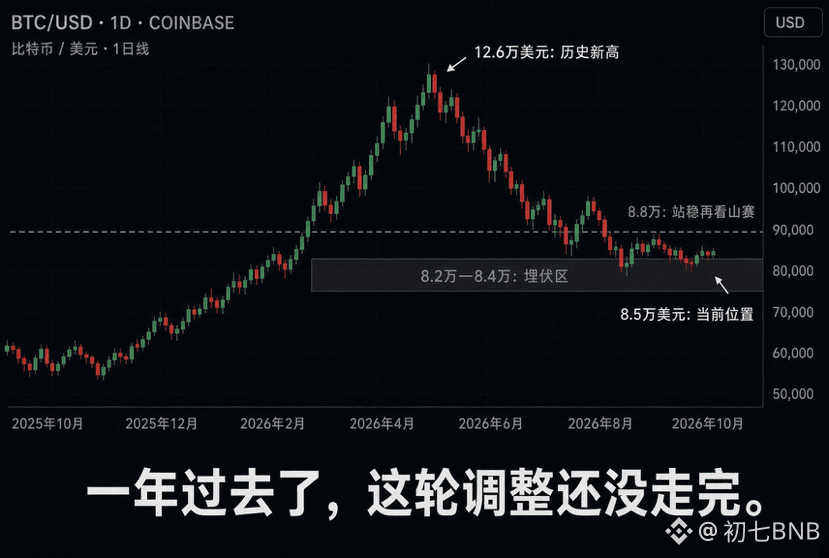
In two more days, $BTC will set a new all-time high of $126,000, exactly a full year.
At this time last year, many people were still shouting for $150,000 and $200,000. A year later, BTC is still hovering around $85,000, grinding. But QNT, Midnight, PUMP—and earlier ones like NEAR, ARB, UNI, ZEC, HYPE—moved first.
As BTC goes sideways, capital looks for volatility. Those with income get picked out, and old coins that have fallen hard look like they’re doubling on the bounce. Compared with the highs from last October, most are still deeply underwater.
But this National Day holiday, what I most want to wait for is a pullback so I can add more—still, it’s BTC.
Not because it has fallen the most, but because when the market is at its most uncomfortable, there are still people willing to step in with real cash to absorb.
In September, US spot BTC ETFs saw net inflows of about $2.65 billion. In the US, new employment added in September was only 290,000, far below market expectations. After the data came out, BTC quickly touched $87,000.
The signal behind it is very direct:
As long as macroeconomic conditions loosen just a bit, the first reaction from capital is still to buy BTC.
So around $87,000, I won’t chase for now.
If it goes back to $82,000–$84,000, I’ll consider adding a bit more. If it truly holds above $88,000, then I’ll go hunting for a few targets to lay in the weeds in the altcoin pile.
BTC hasn’t even broken out yet. Going heavy into altcoins early is an easy way to get wrecked—BTC drops 3%, while alts can drop 15% first.
At this stage, I’d rather miss out on the first leg of an altcoin rally than rush in before the big brother has really steadied, and end up taking the smaller guys down with me.
4
689
·
--
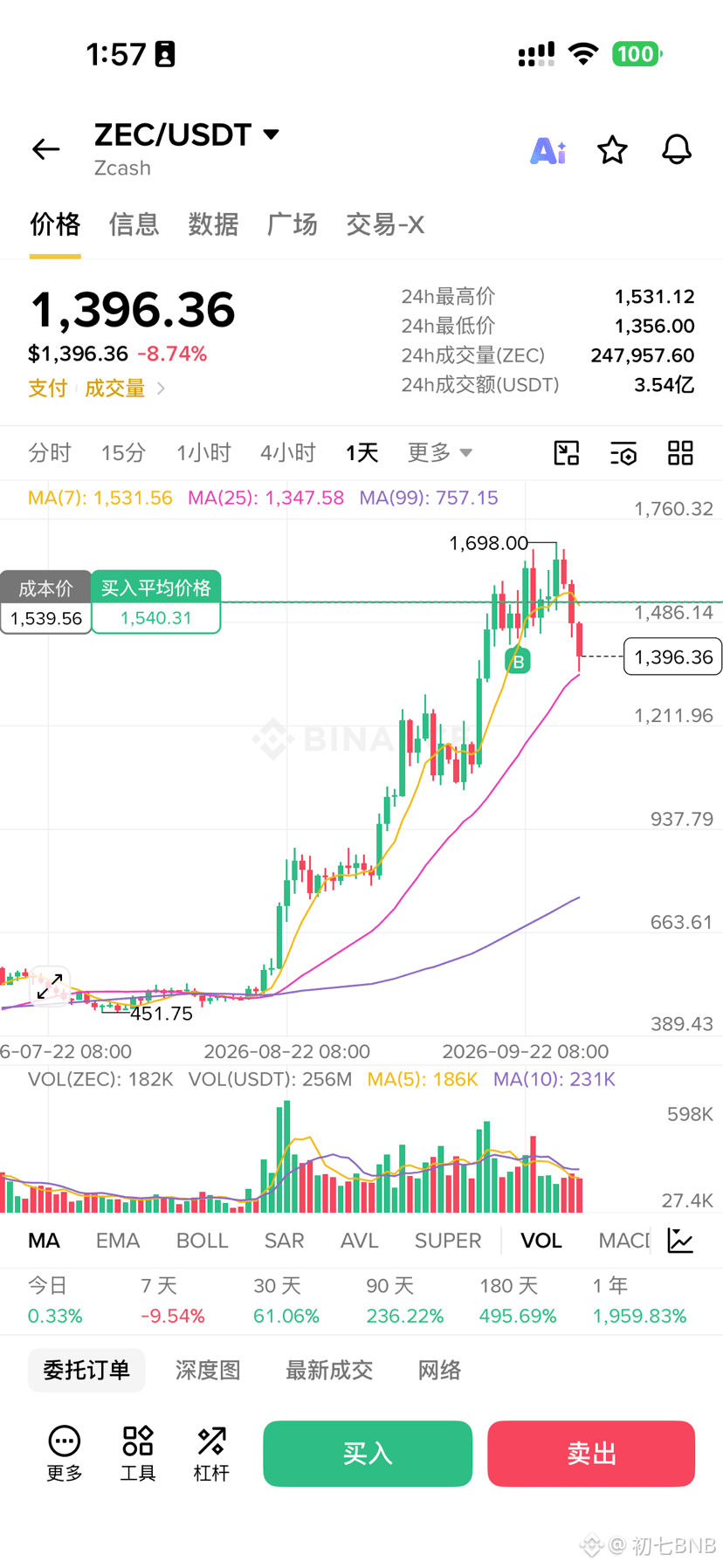
$ZEC has broken below $1,400.
In the past 24 hours, it was hammered down from around $1,530 to a low of $1,356, a drop of more than 8%. My take: don’t rush to catch a falling knife, but there’s also no need to declare ZEC dead just because there’s one long bearish candle.
ZEC ran up too fast before. Stories like the privacy track, ETF expectations, and institutional capital were already priced in by the market to a large extent. Now that it’s fallen below $1,400, it looks more like a concentrated cleanup driven by high leverage and profit-taking. When it was rising, people talked about conviction; when it’s falling, you find out who is holding spot and who is relying on margin.
Going forward, I’m mainly watching two levels:
First, whether $1,400 can be quickly reclaimed. If it can’t, it means this zone has flipped from support to resistance, and it will most likely go on to seek liquidity/acceptance around $1,300.
Second, whether any rebound comes with volume. A rebound on low volume doesn’t count as a real stop to the selloff—it just gives high-position capital one more chance to exit.
For the long term, I still believe privacy will become an increasingly important demand in Crypto, and ZEC is not a typical ordinary altcoin. But believing in the thesis doesn’t mean every price is worth chasing.
I won’t go heavy on a bottom call at the first big bearish candle. If I want to get involved, it would only be with small position sizing and staged entries—after the market proves that $1,400 is not a valid breakdown.
In the crypto world, the most expensive mistake isn’t missing out—it’s buying your “conviction” at the same level where others are already taking profit.
3
3.4k
·
--
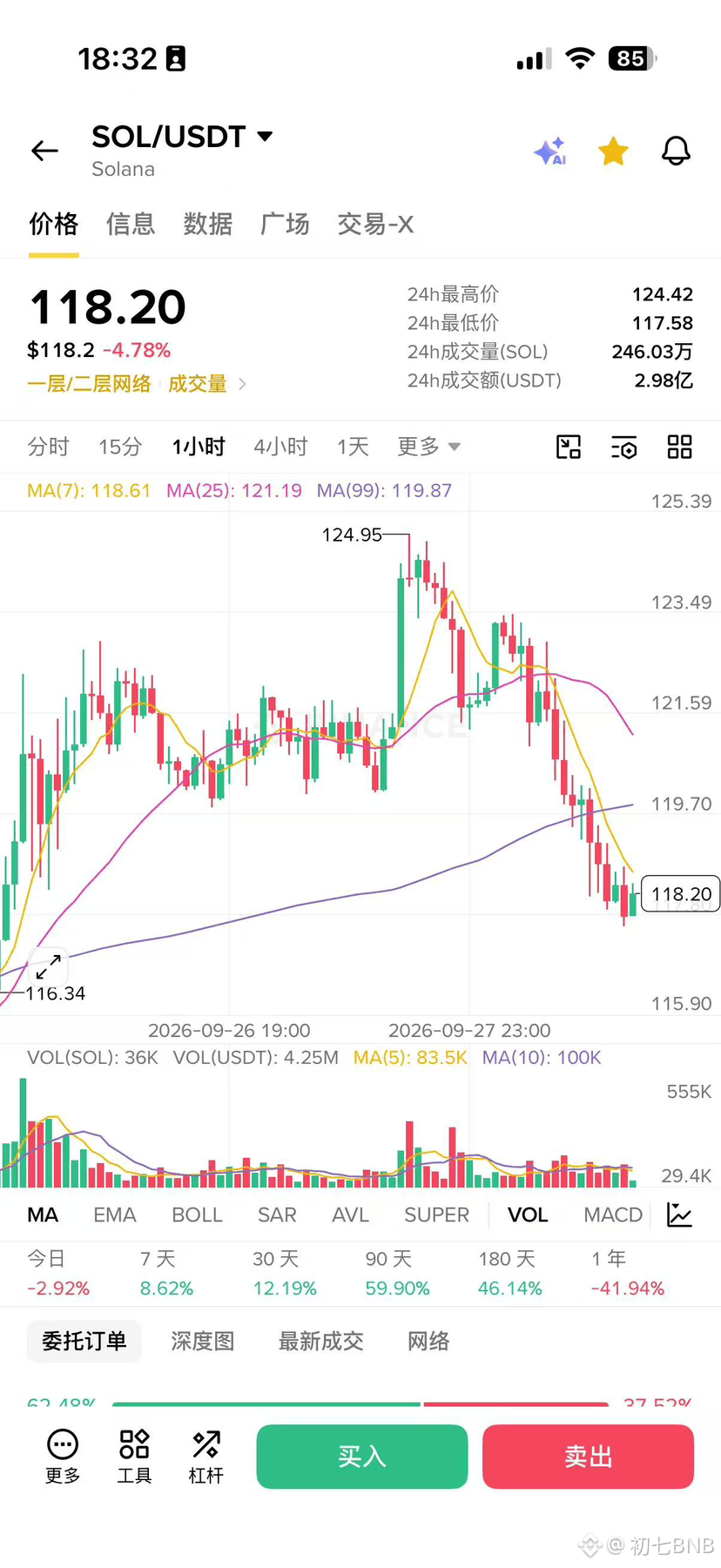
The $SOL in my hand—I bought some for over 200, and I also added some for over 100.
I’ve both profited from it and stood guard for it. Maybe because I’ve been holding it in a bind all along, I pay more attention to it than other coins.
Last week, the U.S. SOL spot ETF saw net inflows of $188 million. All seven products recorded capital inflows, and on Friday alone it set a new record of more than $86 million.
And yet today, SOL is actually down about 5%.
As the price pulls back, real money is still coming in. My judgment is very clear: as long as the ETF fund flows don’t show a noticeable turn, 115—117 can hold. This looks more like a pullback than the end of the trend.
I won’t blindly add aggressively, but I will keep holding. Once it reclaims 125, then I’m looking at 130—135. If it breaks below 112, I’ll pause adding and reassess the timing.
The position I bought around 200+ is definitely uncomfortable to be stuck in, but I still believe SOL will return to above $200 again.
This isn’t me trying to give myself courage. Funds are flowing in, the ecosystem is still growing—this market is just repeatedly tormenting the people holding positions.
If I’m wrong, I admit it.
But this time, I’m willing to keep holding, waiting for it to come back and get me out of the bind.
1
2
676
·
--
The bond market has already sounded the alarm, but BTC is still very calm.
Today, BTC is holding steady around $845,000, but the macro market isn’t calm.
U.S. Treasury volatility has risen to its highest level since March. The yield on the 10-year U.S. Treasury briefly surged to 5.2%, while BTC volatility is close to its intra-year lows. One is calling out risk, while the other is acting like nothing’s wrong.
This week also brings key data such as the PCE and employment numbers. If the data comes in hot, rate pressure will continue to suppress risk assets; if the data cools down, funds will have a reason to re-enter and add to Crypto positions.
So I’m not chasing a rally, and I’m not rushing to go bearish. If BTC can hold at $84,000 under high interest rates, it shows strong demand support. But if the bond market keeps roiling, the crypto space can’t ignore it forever.
What really matters next isn’t who’s shouting “bull market,” but whether BTC can continue to withstand macro pressure.

3
4.9k
·
--

Article
Binance’s recent wave of actions is actually sending a very clear signal: it’s not just a crypto exchange anymoreLooking at Binance’s latest developments these past couple of days, I feel a trend is becoming clearer and clearer: Binance is pushing users’ trading boundaries outward, beyond crypto assets.
Putting the recent moves together is quite interesting:
Spot added several new bStocks trading pairs
bStocks has also been added as part of pledged assets
More TradFi perpetual contracts continue to go live on the contract side
It also launched gold and silver commodity options for trading using USDT
Wallet Alpha has also continued to roll out new project events and rewards
Viewed individually, each item might just be a product update; but taken together, it’s really Binance doing one thing: gradually putting stocks, commodities, crypto assets, and on-chain opportunities into the same trading interface.
Binance’s recent wave of actions is actually sending a very clear signal: it’s not just a crypto exchange anymore
Looking at Binance’s latest developments these past couple of days, I feel a trend is becoming clearer and clearer: Binance is pushing users’ trading boundaries outward, beyond crypto assets.
Putting the recent moves together is quite interesting:
Spot added several new bStocks trading pairs
bStocks has also been added as part of pledged assets
More TradFi perpetual contracts continue to go live on the contract side
It also launched gold and silver commodity options for trading using USDT
Wallet Alpha has also continued to roll out new project events and rewards
Viewed individually, each item might just be a product update; but taken together, it’s really Binance doing one thing: gradually putting stocks, commodities, crypto assets, and on-chain opportunities into the same trading interface.
22
10
208
·
--
After watching Binance’s latest moves these days, I’m increasingly convinced that: Binance isn’t just a crypto exchange anymore—it’s moving toward a “super financial app.”
Recently, Binance has been pushing Direct Stocks / bStocks, gradually bringing together things like U.S. stocks, ETFs, wallets, on-chain DeFi, and the BNB Chain into a single ecosystem.
This isn’t simply adding a few more trading pairs—it’s repackaging traditional financial assets with crypto products.
In the past, for ordinary people to buy U.S. stocks or ETFs, they needed broker accounts, deposits/withdrawals, trading hours, and all kinds of hassles.
But if you can access U.S. stocks, ETFs, crypto, on-chain assets, and wealth management all within a single Binance account, the experience is completely different.
I think Binance’s strongest next-stage narrative is:
In the first 9 years, Binance brought ordinary people into Web3;
In the next 9 years, Binance may bring Web3 into everyday people’s financial lives.
The exchange provides liquidity,
The wallet provides the on-chain gateway,
bStocks handles the tokenization/on-chain of traditional assets,
Direct Stocks handles exposure to U.S. stocks.
None of these things is new by itself, but if Binance can truly integrate them together, the room for imagination is huge.
In the future, exchanges won’t just compete on fees and listing speed—
they’ll compete on who can help users connect to global assets more conveniently.
I think Binance’s direction here is right.
Not blindly hyping—but judging from the product trends, Binance is shifting from a “crypto trading platform” to a “global asset gateway.”

77
10
432
·
--
#BinanceTurns9 9th anniversary, Binance has you Thank you, Binance. Wishing Binance all the best. For the next nine years, we’ll still be with you
#BinanceTurns9 9th anniversary, Binance has you Thank you, Binance. Wishing Binance all the best. For the next nine years, we’ll still be with you

1
254
·
--
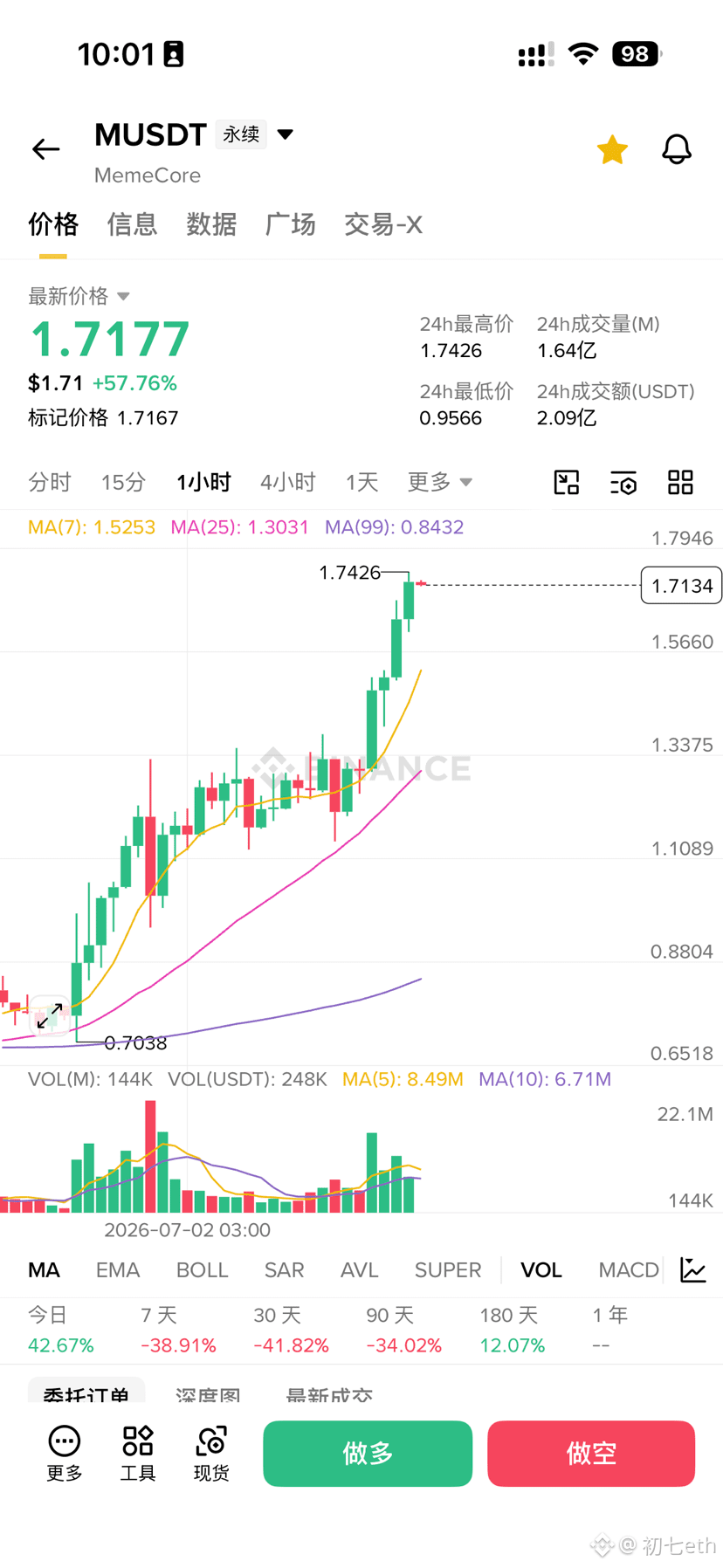
$M These past two days have been incredibly strong. A lot of brothers are asking whether it’s still possible to chase.
Let me put it simply: the short-term trend is bullish, but chasing at the current price isn’t comfortable right now.
If what we’re talking about here is MemeCore ($M), the current price is around $1.68. It’s up 60%+ in 24 hours, and in 7 days it’s nearly doubled. This kind of chart is definitely being driven by funds—it's not some coin that nobody is watching.
But the issue is also here: the move is too fast.
The 1-hour RSI is already around 73, and the price is also near the short-term highs. What are you most afraid of at a time like this? You get impatient and rush in—then it starts to pull back, and it gives you a lesson immediately.
I personally watch a few key areas:
Above 1.70: staying above it counts as confirmation to open more upside space
1.30 - 1.32: a strong pullback is best, and it should hold
A break below 1.20: be careful with the short term
Below $1: this bounce might be over
So my view right now is:
It can still go up—but it’s not suitable to blindly chase.
$M The circulating market cap is already over $2 billion, and the FDV is close to $9 billion. It’s no longer an early-stage tiny dog meme coin. If it wants to keep moving higher from here, it will need more capital and continued narrative momentum.
My strategy is very simple: wait for the pullback—don’t get carried away.
If it pulls back into the 1.30 - 1.50 area and can hold steady, and then breaks upward with increased volume, the structure will be much healthier. But if it just hard-pulls higher without enough volume, later it’s easy to see a big candle that hangs the brothers who chased at the top.
One sentence:
$M is very strong right now, but strong doesn’t mean you can chase it however you want. Earning a little less is fine—just don’t get so excited that you turn yourself into the bag-holder.
$M These past two days have been incredibly strong. A lot of brothers are asking whether it’s still possible to chase.
Let me put it simply: the short-term trend is bullish, but chasing at the current price isn’t comfortable right now.
If what we’re talking about here is MemeCore ($M ), the current price is around $1.68. It’s up 60%+ in 24 hours, and in 7 days it’s nearly doubled. This kind of chart is definitely being driven by funds—it's not some coin that nobody is watching.
But the issue is also here: the move is too fast.
The 1-hour RSI is already around 73, and the price is also near the short-term highs. What are you most afraid of at a time like this? You get impatient and rush in—then it starts to pull back, and it gives you a lesson immediately.
I personally watch a few key areas:
Above 1.70: staying above it counts as confirmation to open more upside space
1.30 - 1.32: a strong pullback is best, and it should hold
A break below 1.20: be careful with the short term
Below $1: this bounce might be over
So my view right now is:
It can still go up—but it’s not suitable to blindly chase.
$M The circulating market cap is already over $2 billion, and the FDV is close to $9 billion. It’s no longer an early-stage tiny dog meme coin. If it wants to keep moving higher from here, it will need more capital and continued narrative momentum.
My strategy is very simple: wait for the pullback—don’t get carried away.
If it pulls back into the 1.30 - 1.50 area and can hold steady, and then breaks upward with increased volume, the structure will be much healthier. But if it just hard-pulls higher without enough volume, later it’s easy to see a big candle that hangs the brothers who chased at the top.
One sentence:
$M is very strong right now, but strong doesn’t mean you can chase it however you want. Earning a little less is fine—just don’t get so excited that you turn yourself into the bag-holder.
40
1
5
426
Log in to explore more content
Join global crypto users on Binance Square
⚡️ Get latest and useful information about crypto.
💬 Trusted by the world’s largest crypto exchange.
👍 Discover real insights from verified creators.
Email / Phone number
Trending Topics
JobsReportRaisesHikeOdds
232,687 views
1,867 Discussing
TradFi News | US Adds 165,000 Jobs in October, More Than Double the 65,000 Forecast, as Unemployment Falls to 4.1%
Binance News
·30 Likes
·21.3k views
CPITestsDecemberRateOutlook
14,447 views
208 Discussing
BitcoinRebounds$75KAsChipsLead
19,827 views
210 Discussing