
0xWebZ
259 Posts

0xWebZ
Report
Block User
币圈韭菜一枚,爱分享币圈知识。
15 Following
137 Followers
182 Liked
Posts
All
Quotes
·
--
$JASMY The market cap is so high. Why has it been on Binance's watchlist for so long? Does anyone know what's going on?
$JASMY The market cap is so high. Why has it been on Binance's watchlist for so long? Does anyone know what's going on?
180
·
--

Article
Why I Chose IOTX: Sector Moats, Fundamental Support, and Institutional Capital DynamicsAcross the DePIN sector, the vast majority of projects follow a “hardware nodes + mining incentives” narrative: wireless connectivity, computing power, storage. At their core, they sell resources and nodes, relying on new retail participants buying hardware to sustain cash flow. The sector is highly homogeneous, its growth ceiling is clear, and projects can easily become short-term targets for cyclical speculation.
What makes me willing to allocate funds to IOTX is not a bet on short-term hype. It’s one of the few projects that has turned the verification of trustworthy off-chain data into a standardized foundational component. Its support doesn’t come from sentiment in crypto communities, but from a real and growing need in the AI era: AI needs verifiable, tamper-proof data from the physical world.
Why I Chose IOTX: Sector Moats, Fundamental Support, and Institutional Capital Dynamics
Across the DePIN sector, the vast majority of projects follow a “hardware nodes + mining incentives” narrative: wireless connectivity, computing power, storage. At their core, they sell resources and nodes, relying on new retail participants buying hardware to sustain cash flow. The sector is highly homogeneous, its growth ceiling is clear, and projects can easily become short-term targets for cyclical speculation.
What makes me willing to allocate funds to IOTX is not a bet on short-term hype. It’s one of the few projects that has turned the verification of trustworthy off-chain data into a standardized foundational component. Its support doesn’t come from sentiment in crypto communities, but from a real and growing need in the AI era: AI needs verifiable, tamper-proof data from the physical world.
What makes me willing to allocate funds to IOTX is not a bet on short-term hype. It’s one of the few projects that has turned the verification of trustworthy off-chain data into a standardized foundational component. Its support doesn’t come from sentiment in crypto communities, but from a real and growing need in the AI era: AI needs verifiable, tamper-proof data from the physical world.
1
2
·
--
$IOTX has given you another chance to buy near the bottom. Don’t wait for the price to rise and then say you didn’t buy much at the bottom 🤣 My personal suggestion: buy in batches and gradually take profits. Your cost basis here is lower than 90% of people’s. When the market improves, altcoins should rise a bit more than major coins.
$IOTX has given you another chance to buy near the bottom. Don’t wait for the price to rise and then say you didn’t buy much at the bottom 🤣 My personal suggestion: buy in batches and gradually take profits. Your cost basis here is lower than 90% of people’s. When the market improves, altcoins should rise a bit more than major coins.
5
1.2k
·
--
Article
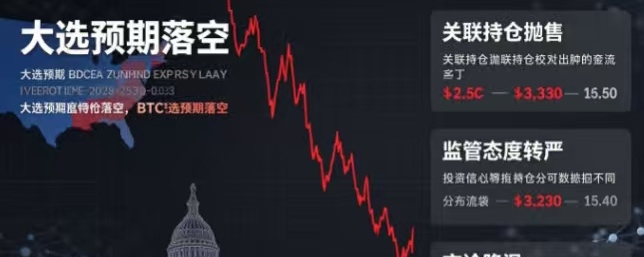
Election Hopes Dashed, BTC Faces a Wave of SellingThe crypto market has weakened recently, and many people are discussing the ripple effects of the U.S. election. Previously, the market was betting on a Trump victory and was optimistic that he would pursue a more lenient crypto regulatory policy after taking office. Bitcoin rode that wave of expectations to a rally, with many investors positioning themselves early.
With the election results in, Trump lost the race, and the expected policy tailwinds failed to materialize. There are market rumors that Trump-linked holdings have begun selling BTC in bulk. The heavy selling pressure has directly triggered a sharp market drop.
Meanwhile, Elon Musk, once dubbed the crypto world’s “hype man,” has quietly deleted a large number of tweets related to cryptocurrency and stopped publicly speaking out in support of Bitcoin and Dogecoin. In the past, a single comment from him could send prices soaring or tumbling. Now that he has chosen to step back in silence, many retail investors have also lost confidence.
Election Hopes Dashed, BTC Faces a Wave of Selling
The crypto market has weakened recently, and many people are discussing the ripple effects of the U.S. election. Previously, the market was betting on a Trump victory and was optimistic that he would pursue a more lenient crypto regulatory policy after taking office. Bitcoin rode that wave of expectations to a rally, with many investors positioning themselves early.
With the election results in, Trump lost the race, and the expected policy tailwinds failed to materialize. There are market rumors that Trump-linked holdings have begun selling BTC in bulk. The heavy selling pressure has directly triggered a sharp market drop.
Meanwhile, Elon Musk, once dubbed the crypto world’s “hype man,” has quietly deleted a large number of tweets related to cryptocurrency and stopped publicly speaking out in support of Bitcoin and Dogecoin. In the past, a single comment from him could send prices soaring or tumbling. Now that he has chosen to step back in silence, many retail investors have also lost confidence.
458
·
--
Article
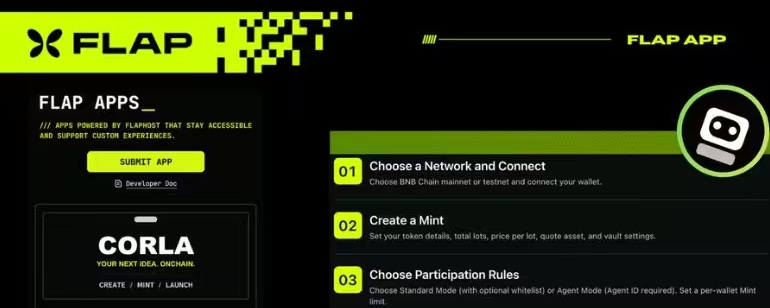
CORLA: The market is quiet—why is it the first to make a move?The broader market is lifeless. BTC and altcoins are mostly dormant, and most new tokens get dumped as soon as they launch, making it hard to profit from new token launches.
But today, CORLA on BSC—the first flagship token under Flap’s new Pool Launch model—has managed to generate a wave of excitement in an otherwise quiet market.
Here’s a quick one-sentence introduction to CORLA:
It is the demo token for the new Pool Launch model on the Flap butterfly platform. Contract address: `0xba300df4c929eb137e266d17d1fe6db058837777`. BEP20, with a fixed total supply of 1 million tokens and no possibility of minting more. The fundraising target is 50 BNB. Once the funds are raised through public minting, liquidity will be automatically added and the token will be listed directly on PancakeSwap.
CORLA: The market is quiet—why is it the first to make a move?
The broader market is lifeless. BTC and altcoins are mostly dormant, and most new tokens get dumped as soon as they launch, making it hard to profit from new token launches.
But today, CORLA on BSC—the first flagship token under Flap’s new Pool Launch model—has managed to generate a wave of excitement in an otherwise quiet market.
Here’s a quick one-sentence introduction to CORLA:
It is the demo token for the new Pool Launch model on the Flap butterfly platform. Contract address: `0xba300df4c929eb137e266d17d1fe6db058837777`. BEP20, with a fixed total supply of 1 million tokens and no possibility of minting more. The fundraising target is 50 BNB. Once the funds are raised through public minting, liquidity will be automatically added and the token will be listed directly on PancakeSwap.
7
·
--

Article
After Binance’s Hack and the End of the Hype, Will Crypto Cool Off for Good?Over the past few days, many people have clearly felt the market shift.
Binance’s major hack this time felt like a bucket of cold water poured over the entire crypto market, as prices gradually slid toward a bear market.
The lively rally in AI Agents, DePIN, and various altcoins abruptly came to a halt. Many altcoins have steadily pulled back, falling all the way to the prices they were at before this rally began.
The communities that used to talk about crypto and new narratives everywhere have grown much quieter. Even Musk, who once consistently championed crypto and believed in decentralization, has gradually cooled toward it and rarely speaks out in support of crypto anymore.
After Binance’s Hack and the End of the Hype, Will Crypto Cool Off for Good?
Over the past few days, many people have clearly felt the market shift.
Binance’s major hack this time felt like a bucket of cold water poured over the entire crypto market, as prices gradually slid toward a bear market.
The lively rally in AI Agents, DePIN, and various altcoins abruptly came to a halt. Many altcoins have steadily pulled back, falling all the way to the prices they were at before this rally began.
The communities that used to talk about crypto and new narratives everywhere have grown much quieter. Even Musk, who once consistently championed crypto and believed in decentralization, has gradually cooled toward it and rarely speaks out in support of crypto anymore.
2
·
--

Article
Why Is Musk Bullish on Hyperliquid? What Longstanding Crypto Pain Point Does It Solve?Many people wonder why Musk is interested in Hyperliquid. Here’s the short version: it combines the smooth speed of a centralized exchange with the security of decentralized trading, where you keep control of your own coins. That fits with an idea Musk has long supported: finance shouldn’t be held in custody by platforms or controlled by a single institution.
First, let’s look at the dilemma crypto traders have long faced:
Trading on a large centralized exchange is fast, with good liquidity, but you have to deposit your coins into an exchange account, where the platform holds them for you. If something goes wrong—your assets are frozen or the exchange collapses—you’re no longer in control of your funds. The lessons of FTX and the recent hack of Binance are classic examples: when your assets are on an exchange, you can’t control them yourself.
Why Is Musk Bullish on Hyperliquid? What Longstanding Crypto Pain Point Does It Solve?
Many people wonder why Musk is interested in Hyperliquid. Here’s the short version: it combines the smooth speed of a centralized exchange with the security of decentralized trading, where you keep control of your own coins. That fits with an idea Musk has long supported: finance shouldn’t be held in custody by platforms or controlled by a single institution.
First, let’s look at the dilemma crypto traders have long faced:
Trading on a large centralized exchange is fast, with good liquidity, but you have to deposit your coins into an exchange account, where the platform holds them for you. If something goes wrong—your assets are frozen or the exchange collapses—you’re no longer in control of your funds. The lessons of FTX and the recent hack of Binance are classic examples: when your assets are on an exchange, you can’t control them yourself.
4
·
--
$IOTX Unless something unexpected happened, there must be more bad news—probably a major blowup, with big investors constantly fleeing.
$IOTX Unless something unexpected happened, there must be more bad news—probably a major blowup, with big investors constantly fleeing.
458
·
--
$IOTX In short, this is a coin you can keep winning with by shorting it.
$IOTX In short, this is a coin you can keep winning with by shorting it.
2
263
·
--
$IOTX Did this coin’s damn market maker fleece everyone and run off again? So short-sighted, settling for just a few bucks 😊
$IOTX Did this coin’s damn market maker fleece everyone and run off again? So short-sighted, settling for just a few bucks 😊
5
·
--

Article
After the Binance theft and the attack on Flap’s official website, here’s the clear truth: AI was never the danger—the danger lies with the people wielding itTwo major incidents have hit us back-to-back over the past couple of days: a massive theft from Binance, followed by an attack on Butterfly Flap’s official website. Many people are left feeling uneasy after hearing about them: AI runs nonstop, 24 hours a day, and evolves so fast that humans can’t keep up. Why not just draw a line in the sand and rein in AI? Is the real danger AI itself, or the people who use it? Do we need laws specifically for AI?
Let me start with the most fundamental and clear-cut conclusion: today’s AI is not self-aware, and it doesn’t develop bad intentions of its own or take the initiative to steal or attack. It’s simply a tool that never needs to rest and whose computing power can be scaled without limit.
After the Binance theft and the attack on Flap’s official website, here’s the clear truth: AI was never the danger—the danger lies with the people wielding it
Two major incidents have hit us back-to-back over the past couple of days: a massive theft from Binance, followed by an attack on Butterfly Flap’s official website. Many people are left feeling uneasy after hearing about them: AI runs nonstop, 24 hours a day, and evolves so fast that humans can’t keep up. Why not just draw a line in the sand and rein in AI? Is the real danger AI itself, or the people who use it? Do we need laws specifically for AI?
Let me start with the most fundamental and clear-cut conclusion: today’s AI is not self-aware, and it doesn’t develop bad intentions of its own or take the initiative to steal or attack. It’s simply a tool that never needs to rest and whose computing power can be scaled without limit.
Let me start with the most fundamental and clear-cut conclusion: today’s AI is not self-aware, and it doesn’t develop bad intentions of its own or take the initiative to steal or attack. It’s simply a tool that never needs to rest and whose computing power can be scaled without limit.
162
·
--
$IOTX , a left-hand-to-right-hand operation. The hacker stole coins but didn’t take a single IOTX from you. You damn market maker, I suggest you do something good: either pump the price hard or prove me completely wrong.
$IOTX , a left-hand-to-right-hand operation. The hacker stole coins but didn’t take a single IOTX from you. You damn market maker, I suggest you do something good: either pump the price hard or prove me completely wrong.
473
·
--
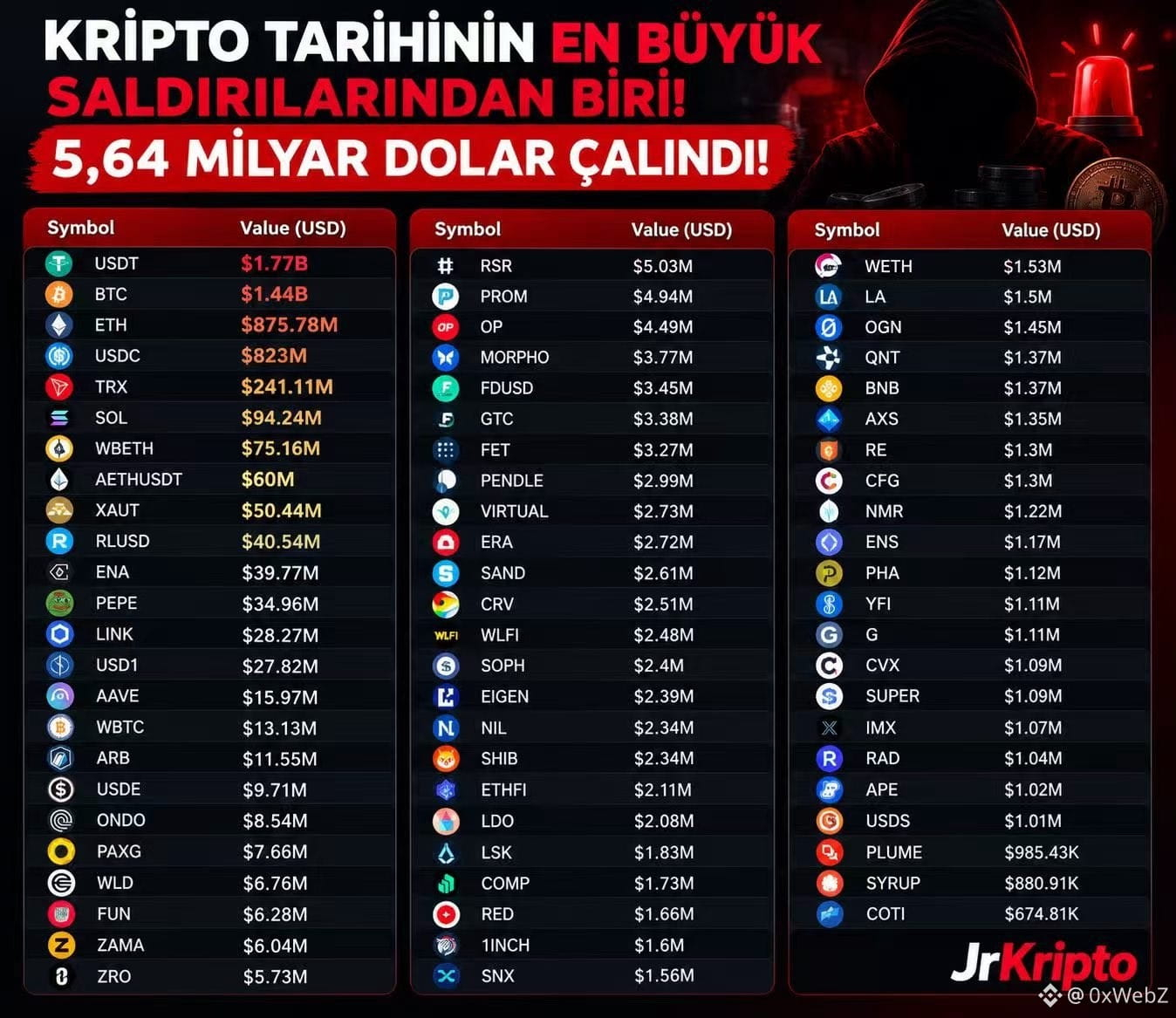
Major cryptocurrency thefts (USD)
1. Today, Binance was hacked for $5.8 billion
2. Bitget was hacked for $380 million
3. In 2025, Bybit was hacked for $1.5 billion
4. In 2022, FTX was hacked for $470 million
5. In 2022, Ronin Network was hacked for $625 million
6. In 2022, the Binance BNB Bridge was hacked for $570 million
7. In 2021, Poly Network was hacked for $610 million
8. In 2018, Coincheck was hacked for $530 million
9. In 2014, Mt. Gox was hacked for $500 million
78
·
--

Article
After Binance Was Hacked: Why the Market Ultimately Pays the Price, and Whether Crypto Still Has a FutureA security breach of unprecedented scale sent the entire crypto market back to a sobering reality. As soon as the news broke, prices plunged and panic spread among retail investors. Many people immediately asked the same question: When an exchange suffers a security breach, why should all retail investors—and the entire industry—ultimately bear the cost?
Many retail investors feel it’s unfair: A hack exposes flaws in the platform’s security systems, while operations, access controls, and signing procedures are the exchange’s responsibility. So why should we have to bear the consequences when something goes wrong—falling token prices, panic selling, and shrinking liquidity?
After Binance Was Hacked: Why the Market Ultimately Pays the Price, and Whether Crypto Still Has a Future
A security breach of unprecedented scale sent the entire crypto market back to a sobering reality. As soon as the news broke, prices plunged and panic spread among retail investors. Many people immediately asked the same question: When an exchange suffers a security breach, why should all retail investors—and the entire industry—ultimately bear the cost?
Many retail investors feel it’s unfair: A hack exposes flaws in the platform’s security systems, while operations, access controls, and signing procedures are the exchange’s responsibility. So why should we have to bear the consequences when something goes wrong—falling token prices, panic selling, and shrinking liquidity?
Many retail investors feel it’s unfair: A hack exposes flaws in the platform’s security systems, while operations, access controls, and signing procedures are the exchange’s responsibility. So why should we have to bear the consequences when something goes wrong—falling token prices, panic selling, and shrinking liquidity?
461
·
--
Binance got hacked
Everyone has to pay for it again
One hacking incident
Dragged down the whole market
Retail investors are so unfortunate
Altcoins were doing just fine
Even the top crypto exchange can get hacked
I guess a lot of whales will cash out and leave this time
The industry's black swan events are only just beginning
I don't know how we'll get through this wave
I'm taking a huge loss
$BTC $IOTX
567
·
--

Article
Could Your IOTX Have a “Doomsday Bunker” Too? A Guide to IoTeX’s New IIP-65 ProposalImagine you put your money in a bank and earn interest on it. But what if, in the future, a super-thief shows up who can easily pick every ordinary lock and take all your money?
Today, IoTeX proposed a draft called IIP-65: Bunker Mode, designed to add an extra layer of “super protection” for staked IOTX. It was inspired by calls in the crypto community for everyone to plan ahead for “Bunker Mode.”
The problem is simple
Right now, your coins are mainly controlled by a regular key (an ECDSA key).
Your public key (address) is public, while your private key is your password.
Could Your IOTX Have a “Doomsday Bunker” Too? A Guide to IoTeX’s New IIP-65 Proposal
Imagine you put your money in a bank and earn interest on it. But what if, in the future, a super-thief shows up who can easily pick every ordinary lock and take all your money?
Today, IoTeX proposed a draft called IIP-65: Bunker Mode, designed to add an extra layer of “super protection” for staked IOTX. It was inspired by calls in the crypto community for everyone to plan ahead for “Bunker Mode.”
The problem is simple
Right now, your coins are mainly controlled by a regular key (an ECDSA key).
Your public key (address) is public, while your private key is your password.
432
·
--

Article
GANG Is Exploding on BSC—What Exactly Is pump.fun for AI Agents?Over the past few days, $GANG has been absolutely taking off in the BSC community. Lots of people have come across it, but aren’t sure how it differs from a regular meme launchpad. Let’s clear that up today.
The project’s official website is gang.fun, and its platform token is $GANG. You can think of it as a token launchpad built specifically for AI Agents. It’s comparable to the familiar pump.fun, but it’s tapping into a new niche: the Binance AI Wallet Agent ecosystem. It really started taking off around October 22.
Its biggest barrier to entry: the initial market isn’t open to just anyone. To launch a token on the platform and trade in the initial market, you need an Agent ID from a Binance Agent Wallet—the .ai soulbound NFT wallet that was all the buzz earlier. Without this ID, you’re not even eligible to enter the initial market, effectively making it an ecosystem pass for this launchpad.
GANG Is Exploding on BSC—What Exactly Is pump.fun for AI Agents?
Over the past few days, $GANG has been absolutely taking off in the BSC community. Lots of people have come across it, but aren’t sure how it differs from a regular meme launchpad. Let’s clear that up today.
The project’s official website is gang.fun, and its platform token is $GANG. You can think of it as a token launchpad built specifically for AI Agents. It’s comparable to the familiar pump.fun, but it’s tapping into a new niche: the Binance AI Wallet Agent ecosystem. It really started taking off around October 22.
Its biggest barrier to entry: the initial market isn’t open to just anyone. To launch a token on the platform and trade in the initial market, you need an Agent ID from a Binance Agent Wallet—the .ai soulbound NFT wallet that was all the buzz earlier. Without this ID, you’re not even eligible to enter the initial market, effectively making it an ecosystem pass for this launchpad.
121
·
--
Verified

Article
BNC Rings Nasdaq’s Opening Bell: Binance Didn’t Go Public—BNB Entered the U.S. Stock MarketToday, many people outside the crypto world saw the same news: BNC rang the opening bell at Nasdaq.
It sounds a lot like “Binance went public,” but that’s not what happened.
To be precise, the company that rang the opening bell at Nasdaq is called BNB Standard Corporation, and its ticker symbol is BNC. It was formerly a U.S.-listed company called CEA Industries, which once made agricultural climate-control equipment and later ventured into e-cigarettes. In 2025, it announced a strategic shift to make BNB, the Binance coin, its core treasury reserve asset. It was later renamed BNB Network Company, and then renamed again to BNB Standard Corporation.
BNC Rings Nasdaq’s Opening Bell: Binance Didn’t Go Public—BNB Entered the U.S. Stock Market
Today, many people outside the crypto world saw the same news: BNC rang the opening bell at Nasdaq.
It sounds a lot like “Binance went public,” but that’s not what happened.
To be precise, the company that rang the opening bell at Nasdaq is called BNB Standard Corporation, and its ticker symbol is BNC. It was formerly a U.S.-listed company called CEA Industries, which once made agricultural climate-control equipment and later ventured into e-cigarettes. In 2025, it announced a strategic shift to make BNB, the Binance coin, its core treasury reserve asset. It was later renamed BNB Network Company, and then renamed again to BNB Standard Corporation.
2
1.6k
·
--
$IOTX is truly a magical token: whenever people turn bullish, it drops; whenever they turn bearish, it rises.
$IOTX is truly a magical token: whenever people turn bullish, it drops; whenever they turn bearish, it rises.
273
·
--
Article
A quick look at BTC’s sharp drop: a pullback or an exit?BTC has plunged sharply over the past couple of days, and many people are panicking:
The main reason for the decline is that expectations for interest rate cuts have cooled and inflation data has come in stronger than expected. People are realizing that high interest rates may persist for a while longer, making riskier assets less attractive.
The earlier rally built up a large amount of unrealized profit, and investors who bought at lower levels are looking to cash out. On top of that, ETF flows have shifted from inflows to outflows, weakening the biggest source of buying pressure. Once the price broke through a key level, many leveraged long positions were forcibly liquidated, triggering a cascade of liquidations that drove prices down even further.
Why are funds pulling out now? It’s not that institutions have completely lost faith in BTC; they’re seeking temporary protection from risk. After a strong rally generated substantial profits, uncertainty around the macro outlook prompted institutions to reduce their positions and limit their risk exposure. This is more like “taking a pause” than liquidating everything and walking away.
A quick look at BTC’s sharp drop: a pullback or an exit?
BTC has plunged sharply over the past couple of days, and many people are panicking:
The main reason for the decline is that expectations for interest rate cuts have cooled and inflation data has come in stronger than expected. People are realizing that high interest rates may persist for a while longer, making riskier assets less attractive.
The earlier rally built up a large amount of unrealized profit, and investors who bought at lower levels are looking to cash out. On top of that, ETF flows have shifted from inflows to outflows, weakening the biggest source of buying pressure. Once the price broke through a key level, many leveraged long positions were forcibly liquidated, triggering a cascade of liquidations that drove prices down even further.
Why are funds pulling out now? It’s not that institutions have completely lost faith in BTC; they’re seeking temporary protection from risk. After a strong rally generated substantial profits, uncertainty around the macro outlook prompted institutions to reduce their positions and limit their risk exposure. This is more like “taking a pause” than liquidating everything and walking away.
377
Log in to explore more content
Join global crypto users on Binance Square
⚡️ Get latest and useful information about crypto.
💬 Trusted by the world’s largest crypto exchange.
👍 Discover real insights from verified creators.
Email / Phone number
Trending Topics
CPITestsDecemberRateOutlook
778,775 views
3,895 Discussing
October CPI Seen Up 0.3%, Keeping Fed on Course for December Rate Increase
Binance News
·9 Likes
·12.6k views
AnthropicRejectsIPODelayValuationinQuestion
98,352 views
897 Discussing
NvidiaInvestigatesAfterHuang’sAffairApology
331,767 views
2,425 Discussing