

China resigns itself to cutting oil consumption as it is unable to replace crude from the Persian Gulf
Russia and Brazil can barely make up for a quarter of the supply lost because of Hormuz
Beijing protects its strategic reserves and opts to cut refinery activity
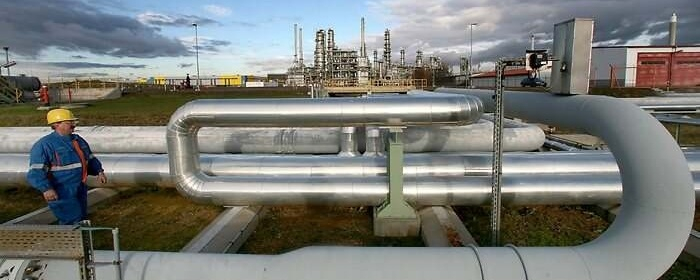
The war with Iran and restrictions on maritime traffic through the Strait of Hormuz have exposed one of China’s greatest energy vulnerabilities: the near-impossibility of replacing the huge volumes of oil it imports from the Middle East. The Asian giant, the world’s largest crude oil importer, has been forced to drastically cut refinery activity amid difficulties in finding alternative supplies, which is likely to accelerate its strategy to reduce dependence on oil.
A report by the Oxford Institute for Energy Studies (OIES) reveals that Chinese crude oil imports plunged by as much as 5.4 million barrels per day between February and June 2026, falling from 12.5 million to just 7.1 million barrels per day, their lowest level in almost a decade.
The search for alternative suppliers has had very limited success. Brazil and Russia, the two countries that have increased supplies to the Asian giant the most, managed to provide only an additional 480,000 barrels per day combined between March and September, compared with a loss of around two million barrels per day from the Persian Gulf.
Although the peak recorded in February was driven by stockpiling, overseas oil purchases fell by an average of 2.5 million barrels per day between March and October compared with the same period in the previous fiscal year.
Purchases from Brazil rose 24% year on year, increasing its market share from 8% to 13%, while imports of Russian oil grew 12% to 2.3 million barrels per day. Much of this latter increase, however, had already occurred before the war broke out.
The United States, meanwhile, has been completely excluded from China's diversification strategy. Beijing imported no US oil during the crisis, despite the increase in American exports. Oil from the United States remains subject to a 20% Chinese tariff, in addition to the geopolitical rivalry between the two powers.
China safeguards its 2.4 billion barrels of reserves
One of the study's main conclusions is that Beijing has preferred to sacrifice some of its industrial activity rather than draw heavily on its strategic oil reserves, given the risk that the crisis could drag on.
The authors estimate that before the war, China had at least 1.6 billion barrels of crude oil in storage and another 800 million barrels of petroleum products, putting its total inventories at around 2.4 billion barrels.
Its crude oil reserves would be sufficient to cover more than 90 days of refinery operations, nearly 140 days of oil imports, or around 320 days of supplies from the Middle East through the Strait of Hormuz.
Despite this, the Chinese government has not formally released any of its strategic reserves. Instead, it has allowed companies to draw on their commercial and operational inventories. The lack of regular official statistics on reserves means these figures must nevertheless be treated as estimates.
China, which overtook the United States in 2023 to become the world's leading refining power by capacity, had facilities capable of processing 18.8 million barrels per day at the end of 2025, compared with 18.2 million for its North American rival.
Chinese refinery output fell from more than 15 million barrels per day in February to just 12.5 million in June, its lowest level since early 2020, when the pandemic broke out.
Beijing worsens the global diesel shortage
The Chinese government's response to the crisis has also had major consequences for international fuel markets. Beijing initially decided to suspend exports of petroleum products to ensure domestic supply, and later introduced less severe restrictions.
Combined exports of gasoline, diesel and jet fuel plunged from 854,000 barrels per day in February to 318,000 barrels per day in April, a decline of nearly 63%.
During the first half of the fiscal year, overseas sales of these three products averaged 490,000 barrels per day, down from an average of 774,000 barrels in 2025. This added pressure to international markets that were already facing supply problems.
The recovery in exports between August and October has eased some of these pressures, although researchers warn that this increase may not be sustainable.
The Chinese government is reportedly reviewing each month whether to authorize new exports, depending on the availability of petroleum product reserves in the domestic market. The authors have been unable to fully verify this practice due to the lack of official inventory data.
Chinese oil companies weather the blow
The crisis has had very different effects on the country's major state-owned oil companies and its private refineries.
Sinopec, China's largest refiner and one of the companies most dependent on Middle Eastern oil, saw its imports fall 21% between March and September, equivalent to around 730,000 barrels per day.
PetroChina, by contrast, has managed to cushion the impact thanks to its domestic production and supplies received through pipelines. The company's own oil production is equivalent to approximately 70% of the crude oil processed at its refineries, compared with just 15% for Sinopec.
This greater integration has enabled PetroChina to increase its net profit by 22% during the first nine months of the fiscal year, reaching 156 billion yuan.
Sinopec has also managed to quadruple its operating profit in the refining business to 30.1 billion yuan, despite reducing the volume of crude oil processed by 10%.
The company initially benefited from being able to sell fuels at higher prices while processing oil purchased before crude prices rose. Later, government intervention in fuel prices eroded its margins, which recovered during the third quarter thanks to the resumption of exports.
Small independent refineries, known as teapots, are in a more precarious position. They have traditionally based their competitiveness on buying discounted Iranian, Venezuelan and Russian oil.
The utilization rate at these facilities fell from 55% in February to just 45% in June. Difficulties accessing cheap crude and the structural decline in domestic demand now threaten the survival of some of these facilities.
China may have reached its peak in oil consumption
The main structural consequence of the Strait of Hormuz crisis is likely to be an acceleration of policies aimed at reducing oil consumption in China.
Researchers consider it virtually impossible to replace the volumes from the Persian Gulf through new imports or increased domestic production, which currently stands at around 4.3 million barrels per day.
Furthermore, a strategy of massive purchases in other markets would drive oil prices up further and make it harder for other importing countries to access supplies.
Beijing is likely to step up its policies to electrify transport, particularly freight, where there is still significant potential to replace diesel. It will also promote sustainable aviation fuels (SAF) and the production of liquid fuels from coal and natural gas.
The crisis may even have brought forward the Asian giant's peak oil demand by several years. While earlier forecasts placed this point toward the end of this decade, Sinopec believes that consumption may already have peaked in 2025.
This shift will force China's major oil companies to redefine their industrial strategies. Sinopec is likely to step up its investment in hydrogen, renewables and sustainable aviation fuels, while CNPC and CNOOC will prioritize hydrocarbon exploration and production.
The major private refining groups, for their part, will accelerate their shift toward the petrochemical industry, where demand is still expected to grow.