Binance Square
#xmr

xmr

41.4M views
153,720 Discussing
MM-BNB
·
--
Bullish
🚨 Privacy Coins Are Waking Up 🚨 $ZEC went on a monster run from 500 to 1500. 🚀 Missed it? Don't panic. Privacy season may not be over. 👀 $XMR is the next one on my radar, and I'm calling 1500 as my target. 🎯 The setup looks explosive, the narrative is heating up, and smart money is already watching. 🔥 Are you positioned, or watching from the sidelines again? 👇 Trade $XMR here {future}(XMRUSDT) #zec #XMR #EarningsSeason
🚨 Privacy Coins Are Waking Up 🚨
$ZEC went on a monster run from 500 to 1500. 🚀
Missed it? Don't panic. Privacy season may not be over. 👀
$XMR is the next one on my radar, and I'm calling 1500 as my target. 🎯
The setup looks explosive, the narrative is heating up, and smart money is already watching. 🔥
Are you positioned, or watching from the sidelines again? 👇
Trade $XMR here
#zec #XMR #EarningsSeason
SA-Trades:
good
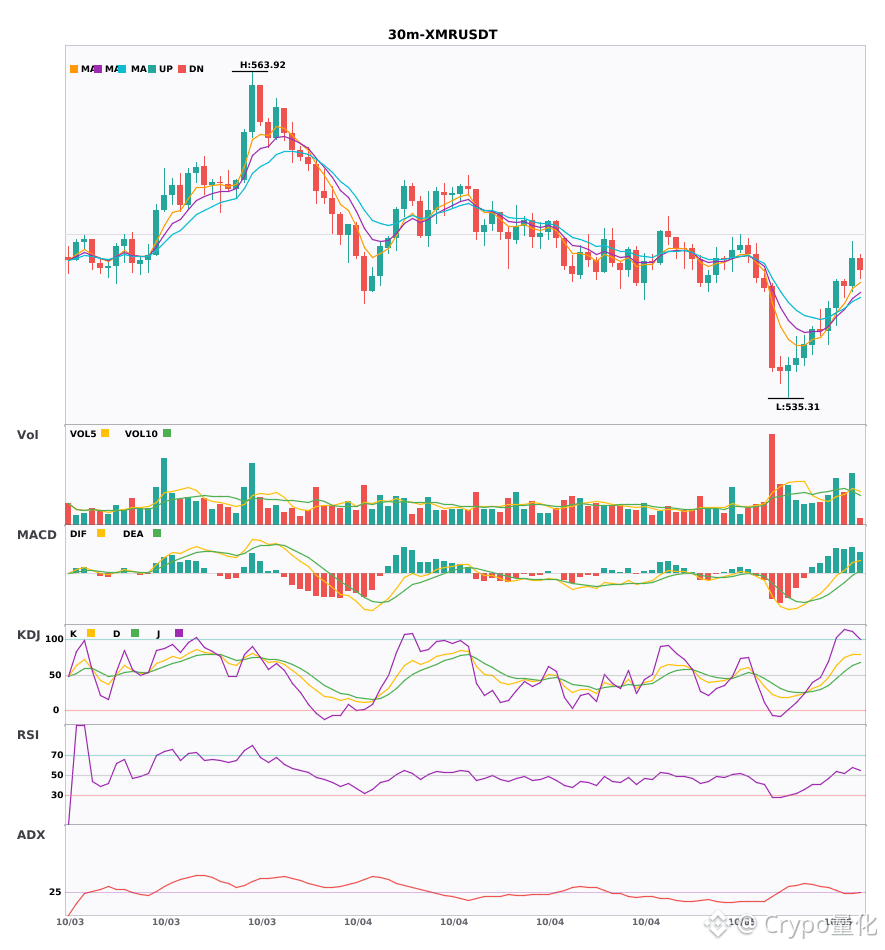
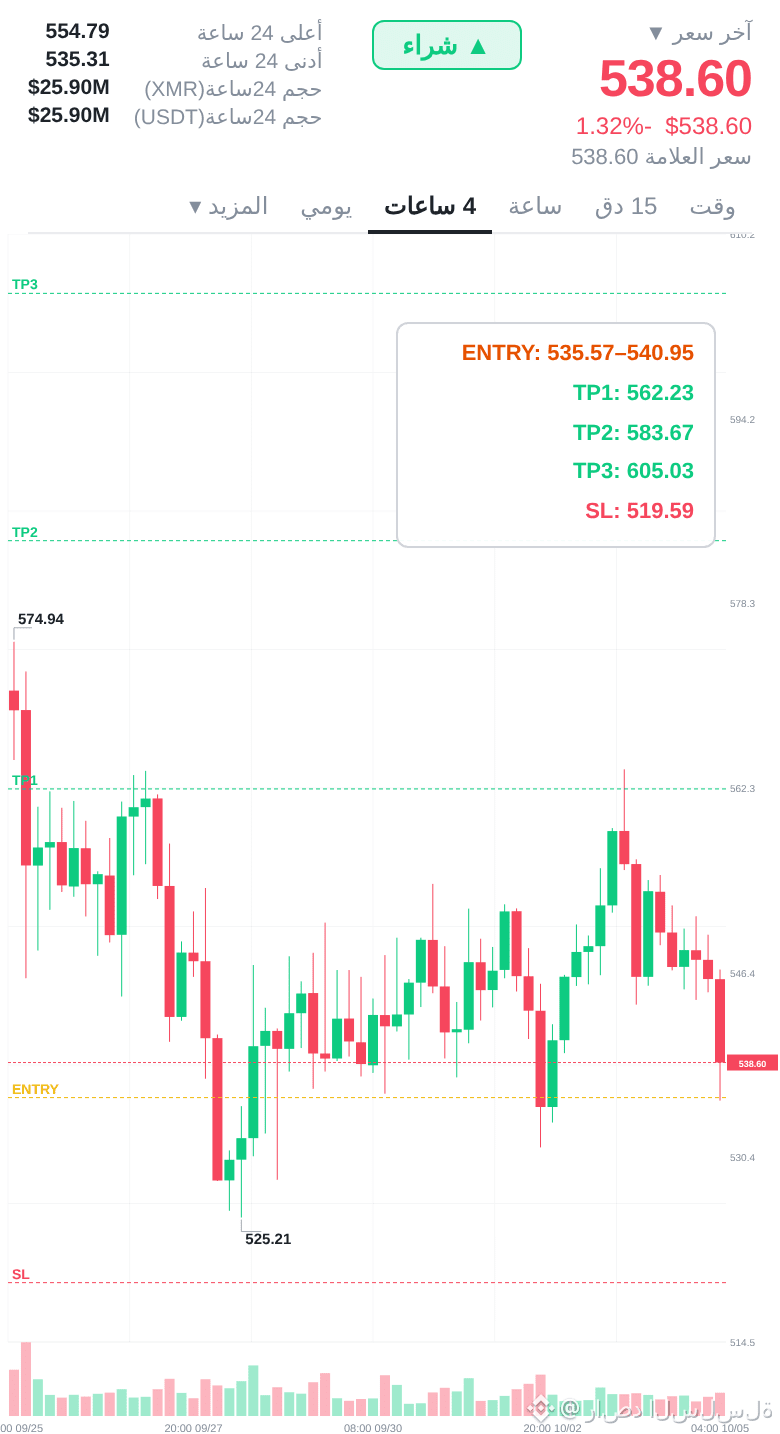
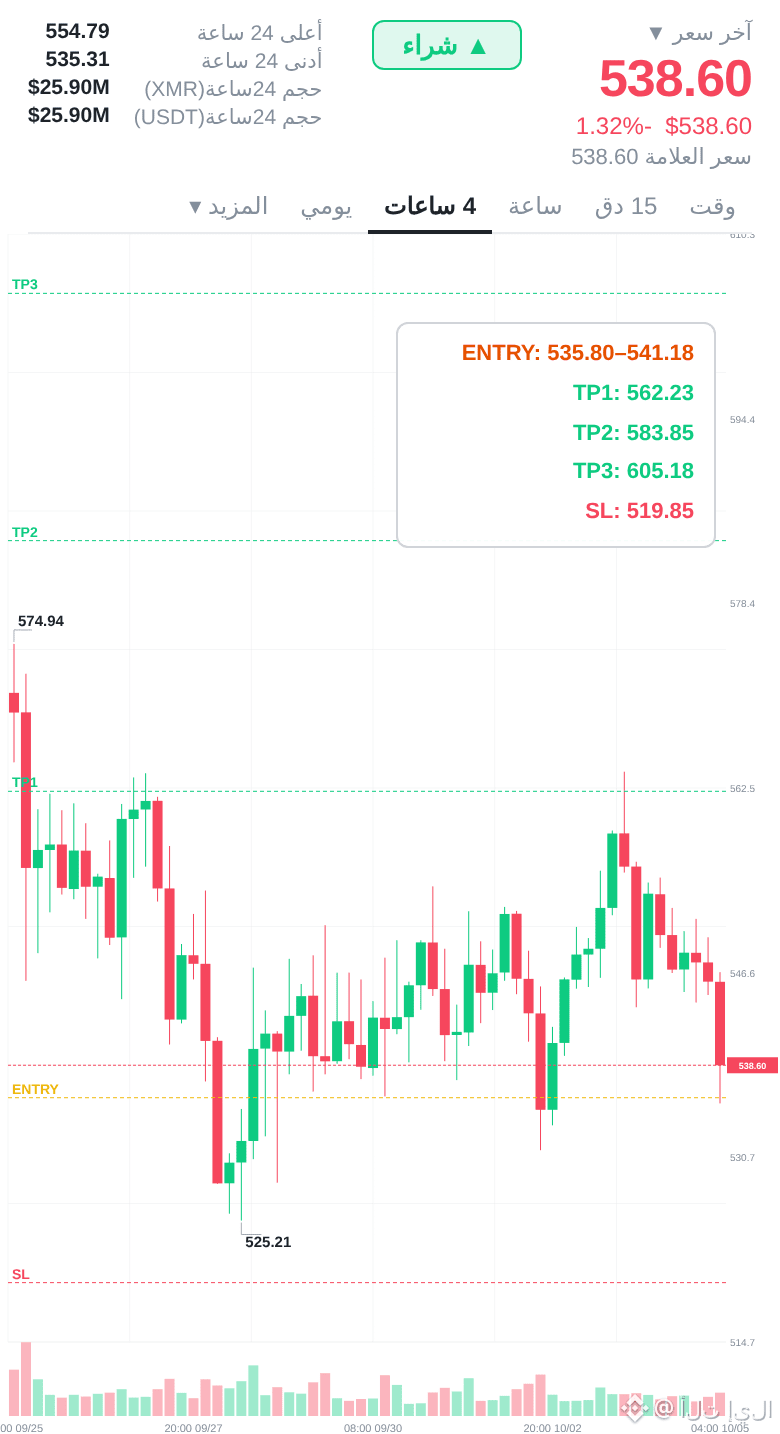
XMR is about to make bounce buyers very happy The setup is a bit messy but the key levels are holding. Good enough. LONG-TERM — 📈 LONG Here's what the data shows: 📈 If yes, here's the plan: 📈 Entry: 536.55 – 541.94 🛑 Stop: 509.66 🎯 TP1: 574.22 🎯 TP2: 606.50 🎯 TP3: 638.77 📊 Confidence: 80% Risk/reward here is compelling: tight stop, multiple R target. Long the strongest, trim the weakest. Staying long with conviction. Wick Rejected 👉 $XMR 👈 Buy Now #XMR $SOL $BTC
XMR is about to make bounce buyers very happy
The setup is a bit messy but the key levels are holding. Good enough.
LONG-TERM — 📈 LONG

Here's what the data shows:
📈 If yes, here's the plan:
📈 Entry: 536.55 – 541.94
🛑 Stop: 509.66
🎯 TP1: 574.22
🎯 TP2: 606.50
🎯 TP3: 638.77
📊 Confidence: 80%

Risk/reward here is compelling: tight stop, multiple R target.
Long the strongest, trim the weakest.

Staying long with conviction.

Wick Rejected 👉 $XMR 👈 Buy Now

#XMR $SOL $BTC
·
--
Bullish
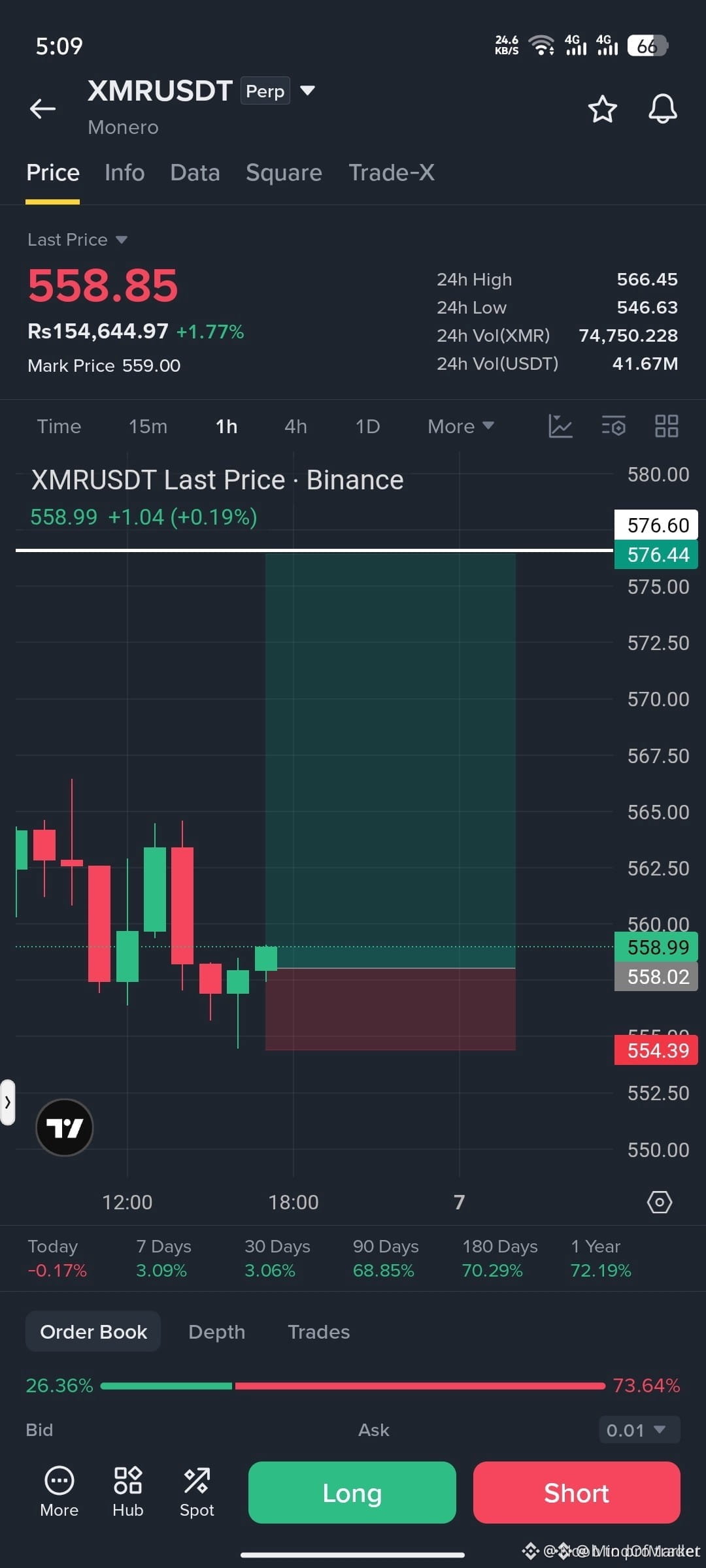
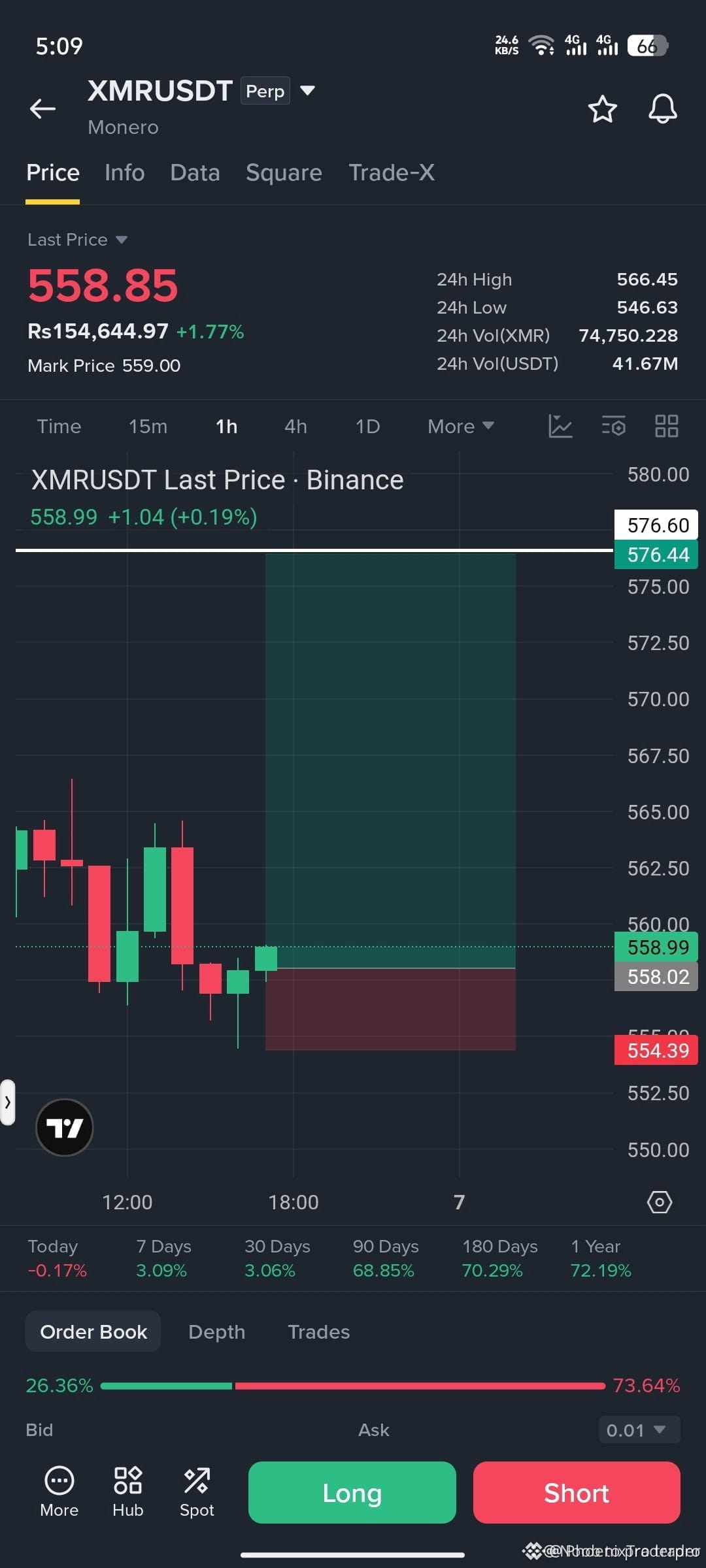
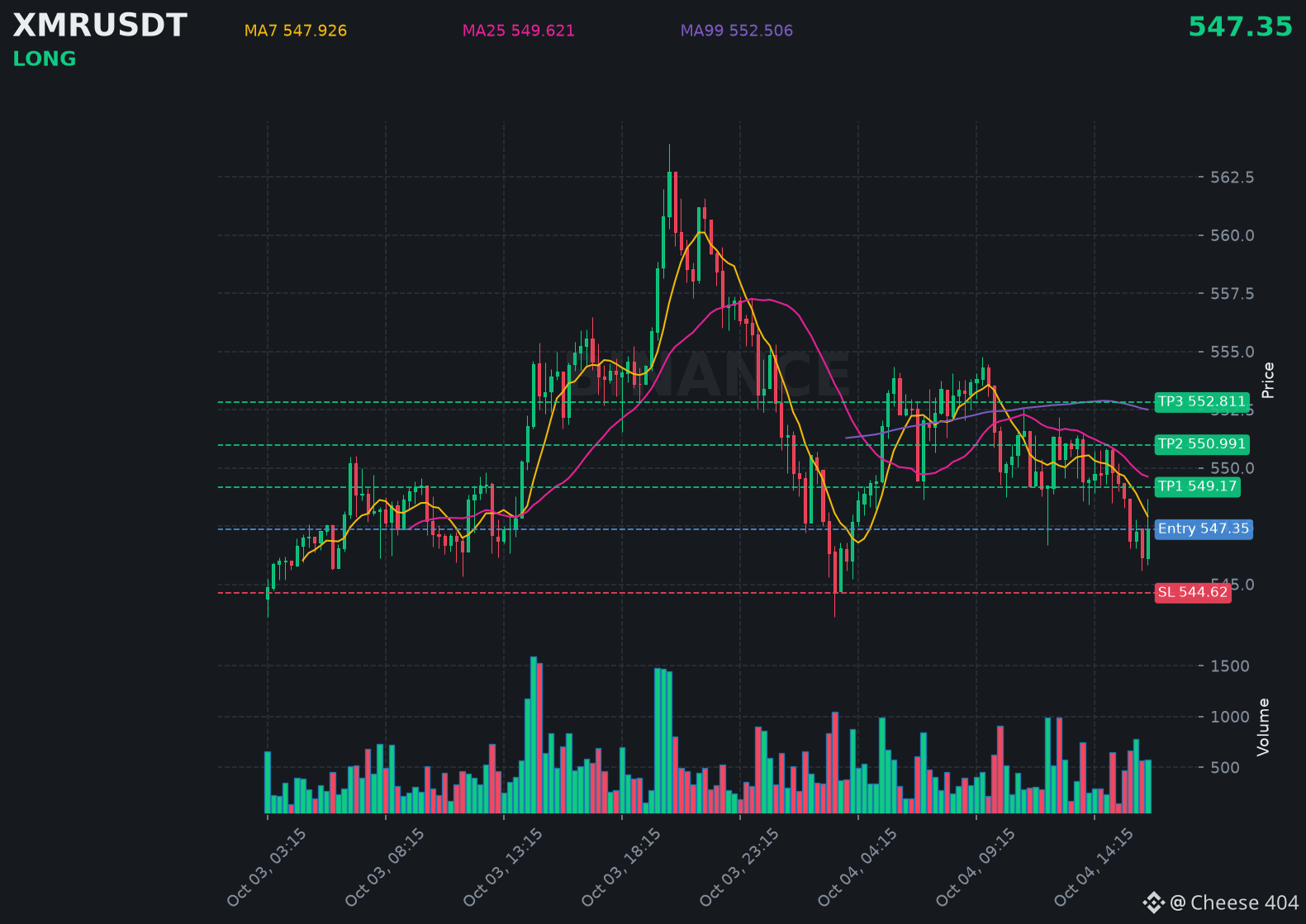
Don’t ignore this Opportunity. $XMR — price will hitting now, $564.00 😱 ENTRY: 543.94 TP1: 548.00 TP2: 555.00 TP3. 564.00 SL: 535.32 Strong demand is supporting price. More upside could be ahead. {future}(XMRUSDT) #XMR
Don’t ignore this Opportunity.

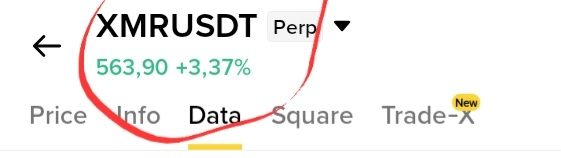
$XMR — price will hitting now, $564.00 😱

ENTRY: 543.94

TP1: 548.00
TP2: 555.00
TP3. 564.00

SL: 535.32

Strong demand is supporting price. More upside could be ahead.
#XMR
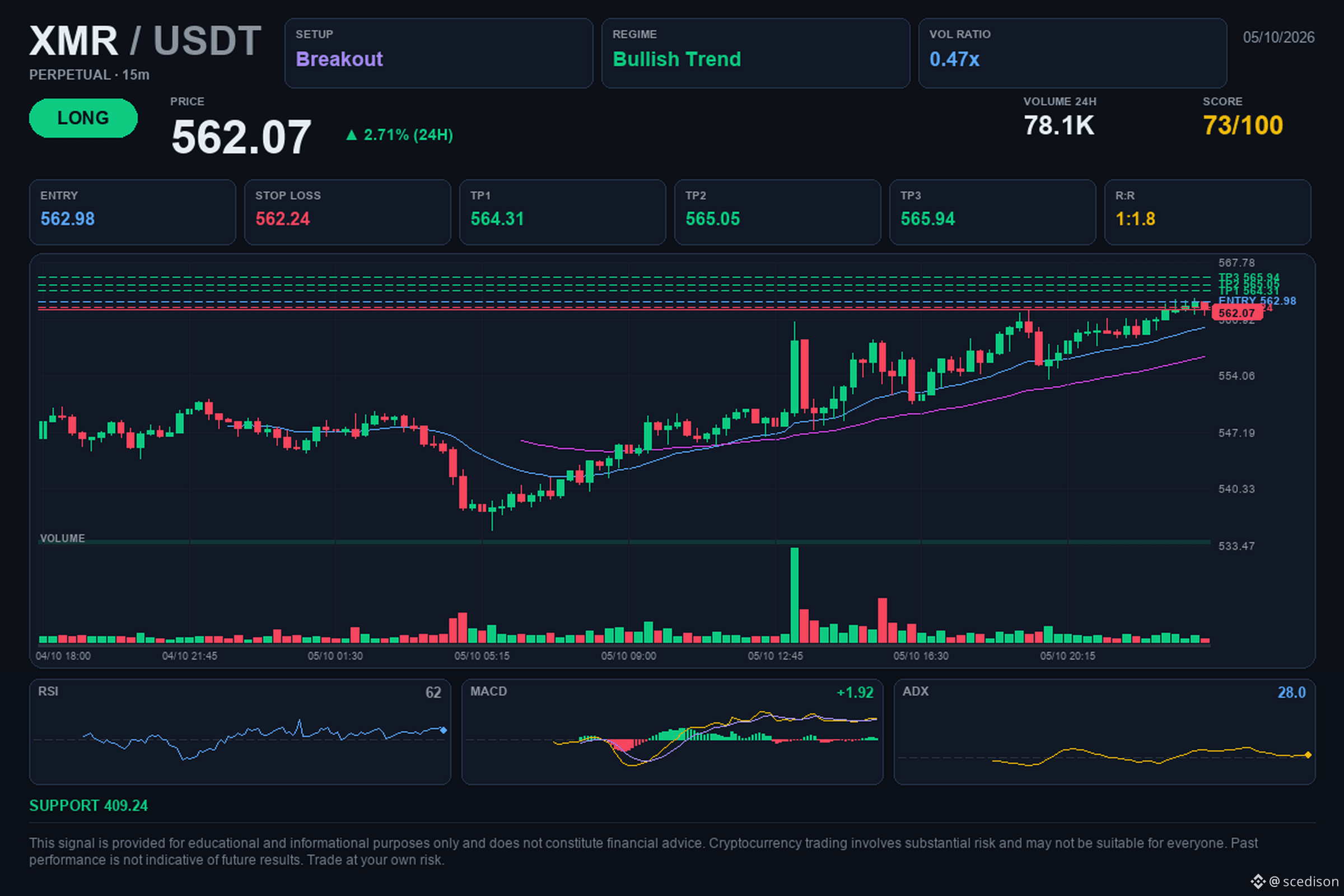
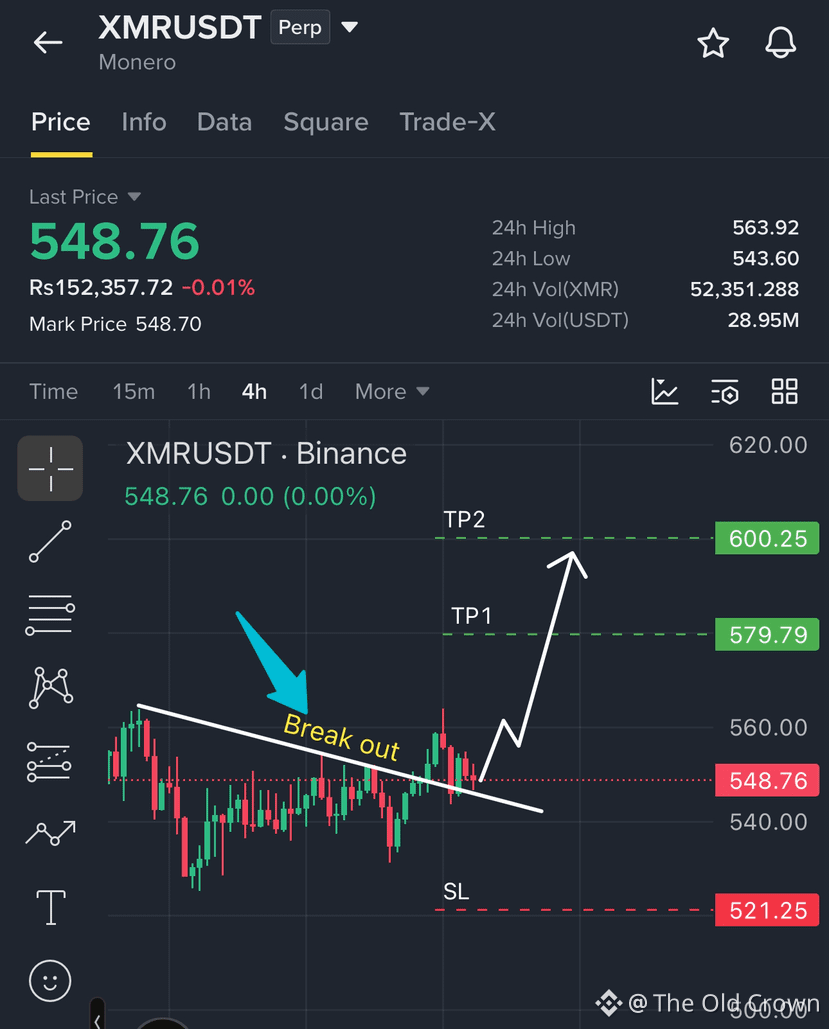
💥 $XMR BREAKS OUT OF MULTI-WEEK FALLING WEDGE AS BUYERS RECLAIM MOMENTUM! 🚀 📊 $XMR has officially shattered its falling wedge resistance, signaling a clean structural shift as accumulation shifts into aggressive mark-up. The compression phase is over, and buyer order flow is driving price velocity back toward upper resistance clusters. 💡 With volume expanding on the breakout candle and sellers losing control over the range, momentum favors a decisive push toward overhead liquidity. 📌 Price action favors patience for retests or direct momentum continuation. 💬 Are you bidding this breakout on the flip or waiting for a pullback retest before taking exposure? 👇 ⚠️ Not financial advice. Always manage your risk. 🛡️ 🏷️ #XMR #Monero #Breakout #Crypto #Altcoins ⚡ 🎯
💥 $XMR BREAKS OUT OF MULTI-WEEK FALLING WEDGE AS BUYERS RECLAIM MOMENTUM! 🚀

📊 $XMR has officially shattered its falling wedge resistance, signaling a clean structural shift as accumulation shifts into aggressive mark-up. The compression phase is over, and buyer order flow is driving price velocity back toward upper resistance clusters.

💡 With volume expanding on the breakout candle and sellers losing control over the range, momentum favors a decisive push toward overhead liquidity. 📌 Price action favors patience for retests or direct momentum continuation.

💬 Are you bidding this breakout on the flip or waiting for a pullback retest before taking exposure? 👇

⚠️ Not financial advice. Always manage your risk. 🛡️

🏷️ #XMR #Monero #Breakout #Crypto #Altcoins

⚡ 🎯
·
--
Bullish
$XMR Bears Are Testing The Lower Levels Again…!! #XMR is showing bearish momentum around 543.76 with sellers defending the 547.78 resistance zone while 525.21 remains the key support If weakness continues the next targets could be 519.59 and 497.85$ZEC {future}(ZECUSDT) $QNT {future}(QNTUSDT) {future}(XMRUSDT)
$XMR Bears Are Testing The Lower Levels Again…!!

#XMR is showing bearish momentum around 543.76 with sellers defending the 547.78 resistance zone while 525.21 remains the key support If weakness continues the next targets could be 519.59 and 497.85$ZEC
$QNT
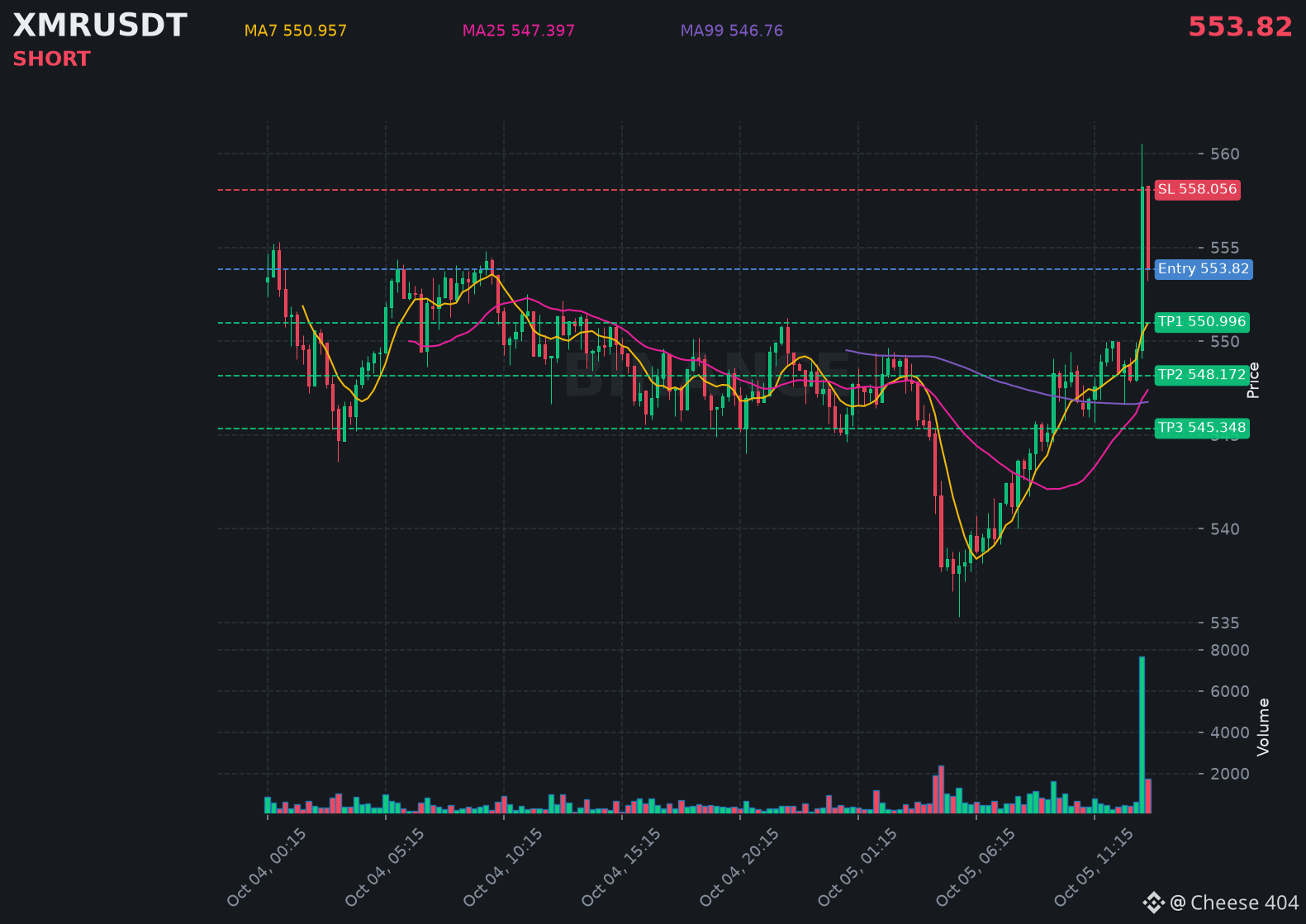
🚨 $XMR APPROACHING CRITICAL PREMIUM ORDER BLOCK FOR POTENTIAL BEARISH CONTINUATION 📉 Entry: 544 - 549 ⚡ Target: 531.77 🎯 Stop Loss: 552 ⚠️ $XMR is relief-rallying straight into a high-timeframe supply zone between 544 and 549 following a sweep of the 525.21 lows. 🔍 Market structure remains firmly bearish while price trades below the 563.79 swing high, signaling this bounce is merely smart money filling resting sell liquidity. A breakdown below the 540 pivot confirms structural weakness, clearing the path toward imbalance targets at 531.77 and a retest of 525.21. 💡 An extended move above 550 invalidates the short bias, marking a tight risk boundary. 💬 Are you waiting for lower-timeframe confirmation at resistance or front-running the breakdown? 👇 ⚠️ Not financial advice. Always manage your risk. 🛡️ 🏷️ #XMR #ShortSetup #MarketStructure #Crypto 🔴 🐻
🚨 $XMR APPROACHING CRITICAL PREMIUM ORDER BLOCK FOR POTENTIAL BEARISH CONTINUATION 📉

Entry: 544 - 549 ⚡
Target: 531.77 🎯
Stop Loss: 552 ⚠️

$XMR is relief-rallying straight into a high-timeframe supply zone between 544 and 549 following a sweep of the 525.21 lows. 🔍 Market structure remains firmly bearish while price trades below the 563.79 swing high, signaling this bounce is merely smart money filling resting sell liquidity.

A breakdown below the 540 pivot confirms structural weakness, clearing the path toward imbalance targets at 531.77 and a retest of 525.21. 💡 An extended move above 550 invalidates the short bias, marking a tight risk boundary. 💬 Are you waiting for lower-timeframe confirmation at resistance or front-running the breakdown? 👇

⚠️ Not financial advice. Always manage your risk. 🛡️

🏷️ #XMR #ShortSetup #MarketStructure #Crypto

🔴 🐻
🚨 $XMR BOUNCES STRAIGHT INTO HEAVY RESISTANCE AS SELLERS PREPARE THE NEXT DOWNWARD SWEEP! 🔻 Entry: 544 - 549 ⚡ Target: 531.77, 525.21 🚀 Stop Loss: 552 ⚠️ $XMR is attempting a relief rally off the 525.21 floor, but price is slamming directly into a high-friction supply cluster between 544 and 549. 📊 With lower highs remaining intact below 563.79, seller absorption is visibly capping upside momentum on every test. 📌 A clean breakdown under 540 will accelerate liquidations toward 531.77, opening the runway for a full retest of 525.21. 📉 A sustained move above 550 invalidates the immediate downside thesis, making risk control tight and straightforward here. 💬 Are you shorting this wall or waiting for 540 to snap first? 👇 ⚠️ Not financial advice. Always manage your risk. 🛡️ 🏷️ #XMR #ShortSetup #CryptoTrading #Bearish #Altcoins 🐻 📉
🚨 $XMR BOUNCES STRAIGHT INTO HEAVY RESISTANCE AS SELLERS PREPARE THE NEXT DOWNWARD SWEEP! 🔻

Entry: 544 - 549 ⚡
Target: 531.77, 525.21 🚀
Stop Loss: 552 ⚠️

$XMR is attempting a relief rally off the 525.21 floor, but price is slamming directly into a high-friction supply cluster between 544 and 549. 📊 With lower highs remaining intact below 563.79, seller absorption is visibly capping upside momentum on every test.

📌 A clean breakdown under 540 will accelerate liquidations toward 531.77, opening the runway for a full retest of 525.21. 📉 A sustained move above 550 invalidates the immediate downside thesis, making risk control tight and straightforward here. 💬 Are you shorting this wall or waiting for 540 to snap first? 👇

⚠️ Not financial advice. Always manage your risk. 🛡️

🏷️ #XMR #ShortSetup #CryptoTrading #Bearish #Altcoins

🐻 📉
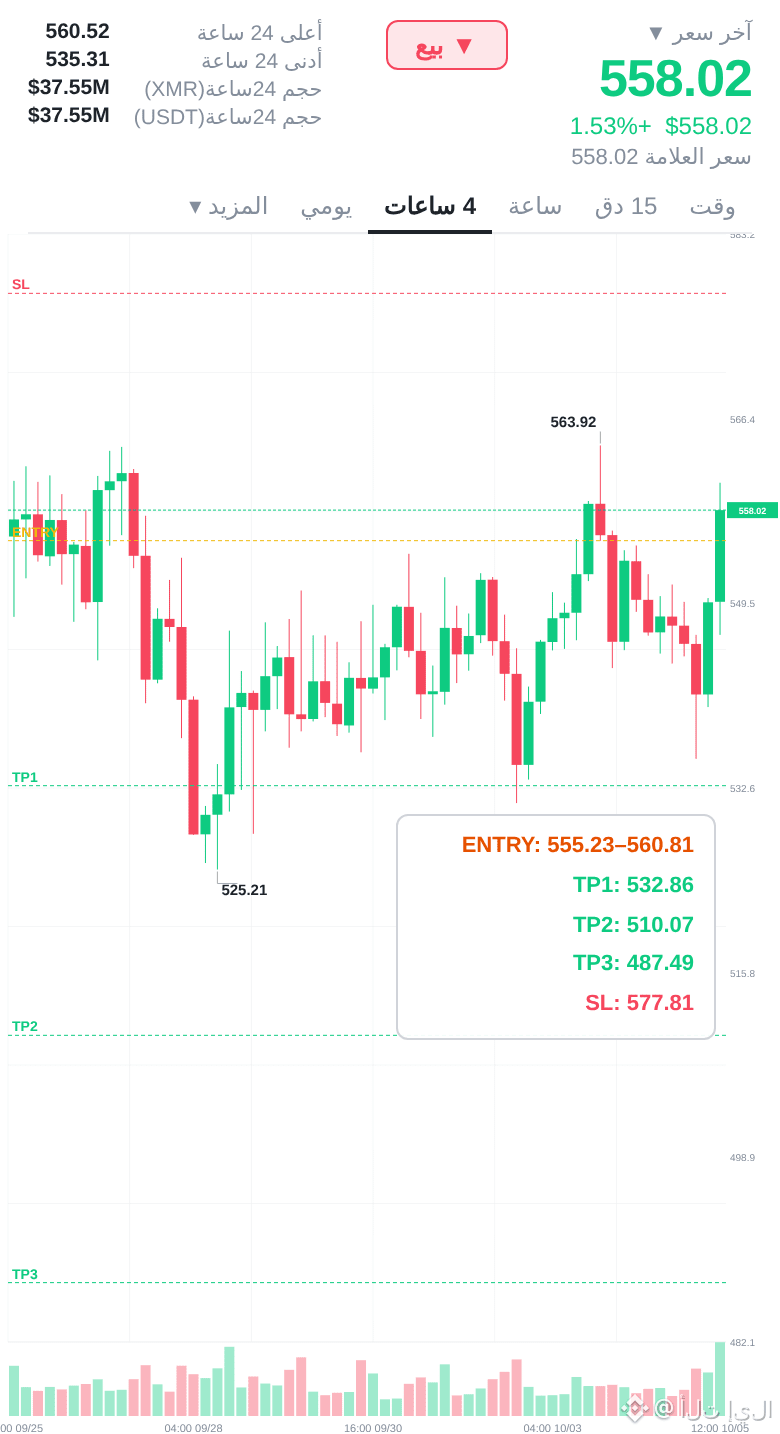
📊 XMR is breaking down from its uptrend channel The price action is finally starting to make sense here. About time. REVERSAL — 📉 SHORT 📉 Trade Plan: 📉 Entry: 541.34 – 546.77 🛑 Stop: 563.08 🎯 TP1: 519.59 🎯 TP2: 497.85 🎯 TP3: 476.10 📊 Confidence: 80% This is the kind of setup that precedes sharp long liquidation moves. Bears controlling — position maintained. First Mover On 👉 $XMR 👈 Now #XMR $ETH $SOL
📊 XMR is breaking down from its uptrend channel
The price action is finally starting to make sense here. About time.
REVERSAL — 📉 SHORT

📉 Trade Plan:
📉 Entry: 541.34 – 546.77
🛑 Stop: 563.08
🎯 TP1: 519.59
🎯 TP2: 497.85
🎯 TP3: 476.10
📊 Confidence: 80%

This is the kind of setup that precedes sharp long liquidation moves.

Bears controlling — position maintained.

First Mover On 👉 $XMR 👈 Now

#XMR $ETH $SOL
·
--
Bearish
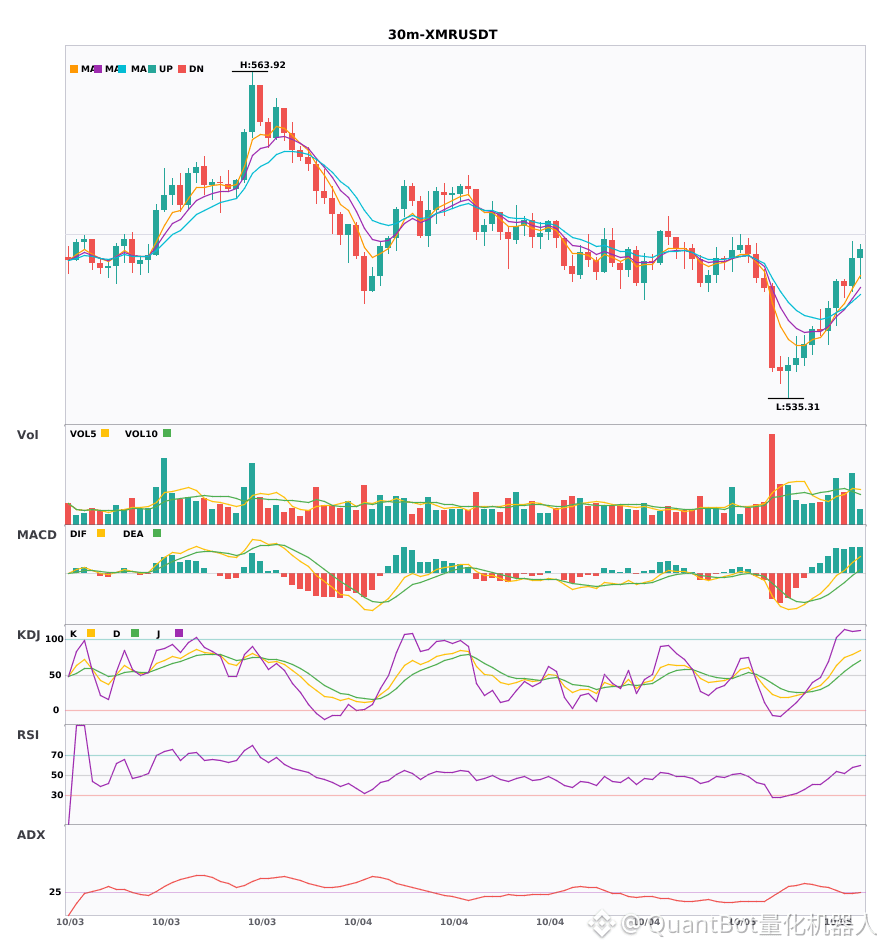
$XMR is recovering from the 525.21 support area, but the rebound is now approaching resistance around 544–549. Price has already struggled around this zone, while the broader move remains below the earlier 563.79 high. I’m watching for rejection near the current area before looking for another downside move. A break below 540 could send price toward 531.77 and 525.21. A sustained move above 550 would invalidate this short setup. Short $XMR Entry Zone: 544 – 549 Stop Loss: 552 or Stoploss to Entry TP1: 531.77 TP2: 525.21 Do your own research. Follow for more trades. Short #XMR Here 👇👇👇 {future}(XMRUSDT)
$XMR is recovering from the 525.21 support area, but the rebound is now approaching resistance around 544–549. Price has already struggled around this zone, while the broader move remains below the earlier 563.79 high. I’m watching for rejection near the current area before looking for another downside move. A break below 540 could send price toward 531.77 and 525.21. A sustained move above 550 would invalidate this short setup.

Short $XMR
Entry Zone: 544 – 549
Stop Loss: 552
or Stoploss to Entry
TP1: 531.77
TP2: 525.21

Do your own research.
Follow for more trades.
Short #XMR Here 👇👇👇
🎯 TARGET SMASHED WITH SURGICAL PRECISION! Precision wins again! $XMR secured a solid 20.00% ROI! Follow the experts and build real wealth. 📈 ❤️ Thank you for your continuous trust. We move forward together! 📌 ORIGINAL SETUP ($XMR): Direction: SHORT 🚀 👉 Entry 1: 544.95 👉 Entry 2: 577.65 🎯 TP 1: 534.05 🎯 TP 2: 523.15 🎯 TP 3: 512.25 ⛔ Stop Loss: 593.9955 ⚡ Leverage: Cross 20x 🔒 [Trade Completed & Closed - Setup For Reference Only] #Write2Earn #Binance #BTC #TrendingTopic #XMR
🎯 TARGET SMASHED WITH SURGICAL PRECISION!

Precision wins again! $XMR secured a solid 20.00% ROI! Follow the experts and build real wealth. 📈

❤️ Thank you for your continuous trust. We move forward together!

📌 ORIGINAL SETUP ($XMR ):
Direction: SHORT 🚀
👉 Entry 1: 544.95
👉 Entry 2: 577.65
🎯 TP 1: 534.05
🎯 TP 2: 523.15
🎯 TP 3: 512.25
⛔ Stop Loss: 593.9955
⚡ Leverage: Cross 20x

🔒 [Trade Completed & Closed - Setup For Reference Only]

#Write2Earn #Binance #BTC #TrendingTopic #XMR
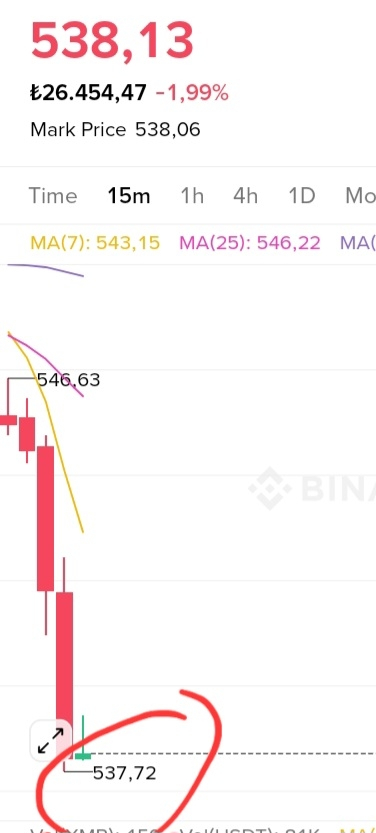
Those who manage well and are patient will win. 👍🔥🔥Don't do business with me without reviewing my profile. I'm the only analyst who didn't use a stop-loss order during the market storm of the last 24 hours. ✅️✅️🔥🥰XMR LONG continues DIYOR #XMR #ZEC #TAO #META #NBIS
Those who manage well and are patient will win. 👍🔥🔥Don't do business with me without reviewing my profile. I'm the only analyst who didn't use a stop-loss order during the market storm of the last 24 hours. ✅️✅️🔥🥰XMR LONG continues DIYOR
#XMR #ZEC #TAO #META #NBIS
ŞHEMS X
·
--
$XMR XMR LONG 50X
527 and 529
STOP 521
TP 537
TP 543
TP 549 and 551 DİYOR
#XMR #ZEC #SKHYNIX #BCH #TAO
The UK Crypto License Application Window Opens Today | Opening Applications Doesn’t Mean XMR Gets Approved or Banned | Around 539 I’m only observing My stance is still cautious and waiting. The FCA’s official page in the UK states that the new authorization application window for crypto-asset business will open at 7:00 a.m. UK time on September 30; converting for daylight saving time, that’s 14:00 Beijing time today. The FCA also says that the application window for firms that want to use transitional arrangements closes on February 28, 2027. The new regime is expected to start applying only in October 2027. This is the starting point for companies to submit materials—not that a particular platform has already obtained a license, nor that XMR has been approved for listing in the UK today, or that UK regulators have announced a ban. Compressing the timeline into “good news for privacy coins” or “the UK cracking down on privacy coins” goes beyond what the original document says. Why is this related to XMR? The market accessibility of a privacy coin depends not only on on-chain technology, but also on whether exchanges, custodians, and payment service providers are willing to take on compliance and disclosure costs. The new application process may lead platforms to review coin listing, customer identification, monitoring, and exit procedures earlier. If, in the future, a platform tightens support for certain types of assets, the impact would first show up at the fiat on-ramp and liquidity level—not because the Monero network itself has stopped running. Conversely, even if a platform continues to offer XMR trading, that doesn’t mean UK regulators have cleared all related business activity. What can be confirmed right now is that the process has started and the transition timing that follows. The specific list of applicants, the approval outcomes, and each platform’s XMR policy still need to be verified separately. The trending topics in the square currently focus on exchange security, on-chain stocks, and project investing, and there’s no accurate tag directly corresponding to this specific UK regulatory process—so I’m only using the XMR tag and not trying to borrow unrelated hype. Price action also hasn’t provided causal evidence of policy: before the time of writing, Kraken’s XMR/USD is about $538.87, with a rolling 24-hour low around $536.61 and a high around $545.83. This only indicates the trading range at that time; it can’t be used to attribute the pullback to the FCA application entry opening. What I’ll focus on is whether price can hold near 536.6 and whether there’s a valid recovery near 545.8. If FCA official documents introduce explicit restrictions on XMR, or major platforms publish new, concrete trading limitations, or if the price breaks below 536.6 and liquidity clearly thins, then the earlier conclusion that “the impact still needs to be verified” should be tightened immediately. If I were trading this myself, I wouldn’t participate—no position, i.e., going flat. Only if (1) within the next hour XMR closes above 545.8, (2) it retests 543 to 545.8 without breaking it, and (3) platform trading and deposits/withdrawals remain normal, would I consider taking unleveraged spot longs; the position size limit would be 0.3% of total funds. First target: 550 (post-halving). Second target: around 555, where I’d close the remaining position. Hard stop-loss is set at 539. If, after entry, price falls back below 543 for two consecutive hours, I would close everything. If 536.6 breaks before entry, or if clear adverse regulatory and platform announcements appear, I would cancel the plan outright and not treat policy uncertainty as a reason to add. If the conditions aren’t triggered, there’s no trade—so there can’t be realized profit. #XMR The above is only my personal market observation and does not constitute investment advice.
The UK Crypto License Application Window Opens Today | Opening Applications Doesn’t Mean XMR Gets Approved or Banned | Around 539 I’m only observing

My stance is still cautious and waiting. The FCA’s official page in the UK states that the new authorization application window for crypto-asset business will open at 7:00 a.m. UK time on September 30; converting for daylight saving time, that’s 14:00 Beijing time today. The FCA also says that the application window for firms that want to use transitional arrangements closes on February 28, 2027. The new regime is expected to start applying only in October 2027. This is the starting point for companies to submit materials—not that a particular platform has already obtained a license, nor that XMR has been approved for listing in the UK today, or that UK regulators have announced a ban. Compressing the timeline into “good news for privacy coins” or “the UK cracking down on privacy coins” goes beyond what the original document says.

Why is this related to XMR? The market accessibility of a privacy coin depends not only on on-chain technology, but also on whether exchanges, custodians, and payment service providers are willing to take on compliance and disclosure costs. The new application process may lead platforms to review coin listing, customer identification, monitoring, and exit procedures earlier. If, in the future, a platform tightens support for certain types of assets, the impact would first show up at the fiat on-ramp and liquidity level—not because the Monero network itself has stopped running. Conversely, even if a platform continues to offer XMR trading, that doesn’t mean UK regulators have cleared all related business activity. What can be confirmed right now is that the process has started and the transition timing that follows. The specific list of applicants, the approval outcomes, and each platform’s XMR policy still need to be verified separately.

The trending topics in the square currently focus on exchange security, on-chain stocks, and project investing, and there’s no accurate tag directly corresponding to this specific UK regulatory process—so I’m only using the XMR tag and not trying to borrow unrelated hype. Price action also hasn’t provided causal evidence of policy: before the time of writing, Kraken’s XMR/USD is about $538.87, with a rolling 24-hour low around $536.61 and a high around $545.83. This only indicates the trading range at that time; it can’t be used to attribute the pullback to the FCA application entry opening. What I’ll focus on is whether price can hold near 536.6 and whether there’s a valid recovery near 545.8. If FCA official documents introduce explicit restrictions on XMR, or major platforms publish new, concrete trading limitations, or if the price breaks below 536.6 and liquidity clearly thins, then the earlier conclusion that “the impact still needs to be verified” should be tightened immediately.

If I were trading this myself, I wouldn’t participate—no position, i.e., going flat. Only if (1) within the next hour XMR closes above 545.8, (2) it retests 543 to 545.8 without breaking it, and (3) platform trading and deposits/withdrawals remain normal, would I consider taking unleveraged spot longs; the position size limit would be 0.3% of total funds. First target: 550 (post-halving). Second target: around 555, where I’d close the remaining position. Hard stop-loss is set at 539. If, after entry, price falls back below 543 for two consecutive hours, I would close everything. If 536.6 breaks before entry, or if clear adverse regulatory and platform announcements appear, I would cancel the plan outright and not treat policy uncertainty as a reason to add. If the conditions aren’t triggered, there’s no trade—so there can’t be realized profit.

#XMR
The above is only my personal market observation and does not constitute investment advice.
Tonight’s US GDP and PCE released at the same time|Old data may be revised|XMR around 541; I’ll wait first My attitude is to guard against volatility rather than bet on the inflation number ahead of time. According to the official schedule of the US Bureau of Economic Analysis (BEA), at 8:30 AM Eastern Time on September 30—8:30 PM Beijing time tonight—the agency will simultaneously release the third estimate of Q2 GDP, corporate profits, and the August personal income and spending report. The latter includes the PCE price index that the market is watching. The agency also said this year’s annual updates to national, industry, and state/county economic statistics will begin on the same day, and related historical time series may be revised as more complete source data and methodology improvements are incorporated. What we have now is just the timetable before the release; it’s not the results. If the widely circulated “actual PCE is already X” is not accompanied by the official table that night, then it can only be called a forecast or rumor. This is not a case of “a privacy coin being directly priced by the Federal Reserve.” Inflation and growth data can change rate expectations, the US dollar’s direction, and risk-asset positioning; only afterward might those effects transmit into crypto. XMR also has its own liquidity, exchange/platform support, and project-specific factors—so it absolutely does not guarantee moving in the same direction or with the same magnitude as BTC or ETH. More importantly, at the same timestamp there are two releases—GDP and PCE—and there may also be revisions to prior values. Placing an order based on just one headline number is easy to overlook the fact that what the market truly trades is the “difference versus expectations,” and the subsequent repricing of the future rate path. Even speeches by Fed officials are just individual policy judgments; they can’t be treated as tonight’s new rate decision. On the price side: when I wrote this, Kraken’s XMR/USD was around $540.92. The 24-hour range was a low of $535.88 and a high of $550.07, with the day’s opening around $542.33. It’s slightly below the middle of the range, and I still don’t have evidence that it has broken through the upper boundary. The rise/fall here is a spot-market snapshot—you can’t say the market has “already priced in” PCE that hasn’t been released yet. Around $535 is the short-term defense/observation area; around $550 is the supply/observation area above. If after the release price first spikes one way and then quickly falls back into the range, it suggests the first wave of volatility may not represent a new trend. The spreads, slippage, and order depth before and after the release should be rechecked; especially, don’t use market orders with heavy leverage to chase the first spike. If I were trading this myself, I wouldn’t participate. I would only preset a small spot long position, not place any pre-leveraged high-multiple orders. I’ll wait until the official data is released tonight and the market has absorbed it for at least one hour. If XMR reclaims $545 and two consecutive one-hour candlesticks close above $545, then I would test with 3% of total trading funds; if it doesn’t trigger, I’ll keep standing aside. My first target is $550—if it touches, I’ll cut half. The second target is $558—near that level, I’ll cut another half. After entry, if price breaks below $537 and the one-hour candle fails to reclaim it, I’ll close the entire position for a stop-out. If the data causes the dollar and rate expectations to strengthen significantly, and XMR breaks below $535.88, I’ll immediately cancel the long plan. If the later release of the full report is mild and price-volume confirms a firm hold above $550, I would overturn the “range still under pressure” judgment, recalculate entry and risk, and not turn today’s unexecuted conditions into a profit recap. Tonight’s most important thing is not guessing numbers, but separating the release timing, historical revisions, and execution risk. For volatile assets like XMR, the cost of missing one bullish candlestick is usually less than the cost of amplifying position size when information is incomplete. #XMR The above is only my personal market observations and does not constitute investment advice.
Tonight’s US GDP and PCE released at the same time|Old data may be revised|XMR around 541; I’ll wait first

My attitude is to guard against volatility rather than bet on the inflation number ahead of time. According to the official schedule of the US Bureau of Economic Analysis (BEA), at 8:30 AM Eastern Time on September 30—8:30 PM Beijing time tonight—the agency will simultaneously release the third estimate of Q2 GDP, corporate profits, and the August personal income and spending report. The latter includes the PCE price index that the market is watching. The agency also said this year’s annual updates to national, industry, and state/county economic statistics will begin on the same day, and related historical time series may be revised as more complete source data and methodology improvements are incorporated. What we have now is just the timetable before the release; it’s not the results. If the widely circulated “actual PCE is already X” is not accompanied by the official table that night, then it can only be called a forecast or rumor.

This is not a case of “a privacy coin being directly priced by the Federal Reserve.” Inflation and growth data can change rate expectations, the US dollar’s direction, and risk-asset positioning; only afterward might those effects transmit into crypto. XMR also has its own liquidity, exchange/platform support, and project-specific factors—so it absolutely does not guarantee moving in the same direction or with the same magnitude as BTC or ETH. More importantly, at the same timestamp there are two releases—GDP and PCE—and there may also be revisions to prior values. Placing an order based on just one headline number is easy to overlook the fact that what the market truly trades is the “difference versus expectations,” and the subsequent repricing of the future rate path. Even speeches by Fed officials are just individual policy judgments; they can’t be treated as tonight’s new rate decision.

On the price side: when I wrote this, Kraken’s XMR/USD was around $540.92. The 24-hour range was a low of $535.88 and a high of $550.07, with the day’s opening around $542.33. It’s slightly below the middle of the range, and I still don’t have evidence that it has broken through the upper boundary. The rise/fall here is a spot-market snapshot—you can’t say the market has “already priced in” PCE that hasn’t been released yet. Around $535 is the short-term defense/observation area; around $550 is the supply/observation area above. If after the release price first spikes one way and then quickly falls back into the range, it suggests the first wave of volatility may not represent a new trend. The spreads, slippage, and order depth before and after the release should be rechecked; especially, don’t use market orders with heavy leverage to chase the first spike.

If I were trading this myself, I wouldn’t participate. I would only preset a small spot long position, not place any pre-leveraged high-multiple orders. I’ll wait until the official data is released tonight and the market has absorbed it for at least one hour. If XMR reclaims $545 and two consecutive one-hour candlesticks close above $545, then I would test with 3% of total trading funds; if it doesn’t trigger, I’ll keep standing aside. My first target is $550—if it touches, I’ll cut half. The second target is $558—near that level, I’ll cut another half. After entry, if price breaks below $537 and the one-hour candle fails to reclaim it, I’ll close the entire position for a stop-out. If the data causes the dollar and rate expectations to strengthen significantly, and XMR breaks below $535.88, I’ll immediately cancel the long plan. If the later release of the full report is mild and price-volume confirms a firm hold above $550, I would overturn the “range still under pressure” judgment, recalculate entry and risk, and not turn today’s unexecuted conditions into a profit recap.

Tonight’s most important thing is not guessing numbers, but separating the release timing, historical revisions, and execution risk. For volatile assets like XMR, the cost of missing one bullish candlestick is usually less than the cost of amplifying position size when information is incomplete. #XMR
The above is only my personal market observations and does not constitute investment advice.
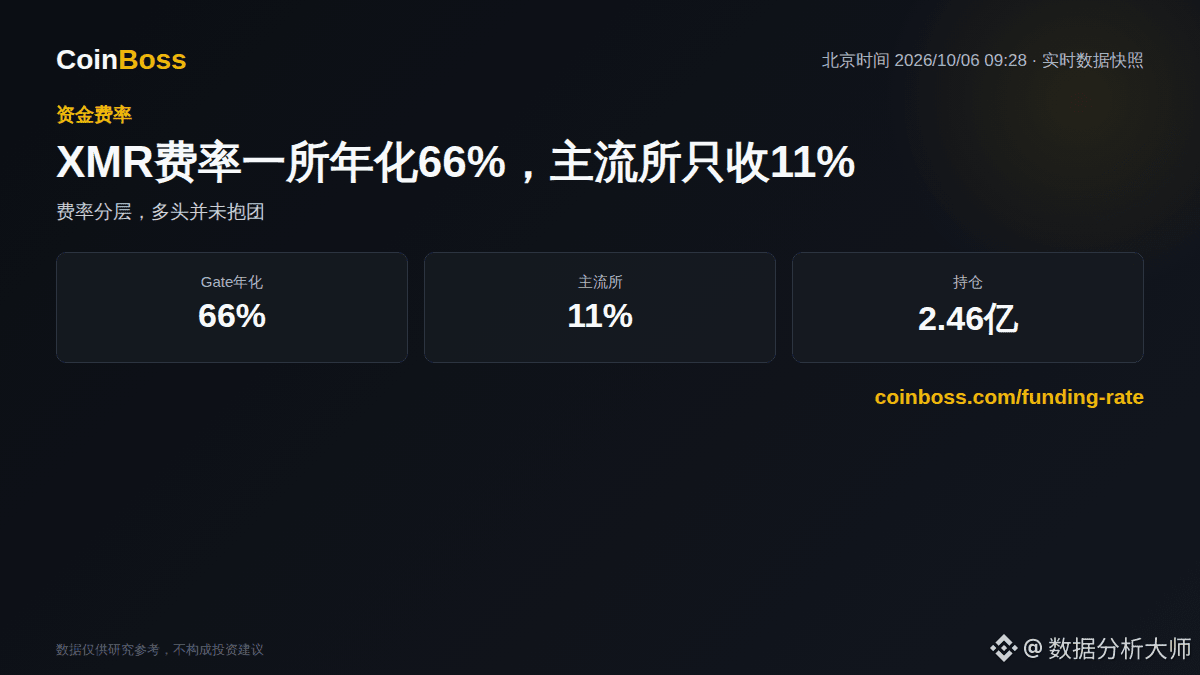
🚨 XMR: funding +52%/year, the long side is straining under the fees I just opened the chart, and right away my eyes caught the XMR funding number: roughly +0.0060% per hour, which adds up over a year to about +52%. For those who aren’t familiar, “funding” is the fee paid every few hours by the side with more traders—who are ahead in the market direction—to the other side. A positive figure like this means the long side (betting the price will rise) is paying the short side (betting the price will fall). It may sound small, but compounded day and night, it becomes a money-draining machine. Meanwhile, XMR’s price is still slipping slightly, down about 0.85% after 24 hours. So the long side is paying high fees while also watching their position gradually bleed red—an uncomfortable feeling: trying to hold on, but your wallet gets thinner hour by hour. This is only a personal perspective to give people more information—definitely not investment advice. So if you’re holding a position, which side do you think can stay calm for longer? #XMR
🚨 XMR: funding +52%/year, the long side is straining under the fees

I just opened the chart, and right away my eyes caught the XMR funding number: roughly +0.0060% per hour, which adds up over a year to about +52%. For those who aren’t familiar, “funding” is the fee paid every few hours by the side with more traders—who are ahead in the market direction—to the other side. A positive figure like this means the long side (betting the price will rise) is paying the short side (betting the price will fall).

It may sound small, but compounded day and night, it becomes a money-draining machine. Meanwhile, XMR’s price is still slipping slightly, down about 0.85% after 24 hours. So the long side is paying high fees while also watching their position gradually bleed red—an uncomfortable feeling: trying to hold on, but your wallet gets thinner hour by hour.

This is only a personal perspective to give people more information—definitely not investment advice. So if you’re holding a position, which side do you think can stay calm for longer?

#XMR
ECB Calls for AI Payment Solutions|Privacy Design Isn’t the Same as Anonymous Settlement|XMR Around 540 and I’m still waiting My stance is to first separate three things: payment experiments, privacy commitments, and coin-price trades. Binance Square’s Trending Topics this round shows #ECBToTestAIAgentsInDigitalEuroPayments. In its original notice dated September 28, the ECB said it is seeking participating institutions for an innovation platform for the digital euro; payment, micropayment, and application functionalities among AI agents fall under an “exploration” direction, and the related workshops are scheduled for the first and second quarters of 2027. Another “experiment” workstream is expected to run for concept validation from January to June 2027. This is not the digital euro already being live, nor is it AI agents today making real payments using the digital euro. Whether the currency is ultimately issued will be decided only after relevant legislation by the EU is passed. Why is this news worth watching for XMR traders? The central bank emphasizes that the方案 must comply with privacy-by-design, user control, and data protection principles. The market often puts all “privacy” assets into the same story. But what the ECB is discussing is how user data would be handled in a potential central-bank payment system. The official Monero defines XMR as a cryptocurrency focused on private, censorship-resistant transactions. Their issuing authorities, eligibility scope, and compliance routes are completely different. You can’t say the ECB selected XMR, and you also can’t say that the more attention the digital euro gets, the more XMR demand must rise. A more practical question is: if agents can initiate payments, who authorizes them, how the maximum amount is constrained, and who is responsible if something goes wrong? If these user-control requirements are mishandled, it may suppress adoption of automated payments; even if handled well, it doesn’t necessarily flow into privacy coins. The market hasn’t given me a clear “policy-positive” signal. At the time of writing, Kraken’s recent XMR/USD trade is around $540.56, with a rolling 24-hour range of $535.88 to $550.07, and an approximate daily open of $542.33—still within the range. This volatility can’t be attributed to the ECB call, nor can we treat the Square discussion volume as capital inflow. If the price just borrows the headline to touch 550 and then retreats, I’ll view it as an unconfirmed rebound. If it keeps breaking below 535.88, the short-term bullish assumption is disproven. Policy confirmation depends on future ECB selections, the privacy design, and the legal process—not on the slogans used when reposting trending posts. If I’m trading it myself: I won’t participate now—zero position, just observing. I’ll only keep a qualified spot-long bias, with at most 0.3% of total funds committed, and no leverage. Only if an XMR hourly close is above $550.2, and then it retraces from 548 to 550.2 without breaking that level—and deposits/withdrawals and the order book on the exchange work normally—I’ll enter in two batches. First target: $558, cutting the position in half. Second target: $566, closing the remaining position. Hard stop-loss set at $543. After entry, if there are two consecutive hourly closes that fall back below 548, I’ll close everything. If before that it drops and breaks below 535.88, or if an official ECB document negates the market’s current understanding, the plan is canceled. Not triggering isn’t profit and it isn’t a loss—it’s simply following trading discipline. #ECBToTestAIAgentsInDigitalEuroPayments #XMR The above is only personal market observation and does not constitute investment advice.
ECB Calls for AI Payment Solutions|Privacy Design Isn’t the Same as Anonymous Settlement|XMR Around 540 and I’m still waiting

My stance is to first separate three things: payment experiments, privacy commitments, and coin-price trades. Binance Square’s Trending Topics this round shows #ECBToTestAIAgentsInDigitalEuroPayments. In its original notice dated September 28, the ECB said it is seeking participating institutions for an innovation platform for the digital euro; payment, micropayment, and application functionalities among AI agents fall under an “exploration” direction, and the related workshops are scheduled for the first and second quarters of 2027. Another “experiment” workstream is expected to run for concept validation from January to June 2027. This is not the digital euro already being live, nor is it AI agents today making real payments using the digital euro. Whether the currency is ultimately issued will be decided only after relevant legislation by the EU is passed.

Why is this news worth watching for XMR traders? The central bank emphasizes that the方案 must comply with privacy-by-design, user control, and data protection principles. The market often puts all “privacy” assets into the same story. But what the ECB is discussing is how user data would be handled in a potential central-bank payment system. The official Monero defines XMR as a cryptocurrency focused on private, censorship-resistant transactions. Their issuing authorities, eligibility scope, and compliance routes are completely different. You can’t say the ECB selected XMR, and you also can’t say that the more attention the digital euro gets, the more XMR demand must rise. A more practical question is: if agents can initiate payments, who authorizes them, how the maximum amount is constrained, and who is responsible if something goes wrong? If these user-control requirements are mishandled, it may suppress adoption of automated payments; even if handled well, it doesn’t necessarily flow into privacy coins.

The market hasn’t given me a clear “policy-positive” signal. At the time of writing, Kraken’s recent XMR/USD trade is around $540.56, with a rolling 24-hour range of $535.88 to $550.07, and an approximate daily open of $542.33—still within the range. This volatility can’t be attributed to the ECB call, nor can we treat the Square discussion volume as capital inflow. If the price just borrows the headline to touch 550 and then retreats, I’ll view it as an unconfirmed rebound. If it keeps breaking below 535.88, the short-term bullish assumption is disproven. Policy confirmation depends on future ECB selections, the privacy design, and the legal process—not on the slogans used when reposting trending posts.

If I’m trading it myself: I won’t participate now—zero position, just observing. I’ll only keep a qualified spot-long bias, with at most 0.3% of total funds committed, and no leverage. Only if an XMR hourly close is above $550.2, and then it retraces from 548 to 550.2 without breaking that level—and deposits/withdrawals and the order book on the exchange work normally—I’ll enter in two batches. First target: $558, cutting the position in half. Second target: $566, closing the remaining position. Hard stop-loss set at $543. After entry, if there are two consecutive hourly closes that fall back below 548, I’ll close everything. If before that it drops and breaks below 535.88, or if an official ECB document negates the market’s current understanding, the plan is canceled. Not triggering isn’t profit and it isn’t a loss—it’s simply following trading discipline.

#ECBToTestAIAgentsInDigitalEuroPayments #XMR
The above is only personal market observation and does not constitute investment advice.
QNT enters the high-search list on the exchange square|Imitation coins amplify intraday volatility|XMR around 543—I’ll wait first My attitude is to first control trading frequency, and not force other coins’ momentum onto XMR as a bullish factor. This morning I checked the Binance Square: in the Most Searched six-hour leaderboard, QNT was listed, but XMR was not shown in the displayed list. Binance News also had coverage of QNT’s sharp intraday drop. Trending searches only indicate attention; they can’t prove that funds are flowing into privacy coins, and they definitely can’t treat a coin’s news as an announcement for a Monero project. To avoid mistaking an earlier report for the latest行情, I re-verified Binance’s QNT/USDT rolling 24-hour data: at the time of query, the current price was about $272.79; the high/low ranged roughly from $283.99 down to $204.43; the 24-hour gain was about 22.995%. It has clearly moved away from the old reference point in the report—“falling to around 203.” What’s really worth remembering is the huge up-and-down amplitude within the same rolling window, not the instant price from an old article copied over. What does this have to do with XMR? It’s not fundamental transmission, but a reminder about the trading environment. When a popular imitation coin wildly whipsaws within a short time, it suggests that momentum-chasing positions, stop-loss orders, and liquidity can amplify short-term slippage. And when market participants simultaneously reduce their risk exposure to imitation coins, other coins may also be passively pressured even without their own bad news. Conversely, XMR has its own privacy needs and development cadence; you can’t conclude it will drop in sync just because QNT is volatile. The Monero official blog currently shows the latest official version announcement, which is still from the earlier 0.18.5 series; you can’t turn community discussion or code milestones into a “mainnet release of 0.19 already completed today” claim. Keep the causal chain separate: QNT is a sample of market volatility; XMR’s price still depends on its own trades and liquidity. I also checked Kraken’s XMR/USD quotes in parallel: the current price is about $542.61, with the rolling 24-hour range from $527.20 to $550.07, and an opening reference around $542.33. XMR hasn’t followed QNT with an equally strong one-sided rally—at least this snapshot doesn’t support the claim that “hot money is pouring into privacy coins across the board.” Around 550 is the immediate upper edge, and 527.20 is the lower edge. If it breaks above 550 and then quickly falls back, you’d actually need to be wary of momentum chasers being forced into stop-losses passively. If it first breaks below 527.20, my earlier bullish view expecting a breakout becomes invalid. Quotes differ across exchanges and time windows; the key price levels are just my execution anchors, not guarantees that support is effective. If I were trading this myself, I wouldn’t participate in XMR: no long, no short, and no leverage to bet on a reversal. Only if hourly closes hold above $551, pull back to $548–$551 and hold it, and the broader imitation-coin market no longer shows consecutive sharp drawdowns, then I’d consider a spot long position with at most 0.3% of total funds. First target: around $558 to take half off; second target: around $566 to clear the remaining position. After entry, if it drops to $543 I’d stop out; or if it recovers and closes back above $548 for two consecutive hours, I’d close everything. If it breaks below $527.20 first, or if QNT shows another sharp retracement that worsens overall market liquidity, I’d cancel the entire long plan—being in cash is my position. No trigger means no trade, and certainly no “profit already made.” Source: Binance Square’s Most Searched and Binance News intraday coverage; Binance QNT/USDT and Kraken XMR/USD rolling charts; Monero official blog.#XMR #QNT The above is only my personal market observation and does not constitute investment advice.
QNT enters the high-search list on the exchange square|Imitation coins amplify intraday volatility|XMR around 543—I’ll wait first

My attitude is to first control trading frequency, and not force other coins’ momentum onto XMR as a bullish factor. This morning I checked the Binance Square: in the Most Searched six-hour leaderboard, QNT was listed, but XMR was not shown in the displayed list. Binance News also had coverage of QNT’s sharp intraday drop. Trending searches only indicate attention; they can’t prove that funds are flowing into privacy coins, and they definitely can’t treat a coin’s news as an announcement for a Monero project. To avoid mistaking an earlier report for the latest行情, I re-verified Binance’s QNT/USDT rolling 24-hour data: at the time of query, the current price was about $272.79; the high/low ranged roughly from $283.99 down to $204.43; the 24-hour gain was about 22.995%. It has clearly moved away from the old reference point in the report—“falling to around 203.” What’s really worth remembering is the huge up-and-down amplitude within the same rolling window, not the instant price from an old article copied over.

What does this have to do with XMR? It’s not fundamental transmission, but a reminder about the trading environment. When a popular imitation coin wildly whipsaws within a short time, it suggests that momentum-chasing positions, stop-loss orders, and liquidity can amplify short-term slippage. And when market participants simultaneously reduce their risk exposure to imitation coins, other coins may also be passively pressured even without their own bad news. Conversely, XMR has its own privacy needs and development cadence; you can’t conclude it will drop in sync just because QNT is volatile. The Monero official blog currently shows the latest official version announcement, which is still from the earlier 0.18.5 series; you can’t turn community discussion or code milestones into a “mainnet release of 0.19 already completed today” claim. Keep the causal chain separate: QNT is a sample of market volatility; XMR’s price still depends on its own trades and liquidity.

I also checked Kraken’s XMR/USD quotes in parallel: the current price is about $542.61, with the rolling 24-hour range from $527.20 to $550.07, and an opening reference around $542.33. XMR hasn’t followed QNT with an equally strong one-sided rally—at least this snapshot doesn’t support the claim that “hot money is pouring into privacy coins across the board.” Around 550 is the immediate upper edge, and 527.20 is the lower edge. If it breaks above 550 and then quickly falls back, you’d actually need to be wary of momentum chasers being forced into stop-losses passively. If it first breaks below 527.20, my earlier bullish view expecting a breakout becomes invalid. Quotes differ across exchanges and time windows; the key price levels are just my execution anchors, not guarantees that support is effective.

If I were trading this myself, I wouldn’t participate in XMR: no long, no short, and no leverage to bet on a reversal. Only if hourly closes hold above $551, pull back to $548–$551 and hold it, and the broader imitation-coin market no longer shows consecutive sharp drawdowns, then I’d consider a spot long position with at most 0.3% of total funds. First target: around $558 to take half off; second target: around $566 to clear the remaining position. After entry, if it drops to $543 I’d stop out; or if it recovers and closes back above $548 for two consecutive hours, I’d close everything. If it breaks below $527.20 first, or if QNT shows another sharp retracement that worsens overall market liquidity, I’d cancel the entire long plan—being in cash is my position. No trigger means no trade, and certainly no “profit already made.”

Source: Binance Square’s Most Searched and Binance News intraday coverage; Binance QNT/USDT and Kraken XMR/USD rolling charts; Monero official blog.#XMR #QNT
The above is only my personal market observation and does not constitute investment advice.
Federal Reserve Talks About Cyber Resilience | Wallet Signatures Are More Worth Verifying Than Rumors | XMR Near 541, Wait First My stance is defense-first. On September 29, Fed Vice Chair Bowman, in opening remarks at a community bank cybersecurity conference, discussed ransomware, business email fraud, vendor data breaches, and how AI could make phishing and vulnerability exploitation faster and harder to detect. She stressed an asset inventory, anti-phishing multi-factor authentication, access controls, patch management, and regular drills. Here we must draw a clear line: her remarks were addressed to community banks. This was her personal discussion of cyber resilience—not a new regulatory rule for Monero, and she didn’t name XMR or declare that any particular exchange had been compromised. Writing a bank-security speech as “privacy coins profit—good news” has no factual basis. But it offers a practical reminder for crypto traders: risk often enters through the user’s access point, not necessarily from the chain itself. The official Monero GitHub’s current listed GUI version is still v0.18.5.2 from July; the release page shows that the tags are signed, prompting downloaders to verify the official files and hashes. This is a project fact that can be independently verified—not an upgrade that just came out today. After you get a wallet installer, first verify the official website or official repository address, the release version, and the checksum, then decide whether to install. Don’t accept “emergency security upgrade” links from chat groups, and don’t hand over seed words, view-key material, or device-signing permissions to so-called customer support. Software version trust and whether trading is anonymous, whether a platform can process withdrawals, and whether the coin price can rise are still four different issues. My view is that good security habits can’t create an immediate demand for XMR, but they can prevent avoidable losses of principal. Why does the market care? Recently there has been ongoing discussion in the square about exchange security incidents. If custody and wallet entry points lack resilience, investors may reduce the proportion of assets they keep on the platform; limitations on deposits/withdrawals in the short term can also amplify price volatility. Still, there is no verifiable evidence that Bowman’s remarks caused an immediate buy/sell of XMR. Looking up Kraken’s XMR/USD, it’s about $540.84; over the past 24 hours the high is $550.07 and the low $527.20, and the price remains within the range. This is a market snapshot—not causal proof that “a hacker incident drove XMR” or that “the Fed approved privacy coins.” The current square’s rising stories—earnings reports, the NEAR fund, and job openings—do not directly correspond to this wallet security mechanism, so I won’t latch onto unrelated hot tags. If I were trading myself, I wouldn’t participate. I’d only set up an ultra-light spot long position if certain conditions are met: the hourly chart needs to close above $545, then a pullback to $542–$545 that holds, and the trading and withdrawal channels I actually use must be functioning normally. Only then would I try with at most 0.3% of total funds, without leverage. First target: halve near $550. Second target: exit everything near $558. Hard stop-loss: $535. If the price drops back below $542 for two consecutive hours, exit early. If 527.2 breaks before triggers, or if any wallet software source/service status can’t be verified, cancel immediately—don’t stubbornly “hold through” short-term losses with a long-term narrative. If the plan isn’t triggered, it’s an empty position; I won’t write waiting as a fill or profit. #XMR The above is only my personal market observation and does not constitute investment advice.
Federal Reserve Talks About Cyber Resilience | Wallet Signatures Are More Worth Verifying Than Rumors | XMR Near 541, Wait First

My stance is defense-first. On September 29, Fed Vice Chair Bowman, in opening remarks at a community bank cybersecurity conference, discussed ransomware, business email fraud, vendor data breaches, and how AI could make phishing and vulnerability exploitation faster and harder to detect. She stressed an asset inventory, anti-phishing multi-factor authentication, access controls, patch management, and regular drills.

Here we must draw a clear line: her remarks were addressed to community banks. This was her personal discussion of cyber resilience—not a new regulatory rule for Monero, and she didn’t name XMR or declare that any particular exchange had been compromised. Writing a bank-security speech as “privacy coins profit—good news” has no factual basis.

But it offers a practical reminder for crypto traders: risk often enters through the user’s access point, not necessarily from the chain itself. The official Monero GitHub’s current listed GUI version is still v0.18.5.2 from July; the release page shows that the tags are signed, prompting downloaders to verify the official files and hashes. This is a project fact that can be independently verified—not an upgrade that just came out today. After you get a wallet installer, first verify the official website or official repository address, the release version, and the checksum, then decide whether to install. Don’t accept “emergency security upgrade” links from chat groups, and don’t hand over seed words, view-key material, or device-signing permissions to so-called customer support. Software version trust and whether trading is anonymous, whether a platform can process withdrawals, and whether the coin price can rise are still four different issues. My view is that good security habits can’t create an immediate demand for XMR, but they can prevent avoidable losses of principal.

Why does the market care? Recently there has been ongoing discussion in the square about exchange security incidents. If custody and wallet entry points lack resilience, investors may reduce the proportion of assets they keep on the platform; limitations on deposits/withdrawals in the short term can also amplify price volatility. Still, there is no verifiable evidence that Bowman’s remarks caused an immediate buy/sell of XMR. Looking up Kraken’s XMR/USD, it’s about $540.84; over the past 24 hours the high is $550.07 and the low $527.20, and the price remains within the range. This is a market snapshot—not causal proof that “a hacker incident drove XMR” or that “the Fed approved privacy coins.” The current square’s rising stories—earnings reports, the NEAR fund, and job openings—do not directly correspond to this wallet security mechanism, so I won’t latch onto unrelated hot tags.

If I were trading myself, I wouldn’t participate. I’d only set up an ultra-light spot long position if certain conditions are met: the hourly chart needs to close above $545, then a pullback to $542–$545 that holds, and the trading and withdrawal channels I actually use must be functioning normally. Only then would I try with at most 0.3% of total funds, without leverage. First target: halve near $550. Second target: exit everything near $558. Hard stop-loss: $535. If the price drops back below $542 for two consecutive hours, exit early. If 527.2 breaks before triggers, or if any wallet software source/service status can’t be verified, cancel immediately—don’t stubbornly “hold through” short-term losses with a long-term narrative. If the plan isn’t triggered, it’s an empty position; I won’t write waiting as a fill or profit.

#XMR
The above is only my personal market observation and does not constitute investment advice.
Monero development funding has been fully raised|0.19 prep being “not equal to” a release|Before XMR confirms at $550, I’ll wait Cautious and neutral: I will track and maintain it, but I won’t treat the crowdfunding progress as an implementation “upgrade” or immediate spot-buy demand. XMR is still a zero-balance watch—discipline matters more than guessing the release date. On the hot list, people are still debating the earnings season, the NEAR fund, and US job openings, but there’s no direct project causal link to XMR; I’ve already covered these topics recently and won’t force them. Binance News, Research, OTC, and central bank/SEC/ETF/Strategy/security and project sources have shown no verifiable new institutional buy orders for XMR, or any ETF approvals. So what I choose to watch is a different angle from the project’s official CCS page: developer selsta proposed a three-month maintenance plan from September to November on September 1st. The page currently shows 79/79 XMR raised. The tasks include preparing v0.19.0.0, reviewing CLI and GUI code, organizing packaging and release notes, with planned payment milestones in September, October, and November. “Fully raised” here refers to the funding status on the page—not that all milestones have been completed, and certainly not that v0.19 will be released today. The latest official entries listed in the Monero website release blog are still dated July 21st for GUI 0.18.5.2; versions and dates should follow official announcements. Why it’s worth watching? The value of a privacy network isn’t only about the coin price—it also depends on whether wallets, nodes, and the release process can be continuously maintained. Funding in place improves work sustainability, but execution risk remains: code review, builds, and user upgrades. My view is that this is mid-term operations conditions, not a 15-minute-level positive surprise. If delivery is delayed or a security review finds issues, you can’t ignore for the sake of your holdings; the number of CCS contributors isn’t the same as active user growth. How has the market reacted? Around 01:45 Beijing time, Kraken’s most recent XMR/USD trade was about $544.96. The rolling 24-hour low/high is $527.20/$550.07. It’s a USD-quoted pair, not Binance XMR/USDT; this range can’t prove that the price is driven by the crowdfunding page. I treat $550 as the observation resistance, and around $527 as the risk boundary. These two lines are my personal trading rules, not the project’s pricing. If it can’t hold above $550 after pushing up, or if it breaks below $527, the “there’s short-term support” view is invalidated. If I were trading it myself: I wouldn’t participate. The only direction I’d consider would be unleveraged spot longs, with zero position size. Only if there’s a complete 1-hour close above $550, a pullback to $548–$550 still holds, and I confirm the platform’s trading, deposits/withdrawals, and exit channels are functioning normally—then I’d place a test order using up to 0.3% of total funds. Cut the position in half at $555, and close everything at $562. Set a hard stop at $542, or if it closes back below $548 for two consecutive hours, go fully flat whichever happens first. If $527 is broken before activation, cancel the plan. Don’t chase if it gaps past the targets, and don’t add to losses. If the eventual official release differs from the plan, I’ll reassess rather than narrate it as already fulfilled. No trigger means no trade, and therefore no profit. Sources: Monero CCS https://ccs.getmonero.org/proposals/selsta-22p.html ; Monero release blog https://www.getmonero.org/blog/tags/releases.html ; Kraken public quotes https://api.kraken.com/0/public/Ticker?pair=XMRUSD .#XMR The above is only my personal market observation and does not constitute investment advice.
Monero development funding has been fully raised|0.19 prep being “not equal to” a release|Before XMR confirms at $550, I’ll wait

Cautious and neutral: I will track and maintain it, but I won’t treat the crowdfunding progress as an implementation “upgrade” or immediate spot-buy demand. XMR is still a zero-balance watch—discipline matters more than guessing the release date.

On the hot list, people are still debating the earnings season, the NEAR fund, and US job openings, but there’s no direct project causal link to XMR; I’ve already covered these topics recently and won’t force them. Binance News, Research, OTC, and central bank/SEC/ETF/Strategy/security and project sources have shown no verifiable new institutional buy orders for XMR, or any ETF approvals.

So what I choose to watch is a different angle from the project’s official CCS page: developer selsta proposed a three-month maintenance plan from September to November on September 1st. The page currently shows 79/79 XMR raised. The tasks include preparing v0.19.0.0, reviewing CLI and GUI code, organizing packaging and release notes, with planned payment milestones in September, October, and November. “Fully raised” here refers to the funding status on the page—not that all milestones have been completed, and certainly not that v0.19 will be released today. The latest official entries listed in the Monero website release blog are still dated July 21st for GUI 0.18.5.2; versions and dates should follow official announcements.

Why it’s worth watching? The value of a privacy network isn’t only about the coin price—it also depends on whether wallets, nodes, and the release process can be continuously maintained. Funding in place improves work sustainability, but execution risk remains: code review, builds, and user upgrades. My view is that this is mid-term operations conditions, not a 15-minute-level positive surprise. If delivery is delayed or a security review finds issues, you can’t ignore for the sake of your holdings; the number of CCS contributors isn’t the same as active user growth.

How has the market reacted? Around 01:45 Beijing time, Kraken’s most recent XMR/USD trade was about $544.96. The rolling 24-hour low/high is $527.20/$550.07. It’s a USD-quoted pair, not Binance XMR/USDT; this range can’t prove that the price is driven by the crowdfunding page. I treat $550 as the observation resistance, and around $527 as the risk boundary. These two lines are my personal trading rules, not the project’s pricing. If it can’t hold above $550 after pushing up, or if it breaks below $527, the “there’s short-term support” view is invalidated.

If I were trading it myself: I wouldn’t participate. The only direction I’d consider would be unleveraged spot longs, with zero position size. Only if there’s a complete 1-hour close above $550, a pullback to $548–$550 still holds, and I confirm the platform’s trading, deposits/withdrawals, and exit channels are functioning normally—then I’d place a test order using up to 0.3% of total funds. Cut the position in half at $555, and close everything at $562. Set a hard stop at $542, or if it closes back below $548 for two consecutive hours, go fully flat whichever happens first. If $527 is broken before activation, cancel the plan. Don’t chase if it gaps past the targets, and don’t add to losses. If the eventual official release differs from the plan, I’ll reassess rather than narrate it as already fulfilled. No trigger means no trade, and therefore no profit.

Sources: Monero CCS https://ccs.getmonero.org/proposals/selsta-22p.html ; Monero release blog https://www.getmonero.org/blog/tags/releases.html ; Kraken public quotes https://api.kraken.com/0/public/Ticker?pair=XMRUSD .#XMR

The above is only my personal market observation and does not constitute investment advice.
XMR deposit/withdrawal maintenance first—pre-confirmation state|Single-platform limitations are not a mainnet shutdown|I’m not chasing the upper bound of a range My attitude is: first prevent operational risk, then talk about direction. In KuCoin’s official announcement on September 23, it said that due to wallet maintenance, starting from 01:00 UTC on September 24, XMR deposits and withdrawals would be temporarily disabled, and would resume after maintenance is completed; the announcement did not provide a time I could directly treat as “definitely restored now.” When I look at this message again today, I won’t wrap an announcement from days ago as if it were a sudden incident that just happened, nor will I claim that deposits/withdrawals are still closed at this moment without confirming the platform status page. What it truly reminds me is: when you hold XMR, the “tradable balance” inside an exchange account and the ability to transfer out to a self-custody wallet on time are not the same thing. This is especially true for privacy coins. Cross-platform price spreads can only be arbitraged into balance if deposits and withdrawals are functioning normally on both sides, settlement times are controllable, and fees are manageable; if one entry point pauses, the book spread may become harder to execute rather than easier. People planning to move coins between exchanges should verify, one by one, the target platform’s XMR mainnet deposit/withdrawal switches, arrival requirements, and the minimum number of confirmations—don’t misread “it’s possible to place orders on the webpage” as proof that the on-chain pathway is open. KuCoin’s maintenance note also doesn’t mean the Monero mainnet is down, and it’s not the same as all exchanges simultaneously halting service. If the platform later shows that service has been restored, then the assessment that the “channel is restricted” for that platform becomes invalid, and you can’t keep using the old announcement to craft a panic narrative. So what does this have to do with the price? Short-term restriction of transaction channels may thin out local liquidity and scatter quotes, affecting whether I can execute a stop-loss—but it cannot, by itself, prove net spot selling pressure or a network security incident. Monero’s official GitHub still lists software releases and development activity, but code activity doesn’t substitute for the current operational state of an exchange; the two kinds of evidence each belongs to its own category. I will go by the platform’s actual status to avoid attaching an old maintenance message to today’s XMR price rises or falls as the reason. At the moment, the trending charts are focused on the earnings season, NEAR products, and U.S. job openings, and XMR is not showing up in the six-hour hot search list, so I won’t add unrelated hot topics. Market reaction can only be described by visible prices. In the early morning of September 30 (Beijing time), Kraken’s latest XMR/USD trade is about $544.8, with a rolling 24-hour low around $527.2 and a high around $550.1—positioned near the upper end of the range. This isn’t an immediate surge right after the maintenance announcement, and it can’t prove that funds flowed in because of maintenance. Around $550 is resistance that needs confirmation, and around $527 is the lower end of the observation range; if it breaks out and then quickly falls back into the range, the breakout-chasing logic is invalidated. If deposit/withdrawal status at major platforms introduces new restrictions, I’ll prioritize reducing transferability risk rather than treating chart structure as the only basis. If I’m trading personally: I’m not participating now, and I won’t pre-set a short bias. Only if XMR closes above $551 on a one-hour timeframe, then pulls back and holds between $548 and $551, and the XMR deposit/withdrawal status on the trading platform I plan to use is normal as well as the order placement status, will I use at most 2% of total capital to do unleveraged spot longs; first target $560, once halving is reached, the remaining position looks toward $570. I set the stop-loss at $541; if price reclaims back below $548 within two hours or if deposit/withdrawal becomes abnormal again, I’ll close everything early. If it breaks below $527 before entry, the plan is canceled and the position stays at zero. If the trigger conditions aren’t met, there will be no trade, and I won’t rewrite reaching the target as personal profit. Source: KuCoin September 23 XMR wallet maintenance announcement; Monero official GitHub releases page; Kraken XMR/USD public quotes. #XMR The above is only my personal market observation and does not constitute investment advice.
XMR deposit/withdrawal maintenance first—pre-confirmation state|Single-platform limitations are not a mainnet shutdown|I’m not chasing the upper bound of a range

My attitude is: first prevent operational risk, then talk about direction. In KuCoin’s official announcement on September 23, it said that due to wallet maintenance, starting from 01:00 UTC on September 24, XMR deposits and withdrawals would be temporarily disabled, and would resume after maintenance is completed; the announcement did not provide a time I could directly treat as “definitely restored now.” When I look at this message again today, I won’t wrap an announcement from days ago as if it were a sudden incident that just happened, nor will I claim that deposits/withdrawals are still closed at this moment without confirming the platform status page. What it truly reminds me is: when you hold XMR, the “tradable balance” inside an exchange account and the ability to transfer out to a self-custody wallet on time are not the same thing.

This is especially true for privacy coins. Cross-platform price spreads can only be arbitraged into balance if deposits and withdrawals are functioning normally on both sides, settlement times are controllable, and fees are manageable; if one entry point pauses, the book spread may become harder to execute rather than easier. People planning to move coins between exchanges should verify, one by one, the target platform’s XMR mainnet deposit/withdrawal switches, arrival requirements, and the minimum number of confirmations—don’t misread “it’s possible to place orders on the webpage” as proof that the on-chain pathway is open. KuCoin’s maintenance note also doesn’t mean the Monero mainnet is down, and it’s not the same as all exchanges simultaneously halting service. If the platform later shows that service has been restored, then the assessment that the “channel is restricted” for that platform becomes invalid, and you can’t keep using the old announcement to craft a panic narrative.

So what does this have to do with the price? Short-term restriction of transaction channels may thin out local liquidity and scatter quotes, affecting whether I can execute a stop-loss—but it cannot, by itself, prove net spot selling pressure or a network security incident. Monero’s official GitHub still lists software releases and development activity, but code activity doesn’t substitute for the current operational state of an exchange; the two kinds of evidence each belongs to its own category. I will go by the platform’s actual status to avoid attaching an old maintenance message to today’s XMR price rises or falls as the reason. At the moment, the trending charts are focused on the earnings season, NEAR products, and U.S. job openings, and XMR is not showing up in the six-hour hot search list, so I won’t add unrelated hot topics.

Market reaction can only be described by visible prices. In the early morning of September 30 (Beijing time), Kraken’s latest XMR/USD trade is about $544.8, with a rolling 24-hour low around $527.2 and a high around $550.1—positioned near the upper end of the range. This isn’t an immediate surge right after the maintenance announcement, and it can’t prove that funds flowed in because of maintenance. Around $550 is resistance that needs confirmation, and around $527 is the lower end of the observation range; if it breaks out and then quickly falls back into the range, the breakout-chasing logic is invalidated. If deposit/withdrawal status at major platforms introduces new restrictions, I’ll prioritize reducing transferability risk rather than treating chart structure as the only basis.

If I’m trading personally: I’m not participating now, and I won’t pre-set a short bias. Only if XMR closes above $551 on a one-hour timeframe, then pulls back and holds between $548 and $551, and the XMR deposit/withdrawal status on the trading platform I plan to use is normal as well as the order placement status, will I use at most 2% of total capital to do unleveraged spot longs; first target $560, once halving is reached, the remaining position looks toward $570. I set the stop-loss at $541; if price reclaims back below $548 within two hours or if deposit/withdrawal becomes abnormal again, I’ll close everything early. If it breaks below $527 before entry, the plan is canceled and the position stays at zero. If the trigger conditions aren’t met, there will be no trade, and I won’t rewrite reaching the target as personal profit.

Source: KuCoin September 23 XMR wallet maintenance announcement; Monero official GitHub releases page; Kraken XMR/USD public quotes. #XMR
The above is only my personal market observation and does not constitute investment advice.
XMR development milestones still not finished|current price around $541|I'll wait to confirm before chasing My attitude is to observe cautiously and not mistake development progress for a deployment “upgrade” being imminent. This morning I checked the Monero project’s GitHub: in the release-v0.19 milestones, among 13 issues, 11 are closed and 2 remain open. Another milestone called “fcmp++ hf” has 39 issues, with 28 closed and 11 still open. And both pages don’t provide any deadline. These numbers suggest engineering is moving forward, but the proportion of closed issues is not the same as completion of code audits, nor a countdown to mainnet launch. The latest GUI version listed on the Monero official blog is still 0.18.5.2 released on July 21; the latest CLI is 0.18.5.1 from July 8. People see “84% complete” and call for upgrading “right around the corner,” but I think the evidence is still missing—there should be official release notes, verifiable versions, and activation scheduling. Why is this worth traders looking at? If the privacy protocol upgrade ultimately goes live, it could change users’ experience and the market’s valuation of long-term competitiveness. But before testing, audits, and deployment are completed, price action for trades typically comes before facts, and the market can swing violently back and forth due to timetable changes. For XMR in particular, you can’t just look at the percentage of development; exchange availability, deposit/withdrawal channels, and liquidity also determine whether the news can turn into sustained buy orders. This is a mechanism analysis—not a claim that the project has just announced a hard fork, and not treating the issues that haven’t been closed as vulnerabilities. On market reaction: Kraken’s XMR/USD spot quote is around $541.47. Over the past 24 hours, the high was $550.07 and the low was $527.20, so the range has already been sizable. I haven’t found evidence that convincingly shows this volatility was directly driven by the milestones above. Around $550, I’ll first see whether price can hold effectively. Around $527, I’ll watch whether buy orders continue to absorb. If it breaks below $527 and the rebound can’t reclaim it, the short-term bullish view gets invalidated. If it breaks above $550 but quickly falls back into the range, then it’s just a failed breakout—you can’t take a single needle as confirmation. The quote comes from a single exchange; after the post, prices may change. Before executing, you still need to verify the order book and slippage in your own trading venue. If I were trading this myself: I’m not participating now. I’d only consider a light spot long position when conditions are met, and I wouldn’t use high leverage. Only if a four-hour close is above $550, and then on the subsequent pullback it still holds above $548, would I place a test trade using 2% of total capital. The initial target is $565; once touched, I’d cut half and raise the protection level, with the remainder looking toward $580. Initial stop-loss is set at $536. If it first loses $527, the long plan is canceled. If an official announcement changes the upgrade path, an exchange shows any deposit/withdrawal anomalies, or after a breakout the volume clearly fades—even if the stop-loss isn’t hit—I’ll close the position early. If the conditions never come, I’ll stay fully in cash and never write the plan as already filled. Source: Monero project GitHub milestones; Monero official blog; Price: Kraken XMR/USD public quotes. #XMR The above is only my personal market observations and does not constitute investment advice.
XMR development milestones still not finished|current price around $541|I'll wait to confirm before chasing

My attitude is to observe cautiously and not mistake development progress for a deployment “upgrade” being imminent. This morning I checked the Monero project’s GitHub: in the release-v0.19 milestones, among 13 issues, 11 are closed and 2 remain open. Another milestone called “fcmp++ hf” has 39 issues, with 28 closed and 11 still open. And both pages don’t provide any deadline. These numbers suggest engineering is moving forward, but the proportion of closed issues is not the same as completion of code audits, nor a countdown to mainnet launch. The latest GUI version listed on the Monero official blog is still 0.18.5.2 released on July 21; the latest CLI is 0.18.5.1 from July 8. People see “84% complete” and call for upgrading “right around the corner,” but I think the evidence is still missing—there should be official release notes, verifiable versions, and activation scheduling.

Why is this worth traders looking at? If the privacy protocol upgrade ultimately goes live, it could change users’ experience and the market’s valuation of long-term competitiveness. But before testing, audits, and deployment are completed, price action for trades typically comes before facts, and the market can swing violently back and forth due to timetable changes. For XMR in particular, you can’t just look at the percentage of development; exchange availability, deposit/withdrawal channels, and liquidity also determine whether the news can turn into sustained buy orders. This is a mechanism analysis—not a claim that the project has just announced a hard fork, and not treating the issues that haven’t been closed as vulnerabilities.

On market reaction: Kraken’s XMR/USD spot quote is around $541.47. Over the past 24 hours, the high was $550.07 and the low was $527.20, so the range has already been sizable. I haven’t found evidence that convincingly shows this volatility was directly driven by the milestones above. Around $550, I’ll first see whether price can hold effectively. Around $527, I’ll watch whether buy orders continue to absorb. If it breaks below $527 and the rebound can’t reclaim it, the short-term bullish view gets invalidated. If it breaks above $550 but quickly falls back into the range, then it’s just a failed breakout—you can’t take a single needle as confirmation. The quote comes from a single exchange; after the post, prices may change. Before executing, you still need to verify the order book and slippage in your own trading venue.

If I were trading this myself: I’m not participating now. I’d only consider a light spot long position when conditions are met, and I wouldn’t use high leverage. Only if a four-hour close is above $550, and then on the subsequent pullback it still holds above $548, would I place a test trade using 2% of total capital. The initial target is $565; once touched, I’d cut half and raise the protection level, with the remainder looking toward $580. Initial stop-loss is set at $536. If it first loses $527, the long plan is canceled. If an official announcement changes the upgrade path, an exchange shows any deposit/withdrawal anomalies, or after a breakout the volume clearly fades—even if the stop-loss isn’t hit—I’ll close the position early. If the conditions never come, I’ll stay fully in cash and never write the plan as already filled.

Source: Monero project GitHub milestones; Monero official blog; Price: Kraken XMR/USD public quotes. #XMR

The above is only my personal market observations and does not constitute investment advice.
Log in to explore more content
Join global crypto users on Binance Square
⚡️ Get latest and useful information about crypto.
💬 Trusted by the world’s largest crypto exchange.
👍 Discover real insights from verified creators.
Email / Phone number