
#pattern
pattern
868,467 views
394 Discussing
Hot
Latest

·
--
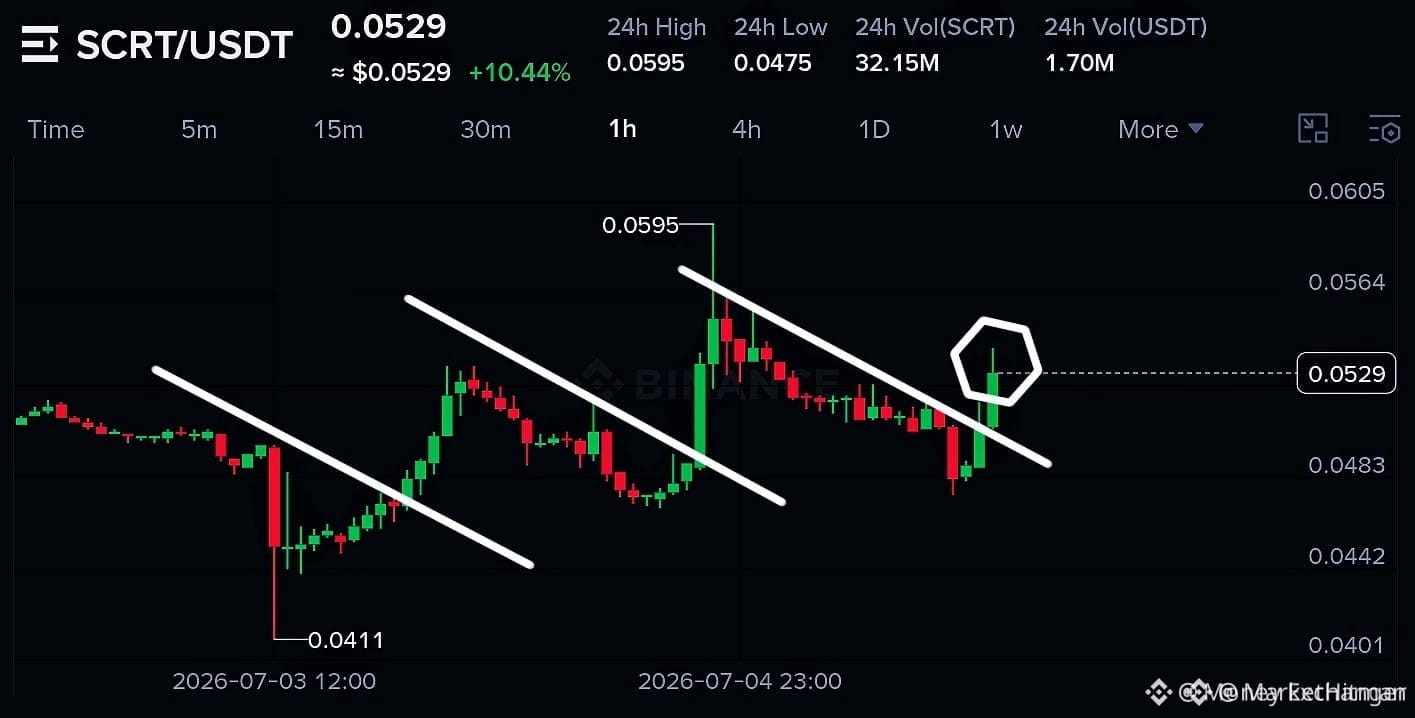
$SCRT SAME PATTERN REPEATING TARGET 0.065 🎯
Entry: 0.052 🔥
Target: 0.065 🚀
Stop Loss: 0.048 ⚠️
The same structure that produced the last rally is forming again on $SCRT . Price is at 0.052 with a clear run toward the 0.065 resistance zone. Volume is contracting during this consolidation — typically a sign of accumulation before expansion. This setup mirrors the previous move that saw a 25% gain in under a week. Are you positioning for the next leg up?
Not financial advice. Always manage your risk.
#SCRT #LongSetup #Pattern #Altcoins
🔥
$SCRT SAME PATTERN REPEATING TARGET 0.065 🎯
Entry: 0.052 🔥
Target: 0.065 🚀
Stop Loss: 0.048 ⚠️
The same structure that produced the last rally is forming again on $SCRT . Price is at 0.052 with a clear run toward the 0.065 resistance zone. Volume is contracting during this consolidation — typically a sign of accumulation before expansion. This setup mirrors the previous move that saw a 25% gain in under a week. Are you positioning for the next leg up?
Not financial advice. Always manage your risk.
#SCRT #LongSetup #Pattern #Altcoins
🔥
Entry: 0.052 🔥
Target: 0.065 🚀
Stop Loss: 0.048 ⚠️
The same structure that produced the last rally is forming again on $SCRT . Price is at 0.052 with a clear run toward the 0.065 resistance zone. Volume is contracting during this consolidation — typically a sign of accumulation before expansion. This setup mirrors the previous move that saw a 25% gain in under a week. Are you positioning for the next leg up?
Not financial advice. Always manage your risk.
#SCRT #LongSetup #Pattern #Altcoins
🔥
38


·
--
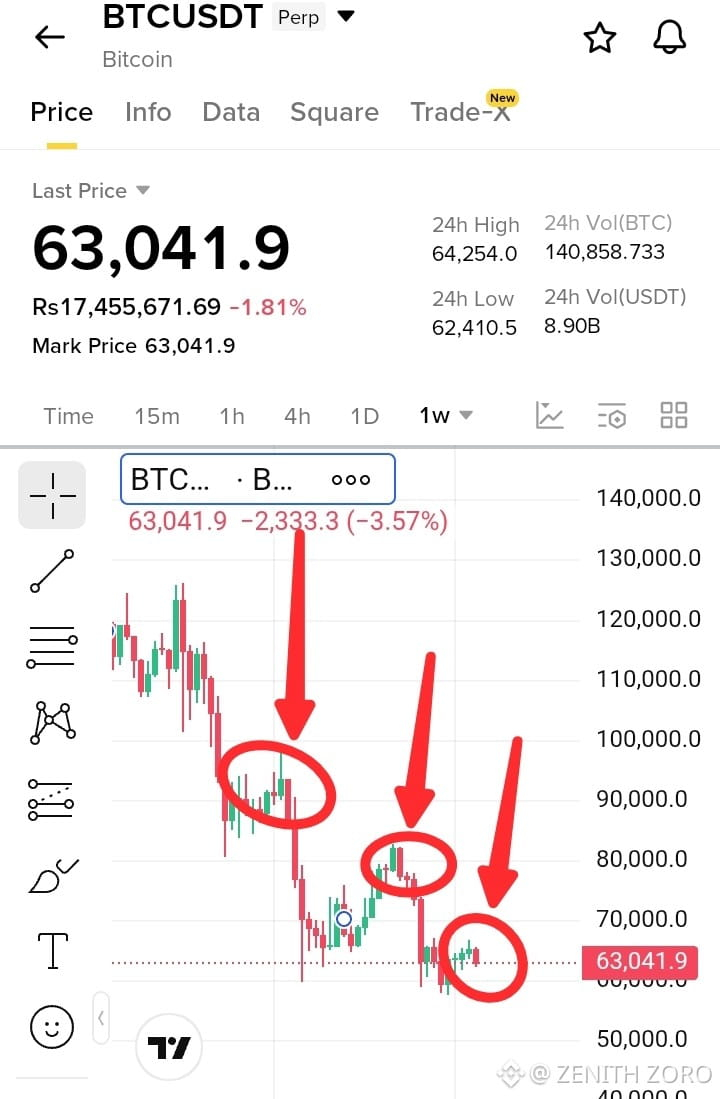
🔴 $BTC BEARISH PATTERN REPEATING - HERE'S WHAT'S COMING
I've seen this movie before. And it NEVER ends well for bulls.
{future}(BTCUSDT)
The Pattern:
Small pullback (happening now)
Strong pump to $67K-$69K (trap shorts)
MASSIVE dump (real move)
Bitcoin is setting up EXACTLY like this.
What I'm Seeing:
3-day chart screams BEARISH.
First comes the fake pump. Liquidates the shorts. Creates FOMO.
Then comes the REAL dump.
History repeats. Always.
The Move:
$67K-$69K = Pump trap
Then = New lows incoming
The Warning:
Don't trade against sentiment. That's how you get REKT.
Those who followed me from day 1 know: I've been BEARISH.
Not because I hate bulls. Because the CHART doesn't lie.
The Question:
Are you going to chase this pump?
Or wait for the dump? 🎯
#BTC #Bearish #Pattern #bitcoin
🔴 $BTC BEARISH PATTERN REPEATING - HERE'S WHAT'S COMING
I've seen this movie before. And it NEVER ends well for bulls.
The Pattern:
Small pullback (happening now)
Strong pump to $67K-$69K (trap shorts)
MASSIVE dump (real move)
Bitcoin is setting up EXACTLY like this.
What I'm Seeing:
3-day chart screams BEARISH.
First comes the fake pump. Liquidates the shorts. Creates FOMO.
Then comes the REAL dump.
History repeats. Always.
The Move:
$67K-$69K = Pump trap
Then = New lows incoming
The Warning:
Don't trade against sentiment. That's how you get REKT.
Those who followed me from day 1 know: I've been BEARISH.
Not because I hate bulls. Because the CHART doesn't lie.
The Question:
Are you going to chase this pump?
Or wait for the dump? 🎯
#BTC #Bearish #Pattern #bitcoin
I've seen this movie before. And it NEVER ends well for bulls.
The Pattern:
Small pullback (happening now)
Strong pump to $67K-$69K (trap shorts)
MASSIVE dump (real move)
Bitcoin is setting up EXACTLY like this.
What I'm Seeing:
3-day chart screams BEARISH.
First comes the fake pump. Liquidates the shorts. Creates FOMO.
Then comes the REAL dump.
History repeats. Always.
The Move:
$67K-$69K = Pump trap
Then = New lows incoming
The Warning:
Don't trade against sentiment. That's how you get REKT.
Those who followed me from day 1 know: I've been BEARISH.
Not because I hate bulls. Because the CHART doesn't lie.
The Question:
Are you going to chase this pump?
Or wait for the dump? 🎯
#BTC #Bearish #Pattern #bitcoin
166

97

·
--
$SUI
#SUIUSDT Analysis
Current Structure:
Price is up 5.4 percent today and trading near 0.6898 after bouncing from the 0.6470 low
It is pushing toward the 0.7000 to 0.7025 #resistance area which is the first major hurdle
Key #levels :
· Immediate Resistance: 0.7000–0.7025 then 0.7200
· Immediate Support: 0.6800–0.6600
· Lower Supports: 0.6400 then 0.6200 if support fails
#PATTERN Watch:
The structure shows a recovery bounce from the lower zone
Price is forming higher lows which could be the start of a short term reversal
But the longer term picture is still weak with 90 day losses of 35 percent and 1 year losses of 81 percent
#bullish Scenario:
A clean break above 0.7025 could open room toward 0.7200 and possibly 0.7400 to 0.7600 if momentum stays strong
Bearish Scenario:
Rejection at 0.7000–0.7025 could send price back toward 0.6800 and then 0.6600
A break below 0.6600 would open the door to 0.6400 and 0.6200
Trader’s Note:
Order book shows 70 percent longs and 29 percent shorts which is heavily skewed bullish
This could mean crowded positioning and risk of a shakeout
Watch whether price can hold above 0.6800 and turn 0.7000 into support
Volume is decent at 26 million USDT but needs to pick up for a sustained breakout
The 7 day trend is only up 1.4 percent so this move is still in early stages
$SUI
#SUIUSDT Analysis
Current Structure:
Price is up 5.4 percent today and trading near 0.6898 after bouncing from the 0.6470 low
It is pushing toward the 0.7000 to 0.7025 #resistance area which is the first major hurdle
Key #levels :
· Immediate Resistance: 0.7000–0.7025 then 0.7200
· Immediate Support: 0.6800–0.6600
· Lower Supports: 0.6400 then 0.6200 if support fails
#PATTERN Watch:
The structure shows a recovery bounce from the lower zone
Price is forming higher lows which could be the start of a short term reversal
But the longer term picture is still weak with 90 day losses of 35 percent and 1 year losses of 81 percent
#bullish Scenario:
A clean break above 0.7025 could open room toward 0.7200 and possibly 0.7400 to 0.7600 if momentum stays strong
Bearish Scenario:
Rejection at 0.7000–0.7025 could send price back toward 0.6800 and then 0.6600
A break below 0.6600 would open the door to 0.6400 and 0.6200
Trader’s Note:
Order book shows 70 percent longs and 29 percent shorts which is heavily skewed bullish
This could mean crowded positioning and risk of a shakeout
Watch whether price can hold above 0.6800 and turn 0.7000 into support
Volume is decent at 26 million USDT but needs to pick up for a sustained breakout
The 7 day trend is only up 1.4 percent so this move is still in early stages
#SUIUSDT Analysis
Current Structure:
Price is up 5.4 percent today and trading near 0.6898 after bouncing from the 0.6470 low
It is pushing toward the 0.7000 to 0.7025 #resistance area which is the first major hurdle
Key #levels :
· Immediate Resistance: 0.7000–0.7025 then 0.7200
· Immediate Support: 0.6800–0.6600
· Lower Supports: 0.6400 then 0.6200 if support fails
#PATTERN Watch:
The structure shows a recovery bounce from the lower zone
Price is forming higher lows which could be the start of a short term reversal
But the longer term picture is still weak with 90 day losses of 35 percent and 1 year losses of 81 percent
#bullish Scenario:
A clean break above 0.7025 could open room toward 0.7200 and possibly 0.7400 to 0.7600 if momentum stays strong
Bearish Scenario:
Rejection at 0.7000–0.7025 could send price back toward 0.6800 and then 0.6600
A break below 0.6600 would open the door to 0.6400 and 0.6200
Trader’s Note:
Order book shows 70 percent longs and 29 percent shorts which is heavily skewed bullish
This could mean crowded positioning and risk of a shakeout
Watch whether price can hold above 0.6800 and turn 0.7000 into support
Volume is decent at 26 million USDT but needs to pick up for a sustained breakout
The 7 day trend is only up 1.4 percent so this move is still in early stages
2
74
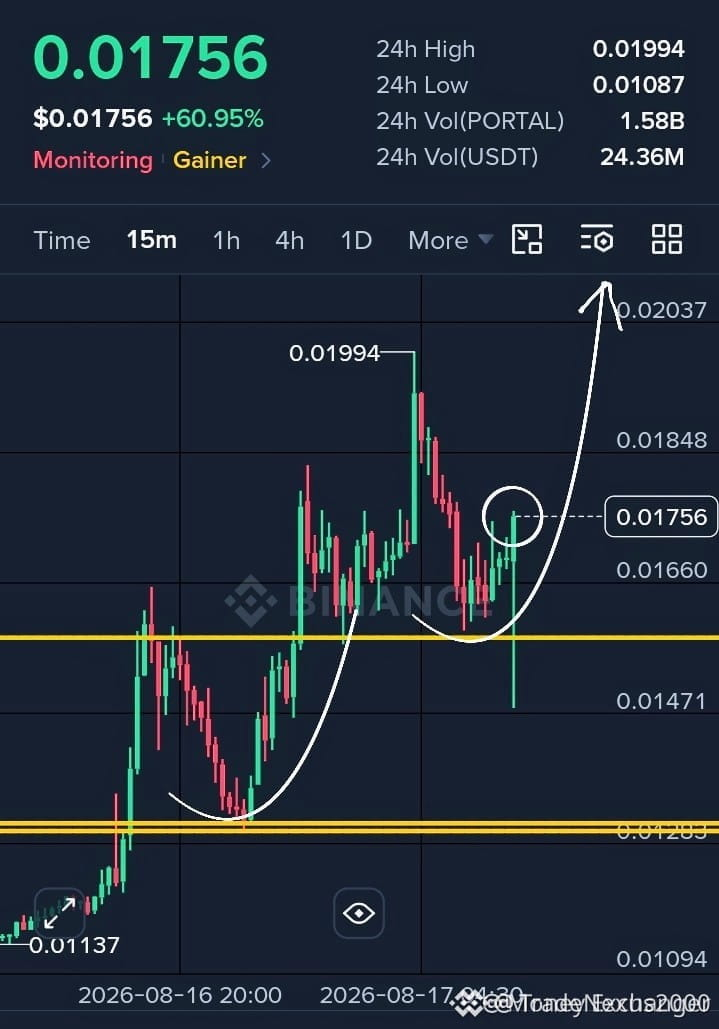
$PORTAL REPEATING THE SAME LIQUIDITY PATTERN — LONG READY FOR ANOTHER RIDE 🚨
Entry: 0.01750 ⚡
Target: 0.01900 – 0.02200 🎯
Stop Loss: 0.01585 ⚠️
📊 The symmetry here is unmistakable — the same lower-high rejection followed by a sweep into a liquidity void that ignited the previous move. Buyers are absorbing sell-side pressure at 0.01750, and the footprint shows institutional order stacking beneath this range.
💡 With targets positioned at 0.01900 and up to 0.02200, we're tracking a clean inefficiency fill toward prior supply. Risk stays tight below 0.01585, giving this repeat pattern a strong asymmetric edge worth respecting.
💬 The structure is repeating right on schedule — are you positioned before the liquidity abandons this zone, or waiting for a deeper re-test? 👇
⚠️ Not financial advice. Always manage your risk. 🛡️
🏷️ #PORTAL #LongSetup #Pattern #Crypto #Trading
🦈 📈
$PORTAL REPEATING THE SAME LIQUIDITY PATTERN — LONG READY FOR ANOTHER RIDE 🚨
Entry: 0.01750 ⚡
Target: 0.01900 – 0.02200 🎯
Stop Loss: 0.01585 ⚠️
📊 The symmetry here is unmistakable — the same lower-high rejection followed by a sweep into a liquidity void that ignited the previous move. Buyers are absorbing sell-side pressure at 0.01750, and the footprint shows institutional order stacking beneath this range.
💡 With targets positioned at 0.01900 and up to 0.02200, we're tracking a clean inefficiency fill toward prior supply. Risk stays tight below 0.01585, giving this repeat pattern a strong asymmetric edge worth respecting.
💬 The structure is repeating right on schedule — are you positioned before the liquidity abandons this zone, or waiting for a deeper re-test? 👇
⚠️ Not financial advice. Always manage your risk. 🛡️
🏷️ #PORTAL #LongSetup #Pattern #Crypto #Trading
🦈 📈
Entry: 0.01750 ⚡
Target: 0.01900 – 0.02200 🎯
Stop Loss: 0.01585 ⚠️
📊 The symmetry here is unmistakable — the same lower-high rejection followed by a sweep into a liquidity void that ignited the previous move. Buyers are absorbing sell-side pressure at 0.01750, and the footprint shows institutional order stacking beneath this range.
💡 With targets positioned at 0.01900 and up to 0.02200, we're tracking a clean inefficiency fill toward prior supply. Risk stays tight below 0.01585, giving this repeat pattern a strong asymmetric edge worth respecting.
💬 The structure is repeating right on schedule — are you positioned before the liquidity abandons this zone, or waiting for a deeper re-test? 👇
⚠️ Not financial advice. Always manage your risk. 🛡️
🏷️ #PORTAL #LongSetup #Pattern #Crypto #Trading
🦈 📈
95

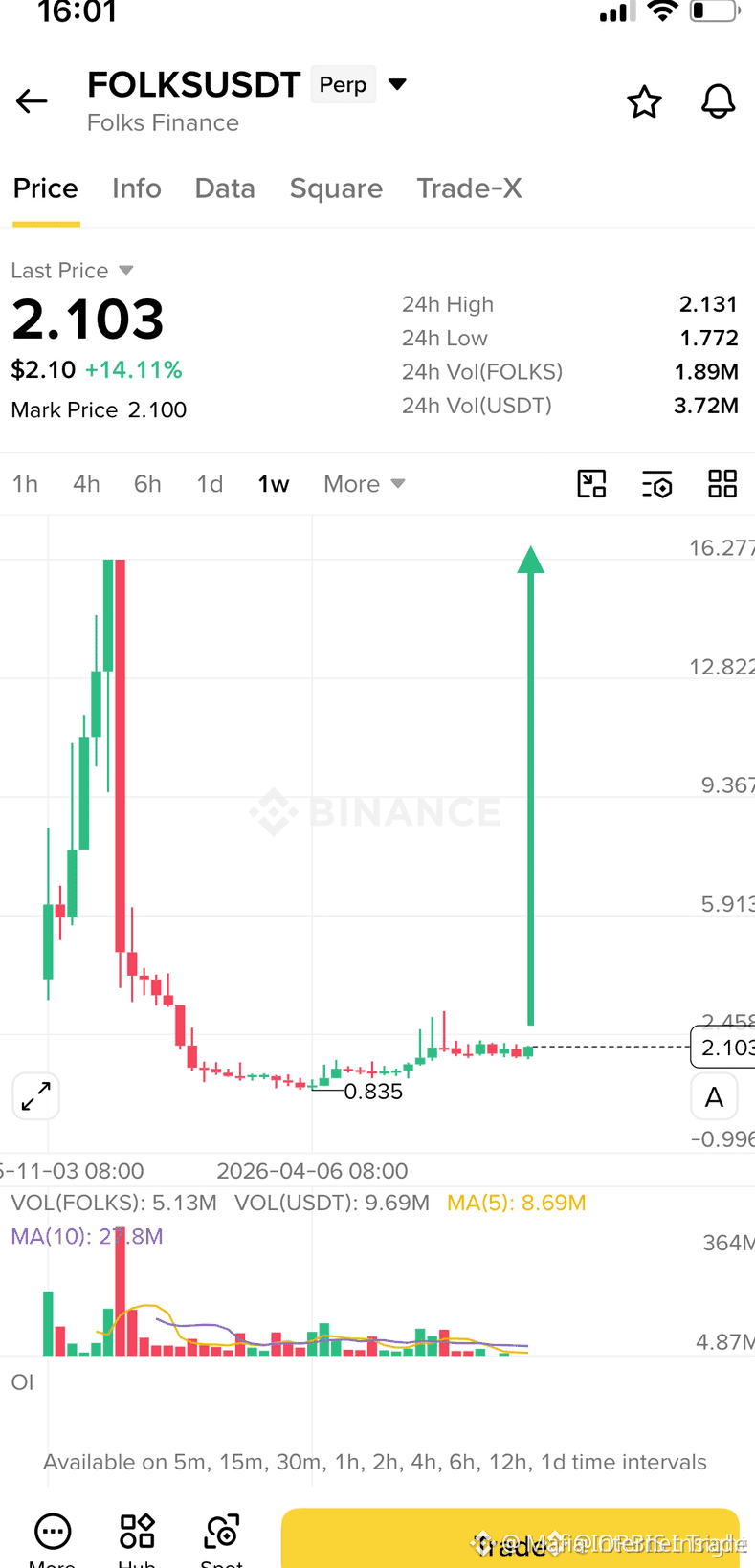
🚨 $FOLKS READY TO ERUPT — ACCUMULATION FRACTAL OF $BEAT COMPLETED! ⚡
📊 Textbook accumulation: two impulsive upswings separated by two tight compression zones. The current price action on $FOLKS is tracing the exact fingerprint that sent $BEAT racing to vertical expansion just weeks ago. Every dip is being absorbed, volume is drying up on the pullbacks — classic pre-breakout behavior.
💡 Traders who waited for the breakout on $BEAT paid a 40% premium. The bid is stacking here while the crowd still hesitates. This is the phase where early conviction gets rewarded, not when the rocket is halfway to orbit. The longer the compression, the sharper the release. ⚡
💬 If the fractal completes, will you be front-running the move or chasing the candle after it's already lit? 👇
⚠️ Not financial advice. Always manage your risk. 🛡️
🏷️ #FOLKS #Accumulation #Breakout #Pattern #Crypto
🚀 ⚡
🚨 $FOLKS READY TO ERUPT — ACCUMULATION FRACTAL OF $BEAT COMPLETED! ⚡
📊 Textbook accumulation: two impulsive upswings separated by two tight compression zones. The current price action on $FOLKS is tracing the exact fingerprint that sent $BEAT racing to vertical expansion just weeks ago. Every dip is being absorbed, volume is drying up on the pullbacks — classic pre-breakout behavior.
💡 Traders who waited for the breakout on $BEAT paid a 40% premium. The bid is stacking here while the crowd still hesitates. This is the phase where early conviction gets rewarded, not when the rocket is halfway to orbit. The longer the compression, the sharper the release. ⚡
💬 If the fractal completes, will you be front-running the move or chasing the candle after it's already lit? 👇
⚠️ Not financial advice. Always manage your risk. 🛡️
🏷️ #FOLKS #Accumulation #Breakout #Pattern #Crypto
🚀 ⚡
📊 Textbook accumulation: two impulsive upswings separated by two tight compression zones. The current price action on $FOLKS is tracing the exact fingerprint that sent $BEAT racing to vertical expansion just weeks ago. Every dip is being absorbed, volume is drying up on the pullbacks — classic pre-breakout behavior.
💡 Traders who waited for the breakout on $BEAT paid a 40% premium. The bid is stacking here while the crowd still hesitates. This is the phase where early conviction gets rewarded, not when the rocket is halfway to orbit. The longer the compression, the sharper the release. ⚡
💬 If the fractal completes, will you be front-running the move or chasing the candle after it's already lit? 👇
⚠️ Not financial advice. Always manage your risk. 🛡️
🏷️ #FOLKS #Accumulation #Breakout #Pattern #Crypto
🚀 ⚡
190

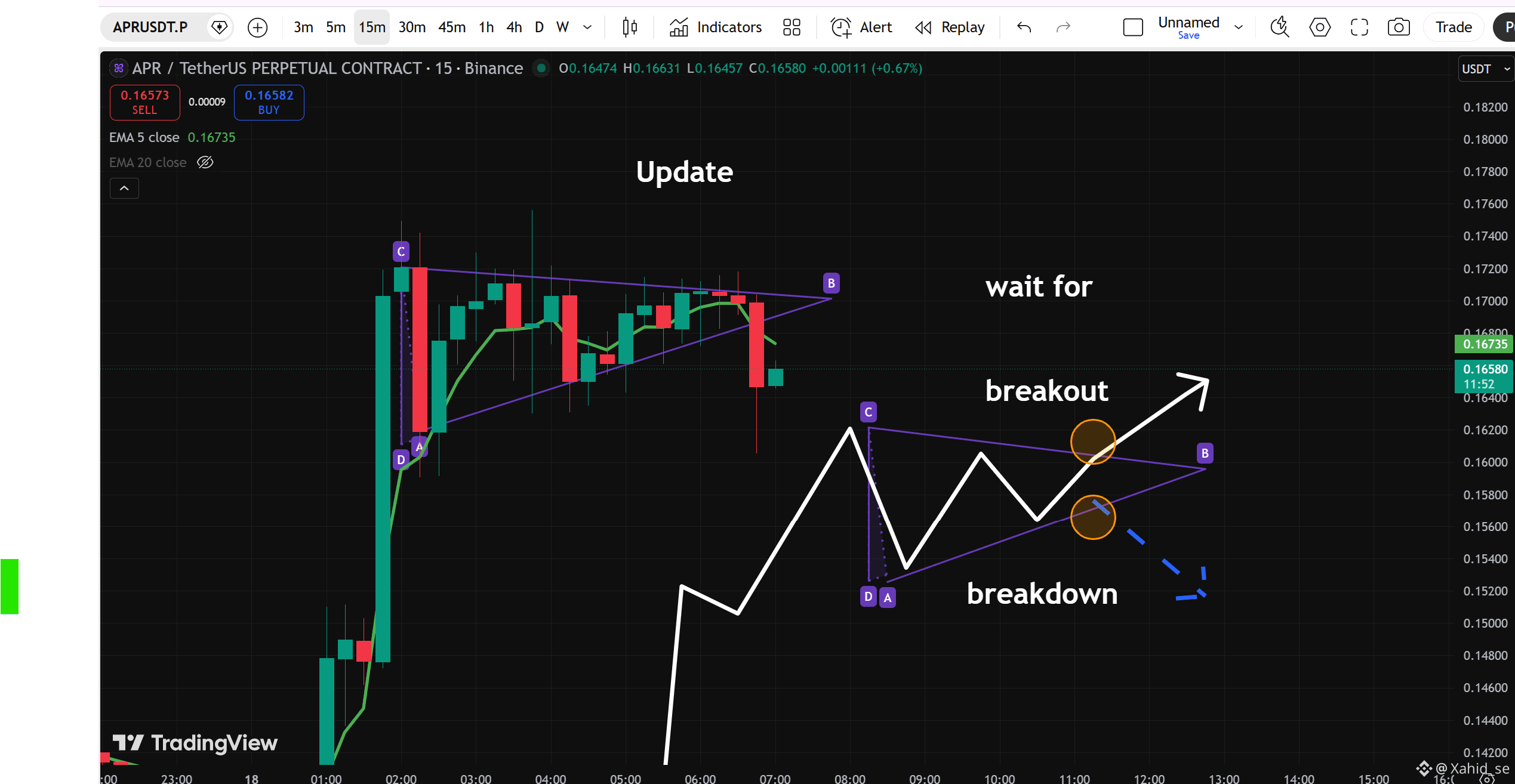
#APR Setup Update! 🚨
In our last post, we mapped out this symmetrical triangle on the 15m chart and stressed the importance of WAITING for confirmation. Here is exactly why!
The coil broke to the downside, flashing a massive red breakdown candle through our lower support line. The bullish continuation is invalidated. If you stayed patient and waited for the candle close instead of guessing the direction, you successfully avoided a trap.
Always let the chart make the first move! 📉🩸
$APR
{future}(APRUSDT)
$BSB
{future}(BSBUSDT)
$EDEN
{future}(EDENUSDT)
🛑(Disclaimer: NFA / DYOR. Trading crypto carries high risk. Always use stop losses.)
#CryptoTradingInsights #altcoins #BullishPennant #PATTERN
#APR Setup Update! 🚨
In our last post, we mapped out this symmetrical triangle on the 15m chart and stressed the importance of WAITING for confirmation. Here is exactly why!
The coil broke to the downside, flashing a massive red breakdown candle through our lower support line. The bullish continuation is invalidated. If you stayed patient and waited for the candle close instead of guessing the direction, you successfully avoided a trap.
Always let the chart make the first move! 📉🩸
$APR
$BSB
$EDEN
🛑(Disclaimer: NFA / DYOR. Trading crypto carries high risk. Always use stop losses.)
#CryptoTradingInsights #altcoins #BullishPennant #PATTERN
In our last post, we mapped out this symmetrical triangle on the 15m chart and stressed the importance of WAITING for confirmation. Here is exactly why!
The coil broke to the downside, flashing a massive red breakdown candle through our lower support line. The bullish continuation is invalidated. If you stayed patient and waited for the candle close instead of guessing the direction, you successfully avoided a trap.
Always let the chart make the first move! 📉🩸
$APR
$BSB
$EDEN
🛑(Disclaimer: NFA / DYOR. Trading crypto carries high risk. Always use stop losses.)
#CryptoTradingInsights #altcoins #BullishPennant #PATTERN
1
296

·
--
Article
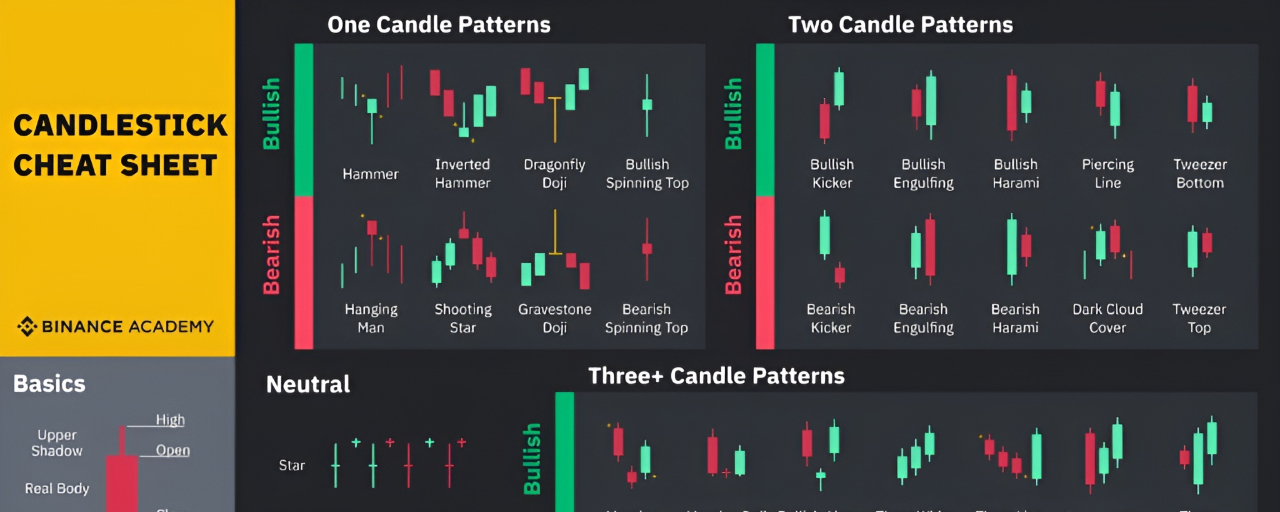
THE ULTIMATE CANDLESTICK PATTERN GUIDE (BEGINNER PRO)Candlestick patterns are more than shapes — they reflect the real-time battle between buyers and sellers. Understanding them helps you anticipate moves instead of reacting late.
🔄 1. Engulfing Patterns — Momentum Shift Indicators
These patterns signal a strong change in market control.
• Bullish Engulfing
A strong green candle fully covers the previous red candle
→ Indicates aggressive buying pressure
→ Often appears at the end of a downtrend
• Bearish Engulfing
A red candle engulfs the previous green candle
→ Signals strong selling pressure
→ Common near market tops
Insight: More reliable near key support and resistance levels
🧱 2. Order Blocks — Institutional Zones
Order blocks are areas where large players enter positions.
• Bullish Order Block → Buying interest and accumulation
• Bearish Order Block → Selling pressure and distribution
Insight: Price often revisits these zones before continuing its move
😶🌫️ 3. Doji Candles — Indecision Signals
Doji candles form when open and close prices are nearly equal.
• Neutral Doji → Market pause
• Dragonfly Doji → Potential bullish reversal
• Gravestone Doji → Potential bearish reversal
• Spinning Top → Weak momentum
Insight: Always wait for confirmation from the next candle
📉 4. Wick Rejection Patterns — Price Reaction Clues
Long wicks show rejection at key price levels.
• Hammer → Bullish rejection from lower levels
• Inverted Hammer → Possible reversal
• Shooting Star → Bearish rejection from highs
• Hanging Man → Weakening uptrend
Insight: Stronger when supported by volume and structure
✂️ 5. Tweezer Patterns — Quick Reversals
Formed when two candles share equal highs or lows.
• Tweezer Bottom → Potential upward move
• Tweezer Top → Potential downward move
Insight: Effective near support and resistance zones
⏱ 6. Timeframe Matters — Strength of Signals
Higher timeframes provide more reliable signals:
Weekly > Daily > 4H > 1H > Lower timeframes
Insight: Use higher timeframe for trend, lower timeframe for entries
🧠 7. Confluence — The Real Edge
Strong setups come from combining factors:
• Pattern + Support/Resistance
• Pattern + Trend Direction
• Pattern + Volume
• Pattern + Order Block
Rule: Avoid trading patterns in isolation
⚠️ Common Mistakes
• Ignoring the overall trend
• Trading without confirmation
• Overtrading on low timeframes
• Poor risk management
Final Takeaway
Candlestick patterns help you:
• Identify reversals early
• Improve entry timing
• Understand market behavior
• Trade with more discipline
Comment “🔥” if you want a candlestick cheat sheet, trade setups, and advanced breakdowns.
#trading #cryptotrading #tradingtips #PATTERN
THE ULTIMATE CANDLESTICK PATTERN GUIDE (BEGINNER PRO)
Candlestick patterns are more than shapes — they reflect the real-time battle between buyers and sellers. Understanding them helps you anticipate moves instead of reacting late.
🔄 1. Engulfing Patterns — Momentum Shift Indicators
These patterns signal a strong change in market control.
• Bullish Engulfing
A strong green candle fully covers the previous red candle
→ Indicates aggressive buying pressure
→ Often appears at the end of a downtrend
• Bearish Engulfing
A red candle engulfs the previous green candle
→ Signals strong selling pressure
→ Common near market tops
Insight: More reliable near key support and resistance levels
🧱 2. Order Blocks — Institutional Zones
Order blocks are areas where large players enter positions.
• Bullish Order Block → Buying interest and accumulation
• Bearish Order Block → Selling pressure and distribution
Insight: Price often revisits these zones before continuing its move
😶🌫️ 3. Doji Candles — Indecision Signals
Doji candles form when open and close prices are nearly equal.
• Neutral Doji → Market pause
• Dragonfly Doji → Potential bullish reversal
• Gravestone Doji → Potential bearish reversal
• Spinning Top → Weak momentum
Insight: Always wait for confirmation from the next candle
📉 4. Wick Rejection Patterns — Price Reaction Clues
Long wicks show rejection at key price levels.
• Hammer → Bullish rejection from lower levels
• Inverted Hammer → Possible reversal
• Shooting Star → Bearish rejection from highs
• Hanging Man → Weakening uptrend
Insight: Stronger when supported by volume and structure
✂️ 5. Tweezer Patterns — Quick Reversals
Formed when two candles share equal highs or lows.
• Tweezer Bottom → Potential upward move
• Tweezer Top → Potential downward move
Insight: Effective near support and resistance zones
⏱ 6. Timeframe Matters — Strength of Signals
Higher timeframes provide more reliable signals:
Weekly > Daily > 4H > 1H > Lower timeframes
Insight: Use higher timeframe for trend, lower timeframe for entries
🧠 7. Confluence — The Real Edge
Strong setups come from combining factors:
• Pattern + Support/Resistance
• Pattern + Trend Direction
• Pattern + Volume
• Pattern + Order Block
Rule: Avoid trading patterns in isolation
⚠️ Common Mistakes
• Ignoring the overall trend
• Trading without confirmation
• Overtrading on low timeframes
• Poor risk management
Final Takeaway
Candlestick patterns help you:
• Identify reversals early
• Improve entry timing
• Understand market behavior
• Trade with more discipline
Comment “🔥” if you want a candlestick cheat sheet, trade setups, and advanced breakdowns.
#trading #cryptotrading #tradingtips #PATTERN
🔄 1. Engulfing Patterns — Momentum Shift Indicators
These patterns signal a strong change in market control.
• Bullish Engulfing
A strong green candle fully covers the previous red candle
→ Indicates aggressive buying pressure
→ Often appears at the end of a downtrend
• Bearish Engulfing
A red candle engulfs the previous green candle
→ Signals strong selling pressure
→ Common near market tops
Insight: More reliable near key support and resistance levels
🧱 2. Order Blocks — Institutional Zones
Order blocks are areas where large players enter positions.
• Bullish Order Block → Buying interest and accumulation
• Bearish Order Block → Selling pressure and distribution
Insight: Price often revisits these zones before continuing its move
😶🌫️ 3. Doji Candles — Indecision Signals
Doji candles form when open and close prices are nearly equal.
• Neutral Doji → Market pause
• Dragonfly Doji → Potential bullish reversal
• Gravestone Doji → Potential bearish reversal
• Spinning Top → Weak momentum
Insight: Always wait for confirmation from the next candle
📉 4. Wick Rejection Patterns — Price Reaction Clues
Long wicks show rejection at key price levels.
• Hammer → Bullish rejection from lower levels
• Inverted Hammer → Possible reversal
• Shooting Star → Bearish rejection from highs
• Hanging Man → Weakening uptrend
Insight: Stronger when supported by volume and structure
✂️ 5. Tweezer Patterns — Quick Reversals
Formed when two candles share equal highs or lows.
• Tweezer Bottom → Potential upward move
• Tweezer Top → Potential downward move
Insight: Effective near support and resistance zones
⏱ 6. Timeframe Matters — Strength of Signals
Higher timeframes provide more reliable signals:
Weekly > Daily > 4H > 1H > Lower timeframes
Insight: Use higher timeframe for trend, lower timeframe for entries
🧠 7. Confluence — The Real Edge
Strong setups come from combining factors:
• Pattern + Support/Resistance
• Pattern + Trend Direction
• Pattern + Volume
• Pattern + Order Block
Rule: Avoid trading patterns in isolation
⚠️ Common Mistakes
• Ignoring the overall trend
• Trading without confirmation
• Overtrading on low timeframes
• Poor risk management
Final Takeaway
Candlestick patterns help you:
• Identify reversals early
• Improve entry timing
• Understand market behavior
• Trade with more discipline
Comment “🔥” if you want a candlestick cheat sheet, trade setups, and advanced breakdowns.
#trading #cryptotrading #tradingtips #PATTERN
3
4
184
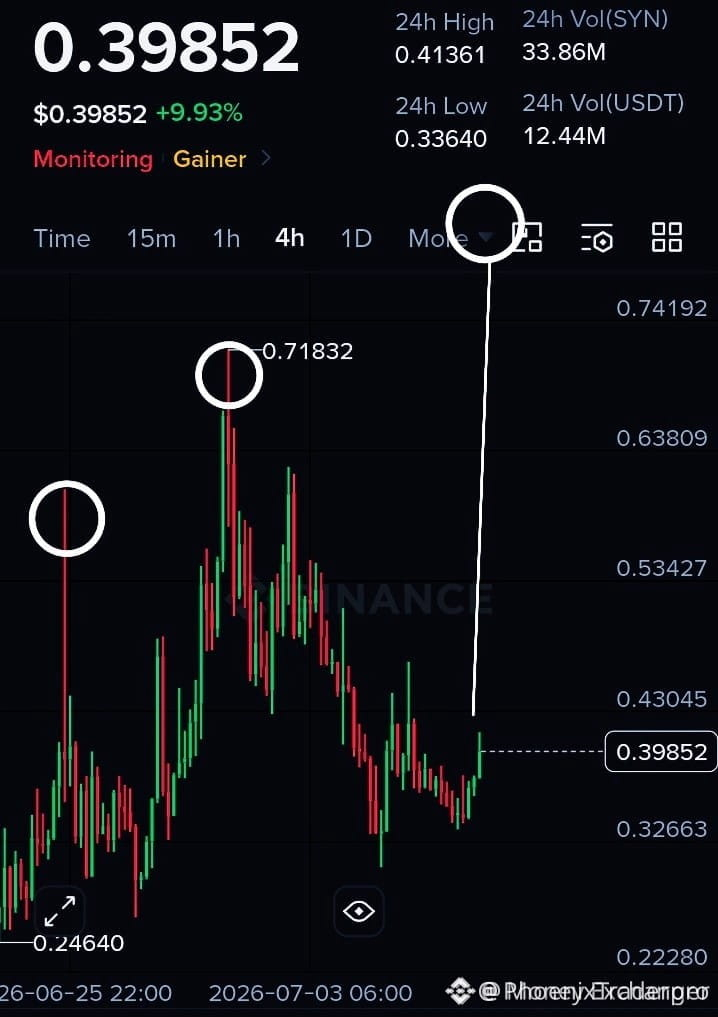
$SYN IS REPEATING THE SAME BREAKOUT PATTERN AGAIN 🔥
Entry: 0.393 🔥
Target: 0.435 🚀
Stop Loss: 0.340 ⚠️
SYN just brushed the exact same support zone that kicked off its last 40% runner. Volume is already picking up on the 15-min and the previous sweep at 0.38 got bought hard within minutes. This exact structure has printed three times in the last two weeks.
The first target at 0.435 is only 10% away with room to stretch toward 0.48 if momentum holds. Are you getting in before the move or sitting it out?
Not financial advice. Always manage your risk.
#SYN #Breakout #Pattern #Altcoin #Crypto
🔥
$SYN IS REPEATING THE SAME BREAKOUT PATTERN AGAIN 🔥
Entry: 0.393 🔥
Target: 0.435 🚀
Stop Loss: 0.340 ⚠️
SYN just brushed the exact same support zone that kicked off its last 40% runner. Volume is already picking up on the 15-min and the previous sweep at 0.38 got bought hard within minutes. This exact structure has printed three times in the last two weeks.
The first target at 0.435 is only 10% away with room to stretch toward 0.48 if momentum holds. Are you getting in before the move or sitting it out?
Not financial advice. Always manage your risk.
#SYN #Breakout #Pattern #Altcoin #Crypto
🔥
Entry: 0.393 🔥
Target: 0.435 🚀
Stop Loss: 0.340 ⚠️
SYN just brushed the exact same support zone that kicked off its last 40% runner. Volume is already picking up on the 15-min and the previous sweep at 0.38 got bought hard within minutes. This exact structure has printed three times in the last two weeks.
The first target at 0.435 is only 10% away with room to stretch toward 0.48 if momentum holds. Are you getting in before the move or sitting it out?
Not financial advice. Always manage your risk.
#SYN #Breakout #Pattern #Altcoin #Crypto
🔥
100

·
--
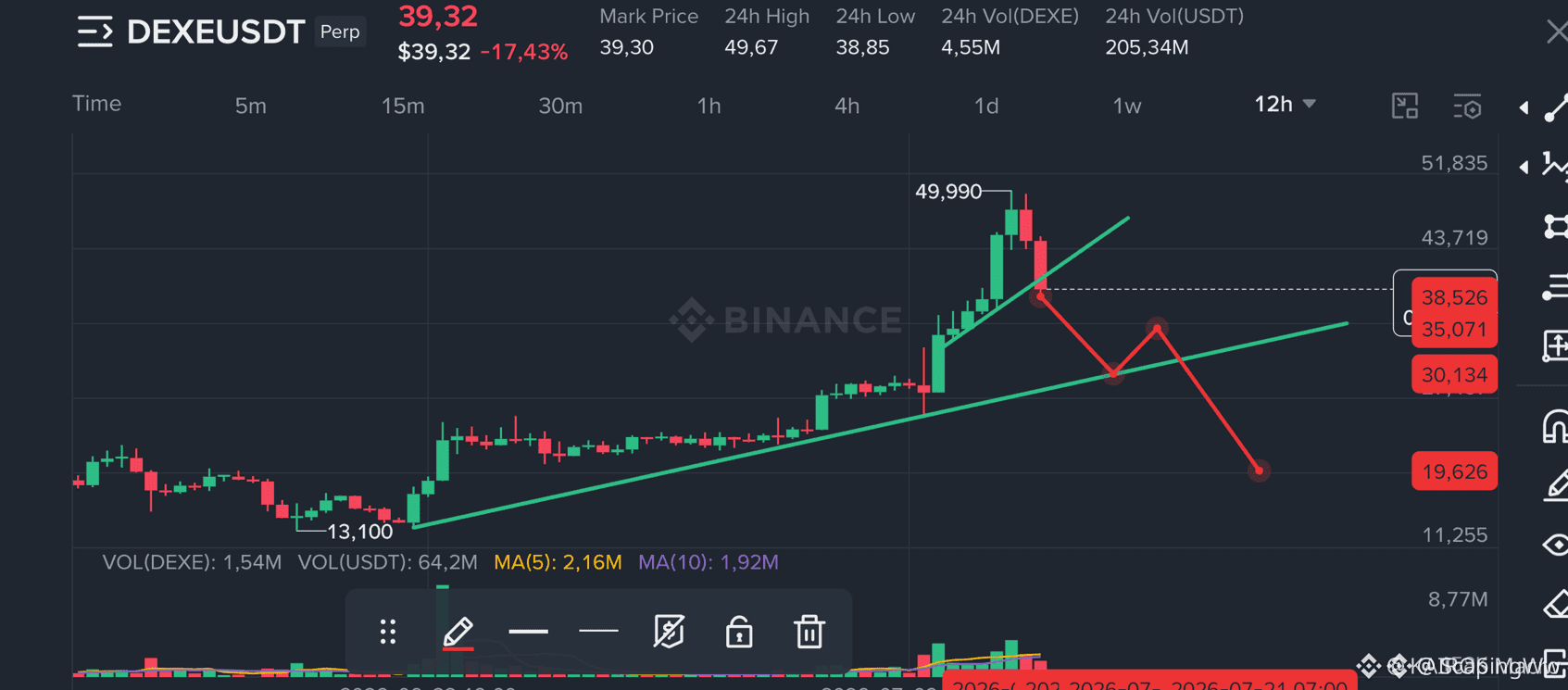
$DEXE SHORT SETUP MIRRORING $LAB 'S MOVE LOWER 💥
Entry: 40 - 41 🔥
Target: 36, 32, 28, 20 🚀
Stop Loss: 45 ⚠️
I've seen this exact pattern on $LAB before it dropped 60% in a week. $DEXE is forming the same breakdown structure — weakening bids on the daily, rejection at a prior resistance zone. Momentum is shifting bearish and the volume confirms it.
This setup gives you a clean 1:3+ risk-to-reward across multiple targets. Are you stepping into this short or sitting on the sidelines?
Not financial advice. Always manage your risk.
#DEXE #ShortSetup #Crypto #Trading #Pattern
🔥
$DEXE SHORT SETUP MIRRORING $LAB 'S MOVE LOWER 💥
Entry: 40 - 41 🔥
Target: 36, 32, 28, 20 🚀
Stop Loss: 45 ⚠️
I've seen this exact pattern on $LAB before it dropped 60% in a week. $DEXE is forming the same breakdown structure — weakening bids on the daily, rejection at a prior resistance zone. Momentum is shifting bearish and the volume confirms it.
This setup gives you a clean 1:3+ risk-to-reward across multiple targets. Are you stepping into this short or sitting on the sidelines?
Not financial advice. Always manage your risk.
#DEXE #ShortSetup #Crypto #Trading #Pattern
🔥
Entry: 40 - 41 🔥
Target: 36, 32, 28, 20 🚀
Stop Loss: 45 ⚠️
I've seen this exact pattern on $LAB before it dropped 60% in a week. $DEXE is forming the same breakdown structure — weakening bids on the daily, rejection at a prior resistance zone. Momentum is shifting bearish and the volume confirms it.
This setup gives you a clean 1:3+ risk-to-reward across multiple targets. Are you stepping into this short or sitting on the sidelines?
Not financial advice. Always manage your risk.
#DEXE #ShortSetup #Crypto #Trading #Pattern
🔥
399
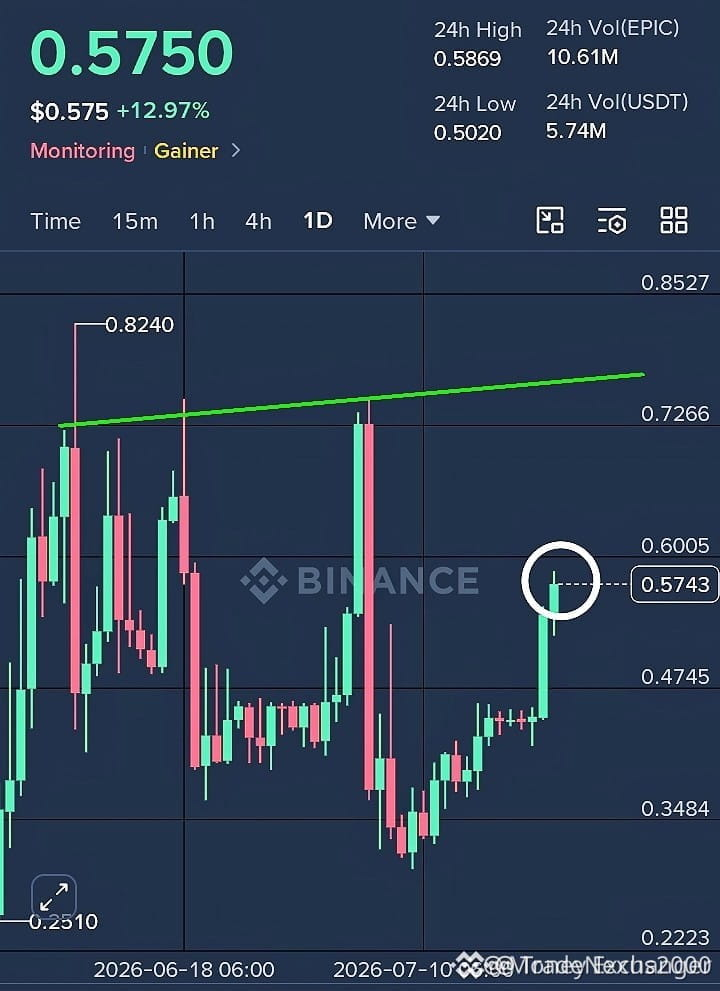
🚨 $EPIC PATTERN REPEAT — LONG SETUP WITH 3 TARGETS! 💥
Target: 0.6120 🚀
Stop Loss: 0.5450 ⚠️
📌 The same structural inefficiency that yielded the last 40% move is reforming on the lower timeframes. 📊 Volume divergence confirms smart money is absorbing sell pressure right at the previous order block — this isn't a random pump, it's a liquidity sweep replay.
💡 With a clean risk-to-reward ratio and back-to-back fractal symmetry, this remains one of the highest-conviction plays on the board. Secondary targets sit at 0.6750 and 0.7450. 💬 Are you scaling into the first test or waiting for a retest of the demand zone? 👇
⚠️ Not financial advice. Always manage your risk. 🛡️
🏷️ #EPIC #LongSetup #Pattern #Crypto #Trading
🦈 🎯
🚨 $EPIC PATTERN REPEAT — LONG SETUP WITH 3 TARGETS! 💥
Target: 0.6120 🚀
Stop Loss: 0.5450 ⚠️
📌 The same structural inefficiency that yielded the last 40% move is reforming on the lower timeframes. 📊 Volume divergence confirms smart money is absorbing sell pressure right at the previous order block — this isn't a random pump, it's a liquidity sweep replay.
💡 With a clean risk-to-reward ratio and back-to-back fractal symmetry, this remains one of the highest-conviction plays on the board. Secondary targets sit at 0.6750 and 0.7450. 💬 Are you scaling into the first test or waiting for a retest of the demand zone? 👇
⚠️ Not financial advice. Always manage your risk. 🛡️
🏷️ #EPIC #LongSetup #Pattern #Crypto #Trading
🦈 🎯
Target: 0.6120 🚀
Stop Loss: 0.5450 ⚠️
📌 The same structural inefficiency that yielded the last 40% move is reforming on the lower timeframes. 📊 Volume divergence confirms smart money is absorbing sell pressure right at the previous order block — this isn't a random pump, it's a liquidity sweep replay.
💡 With a clean risk-to-reward ratio and back-to-back fractal symmetry, this remains one of the highest-conviction plays on the board. Secondary targets sit at 0.6750 and 0.7450. 💬 Are you scaling into the first test or waiting for a retest of the demand zone? 👇
⚠️ Not financial advice. Always manage your risk. 🛡️
🏷️ #EPIC #LongSetup #Pattern #Crypto #Trading
🦈 🎯
57

·
--
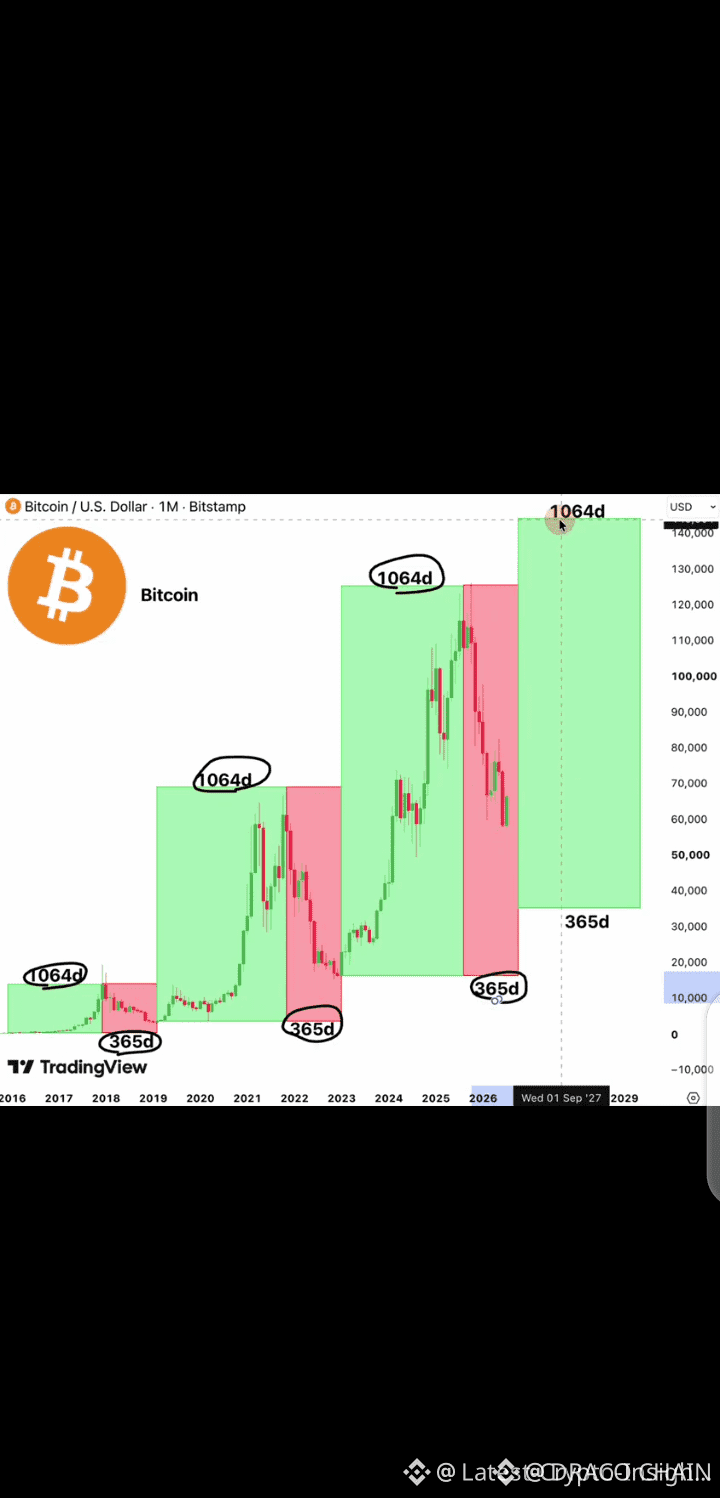
⏱️ $BTC CLOCK TICKS TOWARD OCTOBER 9, 2026 📊
For over a decade, Bitcoin has danced to a precise rhythm: 1,064 days of bull, 364 days of bear. 📏 That mathematical heartbeat now points to October 9, 2026—a structural pivot that institutional desks have quietly noted in their long-term models.
History doesn't dictate the future, but recurring liquidity rhythms are worth tracking. 🔍 The question is whether smart money will respect the cycle or engineer a deviation to trap late positioning. 💬 Do you think Bitcoin will honor this beat or break the pattern? 👇
⚠️ Not financial advice. Always manage your risk. 🛡️
🏷️ #BTC #Cycle #Bitcoin #Pattern #Crypto
⏱️ 🐂
⏱️ $BTC CLOCK TICKS TOWARD OCTOBER 9, 2026 📊
For over a decade, Bitcoin has danced to a precise rhythm: 1,064 days of bull, 364 days of bear. 📏 That mathematical heartbeat now points to October 9, 2026—a structural pivot that institutional desks have quietly noted in their long-term models.
History doesn't dictate the future, but recurring liquidity rhythms are worth tracking. 🔍 The question is whether smart money will respect the cycle or engineer a deviation to trap late positioning. 💬 Do you think Bitcoin will honor this beat or break the pattern? 👇
⚠️ Not financial advice. Always manage your risk. 🛡️
🏷️ #BTC #Cycle #Bitcoin #Pattern #Crypto
⏱️ 🐂
For over a decade, Bitcoin has danced to a precise rhythm: 1,064 days of bull, 364 days of bear. 📏 That mathematical heartbeat now points to October 9, 2026—a structural pivot that institutional desks have quietly noted in their long-term models.
History doesn't dictate the future, but recurring liquidity rhythms are worth tracking. 🔍 The question is whether smart money will respect the cycle or engineer a deviation to trap late positioning. 💬 Do you think Bitcoin will honor this beat or break the pattern? 👇
⚠️ Not financial advice. Always manage your risk. 🛡️
🏷️ #BTC #Cycle #Bitcoin #Pattern #Crypto
⏱️ 🐂
28

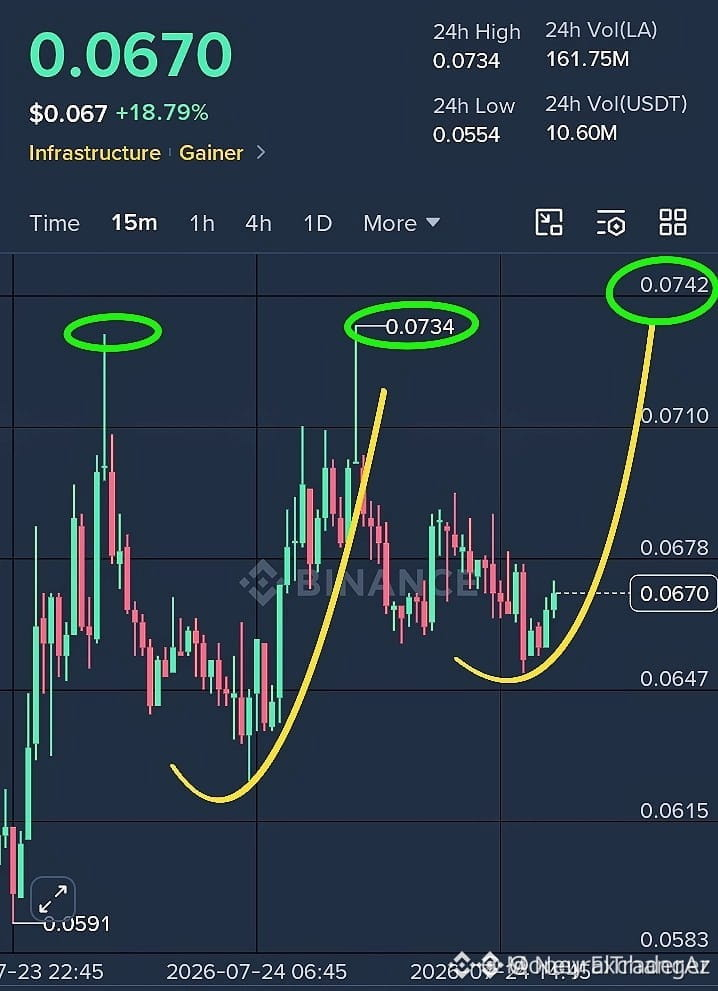
🔄 $LA REPEATS THE LIQUIDITY PATTERN — LONG SETUP 🚨
Entry: 0.0665 ⚡
Target: 0.0695 🚀
Stop Loss: 0.0632 ⚠️
📊 This exact price structure has played out twice in the last month — a sharp sell-off into the 0.063–0.065 zone, followed by institutional accumulation and a 7%+ relief rally. The current 4H chart shows the same textbook order block being retested with declining volume on the sell side.
💡 Smart money typically uses these replicating liquidity sweeps to load positions before the breakout. The alignment of entries (0.067–0.0665) with prior demand zones gives this a high probability of another move toward 0.0720 area. 💬 Do you trust the pattern repeat or wait for a cleaner low? 👇
⚠️ Not financial advice. Always manage your risk. 🛡️
🏷️ #LA #LongSetup #Pattern #Crypto #Futures
🔄 🎯
🔄 $LA REPEATS THE LIQUIDITY PATTERN — LONG SETUP 🚨
Entry: 0.0665 ⚡
Target: 0.0695 🚀
Stop Loss: 0.0632 ⚠️
📊 This exact price structure has played out twice in the last month — a sharp sell-off into the 0.063–0.065 zone, followed by institutional accumulation and a 7%+ relief rally. The current 4H chart shows the same textbook order block being retested with declining volume on the sell side.
💡 Smart money typically uses these replicating liquidity sweeps to load positions before the breakout. The alignment of entries (0.067–0.0665) with prior demand zones gives this a high probability of another move toward 0.0720 area. 💬 Do you trust the pattern repeat or wait for a cleaner low? 👇
⚠️ Not financial advice. Always manage your risk. 🛡️
🏷️ #LA #LongSetup #Pattern #Crypto #Futures
🔄 🎯
Entry: 0.0665 ⚡
Target: 0.0695 🚀
Stop Loss: 0.0632 ⚠️
📊 This exact price structure has played out twice in the last month — a sharp sell-off into the 0.063–0.065 zone, followed by institutional accumulation and a 7%+ relief rally. The current 4H chart shows the same textbook order block being retested with declining volume on the sell side.
💡 Smart money typically uses these replicating liquidity sweeps to load positions before the breakout. The alignment of entries (0.067–0.0665) with prior demand zones gives this a high probability of another move toward 0.0720 area. 💬 Do you trust the pattern repeat or wait for a cleaner low? 👇
⚠️ Not financial advice. Always manage your risk. 🛡️
🏷️ #LA #LongSetup #Pattern #Crypto #Futures
🔄 🎯
42
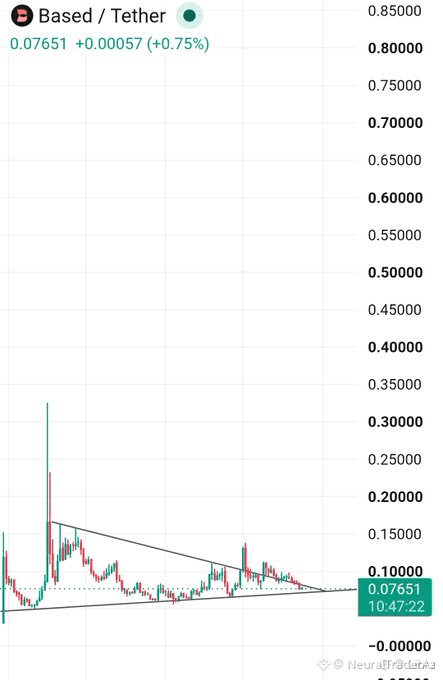
🦈 $BASED MIRRORING $LAB 'S PRE-RALLY STRUCTURE – INSTITUTIONAL ECHO IN PLAY? ⚡
📊 The footprint is uncanny. $BASED is consolidating inside the same order block range that $LAB printed before its 200× expansion. Volume is compressing on the lower timeframes while liquidity pools stack above and below – textbook institutional reaccumulation. 🔍
💡 Smart money rarely repeats the same pattern twice in plain sight, yet here we are watching a nearly identical structural blueprint unfold. The question is whether the breakout velocity will match the predecessor. 🤔 Are you treating this as a high-probability fractal or waiting for the sweep of the low to confirm? 👇
⚠️ Not financial advice. Always manage your risk. 🛡️
🏷️ #BASED #LAB #Altcoin #Pattern #Crypto
🦈 💎
🦈 $BASED MIRRORING $LAB 'S PRE-RALLY STRUCTURE – INSTITUTIONAL ECHO IN PLAY? ⚡
📊 The footprint is uncanny. $BASED is consolidating inside the same order block range that $LAB printed before its 200× expansion. Volume is compressing on the lower timeframes while liquidity pools stack above and below – textbook institutional reaccumulation. 🔍
💡 Smart money rarely repeats the same pattern twice in plain sight, yet here we are watching a nearly identical structural blueprint unfold. The question is whether the breakout velocity will match the predecessor. 🤔 Are you treating this as a high-probability fractal or waiting for the sweep of the low to confirm? 👇
⚠️ Not financial advice. Always manage your risk. 🛡️
🏷️ #BASED #LAB #Altcoin #Pattern #Crypto
🦈 💎
📊 The footprint is uncanny. $BASED is consolidating inside the same order block range that $LAB printed before its 200× expansion. Volume is compressing on the lower timeframes while liquidity pools stack above and below – textbook institutional reaccumulation. 🔍
💡 Smart money rarely repeats the same pattern twice in plain sight, yet here we are watching a nearly identical structural blueprint unfold. The question is whether the breakout velocity will match the predecessor. 🤔 Are you treating this as a high-probability fractal or waiting for the sweep of the low to confirm? 👇
⚠️ Not financial advice. Always manage your risk. 🛡️
🏷️ #BASED #LAB #Altcoin #Pattern #Crypto
🦈 💎
341

·
--
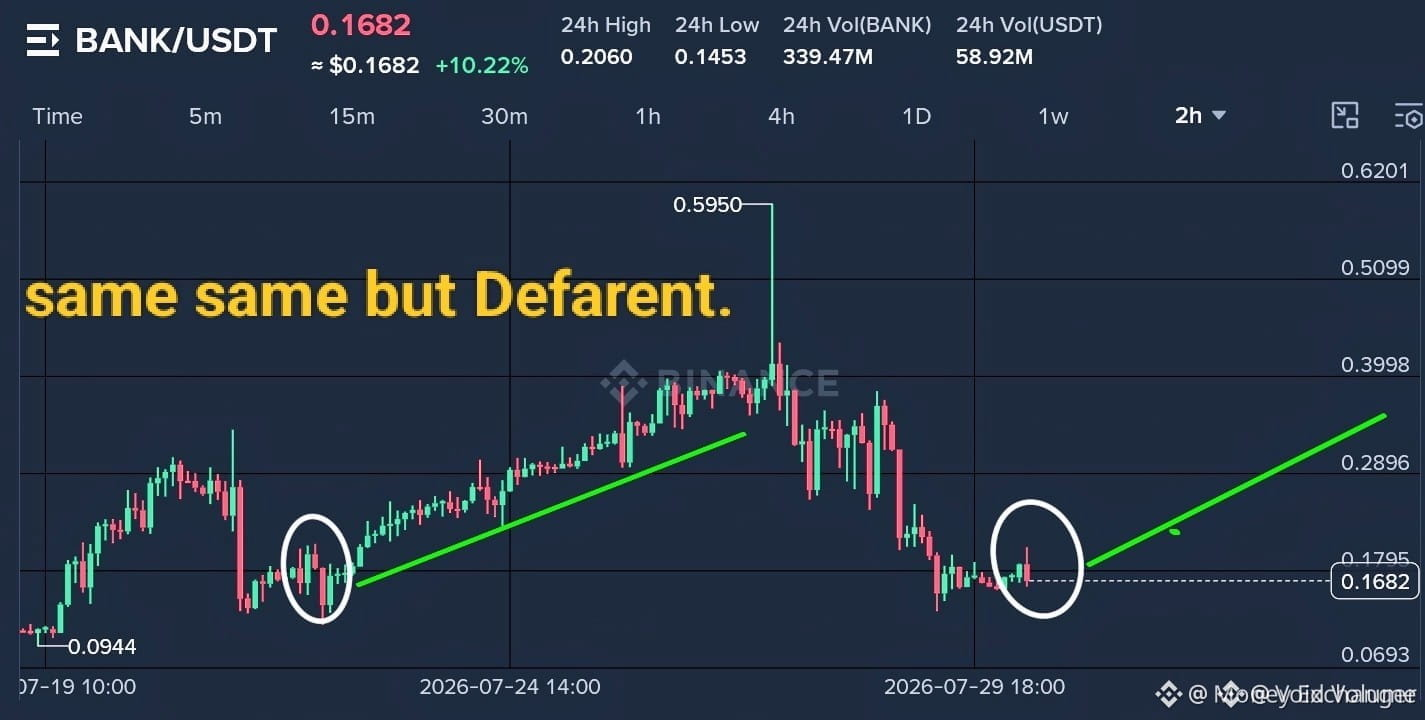
📊 $BANK REPEATING THE LIQUIDITY SWEEP PATTERN THAT FUELED THE LAST 90% RUN! 🦈
Entry: 0.1700 ⚡
Target: 0.2100 / 0.2450 / 0.3000 🚀
Stop Loss: 0.1200 ⚠️
🔍 Market structure is showing the exact same institutional footprint as the previous breakout — a deep liquidity grab below 0.1500 followed by aggressive absorption at this demand zone. Volume profile confirms smart money is accumulating with conviction.
📌 The 0.1700 level acts as an order block that has already rejected lower prices twice this week. With the next resistance cluster at 0.2100 clearing, momentum aligns toward the higher time frame imbalance. 💡 This is a classic high R:R structural setup. 💬 Are you stacking bids here or waiting for one more sweep below 0.1500 before pulling the trigger? 👇
⚠️ Not financial advice. Always manage your risk. 🛡️
🏷️ #BANK #Breakout #Crypto #Trading #Pattern
🦈 📊
📊 $BANK REPEATING THE LIQUIDITY SWEEP PATTERN THAT FUELED THE LAST 90% RUN! 🦈
Entry: 0.1700 ⚡
Target: 0.2100 / 0.2450 / 0.3000 🚀
Stop Loss: 0.1200 ⚠️
🔍 Market structure is showing the exact same institutional footprint as the previous breakout — a deep liquidity grab below 0.1500 followed by aggressive absorption at this demand zone. Volume profile confirms smart money is accumulating with conviction.
📌 The 0.1700 level acts as an order block that has already rejected lower prices twice this week. With the next resistance cluster at 0.2100 clearing, momentum aligns toward the higher time frame imbalance. 💡 This is a classic high R:R structural setup. 💬 Are you stacking bids here or waiting for one more sweep below 0.1500 before pulling the trigger? 👇
⚠️ Not financial advice. Always manage your risk. 🛡️
🏷️ #BANK #Breakout #Crypto #Trading #Pattern
🦈 📊
Entry: 0.1700 ⚡
Target: 0.2100 / 0.2450 / 0.3000 🚀
Stop Loss: 0.1200 ⚠️
🔍 Market structure is showing the exact same institutional footprint as the previous breakout — a deep liquidity grab below 0.1500 followed by aggressive absorption at this demand zone. Volume profile confirms smart money is accumulating with conviction.
📌 The 0.1700 level acts as an order block that has already rejected lower prices twice this week. With the next resistance cluster at 0.2100 clearing, momentum aligns toward the higher time frame imbalance. 💡 This is a classic high R:R structural setup. 💬 Are you stacking bids here or waiting for one more sweep below 0.1500 before pulling the trigger? 👇
⚠️ Not financial advice. Always manage your risk. 🛡️
🏷️ #BANK #Breakout #Crypto #Trading #Pattern
🦈 📊
124

·
--
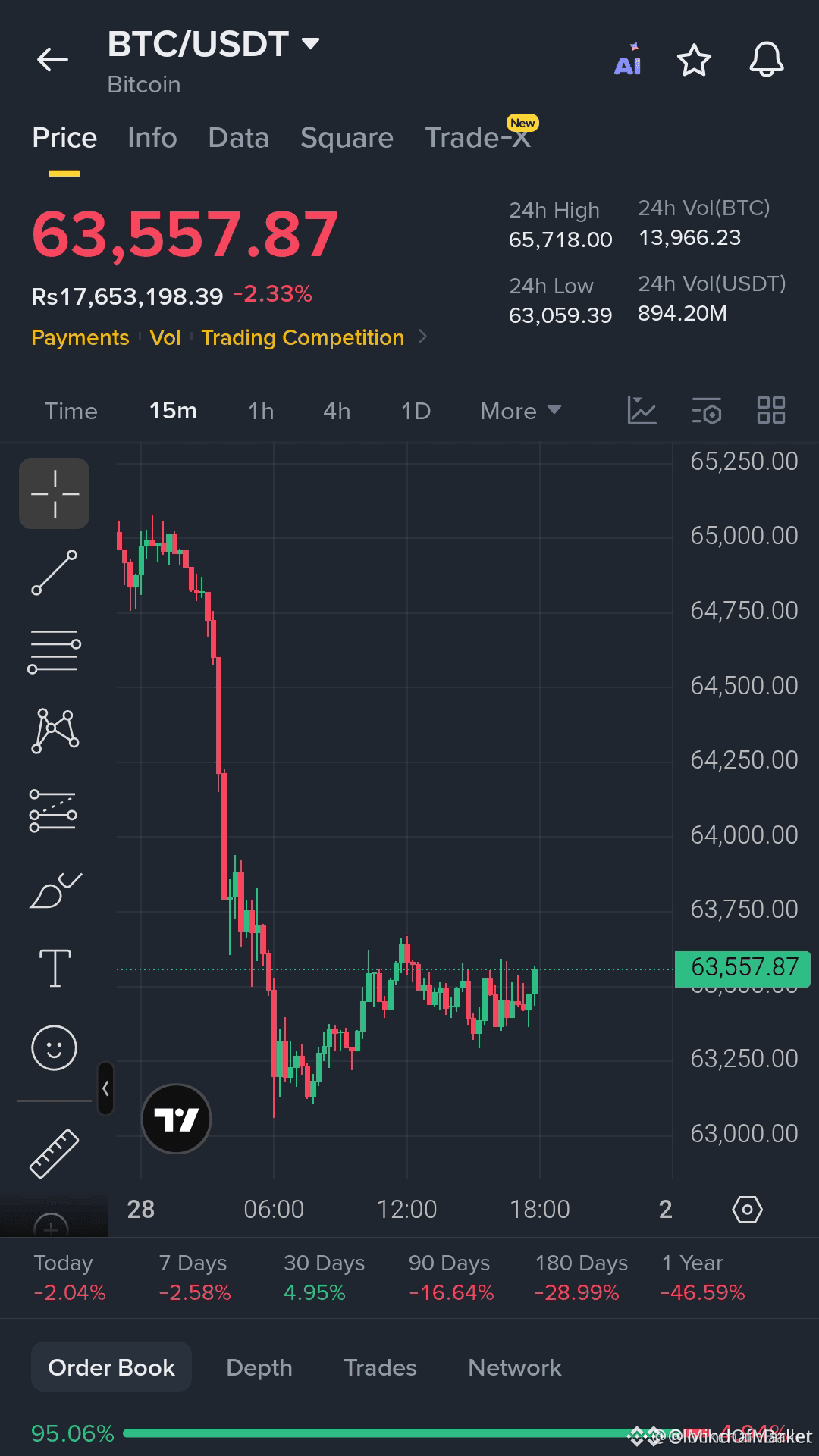
⚠️ $BTC FLIRTING WITH A CRITICAL PATTERN – WILL HISTORY REPEAT? 🔄
Entry: 66,500 ⚡
Target: 69,500 🚀
Two consecutive bounces from this pullback zone have already propelled $BTC into fresh highs. The question is whether smart money is engineering another liquidity sweep above 66.5k or simply distributing into weakness. 📊 Each retest has absorbed seller pressure more efficiently — a textbook footprint of institutional accumulation before a leg higher. 💡
The 4H structure shows a shallow retrace with volume declining on the move down, suggesting sellers are exhausted. A clean reclaim of 66.5k flips the local resistance into support, opening a path to the 69k–70k supply zone. 💬 Do you see a false breakout trap here, or is the energy real for a run at new highs? 👇
⚠️ Not financial advice. Always manage your risk. 🛡️
🏷️ #BTC #Pattern #Breakout #Crypto #Bitcoin
🦈 🔍
⚠️ $BTC FLIRTING WITH A CRITICAL PATTERN – WILL HISTORY REPEAT? 🔄
Entry: 66,500 ⚡
Target: 69,500 🚀
Two consecutive bounces from this pullback zone have already propelled $BTC into fresh highs. The question is whether smart money is engineering another liquidity sweep above 66.5k or simply distributing into weakness. 📊 Each retest has absorbed seller pressure more efficiently — a textbook footprint of institutional accumulation before a leg higher. 💡
The 4H structure shows a shallow retrace with volume declining on the move down, suggesting sellers are exhausted. A clean reclaim of 66.5k flips the local resistance into support, opening a path to the 69k–70k supply zone. 💬 Do you see a false breakout trap here, or is the energy real for a run at new highs? 👇
⚠️ Not financial advice. Always manage your risk. 🛡️
🏷️ #BTC #Pattern #Breakout #Crypto #Bitcoin
🦈 🔍
Entry: 66,500 ⚡
Target: 69,500 🚀
Two consecutive bounces from this pullback zone have already propelled $BTC into fresh highs. The question is whether smart money is engineering another liquidity sweep above 66.5k or simply distributing into weakness. 📊 Each retest has absorbed seller pressure more efficiently — a textbook footprint of institutional accumulation before a leg higher. 💡
The 4H structure shows a shallow retrace with volume declining on the move down, suggesting sellers are exhausted. A clean reclaim of 66.5k flips the local resistance into support, opening a path to the 69k–70k supply zone. 💬 Do you see a false breakout trap here, or is the energy real for a run at new highs? 👇
⚠️ Not financial advice. Always manage your risk. 🛡️
🏷️ #BTC #Pattern #Breakout #Crypto #Bitcoin
🦈 🔍
50

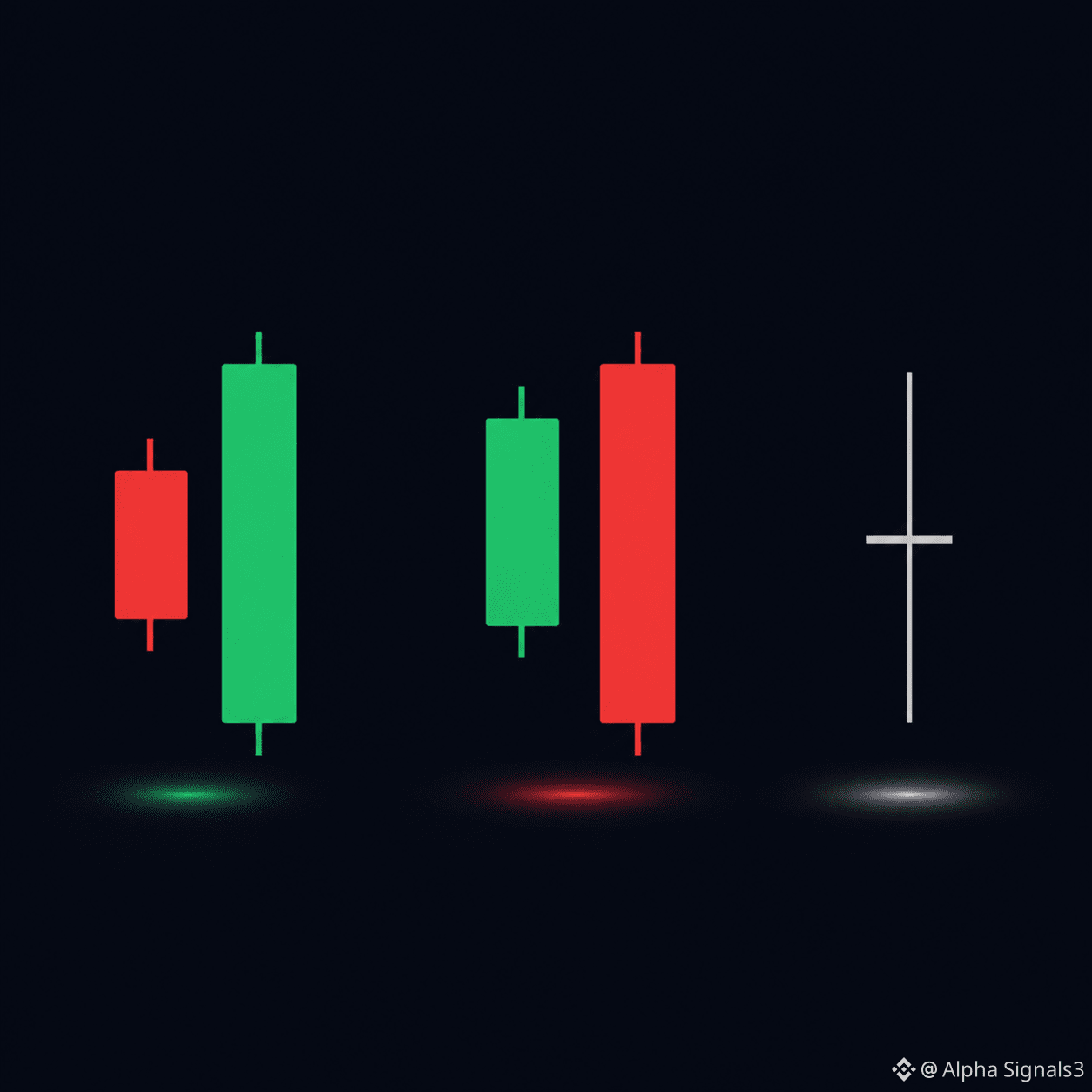
What is a Candlestick Pattern?
Candlestick patterns help traders understand market sentiment.
Popular patterns:
✅ Bullish Engulfing (price may go up)
✅ Bearish Engulfing (price may go down)
✅ Doji (the market is confused)
💡 Patterns provide signals, not guarantees.
$C $S
{future}(SUSDT)
{future}(CUSDT)
#candlestick #PATTERN #bullish #BEARISH📉 #DojiCandlestick
What is a Candlestick Pattern?
Candlestick patterns help traders understand market sentiment.
Popular patterns:
✅ Bullish Engulfing (price may go up)
✅ Bearish Engulfing (price may go down)
✅ Doji (the market is confused)
💡 Patterns provide signals, not guarantees.
$C $S
#candlestick #PATTERN #bullish #BEARISH📉 #DojiCandlestick
Candlestick patterns help traders understand market sentiment.
Popular patterns:
✅ Bullish Engulfing (price may go up)
✅ Bearish Engulfing (price may go down)
✅ Doji (the market is confused)
💡 Patterns provide signals, not guarantees.
$C $S
#candlestick #PATTERN #bullish #BEARISH📉 #DojiCandlestick
116
·
--
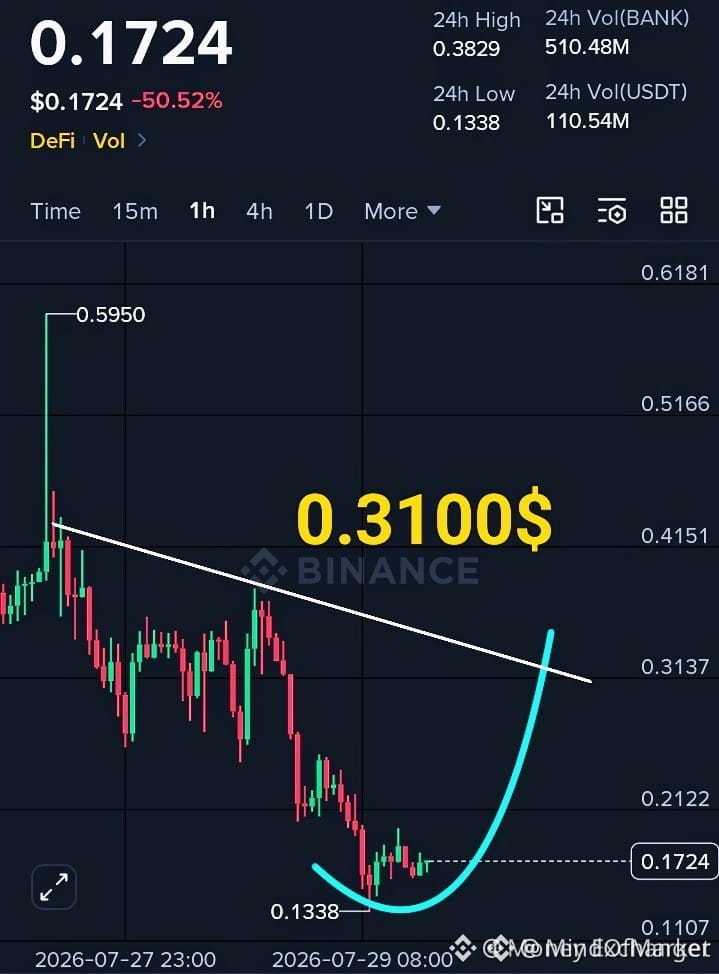
🦈 $BANK LIQUIDITY GRAB COMPLETE – PATTERN REPEATING FROM $AKE PLAYBOOK! 💥
Entry: 0.17000 ⚡
Target: 0.30000 🚀
📌 The exact same structural setup that carried $AKE from 0.003 to 0.004 is now printing on $BANK — a textbook liquidity sweep followed by an aggressive reclaim of the 0.1700 demand zone. 📊 Volume divergence on the lower timeframes confirms institutional absorption, not distribution.
💡 This isn't speculation; it's pattern recognition. Smart money has already marked this range as their accumulation zone, and the reaction speed mimics the previous fractal to the tick. 💬 Are you positioning ahead of the next leg or waiting for a retest that may never come? 👇
⚠️ Not financial advice. Always manage your risk. 🛡️
🏷️ #BANK #AltCoin #Pattern #Crypto #BuySetup
🎯 🦈
🦈 $BANK LIQUIDITY GRAB COMPLETE – PATTERN REPEATING FROM $AKE PLAYBOOK! 💥
Entry: 0.17000 ⚡
Target: 0.30000 🚀
📌 The exact same structural setup that carried $AKE from 0.003 to 0.004 is now printing on $BANK — a textbook liquidity sweep followed by an aggressive reclaim of the 0.1700 demand zone. 📊 Volume divergence on the lower timeframes confirms institutional absorption, not distribution.
💡 This isn't speculation; it's pattern recognition. Smart money has already marked this range as their accumulation zone, and the reaction speed mimics the previous fractal to the tick. 💬 Are you positioning ahead of the next leg or waiting for a retest that may never come? 👇
⚠️ Not financial advice. Always manage your risk. 🛡️
🏷️ #BANK #AltCoin #Pattern #Crypto #BuySetup
🎯 🦈
Entry: 0.17000 ⚡
Target: 0.30000 🚀
📌 The exact same structural setup that carried $AKE from 0.003 to 0.004 is now printing on $BANK — a textbook liquidity sweep followed by an aggressive reclaim of the 0.1700 demand zone. 📊 Volume divergence on the lower timeframes confirms institutional absorption, not distribution.
💡 This isn't speculation; it's pattern recognition. Smart money has already marked this range as their accumulation zone, and the reaction speed mimics the previous fractal to the tick. 💬 Are you positioning ahead of the next leg or waiting for a retest that may never come? 👇
⚠️ Not financial advice. Always manage your risk. 🛡️
🏷️ #BANK #AltCoin #Pattern #Crypto #BuySetup
🎯 🦈
251
Log in to explore more content
Join global crypto users on Binance Square
⚡️ Get latest and useful information about crypto.
💬 Trusted by the world’s largest crypto exchange.
👍 Discover real insights from verified creators.
Email / Phone number
Trending Topics
1
#FedRateWatch
1.1M views
5,025 Discussing
2
#ZcashHoldersBackNU7Upgrade
3,228 views
124 Discussing
3
#MSTRTradingVolumeSurpassesMorganStanley
9,432 views
327 Discussing
4
#BitcoinFalls4%
23,053 views
595 Discussing
5
#SKHynixInTalksToMakeMemoryChipsInUS
10,392 views
250 Discussing
6
#OpenAIDiscussesNewFundingAt$1.2TValuation
2,485 views
43 Discussing
7
#ArgentinaCommitsToOECDCryptoReportingBy2029
19,305 views
412 Discussing
8
#EthereumFallsBelow$2400
7,657 views
93 Discussing
9
#USDTLaunchesOnZamaPrivacyProtocol
8,249 views
240 Discussing
10
#USSenateBlocksClarityAct
66,552 views
546 Discussing