

#inflation
inflation
3.4M views
9,586 Discussing
Hot
Latest

Eurostat released the August Producer Price Index (PPI) for the Eurozone today, showing wholesale inflation accelerated sharply. MoM PPI rose 1.9%, matching expectations but up from 1.60% previously. More critically, YoY PPI jumped to 8.2%, surpassing market consensus of 8.1% and accelerating significantly from the previous 5.80% reading.
This steep acceleration indicates that upstream pipeline price pressures across European industry remain stubbornly elevated. The sharp increase from 5.80% to 8.2% YoY underscores mounting input costs that will inevitably filter into headline consumer prices, complicating the European Central Bank's inflation mandate.
Bond markets are reacting with higher yields across European sovereign debt as traders recalibrate expectations for tighter monetary policy. The persistent wholesale inflation keeps upward pressure on the Euro, while tightening liquidity conditions across broader European equity and credit markets.
For digital assets, sticky global inflation prints reinforce a higher-for-longer monetary environment, limiting immediate macro liquidity expansion. Crypto markets will likely face continued sideways chop as investors weigh broader risk-off pressures against digital asset fundamentals. $BTC
#Eurozone #Inflation #ECB
Eurostat released the August Producer Price Index (PPI) for the Eurozone today, showing wholesale inflation accelerated sharply. MoM PPI rose 1.9%, matching expectations but up from 1.60% previously. More critically, YoY PPI jumped to 8.2%, surpassing market consensus of 8.1% and accelerating significantly from the previous 5.80% reading.
This steep acceleration indicates that upstream pipeline price pressures across European industry remain stubbornly elevated. The sharp increase from 5.80% to 8.2% YoY underscores mounting input costs that will inevitably filter into headline consumer prices, complicating the European Central Bank's inflation mandate.
Bond markets are reacting with higher yields across European sovereign debt as traders recalibrate expectations for tighter monetary policy. The persistent wholesale inflation keeps upward pressure on the Euro, while tightening liquidity conditions across broader European equity and credit markets.
For digital assets, sticky global inflation prints reinforce a higher-for-longer monetary environment, limiting immediate macro liquidity expansion. Crypto markets will likely face continued sideways chop as investors weigh broader risk-off pressures against digital asset fundamentals. $BTC
#Eurozone #Inflation #ECB
This steep acceleration indicates that upstream pipeline price pressures across European industry remain stubbornly elevated. The sharp increase from 5.80% to 8.2% YoY underscores mounting input costs that will inevitably filter into headline consumer prices, complicating the European Central Bank's inflation mandate.
Bond markets are reacting with higher yields across European sovereign debt as traders recalibrate expectations for tighter monetary policy. The persistent wholesale inflation keeps upward pressure on the Euro, while tightening liquidity conditions across broader European equity and credit markets.
For digital assets, sticky global inflation prints reinforce a higher-for-longer monetary environment, limiting immediate macro liquidity expansion. Crypto markets will likely face continued sideways chop as investors weigh broader risk-off pressures against digital asset fundamentals. $BTC
#Eurozone #Inflation #ECB
35

·
--
Bank of England heavyweight warns: Inflation could top 4% during 2027 wage talks—this is a dangerous move! British workers are in for another rough ride, and their wallets will shrink again... The pound's future doesn't look too bright!
#英国经济 #通胀
$GBP
UK central bank bigwig warns: 2027 wage talks might happen when inflation tops 4%, risky move! British workers in for another rough ride, wallets getting thinner... Doesn't look good for GBP's future!
#UKmacro #inflation
$GBP
Bank of England heavyweight warns: Inflation could top 4% during 2027 wage talks—this is a dangerous move! British workers are in for another rough ride, and their wallets will shrink again... The pound's future doesn't look too bright!
#英国经济 #通胀
$GBP
UK central bank bigwig warns: 2027 wage talks might happen when inflation tops 4%, risky move! British workers in for another rough ride, wallets getting thinner... Doesn't look good for GBP's future!
#UKmacro #inflation
$GBP
#英国经济 #通胀
$GBP
UK central bank bigwig warns: 2027 wage talks might happen when inflation tops 4%, risky move! British workers in for another rough ride, wallets getting thinner... Doesn't look good for GBP's future!
#UKmacro #inflation
$GBP
36

According to the latest data released by S&P Global, the final US Services PMI for September came in at 58.8, edging up from the previous reading of 58.7, while the final Composite PMI was unchanged at 58.4. S&P Global’s chief business economist noted that, boosted by the AI boom and broad-based demand, overall US business activity growth had climbed to its highest level in more than five years, and third-quarter GDP growth at an annualized rate could reach around 4%.
Behind the strong expansion on the surface lies an extremely serious risk of a second wave of inflation. The report clearly shows that business input cost inflation surged to a nearly four-year high in September, with simultaneous increases in service-sector prices and fuel costs rapidly pushing up final selling prices. Against the backdrop of the Fed’s rate hike in mid-September, the return of an overheated economy and cost-side pressures means inflation may remain persistently and stubbornly above the 2% policy target.
These data have dealt another blow to financial markets’ hopes for an easing cycle. Supported by strong economic activity, US Treasury yields and the dollar index are likely to remain volatile at elevated levels, further weighing on non-yielding assets. Markets must face the possibility that the tightening cycle may have to be extended. Liquidity pricing, which had previously bet on rapid rate cuts, now faces a sharp reassessment, and the valuation benchmarks for global risk assets are coming under renewed scrutiny.
For crypto markets, macroeconomic liquidity headwinds may not only prove difficult to ease, but could intensify further. With high real interest rates and rising risk aversion weighing on markets, risk assets led by $BTC are unlikely to attract significant new capital in the short term. Investors should be wary of pullback risks in overvalued assets. Until monetary policy uncertainty has been fully resolved, capital preservation and liquidity management remain the top priorities. #USPMI #Inflation #Fed
According to the latest data released by S&P Global, the final US Services PMI for September came in at 58.8, edging up from the previous reading of 58.7, while the final Composite PMI was unchanged at 58.4. S&P Global’s chief business economist noted that, boosted by the AI boom and broad-based demand, overall US business activity growth had climbed to its highest level in more than five years, and third-quarter GDP growth at an annualized rate could reach around 4%.
Behind the strong expansion on the surface lies an extremely serious risk of a second wave of inflation. The report clearly shows that business input cost inflation surged to a nearly four-year high in September, with simultaneous increases in service-sector prices and fuel costs rapidly pushing up final selling prices. Against the backdrop of the Fed’s rate hike in mid-September, the return of an overheated economy and cost-side pressures means inflation may remain persistently and stubbornly above the 2% policy target.
These data have dealt another blow to financial markets’ hopes for an easing cycle. Supported by strong economic activity, US Treasury yields and the dollar index are likely to remain volatile at elevated levels, further weighing on non-yielding assets. Markets must face the possibility that the tightening cycle may have to be extended. Liquidity pricing, which had previously bet on rapid rate cuts, now faces a sharp reassessment, and the valuation benchmarks for global risk assets are coming under renewed scrutiny.
For crypto markets, macroeconomic liquidity headwinds may not only prove difficult to ease, but could intensify further. With high real interest rates and rising risk aversion weighing on markets, risk assets led by $BTC are unlikely to attract significant new capital in the short term. Investors should be wary of pullback risks in overvalued assets. Until monetary policy uncertainty has been fully resolved, capital preservation and liquidity management remain the top priorities. #USPMI #Inflation #Fed
Behind the strong expansion on the surface lies an extremely serious risk of a second wave of inflation. The report clearly shows that business input cost inflation surged to a nearly four-year high in September, with simultaneous increases in service-sector prices and fuel costs rapidly pushing up final selling prices. Against the backdrop of the Fed’s rate hike in mid-September, the return of an overheated economy and cost-side pressures means inflation may remain persistently and stubbornly above the 2% policy target.
These data have dealt another blow to financial markets’ hopes for an easing cycle. Supported by strong economic activity, US Treasury yields and the dollar index are likely to remain volatile at elevated levels, further weighing on non-yielding assets. Markets must face the possibility that the tightening cycle may have to be extended. Liquidity pricing, which had previously bet on rapid rate cuts, now faces a sharp reassessment, and the valuation benchmarks for global risk assets are coming under renewed scrutiny.
For crypto markets, macroeconomic liquidity headwinds may not only prove difficult to ease, but could intensify further. With high real interest rates and rising risk aversion weighing on markets, risk assets led by $BTC are unlikely to attract significant new capital in the short term. Investors should be wary of pullback risks in overvalued assets. Until monetary policy uncertainty has been fully resolved, capital preservation and liquidity management remain the top priorities. #USPMI #Inflation #Fed
341
·
--
Turkey's finance minister says inflation will fall in 2027! A decline in service-sector inflation and a slower rise in commodity prices are key. Falling inflation is good news for crypto markets, especially for inflation-resistant assets like $BTC. As traditional currencies face depreciation pressure, cryptocurrencies may attract more attention.
Turkey's finance minister says inflation will fall back by 2027! The decline in service inflation and slower rise in commodity prices are key factors. This is good news for crypto markets, especially for assets like $BTC that can hedge against inflation. As traditional currencies face depreciation pressure, cryptos might attract more attention. #Inflation #Turkey $BTC
Turkey's finance minister says inflation will fall in 2027! A decline in service-sector inflation and a slower rise in commodity prices are key. Falling inflation is good news for crypto markets, especially for inflation-resistant assets like $BTC . As traditional currencies face depreciation pressure, cryptocurrencies may attract more attention.
Turkey's finance minister says inflation will fall back by 2027! The decline in service inflation and slower rise in commodity prices are key factors. This is good news for crypto markets, especially for assets like $BTC that can hedge against inflation. As traditional currencies face depreciation pressure, cryptos might attract more attention. #Inflation #Turkey $BTC
Turkey's finance minister says inflation will fall back by 2027! The decline in service inflation and slower rise in commodity prices are key factors. This is good news for crypto markets, especially for assets like $BTC that can hedge against inflation. As traditional currencies face depreciation pressure, cryptos might attract more attention. #Inflation #Turkey $BTC
95


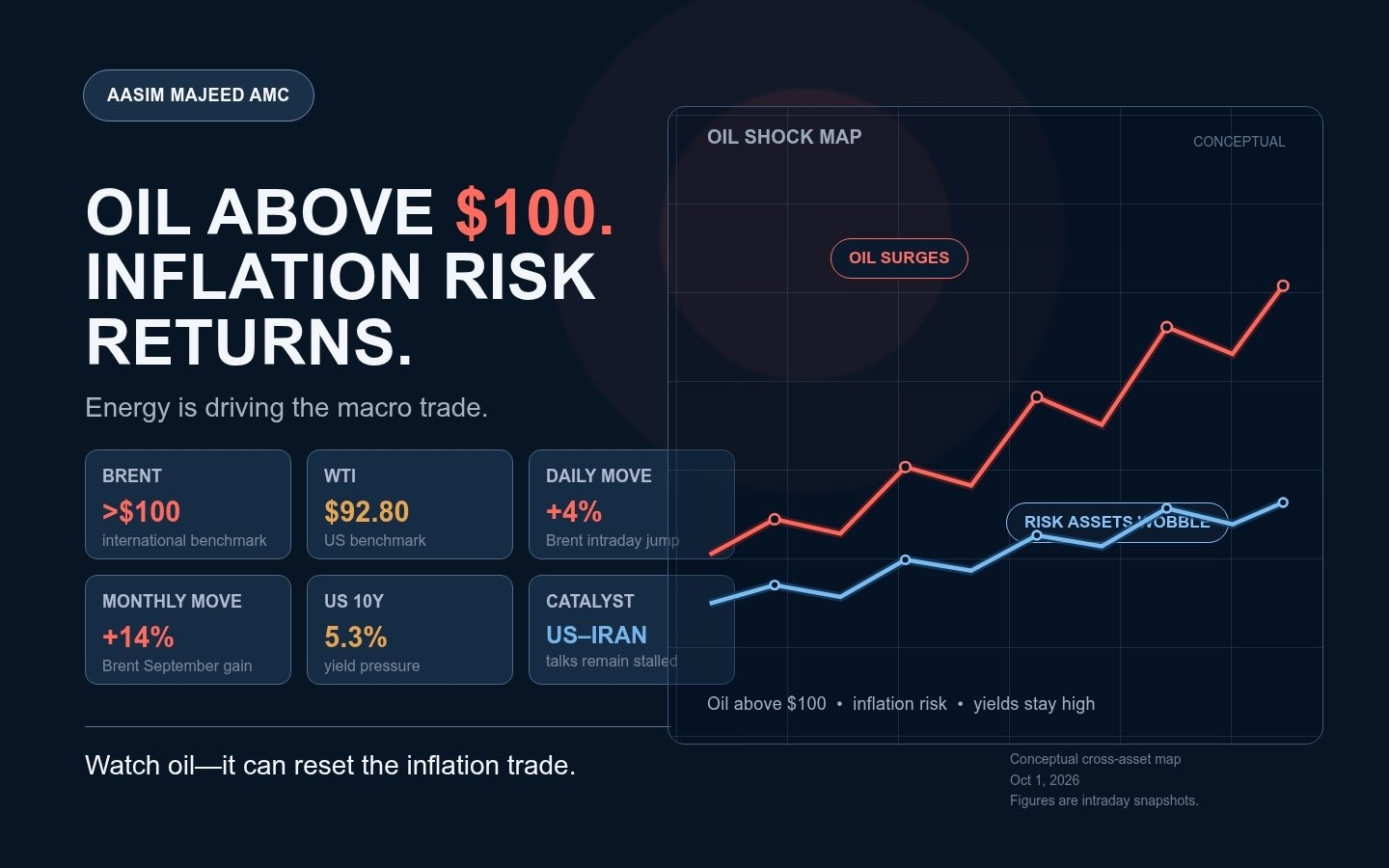
🚨 OIL IS ABOVE $100—AND THE INFLATION TRADE IS BACK
The biggest market risk today is not coming from stocks.
It is coming from energy.
Brent crude moved back above $100 per barrel, while WTI traded near $92.80
The latest surge followed reports that the US is sending another aircraft carrier to the Middle East, increasing fears of a wider conflict and possible supply disruption
At the same time, US–Iran negotiations remain stalled.
This matters far beyond the oil market.
Higher oil prices can raise:
Fuel costs
Transportation costs
Food prices
Business expenses
Inflation expectations
And if inflation expectations rise again, the Federal Reserve has less room to ease monetary policy.
That keeps pressure on:
Treasury bonds
Growth stocks
Housing
Small businesses
Consumer spending
Bitcoin and other risk assets
Brent gained around 14% in September, its strongest monthly performance in years
Now the key question is:
Can oil remain above $100—or is this another geopolitical spike?
Watch these markets closely:
Brent crude
WTI crude
Strait of Hormuz headlines
US 10Y Treasury yield
US Dollar
Airlines
Energy stocks
Nasdaq
If oil stays above $100, the market may have to price in stickier inflation and higher interest rates.
Stocks can ignore oil for one session.
The Federal Reserve cannot ignore it forever.
Do not watch the oil price alone
Watch how bonds and inflation expectations react.
— Aasim Majeed AMC
$CL $XAU $BTC
#Oil #BrentCrude #Inflation #FederalReserve
🚨 OIL IS ABOVE $100—AND THE INFLATION TRADE IS BACK
The biggest market risk today is not coming from stocks.
It is coming from energy.
Brent crude moved back above $100 per barrel, while WTI traded near $92.80
The latest surge followed reports that the US is sending another aircraft carrier to the Middle East, increasing fears of a wider conflict and possible supply disruption
At the same time, US–Iran negotiations remain stalled.
This matters far beyond the oil market.
Higher oil prices can raise:
Fuel costs
Transportation costs
Food prices
Business expenses
Inflation expectations
And if inflation expectations rise again, the Federal Reserve has less room to ease monetary policy.
That keeps pressure on:
Treasury bonds
Growth stocks
Housing
Small businesses
Consumer spending
Bitcoin and other risk assets
Brent gained around 14% in September, its strongest monthly performance in years
Now the key question is:
Can oil remain above $100—or is this another geopolitical spike?
Watch these markets closely:
Brent crude
WTI crude
Strait of Hormuz headlines
US 10Y Treasury yield
US Dollar
Airlines
Energy stocks
Nasdaq
If oil stays above $100, the market may have to price in stickier inflation and higher interest rates.
Stocks can ignore oil for one session.
The Federal Reserve cannot ignore it forever.
Do not watch the oil price alone
Watch how bonds and inflation expectations react.
— Aasim Majeed AMC
$CL $XAU $BTC
#Oil #BrentCrude #Inflation #FederalReserve
The biggest market risk today is not coming from stocks.
It is coming from energy.
Brent crude moved back above $100 per barrel, while WTI traded near $92.80
The latest surge followed reports that the US is sending another aircraft carrier to the Middle East, increasing fears of a wider conflict and possible supply disruption
At the same time, US–Iran negotiations remain stalled.
This matters far beyond the oil market.
Higher oil prices can raise:
Fuel costs
Transportation costs
Food prices
Business expenses
Inflation expectations
And if inflation expectations rise again, the Federal Reserve has less room to ease monetary policy.
That keeps pressure on:
Treasury bonds
Growth stocks
Housing
Small businesses
Consumer spending
Bitcoin and other risk assets
Brent gained around 14% in September, its strongest monthly performance in years
Now the key question is:
Can oil remain above $100—or is this another geopolitical spike?
Watch these markets closely:
Brent crude
WTI crude
Strait of Hormuz headlines
US 10Y Treasury yield
US Dollar
Airlines
Energy stocks
Nasdaq
If oil stays above $100, the market may have to price in stickier inflation and higher interest rates.
Stocks can ignore oil for one session.
The Federal Reserve cannot ignore it forever.
Do not watch the oil price alone
Watch how bonds and inflation expectations react.
— Aasim Majeed AMC
$CL $XAU $BTC
#Oil #BrentCrude #Inflation #FederalReserve
1
306

Lessons from History: Why Fiat Currencies Always Collapse
Post Content:
Throughout history, every major fiat currency has eventually followed the same lifecycle. From the Roman Denarius devaluation to the hyperinflation of the Weimar Republic, government-issued money without hard backing has a consistent track record over the long term.
The Roman Empire: Emperor Nero debased the silver purity of the denarius to fund expenses, sparking centuries of runaway inflation and economic decay.
The Weimar Republic (1923): Printing money to pay off massive debts led to a wheelbarrow economy where basic goods cost billions of marks.
The Modern Parallel: Today, with global debt at record highs and central banks expanding liquidity, history offers a stark reminder of why decentralized, scarce assets matter.
Digital assets and cryptocurrencies were engineered precisely as a hedge against this historical cycle—introducing programmatic scarcity instead of political control.
What are your thoughts? Is history about to repeat itself? Drop your perspective in the comments below! 👇
#BinanceSquare #cryptouniverseofficial toEducation #FinancialHistory #Bitcoin❗ #Inflation
Lessons from History: Why Fiat Currencies Always Collapse
Post Content:
Throughout history, every major fiat currency has eventually followed the same lifecycle. From the Roman Denarius devaluation to the hyperinflation of the Weimar Republic, government-issued money without hard backing has a consistent track record over the long term.
The Roman Empire: Emperor Nero debased the silver purity of the denarius to fund expenses, sparking centuries of runaway inflation and economic decay.
The Weimar Republic (1923): Printing money to pay off massive debts led to a wheelbarrow economy where basic goods cost billions of marks.
The Modern Parallel: Today, with global debt at record highs and central banks expanding liquidity, history offers a stark reminder of why decentralized, scarce assets matter.
Digital assets and cryptocurrencies were engineered precisely as a hedge against this historical cycle—introducing programmatic scarcity instead of political control.
What are your thoughts? Is history about to repeat itself? Drop your perspective in the comments below! 👇
#BinanceSquare #cryptouniverseofficial toEducation #FinancialHistory #Bitcoin❗ #Inflation
Post Content:
Throughout history, every major fiat currency has eventually followed the same lifecycle. From the Roman Denarius devaluation to the hyperinflation of the Weimar Republic, government-issued money without hard backing has a consistent track record over the long term.
The Roman Empire: Emperor Nero debased the silver purity of the denarius to fund expenses, sparking centuries of runaway inflation and economic decay.
The Weimar Republic (1923): Printing money to pay off massive debts led to a wheelbarrow economy where basic goods cost billions of marks.
The Modern Parallel: Today, with global debt at record highs and central banks expanding liquidity, history offers a stark reminder of why decentralized, scarce assets matter.
Digital assets and cryptocurrencies were engineered precisely as a hedge against this historical cycle—introducing programmatic scarcity instead of political control.
What are your thoughts? Is history about to repeat itself? Drop your perspective in the comments below! 👇
#BinanceSquare #cryptouniverseofficial toEducation #FinancialHistory #Bitcoin❗ #Inflation
112

·
--
US INFLATION & CPI: WHY THE NEXT DATA MATTERS FOR CRYPTO
U.S. inflation remains one of the most important macro drivers for Bitcoin, stocks, bonds, and the broader risk market.
The latest available CPI data showed headline inflation at 3.4% year-over-year in August, while monthly CPI increased 0.4%. Core CPI was up 2.4% YoY.
At the same time, the U.S. labor market is showing signs of cooling. September payrolls increased by only 29,000, while unemployment rose to 4.2%.
This creates a complicated setup for the Federal Reserve.
A weaker labor market can increase expectations for easier monetary policy, which can support risk assets. However, inflation remains above the Fed’s 2% target, meaning policymakers still need to balance growth against price stability.
For crypto markets, this matters because changes in Fed expectations can quickly affect Treasury yields, the U.S. dollar, liquidity, and Bitcoin.
The next major catalyst is September CPI, scheduled for release on October 14.
MARKET SIGNAL: MIXED
The cooling labor market is potentially supportive for risk assets, but persistent inflation remains a constraint.
The key chain to watch is:
CPI → Fed expectations → Treasury yields → DXY → BTC & risk assets
If inflation cools faster than expected, markets could interpret it as additional room for easier monetary policy.
If inflation remains sticky, higher yields and a stronger dollar could continue creating pressure on risk assets.
For Bitcoin, the important question is not simply whether CPI rises or falls.
It is whether the inflation data changes expectations for the Fed’s next policy decisions.
$BTC
{future}(BTCUSDT)
#Inflation #CPI #FederalReserve #crypto
US INFLATION & CPI: WHY THE NEXT DATA MATTERS FOR CRYPTO
U.S. inflation remains one of the most important macro drivers for Bitcoin, stocks, bonds, and the broader risk market.
The latest available CPI data showed headline inflation at 3.4% year-over-year in August, while monthly CPI increased 0.4%. Core CPI was up 2.4% YoY.
At the same time, the U.S. labor market is showing signs of cooling. September payrolls increased by only 29,000, while unemployment rose to 4.2%.
This creates a complicated setup for the Federal Reserve.
A weaker labor market can increase expectations for easier monetary policy, which can support risk assets. However, inflation remains above the Fed’s 2% target, meaning policymakers still need to balance growth against price stability.
For crypto markets, this matters because changes in Fed expectations can quickly affect Treasury yields, the U.S. dollar, liquidity, and Bitcoin.
The next major catalyst is September CPI, scheduled for release on October 14.
MARKET SIGNAL: MIXED
The cooling labor market is potentially supportive for risk assets, but persistent inflation remains a constraint.
The key chain to watch is:
CPI → Fed expectations → Treasury yields → DXY → BTC & risk assets
If inflation cools faster than expected, markets could interpret it as additional room for easier monetary policy.
If inflation remains sticky, higher yields and a stronger dollar could continue creating pressure on risk assets.
For Bitcoin, the important question is not simply whether CPI rises or falls.
It is whether the inflation data changes expectations for the Fed’s next policy decisions.
$BTC
#Inflation #CPI #FederalReserve #crypto
U.S. inflation remains one of the most important macro drivers for Bitcoin, stocks, bonds, and the broader risk market.
The latest available CPI data showed headline inflation at 3.4% year-over-year in August, while monthly CPI increased 0.4%. Core CPI was up 2.4% YoY.
At the same time, the U.S. labor market is showing signs of cooling. September payrolls increased by only 29,000, while unemployment rose to 4.2%.
This creates a complicated setup for the Federal Reserve.
A weaker labor market can increase expectations for easier monetary policy, which can support risk assets. However, inflation remains above the Fed’s 2% target, meaning policymakers still need to balance growth against price stability.
For crypto markets, this matters because changes in Fed expectations can quickly affect Treasury yields, the U.S. dollar, liquidity, and Bitcoin.
The next major catalyst is September CPI, scheduled for release on October 14.
MARKET SIGNAL: MIXED
The cooling labor market is potentially supportive for risk assets, but persistent inflation remains a constraint.
The key chain to watch is:
CPI → Fed expectations → Treasury yields → DXY → BTC & risk assets
If inflation cools faster than expected, markets could interpret it as additional room for easier monetary policy.
If inflation remains sticky, higher yields and a stronger dollar could continue creating pressure on risk assets.
For Bitcoin, the important question is not simply whether CPI rises or falls.
It is whether the inflation data changes expectations for the Fed’s next policy decisions.
$BTC
#Inflation #CPI #FederalReserve #crypto
125
·
--
Venezuela's inflation hit 8.4% in September. With such high inflation, it's no surprise people are turning to crypto as a store of value. $BTC and $XMR have been popular alternatives to protect wealth.
Venezuela's inflation rate in September reached 8.4%! In the face of such runaway inflation, many people have chosen to turn to cryptocurrencies as a store of value. $BTC and $XMR are especially popular in inflation-ridden countries such as Venezuela.
#Bitcoin #Crypto #Inflation #Venezuela
Venezuela's inflation hit 8.4% in September. With such high inflation, it's no surprise people are turning to crypto as a store of value. $BTC and $XMR have been popular alternatives to protect wealth.
Venezuela's inflation rate in September reached 8.4%! In the face of such runaway inflation, many people have chosen to turn to cryptocurrencies as a store of value. $BTC and $XMR are especially popular in inflation-ridden countries such as Venezuela.
#Bitcoin #Crypto #Inflation #Venezuela
Venezuela's inflation rate in September reached 8.4%! In the face of such runaway inflation, many people have chosen to turn to cryptocurrencies as a store of value. $BTC and $XMR are especially popular in inflation-ridden countries such as Venezuela.
#Bitcoin #Crypto #Inflation #Venezuela
201

30D trade $ONE 11.7 USDT
🚨 The news that has occupied everyone for days... Is it the beginning of a bullish breakout or a trap of quiet stagnation?
The economic data that emerged in recent days about PCE inflation slowing to 3.4% and a drop in JOLTS job openings has sent a strong signal to pause Federal tightening, leading some to see it as a green light for the markets. But the picture has two faces that are completely at odds:
The bullish scenario 🚀
Lower inflation alongside a cooling labor market gives the Fed room to breathe, stabilize rates, and helps boost risk appetite while pumping liquidity into markets and digital currencies—reviving hope for an upcoming wave that could once again spotlight coins like $BANANAS31 , $QNT , and $ONE .
The bearish scenario ⚠️
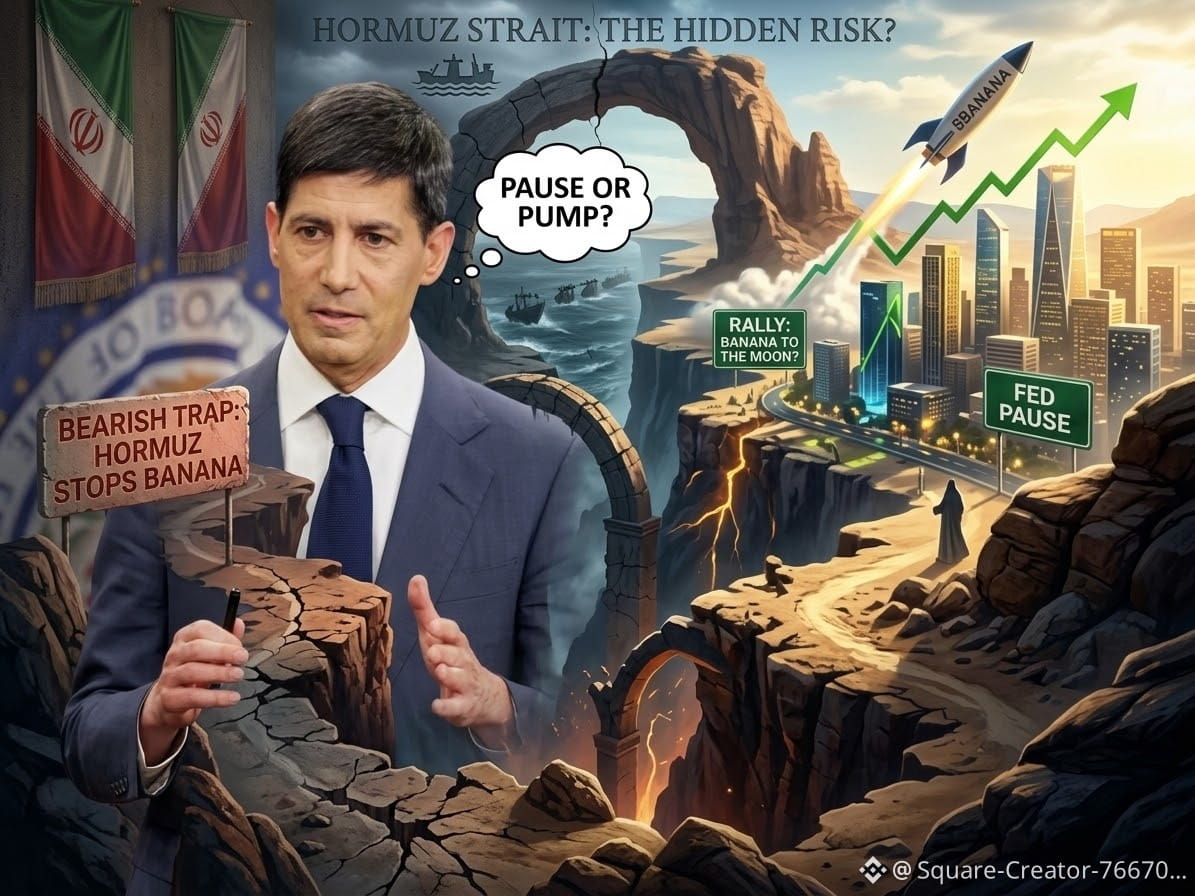
Total reliance on this data and ignoring massive geopolitical tensions—such as the Strait of Hormuz crisis and energy price risks—may be nothing more than an illusion. A cooling labor market could quickly turn into an economic recession, and loud statements won’t stop the market from correcting if inflationary pressure returns via energy.
Between economic cooling and burning geopolitical tensions... do you think the market is preparing for a new rally or an upcoming correction?
#Crypto
#Fed
#Inflation
#Trading #CryptoMarket
NFA. DYOR.
🚨 The news that has occupied everyone for days... Is it the beginning of a bullish breakout or a trap of quiet stagnation?
The economic data that emerged in recent days about PCE inflation slowing to 3.4% and a drop in JOLTS job openings has sent a strong signal to pause Federal tightening, leading some to see it as a green light for the markets. But the picture has two faces that are completely at odds:
The bullish scenario 🚀
Lower inflation alongside a cooling labor market gives the Fed room to breathe, stabilize rates, and helps boost risk appetite while pumping liquidity into markets and digital currencies—reviving hope for an upcoming wave that could once again spotlight coins like $BANANAS31 , $QNT , and $ONE .
The bearish scenario ⚠️
Total reliance on this data and ignoring massive geopolitical tensions—such as the Strait of Hormuz crisis and energy price risks—may be nothing more than an illusion. A cooling labor market could quickly turn into an economic recession, and loud statements won’t stop the market from correcting if inflationary pressure returns via energy.
Between economic cooling and burning geopolitical tensions... do you think the market is preparing for a new rally or an upcoming correction?
#Crypto
#Fed
#Inflation
#Trading #CryptoMarket
NFA. DYOR.
The economic data that emerged in recent days about PCE inflation slowing to 3.4% and a drop in JOLTS job openings has sent a strong signal to pause Federal tightening, leading some to see it as a green light for the markets. But the picture has two faces that are completely at odds:
The bullish scenario 🚀
Lower inflation alongside a cooling labor market gives the Fed room to breathe, stabilize rates, and helps boost risk appetite while pumping liquidity into markets and digital currencies—reviving hope for an upcoming wave that could once again spotlight coins like $BANANAS31 , $QNT , and $ONE .
The bearish scenario ⚠️
Total reliance on this data and ignoring massive geopolitical tensions—such as the Strait of Hormuz crisis and energy price risks—may be nothing more than an illusion. A cooling labor market could quickly turn into an economic recession, and loud statements won’t stop the market from correcting if inflationary pressure returns via energy.
Between economic cooling and burning geopolitical tensions... do you think the market is preparing for a new rally or an upcoming correction?
#Crypto
#Fed
#Inflation
#Trading #CryptoMarket
NFA. DYOR.
815

·
--
Bearish
📊 the inflation contradiction — good today, warning tomorrow
The macro data in September told two stories simultaneously. Core CPI dropped to 2.4% YoY — the lowest since February 2026, genuinely approaching the Fed's 2% target. Real progress. But the monthly core CPI came in at 0.3% — above the entire analyst forecast range. And PPI surged to 5.4% YoY — driven by energy, with Brent back above $111 on Houthi attacks on Saudi infrastructure. The pipeline is hot. What shows up in PPI today shows up in CPI in 2-3 months. The good inflation data of September may not survive October. December hike probability stayed above 70% all month. 🧠
#inflation #cpi #corecpi #dyor #fed2percent
{future}(BTCUSDT)
{future}(LINKUSDT)
{future}(ETHUSDT)
📊 the inflation contradiction — good today, warning tomorrow
The macro data in September told two stories simultaneously. Core CPI dropped to 2.4% YoY — the lowest since February 2026, genuinely approaching the Fed's 2% target. Real progress. But the monthly core CPI came in at 0.3% — above the entire analyst forecast range. And PPI surged to 5.4% YoY — driven by energy, with Brent back above $111 on Houthi attacks on Saudi infrastructure. The pipeline is hot. What shows up in PPI today shows up in CPI in 2-3 months. The good inflation data of September may not survive October. December hike probability stayed above 70% all month. 🧠
#inflation #cpi #corecpi #dyor #fed2percent
The macro data in September told two stories simultaneously. Core CPI dropped to 2.4% YoY — the lowest since February 2026, genuinely approaching the Fed's 2% target. Real progress. But the monthly core CPI came in at 0.3% — above the entire analyst forecast range. And PPI surged to 5.4% YoY — driven by energy, with Brent back above $111 on Houthi attacks on Saudi infrastructure. The pipeline is hot. What shows up in PPI today shows up in CPI in 2-3 months. The good inflation data of September may not survive October. December hike probability stayed above 70% all month. 🧠
#inflation #cpi #corecpi #dyor #fed2percent
46

🧵 HOW DOES INFLATION REDUCE DEBT BURDEN? 💰
1️⃣ Prices rise → money loses purchasing power
2️⃣ Nominal GDP can grow
3️⃣ Existing fixed-rate debt becomes smaller relative to GDP/income
4️⃣ Savers may lose purchasing power if returns don’t keep up
That’s why some investors look to scarce assets like BTC and Gold as potential inflation hedges. 🟠🥇
But inflation doesn’t automatically make BTC or Gold rise.
#Bitcoin #BTC #Gold #Inflation #Economy
🧵 HOW DOES INFLATION REDUCE DEBT BURDEN? 💰
1️⃣ Prices rise → money loses purchasing power
2️⃣ Nominal GDP can grow
3️⃣ Existing fixed-rate debt becomes smaller relative to GDP/income
4️⃣ Savers may lose purchasing power if returns don’t keep up
That’s why some investors look to scarce assets like BTC and Gold as potential inflation hedges. 🟠🥇
But inflation doesn’t automatically make BTC or Gold rise.
#Bitcoin #BTC #Gold #Inflation #Economy
1️⃣ Prices rise → money loses purchasing power
2️⃣ Nominal GDP can grow
3️⃣ Existing fixed-rate debt becomes smaller relative to GDP/income
4️⃣ Savers may lose purchasing power if returns don’t keep up
That’s why some investors look to scarce assets like BTC and Gold as potential inflation hedges. 🟠🥇
But inflation doesn’t automatically make BTC or Gold rise.
#Bitcoin #BTC #Gold #Inflation #Economy
1
226

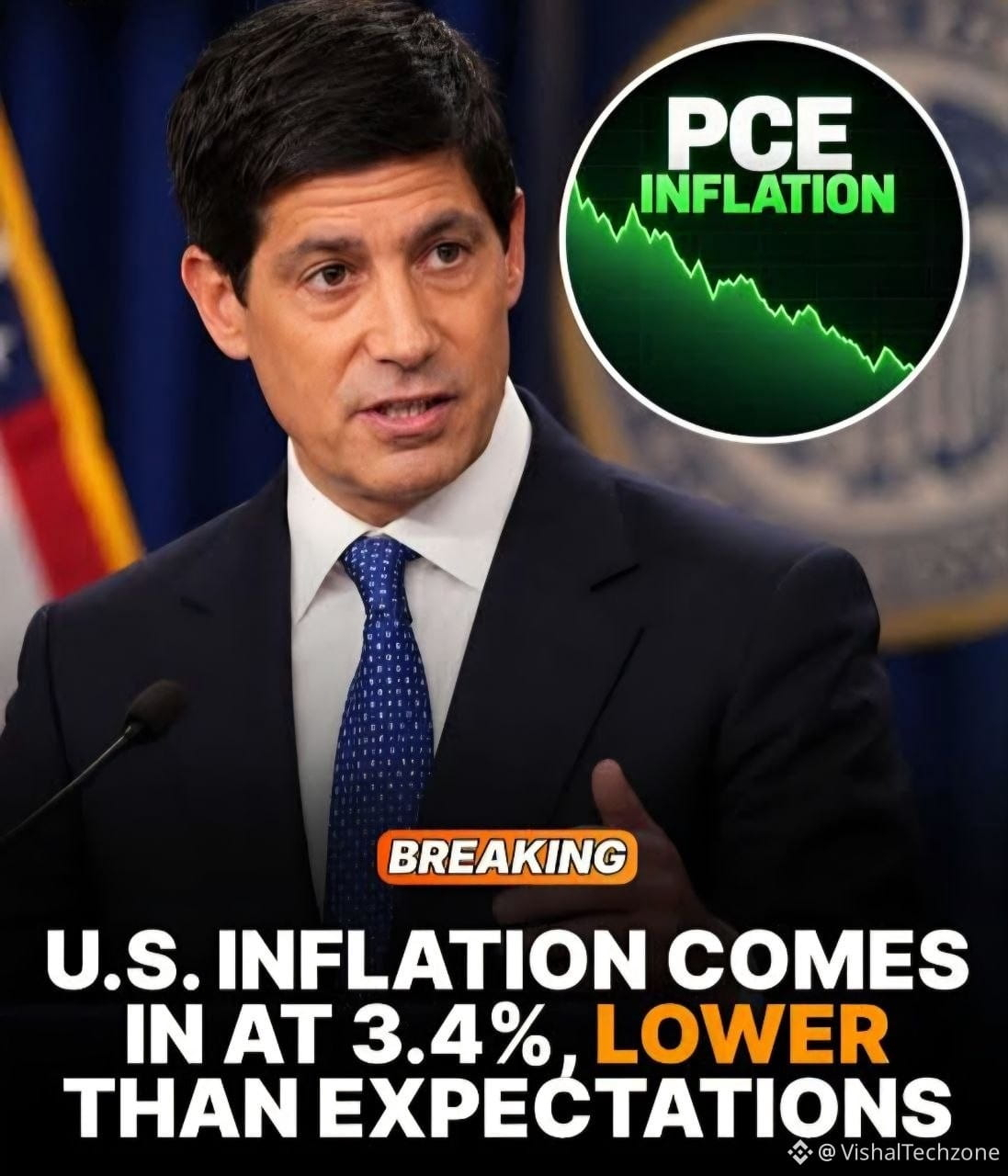
🚨 Macro Alert: US PCE Inflation Drops Below Expectations!
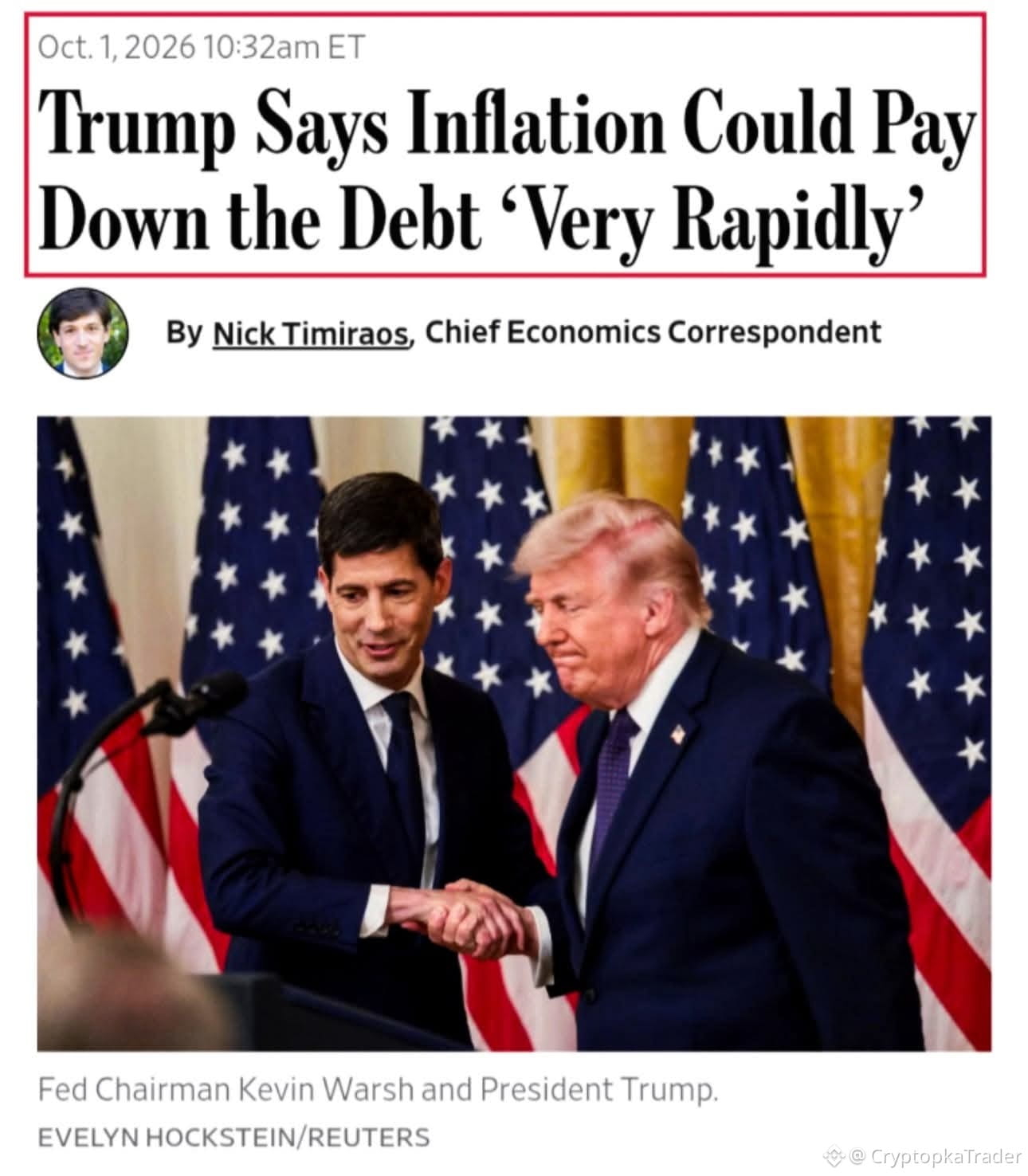
The latest Personal Consumption Expenditures (PCE) Price Index data has officially rolled in at 3.4%, coming in significantly lower than the market expectations of 3.7%. This marks the lowest level we have seen in 6 months! 📉🇺🇸
Why this matters for Crypto:
Cooling inflation numbers historically signal a relief period for risk assets. When macro pressure on interest rates softens, institutional liquidity tends to seek higher-yield environments, potentially fueling the next crypto accumulation phase. 📈💰
Risk management remains priority number one. Watch the DXY reaction closely! 🛡️
💬 Community Question:
Do you think this cooling macro data will trigger an immediate crypto breakout, or will the market range a bit longer? Let's discuss below! 👇
#PCE #MacroEconomics #Inflation #CryptoMarket #MarketUpdate
{spot}(ETHUSDT)
🚨 Macro Alert: US PCE Inflation Drops Below Expectations!
The latest Personal Consumption Expenditures (PCE) Price Index data has officially rolled in at 3.4%, coming in significantly lower than the market expectations of 3.7%. This marks the lowest level we have seen in 6 months! 📉🇺🇸
Why this matters for Crypto:
Cooling inflation numbers historically signal a relief period for risk assets. When macro pressure on interest rates softens, institutional liquidity tends to seek higher-yield environments, potentially fueling the next crypto accumulation phase. 📈💰
Risk management remains priority number one. Watch the DXY reaction closely! 🛡️
💬 Community Question:
Do you think this cooling macro data will trigger an immediate crypto breakout, or will the market range a bit longer? Let's discuss below! 👇
#PCE #MacroEconomics #Inflation #CryptoMarket #MarketUpdate
The latest Personal Consumption Expenditures (PCE) Price Index data has officially rolled in at 3.4%, coming in significantly lower than the market expectations of 3.7%. This marks the lowest level we have seen in 6 months! 📉🇺🇸
Why this matters for Crypto:
Cooling inflation numbers historically signal a relief period for risk assets. When macro pressure on interest rates softens, institutional liquidity tends to seek higher-yield environments, potentially fueling the next crypto accumulation phase. 📈💰
Risk management remains priority number one. Watch the DXY reaction closely! 🛡️
💬 Community Question:
Do you think this cooling macro data will trigger an immediate crypto breakout, or will the market range a bit longer? Let's discuss below! 👇
#PCE #MacroEconomics #Inflation #CryptoMarket #MarketUpdate
32

Have you noticed how every inflation print below expectations sends crypto traders into a frenzy that usually ends in red?
Most people pile into $BTC the second the number drops, then watch their position get liquidated when the actual Fed reaction comes in later. That FOMO cycle has cost more traders money than any rug pull this year.
The PCE Price Index just printed 3.4% versus the 3.7% everyone expected. That's the lowest reading in six months and it looks bullish on paper.
Reality is different though. Markets already priced in cooling inflation weeks ago so this number changes very little about the Fed's next move.
If you bought the spike in $ETH or $BNB you are probably already underwater on the 15-minute chart. Fade that initial reaction instead. Wait for volume to dry up after the first 30 minutes then look for a retest of the pre-data levels.
Where do you think this goes from here?
#PCE #Inflation #Bitcoin
Have you noticed how every inflation print below expectations sends crypto traders into a frenzy that usually ends in red?
Most people pile into $BTC the second the number drops, then watch their position get liquidated when the actual Fed reaction comes in later. That FOMO cycle has cost more traders money than any rug pull this year.
The PCE Price Index just printed 3.4% versus the 3.7% everyone expected. That's the lowest reading in six months and it looks bullish on paper.
Reality is different though. Markets already priced in cooling inflation weeks ago so this number changes very little about the Fed's next move.
If you bought the spike in $ETH or $BNB you are probably already underwater on the 15-minute chart. Fade that initial reaction instead. Wait for volume to dry up after the first 30 minutes then look for a retest of the pre-data levels.
Where do you think this goes from here?
#PCE #Inflation #Bitcoin
Most people pile into $BTC the second the number drops, then watch their position get liquidated when the actual Fed reaction comes in later. That FOMO cycle has cost more traders money than any rug pull this year.
The PCE Price Index just printed 3.4% versus the 3.7% everyone expected. That's the lowest reading in six months and it looks bullish on paper.
Reality is different though. Markets already priced in cooling inflation weeks ago so this number changes very little about the Fed's next move.
If you bought the spike in $ETH or $BNB you are probably already underwater on the 15-minute chart. Fade that initial reaction instead. Wait for volume to dry up after the first 30 minutes then look for a retest of the pre-data levels.
Where do you think this goes from here?
#PCE #Inflation #Bitcoin

20

·
--
If you're still treating every inflation print like a crypto death sentence, stop now.
Too many traders panic-sold $BTC last year on hotter-than-expected data only to miss the entire rally that followed. The FOMO buybacks after the fact always hurt more than just sitting tight.
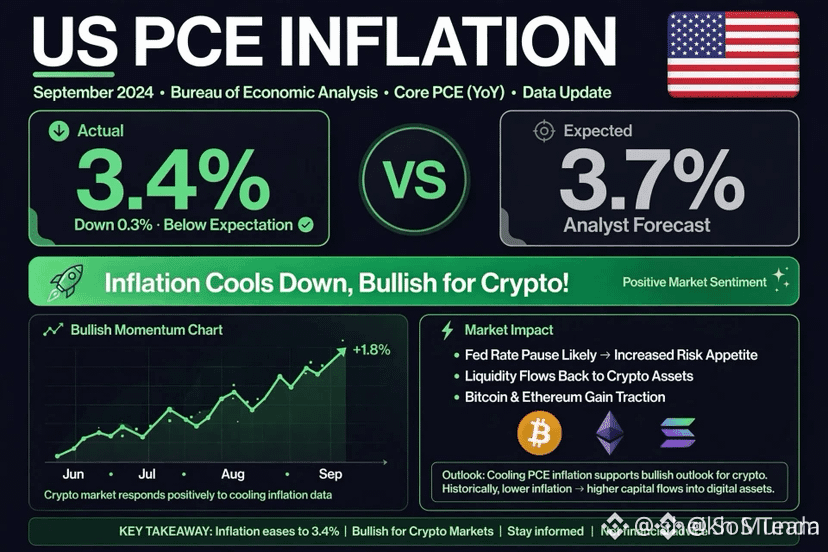
The latest US PCE came in at 3.4% versus the 3.7% everyone was bracing for. That's the lowest reading in six months.
We've seen this movie before. Similar cooling late last year sent $ETH ripping and $SOL breaking out as traders piled into the rate-cut trade while $BTC found its footing. This setup looks even cleaner this time around.
Where do you think this goes from here?
#PCE #Inflation #Bitcoin
If you're still treating every inflation print like a crypto death sentence, stop now.
Too many traders panic-sold $BTC last year on hotter-than-expected data only to miss the entire rally that followed. The FOMO buybacks after the fact always hurt more than just sitting tight.
The latest US PCE came in at 3.4% versus the 3.7% everyone was bracing for. That's the lowest reading in six months.
We've seen this movie before. Similar cooling late last year sent $ETH ripping and $SOL breaking out as traders piled into the rate-cut trade while $BTC found its footing. This setup looks even cleaner this time around.
Where do you think this goes from here?
#PCE #Inflation #Bitcoin
Too many traders panic-sold $BTC last year on hotter-than-expected data only to miss the entire rally that followed. The FOMO buybacks after the fact always hurt more than just sitting tight.
The latest US PCE came in at 3.4% versus the 3.7% everyone was bracing for. That's the lowest reading in six months.
We've seen this movie before. Similar cooling late last year sent $ETH ripping and $SOL breaking out as traders piled into the rate-cut trade while $BTC found its footing. This setup looks even cleaner this time around.
Where do you think this goes from here?
#PCE #Inflation #Bitcoin
31

·
--
🇺🇸🚨 US PCE INFLATION COMES IN BELOW EXPECTATIONS!
📉 PCE: 3.4%
📊 Expected: 3.7%
⬇️ Lowest in 6 months
The softer-than-expected inflation reading has reduced some pressure for further Fed rate hikes, although inflation is still above the Fed’s 2% target.
🔥 WHAT COULD THIS MEAN FOR CRYPTO?
Lower-than-expected inflation can improve market sentiment and reduce expectations for tighter monetary policy—but BTC and altcoins can still react differently depending on upcoming economic data. 📈📉
👀 Will this become a bullish signal for Bitcoin and crypto?
#PCE #Inflation #Bitcoin CryptoNews $AAPLB $BTC $BNB
{future}(BNBUSDT)
🇺🇸🚨 US PCE INFLATION COMES IN BELOW EXPECTATIONS!
📉 PCE: 3.4%
📊 Expected: 3.7%
⬇️ Lowest in 6 months
The softer-than-expected inflation reading has reduced some pressure for further Fed rate hikes, although inflation is still above the Fed’s 2% target.
🔥 WHAT COULD THIS MEAN FOR CRYPTO?
Lower-than-expected inflation can improve market sentiment and reduce expectations for tighter monetary policy—but BTC and altcoins can still react differently depending on upcoming economic data. 📈📉
👀 Will this become a bullish signal for Bitcoin and crypto?
#PCE #Inflation #Bitcoin CryptoNews $AAPLB $BTC $BNB
📉 PCE: 3.4%
📊 Expected: 3.7%
⬇️ Lowest in 6 months
The softer-than-expected inflation reading has reduced some pressure for further Fed rate hikes, although inflation is still above the Fed’s 2% target.
🔥 WHAT COULD THIS MEAN FOR CRYPTO?
Lower-than-expected inflation can improve market sentiment and reduce expectations for tighter monetary policy—but BTC and altcoins can still react differently depending on upcoming economic data. 📈📉
👀 Will this become a bullish signal for Bitcoin and crypto?
#PCE #Inflation #Bitcoin CryptoNews $AAPLB $BTC $BNB
72
Eurostat released preliminary inflation data for September today, revealing that the Eurozone headline CPI accelerated sharply to 3.8% year-on-year. This reading surpassed market expectations of 3.6% and marked a significant jump from 3.2% recorded in the previous month, while the month-on-month rate advanced 0.6%.
This broad re-acceleration in consumer prices complicates the macroeconomic landscape for European policymakers. With persistent cost pressures in energy, gas, and services, inflation remains well above the European Central Bank's 2.0% medium-term target, reinforcing expectations of tighter monetary conditions ahead.
The data is likely to push global bond yields higher and provide immediate support for the Euro against major currencies. Persistently elevated inflation and lingering high interest rates continue to fuel risk-off sentiment, prompting institutions to favor defensive cash positions and safe-haven assets over growth-sensitive equities.
For digital asset markets, tighter liquidity conditions and prolonged hawkish central bank policies generally suppress speculative capital inflows. Unless broader macroeconomic pressures ease, $BTC and the wider crypto sector may continue experiencing range-bound volatility and cautious institutional demand. 📊
#Inflation #Eurozone #MacroEconomics
Eurostat released preliminary inflation data for September today, revealing that the Eurozone headline CPI accelerated sharply to 3.8% year-on-year. This reading surpassed market expectations of 3.6% and marked a significant jump from 3.2% recorded in the previous month, while the month-on-month rate advanced 0.6%.
This broad re-acceleration in consumer prices complicates the macroeconomic landscape for European policymakers. With persistent cost pressures in energy, gas, and services, inflation remains well above the European Central Bank's 2.0% medium-term target, reinforcing expectations of tighter monetary conditions ahead.
The data is likely to push global bond yields higher and provide immediate support for the Euro against major currencies. Persistently elevated inflation and lingering high interest rates continue to fuel risk-off sentiment, prompting institutions to favor defensive cash positions and safe-haven assets over growth-sensitive equities.
For digital asset markets, tighter liquidity conditions and prolonged hawkish central bank policies generally suppress speculative capital inflows. Unless broader macroeconomic pressures ease, $BTC and the wider crypto sector may continue experiencing range-bound volatility and cautious institutional demand. 📊
#Inflation #Eurozone #MacroEconomics
This broad re-acceleration in consumer prices complicates the macroeconomic landscape for European policymakers. With persistent cost pressures in energy, gas, and services, inflation remains well above the European Central Bank's 2.0% medium-term target, reinforcing expectations of tighter monetary conditions ahead.
The data is likely to push global bond yields higher and provide immediate support for the Euro against major currencies. Persistently elevated inflation and lingering high interest rates continue to fuel risk-off sentiment, prompting institutions to favor defensive cash positions and safe-haven assets over growth-sensitive equities.
For digital asset markets, tighter liquidity conditions and prolonged hawkish central bank policies generally suppress speculative capital inflows. Unless broader macroeconomic pressures ease, $BTC and the wider crypto sector may continue experiencing range-bound volatility and cautious institutional demand. 📊
#Inflation #Eurozone #MacroEconomics
49

🇺🇸 US PCE — COOLING SIGNAL
📉 PCE: 3.4%
🎯 Expected: 3.7%
⬇️ 6-Month Low
🔐 CODE:
COOL → BEAT →🇺🇸 US PCE — COOLING SIGNAL
📉 PCE: 3.4%
🎯 Expected: 3.7%
⬇️ 6-Month Low
🔐 CODE:
COOL → BEAT → LOW → WATCH
#PCE #Inflation #USCPI 🇺🇸 US PCE — COOLING SIGNAL
📉 PCE: 3.4%
🎯 Expected: 3.7%
⬇️ 6-Month Low
🔐 CODE:
COOL → BEAT → LOW → WATCH
#PCE #Inflation ation #US
🇺🇸 US PCE — COOLING SIGNAL 📉 PCE: 3.4% 🎯 Expected: 3.7% ⬇️ 6-Month Low 🔐 CODE: COOL → BEAT →
🇺🇸 US PCE — COOLING SIGNAL
📉 PCE: 3.4%
🎯 Expected: 3.7%
⬇️ 6-Month Low
🔐 CODE:
COOL → BEAT → LOW → WATCH
#PCE #Inflation #USCPI 🇺🇸 US PCE — COOLING SIGNAL
📉 PCE: 3.4%
🎯 Expected: 3.7%
⬇️ 6-Month Low
🔐 CODE:
COOL → BEAT → LOW → WATCH
#PCE #Inflation ation #US
📉 PCE: 3.4%
🎯 Expected: 3.7%
⬇️ 6-Month Low
🔐 CODE:
COOL → BEAT → LOW → WATCH
#PCE #Inflation #USCPI 🇺🇸 US PCE — COOLING SIGNAL
📉 PCE: 3.4%
🎯 Expected: 3.7%
⬇️ 6-Month Low
🔐 CODE:
COOL → BEAT → LOW → WATCH
#PCE #Inflation ation #US
36
·
--
Most traders lose their entire stack right when macroeconomic data looks the absolute cleanest.
We have all felt that sickening urge to market-buy local tops because a single headline made the future feel guaranteed, only to watch liquidity dry up on the very next candle.
The US PCE inflation data just clocked in at 3.4% against the 3.7% market expectation, marking its lowest reading in six months. On paper, cooling core inflation gives the Federal Reserve breathing room, which historically breathes fresh life into macro assets like $BTC and $ETH. In past cycles, these macro pivots created the most profitable accumulation zones, but they rarely moved in a straight line.
What newer market participants often miss is how institutional order flow behaves around these prints. Whales frequently use the sudden wave of retail optimism to distribute into liquidity or hunt aggressive leverage before any sustainable trend takes hold. If you traded through the choppy rate cycles of 2022 and 2023, you know that patience during macro transitions pays far better than chasing the immediate reaction.
Are you positioning for a sustained macro expansion here, or waiting for the inevitable liquidity sweep first?
#Crypto #Inflation #Macroeconomics
Most traders lose their entire stack right when macroeconomic data looks the absolute cleanest.
We have all felt that sickening urge to market-buy local tops because a single headline made the future feel guaranteed, only to watch liquidity dry up on the very next candle.
The US PCE inflation data just clocked in at 3.4% against the 3.7% market expectation, marking its lowest reading in six months. On paper, cooling core inflation gives the Federal Reserve breathing room, which historically breathes fresh life into macro assets like $BTC and $ETH . In past cycles, these macro pivots created the most profitable accumulation zones, but they rarely moved in a straight line.
What newer market participants often miss is how institutional order flow behaves around these prints. Whales frequently use the sudden wave of retail optimism to distribute into liquidity or hunt aggressive leverage before any sustainable trend takes hold. If you traded through the choppy rate cycles of 2022 and 2023, you know that patience during macro transitions pays far better than chasing the immediate reaction.
Are you positioning for a sustained macro expansion here, or waiting for the inevitable liquidity sweep first?
#Crypto #Inflation #Macroeconomics
We have all felt that sickening urge to market-buy local tops because a single headline made the future feel guaranteed, only to watch liquidity dry up on the very next candle.
The US PCE inflation data just clocked in at 3.4% against the 3.7% market expectation, marking its lowest reading in six months. On paper, cooling core inflation gives the Federal Reserve breathing room, which historically breathes fresh life into macro assets like $BTC and $ETH . In past cycles, these macro pivots created the most profitable accumulation zones, but they rarely moved in a straight line.
What newer market participants often miss is how institutional order flow behaves around these prints. Whales frequently use the sudden wave of retail optimism to distribute into liquidity or hunt aggressive leverage before any sustainable trend takes hold. If you traded through the choppy rate cycles of 2022 and 2023, you know that patience during macro transitions pays far better than chasing the immediate reaction.
Are you positioning for a sustained macro expansion here, or waiting for the inevitable liquidity sweep first?
#Crypto #Inflation #Macroeconomics

40
If you're still trading crypto without paying attention to US inflation data, stop now.
Too many people lose money chasing random pumps while completely missing how macro numbers like this dictate the real trend. You end up FOMO buying after the move or panic selling the dip that never comes.
The latest PCE Price Index printed at 3.4 percent versus 3.7 percent expected. That's the lowest reading in six months and a genuine surprise to the downside.
Markets are divided on what it means. Some traders think it's already baked in after the recent run and we'll see profit taking in $BTC. Others believe this cooling inflation is exactly what the Fed needs to start cutting, which would give a strong tailwind for $ETH and the rest of crypto.
I'm siding with the bulls on this. Soft inflation without killing growth is the setup that historically sends risk assets higher. $BNB has been moving in lockstep with Bitcoin lately so this could lift the whole board.
Where do you think this PCE miss takes us from here?
#PCE #Inflation #Crypto
If you're still trading crypto without paying attention to US inflation data, stop now.
Too many people lose money chasing random pumps while completely missing how macro numbers like this dictate the real trend. You end up FOMO buying after the move or panic selling the dip that never comes.
The latest PCE Price Index printed at 3.4 percent versus 3.7 percent expected. That's the lowest reading in six months and a genuine surprise to the downside.
Markets are divided on what it means. Some traders think it's already baked in after the recent run and we'll see profit taking in $BTC . Others believe this cooling inflation is exactly what the Fed needs to start cutting, which would give a strong tailwind for $ETH and the rest of crypto.
I'm siding with the bulls on this. Soft inflation without killing growth is the setup that historically sends risk assets higher. $BNB has been moving in lockstep with Bitcoin lately so this could lift the whole board.
Where do you think this PCE miss takes us from here?
#PCE #Inflation #Crypto
Too many people lose money chasing random pumps while completely missing how macro numbers like this dictate the real trend. You end up FOMO buying after the move or panic selling the dip that never comes.
The latest PCE Price Index printed at 3.4 percent versus 3.7 percent expected. That's the lowest reading in six months and a genuine surprise to the downside.
Markets are divided on what it means. Some traders think it's already baked in after the recent run and we'll see profit taking in $BTC . Others believe this cooling inflation is exactly what the Fed needs to start cutting, which would give a strong tailwind for $ETH and the rest of crypto.
I'm siding with the bulls on this. Soft inflation without killing growth is the setup that historically sends risk assets higher. $BNB has been moving in lockstep with Bitcoin lately so this could lift the whole board.
Where do you think this PCE miss takes us from here?
#PCE #Inflation #Crypto
51
According to the latest data released by Eurostat, the eurozone’s September harmonised CPI initial estimate for year-on-year growth rebounded sharply to 3.8%, significantly above market expectations of 3.6% and the prior reading of 3.20%. On a month-on-month basis, it rose 0.6%, also exceeding expectations of 0.5%. The core inflation indicator also showed an upward trend. Continued cost pressures from energy and food have pushed overall European inflation higher again.
This upside surprise poses a serious challenge to the European Central Bank’s (ECB) monetary policy. Previously, the market broadly expected the tightening cycle to be nearing its end, but inflation persistence has far exceeded expectations. It not only deviates significantly from the long-term 2% target, but also directly undermines the optimistic narrative of cooling. Faced with dual pressures from wage growth and supply-chain disruptions, the probability that the ECB will be forced to maintain—and possibly even further intensify—its hawkish stance has risen markedly.
In traditional financial markets, persistent inflation pressure is reshaping asset-pricing logic. European and US bond yields face further upward pressure, and major institutions such as Bank of America have also warned that safe-haven sentiment may remain the dominant force in the market for the long term. With the US dollar index and sovereign bond yields staying at high levels, the global liquidity environment for risk assets is tightening at an accelerating pace, placing real constraints on overvalued sectors.
For crypto assets, expectations that global central banks will extend the tightening cycle are by no means good news. With liquidity continuing to face pressure and funding costs staying high, major assets such as $BTC are unlikely to receive large-scale net inflows in the near term. Investors should be alert to the risk of a deeper pullback driven by the spillover of safe-haven sentiment, and leveraged trades should be kept under extreme restraint.
#Inflation #Eurozone #ECB
According to the latest data released by Eurostat, the eurozone’s September harmonised CPI initial estimate for year-on-year growth rebounded sharply to 3.8%, significantly above market expectations of 3.6% and the prior reading of 3.20%. On a month-on-month basis, it rose 0.6%, also exceeding expectations of 0.5%. The core inflation indicator also showed an upward trend. Continued cost pressures from energy and food have pushed overall European inflation higher again.
This upside surprise poses a serious challenge to the European Central Bank’s (ECB) monetary policy. Previously, the market broadly expected the tightening cycle to be nearing its end, but inflation persistence has far exceeded expectations. It not only deviates significantly from the long-term 2% target, but also directly undermines the optimistic narrative of cooling. Faced with dual pressures from wage growth and supply-chain disruptions, the probability that the ECB will be forced to maintain—and possibly even further intensify—its hawkish stance has risen markedly.
In traditional financial markets, persistent inflation pressure is reshaping asset-pricing logic. European and US bond yields face further upward pressure, and major institutions such as Bank of America have also warned that safe-haven sentiment may remain the dominant force in the market for the long term. With the US dollar index and sovereign bond yields staying at high levels, the global liquidity environment for risk assets is tightening at an accelerating pace, placing real constraints on overvalued sectors.
For crypto assets, expectations that global central banks will extend the tightening cycle are by no means good news. With liquidity continuing to face pressure and funding costs staying high, major assets such as $BTC are unlikely to receive large-scale net inflows in the near term. Investors should be alert to the risk of a deeper pullback driven by the spillover of safe-haven sentiment, and leveraged trades should be kept under extreme restraint.
#Inflation #Eurozone #ECB
This upside surprise poses a serious challenge to the European Central Bank’s (ECB) monetary policy. Previously, the market broadly expected the tightening cycle to be nearing its end, but inflation persistence has far exceeded expectations. It not only deviates significantly from the long-term 2% target, but also directly undermines the optimistic narrative of cooling. Faced with dual pressures from wage growth and supply-chain disruptions, the probability that the ECB will be forced to maintain—and possibly even further intensify—its hawkish stance has risen markedly.
In traditional financial markets, persistent inflation pressure is reshaping asset-pricing logic. European and US bond yields face further upward pressure, and major institutions such as Bank of America have also warned that safe-haven sentiment may remain the dominant force in the market for the long term. With the US dollar index and sovereign bond yields staying at high levels, the global liquidity environment for risk assets is tightening at an accelerating pace, placing real constraints on overvalued sectors.
For crypto assets, expectations that global central banks will extend the tightening cycle are by no means good news. With liquidity continuing to face pressure and funding costs staying high, major assets such as $BTC are unlikely to receive large-scale net inflows in the near term. Investors should be alert to the risk of a deeper pullback driven by the spillover of safe-haven sentiment, and leveraged trades should be kept under extreme restraint.
#Inflation #Eurozone #ECB
6
Log in to explore more content
Join global crypto users on Binance Square
⚡️ Get latest and useful information about crypto.
💬 Trusted by the world’s largest crypto exchange.
👍 Discover real insights from verified creators.
Email / Phone number
Trending Topics
1
#BinanceLaunchesBinanceIntelligence
769,271 views
4,814 Discussing
2
#BTCFallsBelow$84K
38,407 views
129 Discussing
3
#DubaiVARAIssuesReserveAssetAuditCircular
12,752 views
444 Discussing
4
#SECApproves3XBitcoinETF
10,810 views
370 Discussing
5
#WinklevossFilesSpotZcashETFApplication
20,763 views
501 Discussing
6
#SouthKoreaAITradeLiftsWorldcoinTo$7.41B
2,417 views
41 Discussing
7
#StrategyEstimates$4.1BIncomeTaxBenefit
1,515 views
22 Discussing
8
#IglooShutsDownAbstractBlockchain
8,709 views
256 Discussing
9
#StrategyMarketCapSurpassesRumble
51,201 views
991 Discussing
10
#StriveBuys2000BTCFor$169M
18,973 views
163 Discussing