
#hardwarewallet
hardwarewallet
146,811 views
473 Discussing
Hot
Latest
·
--
Article
How to Keep Your Crypto Safe with a Simple Hardware WalletIf you're just starting out, the idea of "secure storage" can feel like a mystery wrapped in tech jargon. I remember my first week of buying $BTC and $ETH and wondering where to keep them so a hacker couldn't swipe them. In this guide I'll walk you through a safety habit that anyone can follow, using today's market snapshot only as a gentle backdrop.
Why a Hardware Wallet Matters
A hardware wallet is a tiny device that stores your private keys offline. Private keys are like the secret PIN to your bank account; if someone gets them, they control your crypto. By keeping the keys on a physical gadget, you avoid the biggest online risk: phishing attacks that try to steal login details.
Pick the Right Device
There are a few popular brands, but the key is to choose a device that lets you verify transactions on its own screen. Look for a model that supports $BTC, $ETH, $BNB and SOL, because those are the coins you're likely seeing move in the market today (for example $BTC is around $60,710 and $ETH near $1,701). A device that shows the address and amount before you confirm adds a visual check that software wallets can't provide.
Step-by-Step Setup
1. **Unbox and Inspect**, Make sure the packaging is sealed and the device looks untouched. Any sign of tampering could mean it's been compromised.
2. **Create a New Wallet**, Follow the on-screen prompts to generate a fresh set of private keys. The device will give you a 12- or 24-word recovery phrase; write it down on paper, never on a phone or computer.
3. **Install the Companion App**, Most hardware wallets pair with a desktop or mobile app. Use the official download link, not a third-party site, to avoid malicious software.
4. **Transfer a Small Test Amount**, Before moving all your holdings, send a tiny amount of $BTC or $ETH (say a few dollars worth) to the new address. Check that it arrives and that you can see it in the app.
Keep the Recovery Phrase Safe
Your recovery phrase is the ultimate backup. Store it in a fire-proof safe, or split it into two sealed envelopes and keep them in separate locations. If you lose the phrase, you lose access to your funds forever, even if the hardware device is still working.
Check the Market, Not the Panic
Today the Fear & Greed Index reads 12, which means "Extreme Fear." That number alone doesn't tell you whether to buy or sell, but it does remind you that market emotions can be volatile. By keeping your crypto offline, you protect yourself from impulsive moves that often happen during high-fear periods.
What safety steps have you tried, and what worked best for you?
Not financial advice
#CryptoSafety #BeginnerGuide #HardwareWallet #CryptoEducation
How to Keep Your Crypto Safe with a Simple Hardware Wallet
If you're just starting out, the idea of "secure storage" can feel like a mystery wrapped in tech jargon. I remember my first week of buying $BTC and $ETH and wondering where to keep them so a hacker couldn't swipe them. In this guide I'll walk you through a safety habit that anyone can follow, using today's market snapshot only as a gentle backdrop.
Why a Hardware Wallet Matters
A hardware wallet is a tiny device that stores your private keys offline. Private keys are like the secret PIN to your bank account; if someone gets them, they control your crypto. By keeping the keys on a physical gadget, you avoid the biggest online risk: phishing attacks that try to steal login details.
Pick the Right Device
There are a few popular brands, but the key is to choose a device that lets you verify transactions on its own screen. Look for a model that supports $BTC , $ETH , $BNB and SOL, because those are the coins you're likely seeing move in the market today (for example $BTC is around $60,710 and $ETH near $1,701). A device that shows the address and amount before you confirm adds a visual check that software wallets can't provide.
Step-by-Step Setup
1. **Unbox and Inspect**, Make sure the packaging is sealed and the device looks untouched. Any sign of tampering could mean it's been compromised.
2. **Create a New Wallet**, Follow the on-screen prompts to generate a fresh set of private keys. The device will give you a 12- or 24-word recovery phrase; write it down on paper, never on a phone or computer.
3. **Install the Companion App**, Most hardware wallets pair with a desktop or mobile app. Use the official download link, not a third-party site, to avoid malicious software.
4. **Transfer a Small Test Amount**, Before moving all your holdings, send a tiny amount of $BTC or $ETH (say a few dollars worth) to the new address. Check that it arrives and that you can see it in the app.
Keep the Recovery Phrase Safe
Your recovery phrase is the ultimate backup. Store it in a fire-proof safe, or split it into two sealed envelopes and keep them in separate locations. If you lose the phrase, you lose access to your funds forever, even if the hardware device is still working.
Check the Market, Not the Panic
Today the Fear & Greed Index reads 12, which means "Extreme Fear." That number alone doesn't tell you whether to buy or sell, but it does remind you that market emotions can be volatile. By keeping your crypto offline, you protect yourself from impulsive moves that often happen during high-fear periods.
What safety steps have you tried, and what worked best for you?
Not financial advice
#CryptoSafety #BeginnerGuide #HardwareWallet #CryptoEducation
110

🚨 $ETH SECURITY SHIFT: WHY HARDWARE SUPPLY CHAIN VULNERABILITIES ARE THE NEXT BIG TEST
Institutional-grade security extends far beyond protocol code and firmware verifications. 🔍 Recent hardware supply chain vectors highlight how physical silicon tampering can bypass standard user assumptions entirely.
Smart capital understands that infrastructure resilience is the ultimate foundation of long-term capital preservation. 💡 As architectural standards evolve toward verifiable secure chips, network integrity will require multi-layered physical auditing.
💬 Are you adapting your cold storage security playbook to account for hardware-level supply chain risks? 👇
⚠️ Not financial advice. Always manage your risk. 🛡️
#ETH #CryptoSecurity #Ethereum #HardwareWallet
🦈

🚨 $ETH SECURITY IS SHIFTING FROM SOFTWARE TO SILICON FAULT LINES! ⚡
Smart money knows that true custody isn't just about clean firmware when the physical supply chain can be compromised at the silicon level. 🦈
Vitalik highlighting lookalike hardware chips exposes a hidden risk vector that traditional risk models completely overlook. 📊 Supply chain integrity is becoming the ultimate bottleneck for institutional onboarding. ⚡
Are you auditing your hardware supply chain as closely as your portfolio allocation? 🤔
⚠️ Not financial advice. Always manage your risk. 🛡️
🏷️ #ETH #CryptoSecurity #HardwareWallet #Ethereum
🔥 💎
3
·
--
Vitalik Buterin has a new slogan for the hardware era: "not your silicon, not your keys."
In a blog post published on November 26, 2026, the $ETH co-founder walked through how chips are designed, from Verilog code down to GDS layouts, the exact geometry a chip factory prints. His security point: attackers have already slipped spy implants with an eSIM into hardware wallets before sale to leak seed phrases, and future attacks could swap in lookalike chips with hidden features no one can spot by eye.
Buterin says real verifiability needs openness down to the GDS level, deeper than most open-source chips, which stop at Verilog. He does not expect all hardware to go open. Instead, he hopes the industry splits into "performance hardware" and "secure hardware" that may be 10x less efficient but can be inspected by professional auditors.
#Ethereum #HardwareWallet #Security
DYOR. Not financial advice.

8

·
--
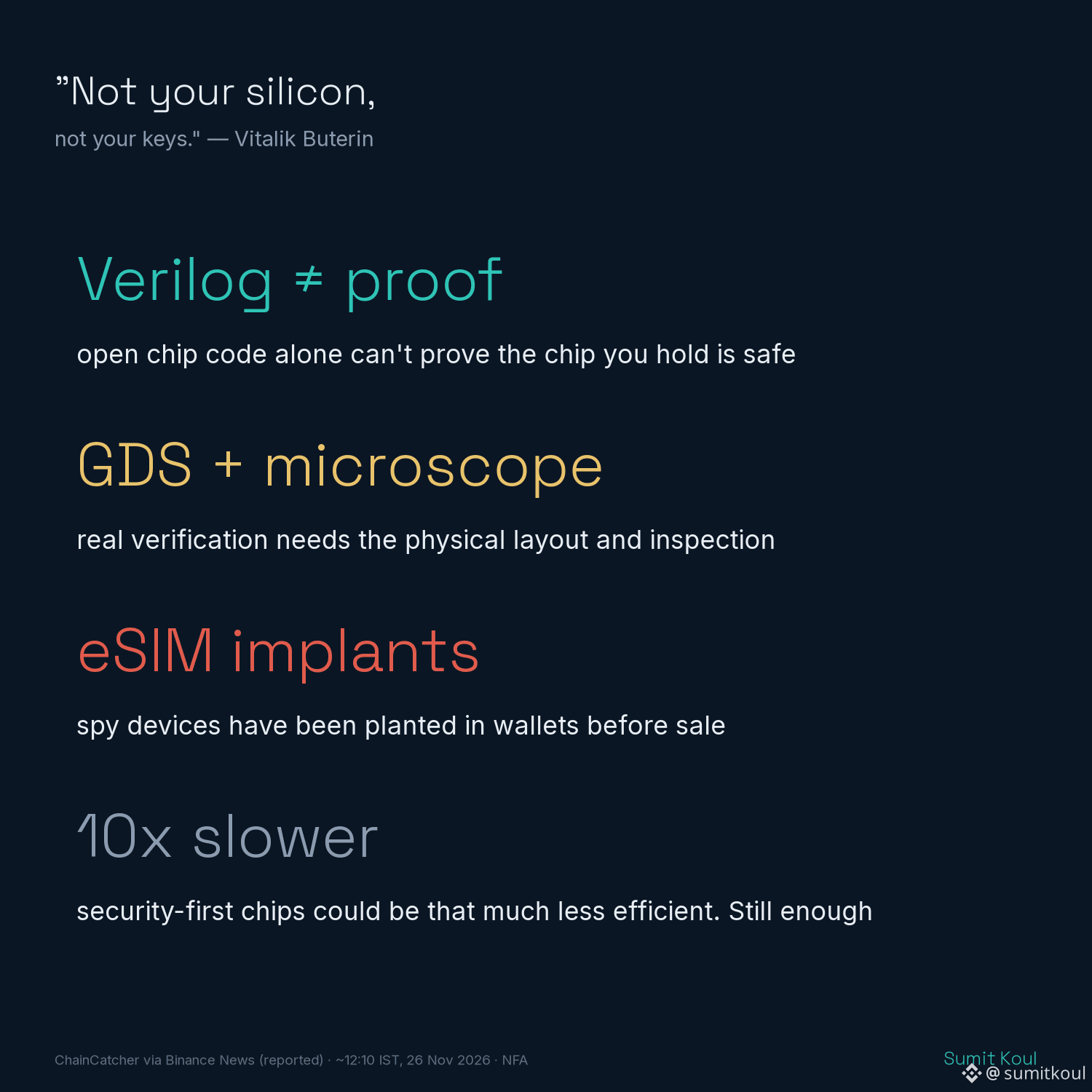
"Not your keys, not your coins." Vitalik just added a second line: "Not your silicon, not your keys." 🔐
His point, as reported by ChainCatcher (via Binance News):
• Publishing a hardware wallet's chip code (Verilog) can't prove the chip you hold is safe
• Real checks need the chip's physical layout (GDS) and inspection under a microscope
• Attackers have planted eSIM spy devices in hardware wallets before they were sold, to steal seed phrases
• He expects security-first chips to split from performance chips. Maybe 10x+ less efficient, but enough for most uses
My practical takeaways:
1. Buy hardware wallets only from the maker or an official reseller
2. Check the seals and set it up yourself. Never use a pre-written seed
3. For big amounts, look at multisig across different brands
Has a hardware wallet ever arrived looking "off" to you? What did you do? Share it below, it helps others.
Follow for security notes that are worth your 30 seconds.
#Ethereum #CryptoSecurity #HardwareWallet

·
--
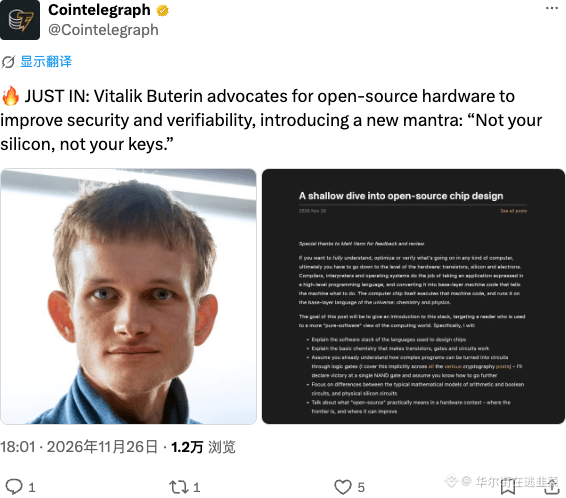
Vitalik Buterin calls for the adoption of open-source hardware to improve security and verifiability, proposing a new principle: “Not your chip, not your keys.”
No matter how powerful the software is, if the hardware is compromised, it’s a joke. This sounds like something CSW would say, but it really hits the nail on the head about the pain points of cold storage. From now on, when buying a wallet, open source is the way to go.
#BTC #ETH #HardwareWallet #CryptoSecurity
2
·
--
Hardware wallet maker Coinkite has explained how a hidden firmware slip left some COLDCARD recovery phrases far easier to guess for more than five years.
In a postmortem dated November 23, 2026, Coinkite said COLDCARD firmware from March 29, 2021 to July 30, 2026 drew wallet seeds from a software random number generator instead of the device's hardware chip. Affected seeds had roughly 40 to 72 bits of effective entropy instead of the intended 128. From July 29, 2026, attackers rebuilt keys offline and stole $BTC, though no device was remotely taken over. About 0.2% of users have reported losses.
Fixed firmware shipped on July 31, 2026, and an independent Keylabs review found the defect closed. A firmware update does not repair a seed created on affected versions, so owners should check Coinkite's official guidance. Seeds made with 50+ private dice rolls were not weakened.
#Bitcoin #CryptoSecurity #HardwareWallet
DYOR. Not financial advice.
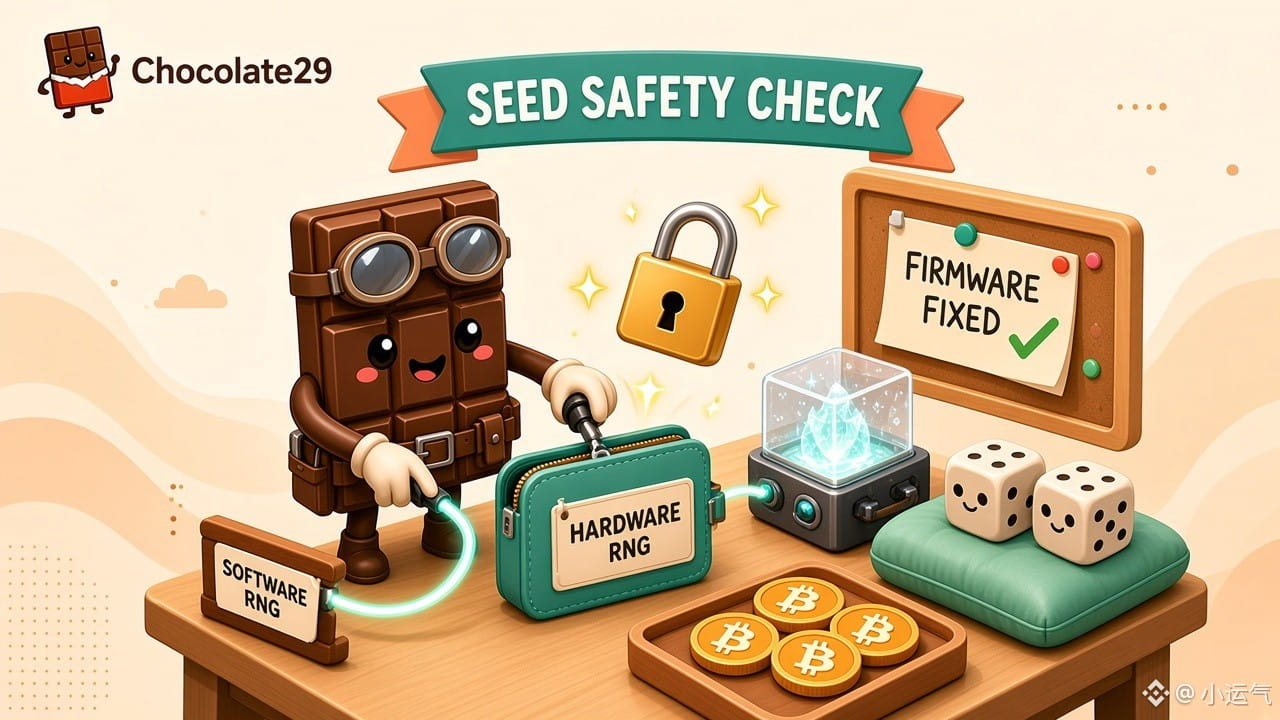
Hardware wallet maker Coinkite has explained how a hidden firmware slip left some COLDCARD recovery phrases far easier to guess for more than five years.
In a postmortem dated November 23, 2026, Coinkite said COLDCARD firmware from March 29, 2021 to July 30, 2026 drew wallet seeds from a software random number generator instead of the device's hardware chip. Affected seeds had roughly 40 to 72 bits of effective entropy instead of the intended 128. From July 29, 2026, attackers rebuilt keys offline and stole $BTC , though no device was remotely taken over. About 0.2% of users have reported losses.
Fixed firmware shipped on July 31, 2026, and an independent Keylabs review found the defect closed. A firmware update does not repair a seed created on affected versions, so owners should check Coinkite's official guidance. Seeds made with 50+ private dice rolls were not weakened.
#Bitcoin #CryptoSecurity #HardwareWallet
DYOR. Not financial advice.
130

🚨 CRITICAL $BTC SECURITY FLAW EXPOSED IN COLD STORAGE INFRASTRUCTURE ⚠️
Institutional-grade security relies on uncompromised architecture, yet a silent vulnerability in $BTC hardware storage recently drained over 1,700 coins due to a fallback entropy flaw. 🔍 This oversight proves that even trusted offline vaults demand rigorous multi-layered verification before capital allocation. 🛡️
Smart market participants understand that operational security is the ultimate risk parameter, superseding even chart structure during systemic anomalies. ⚡ Are you regularly auditing your storage redundancy and key generation protocols to insulate against hidden code failures? 💬
⚠️ Not financial advice. Always manage your risk. 🛡️
🏷️ #BTC #Security #HardwareWallet #CryptoRisk
🔒 ⚡
4

🚨 SILENT CODE FLAWS JUST DRAINED 1,789 $BTC ACROSS ELITE HARDWARE WALLETS ⚠️
Even the most hardened custody setups can harbor silent execution bugs that bypass years of independent code reviews. A structural flaw in a premier hardware device forced wallets into a weaker backup generation path, leaking master keys over a five-year blind spot. 🔍
When more than fifteen separate security audits miss a critical verification check, it serves as a stark reminder that cold storage requires constant vigilance and active asset rotation. 🛡️ Protecting accumulated capital is priority one before chasing the next market expansion wave. 💡
Have you audited your hardware storage routines and rotated your backup phrases recently? 💬
⚠️ Not financial advice. Always manage your risk. 🛡️
🏷️ #BTC #Security #HardwareWallet #Crypto
🔥 💎
11


·
--
🔓 Coldcard explains how a Bitcoin wallet flaw went unnoticed for 5+ years
In a Nov. 23 postmortem, Coldcard maker Coinkite said its security checks confirmed the devices had a proper system for generating recovery phrases but never verified they were actually using it. A software bug made the wallets fall back to a weaker method, leaving seed phrases easier to guess.
At least 15 independent reviews missed the issue, and attackers drained at least 1,789 BTC, worth about $114.7 million at the time. As of Nov. 18, Coinkite had about 300 loss-related tickets tied to 242 accounts and has not yet decided on compensation.
⭐ Even hardware wallets can fail silently: affected users are urged to create new recovery phrases and move funds to new wallets.
#Bitcoin #Security #HardwareWallet #Coldcard
42

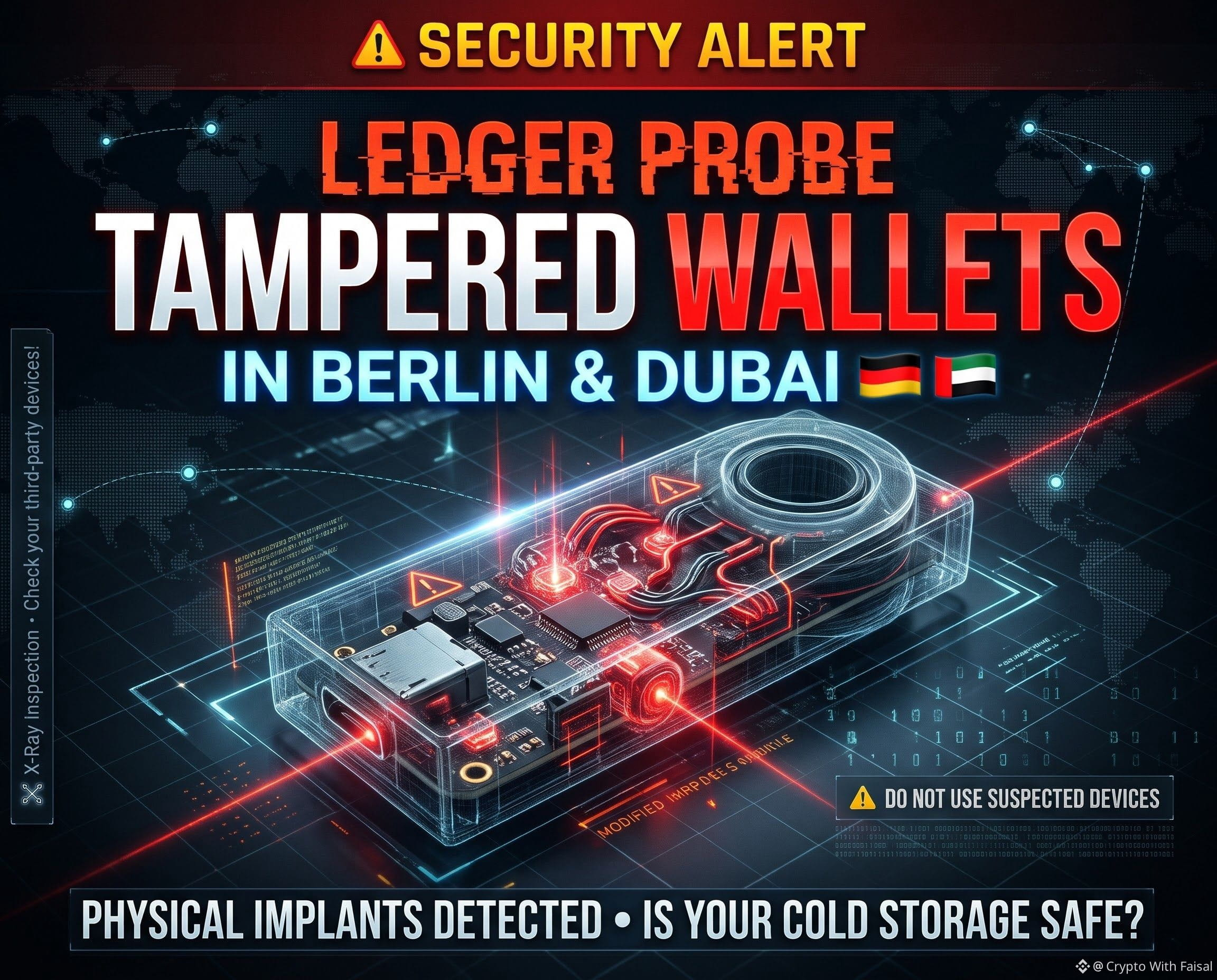
🚨 Security Alert: Ledger confirmed physically tampered hardware wallets in Berlin and is probing two suspected units in Dubai.
Key facts every trader needs to know:
🔹 The Threat: Affected units carry a physical implant built to steal your recovery phrase during setup—part of the same third-party reseller incident uncovered in Southeast Asia in October.
🔹 What Is Safe: Ledger confirmed zero flaws in its secure chip or OS, and zero cases tied to devices bought directly from ledger.com.
🔹 Next Steps: Bitquery estimates ~$1.68M was drained across 16 wallets in both cities. If you bought a Ledger in Berlin since Jan 2026 or from a third party in Dubai, stop using it immediately. Contact Ledger Support for a factory X-ray check in France and move funds to a fresh wallet.
Never buy cold storage from middlemen. Do you buy hardware wallets direct only, or through resellers? 👇
$BTC $ETH $EVAA
{future}(EVAAUSDT)
{future}(BTCUSDT)
{future}(ETHUSDT)
#ledgerprobestamperedwalletsinberlinanddubai #CryptoSecurity #SelfCustody #HardwareWallet
🚨 Security Alert: Ledger confirmed physically tampered hardware wallets in Berlin and is probing two suspected units in Dubai.
Key facts every trader needs to know:
🔹 The Threat: Affected units carry a physical implant built to steal your recovery phrase during setup—part of the same third-party reseller incident uncovered in Southeast Asia in October.
🔹 What Is Safe: Ledger confirmed zero flaws in its secure chip or OS, and zero cases tied to devices bought directly from ledger.com.
🔹 Next Steps: Bitquery estimates ~$1.68M was drained across 16 wallets in both cities. If you bought a Ledger in Berlin since Jan 2026 or from a third party in Dubai, stop using it immediately. Contact Ledger Support for a factory X-ray check in France and move funds to a fresh wallet.
Never buy cold storage from middlemen. Do you buy hardware wallets direct only, or through resellers? 👇
$BTC $ETH $EVAA
#ledgerprobestamperedwalletsinberlinanddubai #CryptoSecurity #SelfCustody #HardwareWallet
4
3.4k
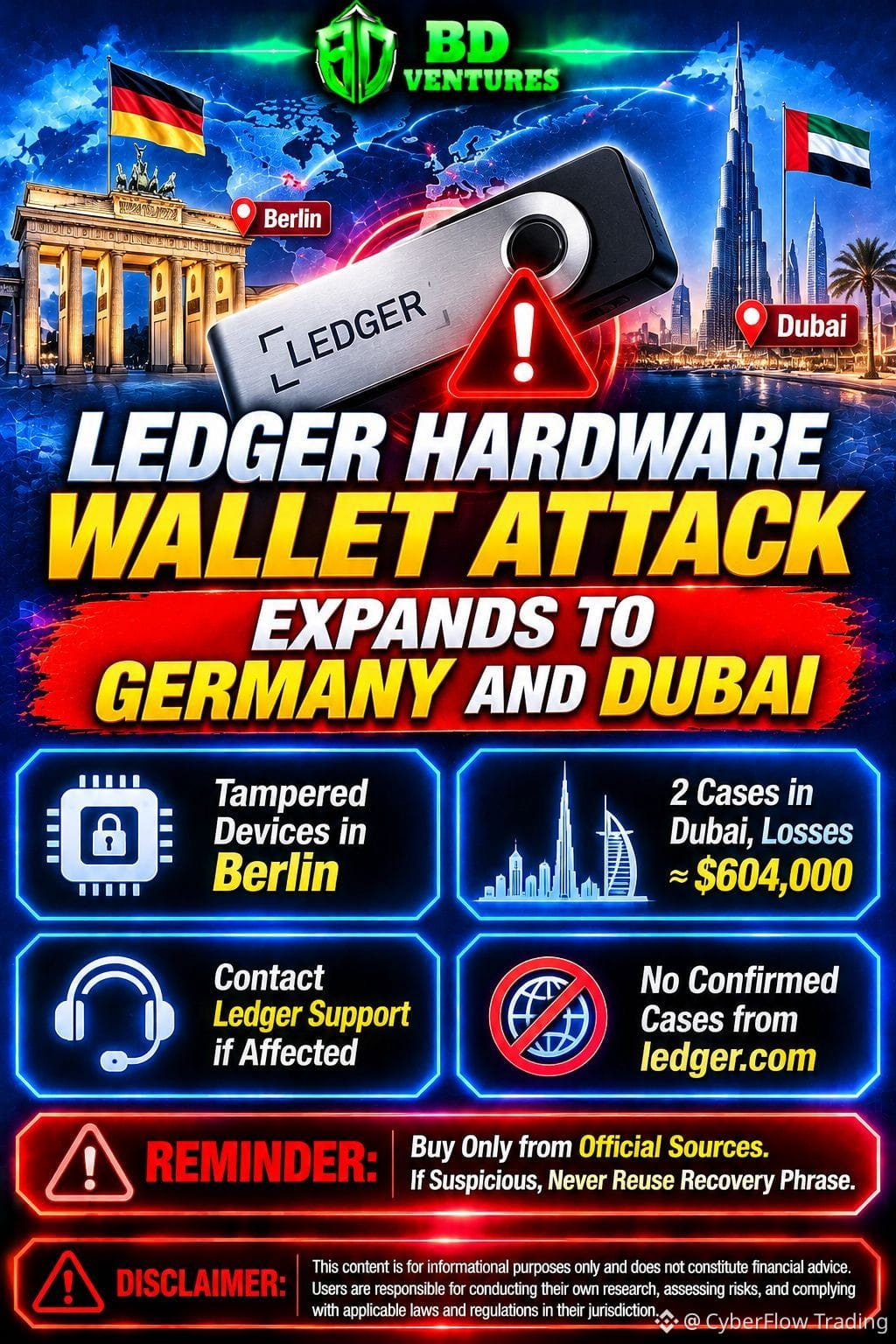
🚨 $BTC USERS ALERT: LEDGER HARDWARE COMPROMISE SPREADS TO GERMANY & DUBAI 🛡️
Ledger’s supply‑chain breach just jumped from Southeast Asia to Berlin and Dubai, hijacking devices before they ever hit a user’s desk. The hidden chip silently siphons recovery phrases during the initial setup, leaving wallets exposed before the first transaction.
Two Dubai investors felt the sting, losing over $600k combined, while Berlin users report similar thefts. Ledger stresses that devices bought from the official site remain clean, but the attack vector lives in the distribution chain, turning a trusted entry point into a liquidity trap for unsuspecting holders. 📊
If your Ledger wasn’t sourced directly, consider a full reset and move funds to a fresh cold‑storage address. 🛡️
💬 Are you certain your recovery phrase is still safe? 👇
⚠️ Not financial advice. Always manage your risk. 🛡️
🏷️ #BTC #HardwareWallet #Security #Crypto
🔥 💎
11

·
--
🚨 $BTC ALERT: LEDGER HARDWARE COMPROMISED IN BERLIN & DUBAI 🦈
📊 The supply‑chain breach rippled from Southeast Asia to Europe, with tampered chips siphoning 24 recovery seeds the moment a device boots. Ledger insists factory chips are clean, but the physical meddling proves that a rogue insider can turn a trusted vault into a back‑door.
💡 Traders, treat any Ledger purchased off‑exchange or through gray‑market channels as compromised. If you bought a device in Berlin after Jan 1, migrate assets to a fresh wallet on a verified source ASAP. 🛡️
💬 How are you securing your cold storage after this news? 👇
⚠️ Not financial advice. Always manage your risk. 🛡️
🏷️ #BTC #HardwareWallet #CryptoSecurity #Ledger #CryptoNews
🔥 💎
8

Security concerns are escalating globally as Ledger-related device tampering reports spread from Dubai to Berlin. While the company is offering urgent factory inspections and advising affected users to migrate funds immediately, this incident highlights a glaring vulnerability in hardware supply chains. Physical security is just as critical as seed phrase management in crypto. If you bought a device recently, double-check your hardware integrity and stay vigilant against sophisticated physical exploits. #CryptoSecurity #Ledger #HardwareWallet
Security concerns are escalating globally as Ledger-related device tampering reports spread from Dubai to Berlin. While the company is offering urgent factory inspections and advising affected users to migrate funds immediately, this incident highlights a glaring vulnerability in hardware supply chains. Physical security is just as critical as seed phrase management in crypto. If you bought a device recently, double-check your hardware integrity and stay vigilant against sophisticated physical exploits. #CryptoSecurity #Ledger #HardwareWallet
1
13

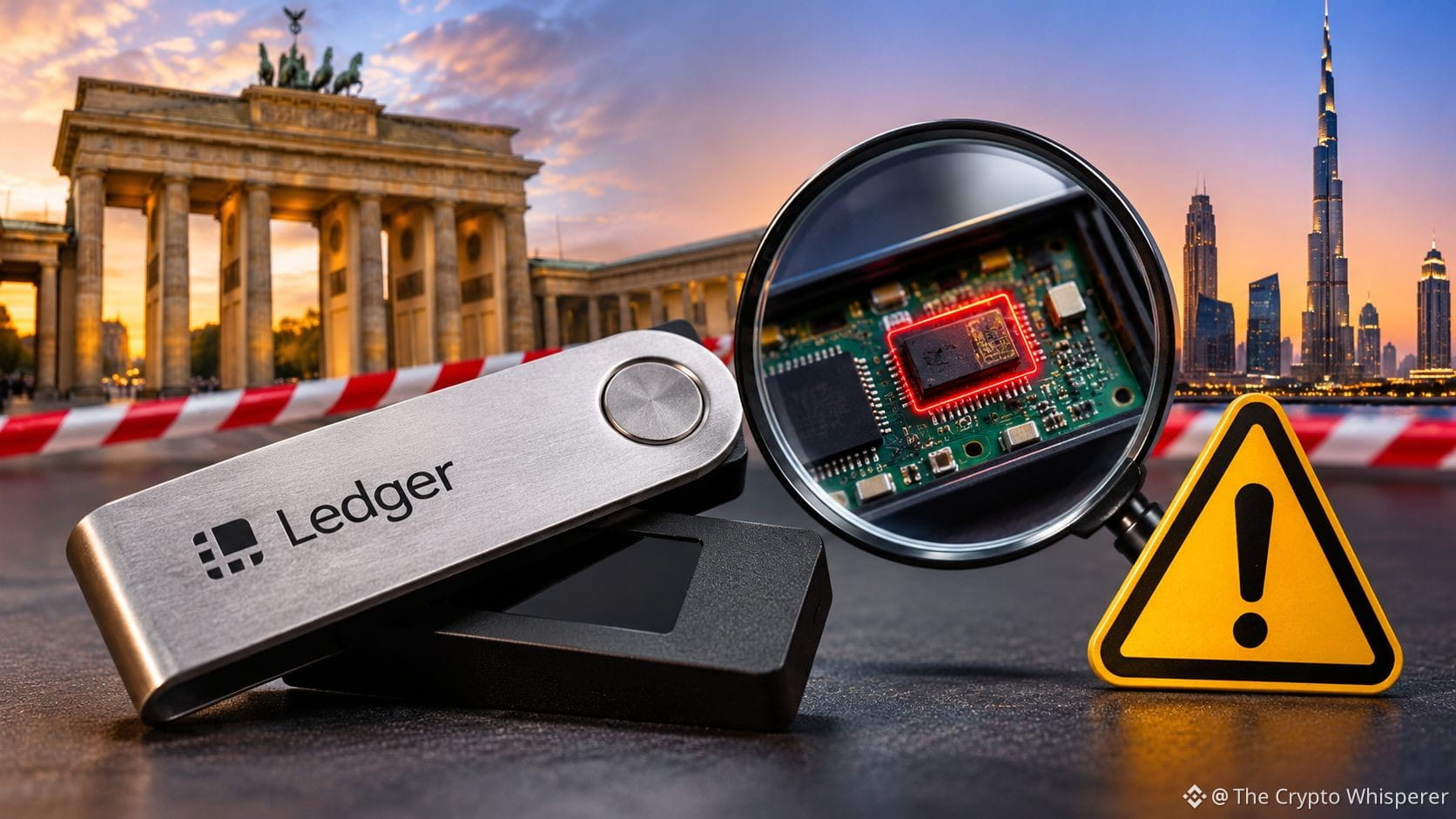
🔥Ledger Hardware Wallet Security Alert: Tampered Devices Found in Berlin, Dubai Probe Underway
A major security warning has emerged for crypto investors as Ledger expands its investigation into tampered hardware wallets.
According to Ledger's November 18 update, the company has confirmed modified hardware wallets in Berlin, Germany, and is investigating two suspected devices in Dubai, UAE.
The attackers allegedly installed hidden components inside genuine Ledger devices designed to capture users' 24-word recovery phrases during wallet setup.
Two Dubai users have reportedly lost a combined $604,000 in cryptocurrency. However, these losses have not been officially confirmed by Ledger.
Ledger says its Secure Element chip and operating system have no identified vulnerabilities, and no affected devices purchased directly from its official website have been confirmed.
What Users Should Know:
- Avoid purchasing hardware wallets from unverified sellers.
- Contact Ledger Support if you purchased a device in Berlin since January 2026 or in Dubai.
- Never share your 24-word recovery phrase.
- Stop using any device you suspect has been tampered with.
My Take:
This incident highlights an important reality: even hardware wallets can face supply-chain security risks. Protecting crypto is not just about choosing the right wallet; it is also about verifying where your device comes from.
Security must always come before convenience.
#Ledger #Bitcoin #HardwareWallet
$BTC
{spot}(BTCUSDT)
🔥Ledger Hardware Wallet Security Alert: Tampered Devices Found in Berlin, Dubai Probe Underway
A major security warning has emerged for crypto investors as Ledger expands its investigation into tampered hardware wallets.
According to Ledger's November 18 update, the company has confirmed modified hardware wallets in Berlin, Germany, and is investigating two suspected devices in Dubai, UAE.
The attackers allegedly installed hidden components inside genuine Ledger devices designed to capture users' 24-word recovery phrases during wallet setup.
Two Dubai users have reportedly lost a combined $604,000 in cryptocurrency. However, these losses have not been officially confirmed by Ledger.
Ledger says its Secure Element chip and operating system have no identified vulnerabilities, and no affected devices purchased directly from its official website have been confirmed.
What Users Should Know:
- Avoid purchasing hardware wallets from unverified sellers.
- Contact Ledger Support if you purchased a device in Berlin since January 2026 or in Dubai.
- Never share your 24-word recovery phrase.
- Stop using any device you suspect has been tampered with.
My Take:
This incident highlights an important reality: even hardware wallets can face supply-chain security risks. Protecting crypto is not just about choosing the right wallet; it is also about verifying where your device comes from.
Security must always come before convenience.
#Ledger #Bitcoin #HardwareWallet
$BTC
1
62
·
--
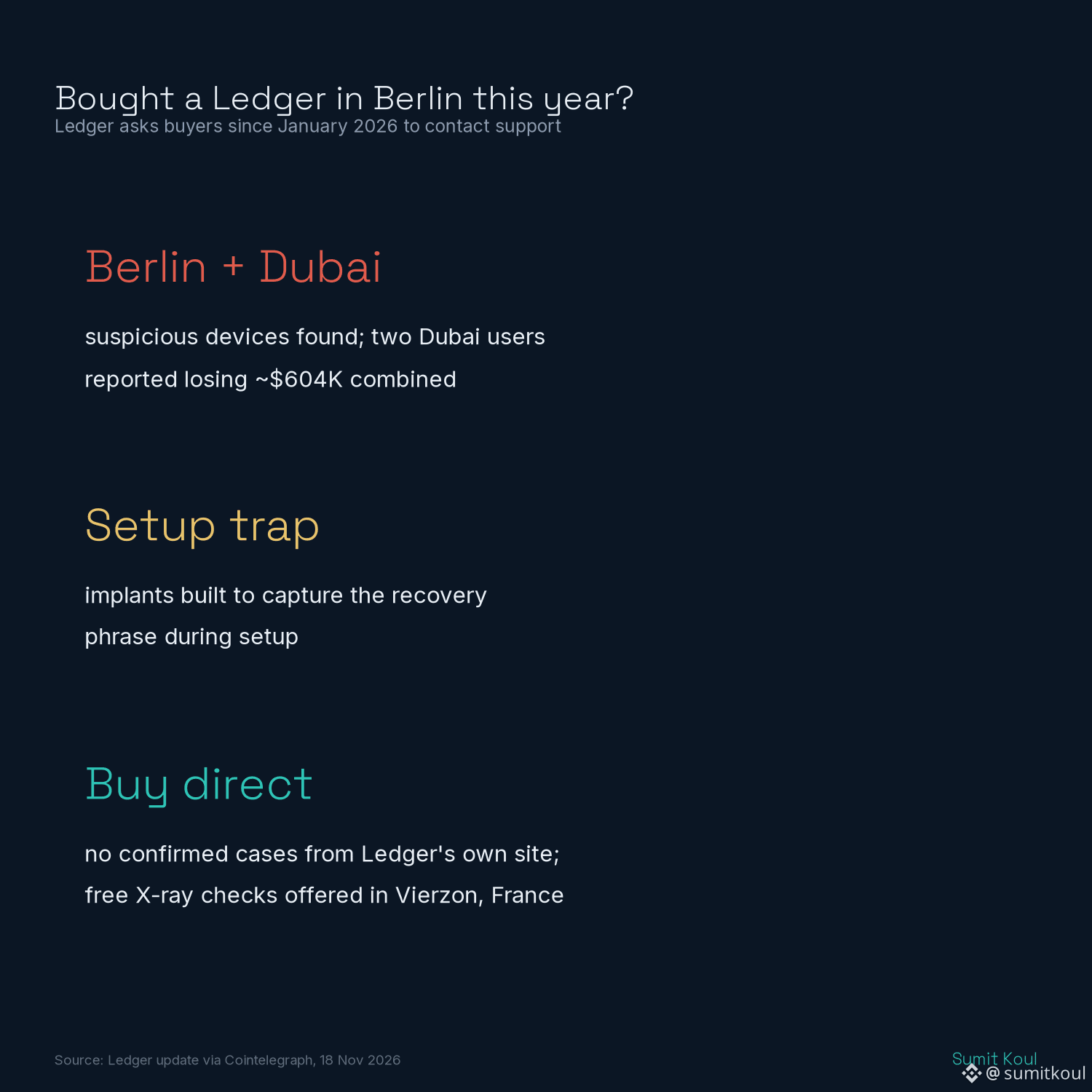
Bought a Ledger in Berlin this year? Read this before you load it. 🔐
Ledger's 18 Nov update:
• Suspicious tampered devices found in Berlin. Buyers since January 2026 should contact support
• Tampered devices also reported in Dubai. Two users said they lost ~$604K combined
• The implants are built to steal the recovery phrase during setup
Ledger says its chip and software weren't hacked, and no cases involve devices bought from its own website. It's offering free X-ray checks in France.
Buy hardware wallets only from the maker. Never use a pre-filled seed card. Send this to anyone holding $BTC on a new device. 👇
#Ledger #CryptoSecurity #HardwareWallet
1
43
·
--
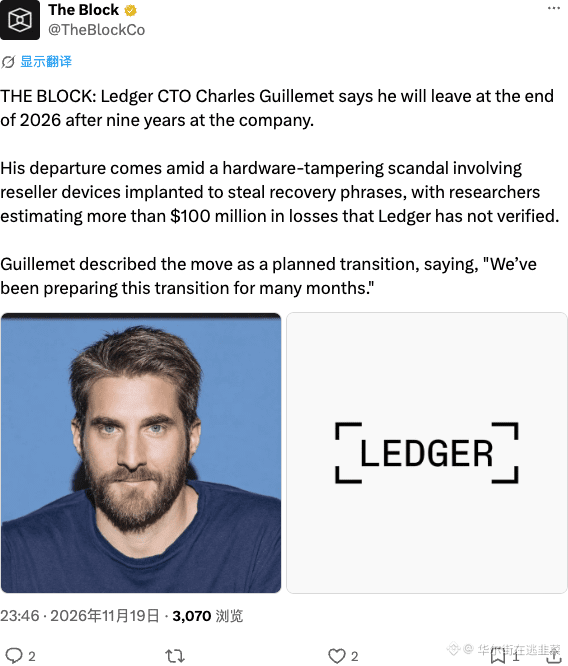
Ledger’s CTO officially announced he’ll leave at the end of 2026, following the hardware-tampering scandal that caused over $100 million in losses—a scandal the company still hasn’t acknowledged. After nine years of sticking it out, this “planned transition” sounds an awful lot like waiting for the whole thing to blow over.
$LEDR #Ledger #HardwareWallet
$LEDR #Ledger #HardwareWallet
44

·
--
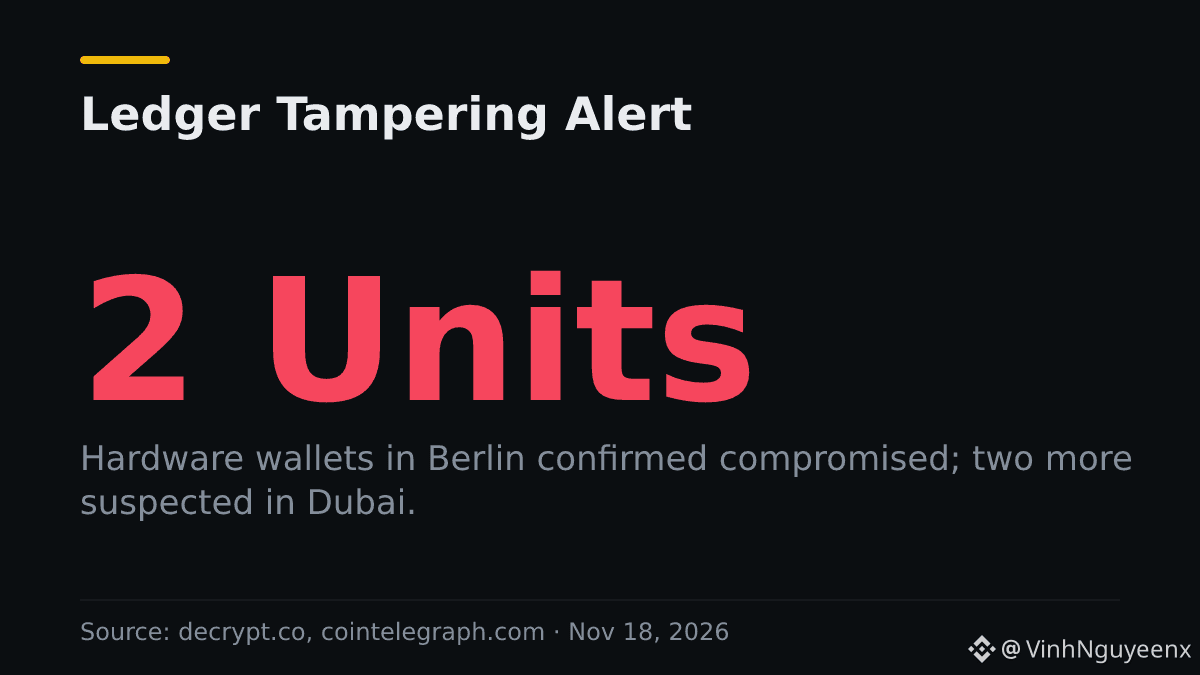
Ledger flagged two suspected compromised wallets in Dubai while confirming tampering in Berlin.
• Ledger confirmed hardware implants in Berlin‑purchased wallets (decrypt.co)
• The investigation now includes two suspected tampered units in Dubai (cointelegraph.com)
• Affected users are urged to contact support and halt transactions (decrypt.co)
The breach underscores a physical attack vector on crypto custody, urging stricter supply‑chain audits.
What’s your next move?
A) Update firmware immediately
B) Switch to a different hardware wallet
C) Keep using but monitor support
$BTC #Ledger #HardwareWallet #Security 🔐
⚠️ Not financial advice. DYOR.
1
31
·
--
🔐 Ledger warns Berlin buyers as its device-tampering probe widens
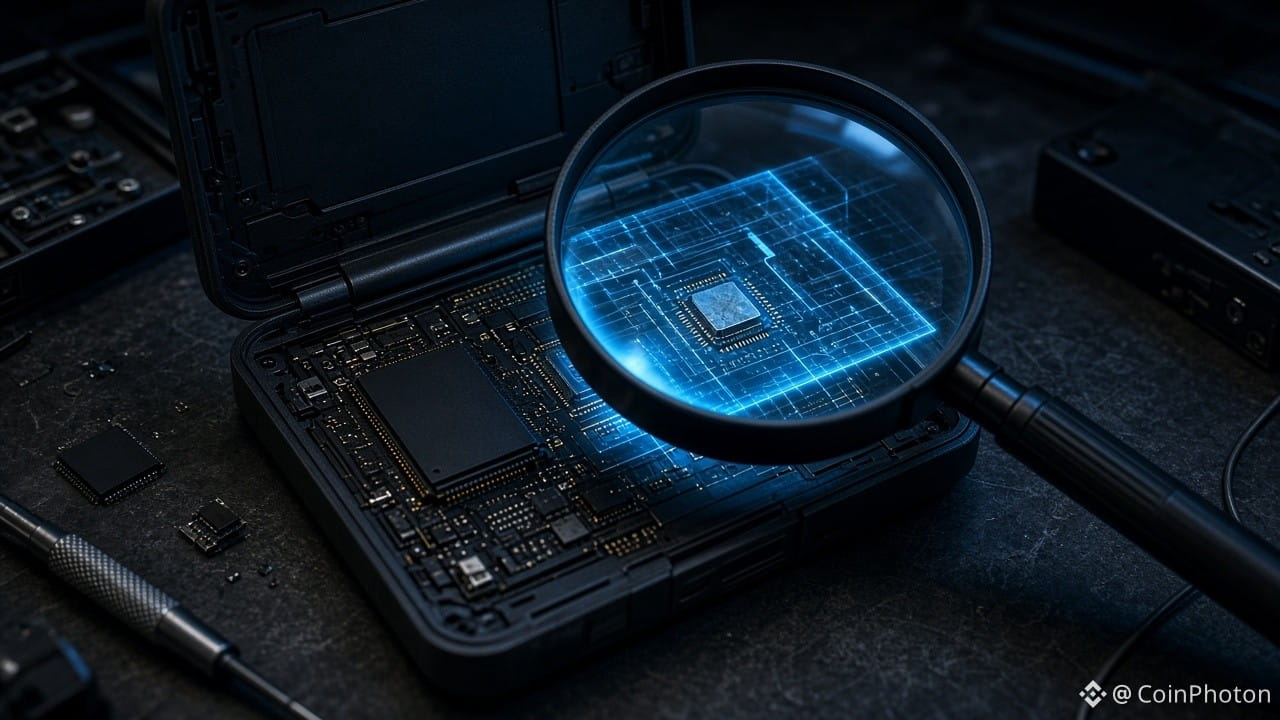
Ledger told customers who bought hardware wallets in Berlin since January 2026 to contact support after it found several suspicious devices in the city. It also acknowledged tampered devices in Dubai, where two customers recently reported losing a combined $604,000 in crypto. Ledger says all confirmed cases share physical modifications built to capture recovery phrases during setup, tied to the same distribution-channel campaign it began probing in Southeast Asia in October. The company found no flaw in its secure chip or OS and no confirmed cases from devices bought directly on its website.
⭐ Supply-chain attacks can bypass even strong hardware security, making official purchase channels more important than ever.
#Ledger #Security #HardwareWallet #CryptoNews
1
859

·
--
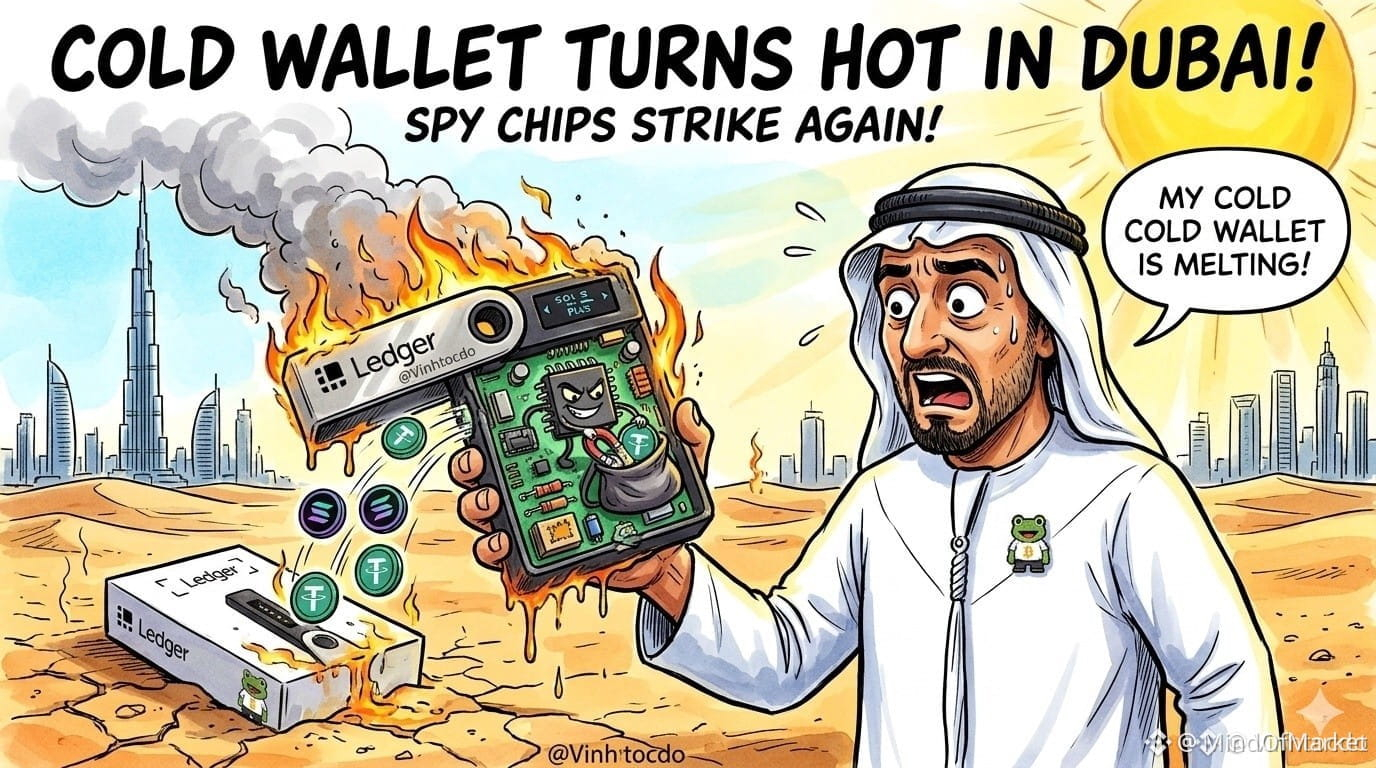
🚨 SUPPLY CHAIN COMPROMISE HITS $SOL HARDWARE STORAGE ACROSS PREMIUM RETAIL OUTLETS! ⚠️
Institutional-grade security starts at the distribution layer, where recent supply chain intrusions in Dubai have exposed vulnerable hardware units. 🔍 Unsuspecting participants are watching significant capital drain even on freshly unboxed devices.
Protect your structural capital by sourcing directly from verified manufacturers and implementing an additional passphrase layer for structural redundancy. 💡 Never rely solely on factory defaults when safeguarding large digital asset allocations.
💬 How are you auditing your offline storage security protocols right now? 👇
⚠️ Not financial advice. Always manage your risk. 🛡️
🏷️ #SOL #CryptoSecurity #HardwareWallet #Web3Safety
🦈 🔒
16
Log in to explore more content
Join global crypto users on Binance Square
⚡️ Get latest and useful information about crypto.
💬 Trusted by the world’s largest crypto exchange.
👍 Discover real insights from verified creators.
Email / Phone number
Trending Topics
1
#CanMarketsReboundAfterThanksgiving?
356,040 views
2,864 Discussing
2
#EvolveAtBinanceBlockchainWeek
1.1M views
12,778 Discussing
3
#XRPLedgerVaultGets29Votes
12,268 views
156 Discussing
4
#CouldSpaceX’sOrbitalDataCentersBoostAIChipDemand?
151,218 views
1,562 Discussing
5
#CorePCEBeatLiftsFedHikeOdds
403,913 views
2,123 Discussing
6
#Nasdaq100FiveDayAvgIntradayVolatilityHits3.8%
34,055 views
397 Discussing
7
#ASEANPlus3ToFormCrossBorderPaymentsCryptoWorkingGroup
8,456 views
22 Discussing
8
#SwitzerlandApproves57JurisdictionsForCryptoDataExchange
2,347 views
5 Discussing
9
#ZcashDevelopersUrgeZECMoveToIronwood
73,824 views
388 Discussing
10
#IraqSaysToRaiseOilCapacity
0 views
0 Discussing