

#dusk
dusk
22.5M views
428,208 Discussing
Hot
Latest

·
--
$DUSK just slid into my watchlist 👀
Momentum leaning bearish on the 30M.
Entry: 0.1099
TP: 0.1043 - 0.1026 - 0.1005
SL: 0.1133 (risk ~3.1%)
Love the chart, respect the stop loss.
#DUSK
⚠️ This signal is based on technical indicators and is not investment advice. Always set a stop-loss and manage your own risk.
$DUSK just slid into my watchlist 👀
Momentum leaning bearish on the 30M.
Entry: 0.1099
TP: 0.1043 - 0.1026 - 0.1005
SL: 0.1133 (risk ~3.1%)
Love the chart, respect the stop loss.
#DUSK
⚠️ This signal is based on technical indicators and is not investment advice. Always set a stop-loss and manage your own risk.
Momentum leaning bearish on the 30M.
Entry: 0.1099
TP: 0.1043 - 0.1026 - 0.1005
SL: 0.1133 (risk ~3.1%)
Love the chart, respect the stop loss.
#DUSK
⚠️ This signal is based on technical indicators and is not investment advice. Always set a stop-loss and manage your own risk.

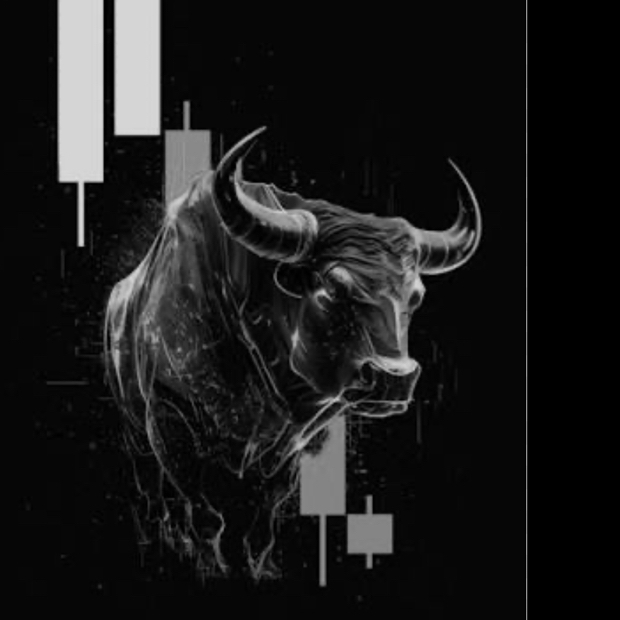
⚡ $DUSK BREAKS RANGE HIGHS AND PRINTS A TEXTBOOK RECLAIM ABOVE SUPPORT! 🐂
Entry: 0.0705 - 0.0715 ⚡
Target: 0.0725 / 0.0740 / 0.0760 🚀
Stop Loss: 0.0690 ⚠️
Bulls just executed a clean range expansion on $DUSK , absorbing overhead supply before turning former resistance around 0.0700 into a firm demand floor. 📊 The shallow retest shows strong bid interest, confirming momentum remains firmly in control.
💡 A decisive break above the 0.0725 key level unlocks rapid expansion toward upper liquidity targets. 📌 Risk is clearly defined below the recent swing low, giving us a sharp risk-to-reward ratio for this continuation play. 💬 Are you loading the retest or waiting for 0.0725 to trigger the next leg? 👇
⚠️ Not financial advice. Always manage your risk. 🛡️
🏷️ #DUSK #Breakout #LongSetup #Crypto
🔥 💎
⚡ $DUSK BREAKS RANGE HIGHS AND PRINTS A TEXTBOOK RECLAIM ABOVE SUPPORT! 🐂
Entry: 0.0705 - 0.0715 ⚡
Target: 0.0725 / 0.0740 / 0.0760 🚀
Stop Loss: 0.0690 ⚠️
Bulls just executed a clean range expansion on $DUSK , absorbing overhead supply before turning former resistance around 0.0700 into a firm demand floor. 📊 The shallow retest shows strong bid interest, confirming momentum remains firmly in control.
💡 A decisive break above the 0.0725 key level unlocks rapid expansion toward upper liquidity targets. 📌 Risk is clearly defined below the recent swing low, giving us a sharp risk-to-reward ratio for this continuation play. 💬 Are you loading the retest or waiting for 0.0725 to trigger the next leg? 👇
⚠️ Not financial advice. Always manage your risk. 🛡️
🏷️ #DUSK #Breakout #LongSetup #Crypto
🔥 💎
Entry: 0.0705 - 0.0715 ⚡
Target: 0.0725 / 0.0740 / 0.0760 🚀
Stop Loss: 0.0690 ⚠️
Bulls just executed a clean range expansion on $DUSK , absorbing overhead supply before turning former resistance around 0.0700 into a firm demand floor. 📊 The shallow retest shows strong bid interest, confirming momentum remains firmly in control.
💡 A decisive break above the 0.0725 key level unlocks rapid expansion toward upper liquidity targets. 📌 Risk is clearly defined below the recent swing low, giving us a sharp risk-to-reward ratio for this continuation play. 💬 Are you loading the retest or waiting for 0.0725 to trigger the next leg? 👇
⚠️ Not financial advice. Always manage your risk. 🛡️
🏷️ #DUSK #Breakout #LongSetup #Crypto
🔥 💎
9

·
--
$DUSK BREAKING OUT ON SCHEDULE LOCK YOUR RISK-FREE RIDE NOW 🚀💥
$DUSK is executing the momentum playbook flawlessly. Sellers got swept clean on the initial move, and order flow is shifting heavily into buyer control as volume expands. 📊
If you took the entry, trail your stop loss straight to entry immediately. 📌 We are playing with house money while the next expansion leg loads up into overhead liquidity zones. ⚡
💬 Are you holding your full size through the next wave or locking in partials along the way? 👇
⚠️ Not financial advice. Always manage your risk. 🛡️
🏷️ #DUSK #Altcoins #Trading #Breakout #Crypto
🔥 💎
$DUSK BREAKING OUT ON SCHEDULE LOCK YOUR RISK-FREE RIDE NOW 🚀💥
$DUSK is executing the momentum playbook flawlessly. Sellers got swept clean on the initial move, and order flow is shifting heavily into buyer control as volume expands. 📊
If you took the entry, trail your stop loss straight to entry immediately. 📌 We are playing with house money while the next expansion leg loads up into overhead liquidity zones. ⚡
💬 Are you holding your full size through the next wave or locking in partials along the way? 👇
⚠️ Not financial advice. Always manage your risk. 🛡️
🏷️ #DUSK #Altcoins #Trading #Breakout #Crypto
🔥 💎
$DUSK is executing the momentum playbook flawlessly. Sellers got swept clean on the initial move, and order flow is shifting heavily into buyer control as volume expands. 📊
If you took the entry, trail your stop loss straight to entry immediately. 📌 We are playing with house money while the next expansion leg loads up into overhead liquidity zones. ⚡
💬 Are you holding your full size through the next wave or locking in partials along the way? 👇
⚠️ Not financial advice. Always manage your risk. 🛡️
🏷️ #DUSK #Altcoins #Trading #Breakout #Crypto
🔥 💎
11

·
--
$DUSK PLAYBOOK EXECUTED PERFECTLY — LOCK STOP LOSS AT ENTRY AND RIDE CONTINUATION! ⚡ 💥
$DUSK followed the technical trajectory to a tee, squeezing out late sellers and confirming high-conviction structure. Shift your stop loss directly to entry—we are officially playing with house money while buyers absorb remaining floating supply. 📊
Momentum indicators are coiling tight for the next expansion wave, with order flow showing aggressive spot absorption before the secondary sweep. ⚡ Sit back, stay disciplined, and let the trend run its full course. 💡 💬 Are you holding tight for the next expansion leg or taking partial profits here? 👇
⚠️ Not financial advice. Always manage your risk. 🛡️
🏷️ #DUSK #Altcoins #Breakout #Crypto #Trading
🔥 💎
$DUSK PLAYBOOK EXECUTED PERFECTLY — LOCK STOP LOSS AT ENTRY AND RIDE CONTINUATION! ⚡ 💥
$DUSK followed the technical trajectory to a tee, squeezing out late sellers and confirming high-conviction structure. Shift your stop loss directly to entry—we are officially playing with house money while buyers absorb remaining floating supply. 📊
Momentum indicators are coiling tight for the next expansion wave, with order flow showing aggressive spot absorption before the secondary sweep. ⚡ Sit back, stay disciplined, and let the trend run its full course. 💡 💬 Are you holding tight for the next expansion leg or taking partial profits here? 👇
⚠️ Not financial advice. Always manage your risk. 🛡️
🏷️ #DUSK #Altcoins #Breakout #Crypto #Trading
🔥 💎
$DUSK followed the technical trajectory to a tee, squeezing out late sellers and confirming high-conviction structure. Shift your stop loss directly to entry—we are officially playing with house money while buyers absorb remaining floating supply. 📊
Momentum indicators are coiling tight for the next expansion wave, with order flow showing aggressive spot absorption before the secondary sweep. ⚡ Sit back, stay disciplined, and let the trend run its full course. 💡 💬 Are you holding tight for the next expansion leg or taking partial profits here? 👇
⚠️ Not financial advice. Always manage your risk. 🛡️
🏷️ #DUSK #Altcoins #Breakout #Crypto #Trading
🔥 💎
14
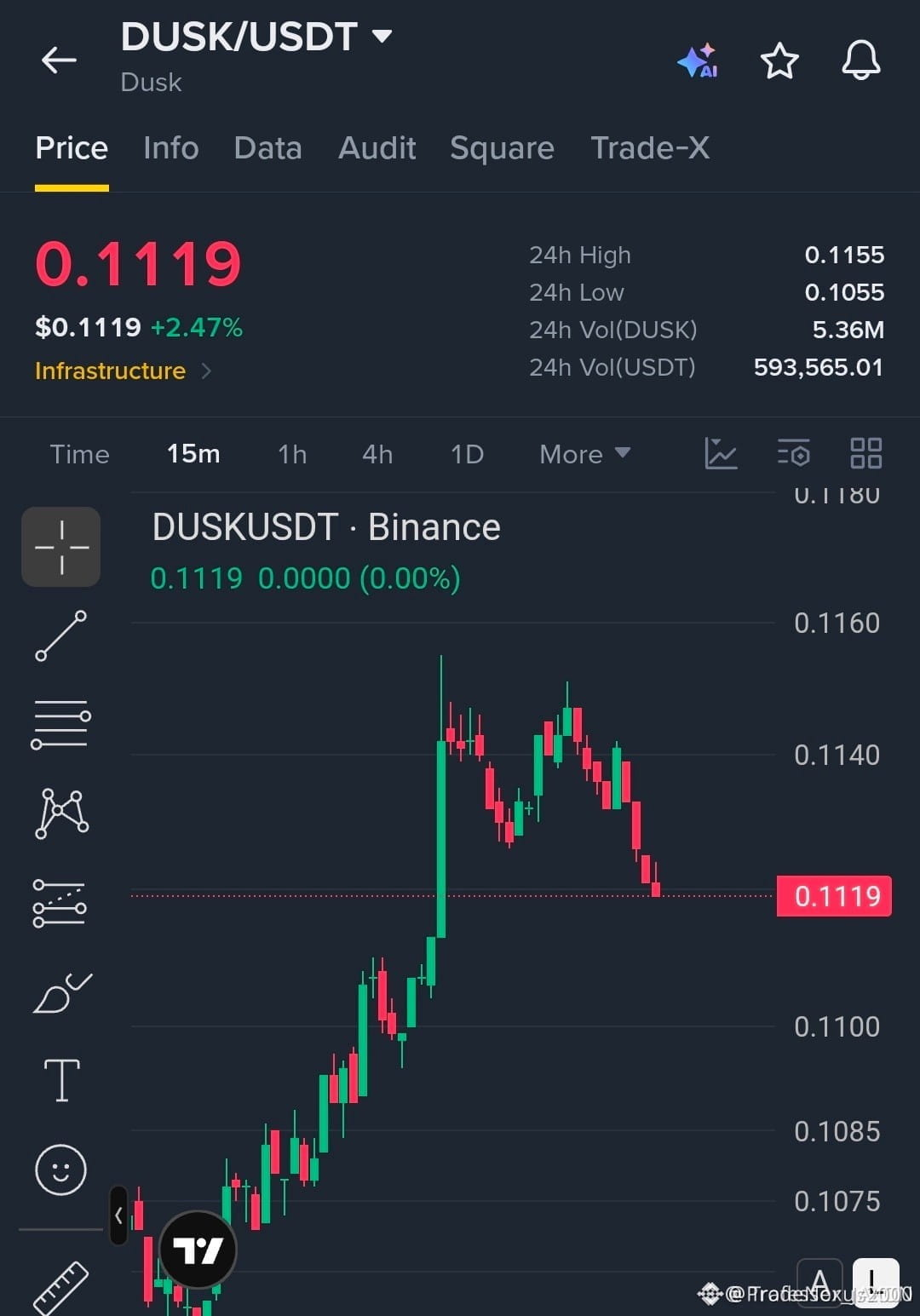
🔴 $DUSK SINKS AS BEAR PRESSURE ERODES KEY SUPPORT 🦈
Entry: 0.1118-0.1122 ⚡
Target: 0.1110 🚀
Target: 0.1100 🚀
Target: 0.1090 🚀
Stop Loss: 0.1135 ⚠️
📊 The 15‑minute chart recorded a decisive rejection at 0.1145, turning the prior bullish order block into a fresh supply zone. Sellers have drained the remaining buying interest, targeting the liquidity pocket just above 0.1120. 🔍
⚡ A breach of the 0.1118‑0.1122 band should unleash a down‑move toward the next demand cluster at 0.1110, with smart‑money stop‑hunts potentially dragging price to 0.1090. Volume spikes on the 5‑minute candles underscore the bearish thrust. 🦈
💬 Do you see the bears securing the lower liquidity ladder or is a reversal imminent? 👇
⚠️ Not financial advice. Always manage your risk. 🛡️
🏷️ #DUSK #ShortSetup #LiquiditySweep #Crypto
🔥 💎
🔴 $DUSK SINKS AS BEAR PRESSURE ERODES KEY SUPPORT 🦈
Entry: 0.1118-0.1122 ⚡
Target: 0.1110 🚀
Target: 0.1100 🚀
Target: 0.1090 🚀
Stop Loss: 0.1135 ⚠️
📊 The 15‑minute chart recorded a decisive rejection at 0.1145, turning the prior bullish order block into a fresh supply zone. Sellers have drained the remaining buying interest, targeting the liquidity pocket just above 0.1120. 🔍
⚡ A breach of the 0.1118‑0.1122 band should unleash a down‑move toward the next demand cluster at 0.1110, with smart‑money stop‑hunts potentially dragging price to 0.1090. Volume spikes on the 5‑minute candles underscore the bearish thrust. 🦈
💬 Do you see the bears securing the lower liquidity ladder or is a reversal imminent? 👇
⚠️ Not financial advice. Always manage your risk. 🛡️
🏷️ #DUSK #ShortSetup #LiquiditySweep #Crypto
🔥 💎
Entry: 0.1118-0.1122 ⚡
Target: 0.1110 🚀
Target: 0.1100 🚀
Target: 0.1090 🚀
Stop Loss: 0.1135 ⚠️
📊 The 15‑minute chart recorded a decisive rejection at 0.1145, turning the prior bullish order block into a fresh supply zone. Sellers have drained the remaining buying interest, targeting the liquidity pocket just above 0.1120. 🔍
⚡ A breach of the 0.1118‑0.1122 band should unleash a down‑move toward the next demand cluster at 0.1110, with smart‑money stop‑hunts potentially dragging price to 0.1090. Volume spikes on the 5‑minute candles underscore the bearish thrust. 🦈
💬 Do you see the bears securing the lower liquidity ladder or is a reversal imminent? 👇
⚠️ Not financial advice. Always manage your risk. 🛡️
🏷️ #DUSK #ShortSetup #LiquiditySweep #Crypto
🔥 💎
18

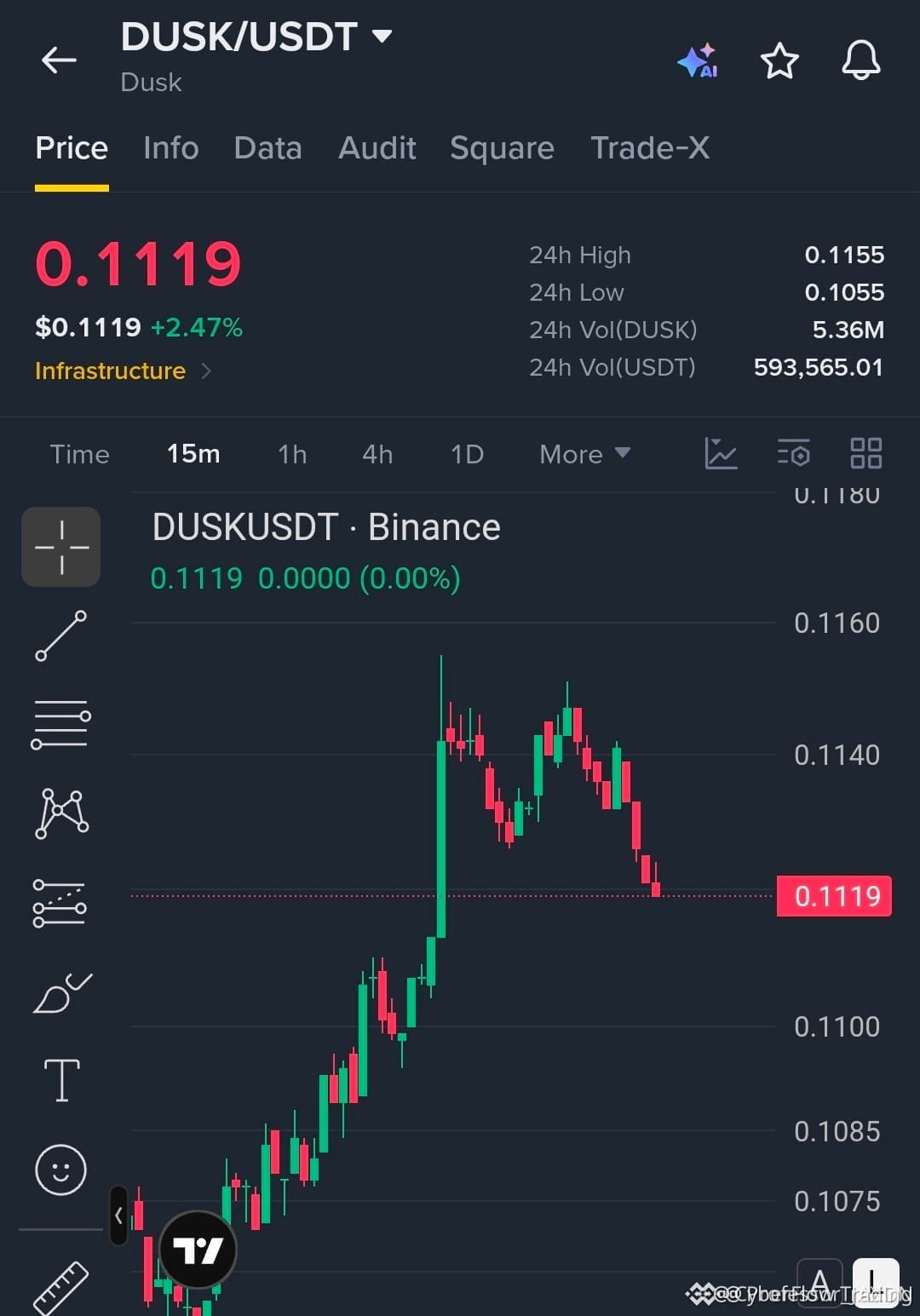
🔴 $DUSK SLIDES INTO BEAR ZONE AS LIQUIDITY SWEPT! 🦈
Entry: 0.1118-0.1122 ⚡
Target: 0.1110 🚀
Target: 0.1100 🚀
Target: 0.1090 🚀
Stop Loss: 0.1135 ⚠️
📊 The 15‑minute chart rejected at 0.1145 and bears are now ripping through the next liquidity bucket. Each dip below 0.1118 strips the last buyer cushion, exposing a smart‑money order block left wide open. 🦈
⚡ Volume spikes confirm the sweep, and the first support sits at 0.1110. A deeper dive to 0.1100‑0.1090 sets a tidy three‑tier target, while the stop sits snug at 0.1135. 📈
💬 Are you ready to ride the bear wave or waiting for a reversal? 👇
⚠️ Not financial advice. Always manage your risk. 🛡️
🏷️ #DUSK #ShortSetup #LiquiditySweep #Crypto
🔥 💎
🔴 $DUSK SLIDES INTO BEAR ZONE AS LIQUIDITY SWEPT! 🦈
Entry: 0.1118-0.1122 ⚡
Target: 0.1110 🚀
Target: 0.1100 🚀
Target: 0.1090 🚀
Stop Loss: 0.1135 ⚠️
📊 The 15‑minute chart rejected at 0.1145 and bears are now ripping through the next liquidity bucket. Each dip below 0.1118 strips the last buyer cushion, exposing a smart‑money order block left wide open. 🦈
⚡ Volume spikes confirm the sweep, and the first support sits at 0.1110. A deeper dive to 0.1100‑0.1090 sets a tidy three‑tier target, while the stop sits snug at 0.1135. 📈
💬 Are you ready to ride the bear wave or waiting for a reversal? 👇
⚠️ Not financial advice. Always manage your risk. 🛡️
🏷️ #DUSK #ShortSetup #LiquiditySweep #Crypto
🔥 💎
Entry: 0.1118-0.1122 ⚡
Target: 0.1110 🚀
Target: 0.1100 🚀
Target: 0.1090 🚀
Stop Loss: 0.1135 ⚠️
📊 The 15‑minute chart rejected at 0.1145 and bears are now ripping through the next liquidity bucket. Each dip below 0.1118 strips the last buyer cushion, exposing a smart‑money order block left wide open. 🦈
⚡ Volume spikes confirm the sweep, and the first support sits at 0.1110. A deeper dive to 0.1100‑0.1090 sets a tidy three‑tier target, while the stop sits snug at 0.1135. 📈
💬 Are you ready to ride the bear wave or waiting for a reversal? 👇
⚠️ Not financial advice. Always manage your risk. 🛡️
🏷️ #DUSK #ShortSetup #LiquiditySweep #Crypto
🔥 💎
13

·
--
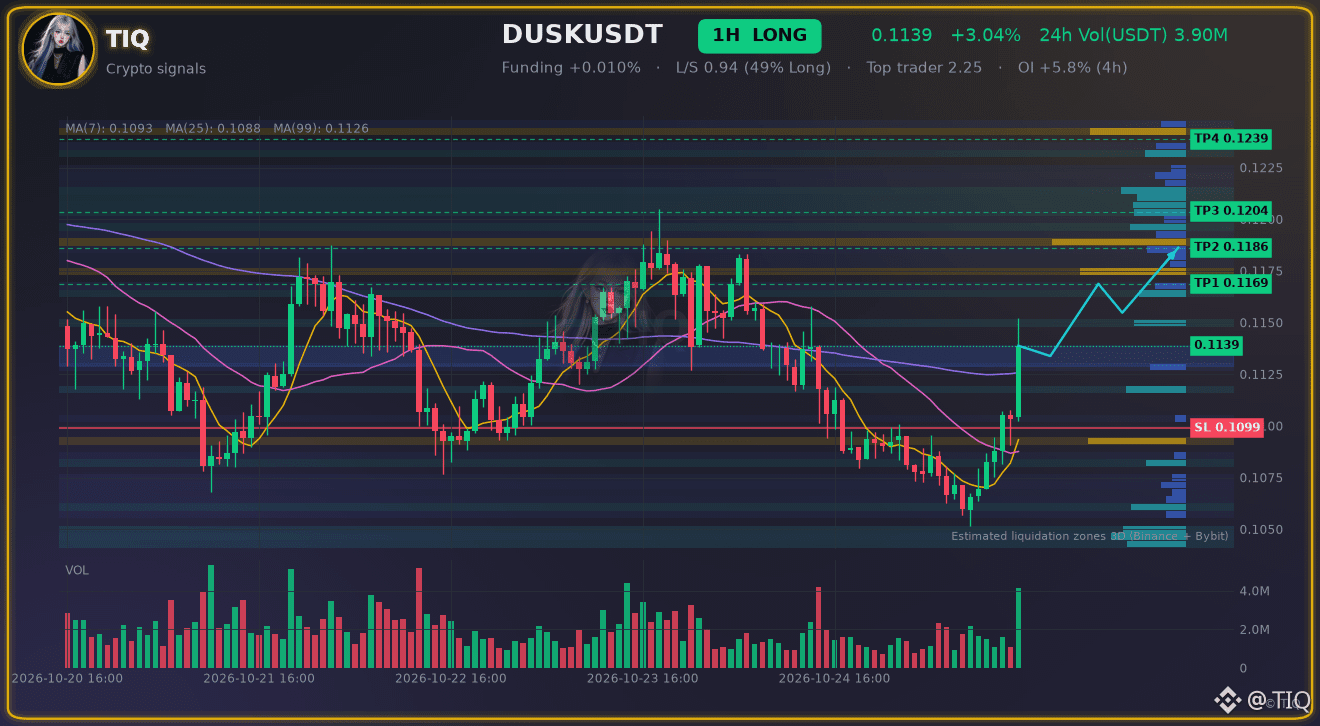
$DUSK Long (1H), the "less talk, more numbers" edition:
📍 0.1129 - 0.1139
🎯 0.1169 - 0.1186 - 0.1204 - 0.1239
🛑 0.1099 (risk ~3.1%)
Why: momentum leaning bullish.
#DUSK
⚠️ This signal is based on technical indicators and is not investment advice. Always set a stop-loss and manage your own risk.
$DUSK Long (1H), the "less talk, more numbers" edition:
📍 0.1129 - 0.1139
🎯 0.1169 - 0.1186 - 0.1204 - 0.1239
🛑 0.1099 (risk ~3.1%)
Why: momentum leaning bullish.
#DUSK
⚠️ This signal is based on technical indicators and is not investment advice. Always set a stop-loss and manage your own risk.
📍 0.1129 - 0.1139
🎯 0.1169 - 0.1186 - 0.1204 - 0.1239
🛑 0.1099 (risk ~3.1%)
Why: momentum leaning bullish.
#DUSK
⚠️ This signal is based on technical indicators and is not investment advice. Always set a stop-loss and manage your own risk.
459
🚨 $DUSK SHOWS HEAVY REJECTION AT SUPPLY AS BEARS PREPARE FOR MARKDOWN 📉
Entry: 0.07288 - 0.7616 🔻
Target: 0.07042 / 0.06652 / 0.05519 🎯
Stop Loss: 0.07899 ⚠️
Sellers are stepping in right at key overhead supply as $DUSK hits heavy resistance. Order flow shows aggressive distribution from smart money, sweeping local buy-side liquidity before setting up a major markdown phase. 📉
With downside momentum accelerating on shorter timeframes, the path of least resistance points toward lower support clusters. 📊 As long as price stays below our invalidation level, bears retain full control of the trend. 💡
Are you taking the short positioning down to demand, or waiting for a relief bounce first? 👇
⚠️ Not financial advice. Always manage your risk. 🛡️
🏷️ #DUSK #ShortSetup #Bearish #CryptoTrading
📉 🐻
🚨 $DUSK SHOWS HEAVY REJECTION AT SUPPLY AS BEARS PREPARE FOR MARKDOWN 📉
Entry: 0.07288 - 0.7616 🔻
Target: 0.07042 / 0.06652 / 0.05519 🎯
Stop Loss: 0.07899 ⚠️
Sellers are stepping in right at key overhead supply as $DUSK hits heavy resistance. Order flow shows aggressive distribution from smart money, sweeping local buy-side liquidity before setting up a major markdown phase. 📉
With downside momentum accelerating on shorter timeframes, the path of least resistance points toward lower support clusters. 📊 As long as price stays below our invalidation level, bears retain full control of the trend. 💡
Are you taking the short positioning down to demand, or waiting for a relief bounce first? 👇
⚠️ Not financial advice. Always manage your risk. 🛡️
🏷️ #DUSK #ShortSetup #Bearish #CryptoTrading
📉 🐻
Entry: 0.07288 - 0.7616 🔻
Target: 0.07042 / 0.06652 / 0.05519 🎯
Stop Loss: 0.07899 ⚠️
Sellers are stepping in right at key overhead supply as $DUSK hits heavy resistance. Order flow shows aggressive distribution from smart money, sweeping local buy-side liquidity before setting up a major markdown phase. 📉
With downside momentum accelerating on shorter timeframes, the path of least resistance points toward lower support clusters. 📊 As long as price stays below our invalidation level, bears retain full control of the trend. 💡
Are you taking the short positioning down to demand, or waiting for a relief bounce first? 👇
⚠️ Not financial advice. Always manage your risk. 🛡️
🏷️ #DUSK #ShortSetup #Bearish #CryptoTrading
📉 🐻
4

·
--
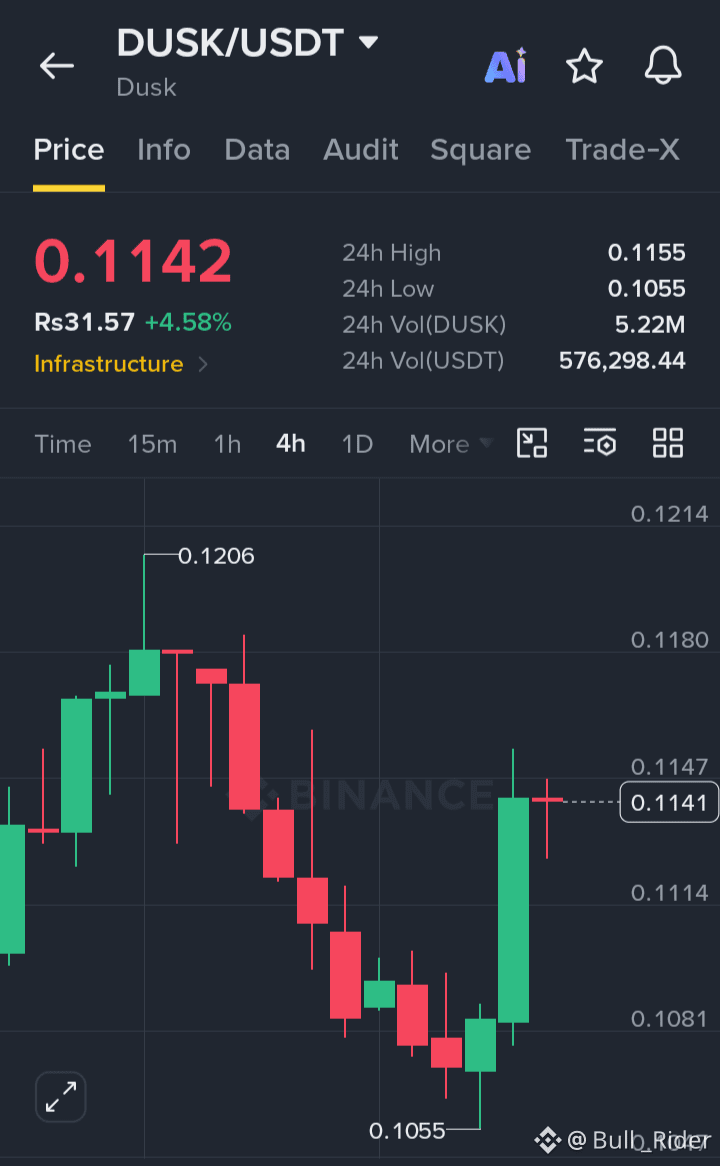
Bullish
$DUSK is showing strength from support, with buyers gradually taking control and momentum building for a potential continuation move.
Entry: 0.1142
TP1: 0.1160
TP2: 0.1180
TP3: 0.1206
SL: 0.1114
Buy and Trade $龙虾
#DUSK $MUUB
{spot}(MUUBUSDT)
{future}(DUSKUSDT)
$DUSK is showing strength from support, with buyers gradually taking control and momentum building for a potential continuation move.
Entry: 0.1142
TP1: 0.1160
TP2: 0.1180
TP3: 0.1206
SL: 0.1114
Buy and Trade $龙虾
#DUSK $MUUB
Entry: 0.1142
TP1: 0.1160
TP2: 0.1180
TP3: 0.1206
SL: 0.1114
Buy and Trade $龙虾
#DUSK $MUUB
1
32


·
--
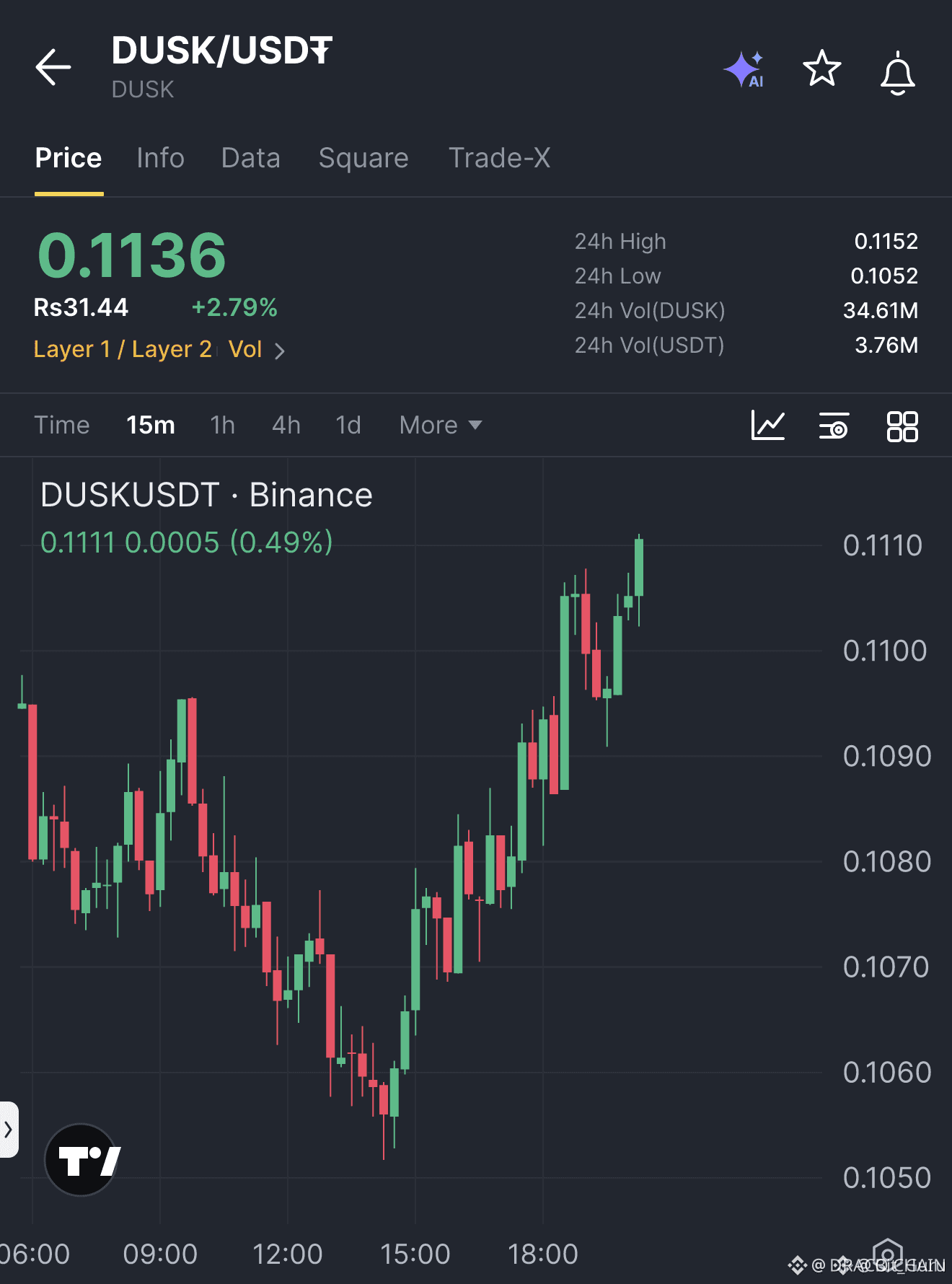
🚀 🟢 $DUSK BREAKS 0.11111 – BULLISH SWING SETUP UNVEILED
Entry: 0.11201 ⚡
Target: 0.11639 🚀
Target: 0.11931 🎯
Target: 0.12369 💥
Stop Loss: 0.10909 ⚠️
📊 The demand block at 0.11201 has been defending three successive pull‑backs, indicating smart‑money accumulation. 📈 Volume spikes on the 4H chart align with a classic liquidity sweep, pushing price into a higher‑timeframe bullish bias. 🌊 With the order block still intact, the next leg of upward thrust targets the clustered resistance zones at 0.116‑0.124, offering a clean risk‑reward profile. 💡 Patience on entry and disciplined stop placement are the hallmarks of an institutional‑grade play. 🤔 Are you ready to ride the next liquidity‑driven rally? 👇
⚠️ Not financial advice. Always manage your risk. 🛡️
🏷️ #DUSK #LongSetup #Liquidity #Crypto
🔥 💎
🚀 🟢 $DUSK BREAKS 0.11111 – BULLISH SWING SETUP UNVEILED
Entry: 0.11201 ⚡
Target: 0.11639 🚀
Target: 0.11931 🎯
Target: 0.12369 💥
Stop Loss: 0.10909 ⚠️
📊 The demand block at 0.11201 has been defending three successive pull‑backs, indicating smart‑money accumulation. 📈 Volume spikes on the 4H chart align with a classic liquidity sweep, pushing price into a higher‑timeframe bullish bias. 🌊 With the order block still intact, the next leg of upward thrust targets the clustered resistance zones at 0.116‑0.124, offering a clean risk‑reward profile. 💡 Patience on entry and disciplined stop placement are the hallmarks of an institutional‑grade play. 🤔 Are you ready to ride the next liquidity‑driven rally? 👇
⚠️ Not financial advice. Always manage your risk. 🛡️
🏷️ #DUSK #LongSetup #Liquidity #Crypto
🔥 💎
Entry: 0.11201 ⚡
Target: 0.11639 🚀
Target: 0.11931 🎯
Target: 0.12369 💥
Stop Loss: 0.10909 ⚠️
📊 The demand block at 0.11201 has been defending three successive pull‑backs, indicating smart‑money accumulation. 📈 Volume spikes on the 4H chart align with a classic liquidity sweep, pushing price into a higher‑timeframe bullish bias. 🌊 With the order block still intact, the next leg of upward thrust targets the clustered resistance zones at 0.116‑0.124, offering a clean risk‑reward profile. 💡 Patience on entry and disciplined stop placement are the hallmarks of an institutional‑grade play. 🤔 Are you ready to ride the next liquidity‑driven rally? 👇
⚠️ Not financial advice. Always manage your risk. 🛡️
🏷️ #DUSK #LongSetup #Liquidity #Crypto
🔥 💎
2
·
--
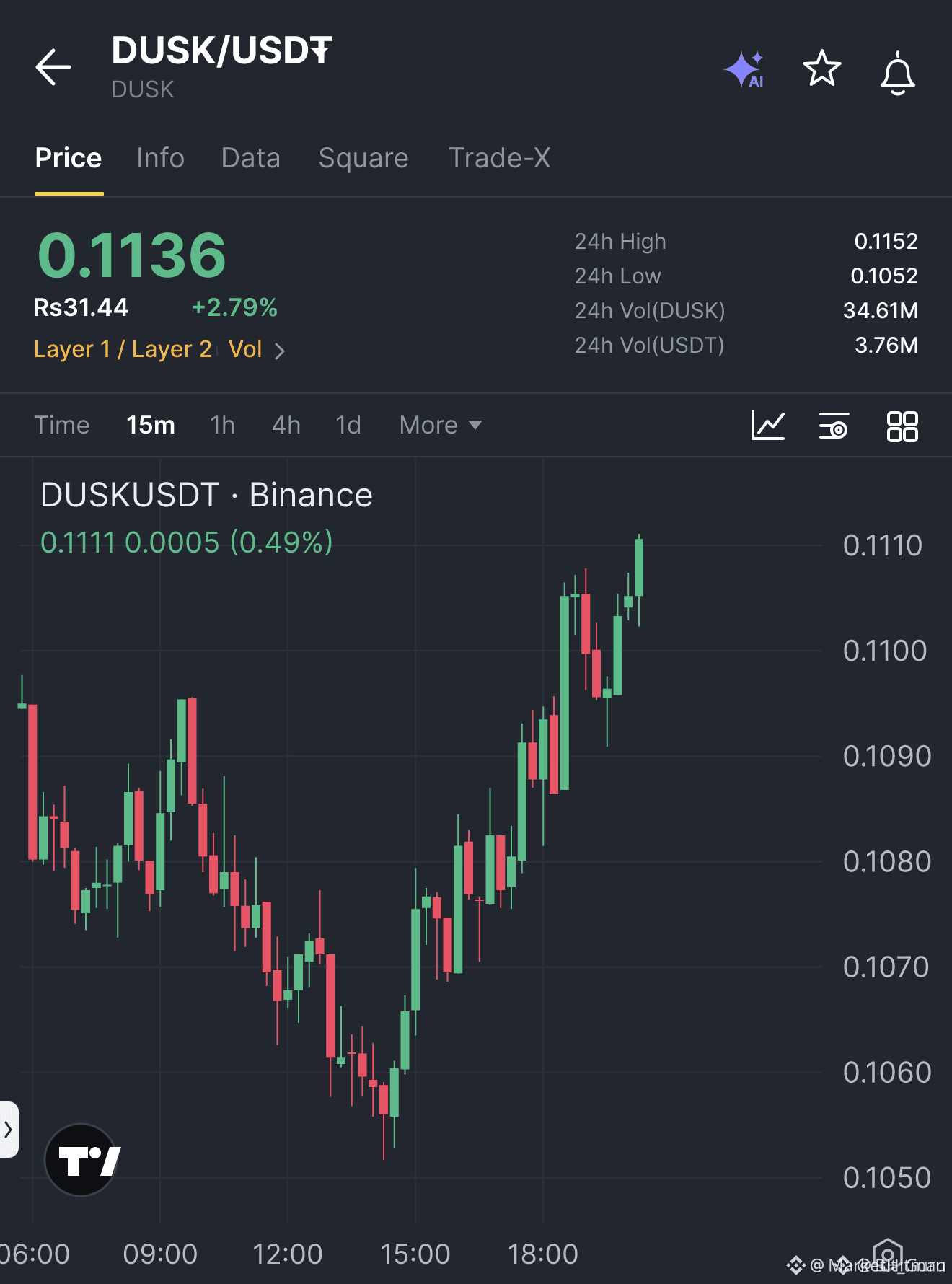
🚀 🟢 $DUSK BREAKING ABOVE 0.11111 – BULLISH MOMENTUM UNLEASHED!
Entry: 0.11201 ⚡
Target: 0.11639/0.11931/0.12369 🚀
Stop Loss: 0.10909 ⚠️
📊 The price is carving a fresh demand zone just above 0.11111, and smart‑money 🦈 whales are snapping up every dip. 📌 With volume swelling on the 4‑hour chart, the upside bias is reinforced by a rising RSI that’s still in bullish territory. ⚡ Hold the entry patience, let the order flow dictate the ride, and keep that stop tight as the market tests the next resistance ladder.
⚠️ Not financial advice. Always manage your risk. 🛡️
🏷️ #DUSK #LongSetup #Bullish #Crypto
🔥 💎
🚀 🟢 $DUSK BREAKING ABOVE 0.11111 – BULLISH MOMENTUM UNLEASHED!
Entry: 0.11201 ⚡
Target: 0.11639/0.11931/0.12369 🚀
Stop Loss: 0.10909 ⚠️
📊 The price is carving a fresh demand zone just above 0.11111, and smart‑money 🦈 whales are snapping up every dip. 📌 With volume swelling on the 4‑hour chart, the upside bias is reinforced by a rising RSI that’s still in bullish territory. ⚡ Hold the entry patience, let the order flow dictate the ride, and keep that stop tight as the market tests the next resistance ladder.
⚠️ Not financial advice. Always manage your risk. 🛡️
🏷️ #DUSK #LongSetup #Bullish #Crypto
🔥 💎
Entry: 0.11201 ⚡
Target: 0.11639/0.11931/0.12369 🚀
Stop Loss: 0.10909 ⚠️
📊 The price is carving a fresh demand zone just above 0.11111, and smart‑money 🦈 whales are snapping up every dip. 📌 With volume swelling on the 4‑hour chart, the upside bias is reinforced by a rising RSI that’s still in bullish territory. ⚡ Hold the entry patience, let the order flow dictate the ride, and keep that stop tight as the market tests the next resistance ladder.
⚠️ Not financial advice. Always manage your risk. 🛡️
🏷️ #DUSK #LongSetup #Bullish #Crypto
🔥 💎
3

·
--
Spent my CreatorPad hours poking around Dusk Foundation's recent moves and one thing snagged me — not the shiny stuff, the messy stuff. On Aug 16 the team flagged suspicious activity on a wallet tied to bridge ops. Bridge got paused. Still is, actually, as of writing. $DUSK #dusk @dusk
Here's the bit that stuck: the fix that shipped fastest wasn't some fancy zero-knowledge safeguard. It was a plain recipient blocklist bolted onto the Web Wallet — block known bad addresses before a tx even goes out. For a project whose whole pitch is privacy-meets-compliance via ZK proofs, the emergency patch was... the oldest trick in the book. Centralized list, manual curation, zero cryptographic elegance involved.
Hmm. Made me pause mid-scroll. Advanced tech gets you the headline, but when something actually breaks, the tool that saves the day is the boring one everyone already knows how to build. Makes sense, honestly — you don't prototype new cryptography mid-incident, you reach for what works right now.
Small anecdote — I almost filed this under "routine security notice" and moved on, bridge pauses happen. But sitting with it longer, it's a decent little window into how "advanced infra" projects actually triage risk versus how they market the tech.
Bridge's still closed while they finish the review ahead of DuskEVM. Wonder how long "temporary" ends up meaning here.
@Dusk_Foundation $DUSK #dusk
Spent my CreatorPad hours poking around Dusk Foundation's recent moves and one thing snagged me — not the shiny stuff, the messy stuff. On Aug 16 the team flagged suspicious activity on a wallet tied to bridge ops. Bridge got paused. Still is, actually, as of writing. $DUSK #dusk @dusk
Here's the bit that stuck: the fix that shipped fastest wasn't some fancy zero-knowledge safeguard. It was a plain recipient blocklist bolted onto the Web Wallet — block known bad addresses before a tx even goes out. For a project whose whole pitch is privacy-meets-compliance via ZK proofs, the emergency patch was... the oldest trick in the book. Centralized list, manual curation, zero cryptographic elegance involved.
Hmm. Made me pause mid-scroll. Advanced tech gets you the headline, but when something actually breaks, the tool that saves the day is the boring one everyone already knows how to build. Makes sense, honestly — you don't prototype new cryptography mid-incident, you reach for what works right now.
Small anecdote — I almost filed this under "routine security notice" and moved on, bridge pauses happen. But sitting with it longer, it's a decent little window into how "advanced infra" projects actually triage risk versus how they market the tech.
Bridge's still closed while they finish the review ahead of DuskEVM. Wonder how long "temporary" ends up meaning here.
@Dusk $DUSK #dusk
Here's the bit that stuck: the fix that shipped fastest wasn't some fancy zero-knowledge safeguard. It was a plain recipient blocklist bolted onto the Web Wallet — block known bad addresses before a tx even goes out. For a project whose whole pitch is privacy-meets-compliance via ZK proofs, the emergency patch was... the oldest trick in the book. Centralized list, manual curation, zero cryptographic elegance involved.
Hmm. Made me pause mid-scroll. Advanced tech gets you the headline, but when something actually breaks, the tool that saves the day is the boring one everyone already knows how to build. Makes sense, honestly — you don't prototype new cryptography mid-incident, you reach for what works right now.
Small anecdote — I almost filed this under "routine security notice" and moved on, bridge pauses happen. But sitting with it longer, it's a decent little window into how "advanced infra" projects actually triage risk versus how they market the tech.
Bridge's still closed while they finish the review ahead of DuskEVM. Wonder how long "temporary" ends up meaning here.
@Dusk $DUSK #dusk
326
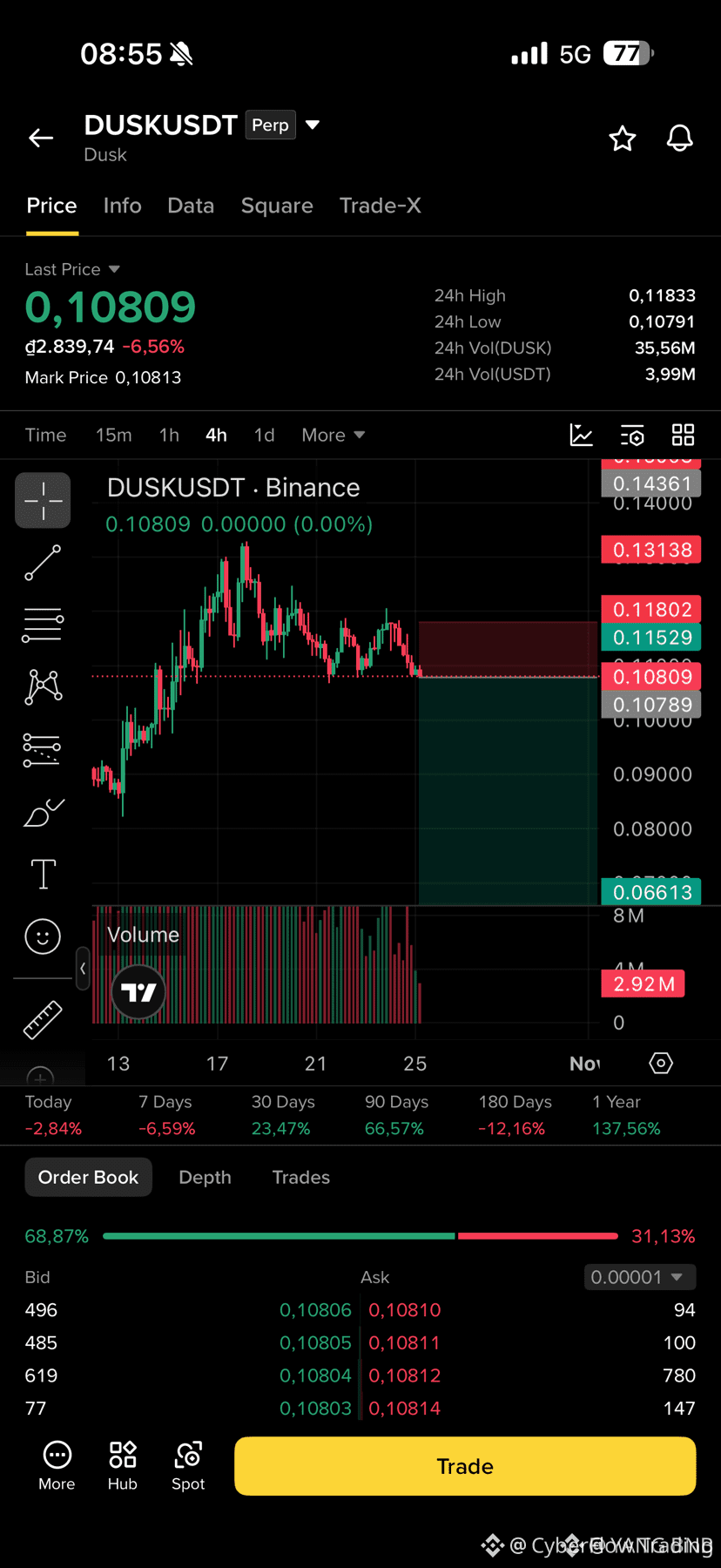
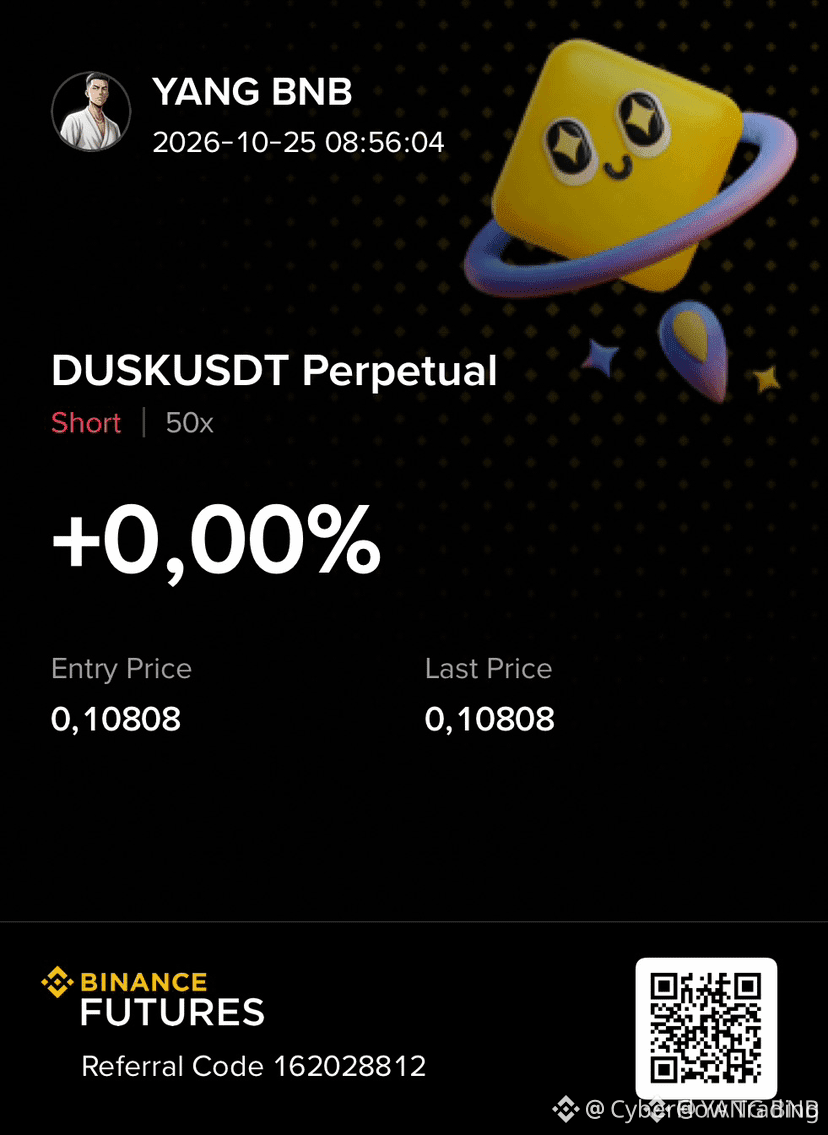
🔴 $DUSK BEARS SQUEEZE SUPPORT – SHORT ALERT! 📉
Entry: 0.1080 ⚡
Target: 0.1030 🚀
Stop Loss: 0.1180 ⚠️
📊 On the 4H chart DUSK is carving lower highs, each swing swallowing the last demand block. 🦈 Smart money is draining liquidity at the $0.108 zone, and a clean break could unleash a cascade toward the $0.095‑$0.085 corridor. ⚡ Volume spikes confirm sellers are flipping the bid faster than buyers can defend.
💡 The risk‑to‑reward tilts heavily short, but watch the $0.110‑$0.112 range for a false bounce before the breakdown. 💬 Do you see the next liquidity sweep coming? 👇
⚠️ Not financial advice. Always manage your risk. 🛡️
🏷️ #DUSK #ShortSetup #Bearish #Crypto
🔥 🦈
🔴 $DUSK BEARS SQUEEZE SUPPORT – SHORT ALERT! 📉
Entry: 0.1080 ⚡
Target: 0.1030 🚀
Stop Loss: 0.1180 ⚠️
📊 On the 4H chart DUSK is carving lower highs, each swing swallowing the last demand block. 🦈 Smart money is draining liquidity at the $0.108 zone, and a clean break could unleash a cascade toward the $0.095‑$0.085 corridor. ⚡ Volume spikes confirm sellers are flipping the bid faster than buyers can defend.
💡 The risk‑to‑reward tilts heavily short, but watch the $0.110‑$0.112 range for a false bounce before the breakdown. 💬 Do you see the next liquidity sweep coming? 👇
⚠️ Not financial advice. Always manage your risk. 🛡️
🏷️ #DUSK #ShortSetup #Bearish #Crypto
🔥 🦈
Entry: 0.1080 ⚡
Target: 0.1030 🚀
Stop Loss: 0.1180 ⚠️
📊 On the 4H chart DUSK is carving lower highs, each swing swallowing the last demand block. 🦈 Smart money is draining liquidity at the $0.108 zone, and a clean break could unleash a cascade toward the $0.095‑$0.085 corridor. ⚡ Volume spikes confirm sellers are flipping the bid faster than buyers can defend.
💡 The risk‑to‑reward tilts heavily short, but watch the $0.110‑$0.112 range for a false bounce before the breakdown. 💬 Do you see the next liquidity sweep coming? 👇
⚠️ Not financial advice. Always manage your risk. 🛡️
🏷️ #DUSK #ShortSetup #Bearish #Crypto
🔥 🦈
5
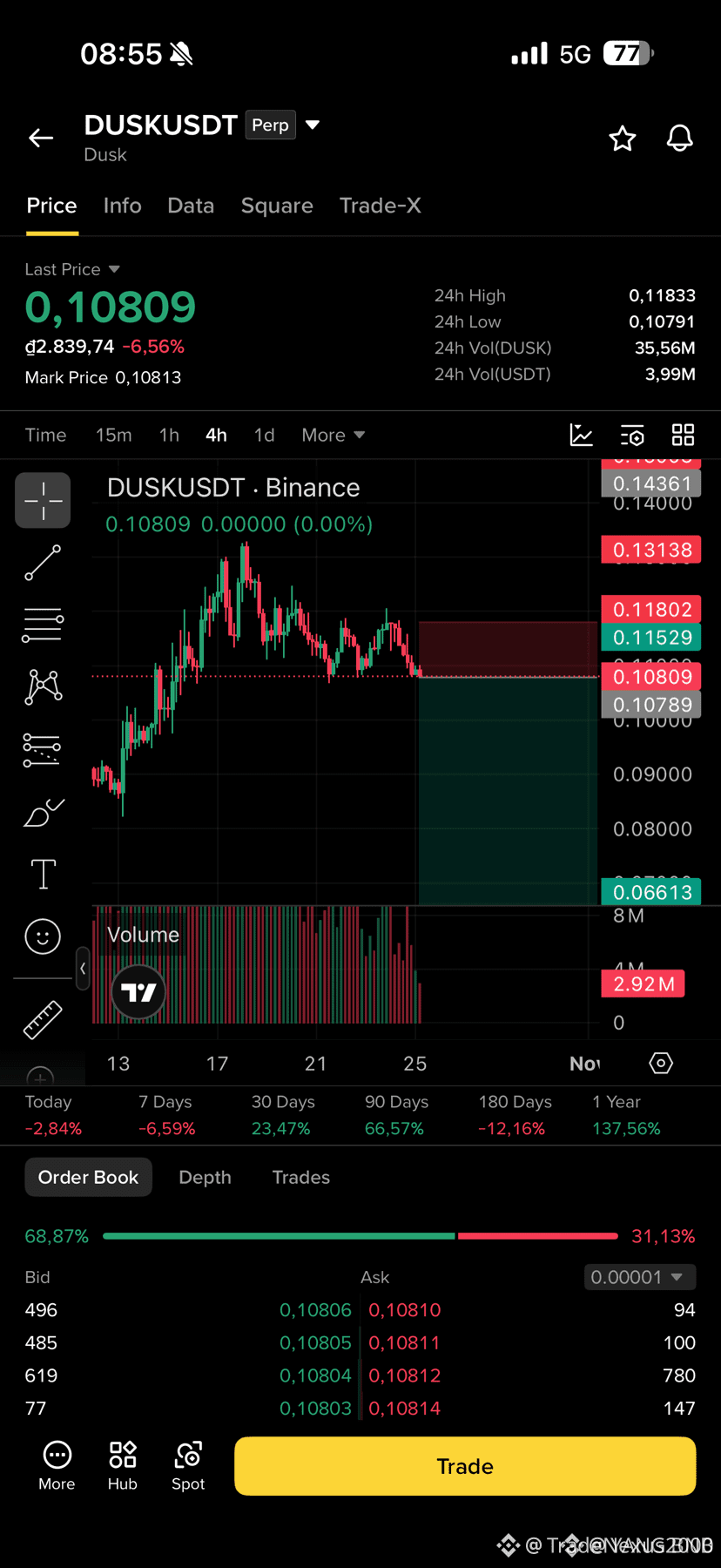
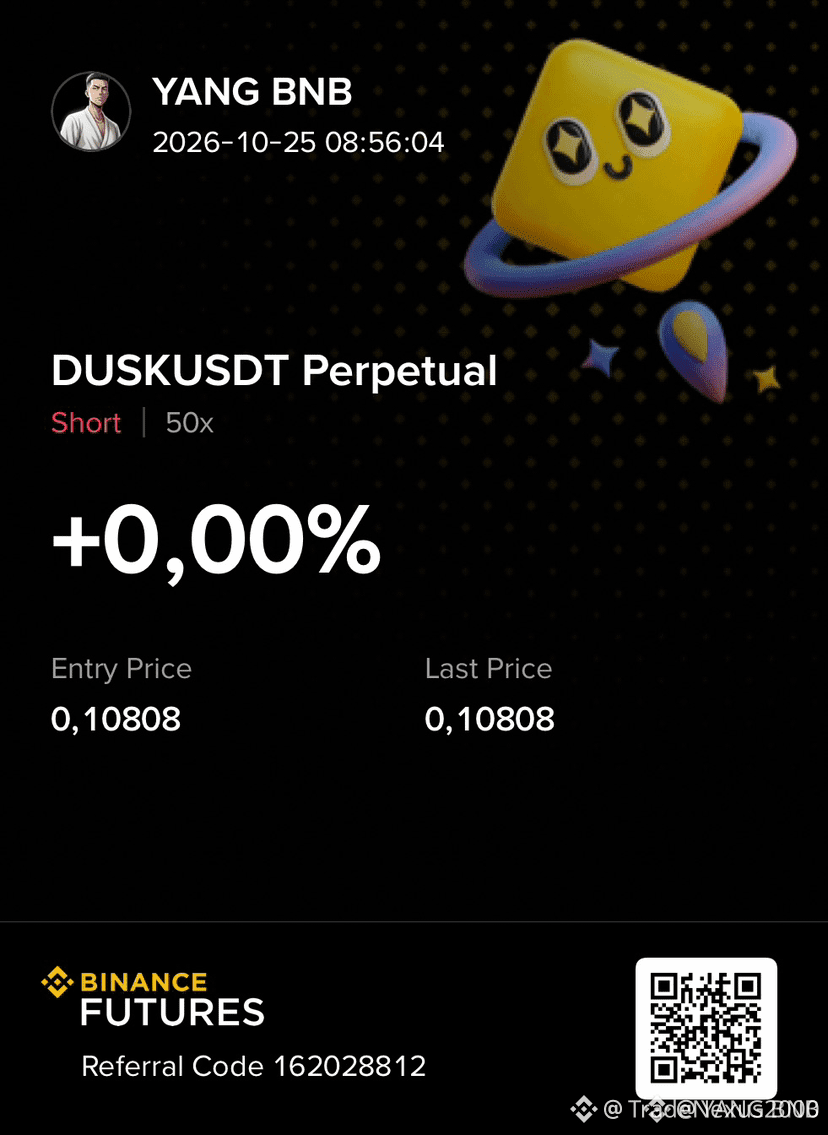
🔴 $DUSK BEAR CLUTCH ON SUPPORT BREAK – SHORT ALERT! 📉
Entry: 0.1080-0.1100 ⚡
Target: 0.1030 🚀
Stop Loss: 0.1180 ⚠️
📊 The 4H frame shows a classic lower‑high pattern, confirming the bears are eating the demand zone. 🌊 Sellers are sweeping liquidity at the $0.108 level, forcing the market into a fresh downtrend corridor. 🔍 Volume spikes align with the breakdown, indicating institutional pressure rather than retail panic. 💡 With the next swing target near $0.095, the risk‑reward ratio stays tight for aggressive shorters.
💬 Are you ready to ride the downside or waiting for a deeper liquidity hunt? 👇
⚠️ Not financial advice. Always manage your risk. 🛡️
🏷️ #DUSK #ShortSetup #Bearish #Crypto
🦈 🔥
🔴 $DUSK BEAR CLUTCH ON SUPPORT BREAK – SHORT ALERT! 📉
Entry: 0.1080-0.1100 ⚡
Target: 0.1030 🚀
Stop Loss: 0.1180 ⚠️
📊 The 4H frame shows a classic lower‑high pattern, confirming the bears are eating the demand zone. 🌊 Sellers are sweeping liquidity at the $0.108 level, forcing the market into a fresh downtrend corridor. 🔍 Volume spikes align with the breakdown, indicating institutional pressure rather than retail panic. 💡 With the next swing target near $0.095, the risk‑reward ratio stays tight for aggressive shorters.
💬 Are you ready to ride the downside or waiting for a deeper liquidity hunt? 👇
⚠️ Not financial advice. Always manage your risk. 🛡️
🏷️ #DUSK #ShortSetup #Bearish #Crypto
🦈 🔥
Entry: 0.1080-0.1100 ⚡
Target: 0.1030 🚀
Stop Loss: 0.1180 ⚠️
📊 The 4H frame shows a classic lower‑high pattern, confirming the bears are eating the demand zone. 🌊 Sellers are sweeping liquidity at the $0.108 level, forcing the market into a fresh downtrend corridor. 🔍 Volume spikes align with the breakdown, indicating institutional pressure rather than retail panic. 💡 With the next swing target near $0.095, the risk‑reward ratio stays tight for aggressive shorters.
💬 Are you ready to ride the downside or waiting for a deeper liquidity hunt? 👇
⚠️ Not financial advice. Always manage your risk. 🛡️
🏷️ #DUSK #ShortSetup #Bearish #Crypto
🦈 🔥
13
·
--
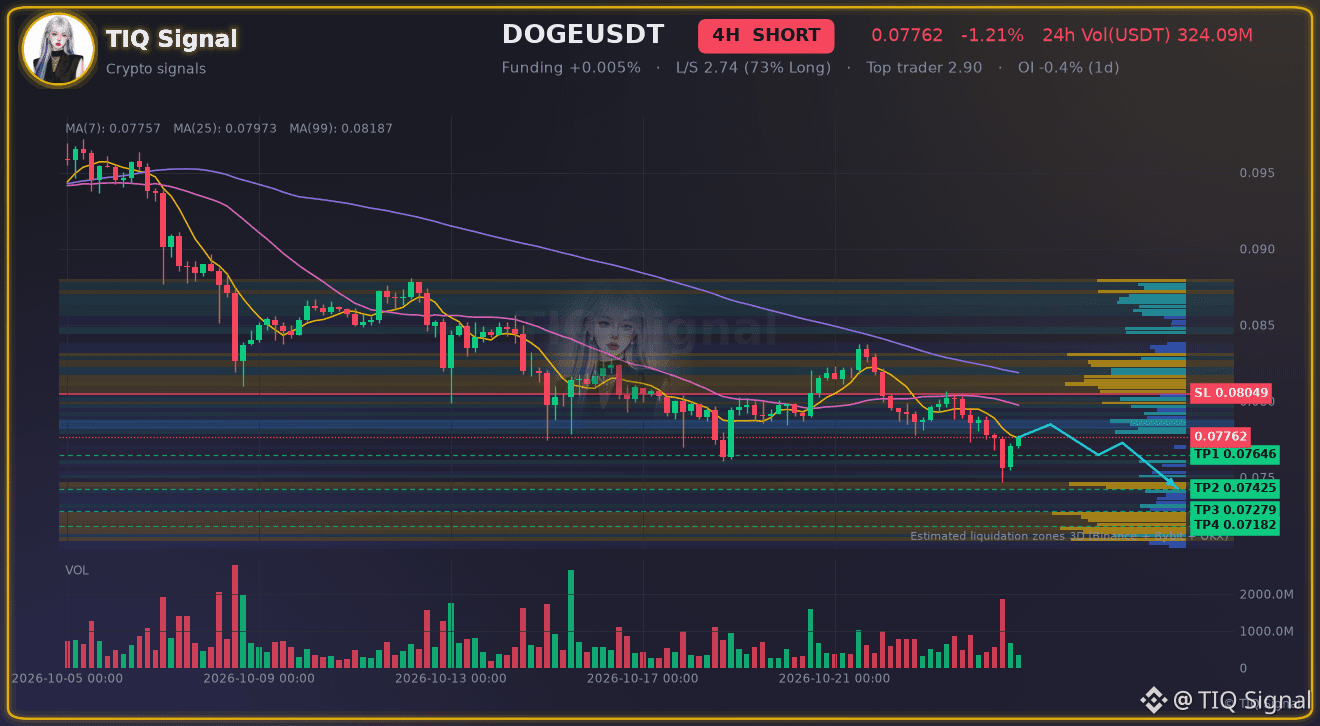
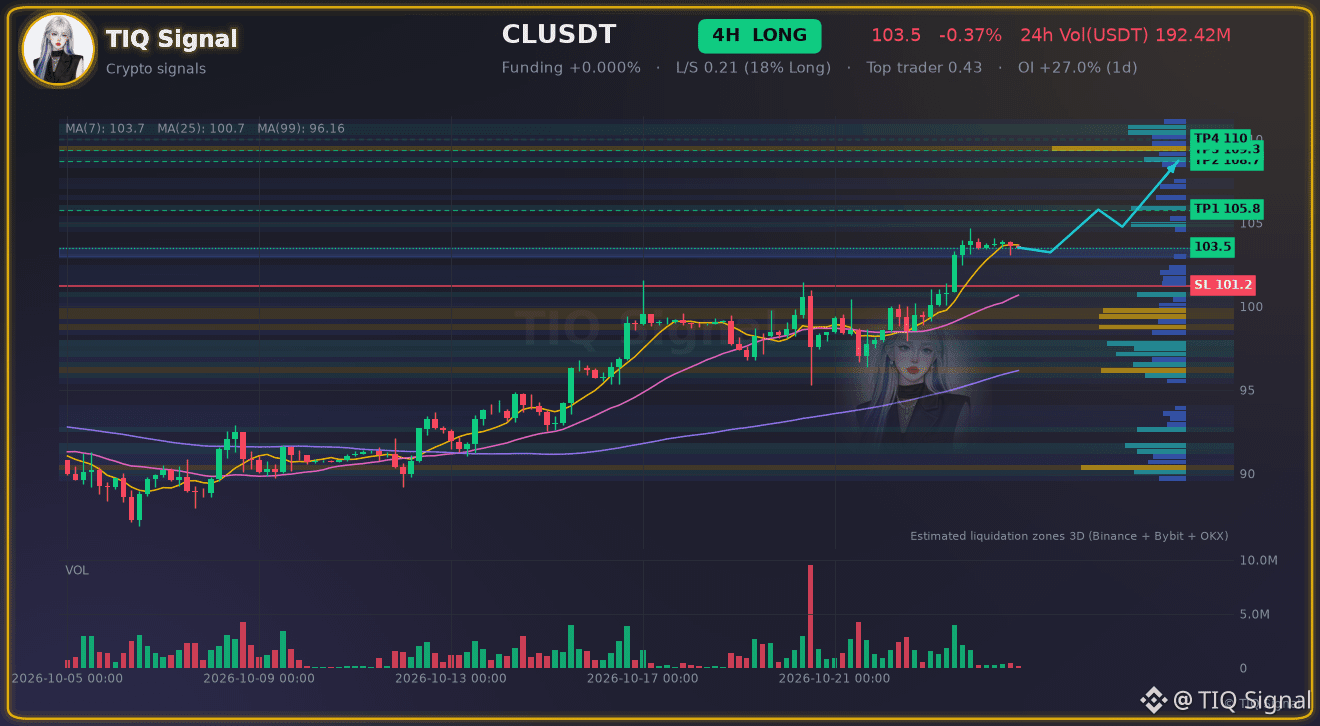
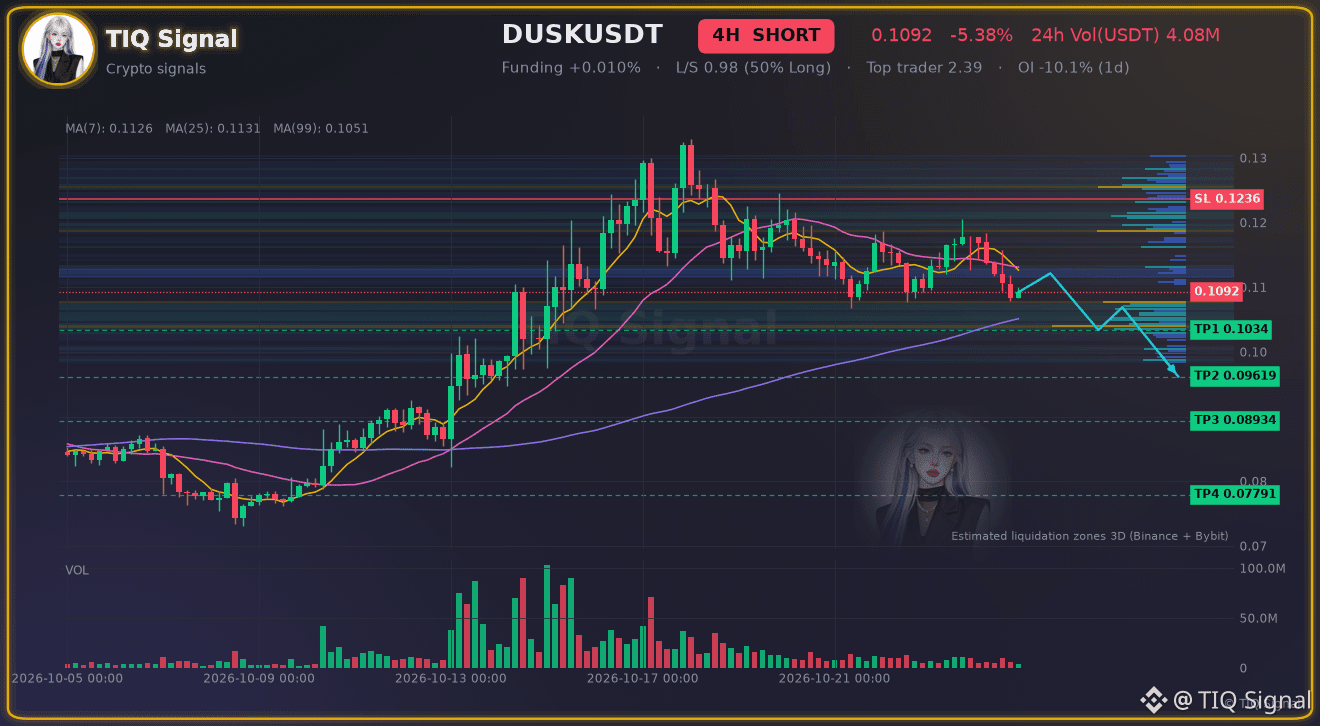
Busy bee mode on 🐝 Buzzing around $DOGE, $CL and $DUSK
Piece 1: $DOGE Short on the 4H 🧩
Fits at 0.07869 - 0.07826, completes at 0.07646 and 0.07425, wrong piece at 0.08049
Clue: RSI 42 still has room to move. Entry placed at the 30M liquidation zone. Large liquidation cluster below: ~0.07265 (est. 8.3M USDT).
🍕 $CL Long on 4H, the tasty one today
Entry 103 - 103.5, TP 105.8, SL 101.2
MACD is above its signal line, momentum leaning up. Price is on the right side of EMA200, trend agrees.
🎳 $DUSK brings a Short to the party (4H)
Entry 0.1128 - 0.1115, cake at 0.1034, more cake at 0.09619, leave early at 0.1236
RSI 41 still has room to move. Funding +0.010%, 50% of accounts long (L/S 0.98), OI -10.1% (1d).
Pick your favorite and do not forget the stop loss 😉
#DOGE #CL #DUSK
⚠️ This signal is based on technical indicators and is not investment advice. Always set a stop-loss and manage your own risk.
Busy bee mode on 🐝 Buzzing around $DOGE , $CL and $DUSK
Piece 1: $DOGE Short on the 4H 🧩
Fits at 0.07869 - 0.07826, completes at 0.07646 and 0.07425, wrong piece at 0.08049
Clue: RSI 42 still has room to move. Entry placed at the 30M liquidation zone. Large liquidation cluster below: ~0.07265 (est. 8.3M USDT).
🍕 $CL Long on 4H, the tasty one today
Entry 103 - 103.5, TP 105.8, SL 101.2
MACD is above its signal line, momentum leaning up. Price is on the right side of EMA200, trend agrees.
🎳 $DUSK brings a Short to the party (4H)
Entry 0.1128 - 0.1115, cake at 0.1034, more cake at 0.09619, leave early at 0.1236
RSI 41 still has room to move. Funding +0.010%, 50% of accounts long (L/S 0.98), OI -10.1% (1d).
Pick your favorite and do not forget the stop loss 😉
#DOGE #CL #DUSK
⚠️ This signal is based on technical indicators and is not investment advice. Always set a stop-loss and manage your own risk.
Piece 1: $DOGE Short on the 4H 🧩
Fits at 0.07869 - 0.07826, completes at 0.07646 and 0.07425, wrong piece at 0.08049
Clue: RSI 42 still has room to move. Entry placed at the 30M liquidation zone. Large liquidation cluster below: ~0.07265 (est. 8.3M USDT).
🍕 $CL Long on 4H, the tasty one today
Entry 103 - 103.5, TP 105.8, SL 101.2
MACD is above its signal line, momentum leaning up. Price is on the right side of EMA200, trend agrees.
🎳 $DUSK brings a Short to the party (4H)
Entry 0.1128 - 0.1115, cake at 0.1034, more cake at 0.09619, leave early at 0.1236
RSI 41 still has room to move. Funding +0.010%, 50% of accounts long (L/S 0.98), OI -10.1% (1d).
Pick your favorite and do not forget the stop loss 😉
#DOGE #CL #DUSK
⚠️ This signal is based on technical indicators and is not investment advice. Always set a stop-loss and manage your own risk.
71
·
--
⚡ $DUSK SECOND LEG ACTIVATED AS MONSTER VOLUME ACCELERATES INTO THE BREAKOUT! 💥
Heavy buying pressure is completely overwhelming the order books as massive volume pours in, officially confirming wave two of this momentum expansion. 📊 Buyers are stepping up with relentless aggression, leaving no room for hesitation as liquidity gets swept higher. ⚡
Waiting for a pullback on a momentum candle this strong usually leaves sidelined traders chasing the top of a god candle. 📌 Market structure is tilting heavily toward the bulls while order flow signals intense institutional absorption. 🌊
💬 Are you riding this second expansion wave now, or waiting to become exit liquidity at the top? 👇
⚠️ Not financial advice. Always manage your risk. 🛡️
🏷️ #DUSK #Breakout #Altcoins #Crypto #Momentum
🚀 ⚡
⚡ $DUSK SECOND LEG ACTIVATED AS MONSTER VOLUME ACCELERATES INTO THE BREAKOUT! 💥
Heavy buying pressure is completely overwhelming the order books as massive volume pours in, officially confirming wave two of this momentum expansion. 📊 Buyers are stepping up with relentless aggression, leaving no room for hesitation as liquidity gets swept higher. ⚡
Waiting for a pullback on a momentum candle this strong usually leaves sidelined traders chasing the top of a god candle. 📌 Market structure is tilting heavily toward the bulls while order flow signals intense institutional absorption. 🌊
💬 Are you riding this second expansion wave now, or waiting to become exit liquidity at the top? 👇
⚠️ Not financial advice. Always manage your risk. 🛡️
🏷️ #DUSK #Breakout #Altcoins #Crypto #Momentum
🚀 ⚡
Heavy buying pressure is completely overwhelming the order books as massive volume pours in, officially confirming wave two of this momentum expansion. 📊 Buyers are stepping up with relentless aggression, leaving no room for hesitation as liquidity gets swept higher. ⚡
Waiting for a pullback on a momentum candle this strong usually leaves sidelined traders chasing the top of a god candle. 📌 Market structure is tilting heavily toward the bulls while order flow signals intense institutional absorption. 🌊
💬 Are you riding this second expansion wave now, or waiting to become exit liquidity at the top? 👇
⚠️ Not financial advice. Always manage your risk. 🛡️
🏷️ #DUSK #Breakout #Altcoins #Crypto #Momentum
🚀 ⚡
14
·
--
⚡ $DUSK CRUSHES KEY RESISTANCE WITH VERTICAL MOMENTUM AND EXPANDING VOLUME! 💥
Entry: 0.0818 - 0.0825 ⚡
Target: 0.0880 - 0.1005 🚀
Stop Loss: 0.0792 ⚠️
Buyers just torched overhead resistance, printing a full-bodied expansion candle that leaves late short sellers completely trapped. 📊 Aggressive market orders are absorbing ask liquidity across the order book, signaling powerful continuation velocity.
Momentum of this caliber favors decisive execution while the breakout structure remains clean and valid. 💡 Risk-to-reward stays well-defined right above our invalidation level as bulls drive toward higher targets. 💬 Are you riding this continuation trend or waiting for a retest of support? 👇
⚠️ Not financial advice. Always manage your risk. 🛡️
🏷️ #DUSK #Breakout #Crypto #Trading #LongSetup
🔥 💎
⚡ $DUSK CRUSHES KEY RESISTANCE WITH VERTICAL MOMENTUM AND EXPANDING VOLUME! 💥
Entry: 0.0818 - 0.0825 ⚡
Target: 0.0880 - 0.1005 🚀
Stop Loss: 0.0792 ⚠️
Buyers just torched overhead resistance, printing a full-bodied expansion candle that leaves late short sellers completely trapped. 📊 Aggressive market orders are absorbing ask liquidity across the order book, signaling powerful continuation velocity.
Momentum of this caliber favors decisive execution while the breakout structure remains clean and valid. 💡 Risk-to-reward stays well-defined right above our invalidation level as bulls drive toward higher targets. 💬 Are you riding this continuation trend or waiting for a retest of support? 👇
⚠️ Not financial advice. Always manage your risk. 🛡️
🏷️ #DUSK #Breakout #Crypto #Trading #LongSetup
🔥 💎
Entry: 0.0818 - 0.0825 ⚡
Target: 0.0880 - 0.1005 🚀
Stop Loss: 0.0792 ⚠️
Buyers just torched overhead resistance, printing a full-bodied expansion candle that leaves late short sellers completely trapped. 📊 Aggressive market orders are absorbing ask liquidity across the order book, signaling powerful continuation velocity.
Momentum of this caliber favors decisive execution while the breakout structure remains clean and valid. 💡 Risk-to-reward stays well-defined right above our invalidation level as bulls drive toward higher targets. 💬 Are you riding this continuation trend or waiting for a retest of support? 👇
⚠️ Not financial advice. Always manage your risk. 🛡️
🏷️ #DUSK #Breakout #Crypto #Trading #LongSetup
🔥 💎
6
·
--
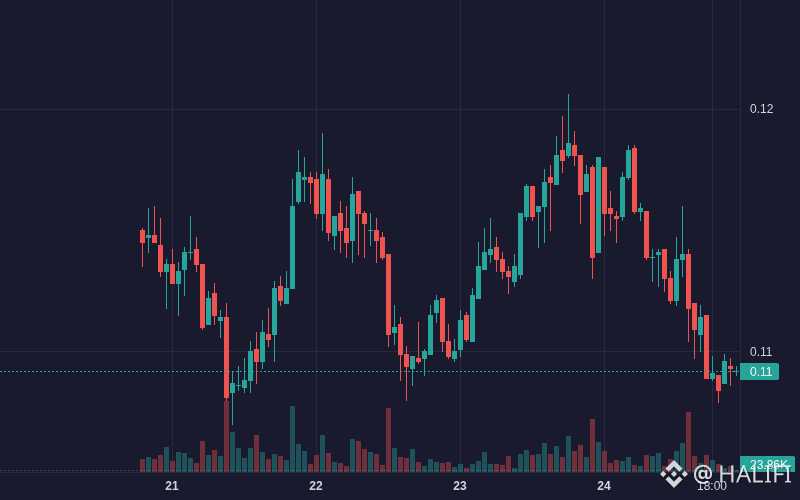
$DUSK DUSK is showing bearish movement: -7.00% (Crypto).
Volume: 878.47K | Last: $0.109000
Key signals: strong momentum, high volatility.
Bias Daily: BULLISH 🟢 | Weekly: BULLISH 🟢
DUSK declined 6.6% in 24h as continuous capital outflows and technical breakdowns outweighed positive ecosystem integrations.
**Capital outflows (High)**: Persistent net outflows over recent hours, including -$54.7K in a single hour → accelerated price drop from $0.1183 to $0.1096
- **Bearish technical breakdown (Medium)**: Price sliced below key **EMA-7**, **EMA-25**, and **EMA-99** while MACD histogram turned negative (-0.00056) → downward continuation
- **Ecosystem developments (Low)**: Dusk Domains launch and privacy integrations provided mild sentiment support, but failed to counteract spot selling pressure
#DUSK #BinancePick #EarningsSeason #Bitcoin #Crypto
$DUSK DUSK is showing bearish movement: -7.00% (Crypto).
Volume: 878.47K | Last: $0.109000
Key signals: strong momentum, high volatility.
Bias Daily: BULLISH 🟢 | Weekly: BULLISH 🟢
DUSK declined 6.6% in 24h as continuous capital outflows and technical breakdowns outweighed positive ecosystem integrations.
**Capital outflows (High)**: Persistent net outflows over recent hours, including -$54.7K in a single hour → accelerated price drop from $0.1183 to $0.1096
- **Bearish technical breakdown (Medium)**: Price sliced below key **EMA-7**, **EMA-25**, and **EMA-99** while MACD histogram turned negative (-0.00056) → downward continuation
- **Ecosystem developments (Low)**: Dusk Domains launch and privacy integrations provided mild sentiment support, but failed to counteract spot selling pressure
#DUSK #BinancePick #EarningsSeason #Bitcoin #Crypto
Volume: 878.47K | Last: $0.109000
Key signals: strong momentum, high volatility.
Bias Daily: BULLISH 🟢 | Weekly: BULLISH 🟢
DUSK declined 6.6% in 24h as continuous capital outflows and technical breakdowns outweighed positive ecosystem integrations.
**Capital outflows (High)**: Persistent net outflows over recent hours, including -$54.7K in a single hour → accelerated price drop from $0.1183 to $0.1096
- **Bearish technical breakdown (Medium)**: Price sliced below key **EMA-7**, **EMA-25**, and **EMA-99** while MACD histogram turned negative (-0.00056) → downward continuation
- **Ecosystem developments (Low)**: Dusk Domains launch and privacy integrations provided mild sentiment support, but failed to counteract spot selling pressure
#DUSK #BinancePick #EarningsSeason #Bitcoin #Crypto
24


·
--
Bullish
30D trade $DUSK 367.1 USDT
🚀 DUSK: The T-Minus 90 program has launched!
Take 3 dApp ideas from concept to Mainnet in just 90 days! 🔥
Dusk CTO Hein Dauven and the T-Minus Dusk team will mentor selected projects.
🎯 Participants get: ✅ Support with deployment costs ✅ Weekly mentorship sessions ✅ 3 months of Claude Team ✅ Product and security reviews
📅 December 1: Working prototype on Testnet
📅 February 1: Mainnet launch
The best part? 🔥 Founders retain full ownership of their projects — no equity is given up!
💡 This is a great opportunity for developers who want to build real products in the Dusk ecosystem.
What innovative dApps do you think could come out of this program?
#DUSK @Dusk_Foundation
$DUSK
🚀 DUSK: The T-Minus 90 program has launched!
Take 3 dApp ideas from concept to Mainnet in just 90 days! 🔥
Dusk CTO Hein Dauven and the T-Minus Dusk team will mentor selected projects.
🎯 Participants get: ✅ Support with deployment costs ✅ Weekly mentorship sessions ✅ 3 months of Claude Team ✅ Product and security reviews
📅 December 1: Working prototype on Testnet
📅 February 1: Mainnet launch
The best part? 🔥 Founders retain full ownership of their projects — no equity is given up!
💡 This is a great opportunity for developers who want to build real products in the Dusk ecosystem.
What innovative dApps do you think could come out of this program?
#DUSK @Dusk
$DUSK
Take 3 dApp ideas from concept to Mainnet in just 90 days! 🔥
Dusk CTO Hein Dauven and the T-Minus Dusk team will mentor selected projects.
🎯 Participants get: ✅ Support with deployment costs ✅ Weekly mentorship sessions ✅ 3 months of Claude Team ✅ Product and security reviews
📅 December 1: Working prototype on Testnet
📅 February 1: Mainnet launch
The best part? 🔥 Founders retain full ownership of their projects — no equity is given up!
💡 This is a great opportunity for developers who want to build real products in the Dusk ecosystem.
What innovative dApps do you think could come out of this program?
#DUSK @Dusk
$DUSK
TOLGAHANSUCU:
teşekkürler dostum
1
1
3
150
Log in to explore more content
Join global crypto users on Binance Square
⚡️ Get latest and useful information about crypto.
💬 Trusted by the world’s largest crypto exchange.
👍 Discover real insights from verified creators.
Email / Phone number
Trending Topics
1
#BinancePick
2.9M views
149,737 Discussing
2
#EarningsSeason
5.2M views
25,561 Discussing
3
#AnthropicTTMRevenueGrewAbout1200%
10,006 views
254 Discussing
4
#AnthropicS1ExpectedToday
13,328 views
235 Discussing
5
#SouthKoreaReportedlyWeighsFourthCryptoTaxDelay
20,578 views
372 Discussing
6
#FranklinTempletonFilesForTwoDividendToBitcoinETFs
27,393 views
472 Discussing
7
#StrategyMSTRSurpassesNasdaqInMarketCap
21,514 views
343 Discussing
8
#CanadaProposesStablecoinRedemptionWithin3BusinessDays
976 views
33 Discussing
9
#ElectrumWalletBugLetRogueServersStealFunds
24,453 views
435 Discussing
10
#ArgentineCourtDismissesLIBRACaseAgainstMilei
36,989 views
534 Discussing