

#defisecurity
defisecurity
128,584 views
678 Discussing
Hot
Latest

Governance, bought in a single transaction — that is what happened to X100 on Saturday evening, and I keep coming back to how little stood in the attackers' way.
Attackers used a flash loan to buy their way into two of X100's three "Senate" seats, then created, voted on and executed proposals inside the same transaction — selling treasury tokens into a pool they had just created and burning the project's liquidity position. Blockaid flagged the attack as still ongoing at its alert, with about $4.85 million in USDT realized.
The flaw is the design itself: voting power counted the moment tokens were frozen, with no snapshot, no holding period and no timelock. X collapsed about 96.5% that day.
The wider tape was already soft — $BTC $80,420 (-1.3%), $ETH $2,335 (-2.8%) — not a reaction to this one small token. The lesson goes beyond X100: any DAO letting freshly bought votes execute instantly is one flash loan from the same fate. DYOR, not investment advice.
Which guardrail should be non-negotiable for DAOs after this: snapshots, timelocks, or both?
#CryptoMarkets #DeFiSecurity #Governance #Exploit
Governance, bought in a single transaction — that is what happened to X100 on Saturday evening, and I keep coming back to how little stood in the attackers' way.
Attackers used a flash loan to buy their way into two of X100's three "Senate" seats, then created, voted on and executed proposals inside the same transaction — selling treasury tokens into a pool they had just created and burning the project's liquidity position. Blockaid flagged the attack as still ongoing at its alert, with about $4.85 million in USDT realized.
The flaw is the design itself: voting power counted the moment tokens were frozen, with no snapshot, no holding period and no timelock. X collapsed about 96.5% that day.
The wider tape was already soft — $BTC $80,420 (-1.3%), $ETH $2,335 (-2.8%) — not a reaction to this one small token. The lesson goes beyond X100: any DAO letting freshly bought votes execute instantly is one flash loan from the same fate. DYOR, not investment advice.
Which guardrail should be non-negotiable for DAOs after this: snapshots, timelocks, or both?
#CryptoMarkets #DeFiSecurity #Governance #Exploit
Attackers used a flash loan to buy their way into two of X100's three "Senate" seats, then created, voted on and executed proposals inside the same transaction — selling treasury tokens into a pool they had just created and burning the project's liquidity position. Blockaid flagged the attack as still ongoing at its alert, with about $4.85 million in USDT realized.
The flaw is the design itself: voting power counted the moment tokens were frozen, with no snapshot, no holding period and no timelock. X collapsed about 96.5% that day.
The wider tape was already soft — $BTC $80,420 (-1.3%), $ETH $2,335 (-2.8%) — not a reaction to this one small token. The lesson goes beyond X100: any DAO letting freshly bought votes execute instantly is one flash loan from the same fate. DYOR, not investment advice.
Which guardrail should be non-negotiable for DAOs after this: snapshots, timelocks, or both?
#CryptoMarkets #DeFiSecurity #Governance #Exploit

·
--
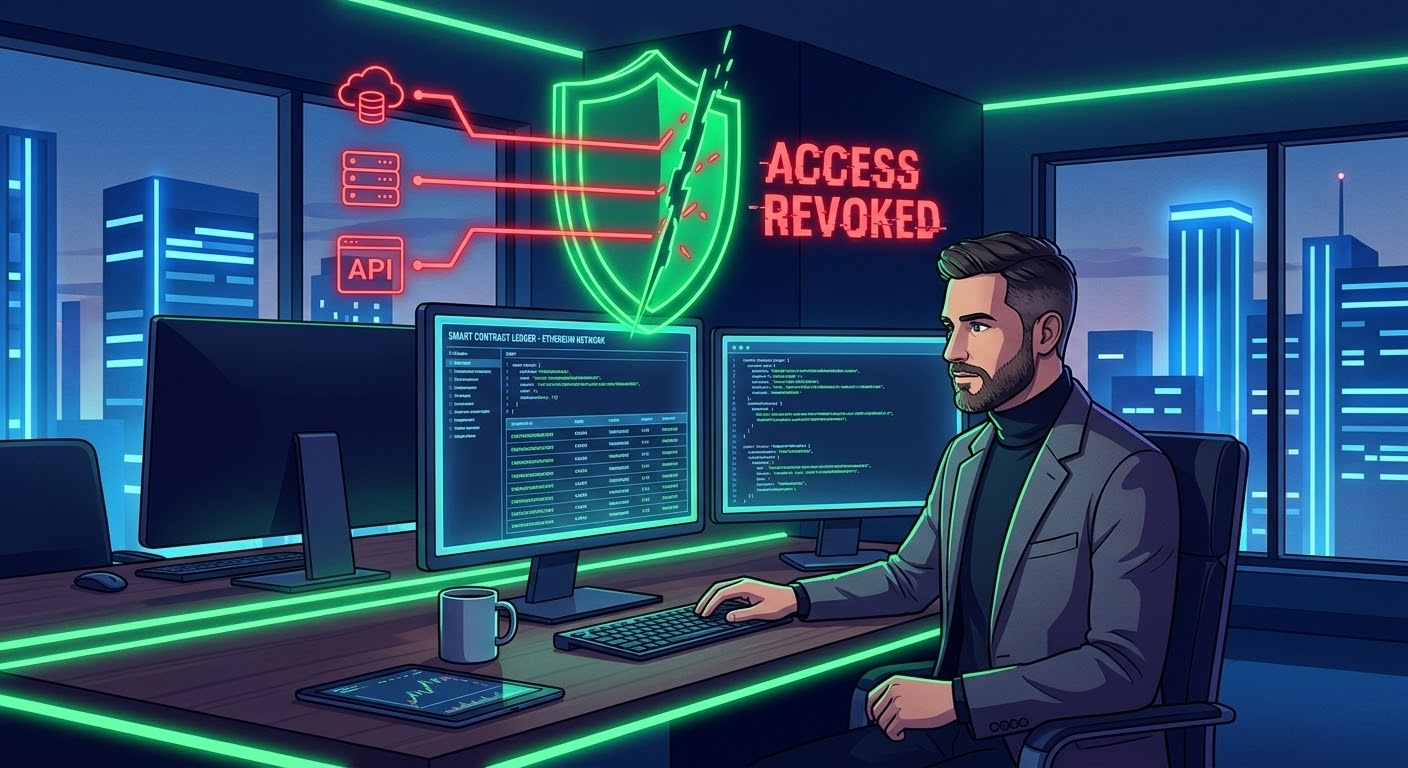
My Crypto Safety Roadmap (Part 8): How I Manage and Revoke Risky Smart Contract Permissions🎈🎈
🔴Interacting with Decentralized Applications (DApps) and DeFi platforms is a major part of my crypto execution, but it introduces a hidden risk that many overlook. In my journey, I discovered that granting "unlimited token approval" to a platform allows its smart contracts to access my assets at any time. If that protocol gets exploited or turns out to be a scam, my connected wallet can be drained instantly. To secure my treasury, I established a strict inspection and cleanup routine.🚀
🔴Today, I never leave permanent or unlimited spending permissions active on my Web3 wallets. I routinely use blockchain scanners and revocation tools like Revoke.cash to audit every single smart contract connection I have made. Whenever I finish a transaction or interact with a new platform, I immediately revoke or minimize the allowed token allowance. Controlling exactly who and what can interact with my digital assets is my ultimate shield against smart contract exploits.🚀
#CryptoSafety #SmartContracts #Web3Security #DeFiSecurity $XAUT $BTC $BNB
💥Not Financial Advice
{spot}(XAUTUSDT)
My Crypto Safety Roadmap (Part 8): How I Manage and Revoke Risky Smart Contract Permissions🎈🎈
🔴Interacting with Decentralized Applications (DApps) and DeFi platforms is a major part of my crypto execution, but it introduces a hidden risk that many overlook. In my journey, I discovered that granting "unlimited token approval" to a platform allows its smart contracts to access my assets at any time. If that protocol gets exploited or turns out to be a scam, my connected wallet can be drained instantly. To secure my treasury, I established a strict inspection and cleanup routine.🚀
🔴Today, I never leave permanent or unlimited spending permissions active on my Web3 wallets. I routinely use blockchain scanners and revocation tools like Revoke.cash to audit every single smart contract connection I have made. Whenever I finish a transaction or interact with a new platform, I immediately revoke or minimize the allowed token allowance. Controlling exactly who and what can interact with my digital assets is my ultimate shield against smart contract exploits.🚀
#CryptoSafety #SmartContracts #Web3Security #DeFiSecurity $XAUT $BTC $BNB
💥Not Financial Advice
🔴Interacting with Decentralized Applications (DApps) and DeFi platforms is a major part of my crypto execution, but it introduces a hidden risk that many overlook. In my journey, I discovered that granting "unlimited token approval" to a platform allows its smart contracts to access my assets at any time. If that protocol gets exploited or turns out to be a scam, my connected wallet can be drained instantly. To secure my treasury, I established a strict inspection and cleanup routine.🚀
🔴Today, I never leave permanent or unlimited spending permissions active on my Web3 wallets. I routinely use blockchain scanners and revocation tools like Revoke.cash to audit every single smart contract connection I have made. Whenever I finish a transaction or interact with a new platform, I immediately revoke or minimize the allowed token allowance. Controlling exactly who and what can interact with my digital assets is my ultimate shield against smart contract exploits.🚀
#CryptoSafety #SmartContracts #Web3Security #DeFiSecurity $XAUT $BTC $BNB
💥Not Financial Advice
232

🚨 $ETH SECURITY ALERT: ATTACK WAVES MIRROR A GLOBAL PANDEMIC 🦈
📊 Attackers are now sweeping through the crypto space with the intensity of a pandemic, turning on‑chain breaches into an early warning system for the broader internet. 🪙 Small DeFi projects with thin security nets are the low‑hanging fruit, while heavyweight protocols are deploying AI shields to harden their perimeters. ⚡ This divergence creates a clear liquidity gap: smart money is already repositioning, scouting for resilient assets before the next wave hits.
💡 The pattern suggests a spill‑over effect—once the traditional web feels the pressure, we’ll see a cascade of cross‑industry exploits. 👇 Are you auditing your exposure before the next sweep hits your portfolio?
⚠️ Not financial advice. Always manage your risk. 🛡️
🏷️ #ETH #DeFiSecurity #CryptoRisk #SmartMoney
🔥 💎
🚨 $ETH SECURITY ALERT: ATTACK WAVES MIRROR A GLOBAL PANDEMIC 🦈
📊 Attackers are now sweeping through the crypto space with the intensity of a pandemic, turning on‑chain breaches into an early warning system for the broader internet. 🪙 Small DeFi projects with thin security nets are the low‑hanging fruit, while heavyweight protocols are deploying AI shields to harden their perimeters. ⚡ This divergence creates a clear liquidity gap: smart money is already repositioning, scouting for resilient assets before the next wave hits.
💡 The pattern suggests a spill‑over effect—once the traditional web feels the pressure, we’ll see a cascade of cross‑industry exploits. 👇 Are you auditing your exposure before the next sweep hits your portfolio?
⚠️ Not financial advice. Always manage your risk. 🛡️
🏷️ #ETH #DeFiSecurity #CryptoRisk #SmartMoney
🔥 💎
📊 Attackers are now sweeping through the crypto space with the intensity of a pandemic, turning on‑chain breaches into an early warning system for the broader internet. 🪙 Small DeFi projects with thin security nets are the low‑hanging fruit, while heavyweight protocols are deploying AI shields to harden their perimeters. ⚡ This divergence creates a clear liquidity gap: smart money is already repositioning, scouting for resilient assets before the next wave hits.
💡 The pattern suggests a spill‑over effect—once the traditional web feels the pressure, we’ll see a cascade of cross‑industry exploits. 👇 Are you auditing your exposure before the next sweep hits your portfolio?
⚠️ Not financial advice. Always manage your risk. 🛡️
🏷️ #ETH #DeFiSecurity #CryptoRisk #SmartMoney
🔥 💎
3

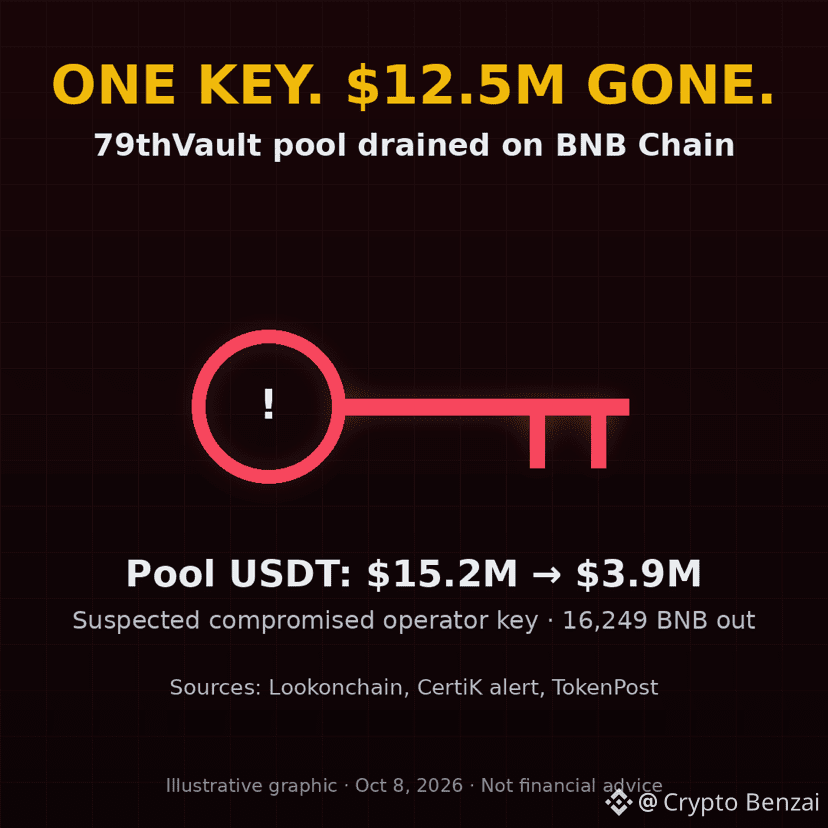
One Key, $12.5M Gone: 79thVault Drained on BNB Chain
A wallet with special admin powers over the 79AU token pulled 2.01M tokens out of its PancakeSwap pool and sold them back in. That cut the pool's USDT from $15.2M to $3.9M, and the attacker walked off with 16,249 $BNB (~$12.5M) Lookonchain and CertiK point to a likely leaked operator key. The team revoked the role and offered a 10% bounty. Lesson: check who holds the admin keys before you ape in.
Do you check token permissions before buying?
#DeFiSecurity #BNBChain #CryptoSafety
One Key, $12.5M Gone: 79thVault Drained on BNB Chain
A wallet with special admin powers over the 79AU token pulled 2.01M tokens out of its PancakeSwap pool and sold them back in. That cut the pool's USDT from $15.2M to $3.9M, and the attacker walked off with 16,249 $BNB (~$12.5M) Lookonchain and CertiK point to a likely leaked operator key. The team revoked the role and offered a 10% bounty. Lesson: check who holds the admin keys before you ape in.
Do you check token permissions before buying?
#DeFiSecurity #BNBChain #CryptoSafety
A wallet with special admin powers over the 79AU token pulled 2.01M tokens out of its PancakeSwap pool and sold them back in. That cut the pool's USDT from $15.2M to $3.9M, and the attacker walked off with 16,249 $BNB (~$12.5M) Lookonchain and CertiK point to a likely leaked operator key. The team revoked the role and offered a 10% bounty. Lesson: check who holds the admin keys before you ape in.
Do you check token permissions before buying?
#DeFiSecurity #BNBChain #CryptoSafety
61

·
--
🚨 $6M drained from a Base vault controlled by a 7-signer Safe — owners still unknown. 1,783 wstETH moved, Base and Aave contracts untouched. This points to a private key compromise or insider risk, not protocol failure. ETH holders should watch for similar stealth outflows on L2s. Could this signal rising custody risks in DeFi?
#DeFiSecurity
$ETH #TradingSignal #CryptoAnalysis
🚨 $6M drained from a Base vault controlled by a 7-signer Safe — owners still unknown. 1,783 wstETH moved, Base and Aave contracts untouched. This points to a private key compromise or insider risk, not protocol failure. ETH holders should watch for similar stealth outflows on L2s. Could this signal rising custody risks in DeFi?
#DeFiSecurity
$ETH #TradingSignal #CryptoAnalysis
#DeFiSecurity
$ETH #TradingSignal #CryptoAnalysis

26

🚨 The NEAR Intents protocol identifies the attacker and grants a 48-hour window
The decentralized NEAR Intents protocol announced that it was able to identify the individual responsible for the recent hack that resulted in the theft of approximately $3.8 million.
The administration has granted the attacker a 48-hour deadline to return the funds, confirming that legal action will be taken in the event of no response.
━━━━━━━━━━━━━━
📊 Impact: 📈 High
🏷️ DEFI
#NEARProtocol #DeFiSecurity #BlockchainNews #CryptoCrime
📰 Source: cointelegraph.com
🚨 The NEAR Intents protocol identifies the attacker and grants a 48-hour window
The decentralized NEAR Intents protocol announced that it was able to identify the individual responsible for the recent hack that resulted in the theft of approximately $3.8 million.
The administration has granted the attacker a 48-hour deadline to return the funds, confirming that legal action will be taken in the event of no response.
━━━━━━━━━━━━━━
📊 Impact: 📈 High
🏷️ DEFI
#NEARProtocol #DeFiSecurity #BlockchainNews #CryptoCrime
📰 Source: cointelegraph.com
The decentralized NEAR Intents protocol announced that it was able to identify the individual responsible for the recent hack that resulted in the theft of approximately $3.8 million.
The administration has granted the attacker a 48-hour deadline to return the funds, confirming that legal action will be taken in the event of no response.
━━━━━━━━━━━━━━
📊 Impact: 📈 High
🏷️ DEFI
#NEARProtocol #DeFiSecurity #BlockchainNews #CryptoCrime
📰 Source: cointelegraph.com
115
·
--
🚨 A third-party Aave adapter was exploited, draining ~114 ETH from compromised Safe multisig wallets. Aave v3 core remains secure; the flaw lay in the FlashLoopAdapter integration. This highlights risks in peripheral DeFi tools, even when base protocols are sound. Traders should audit third-party contracts before interacting with yield strategies.
How deep does the DeFi supply chain risk go?
#DeFiSecurity
$ETH #TradingSignal #CryptoAnalysis
🚨 A third-party Aave adapter was exploited, draining ~114 ETH from compromised Safe multisig wallets. Aave v3 core remains secure; the flaw lay in the FlashLoopAdapter integration. This highlights risks in peripheral DeFi tools, even when base protocols are sound. Traders should audit third-party contracts before interacting with yield strategies.
How deep does the DeFi supply chain risk go?
#DeFiSecurity
$ETH #TradingSignal #CryptoAnalysis
How deep does the DeFi supply chain risk go?
#DeFiSecurity
$ETH #TradingSignal #CryptoAnalysis

21

Another DeFi exploit to watch
A custom FlashLoopAdapter managing Aave v3 positions was exploited on Ethereum, resulting in a $305,000 loss across two Safe wallets after an attacker bypassed access controls.
#Aave #DeFiSecurity
Another DeFi exploit to watch
A custom FlashLoopAdapter managing Aave v3 positions was exploited on Ethereum, resulting in a $305,000 loss across two Safe wallets after an attacker bypassed access controls.
#Aave #DeFiSecurity
A custom FlashLoopAdapter managing Aave v3 positions was exploited on Ethereum, resulting in a $305,000 loss across two Safe wallets after an attacker bypassed access controls.
#Aave #DeFiSecurity
95
·
--
🚨 NEAR Intents says it has identified the hacker behind the $3.8M exploit and issued a 48-hour ultimatum for fund return. While recovery remains uncertain, the transparency may restore some confidence in the protocol’s security posture. Traders are watching for on-chain signals of fund movement or developer action. Could this deter future attacks on DeFi platforms?
#DeFiSecurity
$NEAR #TradingSignal #CryptoAnalysis
🚨 NEAR Intents says it has identified the hacker behind the $3.8M exploit and issued a 48-hour ultimatum for fund return. While recovery remains uncertain, the transparency may restore some confidence in the protocol’s security posture. Traders are watching for on-chain signals of fund movement or developer action. Could this deter future attacks on DeFi platforms?
#DeFiSecurity
$NEAR #TradingSignal #CryptoAnalysis
#DeFiSecurity
$NEAR #TradingSignal #CryptoAnalysis

68
·
--
🚨 NEAR Intents exploited for $3.8M due to a bug impacting cross-chain deposits/withdrawals. Team pledges full reimbursement. Highlights ongoing security risks in DeFi infrastructure. Market may see short-term volatility as trust is tested. How will NEAR recover user confidence after this breach?
#DeFiSecurity
$NEAR #TradingSignal #CryptoAnalysis
🚨 NEAR Intents exploited for $3.8M due to a bug impacting cross-chain deposits/withdrawals. Team pledges full reimbursement. Highlights ongoing security risks in DeFi infrastructure. Market may see short-term volatility as trust is tested. How will NEAR recover user confidence after this breach?
#DeFiSecurity
$NEAR #TradingSignal #CryptoAnalysis
#DeFiSecurity
$NEAR #TradingSignal #CryptoAnalysis

34
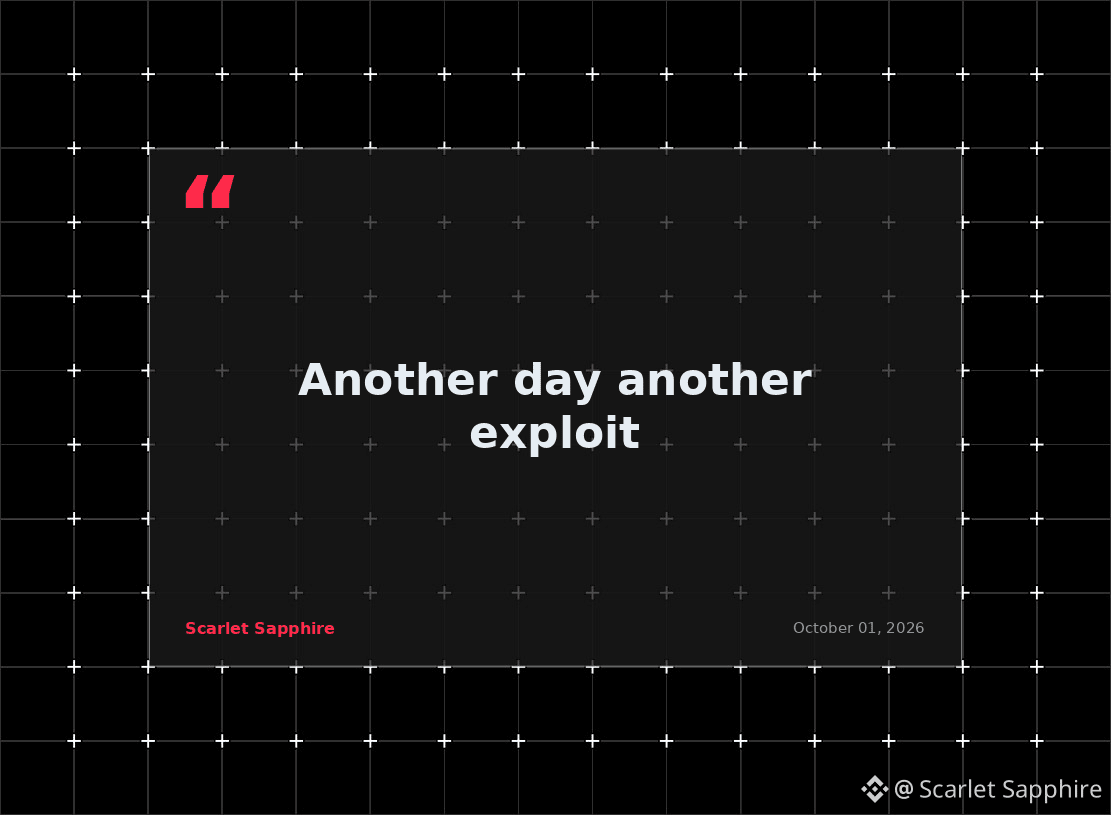
Another day another exploit
NEAR Intents just got hit by a $3.8 million exploit. This is just more fuel for the fire in a year already defined by massive security failures across the space.
#NearProtocol #DeFiSecurity
Another day another exploit
NEAR Intents just got hit by a $3.8 million exploit. This is just more fuel for the fire in a year already defined by massive security failures across the space.
#NearProtocol #DeFiSecurity
NEAR Intents just got hit by a $3.8 million exploit. This is just more fuel for the fire in a year already defined by massive security failures across the space.
#NearProtocol #DeFiSecurity
55
·
--
🚨 Bitget hacker swap attempts exceeded $50M, testing NEAR Intents’ permissionless design. Most blocked funds rerouted via other providers, highlighting resilience but raising questions about real-world security under pressure. Market may reassess trust in intent-based layers amid rising exploit sophistication.
How does NEAR balance openness with defense against large-scale attacks?
#DeFiSecurity
$NEAR #TradingSignal #CryptoAnalysis
🚨 Bitget hacker swap attempts exceeded $50M, testing NEAR Intents’ permissionless design. Most blocked funds rerouted via other providers, highlighting resilience but raising questions about real-world security under pressure. Market may reassess trust in intent-based layers amid rising exploit sophistication.
How does NEAR balance openness with defense against large-scale attacks?
#DeFiSecurity
$NEAR #TradingSignal #CryptoAnalysis
How does NEAR balance openness with defense against large-scale attacks?
#DeFiSecurity
$NEAR #TradingSignal #CryptoAnalysis

61
·
--
🚨 NEAR Intents blocked $50M linked to Bitget hackers, showing proactive on-chain defense. Unlike THORChain’s neutral stance, this highlights a security-first approach that could boost trust in NEAR’s ecosystem. Market may view this as a bullish signal for protocol integrity.
How does selective censorship affect long-term decentralization ideals?
#DeFiSecurity
$NEAR #TradingSignal #CryptoAnalysis
🚨 NEAR Intents blocked $50M linked to Bitget hackers, showing proactive on-chain defense. Unlike THORChain’s neutral stance, this highlights a security-first approach that could boost trust in NEAR’s ecosystem. Market may view this as a bullish signal for protocol integrity.
How does selective censorship affect long-term decentralization ideals?
#DeFiSecurity
$NEAR #TradingSignal #CryptoAnalysis
How does selective censorship affect long-term decentralization ideals?
#DeFiSecurity
$NEAR #TradingSignal #CryptoAnalysis

153
·
--
🚨 Scammers mimicked the GIWA L2 with a fake RPC, bridge, and Chain ID 9134, tricking 1,333 wallets into sending 767 ETH before draining funds. This highlights rising sophistication in DeFi exploits targeting layer-2 expectations. Always verify network contracts and RPCs—never trust UI alone. How deep does this rabbit hole go? #DeFiSecurity
$ETH #TradingSignal #CryptoAnalysis
🚨 Scammers mimicked the GIWA L2 with a fake RPC, bridge, and Chain ID 9134, tricking 1,333 wallets into sending 767 ETH before draining funds. This highlights rising sophistication in DeFi exploits targeting layer-2 expectations. Always verify network contracts and RPCs—never trust UI alone. How deep does this rabbit hole go? #DeFiSecurity
$ETH #TradingSignal #CryptoAnalysis
$ETH #TradingSignal #CryptoAnalysis

13
·
--
🚨 Scammers deployed a fake Giwa-backed ETH L2 chain, stealing over 760 ETH from users. DYORSWAP identified the fraud and initiated a compensation process. This highlights rising risks in L2 ecosystems and the need for rigorous contract verification before bridging funds. Traders should scrutinize chain authenticity and avoid unverified bridges.
How can users better detect fake L2 deployments before connecting wallets?
#DeFiSecurity
$ETH #TradingSignal #CryptoAnalysis
🚨 Scammers deployed a fake Giwa-backed ETH L2 chain, stealing over 760 ETH from users. DYORSWAP identified the fraud and initiated a compensation process. This highlights rising risks in L2 ecosystems and the need for rigorous contract verification before bridging funds. Traders should scrutinize chain authenticity and avoid unverified bridges.
How can users better detect fake L2 deployments before connecting wallets?
#DeFiSecurity
$ETH #TradingSignal #CryptoAnalysis
How can users better detect fake L2 deployments before connecting wallets?
#DeFiSecurity
$ETH #TradingSignal #CryptoAnalysis

32

LayerZero is facing severe pressure as a massive $292M lawsuit challenges its core security design following the KelpDAO rsETH exploit. With nearly $15B exiting the protocol and mounting reputational damage, the legal battle goes beyond a financial dispute—it puts omnichain trust on trial. Cross-chain infra must prioritize bulletproof validation, or user capital will keep fleeing. Security is everything in DeFi. #LayerZero #DeFiSecurity #CryptoNews
LayerZero is facing severe pressure as a massive $292M lawsuit challenges its core security design following the KelpDAO rsETH exploit. With nearly $15B exiting the protocol and mounting reputational damage, the legal battle goes beyond a financial dispute—it puts omnichain trust on trial. Cross-chain infra must prioritize bulletproof validation, or user capital will keep fleeing. Security is everything in DeFi. #LayerZero #DeFiSecurity #CryptoNews
36

·
--
$1 Billion vanished in H1 2026 hacks— a grim record shattered.
This isn't just a number; it's a flashing red alert for smart contract risk. While the narrative shifts to AI and decentralized storage, the foundational layer of security is crumbling. Ethereum and Solana projects bore the brunt, losing $332M and $326M respectively, exposing critical vulnerabilities in DeFi's pillars. Smart money is already reassessing their exposure, favoring audited, battle-tested protocols over speculative ventures. This trend highlights the ever-present threat of exploits in a maturing market. #DeFiSecurity #CryptoRisk #BlockchainFails
The critical test will be whether the next 72 hours see a flight to quality, pushing audited blue-chips higher as speculative assets get punished. Watch for a decisive break above $70k on BTC for confirmation. #MarketSentiment
Is your portfolio truly secured against these growing threats?
$1 Billion vanished in H1 2026 hacks— a grim record shattered.
This isn't just a number; it's a flashing red alert for smart contract risk. While the narrative shifts to AI and decentralized storage, the foundational layer of security is crumbling. Ethereum and Solana projects bore the brunt, losing $332M and $326M respectively, exposing critical vulnerabilities in DeFi's pillars. Smart money is already reassessing their exposure, favoring audited, battle-tested protocols over speculative ventures. This trend highlights the ever-present threat of exploits in a maturing market. #DeFiSecurity #CryptoRisk #BlockchainFails
The critical test will be whether the next 72 hours see a flight to quality, pushing audited blue-chips higher as speculative assets get punished. Watch for a decisive break above $70k on BTC for confirmation. #MarketSentiment
Is your portfolio truly secured against these growing threats?
This isn't just a number; it's a flashing red alert for smart contract risk. While the narrative shifts to AI and decentralized storage, the foundational layer of security is crumbling. Ethereum and Solana projects bore the brunt, losing $332M and $326M respectively, exposing critical vulnerabilities in DeFi's pillars. Smart money is already reassessing their exposure, favoring audited, battle-tested protocols over speculative ventures. This trend highlights the ever-present threat of exploits in a maturing market. #DeFiSecurity #CryptoRisk #BlockchainFails
The critical test will be whether the next 72 hours see a flight to quality, pushing audited blue-chips higher as speculative assets get punished. Watch for a decisive break above $70k on BTC for confirmation. #MarketSentiment
Is your portfolio truly secured against these growing threats?
62

🚨 BREAKING !!!
CIRCLE FREEZES $12.6 MILLION cUSDC FROM ZAMA SECURITY PROTOCOL 🔴
ZachXBT reveals that Circle might have blacklisted the cUSDC contract address of Zama on Ethereum, freezing around $12.6 million of user funds 💸
The frozen address previously participated in a governance vote for Overnight Finance regarding fund allocation 🛠
Zama apparently didn't receive any notice before the freeze was implemented, while some users are accusing the project team of a rug pull 📊
ZachXBT points out that the plaintiff in the civil lawsuit involved — Patagon Management — has a history of attacking DAOs and siphoning protocols. There are still many unknowns to clarify in this incident.
#DeFiSecurity #Stablecoin
$ETH $BTC $HEI
🚨 BREAKING !!!
CIRCLE FREEZES $12.6 MILLION cUSDC FROM ZAMA SECURITY PROTOCOL 🔴
ZachXBT reveals that Circle might have blacklisted the cUSDC contract address of Zama on Ethereum, freezing around $12.6 million of user funds 💸
The frozen address previously participated in a governance vote for Overnight Finance regarding fund allocation 🛠
Zama apparently didn't receive any notice before the freeze was implemented, while some users are accusing the project team of a rug pull 📊
ZachXBT points out that the plaintiff in the civil lawsuit involved — Patagon Management — has a history of attacking DAOs and siphoning protocols. There are still many unknowns to clarify in this incident.
#DeFiSecurity #Stablecoin
$ETH $BTC $HEI
CIRCLE FREEZES $12.6 MILLION cUSDC FROM ZAMA SECURITY PROTOCOL 🔴
ZachXBT reveals that Circle might have blacklisted the cUSDC contract address of Zama on Ethereum, freezing around $12.6 million of user funds 💸
The frozen address previously participated in a governance vote for Overnight Finance regarding fund allocation 🛠
Zama apparently didn't receive any notice before the freeze was implemented, while some users are accusing the project team of a rug pull 📊
ZachXBT points out that the plaintiff in the civil lawsuit involved — Patagon Management — has a history of attacking DAOs and siphoning protocols. There are still many unknowns to clarify in this incident.
#DeFiSecurity #Stablecoin
$ETH $BTC $HEI
216

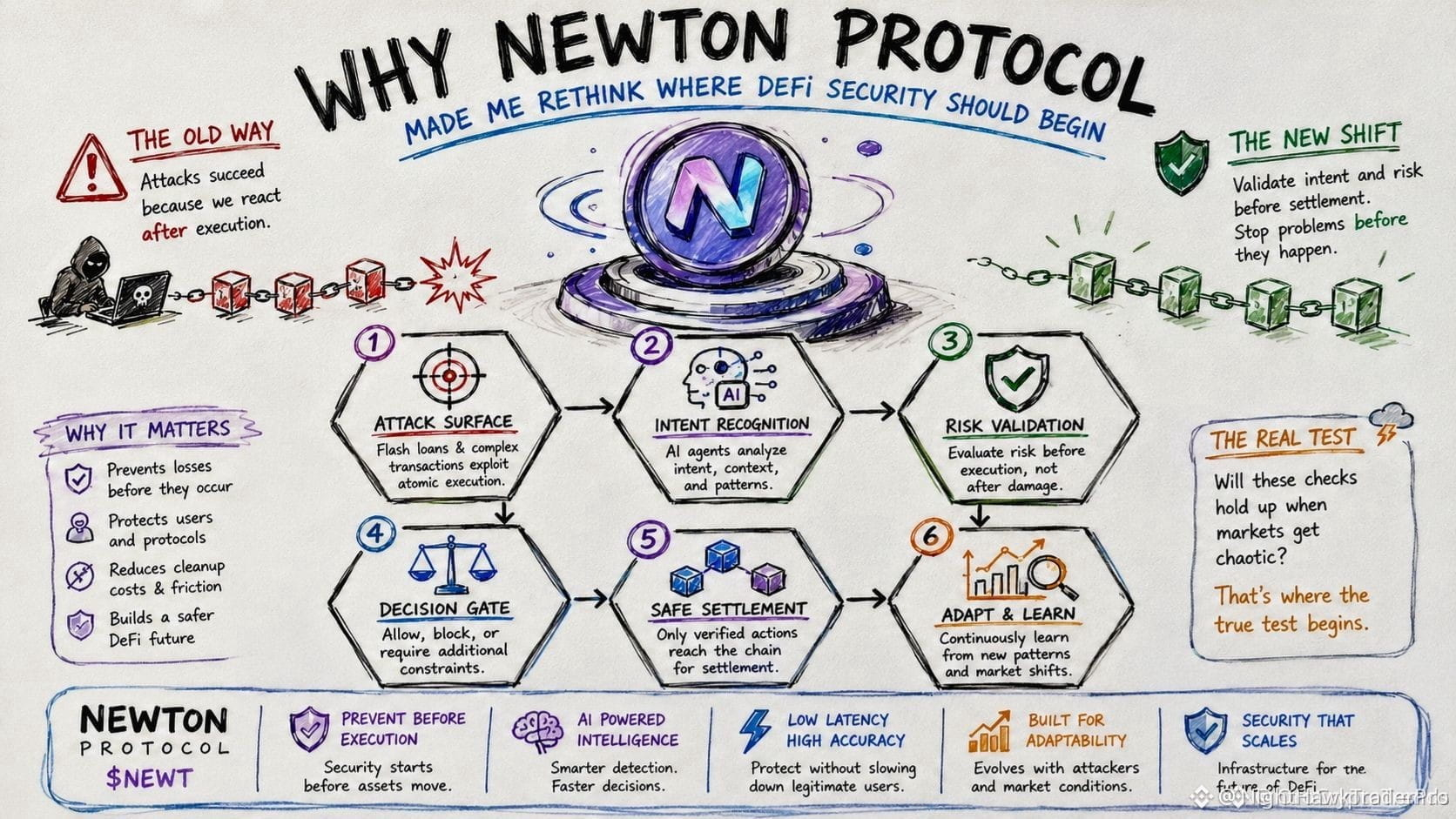
$NEWT IS SHIFTING WHERE DEFI SECURITY BEGINS 🧠
Most protocols focus on stopping attacks after they execute. Newton Protocol flips that by validating intent and risk before settlement. This isn't just another AI wrapper — it's rethinking the timing of security itself.
As crypto moves toward intent-based execution and AI agents making more decisions, the moment of validation becomes critical. The question isn't just how fast a transaction executes, but whether it should execute at all.
But can pre-settlement checks hold up when markets go chaotic, not predictable? That's where design meets reality. Are you betting on prevention or cleanup?
Not financial advice. Always manage your risk.
#NEWT #DeFiSecurity #IntentBased #CryptoInnovation
💎
$NEWT IS SHIFTING WHERE DEFI SECURITY BEGINS 🧠
Most protocols focus on stopping attacks after they execute. Newton Protocol flips that by validating intent and risk before settlement. This isn't just another AI wrapper — it's rethinking the timing of security itself.
As crypto moves toward intent-based execution and AI agents making more decisions, the moment of validation becomes critical. The question isn't just how fast a transaction executes, but whether it should execute at all.
But can pre-settlement checks hold up when markets go chaotic, not predictable? That's where design meets reality. Are you betting on prevention or cleanup?
Not financial advice. Always manage your risk.
#NEWT #DeFiSecurity #IntentBased #CryptoInnovation
💎
Most protocols focus on stopping attacks after they execute. Newton Protocol flips that by validating intent and risk before settlement. This isn't just another AI wrapper — it's rethinking the timing of security itself.
As crypto moves toward intent-based execution and AI agents making more decisions, the moment of validation becomes critical. The question isn't just how fast a transaction executes, but whether it should execute at all.
But can pre-settlement checks hold up when markets go chaotic, not predictable? That's where design meets reality. Are you betting on prevention or cleanup?
Not financial advice. Always manage your risk.
#NEWT #DeFiSecurity #IntentBased #CryptoInnovation
💎
2
1
68

·
--
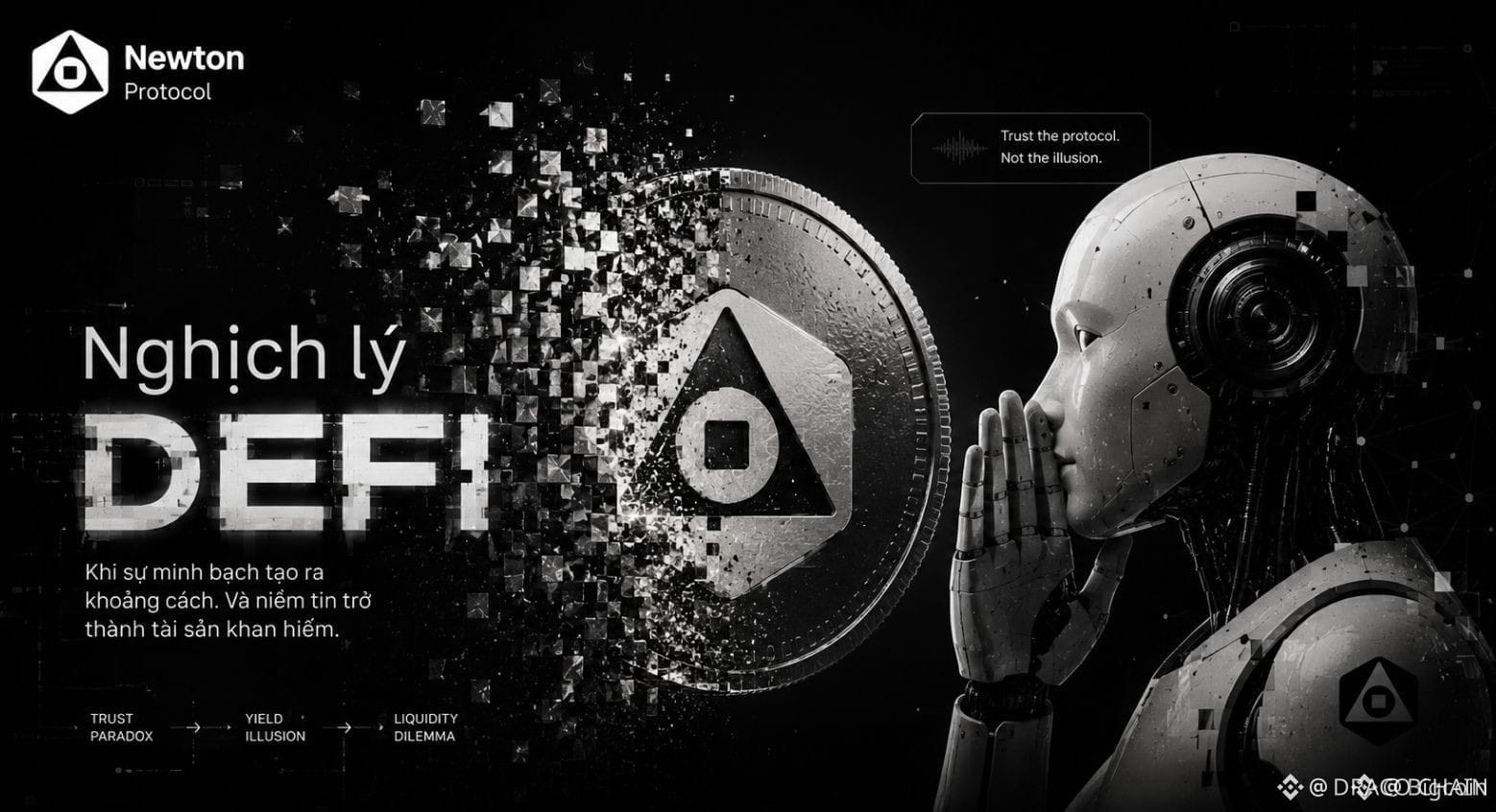
$NEWT IS REWRITING DEFI SECURITY WITH PRE-TRANSACTION ENFORCEMENT 🔥
Entry: Not provided
Most security tools start work after funds are gone. Newton Mainnet Beta flips that — it validates every transaction against active policies (OFAC compliance, identity, real-time threat blocking, oracle health) before a single coin moves. Magic Labs, the team behind embedded wallets, already uses it to shift from wallet security to transaction authorization. This is infrastructure, not airdrop hype.
DeFi has never had a layer that enforces rules before execution, on-chain, cross-chain. Are you building something that could benefit from a policy engine that acts before the damage is done?
Not financial advice. Always manage your risk.
#NEWT #DeFiSecurity #Infrastructure #Web3
🔥
$NEWT IS REWRITING DEFI SECURITY WITH PRE-TRANSACTION ENFORCEMENT 🔥
Entry: Not provided
Most security tools start work after funds are gone. Newton Mainnet Beta flips that — it validates every transaction against active policies (OFAC compliance, identity, real-time threat blocking, oracle health) before a single coin moves. Magic Labs, the team behind embedded wallets, already uses it to shift from wallet security to transaction authorization. This is infrastructure, not airdrop hype.
DeFi has never had a layer that enforces rules before execution, on-chain, cross-chain. Are you building something that could benefit from a policy engine that acts before the damage is done?
Not financial advice. Always manage your risk.
#NEWT #DeFiSecurity #Infrastructure #Web3
🔥
Entry: Not provided
Most security tools start work after funds are gone. Newton Mainnet Beta flips that — it validates every transaction against active policies (OFAC compliance, identity, real-time threat blocking, oracle health) before a single coin moves. Magic Labs, the team behind embedded wallets, already uses it to shift from wallet security to transaction authorization. This is infrastructure, not airdrop hype.
DeFi has never had a layer that enforces rules before execution, on-chain, cross-chain. Are you building something that could benefit from a policy engine that acts before the damage is done?
Not financial advice. Always manage your risk.
#NEWT #DeFiSecurity #Infrastructure #Web3
🔥
2
33
Log in to explore more content
Join global crypto users on Binance Square
⚡️ Get latest and useful information about crypto.
💬 Trusted by the world’s largest crypto exchange.
👍 Discover real insights from verified creators.
Email / Phone number
Trending Topics
1
#BinancePick
3.2M views
159,369 Discussing
2
#EarningsSeason
5.4M views
26,376 Discussing
3
#BitmineAdds10452ETH
862 views
40 Discussing
4
#SouthKoreaConsidersEducationTaxOnCryptoExchanges
1,470 views
58 Discussing
5
#OCCUrgesCommunityBanksToEnterStablecoinPayments
1,058 views
39 Discussing
6
#RippleWinsFullApprovalAsNationalTrustBank
928 views
38 Discussing
7
#AkashSelectsSolanaAsMigrationTarget
428 views
8 Discussing
8
#OndoToOpenSubscriptionsForOpenAIPreIPOTokenizedNotes
48 views
4 Discussing
9
#AnthropicTTMRevenueGrewAbout1200%
46,738 views
523 Discussing
10
#AnthropicS1ExpectedToday
38,079 views
408 Discussing