Binance Square
#secnewcryptorulesaimtobringfirmsbacktous

secnewcryptorulesaimtobringfirmsbacktous

Faizan Crypto Learner
·
--
Bullish
#secnewcryptorulesaimtobringfirmsbacktous 🚨 SEC’S NEW CRYPTO RULES COULD CHANGE THE U.S. CRYPTO GAME! 🇺🇸 The U.S. crypto industry may be heading toward a major regulatory reset. The latest SEC push for clearer crypto rules is aimed at creating a framework that could make the U.S. a more attractive place for crypto companies to operate again. 🏛️⚡ For years, regulatory uncertainty has pushed firms, capital, and innovation toward friendlier jurisdictions. But if the rules become clearer and more predictable, that could start reversing the flow. 👀 🔥 Why does this matter for crypto? Clearer regulation could encourage: • More crypto companies to stay or return to the U.S. • Greater institutional participation • More compliant token and blockchain projects • Increased investment in U.S.-based crypto infrastructure • Stronger confidence across the broader market And this is where things get interesting for BTC and ETH. Regulatory clarity doesn’t guarantee an immediate price pump—but it can remove one of the biggest barriers holding institutional capital back. If billions of dollars that were sitting on the sidelines begin moving into regulated crypto markets, the impact could be much larger than traders expect. 🚀 The real question isn’t whether crypto is coming back to the U.S. It’s whether the next regulatory shift becomes the catalyst for the next wave of institutional adoption. 👀🔥 #crypto #bitcoin #Ethereum✅
#secnewcryptorulesaimtobringfirmsbacktous
🚨 SEC’S NEW CRYPTO RULES COULD CHANGE THE U.S. CRYPTO GAME! 🇺🇸
The U.S. crypto industry may be heading toward a major regulatory reset.
The latest SEC push for clearer crypto rules is aimed at creating a framework that could make the U.S. a more attractive place for crypto companies to operate again. 🏛️⚡
For years, regulatory uncertainty has pushed firms, capital, and innovation toward friendlier jurisdictions.
But if the rules become clearer and more predictable, that could start reversing the flow. 👀
🔥 Why does this matter for crypto?
Clearer regulation could encourage:
• More crypto companies to stay or return to the U.S.
• Greater institutional participation
• More compliant token and blockchain projects
• Increased investment in U.S.-based crypto infrastructure
• Stronger confidence across the broader market
And this is where things get interesting for BTC and ETH.
Regulatory clarity doesn’t guarantee an immediate price pump—but it can remove one of the biggest barriers holding institutional capital back.
If billions of dollars that were sitting on the sidelines begin moving into regulated crypto markets, the impact could be much larger than traders expect. 🚀
The real question isn’t whether crypto is coming back to the U.S.
It’s whether the next regulatory shift becomes the catalyst for the next wave of institutional adoption. 👀🔥
#crypto #bitcoin #Ethereum✅

#secnewcryptorulesaimtobringfirmsbacktous On August 18, the SEC proposed "Reg Crypto" — America's first rulebook purpose-built for token fundraising. The mission is blunt: end a decade of regulation-by-enforcement and bring crypto firms back onshore. What it does: a startup exemption for raises up to $5M over 4 years , a Reg-A-style path up to $75M over 12 months , investor caps at 10% of income/net worth, and mandatory disclosure of supply schedules, mint/burn and governance. The headline piece: a safe harbor letting tokens "graduate" out of security status once a team proves genuine decentralization and files a transition report. Tokenized stocks/bonds are excluded. (~475 issuers/year expected.) Why now — Plan B: CLARITY passed the House 294–134 but is stuck in the Senate; the mid-September cloture vote needs 60 and odds sit near ~15% . So Washington is legislating by rule instead: SEC (Reg Crypto + custody amendments sent to OMB on Aug 25), CFTC building out under existing authority, Treasury proposing GENIUS Act implementation. As the White House advisor put it: if Congress stalls, regulators will "let loose." Market read: BTC ripped from ~$62.7K to ~$80K that week (+25%, strongest in ~2.5 years) as BTC ETFs absorbed $1.61B in five sessions (IBIT: $503M in one day); ETH ETFs added $508.6M. The catch: this is still just a proposal (60-day comment window, a second SEC vote ahead), and Atkins himself said today that CLARITY remains "essential" as statutory grounding — otherwise a future regulator could unwind it. Don't call it "ICO 2.0" yet: continuous disclosure + retail caps may produce something closer to a private market. $BTC $XRP $XAU #BitcoinStrugglesToBreakAbove$80K #USWeeklyInitialJoblessClaimsRiseTo206000 #USGainsControlOfVenezuelanOilFields #CFTCScrutinizesPredictionMarketAffiliates

#secnewcryptorulesaimtobringfirmsbacktous

On August 18, the SEC proposed "Reg Crypto" — America's first rulebook purpose-built for token fundraising. The mission is blunt: end a decade of regulation-by-enforcement and bring crypto firms back onshore.

What it does: a startup exemption for raises up to $5M over 4 years , a Reg-A-style path up to $75M over 12 months , investor caps at 10% of income/net worth, and mandatory disclosure of supply schedules, mint/burn and governance. The headline piece: a safe harbor letting tokens "graduate" out of security status once a team proves genuine decentralization and files a transition report. Tokenized stocks/bonds are excluded. (~475 issuers/year expected.)

Why now — Plan B: CLARITY passed the House 294–134 but is stuck in the Senate; the mid-September cloture vote needs 60 and odds sit near ~15% . So Washington is legislating by rule instead: SEC (Reg Crypto + custody amendments sent to OMB on Aug 25), CFTC building out under existing authority, Treasury proposing GENIUS Act implementation. As the White House advisor put it: if Congress stalls, regulators will "let loose."

Market read: BTC ripped from ~$62.7K to ~$80K that week (+25%, strongest in ~2.5 years) as BTC ETFs absorbed $1.61B in five sessions (IBIT: $503M in one day); ETH ETFs added $508.6M.

The catch: this is still just a proposal (60-day comment window, a second SEC vote ahead), and Atkins himself said today that CLARITY remains "essential" as statutory grounding — otherwise a future regulator could unwind it. Don't call it "ICO 2.0" yet: continuous disclosure + retail caps may produce something closer to a private market.

$BTC $XRP $XAU #BitcoinStrugglesToBreakAbove$80K #USWeeklyInitialJoblessClaimsRiseTo206000 #USGainsControlOfVenezuelanOilFields #CFTCScrutinizesPredictionMarketAffiliates

·
--
Bullish
#secnewcryptorulesaimtobringfirmsbacktous 🚨 So SEC is racing to beat the CLARITY Act to win back crypto firms? 🏃💨 Turns out the SEC’s new "Regulation Crypto Assets" proposed by Paul Atkins is a massive move to attract crypto companies back to the US after years of driving them away. They are trying to set clearer rules before Congress steps in! 🇺🇸💸 What should traders do? Buckle up, watch how the regulatory landscape changes, and prepare for potentially more US-compliant crypto projects popping up. Keep scanning the markets and keep your funds safe! 📈 Want a secure place to ride this wave? Join me on Binance! Sign up using my referral link or enter code VINHTOCDO at registration. 👉 Join here: [https://www.binance.com/register?ref=VINHTOCDO](https://www.binance.com/register?ref=VINHTOCDO) Disclaimer: This is not financial advice. #SEC #CryptoRegulation #CLARITYAct #VINHTOCDO $BTC {future}(BTCUSDT) $ETH {future}(ETHUSDT) $BNB {future}(BNBUSDT)
#secnewcryptorulesaimtobringfirmsbacktous
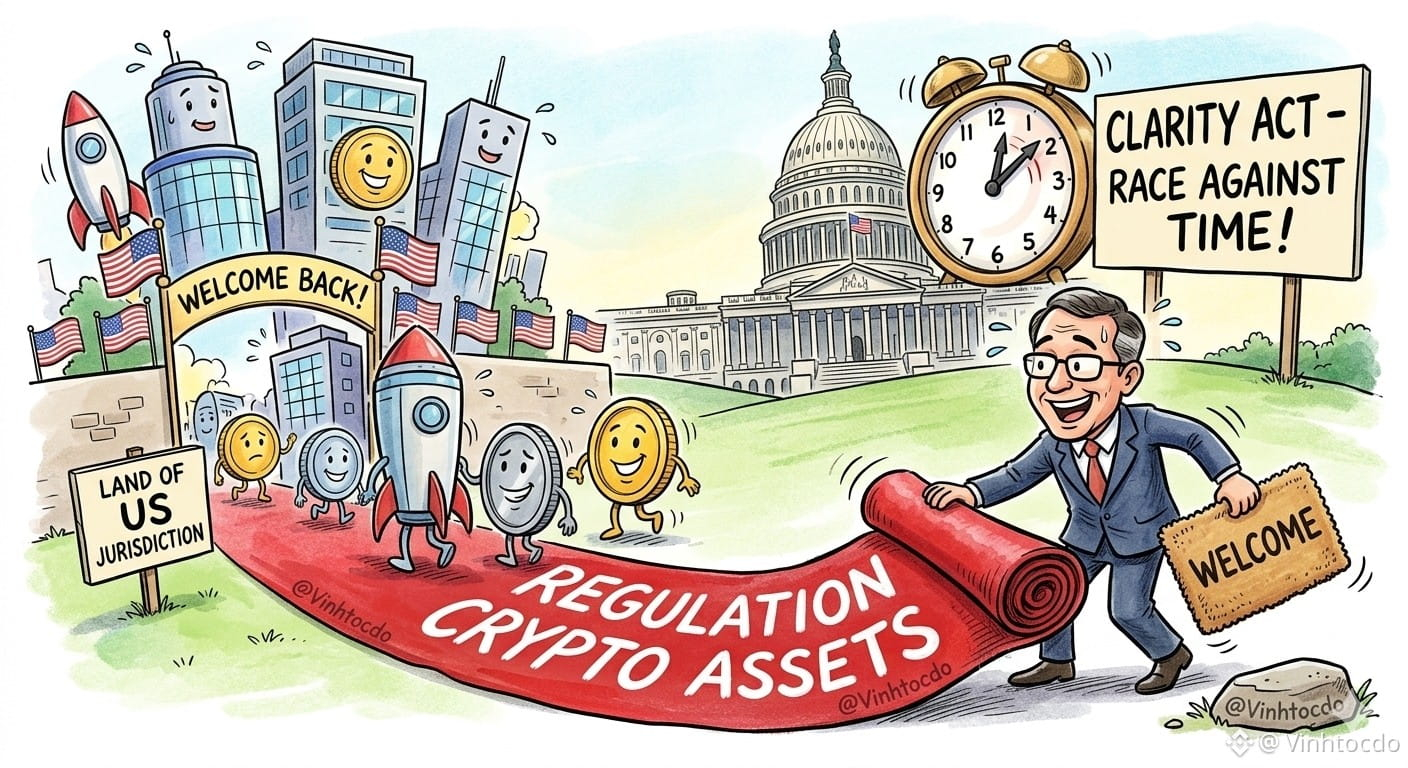
🚨 So SEC is racing to beat the CLARITY Act to win back crypto firms? 🏃💨
Turns out the SEC’s new "Regulation Crypto Assets" proposed by Paul Atkins is a massive move to attract crypto companies back to the US after years of driving them away. They are trying to set clearer rules before Congress steps in! 🇺🇸💸
What should traders do? Buckle up, watch how the regulatory landscape changes, and prepare for potentially more US-compliant crypto projects popping up. Keep scanning the markets and keep your funds safe! 📈
Want a secure place to ride this wave? Join me on Binance! Sign up using my referral link or enter code VINHTOCDO at registration.
👉 Join here: https://www.binance.com/register?ref=VINHTOCDO
Disclaimer: This is not financial advice.
#SEC #CryptoRegulation #CLARITYAct #VINHTOCDO
$BTC
$ETH
$BNB
·
--
Bullish
King-Julien:
🤑💪
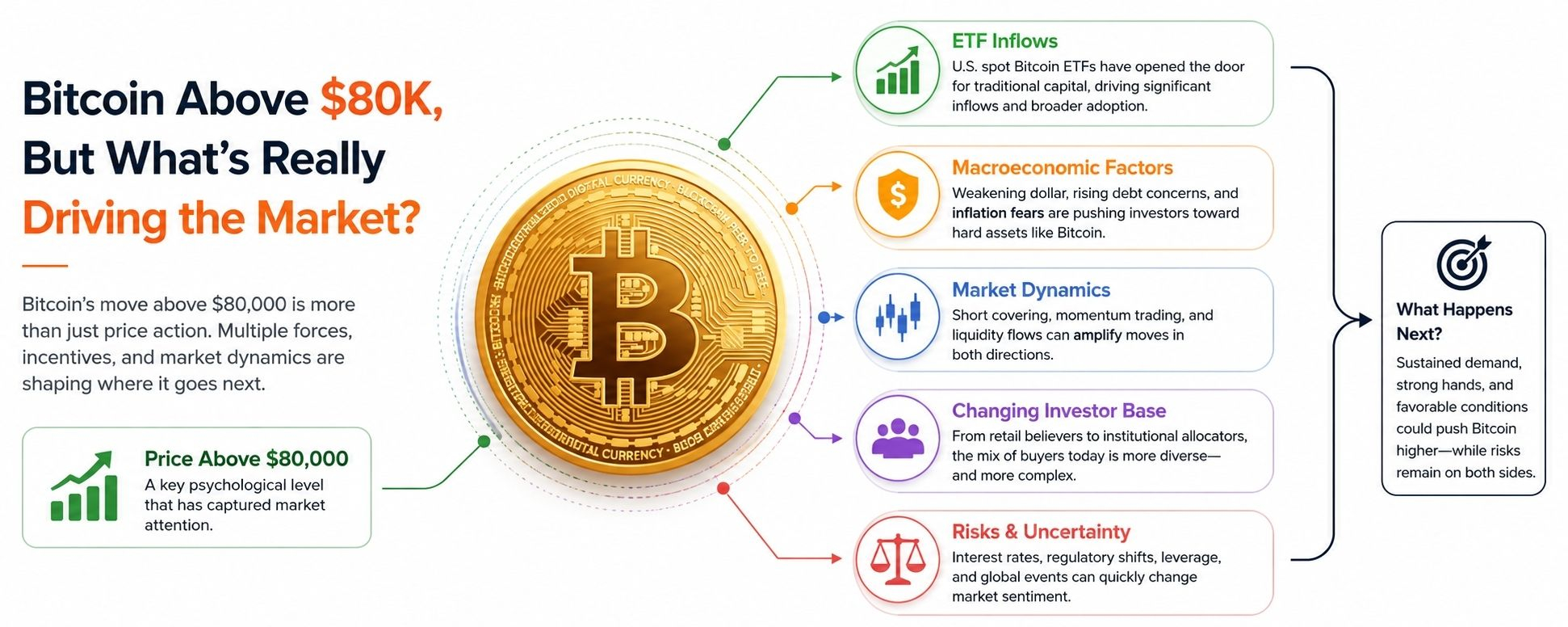
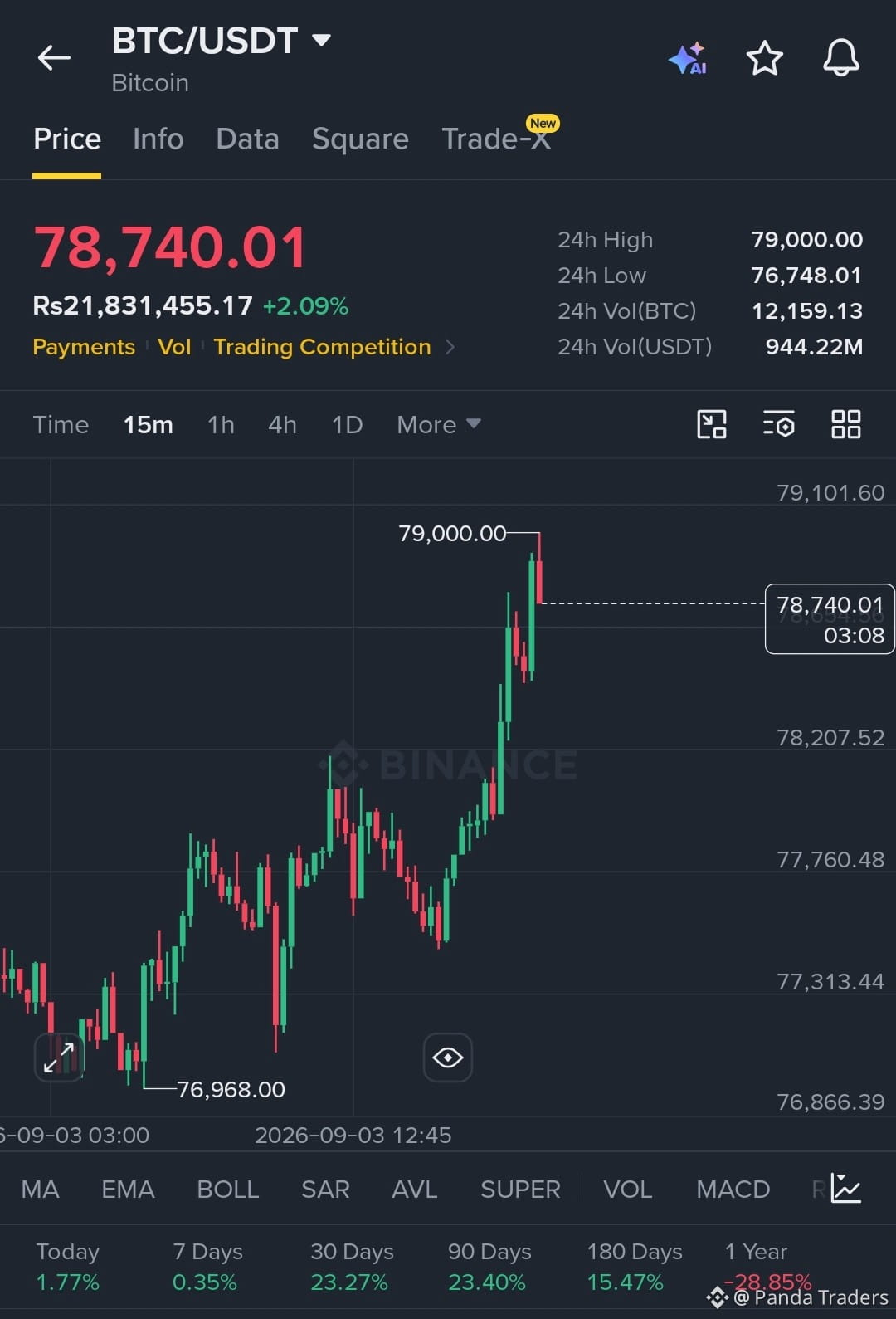
$BTC reclaimed $80K on Aug 25, tagged ~$81.5K, then got rejected — and has spent the week coiling in a $76.2K–$79.5K range near $79K (+2.3% today). The ceiling isn't psychological; it's structural. The heaviest supply cluster on the tape sits at exactly $80,000 (~5% of supply in one bucket, ~8% in the $80–82K band), overlapping ETF holders' average cost — so every rally into $80K wakes a wall of breakeven sellers. The fuel is cooling at the wrong time: weekly spot BTC ETF buying fell from $1.92B → $924M → ~$100M over three weeks (Sept 2: just +$101M, the only green fund), ~3,700 BTC moved back to exchanges, and stablecoin supply stalled. Macro turned headwind: oil near $95, US10Y ~4.8%, and Fed-hike odds are back on the table. But patient money is buying the dip — whales added ~6,765 BTC during the pullback. Bulls need a weekly close above $81–83K (hold $82K → ~$130K over 6–8 months); bears need a break of $76.3K, then $74.5K and $70.5K. Range-trading until then. Catalyst: Friday's U.S. jobs report — soft data reopens $80K; hot data puts $76.3K in play. {future}(BTCUSDT) #SECNewCryptoRulesAimToBringFirmsBackToUS #BitcoinStrugglesToBreakAbove$80K #USWeeklyInitialJoblessClaimsRiseTo206000 #USGainsControlOfVenezuelanOilFields #CFTCScrutinizesPredictionMarketAffiliates
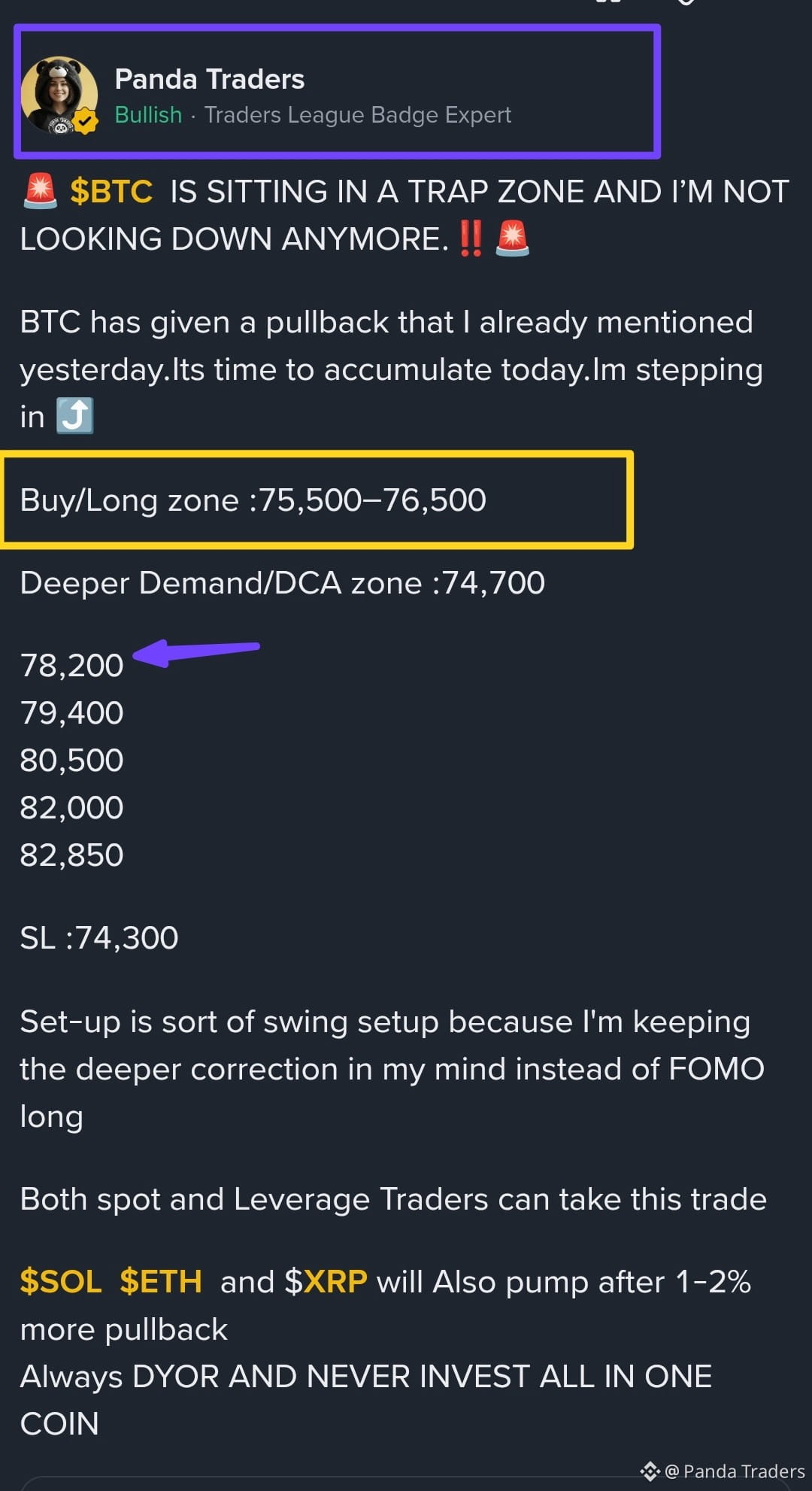
$BTC reclaimed $80K on Aug 25, tagged ~$81.5K, then got rejected — and has spent the week coiling in a $76.2K–$79.5K range near $79K (+2.3% today). The ceiling isn't psychological; it's structural. The heaviest supply cluster on the tape sits at exactly $80,000 (~5% of supply in one bucket, ~8% in the $80–82K band), overlapping ETF holders' average cost — so every rally into $80K wakes a wall of breakeven sellers.

The fuel is cooling at the wrong time: weekly spot BTC ETF buying fell from $1.92B → $924M → ~$100M over three weeks (Sept 2: just +$101M, the only green fund), ~3,700 BTC moved back to exchanges, and stablecoin supply stalled. Macro turned headwind: oil near $95, US10Y ~4.8%, and Fed-hike odds are back on the table.

But patient money is buying the dip — whales added ~6,765 BTC during the pullback. Bulls need a weekly close above $81–83K (hold $82K → ~$130K over 6–8 months); bears need a break of $76.3K, then $74.5K and $70.5K. Range-trading until then. Catalyst: Friday's U.S. jobs report — soft data reopens $80K; hot data puts $76.3K in play.

#SECNewCryptoRulesAimToBringFirmsBackToUS #BitcoinStrugglesToBreakAbove$80K #USWeeklyInitialJoblessClaimsRiseTo206000 #USGainsControlOfVenezuelanOilFields #CFTCScrutinizesPredictionMarketAffiliates
·
--
Bullish
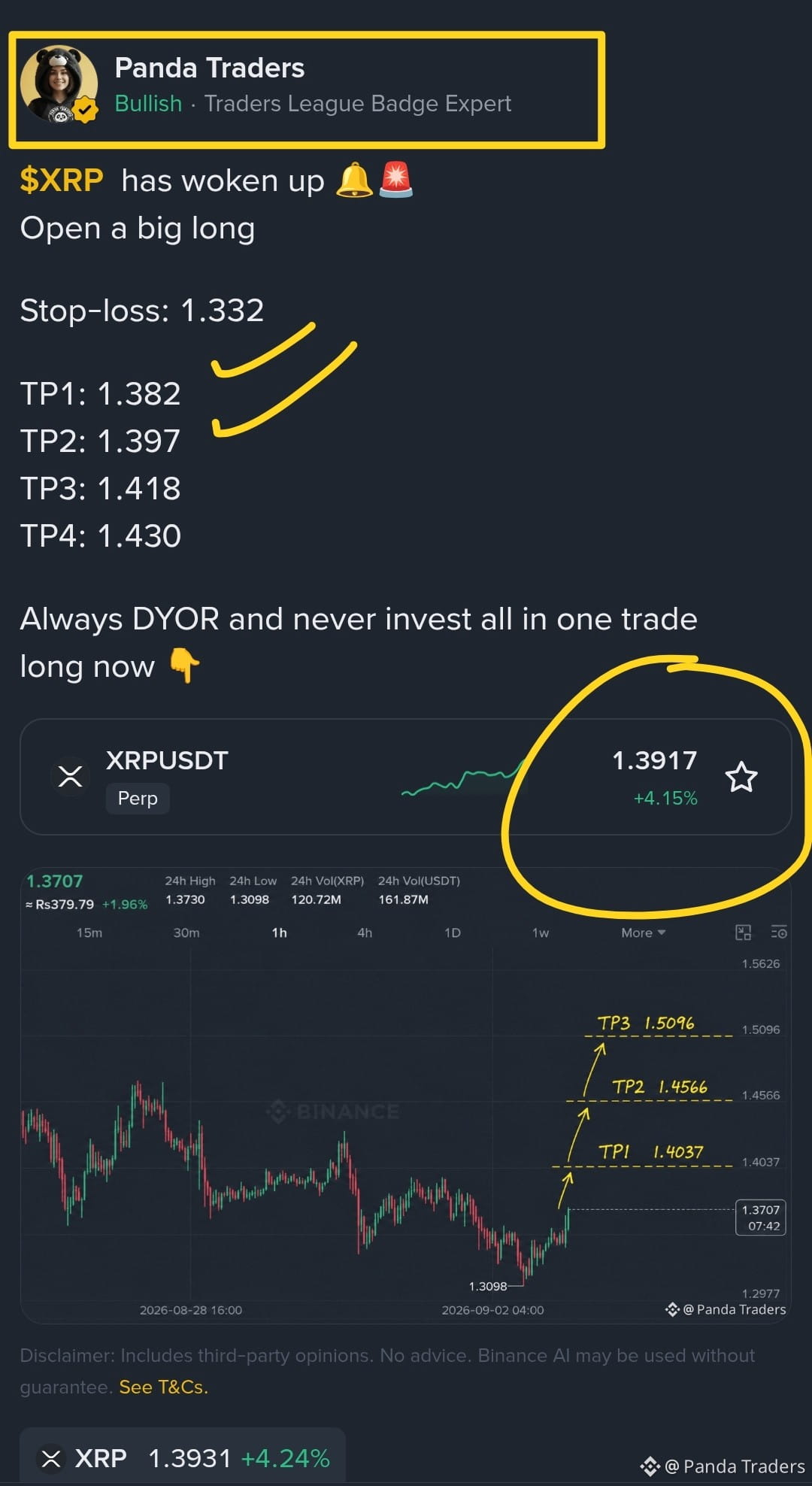
$牛来 USDT is showing a sell-on-rejection setup after a 36% rally from the 24H low (0.06573) to the 24H high (0.09444), with price now hovering near 0.09242. Buyers are losing momentum as price fails to break above 0.09317, and sellers are defending the 0.09444 high with heavy supply overhead. EP: 0.09300–0.09400 TP1: 0.09000 TP2: 0.08790 TP3: 0.08400 SL: 0.09650 The 24H high at 0.09444 was swept but rejected sharply, forming a bearish divergence on the 1H chart. Volume is substantial (1.46B coins), but the wick above 0.09317 suggests seller dominance at higher levels. A break below 0.09000 would open the path toward 0.08790 and 0.08400, where the next liquidity pools sit. Invalidation is a daily close above 0.09650, which would signal renewed bullish intent. R/R is approximately 1.6:1 at TP2, suitable for a counter-trend pullback.#SECNewCryptoRulesAimToBringFirmsBackToUS #USGainsControlOfVenezuelanOilFields {alpha}(560xbeea1d618e533a387d941f58a7d4c9b7bd377777)
$牛来 USDT is showing a sell-on-rejection setup after a 36% rally from the 24H low (0.06573) to the 24H high (0.09444), with price now hovering near 0.09242. Buyers are losing momentum as price fails to break above 0.09317, and sellers are defending the 0.09444 high with heavy supply overhead.

EP: 0.09300–0.09400
TP1: 0.09000
TP2: 0.08790
TP3: 0.08400
SL: 0.09650

The 24H high at 0.09444 was swept but rejected sharply, forming a bearish divergence on the 1H chart. Volume is substantial (1.46B coins), but the wick above 0.09317 suggests seller dominance at higher levels. A break below 0.09000 would open the path toward 0.08790 and 0.08400, where the next liquidity pools sit. Invalidation is a daily close above 0.09650, which would signal renewed bullish intent. R/R is approximately 1.6:1 at TP2, suitable for a counter-trend pullback.#SECNewCryptoRulesAimToBringFirmsBackToUS #USGainsControlOfVenezuelanOilFields
·
--
Bullish
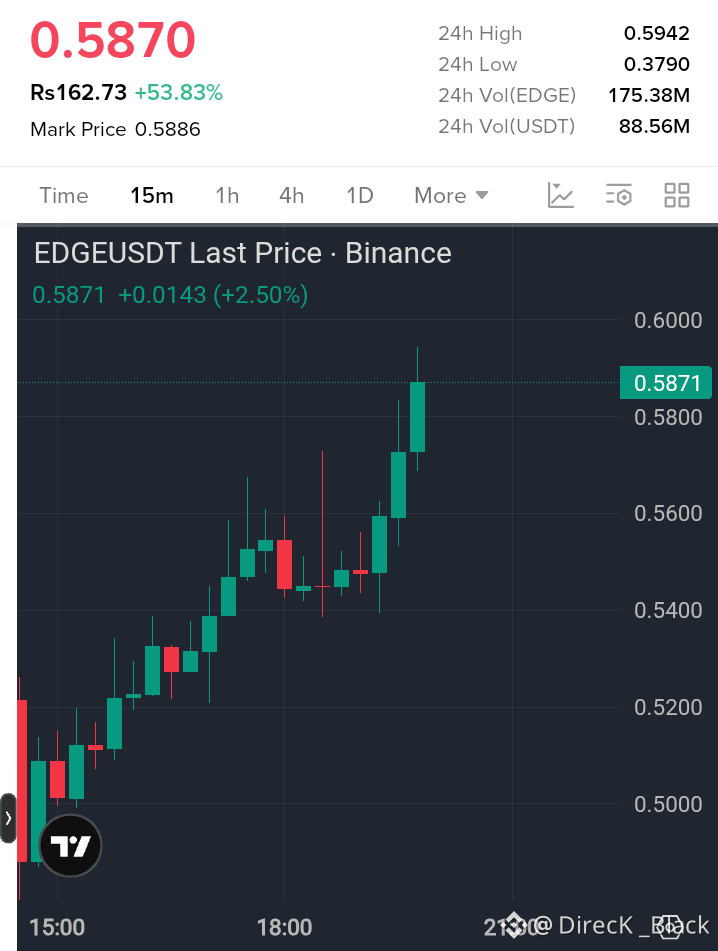
$EDGE is showing a bullish continuation setup after breaking above the $0.56 resistance zone, but the 53%+ 24h move makes chasing the current price risky. Buyers remain dominant on the 15m chart, so the most realistic setup is a pullback LONG into the breakout/retest area rather than buying at $0.587. EP: $0.568–$0.575 TP1: $0.587 TP2: $0.594 TP3: $0.605 SL: $0.557 The recent move swept the $0.54–$0.56 area and pushed toward the 24h high near $0.5942, leaving liquidity above the current price. A pullback holding $0.568–$0.575 would keep the bullish structure intact; a 15m close below $0.557 invalidates the setup. The approximate risk/reward improves toward 2:1+ if TP2–TP3 is reached. #USWeeklyInitialJoblessClaimsRiseTo206000 #SECNewCryptoRulesAimToBringFirmsBackToUS #CFTCScrutinizesPredictionMarketAffiliates {future}(EDGEUSDT)
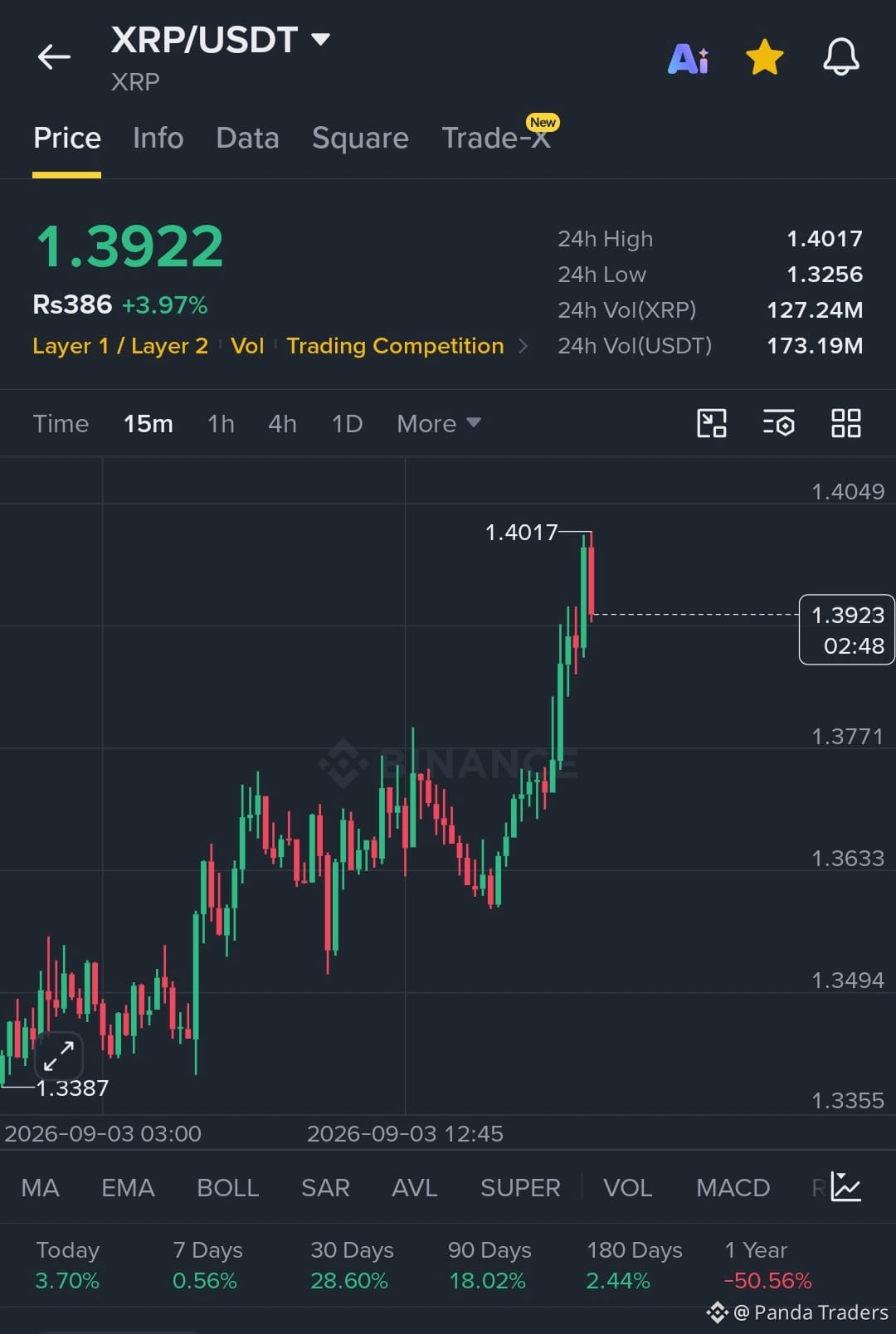
$EDGE is showing a bullish continuation setup after breaking above the $0.56 resistance zone, but the 53%+ 24h move makes chasing the current price risky. Buyers remain dominant on the 15m chart, so the most realistic setup is a pullback LONG into the breakout/retest area rather than buying at $0.587.

EP: $0.568–$0.575
TP1: $0.587
TP2: $0.594
TP3: $0.605
SL: $0.557

The recent move swept the $0.54–$0.56 area and pushed toward the 24h high near $0.5942, leaving liquidity above the current price. A pullback holding $0.568–$0.575 would keep the bullish structure intact; a 15m close below $0.557 invalidates the setup. The approximate risk/reward improves toward 2:1+ if TP2–TP3 is reached. #USWeeklyInitialJoblessClaimsRiseTo206000 #SECNewCryptoRulesAimToBringFirmsBackToUS #CFTCScrutinizesPredictionMarketAffiliates
The labor market is telling two stories at once. Claims: 206K — near historic lows. August layoffs: the fewest since 2022. Full employment, right? ADP: just +38K private jobs in August — slowest since January. July payrolls: -23K . Hiring has stalled. That's why today's 206K miss mattered: it nudged the Fed toward hold (Kalshi 56%), eased yields, and gave BTC +3% to ~$79.5K — right at the $80K supply wall from our earlier analysis. Layoffs are rare until they aren't. Friday's payrolls will show which story is real — and whether $BTC finally breaks the ceiling. $GOOGLB $SPCX #usweeklyinitialjoblessclaimsriseto206000 #SECNewCryptoRulesAimToBringFirmsBackToUS #USGainsControlOfVenezuelanOilFields #CFTCScrutinizesPredictionMarketAffiliates #EtherXRPETFInflowStreaksEnd

The labor market is telling two stories at once.

Claims: 206K — near historic lows. August layoffs: the fewest since 2022. Full employment, right?

ADP: just +38K private jobs in August — slowest since January. July payrolls: -23K . Hiring has stalled.

That's why today's 206K miss mattered: it nudged the Fed toward hold (Kalshi 56%), eased yields, and gave BTC +3% to ~$79.5K — right at the $80K supply wall from our earlier analysis.

Layoffs are rare until they aren't. Friday's payrolls will show which story is real — and whether $BTC finally breaks the ceiling.

$GOOGLB $SPCX
#usweeklyinitialjoblessclaimsriseto206000 #SECNewCryptoRulesAimToBringFirmsBackToUS #USGainsControlOfVenezuelanOilFields #CFTCScrutinizesPredictionMarketAffiliates #EtherXRPETFInflowStreaksEnd
Article
BTC articleI’ve been watching Bitcoin’s latest move with a different kind of attention than I had during the earlier cycles. The price is once again pushing into the area around $80,000, but what interests me more is how normal the process of getting exposure has started to look. There was a time when owning Bitcoin meant learning an unfamiliar set of tools, moving coins between addresses, protecting private keys and accepting that there was no traditional institution standing between you and your mistakes. Now a person can gain Bitcoin exposure through the same brokerage environment used for stocks and funds. That sounds like a small change when written in one sentence, but after watching this market for years, I think it is one of the more important changes Bitcoin has gone through. The current market makes that transformation particularly visible. BlackRock’s iShares Bitcoin Trust, for example, had more than $60 billion in net assets at the beginning of September 2026. The product trades on Nasdaq, and its structure removes much of the operational work associated with holding Bitcoin directly. Fidelity offers a similar route through its Bitcoin fund and has also expanded direct crypto access and crypto retirement products. This does not mean every dollar entering these products represents a new long-term Bitcoin believer. That distinction is important. An ETF can make Bitcoin easier to own without making the owner emotionally attached to Bitcoin itself. That reminds me of something I noticed during older market cycles. Bitcoin used to create a very specific kind of holder because the process of buying it demanded commitment. The person who went through the trouble of setting up an exchange account, learning how wallets worked and moving coins into self-custody had already crossed several psychological barriers before the investment became meaningful. Today those barriers are much lower. That is good for accessibility, but it also changes the behavior of the marginal buyer. Someone who owns Bitcoin through a brokerage account can reduce the position almost as easily as they can buy it. The friction has disappeared in both directions. This is why I find the institutional side of the market more interesting than simply counting ETF inflows. The important question is no longer whether traditional investors can get access. They clearly can. The more interesting question is what they do after getting access. Fidelity’s research shows that institutional ownership of Bitcoin ETPs continued expanding, reaching 2,579 institutional owners by the end of 2025, based on Bloomberg filing data through March 2026. That is evidence of a broader investor base, but it does not tell us how those investors behave when volatility returns. A market becomes more mature not simply when more people can enter it, but when different types of capital learn how to remain involved through periods when the story becomes less exciting. There is another part of Bitcoin that I think gets overlooked when the conversation becomes dominated by ETFs: the network itself has not stopped developing. Bitcoin is not a company that can announce quarterly revenue growth or launch a new product every few months. Development tends to happen slowly, often in areas most users never see. The Lightning ecosystem remains under active development, with the Lightning specifications repository showing continued work through 2026, while Lightning Development Kit projects are still being maintained and expanded. That does not prove that Bitcoin payments will suddenly become mainstream. It does show something more modest and, in my view, more useful: developers are still spending time trying to make Bitcoin more usable beyond simply buying and holding it. The data around Lightning is especially interesting because it contains both progress and a warning. River’s 2026 adoption research reported that Lightning monthly volume passed $1 billion during 2025 and that volume grew sharply during the year. At the same time, its research showed a concentration of liquidity, with the ten largest nodes accounting for 91.1% of network capacity. I would not automatically interpret that concentration as either good or bad. Professional liquidity providers can make a network more efficient, but concentration can also mean that some of the apparent decentralization is less evenly distributed than the headline numbers suggest. Those two things can exist together. The same tension appears when looking at on-chain activity. Glassnode’s current data shows hundreds of thousands of Bitcoin addresses participating in successful transactions over a 24-hour period. But an active-address figure should never be treated as a clean measure of the number of human users. One person can control many addresses, exchanges can represent enormous amounts of user activity through relatively few addresses, and automated processes can create transactions without representing new economic adoption. This is one reason I have become more careful with crypto adoption statistics. A large number can be technically accurate and still tell an incomplete story. The stronger question is what people are actually doing with the network. Are businesses using Bitcoin because it solves a payment or settlement problem? Are institutions holding it because they consider it useful within a broader portfolio? Are developers building services that depend on Bitcoin rather than merely using its name for marketing? Are users returning to those services after the initial curiosity disappears? Those questions take longer to answer than looking at a price chart, but they say much more about staying power. There are signs that Bitcoin’s ownership base has expanded beyond the old retail-and-trader model. River’s research estimated that businesses added roughly $54 billion worth of Bitcoin to their balance sheets during 2025, with public companies holding Bitcoin increasing substantially. It also reported growth in merchant adoption and Lightning activity. I treat those numbers as evidence of expanding use and ownership, not as proof that Bitcoin has already solved the adoption problem. Treasury demand can be driven by corporate strategy, market expectations and capital-market incentives. Merchant activity can increase from a relatively small starting point. Growth rates can look enormous while the underlying base remains limited. Liquidity is another piece that has changed considerably. Bitcoin has always had deep global trading markets compared with most crypto assets, but the arrival of large regulated investment products adds another layer. IBIT alone has become a very large pool of Bitcoin exposure, with daily trading volume frequently reaching tens of millions of shares and net assets around $60 billion in early September. This makes the market easier for institutions to access, but it also ties part of Bitcoin’s demand to the behavior of conventional portfolio managers. If Bitcoin becomes one allocation among many, capital can rotate toward or away from it according to interest rates, risk appetite, liquidity conditions and portfolio construction rather than crypto-specific beliefs. That may be one of the biggest differences between this period and the earlier Bitcoin cycles. Bitcoin is no longer operating in a separate financial universe. It is increasingly being discussed alongside bonds, equities, gold, currencies and other macro assets. Recent market commentary has connected Bitcoin’s latest advance with changes in Treasury policy, yields, ETF demand and expectations around monetary policy. Reuters noted that Bitcoin’s recent rally carried it through several major technical averages, while also highlighting the resistance around the May high and the importance of broader macro conditions. That tells me the market is becoming more connected to traditional financial conditions, whether Bitcoin enthusiasts like that development or not. There is something slightly uncomfortable about that evolution. Bitcoin was originally attractive partly because it represented an alternative financial system. Now some of its largest pools of demand come through the very financial infrastructure it once stood outside of. I don't see that as automatically contradicting the original idea. Bitcoin can remain a self-custodial, permissionless network while also becoming an asset traded through regulated institutions. But the two forms of ownership have very different characteristics, and I think the difference becomes important whenever the market experiences stress. The next difficult period will probably tell us more than the current rally does. During a strong advance, almost every form of demand looks intelligent. Momentum traders are making money, long-term holders feel validated, institutions appear early, and every new adoption statistic becomes part of the same narrative. It is much harder to understand the market when Bitcoin falls sharply and people have to decide what they actually believe. That is when liquidity, conviction and time horizon separate from one another. I also keep coming back to the developers because they operate on a completely different clock from traders. A trader can change direction in minutes. A developer can spend months working on infrastructure that may not produce an obvious market reaction at all. Bitcoin’s broader development ecosystem, including work around Lightning and other application layers, continues to show activity in 2026. The important question is not whether developers are active today. It is whether the tools being built gradually create enough useful activity that developers have a reason to keep building five or ten years from now. That is also where competition becomes complicated. Bitcoin does not compete only with other cryptocurrencies anymore. It competes with gold as a store-of-value narrative, with traditional funds for investment capital, with payment networks in certain use cases, and with newer blockchain systems that may offer faster or more flexible application environments. Bitcoin does not need to win every category to remain important. But it does need to retain a reason for people to use, hold or build around it. Brand recognition can open the door, but it cannot by itself guarantee that people keep walking through it. For now, the most interesting thing about Bitcoin is that the story is becoming harder to reduce to one explanation. The price is moving, institutional access is expanding, network infrastructure continues to develop, businesses are experimenting with balance-sheet exposure, and second-layer systems are still being built. At the same time, ETF ownership can be liquidated quickly, Lightning liquidity remains concentrated, on-chain addresses are an imperfect measure of human adoption, and macroeconomic conditions can still influence Bitcoin like they influence almost every other liquid asset. That leaves me less interested in guessing what the next price target should be and more interested in watching what happens after the excitement becomes ordinary. If the capital stays, if users keep returning, if businesses find recurring reasons to use the network, if liquidity remains healthy when conditions become difficult, and if developers continue building when the market stops rewarding every announcement, then the strength of the ecosystem will become easier to judge. Until then, I think Bitcoin is still in the middle of proving what this newer version of ownership and adoption actually means. $BTC {spot}(BTCUSDT) $XRP {future}(XRPUSDT) $ETH {future}(ETHUSDT) #USWeeklyInitialJoblessClaimsRiseTo206000 #SECNewCryptoRulesAimToBringFirmsBackToUS #EtherXRPETFInflowStreaksEnd #CFTCSeeksToDismissCMEMotionInPerpFutures #SECNewCryptoRulesAimToBringFirmsBackToUS #USWeeklyInitialJoblessClaimsRiseTo206000

BTC article

I’ve been watching Bitcoin’s latest move with a different kind of attention than I had during the earlier cycles. The price is once again pushing into the area around $80,000, but what interests me more is how normal the process of getting exposure has started to look. There was a time when owning Bitcoin meant learning an unfamiliar set of tools, moving coins between addresses, protecting private keys and accepting that there was no traditional institution standing between you and your mistakes. Now a person can gain Bitcoin exposure through the same brokerage environment used for stocks and funds. That sounds like a small change when written in one sentence, but after watching this market for years, I think it is one of the more important changes Bitcoin has gone through.
The current market makes that transformation particularly visible. BlackRock’s iShares Bitcoin Trust, for example, had more than $60 billion in net assets at the beginning of September 2026. The product trades on Nasdaq, and its structure removes much of the operational work associated with holding Bitcoin directly. Fidelity offers a similar route through its Bitcoin fund and has also expanded direct crypto access and crypto retirement products. This does not mean every dollar entering these products represents a new long-term Bitcoin believer. That distinction is important. An ETF can make Bitcoin easier to own without making the owner emotionally attached to Bitcoin itself.
That reminds me of something I noticed during older market cycles. Bitcoin used to create a very specific kind of holder because the process of buying it demanded commitment. The person who went through the trouble of setting up an exchange account, learning how wallets worked and moving coins into self-custody had already crossed several psychological barriers before the investment became meaningful. Today those barriers are much lower. That is good for accessibility, but it also changes the behavior of the marginal buyer. Someone who owns Bitcoin through a brokerage account can reduce the position almost as easily as they can buy it. The friction has disappeared in both directions.
This is why I find the institutional side of the market more interesting than simply counting ETF inflows. The important question is no longer whether traditional investors can get access. They clearly can. The more interesting question is what they do after getting access. Fidelity’s research shows that institutional ownership of Bitcoin ETPs continued expanding, reaching 2,579 institutional owners by the end of 2025, based on Bloomberg filing data through March 2026. That is evidence of a broader investor base, but it does not tell us how those investors behave when volatility returns. A market becomes more mature not simply when more people can enter it, but when different types of capital learn how to remain involved through periods when the story becomes less exciting.
There is another part of Bitcoin that I think gets overlooked when the conversation becomes dominated by ETFs: the network itself has not stopped developing. Bitcoin is not a company that can announce quarterly revenue growth or launch a new product every few months. Development tends to happen slowly, often in areas most users never see. The Lightning ecosystem remains under active development, with the Lightning specifications repository showing continued work through 2026, while Lightning Development Kit projects are still being maintained and expanded. That does not prove that Bitcoin payments will suddenly become mainstream. It does show something more modest and, in my view, more useful: developers are still spending time trying to make Bitcoin more usable beyond simply buying and holding it.
The data around Lightning is especially interesting because it contains both progress and a warning. River’s 2026 adoption research reported that Lightning monthly volume passed $1 billion during 2025 and that volume grew sharply during the year. At the same time, its research showed a concentration of liquidity, with the ten largest nodes accounting for 91.1% of network capacity. I would not automatically interpret that concentration as either good or bad. Professional liquidity providers can make a network more efficient, but concentration can also mean that some of the apparent decentralization is less evenly distributed than the headline numbers suggest. Those two things can exist together.
The same tension appears when looking at on-chain activity. Glassnode’s current data shows hundreds of thousands of Bitcoin addresses participating in successful transactions over a 24-hour period. But an active-address figure should never be treated as a clean measure of the number of human users. One person can control many addresses, exchanges can represent enormous amounts of user activity through relatively few addresses, and automated processes can create transactions without representing new economic adoption. This is one reason I have become more careful with crypto adoption statistics. A large number can be technically accurate and still tell an incomplete story.
The stronger question is what people are actually doing with the network. Are businesses using Bitcoin because it solves a payment or settlement problem? Are institutions holding it because they consider it useful within a broader portfolio? Are developers building services that depend on Bitcoin rather than merely using its name for marketing? Are users returning to those services after the initial curiosity disappears? Those questions take longer to answer than looking at a price chart, but they say much more about staying power.
There are signs that Bitcoin’s ownership base has expanded beyond the old retail-and-trader model. River’s research estimated that businesses added roughly $54 billion worth of Bitcoin to their balance sheets during 2025, with public companies holding Bitcoin increasing substantially. It also reported growth in merchant adoption and Lightning activity. I treat those numbers as evidence of expanding use and ownership, not as proof that Bitcoin has already solved the adoption problem. Treasury demand can be driven by corporate strategy, market expectations and capital-market incentives. Merchant activity can increase from a relatively small starting point. Growth rates can look enormous while the underlying base remains limited.
Liquidity is another piece that has changed considerably. Bitcoin has always had deep global trading markets compared with most crypto assets, but the arrival of large regulated investment products adds another layer. IBIT alone has become a very large pool of Bitcoin exposure, with daily trading volume frequently reaching tens of millions of shares and net assets around $60 billion in early September. This makes the market easier for institutions to access, but it also ties part of Bitcoin’s demand to the behavior of conventional portfolio managers. If Bitcoin becomes one allocation among many, capital can rotate toward or away from it according to interest rates, risk appetite, liquidity conditions and portfolio construction rather than crypto-specific beliefs.
That may be one of the biggest differences between this period and the earlier Bitcoin cycles. Bitcoin is no longer operating in a separate financial universe. It is increasingly being discussed alongside bonds, equities, gold, currencies and other macro assets. Recent market commentary has connected Bitcoin’s latest advance with changes in Treasury policy, yields, ETF demand and expectations around monetary policy. Reuters noted that Bitcoin’s recent rally carried it through several major technical averages, while also highlighting the resistance around the May high and the importance of broader macro conditions. That tells me the market is becoming more connected to traditional financial conditions, whether Bitcoin enthusiasts like that development or not.
There is something slightly uncomfortable about that evolution. Bitcoin was originally attractive partly because it represented an alternative financial system. Now some of its largest pools of demand come through the very financial infrastructure it once stood outside of. I don't see that as automatically contradicting the original idea. Bitcoin can remain a self-custodial, permissionless network while also becoming an asset traded through regulated institutions. But the two forms of ownership have very different characteristics, and I think the difference becomes important whenever the market experiences stress.
The next difficult period will probably tell us more than the current rally does. During a strong advance, almost every form of demand looks intelligent. Momentum traders are making money, long-term holders feel validated, institutions appear early, and every new adoption statistic becomes part of the same narrative. It is much harder to understand the market when Bitcoin falls sharply and people have to decide what they actually believe. That is when liquidity, conviction and time horizon separate from one another.
I also keep coming back to the developers because they operate on a completely different clock from traders. A trader can change direction in minutes. A developer can spend months working on infrastructure that may not produce an obvious market reaction at all. Bitcoin’s broader development ecosystem, including work around Lightning and other application layers, continues to show activity in 2026. The important question is not whether developers are active today. It is whether the tools being built gradually create enough useful activity that developers have a reason to keep building five or ten years from now.
That is also where competition becomes complicated. Bitcoin does not compete only with other cryptocurrencies anymore. It competes with gold as a store-of-value narrative, with traditional funds for investment capital, with payment networks in certain use cases, and with newer blockchain systems that may offer faster or more flexible application environments. Bitcoin does not need to win every category to remain important. But it does need to retain a reason for people to use, hold or build around it. Brand recognition can open the door, but it cannot by itself guarantee that people keep walking through it.
For now, the most interesting thing about Bitcoin is that the story is becoming harder to reduce to one explanation. The price is moving, institutional access is expanding, network infrastructure continues to develop, businesses are experimenting with balance-sheet exposure, and second-layer systems are still being built. At the same time, ETF ownership can be liquidated quickly, Lightning liquidity remains concentrated, on-chain addresses are an imperfect measure of human adoption, and macroeconomic conditions can still influence Bitcoin like they influence almost every other liquid asset.
That leaves me less interested in guessing what the next price target should be and more interested in watching what happens after the excitement becomes ordinary. If the capital stays, if users keep returning, if businesses find recurring reasons to use the network, if liquidity remains healthy when conditions become difficult, and if developers continue building when the market stops rewarding every announcement, then the strength of the ecosystem will become easier to judge. Until then, I think Bitcoin is still in the middle of proving what this newer version of ownership and adoption actually means.
$BTC
$XRP
$ETH
#USWeeklyInitialJoblessClaimsRiseTo206000 #SECNewCryptoRulesAimToBringFirmsBackToUS #EtherXRPETFInflowStreaksEnd #CFTCSeeksToDismissCMEMotionInPerpFutures #SECNewCryptoRulesAimToBringFirmsBackToUS #USWeeklyInitialJoblessClaimsRiseTo206000
Article
Binance Ecosystem Gains 22.69% as Institutional Interest StrengthensThe Binance Ecosystem narrative has gained approximately 22.69% over the past 30 days, reflecting renewed attention toward one of the cryptocurrency market's largest and most established ecosystems. The move comes as digital-asset markets continue to mature, with liquidity, compliance and institutional participation becoming increasingly important factors. Binance remains one of the world's major cryptocurrency trading platforms, supporting Bitcoin, Ethereum and a wide range of other digital assets. Its official platform continues to offer trading access to major cryptocurrencies, including Bitcoin. A Broader Ecosystem The $NVDAB ecosystem extends beyond simple cryptocurrency trading. It includes blockchain infrastructure, decentralized applications, stablecoins, wallets and projects connected to BNB Chain. The ecosystem's continued development matters because crypto users increasingly expect faster infrastructure, deeper liquidity and stronger compliance standards. As the industry moves toward greater institutional participation, these factors can become just as important as short-term token price movements. $AAPLB remains a central part of this environment. As the largest and most widely recognized cryptocurrency, Bitcoin provides a major source of trading volume and market attention. Changes in Bitcoin sentiment can influence activity across exchanges and blockchain ecosystems, including Binance-related markets. Institutional Growth Changes the Market Institutional involvement has become one of the biggest themes in cryptocurrency. Large financial participants generally require reliable infrastructure, transparent procedures and regulatory compliance before increasing their exposure to digital assets.This is important for the Binance ecosystem because the crypto market is moving away from being driven exclusively by retail traders. Professional investors are increasingly interested in Bitcoin, digital-asset products and blockchain infrastructure. $NVDA.US growing presence in institutional portfolios has also helped establish cryptocurrency as a broader financial asset class. As Bitcoin attracts institutional attention, other parts of the crypto market can benefit from increased awareness and liquidity. Compliance Becomes More Important Compliance is another major factor behind the changing crypto landscape. Exchanges and blockchain businesses are under increasing pressure to meet regulatory expectations across different jurisdictions. For the Binance ecosystem, continued progress in compliance can help strengthen confidence among users and institutions. The long-term growth of digital assets will depend not only on technology but also on whether platforms can operate within evolving regulatory frameworks. This trend is particularly significant for Bitcoin because clearer rules surrounding major cryptocurrencies can make it easier for traditional financial institutions to participate in the market. Why the 22.69% Gain Matters A 22.69% increase over 30 days suggests that traders are paying attention to the ecosystem narrative again. However, percentage gains alone do not guarantee that a trend will continue. The broader cryptocurrency market remains sensitive to Bitcoin's price direction, interest rates, liquidity conditions and regulatory developments. If Bitcoin remains stable and risk appetite improves, ecosystems such as Binance may continue attracting attention. On the other hand, a significant Bitcoin correction could reduce speculative activity across the wider market. Outlook The Binance Ecosystem's recent performance highlights the transition taking place across cryptocurrency markets. Traders are increasingly looking beyond individual tokens and paying attention to complete ecosystems, infrastructure and institutional adoption.Bitcoin remains the market's most important benchmark, but the continued development of platforms and blockchain networks could determine how the next stage of crypto adoption unfolds. The 22.69% monthly gain therefore represents more than a short-term market movement. It reflects growing interest in an ecosystem that is attempting to combine liquidity, blockchain infrastructure, compliance and expanding institutional participation. #USWeeklyInitialJoblessClaimsRiseTo206000 #SECNewCryptoRulesAimToBringFirmsBackToUS #USGainsControlOfVenezuelanOilFields #CFTCScrutinizesPredictionMarketAffiliates #PredictionMarketsPutCLARITYAct2026OddsAt15%

Binance Ecosystem Gains 22.69% as Institutional Interest Strengthens

The Binance Ecosystem narrative has gained approximately 22.69% over the past 30 days, reflecting renewed attention toward one of the cryptocurrency market's largest and most established ecosystems. The move comes as digital-asset markets continue to mature, with liquidity, compliance and institutional participation becoming increasingly important factors.
Binance remains one of the world's major cryptocurrency trading platforms, supporting Bitcoin, Ethereum and a wide range of other digital assets. Its official platform continues to offer trading access to major cryptocurrencies, including Bitcoin.
A Broader Ecosystem
The $NVDAB ecosystem extends beyond simple cryptocurrency trading. It includes blockchain infrastructure, decentralized applications, stablecoins, wallets and projects connected to BNB Chain.
The ecosystem's continued development matters because crypto users increasingly expect faster infrastructure, deeper liquidity and stronger compliance standards. As the industry moves toward greater institutional participation, these factors can become just as important as short-term token price movements.
$AAPLB remains a central part of this environment. As the largest and most widely recognized cryptocurrency, Bitcoin provides a major source of trading volume and market attention. Changes in Bitcoin sentiment can influence activity across exchanges and blockchain ecosystems, including Binance-related markets.
Institutional Growth Changes the Market
Institutional involvement has become one of the biggest themes in cryptocurrency. Large financial participants generally require reliable infrastructure, transparent procedures and regulatory compliance before increasing their exposure to digital assets.This is important for the Binance ecosystem because the crypto market is moving away from being driven exclusively by retail traders. Professional investors are increasingly interested in Bitcoin, digital-asset products and blockchain infrastructure.
$NVDA.US growing presence in institutional portfolios has also helped establish cryptocurrency as a broader financial asset class. As Bitcoin attracts institutional attention, other parts of the crypto market can benefit from increased awareness and liquidity.
Compliance Becomes More Important
Compliance is another major factor behind the changing crypto landscape. Exchanges and blockchain businesses are under increasing pressure to meet regulatory expectations across different jurisdictions.
For the Binance ecosystem, continued progress in compliance can help strengthen confidence among users and institutions. The long-term growth of digital assets will depend not only on technology but also on whether platforms can operate within evolving regulatory frameworks.
This trend is particularly significant for Bitcoin because clearer rules surrounding major cryptocurrencies can make it easier for traditional financial institutions to participate in the market.
Why the 22.69% Gain Matters
A 22.69% increase over 30 days suggests that traders are paying attention to the ecosystem narrative again. However, percentage gains alone do not guarantee that a trend will continue.
The broader cryptocurrency market remains sensitive to Bitcoin's price direction, interest rates, liquidity conditions and regulatory developments. If Bitcoin remains stable and risk appetite improves, ecosystems such as Binance may continue attracting attention.
On the other hand, a significant Bitcoin correction could reduce speculative activity across the wider market.
Outlook
The Binance Ecosystem's recent performance highlights the transition taking place across cryptocurrency markets. Traders are increasingly looking beyond individual tokens and paying attention to complete ecosystems, infrastructure and institutional adoption.Bitcoin remains the market's most important benchmark, but the continued development of platforms and blockchain networks could determine how the next stage of crypto adoption unfolds.
The 22.69% monthly gain therefore represents more than a short-term market movement. It reflects growing interest in an ecosystem that is attempting to combine liquidity, blockchain infrastructure, compliance and expanding institutional participation.
#USWeeklyInitialJoblessClaimsRiseTo206000 #SECNewCryptoRulesAimToBringFirmsBackToUS #USGainsControlOfVenezuelanOilFields #CFTCScrutinizesPredictionMarketAffiliates #PredictionMarketsPutCLARITYAct2026OddsAt15%
NVDAB+0.03%
NVDAUS+1.17%
AAPLB+1.78%
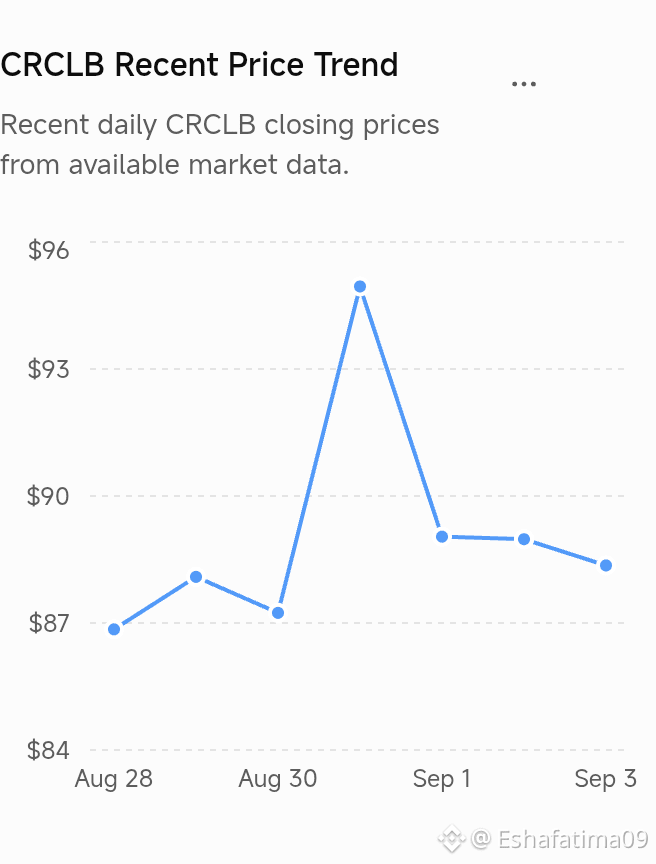
$CRCLB #CRCLB CRCLB (Circle Internet Group tokenized bStock) is around $88–$89 in the latest available data. Recent price action is volatile: it fell from $94.67 to $88.96, after a strong rebound the previous session. Trend: 🟡 Neutral to slightly bearish short-term Support: $86–$88 Resistance: $95–$96 Bullish breakout: Above $96 could signal renewed upside. Bearish signal: A break below $86 could lead to further weakness. #SECNewCryptoRulesAimToBringFirmsBackToUS #USWeeklyInitialJoblessClaimsRiseTo206000
$CRCLB #CRCLB CRCLB (Circle Internet Group tokenized bStock) is around $88–$89 in the latest available data. Recent price action is volatile: it fell from $94.67 to $88.96, after a strong rebound the previous session.

Trend: 🟡 Neutral to slightly bearish short-term
Support: $86–$88
Resistance: $95–$96
Bullish breakout: Above $96 could signal renewed upside.
Bearish signal: A break below $86 could lead to further weakness.
#SECNewCryptoRulesAimToBringFirmsBackToUS
#USWeeklyInitialJoblessClaimsRiseTo206000
Aasim Majeed AMC
·
--
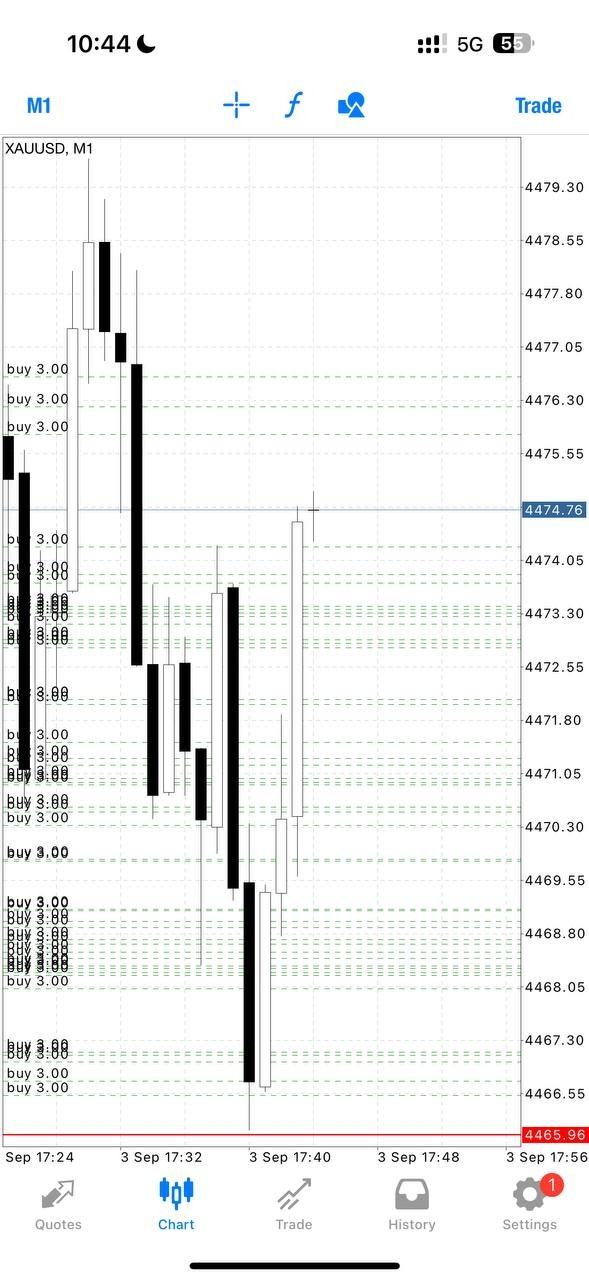
Buy Gold @4476-4466

Sl :4462

Tp1: 4480
Tp2: 4487

Enter Slowly-Layer with proper money management

Do not rush your entries
$XAU

#USWeeklyInitialJoblessClaimsRiseTo206000 #SECNewCryptoRulesAimToBringFirmsBackToUS #USGainsControlOfVenezuelanOilFields #CFTCScrutinizesPredictionMarketAffiliates #PredictionMarketsPutCLARITYAct2026OddsAt15%


Log in to explore more content
Join global crypto users on Binance Square
⚡️ Get latest and useful information about crypto.
💬 Trusted by the world’s largest crypto exchange.
👍 Discover real insights from verified creators.
Email / Phone number