
yabarich
2.3k Posts

yabarich
Report
Block User
19 Following
21 Followers
534 Liked
Posts
All
Quotes
·
--
𝐒𝐖𝐀𝐏 𝐔𝐒𝐃𝐓 𝐅𝐎𝐑 𝐔𝐒𝐃𝐒𝐖𝐀𝐏 𝐔𝐒𝐃𝐓 𝐅𝐎𝐑 𝐔𝐒𝐃𝐃: 𝐖𝐇𝐘 𝐀 𝐒𝐈𝐌𝐏𝐋𝐄 𝐒𝐖𝐀𝐏 𝐒𝐓𝐈𝐋𝐋 𝐑𝐄𝐐𝐔𝐈𝐑𝐄𝐒 𝐂𝐀𝐑𝐄𝐅𝐔𝐋 𝐑𝐄𝐕𝐈𝐄𝐖
𝐈. 𝐓𝐇𝐄 𝐏𝐑𝐎𝐁𝐋𝐄𝐌: 𝐒𝐓𝐀𝐁𝐋𝐄𝐂𝐎𝐈𝐍 𝐂𝐎𝐍𝐕𝐄𝐑𝐒𝐈𝐎𝐍 𝐈𝐒 𝐌𝐎𝐑𝐄 𝐓𝐇𝐀𝐍 𝐄𝐗𝐂𝐇𝐀𝐍𝐆𝐈𝐍𝐆 𝐓𝐖𝐎 𝐓𝐎𝐊𝐄𝐍𝐒
USDT and USDD are both designed to maintain stable values relative to the US dollar.
However, exchanging one for the other still involves an on-chain transaction with specific execution requirements.
Users may need to interact with a smart contract, authorize token spending, review transaction fees, and confirm the expected output.
These steps are important because a stablecoin swap is not automatically free of costs or technical risks.
Understanding the workflow helps users avoid unnecessary mistakes when converting USDT into USDD.
𝐈𝐈. 𝐓𝐇𝐄 𝐒𝐎𝐋𝐔𝐓𝐈𝐎𝐍: 𝐀 𝐒𝐓𝐄𝐏-𝐁𝐘-𝐒𝐓𝐄𝐏 𝐒𝐖𝐀𝐏 𝐏𝐑𝐎𝐂𝐄𝐒𝐒
For a supported swap interface, the process begins by selecting:
Swap → USDT → USDD
Next, enter the amount of USDT to exchange.
The interface should display the expected USDD output and any relevant transaction details.
If the application requests USDT approval, users must authorize the smart contract to spend the specified tokens.
This approval is distinct from the swap itself and may require a separate blockchain transaction.
After approval, review the network fee, exchange rate, expected output, and any applicable service charges.
Finally, confirm the swap.
Where the USDD Peg Stability Module supports the selected route, a 1:1 USDT–USDD conversion may be available under its applicable conditions.
However, not every swap interface necessarily uses the PSM.
Actual rates, fees, and execution requirements depend on the route and application.
𝐈𝐈𝐈. 𝐌𝐘 𝐏𝐄𝐑𝐒𝐏𝐄𝐂𝐓𝐈𝐕𝐄: 𝐓𝐎𝐊𝐄𝐍 𝐀𝐏𝐏𝐑𝐎𝐕𝐀𝐋 𝐃𝐄𝐒𝐄𝐑𝐕𝐄𝐒 𝐌𝐎𝐑𝐄 𝐀𝐓𝐓𝐄𝐍𝐓𝐈𝐎𝐍
I think token approval is one of the most important steps for users to understand.
When a wallet requests approval, the user is granting a smart contract permission to spend tokens within the authorized allowance.
That permission may remain active after the immediate swap is completed.
For this reason, users should verify the contract address and carefully examine the requested spending limit.
Where supported, limiting approval to the amount needed can reduce unnecessary exposure.
It is also important to distinguish token approval from transaction confirmation.
Approving USDT does not necessarily mean the USDD swap has already occurred.
The swap may still require a separate confirmation and network fee.
A user-friendly interface should make this distinction clear.
𝐈𝐕. 𝐋𝐎𝐍𝐆-𝐓𝐄𝐑𝐌 𝐈𝐌𝐏𝐀𝐂𝐓: 𝐁𝐄𝐓𝐓𝐄𝐑 𝐂𝐎𝐍𝐕𝐄𝐑𝐒𝐈𝐎𝐍 𝐄𝐗𝐏𝐄𝐑𝐈𝐄𝐍𝐂𝐄𝐒 𝐒𝐔𝐏𝐏𝐎𝐑𝐓 𝐒𝐓𝐀𝐁𝐋𝐄𝐂𝐎𝐈𝐍 𝐔𝐓𝐈𝐋𝐈𝐓𝐘
For USDD, accessible USDT conversion can make it easier for users to enter the ecosystem and participate in supported payment or earning applications.
But long-term adoption depends on more than making the Swap button easy to find.
Users need reliable execution, transparent conversion terms, clear approval requests, and predictable transaction costs.
I would evaluate the experience through successful swap rates, actual conversion costs, approval-related friction, and transaction completion times.
The broader principle is that stablecoin interoperability should make financial activity simpler without obscuring the permissions and risks involved.
A convenient swap is valuable.
A convenient swap that users can understand and verify is considerably more valuable.
@usddio #TRONEcoStar
𝐒𝐖𝐀𝐏 𝐔𝐒𝐃𝐓 𝐅𝐎𝐑 𝐔𝐒𝐃
𝐒𝐖𝐀𝐏 𝐔𝐒𝐃𝐓 𝐅𝐎𝐑 𝐔𝐒𝐃𝐃: 𝐖𝐇𝐘 𝐀 𝐒𝐈𝐌𝐏𝐋𝐄 𝐒𝐖𝐀𝐏 𝐒𝐓𝐈𝐋𝐋 𝐑𝐄𝐐𝐔𝐈𝐑𝐄𝐒 𝐂𝐀𝐑𝐄𝐅𝐔𝐋 𝐑𝐄𝐕𝐈𝐄𝐖
𝐈. 𝐓𝐇𝐄 𝐏𝐑𝐎𝐁𝐋𝐄𝐌: 𝐒𝐓𝐀𝐁𝐋𝐄𝐂𝐎𝐈𝐍 𝐂𝐎𝐍𝐕𝐄𝐑𝐒𝐈𝐎𝐍 𝐈𝐒 𝐌𝐎𝐑𝐄 𝐓𝐇𝐀𝐍 𝐄𝐗𝐂𝐇𝐀𝐍𝐆𝐈𝐍𝐆 𝐓𝐖𝐎 𝐓𝐎𝐊𝐄𝐍𝐒
USDT and USDD are both designed to maintain stable values relative to the US dollar.
However, exchanging one for the other still involves an on-chain transaction with specific execution requirements.
Users may need to interact with a smart contract, authorize token spending, review transaction fees, and confirm the expected output.
These steps are important because a stablecoin swap is not automatically free of costs or technical risks.
Understanding the workflow helps users avoid unnecessary mistakes when converting USDT into USDD.
𝐈𝐈. 𝐓𝐇𝐄 𝐒𝐎𝐋𝐔𝐓𝐈𝐎𝐍: 𝐀 𝐒𝐓𝐄𝐏-𝐁𝐘-𝐒𝐓𝐄𝐏 𝐒𝐖𝐀𝐏 𝐏𝐑𝐎𝐂𝐄𝐒𝐒
For a supported swap interface, the process begins by selecting:
Swap → USDT → USDD
Next, enter the amount of USDT to exchange.
The interface should display the expected USDD output and any relevant transaction details.
If the application requests USDT approval, users must authorize the smart contract to spend the specified tokens.
This approval is distinct from the swap itself and may require a separate blockchain transaction.
After approval, review the network fee, exchange rate, expected output, and any applicable service charges.
Finally, confirm the swap.
Where the USDD Peg Stability Module supports the selected route, a 1:1 USDT–USDD conversion may be available under its applicable conditions.
However, not every swap interface necessarily uses the PSM.
Actual rates, fees, and execution requirements depend on the route and application.
𝐈𝐈𝐈. 𝐌𝐘 𝐏𝐄𝐑𝐒𝐏𝐄𝐂𝐓𝐈𝐕𝐄: 𝐓𝐎𝐊𝐄𝐍 𝐀𝐏𝐏𝐑𝐎𝐕𝐀𝐋 𝐃𝐄𝐒𝐄𝐑𝐕𝐄𝐒 𝐌𝐎𝐑𝐄 𝐀𝐓𝐓𝐄𝐍𝐓𝐈𝐎𝐍
I think token approval is one of the most important steps for users to understand.
When a wallet requests approval, the user is granting a smart contract permission to spend tokens within the authorized allowance.
That permission may remain active after the immediate swap is completed.
For this reason, users should verify the contract address and carefully examine the requested spending limit.
Where supported, limiting approval to the amount needed can reduce unnecessary exposure.
It is also important to distinguish token approval from transaction confirmation.
Approving USDT does not necessarily mean the USDD swap has already occurred.
The swap may still require a separate confirmation and network fee.
A user-friendly interface should make this distinction clear.
𝐈𝐕. 𝐋𝐎𝐍𝐆-𝐓𝐄𝐑𝐌 𝐈𝐌𝐏𝐀𝐂𝐓: 𝐁𝐄𝐓𝐓𝐄𝐑 𝐂𝐎𝐍𝐕𝐄𝐑𝐒𝐈𝐎𝐍 𝐄𝐗𝐏𝐄𝐑𝐈𝐄𝐍𝐂𝐄𝐒 𝐒𝐔𝐏𝐏𝐎𝐑𝐓 𝐒𝐓𝐀𝐁𝐋𝐄𝐂𝐎𝐈𝐍 𝐔𝐓𝐈𝐋𝐈𝐓𝐘
For USDD, accessible USDT conversion can make it easier for users to enter the ecosystem and participate in supported payment or earning applications.
But long-term adoption depends on more than making the Swap button easy to find.
Users need reliable execution, transparent conversion terms, clear approval requests, and predictable transaction costs.
I would evaluate the experience through successful swap rates, actual conversion costs, approval-related friction, and transaction completion times.
The broader principle is that stablecoin interoperability should make financial activity simpler without obscuring the permissions and risks involved.
A convenient swap is valuable.
A convenient swap that users can understand and verify is considerably more valuable.
@USDD - Decentralized USD #TRONEcoStar
2
·
--
𝗨𝗦𝗗𝗗 × 𝗖𝗛𝗔𝗡𝗚𝗘𝗡𝗢𝗪:𝗨𝗦𝗗𝗗 × 𝗖𝗛𝗔𝗡𝗚𝗘𝗡𝗢𝗪: 𝗔𝗦 𝗕𝗔𝗡𝗞𝗦 𝗘𝗡𝗧𝗘𝗥 𝗧𝗛𝗘 𝗦𝗧𝗔𝗕𝗟𝗘𝗖𝗢𝗜𝗡 𝗠𝗔𝗥𝗞𝗘𝗧, 𝗪𝗛𝗬 𝗢𝗡𝗖𝗛𝗔𝗜𝗡 𝗙𝗜𝗡𝗔𝗡𝗖𝗜𝗔𝗟 𝗖𝗢𝗡𝗧𝗥𝗢𝗟 𝗦𝗧𝗜𝗟𝗟 𝗠𝗔𝗧𝗧𝗘𝗥𝗦
𝗧𝗛𝗘 𝗣𝗥𝗢𝗕𝗟𝗘𝗠: 𝗗𝗜𝗚𝗜𝗧𝗔𝗟 𝗗𝗢𝗟𝗟𝗔𝗥𝗦 𝗔𝗥𝗘 𝗕𝗘𝗖𝗢𝗠𝗜𝗡𝗚 𝗠𝗔𝗜𝗡𝗦𝗧𝗥𝗘𝗔𝗠, 𝗕𝗨𝗧 𝗨𝗦𝗘𝗥 𝗖𝗢𝗡𝗧𝗥𝗢𝗟 𝗥𝗘𝗠𝗔𝗜𝗡𝗦 𝗔 𝗞𝗘𝗬 𝗤𝗨𝗘𝗦𝗧𝗜𝗢𝗡
The growing interest of banks and financial institutions in stablecoins represents an important development in digital finance.
Stablecoins are increasingly being examined as infrastructure for payments, settlement, and the movement of dollar-denominated value.
However, institutional participation introduces a fundamental question:
Will stablecoins simply make existing financial intermediaries more efficient, or can they also give individuals greater control over their own financial activity?
These outcomes are not mutually exclusive.
Banks can use stablecoin infrastructure to improve certain payment processes, while decentralized applications can provide users with alternative ways to hold, transfer, and manage digital assets.
Following discussions with @yvchiax at TOKEN2049, ChangeNOW's coverage of USDD highlights this distinction.
The conversation focuses on three areas: self-custody, transparency around stablecoin backing, and opportunities to earn yield onchain.
Together, they provide a useful framework for evaluating what stablecoins can offer beyond faster transactions.
𝗧𝗛𝗘 𝗦𝗢𝗟𝗨𝗧𝗜𝗢𝗡: 𝗖𝗢𝗠𝗕𝗜𝗡𝗜𝗡𝗚 𝗦𝗘𝗟𝗙-𝗖𝗨𝗦𝗧𝗢𝗗𝗬, 𝗧𝗥𝗔𝗡𝗦𝗣𝗔𝗥𝗘𝗡𝗖𝗬, 𝗔𝗡𝗗 𝗢𝗡𝗖𝗛𝗔𝗜𝗡 𝗙𝗜𝗡𝗔𝗡𝗖𝗜𝗔𝗟 𝗔𝗣𝗣𝗟𝗜𝗖𝗔𝗧𝗜𝗢𝗡𝗦
USDD's approach highlights three capabilities relevant to users who want to manage digital dollars directly on blockchain networks.
1. Self-Custody and Continuous Transfers
Self-custody allows users to control their digital assets through wallets where they manage the relevant private keys.
This differs from holding balances entirely within a custodial financial account.
Supported blockchain networks can process transactions continuously, without relying on conventional banking business hours.
However, self-custody also transfers important security responsibilities to the user.
Losing private keys, approving malicious transactions, or sending assets to an incorrect address can result in irreversible losses.
Continuous blockchain operation also does not guarantee uninterrupted access to every wallet, exchange, or application.
2. Public Reporting on Stablecoin Backing
For collateral-backed stablecoins, transparency is essential.
Users need information about the assets supporting outstanding supply, the composition of collateral, and the mechanisms intended to manage financial risk.
USDD emphasizes public reporting as part of its approach to stablecoin transparency.
This can provide users with additional information for evaluating the system.
However, publicly available figures should still be assessed for completeness, timeliness, independent verification, and the accessibility of the underlying assets.
Transparency improves the ability to examine risk; it does not eliminate risk.
3. Onchain Yield Through USDD Earn
USDD Earn introduces opportunities for eligible holders to deploy stablecoins into supported earning products.
This expands the potential role of USDD beyond transfers and settlement.
Instead of treating digital dollars solely as payment instruments, users can explore financial applications that seek to generate returns.
However, yield is not an automatic property of holding a stablecoin.
Returns depend on the specific product, its underlying strategy, and applicable market conditions.
Smart contract vulnerabilities, liquidity constraints, counterparty exposure, and changing incentive structures can all affect outcomes.
𝗨𝗦𝗘𝗥 𝗕𝗘𝗡𝗘𝗙𝗜𝗧𝗦: 𝗪𝗛𝗬 𝗧𝗛𝗘 𝗗𝗜𝗦𝗧𝗜𝗡𝗖𝗧𝗜𝗢𝗡 𝗕𝗘𝗧𝗪𝗘𝗘𝗡 𝗣𝗔𝗬𝗠𝗘𝗡𝗧 𝗘𝗙𝗙𝗜𝗖𝗜𝗘𝗡𝗖𝗬 𝗔𝗡𝗗 𝗙𝗜𝗡𝗔𝗡𝗖𝗜𝗔𝗟 𝗔𝗨𝗧𝗢𝗡𝗢𝗠𝗬 𝗠𝗔𝗧𝗧𝗘𝗥𝗦
A bank-issued or bank-integrated stablecoin may improve the efficiency of certain financial services.
But greater settlement efficiency does not necessarily mean that users gain direct control over the assets they hold.
The distinction becomes clearer when comparing different financial arrangements.
In a custodial model, users depend on an intermediary to maintain accounts and process permitted transactions.
In a self-custodial blockchain model, users can initiate supported transfers directly, subject to network conditions and the rules of the relevant asset or protocol.
Neither model is universally superior.
Custodial services may offer account recovery, customer support, and certain consumer protections.
Self-custody may offer greater direct control, but also requires stronger personal security practices.
For USDD users, the potential value lies in having additional options.
They can evaluate self-custodial transfers, examine publicly available collateral information, and choose whether to participate in supported DeFi earning products.
These capabilities should be assessed individually rather than treated as guarantees of safety or profitability.
𝗟𝗢𝗡𝗚-𝗧𝗘𝗥𝗠 𝗜𝗠𝗣𝗔𝗖𝗧: 𝗦𝗧𝗔𝗕𝗟𝗘𝗖𝗢𝗜𝗡 𝗔𝗗𝗢𝗣𝗧𝗜𝗢𝗡 𝗪𝗜𝗟𝗟 𝗗𝗘𝗣𝗘𝗡𝗗 𝗢𝗡 𝗧𝗥𝗨𝗦𝗧, 𝗨𝗧𝗜𝗟𝗜𝗧𝗬, 𝗔𝗡𝗗 𝗨𝗦𝗘𝗥 𝗖𝗛𝗢𝗜𝗖𝗘
The entrance of traditional financial institutions into stablecoins should not be viewed simply as competition between banks and decentralized finance.
It may instead accelerate the development of multiple models for digital money.
Some users will prioritize regulated custodial services and familiar banking interfaces.
Others will value direct asset control, public blockchain verification, and access to decentralized financial applications.
Many may use both approaches for different purposes.
For USDD, this creates an opportunity to demonstrate the practical value of onchain stablecoin infrastructure.
Self-custody can support direct asset management.
Public reporting can help users examine collateral-related risks.
USDD Earn can expand the range of financial activities available to stablecoin holders.
However, long-term adoption requires more than offering these features.
It depends on maintaining reliable liquidity, understandable risk disclosures, accessible applications, and transparent operations.
The most important outcome would be a financial environment in which users can make informed choices between different custody, payment, and earning models.
The future of stablecoins is not only about moving digital dollars faster. It is about giving users clearer information, more practical financial tools, and greater choice over how their digital assets are managed.
That is the broader significance of the discussion surrounding USDD, ChangeNOW, and the growing institutional interest in stablecoin payments.
💚 USDD × ChangeNOW — Exploring the Next Stage of Stablecoin Adoption
• Self-custody and 24/7 blockchain transfers.
• Public reporting on assets supporting USDD.
• Onchain earning opportunities through USDD Earn.
• Greater attention to the risks associated with stablecoin yield.
Explore USDD: https://usdd.io
Source: USDD and ChangeNOW announcement following discussions with @yvchiax at TOKEN2049. The complete article URL was not included in the supplied announcement. This analysis reflects the stated discussion topics rather than attributing additional claims to the unpublished article text.
@USDDecentralize @ChangeNOW @yvchiax @trondao $USDD #USDD #Stablecoin #DeFi #OnchainFinance
@usddio #TRONEcoStar
𝗨𝗦𝗗𝗗 × 𝗖𝗛𝗔𝗡𝗚𝗘𝗡𝗢𝗪:
𝗨𝗦𝗗𝗗 × 𝗖𝗛𝗔𝗡𝗚𝗘𝗡𝗢𝗪: 𝗔𝗦 𝗕𝗔𝗡𝗞𝗦 𝗘𝗡𝗧𝗘𝗥 𝗧𝗛𝗘 𝗦𝗧𝗔𝗕𝗟𝗘𝗖𝗢𝗜𝗡 𝗠𝗔𝗥𝗞𝗘𝗧, 𝗪𝗛𝗬 𝗢𝗡𝗖𝗛𝗔𝗜𝗡 𝗙𝗜𝗡𝗔𝗡𝗖𝗜𝗔𝗟 𝗖𝗢𝗡𝗧𝗥𝗢𝗟 𝗦𝗧𝗜𝗟𝗟 𝗠𝗔𝗧𝗧𝗘𝗥𝗦
𝗧𝗛𝗘 𝗣𝗥𝗢𝗕𝗟𝗘𝗠: 𝗗𝗜𝗚𝗜𝗧𝗔𝗟 𝗗𝗢𝗟𝗟𝗔𝗥𝗦 𝗔𝗥𝗘 𝗕𝗘𝗖𝗢𝗠𝗜𝗡𝗚 𝗠𝗔𝗜𝗡𝗦𝗧𝗥𝗘𝗔𝗠, 𝗕𝗨𝗧 𝗨𝗦𝗘𝗥 𝗖𝗢𝗡𝗧𝗥𝗢𝗟 𝗥𝗘𝗠𝗔𝗜𝗡𝗦 𝗔 𝗞𝗘𝗬 𝗤𝗨𝗘𝗦𝗧𝗜𝗢𝗡
The growing interest of banks and financial institutions in stablecoins represents an important development in digital finance.
Stablecoins are increasingly being examined as infrastructure for payments, settlement, and the movement of dollar-denominated value.
However, institutional participation introduces a fundamental question:
Will stablecoins simply make existing financial intermediaries more efficient, or can they also give individuals greater control over their own financial activity?
These outcomes are not mutually exclusive.
Banks can use stablecoin infrastructure to improve certain payment processes, while decentralized applications can provide users with alternative ways to hold, transfer, and manage digital assets.
Following discussions with @yvchiax at TOKEN2049, ChangeNOW's coverage of USDD highlights this distinction.
The conversation focuses on three areas: self-custody, transparency around stablecoin backing, and opportunities to earn yield onchain.
Together, they provide a useful framework for evaluating what stablecoins can offer beyond faster transactions.
𝗧𝗛𝗘 𝗦𝗢𝗟𝗨𝗧𝗜𝗢𝗡: 𝗖𝗢𝗠𝗕𝗜𝗡𝗜𝗡𝗚 𝗦𝗘𝗟𝗙-𝗖𝗨𝗦𝗧𝗢𝗗𝗬, 𝗧𝗥𝗔𝗡𝗦𝗣𝗔𝗥𝗘𝗡𝗖𝗬, 𝗔𝗡𝗗 𝗢𝗡𝗖𝗛𝗔𝗜𝗡 𝗙𝗜𝗡𝗔𝗡𝗖𝗜𝗔𝗟 𝗔𝗣𝗣𝗟𝗜𝗖𝗔𝗧𝗜𝗢𝗡𝗦
USDD's approach highlights three capabilities relevant to users who want to manage digital dollars directly on blockchain networks.
1. Self-Custody and Continuous Transfers
Self-custody allows users to control their digital assets through wallets where they manage the relevant private keys.
This differs from holding balances entirely within a custodial financial account.
Supported blockchain networks can process transactions continuously, without relying on conventional banking business hours.
However, self-custody also transfers important security responsibilities to the user.
Losing private keys, approving malicious transactions, or sending assets to an incorrect address can result in irreversible losses.
Continuous blockchain operation also does not guarantee uninterrupted access to every wallet, exchange, or application.
2. Public Reporting on Stablecoin Backing
For collateral-backed stablecoins, transparency is essential.
Users need information about the assets supporting outstanding supply, the composition of collateral, and the mechanisms intended to manage financial risk.
USDD emphasizes public reporting as part of its approach to stablecoin transparency.
This can provide users with additional information for evaluating the system.
However, publicly available figures should still be assessed for completeness, timeliness, independent verification, and the accessibility of the underlying assets.
Transparency improves the ability to examine risk; it does not eliminate risk.
3. Onchain Yield Through USDD Earn
USDD Earn introduces opportunities for eligible holders to deploy stablecoins into supported earning products.
This expands the potential role of USDD beyond transfers and settlement.
Instead of treating digital dollars solely as payment instruments, users can explore financial applications that seek to generate returns.
However, yield is not an automatic property of holding a stablecoin.
Returns depend on the specific product, its underlying strategy, and applicable market conditions.
Smart contract vulnerabilities, liquidity constraints, counterparty exposure, and changing incentive structures can all affect outcomes.
𝗨𝗦𝗘𝗥 𝗕𝗘𝗡𝗘𝗙𝗜𝗧𝗦: 𝗪𝗛𝗬 𝗧𝗛𝗘 𝗗𝗜𝗦𝗧𝗜𝗡𝗖𝗧𝗜𝗢𝗡 𝗕𝗘𝗧𝗪𝗘𝗘𝗡 𝗣𝗔𝗬𝗠𝗘𝗡𝗧 𝗘𝗙𝗙𝗜𝗖𝗜𝗘𝗡𝗖𝗬 𝗔𝗡𝗗 𝗙𝗜𝗡𝗔𝗡𝗖𝗜𝗔𝗟 𝗔𝗨𝗧𝗢𝗡𝗢𝗠𝗬 𝗠𝗔𝗧𝗧𝗘𝗥𝗦
A bank-issued or bank-integrated stablecoin may improve the efficiency of certain financial services.
But greater settlement efficiency does not necessarily mean that users gain direct control over the assets they hold.
The distinction becomes clearer when comparing different financial arrangements.
In a custodial model, users depend on an intermediary to maintain accounts and process permitted transactions.
In a self-custodial blockchain model, users can initiate supported transfers directly, subject to network conditions and the rules of the relevant asset or protocol.
Neither model is universally superior.
Custodial services may offer account recovery, customer support, and certain consumer protections.
Self-custody may offer greater direct control, but also requires stronger personal security practices.
For USDD users, the potential value lies in having additional options.
They can evaluate self-custodial transfers, examine publicly available collateral information, and choose whether to participate in supported DeFi earning products.
These capabilities should be assessed individually rather than treated as guarantees of safety or profitability.
𝗟𝗢𝗡𝗚-𝗧𝗘𝗥𝗠 𝗜𝗠𝗣𝗔𝗖𝗧: 𝗦𝗧𝗔𝗕𝗟𝗘𝗖𝗢𝗜𝗡 𝗔𝗗𝗢𝗣𝗧𝗜𝗢𝗡 𝗪𝗜𝗟𝗟 𝗗𝗘𝗣𝗘𝗡𝗗 𝗢𝗡 𝗧𝗥𝗨𝗦𝗧, 𝗨𝗧𝗜𝗟𝗜𝗧𝗬, 𝗔𝗡𝗗 𝗨𝗦𝗘𝗥 𝗖𝗛𝗢𝗜𝗖𝗘
The entrance of traditional financial institutions into stablecoins should not be viewed simply as competition between banks and decentralized finance.
It may instead accelerate the development of multiple models for digital money.
Some users will prioritize regulated custodial services and familiar banking interfaces.
Others will value direct asset control, public blockchain verification, and access to decentralized financial applications.
Many may use both approaches for different purposes.
For USDD, this creates an opportunity to demonstrate the practical value of onchain stablecoin infrastructure.
Self-custody can support direct asset management.
Public reporting can help users examine collateral-related risks.
USDD Earn can expand the range of financial activities available to stablecoin holders.
However, long-term adoption requires more than offering these features.
It depends on maintaining reliable liquidity, understandable risk disclosures, accessible applications, and transparent operations.
The most important outcome would be a financial environment in which users can make informed choices between different custody, payment, and earning models.
The future of stablecoins is not only about moving digital dollars faster. It is about giving users clearer information, more practical financial tools, and greater choice over how their digital assets are managed.
That is the broader significance of the discussion surrounding USDD, ChangeNOW, and the growing institutional interest in stablecoin payments.
💚 USDD × ChangeNOW — Exploring the Next Stage of Stablecoin Adoption
• Self-custody and 24/7 blockchain transfers.
• Public reporting on assets supporting USDD.
• Onchain earning opportunities through USDD Earn.
• Greater attention to the risks associated with stablecoin yield.
Explore USDD: https://usdd.io
Source: USDD and ChangeNOW announcement following discussions with @yvchiax at TOKEN2049. The complete article URL was not included in the supplied announcement. This analysis reflects the stated discussion topics rather than attributing additional claims to the unpublished article text.
@USDDecentralize @ChangeNOW @yvchiax @trondao $USDD #USDD #Stablecoin #DeFi #OnchainFinance
@USDD - Decentralized USD #TRONEcoStar
2
·
--
𝗪𝗛𝗬 𝗦𝗧𝗔𝗕𝗟𝗘𝗖𝗢𝗜𝗡 𝗖𝗢𝗡𝗩𝗘𝗥𝗧𝗜𝗕𝗜𝗟𝗜𝗧𝗬 𝗠𝗔𝗧𝗧𝗘𝗥𝗦 𝗠𝗢𝗥𝗘 𝗧𝗛𝗔𝗡...𝗨𝗦𝗗𝗗 𝗣𝗦𝗠: 𝗪𝗛𝗬 𝗦𝗧𝗔𝗕𝗟𝗘𝗖𝗢𝗜𝗡 𝗖𝗢𝗡𝗩𝗘𝗥𝗧𝗜𝗕𝗜𝗟𝗜𝗧𝗬 𝗠𝗔𝗧𝗧𝗘𝗥𝗦 𝗠𝗢𝗥𝗘 𝗧𝗛𝗔𝗡 𝗔 𝗣𝗥𝗢𝗠𝗜𝗦𝗘 𝗢𝗙 $𝟭 𝗦𝗧𝗔𝗕𝗜𝗟𝗜𝗧𝗬
𝗧𝗛𝗘 𝗣𝗥𝗢𝗕𝗟𝗘𝗠: 𝗔 𝗦𝗧𝗔𝗕𝗟𝗘𝗖𝗢𝗜𝗡 𝗣𝗘𝗚 𝗡𝗘𝗘𝗗𝗦 𝗔 𝗣𝗥𝗔𝗖𝗧𝗜𝗖𝗔𝗟 𝗖𝗢𝗡𝗩𝗘𝗥𝗦𝗜𝗢𝗡 𝗠𝗘𝗖𝗛𝗔𝗡𝗜𝗦𝗠
Stablecoins are designed to maintain a relatively stable value, typically around one US dollar. However, maintaining that value in decentralized markets requires more than simply declaring a target price.
When market conditions change, differences between supply and demand can cause stablecoins to trade above or below their intended peg.
For users, these fluctuations create uncertainty.
Someone transferring, saving, or deploying stablecoins in DeFi needs to understand not only the asset's target value but also how it can be exchanged for other assets.
This is where USDD's Peg Stability Module, or PSM, becomes important.
USDD's latest educational infographic highlights the PSM as a mechanism supporting stablecoin conversion, liquidity management, and access to the broader USDD ecosystem.
𝗧𝗛𝗘 𝗦𝗢𝗟𝗨𝗧𝗜𝗢𝗡: 𝗛𝗢𝗪 𝗧𝗛𝗘 𝗨𝗦𝗗𝗗 𝗣𝗘𝗚 𝗦𝗧𝗔𝗕𝗜𝗟𝗜𝗧𝗬 𝗠𝗢𝗗𝗨𝗟𝗘 𝗪𝗢𝗥𝗞𝗦
The PSM is a direct-swap mechanism designed to let users exchange USDD and supported stablecoins at a 1:1 rate, subject to the module's operating conditions.
Instead of relying exclusively on external decentralized exchange liquidity, the PSM provides a dedicated conversion pathway.
Consider a simplified example.
If a user holds 1,000 units of an eligible stablecoin and the PSM supports conversion into USDD, the mechanism is designed to provide an equivalent 1,000 USDD at the stated 1:1 exchange rate.
This can make conversion more predictable than executing a market swap through a liquidity pool experiencing significant price fluctuations.
The infographic also highlights USDD's use of a zero-slippage swap mechanism.
However, zero quoted slippage does not necessarily mean zero transaction costs. Network fees, supported asset restrictions, available reserves, and transaction limits may still affect the user experience.
𝗨𝗦𝗘𝗥 𝗕𝗘𝗡𝗘𝗙𝗜𝗧𝗦: 𝗪𝗛𝗬 𝗣𝗦𝗠 𝗜𝗦 𝗠𝗢𝗥𝗘 𝗧𝗛𝗔𝗡 𝗔 𝗦𝗜𝗠𝗣𝗟𝗘 𝗦𝗪𝗔𝗣 𝗧𝗢𝗢𝗟
1. More Predictable Stablecoin Conversion
A predefined 1:1 conversion mechanism can reduce uncertainty associated with variable exchange rates.
This is particularly useful when users need to move between supported stablecoins without relying solely on external market prices.
2. Supporting Peg Stability
The PSM can help connect USDD's market price with its intended dollar reference value.
When appropriate conversion opportunities are available, market participants may have an incentive to exchange between supported stablecoins and USDD.
These activities can contribute to price alignment, although they do not guarantee that USDD will always trade at exactly $1.
3. Improving Liquidity Accessibility
A dedicated conversion mechanism can provide an additional liquidity pathway for users entering or leaving USDD positions.
Its effectiveness depends on available reserves, supported assets, and the module's operational parameters.
4. Connecting Users to the USDD Ecosystem
The infographic identifies the official USDD website and supported wallet interfaces as access points.
It lists GateDEX, TokenPocket, imToken, and other wallet options.
Users should verify current PSM availability and supported networks through official interfaces before initiating transactions.
𝗟𝗢𝗡𝗚-𝗧𝗘𝗥𝗠 𝗜𝗠𝗣𝗔𝗖𝗧: 𝗣𝗘𝗚 𝗦𝗧𝗔𝗕𝗜𝗟𝗜𝗧𝗬 𝗜𝗦 𝗔𝗡 𝗜𝗡𝗙𝗥𝗔𝗦𝗧𝗥𝗨𝗖𝗧𝗨𝗥𝗘 𝗖𝗛𝗔𝗟𝗟𝗘𝗡𝗚𝗘
The broader significance of USDD's PSM lies in the relationship between stablecoin liquidity and financial usability.
A stablecoin becomes more useful when holders have accessible mechanisms for converting, transferring, and deploying it across supported applications.
For the TRON and wider DeFi ecosystems, conversion infrastructure can help reduce friction between different stablecoin assets.
However, long-term stability also depends on reserve quality, collateral management, market liquidity, and confidence in the protocol.
The PSM should therefore be understood as one component of a broader stability framework rather than a complete solution to every stablecoin risk.
A stablecoin's strength is not determined solely by its target price. It also depends on whether users have reliable, transparent, and practical mechanisms for exchanging it under changing market conditions.
💚 USDD PSM: Simpler Conversion. Better Liquidity Access. A More Practical Approach to Stablecoin Stability.
Explore the official USDD platform:
https://usdd.io
Source: USDD Quick Guide — Get to Know USDD PSM. Actual swap availability, fees, limits, and supported assets should be checked before use.
@usddio #TRONEcoStar
𝗪𝗛𝗬 𝗦𝗧𝗔𝗕𝗟𝗘𝗖𝗢𝗜𝗡 𝗖𝗢𝗡𝗩𝗘𝗥𝗧𝗜𝗕𝗜𝗟𝗜𝗧𝗬 𝗠𝗔𝗧𝗧𝗘𝗥𝗦 𝗠𝗢𝗥𝗘 𝗧𝗛𝗔𝗡...
𝗨𝗦𝗗𝗗 𝗣𝗦𝗠: 𝗪𝗛𝗬 𝗦𝗧𝗔𝗕𝗟𝗘𝗖𝗢𝗜𝗡 𝗖𝗢𝗡𝗩𝗘𝗥𝗧𝗜𝗕𝗜𝗟𝗜𝗧𝗬 𝗠𝗔𝗧𝗧𝗘𝗥𝗦 𝗠𝗢𝗥𝗘 𝗧𝗛𝗔𝗡 𝗔 𝗣𝗥𝗢𝗠𝗜𝗦𝗘 𝗢𝗙 $𝟭 𝗦𝗧𝗔𝗕𝗜𝗟𝗜𝗧𝗬
𝗧𝗛𝗘 𝗣𝗥𝗢𝗕𝗟𝗘𝗠: 𝗔 𝗦𝗧𝗔𝗕𝗟𝗘𝗖𝗢𝗜𝗡 𝗣𝗘𝗚 𝗡𝗘𝗘𝗗𝗦 𝗔 𝗣𝗥𝗔𝗖𝗧𝗜𝗖𝗔𝗟 𝗖𝗢𝗡𝗩𝗘𝗥𝗦𝗜𝗢𝗡 𝗠𝗘𝗖𝗛𝗔𝗡𝗜𝗦𝗠
Stablecoins are designed to maintain a relatively stable value, typically around one US dollar. However, maintaining that value in decentralized markets requires more than simply declaring a target price.
When market conditions change, differences between supply and demand can cause stablecoins to trade above or below their intended peg.
For users, these fluctuations create uncertainty.
Someone transferring, saving, or deploying stablecoins in DeFi needs to understand not only the asset's target value but also how it can be exchanged for other assets.
This is where USDD's Peg Stability Module, or PSM, becomes important.
USDD's latest educational infographic highlights the PSM as a mechanism supporting stablecoin conversion, liquidity management, and access to the broader USDD ecosystem.
𝗧𝗛𝗘 𝗦𝗢𝗟𝗨𝗧𝗜𝗢𝗡: 𝗛𝗢𝗪 𝗧𝗛𝗘 𝗨𝗦𝗗𝗗 𝗣𝗘𝗚 𝗦𝗧𝗔𝗕𝗜𝗟𝗜𝗧𝗬 𝗠𝗢𝗗𝗨𝗟𝗘 𝗪𝗢𝗥𝗞𝗦
The PSM is a direct-swap mechanism designed to let users exchange USDD and supported stablecoins at a 1:1 rate, subject to the module's operating conditions.
Instead of relying exclusively on external decentralized exchange liquidity, the PSM provides a dedicated conversion pathway.
Consider a simplified example.
If a user holds 1,000 units of an eligible stablecoin and the PSM supports conversion into USDD, the mechanism is designed to provide an equivalent 1,000 USDD at the stated 1:1 exchange rate.
This can make conversion more predictable than executing a market swap through a liquidity pool experiencing significant price fluctuations.
The infographic also highlights USDD's use of a zero-slippage swap mechanism.
However, zero quoted slippage does not necessarily mean zero transaction costs. Network fees, supported asset restrictions, available reserves, and transaction limits may still affect the user experience.
𝗨𝗦𝗘𝗥 𝗕𝗘𝗡𝗘𝗙𝗜𝗧𝗦: 𝗪𝗛𝗬 𝗣𝗦𝗠 𝗜𝗦 𝗠𝗢𝗥𝗘 𝗧𝗛𝗔𝗡 𝗔 𝗦𝗜𝗠𝗣𝗟𝗘 𝗦𝗪𝗔𝗣 𝗧𝗢𝗢𝗟
1. More Predictable Stablecoin Conversion
A predefined 1:1 conversion mechanism can reduce uncertainty associated with variable exchange rates.
This is particularly useful when users need to move between supported stablecoins without relying solely on external market prices.
2. Supporting Peg Stability
The PSM can help connect USDD's market price with its intended dollar reference value.
When appropriate conversion opportunities are available, market participants may have an incentive to exchange between supported stablecoins and USDD.
These activities can contribute to price alignment, although they do not guarantee that USDD will always trade at exactly $1.
3. Improving Liquidity Accessibility
A dedicated conversion mechanism can provide an additional liquidity pathway for users entering or leaving USDD positions.
Its effectiveness depends on available reserves, supported assets, and the module's operational parameters.
4. Connecting Users to the USDD Ecosystem
The infographic identifies the official USDD website and supported wallet interfaces as access points.
It lists GateDEX, TokenPocket, imToken, and other wallet options.
Users should verify current PSM availability and supported networks through official interfaces before initiating transactions.
𝗟𝗢𝗡𝗚-𝗧𝗘𝗥𝗠 𝗜𝗠𝗣𝗔𝗖𝗧: 𝗣𝗘𝗚 𝗦𝗧𝗔𝗕𝗜𝗟𝗜𝗧𝗬 𝗜𝗦 𝗔𝗡 𝗜𝗡𝗙𝗥𝗔𝗦𝗧𝗥𝗨𝗖𝗧𝗨𝗥𝗘 𝗖𝗛𝗔𝗟𝗟𝗘𝗡𝗚𝗘
The broader significance of USDD's PSM lies in the relationship between stablecoin liquidity and financial usability.
A stablecoin becomes more useful when holders have accessible mechanisms for converting, transferring, and deploying it across supported applications.
For the TRON and wider DeFi ecosystems, conversion infrastructure can help reduce friction between different stablecoin assets.
However, long-term stability also depends on reserve quality, collateral management, market liquidity, and confidence in the protocol.
The PSM should therefore be understood as one component of a broader stability framework rather than a complete solution to every stablecoin risk.
A stablecoin's strength is not determined solely by its target price. It also depends on whether users have reliable, transparent, and practical mechanisms for exchanging it under changing market conditions.
💚 USDD PSM: Simpler Conversion. Better Liquidity Access. A More Practical Approach to Stablecoin Stability.
Explore the official USDD platform:
https://usdd.io
Source: USDD Quick Guide — Get to Know USDD PSM. Actual swap availability, fees, limits, and supported assets should be checked before use.
@USDD - Decentralized USD #TRONEcoStar
2
·
--
𝐖𝐇𝐘 𝐓𝐑𝐀𝐍𝐒𝐏𝐀𝐑𝐄𝐍𝐂𝐘 𝐌𝐔𝐒𝐓 𝐆𝐎 𝐁𝐄𝐘𝐎𝐍𝐃 𝐏𝐔𝐁𝐋𝐈𝐒𝐇𝐈𝐍𝐆 𝐃𝐀𝐓𝐀𝐇𝐎𝐖 𝐔𝐒𝐃𝐃 𝐌𝐎𝐍𝐈𝐓𝐎𝐑𝐒 𝐑𝐈𝐒𝐊: 𝐖𝐇𝐘 𝐓𝐑𝐀𝐍𝐒𝐏𝐀𝐑𝐄𝐍𝐂𝐘 𝐌𝐔𝐒𝐓 𝐆𝐎 𝐁𝐄𝐘𝐎𝐍𝐃 𝐏𝐔𝐁𝐋𝐈𝐒𝐇𝐈𝐍𝐆 𝐃𝐀𝐓𝐀
𝐈. 𝐓𝐇𝐄 𝐏𝐑𝐎𝐁𝐋𝐄𝐌: 𝐑𝐈𝐒𝐊 𝐂𝐀𝐍 𝐃𝐄𝐕𝐄𝐋𝐎𝐏 𝐅𝐀𝐒𝐓𝐄𝐑 𝐓𝐇𝐀𝐍 𝐏𝐄𝐑𝐈𝐎𝐃𝐈𝐂 𝐑𝐄𝐏𝐎𝐑𝐓𝐒
A stablecoin can appear healthy in a published snapshot while its underlying risk conditions are changing.
Collateral values fluctuate, market liquidity shifts, and smart contracts may encounter unexpected behavior.
This creates a fundamental challenge: users need confidence that material risks can be identified and addressed before they become systemic problems.
USDD's security framework emphasizes real-time monitoring, independent audits of core smart contracts, and transparency around significant protocol changes.
These measures operate at different stages of risk management.
𝐈𝐈. 𝐓𝐇𝐄 𝐒𝐎𝐋𝐔𝐓𝐈𝐎𝐍: 𝐂𝐎𝐍𝐓𝐈𝐍𝐔𝐎𝐔𝐒 𝐎𝐁𝐒𝐄𝐑𝐕𝐀𝐓𝐈𝐎𝐍, 𝐄𝐗𝐓𝐄𝐑𝐍𝐀𝐋 𝐑𝐄𝐕𝐈𝐄𝐖, 𝐀𝐍𝐃 𝐃𝐈𝐒𝐂𝐋𝐎𝐒𝐔𝐑𝐄
Real-time monitoring is intended to identify unusual activity or changing risk conditions as they emerge.
Its value depends not only on detecting anomalies, but also on how quickly relevant teams can assess and respond to them.
Independent smart contract audits provide another layer of scrutiny.
External reviewers can examine contract logic, identify potential vulnerabilities, and assess whether implementations match their intended behavior.
However, an audit is not proof that a contract contains no vulnerabilities.
Its conclusions apply to the reviewed code, assumptions, and scope at the time of assessment.
Transparency around significant protocol changes addresses a third requirement.
When risk parameters, contract implementations, or governance rules change, users need to understand what has changed and how their exposure may be affected.
𝐈𝐈𝐈. 𝐌𝐘 𝐏𝐄𝐑𝐒𝐏𝐄𝐂𝐓𝐈𝐕𝐄: 𝐓𝐑𝐀𝐍𝐒𝐏𝐀𝐑𝐄𝐍𝐂𝐘 𝐒𝐇𝐎𝐔𝐋𝐃 𝐁𝐄 𝐀𝐂𝐓𝐈𝐎𝐍𝐀𝐁𝐋𝐄
I believe transparency is most valuable when it helps users make better decisions.
Publishing an audit report is useful.
But users also benefit from knowing which contracts were reviewed, when the assessment occurred, what limitations were identified, and whether material findings were resolved.
Similarly, real-time monitoring becomes more meaningful when important risk indicators are clearly defined and accompanied by understandable explanations.
Protocol-change disclosures should explain the rationale, expected effects, and relevant implementation details.
These practices make it easier to distinguish routine adjustments from changes that materially affect user risk.
I would not assume that the existence of monitoring or audits automatically establishes their effectiveness.
That requires evidence.
𝐈𝐕. 𝐋𝐎𝐍𝐆-𝐓𝐄𝐑𝐌 𝐈𝐌𝐏𝐀𝐂𝐓: 𝐅𝐑𝐎𝐌 𝐓𝐑𝐔𝐒𝐓 𝐂𝐋𝐀𝐈𝐌𝐒 𝐓𝐎 𝐕𝐄𝐑𝐈𝐅𝐈𝐀𝐁𝐋𝐄 𝐑𝐈𝐒𝐊 𝐌𝐀𝐍𝐀𝐆𝐄𝐌𝐄𝐍𝐓
For USDD, the strongest indicators would include accessible audit documentation, timely disclosure of material changes, clearly defined risk metrics, and evidence of how detected issues are handled.
Monitoring, auditing, and disclosure should reinforce one another.
Monitoring identifies emerging concerns.
Audits examine technical assumptions and implementation.
Transparent communication helps users understand the resulting decisions.
The broader lesson is that stablecoin security is not a one-time certification.
It is an ongoing process of observation, verification, and accountability.
The objective should not be to convince users that risk has disappeared.
It should be to make risk visible, understandable, and manageable.
@usddio #TRONEcoStar
𝐖𝐇𝐘 𝐓𝐑𝐀𝐍𝐒𝐏𝐀𝐑𝐄𝐍𝐂𝐘 𝐌𝐔𝐒𝐓 𝐆𝐎 𝐁𝐄𝐘𝐎𝐍𝐃 𝐏𝐔𝐁𝐋𝐈𝐒𝐇𝐈𝐍𝐆 𝐃𝐀𝐓𝐀
𝐇𝐎𝐖 𝐔𝐒𝐃𝐃 𝐌𝐎𝐍𝐈𝐓𝐎𝐑𝐒 𝐑𝐈𝐒𝐊: 𝐖𝐇𝐘 𝐓𝐑𝐀𝐍𝐒𝐏𝐀𝐑𝐄𝐍𝐂𝐘 𝐌𝐔𝐒𝐓 𝐆𝐎 𝐁𝐄𝐘𝐎𝐍𝐃 𝐏𝐔𝐁𝐋𝐈𝐒𝐇𝐈𝐍𝐆 𝐃𝐀𝐓𝐀
𝐈. 𝐓𝐇𝐄 𝐏𝐑𝐎𝐁𝐋𝐄𝐌: 𝐑𝐈𝐒𝐊 𝐂𝐀𝐍 𝐃𝐄𝐕𝐄𝐋𝐎𝐏 𝐅𝐀𝐒𝐓𝐄𝐑 𝐓𝐇𝐀𝐍 𝐏𝐄𝐑𝐈𝐎𝐃𝐈𝐂 𝐑𝐄𝐏𝐎𝐑𝐓𝐒
A stablecoin can appear healthy in a published snapshot while its underlying risk conditions are changing.
Collateral values fluctuate, market liquidity shifts, and smart contracts may encounter unexpected behavior.
This creates a fundamental challenge: users need confidence that material risks can be identified and addressed before they become systemic problems.
USDD's security framework emphasizes real-time monitoring, independent audits of core smart contracts, and transparency around significant protocol changes.
These measures operate at different stages of risk management.
𝐈𝐈. 𝐓𝐇𝐄 𝐒𝐎𝐋𝐔𝐓𝐈𝐎𝐍: 𝐂𝐎𝐍𝐓𝐈𝐍𝐔𝐎𝐔𝐒 𝐎𝐁𝐒𝐄𝐑𝐕𝐀𝐓𝐈𝐎𝐍, 𝐄𝐗𝐓𝐄𝐑𝐍𝐀𝐋 𝐑𝐄𝐕𝐈𝐄𝐖, 𝐀𝐍𝐃 𝐃𝐈𝐒𝐂𝐋𝐎𝐒𝐔𝐑𝐄
Real-time monitoring is intended to identify unusual activity or changing risk conditions as they emerge.
Its value depends not only on detecting anomalies, but also on how quickly relevant teams can assess and respond to them.
Independent smart contract audits provide another layer of scrutiny.
External reviewers can examine contract logic, identify potential vulnerabilities, and assess whether implementations match their intended behavior.
However, an audit is not proof that a contract contains no vulnerabilities.
Its conclusions apply to the reviewed code, assumptions, and scope at the time of assessment.
Transparency around significant protocol changes addresses a third requirement.
When risk parameters, contract implementations, or governance rules change, users need to understand what has changed and how their exposure may be affected.
𝐈𝐈𝐈. 𝐌𝐘 𝐏𝐄𝐑𝐒𝐏𝐄𝐂𝐓𝐈𝐕𝐄: 𝐓𝐑𝐀𝐍𝐒𝐏𝐀𝐑𝐄𝐍𝐂𝐘 𝐒𝐇𝐎𝐔𝐋𝐃 𝐁𝐄 𝐀𝐂𝐓𝐈𝐎𝐍𝐀𝐁𝐋𝐄
I believe transparency is most valuable when it helps users make better decisions.
Publishing an audit report is useful.
But users also benefit from knowing which contracts were reviewed, when the assessment occurred, what limitations were identified, and whether material findings were resolved.
Similarly, real-time monitoring becomes more meaningful when important risk indicators are clearly defined and accompanied by understandable explanations.
Protocol-change disclosures should explain the rationale, expected effects, and relevant implementation details.
These practices make it easier to distinguish routine adjustments from changes that materially affect user risk.
I would not assume that the existence of monitoring or audits automatically establishes their effectiveness.
That requires evidence.
𝐈𝐕. 𝐋𝐎𝐍𝐆-𝐓𝐄𝐑𝐌 𝐈𝐌𝐏𝐀𝐂𝐓: 𝐅𝐑𝐎𝐌 𝐓𝐑𝐔𝐒𝐓 𝐂𝐋𝐀𝐈𝐌𝐒 𝐓𝐎 𝐕𝐄𝐑𝐈𝐅𝐈𝐀𝐁𝐋𝐄 𝐑𝐈𝐒𝐊 𝐌𝐀𝐍𝐀𝐆𝐄𝐌𝐄𝐍𝐓
For USDD, the strongest indicators would include accessible audit documentation, timely disclosure of material changes, clearly defined risk metrics, and evidence of how detected issues are handled.
Monitoring, auditing, and disclosure should reinforce one another.
Monitoring identifies emerging concerns.
Audits examine technical assumptions and implementation.
Transparent communication helps users understand the resulting decisions.
The broader lesson is that stablecoin security is not a one-time certification.
It is an ongoing process of observation, verification, and accountability.
The objective should not be to convince users that risk has disappeared.
It should be to make risk visible, understandable, and manageable.
@USDD - Decentralized USD #TRONEcoStar
2
·
--
𝐓𝐇𝐑𝐄𝐄 𝐘𝐈𝐄𝐋𝐃 𝐄𝐗𝐏𝐎𝐒𝐔𝐑𝐄𝐒, 𝐓𝐇𝐑𝐄𝐄 𝐃𝐈𝐅𝐅𝐄𝐑𝐄𝐍𝐓 𝐑𝐈𝐒𝐊 𝐏𝐑𝐎𝐅𝐈𝐋𝐄𝐒𝐔𝐒𝐃𝐃 𝐎𝐍 𝐏𝐄𝐍𝐃𝐋𝐄: 𝐓𝐇𝐑𝐄𝐄 𝐘𝐈𝐄𝐋𝐃 𝐄𝐗𝐏𝐎𝐒𝐔𝐑𝐄𝐒, 𝐓𝐇𝐑𝐄𝐄 𝐃𝐈𝐅𝐅𝐄𝐑𝐄𝐍𝐓 𝐑𝐈𝐒𝐊 𝐏𝐑𝐎𝐅𝐈𝐋𝐄𝐒
𝐈. 𝐓𝐇𝐄 𝐏𝐑𝐎𝐁𝐋𝐄𝐌: 𝐀 𝐒𝐈𝐍𝐆𝐋𝐄 𝐀𝐏𝐘 𝐃𝐎𝐄𝐒𝐍'𝐓 𝐄𝐗𝐏𝐋𝐀𝐈𝐍 𝐀 𝐃𝐄𝐅𝐈 𝐒𝐓𝐑𝐀𝐓𝐄𝐆𝐘
USDD-related opportunities on Pendle currently highlight three figures:
YT: 5.53% APY
PT: 8.75% implied APY
LP: 5.95% APY
These numbers describe different forms of exposure.
They should not be interpreted as three interchangeable savings products.
Pendle's underlying design separates exposure to an asset's principal from exposure to its future yield.
That creates opportunities for users with different expectations about interest rates, market pricing, and investment horizons.
But it also means understanding the instrument is more important than choosing the largest displayed percentage.
𝐈𝐈. 𝐓𝐇𝐄 𝐒𝐎𝐋𝐔𝐓𝐈𝐎𝐍: 𝐒𝐄𝐏𝐀𝐑𝐀𝐓𝐈𝐍𝐆 𝐏𝐑𝐈𝐍𝐂𝐈𝐏𝐀𝐋, 𝐘𝐈𝐄𝐋𝐃, 𝐀𝐍𝐃 𝐋𝐈𝐐𝐔𝐈𝐃𝐈𝐓𝐘
Principal Tokens, or PT, represent a claim on the underlying principal at maturity, subject to the relevant protocol and asset risks.
A PT can trade at a discount to its maturity value.
The difference creates an implied annualized yield when calculated using the purchase price and remaining time to maturity.
The quoted 8.75% implied APY is therefore not the same as an ordinary floating savings rate.
Yield Tokens, or YT, provide exposure to the future yield generated by the underlying yield-bearing asset over the relevant period.
YT outcomes depend on the yield actually produced and the price paid for that exposure.
Liquidity providers, or LPs, contribute assets to the market and may earn fees or applicable incentives.
Their results can be affected by market movements, liquidity conditions, and the pool's specific mechanics.
The quoted 5.53%, 8.75%, and 5.95% figures should be interpreted within these different structures.
𝐈𝐈𝐈. 𝐌𝐘 𝐏𝐄𝐑𝐒𝐏𝐄𝐂𝐓𝐈𝐕𝐄: 𝐏𝐓 𝐀𝐍𝐃 𝐘𝐓 𝐄𝐗𝐏𝐑𝐄𝐒𝐒 𝐃𝐈𝐅𝐅𝐄𝐑𝐄𝐍𝐓 𝐕𝐈𝐄𝐖𝐒 𝐎𝐍 𝐅𝐔𝐓𝐔𝐑𝐄 𝐘𝐈𝐄𝐋𝐃
I think the most interesting feature of Pendle is not the headline APY.
It is the ability to separate different financial expectations.
A PT buyer may prioritize a defined maturity structure and a known implied return based on the purchase price, assuming the underlying obligations are fulfilled.
A YT buyer is taking a different position.
The economic outcome depends on how much future yield the underlying asset generates relative to the cost of acquiring YT.
An LP participates through market liquidity rather than simply choosing one side of the principal-versus-yield exposure.
These positions are not economically equivalent.
I would never compare them solely by placing their APYs in descending order.
Before selecting a strategy, I would examine maturity, entry price, underlying yield source, liquidity depth, and the consequences of exiting early.
𝐈𝐕. 𝐋𝐎𝐍𝐆-𝐓𝐄𝐑𝐌 𝐈𝐌𝐏𝐀𝐂𝐓: 𝐌𝐀𝐊𝐈𝐍𝐆 𝐒𝐓𝐀𝐁𝐋𝐄𝐂𝐎𝐈𝐍 𝐘𝐈𝐄𝐋𝐃 𝐌𝐎𝐑𝐄 𝐅𝐋𝐄𝐗𝐈𝐁𝐋𝐄
For USDD, Pendle introduces a more specialized layer of DeFi utility.
Instead of offering only direct exposure to stablecoin yield, it enables different ways to manage principal, future returns, and liquidity provision.
That flexibility can be valuable, but it increases the importance of financial literacy.
The next meaningful indicators are market liquidity, maturity-specific pricing, realized returns, and how closely actual outcomes match the assumptions implied by displayed yields.
My perspective is that advanced DeFi should not be judged by how many yield percentages it can display.
It should be judged by whether users can understand the financial exposure they are taking.
The real innovation is not simply earning yield.
It is being able to choose which part of that yield relationship to hold.
@usddio #TRONEcoStar
𝐓𝐇𝐑𝐄𝐄 𝐘𝐈𝐄𝐋𝐃 𝐄𝐗𝐏𝐎𝐒𝐔𝐑𝐄𝐒, 𝐓𝐇𝐑𝐄𝐄 𝐃𝐈𝐅𝐅𝐄𝐑𝐄𝐍𝐓 𝐑𝐈𝐒𝐊 𝐏𝐑𝐎𝐅𝐈𝐋𝐄𝐒
𝐔𝐒𝐃𝐃 𝐎𝐍 𝐏𝐄𝐍𝐃𝐋𝐄: 𝐓𝐇𝐑𝐄𝐄 𝐘𝐈𝐄𝐋𝐃 𝐄𝐗𝐏𝐎𝐒𝐔𝐑𝐄𝐒, 𝐓𝐇𝐑𝐄𝐄 𝐃𝐈𝐅𝐅𝐄𝐑𝐄𝐍𝐓 𝐑𝐈𝐒𝐊 𝐏𝐑𝐎𝐅𝐈𝐋𝐄𝐒
𝐈. 𝐓𝐇𝐄 𝐏𝐑𝐎𝐁𝐋𝐄𝐌: 𝐀 𝐒𝐈𝐍𝐆𝐋𝐄 𝐀𝐏𝐘 𝐃𝐎𝐄𝐒𝐍'𝐓 𝐄𝐗𝐏𝐋𝐀𝐈𝐍 𝐀 𝐃𝐄𝐅𝐈 𝐒𝐓𝐑𝐀𝐓𝐄𝐆𝐘
USDD-related opportunities on Pendle currently highlight three figures:
YT: 5.53% APY
PT: 8.75% implied APY
LP: 5.95% APY
These numbers describe different forms of exposure.
They should not be interpreted as three interchangeable savings products.
Pendle's underlying design separates exposure to an asset's principal from exposure to its future yield.
That creates opportunities for users with different expectations about interest rates, market pricing, and investment horizons.
But it also means understanding the instrument is more important than choosing the largest displayed percentage.
𝐈𝐈. 𝐓𝐇𝐄 𝐒𝐎𝐋𝐔𝐓𝐈𝐎𝐍: 𝐒𝐄𝐏𝐀𝐑𝐀𝐓𝐈𝐍𝐆 𝐏𝐑𝐈𝐍𝐂𝐈𝐏𝐀𝐋, 𝐘𝐈𝐄𝐋𝐃, 𝐀𝐍𝐃 𝐋𝐈𝐐𝐔𝐈𝐃𝐈𝐓𝐘
Principal Tokens, or PT, represent a claim on the underlying principal at maturity, subject to the relevant protocol and asset risks.
A PT can trade at a discount to its maturity value.
The difference creates an implied annualized yield when calculated using the purchase price and remaining time to maturity.
The quoted 8.75% implied APY is therefore not the same as an ordinary floating savings rate.
Yield Tokens, or YT, provide exposure to the future yield generated by the underlying yield-bearing asset over the relevant period.
YT outcomes depend on the yield actually produced and the price paid for that exposure.
Liquidity providers, or LPs, contribute assets to the market and may earn fees or applicable incentives.
Their results can be affected by market movements, liquidity conditions, and the pool's specific mechanics.
The quoted 5.53%, 8.75%, and 5.95% figures should be interpreted within these different structures.
𝐈𝐈𝐈. 𝐌𝐘 𝐏𝐄𝐑𝐒𝐏𝐄𝐂𝐓𝐈𝐕𝐄: 𝐏𝐓 𝐀𝐍𝐃 𝐘𝐓 𝐄𝐗𝐏𝐑𝐄𝐒𝐒 𝐃𝐈𝐅𝐅𝐄𝐑𝐄𝐍𝐓 𝐕𝐈𝐄𝐖𝐒 𝐎𝐍 𝐅𝐔𝐓𝐔𝐑𝐄 𝐘𝐈𝐄𝐋𝐃
I think the most interesting feature of Pendle is not the headline APY.
It is the ability to separate different financial expectations.
A PT buyer may prioritize a defined maturity structure and a known implied return based on the purchase price, assuming the underlying obligations are fulfilled.
A YT buyer is taking a different position.
The economic outcome depends on how much future yield the underlying asset generates relative to the cost of acquiring YT.
An LP participates through market liquidity rather than simply choosing one side of the principal-versus-yield exposure.
These positions are not economically equivalent.
I would never compare them solely by placing their APYs in descending order.
Before selecting a strategy, I would examine maturity, entry price, underlying yield source, liquidity depth, and the consequences of exiting early.
𝐈𝐕. 𝐋𝐎𝐍𝐆-𝐓𝐄𝐑𝐌 𝐈𝐌𝐏𝐀𝐂𝐓: 𝐌𝐀𝐊𝐈𝐍𝐆 𝐒𝐓𝐀𝐁𝐋𝐄𝐂𝐎𝐈𝐍 𝐘𝐈𝐄𝐋𝐃 𝐌𝐎𝐑𝐄 𝐅𝐋𝐄𝐗𝐈𝐁𝐋𝐄
For USDD, Pendle introduces a more specialized layer of DeFi utility.
Instead of offering only direct exposure to stablecoin yield, it enables different ways to manage principal, future returns, and liquidity provision.
That flexibility can be valuable, but it increases the importance of financial literacy.
The next meaningful indicators are market liquidity, maturity-specific pricing, realized returns, and how closely actual outcomes match the assumptions implied by displayed yields.
My perspective is that advanced DeFi should not be judged by how many yield percentages it can display.
It should be judged by whether users can understand the financial exposure they are taking.
The real innovation is not simply earning yield.
It is being able to choose which part of that yield relationship to hold.
@USDD - Decentralized USD #TRONEcoStar
6
·
--
𝐖𝐇𝐘 𝐓𝐇𝐄 𝐒𝐀𝐌𝐄 𝐒𝐓𝐀𝐁𝐋𝐄𝐂𝐎𝐈𝐍 𝐂𝐀𝐍 𝐎𝐅𝐅𝐄𝐑 𝐃𝐈𝐅𝐅𝐄𝐑𝐄𝐍𝐓 𝐘𝐈𝐄𝐋𝐃𝐒...𝐔𝐒𝐃𝐃 𝐄𝐀𝐑𝐍 𝐎𝐍 𝐆𝐀𝐓𝐄𝐃𝐄𝐗: 𝐖𝐇𝐘 𝐓𝐇𝐄 𝐒𝐀𝐌𝐄 𝐒𝐓𝐀𝐁𝐋𝐄𝐂𝐎𝐈𝐍 𝐂𝐀𝐍 𝐎𝐅𝐅𝐄𝐑 𝐃𝐈𝐅𝐅𝐄𝐑𝐄𝐍𝐓 𝐘𝐈𝐄𝐋𝐃𝐒 𝐀𝐂𝐑𝐎𝐒𝐒 𝐂𝐇𝐀𝐈𝐍𝐒
𝐈. 𝐓𝐇𝐄 𝐏𝐑𝐎𝐁𝐋𝐄𝐌: 𝐒𝐓𝐀𝐁𝐋𝐄𝐂𝐎𝐈𝐍 𝐘𝐈𝐄𝐋𝐃 𝐈𝐒 𝐍𝐎𝐓 𝐔𝐍𝐈𝐕𝐄𝐑𝐒𝐀𝐋
USDD Earn opportunities on GateDEX currently highlight two annualized yield figures:
Ethereum: 6.87% APY
BNB Chain: 7.59% APY
The difference is 0.72 percentage points.
At first glance, the higher APY on BNB Chain may seem like the obvious choice.
I think that conclusion overlooks an important principle of decentralized finance: the same stablecoin can produce different investment outcomes depending on the network, strategy, liquidity conditions, and risks involved.
USDD may represent the same underlying stablecoin exposure, but the mechanisms generating yield can differ across applications and chains.
That distinction matters more than a simple comparison of percentages.
𝐈𝐈. 𝐓𝐇𝐄 𝐒𝐎𝐋𝐔𝐓𝐈𝐎𝐍: 𝐌𝐔𝐋𝐓𝐈-𝐂𝐇𝐀𝐈𝐍 𝐀𝐂𝐂𝐄𝐒𝐒 𝐓𝐎 𝐘𝐈𝐄𝐋𝐃 𝐎𝐏𝐏𝐎𝐑𝐓𝐔𝐍𝐈𝐓𝐈𝐄𝐒
GateDEX provides access to USDD Earn opportunities on Ethereum and BNB Chain.
This expands the choices available to users who want to put stablecoin holdings to work rather than leave them idle.
However, APY is an annualized measurement, not a guarantee that the displayed return will remain unchanged for an entire year.
Actual results may depend on the specific strategy, reward composition, changing rates, fees, and the period during which funds remain deployed.
The published percentages alone do not establish whether rewards come from lending demand, liquidity incentives, or another source.
Those details should be checked before committing capital.
𝐈𝐈𝐈. 𝐌𝐘 𝐏𝐄𝐑𝐒𝐏𝐄𝐂𝐓𝐈𝐕𝐄: 𝐓𝐇𝐄 𝐇𝐈𝐆𝐇𝐄𝐑 𝐀𝐏𝐘 𝐈𝐒 𝐍𝐎𝐓 𝐀𝐋𝐖𝐀𝐘𝐒 𝐓𝐇𝐄 𝐁𝐄𝐓𝐓𝐄𝐑 𝐂𝐇𝐎𝐈𝐂𝐄
Consider a hypothetical $10,000 allocation.
At an unchanged 6.87% APY, the annualized return would be approximately $687.
At an unchanged 7.59% APY, it would be approximately $759.
The difference is $72 over one year under those simplified assumptions, before additional costs and risks.
That comparison helps put the yield gap into perspective.
Would an additional $72 justify moving assets to another network if doing so introduced extra transaction costs, bridging exposure, or operational complexity?
The answer depends on the user's circumstances.
I would evaluate five factors before comparing the final returns: the source of yield, withdrawal conditions, smart contract exposure, transaction costs, and the stability of the quoted APY.
A higher displayed percentage does not automatically compensate for additional risk.
𝐈𝐕. 𝐋𝐎𝐍𝐆-𝐓𝐄𝐑𝐌 𝐈𝐌𝐏𝐀𝐂𝐓: 𝐌𝐎𝐑𝐄 𝐂𝐇𝐀𝐈𝐍𝐒 𝐒𝐇𝐎𝐔𝐋𝐃 𝐌𝐄𝐀𝐍 𝐁𝐄𝐓𝐓𝐄𝐑 𝐂𝐇𝐎𝐈𝐂𝐄𝐒
For USDD, multi-chain Earn opportunities create a broader environment for capital allocation.
But the quality of that environment depends on transparent strategies, accessible liquidity, and understandable risks.
The most useful future metrics would include sustained deposits, actual realized yields, withdrawal reliability, and the composition of rewards on each network.
My conclusion is that multi-chain expansion should not become a competition over the highest advertised APY.
Its real value is giving users more ways to choose the balance of return, liquidity, cost, and risk that fits their objectives.
A stablecoin becomes more useful when its opportunities are not only accessible, but also understandable.
@usddio #TRONEcoStar
𝐖𝐇𝐘 𝐓𝐇𝐄 𝐒𝐀𝐌𝐄 𝐒𝐓𝐀𝐁𝐋𝐄𝐂𝐎𝐈𝐍 𝐂𝐀𝐍 𝐎𝐅𝐅𝐄𝐑 𝐃𝐈𝐅𝐅𝐄𝐑𝐄𝐍𝐓 𝐘𝐈𝐄𝐋𝐃𝐒...
𝐔𝐒𝐃𝐃 𝐄𝐀𝐑𝐍 𝐎𝐍 𝐆𝐀𝐓𝐄𝐃𝐄𝐗: 𝐖𝐇𝐘 𝐓𝐇𝐄 𝐒𝐀𝐌𝐄 𝐒𝐓𝐀𝐁𝐋𝐄𝐂𝐎𝐈𝐍 𝐂𝐀𝐍 𝐎𝐅𝐅𝐄𝐑 𝐃𝐈𝐅𝐅𝐄𝐑𝐄𝐍𝐓 𝐘𝐈𝐄𝐋𝐃𝐒 𝐀𝐂𝐑𝐎𝐒𝐒 𝐂𝐇𝐀𝐈𝐍𝐒
𝐈. 𝐓𝐇𝐄 𝐏𝐑𝐎𝐁𝐋𝐄𝐌: 𝐒𝐓𝐀𝐁𝐋𝐄𝐂𝐎𝐈𝐍 𝐘𝐈𝐄𝐋𝐃 𝐈𝐒 𝐍𝐎𝐓 𝐔𝐍𝐈𝐕𝐄𝐑𝐒𝐀𝐋
USDD Earn opportunities on GateDEX currently highlight two annualized yield figures:
Ethereum: 6.87% APY
BNB Chain: 7.59% APY
The difference is 0.72 percentage points.
At first glance, the higher APY on BNB Chain may seem like the obvious choice.
I think that conclusion overlooks an important principle of decentralized finance: the same stablecoin can produce different investment outcomes depending on the network, strategy, liquidity conditions, and risks involved.
USDD may represent the same underlying stablecoin exposure, but the mechanisms generating yield can differ across applications and chains.
That distinction matters more than a simple comparison of percentages.
𝐈𝐈. 𝐓𝐇𝐄 𝐒𝐎𝐋𝐔𝐓𝐈𝐎𝐍: 𝐌𝐔𝐋𝐓𝐈-𝐂𝐇𝐀𝐈𝐍 𝐀𝐂𝐂𝐄𝐒𝐒 𝐓𝐎 𝐘𝐈𝐄𝐋𝐃 𝐎𝐏𝐏𝐎𝐑𝐓𝐔𝐍𝐈𝐓𝐈𝐄𝐒
GateDEX provides access to USDD Earn opportunities on Ethereum and BNB Chain.
This expands the choices available to users who want to put stablecoin holdings to work rather than leave them idle.
However, APY is an annualized measurement, not a guarantee that the displayed return will remain unchanged for an entire year.
Actual results may depend on the specific strategy, reward composition, changing rates, fees, and the period during which funds remain deployed.
The published percentages alone do not establish whether rewards come from lending demand, liquidity incentives, or another source.
Those details should be checked before committing capital.
𝐈𝐈𝐈. 𝐌𝐘 𝐏𝐄𝐑𝐒𝐏𝐄𝐂𝐓𝐈𝐕𝐄: 𝐓𝐇𝐄 𝐇𝐈𝐆𝐇𝐄𝐑 𝐀𝐏𝐘 𝐈𝐒 𝐍𝐎𝐓 𝐀𝐋𝐖𝐀𝐘𝐒 𝐓𝐇𝐄 𝐁𝐄𝐓𝐓𝐄𝐑 𝐂𝐇𝐎𝐈𝐂𝐄
Consider a hypothetical $10,000 allocation.
At an unchanged 6.87% APY, the annualized return would be approximately $687.
At an unchanged 7.59% APY, it would be approximately $759.
The difference is $72 over one year under those simplified assumptions, before additional costs and risks.
That comparison helps put the yield gap into perspective.
Would an additional $72 justify moving assets to another network if doing so introduced extra transaction costs, bridging exposure, or operational complexity?
The answer depends on the user's circumstances.
I would evaluate five factors before comparing the final returns: the source of yield, withdrawal conditions, smart contract exposure, transaction costs, and the stability of the quoted APY.
A higher displayed percentage does not automatically compensate for additional risk.
𝐈𝐕. 𝐋𝐎𝐍𝐆-𝐓𝐄𝐑𝐌 𝐈𝐌𝐏𝐀𝐂𝐓: 𝐌𝐎𝐑𝐄 𝐂𝐇𝐀𝐈𝐍𝐒 𝐒𝐇𝐎𝐔𝐋𝐃 𝐌𝐄𝐀𝐍 𝐁𝐄𝐓𝐓𝐄𝐑 𝐂𝐇𝐎𝐈𝐂𝐄𝐒
For USDD, multi-chain Earn opportunities create a broader environment for capital allocation.
But the quality of that environment depends on transparent strategies, accessible liquidity, and understandable risks.
The most useful future metrics would include sustained deposits, actual realized yields, withdrawal reliability, and the composition of rewards on each network.
My conclusion is that multi-chain expansion should not become a competition over the highest advertised APY.
Its real value is giving users more ways to choose the balance of return, liquidity, cost, and risk that fits their objectives.
A stablecoin becomes more useful when its opportunities are not only accessible, but also understandable.
@USDD - Decentralized USD #TRONEcoStar
34
·
--
𝗨𝗦𝗗𝗗 + 𝗚𝗔𝗦𝗙𝗥𝗘𝗘𝗨𝗦𝗗𝗗 + 𝗚𝗔𝗦𝗙𝗥𝗘𝗘: 𝗪𝗛𝗬 𝗦𝗜𝗠𝗣𝗟𝗘𝗥 𝗧𝗥𝗔𝗡𝗦𝗙𝗘𝗥𝗦 𝗖𝗢𝗨𝗟𝗗 𝗠𝗔𝗞𝗘 𝗦𝗧𝗔𝗕𝗟𝗘𝗖𝗢𝗜𝗡𝗦 𝗠𝗢𝗥𝗘 𝗣𝗥𝗔𝗖𝗧𝗜𝗖𝗔𝗟
𝗧𝗛𝗘 𝗣𝗥𝗢𝗕𝗟𝗘𝗠: 𝗦𝗧𝗔𝗕𝗟𝗘𝗖𝗢𝗜𝗡 𝗧𝗥𝗔𝗡𝗦𝗙𝗘𝗥𝗦 𝗦𝗛𝗢𝗨𝗟𝗗𝗡'𝗧 𝗥𝗘𝗤𝗨𝗜𝗥𝗘 𝗘𝗫𝗧𝗥𝗔 𝗦𝗧𝗘𝗣𝗦
Stablecoins are designed to make digital value easier to transfer, yet the user experience can still be unnecessarily complicated.
On TRON, standard token transfers require network resources, which may involve holding TRX to cover transaction costs.
For someone who only wants to send a dollar-denominated asset, obtaining another cryptocurrency simply to complete a transfer creates friction.
This becomes especially inconvenient for new users, occasional transfers, and smaller payments.
The challenge is straightforward: how can stablecoin transfers become easier without requiring users to manage multiple token balances?
𝗧𝗛𝗘 𝗦𝗢𝗟𝗨𝗧𝗜𝗢𝗡: 𝗣𝗔𝗬 𝗧𝗥𝗔𝗡𝗦𝗙𝗘𝗥 𝗙𝗘𝗘𝗦 𝗜𝗡 𝗨𝗦𝗗𝗗
USDD introduces a more convenient transfer experience through GasFree-supported functionality.
Instead of requiring users to maintain a separate TRX balance, eligible transfers allow transaction fees to be paid directly in USDD.
This simplifies the payment process by allowing users to manage both the transferred value and its associated fee using the same stablecoin.
The announcement highlights two practical benefits:
• No TRX needed: Eligible users can pay transfer fees directly with USDD.
• Potential gas savings of up to 60%: The promoted fee structure can reduce transfer costs compared with the referenced alternative.
The savings figure should be understood as a promotional comparison rather than a guaranteed reduction for every transaction. Actual costs depend on the supported transfer route, prevailing network conditions, and applicable fees.
𝗨𝗦𝗘𝗥 𝗕𝗘𝗡𝗘𝗙𝗜𝗧𝗦: 𝗟𝗘𝗦𝗦 𝗙𝗥𝗜𝗖𝗧𝗜𝗢𝗡, 𝗕𝗘𝗧𝗧𝗘𝗥 𝗖𝗢𝗦𝗧 𝗖𝗢𝗡𝗧𝗥𝗢𝗟
1. A Simpler Onboarding Experience
New users do not need to obtain TRX solely to cover fees when using an eligible GasFree transfer.
Removing this additional step can make the process easier to understand and complete.
2. More Predictable Payment Planning
Paying fees in USDD allows users to evaluate transfer costs in the same dollar-referenced asset they intend to send.
This reduces the need to monitor a separate TRX balance for routine transfers.
3. Potential Savings for Frequent Transfers
Lower fees can become particularly relevant for users who regularly move stablecoins between supported wallets.
However, the actual economic benefit depends on transaction frequency and the fee charged for each transfer.
4. A More Accessible Stablecoin Experience
Reducing technical requirements can make stablecoin transfers more approachable for people who are unfamiliar with blockchain resource management.
This is an important consideration for everyday payments, where convenience often matters as much as the underlying technology.
𝗟𝗢𝗡𝗚-𝗧𝗘𝗥𝗠 𝗜𝗠𝗣𝗔𝗖𝗧: 𝗠𝗔𝗞𝗜𝗡𝗚 𝗦𝗧𝗔𝗕𝗟𝗘𝗖𝗢𝗜𝗡𝗦 𝗘𝗔𝗦𝗜𝗘𝗥 𝗧𝗢 𝗨𝗦𝗘 𝗔𝗧 𝗦𝗖𝗔𝗟𝗘
The broader significance of USDD's GasFree experience is not simply lower transaction costs.
It represents a shift toward abstracting blockchain complexity away from everyday users.
When people can send stablecoins without first understanding Energy, Bandwidth, or native-token requirements, blockchain payments begin to resemble more familiar digital financial services.
For the TRON ecosystem, reducing this friction can support broader accessibility and potentially encourage more frequent stablecoin usage.
For USDD, it creates an additional utility proposition centered on practical transfers rather than passive token ownership.
Nevertheless, sustainable adoption will depend on consistent fees, reliable wallet support, sufficient liquidity, and transparent transaction conditions.
The next generation of stablecoin payments will be defined not only by transaction speed or network scale, but by how little technical knowledge users need to complete a simple transfer.
Explore USDD and supported transfer options:
https://usdd.io
GasFree availability and fees vary by supported wallet and transfer method. Check the displayed fee before confirming a transaction.
@JustinSun @usddio #TRONEcoStar
𝗨𝗦𝗗𝗗 + 𝗚𝗔𝗦𝗙𝗥𝗘𝗘
𝗨𝗦𝗗𝗗 + 𝗚𝗔𝗦𝗙𝗥𝗘𝗘: 𝗪𝗛𝗬 𝗦𝗜𝗠𝗣𝗟𝗘𝗥 𝗧𝗥𝗔𝗡𝗦𝗙𝗘𝗥𝗦 𝗖𝗢𝗨𝗟𝗗 𝗠𝗔𝗞𝗘 𝗦𝗧𝗔𝗕𝗟𝗘𝗖𝗢𝗜𝗡𝗦 𝗠𝗢𝗥𝗘 𝗣𝗥𝗔𝗖𝗧𝗜𝗖𝗔𝗟
𝗧𝗛𝗘 𝗣𝗥𝗢𝗕𝗟𝗘𝗠: 𝗦𝗧𝗔𝗕𝗟𝗘𝗖𝗢𝗜𝗡 𝗧𝗥𝗔𝗡𝗦𝗙𝗘𝗥𝗦 𝗦𝗛𝗢𝗨𝗟𝗗𝗡'𝗧 𝗥𝗘𝗤𝗨𝗜𝗥𝗘 𝗘𝗫𝗧𝗥𝗔 𝗦𝗧𝗘𝗣𝗦
Stablecoins are designed to make digital value easier to transfer, yet the user experience can still be unnecessarily complicated.
On TRON, standard token transfers require network resources, which may involve holding TRX to cover transaction costs.
For someone who only wants to send a dollar-denominated asset, obtaining another cryptocurrency simply to complete a transfer creates friction.
This becomes especially inconvenient for new users, occasional transfers, and smaller payments.
The challenge is straightforward: how can stablecoin transfers become easier without requiring users to manage multiple token balances?
𝗧𝗛𝗘 𝗦𝗢𝗟𝗨𝗧𝗜𝗢𝗡: 𝗣𝗔𝗬 𝗧𝗥𝗔𝗡𝗦𝗙𝗘𝗥 𝗙𝗘𝗘𝗦 𝗜𝗡 𝗨𝗦𝗗𝗗
USDD introduces a more convenient transfer experience through GasFree-supported functionality.
Instead of requiring users to maintain a separate TRX balance, eligible transfers allow transaction fees to be paid directly in USDD.
This simplifies the payment process by allowing users to manage both the transferred value and its associated fee using the same stablecoin.
The announcement highlights two practical benefits:
• No TRX needed: Eligible users can pay transfer fees directly with USDD.
• Potential gas savings of up to 60%: The promoted fee structure can reduce transfer costs compared with the referenced alternative.
The savings figure should be understood as a promotional comparison rather than a guaranteed reduction for every transaction. Actual costs depend on the supported transfer route, prevailing network conditions, and applicable fees.
𝗨𝗦𝗘𝗥 𝗕𝗘𝗡𝗘𝗙𝗜𝗧𝗦: 𝗟𝗘𝗦𝗦 𝗙𝗥𝗜𝗖𝗧𝗜𝗢𝗡, 𝗕𝗘𝗧𝗧𝗘𝗥 𝗖𝗢𝗦𝗧 𝗖𝗢𝗡𝗧𝗥𝗢𝗟
1. A Simpler Onboarding Experience
New users do not need to obtain TRX solely to cover fees when using an eligible GasFree transfer.
Removing this additional step can make the process easier to understand and complete.
2. More Predictable Payment Planning
Paying fees in USDD allows users to evaluate transfer costs in the same dollar-referenced asset they intend to send.
This reduces the need to monitor a separate TRX balance for routine transfers.
3. Potential Savings for Frequent Transfers
Lower fees can become particularly relevant for users who regularly move stablecoins between supported wallets.
However, the actual economic benefit depends on transaction frequency and the fee charged for each transfer.
4. A More Accessible Stablecoin Experience
Reducing technical requirements can make stablecoin transfers more approachable for people who are unfamiliar with blockchain resource management.
This is an important consideration for everyday payments, where convenience often matters as much as the underlying technology.
𝗟𝗢𝗡𝗚-𝗧𝗘𝗥𝗠 𝗜𝗠𝗣𝗔𝗖𝗧: 𝗠𝗔𝗞𝗜𝗡𝗚 𝗦𝗧𝗔𝗕𝗟𝗘𝗖𝗢𝗜𝗡𝗦 𝗘𝗔𝗦𝗜𝗘𝗥 𝗧𝗢 𝗨𝗦𝗘 𝗔𝗧 𝗦𝗖𝗔𝗟𝗘
The broader significance of USDD's GasFree experience is not simply lower transaction costs.
It represents a shift toward abstracting blockchain complexity away from everyday users.
When people can send stablecoins without first understanding Energy, Bandwidth, or native-token requirements, blockchain payments begin to resemble more familiar digital financial services.
For the TRON ecosystem, reducing this friction can support broader accessibility and potentially encourage more frequent stablecoin usage.
For USDD, it creates an additional utility proposition centered on practical transfers rather than passive token ownership.
Nevertheless, sustainable adoption will depend on consistent fees, reliable wallet support, sufficient liquidity, and transparent transaction conditions.
The next generation of stablecoin payments will be defined not only by transaction speed or network scale, but by how little technical knowledge users need to complete a simple transfer.
Explore USDD and supported transfer options:
https://usdd.io
GasFree availability and fees vary by supported wallet and transfer method. Check the displayed fee before confirming a transaction.
@Justin Sun孙宇晨 @USDD - Decentralized USD #TRONEcoStar
15
·
--
𝗪𝗛𝗬 𝗖𝗔𝗣𝗜𝗧𝗔𝗟 𝗘𝗙𝗙𝗜𝗖𝗜𝗘𝗡𝗖𝗬 𝗠𝗔𝗧𝗧𝗘𝗥𝗦 𝗠𝗢𝗥𝗘 𝗧𝗛𝗔𝗡 𝗦𝗜𝗠𝗣𝗟𝗬...𝗨𝗦𝗗𝗗 𝗩𝗔𝗨𝗟𝗧: 𝗪𝗛𝗬 𝗖𝗔𝗣𝗜𝗧𝗔𝗟 𝗘𝗙𝗙𝗜𝗖𝗜𝗘𝗡𝗖𝗬 𝗠𝗔𝗧𝗧𝗘𝗥𝗦 𝗠𝗢𝗥𝗘 𝗧𝗛𝗔𝗡 𝗦𝗜𝗠𝗣𝗟𝗬 𝗛𝗢𝗟𝗗𝗜𝗡𝗚 𝗦𝗧𝗔𝗕𝗟𝗘𝗖𝗢𝗜𝗡𝗦
𝗧𝗛𝗘 𝗣𝗥𝗢𝗕𝗟𝗘𝗠: 𝗗𝗜𝗚𝗜𝗧𝗔𝗟 𝗔𝗦𝗦𝗘𝗧𝗦 𝗢𝗙𝗧𝗘𝗡 𝗥𝗘𝗠𝗔𝗜𝗡 𝗨𝗡𝗗𝗘𝗥𝗨𝗧𝗜𝗟𝗜𝗭𝗘𝗗
Stablecoins have become an important part of decentralized finance because they provide a dollar-referenced unit for transfers, trading, and financial applications.
However, holding stablecoins and using digital assets productively are two different activities.
Users may want access to stablecoin liquidity without immediately selling their existing cryptocurrency holdings.
This creates a practical challenge: how can digital assets support additional financial flexibility while remaining part of a user's broader portfolio?
The latest USDD Vault Weekly Update provides an opportunity to examine how collateral-backed stablecoin infrastructure addresses this problem.
𝗧𝗛𝗘 𝗦𝗢𝗟𝗨𝗧𝗜𝗢𝗡: 𝗨𝗦𝗜𝗡𝗚 𝗖𝗢𝗟𝗟𝗔𝗧𝗘𝗥𝗔𝗟 𝗧𝗢 𝗠𝗜𝗡𝗧 𝗨𝗦𝗗𝗗
USDD Vault enables eligible users to deposit supported collateral and mint USDD against their positions.
Rather than selling the deposited asset immediately, users can obtain stablecoin liquidity while maintaining collateral exposure.
This structure introduces an additional layer of capital utility.
For example, a user holding eligible cryptocurrency may choose to deposit part of those holdings into a Vault and mint USDD within the protocol's permitted collateral parameters.
The resulting USDD can then be used in supported ecosystem applications.
However, minting USDD creates a debt obligation secured by collateral. It does not automatically generate income or increase net wealth.
Users must monitor their positions and understand the associated collateral requirements.
𝗨𝗦𝗘𝗥 𝗕𝗘𝗡𝗘𝗙𝗜𝗧𝗦: 𝗙𝗟𝗘𝗫𝗜𝗕𝗜𝗟𝗜𝗧𝗬, 𝗟𝗜𝗤𝗨𝗜𝗗𝗜𝗧𝗬, 𝗔𝗡𝗗 𝗥𝗜𝗦𝗞 𝗔𝗪𝗔𝗥𝗘𝗡𝗘𝗦𝗦
1. Access to Stablecoin Liquidity
USDD Vault allows users to obtain USDD against supported collateral without immediately liquidating their underlying assets.
This can be useful when users want liquidity while retaining exposure to their collateral.
2. Additional DeFi Opportunities
Minted USDD may be used across supported DeFi applications, subject to availability and individual protocol requirements.
These opportunities can include liquidity provision or other stablecoin-based activities.
However, any potential yield comes from separate financial mechanisms and may introduce additional risks.
3. Greater Control Over Collateral Positions
Users can evaluate how much USDD to mint relative to the value of their deposited collateral.
Maintaining a conservative collateralization level may provide more protection against market volatility than borrowing close to the protocol's permitted limit.
4. Understanding Liquidation Risk
Collateral-backed borrowing introduces risks that should never be overlooked.
If the value of deposited collateral declines sufficiently, a position may become eligible for liquidation under the protocol's rules.
Users should review collateral ratios, liquidation thresholds, applicable fees, and debt repayment requirements before opening a Vault.
𝗟𝗢𝗡𝗚-𝗧𝗘𝗥𝗠 𝗜𝗠𝗣𝗔𝗖𝗧: 𝗕𝗨𝗜𝗟𝗗𝗜𝗡𝗚 𝗠𝗢𝗥𝗘 𝗙𝗟𝗘𝗫𝗜𝗕𝗟𝗘 𝗦𝗧𝗔𝗕𝗟𝗘𝗖𝗢𝗜𝗡 𝗜𝗡𝗙𝗥𝗔𝗦𝗧𝗥𝗨𝗖𝗧𝗨𝗥𝗘
USDD Vault illustrates how decentralized finance can connect cryptocurrency collateral with stablecoin liquidity.
Its significance extends beyond the act of minting a token.
By allowing supported assets to serve as collateral, the protocol creates another mechanism through which users can access liquidity and participate in the broader USDD ecosystem.
Nevertheless, sustainable growth depends on responsible collateral management, transparent risk parameters, sufficient liquidity, and the stability of the underlying system.
The weekly update is a reminder that meaningful DeFi participation requires understanding both the opportunities and the obligations involved.
Making digital assets work harder does not necessarily mean taking greater risks. It means understanding how capital can be used efficiently while maintaining appropriate safeguards.
📊 Source: USDD Vault Weekly Update | November 2026
👉 Explore USDD Vault and current minting parameters:
https://app.usdd.io
Collateral requirements, available assets, fees, and liquidation conditions should be verified directly in the application. The supplied weekly announcement does not include numerical Vault performance figures.
@usddio @TRONDAO @JustinSun #TRONEcoStar
𝗪𝗛𝗬 𝗖𝗔𝗣𝗜𝗧𝗔𝗟 𝗘𝗙𝗙𝗜𝗖𝗜𝗘𝗡𝗖𝗬 𝗠𝗔𝗧𝗧𝗘𝗥𝗦 𝗠𝗢𝗥𝗘 𝗧𝗛𝗔𝗡 𝗦𝗜𝗠𝗣𝗟𝗬...
𝗨𝗦𝗗𝗗 𝗩𝗔𝗨𝗟𝗧: 𝗪𝗛𝗬 𝗖𝗔𝗣𝗜𝗧𝗔𝗟 𝗘𝗙𝗙𝗜𝗖𝗜𝗘𝗡𝗖𝗬 𝗠𝗔𝗧𝗧𝗘𝗥𝗦 𝗠𝗢𝗥𝗘 𝗧𝗛𝗔𝗡 𝗦𝗜𝗠𝗣𝗟𝗬 𝗛𝗢𝗟𝗗𝗜𝗡𝗚 𝗦𝗧𝗔𝗕𝗟𝗘𝗖𝗢𝗜𝗡𝗦
𝗧𝗛𝗘 𝗣𝗥𝗢𝗕𝗟𝗘𝗠: 𝗗𝗜𝗚𝗜𝗧𝗔𝗟 𝗔𝗦𝗦𝗘𝗧𝗦 𝗢𝗙𝗧𝗘𝗡 𝗥𝗘𝗠𝗔𝗜𝗡 𝗨𝗡𝗗𝗘𝗥𝗨𝗧𝗜𝗟𝗜𝗭𝗘𝗗
Stablecoins have become an important part of decentralized finance because they provide a dollar-referenced unit for transfers, trading, and financial applications.
However, holding stablecoins and using digital assets productively are two different activities.
Users may want access to stablecoin liquidity without immediately selling their existing cryptocurrency holdings.
This creates a practical challenge: how can digital assets support additional financial flexibility while remaining part of a user's broader portfolio?
The latest USDD Vault Weekly Update provides an opportunity to examine how collateral-backed stablecoin infrastructure addresses this problem.
𝗧𝗛𝗘 𝗦𝗢𝗟𝗨𝗧𝗜𝗢𝗡: 𝗨𝗦𝗜𝗡𝗚 𝗖𝗢𝗟𝗟𝗔𝗧𝗘𝗥𝗔𝗟 𝗧𝗢 𝗠𝗜𝗡𝗧 𝗨𝗦𝗗𝗗
USDD Vault enables eligible users to deposit supported collateral and mint USDD against their positions.
Rather than selling the deposited asset immediately, users can obtain stablecoin liquidity while maintaining collateral exposure.
This structure introduces an additional layer of capital utility.
For example, a user holding eligible cryptocurrency may choose to deposit part of those holdings into a Vault and mint USDD within the protocol's permitted collateral parameters.
The resulting USDD can then be used in supported ecosystem applications.
However, minting USDD creates a debt obligation secured by collateral. It does not automatically generate income or increase net wealth.
Users must monitor their positions and understand the associated collateral requirements.
𝗨𝗦𝗘𝗥 𝗕𝗘𝗡𝗘𝗙𝗜𝗧𝗦: 𝗙𝗟𝗘𝗫𝗜𝗕𝗜𝗟𝗜𝗧𝗬, 𝗟𝗜𝗤𝗨𝗜𝗗𝗜𝗧𝗬, 𝗔𝗡𝗗 𝗥𝗜𝗦𝗞 𝗔𝗪𝗔𝗥𝗘𝗡𝗘𝗦𝗦
1. Access to Stablecoin Liquidity
USDD Vault allows users to obtain USDD against supported collateral without immediately liquidating their underlying assets.
This can be useful when users want liquidity while retaining exposure to their collateral.
2. Additional DeFi Opportunities
Minted USDD may be used across supported DeFi applications, subject to availability and individual protocol requirements.
These opportunities can include liquidity provision or other stablecoin-based activities.
However, any potential yield comes from separate financial mechanisms and may introduce additional risks.
3. Greater Control Over Collateral Positions
Users can evaluate how much USDD to mint relative to the value of their deposited collateral.
Maintaining a conservative collateralization level may provide more protection against market volatility than borrowing close to the protocol's permitted limit.
4. Understanding Liquidation Risk
Collateral-backed borrowing introduces risks that should never be overlooked.
If the value of deposited collateral declines sufficiently, a position may become eligible for liquidation under the protocol's rules.
Users should review collateral ratios, liquidation thresholds, applicable fees, and debt repayment requirements before opening a Vault.
𝗟𝗢𝗡𝗚-𝗧𝗘𝗥𝗠 𝗜𝗠𝗣𝗔𝗖𝗧: 𝗕𝗨𝗜𝗟𝗗𝗜𝗡𝗚 𝗠𝗢𝗥𝗘 𝗙𝗟𝗘𝗫𝗜𝗕𝗟𝗘 𝗦𝗧𝗔𝗕𝗟𝗘𝗖𝗢𝗜𝗡 𝗜𝗡𝗙𝗥𝗔𝗦𝗧𝗥𝗨𝗖𝗧𝗨𝗥𝗘
USDD Vault illustrates how decentralized finance can connect cryptocurrency collateral with stablecoin liquidity.
Its significance extends beyond the act of minting a token.
By allowing supported assets to serve as collateral, the protocol creates another mechanism through which users can access liquidity and participate in the broader USDD ecosystem.
Nevertheless, sustainable growth depends on responsible collateral management, transparent risk parameters, sufficient liquidity, and the stability of the underlying system.
The weekly update is a reminder that meaningful DeFi participation requires understanding both the opportunities and the obligations involved.
Making digital assets work harder does not necessarily mean taking greater risks. It means understanding how capital can be used efficiently while maintaining appropriate safeguards.
📊 Source: USDD Vault Weekly Update | November 2026
👉 Explore USDD Vault and current minting parameters:
https://app.usdd.io
Collateral requirements, available assets, fees, and liquidation conditions should be verified directly in the application. The supplied weekly announcement does not include numerical Vault performance figures.
@USDD - Decentralized USD @TRON DAO @Justin Sun孙宇晨 #TRONEcoStar
34
·
--
𝗪𝗛𝗬 𝗔 𝗕𝗘𝗧𝗧𝗘𝗥 𝗧𝗢𝗥𝗥𝗘𝗡𝗧 𝗖𝗟𝗜𝗘𝗡𝗧 𝗜𝗦 𝗔𝗕𝗢𝗨𝗧 𝗠𝗢𝗥𝗘 𝗧𝗛𝗔𝗡...𝗕𝗜𝗧𝗧𝗢𝗥𝗥𝗘𝗡𝗧 𝗡𝗘𝗢 𝗣𝗥𝗢: 𝗪𝗛𝗬 𝗔 𝗕𝗘𝗧𝗧𝗘𝗥 𝗧𝗢𝗥𝗥𝗘𝗡𝗧 𝗖𝗟𝗜𝗘𝗡𝗧 𝗜𝗦 𝗔𝗕𝗢𝗨𝗧 𝗠𝗢𝗥𝗘 𝗧𝗛𝗔𝗡 𝗗𝗢𝗪𝗡𝗟𝗢𝗔𝗗 𝗦𝗣𝗘𝗘𝗗
𝗧𝗛𝗘 𝗣𝗥𝗢𝗕𝗟𝗘𝗠: 𝗗𝗢𝗪𝗡𝗟𝗢𝗔𝗗𝗜𝗡𝗚 𝗔 𝗙𝗜𝗟𝗘 𝗜𝗦 𝗢𝗡𝗟𝗬 𝗣𝗔𝗥𝗧 𝗢𝗙 𝗧𝗛𝗘 𝗨𝗦𝗘𝗥 𝗘𝗫𝗣𝗘𝗥𝗜𝗘𝗡𝗖𝗘
For years, torrent clients have been evaluated primarily through download speed, peer connectivity, and bandwidth efficiency. These technical capabilities remain important, but they do not fully describe what users expect from modern desktop software.
Consider a common situation: someone downloads a large video file but must wait for the entire transfer to finish before watching it. Another user encounters an unfamiliar torrent and wants additional information before deciding whether to proceed. Someone else experiences a technical issue and needs assistance without spending hours troubleshooting.
These are different problems, yet they share a common theme: downloading files should require less waiting, uncertainty, and unnecessary effort.
This is where BitTorrent Neo PRO for macOS introduces a more user-oriented approach.
𝗧𝗛𝗘 𝗦𝗢𝗟𝗨𝗧𝗜𝗢𝗡: 𝗙𝗢𝗨𝗥 𝗙𝗘𝗔𝗧𝗨𝗥𝗘𝗦 𝗧𝗛𝗔𝗧 𝗔𝗗𝗗𝗥𝗘𝗦𝗦 𝗗𝗜𝗙𝗙𝗘𝗥𝗘𝗡𝗧 𝗨𝗦𝗘𝗥 𝗡𝗘𝗘𝗗𝗦
1. Watch While Downloading
BitTorrent Neo PRO allows users to begin watching supported video content before the complete download finishes.
Instead of treating downloading and viewing as two entirely separate activities, the application brings them into a more continuous workflow.
Playback still depends on sufficient downloaded data, available peers, and network conditions.
2. Sequential Downloads
Traditional BitTorrent transfers can retrieve file pieces in an order determined by availability and download strategy.
Sequential downloading prioritizes pieces in playback order, helping make earlier portions of a video available sooner.
This can improve the viewing experience, although sequential downloading is not automatically the most efficient strategy for every torrent.
3. Torrent Trust Levels
Torrent trust levels provide additional information that users can consider when evaluating downloads.
This feature is particularly relevant because unfamiliar files can introduce uncertainty.
However, trust indicators should not be interpreted as guarantees that a torrent is authentic, legal, or free from malicious content.
4. Priority Support for PRO Members
Technical assistance is another important part of software usability.
BitTorrent Neo PRO includes priority support, giving subscribers preferential access to assistance when questions or technical problems arise.
Priority support does not necessarily guarantee immediate resolution, but it recognizes that reliable assistance is part of a complete premium software experience.
𝗨𝗦𝗘𝗥 𝗕𝗘𝗡𝗘𝗙𝗜𝗧𝗦: 𝗟𝗘𝗦𝗦 𝗙𝗥𝗜𝗖𝗧𝗜𝗢𝗡, 𝗠𝗢𝗥𝗘 𝗖𝗢𝗡𝗧𝗥𝗢𝗟
The value of these features becomes clearer when considered together.
Watch-while-downloading functionality can reduce waiting time. Sequential downloads support earlier access to video content. Torrent trust levels provide another reference point for decision-making. Priority support gives subscribers a clearer path to technical assistance.
Rather than focusing exclusively on transfer performance, BitTorrent Neo PRO addresses several stages of the user journey.
The result is a product proposition built around convenience, information, and support.
𝗟𝗢𝗡𝗚-𝗧𝗘𝗥𝗠 𝗜𝗠𝗣𝗔𝗖𝗧: 𝗠𝗔𝗞𝗜𝗡𝗚 𝗣𝗘𝗘𝗥-𝗧𝗢-𝗣𝗘𝗘𝗥 𝗧𝗘𝗖𝗛𝗡𝗢𝗟𝗢𝗚𝗬 𝗠𝗢𝗥𝗘 𝗔𝗖𝗖𝗘𝗦𝗦𝗜𝗕𝗟𝗘
Peer-to-peer distribution has long offered a decentralized approach to sharing large files.
However, broader accessibility depends on more than the underlying protocol. Software must make complex processes understandable and manageable for ordinary users.
BitTorrent Neo PRO illustrates how established P2P technology can evolve through improvements at the application layer.
The important distinction is that these features enhance the client experience; they do not fundamentally change how the BitTorrent protocol operates.
For the broader BitTorrent ecosystem, improving usability can help reduce barriers to participation in legitimate peer-to-peer file distribution.
The future of torrent software is not simply about downloading faster. It is about making the entire experience easier to understand, control, and use.
Explore BitTorrent Neo for Mac:
https://www.bittorrent.com/products/mac/n
@BitTorrent_Official $BTT #BitTorrent #BitTorrentNeo #P2P #macOS
@JustinSun #TRONEcoStar
𝗪𝗛𝗬 𝗔 𝗕𝗘𝗧𝗧𝗘𝗥 𝗧𝗢𝗥𝗥𝗘𝗡𝗧 𝗖𝗟𝗜𝗘𝗡𝗧 𝗜𝗦 𝗔𝗕𝗢𝗨𝗧 𝗠𝗢𝗥𝗘 𝗧𝗛𝗔𝗡...
𝗕𝗜𝗧𝗧𝗢𝗥𝗥𝗘𝗡𝗧 𝗡𝗘𝗢 𝗣𝗥𝗢: 𝗪𝗛𝗬 𝗔 𝗕𝗘𝗧𝗧𝗘𝗥 𝗧𝗢𝗥𝗥𝗘𝗡𝗧 𝗖𝗟𝗜𝗘𝗡𝗧 𝗜𝗦 𝗔𝗕𝗢𝗨𝗧 𝗠𝗢𝗥𝗘 𝗧𝗛𝗔𝗡 𝗗𝗢𝗪𝗡𝗟𝗢𝗔𝗗 𝗦𝗣𝗘𝗘𝗗
𝗧𝗛𝗘 𝗣𝗥𝗢𝗕𝗟𝗘𝗠: 𝗗𝗢𝗪𝗡𝗟𝗢𝗔𝗗𝗜𝗡𝗚 𝗔 𝗙𝗜𝗟𝗘 𝗜𝗦 𝗢𝗡𝗟𝗬 𝗣𝗔𝗥𝗧 𝗢𝗙 𝗧𝗛𝗘 𝗨𝗦𝗘𝗥 𝗘𝗫𝗣𝗘𝗥𝗜𝗘𝗡𝗖𝗘
For years, torrent clients have been evaluated primarily through download speed, peer connectivity, and bandwidth efficiency. These technical capabilities remain important, but they do not fully describe what users expect from modern desktop software.
Consider a common situation: someone downloads a large video file but must wait for the entire transfer to finish before watching it. Another user encounters an unfamiliar torrent and wants additional information before deciding whether to proceed. Someone else experiences a technical issue and needs assistance without spending hours troubleshooting.
These are different problems, yet they share a common theme: downloading files should require less waiting, uncertainty, and unnecessary effort.
This is where BitTorrent Neo PRO for macOS introduces a more user-oriented approach.
𝗧𝗛𝗘 𝗦𝗢𝗟𝗨𝗧𝗜𝗢𝗡: 𝗙𝗢𝗨𝗥 𝗙𝗘𝗔𝗧𝗨𝗥𝗘𝗦 𝗧𝗛𝗔𝗧 𝗔𝗗𝗗𝗥𝗘𝗦𝗦 𝗗𝗜𝗙𝗙𝗘𝗥𝗘𝗡𝗧 𝗨𝗦𝗘𝗥 𝗡𝗘𝗘𝗗𝗦
1. Watch While Downloading
BitTorrent Neo PRO allows users to begin watching supported video content before the complete download finishes.
Instead of treating downloading and viewing as two entirely separate activities, the application brings them into a more continuous workflow.
Playback still depends on sufficient downloaded data, available peers, and network conditions.
2. Sequential Downloads
Traditional BitTorrent transfers can retrieve file pieces in an order determined by availability and download strategy.
Sequential downloading prioritizes pieces in playback order, helping make earlier portions of a video available sooner.
This can improve the viewing experience, although sequential downloading is not automatically the most efficient strategy for every torrent.
3. Torrent Trust Levels
Torrent trust levels provide additional information that users can consider when evaluating downloads.
This feature is particularly relevant because unfamiliar files can introduce uncertainty.
However, trust indicators should not be interpreted as guarantees that a torrent is authentic, legal, or free from malicious content.
4. Priority Support for PRO Members
Technical assistance is another important part of software usability.
BitTorrent Neo PRO includes priority support, giving subscribers preferential access to assistance when questions or technical problems arise.
Priority support does not necessarily guarantee immediate resolution, but it recognizes that reliable assistance is part of a complete premium software experience.
𝗨𝗦𝗘𝗥 𝗕𝗘𝗡𝗘𝗙𝗜𝗧𝗦: 𝗟𝗘𝗦𝗦 𝗙𝗥𝗜𝗖𝗧𝗜𝗢𝗡, 𝗠𝗢𝗥𝗘 𝗖𝗢𝗡𝗧𝗥𝗢𝗟
The value of these features becomes clearer when considered together.
Watch-while-downloading functionality can reduce waiting time. Sequential downloads support earlier access to video content. Torrent trust levels provide another reference point for decision-making. Priority support gives subscribers a clearer path to technical assistance.
Rather than focusing exclusively on transfer performance, BitTorrent Neo PRO addresses several stages of the user journey.
The result is a product proposition built around convenience, information, and support.
𝗟𝗢𝗡𝗚-𝗧𝗘𝗥𝗠 𝗜𝗠𝗣𝗔𝗖𝗧: 𝗠𝗔𝗞𝗜𝗡𝗚 𝗣𝗘𝗘𝗥-𝗧𝗢-𝗣𝗘𝗘𝗥 𝗧𝗘𝗖𝗛𝗡𝗢𝗟𝗢𝗚𝗬 𝗠𝗢𝗥𝗘 𝗔𝗖𝗖𝗘𝗦𝗦𝗜𝗕𝗟𝗘
Peer-to-peer distribution has long offered a decentralized approach to sharing large files.
However, broader accessibility depends on more than the underlying protocol. Software must make complex processes understandable and manageable for ordinary users.
BitTorrent Neo PRO illustrates how established P2P technology can evolve through improvements at the application layer.
The important distinction is that these features enhance the client experience; they do not fundamentally change how the BitTorrent protocol operates.
For the broader BitTorrent ecosystem, improving usability can help reduce barriers to participation in legitimate peer-to-peer file distribution.
The future of torrent software is not simply about downloading faster. It is about making the entire experience easier to understand, control, and use.
Explore BitTorrent Neo for Mac:
https://www.bittorrent.com/products/mac/n
@BitTorrent_Official $BTT #BitTorrent #BitTorrentNeo #P2P #macOS
@Justin Sun孙宇晨 #TRONEcoStar
5
·
--
𝐖𝐀𝐓𝐂𝐇 𝐖𝐇𝐈𝐋𝐄 𝐃𝐎𝐖𝐍𝐋𝐎𝐀𝐃𝐈𝐍𝐆:为什么数据到达顺序有时比下载速度更重要?𝐖𝐀𝐓𝐂𝐇 𝐖𝐇𝐈𝐋𝐄 𝐃𝐎𝐖𝐍𝐋𝐎𝐀𝐃𝐈𝐍𝐆:为什么数据到达顺序有时比下载速度更重要?
𝐈. 问题:用户需要的是内容,而不只是完整文件
假设用户正在通过 Torrent 下载一段大型视频。
文件传输可能正常进行,但用户仍然需要等待才能开始观看。
问题不一定是下载速度不够快。
也可能是立即播放所需的数据块,尚未按照合适的顺序到达。
传统 BitTorrent 数据块选择策略,可以优先考虑数据可用性和整体分发效率。
对于获取完整文件来说,这种方式具有合理性。
但视频播放引入了不同的优化目标。
用户希望下一个需要播放的片段能够尽快准备完成。
BitTorrent Neo PRO 的 Watch While Downloading 功能,正是针对这一差异进行优化。
𝐈𝐈. 解决方案:顺序下载
当用户选择 Play Now 时,Neo PRO 会切换至顺序下载模式。
客户端不再将所有尚未获取的数据块视为对当前体验同样重要,而是优先下载即将播放的视频内容所需的数据。
只要到达的数据足以维持播放,用户就有机会在整个文件下载完成之前开始观看受支持的视频。
Neo PRO 还提供内置播放器、实时下载进度,以及包含多个视频文件的 Torrent 支持。
这些功能将下载与观看连接在同一个操作流程中。
不过,顺序下载不会凭空增加带宽,也不能保证播放永远不会中断。
如果参与节点无法及时提供所需的数据块,视频仍然可能出现缓冲。
𝐈𝐈𝐈. 我的独立观点:优化目标应该是实际可用性
我认为,这项功能体现了软件工程中的一个重要原则。
以最快速度完成技术流程,并不一定意味着以最快速度向用户交付价值。
对于视频下载而言,获取下一个可播放片段,可能比下载其他暂时不需要的数据块更加重要。
顺序下载正是通过调整调度目标,体现这种优先级变化。
但这里存在一定的技术权衡。
优先按照播放顺序获取数据,可能减少客户端从可用节点中灵活选择数据块的空间。
因此,提前播放的效果与整个文件的下载效率,应该分别进行评估。
我会在可比较的网络条件下,测量首次播放等待时间、缓冲频率以及完整下载耗时。
如果没有这些数据,就不应该宣称顺序下载在所有情况下都能提高整体下载速度。
𝐈𝐕. 长期影响:让分布式技术变得简单易用
对于 BitTorrent,这项功能的意义并不局限于视频播放。
它说明成熟的 P2P 系统可以通过让技术行为适应用户意图,继续提高实际价值。
用户不需要为了观看视频而理解数据块选择或节点调度。
软件应该负责处理这些技术细节,同时清晰展示进度。
长期机会不仅是让 Torrent 客户端拥有更强大的功能。
而是让分布式文件访问变得更加即时、易懂和实用。
这种以真实体验为中心的产品改进,能够帮助成熟的 P2P 技术持续保持生命力。
@JustinSun @BitTorrent_Official #TRONEcoStar
𝐖𝐀𝐓𝐂𝐇 𝐖𝐇𝐈𝐋𝐄 𝐃𝐎𝐖𝐍𝐋𝐎𝐀𝐃𝐈𝐍𝐆:为什么数据到达顺序有时比下载速度更重要?
𝐖𝐀𝐓𝐂𝐇 𝐖𝐇𝐈𝐋𝐄 𝐃𝐎𝐖𝐍𝐋𝐎𝐀𝐃𝐈𝐍𝐆:为什么数据到达顺序有时比下载速度更重要?
𝐈. 问题:用户需要的是内容,而不只是完整文件
假设用户正在通过 Torrent 下载一段大型视频。
文件传输可能正常进行,但用户仍然需要等待才能开始观看。
问题不一定是下载速度不够快。
也可能是立即播放所需的数据块,尚未按照合适的顺序到达。
传统 BitTorrent 数据块选择策略,可以优先考虑数据可用性和整体分发效率。
对于获取完整文件来说,这种方式具有合理性。
但视频播放引入了不同的优化目标。
用户希望下一个需要播放的片段能够尽快准备完成。
BitTorrent Neo PRO 的 Watch While Downloading 功能,正是针对这一差异进行优化。
𝐈𝐈. 解决方案:顺序下载
当用户选择 Play Now 时,Neo PRO 会切换至顺序下载模式。
客户端不再将所有尚未获取的数据块视为对当前体验同样重要,而是优先下载即将播放的视频内容所需的数据。
只要到达的数据足以维持播放,用户就有机会在整个文件下载完成之前开始观看受支持的视频。
Neo PRO 还提供内置播放器、实时下载进度,以及包含多个视频文件的 Torrent 支持。
这些功能将下载与观看连接在同一个操作流程中。
不过,顺序下载不会凭空增加带宽,也不能保证播放永远不会中断。
如果参与节点无法及时提供所需的数据块,视频仍然可能出现缓冲。
𝐈𝐈𝐈. 我的独立观点:优化目标应该是实际可用性
我认为,这项功能体现了软件工程中的一个重要原则。
以最快速度完成技术流程,并不一定意味着以最快速度向用户交付价值。
对于视频下载而言,获取下一个可播放片段,可能比下载其他暂时不需要的数据块更加重要。
顺序下载正是通过调整调度目标,体现这种优先级变化。
但这里存在一定的技术权衡。
优先按照播放顺序获取数据,可能减少客户端从可用节点中灵活选择数据块的空间。
因此,提前播放的效果与整个文件的下载效率,应该分别进行评估。
我会在可比较的网络条件下,测量首次播放等待时间、缓冲频率以及完整下载耗时。
如果没有这些数据,就不应该宣称顺序下载在所有情况下都能提高整体下载速度。
𝐈𝐕. 长期影响:让分布式技术变得简单易用
对于 BitTorrent,这项功能的意义并不局限于视频播放。
它说明成熟的 P2P 系统可以通过让技术行为适应用户意图,继续提高实际价值。
用户不需要为了观看视频而理解数据块选择或节点调度。
软件应该负责处理这些技术细节,同时清晰展示进度。
长期机会不仅是让 Torrent 客户端拥有更强大的功能。
而是让分布式文件访问变得更加即时、易懂和实用。
这种以真实体验为中心的产品改进,能够帮助成熟的 P2P 技术持续保持生命力。
@Justin Sun孙宇晨 @BitTorrent_Official #TRONEcoStar
3
·
--
𝐖𝐇𝐘 𝐓𝐇𝐄 𝐎𝐑𝐃𝐄𝐑 𝐎𝐅 𝐃𝐀𝐓𝐀 𝐂𝐀𝐍 𝐌𝐀𝐓𝐓𝐄𝐑 𝐌𝐎𝐑𝐄 𝐓𝐇𝐀𝐍 𝐃𝐎𝐖𝐍𝐋𝐎𝐀𝐃𝐖𝐀𝐓𝐂𝐇 𝐖𝐇𝐈𝐋𝐄 𝐃𝐎𝐖𝐍𝐋𝐎𝐀𝐃𝐈𝐍𝐆: 𝐖𝐇𝐘 𝐓𝐇𝐄 𝐎𝐑𝐃𝐄𝐑 𝐎𝐅 𝐃𝐀𝐓𝐀 𝐂𝐀𝐍 𝐌𝐀𝐓𝐓𝐄𝐑 𝐌𝐎𝐑𝐄 𝐓𝐇𝐀𝐍 𝐃𝐎𝐖𝐍𝐋𝐎𝐀𝐃 𝐒𝐏𝐄𝐄𝐃
𝐈. 𝐓𝐇𝐄 𝐏𝐑𝐎𝐁𝐋𝐄𝐌: 𝐔𝐒𝐄𝐑𝐒 𝐖𝐀𝐍𝐓 𝐂𝐎𝐍𝐓𝐄𝐍𝐓, 𝐍𝐎𝐓 𝐉𝐔𝐒𝐓 𝐂𝐎𝐌𝐏𝐋𝐄𝐓𝐄𝐃 𝐅𝐈𝐋𝐄𝐒
Imagine downloading a large video through a torrent.
The transfer may be progressing normally, yet the user still has to wait before watching.
The problem is not necessarily insufficient download speed.
It may be that the pieces required for immediate playback have not arrived in the appropriate order.
Traditional BitTorrent piece-selection strategies can prioritize availability and distribution efficiency.
That makes sense for obtaining a complete file, but video playback introduces a different objective.
The user wants the next playable segment to become available as soon as possible.
BitTorrent Neo PRO addresses this distinction through its Watch While Downloading functionality.
𝐈𝐈. 𝐓𝐇𝐄 𝐒𝐎𝐋𝐔𝐓𝐈𝐎𝐍: 𝐒𝐄𝐐𝐔𝐄𝐍𝐓𝐈𝐀𝐋 𝐃𝐎𝐖𝐍𝐋𝐎𝐀𝐃𝐈𝐍𝐆
When users select Play Now, Neo PRO switches to sequential downloading.
Instead of treating every missing piece as equally relevant to the immediate experience, the client prioritizes the data needed for upcoming video playback.
This allows users to begin watching supported content before the entire download is complete, provided enough data arrives to sustain playback.
Neo PRO also includes a built-in player, live download progress, and support for torrents containing multiple videos.
These features connect downloading and viewing within a single workflow.
However, sequential downloading does not create additional bandwidth or guarantee uninterrupted playback.
If peers cannot deliver the required pieces quickly enough, buffering may still occur.
𝐈𝐈𝐈. 𝐌𝐘 𝐏𝐄𝐑𝐒𝐏𝐄𝐂𝐓𝐈𝐕𝐄: 𝐎𝐏𝐓𝐈𝐌𝐈𝐙𝐈𝐍𝐆 𝐅𝐎𝐑 𝐔𝐒𝐄𝐅𝐔𝐋𝐍𝐄𝐒𝐒
I think this feature demonstrates an important principle in software engineering.
The fastest route to completing a technical process is not always the fastest route to delivering value to the user.
For a video download, obtaining the next playable segment may matter more than retrieving unrelated pieces.
Sequential downloading changes the scheduling objective to reflect that priority.
But there is a trade-off.
Prioritizing playback order can reduce flexibility in choosing which pieces to retrieve from available peers.
That means early playback performance and total download efficiency should be evaluated separately.
I would measure time to first playback, buffering frequency, and total download completion time under comparable network conditions.
Without those measurements, claims of universally faster downloading would be premature.
𝐈𝐕. 𝐋𝐎𝐍𝐆-𝐓𝐄𝐑𝐌 𝐈𝐌𝐏𝐀𝐂𝐓: 𝐌𝐀𝐊𝐈𝐍𝐆 𝐃𝐈𝐒𝐓𝐑𝐈𝐁𝐔𝐓𝐄𝐃 𝐓𝐄𝐂𝐇𝐍𝐎𝐋𝐎𝐆𝐘 𝐅𝐄𝐄𝐋 𝐒𝐈𝐌𝐏𝐋𝐄
For BitTorrent, the significance extends beyond video playback.
It shows how a mature P2P system can become more useful by adapting technical behavior to user intent.
Users should not need to understand piece selection or swarm scheduling to enjoy a video.
The software should manage those details while communicating progress clearly.
The long-term opportunity is not merely to make torrent clients more powerful.
It is to make distributed file access feel more immediate, understandable, and practical.
That is the kind of product improvement that can keep established P2P technology relevant.
@JustinSun @BitTorrent_Official #TRONEcoStar
𝐖𝐇𝐘 𝐓𝐇𝐄 𝐎𝐑𝐃𝐄𝐑 𝐎𝐅 𝐃𝐀𝐓𝐀 𝐂𝐀𝐍 𝐌𝐀𝐓𝐓𝐄𝐑 𝐌𝐎𝐑𝐄 𝐓𝐇𝐀𝐍 𝐃𝐎𝐖𝐍𝐋𝐎𝐀𝐃
𝐖𝐀𝐓𝐂𝐇 𝐖𝐇𝐈𝐋𝐄 𝐃𝐎𝐖𝐍𝐋𝐎𝐀𝐃𝐈𝐍𝐆: 𝐖𝐇𝐘 𝐓𝐇𝐄 𝐎𝐑𝐃𝐄𝐑 𝐎𝐅 𝐃𝐀𝐓𝐀 𝐂𝐀𝐍 𝐌𝐀𝐓𝐓𝐄𝐑 𝐌𝐎𝐑𝐄 𝐓𝐇𝐀𝐍 𝐃𝐎𝐖𝐍𝐋𝐎𝐀𝐃 𝐒𝐏𝐄𝐄𝐃
𝐈. 𝐓𝐇𝐄 𝐏𝐑𝐎𝐁𝐋𝐄𝐌: 𝐔𝐒𝐄𝐑𝐒 𝐖𝐀𝐍𝐓 𝐂𝐎𝐍𝐓𝐄𝐍𝐓, 𝐍𝐎𝐓 𝐉𝐔𝐒𝐓 𝐂𝐎𝐌𝐏𝐋𝐄𝐓𝐄𝐃 𝐅𝐈𝐋𝐄𝐒
Imagine downloading a large video through a torrent.
The transfer may be progressing normally, yet the user still has to wait before watching.
The problem is not necessarily insufficient download speed.
It may be that the pieces required for immediate playback have not arrived in the appropriate order.
Traditional BitTorrent piece-selection strategies can prioritize availability and distribution efficiency.
That makes sense for obtaining a complete file, but video playback introduces a different objective.
The user wants the next playable segment to become available as soon as possible.
BitTorrent Neo PRO addresses this distinction through its Watch While Downloading functionality.
𝐈𝐈. 𝐓𝐇𝐄 𝐒𝐎𝐋𝐔𝐓𝐈𝐎𝐍: 𝐒𝐄𝐐𝐔𝐄𝐍𝐓𝐈𝐀𝐋 𝐃𝐎𝐖𝐍𝐋𝐎𝐀𝐃𝐈𝐍𝐆
When users select Play Now, Neo PRO switches to sequential downloading.
Instead of treating every missing piece as equally relevant to the immediate experience, the client prioritizes the data needed for upcoming video playback.
This allows users to begin watching supported content before the entire download is complete, provided enough data arrives to sustain playback.
Neo PRO also includes a built-in player, live download progress, and support for torrents containing multiple videos.
These features connect downloading and viewing within a single workflow.
However, sequential downloading does not create additional bandwidth or guarantee uninterrupted playback.
If peers cannot deliver the required pieces quickly enough, buffering may still occur.
𝐈𝐈𝐈. 𝐌𝐘 𝐏𝐄𝐑𝐒𝐏𝐄𝐂𝐓𝐈𝐕𝐄: 𝐎𝐏𝐓𝐈𝐌𝐈𝐙𝐈𝐍𝐆 𝐅𝐎𝐑 𝐔𝐒𝐄𝐅𝐔𝐋𝐍𝐄𝐒𝐒
I think this feature demonstrates an important principle in software engineering.
The fastest route to completing a technical process is not always the fastest route to delivering value to the user.
For a video download, obtaining the next playable segment may matter more than retrieving unrelated pieces.
Sequential downloading changes the scheduling objective to reflect that priority.
But there is a trade-off.
Prioritizing playback order can reduce flexibility in choosing which pieces to retrieve from available peers.
That means early playback performance and total download efficiency should be evaluated separately.
I would measure time to first playback, buffering frequency, and total download completion time under comparable network conditions.
Without those measurements, claims of universally faster downloading would be premature.
𝐈𝐕. 𝐋𝐎𝐍𝐆-𝐓𝐄𝐑𝐌 𝐈𝐌𝐏𝐀𝐂𝐓: 𝐌𝐀𝐊𝐈𝐍𝐆 𝐃𝐈𝐒𝐓𝐑𝐈𝐁𝐔𝐓𝐄𝐃 𝐓𝐄𝐂𝐇𝐍𝐎𝐋𝐎𝐆𝐘 𝐅𝐄𝐄𝐋 𝐒𝐈𝐌𝐏𝐋𝐄
For BitTorrent, the significance extends beyond video playback.
It shows how a mature P2P system can become more useful by adapting technical behavior to user intent.
Users should not need to understand piece selection or swarm scheduling to enjoy a video.
The software should manage those details while communicating progress clearly.
The long-term opportunity is not merely to make torrent clients more powerful.
It is to make distributed file access feel more immediate, understandable, and practical.
That is the kind of product improvement that can keep established P2P technology relevant.
@Justin Sun孙宇晨 @BitTorrent_Official #TRONEcoStar
14
·
--
𝐏𝐑𝐈𝐎𝐑𝐈𝐓𝐘 𝐒𝐔𝐏𝐏𝐎𝐑𝐓:为什么用户支持与可信度评估对 𝐏𝟐𝐏 软件同样重要?𝐏𝐑𝐈𝐎𝐑𝐈𝐓𝐘 𝐒𝐔𝐏𝐏𝐎𝐑𝐓:为什么用户支持与可信度评估对 𝐏𝟐𝐏 软件同样重要?
𝐈. 问题:成功下载文件,不代表文件值得信任
在点对点文件共享中,一个经常被忽视的问题,是成功获取文件与确认文件可信之间的区别。
BitTorrent 技术允许独立节点之间进行数据分发。
但能够下载某项内容,并不自动意味着该内容是安全的。
用户可能遇到陌生文件、可疑来源,或者需要进一步检查的下载任务。
技术问题也会增加使用过程中的障碍。
当下载出现异常时,用户需要清晰的信息,以及能够获得帮助的实际渠道。
BitTorrent Neo PRO 通过优先支持服务,以及 Security Scan 提供的任务级可信度信息,分别应对这些问题。
𝐈𝐈. 解决方案:将用户协助与风险意识结合起来
Priority Support 为 PRO 会员提供优先协助渠道,帮助他们处理产品使用过程中遇到的问题。
Security Scan 则解决另一类需求。
根据 BitTorrent 的产品说明,Security Scan 会在下载开始时评估 Torrent 的可信程度,并为任务分配信任标签。
用户随后可以选择继续、暂停或删除下载任务。
这两项能力具有互补关系。
Priority Support 提供获得协助的渠道。
信任标签则提供风险信息,帮助用户在打开下载内容之前作出判断。
它们都不能消除所有技术问题或安全风险,但能够在不同环节减少用户面对的不确定性。
𝐈𝐈𝐈. 我的独立观点:安全信息必须能够转化为实际操作
我认为,这种设计最有价值的地方,是将风险信息与用户控制权连接起来。
如果用户无法理解警告的含义,也不知道下一步应该采取什么行动,那么警告的实际价值就十分有限。
当任务级信任标签与明确的操作选项结合时,它才更有用。
继续、暂停和删除,让评估结果转化为用户能够执行的决定。
不过,任何信任标签的可靠性都取决于背后的检测方法。
误报可能中断正常下载,而漏报则可能使用户接触到存在风险的内容。
目前产品公告并未提供扫描准确率,也没有证明该功能能够实现完全保护。
我还会明确区分这两项功能,而不是把 Priority Support 本身描述为安全扫描工具。
前者提供协助,后者提供可信度评估。
𝐈𝐕. 长期影响:让 𝐏𝟐𝐏 更容易使用
对于 BitTorrent Neo PRO,下一步值得关注的指标包括支持响应效率、问题解决质量、扫描准确性,以及用户能否正确理解信任标签。
相比单纯的宣传描述,这些指标更能反映功能的实际价值。
更广泛的启示是,去中心化文件分发与面向用户的安全保障属于不同责任。
P2P 技术能够提高内容的可获取性。
而优秀的客户端,还必须帮助用户理解风险并处理问题。
在我看来,将这两种能力结合起来,是 BitTorrent 软件持续发展的重要方向。
@JustinSun @BitTorrent_Official #TRONEcoStar
𝐏𝐑𝐈𝐎𝐑𝐈𝐓𝐘 𝐒𝐔𝐏𝐏𝐎𝐑𝐓:为什么用户支持与可信度评估对 𝐏𝟐𝐏 软件同样重要?
𝐏𝐑𝐈𝐎𝐑𝐈𝐓𝐘 𝐒𝐔𝐏𝐏𝐎𝐑𝐓:为什么用户支持与可信度评估对 𝐏𝟐𝐏 软件同样重要?
𝐈. 问题:成功下载文件,不代表文件值得信任
在点对点文件共享中,一个经常被忽视的问题,是成功获取文件与确认文件可信之间的区别。
BitTorrent 技术允许独立节点之间进行数据分发。
但能够下载某项内容,并不自动意味着该内容是安全的。
用户可能遇到陌生文件、可疑来源,或者需要进一步检查的下载任务。
技术问题也会增加使用过程中的障碍。
当下载出现异常时,用户需要清晰的信息,以及能够获得帮助的实际渠道。
BitTorrent Neo PRO 通过优先支持服务,以及 Security Scan 提供的任务级可信度信息,分别应对这些问题。
𝐈𝐈. 解决方案:将用户协助与风险意识结合起来
Priority Support 为 PRO 会员提供优先协助渠道,帮助他们处理产品使用过程中遇到的问题。
Security Scan 则解决另一类需求。
根据 BitTorrent 的产品说明,Security Scan 会在下载开始时评估 Torrent 的可信程度,并为任务分配信任标签。
用户随后可以选择继续、暂停或删除下载任务。
这两项能力具有互补关系。
Priority Support 提供获得协助的渠道。
信任标签则提供风险信息,帮助用户在打开下载内容之前作出判断。
它们都不能消除所有技术问题或安全风险,但能够在不同环节减少用户面对的不确定性。
𝐈𝐈𝐈. 我的独立观点:安全信息必须能够转化为实际操作
我认为,这种设计最有价值的地方,是将风险信息与用户控制权连接起来。
如果用户无法理解警告的含义,也不知道下一步应该采取什么行动,那么警告的实际价值就十分有限。
当任务级信任标签与明确的操作选项结合时,它才更有用。
继续、暂停和删除,让评估结果转化为用户能够执行的决定。
不过,任何信任标签的可靠性都取决于背后的检测方法。
误报可能中断正常下载,而漏报则可能使用户接触到存在风险的内容。
目前产品公告并未提供扫描准确率,也没有证明该功能能够实现完全保护。
我还会明确区分这两项功能,而不是把 Priority Support 本身描述为安全扫描工具。
前者提供协助,后者提供可信度评估。
𝐈𝐕. 长期影响:让 𝐏𝟐𝐏 更容易使用
对于 BitTorrent Neo PRO,下一步值得关注的指标包括支持响应效率、问题解决质量、扫描准确性,以及用户能否正确理解信任标签。
相比单纯的宣传描述,这些指标更能反映功能的实际价值。
更广泛的启示是,去中心化文件分发与面向用户的安全保障属于不同责任。
P2P 技术能够提高内容的可获取性。
而优秀的客户端,还必须帮助用户理解风险并处理问题。
在我看来,将这两种能力结合起来,是 BitTorrent 软件持续发展的重要方向。
@Justin Sun孙宇晨 @BitTorrent_Official #TRONEcoStar
2
·
--
𝐖𝐇𝐘 𝐓𝐑𝐔𝐒𝐓 𝐀𝐍𝐃 𝐔𝐒𝐄𝐑 𝐀𝐒𝐒𝐈𝐒𝐓𝐀𝐍𝐂𝐄 𝐌𝐀𝐓𝐓𝐄𝐑 𝐈𝐍 𝐏𝟐𝐏 𝐒𝐎𝐅𝐓𝐖𝐀𝐑𝐄𝐏𝐑𝐈𝐎𝐑𝐈𝐓𝐘 𝐒𝐔𝐏𝐏𝐎𝐑𝐓: 𝐖𝐇𝐘 𝐓𝐑𝐔𝐒𝐓 𝐀𝐍𝐃 𝐔𝐒𝐄𝐑 𝐀𝐒𝐒𝐈𝐒𝐓𝐀𝐍𝐂𝐄 𝐌𝐀𝐓𝐓𝐄𝐑 𝐈𝐍 𝐏𝟐𝐏 𝐒𝐎𝐅𝐓𝐖𝐀𝐑𝐄
𝐈. 𝐓𝐇𝐄 𝐏𝐑𝐎𝐁𝐋𝐄𝐌: 𝐃𝐎𝐖𝐍𝐋𝐎𝐀𝐃𝐈𝐍𝐆 𝐀 𝐅𝐈𝐋𝐄 𝐃𝐎𝐄𝐒𝐍'𝐓 𝐌𝐄𝐀𝐍 𝐘𝐎𝐔 𝐂𝐀𝐍 𝐓𝐑𝐔𝐒𝐓 𝐈𝐓
One of the most overlooked challenges in peer-to-peer file sharing is the difference between successfully downloading a file and knowing whether that file is trustworthy.
BitTorrent technology enables data distribution among independent peers. However, the ability to retrieve content does not automatically establish its safety.
Users may encounter unfamiliar files, questionable sources, or downloads that require additional investigation.
Technical problems create another source of friction.
When something goes wrong, users need clear information and a practical way to obtain assistance.
BitTorrent Neo PRO addresses these concerns through priority support and task-level trust information provided by its Security Scan functionality.
𝐈𝐈. 𝐓𝐇𝐄 𝐒𝐎𝐋𝐔𝐓𝐈𝐎𝐍: 𝐂𝐎𝐌𝐁𝐈𝐍𝐈𝐍𝐆 𝐀𝐒𝐒𝐈𝐒𝐓𝐀𝐍𝐂𝐄 𝐖𝐈𝐓𝐇 𝐑𝐈𝐒𝐊 𝐀𝐖𝐀𝐑𝐄𝐍𝐄𝐒𝐒
Priority Support gives PRO members access to prioritized assistance when they encounter product-related difficulties.
Security Scan addresses a different requirement.
According to BitTorrent's product description, it evaluates a torrent's trustworthiness when downloading begins and assigns a trust label to the task.
Users can then decide whether to continue, pause, or delete the download.
These capabilities serve complementary purposes.
Priority Support provides a route to assistance.
Trust labels provide information that can help users make decisions before opening downloaded content.
Neither capability eliminates every technical or security risk, but both can reduce uncertainty in the user experience.
𝐈𝐈𝐈. 𝐌𝐘 𝐏𝐄𝐑𝐒𝐏𝐄𝐂𝐓𝐈𝐕𝐄: 𝐒𝐄𝐂𝐔𝐑𝐈𝐓𝐘 𝐒𝐇𝐎𝐔𝐋𝐃 𝐁𝐄 𝐀𝐂𝐓𝐈𝐎𝐍𝐀𝐁𝐋𝐄
I think the most valuable aspect of this design is the connection between risk information and user control.
A warning has limited practical value if users cannot understand what it means or what they should do next.
A task-level trust label becomes more useful when it is accompanied by clear actions.
Continue, Pause, and Delete turn an assessment into a decision.
However, the reliability of any trust label depends on the underlying detection methods.
False positives may interrupt legitimate downloads, while false negatives may leave users exposed to potentially harmful content.
The product announcement does not establish the scan's detection accuracy or guarantee complete protection.
I would also distinguish the two features rather than treating Priority Support itself as the security scanner.
One provides assistance; the other provides a trust assessment.
𝐈𝐕. 𝐋𝐎𝐍𝐆-𝐓𝐄𝐑𝐌 𝐈𝐌𝐏𝐀𝐂𝐓: 𝐌𝐀𝐊𝐈𝐍𝐆 𝐏𝟐𝐏 𝐌𝐎𝐑𝐄 𝐔𝐒𝐀𝐁𝐋𝐄
For BitTorrent Neo PRO, the next meaningful indicators would include support responsiveness, issue-resolution quality, scan accuracy, and how effectively users understand trust labels.
These measurements would reveal more about the practical value of the features than promotional descriptions alone.
The broader lesson is that decentralized file distribution and user-facing security are separate responsibilities.
P2P technology can make content accessible.
A well-designed client must also help users understand risks and manage problems.
For me, that combination is an important direction for the continued development of BitTorrent software.
@BitTorrent_Official @JustinSun #TRONEcoStar
𝐖𝐇𝐘 𝐓𝐑𝐔𝐒𝐓 𝐀𝐍𝐃 𝐔𝐒𝐄𝐑 𝐀𝐒𝐒𝐈𝐒𝐓𝐀𝐍𝐂𝐄 𝐌𝐀𝐓𝐓𝐄𝐑 𝐈𝐍 𝐏𝟐𝐏 𝐒𝐎𝐅𝐓𝐖𝐀𝐑𝐄
𝐏𝐑𝐈𝐎𝐑𝐈𝐓𝐘 𝐒𝐔𝐏𝐏𝐎𝐑𝐓: 𝐖𝐇𝐘 𝐓𝐑𝐔𝐒𝐓 𝐀𝐍𝐃 𝐔𝐒𝐄𝐑 𝐀𝐒𝐒𝐈𝐒𝐓𝐀𝐍𝐂𝐄 𝐌𝐀𝐓𝐓𝐄𝐑 𝐈𝐍 𝐏𝟐𝐏 𝐒𝐎𝐅𝐓𝐖𝐀𝐑𝐄
𝐈. 𝐓𝐇𝐄 𝐏𝐑𝐎𝐁𝐋𝐄𝐌: 𝐃𝐎𝐖𝐍𝐋𝐎𝐀𝐃𝐈𝐍𝐆 𝐀 𝐅𝐈𝐋𝐄 𝐃𝐎𝐄𝐒𝐍'𝐓 𝐌𝐄𝐀𝐍 𝐘𝐎𝐔 𝐂𝐀𝐍 𝐓𝐑𝐔𝐒𝐓 𝐈𝐓
One of the most overlooked challenges in peer-to-peer file sharing is the difference between successfully downloading a file and knowing whether that file is trustworthy.
BitTorrent technology enables data distribution among independent peers. However, the ability to retrieve content does not automatically establish its safety.
Users may encounter unfamiliar files, questionable sources, or downloads that require additional investigation.
Technical problems create another source of friction.
When something goes wrong, users need clear information and a practical way to obtain assistance.
BitTorrent Neo PRO addresses these concerns through priority support and task-level trust information provided by its Security Scan functionality.
𝐈𝐈. 𝐓𝐇𝐄 𝐒𝐎𝐋𝐔𝐓𝐈𝐎𝐍: 𝐂𝐎𝐌𝐁𝐈𝐍𝐈𝐍𝐆 𝐀𝐒𝐒𝐈𝐒𝐓𝐀𝐍𝐂𝐄 𝐖𝐈𝐓𝐇 𝐑𝐈𝐒𝐊 𝐀𝐖𝐀𝐑𝐄𝐍𝐄𝐒𝐒
Priority Support gives PRO members access to prioritized assistance when they encounter product-related difficulties.
Security Scan addresses a different requirement.
According to BitTorrent's product description, it evaluates a torrent's trustworthiness when downloading begins and assigns a trust label to the task.
Users can then decide whether to continue, pause, or delete the download.
These capabilities serve complementary purposes.
Priority Support provides a route to assistance.
Trust labels provide information that can help users make decisions before opening downloaded content.
Neither capability eliminates every technical or security risk, but both can reduce uncertainty in the user experience.
𝐈𝐈𝐈. 𝐌𝐘 𝐏𝐄𝐑𝐒𝐏𝐄𝐂𝐓𝐈𝐕𝐄: 𝐒𝐄𝐂𝐔𝐑𝐈𝐓𝐘 𝐒𝐇𝐎𝐔𝐋𝐃 𝐁𝐄 𝐀𝐂𝐓𝐈𝐎𝐍𝐀𝐁𝐋𝐄
I think the most valuable aspect of this design is the connection between risk information and user control.
A warning has limited practical value if users cannot understand what it means or what they should do next.
A task-level trust label becomes more useful when it is accompanied by clear actions.
Continue, Pause, and Delete turn an assessment into a decision.
However, the reliability of any trust label depends on the underlying detection methods.
False positives may interrupt legitimate downloads, while false negatives may leave users exposed to potentially harmful content.
The product announcement does not establish the scan's detection accuracy or guarantee complete protection.
I would also distinguish the two features rather than treating Priority Support itself as the security scanner.
One provides assistance; the other provides a trust assessment.
𝐈𝐕. 𝐋𝐎𝐍𝐆-𝐓𝐄𝐑𝐌 𝐈𝐌𝐏𝐀𝐂𝐓: 𝐌𝐀𝐊𝐈𝐍𝐆 𝐏𝟐𝐏 𝐌𝐎𝐑𝐄 𝐔𝐒𝐀𝐁𝐋𝐄
For BitTorrent Neo PRO, the next meaningful indicators would include support responsiveness, issue-resolution quality, scan accuracy, and how effectively users understand trust labels.
These measurements would reveal more about the practical value of the features than promotional descriptions alone.
The broader lesson is that decentralized file distribution and user-facing security are separate responsibilities.
P2P technology can make content accessible.
A well-designed client must also help users understand risks and manage problems.
For me, that combination is an important direction for the continued development of BitTorrent software.
@BitTorrent_Official @Justin Sun孙宇晨 #TRONEcoStar
42
·
--
𝐁𝐈𝐓𝐓𝐎𝐑𝐑𝐄𝐍𝐓 三大生态组成部分𝐁𝐈𝐓𝐓𝐎𝐑𝐑𝐄𝐍𝐓 三大生态组成部分:为什么数据分发、𝐀𝐈 与区块链需要不同的成功指标?
𝐈. 三个组成部分,三个不同问题
BitTorrent 在 2026 年的生态框架中整合了三个不同的组成部分。
BitTorrent P2P 专注于分布式数据传输。
BTTInferGrid 面向去中心化 AI 推理。
BitTorrent Chain,即 BTTC,提供区块链扩展与跨链基础设施。
我认为这种结构值得研究,因为这三个组成部分并不是在解决同一个问题。
它们分别位于数字基础设施的不同层面。
这种差异也应该决定我们如何评估它们的进展。
𝐈𝐈. 为什么不能用同一个指标衡量整个生态
对于 P2P 数据分发,重要的问题包括文件可用性、传输可靠性、参与节点数量和活跃用户情况。
对于去中心化 AI 推理,评估则更加复杂。
计算资源是否充足固然重要,但推理结果的正确性、延迟、验证成本,以及独立计算节点面临的经济激励同样关键。
对于 BTTC,相关指标包括交易活动、费用、应用采用情况、网络可靠性和跨链操作安全性。
这些指标不能相互替代。
P2P 用户规模增长,并不能自动证明去中心化 AI 计算需求增加。
同样,更高的区块链吞吐量,也不能证明 AI 推理结果值得信任。
每个组成部分都需要与其目标相匹配的证据。
𝐈𝐈𝐈. 我的独立观点
我认为,这一生态最有潜力的优势,并不只是把三种技术放在同一个品牌之下。
更重要的是,有机会围绕数据分发、计算和区块链协调,构建具有互补性的服务。
可以考虑一个假设性的 AI 工作流程。
大型模型文件可以通过 P2P 基础设施进行分发。
独立计算提供者可以执行推理任务。
区块链机制则有可能协调部分支付、权限或记录。
但这只是架构上的可能性,并不意味着 BitTorrent 已经实现了这些组成部分之间的全部连接。
真正的集成需要有明确的接口、安全假设、经济机制和实际运行的应用作为证据。
这正是生态研究与普通产品宣传之间的重要区别。
𝐈𝐕. 长期考验是什么
在评价三个组成部分如何协同之前,我会先分别追踪它们的实际表现。
对于 P2P:真实的数据分发活动。
对于 BTTInferGrid:经过验证的推理质量和运行效率。
对于 BTTC:持续的应用使用情况与可靠结算能力。
之后,我才会进一步寻找可衡量的跨产品采用证据,而不是仅凭共同品牌就假设它们已经完成集成。
更广泛的启示是,基础设施生态的价值来自能力之间的互补,而不是所涉及技术的数量。
三个组成部分可以构成一个完整的平台框架。
但只有真实的互操作性和持续需求,才能证明整体平台创造的价值超过各部分的简单相加。
资料来源:BitTorrent BTT 白皮书,2026 年 10 月。 https://www.bittorrent.com/btt/btt-docs/BitTorrent_%28BTT%29_White_Paper_2026_Oct_EN.pdf
@JustinSun @BitTorrent_Official #TRONEcoStar
𝐁𝐈𝐓𝐓𝐎𝐑𝐑𝐄𝐍𝐓 三大生态组成部分
𝐁𝐈𝐓𝐓𝐎𝐑𝐑𝐄𝐍𝐓 三大生态组成部分:为什么数据分发、𝐀𝐈 与区块链需要不同的成功指标?
𝐈. 三个组成部分,三个不同问题
BitTorrent 在 2026 年的生态框架中整合了三个不同的组成部分。
BitTorrent P2P 专注于分布式数据传输。
BTTInferGrid 面向去中心化 AI 推理。
BitTorrent Chain,即 BTTC,提供区块链扩展与跨链基础设施。
我认为这种结构值得研究,因为这三个组成部分并不是在解决同一个问题。
它们分别位于数字基础设施的不同层面。
这种差异也应该决定我们如何评估它们的进展。
𝐈𝐈. 为什么不能用同一个指标衡量整个生态
对于 P2P 数据分发,重要的问题包括文件可用性、传输可靠性、参与节点数量和活跃用户情况。
对于去中心化 AI 推理,评估则更加复杂。
计算资源是否充足固然重要,但推理结果的正确性、延迟、验证成本,以及独立计算节点面临的经济激励同样关键。
对于 BTTC,相关指标包括交易活动、费用、应用采用情况、网络可靠性和跨链操作安全性。
这些指标不能相互替代。
P2P 用户规模增长,并不能自动证明去中心化 AI 计算需求增加。
同样,更高的区块链吞吐量,也不能证明 AI 推理结果值得信任。
每个组成部分都需要与其目标相匹配的证据。
𝐈𝐈𝐈. 我的独立观点
我认为,这一生态最有潜力的优势,并不只是把三种技术放在同一个品牌之下。
更重要的是,有机会围绕数据分发、计算和区块链协调,构建具有互补性的服务。
可以考虑一个假设性的 AI 工作流程。
大型模型文件可以通过 P2P 基础设施进行分发。
独立计算提供者可以执行推理任务。
区块链机制则有可能协调部分支付、权限或记录。
但这只是架构上的可能性,并不意味着 BitTorrent 已经实现了这些组成部分之间的全部连接。
真正的集成需要有明确的接口、安全假设、经济机制和实际运行的应用作为证据。
这正是生态研究与普通产品宣传之间的重要区别。
𝐈𝐕. 长期考验是什么
在评价三个组成部分如何协同之前,我会先分别追踪它们的实际表现。
对于 P2P:真实的数据分发活动。
对于 BTTInferGrid:经过验证的推理质量和运行效率。
对于 BTTC:持续的应用使用情况与可靠结算能力。
之后,我才会进一步寻找可衡量的跨产品采用证据,而不是仅凭共同品牌就假设它们已经完成集成。
更广泛的启示是,基础设施生态的价值来自能力之间的互补,而不是所涉及技术的数量。
三个组成部分可以构成一个完整的平台框架。
但只有真实的互操作性和持续需求,才能证明整体平台创造的价值超过各部分的简单相加。
资料来源:BitTorrent BTT 白皮书,2026 年 10 月。 https://www.bittorrent.com/btt/btt-docs/BitTorrent_%28BTT%29_White_Paper_2026_Oct_EN.pdf
@Justin Sun孙宇晨 @BitTorrent_Official #TRONEcoStar
33
·
--
𝐁𝐈𝐓𝐓𝐎𝐑𝐑𝐄𝐍𝐓’𝐒 𝐓𝐇𝐑𝐄𝐄-𝐏𝐀𝐑𝐓 𝐄𝐂𝐎𝐒𝐘𝐒𝐓𝐄𝐌:𝐁𝐈𝐓𝐓𝐎𝐑𝐑𝐄𝐍𝐓’𝐒 𝐓𝐇𝐑𝐄𝐄-𝐏𝐀𝐑𝐓 𝐄𝐂𝐎𝐒𝐘𝐒𝐓𝐄𝐌: 𝐖𝐇𝐘 𝐃𝐈𝐒𝐓𝐑𝐈𝐁𝐔𝐓𝐈𝐎𝐍, 𝐀𝐈 𝐀𝐍𝐃 𝐁𝐋𝐎𝐂𝐊𝐂𝐇𝐀𝐈𝐍 𝐍𝐄𝐄𝐃 𝐃𝐈𝐅𝐅𝐄𝐑𝐄𝐍𝐓 𝐒𝐔𝐂𝐂𝐄𝐒𝐒 𝐌𝐄𝐓𝐑𝐈𝐂𝐒
𝐈. 𝐓𝐇𝐑𝐄𝐄 𝐂𝐎𝐌𝐏𝐎𝐍𝐄𝐍𝐓𝐒, 𝐓𝐇𝐑𝐄𝐄 𝐏𝐑𝐎𝐁𝐋𝐄𝐌𝐒
BitTorrent's 2026 ecosystem framework brings together three distinct components.
BitTorrent P2P focuses on distributed data delivery.
BTTInferGrid addresses decentralized AI inference.
BitTorrent Chain, or BTTC, provides blockchain scaling and cross-chain infrastructure.
I find this structure interesting because the three components do not solve the same problem.
They operate at different layers of digital infrastructure.
That difference should shape how their progress is evaluated.
𝐈𝐈. 𝐖𝐇𝐘 𝐎𝐍𝐄 𝐌𝐄𝐓𝐑𝐈𝐂 𝐂𝐀𝐍𝐍𝐎𝐓 𝐃𝐄𝐒𝐂𝐑𝐈𝐁𝐄 𝐓𝐇𝐄 𝐖𝐇𝐎𝐋𝐄 𝐄𝐂𝐎𝐒𝐘𝐒𝐓𝐄𝐌
For P2P distribution, the important questions concern file availability, transfer reliability, participating peers, and active users.
For decentralized AI inference, the evaluation becomes more complex.
Compute availability matters, but so do inference correctness, latency, verification costs, and the incentives facing independent workers.
For BTTC, relevant indicators include transaction activity, fees, application adoption, network reliability, and the security of cross-chain operations.
These measurements are not interchangeable.
A growing P2P user base does not automatically demonstrate demand for decentralized AI computation.
Likewise, higher blockchain throughput does not prove that inference results are trustworthy.
Each component needs evidence appropriate to the problem it is designed to solve.
𝐈𝐈𝐈. 𝐌𝐘 𝐏𝐄𝐑𝐒𝐏𝐄𝐂𝐓𝐈𝐕𝐄
The strongest potential advantage of this ecosystem is not simply having three technologies under one brand.
It is the possibility of building complementary services across data distribution, computation, and blockchain coordination.
Consider a hypothetical AI workflow.
Large model files could be distributed through P2P infrastructure.
Independent compute providers could perform inference tasks.
Blockchain-based mechanisms could potentially coordinate certain payments, permissions, or records.
This is an architectural possibility, not evidence that BitTorrent has already implemented every connection between these components.
Actual integration would require documented interfaces, security assumptions, economic mechanisms, and working applications.
That is where ecosystem analysis becomes more demanding than product marketing.
𝐈𝐕. 𝐓𝐇𝐄 𝐋𝐎𝐍𝐆-𝐓𝐄𝐑𝐌 𝐓𝐄𝐒𝐓
I would track each component independently before evaluating how effectively they work together.
For P2P: actual distribution activity.
For BTTInferGrid: verified inference quality and operating efficiency.
For BTTC: sustained application usage and reliable settlement.
Then I would look for measurable cross-product adoption rather than assuming integration from shared branding.
The broader lesson is that infrastructure ecosystems become valuable through complementary capabilities, not through the number of technologies they mention.
Three components can create a coherent platform.
But only real interoperability and sustained demand can prove that the platform delivers more value than its individual parts.
Source: BitTorrent BTT White Paper, October 2026. https://www.bittorrent.com/btt/btt-docs/BitTorrent_%28BTT%29_White_Paper_2026_Oct_EN.pdf
@JustinSun @BitTorrent_Official #TRONEcoStar
𝐁𝐈𝐓𝐓𝐎𝐑𝐑𝐄𝐍𝐓’𝐒 𝐓𝐇𝐑𝐄𝐄-𝐏𝐀𝐑𝐓 𝐄𝐂𝐎𝐒𝐘𝐒𝐓𝐄𝐌:
𝐁𝐈𝐓𝐓𝐎𝐑𝐑𝐄𝐍𝐓’𝐒 𝐓𝐇𝐑𝐄𝐄-𝐏𝐀𝐑𝐓 𝐄𝐂𝐎𝐒𝐘𝐒𝐓𝐄𝐌: 𝐖𝐇𝐘 𝐃𝐈𝐒𝐓𝐑𝐈𝐁𝐔𝐓𝐈𝐎𝐍, 𝐀𝐈 𝐀𝐍𝐃 𝐁𝐋𝐎𝐂𝐊𝐂𝐇𝐀𝐈𝐍 𝐍𝐄𝐄𝐃 𝐃𝐈𝐅𝐅𝐄𝐑𝐄𝐍𝐓 𝐒𝐔𝐂𝐂𝐄𝐒𝐒 𝐌𝐄𝐓𝐑𝐈𝐂𝐒
𝐈. 𝐓𝐇𝐑𝐄𝐄 𝐂𝐎𝐌𝐏𝐎𝐍𝐄𝐍𝐓𝐒, 𝐓𝐇𝐑𝐄𝐄 𝐏𝐑𝐎𝐁𝐋𝐄𝐌𝐒
BitTorrent's 2026 ecosystem framework brings together three distinct components.
BitTorrent P2P focuses on distributed data delivery.
BTTInferGrid addresses decentralized AI inference.
BitTorrent Chain, or BTTC, provides blockchain scaling and cross-chain infrastructure.
I find this structure interesting because the three components do not solve the same problem.
They operate at different layers of digital infrastructure.
That difference should shape how their progress is evaluated.
𝐈𝐈. 𝐖𝐇𝐘 𝐎𝐍𝐄 𝐌𝐄𝐓𝐑𝐈𝐂 𝐂𝐀𝐍𝐍𝐎𝐓 𝐃𝐄𝐒𝐂𝐑𝐈𝐁𝐄 𝐓𝐇𝐄 𝐖𝐇𝐎𝐋𝐄 𝐄𝐂𝐎𝐒𝐘𝐒𝐓𝐄𝐌
For P2P distribution, the important questions concern file availability, transfer reliability, participating peers, and active users.
For decentralized AI inference, the evaluation becomes more complex.
Compute availability matters, but so do inference correctness, latency, verification costs, and the incentives facing independent workers.
For BTTC, relevant indicators include transaction activity, fees, application adoption, network reliability, and the security of cross-chain operations.
These measurements are not interchangeable.
A growing P2P user base does not automatically demonstrate demand for decentralized AI computation.
Likewise, higher blockchain throughput does not prove that inference results are trustworthy.
Each component needs evidence appropriate to the problem it is designed to solve.
𝐈𝐈𝐈. 𝐌𝐘 𝐏𝐄𝐑𝐒𝐏𝐄𝐂𝐓𝐈𝐕𝐄
The strongest potential advantage of this ecosystem is not simply having three technologies under one brand.
It is the possibility of building complementary services across data distribution, computation, and blockchain coordination.
Consider a hypothetical AI workflow.
Large model files could be distributed through P2P infrastructure.
Independent compute providers could perform inference tasks.
Blockchain-based mechanisms could potentially coordinate certain payments, permissions, or records.
This is an architectural possibility, not evidence that BitTorrent has already implemented every connection between these components.
Actual integration would require documented interfaces, security assumptions, economic mechanisms, and working applications.
That is where ecosystem analysis becomes more demanding than product marketing.
𝐈𝐕. 𝐓𝐇𝐄 𝐋𝐎𝐍𝐆-𝐓𝐄𝐑𝐌 𝐓𝐄𝐒𝐓
I would track each component independently before evaluating how effectively they work together.
For P2P: actual distribution activity.
For BTTInferGrid: verified inference quality and operating efficiency.
For BTTC: sustained application usage and reliable settlement.
Then I would look for measurable cross-product adoption rather than assuming integration from shared branding.
The broader lesson is that infrastructure ecosystems become valuable through complementary capabilities, not through the number of technologies they mention.
Three components can create a coherent platform.
But only real interoperability and sustained demand can prove that the platform delivers more value than its individual parts.
Source: BitTorrent BTT White Paper, October 2026. https://www.bittorrent.com/btt/btt-docs/BitTorrent_%28BTT%29_White_Paper_2026_Oct_EN.pdf
@Justin Sun孙宇晨 @BitTorrent_Official #TRONEcoStar
1
4
398
·
--
𝐁𝐓𝐓 回购资金来自服务收入:为什么资金来源比销毁数量更值得研究?𝐁𝐓𝐓 回购资金来自服务收入:为什么资金来源比销毁数量更值得研究?
𝐈. 资金分配决定
BitTorrent 将 2026 年第三季度去中心化服务收入的 100%,分配给首轮 BTT 回购与销毁。
相比单独公布销毁数量,我认为这一细节包含更多值得分析的信息。
代币销毁告诉我们,供应量已经减少。
而由收入支持的回购,则引出了另一个问题:底层生态能否持续产生足够的经济活动,为未来的代币回购提供资金?
这一区别非常重要,因为供应减少与可持续资金来源是两件不同的事情。
𝐈𝐈. 背后的经济机制
收入支持型回购,有可能在服务使用活动与代币需求之间建立联系。
其基本逻辑并不复杂。
用户使用服务。
服务产生收入。
按照既定规则,将部分收入用于回购代币。
随后通过销毁流程,将回购的代币从供应中移除。
但这一机制的质量取决于具体细节。
收入并不等于利润。
一家企业可能产生大量收入,同时也承担较高的基础设施、开发、安全和运营费用。
将某个季度去中心化服务收入的 100% 用于回购,并不意味着未来所有季度都会采取相同的分配方式。
同样,也不能据此认定未来收入规模将保持不变。
𝐈𝐈𝐈. 我的独立观点
我认为,这里的核心问题是资本配置。
一个健康的基础设施生态,必须在多个相互竞争的目标之间取得平衡。
它需要维护现有服务、投资新能力、管理运营风险,同时决定能够合理地将多少经济价值用于代币回购。
大规模回购可以成为引人关注的供应管理事件。
但将资源用于回购,也意味着存在机会成本。
用于回购的资金,无法同时投入开发、基础设施或其他优先事项。
这并不意味着回购天然有利或不利。
真正需要判断的是,回购是否符合整个生态的长期财务可持续性。
𝐈𝐕. 什么证据能够证明模式有效
对于后续轮次,我希望看到连续、清晰的去中心化服务收入记录、资金分配决定、实际回购交易,以及可以独立验证的代币销毁记录。
我还会将收入趋势与产生这些收入的服务所需运营投入进行比较。
关键问题并不是某一个季度能否支持大规模销毁。
而是服务需求能否支撑一种可重复的经济机制,同时不损害基础设施自身的发展。
对于 BTT 而言,首轮收入支持型回购提供了一个有价值的研究案例。
其长期意义将取决于持续的服务活动、透明的财务记录和审慎的资本配置。
当代币经济机制背后的真实经济活动能够接受独立检验时,它才更具有说服力。
资料来源:BitTorrent BTT 白皮书,2026 年 10 月。
https://www.bittorrent.com/btt/btt-docs/BitTorrent_%28BTT%29_White_Paper_2026_Oct_EN.pdf
@JustinSun @BitTorrent_Official #TRONEcoStar
𝐁𝐓𝐓 回购资金来自服务收入:为什么资金来源比销毁数量更值得研究?
𝐁𝐓𝐓 回购资金来自服务收入:为什么资金来源比销毁数量更值得研究?
𝐈. 资金分配决定
BitTorrent 将 2026 年第三季度去中心化服务收入的 100%,分配给首轮 BTT 回购与销毁。
相比单独公布销毁数量,我认为这一细节包含更多值得分析的信息。
代币销毁告诉我们,供应量已经减少。
而由收入支持的回购,则引出了另一个问题:底层生态能否持续产生足够的经济活动,为未来的代币回购提供资金?
这一区别非常重要,因为供应减少与可持续资金来源是两件不同的事情。
𝐈𝐈. 背后的经济机制
收入支持型回购,有可能在服务使用活动与代币需求之间建立联系。
其基本逻辑并不复杂。
用户使用服务。
服务产生收入。
按照既定规则,将部分收入用于回购代币。
随后通过销毁流程,将回购的代币从供应中移除。
但这一机制的质量取决于具体细节。
收入并不等于利润。
一家企业可能产生大量收入,同时也承担较高的基础设施、开发、安全和运营费用。
将某个季度去中心化服务收入的 100% 用于回购,并不意味着未来所有季度都会采取相同的分配方式。
同样,也不能据此认定未来收入规模将保持不变。
𝐈𝐈𝐈. 我的独立观点
我认为,这里的核心问题是资本配置。
一个健康的基础设施生态,必须在多个相互竞争的目标之间取得平衡。
它需要维护现有服务、投资新能力、管理运营风险,同时决定能够合理地将多少经济价值用于代币回购。
大规模回购可以成为引人关注的供应管理事件。
但将资源用于回购,也意味着存在机会成本。
用于回购的资金,无法同时投入开发、基础设施或其他优先事项。
这并不意味着回购天然有利或不利。
真正需要判断的是,回购是否符合整个生态的长期财务可持续性。
𝐈𝐕. 什么证据能够证明模式有效
对于后续轮次,我希望看到连续、清晰的去中心化服务收入记录、资金分配决定、实际回购交易,以及可以独立验证的代币销毁记录。
我还会将收入趋势与产生这些收入的服务所需运营投入进行比较。
关键问题并不是某一个季度能否支持大规模销毁。
而是服务需求能否支撑一种可重复的经济机制,同时不损害基础设施自身的发展。
对于 BTT 而言,首轮收入支持型回购提供了一个有价值的研究案例。
其长期意义将取决于持续的服务活动、透明的财务记录和审慎的资本配置。
当代币经济机制背后的真实经济活动能够接受独立检验时,它才更具有说服力。
资料来源:BitTorrent BTT 白皮书,2026 年 10 月。
https://www.bittorrent.com/btt/btt-docs/BitTorrent_%28BTT%29_White_Paper_2026_Oct_EN.pdf
@Justin Sun孙宇晨 @BitTorrent_Official #TRONEcoStar
63
·
--
𝐁𝐓𝐓 𝐁𝐔𝐘𝐁𝐀𝐂𝐊𝐒 𝐅𝐔𝐍𝐃𝐄𝐃 𝐁𝐘 𝐑𝐄𝐕𝐄𝐍𝐔𝐄: 𝐖𝐇𝐘 𝐓𝐇𝐄 𝐒𝐎𝐔𝐑𝐂𝐄 𝐎𝐅 𝐁𝐓𝐓 𝐁𝐔𝐘𝐁𝐀𝐂𝐊𝐒 𝐅𝐔𝐍𝐃𝐄𝐃 𝐁𝐘 𝐑𝐄𝐕𝐄𝐍𝐔𝐄: 𝐖𝐇𝐘 𝐓𝐇𝐄 𝐒𝐎𝐔𝐑𝐂𝐄 𝐎𝐅 𝐅𝐔𝐍𝐃𝐒 𝐌𝐀𝐓𝐓𝐄𝐑𝐒
𝐈. 𝐓𝐇𝐄 𝐅𝐔𝐍𝐃𝐈𝐍𝐆 𝐃𝐄𝐂𝐈𝐒𝐈𝐎𝐍
BitTorrent allocated 100% of its Q3 2026 decentralized services revenue to the first BTT buyback-and-burn round.
This is a more informative detail than the burn announcement alone.
A token burn tells us that supply has been reduced.
A revenue-funded buyback introduces another question: can the underlying ecosystem generate enough economic activity to support token repurchases over time?
That distinction matters because a supply reduction and a sustainable funding source are two separate things.
𝐈𝐈. 𝐓𝐇𝐄 𝐄𝐂𝐎𝐍𝐎𝐌𝐈𝐂 𝐌𝐄𝐂𝐇𝐀𝐍𝐈𝐒𝐌
A revenue-funded buyback can create a potential relationship between service activity and token demand.
The basic logic is straightforward.
Users consume services.
Those services generate revenue.
A defined portion of that revenue is allocated to buying back tokens.
Purchased tokens are then removed from supply through the burn process.
But the quality of this mechanism depends on the details.
Revenue is not the same as profit.
A business can generate substantial revenue while also facing significant infrastructure, development, security, and operating expenses.
Allocating 100% of one quarter's decentralized services revenue to a buyback does not establish that all future revenue will be allocated in the same way.
It also does not establish that the revenue base will remain constant.
𝐈𝐈𝐈. 𝐌𝐘 𝐏𝐄𝐑𝐒𝐏𝐄𝐂𝐓𝐈𝐕𝐄
I think the central issue is capital allocation.
A healthy infrastructure ecosystem must balance several competing priorities.
It needs to maintain existing services, invest in new capabilities, manage operational risks, and determine how much economic value can reasonably be directed toward token holders.
A large buyback can be attractive as a supply-management event.
But allocating resources to repurchases has an opportunity cost.
Funds used for buybacks are funds that cannot simultaneously be spent on development, infrastructure, or other priorities.
That does not make buybacks inherently good or bad.
It means their effectiveness should be judged in the context of the ecosystem's financial sustainability.
𝐈𝐕. 𝐖𝐇𝐀𝐓 𝐖𝐎𝐔𝐋𝐃 𝐏𝐑𝐎𝐕𝐄 𝐓𝐇𝐄 𝐌𝐎𝐃𝐄𝐋
For future rounds, I would want to see a consistent record of decentralized services revenue, allocation decisions, actual buyback transactions, and verifiable token burns.
I would also compare revenue trends with the operating needs of the services generating that revenue.
The key question is not whether one quarter can fund a substantial burn.
It is whether service demand can support a repeatable economic mechanism without compromising the infrastructure itself.
For BTT, the first revenue-funded round provides a useful case study.
Its long-term significance will depend on recurring service activity, transparent accounting, and disciplined capital allocation.
Tokenomics becomes more convincing when the economic activity behind it can be independently examined.
Source: BitTorrent BTT White Paper, October 2026. https://www.bittorrent.com/btt/btt-docs/BitTorrent_%28BTT%29_White_Paper_2026_Oct_EN.pdf
@BitTorrent_Official @JustinSun #TRONEcoStar
𝐁𝐓𝐓 𝐁𝐔𝐘𝐁𝐀𝐂𝐊𝐒 𝐅𝐔𝐍𝐃𝐄𝐃 𝐁𝐘 𝐑𝐄𝐕𝐄𝐍𝐔𝐄: 𝐖𝐇𝐘 𝐓𝐇𝐄 𝐒𝐎𝐔𝐑𝐂𝐄 𝐎𝐅
𝐁𝐓𝐓 𝐁𝐔𝐘𝐁𝐀𝐂𝐊𝐒 𝐅𝐔𝐍𝐃𝐄𝐃 𝐁𝐘 𝐑𝐄𝐕𝐄𝐍𝐔𝐄: 𝐖𝐇𝐘 𝐓𝐇𝐄 𝐒𝐎𝐔𝐑𝐂𝐄 𝐎𝐅 𝐅𝐔𝐍𝐃𝐒 𝐌𝐀𝐓𝐓𝐄𝐑𝐒
𝐈. 𝐓𝐇𝐄 𝐅𝐔𝐍𝐃𝐈𝐍𝐆 𝐃𝐄𝐂𝐈𝐒𝐈𝐎𝐍
BitTorrent allocated 100% of its Q3 2026 decentralized services revenue to the first BTT buyback-and-burn round.
This is a more informative detail than the burn announcement alone.
A token burn tells us that supply has been reduced.
A revenue-funded buyback introduces another question: can the underlying ecosystem generate enough economic activity to support token repurchases over time?
That distinction matters because a supply reduction and a sustainable funding source are two separate things.
𝐈𝐈. 𝐓𝐇𝐄 𝐄𝐂𝐎𝐍𝐎𝐌𝐈𝐂 𝐌𝐄𝐂𝐇𝐀𝐍𝐈𝐒𝐌
A revenue-funded buyback can create a potential relationship between service activity and token demand.
The basic logic is straightforward.
Users consume services.
Those services generate revenue.
A defined portion of that revenue is allocated to buying back tokens.
Purchased tokens are then removed from supply through the burn process.
But the quality of this mechanism depends on the details.
Revenue is not the same as profit.
A business can generate substantial revenue while also facing significant infrastructure, development, security, and operating expenses.
Allocating 100% of one quarter's decentralized services revenue to a buyback does not establish that all future revenue will be allocated in the same way.
It also does not establish that the revenue base will remain constant.
𝐈𝐈𝐈. 𝐌𝐘 𝐏𝐄𝐑𝐒𝐏𝐄𝐂𝐓𝐈𝐕𝐄
I think the central issue is capital allocation.
A healthy infrastructure ecosystem must balance several competing priorities.
It needs to maintain existing services, invest in new capabilities, manage operational risks, and determine how much economic value can reasonably be directed toward token holders.
A large buyback can be attractive as a supply-management event.
But allocating resources to repurchases has an opportunity cost.
Funds used for buybacks are funds that cannot simultaneously be spent on development, infrastructure, or other priorities.
That does not make buybacks inherently good or bad.
It means their effectiveness should be judged in the context of the ecosystem's financial sustainability.
𝐈𝐕. 𝐖𝐇𝐀𝐓 𝐖𝐎𝐔𝐋𝐃 𝐏𝐑𝐎𝐕𝐄 𝐓𝐇𝐄 𝐌𝐎𝐃𝐄𝐋
For future rounds, I would want to see a consistent record of decentralized services revenue, allocation decisions, actual buyback transactions, and verifiable token burns.
I would also compare revenue trends with the operating needs of the services generating that revenue.
The key question is not whether one quarter can fund a substantial burn.
It is whether service demand can support a repeatable economic mechanism without compromising the infrastructure itself.
For BTT, the first revenue-funded round provides a useful case study.
Its long-term significance will depend on recurring service activity, transparent accounting, and disciplined capital allocation.
Tokenomics becomes more convincing when the economic activity behind it can be independently examined.
Source: BitTorrent BTT White Paper, October 2026. https://www.bittorrent.com/btt/btt-docs/BitTorrent_%28BTT%29_White_Paper_2026_Oct_EN.pdf
@BitTorrent_Official @Justin Sun孙宇晨 #TRONEcoStar
83
·
--
📊 TRX Priced in Thai Baht: A Small Detail With a Bigger Financial Accessibility Lesson.
A Bitkub Exchange billboard in Thailand displays:
🔹 Asset: TRX (TRON)
🔹 Displayed price: 10.576 THB
🔹 Displayed change: +1.33%
This is a simple market snapshot.
But one detail deserves attention: the price is presented in local currency.
For people exploring digital assets, local currency pricing can reduce an important information barrier.
A price quoted in THB is immediately more familiar to many Thai consumers than a price expressed only in USD or another cryptocurrency.
💡 My perspective:
Crypto accessibility has several layers.
1️⃣ Information Accessibility
Users need to understand prices, fees, and market movements in familiar terms.
2️⃣ Financial Accessibility
They need suitable, compliant services through which they can access digital assets.
3️⃣ Practical Utility
They need meaningful reasons to use blockchain networks beyond speculative trading.
A local-currency price display contributes primarily to the first layer.
It does not independently establish the availability of payment services, the scale of TRON adoption, or the effectiveness of local on-chain infrastructure.
That distinction matters.
TRON's broader ecosystem includes stablecoin transfers and decentralized financial applications.
But connecting those capabilities to everyday financial activity requires evidence of actual usage.
The lesson from this billboard is not that public advertising proves mass adoption.
It's that making digital asset information understandable is one step toward broader accessibility.
Recognition starts with information.
Sustainable adoption depends on utility.
@JustinSun
#TRONEcoStar #TRON #TRX #Bitkub #Web3
📊 TRX Priced in Thai Baht: A Small Detail With a Bigger Financial Accessibility Lesson.
A Bitkub Exchange billboard in Thailand displays:
🔹 Asset: TRX (TRON)
🔹 Displayed price: 10.576 THB
🔹 Displayed change: +1.33%
This is a simple market snapshot.
But one detail deserves attention: the price is presented in local currency.
For people exploring digital assets, local currency pricing can reduce an important information barrier.
A price quoted in THB is immediately more familiar to many Thai consumers than a price expressed only in USD or another cryptocurrency.
💡 My perspective:
Crypto accessibility has several layers.
1️⃣ Information Accessibility
Users need to understand prices, fees, and market movements in familiar terms.
2️⃣ Financial Accessibility
They need suitable, compliant services through which they can access digital assets.
3️⃣ Practical Utility
They need meaningful reasons to use blockchain networks beyond speculative trading.
A local-currency price display contributes primarily to the first layer.
It does not independently establish the availability of payment services, the scale of TRON adoption, or the effectiveness of local on-chain infrastructure.
That distinction matters.
TRON's broader ecosystem includes stablecoin transfers and decentralized financial applications.
But connecting those capabilities to everyday financial activity requires evidence of actual usage.
The lesson from this billboard is not that public advertising proves mass adoption.
It's that making digital asset information understandable is one step toward broader accessibility.
Recognition starts with information.
Sustainable adoption depends on utility.
@Justin Sun孙宇晨
#TRONEcoStar #TRON #TRX #Bitkub #Web3
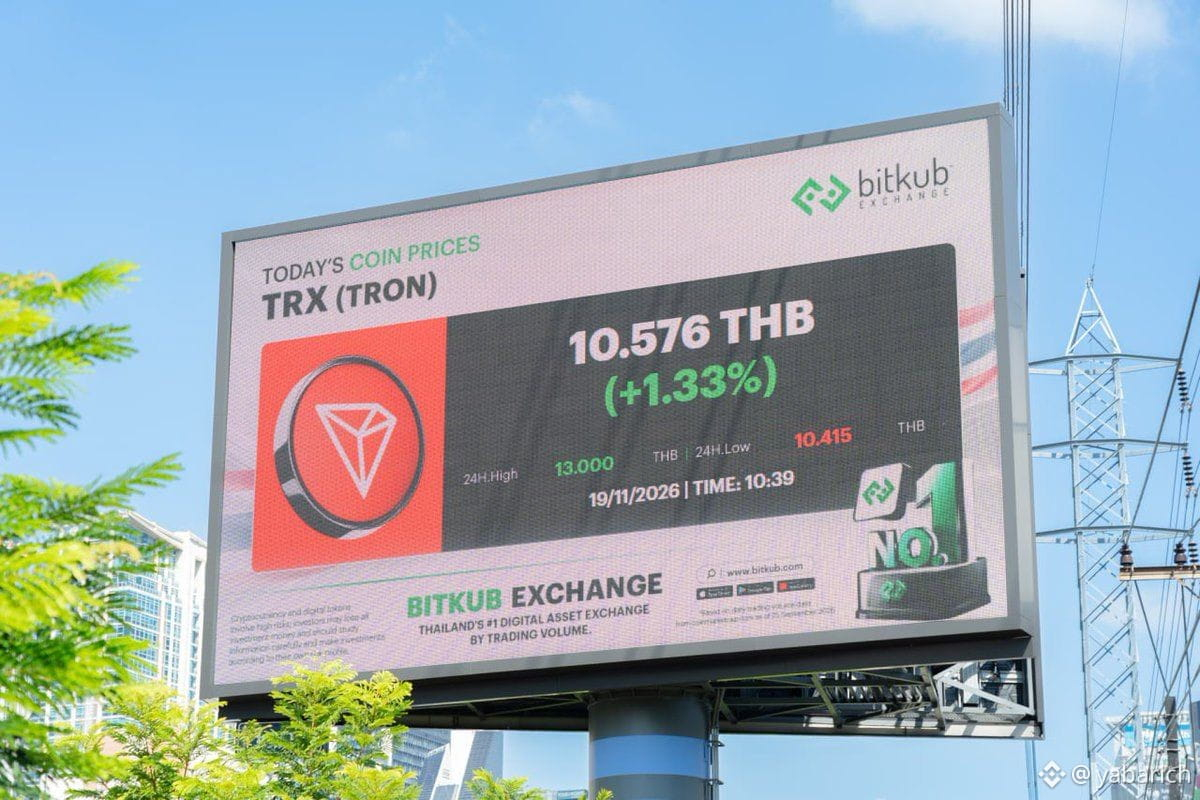
21
·
--
TRON Ecosystem Weekly Review: AI, DeFi and P2P Are Developing Along Different Paths.🔗 TRON Ecosystem Weekly Review: AI, DeFi and P2P Are Developing Along Different Paths.
The latest ecosystem recap points to activity across three areas:
🤖 New AI agent support
📊 Fresh DeFi data
🌐 BitTorrent product and staking updates
For BitTorrent specifically:
✅ Neo PRO launched on macOS.
✅ Global installs surpassed 589.6M.
✅ BTT staking on BTTC reached an advertised maximum APY of 6.86%.
What makes this interesting is the diversity of infrastructure being developed across the ecosystem.
Consider the different problems these technologies address.
1️⃣ P2P Infrastructure
BitTorrent focuses on distributing files and improving how users interact with shared data.
Neo PRO's macOS launch represents a product-level improvement in this area.
2️⃣ DeFi Infrastructure
Decentralized finance provides mechanisms for supplying assets, borrowing, staking, and managing on-chain liquidity.
However, the economic value of these mechanisms depends on real participation, risk management, and sustainable incentives.
3️⃣ AI Agent Infrastructure
AI agents can potentially simplify complex digital workflows.
But their usefulness in blockchain applications depends on reliable data, clearly defined permissions, and secure execution.
💡 My perspective:
The most important long-term opportunity is not simply placing AI, DeFi, and P2P under the same ecosystem narrative.
It's building useful connections between them.
For example, AI-assisted interfaces could eventually help users navigate decentralized services, while blockchain infrastructure could support verifiable transactions and programmable permissions.
These are potential directions, not confirmed integrations from this weekly recap.
Likewise, BitTorrent's installation scale and BTTC staking APY do not independently demonstrate AI adoption or cross-product usage.
The next phase of ecosystem growth should be judged by measurable interoperability, active users, and real applications.
Infrastructure matters.
But infrastructure becomes valuable when separate technologies work together to solve actual user problems.
@BitTorrent_Official @JustinSun
#TRONEcoStar
#TRON #BitTorrent #BTTC #DeFi #AI
TRON Ecosystem Weekly Review: AI, DeFi and P2P Are Developing Along Different Paths.
🔗 TRON Ecosystem Weekly Review: AI, DeFi and P2P Are Developing Along Different Paths.
The latest ecosystem recap points to activity across three areas:
🤖 New AI agent support
📊 Fresh DeFi data
🌐 BitTorrent product and staking updates
For BitTorrent specifically:
✅ Neo PRO launched on macOS.
✅ Global installs surpassed 589.6M.
✅ BTT staking on BTTC reached an advertised maximum APY of 6.86%.
What makes this interesting is the diversity of infrastructure being developed across the ecosystem.
Consider the different problems these technologies address.
1️⃣ P2P Infrastructure
BitTorrent focuses on distributing files and improving how users interact with shared data.
Neo PRO's macOS launch represents a product-level improvement in this area.
2️⃣ DeFi Infrastructure
Decentralized finance provides mechanisms for supplying assets, borrowing, staking, and managing on-chain liquidity.
However, the economic value of these mechanisms depends on real participation, risk management, and sustainable incentives.
3️⃣ AI Agent Infrastructure
AI agents can potentially simplify complex digital workflows.
But their usefulness in blockchain applications depends on reliable data, clearly defined permissions, and secure execution.
💡 My perspective:
The most important long-term opportunity is not simply placing AI, DeFi, and P2P under the same ecosystem narrative.
It's building useful connections between them.
For example, AI-assisted interfaces could eventually help users navigate decentralized services, while blockchain infrastructure could support verifiable transactions and programmable permissions.
These are potential directions, not confirmed integrations from this weekly recap.
Likewise, BitTorrent's installation scale and BTTC staking APY do not independently demonstrate AI adoption or cross-product usage.
The next phase of ecosystem growth should be judged by measurable interoperability, active users, and real applications.
Infrastructure matters.
But infrastructure becomes valuable when separate technologies work together to solve actual user problems.
@BitTorrent_Official @Justin Sun孙宇晨
#TRONEcoStar
#TRON #BitTorrent #BTTC #DeFi #AI
202
·
--
📊 JustLend 上 BTT 供应规模突破 104 万美元:这说明了什么资金效率问题?
JustLend 报告称,$BTT 的总供应资产价值已超过 104 万美元。
这是一个值得关注的里程碑,但更重要的问题是:
这些供应资金的利用效率究竟如何?
在去中心化借贷市场中,供应资产和借入资产代表两种不同的行为。
供应者提供流动性。
借款者创造对流动性的需求。
两者之间的关系,可以通过资金利用率来观察。
考虑两种假设情况:
🔹 低利用率
市场可能拥有大量供应资产,但实际借款规模较小。
这意味着市场拥有可用流动性,但借款需求可能相对有限。
🔹 高利用率
更大比例的供应资产已经被借出。
这可能反映更强的借款需求,但也可能降低可立即使用的流动性。
两种情况都不能简单判断为绝对更好。
合理的平衡取决于协议的利率模型、流动性要求和风险控制机制。
💡 我的观点:
104 万美元的里程碑,反映了 JustLend 公布的 BTT 供应资产规模。
但这一数字本身不能证明资金利用率上升、借款需求增强或协议收入增长。
要进行更有意义的评估,下一步应该关注:
1️⃣ 借款价值与资金利用率
2️⃣ 供应 APY 与借款 APY
3️⃣ BTT 供应代币数量的变化
4️⃣ 抵押与清算风险参数
同时,还需要区分代币数量和美元计价价值,因为市场价格会不断波动。
BTT 与 JustLend 的结合,为代币提供了另一个 DeFi 使用场景。
下一步需要了解的是,这些流动性能否支持持续的金融活动。
在 DeFi 中,资金供应只是起点。
资金能否得到有效利用,才是更深层的故事。
@JustinSun @BitTorrent_Official
#TRONEcoStar #BTT #JustLend #DeFi #TokenUtility
📊 JustLend 上 BTT 供应规模突破 104 万美元:这说明了什么资金效率问题?
JustLend 报告称,$BTT 的总供应资产价值已超过 104 万美元。
这是一个值得关注的里程碑,但更重要的问题是:
这些供应资金的利用效率究竟如何?
在去中心化借贷市场中,供应资产和借入资产代表两种不同的行为。
供应者提供流动性。
借款者创造对流动性的需求。
两者之间的关系,可以通过资金利用率来观察。
考虑两种假设情况:
🔹 低利用率
市场可能拥有大量供应资产,但实际借款规模较小。
这意味着市场拥有可用流动性,但借款需求可能相对有限。
🔹 高利用率
更大比例的供应资产已经被借出。
这可能反映更强的借款需求,但也可能降低可立即使用的流动性。
两种情况都不能简单判断为绝对更好。
合理的平衡取决于协议的利率模型、流动性要求和风险控制机制。
💡 我的观点:
104 万美元的里程碑,反映了 JustLend 公布的 BTT 供应资产规模。
但这一数字本身不能证明资金利用率上升、借款需求增强或协议收入增长。
要进行更有意义的评估,下一步应该关注:
1️⃣ 借款价值与资金利用率
2️⃣ 供应 APY 与借款 APY
3️⃣ BTT 供应代币数量的变化
4️⃣ 抵押与清算风险参数
同时,还需要区分代币数量和美元计价价值,因为市场价格会不断波动。
BTT 与 JustLend 的结合,为代币提供了另一个 DeFi 使用场景。
下一步需要了解的是,这些流动性能否支持持续的金融活动。
在 DeFi 中,资金供应只是起点。
资金能否得到有效利用,才是更深层的故事。
@Justin Sun孙宇晨 @BitTorrent_Official
#TRONEcoStar #BTT #JustLend #DeFi #TokenUtility
4
Log in to explore more content
Join global crypto users on Binance Square
⚡️ Get latest and useful information about crypto.
💬 Trusted by the world’s largest crypto exchange.
👍 Discover real insights from verified creators.
Email / Phone number
Trending Topics
BTCReboundsAbove$60KAmidWhaleDipBuying
48,658 views
267 Discussing
Abraxas Capital, Other Whales Buy the BTC Dip as Bitcoin Briefly Reclaims $60,000
Binance News
·31 Likes
·58.6k views
SolanaSets2027RoadmapToDoubleComputeCapacity
32,395 views
667 Discussing
CaliforniaNvidiaProbeExaminesPotentialCriminalViolations
8,546 views
97 Discussing