

Jack 杰克
2.3k Posts

Jack 杰克
 Square Verified
Report
Block User
Crypto KOL | Market moves & insights daily | X: @WispOfDeFi
Open Trade
Frequent Trader
5.8 Years
140 Following
12.8K+ Followers
8.7K+ Liked
Posts
Portfolio
All
Quotes
Videos
Live
·
--
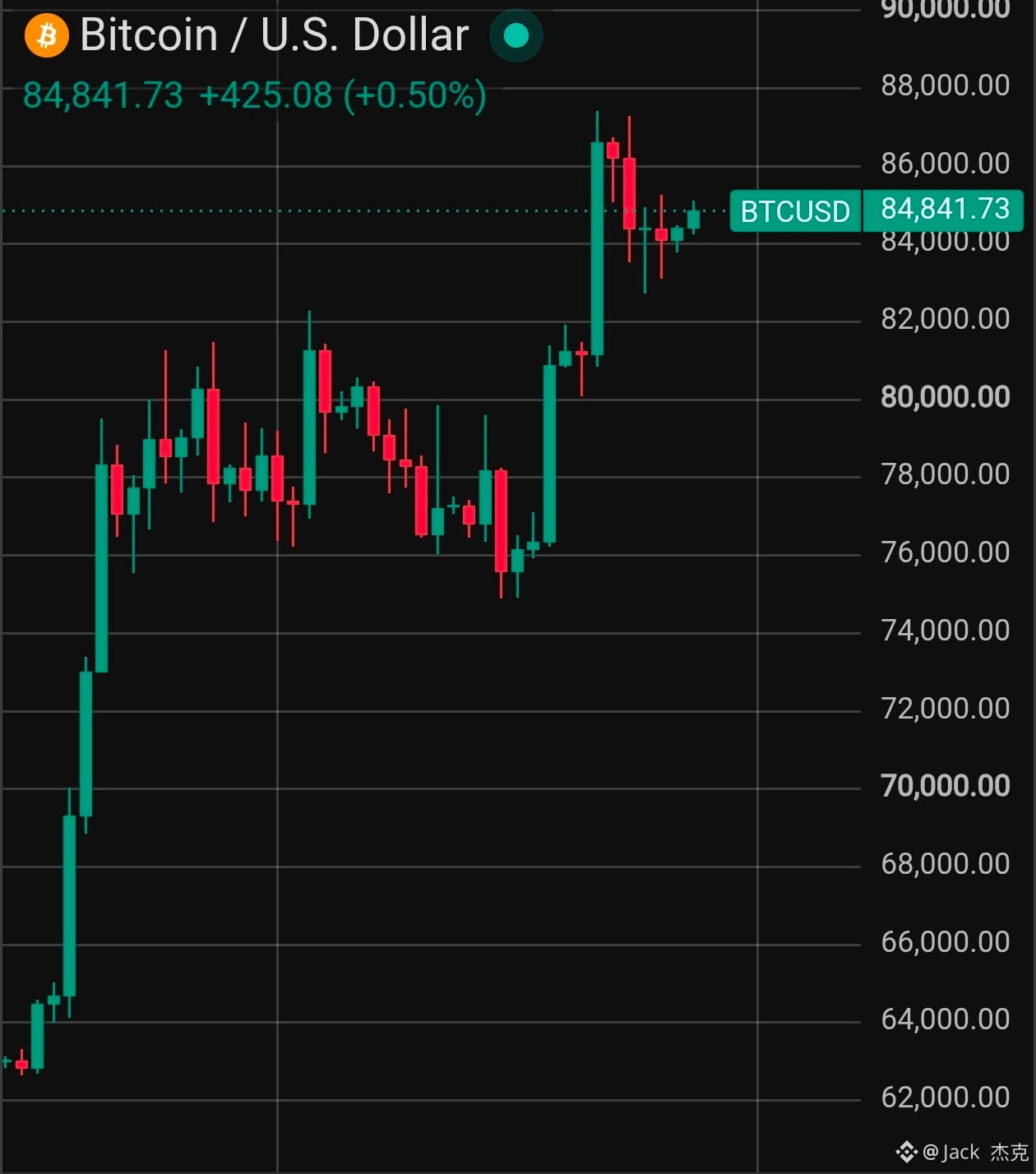
$BTC is taking a breather after the recent breakout.
Price is holding the higher range, but the market is clearly waiting for the next confirmation.
If buyers step back in, the momentum could continue.
If not, a deeper retest wouldn’t be surprising.
No need to chase it here.
Let Bitcoin show the next move.
#BTC #Crypto #Binance
$BTC is taking a breather after the recent breakout.
Price is holding the higher range, but the market is clearly waiting for the next confirmation.
If buyers step back in, the momentum could continue.
If not, a deeper retest wouldn’t be surprising.
No need to chase it here.
Let Bitcoin show the next move.
#BTC #Crypto #Binance
Price is holding the higher range, but the market is clearly waiting for the next confirmation.
If buyers step back in, the momentum could continue.
If not, a deeper retest wouldn’t be surprising.
No need to chase it here.
Let Bitcoin show the next move.
#BTC #Crypto #Binance
13
10
1.2k
·
--
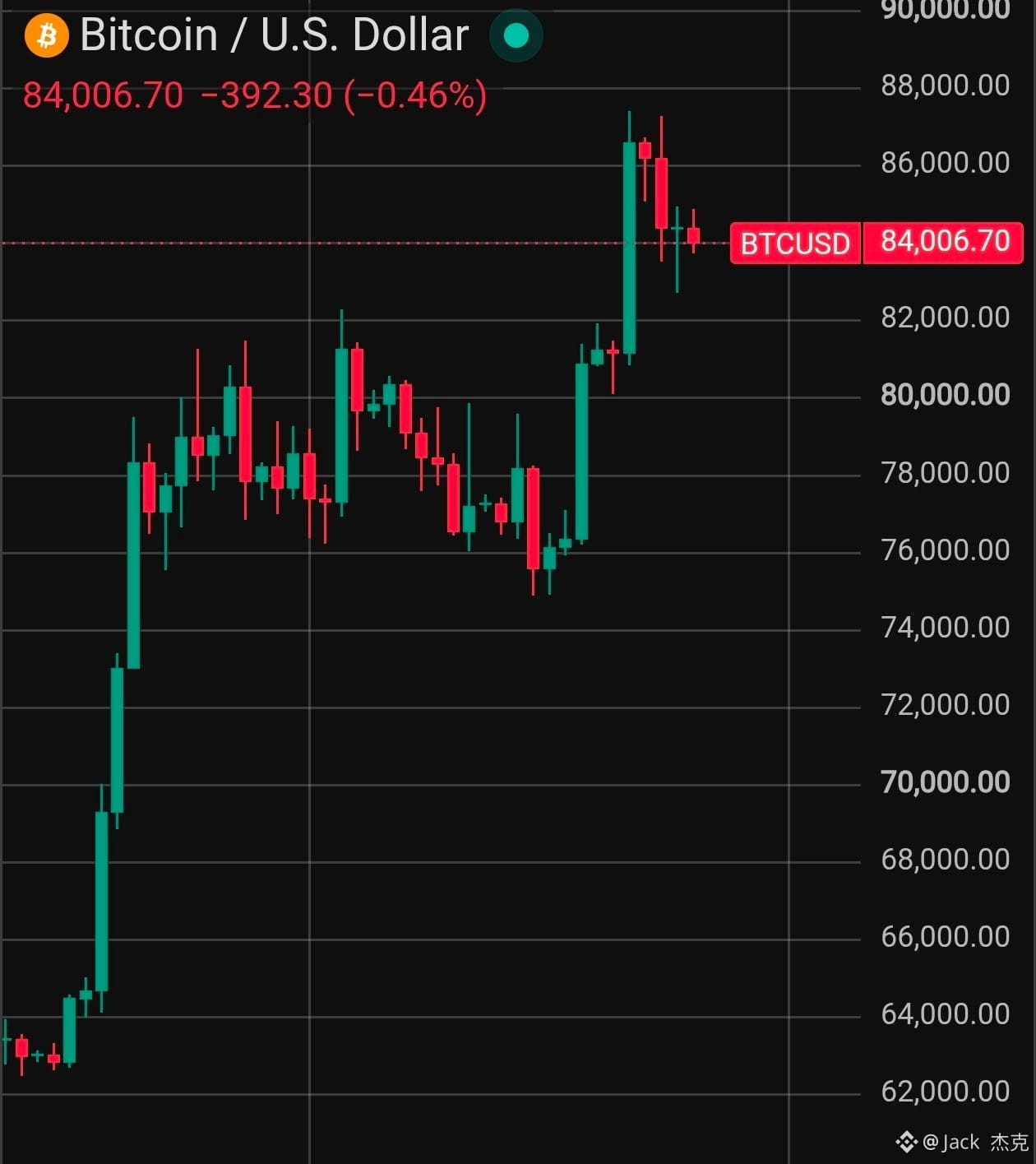
$BTC is consolidating after a sharp breakout.
$BTC pushed toward $87K before facing rejection and pulling back toward $84K.
The key now is whether buyers can defend the $84K–$83K area and regain momentum.
On the upside, $85K–$87K remains the zone to watch.
A clean reclaim could bring the recent highs back into focus, while losing $83K would weaken the short term structure.
For now, I’m watching price reaction rather than chasing the move.
#Bitcoin #BTC #Crypto
$BTC is consolidating after a sharp breakout.
$BTC pushed toward $87K before facing rejection and pulling back toward $84K.
The key now is whether buyers can defend the $84K–$83K area and regain momentum.
On the upside, $85K–$87K remains the zone to watch.
A clean reclaim could bring the recent highs back into focus, while losing $83K would weaken the short term structure.
For now, I’m watching price reaction rather than chasing the move.
#Bitcoin #BTC #Crypto
$BTC pushed toward $87K before facing rejection and pulling back toward $84K.
The key now is whether buyers can defend the $84K–$83K area and regain momentum.
On the upside, $85K–$87K remains the zone to watch.
A clean reclaim could bring the recent highs back into focus, while losing $83K would weaken the short term structure.
For now, I’m watching price reaction rather than chasing the move.
#Bitcoin #BTC #Crypto
12
8
1.2k
·
--
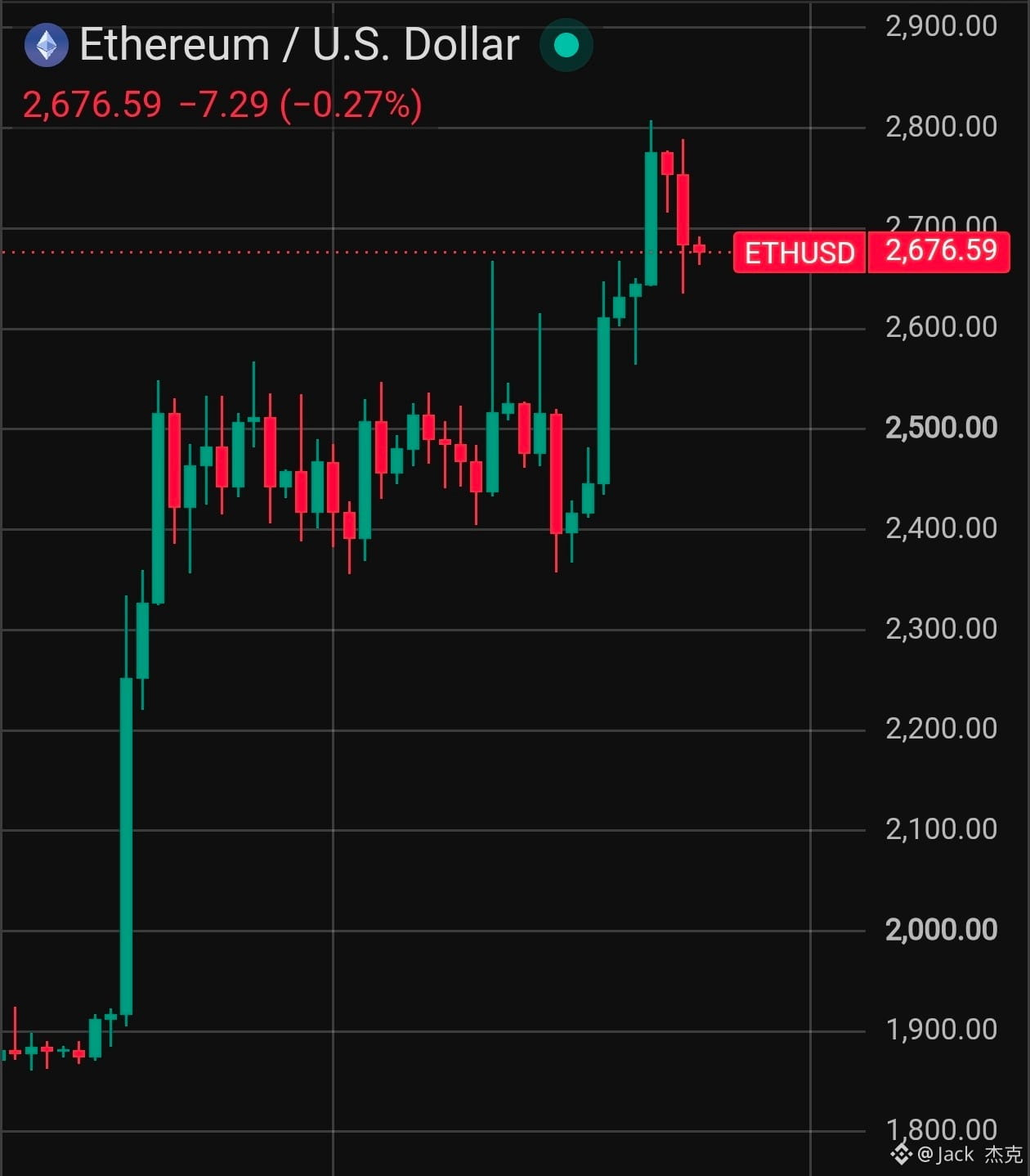
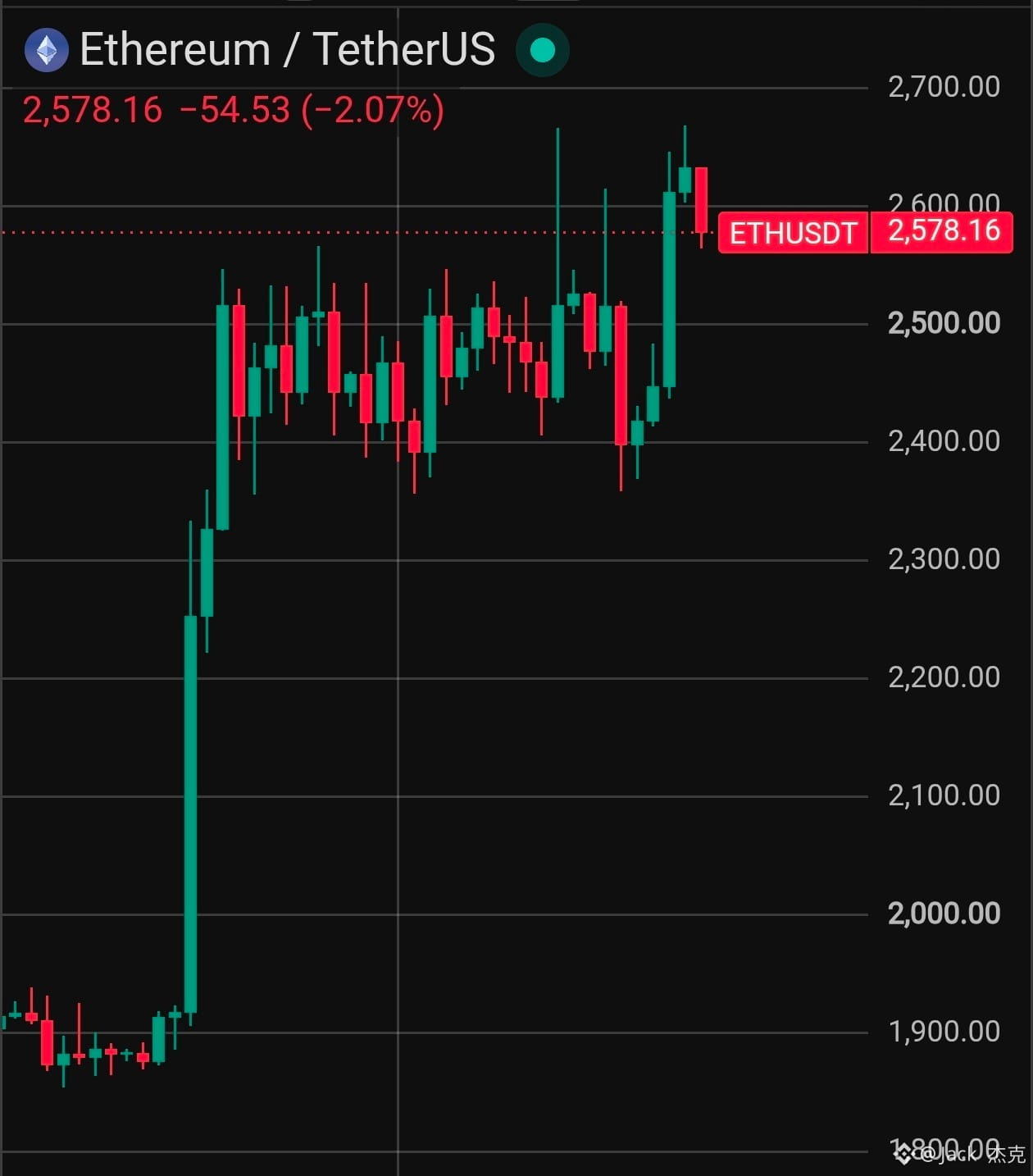
Ethereum is showing an interesting setup.
After a strong move higher, $ETH is now facing some selling pressure near the recent highs.
The structure still looks constructive, but this is where confirmation matters.
I’m watching how price reacts around the current zone before considering the next move.
Let ETH show the direction. Don’t chase the candle.
#ETH #Ethereum #crypto
Ethereum is showing an interesting setup.
After a strong move higher, $ETH is now facing some selling pressure near the recent highs.
The structure still looks constructive, but this is where confirmation matters.
I’m watching how price reacts around the current zone before considering the next move.
Let ETH show the direction. Don’t chase the candle.
#ETH #Ethereum #crypto
After a strong move higher, $ETH is now facing some selling pressure near the recent highs.
The structure still looks constructive, but this is where confirmation matters.
I’m watching how price reacts around the current zone before considering the next move.
Let ETH show the direction. Don’t chase the candle.
#ETH #Ethereum #crypto
4
1.2k
·
--
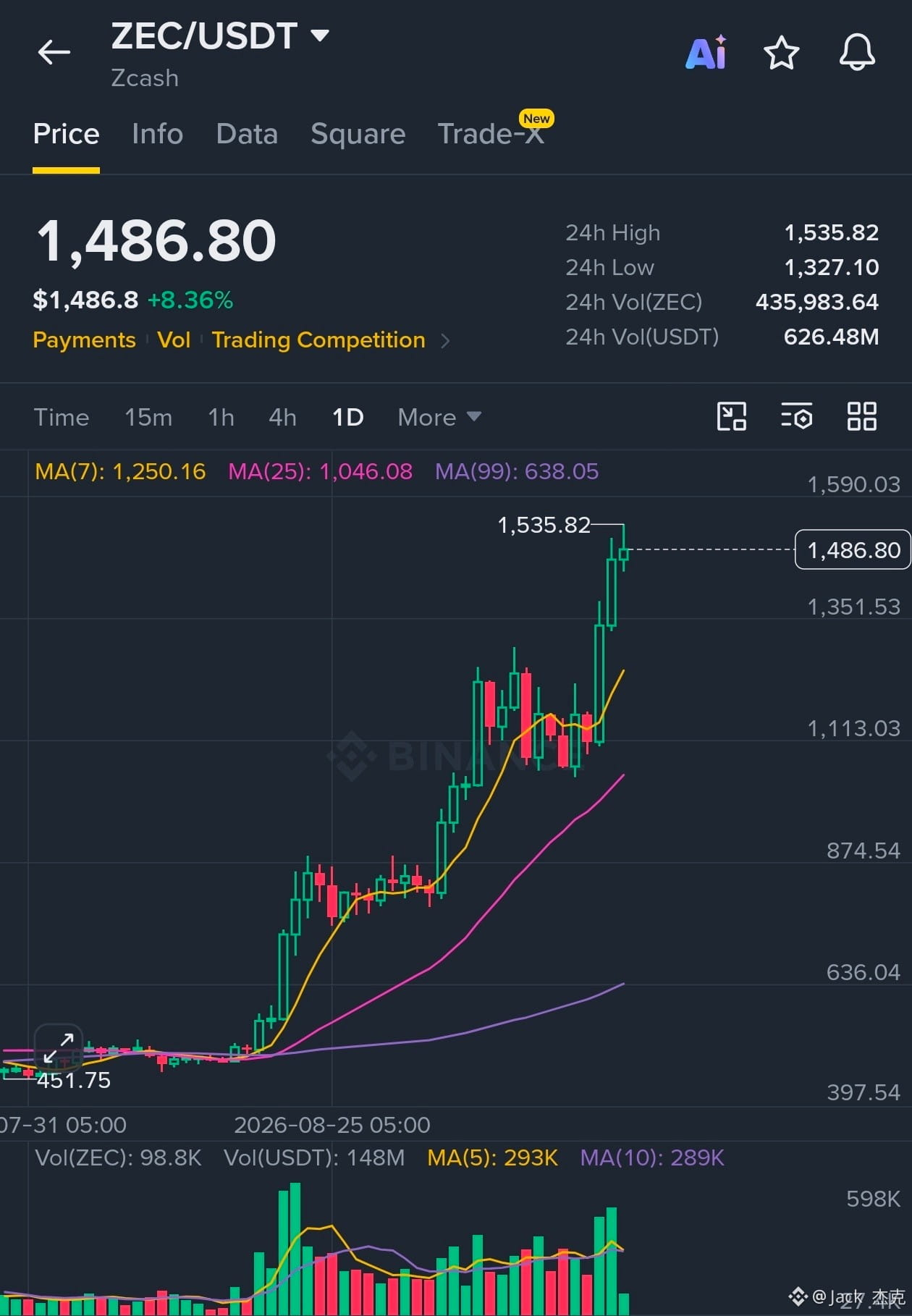
ZEC is showing serious strength.
$ZEC is trading around $1,486, with the daily chart maintaining a strong bullish structure after reaching $1,535.
Price remains above the 7D, 25D and 99D moving averages, while volume has picked up alongside the latest move.
Now, $1,535 is the level to watch.
A clean breakout and hold could signal another leg higher. If price gets rejected, the next thing I’d watch is how the retest develops.
Strong momentum, but confirmation matters. Don’t chase the candle.
#ZEC #Zcash #Crypto #Altcoins #BinanceSquare
ZEC is showing serious strength.
$ZEC is trading around $1,486, with the daily chart maintaining a strong bullish structure after reaching $1,535.
Price remains above the 7D, 25D and 99D moving averages, while volume has picked up alongside the latest move.
Now, $1,535 is the level to watch.
A clean breakout and hold could signal another leg higher. If price gets rejected, the next thing I’d watch is how the retest develops.
Strong momentum, but confirmation matters. Don’t chase the candle.
#ZEC #Zcash #Crypto #Altcoins #BinanceSquare
$ZEC is trading around $1,486, with the daily chart maintaining a strong bullish structure after reaching $1,535.
Price remains above the 7D, 25D and 99D moving averages, while volume has picked up alongside the latest move.
Now, $1,535 is the level to watch.
A clean breakout and hold could signal another leg higher. If price gets rejected, the next thing I’d watch is how the retest develops.
Strong momentum, but confirmation matters. Don’t chase the candle.
#ZEC #Zcash #Crypto #Altcoins #BinanceSquare
1
5
1.5k
·
--
Which coin are you holding for a long time?
$SOL
$ETH
$BTC
Which coin are you holding for a long time?
$SOL
$ETH
$BTC
$SOL
$ETH
$BTC
1
5
1.2k
·
--
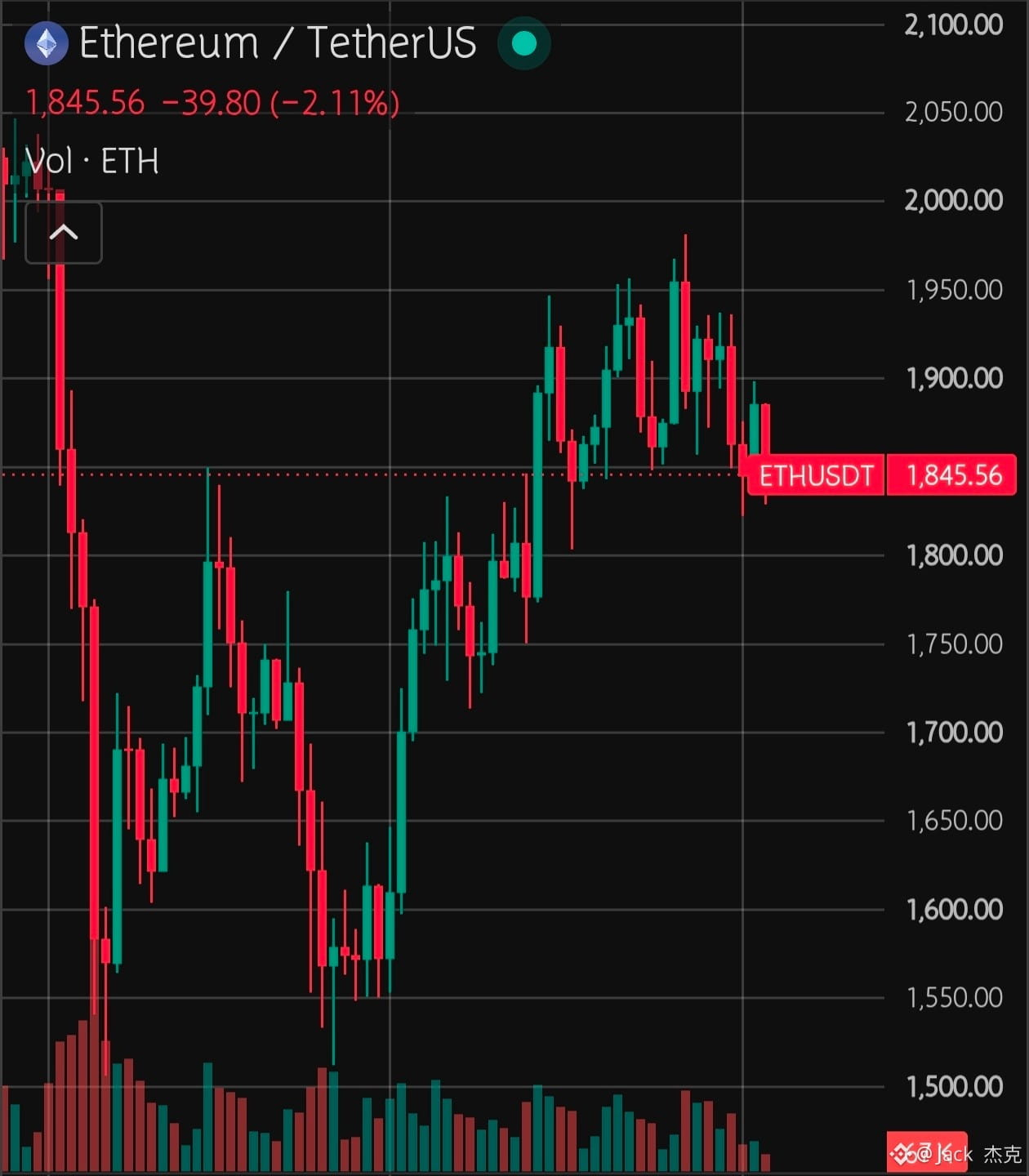
$ETH is testing a critical support zone.
Bulls need to defend the 1,820 to 1,840 range to keep the recovery structure intact.
A successful hold could fuel another push toward 1,900+, while a breakdown would likely trigger further downside.
Watch the reaction, not the prediction. 👀
$ETH is testing a critical support zone.
Bulls need to defend the 1,820 to 1,840 range to keep the recovery structure intact.
A successful hold could fuel another push toward 1,900+, while a breakdown would likely trigger further downside.
Watch the reaction, not the prediction. 👀
Bulls need to defend the 1,820 to 1,840 range to keep the recovery structure intact.
A successful hold could fuel another push toward 1,900+, while a breakdown would likely trigger further downside.
Watch the reaction, not the prediction. 👀
3
1.2k
·
--
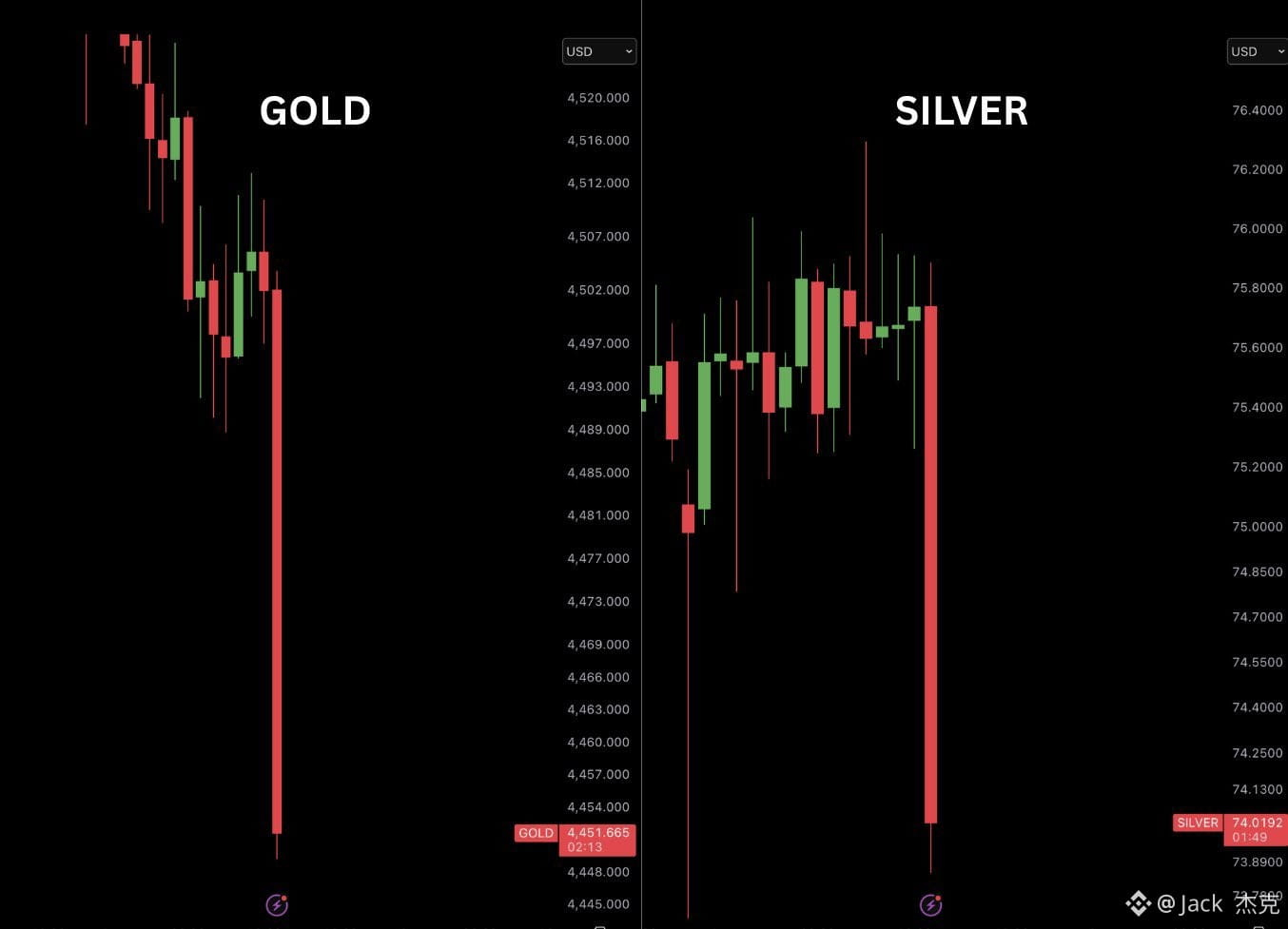
🚨 $481,000,000,000 wiped out from GOLD and SILVER in just 60 minutes, following on the news that Iran will end US talks
🚨 $481,000,000,000 wiped out from GOLD and SILVER in just 60 minutes, following on the news that Iran will end US talks
5
1.1k
·
--
This is unbelievable.
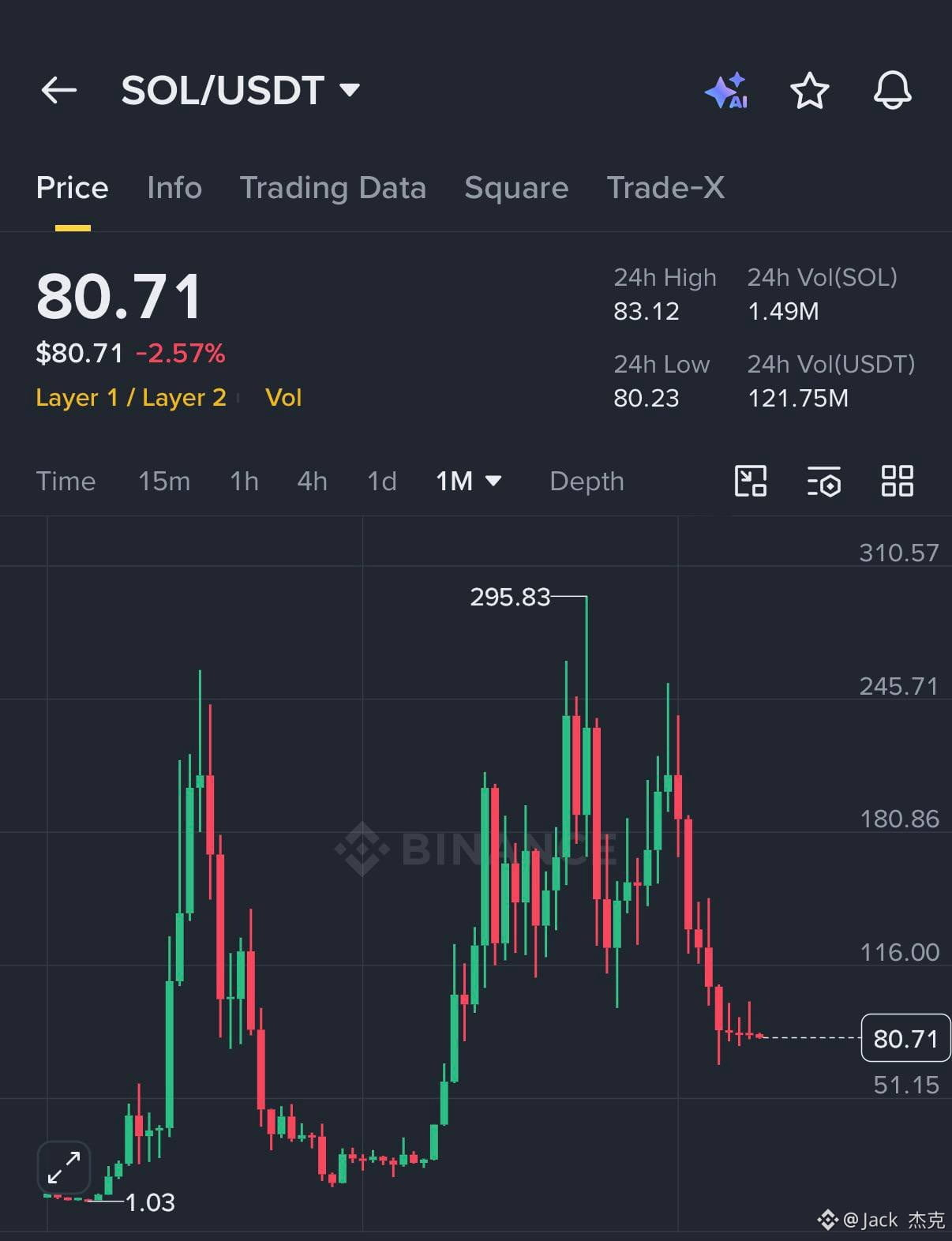
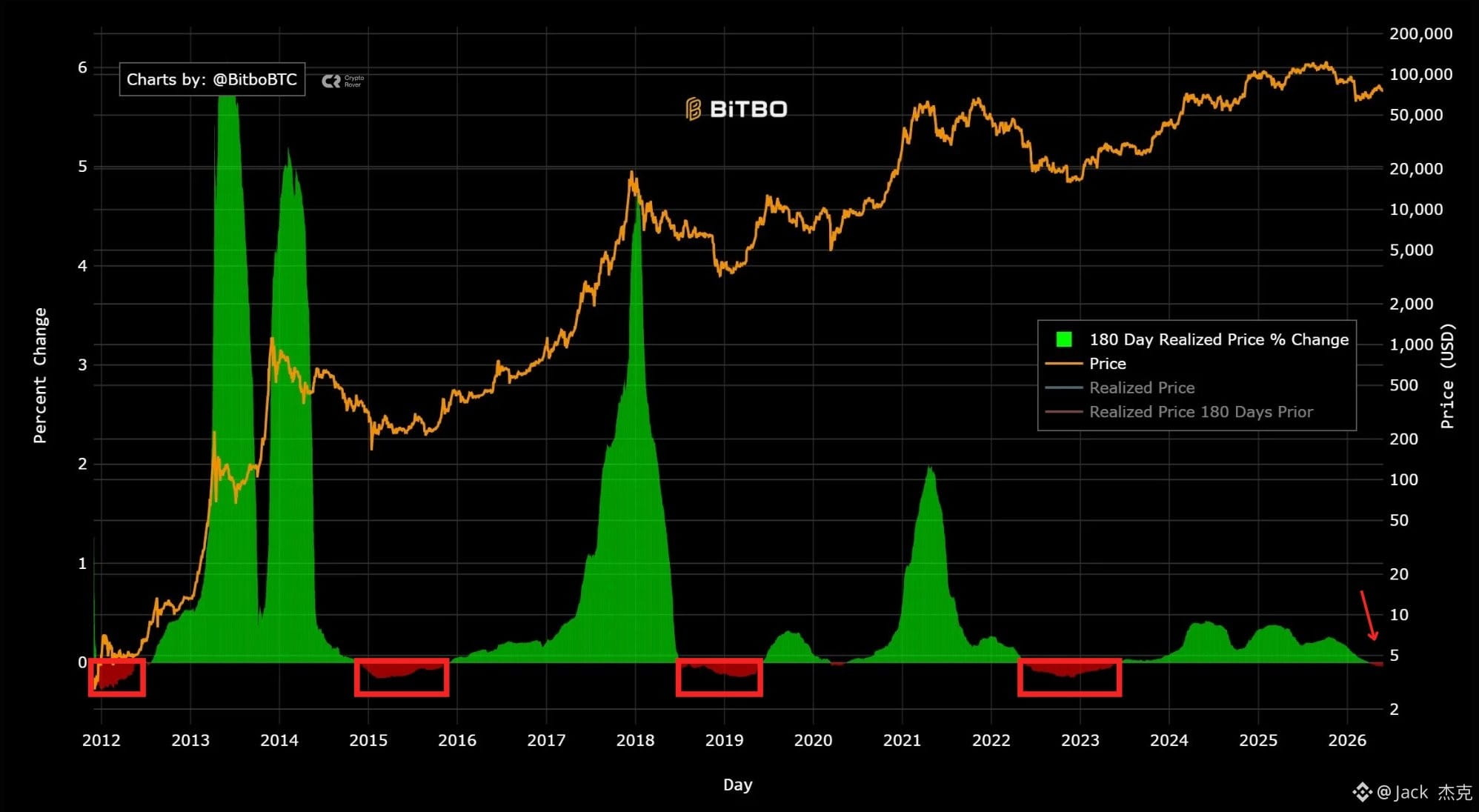
$SOL just closed 8 consecutive red monthly candles for the first time in history.
This is unbelievable.
$SOL just closed 8 consecutive red monthly candles for the first time in history.
$SOL just closed 8 consecutive red monthly candles for the first time in history.
2
3
276
·
--
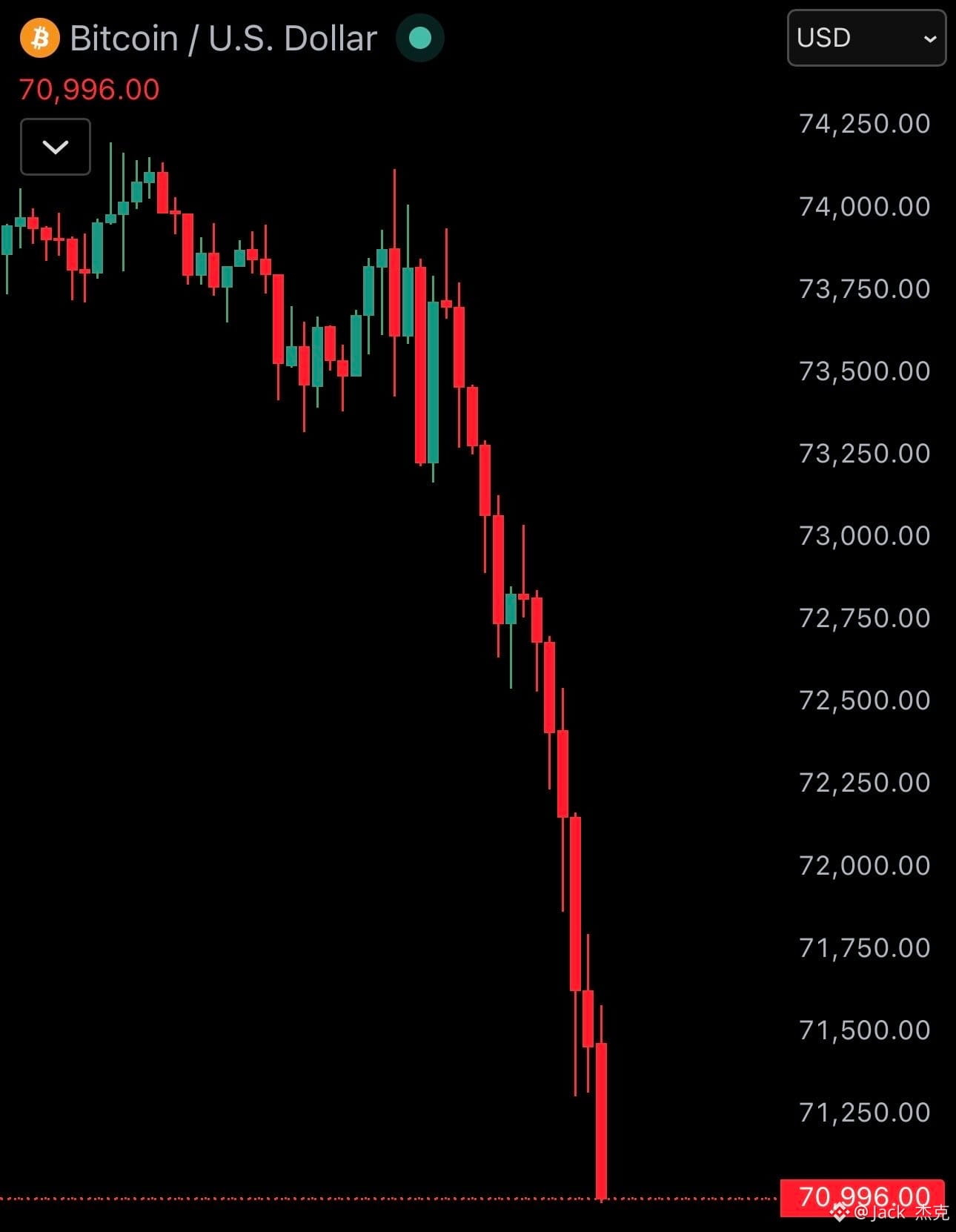
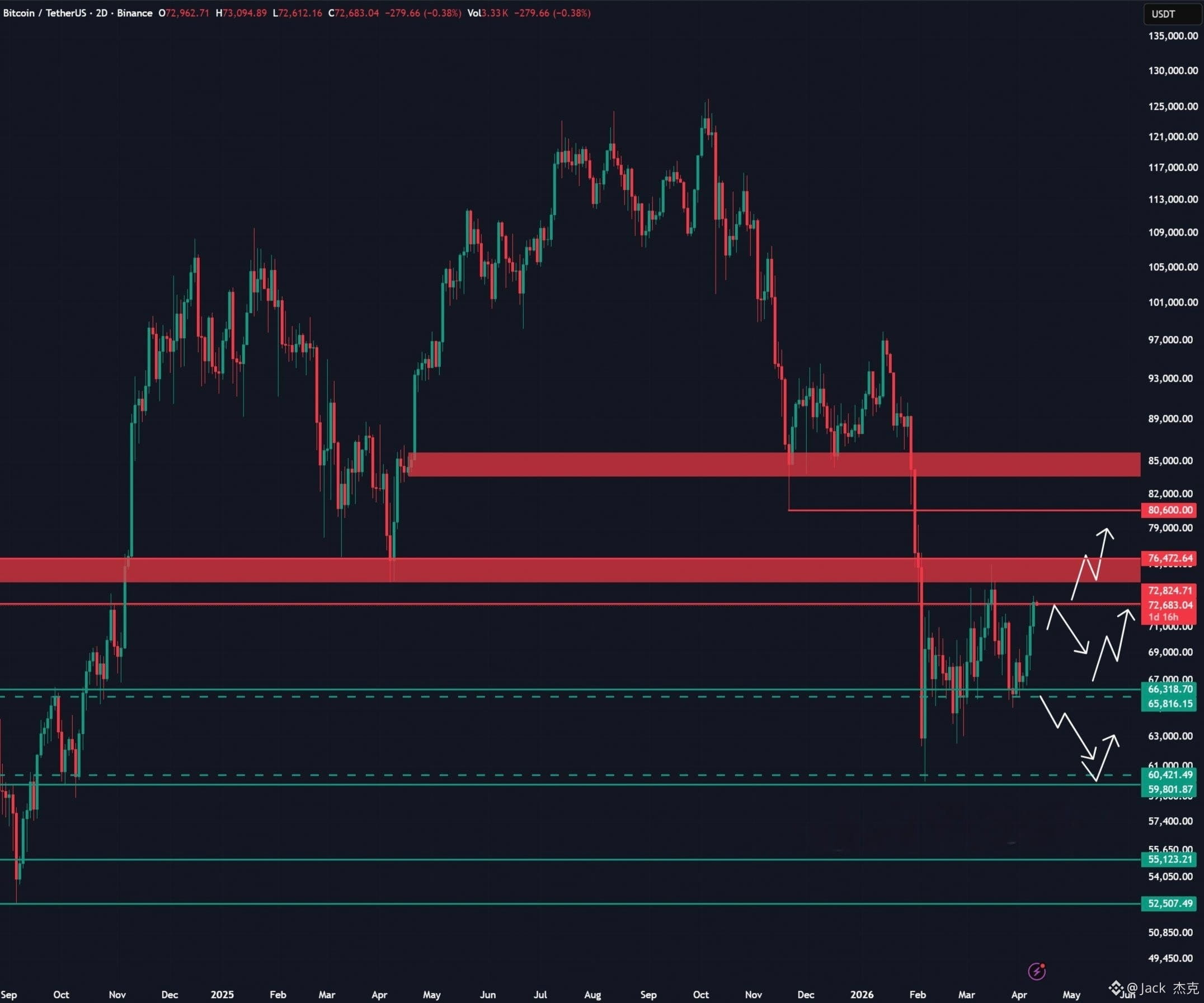
$BTC is hovering around the $73,000 level.
A reclaim of the $73,000-$74,000 level could give one final push to Bitcoin.
After that, I'm expecting a reversal to new lows.
$BTC is hovering around the $73,000 level.
A reclaim of the $73,000-$74,000 level could give one final push to Bitcoin.
After that, I'm expecting a reversal to new lows.
A reclaim of the $73,000-$74,000 level could give one final push to Bitcoin.
After that, I'm expecting a reversal to new lows.
3
40
·
--
Article
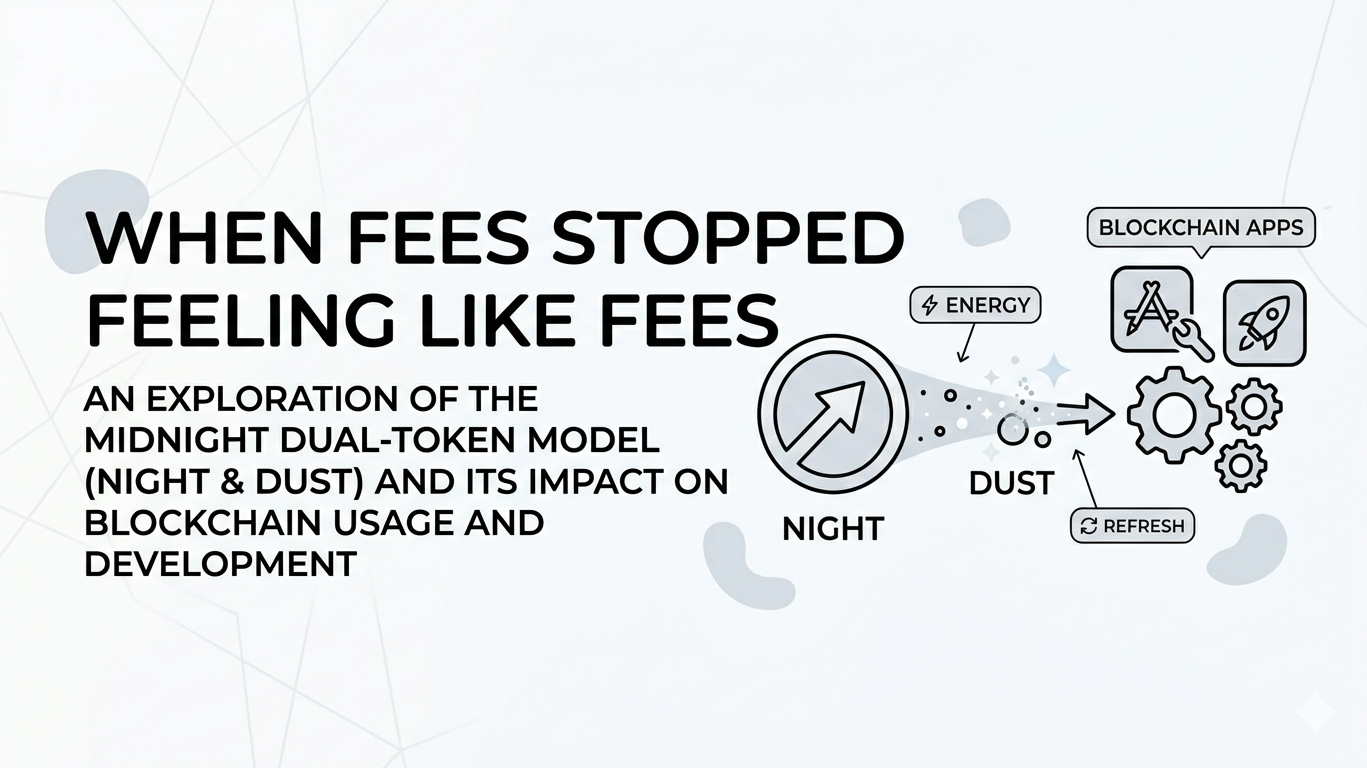
WHEN FEES STOPPED FEELING LIKE FEESAt first, I rolled my eyes at Midnight’s NIGHT and DUST model.
Another token idea. Another attempt to fix gas fees.
But then I took time to really understand it.
And everything changed.
Because this is not really about fees.
It is about how blockchains are funded.
Right now, most networks work the same way.
You want to do something, you pay.
Every click, every transaction, every action costs money.
It sounds fine until you try to build or use an app.
Then it becomes a problem.
Users need wallets.
They need tokens.
They need to understand gas.
If they do not, they leave.
I have seen this happen too many times.
When I first saw Midnight split NIGHT and DUST, I thought it was nothing new.
One token for security, one for usage.
But I was wrong.
The key idea is simple.
You do not buy DUST. You generate it.
That changes everything.
Instead of paying every time you use the network,
you use a resource that refills over time.
Like a battery that charges when you hold NIGHT.
For developers, this is huge.
You do not need users to hold tokens just to use your app.
You can hold NIGHT, generate DUST, and cover the cost.
Users do not see fees.
They do not think about gas.
They just use the app.
And that is how it should be.
Right now, many crypto apps feel complicated.
Connect wallet.
Approve token.
Check gas.
Hope it works.
Too many steps. Too much friction.
Midnight removes most of that.
The cost is still there.
But it becomes invisible.
And that matters.
The best systems hide complexity from users.
They make things simple.
This is not just better experience.
It is a deeper change.
In most blockchains, one token does everything.
It holds value and pays for execution.
So when price goes up, fees go up.
When demand rises, everything gets expensive.
It is unpredictable.
Midnight separates that.
NIGHT handles value, security, and governance.
DUST handles execution.
Since DUST is not tradable,
it is not affected by market speculation.
That means more stability.
More predictable costs.
Easier planning for developers and businesses.
You can estimate expenses.
You can build for the long term.
There is also a regulatory side.
DUST is not money.
It is not transferred. It is consumed.
That difference matters.
It allows privacy in execution
without hiding financial value.
A balance most systems struggle to achieve.
I am still cautious.
Good ideas do not always succeed.
But this model feels closer to real infrastructure.
Usage does not constantly drain users.
Cost is generated, not paid every time.
And that is the bigger shift.
Instead of paying every time you interact,
you invest once and let the system run.
Less friction.
Less noise.
Less visible cost.
More like real infrastructure.
Maybe that is the point.
@MidnightNetwork | $NIGHT | #night
WHEN FEES STOPPED FEELING LIKE FEES
At first, I rolled my eyes at Midnight’s NIGHT and DUST model.
Another token idea. Another attempt to fix gas fees.
But then I took time to really understand it.
And everything changed.
Because this is not really about fees.
It is about how blockchains are funded.
Right now, most networks work the same way.
You want to do something, you pay.
Every click, every transaction, every action costs money.
It sounds fine until you try to build or use an app.
Then it becomes a problem.
Users need wallets.
They need tokens.
They need to understand gas.
If they do not, they leave.
I have seen this happen too many times.
When I first saw Midnight split NIGHT and DUST, I thought it was nothing new.
One token for security, one for usage.
But I was wrong.
The key idea is simple.
You do not buy DUST. You generate it.
That changes everything.
Instead of paying every time you use the network,
you use a resource that refills over time.
Like a battery that charges when you hold NIGHT.
For developers, this is huge.
You do not need users to hold tokens just to use your app.
You can hold NIGHT, generate DUST, and cover the cost.
Users do not see fees.
They do not think about gas.
They just use the app.
And that is how it should be.
Right now, many crypto apps feel complicated.
Connect wallet.
Approve token.
Check gas.
Hope it works.
Too many steps. Too much friction.
Midnight removes most of that.
The cost is still there.
But it becomes invisible.
And that matters.
The best systems hide complexity from users.
They make things simple.
This is not just better experience.
It is a deeper change.
In most blockchains, one token does everything.
It holds value and pays for execution.
So when price goes up, fees go up.
When demand rises, everything gets expensive.
It is unpredictable.
Midnight separates that.
NIGHT handles value, security, and governance.
DUST handles execution.
Since DUST is not tradable,
it is not affected by market speculation.
That means more stability.
More predictable costs.
Easier planning for developers and businesses.
You can estimate expenses.
You can build for the long term.
There is also a regulatory side.
DUST is not money.
It is not transferred. It is consumed.
That difference matters.
It allows privacy in execution
without hiding financial value.
A balance most systems struggle to achieve.
I am still cautious.
Good ideas do not always succeed.
But this model feels closer to real infrastructure.
Usage does not constantly drain users.
Cost is generated, not paid every time.
And that is the bigger shift.
Instead of paying every time you interact,
you invest once and let the system run.
Less friction.
Less noise.
Less visible cost.
More like real infrastructure.
Maybe that is the point.
@MidnightNetwork | $NIGHT | #night
Another token idea. Another attempt to fix gas fees.
But then I took time to really understand it.
And everything changed.
Because this is not really about fees.
It is about how blockchains are funded.
Right now, most networks work the same way.
You want to do something, you pay.
Every click, every transaction, every action costs money.
It sounds fine until you try to build or use an app.
Then it becomes a problem.
Users need wallets.
They need tokens.
They need to understand gas.
If they do not, they leave.
I have seen this happen too many times.
When I first saw Midnight split NIGHT and DUST, I thought it was nothing new.
One token for security, one for usage.
But I was wrong.
The key idea is simple.
You do not buy DUST. You generate it.
That changes everything.
Instead of paying every time you use the network,
you use a resource that refills over time.
Like a battery that charges when you hold NIGHT.
For developers, this is huge.
You do not need users to hold tokens just to use your app.
You can hold NIGHT, generate DUST, and cover the cost.
Users do not see fees.
They do not think about gas.
They just use the app.
And that is how it should be.
Right now, many crypto apps feel complicated.
Connect wallet.
Approve token.
Check gas.
Hope it works.
Too many steps. Too much friction.
Midnight removes most of that.
The cost is still there.
But it becomes invisible.
And that matters.
The best systems hide complexity from users.
They make things simple.
This is not just better experience.
It is a deeper change.
In most blockchains, one token does everything.
It holds value and pays for execution.
So when price goes up, fees go up.
When demand rises, everything gets expensive.
It is unpredictable.
Midnight separates that.
NIGHT handles value, security, and governance.
DUST handles execution.
Since DUST is not tradable,
it is not affected by market speculation.
That means more stability.
More predictable costs.
Easier planning for developers and businesses.
You can estimate expenses.
You can build for the long term.
There is also a regulatory side.
DUST is not money.
It is not transferred. It is consumed.
That difference matters.
It allows privacy in execution
without hiding financial value.
A balance most systems struggle to achieve.
I am still cautious.
Good ideas do not always succeed.
But this model feels closer to real infrastructure.
Usage does not constantly drain users.
Cost is generated, not paid every time.
And that is the bigger shift.
Instead of paying every time you interact,
you invest once and let the system run.
Less friction.
Less noise.
Less visible cost.
More like real infrastructure.
Maybe that is the point.
@MidnightNetwork | $NIGHT | #night
9
81
·
--
Article
SIGN: The Blockchain the Middle East NeedsThere's a quiet but very real shift happening across the Gulf right now. Governments that once moved cautiously around blockchain are now racing to embed it into their core national infrastructure. The UAE, Saudi Arabia, Qatar they're not just talking about digital transformation anymore. They're funding it, legislating it, and in some cases, building it from the ground up. And sitting in the middle of all that momentum is $SIGN, a project that honestly deserves a lot more attention than it typically gets in mainstream crypto conversations.
I want to be straightforward here. This isn't a price prediction piece. What I find genuinely interesting about Sign is the infrastructure angle and what it means for the Middle East specifically as a region trying to modernize its economic backbone at speed.
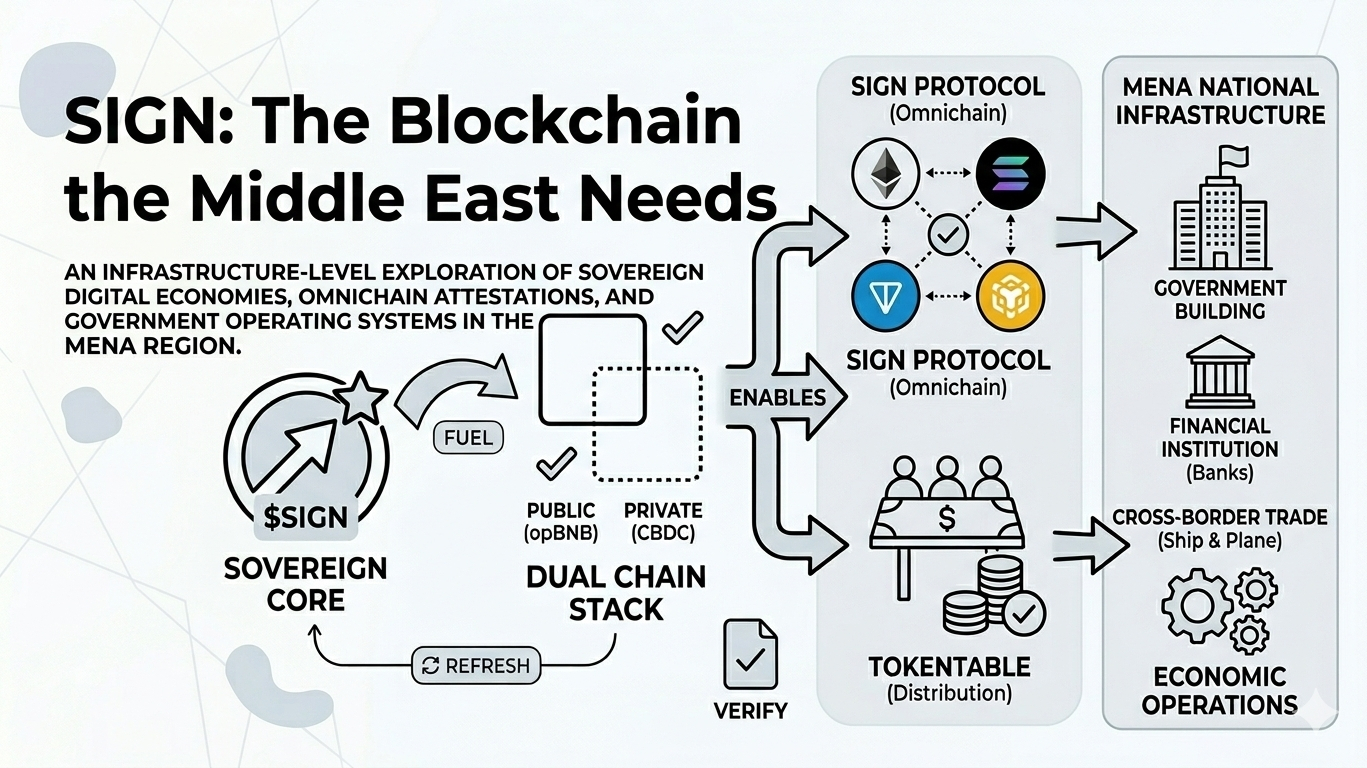
Let me explain what Sign actually does, because it gets lumped into "attestation protocol" conversations and that framing undersells it. Sign is building something they call Sovereign Infrastructure for Global Nations, and the acronym is not subtle. The full stack they've assembled includes three layers working together: a dual Sovereign Chain architecture, the Sign Protocol attestation layer, and a platform called TokenTable for programmable government-level asset distribution. That combination isn't just interesting technically. It maps almost perfectly onto the specific problems Middle Eastern governments are trying to solve right now.
The Middle East's Digital Infrastructure Problem
Here's the thing about the Gulf economies. They have the capital, they have the political will, and they have the urgency. Saudi Vision 2030 has been pushing digital economy targets for years. The UAE became the global leader in crypto adoption in 2025, with close to three million users representing roughly a third of the country's population. Crypto app downloads in the UAE surged 241 percent between 2023 and 2024. Institutional and high net worth investors accounted for over 66 percent of total crypto trading volume across the MENA region in 2025. That is not a retail speculation story. That is infrastructure money moving.
But here's what's been missing. Adoption without sovereign infrastructure is just exposure. It doesn't give governments control over identity verification, credential issuance, cross-border transaction settlement, or CBDC distribution. That gap is exactly where Sign is positioning itself, and from what I've seen, they're not just pitching governments. They're actually signing contracts with them.
What Sign Is Building and Why It Matters Here
The Sign Protocol component handles something called omnichain attestations. In plain terms, this means any piece of information, a credential, an identity document, an agreement, a government benefit claim, can be cryptographically verified and stored across multiple blockchain networks simultaneously. We're talking Ethereum, Solana, BNB Chain, TON, all accessible from a single verification layer. For a region like the Middle East where cross-border trade and labor flows are massive, that interoperability isn't a technical luxury. It's an economic necessity.
TokenTable, the distribution layer, has already processed over four billion dollars worth of token distributions across more than forty million users. Over two hundred major projects have used it. The system was built for scale and I think that matters because government subsidy disbursement, social benefit distribution, CBDC rollouts these are exactly the use cases that demand that kind of throughput. You can't run a national digital currency program on infrastructure that wasn't designed for millions of simultaneous transactions.
Then there's EthSign, the document signing component. Legal agreements, property transfers, corporate filings all verifiable on-chain and legally compliant in jurisdictions that recognize technology-neutral signature laws. For a region that processed over 34 billion dollars in digital asset transaction volume in the year ending June 2024, having verifiable on-chain documentation isn't optional anymore.
Abu Dhabi Is Already Paying Attention
This is where I think things get genuinely exciting from a regional perspective. In early March 2026, the Blockchain Centre Abu Dhabi announced it plans to use Sign's technology for secure data sharing among regional financial institutions. That's not a pilot program memo. That's the kind of institutional signal that usually precedes larger scale adoption. And then just days later, the Central Bank of the UAE announced it was evaluating Sign's digital infrastructure for national payment systems, specifically targeting cross-border transaction security and efficiency.
Both of those developments happened within a week of each other. Whether you track $SIGN for investment reasons or you're watching it for infrastructure deployment reasons, those announcements represent a meaningful shift in how the region is thinking about Sign. It's moving from "interesting protocol" into "potential national infrastructure layer" territory.
Sign has also committed to opening a dedicated office in Abu Dhabi in 2026. The investor base supporting that expansion includes Sequoia Capital's US, India, and China funds alongside Circle and Amber as strategic backers. YZi Labs, which is the investment arm associated with Binance's early leadership, led a 25.5 million dollar strategic round in October 2025. These aren't speculative bets. These are infrastructure bets.
The SIGN Stack as a Government Operating System
Sign's whitepaper, released in September 2025, laid out something genuinely ambitious. The dual blockchain architecture they describe uses customizable Layer 2 networks built on public Layer 1s for transparent public operations, paired with a private network specifically designed for CBDC operations. The private layer preserves transactional privacy while still being auditable by authorized parties. That design is not accidental. Governments need privacy in their financial systems. They also need transparency for anti-corruption purposes. Sign's dual chain approach handles both requirements without asking governments to choose.
The Sovereign Layer 2 Stack they're rolling out is built on opBNB, which means any government can deploy a full blockchain stack without having to engineer a chain from scratch. In practical terms a government can go from concept to operational infrastructure in weeks rather than years. For regions trying to compete in the digital economy race that timeline matters enormously.
Why This Fits the Gulf Specifically
The Middle East's regulatory environment has been moving unusually fast. The UAE's Virtual Assets Regulatory Authority established clear licensing frameworks years before comparable bodies existed in the West. ADGM in Abu Dhabi saw a 67 percent increase in new operating licenses in Q1 2025. The DIFC now hosts over 1,500 fintech and AI firms. Qatar's financial centre finalized its digital asset regulatory framework in mid-2025. These aren't random developments. They represent a region consciously engineering itself to become the global headquarters for digital finance infrastructure.
Into that environment Sign is offering exactly what makes sense: sovereign control over national digital systems without the multi-year infrastructure build. A government adopting Sign's stack doesn't surrender sovereignty to a private company. The open source architecture, the W3C-compliant credential standards, the on-chain governance mechanisms all of it is designed to keep the underlying layer controllable and auditable by the governments deploying it.
I think about the Dubai Real Estate Tokenisation Project that launched in 2025, where the Dubai Land Department became the first real estate registration entity in the region to implement property title deed tokenization. That kind of use case requires exactly what Sign is building: verifiable identity, cryptographically secured agreements, and scalable distribution infrastructure. It's not a coincidence that those dots are connecting in the same geography.
What Comes Next
Sign's 2026 roadmap is focused on onboarding more national governments and expanding the team with specialists in zero-knowledge proofs and cross-chain interoperability. The Orange Dynasty SuperApp, which integrates on-chain credential verification with social features and rewards, is part of the broader consumer-facing layer that sits on top of all the infrastructure work.
The $SIGN token itself has a total supply of ten billion with 40 percent allocated to community incentives. Staking mechanisms, governance participation, and fee utilities across the protocol ecosystem give the token real function beyond speculation. For the Middle East specifically, where institutional investors now drive the majority of regional crypto volume, a token with genuine utility and sovereign-level infrastructure backing is a different category of asset than most of what gets listed.
Look, I'm not saying Sign is without risk. Early-stage sovereign infrastructure deployments are complex and regulatory timelines in this space shift constantly. But what I will say is this: the Middle East is in the middle of building its digital economic future and it is actively looking for the infrastructure layer that makes it run. Sign is building that layer. And right now, the region is paying attention.
@SignOfficial | $SIGN | #SignDigitalSovereignInfra
SIGN: The Blockchain the Middle East Needs
There's a quiet but very real shift happening across the Gulf right now. Governments that once moved cautiously around blockchain are now racing to embed it into their core national infrastructure. The UAE, Saudi Arabia, Qatar they're not just talking about digital transformation anymore. They're funding it, legislating it, and in some cases, building it from the ground up. And sitting in the middle of all that momentum is $SIGN , a project that honestly deserves a lot more attention than it typically gets in mainstream crypto conversations.
I want to be straightforward here. This isn't a price prediction piece. What I find genuinely interesting about Sign is the infrastructure angle and what it means for the Middle East specifically as a region trying to modernize its economic backbone at speed.
Let me explain what Sign actually does, because it gets lumped into "attestation protocol" conversations and that framing undersells it. Sign is building something they call Sovereign Infrastructure for Global Nations, and the acronym is not subtle. The full stack they've assembled includes three layers working together: a dual Sovereign Chain architecture, the Sign Protocol attestation layer, and a platform called TokenTable for programmable government-level asset distribution. That combination isn't just interesting technically. It maps almost perfectly onto the specific problems Middle Eastern governments are trying to solve right now.
The Middle East's Digital Infrastructure Problem
Here's the thing about the Gulf economies. They have the capital, they have the political will, and they have the urgency. Saudi Vision 2030 has been pushing digital economy targets for years. The UAE became the global leader in crypto adoption in 2025, with close to three million users representing roughly a third of the country's population. Crypto app downloads in the UAE surged 241 percent between 2023 and 2024. Institutional and high net worth investors accounted for over 66 percent of total crypto trading volume across the MENA region in 2025. That is not a retail speculation story. That is infrastructure money moving.
But here's what's been missing. Adoption without sovereign infrastructure is just exposure. It doesn't give governments control over identity verification, credential issuance, cross-border transaction settlement, or CBDC distribution. That gap is exactly where Sign is positioning itself, and from what I've seen, they're not just pitching governments. They're actually signing contracts with them.
What Sign Is Building and Why It Matters Here
The Sign Protocol component handles something called omnichain attestations. In plain terms, this means any piece of information, a credential, an identity document, an agreement, a government benefit claim, can be cryptographically verified and stored across multiple blockchain networks simultaneously. We're talking Ethereum, Solana, BNB Chain, TON, all accessible from a single verification layer. For a region like the Middle East where cross-border trade and labor flows are massive, that interoperability isn't a technical luxury. It's an economic necessity.
TokenTable, the distribution layer, has already processed over four billion dollars worth of token distributions across more than forty million users. Over two hundred major projects have used it. The system was built for scale and I think that matters because government subsidy disbursement, social benefit distribution, CBDC rollouts these are exactly the use cases that demand that kind of throughput. You can't run a national digital currency program on infrastructure that wasn't designed for millions of simultaneous transactions.
Then there's EthSign, the document signing component. Legal agreements, property transfers, corporate filings all verifiable on-chain and legally compliant in jurisdictions that recognize technology-neutral signature laws. For a region that processed over 34 billion dollars in digital asset transaction volume in the year ending June 2024, having verifiable on-chain documentation isn't optional anymore.
Abu Dhabi Is Already Paying Attention
This is where I think things get genuinely exciting from a regional perspective. In early March 2026, the Blockchain Centre Abu Dhabi announced it plans to use Sign's technology for secure data sharing among regional financial institutions. That's not a pilot program memo. That's the kind of institutional signal that usually precedes larger scale adoption. And then just days later, the Central Bank of the UAE announced it was evaluating Sign's digital infrastructure for national payment systems, specifically targeting cross-border transaction security and efficiency.
Both of those developments happened within a week of each other. Whether you track $SIGN for investment reasons or you're watching it for infrastructure deployment reasons, those announcements represent a meaningful shift in how the region is thinking about Sign. It's moving from "interesting protocol" into "potential national infrastructure layer" territory.
Sign has also committed to opening a dedicated office in Abu Dhabi in 2026. The investor base supporting that expansion includes Sequoia Capital's US, India, and China funds alongside Circle and Amber as strategic backers. YZi Labs, which is the investment arm associated with Binance's early leadership, led a 25.5 million dollar strategic round in October 2025. These aren't speculative bets. These are infrastructure bets.
The SIGN Stack as a Government Operating System
Sign's whitepaper, released in September 2025, laid out something genuinely ambitious. The dual blockchain architecture they describe uses customizable Layer 2 networks built on public Layer 1s for transparent public operations, paired with a private network specifically designed for CBDC operations. The private layer preserves transactional privacy while still being auditable by authorized parties. That design is not accidental. Governments need privacy in their financial systems. They also need transparency for anti-corruption purposes. Sign's dual chain approach handles both requirements without asking governments to choose.
The Sovereign Layer 2 Stack they're rolling out is built on opBNB, which means any government can deploy a full blockchain stack without having to engineer a chain from scratch. In practical terms a government can go from concept to operational infrastructure in weeks rather than years. For regions trying to compete in the digital economy race that timeline matters enormously.
Why This Fits the Gulf Specifically
The Middle East's regulatory environment has been moving unusually fast. The UAE's Virtual Assets Regulatory Authority established clear licensing frameworks years before comparable bodies existed in the West. ADGM in Abu Dhabi saw a 67 percent increase in new operating licenses in Q1 2025. The DIFC now hosts over 1,500 fintech and AI firms. Qatar's financial centre finalized its digital asset regulatory framework in mid-2025. These aren't random developments. They represent a region consciously engineering itself to become the global headquarters for digital finance infrastructure.
Into that environment Sign is offering exactly what makes sense: sovereign control over national digital systems without the multi-year infrastructure build. A government adopting Sign's stack doesn't surrender sovereignty to a private company. The open source architecture, the W3C-compliant credential standards, the on-chain governance mechanisms all of it is designed to keep the underlying layer controllable and auditable by the governments deploying it.
I think about the Dubai Real Estate Tokenisation Project that launched in 2025, where the Dubai Land Department became the first real estate registration entity in the region to implement property title deed tokenization. That kind of use case requires exactly what Sign is building: verifiable identity, cryptographically secured agreements, and scalable distribution infrastructure. It's not a coincidence that those dots are connecting in the same geography.
What Comes Next
Sign's 2026 roadmap is focused on onboarding more national governments and expanding the team with specialists in zero-knowledge proofs and cross-chain interoperability. The Orange Dynasty SuperApp, which integrates on-chain credential verification with social features and rewards, is part of the broader consumer-facing layer that sits on top of all the infrastructure work.
The $SIGN token itself has a total supply of ten billion with 40 percent allocated to community incentives. Staking mechanisms, governance participation, and fee utilities across the protocol ecosystem give the token real function beyond speculation. For the Middle East specifically, where institutional investors now drive the majority of regional crypto volume, a token with genuine utility and sovereign-level infrastructure backing is a different category of asset than most of what gets listed.
Look, I'm not saying Sign is without risk. Early-stage sovereign infrastructure deployments are complex and regulatory timelines in this space shift constantly. But what I will say is this: the Middle East is in the middle of building its digital economic future and it is actively looking for the infrastructure layer that makes it run. Sign is building that layer. And right now, the region is paying attention.
@SignOfficial | $SIGN | #SignDigitalSovereignInfra
I want to be straightforward here. This isn't a price prediction piece. What I find genuinely interesting about Sign is the infrastructure angle and what it means for the Middle East specifically as a region trying to modernize its economic backbone at speed.
Let me explain what Sign actually does, because it gets lumped into "attestation protocol" conversations and that framing undersells it. Sign is building something they call Sovereign Infrastructure for Global Nations, and the acronym is not subtle. The full stack they've assembled includes three layers working together: a dual Sovereign Chain architecture, the Sign Protocol attestation layer, and a platform called TokenTable for programmable government-level asset distribution. That combination isn't just interesting technically. It maps almost perfectly onto the specific problems Middle Eastern governments are trying to solve right now.
The Middle East's Digital Infrastructure Problem
Here's the thing about the Gulf economies. They have the capital, they have the political will, and they have the urgency. Saudi Vision 2030 has been pushing digital economy targets for years. The UAE became the global leader in crypto adoption in 2025, with close to three million users representing roughly a third of the country's population. Crypto app downloads in the UAE surged 241 percent between 2023 and 2024. Institutional and high net worth investors accounted for over 66 percent of total crypto trading volume across the MENA region in 2025. That is not a retail speculation story. That is infrastructure money moving.
But here's what's been missing. Adoption without sovereign infrastructure is just exposure. It doesn't give governments control over identity verification, credential issuance, cross-border transaction settlement, or CBDC distribution. That gap is exactly where Sign is positioning itself, and from what I've seen, they're not just pitching governments. They're actually signing contracts with them.
What Sign Is Building and Why It Matters Here
The Sign Protocol component handles something called omnichain attestations. In plain terms, this means any piece of information, a credential, an identity document, an agreement, a government benefit claim, can be cryptographically verified and stored across multiple blockchain networks simultaneously. We're talking Ethereum, Solana, BNB Chain, TON, all accessible from a single verification layer. For a region like the Middle East where cross-border trade and labor flows are massive, that interoperability isn't a technical luxury. It's an economic necessity.
TokenTable, the distribution layer, has already processed over four billion dollars worth of token distributions across more than forty million users. Over two hundred major projects have used it. The system was built for scale and I think that matters because government subsidy disbursement, social benefit distribution, CBDC rollouts these are exactly the use cases that demand that kind of throughput. You can't run a national digital currency program on infrastructure that wasn't designed for millions of simultaneous transactions.
Then there's EthSign, the document signing component. Legal agreements, property transfers, corporate filings all verifiable on-chain and legally compliant in jurisdictions that recognize technology-neutral signature laws. For a region that processed over 34 billion dollars in digital asset transaction volume in the year ending June 2024, having verifiable on-chain documentation isn't optional anymore.
Abu Dhabi Is Already Paying Attention
This is where I think things get genuinely exciting from a regional perspective. In early March 2026, the Blockchain Centre Abu Dhabi announced it plans to use Sign's technology for secure data sharing among regional financial institutions. That's not a pilot program memo. That's the kind of institutional signal that usually precedes larger scale adoption. And then just days later, the Central Bank of the UAE announced it was evaluating Sign's digital infrastructure for national payment systems, specifically targeting cross-border transaction security and efficiency.
Both of those developments happened within a week of each other. Whether you track $SIGN for investment reasons or you're watching it for infrastructure deployment reasons, those announcements represent a meaningful shift in how the region is thinking about Sign. It's moving from "interesting protocol" into "potential national infrastructure layer" territory.
Sign has also committed to opening a dedicated office in Abu Dhabi in 2026. The investor base supporting that expansion includes Sequoia Capital's US, India, and China funds alongside Circle and Amber as strategic backers. YZi Labs, which is the investment arm associated with Binance's early leadership, led a 25.5 million dollar strategic round in October 2025. These aren't speculative bets. These are infrastructure bets.
The SIGN Stack as a Government Operating System
Sign's whitepaper, released in September 2025, laid out something genuinely ambitious. The dual blockchain architecture they describe uses customizable Layer 2 networks built on public Layer 1s for transparent public operations, paired with a private network specifically designed for CBDC operations. The private layer preserves transactional privacy while still being auditable by authorized parties. That design is not accidental. Governments need privacy in their financial systems. They also need transparency for anti-corruption purposes. Sign's dual chain approach handles both requirements without asking governments to choose.
The Sovereign Layer 2 Stack they're rolling out is built on opBNB, which means any government can deploy a full blockchain stack without having to engineer a chain from scratch. In practical terms a government can go from concept to operational infrastructure in weeks rather than years. For regions trying to compete in the digital economy race that timeline matters enormously.
Why This Fits the Gulf Specifically
The Middle East's regulatory environment has been moving unusually fast. The UAE's Virtual Assets Regulatory Authority established clear licensing frameworks years before comparable bodies existed in the West. ADGM in Abu Dhabi saw a 67 percent increase in new operating licenses in Q1 2025. The DIFC now hosts over 1,500 fintech and AI firms. Qatar's financial centre finalized its digital asset regulatory framework in mid-2025. These aren't random developments. They represent a region consciously engineering itself to become the global headquarters for digital finance infrastructure.
Into that environment Sign is offering exactly what makes sense: sovereign control over national digital systems without the multi-year infrastructure build. A government adopting Sign's stack doesn't surrender sovereignty to a private company. The open source architecture, the W3C-compliant credential standards, the on-chain governance mechanisms all of it is designed to keep the underlying layer controllable and auditable by the governments deploying it.
I think about the Dubai Real Estate Tokenisation Project that launched in 2025, where the Dubai Land Department became the first real estate registration entity in the region to implement property title deed tokenization. That kind of use case requires exactly what Sign is building: verifiable identity, cryptographically secured agreements, and scalable distribution infrastructure. It's not a coincidence that those dots are connecting in the same geography.
What Comes Next
Sign's 2026 roadmap is focused on onboarding more national governments and expanding the team with specialists in zero-knowledge proofs and cross-chain interoperability. The Orange Dynasty SuperApp, which integrates on-chain credential verification with social features and rewards, is part of the broader consumer-facing layer that sits on top of all the infrastructure work.
The $SIGN token itself has a total supply of ten billion with 40 percent allocated to community incentives. Staking mechanisms, governance participation, and fee utilities across the protocol ecosystem give the token real function beyond speculation. For the Middle East specifically, where institutional investors now drive the majority of regional crypto volume, a token with genuine utility and sovereign-level infrastructure backing is a different category of asset than most of what gets listed.
Look, I'm not saying Sign is without risk. Early-stage sovereign infrastructure deployments are complex and regulatory timelines in this space shift constantly. But what I will say is this: the Middle East is in the middle of building its digital economic future and it is actively looking for the infrastructure layer that makes it run. Sign is building that layer. And right now, the region is paying attention.
@SignOfficial | $SIGN | #SignDigitalSovereignInfra
9
120
·
--
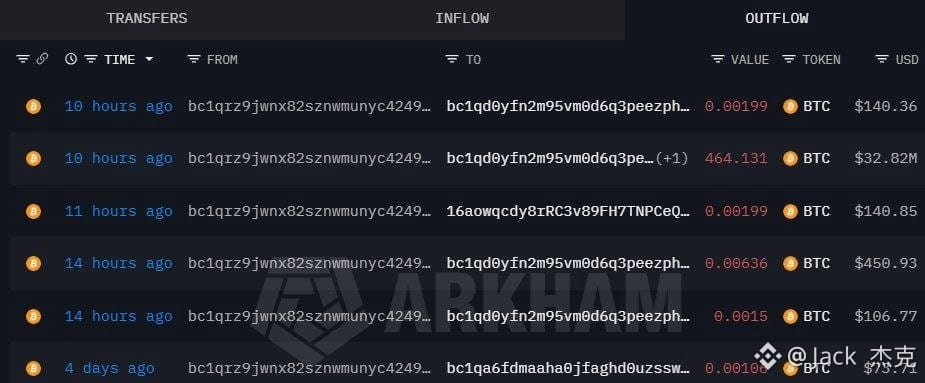
A whale sold $32,820,000 in $BTC today.
He bought them a month ago and made $2,000,000 in profit.
A whale sold $32,820,000 in $BTC today.
He bought them a month ago and made $2,000,000 in profit.
He bought them a month ago and made $2,000,000 in profit.
7
94
·
--
BREAKING:
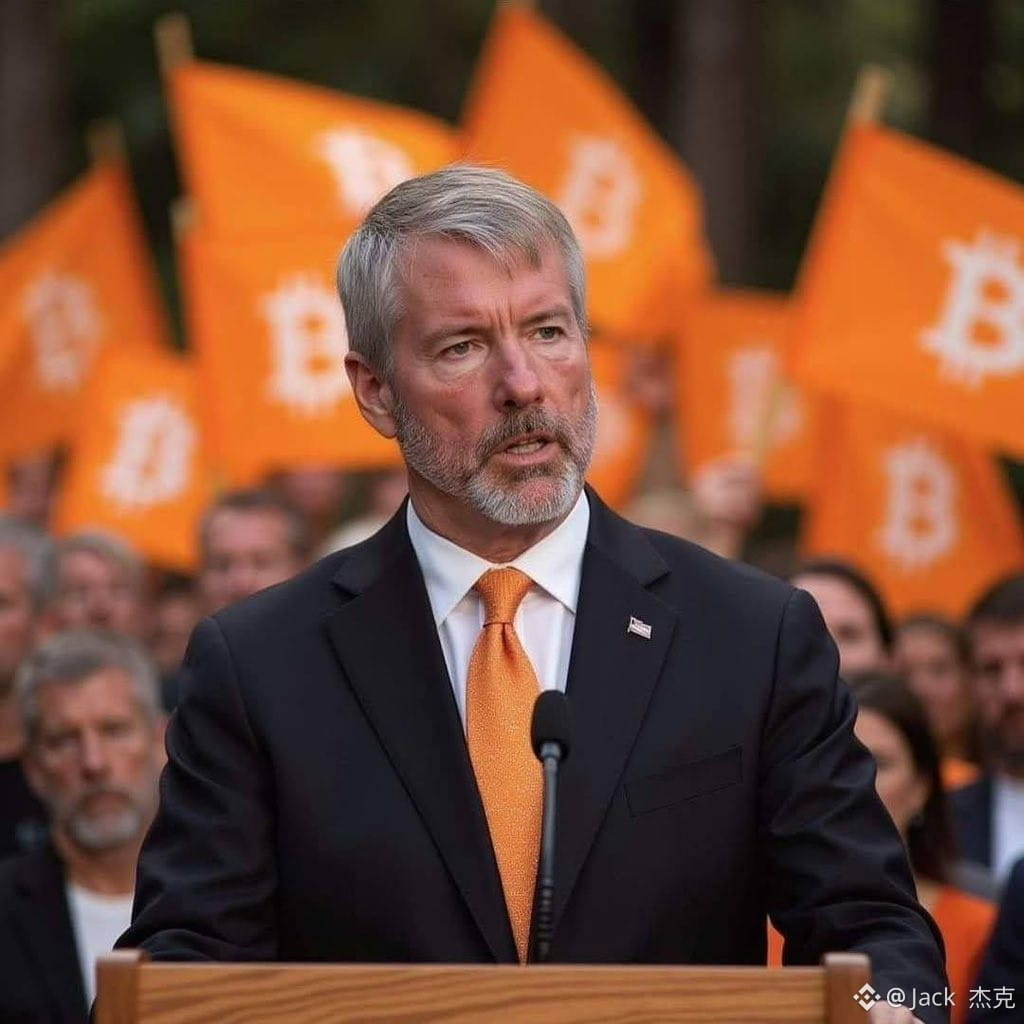
🇺🇸 Saylor's $MSTR buys $76.6 MILLION worth of $BTC
BREAKING:
🇺🇸 Saylor's $MSTR buys $76.6 MILLION worth of $BTC
🇺🇸 Saylor's $MSTR buys $76.6 MILLION worth of $BTC
6
75
·
--
Bitcoin’s New Reality: Tight Supply, Weak Demand, and a Market Driven OffshoreSomething unusual is happening with Bitcoin, and it’s quietly reshaping how the market moves.
At first glance, things look strong. Supply is tightening. Miner selling pressure is dropping. Price is holding steady near $68K. But beneath the surface, the real driver of the market has shifted, and it’s no longer where most people expect.
Supply Is Shrinking, But Not For The Usual Reason
Earlier this year, miner activity spiked. Harsh weather disruptions and operational costs forced miners to offload large amounts of BTC, over 8,000 BTC at peak levels.
But that phase didn’t last.
Now, miner flows have cooled significantly, dropping to around 4,300 BTC on average. That’s a major shift. It signals that forced selling is fading, and miners are becoming more selective with distribution.
At the same time:
Exchange inflows remain low (~2,500 BTC)
Miner reserves still sit around 1.8 million BTC
This combination creates a simple but powerful effect: less Bitcoin is available in the market.
Normally, that would push prices higher.
But this time, something is missing.
The Demand Side Is Breaking Down
Despite tightening supply, demand, especially from the U.S., is weak.
The Coinbase Premium Index, a key indicator of U.S. buying pressure, has stayed negative. Even during price recovery, it failed to turn positive.
That tells us one thing clearly:
U.S. institutional demand isn’t showing up.
And when the biggest capital base in crypto isn’t participating, the market has to find support elsewhere.
Offshore Markets Are Now In Control
With U.S. demand fading, offshore liquidity has stepped in.
Global traders, derivatives markets, and non-U.S. capital are now driving price action. This creates a different kind of market structure:
More dependent on leverage
More sensitive to sentiment shifts
Less stable without strong spot demand
In short, Bitcoin is still moving, but the foundation underneath it is weaker than it looks.
Miners Are Quietly Leaving Bitcoin
There’s another layer to this story, and it’s even more important long-term.
Bitcoin’s hashrate recently dropped from 1,200 EH/s to around 800 EH/s. That’s a significant decline in network activity.
Why?
Because mining is becoming less attractive.
After the halving, profits tightened. And instead of doubling down, some miners are choosing a completely different path: AI compute.
Mining companies are now reallocating resources—hardware, energy, capital—toward AI infrastructure, where returns are currently higher.
To fund this shift, miners have already sold over 15,000 BTC.
This creates a strange dynamic:
Short-term selling pressure increases
Long-term network strength weakens
Bitcoin is no longer just competing with itself—it’s competing with an entirely new industry for resources.
So Who Really Controls The Market Now?
Right now, Bitcoin sits in a fragile balance:
Supply is tightening ✅
U.S. demand is weak ❌
Offshore liquidity is in control ⚠️
Miners are shifting focus ⚠️
That means price stability isn’t coming from strong fundamentals, it’s being held up by external forces.
And if those forces change, the market could react quickly.
Final Thought
Bitcoin hasn’t lost strength, but it has lost its center of gravity.
This isn’t a typical bull or bear phase. It’s a transition.
From miner-driven supply → to liquidity-driven price
From U.S.-led demand → to global speculation
From pure crypto economics → to competition with AI
And that shift might define what comes next more than any price level ever could.
$BTC
{spot}(BTCUSDT)
#BTCReality | #BTC
Bitcoin’s New Reality: Tight Supply, Weak Demand, and a Market Driven Offshore
Something unusual is happening with Bitcoin, and it’s quietly reshaping how the market moves.
At first glance, things look strong. Supply is tightening. Miner selling pressure is dropping. Price is holding steady near $68K. But beneath the surface, the real driver of the market has shifted, and it’s no longer where most people expect.
Supply Is Shrinking, But Not For The Usual Reason
Earlier this year, miner activity spiked. Harsh weather disruptions and operational costs forced miners to offload large amounts of BTC, over 8,000 BTC at peak levels.
But that phase didn’t last.
Now, miner flows have cooled significantly, dropping to around 4,300 BTC on average. That’s a major shift. It signals that forced selling is fading, and miners are becoming more selective with distribution.
At the same time:
Exchange inflows remain low (~2,500 BTC)
Miner reserves still sit around 1.8 million BTC
This combination creates a simple but powerful effect: less Bitcoin is available in the market.
Normally, that would push prices higher.
But this time, something is missing.
The Demand Side Is Breaking Down
Despite tightening supply, demand, especially from the U.S., is weak.
The Coinbase Premium Index, a key indicator of U.S. buying pressure, has stayed negative. Even during price recovery, it failed to turn positive.
That tells us one thing clearly:
U.S. institutional demand isn’t showing up.
And when the biggest capital base in crypto isn’t participating, the market has to find support elsewhere.
Offshore Markets Are Now In Control
With U.S. demand fading, offshore liquidity has stepped in.
Global traders, derivatives markets, and non-U.S. capital are now driving price action. This creates a different kind of market structure:
More dependent on leverage
More sensitive to sentiment shifts
Less stable without strong spot demand
In short, Bitcoin is still moving, but the foundation underneath it is weaker than it looks.
Miners Are Quietly Leaving Bitcoin
There’s another layer to this story, and it’s even more important long-term.
Bitcoin’s hashrate recently dropped from 1,200 EH/s to around 800 EH/s. That’s a significant decline in network activity.
Why?
Because mining is becoming less attractive.
After the halving, profits tightened. And instead of doubling down, some miners are choosing a completely different path: AI compute.
Mining companies are now reallocating resources—hardware, energy, capital—toward AI infrastructure, where returns are currently higher.
To fund this shift, miners have already sold over 15,000 BTC.
This creates a strange dynamic:
Short-term selling pressure increases
Long-term network strength weakens
Bitcoin is no longer just competing with itself—it’s competing with an entirely new industry for resources.
So Who Really Controls The Market Now?
Right now, Bitcoin sits in a fragile balance:
Supply is tightening ✅
U.S. demand is weak ❌
Offshore liquidity is in control ⚠️
Miners are shifting focus ⚠️
That means price stability isn’t coming from strong fundamentals, it’s being held up by external forces.
And if those forces change, the market could react quickly.
Final Thought
Bitcoin hasn’t lost strength, but it has lost its center of gravity.
This isn’t a typical bull or bear phase. It’s a transition.
From miner-driven supply → to liquidity-driven price
From U.S.-led demand → to global speculation
From pure crypto economics → to competition with AI
And that shift might define what comes next more than any price level ever could.
$BTC
#BTCReality | #BTC
At first glance, things look strong. Supply is tightening. Miner selling pressure is dropping. Price is holding steady near $68K. But beneath the surface, the real driver of the market has shifted, and it’s no longer where most people expect.
Supply Is Shrinking, But Not For The Usual Reason
Earlier this year, miner activity spiked. Harsh weather disruptions and operational costs forced miners to offload large amounts of BTC, over 8,000 BTC at peak levels.
But that phase didn’t last.
Now, miner flows have cooled significantly, dropping to around 4,300 BTC on average. That’s a major shift. It signals that forced selling is fading, and miners are becoming more selective with distribution.
At the same time:
Exchange inflows remain low (~2,500 BTC)
Miner reserves still sit around 1.8 million BTC
This combination creates a simple but powerful effect: less Bitcoin is available in the market.
Normally, that would push prices higher.
But this time, something is missing.
The Demand Side Is Breaking Down
Despite tightening supply, demand, especially from the U.S., is weak.
The Coinbase Premium Index, a key indicator of U.S. buying pressure, has stayed negative. Even during price recovery, it failed to turn positive.
That tells us one thing clearly:
U.S. institutional demand isn’t showing up.
And when the biggest capital base in crypto isn’t participating, the market has to find support elsewhere.
Offshore Markets Are Now In Control
With U.S. demand fading, offshore liquidity has stepped in.
Global traders, derivatives markets, and non-U.S. capital are now driving price action. This creates a different kind of market structure:
More dependent on leverage
More sensitive to sentiment shifts
Less stable without strong spot demand
In short, Bitcoin is still moving, but the foundation underneath it is weaker than it looks.
Miners Are Quietly Leaving Bitcoin
There’s another layer to this story, and it’s even more important long-term.
Bitcoin’s hashrate recently dropped from 1,200 EH/s to around 800 EH/s. That’s a significant decline in network activity.
Why?
Because mining is becoming less attractive.
After the halving, profits tightened. And instead of doubling down, some miners are choosing a completely different path: AI compute.
Mining companies are now reallocating resources—hardware, energy, capital—toward AI infrastructure, where returns are currently higher.
To fund this shift, miners have already sold over 15,000 BTC.
This creates a strange dynamic:
Short-term selling pressure increases
Long-term network strength weakens
Bitcoin is no longer just competing with itself—it’s competing with an entirely new industry for resources.
So Who Really Controls The Market Now?
Right now, Bitcoin sits in a fragile balance:
Supply is tightening ✅
U.S. demand is weak ❌
Offshore liquidity is in control ⚠️
Miners are shifting focus ⚠️
That means price stability isn’t coming from strong fundamentals, it’s being held up by external forces.
And if those forces change, the market could react quickly.
Final Thought
Bitcoin hasn’t lost strength, but it has lost its center of gravity.
This isn’t a typical bull or bear phase. It’s a transition.
From miner-driven supply → to liquidity-driven price
From U.S.-led demand → to global speculation
From pure crypto economics → to competition with AI
And that shift might define what comes next more than any price level ever could.
$BTC
#BTCReality | #BTC
7
30
·
--
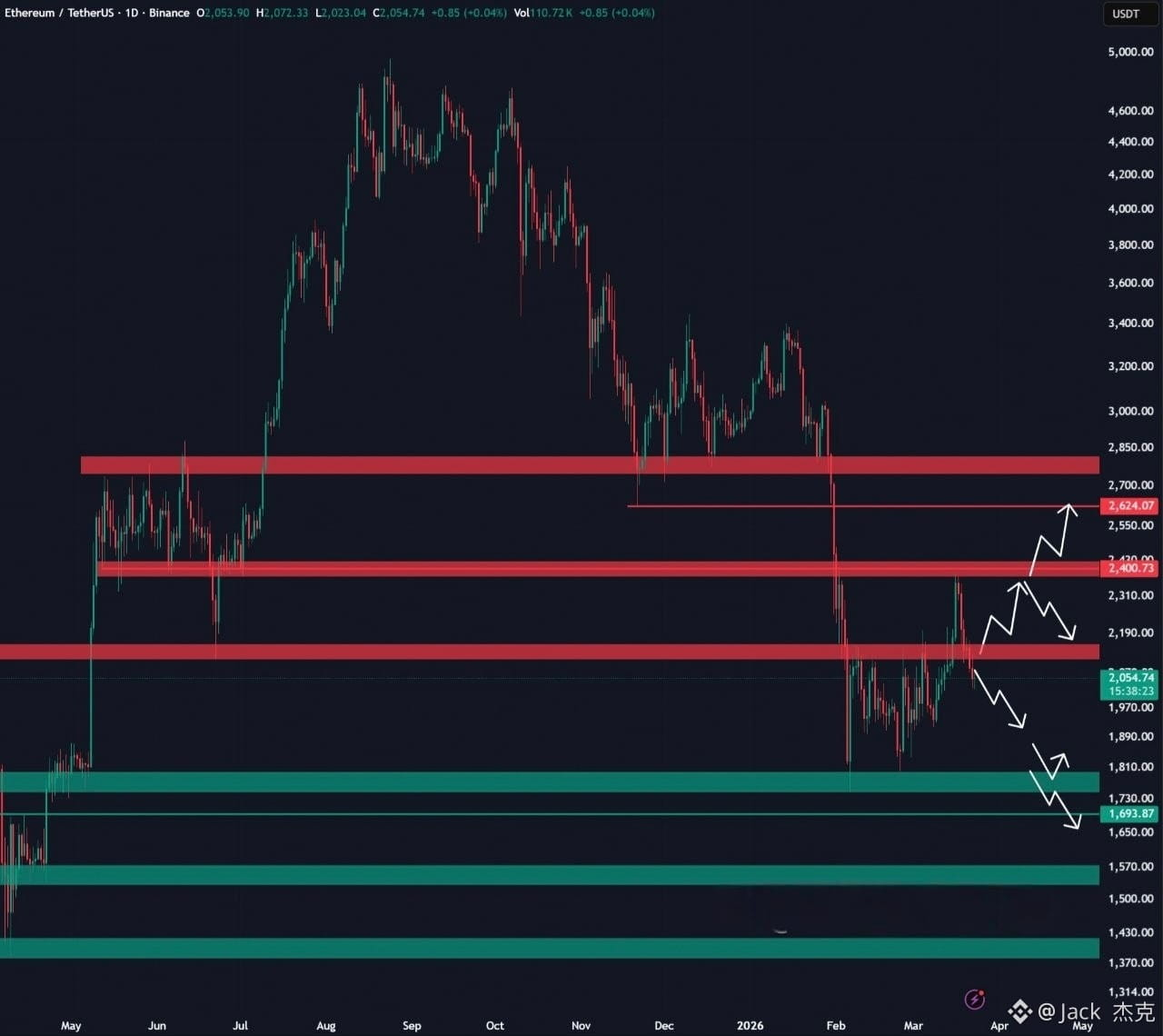
$ETH failed to reclaim the $2,100 level and is now moving down.
Now, the only crucial support level for Ethereum is $2,000 and if ETH loses it, the dump will accelerate to new lows.
$ETH failed to reclaim the $2,100 level and is now moving down.
Now, the only crucial support level for Ethereum is $2,000 and if ETH loses it, the dump will accelerate to new lows.
Now, the only crucial support level for Ethereum is $2,000 and if ETH loses it, the dump will accelerate to new lows.
7
61
·
--
Article
Midnight Is Building Blockchain That Actually Makes SenseConsensus 2025 felt overwhelming at first. Everywhere there were founders, panels, and constant noise. Every project claimed they were building something revolutionary. After a while, it all started to sound the same.
Then Midnight came into the conversation, and it felt different.
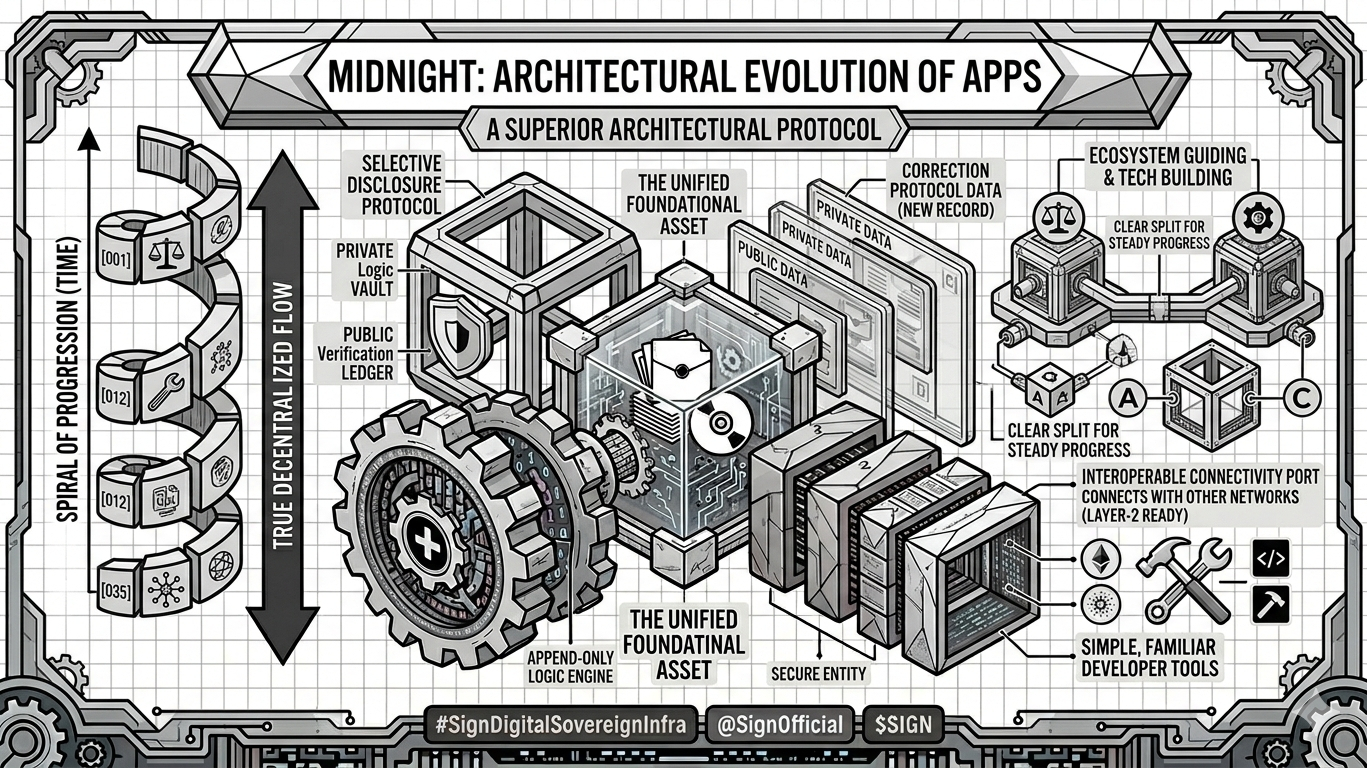
Midnight is not just another blockchain project. It is trying to fix how blockchain systems are organized, not just how they work technically. The idea is simple but powerful. Instead of mixing everything together, they split responsibilities into two clear parts.
One side focuses on community, partnerships, and long term direction. The other side focuses only on building the technology and improving it quickly. This separation helps avoid confusion and allows both sides to do their job better.
Another important idea is privacy.
Most blockchains either show everything or hide everything. Midnight takes a different path. It allows privacy to be flexible. You can choose what information stays private and what can be shared. This is important because real world systems need both transparency and control.
Midnight is also not trying to replace other blockchains. Instead, it works with them. Developers and users can connect to Midnight without leaving their existing networks. This makes it more useful and easier to adopt.
For developers, the experience is much simpler. They created tools that feel familiar, so people can build without needing deep technical knowledge.
In the end, Midnight is not trying to be the loudest project. It is trying to be practical, usable, and easy to integrate. And that might be what actually matters.
@MidnightNetwork | $NIGHT | #night
Midnight Is Building Blockchain That Actually Makes Sense
Consensus 2025 felt overwhelming at first. Everywhere there were founders, panels, and constant noise. Every project claimed they were building something revolutionary. After a while, it all started to sound the same.
Then Midnight came into the conversation, and it felt different.
Midnight is not just another blockchain project. It is trying to fix how blockchain systems are organized, not just how they work technically. The idea is simple but powerful. Instead of mixing everything together, they split responsibilities into two clear parts.
One side focuses on community, partnerships, and long term direction. The other side focuses only on building the technology and improving it quickly. This separation helps avoid confusion and allows both sides to do their job better.
Another important idea is privacy.
Most blockchains either show everything or hide everything. Midnight takes a different path. It allows privacy to be flexible. You can choose what information stays private and what can be shared. This is important because real world systems need both transparency and control.
Midnight is also not trying to replace other blockchains. Instead, it works with them. Developers and users can connect to Midnight without leaving their existing networks. This makes it more useful and easier to adopt.
For developers, the experience is much simpler. They created tools that feel familiar, so people can build without needing deep technical knowledge.
In the end, Midnight is not trying to be the loudest project. It is trying to be practical, usable, and easy to integrate. And that might be what actually matters.
@MidnightNetwork | $NIGHT | #night
Then Midnight came into the conversation, and it felt different.
Midnight is not just another blockchain project. It is trying to fix how blockchain systems are organized, not just how they work technically. The idea is simple but powerful. Instead of mixing everything together, they split responsibilities into two clear parts.
One side focuses on community, partnerships, and long term direction. The other side focuses only on building the technology and improving it quickly. This separation helps avoid confusion and allows both sides to do their job better.
Another important idea is privacy.
Most blockchains either show everything or hide everything. Midnight takes a different path. It allows privacy to be flexible. You can choose what information stays private and what can be shared. This is important because real world systems need both transparency and control.
Midnight is also not trying to replace other blockchains. Instead, it works with them. Developers and users can connect to Midnight without leaving their existing networks. This makes it more useful and easier to adopt.
For developers, the experience is much simpler. They created tools that feel familiar, so people can build without needing deep technical knowledge.
In the end, Midnight is not trying to be the loudest project. It is trying to be practical, usable, and easy to integrate. And that might be what actually matters.
@MidnightNetwork | $NIGHT | #night
12
119
·
--
Article
Sign Is Building Around People, Not Just CodeBy 2026, one thing is clear. Community matters more than code.
Many strong projects failed because no one used them. Good technology alone is not enough. Without people, it has no value.
Sign understands this well.
Instead of focusing only on building technology, they focus on building participation. A good example is the Orange Dynasty.
At first, it sounds like just a name. But inside, it works like a system where people stay active. There are groups, rankings, and daily rewards. People are not just watching, they are involved.
And it worked fast.
Within two weeks of launch, it brought in hundreds of thousands of users. This was not random hype. People were actually participating and contributing.
This connects to how Sign works.
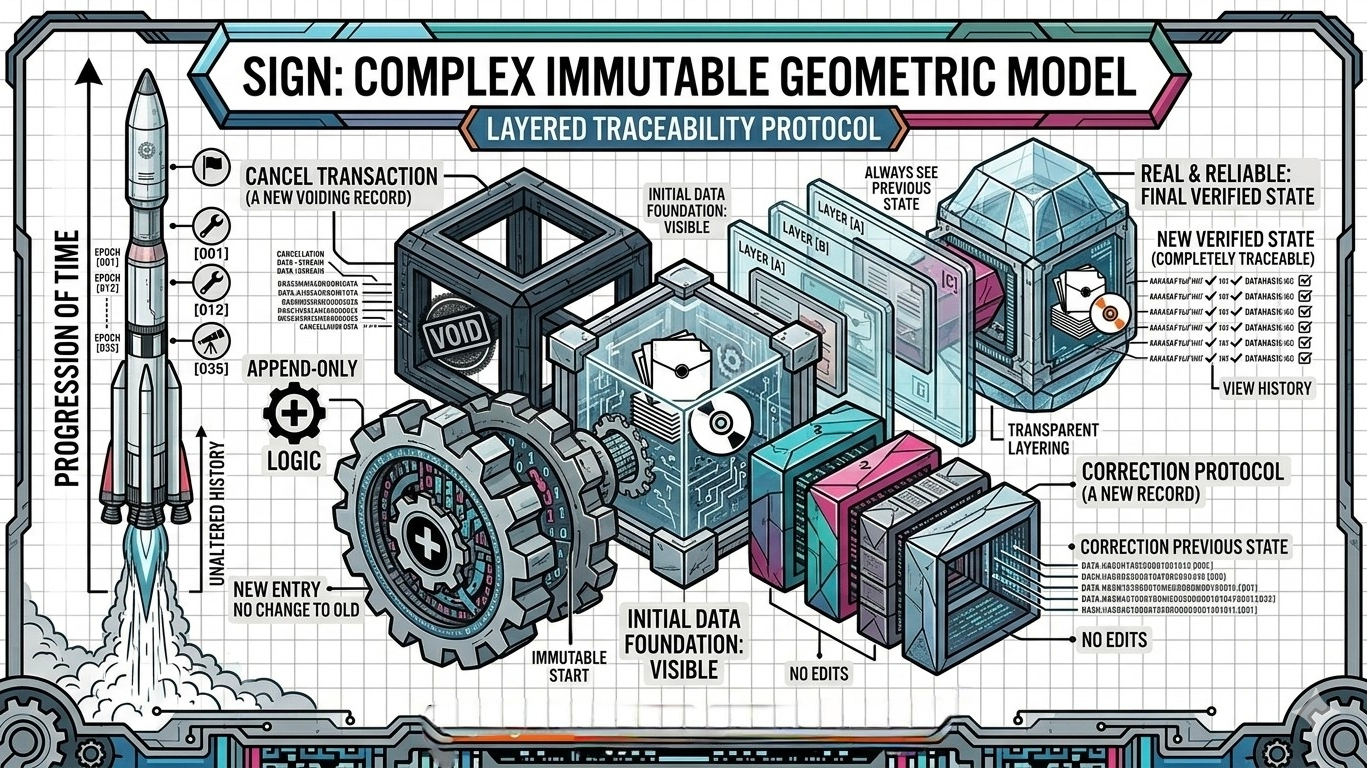
It uses attestations, which means users must prove real actions. It is not about fake activity. You need to actually do something to earn value.
Then comes the token.
SIGN has a large supply, but the way it is released is controlled. Only a small portion was available at the start. The rest is distributed slowly over time.
Investors and team members cannot sell early. Their tokens are locked for years. This keeps them committed and reduces sudden selling pressure.
The token is also useful.
It is used for transactions, features, and governance. You can stake it, vote with it, and earn rewards. It is not just something you hold and wait.
Sign also operates at scale.
It has already handled millions of attestations and distributed tokens to millions of wallets. This shows real usage, not just promises.
In simple terms, Sign is building something that people use, not just something people talk about.
@SignOfficial | #SignDigitalSovereignInfra | $SIGN
Sign Is Building Around People, Not Just Code
By 2026, one thing is clear. Community matters more than code.
Many strong projects failed because no one used them. Good technology alone is not enough. Without people, it has no value.
Sign understands this well.
Instead of focusing only on building technology, they focus on building participation. A good example is the Orange Dynasty.
At first, it sounds like just a name. But inside, it works like a system where people stay active. There are groups, rankings, and daily rewards. People are not just watching, they are involved.
And it worked fast.
Within two weeks of launch, it brought in hundreds of thousands of users. This was not random hype. People were actually participating and contributing.
This connects to how Sign works.
It uses attestations, which means users must prove real actions. It is not about fake activity. You need to actually do something to earn value.
Then comes the token.
SIGN has a large supply, but the way it is released is controlled. Only a small portion was available at the start. The rest is distributed slowly over time.
Investors and team members cannot sell early. Their tokens are locked for years. This keeps them committed and reduces sudden selling pressure.
The token is also useful.
It is used for transactions, features, and governance. You can stake it, vote with it, and earn rewards. It is not just something you hold and wait.
Sign also operates at scale.
It has already handled millions of attestations and distributed tokens to millions of wallets. This shows real usage, not just promises.
In simple terms, Sign is building something that people use, not just something people talk about.
@SignOfficial | #SignDigitalSovereignInfra | $SIGN
Many strong projects failed because no one used them. Good technology alone is not enough. Without people, it has no value.
Sign understands this well.
Instead of focusing only on building technology, they focus on building participation. A good example is the Orange Dynasty.
At first, it sounds like just a name. But inside, it works like a system where people stay active. There are groups, rankings, and daily rewards. People are not just watching, they are involved.
And it worked fast.
Within two weeks of launch, it brought in hundreds of thousands of users. This was not random hype. People were actually participating and contributing.
This connects to how Sign works.
It uses attestations, which means users must prove real actions. It is not about fake activity. You need to actually do something to earn value.
Then comes the token.
SIGN has a large supply, but the way it is released is controlled. Only a small portion was available at the start. The rest is distributed slowly over time.
Investors and team members cannot sell early. Their tokens are locked for years. This keeps them committed and reduces sudden selling pressure.
The token is also useful.
It is used for transactions, features, and governance. You can stake it, vote with it, and earn rewards. It is not just something you hold and wait.
Sign also operates at scale.
It has already handled millions of attestations and distributed tokens to millions of wallets. This shows real usage, not just promises.
In simple terms, Sign is building something that people use, not just something people talk about.
@SignOfficial | #SignDigitalSovereignInfra | $SIGN
9
14
Log in to explore more content
Join global crypto users on Binance Square
⚡️ Get latest and useful information about crypto.
💬 Trusted by the world’s largest crypto exchange.
👍 Discover real insights from verified creators.
Email / Phone number
Trending Topics
UKFCAWinsCourtOrderToRecover851400Pounds
12,372 views
552 Discussing
🚨 CRYPTO REGULATION JUST ENTERED A NEW PHASE: THEY’RE NOT ONLY WRITING RULES — THEY’RE TAKING MONEY BACK.
The UK’s FCA has secured another court-backed asset recovery, reinforcing a broader enforcement push against unauthorized financial and crypto-related activity.
And look at what’s happening simultaneously:
🇬🇧 FCA → enforcement + asset recovery
🇺🇸 SEC → clearer rules for functional crypto assets
🇺🇸 Fed → formal stablecoin supervision under the GENIUS Act
That combination matters.
Regulators are no longer debating whether crypto belongs inside the financial system.
They’re increasingly deciding who gets access, what rules they follow, and what happens when those rules are broken.
The next crypto cycle may not be “regulation vs innovation.”
It may be regulated crypto vs everyone who can’t meet the standard. 👀
$COIN $CRCL $BTC
#ukfcawinscourtordertorecover851400pounds #ChainlinkLaunchesCCIP2WithEnterpriseVerification #GoldFallsTo$4144 #QNTFallsOver40%FromMorningHigh #USDTAdds845900HoldersInPast7Days
KimHotbae
·2 Likes
·4.1k views
ChainlinkLaunchesCCIP2WithEnterpriseVerification
26,160 views
761 Discussing
GoldFallsTo$4144
10,107 views
125 Discussing