

Vanarchain
606 Posts

Vanarchain
 Square Verified+
Report
Block User
The intelligence layer for onchain applications.
AI changed the rules.
0 Following
72.1K+ Followers
15.1K+ Liked
Posts
All
Quotes
Videos
·
--
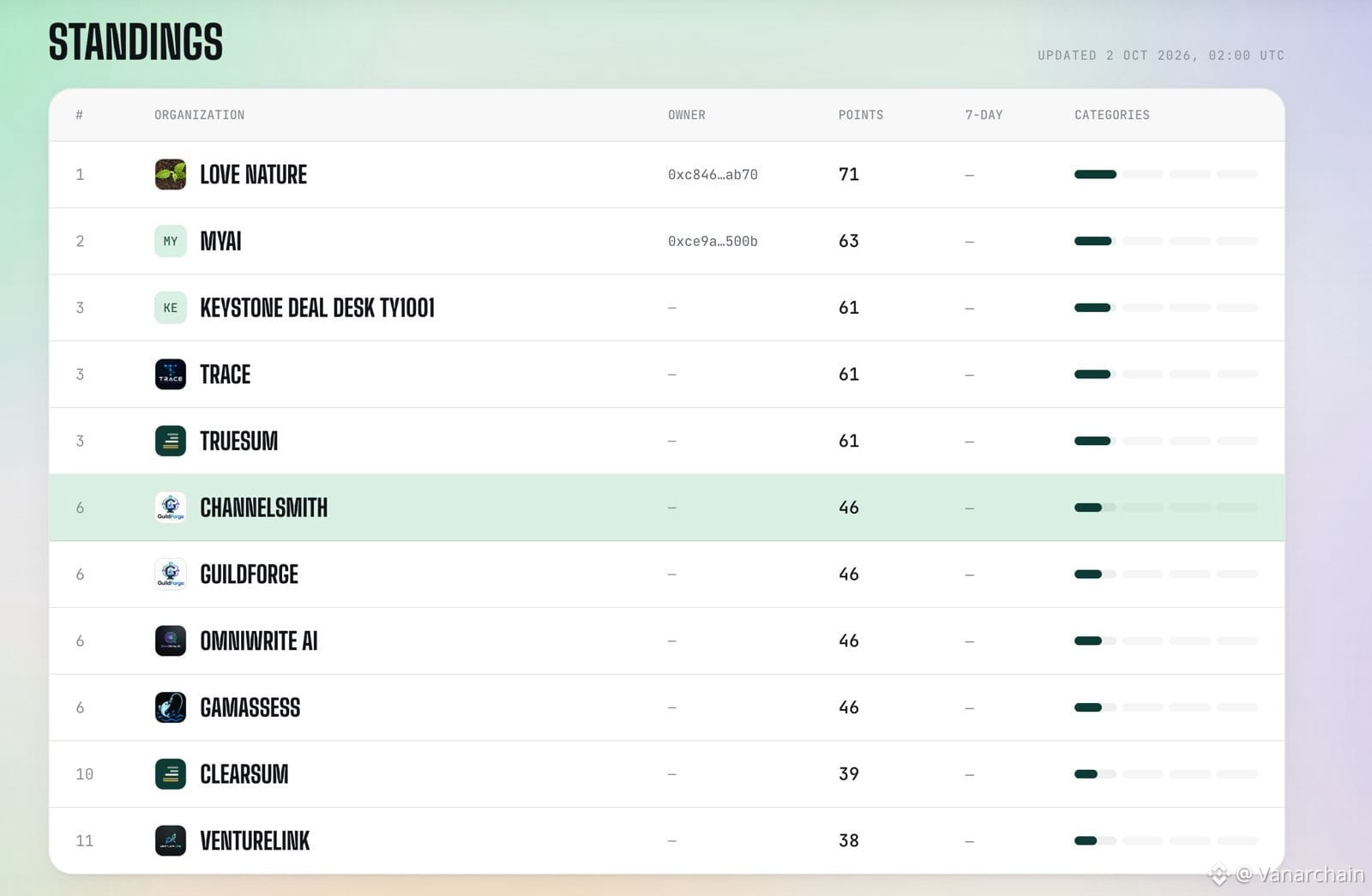
The Foundry leaderboard is starting to fill up 👀
Big congratulations to everyone on the whitelist who has already jumped in, created their first Organisations and started earning points.
This is only the beginning. As more builders come in, the race for the top spots is going to get a lot more interesting.
See where you stand 👇
https://onvanar.com/genesis/
And one important thing for everyone already inside Foundry: please send us your feedback.
If something feels confusing, something breaks, you spot a bug, or you simply think something could work better, tell us. The most valuable thing for us right now is seeing how people actually use Foundry, where they get stuck, and what we should improve next.
Drop all feedback, bugs and suggestions here 👇
Discord.gg/vanar
You build, we listen, Foundry gets better.
The Foundry leaderboard is starting to fill up 👀
Big congratulations to everyone on the whitelist who has already jumped in, created their first Organisations and started earning points.
This is only the beginning. As more builders come in, the race for the top spots is going to get a lot more interesting.
See where you stand 👇
https://onvanar.com/genesis/
And one important thing for everyone already inside Foundry: please send us your feedback.
If something feels confusing, something breaks, you spot a bug, or you simply think something could work better, tell us. The most valuable thing for us right now is seeing how people actually use Foundry, where they get stuck, and what we should improve next.
Drop all feedback, bugs and suggestions here 👇
Discord.gg/vanar
You build, we listen, Foundry gets better.
Big congratulations to everyone on the whitelist who has already jumped in, created their first Organisations and started earning points.
This is only the beginning. As more builders come in, the race for the top spots is going to get a lot more interesting.
See where you stand 👇
https://onvanar.com/genesis/
And one important thing for everyone already inside Foundry: please send us your feedback.
If something feels confusing, something breaks, you spot a bug, or you simply think something could work better, tell us. The most valuable thing for us right now is seeing how people actually use Foundry, where they get stuck, and what we should improve next.
Drop all feedback, bugs and suggestions here 👇
Discord.gg/vanar
You build, we listen, Foundry gets better.
4
1.2k
·
--
Partly True
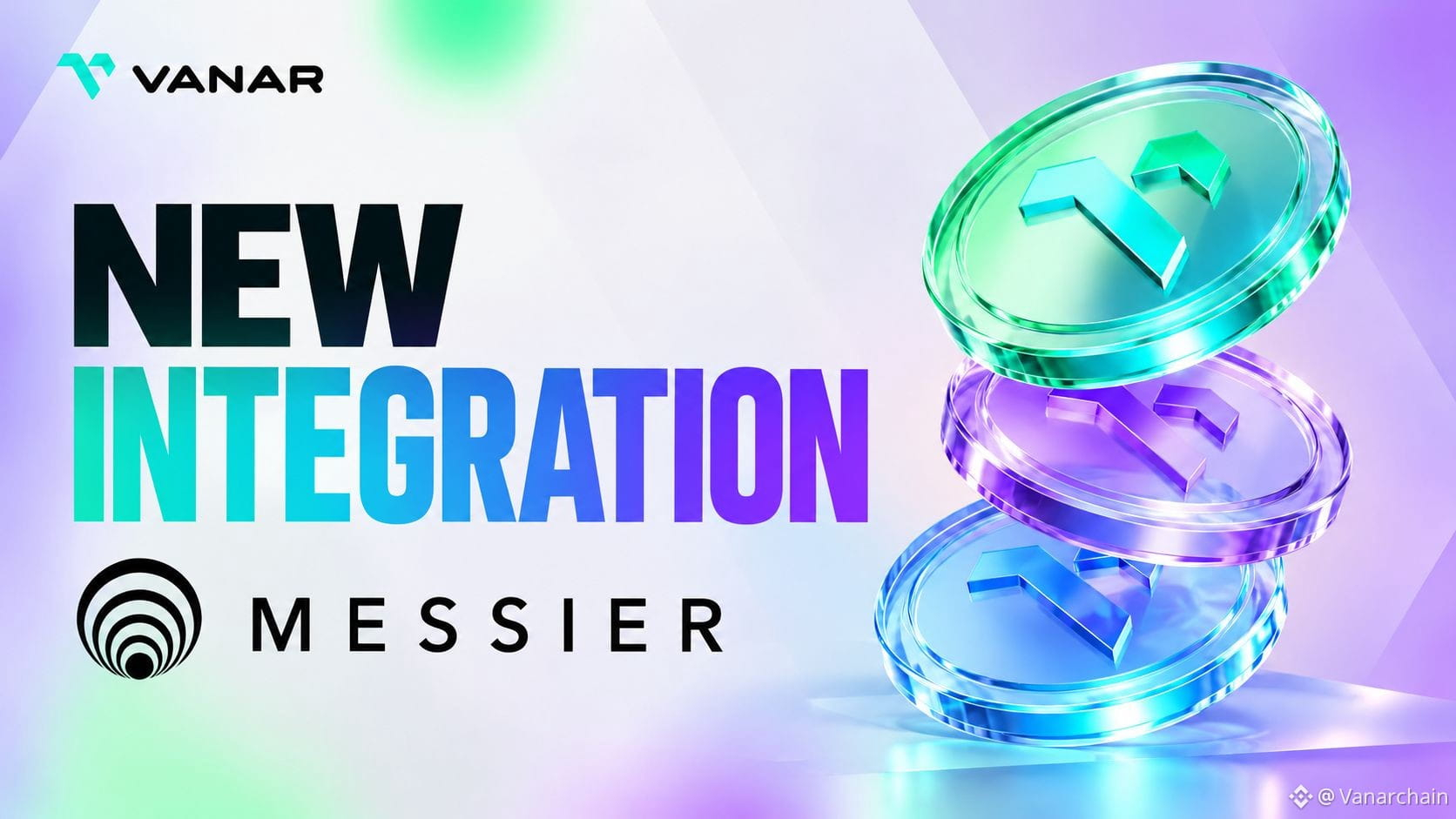
VANRY expands to another venue.
VANRY is now live on the M87 Messier P2P marketplace on Base.
Users can buy VANRY directly through the new VANRY/USDC P2P pool, with orders executed at live market price and without the usual DEX price impact from slippage.
Pool:
https://p2p.messier.app/pools?network=BASE&s=VANRY_USDC
We have also integrated with Messier’s P2P Alert Bot, helping surface VANRY P2P activity across their wider trading network.
More access.
More distribution.
More ways to discover and buy VANRY.
The network keeps expanding.
VANRY expands to another venue.
VANRY is now live on the M87 Messier P2P marketplace on Base.
Users can buy VANRY directly through the new VANRY/USDC P2P pool, with orders executed at live market price and without the usual DEX price impact from slippage.
Pool:
https://p2p.messier.app/pools?network=BASE&s=VANRY_USDC
We have also integrated with Messier’s P2P Alert Bot, helping surface VANRY P2P activity across their wider trading network.
More access.
More distribution.
More ways to discover and buy VANRY.
The network keeps expanding.
VANRY is now live on the M87 Messier P2P marketplace on Base.
Users can buy VANRY directly through the new VANRY/USDC P2P pool, with orders executed at live market price and without the usual DEX price impact from slippage.
Pool:
https://p2p.messier.app/pools?network=BASE&s=VANRY_USDC
We have also integrated with Messier’s P2P Alert Bot, helping surface VANRY P2P activity across their wider trading network.
More access.
More distribution.
More ways to discover and buy VANRY.
The network keeps expanding.
5
914
·
--
Verified
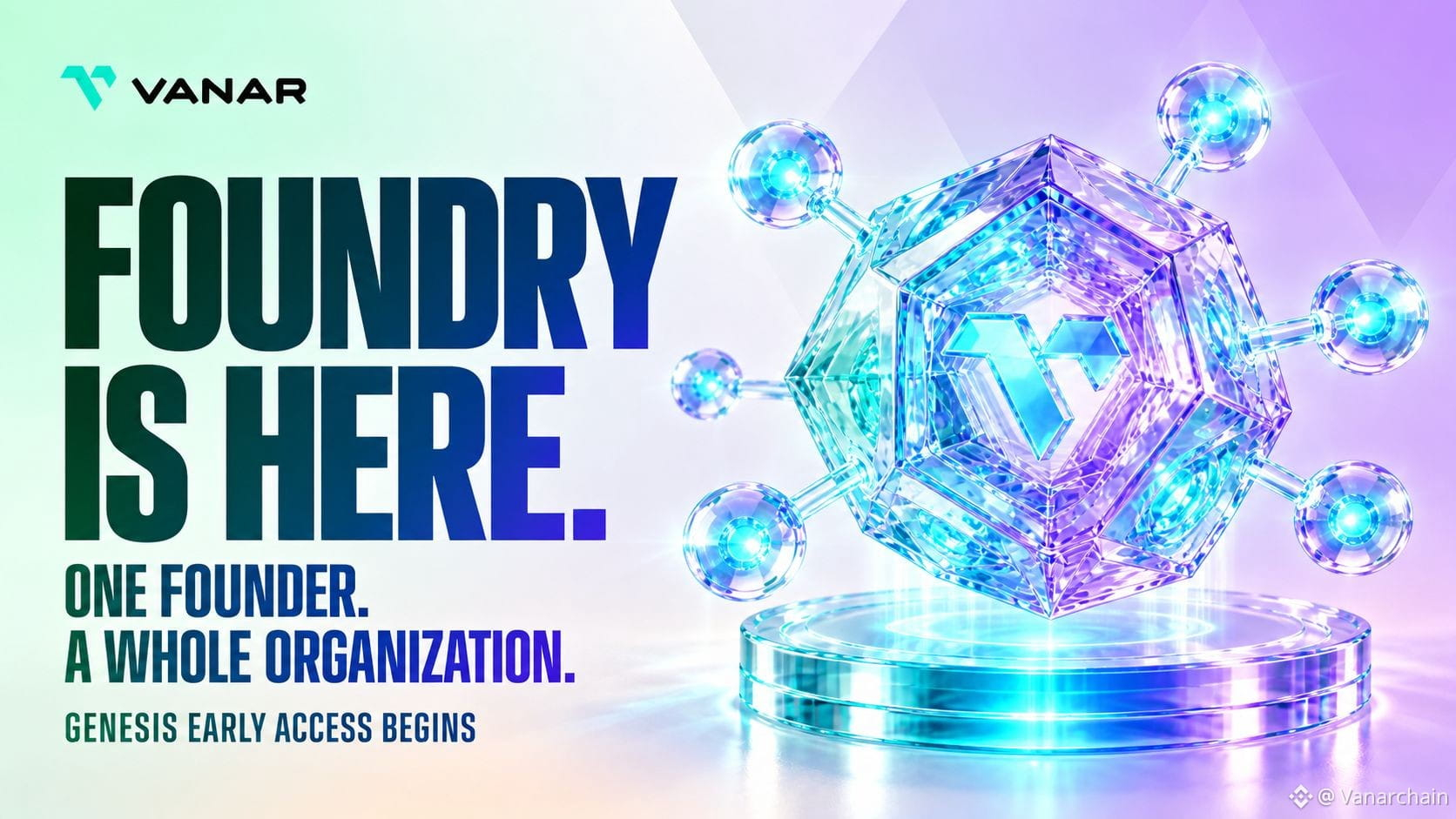
One founder. A whole organization.
Vanar Foundry is LIVE!
Build an AI Organization around your idea, your expertise or the business you already run. Give your AI team the knowledge and direction to turn customer requests into useful work, from research reports and marketing campaigns to support and business operations.
Today, Genesis begins with an initial group of up to 250 selected whitelisted users, each receiving 5,000 free credits to start building.
This first group will help us test real workflows, gather feedback and improve Foundry before public access opens.
Over the coming days, we’ll show you what’s possible, how it works and how to prepare your own Organization.
Welcome to Foundry.
One founder. A whole organization.
Vanar Foundry is LIVE!
Build an AI Organization around your idea, your expertise or the business you already run. Give your AI team the knowledge and direction to turn customer requests into useful work, from research reports and marketing campaigns to support and business operations.
Today, Genesis begins with an initial group of up to 250 selected whitelisted users, each receiving 5,000 free credits to start building.
This first group will help us test real workflows, gather feedback and improve Foundry before public access opens.
Over the coming days, we’ll show you what’s possible, how it works and how to prepare your own Organization.
Welcome to Foundry.
Vanar Foundry is LIVE!
Build an AI Organization around your idea, your expertise or the business you already run. Give your AI team the knowledge and direction to turn customer requests into useful work, from research reports and marketing campaigns to support and business operations.
Today, Genesis begins with an initial group of up to 250 selected whitelisted users, each receiving 5,000 free credits to start building.
This first group will help us test real workflows, gather feedback and improve Foundry before public access opens.
Over the coming days, we’ll show you what’s possible, how it works and how to prepare your own Organization.
Welcome to Foundry.
2
1
2
979
·
--
Partly True
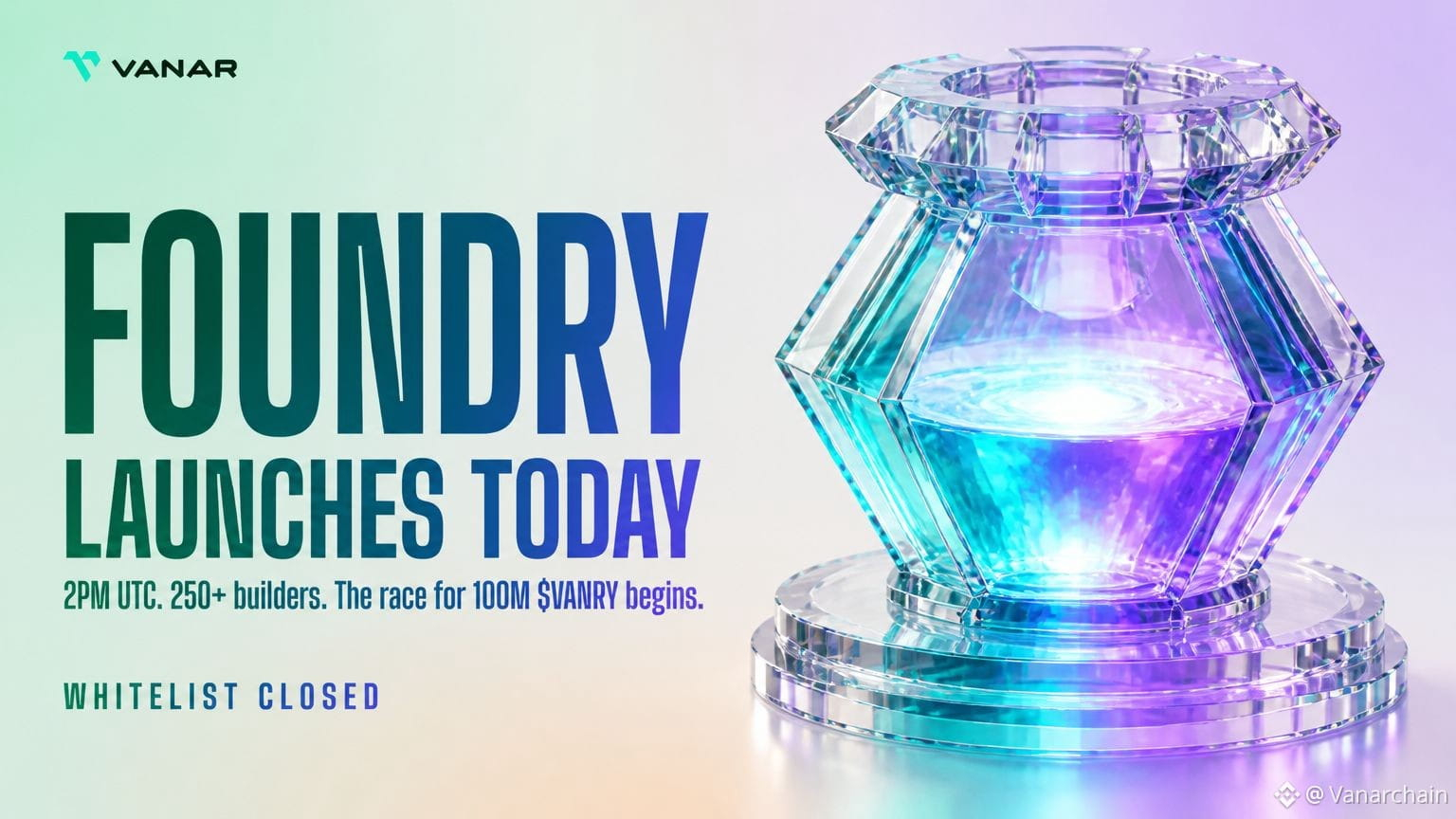
250+ builders locked in. Whitelist: CLOSED. 🔒
Check your inbox today for your early-bird access instructions if you made the cut.
For everyone else, the race for 100M $VANRY is just getting started. Stay tuned for the next entry route.
Foundry goes live TODAY at 2PM UTC!
250+ builders locked in. Whitelist: CLOSED. 🔒
Check your inbox today for your early-bird access instructions if you made the cut.
For everyone else, the race for 100M $VANRY is just getting started. Stay tuned for the next entry route.
Foundry goes live TODAY at 2PM UTC!
Check your inbox today for your early-bird access instructions if you made the cut.
For everyone else, the race for 100M $VANRY is just getting started. Stay tuned for the next entry route.
Foundry goes live TODAY at 2PM UTC!
6
1.6k
·
--
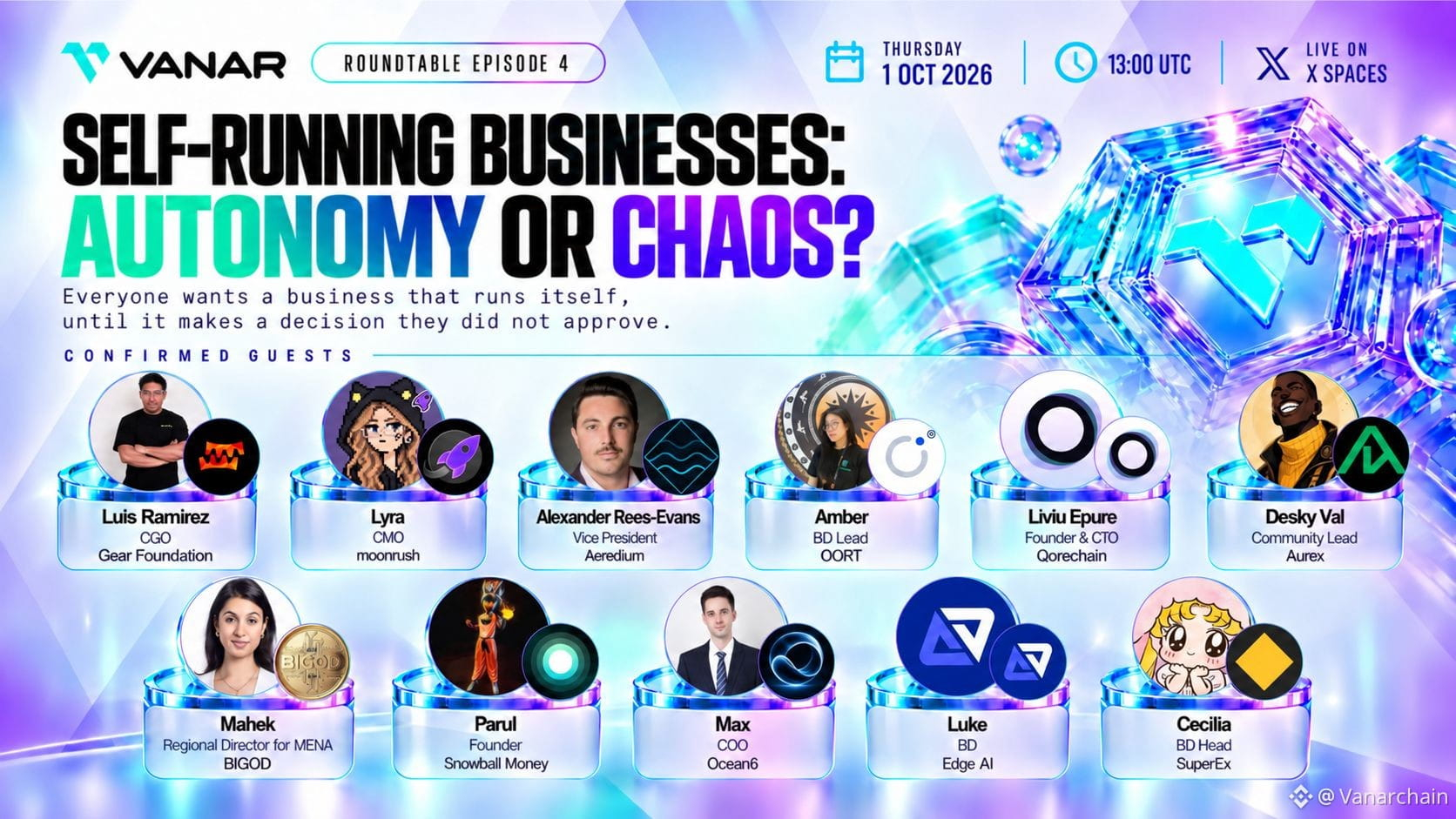
⏰ Reminder: Vanar Roundtable
Self-running businesses: autonomy or chaos?
Everyone wants a business that runs itself, until it makes a decision they did not approve.
AI can market, sell, respond, support, report, and execute, but how much autonomy should a business actually give away?
Today’s roundtable explores where AI autonomy helps, where human approval still matters, and what happens when companies start replacing fragmented workflows with self-running AI Organisations.
Joining us:
Gear Foundation - Luis Ramirez, CGO
Moonrush - Lyra,CMO
Aeredium - Alexander Rees-Evans, Vice President
OORT - Amber, Head BD
Qorechain - Liviu Epure, Founder & CTO
Aurex - Desky Val, Community Lead
BIGOD - Mahek, Regional Director for MENA
Snowball Money - Parul, Founder
Ocean6 - Max, COO
Edge AI - Luke, BD
SuperEx - Cecilia, BD Head
📅 Thursday, 1 October 2026
🕐 13:00 UTC
📍 X Spaces: https://x.com/i/spaces/1lKQRWLwRkDGE
⏰ Reminder: Vanar Roundtable
Self-running businesses: autonomy or chaos?
Everyone wants a business that runs itself, until it makes a decision they did not approve.
AI can market, sell, respond, support, report, and execute, but how much autonomy should a business actually give away?
Today’s roundtable explores where AI autonomy helps, where human approval still matters, and what happens when companies start replacing fragmented workflows with self-running AI Organisations.
Joining us:
Gear Foundation - Luis Ramirez, CGO
Moonrush - Lyra,CMO
Aeredium - Alexander Rees-Evans, Vice President
OORT - Amber, Head BD
Qorechain - Liviu Epure, Founder & CTO
Aurex - Desky Val, Community Lead
BIGOD - Mahek, Regional Director for MENA
Snowball Money - Parul, Founder
Ocean6 - Max, COO
Edge AI - Luke, BD
SuperEx - Cecilia, BD Head
📅 Thursday, 1 October 2026
🕐 13:00 UTC
📍 X Spaces: https://x.com/i/spaces/1lKQRWLwRkDGE
Self-running businesses: autonomy or chaos?
Everyone wants a business that runs itself, until it makes a decision they did not approve.
AI can market, sell, respond, support, report, and execute, but how much autonomy should a business actually give away?
Today’s roundtable explores where AI autonomy helps, where human approval still matters, and what happens when companies start replacing fragmented workflows with self-running AI Organisations.
Joining us:
Gear Foundation - Luis Ramirez, CGO
Moonrush - Lyra,CMO
Aeredium - Alexander Rees-Evans, Vice President
OORT - Amber, Head BD
Qorechain - Liviu Epure, Founder & CTO
Aurex - Desky Val, Community Lead
BIGOD - Mahek, Regional Director for MENA
Snowball Money - Parul, Founder
Ocean6 - Max, COO
Edge AI - Luke, BD
SuperEx - Cecilia, BD Head
📅 Thursday, 1 October 2026
🕐 13:00 UTC
📍 X Spaces: https://x.com/i/spaces/1lKQRWLwRkDGE
3
757
·
--
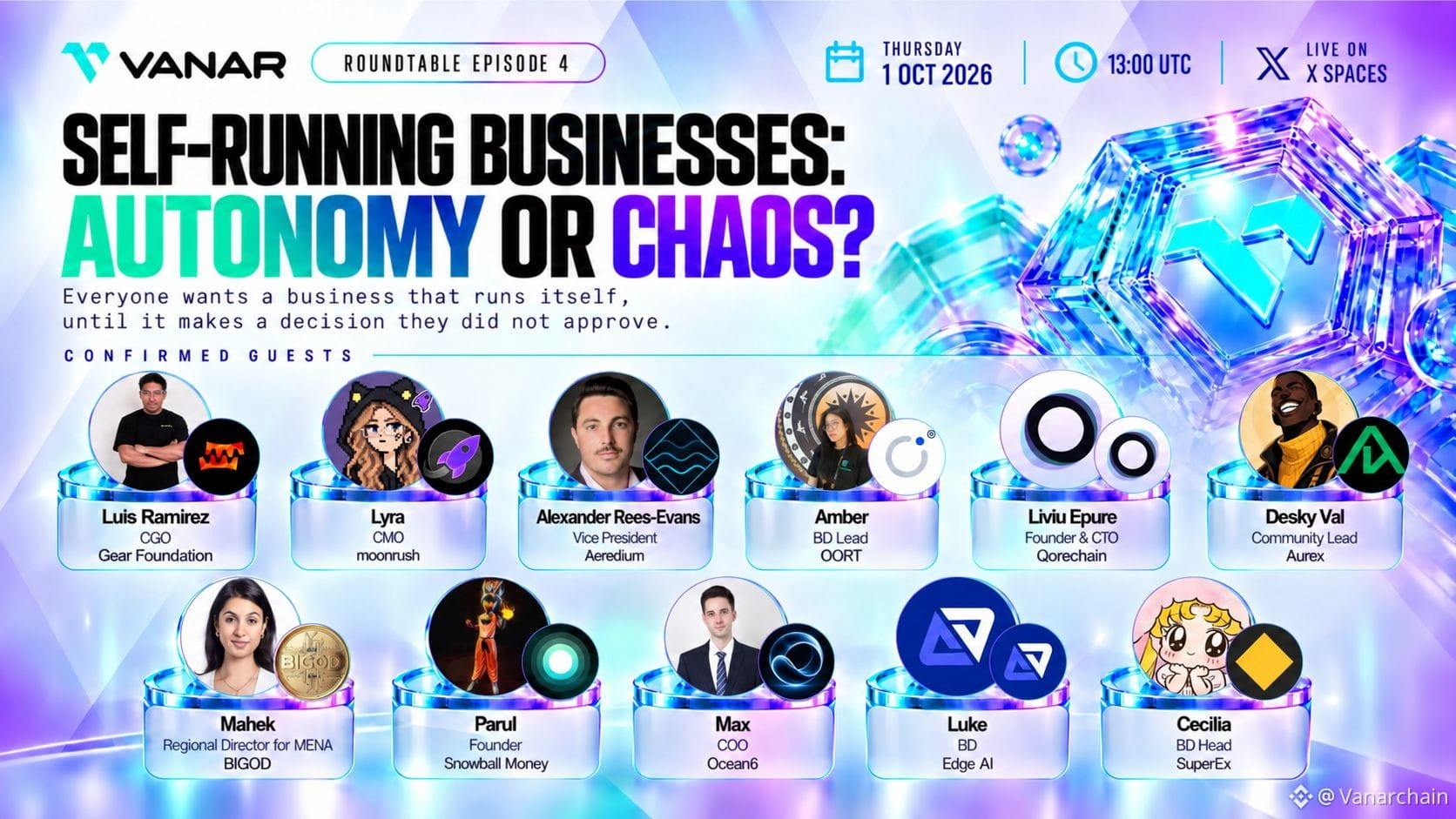
Vanar Roundtables: Season 1, Episode 4 🎙️
Self-running businesses: autonomy or chaos?
Everyone wants a business that runs itself, until it makes a decision they did not approve.
AI can market, sell, respond, support, report, and execute, but how much autonomy should a business actually give away?
On this roundtable, we’ll explore where AI autonomy helps, where human approval still matters, and what happens when companies start replacing fragmented workflows with self-running AI Organisations.
Joining us:
Gear Foundation - Luis Ramirez, CGO
Moonrush - Lyra,CMO
Aeredium - Alexander Rees-Evans, Vice President
OORT - Amber, Head BD
Qorechain - Liviu Epure, Founder & CTO
Aurex - Desky Val, Community Lead
BIGOD - Mahek, Regional Director for MENA
Snowball Money - Parul, Founder
Ocean6 - Max, COO
Edge AI - Luke, BD
SuperEx - Cecilia, BD Head
📅 Thursday, 1 October 2026
🕐 13:00 UTC
📍 X Spaces: https://x.com/i/spaces/1lKQRWLwRkDGE
Vanar Roundtables: Season 1, Episode 4 🎙️
Self-running businesses: autonomy or chaos?
Everyone wants a business that runs itself, until it makes a decision they did not approve.
AI can market, sell, respond, support, report, and execute, but how much autonomy should a business actually give away?
On this roundtable, we’ll explore where AI autonomy helps, where human approval still matters, and what happens when companies start replacing fragmented workflows with self-running AI Organisations.
Joining us:
Gear Foundation - Luis Ramirez, CGO
Moonrush - Lyra,CMO
Aeredium - Alexander Rees-Evans, Vice President
OORT - Amber, Head BD
Qorechain - Liviu Epure, Founder & CTO
Aurex - Desky Val, Community Lead
BIGOD - Mahek, Regional Director for MENA
Snowball Money - Parul, Founder
Ocean6 - Max, COO
Edge AI - Luke, BD
SuperEx - Cecilia, BD Head
📅 Thursday, 1 October 2026
🕐 13:00 UTC
📍 X Spaces: https://x.com/i/spaces/1lKQRWLwRkDGE
Self-running businesses: autonomy or chaos?
Everyone wants a business that runs itself, until it makes a decision they did not approve.
AI can market, sell, respond, support, report, and execute, but how much autonomy should a business actually give away?
On this roundtable, we’ll explore where AI autonomy helps, where human approval still matters, and what happens when companies start replacing fragmented workflows with self-running AI Organisations.
Joining us:
Gear Foundation - Luis Ramirez, CGO
Moonrush - Lyra,CMO
Aeredium - Alexander Rees-Evans, Vice President
OORT - Amber, Head BD
Qorechain - Liviu Epure, Founder & CTO
Aurex - Desky Val, Community Lead
BIGOD - Mahek, Regional Director for MENA
Snowball Money - Parul, Founder
Ocean6 - Max, COO
Edge AI - Luke, BD
SuperEx - Cecilia, BD Head
📅 Thursday, 1 October 2026
🕐 13:00 UTC
📍 X Spaces: https://x.com/i/spaces/1lKQRWLwRkDGE
2
9
3.9k
·
--
Verified
🤝 Vanar × BiGODToken
AI Organisations will not only operate in digital markets.
They will need access to real-world assets, payments, treasury tools, and DeFi infrastructure that connects on-chain activity with real economic value.
That is where Vanar and BIGOD align.
BIGOD is a hybrid Real-World Asset project on BNB Chain, bridging physical gold and DeFi. Each $BIGOD token is backed by 250g of physical gold, combining gold-backed stability with blockchain utility.
With $350M+ in pre-sales, a 20,000+ member community, CertiK audit, institutional security partners, and gold custody managed by AiionGold, BIGOD is building toward a global RWA ecosystem across payments, staking, and trading.
Together, we’ll explore how AI Organisations, RWA infrastructure, tokenized value, and DeFi access can connect as on-chain businesses become more active, more useful, and more global.
The next wave is not just agents.
It is AI Organisations operating across real markets, digital assets, and on-chain infrastructure.
A lot to build together.
🤝 Vanar × BiGODToken
AI Organisations will not only operate in digital markets.
They will need access to real-world assets, payments, treasury tools, and DeFi infrastructure that connects on-chain activity with real economic value.
That is where Vanar and BIGOD align.
BIGOD is a hybrid Real-World Asset project on BNB Chain, bridging physical gold and DeFi. Each $BIGOD token is backed by 250g of physical gold, combining gold-backed stability with blockchain utility.
With $350M+ in pre-sales, a 20,000+ member community, CertiK audit, institutional security partners, and gold custody managed by AiionGold, BIGOD is building toward a global RWA ecosystem across payments, staking, and trading.
Together, we’ll explore how AI Organisations, RWA infrastructure, tokenized value, and DeFi access can connect as on-chain businesses become more active, more useful, and more global.
The next wave is not just agents.
It is AI Organisations operating across real markets, digital assets, and on-chain infrastructure.
A lot to build together.
AI Organisations will not only operate in digital markets.
They will need access to real-world assets, payments, treasury tools, and DeFi infrastructure that connects on-chain activity with real economic value.
That is where Vanar and BIGOD align.
BIGOD is a hybrid Real-World Asset project on BNB Chain, bridging physical gold and DeFi. Each $BIGOD token is backed by 250g of physical gold, combining gold-backed stability with blockchain utility.
With $350M+ in pre-sales, a 20,000+ member community, CertiK audit, institutional security partners, and gold custody managed by AiionGold, BIGOD is building toward a global RWA ecosystem across payments, staking, and trading.
Together, we’ll explore how AI Organisations, RWA infrastructure, tokenized value, and DeFi access can connect as on-chain businesses become more active, more useful, and more global.
The next wave is not just agents.
It is AI Organisations operating across real markets, digital assets, and on-chain infrastructure.
A lot to build together.
1
1
1.2k
·
--
Are you whitelisted yet? 👀
October 1 is almost here. Vanar Genesis is about to begin, and you’ll want your name on that list.
Get whitelisted now. Save the “wish I had” for something else 😉
👉 https://onvanar.com/genesis/
Are you whitelisted yet? 👀
October 1 is almost here. Vanar Genesis is about to begin, and you’ll want your name on that list.
Get whitelisted now. Save the “wish I had” for something else 😉
👉 https://onvanar.com/genesis/
October 1 is almost here. Vanar Genesis is about to begin, and you’ll want your name on that list.
Get whitelisted now. Save the “wish I had” for something else 😉
👉 https://onvanar.com/genesis/
1
5
1.5k
·
--
Verified
🤝 Vanar × QwertiAI
$VANRY is now available through Qwerti AI.
Qwerti is a DeFAI aggregation layer built to make on-chain execution easier, with cross-chain routing, fiat on-ramp, smart wallets, magic links, and embeddable widgets across 70+ chains.
For VANRY, this means users can access a simpler buying flow through Qwerti, including a direct magic link that removes much of the usual DEX friction.
You can now buy VANRY through Qwerti here:
https://app.qwerti.ai/buy/0x07848a7b542a9cd856122c6c4ab9ec87c44f8b63/8453
Together, we’ll also explore deeper integration around embedded buying flows, website widgets, campaign activations, and easier access to VANRY across the Vanar ecosystem.
Making VANRY easier to discover, access, and use is an important step as Vanar expands on Base.
More to come.
🤝 Vanar × QwertiAI
$VANRY is now available through Qwerti AI.
Qwerti is a DeFAI aggregation layer built to make on-chain execution easier, with cross-chain routing, fiat on-ramp, smart wallets, magic links, and embeddable widgets across 70+ chains.
For VANRY, this means users can access a simpler buying flow through Qwerti, including a direct magic link that removes much of the usual DEX friction.
You can now buy VANRY through Qwerti here:
https://app.qwerti.ai/buy/0x07848a7b542a9cd856122c6c4ab9ec87c44f8b63/8453
Together, we’ll also explore deeper integration around embedded buying flows, website widgets, campaign activations, and easier access to VANRY across the Vanar ecosystem.
Making VANRY easier to discover, access, and use is an important step as Vanar expands on Base.
More to come.
$VANRY is now available through Qwerti AI.
Qwerti is a DeFAI aggregation layer built to make on-chain execution easier, with cross-chain routing, fiat on-ramp, smart wallets, magic links, and embeddable widgets across 70+ chains.
For VANRY, this means users can access a simpler buying flow through Qwerti, including a direct magic link that removes much of the usual DEX friction.
You can now buy VANRY through Qwerti here:
https://app.qwerti.ai/buy/0x07848a7b542a9cd856122c6c4ab9ec87c44f8b63/8453
Together, we’ll also explore deeper integration around embedded buying flows, website widgets, campaign activations, and easier access to VANRY across the Vanar ecosystem.
Making VANRY easier to discover, access, and use is an important step as Vanar expands on Base.
More to come.
1
1
6
1.6k
·
--
⏰ Reminder: Vanar Roundtable
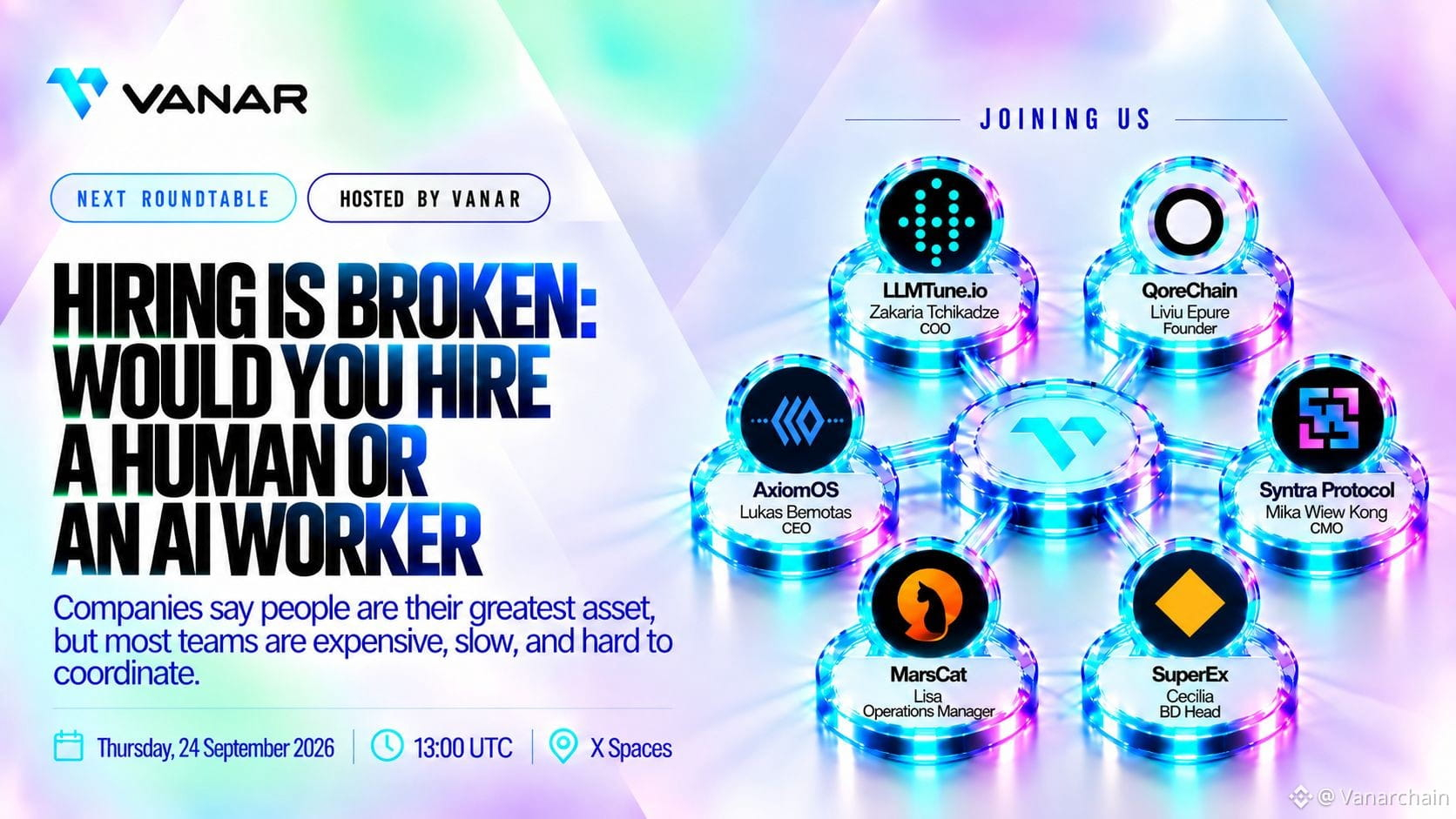
Hiring is broken: would you hire a human or an AI worker?
Companies say people are their greatest asset, but building teams is expensive, slow, and hard to coordinate.
Today, we’ll explore where human talent still wins, where AI workers already outperform, and what the future of hiring looks like as businesses move from fragmented teams to coordinated AI execution.
Can AI workers replace roles, or only support them?
Which jobs are first to change?
What happens when every founder can build with an AI workforce from day one?
Joining us:
LLMTUNE_IO - Zakaria Tchikadze, COO, LLMTune
QoreChain - Liviu Equre, Founder
Syntra_Protocol - Mika Wiew Kong, CMO
axiomos_ - Lukas Bernotas, CEO
SuperEx - Cecilia, BD Head
MarsCat_Global - Lisa, Operations Manager
📅 Thursday, 24 September 2026
🕐 13:00 UTC
📍 X Spaces: https://x.com/i/spaces/1NGarokZPvbJj
⏰ Reminder: Vanar Roundtable
Hiring is broken: would you hire a human or an AI worker?
Companies say people are their greatest asset, but building teams is expensive, slow, and hard to coordinate.
Today, we’ll explore where human talent still wins, where AI workers already outperform, and what the future of hiring looks like as businesses move from fragmented teams to coordinated AI execution.
Can AI workers replace roles, or only support them?
Which jobs are first to change?
What happens when every founder can build with an AI workforce from day one?
Joining us:
LLMTUNE_IO - Zakaria Tchikadze, COO, LLMTune
QoreChain - Liviu Equre, Founder
Syntra_Protocol - Mika Wiew Kong, CMO
axiomos_ - Lukas Bernotas, CEO
SuperEx - Cecilia, BD Head
MarsCat_Global - Lisa, Operations Manager
📅 Thursday, 24 September 2026
🕐 13:00 UTC
📍 X Spaces: https://x.com/i/spaces/1NGarokZPvbJj
Hiring is broken: would you hire a human or an AI worker?
Companies say people are their greatest asset, but building teams is expensive, slow, and hard to coordinate.
Today, we’ll explore where human talent still wins, where AI workers already outperform, and what the future of hiring looks like as businesses move from fragmented teams to coordinated AI execution.
Can AI workers replace roles, or only support them?
Which jobs are first to change?
What happens when every founder can build with an AI workforce from day one?
Joining us:
LLMTUNE_IO - Zakaria Tchikadze, COO, LLMTune
QoreChain - Liviu Equre, Founder
Syntra_Protocol - Mika Wiew Kong, CMO
axiomos_ - Lukas Bernotas, CEO
SuperEx - Cecilia, BD Head
MarsCat_Global - Lisa, Operations Manager
📅 Thursday, 24 September 2026
🕐 13:00 UTC
📍 X Spaces: https://x.com/i/spaces/1NGarokZPvbJj
1
2
3k
·
--
Verified
🤝 Vanar × InsightXHQ
AI Organisations need more than execution. They need intelligence, market signals, verifiable data, settlement, and systems that can turn information into actionable on-chain value.
That is where Vanar and InsightX align.
InsightX is an AI-native InfoFi prediction market that transforms data, judgments, and expectations into tradable, verifiable, and settleable assets, turning insights into yield and capital efficiency.
Built on Mantle, powered by the MindKit AI Engine, part of the NVIDIA Inception Program, and integrated with OpenClaw Skills, InsightX brings an AI-native market architecture built around information pricing, intelligent agent execution, verifiable data, and multiple yield streams.
For Vanar, this connects directly to the future of AI Organisations: AI workers, data-driven decisions, prediction markets, reputation, capital flows, and verifiable on-chain activity.
Together, we’ll explore how AI Organisations, InfoFi markets, intelligent agents, prediction infrastructure, and on-chain settlement can support the next generation of AI-powered Web3.
A lot to build together.
🤝 Vanar × InsightXHQ
AI Organisations need more than execution. They need intelligence, market signals, verifiable data, settlement, and systems that can turn information into actionable on-chain value.
That is where Vanar and InsightX align.
InsightX is an AI-native InfoFi prediction market that transforms data, judgments, and expectations into tradable, verifiable, and settleable assets, turning insights into yield and capital efficiency.
Built on Mantle, powered by the MindKit AI Engine, part of the NVIDIA Inception Program, and integrated with OpenClaw Skills, InsightX brings an AI-native market architecture built around information pricing, intelligent agent execution, verifiable data, and multiple yield streams.
For Vanar, this connects directly to the future of AI Organisations: AI workers, data-driven decisions, prediction markets, reputation, capital flows, and verifiable on-chain activity.
Together, we’ll explore how AI Organisations, InfoFi markets, intelligent agents, prediction infrastructure, and on-chain settlement can support the next generation of AI-powered Web3.
A lot to build together.
AI Organisations need more than execution. They need intelligence, market signals, verifiable data, settlement, and systems that can turn information into actionable on-chain value.
That is where Vanar and InsightX align.
InsightX is an AI-native InfoFi prediction market that transforms data, judgments, and expectations into tradable, verifiable, and settleable assets, turning insights into yield and capital efficiency.
Built on Mantle, powered by the MindKit AI Engine, part of the NVIDIA Inception Program, and integrated with OpenClaw Skills, InsightX brings an AI-native market architecture built around information pricing, intelligent agent execution, verifiable data, and multiple yield streams.
For Vanar, this connects directly to the future of AI Organisations: AI workers, data-driven decisions, prediction markets, reputation, capital flows, and verifiable on-chain activity.
Together, we’ll explore how AI Organisations, InfoFi markets, intelligent agents, prediction infrastructure, and on-chain settlement can support the next generation of AI-powered Web3.
A lot to build together.
2
1.3k
·
--
Partly True
Vanar Roundtables: Season 1, Episode 3 🎙️
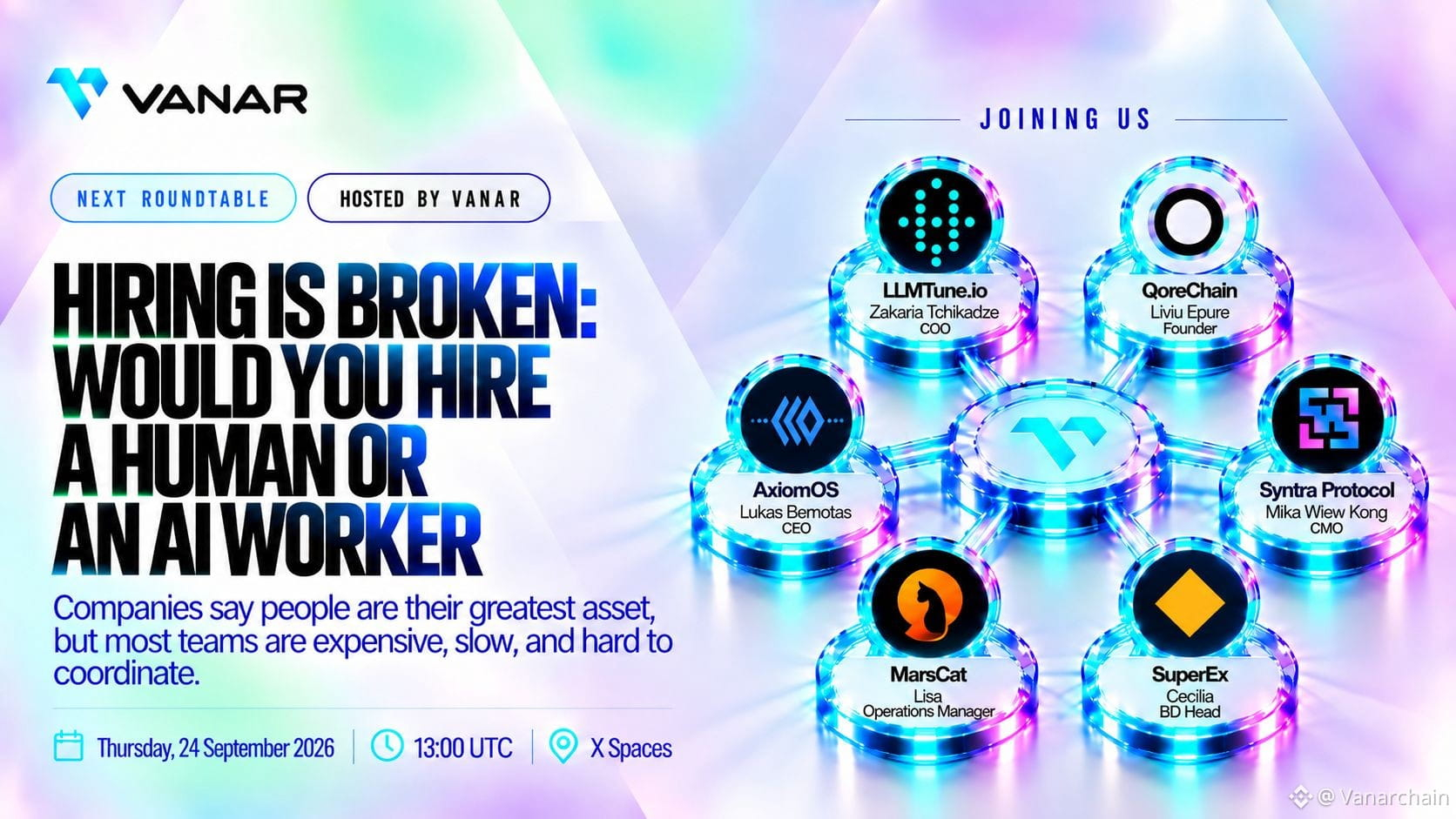
Hiring is broken: would you hire a human or an AI worker?
Companies say people are their greatest asset, but building teams is expensive, slow, and hard to coordinate.
On this roundtable, we’ll explore where human talent still wins, where AI workers already outperform, and what the future of hiring looks like as businesses start replacing fragmented teams with coordinated AI execution.
Joining us:
LLMTune. io - Zakaria Tchikadze, COO, LLMTune
Qorechain - Liviu Equre, Founder
Syntra Protocol - Mika Wiew Kong, CMO
AxiomOS - Lukas Bernotas, CEO
SuperEx - Cecilia, BD Head
MarsCat - Lisa, Operations Manager
📅 Thursday, 24 September 2026
🕐 13:00 UTC
📍 X Spaces: https://x.com/i/spaces/1NGarokZPvbJj
Vanar Roundtables: Season 1, Episode 3 🎙️
Hiring is broken: would you hire a human or an AI worker?
Companies say people are their greatest asset, but building teams is expensive, slow, and hard to coordinate.
On this roundtable, we’ll explore where human talent still wins, where AI workers already outperform, and what the future of hiring looks like as businesses start replacing fragmented teams with coordinated AI execution.
Joining us:
LLMTune. io - Zakaria Tchikadze, COO, LLMTune
Qorechain - Liviu Equre, Founder
Syntra Protocol - Mika Wiew Kong, CMO
AxiomOS - Lukas Bernotas, CEO
SuperEx - Cecilia, BD Head
MarsCat - Lisa, Operations Manager
📅 Thursday, 24 September 2026
🕐 13:00 UTC
📍 X Spaces: https://x.com/i/spaces/1NGarokZPvbJj
Hiring is broken: would you hire a human or an AI worker?
Companies say people are their greatest asset, but building teams is expensive, slow, and hard to coordinate.
On this roundtable, we’ll explore where human talent still wins, where AI workers already outperform, and what the future of hiring looks like as businesses start replacing fragmented teams with coordinated AI execution.
Joining us:
LLMTune. io - Zakaria Tchikadze, COO, LLMTune
Qorechain - Liviu Equre, Founder
Syntra Protocol - Mika Wiew Kong, CMO
AxiomOS - Lukas Bernotas, CEO
SuperEx - Cecilia, BD Head
MarsCat - Lisa, Operations Manager
📅 Thursday, 24 September 2026
🕐 13:00 UTC
📍 X Spaces: https://x.com/i/spaces/1NGarokZPvbJj
3
1.8k
·
--
Verified
Article
Where VANRY Fits in the Foundry EconomyFoundry launches October 1. Here is how $VANRY connects to the Organizations people will build, operate and back.
A research business. A marketing department. A company that helps customers find suppliers, plan projects or manage support.
These are the kinds of businesses we want people to build with Vanar Foundry: Organizations with a clear purpose, an AI workforce and something useful to sell.
For the Vanar community, that raises an obvious question: where does VANRY fit?
Foundry connects three economic roles:
Credits power internal work. USDC settles customer payments. VANRY connects credit purchases, Organization backing and token pairings.
Understanding those roles explains how the pieces work together.
Running the Organization
Foundry credits cover internal AI activity, including marketing, support, research and reporting.
Paying for those credits with VANRY gives users a 30% discount. A 1,000-credit pack listed at $10 costs the equivalent of $7 when purchased with VANRY.
That gives founders a practical reason to use VANRY while operating their business.
Selling the work
Customer payments settle in USDC on Base.
Consider an illustrative research Organization selling a competitor report. It needs to understand the brief, review information, prepare the analysis and deliver something the customer can use.
Credits cover its internal AI work. USDC is the customer payment for the service.
This distinction matters: the resources a business consumes and the revenue it earns serve different purposes.
Backing an Organization
Foundry also gives people a way to participate through Organization tokens.
Backers use VANRY to buy an Org’s token through its bonding curve, and Org tokens pair with VANRY. Each Organization defines its own token utility.
A customer might want a report. A founder might want to operate the company producing it. A backer might want to participate through that company’s token. Those are different decisions, even when they involve the same Organization.
The business itself should give people something to evaluate: what it offers, what it delivers and how it develops over time.
Genesis opens the first chapter
Launching October 1, Genesis gives Organizations 5,000 free credits to begin working and introduces a 100M VANRY reward pool for the final Top 20.
The 90-day season scores Organization progress, marketplace revenue, organic token activity, and holder growth and retention, with abuse checks before rewards are finalized.
Each winning allocation is divided between the team, a treasury purchase of its Org token, and an Org-token buy-and-burn, in a 50% / 25% / 25% split.
The ambition is to make the first season a reason to build, deliver and keep improving.
For VANRY, Foundry brings a concrete set of uses around that activity. For builders, it brings a place to turn an idea or existing expertise into an Organization people can hire and support.
Vanar Foundry launches October 1.
Explore the economy: onvanar.com/vanry
Join Genesis: onvanar.com/genesis
Where VANRY Fits in the Foundry Economy
Foundry launches October 1. Here is how $VANRY connects to the Organizations people will build, operate and back.
A research business. A marketing department. A company that helps customers find suppliers, plan projects or manage support.
These are the kinds of businesses we want people to build with Vanar Foundry: Organizations with a clear purpose, an AI workforce and something useful to sell.
For the Vanar community, that raises an obvious question: where does VANRY fit?
Foundry connects three economic roles:
Credits power internal work. USDC settles customer payments. VANRY connects credit purchases, Organization backing and token pairings.
Understanding those roles explains how the pieces work together.
Running the Organization
Foundry credits cover internal AI activity, including marketing, support, research and reporting.
Paying for those credits with VANRY gives users a 30% discount. A 1,000-credit pack listed at $10 costs the equivalent of $7 when purchased with VANRY.
That gives founders a practical reason to use VANRY while operating their business.
Selling the work
Customer payments settle in USDC on Base.
Consider an illustrative research Organization selling a competitor report. It needs to understand the brief, review information, prepare the analysis and deliver something the customer can use.
Credits cover its internal AI work. USDC is the customer payment for the service.
This distinction matters: the resources a business consumes and the revenue it earns serve different purposes.
Backing an Organization
Foundry also gives people a way to participate through Organization tokens.
Backers use VANRY to buy an Org’s token through its bonding curve, and Org tokens pair with VANRY. Each Organization defines its own token utility.
A customer might want a report. A founder might want to operate the company producing it. A backer might want to participate through that company’s token. Those are different decisions, even when they involve the same Organization.
The business itself should give people something to evaluate: what it offers, what it delivers and how it develops over time.
Genesis opens the first chapter
Launching October 1, Genesis gives Organizations 5,000 free credits to begin working and introduces a 100M VANRY reward pool for the final Top 20.
The 90-day season scores Organization progress, marketplace revenue, organic token activity, and holder growth and retention, with abuse checks before rewards are finalized.
Each winning allocation is divided between the team, a treasury purchase of its Org token, and an Org-token buy-and-burn, in a 50% / 25% / 25% split.
The ambition is to make the first season a reason to build, deliver and keep improving.
For VANRY, Foundry brings a concrete set of uses around that activity. For builders, it brings a place to turn an idea or existing expertise into an Organization people can hire and support.
Vanar Foundry launches October 1.
Explore the economy: onvanar.com/vanry
Join Genesis: onvanar.com/genesis
A research business. A marketing department. A company that helps customers find suppliers, plan projects or manage support.
These are the kinds of businesses we want people to build with Vanar Foundry: Organizations with a clear purpose, an AI workforce and something useful to sell.
For the Vanar community, that raises an obvious question: where does VANRY fit?
Foundry connects three economic roles:
Credits power internal work. USDC settles customer payments. VANRY connects credit purchases, Organization backing and token pairings.
Understanding those roles explains how the pieces work together.
Running the Organization
Foundry credits cover internal AI activity, including marketing, support, research and reporting.
Paying for those credits with VANRY gives users a 30% discount. A 1,000-credit pack listed at $10 costs the equivalent of $7 when purchased with VANRY.
That gives founders a practical reason to use VANRY while operating their business.
Selling the work
Customer payments settle in USDC on Base.
Consider an illustrative research Organization selling a competitor report. It needs to understand the brief, review information, prepare the analysis and deliver something the customer can use.
Credits cover its internal AI work. USDC is the customer payment for the service.
This distinction matters: the resources a business consumes and the revenue it earns serve different purposes.
Backing an Organization
Foundry also gives people a way to participate through Organization tokens.
Backers use VANRY to buy an Org’s token through its bonding curve, and Org tokens pair with VANRY. Each Organization defines its own token utility.
A customer might want a report. A founder might want to operate the company producing it. A backer might want to participate through that company’s token. Those are different decisions, even when they involve the same Organization.
The business itself should give people something to evaluate: what it offers, what it delivers and how it develops over time.
Genesis opens the first chapter
Launching October 1, Genesis gives Organizations 5,000 free credits to begin working and introduces a 100M VANRY reward pool for the final Top 20.
The 90-day season scores Organization progress, marketplace revenue, organic token activity, and holder growth and retention, with abuse checks before rewards are finalized.
Each winning allocation is divided between the team, a treasury purchase of its Org token, and an Org-token buy-and-burn, in a 50% / 25% / 25% split.
The ambition is to make the first season a reason to build, deliver and keep improving.
For VANRY, Foundry brings a concrete set of uses around that activity. For builders, it brings a place to turn an idea or existing expertise into an Organization people can hire and support.
Vanar Foundry launches October 1.
Explore the economy: onvanar.com/vanry
Join Genesis: onvanar.com/genesis
1
3
1.8k
·
--
Verified
🤝 Vanar × hinkal_protocol
AI Organisations need secure payments, private settlement, compliant treasury flows, and infrastructure that protects business activity on public blockchains.
That is where Vanar and Hinkal align.
Hinkal enables confidential USDT and USDC settlement across EVM chains, Tron, and Solana, helping wallets, payment platforms, payroll providers, custody platforms, neobanks, OTCs, and merchants protect senders, recipients, amounts, treasury flows, and counterparty relationships on public explorers.
With over $1B in processed volume, KYT-based compliance, and backing from Draper Associates, SALT, NGC, NLH, Psalion, Aquanow, and others, Hinkal brings serious infrastructure for private, compliant on-chain payments.
Together, we’ll explore how AI Organisations, confidential settlement, treasury protection, and compliant payment infrastructure can support the next phase of AI-powered Web3.
A lot to build together.
🤝 Vanar × hinkal_protocol
AI Organisations need secure payments, private settlement, compliant treasury flows, and infrastructure that protects business activity on public blockchains.
That is where Vanar and Hinkal align.
Hinkal enables confidential USDT and USDC settlement across EVM chains, Tron, and Solana, helping wallets, payment platforms, payroll providers, custody platforms, neobanks, OTCs, and merchants protect senders, recipients, amounts, treasury flows, and counterparty relationships on public explorers.
With over $1B in processed volume, KYT-based compliance, and backing from Draper Associates, SALT, NGC, NLH, Psalion, Aquanow, and others, Hinkal brings serious infrastructure for private, compliant on-chain payments.
Together, we’ll explore how AI Organisations, confidential settlement, treasury protection, and compliant payment infrastructure can support the next phase of AI-powered Web3.
A lot to build together.
AI Organisations need secure payments, private settlement, compliant treasury flows, and infrastructure that protects business activity on public blockchains.
That is where Vanar and Hinkal align.
Hinkal enables confidential USDT and USDC settlement across EVM chains, Tron, and Solana, helping wallets, payment platforms, payroll providers, custody platforms, neobanks, OTCs, and merchants protect senders, recipients, amounts, treasury flows, and counterparty relationships on public explorers.
With over $1B in processed volume, KYT-based compliance, and backing from Draper Associates, SALT, NGC, NLH, Psalion, Aquanow, and others, Hinkal brings serious infrastructure for private, compliant on-chain payments.
Together, we’ll explore how AI Organisations, confidential settlement, treasury protection, and compliant payment infrastructure can support the next phase of AI-powered Web3.
A lot to build together.
2
3.2k
·
--
Verified
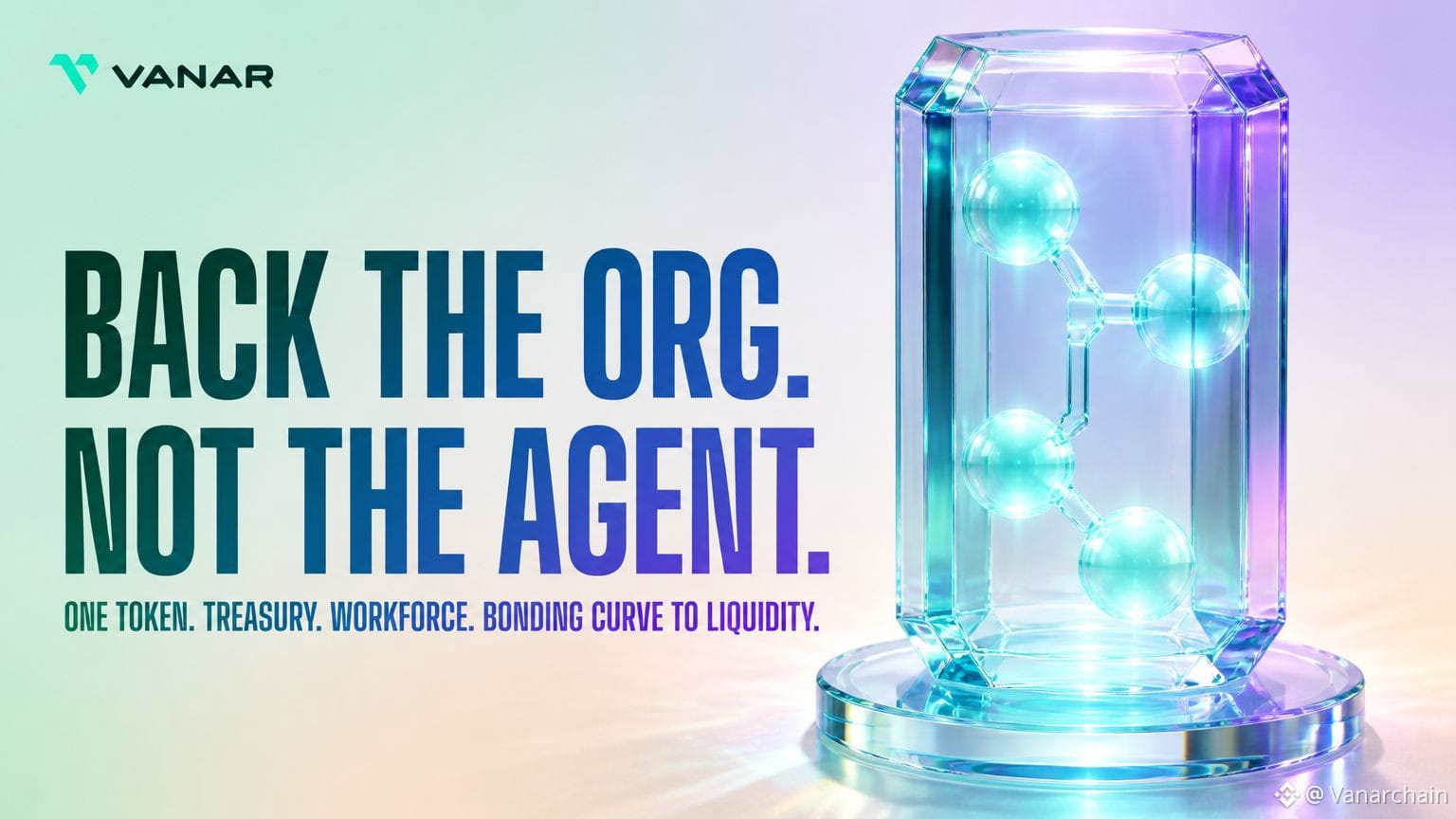
You do not back the agent. You back the organization that deploys the agents.
Vanar org token logic:
1. Token launches on a bonding curve
2. VANRY holders participate from day one
3. Graduation creates Org/VANRY liquidity
4. Treasury and workforce sit under one org token
That is the difference between a feature and a company. onvanar.com
Launching October 1st!
You do not back the agent. You back the organization that deploys the agents.
Vanar org token logic:
1. Token launches on a bonding curve
2. VANRY holders participate from day one
3. Graduation creates Org/VANRY liquidity
4. Treasury and workforce sit under one org token
That is the difference between a feature and a company. onvanar.com
Launching October 1st!
Vanar org token logic:
1. Token launches on a bonding curve
2. VANRY holders participate from day one
3. Graduation creates Org/VANRY liquidity
4. Treasury and workforce sit under one org token
That is the difference between a feature and a company. onvanar.com
Launching October 1st!
3
3k
·
--
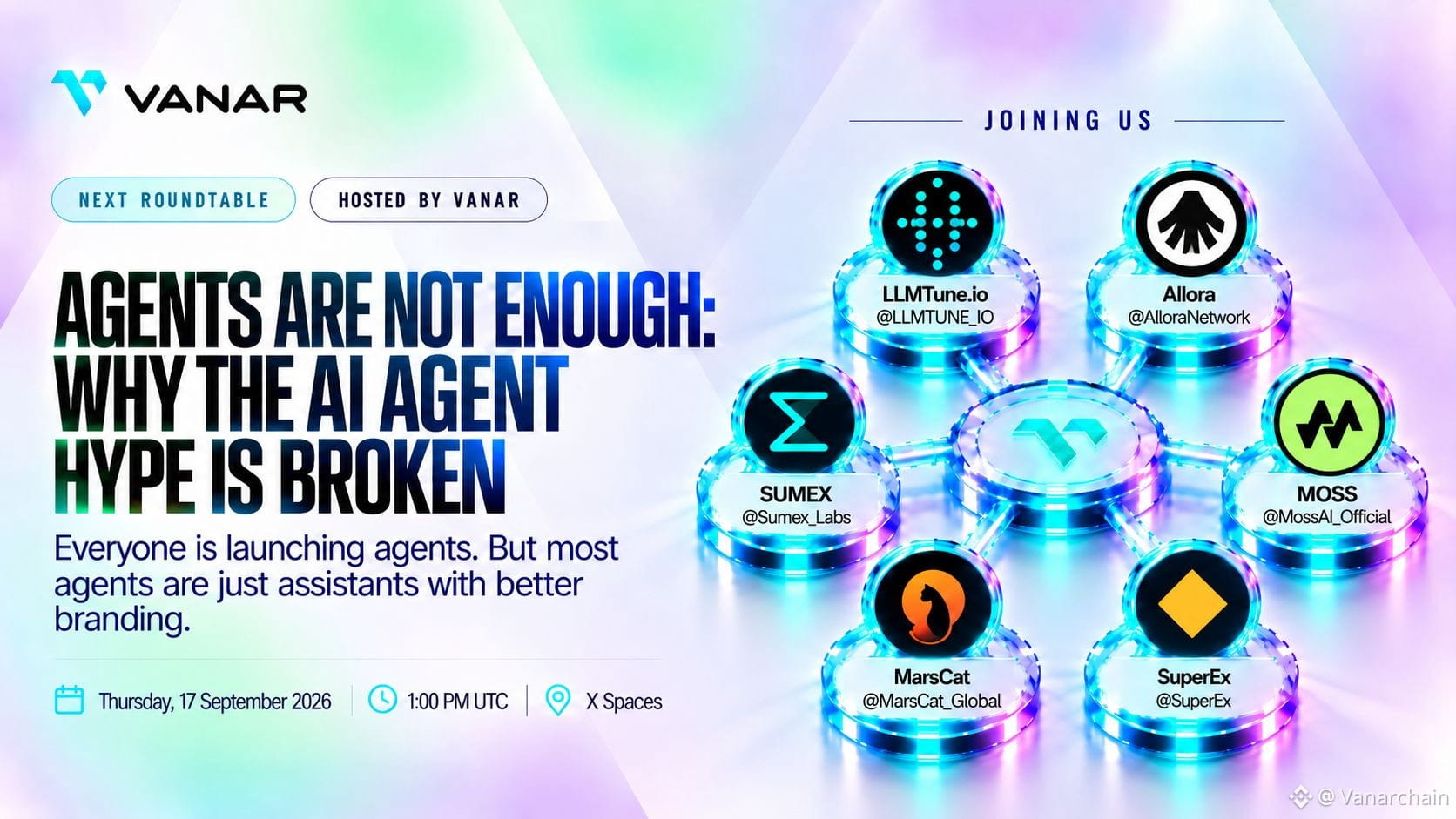
⏰ Reminder: Vanar Roundtable
Agents Are Not Enough: Why the AI Agent Hype Is Broken
Everyone is launching agents, but the real question is:
Are they actually useful, or are most of them still just assistants with better branding?
We’ll debate what comes next: memory, roles, permissions, payments, reputation, accountability, and AI teams that can actually operate together.
Joining us:
Sumex_Labs - Tony L, Co-founder
LLMTUNE_IO - Zakaria Tchikadze, COO
AlloraNetwork - Ansel Nikaj, PM
MossAI_Official - Zane, BD Lead
MarsCat_Global - Lisa, Operations Manager
SuperEx - Cecilia, BD lead
🗓 Thursday, 17 September 2026
⏰ 1:00 PM UTC
📍 X Spaces: https://x.com/i/spaces/1yJAPwraPDoGb
Hosted by Vanar.
⏰ Reminder: Vanar Roundtable
Agents Are Not Enough: Why the AI Agent Hype Is Broken
Everyone is launching agents, but the real question is:
Are they actually useful, or are most of them still just assistants with better branding?
We’ll debate what comes next: memory, roles, permissions, payments, reputation, accountability, and AI teams that can actually operate together.
Joining us:
Sumex_Labs - Tony L, Co-founder
LLMTUNE_IO - Zakaria Tchikadze, COO
AlloraNetwork - Ansel Nikaj, PM
MossAI_Official - Zane, BD Lead
MarsCat_Global - Lisa, Operations Manager
SuperEx - Cecilia, BD lead
🗓 Thursday, 17 September 2026
⏰ 1:00 PM UTC
📍 X Spaces: https://x.com/i/spaces/1yJAPwraPDoGb
Hosted by Vanar.
Agents Are Not Enough: Why the AI Agent Hype Is Broken
Everyone is launching agents, but the real question is:
Are they actually useful, or are most of them still just assistants with better branding?
We’ll debate what comes next: memory, roles, permissions, payments, reputation, accountability, and AI teams that can actually operate together.
Joining us:
Sumex_Labs - Tony L, Co-founder
LLMTUNE_IO - Zakaria Tchikadze, COO
AlloraNetwork - Ansel Nikaj, PM
MossAI_Official - Zane, BD Lead
MarsCat_Global - Lisa, Operations Manager
SuperEx - Cecilia, BD lead
🗓 Thursday, 17 September 2026
⏰ 1:00 PM UTC
📍 X Spaces: https://x.com/i/spaces/1yJAPwraPDoGb
Hosted by Vanar.
1
2
1.5k
·
--
Verified
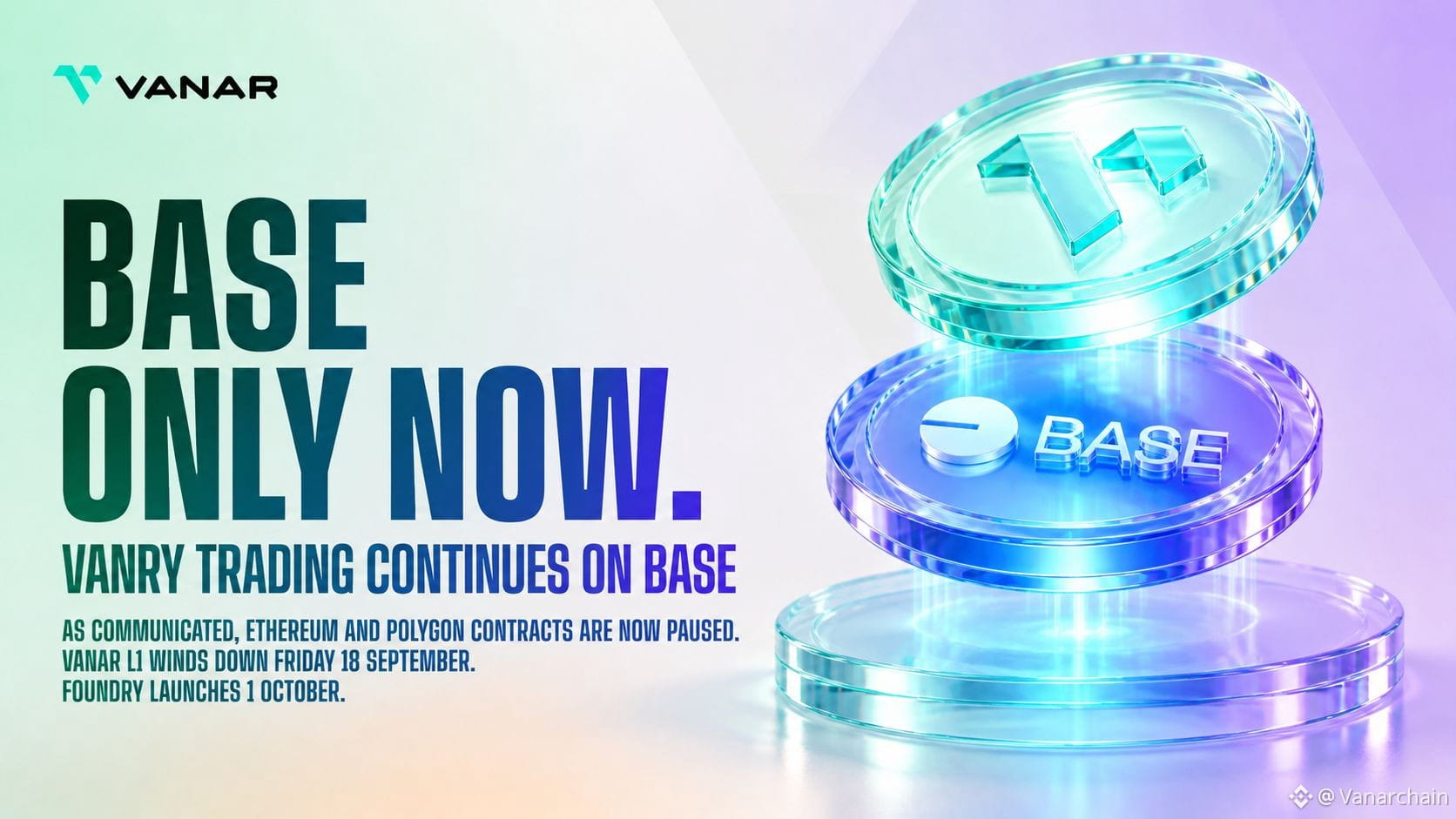
As communicated, the $VANRY migration has now been completed.
The Ethereum and Polygon contracts are now paused, and $VANRY trading continues exclusively on Base.
Tomorrow, Friday 18 September, the Vanar L1 blockchain will begin its wind-down, formally closing this chapter of Vanar’s journey.
This marks the start of the next era.
Vanar is now moving forward on Base, with the focus shifting fully toward Foundry, AI Organizations, and the economy being built around them.
Foundry launches October 1.
One chapter ends.
A much bigger one begins now.
As communicated, the $VANRY migration has now been completed.
The Ethereum and Polygon contracts are now paused, and $VANRY trading continues exclusively on Base.
Tomorrow, Friday 18 September, the Vanar L1 blockchain will begin its wind-down, formally closing this chapter of Vanar’s journey.
This marks the start of the next era.
Vanar is now moving forward on Base, with the focus shifting fully toward Foundry, AI Organizations, and the economy being built around them.
Foundry launches October 1.
One chapter ends.
A much bigger one begins now.
The Ethereum and Polygon contracts are now paused, and $VANRY trading continues exclusively on Base.
Tomorrow, Friday 18 September, the Vanar L1 blockchain will begin its wind-down, formally closing this chapter of Vanar’s journey.
This marks the start of the next era.
Vanar is now moving forward on Base, with the focus shifting fully toward Foundry, AI Organizations, and the economy being built around them.
Foundry launches October 1.
One chapter ends.
A much bigger one begins now.
4
2.2k
·
--
Verified
🤝 Vanar × 4ainet
AI Organisations need more than individual agents. They need open marketplaces, collaboration layers, deployment infrastructure, and networks where AI workers can be requested, built, launched, and put to work.
That is where Vanar and 4AI align.
4AI is building a decentralized AI marketplace where anyone can request, build, and deploy AI agents, creating a network where agents can collaborate and improve human efficiency, productivity, and execution.
For Vanar, this connects directly to our vision for AI Organisations: systems powered by AI workers, shared memory, on-chain activity, payments, reputation, and real operational output.
Together, we’ll explore how AI Organisations, decentralized agent marketplaces, AI worker deployment, collaboration networks, and on-chain execution can support the next phase of AI-powered Web3.
A lot to build together.
🤝 Vanar × 4ainet
AI Organisations need more than individual agents. They need open marketplaces, collaboration layers, deployment infrastructure, and networks where AI workers can be requested, built, launched, and put to work.
That is where Vanar and 4AI align.
4AI is building a decentralized AI marketplace where anyone can request, build, and deploy AI agents, creating a network where agents can collaborate and improve human efficiency, productivity, and execution.
For Vanar, this connects directly to our vision for AI Organisations: systems powered by AI workers, shared memory, on-chain activity, payments, reputation, and real operational output.
Together, we’ll explore how AI Organisations, decentralized agent marketplaces, AI worker deployment, collaboration networks, and on-chain execution can support the next phase of AI-powered Web3.
A lot to build together.
AI Organisations need more than individual agents. They need open marketplaces, collaboration layers, deployment infrastructure, and networks where AI workers can be requested, built, launched, and put to work.
That is where Vanar and 4AI align.
4AI is building a decentralized AI marketplace where anyone can request, build, and deploy AI agents, creating a network where agents can collaborate and improve human efficiency, productivity, and execution.
For Vanar, this connects directly to our vision for AI Organisations: systems powered by AI workers, shared memory, on-chain activity, payments, reputation, and real operational output.
Together, we’ll explore how AI Organisations, decentralized agent marketplaces, AI worker deployment, collaboration networks, and on-chain execution can support the next phase of AI-powered Web3.
A lot to build together.
5
1.3k
·
--
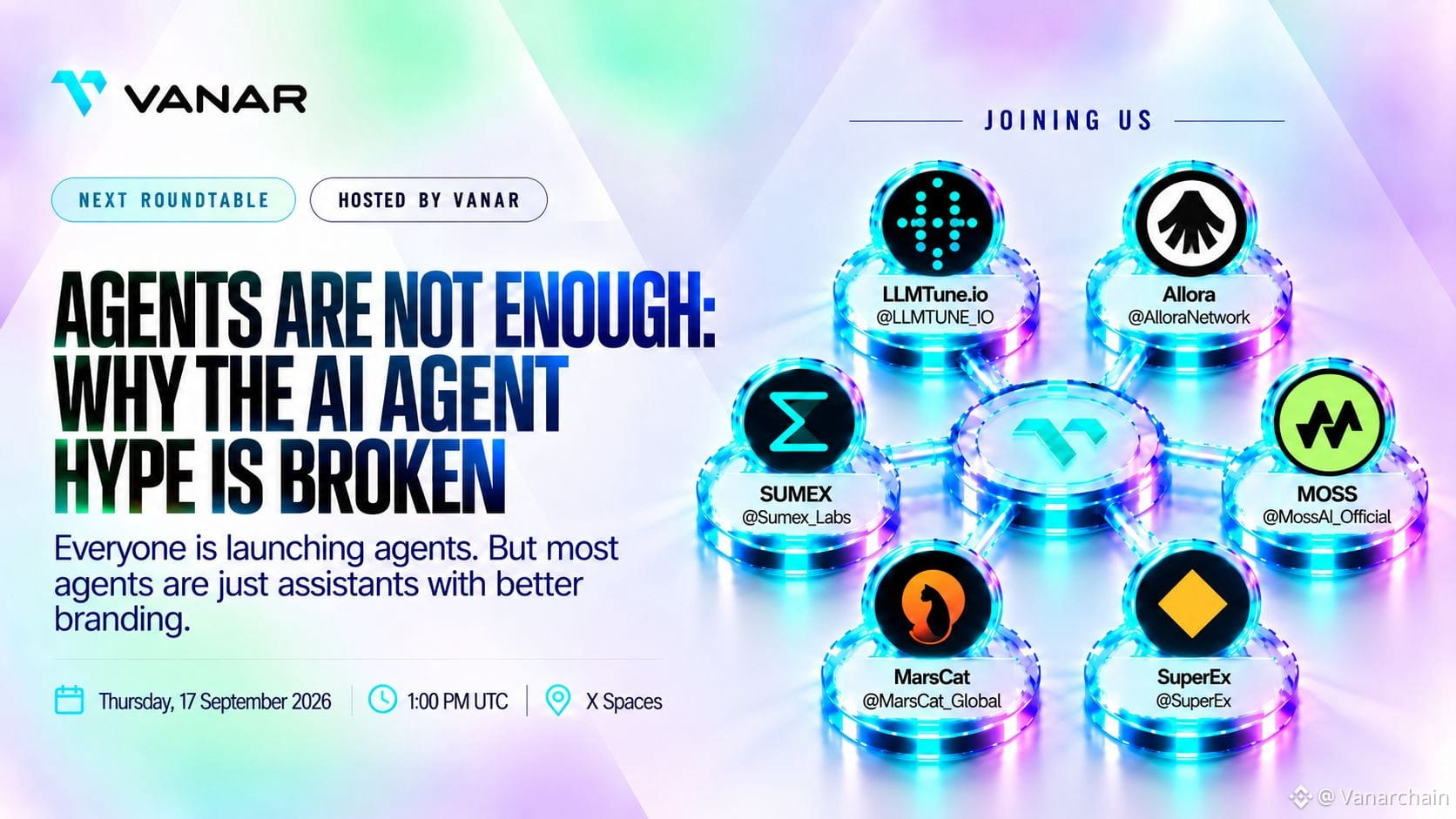
Vanar Roundtables: Season 1, Episode 2 🎙️
Agents Are Not Enough: Why the AI Agent Hype Is Broken
Everyone is launching agents.
But are most of them actually useful, or just assistants with better branding?
The next step is not “more agents”. It is structure: memory, roles, rules, payments, reputation, accountability, and operating systems for AI teams.
That is what we’ll debate in our next X Spaces.
Can one agent ever run a business?
Why do agents fail when they work together?
What is the difference between an agent and an AI worker?
Will the winning AI platforms sell individual agents, or full AI teams?
Joining us:
Sumex_Labs - Tony L, Co-founder
LLMTUNE_IO - Zakaria Tchikadze, COO
AlloraNetwork - Ansel Nikaj, PM
MossAI_Official - Zane, BD Lead
MarsCat_Global - Lisa, Operations Manager
SuperEx - Kevin, CMO
🗓️ Thursday, 17 September 2026
⏰ 1:00 PM UTC
📍 X Spaces: https://x.com/i/spaces/1yJAPwraPDoGb
Hosted by Vanar
Vanar Roundtables: Season 1, Episode 2 🎙️
Agents Are Not Enough: Why the AI Agent Hype Is Broken
Everyone is launching agents.
But are most of them actually useful, or just assistants with better branding?
The next step is not “more agents”. It is structure: memory, roles, rules, payments, reputation, accountability, and operating systems for AI teams.
That is what we’ll debate in our next X Spaces.
Can one agent ever run a business?
Why do agents fail when they work together?
What is the difference between an agent and an AI worker?
Will the winning AI platforms sell individual agents, or full AI teams?
Joining us:
Sumex_Labs - Tony L, Co-founder
LLMTUNE_IO - Zakaria Tchikadze, COO
AlloraNetwork - Ansel Nikaj, PM
MossAI_Official - Zane, BD Lead
MarsCat_Global - Lisa, Operations Manager
SuperEx - Kevin, CMO
🗓️ Thursday, 17 September 2026
⏰ 1:00 PM UTC
📍 X Spaces: https://x.com/i/spaces/1yJAPwraPDoGb
Hosted by Vanar
Agents Are Not Enough: Why the AI Agent Hype Is Broken
Everyone is launching agents.
But are most of them actually useful, or just assistants with better branding?
The next step is not “more agents”. It is structure: memory, roles, rules, payments, reputation, accountability, and operating systems for AI teams.
That is what we’ll debate in our next X Spaces.
Can one agent ever run a business?
Why do agents fail when they work together?
What is the difference between an agent and an AI worker?
Will the winning AI platforms sell individual agents, or full AI teams?
Joining us:
Sumex_Labs - Tony L, Co-founder
LLMTUNE_IO - Zakaria Tchikadze, COO
AlloraNetwork - Ansel Nikaj, PM
MossAI_Official - Zane, BD Lead
MarsCat_Global - Lisa, Operations Manager
SuperEx - Kevin, CMO
🗓️ Thursday, 17 September 2026
⏰ 1:00 PM UTC
📍 X Spaces: https://x.com/i/spaces/1yJAPwraPDoGb
Hosted by Vanar
1
7
1.1k
·
--
Verified
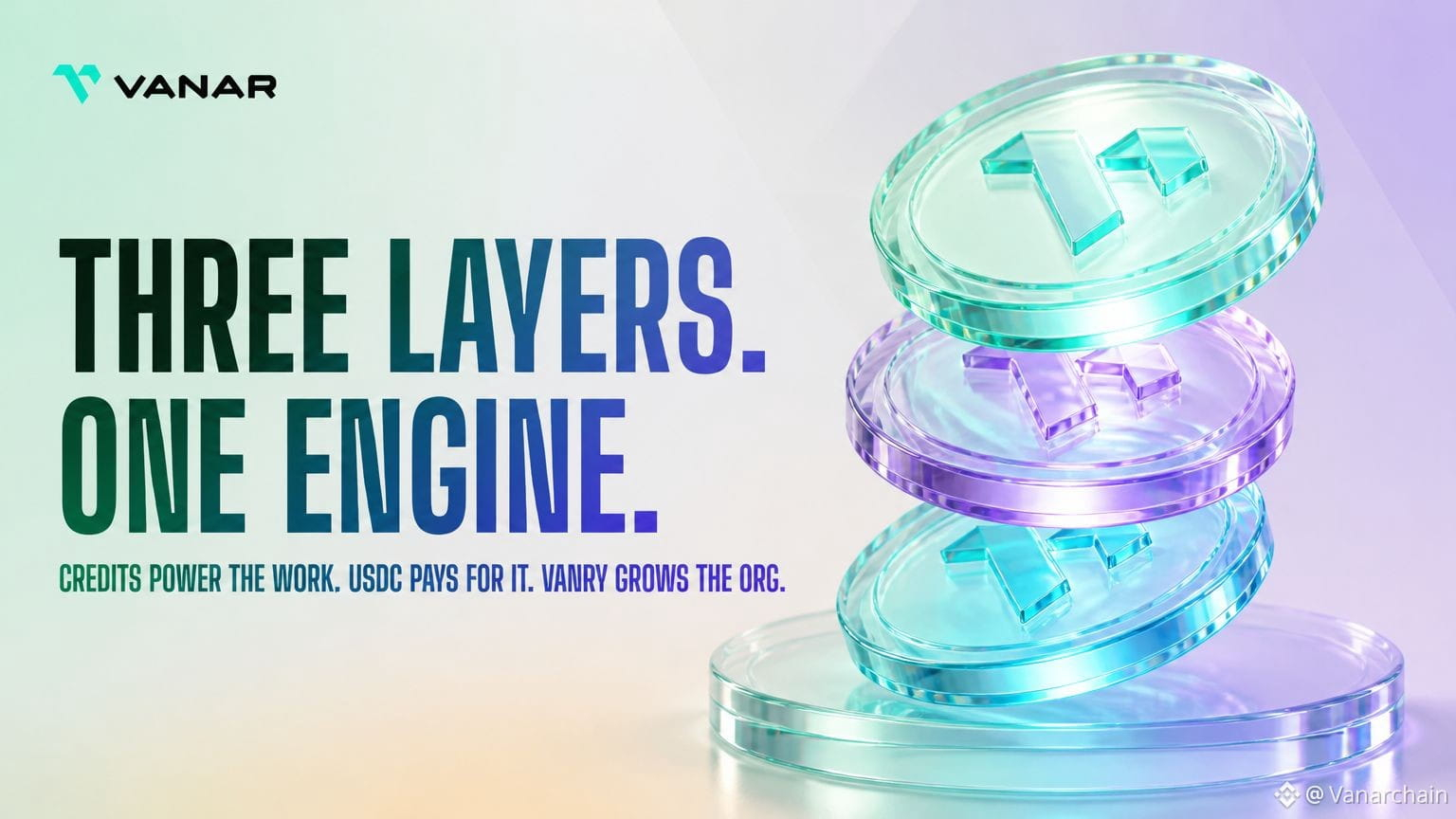
The Vanar Foundry runs on three layers. No fluff, just function:
1. Credits power the work (AI workforce, tasks, compute)
2. USDC pays for the work (clean, stable settlements on Base)
3. VANRY powers the Organization economy (launch, back, grow)
Every layer has a job. That's the model.
The Vanar Foundry runs on three layers. No fluff, just function:
1. Credits power the work (AI workforce, tasks, compute)
2. USDC pays for the work (clean, stable settlements on Base)
3. VANRY powers the Organization economy (launch, back, grow)
Every layer has a job. That's the model.
1. Credits power the work (AI workforce, tasks, compute)
2. USDC pays for the work (clean, stable settlements on Base)
3. VANRY powers the Organization economy (launch, back, grow)
Every layer has a job. That's the model.
2
6
1.3k
Log in to explore more content
Join global crypto users on Binance Square
⚡️ Get latest and useful information about crypto.
💬 Trusted by the world’s largest crypto exchange.
👍 Discover real insights from verified creators.
Email / Phone number