
TF_bnb
18.9k Posts

TF_bnb
 Square Verified+
Report
Block User
🚨 PERSONAL TRADING SERVICE FOR VIP MEMBERS | Project Ambassador & Advisor | DM For Work on Binance Square

USD1 Holder
High-Frequency Trader
5.3 Years
166 Following
51.9K+ Followers
81.8K+ Liked
Posts
All
Quotes
Videos
Live
PINNED
·
--
Bullish
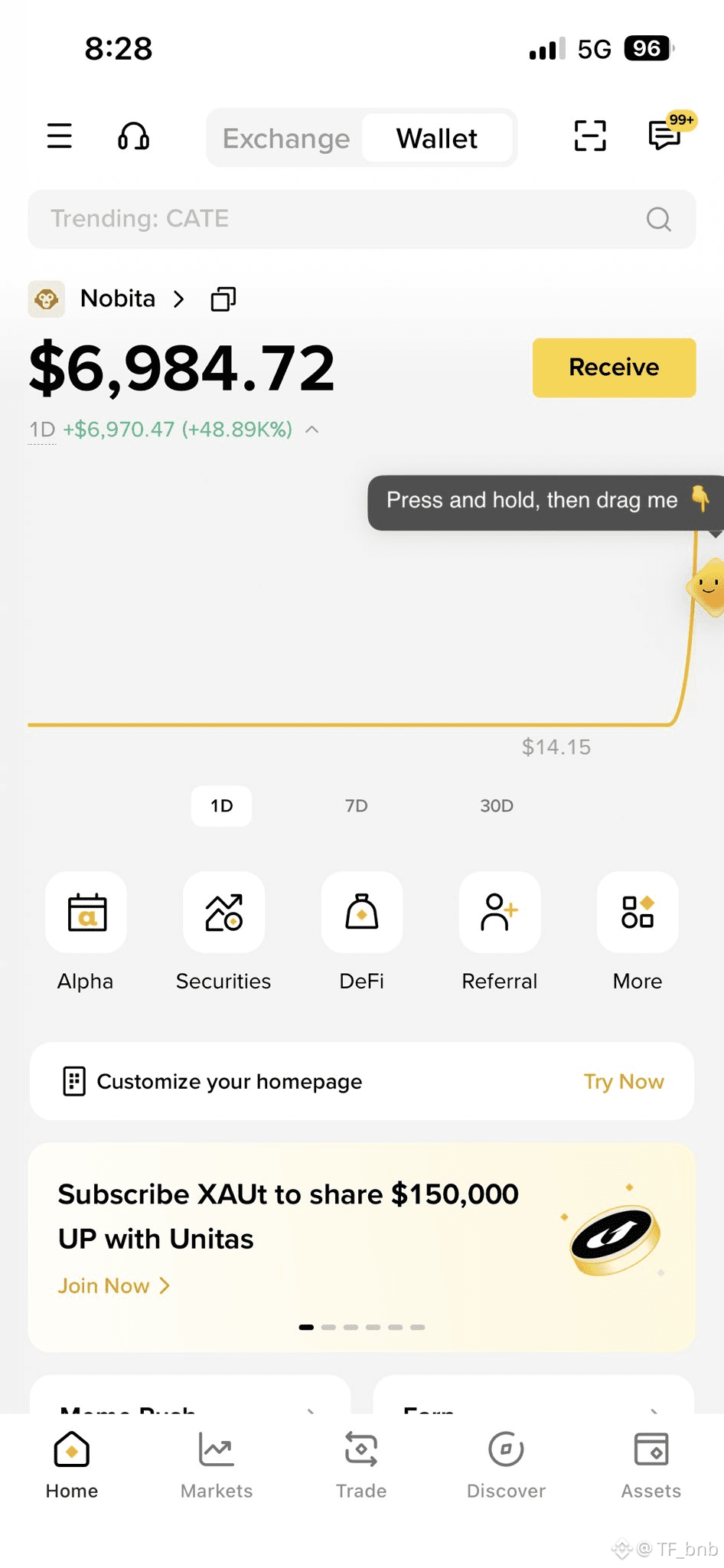
My friend randomly bought a meme coin on Binance Wallet… and ended up making an incredible profit.
Maybe it's time to quit the 9-to-5 and start hunting for the next big opportunity on Binance Wallet.
The early hunters always have the biggest advantage.
Join early and don't miss the next one : [https://web3.binance.com/](https://web3.binance.com/referral?ref=DC20NRAZ)
My friend randomly bought a meme coin on Binance Wallet… and ended up making an incredible profit.
Maybe it's time to quit the 9-to-5 and start hunting for the next big opportunity on Binance Wallet.
The early hunters always have the biggest advantage.
Join early and don't miss the next one : https://web3.binance.com/
Maybe it's time to quit the 9-to-5 and start hunting for the next big opportunity on Binance Wallet.
The early hunters always have the biggest advantage.
Join early and don't miss the next one : https://web3.binance.com/
49
6
155
38.5k
·
--
Bullish
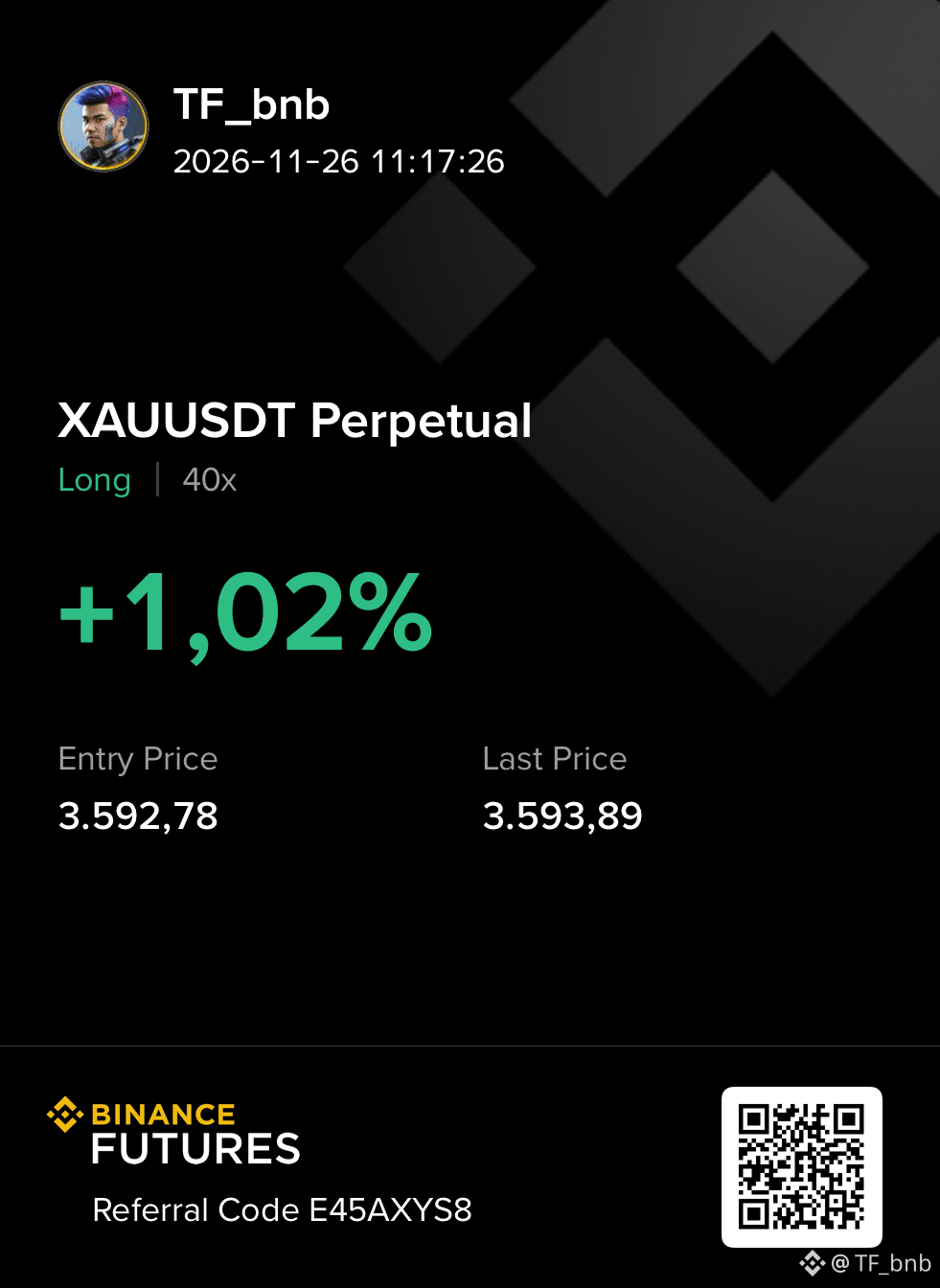
$XAU setup big long now, print profit later
Stoploss : $3550
Take profit : $3650
Long $XAU with me 👇
{future}(XAUUSDT)
$XAU setup big long now, print profit later
Stoploss : $3550
Take profit : $3650
Long $XAU with me 👇
Stoploss : $3550
Take profit : $3650
Long $XAU with me 👇
1
376
·
--
Bullish
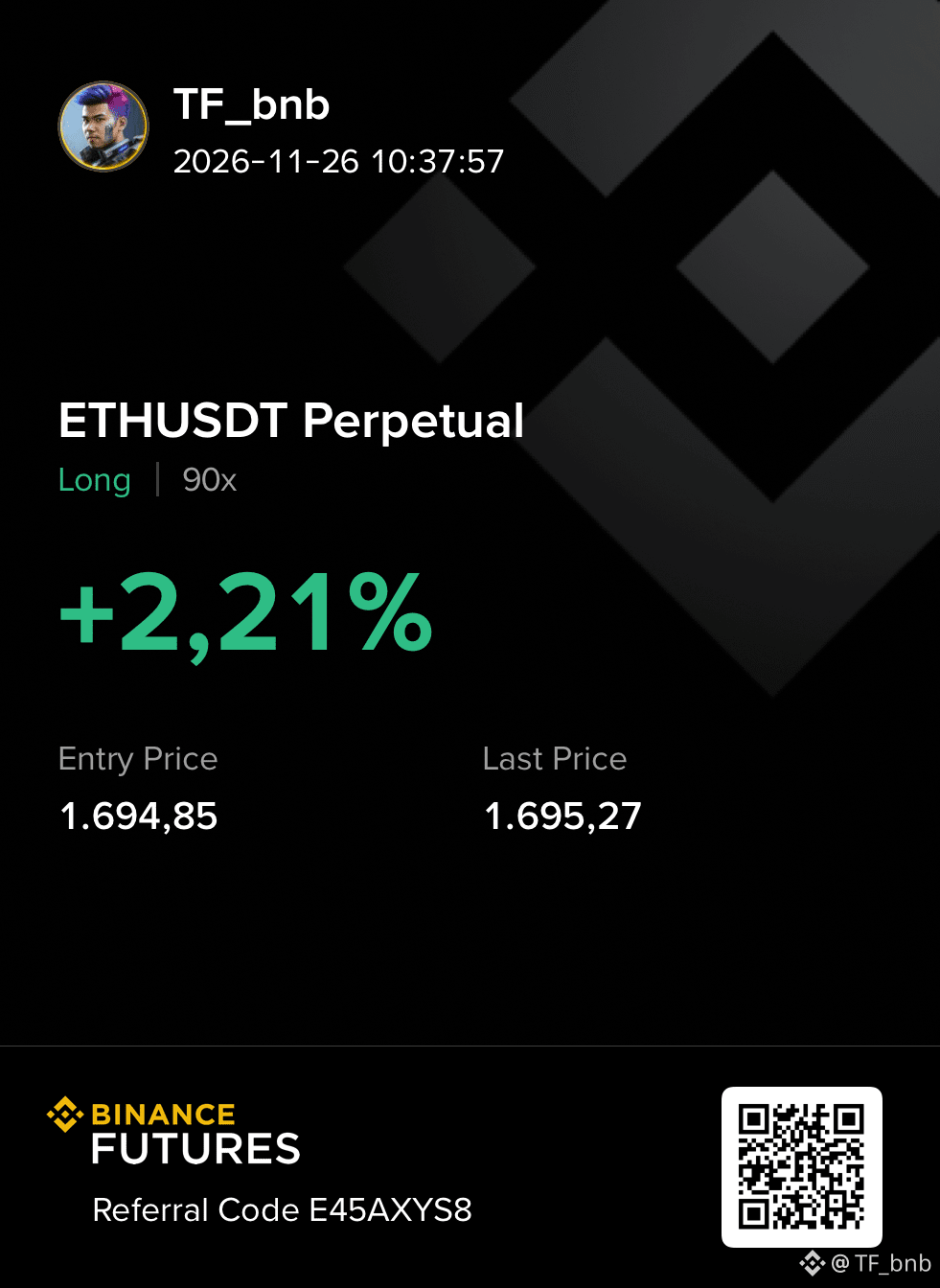
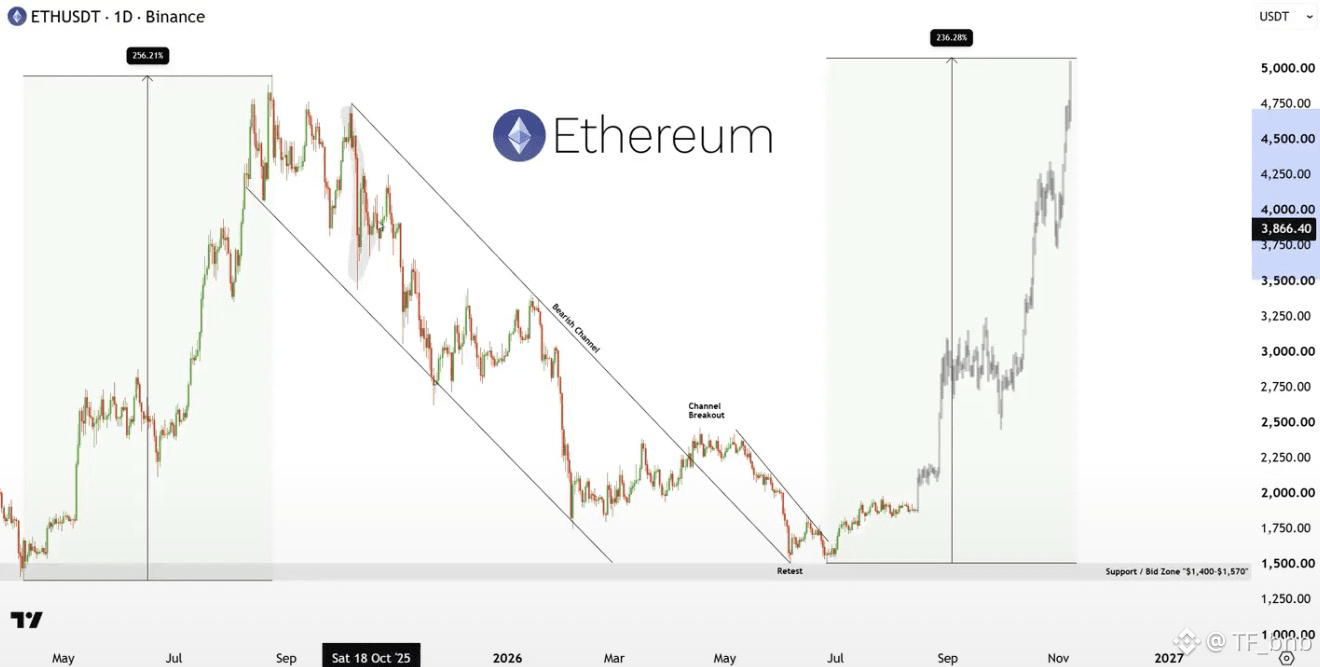
$ETH open big long now, love profit later
Stoploss : $1650
Take profit : $1750
Long $ETH now 👇
{future}(ETHUSDT)
$ETH open big long now, love profit later
Stoploss : $1650
Take profit : $1750
Long $ETH now 👇
Stoploss : $1650
Take profit : $1750
Long $ETH now 👇
2
628
·
--
Bullish
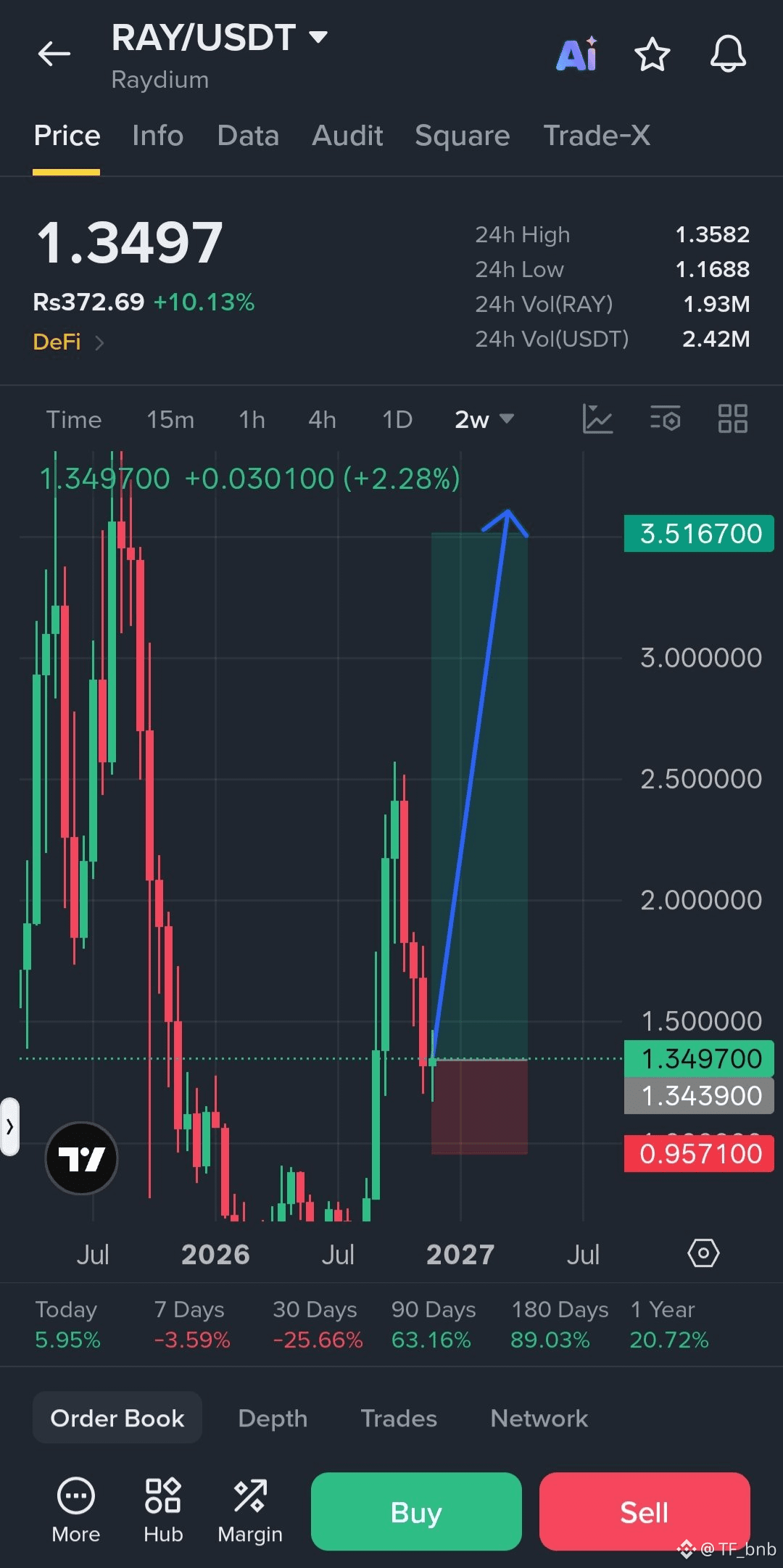
🚀 $RAY — Can Raydium make a run toward $3.50?
RAY is trading around $1.35, with a potential higher-timeframe target near $3.52.
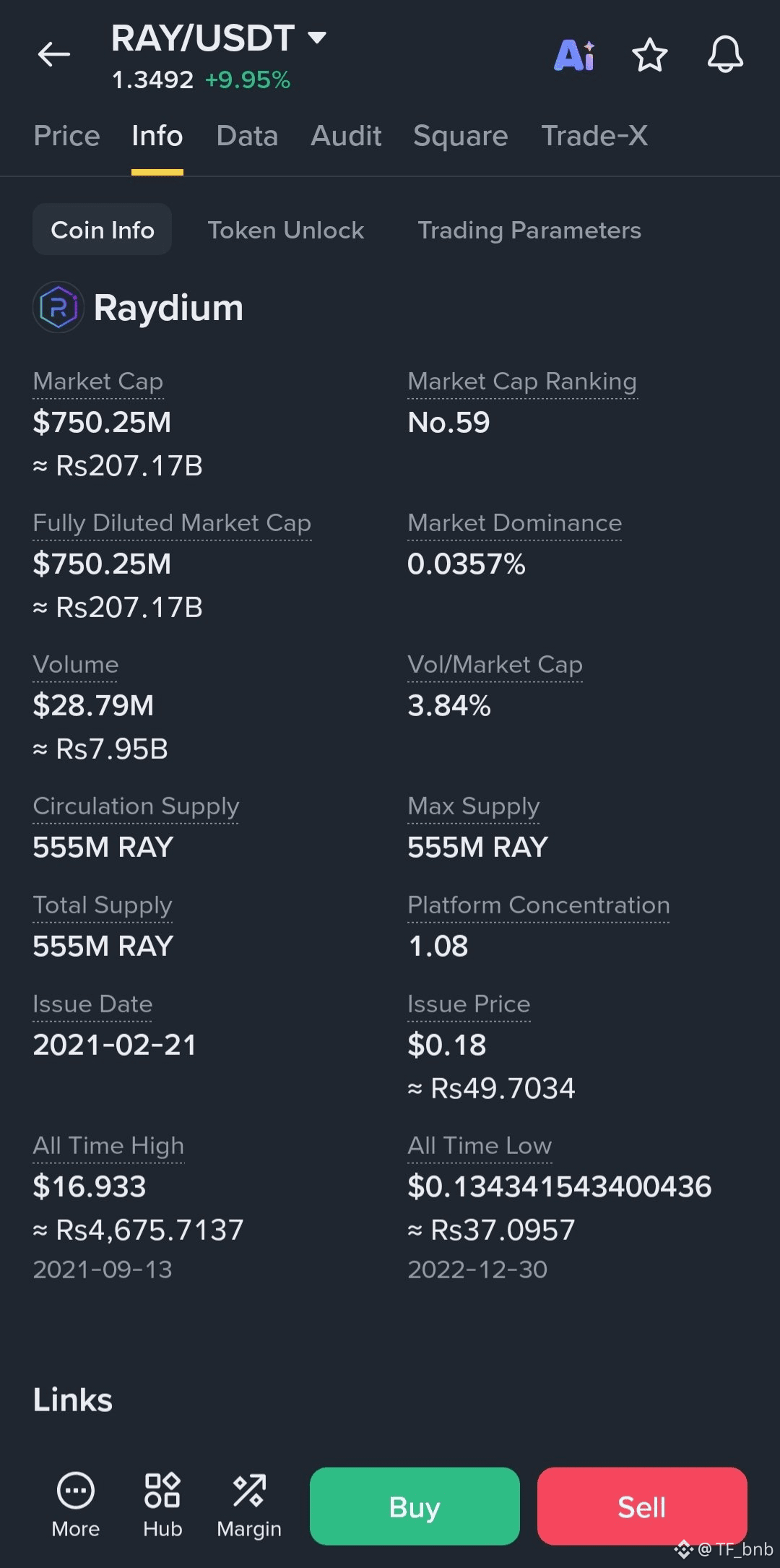
Raydium is a leading DEX on Solana. Its market cap is around $750M, with $29M in daily volume. All 555M tokens are already in circulation.
Still roughly 92% below its $16.93 ATH, RAY has room for a recovery if momentum continues.
This is a weeks-long setup, not a quick trade. Be patient and don't chase. DYOR.
{spot}(RAYUSDT)
🚀 $RAY — Can Raydium make a run toward $3.50?
RAY is trading around $1.35, with a potential higher-timeframe target near $3.52.
Raydium is a leading DEX on Solana. Its market cap is around $750M, with $29M in daily volume. All 555M tokens are already in circulation.
Still roughly 92% below its $16.93 ATH, RAY has room for a recovery if momentum continues.
This is a weeks-long setup, not a quick trade. Be patient and don't chase. DYOR.
4
1.3k
·
--
$MMT just made me rethink my short plan. 😂
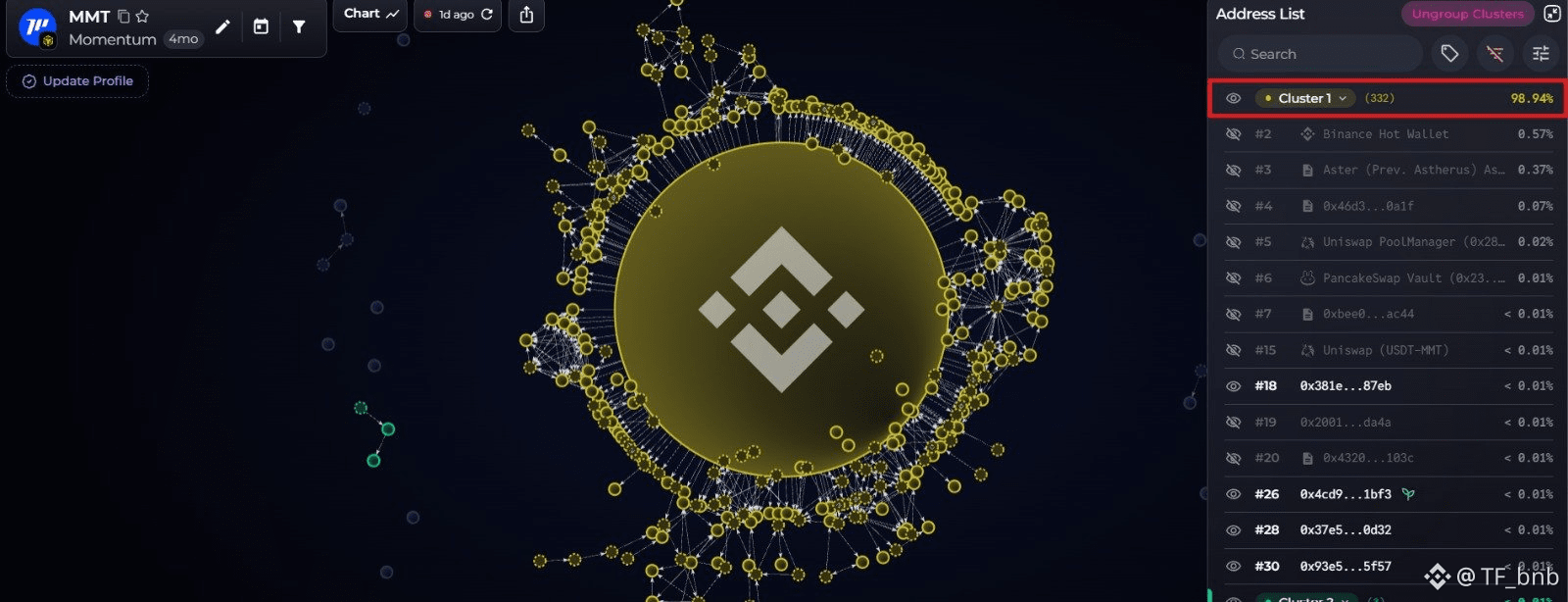
I was watching $0.296–$0.3176 for a rejection, but Bubblemaps revealed something unusual: 332 connected wallets control 98.94% of mapped supply. Binance-linked wallets are also in the mix.
This doesn't prove manipulation, but the concentration is hard to ignore. I'm not rushing into either longs or shorts. 💀
{future}(MMTUSDT)
$MMT just made me rethink my short plan. 😂
I was watching $0.296–$0.3176 for a rejection, but Bubblemaps revealed something unusual: 332 connected wallets control 98.94% of mapped supply. Binance-linked wallets are also in the mix.
This doesn't prove manipulation, but the concentration is hard to ignore. I'm not rushing into either longs or shorts. 💀
1
1
868
·
--
Bullish
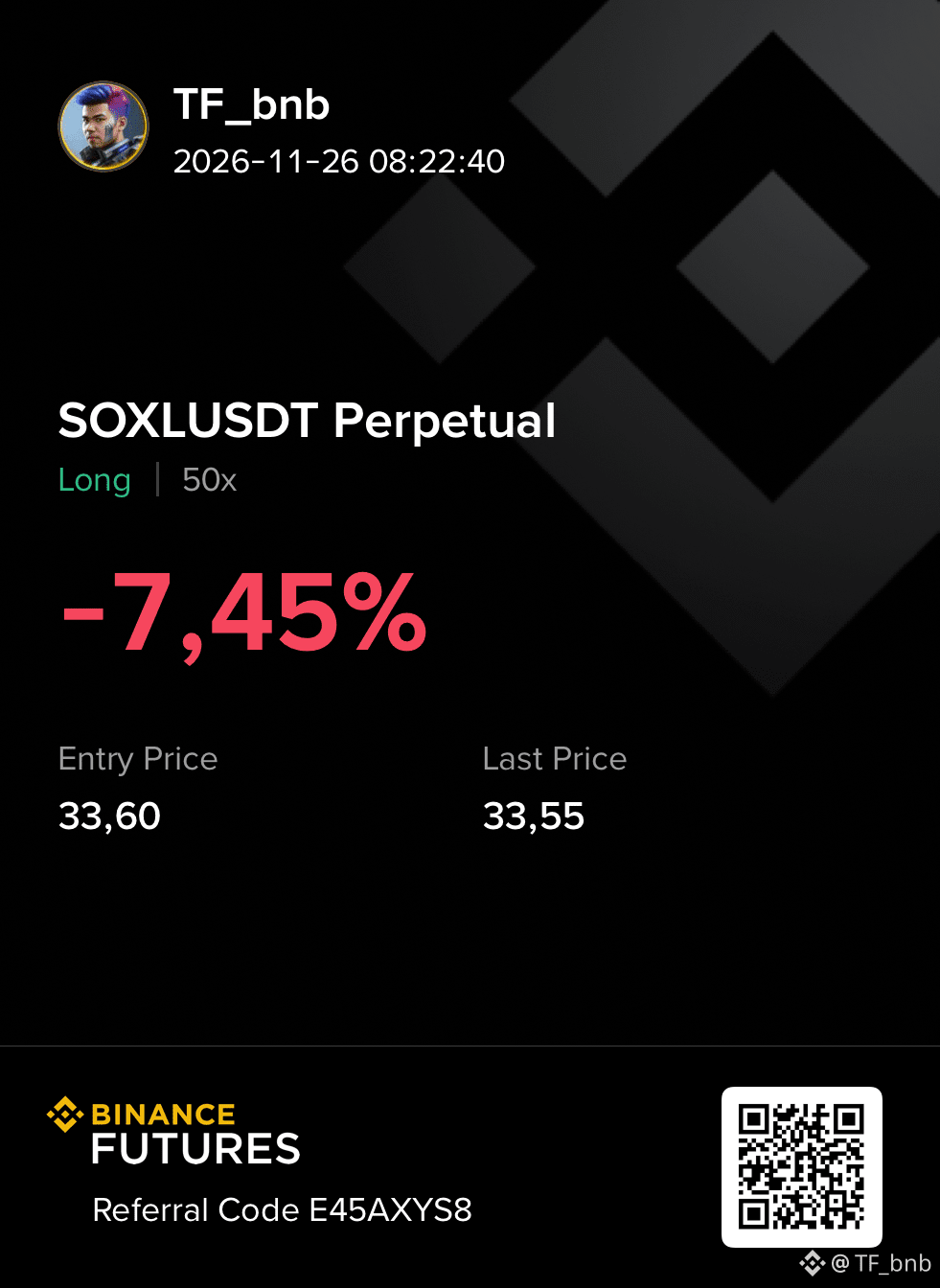
$SOXL open big long now - print money later
Stoploss : $30
Take profit : $39
Long $SOXL now 👇
{future}(SOXLUSDT)
$SOXL open big long now - print money later
Stoploss : $30
Take profit : $39
Long $SOXL now 👇
Stoploss : $30
Take profit : $39
Long $SOXL now 👇
1
2
832
·
--
Bullish
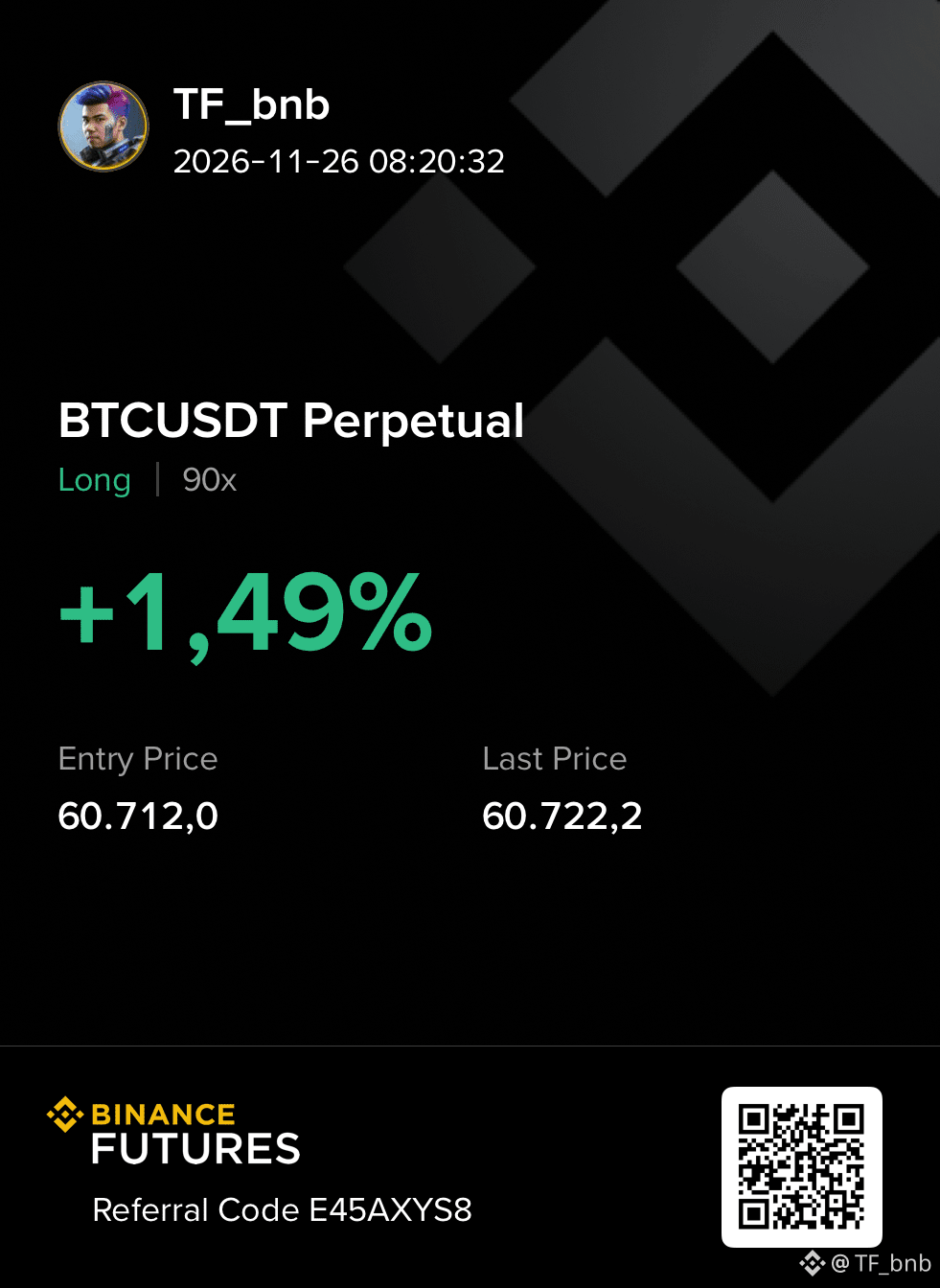
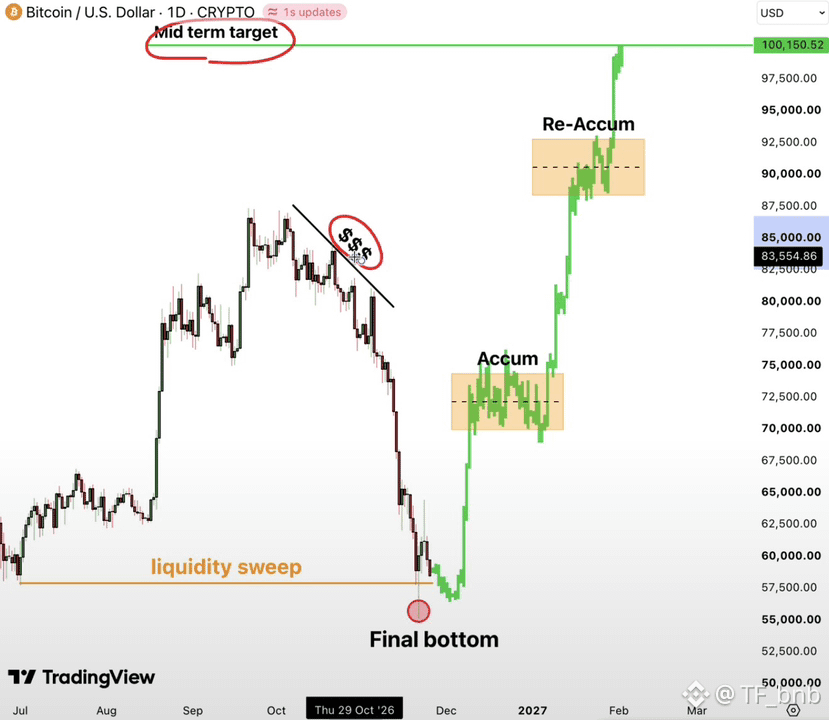
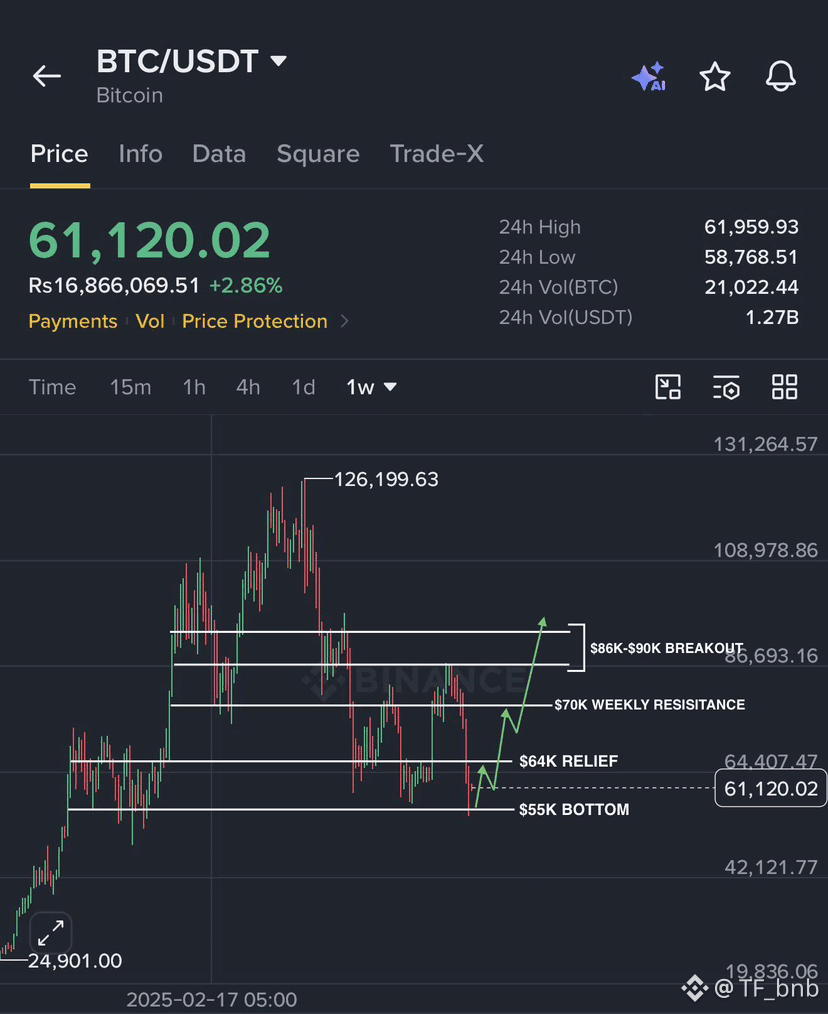
$BTC pump strong - setup big long - thank later
Stoploss : $59000
Take profit : $62000
Long $BTC now 👇
{future}(BTCUSDT)
$BTC pump strong - setup big long - thank later
Stoploss : $59000
Take profit : $62000
Long $BTC now 👇
Stoploss : $59000
Take profit : $62000
Long $BTC now 👇
3
901
·
--
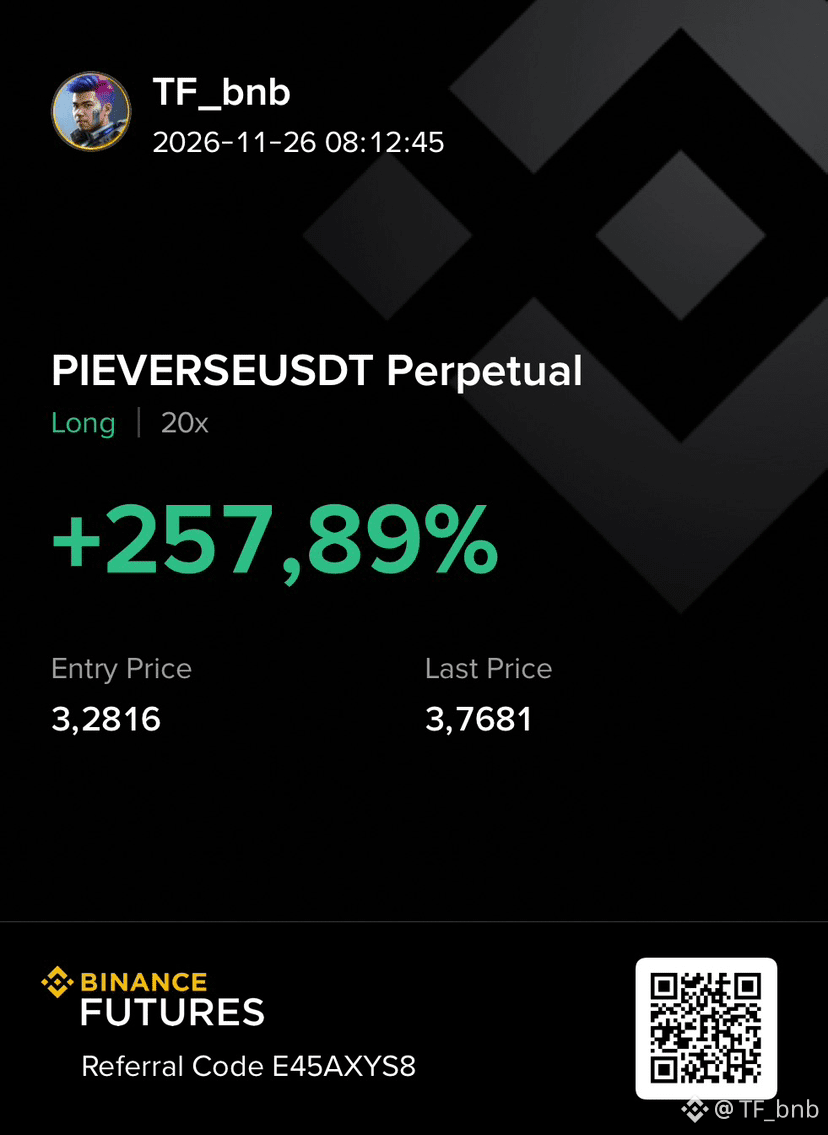
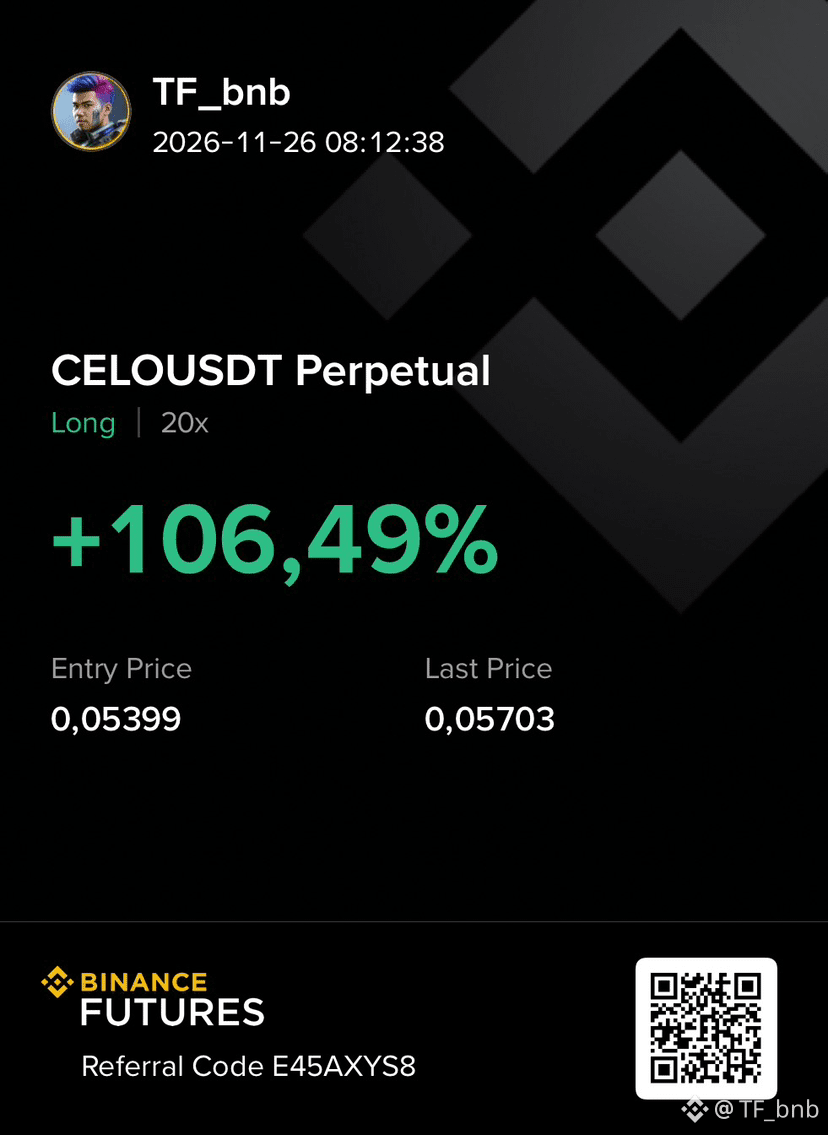
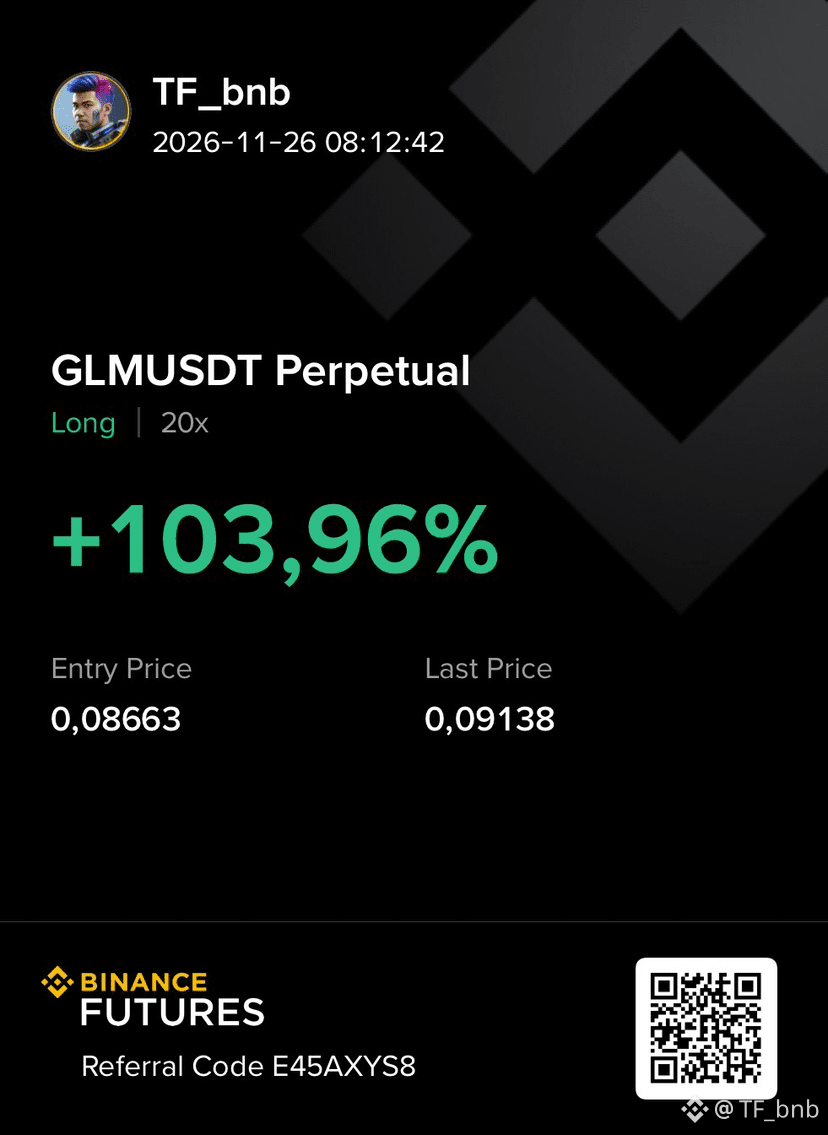
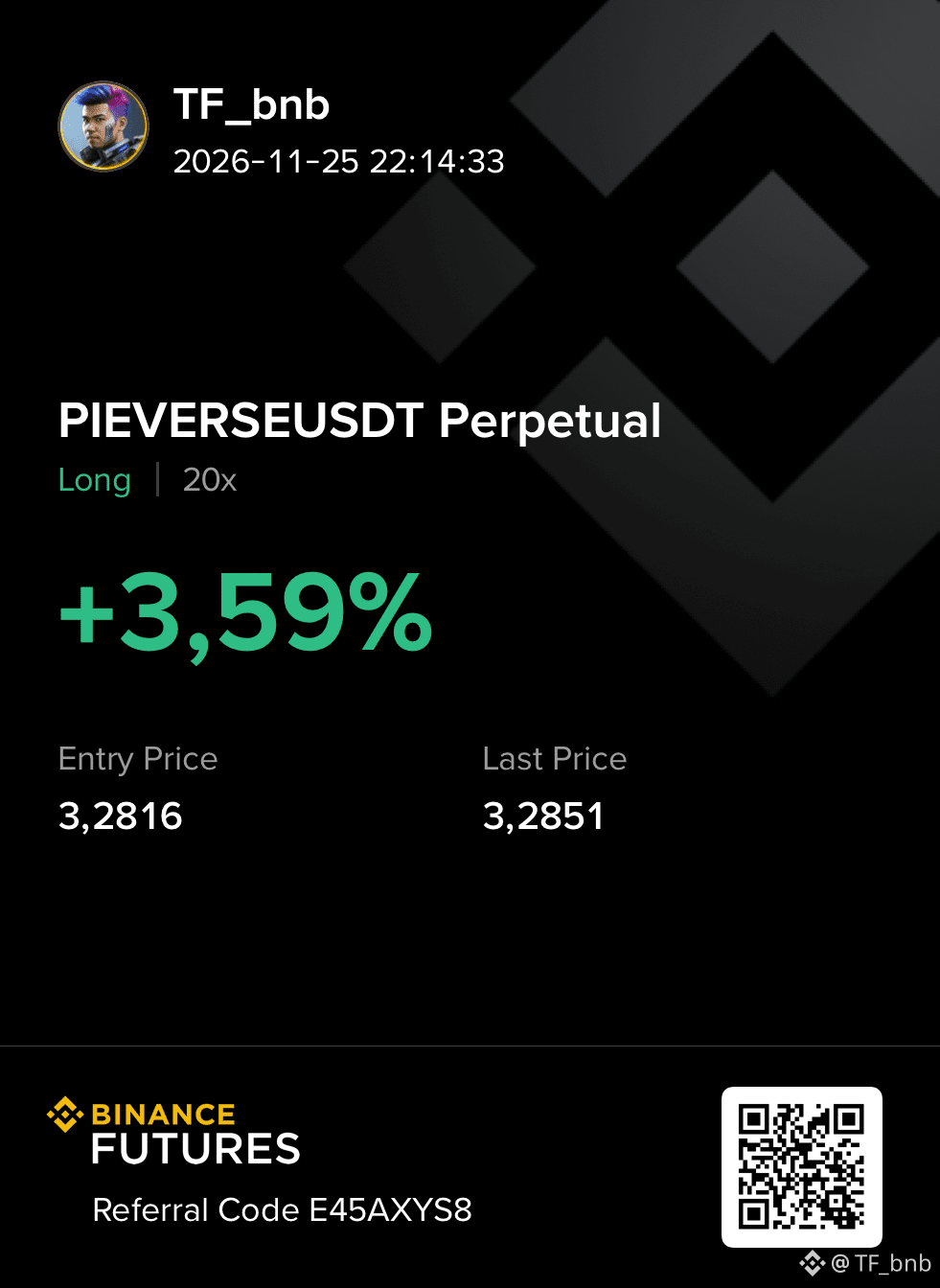
Update big profit $PIEVERSE $CELO $GLM today
Show me your PNL now
Do you want to jion TF Premium Signal ?
{future}(GLMUSDT)
{future}(CELOUSDT)
{future}(PIEVERSEUSDT)
Update big profit $PIEVERSE $CELO $GLM today
Show me your PNL now
Do you want to jion TF Premium Signal ?
Show me your PNL now
Do you want to jion TF Premium Signal ?
TF_bnb
·
--
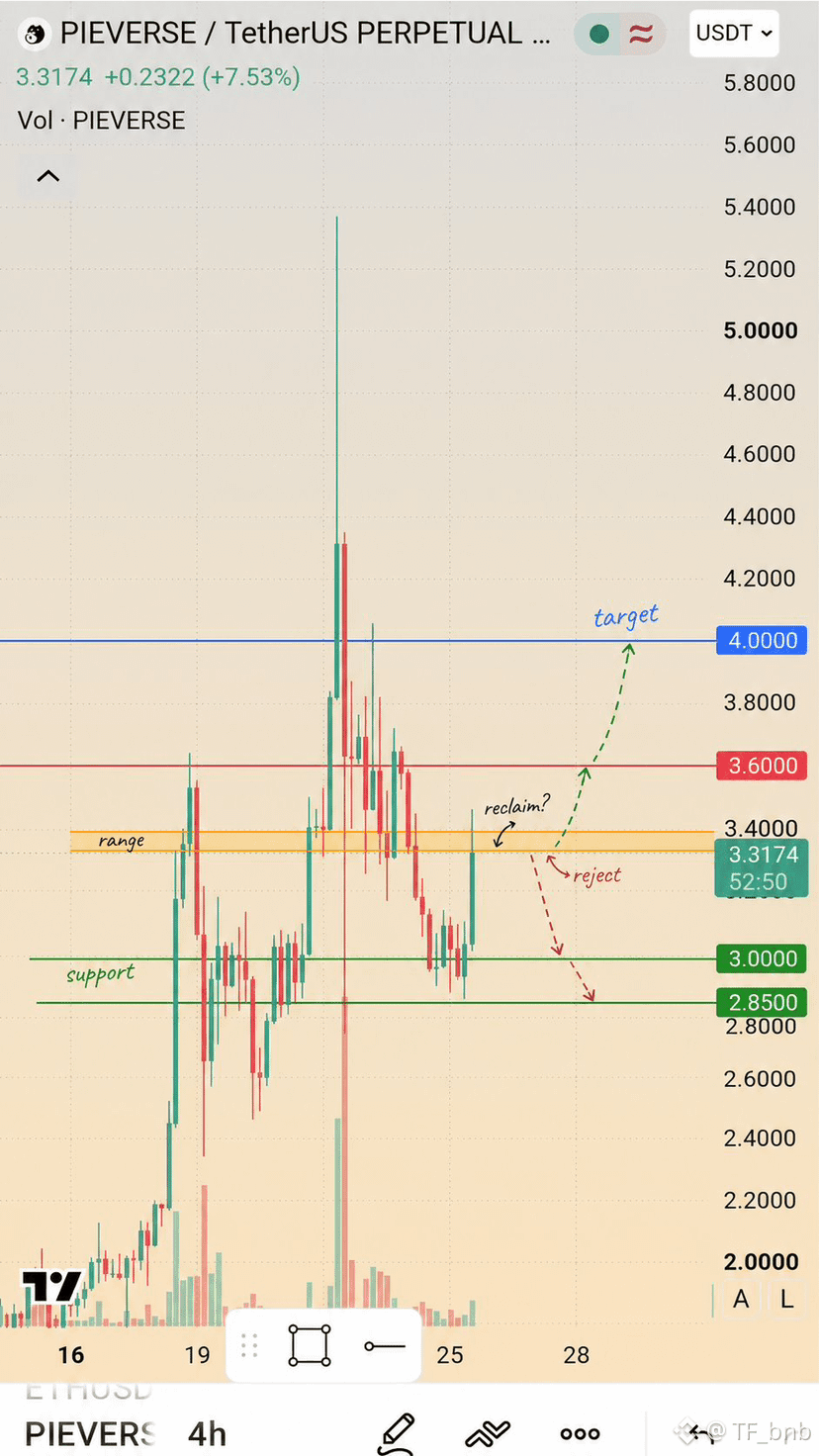
Bullish🚨 $PIEVERSE — A key 4H resistance is coming!
After a sharp rejection from $5.36, buyers stepped in around $3.00. Now price is testing the $3.35–$3.40 resistance zone again.
👀 Two scenarios to watch:
🟢 Break above $3.40 and hold → Targets: $3.60 and $4.00.
🔴 Rejection → $3.00 is the first support, followed by $2.85.
I’m cautiously bullish, but the breakout isn’t confirmed yet. Don’t chase too early!
The next 4H close will be key.
1
1
1.1k
·
--
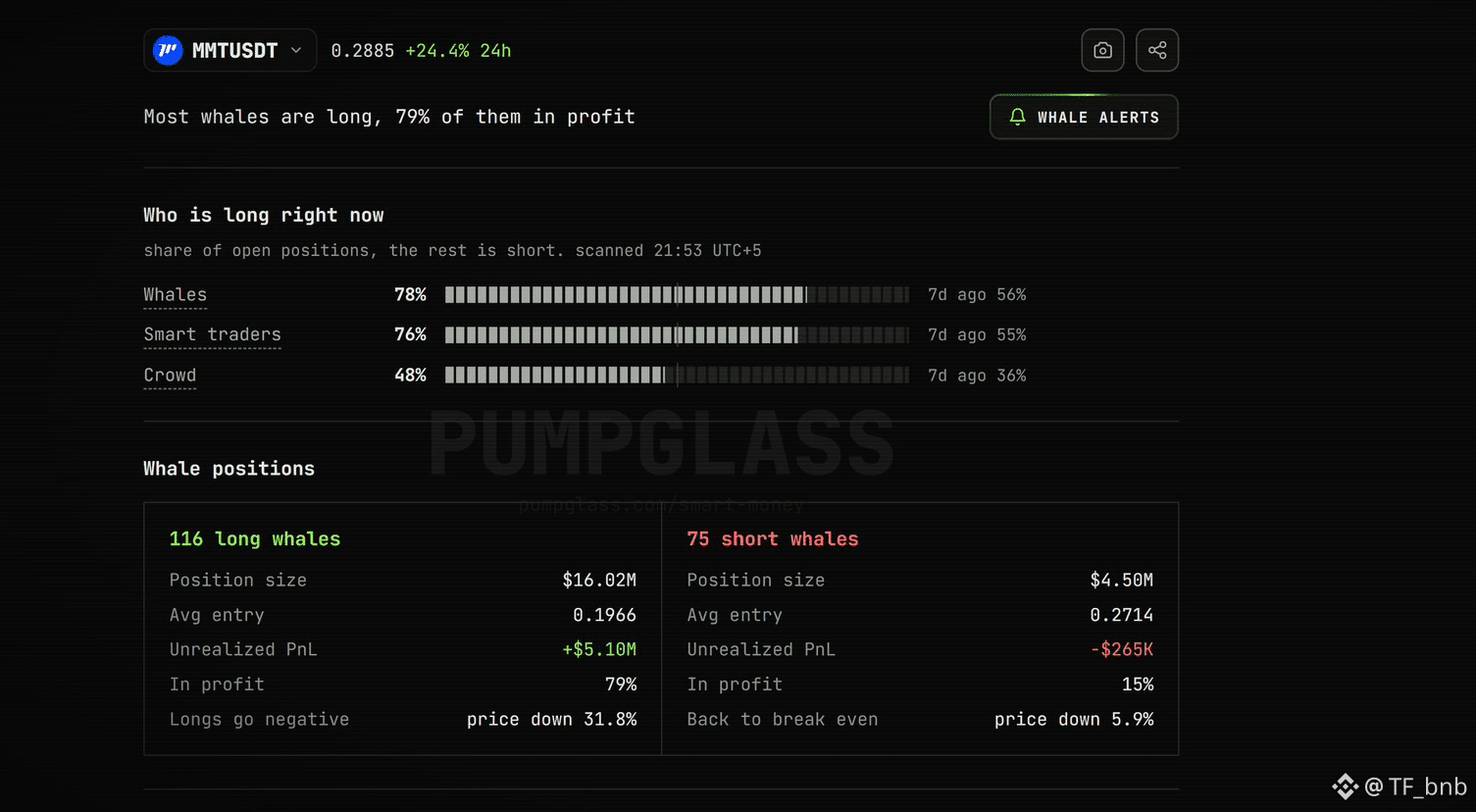
$MMT — Whales are heavily betting on the upside. 👀
MMT is up 24.5% in 24H, trading around $0.2885.
PumpGlass data shows:
🐋 78% of whales are long vs. 48% of retail.
📈 116 long whales hold $16.02M.
💰 $5.10M in unrealized profits.
✅ 79% of long whales are in profit.
Meanwhile, 85% of short whales are losing.
Smart money is clearly leaning bullish, but don’t ignore the risk: millions in unrealized gains could trigger profit-taking.
My strategy? Cut losers, let winners run, and protect profits.
{future}(MMTUSDT)
$MMT — Whales are heavily betting on the upside. 👀
MMT is up 24.5% in 24H, trading around $0.2885.
PumpGlass data shows:
🐋 78% of whales are long vs. 48% of retail.
📈 116 long whales hold $16.02M.
💰 $5.10M in unrealized profits.
✅ 79% of long whales are in profit.
Meanwhile, 85% of short whales are losing.
Smart money is clearly leaning bullish, but don’t ignore the risk: millions in unrealized gains could trigger profit-taking.
My strategy? Cut losers, let winners run, and protect profits.
2
1.1k
·
--
Bullish
🚨 $PIEVERSE — A key 4H resistance is coming!
After a sharp rejection from $5.36, buyers stepped in around $3.00. Now price is testing the $3.35–$3.40 resistance zone again.
👀 Two scenarios to watch:
🟢 Break above $3.40 and hold → Targets: $3.60 and $4.00.
🔴 Rejection → $3.00 is the first support, followed by $2.85.
I’m cautiously bullish, but the breakout isn’t confirmed yet. Don’t chase too early!
The next 4H close will be key.
{future}(PIEVERSEUSDT)
🚨 $PIEVERSE — A key 4H resistance is coming!
After a sharp rejection from $5.36, buyers stepped in around $3.00. Now price is testing the $3.35–$3.40 resistance zone again.
👀 Two scenarios to watch:
🟢 Break above $3.40 and hold → Targets: $3.60 and $4.00.
🔴 Rejection → $3.00 is the first support, followed by $2.85.
I’m cautiously bullish, but the breakout isn’t confirmed yet. Don’t chase too early!
The next 4H close will be key.
1
3
843
·
--
Bullish
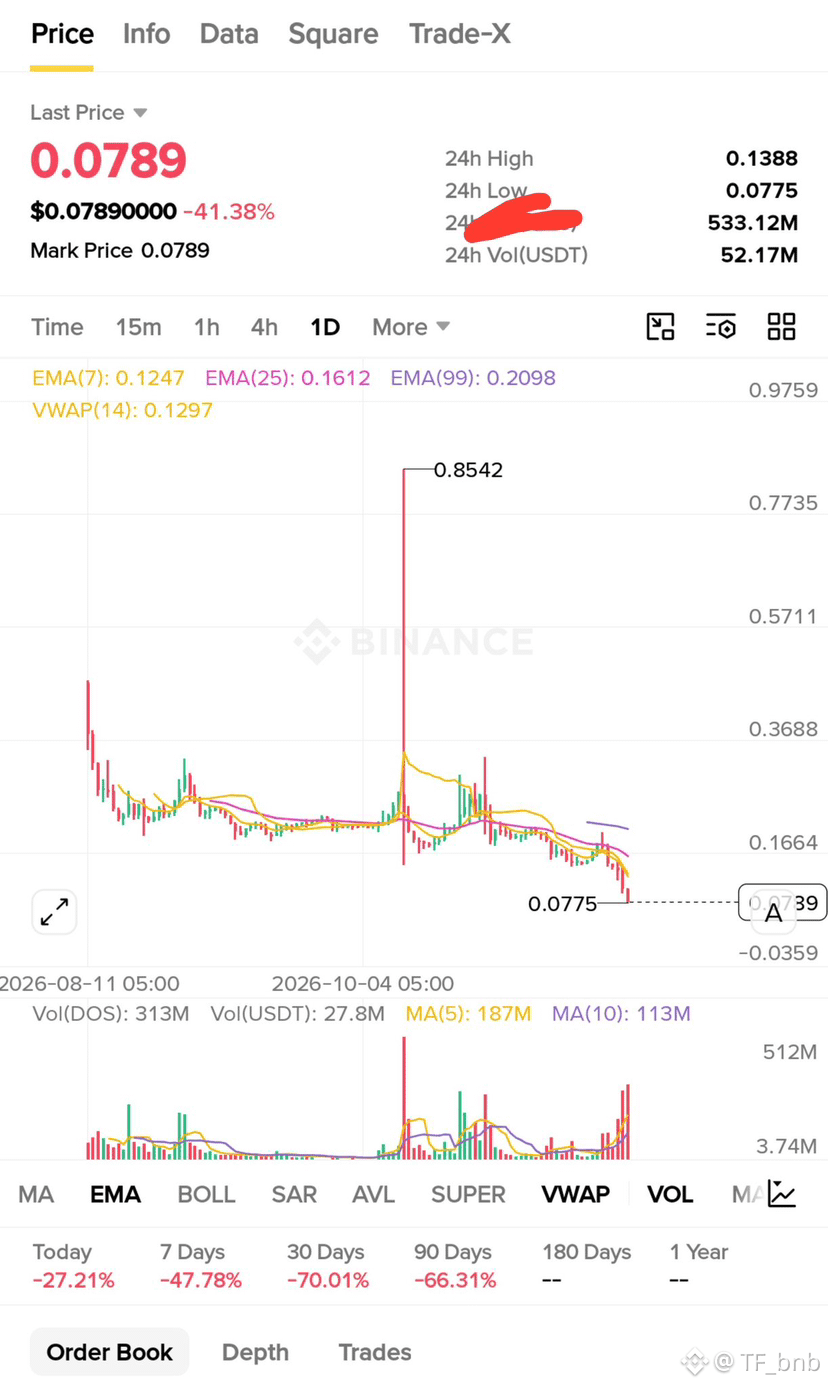
I will start to buy this coin from 0.06
Then my First tp will be 0.2 or 0.5 more than 3x 🚀
I will start to buy this coin from 0.06
Then my First tp will be 0.2 or 0.5 more than 3x 🚀
Then my First tp will be 0.2 or 0.5 more than 3x 🚀
3
1
674
·
--
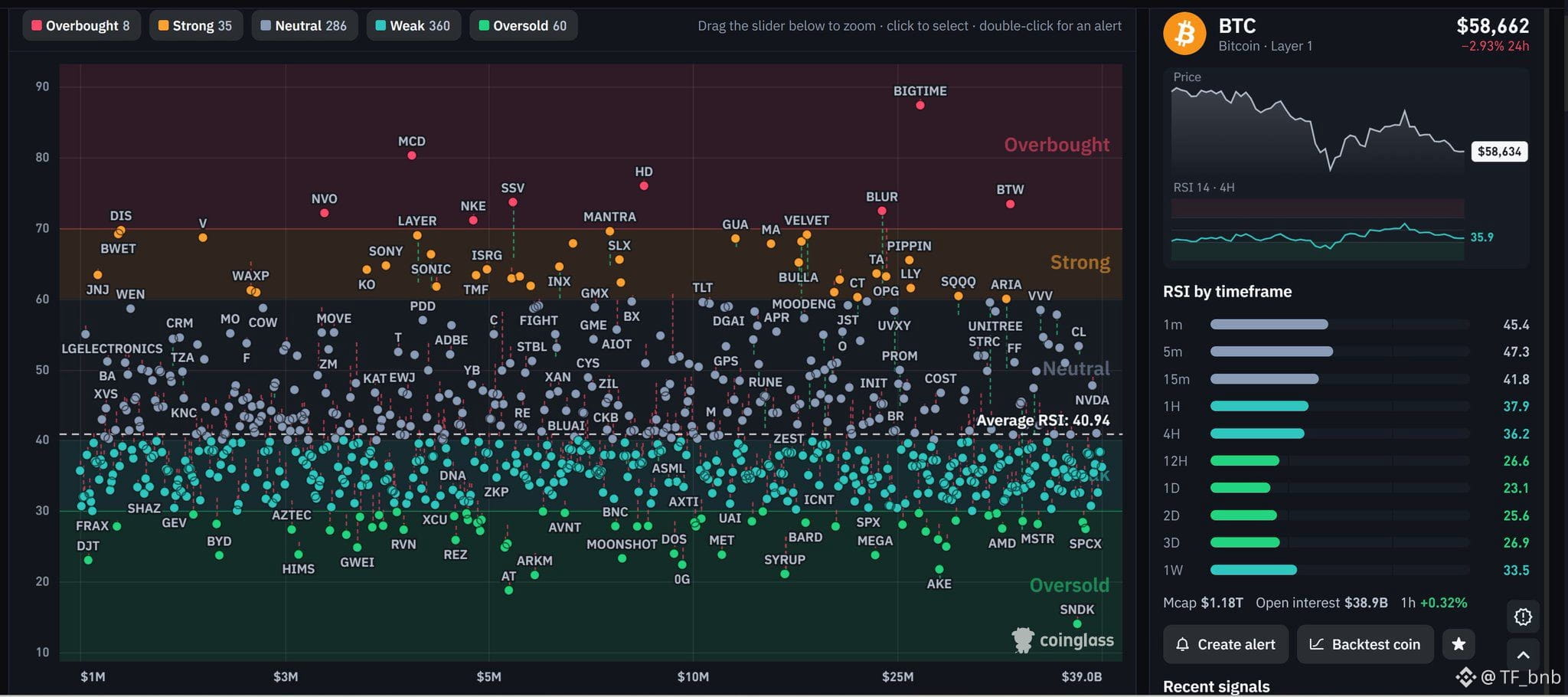
🚨 $BIGTIME might crash… BIG TIME 😂
BIGTIME is up 69% to $0.00677, but its 4H RSI is near 87. That’s extremely overbought.
Other tokens are stretched too:
* $BTW: RSI above 73
* $MCD: RSI near 80
Meanwhile, BTC is down 2.93% and market-wide RSI sits at just 40.94.
Out of 749 assets, 360 are weak and only 8 are overbought.
These isolated pumps look vulnerable to profit-taking.
My take: Don’t chase green candles. A sharp correction could come if momentum fades. 👀
{future}(BIGTIMEUSDT)
🚨 $BIGTIME might crash… BIG TIME 😂
BIGTIME is up 69% to $0.00677, but its 4H RSI is near 87. That’s extremely overbought.
Other tokens are stretched too:
* $BTW: RSI above 73
* $MCD: RSI near 80
Meanwhile, BTC is down 2.93% and market-wide RSI sits at just 40.94.
Out of 749 assets, 360 are weak and only 8 are overbought.
These isolated pumps look vulnerable to profit-taking.
My take: Don’t chase green candles. A sharp correction could come if momentum fades. 👀
1
756
·
--
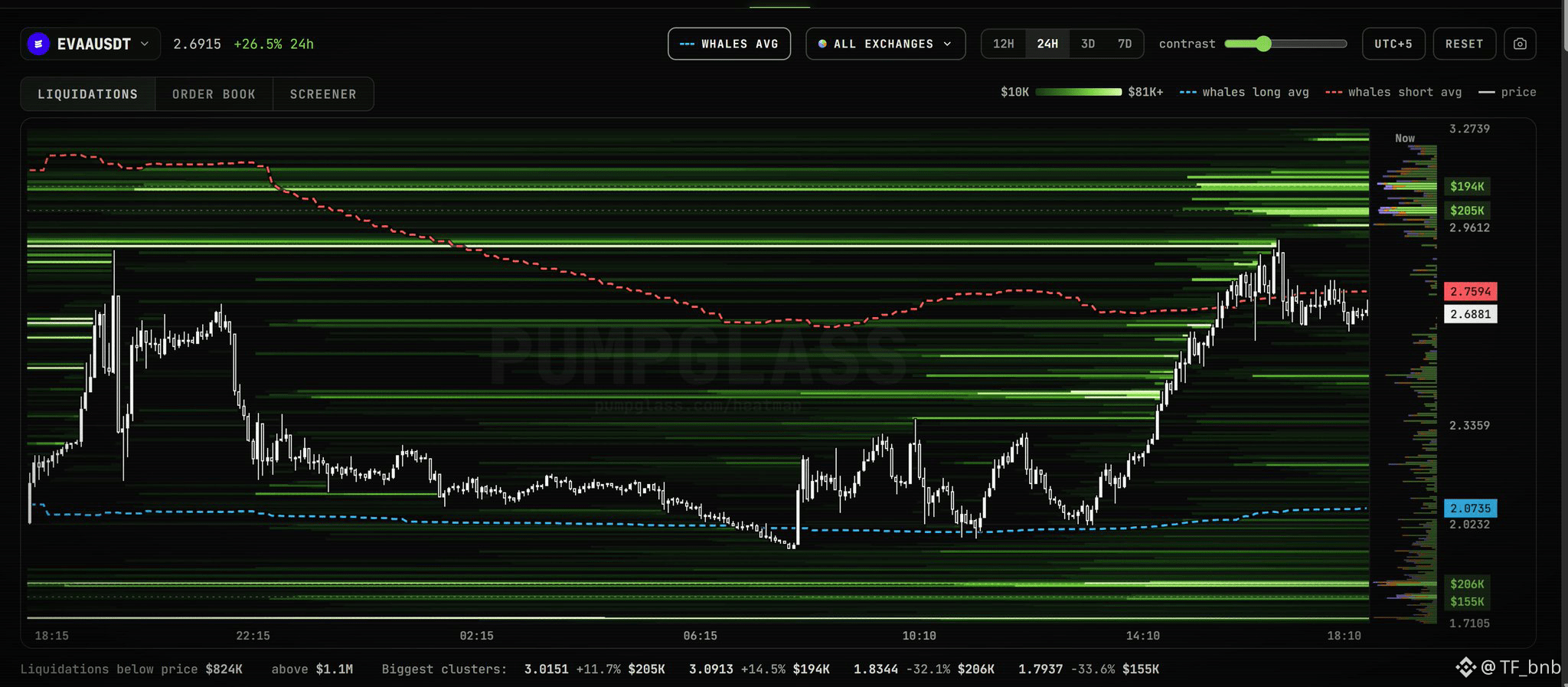
🚨 $EVAA — Another short squeeze coming?
EVAA crashed from $6.665 to $1.8659 before recovering to $2.70.
The liquidation heatmap shows:
* $1.1M in short liquidations above price
* $824K in long liquidations below
* Major upside clusters at $3.015 and $3.091
Whale shorts average $2.76, while 76% of whale positions remain long.
My key levels:
* $2.76: Breakout trigger
* $3.00–$3.09: Upside targets
* $2.33 / $2.07: Downside support
If EVAA reclaims $2.76, another short squeeze could follow.
But don’t chase blindly. Leverage can work both ways. 👀
{future}(EVAAUSDT)
🚨 $EVAA — Another short squeeze coming?
EVAA crashed from $6.665 to $1.8659 before recovering to $2.70.
The liquidation heatmap shows:
* $1.1M in short liquidations above price
* $824K in long liquidations below
* Major upside clusters at $3.015 and $3.091
Whale shorts average $2.76, while 76% of whale positions remain long.
My key levels:
* $2.76: Breakout trigger
* $3.00–$3.09: Upside targets
* $2.33 / $2.07: Downside support
If EVAA reclaims $2.76, another short squeeze could follow.
But don’t chase blindly. Leverage can work both ways. 👀
698
·
--
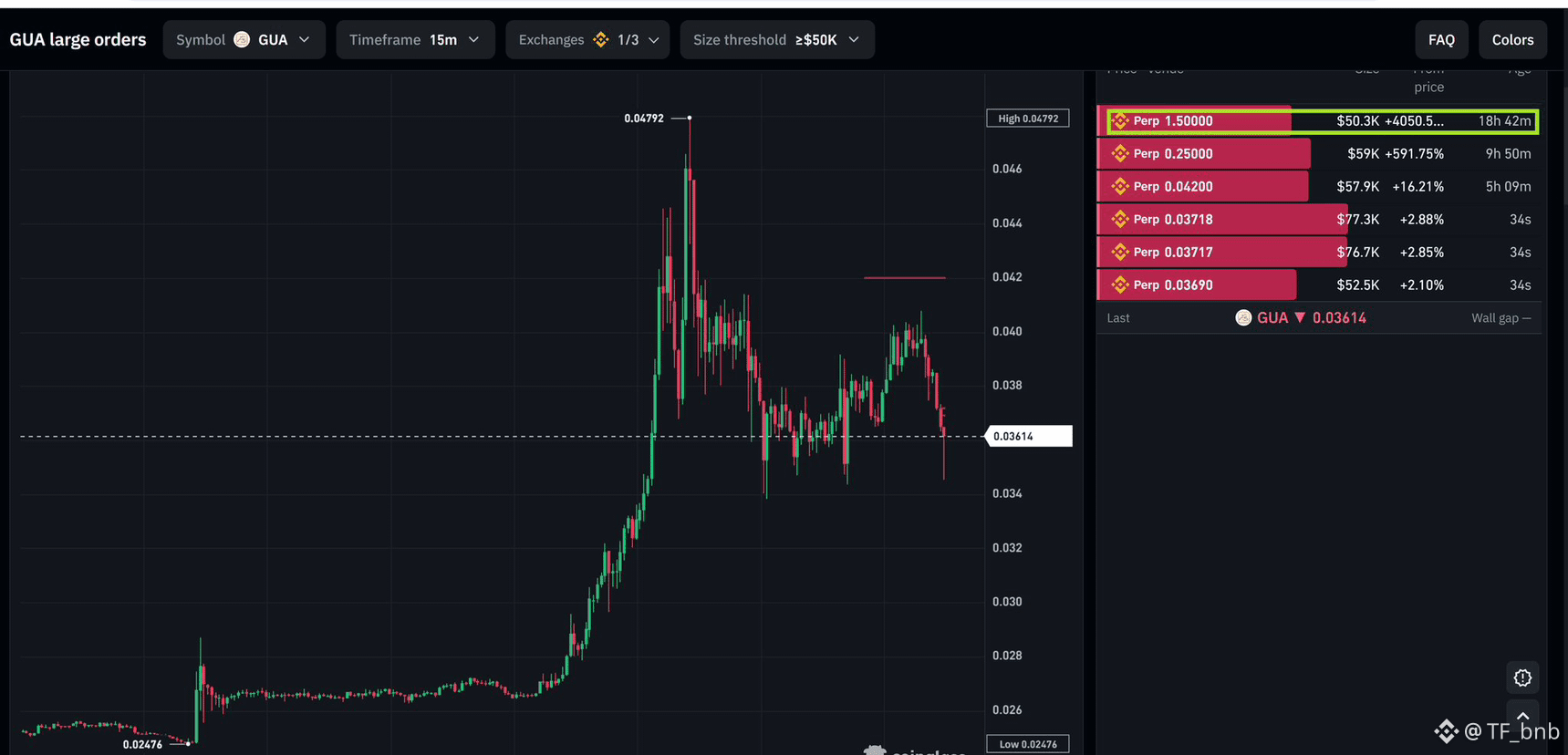
🚨 $GUA — Is this pump losing steam?
GUA surged to $0.04792 but has now dropped to $0.03614, forming lower highs.
Order book shows heavy sell walls at $0.0369, $0.03717–$0.03718 and $0.042. No comparable $50K+ buy walls are visible.
Sellers still have the upper hand.
My key levels:
* Resistance: $0.0372
* Support: $0.034
* Downside target: $0.032
I wouldn’t chase longs here. GUA needs to reclaim $0.0372 to show real strength.
For now, this looks more like a fading pump than a genuine breakout. 👀
{future}(GUAUSDT)
🚨 $GUA — Is this pump losing steam?
GUA surged to $0.04792 but has now dropped to $0.03614, forming lower highs.
Order book shows heavy sell walls at $0.0369, $0.03717–$0.03718 and $0.042. No comparable $50K+ buy walls are visible.
Sellers still have the upper hand.
My key levels:
* Resistance: $0.0372
* Support: $0.034
* Downside target: $0.032
I wouldn’t chase longs here. GUA needs to reclaim $0.0372 to show real strength.
For now, this looks more like a fading pump than a genuine breakout. 👀
1
1
557
·
--
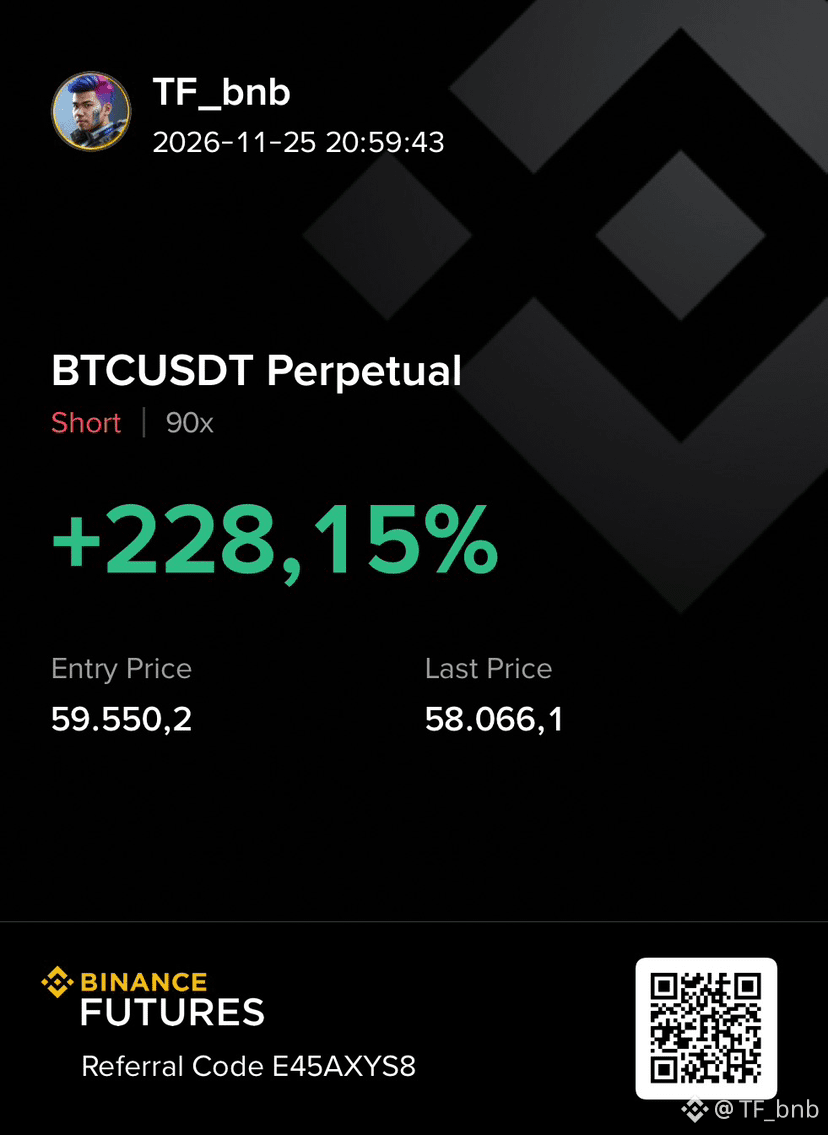
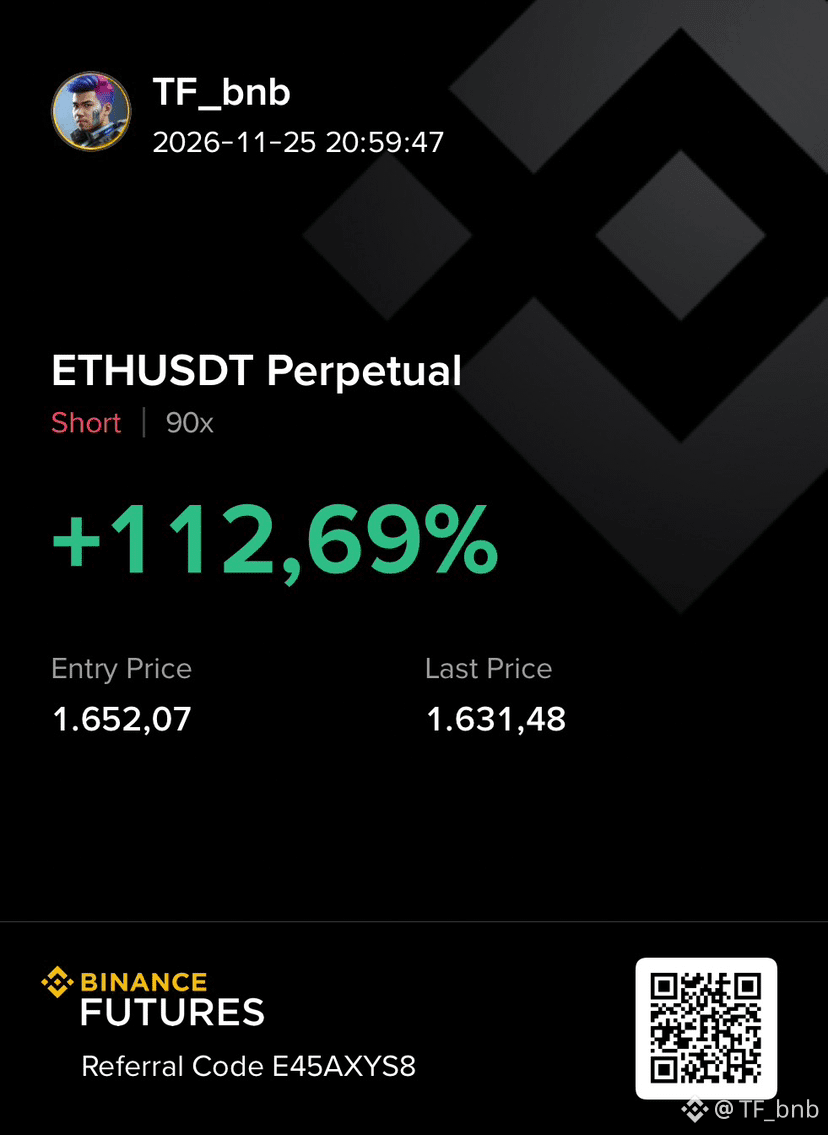
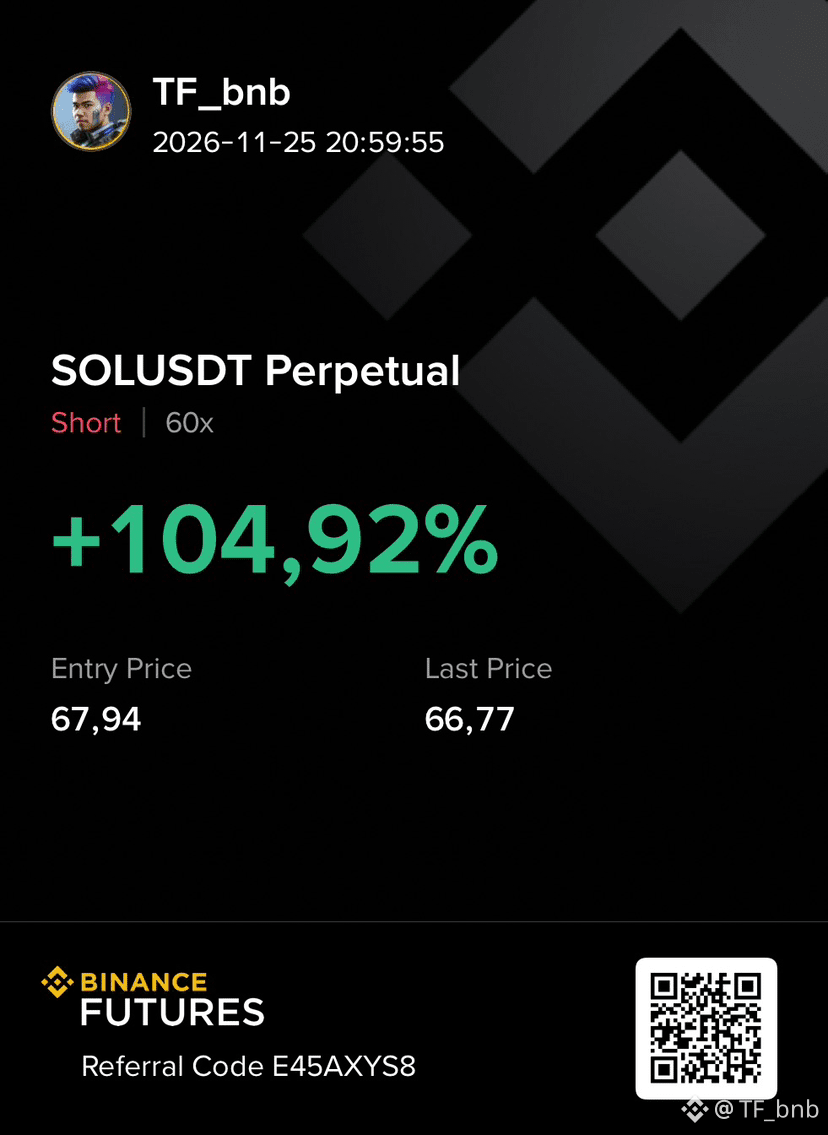
$BTC $ETH $SOL closed profit if you want
Do you want to jion TF Premium Signal ?
{future}(SOLUSDT)
{future}(ETHUSDT)
{future}(BTCUSDT)
$BTC $ETH $SOL closed profit if you want
Do you want to jion TF Premium Signal ?
Do you want to jion TF Premium Signal ?
TF_bnb
·
--
Bearish$ETH trust me - setup big short - print money later
Stoploss : $1700
Take profit : $1600 - $1500
Stoploss : $1700
Take profit : $1600 - $1500
7
1
435
·
--
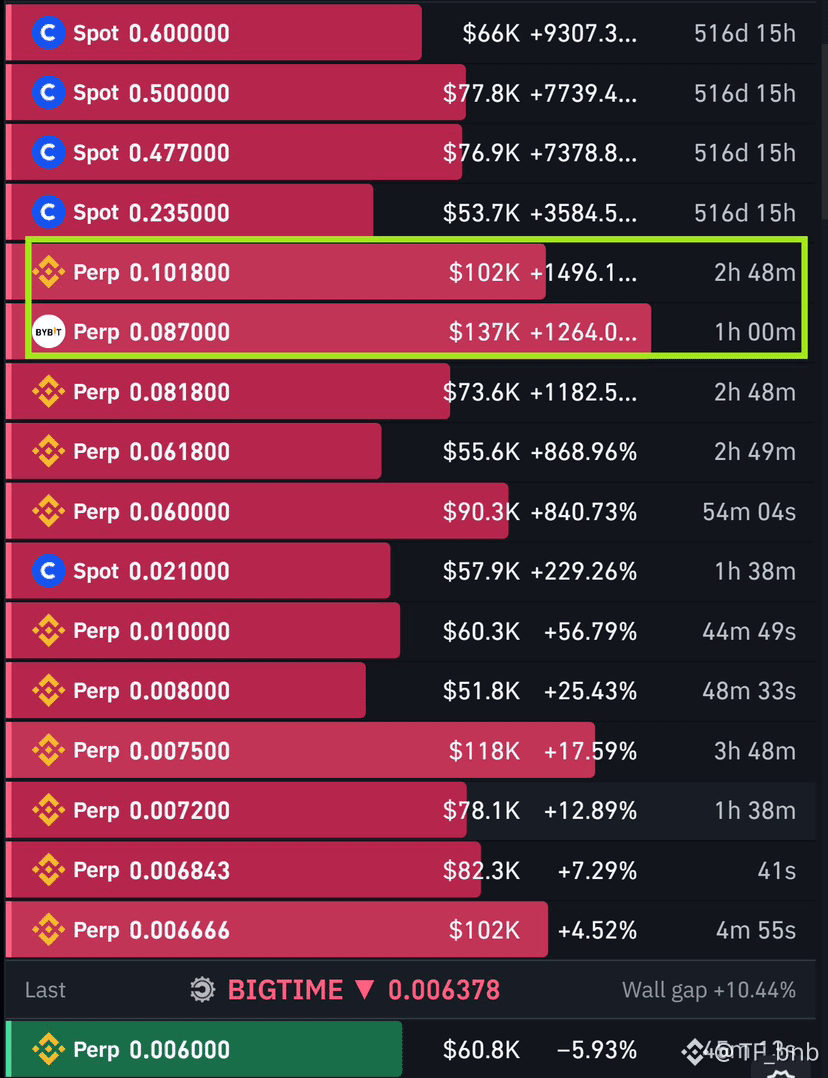
$BIGTIME — Real breakout or another trap? 👀
BIGTIME pumped from $0.004 to $0.01056 before crashing back to $0.007.
Sell walls are building:
* $118K at $0.0075
* $60K at $0.010
* $137K at $0.087
* $102K at $0.1018
Meanwhile, futures open interest surged over 400% in just 24 hours. Leverage is piling up fast.
Binance and Bybit order books show strong selling pressure. If buyers fail to absorb it, BIGTIME could revisit $0.006.
I’m not chasing this pump. Too much volatility and too much leverage.
Is this a real recovery or just another trap for late buyers?
{future}(BIGTIMEUSDT)
$BIGTIME — Real breakout or another trap? 👀
BIGTIME pumped from $0.004 to $0.01056 before crashing back to $0.007.
Sell walls are building:
* $118K at $0.0075
* $60K at $0.010
* $137K at $0.087
* $102K at $0.1018
Meanwhile, futures open interest surged over 400% in just 24 hours. Leverage is piling up fast.
Binance and Bybit order books show strong selling pressure. If buyers fail to absorb it, BIGTIME could revisit $0.006.
I’m not chasing this pump. Too much volatility and too much leverage.
Is this a real recovery or just another trap for late buyers?
459
·
--
Bearish
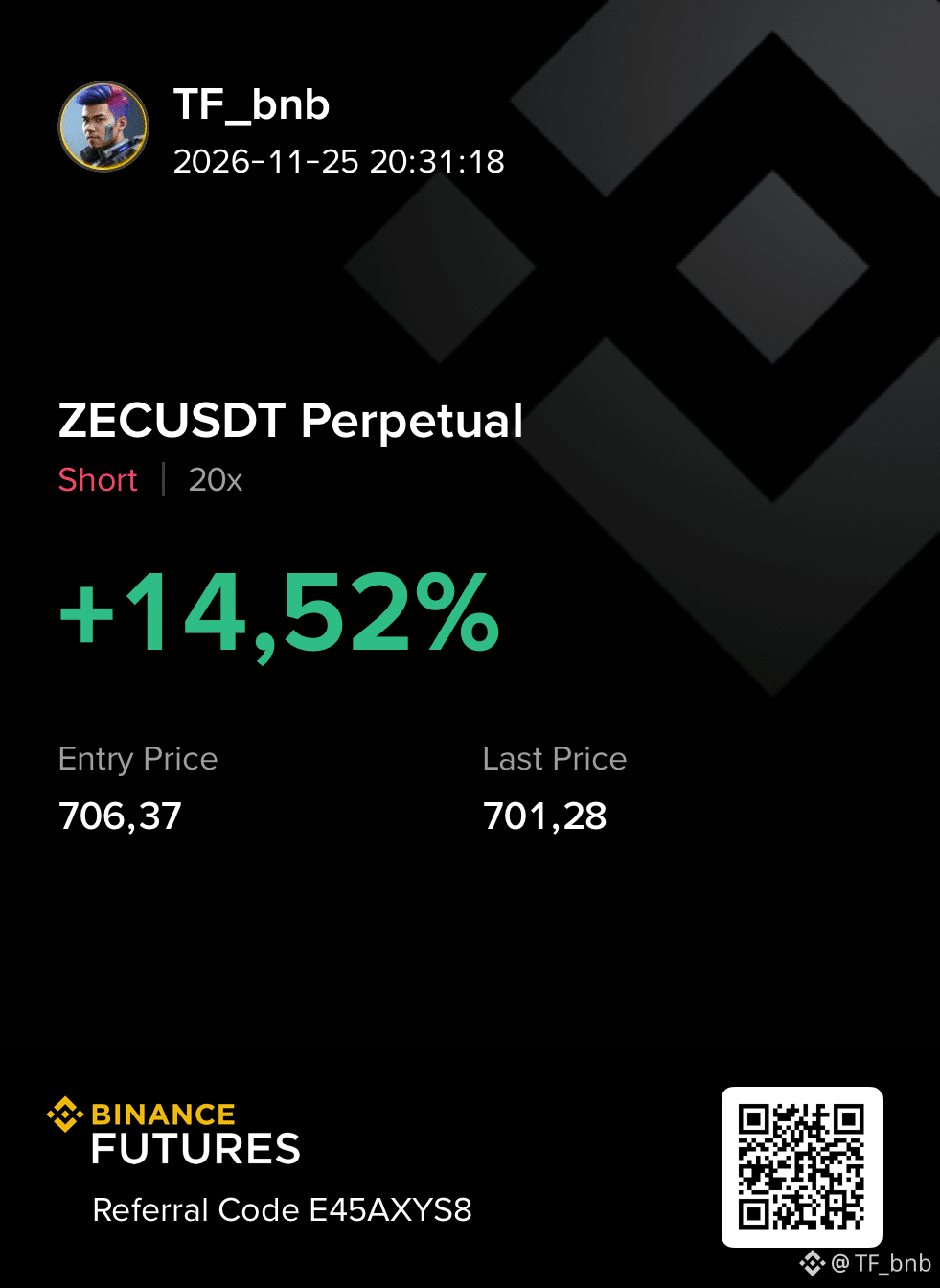
$ZEC setup big short now, print money later
Stoploss : $730
Take profit : $680
Short $ZEC now 👇
{future}(ZECUSDT)
$ZEC setup big short now, print money later
Stoploss : $730
Take profit : $680
Short $ZEC now 👇
Stoploss : $730
Take profit : $680
Short $ZEC now 👇
1
526
·
--
Bearish
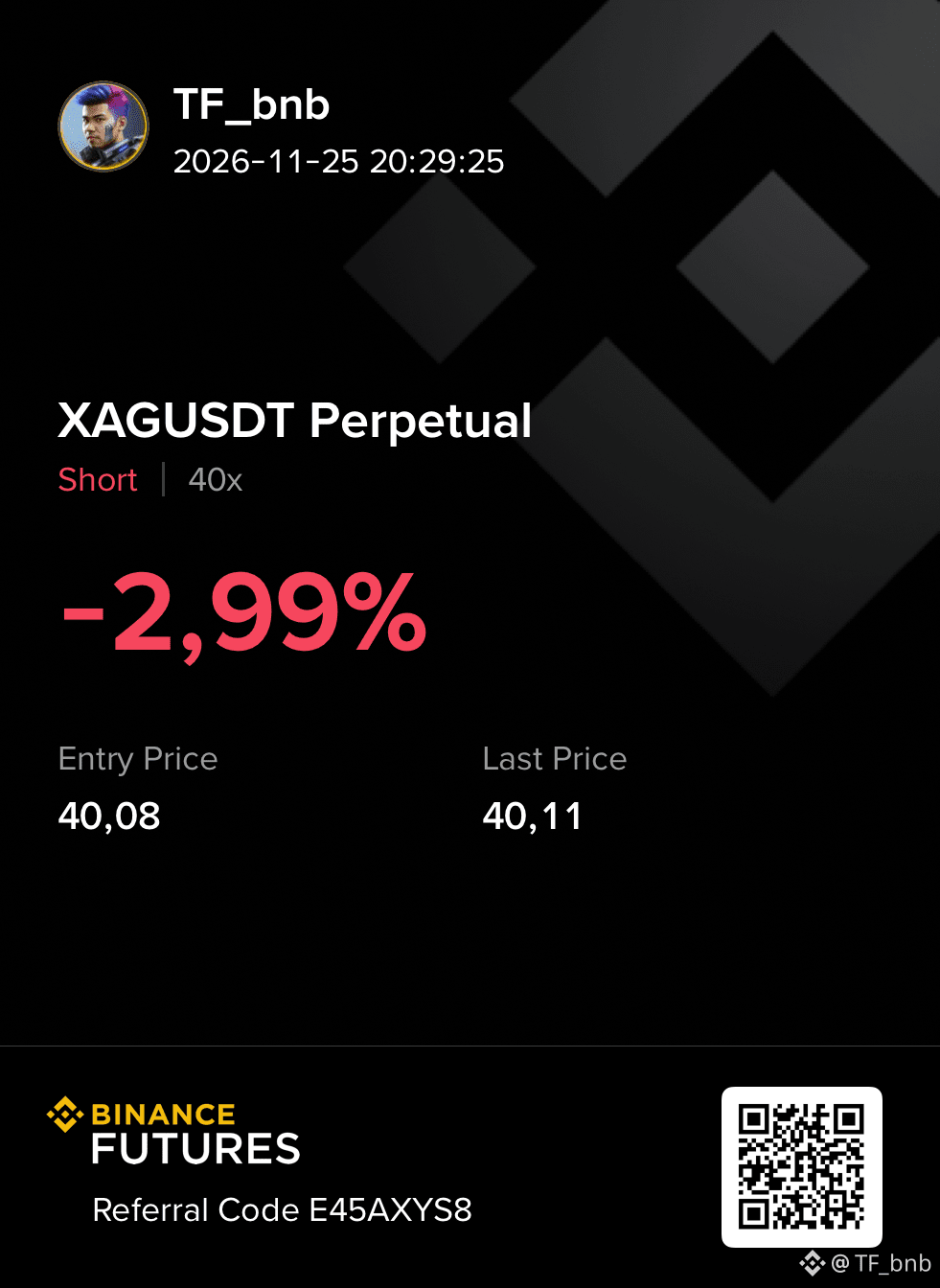
$XAG setup big short again, love me later
Stoploss : $45
Take profit : $35
Short $XAG now 👇
{future}(XAGUSDT)
$XAG setup big short again, love me later
Stoploss : $45
Take profit : $35
Short $XAG now 👇
Stoploss : $45
Take profit : $35
Short $XAG now 👇
1
2
671
·
--
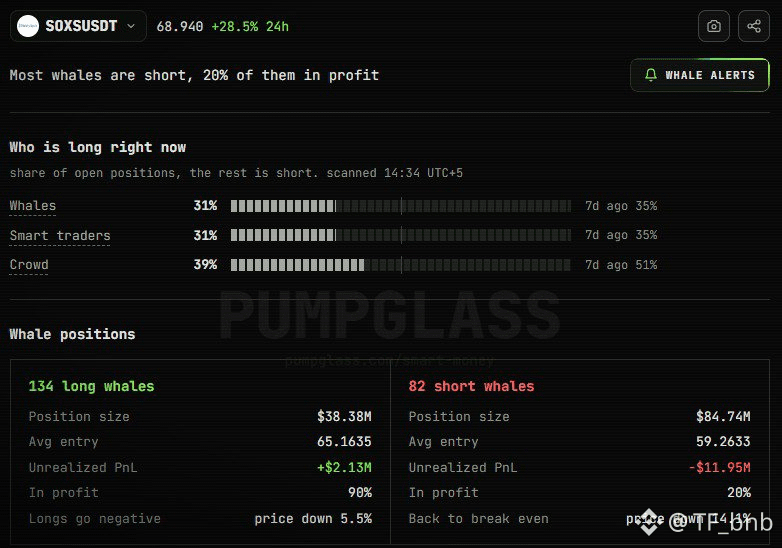
🚨 $SOXS — Shorts could be walking straight into another squeeze!
$SOXS is already up 28.5%, yet whales are still holding $84.74M in short positions, with $11.95M in unrealized losses.
The imbalance is hard to ignore:
• Only 20% of short whales are in profit.
• 90% of long whales are profitable.
• $84.74M in whale shorts remain exposed.
If buying pressure continues, short sellers could face another painful squeeze.
My take: I wouldn't rush into opening shorts here. The risk of getting caught on the wrong side is still significant.
Watch the whale positioning before making your next move. 👀
{future}(SOXSUSDT)
🚨 $SOXS — Shorts could be walking straight into another squeeze!
$SOXS is already up 28.5%, yet whales are still holding $84.74M in short positions, with $11.95M in unrealized losses.
The imbalance is hard to ignore:
• Only 20% of short whales are in profit.
• 90% of long whales are profitable.
• $84.74M in whale shorts remain exposed.
If buying pressure continues, short sellers could face another painful squeeze.
My take: I wouldn't rush into opening shorts here. The risk of getting caught on the wrong side is still significant.
Watch the whale positioning before making your next move. 👀
714
·
--
Bullish
Verified
How Celo brings stablecoin payments to mobile phones ?
Suppose a freelancer receives 50 USDC from an overseas client. With a compatible wallet and enough USDC to cover the fee, they can use the same stablecoin to make their next transfer on @celo and pay the network fee. That removes one step from an everyday payment. USDC can still lose its peg to the U.S. dollar, and funds sent to the wrong address may be unrecoverable.
Celo is an Ethereum Layer 2 network built on the OP Stack and designed for mobile payments, money transfers, and stablecoin use. According to Celo’s documentation, the network produces a block every 1 second, and a typical transaction costs less than $0.01 in network fees. Block time is only one part of the payment process. If the recipient converts stablecoins into local currency, the total cost may also include withdrawal fees and an exchange-rate spread. Network or cash-out service disruptions can delay access to the funds.
Opera’s MiniPay is a live example of an application built on Celo. In November, Celo Core Co. and Opera reported more than 20 million wallet activations and over 600 million transactions since launch, across more than 70 countries. One practical use is sending stablecoins to family abroad from a phone. Cashing out into local currency depends on the services available in each market, and users of self-custodial wallets may lose access to their funds if they lose access to the wallet and cannot recover it.
$CELO is the network’s native token and can be used to pay transaction fees. Holders can also lock CELO to vote on governance proposals and elect community RPC providers, which operate the access points that wallets and apps use to connect to the network. This gives holders a role in network decisions, though voting power can concentrate among those who lock more tokens. Locked CELO remains exposed to price changes. CELO is a volatile digital asset. You can lose money.
Paid Partnership
#CeloFestival @celo $CELO
11
20
606
Log in to explore more content
Join global crypto users on Binance Square
⚡️ Get latest and useful information about crypto.
💬 Trusted by the world’s largest crypto exchange.
👍 Discover real insights from verified creators.
Email / Phone number
Trending Topics
CanMarketsReboundAfterThanksgiving?
6,221 views
159 Discussing
Rate-Hike Bets Linger as US Markets Head Into Thanksgiving Closure
Binance News
·1 Likes
·715 views
CouldSpaceX’sOrbitalDataCentersBoostAIChipDemand?
4,371 views
107 Discussing
EvolveAtBinanceBlockchainWeek
637,850 views
6,555 Discussing