
p1nkY
206 Posts

p1nkY
Report
Block User
building & auditing AI agents / x402 security / encrypted mempools & onchain privacy / RWA settlement rails
signal over noise. lower-case tech audits.
0 Following
621 Followers
79 Liked
Posts
All
Quotes
·
--
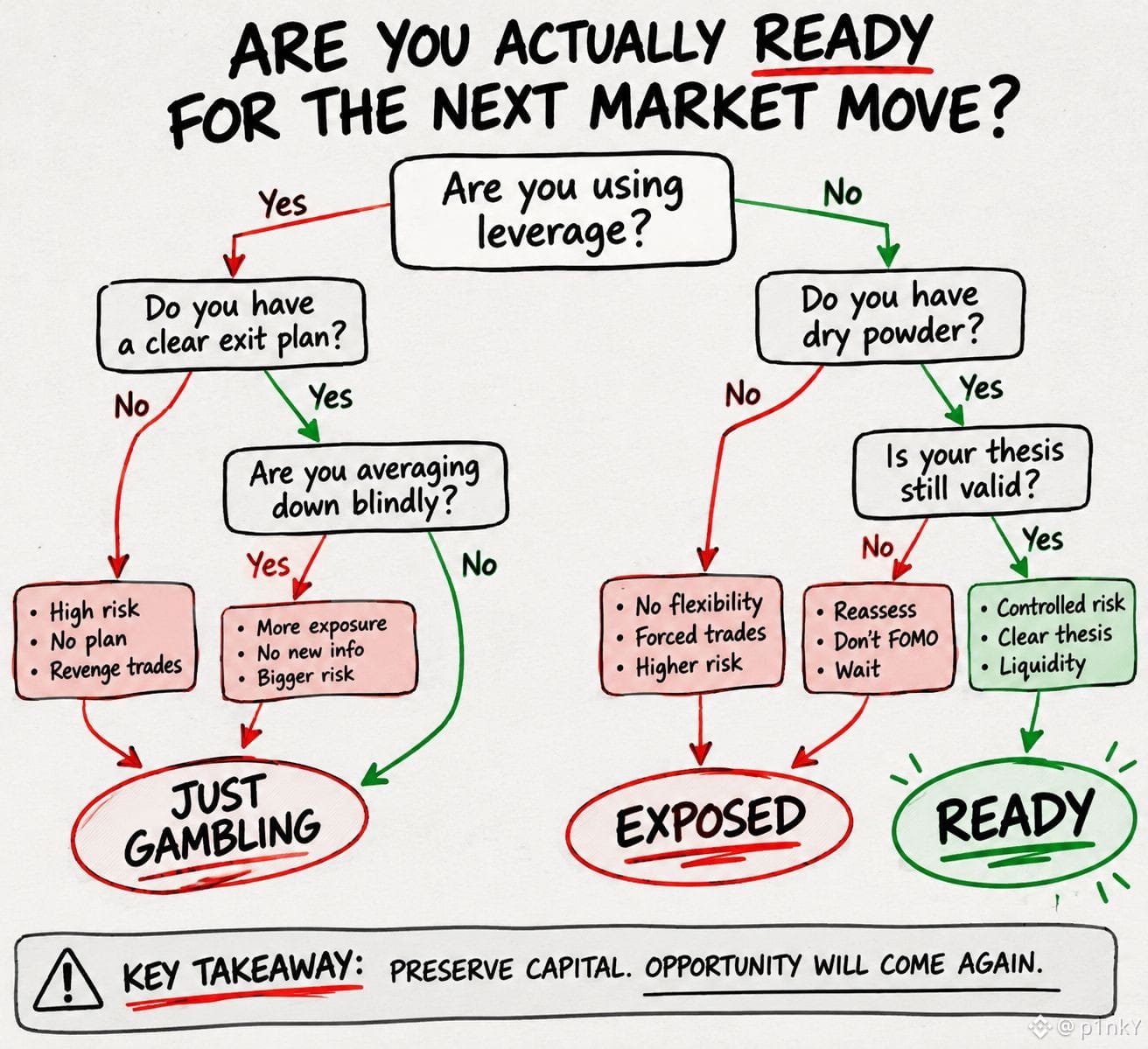
most people are still hunting for the next 10x.
i think they're looking in the wrong place.
in this market, having capital left is already an edge.
-no leverage.
-no blind averaging down.
-no buying just because something is 80% below ATH.
-no forcing trades because you're bored.
i'd rather miss the first 20% of a move than lose another 30% trying to catch the bottom.
the goal isn't to predict every move.
it's to stay liquid long enough to recognize the one worth taking.
what matters more to you right now: finding the next opportunity or protecting what you have?
390
·
--
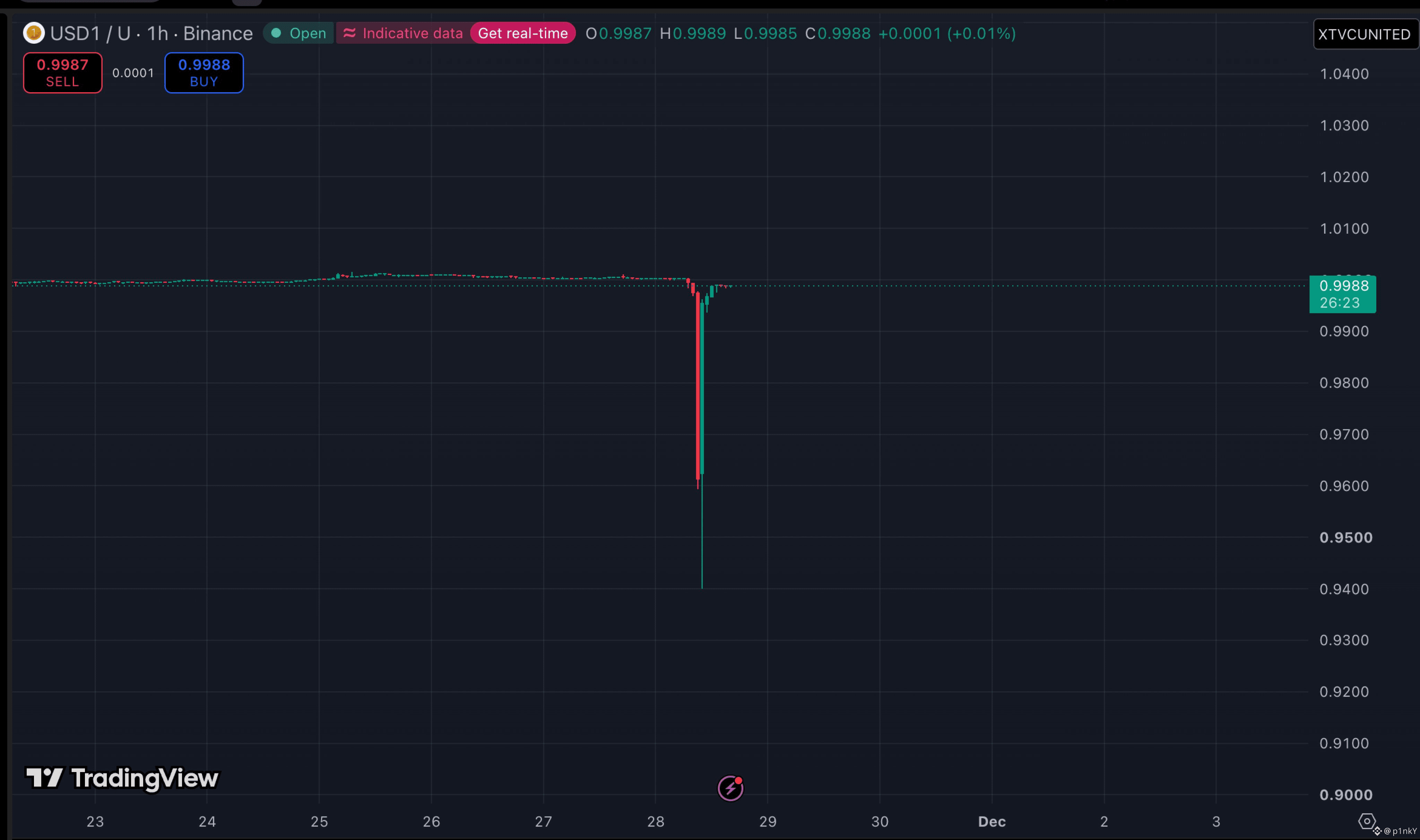
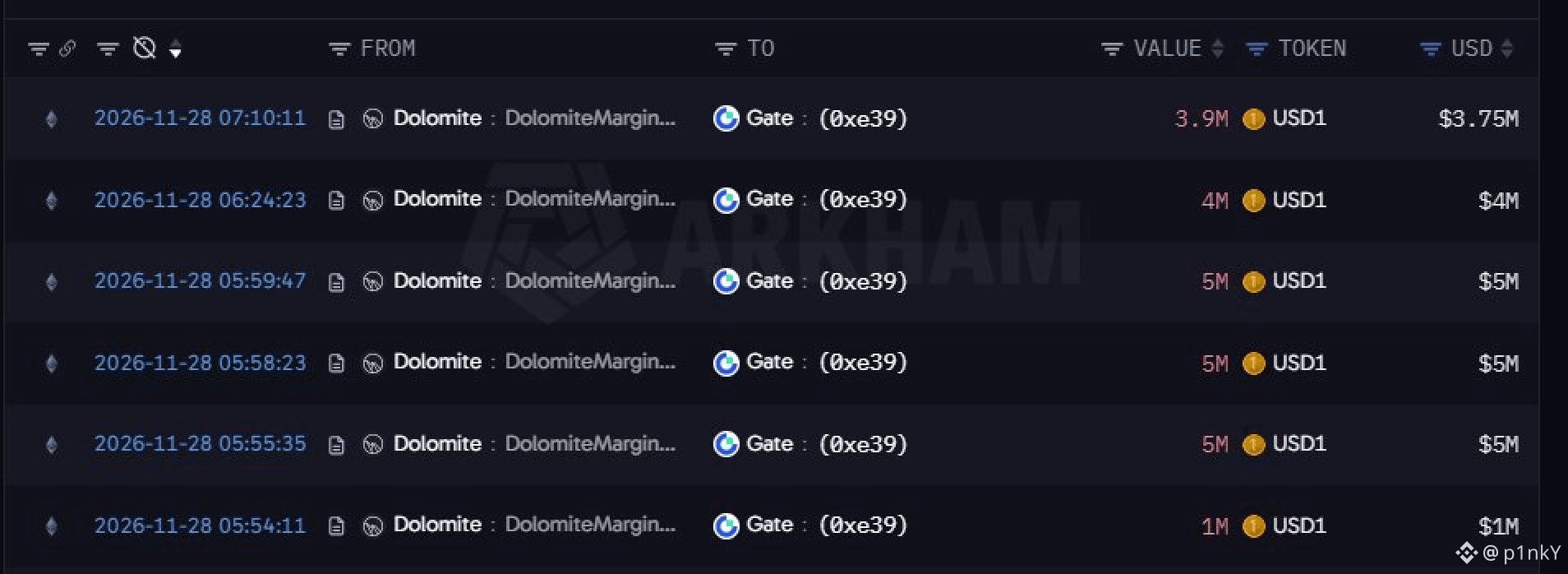
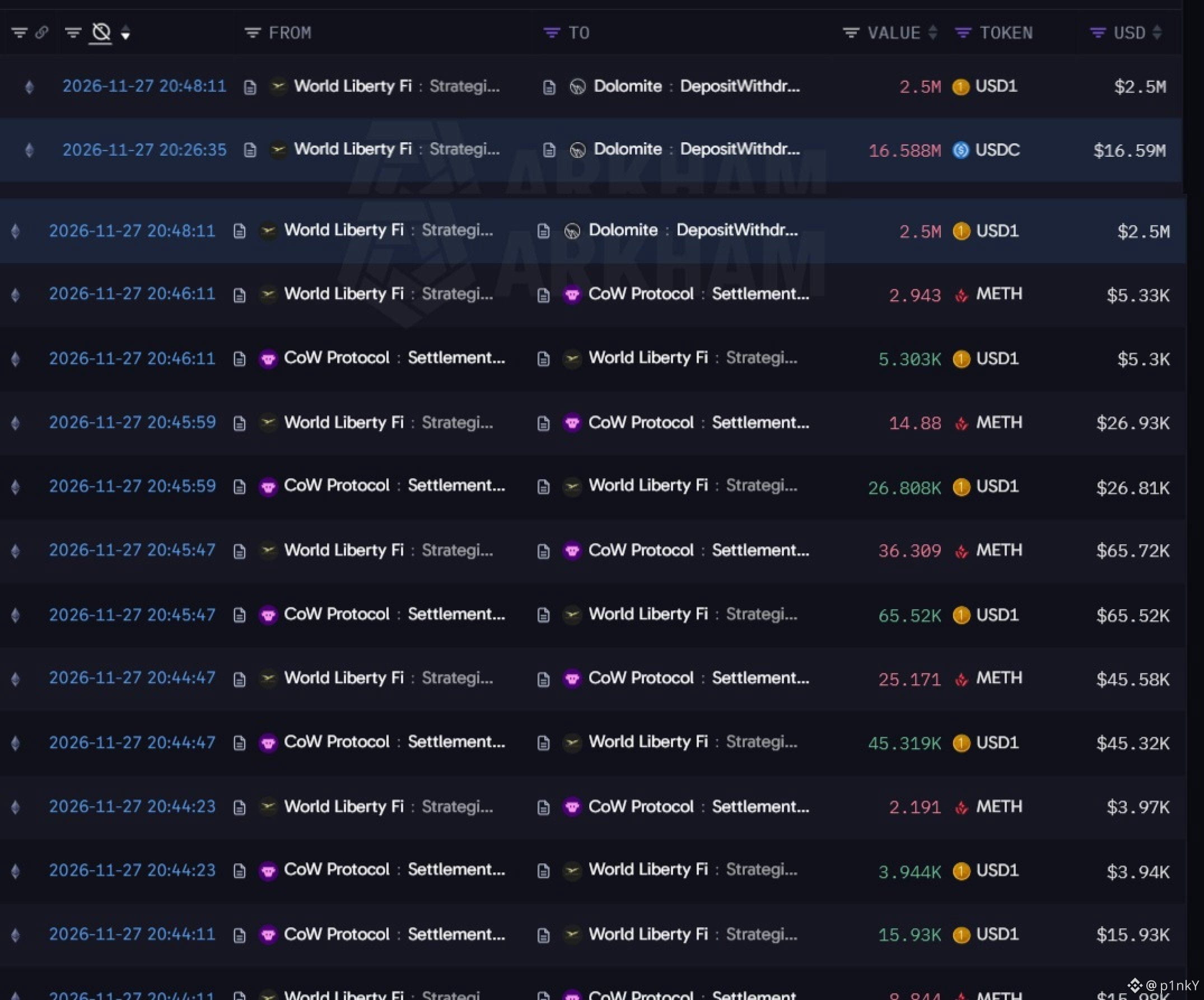
someone just made a risk-free $2.6m in 60 minutes while retail panic-sold usd1 at $0.94.
here is how the trade worked:
> wlfi crashed 50% and usd1 briefly slipped to $0.94 on thin liquidity
> retail dumped at a 6% discount
> jump crypto scooped the dip and redeemed 43.26m usd1 at $1.00 via bitgo in a single hour
when a fiat-backed stablecoin wobbles, anyone without direct institutional redemption is just exit liquidity for market makers.
1
1.3k
·
--
expectation: ai agents are already running an autonomous multi-billion dollar onchain economy.
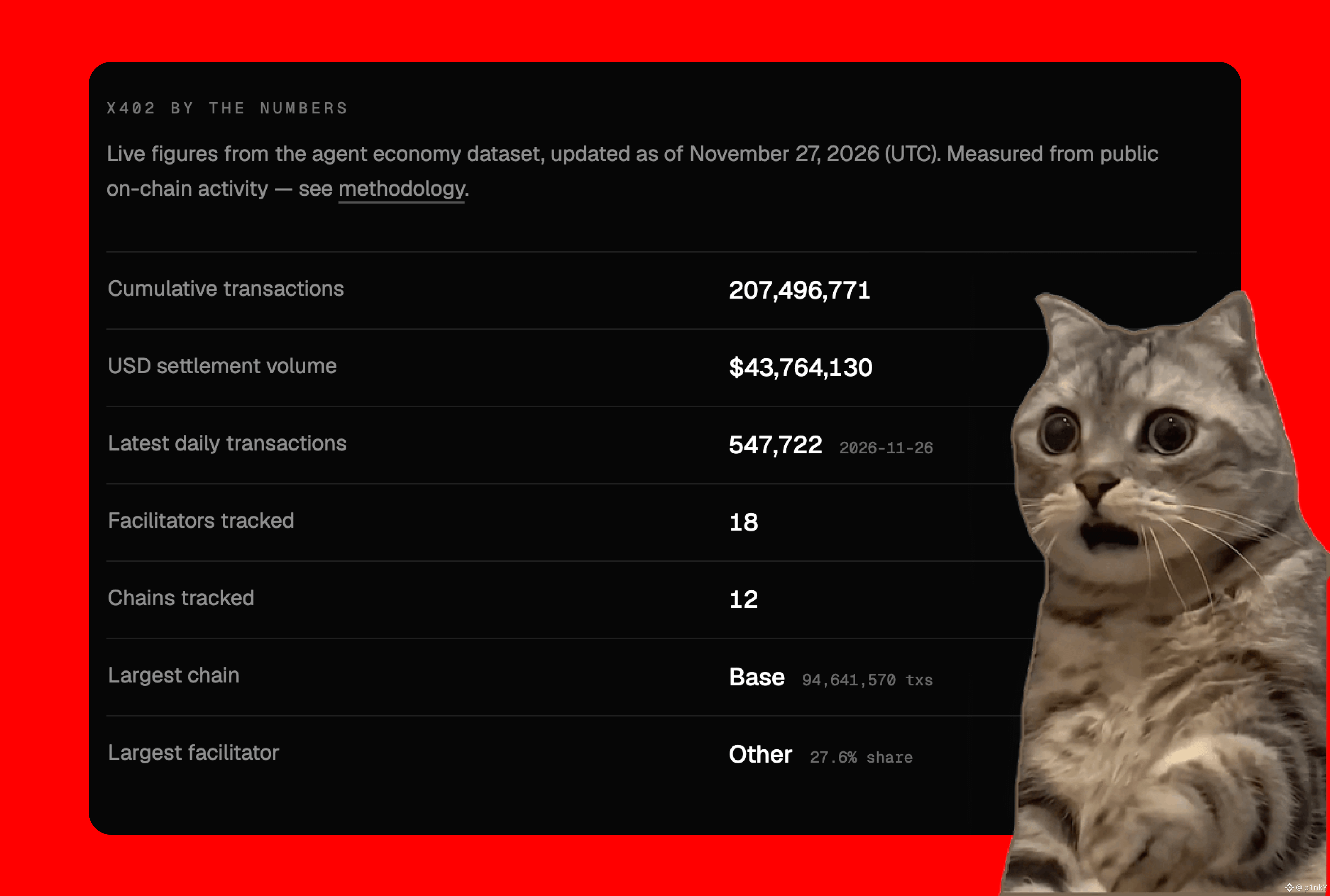
reality: across 12 chains, x402 has processed ~207.5m transactions for ~$43.76m total volume (~$0.21 per tx). on solana, real agent payments over the last 7 days totaled ~$77.8k.
the rails work great for automated api micro-requests. just don't mistake $0.21 machine pings for real revenue backing nine-figure tokens.
416
·
--
Verified
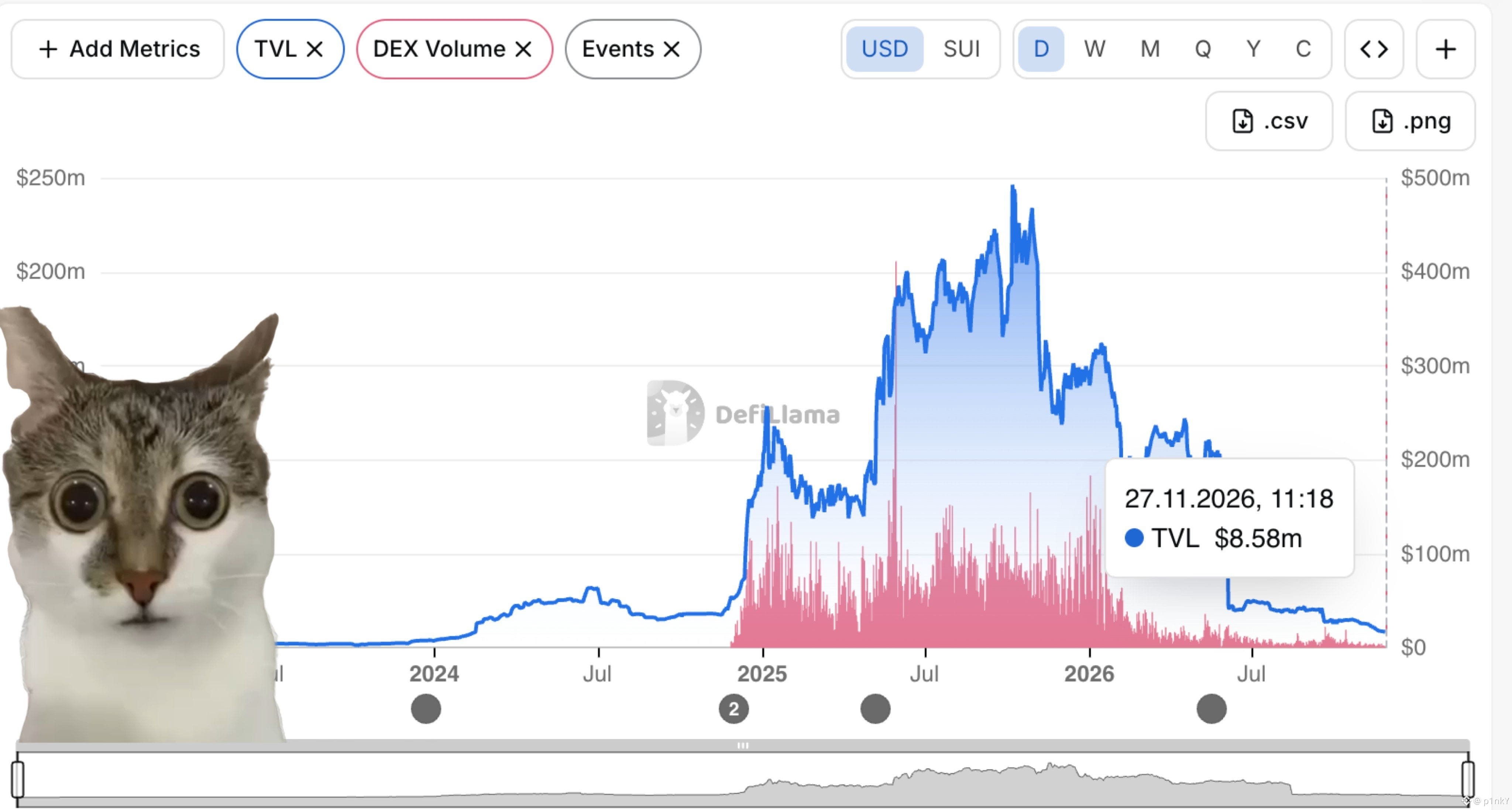
bluefin owned ~95% of sui's historical perp volume ($100b+ across 2.5m+ accounts) and is shutting down its perps on dec 4.
daily volume went from a $575m peak to ~$516k , a 99.9% collapse.
even dominating an entire l1's derivatives flow doesn't save you anymore.
onchain perps have turned into a winner-take-most liquidity game: either you pull global order flow like hyperliquid, or liquidity dries up until pivoting to spot and rwa is the only exit left.
824
·
--
Verified
400,000 $ZEC are sitting in an aging privacy pool. zcash wants them moved before the cryptography becomes a liability.
sapling relies on pairing-based cryptography. future advances could weaken the assumptions protecting those funds.
no exploit. no confirmed break. this is preventive maintenance.
the proposal:
>stop new sapling deposits
>keep withdrawals open
>migrate to ironwood
people want financial privacy, but rarely think about what keeps it secure.
zcash is dealing with that problem before it becomes a crisis.
1
3
1.2k
·
--
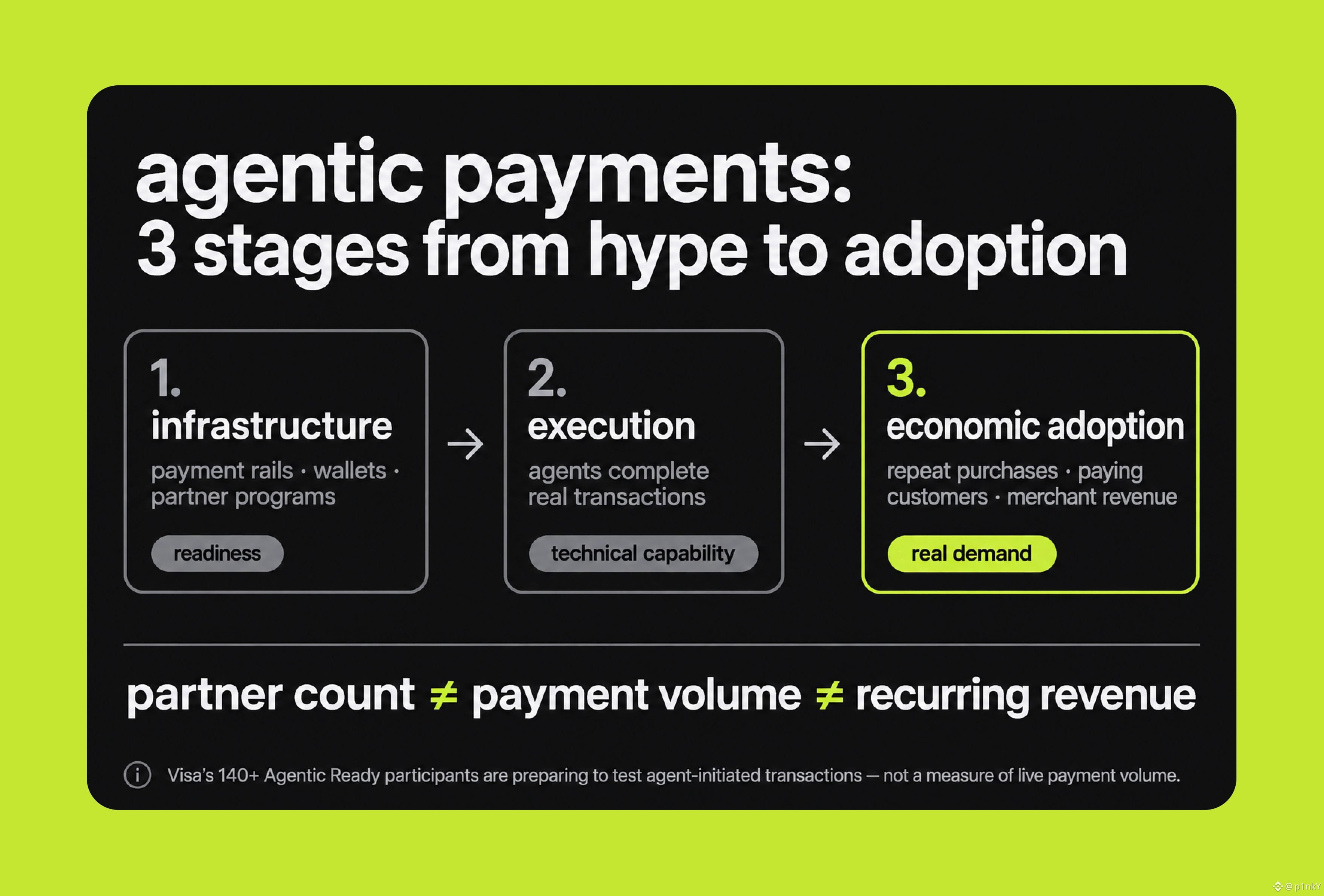
visa just announced 140+ companies joining its ai payments program.
actual onchain volume from agent payments: reportedly $50k/week.
that's not adoption. that's theater.
ct is celebrating partner logos while the actual money moving is still microscopic.
there are 3 stages that matter:
>infrastructure exists.
>agents can execute transactions.
>businesses generate recurring revenue from agent-driven purchases.
almost every headline right now is still stage 1.
a company joining a program ≠ a transaction.
a wallet created for an agent ≠ economic activity.
a successful test payment ≠ product-market fit.
want to know if this is real? ignore the partner count. watch:
recurring payment volume
-active paying agents
-repeat transactions per agent
-merchant retention
-revenue generated without human intervention
the agent economy doesn't need another payment rail.
it needs customers.
480
·
--
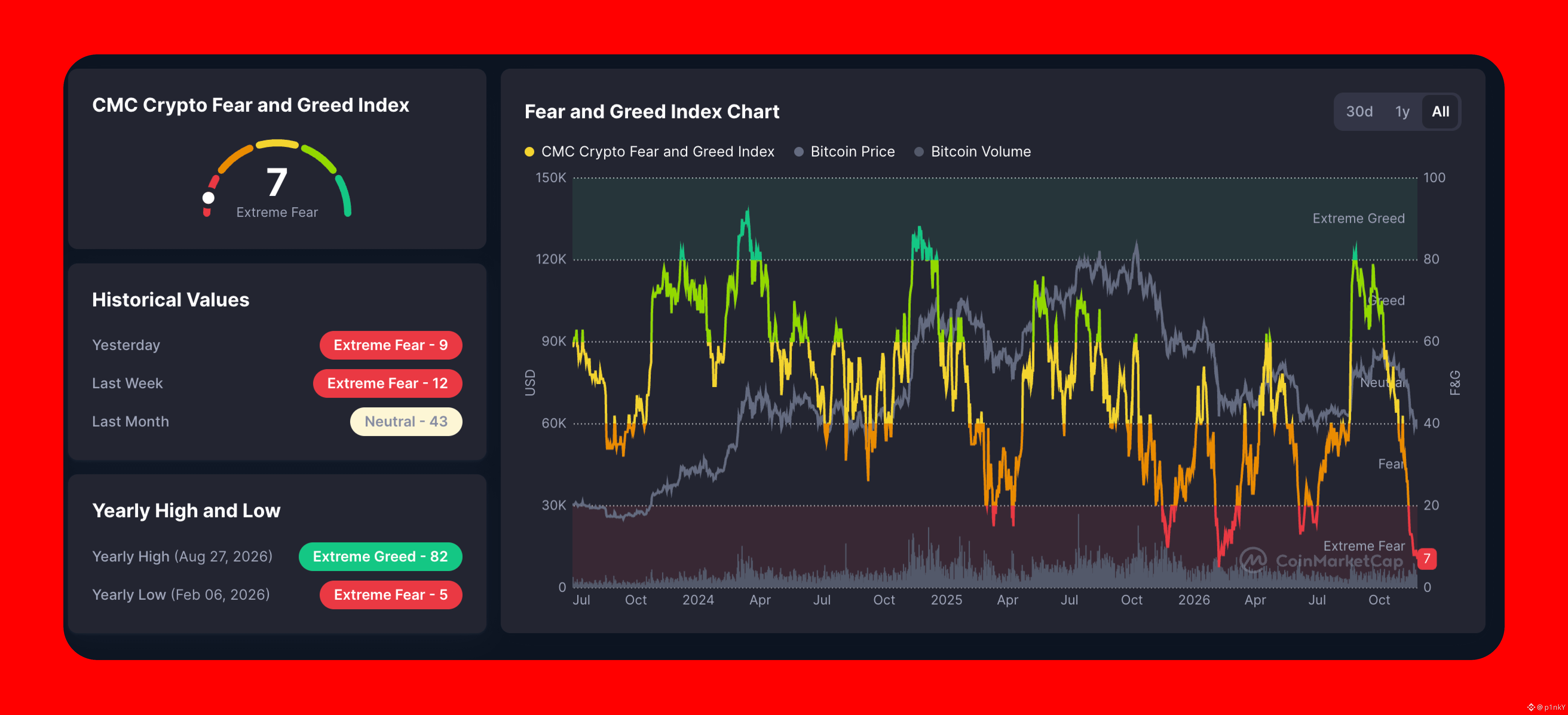
extreme fear is not a buying signal.
it’s a test.
most people don’t lose money because they bought the top.
they lose it because they can’t sit still when everything looks broken, the timeline is full of “crypto is dead”, and their position is down 30–50%.
right now the market is doing what it always does in these phases:
— flushing weak hands
— making people question their own thesis
— rewarding those who do nothing
the ones who will look smart in 6–12 months aren't the ones posting the most confident takes today.
they're the ones who already decided their levels and stopped refreshing the chart every 20 minutes.
patience is the most expensive skill in crypto.
and almost nobody trains it.
556
·
--
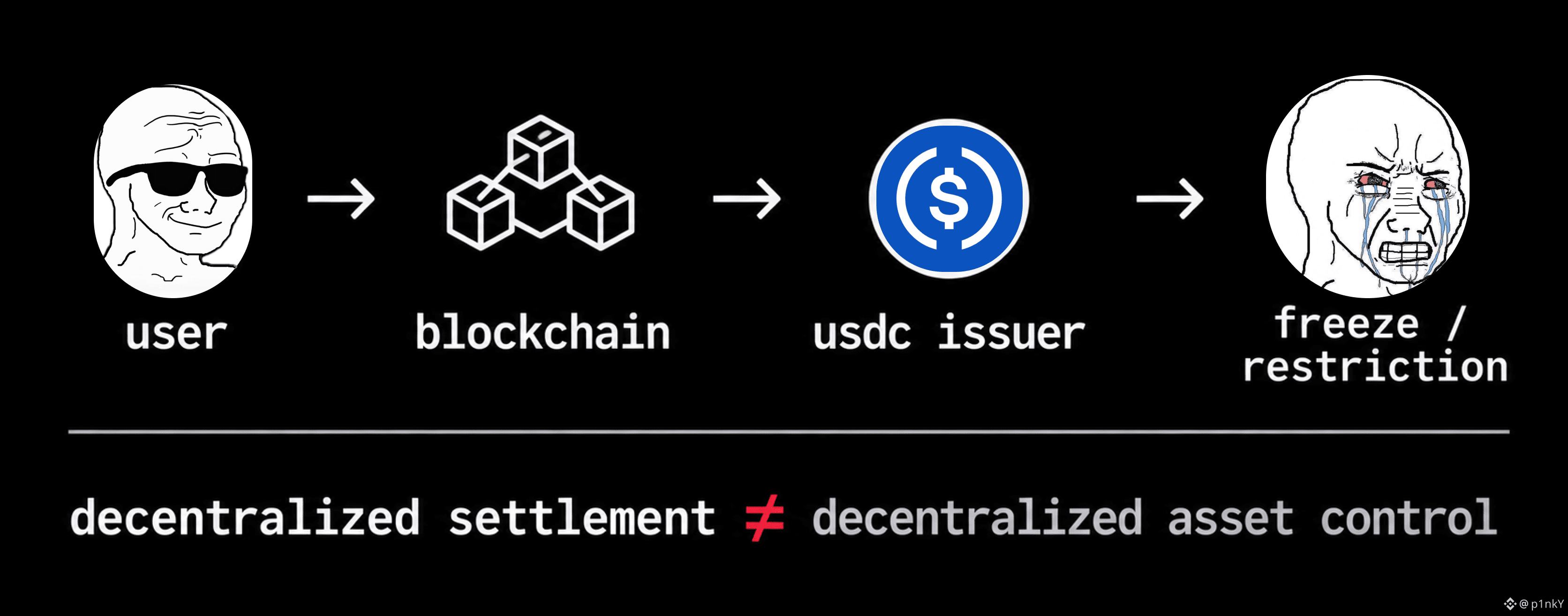
$1.1B in USDC just showed the difference between transparent money and censorship-resistant money.
on november 23 the US DOJ filed to seize more than $1.1B in USDC linked to the october binance hack.
a few details matter:
>original theft exceeded $6B
>circle assisted US authorities
>nearly $3B has already been frozen, seized or returned
USDC is transparent. funds can be traced and restricted through the issuer.
that’s useful for recovering stolen assets.
it’s also a reminder that transparency and censorship resistance are not the same thing.
a blockchain can be decentralized while the asset moving on it still depends on centralized infrastructure.
before calling every stablecoin transaction permissionless, which of these two properties actually matters more to you?
496
·
--
Bullish
Verified
nvidia just reminded everyone how much one person can still matter.
on november 17 the board said they had no intention of bringing Jensen Huang back.
six days later they unanimously reinstated him as CEO.
the stock jumped hard in premarket.
part of that was the broader AI bounce, but the reaction still showed something clear:
$NVDA has the chips, the software, CUDA, the infrastructure and the ecosystem.
yet a large part of the market’s confidence is still tied to one individual.
the board even consulted senior US officials before approving the return.
the investigation into the reported foreign intelligence effort is still open.
strongest AI position in the market doesn’t automatically mean the moat is fully institutional.
how much of nvidia’s edge is actually the company, and how much is still Jensen?

1
789
·
--
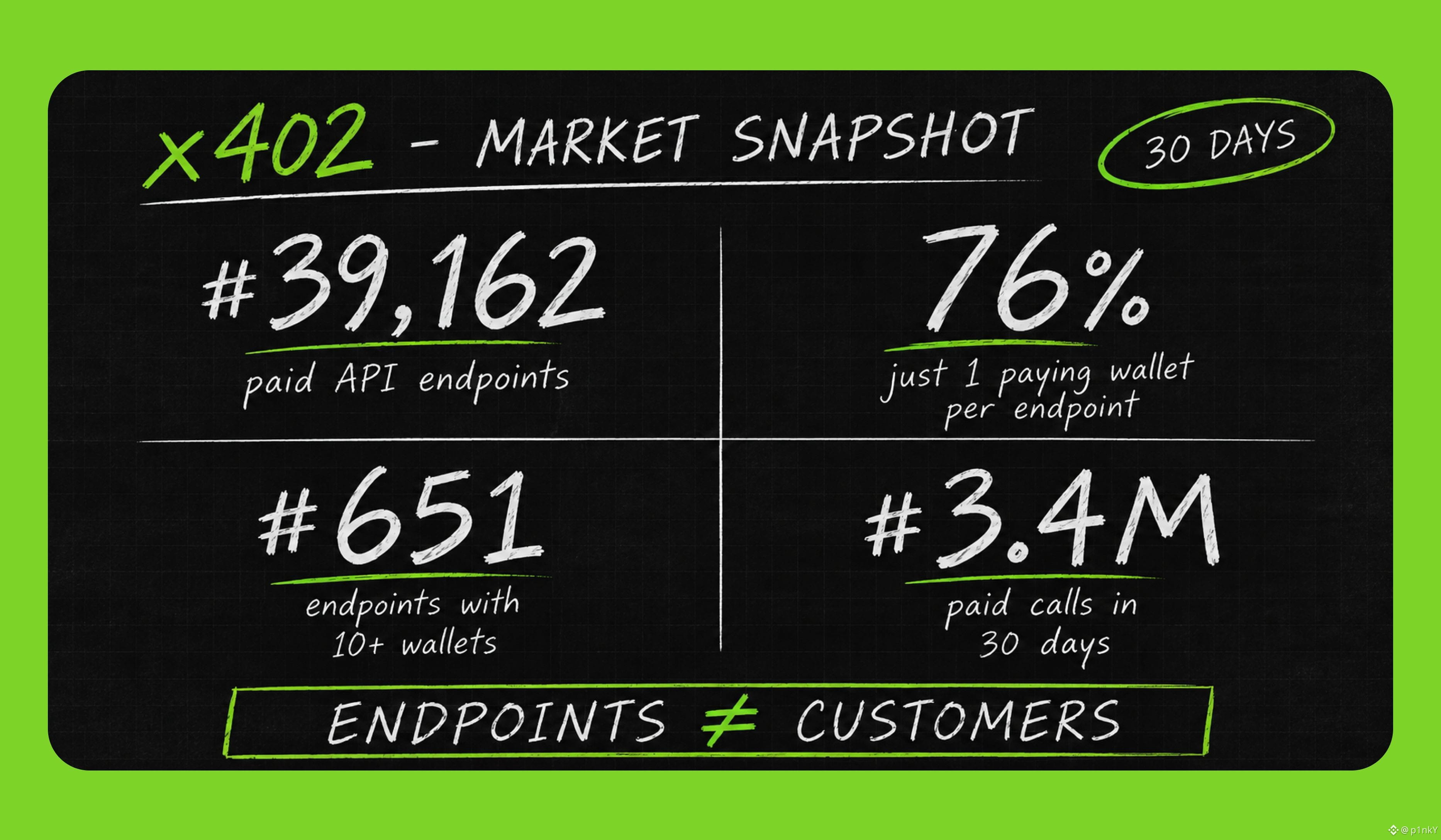
x402 has 39,162 paid API endpoints.
but how much of that is real demand?
latest snapshot:
>76% of endpoints had just one paying wallet
>only 651 had 10+
>3.4M paid calls in 30 days
a wallet paying once doesn’t make a customer.
a developer testing their own endpoint doesn’t prove product-market fit.
unique wallets are counted per endpoint, and self-purchases aren’t filtered out.
so even the 651 number doesn’t automatically mean recurring independent demand.
the metric that actually matters isn’t how many APIs accept x402.
it’s how many unrelated buyers keep coming back and paying.
the agent economy needs customers, not a growing list of endpoin
432
·
--
if i had to navigate this market with limited capital, here’s what actually matters:
1. no leverage. the volatility is already large enough.
2. keep dry powder. being fully deployed isn’t an edge.
3. stop averaging down without a new reason.
4. check real liquidity and volume, not just market cap.
5. look for ongoing users, revenue or development. absence of all three is a signal.
6. ignore old ATHs as targets.
7. wait for evidence the regime is shifting instead of trying to call the exact bottom.
the goal isn’t to be right about the low.
it’s to still have capital when something with actual edge appears.
survival first. everything else after.
577
·
--
one of the most expensive lessons in crypto:
being down 90% doesn’t mean you’re early.
sometimes it just means you’re holding something that’s losing relevance.
i’ve watched projects keep developers, users and liquidity through bears.
i’ve watched others lose all three and never come back.
the chart doesn’t owe you a recovery.
distance from ATH is not a thesis.
before you average down, ask whether anyone still has a reason to buy it besides “it’s cheap now.”
340
·
--
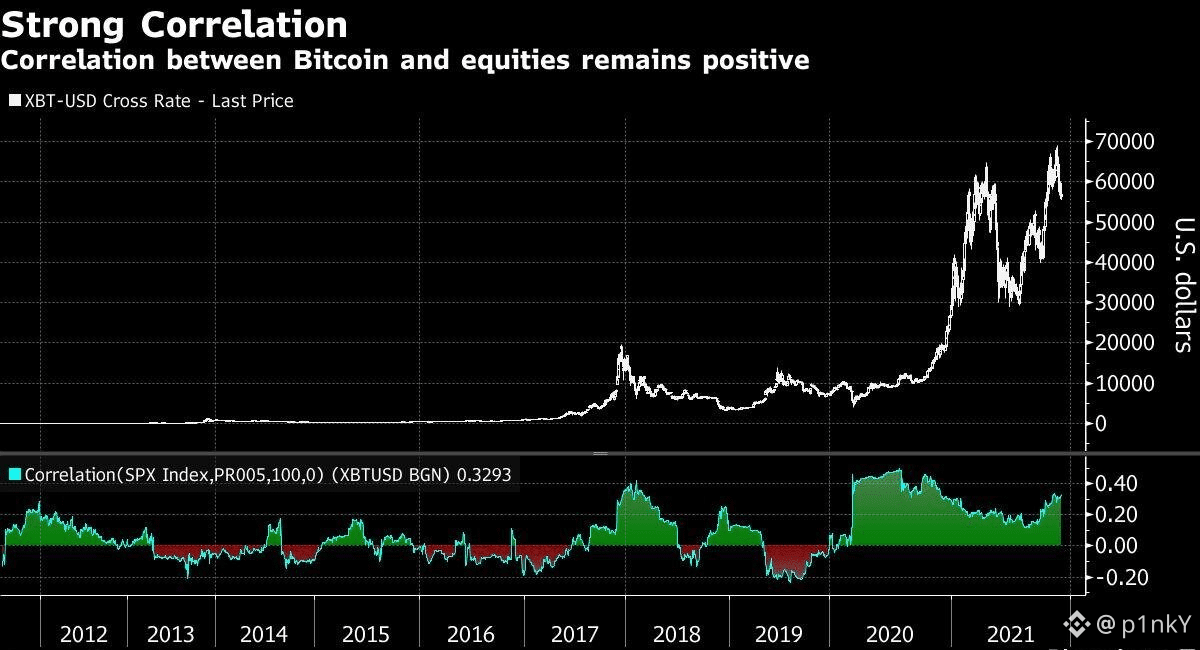
bitcoin is decentralized.
your portfolio still isn’t immune to liquidity and risk repricing.
people spent years calling it digital gold and an inflation hedge.
then liquidity dried up and everyone remembered it’s still a high-beta asset.
the long-term thesis and short-term price action can both be true at the same time.
most people treat them as the same thing and get hurt when they diverge.
stop using the asset’s narrative to justify ignoring its actual volatility.
405
·
--
one thing crypto taught me since 2021:
you don't have to make money in every market.
sometimes the best trade is the one you didn't take.
no revenge trading. no 20x long because "it can't go lower". no buying random alts just because they're down 80%.
capital is a position too.
and staying alive is an edge.
you don't have to make money in every market.
sometimes the best trade is the one you didn't take.
no revenge trading. no 20x long because "it can't go lower". no buying random alts just because they're down 80%.
capital is a position too.
and staying alive is an edge.
2
866
·
--
$2B+ in crypto liquidations is not a bullish signal by itself.
it mostly tells you how much leverage got caught on the wrong side.
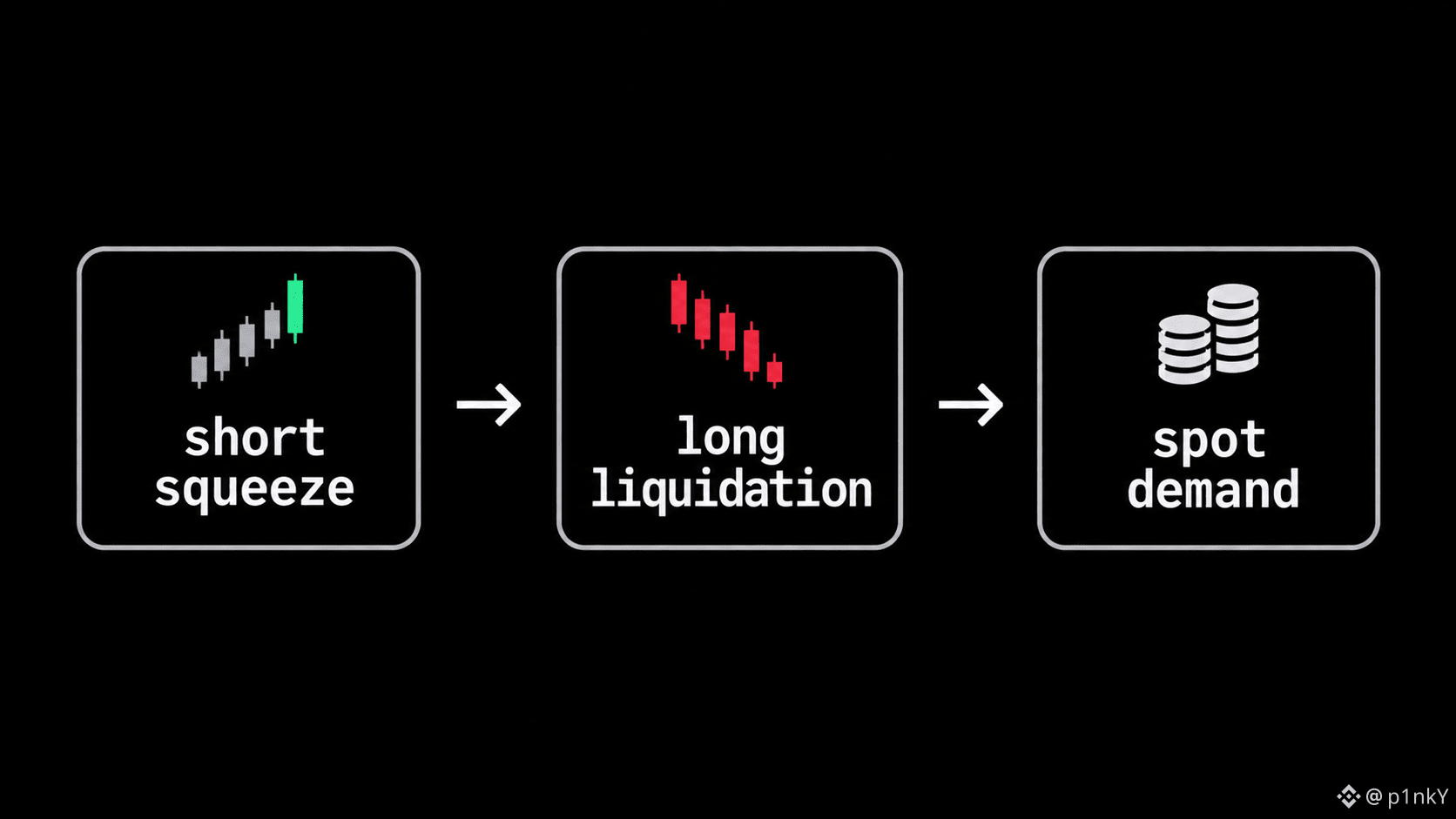
there's a difference between:
>shorts getting squeezed
>longs getting wiped
>spot buyers stepping in with fresh capital
only the last one tells you real demand is coming back.
a liquidation cascade can create a bounce. it cannot guarantee a recovery.
stop confusing forced buying with conviction.
1
874
·
--
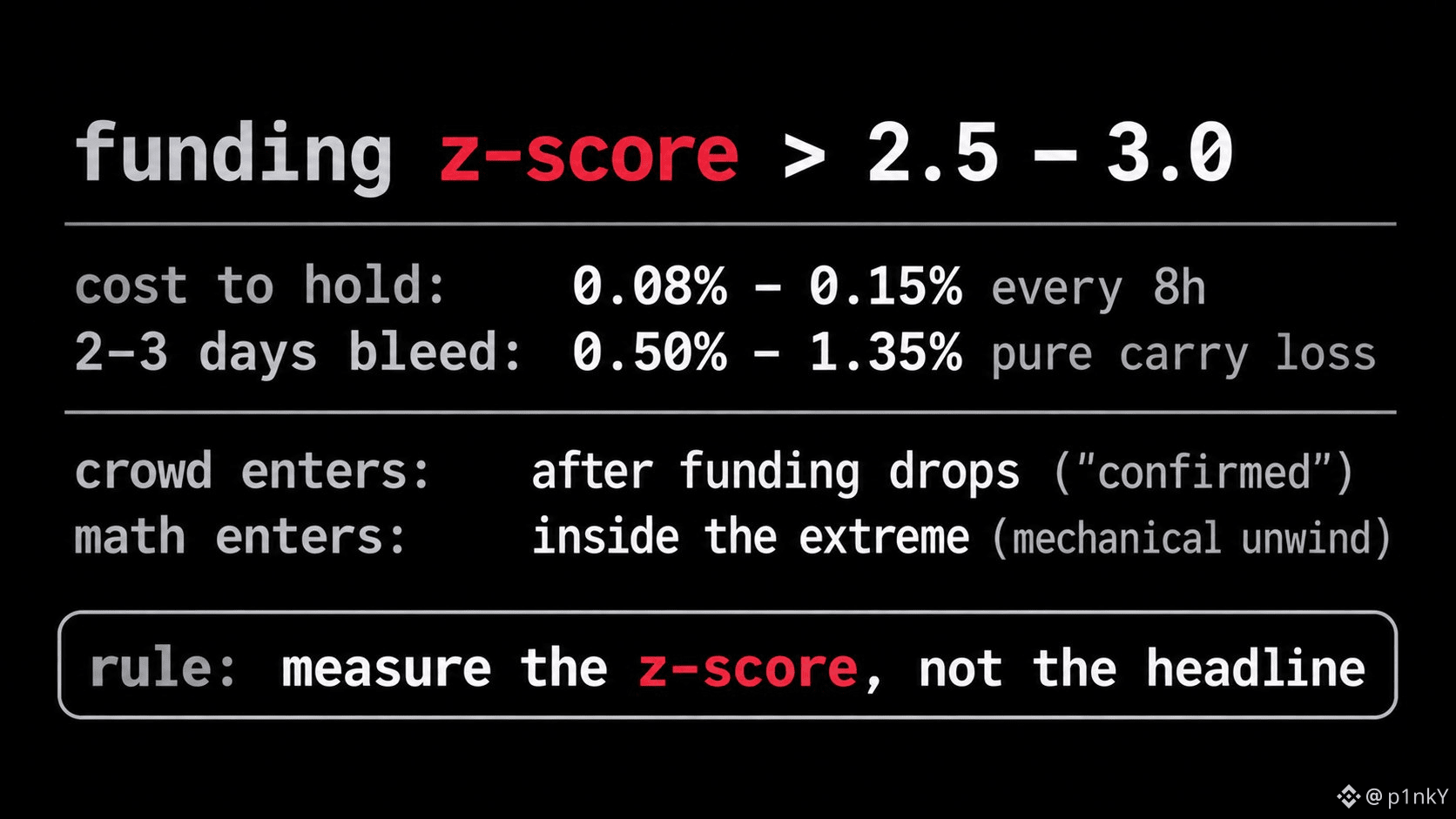
extreme funding is one of the few places on perps where positioning imbalance can be measured ahead of time.
when funding z-score pushes past 2.5–3, one side is already paying 0.08–0.15% every 8 hours just to keep the trade open.
that’s not a directional call.
it’s mechanical pressure.
most people enter once funding starts dropping and the story feels obvious.
by then, part of the move is already gone.
do you enter at the extreme, or only after it becomes obvious?
1
563
·
--
reading charts doesn’t make you consistent money on futures or prediction markets.
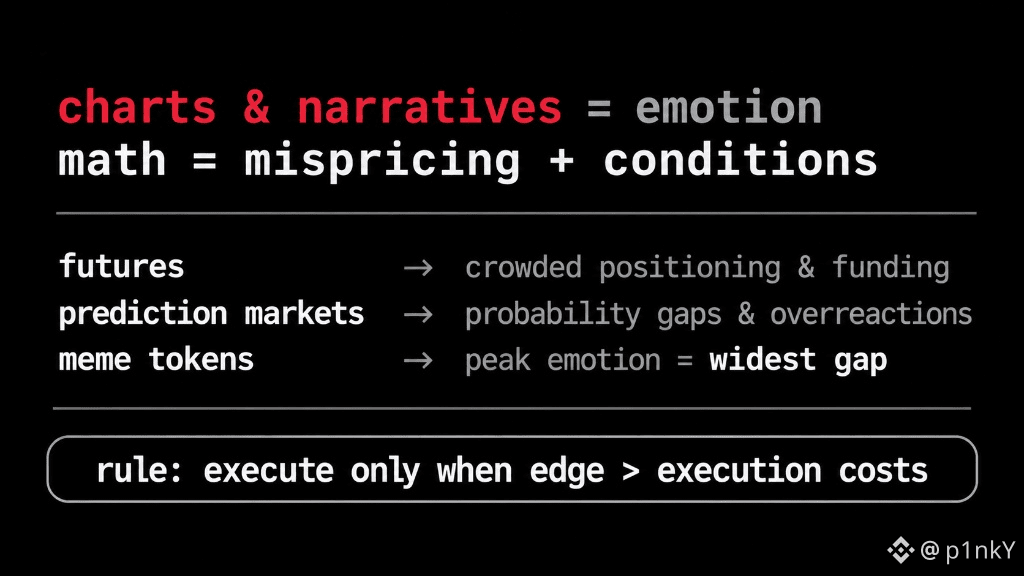
i think you make it by finding mathematical inefficiencies, mispricings, and forced positioning.
charts and narratives run on emotion and hindsight.
math doesn’t care how things “look.”
it only acts when time, place, and conditions actually line up.
this shows up on futures, prediction markets, and even meme tokens.
the difference is that on meme tokens emotion is louder, so the mathematical gap is even wider.
on futures, that’s crowded positioning, funding extremes, or regime shifts.
on prediction markets, that’s probability gaps, overreactions, or structural biases.
the goal isn’t guessing the future.
it’s stepping in when the math shows mispricing,and execution costs still leave real edge.
most people still override the rules because a chart or headline feels convincing.
that’s usually where the edge dies.
do you think real mathematical edges still exist on these markets, or have they mostly been arbed away?
1
383
·
--
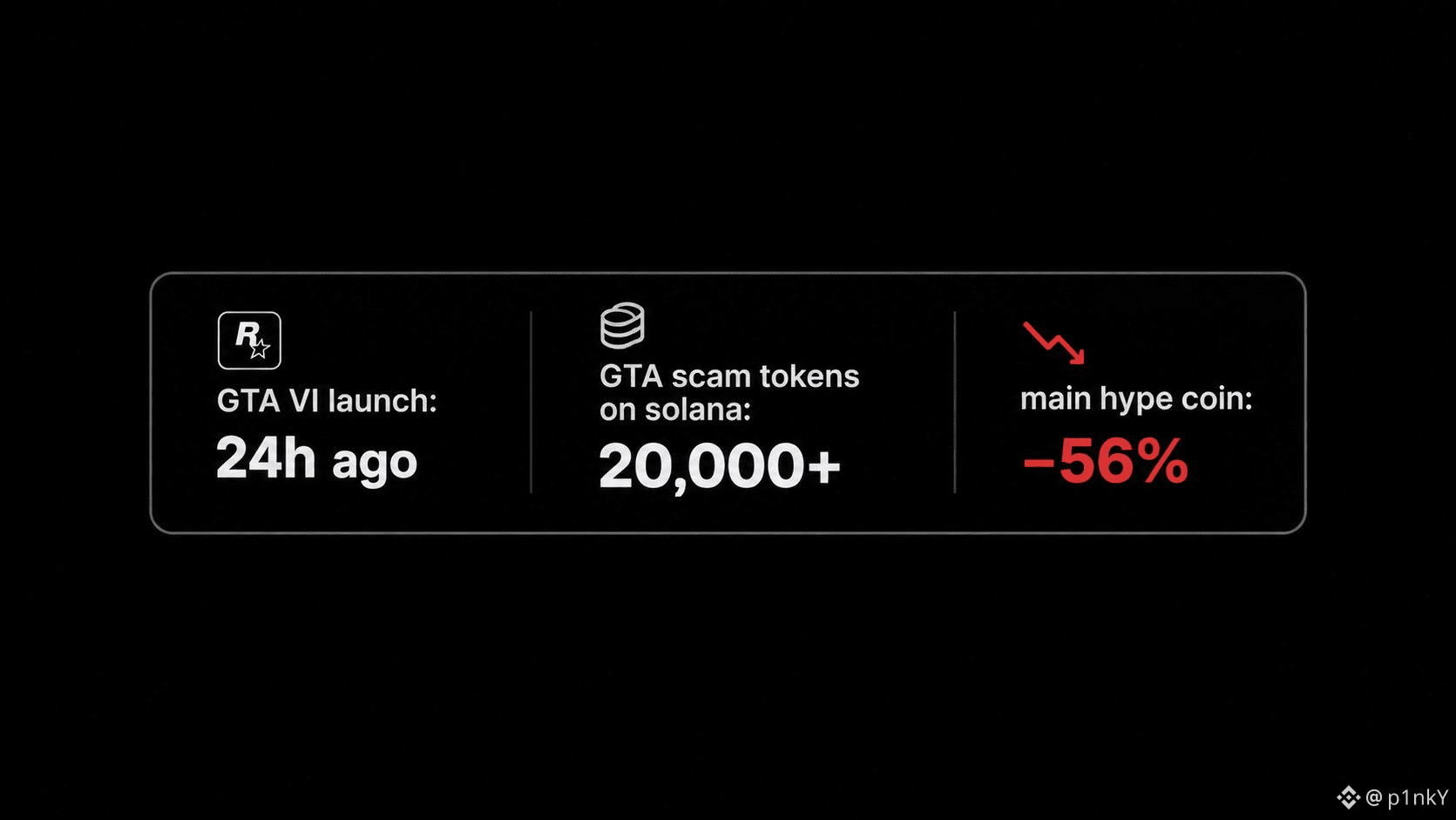
GTA VI launched yesterday, and crypto immediately created 20,000+ ways to lose money.
over 8,800 GTA-themed tokens on solana were flagged as malicious or spam in the last 24 hours. fake downloads and wallet drainers are everywhere, while the main hype coin already dumped 56% on release.
the technology evolves every cycle, but human greed and sell-the-news math never change.
if you are aping into pop-culture memecoins during extreme fear, you aren't trading,you're donating.
what’s the fastest sell-the-news dump you’ve ever witnessed?
1
1.6k
·
--
how to see what people can learn about you from your wallet address in 2 minutes ($0)
anyone can open your address just like you're about to open it yourself.
the move: view your wallet as a stranger > check what's exposed > separate your wallets
steps
>open a block explorer (Etherscan or your network's equivalent) in incognito mode
>paste your main wallet address
>check: token balances, transaction history, who you've sent funds to, NFTs
>trace your first incoming transaction. if it came from an exchange, the trail may lead to a KYC-linked account
>search your address and ENS name on Google and X. have you ever exposed them in your profile or tweets?
>write down everything you find
| what to do about it
>separate your wallets: main, experimental, and public (donations and social media)
>don't transfer funds directly between them. that connection is visible to everyone
>don't link your public address to an ENS name connected to your main wallet
>use a separate address to receive payments
| the catch
>full privacy is impossible on public blockchains. you can only reduce what's exposed
>on-chain analysis can link wallets through patterns: timing, amounts, and shared counterparties
>privacy tools (such as Zcash) have technical and legal limitations. check the regulations in your country
| what NOT to do
>don't post screenshots of your main wallet. blur the address or use a test wallet
>don't use mixers without understanding the legal implications
tip: if your address reveals too much, start a fresh wallet and don't link it to your old one.
what surprised you the most? drop it in the replies. no wallet addresses.
bookmark this.
1
1
401
·
--
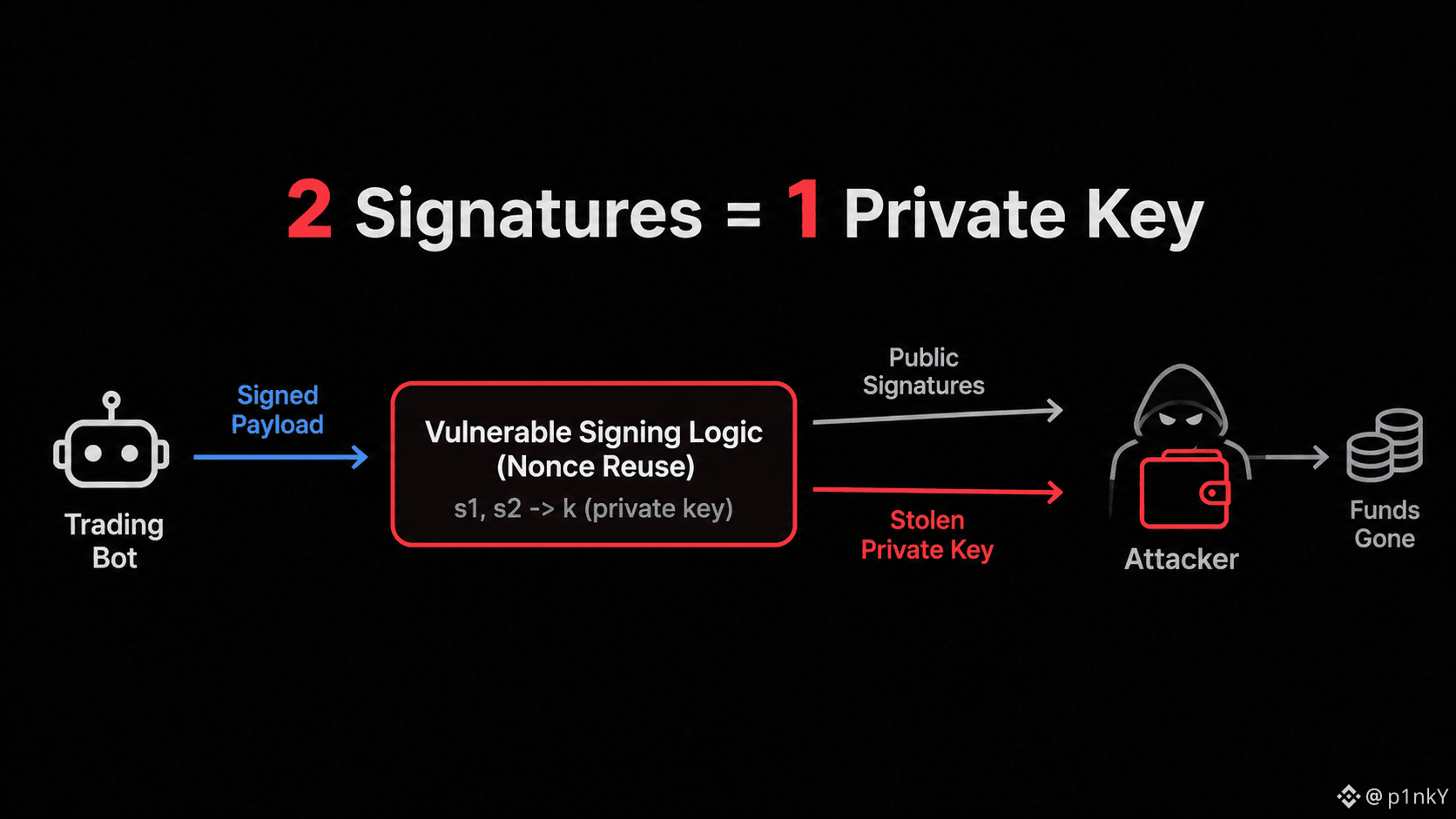
a "trade-only" api key just drained $10.39m out of $LIGHT the smart contracts weren't hacked. your own signing math was:
>custom signing code reused a cryptographic nonce
>two exposed signatures leaked the private key in milliseconds
>the attacker routed funds straight through a public pool
>guardian mode froze withdrawals and salvaged ~$5m
ighter’s patch: api keys can no longer authorize public pool transfers without a direct wallet signature, and api signatures are no longer exposed publicly.
a "trade-only" label means zero if your bot wrapper leaks nonces. permissions are only as strong as the cryptography enforcing them.
is your signing logic actually audited, or are you just farming points with a ticking time bomb?
1.1k
Log in to explore more content
Join global crypto users on Binance Square
⚡️ Get latest and useful information about crypto.
💬 Trusted by the world’s largest crypto exchange.
👍 Discover real insights from verified creators.
Email / Phone number
Trending Topics
EvolveAtBinanceBlockchainWeek
2M views
18,766 Discussing
Binance Blockchain Week is officially underway! 🌍
On November 28–29, whether you’re in Bangkok or joining from afar, tune in to the livestreams and join the conversation on Binance Square!
Here’s what’s in store 👇
📺 Watch the main stage live
Tune in throughout both days as industry speakers share their perspectives on this year’s theme, “Evolve” From technological innovation to real-world applications, explore what’s next for crypto.
⚔️ Watch two trading competitions
The Aster Open Qualifier and the Binance Trading Master Tournament will both be streamed live. Tune in to follow the traders in action.
🏆 Watch The Blockchain 100 Awards Ceremony
The Blockchain 100 list was selected by the community. Join us in celebrating the creators and the ideas they share!
💬 Join the community conversation
Use #EvolveAtBinanceBlockchainWeek in a post with a photo to share what you’re looking forward to, your views on the industry, or your favorite moments from the event.
The event page is now live! Subscribe to all livestreams with one click so you don’t miss a moment 👏
Binance Blockchain Week
·519 Likes
·735.1k views
BitcoinETFsExtendOutflowStreakToEightDays
28,863 views
404 Discussing
ColdcardFlawLeadsToTheftOfAtLeast1789BTC
90,861 views
747 Discussing