
CRYPTOZIS
249 Posts
CRYPTOZIS
Report
Block User
29 Following
23 Followers
47 Liked
Posts
·
--
Article
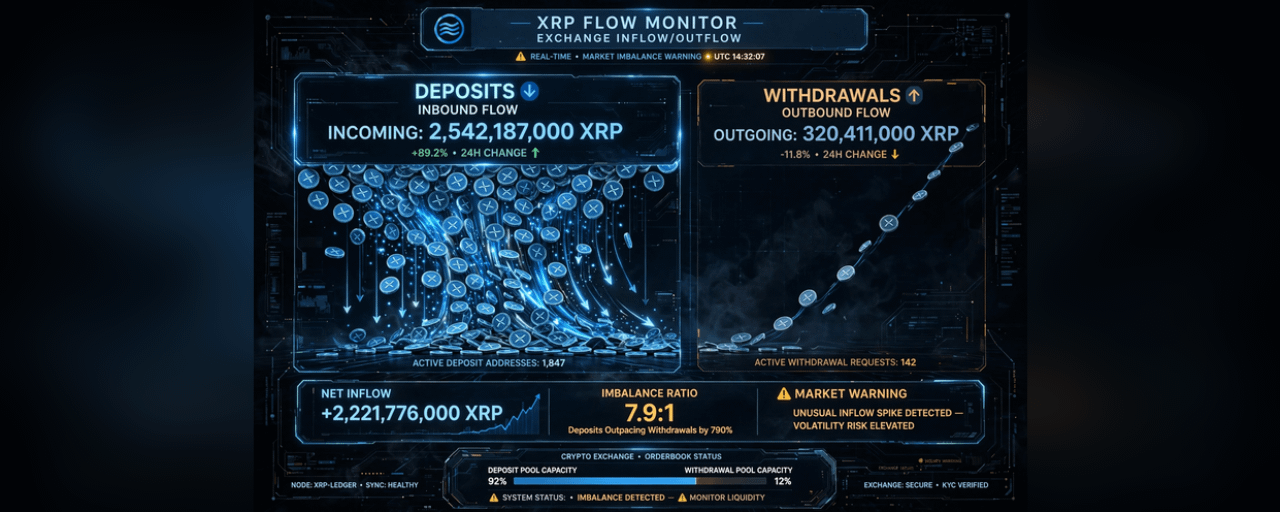
XRP Investors Face Major Warning as Binance Deposit Activity Hits 7-Year HighXRP investors have received a notable warning signal as Binance deposit activity reaches a seven-year high. The seven-day share of XRP deposit transactions on Binance jumped to 91.4%, while withdrawals accounted for just 8% of the activity. This imbalance suggests that deposits are being made 11.4 times more frequently than withdrawals, considerably exceeding the imbalance recorded in May 2019. With XRP trading around $0.95, this surge in exchange deposits demands a closer look at what is actually happening with investor behavior.
What the Numbers Actually Show About Market Imbalance
The figures tell a clear story of imbalance. Binance's seven-day share of XRP deposit transactions hit 91.4% on November 26, representing the highest level since 2019. What makes this particularly striking is the comparison with withdrawal activity, which remained at just 8%. The resulting 11.4:1 deposit-to-withdrawal ratio dwarfs anything seen since May 2019. XRP was trading around $0.95 when this data emerged.
The broader market context adds another layer to this story. Across the cryptocurrency market, deposit activity has been rising, climbing from 44% to 49% over the past month. At the same time, withdrawals eased from 55% to 50%. Binance, however, stands out dramatically. Its deposit share of 91% bucked this trend entirely, with KuCoin following at 74%. This divergence highlights how concentrated the deposit activity has become on certain exchanges.
What makes this pattern even more intriguing is the spot-to-futures volume dynamic. In September, this ratio was 19.4%. By November 26, it had improved to 21.8%. While this represents movement in the right direction, the reality remains that futures trading continues to dominate. Futures volume still exceeds spot volume by 4.59 times. This suggests that while spot interest is growing, speculative futures activity remains the dominant force in XRP trading.
Market Structure: Key Levels to Watch
Beyond the deposit data, market structure reveals important clues about where XRP might head next. The largest liquidation clusters are positioned around $0.85 for long positions and $1.05 for short positions. These levels represent zones where significant leveraged positions could be wiped out if price moves decisively in either direction. Traders watching these levels will be monitoring for signs of which cluster gets targeted first.
ETF flows add another dimension to the analysis. Spot XRP ETFs recorded net inflows of $4.07 million on November 25, which might seem encouraging at first glance. However, this represents the first positive daily reading since October 29. The broader picture remains challenging, with cumulative November outflows still standing at $29.18 million. This suggests that institutional sentiment, while showing signs of improvement, has not yet fully turned.
Analyst EGRAG CRYPTO has identified $1.37 as a critical confirmation level for XRP. The market would need to break above this level to suggest a more substantial recovery is underway. Until then, the deposit data serves as a reminder that exchange flows can provide early signals about potential market movements.
What This Means for XRP Investors
So what does this all mean for XRP holders? The deposit surge on Binance is a warning signal, not a definitive prediction. The data shows unusual activity, but it does not conclusively prove that selling is imminent. Deposit transaction counts do not necessarily indicate the amount of XRP being transferred, nor do they confirm that holders are preparing to sell.
However, the pattern is unusual enough to warrant attention. When deposits reach their highest level in seven years while withdrawals remain minimal, it suggests that a significant number of investors are moving their XRP onto exchanges. Whether this is for selling, trading, or other purposes remains unclear.
The key question for investors is whether this deposit activity translates into actual selling pressure. If withdrawal activity begins to increase in the coming days, it could suggest that the deposit surge was temporary. If deposits remain elevated, it could indicate sustained pressure on XRP's price.
For now, the market is sending a message. Binance's XRP deposit activity has reached levels not seen since 2019, and the imbalance between deposits and withdrawals is striking. While the broader market shows some signs of life, including improving ETF flows and a rising spot-to-futures ratio, the deposit data serves as a cautionary note. Investors should watch the key levels at $0.85 and $1.05, monitor whether deposit activity persists, and consider what the seven-year high in Binance deposits might mean for XRP's near-term direction.
XRP Investors Face Major Warning as Binance Deposit Activity Hits 7-Year High
XRP investors have received a notable warning signal as Binance deposit activity reaches a seven-year high. The seven-day share of XRP deposit transactions on Binance jumped to 91.4%, while withdrawals accounted for just 8% of the activity. This imbalance suggests that deposits are being made 11.4 times more frequently than withdrawals, considerably exceeding the imbalance recorded in May 2019. With XRP trading around $0.95, this surge in exchange deposits demands a closer look at what is actually happening with investor behavior.
What the Numbers Actually Show About Market Imbalance
The figures tell a clear story of imbalance. Binance's seven-day share of XRP deposit transactions hit 91.4% on November 26, representing the highest level since 2019. What makes this particularly striking is the comparison with withdrawal activity, which remained at just 8%. The resulting 11.4:1 deposit-to-withdrawal ratio dwarfs anything seen since May 2019. XRP was trading around $0.95 when this data emerged.
The broader market context adds another layer to this story. Across the cryptocurrency market, deposit activity has been rising, climbing from 44% to 49% over the past month. At the same time, withdrawals eased from 55% to 50%. Binance, however, stands out dramatically. Its deposit share of 91% bucked this trend entirely, with KuCoin following at 74%. This divergence highlights how concentrated the deposit activity has become on certain exchanges.
What makes this pattern even more intriguing is the spot-to-futures volume dynamic. In September, this ratio was 19.4%. By November 26, it had improved to 21.8%. While this represents movement in the right direction, the reality remains that futures trading continues to dominate. Futures volume still exceeds spot volume by 4.59 times. This suggests that while spot interest is growing, speculative futures activity remains the dominant force in XRP trading.
Market Structure: Key Levels to Watch
Beyond the deposit data, market structure reveals important clues about where XRP might head next. The largest liquidation clusters are positioned around $0.85 for long positions and $1.05 for short positions. These levels represent zones where significant leveraged positions could be wiped out if price moves decisively in either direction. Traders watching these levels will be monitoring for signs of which cluster gets targeted first.
ETF flows add another dimension to the analysis. Spot XRP ETFs recorded net inflows of $4.07 million on November 25, which might seem encouraging at first glance. However, this represents the first positive daily reading since October 29. The broader picture remains challenging, with cumulative November outflows still standing at $29.18 million. This suggests that institutional sentiment, while showing signs of improvement, has not yet fully turned.
Analyst EGRAG CRYPTO has identified $1.37 as a critical confirmation level for XRP. The market would need to break above this level to suggest a more substantial recovery is underway. Until then, the deposit data serves as a reminder that exchange flows can provide early signals about potential market movements.
What This Means for XRP Investors
So what does this all mean for XRP holders? The deposit surge on Binance is a warning signal, not a definitive prediction. The data shows unusual activity, but it does not conclusively prove that selling is imminent. Deposit transaction counts do not necessarily indicate the amount of XRP being transferred, nor do they confirm that holders are preparing to sell.
However, the pattern is unusual enough to warrant attention. When deposits reach their highest level in seven years while withdrawals remain minimal, it suggests that a significant number of investors are moving their XRP onto exchanges. Whether this is for selling, trading, or other purposes remains unclear.
The key question for investors is whether this deposit activity translates into actual selling pressure. If withdrawal activity begins to increase in the coming days, it could suggest that the deposit surge was temporary. If deposits remain elevated, it could indicate sustained pressure on XRP's price.
For now, the market is sending a message. Binance's XRP deposit activity has reached levels not seen since 2019, and the imbalance between deposits and withdrawals is striking. While the broader market shows some signs of life, including improving ETF flows and a rising spot-to-futures ratio, the deposit data serves as a cautionary note. Investors should watch the key levels at $0.85 and $1.05, monitor whether deposit activity persists, and consider what the seven-year high in Binance deposits might mean for XRP's near-term direction.
210
·
--
Bitcoin clawed back above $61K today on short covering in thin Thanksgiving trading — but don't call it a comeback yet. With ~$7B in options expiring today and ETF outflows hitting a record $5.39B for November, this bounce needs to hold $61.4K to mean anything. Fear & Greed still stuck at 12. $BTC
Bitcoin clawed back above $61K today on short covering in thin Thanksgiving trading — but don't call it a comeback yet. With ~$7B in options expiring today and ETF outflows hitting a record $5.39B for November, this bounce needs to hold $61.4K to mean anything. Fear & Greed still stuck at 12. $BTC
1
130
·
--
Article
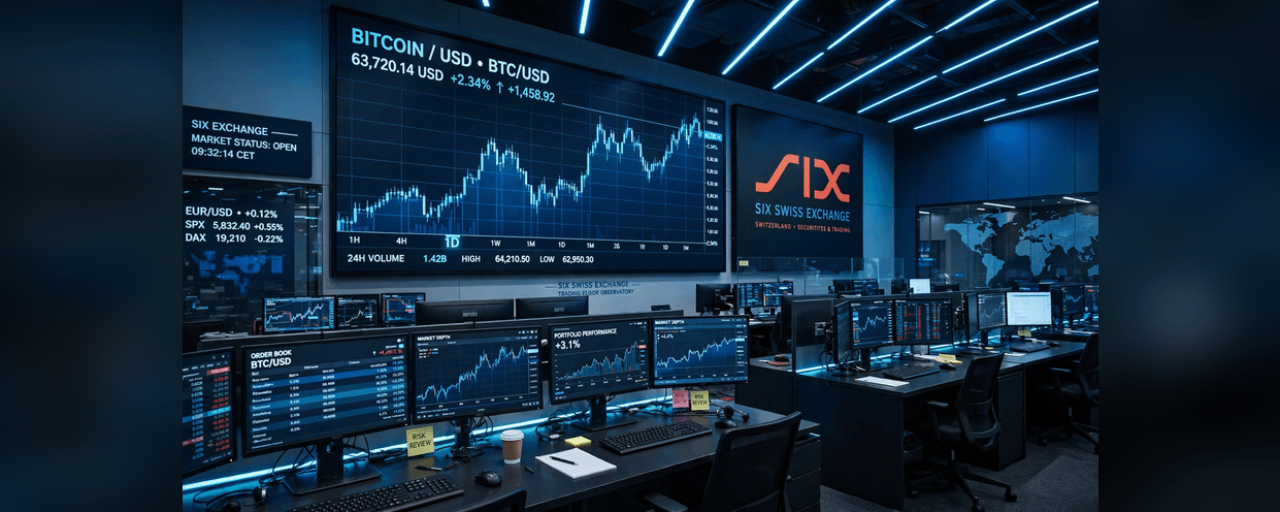
Switzerland's First Spot Bitcoin ETF Debuts on SIX Swiss ExchangeSwitzerland has entered the Bitcoin investment arena with BBIT, marking the nation's inaugural spot Bitcoin ETF. The fund commenced trading on the SIX Swiss Exchange on Thursday, providing market participants with direct access to Bitcoin through conventional financial channels.
According to CryptoPotato, BBIT imposes an annual fee of 0.19%. Unlike products based on futures contracts, this ETF actually holds Bitcoin, with its valuation linked to the SIX Reference Rate Bitcoin Index in dollars. This design offers investors a more straightforward route to Bitcoin exposure without the complexities associated with direct ownership.
The debut follows FINMA's approval in October, a milestone that reflects Switzerland's progressive stance on digital assets. While the Swiss market has long been receptive to crypto innovation, this launch underscores the nation's commitment to integrating Bitcoin into mainstream investment frameworks.
One of the reasons for the optimism is the structure of BBIT, which not only allows traditional investors to gain exposure to Bitcoin but also highlights the growing demand for regulated crypto investment products. As the digital asset sector continues to mature, BBIT could inspire similar offerings across Europe, further solidifying Bitcoin's position in the global financial landscape.
Switzerland's First Spot Bitcoin ETF Debuts on SIX Swiss Exchange
Switzerland has entered the Bitcoin investment arena with BBIT, marking the nation's inaugural spot Bitcoin ETF. The fund commenced trading on the SIX Swiss Exchange on Thursday, providing market participants with direct access to Bitcoin through conventional financial channels.
According to CryptoPotato, BBIT imposes an annual fee of 0.19%. Unlike products based on futures contracts, this ETF actually holds Bitcoin, with its valuation linked to the SIX Reference Rate Bitcoin Index in dollars. This design offers investors a more straightforward route to Bitcoin exposure without the complexities associated with direct ownership.
The debut follows FINMA's approval in October, a milestone that reflects Switzerland's progressive stance on digital assets. While the Swiss market has long been receptive to crypto innovation, this launch underscores the nation's commitment to integrating Bitcoin into mainstream investment frameworks.
One of the reasons for the optimism is the structure of BBIT, which not only allows traditional investors to gain exposure to Bitcoin but also highlights the growing demand for regulated crypto investment products. As the digital asset sector continues to mature, BBIT could inspire similar offerings across Europe, further solidifying Bitcoin's position in the global financial landscape.
64
·
--
Verified

Article
Zcash Whale Wakes After Nine Years: What to Watch NextA Zcash wallet that had remained inactive for approximately nine years suddenly transferred 15,750 ZEC, valued at around $11.39 million, to Kraken. This substantial movement after nearly a decade of dormancy has led to considerable speculation regarding the owner's intentions and possible effects on the market.
According to Lookonchain, the whale's reactivation was first documented by their research. The holder initially obtained 23,412 ZEC in 2017, with an estimated average acquisition price of approximately $215, totaling just over $5 million. The recent deposit constitutes about two-thirds of that original holding. At present values near $723 per ZEC, these coins would currently be valued approximately $8 million more than their estimated purchase price—suggesting a potential gain of approximately 236%.
When significant cryptocurrency wallets that have been dormant reactivate, they typically attract considerable attention. While moving funds to an exchange does not necessarily indicate an immediate sale, such substantial transfers can influence market sentiment and potentially cause price fluctuations. Historical data indicates that whale activity often precedes significant changes in cryptocurrency markets.
Zcash, which emphasizes privacy through zero-knowledge proofs, has preserved a committed user base despite market volatility. The circumstance of this particular wallet remaining untouched for nine years might reflect either an extraordinary conviction in the project's underlying principles or a calculated strategy for long-term asset retention.
Several important developments warrant monitoring following this transaction: First, whether the whale continues transferring additional assets or concludes with this partial deposit. Complete transfers to exchanges generally suggest stronger selling intentions compared to partial movements. Second, observe ZEC's price behavior in the upcoming days and weeks. Large whale movements can trigger algorithmic trading activity and affect retail investor decisions. Third, monitor changes in ZEC on-chain metrics, particularly exchange inflows and outflows. A sudden increase in exchange balances could indicate further selling pressure. Fourth, consider the wider market environment. Cryptocurrency markets remain responsive to large holder movements, particularly during uncertain periods or when major announcements are anticipated. Finally, any public communications from the whale or associated parties might clarify intentions. Such disclosures are uncommon but could provide valuable understanding of the holder's approach.
The acquisition price referenced remains an estimate rather than a confirmed fact, and the deposit to an exchange does not constitute confirmation of a sale. The whale could be reallocating assets, planning alternative uses for the funds, or simply diversifying across different platforms.
The Zcash community and market observers will carefully assess whether this reactivation indicates a broader change in long-term holder sentiment or represents an isolated occurrence. Currently, the movement highlights the unpredictable nature of cryptocurrency markets and the potential impact when dormant wallets resume activity after extended periods.
The following days will likely provide further insight into what this nine-year period of inactivity signifies. Market participants should remain vigilant and consult diverse information sources to comprehend the evolving situation completely.
Zcash Whale Wakes After Nine Years: What to Watch Next
A Zcash wallet that had remained inactive for approximately nine years suddenly transferred 15,750 ZEC, valued at around $11.39 million, to Kraken. This substantial movement after nearly a decade of dormancy has led to considerable speculation regarding the owner's intentions and possible effects on the market.
According to Lookonchain, the whale's reactivation was first documented by their research. The holder initially obtained 23,412 ZEC in 2017, with an estimated average acquisition price of approximately $215, totaling just over $5 million. The recent deposit constitutes about two-thirds of that original holding. At present values near $723 per ZEC, these coins would currently be valued approximately $8 million more than their estimated purchase price—suggesting a potential gain of approximately 236%.
When significant cryptocurrency wallets that have been dormant reactivate, they typically attract considerable attention. While moving funds to an exchange does not necessarily indicate an immediate sale, such substantial transfers can influence market sentiment and potentially cause price fluctuations. Historical data indicates that whale activity often precedes significant changes in cryptocurrency markets.
Zcash, which emphasizes privacy through zero-knowledge proofs, has preserved a committed user base despite market volatility. The circumstance of this particular wallet remaining untouched for nine years might reflect either an extraordinary conviction in the project's underlying principles or a calculated strategy for long-term asset retention.
Several important developments warrant monitoring following this transaction: First, whether the whale continues transferring additional assets or concludes with this partial deposit. Complete transfers to exchanges generally suggest stronger selling intentions compared to partial movements. Second, observe ZEC's price behavior in the upcoming days and weeks. Large whale movements can trigger algorithmic trading activity and affect retail investor decisions. Third, monitor changes in ZEC on-chain metrics, particularly exchange inflows and outflows. A sudden increase in exchange balances could indicate further selling pressure. Fourth, consider the wider market environment. Cryptocurrency markets remain responsive to large holder movements, particularly during uncertain periods or when major announcements are anticipated. Finally, any public communications from the whale or associated parties might clarify intentions. Such disclosures are uncommon but could provide valuable understanding of the holder's approach.
The acquisition price referenced remains an estimate rather than a confirmed fact, and the deposit to an exchange does not constitute confirmation of a sale. The whale could be reallocating assets, planning alternative uses for the funds, or simply diversifying across different platforms.
The Zcash community and market observers will carefully assess whether this reactivation indicates a broader change in long-term holder sentiment or represents an isolated occurrence. Currently, the movement highlights the unpredictable nature of cryptocurrency markets and the potential impact when dormant wallets resume activity after extended periods.
The following days will likely provide further insight into what this nine-year period of inactivity signifies. Market participants should remain vigilant and consult diverse information sources to comprehend the evolving situation completely.
1
7
4.6k
·
--

Article
BlackRock Launches Tokenized Money Market Funds as Stablecoin ReservesBlackRock, the world's largest asset manager, has launched two tokenized money market products designed to serve as reserve assets for stablecoins, marking another step in bringing regulated financial products onto blockchain infrastructure, according to Cointelegraph. The first product, BlackRock Select Treasury Based Liquidity Fund OnChain Shares (BSTBL), is a tokenized share class of the asset manager's existing Select Treasury Based Liquidity Fund on Ethereum. Eligible investors can transfer tokenized fund shares between approved wallets while the fund continues investing in cash, short-term US Treasurys and Treasury-backed overnight repurchase agreements. BNY serves as the transfer agent and tokenization provider for the fund's onchain shares. The second product, BlackRock Daily Reinvestment Stablecoin Reserve Vehicle (BRSRV), is a newly created tokenized money market fund available to institutional investors. The fund supports multiple blockchains, automatically reinvests daily dividends and is designed for digital asset use cases, including stablecoin reserve management. Securitize is BRSRV's transfer agent and tokenization provider. BlackRock said both funds are structured to qualify as eligible reserve assets for permitted US payment stablecoin issuers under the GENIUS Act, the federal stablecoin law enacted in July 2025. The launch expands BlackRock's footprint in the tokenized Treasury market, where its USD Institutional Digital Liquidity Fund (BUIDL) remains the largest tokenized Treasury fund with more than $2.6 billion in assets, according to industry data.
BlackRock Launches Tokenized Money Market Funds as Stablecoin Reserves
BlackRock, the world's largest asset manager, has launched two tokenized money market products designed to serve as reserve assets for stablecoins, marking another step in bringing regulated financial products onto blockchain infrastructure, according to Cointelegraph. The first product, BlackRock Select Treasury Based Liquidity Fund OnChain Shares (BSTBL), is a tokenized share class of the asset manager's existing Select Treasury Based Liquidity Fund on Ethereum. Eligible investors can transfer tokenized fund shares between approved wallets while the fund continues investing in cash, short-term US Treasurys and Treasury-backed overnight repurchase agreements. BNY serves as the transfer agent and tokenization provider for the fund's onchain shares. The second product, BlackRock Daily Reinvestment Stablecoin Reserve Vehicle (BRSRV), is a newly created tokenized money market fund available to institutional investors. The fund supports multiple blockchains, automatically reinvests daily dividends and is designed for digital asset use cases, including stablecoin reserve management. Securitize is BRSRV's transfer agent and tokenization provider. BlackRock said both funds are structured to qualify as eligible reserve assets for permitted US payment stablecoin issuers under the GENIUS Act, the federal stablecoin law enacted in July 2025. The launch expands BlackRock's footprint in the tokenized Treasury market, where its USD Institutional Digital Liquidity Fund (BUIDL) remains the largest tokenized Treasury fund with more than $2.6 billion in assets, according to industry data.
BLKUS+3.43%
61
·
--
Article
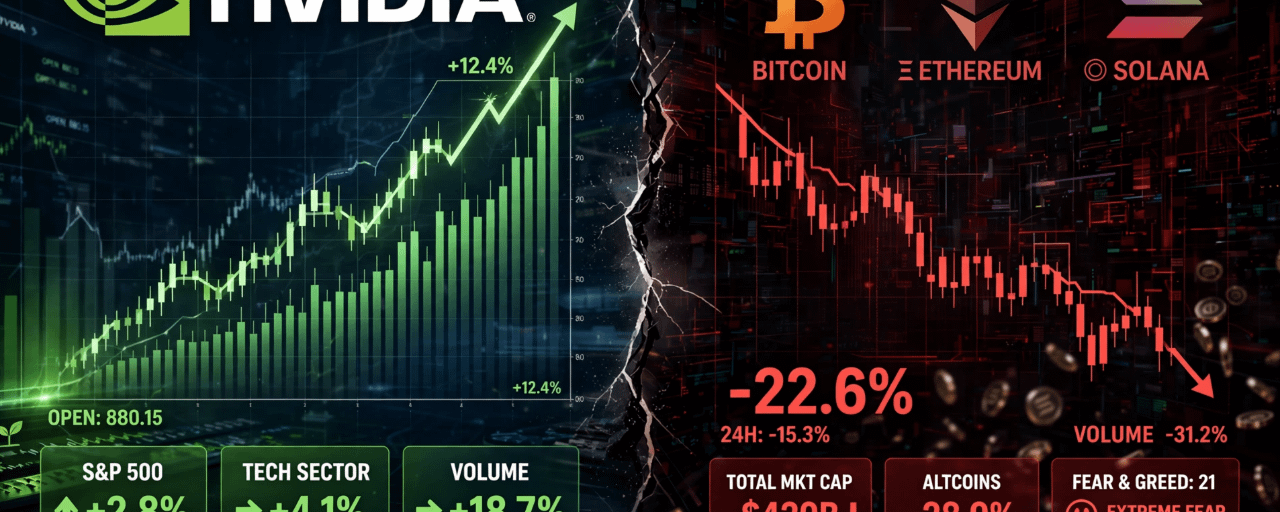
Grayscale Calls Bitcoin 'Oversold' at $62K but Warns of AI RisksBitcoin sits at $62,000, labeled 'oversold' by Grayscale, even as the investment firm warns about risks from artificial intelligence. The cryptocurrency is experiencing its longest bear market on record—a brutal 411 days and counting.
Research indicates Bitcoin has dropped just 56% from its peak during this downturn, marking the smallest percentage decline of any previous bear market.
Grayscale calls Bitcoin 'oversold', suggesting the asset may be undervalued at its current price point. This assessment comes as the market grapples with unprecedented uncertainty.
But the firm also throws up caution flags. AI developments could pose significant risks to crypto's near-term outlook, potentially overshadowing blockchain fundamentals.
Four hundred eleven days of downward pressure represents an extraordinary stretch for Bitcoin holders. The 56% decline, while substantial, stands as the mildest drawdown in the asset's bear market history.
The question now is whether Bitcoin can sustain its position above $60,000 while navigating these competing forces. All eyes are on whether the 'oversold' label translates into a meaningful recovery or if AI-related headwinds will continue to weigh on prices.
For long-term holders, Grayscale's assessment offers a glimmer of optimism amid the longest downturn Bitcoin has ever faced. The firm's analysis suggests that while the bear market has been historically long, it has also been historically mild in percentage terms.
As the market watches for signs of stabilization, the interplay between AI developments and crypto fundamentals will likely determine Bitcoin's next major move.
Grayscale Calls Bitcoin 'Oversold' at $62K but Warns of AI Risks
Bitcoin sits at $62,000, labeled 'oversold' by Grayscale, even as the investment firm warns about risks from artificial intelligence. The cryptocurrency is experiencing its longest bear market on record—a brutal 411 days and counting.
Research indicates Bitcoin has dropped just 56% from its peak during this downturn, marking the smallest percentage decline of any previous bear market.
Grayscale calls Bitcoin 'oversold', suggesting the asset may be undervalued at its current price point. This assessment comes as the market grapples with unprecedented uncertainty.
But the firm also throws up caution flags. AI developments could pose significant risks to crypto's near-term outlook, potentially overshadowing blockchain fundamentals.
Four hundred eleven days of downward pressure represents an extraordinary stretch for Bitcoin holders. The 56% decline, while substantial, stands as the mildest drawdown in the asset's bear market history.
The question now is whether Bitcoin can sustain its position above $60,000 while navigating these competing forces. All eyes are on whether the 'oversold' label translates into a meaningful recovery or if AI-related headwinds will continue to weigh on prices.
For long-term holders, Grayscale's assessment offers a glimmer of optimism amid the longest downturn Bitcoin has ever faced. The firm's analysis suggests that while the bear market has been historically long, it has also been historically mild in percentage terms.
As the market watches for signs of stabilization, the interplay between AI developments and crypto fundamentals will likely determine Bitcoin's next major move.
53
·
--
Bitcoin's BIP-110 fork attempt has fizzled out with miner support below 3%, mining only two blocks before stalling. The market's reaction? Indifference. Bitcoin shrugs off the 'controversial' fork attempt while price moves higher, driven by ETF flows rather than headline-grabbing noise. Meanwhile, the Coldcard hack resulted in over $111 million in stolen BTC yet caused zero market impact - revealing where the market perceives real risk. Brazil's 24-hour crypto transfer hold and U.S.
{spot}(BTCUSDT)
Senate's Clarity Act delays add to regulatory noise that's already been priced in. The real story lies elsewhere: over 100 crypto projects have folded in 2026 as the market undergoes a dot-com style shakeout, rotating capital from weak projects to stronger ones. NEAR's staking for AI compute, ENS Labs scaling back treasury plans, and Uniswap's fee switch activation represent actual development, not distraction.
{spot}(BNBUSDT)
The market is quietly accumulating, focusing on ETF flows and miner consolidation rather than sensational headlines. The tape shows choppy action with underlying accumulation - that's the alpha, not the noise. #Bitcoin #ETF #MarketNoise #CryptoRegulation #AltcoinRotation
Bitcoin's BIP-110 fork attempt has fizzled out with miner support below 3%, mining only two blocks before stalling. The market's reaction? Indifference. Bitcoin shrugs off the 'controversial' fork attempt while price moves higher, driven by ETF flows rather than headline-grabbing noise. Meanwhile, the Coldcard hack resulted in over $111 million in stolen BTC yet caused zero market impact - revealing where the market perceives real risk. Brazil's 24-hour crypto transfer hold and U.S.
Senate's Clarity Act delays add to regulatory noise that's already been priced in. The real story lies elsewhere: over 100 crypto projects have folded in 2026 as the market undergoes a dot-com style shakeout, rotating capital from weak projects to stronger ones. NEAR's staking for AI compute, ENS Labs scaling back treasury plans, and Uniswap's fee switch activation represent actual development, not distraction.
The market is quietly accumulating, focusing on ETF flows and miner consolidation rather than sensational headlines. The tape shows choppy action with underlying accumulation - that's the alpha, not the noise. #Bitcoin #ETF #MarketNoise #CryptoRegulation #AltcoinRotation
97
·
--
Article
Bitcoin ETFs Absorb Crypto Shakeout as Miners Reject BIP-110 ForkThe tape is dead this Sunday. Bitcoin's flat at $65k, no action. Ethereum's just sitting there. Fear & Greed is at 31, which feels more like bored apathy than actual fear. And yeah, over 100 projects have already folded this year. A proper shakeout, no doubt. But the market isn't panicking. It's just rotating.
{spot}(BTCUSDT)
ETF flows are the only thing that matter here. The spot market's getting hammered, but the wrappers are just quietly stacking sats. Coinbase tape feels heavy on bids, but the flow through BlackRock and Fidelity tells a different story. This isn't a bull run. It's a redistribution. Smart money's using the chaos to buy, while retail projects just get wiped out.
{spot}(ETHUSDT)
BIP-110 Fork Fails Immediately
That BIP-110 fork attempt? Dead on arrival. Miners rejected it after two blocks. Signaling never hit 3%. It was a test of miner independence from core dev. They failed. Bitcoin's hash rate voted with its feet. No fork. No drama. Just a failed attempt that didn't even make a dent on the price.
{spot}(BNBUSDT)
The takeaway is simple: miners aren't messing with protocol experiments right now. They need stability. The halving is coming. They're focused on survival, not rebellion. The fork was just noise. Bitcoin shrugged it off and kept grinding.
Coldcard Hack Exposes Wallet Vulnerability
Coldcard got hit hard. A serious hack. Median loss is 1 BTC. Total stolen is over $111 million. This isn't some small exploit. It's a critical failure in a cornerstone of Bitcoin's security infrastructure.
And the market's reaction? Bitcoin barely moved. Why? Because the narrative has shifted. Self-custody isn't the story anymore. ETFs are. Investors would rather trust BlackRock's security than their own hardware now. That's a significant psychological shift. The hack just proves what we knew: crypto security is a minefield. But the market found an exit through ETFs.
Clarity Act Stumbles, But Doesn't Fall
The Senate Clarity Act is facing delays. Lummis and Alsobrooks say work continues, but the vote is pushed to September. Not surprising. Crypto legislation moves at a glacial pace. The market has priced in regulatory uncertainty for years. This delay changes nothing. Just more noise in a long, noisy process.
The real story is that the Act is still alive. That's the win. Crypto projects need regulatory progress to survive this shakeout. The Clarity Act, whatever it ends up being, provides a path forward. The delay is a setback, not a defeat. The market knows this. That's why Bitcoin's edging higher anyway.
Altcoin Rotation Continues
Bitcoin and Ethereum are grinding. But alts are rotating. Solana and BNB are up a bit. XRP, Doge, and Cardano are down. This isn't a bull market rally. It's just sector rotation. Money's moving from dead projects to ones with actual use cases.
NEAR Protocol is adding staking for AI compute credits. Uniswap reactivated its fee switch. These are real developments. They matter more than the 100 failed projects. The market is rewarding utility, not speculation. It's a Darwinian process. The strong survive. The weak get shaken out. That's healthy.
ETFs: The Real Story
It all comes back to ETFs. The spot market is in a shakeout. Projects are folding. Security is failing. But ETF inflows keep coming. This is the institutional backstop. It's the safety net that lets the market absorb bad news without collapsing.
The "two wolves" inside Robinhood Chain, their crypto chief called it that, represent the conflict between speculation and utility. The market has chosen speculation for now. It's easier. It's safer. It's wrapped in an ETF. The utility narrative can wait. The ETF narrative is playing out now.
The Verdict: Redistribution, Not Rebirth
This isn't a new bull market. It's a redistribution. From weak hands to strong. From self-custody to ETFs. From failed projects to survivors. The shakeout is necessary. The ETF inflows are the mechanism.
Bitcoin shrugs off forks and hacks. Ethereum edges higher. Alts rotate. Fear & Greed sits in fear. The market isn't euphoric. It's cautious. It's selective. It's institutional.
The shakeout continues. The ETFs absorb the pain. The big players buys. The retail projects fold. Nothing changes. Everything changes. Still watching how this reacts here.
#Bitcoin #ETF #BIP110 #CryptoShakeout #Regulation
Bitcoin ETFs Absorb Crypto Shakeout as Miners Reject BIP-110 Fork
The tape is dead this Sunday. Bitcoin's flat at $65k, no action. Ethereum's just sitting there. Fear & Greed is at 31, which feels more like bored apathy than actual fear. And yeah, over 100 projects have already folded this year. A proper shakeout, no doubt. But the market isn't panicking. It's just rotating.
ETF flows are the only thing that matter here. The spot market's getting hammered, but the wrappers are just quietly stacking sats. Coinbase tape feels heavy on bids, but the flow through BlackRock and Fidelity tells a different story. This isn't a bull run. It's a redistribution. Smart money's using the chaos to buy, while retail projects just get wiped out.
BIP-110 Fork Fails Immediately
That BIP-110 fork attempt? Dead on arrival. Miners rejected it after two blocks. Signaling never hit 3%. It was a test of miner independence from core dev. They failed. Bitcoin's hash rate voted with its feet. No fork. No drama. Just a failed attempt that didn't even make a dent on the price.
The takeaway is simple: miners aren't messing with protocol experiments right now. They need stability. The halving is coming. They're focused on survival, not rebellion. The fork was just noise. Bitcoin shrugged it off and kept grinding.
Coldcard Hack Exposes Wallet Vulnerability
Coldcard got hit hard. A serious hack. Median loss is 1 BTC. Total stolen is over $111 million. This isn't some small exploit. It's a critical failure in a cornerstone of Bitcoin's security infrastructure.
And the market's reaction? Bitcoin barely moved. Why? Because the narrative has shifted. Self-custody isn't the story anymore. ETFs are. Investors would rather trust BlackRock's security than their own hardware now. That's a significant psychological shift. The hack just proves what we knew: crypto security is a minefield. But the market found an exit through ETFs.
Clarity Act Stumbles, But Doesn't Fall
The Senate Clarity Act is facing delays. Lummis and Alsobrooks say work continues, but the vote is pushed to September. Not surprising. Crypto legislation moves at a glacial pace. The market has priced in regulatory uncertainty for years. This delay changes nothing. Just more noise in a long, noisy process.
The real story is that the Act is still alive. That's the win. Crypto projects need regulatory progress to survive this shakeout. The Clarity Act, whatever it ends up being, provides a path forward. The delay is a setback, not a defeat. The market knows this. That's why Bitcoin's edging higher anyway.
Altcoin Rotation Continues
Bitcoin and Ethereum are grinding. But alts are rotating. Solana and BNB are up a bit. XRP, Doge, and Cardano are down. This isn't a bull market rally. It's just sector rotation. Money's moving from dead projects to ones with actual use cases.
NEAR Protocol is adding staking for AI compute credits. Uniswap reactivated its fee switch. These are real developments. They matter more than the 100 failed projects. The market is rewarding utility, not speculation. It's a Darwinian process. The strong survive. The weak get shaken out. That's healthy.
ETFs: The Real Story
It all comes back to ETFs. The spot market is in a shakeout. Projects are folding. Security is failing. But ETF inflows keep coming. This is the institutional backstop. It's the safety net that lets the market absorb bad news without collapsing.
The "two wolves" inside Robinhood Chain, their crypto chief called it that, represent the conflict between speculation and utility. The market has chosen speculation for now. It's easier. It's safer. It's wrapped in an ETF. The utility narrative can wait. The ETF narrative is playing out now.
The Verdict: Redistribution, Not Rebirth
This isn't a new bull market. It's a redistribution. From weak hands to strong. From self-custody to ETFs. From failed projects to survivors. The shakeout is necessary. The ETF inflows are the mechanism.
Bitcoin shrugs off forks and hacks. Ethereum edges higher. Alts rotate. Fear & Greed sits in fear. The market isn't euphoric. It's cautious. It's selective. It's institutional.
The shakeout continues. The ETFs absorb the pain. The big players buys. The retail projects fold. Nothing changes. Everything changes. Still watching how this reacts here.
#Bitcoin #ETF #BIP110 #CryptoShakeout #Regulation
111
·
--
The $120 million Coldcard hack isn't just another security breach. It's a market-moving event forcing a reevaluation of self-custody narratives just as Bitcoin ETFs log surprising inflows. These two developments, seemingly contradictory, are creating an unstable tension in the market.
{spot}(BTCUSDT)
The hack exposed vulnerabilities in even the most secure solutions, while ETF inflows show money moving toward institutional custodial products. This fundamental battle between self-custody and institutional custody is playing out in order flow. BlackRock's tokenized reserve fund getting a top stability rating feels like a direct response to this custody crisis.
{spot}(XRPUSDT)
The market is recalibrating, with old narratives dying but new ones yet to solidify. The fear and greed index at 27 confirms the market is scared but not panicking, positioning defensively while waiting for clarity.
{spot}(BNBUSDT)
This structural shift beneath the surface will be more important than any single price movement. #bitcoin #CustodySolution #etf #security #Institutional
The $120 million Coldcard hack isn't just another security breach. It's a market-moving event forcing a reevaluation of self-custody narratives just as Bitcoin ETFs log surprising inflows. These two developments, seemingly contradictory, are creating an unstable tension in the market.
The hack exposed vulnerabilities in even the most secure solutions, while ETF inflows show money moving toward institutional custodial products. This fundamental battle between self-custody and institutional custody is playing out in order flow. BlackRock's tokenized reserve fund getting a top stability rating feels like a direct response to this custody crisis.
The market is recalibrating, with old narratives dying but new ones yet to solidify. The fear and greed index at 27 confirms the market is scared but not panicking, positioning defensively while waiting for clarity.
This structural shift beneath the surface will be more important than any single price movement. #bitcoin #CustodySolution #etf #security #Institutional
96
·
--

Article
Coldcard Hack Sparks Custody Debate as Bitcoin ETFs See Unexpected InflowsThe $120 million Coldcard hack isn't just another security breach. It's a market-moving event that's forcing a reevaluation of self-custody narratives just as Bitcoin ETFs log surprising inflows. These two developments, seemingly contradictory, are creating an unstable tension in the market that traders are watching closely.
{spot}(BTCUSDT)
The Hack That Changed the Narrative
Coldcard getting hacked for $120 million is a gut punch. The tape shows a concentrated, aggressive extraction, not a slow bleed. The price didn't collapse, which is interesting. It tells you the market saw this as a single entity's failure, not a systemic one. Still, the "self-custody is dead" narrative from Bitcoin Magazine has weight now. The gold standard just got tarnished, and the guys preaching self-custody are looking a bit silly. Can't say I didn't see this coming, .
{spot}(ETHUSDT)
ETF Inflows During Crisis
The weirdest part is the ETF inflows happening at the same time. Why would money pour into institutional custodial products right after a high-profile self-custody failure? The tape shows inflows, plain and clear. This is where you make money, reading the disconnect. One hand is reaching for the perceived safety of ETFs, the other is questioning the whole premise of custody. It's a fundamental battle playing out in the order flow, and it's not going away.
{spot}(BNBUSDT)
Quantum Fud and Real World Fears
Jim Cramer selling his Bitcoin over "quantum fears" is noise. But right now, it lands differently. The Coldcard hack gives these fears a foothold in reality. It's not just theory anymore. The market is now forced to price in the possibility that even the most secure solutions can be compromised. This isn't about quantum computing yet. It's about the vulnerabilities in today's systems. The hack has made quantum fears feel more immediate than they were last week. Maybe that's the real story.
Institutional Response to the Crisis
BlackRock's tokenized reserve fund getting a top stability rating from S&P feels like a direct response. It's the institutional answer to the self-custody failure. While retail scrambles, institutions are positioning themselves as the safe alternative. The flows are telling. Money is moving toward products with clear custodial structures and ratings, away from the uncertainty of personal wallets. This is a slow, quiet rotation that's more powerful than any headline.
The Staking Proposal and AI Overreach
Ethereum's proposal to burn staking rewards if half of ETH is staked is fascinating. Shows the core team is aware of centralization risks. But the more interesting story is the Bitcoin bridge that shut itself down because AI was finding bugs too fast. This is the new reality. AI is breaking systems faster than humans can build them. The Coldcard hack might not have been human-driven at all. The market hasn't priced in this kind of technological risk, and it's starting to show in the volatility patterns.
The Bhutan Bitcoin Reserve Play
Asset manager 3iQ managing Bhutan's Bitcoin reserves is a signal. It's not about the size of the investment. It's about who is getting access to sovereign capital. This isn't a retail-driven move. It's institutional flow into the ecosystem. It's happening quietly, below the noise of the hack and ETF flows. But it's a foundational shift. Money is moving from the periphery to the core, from speculation to strategic allocation.
The Fee Switch and UNI Mechanics
Uniswap's fee switch activation puts the UNI burn mechanics back in focus. This is a technical development that matters for token value. But in the current environment, it's a secondary concern. The custody debate is overshadowing everything else. Traders are watching the big picture, the structural shifts, not the individual token mechanics. The UNI burn is important, but it doesn't move the needle like the custody question does.
The Real Market Tension
The market is at an interesting point. The narrative of self-custody versus institutional custody is reaching a tipping point. The Coldcard hack was the catalyst, but the underlying tension was already there. ETF inflows aren't a bullish signal in the traditional sense. They're a defensive move. A recognition that the risks of self-custody might outweigh the rewards for a growing segment of the market.
This isn't about Bitcoin being good or bad. It's about the infrastructure supporting it. The hack exposed a vulnerability that can't be ignored. The ETF inflows show where the money is going as a result. The two aren't contradictory; they're cause and effect. The market is pricing in a new reality where custody is the primary concern, not just the asset itself.
The fear and greed index at 27 confirms it. The market is scared, but it's not panicking. It's recalibrating. The old narratives are dying, but the new ones haven't solidified yet. That's where the opportunity is. Not in chasing the hype, but in understanding the structural shift that's happening beneath the surface. Watching how this custody debate resolves will be more important than any single price movement. The market is waiting for clarity, and in the absence of that, it's positioning defensively. Let's see how this plays out.
#Bitcoin #Custody #ETF #Security #Institutional
Coldcard Hack Sparks Custody Debate as Bitcoin ETFs See Unexpected Inflows
The $120 million Coldcard hack isn't just another security breach. It's a market-moving event that's forcing a reevaluation of self-custody narratives just as Bitcoin ETFs log surprising inflows. These two developments, seemingly contradictory, are creating an unstable tension in the market that traders are watching closely.
The Hack That Changed the Narrative
Coldcard getting hacked for $120 million is a gut punch. The tape shows a concentrated, aggressive extraction, not a slow bleed. The price didn't collapse, which is interesting. It tells you the market saw this as a single entity's failure, not a systemic one. Still, the "self-custody is dead" narrative from Bitcoin Magazine has weight now. The gold standard just got tarnished, and the guys preaching self-custody are looking a bit silly. Can't say I didn't see this coming, .
ETF Inflows During Crisis
The weirdest part is the ETF inflows happening at the same time. Why would money pour into institutional custodial products right after a high-profile self-custody failure? The tape shows inflows, plain and clear. This is where you make money, reading the disconnect. One hand is reaching for the perceived safety of ETFs, the other is questioning the whole premise of custody. It's a fundamental battle playing out in the order flow, and it's not going away.
Quantum Fud and Real World Fears
Jim Cramer selling his Bitcoin over "quantum fears" is noise. But right now, it lands differently. The Coldcard hack gives these fears a foothold in reality. It's not just theory anymore. The market is now forced to price in the possibility that even the most secure solutions can be compromised. This isn't about quantum computing yet. It's about the vulnerabilities in today's systems. The hack has made quantum fears feel more immediate than they were last week. Maybe that's the real story.
Institutional Response to the Crisis
BlackRock's tokenized reserve fund getting a top stability rating from S&P feels like a direct response. It's the institutional answer to the self-custody failure. While retail scrambles, institutions are positioning themselves as the safe alternative. The flows are telling. Money is moving toward products with clear custodial structures and ratings, away from the uncertainty of personal wallets. This is a slow, quiet rotation that's more powerful than any headline.
The Staking Proposal and AI Overreach
Ethereum's proposal to burn staking rewards if half of ETH is staked is fascinating. Shows the core team is aware of centralization risks. But the more interesting story is the Bitcoin bridge that shut itself down because AI was finding bugs too fast. This is the new reality. AI is breaking systems faster than humans can build them. The Coldcard hack might not have been human-driven at all. The market hasn't priced in this kind of technological risk, and it's starting to show in the volatility patterns.
The Bhutan Bitcoin Reserve Play
Asset manager 3iQ managing Bhutan's Bitcoin reserves is a signal. It's not about the size of the investment. It's about who is getting access to sovereign capital. This isn't a retail-driven move. It's institutional flow into the ecosystem. It's happening quietly, below the noise of the hack and ETF flows. But it's a foundational shift. Money is moving from the periphery to the core, from speculation to strategic allocation.
The Fee Switch and UNI Mechanics
Uniswap's fee switch activation puts the UNI burn mechanics back in focus. This is a technical development that matters for token value. But in the current environment, it's a secondary concern. The custody debate is overshadowing everything else. Traders are watching the big picture, the structural shifts, not the individual token mechanics. The UNI burn is important, but it doesn't move the needle like the custody question does.
The Real Market Tension
The market is at an interesting point. The narrative of self-custody versus institutional custody is reaching a tipping point. The Coldcard hack was the catalyst, but the underlying tension was already there. ETF inflows aren't a bullish signal in the traditional sense. They're a defensive move. A recognition that the risks of self-custody might outweigh the rewards for a growing segment of the market.
This isn't about Bitcoin being good or bad. It's about the infrastructure supporting it. The hack exposed a vulnerability that can't be ignored. The ETF inflows show where the money is going as a result. The two aren't contradictory; they're cause and effect. The market is pricing in a new reality where custody is the primary concern, not just the asset itself.
The fear and greed index at 27 confirms it. The market is scared, but it's not panicking. It's recalibrating. The old narratives are dying, but the new ones haven't solidified yet. That's where the opportunity is. Not in chasing the hype, but in understanding the structural shift that's happening beneath the surface. Watching how this custody debate resolves will be more important than any single price movement. The market is waiting for clarity, and in the absence of that, it's positioning defensively. Let's see how this plays out.
#Bitcoin #Custody #ETF #Security #Institutional
115
·
--
Article
Bitcoin's Institutional Narrative Fraying as Coinbase Misses EarningsBitcoin's Institutional Narrative Fraying at the Edges
The Great Disconnect
Coinbase missed earnings. The number is notable though: $8.2 billion. That's a real Q2 loss on their bitcoin treasury play. And the market just yawns. Bitcoin still holds above $60k. That disconnect is getting weird. The ETF story that powered us through the first half of '26 is starting to show some stress. The institutional flow isn't clean. It's choppy. Looks like the smart money isn't really accumulating here. They're just... waiting.
{spot}(BTCUSDT)
The CLARITY Act Illusion
Treasury Secretary drops a Satoshi Nakamoto reference. Okay, that's not an everyday thing. The CLARITY Act is being hyped as this significant regulatory win. But let's be real, it's just an ethics rule revision sent to the White House. Not a law. Not even a vote. Yet the headlines are screaming "regulatory progress." Feels manufactured. Like the desk was looking for a reason to rotate back into alts. The "Bitcoin Senator" blasting the Dems? That's just political theater. None of this moves the needle. Just noise.
Altseason Mirage
Wintermute's take on the next altseason having fewer winners... that's not a prediction, it's just an observation. The market structure has changed. Too much capital floating around, not enough good plays. The retail FOMO that usually drives these cycles is just missing right now. Fear & Greed is at 25, Extreme Fear. So we're supposed to believe a significant altseason is coming? Doesn't add up. The Coinbase tape still feels heavy on bids, but the order flow isn't convincing. More like slow rotation than real conviction.
Treasury Strategy Fallout
$8.2 billion. Let that number sink in. A treasury strategy posting a loss like that would normally crater a stock. But Bitcoin? It barely blinks. That tells me something. The market isn't pricing in fundamentals anymore. It's pricing in the narrative. The ETF story has become so powerful it's completely decoupled from financial reality. That's dangerous. When the narrative shifts, the price will have to catch up violently. Or maybe it won't. Maybe this time is different. I doubt it.
Miner Distress Signals
Poolin files Chapter 11, looking to sell off $52M in assets. A Bitcoin miner actually in distress. This isn't headline noise, this is real. uncommonally, miner capitulation has been a bottom signal. But this cycle feels different. The hash rate is still near all-time highs. These guys have access to capital they didn't have before. So this could be an isolated incident. Or it could be the first crack. The tape feels heavy on miner coins. Not a thesis, just an observation. But worth watching.
The Quantum Threat Red Herring
IBM comes out with "Trusted Quantum Advantage" and suddenly everyone's freaking out about Bitcoin's quantum vulnerability. Classic misdirection. Creating fear where there is none. The real quantum threat isn't here. It's years away. But it makes for good headlines. Good for positioning. Shorts need fear narratives, longs need FOMO. This is just the game. The quantum threat is a red herring. A distraction from the real issues: slowing volume, regulatory fog. And all these overhyped narratives.
Tokenized Money Pilot
Global banks run a tokenized money pilot for a whole... $1 million. A million dollars. That's not a market-moving event. It's a lab experiment. Yet the headlines treat it like a revolution in cross-border payments. This is how bubbles form. Small developments get blown into shifts. Tokenization is real, important even. But this pilot? Doesn't move the needle. Just another data point in a long evolution. Not a revolution.
The Dalio Discount
Ray Dalio still holds Bitcoin. But only 1% of his portfolio. They're framing this as bullish. It's not. It's a hedge. A tiny allocation. A way to say "we're in crypto" without actually being in crypto. That's what the big players is doing now. Small allocations. Hedged positions. No conviction. No accumulation. Just exposure. Institutional approach is to dip a toe in, not dive in. The conviction is just... low.
The Real Story
The institutional narrative is fraying at the edges. ETF inflows have slowed. The Coinbase miss is a data point. The $8.2 billion loss is another. The CLARITY Act theater is just noise. The market is being held up by story, not by the numbers. That's unstable. When the narrative shifts, and it will, the price has to adjust. The question is when. Miners are showing stress. The fear index is extreme. But the tape is still holding. Still watching how this reacts here. The disconnect is growing. Something has to give.
#Bitcoin #Institutional #ETF #Markets #Altcoins
Bitcoin's Institutional Narrative Fraying as Coinbase Misses Earnings
Bitcoin's Institutional Narrative Fraying at the Edges
The Great Disconnect
Coinbase missed earnings. The number is notable though: $8.2 billion. That's a real Q2 loss on their bitcoin treasury play. And the market just yawns. Bitcoin still holds above $60k. That disconnect is getting weird. The ETF story that powered us through the first half of '26 is starting to show some stress. The institutional flow isn't clean. It's choppy. Looks like the smart money isn't really accumulating here. They're just... waiting.
The CLARITY Act Illusion
Treasury Secretary drops a Satoshi Nakamoto reference. Okay, that's not an everyday thing. The CLARITY Act is being hyped as this significant regulatory win. But let's be real, it's just an ethics rule revision sent to the White House. Not a law. Not even a vote. Yet the headlines are screaming "regulatory progress." Feels manufactured. Like the desk was looking for a reason to rotate back into alts. The "Bitcoin Senator" blasting the Dems? That's just political theater. None of this moves the needle. Just noise.
Altseason Mirage
Wintermute's take on the next altseason having fewer winners... that's not a prediction, it's just an observation. The market structure has changed. Too much capital floating around, not enough good plays. The retail FOMO that usually drives these cycles is just missing right now. Fear & Greed is at 25, Extreme Fear. So we're supposed to believe a significant altseason is coming? Doesn't add up. The Coinbase tape still feels heavy on bids, but the order flow isn't convincing. More like slow rotation than real conviction.
Treasury Strategy Fallout
$8.2 billion. Let that number sink in. A treasury strategy posting a loss like that would normally crater a stock. But Bitcoin? It barely blinks. That tells me something. The market isn't pricing in fundamentals anymore. It's pricing in the narrative. The ETF story has become so powerful it's completely decoupled from financial reality. That's dangerous. When the narrative shifts, the price will have to catch up violently. Or maybe it won't. Maybe this time is different. I doubt it.
Miner Distress Signals
Poolin files Chapter 11, looking to sell off $52M in assets. A Bitcoin miner actually in distress. This isn't headline noise, this is real. uncommonally, miner capitulation has been a bottom signal. But this cycle feels different. The hash rate is still near all-time highs. These guys have access to capital they didn't have before. So this could be an isolated incident. Or it could be the first crack. The tape feels heavy on miner coins. Not a thesis, just an observation. But worth watching.
The Quantum Threat Red Herring
IBM comes out with "Trusted Quantum Advantage" and suddenly everyone's freaking out about Bitcoin's quantum vulnerability. Classic misdirection. Creating fear where there is none. The real quantum threat isn't here. It's years away. But it makes for good headlines. Good for positioning. Shorts need fear narratives, longs need FOMO. This is just the game. The quantum threat is a red herring. A distraction from the real issues: slowing volume, regulatory fog. And all these overhyped narratives.
Tokenized Money Pilot
Global banks run a tokenized money pilot for a whole... $1 million. A million dollars. That's not a market-moving event. It's a lab experiment. Yet the headlines treat it like a revolution in cross-border payments. This is how bubbles form. Small developments get blown into shifts. Tokenization is real, important even. But this pilot? Doesn't move the needle. Just another data point in a long evolution. Not a revolution.
The Dalio Discount
Ray Dalio still holds Bitcoin. But only 1% of his portfolio. They're framing this as bullish. It's not. It's a hedge. A tiny allocation. A way to say "we're in crypto" without actually being in crypto. That's what the big players is doing now. Small allocations. Hedged positions. No conviction. No accumulation. Just exposure. Institutional approach is to dip a toe in, not dive in. The conviction is just... low.
The Real Story
The institutional narrative is fraying at the edges. ETF inflows have slowed. The Coinbase miss is a data point. The $8.2 billion loss is another. The CLARITY Act theater is just noise. The market is being held up by story, not by the numbers. That's unstable. When the narrative shifts, and it will, the price has to adjust. The question is when. Miners are showing stress. The fear index is extreme. But the tape is still holding. Still watching how this reacts here. The disconnect is growing. Something has to give.
#Bitcoin #Institutional #ETF #Markets #Altcoins
127
·
--
Bitcoin's institutional narrative is fraying at the edges as Coinbase misses earnings with a staggering $8.2 billion Q2 loss on bitcoin price decline. The ETF narrative that carried us through the first half of 2026 is showing stress. Institutional flow looks uneven, not clean. The smart money isn't accumulating here - they're marking time. The disconnect between financial reality and price action feels increasingly unstable.
{spot}(BTCUSDT)
Treasury Secretary invoking Satoshi Nakamoto for the CLARITY Act feels like political theater rather than actual progress. Wintermute's observation about fewer winners in the next altseason reflects the changed market structure with too much capital and too few opportunities. The $8.2 billion loss would normally crater a stock, but Bitcoin barely blinks, suggesting the market is pricing narrative value over fundamental value.
{spot}(BNBUSDT)
When this narrative shifts, the price adjustment could be violent. Miners like Poolin filing Chapter 11 show real distress signals, though the hash rate remains near all-time highs. Ray Dalio's 1% Bitcoin allocation is more hedge than conviction, reflecting the institutional approach of dipping toes rather than diving in.
{spot}(ETHUSDT)
The quantum threat discussions feel like red herrings distracting from real issues: slowing trading activity, regulatory uncertainty, and overhyped narratives. #Bitcoin #Institutional #etf #markets #altcoins
Bitcoin's institutional narrative is fraying at the edges as Coinbase misses earnings with a staggering $8.2 billion Q2 loss on bitcoin price decline. The ETF narrative that carried us through the first half of 2026 is showing stress. Institutional flow looks uneven, not clean. The smart money isn't accumulating here - they're marking time. The disconnect between financial reality and price action feels increasingly unstable.
Treasury Secretary invoking Satoshi Nakamoto for the CLARITY Act feels like political theater rather than actual progress. Wintermute's observation about fewer winners in the next altseason reflects the changed market structure with too much capital and too few opportunities. The $8.2 billion loss would normally crater a stock, but Bitcoin barely blinks, suggesting the market is pricing narrative value over fundamental value.
When this narrative shifts, the price adjustment could be violent. Miners like Poolin filing Chapter 11 show real distress signals, though the hash rate remains near all-time highs. Ray Dalio's 1% Bitcoin allocation is more hedge than conviction, reflecting the institutional approach of dipping toes rather than diving in.
The quantum threat discussions feel like red herrings distracting from real issues: slowing trading activity, regulatory uncertainty, and overhyped narratives. #Bitcoin #Institutional #etf #markets #altcoins
117
·
--
Bullish
The Bitcoin mining community is signaling near-unanimous rejection of BIP-110, leaving Michael Saylor isolated in his opposition. Foundry's call for miners to vote against the soft fork confirms what the tape has been saying for weeks: this governance battle is far from over.
{spot}(BTCUSDT)
The numbers don't lie—miner signaling remains below 1%, making this a failed proposal in all but name. Saylor's "110 reasons" against BIP-110 read like a solo protest against the industry. The MicroStrategy CEO is essentially shouting into a void where miners have already made their decision. His arguments about blockchain cleanliness miss the practical reality on the ground—miners operate on different incentives than corporate advocates. The tape shows this disconnect clearly while Saylor's Twitter campaign continues to ignore the actual miner signaling data.
{spot}(ETHUSDT)
One year after the GENIUS Act, U.S. agencies still can't deliver final stablecoin rules. This isn't just bureaucratic delay—it's a sign that regulators don't actually know how to proceed. The CoinDesk headlines about Tether's 2-year countdown on U.S. platforms now look less like a threat and more like a recognition of this reality. The market has priced in this uncertainty, which is why USDT continues to function despite the regulatory noise.
{spot}(BNBUSDT)
The SEC's approval of higher IBIT options limits tells an interesting story. On the surface, it signals ETF market maturation. But the spot picture tells a different story. Coinbase's tape still feels heavy on bids, and the Fear & Greed index at 28 confirms that retail isn't buying this ETF narrative. The institutional flows aren't matching the spot action, creating a dangerous divergence that could unwind quickly. #Bitcoin #BIP110 #Mining #Governance #Saylor
The Bitcoin mining community is signaling near-unanimous rejection of BIP-110, leaving Michael Saylor isolated in his opposition. Foundry's call for miners to vote against the soft fork confirms what the tape has been saying for weeks: this governance battle is far from over.
The numbers don't lie—miner signaling remains below 1%, making this a failed proposal in all but name. Saylor's "110 reasons" against BIP-110 read like a solo protest against the industry. The MicroStrategy CEO is essentially shouting into a void where miners have already made their decision. His arguments about blockchain cleanliness miss the practical reality on the ground—miners operate on different incentives than corporate advocates. The tape shows this disconnect clearly while Saylor's Twitter campaign continues to ignore the actual miner signaling data.
One year after the GENIUS Act, U.S. agencies still can't deliver final stablecoin rules. This isn't just bureaucratic delay—it's a sign that regulators don't actually know how to proceed. The CoinDesk headlines about Tether's 2-year countdown on U.S. platforms now look less like a threat and more like a recognition of this reality. The market has priced in this uncertainty, which is why USDT continues to function despite the regulatory noise.
The SEC's approval of higher IBIT options limits tells an interesting story. On the surface, it signals ETF market maturation. But the spot picture tells a different story. Coinbase's tape still feels heavy on bids, and the Fear & Greed index at 28 confirms that retail isn't buying this ETF narrative. The institutional flows aren't matching the spot action, creating a dangerous divergence that could unwind quickly. #Bitcoin #BIP110 #Mining #Governance #Saylor
122
·
--
Article
BIP-110 Mining Standoff: Bitcoin's Governance Crisis Deepens as Signaling Stays Below 1%BIP-110 Mining Standoff: Bitcoin's Governance Crisis Deepens
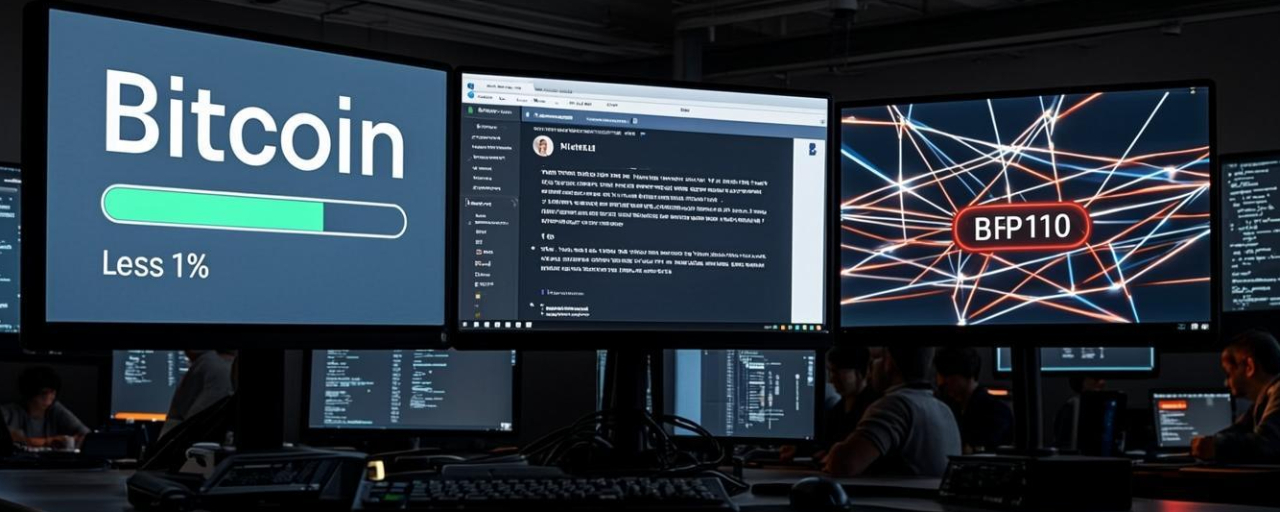
The Bitcoin mining tape is loud on this one. Foundry's call to vote down BIP-110 isn't news, it's confirmation. The numbers are brutal, miner signaling is under 1%. This thing is dead in the water. Saylor can shout his "110 reasons" all he wants, but the tape doesn't lie. The incentives just aren't aligned.
{spot}(BTCUSDT)
Saylor's Lone Battle Against Consensus
Saylor's playing a solo game here. He's talking about blockchain cleanliness while miners are looking at their P&L. That disconnect is written all over the miner signaling data. His whole Twitter campaign feels like he's arguing with a chart that's already moved on. The tape shows the industry made its decision weeks ago.
{spot}(ETHUSDT)
GENIUS Act Gridlock Exposes Regulatory Stalemate
One year in on the GENIUS Act. And we're still waiting for stablecoin rules. This isn't just red tape, it's a sign they don't know what they're doing. The Tether countdown on U.S. platforms? Looks more like a headline than a real threat. The market's already priced in the uncertainty. That's why USDT just keeps ticking along.
{spot}(BNBUSDT)
ETF Maturity vs. Spot Reality
The SEC bumping up IBIT options limits looks like maturation. But the spot tape tells a different story. Coinbase is still heavy on bids, and the Fear & Greed at 28? Retail isn't buying the ETF hype. The institutional flows and spot action are starting to diverge. That's a dangerous gap.
Stablecoin Deposit Flight Risk
ECB warning about stablecoins draining bank deposits... okay, noted. But the timing is what's interesting. With Tether under pressure and USDC already depegged once, the market's testing the limits of this rotation. Traders are quietly positioning for this, even if they're not saying it out loud. It's one of those "known unknowns" that can hit fast.
Uniswap v4 Fees: Centralization Concerns
Hayden Adams pushing protocol fees across multiple chains feels... off. The DEX space is already crowded with better options. This reads more like a revenue grab than a user play. The tape agrees, UNI's price action is dead in the water. The market isn't buying this narrative.
RWA Tokenization Beyond Ethereum
BNB Chain's R TVL hitting $5.2B... sure. But let's not pretend this is about Ethereum losing dominance. This is just yield-hunting in a bear market. The tokenized real asset trend is real, but the infrastructure is still fragile. Smart money's here, but with tight stops. This is positioning, not conviction.
Gas-Free Transfers: Sui's Gamble
Sui's gas-free stablecoin transfers... interesting tech. But the market reaction is the story. The token pumps on the announcement, volume doesn't follow. Classic retail FOMO, chasing the move without looking at the economics. The tape says this is a fade, not a trend.
Cardano's Decentralization Theater
Cardano pumping on more decentralization news... feels like I've seen this movie before. Years of talk, no real change. But this time feels different. The token's actually moving on it. Conviction is medium. I'm not fully convinced though. Seen this pattern. Usually fades.
AI vs. Internet Narrative
"AI is destroying the internet. Math is our only hope." That headline nails the current mood. Traders are desperate for a simple story. But the tape says this is just noise. Bitcoin's got nothing to do with AI. It's just an excuse for rotation.
The Real Story: Miner Signaling
Everyone's focused on Saylor and the GENIUS Act. The real story is the miner signaling. BIP-110's failure shows Bitcoin's governance is working as designed. The market knows this, even if the headlines don't. Conviction is high here. This proposal is dead.
What Matters vs. What's Noise
Upbit parent Dunamu sanctions? Doesn't move the needle. Sui's gas-free transfers? Pump and dump. Uniswap v4 fees? Priced in. The market's ignoring the noise. Focus is on what actually matters: miner signaling, ETF flows, stablecoin regulation. That's where the big players is.
The Next Move
Bitcoin sentiment's turning bullish, but let's not get ahead of ourselves. Tape looks like a bear market rally, not a new bull run. Conviction is low here. Could just be shorts covering. But the institutional flow is starting to look interesting. Still watching how this holds at key levels.
Unless something changes in the next few hours, this looks like more of the same. Miners will reject BIP-110. ETFs will keep diverging from spot. Traders will keep chasing narratives that aren't there. The market is what it is.
#Bitcoin #BIP110 #Mining #Governance #Saylor
BIP-110 Mining Standoff: Bitcoin's Governance Crisis Deepens as Signaling Stays Below 1%
BIP-110 Mining Standoff: Bitcoin's Governance Crisis Deepens
The Bitcoin mining tape is loud on this one. Foundry's call to vote down BIP-110 isn't news, it's confirmation. The numbers are brutal, miner signaling is under 1%. This thing is dead in the water. Saylor can shout his "110 reasons" all he wants, but the tape doesn't lie. The incentives just aren't aligned.
Saylor's Lone Battle Against Consensus
Saylor's playing a solo game here. He's talking about blockchain cleanliness while miners are looking at their P&L. That disconnect is written all over the miner signaling data. His whole Twitter campaign feels like he's arguing with a chart that's already moved on. The tape shows the industry made its decision weeks ago.
GENIUS Act Gridlock Exposes Regulatory Stalemate
One year in on the GENIUS Act. And we're still waiting for stablecoin rules. This isn't just red tape, it's a sign they don't know what they're doing. The Tether countdown on U.S. platforms? Looks more like a headline than a real threat. The market's already priced in the uncertainty. That's why USDT just keeps ticking along.
ETF Maturity vs. Spot Reality
The SEC bumping up IBIT options limits looks like maturation. But the spot tape tells a different story. Coinbase is still heavy on bids, and the Fear & Greed at 28? Retail isn't buying the ETF hype. The institutional flows and spot action are starting to diverge. That's a dangerous gap.
Stablecoin Deposit Flight Risk
ECB warning about stablecoins draining bank deposits... okay, noted. But the timing is what's interesting. With Tether under pressure and USDC already depegged once, the market's testing the limits of this rotation. Traders are quietly positioning for this, even if they're not saying it out loud. It's one of those "known unknowns" that can hit fast.
Uniswap v4 Fees: Centralization Concerns
Hayden Adams pushing protocol fees across multiple chains feels... off. The DEX space is already crowded with better options. This reads more like a revenue grab than a user play. The tape agrees, UNI's price action is dead in the water. The market isn't buying this narrative.
RWA Tokenization Beyond Ethereum
BNB Chain's R TVL hitting $5.2B... sure. But let's not pretend this is about Ethereum losing dominance. This is just yield-hunting in a bear market. The tokenized real asset trend is real, but the infrastructure is still fragile. Smart money's here, but with tight stops. This is positioning, not conviction.
Gas-Free Transfers: Sui's Gamble
Sui's gas-free stablecoin transfers... interesting tech. But the market reaction is the story. The token pumps on the announcement, volume doesn't follow. Classic retail FOMO, chasing the move without looking at the economics. The tape says this is a fade, not a trend.
Cardano's Decentralization Theater
Cardano pumping on more decentralization news... feels like I've seen this movie before. Years of talk, no real change. But this time feels different. The token's actually moving on it. Conviction is medium. I'm not fully convinced though. Seen this pattern. Usually fades.
AI vs. Internet Narrative
"AI is destroying the internet. Math is our only hope." That headline nails the current mood. Traders are desperate for a simple story. But the tape says this is just noise. Bitcoin's got nothing to do with AI. It's just an excuse for rotation.
The Real Story: Miner Signaling
Everyone's focused on Saylor and the GENIUS Act. The real story is the miner signaling. BIP-110's failure shows Bitcoin's governance is working as designed. The market knows this, even if the headlines don't. Conviction is high here. This proposal is dead.
What Matters vs. What's Noise
Upbit parent Dunamu sanctions? Doesn't move the needle. Sui's gas-free transfers? Pump and dump. Uniswap v4 fees? Priced in. The market's ignoring the noise. Focus is on what actually matters: miner signaling, ETF flows, stablecoin regulation. That's where the big players is.
The Next Move
Bitcoin sentiment's turning bullish, but let's not get ahead of ourselves. Tape looks like a bear market rally, not a new bull run. Conviction is low here. Could just be shorts covering. But the institutional flow is starting to look interesting. Still watching how this holds at key levels.
Unless something changes in the next few hours, this looks like more of the same. Miners will reject BIP-110. ETFs will keep diverging from spot. Traders will keep chasing narratives that aren't there. The market is what it is.
#Bitcoin #BIP110 #Mining #Governance #Saylor
126
·
--

Article
Bitcoin ETF Options Expansion Signals Institutional Bet Amid Extreme FearBitcoin ETF Options Expansion: Institutional Bet or Market Maturity?
Tape's dead quiet. BTC just above $64k, ETH stuck at $1.844. Fear & Greed is screaming 25, extreme fear. But the options action is telling a different story. significant call spreads all over the $72k mark by month-end. Right into the Fed meeting. Feels intentional, or just a weird coincidence? Doesn't feel clean.$
{spot}(BTCUSDT)
SEC bumped up IBIT's options limits. Not a headline that moves the market, but this is the real shift. ETFs are moving from a novelty to actual infrastructure. More options capacity means more complex hedges. More complex hedges means more serious capital coming in. More capital... well, that's the bet. Are the smart money guys front-running a Fed pivot, or is this just the market growing up? Probably both.
{spot}(ETHUSDT)
Tokenization is a priority for 84% of financial firms. That number feels high, but not impossible. TradFi has been poking at tokenization for years. $5.2B in RWA TVL on BNB Chain specifically. That's a real number, not noise. Seeing that capital shift out of Ethereum and onto other chains is telling. Cost, speed, regulatory progress, something's pulling it over. ETH dominance is slipping, even if the price doesn't show it yet.
{spot}(BNBUSDT)
Uniswap v4 with fees across multiple chains. Ambitious. Looks like a play to stay relevant outside the Ethereum world. The DEX wars are heating up again. Uniswap trying to stay ahead of the curve. Sui launching gas-free stablecoin transfers at the protocol level. That's not a minor feature; that's a fundamental UX change. If it works, it's a real differentiator. But does it matter for the market? Probably not yet. But it's on the watchlist.
Cardano's pumping as they push for more decentralized dev. The narrative is there, and the price is following. But is this organic, or just the market grasping for any bullish story in a sea of red? Fear & Greed is at 25, yet we're seeing green across the board. Small gains, but gains. Feels like capitulation buying, not real conviction. "I can't take it anymore, I'm buying."
Bitcoin sentiment's turning bullish. Report says it's too early to celebrate. Correct. Sentiment's a lagging indicator, not a leading one. By the time headlines are bullish, the big players's already in. Miners are signaling against BIP-110, with support below 1%. That's a meaningful development. A soft fork that could change blockspace economics, and the miners, who stand to benefit from higher fees, are voting against it. Why? Not sure. Maybe they see something else. Maybe they're just being conservative. Doesn't feel like a bullish signal.
FTX is distributing $900M to creditors. Fifth payment. This is just noise. Market's already priced this in. The estate is just returning old capital. Doesn't create new demand. Over time, sure, it's positive. But today? Nothing. The Kaspersky malware story? Same thing. It's a framework targeting crypto investors. So what? Malware targets valuable systems. Always has. Not a market mover.
French gambling regulator blocked Polymarket. Regulatory friction. Expected. This is what happens as the space matures. Polymarket's a high-profile target, so it makes sense for regulators to take a swing. Does it impact the broader crypto market? No. Not unless it becomes a trend, which it won't.
Clarity Act odds cut to a record low as the Senate drags on. Polymarket's a good sentiment gauge, but it's not the market. It's a single venue. The odds moving reflect the political reality, not the market's expectation. The market's smarter than that. Mostly.
ECB warns stablecoins could drain bank deposits. Here we go. The traditional guard sounding the alarm. This is the real story, not the options or tokenization. Stablecoins, if they scale, could genuinely disrupt the traditional banking system. The ECB's not wrong. But they're also fighting innovation. Their warning is a shot across the bow. It leads to tighter regulation, which is good for the industry long-term. But creates uncertainty short-term. That uncertainty is what's keeping the Fear & Greed index at 25.
So what do we have? A market that's terrified, but with options desks pricing in a rally. A market that sees tokenization as the future, but with regulators warning about stablecoins. A market celebrating small gains, but with miners signaling against a potentially bullish development. Contradictions everywhere.
The institutional flow is there. The options expansion proves it. The tokenization numbers prove it. But the regulatory headwinds are real. Sentiment is still fearful. This isn't a bull market. It's a market in transition. The institutions are positioning, but the public is still scared. The big players is betting on maturity, while the market is still acting like a teenager.
The Fed meeting is the wildcard. The options spreads expire then. $72k is a big number. Is it a target, or a trap? The big players is making its bet. The rest of us are just watching. Still waiting for the real conviction to show up. Until then, it's just noise.
#BitcoinETF #Institutional #Options #MarketMaturity #BTC
Bitcoin ETF Options Expansion Signals Institutional Bet Amid Extreme Fear
Bitcoin ETF Options Expansion: Institutional Bet or Market Maturity?
Tape's dead quiet. BTC just above $64k, ETH stuck at $1.844. Fear & Greed is screaming 25, extreme fear. But the options action is telling a different story. significant call spreads all over the $72k mark by month-end. Right into the Fed meeting. Feels intentional, or just a weird coincidence? Doesn't feel clean.$
SEC bumped up IBIT's options limits. Not a headline that moves the market, but this is the real shift. ETFs are moving from a novelty to actual infrastructure. More options capacity means more complex hedges. More complex hedges means more serious capital coming in. More capital... well, that's the bet. Are the smart money guys front-running a Fed pivot, or is this just the market growing up? Probably both.
Tokenization is a priority for 84% of financial firms. That number feels high, but not impossible. TradFi has been poking at tokenization for years. $5.2B in RWA TVL on BNB Chain specifically. That's a real number, not noise. Seeing that capital shift out of Ethereum and onto other chains is telling. Cost, speed, regulatory progress, something's pulling it over. ETH dominance is slipping, even if the price doesn't show it yet.
Uniswap v4 with fees across multiple chains. Ambitious. Looks like a play to stay relevant outside the Ethereum world. The DEX wars are heating up again. Uniswap trying to stay ahead of the curve. Sui launching gas-free stablecoin transfers at the protocol level. That's not a minor feature; that's a fundamental UX change. If it works, it's a real differentiator. But does it matter for the market? Probably not yet. But it's on the watchlist.
Cardano's pumping as they push for more decentralized dev. The narrative is there, and the price is following. But is this organic, or just the market grasping for any bullish story in a sea of red? Fear & Greed is at 25, yet we're seeing green across the board. Small gains, but gains. Feels like capitulation buying, not real conviction. "I can't take it anymore, I'm buying."
Bitcoin sentiment's turning bullish. Report says it's too early to celebrate. Correct. Sentiment's a lagging indicator, not a leading one. By the time headlines are bullish, the big players's already in. Miners are signaling against BIP-110, with support below 1%. That's a meaningful development. A soft fork that could change blockspace economics, and the miners, who stand to benefit from higher fees, are voting against it. Why? Not sure. Maybe they see something else. Maybe they're just being conservative. Doesn't feel like a bullish signal.
FTX is distributing $900M to creditors. Fifth payment. This is just noise. Market's already priced this in. The estate is just returning old capital. Doesn't create new demand. Over time, sure, it's positive. But today? Nothing. The Kaspersky malware story? Same thing. It's a framework targeting crypto investors. So what? Malware targets valuable systems. Always has. Not a market mover.
French gambling regulator blocked Polymarket. Regulatory friction. Expected. This is what happens as the space matures. Polymarket's a high-profile target, so it makes sense for regulators to take a swing. Does it impact the broader crypto market? No. Not unless it becomes a trend, which it won't.
Clarity Act odds cut to a record low as the Senate drags on. Polymarket's a good sentiment gauge, but it's not the market. It's a single venue. The odds moving reflect the political reality, not the market's expectation. The market's smarter than that. Mostly.
ECB warns stablecoins could drain bank deposits. Here we go. The traditional guard sounding the alarm. This is the real story, not the options or tokenization. Stablecoins, if they scale, could genuinely disrupt the traditional banking system. The ECB's not wrong. But they're also fighting innovation. Their warning is a shot across the bow. It leads to tighter regulation, which is good for the industry long-term. But creates uncertainty short-term. That uncertainty is what's keeping the Fear & Greed index at 25.
So what do we have? A market that's terrified, but with options desks pricing in a rally. A market that sees tokenization as the future, but with regulators warning about stablecoins. A market celebrating small gains, but with miners signaling against a potentially bullish development. Contradictions everywhere.
The institutional flow is there. The options expansion proves it. The tokenization numbers prove it. But the regulatory headwinds are real. Sentiment is still fearful. This isn't a bull market. It's a market in transition. The institutions are positioning, but the public is still scared. The big players is betting on maturity, while the market is still acting like a teenager.
The Fed meeting is the wildcard. The options spreads expire then. $72k is a big number. Is it a target, or a trap? The big players is making its bet. The rest of us are just watching. Still waiting for the real conviction to show up. Until then, it's just noise.
#BitcoinETF #Institutional #Options #MarketMaturity #BTC
100
·
--
The tape is quiet. BTC at $64k, ETH at $1.844, Fear & Greed at 25. Yet massive call spreads target $72,000 by month's end. SEC approved higher IBIT options limits - moving from novelty to infrastructure.
{spot}(MSFTBUSDT)
Tokenization now strategic priority for 84% of financial firms, with $5.2B in RWA TVL on BNB Chain. The institutional flow is real, but sentiment remains fearful. This isn't a bull market - it's a market in transition. Institutions are positioning, public is scared.
{spot}(SPCXBUSDT)
Smart money betting on maturity while market acts like a teenager. The Fed meeting is the wildcard. Options spreads expire then. $72k - target or trap? Watching for conviction. #BitcoinETF #Institutional #Options #MarketMaturity #BTC
The tape is quiet. BTC at $64k, ETH at $1.844, Fear & Greed at 25. Yet massive call spreads target $72,000 by month's end. SEC approved higher IBIT options limits - moving from novelty to infrastructure.
Tokenization now strategic priority for 84% of financial firms, with $5.2B in RWA TVL on BNB Chain. The institutional flow is real, but sentiment remains fearful. This isn't a bull market - it's a market in transition. Institutions are positioning, public is scared.
Smart money betting on maturity while market acts like a teenager. The Fed meeting is the wildcard. Options spreads expire then. $72k - target or trap? Watching for conviction. #BitcoinETF #Institutional #Options #MarketMaturity #BTC
1
189
·
--
Bitcoin is sagging under $62.5K, and the tape doesn't lie. The Iran strikes are hitting risk assets broadly, but this feels different. The selling isn't indiscriminate. $63,000 is being tested with real conviction. The order flow shows size hitting the bid, but it's defensive, not aggressive.
{spot}(BTCUSDT)
Not panic selling, but rather a slow bleed. The market's trying to find footing, but every bounce gets sold into. Looks like institutional desks are rotating out, not capitulating. The fear index at 27 confirms it - this is fear, not panic. A slow bleed, not a crash. While spot markets bleed, the ETF narrative remains stubbornly intact. T. Rowe Price just debuted a new active crypto ETF, and the flows are there. Smart money is using this dip to add exposure.
{spot}(BNBUSDT)
The Citadel Securities $400M investment in Crypto.com at a $20B valuation feels like a strategic bet, not a speculative punt. These aren't retail numbers. This is institutional capital entering the ecosystem. The ETF window is open, and they're walking through it.
{spot}(ETHUSDT)
The flows into spot Bitcoin ETFs remain positive even as the price falls. That's not typical. Usually, ETF flows follow price. This time, they're leading it. Accumulation looks real. #Bitcoin #ETF #Geopolitics #CryptoMarkets #Institutional
Bitcoin is sagging under $62.5K, and the tape doesn't lie. The Iran strikes are hitting risk assets broadly, but this feels different. The selling isn't indiscriminate. $63,000 is being tested with real conviction. The order flow shows size hitting the bid, but it's defensive, not aggressive.
Not panic selling, but rather a slow bleed. The market's trying to find footing, but every bounce gets sold into. Looks like institutional desks are rotating out, not capitulating. The fear index at 27 confirms it - this is fear, not panic. A slow bleed, not a crash. While spot markets bleed, the ETF narrative remains stubbornly intact. T. Rowe Price just debuted a new active crypto ETF, and the flows are there. Smart money is using this dip to add exposure.
The Citadel Securities $400M investment in Crypto.com at a $20B valuation feels like a strategic bet, not a speculative punt. These aren't retail numbers. This is institutional capital entering the ecosystem. The ETF window is open, and they're walking through it.
The flows into spot Bitcoin ETFs remain positive even as the price falls. That's not typical. Usually, ETF flows follow price. This time, they're leading it. Accumulation looks real. #Bitcoin #ETF #Geopolitics #CryptoMarkets #Institutional
89
·
--
Article
Bitcoin Tests $63K as Geopolitical Headwinds Clash with ETF AccumulationBitcoin Under Pressure: Geopolitical Headwinds Clash with Onchain Accumulation
Geopolitical Storm Clouds Gather
Bitcoin is under some real pressure, dipping under that $62.5K handle. The tape doesn't lie, and right now it's red. The Iran stuff is hitting everything, but this feels different. The selling isn't just panic. It's a slow bleed. $63,000 is getting tested with some serious sell orders, hitting the bid. But it's defensive, not aggressive. Looks like institutions are rotating out, not dumping. The VIX at 27 confirms it – this is fear, not panic. A slow bleed, not a crash. Still, the market can't find a floor.
{spot}(BTCUSDT)
ETF Flows Tell a Different Story
But the ETF side of the story is holding up. T. Rowe Price just dropped a new active crypto ETF, and the flows are solid. Smart money is using this dip to add. That Citadel Securities putting $400M into Crypto.com at a $20B valuation feels like a strategic move, not a gamble. This isn't retail money. This is institutional capital walking through the door. Spot ETF flows are still positive even as the price drops. That's weird. Usually, ETFs follow price. This time, they're leading it. The accumulation feels real.
{spot}(ETHUSDT)
The Onchain Contradiction
The onchain data is a mess, though. Long-term holders are selling at a loss – that's bearish. But we're also seeing fresh addresses accumulate. Who's buying? The retail fear is real, but someone's on the other side. Exchange order book is thin, but settlement volume is holding up. Miners are voting on BIP-110, a soft fork for transaction fees. You don't do that in a dying market. Network activity is robust even as the price grinds lower. Feels like distribution to weak hands, not a collapse. The onchain data is conflicted, which means the market is too.
{spot}(BNBUSDT)
Regulatory Crosscurrents
The SEC-CFTC commodity thing is getting its first real political test with the CLARITY Act. Right now, it's just noise. The market doesn't care until it does, then it cares a lot. The DeFi safe harbors talk is interesting but all theoretical. Robinhood trying to onboard 10 million casual users to DeFi feels like a stretch. Their users want simple, not complex. Japan's SBI Group building Asia's digital asset empire is more real. Infrastructure, not just talk. The regulatory picture is mixed – some noise, some substance.
The Mining Sector Signal
Foundry is pushing miners to vote on BIP-110. That's a big deal. Getting miners to agree on anything is tough. The fact they're pushing this suggests they see a need for change. Transaction fees are becoming a bigger part of miner revenue with the halvings. This could be a response to that. But it's also a signal the mining ecosystem is still active and engaged. They're not just giving up. They're planning ahead. This is a sector-level signal the long-term story is still here, even if the price is weak.
The Bottom Line
We're at an inflection point. Geopolitical risk is creating real selling pressure, but ETF flows and onchain data suggest underlying strength. The ETF narrative is holding, and big players is buying the dip. Long-term holders selling at a loss is a concern, but fresh accumulation tells a different story. Regulatory stuff is uncertain, but real infrastructure is being built. The mining sector is engaged. This feels like a rotation, not a reversal. The tape is heavy, but the conviction behind the bids is real. Still watching how this reacts here. The $63,000 level is key. If that breaks, things get interesting fast.
#Bitcoin #ETF #Geopolitics #CryptoMarkets #Institutional
Bitcoin Tests $63K as Geopolitical Headwinds Clash with ETF Accumulation
Bitcoin Under Pressure: Geopolitical Headwinds Clash with Onchain Accumulation
Geopolitical Storm Clouds Gather
Bitcoin is under some real pressure, dipping under that $62.5K handle. The tape doesn't lie, and right now it's red. The Iran stuff is hitting everything, but this feels different. The selling isn't just panic. It's a slow bleed. $63,000 is getting tested with some serious sell orders, hitting the bid. But it's defensive, not aggressive. Looks like institutions are rotating out, not dumping. The VIX at 27 confirms it – this is fear, not panic. A slow bleed, not a crash. Still, the market can't find a floor.
ETF Flows Tell a Different Story
But the ETF side of the story is holding up. T. Rowe Price just dropped a new active crypto ETF, and the flows are solid. Smart money is using this dip to add. That Citadel Securities putting $400M into Crypto.com at a $20B valuation feels like a strategic move, not a gamble. This isn't retail money. This is institutional capital walking through the door. Spot ETF flows are still positive even as the price drops. That's weird. Usually, ETFs follow price. This time, they're leading it. The accumulation feels real.
The Onchain Contradiction
The onchain data is a mess, though. Long-term holders are selling at a loss – that's bearish. But we're also seeing fresh addresses accumulate. Who's buying? The retail fear is real, but someone's on the other side. Exchange order book is thin, but settlement volume is holding up. Miners are voting on BIP-110, a soft fork for transaction fees. You don't do that in a dying market. Network activity is robust even as the price grinds lower. Feels like distribution to weak hands, not a collapse. The onchain data is conflicted, which means the market is too.
Regulatory Crosscurrents
The SEC-CFTC commodity thing is getting its first real political test with the CLARITY Act. Right now, it's just noise. The market doesn't care until it does, then it cares a lot. The DeFi safe harbors talk is interesting but all theoretical. Robinhood trying to onboard 10 million casual users to DeFi feels like a stretch. Their users want simple, not complex. Japan's SBI Group building Asia's digital asset empire is more real. Infrastructure, not just talk. The regulatory picture is mixed – some noise, some substance.
The Mining Sector Signal
Foundry is pushing miners to vote on BIP-110. That's a big deal. Getting miners to agree on anything is tough. The fact they're pushing this suggests they see a need for change. Transaction fees are becoming a bigger part of miner revenue with the halvings. This could be a response to that. But it's also a signal the mining ecosystem is still active and engaged. They're not just giving up. They're planning ahead. This is a sector-level signal the long-term story is still here, even if the price is weak.
The Bottom Line
We're at an inflection point. Geopolitical risk is creating real selling pressure, but ETF flows and onchain data suggest underlying strength. The ETF narrative is holding, and big players is buying the dip. Long-term holders selling at a loss is a concern, but fresh accumulation tells a different story. Regulatory stuff is uncertain, but real infrastructure is being built. The mining sector is engaged. This feels like a rotation, not a reversal. The tape is heavy, but the conviction behind the bids is real. Still watching how this reacts here. The $63,000 level is key. If that breaks, things get interesting fast.
#Bitcoin #ETF #Geopolitics #CryptoMarkets #Institutional
114
·
--
Bullish
Crypto market surges on CPI relief with Bitcoin up 2.16% and Ethereum gaining 3.84%. However, the Fear & Greed index at 25 (Extreme Fear) indicates underlying anxiety rather than genuine bullish conviction. The rally feels more like a short squeeze than a fundamental market reset.
{spot}(ETHUSDT)
BlackRock presents a contradictory picture with their crypto assets falling 39% despite $15 billion in net inflows, suggesting a disconnect between capital and performance. Japan's regulatory shift reclassifying crypto as a financial asset and paving way for tax cuts may provide long-term benefits but likely won't drive immediate significant inflows. The Robinhood Chain's launchpad giving away all its revenue signals unsustainable memecoin speculation, while retail brokers like eToro eyeing on-chain derivatives indicate where the next wave of retail money might flow.
{spot}(BTCUSDT)
XRP's utility debate continues with stablecoin migration plans, though the SEC lawsuit remains a cloud over the asset. CleanSpark's $6.6 billion data center lease shows Bitcoin miners pivoting to AI and compute as mining margins get squeezed.
{spot}(SOLUSDT)
Overall, this appears to be a temporary relief rally in a downtrend, with smart money not yet convinced. The market remains volatile with high uncertainty. #CryptoMarket #CPI #Bitcoin #Ethereum #FearGreed
Crypto market surges on CPI relief with Bitcoin up 2.16% and Ethereum gaining 3.84%. However, the Fear & Greed index at 25 (Extreme Fear) indicates underlying anxiety rather than genuine bullish conviction. The rally feels more like a short squeeze than a fundamental market reset.
BlackRock presents a contradictory picture with their crypto assets falling 39% despite $15 billion in net inflows, suggesting a disconnect between capital and performance. Japan's regulatory shift reclassifying crypto as a financial asset and paving way for tax cuts may provide long-term benefits but likely won't drive immediate significant inflows. The Robinhood Chain's launchpad giving away all its revenue signals unsustainable memecoin speculation, while retail brokers like eToro eyeing on-chain derivatives indicate where the next wave of retail money might flow.
XRP's utility debate continues with stablecoin migration plans, though the SEC lawsuit remains a cloud over the asset. CleanSpark's $6.6 billion data center lease shows Bitcoin miners pivoting to AI and compute as mining margins get squeezed.
Overall, this appears to be a temporary relief rally in a downtrend, with smart money not yet convinced. The market remains volatile with high uncertainty. #CryptoMarket #CPI #Bitcoin #Ethereum #FearGreed
1
191
·
--
Article
Crypto Market Rips on CPI: Temporary Relief or Real Shift?The CPI Bounce: More Relief Than Revolution
Tape's green today. Bitcoin's up 2.16%, Ethereum 3.84%. The story's simple: cooler CPI means the Fed might pause. But is this real or just another headfake? Fear & Greed is still at 25, Extreme Fear. That tells you the real sentiment. This feels more like a short squeeze than a fundamental shift. Volume isn't screaming conviction. It's a collective sigh of relief after months of getting squeezed. Seen this play before. Usually fades.
{spot}(BTCUSDT)
BlackRock's Contradiction: Inflows vs. Performance
Here's the weird part. BlackRock's crypto assets are down 39% even with $15 billion in net inflows. How does that even happen? Means the money flowing in isn't making performance. Either what they're holding is underperforming, or inflows are getting offset by outflows elsewhere. That disconnect is a red flag. Smart money isn't necessarily making money here. Just moving it. Question is, is this a temporary mismatch or a structural problem. Probably the latter.
{spot}(ETHUSDT)
Japan's Regulatory Shift: Real Impact or Paper Tiger?
Japan reclassifies crypto as a financial asset, paving the way for tax cuts. Sounds bullish, right? Maybe. But regulatory changes rarely move the needle right away. The market's pricing in future potential, not current reality. The tax cuts might come next year, or they might not. Even if they do, will that drive real inflows? Doubtful. Feels like a narrative being built to justify the move, not the reason for it. Real money hasn't moved. Just headlines.
{spot}(BNBUSDT)
The Robinhood Effect: Memecoin Boom and Bust
Robinhood Chain's launchpad just gave away all its revenue. That's not sustainable. That's a panic move. When platforms start giving away revenue, it means they're not making money from their core business. The memecoin thing was never about utility. It was about speculation. And when the speculation fades, the platforms built on top of it collapse. First crack in the retail narrative. Late entries are starting to show up. Always do.
On-Chain Derivatives: Retail's Next Play?
eToro's extended stake shows retail brokers are still eyeing on-chain derivatives. They see the writing on the wall. Spot markets are getting crowded, and the real alpha is in derivatives. But retail in derivatives is a different beast. More leveraged, more volatile, more likely to blow up. The brokers know this. They're positioning for the next move, whatever that looks like. It's a long game, not a trade. Still, watching how they structure these products will tell you where the next wave of retail money is going.
The Utility Debate: XRP's Second Act?
XRP utility debate is back as Ripple's stablecoin migration plans draw attention. This is a tired story. XRP has been promising utility for years. The market has priced in every potential use case and then some. The stablecoin angle is new, but is it enough? Probably not. The SEC lawsuit is still hanging over this thing. Until that's resolved, XRP is just another crypto with a good story and no follow-through. The recent 3.11% move looks more like rotation than conviction.
AI and Compute: The Next Mining Frontier?
CleanSpark signs a $6.6 billion data center lease as a Bitcoin miner pivots to compute. This is a real shift. Miners aren't just mining Bitcoin anymore. They're pivoting to AI and high-performance computing. Makes sense. Bitcoin mining margins are getting squeezed. Compute is the new frontier. But does this change the Bitcoin thesis? Not really. Just means miners are finding other revenue streams. The Bitcoin network itself is unchanged. Still, watching how much compute is being diverted from mining to other tasks will be an interesting metric.
The Bottom Line: Relief Rally, Not Reversal
The CPI bounce is real. But it's not a reversal. The market is still in a downtrend. Fear & Greed at 25 tells you that. Institutional flows are mixed. BlackRock's performance vs. inflows is a contradiction. Regulatory headlines are just noise. Retail activity is chasing, not leading. This feels like a temporary relief rally, not the start of a new bull market. big players isn't convinced. Neither am I. Still watching how this reacts here.
#CryptoMarket #CPI #Bitcoin #Ethereum #FearGreed
Crypto Market Rips on CPI: Temporary Relief or Real Shift?
The CPI Bounce: More Relief Than Revolution
Tape's green today. Bitcoin's up 2.16%, Ethereum 3.84%. The story's simple: cooler CPI means the Fed might pause. But is this real or just another headfake? Fear & Greed is still at 25, Extreme Fear. That tells you the real sentiment. This feels more like a short squeeze than a fundamental shift. Volume isn't screaming conviction. It's a collective sigh of relief after months of getting squeezed. Seen this play before. Usually fades.
BlackRock's Contradiction: Inflows vs. Performance
Here's the weird part. BlackRock's crypto assets are down 39% even with $15 billion in net inflows. How does that even happen? Means the money flowing in isn't making performance. Either what they're holding is underperforming, or inflows are getting offset by outflows elsewhere. That disconnect is a red flag. Smart money isn't necessarily making money here. Just moving it. Question is, is this a temporary mismatch or a structural problem. Probably the latter.
Japan's Regulatory Shift: Real Impact or Paper Tiger?
Japan reclassifies crypto as a financial asset, paving the way for tax cuts. Sounds bullish, right? Maybe. But regulatory changes rarely move the needle right away. The market's pricing in future potential, not current reality. The tax cuts might come next year, or they might not. Even if they do, will that drive real inflows? Doubtful. Feels like a narrative being built to justify the move, not the reason for it. Real money hasn't moved. Just headlines.
The Robinhood Effect: Memecoin Boom and Bust
Robinhood Chain's launchpad just gave away all its revenue. That's not sustainable. That's a panic move. When platforms start giving away revenue, it means they're not making money from their core business. The memecoin thing was never about utility. It was about speculation. And when the speculation fades, the platforms built on top of it collapse. First crack in the retail narrative. Late entries are starting to show up. Always do.
On-Chain Derivatives: Retail's Next Play?
eToro's extended stake shows retail brokers are still eyeing on-chain derivatives. They see the writing on the wall. Spot markets are getting crowded, and the real alpha is in derivatives. But retail in derivatives is a different beast. More leveraged, more volatile, more likely to blow up. The brokers know this. They're positioning for the next move, whatever that looks like. It's a long game, not a trade. Still, watching how they structure these products will tell you where the next wave of retail money is going.
The Utility Debate: XRP's Second Act?
XRP utility debate is back as Ripple's stablecoin migration plans draw attention. This is a tired story. XRP has been promising utility for years. The market has priced in every potential use case and then some. The stablecoin angle is new, but is it enough? Probably not. The SEC lawsuit is still hanging over this thing. Until that's resolved, XRP is just another crypto with a good story and no follow-through. The recent 3.11% move looks more like rotation than conviction.
AI and Compute: The Next Mining Frontier?
CleanSpark signs a $6.6 billion data center lease as a Bitcoin miner pivots to compute. This is a real shift. Miners aren't just mining Bitcoin anymore. They're pivoting to AI and high-performance computing. Makes sense. Bitcoin mining margins are getting squeezed. Compute is the new frontier. But does this change the Bitcoin thesis? Not really. Just means miners are finding other revenue streams. The Bitcoin network itself is unchanged. Still, watching how much compute is being diverted from mining to other tasks will be an interesting metric.
The Bottom Line: Relief Rally, Not Reversal
The CPI bounce is real. But it's not a reversal. The market is still in a downtrend. Fear & Greed at 25 tells you that. Institutional flows are mixed. BlackRock's performance vs. inflows is a contradiction. Regulatory headlines are just noise. Retail activity is chasing, not leading. This feels like a temporary relief rally, not the start of a new bull market. big players isn't convinced. Neither am I. Still watching how this reacts here.
#CryptoMarket #CPI #Bitcoin #Ethereum #FearGreed
139
Log in to explore more content
Join global crypto users on Binance Square
⚡️ Get latest and useful information about crypto.
💬 Trusted by the world’s largest crypto exchange.
👍 Discover real insights from verified creators.
Email / Phone number
Trending Topics
EvolveAtBinanceBlockchainWeek
1.7M views
17,283 Discussing
Binance Blockchain Week is officially underway! 🌍
On November 28–29, whether you’re in Bangkok or joining from afar, tune in to the livestreams and join the conversation on Binance Square!
Here’s what’s in store 👇
📺 Watch the main stage live
Tune in throughout both days as industry speakers share their perspectives on this year’s theme, “Evolve” From technological innovation to real-world applications, explore what’s next for crypto.
⚔️ Watch two trading competitions
The Aster Open Qualifier and the Binance Trading Master Tournament will both be streamed live. Tune in to follow the traders in action.
🏆 Watch The Blockchain 100 Awards Ceremony
The Blockchain 100 list was selected by the community. Join us in celebrating the creators and the ideas they share!
💬 Join the community conversation
Use #EvolveAtBinanceBlockchainWeek in a post with a photo to share what you’re looking forward to, your views on the industry, or your favorite moments from the event.
The event page is now live! Subscribe to all livestreams with one click so you don’t miss a moment 👏
Binance Blockchain Week
·407 Likes
·456.8k views
ColdcardFlawLeadsToTheftOfAtLeast1789BTC
28,261 views
310 Discussing
VitalikWantsWalletChipDesignsOpened
41,252 views
466 Discussing