
Crypto Web3 Today
10k Posts
Crypto Web3 Today
 Square Verified+
Report
Block User
I am interested in digital currencies and a professional trader
67 Following
143.4K+ Followers
115.2K+ Liked
Posts
All
Quotes
Videos
·
--
Bearish
🚨 #BREAKING:
🇺🇸 Personal Consumption Expenditures (PCE) price index for the United States has been officially released.
Forecast: 3.2%
Actual: 3.3%
This is not good news for the markets...
$BTC
{spot}(BTCUSDT)
$NVDA
{future}(NVDAUSDT)
$XRP
{spot}(XRPUSDT)
🚨 #BREAKING:
🇺🇸 Personal Consumption Expenditures (PCE) price index for the United States has been officially released.
Forecast: 3.2%
Actual: 3.3%
This is not good news for the markets...
$BTC
$NVDA
$XRP
🇺🇸 Personal Consumption Expenditures (PCE) price index for the United States has been officially released.
Forecast: 3.2%
Actual: 3.3%
This is not good news for the markets...
$BTC
$NVDA
$XRP
2
1k
🚨 Over $1.1 billion in stolen cryptocurrency: U.S. authorities move to seize funds following a breach at Binance!
The case centers on a cryptocurrency theft from the Binance platform. According to U.S. authorities, the stolen funds were laundered and converted into the stablecoin USDC.
📌 The U.S. Department of Justice has filed a civil lawsuit seeking the forfeiture of more than $1.1 billion in USDC linked to the theft.
📌 These funds were previously subject to a freeze order requested by the U.S. government.
📌 The investigation involved the FBI, the U.S. Secret Service, and the IRS, with assistance from the company Circle.
Notably, U.S. authorities are pursuing these funds even after they were laundered and converted into other forms of cryptocurrency.
$BTC
{spot}(BTCUSDT)
$BNB
{spot}(BNBUSDT)
$USDC
{spot}(USDCUSDT)
🚨 Over $1.1 billion in stolen cryptocurrency: U.S. authorities move to seize funds following a breach at Binance!
The case centers on a cryptocurrency theft from the Binance platform. According to U.S. authorities, the stolen funds were laundered and converted into the stablecoin USDC.
📌 The U.S. Department of Justice has filed a civil lawsuit seeking the forfeiture of more than $1.1 billion in USDC linked to the theft.
📌 These funds were previously subject to a freeze order requested by the U.S. government.
📌 The investigation involved the FBI, the U.S. Secret Service, and the IRS, with assistance from the company Circle.
Notably, U.S. authorities are pursuing these funds even after they were laundered and converted into other forms of cryptocurrency.
$BTC
$BNB
$USDC

2
175
🚨 Important Reminder for U.S. Market Traders 🇺🇸📊
Today at 8:30 AM New York time (EST), the Federal Reserve’s preferred inflation gauge (PCE) and economic growth (GDP) data will be released. This is the final major inflation reading before the Fed’s meeting in December!
📌 Expected Figures:
• Inflation (PCE): Previous 3.6% | Forecast 3.8%
• Economic Growth (GDP): Previous 3.4% | Forecast 3.4%
🧭 How might the markets react upon release?
🟢 Lower PCE + Higher GDP: A strong bullish surge for stocks and gold, with a decline in the dollar.
🔴 Higher PCE + Lower GDP: Sharp selling pressure and concerns regarding potential Fed tightening.
🟡 Both higher or both lower: Intense volatility with erratic, two-way price swings!
⚠️ Trader’s Tip: Today is the last full trading session before the Thanksgiving holiday tomorrow (Thursday, November 26). The data will be released ahead of the official market open at 9:30 AM New York time. Avoid impulsive entries the moment the news drops; wait for the market to stabilize following the official opening! 🛡️📉📈
Do you expect a positive surprise that eases the Fed’s concerns, or will the numbers fuel volatility ahead of the holiday? 👀
#USMarket
$BTC
{spot}(BTCUSDT)
$ETH
{spot}(ETHUSDT)
$NVDA
{future}(NVDAUSDT)
🚨 Important Reminder for U.S. Market Traders 🇺🇸📊
Today at 8:30 AM New York time (EST), the Federal Reserve’s preferred inflation gauge (PCE) and economic growth (GDP) data will be released. This is the final major inflation reading before the Fed’s meeting in December!
📌 Expected Figures:
• Inflation (PCE): Previous 3.6% | Forecast 3.8%
• Economic Growth (GDP): Previous 3.4% | Forecast 3.4%
🧭 How might the markets react upon release?
🟢 Lower PCE + Higher GDP: A strong bullish surge for stocks and gold, with a decline in the dollar.
🔴 Higher PCE + Lower GDP: Sharp selling pressure and concerns regarding potential Fed tightening.
🟡 Both higher or both lower: Intense volatility with erratic, two-way price swings!
⚠️ Trader’s Tip: Today is the last full trading session before the Thanksgiving holiday tomorrow (Thursday, November 26). The data will be released ahead of the official market open at 9:30 AM New York time. Avoid impulsive entries the moment the news drops; wait for the market to stabilize following the official opening! 🛡️📉📈
Do you expect a positive surprise that eases the Fed’s concerns, or will the numbers fuel volatility ahead of the holiday? 👀
#USMarket
$BTC
$ETH
$NVDA
2
3
2.6k
·
--
Bearish
🚨 #BREAKING :
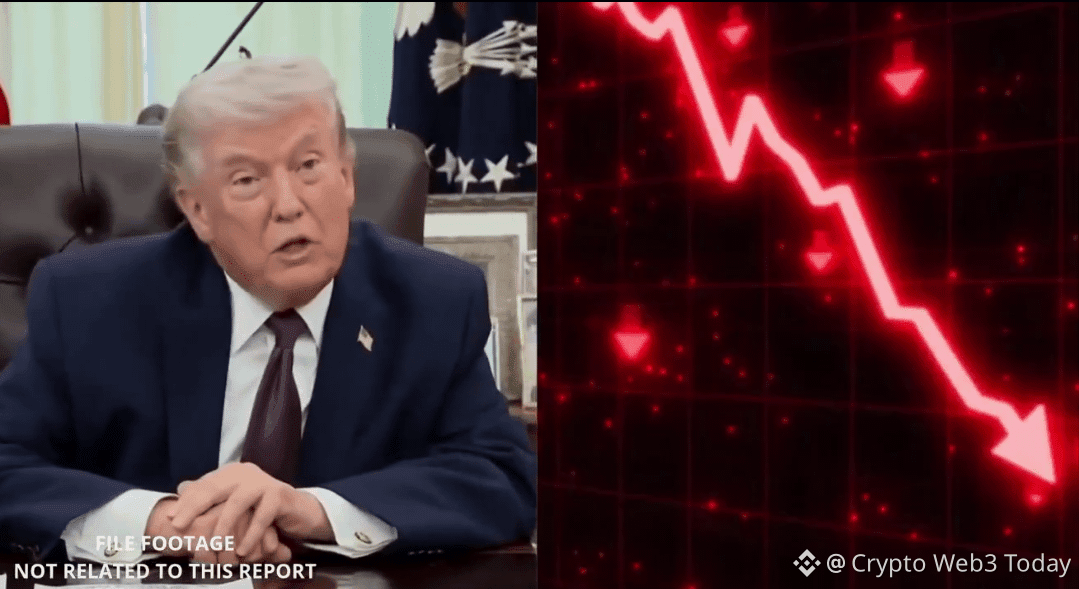
🇺🇸 The United States is expected to announce new tariffs on Europe and China today.
Previous tariffs caused significant damage to the markets, with the Nasdaq index already falling by 2.5%.
This is not good news for the markets...
$TRUMP
{spot}(TRUMPUSDT)
$BTC
{spot}(BTCUSDT)
$ETH
{spot}(ETHUSDT)
🚨 #BREAKING :
🇺🇸 The United States is expected to announce new tariffs on Europe and China today.
Previous tariffs caused significant damage to the markets, with the Nasdaq index already falling by 2.5%.
This is not good news for the markets...
$TRUMP
$BTC
$ETH
🇺🇸 The United States is expected to announce new tariffs on Europe and China today.
Previous tariffs caused significant damage to the markets, with the Nasdaq index already falling by 2.5%.
This is not good news for the markets...
$TRUMP
$BTC
$ETH
3
636
Verified
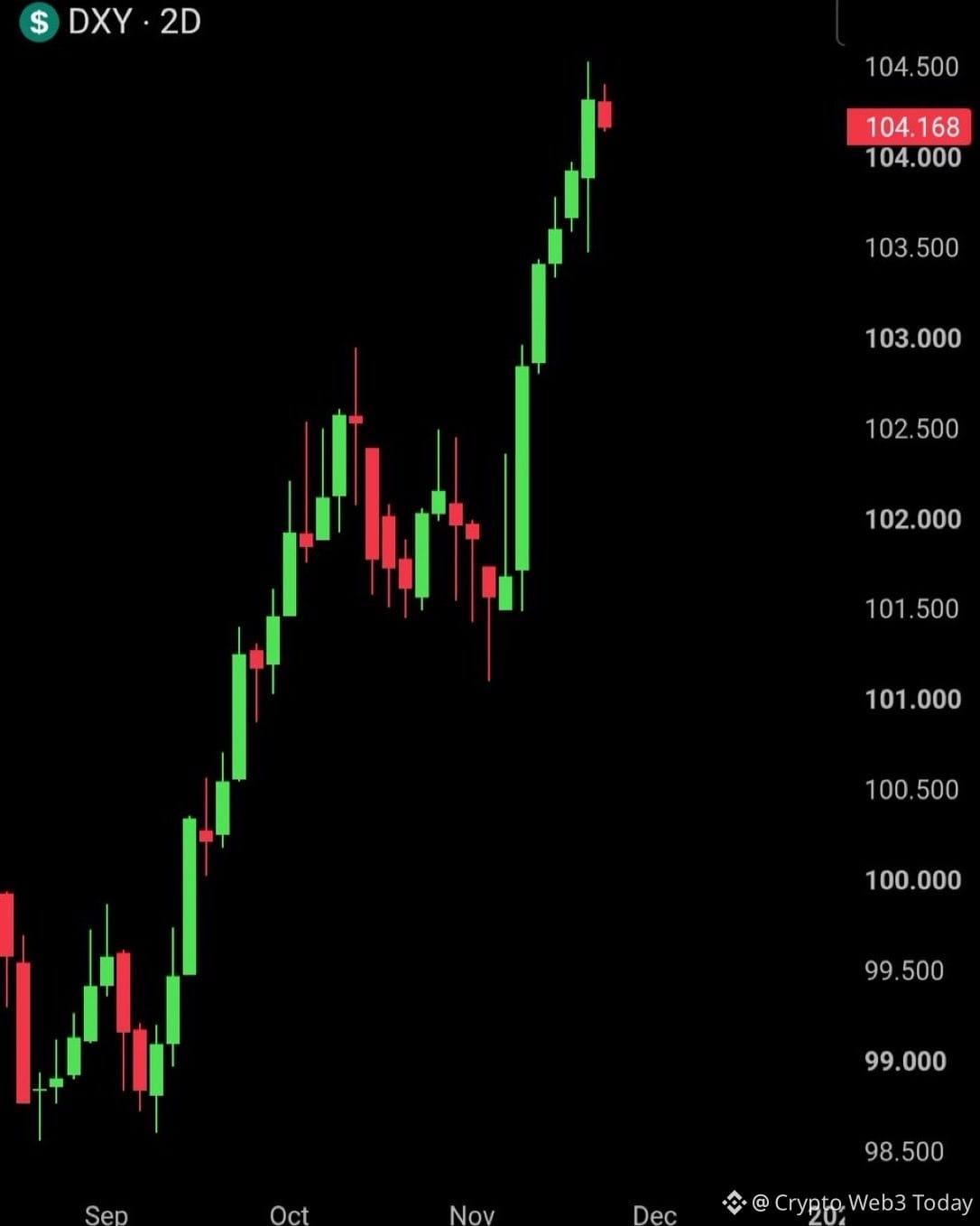
🚨 #Breaking: The U.S. Dollar Index (DXY) has reached 104.53, its highest level in 20 months.
When stock markets collapsed, investors turned to the dollar in search of safety.
Now, a recovery in stocks is driving further capital inflows into the United States—a trend also supported by expectations that the Federal Reserve will raise interest rates in December.
$USDC
{spot}(USDCUSDT)
$TRX
{spot}(TRXUSDT)
$NVDAB
{spot}(NVDABUSDT)
🚨 #Breaking: The U.S. Dollar Index (DXY) has reached 104.53, its highest level in 20 months.
When stock markets collapsed, investors turned to the dollar in search of safety.
Now, a recovery in stocks is driving further capital inflows into the United States—a trend also supported by expectations that the Federal Reserve will raise interest rates in December.
$USDC
$TRX
$NVDAB
When stock markets collapsed, investors turned to the dollar in search of safety.
Now, a recovery in stocks is driving further capital inflows into the United States—a trend also supported by expectations that the Federal Reserve will raise interest rates in December.
$USDC
$TRX
$NVDAB
3
626
·
--
Bullish
Cathie Wood (manager of the ARK fund) increased her stake in $NVDA near the $230 peak, then succumbed to panic and sold at the $125 bottom. Today, the stock has surged past $170—a 31% gain in a single session! 🤦🏻♂️📉📈
A free lesson from Wall Street for every trader:
1️⃣ Emotions and panic-inducing news can destroy a portfolio, even if you manage billions of dollars.
2️⃣ Fear driven by breaking headlines often leads you to sell at the worst possible moment, while "smart money" institutions buy into your fear! 🛡️📊
How many times have you sold a stock at a loss out of fear, only to watch it skyrocket right before your eyes the very next day? 👀
#US_Market

1
4
799
·
--
Bearish
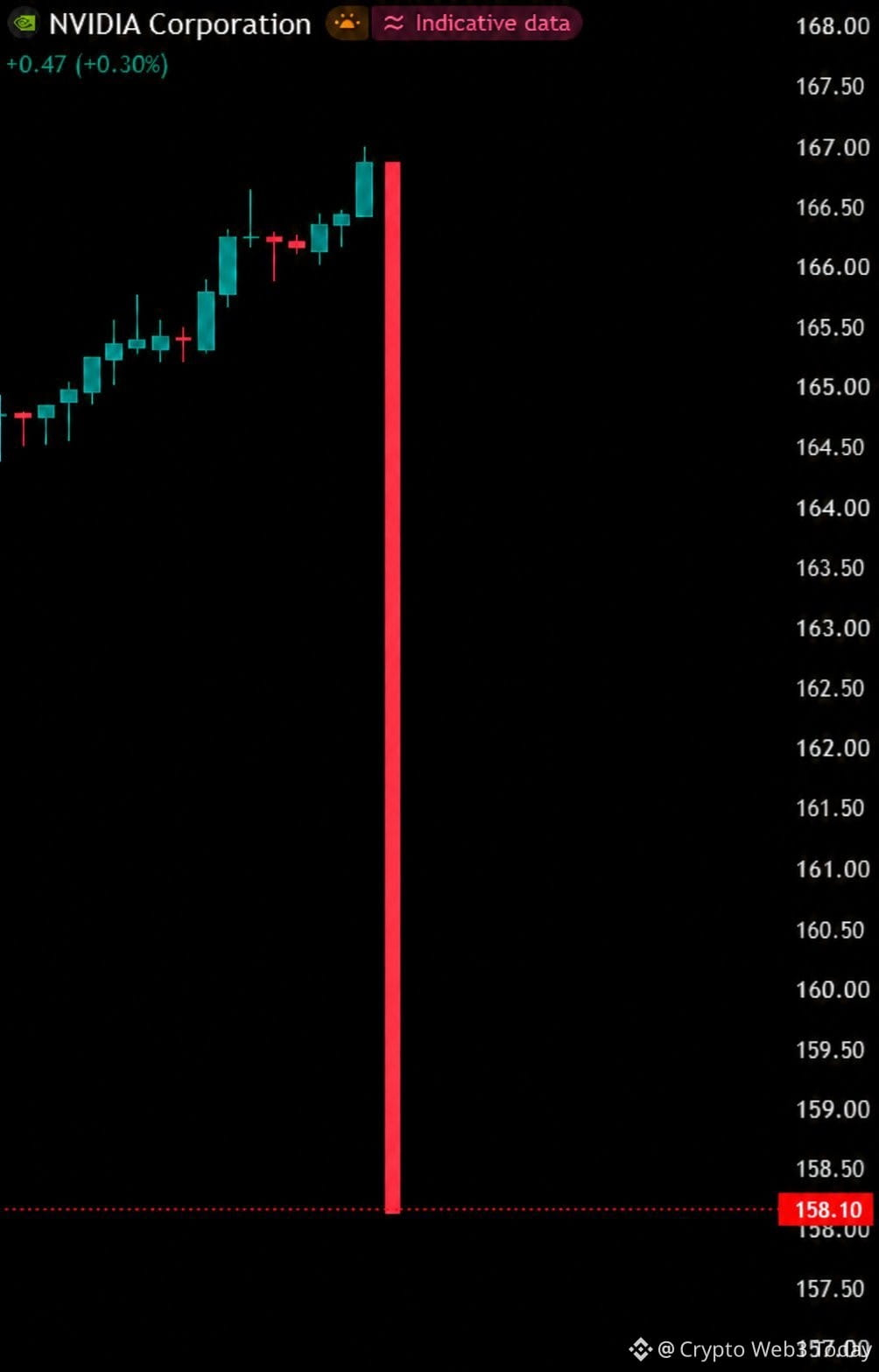
🚨 Nvidia is pulling back again!
Nvidia ($NVDA) shares are down more than 4% in pre-market trading, following the strong and unexpected surge we saw yesterday.
In other words, after a major rally, the market is catching its breath—but the question remains: is this just profit-taking, or the start of a new correction?
$NVDA
{future}(NVDAUSDT)
🚨 Nvidia is pulling back again!
Nvidia ($NVDA ) shares are down more than 4% in pre-market trading, following the strong and unexpected surge we saw yesterday.
In other words, after a major rally, the market is catching its breath—but the question remains: is this just profit-taking, or the start of a new correction?
$NVDA
Nvidia ($NVDA ) shares are down more than 4% in pre-market trading, following the strong and unexpected surge we saw yesterday.
In other words, after a major rally, the market is catching its breath—but the question remains: is this just profit-taking, or the start of a new correction?
$NVDA
2
8
13.3k
·
--
Bullish
🚨 Here is the exact reason behind today’s recent surge in the price of Bitcoin:
🔴 Binance purchased 10,000 Bitcoin.
🔴 BlackRock purchased 9,325 Bitcoin.
🔴 Coinbase purchased 10,736 Bitcoin.
🔴 Jane Street purchased 2,398 Bitcoin.
🔴 Wintermute purchased 1,702 Bitcoin.
This was a massive, coordinated manipulation designed to liquidate the positions of short sellers!!
$BTC
{spot}(BTCUSDT)
$SOL
{spot}(SOLUSDT)
$XRP
{spot}(XRPUSDT)
🚨 Here is the exact reason behind today’s recent surge in the price of Bitcoin:
🔴 Binance purchased 10,000 Bitcoin.
🔴 BlackRock purchased 9,325 Bitcoin.
🔴 Coinbase purchased 10,736 Bitcoin.
🔴 Jane Street purchased 2,398 Bitcoin.
🔴 Wintermute purchased 1,702 Bitcoin.
This was a massive, coordinated manipulation designed to liquidate the positions of short sellers!!
$BTC
$SOL
$XRP
5
1.2k
·
--
Bullish
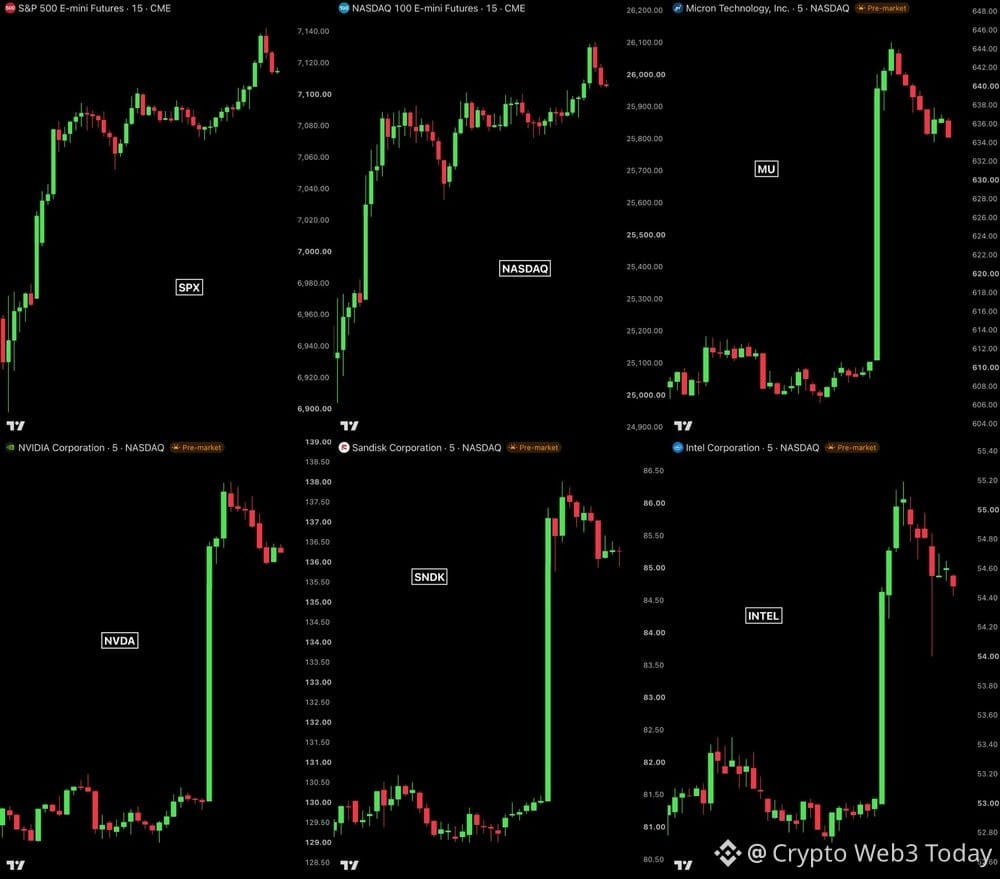
🚨 Urgent: U.S. stock futures surge sharply.
Nasdaq 100 futures are up 3.5%, while S&P 500 futures have climbed 2.7%.
Stocks that saw the steepest declines last week are leading this rebound in pre-market trading:
• Nvidia: +9.0%
• SanDisk: +7.7%
• Micron: +7.2%
• Intel: +6.4%
Wall Street surprises the pessimists—U.S. stock futures jump ahead of the opening bell!
Despite warnings of a potential market collapse and the onset of a "Black Monday," U.S. stock futures have defied expectations, posting a strong, broad-based rally before the market opens.
📊 Futures Performance:
🔹 Nasdaq 100: Up nearly 2.8%.
🔹 S&P 500: Up over 2%.
🔹 Dow Jones: Gains exceeding 1.3%.
💡 What is driving this rebound?
▪️ The potential for a "short squeeze," as some investors with short positions are forced to close them out.
▪️ Stocks reaching "oversold" levels, which may encourage investors to seize buying opportunities.
▪️ Improved liquidity and investor sentiment following the recent wave of declines.
⚠️ A key note for traders: A rise in futures does not guarantee that the upward momentum will continue after the market opens. It is essential to monitor the performance of the indices during the first hour of trading and to remain disciplined with risk management—especially given the shortened trading week. ❓What’s your take—are we witnessing the start of a genuine rebound in U.S. stocks, or just a temporary correction before the downward trend continues?
$NVDA
{future}(NVDAUSDT)
$INTCB
{spot}(INTCBUSDT)
$NVDA.US
{stock_us}(NVDA.US)
🚨 Urgent: U.S. stock futures surge sharply.
Nasdaq 100 futures are up 3.5%, while S&P 500 futures have climbed 2.7%.
Stocks that saw the steepest declines last week are leading this rebound in pre-market trading:
• Nvidia: +9.0%
• SanDisk: +7.7%
• Micron: +7.2%
• Intel: +6.4%
Wall Street surprises the pessimists—U.S. stock futures jump ahead of the opening bell!
Despite warnings of a potential market collapse and the onset of a "Black Monday," U.S. stock futures have defied expectations, posting a strong, broad-based rally before the market opens.
📊 Futures Performance:
🔹 Nasdaq 100: Up nearly 2.8%.
🔹 S&P 500: Up over 2%.
🔹 Dow Jones: Gains exceeding 1.3%.
💡 What is driving this rebound?
▪️ The potential for a "short squeeze," as some investors with short positions are forced to close them out.
▪️ Stocks reaching "oversold" levels, which may encourage investors to seize buying opportunities.
▪️ Improved liquidity and investor sentiment following the recent wave of declines.
⚠️ A key note for traders: A rise in futures does not guarantee that the upward momentum will continue after the market opens. It is essential to monitor the performance of the indices during the first hour of trading and to remain disciplined with risk management—especially given the shortened trading week. ❓What’s your take—are we witnessing the start of a genuine rebound in U.S. stocks, or just a temporary correction before the downward trend continues?
$NVDA
$INTCB
$NVDA.US
1
4
1.2k
·
--
Bullish
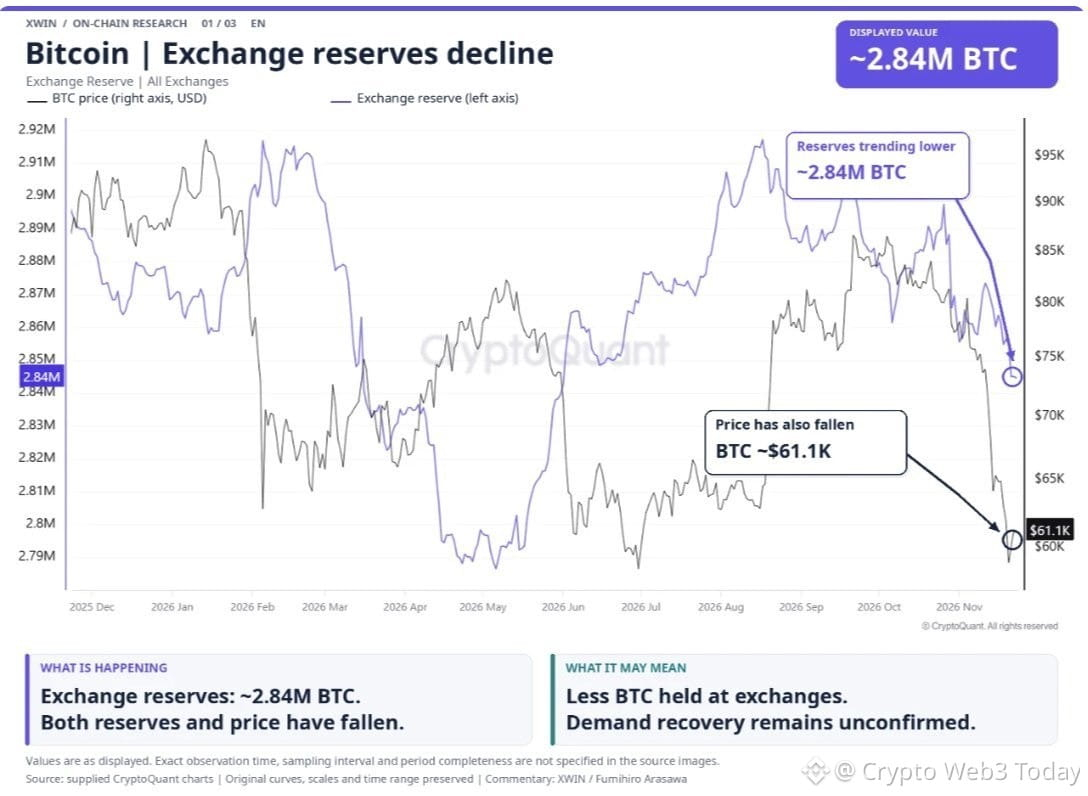
🚨 Bitcoin returns to $61,000... Could we see a recovery before the end of the year? 📈🔥
The price of Bitcoin has rebounded to the $61,000 level, following a sharp decline that had previously pushed it down to the $55,000 zone!
📊 However, according to analysis by xwinfinance, several factors continue to exert pressure on the market:
🔴 Persistently high interest rates.
🔴 Outflows from Bitcoin ETFs.
🔴 The closing of investment positions and a reduction in leverage.
💰 For a more sustainable recovery, Bitcoin may need improved liquidity, a return of positive inflows into ETFs, and an easing of economic pressures.
👀 Was the drop to $55,000 a buying opportunity, or is the current rebound merely a pause before another downward wave?
$BTC
{spot}(BTCUSDT)
🚨 Bitcoin returns to $61,000... Could we see a recovery before the end of the year? 📈🔥
The price of Bitcoin has rebounded to the $61,000 level, following a sharp decline that had previously pushed it down to the $55,000 zone!
📊 However, according to analysis by xwinfinance, several factors continue to exert pressure on the market:
🔴 Persistently high interest rates.
🔴 Outflows from Bitcoin ETFs.
🔴 The closing of investment positions and a reduction in leverage.
💰 For a more sustainable recovery, Bitcoin may need improved liquidity, a return of positive inflows into ETFs, and an easing of economic pressures.
👀 Was the drop to $55,000 a buying opportunity, or is the current rebound merely a pause before another downward wave?
$BTC
2
844
Verified
⚡️ Global hedge funds record their largest weekly losses since April 2025.
According to JPMorgan data, hedge funds incurred losses exceeding 3% during the week ending November 20, 2026.
📌 Average losses have climbed to approximately 4% since the beginning of November.
📌 A sell-off in technology stocks has intensified pressure on these funds.
📌 Fund managers are moving to reduce risk amid a market downturn.
$BTC
{spot}(BTCUSDT)
$ETH
{spot}(ETHUSDT)
$SOL
{spot}(SOLUSDT)
⚡️ Global hedge funds record their largest weekly losses since April 2025.
According to JPMorgan data, hedge funds incurred losses exceeding 3% during the week ending November 20, 2026.
📌 Average losses have climbed to approximately 4% since the beginning of November.
📌 A sell-off in technology stocks has intensified pressure on these funds.
📌 Fund managers are moving to reduce risk amid a market downturn.
$BTC
$ETH
$SOL

2
621
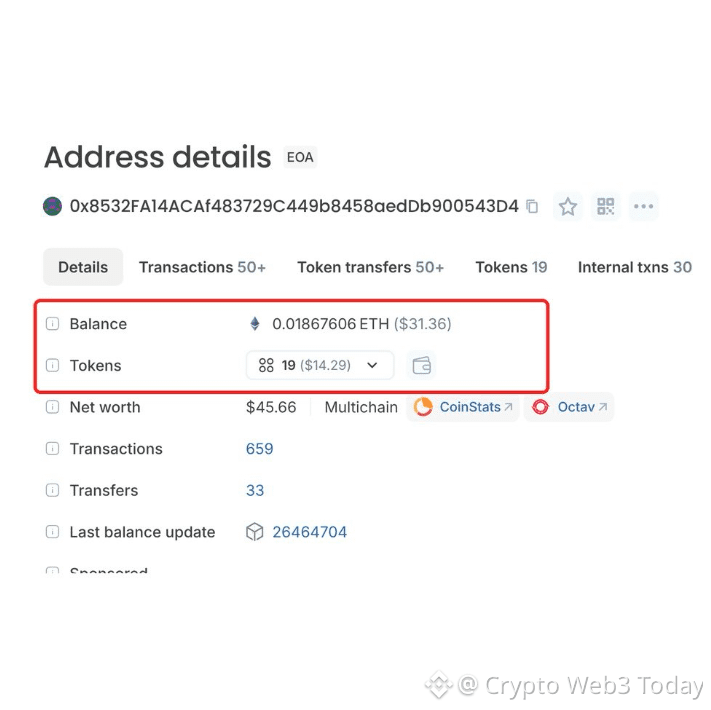
The primary wallet linked to the North Korean hacker has become nearly empty; almost everything is gone.
A total of 602,402 Ether (ETH) flowed into the wallet, yet only $31 remains.
More alarmingly, approximately $3.5 billion in stolen funds remains unfrozen.
Here is what the figures reveal:
$6.34 billion: The value of stolen funds as of October 29.
$2.85 billion: The amount Binance reports having frozen or intercepted—roughly 45%.
$3.5 billion: The amount that remains unfrozen.
Approximately $149 million in Bitcoin has passed through transaction-mixing services, with 90% of this activity occurring within the last week.
Crucially, freezing funds does not equate to recovering them or returning them to their rightful owners.
While Binance states that it has set aside 100% of the funds necessary to compensate users, the ultimate fate of the stolen assets continues to raise significant questions.
$BTC
{spot}(BTCUSDT)
$ETH
{spot}(ETHUSDT)
$BNB
{spot}(BNBUSDT)
The primary wallet linked to the North Korean hacker has become nearly empty; almost everything is gone.
A total of 602,402 Ether (ETH) flowed into the wallet, yet only $31 remains.
More alarmingly, approximately $3.5 billion in stolen funds remains unfrozen.
Here is what the figures reveal:
$6.34 billion: The value of stolen funds as of October 29.
$2.85 billion: The amount Binance reports having frozen or intercepted—roughly 45%.
$3.5 billion: The amount that remains unfrozen.
Approximately $149 million in Bitcoin has passed through transaction-mixing services, with 90% of this activity occurring within the last week.
Crucially, freezing funds does not equate to recovering them or returning them to their rightful owners.
While Binance states that it has set aside 100% of the funds necessary to compensate users, the ultimate fate of the stolen assets continues to raise significant questions.
$BTC
$ETH
$BNB

2
8
7.7k
·
--
Bearish
Partly True
🚨 #Breaking: 🇨🇦 Canada’s largest bank, the Royal Bank of Canada—which holds over $1.5 trillion in assets—has completely exited its investment position in the cryptocurrency $XRP .
$XRP
{spot}(XRPUSDT)
🚨 #Breaking: 🇨🇦 Canada’s largest bank, the Royal Bank of Canada—which holds over $1.5 trillion in assets—has completely exited its investment position in the cryptocurrency $XRP .
$XRP
$XRP
XRP+0.69%
RYUS+0.30%
2
10
5k
·
--
Bearish
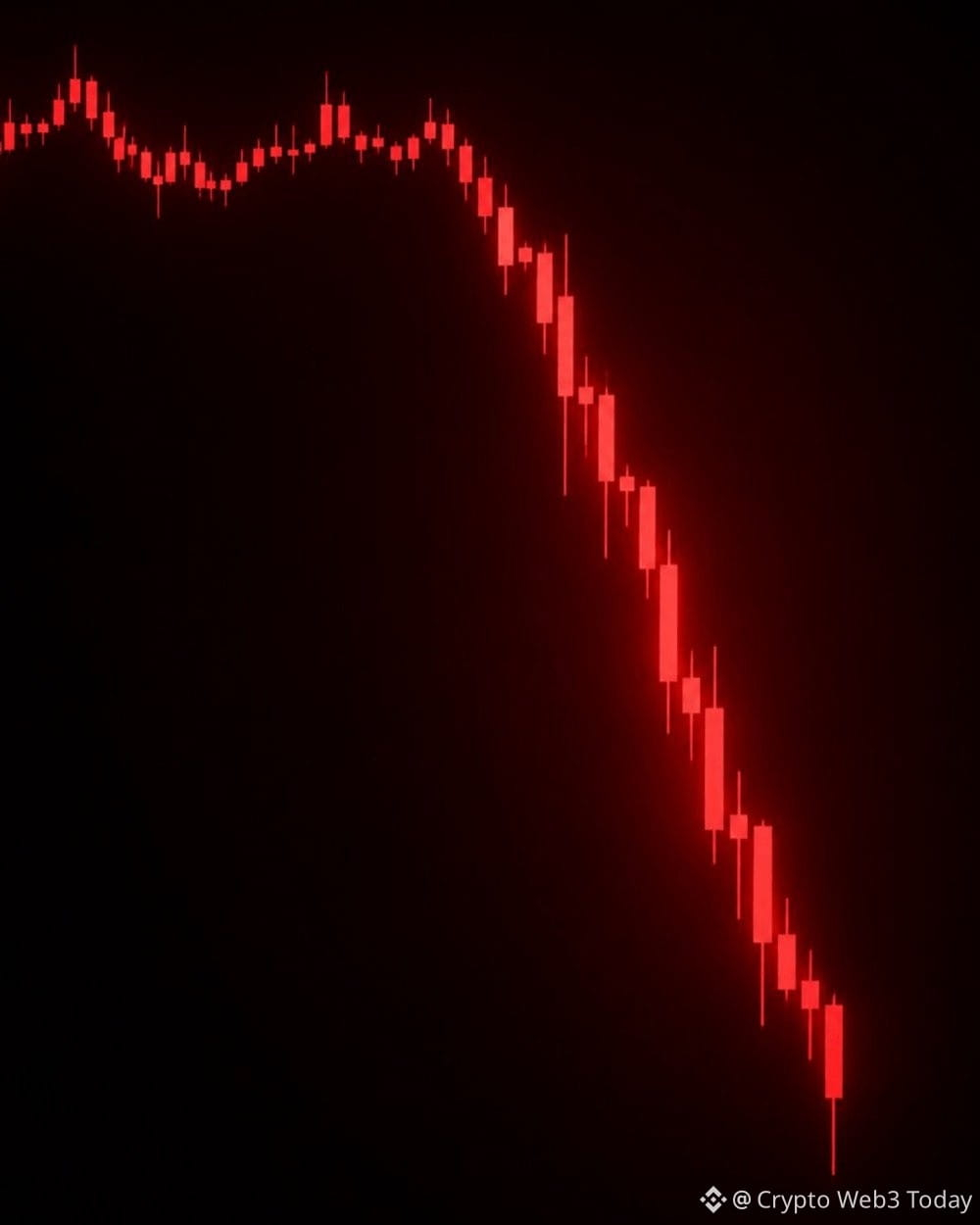
🚨 Prepare for another highly volatile week.
Markets could face a fresh, major sell-off, driven by upcoming inflation data and GDP figures, alongside the potential for billions of dollars in forced liquidations—adding further pressure to an already struggling stock market.
The Nasdaq 100 has plummeted by more than 10% in a single week, marking its worst weekly performance since the COVID-19 market crash in 2020.
Here are the key events and risks likely to significantly impact the markets next week:
1. Personal Consumption Expenditures (PCE) Price Index for October – Wednesday, November 25
• Headline inflation is expected to rise from 3.6% to 3.8%—nearly double the Federal Reserve’s 2% target.
• Markets are pricing in a 90% probability of a 25-basis-point interest rate hike in December.
• A reading higher than anticipated could intensify concerns regarding more aggressive monetary tightening.
2. Third-Quarter GDP – Wednesday, November 25
• The initial estimate showed the U.S. economy growing at a rate of 3.4%.
• Any downward revision would spark fears of an economic slowdown, even as inflation remains elevated.
3. Goldman Sachs warns of $80.6 billion in potential sell-offs
Goldman Sachs estimates that systematic funds could offload:
• $28.6 billion, even if stocks rebound.
• $65.8 billion, if markets remain stable.
• $80.6 billion, if the decline continues. These funds have already sold $57 billion worth of U.S. stocks over the past month.
4. Low liquidity during the Thanksgiving holiday
• U.S. markets will be closed on Thursday, November 26, and will close early on Friday.
• Reduced trading volumes could make market movements more pronounced.
Thus, concerns regarding inflation, slowing growth, low liquidity, and large-scale systematic selling may converge in the coming days—and cryptocurrencies may not be immune to these developments.
$BTC
{spot}(BTCUSDT)
$NVDA.US
{stock_us}(NVDA.US)
$META.US
{stock_us}(META.US)
🚨 Prepare for another highly volatile week.
Markets could face a fresh, major sell-off, driven by upcoming inflation data and GDP figures, alongside the potential for billions of dollars in forced liquidations—adding further pressure to an already struggling stock market.
The Nasdaq 100 has plummeted by more than 10% in a single week, marking its worst weekly performance since the COVID-19 market crash in 2020.
Here are the key events and risks likely to significantly impact the markets next week:
1. Personal Consumption Expenditures (PCE) Price Index for October – Wednesday, November 25
• Headline inflation is expected to rise from 3.6% to 3.8%—nearly double the Federal Reserve’s 2% target.
• Markets are pricing in a 90% probability of a 25-basis-point interest rate hike in December.
• A reading higher than anticipated could intensify concerns regarding more aggressive monetary tightening.
2. Third-Quarter GDP – Wednesday, November 25
• The initial estimate showed the U.S. economy growing at a rate of 3.4%.
• Any downward revision would spark fears of an economic slowdown, even as inflation remains elevated.
3. Goldman Sachs warns of $80.6 billion in potential sell-offs
Goldman Sachs estimates that systematic funds could offload:
• $28.6 billion, even if stocks rebound.
• $65.8 billion, if markets remain stable.
• $80.6 billion, if the decline continues. These funds have already sold $57 billion worth of U.S. stocks over the past month.
4. Low liquidity during the Thanksgiving holiday
• U.S. markets will be closed on Thursday, November 26, and will close early on Friday.
• Reduced trading volumes could make market movements more pronounced.
Thus, concerns regarding inflation, slowing growth, low liquidity, and large-scale systematic selling may converge in the coming days—and cryptocurrencies may not be immune to these developments.
$BTC
$NVDA.US
$META.US

3
2.4k
🚨🇺🇸 A serious security breach rocks the U.S. FBI!
⚠️ Reports reveal a potential breach of a sensitive FBI security database known as the NCIC (National Crime Information Center).
🔴 The database contains critical security and criminal information, including data on wanted individuals, suspects, missing persons, and criminal records.
🔍 The FBI is investigating the incident, though the extent of the data accessed—and the identity of those responsible—remains unclear.
🚨 The gravity of this situation lies in the fact that this is not merely a breach of an ordinary website; it is a database used by law enforcement agencies across the United States.
Have hackers managed to access sensitive security data?
$SOL
{spot}(SOLUSDT)
$ZEC
{spot}(ZECUSDT)
$BNB
{spot}(BNBUSDT)
🚨🇺🇸 A serious security breach rocks the U.S. FBI!
⚠️ Reports reveal a potential breach of a sensitive FBI security database known as the NCIC (National Crime Information Center).
🔴 The database contains critical security and criminal information, including data on wanted individuals, suspects, missing persons, and criminal records.
🔍 The FBI is investigating the incident, though the extent of the data accessed—and the identity of those responsible—remains unclear.
🚨 The gravity of this situation lies in the fact that this is not merely a breach of an ordinary website; it is a database used by law enforcement agencies across the United States.
Have hackers managed to access sensitive security data?
$SOL
$ZEC
$BNB

1
2
1k
·
--
Bullish
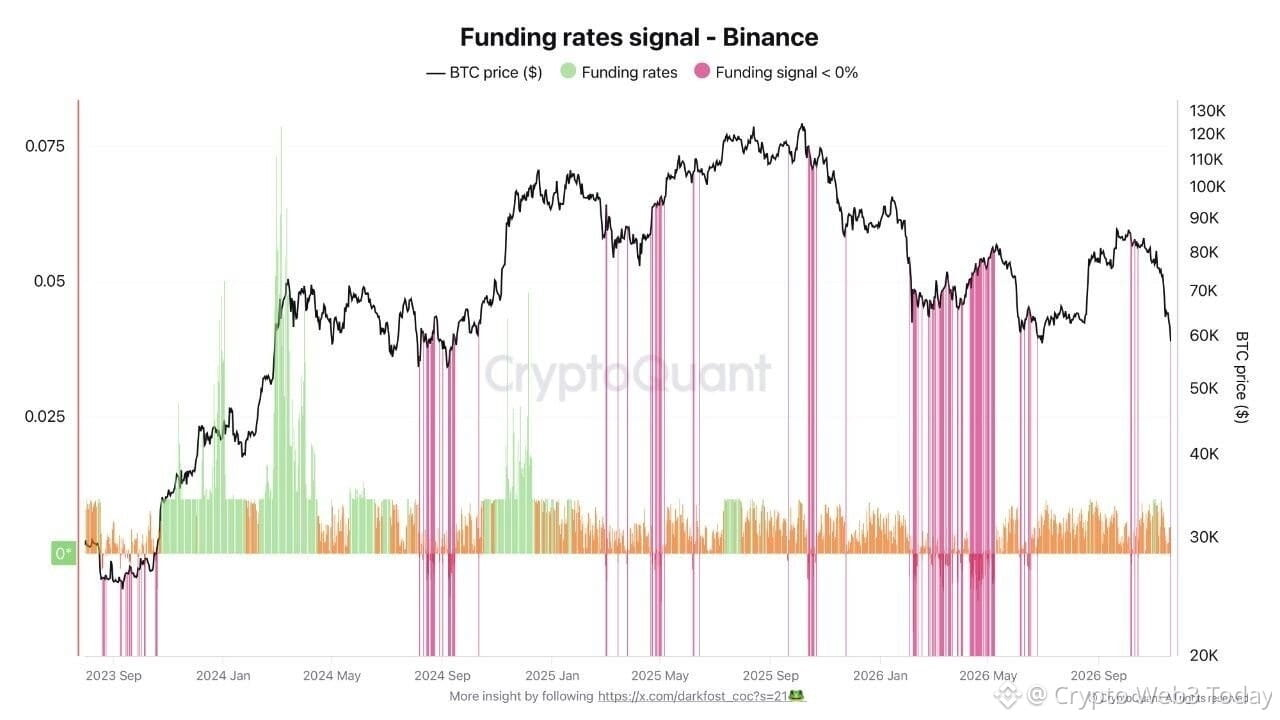
🚨 An important signal for Bitcoin... Is a trend reversal approaching? 📈🔥
Bitcoin funding rates on @binance have shifted into negative territory, just as Bitcoin trades near $60,000!
📊 According to analyst @Darkfost_Coc from @cryptoquant_com, this shift could be an early indicator of a potential trend reversal.
💰 What does this mean?
When funding rates turn negative, it signals increased pressure from short positions compared to long positions—which could set the stage for a "short squeeze" should the price begin to rise.
👀 Have traders become overly bearish, and is Bitcoin gearing up for a sudden rebound?
$BTC
{spot}(BTCUSDT)
🚨 An important signal for Bitcoin... Is a trend reversal approaching? 📈🔥
Bitcoin funding rates on @binance have shifted into negative territory, just as Bitcoin trades near $60,000!
📊 According to analyst @Darkfost_Coc from @cryptoquant_com, this shift could be an early indicator of a potential trend reversal.
💰 What does this mean?
When funding rates turn negative, it signals increased pressure from short positions compared to long positions—which could set the stage for a "short squeeze" should the price begin to rise.
👀 Have traders become overly bearish, and is Bitcoin gearing up for a sudden rebound?
$BTC
2
322
Verified
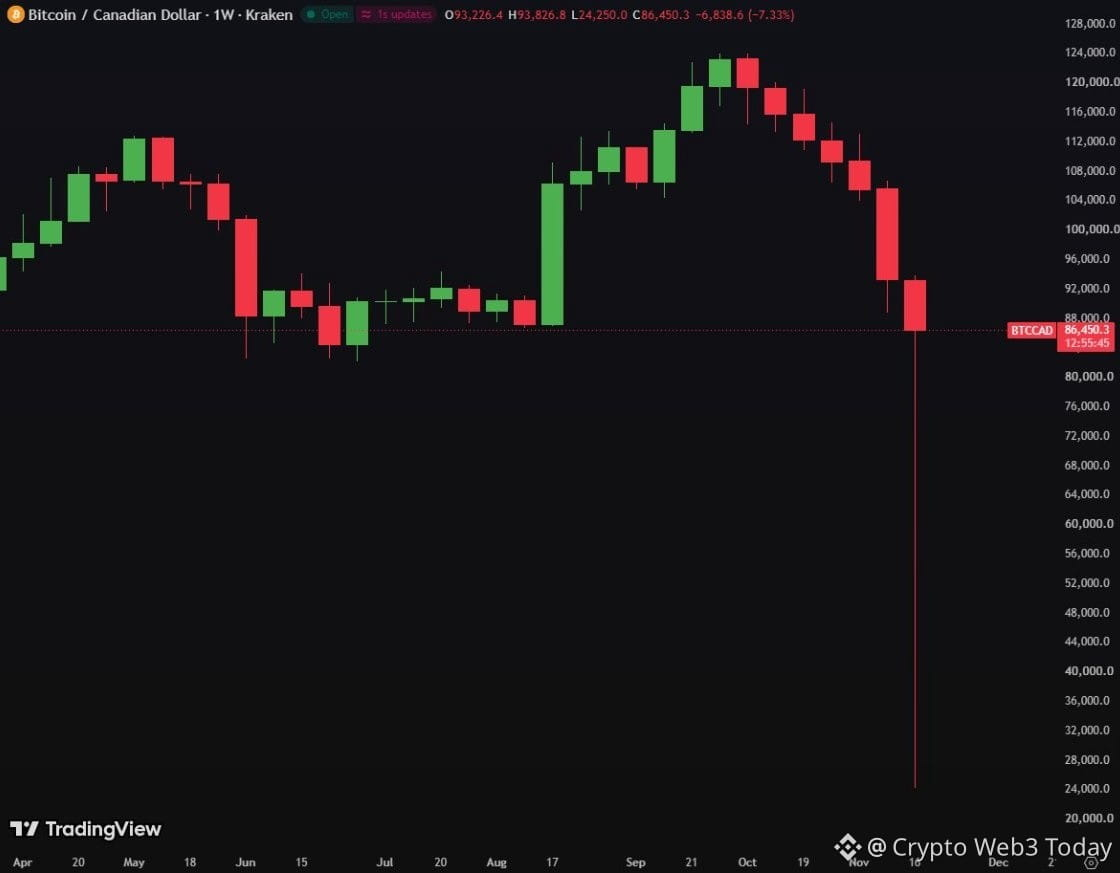
🚨🚨 Hundreds of Bitcoins were sold yesterday at a price of $18,000, while the global market price stood at $57,000.
In a sudden flash crash on the Bitcoin/Canadian Dollar (BTC/CAD) market on the Kraken exchange, the price plummeted to 24,250 CAD—approximately 18,300 USD.
Around 450 BTC were traded at prices significantly below the prevailing market rate.
The crash persisted for several hours.
Some buyers managed to acquire Bitcoin at a discount of up to 68%.
Even more shocking, Kraken decided not to reverse the trades, asserting that there was no evidence of a security breach.
Kraken confirmed that the orders were executed correctly, the trades are final, and no refunds will be issued.
In other words, if a "stop-loss" order was triggered at that price, the loss has become a reality.
This was not a collapse of Bitcoin itself; rather, it revealed how a weak order book and fragile liquidity can turn trading into a disaster in a matter of seconds.
$BTC
{spot}(BTCUSDT)
🚨🚨 Hundreds of Bitcoins were sold yesterday at a price of $18,000, while the global market price stood at $57,000.
In a sudden flash crash on the Bitcoin/Canadian Dollar (BTC/CAD) market on the Kraken exchange, the price plummeted to 24,250 CAD—approximately 18,300 USD.
Around 450 BTC were traded at prices significantly below the prevailing market rate.
The crash persisted for several hours.
Some buyers managed to acquire Bitcoin at a discount of up to 68%.
Even more shocking, Kraken decided not to reverse the trades, asserting that there was no evidence of a security breach.
Kraken confirmed that the orders were executed correctly, the trades are final, and no refunds will be issued.
In other words, if a "stop-loss" order was triggered at that price, the loss has become a reality.
This was not a collapse of Bitcoin itself; rather, it revealed how a weak order book and fragile liquidity can turn trading into a disaster in a matter of seconds.
$BTC
2
815
·
--
Bullish
Folks, there’s a piece of news from today that flew under the radar—yet it’s actually more concerning than Bitcoin dropping below $56,000.
JPMorgan has stated that the cost to mine a single Bitcoin is approximately $86,000, while the current market price is hovering between $55,000 and $58,000. This means miners are losing money on every coin they produce!
Think about it: how can they keep mining and selling at such a significant loss? And what happens to those who don’t have extra capital to fall back on?
Why is the cost so high while the price is falling?
It’s because electricity, hardware, and maintenance costs are steep—especially now that the price of Bitcoin has plummeted. Large-scale miners might have access to cheaper electricity or the financial cushion to absorb losses for a while, but what about the smaller players? They are being forced out of the market, one by one.
If miners are selling just to cover their costs, who stands to benefit from this forced selling?
Those who are buying at these low prices—typically large institutions or entities with significant liquidity. As the price drops further and miners weaken, control over the "hash rate" becomes concentrated in fewer hands.
But here is the question that truly worries me—and for which there is no clear answer:
Are there certain parties intentionally driving the price down to push small and medium-sized miners out of the market, only to consolidate control over mining and gain greater influence over the network?
I’ll leave it to you to answer:
Do you believe this gap between mining costs and the market price is just a "normal market cycle"?
Or do you suspect there’s a calculated plan to weaken independent miners before something even bigger happens to the network? If you want to follow this situation closely and find out what’s in store for miners—and the entire crypto space—in the coming days,
stay tuned. What’s coming could reshape the whole market.
Share your thoughts below: Is this a temporary setback, or a deliberate liquidation?
$BTC
{spot}(BTCUSDT)
Folks, there’s a piece of news from today that flew under the radar—yet it’s actually more concerning than Bitcoin dropping below $56,000.
JPMorgan has stated that the cost to mine a single Bitcoin is approximately $86,000, while the current market price is hovering between $55,000 and $58,000. This means miners are losing money on every coin they produce!
Think about it: how can they keep mining and selling at such a significant loss? And what happens to those who don’t have extra capital to fall back on?
Why is the cost so high while the price is falling?
It’s because electricity, hardware, and maintenance costs are steep—especially now that the price of Bitcoin has plummeted. Large-scale miners might have access to cheaper electricity or the financial cushion to absorb losses for a while, but what about the smaller players? They are being forced out of the market, one by one.
If miners are selling just to cover their costs, who stands to benefit from this forced selling?
Those who are buying at these low prices—typically large institutions or entities with significant liquidity. As the price drops further and miners weaken, control over the "hash rate" becomes concentrated in fewer hands.
But here is the question that truly worries me—and for which there is no clear answer:
Are there certain parties intentionally driving the price down to push small and medium-sized miners out of the market, only to consolidate control over mining and gain greater influence over the network?
I’ll leave it to you to answer:
Do you believe this gap between mining costs and the market price is just a "normal market cycle"?
Or do you suspect there’s a calculated plan to weaken independent miners before something even bigger happens to the network? If you want to follow this situation closely and find out what’s in store for miners—and the entire crypto space—in the coming days,
stay tuned. What’s coming could reshape the whole market.
Share your thoughts below: Is this a temporary setback, or a deliberate liquidation?
$BTC

2
14
9k

·
--
Bearish
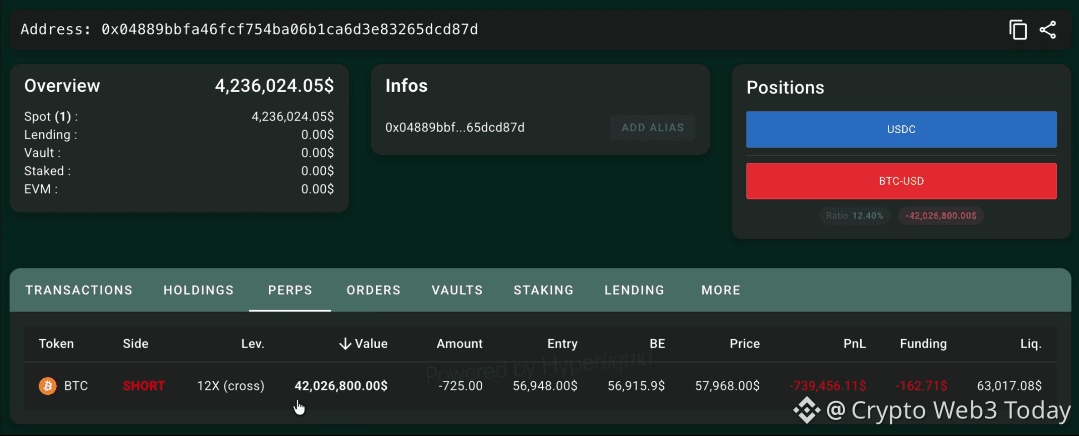
🚨 Crypto Whale Movement!!
A "whale" has just opened a short position on Bitcoin (BTC) worth $42 million.
The trader is currently facing a loss of $700,000, with a liquidation price set at $63,000.
Do they know something that’s about to happen?!
$BTC
{spot}(BTCUSDT)
🚨 Crypto Whale Movement!!
A "whale" has just opened a short position on Bitcoin (BTC) worth $42 million.
The trader is currently facing a loss of $700,000, with a liquidation price set at $63,000.
Do they know something that’s about to happen?!
$BTC
A "whale" has just opened a short position on Bitcoin (BTC) worth $42 million.
The trader is currently facing a loss of $700,000, with a liquidation price set at $63,000.
Do they know something that’s about to happen?!
$BTC
4
1.9k
Log in to explore more content
Join global crypto users on Binance Square
⚡️ Get latest and useful information about crypto.
💬 Trusted by the world’s largest crypto exchange.
👍 Discover real insights from verified creators.
Email / Phone number
Trending Topics
CorePCEBeatLiftsFedHikeOdds
49,993 views
669 Discussing
U.S. October PCE Price Index at 0.3% Month Over Month, Versus 0.30% Expected and 0.50% Prior
Binance News
·11 Likes
·21.6k views
BitcoinAndStocksSlipAgainAmidTrump’sTariffPlans
134,419 views
1,599 Discussing
JensenHuangSaysNvidiaDoesn’tNeedASuccessionPlan
66,815 views
958 Discussing