
Crypto Eagles
12.4k Posts

Crypto Eagles
 Square Verified+
Report
Block User
Square Content Creator | X: @CryptoProject6

Creator Awards 2024

#BinanceTurns7

Top Voices
Frequent Trader
6.2 Years
149 Following
130.6K+ Followers
169.4K+ Liked
3 Badges
Posts
All
Quotes
Videos
Live
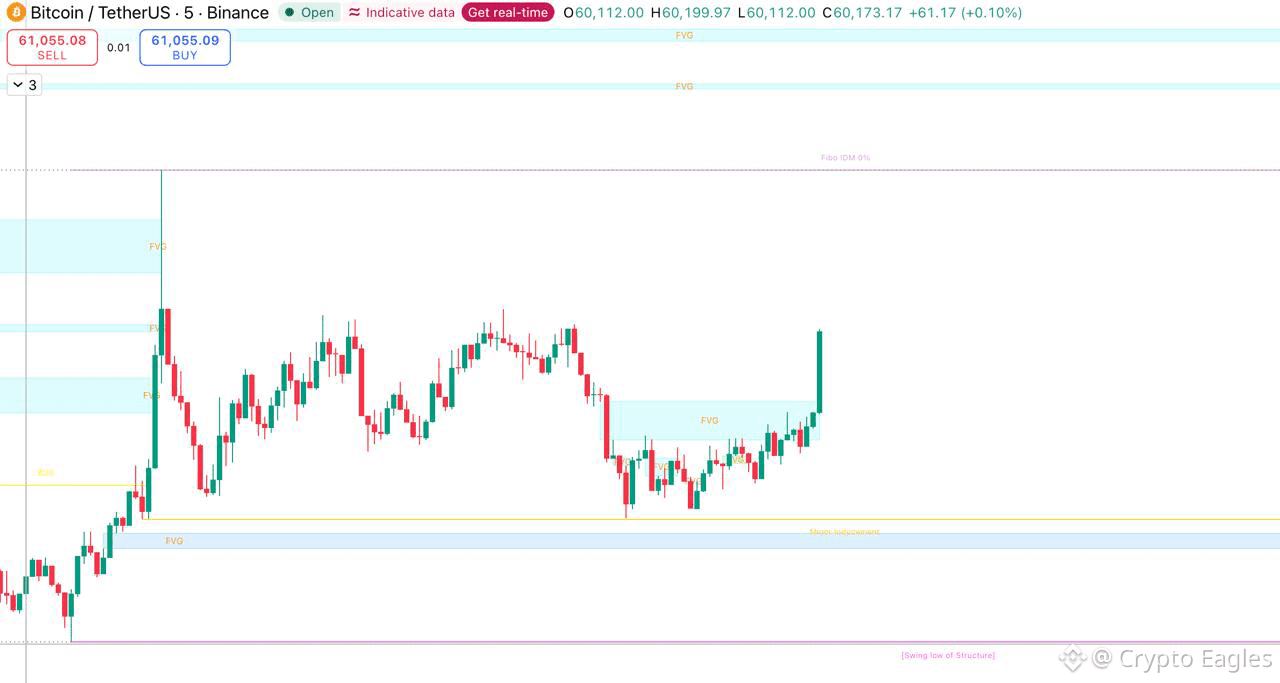
$BTC Bitcoin pushed back above the blue fair value gap after bouncing from the lower yellow level. Buyers are now testing the recent highs, where the last rally stalled.
I’m watching for a pullback that holds above the blue zone.
If buyers defend it and break the recent highs, the prior swing high becomes the next level to watch.
A move back below the blue zone would weaken the bullish setup and bring the yellow level back into focus.
I’m watching for a pullback that holds above the blue zone.
If buyers defend it and break the recent highs, the prior swing high becomes the next level to watch.
A move back below the blue zone would weaken the bullish setup and bring the yellow level back into focus.
1
956
The hardest part of trading is not choosing direction. It is staying disciplined after price starts moving.
With a perp, it can be tempting to move the stop, add margin, or over-manage the position. For certain $BTC , $ETH, and $HYPE setups, I prefer options because the maximum loss is defined before entry while the upside remains open.
@Aevoxyz Options Easy Mode keeps the process simple. Choose the direction, set the target and timeframe, select how the trade earns, then review where you win or lose before confirming.
For me, this is not about replacing perps. It is about choosing the right tool when I want clear risk from the first click.
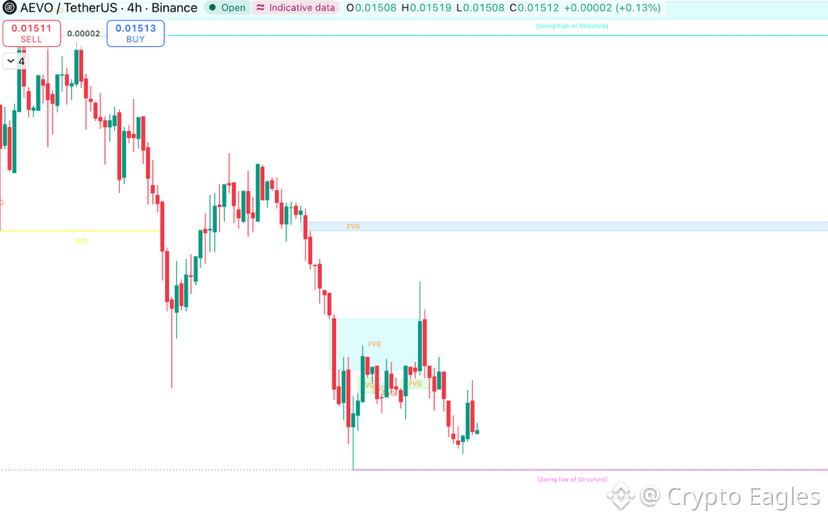
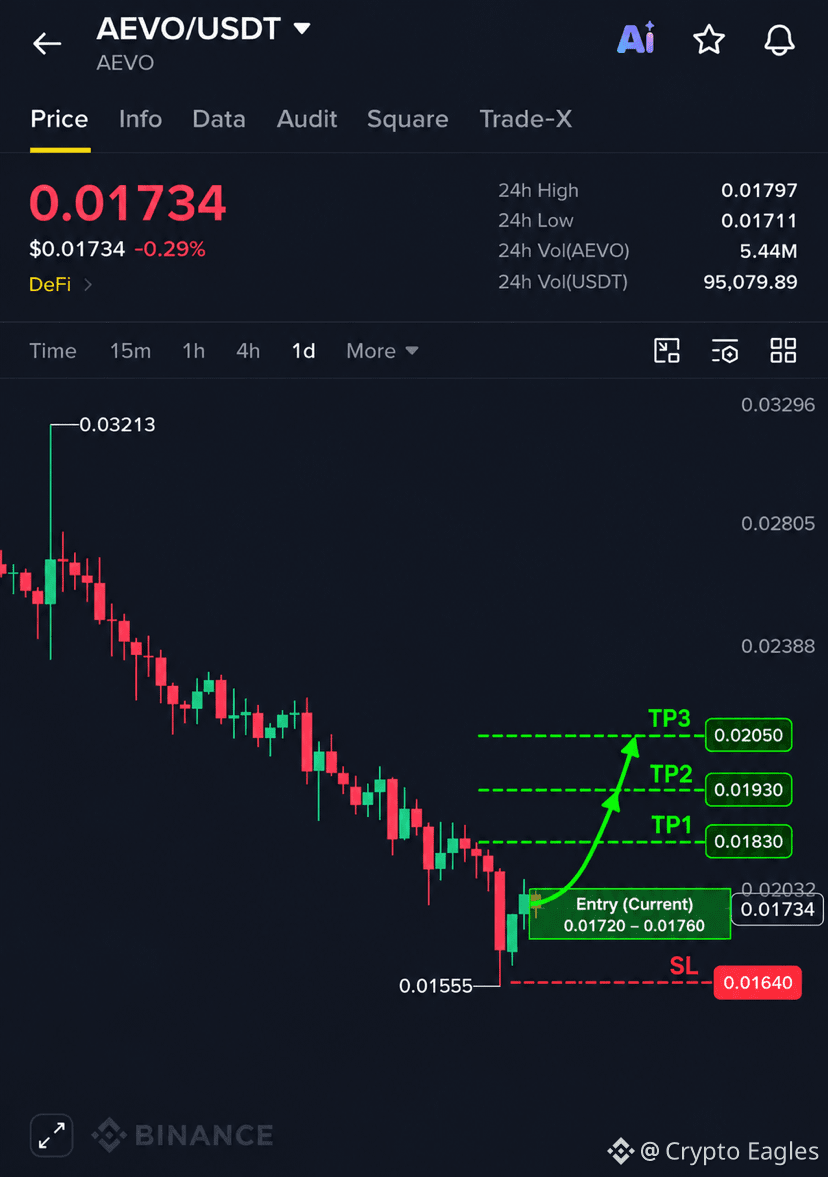
Technically, $AEVO is still forming lower highs and lower lows, so the wider structure remains bearish. Price is reacting near the recent swing low, but it must reclaim the nearest FVG before a stronger recovery is confirmed.
@Aevoxyz $AEVO
The hardest part of trading is not choosing direction. It is staying disciplined after price starts moving.
With a perp, it can be tempting to move the stop, add margin, or over-manage the position. For certain $BTC , $ETH, and $HYPE setups, I prefer options because the maximum loss is defined before entry while the upside remains open.
@Aevo Options Easy Mode keeps the process simple. Choose the direction, set the target and timeframe, select how the trade earns, then review where you win or lose before confirming.
For me, this is not about replacing perps. It is about choosing the right tool when I want clear risk from the first click.
Technically, $AEVO is still forming lower highs and lower lows, so the wider structure remains bearish. Price is reacting near the recent swing low, but it must reclaim the nearest FVG before a stronger recovery is confirmed.
@Aevo $AEVO
22
1
25
7.9k
Security is not proven by saying, “Trust us.”
It is tested by giving respected outside experts access, letting them identify weaknesses, and then acting on what they find.
Binance has engaged three independent security firms:
• Mandiant, part of Google Cloud, with more than two decades of experience investigating nation-state and advanced cyberattacks
• SlowMist, a specialist in blockchain ecosystem security
• Verichains, known for deep security research, reverse engineering, and work on major Web3 incidents
These firms will review Binance’s current security infrastructure and assess its security posture going forward.
The most important part is honesty. Binance is not claiming that the reviews are complete or that everything has passed. No findings or conclusions have been announced yet.
This is the start of the review, not the final result.
What I like is that the firms are named, the scope is defined, and Binance has publicly committed to act on what they find.
Before trusting any platform with my assets, I want independent testing, verifiable reserves, reliable withdrawals, and clear action when weaknesses are discovered.
Trust should never depend on promises alone. It should be tested, verified, and strengthened.
Full announcement:
[https://www.binance.com/en/blog/security/6305213896361554553](https://www.binance.com/en/blog/security/6305213896361554553)
Security is not proven by saying, “Trust us.”
It is tested by giving respected outside experts access, letting them identify weaknesses, and then acting on what they find.
Binance has engaged three independent security firms:
• Mandiant, part of Google Cloud, with more than two decades of experience investigating nation-state and advanced cyberattacks
• SlowMist, a specialist in blockchain ecosystem security
• Verichains, known for deep security research, reverse engineering, and work on major Web3 incidents
These firms will review Binance’s current security infrastructure and assess its security posture going forward.
The most important part is honesty. Binance is not claiming that the reviews are complete or that everything has passed. No findings or conclusions have been announced yet.
This is the start of the review, not the final result.
What I like is that the firms are named, the scope is defined, and Binance has publicly committed to act on what they find.
Before trusting any platform with my assets, I want independent testing, verifiable reserves, reliable withdrawals, and clear action when weaknesses are discovered.
Trust should never depend on promises alone. It should be tested, verified, and strengthened.
Full announcement:
https://www.binance.com/en/blog/security/6305213896361554553
5
927
Verified
$PYTH is one infrastructure project worth watching as traditional finance moves onchain.
Pyth recently added real-time NYSE market data to its Data Marketplace, expanding institutional access to financial information.
Pyth Pro reached $13.67M in annual recurring revenue in October, up 18.9% from September, while expanding its coverage to 3,927 market-data symbols.
While $LINK targets oracle infrastructure, $ONDO focuses on RWAs, $HYPE on perpetual markets, and $UMA on prediction markets, Pyth connects these sectors through first-party financial data.
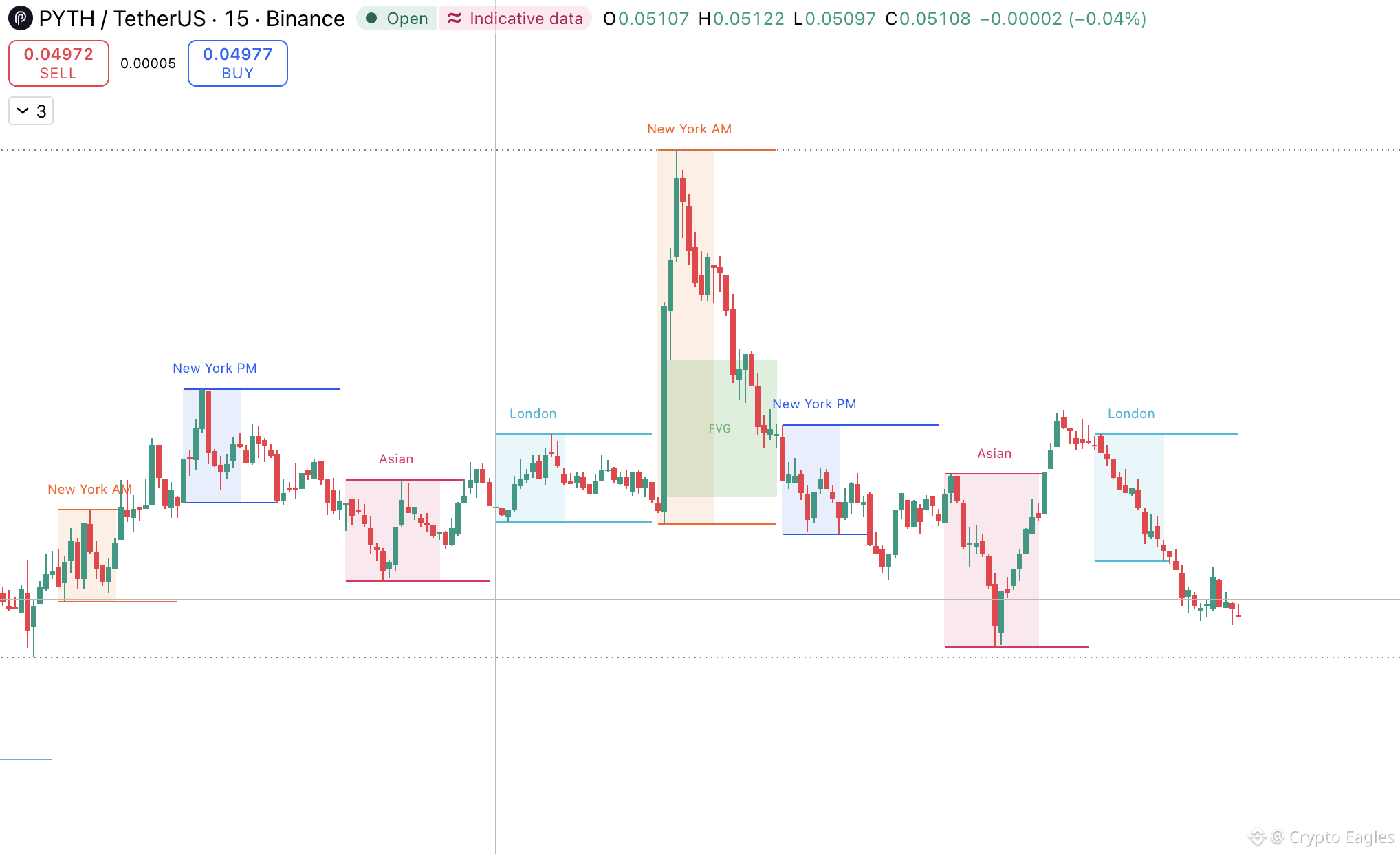
Pyth is trading around $0.050 after recent selling pressure. Holding $0.0498 and reclaiming $0.0523 could support a recovery toward $0.0554–$0.0602. A breakdown below support would weaken this outlook.
The fundamentals are progressing, but price confirmation remains important.
22
26
12.7k
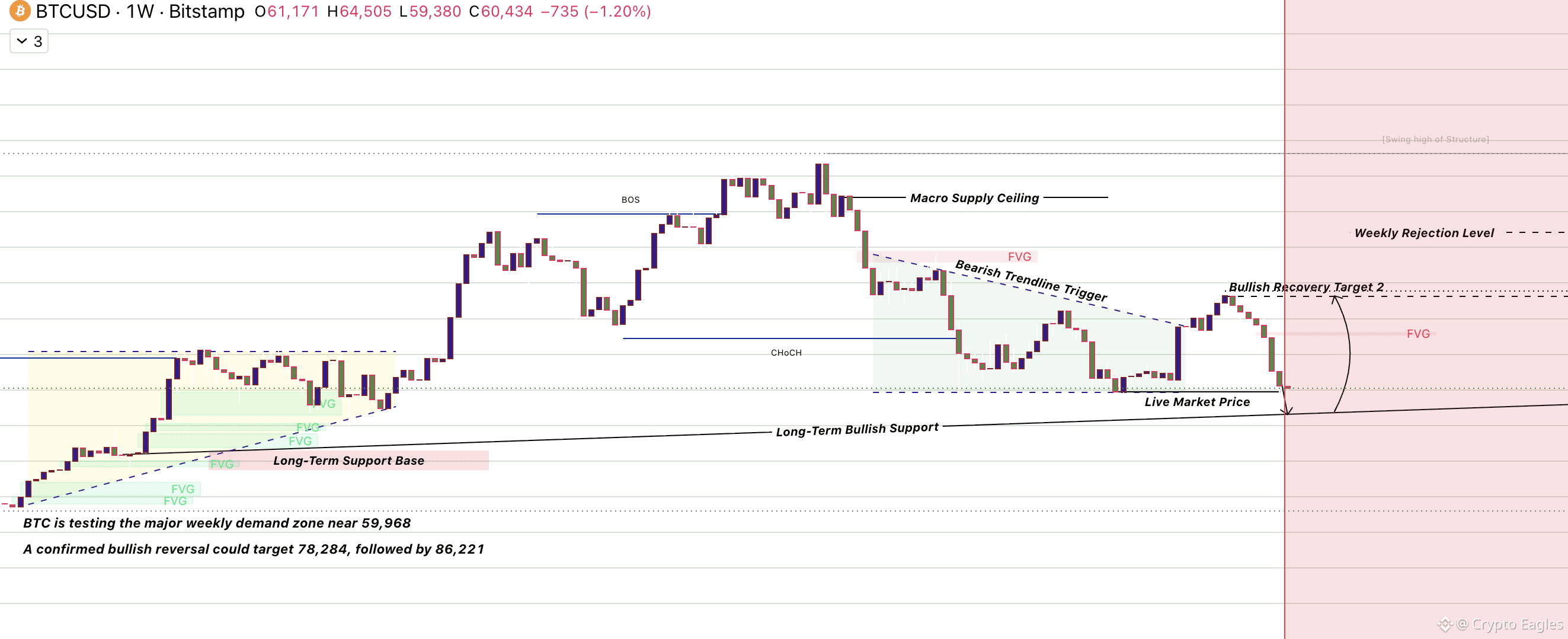
$BTC next weekly close could set the tone for $55K or $86K.
BTC is trading near $60,847 after falling from above $120K. Lower highs and repeated rejections at the descending trendline show sellers still have control. Now the focus is on $59,968.
If $59,968 breaks: A decisive weekly close below support puts $55K in focus. If $59,968 holds: A strong weekly bounce brings $70K back into play.
A trendline breakout and reclaim of $78,284 would open the path toward $86,221–$87,818.
I’m watching how BTC closes around $59,968. A bounce gets my attention. A breakout earns my conviction.
4
4
2.3k
Being right about direction is only half of a trade. The other half is surviving volatility.
With perps, one fast wick can close a position even when the main idea is still valid. For certain $BTC , $ETH, and $HYPE setups, I prefer options because my maximum downside is defined before entry while the upside remains open.
@Aevoxyz Options Easy Mode makes the process much clearer:
Choose up or down.
Set your target and timeframe.
Review where you win or lose before confirming.
It is still a real option, simply presented without a complicated options chain. For an experienced perp trader, this makes risk planning much easier.
$AEVO is recovering from the 0.01555 low and holding the 0.01720 to 0.01760 zone. A clean break above 0.01830 would strengthen the bullish structure, while 0.01640 remains the invalidation level.
Being right about direction is only half of a trade. The other half is surviving volatility.
With perps, one fast wick can close a position even when the main idea is still valid. For certain $BTC , $ETH, and $HYPE setups, I prefer options because my maximum downside is defined before entry while the upside remains open.
@Aevo Options Easy Mode makes the process much clearer:
Choose up or down.
Set your target and timeframe.
Review where you win or lose before confirming.
It is still a real option, simply presented without a complicated options chain. For an experienced perp trader, this makes risk planning much easier.
$AEVO is recovering from the 0.01555 low and holding the 0.01720 to 0.01760 zone. A clean break above 0.01830 would strengthen the bullish structure, while 0.01640 remains the invalidation level.
25
1
45
21.9k
Verified
$PYTH is expanding its reach into traditional financial markets.
@PythNetwork recently added NYSE BQT data to its Data Marketplace, giving applications access to real-time quotes and trades from five NYSE Group exchanges.
The growth numbers are equally interesting. Pyth Pro reached $13.67M in annual recurring revenue in October, up 18.9%, with 3,927 market-data symbols.
While $LINK focuses on oracle infrastructure, $ONDO on RWAs, $HYPE on perpetual markets and $INJ on onchain trading, Pyth is connecting these sectors through institutional-grade pricing data.
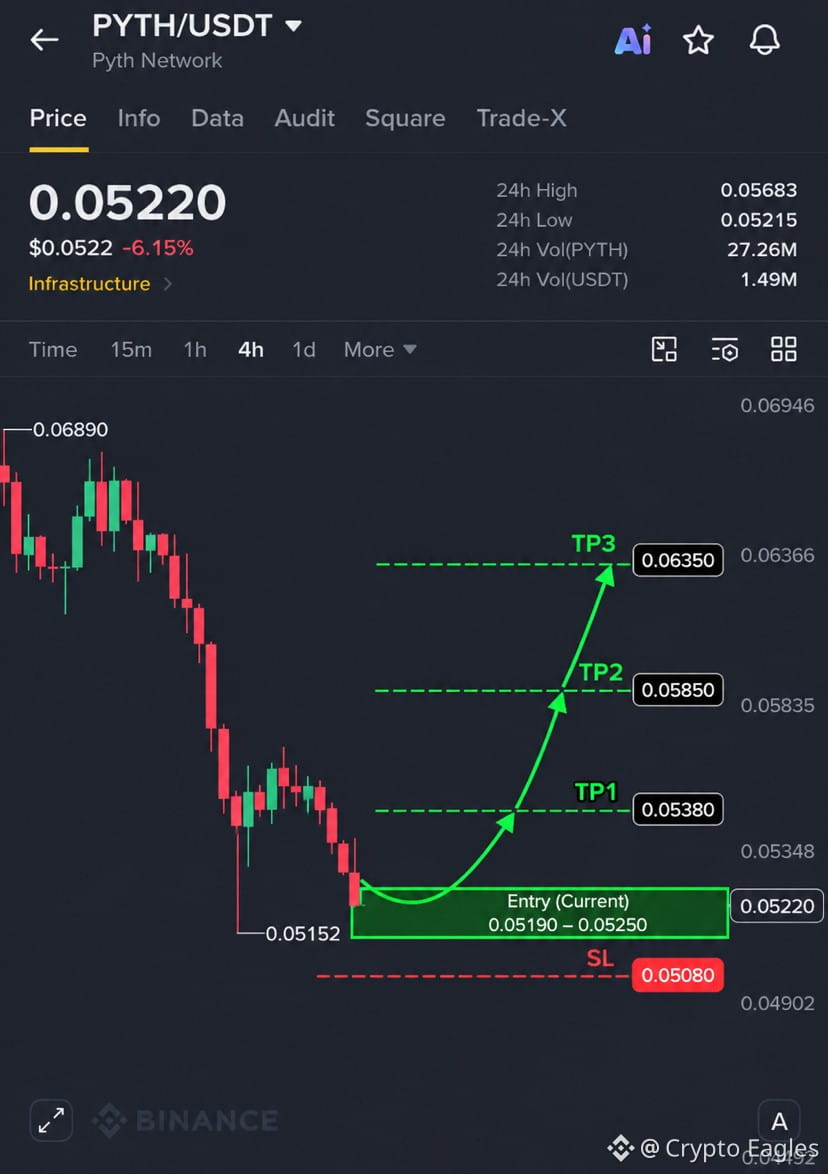
$PYTH is attempting to stabilize around 0.052–0.054 after a sharp correction. Reclaiming 0.057–0.060 could improve bullish momentum, while losing 0.052 would weaken the recovery setup.
As traditional markets move closer to 24/7 trading, reliable data infrastructure becomes increasingly important.
$PYTH is expanding its reach into traditional financial markets.
@Pyth Network recently added NYSE BQT data to its Data Marketplace, giving applications access to real-time quotes and trades from five NYSE Group exchanges.
The growth numbers are equally interesting. Pyth Pro reached $13.67M in annual recurring revenue in October, up 18.9%, with 3,927 market-data symbols.
While $LINK focuses on oracle infrastructure, $ONDO on RWAs, $HYPE on perpetual markets and $INJ on onchain trading, Pyth is connecting these sectors through institutional-grade pricing data.
$PYTH is attempting to stabilize around 0.052–0.054 after a sharp correction. Reclaiming 0.057–0.060 could improve bullish momentum, while losing 0.052 would weaken the recovery setup.
As traditional markets move closer to 24/7 trading, reliable data infrastructure becomes increasingly important.
30
1
36
13.3k
Verified
$NIGHT is building privacy infrastructure around one practical idea: prove what is needed without exposing everything else.
Midnight combines selective disclosure with a dual-ledger design, giving institutions a way to use blockchain while keeping sensitive execution private.
The ecosystem already includes enterprise validators such as Google Cloud, MoneyGram, eToro and Worldpay, while Monument Bank is working toward tokenizing up to £250M of customer deposits.
That makes Midnight especially interesting for identity, payments, banking and RWAs, where privacy and compliance need to work together.
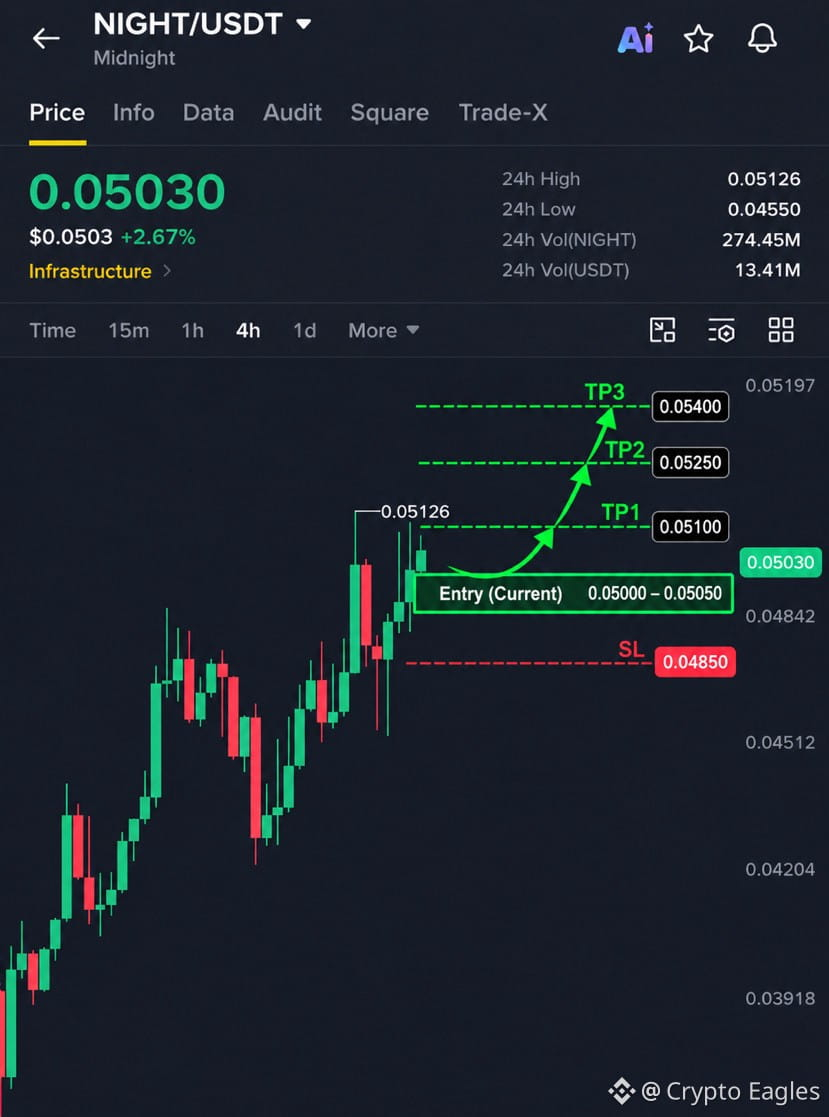
Technical view: $NIGHT is holding around the 0.0500–0.0505 zone after a strong recovery. Staying above 0.0485 keeps the bullish structure intact, with 0.0510, 0.0525 and 0.0540 as the next levels in focus.
Informational content only. Not financial advice.
24
1
44
27.5k
I support facts, not FUD.
The claim that Binance dumped tokens to cover losses and caused the market decline is not supported by the available data.
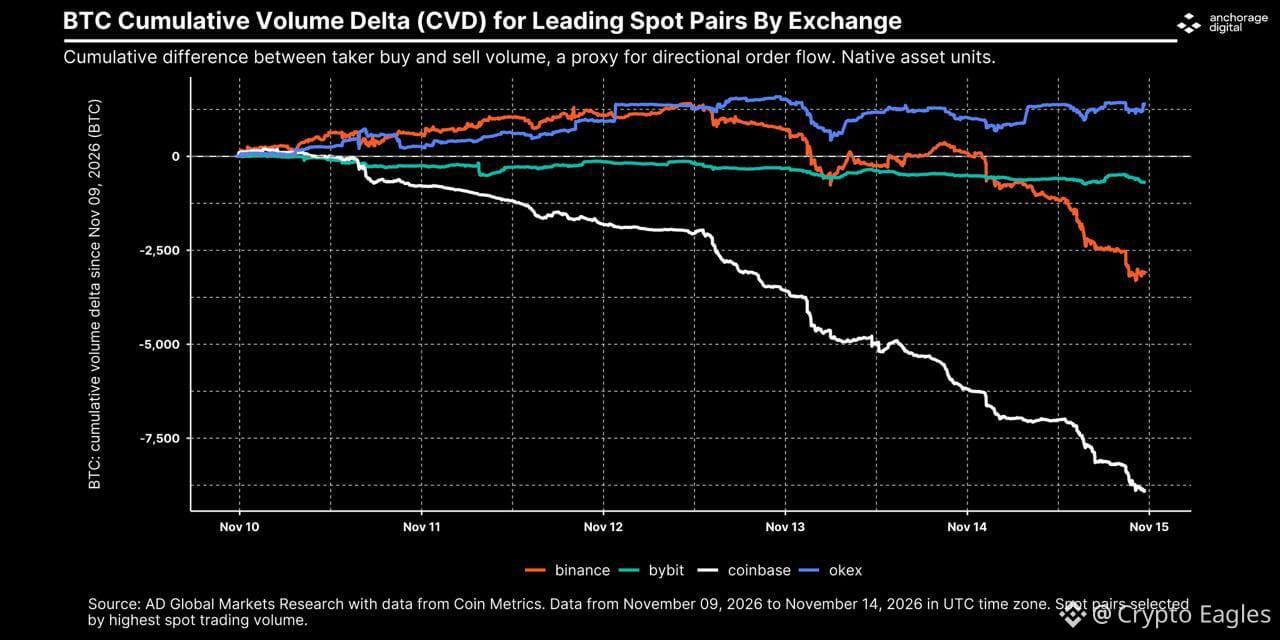
Coinbase’s spot BTC CVD fell to around negative 8,900 BTC from November 9 to 14, the largest decline among the major venues compared. Binance was around negative 3,100 BTC, Bybit around negative 700 BTC, while OKX remained positive.
This points to stronger selling from the U.S. market, not Binance.
The wider flows support this. U.S. spot Bitcoin ETFs recorded $1.91 billion in net outflows across seven consecutive trading sessions, their longest outflow streak since July.
Miners were also selling. MARA sold 13,597 BTC worth around $1.1 billion in roughly six weeks following September 30.
Add long liquidations, higher rate expectations, tighter liquidity and weaker risk appetite, and the result is a broad market repricing, not one platform causing the decline.
None of this evidence identifies Binance as the cause.
Binance benefits from healthy liquidity, active users and long-term market confidence. Deliberately causing a sell-off would damage all three and work directly against its own interests.
Large market moves rarely have one simple cause. Follow verified data instead of emotionally charged claims.
Facts matter. FUD does not.
2
3
914
Binance Blockchain Week is returning to Bangkok, and the first speaker lineup shows how much the industry is evolving.
CZ and Arthur Hayes will join leaders from BlackRock, Franklin Templeton, Visa, Tether, Ondo Finance, and BNB Chain. Research and on-chain intelligence voices from Nansen, Kaiko, CoinDesk, Coin Bureau, and DeFiLlama will also take part.
Binance leadership will be represented by @richardteng , @heyi , and senior leaders covering product, payments, trading, institutions, compliance, and APAC.
This year’s theme is Evolve. It reflects a market where traditional finance and digital assets are becoming more connected through payments, tokenization, real-world assets, and AI.
For me, the most interesting part will be hearing how institutional capital is moving on-chain and how policymakers and builders can create clear, trusted frameworks together.
Binance Blockchain Week takes place on November 28 and 29 at Queen Sirikit National Convention Center in Bangkok.
Which speaker or topic would you most like to hear?
Get your ticket:
[https://www.binanceblockchainweek.com](https://www.binanceblockchainweek.com)
#BinanceBlockchainWeek
Binance Blockchain Week is returning to Bangkok, and the first speaker lineup shows how much the industry is evolving.
CZ and Arthur Hayes will join leaders from BlackRock, Franklin Templeton, Visa, Tether, Ondo Finance, and BNB Chain. Research and on-chain intelligence voices from Nansen, Kaiko, CoinDesk, Coin Bureau, and DeFiLlama will also take part.
Binance leadership will be represented by @Richard Teng , @Yi He , and senior leaders covering product, payments, trading, institutions, compliance, and APAC.
This year’s theme is Evolve. It reflects a market where traditional finance and digital assets are becoming more connected through payments, tokenization, real-world assets, and AI.
For me, the most interesting part will be hearing how institutional capital is moving on-chain and how policymakers and builders can create clear, trusted frameworks together.
Binance Blockchain Week takes place on November 28 and 29 at Queen Sirikit National Convention Center in Bangkok.
Which speaker or topic would you most like to hear?
Get your ticket:
https://www.binanceblockchainweek.com
#BinanceBlockchainWeek

BLKUS-0.07%
BENUS+0.62%
2
5
1.5k
Verified
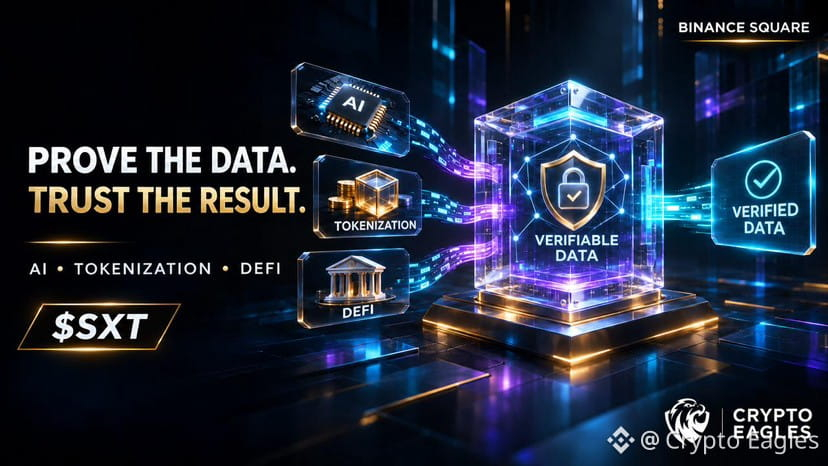
Every AI model, tokenized asset, and DeFi protocol eventually depends on one thing: data it can trust.
But most databases still ask users to trust the operator.
@SpaceandTimeDB is working to replace that trust with cryptographic proof. Its Proof of SQL technology does not simply return an answer from a database. It generates a zero-knowledge proof showing that the query was executed correctly against committed, tamperproof data.
That difference could become increasingly important. An AI agent can make decisions using data whose calculations can be verified.
A tokenized asset platform can confirm balances, collateral, and ownership records without publishing every underlying record.
A DeFi application can use large historical or cross-chain datasets while keeping heavy computation off-chain and verifying the final result on-chain. Users do not need to rerun the entire calculation or blindly accept the answer. They can verify the proof connected to it.
This is why Space and Time is more than another data provider. It is building infrastructure where applications can use complex information without removing accountability from the process.
The next phase of onchain finance $will not be powered only by faster networks. It will also need data that can defend every number it produces. That is the real opportunity behind .
Would you trust an AI agent or smart contract more if every important result came with proof?
DYOR. Trading involves risk.
#sxt $SXT #SXT
Every AI model, tokenized asset, and DeFi protocol eventually depends on one thing: data it can trust.
But most databases still ask users to trust the operator.
@SpaceandTime is working to replace that trust with cryptographic proof. Its Proof of SQL technology does not simply return an answer from a database. It generates a zero-knowledge proof showing that the query was executed correctly against committed, tamperproof data.
That difference could become increasingly important. An AI agent can make decisions using data whose calculations can be verified.
A tokenized asset platform can confirm balances, collateral, and ownership records without publishing every underlying record.
A DeFi application can use large historical or cross-chain datasets while keeping heavy computation off-chain and verifying the final result on-chain. Users do not need to rerun the entire calculation or blindly accept the answer. They can verify the proof connected to it.
This is why Space and Time is more than another data provider. It is building infrastructure where applications can use complex information without removing accountability from the process.
The next phase of onchain finance $will not be powered only by faster networks. It will also need data that can defend every number it produces. That is the real opportunity behind .
Would you trust an AI agent or smart contract more if every important result came with proof?
DYOR. Trading involves risk.
#sxt $SXT #SXT
22
50
15.2k
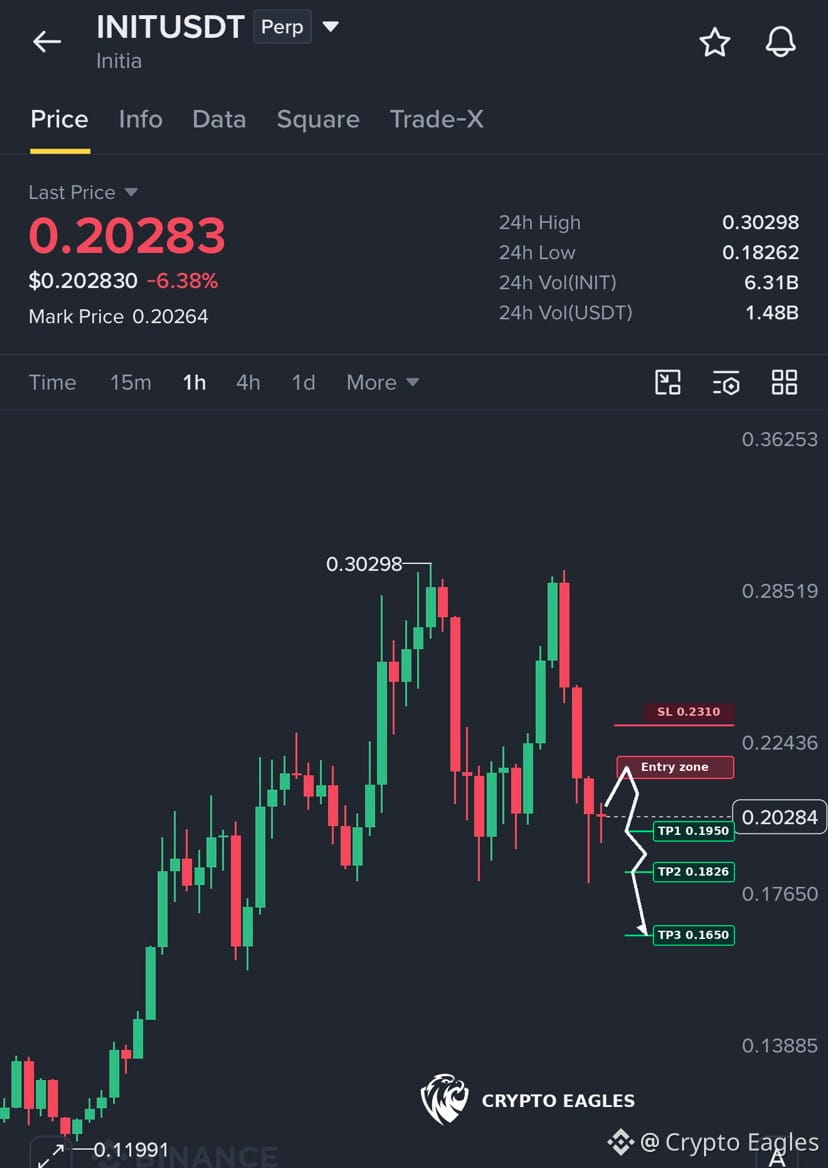
$INIT is showing bearish pressure after rejection near 0.30. The recent sell-off suggests another downside move if price fails to reclaim the 0.2120–0.2200 zone.
Entry: 0.2120–0.2200
Confirmation: Bearish rejection from zone
SL: 0.2310
TP1: 0.1950
TP2: 0.1826
TP3: 0.1650
Invalidation: Above 0.2310
Previous bull entry has done liquidation.
Entry: 0.2120–0.2200
Confirmation: Bearish rejection from zone
SL: 0.2310
TP1: 0.1950
TP2: 0.1826
TP3: 0.1650
Invalidation: Above 0.2310
Previous bull entry has done liquidation.
1
2.6k
Verified
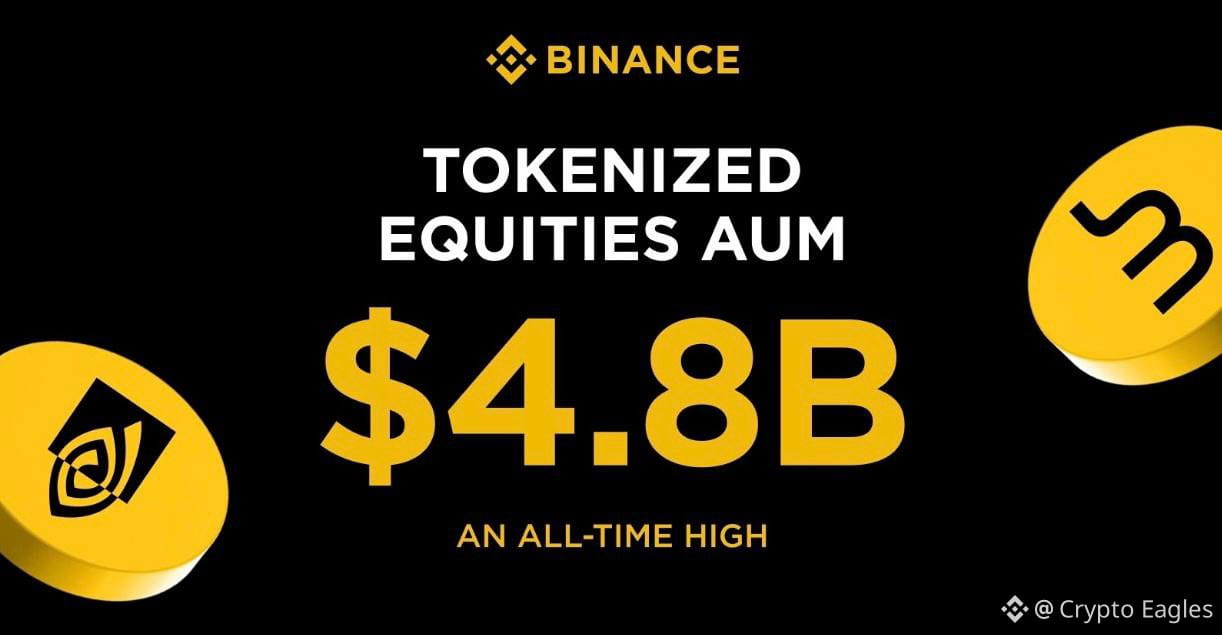
bStocks has reached $1.5B in AUM in only 145 days, becoming the largest tokenized equities issuer by AUM. The wider tokenized equities market has also reached a record $4.8B, up 164% since June.
This growth looks like real demand, not just a headline.
Around 56% of bStocks volume trades outside regular U.S. market hours. Gen Z makes up 46% of users, while roughly 70% of volume comes from emerging and frontier markets where access to U.S. listed equities was often difficult.
With tokenized equity exposure starting from $5, the old entry barrier is becoming much smaller.
Personally, what would make me trust a tokenized stock is clear and verifiable backing. Each bStock is backed 1:1 by real shares or ETFs held at a regulated custodian. The collateral data is published daily, so users can check it instead of simply trusting a claim.
I think cheaper access attracts new users, while 24/7 trading gives them a reason to stay.
22
22
1.1k
🎙️ Live Trading With Crypto Eagles | How I Pick My Entries

End
01 h 11 m 32 s
2.2k
1
0
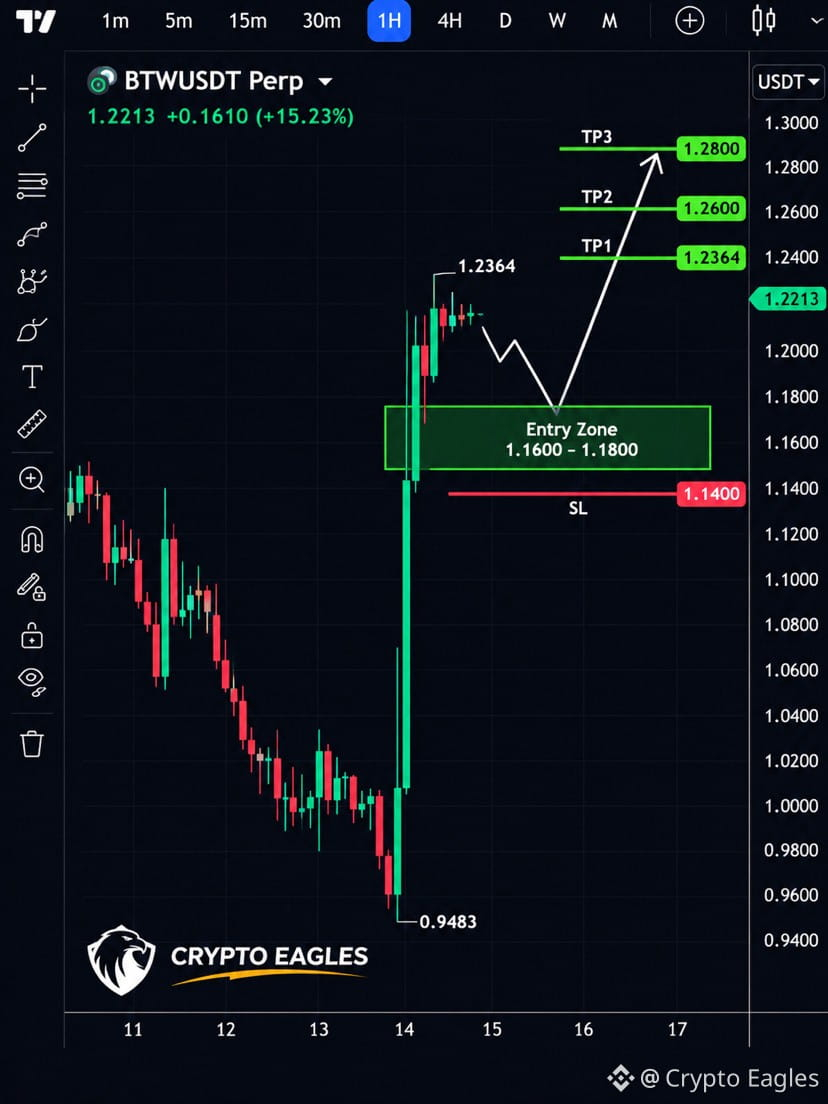
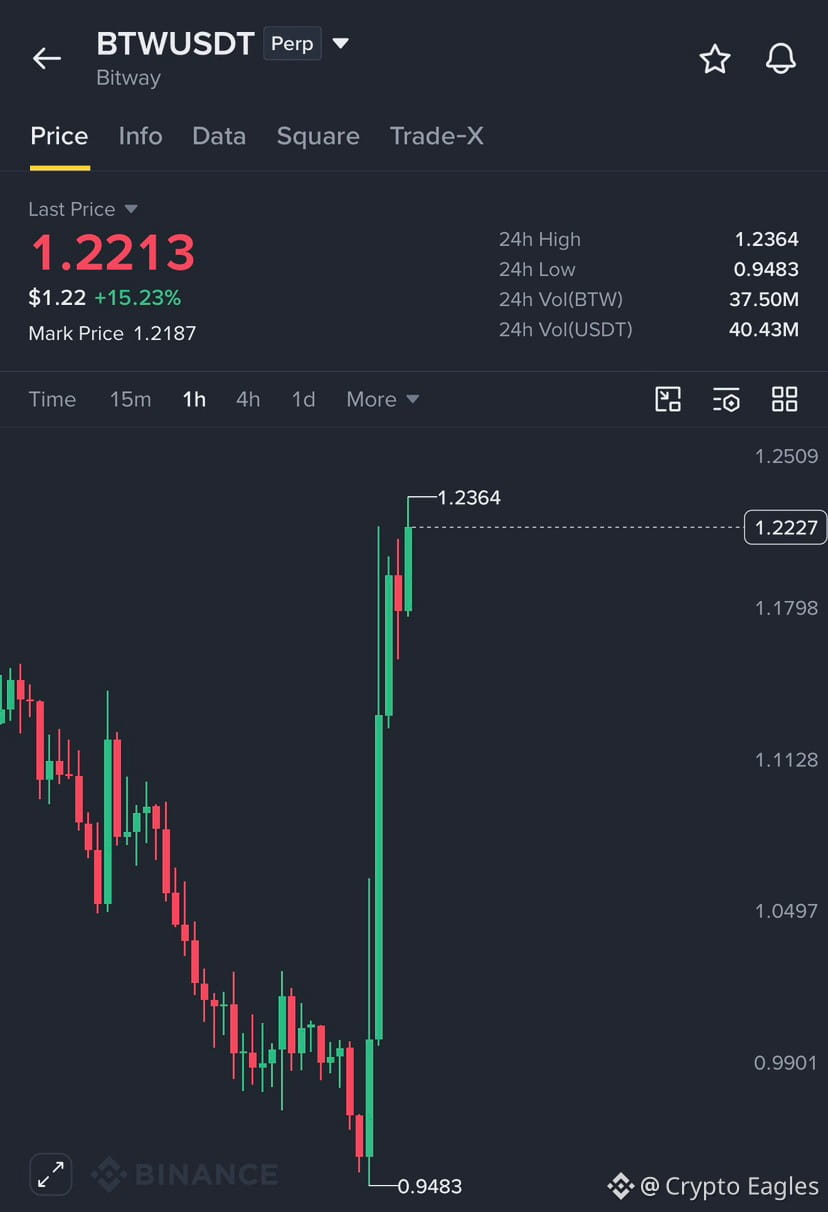
$BTW is showing strong bullish momentum after a breakout from the 0.95 accumulation area.
Price has reached 1.2364, and a pullback toward 1.18 could offer a better entry before another move higher.
Entry: 1.1800–1.1900
Confirmation: Bullish bounce from entry zone
SL: 1.1540
TP1: 1.2364
TP2: 1.2700
TP3: 1.3000
Invalidation: Below 1.1540
The trend is bullish, but chasing after a sharp rally carries higher risk.
{future}(BTWUSDT)
$BTW is showing strong bullish momentum after a breakout from the 0.95 accumulation area.
Price has reached 1.2364, and a pullback toward 1.18 could offer a better entry before another move higher.
Entry: 1.1800–1.1900
Confirmation: Bullish bounce from entry zone
SL: 1.1540
TP1: 1.2364
TP2: 1.2700
TP3: 1.3000
Invalidation: Below 1.1540
The trend is bullish, but chasing after a sharp rally carries higher risk.
1
2
1.5k
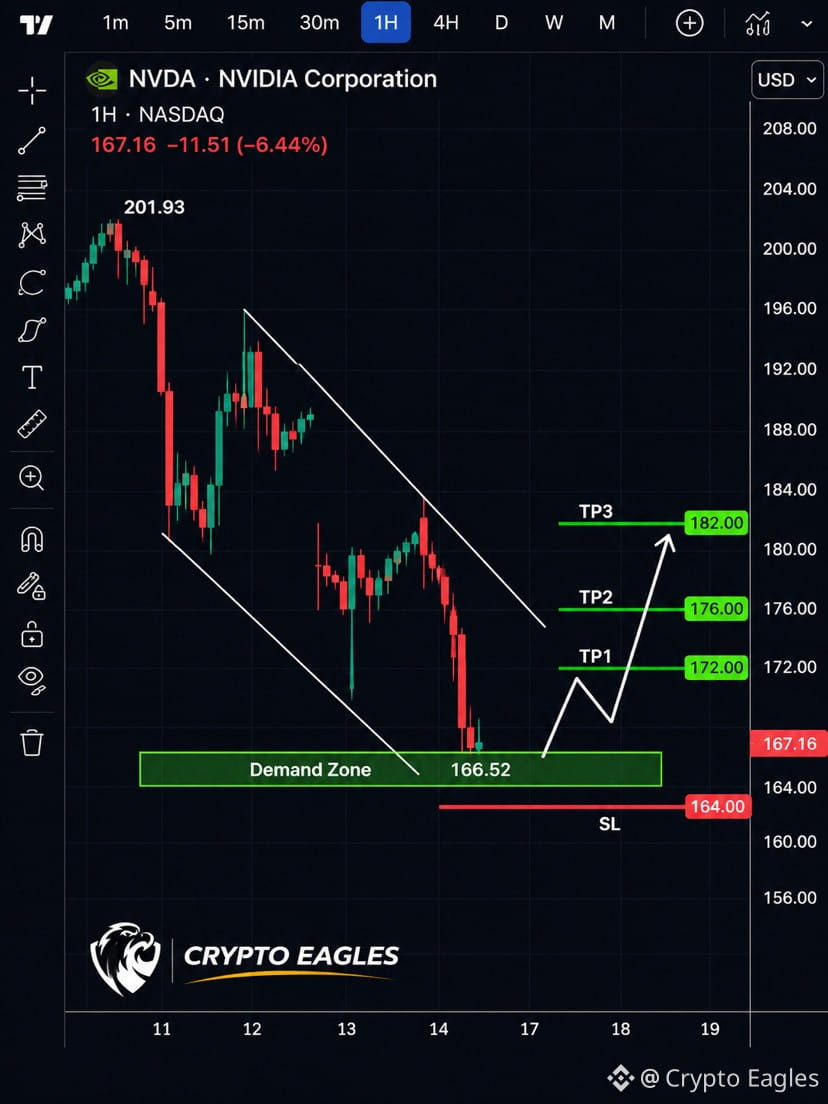
$NVDAB is sitting right in the demand zone after a bleed.
Testing key support around $166.50 after breaking down through that descending channel. If bulls step in here, the bounce could be swift.
• Entry: Demand Zone ($166 – $167)
• TP1: $172.00
• TP2: $176.00
• TP3: $182.00
• SL: $164.00
Bounce back to $176+ or breakdown? What’s your play?
{future}(NVDAUSDT)
$NVDAB is sitting right in the demand zone after a bleed.
Testing key support around $166.50 after breaking down through that descending channel. If bulls step in here, the bounce could be swift.
• Entry: Demand Zone ($166 – $167)
• TP1: $172.00
• TP2: $176.00
• TP3: $182.00
• SL: $164.00
Bounce back to $176+ or breakdown? What’s your play?
Testing key support around $166.50 after breaking down through that descending channel. If bulls step in here, the bounce could be swift.
• Entry: Demand Zone ($166 – $167)
• TP1: $172.00
• TP2: $176.00
• TP3: $182.00
• SL: $164.00
Bounce back to $176+ or breakdown? What’s your play?
1
1.2k
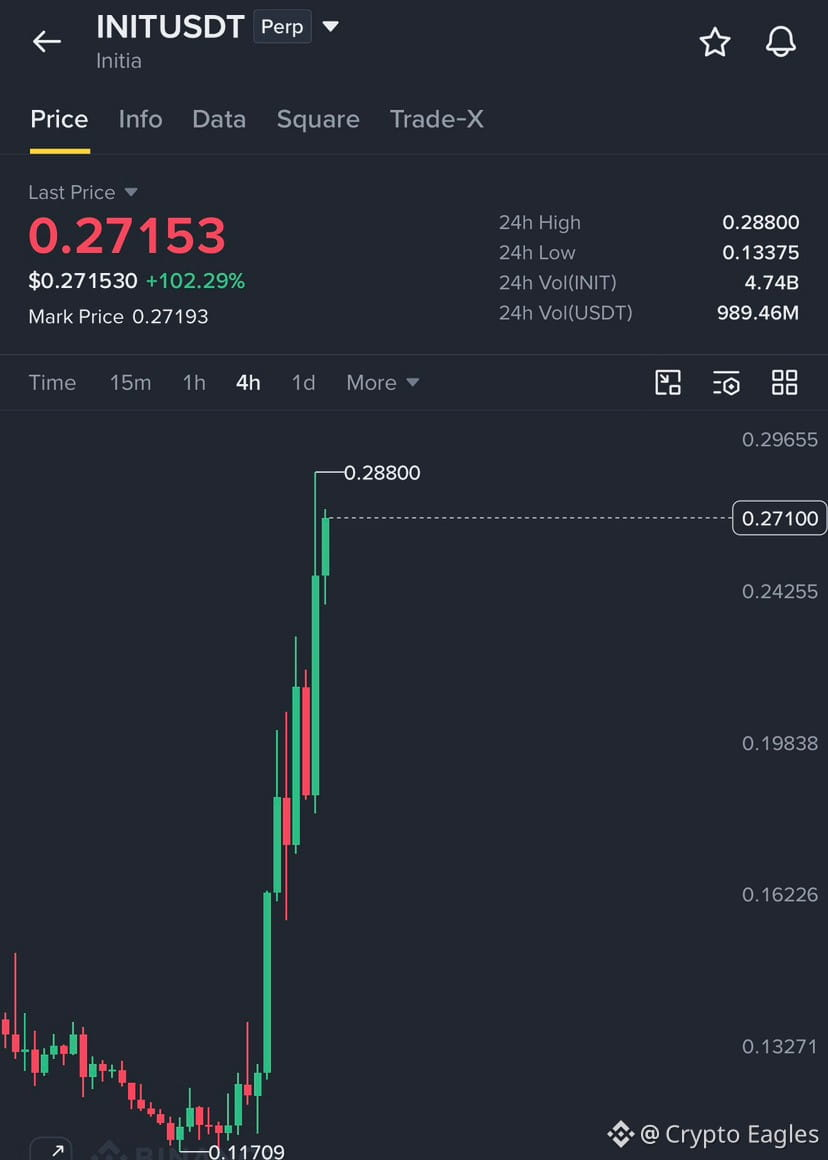
$INIT just pumped 100% in a day, but don't FOMO at the top.
Wait for the pullback. Here’s what I’m watching:
Entry: $0.235 – $0.245
TP: $0.288 / $0.320
SL: $0.218
Volume is crazy high right now.
Are you buying the dip, or is this a bull trap? Tell me below 👇
{future}(INITUSDT)
$INIT just pumped 100% in a day, but don't FOMO at the top.
Wait for the pullback. Here’s what I’m watching:
Entry: $0.235 – $0.245
TP: $0.288 / $0.320
SL: $0.218
Volume is crazy high right now.
Are you buying the dip, or is this a bull trap? Tell me below 👇
Wait for the pullback. Here’s what I’m watching:
Entry: $0.235 – $0.245
TP: $0.288 / $0.320
SL: $0.218
Volume is crazy high right now.
Are you buying the dip, or is this a bull trap? Tell me below 👇
1
4
3.6k
Before entering any trade, I decide one thing first: how much am I prepared to lose?
With a perp, every move against my position increases the loss directly. One aggressive wick can also close the trade before the wider idea develops.
For selected setups, I prefer options. The downside is defined before entry, while the upside remains open if the market moves with my view.
@Aevoxyz Options Easy Mode provides a simpler way to trade real options on BTC, ETH and HYPE without starting from a complicated options chain.
This is not about avoiding risk. It is about choosing and controlling that risk before pressing confirm.
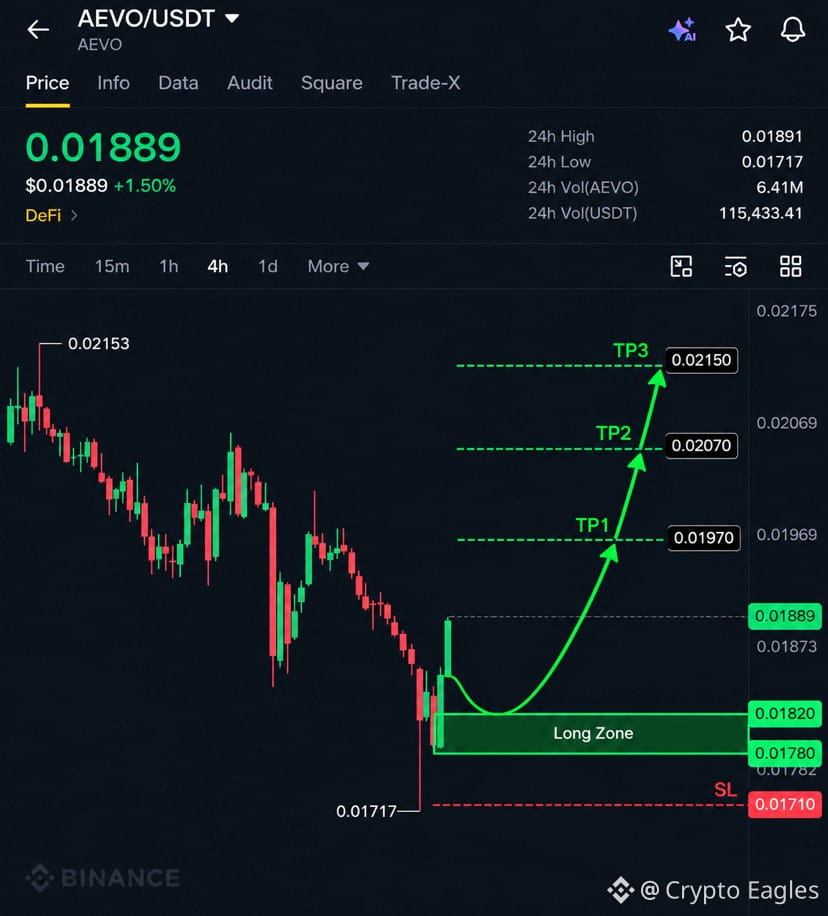
Head toward 0.022
$AEVO #Aevo
DYOR.
Before entering any trade, I decide one thing first: how much am I prepared to lose?
With a perp, every move against my position increases the loss directly. One aggressive wick can also close the trade before the wider idea develops.
For selected setups, I prefer options. The downside is defined before entry, while the upside remains open if the market moves with my view.
@Aevo Options Easy Mode provides a simpler way to trade real options on BTC, ETH and HYPE without starting from a complicated options chain.
This is not about avoiding risk. It is about choosing and controlling that risk before pressing confirm.
Head toward 0.022
$AEVO #Aevo
DYOR.
33
42
19.4k
Verified
$PYTH is building something bigger than a traditional oracle network.
Pyth is expanding its role in institutional finance, with 710+ businesses using its data and over $3.25T in cumulative volume secured.
The latest growth is impressive.
Pyth ended September with $11.5M in annual recurring revenue, over 3,811 market-data symbols through Pyth Pro, and 61 continuous indices.
While $LINK focuses on oracle infrastructure, $ONDO on RWAs, $HYPE on perpetual markets, and $UMA on prediction-market resolution, Pyth connects these sectors through first-party financial data.
The expansion of Pyth Pro, Data Marketplace and Pyth Indices shows how institutional market data is moving toward 24/7 financial markets.
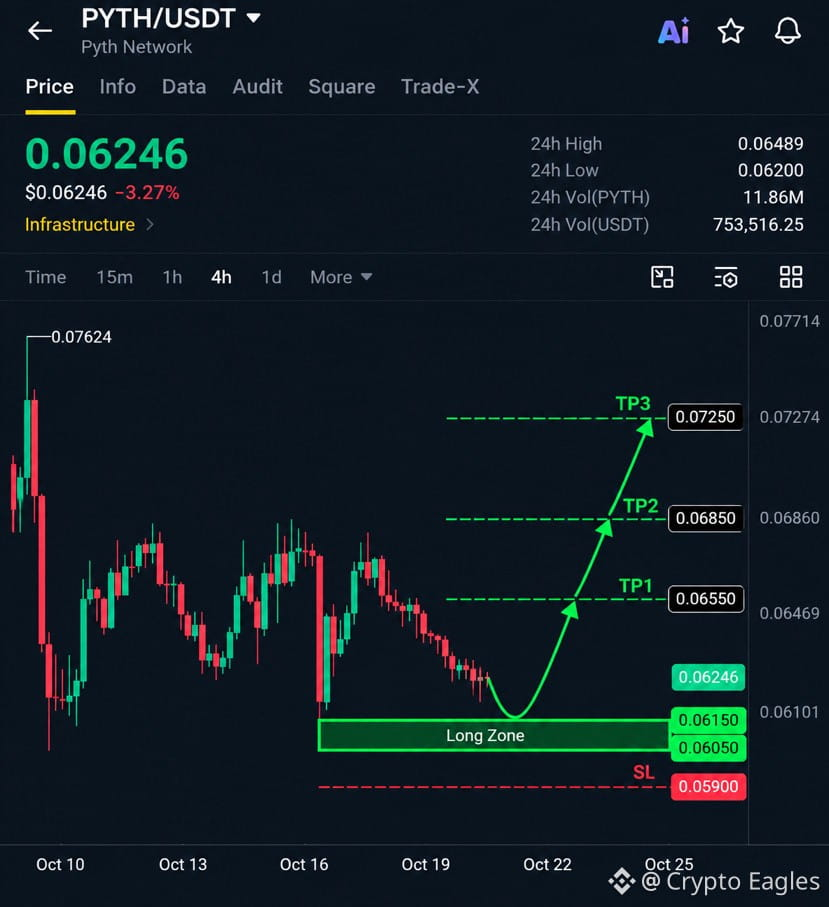
Technical view: It is testing the 0.059–0.061 area after a sharp correction. A sustained recovery above 0.063–0.065 could improve bullish momentum, while losing 0.058 would weaken the setup.
22
36
14.8k
Cyberattacks are becoming faster and more sophisticated, especially with the growing use of AI.
In his recent Fox interview, @richardteng explained how Binance responded to a highly sophisticated attack. User protection remained the priority.
The identified entry points were closed, affected systems were rebuilt or replaced, devices were locked down, wallet risk controls were strengthened, and AI anomaly detection was expanded.
Binance also detected and prevented 57 other suspected North Korea linked cyberthreats this year. Working with law enforcement, issuers, and blockchain intelligence firms, around $2.85 billion has been frozen or intercepted.
What stands out to me is how quickly the threat is changing. Attacks have gone from happening monthly to weekly, and sometimes several platforms are targeted in one day.
The lesson is clear. If attacks operate at AI speed, security must also be AI driven. That means investing in skilled engineers, stronger AI tools, and close cooperation across the industry.
Cyberattacks are becoming faster and more sophisticated, especially with the growing use of AI.
In his recent Fox interview, @Richard Teng explained how Binance responded to a highly sophisticated attack. User protection remained the priority.
The identified entry points were closed, affected systems were rebuilt or replaced, devices were locked down, wallet risk controls were strengthened, and AI anomaly detection was expanded.
Binance also detected and prevented 57 other suspected North Korea linked cyberthreats this year. Working with law enforcement, issuers, and blockchain intelligence firms, around $2.85 billion has been frozen or intercepted.
What stands out to me is how quickly the threat is changing. Attacks have gone from happening monthly to weekly, and sometimes several platforms are targeted in one day.
The lesson is clear. If attacks operate at AI speed, security must also be AI driven. That means investing in skilled engineers, stronger AI tools, and close cooperation across the industry.
3
1.9k
Log in to explore more content
Join global crypto users on Binance Square
⚡️ Get latest and useful information about crypto.
💬 Trusted by the world’s largest crypto exchange.
👍 Discover real insights from verified creators.
Email / Phone number
Trending Topics
CanMarketsReboundAfterThanksgiving?
196,382 views
1,982 Discussing
Rate-Hike Bets Linger as US Markets Head Into Thanksgiving Closure
Binance News
·7 Likes
·5.7k views
CouldSpaceX’sOrbitalDataCentersBoostAIChipDemand?
96,442 views
1,191 Discussing
SouthKoreaProposesMandatoryDigitalAssetTransactionDisclosure
5,094 views
111 Discussing