
Aiman Malikk
4.9k Posts

Aiman Malikk
Report
Block User
Crypto Enthusiast | Futures Trader & Scalper | Crypto Content Creator & Educator | X: @aimanmalikk7
233 Following
9.9K+ Followers
13.0K+ Liked
Posts
All
Quotes
Live
PINNED
·
--
Article
The journey of Binance the growth of blockchain and the future of digital finance.In 2017 Bitcoin is climbing, new tokens launch every week, and everyone you know suddenly wants in. You open an exchange to buy your first coin. The page crawls. Orders lag. A support ticket sits unanswered.
Somewhere in the back of your mind is a bigger worry: will this platform even be around next year?
Coins were plentiful. Speed, liquidity and trust were scarce. Fewer than six million people owned crypto anywhere in the world, and the exchanges serving them were struggling to keep up.
Binance opened its doors into that gap on July 14, 2017. Nine years later it counts more than 323 million registered users, and the problem has changed shape.
Money now moves around the clock on shared rails. Trust, though, still has to be earned again after every hard day.
Hold on to that question We come back to it in Bangkok.
This is what the theme of Binance Blockchain Week 2026 is asking.
How does an industry grow from fast to dependable?
Here is the route Binance took, the people who built along it, the moments that tested it, and where the conversation goes next.
The Evolution of Binance
The beginning: why another exchange?
In 2017 the ICO boom was in full swing, Ethereum fees were high, and few exchanges could handle the surge of new traders without slowing down. Support was thin. Trust was thinner.
Changpeng "CZ" Zhao, who had spent years building trading systems, launched Binance with Yi He as a co-founder. The model was simple: a crypto-to-crypto exchange built for speed, low fees and many languages.
The team claimed capacity of about 1.4 million orders a second, an eye-catching number in an industry used to lag.
Funding came from a token sale. The BNB offering raised about $15 million in under two weeks, and the exchange opened on July 14, 2017.
Early reports put day-one registrations near 9,000. Then the curve bent upward.
By December 27, 2017 five months after launch, Binance reported 2.9 million users and about $2.8 billion traded in a day, enough to top the volume rankings.
In January 2018 it opened registrations for a single hour and more than 240,000 people signed up. CZ said then that new users were arriving by the million each week, and that one person on the team did nothing but order servers.
It was not smooth. China tightened its rules on ICOs and exchanges in September 2017, which pushed Binance to operate from outside mainland China. A brand new platform also had to win trust from people who had every reason to be careful.
The birth of BNB:
BNB began with a plain job: pay your trading fees with it and get a discount. The sale ran from June 26 to July 3, 2017 at $0.15 a token, and the exchange opened about eleven days later. BNB started life as an ERC-20 token on Ethereum.
How its job grew?
2017 to 2019: fee discounts and VIP tiers on the exchange.
2019: BNB moves to Binance Chain and becomes a native coin.
2019 onward: access to Launchpad sales, later Launchpool.
2020 onward: gas fee for BNB Smart Chain, then BNB Chain.
Beyond: payments through Binance Pay, Earn products and other ecosystem services.
Supply goes the other way. Binance committed to buying back and burning BNB until 100 million remain.
The 36th quarterly auto-burn on July 15, 2026 removed about 1.6 million BNB, and total supply ended the third quarter of 2026 at roughly 133.2 million.
From Binance Chain to BNB Chain
Every step in Binance technology answered a limit in the step before it.
The pattern is easy to see.
A fee token became a chain. The chain became a platform that outside builders could use.
The platform then grew scaling and storage layers of its own.
Measuring the growth:
The headline number is 300 million registered users at the end of 2025. The more interesting number is how quickly each 100 million arrived.
Read those together and a story appears.
Users grew faster each time, and the chain underneath carried more real activity each year.
One caution: active addresses count wallets, and one person can control many.
The people behind the Evolution:
Leaders and industry pioneers
Early crypto leaders were founders who built products and tried new business models. A token that funded an exchange, a launchpad that screened projects, and a chain open to outside developers were all experiments that others copied.
Leadership at Binance has since moved from one founder to a shared structure. At Blockchain Week Dubai in 2025, Richard Teng opened by announcing Yi He as co-CEO alongside him. The tone moved with it, from growth at any speed to growth with rules.
Regulatory innovation is no longer confined to traditional financial centres.
That is Teng's framing for Bangkok, paraphrased. Institutions now sit in the same rooms. The Bangkok agenda lists speakers from BlackRock, Nasdaq, Visa and Tether, together with officials from Kazakhstan, Bhutan, Ghana and Thailand. Collaboration used to mean exchanges working with projects.
Now it means regulators, banks and builders working on the same standards.
Builders and startups
A startup chooses a public chain because it hands over users, liquidity and tools on day one. A team that can build on Ethereum can build on BNB Chain, which lowers the cost of trying an idea.
Support comes in layers: developer tools, hackathons such as BNB Hack and Good Vibes Only, grants, incubation programmes, then a possible Launchpad or Launchpool listing. Out of that mix came DeFi (lending and trading), GameFi (games with on-chain assets), SocialFi and infrastructure.
Applications such as PancakeSwap, Venus and Lista DAO still anchor BNB Chain's DeFi activity.
Builders also face real hurdles. Bear markets dry up funding. Security failures can end a young project. Rules differ by country, and users are hard to win from established apps.
Community: from users to contributors
The community is not just a customer count. Volunteers known as Binance Angels run local education and support. Community meetups happen in cities from Bengaluru to Melbourne. Binance Academy and Binance Square give people free learning material and a place to explain the technology in their own language.
Creators spread awareness in a way adverts cannot, because a friend or a local voice is easier to trust. Developers contribute through open-source work and hackathons. Governance and feedback loops let users shape the chain they use. Each contribution is small. Together they make a network harder to break.
Leaders set the direction. Builders make the tools. The community decides what gets used.
From innovation to real-world applications:
This is where "Evolve" is tested. For each area: what was broken, what changed, and where it is used now.
The useful cases replace a slow or costly step in something people already do. They do not depend on prices moving.
Trust, security and the weight of growth
User counts and trading volume say little about whether a platform deserves trust. Security, transparency and the way a crisis is handled say far more.
What builds user trust
No single product explains Binance growth. Several factors worked together.
Reliability and liquidity: Fast trading and deep order books drew people in early.
BNB utility: Fee discounts, then Launchpad and Launchpool access, gave holders a reason to stay.
A safety net: SAFU, created in July 2018, set aside 10% of trading fees for emergencies.
Product breadth: Earn, Pay, Wallet and others kept users inside one ecosystem.
Transparency: Proof of Reserves, introduced in 2022 and 2023, lets users check that balances are backed.
Compliance: In 2023 Binance reached a settlement with US authorities and its founder stepped down as CEO.
Since then it has built out compliance, and in December 2025 it announced an approval from Abu Dhabi's ADGM, with regulated activity due to start in January 2026.
Trust here is earned and then earned again. It grew with the user base, and it was tested at each major incident.
Binance Launchpad:
By 2018 the ICO model had a poor name after many collapses. Binance Launchpad, which reopened public sales in early 2019, took another route.
The exchange screened a project first, then offered tokens to its users through a lottery or first-come format, with BNB used to take part. These sales were called initial exchange offerings, and other exchanges soon copied the idea.
Launchpad versus Launchpool. Launchpad sells new tokens in a fixed sale. Launchpool lets users lock tokens such as BNB to earn a new project's tokens over time without buying them.
Judging success: A sale that sells out in seconds shows demand, not lasting value.
By mid-2019 BitTorrent, Matic, Celer and Fetch.AI were all well below their peak prices.
Product use and developer activity say more than first-day charts.
For anyone taking part, the risk is real: new tokens can fall sharply, and a screened project is not a guaranteed one.
Security: two incidents, seven years apart
Centralised exchanges hold other people's money, which makes them targets. Binance's two largest incidents show how much the stakes grew.
Case study 1: May 7, 2019
Attackers took 7,000 BTC worth about $40 million then, in one transaction from the Bitcoin hot wallet which held roughly 2% of Binance's total bitcoin.
Binance said hackers had gathered user API keys, 2FA codes and other data through phishing, malware and other methods. It paused deposits and withdrawals, began a full security review, and covered the loss from SAFU.
It also considered reversing the transaction through a chain reorganisation but was advised against it.
Case study 2: October 29, 2026
Starting around 20:05 UTC attackers drained about $6.3 billion from Binance hot wallets across ten blockchains, the largest crypto theft on record. Binance's own findings describe a multi-step attack, not a single phishing email.
An engineer's computer was compromised, stolen credentials opened another engineer's machine, and a malicious script reached the internal wallet signing service. Binance said it found no evidence that private keys leaked.
Examples of what moved: 18,270 BTC, about 233 million XRP, about 970,500 SOL and 44.2 million OP. On Ethereum the attacker used the EIP-7702 delegation feature to gain control of one hot wallet.
Binance noted that pausing withdrawals did not cancel permissions already granted on-chain.
The FBI attributed the theft to North Korea's TraderTraitor group on October 31. Pyongyang denies involvement.
Richard Teng said the affected wallet was Binance own hot wallet, not customer funds.
In the first days after reopening, reports cited about $7.4 billion in gross withdrawals and, at one point, a net outflow near $3.6 billion.
SAFU: the emergency protection fund
Binance created the Secure Asset Fund for Users in July 2018 and funded it with 10% of trading fees.
The idea is simple: keep money aside, in advance, for the day something goes wrong.
In early 2026 the fund was converted fully into Bitcoin at about $1 billion, with a rule to top it back up to $1 billion if its value falls below $800 million.
In October 2026: Binance used part of SAFU a portion of its Futures Insurance Fund and its corporate treasury. A 7,499 BTC transfer from the SAFU wallet roughly halved its visible Bitcoin balance. Binance committed to replenishing SAFU to about $1 billion.
In 2019 SAFU alone covered the loss. In 2026 it was one of three layers, which says something about how big the exposure had become.
Beyond security: lessons for the industry
Protect signing systems like keys: The attack reached the service that approves withdrawals without stealing keys.
Limit hot wallets: Keep only what daily withdrawals need online.
Plan to revoke permissions fast: On-chain authorisations can outlive a pause.
Use on-chain transparency: Public ledgers helped partners trace and freeze assets quickly, about $3 billion by early November.
Work together: Stablecoin issuers, a network's security council, analytics firms and law enforcement all played a part in the response.
Keep proving it: Repeated proof-of-reserves snapshots build confidence more than a single statement.
Security has to evolve at the same pace as the technology it protects. That includes the human side: training, credentials and who can reach which system.
Binance Blockchain Week: where the industry meets
How Blockchain Week evolved
Binance Blockchain Week began in 2019 and has since travelled to Singapore, Paris, Istanbul and Dubai.
It is the top event among roughly 1,500 gatherings Binance runs worldwide. Each edition mixes main-stage keynotes, panels, builder sessions and community spaces, and many include an awards night.
The value lies in who shares a room: founders, developers, regulators and everyday users. A regulator can hear from a builder. A builder can meet an institution.
Those conversations rarely happen on a screen.
Previous editions: how the conversation changed
2022: growth and adoption. Panels asked what crypto looks like after mass adoption and how to build a better Web3. Excitement ran high around games, NFTs and virtual worlds.
2024: momentum, challenges and regulation. Richard Teng called 2024 a turning point, citing the US spot ETF.
Sessions covered AI in Web3 and community-driven compliance. CZ made his first public appearance on Day 2 for a fireside chat.
2025: real-world adoption. The Path Ahead brought together Ripple's Brad Garlinghouse, Solana's Lily Liu and Teng on a clearer regulatory landscape.
Raoul Pal laid out his view of 2026 markets, and CZ debated Peter Schiff on Bitcoin versus tokenised gold. Teng named blockchain and AI as the two technologies set to reshape finance.
Read in order, the focus moves from fun to function: games and metaverse in 2022, momentum and regulation in 2024, stablecoins and real payments in 2025.
Evolve at Blockchain Week 2026: what is new
Why Bangkok? Binance leadership pointed to Thailand's vibrant crypto community and its progress on tokenisation.
The timing also fits: Thailand's SEC is preparing new stablecoin rules, so the room includes the people writing them. The event runs in partnership with Binance TH, with Celo as title sponsor and Kite and Plasma as platinum sponsors.
The theme: Markets that once ran on business hours are becoming open and always-on, while AI changes how people move and manage money. Evolve names that shift.
Who is on stage?
Early speakers include BlackRock's APAC head of digital assets, Kazakhstan's Vice Minister of Artificial Intelligence and Digital Development, the head of crypto and fintech growth at Bhutan's Gelephu Mindfulness City, and analysts from Coin Bureau, CoinDesk, Nansen, Kaiko and DeFiLlama.
A cybersecurity and compliance track includes Elliptic, TRM Labs, Chainalysis, Solidus Labs and the Royal Thai Police.
What is new this year. A second day built around AI agents, a regulation-first location, and a security conversation that now has a very recent case study behind it.
Why Evolve matters
Put the pieces side by side and the theme explains itself.
Binance's path mirrors the industry's. Speculation first, then infrastructure, then regulation, now real use.BNB and the chain grew from a discount coupon into a network. It now carries billions of transactions a quarter.Builders, startups and communities did the heavy lifting. Platforms provide rails. People decide what runs on them.Practical adoption is the point. Payments, tokenised assets and automated finance matter more than price.Traditional finance and blockchain are converging. Shared infrastructure, longer trading hours and global access.Collaboration is the only way through. Security and regulation both need many hands.
The future: what comes next
The next chapter of blockchain
Five areas to watch after Bangkok
Digital finance: Always-on markets and one account for crypto and traditional assets.
Infrastructure: Faster, cheaper chains, Layer 2 networks and storage built for real workloads.
Institutions and RWAs: More stocks, funds and bonds on-chain, under clear rules.
AI-powered finance: Agents that pay, trade and settle, with auditable records.
People and safety: Education, security practice and communities that keep new users safe.
For startups and developers the opportunity sits where these overlap: compliant payment tools, tokenisation services, security tooling, and applications that let an AI agent act on a person's behalf.
None of it works without trust, which brings us back to the question we started with.
Crypto remains volatile and risky and this article is based on my personal research and analysis, is protected by copyright, and is intended for informational and educational purposes only not as financial or investment advice.
#EvolveAtBinanceBlockchainWeek @CZ @richardteng @heyi @BinanceBlockchainWeek
The journey of Binance the growth of blockchain and the future of digital finance.
In 2017 Bitcoin is climbing, new tokens launch every week, and everyone you know suddenly wants in. You open an exchange to buy your first coin. The page crawls. Orders lag. A support ticket sits unanswered.
Somewhere in the back of your mind is a bigger worry: will this platform even be around next year?
Coins were plentiful. Speed, liquidity and trust were scarce. Fewer than six million people owned crypto anywhere in the world, and the exchanges serving them were struggling to keep up.
Binance opened its doors into that gap on July 14, 2017. Nine years later it counts more than 323 million registered users, and the problem has changed shape.
Money now moves around the clock on shared rails. Trust, though, still has to be earned again after every hard day.
Hold on to that question We come back to it in Bangkok.
This is what the theme of Binance Blockchain Week 2026 is asking.
How does an industry grow from fast to dependable?
Here is the route Binance took, the people who built along it, the moments that tested it, and where the conversation goes next.
The Evolution of Binance
The beginning: why another exchange?
In 2017 the ICO boom was in full swing, Ethereum fees were high, and few exchanges could handle the surge of new traders without slowing down. Support was thin. Trust was thinner.
Changpeng "CZ" Zhao, who had spent years building trading systems, launched Binance with Yi He as a co-founder. The model was simple: a crypto-to-crypto exchange built for speed, low fees and many languages.
The team claimed capacity of about 1.4 million orders a second, an eye-catching number in an industry used to lag.
Funding came from a token sale. The BNB offering raised about $15 million in under two weeks, and the exchange opened on July 14, 2017.
Early reports put day-one registrations near 9,000. Then the curve bent upward.
By December 27, 2017 five months after launch, Binance reported 2.9 million users and about $2.8 billion traded in a day, enough to top the volume rankings.
In January 2018 it opened registrations for a single hour and more than 240,000 people signed up. CZ said then that new users were arriving by the million each week, and that one person on the team did nothing but order servers.
It was not smooth. China tightened its rules on ICOs and exchanges in September 2017, which pushed Binance to operate from outside mainland China. A brand new platform also had to win trust from people who had every reason to be careful.
The birth of BNB:
BNB began with a plain job: pay your trading fees with it and get a discount. The sale ran from June 26 to July 3, 2017 at $0.15 a token, and the exchange opened about eleven days later. BNB started life as an ERC-20 token on Ethereum.
How its job grew?
2017 to 2019: fee discounts and VIP tiers on the exchange.
2019: BNB moves to Binance Chain and becomes a native coin.
2019 onward: access to Launchpad sales, later Launchpool.
2020 onward: gas fee for BNB Smart Chain, then BNB Chain.
Beyond: payments through Binance Pay, Earn products and other ecosystem services.
Supply goes the other way. Binance committed to buying back and burning BNB until 100 million remain.
The 36th quarterly auto-burn on July 15, 2026 removed about 1.6 million BNB, and total supply ended the third quarter of 2026 at roughly 133.2 million.
From Binance Chain to BNB Chain
Every step in Binance technology answered a limit in the step before it.
The pattern is easy to see.
A fee token became a chain. The chain became a platform that outside builders could use.
The platform then grew scaling and storage layers of its own.
Measuring the growth:
The headline number is 300 million registered users at the end of 2025. The more interesting number is how quickly each 100 million arrived.
Read those together and a story appears.
Users grew faster each time, and the chain underneath carried more real activity each year.
One caution: active addresses count wallets, and one person can control many.
The people behind the Evolution:
Leaders and industry pioneers
Early crypto leaders were founders who built products and tried new business models. A token that funded an exchange, a launchpad that screened projects, and a chain open to outside developers were all experiments that others copied.
Leadership at Binance has since moved from one founder to a shared structure. At Blockchain Week Dubai in 2025, Richard Teng opened by announcing Yi He as co-CEO alongside him. The tone moved with it, from growth at any speed to growth with rules.
Regulatory innovation is no longer confined to traditional financial centres.
That is Teng's framing for Bangkok, paraphrased. Institutions now sit in the same rooms. The Bangkok agenda lists speakers from BlackRock, Nasdaq, Visa and Tether, together with officials from Kazakhstan, Bhutan, Ghana and Thailand. Collaboration used to mean exchanges working with projects.
Now it means regulators, banks and builders working on the same standards.
Builders and startups
A startup chooses a public chain because it hands over users, liquidity and tools on day one. A team that can build on Ethereum can build on BNB Chain, which lowers the cost of trying an idea.
Support comes in layers: developer tools, hackathons such as BNB Hack and Good Vibes Only, grants, incubation programmes, then a possible Launchpad or Launchpool listing. Out of that mix came DeFi (lending and trading), GameFi (games with on-chain assets), SocialFi and infrastructure.
Applications such as PancakeSwap, Venus and Lista DAO still anchor BNB Chain's DeFi activity.
Builders also face real hurdles. Bear markets dry up funding. Security failures can end a young project. Rules differ by country, and users are hard to win from established apps.
Community: from users to contributors
The community is not just a customer count. Volunteers known as Binance Angels run local education and support. Community meetups happen in cities from Bengaluru to Melbourne. Binance Academy and Binance Square give people free learning material and a place to explain the technology in their own language.
Creators spread awareness in a way adverts cannot, because a friend or a local voice is easier to trust. Developers contribute through open-source work and hackathons. Governance and feedback loops let users shape the chain they use. Each contribution is small. Together they make a network harder to break.
Leaders set the direction. Builders make the tools. The community decides what gets used.
From innovation to real-world applications:
This is where "Evolve" is tested. For each area: what was broken, what changed, and where it is used now.
The useful cases replace a slow or costly step in something people already do. They do not depend on prices moving.
Trust, security and the weight of growth
User counts and trading volume say little about whether a platform deserves trust. Security, transparency and the way a crisis is handled say far more.
What builds user trust
No single product explains Binance growth. Several factors worked together.
Reliability and liquidity: Fast trading and deep order books drew people in early.
BNB utility: Fee discounts, then Launchpad and Launchpool access, gave holders a reason to stay.
A safety net: SAFU, created in July 2018, set aside 10% of trading fees for emergencies.
Product breadth: Earn, Pay, Wallet and others kept users inside one ecosystem.
Transparency: Proof of Reserves, introduced in 2022 and 2023, lets users check that balances are backed.
Compliance: In 2023 Binance reached a settlement with US authorities and its founder stepped down as CEO.
Since then it has built out compliance, and in December 2025 it announced an approval from Abu Dhabi's ADGM, with regulated activity due to start in January 2026.
Trust here is earned and then earned again. It grew with the user base, and it was tested at each major incident.
Binance Launchpad:
By 2018 the ICO model had a poor name after many collapses. Binance Launchpad, which reopened public sales in early 2019, took another route.
The exchange screened a project first, then offered tokens to its users through a lottery or first-come format, with BNB used to take part. These sales were called initial exchange offerings, and other exchanges soon copied the idea.
Launchpad versus Launchpool. Launchpad sells new tokens in a fixed sale. Launchpool lets users lock tokens such as BNB to earn a new project's tokens over time without buying them.
Judging success: A sale that sells out in seconds shows demand, not lasting value.
By mid-2019 BitTorrent, Matic, Celer and Fetch.AI were all well below their peak prices.
Product use and developer activity say more than first-day charts.
For anyone taking part, the risk is real: new tokens can fall sharply, and a screened project is not a guaranteed one.
Security: two incidents, seven years apart
Centralised exchanges hold other people's money, which makes them targets. Binance's two largest incidents show how much the stakes grew.
Case study 1: May 7, 2019
Attackers took 7,000 BTC worth about $40 million then, in one transaction from the Bitcoin hot wallet which held roughly 2% of Binance's total bitcoin.
Binance said hackers had gathered user API keys, 2FA codes and other data through phishing, malware and other methods. It paused deposits and withdrawals, began a full security review, and covered the loss from SAFU.
It also considered reversing the transaction through a chain reorganisation but was advised against it.
Case study 2: October 29, 2026
Starting around 20:05 UTC attackers drained about $6.3 billion from Binance hot wallets across ten blockchains, the largest crypto theft on record. Binance's own findings describe a multi-step attack, not a single phishing email.
An engineer's computer was compromised, stolen credentials opened another engineer's machine, and a malicious script reached the internal wallet signing service. Binance said it found no evidence that private keys leaked.
Examples of what moved: 18,270 BTC, about 233 million XRP, about 970,500 SOL and 44.2 million OP. On Ethereum the attacker used the EIP-7702 delegation feature to gain control of one hot wallet.
Binance noted that pausing withdrawals did not cancel permissions already granted on-chain.
The FBI attributed the theft to North Korea's TraderTraitor group on October 31. Pyongyang denies involvement.
Richard Teng said the affected wallet was Binance own hot wallet, not customer funds.
In the first days after reopening, reports cited about $7.4 billion in gross withdrawals and, at one point, a net outflow near $3.6 billion.
SAFU: the emergency protection fund
Binance created the Secure Asset Fund for Users in July 2018 and funded it with 10% of trading fees.
The idea is simple: keep money aside, in advance, for the day something goes wrong.
In early 2026 the fund was converted fully into Bitcoin at about $1 billion, with a rule to top it back up to $1 billion if its value falls below $800 million.
In October 2026: Binance used part of SAFU a portion of its Futures Insurance Fund and its corporate treasury. A 7,499 BTC transfer from the SAFU wallet roughly halved its visible Bitcoin balance. Binance committed to replenishing SAFU to about $1 billion.
In 2019 SAFU alone covered the loss. In 2026 it was one of three layers, which says something about how big the exposure had become.
Beyond security: lessons for the industry
Protect signing systems like keys: The attack reached the service that approves withdrawals without stealing keys.
Limit hot wallets: Keep only what daily withdrawals need online.
Plan to revoke permissions fast: On-chain authorisations can outlive a pause.
Use on-chain transparency: Public ledgers helped partners trace and freeze assets quickly, about $3 billion by early November.
Work together: Stablecoin issuers, a network's security council, analytics firms and law enforcement all played a part in the response.
Keep proving it: Repeated proof-of-reserves snapshots build confidence more than a single statement.
Security has to evolve at the same pace as the technology it protects. That includes the human side: training, credentials and who can reach which system.
Binance Blockchain Week: where the industry meets
How Blockchain Week evolved
Binance Blockchain Week began in 2019 and has since travelled to Singapore, Paris, Istanbul and Dubai.
It is the top event among roughly 1,500 gatherings Binance runs worldwide. Each edition mixes main-stage keynotes, panels, builder sessions and community spaces, and many include an awards night.
The value lies in who shares a room: founders, developers, regulators and everyday users. A regulator can hear from a builder. A builder can meet an institution.
Those conversations rarely happen on a screen.
Previous editions: how the conversation changed
2022: growth and adoption. Panels asked what crypto looks like after mass adoption and how to build a better Web3. Excitement ran high around games, NFTs and virtual worlds.
2024: momentum, challenges and regulation. Richard Teng called 2024 a turning point, citing the US spot ETF.
Sessions covered AI in Web3 and community-driven compliance. CZ made his first public appearance on Day 2 for a fireside chat.
2025: real-world adoption. The Path Ahead brought together Ripple's Brad Garlinghouse, Solana's Lily Liu and Teng on a clearer regulatory landscape.
Raoul Pal laid out his view of 2026 markets, and CZ debated Peter Schiff on Bitcoin versus tokenised gold. Teng named blockchain and AI as the two technologies set to reshape finance.
Read in order, the focus moves from fun to function: games and metaverse in 2022, momentum and regulation in 2024, stablecoins and real payments in 2025.
Evolve at Blockchain Week 2026: what is new
Why Bangkok? Binance leadership pointed to Thailand's vibrant crypto community and its progress on tokenisation.
The timing also fits: Thailand's SEC is preparing new stablecoin rules, so the room includes the people writing them. The event runs in partnership with Binance TH, with Celo as title sponsor and Kite and Plasma as platinum sponsors.
The theme: Markets that once ran on business hours are becoming open and always-on, while AI changes how people move and manage money. Evolve names that shift.
Who is on stage?
Early speakers include BlackRock's APAC head of digital assets, Kazakhstan's Vice Minister of Artificial Intelligence and Digital Development, the head of crypto and fintech growth at Bhutan's Gelephu Mindfulness City, and analysts from Coin Bureau, CoinDesk, Nansen, Kaiko and DeFiLlama.
A cybersecurity and compliance track includes Elliptic, TRM Labs, Chainalysis, Solidus Labs and the Royal Thai Police.
What is new this year. A second day built around AI agents, a regulation-first location, and a security conversation that now has a very recent case study behind it.
Why Evolve matters
Put the pieces side by side and the theme explains itself.
Binance's path mirrors the industry's. Speculation first, then infrastructure, then regulation, now real use.BNB and the chain grew from a discount coupon into a network. It now carries billions of transactions a quarter.Builders, startups and communities did the heavy lifting. Platforms provide rails. People decide what runs on them.Practical adoption is the point. Payments, tokenised assets and automated finance matter more than price.Traditional finance and blockchain are converging. Shared infrastructure, longer trading hours and global access.Collaboration is the only way through. Security and regulation both need many hands.
The future: what comes next
The next chapter of blockchain
Five areas to watch after Bangkok
Digital finance: Always-on markets and one account for crypto and traditional assets.
Infrastructure: Faster, cheaper chains, Layer 2 networks and storage built for real workloads.
Institutions and RWAs: More stocks, funds and bonds on-chain, under clear rules.
AI-powered finance: Agents that pay, trade and settle, with auditable records.
People and safety: Education, security practice and communities that keep new users safe.
For startups and developers the opportunity sits where these overlap: compliant payment tools, tokenisation services, security tooling, and applications that let an AI agent act on a person's behalf.
None of it works without trust, which brings us back to the question we started with.
Crypto remains volatile and risky and this article is based on my personal research and analysis, is protected by copyright, and is intended for informational and educational purposes only not as financial or investment advice.
#EvolveAtBinanceBlockchainWeek @CZ @Richard Teng @Yi He @Binance Blockchain Week
4
1
17
1.3k
PINNED
·
--
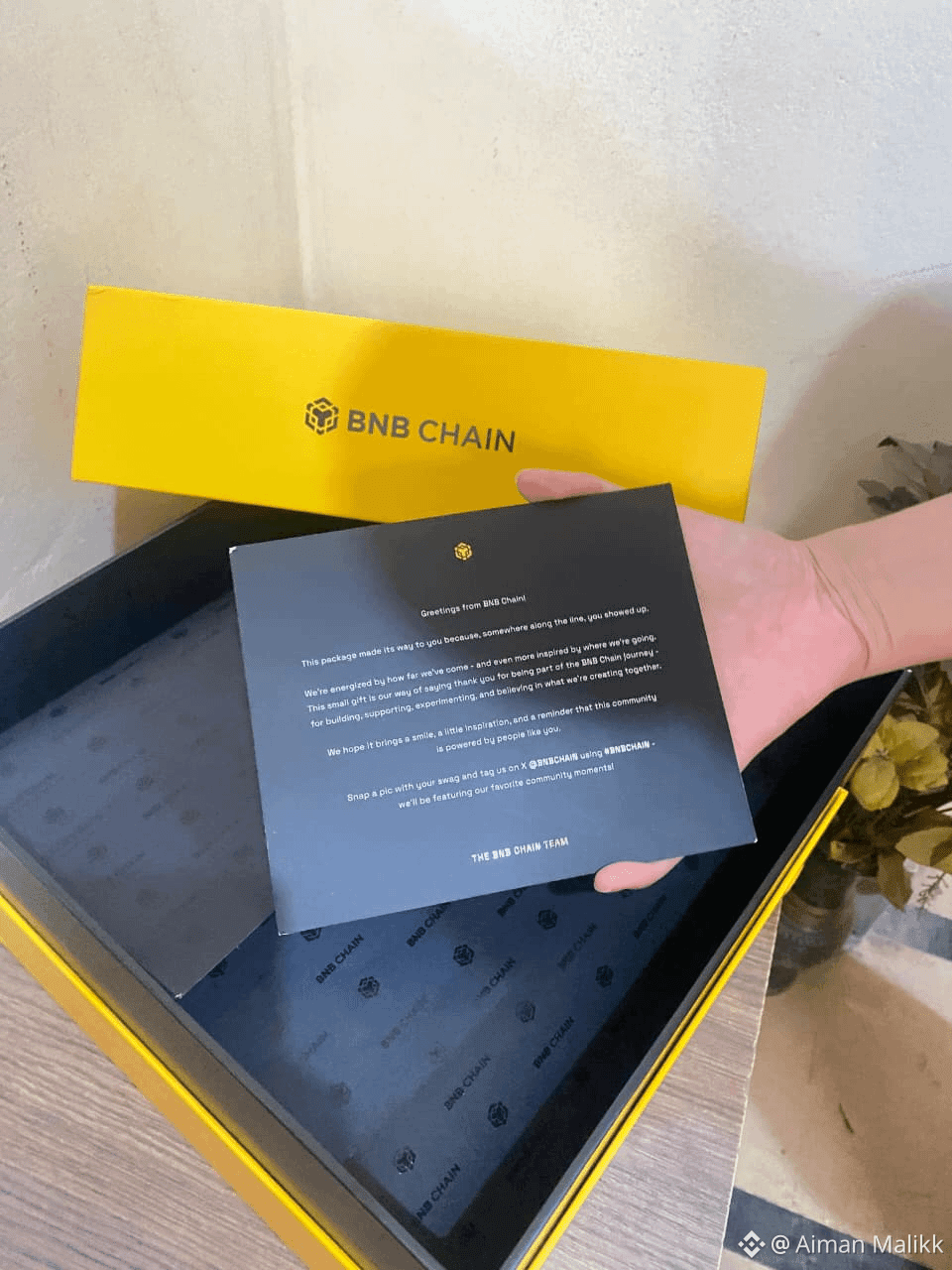
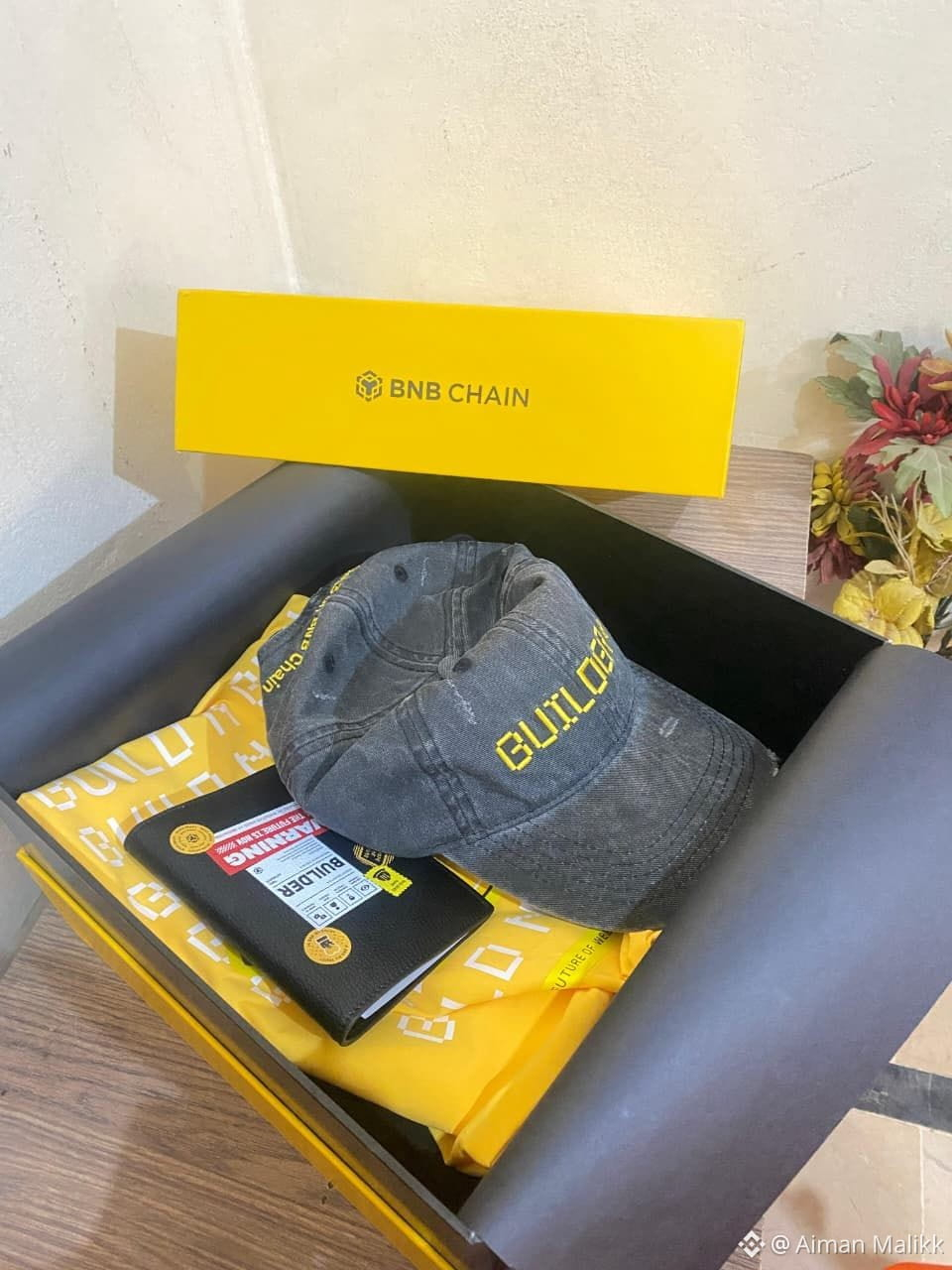
Finallyyy i Just received my @BNB_Chain swag box🎉
A huge thank you to the BNB Chain team for selecting me as an Online Campaign Winner. The merchs are looking amazing & I'm excited to be part of such a great community💛
BUILD & BUILD💛🤝
#BNBChain
Finallyyy i Just received my @BNB_Chain swag box🎉
A huge thank you to the BNB Chain team for selecting me as an Online Campaign Winner. The merchs are looking amazing & I'm excited to be part of such a great community💛
BUILD & BUILD💛🤝
#BNBChain
A huge thank you to the BNB Chain team for selecting me as an Online Campaign Winner. The merchs are looking amazing & I'm excited to be part of such a great community💛
BUILD & BUILD💛🤝
#BNBChain


30
60
8.6k
·
--
Hey Binancians It would be easy to read Binance Blockchain Week as just another crypto event.
But this year with Bangkok 2026 and the theme EVOLVE I am watching it differently.
It feels less like a slogan and more like an agenda and I want to understand where the conversation is heading.
The three themes I am watching most closely.
1. Wall Street and traditional finance:
For years these two worlds ran in parallel.
Now they are sharing a stage: Day 1 of the Bangkok agenda lists speakers from BlackRock, Nasdaq, Visa and Tether. The idea is simple.
Traditional finance brings regulation, scale and trust, and blockchain brings speed, global reach and settlement that never sleeps. The real question is how they connect without breaking the rules on either side.
2. Real-world asset tokenization:
A tokenized asset is a stock, fund or bond represented as a digital token on a blockchain.
That can mean faster settlement, easier cross-border access and trading outside normal market hours.
The hard part is not the technology. It is making sure ownership, compliance and investor protection travel with the token.
3. AI agents and financial workflows:
An AI agent is software that can act on your behalf, such as paying a bill, moving funds or reconciling accounts.
Blockchains give those agents a payment rail and an on-chain record anyone can audit. It is still early, and trust and safety will decide how far it goes.
None of this works without builders, regulators and institutions working together.
The question is shifting from "can it be built?" to "can it be trusted at scale?"
If you are following along too which of these matters most to you?
#EvolveAtBinanceBlockchainWeek @BinanceBlockchainWeek @heyi @CZ @richardteng $BNB $BTC
Hey Binancians It would be easy to read Binance Blockchain Week as just another crypto event.
But this year with Bangkok 2026 and the theme EVOLVE I am watching it differently.
It feels less like a slogan and more like an agenda and I want to understand where the conversation is heading.
The three themes I am watching most closely.
1. Wall Street and traditional finance:
For years these two worlds ran in parallel.
Now they are sharing a stage: Day 1 of the Bangkok agenda lists speakers from BlackRock, Nasdaq, Visa and Tether. The idea is simple.
Traditional finance brings regulation, scale and trust, and blockchain brings speed, global reach and settlement that never sleeps. The real question is how they connect without breaking the rules on either side.
2. Real-world asset tokenization:
A tokenized asset is a stock, fund or bond represented as a digital token on a blockchain.
That can mean faster settlement, easier cross-border access and trading outside normal market hours.
The hard part is not the technology. It is making sure ownership, compliance and investor protection travel with the token.
3. AI agents and financial workflows:
An AI agent is software that can act on your behalf, such as paying a bill, moving funds or reconciling accounts.
Blockchains give those agents a payment rail and an on-chain record anyone can audit. It is still early, and trust and safety will decide how far it goes.
None of this works without builders, regulators and institutions working together.
The question is shifting from "can it be built?" to "can it be trusted at scale?"
If you are following along too which of these matters most to you?
#EvolveAtBinanceBlockchainWeek @Binance Blockchain Week @Yi He @CZ @Richard Teng $BNB $BTC
1
1
9
939
·
--
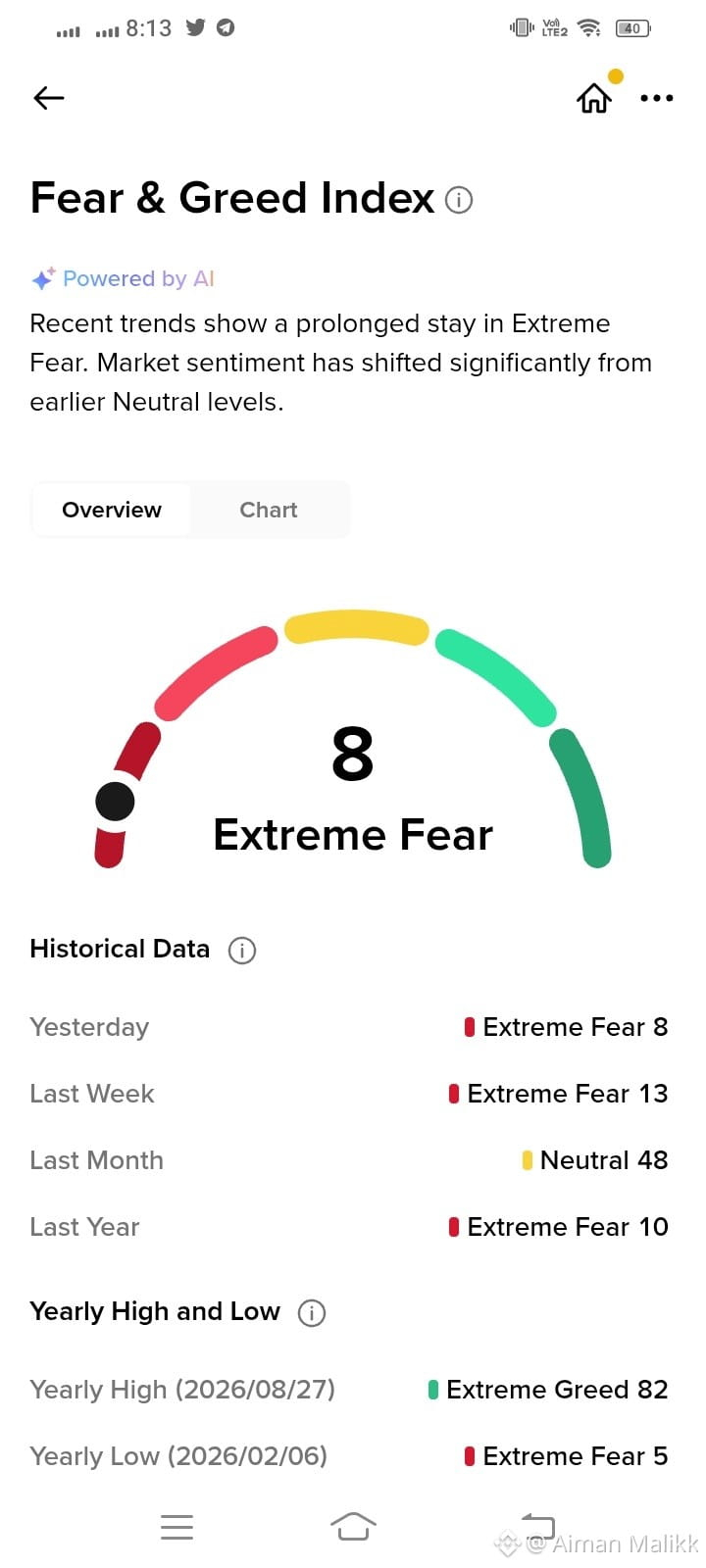
Omg is this real? 😂
Fear & Greed at 8?
Market squeeze is coming. Traders' funds are about to get cooked if this volatility continues💀📉
Extreme fear is everywhere right now.
$CELO $BLESS
Omg is this real? 😂
Fear & Greed at 8?
Market squeeze is coming. Traders' funds are about to get cooked if this volatility continues💀📉
Extreme fear is everywhere right now.
$CELO $BLESS
Fear & Greed at 8?
Market squeeze is coming. Traders' funds are about to get cooked if this volatility continues💀📉
Extreme fear is everywhere right now.
$CELO $BLESS
6
181
·
--
Verified
Something interesting I found while researching Space and Time 👀
As someone who spends time researching crypto projects I often check on-chain data, transactions, and different platforms. One thing I've learned is that finding information isn't the hard part. Knowing where it came from and whether we can actually verify it is.
Here is Something worth thinking about:
What if every important data result came with its own proof of how it was generated?
Imagine an AI agent analyzing thousands of blockchain transactions or a DeFi lending platform checking someone's collateral before approving a position. If the underlying data or calculations are wrong, the final decision can also be wrong.
This is what I inspired from @SpaceandTimeDB
Its Proof of SQL technology lets developers run SQL queries off-chain, generate cryptographic proofs, and allow smart contracts to verify that the calculations were performed correctly.
For example a DeFi lending platform could use verified query results to check transaction history and collateral information.
In tokenization, applications could combine real-world asset records with on-chain transaction data and verify the calculations behind them.
The same infrastructure can also support AI applications that need reliable, verifiable data instead of simply accepting database results.
Of course a valid proof doesn't automatically mean the original data is truthful. Data sources still matter.
My biggest takeaway: The future of data won't just be about what it tells us, but what it can prove.
#sxt $SXT #SXT
Something interesting I found while researching Space and Time 👀
As someone who spends time researching crypto projects I often check on-chain data, transactions, and different platforms. One thing I've learned is that finding information isn't the hard part. Knowing where it came from and whether we can actually verify it is.
Here is Something worth thinking about:
What if every important data result came with its own proof of how it was generated?
Imagine an AI agent analyzing thousands of blockchain transactions or a DeFi lending platform checking someone's collateral before approving a position. If the underlying data or calculations are wrong, the final decision can also be wrong.
This is what I inspired from @SpaceandTime
Its Proof of SQL technology lets developers run SQL queries off-chain, generate cryptographic proofs, and allow smart contracts to verify that the calculations were performed correctly.
For example a DeFi lending platform could use verified query results to check transaction history and collateral information.
In tokenization, applications could combine real-world asset records with on-chain transaction data and verify the calculations behind them.
The same infrastructure can also support AI applications that need reliable, verifiable data instead of simply accepting database results.
Of course a valid proof doesn't automatically mean the original data is truthful. Data sources still matter.
My biggest takeaway: The future of data won't just be about what it tells us, but what it can prove.
#sxt $SXT #SXT

6
1
12
672
·
--
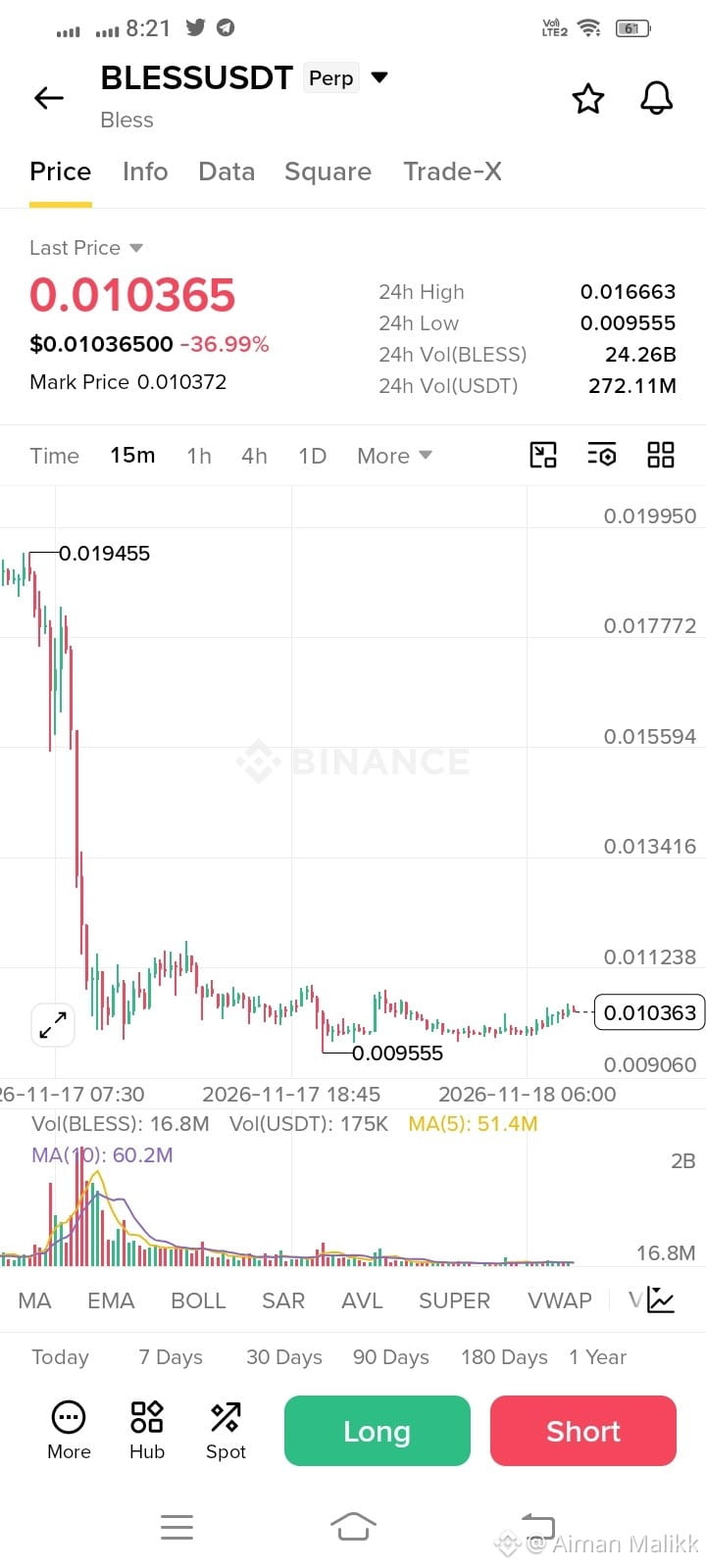
$BLESS had a crazy pump but look at the correction now👀
Just two days ago $BLESS almost doubled from $0.009 to nearly $0.019. The move was mainly driven by strong momentum, huge volume and hype.
But things changed quickly. After reaching the top, price started dropping and most of those gains are now gone.
A few things worth watching:
- Heavy futures activity compared to spot volume.
- Strong profit-taking after the pump.
- Liquidations adding more pressure.
- Price is now back near its pre-pump zone.
Current Price: $0.01036
24H Change: -36.99%
Support: $0.00955
Resistance: $0.01120
I'm watching the $0.00955 support closely. If buyers step in, we could see a recovery. But if it breaks, another drop is possible.
BLESS is still a high-risk token. Don't chase the pump or enter just because the price looks cheap. Wait for confirmation first.
2
351
·
--
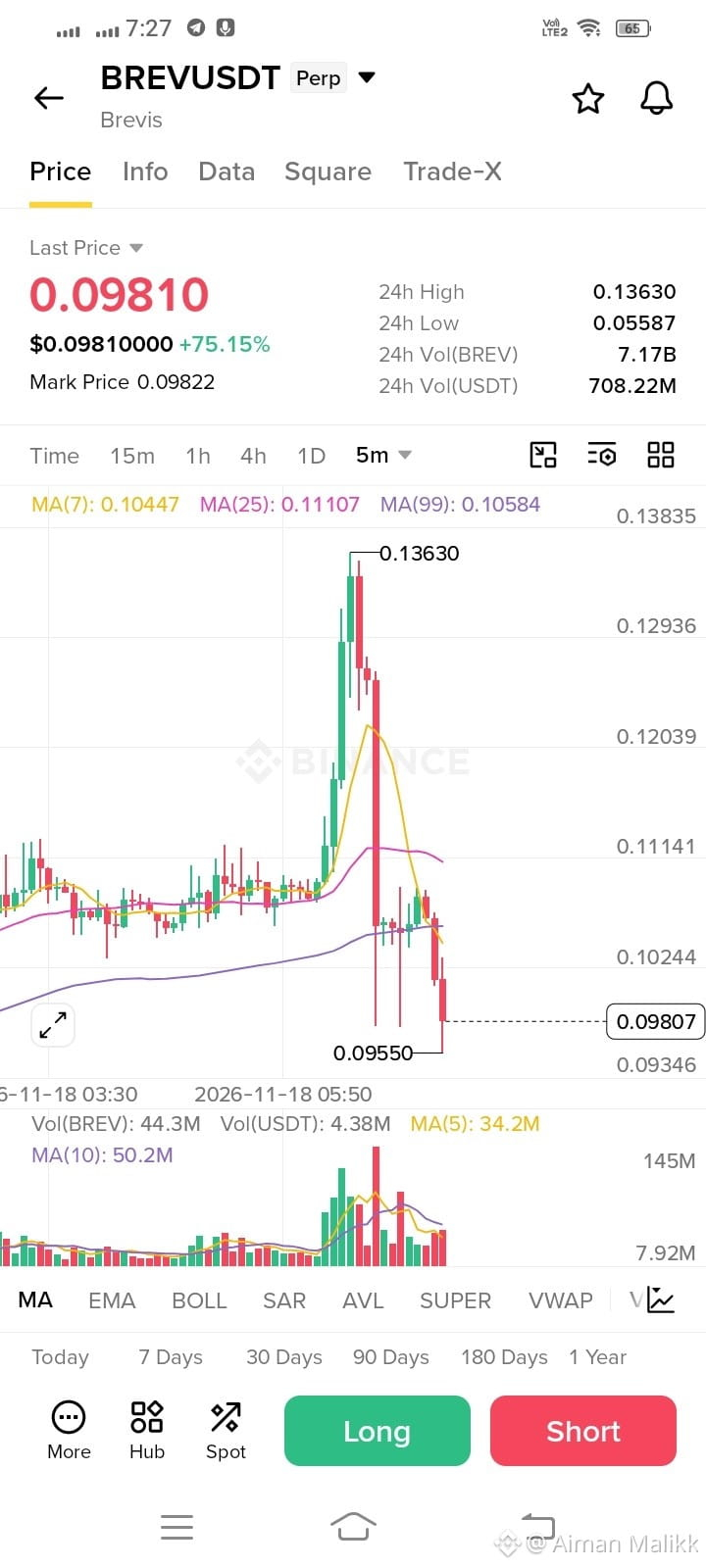
Guys who's watching $BREV right now? 👀
After a big pump $BREV is now seeing a strong correction. The dump was very sudden so don't rush into a trade or enter out of FOMO.
Support: $0.0955 – $0.0935
Resistance: $0.1025 – $0.1058
Let's wait and see how price reacts at support. Wait for a clear confirmation before taking a long.
After a big pump $BREV is now seeing a strong correction. The dump was very sudden so don't rush into a trade or enter out of FOMO.
Support: $0.0955 – $0.0935
Resistance: $0.1025 – $0.1058
Let's wait and see how price reacts at support. Wait for a clear confirmation before taking a long.
1
396
·
--
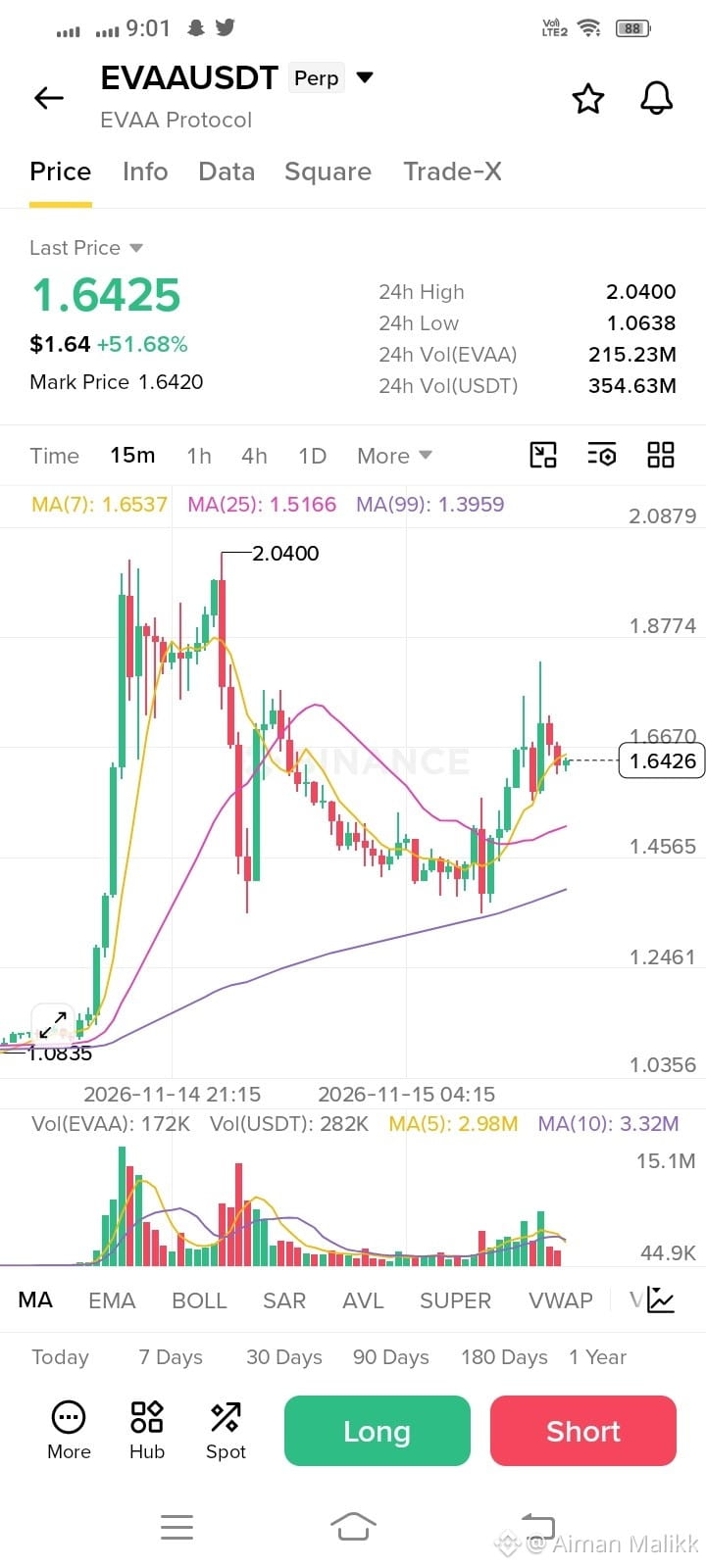
Wait guys👀
$EVAA is making some serious moves
After a decent correction EVAA is trying to push upward again. Buyers are showing some interest, and I'm watching the next breakout closely.
Support: $1.55 – $1.60
Resistance: $1.67 – $1.70
Entry: $1.62 – $1.65
Take Profit:
TP1: $1.70
TP2: $1.80
Stop Loss: $1.55
Watch the confirmation first
1
205
·
--
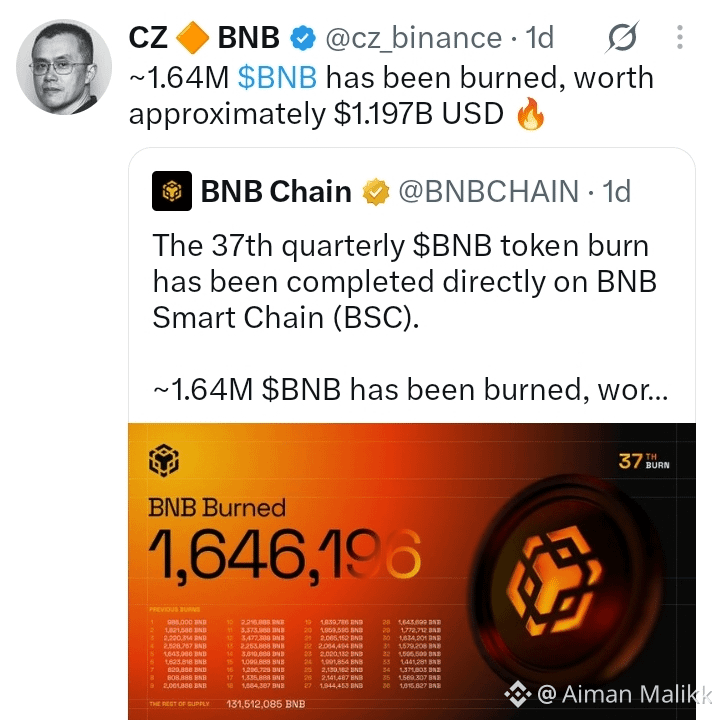
Can $BNB really reach $5,000? 👀🔥
Everyone is hyped about this quarter BNB burn and even CZ has joined the conversation
BNB Chain just completed its 37th quarterly burn removing 1.64M $BNB worth approximately $1.197B
And yes this is happening within the BNB ecosystem which includes BNB Smart Chain (BSC).
Initial supply: 200M BNB
Total burned so far: ~68.49M BNB
Remaining supply: ~131.51M BNB
Final supply target: 100M BNB
Why is Binance doing this?
Because Binance has a long-term plan to reduce BNB total supply to 100M tokens. This isn’t a one-time event; the process continues quarter after quarter.
But what I find most interesting:
It’s not just about burning tokens. It’s about consistency.
37 quarterly burns completed with the supply moving closer to the target.
Does this guarantee a higher price?
Really Not
Less supply doesn’t automatically mean a higher price. Demand, market conditions, and real use cases matter too.
Personally I believe BNB has strong potential because of its active ecosystem, continued development, and strong community.
Could BNB touch $5,000 in the future? 👀
That’s my personal prediction, not a guarantee. It depends on how the ecosystem grows and how demand changes over time.
What do you think? Is $5,000 possible for BNB or is that too ambitious? 💛
#BNBChain #crypto
1
3
136
·
--
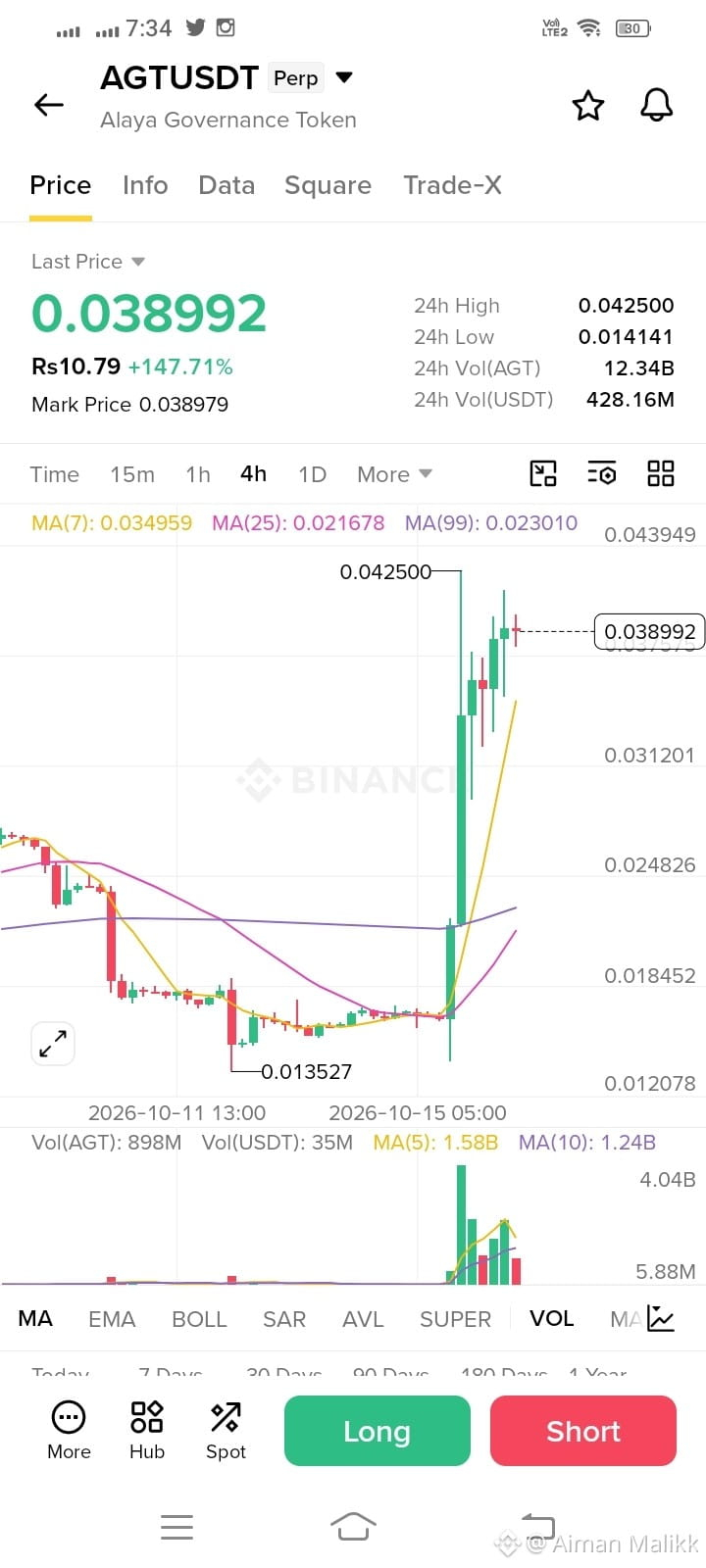
Guys have a look at $AGT 👀
Don't buy $AGT in FOMO it's already up 147%.
Soon it will take a good correction till 0.023 watch the chart closely
Guys have a look at $AGT 👀
Don't buy $AGT in FOMO it's already up 147%.
Soon it will take a good correction till 0.023 watch the chart closely
Don't buy $AGT in FOMO it's already up 147%.
Soon it will take a good correction till 0.023 watch the chart closely
1
1
430
·
--
I think I finally understood what @termmax V2 is really trying to fix 👀
When I first came across #TermMax I was mainly looking at the fixed-rate lending side.
But the deeper I went into V2 the more I realized that the bigger story for me is capital efficiency
I started thinking about three problems I see in DeFi:
Liquidity gets fragmented
Capital can sit idle
And borrowed capital can stay locked until maturity
That’s where V2 started making more sense to me
First Composable Base Yield
I found it interesting that curators can connect TermMax vaults to Aave, Morpho, or any ERC-4626 vault
So while my capital is waiting to be matched with a borrower, it can potentially earn the underlying floating yield
And once it gets matched, the depositor can earn base yield + fixed-rate premium
For me that changes the meaning of “idle capital.”
Then I looked at Atomic Orders
In V1, liquidity had to be split between different markets
V2 takes a different approach. The same liquidity can be virtually posted across multiple markets, and when part of it gets borrowed, that portion is removed atomically from all markets.
i also noticed one thing TermMax expects this could increase available liquidity per market by around 5–20x which could make larger fixed-rate borrowing more practical
But the feature that really made me stop was Smart Unwind
Previously, borrowed capital could remain locked until maturity.
Now borrowers can set take-profit targets based on APR or price.
If the target is reached a new borrower or a DEX/arbitrageur can take over the position, allowing the original liquidity to return to the lending pool earlier
TermMax projects this could increase capital turnover by around 1.5–5x.
There’s also an Order Aggregator, which combines liquidity from Atomic Orders, limit orders, and Smart Unwind positions to find the best effective rate in a single transaction
More liquidity → better rates → more usage → higher utilization → more attractive markets → more liquidity
That’s the flywheel I see TermMax V2 trying to build
I think I finally understood what @TermMax V2 is really trying to fix 👀
When I first came across #TermMax I was mainly looking at the fixed-rate lending side.
But the deeper I went into V2 the more I realized that the bigger story for me is capital efficiency
I started thinking about three problems I see in DeFi:
Liquidity gets fragmented
Capital can sit idle
And borrowed capital can stay locked until maturity
That’s where V2 started making more sense to me
First Composable Base Yield
I found it interesting that curators can connect TermMax vaults to Aave, Morpho, or any ERC-4626 vault
So while my capital is waiting to be matched with a borrower, it can potentially earn the underlying floating yield
And once it gets matched, the depositor can earn base yield + fixed-rate premium
For me that changes the meaning of “idle capital.”
Then I looked at Atomic Orders
In V1, liquidity had to be split between different markets
V2 takes a different approach. The same liquidity can be virtually posted across multiple markets, and when part of it gets borrowed, that portion is removed atomically from all markets.
i also noticed one thing TermMax expects this could increase available liquidity per market by around 5–20x which could make larger fixed-rate borrowing more practical
But the feature that really made me stop was Smart Unwind
Previously, borrowed capital could remain locked until maturity.
Now borrowers can set take-profit targets based on APR or price.
If the target is reached a new borrower or a DEX/arbitrageur can take over the position, allowing the original liquidity to return to the lending pool earlier
TermMax projects this could increase capital turnover by around 1.5–5x.
There’s also an Order Aggregator, which combines liquidity from Atomic Orders, limit orders, and Smart Unwind positions to find the best effective rate in a single transaction
More liquidity → better rates → more usage → higher utilization → more attractive markets → more liquidity
That’s the flywheel I see TermMax V2 trying to build
10
13
566
·
--
@termmax just made its RWA story a lot more interesting 👀
I started looking at #TermMax differently after this launch
When I first researched TermMax I was mainly interested in its fixed-rate, fixed-term lending model
Then on August 12, 2026 TermMax went live on Robinhood Chain as its first fixed-rate, fixed-term lending market
What I inspired most there in my research?
Users can use tokenized equities like NVDA, SPY, and QQQ as collateral to borrow USDG at a fixed rate while lenders can deposit USDG and earn a premium
For me this connects DeFi lending with tokenized real-world assets in a pretty interesting way
Instead of selling tokenized equity exposure for liquidity, users can potentially borrow against it while keeping their position.
The launch also includes:
• 120x XP/AP for vault depositors
• 10x XP for borrowers
• 20x AP for options traders
I’m keeping one thing clear: 120x is a campaign multiplier, not 120x APY. Actual rates and liquidity depend on the live market.
The bigger picture also caught my attention
TermMax has reported $90M+ TVL, 1.5M+ registered wallets, 90K+ daily active users, with a peak above 170K, and is now live across 10 EVM chains.
And the timing is notable
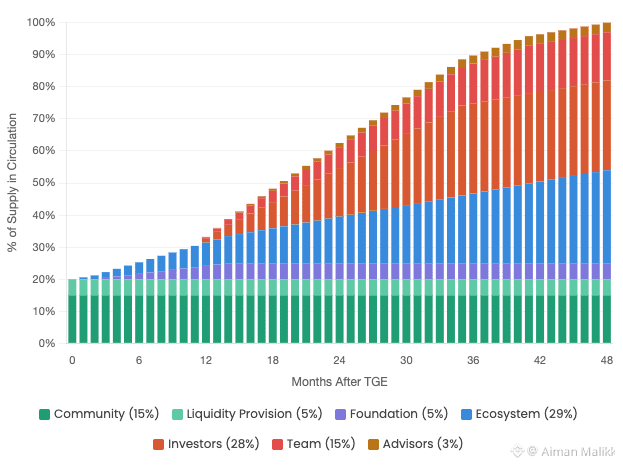
$TMX has a 1B total supply, around 20% planned initial circulation, with TGE scheduled for August 25, 2026
I like the direction but I’m still watching the risks: equity volatility, liquidation, liquidity, smart contract risk, and regulatory restrictions around tokenized assets
Can TermMax turn fixed-rate DeFi and tokenized assets into real, sustainable usage?
That’s the story I’m watching now.
Not just the launch The adoption behind it
@TermMax just made its RWA story a lot more interesting 👀
I started looking at #TermMax differently after this launch
When I first researched TermMax I was mainly interested in its fixed-rate, fixed-term lending model
Then on August 12, 2026 TermMax went live on Robinhood Chain as its first fixed-rate, fixed-term lending market
What I inspired most there in my research?
Users can use tokenized equities like NVDA, SPY, and QQQ as collateral to borrow USDG at a fixed rate while lenders can deposit USDG and earn a premium
For me this connects DeFi lending with tokenized real-world assets in a pretty interesting way
Instead of selling tokenized equity exposure for liquidity, users can potentially borrow against it while keeping their position.
The launch also includes:
• 120x XP/AP for vault depositors
• 10x XP for borrowers
• 20x AP for options traders
I’m keeping one thing clear: 120x is a campaign multiplier, not 120x APY. Actual rates and liquidity depend on the live market.
The bigger picture also caught my attention
TermMax has reported $90M+ TVL, 1.5M+ registered wallets, 90K+ daily active users, with a peak above 170K, and is now live across 10 EVM chains.
And the timing is notable
$TMX has a 1B total supply, around 20% planned initial circulation, with TGE scheduled for August 25, 2026
I like the direction but I’m still watching the risks: equity volatility, liquidation, liquidity, smart contract risk, and regulatory restrictions around tokenized assets
Can TermMax turn fixed-rate DeFi and tokenized assets into real, sustainable usage?
That’s the story I’m watching now.
Not just the launch The adoption behind it
13
10
340
·
--
I started looking at TMX from a completely different angle👀
When I first researched @termmax I was focused on the product
Then I asked myself:
Okay but why would anyone actually want to hold TMX?
That question took me deeper.
TMX isn’t designed to simply sit in a wallet
Holders can participate in governance, help shape protocol parameters, provide DEX liquidity, or stake TMX to receive sTMX
Main important thing for me is Staking can provide TMX rewards and stronger governance rights, including influence over market risk parameters and curator whitelisting
Then I noticed the connection with the treasury
The treasury may generate revenue from FT/XT trading fees, borrowing activity, liquidation fees, and other sources, with part of the ecosystem potentially supporting TMX rewards
That made me see TMX differently.
It’s not just about holding a token. There’s a mechanism connecting the token to activity happening within the protocol.
But I don’t want to look at only the upside.
There are real risks too which I noted and observe in my experience: smart contract vulnerabilities, oracle failures, network congestion, price volatility, liquidity, regulatory uncertainty, competition, and adoption
And honestly adoption is the part I care about most
Because staking rewards don’t mean much if the underlying protocol isn’t growing.
So I’m not asking:
Can TMX pump?
I’m asking:
Can TermMax build something people actually use?
If TVL, liquidity, users, and protocol activity grow, TMX’s utility becomes much more interesting to me.
That’s what I’ll be watching.
#TermMax
I started looking at TMX from a completely different angle👀
When I first researched @TermMax I was focused on the product
Then I asked myself:
Okay but why would anyone actually want to hold TMX?
That question took me deeper.
TMX isn’t designed to simply sit in a wallet
Holders can participate in governance, help shape protocol parameters, provide DEX liquidity, or stake TMX to receive sTMX
Main important thing for me is Staking can provide TMX rewards and stronger governance rights, including influence over market risk parameters and curator whitelisting
Then I noticed the connection with the treasury
The treasury may generate revenue from FT/XT trading fees, borrowing activity, liquidation fees, and other sources, with part of the ecosystem potentially supporting TMX rewards
That made me see TMX differently.
It’s not just about holding a token. There’s a mechanism connecting the token to activity happening within the protocol.
But I don’t want to look at only the upside.
There are real risks too which I noted and observe in my experience: smart contract vulnerabilities, oracle failures, network congestion, price volatility, liquidity, regulatory uncertainty, competition, and adoption
And honestly adoption is the part I care about most
Because staking rewards don’t mean much if the underlying protocol isn’t growing.
So I’m not asking:
Can TMX pump?
I’m asking:
Can TermMax build something people actually use?
If TVL, liquidity, users, and protocol activity grow, TMX’s utility becomes much more interesting to me.
That’s what I’ll be watching.
#TermMax
18
12
188
·
--
The more I learned about TermMax the more it started making sense to me👀
When I first came across @termmax I didn’t start with the token
I started with the problem which I find
what I research in DeFi interest rates can move quickly. As a borrower that can make your costs unpredictable. As a lender your returns can change too.
So I asked myself:
What if I could know my borrowing cost or lending return upfront?
That’s what caught my attention about TermMax
It is building infrastructure for fixed-rate fixed-term borrowing and lending, giving users more certainty instead of leaving everything exposed to constantly changing rates.
Then I looked deeper into how it works
There are three key pieces:
FT: The lending side Buy it at a discount, hold it until maturity, and redeem at face value. The difference represents the fixed yield.
XT: The borrowing side. Borrowers receive XT and can sell it for liquidity, helping lock in their borrowing cost from the start.
GT: A tokenized leveraged position that packages collateral and debt together, making leverage simpler and more capital-efficient.
But what really stood out to me was what happens behind the scenes
TermMax uses professional curators to manage pricing, liquidity, and risk. And capital that isn’t being borrowed can be deployed into protocols like Aave, Morpho and Venus instead of simply sitting idle
That made me think about something simple:
Capital should be working not waiting
TermMax also uses its own AMM designed specifically for fixed-rate markets while Ethereum serves as its primary chain and LayerZero enables supported cross-chain movement, including BNB Chain.
So after researching it I don’t see TermMax as just another token story.
I see a project trying to solve a real DeFi problem:
certainty around rates, terms, and capital
Of course the idea is only the beginning
Now I’m watching to see whether TermMax can turn that idea into real users, liquidity, and adoption
Because in crypto I’ve learned that a good story means little without real usage
Still researching
#TermMax
The more I learned about TermMax the more it started making sense to me👀
When I first came across @TermMax I didn’t start with the token
I started with the problem which I find
what I research in DeFi interest rates can move quickly. As a borrower that can make your costs unpredictable. As a lender your returns can change too.
So I asked myself:
What if I could know my borrowing cost or lending return upfront?
That’s what caught my attention about TermMax
It is building infrastructure for fixed-rate fixed-term borrowing and lending, giving users more certainty instead of leaving everything exposed to constantly changing rates.
Then I looked deeper into how it works
There are three key pieces:
FT: The lending side Buy it at a discount, hold it until maturity, and redeem at face value. The difference represents the fixed yield.
XT: The borrowing side. Borrowers receive XT and can sell it for liquidity, helping lock in their borrowing cost from the start.
GT: A tokenized leveraged position that packages collateral and debt together, making leverage simpler and more capital-efficient.
But what really stood out to me was what happens behind the scenes
TermMax uses professional curators to manage pricing, liquidity, and risk. And capital that isn’t being borrowed can be deployed into protocols like Aave, Morpho and Venus instead of simply sitting idle
That made me think about something simple:
Capital should be working not waiting
TermMax also uses its own AMM designed specifically for fixed-rate markets while Ethereum serves as its primary chain and LayerZero enables supported cross-chain movement, including BNB Chain.
So after researching it I don’t see TermMax as just another token story.
I see a project trying to solve a real DeFi problem:
certainty around rates, terms, and capital
Of course the idea is only the beginning
Now I’m watching to see whether TermMax can turn that idea into real users, liquidity, and adoption
Because in crypto I’ve learned that a good story means little without real usage
Still researching
#TermMax

13
12
203
·
--
@termmax Whenever I come across a new token I try not to get carried away by the hype and research on it
I usually keep it simple and ask myself:
How much is the total supply?
How much will actually be in circulation?
And most importantly what’s the token really used for?
After reading the whitepaper I found TMX has a fixed total supply of 1 billion tokens with 200 million (20%) planned to circulate at TGE.
But honestly the utility is what caught my attention more
because TMX is built around governance and staking so holders like me and you can have a role in protocol decisions and potentially earn staking rewards
A fixed supply is a good starting point in my view but supply alone doesn’t make a token valuable.
For me and my observation real question is whether TermMax can build genuine adoption, usage, and utility over time
I’ve gone through the tokenomics, utility, and roadmap, and TMX is definitely one I’m interested in keeping on my radar and researching further
its Not financial advice I'm Just sharing what I get inspired more during my own research 👀
#TermMax @termmax
@TermMax Whenever I come across a new token I try not to get carried away by the hype and research on it
I usually keep it simple and ask myself:
How much is the total supply?
How much will actually be in circulation?
And most importantly what’s the token really used for?
After reading the whitepaper I found TMX has a fixed total supply of 1 billion tokens with 200 million (20%) planned to circulate at TGE.
But honestly the utility is what caught my attention more
because TMX is built around governance and staking so holders like me and you can have a role in protocol decisions and potentially earn staking rewards
A fixed supply is a good starting point in my view but supply alone doesn’t make a token valuable.
For me and my observation real question is whether TermMax can build genuine adoption, usage, and utility over time
I’ve gone through the tokenomics, utility, and roadmap, and TMX is definitely one I’m interested in keeping on my radar and researching further
its Not financial advice I'm Just sharing what I get inspired more during my own research 👀
#TermMax @TermMax
11
9
260
·
--
I’ve followed many crypto projects over the years and one thing I always notice is how differently teams treat their public testnets
Some just launch them and move on
Others actually listen
With Babylon Trustless Bitcoin Vaults (TBV) I’ve been watching the second approach unfold in real time and it’s been encouraging to see
The public testnet for native Bitcoin-backed borrowing with Aave v4 has been live for about two months. In that short period the community has already created more than 2,000 vaults.
That level of hands-on testing has given the team clear, practical feedback instead of guesswork
What stands out to me is how directly that feedback has shaped the product
Community surveys and user reports led to a complete UI redesign, making the experience cleaner and easier to navigate.
Wallet support expanded quickly because testers kept asking for better self-custody options now including hardware wallets like Ledger and Keystone, plus UniSat, Utila, and others.
Even the vault creation process improved significantly dropping from around three hours to roughly 90 minutes after the team combined user feedback with a research breakthrough.
I appreciate that this isn’t just polite listening. People are actually using the system creating vaults, borrowing, repaying, unlocking and reporting the friction points.
The team is turning that input into real changes that make the product smoother and more aligned with what cautious Bitcoin holders care about: custody, simplicity, and reliability.
In a space where many projects treat testnets as marketing milestones, watching Babylon use community testing to refine actual product decisions feels different.
It shows that real user experience can still drive meaningful progress when a team is willing to listen and iterate.
For anyone following this space, it’s a quiet reminder that the best improvements often come from people actually using the product, not just from internal plans
@babylonlabs_io #baby $BABY
I’ve followed many crypto projects over the years and one thing I always notice is how differently teams treat their public testnets
Some just launch them and move on
Others actually listen
With Babylon Trustless Bitcoin Vaults (TBV) I’ve been watching the second approach unfold in real time and it’s been encouraging to see
The public testnet for native Bitcoin-backed borrowing with Aave v4 has been live for about two months. In that short period the community has already created more than 2,000 vaults.
That level of hands-on testing has given the team clear, practical feedback instead of guesswork
What stands out to me is how directly that feedback has shaped the product
Community surveys and user reports led to a complete UI redesign, making the experience cleaner and easier to navigate.
Wallet support expanded quickly because testers kept asking for better self-custody options now including hardware wallets like Ledger and Keystone, plus UniSat, Utila, and others.
Even the vault creation process improved significantly dropping from around three hours to roughly 90 minutes after the team combined user feedback with a research breakthrough.
I appreciate that this isn’t just polite listening. People are actually using the system creating vaults, borrowing, repaying, unlocking and reporting the friction points.
The team is turning that input into real changes that make the product smoother and more aligned with what cautious Bitcoin holders care about: custody, simplicity, and reliability.
In a space where many projects treat testnets as marketing milestones, watching Babylon use community testing to refine actual product decisions feels different.
It shows that real user experience can still drive meaningful progress when a team is willing to listen and iterate.
For anyone following this space, it’s a quiet reminder that the best improvements often come from people actually using the product, not just from internal plans
@BabylonLabs_io #baby $BABY
3
1
184
·
--
After spending months studying dozens of crypto projects from major Ethereum lending platforms to the many BTCFi experiments that rose and faded one clear pattern kept showing up.
Bitcoin is the largest asset in crypto yet only around 1% or less of it actually participates in DeFi. The rest stays idle. I kept asking myself why, so I dug deeper to understand the real gap.
What I found:
Custody risk
Transformation risk
Extra security exposure
Cultural mismatch
Risk-reward imbalance
The gap is that almost every option forces holders to choose between utility and the core principles that made them buy Bitcoin
Then I looked closely at @babylonlabs_io and tried to see if their approach actually addresses this
What stands out is how deliberately they built around that gap
Their uniqueness shows up in a few clear ways:
- Native BTC stays on Bitcoin: Coins never leave the Bitcoin blockchain
- True self-custody: You keep full control of your keys the entire time
- Segregated vaults: Each vault is isolated, with no pooling or rehypothecation
- No wrapping or bridging: No synthetic tokens or third-party custodians are required
- Real DeFi utility: The same native BTC can be used as collateral (starting with Aave) to borrow stablecoins, then unlocked after repayment
My practical Example i wanna share I even tried it myself with a tiny amount of BTC on the testnet just to understand how it works
My coins stayed locked on Bitcoin the whole time I could still use them as collateral, and I was able to unlock them afterward without ever handing them over to a third party.
That simple experience made the difference clear.
After studying so many projects that asked holders to compromise this is one of the few approaches that genuinely tries to close the gap rather than work around it.
Whether it fully succeeds at scale is still unfolding but from everything I’ve seen, Babylon direction is one of the most aligned with the people who have been most resistant to DeFi
#baby $BABY
After spending months studying dozens of crypto projects from major Ethereum lending platforms to the many BTCFi experiments that rose and faded one clear pattern kept showing up.
Bitcoin is the largest asset in crypto yet only around 1% or less of it actually participates in DeFi. The rest stays idle. I kept asking myself why, so I dug deeper to understand the real gap.
What I found:
Custody risk
Transformation risk
Extra security exposure
Cultural mismatch
Risk-reward imbalance
The gap is that almost every option forces holders to choose between utility and the core principles that made them buy Bitcoin
Then I looked closely at @BabylonLabs_io and tried to see if their approach actually addresses this
What stands out is how deliberately they built around that gap
Their uniqueness shows up in a few clear ways:
- Native BTC stays on Bitcoin: Coins never leave the Bitcoin blockchain
- True self-custody: You keep full control of your keys the entire time
- Segregated vaults: Each vault is isolated, with no pooling or rehypothecation
- No wrapping or bridging: No synthetic tokens or third-party custodians are required
- Real DeFi utility: The same native BTC can be used as collateral (starting with Aave) to borrow stablecoins, then unlocked after repayment
My practical Example i wanna share I even tried it myself with a tiny amount of BTC on the testnet just to understand how it works
My coins stayed locked on Bitcoin the whole time I could still use them as collateral, and I was able to unlock them afterward without ever handing them over to a third party.
That simple experience made the difference clear.
After studying so many projects that asked holders to compromise this is one of the few approaches that genuinely tries to close the gap rather than work around it.
Whether it fully succeeds at scale is still unfolding but from everything I’ve seen, Babylon direction is one of the most aligned with the people who have been most resistant to DeFi
#baby $BABY
6
4
185
·
--
I see everyone connecting the dots on @babylonlabs_io and what it means for Bitcoin staking and honestly that part is already impressive
But let me tell you something that really caught my attention
The truly interesting piece is how Babylon Trustless Bitcoin Vaults (TBV) let your Bitcoin stay completely on Bitcoin while quietly powering real activity on Ethereum
How it feels in everyday terms Your BTC never moves. It stays locked in its own secure vault on the Bitcoin blockchain, fully under your control
Yet that same native BTC can now be used as solid collateral in Ethereum DeFi starting with borrowing stablecoins on Aave.
You get the liquidity you need on Ethereum, but your actual Bitcoin never leaves home. When you’re ready, you repay and unlock it straight back to your wallet.
It’s like using the value of your house to get a home equity loan without ever selling or moving out of the house. The Bitcoin stays Bitcoin. The security stays with Bitcoin. But now it gets to do useful work in Ethereum’s vibrant DeFi world.
For long-term holders who never wanted to compromise custody, this feels different. It’s not forcing Bitcoin to become something else.
It’s giving it a way to participate meaningfully while staying true to itself.
That Ethereum connection with TBV is the part that has me thinking this could be bigger than just another staking narrative
Bitcoin strength meeting Ethereum’s flexibility without the usual trade-offs
Pretty cool if it plays out the way it looks.
#baby $BABY
I see everyone connecting the dots on @BabylonLabs_io and what it means for Bitcoin staking and honestly that part is already impressive
But let me tell you something that really caught my attention
The truly interesting piece is how Babylon Trustless Bitcoin Vaults (TBV) let your Bitcoin stay completely on Bitcoin while quietly powering real activity on Ethereum
How it feels in everyday terms Your BTC never moves. It stays locked in its own secure vault on the Bitcoin blockchain, fully under your control
Yet that same native BTC can now be used as solid collateral in Ethereum DeFi starting with borrowing stablecoins on Aave.
You get the liquidity you need on Ethereum, but your actual Bitcoin never leaves home. When you’re ready, you repay and unlock it straight back to your wallet.
It’s like using the value of your house to get a home equity loan without ever selling or moving out of the house. The Bitcoin stays Bitcoin. The security stays with Bitcoin. But now it gets to do useful work in Ethereum’s vibrant DeFi world.
For long-term holders who never wanted to compromise custody, this feels different. It’s not forcing Bitcoin to become something else.
It’s giving it a way to participate meaningfully while staying true to itself.
That Ethereum connection with TBV is the part that has me thinking this could be bigger than just another staking narrative
Bitcoin strength meeting Ethereum’s flexibility without the usual trade-offs
Pretty cool if it plays out the way it looks.
#baby $BABY
1
165
·
--
I’ve talked to so many long-term Bitcoin holders over the years. The story is almost always the same they love what Bitcoin stands for true ownership, independence, and that deep sense of security but they quietly wish it could do more in their financial life without forcing them to give up those very principles
That’s the pain point Babylon Trustless Bitcoin Vaults (TBV) is built to solve
For the longest time if you wanted your BTC to earn yield or provide liquidity in DeFi, you basically had one path send it away, wrap it, or trust a custodian.
Many of us simply walked away. We’d rather let our BTC sit idle than compromise.
What draws me to TBV is how straightforward it feels. You keep your keys
Your actual Bitcoin stays locked on the Bitcoin blockchain in its own secure vault.
The real DeFi utility it unlocks:
Staking Rewards: Earn while helping secure other networks, all non-custodially
Lending & Borrowing: Use your native BTC as collateral on Aave v4 to borrow stablecoins
Flexible Liquidity: Repay anytime and unlock your BTC back to your wallet
Future Expansion: The same vaults can support stablecoins, derivatives margin, insurance, and more layered yields
This is real DeFi utility for Bitcoin not a synthetic version, but your native coins working for you while staying fully under your control.
In a space full of shortcuts Babylon TBV stands out because it doesn’t ask you to choose. Your keys. Your Bitcoin. Real utility
For long-term holders like us, that combination feels like a genuine breakthrough worth watching.
Today Babylon $BABY token is trading around the $0.011 area and is down in the last 24 hours
#baby @babylonlabs_io
I’ve talked to so many long-term Bitcoin holders over the years. The story is almost always the same they love what Bitcoin stands for true ownership, independence, and that deep sense of security but they quietly wish it could do more in their financial life without forcing them to give up those very principles
That’s the pain point Babylon Trustless Bitcoin Vaults (TBV) is built to solve
For the longest time if you wanted your BTC to earn yield or provide liquidity in DeFi, you basically had one path send it away, wrap it, or trust a custodian.
Many of us simply walked away. We’d rather let our BTC sit idle than compromise.
What draws me to TBV is how straightforward it feels. You keep your keys
Your actual Bitcoin stays locked on the Bitcoin blockchain in its own secure vault.
The real DeFi utility it unlocks:
Staking Rewards: Earn while helping secure other networks, all non-custodially
Lending & Borrowing: Use your native BTC as collateral on Aave v4 to borrow stablecoins
Flexible Liquidity: Repay anytime and unlock your BTC back to your wallet
Future Expansion: The same vaults can support stablecoins, derivatives margin, insurance, and more layered yields
This is real DeFi utility for Bitcoin not a synthetic version, but your native coins working for you while staying fully under your control.
In a space full of shortcuts Babylon TBV stands out because it doesn’t ask you to choose. Your keys. Your Bitcoin. Real utility
For long-term holders like us, that combination feels like a genuine breakthrough worth watching.
Today Babylon $BABY token is trading around the $0.011 area and is down in the last 24 hours
#baby @BabylonLabs_io
4
3
176
Log in to explore more content
Join global crypto users on Binance Square
⚡️ Get latest and useful information about crypto.
💬 Trusted by the world’s largest crypto exchange.
👍 Discover real insights from verified creators.
Email / Phone number
Trending Topics
EvolveAtBinanceBlockchainWeek
2.8M views
22,059 Discussing
Binance Blockchain Week is officially underway! 🌍
On November 28–29, whether you’re in Bangkok or joining from afar, tune in to the livestreams and join the conversation on Binance Square!
Here’s what’s in store 👇
📺 Watch the main stage live
Tune in throughout both days as industry speakers share their perspectives on this year’s theme, “Evolve” From technological innovation to real-world applications, explore what’s next for crypto.
⚔️ Watch two trading competitions
The Aster Open Qualifier and the Binance Trading Master Tournament will both be streamed live. Tune in to follow the traders in action.
🏆 Watch The Blockchain 100 Awards Ceremony
The Blockchain 100 list was selected by the community. Join us in celebrating the creators and the ideas they share!
💬 Join the community conversation
Use #EvolveAtBinanceBlockchainWeek in a post with a photo to share what you’re looking forward to, your views on the industry, or your favorite moments from the event.
The event page is now live! Subscribe to all livestreams with one click so you don’t miss a moment 👏
Binance Blockchain Week
·649 Likes
·1M views
IBSGovAccountMints1BTokensDrains5.71M
41,354 views
469 Discussing
SunReportedlyOffered4BToRescueFTX
9,831 views
144 Discussing