
Ab_CryptoTrading
5.6k Posts

Ab_CryptoTrading
 Square Verified+
Report
Block User
Opportunity Creator🔮 || Full Time Crypto Trader💰 || Free Daily Trades ✅ || Web 3 👨💻 ||Promoter 💎 || Day Trader 📊 || UID 21517050
Open Trade
Occasional Trader
8.9 Years
8.0K+ Following
32.9K+ Followers
28.5K+ Liked
Posts
Portfolio
All
Quotes
Videos
Live
PINNED
Verified
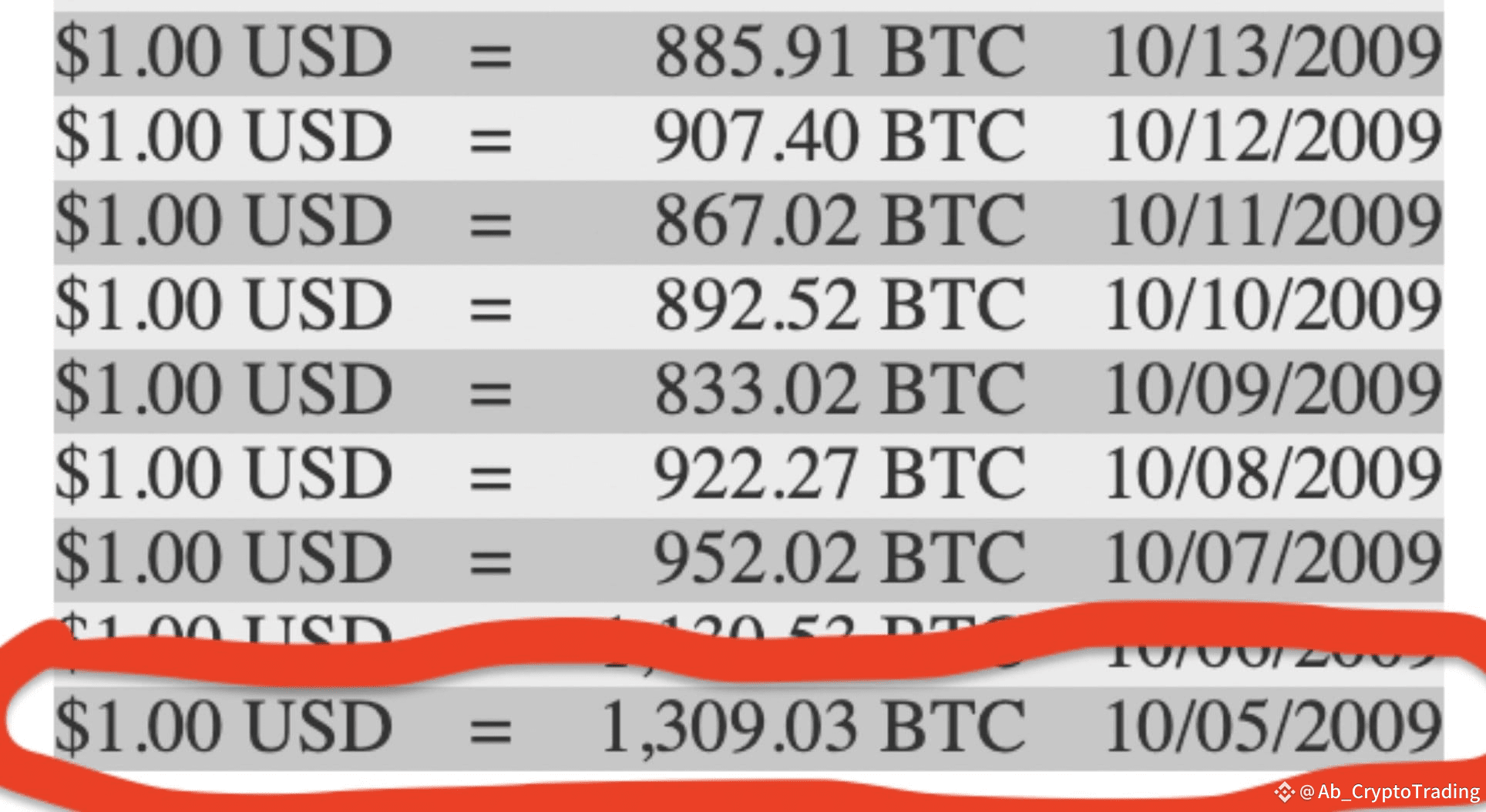
16 years ago, You could buy 1,309 #Bitcoin for $1
$1 = 1,309 BTC 🤯 $BTC
$USDT 1
#BTC 1,309
#BTCReclaims120K
#BNBBreaksATH
#Write2Earn
16 years ago, You could buy 1,309 #Bitcoin for $1
$1 = 1,309 BTC 🤯 $BTC
$USDT 1
#BTC 1,309
#BTCReclaims120K
#BNBBreaksATH
#Write2Earn
$1 = 1,309 BTC 🤯 $BTC
$USDT 1
#BTC 1,309
#BTCReclaims120K
#BNBBreaksATH
#Write2Earn
368
258
876
141.7k
PINNED
Everyone here is excited.
Why?
$80K $BTC on a Sunday.
But if you’re smart,
You know what this signals.
Let me break it down:
Next week is primed to be EVEN MORE bullish.
Why?
Weekends are typically low-volume,
Low-interest,
And often where pullbacks show up.
But the fact that we’re pushing this high on a weekend???
It’s a signal that buyers are piling in.
Now imagine what happens when the weekday volume kicks in.
When the big players return,
With more eyes on the charts and more liquidity flowing in.
This isn’t just a run-up;
It’s the setup for something much bigger.
Watch closely,
This is how breakouts become parabolic moves.$BTC #BTCBreaks80KATH #BIOProtocol #FedRateStrategy #EthereumRally #Write2Earn!
Why?
$80K $BTC on a Sunday.
But if you’re smart,
You know what this signals.
Let me break it down:
Next week is primed to be EVEN MORE bullish.
Why?
Weekends are typically low-volume,
Low-interest,
And often where pullbacks show up.
But the fact that we’re pushing this high on a weekend???
It’s a signal that buyers are piling in.
Now imagine what happens when the weekday volume kicks in.
When the big players return,
With more eyes on the charts and more liquidity flowing in.
This isn’t just a run-up;
It’s the setup for something much bigger.
Watch closely,
This is how breakouts become parabolic moves.$BTC #BTCBreaks80KATH #BIOProtocol #FedRateStrategy #EthereumRally #Write2Earn!
117
36
608
348.6k
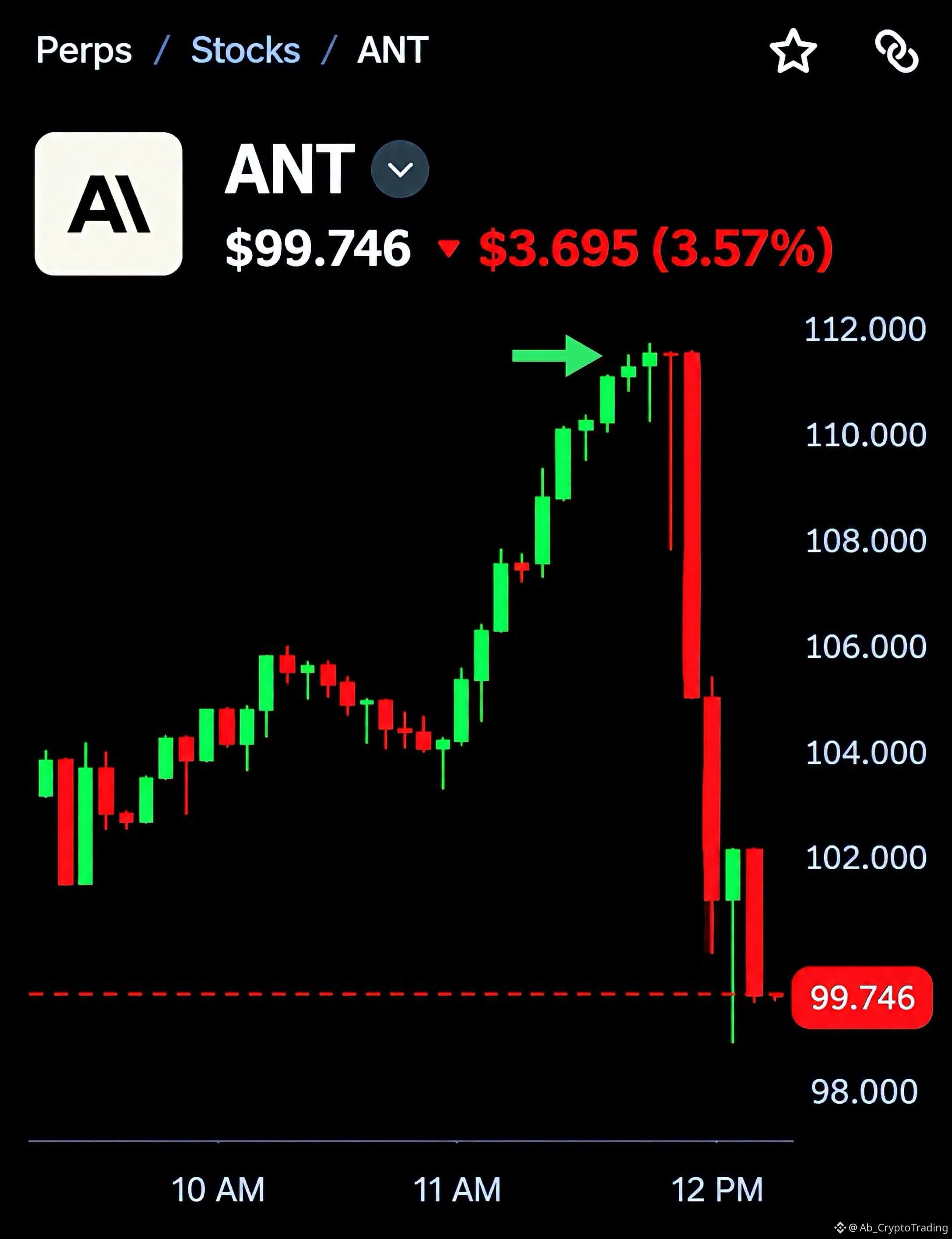
🚨 FROM $111 TO BELOW $100… WHAT JUST HAPPENED TO $ANT.US ?
That was a brutal reversal.
$ANT surged above $111 before sellers stepped in aggressively, wiping out the entire move and pushing the price down to $99.746.
A powerful reminder that momentum can disappear FAST in today's markets.
But here's the big question:
📉 Was this simply profit-taking after a strong rally, or did buyers just lose control?
And more importantly…
Would you buy this dip, or stay away until the price proves it can recover?
👇 Bulls vs. bears — what's your take?
Tag someone who trades volatile assets. Let's hear both sides!
#CanGTA6'sLaunchLiftTTWOShares? #ANT #US #BTCRemainsUnderPressureAfterHawkishFOMCMinutes #MASToUpgradeSGDTestnetToSGDigitalLedger
ANTUS-9.35%
2
3
9
4k
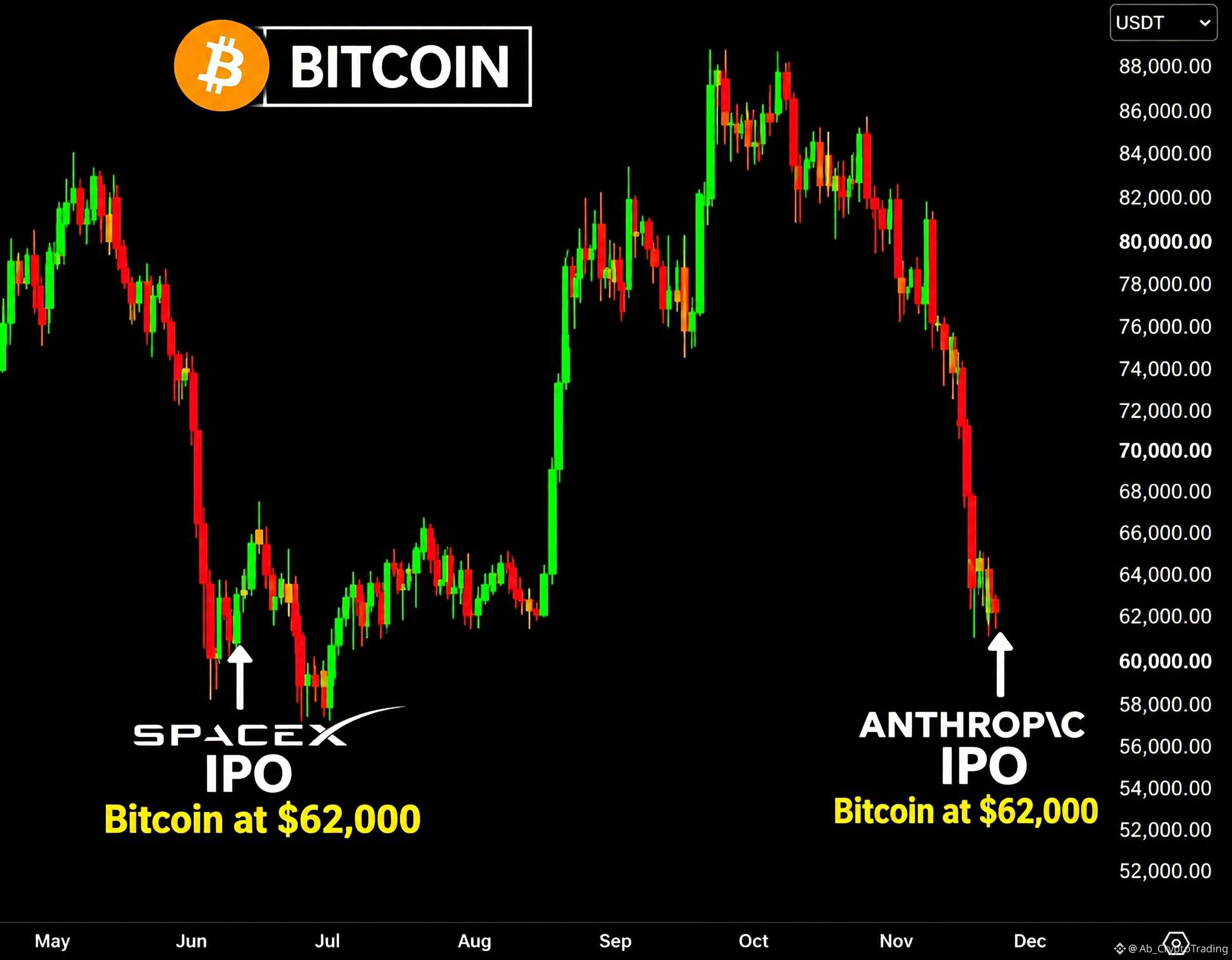
🚨 BITCOIN AT $62K… JUST A COINCIDENCE, OR A REPEATING PATTERN?
Look at this chart.
Bitcoin was trading around $62,000 near the SpaceX IPO reference point. Now, with the Anthropic IPO in the spotlight, $BTC is approaching that same price level again.
Two different moments. Two major IPO stories. One striking Bitcoin price level.
But here's the question:
Are we witnessing an interesting market coincidence, or could major liquidity events and shifting investor sentiment be creating similar opportunities for Bitcoin?
One thing is certain: repeating price levels don't guarantee repeating outcomes.
👇 What do you think? Is $62K becoming a major psychological level for Bitcoin, or are we reading too much into this chart?
Share your take — and tag someone who follows closely.
#BTCRemainsUnderPressureAfterHawkishFOMCMinutes #MASToUpgradeSGDTestnetToSGDigitalLedger #CanGTA6'sLaunchLiftTTWOShares? #NvidiaBoardReportedlySplitOverHuang’sReturn #13FInstitutionsBitcoinSpotETPHoldingsHitRecord
1
1
1k
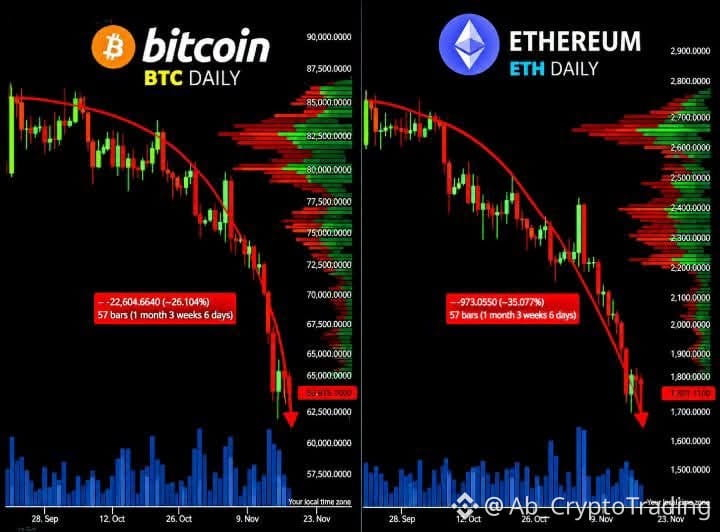
🚨 BITCOIN vs. ETHEREUM: WHO'S REALLY IN TROUBLE?
The latest chart comparison reveals a striking difference:
📉 Bitcoin: Down 26.1%
📉 Ethereum: Down 35.1%
Both assets are facing serious selling pressure, but ETH is taking a significantly bigger hit.
And here's the question investors should be asking:
Is Ethereum simply experiencing a deeper correction, or is Bitcoin strengthening its position as the dominant crypto asset?
Could this be a buying opportunity for $ETH , or is $BTC the stronger bet in this market?
👇 If you had to put $10,000 into just ONE of them today, which would you choose — Bitcoin or Ethereum? And WHY?
I want to hear the bull case and the bear case. Tag a crypto investor who has a strong opinion on this!
#BTCRemainsUnderPressureAfterHawkishFOMCMinutes #MASToUpgradeSGDTestnetToSGDigitalLedger #CanGTA6'sLaunchLiftTTWOShares? #BTC #ETH
1
1
813
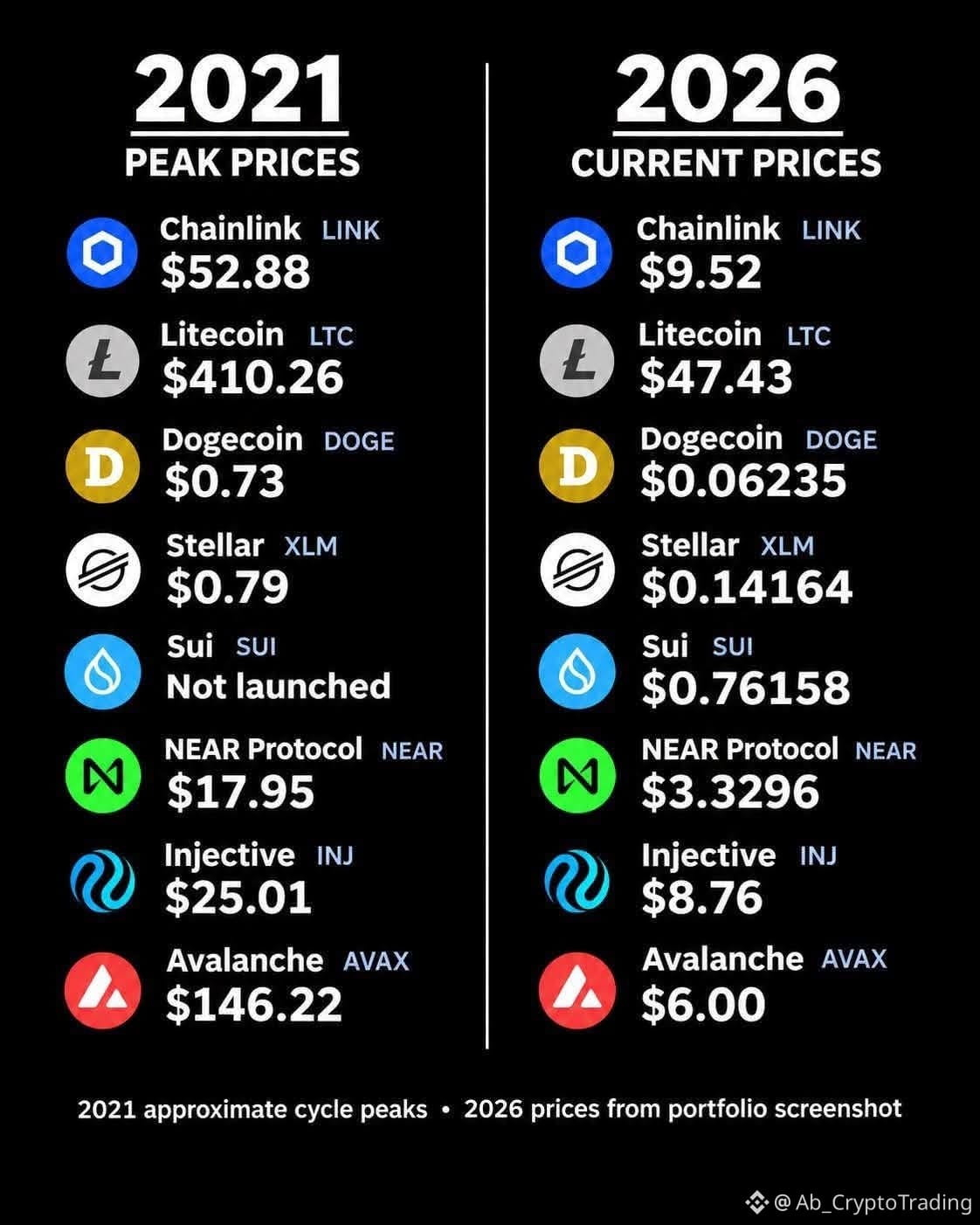
Most people see these prices and think the market is falling apart. I see an opportunity to accumulate.
I didn’t buy the macro top. I’m positioning myself around what I believe could be the macro low.
My spot portfolio currently consists of $LINK , $LTC, $DOGE, $XLM, $SUI, and $NEAR . I’m also looking to add $AVAX and $INJ as their larger setups develop.
I trade macro structures. When I’m investing in spot, I’m not concerned with every little move on the lower timeframes. I’m looking at weekly and monthly structures, building positions over time, and preparing for the next major cycle.
The goal isn’t to catch every bounce or perfectly time the bottom. It’s to accumulate quality setups while prices are depressed and let the larger structure play out.
I’m not investing for the next 15-minute candle. I’m positioning for the next several years.
#BuytheDips #BuyTheDip #Write2Earn #Write2Earn! #FOMCMinutesHighlightAIDebtRisks
4
643
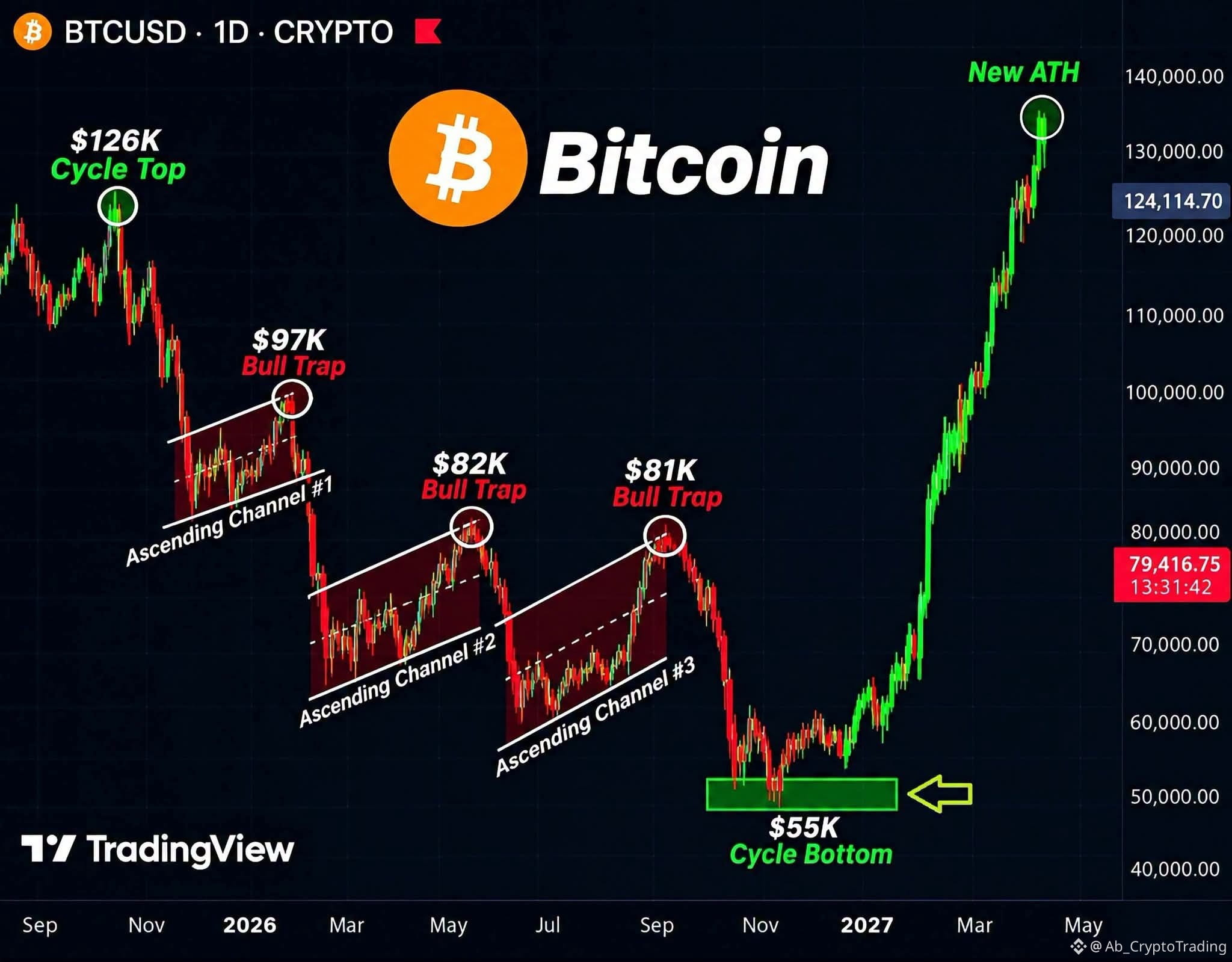
📊 Bitcoin: Was $55K the ultimate cycle bottom? $BTC
Three bull traps, one major correction, and a powerful recovery.
Is the market structure finally changing, or are we heading toward another surprise?
👇 What's your take?
🚀 New ATH ahead?
📉 Another correction coming?
🎯 Or was $55K the opportunity of a lifetime? $BTC
Don't just predict. Tell us why!
#BTC #BTCRemainsUnderPressureAfterHawkishFOMCMinutes
#Binance #Write2Earn #Write2Earn!
1
160
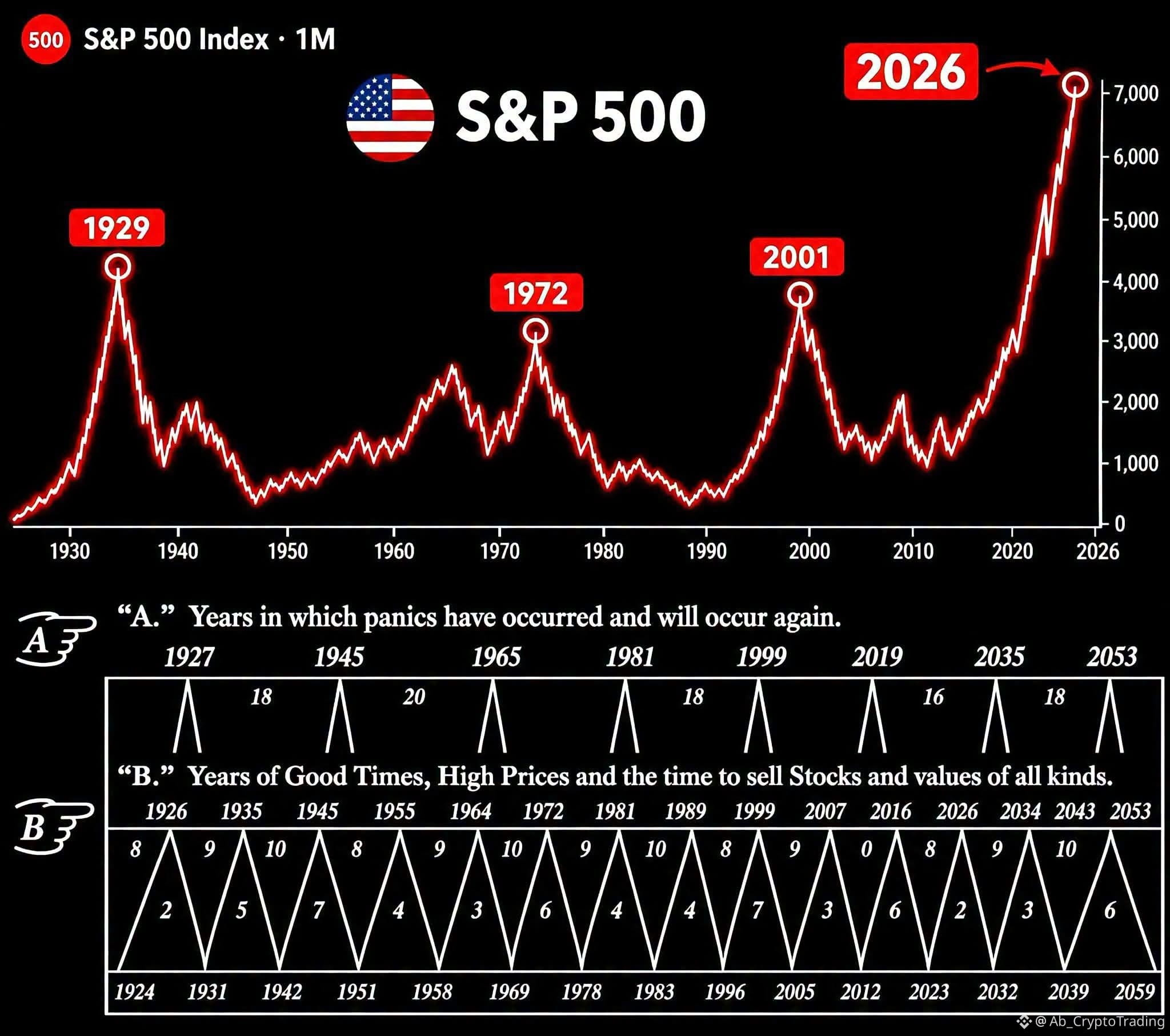
📊 Does History Repeat Itself in the Stock Market?
The S&P 500 has experienced major booms, bubbles, and market crashes throughout history.
But what if these historical cycles offer clues about what could happen next?
Are we approaching another major turning point in 2026, or is this time different?
👇 What's your take? $MSFTB $NVDAB $AMZNB
Do you believe market cycles repeat, or is history a poor guide to the future?
#NvidiaBoardReportedlySplitOverHuang’sReturn #SouthKoreaPlansToLet3500ListedFirmsBuyBitcoin #FOMCMinutesHighlightAIDebtRisks #S&P500 #S&P
2
302
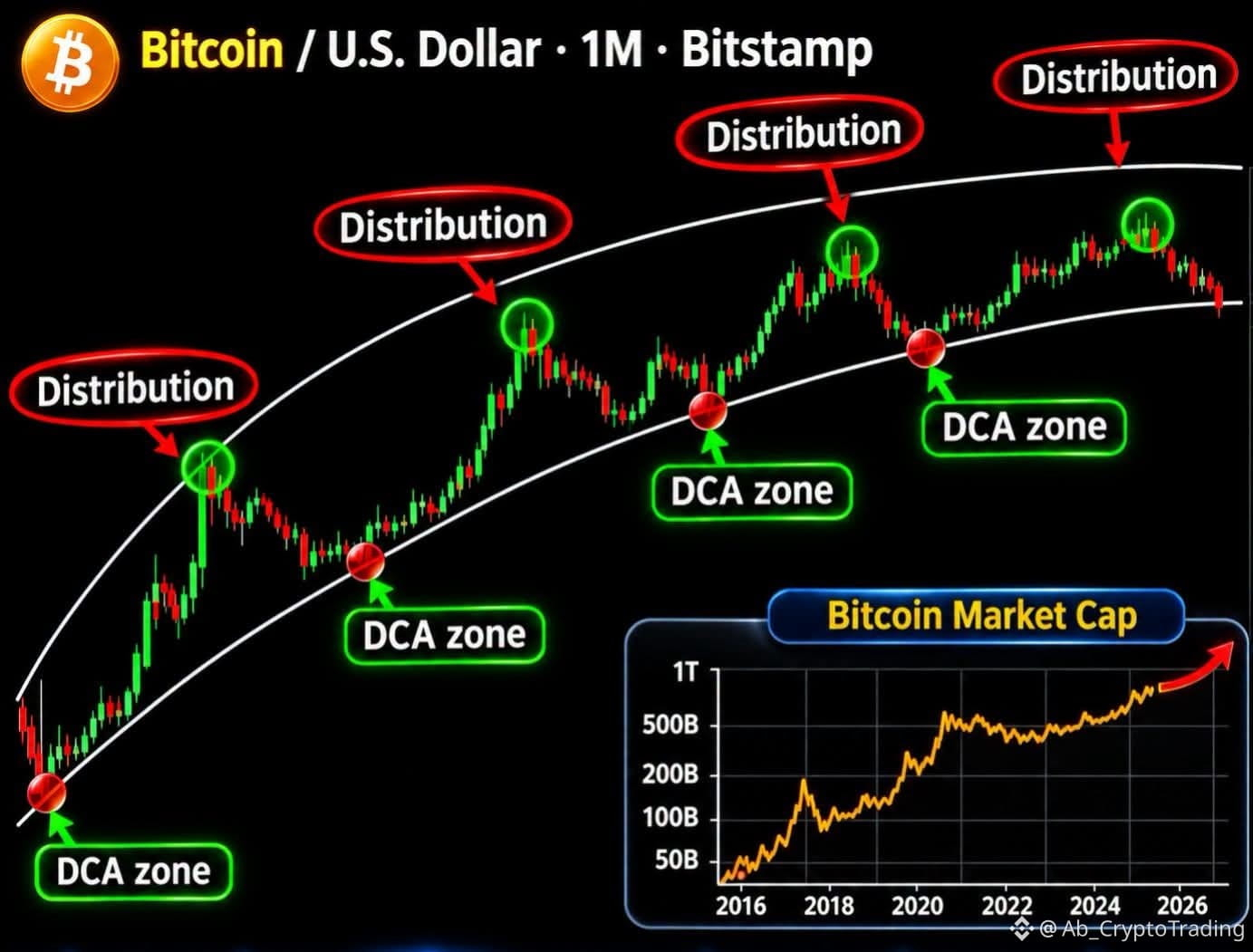
📊 Bitcoin: Buy the dips or sell the tops? $BTC
History shows us recurring Distribution and #DCA zones, but will the next cycle follow the same pattern?
👇 What's your strategy?
🟢 Buy the dips (DCA)?
🔴 Sell near the tops?
⏳ Wait for a deeper correction?
Let's hear your strategy and why!
#SouthKoreaPlansToLet3500ListedFirmsBuyBitcoin #BTCRemainsUnderPressureAfterHawkishFOMCMinutes #MASToUpgradeSGDTestnetToSGDigitalLedger #CapitalGroupAdds1264500StrategyShares
2
367
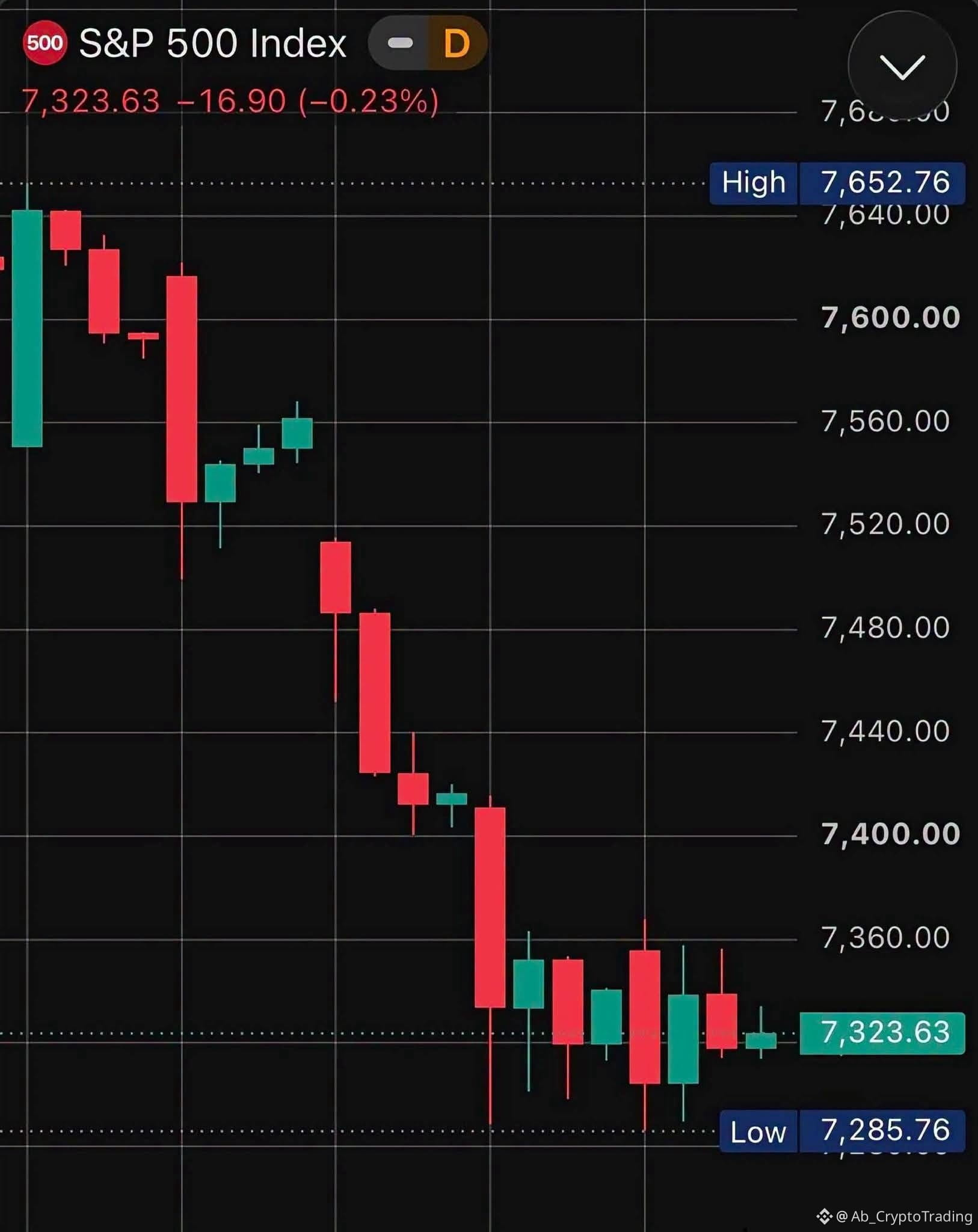
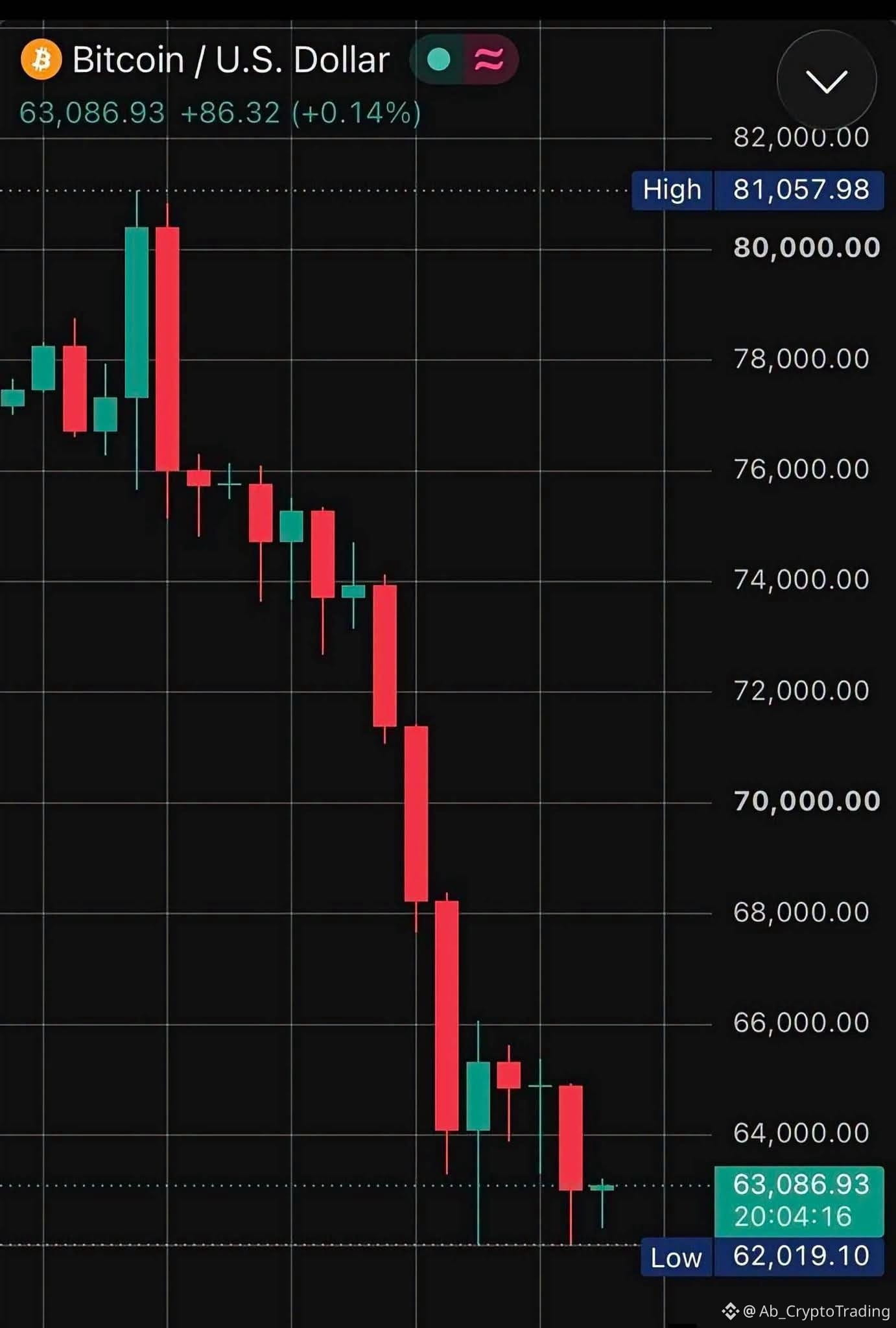
🚨 IS A GLOBAL LIQUIDITY CRISIS UNFOLDING?
Bitcoin is stuck near $63K. Gold and silver just lost an estimated $1.4 trillion in market value, while the S&P 500 continues to slide.
Meanwhile, Anthropic's massive $81B funding event is putting the AI investment boom in the spotlight.
Is liquidity disappearing from traditional markets and crypto, or is capital simply moving elsewhere?
🔥 If you had $10K to invest today, where would you put it?
₿ Bitcoin $BTC
🥇 Gold
📈 Stocks
💵 Cash
And most importantly, WHY?
#BTCRemainsUnderPressureAfterHawkishFOMCMinutes #NvidiaBoardReportedlySplitOverHuang’sReturn #CapitalGroupAdds1264500StrategyShares #AntInternationalLaunchesWhaleProtocol #SouthKoreaPlansToLet3500ListedFirmsBuyBitcoin
3
974
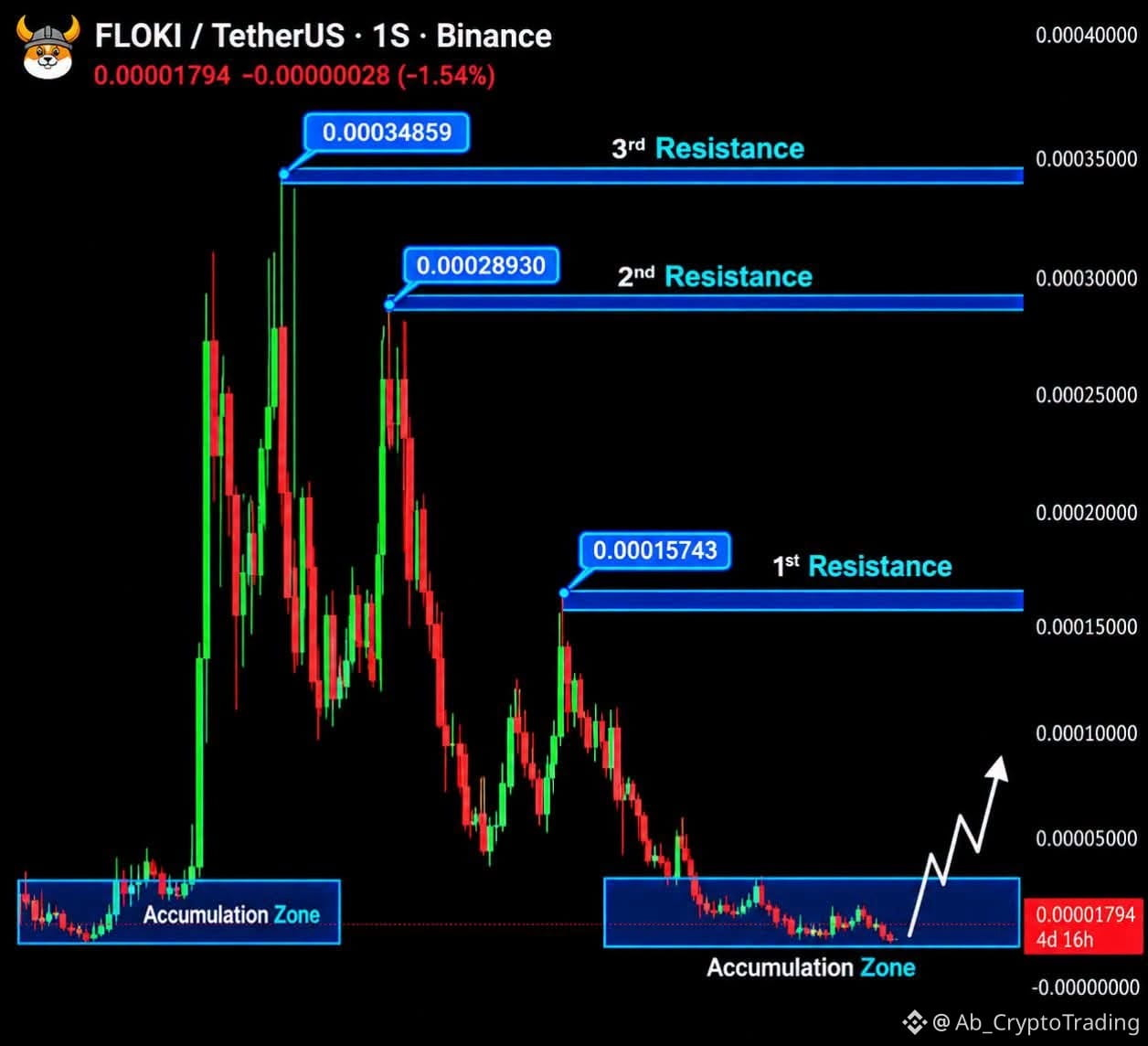
🐶 $FLOKI : THE NEXT BIG BREAKOUT OR JUST ANOTHER BULL TRAP?
Is $FLOKI quietly preparing for another explosive move?
The chart is showing an interesting setup: a prolonged accumulation zone that resembles a previous consolidation phase before a major rally.
Here are the key resistance levels to watch:
🎯 1st Resistance: $0.00015743
🎯 2nd Resistance: $0.00028930
🎯 3rd Resistance: $0.00034859
The big question is whether FLOKI is building enough momentum to challenge these levels, or whether this accumulation will end in another disappointment.
🔥 LET'S SETTLE THIS:
If you hold $FLOKI right now, what would you do?
🟢 BUY MORE — This could be the opportunity before the breakout.
🟡 HOLD — Waiting for confirmation before making a move.
🔴 SELL — Not convinced this accumulation will lead to a rally.
And one more question: Can FLOKI realistically reach $0.00035 again?
I want to hear both the bulls and the bears. No hype, just arguments!
👇 Drop your prediction and tell us WHY.
#FOMCMinutesHighlightAIDebtRisks #Write2Earn #Write2Earn! #Binance #BinanceSquareFamily
2
258
Missed $SHIB in 2020
Missed $DOGE in 2021
Missed $BONK in 2022
Missed $PEPE in 2023
Missed $WIF in 2024
Missed $TRUMP in 2025
TELL ME
Don’t miss ______ in 2026???
#FOMCMinutesHighlightAIDebtRisks #PEPE #DOGE #Write2Earn #Write2Earn!
Missed $SHIB in 2020
Missed $DOGE in 2021
Missed $BONK in 2022
Missed $PEPE in 2023
Missed $WIF in 2024
Missed $TRUMP in 2025
TELL ME
Don’t miss ______ in 2026???
#FOMCMinutesHighlightAIDebtRisks #PEPE #DOGE #Write2Earn #Write2Earn!
Missed $DOGE in 2021
Missed $BONK in 2022
Missed $PEPE in 2023
Missed $WIF in 2024
Missed $TRUMP in 2025
TELL ME
Don’t miss ______ in 2026???
#FOMCMinutesHighlightAIDebtRisks #PEPE #DOGE #Write2Earn #Write2Earn!
1
4
968
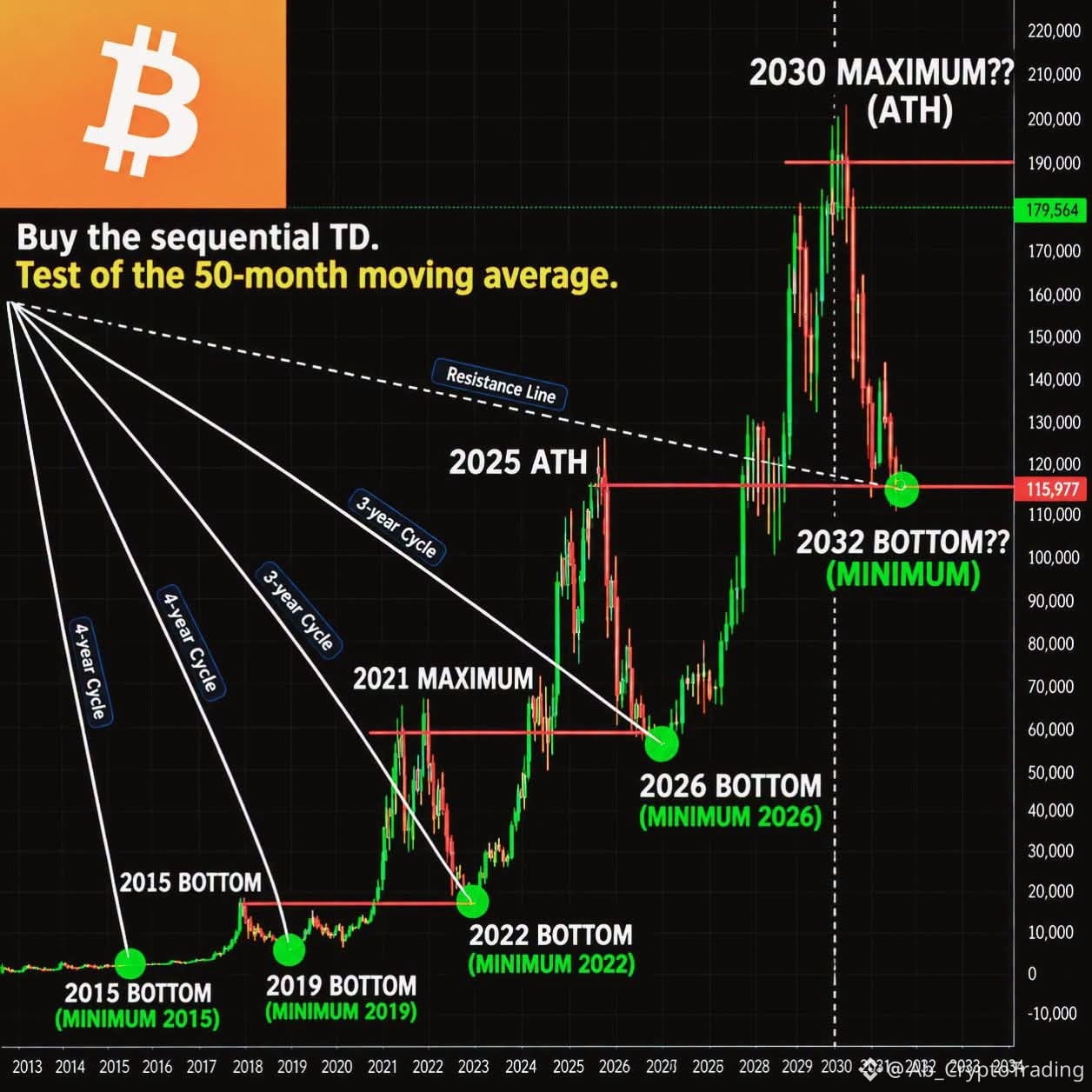
📊 BITCOIN: $200K BY 2030… OR A MAJOR BEAR MARKET FIRST?
What if Bitcoin's next major opportunity isn't at the top… but at the bottom?
This chart raises some fascinating questions about Bitcoin's historical 4-year cycles, the 50-month moving average, and what could potentially lie ahead.
According to this projection:
🔸 2030 could mark the next major ATH.
🔸 2032 could potentially become the next major cycle bottom.
🔸 The 50-month moving average may offer an important signal to watch.
But here's the real debate:
Are Bitcoin's traditional 4-year cycles still relevant, or has institutional adoption fundamentally changed the game?
👇 I want your honest opinion:
1️⃣ $200K+ $BTC by 2030 — Bullish scenario.
2️⃣ A major correction before the next ATH — Bearish scenario.
3️⃣ The 4-year cycle is dead — This time is different.
Pick your scenario and explain WHY.
Let's see which side has the stronger argument. 🚀
This is a long-term market projection, not a guaranteed prediction or financial advice.
#BTCRemainsUnderPressureAfterHawkishFOMCMinutes #FOMCMinutesHighlightAIDebtRisks #CanGTA6'sLaunchLiftTTWOShares? #SouthKoreaPlansToLet3500ListedFirmsBuyBitcoin #Write2Earn
1
2
293
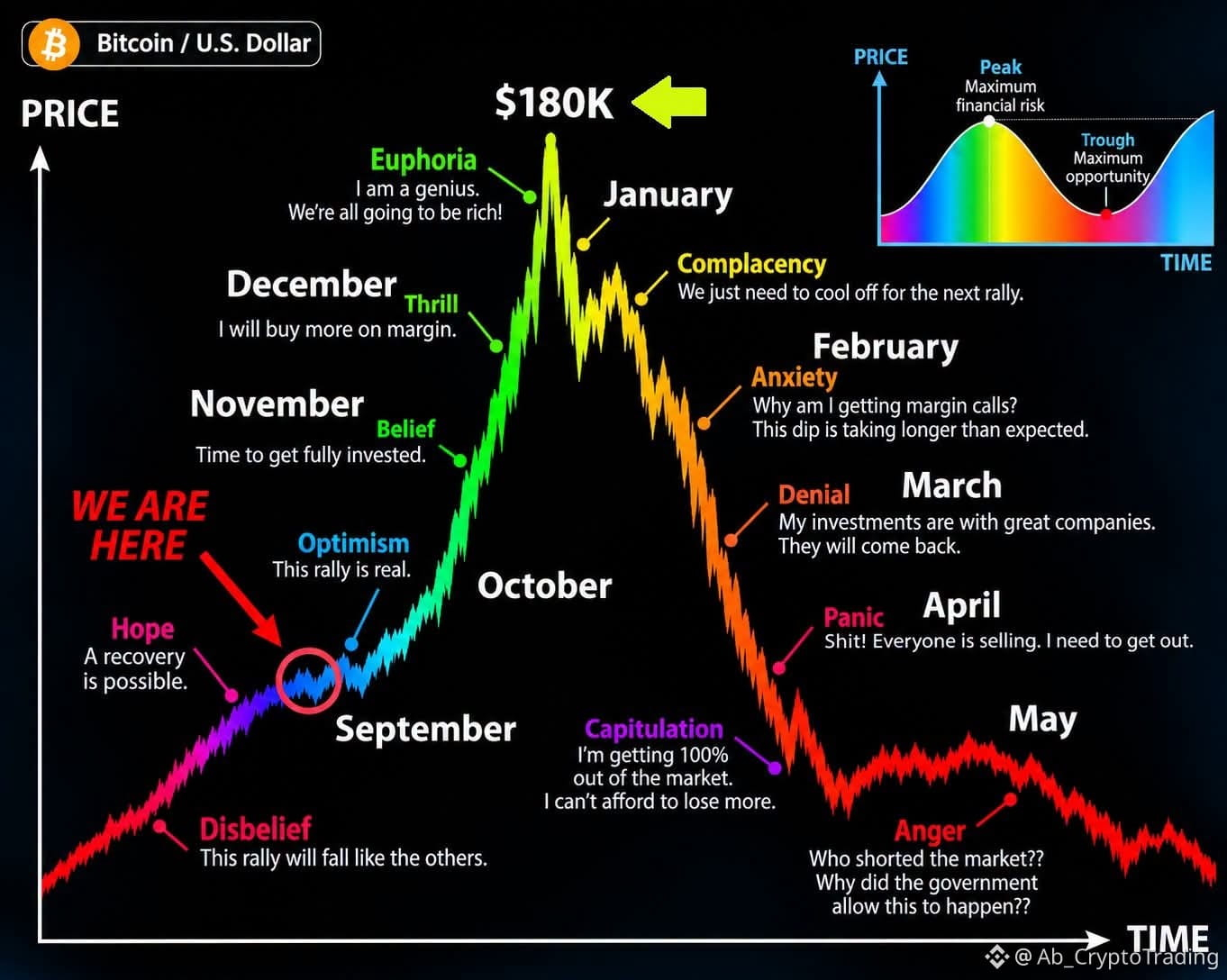
🚨 THE MARKET DOESN'T JUST TEST YOUR MONEY… IT TESTS YOUR PSYCHOLOGY.
Every Bitcoin cycle follows a familiar emotional battle:
🔥 Euphoria → Greed takes over. $BTC
📉 Anxiety → Doubt begins. $BTC
💔 Panic → Everyone wants out. $BTC
💎 Capitulation → Smart money looks for opportunities.
🚀 Recovery → Confidence returns.
But here's the million-dollar question:
Are we witnessing the beginning of the next major rally, or is this just another bull trap?
And honestly… where do you think we are in this cycle right now?
👇 FEAR, HOPE, OR OPTIMISM?
Let's hear your honest opinion.
#LedgerHardwareImplantReportsExtendToDubai #Binance #BinanceSquareFamily #Write2Earn #Write2Earn!
2
221
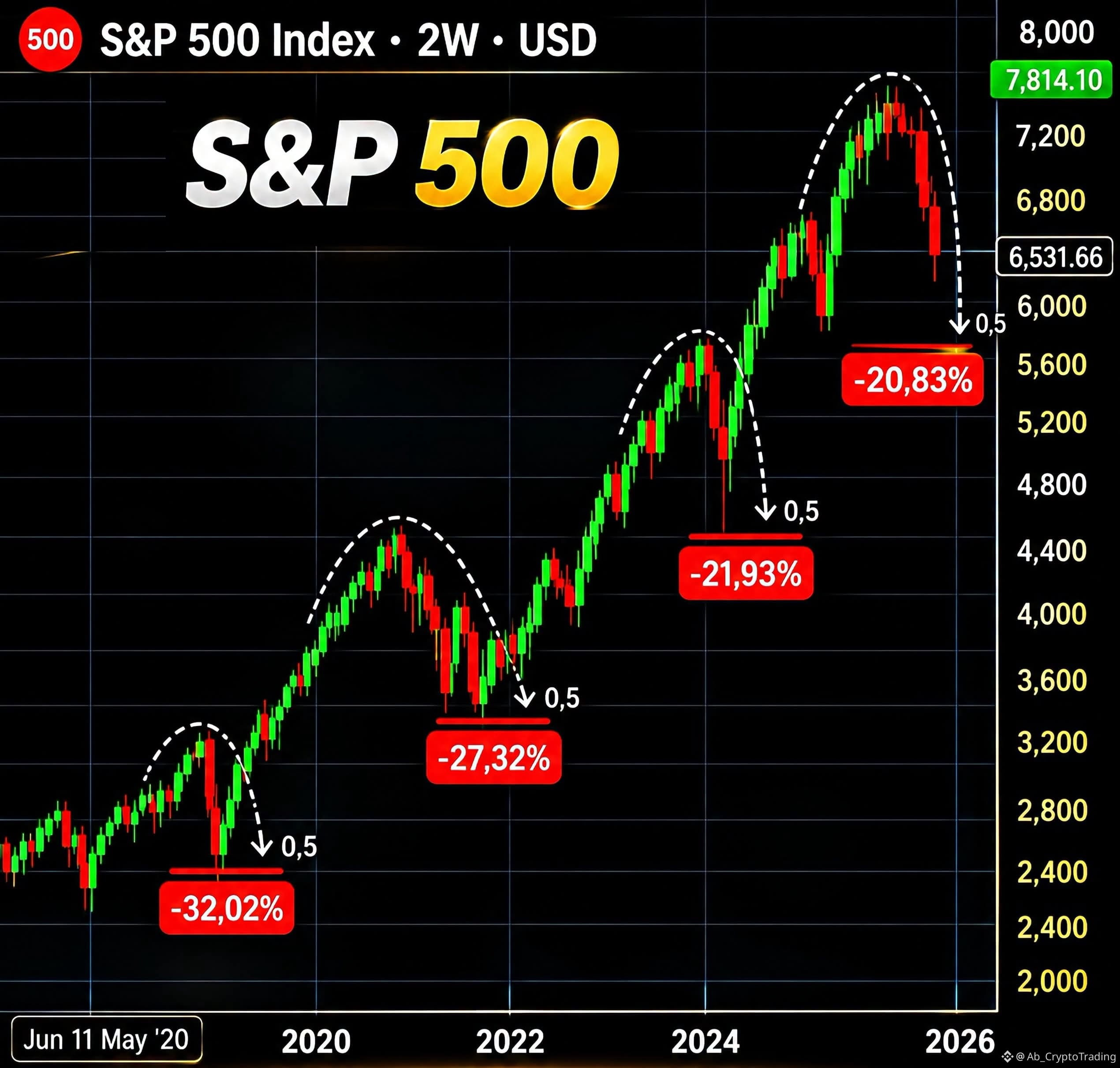
🚨 ANOTHER 20%+ CORRECTION FOR THE S&P 500… OR IS THE BULL MARKET STILL IN CONTROL?
History shows that major corrections haven't stopped the S&P 500's long-term uptrend.
We've already seen pullbacks of -32%, -27%, -22%, and -21%. $BTC $ETH $BNB
But could another major shakeout be approaching?
📉 BEARS: More downside is coming.
📈 BULLS: Just another buying opportunity.
What would YOU do: BUY, HOLD, or WAIT?
Let's hear your take. 👇
Historical analysis, not financial advice.
#S&P #S&P500 #BTC #ETH #BNB走势
4
622
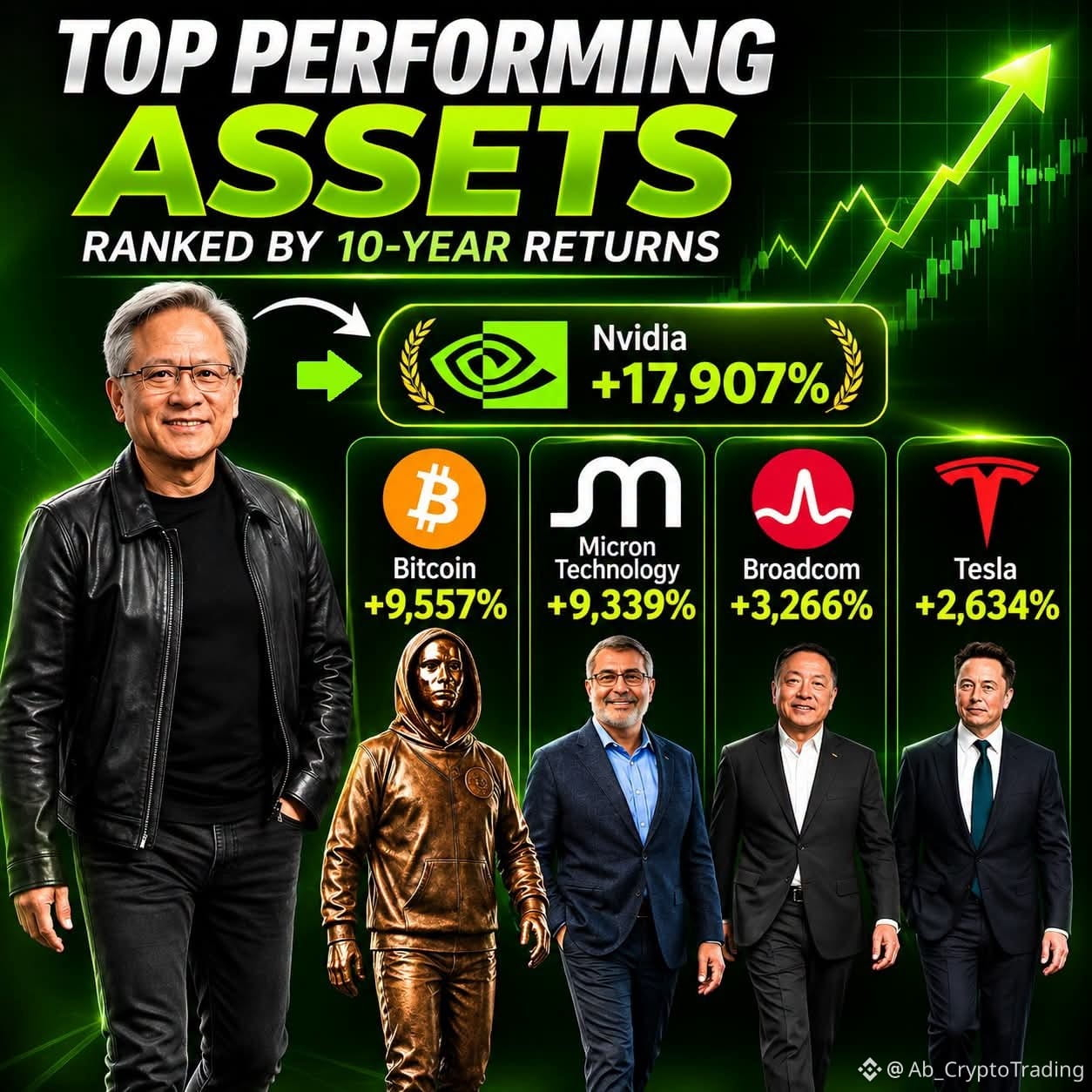
🚨 ONE DECADE. FIVE BIG WINNERS. BUT WHO WILL DOMINATE THE NEXT 10 YEARS?
The numbers in this chart are fascinating! 👀
NVIDIA: +17,907% $NVDAB
Bitcoin: +9,557% $BTC
Micron Technology: +9,339% $MUB
Broadcom: +3,266% $AVGOB
Tesla: +2,634% $TSLAB
The biggest lesson? Some of the most extraordinary investment opportunities came from technologies that completely transformed their industries.
AI, semiconductors, electric vehicles, and Bitcoin have all created enormous opportunities for long-term investors.
But here's the real question:
Are we witnessing the beginning of another decade of technology-driven wealth creation, or will the next generation of winners come from somewhere unexpected?
If you could choose ONLY ONE to hold until 2036, which would it be?
🔥 NVDIA
₿ Bitcoin
⚡ Tesla
🧠 Micron
📈 Broadcom
Don't just pick a winner. Tell us why you believe it will outperform the others.
Let's see which investment thesis makes the strongest case. 👇
Historical performance is not indicative of future returns. Discussion only, not financial advice.
#CanNvidia’sDataCenterGrowthContinue? #LedgerHardwareImplantReportsExtendToDubai
#NVDA #bitcoin #Tesla
4
2.6k
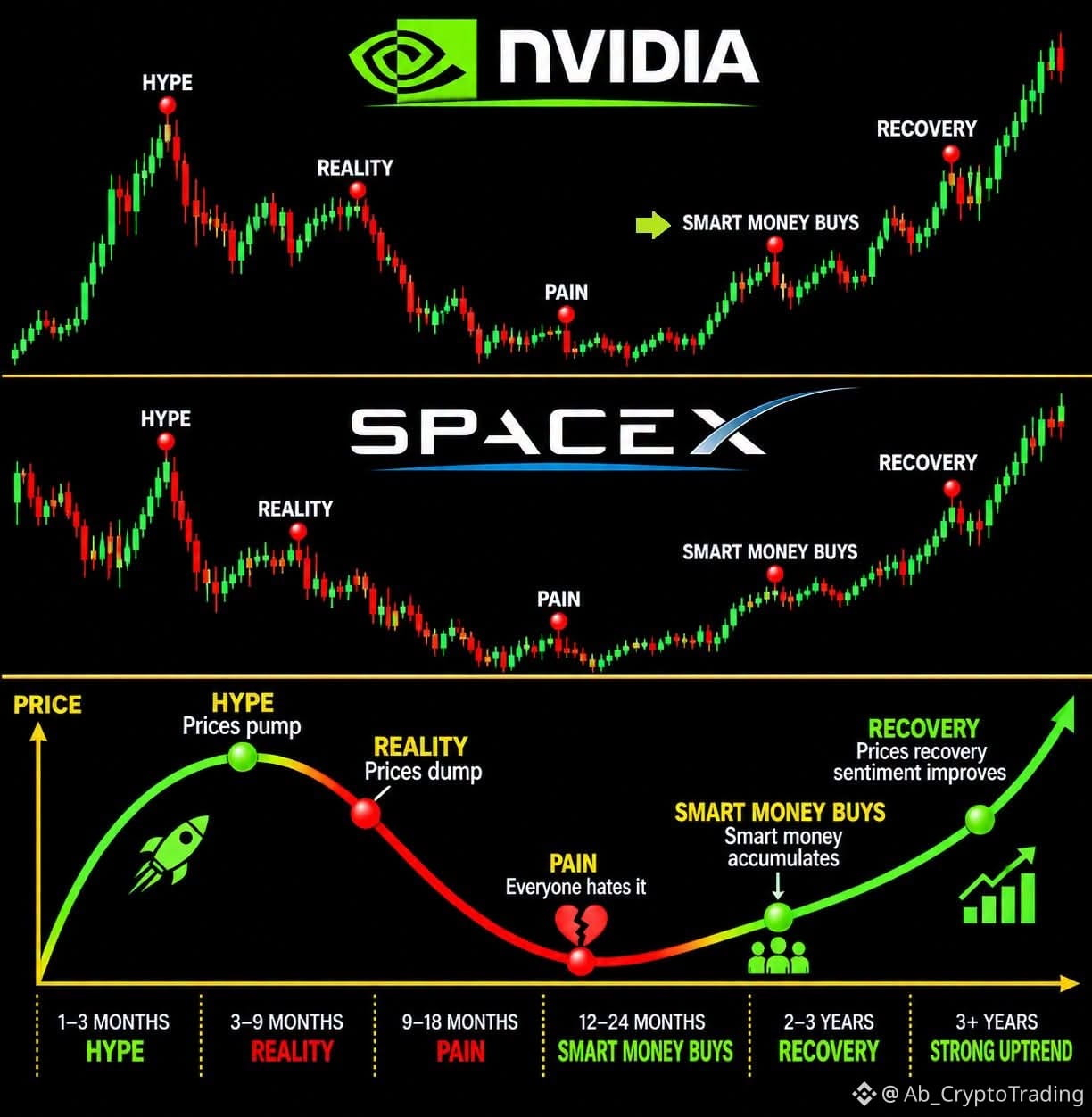
🚨 THE BIGGEST PROFITS ARE OFTEN MADE WHEN EVERYONE ELSE HAS GIVEN UP. BUT CAN YOU RECOGNIZE THAT MOMENT?
Look at the market cycle:
🔥 HYPE — Everyone wants to buy.
📉 REALITY — Expectations collide with reality.
💔 PAIN — Sentiment collapses. Investors lose confidence.
🐋 SMART MONEY BUYS — Long-term investors start accumulating.
🚀 RECOVERY — Confidence returns, and the next major uptrend may begin.
The interesting part? This cycle can appear in some of the biggest investment opportunities.
$NVDAB is a fascinating example to study. And could $SPCXB SpaceX follow a similar long-term growth narrative if it eventually becomes publicly traded?
But here's the real question:
Would you have the courage to buy when everyone is selling and sentiment is at its worst?
Or would fear keep you on the sidelines until the recovery is already underway?
👇 Be honest:
Are you a BUY THE FEAR investor or a BUY THE HYPE investor?
Let's hear your strategy.
Illustrative market-cycle framework, not a prediction or investment advice. $SPCXB is privately held; its chart is conceptual, not actual public-market price history.
#CanNvidia’sDataCenterGrowthContinue? #LedgerHardwareImplantReportsExtendToDubai #spcxb #Write2Earn #Binance
3
341
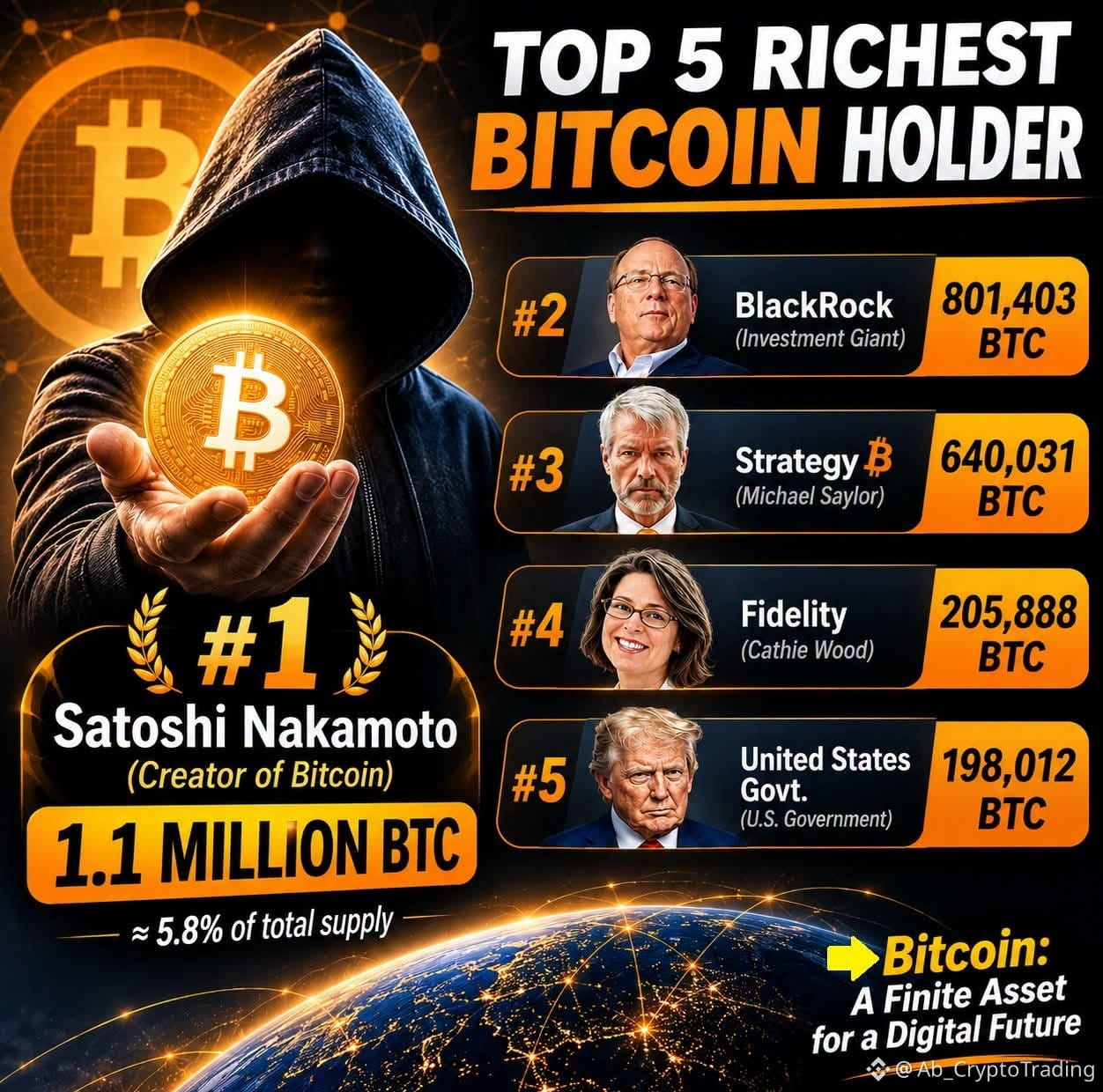
🚨 THE BIGGEST BITCOIN WHALE ISN’T BLACKROCK, WALL STREET, OR EVEN THE U.S. GOVERNMENT… IT’S SATOSHI NAKAMOTO!
An estimated 1.1 MILLION BTC attributed to Bitcoin’s mysterious creator.
That’s more than the reported holdings of some of the biggest institutions and governments in the Bitcoin market.
Look at the numbers:
🥇 Satoshi Nakamoto — 1.1M $BTC
🥈 BlackRock — 801,403 BTC
🥉 Strategy — 640,031 $BTC
4️⃣ Fidelity — 205,888 BTC
5️⃣ U.S. Government — 198,012 $BTC
But here's the real question…
What happens if Satoshi’s Bitcoin ever moves?
Would it shake the entire crypto market, trigger massive speculation, or change nothing about Bitcoin’s long-term future?
And one more question:
Who do you think has the greatest influence over Bitcoin today: Satoshi, Wall Street, institutional investors, or governments?
I want to hear your take. 👇
Holdings shown are estimates and reported figures, not necessarily direct beneficial ownership. Institutional figures may include Bitcoin held on behalf of clients.
#CanNvidia’sDataCenterGrowthContinue? #LedgerHardwareImplantReportsExtendToDubai #Binance #BinanceSquareFamily #BTC
1
670
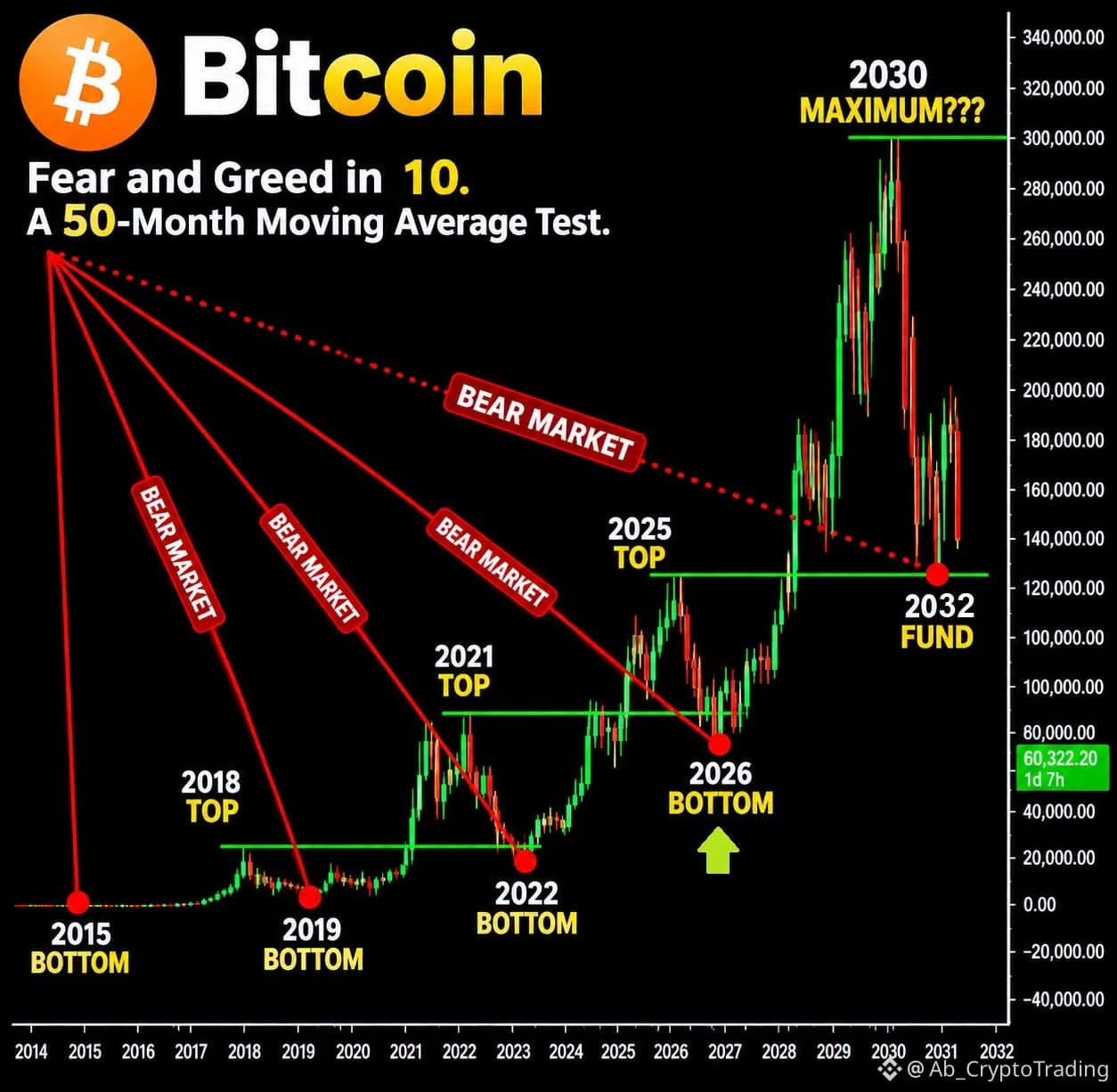
🚨 WHAT IF BITCOIN’S NEXT MAJOR BOTTOM IS ALREADY TAKING SHAPE… AND $300K IS THE NEXT BIG MILESTONE?
Bitcoin’s historical cycles have shown some fascinating patterns.
This chart highlights previous market tops and bottoms, bear market phases, and a possible connection with the 50-month moving average.
But here's where things get interesting:
📉 Could 2026 mark another major cycle bottom?
📈 Could #bitcoin then enter a new expansion phase toward $300K by 2030?
Or are we giving historical patterns too much credit in a market that keeps evolving?
I want to hear both sides:
BULLS: Is $300K by 2030 a realistic scenario?
BEARS: Why might this cycle be completely different?
And most importantly…
Do you believe #bitcoin still follows historical cycles, or has the game fundamentally changed?
Drop your reasoning below. Let's have a serious debate. 👇
Cycle analysis and hypothetical scenarios — not financial advice. $BTC
#CanNvidia’sDataCenterGrowthContinue? #LedgerHardwareImplantReportsExtendToDubai
#Binance
2
200
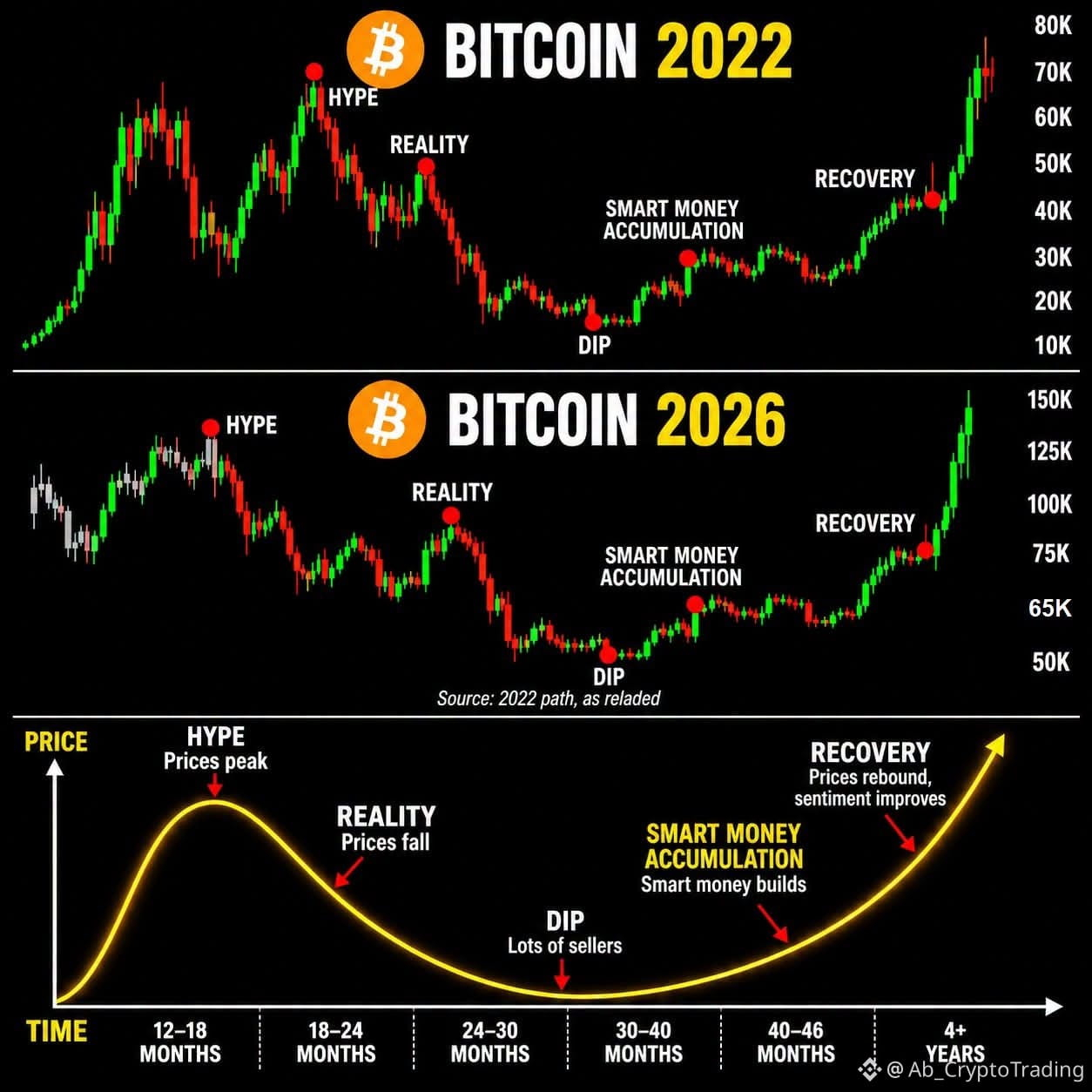
🚨 WHAT IF BITCOIN'S 2026 CYCLE IS FOLLOWING THE SAME PATH AS 2022? $BTC
History doesn't always repeat itself, but sometimes market behavior follows surprisingly familiar patterns.
Look at the similarities:
• Euphoria at the top.
• Reality kicks in.
• Prices decline and sentiment turns negative.
• Smart money starts accumulating while most investors lose confidence.
• Recovery begins, and market sentiment gradually shifts again.
The comparison between Bitcoin's 2022 cycle and its projected 2026 path raises an interesting possibility:
Could we be witnessing a familiar market structure playing out on a much larger scale?
Of course, every cycle has its own conditions, and historical patterns are not guarantees of future performance.
But here's what I'd really like to know:
Do you believe Bitcoin still follows a recognizable 4-year cycle, or have institutional capital, liquidity, and changing market dynamics fundamentally altered the game?
I'm interested in hearing both sides of this argument. 👇
#BTC #LedgerHardwareImplantReportsExtendToDubai #Write2Earn #Write2Earn! #EarningsSeason
7
5.9k
Log in to explore more content
Join global crypto users on Binance Square
⚡️ Get latest and useful information about crypto.
💬 Trusted by the world’s largest crypto exchange.
👍 Discover real insights from verified creators.
Email / Phone number
Trending Topics
BTCReboundsAbove$60KAmidWhaleDipBuying
86,357 views
373 Discussing
Abraxas Capital, Other Whales Buy the BTC Dip as Bitcoin Briefly Reclaims $60,000
Binance News
·36 Likes
·81.7k views
SolanaSets2027RoadmapToDoubleComputeCapacity
71,072 views
1,084 Discussing
CaliforniaNvidiaProbeExaminesPotentialCriminalViolations
19,275 views
151 Discussing