
#quantum
quantum
166,764 views
721 Discussing
Hot
Latest

·
--
⚛️ While much of crypto is still debating quantum computing, Algorand is advancing its post-quantum infrastructure 👀
🛡️ $ALGO is preparing for a security threat that could eventually force the entire industry to upgrade
🔢 Over 2.7 million post-quantum transactions on mainnet, per Algorand's own count
🔑 Falcon-1024 accounts have been live since August
🗺️ The roadmap targets broader quantum resilience by the end of 2027
The case for acting early is simple. A large enough quantum computer could break the signature schemes most blockchains use today, and chains that have to switch under pressure will face a harder migration than ones that started in advance. Algorand has real code running, not just research papers, which is more than most networks can say.
Keep the claim in proportion. Nobody knows when a quantum computer capable of this will exist, so "eventually" is doing a lot of work, and it could be many years. Falcon signatures cover how transactions are authorized, which is one layer, and the roadmap still lists consensus protection and post-quantum multisignatures as work to come. Being ahead also doesn't create demand for $ALGO on its own, and the price is still near its lows.
The strongest version of the argument is that quantum readiness is insurance. It costs little now, and it only pays off if the threat arrives.
❓ Does early quantum readiness earn Algorand a premium, or will the market ignore it until the threat is closer?
👇 Bullish, bearish, or just noise? Drop your take below!
📌 Follow for daily on-chain updates.
Not financial advice. DYOR.
#ALGO #Algorand #Quantum #Crypto #Binance #BinanceSquare

1
176

·
--
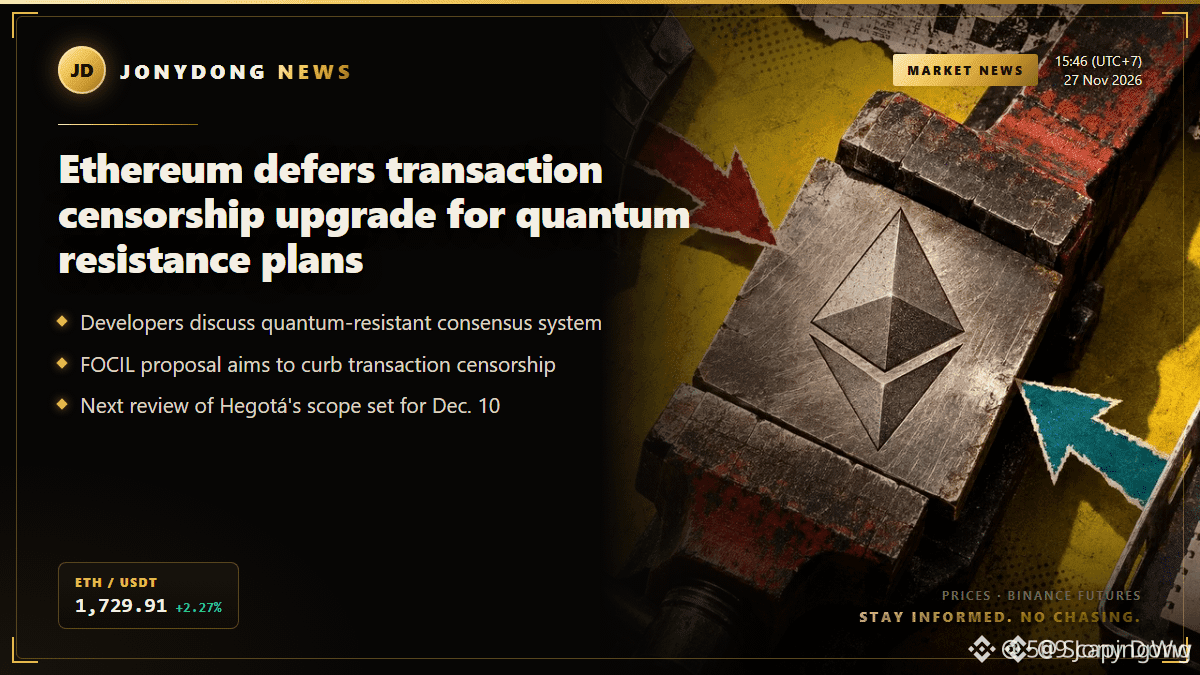
🛡️ $ETH CORE DEVS PRIORITIZING QUANTUM DEFENSE OVER SPEED IN THE LATEST UPGRADE MAP ⚡
Smart money always respects structural foresight over rushed deployments. Pushing back the censorship resistance proposal to fortify consensus against quantum threats shows builders are playing the multi-decade chess match. 📊
While timelines shift, anchoring the foundation against tomorrow's cryptography shocks creates unshakeable institutional confidence. The Dec 10 review will dictate how cleanly these architectural layers mesh together. ⚡
Are you viewing these development delays as a temporary friction point or foundational brilliance for the long haul? 🤔
⚠️ Not financial advice. Always manage your risk. 🛡️
🏷️ #ETH #Ethereum #CryptoNews #Quantum
🔥 💎
7
·
--
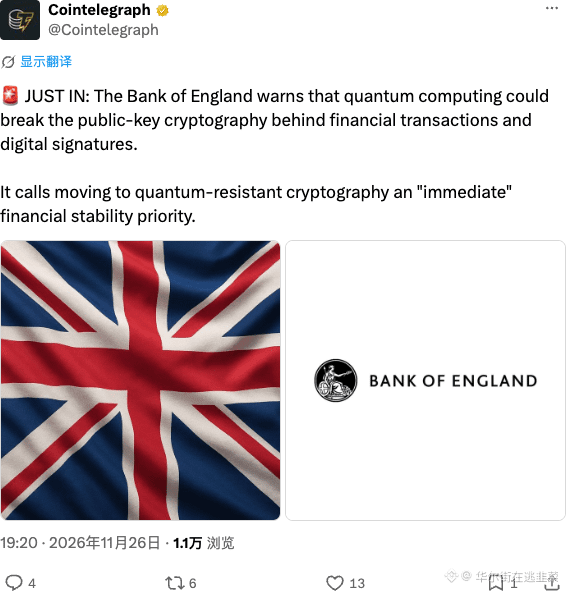
The Bank of England now calls the move to quantum-safe encryption an immediate financial stability priority.
In its Financial Policy Committee record published on November 26, 2026, covering a November 19 meeting, the Bank said the main near-term worry is public-key cryptography, the kind used for keys, logins, identity and digital signatures. If quantum computers, or frontier AI hunting for weak spots, ever broke those tools, trust in financial transactions and records could be shaken.
The committee pointed firms to the UK cyber agency's roadmap: a migration plan by the end of 2028, high-priority systems moved by the end of 2031 and everything else by the end of 2035, with the largest firms expected to move faster. Crypto faces the same homework, because $BTC and $ETH wallets also rely on public-key signatures. Bank of England regulators note that no quantum computer able to break this cryptography is known to exist yet.
#Quantum #Bitcoin #CryptoSecurity
DYOR. Not financial advice.

21

·
--
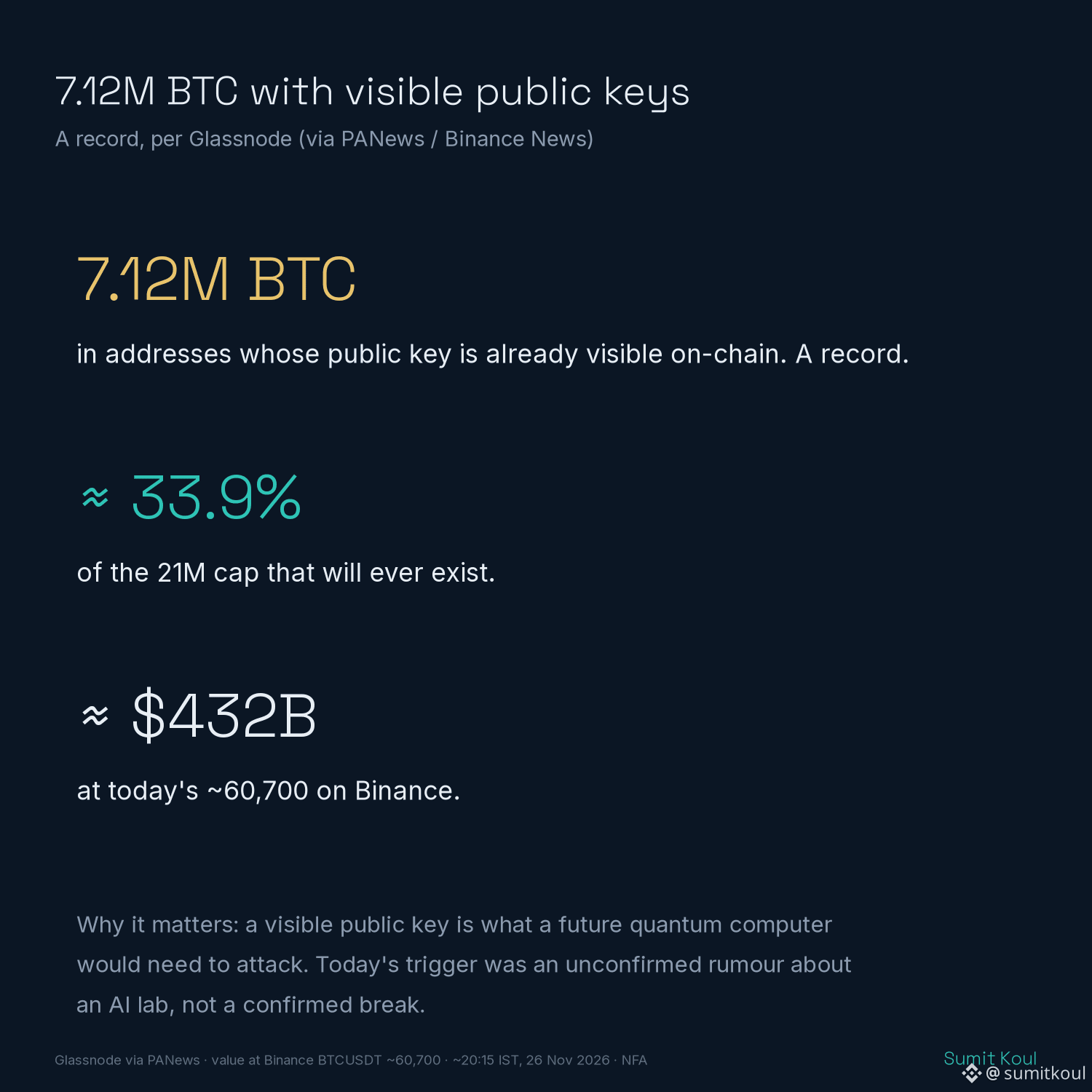
7.12 million. That's how much $BTC sits in addresses with visible public keys, the highest on record. 🔐
The data (Glassnode via PANews / Binance News): a record 7.12M BTC is held in addresses whose public key is already visible on-chain. Attention jumped after rumours that an AI lab had cracked public-key cryptography. That's a rumour, not a confirmed break.
Why it matters: a visible public key is what a future quantum computer would need to go after a coin. Many address types only reveal it when coins are spent. Reused addresses and very old output types show it permanently.
The size: about 33.9% of the 21M cap, or roughly $432B at today's ~60,700 on Binance.
Same theme elsewhere today: the Bank of England called quantum-resistant cryptography urgent for financial stability, and Consensys said its Teku team handles about 100 vulnerability reports a year, prioritising post-quantum and AI attacks (Binance News).
Price isn't reacting: $BTC is +0.3% since 16:30 IST. Levels: 60,430 below, 61,600 above.
Follow for Morning Levels at 08:00 IST, scored every night.
#Bitcoin #Quantum
Not financial advice.
1

·
--
🔐 The Bank of England's November Financial Stability Report warns that quantum computing could compromise widely used cryptography, making an orderly move to quantum-resistant cryptography a priority, with decisions firms need to make now.
Blockchains face the same challenge, since every wallet relies on public-key signatures. Is your favorite chain ready for Q-Day?
#Quantum #Bitcoin #Ethereum #Security
Blockchains face the same challenge, since every wallet relies on public-key signatures. Is your favorite chain ready for Q-Day?
#Quantum #Bitcoin #Ethereum #Security
1
13

$ETH devs just made a quietly big call on how Ethereum survives quantum computers, and AI.
An Ethereum Foundation research post recommends Keccak-256, the hash Ethereum already uses for addresses and state, as the single hash for the move to post-quantum, hash-based signatures. Unchained notes it reverses the August direction toward SHA2/BLAKE, and that it's a recommendation, not an EIP, with the EF's internal deadline still 2029. They picked security record over speed: Keccak is slower, but the post says AI-assisted cryptanalysis hasn't dented it.
My take: zero price impact today with $BTC stuck under 60K. But the "quantum kills crypto" FUD comes back every cycle, and a clear, boring, battle-tested answer is exactly what long-term holders want.
Does quantum risk factor into how you hold $ETH at all, or is it way too far out?
NFA, just my read.
Source: Ethereum Foundation blog, Unchained, The Block
#ETH #Ethereum #Quantum #Crypto
7

·
--
🔐 Ethereum Foundation Picks Keccak-256 for Post-Quantum Defence
📌 What happened
Ethereum Foundation researchers have recommended Keccak-256 as the hash function for Ethereum's planned shift to hash-based cryptography, in a blog post published Tuesday (Nov 24). The choice settles months of debate over how Ethereum will defend itself against quantum computing and AI-assisted attacks in the post-quantum era.
📊 Key numbers
• 5 candidates compared: Poseidon/Poseidon2, BLAKE3, BLAKE2, SHA2-256, Keccak-256
• Keccak-256: collision attacks reach only ~21% of its rounds (5 of 24); SHA2-256 ~55% (35 of 64)
• Scope: hash-based keys for validators, wallet signature migration, hash-based blob commitments
• Internal deadline: 2029 (Justin Drake floated Dec 2028 at Devcon)
• ETH: ~$1,691 on Binance, down ~29% over the past month
🔍 Why it matters
Once Ethereum replaces elliptic-curve signatures with hash-based ones, the security of the whole protocol rests on a single hash function — "if it is broken, everything else is broken," the Foundation wrote. Keccak-256 won on its ~20-year cryptanalysis record and its resistance so far to AI-assisted attacks, which the Foundation now treats as the more immediate threat — Ethlabs co-founder Julian Ma: "AI is here today and it's breaking everything around us." The choice also needs little new code for most clients, since Ethereum already uses Keccak-256 for addresses and execution-layer state.
👀 What to watch
• Whether core developers approve the Ethlabs post-quantum proposal
• The timetable review in January 2027 — 2028 vs 2029 target
• Progress on the first post-quantum devnet, already running
• Whether the quantum-security narrative lifts ETH sentiment after eight straight weeks of ETF outflows
Not financial advice. Source: Ethereum Foundation / The Block / Cointelegraph, Nov 25.
$ETH #Ethereum #ETH #Quantum
3



·
--
🚀 Stellar activates its Bell upgrade, adding quantum-resistant signatures for smart contracts
Stellar's Bell upgrade, also known as Protocol 30, is now live on mainnet after a validator vote on Nov. 23. Smart contracts can now verify ML-DSA signatures, a scheme built to withstand attacks from future quantum computers. Bell also brings multiplexed addresses to contracts, creating a new address type that starts with "W", and records ledger close times down to the millisecond.
⭐ Stellar moves early on quantum readiness, but wallets and exchanges still need to support the new "W" addresses before users can rely on them.
#Stellar #XLM #Quantum #Blockchain
136

⚠️ ⚠️
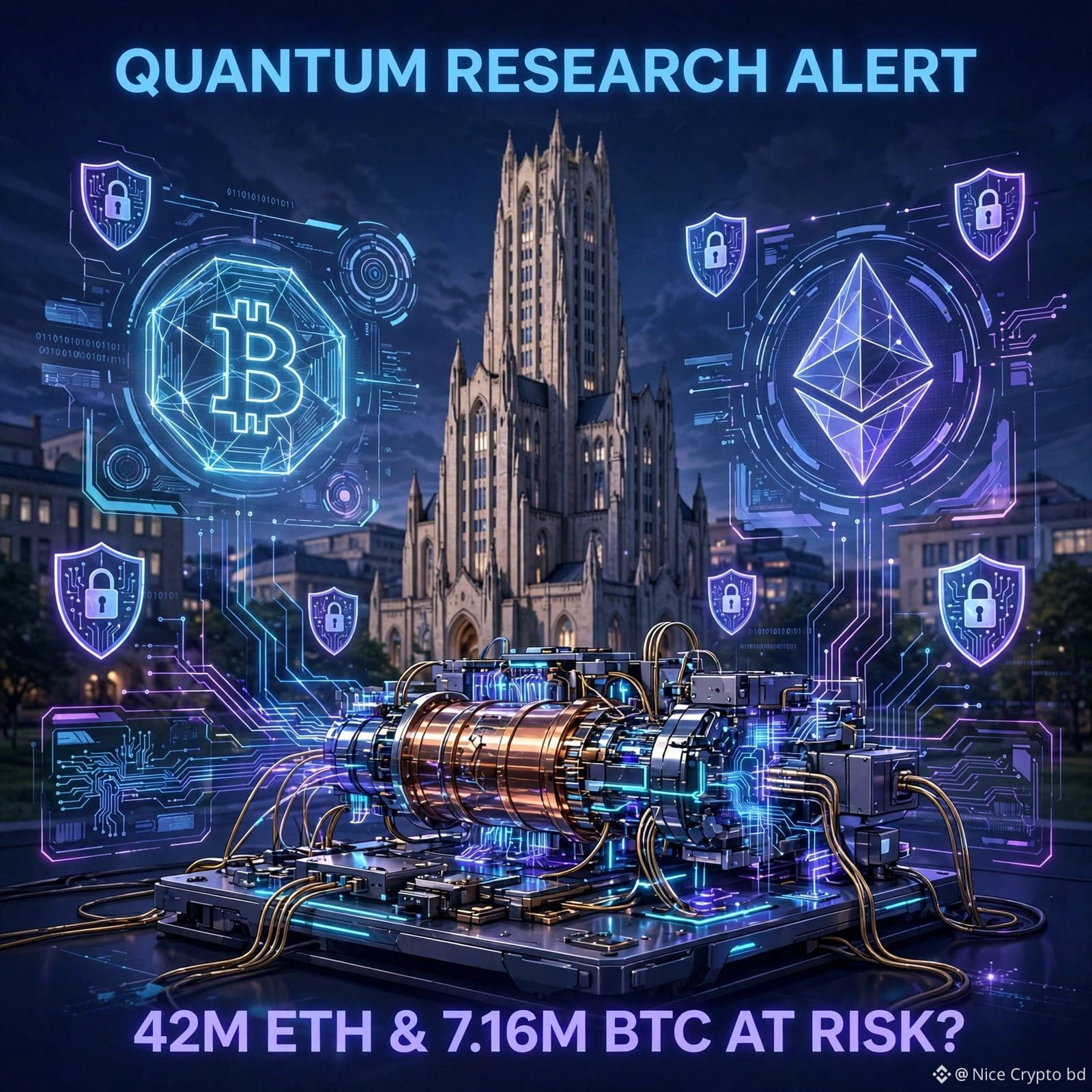
QUANTUM THREAT TO CRYPTO?
New research from University of Pittsburgh & SeQure reveals a big risk:
🔓 42M $ETH & 7.16M $BTC could be at risk in the future
Because old transaction signatures expose the Public Key, which quantum computers could one day crack using Shor's algorithm.
🛡️ Ethereum's Answer: 'Hegota' Hard Fork
Ethereum devs are preparing 5 proposals to add quantum-resistant security. Official update coming this week.
No quantum computer can do it YET, but the preparation has already started.
Are you worried about Quantum vs Crypto? 👇
#Quantum
{spot}(BTCUSDT)
{spot}(ETHUSDT)
⚠️ ⚠️
QUANTUM THREAT TO CRYPTO?
New research from University of Pittsburgh & SeQure reveals a big risk:
🔓 42M $ETH & 7.16M $BTC could be at risk in the future
Because old transaction signatures expose the Public Key, which quantum computers could one day crack using Shor's algorithm.
🛡️ Ethereum's Answer: 'Hegota' Hard Fork
Ethereum devs are preparing 5 proposals to add quantum-resistant security. Official update coming this week.
No quantum computer can do it YET, but the preparation has already started.
Are you worried about Quantum vs Crypto? 👇
#Quantum
1
109

·
--
Ethereum Foundation baru saja menggandakan tim keamanan protokolnya — dan alasannya bukan cuma komputer kuantum.
Fakta: lewat blog resmi PQAI #0 (23 Nov 2026), peneliti EF Kev Wedderburn mengumumkan EF menggandakan Protocol Security Team untuk mempercepat perombakan besar Ethereum menghadapi ancaman kuantum dan AI. Targetnya selesai Desember 2028 — setahun lebih cepat dari tenggat ketahanan kuantum sebelumnya. Tiga lapisan dirombak sekaligus: validator menandatangani pakai kunci berbasis hash (bukan kurva eliptik), dompet pengguna bermigrasi ke signature berbasis hash, dan data blob rollup pindah ke komitmen berbasis hash. Devnet post-quantum pertama sudah jalan.
Status: TERKONFIRMASI — blog resmi Ethereum Foundation 23 Nov 2026 + liputan Cointelegraph dan Crypto Briefing.
Opiniku: yang paling menarik, Wedderburn bilang AI kini ancaman yang lebih mendesak daripada kuantum — agen AI EF sendiri sudah menemukan bug denial-of-service kritis di lapisan gossipsub. Ia menyebut upgrade ini lebih sulit dari The Merge, dengan waktu lebih sedikit. ETH di sekitar 1.700 dolar saat aku menulis ini — pasar belum bereaksi banyak, wajar: ini cerita fondasi jangka panjang, bukan katalis harga hari ini.
Yang aku pantau selanjutnya: detail teknis PQAI lanjutan dan apakah upgrade Hegotá ikut jalur yang sama, plus review timeline yang dijadwalkan Januari.
Menurut kalian, ancaman AI terhadap keamanan protokol ini nyata dalam waktu dekat, atau masih terlalu jauh untuk diperhitungkan pasar?
#Ethereum #Quantum $ETH
10
The $BTC quantum debate got a fresh number this weekend: more than 6M BTC, about 31.2% of circulating supply, had public keys exposed on-chain as of October, per Glassnode data cited by Cysic CEO Leo Fan (via BlockBeats).
His point is that the real defense isn't just new cryptography, it's actually moving coins to safer addresses. Post-quantum single-sig schemes are standardized already, but threshold and multisig setups are still in research, and BIP 360 / BIP 361 are only drafts. Devs are split between forced freezing of old wallets and voluntary upgrades.
My take: nobody's breaking keys tomorrow, so this isn't a price thing this week. But "freeze old coins or not" is the kind of fight that can get ugly for $BTC sentiment once it gets closer to real. Custodians and bridges having to upgrade on their own is the part I'd watch.
Freeze untouched old coins, or let them be no matter what? Curious where people land.
Source: BlockBeats (Nov 22), citing Glassnode. NFA.
#Bitcoin #BTC #Quantum
45
·
--
⚛️ 6M+ BTC sit behind exposed keys as Bitcoin's quantum fix becomes a migration problem
More than 6 million bitcoin, or 31.2% of circulating supply, were held behind public keys already visible onchain in October, according to Glassnode data. Cysic CEO Leo Fan says stronger cryptography is only half the job: exchanges, custodians and bridges must upgrade too, and post-quantum multisig and threshold signatures are still at the research stage. Developers remain split between BIP 361, which would eventually restrict coins that don't migrate, and voluntary upgrades; BIP 360 and BIP 361 are both still drafts.
⭐ Quantum computers can't break Bitcoin today, but the long migration runway makes this a live governance issue for every institution holding BTC.
#Bitcoin #BTC #Quantum #CryptoSecurity

Most Market Watch:
Glassnode's latest data confirms why $BTC dominance is holding strong near 58%: the altcoin spot volume ratio dropped from 4.0 down to ~2.5, showing capital is rotating back to Bitcoin safety. Watching how 60,000 USDT holds during NY hours! 📊
1
1
207
·
--
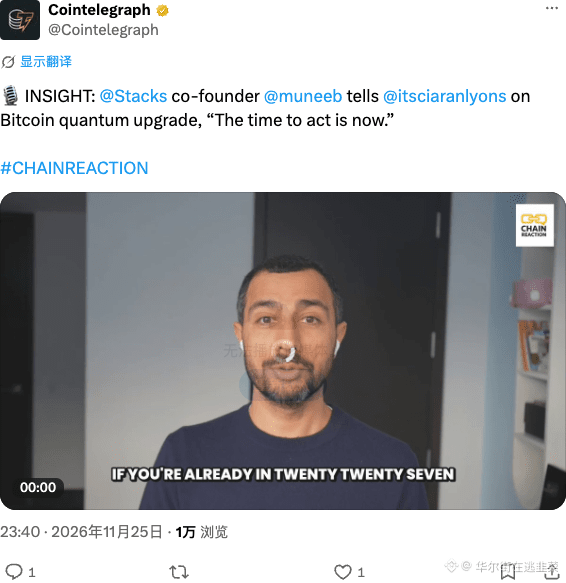
Base, L2 Ethereum-nya Coinbase, resmi jadikan keamanan kuantum prioritas 2027 — respons builder pertama atas ancaman yang kemarin bikin 42 juta ETH ketar-ketir.
Fakta: kreator Base Jesse Pollak bilang ke Cointelegraph (23 Nov 2026, wawancara eksklusif) upgrade Everest — upgrade kelima Base — akan memperkenalkan tipe transaksi baru "Base Transactions" (EIP-8430). Format ini memisahkan cara transaksi ditandatangani dari cara signaturenya diverifikasi, supaya algoritma pasca-kuantum bisa dipasang belakangan tanpa pengguna ganti alamat dompet. Jujur saja: Everest sendiri belum bikin dompet tahan kuantum — ini fondasinya dulu. Base juga belum memberi tenggat kapan perlindungan penuhnya datang, selain "prioritas 2027".
Status: TERKONFIRMASI — wawancara resmi Pollak + liputan Cointelegraph 23 Nov 2026; ini rencana pengembangan, bukan peluncuran atau distribusi.
Opiniku: langkah ini masuk akal karena ancamannya nyata tapi belum hari ini — paper 19 Nov menghitung sekitar 42 juta ETH ada di dompet yang terekspos, dan regulator IOSCO sudah memperingatkan komputer kuantum bisa mengancam sistem keuangan. Base, L2 terbesar kedua dengan TVL sekitar 5,1 miliar dolar, memilih membangun fondasi sekarang ketimbang menunggu komputernya benar-benar datang. Yang aku pantau selanjutnya: detail teknis Everest dan apakah Ethereum mainnet lewat upgrade Hegotá ikut jalur yang sama.
ETH di sekitar 1.723 dolar saat aku menulis ini.
Ini analisisku, bukan nasihat finansial — DYOR selalu.
Menurut kalian, L2 lain bakal ikut menyiapkan pertahanan kuantum, atau ini cuma jadi PR Ethereum saja?
#Base #Quantum $ETH
22

·
--
I spent part of my weekend reading IOSCO's new quantum report, and one line stuck with me. Blockchains may have a harder time moving to post-quantum cryptography than banks, because the crypto is built into the core protocol and changing it takes coordinated upgrades across independent nodes. IOSCO puts a cryptographically relevant quantum computer somewhere in the 2030 to 2035 window. Bitcoin developers are already weighing BIP-360, BIP-361 and SHRINCS, each with different tradeoffs. Meanwhile $BTC fell below $60,000 on Friday for the first time since July, in the same session the Nasdaq fell more than 5%. My view: quantum is a slow problem, and the market will probably ignore it until a concrete upgrade ships. Do you think the price drop or the long-term security question matters more for bitcoin right now? #Bitcoin #Quantum
I spent part of my weekend reading IOSCO's new quantum report, and one line stuck with me. Blockchains may have a harder time moving to post-quantum cryptography than banks, because the crypto is built into the core protocol and changing it takes coordinated upgrades across independent nodes. IOSCO puts a cryptographically relevant quantum computer somewhere in the 2030 to 2035 window. Bitcoin developers are already weighing BIP-360, BIP-361 and SHRINCS, each with different tradeoffs. Meanwhile $BTC fell below $60,000 on Friday for the first time since July, in the same session the Nasdaq fell more than 5%. My view: quantum is a slow problem, and the market will probably ignore it until a concrete upgrade ships. Do you think the price drop or the long-term security question matters more for bitcoin right now? #Bitcoin #Quantum
1
102

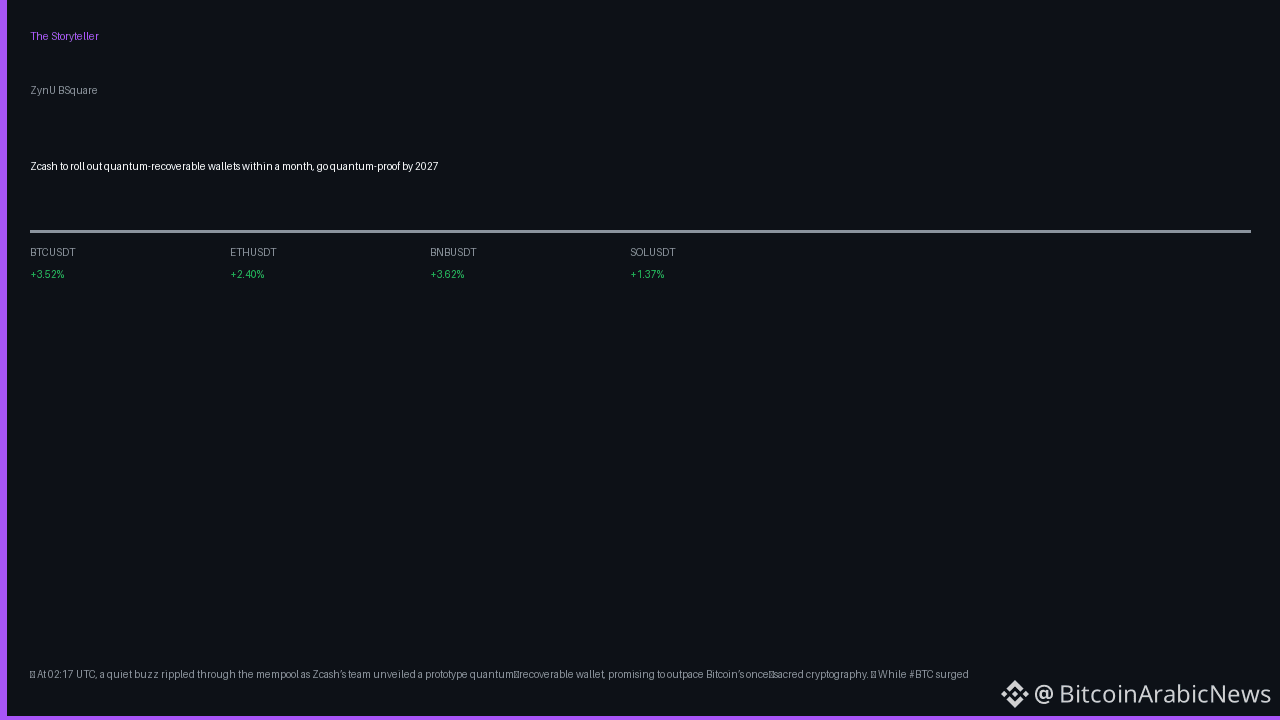
🔥 At 02:17 UTC, a quiet buzz rippled through the mempool as Zcash’s team unveiled a prototype quantum‑recoverable wallet, promising to outpace Bitcoin’s once‑sacred cryptography.
📊 While #BTC surged 3.52% to $60,637 amid extreme fear (11/100), futures open interest sat at $5.69 B with funding at +0.0036%, indicating longs are paying to stay in the game. The same market that just saw a bullish MACD crossover now watches Zcash plot a quantum‑proof upgrade by 2027, a move that could rewrite the security playbook for every #Zcash holder. Meanwhile, #Quantum whispers are already echoing through #crypto forums, as smart money on Solana eyes the next frontier of shielded assets.
💡 The twist? If Zcash nails quantum resilience, the narrative that Bitcoin is the unbreakable cypherpunk gold may finally crack, shifting institutional capital toward privacy‑first chains that can survive the next generation of computing power.
❓ Will the rise of quantum‑proof wallets turn the tide of the current fear‑driven rally, or will Bitcoin’s inertia keep the crown firmly on its head?
32

⚠️ $BTC Amenaza Cuántica: 31.2% de BTC expuestos, la migración es la clave, no solo el código.
Miren el detalle que nadie está viendo: La amenaza cuántica para Bitcoin no es solo técnica, es un desafío social de migración de millones de monedas.
• Más de 6 millones de BTC (31.2% de la oferta circulante) tenían claves públicas expuestas en octubre.
• La solución requiere migrar fondos a seguridad cuántica resistente, actualizando custodios y bridges.
¿Crees que la migración voluntaria es suficiente o se necesita una restricción forzosa para proteger los fondos? 👇
$BTC
#Bitcoin #Cripto #Quantum

93

⚠️ $BTC Amenaza Cuántica: 31.2% de BTC expuestos, la migración es la clave, no solo el código.
Miren el detalle que nadie está viendo: La amenaza cuántica para Bitcoin no es solo técnica, es un desafío social de migración de millones de monedas.
• Más de 6 millones de BTC (31.2% de la oferta circulante) tenían claves públicas expuestas en octubre.
• La solución requiere migrar fondos a seguridad cuántica resistente, actualizando custodios y bridges.
¿Crees que la migración voluntaria es suficiente o se necesita una restricción forzosa para proteger los fondos? 👇
$BTC
#Bitcoin #Cripto #Quantum

118
·
--
Bitcoin's post-quantum work keeps moving: Blockstream's Jonas Nick, cryptographer Mikhail Kudinov and collaborators released a draft security analysis for SHRINCS, a hash-based signature proposal. Stateful signatures run 548 to 4,619 bytes, with a stateless fallback near 5,777 bytes. It is still experimental and not a production recommendation. #Bitcoin #Quantum
Bitcoin's post-quantum work keeps moving: Blockstream's Jonas Nick, cryptographer Mikhail Kudinov and collaborators released a draft security analysis for SHRINCS, a hash-based signature proposal. Stateful signatures run 548 to 4,619 bytes, with a stateless fallback near 5,777 bytes. It is still experimental and not a production recommendation. #Bitcoin #Quantum
55
Log in to explore more content
Join global crypto users on Binance Square
⚡️ Get latest and useful information about crypto.
💬 Trusted by the world’s largest crypto exchange.
👍 Discover real insights from verified creators.
Email / Phone number
Trending Topics
1
#EvolveAtBinanceBlockchainWeek
1.6M views
16,646 Discussing
2
#ColdcardFlawLeadsToTheftOfAtLeast1789BTC
9,805 views
133 Discussing
3
#ChainflipVaultTheftHaltsProtocol
15,965 views
288 Discussing
4
#MalaysiaFirstBitcoinETFToListOnDecember2
8,248 views
124 Discussing
5
#VitalikWantsWalletChipDesignsOpened
24,011 views
367 Discussing
6
#DowJonesAdds591.99Points
11,437 views
81 Discussing
7
#SECIssuesNoActionLetterOnMoleculeModel
1,025 views
20 Discussing
8
#ClaudeAccusedOfDroppingUserPreferences
7,737 views
95 Discussing
9
#AnzaUrgesSolanaNodesUpgradeAgave
8,579 views
157 Discussing
10
#EthereumGlamsterdamKeepsStorageFeeChange
51,300 views
497 Discussing