

#crypto
crypto
394M views
2.2M Discussing
Hot
Latest


·
--
Bearish
Verified
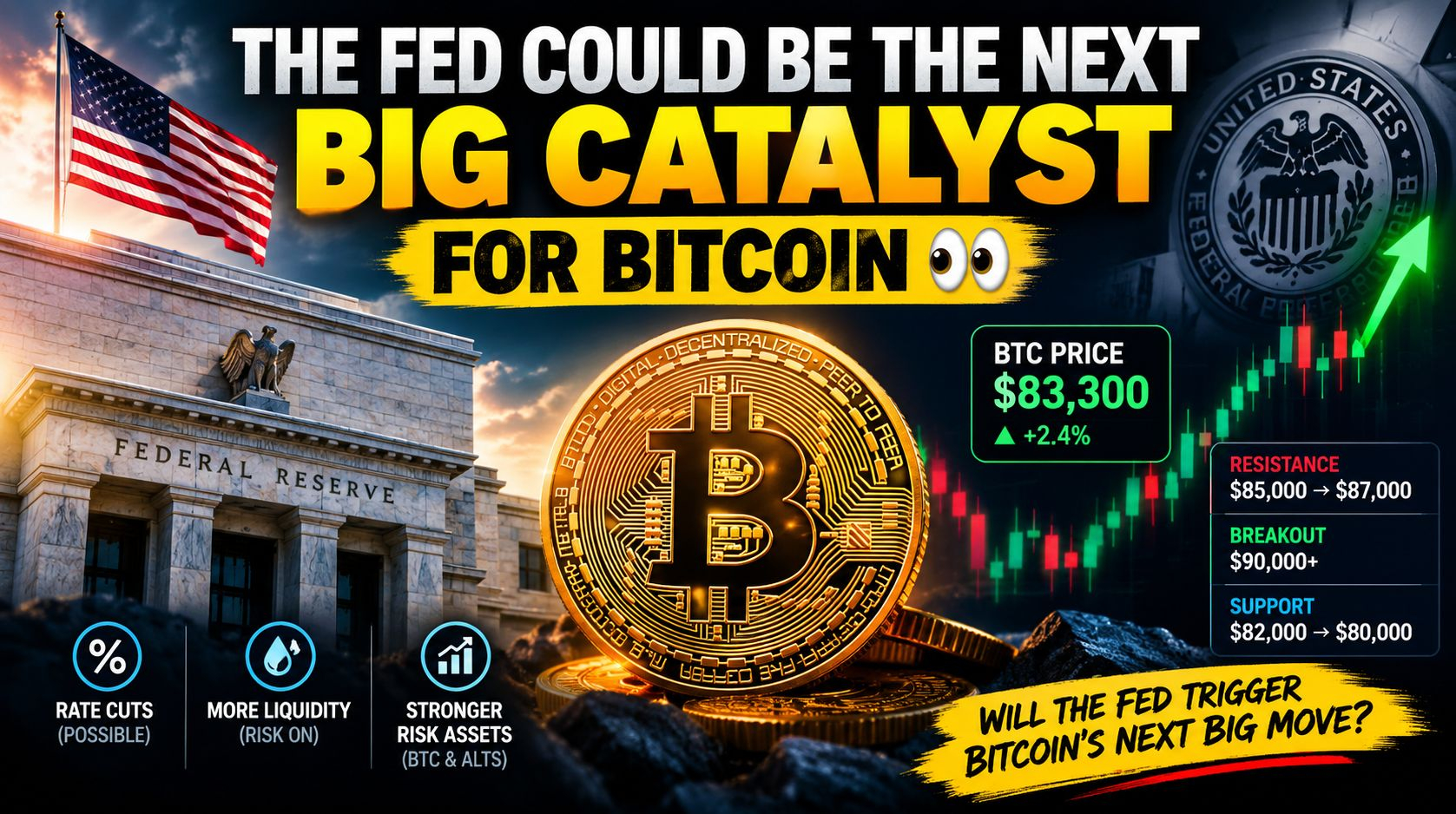
📈THE FED COULD BE THE NEXT BIG CATALYST FOR BITCOIN 👀
Bitcoin is trading around $83,300, after recently failing to hold above the $87,000 resistance. Now, the Fed could decide where the next major move goes.
The latest FOMC minutes were still hawkish. The Fed raised rates by 25 bps in September, and most officials indicated another hike could be appropriate later this year. The next FOMC meeting is scheduled for October 27–28.
For BTC, I’m watching:
Current Price: ~$83,300
Resistance: $85,000 → $87,000
Major Breakout: $90,000+
Support: $82,000 → $80,000
If the Fed becomes less hawkish and liquidity expectations improve, Bitcoin could regain momentum. But if yields and the dollar continue rising, BTC may remain under pressure.
My view: $87K is the key level. A clean breakout could change the short-term structure.
Do you think the Fed will trigger Bitcoin’s next big move?
#FedMinutesFocusOnOctoberPause
#Bitcoin #crypto #Fed
$BTC |$SOL |$BR
📈THE FED COULD BE THE NEXT BIG CATALYST FOR BITCOIN 👀
Bitcoin is trading around $83,300, after recently failing to hold above the $87,000 resistance. Now, the Fed could decide where the next major move goes.
The latest FOMC minutes were still hawkish. The Fed raised rates by 25 bps in September, and most officials indicated another hike could be appropriate later this year. The next FOMC meeting is scheduled for October 27–28.
For BTC, I’m watching:
Current Price: ~$83,300
Resistance: $85,000 → $87,000
Major Breakout: $90,000+
Support: $82,000 → $80,000
If the Fed becomes less hawkish and liquidity expectations improve, Bitcoin could regain momentum. But if yields and the dollar continue rising, BTC may remain under pressure.
My view: $87K is the key level. A clean breakout could change the short-term structure.
Do you think the Fed will trigger Bitcoin’s next big move?
#FedMinutesFocusOnOctoberPause
#Bitcoin #crypto #Fed
$BTC |$SOL |$BR
Bitcoin is trading around $83,300, after recently failing to hold above the $87,000 resistance. Now, the Fed could decide where the next major move goes.
The latest FOMC minutes were still hawkish. The Fed raised rates by 25 bps in September, and most officials indicated another hike could be appropriate later this year. The next FOMC meeting is scheduled for October 27–28.
For BTC, I’m watching:
Current Price: ~$83,300
Resistance: $85,000 → $87,000
Major Breakout: $90,000+
Support: $82,000 → $80,000
If the Fed becomes less hawkish and liquidity expectations improve, Bitcoin could regain momentum. But if yields and the dollar continue rising, BTC may remain under pressure.
My view: $87K is the key level. A clean breakout could change the short-term structure.
Do you think the Fed will trigger Bitcoin’s next big move?
#FedMinutesFocusOnOctoberPause
#Bitcoin #crypto #Fed
$BTC |$SOL |$BR
156

·
--
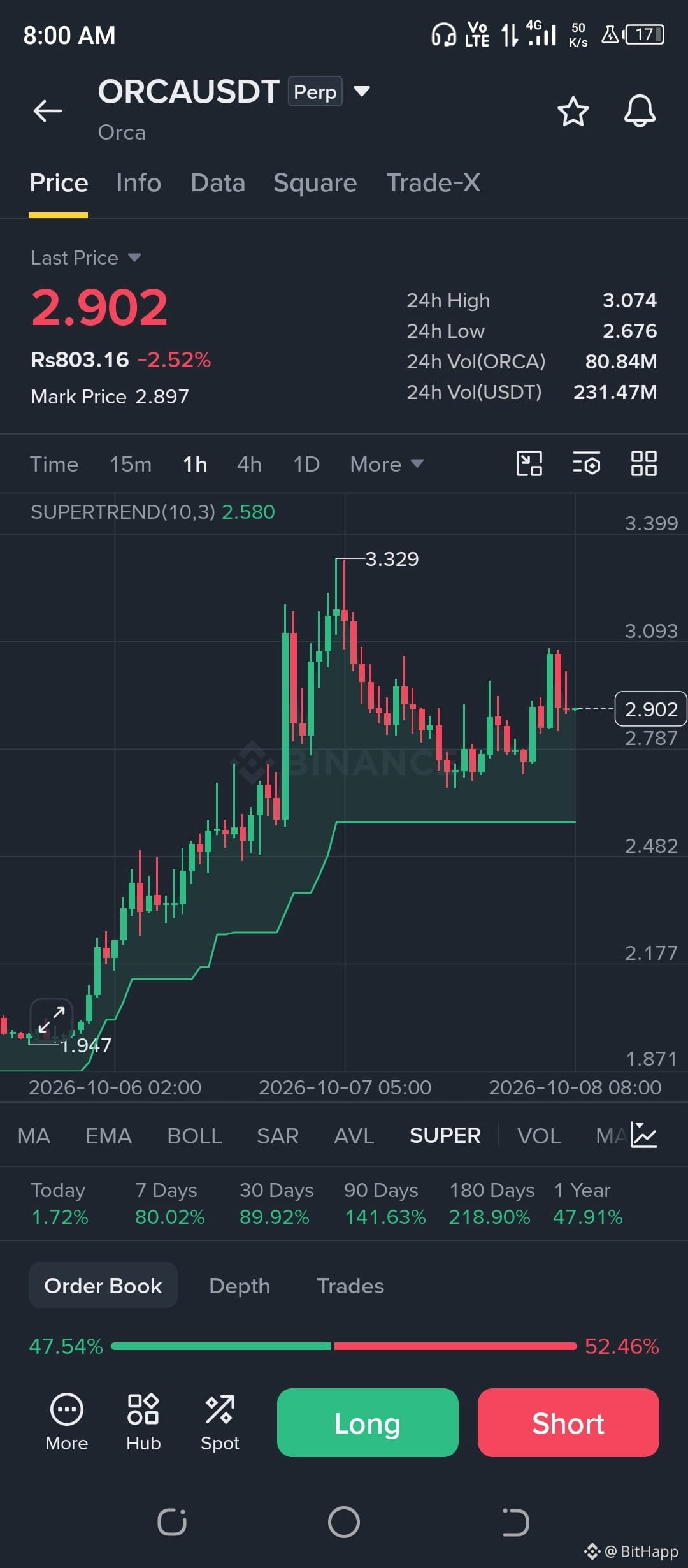
🔴 $ORCA — WAIT FOR CONFIRMATION
$ORCA is showing a bullish trend, so blindly shorting here isn’t the best move. 👀
📍 Resistance: $3.07–$3.10
📍 Current: ~$2.90
SHORT only if rejection confirms:
🔻 Entry: $2.85–$2.95 after rejection
🎯 TP1: $2.78
🎯 TP2: $2.68
🎯 TP3: $2.58
🛑 SL: $3.15
If $ORCA breaks $3.10–$3.15 with strong volume, ❌ cancel the short idea.
That could open the door for a LONG setup instead. 📈
No FOMO — let the chart confirm first. 🫡
#ORCA #Trading #Crypto #BinanceSquare TechnicalAnalysis
🔴 $ORCA — WAIT FOR CONFIRMATION
$ORCA is showing a bullish trend, so blindly shorting here isn’t the best move. 👀
📍 Resistance: $3.07–$3.10
📍 Current: ~$2.90
SHORT only if rejection confirms:
🔻 Entry: $2.85–$2.95 after rejection
🎯 TP1: $2.78
🎯 TP2: $2.68
🎯 TP3: $2.58
🛑 SL: $3.15
If $ORCA breaks $3.10–$3.15 with strong volume, ❌ cancel the short idea.
That could open the door for a LONG setup instead. 📈
No FOMO — let the chart confirm first. 🫡
#ORCA #Trading #Crypto #BinanceSquare TechnicalAnalysis
$ORCA is showing a bullish trend, so blindly shorting here isn’t the best move. 👀
📍 Resistance: $3.07–$3.10
📍 Current: ~$2.90
SHORT only if rejection confirms:
🔻 Entry: $2.85–$2.95 after rejection
🎯 TP1: $2.78
🎯 TP2: $2.68
🎯 TP3: $2.58
🛑 SL: $3.15
If $ORCA breaks $3.10–$3.15 with strong volume, ❌ cancel the short idea.
That could open the door for a LONG setup instead. 📈
No FOMO — let the chart confirm first. 🫡
#ORCA #Trading #Crypto #BinanceSquare TechnicalAnalysis
1
290

Verified
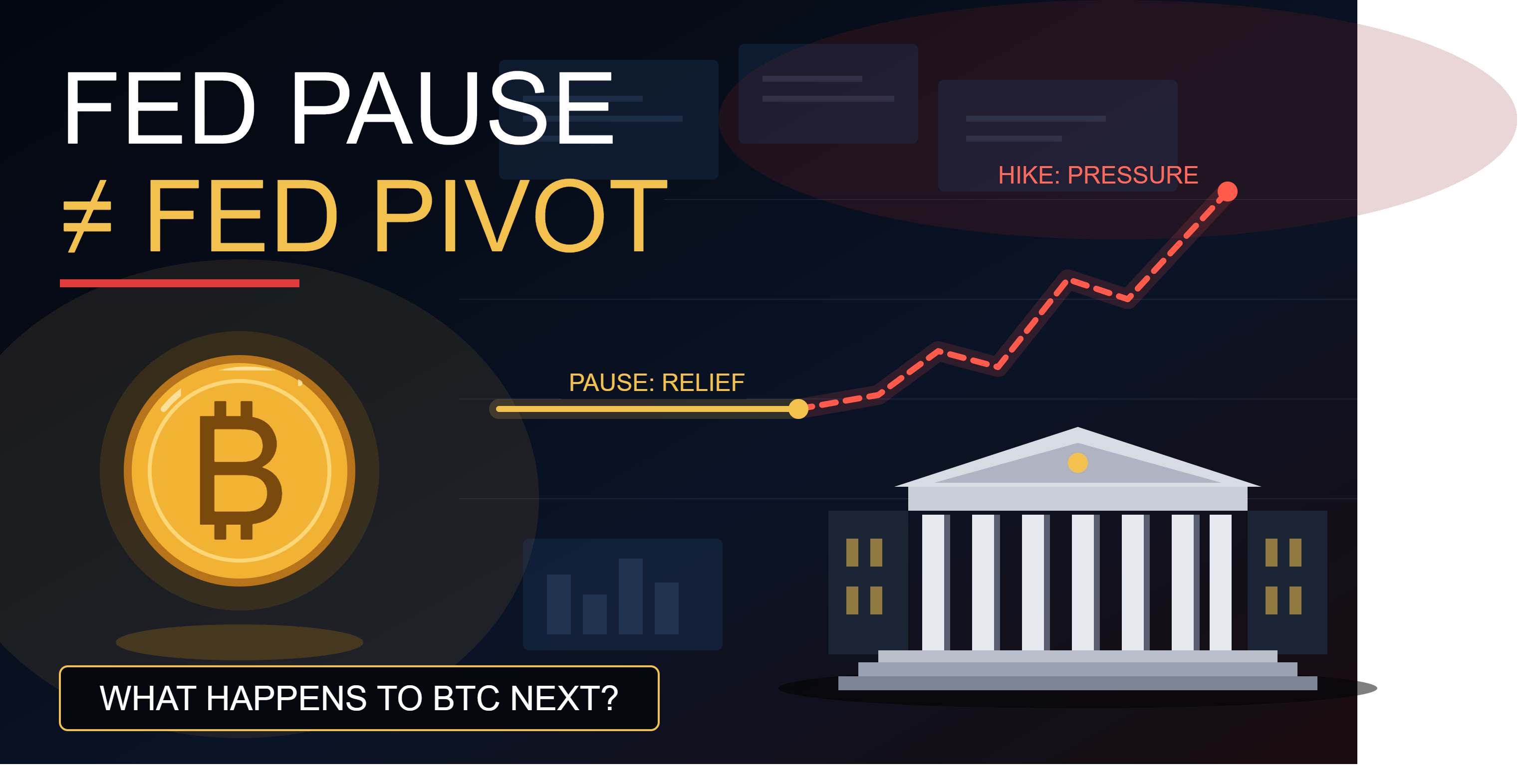
#fedminutesfocusonoctoberpause 🚨 EVERYONE IS WATCHING THE OCTOBER FED PAUSE…
BUT THAT’S NOT THE MOST INTERESTING PART. 👀
The latest Fed minutes suggest an October pause is possible — but officials haven’t closed the door on another hike later this year.
That changes the story.
A pause could give risk assets some breathing room…
But if inflation stays sticky, the Fed can still turn hawkish again. ⚠️
For $BTC, the real question isn’t:
“Will the Fed pause?”
It’s:
“What happens AFTER the pause?”
That could decide whether this is a real risk-on shift… or just another temporary bounce.
$BTC
#fedminutesfocusonoctoberpause #bitcoin #Fed #crypto
#fedminutesfocusonoctoberpause 🚨 EVERYONE IS WATCHING THE OCTOBER FED PAUSE…
BUT THAT’S NOT THE MOST INTERESTING PART. 👀
The latest Fed minutes suggest an October pause is possible — but officials haven’t closed the door on another hike later this year.
That changes the story.
A pause could give risk assets some breathing room…
But if inflation stays sticky, the Fed can still turn hawkish again. ⚠️
For $BTC , the real question isn’t:
“Will the Fed pause?”
It’s:
“What happens AFTER the pause?”
That could decide whether this is a real risk-on shift… or just another temporary bounce.
$BTC
#fedminutesfocusonoctoberpause #bitcoin #Fed #crypto
BUT THAT’S NOT THE MOST INTERESTING PART. 👀
The latest Fed minutes suggest an October pause is possible — but officials haven’t closed the door on another hike later this year.
That changes the story.
A pause could give risk assets some breathing room…
But if inflation stays sticky, the Fed can still turn hawkish again. ⚠️
For $BTC , the real question isn’t:
“Will the Fed pause?”
It’s:
“What happens AFTER the pause?”
That could decide whether this is a real risk-on shift… or just another temporary bounce.
$BTC
#fedminutesfocusonoctoberpause #bitcoin #Fed #crypto
2.6k


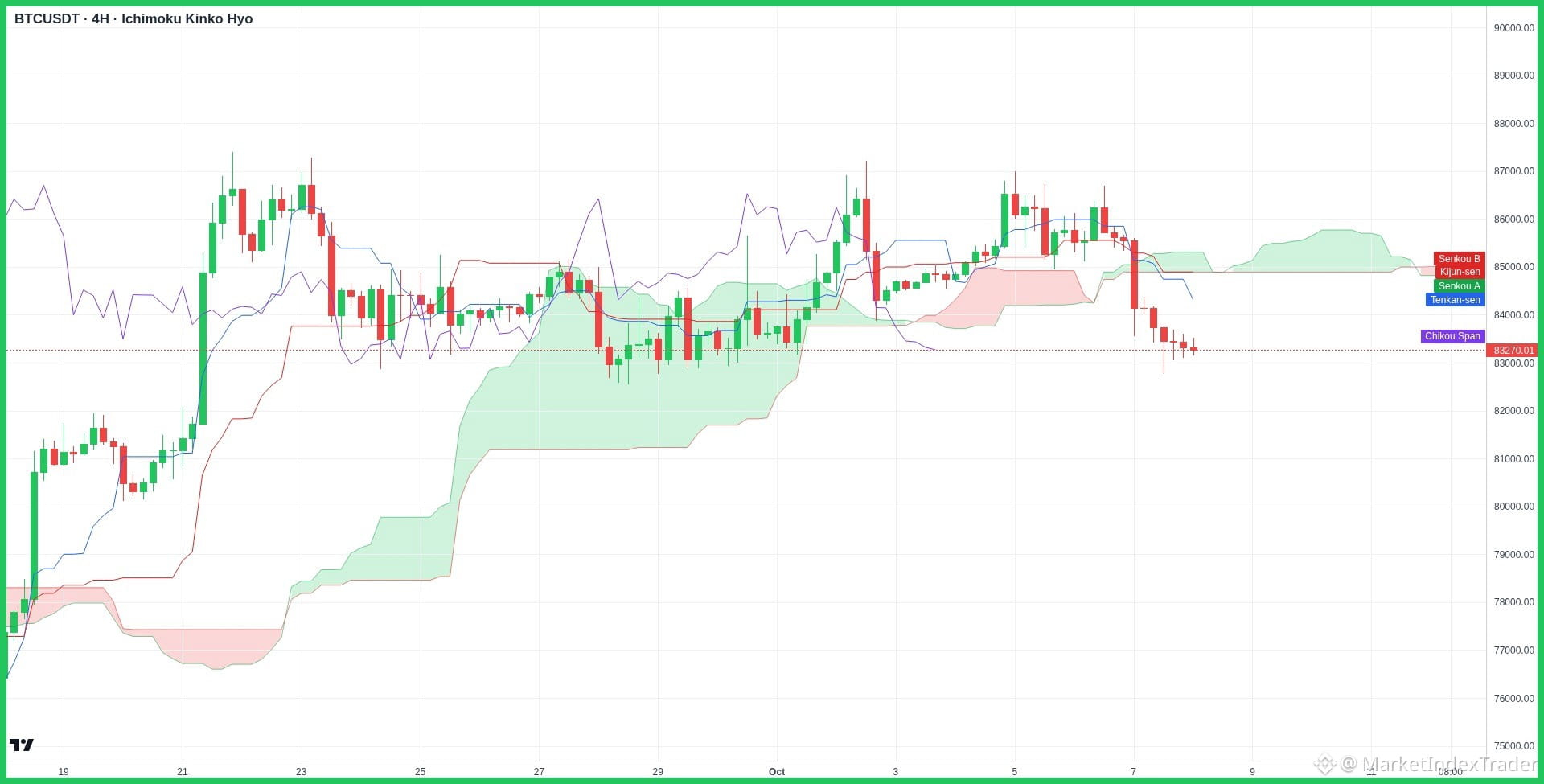
BTCUSDT Alert! Is this distribution or just a shakeout before the next leg up? 🚨
BTCUSDT's 4H chart shows price testing the lower boundary of the Ichimoku Cloud, acting as a crucial pivot zone.
Alright team, let's break down this juicy $BTC chart and see what's cooking.
On the 4H timeframe utilizing the Ichimoku Kinko Hyo indicator, Bitcoin is currently hovering around the $83,270 level. Price has dipped below the Kijun-sen and Tenkan-sen, and is now testing the lower edge of the green cloud support zone near $82,500 - $83,000. Immediate resistance stands firm at the $85,000 psychological mark. A decisive hold above this cloud support is vital for maintaining the broader bullish structure.
On the fundamental side, the Bitcoin ecosystem continues to show incredible resilience with institutional adoption surging via spot ETF inflows and expanding layer-2 scalability solutions. Network hash rate remains near all-time highs, signaling robust long-term miner confidence.
My action plan is to monitor this support zone closely for a bullish reversal candle before scaling into spot longs, while keeping strict risk management below $82,000.
Highly recommend HOLD and Stacking $BTC at Binance
Feel free to comment the altcoin you are holding and we will check it for you!
BTC #TechnicalAnalysis #Crypto #BinanceSquare #Bitcoin
BTCUSDT Alert! Is this distribution or just a shakeout before the next leg up? 🚨
BTCUSDT's 4H chart shows price testing the lower boundary of the Ichimoku Cloud, acting as a crucial pivot zone.
Alright team, let's break down this juicy $BTC chart and see what's cooking.
On the 4H timeframe utilizing the Ichimoku Kinko Hyo indicator, Bitcoin is currently hovering around the $83,270 level. Price has dipped below the Kijun-sen and Tenkan-sen, and is now testing the lower edge of the green cloud support zone near $82,500 - $83,000. Immediate resistance stands firm at the $85,000 psychological mark. A decisive hold above this cloud support is vital for maintaining the broader bullish structure.
On the fundamental side, the Bitcoin ecosystem continues to show incredible resilience with institutional adoption surging via spot ETF inflows and expanding layer-2 scalability solutions. Network hash rate remains near all-time highs, signaling robust long-term miner confidence.
My action plan is to monitor this support zone closely for a bullish reversal candle before scaling into spot longs, while keeping strict risk management below $82,000.
Highly recommend HOLD and Stacking $BTC at Binance
Feel free to comment the altcoin you are holding and we will check it for you!
BTC #TechnicalAnalysis #Crypto #BinanceSquare #Bitcoin
BTCUSDT's 4H chart shows price testing the lower boundary of the Ichimoku Cloud, acting as a crucial pivot zone.
Alright team, let's break down this juicy $BTC chart and see what's cooking.
On the 4H timeframe utilizing the Ichimoku Kinko Hyo indicator, Bitcoin is currently hovering around the $83,270 level. Price has dipped below the Kijun-sen and Tenkan-sen, and is now testing the lower edge of the green cloud support zone near $82,500 - $83,000. Immediate resistance stands firm at the $85,000 psychological mark. A decisive hold above this cloud support is vital for maintaining the broader bullish structure.
On the fundamental side, the Bitcoin ecosystem continues to show incredible resilience with institutional adoption surging via spot ETF inflows and expanding layer-2 scalability solutions. Network hash rate remains near all-time highs, signaling robust long-term miner confidence.
My action plan is to monitor this support zone closely for a bullish reversal candle before scaling into spot longs, while keeping strict risk management below $82,000.
Highly recommend HOLD and Stacking $BTC at Binance
Feel free to comment the altcoin you are holding and we will check it for you!
BTC #TechnicalAnalysis #Crypto #BinanceSquare #Bitcoin
40

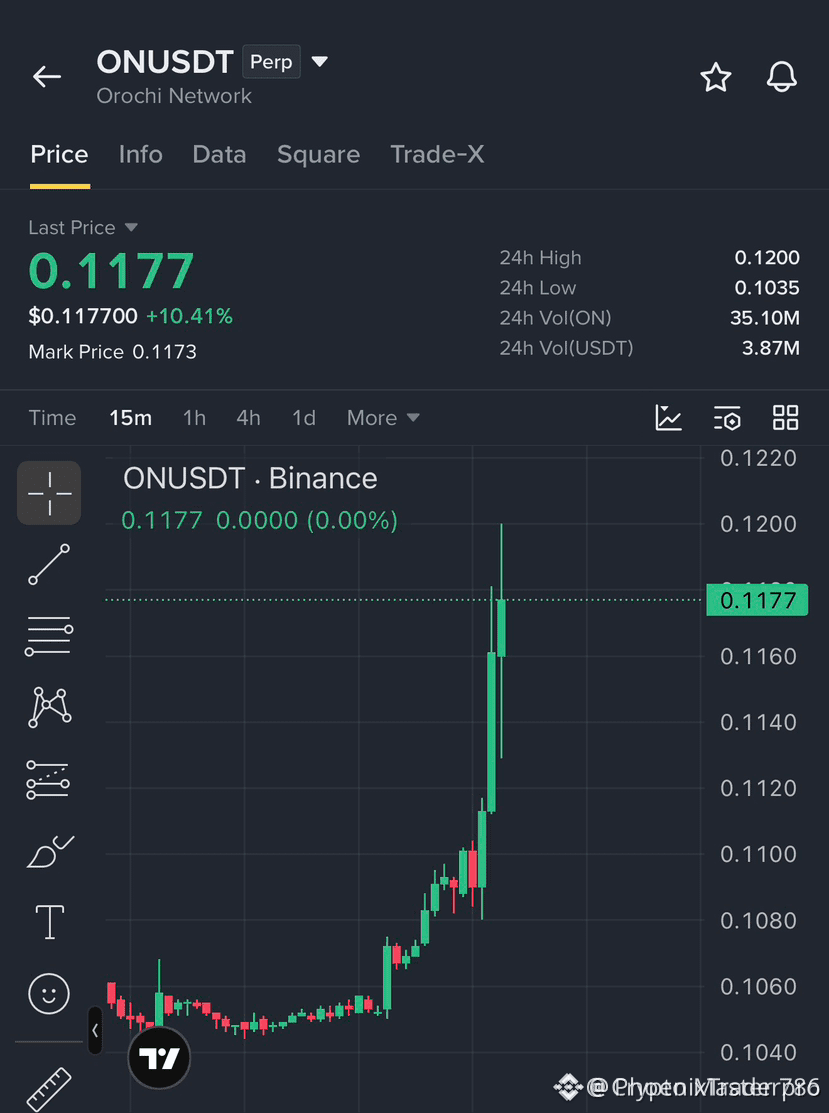
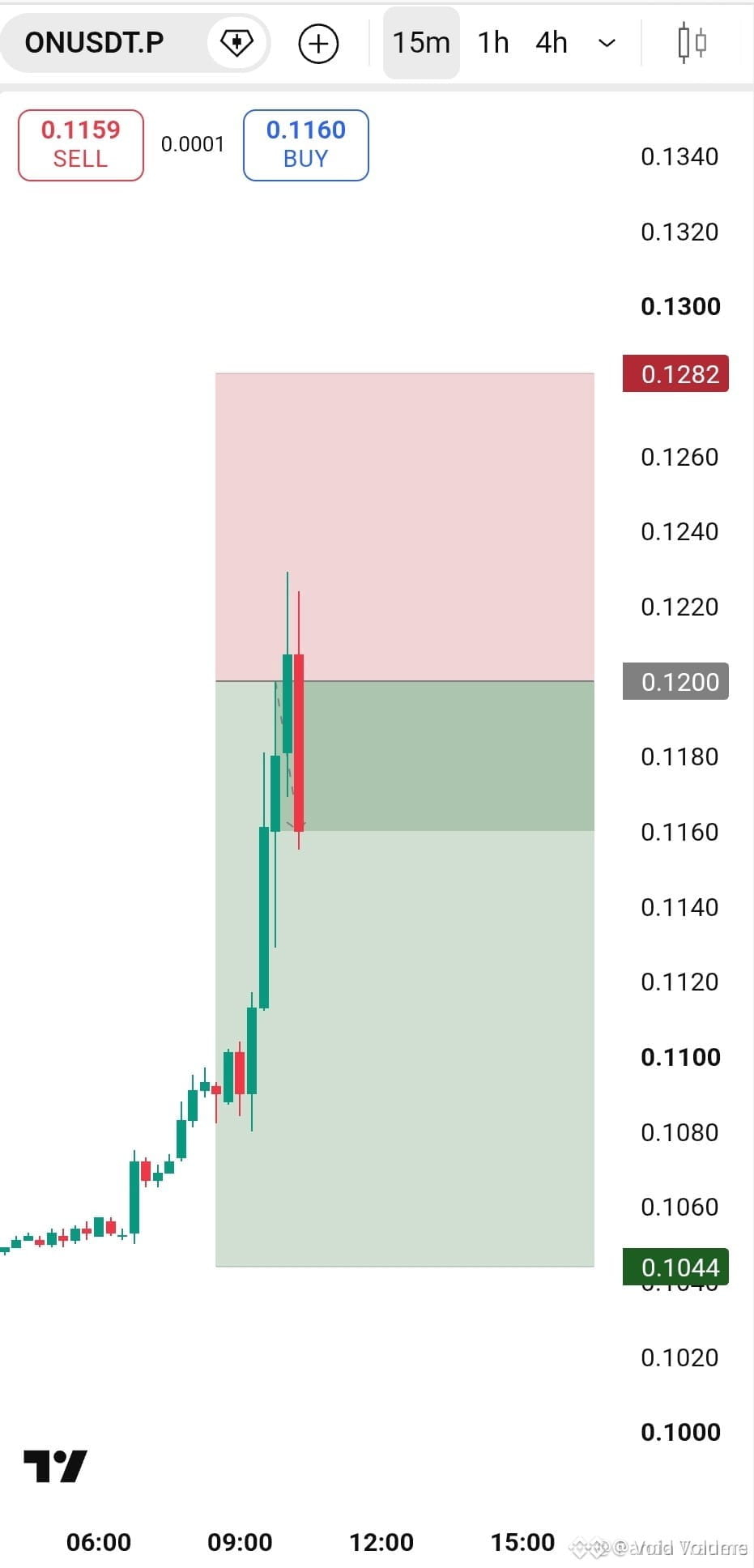
⚡ $ON BREAKS OUT WITH VIOLENT MOMENTUM AS BUYERS STEP IN ON THE PULLBACK! 💥
Entry: 0.1150 - 0.1170 ⚡
Target: 0.1200 / 0.1230 / 0.1260 🚀
Stop Loss: 0.1115 ⚠️
📌 Strong upside expansion has pushed $ON into a high-conviction breakout pattern. Demand is aggressively absorbing profit-taking on every shallow dip, confirming that buyers are guarding this fresh support zone. 📊
💡 Entering on this confirmed pullback aligns perfectly with the order flow dynamics, offering clean asymmetry for the next leg higher toward liquidity overhead. 💬 Are you front-running this retest or waiting for higher confirmation? 👇
⚠️ Not financial advice. Always manage your risk. 🛡️
🏷️ #ON #LongSetup #Breakout #Crypto
🔥 💎
⚡ $ON BREAKS OUT WITH VIOLENT MOMENTUM AS BUYERS STEP IN ON THE PULLBACK! 💥
Entry: 0.1150 - 0.1170 ⚡
Target: 0.1200 / 0.1230 / 0.1260 🚀
Stop Loss: 0.1115 ⚠️
📌 Strong upside expansion has pushed $ON into a high-conviction breakout pattern. Demand is aggressively absorbing profit-taking on every shallow dip, confirming that buyers are guarding this fresh support zone. 📊
💡 Entering on this confirmed pullback aligns perfectly with the order flow dynamics, offering clean asymmetry for the next leg higher toward liquidity overhead. 💬 Are you front-running this retest or waiting for higher confirmation? 👇
⚠️ Not financial advice. Always manage your risk. 🛡️
🏷️ #ON #LongSetup #Breakout #Crypto
🔥 💎
Entry: 0.1150 - 0.1170 ⚡
Target: 0.1200 / 0.1230 / 0.1260 🚀
Stop Loss: 0.1115 ⚠️
📌 Strong upside expansion has pushed $ON into a high-conviction breakout pattern. Demand is aggressively absorbing profit-taking on every shallow dip, confirming that buyers are guarding this fresh support zone. 📊
💡 Entering on this confirmed pullback aligns perfectly with the order flow dynamics, offering clean asymmetry for the next leg higher toward liquidity overhead. 💬 Are you front-running this retest or waiting for higher confirmation? 👇
⚠️ Not financial advice. Always manage your risk. 🛡️
🏷️ #ON #LongSetup #Breakout #Crypto
🔥 💎
38

·
--
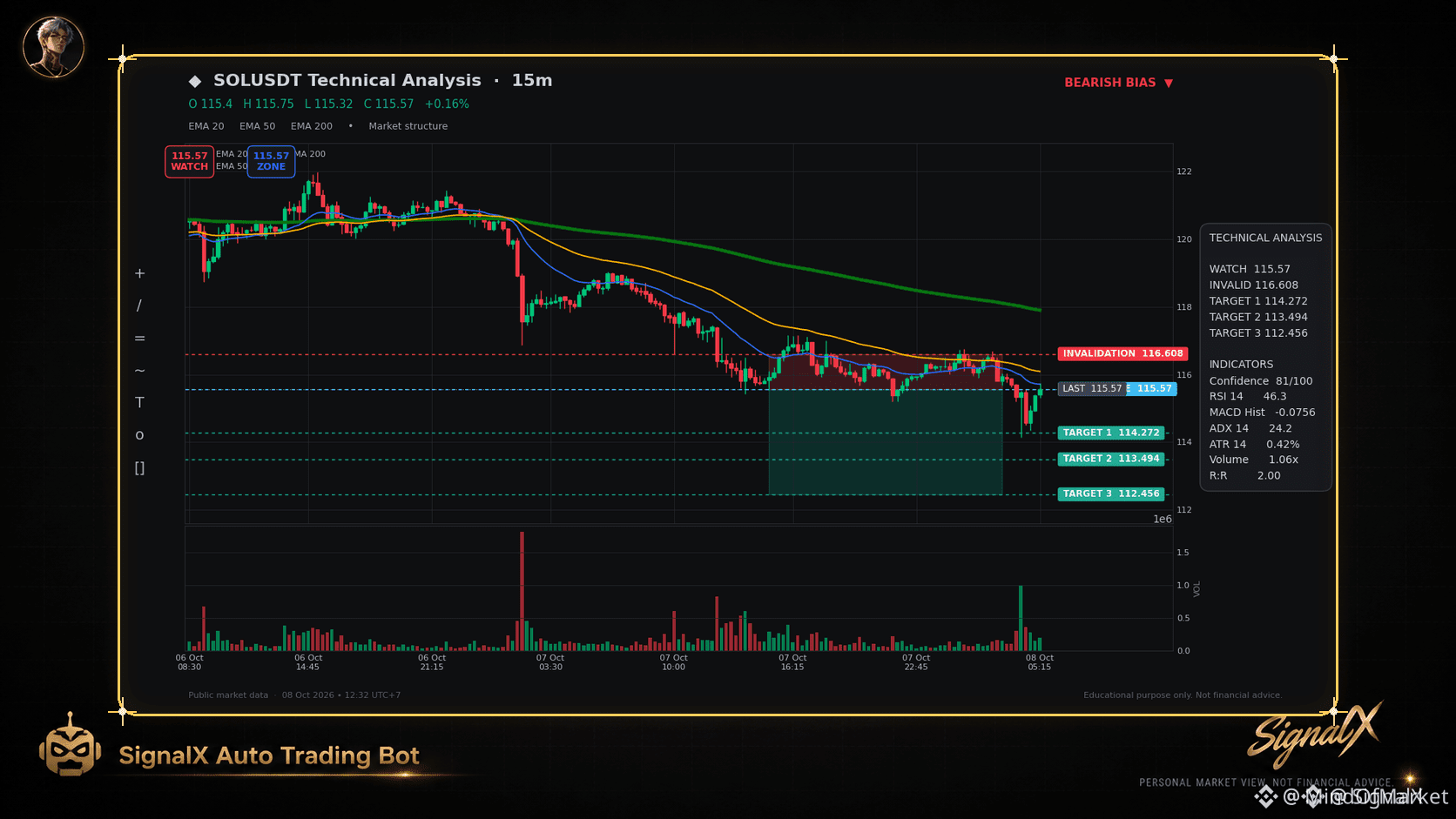
🔴 $SOL BREAKING DOWN BELOW CRITICAL EMA STACK AS INSTITUTIONAL SELLERS EXPAND VOLUME! 📉
Entry: 115.57 ⚡
Target: 114.272 🎯
Stop Loss: 116.608 ⚠️
📌 Smart money is establishing control on $SOL as price remains pinned beneath the 200 EMA with full short alignment across key moving averages. 🔍 MACD histogram stays locked in negative territory while ADX at 24.2 signals accelerating trend strength.
📊 Expanding volume on the 15m timeframe confirms institutional participation following a textbook structural pullback. 💡 As long as the invalidation level holds at 116.608, order flow heavily favors downside liquidity hunting into lower support pools. 💬 Are you capitalizing on this trend continuation or waiting for further structural breakdown? 👇
⚠️ Not financial advice. Always manage your risk. 🛡️
🏷️ #SOL #ShortSetup #Solana #Crypto
📉 🐻
🔴 $SOL BREAKING DOWN BELOW CRITICAL EMA STACK AS INSTITUTIONAL SELLERS EXPAND VOLUME! 📉
Entry: 115.57 ⚡
Target: 114.272 🎯
Stop Loss: 116.608 ⚠️
📌 Smart money is establishing control on $SOL as price remains pinned beneath the 200 EMA with full short alignment across key moving averages. 🔍 MACD histogram stays locked in negative territory while ADX at 24.2 signals accelerating trend strength.
📊 Expanding volume on the 15m timeframe confirms institutional participation following a textbook structural pullback. 💡 As long as the invalidation level holds at 116.608, order flow heavily favors downside liquidity hunting into lower support pools. 💬 Are you capitalizing on this trend continuation or waiting for further structural breakdown? 👇
⚠️ Not financial advice. Always manage your risk. 🛡️
🏷️ #SOL #ShortSetup #Solana #Crypto
📉 🐻
Entry: 115.57 ⚡
Target: 114.272 🎯
Stop Loss: 116.608 ⚠️
📌 Smart money is establishing control on $SOL as price remains pinned beneath the 200 EMA with full short alignment across key moving averages. 🔍 MACD histogram stays locked in negative territory while ADX at 24.2 signals accelerating trend strength.
📊 Expanding volume on the 15m timeframe confirms institutional participation following a textbook structural pullback. 💡 As long as the invalidation level holds at 116.608, order flow heavily favors downside liquidity hunting into lower support pools. 💬 Are you capitalizing on this trend continuation or waiting for further structural breakdown? 👇
⚠️ Not financial advice. Always manage your risk. 🛡️
🏷️ #SOL #ShortSetup #Solana #Crypto
📉 🐻
5

·
--
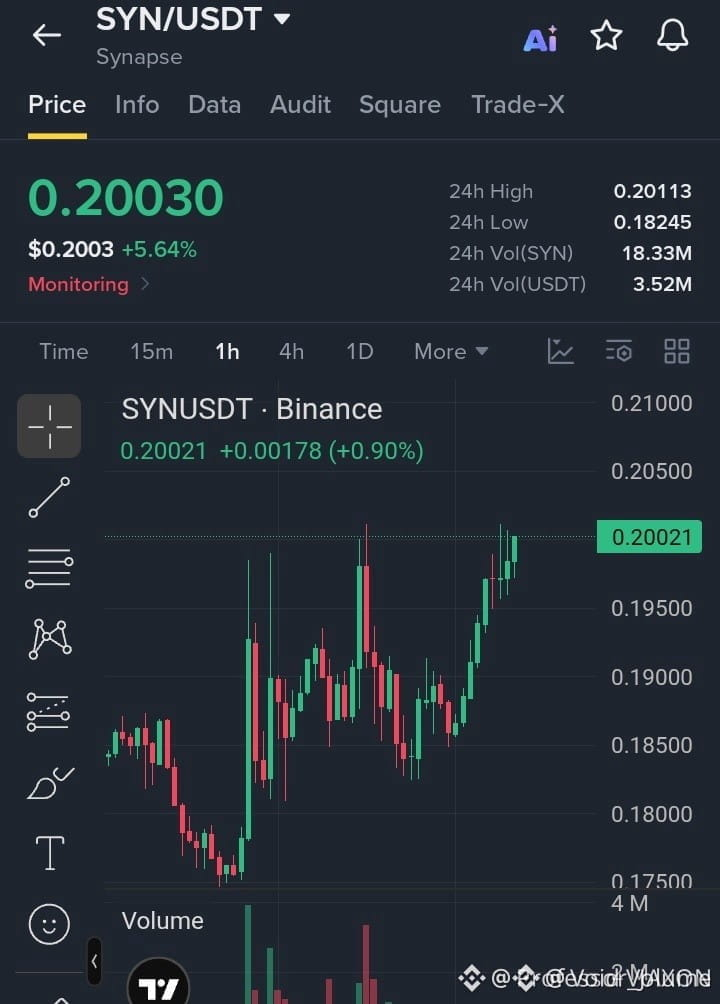
🚨 $SYN COILING BELOW KEY RESISTANCE AS LIQUIDITY ACCUMULATES FOR BREAKOUT! 💥
Entry: $0.1980 - $0.2005 ⚡
Target: $0.2040 - $0.2120 🎯
Stop Loss: $0.1940 ⚠️
📌 $SYN is printing a textbook market structure shift on the 1H timeframe, forming a steady series of higher lows right beneath the $0.2010 inefficiency zone. 🌊 Liquidity is building above resistance, indicating smart money is absorbing overhead sell orders prior to expansion.
💡 A structural reclaim and hold above $0.2010 provides clear confirmation for continuation toward higher targets. 📊 Risk remains tightly bounded beneath the recent swing low, creating an asymmetric setup for disciplined traders. 💬 Are you bidding the consolidation range or waiting for a confirmed candle close above resistance? 👇
⚠️ Not financial advice. Always manage your risk. 🛡️
🏷️ #SYN #LongSetup #Breakout #Crypto
🎯 🦈
🚨 $SYN COILING BELOW KEY RESISTANCE AS LIQUIDITY ACCUMULATES FOR BREAKOUT! 💥
Entry: $0.1980 - $0.2005 ⚡
Target: $0.2040 - $0.2120 🎯
Stop Loss: $0.1940 ⚠️
📌 $SYN is printing a textbook market structure shift on the 1H timeframe, forming a steady series of higher lows right beneath the $0.2010 inefficiency zone. 🌊 Liquidity is building above resistance, indicating smart money is absorbing overhead sell orders prior to expansion.
💡 A structural reclaim and hold above $0.2010 provides clear confirmation for continuation toward higher targets. 📊 Risk remains tightly bounded beneath the recent swing low, creating an asymmetric setup for disciplined traders. 💬 Are you bidding the consolidation range or waiting for a confirmed candle close above resistance? 👇
⚠️ Not financial advice. Always manage your risk. 🛡️
🏷️ #SYN #LongSetup #Breakout #Crypto
🎯 🦈
Entry: $0.1980 - $0.2005 ⚡
Target: $0.2040 - $0.2120 🎯
Stop Loss: $0.1940 ⚠️
📌 $SYN is printing a textbook market structure shift on the 1H timeframe, forming a steady series of higher lows right beneath the $0.2010 inefficiency zone. 🌊 Liquidity is building above resistance, indicating smart money is absorbing overhead sell orders prior to expansion.
💡 A structural reclaim and hold above $0.2010 provides clear confirmation for continuation toward higher targets. 📊 Risk remains tightly bounded beneath the recent swing low, creating an asymmetric setup for disciplined traders. 💬 Are you bidding the consolidation range or waiting for a confirmed candle close above resistance? 👇
⚠️ Not financial advice. Always manage your risk. 🛡️
🏷️ #SYN #LongSetup #Breakout #Crypto
🎯 🦈
8

·
--
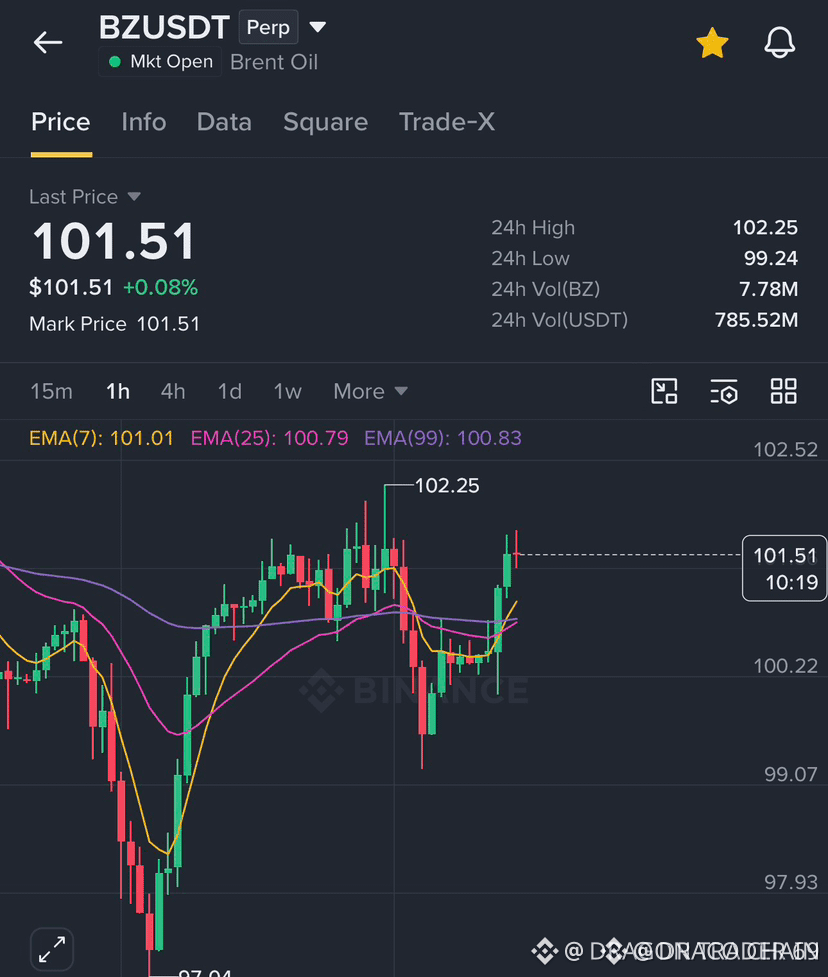
🚨 $BZ EXPANDS ABOVE KEY DEMAND AS INSTITUTIONAL ORDER FLOW FAVORS CONTINUATION 📈
Entry: 101.30 - 101.51 ⚡
Target: 101.80 / 102.25 / 102.60 🚀
Stop Loss: 100.85 ⚠️
📌 $BZ is executing a clean structural push out of the recent consolidation block, taking out internal liquidity with steady momentum. 📊 The immediate reclaim above 101.30 confirms buyers are defending lower-bound supply shifts and building an efficient platform for upside expansion.
🔍 As long as 100.85 holds as structural invalidation, price action favors filling upper liquidity voids toward 102.60. 💬 Are you trailing stop losses on this breakout or taking profits early at the first target zone? 👇
⚠️ Not financial advice. Always manage your risk. 🛡️
🏷️ #BZ #LongSetup #Breakout #Crypto
🎯 🦈
🚨 $BZ EXPANDS ABOVE KEY DEMAND AS INSTITUTIONAL ORDER FLOW FAVORS CONTINUATION 📈
Entry: 101.30 - 101.51 ⚡
Target: 101.80 / 102.25 / 102.60 🚀
Stop Loss: 100.85 ⚠️
📌 $BZ is executing a clean structural push out of the recent consolidation block, taking out internal liquidity with steady momentum. 📊 The immediate reclaim above 101.30 confirms buyers are defending lower-bound supply shifts and building an efficient platform for upside expansion.
🔍 As long as 100.85 holds as structural invalidation, price action favors filling upper liquidity voids toward 102.60. 💬 Are you trailing stop losses on this breakout or taking profits early at the first target zone? 👇
⚠️ Not financial advice. Always manage your risk. 🛡️
🏷️ #BZ #LongSetup #Breakout #Crypto
🎯 🦈
Entry: 101.30 - 101.51 ⚡
Target: 101.80 / 102.25 / 102.60 🚀
Stop Loss: 100.85 ⚠️
📌 $BZ is executing a clean structural push out of the recent consolidation block, taking out internal liquidity with steady momentum. 📊 The immediate reclaim above 101.30 confirms buyers are defending lower-bound supply shifts and building an efficient platform for upside expansion.
🔍 As long as 100.85 holds as structural invalidation, price action favors filling upper liquidity voids toward 102.60. 💬 Are you trailing stop losses on this breakout or taking profits early at the first target zone? 👇
⚠️ Not financial advice. Always manage your risk. 🛡️
🏷️ #BZ #LongSetup #Breakout #Crypto
🎯 🦈
21

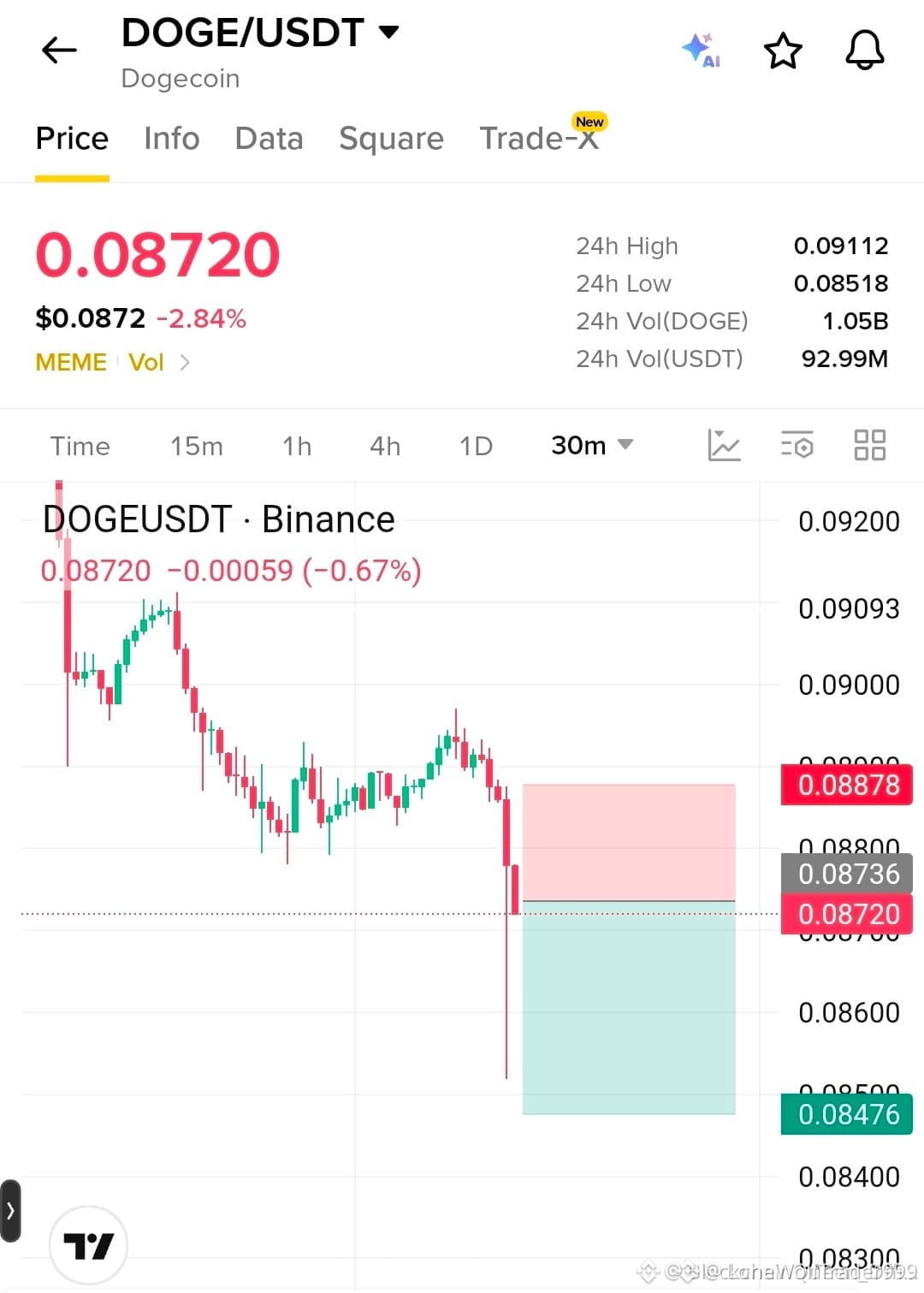
🚨 $DOGE SHOWING SEVERE WEAKNESS AS SELLERS TARGET A MAJOR LIQUIDITY FLUSH! 📉
Target: 0.08476 🎯
Sellers are stepping in aggressively on $DOGE as momentum shifts downwards, carving out a sharp rejection near local resistance. 📉 Order flow indicates heavy distribution, with bids thinning out rapidly before the next major support zone.
📊 Key downside targets are coming into focus with market structure favoring the bears on higher timeframes. 🔻 If momentum holds, the path of least resistance points straight toward lower liquidity pockets. 💬 Are you taking the short entry here or holding out for a temporary bounce? 👇
⚠️ Not financial advice. Always manage your risk. 🛡️
🏷️ #DOGE #ShortSetup #Bearish #Crypto
📉 🐻
🚨 $DOGE SHOWING SEVERE WEAKNESS AS SELLERS TARGET A MAJOR LIQUIDITY FLUSH! 📉
Target: 0.08476 🎯
Sellers are stepping in aggressively on $DOGE as momentum shifts downwards, carving out a sharp rejection near local resistance. 📉 Order flow indicates heavy distribution, with bids thinning out rapidly before the next major support zone.
📊 Key downside targets are coming into focus with market structure favoring the bears on higher timeframes. 🔻 If momentum holds, the path of least resistance points straight toward lower liquidity pockets. 💬 Are you taking the short entry here or holding out for a temporary bounce? 👇
⚠️ Not financial advice. Always manage your risk. 🛡️
🏷️ #DOGE #ShortSetup #Bearish #Crypto
📉 🐻
Target: 0.08476 🎯
Sellers are stepping in aggressively on $DOGE as momentum shifts downwards, carving out a sharp rejection near local resistance. 📉 Order flow indicates heavy distribution, with bids thinning out rapidly before the next major support zone.
📊 Key downside targets are coming into focus with market structure favoring the bears on higher timeframes. 🔻 If momentum holds, the path of least resistance points straight toward lower liquidity pockets. 💬 Are you taking the short entry here or holding out for a temporary bounce? 👇
⚠️ Not financial advice. Always manage your risk. 🛡️
🏷️ #DOGE #ShortSetup #Bearish #Crypto
📉 🐻
28

·
--
Most people watch a BTC liquidation
cascade and ask, How much leverage
just disappeared? 📉
I think there’s a better question:
What did price do after the forced selling was finished?
A liquidation event matters because it removes positions that were too fragile to survive the move. But the real information comes afterward.
If BTC gets flushed, leverage resets, and follow-through selling still fails to push price materially lower, that tells me something important: demand is absorbing the remaining supply rather than the liquidation simply triggering another leg down.
That is very different from a breakdown where every recovery becomes another opportunity to sell.
This is why I don’t automatically treat a large liquidation event as bearish.
Sometimes the flush is the cleanup, not the trend reversal.
The distinction I’m watching is simple:
Forced selling + weak recovery = possible distribution.
Forced selling + strong recovery = possible absorption.
And there’s a second-order implication here.
A market that survives its own leverage reset can become structurally healthier, because the next move starts with fewer fragile positions sitting underneath it.
So honestly, I’m less interested in predicting BTC’s next candle than watching what happens after the leverage is gone.
The liquidation itself is the event.
The market’s response is the signal.
$BTC $ETH $BNB #Bitcoin #Crypto #MarketStructure
Most people watch a BTC liquidation
cascade and ask, How much leverage
just disappeared? 📉
I think there’s a better question:
What did price do after the forced selling was finished?
A liquidation event matters because it removes positions that were too fragile to survive the move. But the real information comes afterward.
If BTC gets flushed, leverage resets, and follow-through selling still fails to push price materially lower, that tells me something important: demand is absorbing the remaining supply rather than the liquidation simply triggering another leg down.
That is very different from a breakdown where every recovery becomes another opportunity to sell.
This is why I don’t automatically treat a large liquidation event as bearish.
Sometimes the flush is the cleanup, not the trend reversal.
The distinction I’m watching is simple:
Forced selling + weak recovery = possible distribution.
Forced selling + strong recovery = possible absorption.
And there’s a second-order implication here.
A market that survives its own leverage reset can become structurally healthier, because the next move starts with fewer fragile positions sitting underneath it.
So honestly, I’m less interested in predicting BTC’s next candle than watching what happens after the leverage is gone.
The liquidation itself is the event.
The market’s response is the signal.
$BTC $ETH $BNB #Bitcoin #Crypto #MarketStructure
cascade and ask, How much leverage
just disappeared? 📉
I think there’s a better question:
What did price do after the forced selling was finished?
A liquidation event matters because it removes positions that were too fragile to survive the move. But the real information comes afterward.
If BTC gets flushed, leverage resets, and follow-through selling still fails to push price materially lower, that tells me something important: demand is absorbing the remaining supply rather than the liquidation simply triggering another leg down.
That is very different from a breakdown where every recovery becomes another opportunity to sell.
This is why I don’t automatically treat a large liquidation event as bearish.
Sometimes the flush is the cleanup, not the trend reversal.
The distinction I’m watching is simple:
Forced selling + weak recovery = possible distribution.
Forced selling + strong recovery = possible absorption.
And there’s a second-order implication here.
A market that survives its own leverage reset can become structurally healthier, because the next move starts with fewer fragile positions sitting underneath it.
So honestly, I’m less interested in predicting BTC’s next candle than watching what happens after the leverage is gone.
The liquidation itself is the event.
The market’s response is the signal.
$BTC $ETH $BNB #Bitcoin #Crypto #MarketStructure

1
139

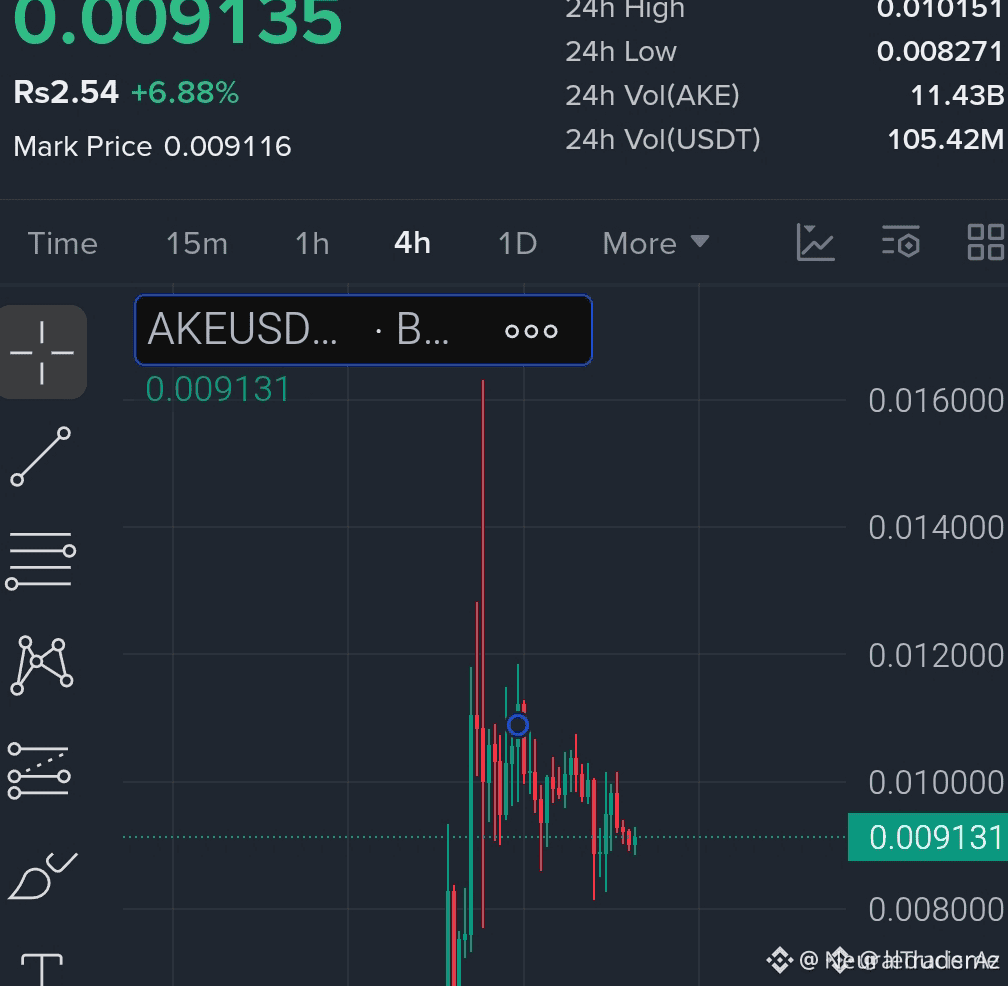
📉 $AKE MOMENTUM EXHAUSTION HINTS AT HEAVY INSTITUTIONAL DISTRIBUTION! 🚨
Entry: 0.0091 - 0.0095 🔻
Target: 0.0087 - 0.0075 🎯
Stop Loss: 0.0112 ⚠️
$AKE is exhibiting classic upward structural exhaustion after failing to sustain higher high momentum at the range high. Smart money appears to be distributing into late buyer liquidity, setting up a clean sweep of sell-side pools below immediate demand. 🔍
A decisive breakdown beneath local support will likely trigger an acceleration of order flow toward lower structural targets. 📊 Risk parameters remain well-defined as market structure pivots favor downside continuation.
Do you anticipate an immediate breakdown from this level, or are you waiting for a lower high confirmation? 👇
⚠️ Not financial advice. Always manage your risk. 🛡️
🏷️ #AKE #ShortSetup #MarketStructure #Crypto
🎯 🐻
📉 $AKE MOMENTUM EXHAUSTION HINTS AT HEAVY INSTITUTIONAL DISTRIBUTION! 🚨
Entry: 0.0091 - 0.0095 🔻
Target: 0.0087 - 0.0075 🎯
Stop Loss: 0.0112 ⚠️
$AKE is exhibiting classic upward structural exhaustion after failing to sustain higher high momentum at the range high. Smart money appears to be distributing into late buyer liquidity, setting up a clean sweep of sell-side pools below immediate demand. 🔍
A decisive breakdown beneath local support will likely trigger an acceleration of order flow toward lower structural targets. 📊 Risk parameters remain well-defined as market structure pivots favor downside continuation.
Do you anticipate an immediate breakdown from this level, or are you waiting for a lower high confirmation? 👇
⚠️ Not financial advice. Always manage your risk. 🛡️
🏷️ #AKE #ShortSetup #MarketStructure #Crypto
🎯 🐻
Entry: 0.0091 - 0.0095 🔻
Target: 0.0087 - 0.0075 🎯
Stop Loss: 0.0112 ⚠️
$AKE is exhibiting classic upward structural exhaustion after failing to sustain higher high momentum at the range high. Smart money appears to be distributing into late buyer liquidity, setting up a clean sweep of sell-side pools below immediate demand. 🔍
A decisive breakdown beneath local support will likely trigger an acceleration of order flow toward lower structural targets. 📊 Risk parameters remain well-defined as market structure pivots favor downside continuation.
Do you anticipate an immediate breakdown from this level, or are you waiting for a lower high confirmation? 👇
⚠️ Not financial advice. Always manage your risk. 🛡️
🏷️ #AKE #ShortSetup #MarketStructure #Crypto
🎯 🐻
4

·
--
Solana’s latest move is bigger than just another network upgrade.
On October 6, the Solana Foundation introduced Solana DvP an open-source delivery versus payment program built for institutional settlement.
The key idea is simple: the asset and the payment can settle together instead of leaving one side exposed while waiting for the other.
Confirmed features include atomic settlement, escrow and settlement deadlines. The Solana Foundation also says J.P. Morgan provided input on institutional settlement practices.
QuantVanta Take:
This is the part of the Solana story I’m watching more closely.
If tokenized securities and other real world assets increasingly need institutional grade settlement rails, infrastructure that can coordinate delivery and payment atomically could become more important than another short term narrative.
But there’s a catch: stronger infrastructure does NOT automatically mean immediate SOL price appreciation. SOL is still trading under pressure, so the market needs to prove that this fundamental story can translate into sustained demand.
SOL MAP:
115.30 — immediate support
119.45 — first resistance
120.64 — broader resistance zone
$SOL
{future}(SOLUSDT)
Do you think institutional settlement can become a real long term demand driver for SOL, or will macro conditions remain the bigger force?
#sol #solana #crypto
Solana’s latest move is bigger than just another network upgrade.
On October 6, the Solana Foundation introduced Solana DvP an open-source delivery versus payment program built for institutional settlement.
The key idea is simple: the asset and the payment can settle together instead of leaving one side exposed while waiting for the other.
Confirmed features include atomic settlement, escrow and settlement deadlines. The Solana Foundation also says J.P. Morgan provided input on institutional settlement practices.
QuantVanta Take:
This is the part of the Solana story I’m watching more closely.
If tokenized securities and other real world assets increasingly need institutional grade settlement rails, infrastructure that can coordinate delivery and payment atomically could become more important than another short term narrative.
But there’s a catch: stronger infrastructure does NOT automatically mean immediate SOL price appreciation. SOL is still trading under pressure, so the market needs to prove that this fundamental story can translate into sustained demand.
SOL MAP:
115.30 — immediate support
119.45 — first resistance
120.64 — broader resistance zone
$SOL
Do you think institutional settlement can become a real long term demand driver for SOL, or will macro conditions remain the bigger force?
#sol #solana #crypto
On October 6, the Solana Foundation introduced Solana DvP an open-source delivery versus payment program built for institutional settlement.
The key idea is simple: the asset and the payment can settle together instead of leaving one side exposed while waiting for the other.
Confirmed features include atomic settlement, escrow and settlement deadlines. The Solana Foundation also says J.P. Morgan provided input on institutional settlement practices.
QuantVanta Take:
This is the part of the Solana story I’m watching more closely.
If tokenized securities and other real world assets increasingly need institutional grade settlement rails, infrastructure that can coordinate delivery and payment atomically could become more important than another short term narrative.
But there’s a catch: stronger infrastructure does NOT automatically mean immediate SOL price appreciation. SOL is still trading under pressure, so the market needs to prove that this fundamental story can translate into sustained demand.
SOL MAP:
115.30 — immediate support
119.45 — first resistance
120.64 — broader resistance zone
$SOL
Do you think institutional settlement can become a real long term demand driver for SOL, or will macro conditions remain the bigger force?
#sol #solana #crypto

93

·
--
NEAR is moving — but having a plan matters more than chasing the candle.
Data: 5.38 · 8.01% · Vol 183M USDT.
NEAR đáng theo dõi vì biến động 24h; câu hỏi chính là lực mua còn tiếp diễn hay đã muộn.
Mình chưa gán câu chuyện quá sớm; trước mắt chỉ xem volume, vùng giá và phản ứng sau cú biến động. +8.01% cho thấy có dòng tiền vào. Mình muốn thấy giá xử lý vùng 5.47: đi qua sạch khác với chạm rồi bị bán xuống.
Nếu không biết điểm sai ở đâu, market sẽ chỉ ra bằng tiền thật. Mình chờ phản ứng ở 4.95 hoặc breakout rõ ở 5.47.
Do you have a plan or just a feeling?
#NEAR #RiskFirst #Crypto
NEAR is moving — but having a plan matters more than chasing the candle.
Data: 5.38 · 8.01% · Vol 183M USDT.
NEAR đáng theo dõi vì biến động 24h; câu hỏi chính là lực mua còn tiếp diễn hay đã muộn.
Mình chưa gán câu chuyện quá sớm; trước mắt chỉ xem volume, vùng giá và phản ứng sau cú biến động. +8.01% cho thấy có dòng tiền vào. Mình muốn thấy giá xử lý vùng 5.47: đi qua sạch khác với chạm rồi bị bán xuống.
Nếu không biết điểm sai ở đâu, market sẽ chỉ ra bằng tiền thật. Mình chờ phản ứng ở 4.95 hoặc breakout rõ ở 5.47.
Do you have a plan or just a feeling?
#NEAR #RiskFirst #Crypto
Data: 5.38 · 8.01% · Vol 183M USDT.
NEAR đáng theo dõi vì biến động 24h; câu hỏi chính là lực mua còn tiếp diễn hay đã muộn.
Mình chưa gán câu chuyện quá sớm; trước mắt chỉ xem volume, vùng giá và phản ứng sau cú biến động. +8.01% cho thấy có dòng tiền vào. Mình muốn thấy giá xử lý vùng 5.47: đi qua sạch khác với chạm rồi bị bán xuống.
Nếu không biết điểm sai ở đâu, market sẽ chỉ ra bằng tiền thật. Mình chờ phản ứng ở 4.95 hoặc breakout rõ ở 5.47.
Do you have a plan or just a feeling?
#NEAR #RiskFirst #Crypto
56

·
--
XRP, NEAR & SOL: Next 48 Hours Will Be Huge? My Take
Honestly, I was not expecting this move.
$XRP is holding $0.60 like a boss. Every dip is getting bought. If it breaks $0.65, $0.75 is coming fast.
$NEAR is the most underrated right now. AI narrative is back and NEAR is leading it. Chart looks ready for 20% pump.
$SOL
{future}(SOLUSDT)
still king of this cycle. $180 support is super strong. Once $BTC moves, SOL will fly first.
My plan for next 48 hours:
- Holding XRP spot, not selling before $0.70
- NEAR long if it closes above $7.5
- SOL accumulation on every red candle
Financial advice, just sharing what I am doing.
What are you buying? XRP, NEAR or SOL?
#XRP #NEAR #SOL #Crypto
XRP, NEAR & SOL: Next 48 Hours Will Be Huge? My Take
Honestly, I was not expecting this move.
$XRP is holding $0.60 like a boss. Every dip is getting bought. If it breaks $0.65, $0.75 is coming fast.
$NEAR is the most underrated right now. AI narrative is back and NEAR is leading it. Chart looks ready for 20% pump.
$SOL
still king of this cycle. $180 support is super strong. Once $BTC moves, SOL will fly first.
My plan for next 48 hours:
- Holding XRP spot, not selling before $0.70
- NEAR long if it closes above $7.5
- SOL accumulation on every red candle
Financial advice, just sharing what I am doing.
What are you buying? XRP, NEAR or SOL?
#XRP #NEAR #SOL #Crypto
Honestly, I was not expecting this move.
$XRP is holding $0.60 like a boss. Every dip is getting bought. If it breaks $0.65, $0.75 is coming fast.
$NEAR is the most underrated right now. AI narrative is back and NEAR is leading it. Chart looks ready for 20% pump.
$SOL
still king of this cycle. $180 support is super strong. Once $BTC moves, SOL will fly first.
My plan for next 48 hours:
- Holding XRP spot, not selling before $0.70
- NEAR long if it closes above $7.5
- SOL accumulation on every red candle
Financial advice, just sharing what I am doing.
What are you buying? XRP, NEAR or SOL?
#XRP #NEAR #SOL #Crypto

1

·
--
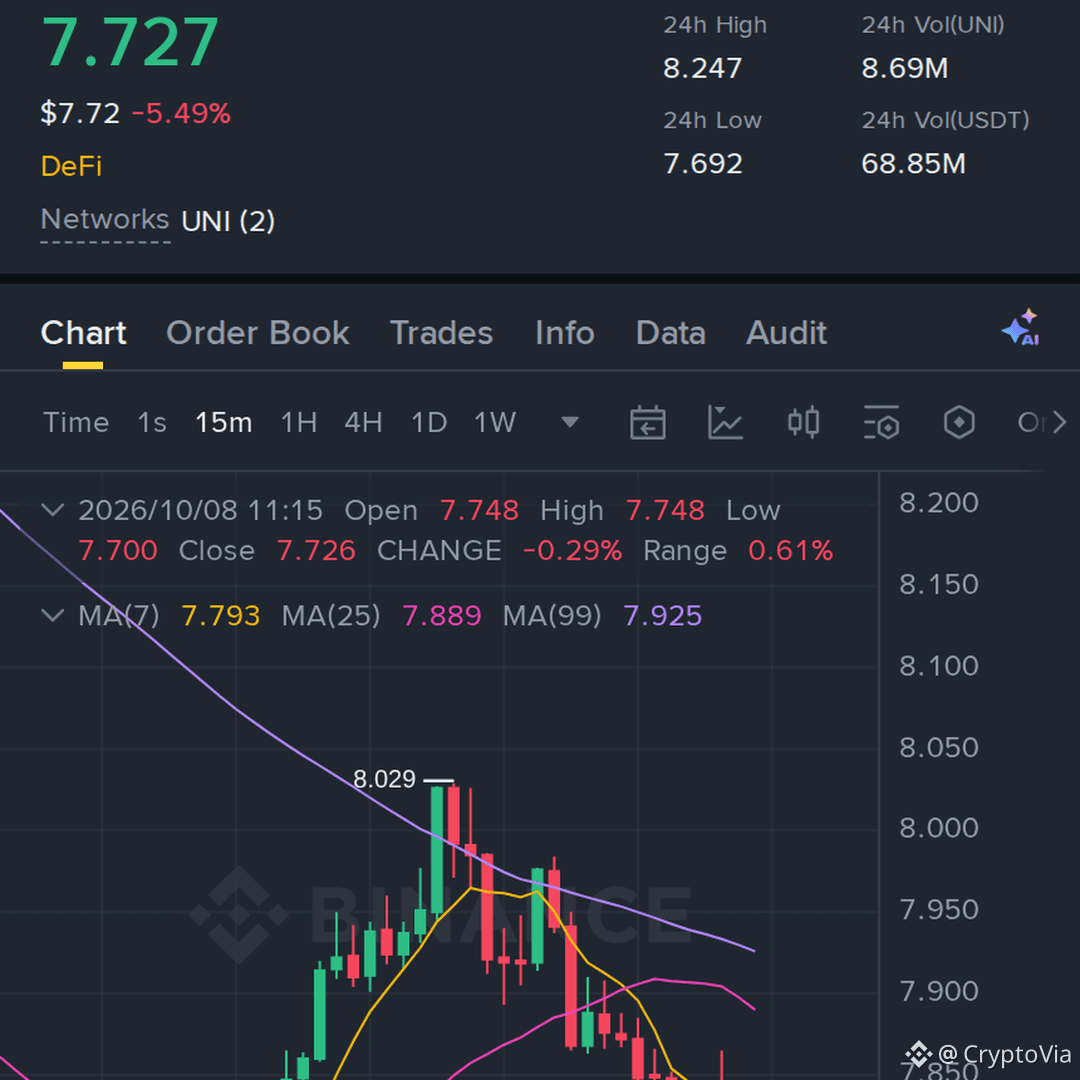
keeping an eye on $UNI, with leverage sitting around 45x, keeps failing to recover support, so the short side still looks cleaner
Entry: 7.728–7.746 • Stop Loss: 7.963
TP1: 7.505 | TP2: 7.312 | TP3: 7.118
#UNI #Write2Earn #Binance #Crypto
keeping an eye on $UNI , with leverage sitting around 45x, keeps failing to recover support, so the short side still looks cleaner
Entry: 7.728–7.746 • Stop Loss: 7.963
TP1: 7.505 | TP2: 7.312 | TP3: 7.118
#UNI #Write2Earn #Binance #Crypto
Entry: 7.728–7.746 • Stop Loss: 7.963
TP1: 7.505 | TP2: 7.312 | TP3: 7.118
#UNI #Write2Earn #Binance #Crypto
·
--
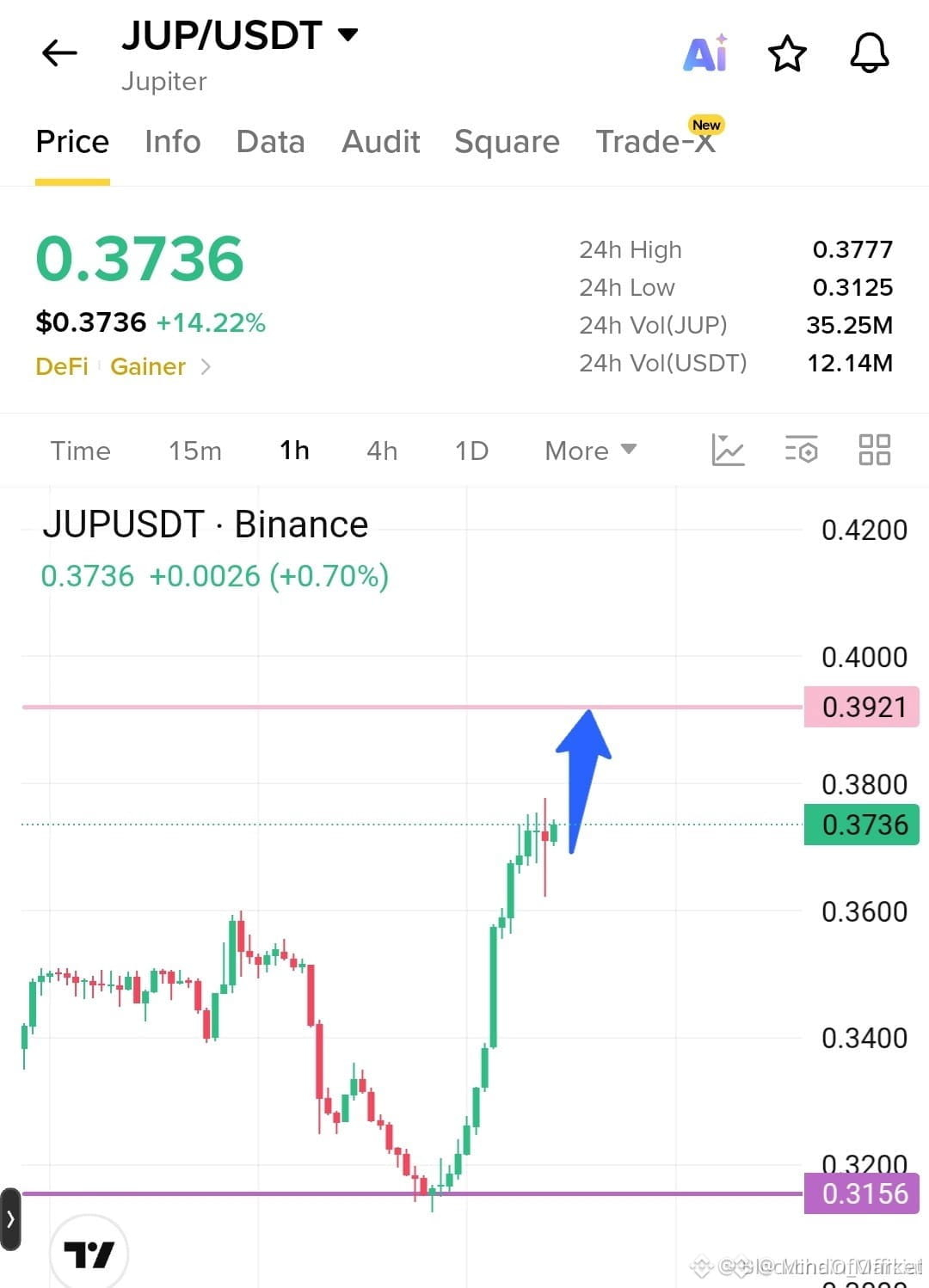
🟢 $JUP RECLAIMS CRITICAL LIQUIDITY ZONE AS SMART MONEY DRIVES MOMENTUM! 📈
Entry: 0.374 - 0.380 ⚡
Target: 0.392, 0.400, 0.420 🚀
Stop Loss: 0.360 ⚠️
📌 Market structure on $JUP has flipped firmly bullish after defending the key demand zone near 0.37. 🔍 Smart money continues to absorb selling pressure, establishing higher lows while clearing short-term buy-side liquidity above current levels.
📊 With volume building on the push back toward local resistance, order flow signals a clean expansion phase toward upper target inefficiencies. ⚡ As long as price holds above the invalidated swing low, the setup skews heavily in favor of buyers. 💬 Will $JUP slice straight through 0.392 or pause for a mid-range retest first? 👇
⚠️ Not financial advice. Always manage your risk. 🛡️
🏷️ #JUP #LongSetup #MarketStructure #Crypto
🎯 🦈
🟢 $JUP RECLAIMS CRITICAL LIQUIDITY ZONE AS SMART MONEY DRIVES MOMENTUM! 📈
Entry: 0.374 - 0.380 ⚡
Target: 0.392, 0.400, 0.420 🚀
Stop Loss: 0.360 ⚠️
📌 Market structure on $JUP has flipped firmly bullish after defending the key demand zone near 0.37. 🔍 Smart money continues to absorb selling pressure, establishing higher lows while clearing short-term buy-side liquidity above current levels.
📊 With volume building on the push back toward local resistance, order flow signals a clean expansion phase toward upper target inefficiencies. ⚡ As long as price holds above the invalidated swing low, the setup skews heavily in favor of buyers. 💬 Will $JUP slice straight through 0.392 or pause for a mid-range retest first? 👇
⚠️ Not financial advice. Always manage your risk. 🛡️
🏷️ #JUP #LongSetup #MarketStructure #Crypto
🎯 🦈
Entry: 0.374 - 0.380 ⚡
Target: 0.392, 0.400, 0.420 🚀
Stop Loss: 0.360 ⚠️
📌 Market structure on $JUP has flipped firmly bullish after defending the key demand zone near 0.37. 🔍 Smart money continues to absorb selling pressure, establishing higher lows while clearing short-term buy-side liquidity above current levels.
📊 With volume building on the push back toward local resistance, order flow signals a clean expansion phase toward upper target inefficiencies. ⚡ As long as price holds above the invalidated swing low, the setup skews heavily in favor of buyers. 💬 Will $JUP slice straight through 0.392 or pause for a mid-range retest first? 👇
⚠️ Not financial advice. Always manage your risk. 🛡️
🏷️ #JUP #LongSetup #MarketStructure #Crypto
🎯 🦈
10

·
--
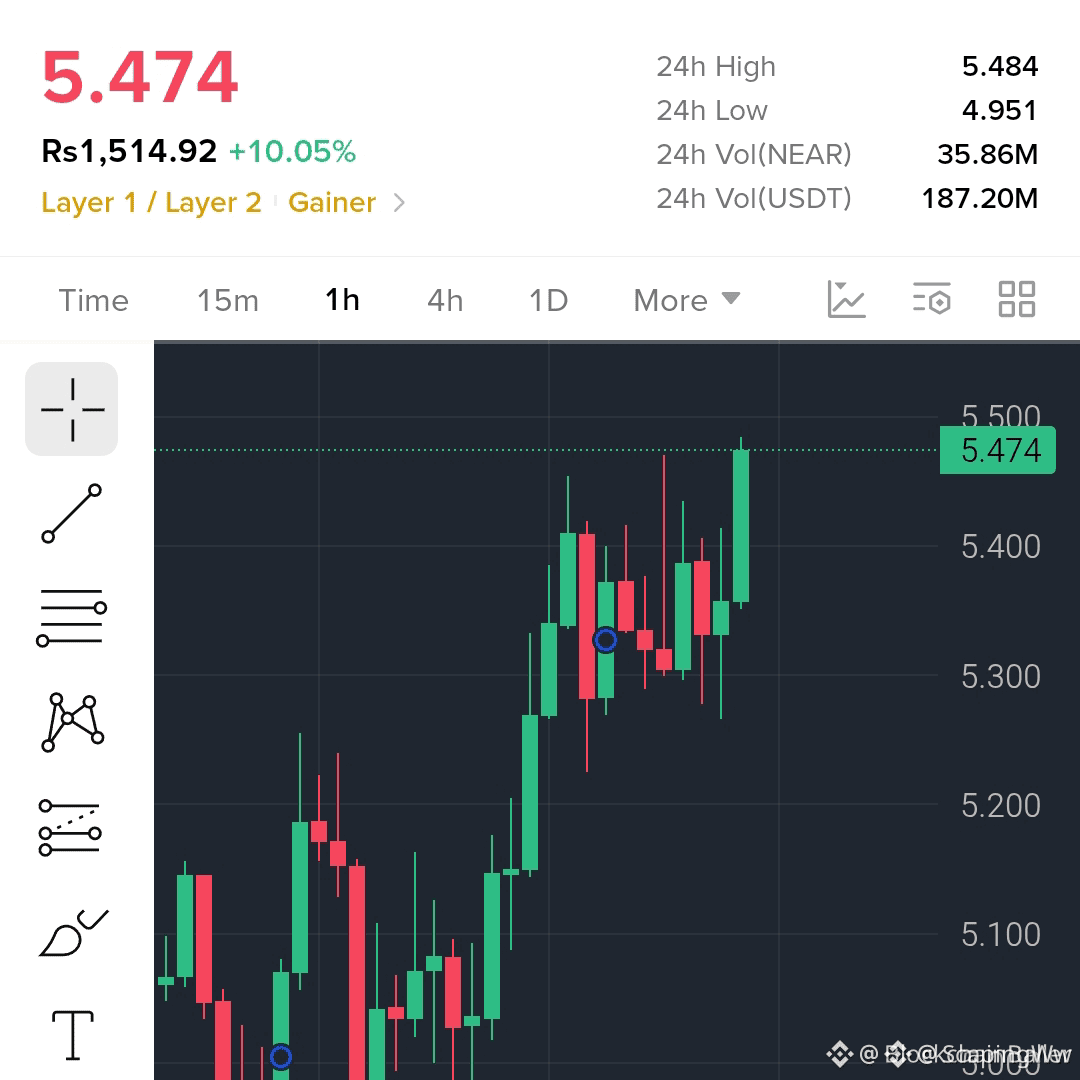
⚡ $NEAR BULLS ACCELERATE TOWARD RESISTANCE AS BREAKOUT PRESSURES BUILD! 💥
Entry: 5.44 - 5.48 ⚡
Target: 5.55 - 5.70 🚀
Stop Loss: 5.35 ⚠️
📌 $NEAR is compressing tightly below resistance, showing sharp momentum as buyers continuously defend higher lows. A decisive push and flip of the 5.48 level unlocks an aggressive expansion toward overhead liquidity. 📊
💡 Risk remains well-defined at 5.35, offering an asymmetric execution for traders tracking volume expansion. 🔍 Are you positioning inside this range or taking the execution after 5.48 clears? 👇
⚠️ Not financial advice. Always manage your risk. 🛡️
🏷️ #NEAR #LongSetup #Breakout #Crypto
🔥 💎
⚡ $NEAR BULLS ACCELERATE TOWARD RESISTANCE AS BREAKOUT PRESSURES BUILD! 💥
Entry: 5.44 - 5.48 ⚡
Target: 5.55 - 5.70 🚀
Stop Loss: 5.35 ⚠️
📌 $NEAR is compressing tightly below resistance, showing sharp momentum as buyers continuously defend higher lows. A decisive push and flip of the 5.48 level unlocks an aggressive expansion toward overhead liquidity. 📊
💡 Risk remains well-defined at 5.35, offering an asymmetric execution for traders tracking volume expansion. 🔍 Are you positioning inside this range or taking the execution after 5.48 clears? 👇
⚠️ Not financial advice. Always manage your risk. 🛡️
🏷️ #NEAR #LongSetup #Breakout #Crypto
🔥 💎
Entry: 5.44 - 5.48 ⚡
Target: 5.55 - 5.70 🚀
Stop Loss: 5.35 ⚠️
📌 $NEAR is compressing tightly below resistance, showing sharp momentum as buyers continuously defend higher lows. A decisive push and flip of the 5.48 level unlocks an aggressive expansion toward overhead liquidity. 📊
💡 Risk remains well-defined at 5.35, offering an asymmetric execution for traders tracking volume expansion. 🔍 Are you positioning inside this range or taking the execution after 5.48 clears? 👇
⚠️ Not financial advice. Always manage your risk. 🛡️
🏷️ #NEAR #LongSetup #Breakout #Crypto
🔥 💎
7

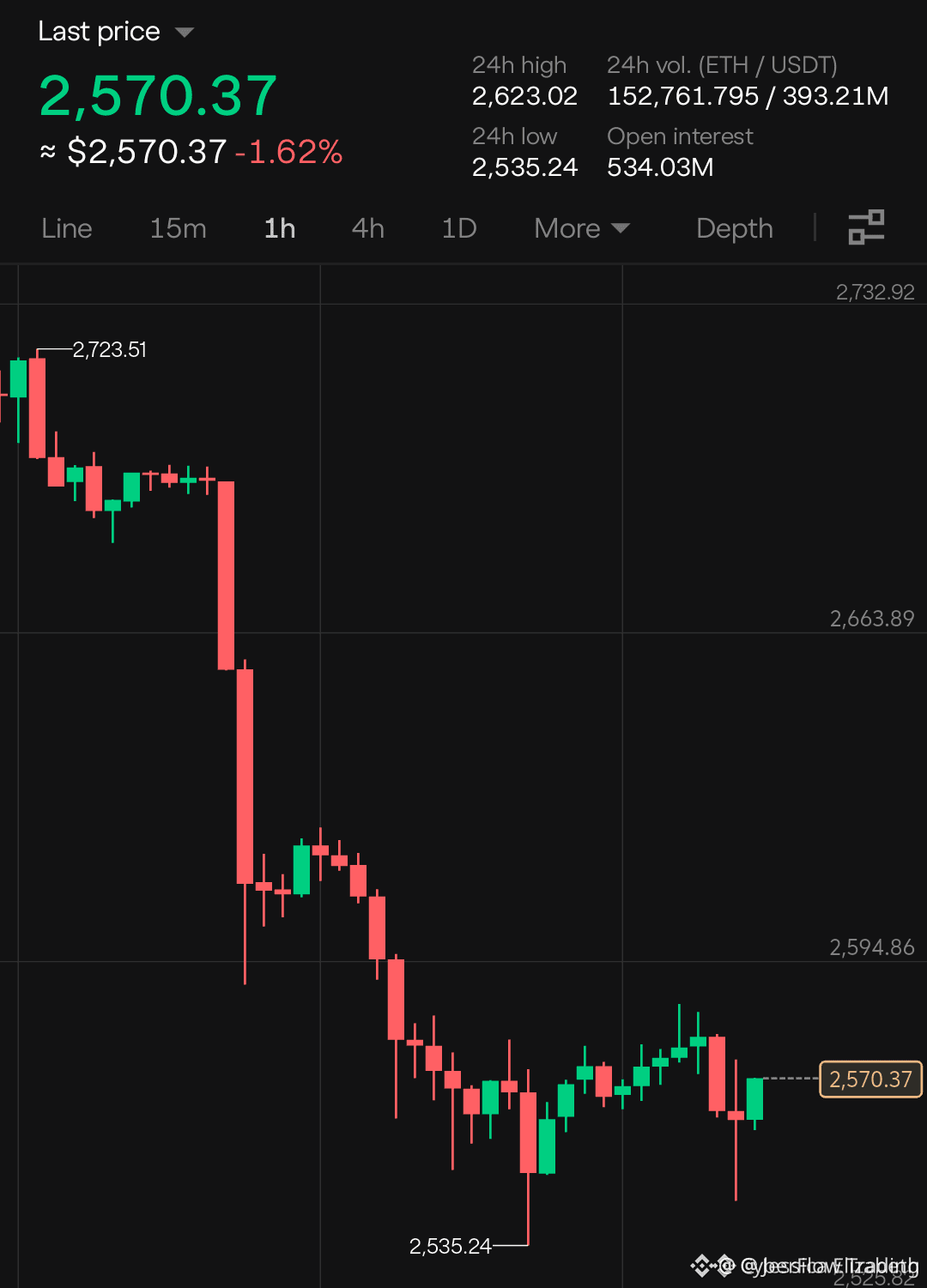
🚨 $ETH PRESSING INTO DEMAND ZONE BEFORE THE NEXT ACCELERATION LEG! 💥
Entry: 2,560 - 2,576 ⚡
Target 1: 2,598 🚀
Target 2: 2,620 🎯
Stop Loss: 2,520 ⚠️
📌 $ETH is holding a tight compression range right above the 2,560 demand shelf, absorbing short-term seller pressure while buyers quietly build bids. 📊 Order flow shows aggressive spot absorption as momentum indicators reset for another potential push upward.
⚡ As long as 2,520 remains untouched, the path of least resistance tilts toward a clean sweep of overhead liquidity targets up to 2,620. 💬 Are you taking the bid inside this retest range, or waiting for a confirmed breakout above 2,600? 👇
⚠️ Not financial advice. Always manage your risk. 🛡️
🏷️ #ETH #Ethereum #LongSetup #Crypto
🔥 💎
🚨 $ETH PRESSING INTO DEMAND ZONE BEFORE THE NEXT ACCELERATION LEG! 💥
Entry: 2,560 - 2,576 ⚡
Target 1: 2,598 🚀
Target 2: 2,620 🎯
Stop Loss: 2,520 ⚠️
📌 $ETH is holding a tight compression range right above the 2,560 demand shelf, absorbing short-term seller pressure while buyers quietly build bids. 📊 Order flow shows aggressive spot absorption as momentum indicators reset for another potential push upward.
⚡ As long as 2,520 remains untouched, the path of least resistance tilts toward a clean sweep of overhead liquidity targets up to 2,620. 💬 Are you taking the bid inside this retest range, or waiting for a confirmed breakout above 2,600? 👇
⚠️ Not financial advice. Always manage your risk. 🛡️
🏷️ #ETH #Ethereum #LongSetup #Crypto
🔥 💎
Entry: 2,560 - 2,576 ⚡
Target 1: 2,598 🚀
Target 2: 2,620 🎯
Stop Loss: 2,520 ⚠️
📌 $ETH is holding a tight compression range right above the 2,560 demand shelf, absorbing short-term seller pressure while buyers quietly build bids. 📊 Order flow shows aggressive spot absorption as momentum indicators reset for another potential push upward.
⚡ As long as 2,520 remains untouched, the path of least resistance tilts toward a clean sweep of overhead liquidity targets up to 2,620. 💬 Are you taking the bid inside this retest range, or waiting for a confirmed breakout above 2,600? 👇
⚠️ Not financial advice. Always manage your risk. 🛡️
🏷️ #ETH #Ethereum #LongSetup #Crypto
🔥 💎
2
·
--
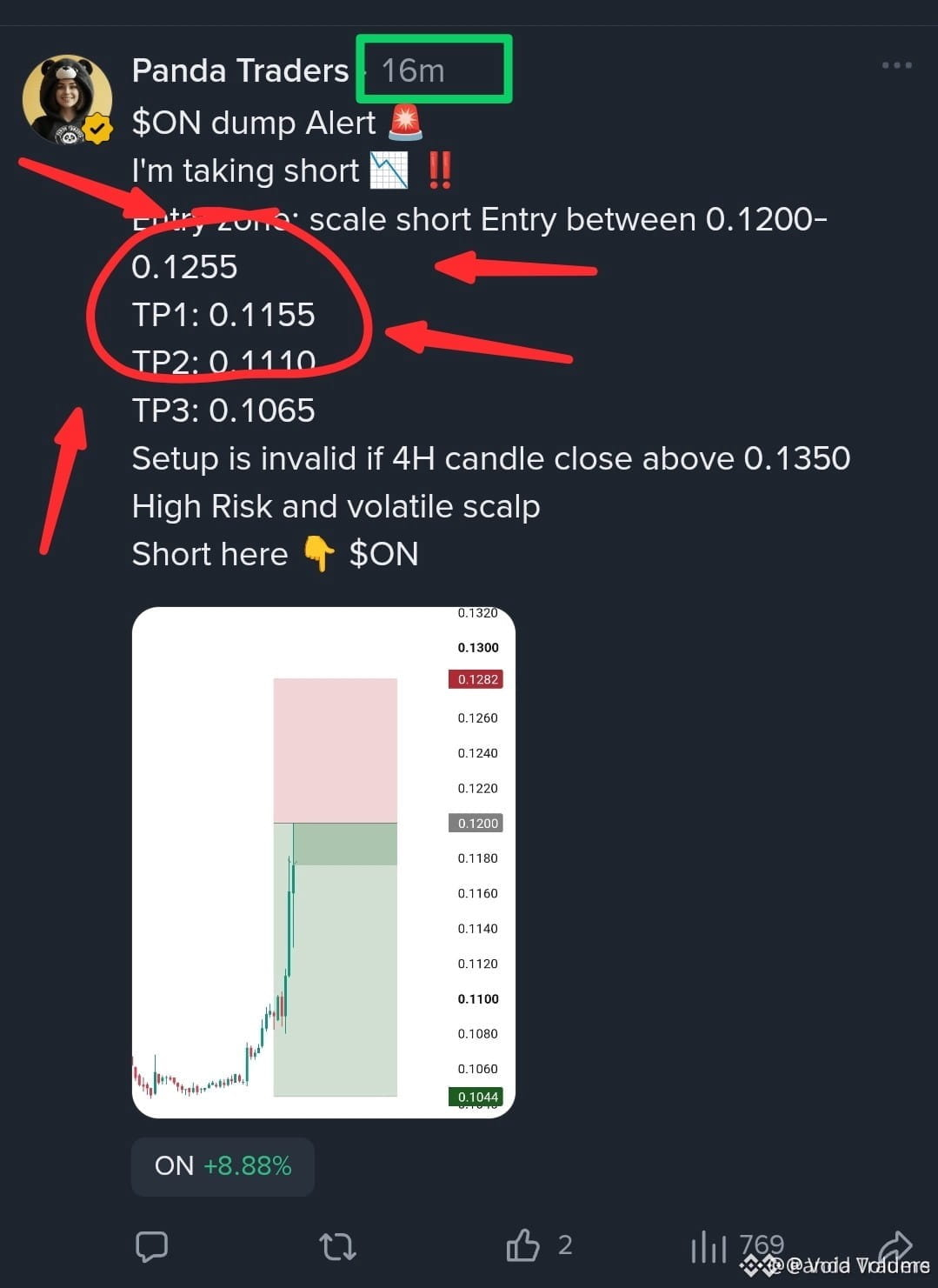
$ON INSTANTLY SWEEPS TARGET ONE AS INSTITUTIONAL MOMENTUM EXPANDS 🚀 ⚡
Smart money momentum delivers right on schedule as $ON accelerates through overhead resistance, tapping target one in mere minutes. 📊 This rapid displacement confirms aggressive buyer absorption and clean order flow continuation across lower timeframes.
Inefficiencies above are being systematically reclaimed, demonstrating how precisely price moves once structural liquidity gets unlocked. 💡 Trail your stops to protect capital as order book density shifts to support the next expansion phase. 💬 Did you catch this momentum push or are you waiting for a retest of the demand zone? 👇
⚠️ Not financial advice. Always manage your risk. 🛡️
🏷️ #ON #Altcoins #Crypto #TechnicalAnalysis # trading
🎯 🦈
$ON INSTANTLY SWEEPS TARGET ONE AS INSTITUTIONAL MOMENTUM EXPANDS 🚀 ⚡
Smart money momentum delivers right on schedule as $ON accelerates through overhead resistance, tapping target one in mere minutes. 📊 This rapid displacement confirms aggressive buyer absorption and clean order flow continuation across lower timeframes.
Inefficiencies above are being systematically reclaimed, demonstrating how precisely price moves once structural liquidity gets unlocked. 💡 Trail your stops to protect capital as order book density shifts to support the next expansion phase. 💬 Did you catch this momentum push or are you waiting for a retest of the demand zone? 👇
⚠️ Not financial advice. Always manage your risk. 🛡️
🏷️ #ON #Altcoins #Crypto #TechnicalAnalysis # trading
🎯 🦈
Smart money momentum delivers right on schedule as $ON accelerates through overhead resistance, tapping target one in mere minutes. 📊 This rapid displacement confirms aggressive buyer absorption and clean order flow continuation across lower timeframes.
Inefficiencies above are being systematically reclaimed, demonstrating how precisely price moves once structural liquidity gets unlocked. 💡 Trail your stops to protect capital as order book density shifts to support the next expansion phase. 💬 Did you catch this momentum push or are you waiting for a retest of the demand zone? 👇
⚠️ Not financial advice. Always manage your risk. 🛡️
🏷️ #ON #Altcoins #Crypto #TechnicalAnalysis # trading
🎯 🦈
48
Log in to explore more content
Join global crypto users on Binance Square
⚡️ Get latest and useful information about crypto.
💬 Trusted by the world’s largest crypto exchange.
👍 Discover real insights from verified creators.
Email / Phone number
Trending Topics
1
#FedMinutesFocusOnOctoberPause
328,135 views
2,004 Discussing
2
#XRPSpotETFsHold$1.7BWeeklyInflowsSlow
9 views
6 Discussing
3
#FrenchHillUrgesCLARITYActPassageInLameDuck
213 views
39 Discussing
4
#EthereumSpotETFRecords$161MNetOutflows
9 views
6 Discussing
5
#IMFGrantsWaiverForElSalvadorBitcoinBreach
5,944 views
185 Discussing
6
#BinanceLaunchesBinanceIntelligence
1.3M views
7,026 Discussing
7
#EvernorthDelaysNasdaqDebutToOct12
47,871 views
502 Discussing
8
#RobinhoodAdds$25MInBitcoinToBalanceSheet
16,720 views
101 Discussing
9
#SP500AndNasdaqHitRecordHighs
52,222 views
654 Discussing
10
#USMortgageRatesRiseTo7.49%
40,659 views
519 Discussing