
#safu
safu
1.4M views
2,472 Discussing
Hot
Latest

@Arifat2kkk 🔐 Security Is the Foundation of Crypto!
In the world of cryptocurrency, security should always come first. Protecting your assets is not just an option; it's a responsibility.
Here are a few important tips:
- Always enable 2FA.
- Never share your passwords or verification codes.
- Be careful of suspicious links.
- Use trusted platforms.
- Keep your crypto assets secure.
Remember: Think Safe, Trade Smart, Stay Protected!
#Binance #CryptoSecurity #Blockchai #SAFU
66

·
--
CZ Denies Selling SpaceX, $1.2B Seized
🛡️ Binance is holding strong - Here’s the latest
Despite the market crash and the recent $6.3B security incident, Binance is proving its resilience.
Key updates today:
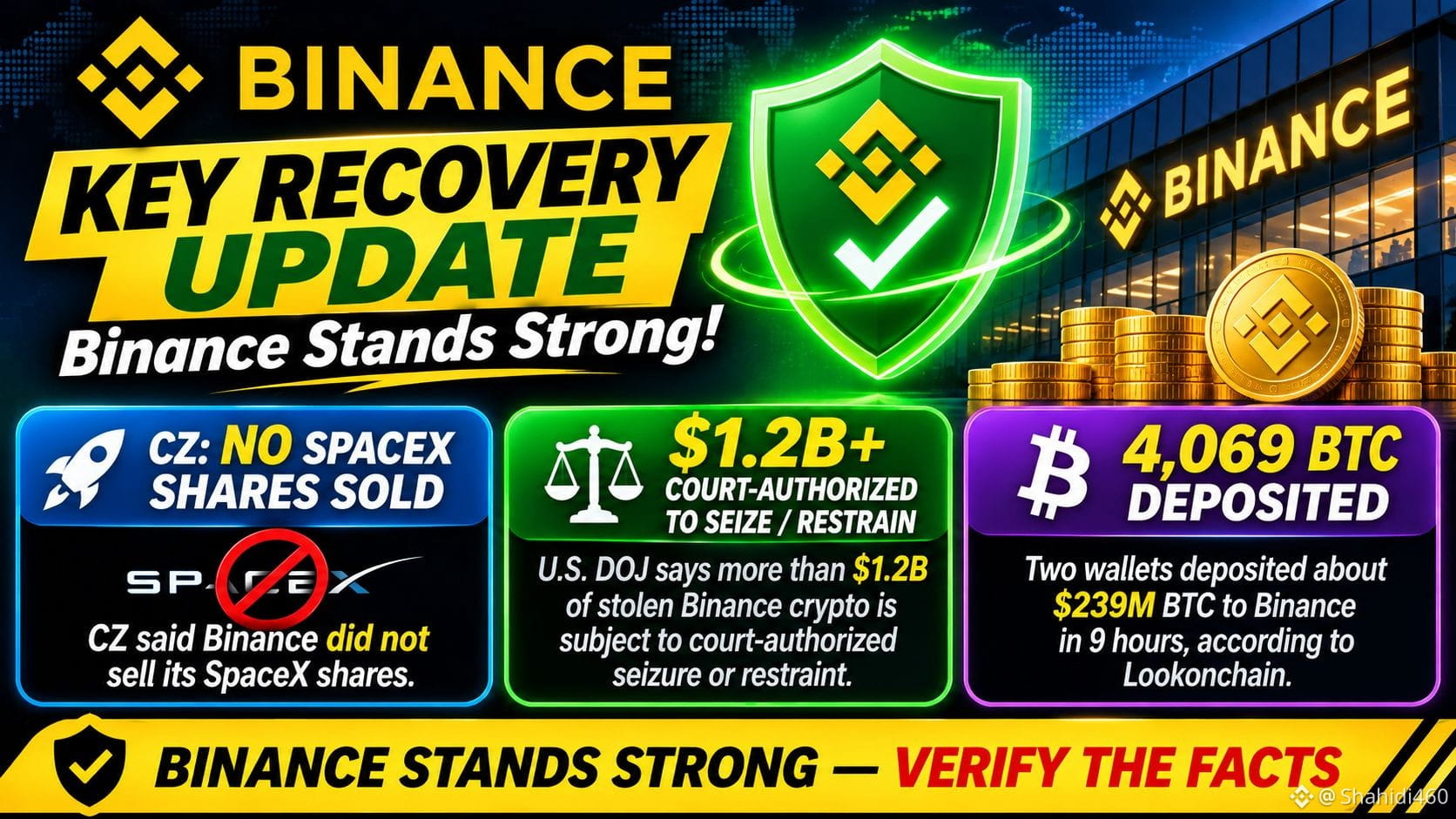
• CZ denies selling SpaceX stocks: Changpeng Zhao confirmed Binance did not sell any SpaceX shares after the hack. The $6.3B loss is being covered from Binance’s own funds .
• **$1.2 billion seized:** U.S. authorities have seized or been authorized to freeze over $1.2 billion** in crypto stolen from Binance, linked to North Korean hackers .
• **$239M BTC deposited: Two wallets deposited 4,069 BTC (worth ~$239M) to Binance in the last 9 hours - likely users moving funds to trade the volatility .
Binance is not just surviving - it’s actively cooperating with authorities and protecting user funds.
#Binance #SAFU #CryptoNews $BNB
{spot}(BNBUSDT)
CZ Denies Selling SpaceX, $1.2B Seized
🛡️ Binance is holding strong - Here’s the latest
Despite the market crash and the recent $6.3B security incident, Binance is proving its resilience.
Key updates today:
• CZ denies selling SpaceX stocks: Changpeng Zhao confirmed Binance did not sell any SpaceX shares after the hack. The $6.3B loss is being covered from Binance’s own funds .
• **$1.2 billion seized:** U.S. authorities have seized or been authorized to freeze over $1.2 billion** in crypto stolen from Binance, linked to North Korean hackers .
• **$239M BTC deposited: Two wallets deposited 4,069 BTC (worth ~$239M) to Binance in the last 9 hours - likely users moving funds to trade the volatility .
Binance is not just surviving - it’s actively cooperating with authorities and protecting user funds.
#Binance #SAFU #CryptoNews $BNB
326
·
--
Article
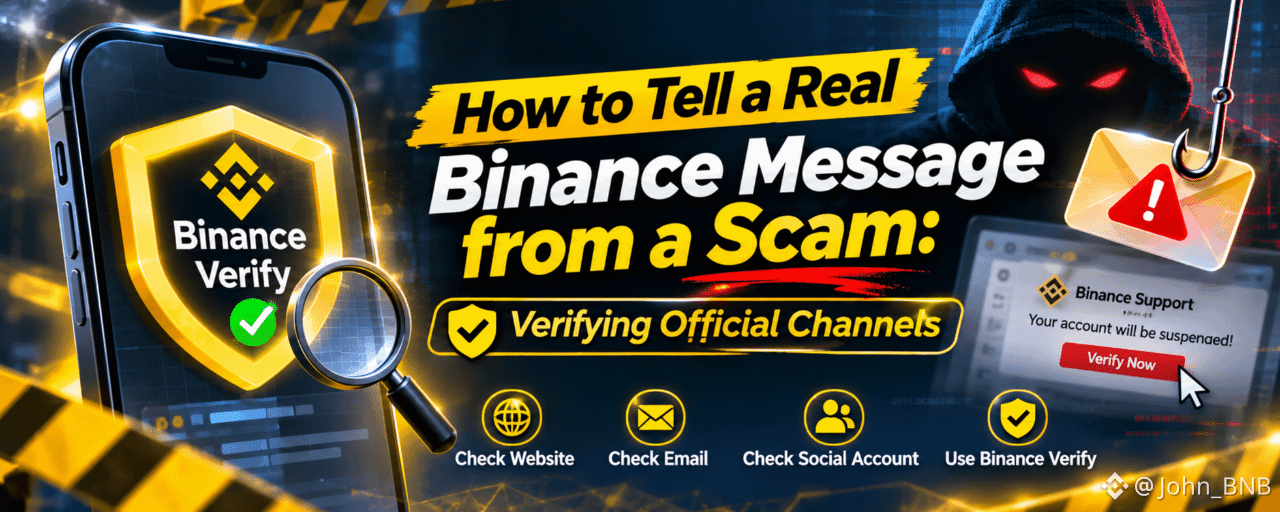
How to Tell a Real Binance Message from a Scam: Verifying Official ChannelsBinance Security Guide | Account Protection | Anti-Phishing
In the crypto world, not every message that looks official comes from the real source.
Scammers frequently impersonate trusted crypto platforms, especially after major security incidents or breaking news. They use fake emails, cloned websites, fraudulent social media accounts, and impersonated customer support agents to trick users into revealing sensitive information or transferring funds.
A message may carry the Binance logo, use professional language, and even appear to come from a familiar account. But appearances are not proof of authenticity.
The good news is that users have a way to check.
This guide explains how to verify whether a website, email, social media account, or other communication genuinely belongs to Binance, how to recognize common scam tactics, and what to do when something feels suspicious.
1. Use Binance Verify Before Trusting a Message
One of the simplest ways to check whether a communication is legitimate is Binance Verify.
Binance Verify is an official verification tool that allows users to check whether a website address, email address, phone number, or social media account is associated with Binance's official channels.
Instead of trusting a message because it looks professional, independently verify its source.
How to use it:
Visit [Binance Verify](https://www.binance.com/en/official-verification)Copy the website URL, email address, phone number, or social media account you want to check.Enter the information into the verification tool.Review the result to determine whether the source is officially recognized.If the source cannot be verified, do not interact with it until you confirm through Binance's official channels.
Important: Always access Binance Verify by typing the official Binance website address yourself or using a trusted bookmark. Avoid clicking verification links sent by suspicious accounts.
2. Check Every Channel, Not Just the Logo
Scammers can imitate almost anything. Knowing where legitimate Binance communications originate is an important part of account security.
Here are the main channels to check:
A. Websites and URLs
Always check the domain name before entering login credentials.Watch for misspellings, extra characters, unusual extensions, and misleading subdomains.Avoid shortened URLs from unknown sources.Access Binance by typing its official address directly: binance.com
B. Social media accounts
Check the account handle and verification status.Be careful with accounts using similar usernames, copied profile pictures, and Binance branding.Verify the social media handle through Binance Verify.Never trust someone simply because they claim to be a Binance employee or Angel.
C. Emails
Inspect the complete sender address, not just the display name.Check your personal Anti-Phishing Code.Avoid opening unexpected attachments or clicking suspicious links.Remember that email sender addresses can be spoofed.
D. Customer Support
Start conversations through Binance's official app or website.Do not trust unsolicited messages from people claiming to be support agents.Never install remote-access software or share your screen because someone claiming to be support asks you to.
3. Recognize the Warning Signs of a Scam
Most impersonation scams follow a familiar pattern: create fear, establish false trust, and push the victim into making a quick decision.
Watch for these common warning signs:
Warning sign
What scammers might say
Urgency
"Your account will be suspended in 30 minutes!"
Security threats
"We detected suspicious activity. Verify immediately."
Fake rewards
"Claim your exclusive Binance bonus here."
Account recovery
"Send your verification code to restore access."
Fake support
"I am your assigned Binance security officer."
Fund transfers
"Move your assets to this secure wallet."
Suspicious links
"Click here to unlock your account."
One particularly important lesson:
Urgency combined with a request for credentials is one of the clearest signs of a scam.
Legitimate security notifications may inform you about account activity, but you should independently open Binance and investigate rather than following instructions from an unexpected message.
4. Understand the Power of Your Anti-Phishing Code
Binance provides an additional security feature called the Anti-Phishing Code.
It allows users to create a unique personal code that appears in genuine Binance emails.
When enabled, you can use this code to distinguish legitimate Binance emails from many phishing attempts.
How to enable it:
Log in through the official Binance app or website.Navigate to your account's Security settings.Find Anti-Phishing Code.Create a unique code that is difficult for others to guess.Save your settings.
Whenever you receive an email claiming to come from Binance, check whether your personal code is displayed.
If it is missing or incorrect, treat the email as suspicious and verify it independently.
Remember: This feature helps authenticate emails, not every SMS, phone call, or social media message. It should be used alongside Binance Verify.
5. What Binance Will Never Ask You to Do
This is perhaps the most important section for every crypto user.
Scammers often pretend to help users protect their accounts, but their real objective is to gain access to their funds.
Keep these rules in mind:
Never share your account password.Never disclose your 2FA or verification codes.Never share your wallet seed phrase or private keys.Never transfer cryptocurrency to a stranger claiming it is necessary to secure your account.Never scan an unknown QR code to log in or authorize access.Never install remote-access applications at the request of an unverified support agent.Never provide screenshots or sensitive account information to strangers.
Your credentials belong to you. No legitimate support conversation should require you to hand over your password, 2FA codes, or private keys.
6. What Should You Do If You Receive a Suspicious Message?
If you receive a suspicious message claiming to be from Binance, don't panic. Follow these steps:
Stop: Don't click links, download files, reply, or share information.Verify: Check the sender, URL, email, or social account through Binance Verify.Report: Report suspicious impersonation through official Binance Support.Secure: If you have interacted with a suspicious website or disclosed information, change your password through the official platform and review your security settings.Act immediately: If you suspect unauthorized access, contact Binance Support through the official app or website and follow its instructions to secure or disable your account.
Also review your account activity, login history, and withdrawal records for anything you don't recognize.
The sooner you respond, the better your chances of limiting potential damage.
7. Security Is a Shared Responsibility
Binance provides security tools and official verification channels, but users also play an important role in protecting their assets.
A strong password, 2FA, Anti-Phishing Code, and regular security checks can help reduce risks. However, the most valuable habit is learning to question unexpected communications before taking action.
Scammers don't necessarily need to break through a platform's security systems if they can convince users to give away their credentials.
The next time someone sends you an urgent message claiming to be from Binance, remember three simple words:
STOP. VERIFY. PROTECT.
Don't trust appearances. Verify the source before you trust the message.
Frequently Asked Questions
1. How can I verify whether a Binance employee is real?
Use Binance Verify to check their email address, phone number, or social media handle. If you cannot verify their identity, do not proceed with their requests.
2. Does Binance Verify check Telegram accounts?
Yes. You can enter Telegram usernames and other supported social media handles to check whether they are officially recognized.
3. What if Binance Verify says an account is verified, but the message still looks suspicious?
Remain cautious. Email and SMS sender information can be spoofed. Contact Binance Support independently if you have doubts.
4. Does Binance Support ever ask for my password or 2FA code?
You should never disclose your password, 2FA codes, seed phrase, or private keys to anyone claiming to be support.
5. Where can I report a fake Binance account?
Use the official Binance Support portal to report suspicious accounts, messages, and phishing websites.
Official Security Resources
[Binance Verify – Official Verification Tool](https://www.binance.com/en/official-verification)[How to Identify and Avoid Binance Imposters](https://www.binance.com/blog/security/299010416215875222?ref=CPA_0037NAK6ST)[How to Identify Phishing Emails](https://www.binance.com/en/support/faq/detail/360002070252?utm_source=new_share&ref=CPA_0037NAK6ST)[How to Prevent Phishing Attacks](https://www.binance.com/en/support/faq/detail/360020819031?utm_source=new_share&ref=CPA_0037NAK6ST)
#Binance #security #SAFE #safu
How to Tell a Real Binance Message from a Scam: Verifying Official Channels
Binance Security Guide | Account Protection | Anti-Phishing
In the crypto world, not every message that looks official comes from the real source.
Scammers frequently impersonate trusted crypto platforms, especially after major security incidents or breaking news. They use fake emails, cloned websites, fraudulent social media accounts, and impersonated customer support agents to trick users into revealing sensitive information or transferring funds.
A message may carry the Binance logo, use professional language, and even appear to come from a familiar account. But appearances are not proof of authenticity.
The good news is that users have a way to check.
This guide explains how to verify whether a website, email, social media account, or other communication genuinely belongs to Binance, how to recognize common scam tactics, and what to do when something feels suspicious.
1. Use Binance Verify Before Trusting a Message
One of the simplest ways to check whether a communication is legitimate is Binance Verify.
Binance Verify is an official verification tool that allows users to check whether a website address, email address, phone number, or social media account is associated with Binance's official channels.
Instead of trusting a message because it looks professional, independently verify its source.
How to use it:
Visit Binance VerifyCopy the website URL, email address, phone number, or social media account you want to check.Enter the information into the verification tool.Review the result to determine whether the source is officially recognized.If the source cannot be verified, do not interact with it until you confirm through Binance's official channels.
Important: Always access Binance Verify by typing the official Binance website address yourself or using a trusted bookmark. Avoid clicking verification links sent by suspicious accounts.
2. Check Every Channel, Not Just the Logo
Scammers can imitate almost anything. Knowing where legitimate Binance communications originate is an important part of account security.
Here are the main channels to check:
A. Websites and URLs
Always check the domain name before entering login credentials.Watch for misspellings, extra characters, unusual extensions, and misleading subdomains.Avoid shortened URLs from unknown sources.Access Binance by typing its official address directly: binance.com
B. Social media accounts
Check the account handle and verification status.Be careful with accounts using similar usernames, copied profile pictures, and Binance branding.Verify the social media handle through Binance Verify.Never trust someone simply because they claim to be a Binance employee or Angel.
C. Emails
Inspect the complete sender address, not just the display name.Check your personal Anti-Phishing Code.Avoid opening unexpected attachments or clicking suspicious links.Remember that email sender addresses can be spoofed.
D. Customer Support
Start conversations through Binance's official app or website.Do not trust unsolicited messages from people claiming to be support agents.Never install remote-access software or share your screen because someone claiming to be support asks you to.
3. Recognize the Warning Signs of a Scam
Most impersonation scams follow a familiar pattern: create fear, establish false trust, and push the victim into making a quick decision.
Watch for these common warning signs:
Warning sign
What scammers might say
Urgency
"Your account will be suspended in 30 minutes!"
Security threats
"We detected suspicious activity. Verify immediately."
Fake rewards
"Claim your exclusive Binance bonus here."
Account recovery
"Send your verification code to restore access."
Fake support
"I am your assigned Binance security officer."
Fund transfers
"Move your assets to this secure wallet."
Suspicious links
"Click here to unlock your account."
One particularly important lesson:
Urgency combined with a request for credentials is one of the clearest signs of a scam.
Legitimate security notifications may inform you about account activity, but you should independently open Binance and investigate rather than following instructions from an unexpected message.
4. Understand the Power of Your Anti-Phishing Code
Binance provides an additional security feature called the Anti-Phishing Code.
It allows users to create a unique personal code that appears in genuine Binance emails.
When enabled, you can use this code to distinguish legitimate Binance emails from many phishing attempts.
How to enable it:
Log in through the official Binance app or website.Navigate to your account's Security settings.Find Anti-Phishing Code.Create a unique code that is difficult for others to guess.Save your settings.
Whenever you receive an email claiming to come from Binance, check whether your personal code is displayed.
If it is missing or incorrect, treat the email as suspicious and verify it independently.
Remember: This feature helps authenticate emails, not every SMS, phone call, or social media message. It should be used alongside Binance Verify.
5. What Binance Will Never Ask You to Do
This is perhaps the most important section for every crypto user.
Scammers often pretend to help users protect their accounts, but their real objective is to gain access to their funds.
Keep these rules in mind:
Never share your account password.Never disclose your 2FA or verification codes.Never share your wallet seed phrase or private keys.Never transfer cryptocurrency to a stranger claiming it is necessary to secure your account.Never scan an unknown QR code to log in or authorize access.Never install remote-access applications at the request of an unverified support agent.Never provide screenshots or sensitive account information to strangers.
Your credentials belong to you. No legitimate support conversation should require you to hand over your password, 2FA codes, or private keys.
6. What Should You Do If You Receive a Suspicious Message?
If you receive a suspicious message claiming to be from Binance, don't panic. Follow these steps:
Stop: Don't click links, download files, reply, or share information.Verify: Check the sender, URL, email, or social account through Binance Verify.Report: Report suspicious impersonation through official Binance Support.Secure: If you have interacted with a suspicious website or disclosed information, change your password through the official platform and review your security settings.Act immediately: If you suspect unauthorized access, contact Binance Support through the official app or website and follow its instructions to secure or disable your account.
Also review your account activity, login history, and withdrawal records for anything you don't recognize.
The sooner you respond, the better your chances of limiting potential damage.
7. Security Is a Shared Responsibility
Binance provides security tools and official verification channels, but users also play an important role in protecting their assets.
A strong password, 2FA, Anti-Phishing Code, and regular security checks can help reduce risks. However, the most valuable habit is learning to question unexpected communications before taking action.
Scammers don't necessarily need to break through a platform's security systems if they can convince users to give away their credentials.
The next time someone sends you an urgent message claiming to be from Binance, remember three simple words:
STOP. VERIFY. PROTECT.
Don't trust appearances. Verify the source before you trust the message.
Frequently Asked Questions
1. How can I verify whether a Binance employee is real?
Use Binance Verify to check their email address, phone number, or social media handle. If you cannot verify their identity, do not proceed with their requests.
2. Does Binance Verify check Telegram accounts?
Yes. You can enter Telegram usernames and other supported social media handles to check whether they are officially recognized.
3. What if Binance Verify says an account is verified, but the message still looks suspicious?
Remain cautious. Email and SMS sender information can be spoofed. Contact Binance Support independently if you have doubts.
4. Does Binance Support ever ask for my password or 2FA code?
You should never disclose your password, 2FA codes, seed phrase, or private keys to anyone claiming to be support.
5. Where can I report a fake Binance account?
Use the official Binance Support portal to report suspicious accounts, messages, and phishing websites.
Official Security Resources
Binance Verify – Official Verification ToolHow to Identify and Avoid Binance ImpostersHow to Identify Phishing EmailsHow to Prevent Phishing Attacks
#Binance #security #SAFE #safu
Abu Fahadأ:
💛
2
3
571

·
--
Article
🛡️ ¿Qué es SAFU y por qué es el escudo protector de tus criptomonedas? 🛡️En el mundo de las criptomonedas, la seguridad no es una opción, es nuestra máxima prioridad. Cuando escuchamos la famosa frase "Funds are SAFU" (Los fondos están seguros), detrás de ella existe un respaldo financiero real diseñado para proteger el capital de los usuarios frente a imprevistos extremos.
¿Qué significa exactamente SAFU?
SAFU son las siglas de Secure Asset Fund for Users (Fondo de Seguro de Activos para Usuarios). Se trata de un fondo de emergencia creado por Binance y financiado con un porcentaje de las comisiones de trading de la plataforma. Su propósito principal es actuar como un chaleco salvavidas institucional: cubrir pérdidas de los usuarios ante incidentes extraordinarios de ciberseguridad o fallos críticos, garantizando transparencia y confianza en el ecosistema.
La seguridad es una responsabilidad compartida
Contar con un fondo de protección de esta magnitud nos brinda tranquilidad al operar y acumular a largo plazo (HODL), pero la verdadera defensa comienza con nuestros propios hábitos digitales:
🔐 Activa siempre el 2FA: La autenticación de doble factor (preferiblemente con aplicaciones autenticadoras o llaves de acceso Passkeys) es tu primera barrera contra accesos no autorizados.
📧 Configura tu Código Anti-Phishing: Esta herramienta te permite identificar al instante que los correos electrónicos que recibes provienen realmente de la plataforma oficial y no de suplantadores.
🔍 Verifica enlaces y contactos: Utiliza siempre herramientas oficiales como Binance Verify antes de confiar en un enlace, grupo o supuesto representante, y revoca permisos de aplicaciones que ya no utilices.
La educación continua y la prevención son las mejores herramientas de todo inversor inteligente. Mantener nuestros activos a salvo depende tanto de plataformas sólidas como de nuestra propia disciplina.
$BNB
#SAFU #CriptoSeguridad #EducaciónCripto #BinanceSquare #CalidadSobreCantidad
"La mejor inversión en el ecosistema cripto comienza por proteger lo que ya construiste; la seguridad no se delega, se practica cada día."
⚠️ Descargo de responsabilidad (DYOR): Este contenido es estrictamente educativo e informativo y no constituye asesoramiento financiero. Realiza siempre tu propia investigación y gestiona tus riesgos de forma responsable.
💬 Y tú, ¿qué medida de seguridad consideras indispensable para proteger tu cuenta hoy en día? ¡Cuéntame en los comentarios!
{spot}(BNBUSDT)
🛡️ ¿Qué es SAFU y por qué es el escudo protector de tus criptomonedas? 🛡️
En el mundo de las criptomonedas, la seguridad no es una opción, es nuestra máxima prioridad. Cuando escuchamos la famosa frase "Funds are SAFU" (Los fondos están seguros), detrás de ella existe un respaldo financiero real diseñado para proteger el capital de los usuarios frente a imprevistos extremos.
¿Qué significa exactamente SAFU?
SAFU son las siglas de Secure Asset Fund for Users (Fondo de Seguro de Activos para Usuarios). Se trata de un fondo de emergencia creado por Binance y financiado con un porcentaje de las comisiones de trading de la plataforma. Su propósito principal es actuar como un chaleco salvavidas institucional: cubrir pérdidas de los usuarios ante incidentes extraordinarios de ciberseguridad o fallos críticos, garantizando transparencia y confianza en el ecosistema.
La seguridad es una responsabilidad compartida
Contar con un fondo de protección de esta magnitud nos brinda tranquilidad al operar y acumular a largo plazo (HODL), pero la verdadera defensa comienza con nuestros propios hábitos digitales:
🔐 Activa siempre el 2FA: La autenticación de doble factor (preferiblemente con aplicaciones autenticadoras o llaves de acceso Passkeys) es tu primera barrera contra accesos no autorizados.
📧 Configura tu Código Anti-Phishing: Esta herramienta te permite identificar al instante que los correos electrónicos que recibes provienen realmente de la plataforma oficial y no de suplantadores.
🔍 Verifica enlaces y contactos: Utiliza siempre herramientas oficiales como Binance Verify antes de confiar en un enlace, grupo o supuesto representante, y revoca permisos de aplicaciones que ya no utilices.
La educación continua y la prevención son las mejores herramientas de todo inversor inteligente. Mantener nuestros activos a salvo depende tanto de plataformas sólidas como de nuestra propia disciplina.
$BNB
#SAFU #CriptoSeguridad #EducaciónCripto #BinanceSquare #CalidadSobreCantidad
"La mejor inversión en el ecosistema cripto comienza por proteger lo que ya construiste; la seguridad no se delega, se practica cada día."
⚠️ Descargo de responsabilidad (DYOR): Este contenido es estrictamente educativo e informativo y no constituye asesoramiento financiero. Realiza siempre tu propia investigación y gestiona tus riesgos de forma responsable.
💬 Y tú, ¿qué medida de seguridad consideras indispensable para proteger tu cuenta hoy en día? ¡Cuéntame en los comentarios!
4
734

·
--
Binance's recovery checklist vs. a red tape
Binance says it has finished covering the assets hit in its recent security incident, committing more than $6.34B of company funds. The money came from a partial SAFU deployment, part of the Futures insurance fund and its corporate treasury. It has also pledged to top SAFU back up to about $1B.
What I'm watching:
• A new Proof of Reserves snapshot (Nov 12, 00:00 UTC) covering 198 tokens. A zk proof that holders can check for 1:1 backing is expected about 40–50h later
• Withdrawals for 87 networks reopened this week, incl. $ADA, $AVAX, $HYPE, $TAO. Binance is aiming to reopen all remaining networks by the end of next week
The market isn't waiting around. In the last 24h on Binance spot: $BTC -7.1% to ~$63.6K, $ETH -9.7% to ~$1,747, $BNB -8.5% to ~$578, $SOL -10.7%.
My take: verifiable reserves and a firm reopening deadline matter more than any promo right now. If you hold affected tokens, verify your balance yourself once the zk proof is live.
#Binance #ProofOfReserves #safu #CryptoMarkets
Not financial advice. DYOR.
{spot}(BTCUSDT)
{spot}(ETHUSDT)
{spot}(SOLUSDT)
Binance's recovery checklist vs. a red tape
Binance says it has finished covering the assets hit in its recent security incident, committing more than $6.34B of company funds. The money came from a partial SAFU deployment, part of the Futures insurance fund and its corporate treasury. It has also pledged to top SAFU back up to about $1B.
What I'm watching:
• A new Proof of Reserves snapshot (Nov 12, 00:00 UTC) covering 198 tokens. A zk proof that holders can check for 1:1 backing is expected about 40–50h later
• Withdrawals for 87 networks reopened this week, incl. $ADA, $AVAX, $HYPE, $TAO. Binance is aiming to reopen all remaining networks by the end of next week
The market isn't waiting around. In the last 24h on Binance spot: $BTC -7.1% to ~$63.6K, $ETH -9.7% to ~$1,747, $BNB -8.5% to ~$578, $SOL -10.7%.
My take: verifiable reserves and a firm reopening deadline matter more than any promo right now. If you hold affected tokens, verify your balance yourself once the zk proof is live.
#Binance #ProofOfReserves #safu #CryptoMarkets
Not financial advice. DYOR.
118

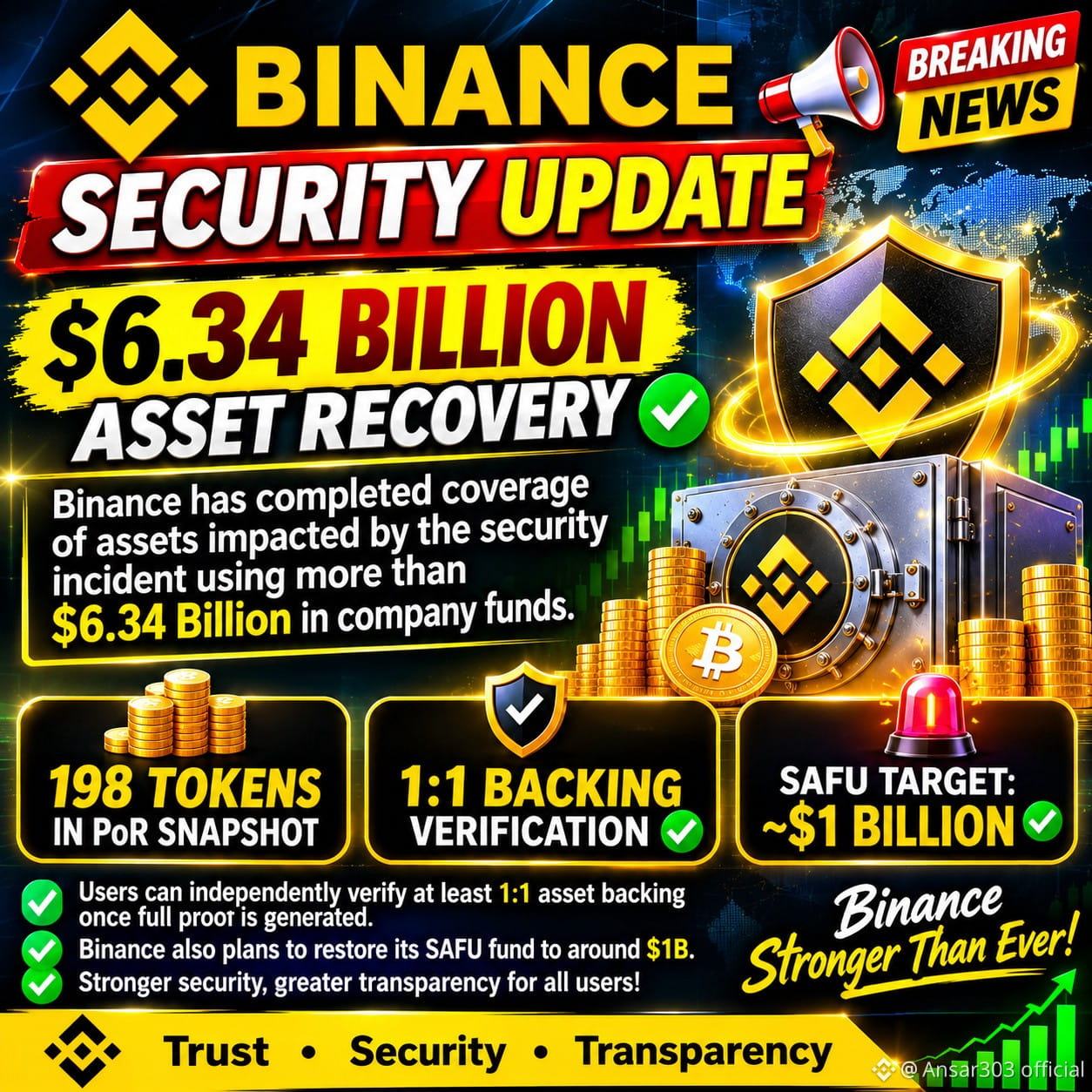
🚨 BINANCE SECURITY BREAKING NEWS! 🔥
Binance has officially completed coverage of assets affected by the security incident, committing more than $6.34 BILLION in company funds.
📊 A new Proof of Reserves snapshot now covers 198 tokens.
🛡️ Users will be able to independently verify at least 1:1 asset backing once the full verification proof is generated.
💰 Binance also plans to restore its SAFU emergency protection fund to approximately $1 billion.
This is an important step toward strengthening user protection, security and transparency in the crypto industry.
Do you think this update will increase confidence in Binance?
#Binance #CryptoNews #Security #Bitcoin #ProofOfReserves #SAFU #WhoWillSucceedJensenHuangatNvidia? #WhatWillDriveCryptoandStocks’NextRebound? #USPPIMissMayEaseBTCPressure #TradFiForBeginners
1
55

·
--
"Replaced" and "recovered" aren't the same word, and Binance's $6.3B fix is the first one.
For $BNB holders, that gap is the whole story.
Yahoo Finance spelled it out at 19:30 UTC Nov 13: Binance bought new tokens on the market and OTC to restore balances. The coins taken on Oct 29 haven't been recovered.
So the hole didn't close, it moved onto Binance's books 🔄
Per its Nov 12 notice (16:54 UTC), over $6.34B of company money covered users: part of SAFU, part of the Futures insurance fund, plus treasury. It pledged to refill SAFU to about $1B.
That's where the $1.2B and $2.7B sit. The DOJ won court approval to seize or restrain over $1.2B, part of more than $2.7B frozen by US authorities and private firms (The Block, 22:39 UTC Nov 12). It's a law-enforcement track running beside user balances, with no confirmed timeline per Yahoo.
The open item: the full zero-knowledge proof for the Nov 12 00:00 UTC snapshot of 198 tokens 🔍
Binance put it at 40 to 50 hours. As of Yahoo's report, it wasn't out yet. Withdrawals keep reopening in phases.
$BNB is at $623, down 2.55% in 24h and 10.30% over 7 days, just above the $618 range low I'm watching. Bitcoin is off 2.81% at $67,404, Fear & Greed at 13 📉
#BNB #Binance #ProofOfReserves #SAFU
130

·
--
Fellow Binancians,
Infrastructure first. Always.
✅ Core systems operational
✅ Trading fully available
✅ Deposits open
✅ Withdrawals restoring in secure phases after rigorous checks
Following the October incident, we covered all user losses through SAFU and company funds, rotated hot-wallet infrastructure, and are bringing networks back online carefully—prioritizing demand and stability.
Our H1 2026 API uptime stood at 100%. Automated monitoring, redundancy, and deliberate recovery keep the platform running 24/7.
Funds remain SAFU.
Progress continues.
Check live status: binance.com/en/network
Official updates only via @binance.
#Binance #SAFU #CryptoInfrastructure
15

·
--
Day 3 of Community SAFU Challenge! 🛡️
Why is security my #1 priority?
Because in crypto, one wrong click can cost you everything you built for months. I don't trade to lose it all to a fake link.
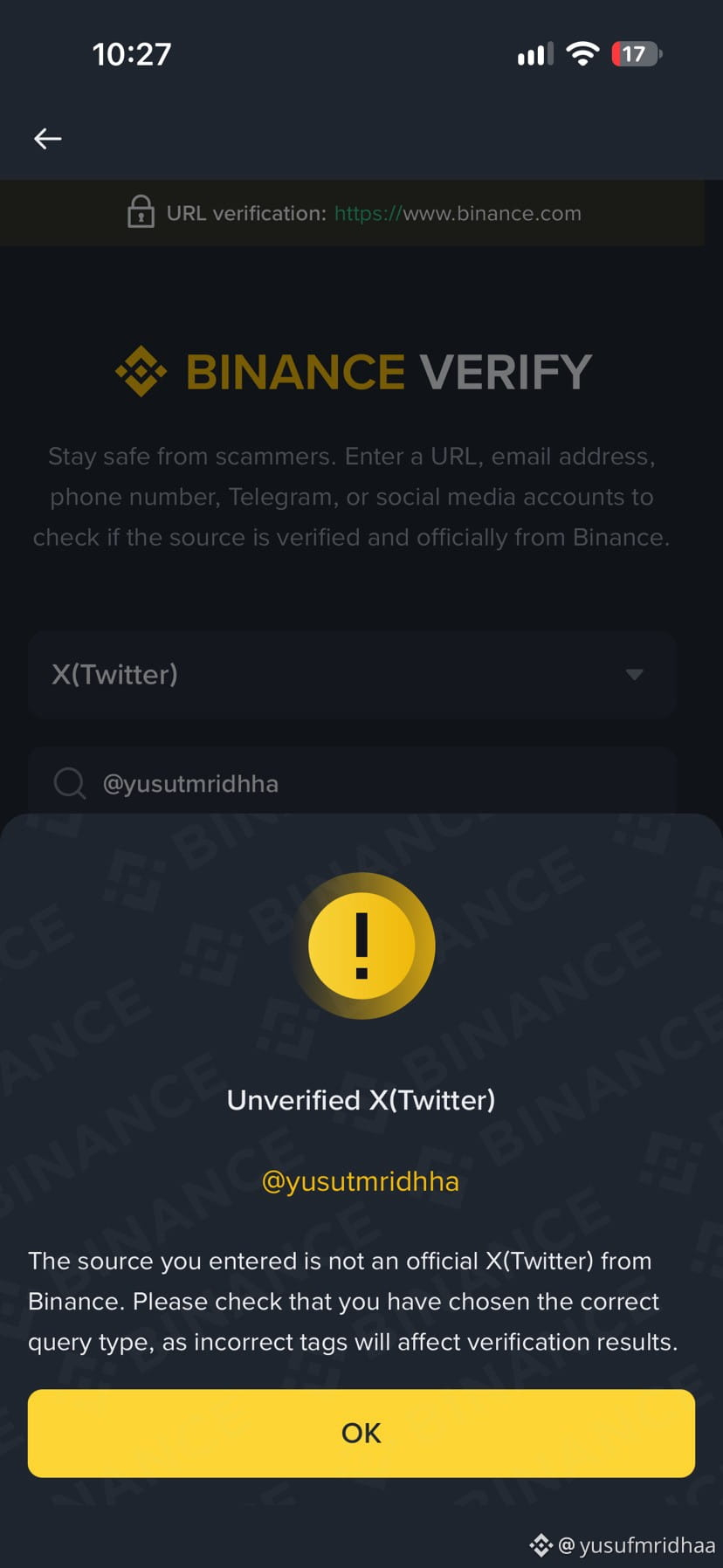
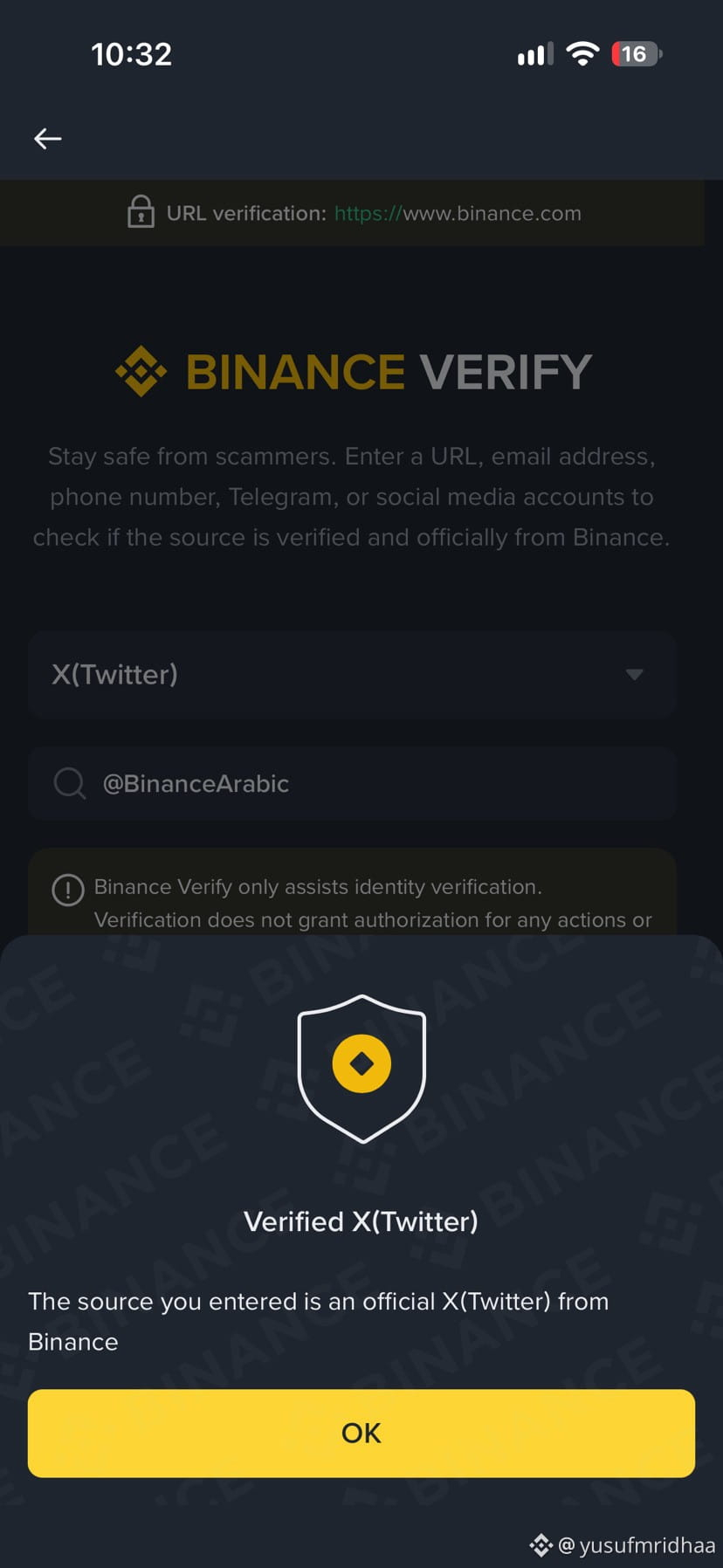
Before I click ANY link claiming to be Binance, I always check it on Binance Verify. If it's not verified, I don't trust it. Simple.
No profit is worth losing your funds. Stay SAFU, stay smart. 🔒
#ThankYouBinancians #Binance #SAFU @Binance Angels
1
104
#safu 🔐 My Top 5 Crypto Security Tips – Stay SAFU!
In the crypto world, protecting your assets is just as important as growing them. Here are my top 5 security tips everyone should follow:
1️⃣ Enable 2FA: Always use an authenticator app instead of relying only on SMS verification.
2️⃣ Never Share Your Seed Phrase: Your recovery phrase and private keys must remain 100% private. No legitimate support team will ever ask for them.
3️⃣ Beware of Phishing Scams: Always double-check website URLs and never click suspicious links or unknown attachments.
4️⃣ Use a Strong, Unique Password: Create a different password for every crypto-related account and enable anti-phishing codes where available.
5️⃣ Secure Your Withdrawals: Enable withdrawal address whitelisting and carefully verify every transaction before confirming it.
🛡️ Remember: In crypto, security is not optional. One careless click can cost you everything, but good security habits can protect your future.
Stay Alert. Stay Secure. Stay SAFU! 🔑
#SAFU #CryptoSecurity #Binance #CommunitySAFU #CryptoTips
1
94


·
--
Article
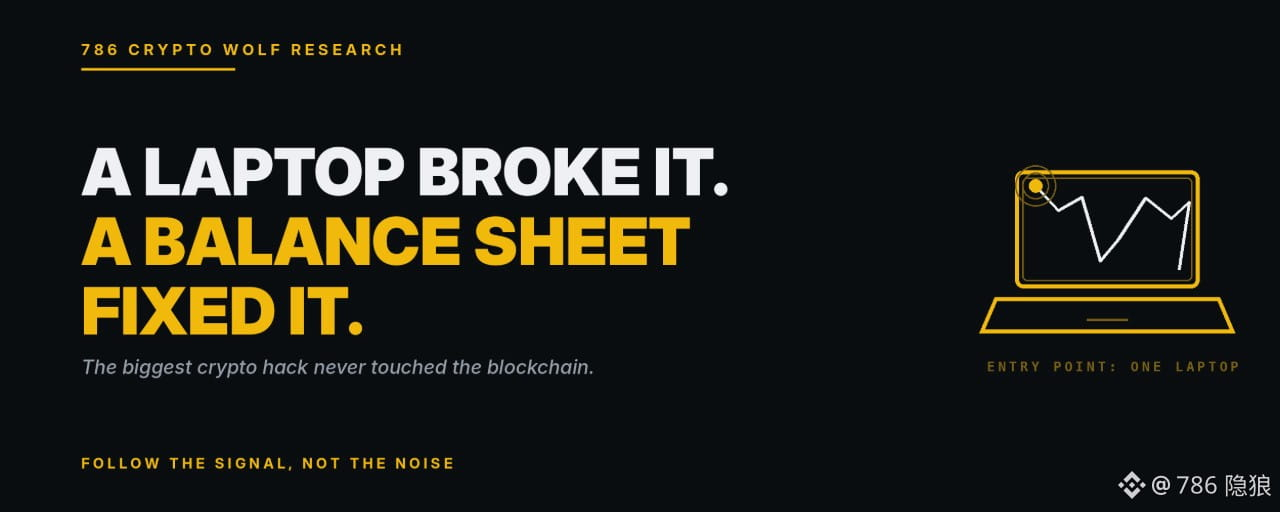
The Biggest Crypto Hack Had Nothing to Do With CryptoOn October 29, the largest crypto theft in history unfolded in about twenty minutes. Roughly $6.3 billion drained out of the world’s biggest exchange. Here’s the part almost no one is saying out loud: the blockchain had nothing to do with it. Not the break-in. Not the repair. Both happened somewhere else entirely.
How it broke. No smart contract was exploited. No cryptographic key was cracked. By Binance’s own account, the attackers didn’t steal private keys at all. They got in through a compromised engineer’s laptop — an internal machine — and used that foothold to push unauthorized withdrawals through the company’s own systems. The most secure idea in crypto, the unbreakable ledger, was never the target. The office was.
How it was repaired. Binance made every user whole — $6.3 billion, one-for-one. That deserves credit; most companies couldn’t. But look at where the money came from: its corporate treasury, its insurance, and its SAFU reserve. Not a protocol. Not a decentralized mechanism. A balance sheet. The recovery, like the attack, lived entirely in the old world.
The hidden dependency. Crypto’s promise is that math protects you — “not your keys, not your coins.” But on an exchange, they were never your keys. Your safety there doesn’t come from cryptography. It comes from one company’s IT hygiene on the way in, and one company’s checkbook on the way out. The chain is a spectator at its own biggest heist.
The human consequence. SAFU worked this time for one reason: Binance is rich enough to absorb a $6.3 billion hit without blinking. “Funds are SAFU” really means “funds are safe because we can afford to cover them.” That’s not decentralization. That’s a bank with a better logo — solvent enough to self-insure, and lucky the number wasn’t bigger.
The strategic fork. This single event is, at once, the strongest argument for self-custody and the strongest argument that centralized crypto is just fintech with extra steps. If you hold your own keys, a laptop in someone’s office can’t touch you. If you don’t, your coins are only as safe as the richest intermediary’s willingness to pay. The $6.3 billion didn’t prove crypto is unsafe — it proved the exchange model is a bank, insured by its own wealth.
The unanswered question. SAFU held because Binance could write the check. The next exchange that gets hit may not be able to. When the balance sheet is smaller than the hack, who makes users whole then? Binance is now rolling out zero-knowledge proofs so users can verify reserves themselves — a quiet admission that “trust us” was the real system all along.
That gap — between “the chain keeps you safe” and “a company’s checkbook keeps you safe” — is the thing worth staring at. The hack was off-chain. The fix was off-chain. Only the headline was about crypto.
786 Crypto Wolf Research — Follow the signal, not the noise.
#Binance #SAFU #CryptoSecurity #786CryptoWolf
The Biggest Crypto Hack Had Nothing to Do With Crypto
On October 29, the largest crypto theft in history unfolded in about twenty minutes. Roughly $6.3 billion drained out of the world’s biggest exchange. Here’s the part almost no one is saying out loud: the blockchain had nothing to do with it. Not the break-in. Not the repair. Both happened somewhere else entirely.
How it broke. No smart contract was exploited. No cryptographic key was cracked. By Binance’s own account, the attackers didn’t steal private keys at all. They got in through a compromised engineer’s laptop — an internal machine — and used that foothold to push unauthorized withdrawals through the company’s own systems. The most secure idea in crypto, the unbreakable ledger, was never the target. The office was.
How it was repaired. Binance made every user whole — $6.3 billion, one-for-one. That deserves credit; most companies couldn’t. But look at where the money came from: its corporate treasury, its insurance, and its SAFU reserve. Not a protocol. Not a decentralized mechanism. A balance sheet. The recovery, like the attack, lived entirely in the old world.
The hidden dependency. Crypto’s promise is that math protects you — “not your keys, not your coins.” But on an exchange, they were never your keys. Your safety there doesn’t come from cryptography. It comes from one company’s IT hygiene on the way in, and one company’s checkbook on the way out. The chain is a spectator at its own biggest heist.
The human consequence. SAFU worked this time for one reason: Binance is rich enough to absorb a $6.3 billion hit without blinking. “Funds are SAFU” really means “funds are safe because we can afford to cover them.” That’s not decentralization. That’s a bank with a better logo — solvent enough to self-insure, and lucky the number wasn’t bigger.
The strategic fork. This single event is, at once, the strongest argument for self-custody and the strongest argument that centralized crypto is just fintech with extra steps. If you hold your own keys, a laptop in someone’s office can’t touch you. If you don’t, your coins are only as safe as the richest intermediary’s willingness to pay. The $6.3 billion didn’t prove crypto is unsafe — it proved the exchange model is a bank, insured by its own wealth.
The unanswered question. SAFU held because Binance could write the check. The next exchange that gets hit may not be able to. When the balance sheet is smaller than the hack, who makes users whole then? Binance is now rolling out zero-knowledge proofs so users can verify reserves themselves — a quiet admission that “trust us” was the real system all along.
That gap — between “the chain keeps you safe” and “a company’s checkbook keeps you safe” — is the thing worth staring at. The hack was off-chain. The fix was off-chain. Only the headline was about crypto.
786 Crypto Wolf Research — Follow the signal, not the noise.
#Binance #SAFU #CryptoSecurity #786CryptoWolf
4
1k
·
--
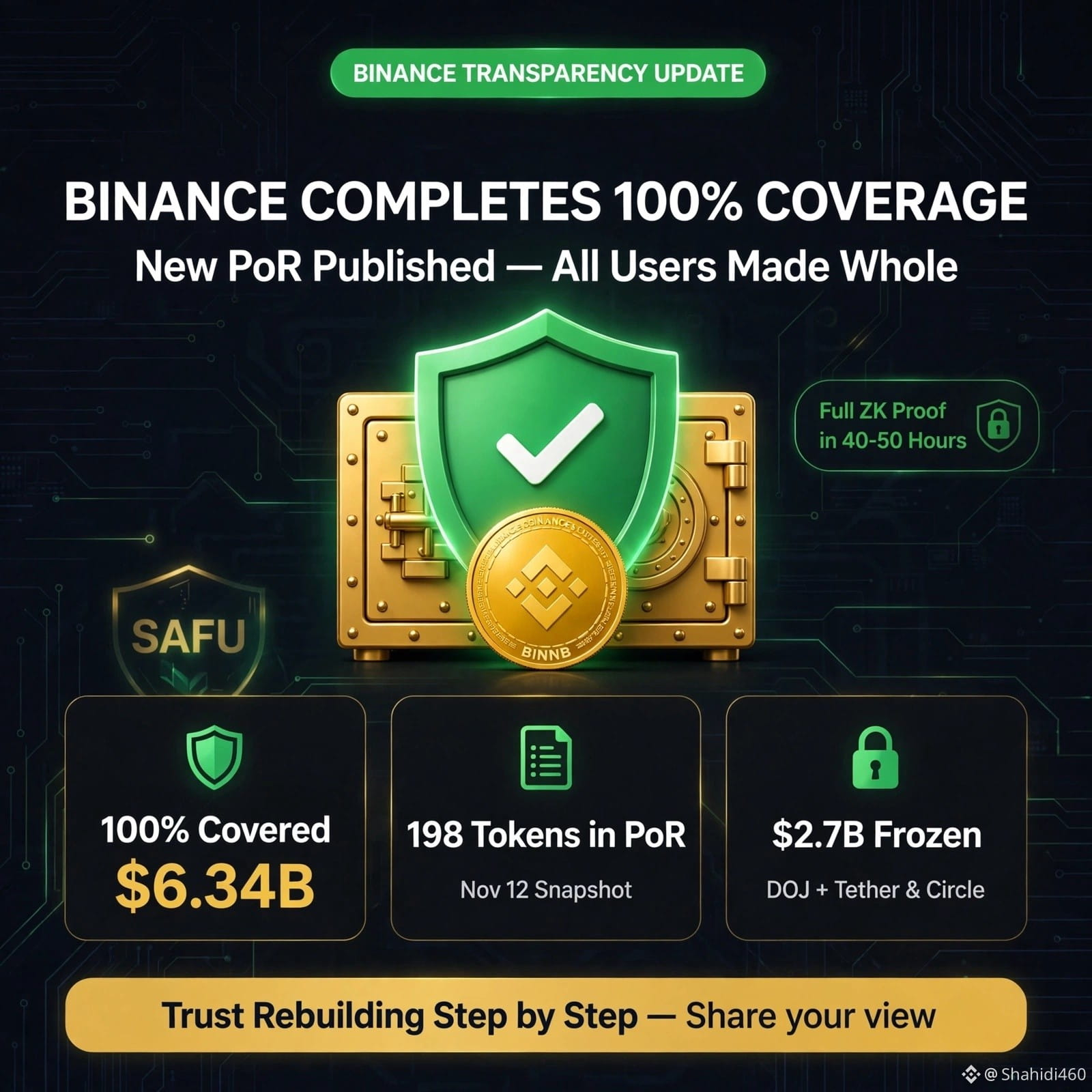
Binance Completes 100% Coverage
🛡️ Binance has fully covered ALL losses from the security incident
In a major transparency update, Binance confirmed it has completed coverage of 100% of affected assets. Over $6.34 billion was deployed from company funds, SAFU, and the Futures insurance fund to make users whole .
• New PoR Snapshot: Taken on Nov 12, now covers 198 tokens (up from 44) and is live on the Binance PoR website .
• Full ZK Proof: Expected in 40–50 hours — users can then independently verify 1:1 backing .
• $2.7B Frozen:** The U.S. DOJ and stablecoin issuers (Tether & Circle) have frozen **$2.7 billion tied to the hackers .
Withdrawals are reopening in phases. Binance is rebuilding trust step by step. 🚀
#Binance #SAFU #CryptoNews $BNB
{spot}(BNBUSDT)
Binance Completes 100% Coverage
🛡️ Binance has fully covered ALL losses from the security incident
In a major transparency update, Binance confirmed it has completed coverage of 100% of affected assets. Over $6.34 billion was deployed from company funds, SAFU, and the Futures insurance fund to make users whole .
• New PoR Snapshot: Taken on Nov 12, now covers 198 tokens (up from 44) and is live on the Binance PoR website .
• Full ZK Proof: Expected in 40–50 hours — users can then independently verify 1:1 backing .
• $2.7B Frozen:** The U.S. DOJ and stablecoin issuers (Tether & Circle) have frozen **$2.7 billion tied to the hackers .
Withdrawals are reopening in phases. Binance is rebuilding trust step by step. 🚀
#Binance #SAFU #CryptoNews $BNB
161
·
--
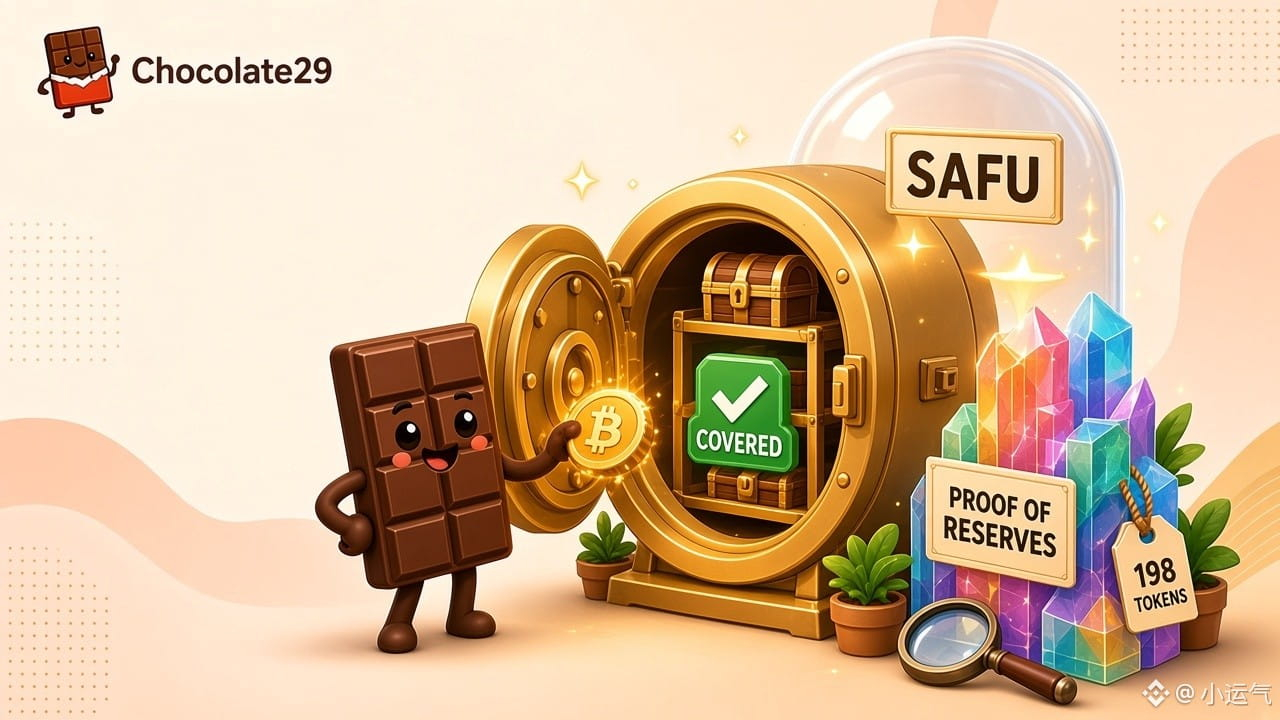
Binance says it has fully covered every asset hit in the October 29, 2026 security incident, and it backed that milestone with its widest reserve snapshot yet.
In a November 12, 2026 announcement, Binance said it committed more than $6.34 billion in company funds, buying affected tokens through market and OTC channels with support from part of SAFU, futures insurance funds above required levels and its corporate treasury. Coverage had stood at about 98% on November 4. Binance also pledged to restore SAFU to roughly $1 billion.
A new Proof of Reserves snapshot taken at 00:00 UTC on November 12 covers 198 tokens, up from 44 in the November 4 round. Once the zero-knowledge proof finishes in about 40 to 50 hours, holders can check minimum 1:1 backing themselves. Withdrawals keep reopening in phases. $BNB
#Binance #ProofOfReserves #SAFU
DYOR. Not financial advice.
114

🔐 My Top 5 Crypto Security Tips:
1. Always enable 2FA authentication.
2. Never share your passwords or OTP codes.
3. Use a strong and unique password.
4. Always double-check links before clicking.
5. Never share your wallet recovery phrase with anyone.
Stay alert, stay secure, and keep your crypto SAFU! 🔒
#Binance #safu #CryptoSecurity
109

·
--
从 90% 走到 98% 用了四天,从 98% 走到完成用了八天。恢复进度最慢的一段,永远在最后那一小截。
11月12日08:00(东八区),币安完成新一轮储备金证明快照,覆盖 198 种代币。此前 11月04日那一轮只覆盖 44 种,再往前一轮是 10 种。
先看钱。10月30日那起安全事件的官方估损约 63 亿美元,当时链上已冻结约 30 亿美元。而 10月31日公告写明,预留超过 63.4 亿美元的公司自有资金用于承担全部被盗损失。也就是说,冻结回来的那笔钱并没有被拿来顶账,回填走的全是 SAFU、合约保险基金中超出风险管理要求的部分以及公司自有资金。今天公告又补一句,SAFU 要回填到约 10 亿美元。
再看速度。10月31日回填 90%,11月04日 98%,11月12日完成。头一天把前十种主流币做到 100% 几乎没费什么事,卡住的是剩下那 2%。官方在 11月04日那期更新里自己解释过原因,剩余代币流动性低,要在市场和场外一点点凑。
最后看能验证的时间。快照拍在 11月12日08:00,完整的零知识证明预计还要 40 到 50 小时。持有本轮覆盖范围内任何一种代币的用户,要再过两天才能独立核对余额是否至少在 1:1 之上。
三个数字放在一起就清楚了。损失 63 亿,冻结 30 亿,回填投入 63.4 亿。公告把这三件事分开写,没有互相抵消。判断一份事故公告有没有分量,就看它敢不敢同时给出快照时点、覆盖种类和证明生成时间。这份给了。
#中本聪国际社区Baoluo币商资本 #币安推出BinanceIntelligence #SAFU
131


·
--
Verified
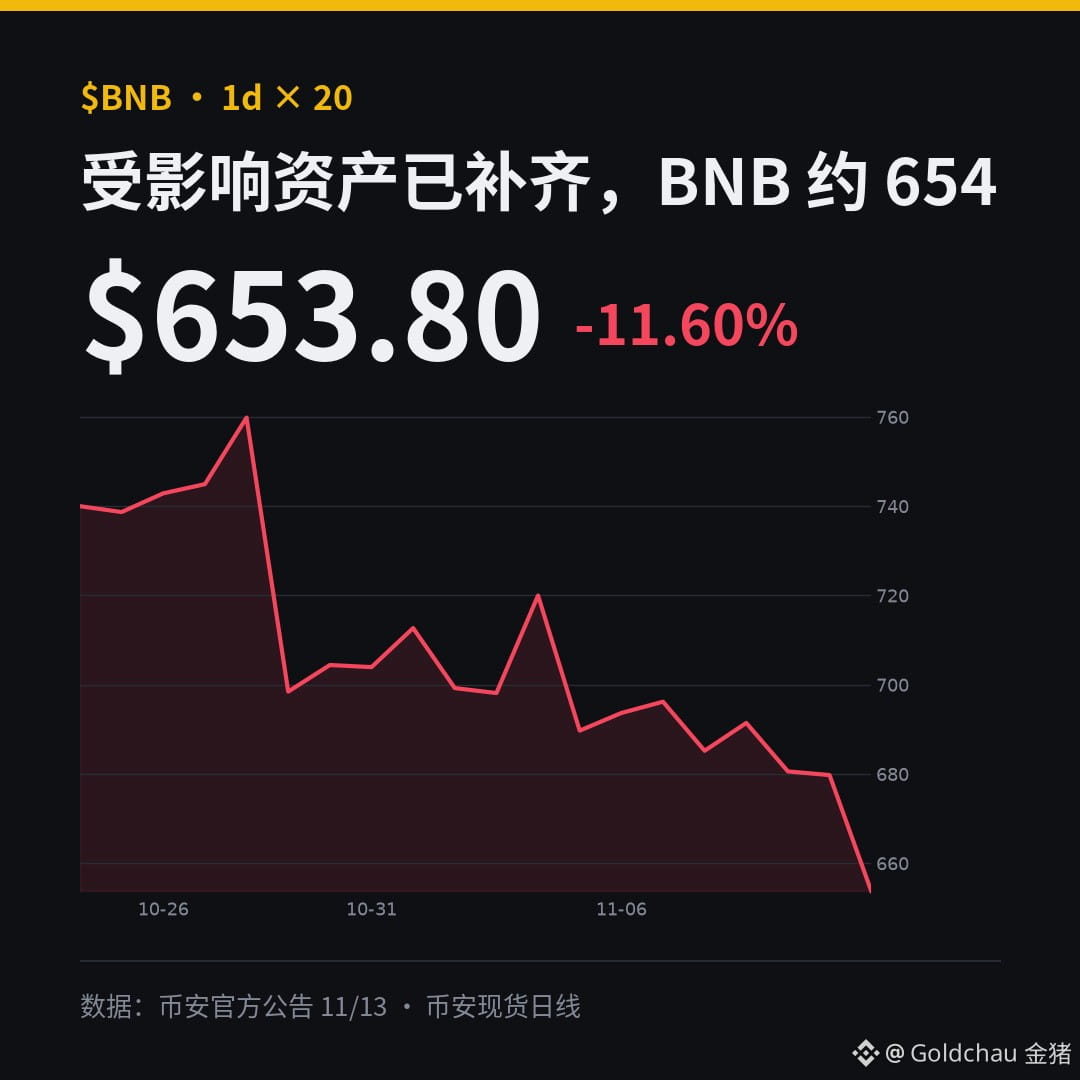
金猪判断:币安官方说这次安全事件的受影响资产已经全部补齐,我把它当成这件事的收尾信号,对 $BNB 偏多,但不在今天追。
先说事实:币安为这次事件拿出了超过 63.4 亿美元公司资金,来源是部分 SAFU、部分合约风险保障基金和公司自有资金,之后会把 SAFU 补回到约 10 亿美元。
能自己动手的一步:新的储备证明快照已经上线,覆盖 198 种代币;官方说完整的零知识证明还要大约 40 到 50 小时才算完,算完后持有受影响代币的人可以自己去验 1:1 足额。
还没完的一点:提现仍在分阶段恢复,官方说确认后会再更新。
我的位置:$BNB 现在约 654,刚扫到 650 一带。650 附近小仓分批,跌破 640 就走,站回 680 再加。
零知识证明出来之前,你会怎么核对自己放在交易所里的资产?
#币安 #储备证明 #BNB #SAFU
来源:币安官方公告(2026-11-13)、币安现货行情。DYOR,不构成投资建议。
2
756

🔐 My Top 5 Crypto Security Tips:
Enable 2FA: Always use an authenticator app instead of relying only on SMS verification.Use a Hardware Wallet: Keep long-term crypto holdings in a secure hardware wallet.Never Share Your Seed Phrase: No legitimate support team will ever ask for your private keys or recovery phrase.Beware of Phishing Scams: Always double-check website URLs and links before connecting your wallet.Use Strong, Unique Passwords: Never reuse passwords across crypto exchanges and enable all available security features.
💡 Remember: In crypto, security is not optional. Protect your keys, protect your assets, and always DYOR!
Binance UID: 1289748404
#SAFU #CryptoSecurity #Binance #CryptoTips #Web3
1
72

·
--
Here are my Top 5 Crypto Security Tips to stay #safu :
1) Use 2FA: Always enable Two-Factor Authentication (preferably via an authenticator app) for an extra layer of account protection.
2) Diversify your storage: Spread your assets across different wallets and exchanges.
3) Keep keys and passwords offline: Never store your private keys, seed phrases, or passwords online or in cloud storage.
4) Use anti-phishing codes: Always double-check your anti-phishing code on every email and SMS to confirm it is really from the official platform.
5) Skip the links: Never click links in emails or messages. Always type the official web address directly into your browser.
Stay safe!
Spanish version
Comparto mis 5 tips para #safu :
1) Usar 2FA: Siempre tenerlo habilitado.
2) Diversificar el almacenamiento: Dejá tus cryptos repartidas entre distintas billeteras y exchanges.
3) Nunca dejar las claves privadas o contraseñas online: Guardá tus claves privadas, frases semilla o contraseñas offline, en papel o algún otro método más seguro.
4) Usar el código anti-phishing: Verificá siempre el código anti-phishing en cada correo electrónico o SMS para confirmar que es una comunicación genuina.
5) Evitar hacer click en enlaces: No hagas clic en enlaces incluidos en correos electrónicos o mensajes. Escribí siempre la dirección web oficial directamente en tu navegador.
Espero les sirvan.
1
79

·
--
币安已补齐安全事件中受影响的用户资产,新一轮储备金证明也已发布
11月13日00:54(东八区),币安发布公告:此前安全事件中受影响的资产已全部完成资金回填,同时公布了新一轮储备金证明(PoR)快照。
公告提到,事件发生后,币安承诺拿出超过63.4亿美元的公司资金弥补损失,并通过市场和场外渠道买回受影响的代币。资金来自部分用户资产安全基金(SAFU)、合约保险基金中超出风险管理要求的部分,以及币安自有资金。币安还表示,会把SAFU基金补回到约10亿美元,继续作为用户的应急保护储备。
这次储备金快照完成于11月12日08:00(东八区),覆盖198种代币,用户可以在储备金证明页面查看。完整的零知识证明预计在40至50小时后生成,到时持有受影响代币的用户可以自己验证资产是否获得至少1:1的储备支持。提现服务也会继续分阶段恢复。
公告发出后,CZ在11月13日02:19发帖回应:“100% 1:1 backing. Funds are SAFU!”
从补齐资产到公开可自行验证的储备快照,对用户来说最实在的一点是:自己的钱有没有足额备着,可以亲手查。
#币安 #储备金证明 #SAFU 不构成投资建议

31
Log in to explore more content
Join global crypto users on Binance Square
⚡️ Get latest and useful information about crypto.
💬 Trusted by the world’s largest crypto exchange.
👍 Discover real insights from verified creators.
Email / Phone number
Trending Topics
1
#CorePCEBeatLiftsFedHikeOdds
98,663 views
922 Discussing
2
#BitcoinAndStocksSlipAgainAmidTrump’sTariffPlans
168,876 views
1,817 Discussing
3
#JensenHuangSaysNvidiaDoesn’tNeedASuccessionPlan
83,235 views
1,092 Discussing
4
#NasdaqFuturesSlideMoreThan3%
24,334 views
267 Discussing
5
#USOctoberPCEPriceIndexAt0.3%MoM
30,198 views
293 Discussing
6
#BitcoinETFsPostRecord$4.94BNovemberOutflows
2,561 views
35 Discussing
7
#TetherInvestsInArgentinasLemon
11,015 views
149 Discussing
8
#AnthropicBreaksBelowIPOPriceAmidAISlump
220,135 views
1,729 Discussing
9
#SouthKoreaProposesCryptoExchangeStaffUseOwnPlatform
1,192 views
29 Discussing
10
#UkraineParliamentPassesVirtualAssetLegalizationBill
9,789 views
32 Discussing