
#riskmanagement
riskmanagement
18.1M views
72,779 Discussing
Hot
Latest


$TIA: Why Logging Unverified Assumptions Improves Decision Quality
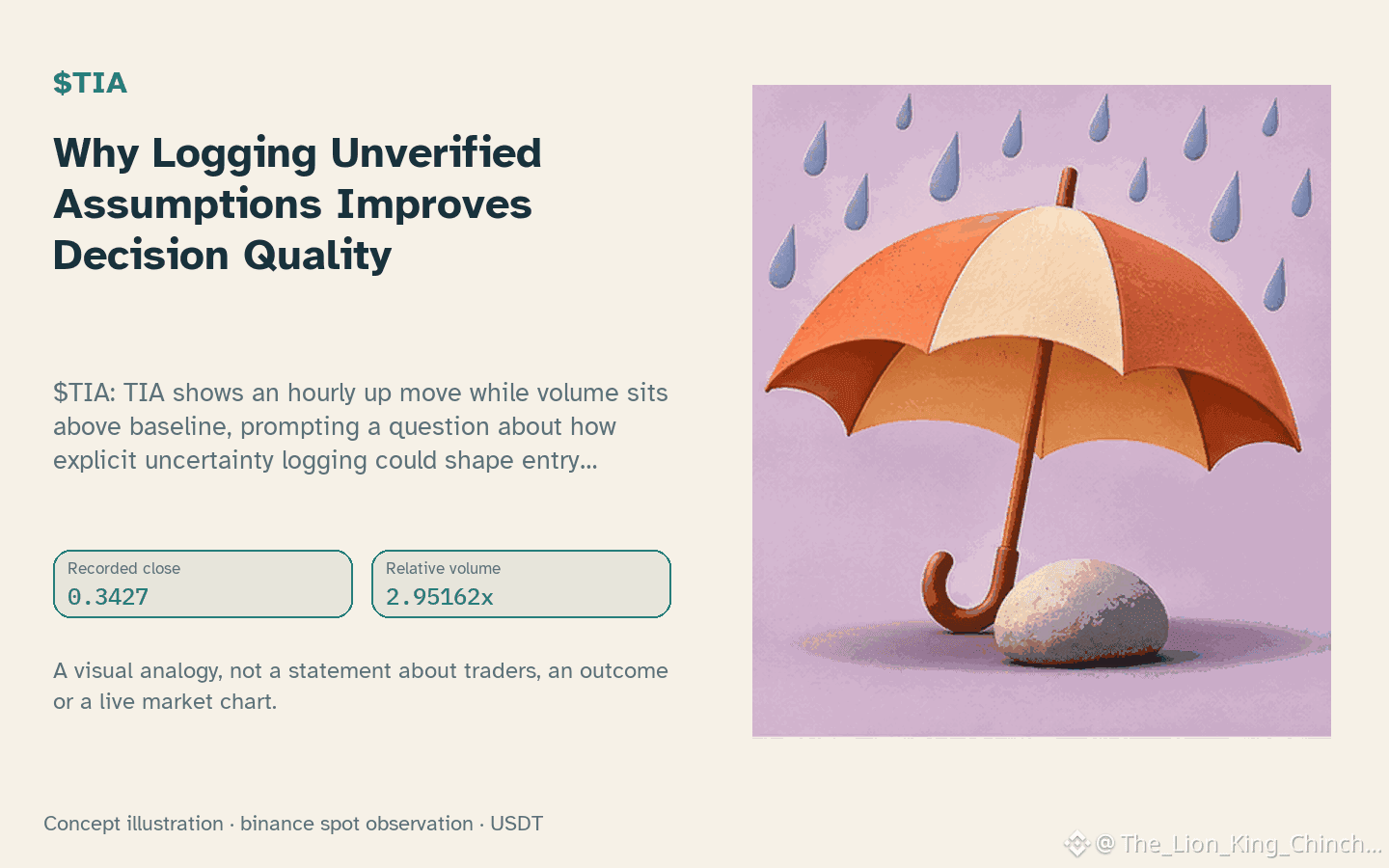
$TIA: TIA shows an hourly up move while volume sits above baseline, prompting a question about how explicit uncertainty logging could shape entry choices. The tempting shortcut is to jump on the momentum, assuming the rise will continue because the candle is positive. A more careful interpretation treats the observation as a hypothesis: the price may keep climbing, but the underlying drivers are unverified.
Consider a thought experiment where a trader records a simple note: “price up hourly, volume 2.95x baseline, RSI 52.1 – uncertain if demand is genuine.” This log creates a checkpoint for later validation. If the next hourly candle reverses or the RSI drops, the note signals that the original assumption was likely false, prompting an exit or tighter stop. The trade‑off emerges between entry quality and chasing. Acting immediately may capture a quick gain but risks entering on incomplete information; waiting to log uncertainty adds a delay but improves the signal’s robustness.
A useful next observation would be the hourly change 0.322014% combined with a shift in RSI. If the change turns negative while RSI moves toward oversold, the logged assumption weakens, suggesting the initial entry was premature. This self‑check framework highlights how documenting unknowns can turn a vague bias into a measurable risk filter without relying on additional indicators.
Probabilistic market research, not a recommendation or guaranteed return.
Follow the plan or reassess its assumptions?
#TIA #RiskManagement #CryptoLearning
$TIA : Why Logging Unverified Assumptions Improves Decision Quality
$TIA : TIA shows an hourly up move while volume sits above baseline, prompting a question about how explicit uncertainty logging could shape entry choices. The tempting shortcut is to jump on the momentum, assuming the rise will continue because the candle is positive. A more careful interpretation treats the observation as a hypothesis: the price may keep climbing, but the underlying drivers are unverified.
Consider a thought experiment where a trader records a simple note: “price up hourly, volume 2.95x baseline, RSI 52.1 – uncertain if demand is genuine.” This log creates a checkpoint for later validation. If the next hourly candle reverses or the RSI drops, the note signals that the original assumption was likely false, prompting an exit or tighter stop. The trade‑off emerges between entry quality and chasing. Acting immediately may capture a quick gain but risks entering on incomplete information; waiting to log uncertainty adds a delay but improves the signal’s robustness.
A useful next observation would be the hourly change 0.322014% combined with a shift in RSI. If the change turns negative while RSI moves toward oversold, the logged assumption weakens, suggesting the initial entry was premature. This self‑check framework highlights how documenting unknowns can turn a vague bias into a measurable risk filter without relying on additional indicators.
Probabilistic market research, not a recommendation or guaranteed return.
Follow the plan or reassess its assumptions?
#TIA #RiskManagement #CryptoLearning
12

The biggest corporate Bitcoin bull on earth is sitting on roughly $14.6 billion in unrealized losses right now, yet retail still treats whale accumulation as an automatic green light.
It is way too easy to FOMO into $BTC at local tops just because a public company bought, only to panic when the position bleeds for months. Blindly copying treasury moves without understanding how they manage downside risk is one of the fastest ways to blow up an account.
Let us look at the actual numbers on Strategy. As of November 22, they hold 851,305 coins bought for an aggregate $64.23B, which puts their average purchase price right around $75,446. With the market hovering near $58,300, that stash is currently worth about $49.6B. That is an enormous paper loss, the kind that immediately wipes out anyone trading on margin or mismanaging spot entries.
The real lesson here comes down to balance sheet mechanics. Saylor can float a $10 million long-term target and talk about scooping up the remaining 900,000 unmined coins because he funds those purchases with convertible debt and equity offerings, not personal savings. While everyday traders rotate between $ETH and $USDT trying to dodge liquidation wicks, institutions are structured to absorb brutal drawdowns without ever being forced to sell at the bottom.
Where do you think the breaking point actually is for these corporate holders if the market stays suppressed?
#Bitcoin #CryptoStrategy #RiskManagement

1

·
--
Everyone thinks following corporate whales into crypto is a guaranteed path to wealth, but actually copying institutional balance sheets is one of the quickest ways to blow up your account.
Most retail traders FOMO into positions at market tops because they see public figures buying, only to panic sell when their portfolio is deep in the red. The average investor cannot afford to sit on devastating unrealized losses while waiting years for a cycle turnaround.
Consider Strategy's current position. As of late November, the company holds 851,305 $BTC purchased at an average cost of $75,446, putting their total investment at $64.23 billion. With the current market price hovering around $58,300, that treasury is valued at roughly $49.6 billion, which means they are sitting on an unrealized deficit of nearly fifteen billion dollars.
Think of this dynamic like an ocean liner weathering a storm versus a small rowboat. Michael Saylor can talk about absorbing the remaining 900,000 unmined coins and aiming for a ten-million-dollar valuation because he operates with convertible debt and long corporate runways. When market corrections sweep across $BTC and major assets like $ETH, retail traders who overleverage in sympathy end up liquidated long before the recovery arrives.
Where do you think this balance sheet strategy goes from here?
#Bitcoin #CryptoInvesting #RiskManagement
Everyone thinks following corporate whales into crypto is a guaranteed path to wealth, but actually copying institutional balance sheets is one of the quickest ways to blow up your account.
Most retail traders FOMO into positions at market tops because they see public figures buying, only to panic sell when their portfolio is deep in the red. The average investor cannot afford to sit on devastating unrealized losses while waiting years for a cycle turnaround.
Consider Strategy's current position. As of late November, the company holds 851,305 $BTC purchased at an average cost of $75,446, putting their total investment at $64.23 billion. With the current market price hovering around $58,300, that treasury is valued at roughly $49.6 billion, which means they are sitting on an unrealized deficit of nearly fifteen billion dollars.
Think of this dynamic like an ocean liner weathering a storm versus a small rowboat. Michael Saylor can talk about absorbing the remaining 900,000 unmined coins and aiming for a ten-million-dollar valuation because he operates with convertible debt and long corporate runways. When market corrections sweep across $BTC and major assets like $ETH , retail traders who overleverage in sympathy end up liquidated long before the recovery arrives.
Where do you think this balance sheet strategy goes from here?
#Bitcoin #CryptoInvesting #RiskManagement

·
--
Everyone thinks copying institutional whales like Michael Saylor is a foolproof path to riches, but actually, treating corporate balance sheets as your personal trading signal is an easy way to get crushed.
Too many traders FOMO into high entries whenever an executive floats a wild ten million dollar target, only to panic and sell at the bottom when the inevitable pullback hits. Watching your portfolio bleed while waiting for an imaginary supercycle causes real financial damage.
There are two critical realities every investor needs to understand about this situation. First, look at the sheer scale of the drawdown. Strategy has stated plans to buy the remaining 900,000 $BTC yet to be mined, but their current position is facing serious pressure. Holding 851,305 coins bought for an aggregate $64.23 billion puts their average entry at $75,446 per coin. With $BTC hovering around $58,300, that stash is worth roughly $49.6 billion, meaning they are sitting nearly fifteen billion dollars underwater on paper.
Second, understand the difference in runway. A multibillion-dollar company can issue convertible notes and wait out a multi-year winter, but an individual rotating their hard-earned $USDT or $ETH into market dips still has rent to pay and real liquidity needs. Think of it like trying to match bets at a poker table against someone who owns the casino; they can survive being down millions on any given hand, but you get wiped out the moment your personal stack runs dry.
How do you protect your own downside when the biggest players in the market are comfortable sitting on billions in losses?
#Bitcoin #CryptoInvesting #RiskManagement


·
--
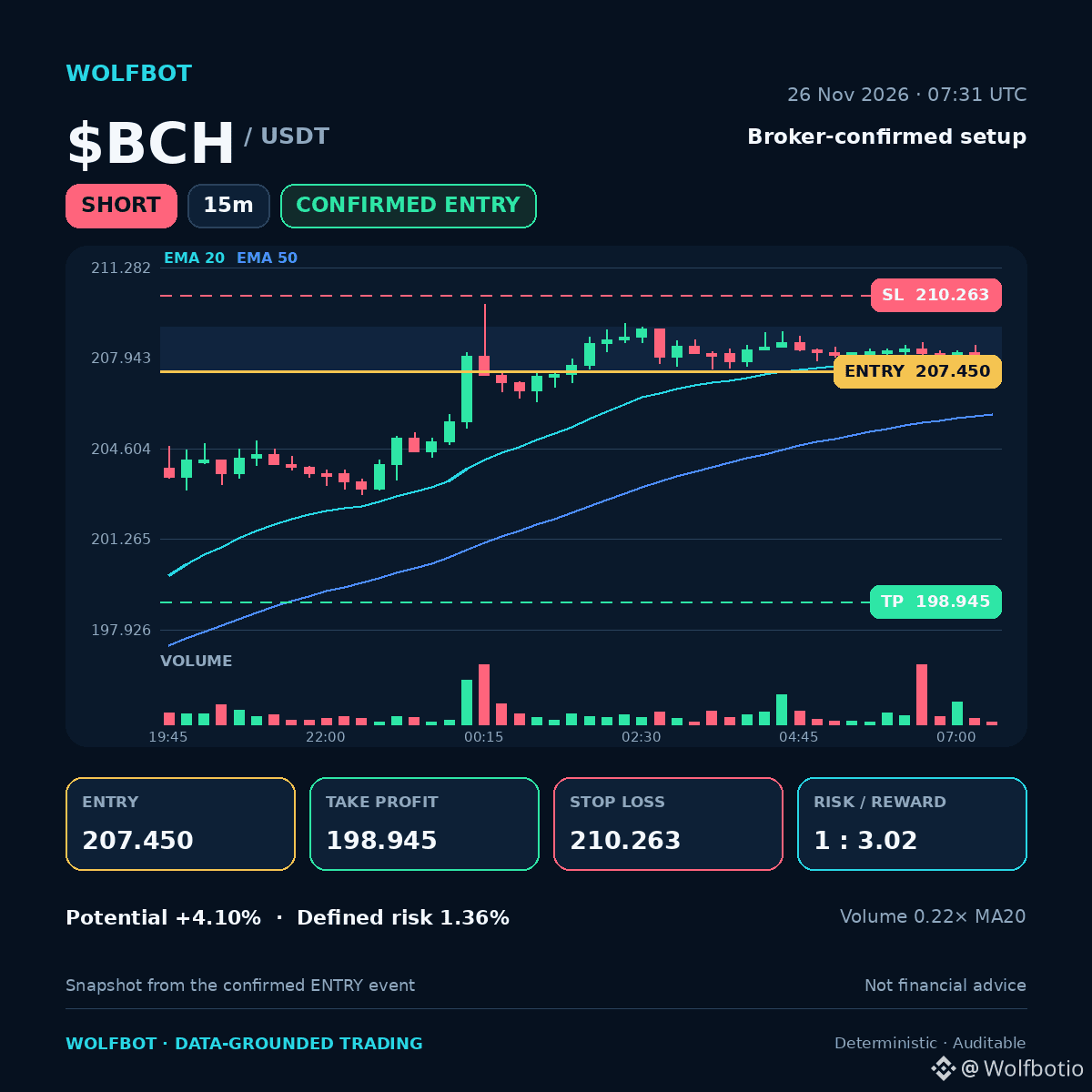
🔴 $BCH SHORT setup · 15m
Short-term range broken. ADX confirms a real trend is forming.
📍 Entry 207.450
🎯 TP 198.945 (+4.10%)
🛑 SL 210.263 (-1.36%)
⚖️ Risk / Reward 1 : 3.02
Why it triggered
✅ Rule triggers met: Breakdown M5, ADX downtrend
✅ Price broke down through its recent short-term range
✅ ADX 27.3: a real trend is in play, not just noise
✅ Market regime: low vol trending
The breakdown below the recent consolidation, coupled with the ADX reading, signals directional conviction. We are seeing a low-volatility trend establish itself.
👀 Watch: A decisive move lower confirms the setup.
WolfBot trade journal: defined risk, not financial advice.
#TradingSetup #RiskManagement
7
$ETH: ETH: Setting Intent Before the Session
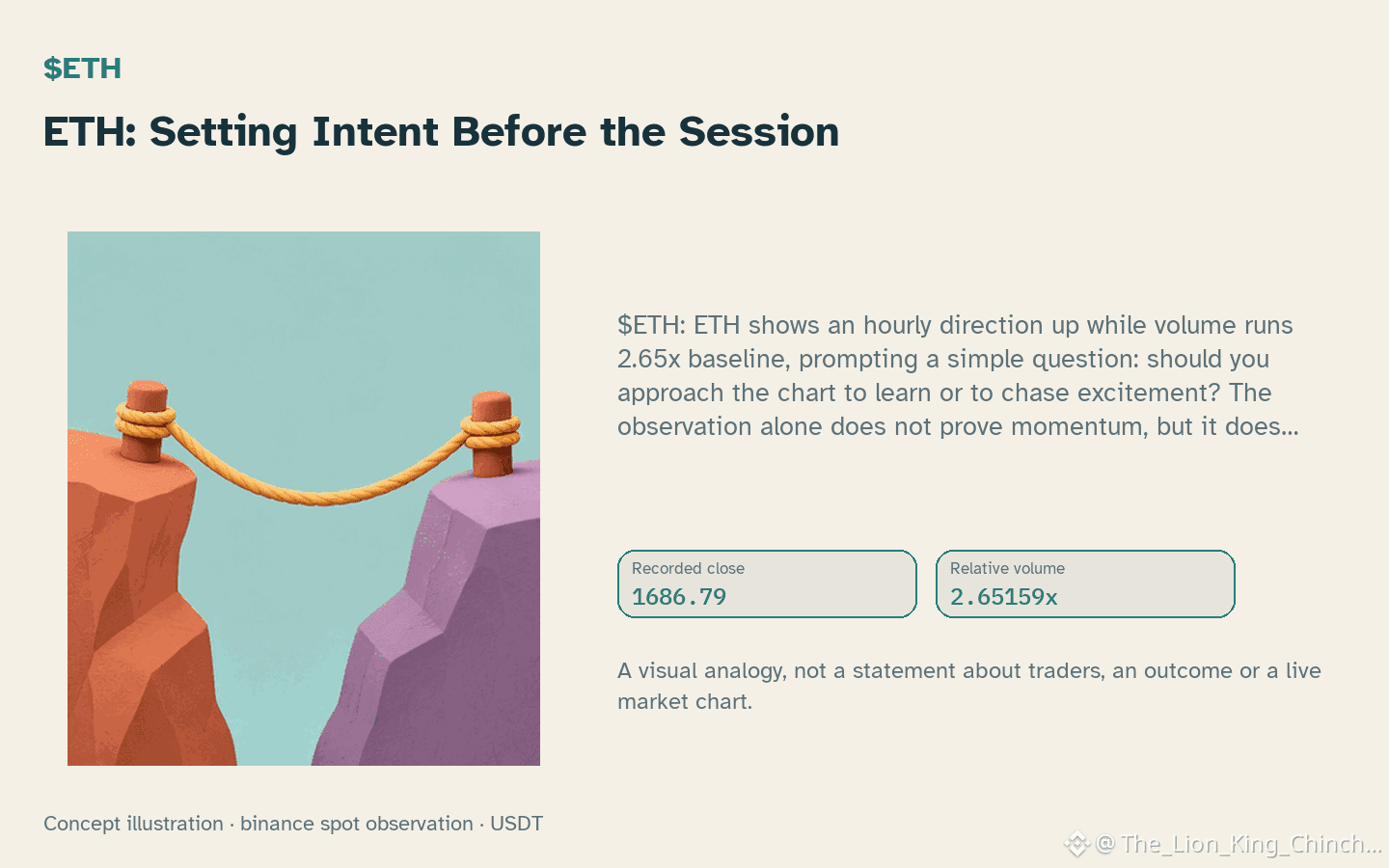
$ETH: ETH shows an hourly direction up while volume runs 2.65x baseline, prompting a simple question: should you approach the chart to learn or to chase excitement? The observation alone does not prove momentum, but it does create a tension between entry quality and the urge to ride the apparent rise.
Imagine a trader who decides to enter only after the price touches a clear support level, even though the recent candle sits near the upper edge of the range. This disciplined entry improves the risk‑reward profile, yet it may miss the first few ticks of the move. Conversely, a trader who jumps in as soon as the upward direction appears captures early profit potential but risks a wider stop because the entry may sit close to a volatile swing point.
A practical self‑check can help resolve the dilemma. Before placing a trade, note the current RSI 39.3 and ask: if the next hourly candle closes below the recent low, would my stop distance still be acceptable? If the answer is no, the intention to learn outweighs the impulse to chase. Should the candle instead close higher, the original hypothesis gains support and the trader may consider a more aggressive entry.
The interpretation weakens if a subsequent hourly close reverses direction and volume retreats to baseline, signalling that the earlier upward bias was short‑lived. In that case, revisiting the initial intention and opting for a stricter entry rule becomes prudent. 😊
Probabilistic market research, not a recommendation or guaranteed return.
#ETH #RiskManagement #CryptoLearning
$ETH : ETH: Setting Intent Before the Session
$ETH : ETH shows an hourly direction up while volume runs 2.65x baseline, prompting a simple question: should you approach the chart to learn or to chase excitement? The observation alone does not prove momentum, but it does create a tension between entry quality and the urge to ride the apparent rise.
Imagine a trader who decides to enter only after the price touches a clear support level, even though the recent candle sits near the upper edge of the range. This disciplined entry improves the risk‑reward profile, yet it may miss the first few ticks of the move. Conversely, a trader who jumps in as soon as the upward direction appears captures early profit potential but risks a wider stop because the entry may sit close to a volatile swing point.
A practical self‑check can help resolve the dilemma. Before placing a trade, note the current RSI 39.3 and ask: if the next hourly candle closes below the recent low, would my stop distance still be acceptable? If the answer is no, the intention to learn outweighs the impulse to chase. Should the candle instead close higher, the original hypothesis gains support and the trader may consider a more aggressive entry.
The interpretation weakens if a subsequent hourly close reverses direction and volume retreats to baseline, signalling that the earlier upward bias was short‑lived. In that case, revisiting the initial intention and opting for a stricter entry rule becomes prudent. 😊
Probabilistic market research, not a recommendation or guaranteed return.
#ETH #RiskManagement #CryptoLearning
114

·
--
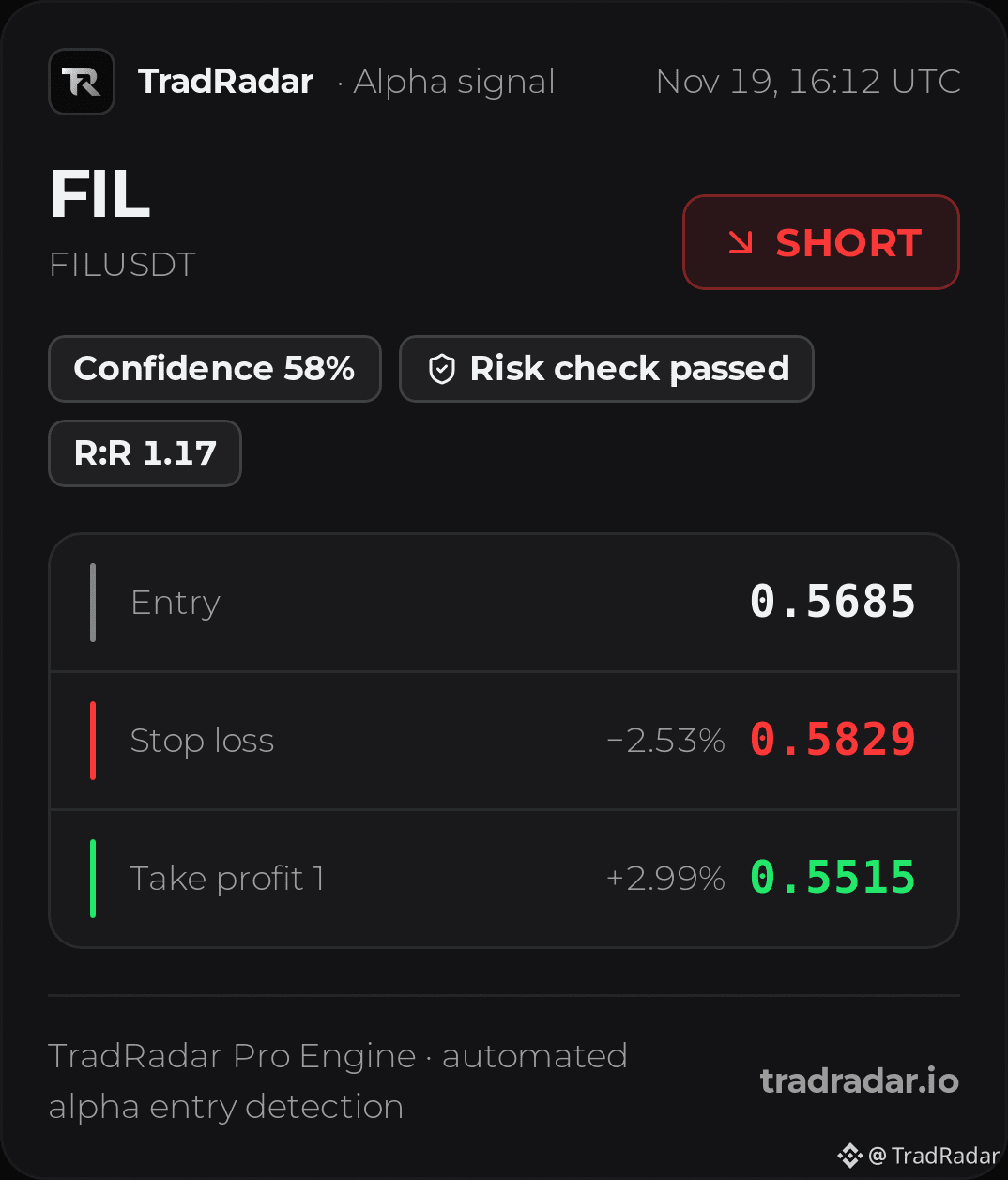
🎯 A trade plan starts with an exit
Entry, stop and target are set before the position opens. Pro subscribers get all three for each trade we show. After that the trade ends one of three ways: target, stop, or a manual / time close.
Plan first, result second.
#Trading #RiskManagement
🎯 A trade plan starts with an exit
Entry, stop and target are set before the position opens. Pro subscribers get all three for each trade we show. After that the trade ends one of three ways: target, stop, or a manual / time close.
Plan first, result second.
#Trading #RiskManagement
Entry, stop and target are set before the position opens. Pro subscribers get all three for each trade we show. After that the trade ends one of three ways: target, stop, or a manual / time close.
Plan first, result second.
#Trading #RiskManagement
47
·
--
Here's what happened when a finance team treated a $BTC treasury like any other corporate asset and ignored the on-chain details that actually drive the numbers.
Most investors never see those processes until the damage is done. They buy in, then get hit with sudden dumps or frozen liquidity because the project's books never matched the reality of virtual assets.
After 7 years in $BTC fintech I spent more time inside those finance teams than looking at the headlines they publish. You start noticing how much the daily routines depend on the business itself. Crypto has its own small details that become completely normal once you live with them. Token vesting, gas, staking yields, and on-chain transfers all need their own workflows or the reported figures quietly drift from the truth.
The danger shows up when teams treat $ETH holdings or $USDT reserves like regular cash. One unrecorded movement or missed cliff and the financials no longer reflect what's actually sitting on-chain. Audits fail, counterparties pull back, and holders discover the gap only after the price has already moved.
What's the biggest finance process mismatch you've seen in a crypto project?
#Bitcoin #CryptoFinance #RiskManagement


·
--
Risk management is not optional, it's essential.
Protect your capital first, profits come second.
Never risk more than you can afford to lose.
Position sizing is key.
Even the best traders have losing streaks.
Survive to trade another day.
#RiskManagement #TradingTips
Risk management is not optional, it's essential.
Protect your capital first, profits come second.
Never risk more than you can afford to lose.
Position sizing is key.
Even the best traders have losing streaks.
Survive to trade another day.
#RiskManagement #TradingTips
Protect your capital first, profits come second.
Never risk more than you can afford to lose.
Position sizing is key.
Even the best traders have losing streaks.
Survive to trade another day.
#RiskManagement #TradingTips
38

·
--
Bullish
DISCIPLINE > HYPE
Plan • Levels • Patience
{spot}(SOLUSDT)
{alpha}(10x72e4f9f808c49a2a61de9c5896298920dc4eeea9)
Discipline and risk management always outperform hype in crypto. 📊📉📈
Focus on clear structure, key support and resistance levels, volume confirmation, and a plan you can actually execute without rushing into entries. Patience and consistency win over time. 💎🙌
Which pair are you watching closely today—BTC, SOL, or another setup on Binance? Drop it below! 👇 (NFA / DYOR)$SOL $BITCOIN
#Binance #bitcoin #solana #TradingMistakes101 #RiskManagement #cryptotrading
DISCIPLINE > HYPE
Plan • Levels • Patience
Discipline and risk management always outperform hype in crypto. 📊📉📈
Focus on clear structure, key support and resistance levels, volume confirmation, and a plan you can actually execute without rushing into entries. Patience and consistency win over time. 💎🙌
Which pair are you watching closely today—BTC, SOL, or another setup on Binance? Drop it below! 👇 (NFA / DYOR)$SOL $BITCOIN
#Binance #bitcoin #solana #TradingMistakes101 #RiskManagement #cryptotrading
95
Even the most trusted safe haven in history can quietly wipe out a trader who assumes safety means zero downside.
A lot of folks rotate their capital into hard hedges to escape volatility, only to get caught in severe drawdowns they never accounted for in their risk models.
Look at what just unfolded on the charts. Gold slipped right through the $3,500 level earlier, tapping a daily low around $3,427 before stabilizing slightly above $3.5k. That still leaves it down roughly 37% from its record high. It is a textbook reminder that when systemic liquidity tightens, institutional desks dump hedges alongside speculative plays just to cover margin, dragging tokenized alternatives like $PAXG down with the tide.
We see this trap play out constantly across markets. Investors rush out of high-beta assets expecting $BTC or commodity hedges to act as an impenetrable shield, forgetting that true market corrections do not care about defensive narratives. Stepping in to catch what looks like an easy discount often just ties up your capital while downside momentum grinds deeper.
Do you still trust defensive hedges during macro stress, or do you prefer holding pure cash until the dust settles?
#RiskManagement #CryptoTrading #MarketAnalysis

30

Risk Management: The Real Secret of Trading
This week Bitcoin dropped to $57,500 and is now back near $60,600. Traders with no risk plan lost twice — once on the fall, then again chasing the bounce. The ones who survived were not smarter. They were better protected.
Here is the one point most beginners get wrong: they risk the same dollars on every trade, no matter where the stop-loss sits. A $50 risk with a tight stop is a small position. The same $50 with a wide stop is a much bigger position — and a much bigger loss when it goes wrong. Size your position from your stop-loss distance, not from a fixed dollar amount. Decide the stop first, then work out how much you can buy. That is how one bad trade stays a small lesson instead of the trade that ends your week.
✅ Do: decide your stop-loss BEFORE you enter — and respect it
✅ Do: risk only 1-2% of your account per trade, so even ten losses in a row still leave you standing
✅ Do: size your position from your stop-loss distance — tight stop, bigger size; wide stop, smaller size
❌ Don't: use the same position size on every trade regardless of the stop
❌ Don't: move your stop-loss further away because you "feel" it will come back
Success does not come in one day. It comes from discipline, patience, risk management and learning every day.
Education Only — Not Financial Advice (NFA). Trading involves risk.
Follow Profit Direction for more signals, best signals and market updates. Like this post and share your opinion in the comments.
When you take a trade, do you decide your stop-loss first — or your position size first? Tell us in the comments.
#TradingTips #CryptoTrading #Bitcoin #RiskManagement #ProfitDirection

64

Emotions kill portfolios. My position size for $BTC comes strictly from my stop-loss and risk limit, never gut feeling. Proper risk maths keeps you alive through any drawdown. How do you calculate your size? #CryptoTrading #RiskManagement #BinanceSquare #TradingTips
Emotions kill portfolios. My position size for $BTC comes strictly from my stop-loss and risk limit, never gut feeling. Proper risk maths keeps you alive through any drawdown. How do you calculate your size? #CryptoTrading #RiskManagement #BinanceSquare #TradingTips

·
--
Bullish
Smart trading isn't about guessing the top—it's about protecting your capital first! 📈🛡️
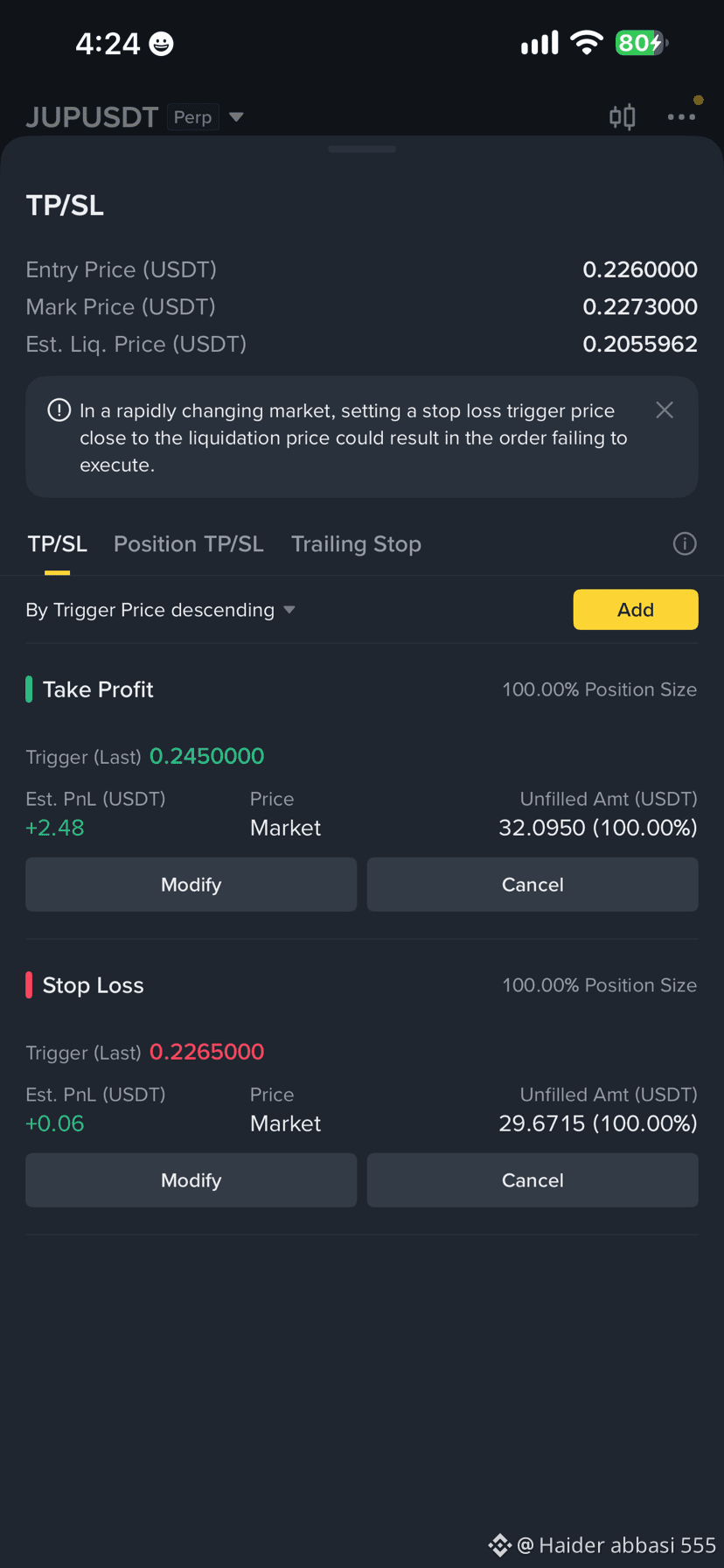
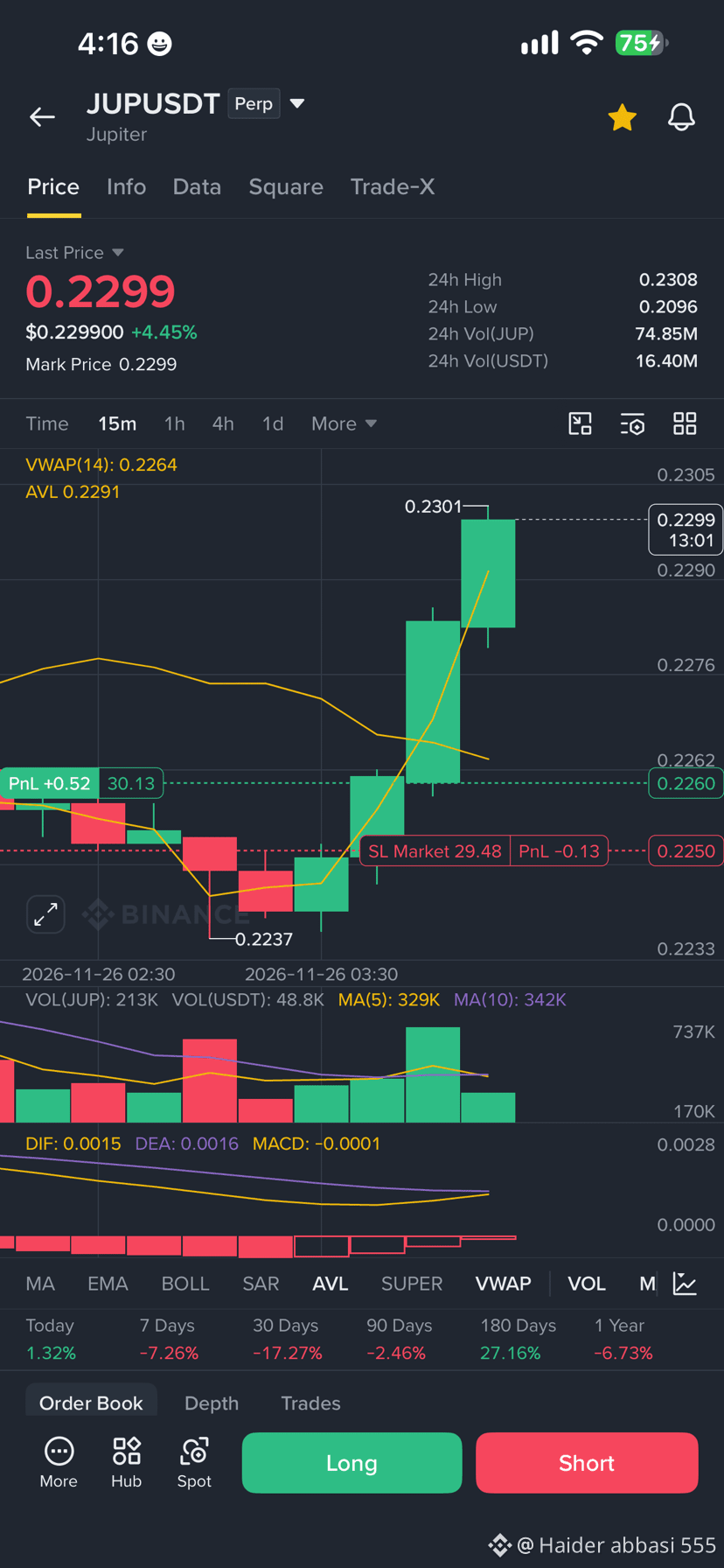
Just locked in a risk-free setup on $JUP (10x Long):
✅ Entry: $0.2260 $JUP
✅ Stop Loss moved to: $0.2265 (Profit locked—zero risk!)
🎯 Take Profit Target: $0.2450
Once a trade moves in your favor, moving your Stop Loss above entry turns a risky position into a win-win setup. Whether the market pulls back or breaks out, your capital stays safe! 💡
Do you move your Stop Loss to break-even or let your trades ride? Drop your strategy below! 👇
#JUP #Jupiter #CryptoTrading #RiskManagement #BİNANCEFUTURES #TradingTips
92

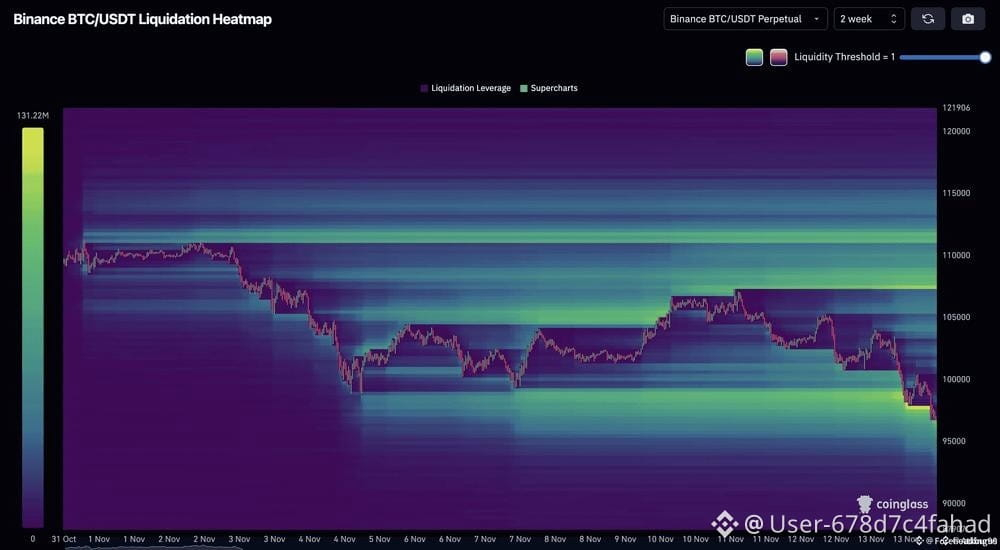
⚠️ CRYPTO LIQUIDATIONS: WHY DO TRADERS LOSE MONEY?
Liquidation happens when a leveraged trading position is automatically closed because its margin is no longer sufficient.
📉 Long liquidation: A trader's bullish position gets closed.
📈 Short liquidation: A trader's bearish position gets closed.
Why it matters:
- Can increase short-term volatility.
- May accelerate price movements.
- Shows where leveraged traders face risk.
💡 Excessive leverage can quickly destroy trading capital.
Do you prefer spot trading or futures?
#CryptoLiquidation #bitcoin #FuturesTrading #RiskManagement
1
68

·
--
Bearish
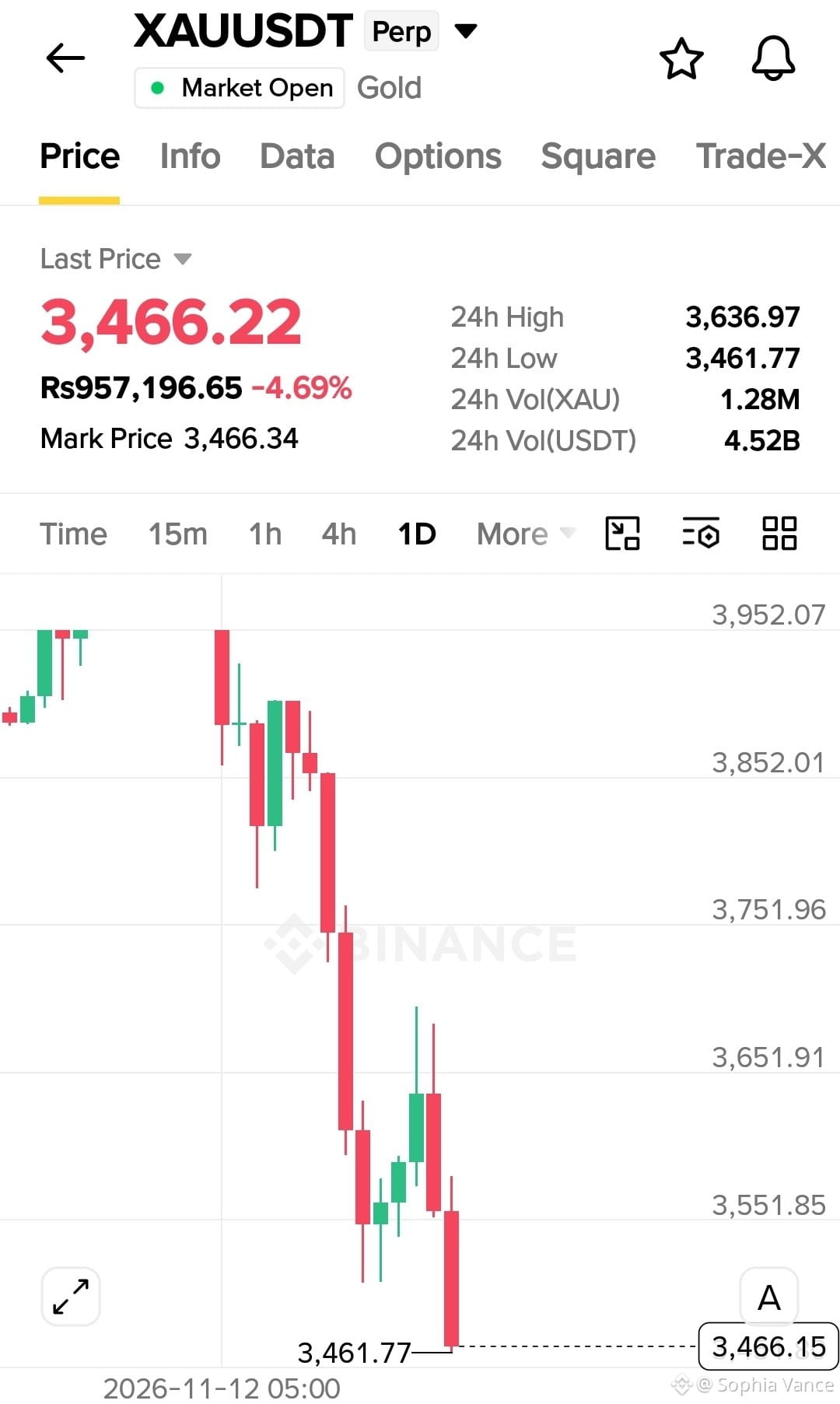
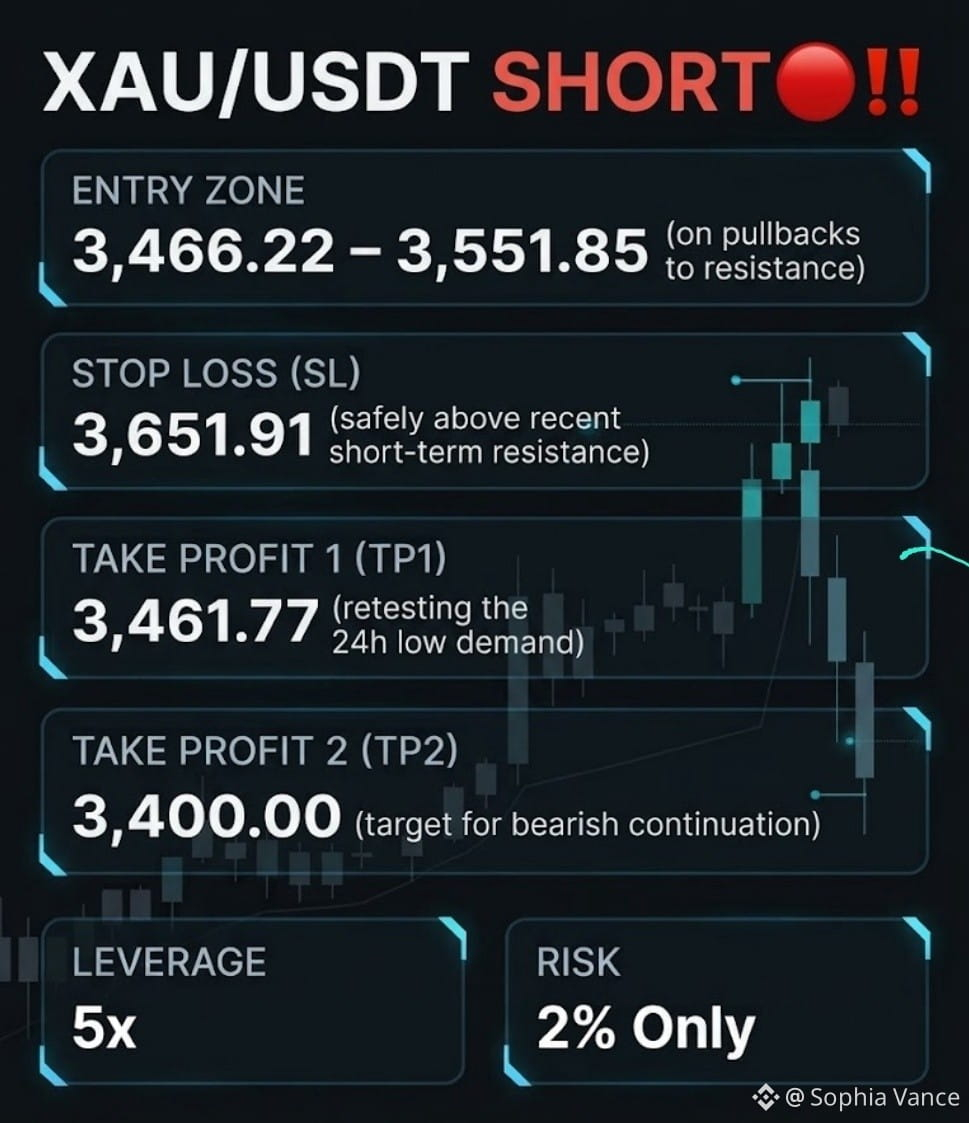
🚀 $XAU /USDT SETUP (SHORT) 🔴
Pair: XAU/USDT (1D)
Current Price: 3,466.22 (-4.69%)
Entry Zone: 3,466.22 – 3,551.85 (on pullbacks to resistance)
Stop Loss (SL): 3,651.91 (above daily local lower-high)
Take Profit 1 (TP1): 3,461.77 (24h Low Support)
Take Profit 2 (TP2): 3,400.00 (lower target continuation)
Leverage: 5x | Risk: 2% Only
Chart observation based on provided chart only; not financial advice.
#XAUUSDT #Gold #TradingSignal #CryptoPakistan #RiskManagement
175

1% risk per trade is the exact line between professional longevity and account liquidation. 🧠 Why does this matter? Taking a 20% loss requires a 25% gain just to break even. Revenge trading $BTC right after getting stopped out destroys equity faster than any bear market. Respect your stop losses and guard your capital like a hawk. 🛡️ Always DYOR, this is not financial advice. What to watch: track your pulse when a trade invalidates. If you feel an urgent push to double down immediately, step away. 📉 One concrete habit to practice today: step away from the terminal for 30 minutes every single time a stop loss hits. #Write2Earn #CryptoTrading #RiskManagement #TraderPsychology $BTC $ETH
1% risk per trade is the exact line between professional longevity and account liquidation. 🧠 Why does this matter? Taking a 20% loss requires a 25% gain just to break even. Revenge trading $BTC right after getting stopped out destroys equity faster than any bear market. Respect your stop losses and guard your capital like a hawk. 🛡️ Always DYOR, this is not financial advice. What to watch: track your pulse when a trade invalidates. If you feel an urgent push to double down immediately, step away. 📉 One concrete habit to practice today: step away from the terminal for 30 minutes every single time a stop loss hits. #Write2Earn #CryptoTrading #RiskManagement #TraderPsychology $BTC $ETH
69

·
--
The 1% rule that keeps traders alive
Never risk more than 1–2% of your account on one trade. With $500, that's $5–$10 at risk, not your whole balance.
Ten losses in a row won't kill you. One reckless trade can.
$BNB $SOL #RiskManagement
The 1% rule that keeps traders alive
Never risk more than 1–2% of your account on one trade. With $500, that's $5–$10 at risk, not your whole balance.
Ten losses in a row won't kill you. One reckless trade can.
$BNB $SOL #RiskManagement
Never risk more than 1–2% of your account on one trade. With $500, that's $5–$10 at risk, not your whole balance.
Ten losses in a row won't kill you. One reckless trade can.
$BNB $SOL #RiskManagement
172

·
--
Bearish
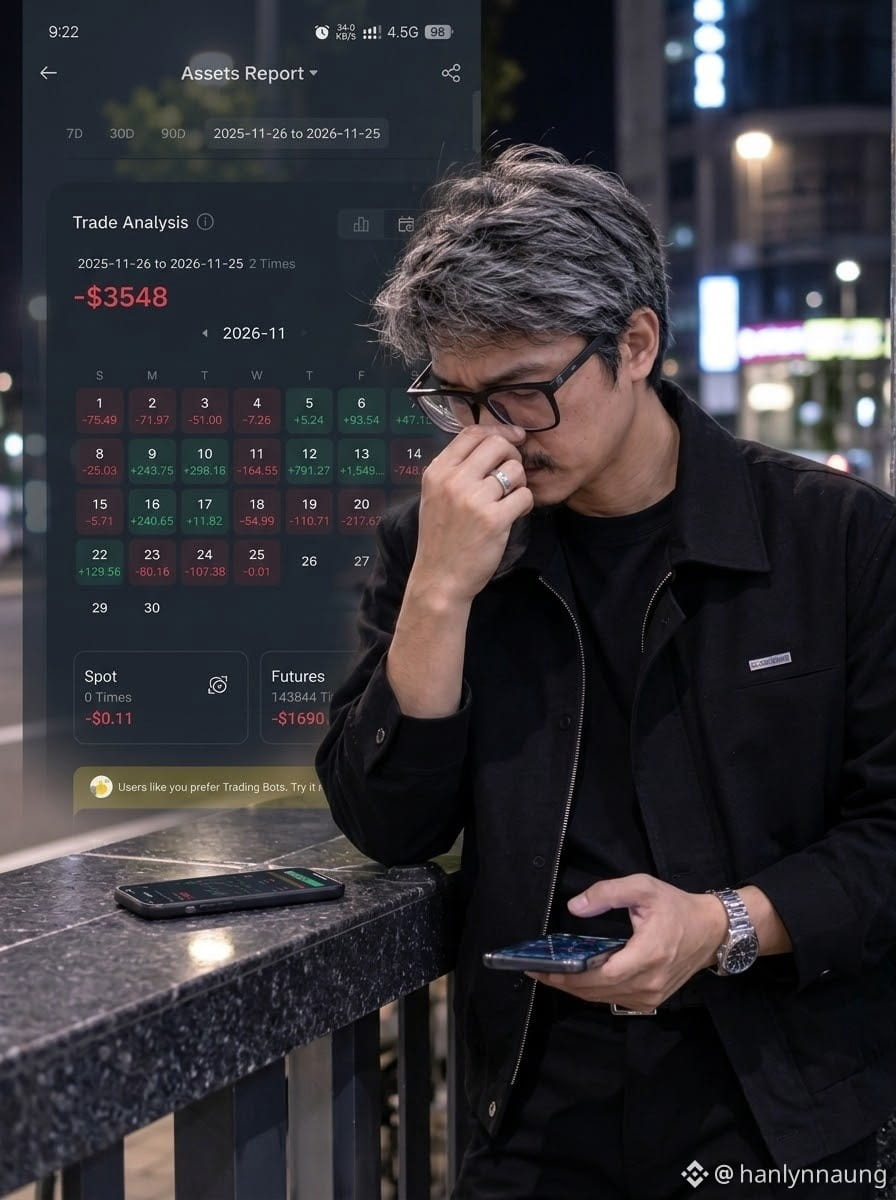
$BTC Looking at this report, you can't help but feel the weight of every red day. 📉💔
It’s one thing to see Bitcoin and gold pull back, but seeing the personal toll in black and red—losing -$3,548 with futures hitting -$1,690.56—really tests your resolve. Every red calendar square feels like a setback, making you wonder where the market is headed and when the green will return.
Crypto is a wild ride, and sometimes you just have to take a breath, look away from the screen, and remember that survival and risk management are the real wins on tough days. Stay strong, keep your head up, and never invest more than you can afford to lose.
🤔🤔🤔
#TradeAnalysis #RiskManagement #BearMarketMood #CryptoLife
70

·
--
⚠️ YOUR BIGGEST TRADING LOSS MIGHT START WITH ONE SENTENCE: "IT WILL COME BACK."
You enter a trade.
Price moves against you.
You ignore the warning signs because you're convinced the market will reverse.
Then you move your stop-loss.
Then you add more money.
And suddenly, a small losing trade becomes a portfolio problem.
Here's something every trader needs to understand:
A losing trade is normal.
Refusing to accept a losing trade is dangerous.
Before entering any position, know three things:
🧠 Why am I entering?
🛑 At what point is my idea invalid?
💰 How much am I willing to lose?
Whether you're trading $BTC , $ETH or any altcoin, discipline matters more than conviction.
The market doesn't know your entry price. And it doesn't owe you a recovery.
What's harder for you: accepting a loss or watching a coin pump without you?
#cryptotrading #tradingpsychology #BinanceSquare #RiskManagement #BTC
45
Log in to explore more content
Join global crypto users on Binance Square
⚡️ Get latest and useful information about crypto.
💬 Trusted by the world’s largest crypto exchange.
👍 Discover real insights from verified creators.
Email / Phone number
Trending Topics
1
#CanMarketsReboundAfterThanksgiving?
37,158 views
760 Discussing
2
#CouldSpaceX’sOrbitalDataCentersBoostAIChipDemand?
23,015 views
476 Discussing
3
#EvolveAtBinanceBlockchainWeek
687,774 views
7,808 Discussing
4
#CorePCEBeatLiftsFedHikeOdds
195,751 views
1,503 Discussing
5
#BitcoinAndStocksSlipAgainAmidTrump’sTariffPlans
238,347 views
2,262 Discussing
6
#JensenHuangSaysNvidiaDoesn’tNeedASuccessionPlan
113,393 views
1,345 Discussing
7
#NasdaqFuturesSlideMoreThan3%
49,901 views
436 Discussing
8
#USOctoberPCEPriceIndexAt0.3%MoM
56,676 views
435 Discussing
9
#BitcoinETFsPostRecord$4.94BNovemberOutflows
10,453 views
55 Discussing
10
#TetherInvestsInArgentinasLemon
21,453 views
257 Discussing