

VeritoPra
173 Posts

VeritoPra
Report
Block User
Estudiante de Ing en electrónica, especialización en redes Certificación CISCO Networking Mod3. Autodidacta... Aprendiz de análisis de mercado Cripto
131 Following
14 Followers
4 Liked
Posts
All
Quotes
·
--
Article
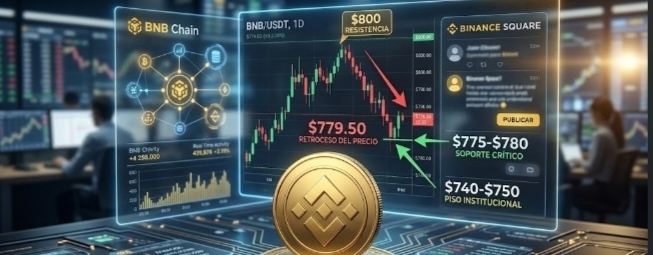
BNB under the microscope: Why the Binance token is retreating and what to expect next?In the last few days, BNB has shown a price dynamic that has been widely discussed in the market. After a very strong push that led it to seek the $790–$800 zone, the native token of the Binance ecosystem experienced a pullback toward the $775–$785 range.
For those who operate day to day or hold BNB, understanding the reasons behind this drop is fundamental before making any investment decision. Here we break down the main factors driving the chart:
BNB under the microscope: Why the Binance token is retreating and what to expect next?
In the last few days, BNB has shown a price dynamic that has been widely discussed in the market. After a very strong push that led it to seek the $790–$800 zone, the native token of the Binance ecosystem experienced a pullback toward the $775–$785 range.
For those who operate day to day or hold BNB, understanding the reasons behind this drop is fundamental before making any investment decision. Here we break down the main factors driving the chart:
For those who operate day to day or hold BNB, understanding the reasons behind this drop is fundamental before making any investment decision. Here we break down the main factors driving the chart:
1
284
·
--
Article
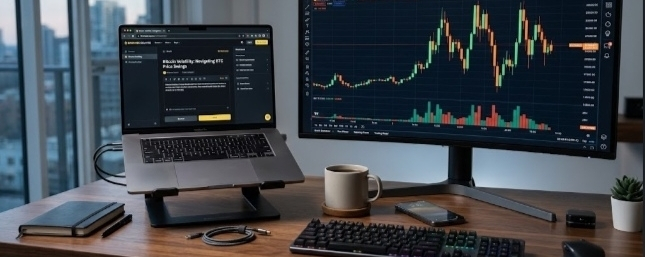
Bitcoin on a Roller Coaster: Healthy Consolidation or a Bull Trap?Bitcoin continues to show why it is the king of volatility. In recent sessions, we’ve witnessed a lively scenario: after tapping recent highs near the critical resistance zone of $87,000, the market experienced a sharp jolt that sent the price back to look for support in the $83,000 – $84,000 range.
Moves like these—sudden and fast—don’t happen by chance; they reflect very clear market dynamics that every creator and trader should monitor:
Bitcoin on a Roller Coaster: Healthy Consolidation or a Bull Trap?
Bitcoin continues to show why it is the king of volatility. In recent sessions, we’ve witnessed a lively scenario: after tapping recent highs near the critical resistance zone of $87,000, the market experienced a sharp jolt that sent the price back to look for support in the $83,000 – $84,000 range.
Moves like these—sudden and fast—don’t happen by chance; they reflect very clear market dynamics that every creator and trader should monitor:
Moves like these—sudden and fast—don’t happen by chance; they reflect very clear market dynamics that every creator and trader should monitor:
123
·
--
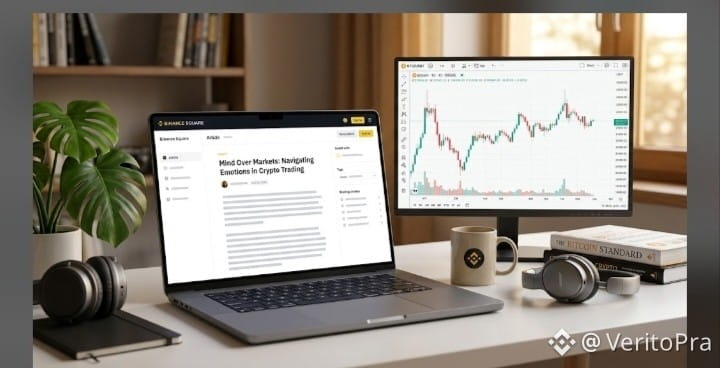
Trading Psychology: Why Mastering Your Emotions Is More Important Than the Best Chart
The world of cryptocurrencies is known for its volatility. In a matter of minutes, the market can rise 20% or crash by the same amount. For many investors—especially new ones—this emotional roller coaster is more challenging than understanding the underlying technology.
The key to long-term success in trading is not just having the best technical strategy, but building the mental resilience needed to stick with it. When emotions—fear of missing out (FOMO), panic during downturns, or greed when things are going well—take control, rational decisions disappear.
3 Strategies to Manage Your Emotions:
Set a Plan and Stick to It: Before opening any trade, define your entry point, your profit target (Take Profit), and your exit point for losses (Stop Loss). A pre-set plan removes the pressure of having to decide under stress.
Educate Your Mind, Not Just Your Portfolio: Understand the difference between short-term volatility and long-term fundamentals. Education is the best antidote to unfounded panic.
Take Breaks: If you feel the market is overwhelming you, close the charts. The market’s “noise” can cloud your judgment. Sometimes the best decision is to do nothing and clear your mind.
Mastering the market starts by mastering your own mind.
Disclaimer: This content is purely educational and informational and does not constitute financial advice. Always do your own research (DYOR) before making investment decisions.
$NVDAB
$AAPLB
$BTC
Trading Psychology: Why Mastering Your Emotions Is More Important Than the Best Chart
The world of cryptocurrencies is known for its volatility. In a matter of minutes, the market can rise 20% or crash by the same amount. For many investors—especially new ones—this emotional roller coaster is more challenging than understanding the underlying technology.
The key to long-term success in trading is not just having the best technical strategy, but building the mental resilience needed to stick with it. When emotions—fear of missing out (FOMO), panic during downturns, or greed when things are going well—take control, rational decisions disappear.
3 Strategies to Manage Your Emotions:
Set a Plan and Stick to It: Before opening any trade, define your entry point, your profit target (Take Profit), and your exit point for losses (Stop Loss). A pre-set plan removes the pressure of having to decide under stress.
Educate Your Mind, Not Just Your Portfolio: Understand the difference between short-term volatility and long-term fundamentals. Education is the best antidote to unfounded panic.
Take Breaks: If you feel the market is overwhelming you, close the charts. The market’s “noise” can cloud your judgment. Sometimes the best decision is to do nothing and clear your mind.
Mastering the market starts by mastering your own mind.
Disclaimer: This content is purely educational and informational and does not constitute financial advice. Always do your own research (DYOR) before making investment decisions.
$NVDAB
$AAPLB
$BTC
The world of cryptocurrencies is known for its volatility. In a matter of minutes, the market can rise 20% or crash by the same amount. For many investors—especially new ones—this emotional roller coaster is more challenging than understanding the underlying technology.
The key to long-term success in trading is not just having the best technical strategy, but building the mental resilience needed to stick with it. When emotions—fear of missing out (FOMO), panic during downturns, or greed when things are going well—take control, rational decisions disappear.
3 Strategies to Manage Your Emotions:
Set a Plan and Stick to It: Before opening any trade, define your entry point, your profit target (Take Profit), and your exit point for losses (Stop Loss). A pre-set plan removes the pressure of having to decide under stress.
Educate Your Mind, Not Just Your Portfolio: Understand the difference between short-term volatility and long-term fundamentals. Education is the best antidote to unfounded panic.
Take Breaks: If you feel the market is overwhelming you, close the charts. The market’s “noise” can cloud your judgment. Sometimes the best decision is to do nothing and clear your mind.
Mastering the market starts by mastering your own mind.
Disclaimer: This content is purely educational and informational and does not constitute financial advice. Always do your own research (DYOR) before making investment decisions.
$NVDAB
$AAPLB
$BTC
136
·
--
:)
:)

LMora1
·
--
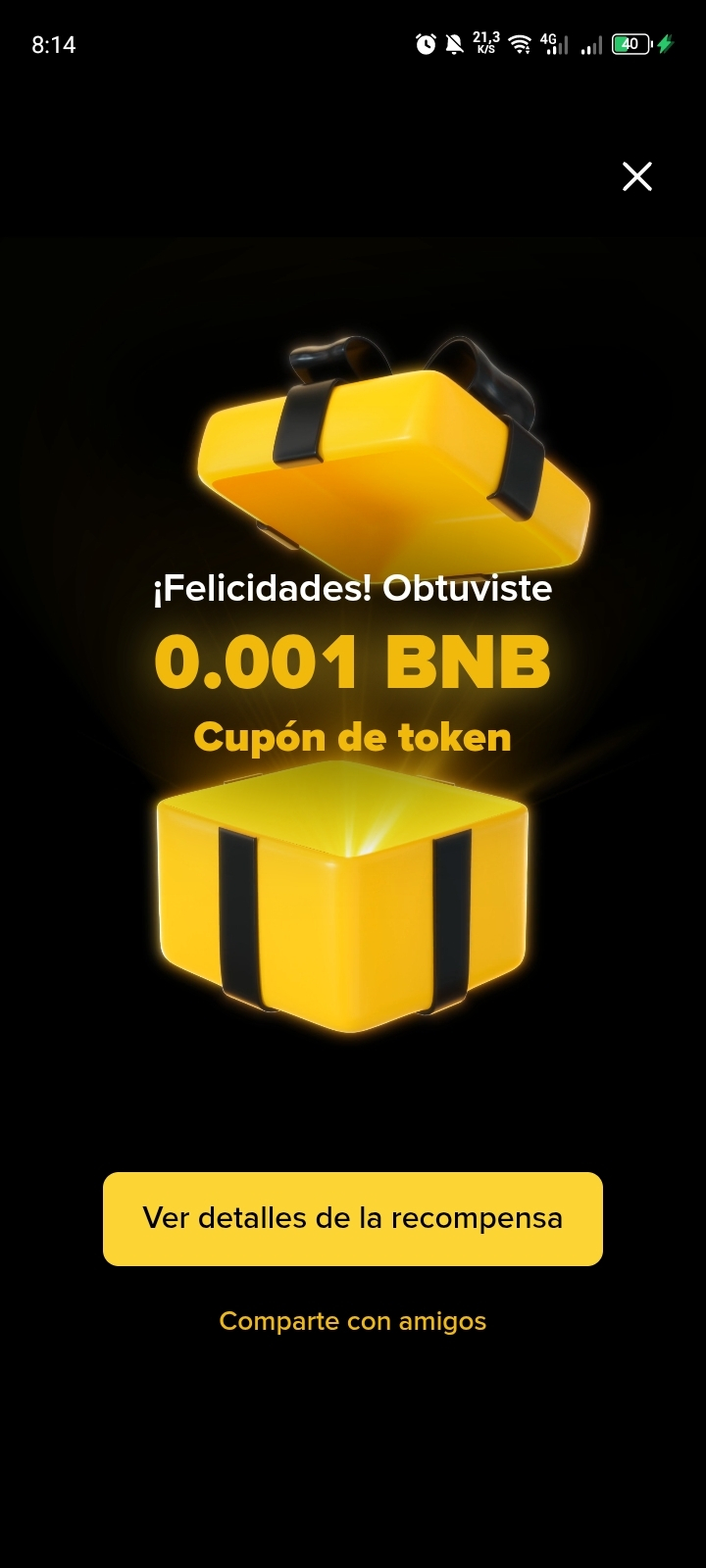
Bearish#BinancePickAndWin We're still trading and betting on the World Cup, let's go Colombia, Croatia, and Portugal today! Let's goooooo, $HYPE $UNI $WLD going short for today.... let's keep stacking with trading in futures or spot, $100 wins 2 free bets plus one with a similar post like this, everyone to win ps
1
·
--
#MarketTurbulence At this moment, a significant drop in the prices of assets like Bitcoin and Ethereum can be seen as a ''liquidation'' or ''bleeding'' of the market. However, for investors with a long-term perspective who believe in the fundamentals of the technology, this is an opportunity to get a ''discount''. Regarding Bitcoin (BTC), despite the volatility, its narrative as ''digital gold'' or a long-term store of value remains strong. The ''Halving'' event (the reduction of miners' rewards) creates programmed scarcity, which has historically been a catalyst for long-term price increases... Ethereum (ETH), on the other hand, is the foundation of a growing ecosystem of decentralized applications (DApps), Decentralized Finance (DeFi), non-fungible tokens (NFTs), and Web3. Its transition to a proof-of-stake protocol has made it more efficient and sustainable. For investors, the opportunity in Ethereum lies in its potential as ''infrastructure for the future''. Price drops may allow investors to acquire a stake in this ecosystem at a lower cost.
#MarketTurbulence At this moment, a significant drop in the prices of assets like Bitcoin and Ethereum can be seen as a ''liquidation'' or ''bleeding'' of the market. However, for investors with a long-term perspective who believe in the fundamentals of the technology, this is an opportunity to get a ''discount''. Regarding Bitcoin (BTC), despite the volatility, its narrative as ''digital gold'' or a long-term store of value remains strong. The ''Halving'' event (the reduction of miners' rewards) creates programmed scarcity, which has historically been a catalyst for long-term price increases... Ethereum (ETH), on the other hand, is the foundation of a growing ecosystem of decentralized applications (DApps), Decentralized Finance (DeFi), non-fungible tokens (NFTs), and Web3. Its transition to a proof-of-stake protocol has made it more efficient and sustainable. For investors, the opportunity in Ethereum lies in its potential as ''infrastructure for the future''. Price drops may allow investors to acquire a stake in this ecosystem at a lower cost.
351
·
--
#CryptoIntegration Recently, Google has introduced significant updates to its Play Store policies, with a particular focus on cryptocurrency applications. These policies seek to strike a balance between allowing innovation in the Web3 space and ensuring that applications comply with financial regulations and security standards to protect users. The new guidelines focus on two types of cryptocurrency applications: exchanges and software wallets. The main novelty is the requirement for stricter regulatory compliance, especially in certain key jurisdictions. The most notable policy is the requirement for developers of cryptocurrency exchanges and wallets to obtain the proper licenses and registrations in the jurisdictions where they operate. Applications offering these services must demonstrate their compliance with local laws. In the United States, registration with the Financial Crimes Enforcement Network (FinCEN) as a money services business is required, while in the European Union, authorization as a Crypto Asset Service Provider (CASP) under the MiCA regulation is required. This measure aims to combat fraud, money laundering, and other illicit activities. Differentiation between Custodial and Non-Custodial Wallets: Initially, there was significant controversy in the crypto community about whether the policy would apply equally to 'Non-Custodial' wallets (where the user has full control of their private keys) and 'Custodial' wallets (where the platform retains the keys). After the debate, Google clarified that while the policies generally apply, the requirements for non-custodial wallets have been revised, acknowledging their decentralized nature and their role in user autonomy. This correction was seen as a victory for advocates of decentralization. This reaffirms that, in a few years, non-custodial wallets will be more widely used.
#CryptoIntegration Recently, Google has introduced significant updates to its Play Store policies, with a particular focus on cryptocurrency applications. These policies seek to strike a balance between allowing innovation in the Web3 space and ensuring that applications comply with financial regulations and security standards to protect users. The new guidelines focus on two types of cryptocurrency applications: exchanges and software wallets. The main novelty is the requirement for stricter regulatory compliance, especially in certain key jurisdictions. The most notable policy is the requirement for developers of cryptocurrency exchanges and wallets to obtain the proper licenses and registrations in the jurisdictions where they operate. Applications offering these services must demonstrate their compliance with local laws. In the United States, registration with the Financial Crimes Enforcement Network (FinCEN) as a money services business is required, while in the European Union, authorization as a Crypto Asset Service Provider (CASP) under the MiCA regulation is required. This measure aims to combat fraud, money laundering, and other illicit activities. Differentiation between Custodial and Non-Custodial Wallets: Initially, there was significant controversy in the crypto community about whether the policy would apply equally to 'Non-Custodial' wallets (where the user has full control of their private keys) and 'Custodial' wallets (where the platform retains the keys). After the debate, Google clarified that while the policies generally apply, the requirements for non-custodial wallets have been revised, acknowledging their decentralized nature and their role in user autonomy. This correction was seen as a victory for advocates of decentralization. This reaffirms that, in a few years, non-custodial wallets will be more widely used.
173
·
--
#CryptoIntegration this phenomenon transcends the mere buying and selling of digital assets, seeking to transform the underlying infrastructure of the global economy. Despite its benefits, CryptoIntegration faces significant challenges. Regulation is one of the biggest obstacles, as governments seek to find a balance between innovation and investor protection. The volatility of cryptocurrencies and the scalability of blockchain networks are also technical concerns that need to be addressed.
However, as large corporations and governments actively explore Blockchain, the future of CryptoIntegration looks promising. This technology is expected to not only enhance the efficiency of financial services but also democratize access to the global economy, empowering people around the world.
#CryptoIntegration this phenomenon transcends the mere buying and selling of digital assets, seeking to transform the underlying infrastructure of the global economy. Despite its benefits, CryptoIntegration faces significant challenges. Regulation is one of the biggest obstacles, as governments seek to find a balance between innovation and investor protection. The volatility of cryptocurrencies and the scalability of blockchain networks are also technical concerns that need to be addressed.
However, as large corporations and governments actively explore Blockchain, the future of CryptoIntegration looks promising. This technology is expected to not only enhance the efficiency of financial services but also democratize access to the global economy, empowering people around the world.
However, as large corporations and governments actively explore Blockchain, the future of CryptoIntegration looks promising. This technology is expected to not only enhance the efficiency of financial services but also democratize access to the global economy, empowering people around the world.
148
·
--
Crypto-Integration: Beyond BitcoinCrypto-integration is the process by which businesses and individuals adopt blockchain technology and digital assets to operate more efficiently, transparently, and globally. It is not just about accepting Bitcoin as a form of payment, but a paradigm shift in how to manage finances, contracts, and data.
The Pillars of Crypto-Integration.
1- Cryptocurrency Payments: The most visible form of integration. Businesses of all sizes are using payment gateways to accept digital currencies, allowing them to reduce transaction costs, avoid chargebacks, and access an international clientele.
Crypto-Integration: Beyond Bitcoin
Crypto-integration is the process by which businesses and individuals adopt blockchain technology and digital assets to operate more efficiently, transparently, and globally. It is not just about accepting Bitcoin as a form of payment, but a paradigm shift in how to manage finances, contracts, and data.
The Pillars of Crypto-Integration.
1- Cryptocurrency Payments: The most visible form of integration. Businesses of all sizes are using payment gateways to accept digital currencies, allowing them to reduce transaction costs, avoid chargebacks, and access an international clientele.
The Pillars of Crypto-Integration.
1- Cryptocurrency Payments: The most visible form of integration. Businesses of all sizes are using payment gateways to accept digital currencies, allowing them to reduce transaction costs, avoid chargebacks, and access an international clientele.
3
190
Log in to explore more content
Join global crypto users on Binance Square
⚡️ Get latest and useful information about crypto.
💬 Trusted by the world’s largest crypto exchange.
👍 Discover real insights from verified creators.
Email / Phone number