
Ox_Ekko
339 Posts

Ox_Ekko
Report
Block User
我是Ekko,推特也是这个名字,在广场里面我会跟大家分享我的各种想法。

原创之星
Open Trade
Occasional Trader
5.5 Years
48 Following
5.9K+ Followers
2.0K+ Liked
1 Badges
Posts
Portfolio
All
Quotes
Videos
·
--
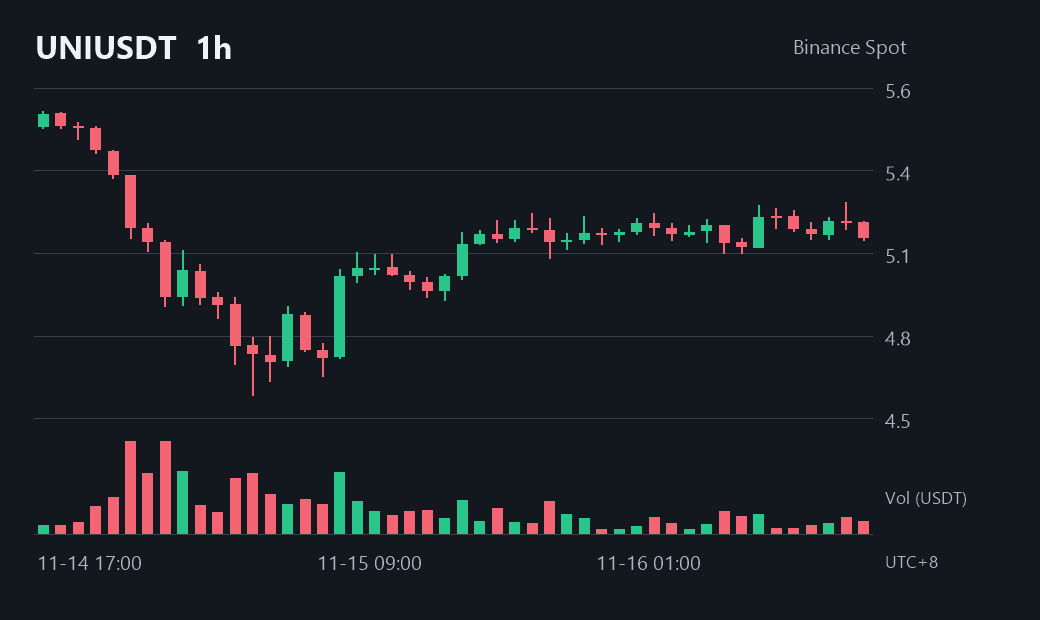
$UNI 24-hour gain of over 4%, but today it still hasn’t held above $5.25. Binance’s quote page shows about $5.15, while CoinGlass records today’s Binance spot high at $5.257.
This looks more like a rebound running into selling pressure, still one step short of sustained strength. I care more about whether it can hold the intraday high: when judging the quality of the rebound, do you look first at the gainers ranking, or at whether it can stay above the previous high?
This looks more like a rebound running into selling pressure, still one step short of sustained strength. I care more about whether it can hold the intraday high: when judging the quality of the rebound, do you look first at the gainers ranking, or at whether it can stay above the previous high?
1
689
·
--
Nasdaq 100 futures were still up 0.5% in early trading, but by 13:46 Beijing time they had fallen 0.9%. U.S. markets hadn’t even opened, and the rebound had already fizzled out.
With Nvidia’s earnings report approaching, whether AI demand can support its valuation is once again being put to the test. My take: this reversal shows investors are still unwilling to bet ahead of time on strong earnings. The more useful signal to watch next is whether good results can lift the broader tech sector—or merely give Nvidia itself a brief breather.
With Nvidia’s earnings report approaching, whether AI demand can support its valuation is once again being put to the test. My take: this reversal shows investors are still unwilling to bet ahead of time on strong earnings. The more useful signal to watch next is whether good results can lift the broader tech sector—or merely give Nvidia itself a brief breather.
1
261
·
--
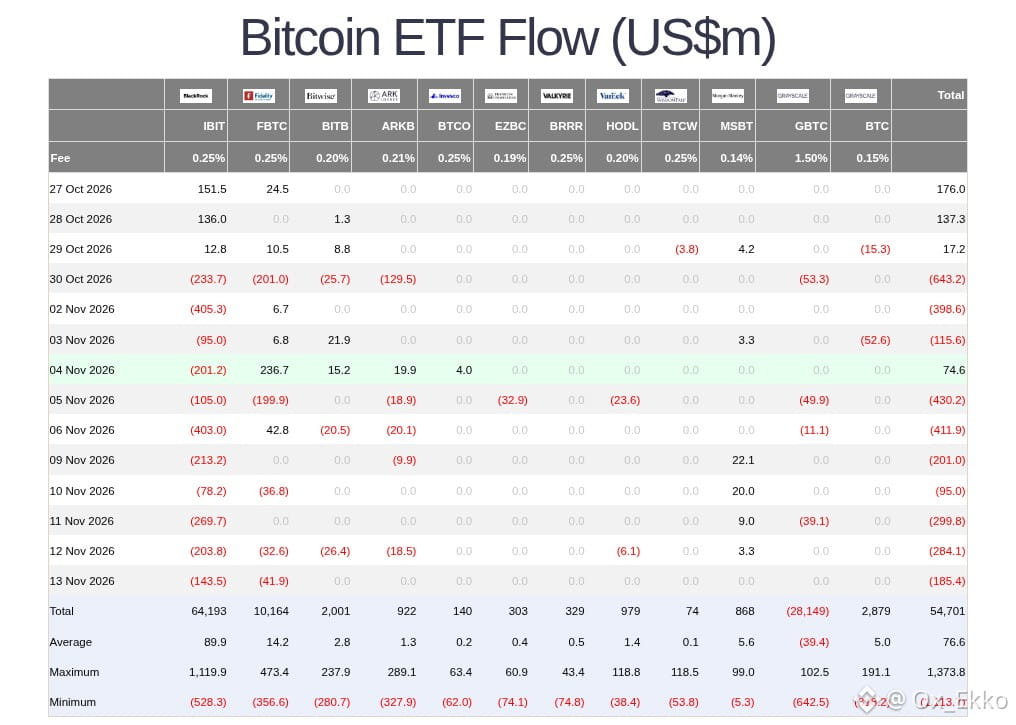
After seven consecutive trading days of net outflows, withdrawals on the final day narrowed to $185.4 million. U.S. $BTC spot ETFs were still seeing outflows as of November 13, but they were below the $430.2 million recorded on November 5.
For $BTC , easing selling pressure and new money coming in are two different things. I’d rather wait for a net inflow to confirm demand: when judging whether the market has stabilized, would you first look for the price to hold, or for ETF flows to turn positive?
For $BTC , easing selling pressure and new money coming in are two different things. I’d rather wait for a net inflow to confirm demand: when judging whether the market has stabilized, would you first look for the price to hold, or for ETF flows to turn positive?
1
32
·
--
Q: Why didn’t you get out when you were making money before? Now being stuck in a losing position feels awful.
A: Things were going so well that I couldn’t bear to pull out.
Trying to find humor in the misery 😂😂
#本周财报与宏观事件密集,市场再迎波动考验
Q: Why didn’t you get out when you were making money before? Now being stuck in a losing position feels awful.
A: Things were going so well that I couldn’t bear to pull out.
Trying to find humor in the misery 😂😂
#本周财报与宏观事件密集,市场再迎波动考验
A: Things were going so well that I couldn’t bear to pull out.
Trying to find humor in the misery 😂😂
#本周财报与宏观事件密集,市场再迎波动考验
1
18
·
--
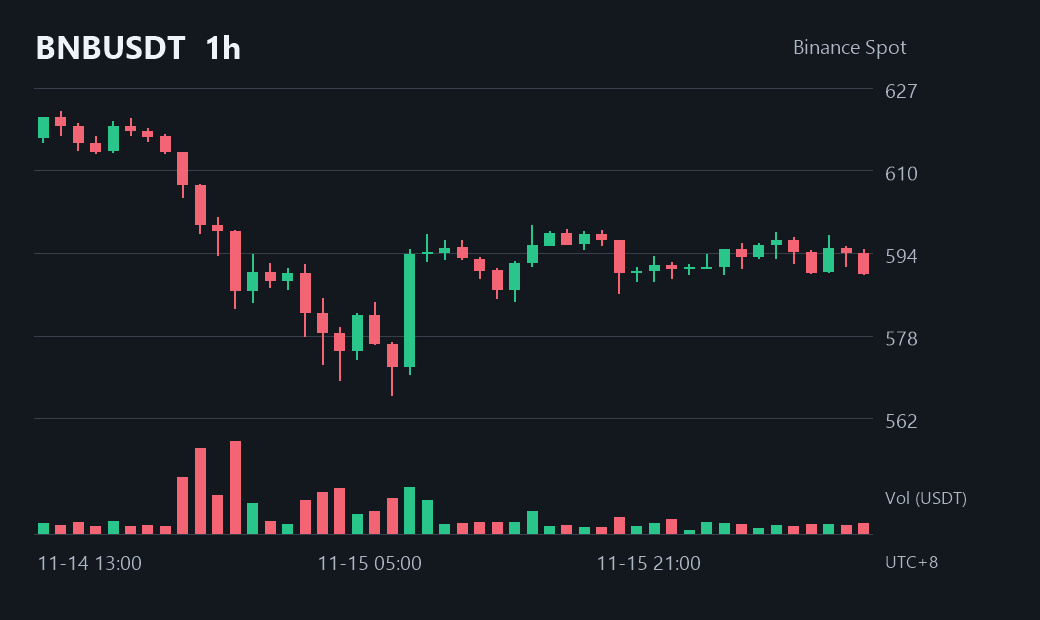
The daily decline is less than 1%, but $BNB is still hovering around $590. Binance market data shows it at 589.83 USDT at 1 p.m. Beijing time today, down 0.90% over the past 24 hours. A slower decline doesn’t mean it has turned stronger.
Right now, I care more about whether it can get back above 600 than whether the decline has eased. If it can’t reclaim that round-number level anytime soon, treating sideways movement as a sign of stabilization may be a bit premature. Would you wait for it to get back above 600, or consider holding near the lows a recovery in itself?
Right now, I care more about whether it can get back above 600 than whether the decline has eased. If it can’t reclaim that round-number level anytime soon, treating sideways movement as a sign of stabilization may be a bit premature. Would you wait for it to get back above 600, or consider holding near the lows a recovery in itself?
3
1
516
·
--
The 1:1 token swap hasn’t started, but deposits and withdrawals have already been suspended. KuCoin plans to suspend deposits and withdrawals for $CPOOL at 12:00 noon Beijing time today; Clearpool’s token swap window won’t open until tomorrow, and exchanges that support the swap will handle it on users’ behalf.
A name change doesn’t mean business growth, and spreads during the suspension of deposits and withdrawals may not necessarily be realizable. More than new code, I’d like to see whether lending demand increases after the migration. Would you consider the token swap bullish, or wait for the business data to speak?
A name change doesn’t mean business growth, and spreads during the suspension of deposits and withdrawals may not necessarily be realizable. More than new code, I’d like to see whether lending demand increases after the migration. Would you consider the token swap bullish, or wait for the business data to speak?
1
60
·
--
Verified
Anthropic's IPO is just around the corner. What do you all think is next for AI?
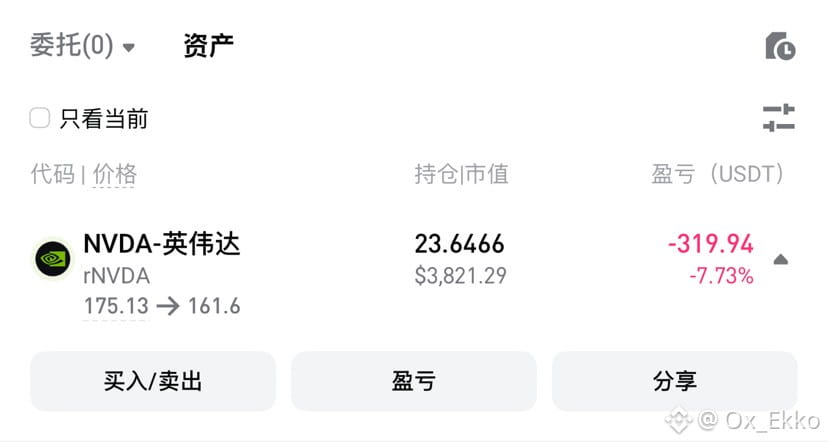
I bought Nvidia shares at a cost basis of over 170, and I'm currently down nearly 8%. Do you think I can break even?
#Anthropic上市倒计时,AI投资热度迎来检验
Anthropic's IPO is just around the corner. What do you all think is next for AI?
I bought Nvidia shares at a cost basis of over 170, and I'm currently down nearly 8%. Do you think I can break even?
#Anthropic上市倒计时,AI投资热度迎来检验
I bought Nvidia shares at a cost basis of over 170, and I'm currently down nearly 8%. Do you think I can break even?
#Anthropic上市倒计时,AI投资热度迎来检验
14
16
9.9k
·
--
50,000 coins, $ZEC , representing about 55% of the community grant treasury, have been proposed for removal from circulation. According to the announced schedule, the Zcash community’s voting window opens today and runs through November 30. Implementation will still require community support and a network upgrade.
The value of these coins will be returned gradually through mining rewards. I’m more concerned about how development funding will continue: can a short-term reduction in circulation offset long-term funding uncertainty? Do you support or oppose this proposal?
The value of these coins will be returned gradually through mining rewards. I’m more concerned about how development funding will continue: can a short-term reduction in circulation offset long-term funding uncertainty? Do you support or oppose this proposal?
1
289
·
--
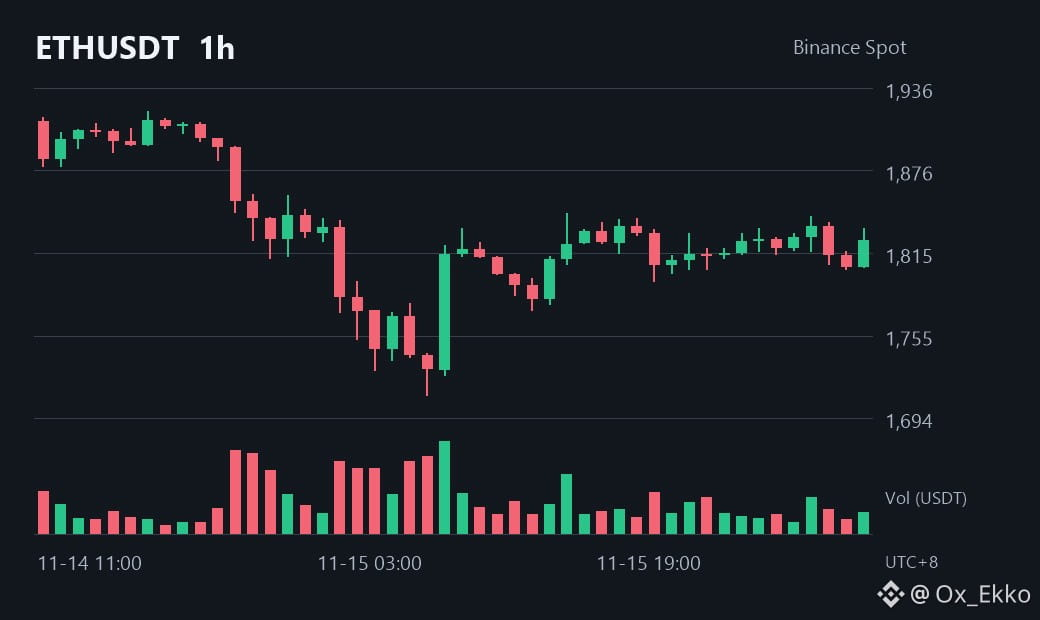
$ETH 24-hour high-low range is nearly 4%, yet the change is only -0.21%. Looking only at the gainers and losers rankings would make you miss a real tug-of-war.
As of 11:39 Beijing time, the price was around $1,817, within a range of $1,773–$1,843. My take: it’s back in the middle of the range, so it’s too early to say either side has won. Which kind of strength do you believe in more next: a breakout above $1,843, or a pullback to $1,800 that holds?
As of 11:39 Beijing time, the price was around $1,817, within a range of $1,773–$1,843. My take: it’s back in the middle of the range, so it’s too early to say either side has won. Which kind of strength do you believe in more next: a breakout above $1,843, or a pullback to $1,800 that holds?
1
386
·
--
On one hand, $BTCETF saw net outflows of about $1.9 billion for seven consecutive trading days. On the other, CZ recently said he had bought crypto and denied that Binance was selling crypto assets. After $BTC fell, the market finally got a clear response.
This may address the rumors about “who’s selling,” but it doesn’t directly prove that the selling pressure has ended. I’m more focused on the next ETF fund flow: with a public figure buying and redemptions continuing, which signal that the market has bottomed do you trust more?
This may address the rumors about “who’s selling,” but it doesn’t directly prove that the selling pressure has ended. I’m more focused on the next ETF fund flow: with a public figure buying and redemptions continuing, which signal that the market has bottomed do you trust more?
1
130
·
--
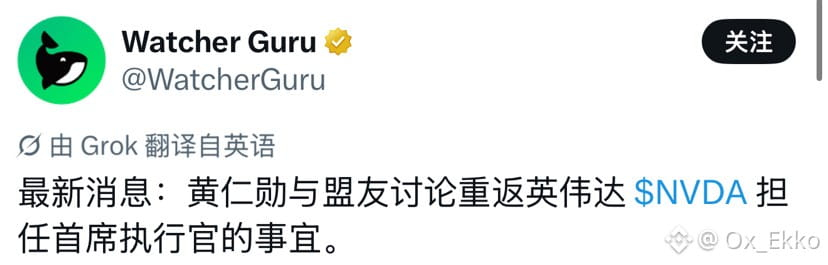
Do you think Jensen Huang can return to Nvidia?
$NVDAB briefly rose this morning because of this news.
What do you think? Can Huang come back?
Do you think Jensen Huang can return to Nvidia?
$NVDAB briefly rose this morning because of this news.
What do you think? Can Huang come back?
$NVDAB briefly rose this morning because of this news.
What do you think? Can Huang come back?


支持老黄
From Ox_Ekko
4
4
129
·
--
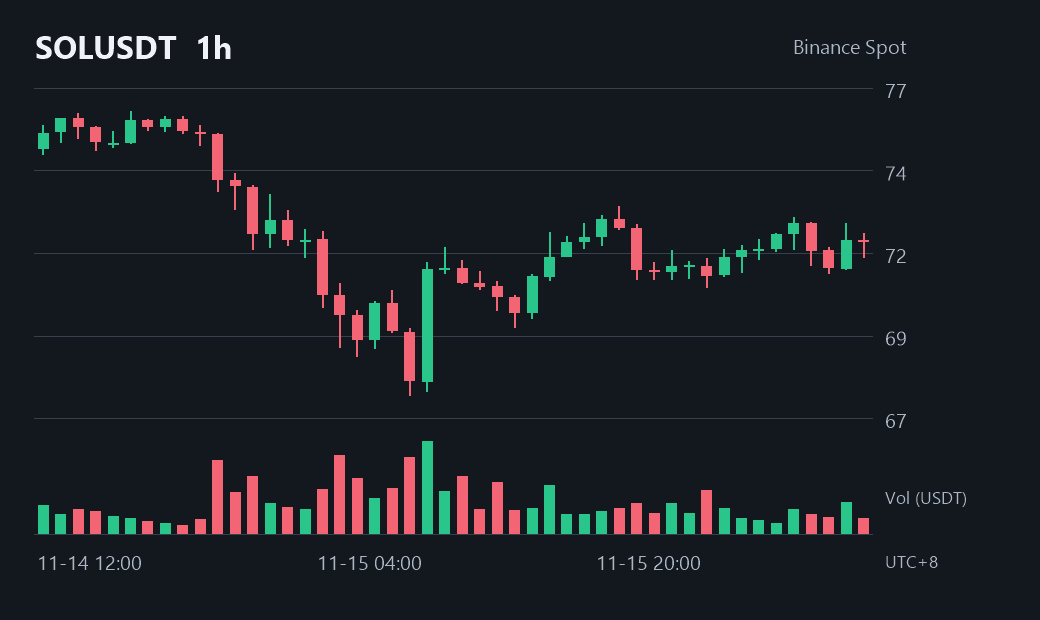
$SOL fell about 20% in a week, briefly touching $67.37 on November 15 before recovering to around $71.
A steep drop can be followed by a bounce, but a reversal needs buyers to keep stepping in. Rather than guess the bottom, I’d rather see whether it can hold above $70 after the rebound: if you think the decline has bottomed, would you look first for the price to stabilize or for trading volume to pick up?
A steep drop can be followed by a bounce, but a reversal needs buyers to keep stepping in. Rather than guess the bottom, I’d rather see whether it can hold above $70 after the rebound: if you think the decline has bottomed, would you look first for the price to stabilize or for trading volume to pick up?
1
484
·
--
Just days after stepping down, Jensen Huang was reported to be discussing a return to Nvidia. Reuters reported on November 15, citing the Financial Times, that he had spoken with people close to him about the possibility of returning. The company had previously announced that CFO Colette Kress would serve as interim CEO.
For now, a return remains a topic of discussion in media reports. I tend to think Nvidia’s upcoming volatility will have an added layer of uncertainty around whether its leadership stays or goes. Even if its earnings figures are strong, how much of a valuation premium will the market be willing to give it while succession plans remain unsettled? Are you more concerned about orders, or who will be at the helm?
For now, a return remains a topic of discussion in media reports. I tend to think Nvidia’s upcoming volatility will have an added layer of uncertainty around whether its leadership stays or goes. Even if its earnings figures are strong, how much of a valuation premium will the market be willing to give it while succession plans remain unsettled? Are you more concerned about orders, or who will be at the helm?
1
400
·
--
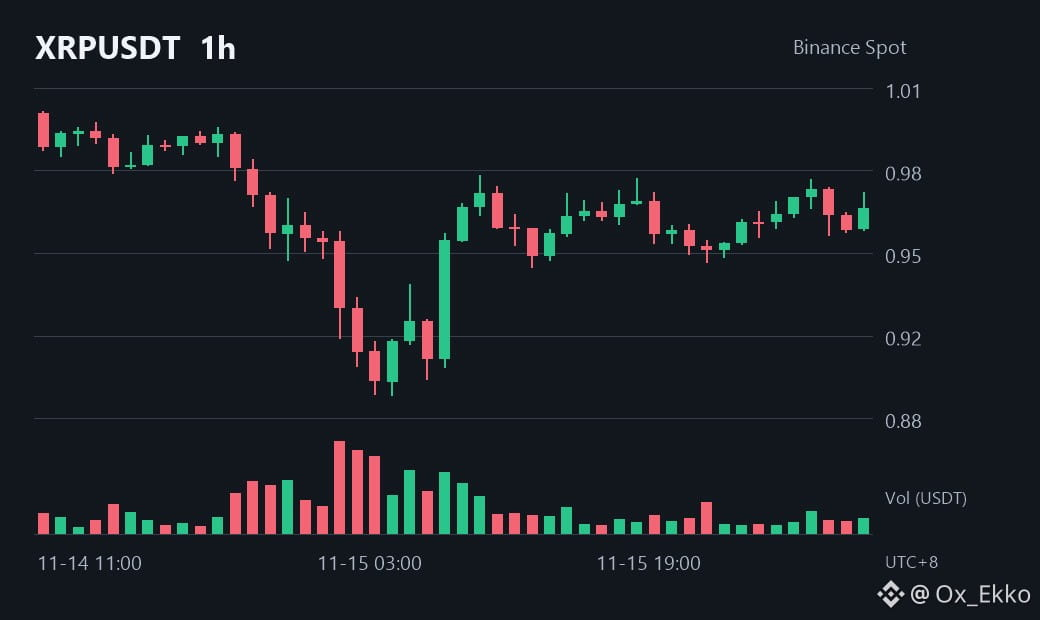
$XRP bounced from a low of $0.89, but still hasn't quite reached $1. At 11:20 Beijing time, Binance's price page showed it at around $0.965, up just 0.07% over 24 hours.
I'm more interested in whether it can hold above $1 this time. After breaking below a round-number threshold, a rebound can easily attract bargain hunters, but getting back above it and holding there is a better test of buying support. Would you see a return to $1 as a sign of recovery, or wait for a successful retest before calling it one?
I'm more interested in whether it can hold above $1 this time. After breaking below a round-number threshold, a rebound can easily attract bargain hunters, but getting back above it and holding there is a better test of buying support. Would you see a return to $1 as a sign of recovery, or wait for a successful retest before calling it one?
1
508
·
--
The Nasdaq fell 0.91% on Friday, but U.S. stock index futures moved higher in early Asian trading on Monday.
Bloomberg’s latest report confirmed the rebound. Nvidia’s earnings and the Fed’s meeting minutes are both due this week. I’m inclined to view this modest recovery as a pre-event test of the waters; it’s still too early to say whether the trend has been confirmed.
For this AI trade to continue, which matters more to you: the revenue Nvidia reports, or what management says about future orders?
1
332
·
--
Verified
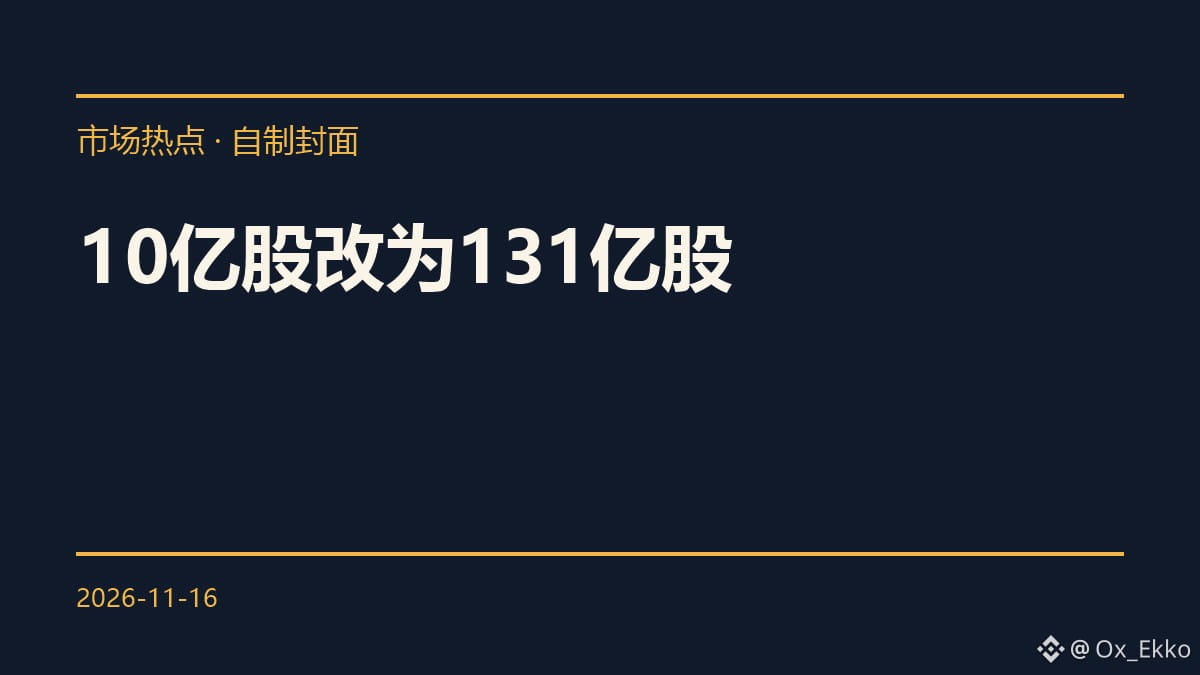
The estimated share count has changed from 1 billion to 13.116 billion. How can Anthropic’s pre-market quote still be compared with yesterday’s?
Binance will begin adjusting the contract size tomorrow at 16:30 Beijing time, and the ticker will also change to ANTUSDT. The share-count denominator has changed, so even if the total valuation stays the same, the per-share price could differ significantly.
On the first day after the change, will you watch the new contract quote, or multiply it back to the total valuation before comparing?
1
1.3k
·
--
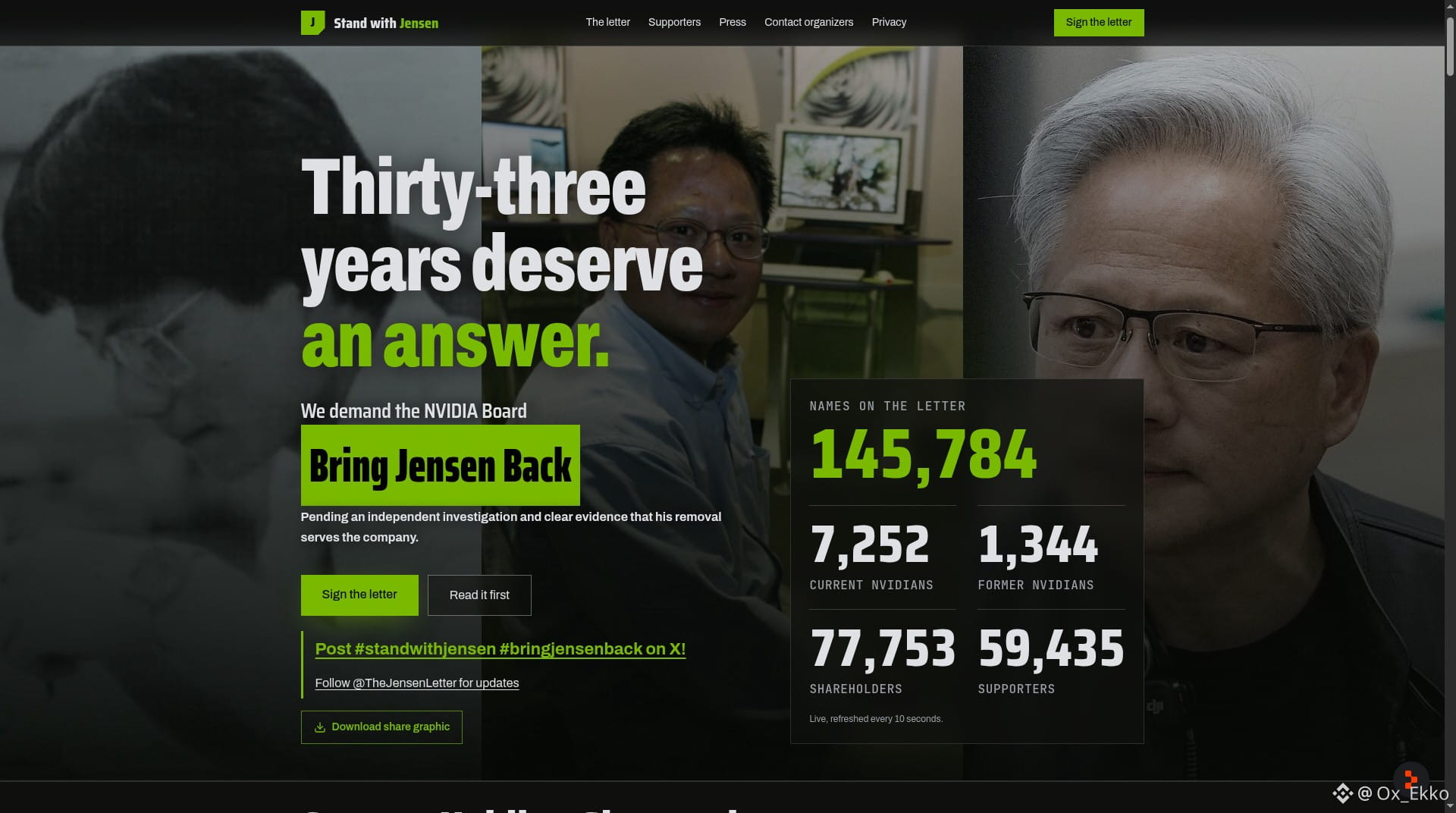
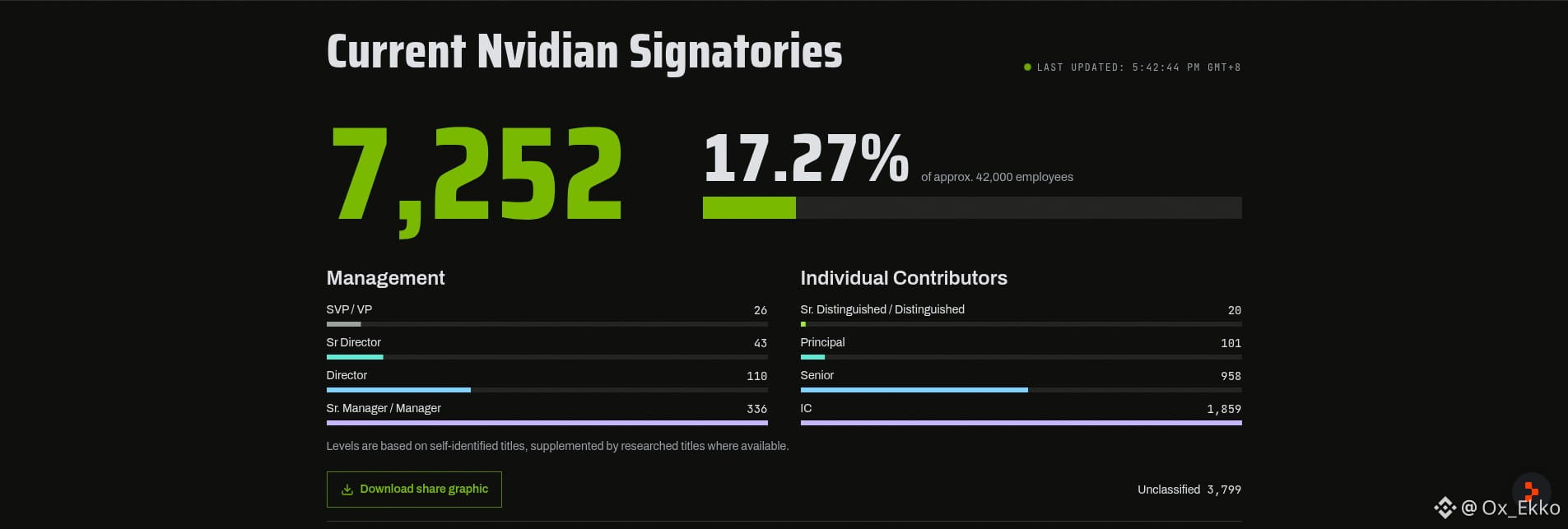
Just after noon, when it had just passed 130,000, this page was still at 133,815. Now it’s up to 145,784—the 17:42 figure.
Current employees increased from 6,690 to 7,252. The website itself estimates a total of about 42,000 people and lists that as 17.27%. These identities haven’t been verified; that’s what their page says.
$NVDA doesn’t open until Monday.
Current employees increased from 6,690 to 7,252. The website itself estimates a total of about 42,000 people and lists that as 17.27%. These identities haven’t been verified; that’s what their page says.
$NVDA doesn’t open until Monday.
2
425
·
--
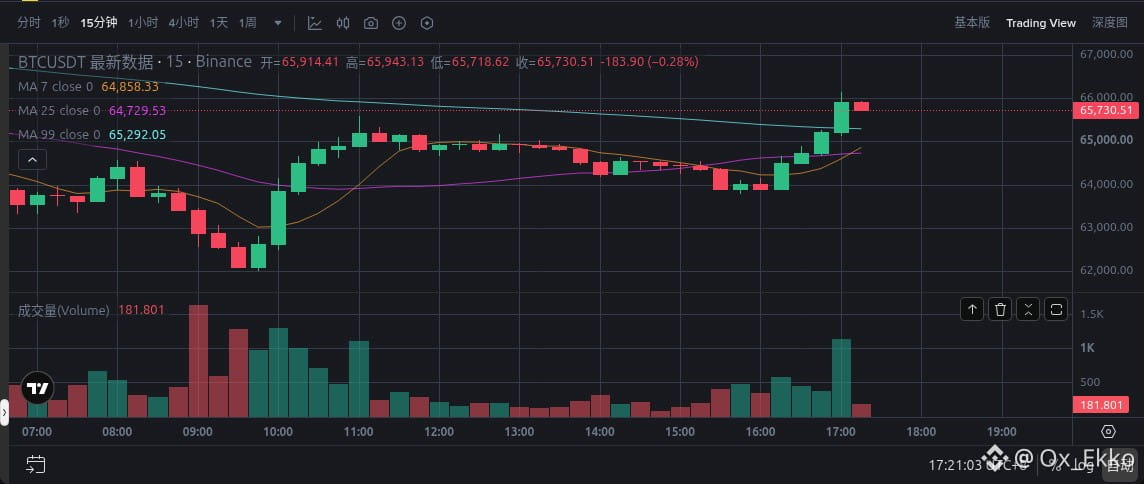
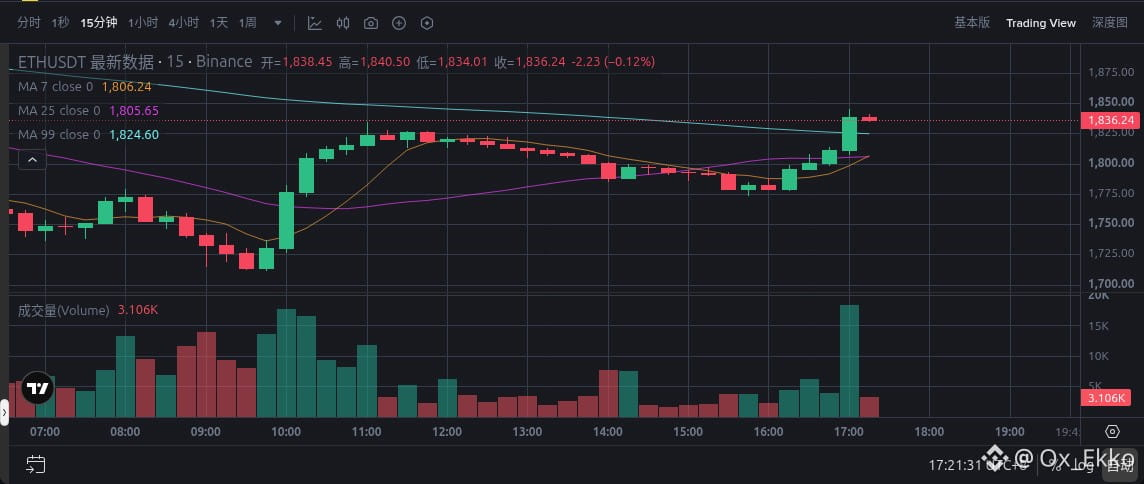
That move just now was pretty intense. At 17:12, during that minute, $BTC hit a high of $66,132.01.
The 17:00 15-minute candle opened at $65,207.01, with a turnover of about $74.52 million, and pushed straight through $66,000. Spot is now back around $65,763.
This morning, the low at 09:45 was $62,006. $ETH also rose as high as $1,845.18, with a morning low of $1,711.08.
The 17:00 15-minute candle opened at $65,207.01, with a turnover of about $74.52 million, and pushed straight through $66,000. Spot is now back around $65,763.
This morning, the low at 09:45 was $62,006. $ETH also rose as high as $1,845.18, with a morning low of $1,711.08.
1
75
·
--
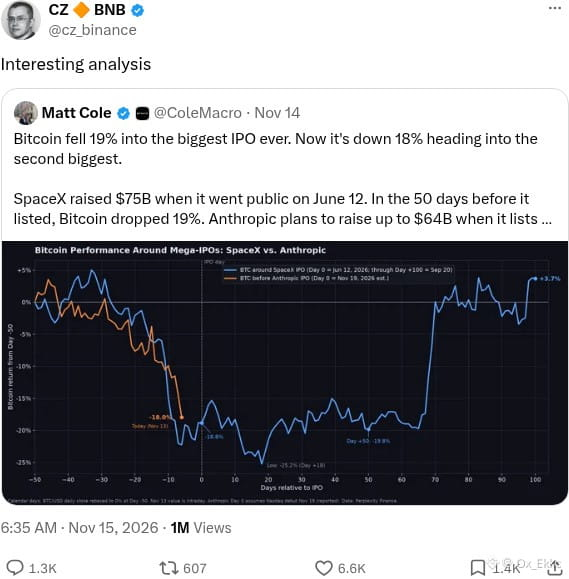
Zhao Changpeng replied with just one sentence: “Interesting analysis.”
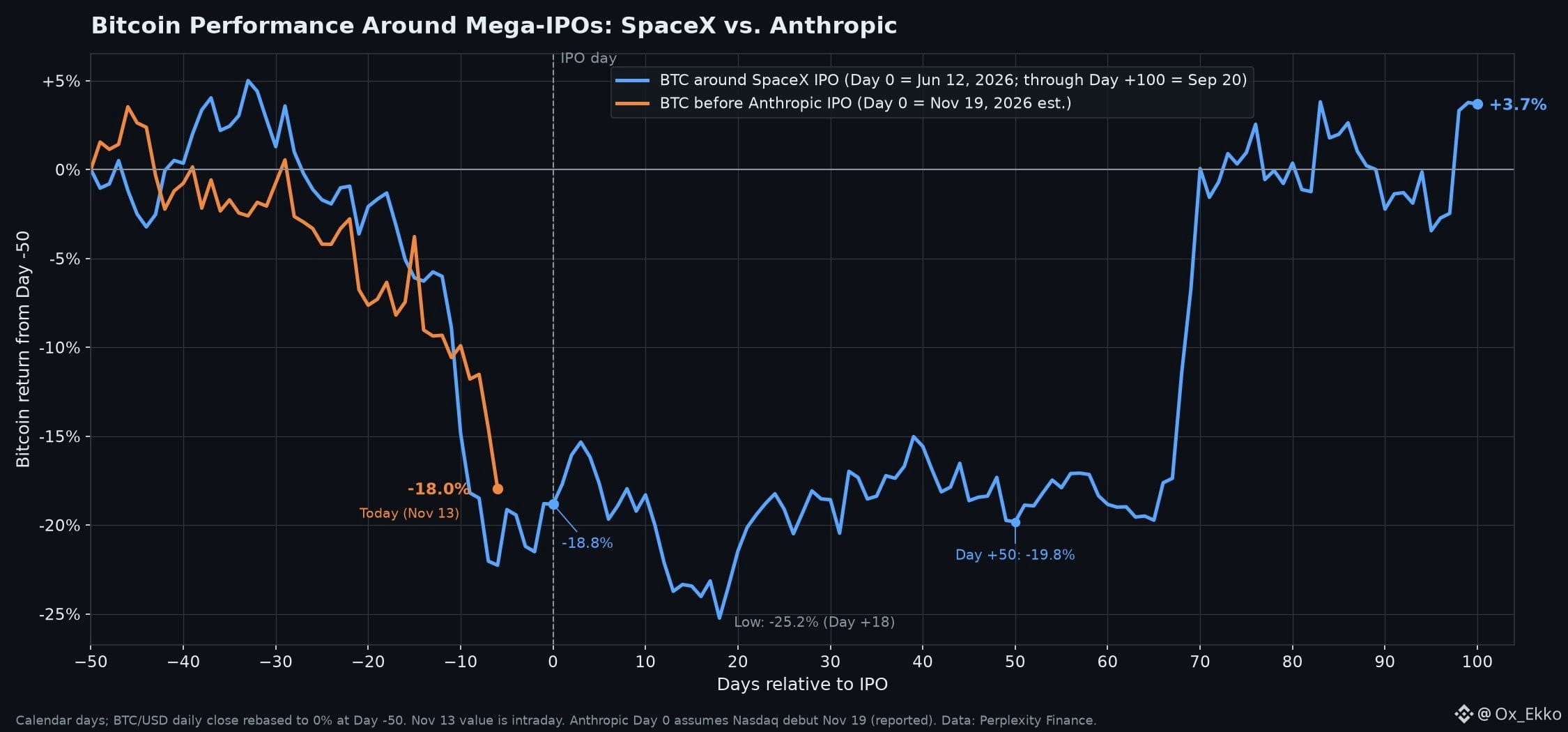
At 6:35 a.m. Beijing time today, he quoted a post on X by Strive CEO Matt Cole. Cole had posted it in the early hours of the 14th. In the 50 days before SpaceX’s June 12 listing, $BTC fell 19%. Anthropic is set to list on the Nasdaq this Thursday, with its public offering capped at around $64 billion; Cole wrote that it had fallen about 18% over the same period. He said the two charts looked quite similar when overlaid.
He also wrote that SpaceX only bottomed out after its listing, and by day 100 it was trading above where it started. Would things be the same this time? He himself noted that markets rarely repeat themselves exactly.
Cole’s post had roughly 1.39 million views and around 4,840 likes. Zhao Changpeng’s post had about 1.05 million views and around 6,600 likes.
Spot $BTC ETFs have also seen outflows over the past two weeks. According to The Block, citing SoSoValue data, there were $1.07 billion in outflows last week, bringing the two-week total to $2.35 billion.
1
2
2.4k
·
--
Partly True
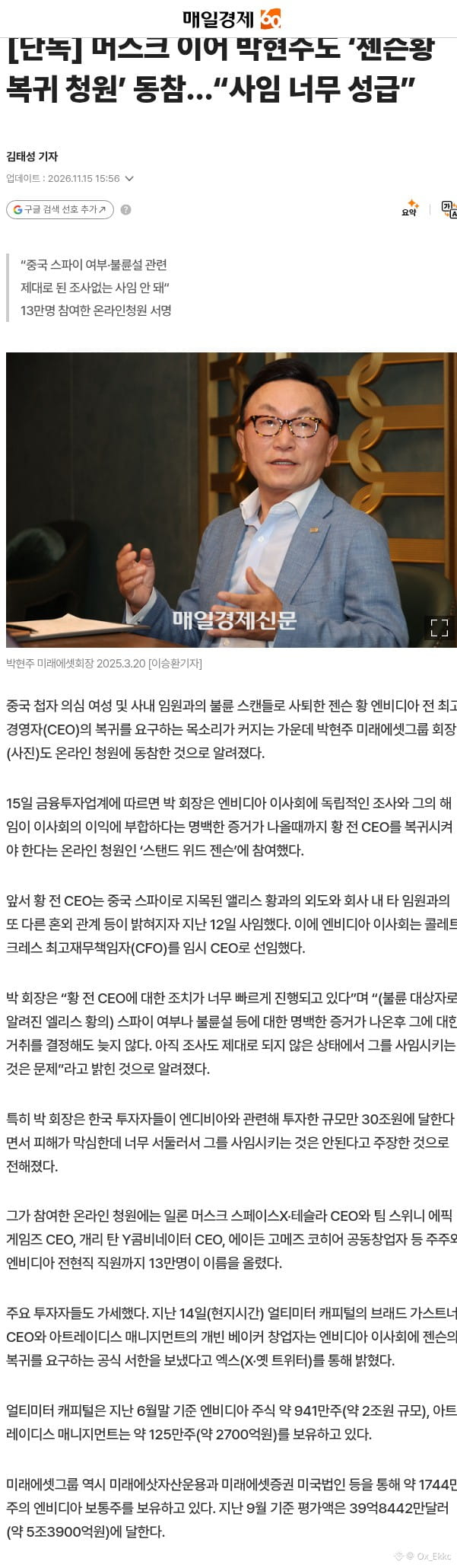
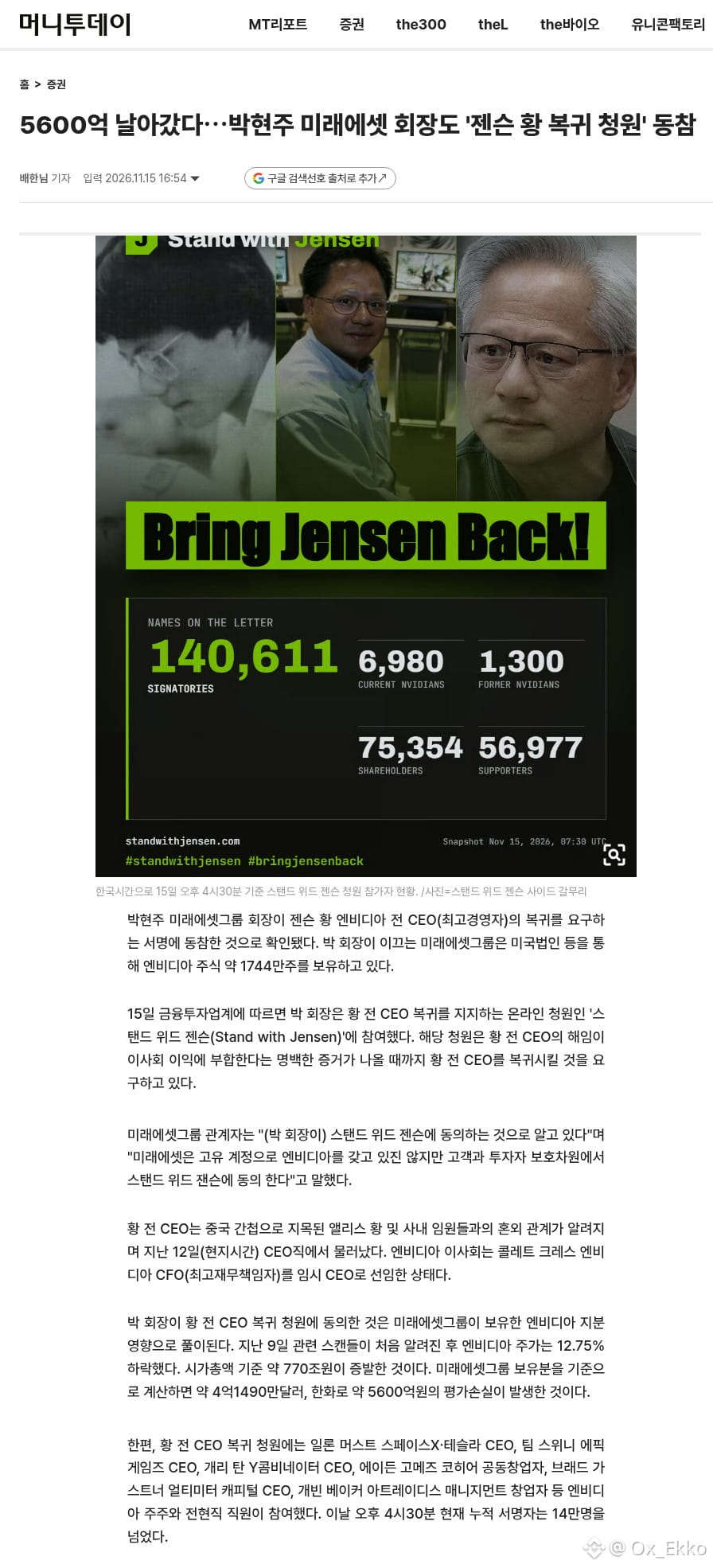
Park Hyeon-ju is in it too. The chairman of Mirae Asset—several Korean outlets reported this afternoon that he was among those who signed the letter asking Huang Renxun to return $NVDA .
In an exclusive story, the Maeil Business Newspaper paraphrased his view: things moved too fast. Whether it was the espionage allegations or the rumors, there was a problem with taking someone into custody before the evidence had been fully examined. He also noted that Korean investors had put roughly 30 trillion won into related assets.
In its report, MoneyToday quoted someone from the group acknowledging that its proprietary accounts did not actually hold this stock; they agreed to the letter to protect clients and investors.
Based on their holdings, they did the math: after the news broke on the 9th, $NVDA fell 12.75%, wiping about $415 million off the books.
1
830
Log in to explore more content
Join global crypto users on Binance Square
⚡️ Get latest and useful information about crypto.
💬 Trusted by the world’s largest crypto exchange.
👍 Discover real insights from verified creators.
Email / Phone number
Trending Topics
A Packed Week of Earnings and Data Tests Markets
62,252 views
395 Discussing
🚨🇺🇸 BIG WEEK AHEAD FOR THE MARKETS!
Markets are pricing in a Fed rate hike in December and $BTC could see some big moves next week.
Here's what's coming:
• Monday: Fed Chair Warsh speaks
• Tuesday: US Retail Sales + $NVDA earnings
• Wednesday: FOMC Minutes
• Thursday: Jobless Claims + Philly Fed Index
• Friday: Consumer Sentiment + Fed speeches
All eyes on $BTC as another important week begins.
#bitcoin
Mookie
·15 Likes
·6.2k views
AnthropicIPOTestsInvestorAppetiteForAI
115,438 views
1,352 Discussing
BitcoinExtendsLosingStreakToSixWeeks
89,295 views
717 Discussing