
Steven_Research
873 Posts

Steven_Research
Report
Block User
Long-term investor
Founder SR INVEST, holder $BNB
Top 14 independent Researcher at @Binance The Blockchain 100 | 2025

Level 1 Creator
21 Following
17.1K+ Followers
2.7K+ Liked
2 Badges
Posts
All
Quotes
Videos
Live
PINNED
Thank you @Binance_Square_Official and the title independent Researcher 2025
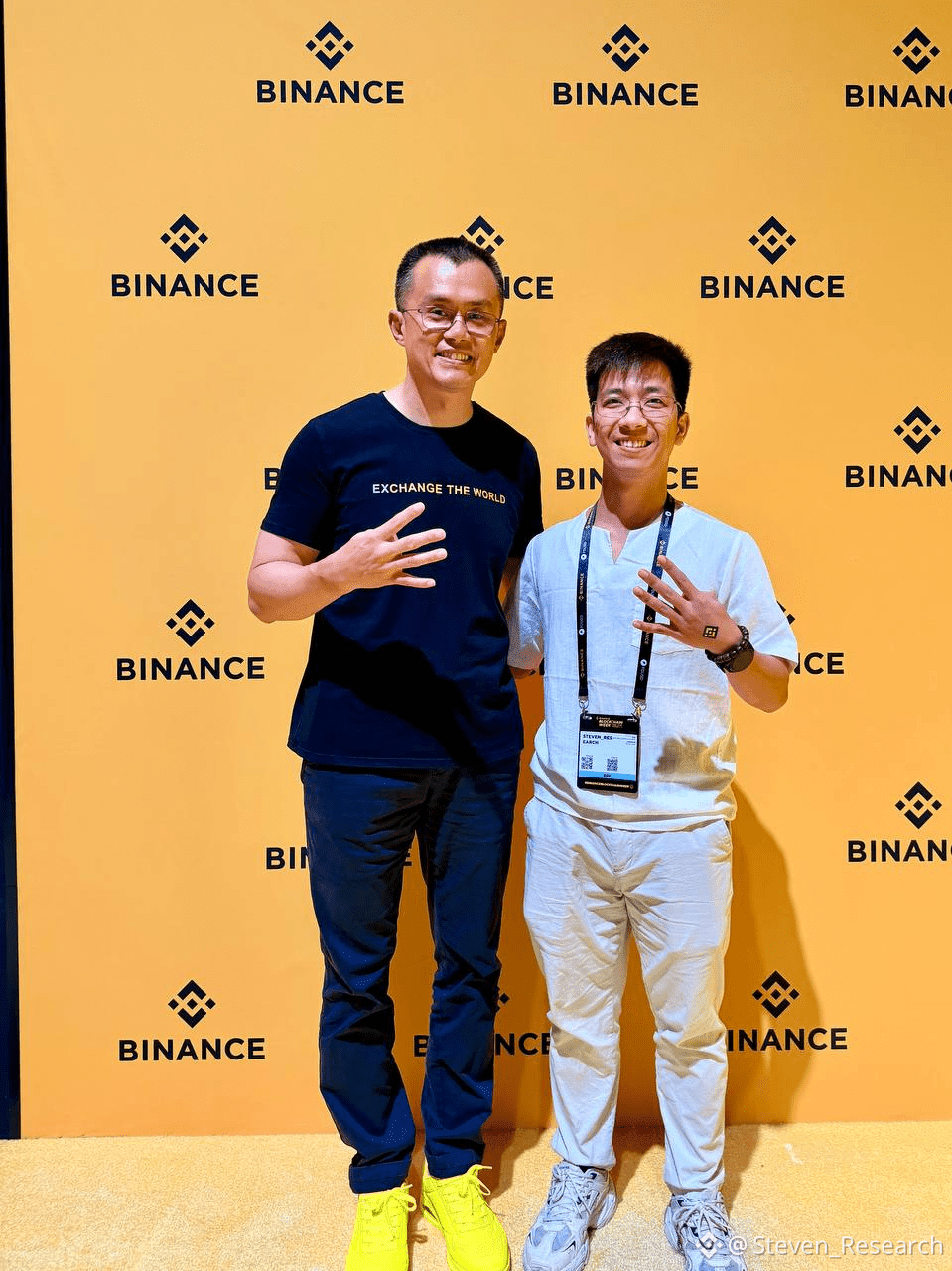
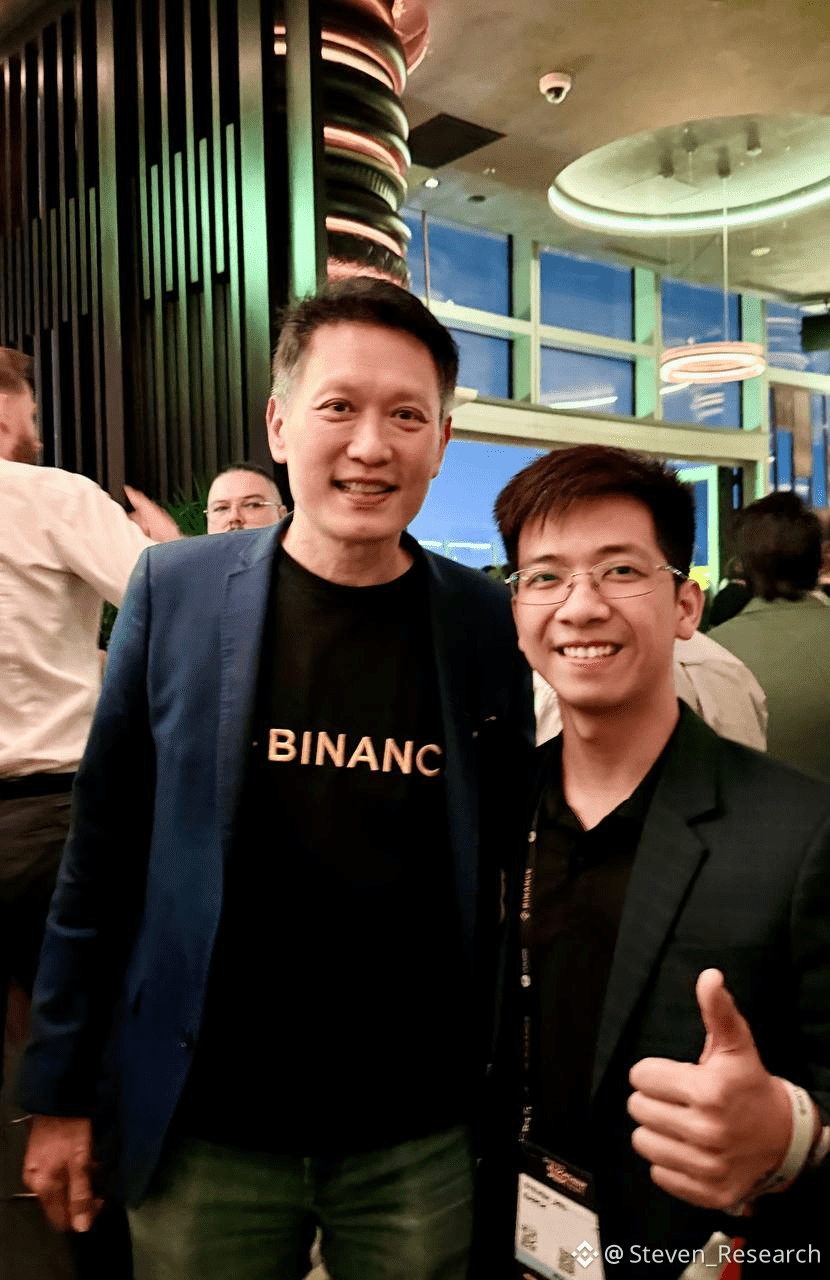
Thank you to the bosses @CZ @heyi @richardteng
Thank you to the bosses @blueshirt666 and Francis, and @nyanangel
It has been a memorable year 2025 with many emotions related to crypto and Binance!
Made many new friends, effective investments, gained more insights into the industry, and found reliable partners and colleagues!
Let's look forward to 2026 with new forecasts! We will be even more dynamic! Very bullish on Binance! 😍
Happy new year 2026!
Thank you @Binance Square Official and the title independent Researcher 2025
Thank you to the bosses @CZ @Yi He @Richard Teng
Thank you to the bosses @Daniel Zou (DZ) 🔶 and Francis, and @Nyan 7
It has been a memorable year 2025 with many emotions related to crypto and Binance!
Made many new friends, effective investments, gained more insights into the industry, and found reliable partners and colleagues!
Let's look forward to 2026 with new forecasts! We will be even more dynamic! Very bullish on Binance! 😍
Happy new year 2026!


2
1
14
1.3k
Article
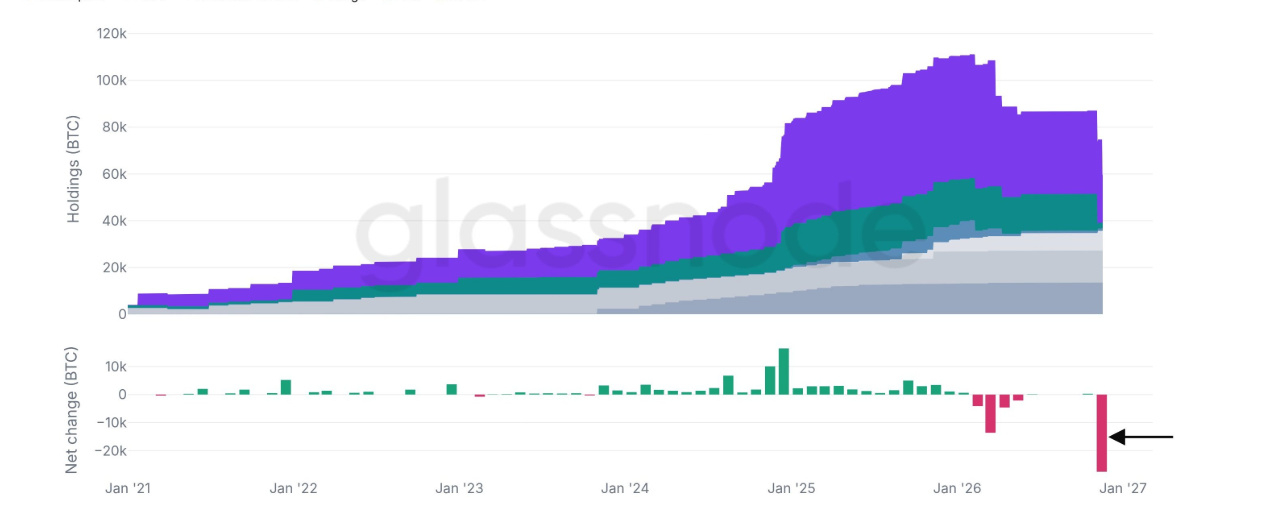
MINERS ARE SELLING BTC AGGRESSIVELY—IS THE MARKET NEARING A CYCLE BOTTOM?Historically, periods of steep Bitcoin price declines have often been accompanied by selling pressure from miners. When mining revenue falls but operating costs and financial obligations still need to be paid, many companies are forced to sell even the $BTC they had accumulated earlier.
The same thing is happening in 2026. However, in addition to revenue pressures, some miners are also selling $BTC to reduce debt, restructure their businesses, and shift investment toward energy and AI infrastructure.
MINERS ARE SELLING BTC AGGRESSIVELY—IS THE MARKET NEARING A CYCLE BOTTOM?
Historically, periods of steep Bitcoin price declines have often been accompanied by selling pressure from miners. When mining revenue falls but operating costs and financial obligations still need to be paid, many companies are forced to sell even the $BTC they had accumulated earlier.
The same thing is happening in 2026. However, in addition to revenue pressures, some miners are also selling $BTC to reduce debt, restructure their businesses, and shift investment toward energy and AI infrastructure.
The same thing is happening in 2026. However, in addition to revenue pressures, some miners are also selling $BTC to reduce debt, restructure their businesses, and shift investment toward energy and AI infrastructure.
311
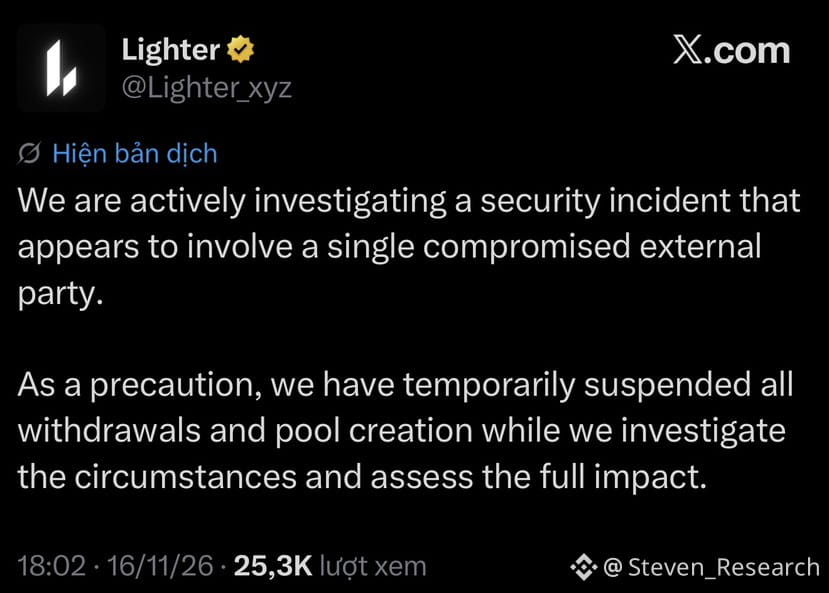
LIGHTER SUSPECTED OF BEING ATTACKED, WITHDRAWALS TEMPORARILY HALTED
Lighter is investigating a suspected security incident involving a compromised third-party account, while temporarily suspending all withdrawals and liquidity pool creation.
Key details:
* 10.39 million USDC was withdrawn from Lighter from a single address, then swapped for approximately 5,750 $ETH via CoW Protocol, according to on-chain analyst MLM.
* $15.48 million is the total reported value associated with two accounts suspected of being affected.
* Suspected cause: API keys belonging to two market makers were leaked, rather than a direct vulnerability in the Lighter protocol.
* The $LIT token briefly fell more than 17% following the news.
1
1.1k
Article
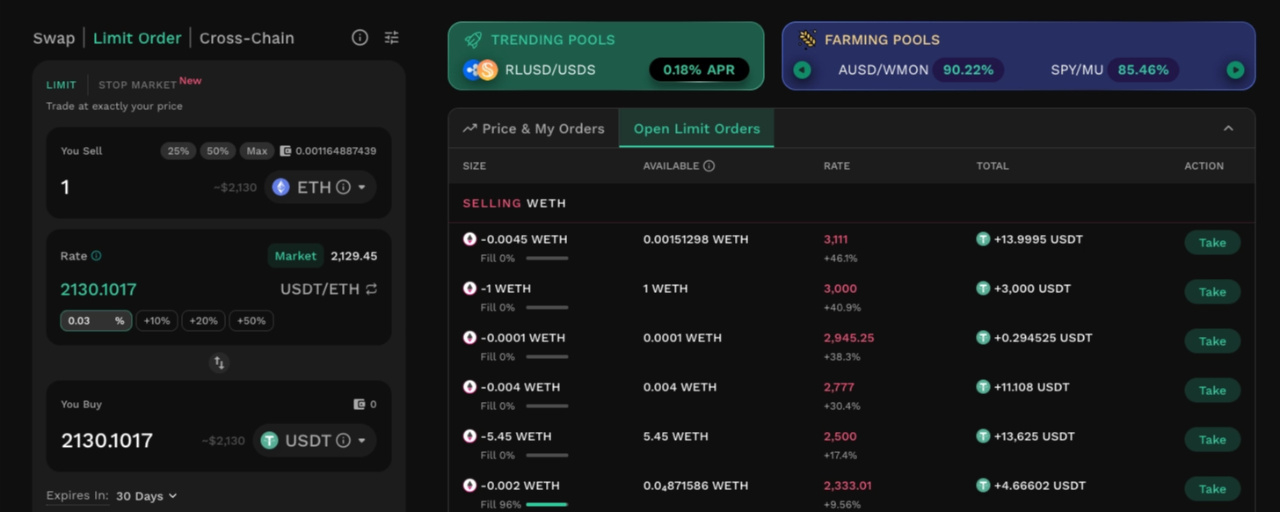
Limit Order vs Stop Market vs Stop Limit: What's the Difference (1)A limit order trades at a price you set and it waits until the market reaches that price. A stop market order waits for a trigger price, then sells at the best available market price. A stop limit order also waits for a trigger, but then places a limit order, so it only fills at your limit price or better.
How Do These Orders Compare at a Glance?
Limit order: You set a limit price. The order is active right away and waits for that price, then fills at your limit price or better. Price control is high, but the order may never fill. Common uses are take profit and buying a dip.
Stop market: You set a trigger price. The order becomes active when the price reaches the trigger, then fills at market price. Price control is low, and it can fill below the trigger, so you may get a worse price in a fast drop. Commonly used as a stop loss when exiting matters most.
Stop limit: You set a stop price and a limit price. The order becomes active when the price reaches the stop price, then fills at your limit price or better. Price control is high, but it may not fill in a fast drop. Commonly used as a stop loss with a price floor.
What Is a Limit Order?
A limit order is an instruction to buy or sell at a specific price or better. A buy limit order sits below the current price, and a sell limit order sits above it. The order waits until the market reaches your price, the order expires, or you cancel it.
A limit order gives you price control, not fill certainty. If the market never reaches your price, the order never fills.
On KyberSwap, the person who creates a Limit Order is the maker, and the person who fills it is the taker. KyberSwap Limit Orders are a liquidity source for the KyberSwap Aggregator, so swaps routed through the Aggregator can fill your order.
Signing a Limit Order does not require gas. The taker pays the gas required to settle it. Token approval and wrapping a native token are separate on-chain actions and require gas.
On Ethereum, small orders are less likely to fill unless the price moves far enough to cover the taker's gas cost. You can cancel an open order with Gasless Cancel, which does not require gas.
What Is a Stop Market Order?
A stop market order waits until the price reaches a trigger you set, then sells at the best available market price. Traders mostly use it as a stop loss, with the trigger below the current price.
The trigger decides when the order runs, not the price you get. In a sharp drop, the fill can land below your trigger.
On KyberSwap, Stop Market automatically swaps a token once its price reaches a trigger you set below the current price. You sign the order from your wallet, and your tokens stay there until it executes.
How it triggers. The order is checked against a Chainlink-powered Oracle price every 5 seconds. It executes when the Oracle price reaches your trigger and the swap can return at least your Min. Receive. The swap is routed through the KyberSwap Aggregator.
How it limits a bad fill. Min. Receive is calculated from your trigger price, minus your Max slippage and the fee. If no route can meet it, the order shows Retrying instead of selling for less.
What it costs. Placing, editing and cancelling a Stop Market order is free. A fee of 0.015% to 1% is charged only on execution, depending on the volatility level of the tokens, with a minimum fee per chain. A first-time token approval requires gas, once per token per chain.
Stop Market works with tokens that have a valid Chainlink price feed. To set one, open the Limit Order tab and select Stop Market.
Why Do You Need Stop Market If You Already Have a Limit Order?
A Limit Order cannot protect you from a price drop. A sell Limit Order only sells at your price or better, so it is built to wait for the price to rise.
If you set a sell Limit Order below the current price, it does not wait for the drop. Your price is already below the market, so the order can fill right away.
Stop Market solves the opposite problem. It waits while the price stays above your trigger and sells only once the price falls to it. On KyberSwap, a Limit Order handles targets above the current price, and Stop Market handles triggers below it.
What Is a Stop Limit Order?
A stop limit order uses two prices: a stop price that activates the order, and a limit price that sets the worst price you accept. When the market reaches the stop price, a limit order is placed at your limit price.
For a sell stop limit, the limit is usually set a little below the stop. For example, a stop at $2,700 and a limit at $2,650. That gap gives the order room to fill if the price keeps sliding.
The trade-off is fill risk. If the price drops straight past your limit, the order waits unfilled while the market keeps falling. You keep your price control, but you may not get out.
Stop limit orders are common on centralized exchanges. KyberSwap offers Stop Market rather than a separate stop limit order. Its Max slippage setting plays a similar role, because it sets the least the swap must return before the order executes.
What Happens to Each Order in a Sharp Drop?
Say ETH trades at $3,000, and you place three sell orders:
A limit order at $3,500A stop market order with a trigger at $2,700A stop limit order with a stop at $2,700 and a limit at $2,650
Then ETH falls from $2,750 to $2,600 within a few minutes.
Limit at $3,500: The price moves away from your target, so the order keeps waiting and your ETH stays unsold.
Stop market at $2,700: It triggers at $2,700 and sells at the market. Your ETH is sold, possibly below $2,700.
Stop limit at $2,700 / $2,650: It triggers at $2,700 and places a limit order at $2,650. If the price drops past $2,650 before the order fills, it stays unfilled while ETH sits at $2,600.
With KyberSwap Stop Market, the result depends on your Max slippage. If a route can still return at least your Min. Receive, the order sells. If the price has fallen further than your Max slippage allows, the order shows Retrying and your ETH stays in your wallet.
No order type wins in every market. The real choice is which risk you would rather take: a worse price, or no fill.
Which Order Should You Use?
Choose the order by your goal, not by the order name.
Limit order: Use it to sell at a higher price (take profit) or to buy at a lower price.
Stop market: Use it to get out of a falling position, even at a worse price.
Stop limit: Use it to get out of a falling position, but not below a set price.
For volatile or thinly traded tokens, a stop limit is more likely to miss, because the price can jump past your limit. A stop market order is the safer exit there, as long as you accept some slippage.
On KyberSwap, you can combine both order types on one position: Stop Market below the current price as your stop loss, and a sell Limit Order above it as your take profit. They are separate orders, so when one executes, cancel the other.
FAQ
Is a Stop Limit Order Better Than a Stop Market Order?
A stop limit order is better for price control, and a stop market order is better for making sure you exit. If missing the exit would hurt more than a worse fill, use a stop market order.
Is a Stop Limit Order the Same as a Limit Order?
No. A limit order is active as soon as you place it. A stop limit order only becomes a limit order after the market reaches your stop price.
Can a KyberSwap Limit Order Be Partially Filled?
Yes. A KyberSwap Limit Order can be partially filled, and the unfilled amount stays open until it fills, expires or is cancelled.
Picking the Right Order for Your Trade
If you are waiting for a better price to buy or sell, a limit order is the right tool. If you need protection on the way down, decide whether getting out or protecting your price matters more. A stop market order puts the exit first, and a stop limit order puts the price floor first.
On KyberSwap, you can set both sides of a trade from your own wallet: a Limit Order for your target and Stop Market for your stop loss. Open the Limit Order tab on KyberSwap to set your first order.
Limit Order vs Stop Market vs Stop Limit: What's the Difference (1)
A limit order trades at a price you set and it waits until the market reaches that price. A stop market order waits for a trigger price, then sells at the best available market price. A stop limit order also waits for a trigger, but then places a limit order, so it only fills at your limit price or better.
How Do These Orders Compare at a Glance?
Limit order: You set a limit price. The order is active right away and waits for that price, then fills at your limit price or better. Price control is high, but the order may never fill. Common uses are take profit and buying a dip.
Stop market: You set a trigger price. The order becomes active when the price reaches the trigger, then fills at market price. Price control is low, and it can fill below the trigger, so you may get a worse price in a fast drop. Commonly used as a stop loss when exiting matters most.
Stop limit: You set a stop price and a limit price. The order becomes active when the price reaches the stop price, then fills at your limit price or better. Price control is high, but it may not fill in a fast drop. Commonly used as a stop loss with a price floor.
What Is a Limit Order?
A limit order is an instruction to buy or sell at a specific price or better. A buy limit order sits below the current price, and a sell limit order sits above it. The order waits until the market reaches your price, the order expires, or you cancel it.
A limit order gives you price control, not fill certainty. If the market never reaches your price, the order never fills.
On KyberSwap, the person who creates a Limit Order is the maker, and the person who fills it is the taker. KyberSwap Limit Orders are a liquidity source for the KyberSwap Aggregator, so swaps routed through the Aggregator can fill your order.
Signing a Limit Order does not require gas. The taker pays the gas required to settle it. Token approval and wrapping a native token are separate on-chain actions and require gas.
On Ethereum, small orders are less likely to fill unless the price moves far enough to cover the taker's gas cost. You can cancel an open order with Gasless Cancel, which does not require gas.
What Is a Stop Market Order?
A stop market order waits until the price reaches a trigger you set, then sells at the best available market price. Traders mostly use it as a stop loss, with the trigger below the current price.
The trigger decides when the order runs, not the price you get. In a sharp drop, the fill can land below your trigger.
On KyberSwap, Stop Market automatically swaps a token once its price reaches a trigger you set below the current price. You sign the order from your wallet, and your tokens stay there until it executes.
How it triggers. The order is checked against a Chainlink-powered Oracle price every 5 seconds. It executes when the Oracle price reaches your trigger and the swap can return at least your Min. Receive. The swap is routed through the KyberSwap Aggregator.
How it limits a bad fill. Min. Receive is calculated from your trigger price, minus your Max slippage and the fee. If no route can meet it, the order shows Retrying instead of selling for less.
What it costs. Placing, editing and cancelling a Stop Market order is free. A fee of 0.015% to 1% is charged only on execution, depending on the volatility level of the tokens, with a minimum fee per chain. A first-time token approval requires gas, once per token per chain.
Stop Market works with tokens that have a valid Chainlink price feed. To set one, open the Limit Order tab and select Stop Market.
Why Do You Need Stop Market If You Already Have a Limit Order?
A Limit Order cannot protect you from a price drop. A sell Limit Order only sells at your price or better, so it is built to wait for the price to rise.
If you set a sell Limit Order below the current price, it does not wait for the drop. Your price is already below the market, so the order can fill right away.
Stop Market solves the opposite problem. It waits while the price stays above your trigger and sells only once the price falls to it. On KyberSwap, a Limit Order handles targets above the current price, and Stop Market handles triggers below it.
What Is a Stop Limit Order?
A stop limit order uses two prices: a stop price that activates the order, and a limit price that sets the worst price you accept. When the market reaches the stop price, a limit order is placed at your limit price.
For a sell stop limit, the limit is usually set a little below the stop. For example, a stop at $2,700 and a limit at $2,650. That gap gives the order room to fill if the price keeps sliding.
The trade-off is fill risk. If the price drops straight past your limit, the order waits unfilled while the market keeps falling. You keep your price control, but you may not get out.
Stop limit orders are common on centralized exchanges. KyberSwap offers Stop Market rather than a separate stop limit order. Its Max slippage setting plays a similar role, because it sets the least the swap must return before the order executes.
What Happens to Each Order in a Sharp Drop?
Say ETH trades at $3,000, and you place three sell orders:
A limit order at $3,500A stop market order with a trigger at $2,700A stop limit order with a stop at $2,700 and a limit at $2,650
Then ETH falls from $2,750 to $2,600 within a few minutes.
Limit at $3,500: The price moves away from your target, so the order keeps waiting and your ETH stays unsold.
Stop market at $2,700: It triggers at $2,700 and sells at the market. Your ETH is sold, possibly below $2,700.
Stop limit at $2,700 / $2,650: It triggers at $2,700 and places a limit order at $2,650. If the price drops past $2,650 before the order fills, it stays unfilled while ETH sits at $2,600.
With KyberSwap Stop Market, the result depends on your Max slippage. If a route can still return at least your Min. Receive, the order sells. If the price has fallen further than your Max slippage allows, the order shows Retrying and your ETH stays in your wallet.
No order type wins in every market. The real choice is which risk you would rather take: a worse price, or no fill.
Which Order Should You Use?
Choose the order by your goal, not by the order name.
Limit order: Use it to sell at a higher price (take profit) or to buy at a lower price.
Stop market: Use it to get out of a falling position, even at a worse price.
Stop limit: Use it to get out of a falling position, but not below a set price.
For volatile or thinly traded tokens, a stop limit is more likely to miss, because the price can jump past your limit. A stop market order is the safer exit there, as long as you accept some slippage.
On KyberSwap, you can combine both order types on one position: Stop Market below the current price as your stop loss, and a sell Limit Order above it as your take profit. They are separate orders, so when one executes, cancel the other.
FAQ
Is a Stop Limit Order Better Than a Stop Market Order?
A stop limit order is better for price control, and a stop market order is better for making sure you exit. If missing the exit would hurt more than a worse fill, use a stop market order.
Is a Stop Limit Order the Same as a Limit Order?
No. A limit order is active as soon as you place it. A stop limit order only becomes a limit order after the market reaches your stop price.
Can a KyberSwap Limit Order Be Partially Filled?
Yes. A KyberSwap Limit Order can be partially filled, and the unfilled amount stays open until it fills, expires or is cancelled.
Picking the Right Order for Your Trade
If you are waiting for a better price to buy or sell, a limit order is the right tool. If you need protection on the way down, decide whether getting out or protecting your price matters more. A stop market order puts the exit first, and a stop limit order puts the price floor first.
On KyberSwap, you can set both sides of a trade from your own wallet: a Limit Order for your target and Stop Market for your stop loss. Open the Limit Order tab on KyberSwap to set your first order.
1
503

Article
A WEEK OF TURMOIL: NOVEMBER 9–15, 2026Over the past week, global financial markets saw a series of notable developments, from the leadership crisis at NVIDIA and a wave of crypto sell-offs to changes in banking, AI, and U.S. financial policy.
*1. NVIDIA and the Jensen Huang crisis
1. Jensen Huang officially resigned as NVIDIA CEO after 33 years at the helm, amid controversy over extramarital relationships and allegations of Chinese espionage. CFO Colette Kress was appointed interim CEO.
A WEEK OF TURMOIL: NOVEMBER 9–15, 2026
Over the past week, global financial markets saw a series of notable developments, from the leadership crisis at NVIDIA and a wave of crypto sell-offs to changes in banking, AI, and U.S. financial policy.
*1. NVIDIA and the Jensen Huang crisis
1. Jensen Huang officially resigned as NVIDIA CEO after 33 years at the helm, amid controversy over extramarital relationships and allegations of Chinese espionage. CFO Colette Kress was appointed interim CEO.
*1. NVIDIA and the Jensen Huang crisis
1. Jensen Huang officially resigned as NVIDIA CEO after 33 years at the helm, amid controversy over extramarital relationships and allegations of Chinese espionage. CFO Colette Kress was appointed interim CEO.
1.1k
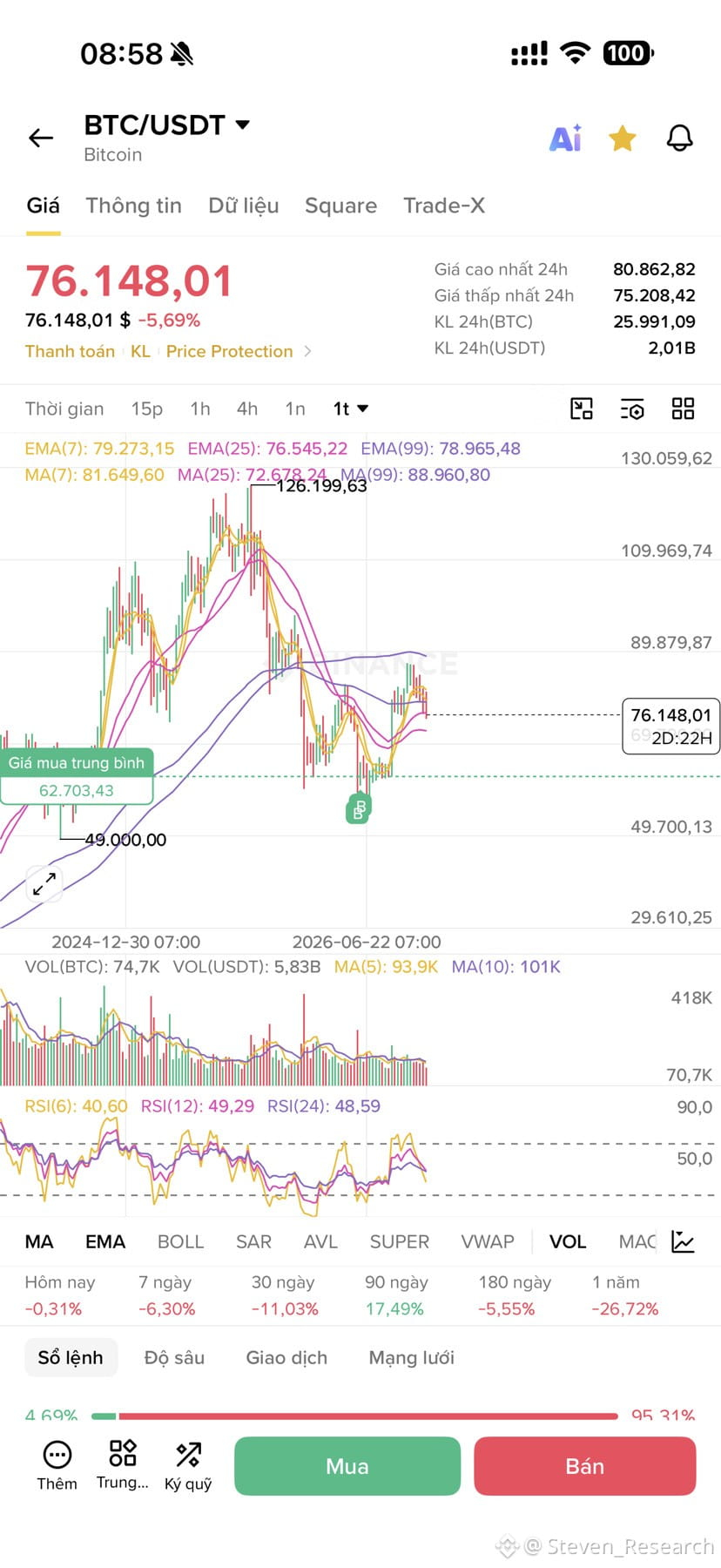
I only started adding to my $BTC stash about 4–5 weeks ago. Hopefully I can keep buying, right guys? 😁
When I announced my accumulation strategy, someone asked why I didn’t wait until the end of the year to buy at lower prices. You all know what happened after that.
The recent wave was pretty good if you knew how to make the most of it, and growing the portfolio worked out well too (I kept a close eye on some other alts with the group—$NEAR alone had 2–3 runs).
Lately, if you didn’t take advantage of crypto, there weren’t many other markets where you could make a little money so easily.
Let’s just keep taking it easy, guys 🤝
1
2
1.1k
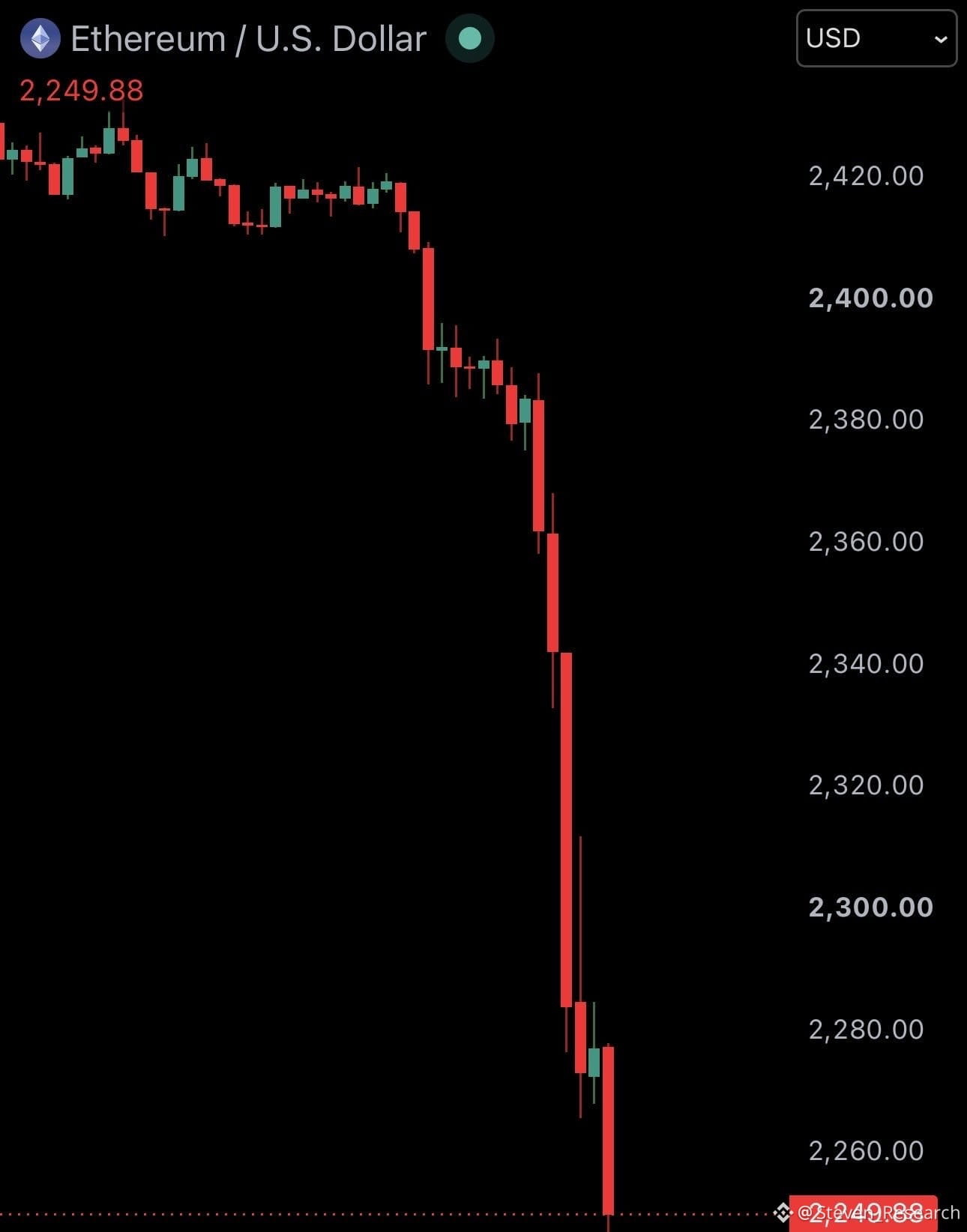
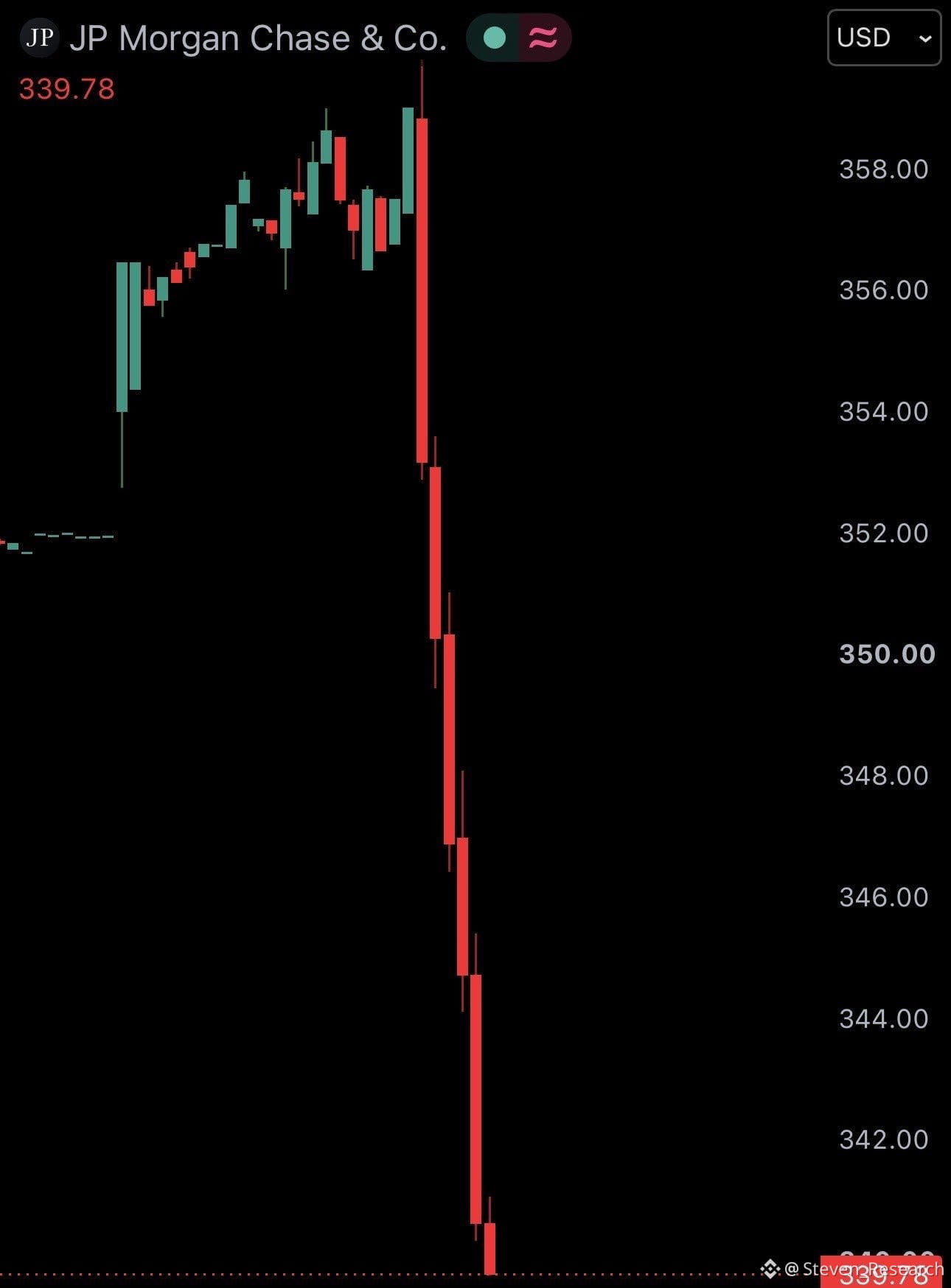
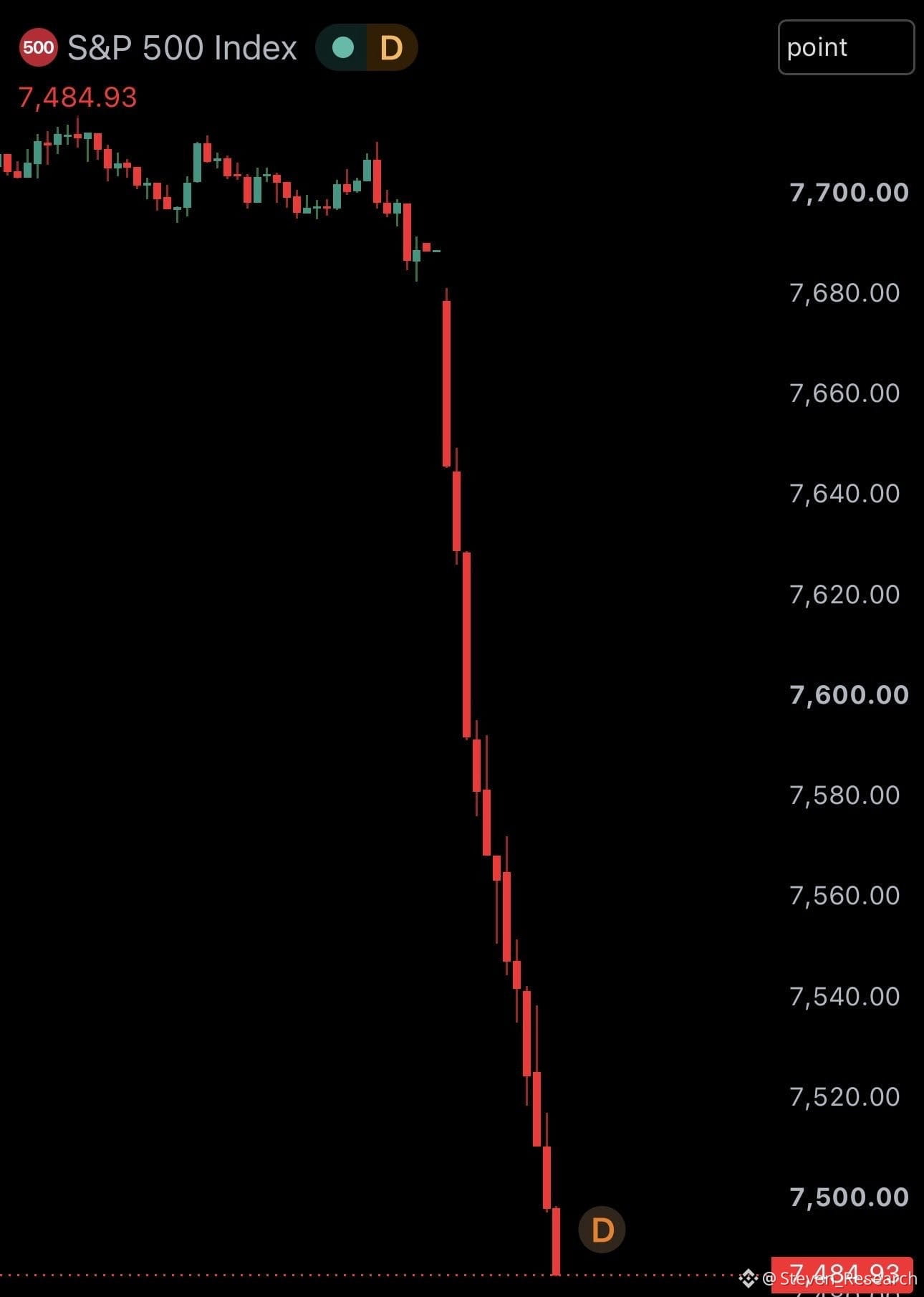
*U.S. stocks are facing a fairly heavy sell-off, especially tech/AI stocks:
- Nasdaq $NASDAQ is down sharply by around 3–5.5%, moving into correction territory (down more than 10% from its October 6 peak).
- S&P 500 is down around 2–3.5%.
- The Dow also turned lower after briefly rising following the open.
- Tesla and SpaceX are also down sharply.
=>According to WatcherGuru, the market lost around $2.3 trillion in market capitalization in just the first hour of trading, and more than $1 trillion right at the opening.
*Crypto is also being dragged down sharply:
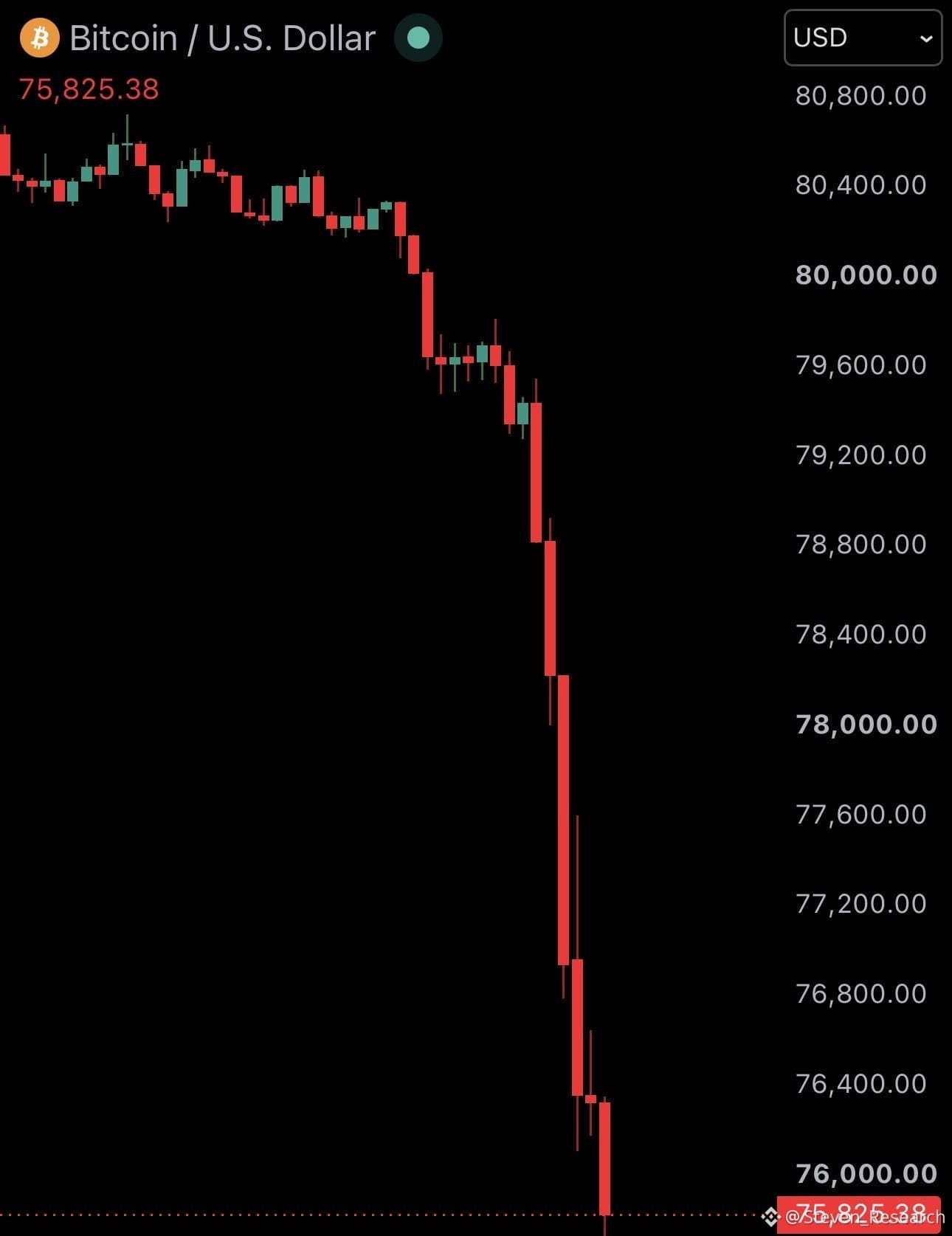
- Bitcoin $BTC fell to around $76,000.
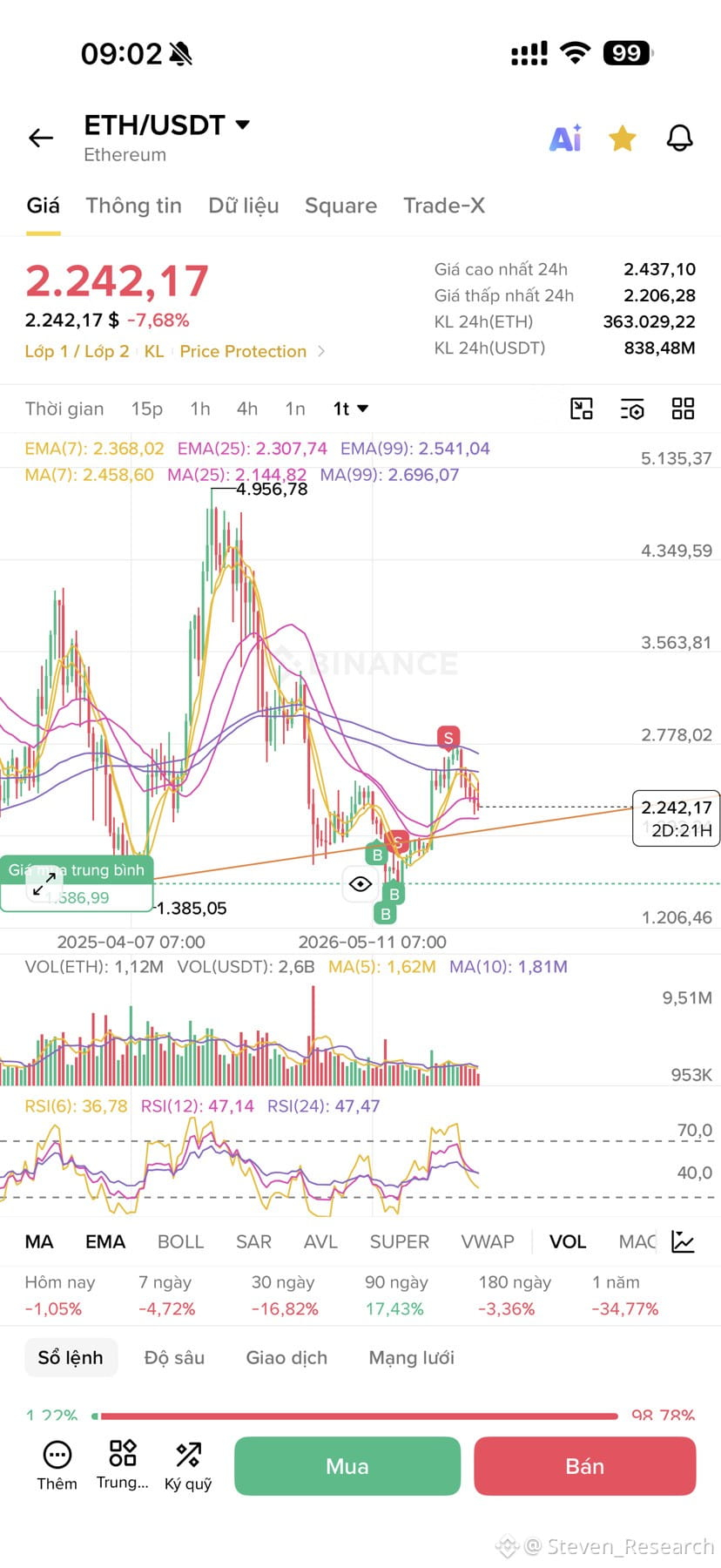
- Ethereum $ETH fell to 2.2k.
- XRP is down ~4.95%, and Solana is down ~6.20%.
=> More than $870 million in leveraged positions were liquidated within 4 hours.
*Main reasons:
- Investors are concerned that a Democratic-controlled Congress will tighten regulations and oversight of data center construction and AI infrastructure (there is strong local opposition in many states).
- Semiconductor and AI stocks are being heavily sold: Nvidia is down around 5–9%, and AMD is down sharply (~12%).
- Qualcomm is down around 10% due to a weak outlook.
- Profit-taking after yesterday’s rally, along with concerns that AI spending is too high while returns remain unclear.
1.1k
Thank you, everyone!
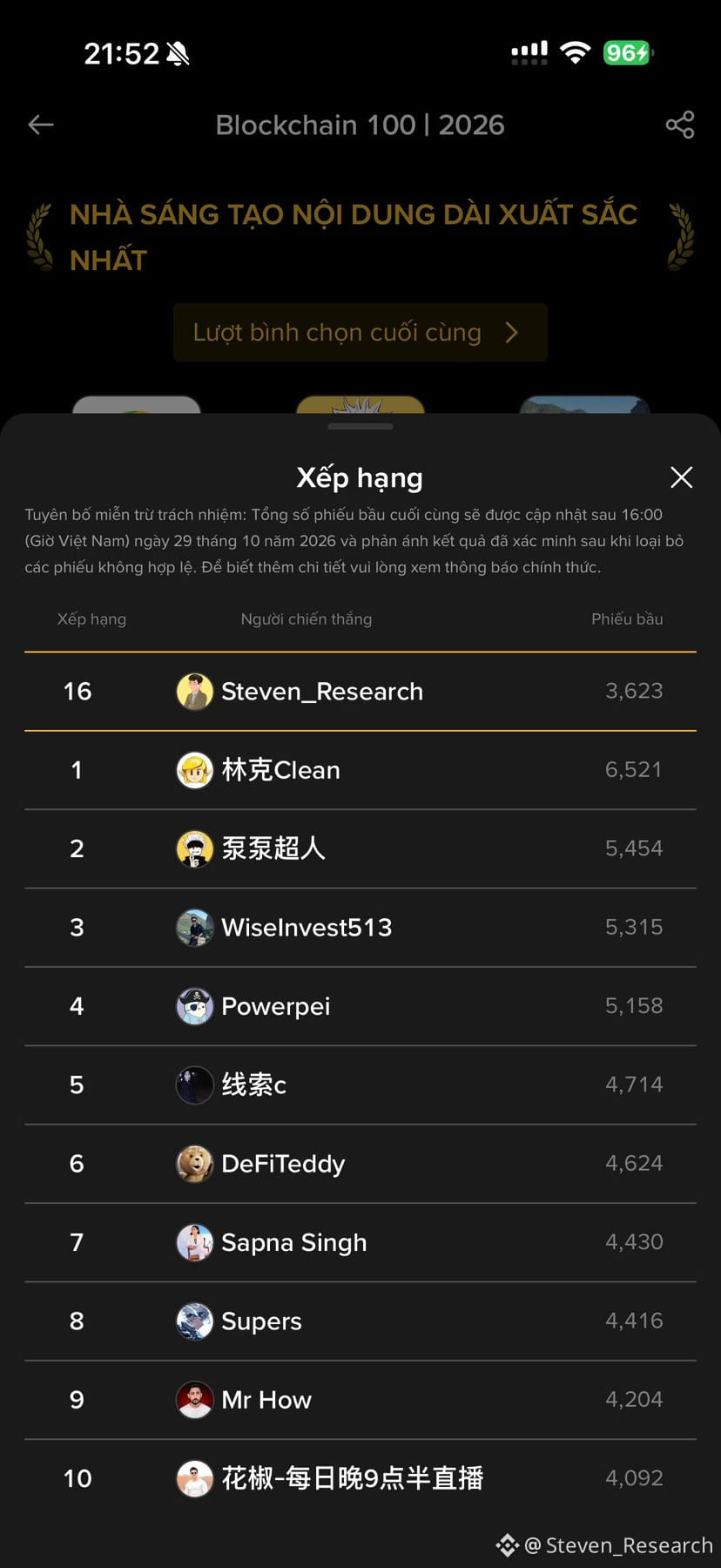
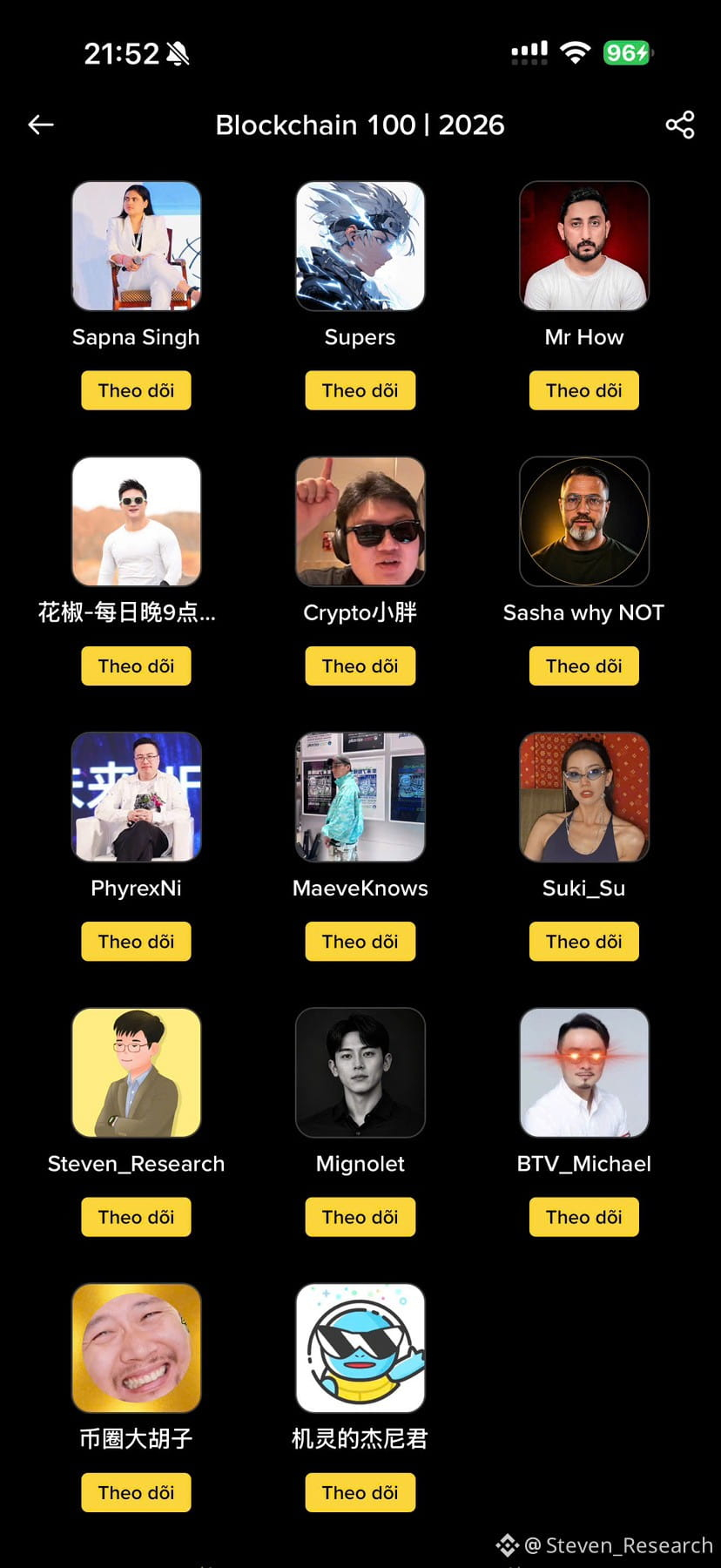
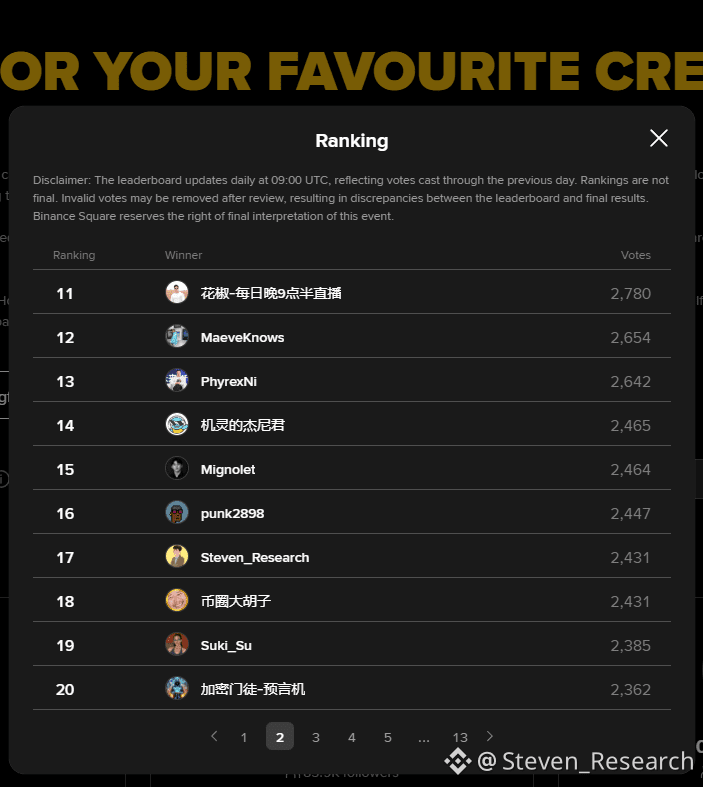
@Steven_Research is lucky to have made the top 20 in the Best Longform Creator category of @Binance_Square_Official Blockchain 100.
Also the only Vietnamese member featured in this category 🤝
Thank you to the VN community and my KOL friends for your support 🫶 ❤️
Thank you, everyone!
@Steven_Research is lucky to have made the top 20 in the Best Longform Creator category of @Binance Square Official Blockchain 100.
Also the only Vietnamese member featured in this category 🤝
Thank you to the VN community and my KOL friends for your support 🫶 ❤️
@Steven_Research is lucky to have made the top 20 in the Best Longform Creator category of @Binance Square Official Blockchain 100.
Also the only Vietnamese member featured in this category 🤝
Thank you to the VN community and my KOL friends for your support 🫶 ❤️

3
18
5.8k
Article
VIETNAM DIGITAL ASSET NEWSLETTER | 26/10–1/11/2026No new legal documents, tax policy changes, or exchange licensing decisions were recorded last week.
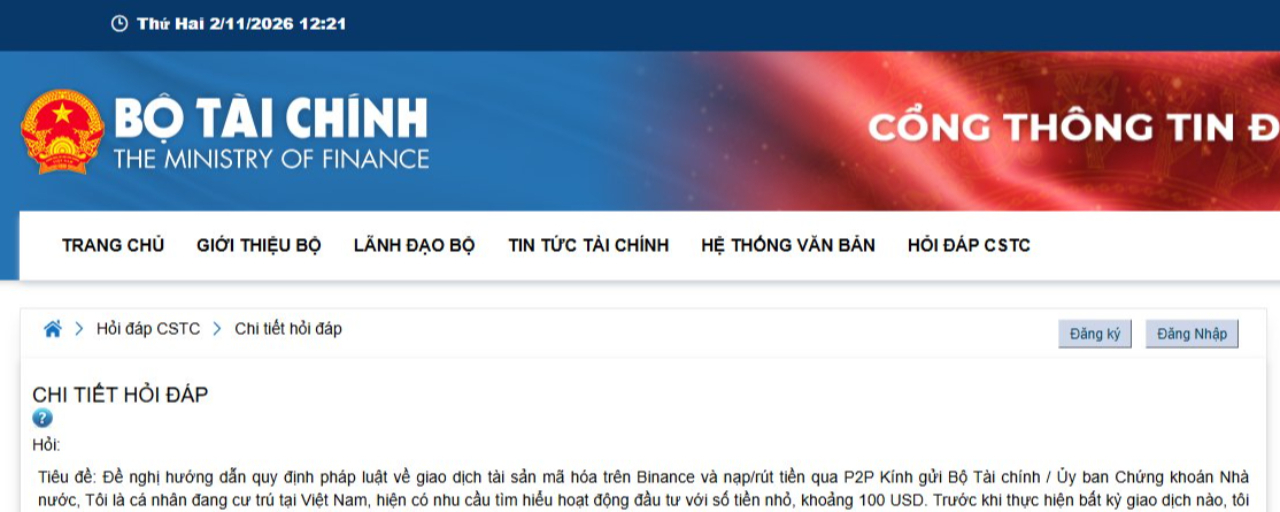
- Notably, the Ministry of Finance has issued an official response more directly addressing Binance, P2P, and tokenized products.
1. Ministry of Finance confirms that no exchanges have been licensed
- In its Q&A dated 28/10/2026, the Ministry of Finance confirmed that, as of the date of its response, no organization providing crypto-asset services had been licensed; the domestic market is not yet operational. Therefore, the six-month transition period for transactions outside licensed organizations has not yet begun.
VIETNAM DIGITAL ASSET NEWSLETTER | 26/10–1/11/2026
No new legal documents, tax policy changes, or exchange licensing decisions were recorded last week.
- Notably, the Ministry of Finance has issued an official response more directly addressing Binance, P2P, and tokenized products.
1. Ministry of Finance confirms that no exchanges have been licensed
- In its Q&A dated 28/10/2026, the Ministry of Finance confirmed that, as of the date of its response, no organization providing crypto-asset services had been licensed; the domestic market is not yet operational. Therefore, the six-month transition period for transactions outside licensed organizations has not yet begun.
2
2.3k
Article
TRUSTFLOW TRACES BINANCE HACK: $6.3 BILLION IN ASSETS AFFECTEDOn October 30, 2026, Binance announced that approximately $6.3 billion in assets were affected by an attack on its hot wallet system, of which around $3 billion had been frozen on-chain. The exchange temporarily suspended deposits and withdrawals to conduct security checks and pledged to use the SAFU fund and company funds to compensate users.
- Based on TrustFlow’s initial on-chain tracing report, there are 3 notable points about this attack.
1. How did the stolen funds move?
TRUSTFLOW TRACES BINANCE HACK: $6.3 BILLION IN ASSETS AFFECTED
On October 30, 2026, Binance announced that approximately $6.3 billion in assets were affected by an attack on its hot wallet system, of which around $3 billion had been frozen on-chain. The exchange temporarily suspended deposits and withdrawals to conduct security checks and pledged to use the SAFU fund and company funds to compensate users.
- Based on TrustFlow’s initial on-chain tracing report, there are 3 notable points about this attack.
1. How did the stolen funds move?
- Based on TrustFlow’s initial on-chain tracing report, there are 3 notable points about this attack.
1. How did the stolen funds move?
1.1k
Verified
Article
DTCC OFFICIALLY TOKENIZES SECURITIES: IS THE RWA MARKET ENTERING A NEW PHASE?On October 28, DTCC, the operator of the largest securities depository, settlement, and clearing infrastructure in the U.S., announced the launch of its securities tokenization service on Canton Network $CC and its private blockchain.
- This is a notable development for the Real World Assets (RWA) sector, as one of the most important organizations in traditional financial markets begins bringing securities held in custody into blockchain workflows.
DTCC OFFICIALLY TOKENIZES SECURITIES: IS THE RWA MARKET ENTERING A NEW PHASE?
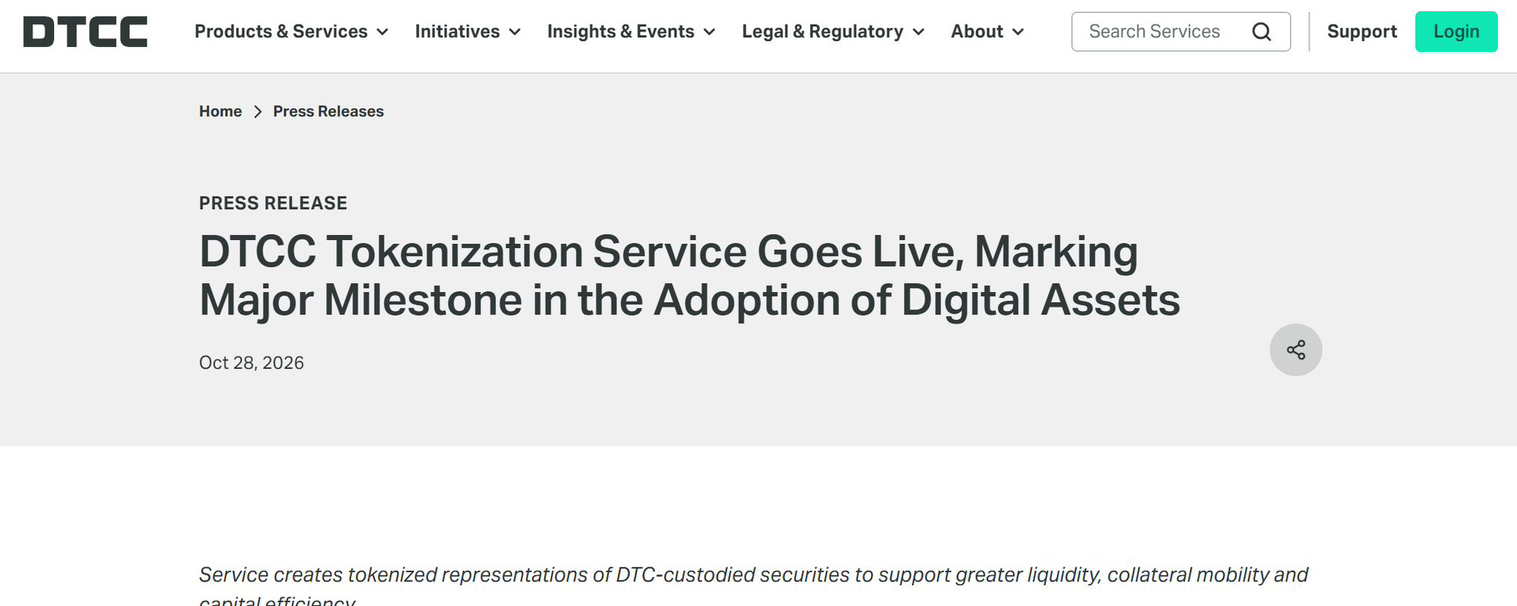
On October 28, DTCC, the operator of the largest securities depository, settlement, and clearing infrastructure in the U.S., announced the launch of its securities tokenization service on Canton Network $CC and its private blockchain.
- This is a notable development for the Real World Assets (RWA) sector, as one of the most important organizations in traditional financial markets begins bringing securities held in custody into blockchain workflows.
- This is a notable development for the Real World Assets (RWA) sector, as one of the most important organizations in traditional financial markets begins bringing securities held in custody into blockchain workflows.
MSUS-2.56%
1.2k
Thanks to the support of our Vietnamese community, Steven beat out many candidates from other countries and made it into the top 20. Thank you all so much!
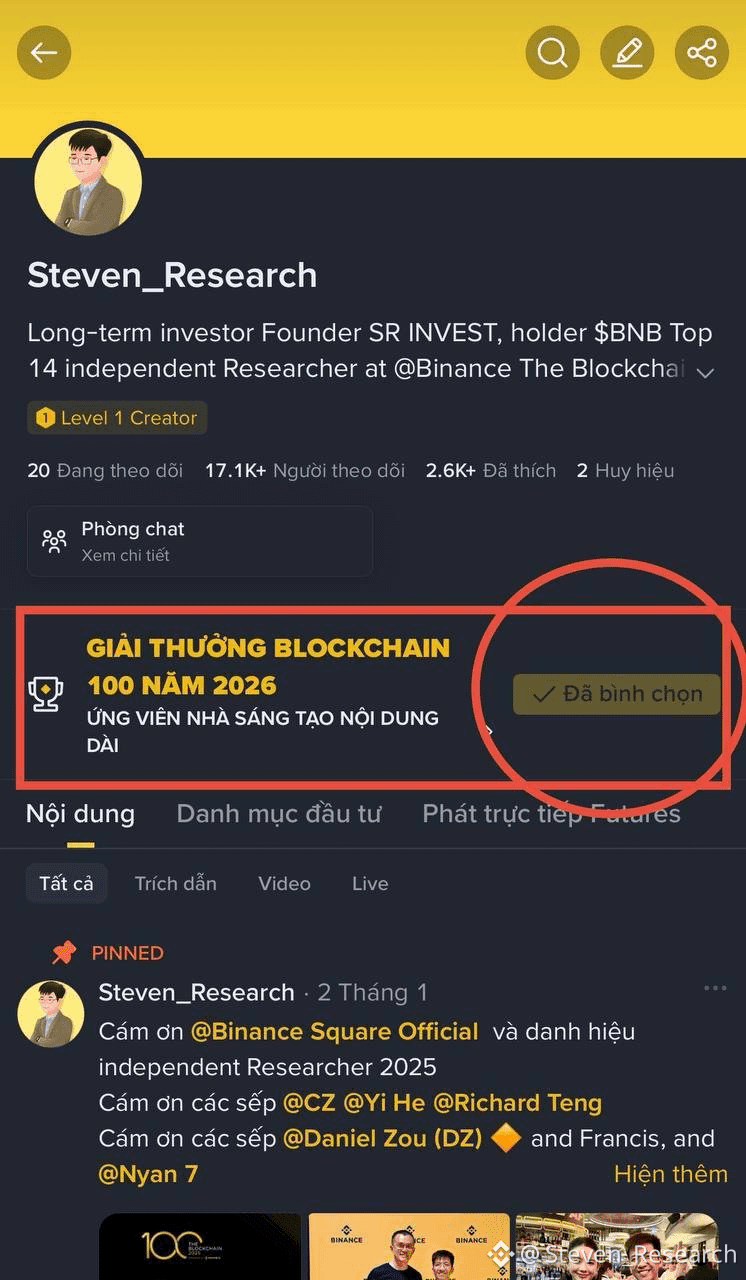
There are only 3 days left to vote, and Steven would really appreciate it if you could take a moment to vote for me in the Best Longform Creator category.
Go to the Binance Square page @Steven_Research and click the poll at the top.
Thank you all so much 🙏
There are only 3 days left to vote, and Steven would really appreciate it if you could take a moment to vote for me in the Best Longform Creator category.
Go to the Binance Square page @Steven_Research and click the poll at the top.
Thank you all so much 🙏
1
8
795
Article
HOW WILL THE 2026 U.S. MIDTERM ELECTIONS AFFECT THE CRYPTO MARKET?On October 23, HTX Research published a report analyzing the crypto market outlook before and after the 2026 U.S. midterm elections.
- Accordingly, the election results could change expectations for U.S. digital asset regulation. However, favorable policies alone are not enough to create a sustainable growth cycle if liquidity and capital flows do not improve accordingly.
1. Midterm elections could shift policy expectations
HOW WILL THE 2026 U.S. MIDTERM ELECTIONS AFFECT THE CRYPTO MARKET?
On October 23, HTX Research published a report analyzing the crypto market outlook before and after the 2026 U.S. midterm elections.
- Accordingly, the election results could change expectations for U.S. digital asset regulation. However, favorable policies alone are not enough to create a sustainable growth cycle if liquidity and capital flows do not improve accordingly.
1. Midterm elections could shift policy expectations
- Accordingly, the election results could change expectations for U.S. digital asset regulation. However, favorable policies alone are not enough to create a sustainable growth cycle if liquidity and capital flows do not improve accordingly.
1. Midterm elections could shift policy expectations
2
812
Article
JAPAN TESTS GOVERNMENT BOND REPOS ON CANTON NETWORKOn October 22, 2026, DCC, with Progmat serving as secretariat, published an interim report on tokenizing Japanese government bonds (JGBs) and implementing on-chain repo transactions.
- The trial uses Canton Testnet @CantonNetwork and aims to connect tokenized securities with tokenized deposits and stablecoins to improve settlement processes, collateral management, and financial institutions’ capital efficiency.
JAPAN TESTS GOVERNMENT BOND REPOS ON CANTON NETWORK
On October 22, 2026, DCC, with Progmat serving as secretariat, published an interim report on tokenizing Japanese government bonds (JGBs) and implementing on-chain repo transactions.
- The trial uses Canton Testnet @CantonNetwork and aims to connect tokenized securities with tokenized deposits and stablecoins to improve settlement processes, collateral management, and financial institutions’ capital efficiency.
- The trial uses Canton Testnet @CantonNetwork and aims to connect tokenized securities with tokenized deposits and stablecoins to improve settlement processes, collateral management, and financial institutions’ capital efficiency.
2
602
STEVEN RESEARCH – THE BLOCKCHAIN 100 AWARDS 2026
I’m delighted that Steven Research has officially been included in the nominees for Binance’s *The Blockchain 100 of 2026*, in the Best Longform Creator category.
I’d really appreciate your vote!
Voting is simple:
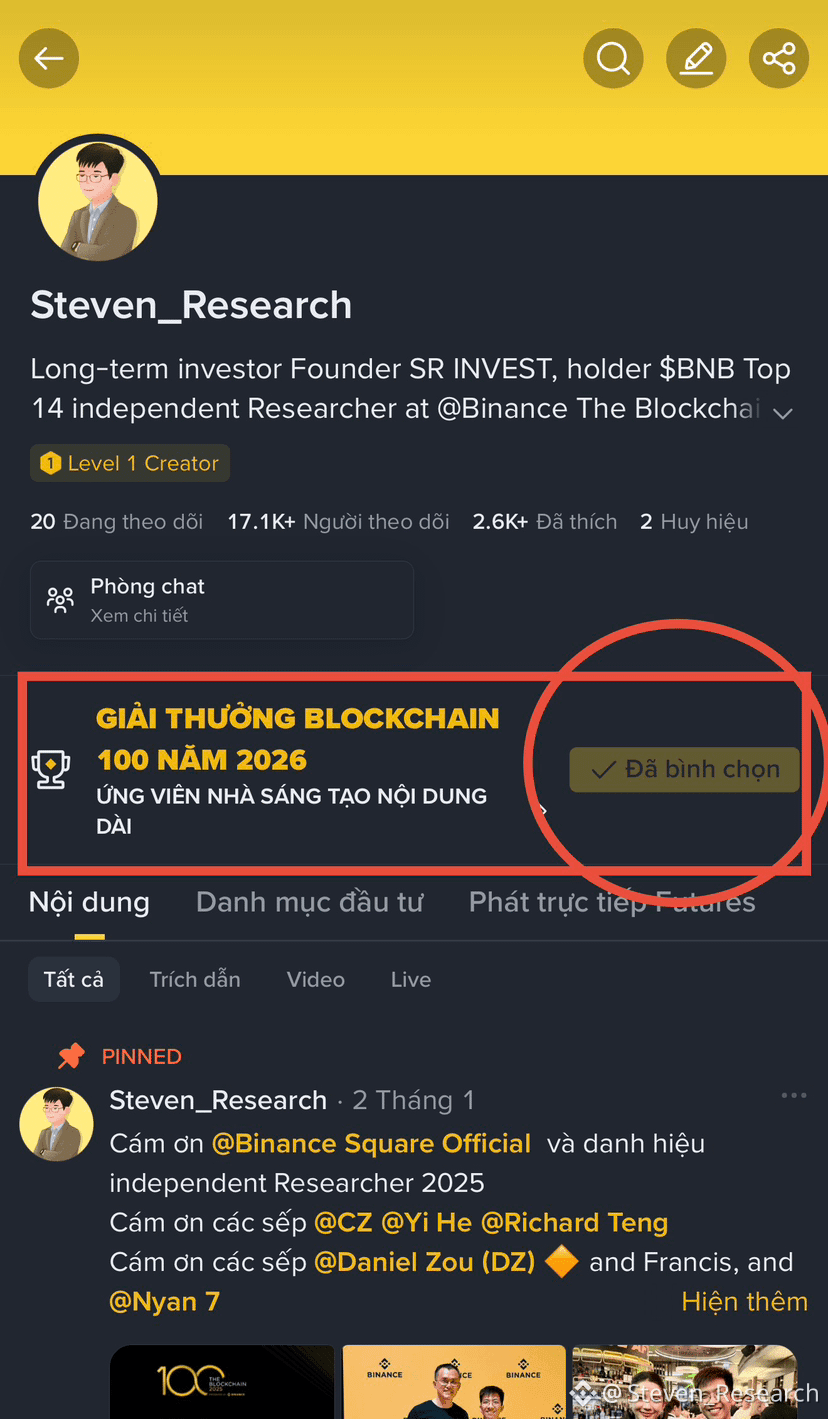
1.** Visit my profile on Binance Square: @Steven_Research
2.** On my profile, find **“The Blockchain 100 Awards 2026”**
3.** Click **“Vote”** and you’re done!
Each verified Binance account can vote once per day from *October 19–28, 2026*.
Thank you all for following, joining me on this journey, and supporting Steven Research. Every vote means a great deal and motivates me to keep creating even more in-depth, high-quality analysis.
Thank you for your support!
#TheBlockchain100 #BinanceSquare #StevenResearch
3
613
PLEASE VOTE FOR STEVEN RESEARCH – THE BLOCKCHAIN 100 2026 🙇🏻♂️
Steven Research has officially been nominated for Binance’s The Blockchain 100 2026, in the Content Creator of the Year – Best Longform Creator category.
We’d really appreciate your support! 🙏
*How to vote (5 steps)
- Step 1: Visit Binance’s official voting page:
[VOTE HERE](https://app.binance.com/uni-qr/cact26home?v=2\u0026uc=app_square_share_link\u0026us=copylink)
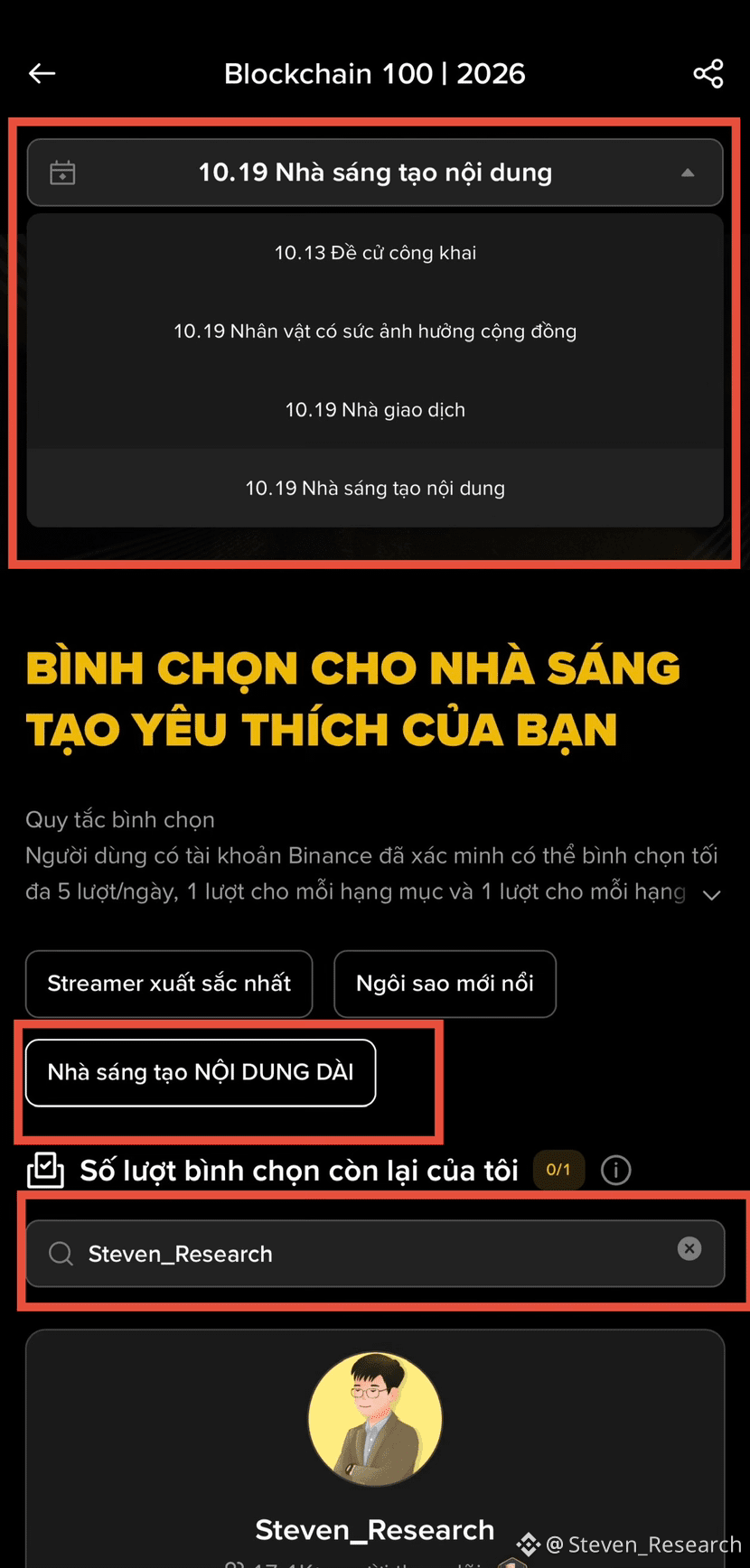
- Step 2: Under Blockchain 100 | 2026, select:
19/10 – Content Creator.
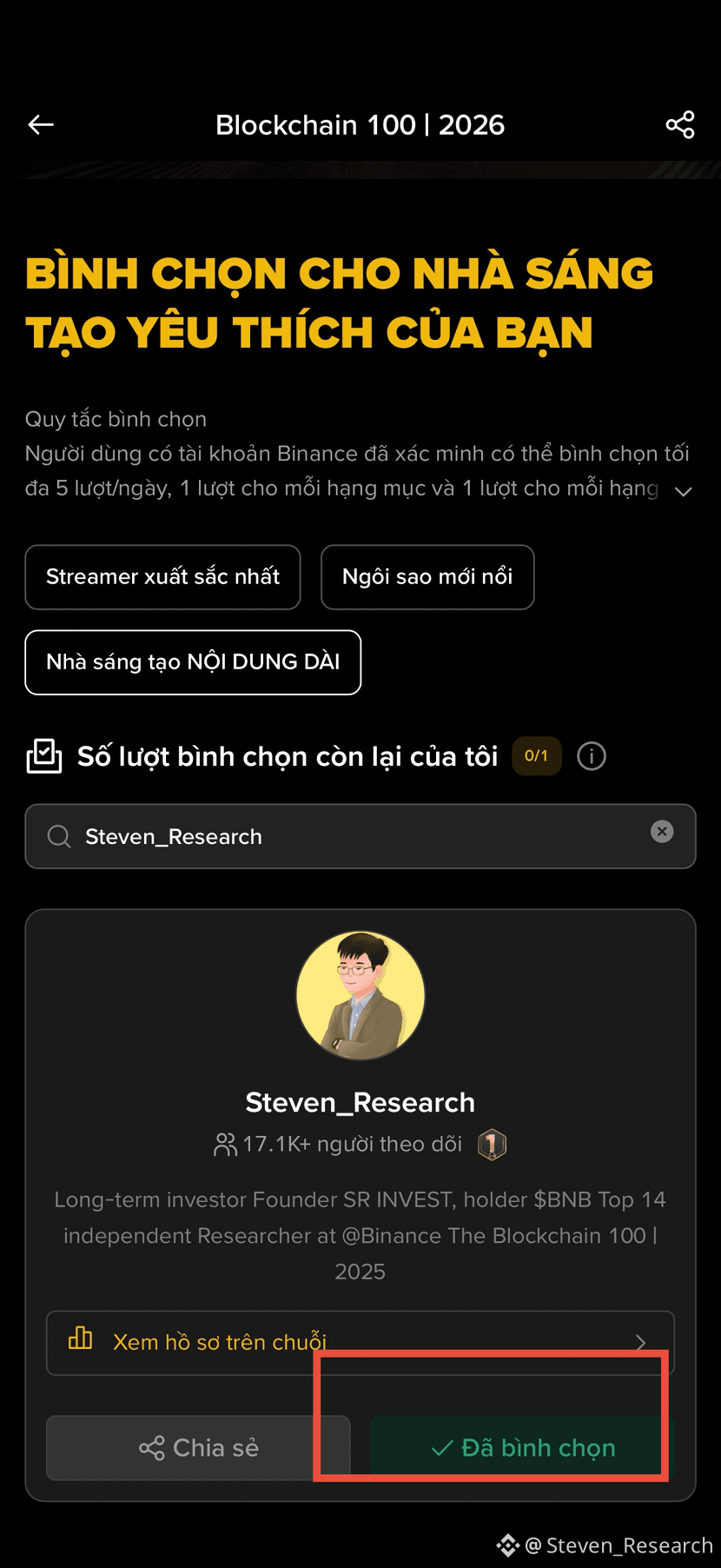
- Step 3: Select the Best Longform Creator category, then enter this in the search box:
Steven_Research
- Step 4: Find the correct Steven_Research account (17.1K+ followers) and tap Vote.
When the button turns green and displays “Voted,” your vote has been successfully submitted!
*Please note
- Each KYC-verified Binance account can vote once per day in each category.
You can return to vote again the next day while the campaign is running.
Voting period: 19–28/10/2026.
- Thank you all for continuing to follow, accompany, and support Steven Research on this journey to bring in-depth, independent, and valuable research to Vietnam’s crypto community.
- Every vote means a lot to me and is a meaningful show of recognition!
Steven Research | The Blockchain 100 – 2026
4
364
Article
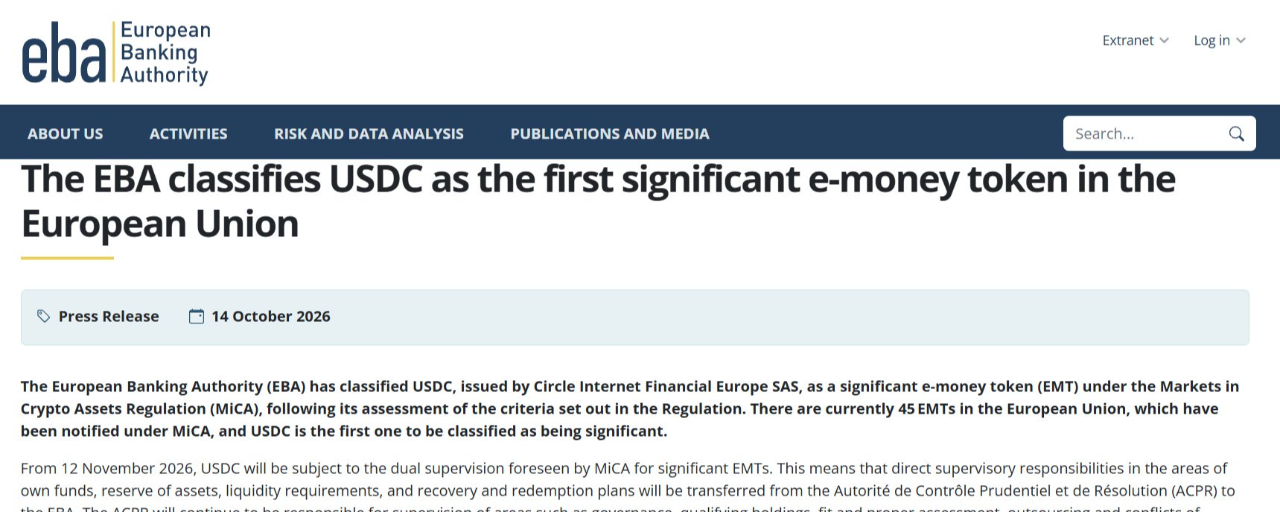
EU CLASSIFIES USDC AS A SIGNIFICANT STABLECOIN: IMPLICATIONS FOR CIRCLE, ARC, AND $CRCLOn October 14, 2026, the European Banking Authority (EBA) classified
$USDC issued by Circle in the EU is the first Significant E-Money Token (SEMT) under MiCA.
- From November 12, the EBA will directly supervise requirements related to USDC’s capital, reserves, liquidity, and redemption capacity.
1. Why is USDC classified as Significant?
- Under MiCA, Significant is a category for stablecoins that are large in scale and have a substantial impact on the financial system. They are assessed based on criteria such as the number of holders, issuance value, transaction volume, and links to financial institutions.
EU CLASSIFIES USDC AS A SIGNIFICANT STABLECOIN: IMPLICATIONS FOR CIRCLE, ARC, AND $CRCL
On October 14, 2026, the European Banking Authority (EBA) classified
$USDC issued by Circle in the EU is the first Significant E-Money Token (SEMT) under MiCA.
- From November 12, the EBA will directly supervise requirements related to USDC’s capital, reserves, liquidity, and redemption capacity.
1. Why is USDC classified as Significant?
- Under MiCA, Significant is a category for stablecoins that are large in scale and have a substantial impact on the financial system. They are assessed based on criteria such as the number of holders, issuance value, transaction volume, and links to financial institutions.
3
1.2k
STEVEN RESEARCH | THE BLOCKCHAIN 100 AWARDS 2026
I’ve just registered for The Blockchain 100 Awards 2026, organized by Binance, in the Content Creator of the Year – Best Longform Creator category.
Throughout my journey building Steven Research, I’ve always pursued one goal: to provide in-depth, independent analysis with practical value for Vietnam’s crypto investor community.
From macro analysis and on-chain data to blockchain ecosystems and digital asset regulations, I strive not only to share updates but also to explain the underlying principles, causes, and long-term market implications.
Alongside my Research work, I’m also developing TrustFlow, a project focused on legal and compliance solutions for the crypto and Web3 sectors in Vietnam.
If Steven Research’s articles have ever been valuable to you, I’d be grateful for your support through a nomination in this year’s The Blockchain 100 Awards.
Nomination details:
Creator: Steven Research
X: https://x.com/Steven_Research
Binance: @Steven_Research
Category: Content Creator of the Year – Best Longform Creator
Link: [https://www.binance.com/en/square/blockchain-100-2026](https://www.binance.com/en/square/blockchain-100-2026)
Nomination deadline: 22:59 on October 16, 2026 (Vietnam time).
Thank you all for following and supporting Steven!
STEVEN RESEARCH | THE BLOCKCHAIN 100 AWARDS 2026
I’ve just registered for The Blockchain 100 Awards 2026, organized by Binance, in the Content Creator of the Year – Best Longform Creator category.
Throughout my journey building Steven Research, I’ve always pursued one goal: to provide in-depth, independent analysis with practical value for Vietnam’s crypto investor community.
From macro analysis and on-chain data to blockchain ecosystems and digital asset regulations, I strive not only to share updates but also to explain the underlying principles, causes, and long-term market implications.
Alongside my Research work, I’m also developing TrustFlow, a project focused on legal and compliance solutions for the crypto and Web3 sectors in Vietnam.
If Steven Research’s articles have ever been valuable to you, I’d be grateful for your support through a nomination in this year’s The Blockchain 100 Awards.
Nomination details:
Creator: Steven Research
X: https://x.com/Steven_Research
Binance: @Steven_Research
Category: Content Creator of the Year – Best Longform Creator
Link: https://www.binance.com/en/square/blockchain-100-2026
Nomination deadline: 22:59 on October 16, 2026 (Vietnam time).
Thank you all for following and supporting Steven!
2
670
GLASSNODE: ETF OUTFLOWS, LEVERAGE HASN’T COOLED
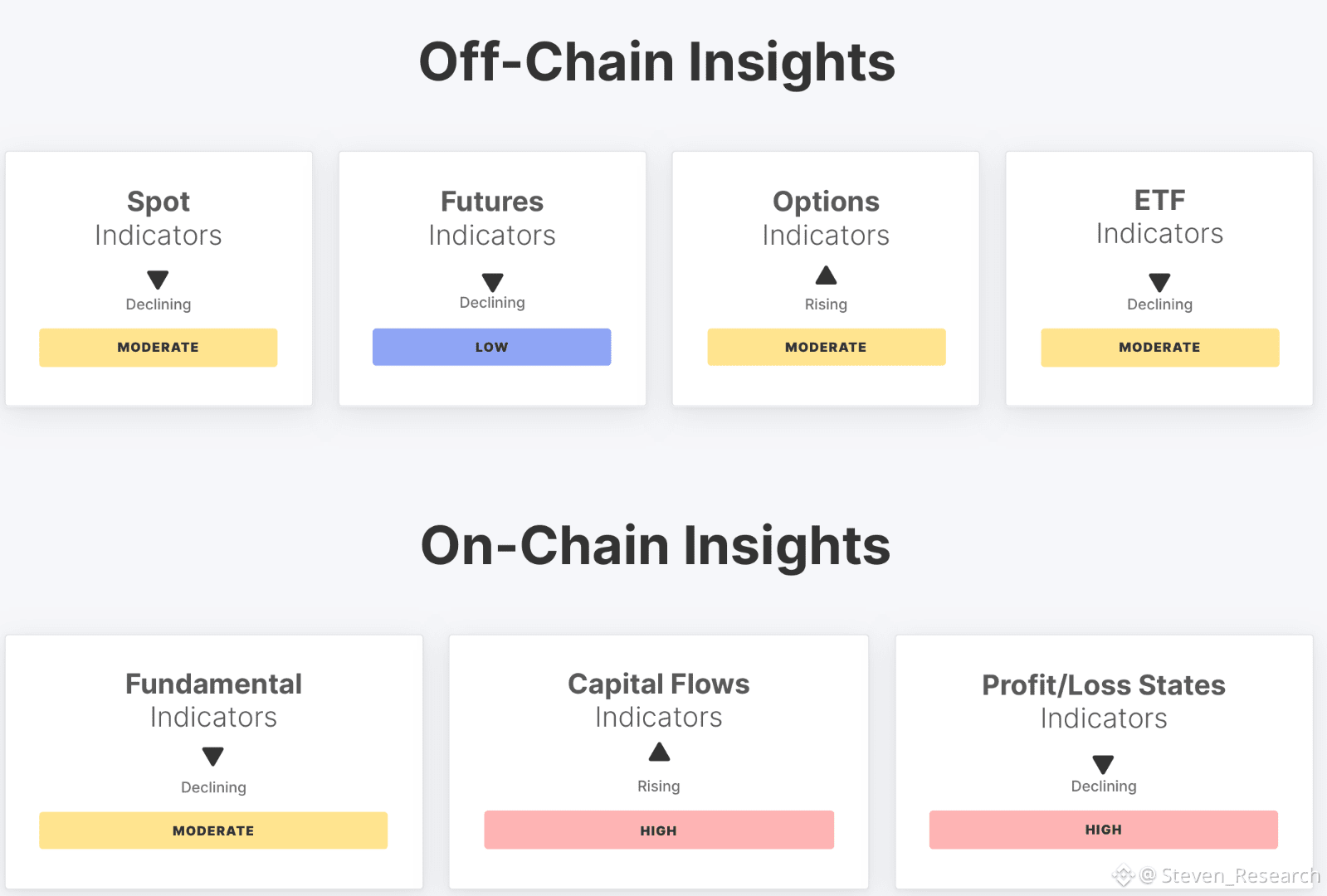
Glassnode’s Market Pulse report for week 42, published on October 12 with data through October 11, recorded a roughly 3% decline in $BTC over the week. Selling pressure increased in ETFs and the derivatives market, while Open Interest remained virtually unchanged.
1. ETFs reverse course and see outflows
- U.S. spot Bitcoin ETFs recorded net outflows of $701.6 million, compared with net inflows of $117.9 million the previous week. Trading volume still rose from $11 billion to $11.3 billion, but higher volume does not necessarily mean more buying capital is coming in. Net flows show that the ETF channel shifted from providing support to adding pressure this week.
2. Sellers become more aggressive, while derivatives positions remain intact
- Perpetual CVD shifted from positive $49.5 million to negative $681.8 million, indicating that aggressive selling exceeded aggressive buying. Over the same period, futures Open Interest held around $36.7 billion, while funding paid by longs fell by about 25.8%. Prices corrected, but open positions have not declined significantly, so there is not yet enough evidence to say the market has shed its leverage.
3. Realized capitalization continues to rise, and most of the supply remains in profit
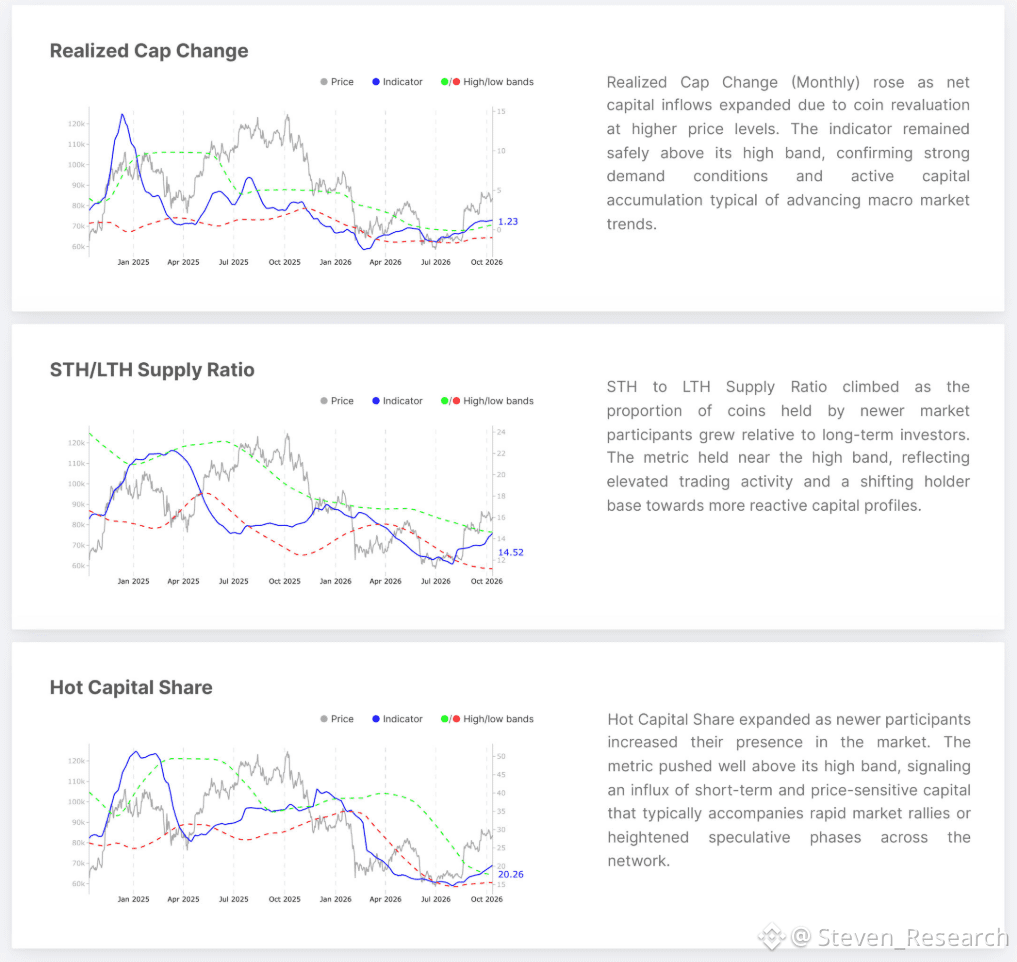
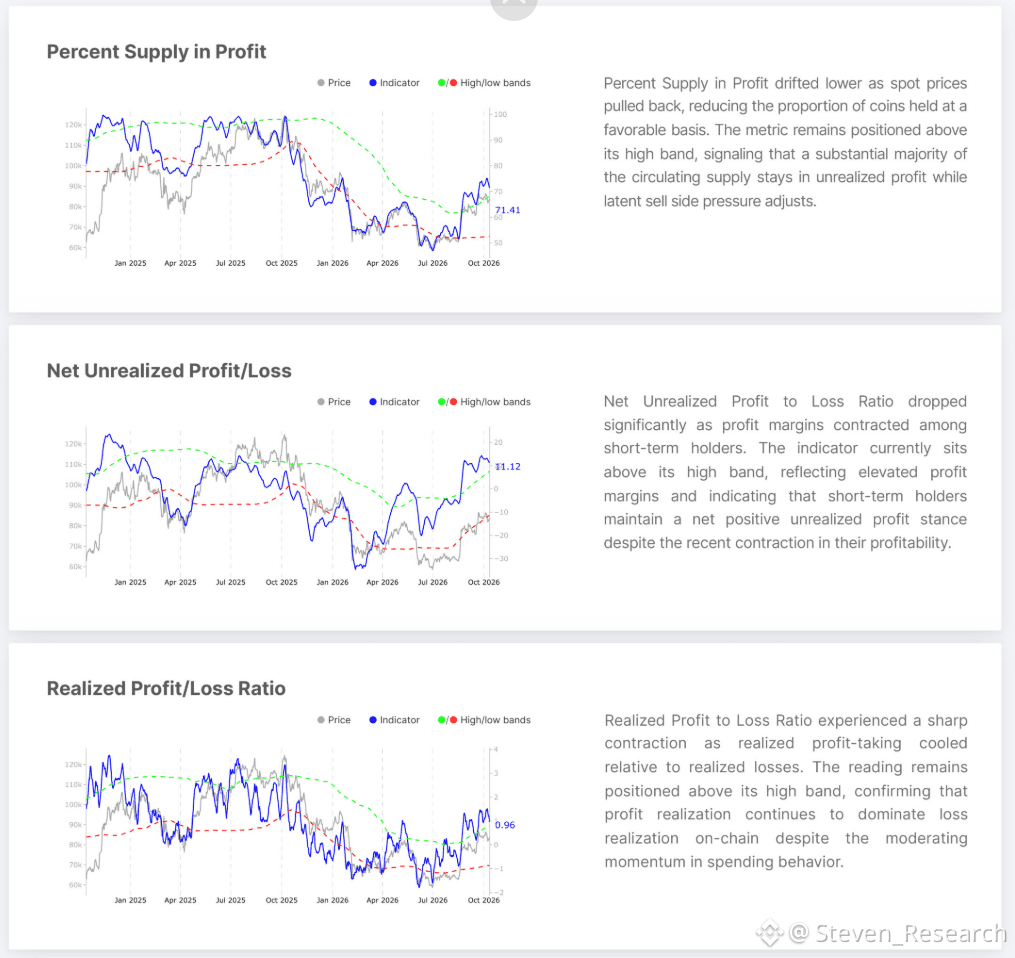
- The monthly change in Realized Cap increased from 1.1% to 1.2%, while the share of supply in profit fell from 74.5% to 71.4%. The data shows that the on-chain cost basis continues to rise, but most of the supply remains profitable and could add further profit-taking pressure.
=> I think this pullback has not yet been accompanied by a clear reduction in derivatives positions.
=> Personally, I lean toward the scenario where $BTC needs to re-accumulate, or could correct to retest lower price levels during this period.
- What do you all think?
3
496
Article
TOKEN2049 SINGAPORE 2026: TRADITIONAL FINANCE IS MOVING DEEPER INTO CRYPTOA lot of people may find TOKEN2049 boring now, with fewer exciting things than before. That’s understandable, really, because crypto has matured a lot, and there’s less content tailored to retail audiences than there used to be.
- This year’s program devoted considerable attention to financial institutions, alongside tokenization, AI, and blockchain security.
1. Financial institutions take a closer look at how things work
- The program featured executives from BlackRock, Morgan Stanley, Nasdaq, and Franklin Templeton. Topics such as custody, payments, and trading tokenized assets show that the discussion has broadened beyond investing in crypto. To bring assets onto blockchains, institutions still need to address ownership rights, compliance, and integration with existing systems.
TOKEN2049 SINGAPORE 2026: TRADITIONAL FINANCE IS MOVING DEEPER INTO CRYPTO
A lot of people may find TOKEN2049 boring now, with fewer exciting things than before. That’s understandable, really, because crypto has matured a lot, and there’s less content tailored to retail audiences than there used to be.
- This year’s program devoted considerable attention to financial institutions, alongside tokenization, AI, and blockchain security.
1. Financial institutions take a closer look at how things work
- The program featured executives from BlackRock, Morgan Stanley, Nasdaq, and Franklin Templeton. Topics such as custody, payments, and trading tokenized assets show that the discussion has broadened beyond investing in crypto. To bring assets onto blockchains, institutions still need to address ownership rights, compliance, and integration with existing systems.
2
747
Log in to explore more content
Join global crypto users on Binance Square
⚡️ Get latest and useful information about crypto.
💬 Trusted by the world’s largest crypto exchange.
👍 Discover real insights from verified creators.
Email / Phone number
Trending Topics
IsAnthropic’s$1.5TMarketCapJustified?
3,542 views
40 Discussing
Anthropic Set to Open at $105 in Record Nasdaq Debut
Binance News
·6 Likes
·4k views
BTCRemainsUnderPressureAfterHawkishFOMCMinutes
175,739 views
1,865 Discussing
NvidiaBoardReportedlySplitOverHuang’sReturn
84,263 views
981 Discussing