

银满仓带单日记
83 Posts

银满仓带单日记
Report
Block User
币圈资深老炮,实战操盘经验拉满!
专注山寨币精准布局,深度剖析主力币底层操盘逻辑。不玩虚的,直接带你看透币种资金进出动向,精准甄别项目真实落地价值,快速抓准市场核心节奏,避开投资陷阱,轻松把握币圈盈利机会。。
1 Following
408 Followers
502 Liked
Posts
PINNED
·
--
Focus on core cryptocurrencies like BTC, ETH, SOL, providing 1-3 clear spot and contract strategies daily!
Crypto ID: 1207383656
Step into the core of blockchain and the path to financial freedom!
Focus on core cryptocurrencies like BTC, ETH, SOL, providing 1-3 clear spot and contract strategies daily!
Crypto ID: 1207383656
Step into the core of blockchain and the path to financial freedom!
Crypto ID: 1207383656
Step into the core of blockchain and the path to financial freedom!

1
5
2.2k
·
--
The dealer's washing of the market is never just for your few coins. $BTC
Too many people criticize the dealer as soon as there's a drop, thinking their holdings are being targeted. The truth is — the dealer doesn't have time to pay attention to your few dozen or hundred coins. They wash the market to be able to soar higher and run more steadily in the future.
Let me share an example I witnessed. There was a small coin called METIS, with an initial price of 1.2U, a small market cap, and a circulation of ten million, with sixty percent in the hands of retail investors.
A small team bought four million coins at the bottom, but they dared not push the price directly. Can you guess why? Because if they forced the price up, as soon as it hit 1.5U, early retail investors would sell off wildly, and the team wouldn't be able to handle that wave of selling pressure. In the end, they could only sing their own praises, with no one to lift them up.
So they had to wash the market, and they did it with great rhythm.
The first stage is called 'boiling frogs in warm water'.
The coin price slowly declined from 1.2U to 0.9U, with no volume and no news. Retail investors began to get restless: 'Is it dead?' 'Quick, run! Don’t let it really go to zero.' So they all cut their losses while the dealer quietly accumulated near 0.9U. $PAXG
The second stage is 'urgent drop to buy the dip'.
The coin price suddenly spiked down to 0.7U and then quickly pulled back to 0.95U. Many people thought it was the bottom and rushed in to buy the dip. As a result, the dealer smashed the price down again, breaking the previous low to hit 0.65U. Those who bought the dip were all trapped, their mentality collapsed, and they could only cut losses to exit.
The third stage is the most ruthless, called 'panic manufacturing period'.
Accompanied by FUD news, such as 'the project team withdrew the liquidity pool' and 'big investors ran away', the coin price plummeted to 0.5U. The market was filled with wails, and retail investors were completely desperate, clearing their positions in defeat. Meanwhile, the dealer was happily buying in this range.
The final step is called 'V-shaped reversal golden pit'. The dealer quickly used a small amount of capital to pull the coin price back to 1U, forming a strong bullish candle. Those who had previously cut losses didn’t dare to chase, while new entrants had their costs around 1U. $SOL
After this round of operations, the dealer's holdings increased from four million to six million coins, and the average cost was even lower. The crucial point is that the uncertain floating positions were completely cleared out, and the subsequent upward movement faced almost no selling pressure.
So you see, the true essence of washing the market is not to snatch your coins, but to 'change people' — washing out the low-cost retail investors and bringing in a batch of high-cost, stronger holders. @Square-Creator-e7fd332b19daf
The dealer's washing of the market is never just for your few coins. $BTC
Too many people criticize the dealer as soon as there's a drop, thinking their holdings are being targeted. The truth is — the dealer doesn't have time to pay attention to your few dozen or hundred coins. They wash the market to be able to soar higher and run more steadily in the future.
Let me share an example I witnessed. There was a small coin called METIS, with an initial price of 1.2U, a small market cap, and a circulation of ten million, with sixty percent in the hands of retail investors.
A small team bought four million coins at the bottom, but they dared not push the price directly. Can you guess why? Because if they forced the price up, as soon as it hit 1.5U, early retail investors would sell off wildly, and the team wouldn't be able to handle that wave of selling pressure. In the end, they could only sing their own praises, with no one to lift them up.
So they had to wash the market, and they did it with great rhythm.
The first stage is called 'boiling frogs in warm water'.
The coin price slowly declined from 1.2U to 0.9U, with no volume and no news. Retail investors began to get restless: 'Is it dead?' 'Quick, run! Don’t let it really go to zero.' So they all cut their losses while the dealer quietly accumulated near 0.9U. $PAXG
The second stage is 'urgent drop to buy the dip'.
The coin price suddenly spiked down to 0.7U and then quickly pulled back to 0.95U. Many people thought it was the bottom and rushed in to buy the dip. As a result, the dealer smashed the price down again, breaking the previous low to hit 0.65U. Those who bought the dip were all trapped, their mentality collapsed, and they could only cut losses to exit.
The third stage is the most ruthless, called 'panic manufacturing period'.
Accompanied by FUD news, such as 'the project team withdrew the liquidity pool' and 'big investors ran away', the coin price plummeted to 0.5U. The market was filled with wails, and retail investors were completely desperate, clearing their positions in defeat. Meanwhile, the dealer was happily buying in this range.
The final step is called 'V-shaped reversal golden pit'. The dealer quickly used a small amount of capital to pull the coin price back to 1U, forming a strong bullish candle. Those who had previously cut losses didn’t dare to chase, while new entrants had their costs around 1U. $SOL
After this round of operations, the dealer's holdings increased from four million to six million coins, and the average cost was even lower. The crucial point is that the uncertain floating positions were completely cleared out, and the subsequent upward movement faced almost no selling pressure.
So you see, the true essence of washing the market is not to snatch your coins, but to 'change people' — washing out the low-cost retail investors and bringing in a batch of high-cost, stronger holders. @银满仓带单日记

81
36
164
214.3k
·
--
Rising 1000 times, retail investors are also losing money $PAXG
It's not the market issue, it's the shakeout issue, which has been an unchanging rule in the cryptocurrency world for the past ten years,
The core tactic of the major players is not to crash the market,
but to wash repeatedly, especially after dropping from 100 to 10, retail investors become numb because at the top, human nature is greedy, but it hovers between 10 and 8.
Retail investors are extremely panicked because the most fearful moment occurs at the bottom. In reality, no one wants to leave at the real top, and no one wants to buy at the real bottom.
They make you give up your best chips when “there hasn't been much of a drop.”
Retail investors do not die from a crash, but from:
Rising for a while, shaking for a while, you feel it's hopeless, you switch, and the original continues to soar.
From the results, it looks like “missing out,”
From the essence, it is. You have been managed by the rhythm.
So, the real killer of retail investors is never the decline,
but making you doubt your own direction during the upward trend. $BTC
So in the cryptocurrency world, direction ranks first, then there are bottom chips, patience, and technical indicators come last.
The harshest part of the market lies here:
It doesn't blow you up,
It washes you away. $ETH
So this is why so many KOLs never discuss the total market value of cryptocurrencies with you, no one talks about macro global M2,
In the shanzhai (copycat) industry, they compare, talk about the ten-year residual value of shanzhai coins, not discussing the market share of Ethereum during a bull market, not discussing Bitcoin's top escape indicators,
None of them pay attention, forever letting retail investors chase up and down in K charts, relying on fans to survive.
It is macro, market value, that determines the direction of bulls and bears, not the K-line chart @Square-Creator-e7fd332b19daf
Rising 1000 times, retail investors are also losing money $PAXG
It's not the market issue, it's the shakeout issue, which has been an unchanging rule in the cryptocurrency world for the past ten years,
The core tactic of the major players is not to crash the market,
but to wash repeatedly, especially after dropping from 100 to 10, retail investors become numb because at the top, human nature is greedy, but it hovers between 10 and 8.
Retail investors are extremely panicked because the most fearful moment occurs at the bottom. In reality, no one wants to leave at the real top, and no one wants to buy at the real bottom.
They make you give up your best chips when “there hasn't been much of a drop.”
Retail investors do not die from a crash, but from:
Rising for a while, shaking for a while, you feel it's hopeless, you switch, and the original continues to soar.
From the results, it looks like “missing out,”
From the essence, it is. You have been managed by the rhythm.
So, the real killer of retail investors is never the decline,
but making you doubt your own direction during the upward trend. $BTC
So in the cryptocurrency world, direction ranks first, then there are bottom chips, patience, and technical indicators come last.
The harshest part of the market lies here:
It doesn't blow you up,
It washes you away. $ETH
So this is why so many KOLs never discuss the total market value of cryptocurrencies with you, no one talks about macro global M2,
In the shanzhai (copycat) industry, they compare, talk about the ten-year residual value of shanzhai coins, not discussing the market share of Ethereum during a bull market, not discussing Bitcoin's top escape indicators,
None of them pay attention, forever letting retail investors chase up and down in K charts, relying on fans to survive.
It is macro, market value, that determines the direction of bulls and bears, not the K-line chart @银满仓带单日记

1
1
2
1.6k
·
--
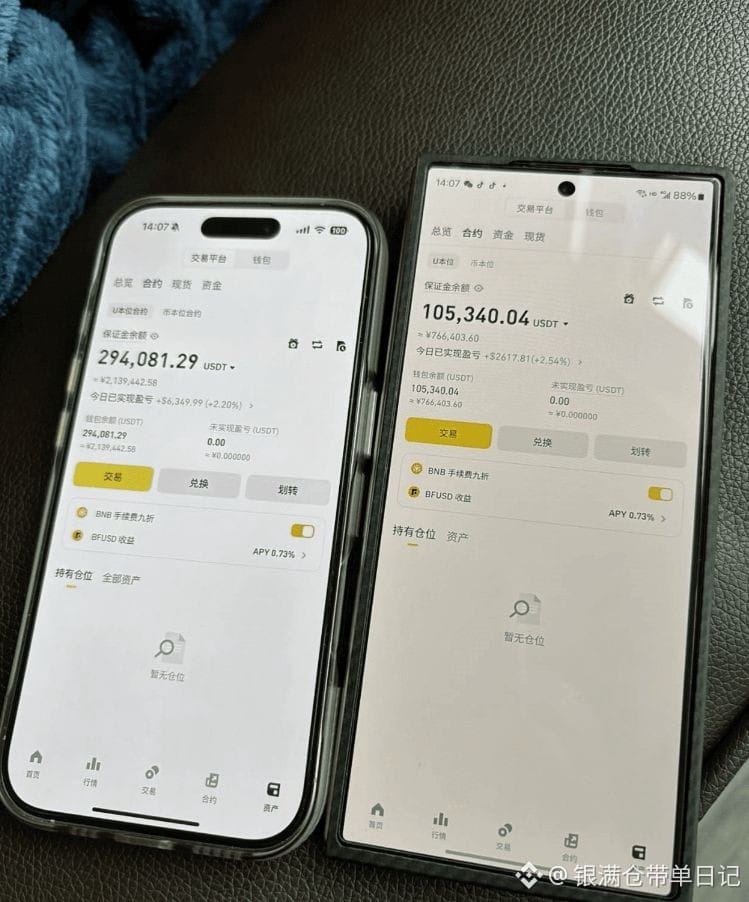
These days I've made several tens of thousands of U, not to show off, but just to say that the stone in my heart has finally settled. $BTC
The girl at the coffee shop downstairs, hearing that I’m involved in the crypto world, insisted on asking me to mentor her. She brought out 1800 U, saying it was just to change her phone and test the waters.
As a result, today I looked at her account, and when I saw fifty-one thousand, I was dumbfounded, and she hasn't blown a position even once.
She's not a genius, nor did she have a stroke of luck; she simply adhered to the three rules I've repeated countless times.
1. Divide the money into three parts, don’t gamble your entire fortune.
600 U for short-term trading, only making one trade a day, and shutting down the computer when the time is up; $PAXG
600 U waiting for a big opportunity, if the signal doesn’t come, just lie down; the remaining 600 U I help her lock in, unless the market crashes, she absolutely doesn’t touch it. Survive first, only then is there a qualification to talk about making money.
2. Turn off the machine when the market is not good.
If the four-hour chart doesn't rise, don’t even touch it;
If you’ve made twenty percent, first take out thirty percent to spend, what you put in your pocket is yours, if you’re feeling itchy, just go downstairs for a run, don’t place random orders.
3. The rules are set and should not be influenced by emotions.
Automatically cut losses at two percent, and shut down the software after cutting;
If you make four percent, take half off first, let the rest run;
If you're wrong, never add to the position, averaging down is just prolonging the mistake. $XAU
I stuck these three rules on her screen, and she is not allowed to tear them off.
Last night she treated me to coffee, saying: “Bro, I can now sleep soundly at night.”
If you are still losing sleep over fluctuations of several U, trading with passion and eating noodles at closing, don’t rush to find a hundred times coin, first tighten the risk @Top Trader Zhao Cai
In this circle, don’t be afraid of being slow, just be afraid of chaos. @Square-Creator-e7fd332b19daf
These days I've made several tens of thousands of U, not to show off, but just to say that the stone in my heart has finally settled. $BTC
The girl at the coffee shop downstairs, hearing that I’m involved in the crypto world, insisted on asking me to mentor her. She brought out 1800 U, saying it was just to change her phone and test the waters.
As a result, today I looked at her account, and when I saw fifty-one thousand, I was dumbfounded, and she hasn't blown a position even once.
She's not a genius, nor did she have a stroke of luck; she simply adhered to the three rules I've repeated countless times.
1. Divide the money into three parts, don’t gamble your entire fortune.
600 U for short-term trading, only making one trade a day, and shutting down the computer when the time is up; $PAXG
600 U waiting for a big opportunity, if the signal doesn’t come, just lie down; the remaining 600 U I help her lock in, unless the market crashes, she absolutely doesn’t touch it. Survive first, only then is there a qualification to talk about making money.
2. Turn off the machine when the market is not good.
If the four-hour chart doesn't rise, don’t even touch it;
If you’ve made twenty percent, first take out thirty percent to spend, what you put in your pocket is yours, if you’re feeling itchy, just go downstairs for a run, don’t place random orders.
3. The rules are set and should not be influenced by emotions.
Automatically cut losses at two percent, and shut down the software after cutting;
If you make four percent, take half off first, let the rest run;
If you're wrong, never add to the position, averaging down is just prolonging the mistake. $XAU
I stuck these three rules on her screen, and she is not allowed to tear them off.
Last night she treated me to coffee, saying: “Bro, I can now sleep soundly at night.”
If you are still losing sleep over fluctuations of several U, trading with passion and eating noodles at closing, don’t rush to find a hundred times coin, first tighten the risk @Top Trader Zhao Cai
In this circle, don’t be afraid of being slow, just be afraid of chaos. @银满仓带单日记

1
1.7k
·
--
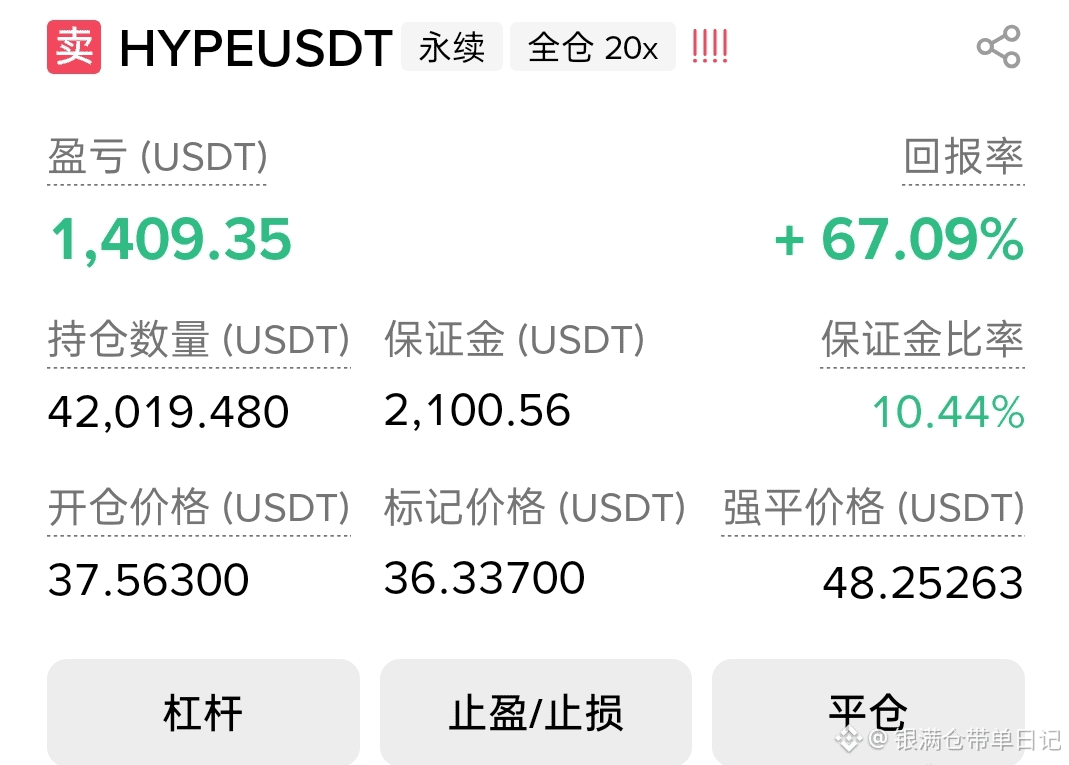
In contract trading, I have always advocated a simple "foolproof method". $PAXG
To be honest, many people lose money in contract trading not because they can't read the charts, but because they are too clever: obsessed with various indicators, frequent trading, and staying up late to watch the market, resulting in a blown mindset and no growth in their accounts.
However, those who can go far are often the ones who simplify their methods to the utmost. Now I will share my commonly used strategies with you:
First: Keep only one indicator
EMA21 and EMA55 are enough. The crossing of short-term and medium-term trends is the signal. Golden cross means bullish, death cross means bearish, no need for extra fancy stuff. #SurvivalRulesInCrypto
Second: Choose your entry position $我踏马来了
Only look at the four-hour level. When EMA21 crosses above EMA55, and the K line closes bullish, go long. Conversely, when EMA21 crosses below EMA55, and the K line closes bearish, go short. Do not touch the middle positions in a sideways market.
Third: Always set a stop loss
Place it at the high or low of the previous four-hour K line, with a single loss not exceeding 5% of the principal. Losses can be accepted, but holding onto a losing position must be refused.
Fourth: Roll over profits
Only put 10% of your funds into the first position, add after a 10% profit, and continue to add with further profits, always following the trend until EMA crosses again. This approach can preserve profits while maximizing trend capture.
In terms of mindset, remember a few key points: $BTC
Don't strive to win every trade; it's better to miss than to make a mistake.
Limit yourself to 1-3 trades a day, and don't disrupt your rhythm due to impatience.
Trust the system and stick to execution to achieve long-term compounding.
The so-called "foolproof method" doesn't mean not using your brain, but rather simplifying a complex market into a few rules that can be consistently followed. It is suitable for those who do not want to be enslaved by emotions and can keep their win rate stable at a high level.
I only share practical experiences that can help survive in the circle. The team still has a few spots left; brothers and sisters who want to learn the method and turn their fortunes around, come join us! @Square-Creator-e7fd332b19daf
In contract trading, I have always advocated a simple "foolproof method". $PAXG
To be honest, many people lose money in contract trading not because they can't read the charts, but because they are too clever: obsessed with various indicators, frequent trading, and staying up late to watch the market, resulting in a blown mindset and no growth in their accounts.
However, those who can go far are often the ones who simplify their methods to the utmost. Now I will share my commonly used strategies with you:
First: Keep only one indicator
EMA21 and EMA55 are enough. The crossing of short-term and medium-term trends is the signal. Golden cross means bullish, death cross means bearish, no need for extra fancy stuff. #SurvivalRulesInCrypto
Second: Choose your entry position $我踏马来了
Only look at the four-hour level. When EMA21 crosses above EMA55, and the K line closes bullish, go long. Conversely, when EMA21 crosses below EMA55, and the K line closes bearish, go short. Do not touch the middle positions in a sideways market.
Third: Always set a stop loss
Place it at the high or low of the previous four-hour K line, with a single loss not exceeding 5% of the principal. Losses can be accepted, but holding onto a losing position must be refused.
Fourth: Roll over profits
Only put 10% of your funds into the first position, add after a 10% profit, and continue to add with further profits, always following the trend until EMA crosses again. This approach can preserve profits while maximizing trend capture.
In terms of mindset, remember a few key points: $BTC
Don't strive to win every trade; it's better to miss than to make a mistake.
Limit yourself to 1-3 trades a day, and don't disrupt your rhythm due to impatience.
Trust the system and stick to execution to achieve long-term compounding.
The so-called "foolproof method" doesn't mean not using your brain, but rather simplifying a complex market into a few rules that can be consistently followed. It is suitable for those who do not want to be enslaved by emotions and can keep their win rate stable at a high level.
I only share practical experiences that can help survive in the circle. The team still has a few spots left; brothers and sisters who want to learn the method and turn their fortunes around, come join us! @银满仓带单日记
1
2
1.2k
·
--
Recently, many fans are asking me: Can I still invest now?
I have always confidently said: Spot trading is not for "gambling", but for "nurturing". A friend of mine in real life started dollar-cost averaging in 2022. At first, he was also afraid of fluctuations, but later realized: True profits do not come from buying at low points but from consistently buying. $PAXG
Now the returns are quite substantial, and there’s no need to work for retirement or worry anymore! Personally, I believe there are three types of dollar-cost averaging strategies. Which one suits you?
First: Time-based Dollar-Cost Averaging
Invest the same amount at a fixed time every week, for example, investing 500U weekly, regardless of the price, only focusing on execution. Over the long term, the average cost will naturally be leveled out. #Federal Reserve maintains interest rates unchanged
Second: Step-up Accumulation Method $ETH
Set three price ranges, for example:
· If it falls below 200U, add one tier;
· If it falls below 300U, add another tier;
· If it falls below 400U, buy boldly.
This way, you won’t panic during declines, but rather increase your holdings as prices drop.
Third: EMA Assistance for Judgment
Use EMA100 as a support line. When BNB approaches EMA100, it often indicates a mid-term low. If you want more stability, you can also use EMA200 to observe long-term trends. $BTC
This set of methods is not flashy, but relies on high execution strength. Dollar-cost averaging is not about IQ, but about patience. Those who can persist in dollar-cost averaging for a year before a bull market ultimately become the "lucky ones". @Square-Creator-e7fd332b19daf
Recently, many fans are asking me: Can I still invest now?
I have always confidently said: Spot trading is not for "gambling", but for "nurturing". A friend of mine in real life started dollar-cost averaging in 2022. At first, he was also afraid of fluctuations, but later realized: True profits do not come from buying at low points but from consistently buying. $PAXG
Now the returns are quite substantial, and there’s no need to work for retirement or worry anymore! Personally, I believe there are three types of dollar-cost averaging strategies. Which one suits you?
First: Time-based Dollar-Cost Averaging
Invest the same amount at a fixed time every week, for example, investing 500U weekly, regardless of the price, only focusing on execution. Over the long term, the average cost will naturally be leveled out. #Federal Reserve maintains interest rates unchanged
Second: Step-up Accumulation Method $ETH
Set three price ranges, for example:
· If it falls below 200U, add one tier;
· If it falls below 300U, add another tier;
· If it falls below 400U, buy boldly.
This way, you won’t panic during declines, but rather increase your holdings as prices drop.
Third: EMA Assistance for Judgment
Use EMA100 as a support line. When BNB approaches EMA100, it often indicates a mid-term low. If you want more stability, you can also use EMA200 to observe long-term trends. $BTC
This set of methods is not flashy, but relies on high execution strength. Dollar-cost averaging is not about IQ, but about patience. Those who can persist in dollar-cost averaging for a year before a bull market ultimately become the "lucky ones". @银满仓带单日记
1.1k
·
--
I recently discovered a very realistic problem: many brothers want to enter the cryptocurrency world, but they are stuck at the first step, hesitant to move forward. $BTC
It's not that they are unwilling to learn or not serious, but the information available in the market is too chaotic—some shout every day, "The opportunity is here, hurry in!" while others immediately say, "It's going to crash, run away quickly!" Each speaks with absolute certainty, yet the directions are completely opposite, leaving newcomers even more confused.
When I first entered the space, I felt the same way, sincerely wanting to do well, but no one explained the most critical point to me: what entry stage you are currently in, what each step should be, what risks to bear, and which pitfalls to avoid. $PAXG
So next, this account will actively simplify: no piling up obscure terms, no chasing emotional trends, no pushing anyone to enter, no creating anxiety or panic, just focusing on one thing—explaining the complex cryptocurrency knowledge in plain language that even beginners can understand.
$LIGHT If you are currently in these states: not yet entered, constantly hesitating and struggling, unsure whether to come; just stepped into the cryptocurrency world, feeling anxious and at a loss; completely zero foundation, not knowing where to start, unable to find direction—feel free to ask me, no need to feel embarrassed.
It's really okay to take things slowly; the cryptocurrency world is never about who runs faster, but rather about who walks steadily and correctly. $ETH
If the order is correct and the foundation is solid, the subsequent opportunities can be grasped firmly. There’s no need to rush into the cryptocurrency world; first clarify the basic logic, take it step by step, and it’s much more reliable than blindly following trends or being eager for quick success.
813
·
--
Under 10,000 U Turnaround Strategy: Simple Methods, Guaranteed High Profits $PAXG
Holding a few thousand U and wanting to turn things around in the crypto world, yet being repeatedly harvested by the market and caught off guard with losses? Don’t panic, I understand this struggle of seeking stability but failing to earn, and I’ve seen too many retail investors gamble small amounts for huge profits, only to have their principal completely devoured.
Today, I’ll share my ultimate turnaround method with you—no fancy techniques, no complex indicators piled up, just the simplest yet most effective trading rules. Many of my fans have used this method to steadily roll from five figures to seven figures, with just four essential steps, none can be missed, even beginners can jump right in!
Step 1: Choose coins by focusing only on daily MACD golden cross. Don’t be misled by all the gossip flying around, and don’t trust the big influencers' casual recommendations, just concentrate on the MACD indicator, prioritizing coins that have a golden cross above the zero line. Indicators never lie; this is the most reliable hard standard for selecting coins with small funds, able to avoid 80% of the air coin traps. $BTC
Step 2: Operate only by following the 20-day moving average. If the price is above the line, hold securely; if the price drops below the line, run immediately! Don’t cling to the fantasy of “waiting a bit longer, it might go up,” if it breaks the moving average, you must leave the market immediately—this is not a suggestion, it’s a hard rule for surviving in the crypto world.
Step 3: Enter when price and volume break through together, exit in steps to take profits. You must wait until the price is above the moving average + the trading volume is significantly increased, then enter with full position; after making a profit, don’t be greedy, sell a portion after a 40% rise to secure some gains, then sell a portion again after an 80% rise to lock in profits, and once it drops below the moving average, clear everything out, just follow this method. $XAU
Step 4: Only recognize the closing price for stop-loss. As long as the closing price drops below the moving average, regardless of whether it rises or falls the next day, you must exit! Never hold onto luck; a moment of softness might waste a month's effort. Missing out isn’t scary; wait for the price to stand above the moving average again to enter, the market is always full of opportunities.
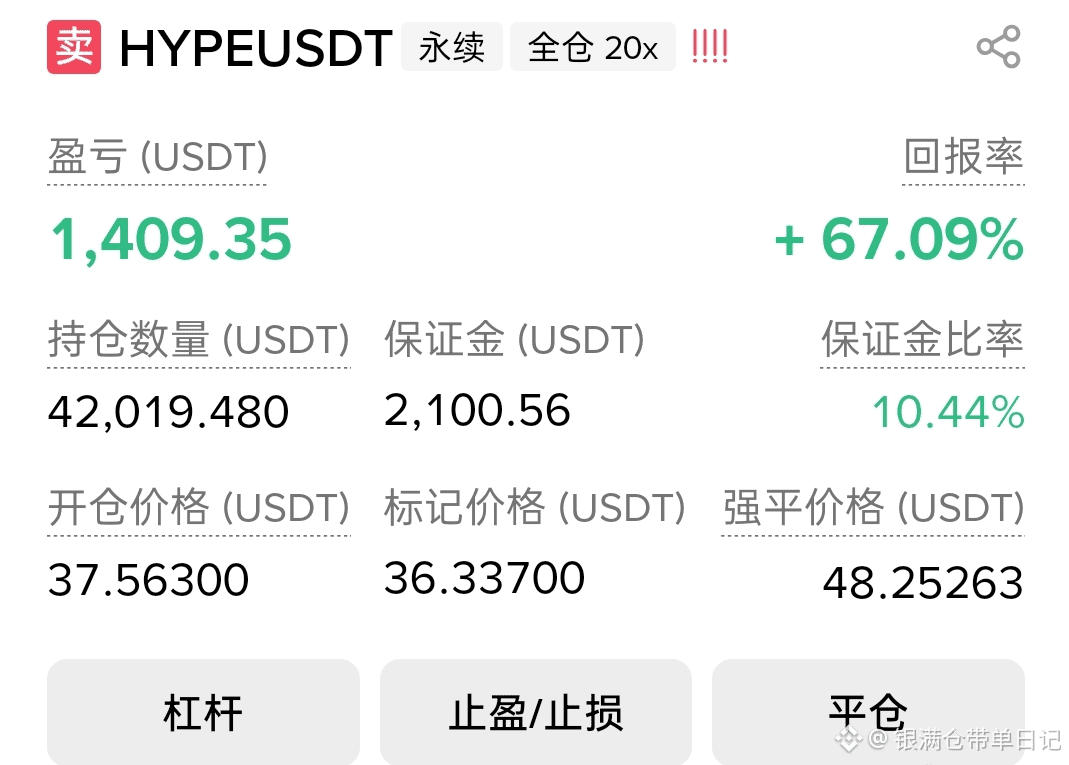
This method is indeed not exciting, even a bit dull, but the survival rules in the crypto world are just like that: those who last long are not the smartest, but the most disciplined. Just like the previous wave of $PIPPIN, following these rules to find signals and control the pace, I easily made significant profits. @Square-Creator-e7fd332b19daf
Under 10,000 U Turnaround Strategy: Simple Methods, Guaranteed High Profits $PAXG
Holding a few thousand U and wanting to turn things around in the crypto world, yet being repeatedly harvested by the market and caught off guard with losses? Don’t panic, I understand this struggle of seeking stability but failing to earn, and I’ve seen too many retail investors gamble small amounts for huge profits, only to have their principal completely devoured.
Today, I’ll share my ultimate turnaround method with you—no fancy techniques, no complex indicators piled up, just the simplest yet most effective trading rules. Many of my fans have used this method to steadily roll from five figures to seven figures, with just four essential steps, none can be missed, even beginners can jump right in!
Step 1: Choose coins by focusing only on daily MACD golden cross. Don’t be misled by all the gossip flying around, and don’t trust the big influencers' casual recommendations, just concentrate on the MACD indicator, prioritizing coins that have a golden cross above the zero line. Indicators never lie; this is the most reliable hard standard for selecting coins with small funds, able to avoid 80% of the air coin traps. $BTC
Step 2: Operate only by following the 20-day moving average. If the price is above the line, hold securely; if the price drops below the line, run immediately! Don’t cling to the fantasy of “waiting a bit longer, it might go up,” if it breaks the moving average, you must leave the market immediately—this is not a suggestion, it’s a hard rule for surviving in the crypto world.
Step 3: Enter when price and volume break through together, exit in steps to take profits. You must wait until the price is above the moving average + the trading volume is significantly increased, then enter with full position; after making a profit, don’t be greedy, sell a portion after a 40% rise to secure some gains, then sell a portion again after an 80% rise to lock in profits, and once it drops below the moving average, clear everything out, just follow this method. $XAU
Step 4: Only recognize the closing price for stop-loss. As long as the closing price drops below the moving average, regardless of whether it rises or falls the next day, you must exit! Never hold onto luck; a moment of softness might waste a month's effort. Missing out isn’t scary; wait for the price to stand above the moving average again to enter, the market is always full of opportunities.
This method is indeed not exciting, even a bit dull, but the survival rules in the crypto world are just like that: those who last long are not the smartest, but the most disciplined. Just like the previous wave of $PIPPIN, following these rules to find signals and control the pace, I easily made significant profits. @银满仓带单日记
1
1.7k
·
--
Brothers, listen to my advice: stop messing around with coins! $BTC
Having been immersed in the crypto world for over a decade, I've seen too many people holding onto fantasies of getting rich overnight, pouring their hard-earned money into the market, always thinking they could be that lucky one.
The classic operation of retail investors never escapes these two phrases: they don't dare to hold when prices rise, fearing their profits will vanish, and they rush to exit after making a small profit; they stubbornly hold on when prices drop, clinging to the hope of breaking even, only to end up deeper in loss.
You think you have bought at the bottom, but little do you know, you have already fallen into the trap set by the big players, becoming a tool for them to harvest, and in the end, you can't even hold onto your underwear, forced to cut your losses with tears and leave in embarrassment.
Those who can truly make money in the crypto world are not those who chase trends, gamble on small coins, or rely on luck, but those who can focus on market structures, grasp the market rhythm, and adhere to discipline.
This year, every coin that has doubled in value did not skyrocket out of thin air; they all first established a clear structure, then broke through with volume to confirm the trend, with each step traceable. $SOL
Just like BTC's rise from 60,000 to 72,000, during the consolidation phase, patience builds strength, the volume gradually increases to release entry signals, and finally, a strong bullish candle breaks through, completely confirming the upward trend. At this point, entering the market with a small position in rhythm, holding steadily through the wave, is a hundred times stronger than blindly betting on small coins or relying on luck.
After years of trial and error, falling into countless deep pits, and being cut by retail investors many times, I've finally realized a truth: the money in the crypto world comes from mistakes; lessons are more valuable than techniques.
The market has never lacked opportunities to make money; what is lacking is the determination to resist temptation, avoid reckless actions, and stick to one's principles. If you want to make money in the crypto world for a long time, remember these three iron laws: $我踏马来了
First, focus on core coins and key levels; don’t waste your energy gambling in trash small coins, which won't earn you money and may lead to liquidation;
Second, strictly control your positions and set stop-loss orders; decisively exit if the bottom line is breached; don’t fantasize about averaging down, as the more you buy, the deeper you get; in the end, you will lose everything;
Third, recognize the trend and act accordingly; going against the trend will only lead to greater losses and continuous bleeding; respecting the market is the only way to protect your capital.
@Square-Creator-e7fd332b19daf
Brothers, listen to my advice: stop messing around with coins! $BTC
Having been immersed in the crypto world for over a decade, I've seen too many people holding onto fantasies of getting rich overnight, pouring their hard-earned money into the market, always thinking they could be that lucky one.
The classic operation of retail investors never escapes these two phrases: they don't dare to hold when prices rise, fearing their profits will vanish, and they rush to exit after making a small profit; they stubbornly hold on when prices drop, clinging to the hope of breaking even, only to end up deeper in loss.
You think you have bought at the bottom, but little do you know, you have already fallen into the trap set by the big players, becoming a tool for them to harvest, and in the end, you can't even hold onto your underwear, forced to cut your losses with tears and leave in embarrassment.
Those who can truly make money in the crypto world are not those who chase trends, gamble on small coins, or rely on luck, but those who can focus on market structures, grasp the market rhythm, and adhere to discipline.
This year, every coin that has doubled in value did not skyrocket out of thin air; they all first established a clear structure, then broke through with volume to confirm the trend, with each step traceable. $SOL
Just like BTC's rise from 60,000 to 72,000, during the consolidation phase, patience builds strength, the volume gradually increases to release entry signals, and finally, a strong bullish candle breaks through, completely confirming the upward trend. At this point, entering the market with a small position in rhythm, holding steadily through the wave, is a hundred times stronger than blindly betting on small coins or relying on luck.
After years of trial and error, falling into countless deep pits, and being cut by retail investors many times, I've finally realized a truth: the money in the crypto world comes from mistakes; lessons are more valuable than techniques.
The market has never lacked opportunities to make money; what is lacking is the determination to resist temptation, avoid reckless actions, and stick to one's principles. If you want to make money in the crypto world for a long time, remember these three iron laws: $我踏马来了
First, focus on core coins and key levels; don’t waste your energy gambling in trash small coins, which won't earn you money and may lead to liquidation;
Second, strictly control your positions and set stop-loss orders; decisively exit if the bottom line is breached; don’t fantasize about averaging down, as the more you buy, the deeper you get; in the end, you will lose everything;
Third, recognize the trend and act accordingly; going against the trend will only lead to greater losses and continuous bleeding; respecting the market is the only way to protect your capital.
@银满仓带单日记

1
2
1.2k
·
--
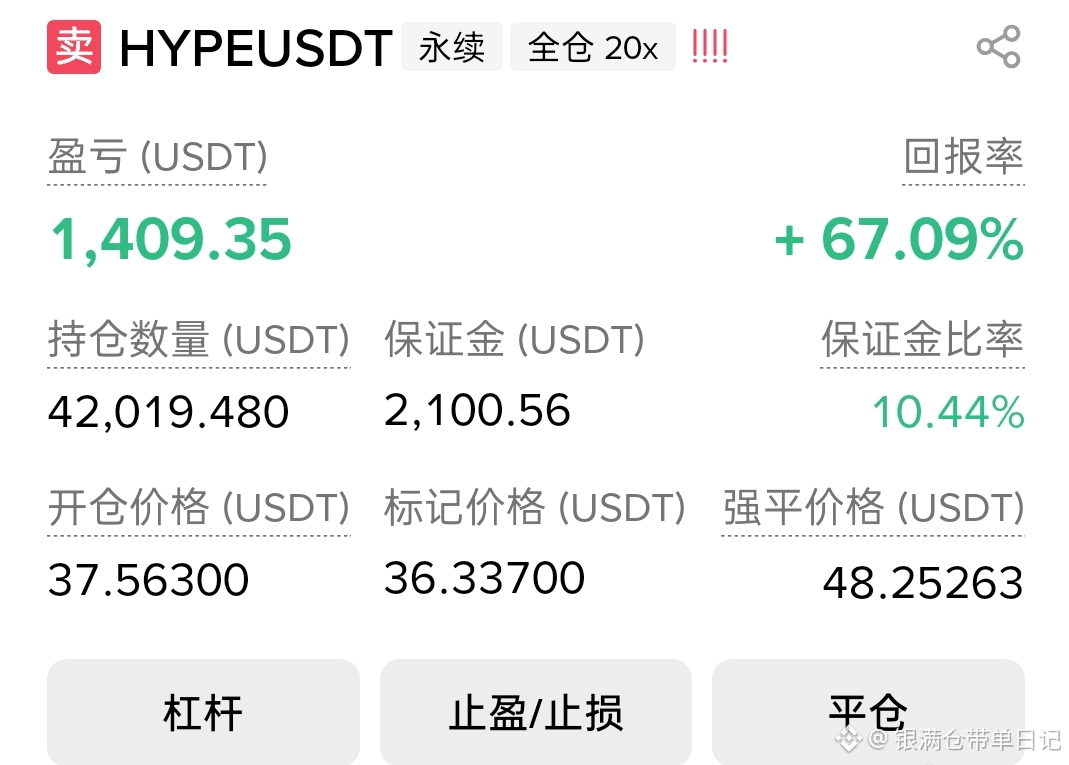
If your funds are within 1000U, I will teach you a trading method that an ordinary player can do—never getting liquidated, continuously making U. Many fans have gone from four figures to five figures relying on it. The core is just four steps: the simpler, the harsher, the more profitable. Even beginners can directly copy the homework. $我踏马来了
① Only choose 'coins that will rise'—keep a close eye on the MACD golden cross. Open the daily chart, don’t look at the messy details, just focus on one thing: the MACD golden cross, preferably above the 0 axis for maximum stability. No metaphysics, don’t be swayed by news, rely solely on technical screening, and avoid the junk coin trap. $XAU
② Only operate on one line—the daily moving average. Remember one thing: above the line, hold; below the line, run away. If the coin price stands above the daily moving average, hold firmly; once it falls below the daily moving average, don't say a word, just clear your position, never drag your feet, and eliminate the risk of liquidation from the root.
③ Manage your position like this, follow it and you’ll make profits. Focus on two things: price + trading volume. If the conditions are met, go for it: price above the daily moving average + trading volume also above the daily moving average, go all in; selling has clear rules: sell 1/3 at a 40% increase, sell another 1/3 at an 80% increase, if it falls below the daily moving average, smash the remaining position on the table. This is discipline, no room for negotiation. $HYPE
④ Stop-loss has only one sentence, engrave it in your bones. If it falls below the daily moving average, no matter the reason the next day, clear your position immediately, no exceptions. A lucky chance once, all previous efforts will be wasted. This is also the core key to never getting liquidated. #Whale Movements
What’s there to fear if you miss it? No need to slap your thighs or regret, just wait for it to stand above the daily moving average again, and then buy back. This method is not fancy, it’s even a bit 'stupid', but the stupid method is precisely the safest, easiest to execute, and least likely to lead retail investors to lose everything. Keep the discipline, and you can steadily earn U and stay away from liquidation.
1
6
4k
·
--
In the cryptocurrency world for six years, I have gone from frequently being liquidated to accumulating assets in the eight-figure range. Through the ups and downs, I have learned the truth: there is no shortcut to getting rich quickly; sustained profits rely entirely on systematic execution of risk control and emotional management. These principles help me avoid 80% of traps.
1. Recognize the tricks of the market makers and do not be a bag holder.
The core of market makers' harvesting is to create illusions. Rapid rises and slow declines seem strong but actually attract retail investors to chase high prices and get trapped; a small bullish candle after a sharp drop is definitely not the bottom but a trap for the market makers to lure buyers, so be vigilant.
The divergence between volume and price is the core judgment basis: a price increase with a decrease in volume indicates weak funds, and the probability of a short-term peak is high; a bottom requires continuous stabilization with increased volume for more than 3 days to be an effective breakout signal.
2. Counter-trend betting, control market emotions $BTC
Retail investors are easily swayed by group emotions; when the community is full of “buying the dip,” the bottom is often not reached; fear and greed index < 20, and panic selling spreads, is the right opportunity for building positions in batches.
The logic of market makers' harvesting is very direct: spreading negative news to induce panic buying, then selling off after raising prices using FOMO emotions, while retail investors' intuition is always a beat behind.
3. Discipline is key, technology is just an aid $PAXG
In the cryptocurrency world, discipline far outweighs technology. No single trade should exceed 10% of total funds to avoid black swan risks; if losses reach 15%, stop-loss is mandatory. In the 2022 LUNA crash, those who held on averaged losses exceeding 80%, a deep lesson.
When emotions are out of control, a brake must be applied: after two consecutive failed trades, a forced 24-hour cash position should be implemented to eliminate revenge trading.
4. The sustainable profit path for ordinary people $ETH
Give up the obsession with getting rich overnight; data shows that traders with an average annual return of 30%+ derive 90% of their profits from trending markets rather than short-term trading. Focus on the daily breakout of mainstream cryptocurrencies, and stay away from the narratives of getting rich from altcoins.
Make good use of quantitative tools to monitor on-chain transfers and fund flows, replacing subjective judgment with rationality.
The cruelest truth of the cryptocurrency world: most losses stem from the difficulty of implementation despite easy knowledge. Internalizing principles into habits is the only way to steadily profit through bull and bear markets. @Square-Creator-e7fd332b19daf

1
1
772
·
--
I see many friends repeatedly losing money in short-term trading, and it really pains me. Making big money requires timing, but controlling losses is something everyone can achieve through skill. Here are a few practical insights I've tried with real money to help you keep your losses in check:
1. Never chase highs, give up on tail-end trends $BTC
Market fluctuations are like waves; chasing highs is like actively standing at the peak of a wave, and you could be knocked down at any moment.
Position assessment: If the price has broken above more than half of the previous high and low range, don’t chase; the risk-reward ratio is no longer favorable;
Volatility reference: If a certain coin has an average daily fluctuation of 100 points, and it has already risen more than 50 points, it’s better to miss out than to chase; wait for a pullback;
Indicator assistance: When using Bollinger Bands (Boll), don't enter when it’s touching the upper band; patiently wait for a pullback to the middle band, lower band, or the 10-day moving average before considering.
2. Don’t catch a “falling knife”, wait for stabilization signals $ETH
Buying the dip during a crash is like catching a knife bare-handed and can easily injure yourself.
Key confirmation: You must wait for the pattern to stabilize, such as the emergence of a rounded bottom or double bottom structure before acting;
Beware of continuation patterns: If oscillations occur in the middle of a range, it’s often a continuation rather than a reversal, so don’t easily assume it’s a bottom.
3. Avoid trading during low activity periods, do not make ineffective trades
After 2:30 PM and after 10:30 PM, market transactions shrink, directions become unclear, and it's easy to get passively trapped. The essence of short-term trading is to follow the money; without volume, there's no market.
4. Trading volume is the footprints of the main players $DOGE
In 5-minute candlesticks, sudden bursts of volume often signal actions from the main players:
When moving averages converge and then expand in volume, it’s usually a precursor to action;
Don’t trust low-volume oscillations; markets without main player participation won’t go far.
5. Loss control is the survival baseline
Tight stop-loss: In uncertain markets, set tighter stop-losses; if your logic remains unchanged after a loss, wait for the next signal to re-enter;
Stop-loss is not about courage: Don’t use having a “stop-loss” as an excuse for frequent entries; only high-certainty opportunities are worth taking.
The core of short-term trading is not to see who makes the most money, but to see who can last the longest.
If you continue to shrink your account due to impulsive trading and stubbornly holding onto losses, consider adjusting from these five points.
Keep your rhythm steady; minimizing losses is a win. @Square-Creator-e7fd332b19daf
I see many friends repeatedly losing money in short-term trading, and it really pains me. Making big money requires timing, but controlling losses is something everyone can achieve through skill. Here are a few practical insights I've tried with real money to help you keep your losses in check:
1. Never chase highs, give up on tail-end trends $BTC
Market fluctuations are like waves; chasing highs is like actively standing at the peak of a wave, and you could be knocked down at any moment.
Position assessment: If the price has broken above more than half of the previous high and low range, don’t chase; the risk-reward ratio is no longer favorable;
Volatility reference: If a certain coin has an average daily fluctuation of 100 points, and it has already risen more than 50 points, it’s better to miss out than to chase; wait for a pullback;
Indicator assistance: When using Bollinger Bands (Boll), don't enter when it’s touching the upper band; patiently wait for a pullback to the middle band, lower band, or the 10-day moving average before considering.
2. Don’t catch a “falling knife”, wait for stabilization signals $ETH
Buying the dip during a crash is like catching a knife bare-handed and can easily injure yourself.
Key confirmation: You must wait for the pattern to stabilize, such as the emergence of a rounded bottom or double bottom structure before acting;
Beware of continuation patterns: If oscillations occur in the middle of a range, it’s often a continuation rather than a reversal, so don’t easily assume it’s a bottom.
3. Avoid trading during low activity periods, do not make ineffective trades
After 2:30 PM and after 10:30 PM, market transactions shrink, directions become unclear, and it's easy to get passively trapped. The essence of short-term trading is to follow the money; without volume, there's no market.
4. Trading volume is the footprints of the main players $DOGE
In 5-minute candlesticks, sudden bursts of volume often signal actions from the main players:
When moving averages converge and then expand in volume, it’s usually a precursor to action;
Don’t trust low-volume oscillations; markets without main player participation won’t go far.
5. Loss control is the survival baseline
Tight stop-loss: In uncertain markets, set tighter stop-losses; if your logic remains unchanged after a loss, wait for the next signal to re-enter;
Stop-loss is not about courage: Don’t use having a “stop-loss” as an excuse for frequent entries; only high-certainty opportunities are worth taking.
The core of short-term trading is not to see who makes the most money, but to see who can last the longest.
If you continue to shrink your account due to impulsive trading and stubbornly holding onto losses, consider adjusting from these five points.
Keep your rhythm steady; minimizing losses is a win. @银满仓带单日记

1
597
·
--
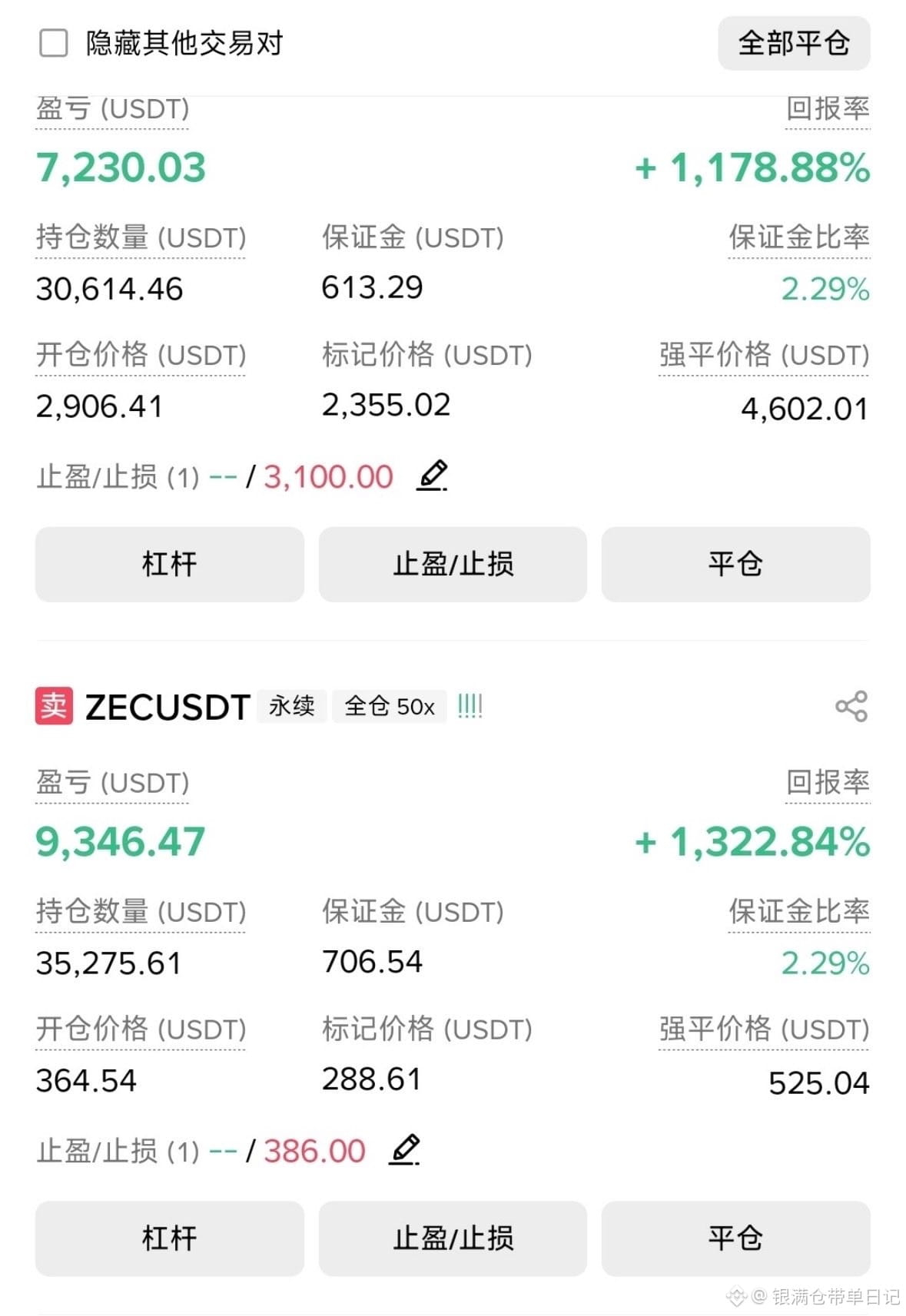
At three in the morning, the K-line is dazzling, the heart is racing, that feeling of being choked by the market, I understand.
I have also seen my assets shrink to almost zero overnight. It was only after climbing out of despair that I realized: what can save you is never some mysterious code, but a few rules bought with real money.
Rule 1: Only shoot within your range$BNB
I quit the addiction of 'fear of missing out'. The market always has opportunities, but the principal will not come back. Now, I only act in the key areas I have outlined in advance; at other times, no matter how much volatility there is, it has nothing to do with me. Protecting my circle of competence is ten times more important than chasing every fluctuation.
Rule 2: Before opening a position, calculate how much you can lose$BTC
The first step of every trade is not to fantasize about profits, but to clarify the maximum loss. Surviving is the only prerequisite for turning things around. With position management, you can wear armor, and only then can you traverse the bull and bear markets, seeing the next dawn.
Rule 3: Profits must be harvested in layers
When the trend comes, let the main position run freely; but at key resistance or psychological points, I will cash out profits in batches. This way, I won't miss out on the big market movements, and I'll always have chips to deal with pullbacks. Never go all in on one direction.
Rule 4: If there is no signal, absolutely wait$DOGE
Emotions are the greatest cost of trading. I have established a clear checklist of entry conditions for myself — if they are not met, I will absolutely not take action. The market has a lot of noise, but your rules should be as clear as a scale.
It is these seemingly simple rules that have allowed me to slowly transform from a gambler swayed by emotions into a calm executor of plans.
Profits have changed from occasional luck to replicable stability. More importantly, I no longer fear volatility because I know everything is within the plan.@Square-Creator-e7fd332b19daf
At three in the morning, the K-line is dazzling, the heart is racing, that feeling of being choked by the market, I understand.
I have also seen my assets shrink to almost zero overnight. It was only after climbing out of despair that I realized: what can save you is never some mysterious code, but a few rules bought with real money.
Rule 1: Only shoot within your range$BNB
I quit the addiction of 'fear of missing out'. The market always has opportunities, but the principal will not come back. Now, I only act in the key areas I have outlined in advance; at other times, no matter how much volatility there is, it has nothing to do with me. Protecting my circle of competence is ten times more important than chasing every fluctuation.
Rule 2: Before opening a position, calculate how much you can lose$BTC
The first step of every trade is not to fantasize about profits, but to clarify the maximum loss. Surviving is the only prerequisite for turning things around. With position management, you can wear armor, and only then can you traverse the bull and bear markets, seeing the next dawn.
Rule 3: Profits must be harvested in layers
When the trend comes, let the main position run freely; but at key resistance or psychological points, I will cash out profits in batches. This way, I won't miss out on the big market movements, and I'll always have chips to deal with pullbacks. Never go all in on one direction.
Rule 4: If there is no signal, absolutely wait$DOGE
Emotions are the greatest cost of trading. I have established a clear checklist of entry conditions for myself — if they are not met, I will absolutely not take action. The market has a lot of noise, but your rules should be as clear as a scale.
It is these seemingly simple rules that have allowed me to slowly transform from a gambler swayed by emotions into a calm executor of plans.
Profits have changed from occasional luck to replicable stability. More importantly, I no longer fear volatility because I know everything is within the plan.@银满仓带单日记
2
1.2k
·
--
Once entered the futures market with my childhood friend, the madness of tripling in two days is still vivid, only to lose everything in a single day.
Only after both of us blew our accounts and calmly reviewed our trades did I see clearly — futures are not gambling tools, but a magnifying glass of human nature.
The leverage you use is exactly the multiplier that the market amplifies your emotions. $BTC
First rule: Understand the funding rate — this is the market's emotional gauge.
A positive funding rate means bulls are dominant, but often suggests that the frenzy is nearing its end; a negative funding rate reflects that bears are in control, often accompanied by downward pressure. Those who truly understand the situation always look at the funding rate before determining direction.
Second rule: Leverage is an amplifier, not a money printer. $ETH
A leverage of 3-5 times is enough to let profits run, while over 10 times is dancing with liquidation. Remember: surviving is the key to the next opportunity. Position management is more important than simply predicting the direction correctly.
Third rule: Establish your trading rhythm.
Watch the trend — first look at the daily direction and overall sentiment, do not get addicted to short-term fluctuations;
Find the entry point — enter when there is a key level and volume support on the four-hour pullback;
Set stop-loss — clearly define the exit point before entering, and exit immediately if touched, do not rely on luck;
Take profit — lock in profits in batches at 10%-20%, as the market is always full of opportunities.
Fourth rule: Always leave enough bullets for the next battle.
Single coin positions should not exceed 30%, diversifying layouts will keep flexibility. The most terrifying thing is not the loss, but when an opportunity comes, you have no chips left.
In this market that exponentially amplifies greed and fear, those who can survive long-term are not necessarily the ones who predict the most accurately, but those who can control themselves the best. Steady, endure, wait — these three words are the answers I earned through countless late nights staring at the screen and watching my account shrink. $HYPE
Winning once relies on luck, winning ten times relies on rules. If you have also fluctuated in futures, perhaps now is the time to use systems and discipline to light up your path again. @Square-Creator-e7fd332b19daf
Once entered the futures market with my childhood friend, the madness of tripling in two days is still vivid, only to lose everything in a single day.
Only after both of us blew our accounts and calmly reviewed our trades did I see clearly — futures are not gambling tools, but a magnifying glass of human nature.
The leverage you use is exactly the multiplier that the market amplifies your emotions. $BTC
First rule: Understand the funding rate — this is the market's emotional gauge.
A positive funding rate means bulls are dominant, but often suggests that the frenzy is nearing its end; a negative funding rate reflects that bears are in control, often accompanied by downward pressure. Those who truly understand the situation always look at the funding rate before determining direction.
Second rule: Leverage is an amplifier, not a money printer. $ETH
A leverage of 3-5 times is enough to let profits run, while over 10 times is dancing with liquidation. Remember: surviving is the key to the next opportunity. Position management is more important than simply predicting the direction correctly.
Third rule: Establish your trading rhythm.
Watch the trend — first look at the daily direction and overall sentiment, do not get addicted to short-term fluctuations;
Find the entry point — enter when there is a key level and volume support on the four-hour pullback;
Set stop-loss — clearly define the exit point before entering, and exit immediately if touched, do not rely on luck;
Take profit — lock in profits in batches at 10%-20%, as the market is always full of opportunities.
Fourth rule: Always leave enough bullets for the next battle.
Single coin positions should not exceed 30%, diversifying layouts will keep flexibility. The most terrifying thing is not the loss, but when an opportunity comes, you have no chips left.
In this market that exponentially amplifies greed and fear, those who can survive long-term are not necessarily the ones who predict the most accurately, but those who can control themselves the best. Steady, endure, wait — these three words are the answers I earned through countless late nights staring at the screen and watching my account shrink. $HYPE
Winning once relies on luck, winning ten times relies on rules. If you have also fluctuated in futures, perhaps now is the time to use systems and discipline to light up your path again. @银满仓带单日记

1.1k
·
--
The Truth of Contracts: Either on the Rooftop or Steadily Landing $DOGE
Playing contracts, don't hold onto fantasies. The market only has two outcomes: either it pushes you to the peak, or it directly clears you out.
When I first entered the market, I also paid tuition: staying up late to watch the market, high-frequency trading, and just a slight increase in floating losses would make me lose my composure; a single needle could take away all my principal. It wasn't until later that I realized: liquidation is not an accident; it's the tuition that comes from a lack of understanding that will eventually need to be paid.
High leverage is a gentle trap
Do you think 3 times or 5 times is safe? In fact, it just postpones the risk. Once leverage is high, losses increase exponentially, and when you add in fees and slippage, the account is slowly drained through frequent trading.
The harsher reality is the mathematical rule: $PAXG
Lose 50%, you need to double to break even;
Lose 90%, you need to multiply by 9 to recover.
Those who survive rely on a set of "anti-collapse systems"
I no longer place orders based on feelings, but establish rules:
Observe the narrowing and widening using the BOLL indicator to judge trend momentum;
Set a single stop-loss not exceeding 3% of the principal, refusing emotional averaging down;
Trade no more than 2 times a day to avoid overtrading.
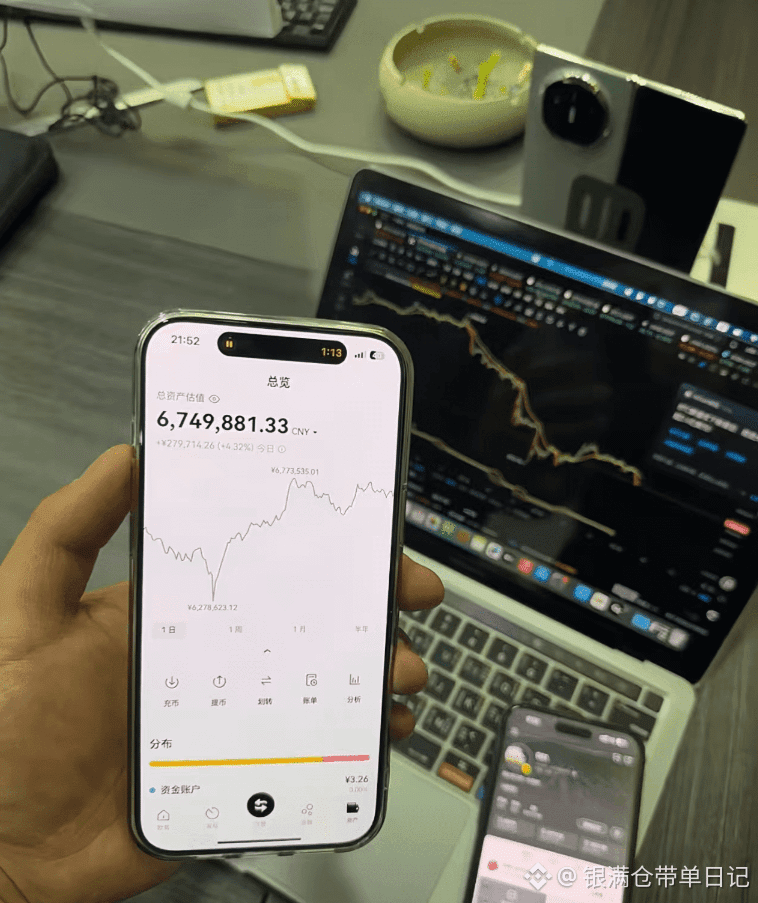
Don't challenge market probabilities with intuition $ZEC
If you always rely on "I feel like" to place orders, the problem is never bad luck, but rather your lack of a sustainable system.
In this game of contracts, rules are greater than mindset, and systems are stronger than intuition.
If you're tired of repeatedly facing liquidation, why not take a break, replace "gambling" with "rules," and perhaps you'll discover: the market never deceives; it's your own cognitive gaps that do. @Square-Creator-e7fd332b19daf
The Truth of Contracts: Either on the Rooftop or Steadily Landing $DOGE
Playing contracts, don't hold onto fantasies. The market only has two outcomes: either it pushes you to the peak, or it directly clears you out.
When I first entered the market, I also paid tuition: staying up late to watch the market, high-frequency trading, and just a slight increase in floating losses would make me lose my composure; a single needle could take away all my principal. It wasn't until later that I realized: liquidation is not an accident; it's the tuition that comes from a lack of understanding that will eventually need to be paid.
High leverage is a gentle trap
Do you think 3 times or 5 times is safe? In fact, it just postpones the risk. Once leverage is high, losses increase exponentially, and when you add in fees and slippage, the account is slowly drained through frequent trading.
The harsher reality is the mathematical rule: $PAXG
Lose 50%, you need to double to break even;
Lose 90%, you need to multiply by 9 to recover.
Those who survive rely on a set of "anti-collapse systems"
I no longer place orders based on feelings, but establish rules:
Observe the narrowing and widening using the BOLL indicator to judge trend momentum;
Set a single stop-loss not exceeding 3% of the principal, refusing emotional averaging down;
Trade no more than 2 times a day to avoid overtrading.
Don't challenge market probabilities with intuition $ZEC
If you always rely on "I feel like" to place orders, the problem is never bad luck, but rather your lack of a sustainable system.
In this game of contracts, rules are greater than mindset, and systems are stronger than intuition.
If you're tired of repeatedly facing liquidation, why not take a break, replace "gambling" with "rules," and perhaps you'll discover: the market never deceives; it's your own cognitive gaps that do. @银满仓带单日记
1
1.9k
·
--
Many newcomers can't help but keep an eye on the market 24 hours a day,
daring not to part with their phones, waking up in the middle of the night due to a K-line.
If this is your state too, $SUI
you must be careful,
this is usually not investing,
but being led by emotions.
The market loves to harvest these "people who can't leave the market."
The more anxious you are, the easier it is to make mistakes.
There's a very realistic principle: there are always traps in this market.
When your experience is still insufficient, the worst thing is to rush into heavy bets.
Take a sum of money that, even if lost entirely, won't affect your normal life,
calm down to explore, strictly follow the plan, avoid arbitrary increases, and don't act impulsively.
Consider each misstep as tuition for growth; this is actually the most cost-effective way to learn.
Once you truly understand the logic of market harvesting a few times, your mindset will naturally stabilize.
Additionally, don't focus solely on the ups and downs of buying and selling.
The cryptocurrency world is actually very broad, with information gaps, depth of understanding, and resource connections,
all of which can create value. $ZEC
The more solid thinking and effective time you invest,
the more likely the market will reward you at some stage.
Don't always think about getting rich overnight; in this market,
being able to survive steadily is more important than anything else. $HYPE
Only those who can stay long-term have the chance to reap the benefits of subsequent cycles. @Square-Creator-e7fd332b19daf
Many newcomers can't help but keep an eye on the market 24 hours a day,
daring not to part with their phones, waking up in the middle of the night due to a K-line.
If this is your state too, $SUI
you must be careful,
this is usually not investing,
but being led by emotions.
The market loves to harvest these "people who can't leave the market."
The more anxious you are, the easier it is to make mistakes.
There's a very realistic principle: there are always traps in this market.
When your experience is still insufficient, the worst thing is to rush into heavy bets.
Take a sum of money that, even if lost entirely, won't affect your normal life,
calm down to explore, strictly follow the plan, avoid arbitrary increases, and don't act impulsively.
Consider each misstep as tuition for growth; this is actually the most cost-effective way to learn.
Once you truly understand the logic of market harvesting a few times, your mindset will naturally stabilize.
Additionally, don't focus solely on the ups and downs of buying and selling.
The cryptocurrency world is actually very broad, with information gaps, depth of understanding, and resource connections,
all of which can create value. $ZEC
The more solid thinking and effective time you invest,
the more likely the market will reward you at some stage.
Don't always think about getting rich overnight; in this market,
being able to survive steadily is more important than anything else. $HYPE
Only those who can stay long-term have the chance to reap the benefits of subsequent cycles. @银满仓带单日记

1
2.9k
·
--
Using candlestick patterns to determine entry timing can be summarized in six words: direction, position, confirmation. $ETH
1. First identify the direction, go with the trend
Look for opportunities to go long when bullish, and look for opportunities to go short when bearish; do not easily operate against the trend. Only consider a possible trend reversal when clear reversal candlestick patterns such as bullish engulfing, hammer, or morning star appear. When observing candlesticks, pay attention to whether their trading focus is continuously rising, as this helps determine the trend.
2. Find the right position for double the results with half the effort $XRP
No matter how good the pattern, if it appears in a stagnant middle area, its effectiveness will be greatly reduced. The key is to look for long opportunities near support levels and consider short opportunities near resistance levels. A reversal signal far from critical price levels often has lower reliability.
3. Wait for confirmation and act decisively
"Confirmation" is the signal to act. The combination of volume and price is the essence—when rising, trading volume should increase, making the upward trend more reliable; when falling, increased volume indicates real selling pressure. At the same time, an effective "entry candlestick" should align with the direction indicated by the signal and can form a breakthrough at key levels.
4. Indicators are aids, stop-loss is the bottom line $BTC
Indicators such as moving averages and MACD are mainly used to verify the strength of trends, not to predict the future; do not let auxiliary tools become the main decision-makers. Most importantly: before entering the market, you must clearly define your stop-loss level. Being able to control losses is the prerequisite for long-term survival in the market. @Square-Creator-e7fd332b19daf
Using candlestick patterns to determine entry timing can be summarized in six words: direction, position, confirmation. $ETH
1. First identify the direction, go with the trend
Look for opportunities to go long when bullish, and look for opportunities to go short when bearish; do not easily operate against the trend. Only consider a possible trend reversal when clear reversal candlestick patterns such as bullish engulfing, hammer, or morning star appear. When observing candlesticks, pay attention to whether their trading focus is continuously rising, as this helps determine the trend.
2. Find the right position for double the results with half the effort $XRP
No matter how good the pattern, if it appears in a stagnant middle area, its effectiveness will be greatly reduced. The key is to look for long opportunities near support levels and consider short opportunities near resistance levels. A reversal signal far from critical price levels often has lower reliability.
3. Wait for confirmation and act decisively
"Confirmation" is the signal to act. The combination of volume and price is the essence—when rising, trading volume should increase, making the upward trend more reliable; when falling, increased volume indicates real selling pressure. At the same time, an effective "entry candlestick" should align with the direction indicated by the signal and can form a breakthrough at key levels.
4. Indicators are aids, stop-loss is the bottom line $BTC
Indicators such as moving averages and MACD are mainly used to verify the strength of trends, not to predict the future; do not let auxiliary tools become the main decision-makers. Most importantly: before entering the market, you must clearly define your stop-loss level. Being able to control losses is the prerequisite for long-term survival in the market. @银满仓带单日记

968
·
--
Cryptocurrency Long-Term Survival Guide: 10 Cognitive Rules for Professionals $SOL
To survive in the cryptocurrency space, it's not about luck or short-term skills, but a professional-level cognitive framework. These 10 consensus points are lessons learned with real money.
1. Understand the rules first, then talk about making money
Clarify the exchange mechanism, on-chain transfers, and cross-chain logic before entering the market. If you don't even understand how money flows, you will earn and lose it back.
2. Filter out noise, make independent decisions
The more market noise there is, the harder it is to judge. Ultimately, it's you who places the order and bears the consequences. Others' suggestions can only be a reference; decisions must be controlled by yourself.
3. Choose the right information sources, stay away from emotional encirclement
Quality circles provide facts and risk reminders, while poor circles only share screenshots and create anxiety. The quality of information sources is more important than market trends.
4. There is no “boosting” in investment
No one's advice can replace your own thinking. Blindly following others is essentially handing your fate over to someone else.
5. Find a trading style that matches your personality
Short-term, contracts, holding coins, trends... each strategy has different thresholds. What works for others may not work for you. A mismatched approach is more fatal than a lack of skills.
6. Opportunities come from cognition, not luck
Real opportunities stem from a deep understanding of the track and the flow of funds. The “hundredfold coin” you casually hear about is likely an exit designed by others. $ETH
7. Treat losses as tuition, not failure
Stepping into pitfalls is unavoidable, but each mistake must lead to an upgrade in understanding. You must understand your losses to avoid repeating mistakes.
8. Do not complain about the market, only review yourself
The market will never adapt to you; you can only adapt to the market. The problem is not the market, but the response strategy.
9. Learning must be combined with practice
Just watching without practicing is empty talk; just practicing without learning is gambling. Growth occurs in a cycle of “learning while doing.”
10. Don't be swayed by others' profits
Comparative anxiety is the biggest taboo in the cryptocurrency space. Keep learning, maintain independent thinking, and time will transform you from a follower into a controller. $BTC
Final heartfelt words
The true winners in the cryptocurrency space are not those who run the fastest, but those who survive the longest. Stop getting tangled in short-term fluctuations, and refine your cognitive system; you will find that stable profits are more important than excitement. @Square-Creator-e7fd332b19daf
Cryptocurrency Long-Term Survival Guide: 10 Cognitive Rules for Professionals $SOL
To survive in the cryptocurrency space, it's not about luck or short-term skills, but a professional-level cognitive framework. These 10 consensus points are lessons learned with real money.
1. Understand the rules first, then talk about making money
Clarify the exchange mechanism, on-chain transfers, and cross-chain logic before entering the market. If you don't even understand how money flows, you will earn and lose it back.
2. Filter out noise, make independent decisions
The more market noise there is, the harder it is to judge. Ultimately, it's you who places the order and bears the consequences. Others' suggestions can only be a reference; decisions must be controlled by yourself.
3. Choose the right information sources, stay away from emotional encirclement
Quality circles provide facts and risk reminders, while poor circles only share screenshots and create anxiety. The quality of information sources is more important than market trends.
4. There is no “boosting” in investment
No one's advice can replace your own thinking. Blindly following others is essentially handing your fate over to someone else.
5. Find a trading style that matches your personality
Short-term, contracts, holding coins, trends... each strategy has different thresholds. What works for others may not work for you. A mismatched approach is more fatal than a lack of skills.
6. Opportunities come from cognition, not luck
Real opportunities stem from a deep understanding of the track and the flow of funds. The “hundredfold coin” you casually hear about is likely an exit designed by others. $ETH
7. Treat losses as tuition, not failure
Stepping into pitfalls is unavoidable, but each mistake must lead to an upgrade in understanding. You must understand your losses to avoid repeating mistakes.
8. Do not complain about the market, only review yourself
The market will never adapt to you; you can only adapt to the market. The problem is not the market, but the response strategy.
9. Learning must be combined with practice
Just watching without practicing is empty talk; just practicing without learning is gambling. Growth occurs in a cycle of “learning while doing.”
10. Don't be swayed by others' profits
Comparative anxiety is the biggest taboo in the cryptocurrency space. Keep learning, maintain independent thinking, and time will transform you from a follower into a controller. $BTC
Final heartfelt words
The true winners in the cryptocurrency space are not those who run the fastest, but those who survive the longest. Stop getting tangled in short-term fluctuations, and refine your cognitive system; you will find that stable profits are more important than excitement. @银满仓带单日记

2
880
·
--
2000U to tens of millions: My trading logic can actually be summarized in three sentences. What others see are account numbers, but what I experienced was countless waits, trial and error, and the execution of discipline. $ETH
First order: Weakness at previous highs, decisively short
When the price rushes to the previous high but fails to rise and forms an upper shadow, I choose to short. It's not a prediction; it's the market sending a signal.
Second order: Sideways consolidation, break through and follow
When the market is in a sideways oscillation, unable to drop or move much, I judge it to be a precursor to a breakout. After entering, I exit at the high position.
Third order: Volume contraction breakthrough, heavy position targeting $SOL
Long-term volume contraction and consolidation, like a hibernating bear, once volume breaks through the upper bound of the range, it is a starting signal.
Core principles: Wait, follow, guard $HYPE
Wait: The market is noise most of the time, and there are not many truly worthwhile opportunities; patience is the threshold;
Follow: Only trade clear trend breakouts, do not guess tops and bottoms, do not fantasize;
Guard: Always set stop losses for each trade, take profits in batches, and do not let emotions interfere with decision-making.
Money is not “guessed” but is a reward from the market for those who abide by the rules. If you are often led by fluctuations, it might be worth asking yourself: Are you willing to continue chasing highs and lows, or will you start to replace impulse with a system? @Square-Creator-e7fd332b19daf

1
1
1k
·
--
Friends often ask me: How should I read K-line charts without getting confused? 🤔
My method is very simple, just three steps: look at the direction, find the position, wait for the opportunity.
$ETH
Step 1: 4-hour chart, look at the direction
This timeframe can filter out a lot of market noise. If the highs and lows are continuously rising, it indicates an upward trend, and during pullbacks, look for opportunities; if continuously falling, it indicates a downward trend, and be cautious during rebounds. First, clarify the overall direction to have a solid foundation for your actions.
Step 2: 1-hour chart, find the position$BTC
Once the trend is determined, check where the price is heading. If it approaches the support line, moving averages, or previous lows, it can be monitored; if it's close to previous highs or significant resistance, consider reducing positions. This addresses the question of "where to act".
Step 3: 15-minute chart, wait for signals
This is the specific entry point. Wait for the price to reach key levels, then observe if there are any reversal patterns, divergences, or indicator resonances. Ideally, breakouts should be accompanied by trading volume; otherwise, they may be false signals.
In summary, it can be boiled down to three sentences: $SUI
4-hour sets the direction (long or short)
1-hour sets the position (where to act)
15-minute sets the timing (when to act)
If several timeframe signals are contradictory, the best action is to do nothing and wait with a flat position. Trading is not about who acts faster but about who has more patience and can better adhere to clear rules @Square-Creator-e7fd332b19daf

1
1
1
953
Log in to explore more content
Join global crypto users on Binance Square
⚡️ Get latest and useful information about crypto.
💬 Trusted by the world’s largest crypto exchange.
👍 Discover real insights from verified creators.
Email / Phone number