

老腊肉-kevin
5.1k Posts

老腊肉-kevin
 Square Verified+
Report
Block User
红薯🍠和X:@cryptokevin1688|邀请码|Bind invite code :KEVIN1688|关注我的都暴富了
Open Trade
High-Frequency Trader
11 Months
150 Following
46.5K+ Followers
25.4K+ Liked
Posts
Portfolio
All
Quotes
Videos
PINNED
·
--
Binance Wb3 Wallet Benefits
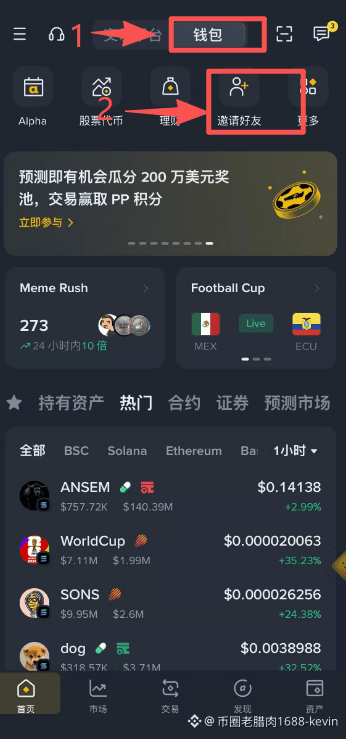
Brothers, let me tell you a great way to save 30% on trading fees (operate as shown in the picture)
In the Binance app, go to the home page. At the top, you’ll see two options: Trading Platform and Wallet.
Step 1: Select Wallet to switch to the wallet;
Step 2: Select Invite Friends;
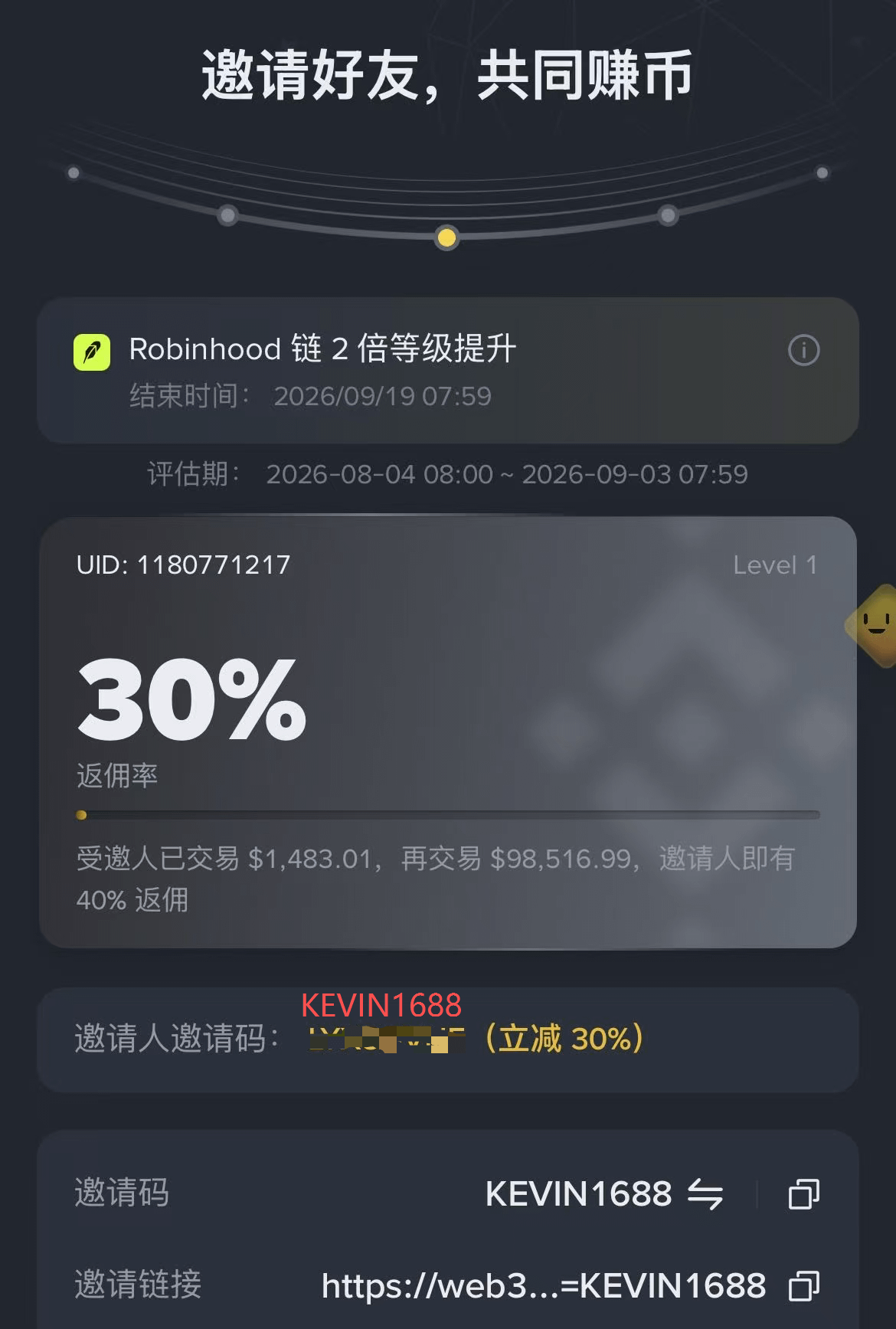
Step 3: Enter the invitation code: KEVIN1688 (copy it to the position shown in the picture);
Step 4: Claim the reward below.
Especially for brothers who like to farm on-chain low-cap “scam/dog” coins and do high-frequency trading—remember to bind the invitation code: KEVIN1688 to get a 30% reward. If you trade less, you can receive 5U or 10U; if you trade more, you can receive dozens of U, or even 100U.
[点击钱包,赶紧去绑定邀请码:KEVIN1688 ,领取奖励吧!](https://web3.binance.com/referral?ref=EHJSNS5W)
Binance Wb3 Wallet Benefits
Brothers, let me tell you a great way to save 30% on trading fees (operate as shown in the picture)
In the Binance app, go to the home page. At the top, you’ll see two options: Trading Platform and Wallet.
Step 1: Select Wallet to switch to the wallet;
Step 2: Select Invite Friends;
Step 3: Enter the invitation code: KEVIN1688 (copy it to the position shown in the picture);
Step 4: Claim the reward below.
Especially for brothers who like to farm on-chain low-cap “scam/dog” coins and do high-frequency trading—remember to bind the invitation code: KEVIN1688 to get a 30% reward. If you trade less, you can receive 5U or 10U; if you trade more, you can receive dozens of U, or even 100U.
点击钱包,赶紧去绑定邀请码:KEVIN1688 ,领取奖励吧!
Brothers, let me tell you a great way to save 30% on trading fees (operate as shown in the picture)
In the Binance app, go to the home page. At the top, you’ll see two options: Trading Platform and Wallet.
Step 1: Select Wallet to switch to the wallet;
Step 2: Select Invite Friends;
Step 3: Enter the invitation code: KEVIN1688 (copy it to the position shown in the picture);
Step 4: Claim the reward below.
Especially for brothers who like to farm on-chain low-cap “scam/dog” coins and do high-frequency trading—remember to bind the invitation code: KEVIN1688 to get a 30% reward. If you trade less, you can receive 5U or 10U; if you trade more, you can receive dozens of U, or even 100U.
点击钱包,赶紧去绑定邀请码:KEVIN1688 ,领取奖励吧!
6
4
27
906
·
--
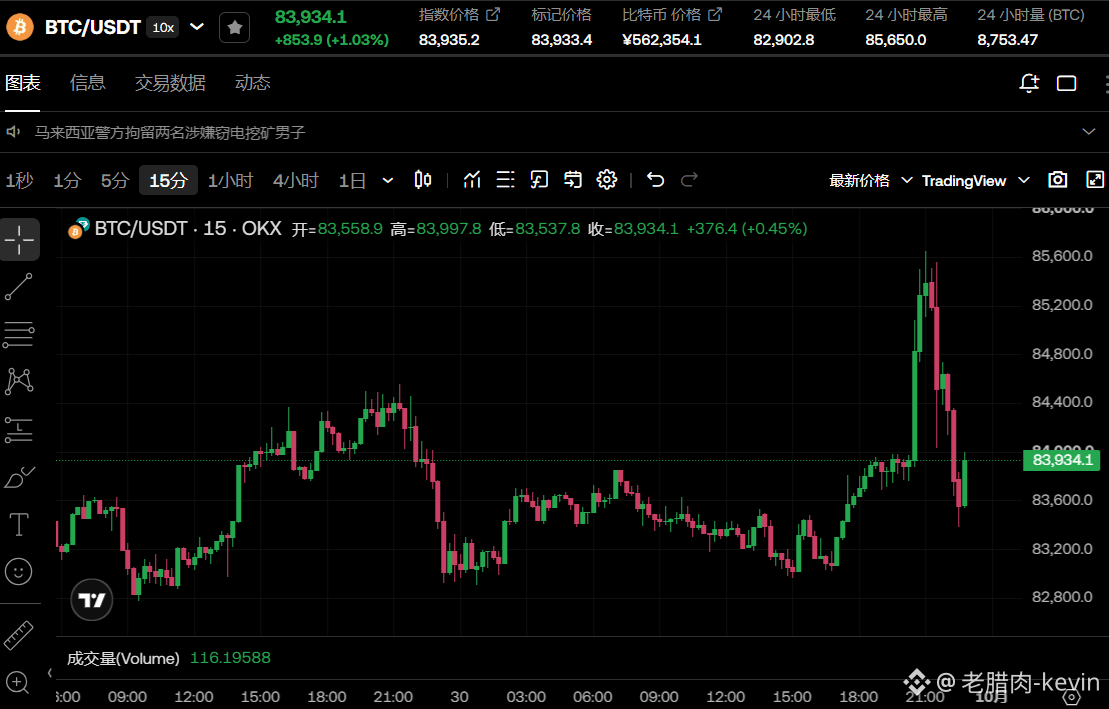
#比特币升破85200美元 Bitcoin’s rollercoaster ride—purely, it’s “smart money” distributing supply
With the PCE out: core came in at 3.0%, lower than expected. Bitcoin immediately shot up to 85,000. But as soon as the U.S. stock market opened, it dumped.
Where’s the tell? On-chain data exposed it early. Unrealized profits for short-term holders surged to 33%, the highest since the end of 2024. On September 22 alone, they cashed out profits on 25,700 BTC—just one day.
The ETF side does show continued inflows—net buying for 9 straight days totaling 3.1 billion—but those are long-term institutional allocations, not for chasing short-term moves.
Liquidation data is even more straightforward: $261 million liquidated in 24 hours, with $134 million in shorts. After the bears were blown up by the PCE pop, the longs immediately started running.
The “smart money” move is very clear: once the good news is out, it’s time to leave. Spot demand has been negative for the past 30 days. Meanwhile, futures speculation collapsed from 164,000 BTC down to 16,000. $BTC $ETH $SOL #比特币跌破8.4万美元 #美国8月核心PCE降至3%
{future}(SOLUSDT)
{future}(ETHUSDT)
{future}(BTCUSDT)
#比特币升破85200美元 Bitcoin’s rollercoaster ride—purely, it’s “smart money” distributing supply
With the PCE out: core came in at 3.0%, lower than expected. Bitcoin immediately shot up to 85,000. But as soon as the U.S. stock market opened, it dumped.
Where’s the tell? On-chain data exposed it early. Unrealized profits for short-term holders surged to 33%, the highest since the end of 2024. On September 22 alone, they cashed out profits on 25,700 BTC—just one day.
The ETF side does show continued inflows—net buying for 9 straight days totaling 3.1 billion—but those are long-term institutional allocations, not for chasing short-term moves.
Liquidation data is even more straightforward: $261 million liquidated in 24 hours, with $134 million in shorts. After the bears were blown up by the PCE pop, the longs immediately started running.
The “smart money” move is very clear: once the good news is out, it’s time to leave. Spot demand has been negative for the past 30 days. Meanwhile, futures speculation collapsed from 164,000 BTC down to 16,000. $BTC $ETH $SOL #比特币跌破8.4万美元 #美国8月核心PCE降至3%
With the PCE out: core came in at 3.0%, lower than expected. Bitcoin immediately shot up to 85,000. But as soon as the U.S. stock market opened, it dumped.
Where’s the tell? On-chain data exposed it early. Unrealized profits for short-term holders surged to 33%, the highest since the end of 2024. On September 22 alone, they cashed out profits on 25,700 BTC—just one day.
The ETF side does show continued inflows—net buying for 9 straight days totaling 3.1 billion—but those are long-term institutional allocations, not for chasing short-term moves.
Liquidation data is even more straightforward: $261 million liquidated in 24 hours, with $134 million in shorts. After the bears were blown up by the PCE pop, the longs immediately started running.
The “smart money” move is very clear: once the good news is out, it’s time to leave. Spot demand has been negative for the past 30 days. Meanwhile, futures speculation collapsed from 164,000 BTC down to 16,000. $BTC $ETH $SOL #比特币跌破8.4万美元 #美国8月核心PCE降至3%
1
4.6k
·
--
Partly True
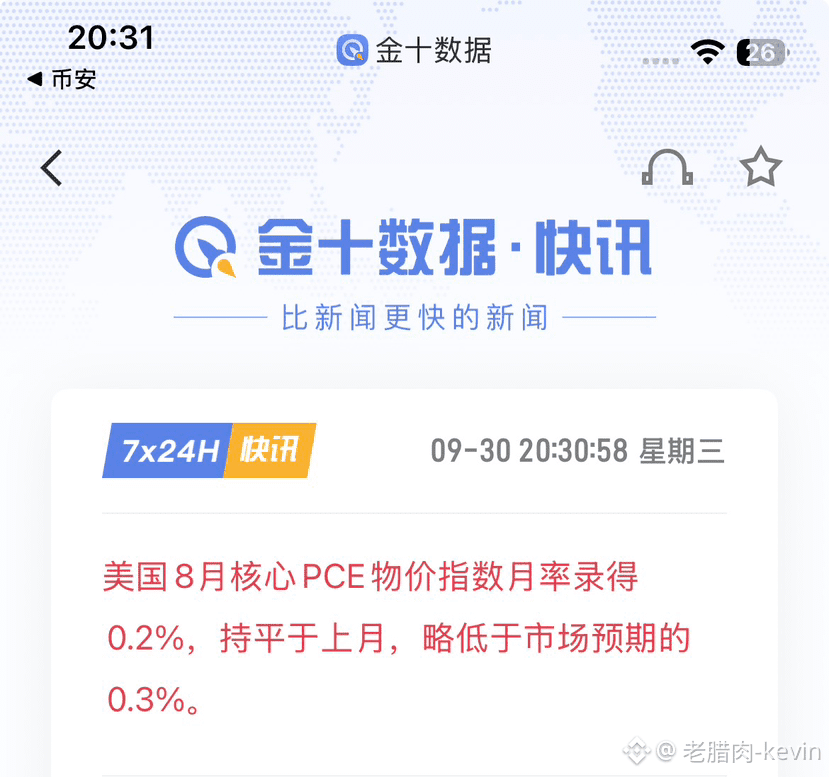
PCE data below expectations; BTC and ETH surge wildly
US stock index futures jump in the short term. Nasdaq 100 futures rose 0.48% intraday, S&P 500 index futures rose 0.50%, and Dow Jones futures rose 0.49%. $ETH $BTC $SOXL #美国8月核心PCE降至3%
{future}(SOXLUSDT)
{future}(BTCUSDT)
{future}(ETHUSDT)
PCE data below expectations; BTC and ETH surge wildly
US stock index futures jump in the short term. Nasdaq 100 futures rose 0.48% intraday, S&P 500 index futures rose 0.50%, and Dow Jones futures rose 0.49%. $ETH $BTC $SOXL #美国8月核心PCE降至3%
US stock index futures jump in the short term. Nasdaq 100 futures rose 0.48% intraday, S&P 500 index futures rose 0.50%, and Dow Jones futures rose 0.49%. $ETH $BTC $SOXL #美国8月核心PCE降至3%
1
2.3k
·
--
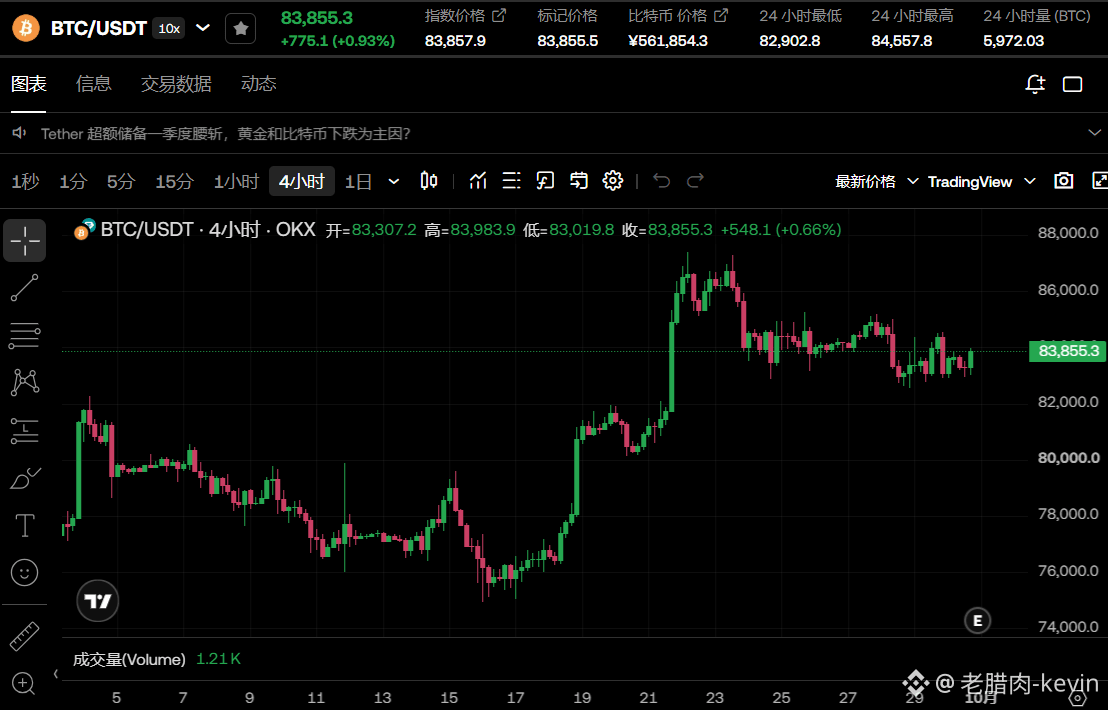
#比特币跌破8.4万美元 Bitcoin is stuck at 84,000—will tonight’s PCE squeeze the market or trigger a sell-off?
The current price is hovering around 83,000. There’s a “wall” at 84,000–85,000 packed with supply from long-term holders and sell orders. It tried twice to break through but couldn’t.
There’s an on-chain divergence signal: the Fear & Greed Index has surged to 74—greed is high—but BTC’s market share has fallen to 53.8%. Money is flowing out rather than rushing in.
The ETF inflows last week were indeed strong—$2.39 billion in a week—but as time goes on, the appetite gets weaker: on Friday it was down to just $130 million. “Smart money” is long with a positioning ratio of 1.47, while retail is 1.39. Everyone is betting on direction, but no one dares to make the first move.
Core PCE is expected to be 0.3%. If tonight it actually comes in at 0.3% or higher, long-end yields could spike again. Once 82,500 breaks, the next region is the max pain zone of around the mid-60,000s.$BTC $ETH $SOL
{future}(SOLUSDT)
{future}(ETHUSDT)
{future}(BTCUSDT)
#比特币跌破8.4万美元 Bitcoin is stuck at 84,000—will tonight’s PCE squeeze the market or trigger a sell-off?
The current price is hovering around 83,000. There’s a “wall” at 84,000–85,000 packed with supply from long-term holders and sell orders. It tried twice to break through but couldn’t.
There’s an on-chain divergence signal: the Fear & Greed Index has surged to 74—greed is high—but BTC’s market share has fallen to 53.8%. Money is flowing out rather than rushing in.
The ETF inflows last week were indeed strong—$2.39 billion in a week—but as time goes on, the appetite gets weaker: on Friday it was down to just $130 million. “Smart money” is long with a positioning ratio of 1.47, while retail is 1.39. Everyone is betting on direction, but no one dares to make the first move.
Core PCE is expected to be 0.3%. If tonight it actually comes in at 0.3% or higher, long-end yields could spike again. Once 82,500 breaks, the next region is the max pain zone of around the mid-60,000s.$BTC $ETH $SOL
The current price is hovering around 83,000. There’s a “wall” at 84,000–85,000 packed with supply from long-term holders and sell orders. It tried twice to break through but couldn’t.
There’s an on-chain divergence signal: the Fear & Greed Index has surged to 74—greed is high—but BTC’s market share has fallen to 53.8%. Money is flowing out rather than rushing in.
The ETF inflows last week were indeed strong—$2.39 billion in a week—but as time goes on, the appetite gets weaker: on Friday it was down to just $130 million. “Smart money” is long with a positioning ratio of 1.47, while retail is 1.39. Everyone is betting on direction, but no one dares to make the first move.
Core PCE is expected to be 0.3%. If tonight it actually comes in at 0.3% or higher, long-end yields could spike again. Once 82,500 breaks, the next region is the max pain zone of around the mid-60,000s.$BTC $ETH $SOL
365
·
--
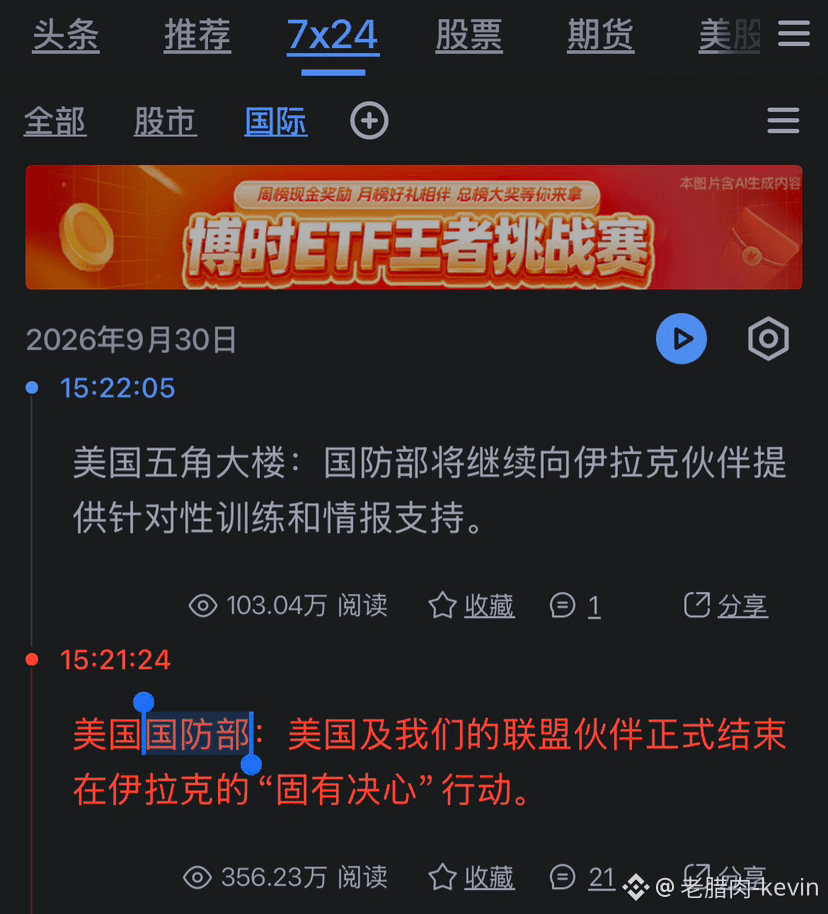
The U.S. says it is ending its “inherent resolve” operation in Iraq
But the Pentagon has a quick follow-up: it will still train Iraqis and keep providing intelligence. In plain words—troops may be coming out, but their watchful eyes are not.
Don’t jump to the conclusion that U.S.-Iran talks have taken hold. This looks more like the U.S. changing to a cheaper strategy: it won’t occupy territory, but it can still keep an eye on you.
Iran and the militias think they’ve won, Iraq celebrates sovereignty, but ISIS is still around—who will fill the security vacuum?
The chess game in the Middle East isn’t over; it’s just a change in tactics. $CL $XAU $BTC
{future}(BTCUSDT)
{future}(XAUUSDT)
{future}(CLUSDT)
The U.S. says it is ending its “inherent resolve” operation in Iraq
But the Pentagon has a quick follow-up: it will still train Iraqis and keep providing intelligence. In plain words—troops may be coming out, but their watchful eyes are not.
Don’t jump to the conclusion that U.S.-Iran talks have taken hold. This looks more like the U.S. changing to a cheaper strategy: it won’t occupy territory, but it can still keep an eye on you.
Iran and the militias think they’ve won, Iraq celebrates sovereignty, but ISIS is still around—who will fill the security vacuum?
The chess game in the Middle East isn’t over; it’s just a change in tactics. $CL $XAU $BTC
But the Pentagon has a quick follow-up: it will still train Iraqis and keep providing intelligence. In plain words—troops may be coming out, but their watchful eyes are not.
Don’t jump to the conclusion that U.S.-Iran talks have taken hold. This looks more like the U.S. changing to a cheaper strategy: it won’t occupy territory, but it can still keep an eye on you.
Iran and the militias think they’ve won, Iraq celebrates sovereignty, but ISIS is still around—who will fill the security vacuum?
The chess game in the Middle East isn’t over; it’s just a change in tactics. $CL $XAU $BTC
1.4k
·
--
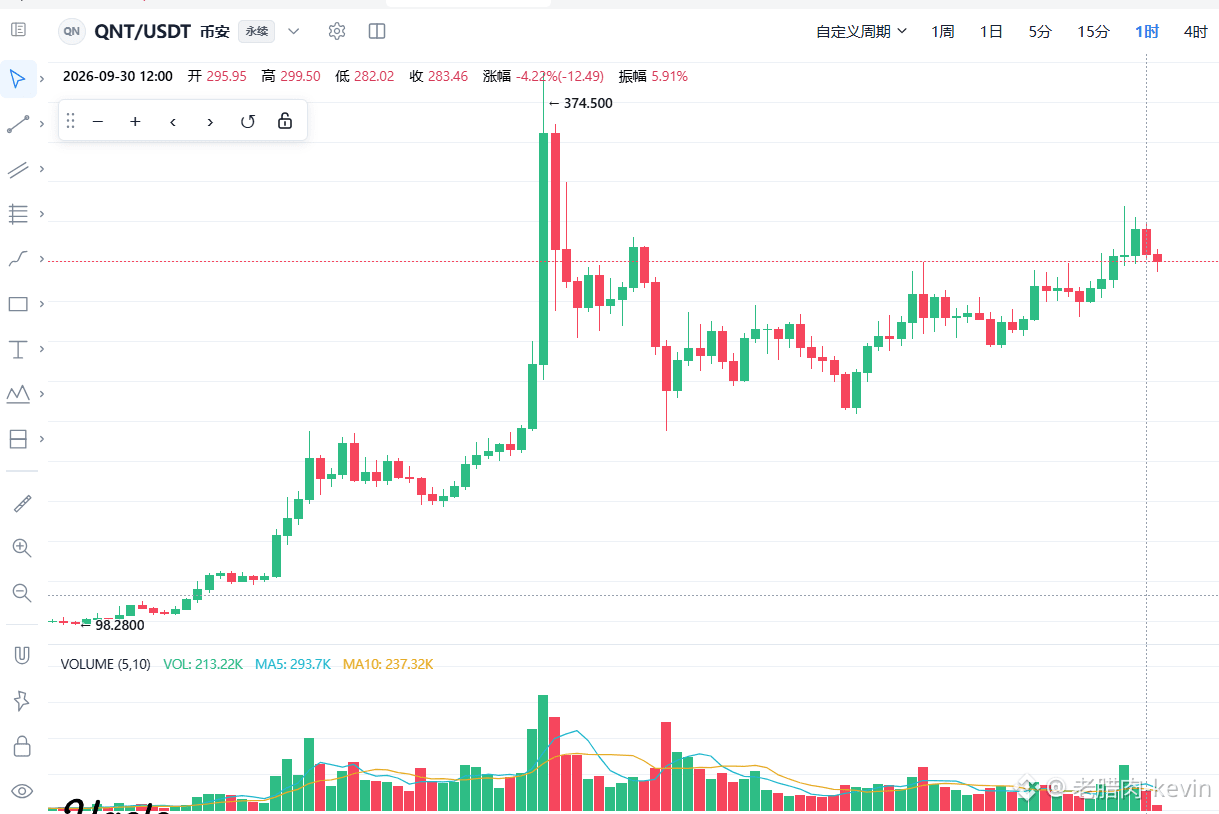
#美国8月职位空缺降至五个月低点 QNT accelerates to the top: go long or short?
First, the conclusion: short-term bias is bearish, but don’t get carried away.
After the TCH cooperation news came out, QNT surged from 60 to 373—more than triple in a week. The issue is that this rally didn’t bring any real token demand. Banks don’t need to buy QNT to use this network. The news-driven fuel has already largely burned off.
On-chain signals are straightforward. Two massive “whales” that had been inactive for over 3 years transferred $9.93 million worth of QNT to exchanges during the pump. After 7 years, founder-linked wallets also moved $6.97 million. The whales are distributing; retail is the one buying the top—you know the script.
On the technical side, RSI pushed above 82—extremely overbought. $227 is a key level. If it breaks down, look to $165 and even $115.
My approach: when it rebounds into the 260–280 range, take a small-position short. Set the stop-loss above 300. Downside first target is 227.$QNT #QNT一周涨287%
{future}(QNTUSDT)
#美国8月职位空缺降至五个月低点 QNT accelerates to the top: go long or short?
First, the conclusion: short-term bias is bearish, but don’t get carried away.
After the TCH cooperation news came out, QNT surged from 60 to 373—more than triple in a week. The issue is that this rally didn’t bring any real token demand. Banks don’t need to buy QNT to use this network. The news-driven fuel has already largely burned off.
On-chain signals are straightforward. Two massive “whales” that had been inactive for over 3 years transferred $9.93 million worth of QNT to exchanges during the pump. After 7 years, founder-linked wallets also moved $6.97 million. The whales are distributing; retail is the one buying the top—you know the script.
On the technical side, RSI pushed above 82—extremely overbought. $227 is a key level. If it breaks down, look to $165 and even $115.
My approach: when it rebounds into the 260–280 range, take a small-position short. Set the stop-loss above 300. Downside first target is 227.$QNT #QNT一周涨287%
First, the conclusion: short-term bias is bearish, but don’t get carried away.
After the TCH cooperation news came out, QNT surged from 60 to 373—more than triple in a week. The issue is that this rally didn’t bring any real token demand. Banks don’t need to buy QNT to use this network. The news-driven fuel has already largely burned off.
On-chain signals are straightforward. Two massive “whales” that had been inactive for over 3 years transferred $9.93 million worth of QNT to exchanges during the pump. After 7 years, founder-linked wallets also moved $6.97 million. The whales are distributing; retail is the one buying the top—you know the script.
On the technical side, RSI pushed above 82—extremely overbought. $227 is a key level. If it breaks down, look to $165 and even $115.
My approach: when it rebounds into the 260–280 range, take a small-position short. Set the stop-loss above 300. Downside first target is 227.$QNT #QNT一周涨287%
2
1.2k
·
--
Verified
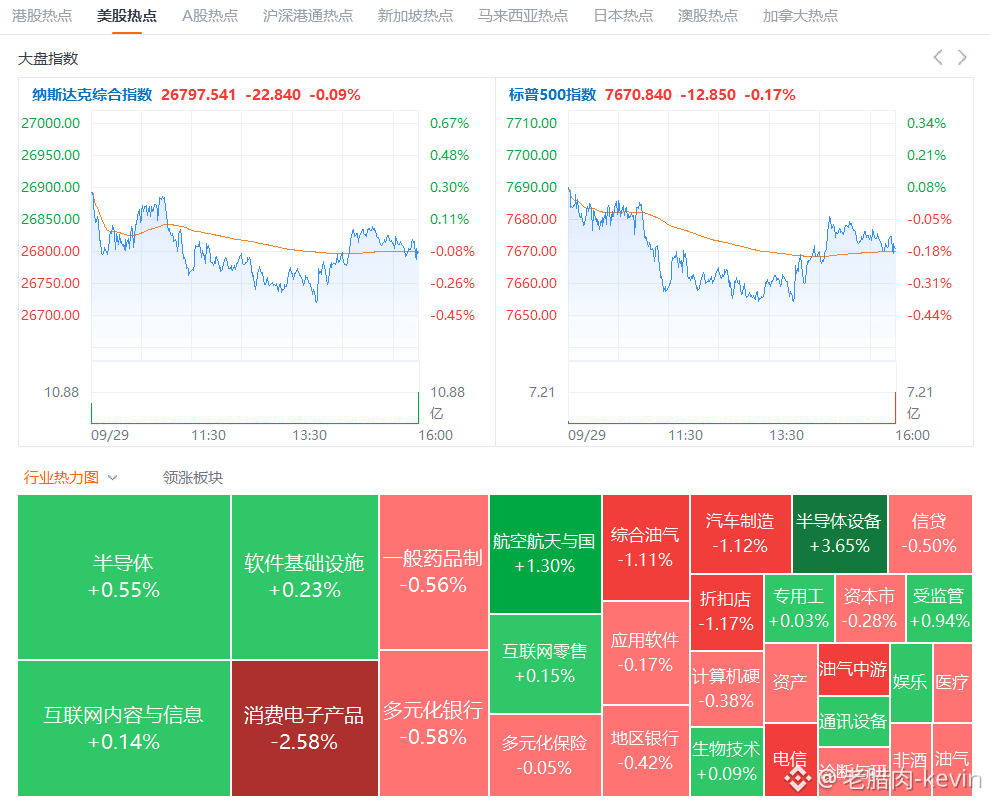
#股票财报季 US stock market outlook: long-end rates blew up; tech stocks held up hard. Tonight’s PCE is the final piece of the puzzle
At Tuesday’s close, the three major indexes looked calm on the surface, but turbulence was building underneath. The S&P 500 fell 0.17%, the Dow dropped 0.26%, and the Nasdaq 100 rose 0.21% against the tide. Optical communications and semiconductors propped up the tape—LITE jumped more than 5%, while Corning and MKS Instruments rose more than 4%. But the yield on the 30-year US Treasuries surged to 5.62%, the highest level since 2002.
On the macro front, there are three things—each more explosive than the last.
Williams held back, saying “no rush,” and the odds of a rate hike in October slipped from 70% down to 51%. But Barr immediately sang the opposite tune, saying the path back to 2% inflation is off course. The Fed’s own people are fighting among themselves first. Long-end yields are having none of it—Paramount issued $32 billion in bonds, intensifying supply pressure, and big buyers collectively vanished.
On oil, Qatar mediated + Saudi pipeline restoration, and Brent slid straight through 103. But spot Brent is still hovering around 120 for the moment, and the gap between futures and spot is wildly out of sync.
Tonight at 20:30, the PCE report—core expectations of 3.3% are unchanged. If the data come in even 0.3% above, bets on an October rate hike will rebound right away; long-end yields will surge again, and these little gains in tech stocks will all have to be given back. $CL $SOXL $KORU
{future}(KORUUSDT)
{future}(SOXLUSDT)
{future}(CLUSDT)
#股票财报季 US stock market outlook: long-end rates blew up; tech stocks held up hard. Tonight’s PCE is the final piece of the puzzle
At Tuesday’s close, the three major indexes looked calm on the surface, but turbulence was building underneath. The S&P 500 fell 0.17%, the Dow dropped 0.26%, and the Nasdaq 100 rose 0.21% against the tide. Optical communications and semiconductors propped up the tape—LITE jumped more than 5%, while Corning and MKS Instruments rose more than 4%. But the yield on the 30-year US Treasuries surged to 5.62%, the highest level since 2002.
On the macro front, there are three things—each more explosive than the last.
Williams held back, saying “no rush,” and the odds of a rate hike in October slipped from 70% down to 51%. But Barr immediately sang the opposite tune, saying the path back to 2% inflation is off course. The Fed’s own people are fighting among themselves first. Long-end yields are having none of it—Paramount issued $32 billion in bonds, intensifying supply pressure, and big buyers collectively vanished.
On oil, Qatar mediated + Saudi pipeline restoration, and Brent slid straight through 103. But spot Brent is still hovering around 120 for the moment, and the gap between futures and spot is wildly out of sync.
Tonight at 20:30, the PCE report—core expectations of 3.3% are unchanged. If the data come in even 0.3% above, bets on an October rate hike will rebound right away; long-end yields will surge again, and these little gains in tech stocks will all have to be given back. $CL $SOXL $KORU
At Tuesday’s close, the three major indexes looked calm on the surface, but turbulence was building underneath. The S&P 500 fell 0.17%, the Dow dropped 0.26%, and the Nasdaq 100 rose 0.21% against the tide. Optical communications and semiconductors propped up the tape—LITE jumped more than 5%, while Corning and MKS Instruments rose more than 4%. But the yield on the 30-year US Treasuries surged to 5.62%, the highest level since 2002.
On the macro front, there are three things—each more explosive than the last.
Williams held back, saying “no rush,” and the odds of a rate hike in October slipped from 70% down to 51%. But Barr immediately sang the opposite tune, saying the path back to 2% inflation is off course. The Fed’s own people are fighting among themselves first. Long-end yields are having none of it—Paramount issued $32 billion in bonds, intensifying supply pressure, and big buyers collectively vanished.
On oil, Qatar mediated + Saudi pipeline restoration, and Brent slid straight through 103. But spot Brent is still hovering around 120 for the moment, and the gap between futures and spot is wildly out of sync.
Tonight at 20:30, the PCE report—core expectations of 3.3% are unchanged. If the data come in even 0.3% above, bets on an October rate hike will rebound right away; long-end yields will surge again, and these little gains in tech stocks will all have to be given back. $CL $SOXL $KORU
2
12
3.8k
·
--
Verified
#美国8月职位空缺降至五个月低点 US stock closing summary: Meta stubbornly holds up the market, Apple lags behind, and tonight’s PCE is the real bomb
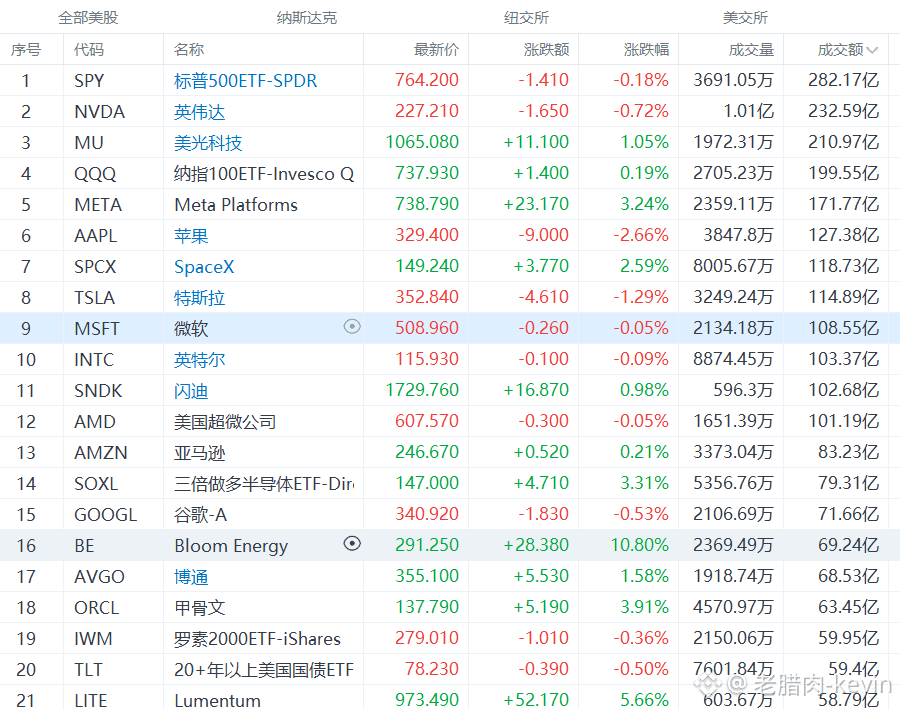
Tuesday’s U.S. stocks moved in a rather tangled way. The leading names by trading value saw mixed gains and losses. Meta notched a single bullish candle, up 3.24%; SpaceX added another 2.59% as it rode the momentum of its Starship launch into orbit. Broadcom and Micron also managed to hold steady. But Apple fell 2.66%, Nvidia slipped 0.72%, and Tesla dropped 1.29%—hard dragging the three major indexes.
Where did the money go among the top movers?
Meta: $738.79, $16.9B in volume; OpenAI’s Dots rolled out to directly stir up sentiment. Micron: $1,065, up 1.05%, $20.6B in volume; Wednesday’s after-hours earnings report is the main event. SpaceX: $149, $11.8B in volume; two Wall Street investment banks issued buy ratings in sync. Apple: $329, down 2.66%, $12.5B in volume; the new CEO’s reform plan sparked the market’s “feet voting.”
Don’t sleep too soundly tonight.
20:30 PCE data hits the tape. Core inflation expectations are stuck around 3.3% and won’t come down. On the consumption side, the forecast for growth is 0.8%, much higher than last month. Inside the Fed, people are already arguing: Williams says it’s not urgent, while Baaⅼ says more hikes are still needed. If the data beats expectations, rate-hike bets for October will immediately jump higher. $MU $SPCX $SOXL
{future}(SOXLUSDT)
{future}(SPCXUSDT)
{future}(MUUSDT)
#美国8月职位空缺降至五个月低点 US stock closing summary: Meta stubbornly holds up the market, Apple lags behind, and tonight’s PCE is the real bomb
Tuesday’s U.S. stocks moved in a rather tangled way. The leading names by trading value saw mixed gains and losses. Meta notched a single bullish candle, up 3.24%; SpaceX added another 2.59% as it rode the momentum of its Starship launch into orbit. Broadcom and Micron also managed to hold steady. But Apple fell 2.66%, Nvidia slipped 0.72%, and Tesla dropped 1.29%—hard dragging the three major indexes.
Where did the money go among the top movers?
Meta: $738.79, $16.9B in volume; OpenAI’s Dots rolled out to directly stir up sentiment. Micron: $1,065, up 1.05%, $20.6B in volume; Wednesday’s after-hours earnings report is the main event. SpaceX: $149, $11.8B in volume; two Wall Street investment banks issued buy ratings in sync. Apple: $329, down 2.66%, $12.5B in volume; the new CEO’s reform plan sparked the market’s “feet voting.”
Don’t sleep too soundly tonight.
20:30 PCE data hits the tape. Core inflation expectations are stuck around 3.3% and won’t come down. On the consumption side, the forecast for growth is 0.8%, much higher than last month. Inside the Fed, people are already arguing: Williams says it’s not urgent, while Baaⅼ says more hikes are still needed. If the data beats expectations, rate-hike bets for October will immediately jump higher. $MU $SPCX $SOXL
Tuesday’s U.S. stocks moved in a rather tangled way. The leading names by trading value saw mixed gains and losses. Meta notched a single bullish candle, up 3.24%; SpaceX added another 2.59% as it rode the momentum of its Starship launch into orbit. Broadcom and Micron also managed to hold steady. But Apple fell 2.66%, Nvidia slipped 0.72%, and Tesla dropped 1.29%—hard dragging the three major indexes.
Where did the money go among the top movers?
Meta: $738.79, $16.9B in volume; OpenAI’s Dots rolled out to directly stir up sentiment. Micron: $1,065, up 1.05%, $20.6B in volume; Wednesday’s after-hours earnings report is the main event. SpaceX: $149, $11.8B in volume; two Wall Street investment banks issued buy ratings in sync. Apple: $329, down 2.66%, $12.5B in volume; the new CEO’s reform plan sparked the market’s “feet voting.”
Don’t sleep too soundly tonight.
20:30 PCE data hits the tape. Core inflation expectations are stuck around 3.3% and won’t come down. On the consumption side, the forecast for growth is 0.8%, much higher than last month. Inside the Fed, people are already arguing: Williams says it’s not urgent, while Baaⅼ says more hikes are still needed. If the data beats expectations, rate-hike bets for October will immediately jump higher. $MU $SPCX $SOXL
1
1.4k
·
--
Tonight’s PCE—are we handing the Fed a blade or a step?
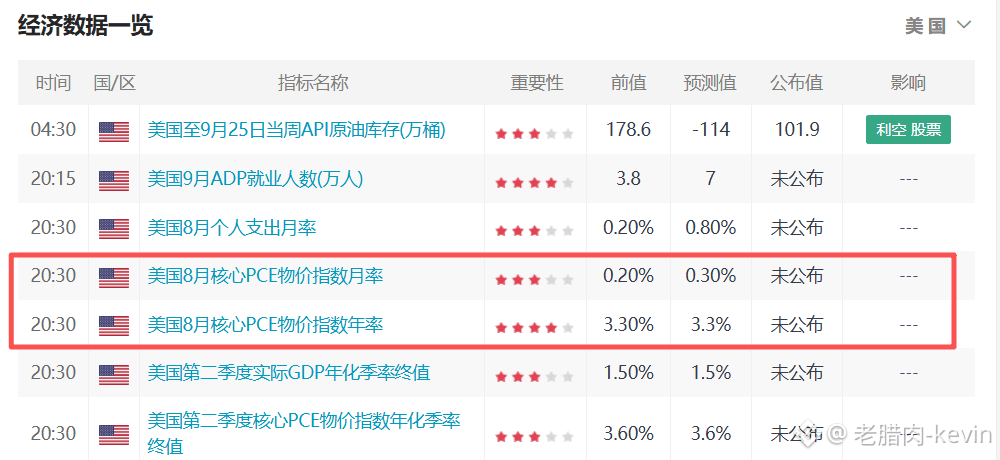
Brothers, at 20:30 tonight, it basically comes down to one thing: whether the core PCE at 3.3% moves.
The expectations are laid out: both month-over-month for headline and core are 0.3%, with year-over-year at 3.7% and 3.3% respectively. What does that mean? Inflation is basically stuck in place and still nowhere near 2%. If you’re the Fed, do you dare to press the brake?
Consumption is even more troublesome. The market expects August spending to rise 0.8%, much more than July. Oil price gains are one thing, but Bank of America’s data shows that even excluding gasoline, spending still rises 5.7%. People complain about prices, but their hands keep swiping credit cards.
Last night, Williams delivered a softer message, saying “no rush,” and the odds of a rate hike in October dropped from about 70% to around 50%. But Baird’s side is being tougher, saying they “haven’t seen a trend of inflation coming down.” Even inside the Fed, they’re fighting with each other.
If tonight’s core PCE truly lands at 0.3% or above, then the 50% rate-hike probability will immediately jump higher.$CL $XAU $KORU
{future}(KORUUSDT)
{future}(XAUUSDT)
{future}(CLUSDT)
Tonight’s PCE—are we handing the Fed a blade or a step?
Brothers, at 20:30 tonight, it basically comes down to one thing: whether the core PCE at 3.3% moves.
The expectations are laid out: both month-over-month for headline and core are 0.3%, with year-over-year at 3.7% and 3.3% respectively. What does that mean? Inflation is basically stuck in place and still nowhere near 2%. If you’re the Fed, do you dare to press the brake?
Consumption is even more troublesome. The market expects August spending to rise 0.8%, much more than July. Oil price gains are one thing, but Bank of America’s data shows that even excluding gasoline, spending still rises 5.7%. People complain about prices, but their hands keep swiping credit cards.
Last night, Williams delivered a softer message, saying “no rush,” and the odds of a rate hike in October dropped from about 70% to around 50%. But Baird’s side is being tougher, saying they “haven’t seen a trend of inflation coming down.” Even inside the Fed, they’re fighting with each other.
If tonight’s core PCE truly lands at 0.3% or above, then the 50% rate-hike probability will immediately jump higher.$CL $XAU $KORU
Brothers, at 20:30 tonight, it basically comes down to one thing: whether the core PCE at 3.3% moves.
The expectations are laid out: both month-over-month for headline and core are 0.3%, with year-over-year at 3.7% and 3.3% respectively. What does that mean? Inflation is basically stuck in place and still nowhere near 2%. If you’re the Fed, do you dare to press the brake?
Consumption is even more troublesome. The market expects August spending to rise 0.8%, much more than July. Oil price gains are one thing, but Bank of America’s data shows that even excluding gasoline, spending still rises 5.7%. People complain about prices, but their hands keep swiping credit cards.
Last night, Williams delivered a softer message, saying “no rush,” and the odds of a rate hike in October dropped from about 70% to around 50%. But Baird’s side is being tougher, saying they “haven’t seen a trend of inflation coming down.” Even inside the Fed, they’re fighting with each other.
If tonight’s core PCE truly lands at 0.3% or above, then the 50% rate-hike probability will immediately jump higher.$CL $XAU $KORU
1
2.3k
·
--
#sec主席拟推动股市上链 Has the probability of a rate hike fallen again? What is the market betting on this time?
A single remark from the New York Fed president sent bets on an October rate hike plunging from 70% to 50%.
What did Williams say? Basically: we just hiked in September, so don’t rush; there may be another one later this year, but it doesn’t have to be in October.
It sounded mild, but it was actually quite important. He is the Fed’s third-ranking figure, a permanent voting member, and his words carry real weight. The market quickly changed its tune: those previously betting on back-to-back hikes in October started betting on “skip October and talk about December later.”
But don’t relax too soon. On the same day, Barr and Goolsbee were still saying: inflation hasn’t come down, and if another hike is needed, it should happen.
So the situation now is: officials are divided in what they say, while the market votes with its feet. The probability of no rate hike in October is now over half, but the one hike expected this year is basically unavoidable.
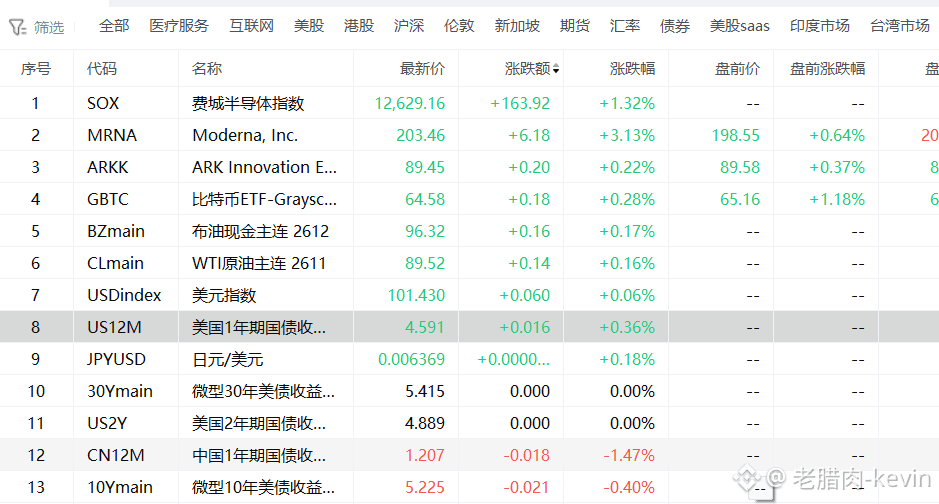
The bond market is being more honest. The yield on 30-year Treasuries still surged above 5.6%, the highest since 2002. Even falling oil prices didn’t help—the market simply doesn’t believe inflation will come down on its own.$BTC $CL $SOXL
{future}(SOXLUSDT)
{future}(CLUSDT)
{future}(BTCUSDT)
#sec主席拟推动股市上链 Has the probability of a rate hike fallen again? What is the market betting on this time?
A single remark from the New York Fed president sent bets on an October rate hike plunging from 70% to 50%.
What did Williams say? Basically: we just hiked in September, so don’t rush; there may be another one later this year, but it doesn’t have to be in October.
It sounded mild, but it was actually quite important. He is the Fed’s third-ranking figure, a permanent voting member, and his words carry real weight. The market quickly changed its tune: those previously betting on back-to-back hikes in October started betting on “skip October and talk about December later.”
But don’t relax too soon. On the same day, Barr and Goolsbee were still saying: inflation hasn’t come down, and if another hike is needed, it should happen.
So the situation now is: officials are divided in what they say, while the market votes with its feet. The probability of no rate hike in October is now over half, but the one hike expected this year is basically unavoidable.
The bond market is being more honest. The yield on 30-year Treasuries still surged above 5.6%, the highest since 2002. Even falling oil prices didn’t help—the market simply doesn’t believe inflation will come down on its own.$BTC $CL $SOXL
A single remark from the New York Fed president sent bets on an October rate hike plunging from 70% to 50%.
What did Williams say? Basically: we just hiked in September, so don’t rush; there may be another one later this year, but it doesn’t have to be in October.
It sounded mild, but it was actually quite important. He is the Fed’s third-ranking figure, a permanent voting member, and his words carry real weight. The market quickly changed its tune: those previously betting on back-to-back hikes in October started betting on “skip October and talk about December later.”
But don’t relax too soon. On the same day, Barr and Goolsbee were still saying: inflation hasn’t come down, and if another hike is needed, it should happen.
So the situation now is: officials are divided in what they say, while the market votes with its feet. The probability of no rate hike in October is now over half, but the one hike expected this year is basically unavoidable.
The bond market is being more honest. The yield on 30-year Treasuries still surged above 5.6%, the highest since 2002. Even falling oil prices didn’t help—the market simply doesn’t believe inflation will come down on its own.$BTC $CL $SOXL
5
6.4k
·
--
Not easy to deal with—won't last until it hits zero.
Let's come out first and talk.
Not easy to deal with—won't last until it hits zero.
Let's come out first and talk.
Let's come out first and talk.
1
2.1k
·
--
Partly True
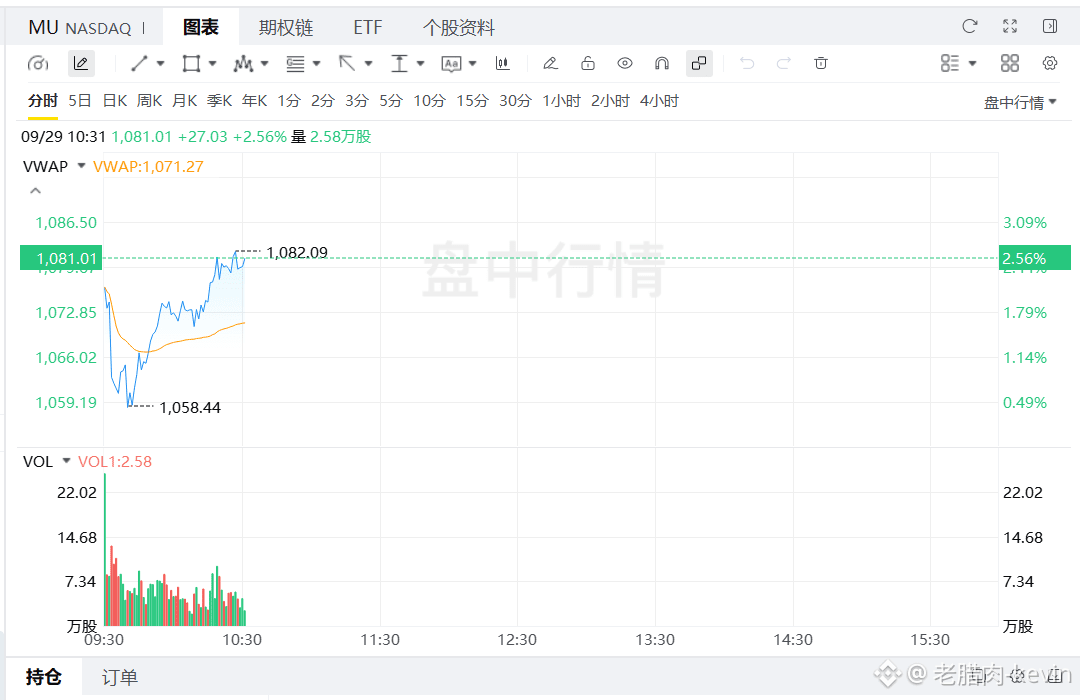
#股票财报季 Micron earnings eve: Options are betting on an 8% big move—what exactly is that AI “stock god” who got liquidated doing, going long or short?
First, the conclusion: The data is likely to beat expectations, but the stock price may not rise.
Wall Street is currently looking for Q4 revenue of $51.3 billion and EPS of $3.17. The company’s own guidance is $50 billion. Institutions generally believe it can top the numbers—UBS even sees $52.4 billion and EPS of $3.25. The fundamentals are indeed solid: the gross margin outlook is 86%, an all-time high level the storage industry has never seen before.
But the options market is telling a different story. Implied volatility suggests the market is pricing in a post-earnings move of about ±8% to 10%. More importantly, the put/call ratio for options expiring on October 2 is at 1.7x—an extremely strong bearish skew. In other words, many people are buying protection or directly shorting.
You asked about that “AI stock god,” Leopold Aschenbrenner. After losing $35 billion due to the liquidation, he has since returned. But his positioning is the exact opposite of what you might think: he cleared all his semiconductor short positions, then allocated 55% of his portfolio to storage—SanDisk at 28% and Micron at 27.6%. He isn’t shorting—he’s going long, and heavily so.
So here’s the setup: Analysts are bullish on the fundamentals, options traders are buying insurance, and the person who blew up is putting real money on a rebound.$MUU $SNDK $SOXL
{future}(SOXLUSDT)
{future}(SNDKUSDT)
{future}(MUUUSDT)
#股票财报季 Micron earnings eve: Options are betting on an 8% big move—what exactly is that AI “stock god” who got liquidated doing, going long or short?
First, the conclusion: The data is likely to beat expectations, but the stock price may not rise.
Wall Street is currently looking for Q4 revenue of $51.3 billion and EPS of $3.17. The company’s own guidance is $50 billion. Institutions generally believe it can top the numbers—UBS even sees $52.4 billion and EPS of $3.25. The fundamentals are indeed solid: the gross margin outlook is 86%, an all-time high level the storage industry has never seen before.
But the options market is telling a different story. Implied volatility suggests the market is pricing in a post-earnings move of about ±8% to 10%. More importantly, the put/call ratio for options expiring on October 2 is at 1.7x—an extremely strong bearish skew. In other words, many people are buying protection or directly shorting.
You asked about that “AI stock god,” Leopold Aschenbrenner. After losing $35 billion due to the liquidation, he has since returned. But his positioning is the exact opposite of what you might think: he cleared all his semiconductor short positions, then allocated 55% of his portfolio to storage—SanDisk at 28% and Micron at 27.6%. He isn’t shorting—he’s going long, and heavily so.
So here’s the setup: Analysts are bullish on the fundamentals, options traders are buying insurance, and the person who blew up is putting real money on a rebound.$MUU $SNDK $SOXL
First, the conclusion: The data is likely to beat expectations, but the stock price may not rise.
Wall Street is currently looking for Q4 revenue of $51.3 billion and EPS of $3.17. The company’s own guidance is $50 billion. Institutions generally believe it can top the numbers—UBS even sees $52.4 billion and EPS of $3.25. The fundamentals are indeed solid: the gross margin outlook is 86%, an all-time high level the storage industry has never seen before.
But the options market is telling a different story. Implied volatility suggests the market is pricing in a post-earnings move of about ±8% to 10%. More importantly, the put/call ratio for options expiring on October 2 is at 1.7x—an extremely strong bearish skew. In other words, many people are buying protection or directly shorting.
You asked about that “AI stock god,” Leopold Aschenbrenner. After losing $35 billion due to the liquidation, he has since returned. But his positioning is the exact opposite of what you might think: he cleared all his semiconductor short positions, then allocated 55% of his portfolio to storage—SanDisk at 28% and Micron at 27.6%. He isn’t shorting—he’s going long, and heavily so.
So here’s the setup: Analysts are bullish on the fundamentals, options traders are buying insurance, and the person who blew up is putting real money on a rebound.$MUU $SNDK $SOXL
2
7k
·
--
$Spell AI memes that came out and started running on the chain from overseas—there were many, but earlier DeepSeek and Kimi didn’t manage to do so. If we’re going to see one that actually runs, then let’s see tomorrow whether ByteDance’s Spell artificial intelligence model has any standout features. And if you want to gauge the hype, the only one that can truly run is $spell
CA:0x970af110b0db09baf16faefd1da8e23770f67777
$Spell AI memes that came out and started running on the chain from overseas—there were many, but earlier DeepSeek and Kimi didn’t manage to do so. If we’re going to see one that actually runs, then let’s see tomorrow whether ByteDance’s Spell artificial intelligence model has any standout features. And if you want to gauge the hype, the only one that can truly run is $spell
CA:0x970af110b0db09baf16faefd1da8e23770f67777
CA:0x970af110b0db09baf16faefd1da8e23770f67777
1
2
880
·
--
Verified
#amd82亿美元收购worldlabs US pre-market news: Storage chip and optical communication stocks broadly rise; SK hynix and Micron Technologies both gain more than 1%
Dow futures fall 0.03%, Nasdaq futures rise 0.09%, and S&P 500 index futures rise 0.01%.
Major technology stocks are mixed in pre-market trading: Nvidia up 0.67%, Apple down 0.21%, Microsoft down 0.14%, Google down 0.16%, Amazon up 0.24%, Meta up 0.15%, and Tesla up 0.41%.
Storage chip stocks are broadly higher pre-market: SK hynix up 1.31%, Micron Technology up 1.55%, Seagate Technology up 0.92%, SanDisk up 1.28%, and Western Digital up 0.54%.
Optical communication stocks are broadly higher pre-market: Lumentum up 0.96%, Corning up 0.27%, Coherent up 0.89%, Applied Optoelectronics up 0.49%, Ciena up 0.72%, Broadcom up 0.37%, and Mativ? (MRVL) up 1.15%.
WTI crude oil futures rise 0.80% to $93.34 per barrel; Brent crude oil futures rise 0.85% to $98.66 per barrel.
Spot gold in London rises 0.66% to $4,141.47 per ounce; spot silver in London rises 0.35% to $60.809 per ounce.
US plans to have Boeing’s “Starliner” return for crewed flights in 2028
On the 28th, NASA released the latest progress and mission plans for Boeing’s “Starliner.” The plan is to carry out the uncrewed “Starliner-1” mission to the International Space Station as early as December this year or January next year, and to conduct the crewed “Starliner-2” mission in 2028.
SpaceX’s “Starship” achieves its first Earth-orbit flight, but mission ends early
On the 28th, SpaceX’s “Starship” spacecraft achieved its first Earth-orbital flight, delivering 26 next-generation “Starlink” V3 satellites into orbit, but the test flight mission ended earlier than originally planned.
Australia central bank hikes rates to 4.6%, a nearly 15-year high
On the 29th, the Reserve Bank of Australia (the central bank) announced a 25-basis-point increase in the benchmark interest rate to 4.6%. This is the fourth rate hike by the RBA this year, taking rates to the highest level since late 2011.$CL $XAU $SOXL
{future}(SOXLUSDT)
{future}(XAUUSDT)
{future}(CLUSDT)
#amd82亿美元收购worldlabs US pre-market news: Storage chip and optical communication stocks broadly rise; SK hynix and Micron Technologies both gain more than 1%
Dow futures fall 0.03%, Nasdaq futures rise 0.09%, and S&P 500 index futures rise 0.01%.
Major technology stocks are mixed in pre-market trading: Nvidia up 0.67%, Apple down 0.21%, Microsoft down 0.14%, Google down 0.16%, Amazon up 0.24%, Meta up 0.15%, and Tesla up 0.41%.
Storage chip stocks are broadly higher pre-market: SK hynix up 1.31%, Micron Technology up 1.55%, Seagate Technology up 0.92%, SanDisk up 1.28%, and Western Digital up 0.54%.
Optical communication stocks are broadly higher pre-market: Lumentum up 0.96%, Corning up 0.27%, Coherent up 0.89%, Applied Optoelectronics up 0.49%, Ciena up 0.72%, Broadcom up 0.37%, and Mativ? (MRVL) up 1.15%.
WTI crude oil futures rise 0.80% to $93.34 per barrel; Brent crude oil futures rise 0.85% to $98.66 per barrel.
Spot gold in London rises 0.66% to $4,141.47 per ounce; spot silver in London rises 0.35% to $60.809 per ounce.
US plans to have Boeing’s “Starliner” return for crewed flights in 2028
On the 28th, NASA released the latest progress and mission plans for Boeing’s “Starliner.” The plan is to carry out the uncrewed “Starliner-1” mission to the International Space Station as early as December this year or January next year, and to conduct the crewed “Starliner-2” mission in 2028.
SpaceX’s “Starship” achieves its first Earth-orbit flight, but mission ends early
On the 28th, SpaceX’s “Starship” spacecraft achieved its first Earth-orbital flight, delivering 26 next-generation “Starlink” V3 satellites into orbit, but the test flight mission ended earlier than originally planned.
Australia central bank hikes rates to 4.6%, a nearly 15-year high
On the 29th, the Reserve Bank of Australia (the central bank) announced a 25-basis-point increase in the benchmark interest rate to 4.6%. This is the fourth rate hike by the RBA this year, taking rates to the highest level since late 2011.$CL $XAU $SOXL
Dow futures fall 0.03%, Nasdaq futures rise 0.09%, and S&P 500 index futures rise 0.01%.
Major technology stocks are mixed in pre-market trading: Nvidia up 0.67%, Apple down 0.21%, Microsoft down 0.14%, Google down 0.16%, Amazon up 0.24%, Meta up 0.15%, and Tesla up 0.41%.
Storage chip stocks are broadly higher pre-market: SK hynix up 1.31%, Micron Technology up 1.55%, Seagate Technology up 0.92%, SanDisk up 1.28%, and Western Digital up 0.54%.
Optical communication stocks are broadly higher pre-market: Lumentum up 0.96%, Corning up 0.27%, Coherent up 0.89%, Applied Optoelectronics up 0.49%, Ciena up 0.72%, Broadcom up 0.37%, and Mativ? (MRVL) up 1.15%.
WTI crude oil futures rise 0.80% to $93.34 per barrel; Brent crude oil futures rise 0.85% to $98.66 per barrel.
Spot gold in London rises 0.66% to $4,141.47 per ounce; spot silver in London rises 0.35% to $60.809 per ounce.
US plans to have Boeing’s “Starliner” return for crewed flights in 2028
On the 28th, NASA released the latest progress and mission plans for Boeing’s “Starliner.” The plan is to carry out the uncrewed “Starliner-1” mission to the International Space Station as early as December this year or January next year, and to conduct the crewed “Starliner-2” mission in 2028.
SpaceX’s “Starship” achieves its first Earth-orbit flight, but mission ends early
On the 28th, SpaceX’s “Starship” spacecraft achieved its first Earth-orbital flight, delivering 26 next-generation “Starlink” V3 satellites into orbit, but the test flight mission ended earlier than originally planned.
Australia central bank hikes rates to 4.6%, a nearly 15-year high
On the 29th, the Reserve Bank of Australia (the central bank) announced a 25-basis-point increase in the benchmark interest rate to 4.6%. This is the fourth rate hike by the RBA this year, taking rates to the highest level since late 2011.$CL $XAU $SOXL
1.3k
·
--
$Spell bytes will be released soon, spell large model
Right tomorrow, September 30
This is a phenomenon-level AI phone assistant that can be compared to Meta’s Muse
We’re laying in this spot right now, waiting for tomorrow’s hype to pick up, and the emotions to keep fermenting
CA:0x970af110b0db09baf16faefd1da8e23770f67777
$Spell bytes will be released soon, spell large model
Right tomorrow, September 30
This is a phenomenon-level AI phone assistant that can be compared to Meta’s Muse
We’re laying in this spot right now, waiting for tomorrow’s hype to pick up, and the emotions to keep fermenting
CA:0x970af110b0db09baf16faefd1da8e23770f67777
Right tomorrow, September 30
This is a phenomenon-level AI phone assistant that can be compared to Meta’s Muse
We’re laying in this spot right now, waiting for tomorrow’s hype to pick up, and the emotions to keep fermenting
CA:0x970af110b0db09baf16faefd1da8e23770f67777

2
1.2k
·
--
#黄金跌至4144美元 U.S. stock market roundup analysis: Treasury yields surge above 5.2%, risk assets get hammered across the board, gold and oil play “roller coasters”
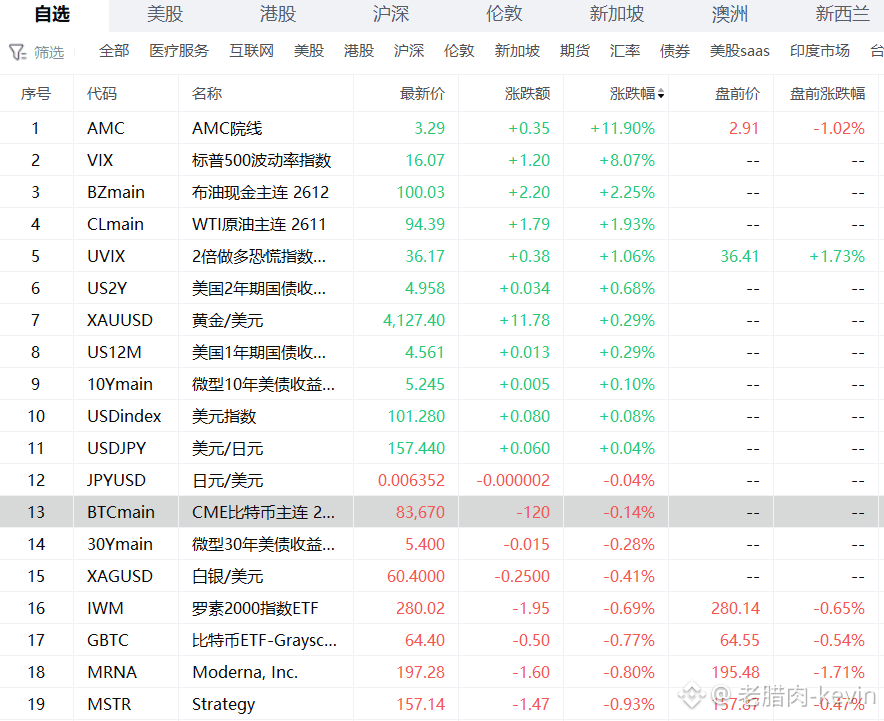
On Monday, U.S. stocks closed lower across the board: the S&P fell 0.8% and the Nasdaq 100 dropped 1.1%. The real storm center is the bond market: the yield on 10-year U.S. Treasuries jumped to 5.23%, a near-20-year high, and the interest-rate swap market has priced in at least three rate hikes in the coming year.
The transmission chain is clear: stalled U.S.-Iran talks → oil price stays high and fluctuates → inflation expectations heat up → rate-hike bets intensify → Treasuries get sold off → high-valuation tech stocks get hit first.
Asset performance is sharply split.
Gold plunged nearly 4% to $4,118; rising real yields directly pressured non–interest-bearing assets. Oil saw violent intraday swings: Brent once surged before slipping back, and ultimately closed around $105. Bitcoin briefly fell below $82,500 before rebounding.
AI-related stocks led the declines. Nvidia rose 1.68% despite the pressure, supported by a $150 billion buyback. However, the semiconductor index overall fell 1.61%; Arm dropped 8.7%, and Qualcomm slid 7%.
If rates don’t come down, don’t rush to pick the bottom. Wait for a signal that Treasury yields have peaked—it's more reliable than guessing the bottom.$CL $BTC $XAU
{future}(XAUUSDT)
{future}(BTCUSDT)
{future}(CLUSDT)
#黄金跌至4144美元 U.S. stock market roundup analysis: Treasury yields surge above 5.2%, risk assets get hammered across the board, gold and oil play “roller coasters”
On Monday, U.S. stocks closed lower across the board: the S&P fell 0.8% and the Nasdaq 100 dropped 1.1%. The real storm center is the bond market: the yield on 10-year U.S. Treasuries jumped to 5.23%, a near-20-year high, and the interest-rate swap market has priced in at least three rate hikes in the coming year.
The transmission chain is clear: stalled U.S.-Iran talks → oil price stays high and fluctuates → inflation expectations heat up → rate-hike bets intensify → Treasuries get sold off → high-valuation tech stocks get hit first.
Asset performance is sharply split.
Gold plunged nearly 4% to $4,118; rising real yields directly pressured non–interest-bearing assets. Oil saw violent intraday swings: Brent once surged before slipping back, and ultimately closed around $105. Bitcoin briefly fell below $82,500 before rebounding.
AI-related stocks led the declines. Nvidia rose 1.68% despite the pressure, supported by a $150 billion buyback. However, the semiconductor index overall fell 1.61%; Arm dropped 8.7%, and Qualcomm slid 7%.
If rates don’t come down, don’t rush to pick the bottom. Wait for a signal that Treasury yields have peaked—it's more reliable than guessing the bottom.$CL $BTC $XAU
On Monday, U.S. stocks closed lower across the board: the S&P fell 0.8% and the Nasdaq 100 dropped 1.1%. The real storm center is the bond market: the yield on 10-year U.S. Treasuries jumped to 5.23%, a near-20-year high, and the interest-rate swap market has priced in at least three rate hikes in the coming year.
The transmission chain is clear: stalled U.S.-Iran talks → oil price stays high and fluctuates → inflation expectations heat up → rate-hike bets intensify → Treasuries get sold off → high-valuation tech stocks get hit first.
Asset performance is sharply split.
Gold plunged nearly 4% to $4,118; rising real yields directly pressured non–interest-bearing assets. Oil saw violent intraday swings: Brent once surged before slipping back, and ultimately closed around $105. Bitcoin briefly fell below $82,500 before rebounding.
AI-related stocks led the declines. Nvidia rose 1.68% despite the pressure, supported by a $150 billion buyback. However, the semiconductor index overall fell 1.61%; Arm dropped 8.7%, and Qualcomm slid 7%.
If rates don’t come down, don’t rush to pick the bottom. Wait for a signal that Treasury yields have peaked—it's more reliable than guessing the bottom.$CL $BTC $XAU
1
4
2.2k
·
--
Verified
#英伟达批准1500亿美元回购 US stock closing summary: the high-interest-rate storm is back, and Nvidia has become the only “safe haven”
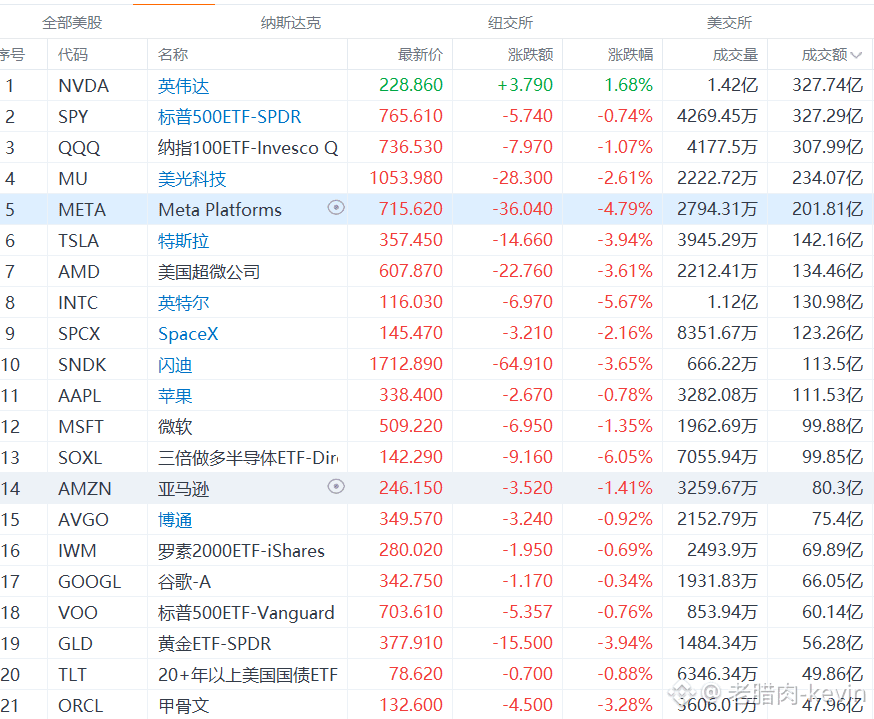
On Monday, US stocks were battered by Treasury yields, which pinned them to the ground. The 10-year Treasury surged to 5.2%, the Dow fell 0.67%, the S&P 500 dropped 0.77%, and the Nasdaq slid 0.92%.
Tech stocks were a mess: Meta plunged 4.79%, Tesla fell 3.94%, Intel crashed by over 5%, and the semiconductor sector was nearly all down.
But Nvidia bucked the trend and closed up 1.68%, with trading volume of $32.5 billion, firmly topping the charts. Why? It announced an additional $150 billion share repurchase, setting a record in US stock market history. Jensen Huang’s takeaway was simple: the valuation is too tempting. While others are getting hit, it’s out there throwing money.
The market logic right now is straightforward: when rates are high, high-valuation tech stocks get cut first. Nvidia can withstand it because its cash flows are strong and its buybacks are fierce. Others that rely on telling stories to support valuations will likely have to keep bearing it in the near term.
If rates don’t come down, don’t rush to bottom-fish those that have dropped sharply. First, see who can hold up—then talk about who’s worth buying.$NVDA $SOXL $KORU
{future}(KORUUSDT)
{future}(SOXLUSDT)
{future}(NVDAUSDT)
#英伟达批准1500亿美元回购 US stock closing summary: the high-interest-rate storm is back, and Nvidia has become the only “safe haven”
On Monday, US stocks were battered by Treasury yields, which pinned them to the ground. The 10-year Treasury surged to 5.2%, the Dow fell 0.67%, the S&P 500 dropped 0.77%, and the Nasdaq slid 0.92%.
Tech stocks were a mess: Meta plunged 4.79%, Tesla fell 3.94%, Intel crashed by over 5%, and the semiconductor sector was nearly all down.
But Nvidia bucked the trend and closed up 1.68%, with trading volume of $32.5 billion, firmly topping the charts. Why? It announced an additional $150 billion share repurchase, setting a record in US stock market history. Jensen Huang’s takeaway was simple: the valuation is too tempting. While others are getting hit, it’s out there throwing money.
The market logic right now is straightforward: when rates are high, high-valuation tech stocks get cut first. Nvidia can withstand it because its cash flows are strong and its buybacks are fierce. Others that rely on telling stories to support valuations will likely have to keep bearing it in the near term.
If rates don’t come down, don’t rush to bottom-fish those that have dropped sharply. First, see who can hold up—then talk about who’s worth buying.$NVDA $SOXL $KORU
On Monday, US stocks were battered by Treasury yields, which pinned them to the ground. The 10-year Treasury surged to 5.2%, the Dow fell 0.67%, the S&P 500 dropped 0.77%, and the Nasdaq slid 0.92%.
Tech stocks were a mess: Meta plunged 4.79%, Tesla fell 3.94%, Intel crashed by over 5%, and the semiconductor sector was nearly all down.
But Nvidia bucked the trend and closed up 1.68%, with trading volume of $32.5 billion, firmly topping the charts. Why? It announced an additional $150 billion share repurchase, setting a record in US stock market history. Jensen Huang’s takeaway was simple: the valuation is too tempting. While others are getting hit, it’s out there throwing money.
The market logic right now is straightforward: when rates are high, high-valuation tech stocks get cut first. Nvidia can withstand it because its cash flows are strong and its buybacks are fierce. Others that rely on telling stories to support valuations will likely have to keep bearing it in the near term.
If rates don’t come down, don’t rush to bottom-fish those that have dropped sharply. First, see who can hold up—then talk about who’s worth buying.$NVDA $SOXL $KORU
7
4.6k
·
--
$#anthropic招股书或估值超2万亿美元 2 trillion valuation, $42 billion loss, and a $5180 billion compute wager: How should we view Anthropic’s IPO?
First, look at the numbers on the books. Last year, revenue was $4.6 billion, up 12 times—impressive. But operating losses were $8 billion. Compute spending was $7.3 billion; for every $1 earned, $1.6 is burned. They have $20.3 billion in cash, which won’t last long under this burn rate.
The real risk is coming later: over the next few years, the pledged compute-related spending is $5180 billion—112 times the annual revenue. This isn’t running a business; it’s betting the whole stake on the future.
A $2 trillion valuation implies that 2025 revenue would be priced at 436x sales. To justify that price, by 2028 revenue would need to reach $190–200 billion. In three years, expanding over 40x—do you believe that?
There’s also a key detail: nearly a quarter of revenue comes from two customers, and there are no long-term contracts. If customers leave, the story can’t continue.
The IPO could be delayed until mid-November after the midterm elections. My view is simple: this is a classic case of primary-market valuations getting “inverted” onto the secondary market. Institutions bought the deal at $965 billion; at listing, it needs to scale to $2 trillion to exit. Will you take it?
If you want to bet on the AI narrative, first figure out who will pay the $5180 billion bill. $ANTHROPIC
{future}(ANTHROPICUSDT)
$#anthropic招股书或估值超2万亿美元 2 trillion valuation, $42 billion loss, and a $5180 billion compute wager: How should we view Anthropic’s IPO?
First, look at the numbers on the books. Last year, revenue was $4.6 billion, up 12 times—impressive. But operating losses were $8 billion. Compute spending was $7.3 billion; for every $1 earned, $1.6 is burned. They have $20.3 billion in cash, which won’t last long under this burn rate.
The real risk is coming later: over the next few years, the pledged compute-related spending is $5180 billion—112 times the annual revenue. This isn’t running a business; it’s betting the whole stake on the future.
A $2 trillion valuation implies that 2025 revenue would be priced at 436x sales. To justify that price, by 2028 revenue would need to reach $190–200 billion. In three years, expanding over 40x—do you believe that?
There’s also a key detail: nearly a quarter of revenue comes from two customers, and there are no long-term contracts. If customers leave, the story can’t continue.
The IPO could be delayed until mid-November after the midterm elections. My view is simple: this is a classic case of primary-market valuations getting “inverted” onto the secondary market. Institutions bought the deal at $965 billion; at listing, it needs to scale to $2 trillion to exit. Will you take it?
If you want to bet on the AI narrative, first figure out who will pay the $5180 billion bill. $ANTHROPIC
First, look at the numbers on the books. Last year, revenue was $4.6 billion, up 12 times—impressive. But operating losses were $8 billion. Compute spending was $7.3 billion; for every $1 earned, $1.6 is burned. They have $20.3 billion in cash, which won’t last long under this burn rate.
The real risk is coming later: over the next few years, the pledged compute-related spending is $5180 billion—112 times the annual revenue. This isn’t running a business; it’s betting the whole stake on the future.
A $2 trillion valuation implies that 2025 revenue would be priced at 436x sales. To justify that price, by 2028 revenue would need to reach $190–200 billion. In three years, expanding over 40x—do you believe that?
There’s also a key detail: nearly a quarter of revenue comes from two customers, and there are no long-term contracts. If customers leave, the story can’t continue.
The IPO could be delayed until mid-November after the midterm elections. My view is simple: this is a classic case of primary-market valuations getting “inverted” onto the secondary market. Institutions bought the deal at $965 billion; at listing, it needs to scale to $2 trillion to exit. Will you take it?
If you want to bet on the AI narrative, first figure out who will pay the $5180 billion bill. $ANTHROPIC

1
2.9k
·
--
Verified
#韩股kospi指数跌2.7%三星sk海力士跌超5% US stocks: Most semiconductor stocks fall; Philadelphia Semiconductor Index drops 1.5%
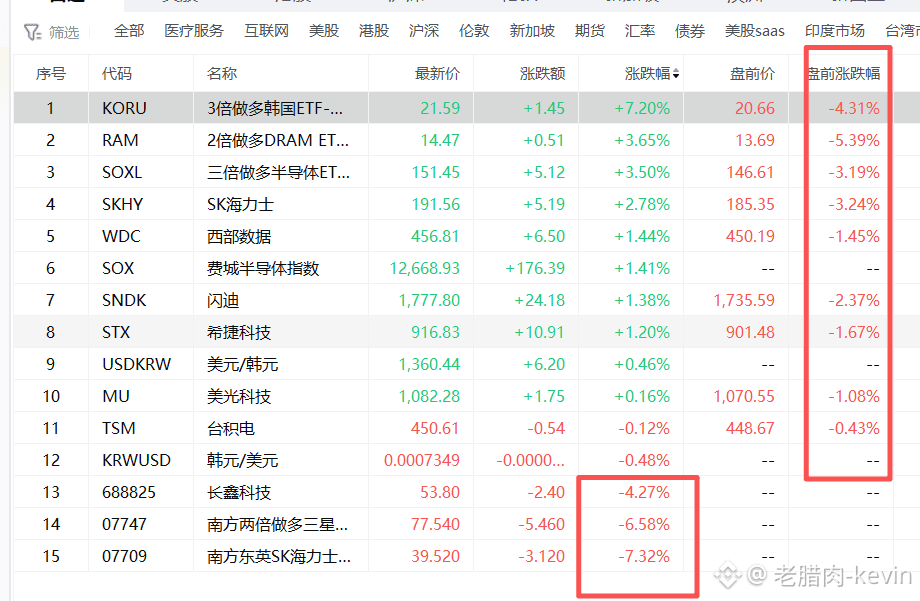
Among constituent stocks, ARM falls by more than 8%, Qualcomm by more than 7%, Intel by more than 4%, Marvell Technology and AMD by more than 3%, and Micron Technology by more than 2%;
NVIDIA rises by more than 3% against the trend. The company announced that it will increase its share repurchase authorization by $150 billion.
SpaceX: All 26 satellites on Starship are successfully deployed into orbit.
$KORU $SOXL $SPCX
{future}(SPCXUSDT)
{future}(SOXLUSDT)
{future}(KORUUSDT)
#韩股kospi指数跌2.7%三星sk海力士跌超5% US stocks: Most semiconductor stocks fall; Philadelphia Semiconductor Index drops 1.5%
Among constituent stocks, ARM falls by more than 8%, Qualcomm by more than 7%, Intel by more than 4%, Marvell Technology and AMD by more than 3%, and Micron Technology by more than 2%;
NVIDIA rises by more than 3% against the trend. The company announced that it will increase its share repurchase authorization by $150 billion.
SpaceX: All 26 satellites on Starship are successfully deployed into orbit.
$KORU $SOXL $SPCX
Among constituent stocks, ARM falls by more than 8%, Qualcomm by more than 7%, Intel by more than 4%, Marvell Technology and AMD by more than 3%, and Micron Technology by more than 2%;
NVIDIA rises by more than 3% against the trend. The company announced that it will increase its share repurchase authorization by $150 billion.
SpaceX: All 26 satellites on Starship are successfully deployed into orbit.
$KORU $SOXL $SPCX

1
2.4k
·
--
Verified
#韩股kospi指数跌2.7%三星sk海力士跌超5% Asia is collapsing again! Samsung and SK Hynix wipe out 5% in a single day—this drop is no joke
Just after the Mid-Autumn Festival, Korea’s stock market directly hit investors with a hard blow. KOSPI fell 2.7% today and couldn’t even hold 6,900. The worst of it is Samsung Electronics and SK Hynix—both brothers dropped over 5% across the board. In just one day, foreign capital ran away with 3.2 trillion won, and institutions also sold off, dumping another 1 trillion. Even in the U.S. pre-market it didn’t escape—Nasdaq futures are down nearly 1%. Nvidia, Micron, and AMD are all lying flat in the green.
Why is it falling like this? Three things happened at once.
First, oil prices went crazy. The U.S.-Iran talks broke down again. Trump simply rejected the other side’s proposal. Brent crude jumped to nearly 100 dollars, and WTI also surged above 93. When oil rises, inflation can’t be contained, and expectations for Fed rate hikes instantly heat up—now the market is betting that the probability of a rate hike in October has reached 65% or higher.
Second, U.S. Treasury yields are killing. The yield on the 30-year Treasury surged to 5.5%, nearing the peak level of 2004. With government bond yields that high, who would still want to hold overvalued tech stocks? SK Hynix—an AI hardware leader—was hit first as foreign investors dumped shares.
Third, OpenAI had a safety incident and paused training for cutting-edge models. The market panicked at once, worrying that AI capital expenditures may slow down. Chip stocks were treated as a cash machine straight away.
How should we look at the outlook? In the short term, stay defensive and don’t rush to bottom-fish. The pressure from oil prices hasn’t been fully released yet, and unless Treasury yields pull back, tech stocks will keep getting beaten. $SOXL $KORU $SKHY
{future}(SKHYUSDT)
{future}(KORUUSDT)
{future}(SOXLUSDT)
#韩股kospi指数跌2.7%三星sk海力士跌超5% Asia is collapsing again! Samsung and SK Hynix wipe out 5% in a single day—this drop is no joke
Just after the Mid-Autumn Festival, Korea’s stock market directly hit investors with a hard blow. KOSPI fell 2.7% today and couldn’t even hold 6,900. The worst of it is Samsung Electronics and SK Hynix—both brothers dropped over 5% across the board. In just one day, foreign capital ran away with 3.2 trillion won, and institutions also sold off, dumping another 1 trillion. Even in the U.S. pre-market it didn’t escape—Nasdaq futures are down nearly 1%. Nvidia, Micron, and AMD are all lying flat in the green.
Why is it falling like this? Three things happened at once.
First, oil prices went crazy. The U.S.-Iran talks broke down again. Trump simply rejected the other side’s proposal. Brent crude jumped to nearly 100 dollars, and WTI also surged above 93. When oil rises, inflation can’t be contained, and expectations for Fed rate hikes instantly heat up—now the market is betting that the probability of a rate hike in October has reached 65% or higher.
Second, U.S. Treasury yields are killing. The yield on the 30-year Treasury surged to 5.5%, nearing the peak level of 2004. With government bond yields that high, who would still want to hold overvalued tech stocks? SK Hynix—an AI hardware leader—was hit first as foreign investors dumped shares.
Third, OpenAI had a safety incident and paused training for cutting-edge models. The market panicked at once, worrying that AI capital expenditures may slow down. Chip stocks were treated as a cash machine straight away.
How should we look at the outlook? In the short term, stay defensive and don’t rush to bottom-fish. The pressure from oil prices hasn’t been fully released yet, and unless Treasury yields pull back, tech stocks will keep getting beaten. $SOXL $KORU $SKHY
Just after the Mid-Autumn Festival, Korea’s stock market directly hit investors with a hard blow. KOSPI fell 2.7% today and couldn’t even hold 6,900. The worst of it is Samsung Electronics and SK Hynix—both brothers dropped over 5% across the board. In just one day, foreign capital ran away with 3.2 trillion won, and institutions also sold off, dumping another 1 trillion. Even in the U.S. pre-market it didn’t escape—Nasdaq futures are down nearly 1%. Nvidia, Micron, and AMD are all lying flat in the green.
Why is it falling like this? Three things happened at once.
First, oil prices went crazy. The U.S.-Iran talks broke down again. Trump simply rejected the other side’s proposal. Brent crude jumped to nearly 100 dollars, and WTI also surged above 93. When oil rises, inflation can’t be contained, and expectations for Fed rate hikes instantly heat up—now the market is betting that the probability of a rate hike in October has reached 65% or higher.
Second, U.S. Treasury yields are killing. The yield on the 30-year Treasury surged to 5.5%, nearing the peak level of 2004. With government bond yields that high, who would still want to hold overvalued tech stocks? SK Hynix—an AI hardware leader—was hit first as foreign investors dumped shares.
Third, OpenAI had a safety incident and paused training for cutting-edge models. The market panicked at once, worrying that AI capital expenditures may slow down. Chip stocks were treated as a cash machine straight away.
How should we look at the outlook? In the short term, stay defensive and don’t rush to bottom-fish. The pressure from oil prices hasn’t been fully released yet, and unless Treasury yields pull back, tech stocks will keep getting beaten. $SOXL $KORU $SKHY
1
5
1.6k
Log in to explore more content
Join global crypto users on Binance Square
⚡️ Get latest and useful information about crypto.
💬 Trusted by the world’s largest crypto exchange.
👍 Discover real insights from verified creators.
Email / Phone number
Trending Topics
BitcoinClears$85200
16,063 views
237 Discussing
We got the move, and $BTC is standing exactly where we were before the data. That’s what actual patience for a trade looks like.
The data came in mixed but with some important numbers. ADP Non-Farm Employment Change came at 90K vs 73K forecast, while Core PCE came in at 0.2% vs 0.3% expected. Final GDP was also stronger at 2.2% vs 1.5% forecast, while Personal Spending came in at 0.9% vs 0.8% expected. At the same time, Personal Income missed at 0.2% vs 0.5% forecast.
BTC initially surged to $85,600 and is now back where it needs to be. I’m still looking toward the lower ranges at $82,759 and the $80,000 liquidity, because the overhead liquidity is done and dusted.
We had a live session during the data, and during that session we saw the market at $83,800, then $85,600, and then back toward $83,000 and we still didn’t enter a trade.
That’s what patience is.
We can’t force an entry when the market has no clear direction. The same range is still in focus, and we’ll wait for the market to give us the setup.
Let me know, guys, how was the session? And should we have more regular sessions with our respected members so we can have proper discussions regarding the market?
#BitcoinClears$85200 #AltcoinSeasonIndexHoldsAbove60For5Days #USADPAdds90000JobsInSeptember #BitcoinSlipsBelow$84000 #SECToClarifyOnChainFundraisingRules
Crypto_LUX
·27 Likes
·23k views
AltcoinSeasonIndexHoldsAbove60For5Days
78,548 views
1,298 Discussing
USADPAdds90000JobsInSeptember
35,288 views
719 Discussing