
Crypto慕白
8.3k Posts

Crypto慕白
Report
Block User
公众号:Crypto慕白 X :@mubai456 微博; Trader慕白
粉丝称呼我为大白,上涨中的巴菲特,下跌中的索罗斯说的就是大白
凭借精准的市场判断和稳健的操作风格,成为全能型交易高手,现货为主,合约为辅
大白一出手,即是你的极限

Level 1 Creator
241 Following
24.7K+ Followers
102.1K+ Liked
1 Badges
Posts
All
Quotes
Videos
Live
PINNED
·
--
Bullish
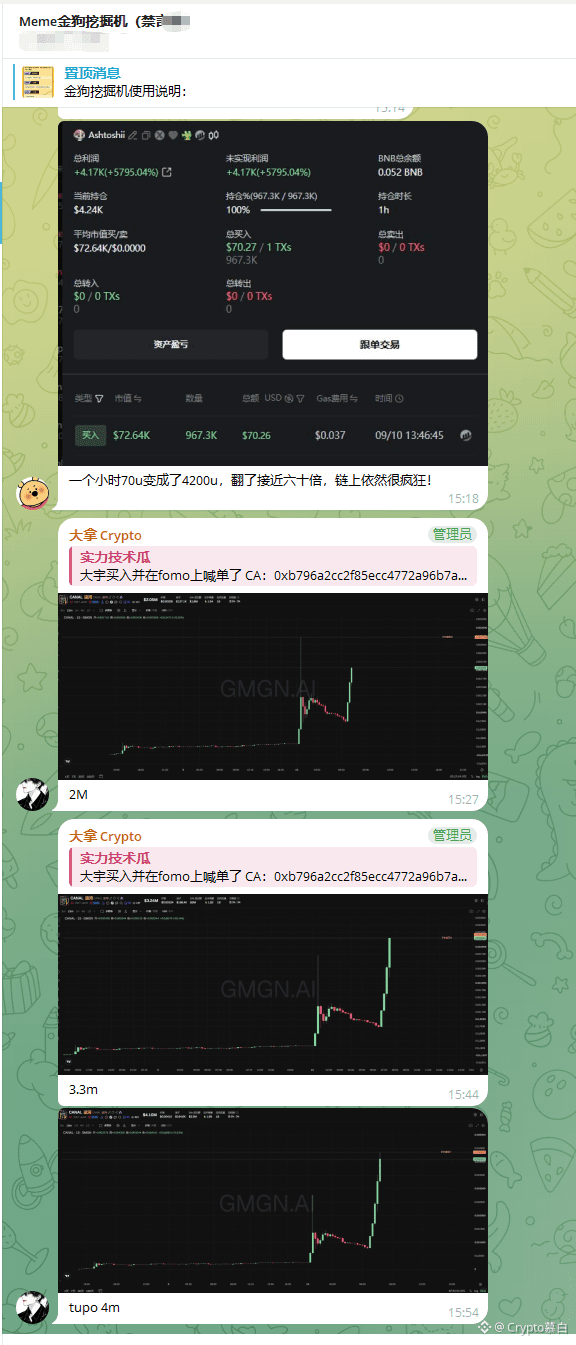
How about the big white’s latest laid-out big bull dog? If you keep up, you can say you can all get more than ten times returns
$4Stock , 7Stock, and also $PONS before that, ROBINCA, AI, etc.—all got multiple times more than that!
These are temporarily publicly available big bull dog passwords. Recently, Big White has also been constantly going after big bull dogs, and they’ve all been made public. Everyone has also seen the win rate. Recently, Big White Community came up with a very good big bull dog operation: Meme Bull Dog Excavator
The Meme Bull Dog Excavator is jointly built by multiple “p” commanders. We collect the best monitoring tools on the market, then do another 24-hour manual screening, directly pushing the most reliable information to you. At the same time, we use a single sentence to simply describe the narrative of this IP and provide a one-stop service for beginners to trade bull dogs.
Our monitoring includes: Fome Pump GMGN, the top-early profitable address activity, big car heads like Calm, Wang Xiaoe, Little Yellow Man—whatever these top players bought first, we have it from the first hand. Also included is monitoring of tweets from key marketers like Twitter (Elon Musk), CZ (Trump), and the founder of Robinhood, as well as on-chain big-pool monitoring, plus monitoring of Form and Flap launch pads for new pools, etc.
Playing meme information arbitrage is money. If your消息 is one step slower, then you might end up missing the chance and arriving for the tenfold run later than p’s little brother. There are many monitoring bots on the market, but ours is the first that can aggregate all messages and manually sort them, packaging the most useful information directly for you in one product.
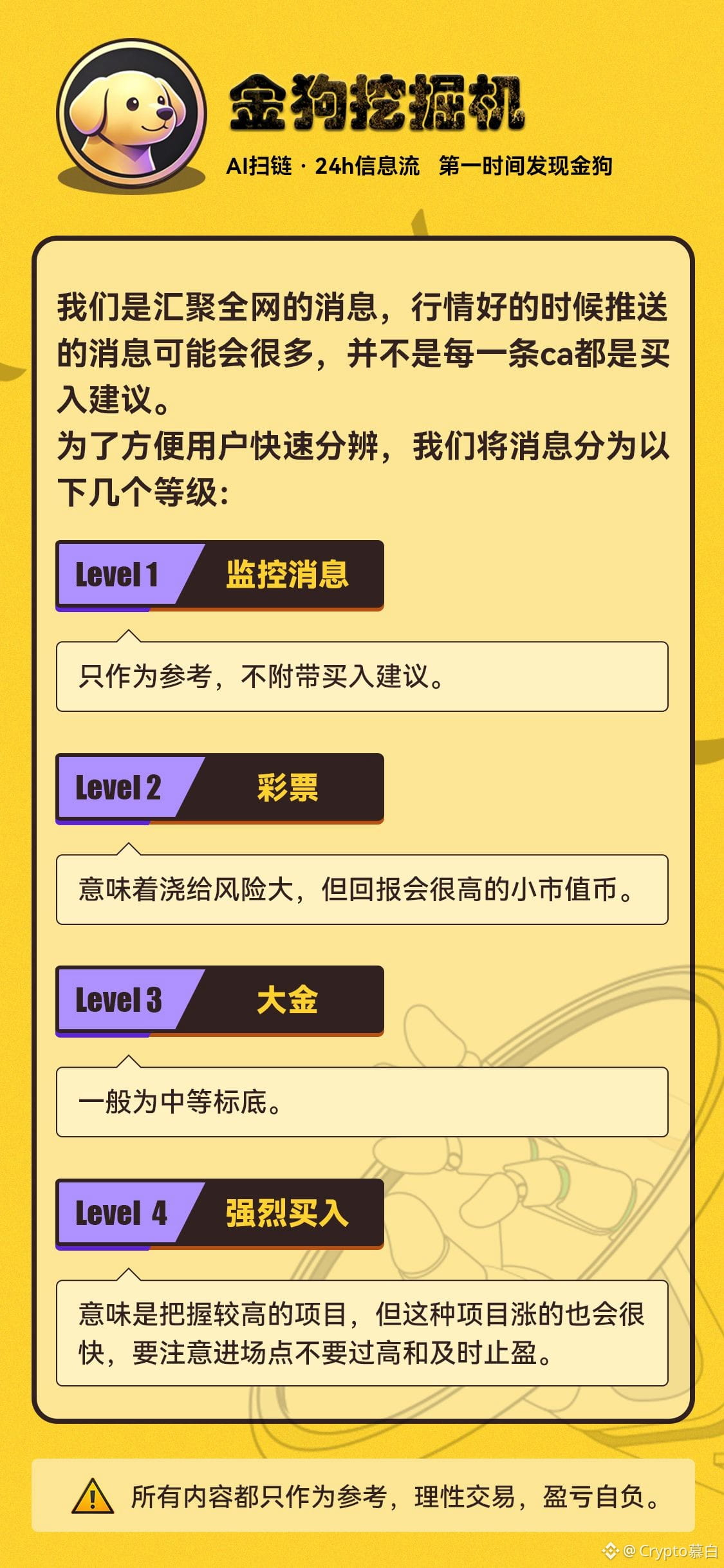
We gather information from across the entire web. When the market is good, the messages we push may be a lot—so not every CA is a buy recommendation.
Monitoring messages: for reference only, no buy recommendations included.
Lottery: means high risk of being watered down, but the return can be very high for small-cap coins.
Big coin: generally refers to a medium baseline.
Strong buy: means a project with relatively higher certainty. But these projects also rise very quickly—so pay attention not to enter at too high a price and take profit promptly.
We move dynamically with the market’s direction; otherwise, if we miss the first-mover advantage, we also lose the chance to make money!
The on-chain market is very active right now. More and more big bull dogs are emerging from the Robinhood chain and the BSC chain—will you miss out?
#苹果发布首款折叠屏手机


8
9
2.1k
PINNED
·
--
Bullish
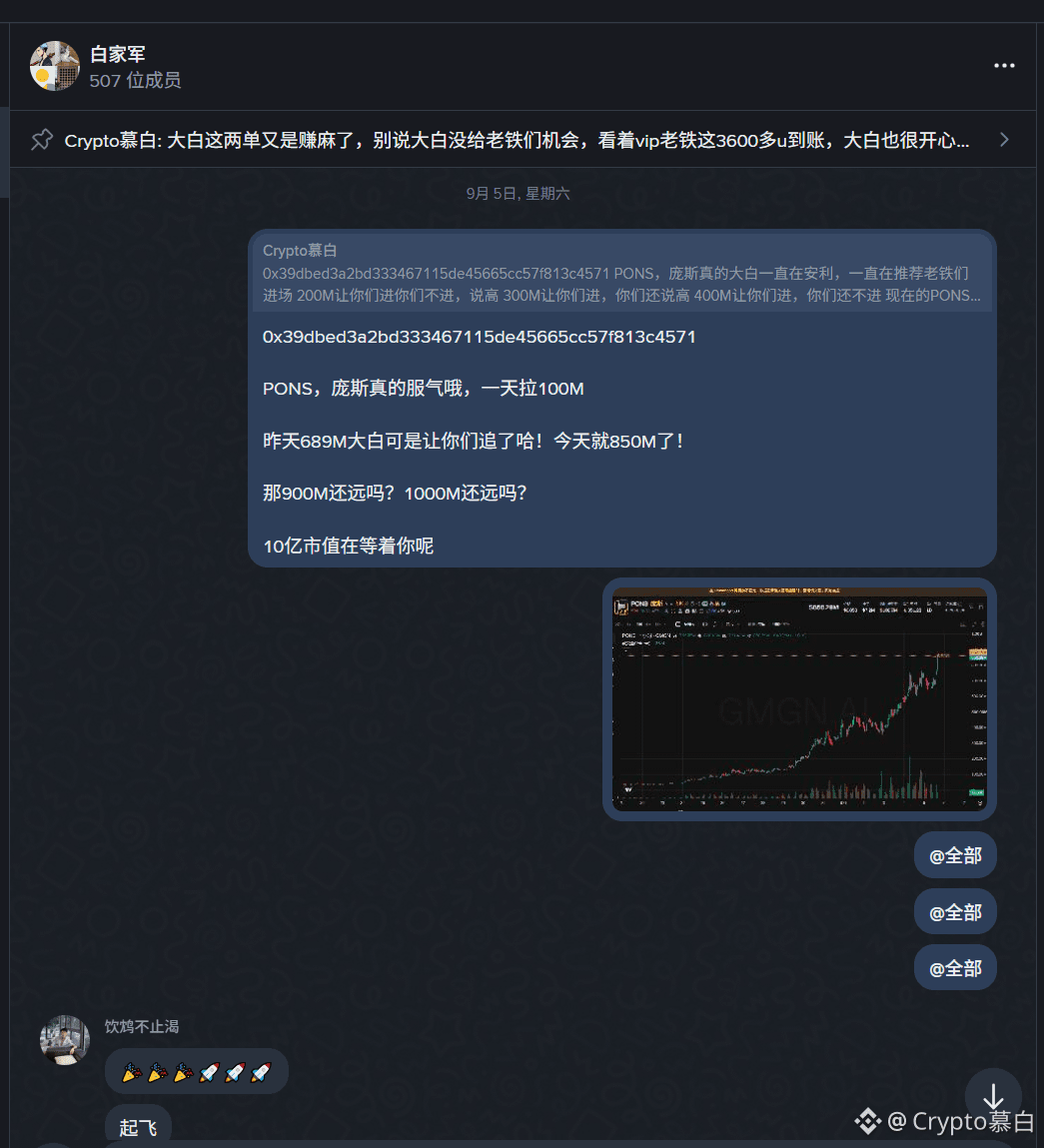
Let’s go, Binance’s white family army, and play on-chain big golden dogs!
Robinhood chain, BSC chain, SOL chain, ETH chain, X chain—big golden dogs on all kinds of chains!
The big golden dogs I’ve eaten so far include PONS, AI, Niu Lai, MarsCoin (Mars Coin), BONER, 18bro, ROBINCAT (Robin Cat), and more!!!
If you like playing big golden dogs, come join in!
[币安官方白家军](https://app.binance.com/uni-qr/PPFg8EiK)
Let’s go, Binance’s white family army, and play on-chain big golden dogs!
Robinhood chain, BSC chain, SOL chain, ETH chain, X chain—big golden dogs on all kinds of chains!
The big golden dogs I’ve eaten so far include PONS, AI, Niu Lai, MarsCoin (Mars Coin), BONER, 18bro, ROBINCAT (Robin Cat), and more!!!
If you like playing big golden dogs, come join in!
币安官方白家军
Robinhood chain, BSC chain, SOL chain, ETH chain, X chain—big golden dogs on all kinds of chains!
The big golden dogs I’ve eaten so far include PONS, AI, Niu Lai, MarsCoin (Mars Coin), BONER, 18bro, ROBINCAT (Robin Cat), and more!!!
If you like playing big golden dogs, come join in!
币安官方白家军

Crypto慕白
·
--
Bullish0xe9337dde3dd9e97f1f45a56412767ce5098e7777
Many coins have already gone live on Alpha. With a supply of 4.55M coins, is there still a chance to get in?
It’s a pity you didn’t join when it was at its hottest. If you get in now, you can catch up with the pace.
#IMF称萨尔瓦多购币未用公共资金
Many coins have already gone live on Alpha. With a supply of 4.55M coins, is there still a chance to get in?
It’s a pity you didn’t join when it was at its hottest. If you get in now, you can catch up with the pace.
#IMF称萨尔瓦多购币未用公共资金
2
1.2k
·
--
Bullish
What is the Golden Dog Excavator?
The Golden Dog Excavator just keeps digging up golden dogs nonstop.
The Meme Golden Dog Excavator is a joint effort by several P Marshals.
We gather the best monitoring tools available, then have people screen the results 24/7—the machines scan first, then our team picks the winners. We only send you the most promising ones.
Each project also comes with a one-line explanation of its IP narrative, so newcomers don’t have to spend ages figuring it out themselves.
We set up the monitoring, filter the alerts, and explain the narratives. When it’s time to ape into a dog coin, you just have to spot the right moment and go for it.
Even in a bad market, we can still nail coins that double.
We don’t share contract addresses at random. Every one is screened first—fewer picks, higher quality.
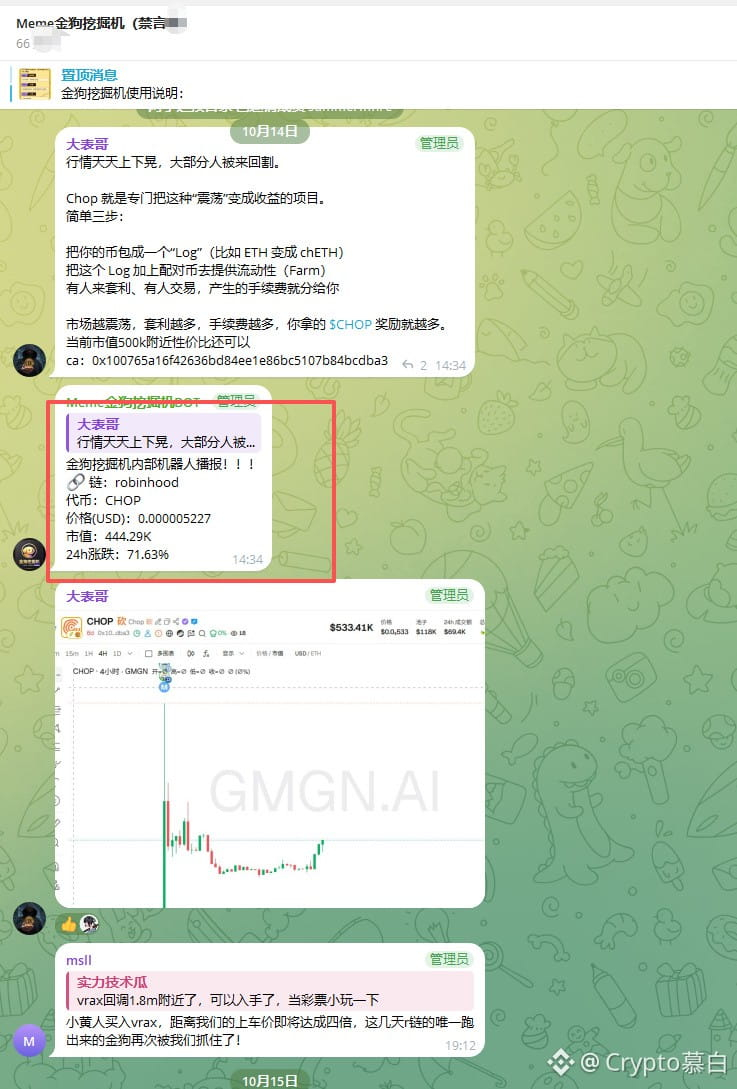
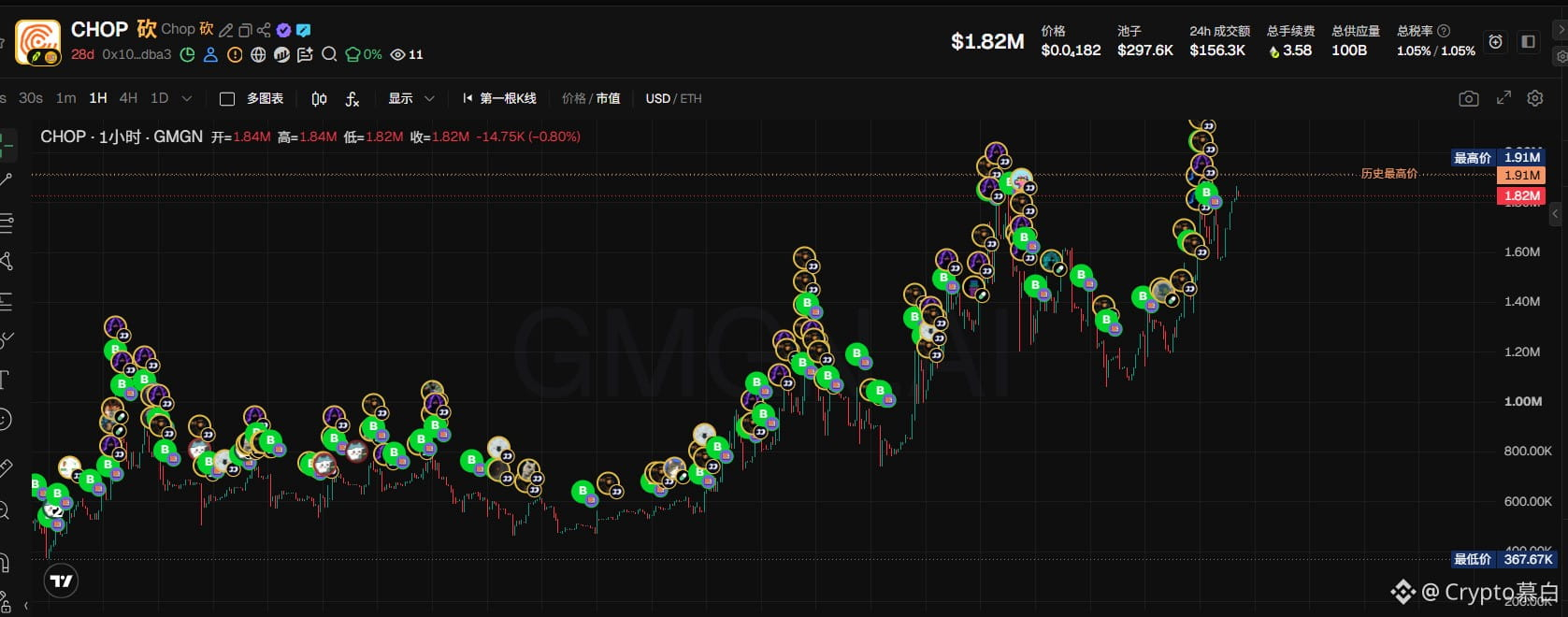
Recently, we recommended #CHOP . Its market cap was around 500K at the time. It’s since hit new highs and is now approaching a 2M market cap—another easy return of over 3x!
No spamming the feed—just picking the right ones.
#美国中期选举:市场有哪些期待?
611
·
--
Bullish
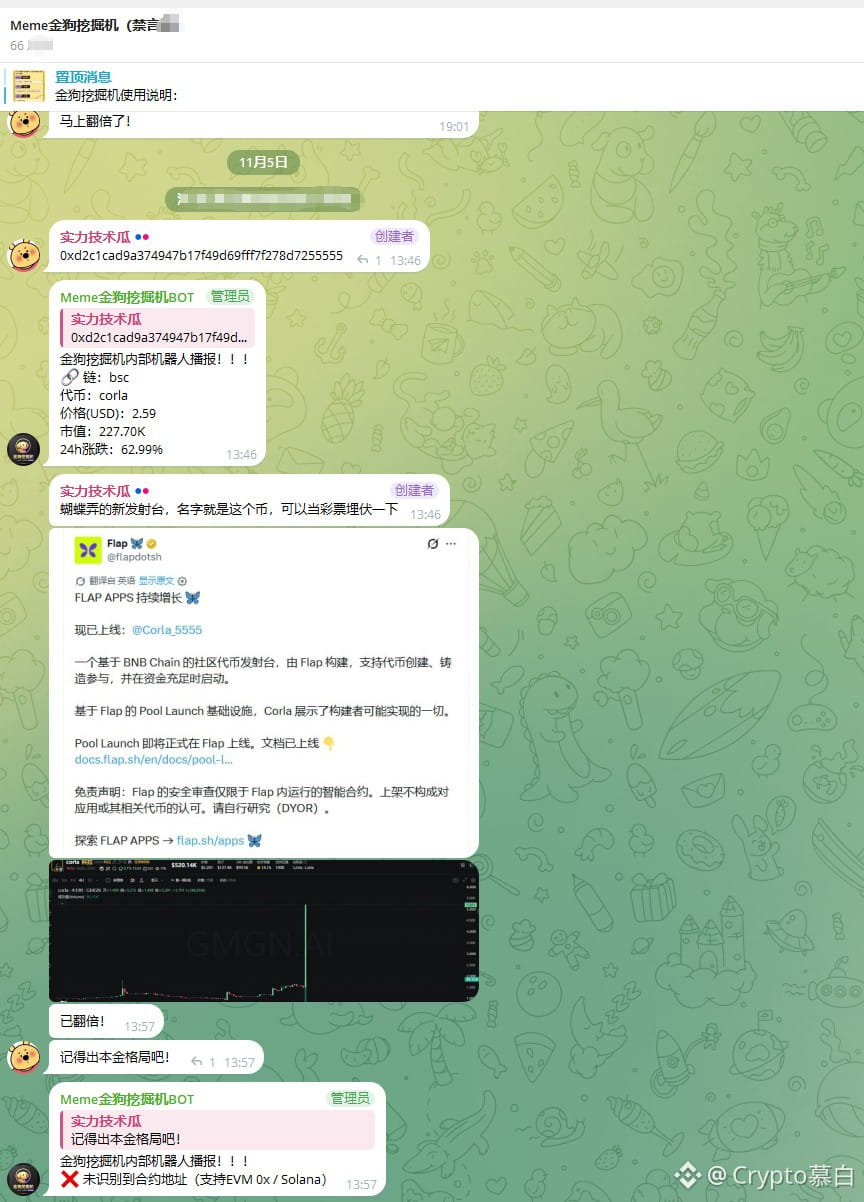
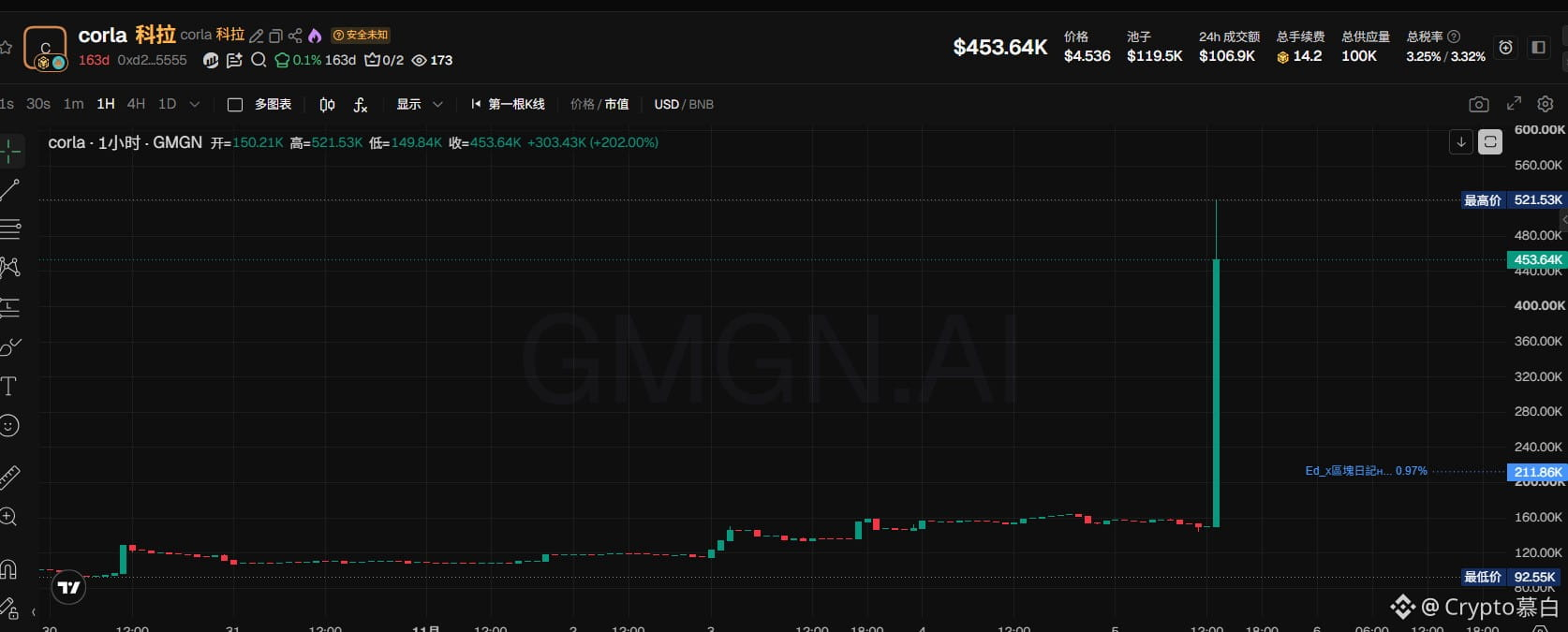
That’s how fast a Golden Dog coin can double—the Golden Dog Excavator has struck again, nailing another 2x Golden Dog coin: #corla
0xd2c1cad9a374947b17f49d69fff7f278d7255555
We flagged an entry around 227k, and it quickly reached a market cap above 500k!
Watching, positioning, and digging up Golden Dogs—all in one smooth move!
#美国中期选举:市场有哪些期待?
{web3_wallet_create}(560xd2c1cad9a374947b17f49d69fff7f278d7255555)
That’s how fast a Golden Dog coin can double—the Golden Dog Excavator has struck again, nailing another 2x Golden Dog coin: #corla
0xd2c1cad9a374947b17f49d69fff7f278d7255555
We flagged an entry around 227k, and it quickly reached a market cap above 500k!
Watching, positioning, and digging up Golden Dogs—all in one smooth move!
#美国中期选举:市场有哪些期待?
0xd2c1cad9a374947b17f49d69fff7f278d7255555
We flagged an entry around 227k, and it quickly reached a market cap above 500k!
Watching, positioning, and digging up Golden Dogs—all in one smooth move!
#美国中期选举:市场有哪些期待?
663
·
--
Bullish
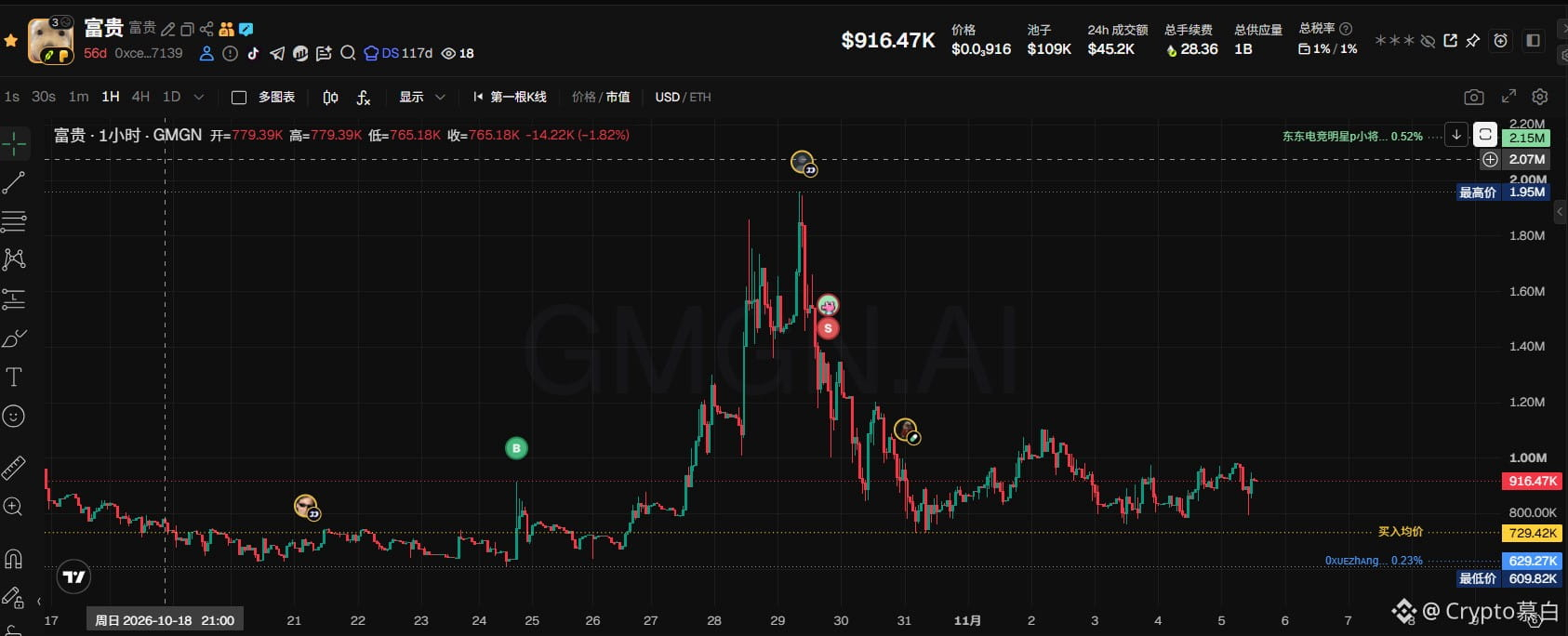
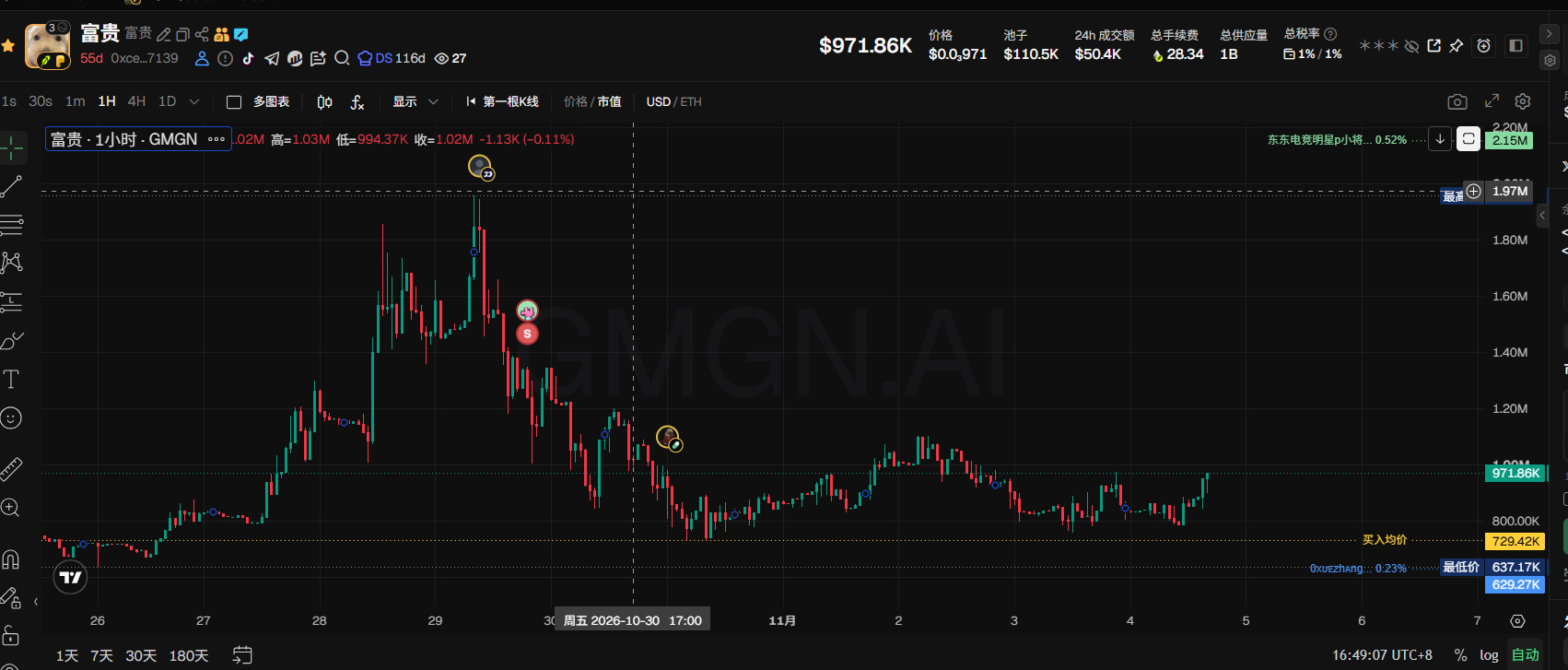
The market is down, but #富贵 is still holding strong, trading sideways around a market cap of 800k–900k all this time, just waiting for the #Robinhood chain to explode again—and then we’ll explode together!
0xceebf25b318201f1f949be2fabbfcee231737139
Looking forward to the #Robinhood chain taking off, and to prosperity taking off. May prosperity reward the diamond hands.
#币安将恢复更多资产提现
0xceebf25b318201f1f949be2fabbfcee231737139
Looking forward to the #Robinhood chain taking off, and to prosperity taking off. May prosperity reward the diamond hands.
#币安将恢复更多资产提现
453
·
--
Bullish
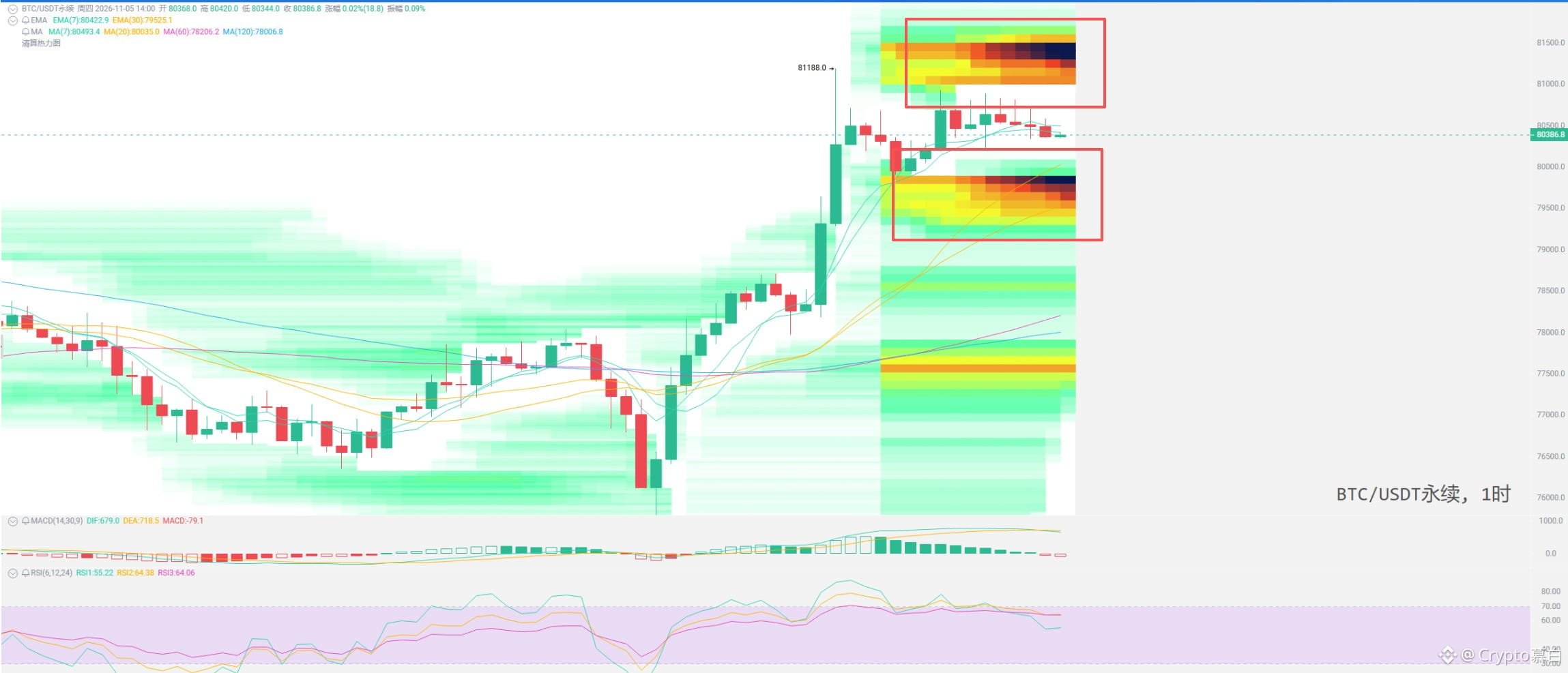
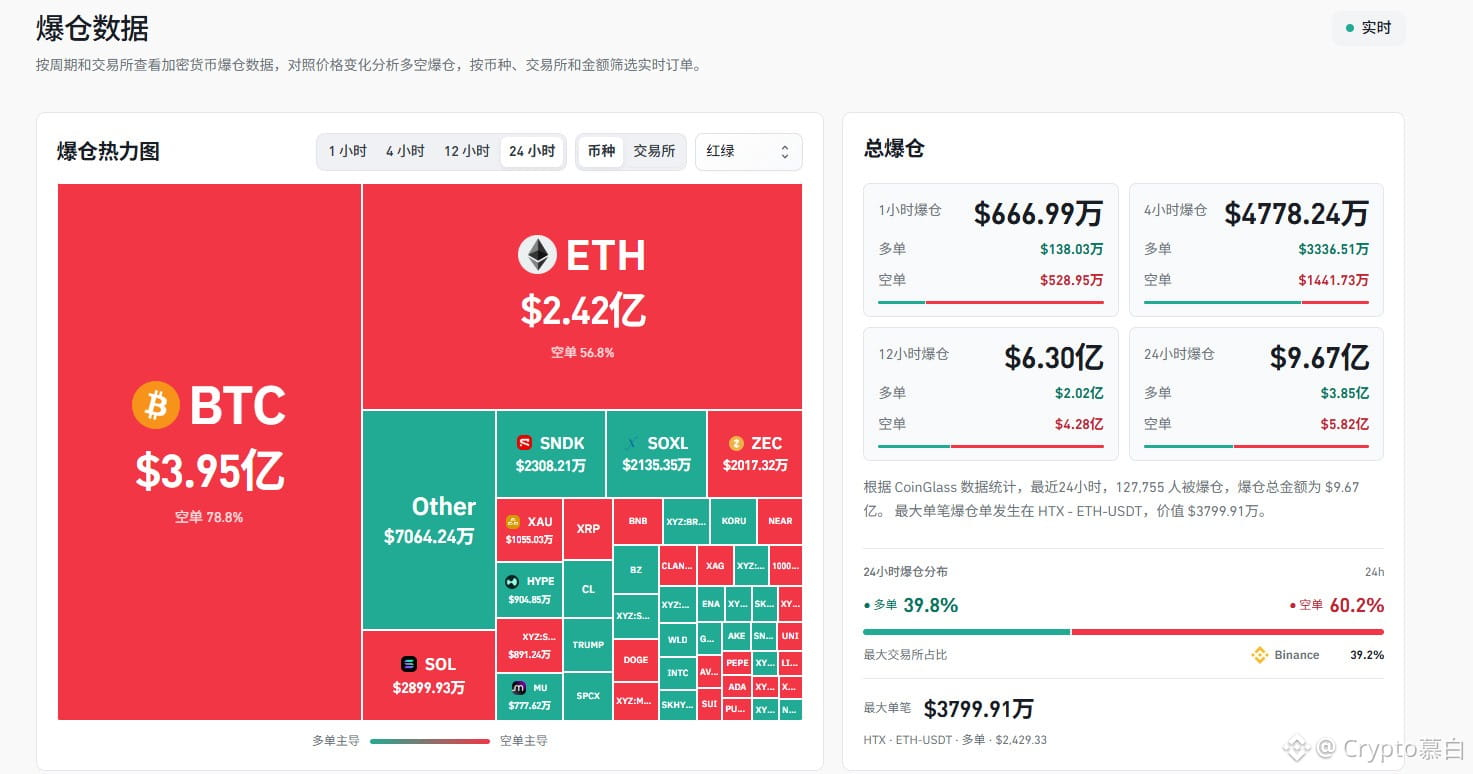
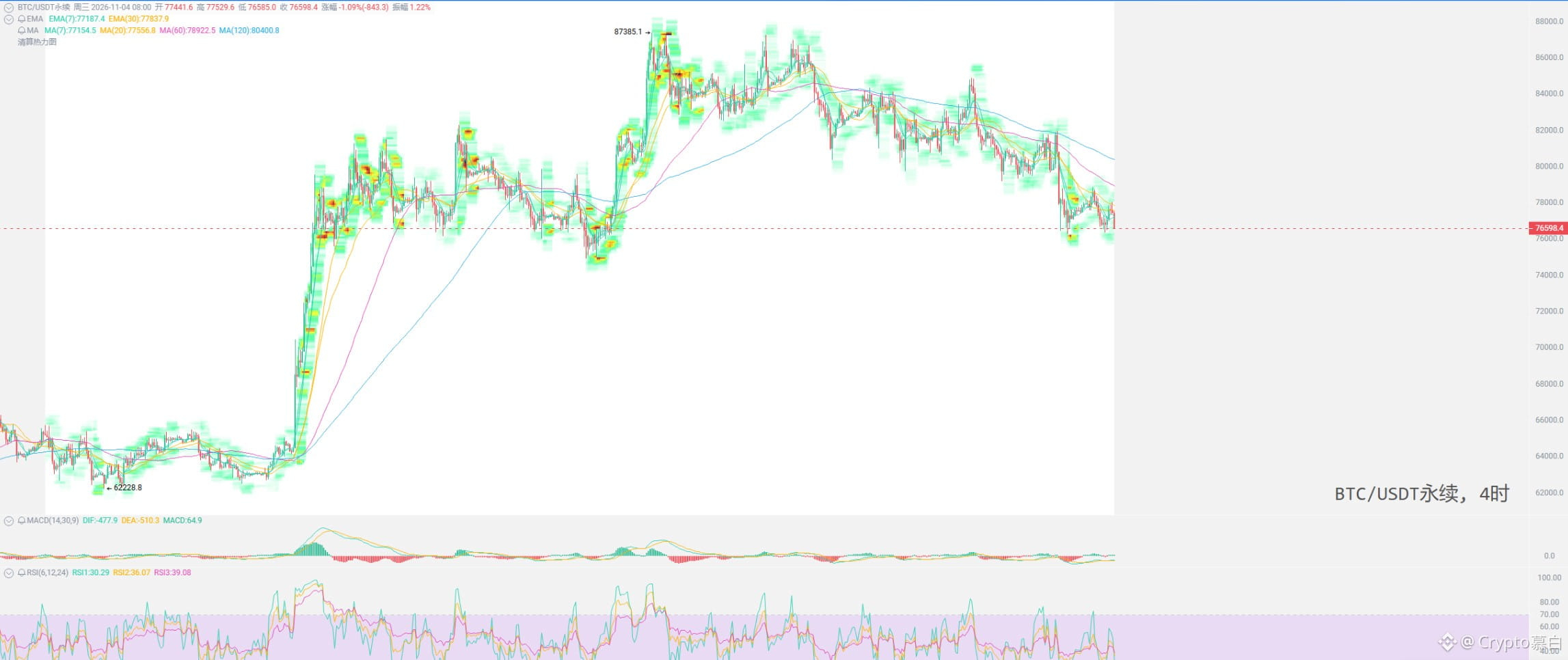
Over the past 24 hours, $983 million in positions were liquidated across the crypto market, with shorts taking the biggest hit.
$401 million in longs and $582 million in shorts were liquidated—shorts took the heavier losses.
$BTC saw $398 million liquidated, and $ETH saw $243 million.
Next, watch these two key levels:
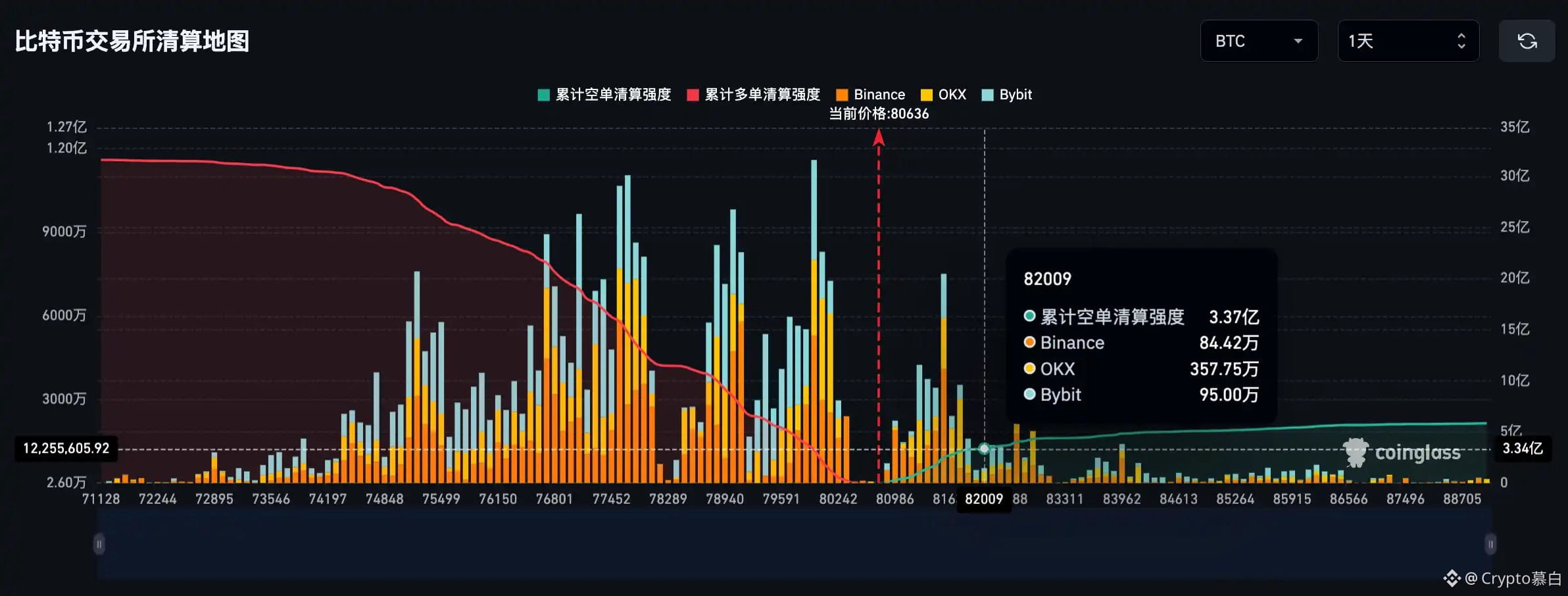
If BTC breaks above $82,000, cumulative short liquidation intensity on major CEXs will reach $337 million—shorts will take another hit.
If BTC falls below $79,000, cumulative long liquidation intensity on major CEXs will reach $919 million—the risk for longs is greater.
A move up liquidates shorts; a move down liquidates longs. The liquidation risk below $79,000 is greater than above $82,000.
#美国中期选举:市场有哪些期待? #美国10月非农出炉:降息还有戏吗?
{future}(ETHUSDT)
{future}(BTCUSDT)
Over the past 24 hours, $983 million in positions were liquidated across the crypto market, with shorts taking the biggest hit.
$401 million in longs and $582 million in shorts were liquidated—shorts took the heavier losses.
$BTC saw $398 million liquidated, and $ETH saw $243 million.
Next, watch these two key levels:
If BTC breaks above $82,000, cumulative short liquidation intensity on major CEXs will reach $337 million—shorts will take another hit.
If BTC falls below $79,000, cumulative long liquidation intensity on major CEXs will reach $919 million—the risk for longs is greater.
A move up liquidates shorts; a move down liquidates longs. The liquidation risk below $79,000 is greater than above $82,000.
#美国中期选举:市场有哪些期待? #美国10月非农出炉:降息还有戏吗?
725
·
--
Bullish
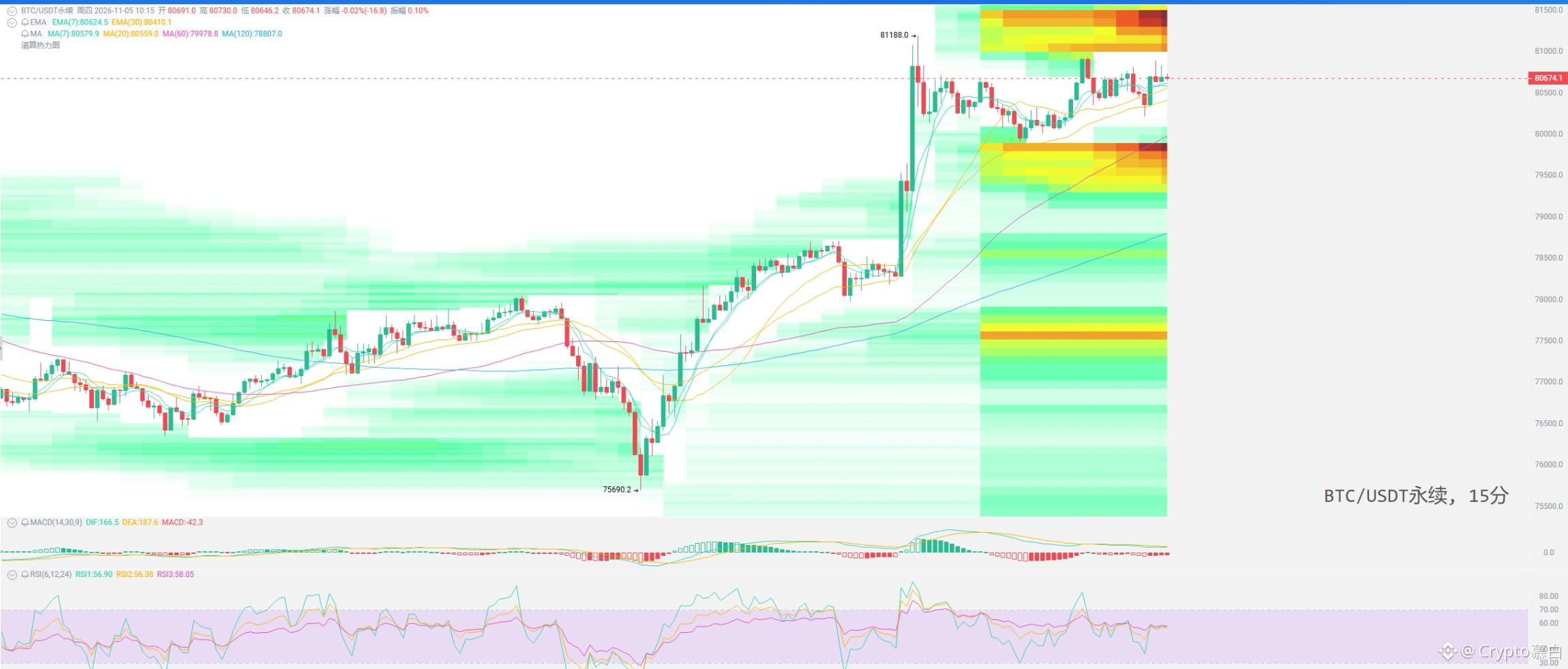
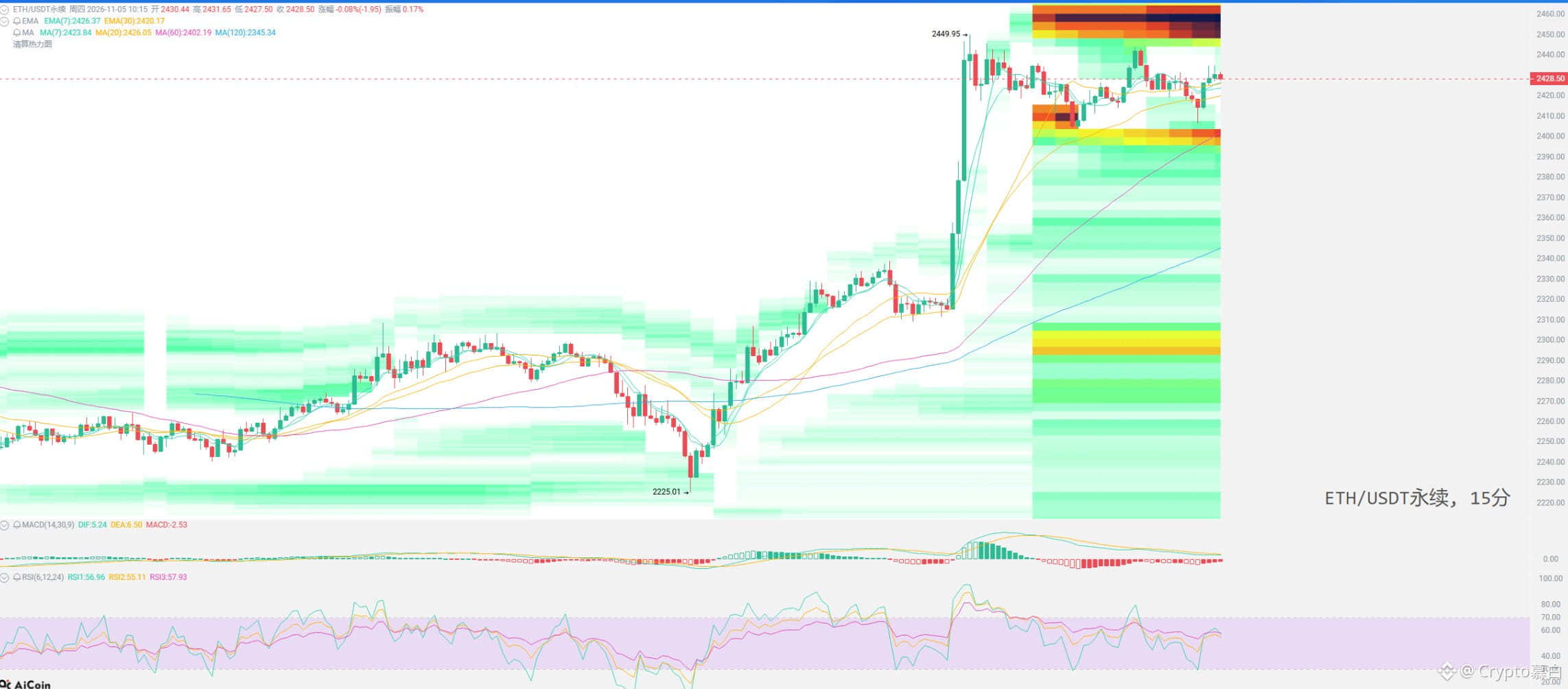
Yesterday’s market rebound was driven by two developments in the US coming to fruition:
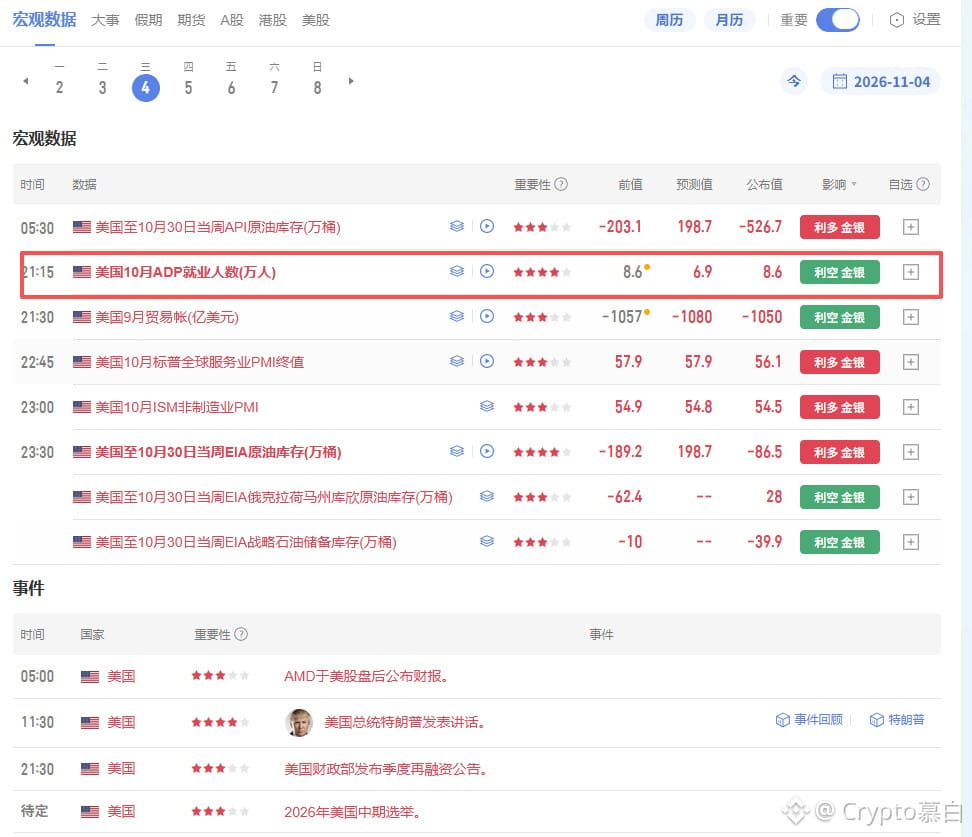
First: The labor market held up: ADP added 86,000 jobs in October, above expectations.
Second: Congress changed hands: Democrats won control of both the House and Senate, and Trump-related stocks fell across the board.
US stocks fell first, then rallied: Nasdaq futures briefly dropped 2.4% on election night, then turned positive, up 0.9%, rebounding about 929 points from their low; S&P 500 futures rose about 1%, and Dow futures gained about 700 points. The reasons were the unwinding of pre-election hedges and the resolution of uncertainty.
Crypto rebounded: BTC broke above $81,000, up more than 4.3% in 24 hours; ETH rose 6.66%; SOL gained more than 4%; BNB rose more than 2%; XRP gained more than 3.7%; and ZEC climbed more than 10%. Total market capitalization across the crypto market was $2.72 trillion, up 1.0% in 24 hours.
Democrats will now focus on lowering the cost of living. Jeffries said they would not seek revenge against Trump.
With data holding up and the election outcome in, US stocks plunged and then rallied, while crypto followed suit and recovered.
#美国中期选举:市场有哪些期待? #美国10月非农出炉:降息还有戏吗?
2
9k
·
--
Bullish
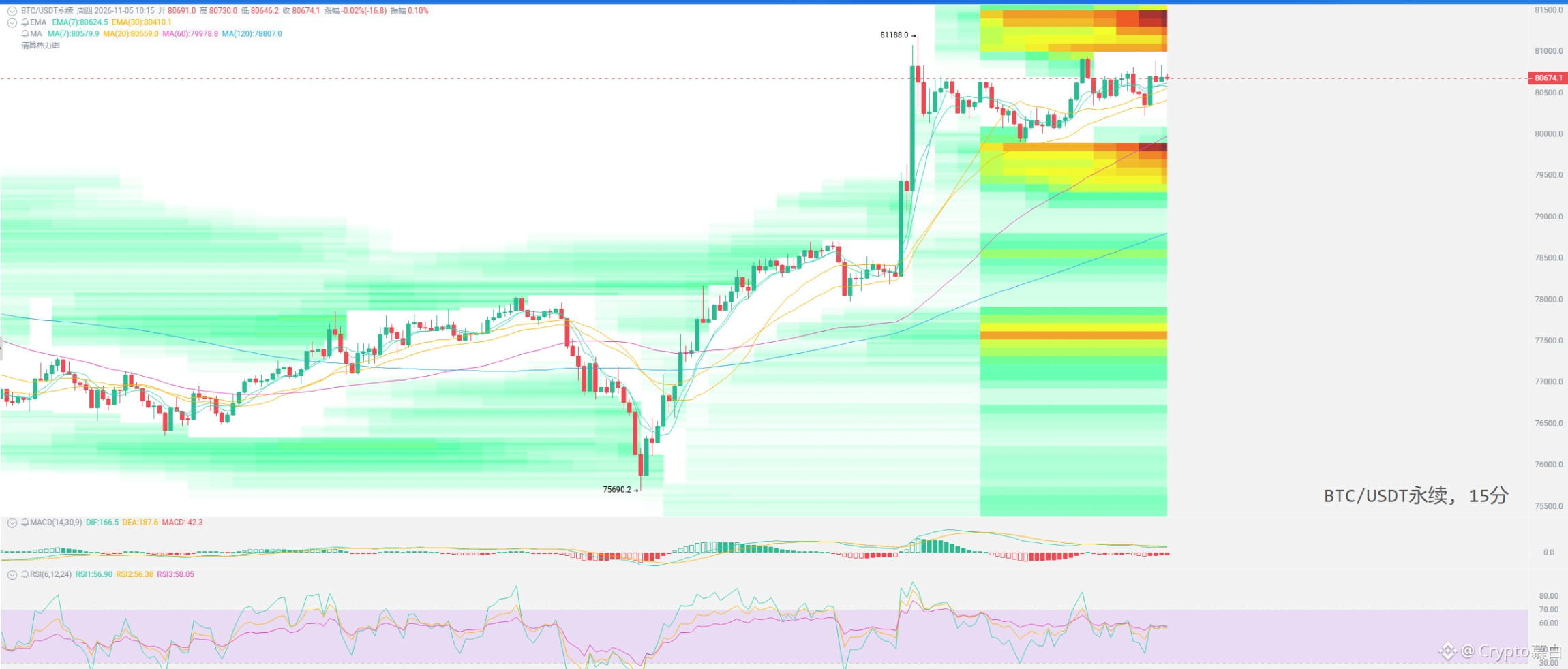
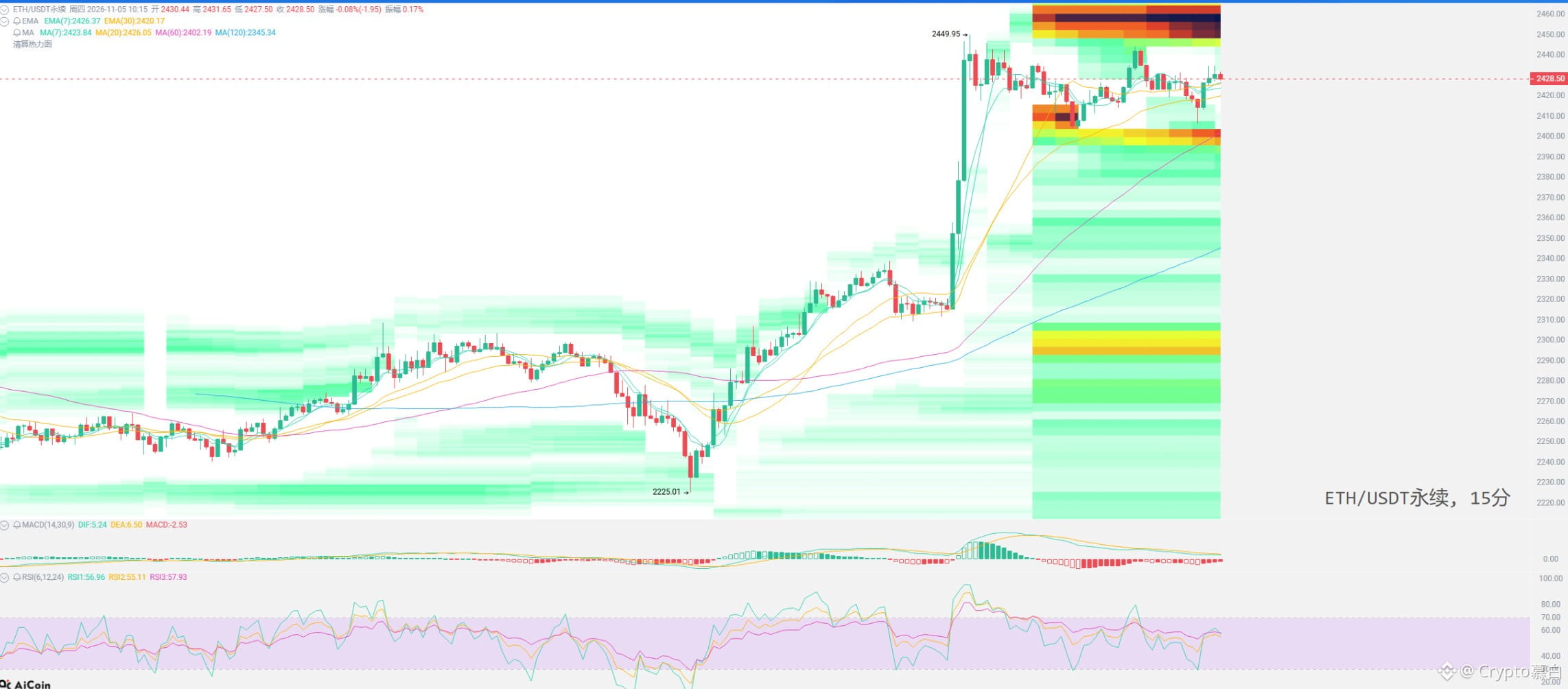
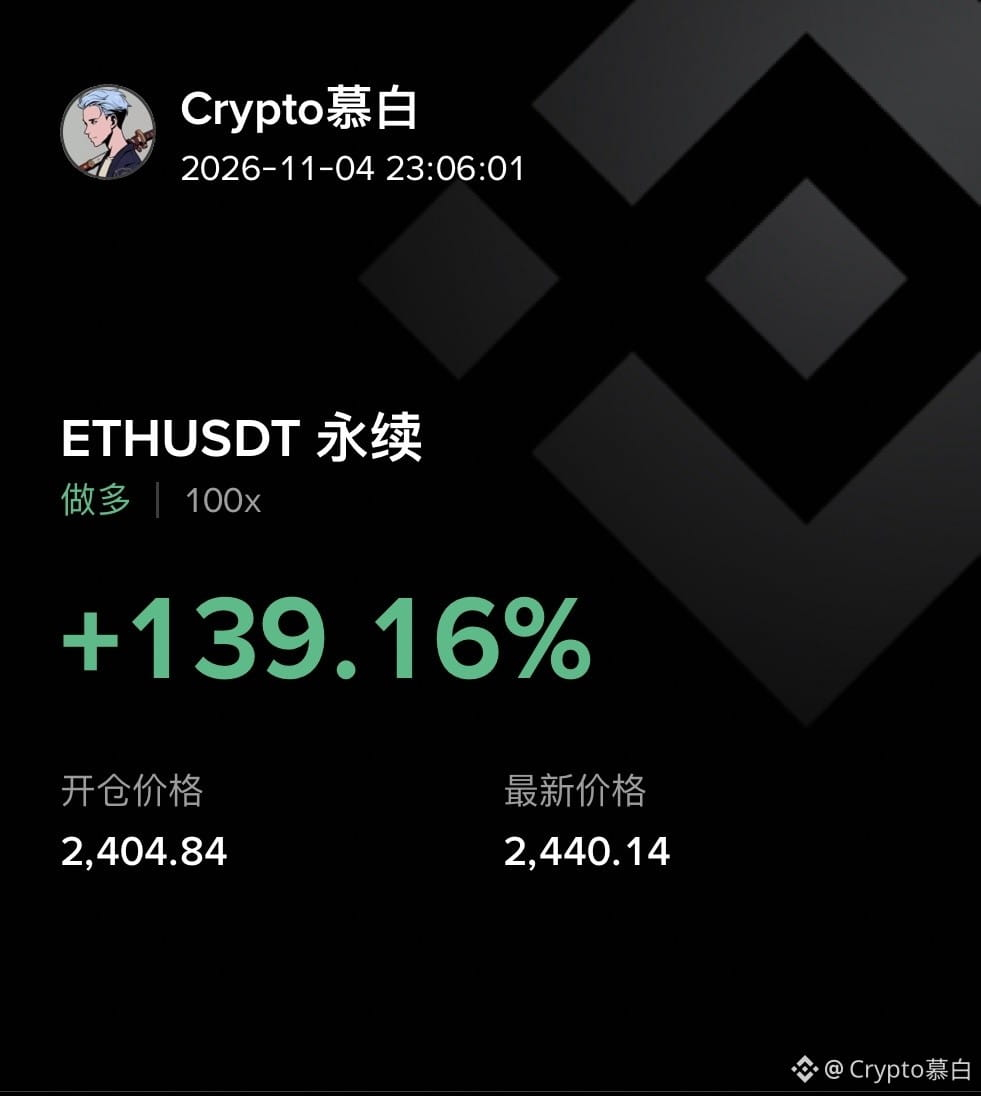
gm, did you catch yesterday’s $BTC $ETH rally?
It kept rising late into the night. An opportunity is only an opportunity if you seize it!
The market has started to warm up again—keep an eye on it!
#美国中期选举:市场有哪些期待?
gm, did you catch yesterday’s $BTC $ETH rally?
It kept rising late into the night. An opportunity is only an opportunity if you seize it!
The market has started to warm up again—keep an eye on it!
#美国中期选举:市场有哪些期待?
It kept rising late into the night. An opportunity is only an opportunity if you seize it!
The market has started to warm up again—keep an eye on it!
#美国中期选举:市场有哪些期待?
1
675
·
--
Bullish
#富贵 is about to rebound, and the current price is still a good time to enter
0xceebf25b318201f1f949be2fabbfcee231737139
Don't miss the bottom! Big White is still on board
#美国中期选举:市场有哪些期待? #美国10月非农出炉:降息还有戏吗?
#富贵 is about to rebound, and the current price is still a good time to enter
0xceebf25b318201f1f949be2fabbfcee231737139
Don't miss the bottom! Big White is still on board
#美国中期选举:市场有哪些期待? #美国10月非农出炉:降息还有戏吗?
0xceebf25b318201f1f949be2fabbfcee231737139
Don't miss the bottom! Big White is still on board
#美国中期选举:市场有哪些期待? #美国10月非农出炉:降息还有戏吗?
1.3k
·
--
How many people are still trading futures?
How many are still trading on-chain shitcoins?
And how many are still trading spot?
Have you made any money?
#美国中期选举:市场有哪些期待?
How many people are still trading futures?
How many are still trading on-chain shitcoins?
And how many are still trading spot?
Have you made any money?
#美国中期选举:市场有哪些期待?
How many are still trading on-chain shitcoins?
And how many are still trading spot?
Have you made any money?
#美国中期选举:市场有哪些期待?

615
·
--
Bullish
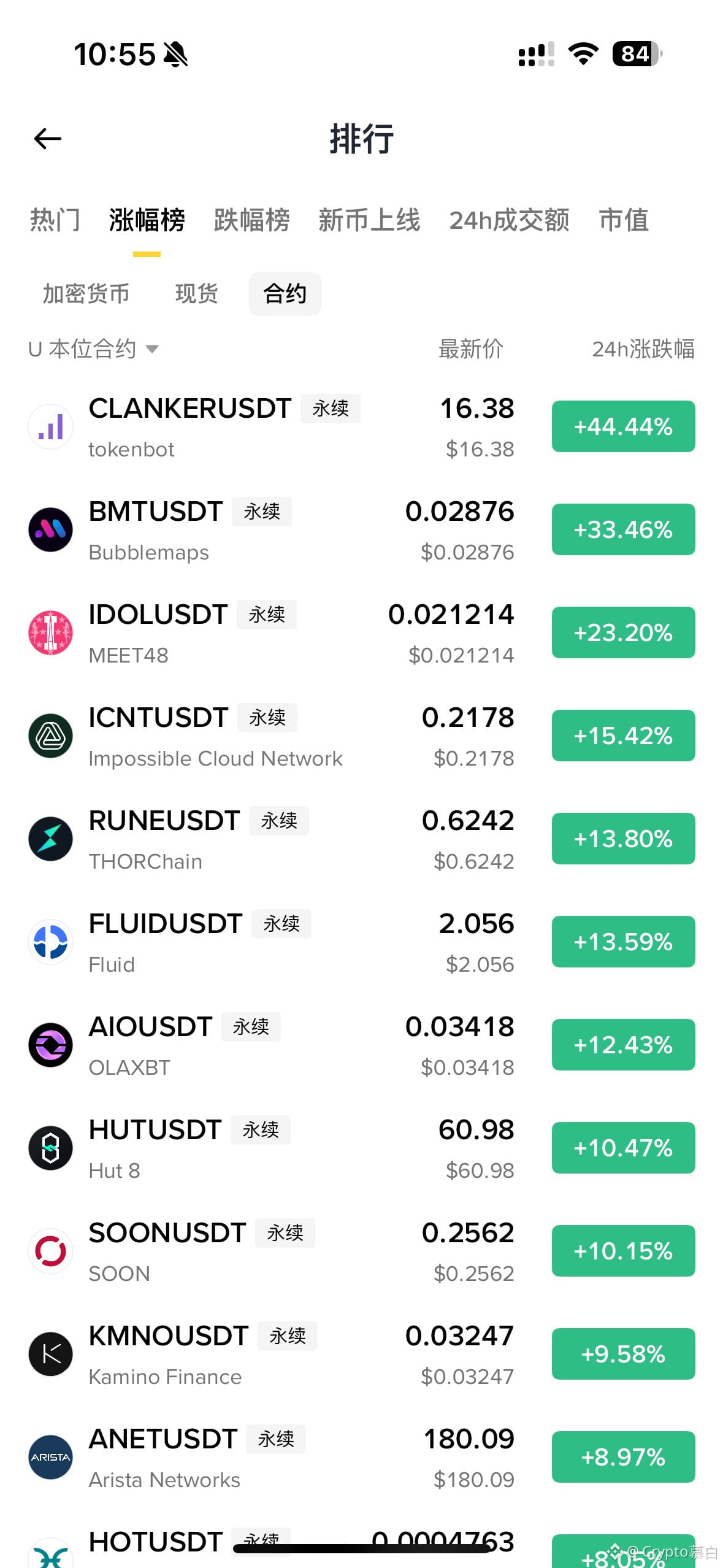
Altcoins have decoupled from $BTC $ETH ’s price action, each moving on its own!
On this list of top gainers, see who’s rising fastest and look for the right opportunity to short them.
So what if they’re surging? The broader market is falling—they can’t hold up for long.
#美国中期选举:市场有哪些期待?
{future}(ETHUSDT)
{future}(BTCUSDT)
Altcoins have decoupled from $BTC $ETH ’s price action, each moving on its own!
On this list of top gainers, see who’s rising fastest and look for the right opportunity to short them.
So what if they’re surging? The broader market is falling—they can’t hold up for long.
#美国中期选举:市场有哪些期待?
On this list of top gainers, see who’s rising fastest and look for the right opportunity to short them.
So what if they’re surging? The broader market is falling—they can’t hold up for long.
#美国中期选举:市场有哪些期待?
1.4k
·
--
Bullish
If the U.S. midterm elections are over and the nonfarm payroll data is released,
and the market takes another sharp plunge,
will you still be able to handle it?
#美国中期选举:市场有哪些期待? #美国10月非农出炉:降息还有戏吗?
If the U.S. midterm elections are over and the nonfarm payroll data is released,
and the market takes another sharp plunge,
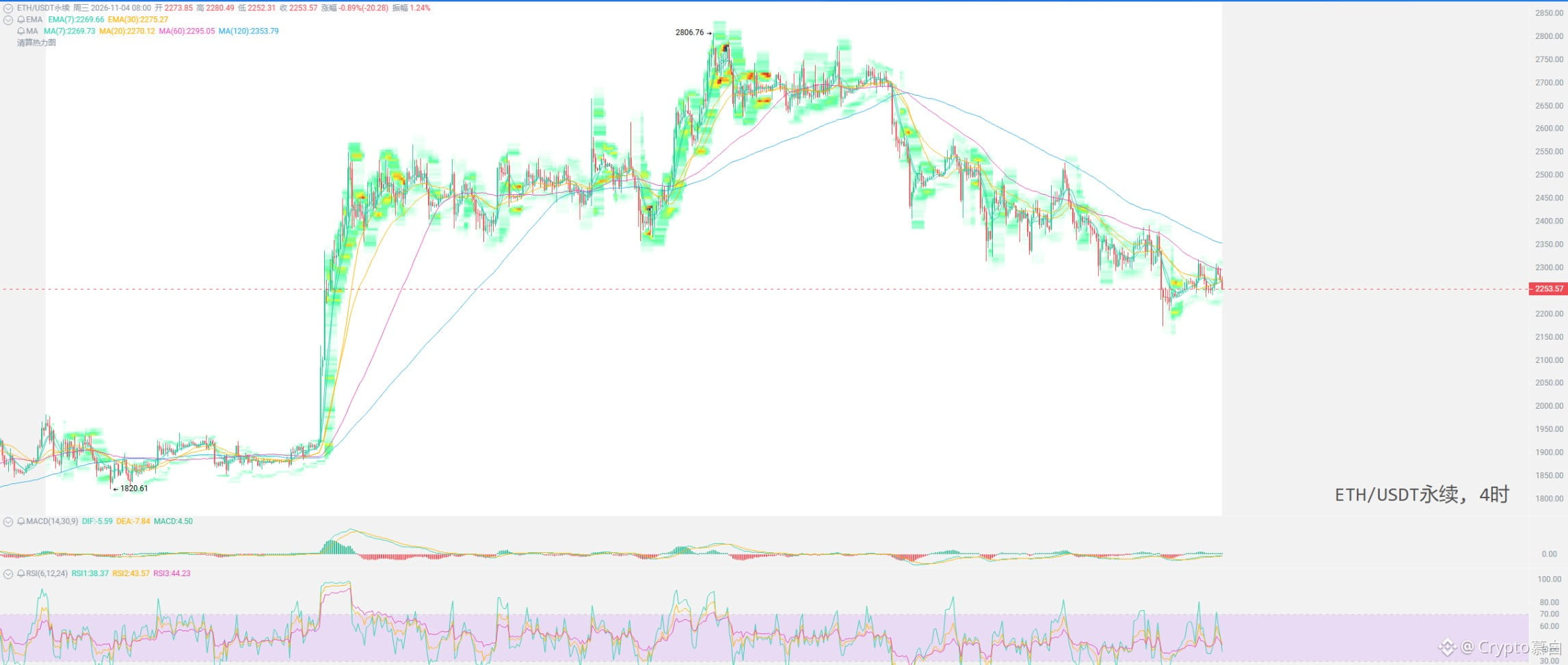
will you still be able to handle it?
#美国中期选举:市场有哪些期待? #美国10月非农出炉:降息还有戏吗?
and the market takes another sharp plunge,
will you still be able to handle it?
#美国中期选举:市场有哪些期待? #美国10月非农出炉:降息还有戏吗?
690
·
--
A postmortem of Binance’s $6.3 billion theft: Hackers lurked for four months, breached three computers, and pulled off an epic heist
The preliminary investigation report reconstructs how it happened. The defenses weren’t smashed through head-on—it all started with an installer and a fake job interview.
Step one: A tampered installer.
In June 2026, Xiao A, an engineer on Binance’s wallet operations team, wanted to install an AI coding tool. He searched for its name, clicked the first result—a Homebrew installer.
He installed it. But the package had been tampered with by hackers.
Binance’s security team quickly spotted suspicious activity and urgently replaced the devices. But Xiao A’s access to Binance’s wallet infrastructure had already been exposed. The bait had been set, and the hackers began to wait.
Step two: A fake interview that went really well
They waited through the summer. In September, a job seeker, Xiao B, came along.
Posing as a “project director,” the hackers arranged to meet Xiao B, who worked as a Binance developer, through a legitimate recruitment platform. During the first round—a live video call—the “HR representative” proactively shared social media accounts, complete with photos, videos, and glimpses of everyday life. They had a great conversation.
For the second round, they switched to a messaging app Xiao B often used. Xiao B easily kept up with someone claiming to be the “CEO.” As the interview was wrapping up, the CEO said, “Why don’t you do a take-home assignment?” and sent over a code repository.
Xiao B downloaded it onto a work computer and followed the instructions to set it up.
That 3,414-byte file became the turning point in a $6.3 billion heist.
It bypassed Binance’s endpoint security defenses and even used Binance’s internal AI tools to find the traces the team had left behind on Xiao A’s computer.
Step three: Closing the net.
On October 30, everything was ready. The hackers logged into a computer called Xiao C’s and, right under Binance’s nose, made off with $6.3 billion.
Four months. Three laptops. $6.3 billion.
The most costly vulnerability has never been code. It’s people.
#币安10·30安全事件调查报告 #币安将恢复更多资产提现

14
50
44.7k
·
--
Bullish
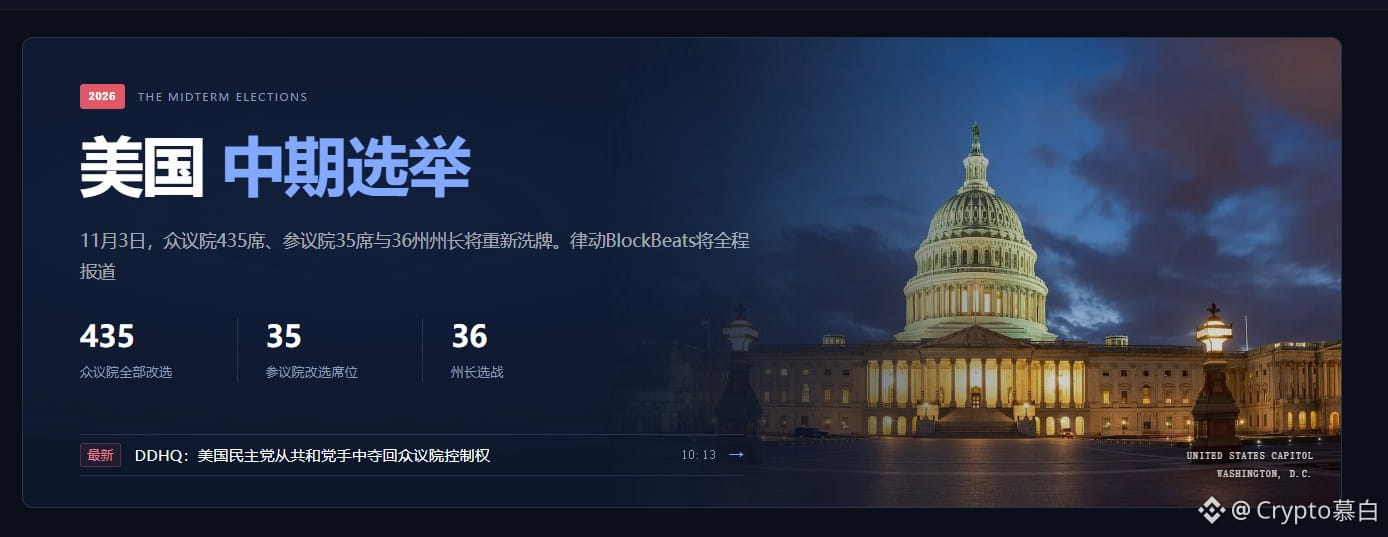
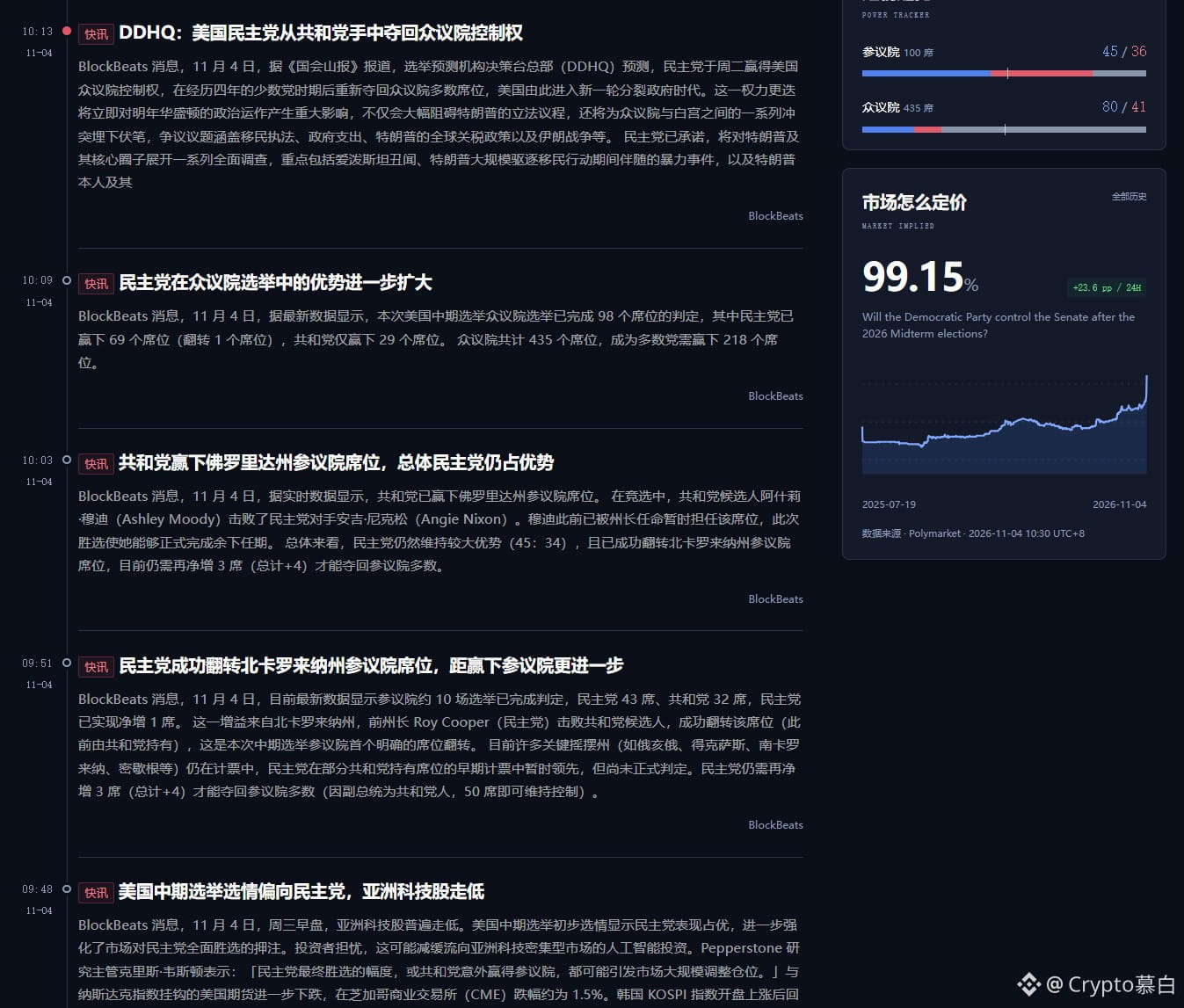
Pay close attention to the U.S. midterm elections! They could have a major impact on the market’s subsequent direction.
Latest odds for the U.S. midterm elections: Democrats take both the Senate and the House, up to 99%.
Republicans hold the Senate, Democrats take the House: 1%;
Democrats take the Senate, Republicans hold the House: 1%;
Republicans hold both chambers: 0.1%.
Voting is still underway. As of 7 p.m. ET on November 3, polling stations had closed in Georgia, Kentucky, South Carolina, Vermont, Virginia, and Indiana. Voting had also ended in some Florida House districts, with the remaining areas set to close at 8 p.m. Next, ballots will be counted state by state.
Voting isn’t over yet, but the odds are already almost a sure thing. Democrats sweep both chambers, and the market is pricing in that scenario.
#美国中期选举将至:市场会往哪走?
1
1.2k
·
--
Bullish
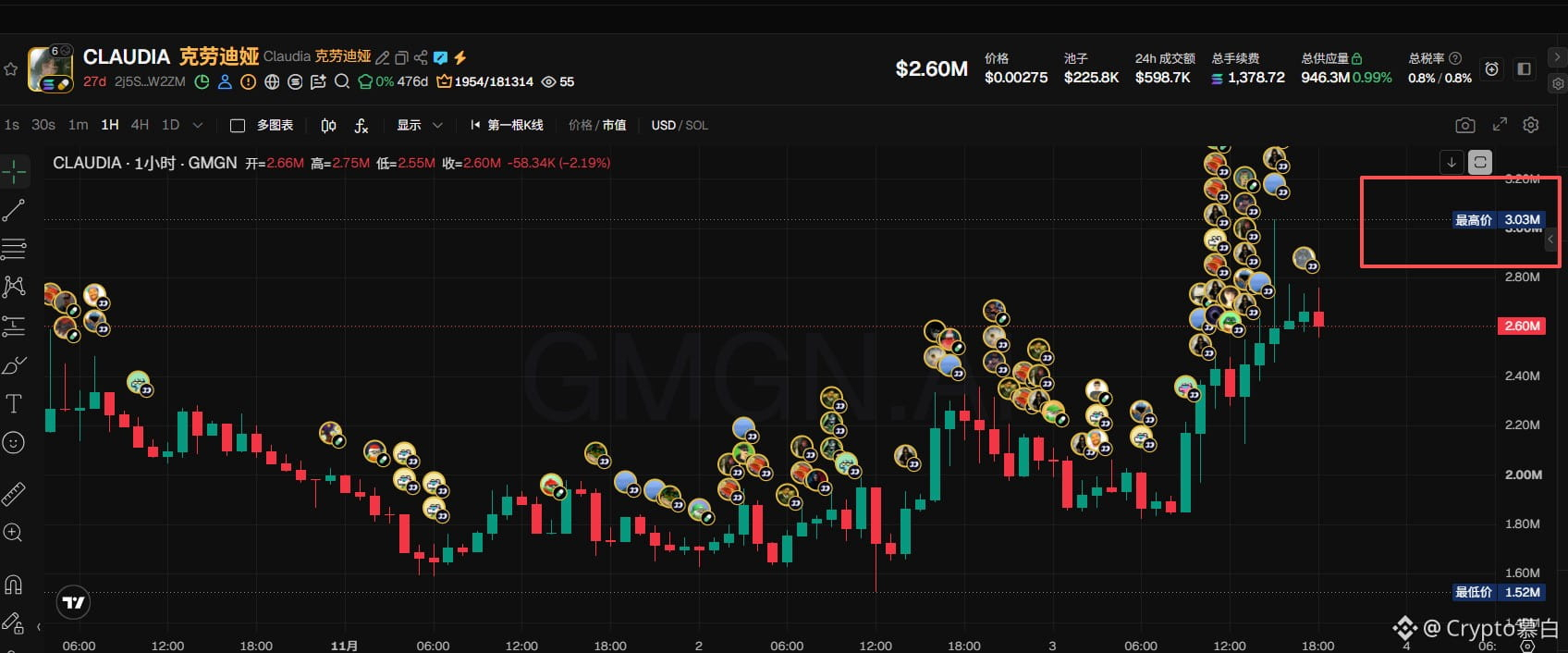
$CLAUDIA is still a pretty good gem coin. #马斯克明奶 for a long time
2j5SaS7xy776qCBpyPQbZjyQSAtKiFgrwjfErthnW2ZM
The Golden Dog Excavator signaled an entry around a $1.5M market cap. Today it reached over a $3M market cap—another coin that doubled.
Even when the on-chain market is bad, the Golden Dog Excavator still finds coins that double. That’s its reputation.
Opportunities are often in the hands of a select few.
#CLAUDIA #币安将恢复更多资产提现

659
·
--
Bullish
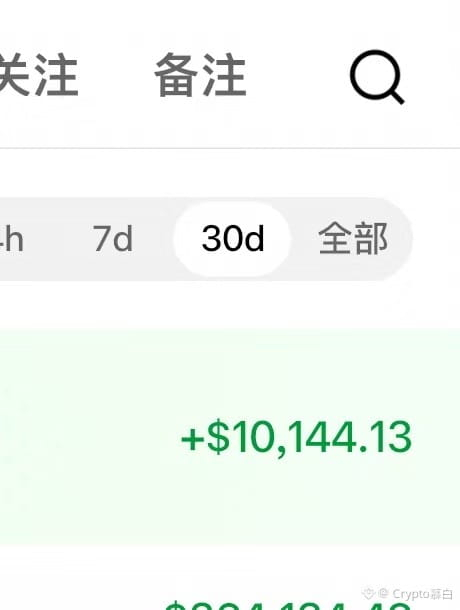
What do you guys think of the on-chain market in November, P-bros?
I’ve been trading P back and forth, and made over 10,000 U on GMGN. Opportunities are always seized by a minority.
#币安将恢复更多资产提现
What do you guys think of the on-chain market in November, P-bros?
I’ve been trading P back and forth, and made over 10,000 U on GMGN. Opportunities are always seized by a minority.
#币安将恢复更多资产提现
I’ve been trading P back and forth, and made over 10,000 U on GMGN. Opportunities are always seized by a minority.
#币安将恢复更多资产提现
477
·
--
Bullish
Verified
There’s a key data release this Friday that could directly determine whether rates are raised in December—the US October jobs report.
September’s report showed just 29,000 jobs added, an incredibly weak figure. The market now expects October’s figure to rebound to 65,000.
It all comes down to this number:
If employment is strong, it means the economy can still hold up, and expectations of a Fed rate hike in December will heat up further. The dollar, Treasury bonds, and gold will all move accordingly.
Strong jobs report, stronger rate-hike expectations.
Weak jobs report, and the market can finally catch its breath.
#美国10月非农出炉:降息还有戏吗?
1
2.1k
·
--
Bullish
Trump says he won’t strike Iran: oil prices can breathe a sigh of relief for now.
But Morgan Stanley warns that the war won’t end anytime soon, energy costs won’t fall that quickly, and it could take months—or even until 2027—for oil production through the Strait of Hormuz to recover.
As for the midterm elections, don’t read too much into them. A change in Congress won’t alter the long-term outlook for interest rates and the deficit. The government is borrowing too much, Treasury yields are high, and that’s weighing on asset prices. Spending cuts would amount to little more than tinkering; major reforms are unlikely to pass under divided government.
A tight race and slow vote counting may cause, at most, short-term volatility. Historically, disputed elections have had limited impact on markets—unless there are serious problems with the process or its fairness.
Ultimately, what will determine the U.S. stock market isn’t who wins the election, but inflation, growth, and corporate earnings.
#美国中期选举倒计时,美股博弈窗口已开启?
1.4k
·
--
Bullish
Verified
Apple’s earnings beat expectations, but the stock still dropped first—because the question isn’t whether it made money, but whether it can make even more going forward.
First, the results: Fourth-quarter revenue came in at $114.48 billion, up about 12% year over year and above expectations. iPhone revenue surged 17.5% to about $57.6 billion, while Mac revenue rose nearly 24%—a standout result.
But the market wasn’t impressed. Shares fell 1.83% at the close, then dropped another 2.5% after hours. Why?
Three trouble spots:
First, Greater China missed the mark. Revenue was about $17.5 billion, up 21% year over year. That sounds good, but it was still about 6.5% below analysts’ expectations.
Second, Services hit the brakes. Growth slowed to about 9.8%, its lowest level in nearly three years. Guidance for next quarter was just 8%–9%, well below market expectations.
Third, gross margin is set to fall. Next-quarter guidance is 45%–46%, below the roughly 46.3% expected and a clear drop from 47.9% this quarter. The main reasons are rising memory prices and higher AI-related costs.
Although next-quarter revenue growth guidance of 7%–10% was above expectations, the stock had already climbed for several months, leaving its valuation elevated. China’s miss, slowing Services growth, and pressure on gross margins all came together, prompting investors to take profits.
The numbers look great, but the guidance has cracks. With the stock already high, investors are heading for the exits.
#苹果财报喜忧参半
1.3k
Log in to explore more content
Join global crypto users on Binance Square
⚡️ Get latest and useful information about crypto.
💬 Trusted by the world’s largest crypto exchange.
👍 Discover real insights from verified creators.
Email / Phone number
Trending Topics
BinanceReopensWithdrawalsForMoreAssets
731,248 views
3,820 Discussing
Security Incident | Recovery Update #8: Withdrawals for More Assets to Reopen (2026-11-05)
Binance Announcement
·289 Likes
·1.1M views
ADPUSPrivateEmployersAdd86000JobsInOctober
20,502 views
344 Discussing
BTCRebounds80K
226,522 views
1,991 Discussing