
23号实验室
1.1k Posts

23号实验室
Report
Block User
Crypto Tokenomics🔶20%返佣邀请码 BNB88R🔶复盘的核心目标:提炼高胜率讯号🔶请我喝珍奶,补充创作灵感
Open Trade
High-Frequency Trader
7 Months
127 Following
754 Followers
3.3K+ Liked
Posts
Portfolio
All
Quotes
·
--
Verified
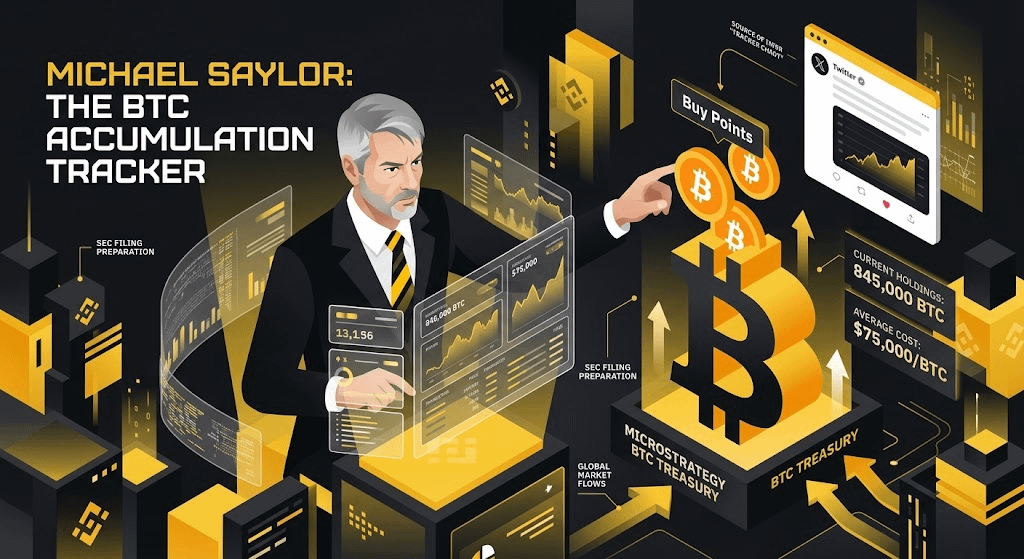
MicroStrategy founder and executive chairman Michael Saylor published the latest Bitcoin Tracker chart on the social platform on September 20, 2026, along with the caption “A little more orange”.
New user registration: spot 20%+ and futures 20%; automatic commission rebate. Invitation code 🔶BNB88R🔶
[https://www.binance.com/join?ref=BNB88R](https://www.binance.com/join?ref=BNB88R)
According to the disclosure pattern of MicroStrategy’s historical additional purchases, Saylor typically publicly announces the change in its Bitcoin holdings on the following day after issuing such chart prompts. As of now, MicroStrategy holds 845,050 BTC in total, with an average cost basis of $75,412/BTC.
Existing users click to rebind and to check the invitation code 🔶BNB88R🔶
[https://www.binance.com/zh-CN/activity/referral/bind-ref](https://www.binance.com/zh-CN/activity/referral/bind-ref)
#MichaelSaylor暗示增持BTC
$SAGA $BTW $PTB
{future}(PTBUSDT)
{future}(BTWUSDT)
{future}(SAGAUSDT)
MicroStrategy founder and executive chairman Michael Saylor published the latest Bitcoin Tracker chart on the social platform on September 20, 2026, along with the caption “A little more orange”.
New user registration: spot 20%+ and futures 20%; automatic commission rebate. Invitation code 🔶BNB88R🔶
https://www.binance.com/join?ref=BNB88R
According to the disclosure pattern of MicroStrategy’s historical additional purchases, Saylor typically publicly announces the change in its Bitcoin holdings on the following day after issuing such chart prompts. As of now, MicroStrategy holds 845,050 BTC in total, with an average cost basis of $75,412/BTC.
Existing users click to rebind and to check the invitation code 🔶BNB88R🔶
https://www.binance.com/zh-CN/activity/referral/bind-ref
#MichaelSaylor暗示增持BTC
$SAGA $BTW $PTB
New user registration: spot 20%+ and futures 20%; automatic commission rebate. Invitation code 🔶BNB88R🔶
https://www.binance.com/join?ref=BNB88R
According to the disclosure pattern of MicroStrategy’s historical additional purchases, Saylor typically publicly announces the change in its Bitcoin holdings on the following day after issuing such chart prompts. As of now, MicroStrategy holds 845,050 BTC in total, with an average cost basis of $75,412/BTC.
Existing users click to rebind and to check the invitation code 🔶BNB88R🔶
https://www.binance.com/zh-CN/activity/referral/bind-ref
#MichaelSaylor暗示增持BTC
$SAGA $BTW $PTB
1
226
·
--
#paradigm披露持有zec This isn’t just a simple case of institutions going long—it directly reshapes the logic of the privacy sector.
In the past, everyone thought ZEC was merely an old-school privacy coin, but top-tier VCs have positioned it as the “privacy completion” of Bitcoin. When institutions redefine privacy from a “gray area” into Web3 financial infrastructure, the market’s pricing logic changes completely.
Fueled by this news and the Nu7 technology upgrade, ZEC surged against the trend, directly lifting the entire privacy token segment. In a macro environment where liquidity is relatively tight, projects that are truly endorsed by top-tier institutions and backed by hardcore technology upgrades are now carving out their own independent uptrend.
The crypto space never lacks stories—what it lacks is underlying narratives strong enough to be recognized by large capital. This time, ZEC’s liquidity premium—those who understand will understand.
#Zcash现货ETF月度净流入超2.3亿美元
[币安20%返佣邀请码🔸BNB88R](https://www.binance.com/zh-CN/activity/referral/bind-ref)
$ZEC $ONE $AVA
{future}(AVAUSDT)
{future}(ONEUSDT)
{future}(ZECUSDT)
#paradigm披露持有zec This isn’t just a simple case of institutions going long—it directly reshapes the logic of the privacy sector.
In the past, everyone thought ZEC was merely an old-school privacy coin, but top-tier VCs have positioned it as the “privacy completion” of Bitcoin. When institutions redefine privacy from a “gray area” into Web3 financial infrastructure, the market’s pricing logic changes completely.
Fueled by this news and the Nu7 technology upgrade, ZEC surged against the trend, directly lifting the entire privacy token segment. In a macro environment where liquidity is relatively tight, projects that are truly endorsed by top-tier institutions and backed by hardcore technology upgrades are now carving out their own independent uptrend.
The crypto space never lacks stories—what it lacks is underlying narratives strong enough to be recognized by large capital. This time, ZEC’s liquidity premium—those who understand will understand.
#Zcash现货ETF月度净流入超2.3亿美元
币安20%返佣邀请码🔸BNB88R
$ZEC $ONE $AVA
In the past, everyone thought ZEC was merely an old-school privacy coin, but top-tier VCs have positioned it as the “privacy completion” of Bitcoin. When institutions redefine privacy from a “gray area” into Web3 financial infrastructure, the market’s pricing logic changes completely.
Fueled by this news and the Nu7 technology upgrade, ZEC surged against the trend, directly lifting the entire privacy token segment. In a macro environment where liquidity is relatively tight, projects that are truly endorsed by top-tier institutions and backed by hardcore technology upgrades are now carving out their own independent uptrend.
The crypto space never lacks stories—what it lacks is underlying narratives strong enough to be recognized by large capital. This time, ZEC’s liquidity premium—those who understand will understand.
#Zcash现货ETF月度净流入超2.3亿美元
币安20%返佣邀请码🔸BNB88R
$ZEC $ONE $AVA

3
3k
·
--
Verified
On the first day of the launch of Circle’s new chain Arc, something rather interesting happened.
The total DEX trading volume across the whole chain reached $410 million, but 82% of it was propped up entirely by the Meme launchpad. Just arguspad alone accounted for half of the dominance—issuing more than 80,000 new tokens.
So what does this mean? In the end, the “institutional chain” facade is still ultimately propped up first by retail users and PVP capital.
Circle’s original intent was to use Arc to enable native settlement for USDC and compliant RWA. But in the opening, the traffic “password” still comes down to ultra-fast token issuance and high-frequency arbitrage.
Excluding the Meme portion, the real institutional and settlement business amounted to only $74.6 million on day one.
Looking ahead, there are two key things: after the Meme frenzy fades, whether the chain’s on-chain liquidity performance can be retained; and among the tokens that were issued, how many can actually emerge and capture long-term value after they’ve settled.
[币安20%返佣邀请码🔸BNB66R](https://www.binance.com/join?ref=BNB88R)
#meme发射台占arc首日成交82%
$BR $AVA $ONE
{future}(ONEUSDT)
{future}(AVAUSDT)
{future}(BRUSDT)
On the first day of the launch of Circle’s new chain Arc, something rather interesting happened.
The total DEX trading volume across the whole chain reached $410 million, but 82% of it was propped up entirely by the Meme launchpad. Just arguspad alone accounted for half of the dominance—issuing more than 80,000 new tokens.
So what does this mean? In the end, the “institutional chain” facade is still ultimately propped up first by retail users and PVP capital.
Circle’s original intent was to use Arc to enable native settlement for USDC and compliant RWA. But in the opening, the traffic “password” still comes down to ultra-fast token issuance and high-frequency arbitrage.
Excluding the Meme portion, the real institutional and settlement business amounted to only $74.6 million on day one.
Looking ahead, there are two key things: after the Meme frenzy fades, whether the chain’s on-chain liquidity performance can be retained; and among the tokens that were issued, how many can actually emerge and capture long-term value after they’ve settled.
币安20%返佣邀请码🔸BNB66R
#meme发射台占arc首日成交82%
$BR $AVA $ONE
The total DEX trading volume across the whole chain reached $410 million, but 82% of it was propped up entirely by the Meme launchpad. Just arguspad alone accounted for half of the dominance—issuing more than 80,000 new tokens.
So what does this mean? In the end, the “institutional chain” facade is still ultimately propped up first by retail users and PVP capital.
Circle’s original intent was to use Arc to enable native settlement for USDC and compliant RWA. But in the opening, the traffic “password” still comes down to ultra-fast token issuance and high-frequency arbitrage.
Excluding the Meme portion, the real institutional and settlement business amounted to only $74.6 million on day one.
Looking ahead, there are two key things: after the Meme frenzy fades, whether the chain’s on-chain liquidity performance can be retained; and among the tokens that were issued, how many can actually emerge and capture long-term value after they’ve settled.
币安20%返佣邀请码🔸BNB66R
#meme发射台占arc首日成交82%
$BR $AVA $ONE

1
1
1.1k
·
--
Verified
#XRP下跌10% The core pain point behind XRP’s sharp drop lies in the regulatory front. The U.S. Senate’s cloture vote on the “CLARITY Act” failed by 49 to 50, instantly wiping out expectations for regulatory progress and triggering a concentrated $6.5 billion liquidity sell-off within 24 hours.
#Zcash上涨6% The explosive rally against the trend was entirely driven by internal fundamental positives being realized. The community just overwhelmingly passed the NU7 major upgrade vote: block time was cut directly from 75 seconds to 25 seconds, while 98.9% of the votes confirmed the retention of the hard-cap halving mechanism. In addition, short positions in the futures market accounted for nearly 68%, and the negative funding rate directly triggered a standard short squeeze.
One is stuck in policy games, the other wins on technical implementation. During periods of market turbulence, capital is rapidly flowing away from policy-sensitive giants toward assets backed by clear hard upgrades.
$SYN $BR $LSK
{future}(LSKUSDT)
{future}(BRUSDT)
{future}(SYNUSDT)
#XRP下跌10% The core pain point behind XRP’s sharp drop lies in the regulatory front. The U.S. Senate’s cloture vote on the “CLARITY Act” failed by 49 to 50, instantly wiping out expectations for regulatory progress and triggering a concentrated $6.5 billion liquidity sell-off within 24 hours.
#Zcash上涨6% The explosive rally against the trend was entirely driven by internal fundamental positives being realized. The community just overwhelmingly passed the NU7 major upgrade vote: block time was cut directly from 75 seconds to 25 seconds, while 98.9% of the votes confirmed the retention of the hard-cap halving mechanism. In addition, short positions in the futures market accounted for nearly 68%, and the negative funding rate directly triggered a standard short squeeze.
One is stuck in policy games, the other wins on technical implementation. During periods of market turbulence, capital is rapidly flowing away from policy-sensitive giants toward assets backed by clear hard upgrades.
$SYN $BR $LSK
#Zcash上涨6% The explosive rally against the trend was entirely driven by internal fundamental positives being realized. The community just overwhelmingly passed the NU7 major upgrade vote: block time was cut directly from 75 seconds to 25 seconds, while 98.9% of the votes confirmed the retention of the hard-cap halving mechanism. In addition, short positions in the futures market accounted for nearly 68%, and the negative funding rate directly triggered a standard short squeeze.
One is stuck in policy games, the other wins on technical implementation. During periods of market turbulence, capital is rapidly flowing away from policy-sensitive giants toward assets backed by clear hard upgrades.
$SYN $BR $LSK

3
1.6k
·
--
With Binance in hand, everything in finance is yours
With Binance in hand, everything in finance is yours


币安Binance华语
·
--
How would you translate “All Finance on Binance,” and interpret Binance in your heart?
Comment + repost in the comments section, and draw 5 winners who each get 20U 🎁
Comment + repost in the comments section, and draw 5 winners who each get 20U 🎁
1
18
·
--
#美联储加息是否已成定局 Directly look at the data: the probability of a rate hike implied by interest-rate futures has already been pushed to 90%. The market is basically pricing in a rate hike. But it’s still too early to say the final outcome is set in stone—many analysts are warning that the market’s pricing is too aggressive. If economic data weakens and the Fed is forced to pivot, the ones who get slapped will be the chasing funds.
For US stocks, rate hikes mean draining liquidity. Once the risk-free rate rises, high-valuation tech and growth stocks are hit first—the discount rate directly cuts valuations in half. Corporate financing becomes more expensive, stock buybacks decline, and market capital can only move toward defensive sectors.
Crypto is even more brutal. Cryptocurrency is essentially a high-beta risk asset, fueled almost entirely by dollar liquidity. When risk-free yields rise, funds would rather hold dollars and collect steady interest than stay in high-risk assets that generate no yield. In every tightening cycle, crypto is where marginal liquidity dries up the worst. Don’t blindly guess the bottom. Until a liquidity turning point appears, cash is steadier than anything.
You understand the market, yet you die by leverage. No matter how painstaking the analysis is, it can’t buy you one more breath on the liquidation line. I’m asking for any big shot passing by to toss me a bowl of roast pork rice as a reward—give me a bit of the courage to keep going.
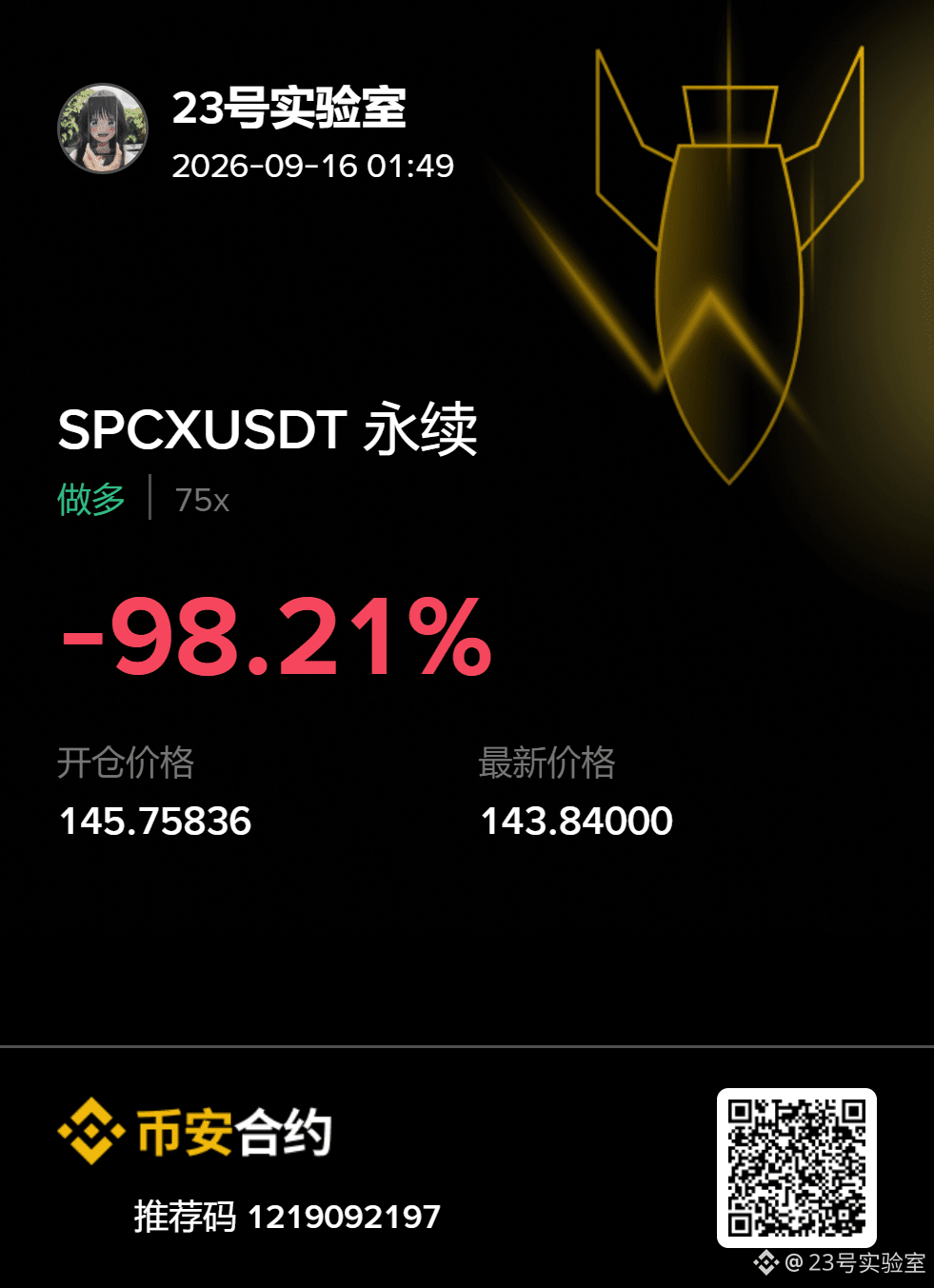
#比特币跌至7.6万美元
$AKE $AIN $SAGA
{future}(SAGAUSDT)
{future}(AINUSDT)
{future}(AKEUSDT)
#美联储加息是否已成定局 Directly look at the data: the probability of a rate hike implied by interest-rate futures has already been pushed to 90%. The market is basically pricing in a rate hike. But it’s still too early to say the final outcome is set in stone—many analysts are warning that the market’s pricing is too aggressive. If economic data weakens and the Fed is forced to pivot, the ones who get slapped will be the chasing funds.
For US stocks, rate hikes mean draining liquidity. Once the risk-free rate rises, high-valuation tech and growth stocks are hit first—the discount rate directly cuts valuations in half. Corporate financing becomes more expensive, stock buybacks decline, and market capital can only move toward defensive sectors.
Crypto is even more brutal. Cryptocurrency is essentially a high-beta risk asset, fueled almost entirely by dollar liquidity. When risk-free yields rise, funds would rather hold dollars and collect steady interest than stay in high-risk assets that generate no yield. In every tightening cycle, crypto is where marginal liquidity dries up the worst. Don’t blindly guess the bottom. Until a liquidity turning point appears, cash is steadier than anything.
You understand the market, yet you die by leverage. No matter how painstaking the analysis is, it can’t buy you one more breath on the liquidation line. I’m asking for any big shot passing by to toss me a bowl of roast pork rice as a reward—give me a bit of the courage to keep going.
#比特币跌至7.6万美元
$AKE $AIN $SAGA
For US stocks, rate hikes mean draining liquidity. Once the risk-free rate rises, high-valuation tech and growth stocks are hit first—the discount rate directly cuts valuations in half. Corporate financing becomes more expensive, stock buybacks decline, and market capital can only move toward defensive sectors.
Crypto is even more brutal. Cryptocurrency is essentially a high-beta risk asset, fueled almost entirely by dollar liquidity. When risk-free yields rise, funds would rather hold dollars and collect steady interest than stay in high-risk assets that generate no yield. In every tightening cycle, crypto is where marginal liquidity dries up the worst. Don’t blindly guess the bottom. Until a liquidity turning point appears, cash is steadier than anything.
You understand the market, yet you die by leverage. No matter how painstaking the analysis is, it can’t buy you one more breath on the liquidation line. I’m asking for any big shot passing by to toss me a bowl of roast pork rice as a reward—give me a bit of the courage to keep going.
#比特币跌至7.6万美元
$AKE $AIN $SAGA

1
2.4k
·
--
Verified
Zama brings fully homomorphic encryption to Ethereum, directly opening 16 confidential vaults on Morpho—this move is pretty interesting.
Simply put, it lets your on-chain assets “stay invisible while earning.” In the past, for DeFi lending, your wallet balances and position sizes were all fully visible on-chain, meaning whale moves could easily trigger massive liquidations or get you blown up by MEV bots. Now, with cryptographically wrapped tokens, the chain only shows the vault’s overall solvency data. How much you personally deposited and when you withdraw it are all encrypted into ciphertext.
The real highlight here is institutional capital. Traditional institutions don’t dare to enter at large scale because they fear business secrets leaking. By filling in the privacy gap for lending, the compliance and confidentiality barriers for institutions to participate drop directly.
Privacy and yield are no longer a single-choice option. But don’t get too excited yet—while the technology hides you at the chain level, under the broad net of stablecoin regulation, compliance checks are still unavoidable. On-chain game mechanics are evolving from “pure transparency” into “controllable privacy.”
Binance 20% referral commission invite code🔸BNB88R
#zama在以太坊开放16个机密morpho金库
$AIN $AKE $POWER
{future}(POWERUSDT)
{future}(AKEUSDT)
{future}(AINUSDT)
Zama brings fully homomorphic encryption to Ethereum, directly opening 16 confidential vaults on Morpho—this move is pretty interesting.
Simply put, it lets your on-chain assets “stay invisible while earning.” In the past, for DeFi lending, your wallet balances and position sizes were all fully visible on-chain, meaning whale moves could easily trigger massive liquidations or get you blown up by MEV bots. Now, with cryptographically wrapped tokens, the chain only shows the vault’s overall solvency data. How much you personally deposited and when you withdraw it are all encrypted into ciphertext.
The real highlight here is institutional capital. Traditional institutions don’t dare to enter at large scale because they fear business secrets leaking. By filling in the privacy gap for lending, the compliance and confidentiality barriers for institutions to participate drop directly.
Privacy and yield are no longer a single-choice option. But don’t get too excited yet—while the technology hides you at the chain level, under the broad net of stablecoin regulation, compliance checks are still unavoidable. On-chain game mechanics are evolving from “pure transparency” into “controllable privacy.”
Binance 20% referral commission invite code🔸BNB88R
#zama在以太坊开放16个机密morpho金库
$AIN $AKE $POWER
Simply put, it lets your on-chain assets “stay invisible while earning.” In the past, for DeFi lending, your wallet balances and position sizes were all fully visible on-chain, meaning whale moves could easily trigger massive liquidations or get you blown up by MEV bots. Now, with cryptographically wrapped tokens, the chain only shows the vault’s overall solvency data. How much you personally deposited and when you withdraw it are all encrypted into ciphertext.
The real highlight here is institutional capital. Traditional institutions don’t dare to enter at large scale because they fear business secrets leaking. By filling in the privacy gap for lending, the compliance and confidentiality barriers for institutions to participate drop directly.
Privacy and yield are no longer a single-choice option. But don’t get too excited yet—while the technology hides you at the chain level, under the broad net of stablecoin regulation, compliance checks are still unavoidable. On-chain game mechanics are evolving from “pure transparency” into “controllable privacy.”
Binance 20% referral commission invite code🔸BNB88R
#zama在以太坊开放16个机密morpho金库
$AIN $AKE $POWER

1
12
27.4k
·
--
#贝森特支持clarity法案终稿 The core of this is simple: the regulatory boundaries for U.S. digital assets are finally being clearly defined.
In the past, the SEC and the CFTC kept pulling the issue back and forth. Institutions wanted to enter the market but were afraid of stepping on compliance landmines. This time, Treasury Secretary Bessent personally stepped in to push the Senate to go through the process, clarifying which coins are considered securities and which are considered commodities. Rules have also been set for reserve funds and issuance qualifications for stablecoins. With the regulatory “boots” finally on the ground, opportunities for regulatory arbitrage have shrunk—while the entry channels for traditional compliance-oriented institutions have been thoroughly opened.
In the stock market, the pressure is transmitted directly to crypto concept stocks and commercial banks. Valuation models at exchanges such as Coinbase need to be recalculated according to compliance costs, while traditional banks must also face the impact of stablecoin-to-commercial-deposit diversion.
This isn’t just a signal of a simple surge or drop—it’s a fundamental reshaping of the market’s rules of the game. Say goodbye to the era of ruthless, unchecked growth; the logic for allocating compliant capital has changed.
Binance 20% referral commission invite code 🔸 BNB88R
$SOL $ADA $LTC
{future}(SOLUSDT)
{future}(LTCUSDT)
{future}(ADAUSDT)
#贝森特支持clarity法案终稿 The core of this is simple: the regulatory boundaries for U.S. digital assets are finally being clearly defined.
In the past, the SEC and the CFTC kept pulling the issue back and forth. Institutions wanted to enter the market but were afraid of stepping on compliance landmines. This time, Treasury Secretary Bessent personally stepped in to push the Senate to go through the process, clarifying which coins are considered securities and which are considered commodities. Rules have also been set for reserve funds and issuance qualifications for stablecoins. With the regulatory “boots” finally on the ground, opportunities for regulatory arbitrage have shrunk—while the entry channels for traditional compliance-oriented institutions have been thoroughly opened.
In the stock market, the pressure is transmitted directly to crypto concept stocks and commercial banks. Valuation models at exchanges such as Coinbase need to be recalculated according to compliance costs, while traditional banks must also face the impact of stablecoin-to-commercial-deposit diversion.
This isn’t just a signal of a simple surge or drop—it’s a fundamental reshaping of the market’s rules of the game. Say goodbye to the era of ruthless, unchecked growth; the logic for allocating compliant capital has changed.
Binance 20% referral commission invite code 🔸 BNB88R
$SOL $ADA $LTC
In the past, the SEC and the CFTC kept pulling the issue back and forth. Institutions wanted to enter the market but were afraid of stepping on compliance landmines. This time, Treasury Secretary Bessent personally stepped in to push the Senate to go through the process, clarifying which coins are considered securities and which are considered commodities. Rules have also been set for reserve funds and issuance qualifications for stablecoins. With the regulatory “boots” finally on the ground, opportunities for regulatory arbitrage have shrunk—while the entry channels for traditional compliance-oriented institutions have been thoroughly opened.
In the stock market, the pressure is transmitted directly to crypto concept stocks and commercial banks. Valuation models at exchanges such as Coinbase need to be recalculated according to compliance costs, while traditional banks must also face the impact of stablecoin-to-commercial-deposit diversion.
This isn’t just a signal of a simple surge or drop—it’s a fundamental reshaping of the market’s rules of the game. Say goodbye to the era of ruthless, unchecked growth; the logic for allocating compliant capital has changed.
Binance 20% referral commission invite code 🔸 BNB88R
$SOL $ADA $LTC

1
6
7.2k

·
--
Verified
Solana Transaction v1 is finally live on the mainnet. Previously, Solana limited a single transaction to no more than 1232 bytes. When building complex business logic, developers had to “slice the cake” by breaking instructions into multiple transactions—wasting gas, and also making the logic chain long and prone to breaking.
This upgrade raises the per-transaction capacity limit to 4096 bytes, a full threefold increase. For decentralized applications (DApps), things that were previously impossible—zero-knowledge proofs (ZK), complex multi-signatures, and advanced DeFi composable strategies—can now all be packed into a single transaction.
In the short term, changes to the technical stack may bring a brief development adaptation period, and some services may need to refactor their interfaces. But the reshaping of the underlying transaction format means the overall system’s concurrency performance and developer productivity will see a breakthrough. This is a typical infrastructure upgrade cycle: once the foundations are strengthened, the application layer can truly run.
#美国30年期国债收益率升破5.40%
#solana交易v1上线主网
$SOL $HOOD $COIN
{future}(COINUSDT)
{future}(HOODUSDT)
{future}(SOLUSDT)
Solana Transaction v1 is finally live on the mainnet. Previously, Solana limited a single transaction to no more than 1232 bytes. When building complex business logic, developers had to “slice the cake” by breaking instructions into multiple transactions—wasting gas, and also making the logic chain long and prone to breaking.
This upgrade raises the per-transaction capacity limit to 4096 bytes, a full threefold increase. For decentralized applications (DApps), things that were previously impossible—zero-knowledge proofs (ZK), complex multi-signatures, and advanced DeFi composable strategies—can now all be packed into a single transaction.
In the short term, changes to the technical stack may bring a brief development adaptation period, and some services may need to refactor their interfaces. But the reshaping of the underlying transaction format means the overall system’s concurrency performance and developer productivity will see a breakthrough. This is a typical infrastructure upgrade cycle: once the foundations are strengthened, the application layer can truly run.
#美国30年期国债收益率升破5.40%
#solana交易v1上线主网
$SOL $HOOD $COIN
This upgrade raises the per-transaction capacity limit to 4096 bytes, a full threefold increase. For decentralized applications (DApps), things that were previously impossible—zero-knowledge proofs (ZK), complex multi-signatures, and advanced DeFi composable strategies—can now all be packed into a single transaction.
In the short term, changes to the technical stack may bring a brief development adaptation period, and some services may need to refactor their interfaces. But the reshaping of the underlying transaction format means the overall system’s concurrency performance and developer productivity will see a breakthrough. This is a typical infrastructure upgrade cycle: once the foundations are strengthened, the application layer can truly run.
#美国30年期国债收益率升破5.40%
#solana交易v1上线主网
$SOL $HOOD $COIN

1
6.8k
·
--
#美联储加息概率升至89% 8月 core CPI came in above expectations; on top of rising energy prices, inflation reared its head again directly subdued big institutions like Goldman Sachs and JPMorgan. Market pricing for “higher-for-longer interest rates” was instantly pushed to the limit.
The capital logic is actually straightforward: as the risk-free rate rises, discount rates surge as well. The first to get squeezed are tech stocks with stretched valuations and highly leveraged assets. Capital will accelerate into U.S. Treasuries and high-dividend defensive sectors, while liquidity pressure in emerging markets spikes sharply.
As for the crypto market: since it is liquidity-sensitive, higher funding costs immediately lock down leverage capacity. With U.S. Treasury yields standing where they are, the yields of DeFi and low-quality altcoins lose their appeal, and in the short term they will still likely move in tandem with tech stocks as they pull back.
Binance 20% commission rebate invitation code 🔸 BNB88R
$MTL $BR $CAP
{future}(CAPUSDT)
{future}(BRUSDT)
{future}(MTLUSDT)
#美联储加息概率升至89% 8月 core CPI came in above expectations; on top of rising energy prices, inflation reared its head again directly subdued big institutions like Goldman Sachs and JPMorgan. Market pricing for “higher-for-longer interest rates” was instantly pushed to the limit.
The capital logic is actually straightforward: as the risk-free rate rises, discount rates surge as well. The first to get squeezed are tech stocks with stretched valuations and highly leveraged assets. Capital will accelerate into U.S. Treasuries and high-dividend defensive sectors, while liquidity pressure in emerging markets spikes sharply.
As for the crypto market: since it is liquidity-sensitive, higher funding costs immediately lock down leverage capacity. With U.S. Treasury yields standing where they are, the yields of DeFi and low-quality altcoins lose their appeal, and in the short term they will still likely move in tandem with tech stocks as they pull back.
Binance 20% commission rebate invitation code 🔸 BNB88R
$MTL $BR $CAP
The capital logic is actually straightforward: as the risk-free rate rises, discount rates surge as well. The first to get squeezed are tech stocks with stretched valuations and highly leveraged assets. Capital will accelerate into U.S. Treasuries and high-dividend defensive sectors, while liquidity pressure in emerging markets spikes sharply.
As for the crypto market: since it is liquidity-sensitive, higher funding costs immediately lock down leverage capacity. With U.S. Treasury yields standing where they are, the yields of DeFi and low-quality altcoins lose their appeal, and in the short term they will still likely move in tandem with tech stocks as they pull back.
Binance 20% commission rebate invitation code 🔸 BNB88R
$MTL $BR $CAP

1
576
·
--
Bitcoin has just surged past $78,000, and over on Trump’s side they’re also compromising in negotiations over the conflict-of-interest provisions in the <CLARITY Act>, and this round of volatility has directly broken many people’s mindsets.
Actually, you don’t need to look at all those complicated call-outs and analyses. The truth is only two things:
First, the underlying logic of the bill negotiations is that the U.S. is redrawing the jurisdictional boundaries between the SEC and the CFTC. Once jurisdiction is set in stone, the biggest concern preventing compliant capital from entering the market is cut off.
Second, a price spike does not mean the risk disappears. Every fluctuation during the policy-bargaining period is, in essence, big capital using regulatory expectation gaps to reshuffle liquidity.
At times like this, don’t let yourself be led around by short-term candlestick charts. Pay attention to the final details of how the bill revises stablecoin yield and developer provisions—this matters far more than blindly chasing higher prices. The clear signal for compliance has already been laid out; the real show is only just beginning.
Binance 20% commission rebate invitation code🔸BNB88R
#特朗普就clarity法案条款存疑
#比特币涨1.64%突破78000美元
$BTC $BR $AIN
{future}(AINUSDT)
{future}(BRUSDT)
{future}(BTCUSDT)
Bitcoin has just surged past $78,000, and over on Trump’s side they’re also compromising in negotiations over the conflict-of-interest provisions in the <CLARITY Act>, and this round of volatility has directly broken many people’s mindsets.
Actually, you don’t need to look at all those complicated call-outs and analyses. The truth is only two things:
First, the underlying logic of the bill negotiations is that the U.S. is redrawing the jurisdictional boundaries between the SEC and the CFTC. Once jurisdiction is set in stone, the biggest concern preventing compliant capital from entering the market is cut off.
Second, a price spike does not mean the risk disappears. Every fluctuation during the policy-bargaining period is, in essence, big capital using regulatory expectation gaps to reshuffle liquidity.
At times like this, don’t let yourself be led around by short-term candlestick charts. Pay attention to the final details of how the bill revises stablecoin yield and developer provisions—this matters far more than blindly chasing higher prices. The clear signal for compliance has already been laid out; the real show is only just beginning.
Binance 20% commission rebate invitation code🔸BNB88R
#特朗普就clarity法案条款存疑
#比特币涨1.64%突破78000美元
$BTC $BR $AIN
Actually, you don’t need to look at all those complicated call-outs and analyses. The truth is only two things:
First, the underlying logic of the bill negotiations is that the U.S. is redrawing the jurisdictional boundaries between the SEC and the CFTC. Once jurisdiction is set in stone, the biggest concern preventing compliant capital from entering the market is cut off.
Second, a price spike does not mean the risk disappears. Every fluctuation during the policy-bargaining period is, in essence, big capital using regulatory expectation gaps to reshuffle liquidity.
At times like this, don’t let yourself be led around by short-term candlestick charts. Pay attention to the final details of how the bill revises stablecoin yield and developer provisions—this matters far more than blindly chasing higher prices. The clear signal for compliance has already been laid out; the real show is only just beginning.
Binance 20% commission rebate invitation code🔸BNB88R
#特朗普就clarity法案条款存疑
#比特币涨1.64%突破78000美元
$BTC $BR $AIN

15
23.9k
·
--
I choose D. Whether it’s the crypto market or the traditional capital markets, the shift in liquidity expectations is the most core macro storyline of this week.
I choose D. Whether it’s the crypto market or the traditional capital markets, the shift in liquidity expectations is the most core macro storyline of this week.
币安Binance华语
·
--
One-Week Hot Topics First Look, Binance Quick News!#安友周一观察团 🔥
This week, which market highlight are you most interested in?📊
🙋 Vote and leave your reasons in the comments. Retweet or share other hot topics to be entered into a draw for 5 people to win 30U—topic discussion reward!
A. Financial-version ChatGPT released, targeting investment banks and stock research
B. Anthropic CEO calls for slowing down AI development, plans for a Nasdaq IPO
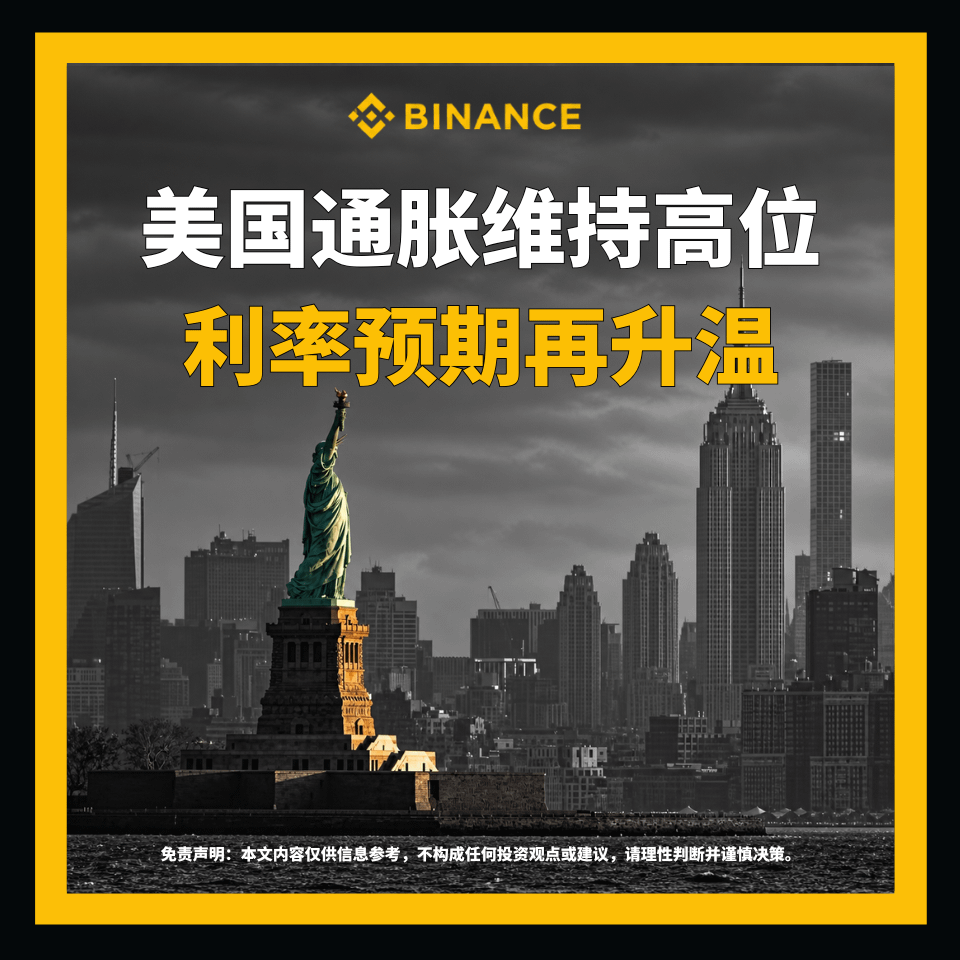
C. US inflation remains high, rate expectations heat up again
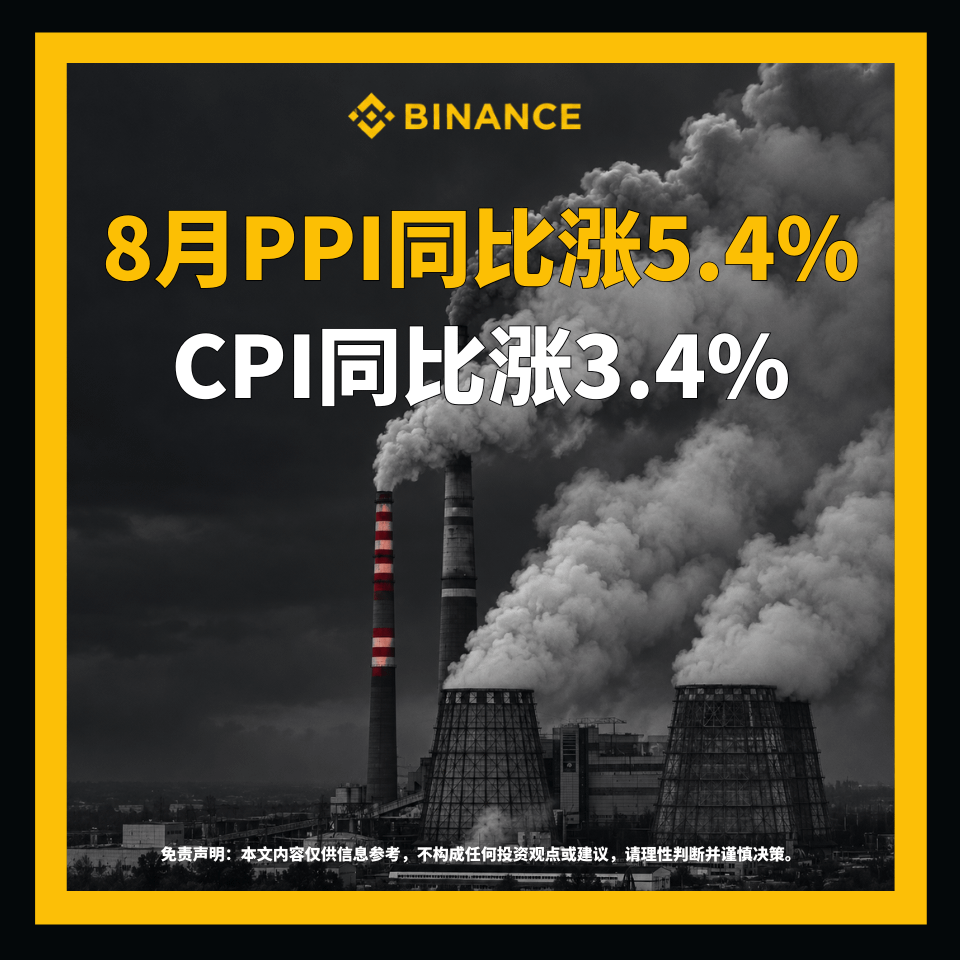
D. August PPI up 5.4% YoY, CPI up 3.4% YoY
This week, which market highlight are you most interested in?📊
🙋 Vote and leave your reasons in the comments. Retweet or share other hot topics to be entered into a draw for 5 people to win 30U—topic discussion reward!
A. Financial-version ChatGPT released, targeting investment banks and stock research
B. Anthropic CEO calls for slowing down AI development, plans for a Nasdaq IPO
C. US inflation remains high, rate expectations heat up again
D. August PPI up 5.4% YoY, CPI up 3.4% YoY


2
87
·
--
Recently $LSK 24-hour surge has exceeded 515%; shorts across the entire network were liquidated, dumping over $20 million. Many people ask whether this is a signal that the bull market is back? Honestly, don’t rush.
This surge is, in essence, an extreme derivatives short squeeze. Short positions were overly concentrated, and the main players lifted the price accordingly, triggering a cascade of forced liquidations. The buy orders created by shorts closing are actually what fuels the coin’s price to rise.
For the crypto world, this kind of sudden rally in an old-school altcoin can temporarily lift capital rotation and sentiment, but it also drains a fair amount of liquidity from the market. Going forward, it will most likely face profit-taking withdrawals at higher levels. As for traditional stock markets, this is purely a leveraged game within the crypto market, with little to no real transmission to the U.S. stock market or related concept stocks.
Binance 20% rebate invite code 🔸BNB88R
#lsk24小时上涨超515%
$FIL $CVC
{future}(CVCUSDT)
{future}(FILUSDT)
{future}(LSKUSDT)
Recently $LSK 24-hour surge has exceeded 515%; shorts across the entire network were liquidated, dumping over $20 million. Many people ask whether this is a signal that the bull market is back? Honestly, don’t rush.
This surge is, in essence, an extreme derivatives short squeeze. Short positions were overly concentrated, and the main players lifted the price accordingly, triggering a cascade of forced liquidations. The buy orders created by shorts closing are actually what fuels the coin’s price to rise.
For the crypto world, this kind of sudden rally in an old-school altcoin can temporarily lift capital rotation and sentiment, but it also drains a fair amount of liquidity from the market. Going forward, it will most likely face profit-taking withdrawals at higher levels. As for traditional stock markets, this is purely a leveraged game within the crypto market, with little to no real transmission to the U.S. stock market or related concept stocks.
Binance 20% rebate invite code 🔸BNB88R
#lsk24小时上涨超515%
$FIL $CVC
This surge is, in essence, an extreme derivatives short squeeze. Short positions were overly concentrated, and the main players lifted the price accordingly, triggering a cascade of forced liquidations. The buy orders created by shorts closing are actually what fuels the coin’s price to rise.
For the crypto world, this kind of sudden rally in an old-school altcoin can temporarily lift capital rotation and sentiment, but it also drains a fair amount of liquidity from the market. Going forward, it will most likely face profit-taking withdrawals at higher levels. As for traditional stock markets, this is purely a leveraged game within the crypto market, with little to no real transmission to the U.S. stock market or related concept stocks.
Binance 20% rebate invite code 🔸BNB88R
#lsk24小时上涨超515%
$FIL $CVC

1
1
3.5k
·
--
Verified
To understand the grayscale logic behind how LTCN was used to switch to a Litecoin ETF, you only then truly grasp the hidden ace at the bottom of this cycle. This isn’t just a simple bullish gimmick—it’s institutions cleaning up legacy assets. When a trust becomes an ETF, the most direct effect is to open the redemption channel; the discount space will be quickly erased, and the liquidity of existing capital will be directly activated.
The deeper signal is that old-school altcoins are accelerating their compliance. Institutions are no longer only watching BTC and ETH. Traditional U.S. stock capital can allocate LTC through IRA retirement accounts directly—the real main driver is the subsequent capital-consolidation effect. Don’t just focus on short-term price fluctuations. Once the compliance channels are laid out, the inflow of traditional capital becomes inevitable. If you understand the path of the money, you would have already started positioning quietly long ago.
Binance 20% rebate invitation code🔸BNB88R
#sec收到灰度莱特币信托转etf申请
$LTC $LSK $POWR
{future}(POWRUSDT)
{future}(LSKUSDT)
{future}(LTCUSDT)
To understand the grayscale logic behind how LTCN was used to switch to a Litecoin ETF, you only then truly grasp the hidden ace at the bottom of this cycle. This isn’t just a simple bullish gimmick—it’s institutions cleaning up legacy assets. When a trust becomes an ETF, the most direct effect is to open the redemption channel; the discount space will be quickly erased, and the liquidity of existing capital will be directly activated.
The deeper signal is that old-school altcoins are accelerating their compliance. Institutions are no longer only watching BTC and ETH. Traditional U.S. stock capital can allocate LTC through IRA retirement accounts directly—the real main driver is the subsequent capital-consolidation effect. Don’t just focus on short-term price fluctuations. Once the compliance channels are laid out, the inflow of traditional capital becomes inevitable. If you understand the path of the money, you would have already started positioning quietly long ago.
Binance 20% rebate invitation code🔸BNB88R
#sec收到灰度莱特币信托转etf申请
$LTC $LSK $POWR
The deeper signal is that old-school altcoins are accelerating their compliance. Institutions are no longer only watching BTC and ETH. Traditional U.S. stock capital can allocate LTC through IRA retirement accounts directly—the real main driver is the subsequent capital-consolidation effect. Don’t just focus on short-term price fluctuations. Once the compliance channels are laid out, the inflow of traditional capital becomes inevitable. If you understand the path of the money, you would have already started positioning quietly long ago.
Binance 20% rebate invitation code🔸BNB88R
#sec收到灰度莱特币信托转etf申请
$LTC $LSK $POWR

3
1
22
30.7k
·
--
CLARITY Act procedural vote on September 15—this is more critical than you might think. In short, this isn’t the final passage of legislation; it’s the Senate’s 60-vote threshold for ending the back-and-forth and moving to formal debate. With 53 seats, the Republicans need to win at least 7 votes from Democrats.
This revised version runs to 630 pages, but the core comes down to two things: drawing a clear line between the CFTC and the SEC, and wrapping “pseudo-DeFi” in compliance restraints. If a protocol has a team that can control assets or change the rules, it must be registered as required. Ironically, true decentralization ends up getting a safe harbor.
The approval odds being priced by prediction markets are only around 20%. People are stuck on the morality clauses and stablecoin yield—Democrats worry about conflicts of interest involving public officials, while banks fear deposits will be taken by stablecoins.
For crypto markets and U.S. stock investors in crypto-related concepts, sentiment indicators are already maxed out. If the vote passes, institutional money has a roadmap in. If not, it’s just the proverbial shoe dropping.
#clarity法案9月15日程序性投票
$LSK $GRIFFAIN $FLOCK
{future}(FLOCKUSDT)
{future}(GRIFFAINUSDT)
{future}(LSKUSDT)
CLARITY Act procedural vote on September 15—this is more critical than you might think. In short, this isn’t the final passage of legislation; it’s the Senate’s 60-vote threshold for ending the back-and-forth and moving to formal debate. With 53 seats, the Republicans need to win at least 7 votes from Democrats.
This revised version runs to 630 pages, but the core comes down to two things: drawing a clear line between the CFTC and the SEC, and wrapping “pseudo-DeFi” in compliance restraints. If a protocol has a team that can control assets or change the rules, it must be registered as required. Ironically, true decentralization ends up getting a safe harbor.
The approval odds being priced by prediction markets are only around 20%. People are stuck on the morality clauses and stablecoin yield—Democrats worry about conflicts of interest involving public officials, while banks fear deposits will be taken by stablecoins.
For crypto markets and U.S. stock investors in crypto-related concepts, sentiment indicators are already maxed out. If the vote passes, institutional money has a roadmap in. If not, it’s just the proverbial shoe dropping.
#clarity法案9月15日程序性投票
$LSK $GRIFFAIN $FLOCK
This revised version runs to 630 pages, but the core comes down to two things: drawing a clear line between the CFTC and the SEC, and wrapping “pseudo-DeFi” in compliance restraints. If a protocol has a team that can control assets or change the rules, it must be registered as required. Ironically, true decentralization ends up getting a safe harbor.
The approval odds being priced by prediction markets are only around 20%. People are stuck on the morality clauses and stablecoin yield—Democrats worry about conflicts of interest involving public officials, while banks fear deposits will be taken by stablecoins.
For crypto markets and U.S. stock investors in crypto-related concepts, sentiment indicators are already maxed out. If the vote passes, institutional money has a roadmap in. If not, it’s just the proverbial shoe dropping.
#clarity法案9月15日程序性投票
$LSK $GRIFFAIN $FLOCK

1
2
2.4k
·
--
Verified
Over the past couple of days, as US Treasury yields have surged to near multi-year highs, many people have asked me what impact this will have on the US stock market. Put simply, everyone is doing the math.
When the 10-year Treasury yield pushes into the 5% range, the risk-free rate has offered an exceptionally attractive guaranteed return. This directly lifts the discount rate used in asset pricing. Tech stocks with lofty valuations and smaller-cap companies with high debt are the first to feel the pain. When institutions can earn a 5% annualized return without taking much risk, money naturally flows back from the high-risk equity market toward the bond market.
But this doesn’t mean the US stock market will immediately crash. Instead, it marks a shift from “valuation extraction” to “earnings focus.” The era of issuing stocks by telling stories is over. Companies backed by hard cash flow and with clean balance sheets will be the ones that capital rallies around.
For ordinary investors, this is absolutely not a time to rush in with your eyes closed. The high-rate environment is still ongoing, and assets with strong defensive characteristics and high earnings certainty are the real hard truth. Understanding where the money is going and managing your position size is more important than anything.
Binance 20% commission rebate invitation code 🔸BNB88R
#美国2年期国债收益率升至4.61%
#美国10年期国债收益率逼近5%
$CL $BTC $WLFI
{future}(WLFIUSDT)
{future}(BTCUSDT)
{future}(CLUSDT)
Over the past couple of days, as US Treasury yields have surged to near multi-year highs, many people have asked me what impact this will have on the US stock market. Put simply, everyone is doing the math.
When the 10-year Treasury yield pushes into the 5% range, the risk-free rate has offered an exceptionally attractive guaranteed return. This directly lifts the discount rate used in asset pricing. Tech stocks with lofty valuations and smaller-cap companies with high debt are the first to feel the pain. When institutions can earn a 5% annualized return without taking much risk, money naturally flows back from the high-risk equity market toward the bond market.
But this doesn’t mean the US stock market will immediately crash. Instead, it marks a shift from “valuation extraction” to “earnings focus.” The era of issuing stocks by telling stories is over. Companies backed by hard cash flow and with clean balance sheets will be the ones that capital rallies around.
For ordinary investors, this is absolutely not a time to rush in with your eyes closed. The high-rate environment is still ongoing, and assets with strong defensive characteristics and high earnings certainty are the real hard truth. Understanding where the money is going and managing your position size is more important than anything.
Binance 20% commission rebate invitation code 🔸BNB88R
#美国2年期国债收益率升至4.61%
#美国10年期国债收益率逼近5%
$CL $BTC $WLFI
When the 10-year Treasury yield pushes into the 5% range, the risk-free rate has offered an exceptionally attractive guaranteed return. This directly lifts the discount rate used in asset pricing. Tech stocks with lofty valuations and smaller-cap companies with high debt are the first to feel the pain. When institutions can earn a 5% annualized return without taking much risk, money naturally flows back from the high-risk equity market toward the bond market.
But this doesn’t mean the US stock market will immediately crash. Instead, it marks a shift from “valuation extraction” to “earnings focus.” The era of issuing stocks by telling stories is over. Companies backed by hard cash flow and with clean balance sheets will be the ones that capital rallies around.
For ordinary investors, this is absolutely not a time to rush in with your eyes closed. The high-rate environment is still ongoing, and assets with strong defensive characteristics and high earnings certainty are the real hard truth. Understanding where the money is going and managing your position size is more important than anything.
Binance 20% commission rebate invitation code 🔸BNB88R
#美国2年期国债收益率升至4.61%
#美国10年期国债收益率逼近5%
$CL $BTC $WLFI

1
3
9.5k
·
--
#教师节 #币安新手学堂 In the biggest lesson in Web3, there is no more than the blind FOMO driven by high-position hype political meme coins. After Hunter Biden’s son released the $LAPTOP token, it surged and spiked skyward within moments, then plunged by more than 95% in just a few hours. Countless late-buy retail traders were left holding the bag and cut losses. This lesson made me understand: the glamour of celebrities and political halos can’t hide the essence of concentrated liquidity and bottomless sell-offs. Never pay for empty hype—controlling greed and sticking to stop-losses is the iron rule of surviving in Web3!
#教师节 #币安新手学堂 In the biggest lesson in Web3, there is no more than the blind FOMO driven by high-position hype political meme coins. After Hunter Biden’s son released the $LAPTOP token, it surged and spiked skyward within moments, then plunged by more than 95% in just a few hours. Countless late-buy retail traders were left holding the bag and cut losses. This lesson made me understand: the glamour of celebrities and political halos can’t hide the essence of concentrated liquidity and bottomless sell-offs. Never pay for empty hype—controlling greed and sticking to stop-losses is the iron rule of surviving in Web3!



新手学堂天使自治社区
·
--
🎓 Happy Teacher’s Day|This class is yours!
From being a beginner to where you are today, there’s definitely a part of your journey you can’t forget
It might have been your first time joining the community, stepping into a pit, or going through growth
Your experience might be a lesson for another beginner
Write down the story along this journey that you most want to share👇
📌 How to participate:
1. Follow @新手学堂天使自治社区
2. Repost this post + your own story, and include the topics #教师节 #币安新手学堂
3. 20 lucky people will be chosen to receive rewards with great content—no AI, please~($10 * 20 people)
Looking forward to everyone’s sharing 😘
From being a beginner to where you are today, there’s definitely a part of your journey you can’t forget
It might have been your first time joining the community, stepping into a pit, or going through growth
Your experience might be a lesson for another beginner
Write down the story along this journey that you most want to share👇
📌 How to participate:
1. Follow @新手学堂天使自治社区
2. Repost this post + your own story, and include the topics #教师节 #币安新手学堂
3. 20 lucky people will be chosen to receive rewards with great content—no AI, please~($10 * 20 people)
Looking forward to everyone’s sharing 😘
1
91
·
--
Verified
$BNB This surge over 730 is really solid. Don’t just look at the price spike— the underlying logic is actually very clear. This run is mainly driven by the rollout of the Pasteur upgrade on BNB Chain: the per-block throughput doubles, transaction confirmations are faster, and it fully opens up high-frequency application scenarios like DePIN and AI Agents. On top of that, Kalshi’s listing of compliant perpetual (everlasting) contracts makes the route for incremental capital entry very explicit.
Now looking at supply and demand: the quarterly burn boosts the deflationary narrative to the max, and the new-issue subscription staking locks in a large amount of liquidity. While the market is consolidating, it manages to carve out an independent trend backed by ecosystem earnings and compliance expectations, with its market cap staying steadily above one trillion.
The current support is around 700–720. If it breaks through 730, it will likely test new highs. As for trading, don’t chase just based on feelings—understand the fundamentals of the public chain and the direction of capital flows, and you’ll be able to profit from this move properly.
Binance 20% referral commission invite code🔸BNB88R
#bnb涨破730美元
$UNI $HYPE
{future}(HYPEUSDT)
{future}(UNIUSDT)
{future}(BNBUSDT)
$BNB This surge over 730 is really solid. Don’t just look at the price spike— the underlying logic is actually very clear. This run is mainly driven by the rollout of the Pasteur upgrade on BNB Chain: the per-block throughput doubles, transaction confirmations are faster, and it fully opens up high-frequency application scenarios like DePIN and AI Agents. On top of that, Kalshi’s listing of compliant perpetual (everlasting) contracts makes the route for incremental capital entry very explicit.
Now looking at supply and demand: the quarterly burn boosts the deflationary narrative to the max, and the new-issue subscription staking locks in a large amount of liquidity. While the market is consolidating, it manages to carve out an independent trend backed by ecosystem earnings and compliance expectations, with its market cap staying steadily above one trillion.
The current support is around 700–720. If it breaks through 730, it will likely test new highs. As for trading, don’t chase just based on feelings—understand the fundamentals of the public chain and the direction of capital flows, and you’ll be able to profit from this move properly.
Binance 20% referral commission invite code🔸BNB88R
#bnb涨破730美元
$UNI $HYPE
Now looking at supply and demand: the quarterly burn boosts the deflationary narrative to the max, and the new-issue subscription staking locks in a large amount of liquidity. While the market is consolidating, it manages to carve out an independent trend backed by ecosystem earnings and compliance expectations, with its market cap staying steadily above one trillion.
The current support is around 700–720. If it breaks through 730, it will likely test new highs. As for trading, don’t chase just based on feelings—understand the fundamentals of the public chain and the direction of capital flows, and you’ll be able to profit from this move properly.
Binance 20% referral commission invite code🔸BNB88R
#bnb涨破730美元
$UNI $HYPE

1
3
2.6k
·
--
Verified
Non-farm payroll data came in far stronger than expected, and the labor market remains resilient—this has indeed sharply warmed up rate-hike expectations. However, the Fed will most likely still choose to hold steady in September.
The rationale is straightforward: while non-farm data is strong, the final key that determines whether the “knife is actually taken out” is the forthcoming CPI release. With interest rates already at a high level to restrain the economy, the Fed has no need to rush to restart rate hikes based on just one employment indicator. As long as core CPI inflation does not trigger an out-of-control rebound, officials are more inclined to keep observing and maintain policy flexibility.
For the market, as long as CPI meets expectations or cools modestly, standing pat is the biggest “shoe drop.” Long-term funds won’t place big bets before the trend becomes clear; waiting and volatility are the main tone right now.
#比特币CPI后反弹站上79000美元
#CPI数据来袭能否触发9月加息
$BTC $BNB $COIN
Non-farm payroll data came in far stronger than expected, and the labor market remains resilient—this has indeed sharply warmed up rate-hike expectations. However, the Fed will most likely still choose to hold steady in September.
The rationale is straightforward: while non-farm data is strong, the final key that determines whether the “knife is actually taken out” is the forthcoming CPI release. With interest rates already at a high level to restrain the economy, the Fed has no need to rush to restart rate hikes based on just one employment indicator. As long as core CPI inflation does not trigger an out-of-control rebound, officials are more inclined to keep observing and maintain policy flexibility.
For the market, as long as CPI meets expectations or cools modestly, standing pat is the biggest “shoe drop.” Long-term funds won’t place big bets before the trend becomes clear; waiting and volatility are the main tone right now.
#比特币CPI后反弹站上79000美元
#CPI数据来袭能否触发9月加息
$BTC $BNB $COIN
The rationale is straightforward: while non-farm data is strong, the final key that determines whether the “knife is actually taken out” is the forthcoming CPI release. With interest rates already at a high level to restrain the economy, the Fed has no need to rush to restart rate hikes based on just one employment indicator. As long as core CPI inflation does not trigger an out-of-control rebound, officials are more inclined to keep observing and maintain policy flexibility.
For the market, as long as CPI meets expectations or cools modestly, standing pat is the biggest “shoe drop.” Long-term funds won’t place big bets before the trend becomes clear; waiting and volatility are the main tone right now.
#比特币CPI后反弹站上79000美元
#CPI数据来袭能否触发9月加息
$BTC $BNB $COIN

1
3
1.4k
Log in to explore more content
Join global crypto users on Binance Square
⚡️ Get latest and useful information about crypto.
💬 Trusted by the world’s largest crypto exchange.
👍 Discover real insights from verified creators.
Email / Phone number
Trending Topics
SaylorHintsStrategyBitcoinBuy
2.3M views
12,412 Discussing
#saylorhintsstrategybitcoinbuy
🚨 SAYLOR JUST DROPPED THE SUNDAY $BTC HINT 👀
Michael Saylor reposted his usual Bitcoin chart again.
If history repeats, those orange dots could be signaling another Strategy BTC purchase is coming. 🟠
And when Saylor buys, the market watches.
🐋 Massive BTC holdings
💰 Continued accumulation strategy
📈 Potential short-term sentiment boost
But here’s the key:
A repost is NOT confirmation of a purchase.
The real signal comes when Strategy officially reports the transaction.
🔥 If another major BTC buy is announced, will the market react this time?
Or is Saylor’s accumulation becoming so routine that traders barely react anymore?
👀 Watch the announcement.
$MSTRB
#BTC #strategy #crypto #BitcoinNews
sdatta
·5 Likes
·6.3k views
BOJRaisesRatesTo31YearHigh
253,297 views
3,269 Discussing
BuffettStepsDownAsBerkshireChairman
122,715 views
1,749 Discussing