
SollyCrypto Onchain
487 Posts
SollyCrypto Onchain
Report
Block User
I track crypto in real time, technicals, onchain data, fundamentals, all in one place. Actionable setups, not just opinions. Follow, read, decide, trade.
Frequent Trader
2.7 Years
24 Following
184 Followers
179 Liked
Posts
All
Quotes
Videos
·
--
Bullish
Russia has officially launched crypto perpetual futures tracking $BTC, $ETH, $SOL, $XRP and $TRX. Trading starts today, September 22, for qualified investors who want exposure without owning the coins. MOEX says crypto futures have already topped 600 billion rubles in volume across about 72,000 investors.
Why this happened
Traditional exchanges keep packaging crypto as regulated derivatives. Moscow Exchange is expanding that product set with cash-settled perpetual-style futures on five major assets. Qualified investors get price exposure without wallets, custody, or spot settlement.
Why it matters
More official venues mean more ways for local professional capital to trade crypto beta. These contracts do not create direct spot buying by themselves, but they deepen the derivatives map around $BTC, $ETH, $SOL, $XRP and $TRX. Existing MOEX volume already shows demand was there before today’s launch.
How it can benefit you
If you hold the named assets, broader regulated access supports the institutionalization narrative. That can help sentiment, especially when national exchanges keep expanding crypto product lines instead of shutting them down.
How it can harm you
Qualified-investor futures are not global spot bids. Local rules, settlement design, and actual open interest will decide the real impact. People who buy every exchange-listing headline can overpay for news that takes time to matter. Macro still moves these markets more than one national launch.
SollyCrypto opinion
Mild pump lean for $BTC, $ETH, $SOL, $XRP and $TRX on the access narrative. Constructive, not a guaranteed breakout catalyst by itself.
You giving MOEX crypto perps real weight, or waiting for volume to prove demand?
Follow me, or you may not see the next one.
Russia has officially launched crypto perpetual futures tracking $BTC, $ETH, $SOL, $XRP and $TRX. Trading starts today, September 22, for qualified investors who want exposure without owning the coins. MOEX says crypto futures have already topped 600 billion rubles in volume across about 72,000 investors.
Why this happened
Traditional exchanges keep packaging crypto as regulated derivatives. Moscow Exchange is expanding that product set with cash-settled perpetual-style futures on five major assets. Qualified investors get price exposure without wallets, custody, or spot settlement.
Why it matters
More official venues mean more ways for local professional capital to trade crypto beta. These contracts do not create direct spot buying by themselves, but they deepen the derivatives map around $BTC, $ETH, $SOL, $XRP and $TRX. Existing MOEX volume already shows demand was there before today’s launch.
How it can benefit you
If you hold the named assets, broader regulated access supports the institutionalization narrative. That can help sentiment, especially when national exchanges keep expanding crypto product lines instead of shutting them down.
How it can harm you
Qualified-investor futures are not global spot bids. Local rules, settlement design, and actual open interest will decide the real impact. People who buy every exchange-listing headline can overpay for news that takes time to matter. Macro still moves these markets more than one national launch.
SollyCrypto opinion
Mild pump lean for $BTC, $ETH, $SOL, $XRP and $TRX on the access narrative. Constructive, not a guaranteed breakout catalyst by itself.
You giving MOEX crypto perps real weight, or waiting for volume to prove demand?
Follow me, or you may not see the next one.
Why this happened
Traditional exchanges keep packaging crypto as regulated derivatives. Moscow Exchange is expanding that product set with cash-settled perpetual-style futures on five major assets. Qualified investors get price exposure without wallets, custody, or spot settlement.
Why it matters
More official venues mean more ways for local professional capital to trade crypto beta. These contracts do not create direct spot buying by themselves, but they deepen the derivatives map around $BTC, $ETH, $SOL, $XRP and $TRX. Existing MOEX volume already shows demand was there before today’s launch.
How it can benefit you
If you hold the named assets, broader regulated access supports the institutionalization narrative. That can help sentiment, especially when national exchanges keep expanding crypto product lines instead of shutting them down.
How it can harm you
Qualified-investor futures are not global spot bids. Local rules, settlement design, and actual open interest will decide the real impact. People who buy every exchange-listing headline can overpay for news that takes time to matter. Macro still moves these markets more than one national launch.
SollyCrypto opinion
Mild pump lean for $BTC, $ETH, $SOL, $XRP and $TRX on the access narrative. Constructive, not a guaranteed breakout catalyst by itself.
You giving MOEX crypto perps real weight, or waiting for volume to prove demand?
Follow me, or you may not see the next one.

1
6
·
--
Bullish
Multicoin Capital co-founder Kyle Samani says Solana will flip Ethereum this market cycle and claims “no one really uses Ethereum” today.
Why this happened
Samani has been a long-time Solana bull. His argument is that more crypto companies will default to Solana because it is easier and more functional for them, while Ethereum’s lead is propped up mainly by stablecoins and collateral use. That is a direct attack on the “ETH is the default settlement layer forever” story.
Why it matters
A Multicoin co-founder calling for a full market-cap flip is pure narrative fuel. For $SOL, it reinforces the leadership and usage thesis. For $ETH, it puts pressure on the valuation and relevance debate. Markets trade these soundbites hard even when the actual flip still needs a massive relative move.
How it can benefit you
If you are long $SOL, high-profile flip talk can support momentum and keep attention on Solana’s throughput and app activity. Relative-value traders also use comments like this to justify $SOL outperformance baskets against $ETH.
How it can harm you
This is an opinion from a biased holder base, not a done deal. Ethereum still dominates a lot of liquidity, stablecoin depth, and institutional mindshare. People who buy $SOL only on “flippening” rhetoric can get trapped if the pair mean-reverts. Big claims can also mark local sentiment tops.
SollyCrypto opinion
Lean pump for $SOL, mild pressure on $ETH. Samani’s call is loud and useful for the Solana narrative, but a cycle flip is still a very high bar.
You buying the $SOL flip story, or fading it as Multicoin bias?
Follow me, or you may not see the next one.
Multicoin Capital co-founder Kyle Samani says Solana will flip Ethereum this market cycle and claims “no one really uses Ethereum” today.
Why this happened
Samani has been a long-time Solana bull. His argument is that more crypto companies will default to Solana because it is easier and more functional for them, while Ethereum’s lead is propped up mainly by stablecoins and collateral use. That is a direct attack on the “ETH is the default settlement layer forever” story.
Why it matters
A Multicoin co-founder calling for a full market-cap flip is pure narrative fuel. For $SOL, it reinforces the leadership and usage thesis. For $ETH, it puts pressure on the valuation and relevance debate. Markets trade these soundbites hard even when the actual flip still needs a massive relative move.
How it can benefit you
If you are long $SOL, high-profile flip talk can support momentum and keep attention on Solana’s throughput and app activity. Relative-value traders also use comments like this to justify $SOL outperformance baskets against $ETH.
How it can harm you
This is an opinion from a biased holder base, not a done deal. Ethereum still dominates a lot of liquidity, stablecoin depth, and institutional mindshare. People who buy $SOL only on “flippening” rhetoric can get trapped if the pair mean-reverts. Big claims can also mark local sentiment tops.
SollyCrypto opinion
Lean pump for $SOL, mild pressure on $ETH. Samani’s call is loud and useful for the Solana narrative, but a cycle flip is still a very high bar.
You buying the $SOL flip story, or fading it as Multicoin bias?
Follow me, or you may not see the next one.
Why this happened
Samani has been a long-time Solana bull. His argument is that more crypto companies will default to Solana because it is easier and more functional for them, while Ethereum’s lead is propped up mainly by stablecoins and collateral use. That is a direct attack on the “ETH is the default settlement layer forever” story.
Why it matters
A Multicoin co-founder calling for a full market-cap flip is pure narrative fuel. For $SOL, it reinforces the leadership and usage thesis. For $ETH, it puts pressure on the valuation and relevance debate. Markets trade these soundbites hard even when the actual flip still needs a massive relative move.
How it can benefit you
If you are long $SOL, high-profile flip talk can support momentum and keep attention on Solana’s throughput and app activity. Relative-value traders also use comments like this to justify $SOL outperformance baskets against $ETH.
How it can harm you
This is an opinion from a biased holder base, not a done deal. Ethereum still dominates a lot of liquidity, stablecoin depth, and institutional mindshare. People who buy $SOL only on “flippening” rhetoric can get trapped if the pair mean-reverts. Big claims can also mark local sentiment tops.
SollyCrypto opinion
Lean pump for $SOL, mild pressure on $ETH. Samani’s call is loud and useful for the Solana narrative, but a cycle flip is still a very high bar.
You buying the $SOL flip story, or fading it as Multicoin bias?
Follow me, or you may not see the next one.
1
142
·
--
Bullish
Rich Dad Poor Dad author Robert Kiyosaki says the “biggest crash in history” has started and recommends holding gold, silver, and Bitcoin over cash.
Why this happened
Kiyosaki has been running the hard-asset playbook for years. His latest warning ties a broader crash narrative to debt, geopolitics, demographics, and market excess, then points people toward gold, silver, and $BTC instead of fiat cash. It is a macro hedge message, not a short-term chart call.
Why it matters
Celebrity macro warnings move retail sentiment more than they move institutions. When a mainstream finance author puts Bitcoin in the same basket as gold and silver, it supports the “digital hard asset” story. For $BTC, that kind of framing can help during risk-off periods if traders treat it as insurance rather than pure tech beta.
How it can benefit you
If you already see $BTC as a hedge against currency debasement, this reinforces that narrative. It can also keep Bitcoin in the hard-asset conversation when traditional markets get shaky.
How it can harm you
Crash calls are common and often early or wrong on timing. People who buy only because a famous author sounds alarmed can enter on emotion. $BTC can still fall hard in liquidity shocks even when the long-term hedge story is intact. A recommendation is not a timing signal.
SollyCrypto opinion
Mild pump lean for $BTC on the hard-asset narrative. Useful sentiment support, not proof the next candle is green.
You treating Kiyosaki’s call as real $BTC fuel, or just loud macro theater?
Follow me, or you may not see the next one.
Rich Dad Poor Dad author Robert Kiyosaki says the “biggest crash in history” has started and recommends holding gold, silver, and Bitcoin over cash.
Why this happened
Kiyosaki has been running the hard-asset playbook for years. His latest warning ties a broader crash narrative to debt, geopolitics, demographics, and market excess, then points people toward gold, silver, and $BTC instead of fiat cash. It is a macro hedge message, not a short-term chart call.
Why it matters
Celebrity macro warnings move retail sentiment more than they move institutions. When a mainstream finance author puts Bitcoin in the same basket as gold and silver, it supports the “digital hard asset” story. For $BTC, that kind of framing can help during risk-off periods if traders treat it as insurance rather than pure tech beta.
How it can benefit you
If you already see $BTC as a hedge against currency debasement, this reinforces that narrative. It can also keep Bitcoin in the hard-asset conversation when traditional markets get shaky.
How it can harm you
Crash calls are common and often early or wrong on timing. People who buy only because a famous author sounds alarmed can enter on emotion. $BTC can still fall hard in liquidity shocks even when the long-term hedge story is intact. A recommendation is not a timing signal.
SollyCrypto opinion
Mild pump lean for $BTC on the hard-asset narrative. Useful sentiment support, not proof the next candle is green.
You treating Kiyosaki’s call as real $BTC fuel, or just loud macro theater?
Follow me, or you may not see the next one.
Why this happened
Kiyosaki has been running the hard-asset playbook for years. His latest warning ties a broader crash narrative to debt, geopolitics, demographics, and market excess, then points people toward gold, silver, and $BTC instead of fiat cash. It is a macro hedge message, not a short-term chart call.
Why it matters
Celebrity macro warnings move retail sentiment more than they move institutions. When a mainstream finance author puts Bitcoin in the same basket as gold and silver, it supports the “digital hard asset” story. For $BTC, that kind of framing can help during risk-off periods if traders treat it as insurance rather than pure tech beta.
How it can benefit you
If you already see $BTC as a hedge against currency debasement, this reinforces that narrative. It can also keep Bitcoin in the hard-asset conversation when traditional markets get shaky.
How it can harm you
Crash calls are common and often early or wrong on timing. People who buy only because a famous author sounds alarmed can enter on emotion. $BTC can still fall hard in liquidity shocks even when the long-term hedge story is intact. A recommendation is not a timing signal.
SollyCrypto opinion
Mild pump lean for $BTC on the hard-asset narrative. Useful sentiment support, not proof the next candle is green.
You treating Kiyosaki’s call as real $BTC fuel, or just loud macro theater?
Follow me, or you may not see the next one.


1
108
·
--
Bullish
Circle Mint now lets eligible institutions borrow $USDC against Bitcoin through Morpho on Arc or Ethereum without selling their $BTC.
Why this happened
Institutions often want dollar liquidity without closing their Bitcoin treasury. Circle is packaging that flow: deposit BTC, use it as collateral through Morpho markets on Arc or Ethereum, and receive $USDC inside Circle Mint. That keeps the BTC exposure intact while unlocking stablecoin working capital.
Why it matters
This is real institutional product design. It links $BTC collateral, $USDC liquidity, Morpho lending, and Circle’s rails into one workflow. For $USDC, it creates another demand path. For $BTC, it strengthens the “hold and borrow, don’t sell” treasury use case. For Arc and Morpho, it is meaningful distribution into Circle’s institutional customer base.
How it can benefit you
If you are constructive on $USDC or $BTC as institutional collateral, this supports that thesis. More ways to borrow against Bitcoin can reduce forced selling in some treasury setups and deepen onchain credit demand. It also keeps Circle’s stack relevant beyond simple stablecoin issuance.
How it can harm you
Borrowing against $BTC adds leverage risk. If Bitcoin drops hard, collateral positions can face liquidation pressure and forced selling. People who treat every institutional product launch as pure bullish flow sometimes forget that credit markets cut both ways. Eligibility limits also mean this is not open retail liquidity on day one.
SollyCrypto opinion
Constructive for $USDC and the $BTC hold-and-borrow narrative, with secondary support for Morpho and Arc. Mild pump lean on the institutional utility story, not a blank-check breakout signal.
You treating BTC-backed USDC borrowing as real demand, or just more leverage risk in disguise?
Follow me, or you may not see the next one.
Circle Mint now lets eligible institutions borrow $USDC against Bitcoin through Morpho on Arc or Ethereum without selling their $BTC.
Why this happened
Institutions often want dollar liquidity without closing their Bitcoin treasury. Circle is packaging that flow: deposit BTC, use it as collateral through Morpho markets on Arc or Ethereum, and receive $USDC inside Circle Mint. That keeps the BTC exposure intact while unlocking stablecoin working capital.
Why it matters
This is real institutional product design. It links $BTC collateral, $USDC liquidity, Morpho lending, and Circle’s rails into one workflow. For $USDC, it creates another demand path. For $BTC, it strengthens the “hold and borrow, don’t sell” treasury use case. For Arc and Morpho, it is meaningful distribution into Circle’s institutional customer base.
How it can benefit you
If you are constructive on $USDC or $BTC as institutional collateral, this supports that thesis. More ways to borrow against Bitcoin can reduce forced selling in some treasury setups and deepen onchain credit demand. It also keeps Circle’s stack relevant beyond simple stablecoin issuance.
How it can harm you
Borrowing against $BTC adds leverage risk. If Bitcoin drops hard, collateral positions can face liquidation pressure and forced selling. People who treat every institutional product launch as pure bullish flow sometimes forget that credit markets cut both ways. Eligibility limits also mean this is not open retail liquidity on day one.
SollyCrypto opinion
Constructive for $USDC and the $BTC hold-and-borrow narrative, with secondary support for Morpho and Arc. Mild pump lean on the institutional utility story, not a blank-check breakout signal.
You treating BTC-backed USDC borrowing as real demand, or just more leverage risk in disguise?
Follow me, or you may not see the next one.
Why this happened
Institutions often want dollar liquidity without closing their Bitcoin treasury. Circle is packaging that flow: deposit BTC, use it as collateral through Morpho markets on Arc or Ethereum, and receive $USDC inside Circle Mint. That keeps the BTC exposure intact while unlocking stablecoin working capital.
Why it matters
This is real institutional product design. It links $BTC collateral, $USDC liquidity, Morpho lending, and Circle’s rails into one workflow. For $USDC, it creates another demand path. For $BTC, it strengthens the “hold and borrow, don’t sell” treasury use case. For Arc and Morpho, it is meaningful distribution into Circle’s institutional customer base.
How it can benefit you
If you are constructive on $USDC or $BTC as institutional collateral, this supports that thesis. More ways to borrow against Bitcoin can reduce forced selling in some treasury setups and deepen onchain credit demand. It also keeps Circle’s stack relevant beyond simple stablecoin issuance.
How it can harm you
Borrowing against $BTC adds leverage risk. If Bitcoin drops hard, collateral positions can face liquidation pressure and forced selling. People who treat every institutional product launch as pure bullish flow sometimes forget that credit markets cut both ways. Eligibility limits also mean this is not open retail liquidity on day one.
SollyCrypto opinion
Constructive for $USDC and the $BTC hold-and-borrow narrative, with secondary support for Morpho and Arc. Mild pump lean on the institutional utility story, not a blank-check breakout signal.
You treating BTC-backed USDC borrowing as real demand, or just more leverage risk in disguise?
Follow me, or you may not see the next one.


2
232
·
--
Bullish
SpaceXAI just launched Grok 4.7, saying it is twice as fast as comparable AI models and costs about half as much.
Why this happened
AI labs compete on speed, cost, and useful output. A new Grok release pitched as faster and cheaper is aimed at developers and companies that care about price-performance, not only benchmark screenshots. Product launches like this keep the SpaceXAI / Grok stack in the center of the AI race conversation.
Why it matters
For traders watching tokenized $SPCX exposure, AI product momentum is part of the equity narrative. Faster and cheaper models can support usage growth if developers actually switch or expand spend. In a market that prices AI leaders aggressively, a clean product launch is a sentiment catalyst even before revenue details show up.
How it can benefit you
If you are long $SPCX or AI-linked exposure, a major model release is constructive optics. It keeps the growth story active and can attract momentum flow into related names. Lower cost plus higher speed is also an easier enterprise pitch than “better on one benchmark only.”
How it can harm you
A launch headline is not the same as sustained market-share gains. Competitors ship too, and markets can sell the news after the first impulse. People who buy only on “new Grok is live” can get trapped if the tokenized price already ran into the announcement.
SollyCrypto opinion
This should lean as a mild pump for $SPCX. Grok 4.7’s speed-and-cost pitch is constructive product news. Follow-through depends on real adoption, not just launch day.
You buying $SPCX on the Grok 4.7 launch, or waiting for usage proof?
Follow me, or you may not see the next one.
SpaceXAI just launched Grok 4.7, saying it is twice as fast as comparable AI models and costs about half as much.
Why this happened
AI labs compete on speed, cost, and useful output. A new Grok release pitched as faster and cheaper is aimed at developers and companies that care about price-performance, not only benchmark screenshots. Product launches like this keep the SpaceXAI / Grok stack in the center of the AI race conversation.
Why it matters
For traders watching tokenized $SPCX exposure, AI product momentum is part of the equity narrative. Faster and cheaper models can support usage growth if developers actually switch or expand spend. In a market that prices AI leaders aggressively, a clean product launch is a sentiment catalyst even before revenue details show up.
How it can benefit you
If you are long $SPCX or AI-linked exposure, a major model release is constructive optics. It keeps the growth story active and can attract momentum flow into related names. Lower cost plus higher speed is also an easier enterprise pitch than “better on one benchmark only.”
How it can harm you
A launch headline is not the same as sustained market-share gains. Competitors ship too, and markets can sell the news after the first impulse. People who buy only on “new Grok is live” can get trapped if the tokenized price already ran into the announcement.
SollyCrypto opinion
This should lean as a mild pump for $SPCX. Grok 4.7’s speed-and-cost pitch is constructive product news. Follow-through depends on real adoption, not just launch day.
You buying $SPCX on the Grok 4.7 launch, or waiting for usage proof?
Follow me, or you may not see the next one.
Why this happened
AI labs compete on speed, cost, and useful output. A new Grok release pitched as faster and cheaper is aimed at developers and companies that care about price-performance, not only benchmark screenshots. Product launches like this keep the SpaceXAI / Grok stack in the center of the AI race conversation.
Why it matters
For traders watching tokenized $SPCX exposure, AI product momentum is part of the equity narrative. Faster and cheaper models can support usage growth if developers actually switch or expand spend. In a market that prices AI leaders aggressively, a clean product launch is a sentiment catalyst even before revenue details show up.
How it can benefit you
If you are long $SPCX or AI-linked exposure, a major model release is constructive optics. It keeps the growth story active and can attract momentum flow into related names. Lower cost plus higher speed is also an easier enterprise pitch than “better on one benchmark only.”
How it can harm you
A launch headline is not the same as sustained market-share gains. Competitors ship too, and markets can sell the news after the first impulse. People who buy only on “new Grok is live” can get trapped if the tokenized price already ran into the announcement.
SollyCrypto opinion
This should lean as a mild pump for $SPCX. Grok 4.7’s speed-and-cost pitch is constructive product news. Follow-through depends on real adoption, not just launch day.
You buying $SPCX on the Grok 4.7 launch, or waiting for usage proof?
Follow me, or you may not see the next one.


1
322
·
--
Bullish
Circle minted 250M $USDC on Solana. Over the past seven days, it has minted about $3B in $USDC.
Why this happened
USDC gets minted when there is demand for more onchain dollars. Issuing 250M on Solana means more stablecoin liquidity is being prepared specifically on that network. A $3B weekly mint total shows the demand is not a one-off print. Somebody wants dollar inventory onchain.
Why it matters
Stablecoin mints are one of the cleaner activity signals in crypto. More $USDC on Solana can support trading, payments, DeFi collateral, and settlement on that chain. For $SOL, it strengthens the “liquidity is coming here” narrative. For $USDC, it shows continued issuance demand rather than contraction.
How it can benefit you
If you hold $SOL, rising USDC supply on the network is constructive for ecosystem liquidity. More stablecoins often mean more potential trading and app activity. Traders also read large mints as a sign that capital is preparing to move, not leave.
How it can harm you
A mint is not the same as immediate market buying of $SOL. Newly issued USDC can sit idle, move to exchanges, or get used in ways that do not lift token prices. People who buy every mint headline can get trapped if the broader tape is risk-off.
SollyCrypto opinion
This should lean as a mild pump for $SOL and constructive for $USDC. $250M on Solana plus $3B in a week is real stablecoin demand. Liquidity signal, not a guaranteed green candle forever.
You treating these USDC mints as fuel for $SOL, or just neutral plumbing?
Follow me, or you may not see the next one.
#CircleLaunchesInstitutionalBTCBackedBorrowing
Circle minted 250M $USDC on Solana. Over the past seven days, it has minted about $3B in $USDC.
Why this happened
USDC gets minted when there is demand for more onchain dollars. Issuing 250M on Solana means more stablecoin liquidity is being prepared specifically on that network. A $3B weekly mint total shows the demand is not a one-off print. Somebody wants dollar inventory onchain.
Why it matters
Stablecoin mints are one of the cleaner activity signals in crypto. More $USDC on Solana can support trading, payments, DeFi collateral, and settlement on that chain. For $SOL, it strengthens the “liquidity is coming here” narrative. For $USDC, it shows continued issuance demand rather than contraction.
How it can benefit you
If you hold $SOL, rising USDC supply on the network is constructive for ecosystem liquidity. More stablecoins often mean more potential trading and app activity. Traders also read large mints as a sign that capital is preparing to move, not leave.
How it can harm you
A mint is not the same as immediate market buying of $SOL. Newly issued USDC can sit idle, move to exchanges, or get used in ways that do not lift token prices. People who buy every mint headline can get trapped if the broader tape is risk-off.
SollyCrypto opinion
This should lean as a mild pump for $SOL and constructive for $USDC. $250M on Solana plus $3B in a week is real stablecoin demand. Liquidity signal, not a guaranteed green candle forever.
You treating these USDC mints as fuel for $SOL, or just neutral plumbing?
Follow me, or you may not see the next one.
#CircleLaunchesInstitutionalBTCBackedBorrowing
Why this happened
USDC gets minted when there is demand for more onchain dollars. Issuing 250M on Solana means more stablecoin liquidity is being prepared specifically on that network. A $3B weekly mint total shows the demand is not a one-off print. Somebody wants dollar inventory onchain.
Why it matters
Stablecoin mints are one of the cleaner activity signals in crypto. More $USDC on Solana can support trading, payments, DeFi collateral, and settlement on that chain. For $SOL, it strengthens the “liquidity is coming here” narrative. For $USDC, it shows continued issuance demand rather than contraction.
How it can benefit you
If you hold $SOL, rising USDC supply on the network is constructive for ecosystem liquidity. More stablecoins often mean more potential trading and app activity. Traders also read large mints as a sign that capital is preparing to move, not leave.
How it can harm you
A mint is not the same as immediate market buying of $SOL. Newly issued USDC can sit idle, move to exchanges, or get used in ways that do not lift token prices. People who buy every mint headline can get trapped if the broader tape is risk-off.
SollyCrypto opinion
This should lean as a mild pump for $SOL and constructive for $USDC. $250M on Solana plus $3B in a week is real stablecoin demand. Liquidity signal, not a guaranteed green candle forever.
You treating these USDC mints as fuel for $SOL, or just neutral plumbing?
Follow me, or you may not see the next one.
#CircleLaunchesInstitutionalBTCBackedBorrowing
1
171
·
--
Bullish
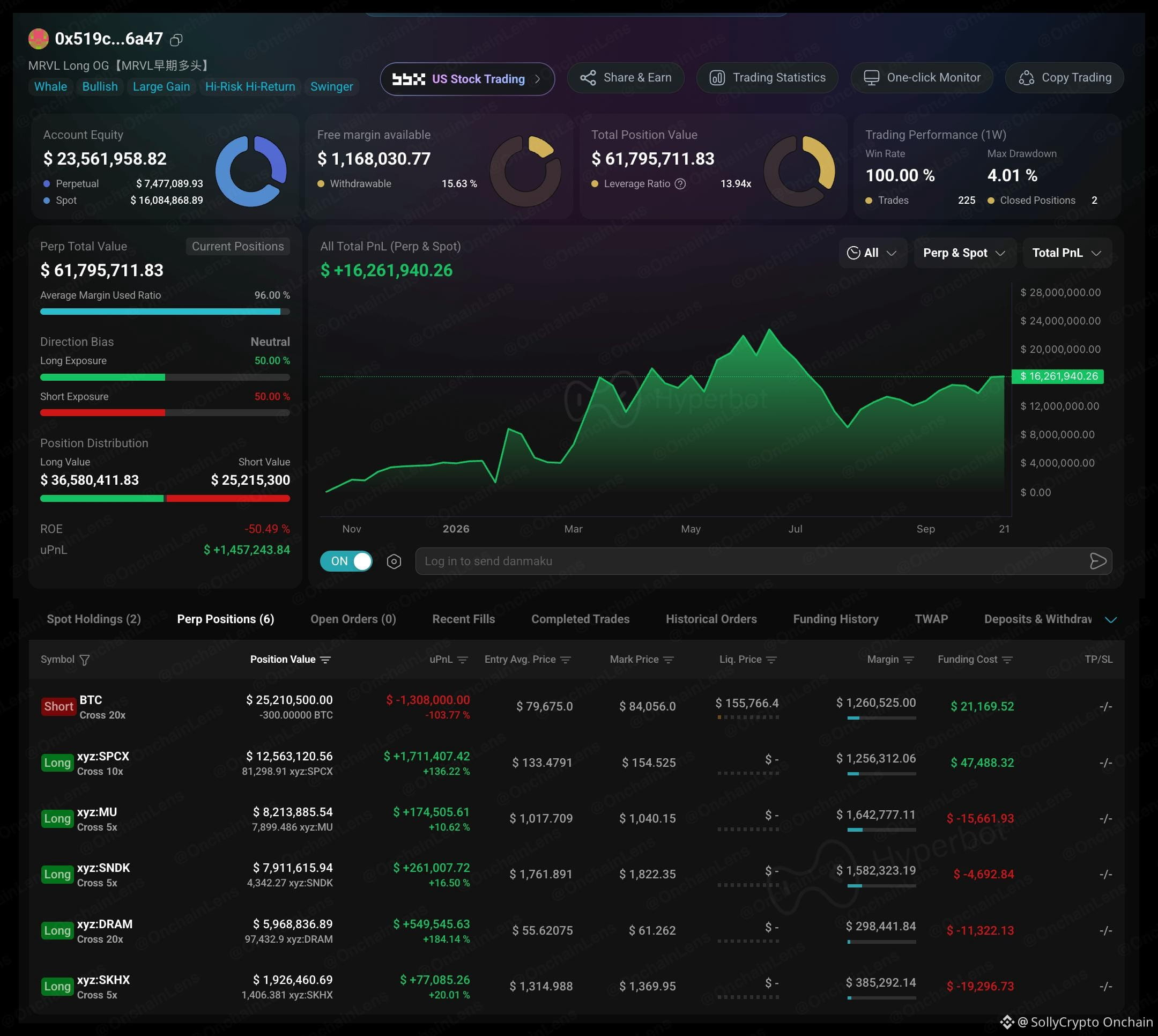
A Hyperliquid trader known as MRVL Long OG is running about $61.8M in perp positions and is up roughly $1.46M unrealized. Lifetime spot plus perp PnL sits near +$16.26M. The book includes a $25.21M $BTC short and tokenized stock longs in $SPCX, $MU, $SNDK, $DRAM, and $SKHX.
Why this happened
This is a relative-value style book, not a simple “crypto up only” wallet. The trader is short Bitcoin while long a basket of tokenized stock exposures. That usually means the bet is that those stock names outperform or hold up better than $BTC on a relative basis, or that Bitcoin softens while selected equities stay firm.
Why it matters
Large profitable traders show where sophisticated flow is comfortable taking risk. Right now that flow is not blindly long $BTC. It is short Bitcoin and long tokenized stocks. That supports two stories at once: caution on $BTC in the near term, and growing depth in onchain stock perps as a real trading venue.
How it can benefit you
If you watch smart-money positioning, this is useful context. A $25M $BTC short from a green lifetime account is a caution flag against chasing Bitcoin blindly. At the same time, size in tokenized stocks shows that market is liquid enough for serious books.
How it can harm you
Copying one whale’s open positions after they are already public is late by default. If $BTC rips, the short gets hurt fast. If the stock longs reverse, the whole relative trade can unwind. High notional with mixed direction is not a beginner template.
SollyCrypto opinion
Mild dump lean for $BTC while this large short remains open. Constructive for the tokenized-stocks trading narrative. Respect the book, do not blindly mirror it.
You fading $BTC with this flow, or treating the stock longs as the real signal?
Follow me, or you may not see the next one.
A Hyperliquid trader known as MRVL Long OG is running about $61.8M in perp positions and is up roughly $1.46M unrealized. Lifetime spot plus perp PnL sits near +$16.26M. The book includes a $25.21M $BTC short and tokenized stock longs in $SPCX, $MU, $SNDK, $DRAM, and $SKHX.
Why this happened
This is a relative-value style book, not a simple “crypto up only” wallet. The trader is short Bitcoin while long a basket of tokenized stock exposures. That usually means the bet is that those stock names outperform or hold up better than $BTC on a relative basis, or that Bitcoin softens while selected equities stay firm.
Why it matters
Large profitable traders show where sophisticated flow is comfortable taking risk. Right now that flow is not blindly long $BTC. It is short Bitcoin and long tokenized stocks. That supports two stories at once: caution on $BTC in the near term, and growing depth in onchain stock perps as a real trading venue.
How it can benefit you
If you watch smart-money positioning, this is useful context. A $25M $BTC short from a green lifetime account is a caution flag against chasing Bitcoin blindly. At the same time, size in tokenized stocks shows that market is liquid enough for serious books.
How it can harm you
Copying one whale’s open positions after they are already public is late by default. If $BTC rips, the short gets hurt fast. If the stock longs reverse, the whole relative trade can unwind. High notional with mixed direction is not a beginner template.
SollyCrypto opinion
Mild dump lean for $BTC while this large short remains open. Constructive for the tokenized-stocks trading narrative. Respect the book, do not blindly mirror it.
You fading $BTC with this flow, or treating the stock longs as the real signal?
Follow me, or you may not see the next one.
Why this happened
This is a relative-value style book, not a simple “crypto up only” wallet. The trader is short Bitcoin while long a basket of tokenized stock exposures. That usually means the bet is that those stock names outperform or hold up better than $BTC on a relative basis, or that Bitcoin softens while selected equities stay firm.
Why it matters
Large profitable traders show where sophisticated flow is comfortable taking risk. Right now that flow is not blindly long $BTC. It is short Bitcoin and long tokenized stocks. That supports two stories at once: caution on $BTC in the near term, and growing depth in onchain stock perps as a real trading venue.
How it can benefit you
If you watch smart-money positioning, this is useful context. A $25M $BTC short from a green lifetime account is a caution flag against chasing Bitcoin blindly. At the same time, size in tokenized stocks shows that market is liquid enough for serious books.
How it can harm you
Copying one whale’s open positions after they are already public is late by default. If $BTC rips, the short gets hurt fast. If the stock longs reverse, the whole relative trade can unwind. High notional with mixed direction is not a beginner template.
SollyCrypto opinion
Mild dump lean for $BTC while this large short remains open. Constructive for the tokenized-stocks trading narrative. Respect the book, do not blindly mirror it.
You fading $BTC with this flow, or treating the stock longs as the real signal?
Follow me, or you may not see the next one.
1
477
·
--
Bullish
Apple is hinting at stablecoin support through a payments job listing that asks for stablecoin expertise, with pay up to about $280,000. The role sits around Apple’s financial products stack and has the market talking about possible future crypto payments via Apple Pay. Samsung is already working on similar wallet support. Together they reach more than 3.5 billion active devices.
Why this happened
Big tech does not post specialized payment roles by accident. If Apple is hiring for stablecoin knowledge inside its finance and payments group, it is at least studying how dollar tokens could fit into Apple Pay, Apple Cash, or related products. That is still hiring, not a launched feature.
Why it matters
Apple and Samsung distribution would be massive if stablecoin payments ever go live at wallet scale. Even early signals matter because consumer payment rails are the hardest distribution layer in crypto. For stablecoins like $USDC, any path into mainstream device wallets is a long-term demand story. For crypto broadly, it supports the “payments are moving onchain” narrative.
How it can benefit you
If you are positioned around stablecoin infrastructure or major payment-related crypto names, this kind of Big Tech hiring is constructive sentiment. It keeps the institutional and consumer payments story alive beyond pure trading cycles.
How it can harm you
A job listing is not a product release. Timelines can be long, features can stay limited, and regulation can slow everything down. People who buy random tokens just because “Apple + stablecoins” is trending often buy pure headline beta and get no real exposure to the actual product path.
SollyCrypto opinion
Mild constructive lean for stablecoins and the broader payments narrative, especially $USDC-style regulated dollars. Not a guaranteed near-term pump button for random alts.
You treating Apple’s hiring as real payments upside, or just another rumor cycle?
Follow me, or you may not see the next one.
Apple is hinting at stablecoin support through a payments job listing that asks for stablecoin expertise, with pay up to about $280,000. The role sits around Apple’s financial products stack and has the market talking about possible future crypto payments via Apple Pay. Samsung is already working on similar wallet support. Together they reach more than 3.5 billion active devices.
Why this happened
Big tech does not post specialized payment roles by accident. If Apple is hiring for stablecoin knowledge inside its finance and payments group, it is at least studying how dollar tokens could fit into Apple Pay, Apple Cash, or related products. That is still hiring, not a launched feature.
Why it matters
Apple and Samsung distribution would be massive if stablecoin payments ever go live at wallet scale. Even early signals matter because consumer payment rails are the hardest distribution layer in crypto. For stablecoins like $USDC, any path into mainstream device wallets is a long-term demand story. For crypto broadly, it supports the “payments are moving onchain” narrative.
How it can benefit you
If you are positioned around stablecoin infrastructure or major payment-related crypto names, this kind of Big Tech hiring is constructive sentiment. It keeps the institutional and consumer payments story alive beyond pure trading cycles.
How it can harm you
A job listing is not a product release. Timelines can be long, features can stay limited, and regulation can slow everything down. People who buy random tokens just because “Apple + stablecoins” is trending often buy pure headline beta and get no real exposure to the actual product path.
SollyCrypto opinion
Mild constructive lean for stablecoins and the broader payments narrative, especially $USDC-style regulated dollars. Not a guaranteed near-term pump button for random alts.
You treating Apple’s hiring as real payments upside, or just another rumor cycle?
Follow me, or you may not see the next one.
Why this happened
Big tech does not post specialized payment roles by accident. If Apple is hiring for stablecoin knowledge inside its finance and payments group, it is at least studying how dollar tokens could fit into Apple Pay, Apple Cash, or related products. That is still hiring, not a launched feature.
Why it matters
Apple and Samsung distribution would be massive if stablecoin payments ever go live at wallet scale. Even early signals matter because consumer payment rails are the hardest distribution layer in crypto. For stablecoins like $USDC, any path into mainstream device wallets is a long-term demand story. For crypto broadly, it supports the “payments are moving onchain” narrative.
How it can benefit you
If you are positioned around stablecoin infrastructure or major payment-related crypto names, this kind of Big Tech hiring is constructive sentiment. It keeps the institutional and consumer payments story alive beyond pure trading cycles.
How it can harm you
A job listing is not a product release. Timelines can be long, features can stay limited, and regulation can slow everything down. People who buy random tokens just because “Apple + stablecoins” is trending often buy pure headline beta and get no real exposure to the actual product path.
SollyCrypto opinion
Mild constructive lean for stablecoins and the broader payments narrative, especially $USDC-style regulated dollars. Not a guaranteed near-term pump button for random alts.
You treating Apple’s hiring as real payments upside, or just another rumor cycle?
Follow me, or you may not see the next one.
1
61
·
--
Bullish
A ZetaChain proposal to migrate $ZETA to Solana and wind down its L1 has passed with 99.4% approval. A second vote is still needed to set the migration terms.
Why this happened
The project is choosing focus over running its own chain. Holders backed a plan to move $ZETA onto Solana and retire the ZetaChain L1, with migration details still to be finalized in a second vote. That usually means the team wants Solana’s distribution and infrastructure instead of maintaining a full L1 stack.
Why it matters
This is a structural reset, not a small partnership. Winding down an L1 and converting the token into a Solana asset changes the entire investment case for $ZETA. For $SOL, it is another example of projects choosing Solana as the home base. For $ZETA holders, the key questions are conversion terms, timeline, liquidity after migration, and what utility remains once the old chain is gone.
How it can benefit you
If you hold $SOL, more migrations and app moves support the ecosystem-gravity story. If you hold $ZETA, a clean 1:1 style migration with preserved supply can reduce some uncertainty once terms are locked. Clarity is better than a slow decline with no plan.
How it can harm you
L1 wind-downs create event risk. Bridging, claiming, liquidity gaps, and second-vote details can all cause volatility. People who treat “passed with 99.4%” as automatically bullish can get trapped if the market prices loss of L1 premium or messy transition risk first. Until the second vote locks terms, this is unfinished business.
SollyCrypto opinion
Mixed for $ZETA, mild pump for $SOL. The vote is decisive, but migration terms still matter more than the celebration headline.
You reading this as a $ZETA reset opportunity, or just more event risk before the second vote?
Follow me, or you may not see the next one.
A ZetaChain proposal to migrate $ZETA to Solana and wind down its L1 has passed with 99.4% approval. A second vote is still needed to set the migration terms.
Why this happened
The project is choosing focus over running its own chain. Holders backed a plan to move $ZETA onto Solana and retire the ZetaChain L1, with migration details still to be finalized in a second vote. That usually means the team wants Solana’s distribution and infrastructure instead of maintaining a full L1 stack.
Why it matters
This is a structural reset, not a small partnership. Winding down an L1 and converting the token into a Solana asset changes the entire investment case for $ZETA. For $SOL, it is another example of projects choosing Solana as the home base. For $ZETA holders, the key questions are conversion terms, timeline, liquidity after migration, and what utility remains once the old chain is gone.
How it can benefit you
If you hold $SOL, more migrations and app moves support the ecosystem-gravity story. If you hold $ZETA, a clean 1:1 style migration with preserved supply can reduce some uncertainty once terms are locked. Clarity is better than a slow decline with no plan.
How it can harm you
L1 wind-downs create event risk. Bridging, claiming, liquidity gaps, and second-vote details can all cause volatility. People who treat “passed with 99.4%” as automatically bullish can get trapped if the market prices loss of L1 premium or messy transition risk first. Until the second vote locks terms, this is unfinished business.
SollyCrypto opinion
Mixed for $ZETA, mild pump for $SOL. The vote is decisive, but migration terms still matter more than the celebration headline.
You reading this as a $ZETA reset opportunity, or just more event risk before the second vote?
Follow me, or you may not see the next one.
Why this happened
The project is choosing focus over running its own chain. Holders backed a plan to move $ZETA onto Solana and retire the ZetaChain L1, with migration details still to be finalized in a second vote. That usually means the team wants Solana’s distribution and infrastructure instead of maintaining a full L1 stack.
Why it matters
This is a structural reset, not a small partnership. Winding down an L1 and converting the token into a Solana asset changes the entire investment case for $ZETA. For $SOL, it is another example of projects choosing Solana as the home base. For $ZETA holders, the key questions are conversion terms, timeline, liquidity after migration, and what utility remains once the old chain is gone.
How it can benefit you
If you hold $SOL, more migrations and app moves support the ecosystem-gravity story. If you hold $ZETA, a clean 1:1 style migration with preserved supply can reduce some uncertainty once terms are locked. Clarity is better than a slow decline with no plan.
How it can harm you
L1 wind-downs create event risk. Bridging, claiming, liquidity gaps, and second-vote details can all cause volatility. People who treat “passed with 99.4%” as automatically bullish can get trapped if the market prices loss of L1 premium or messy transition risk first. Until the second vote locks terms, this is unfinished business.
SollyCrypto opinion
Mixed for $ZETA, mild pump for $SOL. The vote is decisive, but migration terms still matter more than the celebration headline.
You reading this as a $ZETA reset opportunity, or just more event risk before the second vote?
Follow me, or you may not see the next one.
1
150
·
--
Bullish
Verified
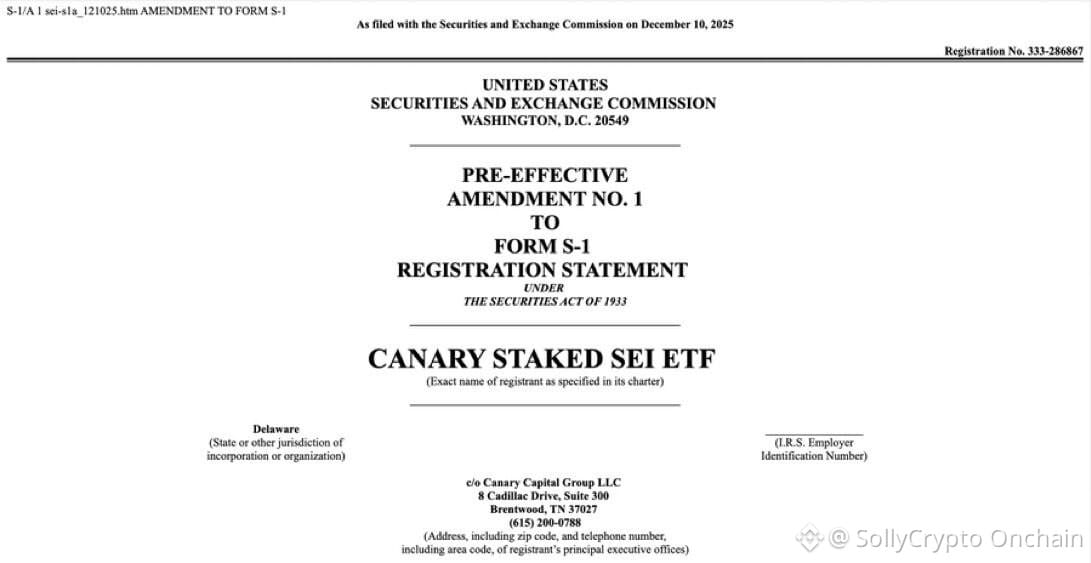
Canary Capital filed Amendment No. 2 to its S-1 for a Staked $SEI ETF that will hold spot $SEI.
Why this happened
Issuers keep refining crypto ETF products to make them more attractive. A staked $SEI version means the fund would hold the actual token and aim to capture staking yield, not only price exposure. An amended S-1 is part of the normal path toward possible approval and launch. It is progress in the paperwork, not the final green light.
Why it matters
Spot-plus-staking products matter because they create a regulated wrapper for both appreciation and yield. If this eventually launches, it can become another route for institutional and brokerage-channel demand into $SEI. Even before approval, repeated filings keep $SEI inside the ETF conversation, which helps the institutional narrative.
How it can benefit you
If you hold $SEI, more serious ETF product work is constructive. Markets often give alt L1s a sentiment bid when issuers push staked or spot wrappers forward. It also signals that $SEI is still being treated as big enough for traditional product structuring.
How it can harm you
An amendment is not approval. Timelines can slip, terms can change, and the market can ignore filing headlines if risk appetite is weak. People who buy only on “ETF filed/amended” language can get trapped when the actual listing is still uncertain.
SollyCrypto opinion
This should lean as a mild pump for $SEI. A staked spot ETF amendment is constructive product progress. Not a guaranteed launch catalyst by itself.
You buying $SEI on the Canary filing, or waiting for real approval odds to improve?
Follow me, or you may not see the next one.
Canary Capital filed Amendment No. 2 to its S-1 for a Staked $SEI ETF that will hold spot $SEI.
Why this happened
Issuers keep refining crypto ETF products to make them more attractive. A staked $SEI version means the fund would hold the actual token and aim to capture staking yield, not only price exposure. An amended S-1 is part of the normal path toward possible approval and launch. It is progress in the paperwork, not the final green light.
Why it matters
Spot-plus-staking products matter because they create a regulated wrapper for both appreciation and yield. If this eventually launches, it can become another route for institutional and brokerage-channel demand into $SEI. Even before approval, repeated filings keep $SEI inside the ETF conversation, which helps the institutional narrative.
How it can benefit you
If you hold $SEI, more serious ETF product work is constructive. Markets often give alt L1s a sentiment bid when issuers push staked or spot wrappers forward. It also signals that $SEI is still being treated as big enough for traditional product structuring.
How it can harm you
An amendment is not approval. Timelines can slip, terms can change, and the market can ignore filing headlines if risk appetite is weak. People who buy only on “ETF filed/amended” language can get trapped when the actual listing is still uncertain.
SollyCrypto opinion
This should lean as a mild pump for $SEI. A staked spot ETF amendment is constructive product progress. Not a guaranteed launch catalyst by itself.
You buying $SEI on the Canary filing, or waiting for real approval odds to improve?
Follow me, or you may not see the next one.
Why this happened
Issuers keep refining crypto ETF products to make them more attractive. A staked $SEI version means the fund would hold the actual token and aim to capture staking yield, not only price exposure. An amended S-1 is part of the normal path toward possible approval and launch. It is progress in the paperwork, not the final green light.
Why it matters
Spot-plus-staking products matter because they create a regulated wrapper for both appreciation and yield. If this eventually launches, it can become another route for institutional and brokerage-channel demand into $SEI. Even before approval, repeated filings keep $SEI inside the ETF conversation, which helps the institutional narrative.
How it can benefit you
If you hold $SEI, more serious ETF product work is constructive. Markets often give alt L1s a sentiment bid when issuers push staked or spot wrappers forward. It also signals that $SEI is still being treated as big enough for traditional product structuring.
How it can harm you
An amendment is not approval. Timelines can slip, terms can change, and the market can ignore filing headlines if risk appetite is weak. People who buy only on “ETF filed/amended” language can get trapped when the actual listing is still uncertain.
SollyCrypto opinion
This should lean as a mild pump for $SEI. A staked spot ETF amendment is constructive product progress. Not a guaranteed launch catalyst by itself.
You buying $SEI on the Canary filing, or waiting for real approval odds to improve?
Follow me, or you may not see the next one.

2
1.6k
·
--
Bearish
Verified
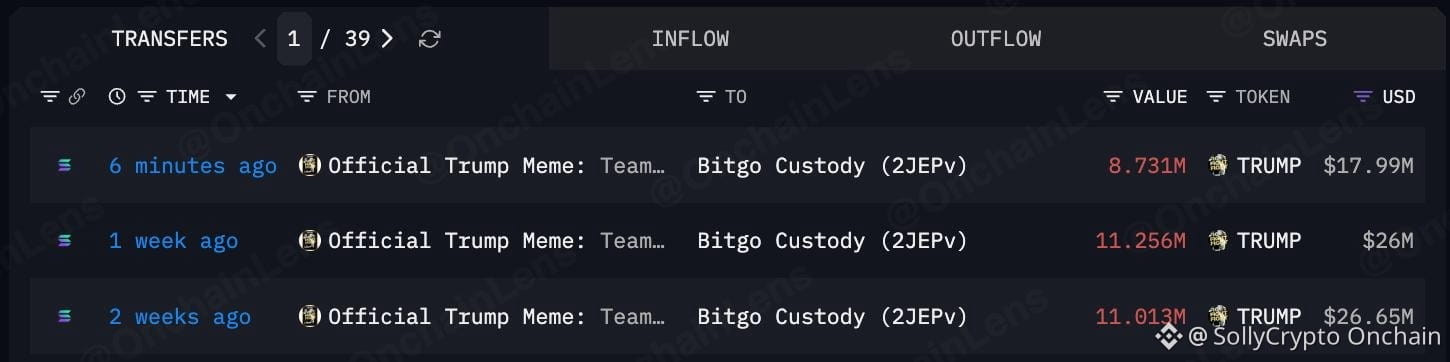
The Official Trump Meme team allocation wallet moved about 8.73M $TRUMP worth roughly $17.99M to BitGo Custody. Over the past two weeks, the team has moved around 31M $TRUMP worth about $70.64M to BitGo.
Why this happened
Team allocation wallets do not move tens of millions for no reason. BitGo is custody infrastructure, so this is not automatically a market sell by itself. But repeated large transfers from a team wallet into custody often sit one step before distribution decisions. That is why traders watch these prints closely.
Why it matters
$18M in one move and about $70M over two weeks is meaningful supply sitting closer to institutional rails. In meme tokens, team-linked flow can hit sentiment faster than the actual sell hits the book. Even if some of this stays in custody, the market still has to price the risk that more $TRUMP becomes available to sell.
How it can benefit you
If you wanted confirmation that team-side supply risk is still active, this is it. Cautious traders can use these transfers as a reason to stay light or wait for clearer absorption before chasing. Transparent team flow also removes guesswork.
How it can harm you
If you are long $TRUMP, repeated team-to-custody transfers are not friendly optics. People who assume every BitGo transfer is “just storage” can hold through distribution pressure. Meme names with active team allocation movement can stay heavy even when the broader market is fine.
SollyCrypto opinion
This looks like near-term dump risk for $TRUMP. Custody is not the same as an exchange deposit, but repeated team transfers at this size keep sell-side risk elevated.
You treating these BitGo moves as pure custody, or as preparation for more supply?
Follow me, or you may not see the next one.
The Official Trump Meme team allocation wallet moved about 8.73M $TRUMP worth roughly $17.99M to BitGo Custody. Over the past two weeks, the team has moved around 31M $TRUMP worth about $70.64M to BitGo.
Why this happened
Team allocation wallets do not move tens of millions for no reason. BitGo is custody infrastructure, so this is not automatically a market sell by itself. But repeated large transfers from a team wallet into custody often sit one step before distribution decisions. That is why traders watch these prints closely.
Why it matters
$18M in one move and about $70M over two weeks is meaningful supply sitting closer to institutional rails. In meme tokens, team-linked flow can hit sentiment faster than the actual sell hits the book. Even if some of this stays in custody, the market still has to price the risk that more $TRUMP becomes available to sell.
How it can benefit you
If you wanted confirmation that team-side supply risk is still active, this is it. Cautious traders can use these transfers as a reason to stay light or wait for clearer absorption before chasing. Transparent team flow also removes guesswork.
How it can harm you
If you are long $TRUMP, repeated team-to-custody transfers are not friendly optics. People who assume every BitGo transfer is “just storage” can hold through distribution pressure. Meme names with active team allocation movement can stay heavy even when the broader market is fine.
SollyCrypto opinion
This looks like near-term dump risk for $TRUMP. Custody is not the same as an exchange deposit, but repeated team transfers at this size keep sell-side risk elevated.
You treating these BitGo moves as pure custody, or as preparation for more supply?
Follow me, or you may not see the next one.
Why this happened
Team allocation wallets do not move tens of millions for no reason. BitGo is custody infrastructure, so this is not automatically a market sell by itself. But repeated large transfers from a team wallet into custody often sit one step before distribution decisions. That is why traders watch these prints closely.
Why it matters
$18M in one move and about $70M over two weeks is meaningful supply sitting closer to institutional rails. In meme tokens, team-linked flow can hit sentiment faster than the actual sell hits the book. Even if some of this stays in custody, the market still has to price the risk that more $TRUMP becomes available to sell.
How it can benefit you
If you wanted confirmation that team-side supply risk is still active, this is it. Cautious traders can use these transfers as a reason to stay light or wait for clearer absorption before chasing. Transparent team flow also removes guesswork.
How it can harm you
If you are long $TRUMP, repeated team-to-custody transfers are not friendly optics. People who assume every BitGo transfer is “just storage” can hold through distribution pressure. Meme names with active team allocation movement can stay heavy even when the broader market is fine.
SollyCrypto opinion
This looks like near-term dump risk for $TRUMP. Custody is not the same as an exchange deposit, but repeated team transfers at this size keep sell-side risk elevated.
You treating these BitGo moves as pure custody, or as preparation for more supply?
Follow me, or you may not see the next one.

1
236
·
--
Bearish
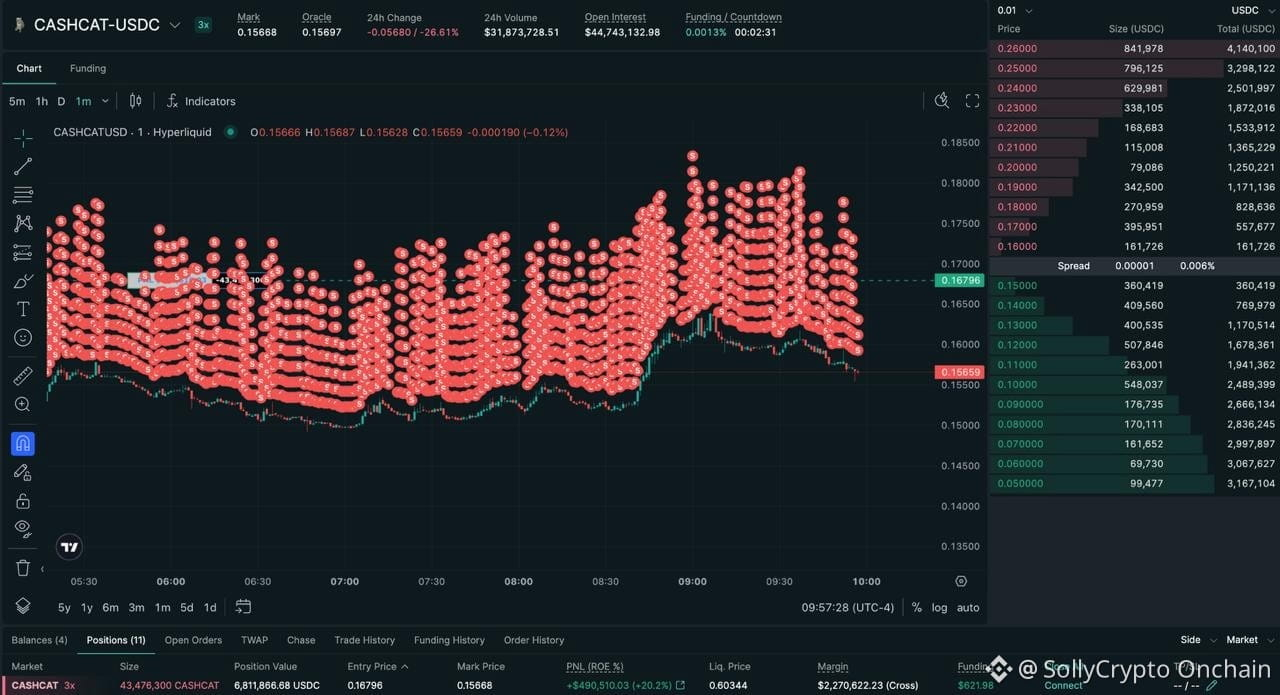
After closing his previous bag, Loracle is aggressively shorting CASHCAT again. About 43.5M CASHCAT worth roughly $6.8M has been shorted over the past 20 hours. That is almost 4.5% of supply and about 12% of aggregate open interest. Over the same stretch CASHCAT dumped more than 20%, and Loracle is up over $500K.
Why this happened
This is not a tiny probe short. When a known trader reloads size equal to a meaningful slice of supply and open interest, it usually means they see a weak tape and want to press it. The market already moved more than 20% lower during the window, so the short is working so far.
Why it matters
In thinner names, one large short can dominate price action. 4.5% of supply and 12% of OI is heavy pressure. As long as that short stays open and in profit, bounce attempts can get sold. If the short covers, the same size can fuel a squeeze the other way. That two-sided risk is why these wallets matter.
How it can benefit you
If you were looking for confirmation that CASHCAT was weak, this is it. Traders who respect large profitable shorts often avoid catching falling knives. The clean read is simple: supply is being pressed and price is responding.
How it can harm you
Copying a short after a 20% dump can put you late. If Loracle covers or if shorts get squeezed, the rebound can be violent because the position is large relative to OI. Thin meme-related names punish both blind longs and late shorts.
SollyCrypto opinion
This looks like a dump on CASHCAT while Loracle’s short stays open and profitable. Size versus supply and OI is the key. Do not sleep on squeeze risk if that short starts covering.
You fading CASHCAT with the flow, or waiting for the short to cover first?
Follow me, or you may not see the next one.
After closing his previous bag, Loracle is aggressively shorting CASHCAT again. About 43.5M CASHCAT worth roughly $6.8M has been shorted over the past 20 hours. That is almost 4.5% of supply and about 12% of aggregate open interest. Over the same stretch CASHCAT dumped more than 20%, and Loracle is up over $500K.
Why this happened
This is not a tiny probe short. When a known trader reloads size equal to a meaningful slice of supply and open interest, it usually means they see a weak tape and want to press it. The market already moved more than 20% lower during the window, so the short is working so far.
Why it matters
In thinner names, one large short can dominate price action. 4.5% of supply and 12% of OI is heavy pressure. As long as that short stays open and in profit, bounce attempts can get sold. If the short covers, the same size can fuel a squeeze the other way. That two-sided risk is why these wallets matter.
How it can benefit you
If you were looking for confirmation that CASHCAT was weak, this is it. Traders who respect large profitable shorts often avoid catching falling knives. The clean read is simple: supply is being pressed and price is responding.
How it can harm you
Copying a short after a 20% dump can put you late. If Loracle covers or if shorts get squeezed, the rebound can be violent because the position is large relative to OI. Thin meme-related names punish both blind longs and late shorts.
SollyCrypto opinion
This looks like a dump on CASHCAT while Loracle’s short stays open and profitable. Size versus supply and OI is the key. Do not sleep on squeeze risk if that short starts covering.
You fading CASHCAT with the flow, or waiting for the short to cover first?
Follow me, or you may not see the next one.
Why this happened
This is not a tiny probe short. When a known trader reloads size equal to a meaningful slice of supply and open interest, it usually means they see a weak tape and want to press it. The market already moved more than 20% lower during the window, so the short is working so far.
Why it matters
In thinner names, one large short can dominate price action. 4.5% of supply and 12% of OI is heavy pressure. As long as that short stays open and in profit, bounce attempts can get sold. If the short covers, the same size can fuel a squeeze the other way. That two-sided risk is why these wallets matter.
How it can benefit you
If you were looking for confirmation that CASHCAT was weak, this is it. Traders who respect large profitable shorts often avoid catching falling knives. The clean read is simple: supply is being pressed and price is responding.
How it can harm you
Copying a short after a 20% dump can put you late. If Loracle covers or if shorts get squeezed, the rebound can be violent because the position is large relative to OI. Thin meme-related names punish both blind longs and late shorts.
SollyCrypto opinion
This looks like a dump on CASHCAT while Loracle’s short stays open and profitable. Size versus supply and OI is the key. Do not sleep on squeeze risk if that short starts covering.
You fading CASHCAT with the flow, or waiting for the short to cover first?
Follow me, or you may not see the next one.
1
143
·
--
Bullish
Verified
Grayscale’s Zcash ETF filed for a 3-for-1 share split. Investors get two additional shares for each share held after trading closes on Sept. 28.
Why this happened
ETF share splits are usually about accessibility. When the per-share price gets high, issuers sometimes split shares so smaller investors can buy in rounder sizes. The total value of each holder’s position stays the same. More shares, lower price per share, same economic exposure.
Why it matters
This is not new $ZEC being printed. It is a fund share-structure change. Still, Grayscale products sit in the institutional spotlight, so anything that makes the Zcash ETF easier to trade can support attention around $ZEC. In a market already watching Zcash hard, even technical ETF actions can feed the narrative.
How it can benefit you
If you hold $ZEC, continued product maintenance around a spot Zcash ETF is constructive optics. Lower share price can help secondary-market accessibility and keep the ETF in circulation among broader investors.
How it can harm you
A split does not change the amount of Zcash the fund represents per dollar of value. People who treat every ETF headline as bullish fuel can overpay for non-fundamental news. If $ZEC is already extended, this kind of headline can also become a late-entry trap.
SollyCrypto opinion
Mild pump lean for $ZEC on attention and accessibility, not on token supply. Useful product housekeeping. Not a fundamental re-rating by itself.
You treating the Grayscale split as real fuel for $ZEC, or ignoring it as pure mechanics?
Follow me, or you may not see the next one.
Grayscale’s Zcash ETF filed for a 3-for-1 share split. Investors get two additional shares for each share held after trading closes on Sept. 28.
Why this happened
ETF share splits are usually about accessibility. When the per-share price gets high, issuers sometimes split shares so smaller investors can buy in rounder sizes. The total value of each holder’s position stays the same. More shares, lower price per share, same economic exposure.
Why it matters
This is not new $ZEC being printed. It is a fund share-structure change. Still, Grayscale products sit in the institutional spotlight, so anything that makes the Zcash ETF easier to trade can support attention around $ZEC. In a market already watching Zcash hard, even technical ETF actions can feed the narrative.
How it can benefit you
If you hold $ZEC, continued product maintenance around a spot Zcash ETF is constructive optics. Lower share price can help secondary-market accessibility and keep the ETF in circulation among broader investors.
How it can harm you
A split does not change the amount of Zcash the fund represents per dollar of value. People who treat every ETF headline as bullish fuel can overpay for non-fundamental news. If $ZEC is already extended, this kind of headline can also become a late-entry trap.
SollyCrypto opinion
Mild pump lean for $ZEC on attention and accessibility, not on token supply. Useful product housekeeping. Not a fundamental re-rating by itself.
You treating the Grayscale split as real fuel for $ZEC, or ignoring it as pure mechanics?
Follow me, or you may not see the next one.
Why this happened
ETF share splits are usually about accessibility. When the per-share price gets high, issuers sometimes split shares so smaller investors can buy in rounder sizes. The total value of each holder’s position stays the same. More shares, lower price per share, same economic exposure.
Why it matters
This is not new $ZEC being printed. It is a fund share-structure change. Still, Grayscale products sit in the institutional spotlight, so anything that makes the Zcash ETF easier to trade can support attention around $ZEC. In a market already watching Zcash hard, even technical ETF actions can feed the narrative.
How it can benefit you
If you hold $ZEC, continued product maintenance around a spot Zcash ETF is constructive optics. Lower share price can help secondary-market accessibility and keep the ETF in circulation among broader investors.
How it can harm you
A split does not change the amount of Zcash the fund represents per dollar of value. People who treat every ETF headline as bullish fuel can overpay for non-fundamental news. If $ZEC is already extended, this kind of headline can also become a late-entry trap.
SollyCrypto opinion
Mild pump lean for $ZEC on attention and accessibility, not on token supply. Useful product housekeeping. Not a fundamental re-rating by itself.
You treating the Grayscale split as real fuel for $ZEC, or ignoring it as pure mechanics?
Follow me, or you may not see the next one.

3
640
·
--
Bullish
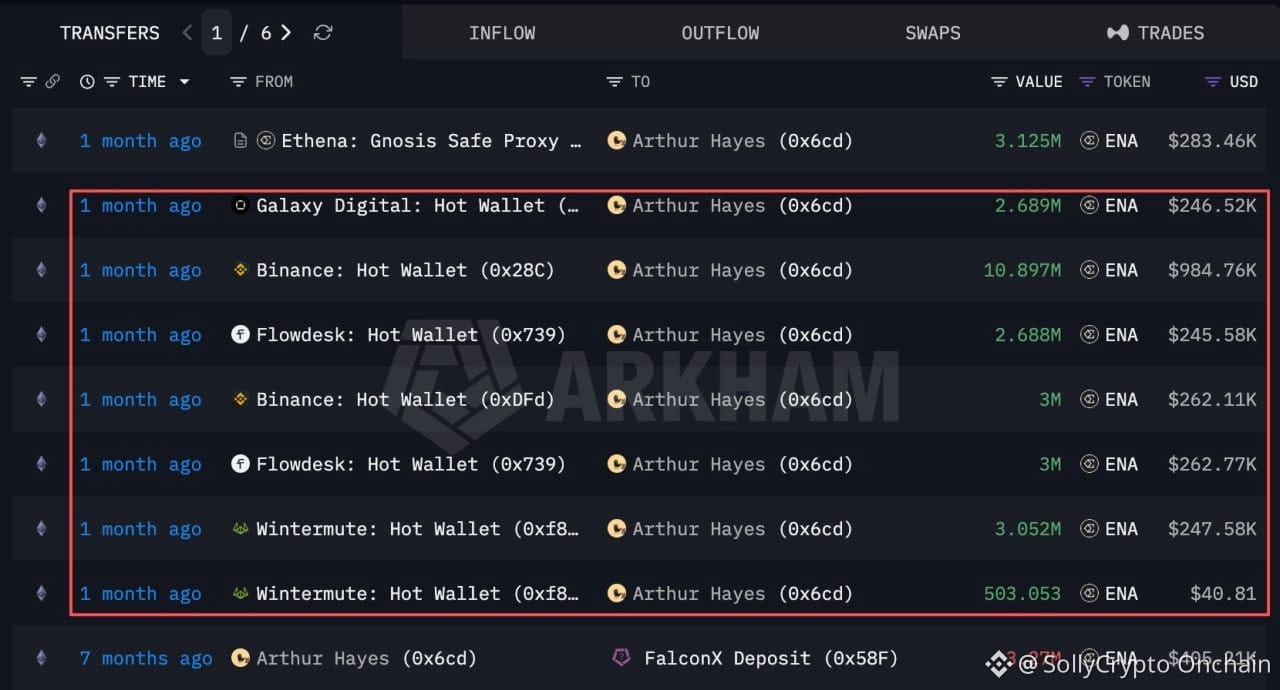
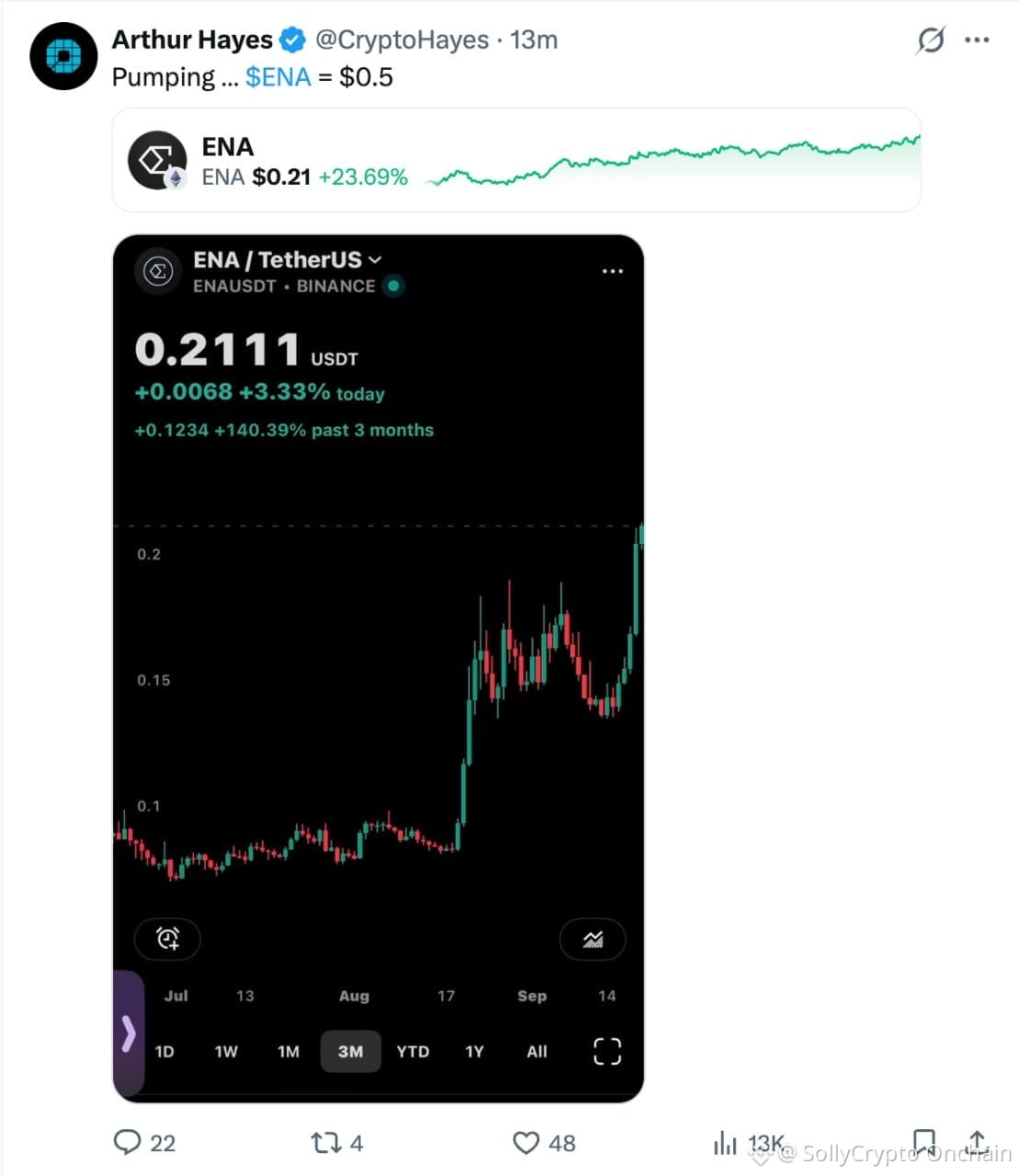
Arthur Hayes just called for $ENA to reach $0.50. He bought about 25.33M $ENA worth $5.53M at an average near $0.09 a month ago and is sitting on roughly $3.28M unrealized profit, about +146%.
Why this happened
Hayes is not making a random noise call. He is already in size and green. When a known trader publicly targets a much higher level while holding a profitable bag, it usually means he still thinks the upside story is incomplete. That combination of skin in the game plus a clear target is why the market pays attention.
Why it matters
Big-name holders can move sentiment fast, especially in mid-cap tokens. A $0.50 target from Hayes puts a clean number on the board and forces traders to revisit the $ENA upside case. His existing profit also shows the position has already worked, so this is not pure hopium from zero.
How it can benefit you
If you hold $ENA, a high-profile target can support attention and momentum. Narrative traders often bid names when recognizable whales stay long and talk higher. The +146% open profit also signals that strong hands have not fully exited.
How it can harm you
A celebrity target is not a promise. People who chase after the call is public can become exit liquidity if Hayes or other holders start distributing into strength. $0.50 can also take time, and drawdowns on the way are normal. Blindly copying wallets after they are already up big is one of the easiest ways to get clipped.
SollyCrypto opinion
This should lean as a pump for $ENA. Hayes is long, green, and calling higher. Respect the source, but do not treat $0.50 like a guaranteed next stop.
You buying the Hayes $ENA target, or waiting to see if he keeps holding?
Follow me, or you may not see the next one.#
Arthur Hayes just called for $ENA to reach $0.50. He bought about 25.33M $ENA worth $5.53M at an average near $0.09 a month ago and is sitting on roughly $3.28M unrealized profit, about +146%.
Why this happened
Hayes is not making a random noise call. He is already in size and green. When a known trader publicly targets a much higher level while holding a profitable bag, it usually means he still thinks the upside story is incomplete. That combination of skin in the game plus a clear target is why the market pays attention.
Why it matters
Big-name holders can move sentiment fast, especially in mid-cap tokens. A $0.50 target from Hayes puts a clean number on the board and forces traders to revisit the $ENA upside case. His existing profit also shows the position has already worked, so this is not pure hopium from zero.
How it can benefit you
If you hold $ENA, a high-profile target can support attention and momentum. Narrative traders often bid names when recognizable whales stay long and talk higher. The +146% open profit also signals that strong hands have not fully exited.
How it can harm you
A celebrity target is not a promise. People who chase after the call is public can become exit liquidity if Hayes or other holders start distributing into strength. $0.50 can also take time, and drawdowns on the way are normal. Blindly copying wallets after they are already up big is one of the easiest ways to get clipped.
SollyCrypto opinion
This should lean as a pump for $ENA. Hayes is long, green, and calling higher. Respect the source, but do not treat $0.50 like a guaranteed next stop.
You buying the Hayes $ENA target, or waiting to see if he keeps holding?
Follow me, or you may not see the next one.#
Why this happened
Hayes is not making a random noise call. He is already in size and green. When a known trader publicly targets a much higher level while holding a profitable bag, it usually means he still thinks the upside story is incomplete. That combination of skin in the game plus a clear target is why the market pays attention.
Why it matters
Big-name holders can move sentiment fast, especially in mid-cap tokens. A $0.50 target from Hayes puts a clean number on the board and forces traders to revisit the $ENA upside case. His existing profit also shows the position has already worked, so this is not pure hopium from zero.
How it can benefit you
If you hold $ENA, a high-profile target can support attention and momentum. Narrative traders often bid names when recognizable whales stay long and talk higher. The +146% open profit also signals that strong hands have not fully exited.
How it can harm you
A celebrity target is not a promise. People who chase after the call is public can become exit liquidity if Hayes or other holders start distributing into strength. $0.50 can also take time, and drawdowns on the way are normal. Blindly copying wallets after they are already up big is one of the easiest ways to get clipped.
SollyCrypto opinion
This should lean as a pump for $ENA. Hayes is long, green, and calling higher. Respect the source, but do not treat $0.50 like a guaranteed next stop.
You buying the Hayes $ENA target, or waiting to see if he keeps holding?
Follow me, or you may not see the next one.#
1
351
·
--
Bullish
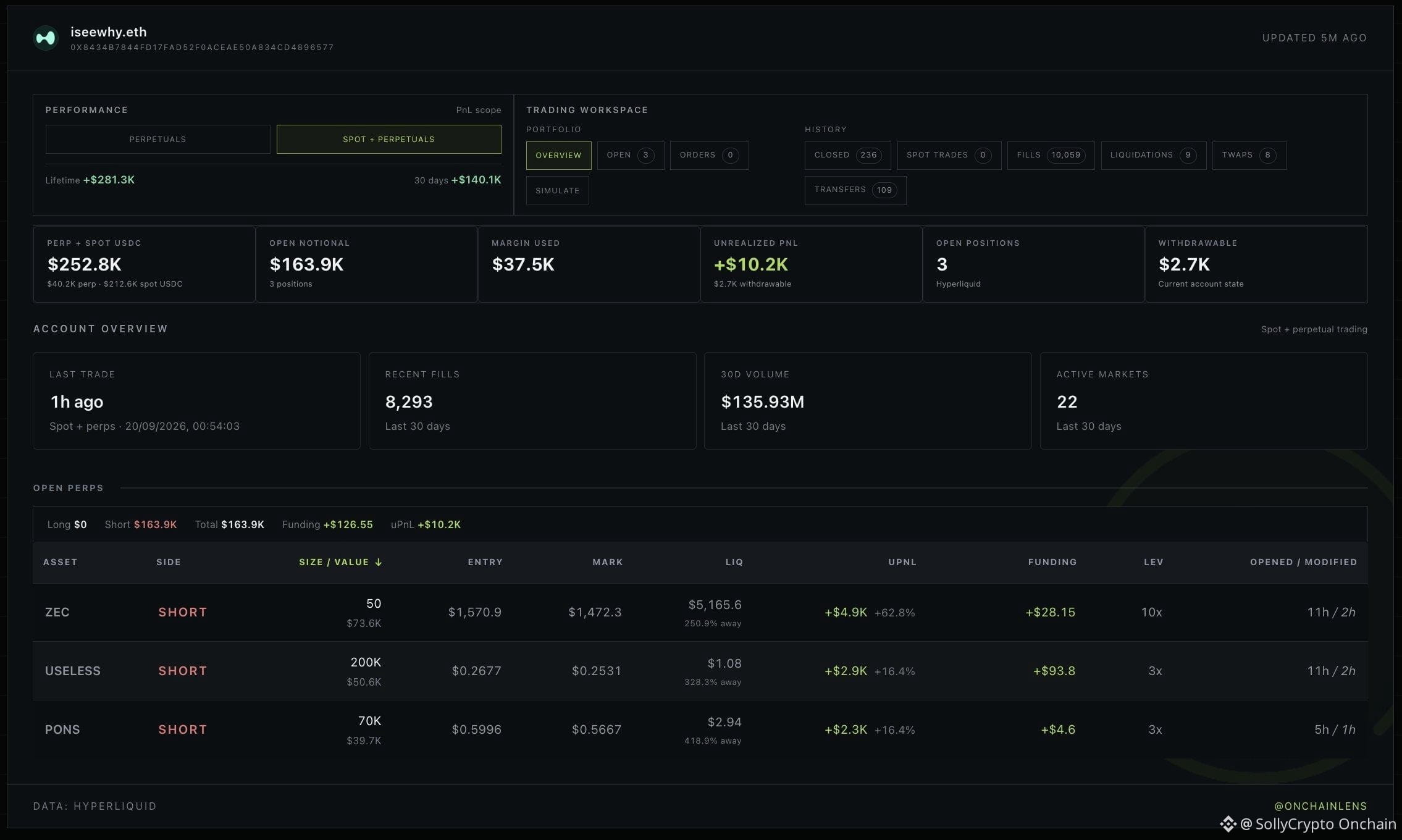
A Hyperliquid trader tagged Icy_9999 is up about $281.3K lifetime PnL, with an 82.86% win rate across 632 trades and roughly $135.93M volume over the last 30 days. Current book is short $ZEC, $USELESS, and $PONS, and all three are in profit.
Why this happened
High win-rate traders usually size carefully, cut losers fast, and press only when the setup is clear. This account’s public board shows consistency more than one lucky lottery ticket. Right now that process is expressing as shorts on $ZEC, $USELESS, and $PONS.
Why it matters
Copy-trading culture loves clean stats: win rate, volume, and green PnL. But a good track record is not a signal that every open position will keep working. $ZEC especially is a momentum name, so a profitable short there is notable, not automatic gospel. The value is in seeing how a disciplined account is positioned, not in blind mirroring.
How it can benefit you
If you study flow, this kind of board can help you understand where skilled short-term traders are leaning. Profitable shorts on crowded longs can warn you not to chase blindly. For active traders, watching process and risk style matters more than copying entries late.
How it can harm you
Copying a wallet after the profits are already public is how people buy tops and sell bottoms. You do not get this trader’s exits, size changes, or risk limits automatically. High win rate can also hide fat-tail losses if one bad trade is oversized. And shorting strong momentum coins is dangerous if the trend resumes.
SollyCrypto opinion
Informational, with a mild dump lean on the coins currently shorted only while those shorts stay in profit. The $281K track record is impressive. Blind copy-trading is still a trap.
You studying this trader’s process, or trying to copy the open shorts late?
Follow me, or you may not see the next one.
A Hyperliquid trader tagged Icy_9999 is up about $281.3K lifetime PnL, with an 82.86% win rate across 632 trades and roughly $135.93M volume over the last 30 days. Current book is short $ZEC, $USELESS, and $PONS, and all three are in profit.
Why this happened
High win-rate traders usually size carefully, cut losers fast, and press only when the setup is clear. This account’s public board shows consistency more than one lucky lottery ticket. Right now that process is expressing as shorts on $ZEC, $USELESS, and $PONS.
Why it matters
Copy-trading culture loves clean stats: win rate, volume, and green PnL. But a good track record is not a signal that every open position will keep working. $ZEC especially is a momentum name, so a profitable short there is notable, not automatic gospel. The value is in seeing how a disciplined account is positioned, not in blind mirroring.
How it can benefit you
If you study flow, this kind of board can help you understand where skilled short-term traders are leaning. Profitable shorts on crowded longs can warn you not to chase blindly. For active traders, watching process and risk style matters more than copying entries late.
How it can harm you
Copying a wallet after the profits are already public is how people buy tops and sell bottoms. You do not get this trader’s exits, size changes, or risk limits automatically. High win rate can also hide fat-tail losses if one bad trade is oversized. And shorting strong momentum coins is dangerous if the trend resumes.
SollyCrypto opinion
Informational, with a mild dump lean on the coins currently shorted only while those shorts stay in profit. The $281K track record is impressive. Blind copy-trading is still a trap.
You studying this trader’s process, or trying to copy the open shorts late?
Follow me, or you may not see the next one.
Why this happened
High win-rate traders usually size carefully, cut losers fast, and press only when the setup is clear. This account’s public board shows consistency more than one lucky lottery ticket. Right now that process is expressing as shorts on $ZEC, $USELESS, and $PONS.
Why it matters
Copy-trading culture loves clean stats: win rate, volume, and green PnL. But a good track record is not a signal that every open position will keep working. $ZEC especially is a momentum name, so a profitable short there is notable, not automatic gospel. The value is in seeing how a disciplined account is positioned, not in blind mirroring.
How it can benefit you
If you study flow, this kind of board can help you understand where skilled short-term traders are leaning. Profitable shorts on crowded longs can warn you not to chase blindly. For active traders, watching process and risk style matters more than copying entries late.
How it can harm you
Copying a wallet after the profits are already public is how people buy tops and sell bottoms. You do not get this trader’s exits, size changes, or risk limits automatically. High win rate can also hide fat-tail losses if one bad trade is oversized. And shorting strong momentum coins is dangerous if the trend resumes.
SollyCrypto opinion
Informational, with a mild dump lean on the coins currently shorted only while those shorts stay in profit. The $281K track record is impressive. Blind copy-trading is still a trap.
You studying this trader’s process, or trying to copy the open shorts late?
Follow me, or you may not see the next one.
1
686
·
--
Bullish
Solana’s latest speed upgrade cut block times by about 17%, taking target slot time from 300ms toward 250ms. The chain’s heartbeat just got quicker again.
Why this happened
Solana is continuing a staged plan to tighten slot times. Faster slots mean account state, prices, and confirmations refresh more often. This stage is more about data freshness than a raw throughput explosion. Apps that need current prices and faster feedback benefit first.
Why it matters
Speed is still one of Solana’s main selling points. When the network keeps lowering block times in live stages, it reinforces the “fastest major L1 feel” narrative. For traders and app users, fresher state can improve execution quality. For $SOL, repeated performance upgrades support the core product story.
How it can benefit you
If you hold $SOL, ongoing speed work is constructive ecosystem news. It keeps Solana competitive against other chains pushing their own latency improvements and can support sentiment when the broader tape is looking for leaders.
How it can harm you
A slot-time cut is not the same as guaranteed higher fees or higher price tomorrow. If skip rates rise or performance looks unstable, the next stage can slow down. People who buy every speed headline can get trapped when the market has already priced the upgrade path.
SollyCrypto opinion
This should lean as a mild pump for $SOL. A 17% faster block cadence is real product progress. Not a guarantee of immediate moon, but clearly constructive.
You treating faster Solana slots as real fuel for $SOL, or just background tech noise?
Follow me, or you may not see the next one.
Solana’s latest speed upgrade cut block times by about 17%, taking target slot time from 300ms toward 250ms. The chain’s heartbeat just got quicker again.
Why this happened
Solana is continuing a staged plan to tighten slot times. Faster slots mean account state, prices, and confirmations refresh more often. This stage is more about data freshness than a raw throughput explosion. Apps that need current prices and faster feedback benefit first.
Why it matters
Speed is still one of Solana’s main selling points. When the network keeps lowering block times in live stages, it reinforces the “fastest major L1 feel” narrative. For traders and app users, fresher state can improve execution quality. For $SOL, repeated performance upgrades support the core product story.
How it can benefit you
If you hold $SOL, ongoing speed work is constructive ecosystem news. It keeps Solana competitive against other chains pushing their own latency improvements and can support sentiment when the broader tape is looking for leaders.
How it can harm you
A slot-time cut is not the same as guaranteed higher fees or higher price tomorrow. If skip rates rise or performance looks unstable, the next stage can slow down. People who buy every speed headline can get trapped when the market has already priced the upgrade path.
SollyCrypto opinion
This should lean as a mild pump for $SOL. A 17% faster block cadence is real product progress. Not a guarantee of immediate moon, but clearly constructive.
You treating faster Solana slots as real fuel for $SOL, or just background tech noise?
Follow me, or you may not see the next one.
Why this happened
Solana is continuing a staged plan to tighten slot times. Faster slots mean account state, prices, and confirmations refresh more often. This stage is more about data freshness than a raw throughput explosion. Apps that need current prices and faster feedback benefit first.
Why it matters
Speed is still one of Solana’s main selling points. When the network keeps lowering block times in live stages, it reinforces the “fastest major L1 feel” narrative. For traders and app users, fresher state can improve execution quality. For $SOL, repeated performance upgrades support the core product story.
How it can benefit you
If you hold $SOL, ongoing speed work is constructive ecosystem news. It keeps Solana competitive against other chains pushing their own latency improvements and can support sentiment when the broader tape is looking for leaders.
How it can harm you
A slot-time cut is not the same as guaranteed higher fees or higher price tomorrow. If skip rates rise or performance looks unstable, the next stage can slow down. People who buy every speed headline can get trapped when the market has already priced the upgrade path.
SollyCrypto opinion
This should lean as a mild pump for $SOL. A 17% faster block cadence is real product progress. Not a guarantee of immediate moon, but clearly constructive.
You treating faster Solana slots as real fuel for $SOL, or just background tech noise?
Follow me, or you may not see the next one.
2
269
·
--
Bullish
Hyperliquid whale Garrett Jin’s $ZEC short is now sitting on about $33.66M in unrealized losses. Reports say he holds one of the largest $ZEC shorts, with liquidation around $4,792. He also reportedly holds more than 210,000 $ZEC worth over $300M, which would make the short a hedge against a massive spot bag. $ZEC is up nearly 225% over the past month.
Why this happened
$ZEC ripped and the short did not get out of the way. When a large short stays open into a vertical trend, unrealized losses stack fast. If the spot bag is real, the short may be a hedge rather than a pure directional bet. Either way, the market still sees a big underwater short with a distant liquidation level.
Why it matters
Crowded or famous shorts become fuel when price keeps rising. Traders watch these positions because forced covering can accelerate upside. At the same time, a hedge structure changes the read: if he is short against a larger spot holding, he may not be as fragile as a naked short. The $4,792 liquidation is far from current levels, so this is pain, not immediate liquidation drama.
How it can benefit you
If you are long $ZEC, a large bleeding short supports the squeeze narrative and keeps attention on the coin. Momentum traders love known underwater opposition because it can add fuel on push days.
How it can harm you
If the short is mostly a hedge, it may never get covered in a panic. People who buy only because “whale is rekt” can chase late after a 225% monthly run. High leverage into extended moves is dangerous even when the story sounds perfect.
SollyCrypto opinion
This should lean as a pump for $ZEC while the short stays deep underwater and price holds strength. Famous short pain helps the bull case. Just respect that a spot hedge can reduce forced-cover urgency.
You treating Jin’s short as squeeze fuel, or just a hedge that can sit there?
Follow me, or you may not see the next one.
Hyperliquid whale Garrett Jin’s $ZEC short is now sitting on about $33.66M in unrealized losses. Reports say he holds one of the largest $ZEC shorts, with liquidation around $4,792. He also reportedly holds more than 210,000 $ZEC worth over $300M, which would make the short a hedge against a massive spot bag. $ZEC is up nearly 225% over the past month.
Why this happened
$ZEC ripped and the short did not get out of the way. When a large short stays open into a vertical trend, unrealized losses stack fast. If the spot bag is real, the short may be a hedge rather than a pure directional bet. Either way, the market still sees a big underwater short with a distant liquidation level.
Why it matters
Crowded or famous shorts become fuel when price keeps rising. Traders watch these positions because forced covering can accelerate upside. At the same time, a hedge structure changes the read: if he is short against a larger spot holding, he may not be as fragile as a naked short. The $4,792 liquidation is far from current levels, so this is pain, not immediate liquidation drama.
How it can benefit you
If you are long $ZEC, a large bleeding short supports the squeeze narrative and keeps attention on the coin. Momentum traders love known underwater opposition because it can add fuel on push days.
How it can harm you
If the short is mostly a hedge, it may never get covered in a panic. People who buy only because “whale is rekt” can chase late after a 225% monthly run. High leverage into extended moves is dangerous even when the story sounds perfect.
SollyCrypto opinion
This should lean as a pump for $ZEC while the short stays deep underwater and price holds strength. Famous short pain helps the bull case. Just respect that a spot hedge can reduce forced-cover urgency.
You treating Jin’s short as squeeze fuel, or just a hedge that can sit there?
Follow me, or you may not see the next one.
Why this happened
$ZEC ripped and the short did not get out of the way. When a large short stays open into a vertical trend, unrealized losses stack fast. If the spot bag is real, the short may be a hedge rather than a pure directional bet. Either way, the market still sees a big underwater short with a distant liquidation level.
Why it matters
Crowded or famous shorts become fuel when price keeps rising. Traders watch these positions because forced covering can accelerate upside. At the same time, a hedge structure changes the read: if he is short against a larger spot holding, he may not be as fragile as a naked short. The $4,792 liquidation is far from current levels, so this is pain, not immediate liquidation drama.
How it can benefit you
If you are long $ZEC, a large bleeding short supports the squeeze narrative and keeps attention on the coin. Momentum traders love known underwater opposition because it can add fuel on push days.
How it can harm you
If the short is mostly a hedge, it may never get covered in a panic. People who buy only because “whale is rekt” can chase late after a 225% monthly run. High leverage into extended moves is dangerous even when the story sounds perfect.
SollyCrypto opinion
This should lean as a pump for $ZEC while the short stays deep underwater and price holds strength. Famous short pain helps the bull case. Just respect that a spot hedge can reduce forced-cover urgency.
You treating Jin’s short as squeeze fuel, or just a hedge that can sit there?
Follow me, or you may not see the next one.
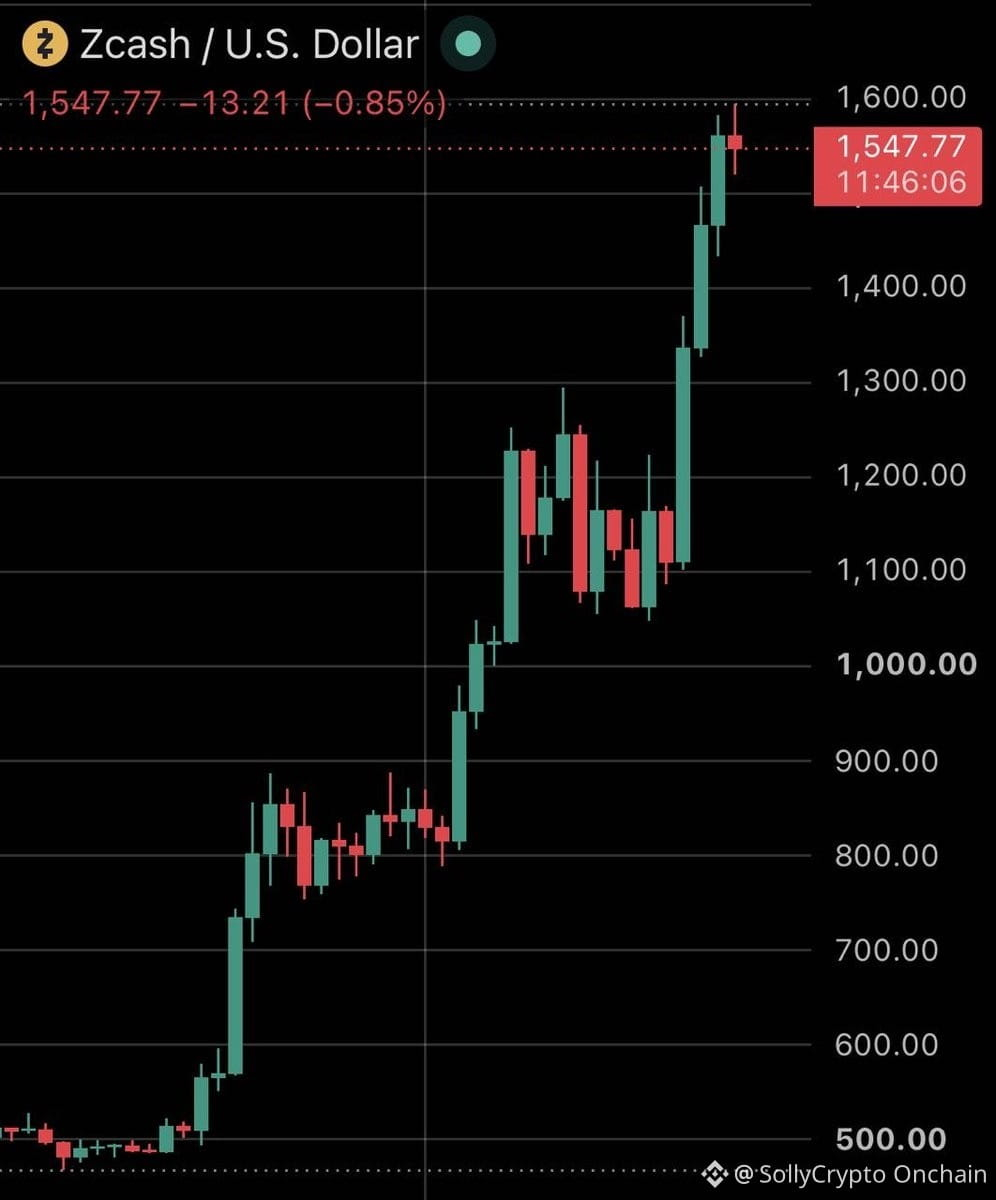

1
335
·
--
Bullish
Polygon Foundation CEO Sandeep Nailwal says 100M $POL is set to be permanently burned once a permissionless burn contract clears mainnet after Security Council sign-off.
Why this happened
Polygon is pushing a clearer deflation path for $POL. The plan is a contract that lets the community trigger a permanent burn of 100M $POL after security sign-off. That turns a supply-reduction promise into a concrete onchain process instead of only a statement.
Why it matters
Burns matter when they are real and permanent. 100M $POL is a visible supply cut and a signal that token economics are still being tightened. For holders, reduced supply plus ongoing network activity is the bullish mix. For traders, burn headlines often attract short-term attention even before the transaction lands.
How it can benefit you
If you hold $POL, a scheduled permanent burn supports the scarcity narrative. Permissionless quarterly-style burn mechanics can also keep supply pressure in focus over time, not only as a one-off event. That can help sentiment around the token.
How it can harm you
This still needs Security Council sign-off and mainnet readiness. Delays can disappoint people who bought the headline early. Also, a burn does not guarantee price goes up if broader market risk-off hits or if sellers dominate flow. Supply cuts help. They do not cancel weak demand.
SollyCrypto opinion
This should lean as a mild pump for $POL. A 100M permanent burn path is constructive. Just wait for the mainnet contract and actual burn trigger before treating it as fully done.
You buying $POL ahead of the burn, or waiting until the tokens are actually destroyed?
Follow me, or you may not see the next one.
Polygon Foundation CEO Sandeep Nailwal says 100M $POL is set to be permanently burned once a permissionless burn contract clears mainnet after Security Council sign-off.
Why this happened
Polygon is pushing a clearer deflation path for $POL. The plan is a contract that lets the community trigger a permanent burn of 100M $POL after security sign-off. That turns a supply-reduction promise into a concrete onchain process instead of only a statement.
Why it matters
Burns matter when they are real and permanent. 100M $POL is a visible supply cut and a signal that token economics are still being tightened. For holders, reduced supply plus ongoing network activity is the bullish mix. For traders, burn headlines often attract short-term attention even before the transaction lands.
How it can benefit you
If you hold $POL, a scheduled permanent burn supports the scarcity narrative. Permissionless quarterly-style burn mechanics can also keep supply pressure in focus over time, not only as a one-off event. That can help sentiment around the token.
How it can harm you
This still needs Security Council sign-off and mainnet readiness. Delays can disappoint people who bought the headline early. Also, a burn does not guarantee price goes up if broader market risk-off hits or if sellers dominate flow. Supply cuts help. They do not cancel weak demand.
SollyCrypto opinion
This should lean as a mild pump for $POL. A 100M permanent burn path is constructive. Just wait for the mainnet contract and actual burn trigger before treating it as fully done.
You buying $POL ahead of the burn, or waiting until the tokens are actually destroyed?
Follow me, or you may not see the next one.
Why this happened
Polygon is pushing a clearer deflation path for $POL. The plan is a contract that lets the community trigger a permanent burn of 100M $POL after security sign-off. That turns a supply-reduction promise into a concrete onchain process instead of only a statement.
Why it matters
Burns matter when they are real and permanent. 100M $POL is a visible supply cut and a signal that token economics are still being tightened. For holders, reduced supply plus ongoing network activity is the bullish mix. For traders, burn headlines often attract short-term attention even before the transaction lands.
How it can benefit you
If you hold $POL, a scheduled permanent burn supports the scarcity narrative. Permissionless quarterly-style burn mechanics can also keep supply pressure in focus over time, not only as a one-off event. That can help sentiment around the token.
How it can harm you
This still needs Security Council sign-off and mainnet readiness. Delays can disappoint people who bought the headline early. Also, a burn does not guarantee price goes up if broader market risk-off hits or if sellers dominate flow. Supply cuts help. They do not cancel weak demand.
SollyCrypto opinion
This should lean as a mild pump for $POL. A 100M permanent burn path is constructive. Just wait for the mainnet contract and actual burn trigger before treating it as fully done.
You buying $POL ahead of the burn, or waiting until the tokens are actually destroyed?
Follow me, or you may not see the next one.


1
197
·
--
Bullish
The NYSE is working to bring ~$40 trillion in U.S. stocks and ETFs onchain. It has spent a year testing Avalanche and is building a tokenized securities platform with onchain settlement and stablecoin funding. Tokenized shareholders keep dividend and voting rights, with instant settlement and fractional shares. ICE’s head of strategic initiatives said Avalanche “checks a lot of those boxes.”
Why this happened
Exchanges want 24/7 tokenized markets with faster settlement and stablecoin rails. NYSE parent ICE has evaluated blockchain infrastructure for a year; Avalanche is in the mix. This remains evaluation and platform-building—not a final exclusive selection.
Why it matters
Tokenized onchain settlement of even part of the U.S. equity/ETF stack turns the chains involved into financial infrastructure. Avalanche being named a serious NYSE/ICE testing partner is elite TradFi validation for an L1. Full rights + fractional shares make it closer to real market structure.
How it can benefit you
For $AVAX holders, this strengthens the institutional settlement narrative. Markets often bid chains tied to NYSE-scale tokenization plans on attention, credibility, and long-term usage potential.
How it can harm you
Testing ≠ exclusive launch. Regulation, partners, or multi-chain designs can shift. Buying purely on “$40 trillion onchain” hype risks being trapped if timelines stretch or Avalanche is just one of several rails.
SollyCrypto opinion
Strong pump signal for $AVAX. NYSE-scale work + a year of Avalanche testing is top-tier validation—just don’t confuse “checks a lot of boxes” with “locked-in winner.”
You buying $AVAX on the NYSE story, or waiting for formal selection?
Follow me or you may miss the next one.
The NYSE is working to bring ~$40 trillion in U.S. stocks and ETFs onchain. It has spent a year testing Avalanche and is building a tokenized securities platform with onchain settlement and stablecoin funding. Tokenized shareholders keep dividend and voting rights, with instant settlement and fractional shares. ICE’s head of strategic initiatives said Avalanche “checks a lot of those boxes.”
Why this happened
Exchanges want 24/7 tokenized markets with faster settlement and stablecoin rails. NYSE parent ICE has evaluated blockchain infrastructure for a year; Avalanche is in the mix. This remains evaluation and platform-building—not a final exclusive selection.
Why it matters
Tokenized onchain settlement of even part of the U.S. equity/ETF stack turns the chains involved into financial infrastructure. Avalanche being named a serious NYSE/ICE testing partner is elite TradFi validation for an L1. Full rights + fractional shares make it closer to real market structure.
How it can benefit you
For $AVAX holders, this strengthens the institutional settlement narrative. Markets often bid chains tied to NYSE-scale tokenization plans on attention, credibility, and long-term usage potential.
How it can harm you
Testing ≠ exclusive launch. Regulation, partners, or multi-chain designs can shift. Buying purely on “$40 trillion onchain” hype risks being trapped if timelines stretch or Avalanche is just one of several rails.
SollyCrypto opinion
Strong pump signal for $AVAX. NYSE-scale work + a year of Avalanche testing is top-tier validation—just don’t confuse “checks a lot of boxes” with “locked-in winner.”
You buying $AVAX on the NYSE story, or waiting for formal selection?
Follow me or you may miss the next one.
Why this happened
Exchanges want 24/7 tokenized markets with faster settlement and stablecoin rails. NYSE parent ICE has evaluated blockchain infrastructure for a year; Avalanche is in the mix. This remains evaluation and platform-building—not a final exclusive selection.
Why it matters
Tokenized onchain settlement of even part of the U.S. equity/ETF stack turns the chains involved into financial infrastructure. Avalanche being named a serious NYSE/ICE testing partner is elite TradFi validation for an L1. Full rights + fractional shares make it closer to real market structure.
How it can benefit you
For $AVAX holders, this strengthens the institutional settlement narrative. Markets often bid chains tied to NYSE-scale tokenization plans on attention, credibility, and long-term usage potential.
How it can harm you
Testing ≠ exclusive launch. Regulation, partners, or multi-chain designs can shift. Buying purely on “$40 trillion onchain” hype risks being trapped if timelines stretch or Avalanche is just one of several rails.
SollyCrypto opinion
Strong pump signal for $AVAX. NYSE-scale work + a year of Avalanche testing is top-tier validation—just don’t confuse “checks a lot of boxes” with “locked-in winner.”
You buying $AVAX on the NYSE story, or waiting for formal selection?
Follow me or you may miss the next one.


SollyCrypto Onchain
·
--
BullishNew York Life Investment Management, with about $807B under management, is bringing its first tokenized fund to Avalanche through Centrifuge.
Why this happened
Big asset managers are testing real onchain fund distribution, not just research notes. NY Life’s investment arm is putting a tokenized fund on Avalanche via Centrifuge so eligible investors can access an institutional strategy in tokenized form. Avalanche gets the chain deployment. Centrifuge provides the tokenization rails.
Why it matters
This is not a random meme partnership. An $807B manager bringing its first tokenized fund onchain is a serious RWA signal. It supports Avalanche’s push as a home for institutional tokenized products and strengthens the broader “real funds are moving onchain” story. For $AVAX, that kind of name recognition matters. For the RWA sector, it shows traditional managers are still expanding experiments into live products.
How it can benefit you
If you hold $AVAX, institutional fund deployments help the network’s credibility and long-term usage narrative. Traders often bid chains that keep landing regulated or traditional-finance product launches. It also keeps Avalanche in the RWA conversation next to other settlement networks.
How it can harm you
A first tokenized fund is not the same as massive immediate AUM onchain. Access may be limited to eligible investors, and growth can be slow. People who buy only on the $807B headline can get trapped if the market prices the news faster than actual onchain usage appears. One fund launch does not rewire the whole market.
SollyCrypto opinion
This should lean as a pump for $AVAX. An $807B manager’s first tokenized fund landing via Centrifuge is high-quality institutional news. Constructive for the RWA narrative too.
You treating this NY Life deployment as real fuel for $AVAX, or waiting for fund size to show onchain first?
Follow me, or you may not see the next one.
Why this happened
Big asset managers are testing real onchain fund distribution, not just research notes. NY Life’s investment arm is putting a tokenized fund on Avalanche via Centrifuge so eligible investors can access an institutional strategy in tokenized form. Avalanche gets the chain deployment. Centrifuge provides the tokenization rails.
Why it matters
This is not a random meme partnership. An $807B manager bringing its first tokenized fund onchain is a serious RWA signal. It supports Avalanche’s push as a home for institutional tokenized products and strengthens the broader “real funds are moving onchain” story. For $AVAX, that kind of name recognition matters. For the RWA sector, it shows traditional managers are still expanding experiments into live products.
How it can benefit you
If you hold $AVAX, institutional fund deployments help the network’s credibility and long-term usage narrative. Traders often bid chains that keep landing regulated or traditional-finance product launches. It also keeps Avalanche in the RWA conversation next to other settlement networks.
How it can harm you
A first tokenized fund is not the same as massive immediate AUM onchain. Access may be limited to eligible investors, and growth can be slow. People who buy only on the $807B headline can get trapped if the market prices the news faster than actual onchain usage appears. One fund launch does not rewire the whole market.
SollyCrypto opinion
This should lean as a pump for $AVAX. An $807B manager’s first tokenized fund landing via Centrifuge is high-quality institutional news. Constructive for the RWA narrative too.
You treating this NY Life deployment as real fuel for $AVAX, or waiting for fund size to show onchain first?
Follow me, or you may not see the next one.
1
150
·
--
Bullish
Verified
Zcash developers are targeting November 5 for the NU7 mainnet upgrade. The plan would cut block times from 75 seconds to 25 seconds and keep the halving schedule.
Why this happened
The community already voted for faster blocks and to keep Bitcoin-style halvings. Developers are now putting a real date on it. November 5 becomes the target for mainnet, with testnet work expected first so the network can stress the changes before going live.
Why it matters
A dated upgrade is stronger than a vague roadmap. Faster blocks improve confirmation speed and make the chain feel more usable, while keeping halvings protects the scarcity story holders care about. For $ZEC, that combination supports both product progress and narrative continuity after the recent momentum run.
How it can benefit you
If you hold $ZEC, a clear upgrade timeline can keep attention on the token into November. Traders often position early around dated network catalysts, especially when the changes are simple to understand: faster chain, same halving model.
How it can harm you
Targets can slip. Testnet issues, performance checks, or ecosystem readiness problems can delay mainnet. People who buy only on the date can get trapped if price runs too early and the upgrade path gets messy. Momentum already in the market also raises late-entry risk.
SollyCrypto opinion
This should lean as a mild pump for $ZEC. A November 5 NU7 target makes the faster-blocks story concrete. Constructive, as long as the date holds.
You positioning early for NU7, or waiting for testnet results first?
Follow me, or you may not see the next one.
Zcash developers are targeting November 5 for the NU7 mainnet upgrade. The plan would cut block times from 75 seconds to 25 seconds and keep the halving schedule.
Why this happened
The community already voted for faster blocks and to keep Bitcoin-style halvings. Developers are now putting a real date on it. November 5 becomes the target for mainnet, with testnet work expected first so the network can stress the changes before going live.
Why it matters
A dated upgrade is stronger than a vague roadmap. Faster blocks improve confirmation speed and make the chain feel more usable, while keeping halvings protects the scarcity story holders care about. For $ZEC, that combination supports both product progress and narrative continuity after the recent momentum run.
How it can benefit you
If you hold $ZEC, a clear upgrade timeline can keep attention on the token into November. Traders often position early around dated network catalysts, especially when the changes are simple to understand: faster chain, same halving model.
How it can harm you
Targets can slip. Testnet issues, performance checks, or ecosystem readiness problems can delay mainnet. People who buy only on the date can get trapped if price runs too early and the upgrade path gets messy. Momentum already in the market also raises late-entry risk.
SollyCrypto opinion
This should lean as a mild pump for $ZEC. A November 5 NU7 target makes the faster-blocks story concrete. Constructive, as long as the date holds.
You positioning early for NU7, or waiting for testnet results first?
Follow me, or you may not see the next one.
Why this happened
The community already voted for faster blocks and to keep Bitcoin-style halvings. Developers are now putting a real date on it. November 5 becomes the target for mainnet, with testnet work expected first so the network can stress the changes before going live.
Why it matters
A dated upgrade is stronger than a vague roadmap. Faster blocks improve confirmation speed and make the chain feel more usable, while keeping halvings protects the scarcity story holders care about. For $ZEC, that combination supports both product progress and narrative continuity after the recent momentum run.
How it can benefit you
If you hold $ZEC, a clear upgrade timeline can keep attention on the token into November. Traders often position early around dated network catalysts, especially when the changes are simple to understand: faster chain, same halving model.
How it can harm you
Targets can slip. Testnet issues, performance checks, or ecosystem readiness problems can delay mainnet. People who buy only on the date can get trapped if price runs too early and the upgrade path gets messy. Momentum already in the market also raises late-entry risk.
SollyCrypto opinion
This should lean as a mild pump for $ZEC. A November 5 NU7 target makes the faster-blocks story concrete. Constructive, as long as the date holds.
You positioning early for NU7, or waiting for testnet results first?
Follow me, or you may not see the next one.

1
187
Log in to explore more content
Join global crypto users on Binance Square
⚡️ Get latest and useful information about crypto.
💬 Trusted by the world’s largest crypto exchange.
👍 Discover real insights from verified creators.
Email / Phone number
Trending Topics
AIStocksWhatNext
29,813 views
51 Discussing
Share & Win Traffic Reward in our Trending Hashtag Campaign
✨Topic: What Other Investment Opportunities Remain as AI Stocks Keep Rising?
👉How to Join:
Publish a short post or article with hashtag #AIStocksWhatNext
Share whether you’re bullish or bearish, and post your AI stock holdings or trade — using the trade widget may improve your eligibility.
You can also strengthen your post by sharing data or charts, and avoiding AI-generated images.
✍️Create content based on the below angles:
- Nvidia says chip sales will double next year, and top AI companies keep hitting record revenue, the compute spend behind it is just as staggering. Is AI demand really taking off? And how long can it last? AI stocks are up across the board. Is this a real breakout, or just a short-term bounce?
- Industry leaders are calling to slow down AI development, while Trump plans to build an “AI Force”, claiming AI could account for 25% of U.S. GDP in the future. Whose side are you on? Will state-level backing be a long-term win for AI stocks?
- Are you buying AI stocks? Share your AI-related trade/holdings with our trade sharing widget.
⏰Campaign Period:
- 2026-09-22 7:00 - 2026-09-24 4:00 UTC
🎁Reward:
- Qualified posts that comply with the above guidelines and contain more than 100 words will be reviewed and may receive a random traffic boost of 500 to 3,000 views. You will receive a notification from your feed secretary if your post is selected.
- Get a chance to have your article featured on Binance Square Official
Need ideas for your post? Visit the topic page #AIStocksWhatNext or the Square Guide on How to Post for Better Reach.
Binance Square Official
·120 Likes
·135.1k views
StrategyAdds950Bitcoin
869 views
0 Discussing
CardanoAddedToX402KitForADAPayments
5,809 views
180 Discussing