
人间留半拍
32 Posts

人间留半拍
Report
Block User
7 Following
32 Followers
35 Liked
Posts
All
Quotes
·
--
Article
Breaks to a New High Again! ZEC Tops $1,600—This Privacy Coin Rally Is DifferentI just wrote about the privacy coin segment a couple of days ago, and then ZEC turns around and posts a new high—this plot twist was also not something I expected.
First, lay the numbers out. According to FXStreet’s report on September 23, ZEC surged 10% on Tuesday, clearing the $1,600 mark and setting a new all-time high. The on-chain data is even more dramatic: according to Blockworks, Zcash shielded transactions reached 62,379 last week, the highest in nearly four years—suggesting that real people are using its privacy features, not just trading the price. On the institutional front, Grayscale’s Zcash ETF (ZCSH) pulled in another $32.8 million on the day, bringing assets to nearly $1 billion; cumulative net inflows have exceeded $233 million. 21Shares also launched a Zcash ETP on a pan-European exchange. Grayscale further announced a 3-for-1 split effective September 30—classic moves that signal “getting ready for retail investors.” Over the past 12 months, ZEC has risen by about 28x (according to MoneyCheck data).
Breaks to a New High Again! ZEC Tops $1,600—This Privacy Coin Rally Is Different
I just wrote about the privacy coin segment a couple of days ago, and then ZEC turns around and posts a new high—this plot twist was also not something I expected.
First, lay the numbers out. According to FXStreet’s report on September 23, ZEC surged 10% on Tuesday, clearing the $1,600 mark and setting a new all-time high. The on-chain data is even more dramatic: according to Blockworks, Zcash shielded transactions reached 62,379 last week, the highest in nearly four years—suggesting that real people are using its privacy features, not just trading the price. On the institutional front, Grayscale’s Zcash ETF (ZCSH) pulled in another $32.8 million on the day, bringing assets to nearly $1 billion; cumulative net inflows have exceeded $233 million. 21Shares also launched a Zcash ETP on a pan-European exchange. Grayscale further announced a 3-for-1 split effective September 30—classic moves that signal “getting ready for retail investors.” Over the past 12 months, ZEC has risen by about 28x (according to MoneyCheck data).
First, lay the numbers out. According to FXStreet’s report on September 23, ZEC surged 10% on Tuesday, clearing the $1,600 mark and setting a new all-time high. The on-chain data is even more dramatic: according to Blockworks, Zcash shielded transactions reached 62,379 last week, the highest in nearly four years—suggesting that real people are using its privacy features, not just trading the price. On the institutional front, Grayscale’s Zcash ETF (ZCSH) pulled in another $32.8 million on the day, bringing assets to nearly $1 billion; cumulative net inflows have exceeded $233 million. 21Shares also launched a Zcash ETP on a pan-European exchange. Grayscale further announced a 3-for-1 split effective September 30—classic moves that signal “getting ready for retail investors.” Over the past 12 months, ZEC has risen by about 28x (according to MoneyCheck data).
6
·
--
BTC regains $81,722: First time since January that ETF institutions have fully broken even—so what’s next?
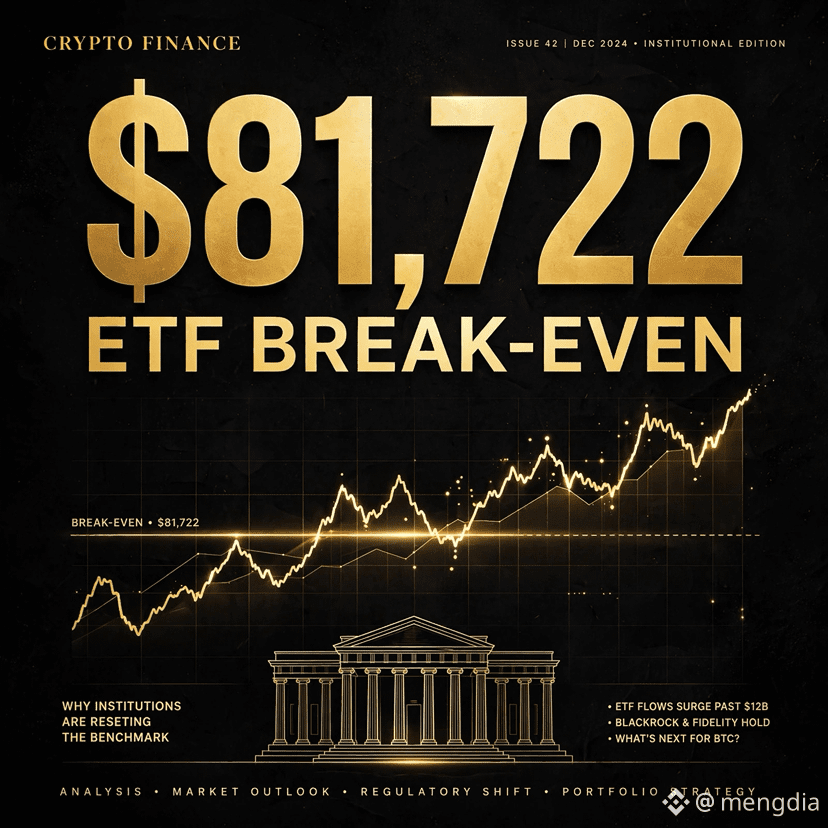
There’s a number worth every BTC holder looking at today: $81,722.
According to SoSoValue data cited by Bloomberg analyst Seyffart, BTC has returned above the average cost-basis line for U.S. spot ETF investors—$81,722. This means that starting from January, this is the first time that institutional capital in ETFs has collectively broken even. The fund flows line up too: according to Farside data, on September 21, BTC spot ETFs saw a net inflow of $999 million, the highest in 11 months; on September 22, they pulled in another $714.7 million (per SoSoValue). Over four days, the total was about $2.31 billion. Ethereum ETFs haven’t fallen behind either, with a single-day inflow of $270 million on September 21.
My take: The market may interpret “institutional break-even” as “good news has been fully realized, so it’s time to sell off.” But ETF money is long-term capital. After breaking even, the logic behind sell pressure may actually weaken. What to watch out for is the “break-even and run” mindset spreading from retail investors to the trading screen. Personally, I treat the $81,722 level as support—not a ceiling. This does not constitute investment advice.
Do you think institutions will add to positions after breaking even, or exit? Vote in the comments: Add / Run. #AI股持续上涨还有哪些投资机会
BTC regains $81,722: First time since January that ETF institutions have fully broken even—so what’s next?
There’s a number worth every BTC holder looking at today: $81,722.
According to SoSoValue data cited by Bloomberg analyst Seyffart, BTC has returned above the average cost-basis line for U.S. spot ETF investors—$81,722. This means that starting from January, this is the first time that institutional capital in ETFs has collectively broken even. The fund flows line up too: according to Farside data, on September 21, BTC spot ETFs saw a net inflow of $999 million, the highest in 11 months; on September 22, they pulled in another $714.7 million (per SoSoValue). Over four days, the total was about $2.31 billion. Ethereum ETFs haven’t fallen behind either, with a single-day inflow of $270 million on September 21.
My take: The market may interpret “institutional break-even” as “good news has been fully realized, so it’s time to sell off.” But ETF money is long-term capital. After breaking even, the logic behind sell pressure may actually weaken. What to watch out for is the “break-even and run” mindset spreading from retail investors to the trading screen. Personally, I treat the $81,722 level as support—not a ceiling. This does not constitute investment advice.
Do you think institutions will add to positions after breaking even, or exit? Vote in the comments: Add / Run. #AI股持续上涨还有哪些投资机会
There’s a number worth every BTC holder looking at today: $81,722.
According to SoSoValue data cited by Bloomberg analyst Seyffart, BTC has returned above the average cost-basis line for U.S. spot ETF investors—$81,722. This means that starting from January, this is the first time that institutional capital in ETFs has collectively broken even. The fund flows line up too: according to Farside data, on September 21, BTC spot ETFs saw a net inflow of $999 million, the highest in 11 months; on September 22, they pulled in another $714.7 million (per SoSoValue). Over four days, the total was about $2.31 billion. Ethereum ETFs haven’t fallen behind either, with a single-day inflow of $270 million on September 21.
My take: The market may interpret “institutional break-even” as “good news has been fully realized, so it’s time to sell off.” But ETF money is long-term capital. After breaking even, the logic behind sell pressure may actually weaken. What to watch out for is the “break-even and run” mindset spreading from retail investors to the trading screen. Personally, I treat the $81,722 level as support—not a ceiling. This does not constitute investment advice.
Do you think institutions will add to positions after breaking even, or exit? Vote in the comments: Add / Run. #AI股持续上涨还有哪些投资机会
83
·
--
☀️ Morning Briefing · September 24
**Price Snapshot**: BTC is trading roughly in the $84k–87k range with consolidation. On 9/22 it surged to $87,281 (an 8-month high) before giving back part of the gains. ETH is around $2,730. ZEC broke above $1,600, up about 80–90% over the past 30 days. The Fear & Greed Index is 76–79 (in the Greed zone). The Altseason Index is 51.
**Overnight Key Developments**:
- U.S. spot BTC ETFs have pulled in a frenzy of $1.7B over two days (9/21: $999M, 9/22: $714.7M). For ETF investors, it’s the first time overall they’ve broken even this year
- The SEC issued an "innovation exemption": tokenized stock platforms are exempt from parts of regulation for 5 years; in October, both the SEC and CFTC have crypto regulatory agendas
- Strategy added 950 BTC last week; in the past 24h, out of $746M liquidations, 86.85% were liquidations of shorts. Cover-style buy orders pushed prices higher
- Grayscale’s Zcash ETF saw a single-day inflow of $32.8M. Zcash traded volume (with shielded transactions) hit a 4-year high; the Russian MOEX Exchange launched BTC/ETH/SOL/XRP/TRX index perpetual futures
**Social Media Buzz**: The comment sections are tearing into each other over the question, "Is Altseason coming?" The RWA narrative is making a comeback (stablecoins at $290B, RWA at $34B). Expectations for an "Uptober" rally are building.
#AI股持续上涨还有哪些投资机会 #比特币两度受阻87300美元 #BCH因CME期货上线涨约28% #华尔街盈利预期23周来首现看空 #美元指数时隔两月重上101
☀️ Morning Briefing · September 24
**Price Snapshot**: BTC is trading roughly in the $84k–87k range with consolidation. On 9/22 it surged to $87,281 (an 8-month high) before giving back part of the gains. ETH is around $2,730. ZEC broke above $1,600, up about 80–90% over the past 30 days. The Fear & Greed Index is 76–79 (in the Greed zone). The Altseason Index is 51.
**Overnight Key Developments**:
- U.S. spot BTC ETFs have pulled in a frenzy of $1.7B over two days (9/21: $999M, 9/22: $714.7M). For ETF investors, it’s the first time overall they’ve broken even this year
- The SEC issued an "innovation exemption": tokenized stock platforms are exempt from parts of regulation for 5 years; in October, both the SEC and CFTC have crypto regulatory agendas
- Strategy added 950 BTC last week; in the past 24h, out of $746M liquidations, 86.85% were liquidations of shorts. Cover-style buy orders pushed prices higher
- Grayscale’s Zcash ETF saw a single-day inflow of $32.8M. Zcash traded volume (with shielded transactions) hit a 4-year high; the Russian MOEX Exchange launched BTC/ETH/SOL/XRP/TRX index perpetual futures
**Social Media Buzz**: The comment sections are tearing into each other over the question, "Is Altseason coming?" The RWA narrative is making a comeback (stablecoins at $290B, RWA at $34B). Expectations for an "Uptober" rally are building.
#AI股持续上涨还有哪些投资机会 #比特币两度受阻87300美元 #BCH因CME期货上线涨约28% #华尔街盈利预期23周来首现看空 #美元指数时隔两月重上101
**Price Snapshot**: BTC is trading roughly in the $84k–87k range with consolidation. On 9/22 it surged to $87,281 (an 8-month high) before giving back part of the gains. ETH is around $2,730. ZEC broke above $1,600, up about 80–90% over the past 30 days. The Fear & Greed Index is 76–79 (in the Greed zone). The Altseason Index is 51.
**Overnight Key Developments**:
- U.S. spot BTC ETFs have pulled in a frenzy of $1.7B over two days (9/21: $999M, 9/22: $714.7M). For ETF investors, it’s the first time overall they’ve broken even this year
- The SEC issued an "innovation exemption": tokenized stock platforms are exempt from parts of regulation for 5 years; in October, both the SEC and CFTC have crypto regulatory agendas
- Strategy added 950 BTC last week; in the past 24h, out of $746M liquidations, 86.85% were liquidations of shorts. Cover-style buy orders pushed prices higher
- Grayscale’s Zcash ETF saw a single-day inflow of $32.8M. Zcash traded volume (with shielded transactions) hit a 4-year high; the Russian MOEX Exchange launched BTC/ETH/SOL/XRP/TRX index perpetual futures
**Social Media Buzz**: The comment sections are tearing into each other over the question, "Is Altseason coming?" The RWA narrative is making a comeback (stablecoins at $290B, RWA at $34B). Expectations for an "Uptober" rally are building.
#AI股持续上涨还有哪些投资机会 #比特币两度受阻87300美元 #BCH因CME期货上线涨约28% #华尔街盈利预期23周来首现看空 #美元指数时隔两月重上101
42
·
--
Verified
Article
NVIDIA is at $5.4 trillion—can this table still be sat on? My answer: change tables—don’t get off.#ai股持续上涨还有哪些投资机会 The article is done. I’ve gone through the topic page thoroughly, and I’ve also verified all the key numbers. The submission deadline is tomorrow at noon (Beijing time). With NVIDIA already at a market cap of $540 billion, can this seat still hold its ground? My answer: change tables—don’t get off.
NVIDIA is currently around $228, just one step away from the historical high of $236.5. Its market cap is $5.4 trillion, and it has risen more than 20% this year. Last week, Huang said in Scotland that chip sales could double next year. The earnings report is also solid: Q2 revenue was $96.2 billion, doubling year over year; data center revenue was $88.9 billion. The company’s guidance for the next quarter is $108 billion. It also said that next year revenue could rise another 70% by itself.
NVIDIA is at $5.4 trillion—can this table still be sat on? My answer: change tables—don’t get off.
#ai股持续上涨还有哪些投资机会 The article is done. I’ve gone through the topic page thoroughly, and I’ve also verified all the key numbers. The submission deadline is tomorrow at noon (Beijing time). With NVIDIA already at a market cap of $540 billion, can this seat still hold its ground? My answer: change tables—don’t get off.
NVIDIA is currently around $228, just one step away from the historical high of $236.5. Its market cap is $5.4 trillion, and it has risen more than 20% this year. Last week, Huang said in Scotland that chip sales could double next year. The earnings report is also solid: Q2 revenue was $96.2 billion, doubling year over year; data center revenue was $88.9 billion. The company’s guidance for the next quarter is $108 billion. It also said that next year revenue could rise another 70% by itself.
NVIDIA is currently around $228, just one step away from the historical high of $236.5. Its market cap is $5.4 trillion, and it has risen more than 20% this year. Last week, Huang said in Scotland that chip sales could double next year. The earnings report is also solid: Q2 revenue was $96.2 billion, doubling year over year; data center revenue was $88.9 billion. The company’s guidance for the next quarter is $108 billion. It also said that next year revenue could rise another 70% by itself.
1
9
2k
·
--

Article
Is the altseason signal flashing? XRP jumped 7% in a day, but institutional money hasn’t followed A Glassnode chart went viral on social media yesterday: "The altcoin season signal has just flipped." On the same day, XRP rose 7% in a single day, reaching $1.52, SOL bounced back to $116, and HYPE climbed nearly 19% over the week. Altcoin traders are celebrating—comments everywhere say, "Rotation has started."
But one piece of data is especially striking: on September 21, the XRP ETF had zero net inflows—this is the fourth "silent day" in September. On the same day, the SOL ETF saw net inflows of $26 million, and HYPE also had $2.9 million (according to SoSoValue data). Prices went up, but institutional money didn’t follow—this combination is a bit odd.
Is the altseason signal flashing? XRP jumped 7% in a day, but institutional money hasn’t followed
A Glassnode chart went viral on social media yesterday: "The altcoin season signal has just flipped." On the same day, XRP rose 7% in a single day, reaching $1.52, SOL bounced back to $116, and HYPE climbed nearly 19% over the week. Altcoin traders are celebrating—comments everywhere say, "Rotation has started."
But one piece of data is especially striking: on September 21, the XRP ETF had zero net inflows—this is the fourth "silent day" in September. On the same day, the SOL ETF saw net inflows of $26 million, and HYPE also had $2.9 million (according to SoSoValue data). Prices went up, but institutional money didn’t follow—this combination is a bit odd.
But one piece of data is especially striking: on September 21, the XRP ETF had zero net inflows—this is the fourth "silent day" in September. On the same day, the SOL ETF saw net inflows of $26 million, and HYPE also had $2.9 million (according to SoSoValue data). Prices went up, but institutional money didn’t follow—this combination is a bit odd.
286
·
--
Article
An overlooked corner: Zcash quietly presses toward $1,500—privacy coins are backIn the past few days, everyone has been watching BTC break 86,000, and ETH return to 2700. But when I glanced at the gainers list, I noticed a quiet earner: Zcash.
As early as the beginning of September, it had already surged more than 15% in a single day to lead the market. This wave is now directly approaching $1,500. You’ve probably seen the meme that’s been flooding social media: "BTC 85000, ETH 2700, ZEC 1500, SOL 115"—Zcash is right there on the list. On CoinGecko’s trending chart, privacy coins like Zano are also starting to pop up.
Why are privacy coins rising at this time? Three layers of logic.
First, rotation. BTC and ETH go up first; large capital takes the first wave, then starts looking for sectors that haven’t yet risen. This kind of old narrative—privacy coins—is being brought back into focus.
An overlooked corner: Zcash quietly presses toward $1,500—privacy coins are back
In the past few days, everyone has been watching BTC break 86,000, and ETH return to 2700. But when I glanced at the gainers list, I noticed a quiet earner: Zcash.
As early as the beginning of September, it had already surged more than 15% in a single day to lead the market. This wave is now directly approaching $1,500. You’ve probably seen the meme that’s been flooding social media: "BTC 85000, ETH 2700, ZEC 1500, SOL 115"—Zcash is right there on the list. On CoinGecko’s trending chart, privacy coins like Zano are also starting to pop up.
Why are privacy coins rising at this time? Three layers of logic.
First, rotation. BTC and ETH go up first; large capital takes the first wave, then starts looking for sectors that haven’t yet risen. This kind of old narrative—privacy coins—is being brought back into focus.
As early as the beginning of September, it had already surged more than 15% in a single day to lead the market. This wave is now directly approaching $1,500. You’ve probably seen the meme that’s been flooding social media: "BTC 85000, ETH 2700, ZEC 1500, SOL 115"—Zcash is right there on the list. On CoinGecko’s trending chart, privacy coins like Zano are also starting to pop up.
Why are privacy coins rising at this time? Three layers of logic.
First, rotation. BTC and ETH go up first; large capital takes the first wave, then starts looking for sectors that haven’t yet risen. This kind of old narrative—privacy coins—is being brought back into focus.
585
·
--

Article
21 Wall Street banks team up to issue tokens: in the stablecoin battle, traditional finance has decided to joinGoldman Sachs, Bank of America, Citigroup, Wells Fargo, UBS, Deutsche Bank, Mitsubishi UFJ, and others—21 global systemically important financial institutions have joined forces. By the first half of 2027, they plan to launch a USD stablecoin. The people who once looked down on stablecoins the most are now personally jumping in to grab market share.
According to Reuters and the WSJ, the alliance formally announced on September 1 that this year’s second half will see the formation of a new company. A USD stablecoin will go live in the first half of 2027, and afterward they also plan to issue an euro version. As early as October 2025, only 10 banks were involved; within a year, that number more than doubled. On the compliance front, it directly mirrors the U.S. GENIUS Act and Europe’s MiCA—making it clear they intend to build a "licensed stablecoin".
21 Wall Street banks team up to issue tokens: in the stablecoin battle, traditional finance has decided to join
Goldman Sachs, Bank of America, Citigroup, Wells Fargo, UBS, Deutsche Bank, Mitsubishi UFJ, and others—21 global systemically important financial institutions have joined forces. By the first half of 2027, they plan to launch a USD stablecoin. The people who once looked down on stablecoins the most are now personally jumping in to grab market share.
According to Reuters and the WSJ, the alliance formally announced on September 1 that this year’s second half will see the formation of a new company. A USD stablecoin will go live in the first half of 2027, and afterward they also plan to issue an euro version. As early as October 2025, only 10 banks were involved; within a year, that number more than doubled. On the compliance front, it directly mirrors the U.S. GENIUS Act and Europe’s MiCA—making it clear they intend to build a "licensed stablecoin".
According to Reuters and the WSJ, the alliance formally announced on September 1 that this year’s second half will see the formation of a new company. A USD stablecoin will go live in the first half of 2027, and afterward they also plan to issue an euro version. As early as October 2025, only 10 banks were involved; within a year, that number more than doubled. On the compliance front, it directly mirrors the U.S. GENIUS Act and Europe’s MiCA—making it clear they intend to build a "licensed stablecoin".
285
·
--
Article
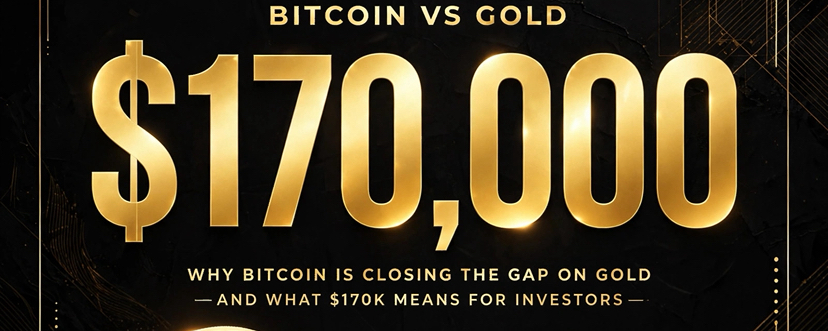
Bitcoin squeezes into the global top ten! But measured against gold, this bull market is only halfway doneBitcoin is now the world’s 10th-largest asset, with a market cap of $1.72 trillion—everything ahead of it is on the level of gold, Nvidia, Apple, and the like.
But yesterday, Bitcoin Magazine posted a chart that douses everyone with cold water: if priced in gold, Bitcoin would need to rise to $170,000 to truly set a new all-time high. Measured by the gold yardstick, at today’s price of $86,000, it has only come halfway.
Let’s look at the data. Over the past few days, BTC surged to a high of $87,360, a 8-month high, and it’s up 37.4% over the last 90 days (according to CoinGecko data). On the gold side, the total market value is $30.567 trillion, accounting for 35.8% of global assets—more than 17 times Bitcoin’s figure. In its latest research note, JPMorgan bluntly stated that Bitcoin has more upside potential than gold: the large amount of short positions piled up in Bitcoin ETFs leaves fuel for a future short-squeeze rally. The latest official update from the prediction market Kalshi is that 38% of people are betting on BTC returning to $100,000 by the end of this year (Bitcoin Magazine’s social media post cites 45%, but we’ll go with the official figure).
Bitcoin squeezes into the global top ten! But measured against gold, this bull market is only halfway done
Bitcoin is now the world’s 10th-largest asset, with a market cap of $1.72 trillion—everything ahead of it is on the level of gold, Nvidia, Apple, and the like.
But yesterday, Bitcoin Magazine posted a chart that douses everyone with cold water: if priced in gold, Bitcoin would need to rise to $170,000 to truly set a new all-time high. Measured by the gold yardstick, at today’s price of $86,000, it has only come halfway.
Let’s look at the data. Over the past few days, BTC surged to a high of $87,360, a 8-month high, and it’s up 37.4% over the last 90 days (according to CoinGecko data). On the gold side, the total market value is $30.567 trillion, accounting for 35.8% of global assets—more than 17 times Bitcoin’s figure. In its latest research note, JPMorgan bluntly stated that Bitcoin has more upside potential than gold: the large amount of short positions piled up in Bitcoin ETFs leaves fuel for a future short-squeeze rally. The latest official update from the prediction market Kalshi is that 38% of people are betting on BTC returning to $100,000 by the end of this year (Bitcoin Magazine’s social media post cites 45%, but we’ll go with the official figure).
But yesterday, Bitcoin Magazine posted a chart that douses everyone with cold water: if priced in gold, Bitcoin would need to rise to $170,000 to truly set a new all-time high. Measured by the gold yardstick, at today’s price of $86,000, it has only come halfway.
Let’s look at the data. Over the past few days, BTC surged to a high of $87,360, a 8-month high, and it’s up 37.4% over the last 90 days (according to CoinGecko data). On the gold side, the total market value is $30.567 trillion, accounting for 35.8% of global assets—more than 17 times Bitcoin’s figure. In its latest research note, JPMorgan bluntly stated that Bitcoin has more upside potential than gold: the large amount of short positions piled up in Bitcoin ETFs leaves fuel for a future short-squeeze rally. The latest official update from the prediction market Kalshi is that 38% of people are betting on BTC returning to $100,000 by the end of this year (Bitcoin Magazine’s social media post cites 45%, but we’ll go with the official figure).
564
·
--
Article
SEC suddenly loosens restrictions, CFTC proposal sent for White House review: the script for this bull run has changedIn crypto circles before, what were people most afraid of? Uncertainty. Especially U.S. regulation—suddenly suing this, investigating that, and project teams moving overnight.
But in the past two weeks, the wind direction has clearly changed.
The SEC has created a loophole exemption for tokenized stock trading. What does this mean? U.S. stocks can be traded on-chain in a compliant way. Tokenization has been talked about for years and stayed at the concept stage; this is the first time we've seen it move into a "regulated market structure." Some people say this marks the start of traditional financial assets being officially put on-chain.
On the other side, the CFTC’s new crypto proposal has already been submitted to the White House for review. With both regulators moving forward at the same time, the signal is very clear: this U.S. administration doesn’t want to regulate crypto with "enforcement-style regulation" anymore—it wants to build a framework.
SEC suddenly loosens restrictions, CFTC proposal sent for White House review: the script for this bull run has changed
In crypto circles before, what were people most afraid of? Uncertainty. Especially U.S. regulation—suddenly suing this, investigating that, and project teams moving overnight.
But in the past two weeks, the wind direction has clearly changed.
The SEC has created a loophole exemption for tokenized stock trading. What does this mean? U.S. stocks can be traded on-chain in a compliant way. Tokenization has been talked about for years and stayed at the concept stage; this is the first time we've seen it move into a "regulated market structure." Some people say this marks the start of traditional financial assets being officially put on-chain.
On the other side, the CFTC’s new crypto proposal has already been submitted to the White House for review. With both regulators moving forward at the same time, the signal is very clear: this U.S. administration doesn’t want to regulate crypto with "enforcement-style regulation" anymore—it wants to build a framework.
But in the past two weeks, the wind direction has clearly changed.
The SEC has created a loophole exemption for tokenized stock trading. What does this mean? U.S. stocks can be traded on-chain in a compliant way. Tokenization has been talked about for years and stayed at the concept stage; this is the first time we've seen it move into a "regulated market structure." Some people say this marks the start of traditional financial assets being officially put on-chain.
On the other side, the CFTC’s new crypto proposal has already been submitted to the White House for review. With both regulators moving forward at the same time, the signal is very clear: this U.S. administration doesn’t want to regulate crypto with "enforcement-style regulation" anymore—it wants to build a framework.
219
·
--

Article
Title: ETF Frenzied Buying of $1 Billion in a Day—Are Institutions Really Back?Let me put one piece of data out first: on Monday, U.S. spot Bitcoin ETFs had a single-day net inflow of nearly $1 billion—the biggest day since October last year. Even last Friday saw $433 million come in. Looks really strong, right?
But when I checked this year’s fund flow, I found it’s not that simple.
In the first two days of the year, ETFs snapped up $1.5 billion in one go, and the market was cheering. But over the following weeks, the money turned around and ran—Bitcoin ETFs were redeemed for $1.3 billion, and Ethereum saw outflows of $350 million as well. BTC and ETH gave back all of the early-year gains, and they basically lay flat for half a year.
Title: ETF Frenzied Buying of $1 Billion in a Day—Are Institutions Really Back?
Let me put one piece of data out first: on Monday, U.S. spot Bitcoin ETFs had a single-day net inflow of nearly $1 billion—the biggest day since October last year. Even last Friday saw $433 million come in. Looks really strong, right?
But when I checked this year’s fund flow, I found it’s not that simple.
In the first two days of the year, ETFs snapped up $1.5 billion in one go, and the market was cheering. But over the following weeks, the money turned around and ran—Bitcoin ETFs were redeemed for $1.3 billion, and Ethereum saw outflows of $350 million as well. BTC and ETH gave back all of the early-year gains, and they basically lay flat for half a year.
But when I checked this year’s fund flow, I found it’s not that simple.
In the first two days of the year, ETFs snapped up $1.5 billion in one go, and the market was cheering. But over the following weeks, the money turned around and ran—Bitcoin ETFs were redeemed for $1.3 billion, and Ethereum saw outflows of $350 million as well. BTC and ETH gave back all of the early-year gains, and they basically lay flat for half a year.
35
·
--
Article
Title: Greed Index 74 + 160 billion yuan (1600 亿) leverage: everyone’s partying, and I’m a bit scaredTitle: Greed Index 74 + 160 billion yuan (1600 亿) leverage: everyone’s partying, and I’m a bit scared
Fear & Greed Index 74, in the greed zone. Open interest in perpetual futures is $160 billion, the highest since last October. BTC at 86,000, DOGE up 10% in a day—everything in the market is green.
Honestly, I’m a bit scared.
It’s not that I’m afraid of the price going up—I’m afraid of this structure. A 160 billion yuan (1600 亿) leverage means what? It means the market is currently packed with people borrowing money to go long. Last October, open interest was that high too, and then the biggest liquidation in crypto history happened—$19 billion wiped out in a single day. History won’t repeat itself, but leverage never lies.
Title: Greed Index 74 + 160 billion yuan (1600 亿) leverage: everyone’s partying, and I’m a bit scared
Title: Greed Index 74 + 160 billion yuan (1600 亿) leverage: everyone’s partying, and I’m a bit scared
Fear & Greed Index 74, in the greed zone. Open interest in perpetual futures is $160 billion, the highest since last October. BTC at 86,000, DOGE up 10% in a day—everything in the market is green.
Honestly, I’m a bit scared.
It’s not that I’m afraid of the price going up—I’m afraid of this structure. A 160 billion yuan (1600 亿) leverage means what? It means the market is currently packed with people borrowing money to go long. Last October, open interest was that high too, and then the biggest liquidation in crypto history happened—$19 billion wiped out in a single day. History won’t repeat itself, but leverage never lies.
Fear & Greed Index 74, in the greed zone. Open interest in perpetual futures is $160 billion, the highest since last October. BTC at 86,000, DOGE up 10% in a day—everything in the market is green.
Honestly, I’m a bit scared.
It’s not that I’m afraid of the price going up—I’m afraid of this structure. A 160 billion yuan (1600 亿) leverage means what? It means the market is currently packed with people borrowing money to go long. Last October, open interest was that high too, and then the biggest liquidation in crypto history happened—$19 billion wiped out in a single day. History won’t repeat itself, but leverage never lies.
262
·
--
Bitcoin Reclaims 86,000 for the First Time in 8 Months! Bears Got Wiped Out of 900 Million Dollars Today
BTC has just risen above $86,000—its first time since January this year. ETH is back above 2,700, and DOGE is up more than 10% in a single day. The total market cap across the board has once again touched $3 trillion. The Fear & Greed Index is 74, and three forces are pushing the rally.
The SEC granted exemptions for tokenized stock trading, and the CFTC’s new proposal has also been submitted to the White House—policy is, unusually, blowing in the wind. U.S. spot Bitcoin ETFs saw nearly $1 billion in net inflows in a single day, the most since October last year, as institutional money starts flowing back in. And more than $900 million worth of short positions were liquidated within the day—short covering itself is buying pressure.
But I’m watching three figures, and I’m a lot calmer.
Open interest in perpetual contracts has surged to $160 billion, the highest point since last October. After that, what happened next is probably still fresh in everyone’s memory: a $19 billion liquidation event— the largest in history. The more leverage gets stacked, the more painful the pullback.
BTC has just reclaimed the 50-week moving average, the first time since the 45-week mark. It’s true that the technical picture is improving, but when you first break above this level, choppy back-and-forth is almost standard. Chasing higher is very likely to get washed out.
Also, the U.S. PCE inflation data will be released this week. The macro hand hasn’t been pulled back yet.
My take: the trend really is turning warmer, and ETF flows plus regulatory tailwinds are genuinely supportive. But in this upswing, the portion driven by short covering is not small. With $160 billion in leverage and a Fear & Greed Index of 74, the risk-reward of chasing is not great right now. Keep holding with DCA; for traders, stay disciplined and keep your hands off.
On Polymarket, some people are already betting that BTC will reach $100,000 by year-end—do you think it can get there? Let’s discuss in the comments.
#Bitcoin #BTC #MarketAnalysis #ETF #ShortSqueeze
Bitcoin Reclaims 86,000 for the First Time in 8 Months! Bears Got Wiped Out of 900 Million Dollars Today
BTC has just risen above $86,000—its first time since January this year. ETH is back above 2,700, and DOGE is up more than 10% in a single day. The total market cap across the board has once again touched $3 trillion. The Fear & Greed Index is 74, and three forces are pushing the rally.
The SEC granted exemptions for tokenized stock trading, and the CFTC’s new proposal has also been submitted to the White House—policy is, unusually, blowing in the wind. U.S. spot Bitcoin ETFs saw nearly $1 billion in net inflows in a single day, the most since October last year, as institutional money starts flowing back in. And more than $900 million worth of short positions were liquidated within the day—short covering itself is buying pressure.
But I’m watching three figures, and I’m a lot calmer.
Open interest in perpetual contracts has surged to $160 billion, the highest point since last October. After that, what happened next is probably still fresh in everyone’s memory: a $19 billion liquidation event— the largest in history. The more leverage gets stacked, the more painful the pullback.
BTC has just reclaimed the 50-week moving average, the first time since the 45-week mark. It’s true that the technical picture is improving, but when you first break above this level, choppy back-and-forth is almost standard. Chasing higher is very likely to get washed out.
Also, the U.S. PCE inflation data will be released this week. The macro hand hasn’t been pulled back yet.
My take: the trend really is turning warmer, and ETF flows plus regulatory tailwinds are genuinely supportive. But in this upswing, the portion driven by short covering is not small. With $160 billion in leverage and a Fear & Greed Index of 74, the risk-reward of chasing is not great right now. Keep holding with DCA; for traders, stay disciplined and keep your hands off.
On Polymarket, some people are already betting that BTC will reach $100,000 by year-end—do you think it can get there? Let’s discuss in the comments.
#Bitcoin #BTC #MarketAnalysis #ETF #ShortSqueeze
BTC has just risen above $86,000—its first time since January this year. ETH is back above 2,700, and DOGE is up more than 10% in a single day. The total market cap across the board has once again touched $3 trillion. The Fear & Greed Index is 74, and three forces are pushing the rally.
The SEC granted exemptions for tokenized stock trading, and the CFTC’s new proposal has also been submitted to the White House—policy is, unusually, blowing in the wind. U.S. spot Bitcoin ETFs saw nearly $1 billion in net inflows in a single day, the most since October last year, as institutional money starts flowing back in. And more than $900 million worth of short positions were liquidated within the day—short covering itself is buying pressure.
But I’m watching three figures, and I’m a lot calmer.
Open interest in perpetual contracts has surged to $160 billion, the highest point since last October. After that, what happened next is probably still fresh in everyone’s memory: a $19 billion liquidation event— the largest in history. The more leverage gets stacked, the more painful the pullback.
BTC has just reclaimed the 50-week moving average, the first time since the 45-week mark. It’s true that the technical picture is improving, but when you first break above this level, choppy back-and-forth is almost standard. Chasing higher is very likely to get washed out.
Also, the U.S. PCE inflation data will be released this week. The macro hand hasn’t been pulled back yet.
My take: the trend really is turning warmer, and ETF flows plus regulatory tailwinds are genuinely supportive. But in this upswing, the portion driven by short covering is not small. With $160 billion in leverage and a Fear & Greed Index of 74, the risk-reward of chasing is not great right now. Keep holding with DCA; for traders, stay disciplined and keep your hands off.
On Polymarket, some people are already betting that BTC will reach $100,000 by year-end—do you think it can get there? Let’s discuss in the comments.
#Bitcoin #BTC #MarketAnalysis #ETF #ShortSqueeze
1
132
·
--
Don't miss out! In the second half of May, whether $BTC can break through resistance levels hinges on this key data!
In the second half of May, $BTC has been bouncing back and forth in a tight range, with bulls and bears waiting for a catalyst to break the deadlock.
Currently, looking at the chart, resistance levels are proving tough to breach, primarily because the market is waiting for a decisive macro data release — the upcoming U.S. Core PCE Price Index (Personal Consumption Expenditures Deflator).
Why is this data so crucial? Because the PCE is the inflation indicator that the Federal Reserve prioritizes, directly influencing whether they will cut interest rates and when.
If the data comes in cooler than expected: It indicates inflation is under control, giving the Fed the confidence to cut rates in the latter half of the year. Once there’s an expectation of liquidity being released, the massive amounts of cash sitting on the sidelines will flood into the crypto market, and $BTC breaking through resistance will just be a matter of hitting the gas.
If the data unexpectedly spikes: That’ll be a disaster; market fears of high interest rates will resurface, and the market could likely dip again to shake out weak hands.
Right now, the main players are basically playing dead, sitting on the sidelines, which is why liquidity has been feeling sluggish lately.
My practical advice: Don’t gamble on direction with high-leverage contracts before the data is released; this kind of tug-of-war can easily blow up on both ends. Spot traders should hold onto their chips and wait for the data to drop and the direction to clarify before increasing their positions.
No missing the boat, let’s see which way the wind blows this time! Do you think this data will be bullish or bearish? Drop your hot takes in the comments!
Don't miss out! In the second half of May, whether $BTC can break through resistance levels hinges on this key data!
In the second half of May, $BTC has been bouncing back and forth in a tight range, with bulls and bears waiting for a catalyst to break the deadlock.
Currently, looking at the chart, resistance levels are proving tough to breach, primarily because the market is waiting for a decisive macro data release — the upcoming U.S. Core PCE Price Index (Personal Consumption Expenditures Deflator).
Why is this data so crucial? Because the PCE is the inflation indicator that the Federal Reserve prioritizes, directly influencing whether they will cut interest rates and when.
If the data comes in cooler than expected: It indicates inflation is under control, giving the Fed the confidence to cut rates in the latter half of the year. Once there’s an expectation of liquidity being released, the massive amounts of cash sitting on the sidelines will flood into the crypto market, and $BTC breaking through resistance will just be a matter of hitting the gas.
If the data unexpectedly spikes: That’ll be a disaster; market fears of high interest rates will resurface, and the market could likely dip again to shake out weak hands.
Right now, the main players are basically playing dead, sitting on the sidelines, which is why liquidity has been feeling sluggish lately.
My practical advice: Don’t gamble on direction with high-leverage contracts before the data is released; this kind of tug-of-war can easily blow up on both ends. Spot traders should hold onto their chips and wait for the data to drop and the direction to clarify before increasing their positions.
No missing the boat, let’s see which way the wind blows this time! Do you think this data will be bullish or bearish? Drop your hot takes in the comments!
In the second half of May, $BTC has been bouncing back and forth in a tight range, with bulls and bears waiting for a catalyst to break the deadlock.
Currently, looking at the chart, resistance levels are proving tough to breach, primarily because the market is waiting for a decisive macro data release — the upcoming U.S. Core PCE Price Index (Personal Consumption Expenditures Deflator).
Why is this data so crucial? Because the PCE is the inflation indicator that the Federal Reserve prioritizes, directly influencing whether they will cut interest rates and when.
If the data comes in cooler than expected: It indicates inflation is under control, giving the Fed the confidence to cut rates in the latter half of the year. Once there’s an expectation of liquidity being released, the massive amounts of cash sitting on the sidelines will flood into the crypto market, and $BTC breaking through resistance will just be a matter of hitting the gas.
If the data unexpectedly spikes: That’ll be a disaster; market fears of high interest rates will resurface, and the market could likely dip again to shake out weak hands.
Right now, the main players are basically playing dead, sitting on the sidelines, which is why liquidity has been feeling sluggish lately.
My practical advice: Don’t gamble on direction with high-leverage contracts before the data is released; this kind of tug-of-war can easily blow up on both ends. Spot traders should hold onto their chips and wait for the data to drop and the direction to clarify before increasing their positions.
No missing the boat, let’s see which way the wind blows this time! Do you think this data will be bullish or bearish? Drop your hot takes in the comments!
167
·
--
Verified
The market is at a crossroads again! Is this wave $BTC a pump or a golden pit?
The market has been bouncing back and forth these past few days, and I bet a lot of you are feeling like you're on a rollercoaster, ready to cut losses at the slightest dip.
As an old veteran who’s paid countless tuition fees in Web3, let’s chat in plain English about the real logic behind this wave of $BTC fluctuations: don’t be fooled by the market noise; it’s just the main players washing the positions as usual.
Right now, the volatility is primarily aimed at shaking out the high-leverage short-term speculators. Just look at the liquidation data; every time there’s a slight pump or dump, liquidation orders pile up, indicating that the market is still in a fierce chip exchange phase. As long as the floating chips are cleaned out at this level, the subsequent pump will have more strength.
So how do we see the direction moving forward? Keep an eye on two indicators:
1. Key support level on the weekly chart: As long as this level isn’t smashed by a large bearish candlestick, the upward trend remains intact. The current pullback actually provides some space for the indicators to correct.
2. Any signs from the Fed: The attitude of the funding side determines the height of the rebound.
Here’s a heartfelt piece of advice for you guys: in this choppy market, the worst thing you can do is to trade frequently and chase pumps and dumps; all your fees will just be working for the exchanges. If you're a spot trader, just stick to your dollar-cost averaging; if you're on contracts, keep your hands off and don’t open high leverage positions in the midst of the chop.
Remember, in the crypto world, making money isn’t about who moves the most, but who survives the longest. Do you think we can push through this wave? Let’s discuss your thoughts in the comments!
The market is at a crossroads again! Is this wave $BTC a pump or a golden pit?
The market has been bouncing back and forth these past few days, and I bet a lot of you are feeling like you're on a rollercoaster, ready to cut losses at the slightest dip.
As an old veteran who’s paid countless tuition fees in Web3, let’s chat in plain English about the real logic behind this wave of $BTC fluctuations: don’t be fooled by the market noise; it’s just the main players washing the positions as usual.
Right now, the volatility is primarily aimed at shaking out the high-leverage short-term speculators. Just look at the liquidation data; every time there’s a slight pump or dump, liquidation orders pile up, indicating that the market is still in a fierce chip exchange phase. As long as the floating chips are cleaned out at this level, the subsequent pump will have more strength.
So how do we see the direction moving forward? Keep an eye on two indicators:
1. Key support level on the weekly chart: As long as this level isn’t smashed by a large bearish candlestick, the upward trend remains intact. The current pullback actually provides some space for the indicators to correct.
2. Any signs from the Fed: The attitude of the funding side determines the height of the rebound.
Here’s a heartfelt piece of advice for you guys: in this choppy market, the worst thing you can do is to trade frequently and chase pumps and dumps; all your fees will just be working for the exchanges. If you're a spot trader, just stick to your dollar-cost averaging; if you're on contracts, keep your hands off and don’t open high leverage positions in the midst of the chop.
Remember, in the crypto world, making money isn’t about who moves the most, but who survives the longest. Do you think we can push through this wave? Let’s discuss your thoughts in the comments!
The market has been bouncing back and forth these past few days, and I bet a lot of you are feeling like you're on a rollercoaster, ready to cut losses at the slightest dip.
As an old veteran who’s paid countless tuition fees in Web3, let’s chat in plain English about the real logic behind this wave of $BTC fluctuations: don’t be fooled by the market noise; it’s just the main players washing the positions as usual.
Right now, the volatility is primarily aimed at shaking out the high-leverage short-term speculators. Just look at the liquidation data; every time there’s a slight pump or dump, liquidation orders pile up, indicating that the market is still in a fierce chip exchange phase. As long as the floating chips are cleaned out at this level, the subsequent pump will have more strength.
So how do we see the direction moving forward? Keep an eye on two indicators:
1. Key support level on the weekly chart: As long as this level isn’t smashed by a large bearish candlestick, the upward trend remains intact. The current pullback actually provides some space for the indicators to correct.
2. Any signs from the Fed: The attitude of the funding side determines the height of the rebound.
Here’s a heartfelt piece of advice for you guys: in this choppy market, the worst thing you can do is to trade frequently and chase pumps and dumps; all your fees will just be working for the exchanges. If you're a spot trader, just stick to your dollar-cost averaging; if you're on contracts, keep your hands off and don’t open high leverage positions in the midst of the chop.
Remember, in the crypto world, making money isn’t about who moves the most, but who survives the longest. Do you think we can push through this wave? Let’s discuss your thoughts in the comments!
2
617
·
--
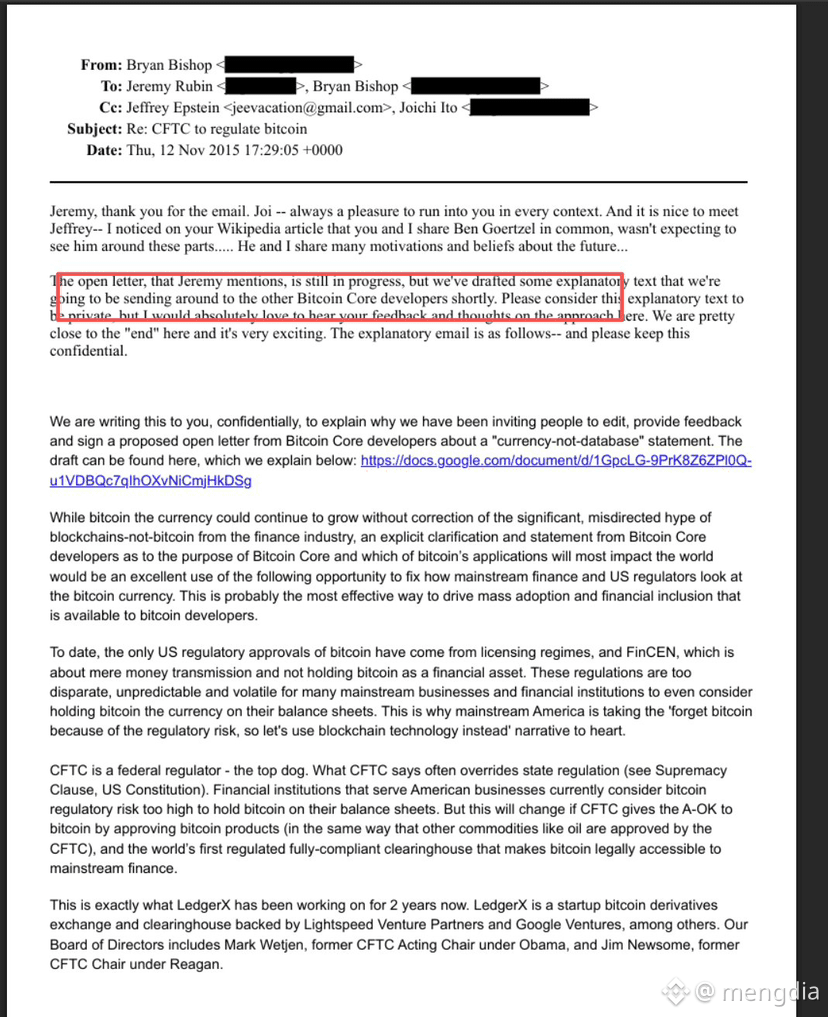
Is Epstein Satoshi Nakamoto?!
My direct evaluation of this statement is: there is currently no reliable evidence to support it.
Who is Satoshi Nakamoto? To this day, it remains a mystery. Who is Epstein? He is a publicly known person with a complex social circle and a clear criminal record. These two individuals do not match up in terms of timeline, behavioral trajectory, or technical expertise based on the publicly available information.
You only need to consider a few key points:
First, technical capability.
The Bitcoin white paper was published in 2008, with a coding style and cryptographic foundation that is very hardcore. Epstein's public resume does not contain any solid background in cryptography or distributed systems. He is more of a “broker-type figure” in the financial world. The differences in their thought processes are enormous.
Second, timeline.
Satoshi Nakamoto was active around 2008-2010, mainly communicating through emails and forums. Epstein's activities during those years have publicly recorded whereabouts, and there is no gap indicating a “disappearance for years to write code.”
Third, motive logic.
Satoshi Nakamoto designed a decentralized and censorship-resistant system, actively disappearing and not utilizing the large amount of Bitcoin mined early on.
Epstein's life pattern is quite the opposite—extremely pursuing real power and control over connections. If he truly held a million BTC, there would be no reason not to move even one.
The current statement on X is essentially more like a “conspiracy theory traffic model”—
Celebrity + Mysterious Figure + Huge Wealth + Dark Background = High Reshares.
There is a rule in conspiracy theory propagation:
The less evidence there is, the greater the space for imagination; the stronger the emotions, the faster the spread.
I do not rule out the possibility of new evidence overturning today's understanding in the future, but within the current framework of publicly available information, the credibility of this statement is close to zero.
To be honest, rather than worrying about “who Satoshi Nakamoto is,” it’s more practical to consider a more realistic question:
If Satoshi Nakamoto appears tomorrow and moves that over a million BTC, how will the market react? That is what truly affects our wallets.
What do you think? Is it just pure gossip, or are you worried there might be a bigger picture behind it?
Is Epstein Satoshi Nakamoto?!
My direct evaluation of this statement is: there is currently no reliable evidence to support it.
Who is Satoshi Nakamoto? To this day, it remains a mystery. Who is Epstein? He is a publicly known person with a complex social circle and a clear criminal record. These two individuals do not match up in terms of timeline, behavioral trajectory, or technical expertise based on the publicly available information.
You only need to consider a few key points:
First, technical capability.
The Bitcoin white paper was published in 2008, with a coding style and cryptographic foundation that is very hardcore. Epstein's public resume does not contain any solid background in cryptography or distributed systems. He is more of a “broker-type figure” in the financial world. The differences in their thought processes are enormous.
Second, timeline.
Satoshi Nakamoto was active around 2008-2010, mainly communicating through emails and forums. Epstein's activities during those years have publicly recorded whereabouts, and there is no gap indicating a “disappearance for years to write code.”
Third, motive logic.
Satoshi Nakamoto designed a decentralized and censorship-resistant system, actively disappearing and not utilizing the large amount of Bitcoin mined early on.
Epstein's life pattern is quite the opposite—extremely pursuing real power and control over connections. If he truly held a million BTC, there would be no reason not to move even one.
The current statement on X is essentially more like a “conspiracy theory traffic model”—
Celebrity + Mysterious Figure + Huge Wealth + Dark Background = High Reshares.
There is a rule in conspiracy theory propagation:
The less evidence there is, the greater the space for imagination; the stronger the emotions, the faster the spread.
I do not rule out the possibility of new evidence overturning today's understanding in the future, but within the current framework of publicly available information, the credibility of this statement is close to zero.
To be honest, rather than worrying about “who Satoshi Nakamoto is,” it’s more practical to consider a more realistic question:
If Satoshi Nakamoto appears tomorrow and moves that over a million BTC, how will the market react? That is what truly affects our wallets.
What do you think? Is it just pure gossip, or are you worried there might be a bigger picture behind it?
My direct evaluation of this statement is: there is currently no reliable evidence to support it.
Who is Satoshi Nakamoto? To this day, it remains a mystery. Who is Epstein? He is a publicly known person with a complex social circle and a clear criminal record. These two individuals do not match up in terms of timeline, behavioral trajectory, or technical expertise based on the publicly available information.
You only need to consider a few key points:
First, technical capability.
The Bitcoin white paper was published in 2008, with a coding style and cryptographic foundation that is very hardcore. Epstein's public resume does not contain any solid background in cryptography or distributed systems. He is more of a “broker-type figure” in the financial world. The differences in their thought processes are enormous.
Second, timeline.
Satoshi Nakamoto was active around 2008-2010, mainly communicating through emails and forums. Epstein's activities during those years have publicly recorded whereabouts, and there is no gap indicating a “disappearance for years to write code.”
Third, motive logic.
Satoshi Nakamoto designed a decentralized and censorship-resistant system, actively disappearing and not utilizing the large amount of Bitcoin mined early on.
Epstein's life pattern is quite the opposite—extremely pursuing real power and control over connections. If he truly held a million BTC, there would be no reason not to move even one.
The current statement on X is essentially more like a “conspiracy theory traffic model”—
Celebrity + Mysterious Figure + Huge Wealth + Dark Background = High Reshares.
There is a rule in conspiracy theory propagation:
The less evidence there is, the greater the space for imagination; the stronger the emotions, the faster the spread.
I do not rule out the possibility of new evidence overturning today's understanding in the future, but within the current framework of publicly available information, the credibility of this statement is close to zero.
To be honest, rather than worrying about “who Satoshi Nakamoto is,” it’s more practical to consider a more realistic question:
If Satoshi Nakamoto appears tomorrow and moves that over a million BTC, how will the market react? That is what truly affects our wallets.
What do you think? Is it just pure gossip, or are you worried there might be a bigger picture behind it?

195
·
--
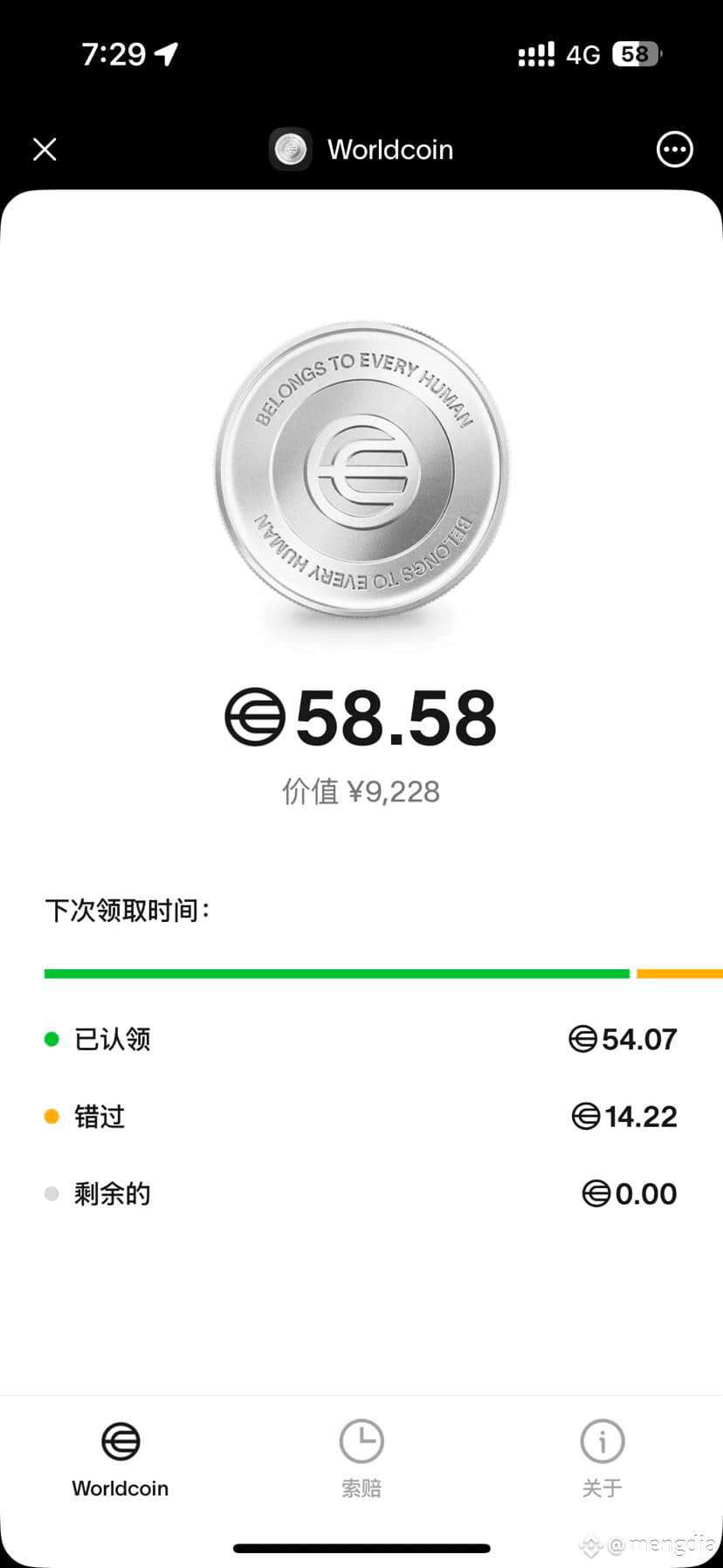
Missed 14 dollars. Forgot to claim it.
Missed 14 dollars. Forgot to claim it.

链上灵熹
·
--
With a ban from the Ministry of National Security, iris coins are all kneeling! Your wallet is being precisely blown up by a policy nuclear bomb!
Crypto nuclear explosion! When the national security guillotine falls, how much is your iris worth?
"At the gambling table of the crypto world, policy red lines are always deadlier than K-line charts." On August 6, a notice from China's Ministry of National Security subjected Worldcoin, the 49th largest cryptocurrency globally, to a "policy nuclear bomb"—within 24 hours, the price briefly dropped 2%, and a major whale address sold 1 million WLD, spreading market panic across the entire biometric recognition sector.
Why has iris data become a trigger for national security?
Core contradiction: This crackdown is by no means accidental, but rather China's ultimate declaration of "digital sovereignty."
"At the gambling table of the crypto world, policy red lines are always deadlier than K-line charts." On August 6, a notice from China's Ministry of National Security subjected Worldcoin, the 49th largest cryptocurrency globally, to a "policy nuclear bomb"—within 24 hours, the price briefly dropped 2%, and a major whale address sold 1 million WLD, spreading market panic across the entire biometric recognition sector.
Why has iris data become a trigger for national security?
Core contradiction: This crackdown is by no means accidental, but rather China's ultimate declaration of "digital sovereignty."
·
--
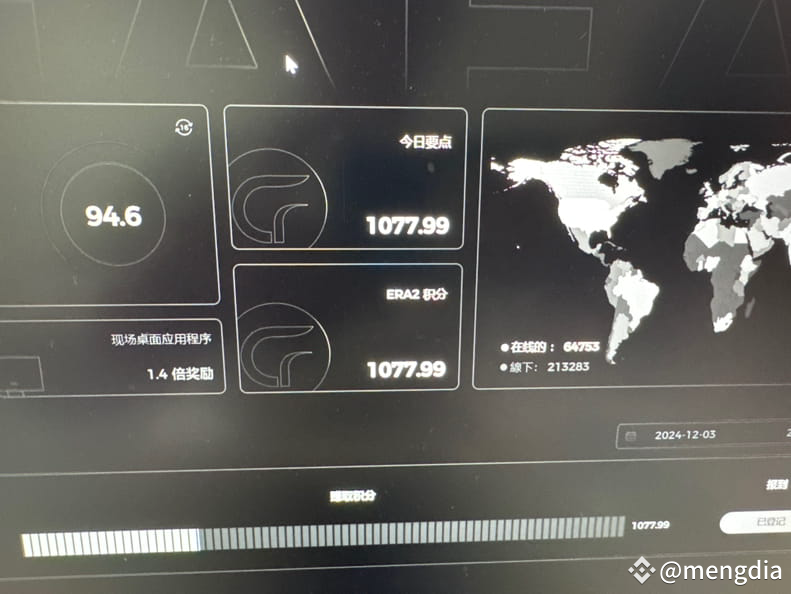
What is Gaea and what is its goal?
Gaea is a third-layer public blockchain project based on Ethereum, aimed at creating a decentralized ecosystem to support the training and development of artificial intelligence by utilizing unused network resources. Our goal is to provide an AI-driven data sharing and processing platform.
How can I participate in the Gaea ecosystem?
You can participate in the Gaea ecosystem by registering on our platform, connecting your device, and optionally running a node. This will allow you to contribute unused computing resources, participate in AI data processing, and earn rewards.
How does Gaea ensure my data security and privacy?
Gaea employs advanced encryption methods and blockchain security protocols to protect your data. Your personal data will not be accessed or used by the platform without your consent. All transactions and data exchanges are secured through Ethereum's mature blockchain technology.
What can we expect from Gaea's future development?
Gaea's future roadmap includes further development of AI capabilities, expansion of NFT projects, and ongoing improvements to the platform infrastructure to support larger-scale and more efficient operations. Upcoming highlights include the launch of our AI computing power network and new integrations with global technology providers.
What is Gaea and what is its goal?
Gaea is a third-layer public blockchain project based on Ethereum, aimed at creating a decentralized ecosystem to support the training and development of artificial intelligence by utilizing unused network resources. Our goal is to provide an AI-driven data sharing and processing platform.
How can I participate in the Gaea ecosystem?
You can participate in the Gaea ecosystem by registering on our platform, connecting your device, and optionally running a node. This will allow you to contribute unused computing resources, participate in AI data processing, and earn rewards.
How does Gaea ensure my data security and privacy?
Gaea employs advanced encryption methods and blockchain security protocols to protect your data. Your personal data will not be accessed or used by the platform without your consent. All transactions and data exchanges are secured through Ethereum's mature blockchain technology.
What can we expect from Gaea's future development?
Gaea's future roadmap includes further development of AI capabilities, expansion of NFT projects, and ongoing improvements to the platform infrastructure to support larger-scale and more efficient operations. Upcoming highlights include the launch of our AI computing power network and new integrations with global technology providers.
Gaea is a third-layer public blockchain project based on Ethereum, aimed at creating a decentralized ecosystem to support the training and development of artificial intelligence by utilizing unused network resources. Our goal is to provide an AI-driven data sharing and processing platform.
How can I participate in the Gaea ecosystem?
You can participate in the Gaea ecosystem by registering on our platform, connecting your device, and optionally running a node. This will allow you to contribute unused computing resources, participate in AI data processing, and earn rewards.
How does Gaea ensure my data security and privacy?
Gaea employs advanced encryption methods and blockchain security protocols to protect your data. Your personal data will not be accessed or used by the platform without your consent. All transactions and data exchanges are secured through Ethereum's mature blockchain technology.
What can we expect from Gaea's future development?
Gaea's future roadmap includes further development of AI capabilities, expansion of NFT projects, and ongoing improvements to the platform infrastructure to support larger-scale and more efficient operations. Upcoming highlights include the launch of our AI computing power network and new integrations with global technology providers.
207
·
--
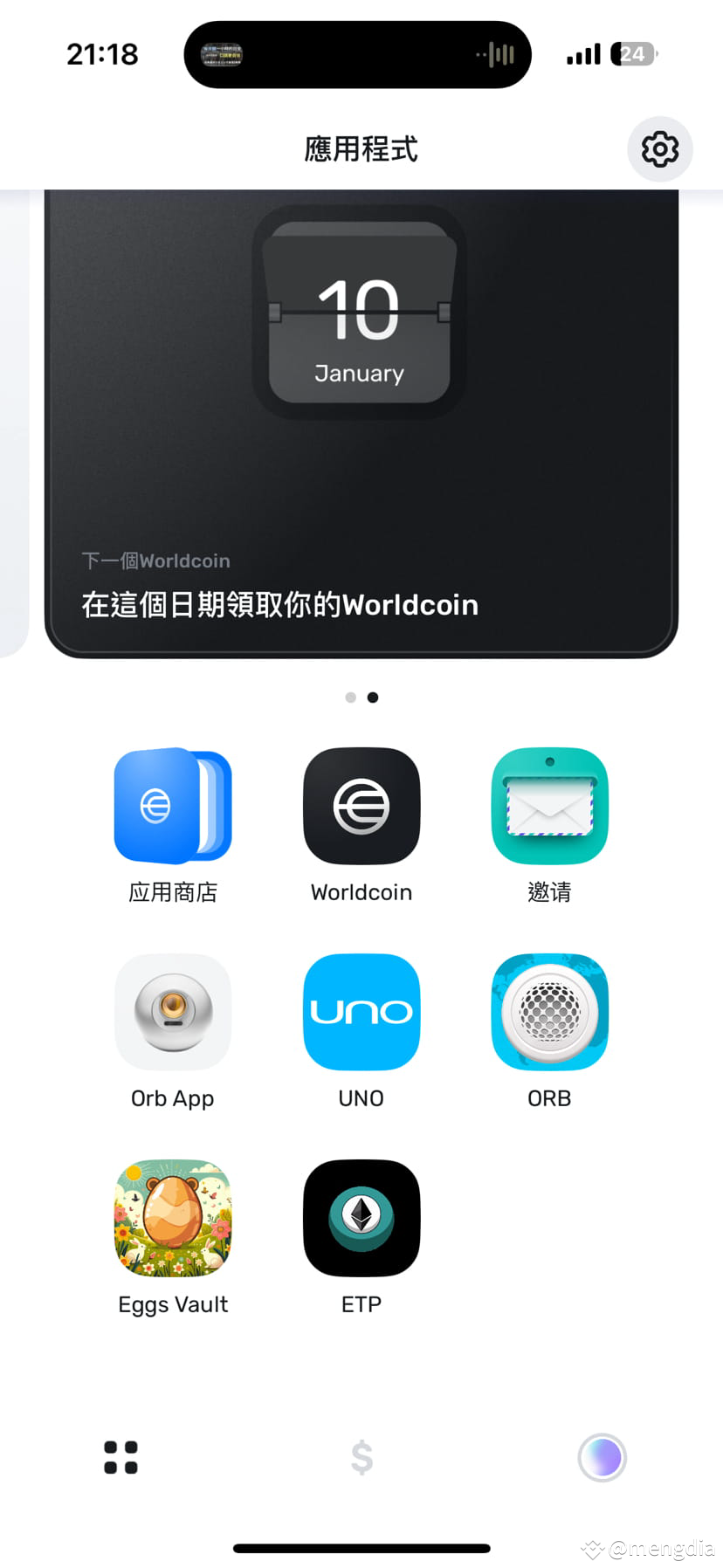
World app
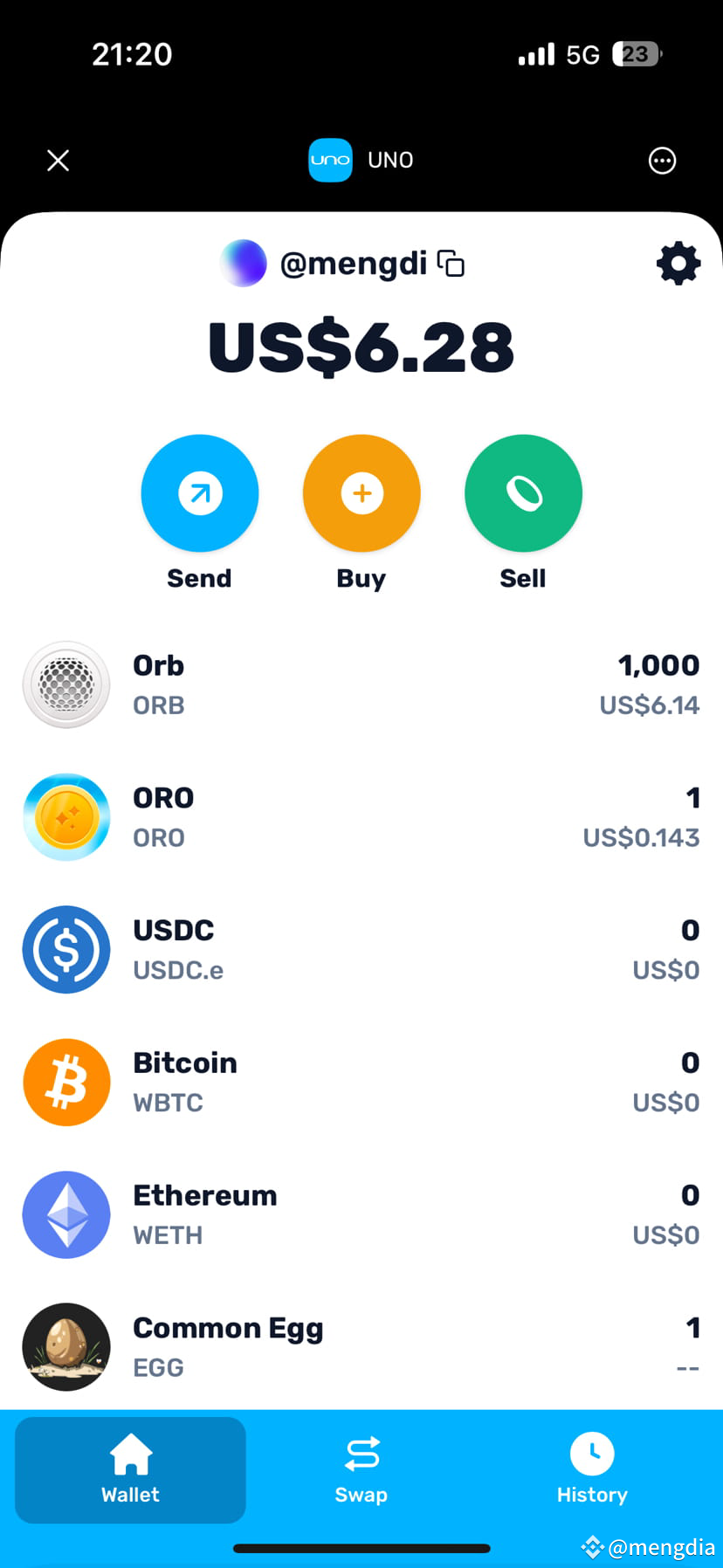
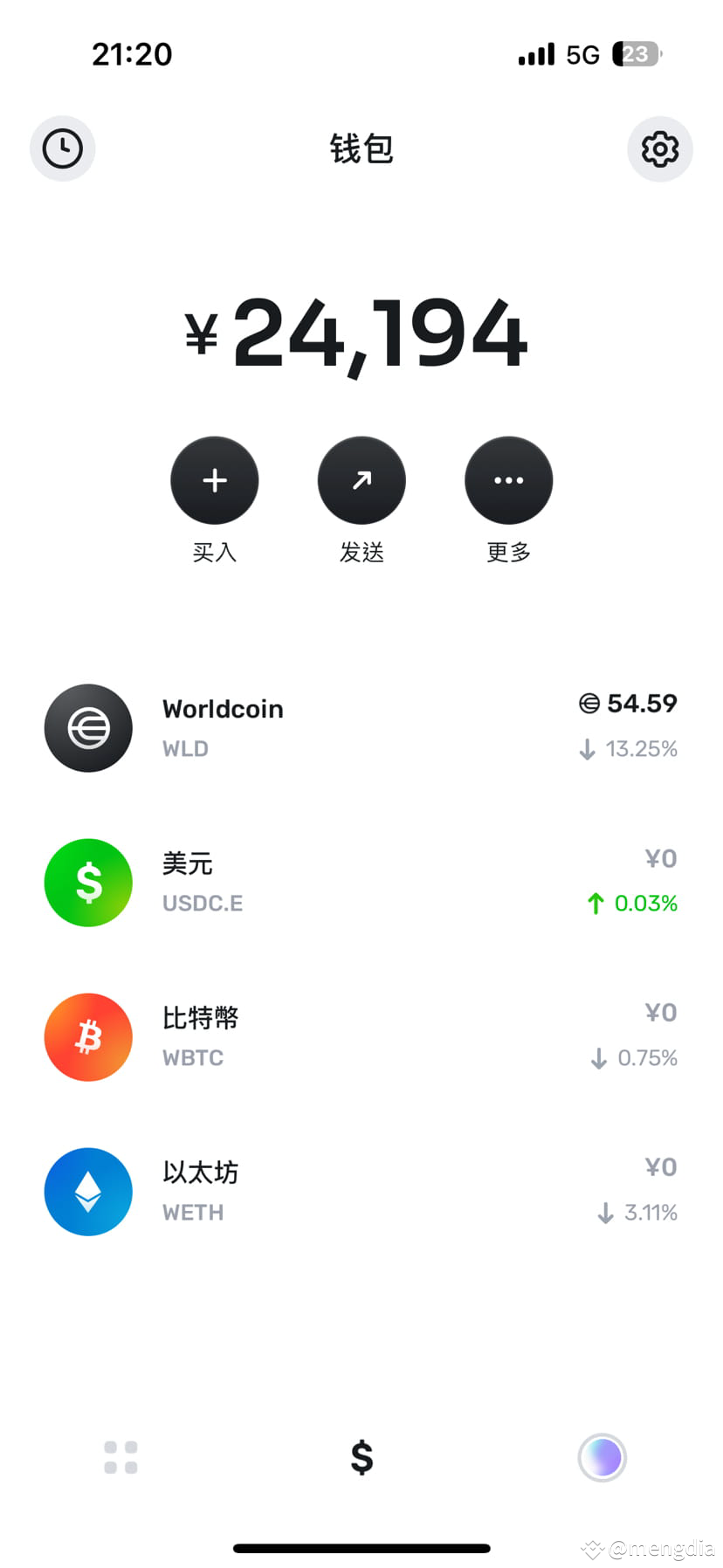
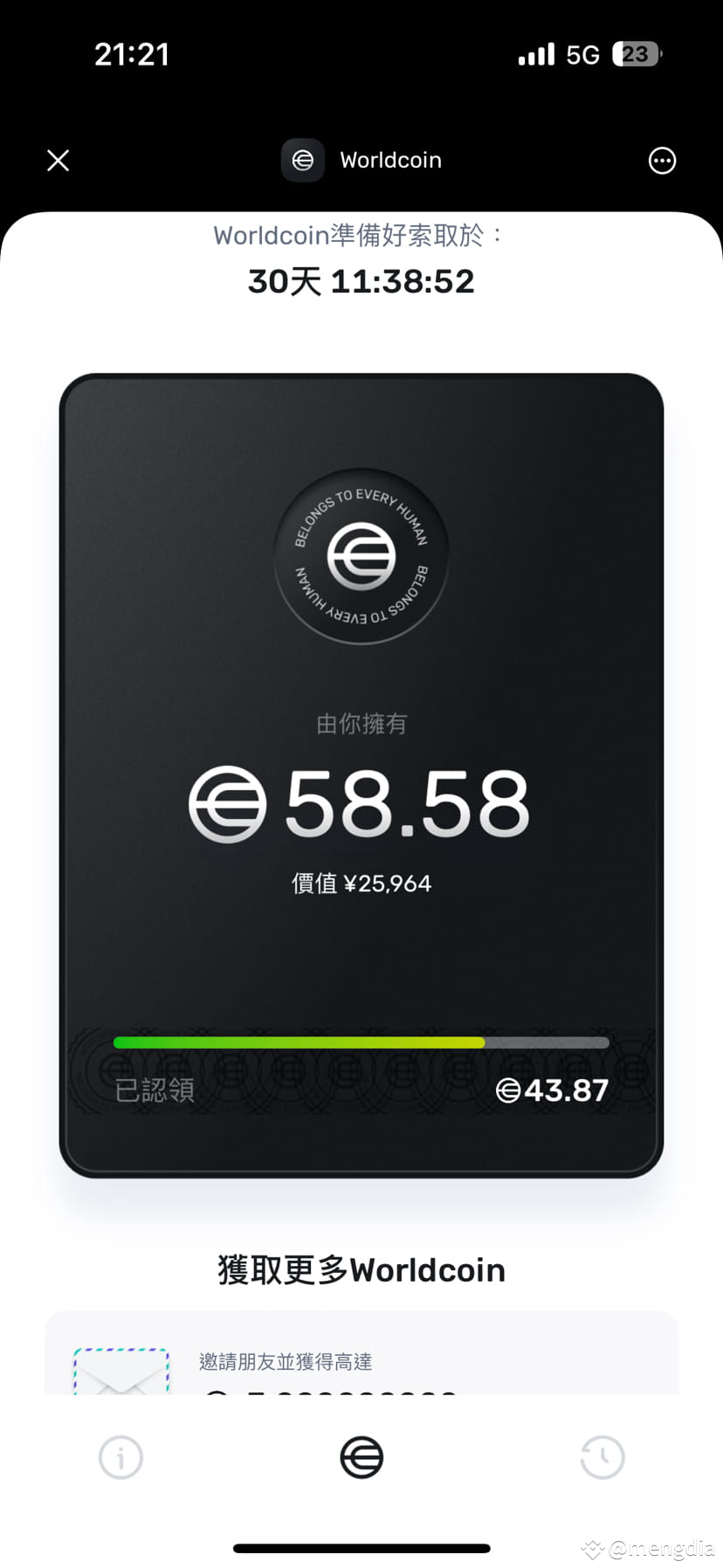
The WLD ecosystem currently allows you to receive WLD coins once a month, with a random amount.
You can receive 1000 coins from Orb at once.
You can receive 1 coin from ORO daily.
Currently, 1 coin has been received from EGG.
All of the above are free to receive.
ETP is the WLD lottery system, where 1 WLD can be exchanged for a data lottery ticket, and the prize pool for each draw is WLD, which is quite substantial. However, I noticed that in the previous few draws, no one won.
UNO allows you to view all balances and currencies in your wallet.
World app
The WLD ecosystem currently allows you to receive WLD coins once a month, with a random amount.
You can receive 1000 coins from Orb at once.
You can receive 1 coin from ORO daily.
Currently, 1 coin has been received from EGG.
All of the above are free to receive.
ETP is the WLD lottery system, where 1 WLD can be exchanged for a data lottery ticket, and the prize pool for each draw is WLD, which is quite substantial. However, I noticed that in the previous few draws, no one won.
UNO allows you to view all balances and currencies in your wallet.
The WLD ecosystem currently allows you to receive WLD coins once a month, with a random amount.
You can receive 1000 coins from Orb at once.
You can receive 1 coin from ORO daily.
Currently, 1 coin has been received from EGG.
All of the above are free to receive.
ETP is the WLD lottery system, where 1 WLD can be exchanged for a data lottery ticket, and the prize pool for each draw is WLD, which is quite substantial. However, I noticed that in the previous few draws, no one won.
UNO allows you to view all balances and currencies in your wallet.
20
7
3
9.3k
·
--
Future Development Trends of DogecoinRegarding the future trends of Dogecoin, we can analyze it from several aspects:
$### In the short term$DOGE
- Market Sentiment: The price of Dogecoin is often significantly influenced by market sentiment and speculative investments in the short term. Social media, celebrity effects, and discussions within online communities can drive short-term price increases or decreases.
- Technological Development: If the Dogecoin technical team makes improvements and updates, such as increasing transaction speed, lowering fees, or adding new features, it could positively affect the price.
- Trading Volume and Liquidity: Increases in trading volume and liquidity are usually associated with price increases. More trading platforms supporting Dogecoin trading may enhance its market depth and price stability.
Future Development Trends of Dogecoin
Regarding the future trends of Dogecoin, we can analyze it from several aspects:
$### In the short term$DOGE
- Market Sentiment: The price of Dogecoin is often significantly influenced by market sentiment and speculative investments in the short term. Social media, celebrity effects, and discussions within online communities can drive short-term price increases or decreases.
- Technological Development: If the Dogecoin technical team makes improvements and updates, such as increasing transaction speed, lowering fees, or adding new features, it could positively affect the price.
- Trading Volume and Liquidity: Increases in trading volume and liquidity are usually associated with price increases. More trading platforms supporting Dogecoin trading may enhance its market depth and price stability.
$### In the short term$DOGE
- Market Sentiment: The price of Dogecoin is often significantly influenced by market sentiment and speculative investments in the short term. Social media, celebrity effects, and discussions within online communities can drive short-term price increases or decreases.
- Technological Development: If the Dogecoin technical team makes improvements and updates, such as increasing transaction speed, lowering fees, or adding new features, it could positively affect the price.
- Trading Volume and Liquidity: Increases in trading volume and liquidity are usually associated with price increases. More trading platforms supporting Dogecoin trading may enhance its market depth and price stability.
713
·
--
As of December 6, 2024, the price of Bitcoin (BTC) has indeed experienced significant fluctuations and growth, but breaking through the $100,000 price point remains a very challenging prediction.
In the past few years, Bitcoin has gone through multiple bull and bear markets, with prices rising from a few dollars to a peak close to $69,000 (in November 2021). If Bitcoin does indeed break through $100,000, it would mark a very significant milestone.
- Broader institutional adoption and investment.
- Cryptocurrency becoming a more mainstream investment and payment method.
- Ongoing technological advancements and improvements in cybersecurity.
- More favorable regulatory environment.
Predicting the future price of Bitcoin or any cryptocurrency is very difficult, as they are highly speculative and susceptible to various unpredictable factors. Any information regarding Bitcoin price predictions should be analyzed based on prudent and diverse sources of information.
As of December 6, 2024, the price of Bitcoin (BTC) has indeed experienced significant fluctuations and growth, but breaking through the $100,000 price point remains a very challenging prediction.
In the past few years, Bitcoin has gone through multiple bull and bear markets, with prices rising from a few dollars to a peak close to $69,000 (in November 2021). If Bitcoin does indeed break through $100,000, it would mark a very significant milestone.
- Broader institutional adoption and investment.
- Cryptocurrency becoming a more mainstream investment and payment method.
- Ongoing technological advancements and improvements in cybersecurity.
- More favorable regulatory environment.
Predicting the future price of Bitcoin or any cryptocurrency is very difficult, as they are highly speculative and susceptible to various unpredictable factors. Any information regarding Bitcoin price predictions should be analyzed based on prudent and diverse sources of information.
In the past few years, Bitcoin has gone through multiple bull and bear markets, with prices rising from a few dollars to a peak close to $69,000 (in November 2021). If Bitcoin does indeed break through $100,000, it would mark a very significant milestone.
- Broader institutional adoption and investment.
- Cryptocurrency becoming a more mainstream investment and payment method.
- Ongoing technological advancements and improvements in cybersecurity.
- More favorable regulatory environment.
Predicting the future price of Bitcoin or any cryptocurrency is very difficult, as they are highly speculative and susceptible to various unpredictable factors. Any information regarding Bitcoin price predictions should be analyzed based on prudent and diverse sources of information.
205
Log in to explore more content
Join global crypto users on Binance Square
⚡️ Get latest and useful information about crypto.
💬 Trusted by the world’s largest crypto exchange.
👍 Discover real insights from verified creators.
Email / Phone number
Trending Topics
AIStocksWhatNext
1M views
7,041 Discussing
Share & Win Traffic Reward in our Trending Hashtag Campaign
✨Topic: What Other Investment Opportunities Remain as AI Stocks Keep Rising?
👉How to Join:
Publish a short post or article with hashtag #AIStocksWhatNext
Share whether you’re bullish or bearish, and post your AI stock holdings or trade — using the trade widget may improve your eligibility.
You can also strengthen your post by sharing data or charts, and avoiding AI-generated images.
✍️Create content based on the below angles:
- Nvidia says chip sales will double next year, and top AI companies keep hitting record revenue, the compute spend behind it is just as staggering. Is AI demand really taking off? And how long can it last? AI stocks are up across the board. Is this a real breakout, or just a short-term bounce?
- Industry leaders are calling to slow down AI development, while Trump plans to build an “AI Force”, claiming AI could account for 25% of U.S. GDP in the future. Whose side are you on? Will state-level backing be a long-term win for AI stocks?
- Are you buying AI stocks? Share your AI-related trade/holdings with our trade sharing widget.
⏰Campaign Period:
- 2026-09-22 7:00 - 2026-09-24 4:00 UTC
🎁Reward:
- Qualified posts that comply with the above guidelines and contain more than 100 words will be reviewed and may receive a random traffic boost of 500 to 3,000 views. You will receive a notification from your feed secretary if your post is selected.
- Get a chance to have your article featured on Binance Square Official
Need ideas for your post? Visit the topic page #AIStocksWhatNext or the Square Guide on How to Post for Better Reach.
Binance Square Official
·611 Likes
·1.8M views
BitcoinRejectedAt$87,300Twice
0 views
0 Discussing
BCHJumps28%OnCMEFuturesListing
25,251 views
673 Discussing