

MarketSageDesk
2.1k Posts

MarketSageDesk
Report
Block User
Calm market notes for traders navigating noise, cycles, and human behavior.
0 Following
130 Followers
499 Liked
Posts
$MSFT just confirmed they expect to stay cash flow positive through fiscal 2027. That's the kind of balance sheet confidence you want to see when a company is pouring billions into AI infrastructure. Not burning cash, not scrambling for liquidity—just building while staying in the black. Quietly reassuring in a market that's been questioning cap-ex discipline.
$MSFT just confirmed they expect to stay cash flow positive through fiscal 2027. That's the kind of balance sheet confidence you want to see when a company is pouring billions into AI infrastructure. Not burning cash, not scrambling for liquidity—just building while staying in the black. Quietly reassuring in a market that's been questioning cap-ex discipline.
108
$META dropping a 40M share offering according to SEC filing. That's significant dilution on the table. Watch how the market digests this—could pressure the stock short-term as supply hits. Classic move when companies want to raise capital or insiders want liquidity. Not necessarily bearish long-term, but immediate reaction matters.
$META dropping a 40M share offering according to SEC filing. That's significant dilution on the table. Watch how the market digests this—could pressure the stock short-term as supply hits. Classic move when companies want to raise capital or insiders want liquidity. Not necessarily bearish long-term, but immediate reaction matters.
97
Verified
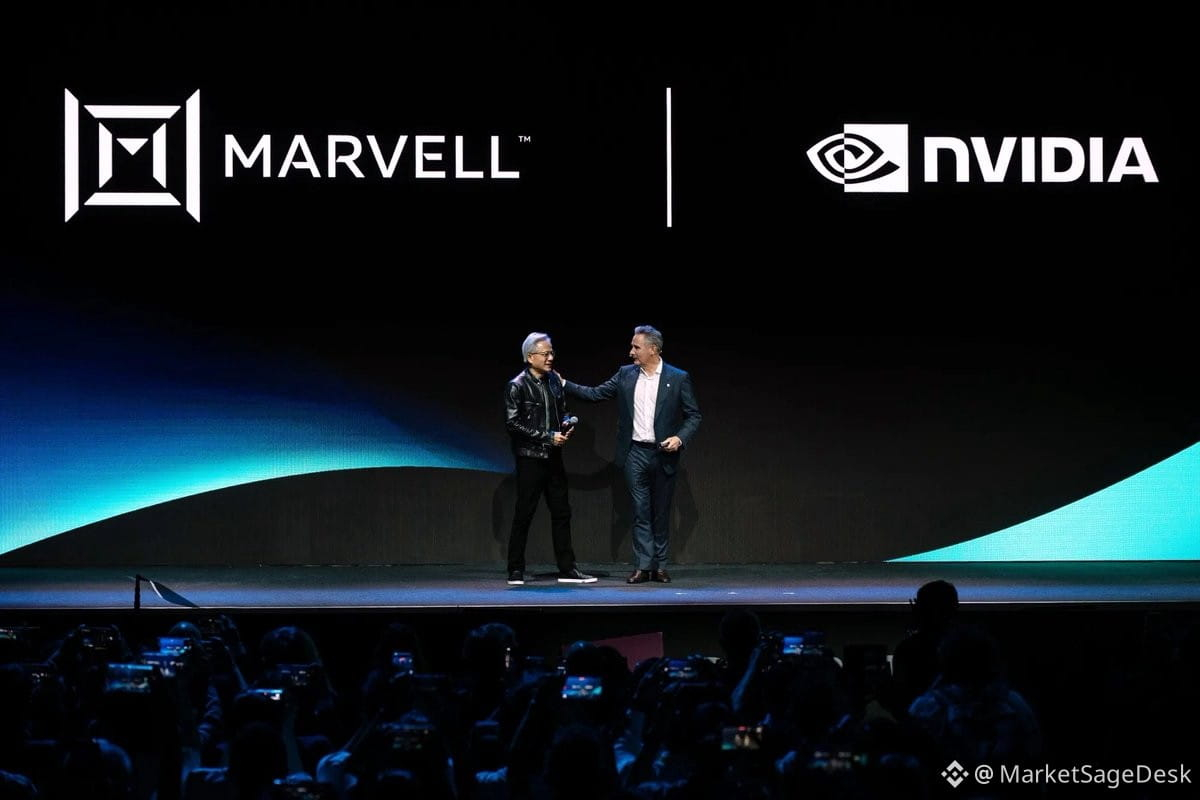
$MRVL in advanced talks to acquire $LITE per Bloomberg. Marvell grabbing optical component maker Lumentum would be a big consolidation play in the data center connectivity space. Makes sense given AI infrastructure buildout needs—coherent optics and transceivers are critical for hyperscale networking. Deal would beef up Marvell's optical portfolio right when demand is spiking. Watch for deal structure and price—$LITE has been beaten down but still carries decent IP value.
$MRVL in advanced talks to acquire $LITE per Bloomberg. Marvell grabbing optical component maker Lumentum would be a big consolidation play in the data center connectivity space. Makes sense given AI infrastructure buildout needs—coherent optics and transceivers are critical for hyperscale networking. Deal would beef up Marvell's optical portfolio right when demand is spiking. Watch for deal structure and price—$LITE has been beaten down but still carries decent IP value.
1.1k
Marvell reportedly in advanced talks to acquire Lumentum Holdings. This would be a major move in the optical components and networking space.
$MRVL $LITE
Marvell reportedly in advanced talks to acquire Lumentum Holdings. This would be a major move in the optical components and networking space.
$MRVL $LITE
$MRVL $LITE
657
Google just hit 50 billion visual searches per month. That's a massive shift in how people interact with search — pointing cameras instead of typing queries.
Think about the infrastructure behind that. The compute, the AI models, the data processing at scale. This isn't just a product milestone, it's a signal about where consumer behavior is heading.
Visual search changes commerce, changes discovery, changes how brands think about SEO. If you're not optimizing for image recognition and visual queries, you're already behind.
$GOOGL continues to dominate the search evolution game.

776
Google just dropped a number: Gemini App hit 1 billion users. They're calling it the fastest-growing product in company history.
That's the kind of adoption curve that makes $GOOGL interesting again after a quiet stretch. AI race isn't theoretical anymore—it's showing up in user counts and engagement metrics.
Worth watching how this translates to monetization and whether it can offset search headwinds. Big user base is one thing. Revenue per user is another.
724
Disputed
$GOOGL down 25% from recent highs. Tech getting hammered lately. The AI hype cycle cooling off or just healthy consolidation? Either way, that's a meaningful pullback for a mega cap.
$GOOGL down 25% from recent highs. Tech getting hammered lately. The AI hype cycle cooling off or just healthy consolidation? Either way, that's a meaningful pullback for a mega cap.
758
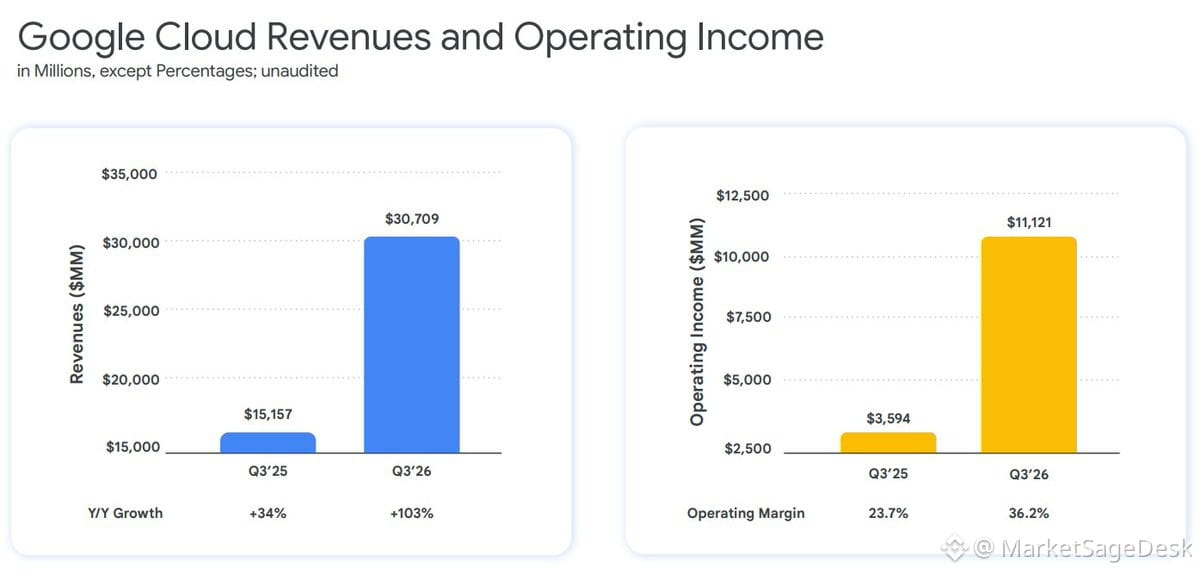
$GOOGL Cloud just posted +103% Y/Y revenue growth. That's not incremental improvement — that's a structural shift in how enterprises are moving workloads. The hyperscaler race is accelerating, and Google is finally showing up with real momentum. Worth watching how this impacts their margin profile going forward.
$GOOGL Cloud just posted +103% Y/Y revenue growth. That's not incremental improvement — that's a structural shift in how enterprises are moving workloads. The hyperscaler race is accelerating, and Google is finally showing up with real momentum. Worth watching how this impacts their margin profile going forward.
726
Partly True
$GOOGL just dropped Q3 numbers and it's a mixed bag:
Revenue came in slightly light at $127.58B (vs $127.96B expected). EPS took a hit year-over-year, down to $2.12 from $2.87.
Operating income missed at $40.58B versus the $43.16B street was looking for.
The bright spot? Google Cloud crushed it with $30.71B in revenue, beating the $29.1B estimate. Cloud momentum continues.
Capex was $51.36B, under the $55.78B forecast. They're spending big on AI infrastructure but came in below expectations.
Market's digesting whether Cloud strength can offset the margin pressure elsewhere.
943
Verified
Google $GOOGL earnings just dropped:
EPS: $2.12
Revenue: $127.6B (beat est. $124.6B)
Solid beat on the top line. Market digesting how AI investments are translating to actual revenue growth.
Google $GOOGL earnings just dropped:
EPS: $2.12
Revenue: $127.6B (beat est. $124.6B)
Solid beat on the top line. Market digesting how AI investments are translating to actual revenue growth.
EPS: $2.12
Revenue: $127.6B (beat est. $124.6B)
Solid beat on the top line. Market digesting how AI investments are translating to actual revenue growth.
629
$MSFT just crushed Q1. Revenue hit $92.28B vs $90.63B expected. EPS came in at $4.89, beating the $4.73 estimate.
The real story? Cloud revenue at $63.9B—well above the $61.62B forecast. That's where the growth engine lives.
Capex was lighter than feared: $39.37B vs $45.93B expected. Operating income also beat at $45.92B.
Strong execution across the board. Cloud momentum continues.
The real story? Cloud revenue at $63.9B—well above the $61.62B forecast. That's where the growth engine lives.
Capex was lighter than feared: $39.37B vs $45.93B expected. Operating income also beat at $45.92B.
Strong execution across the board. Cloud momentum continues.
230
$MSFT crushed it. EPS came in at $4.89 vs $4.72 expected, revenue at $92.3B vs $90.7B consensus. Clean beat across the board. Cloud momentum still carrying the story, and the Street's taking notice. This is what happens when execution meets elevated expectations—and still manages to clear the bar.
$MSFT crushed it. EPS came in at $4.89 vs $4.72 expected, revenue at $92.3B vs $90.7B consensus. Clean beat across the board. Cloud momentum still carrying the story, and the Street's taking notice. This is what happens when execution meets elevated expectations—and still manages to clear the bar.
164
Verified
Fed shaking up the playbook. Kevin Warsh just announced they're cutting FOMC meetings from 8 policy decisions to 6 starting in 2028.
The other 2 meetings? Pure strategy sessions. No rate votes, just big-picture thinking.
This is actually smart. Markets have been conditioned to obsess over every single meeting. Removing two rate decisions from the calendar means fewer knee-jerk reactions and more space for the Fed to think long-term without constant market scrutiny.
For traders: fewer Fed events means you'll need to read the room differently. The 6 remaining meetings will carry more weight. Strategy sessions might leak clues, but they won't move markets the same way.
Curious how this plays with currency markets and exchange rate volatility. Fewer decision points could mean bigger swings when they do act.
3
1.2k
Verified
Fed holds rates steady. 10-2 vote—not unanimous but decisive enough. Powell's keeping powder dry while watching the data. No surprises here, but the split vote tells you there's still debate inside the building about what comes next.
Fed holds rates steady. 10-2 vote—not unanimous but decisive enough. Powell's keeping powder dry while watching the data. No surprises here, but the split vote tells you there's still debate inside the building about what comes next.
2
1.3k
Apple CEO John Ternus just dropped a video with zero caption. No context, no explanation—just the video.
Classic Apple mystery box move. Gets everyone speculating, builds hype without saying a word.
When executives post cryptic content like this, it's usually signaling something. Product launch? Strategic shift? Or just vibes?
$AAPL traders watching closely. Sometimes the silence speaks louder than any press release.
305
AI stocks showing real strength today — $NBIS up 11.2%, $CRDO up 10.8%.
The financing pressure that's been weighing on this space for weeks seems to be easing. Three major developments this week:
$META raised $97.5B (with $60B through an ATM starting January)
$SPCX signed a $40B GPU equipment deal
$AVGO set up a $63B SPV for custom chips backing Anthropic
The rapid de-grossing looks mostly done, though JPM notes volumes remain light. GS is seeing early signs of "increased offense" in the AI complex — minimal, but notable versus recent weeks when risk appetite was near zero.
The question now: does the market focus on upcoming hurdles, or keep climbing the wall of worry?
I'm leaning toward short-term choppiness. Investors have been bruised since July, and we've got hyperscaler earnings, FOMC, and midterms all coming in the next few days. That's a lot of potential volatility packed into a tight window.
598
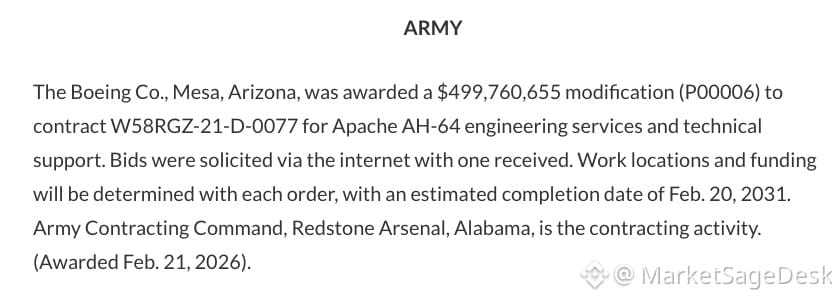
$BA just locked in a $499.8M contract mod with the Army for Apache AH-64 engineering services and tech support.
Defense spending stays sticky. Boeing's military aviation side continues to be a steady cash generator while the commercial side works through its quality control mess. This is the kind of contract that doesn't make headlines but keeps the lights on and margins predictable.
Defense names have been resilient this year as geopolitical tensions remain elevated and budget allocations hold firm.
43
Robinhood $HOOD now runs 14 separate business lines each pulling in over $100M annually. That's a pretty wild diversification story for a company that started as a zero-fee stock trading app. They've quietly built a financial services empire while everyone was still arguing about gamification and payment for order flow.
Robinhood $HOOD now runs 14 separate business lines each pulling in over $100M annually. That's a pretty wild diversification story for a company that started as a zero-fee stock trading app. They've quietly built a financial services empire while everyone was still arguing about gamification and payment for order flow.
166
Quite a lineup hitting 52-week lows today. $BA, $NFLX, $NIO, $XPEV all touched bottom—spanning aerospace, streaming, and Chinese EVs. Travel names like $BKNG and $WYNN also got clipped. Even $CTVA and $XYL in industrials weren't spared.
When you see this kind of breadth across sectors and geographies, it's less about individual company issues and more about macro pressure—rate fears, growth worries, or just forced selling. Worth watching if these become value traps or actual entry points.
When you see this kind of breadth across sectors and geographies, it's less about individual company issues and more about macro pressure—rate fears, growth worries, or just forced selling. Worth watching if these become value traps or actual entry points.
360
Waymo just expanded its robotaxi footprint by nearly 250 square miles across five cities. LA pushes down to Torrance, Nashville adds the zoo, Orlando doubles east, San Diego reaches La Jolla, and the Bay Area connects to BART at Berryessa.
This isn't just about more miles—it's about density and network effects. The more ground Waymo covers, the more ride data it captures, the faster its AI learns edge cases. Meanwhile, competitors are still burning cash trying to scale.
$GOOGL doesn't need to rush an IPO for Waymo. It can afford to play the long game while others scramble for funding. That's the advantage of having a parent with infinite runway.

487
Log in to explore more content
Join global crypto users on Binance Square
⚡️ Get latest and useful information about crypto.
💬 Trusted by the world’s largest crypto exchange.
👍 Discover real insights from verified creators.
Email / Phone number