
John1975J
32 Posts

John1975J
Open Trade

ETH Holder
Frequent Trader
1.4 Years
5 Following
3 Followers
5 Liked
Posts
Portfolio
All
Quotes
#termmax @TermMax
I tried to look for more information about TMX and ran into confusion: the same ticker uses a completely different project — a 100x leverage DEX, no KYC, with its own crypto Visa card. Nothing to do with @TermMax and a fixed landing page.
Different protocols, different risks, different teams — just a coincidentally matching ticker.
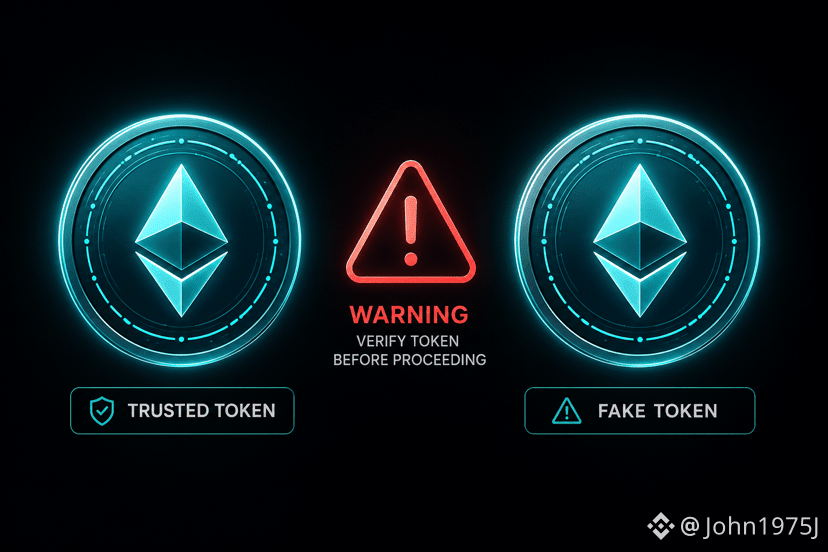
For those who Google information about #TermMax : it’s easy to come across an article about a completely different product. It’s always worth checking the token contract, not relying on the ticker as a unique identifier
I tried to look for more information about TMX and ran into confusion: the same ticker uses a completely different project — a 100x leverage DEX, no KYC, with its own crypto Visa card. Nothing to do with @TermMax and a fixed landing page.
Different protocols, different risks, different teams — just a coincidentally matching ticker.
For those who Google information about #TermMax : it’s easy to come across an article about a completely different product. It’s always worth checking the token contract, not relying on the ticker as a unique identifier
I noticed in the description the wording “recurring lending” @TermMax , and at first I didn’t understand how it differs from a regular fixed loan.
The difference is in automation: instead of manually opening a new position after each repayment, you can set up automatic rollover for a new term at a new market rate of #TermMax .
This raises the question: if the rate is automatically renegotiated under new terms, is it really “fixed” in the long run?
The difference is in automation: instead of manually opening a new position after each repayment, you can set up automatic rollover for a new term at a new market rate of #TermMax .
This raises the question: if the rate is automatically renegotiated under new terms, is it really “fixed” in the long run?

I checked which networks #TermMax actually works on, expecting to see one chain, like most young protocols.
Turns out it’s broader: Ethereum, Arbitrum, and BNB Chain all at once, plus integration with LI.FI for cross-chain bridging right inside the app.
Multi-chain from the very start — that’s not something that’s easy to implement technically. Usually, protocols expand to new networks gradually.
I still don’t know whether liquidity is distributed evenly across networks, or if the bulk is concentrated in one — these are different things, even if the protocol is formally "live on three networks".
@TermMax
Turns out it’s broader: Ethereum, Arbitrum, and BNB Chain all at once, plus integration with LI.FI for cross-chain bridging right inside the app.
Multi-chain from the very start — that’s not something that’s easy to implement technically. Usually, protocols expand to new networks gradually.
I still don’t know whether liquidity is distributed evenly across networks, or if the bulk is concentrated in one — these are different things, even if the protocol is formally "live on three networks".
@TermMax

All the figures about #bStocksCIS that I came across earlier were in dollars — first millions, then hundreds of millions under management. Abstractly a lot, but hard to imagine who’s behind that amount.
I came across data specifically about people: in the first nine days after the launch, there were on average 30,700 active traders per day, with turnover exceeding $1 billion over that same short period.
30 thousand people is a number you can already picture: not an abstract “market,” but a specific count of people simultaneously pressing the same button in a freshly launched product.
@BinanceCIS
I came across data specifically about people: in the first nine days after the launch, there were on average 30,700 active traders per day, with turnover exceeding $1 billion over that same short period.
30 thousand people is a number you can already picture: not an abstract “market,” but a specific count of people simultaneously pressing the same button in a freshly launched product.
@BinanceCIS

Last night I decided to go through the borrower’s path in @TermMax from start to finish myself, rather than just reading about the mechanics from the outside.
I remember the first time I opened a leveraged position on a well-known perp protocol — I spent about twenty minutes figuring out margin and liquidation price, and still closed the tab in a mild panic.
Here it’s different: I connected my wallet, chose the market with the right term, checked the fixed rate, confirmed — done.
No screen with a liquidation price changing every second. Not because there’s no risk at all, but because with a fixed rate there’s no familiar margin-call logic.
Twenty minutes of panic turned into a couple of calm clicks.
#TermMax @TermMax
I remember the first time I opened a leveraged position on a well-known perp protocol — I spent about twenty minutes figuring out margin and liquidation price, and still closed the tab in a mild panic.
Here it’s different: I connected my wallet, chose the market with the right term, checked the fixed rate, confirmed — done.
No screen with a liquidation price changing every second. Not because there’s no risk at all, but because with a fixed rate there’s no familiar margin-call logic.
Twenty minutes of panic turned into a couple of calm clicks.
#TermMax @TermMax

Verified
I was scrolling through the list of new #bStocksCIS and saw GameStop— for a moment it seemed like I’d ended up in the wrong list.
The company that became a symbol of the chaotic retail rally of 2021 is now available as a tokenized stock on a crypto exchange, and even as collateral for margin positions. The circle that began on Reddit forums and with brokers halting trading has closed back on the blockchain.
It’s amusing that the asset whose whole point was to stand up to traditional financial intermediaries is now being traded through one of the largest crypto intermediaries.
Not sure whether there’s some irony behind this listing, or whether it’s simply a natural expansion of the catalog—but the coincidence is too colorful to ignore.
@BinanceCIS
The company that became a symbol of the chaotic retail rally of 2021 is now available as a tokenized stock on a crypto exchange, and even as collateral for margin positions. The circle that began on Reddit forums and with brokers halting trading has closed back on the blockchain.
It’s amusing that the asset whose whole point was to stand up to traditional financial intermediaries is now being traded through one of the largest crypto intermediaries.
Not sure whether there’s some irony behind this listing, or whether it’s simply a natural expansion of the catalog—but the coincidence is too colorful to ignore.
@BinanceCIS

With a fixed-rate setup in DeFi, there’s a parameter that interests me more than the yield itself—what happens to liquidity at the moment of real market stress, not in a calm scenario. In @TermMax , the borrower packages collateral and debt into GT—an NFT position with an MLTV (maximum loan-to-value) that protects against direct default: if the collateral drops below the threshold, the position is liquidated. The logic is standard for DeFi; there’s nothing surprising about it. The question is different: FT and XT trade separately from GT on their own market, and the entire idea of “split debt” relies on that market having sufficient depth. If, during a panic, the spread on FT suddenly widens and no buyer is found, the holder will end up in a situation where “the mechanics work on paper, but getting out is expensive.” Isolating the markets from each other removes the risk of contagion between pools, but it doesn’t remove the question of liquidity within a single pool. I’m not making conclusions yet—I’m watching how the growth in TVL and the TMX pre-mine will affect the depth of the order book.
#TermMax @TermMax
#TermMax @TermMax

I was scrolling through the list of new #bStocksCIS entries and saw GameStop — for a second, it seemed like I’d ended up in the wrong list.
The company that became a symbol of the wild 2021 retail-frenzy is now available as a tokenized stock on a crypto exchange, and even as collateral for margin positions. The circle that began with Reddit forums and brokers halting trading has closed back around on the blockchain.
It’s funny that the asset whose whole point was to stand up to traditional financial intermediaries is now traded through one of the biggest intermediaries in crypto.
Not sure whether there’s any irony behind this listing, or if it’s just the natural expansion of the catalog — but the coincidence is too colorful to ignore.
@BinanceCIS #bStocksCIS
The company that became a symbol of the wild 2021 retail-frenzy is now available as a tokenized stock on a crypto exchange, and even as collateral for margin positions. The circle that began with Reddit forums and brokers halting trading has closed back around on the blockchain.
It’s funny that the asset whose whole point was to stand up to traditional financial intermediaries is now traded through one of the biggest intermediaries in crypto.
Not sure whether there’s any irony behind this listing, or if it’s just the natural expansion of the catalog — but the coincidence is too colorful to ignore.
@BinanceCIS #bStocksCIS

The word “обогнали” (“overtook”) in headlines about #bStocksCIS made me read it as an unambiguous victory at first—if they beat (overtook) a competitor, then the product must objectively be better.
The claim is supported: #bStocksCIS overtook xStocks and became the second-largest issuer of tokenized shares in the world, at about $610.6 million, trailing only Ondo Finance (~$927 million)—and that was just two months after launch.
But I then came across a candid note in one of the breakdowns: market cap by issuer shows how much has been issued, not how much is actually trading. For a platform with an established user base, the road to the top is shorter not because the product is better, but because the audience was already standing in the spot where the “buy” button appeared.
I still can’t decide whether it’s even fair to compare using this metric—growth is real, but it may not be measuring quite what it seems to measure at first glance.
@BinanceCIS
The claim is supported: #bStocksCIS overtook xStocks and became the second-largest issuer of tokenized shares in the world, at about $610.6 million, trailing only Ondo Finance (~$927 million)—and that was just two months after launch.
But I then came across a candid note in one of the breakdowns: market cap by issuer shows how much has been issued, not how much is actually trading. For a platform with an established user base, the road to the top is shorter not because the product is better, but because the audience was already standing in the spot where the “buy” button appeared.
I still can’t decide whether it’s even fair to compare using this metric—growth is real, but it may not be measuring quite what it seems to measure at first glance.
@BinanceCIS

I was certain: if there’s a brand on the screen — @BinanceCIS , then the papers are physically kept at the exchange. Who else, if not them?
In the official risk notice for #bStocksCIS , it says the exact opposite: the exchange does not handle the custody of your securities—that’s done by a separate entity in the chain of brokers.
From a regulatory standpoint, that makes sense: separating the roles of the trading venue and the custodian reduces conflicts of interest.
But realizing that the brand you trust with the interface is not physically the one holding the assets slightly changes the feeling of control. I’m not sure I would have looked for that detail if I hadn’t had to figure it out specifically.
In the official risk notice for #bStocksCIS , it says the exact opposite: the exchange does not handle the custody of your securities—that’s done by a separate entity in the chain of brokers.
From a regulatory standpoint, that makes sense: separating the roles of the trading venue and the custodian reduces conflicts of interest.
But realizing that the brand you trust with the interface is not physically the one holding the assets slightly changes the feeling of control. I’m not sure I would have looked for that detail if I hadn’t had to figure it out specifically.
When I see a headline like “they captured 85% of the market,” my first reaction is skepticism: usually, these figures are calculated using a narrow, specially selected category so the percentage sounds convincing.
But here the numbers are checked directly: #bStocksCIS really took more than 85% of the entire DEX volume of tokenized equities in July from @BinanceCIS , and the monthly volume itself jumped to $8.8B versus $2.9B the month before—this isn’t a narrow category, but a triple month-over-month increase.
And what’s more important—it's not only the product inside @BinanceCIS that’s growing, but also the share of the $BNB Chain among networks for tokenized assets: currently 28.4% versus 23.2% three months ago. So it turns out that it’s not just a specific product that’s winning, but the entire ecosystem compared to competitors like Ondo.
I’m not entirely sure how durable such leadership is—in crypto, market shares can flip in a single quarter if a competitor launches something more convenient. But as of today, this isn’t a marketing figure—it’s a real lead
But here the numbers are checked directly: #bStocksCIS really took more than 85% of the entire DEX volume of tokenized equities in July from @BinanceCIS , and the monthly volume itself jumped to $8.8B versus $2.9B the month before—this isn’t a narrow category, but a triple month-over-month increase.
And what’s more important—it's not only the product inside @BinanceCIS that’s growing, but also the share of the $BNB Chain among networks for tokenized assets: currently 28.4% versus 23.2% three months ago. So it turns out that it’s not just a specific product that’s winning, but the entire ecosystem compared to competitors like Ondo.
I’m not entirely sure how durable such leadership is—in crypto, market shares can flip in a single quarter if a competitor launches something more convenient. But as of today, this isn’t a marketing figure—it’s a real lead

Logical first conclusion: since #bStocksCIS is just a tokenized access to a stock, the risk there is just as predictable as the stock itself—only now it’s also available around the clock.
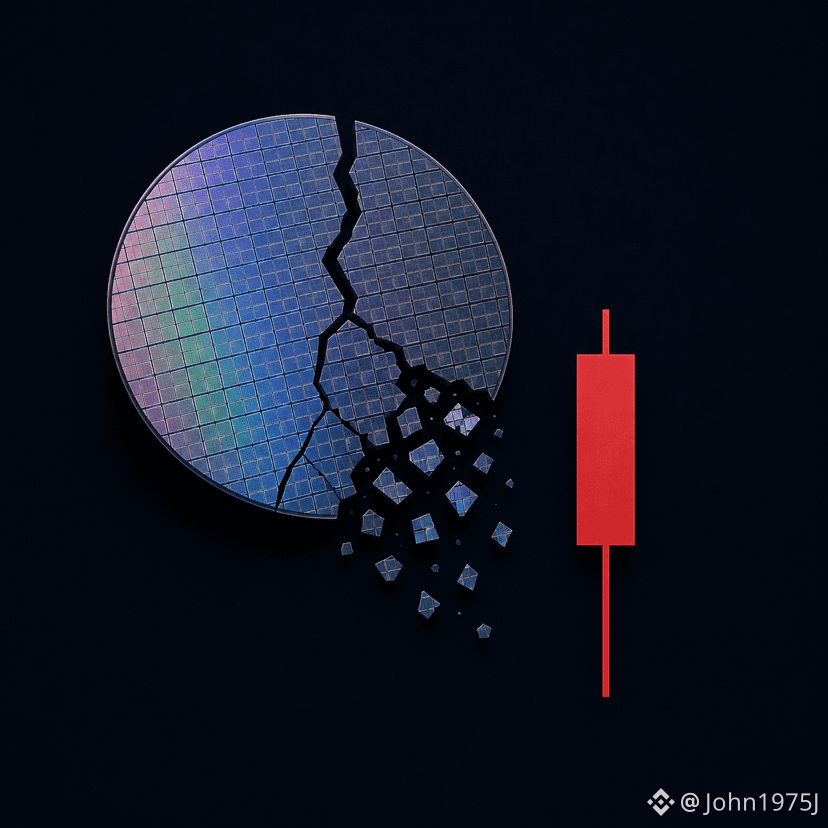
But $AXTIB (AXT Inc, materials for semiconductors) showed the opposite: down 16% in a day following the underlying stock— and this isn’t market noise, but a real business risk. China controls about 70% of the world’s production of indium, the raw material for these chips, and has tightened export checks.
So it turns out that tokenization doesn’t change the company’s underlying risk at all—it simply gives access to it 24/7, including during the hours when the traditional exchange is closed and you can’t wait out the move.
That said, it’s worth acknowledging: a -16% move on a single ticker isn’t really about the risk of #bStocksCIS as a product overall, but rather a reminder that behind individual securities there’s the risk of a specific business—not a diversified index. Keep that in mind before entering individual tickers. @BinanceCIS
But $AXTIB (AXT Inc, materials for semiconductors) showed the opposite: down 16% in a day following the underlying stock— and this isn’t market noise, but a real business risk. China controls about 70% of the world’s production of indium, the raw material for these chips, and has tightened export checks.
So it turns out that tokenization doesn’t change the company’s underlying risk at all—it simply gives access to it 24/7, including during the hours when the traditional exchange is closed and you can’t wait out the move.
That said, it’s worth acknowledging: a -16% move on a single ticker isn’t really about the risk of #bStocksCIS as a product overall, but rather a reminder that behind individual securities there’s the risk of a specific business—not a diversified index. Keep that in mind before entering individual tickers. @BinanceCIS
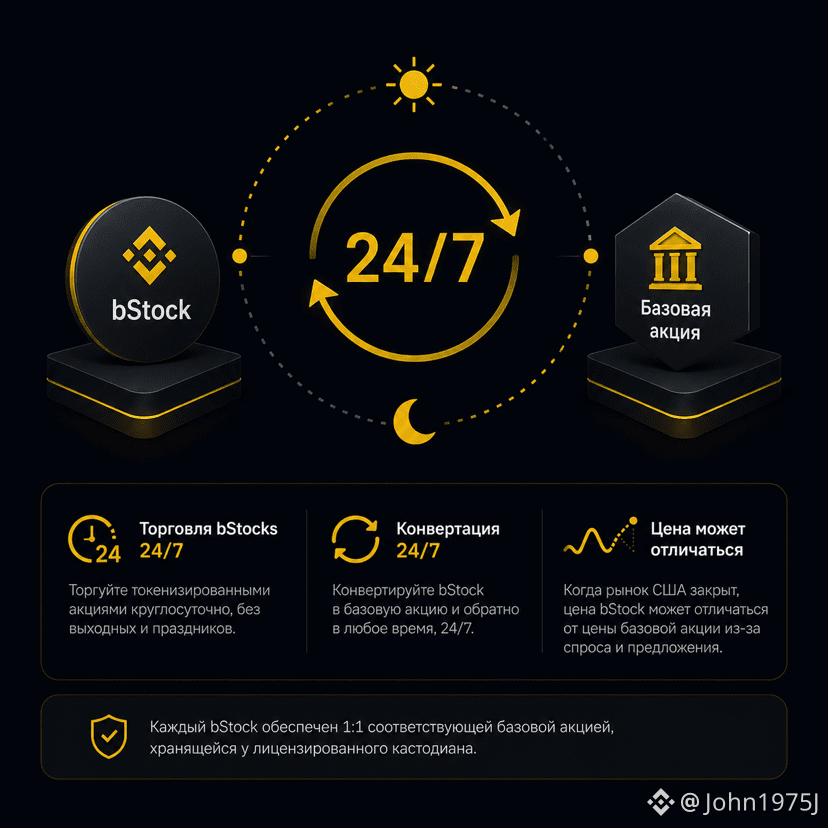
The detail that’s easy to overlook in #bStocksCIS : trading tokenized shares on @BinanceCIS is available 24/7—without being tied to U.S. stock exchange hours.
At the same time, #bStocksCIS is not the share itself, but a tokenized security backed by the underlying share on a 1:1 basis. @BinanceCIS also makes it possible to convert bStock back into the underlying share and vice versa at any time, 24/7.
But there’s an important nuance: when the U.S. market is closed, the bStock price may differ from the underlying share price. It is influenced by supply and demand, liquidity, the activity of market makers, and trading outside regular exchange hours.
So 24/7 here isn’t only about holding a position in the token—it’s also about being able to trade it when the traditional stock market is closed.
At the same time, #bStocksCIS is not the share itself, but a tokenized security backed by the underlying share on a 1:1 basis. @BinanceCIS also makes it possible to convert bStock back into the underlying share and vice versa at any time, 24/7.
But there’s an important nuance: when the U.S. market is closed, the bStock price may differ from the underlying share price. It is influenced by supply and demand, liquidity, the activity of market makers, and trading outside regular exchange hours.
So 24/7 here isn’t only about holding a position in the token—it’s also about being able to trade it when the traditional stock market is closed.
Interesting moment: #bStocksCIS on SpaceX ($SPCXB ) has already been announced—@BinanceCIS . The trading will open as soon as SpaceX has a public listing on Nasdaq. So, #bStocksCIS is also a way to be first in line for an asset that is formally not yet on the exchange.

$AMDB — tokenized AMD, direct competitor of NVIDIA, #bStocksCIS which is already in the lineup as $NVDAB . @BinanceCIS You can maintain exposure to both sides of the chip rivalry at the same time, in a single wallet.
Verified
Didn’t expect to find a country ETF in #bStocksCIS , but here it is—$EWYB , tied to the South Korean market. With bStocks, you can get exposure not only to individual companies, but also to an entire regional market with a single ticker. @BinanceCIS

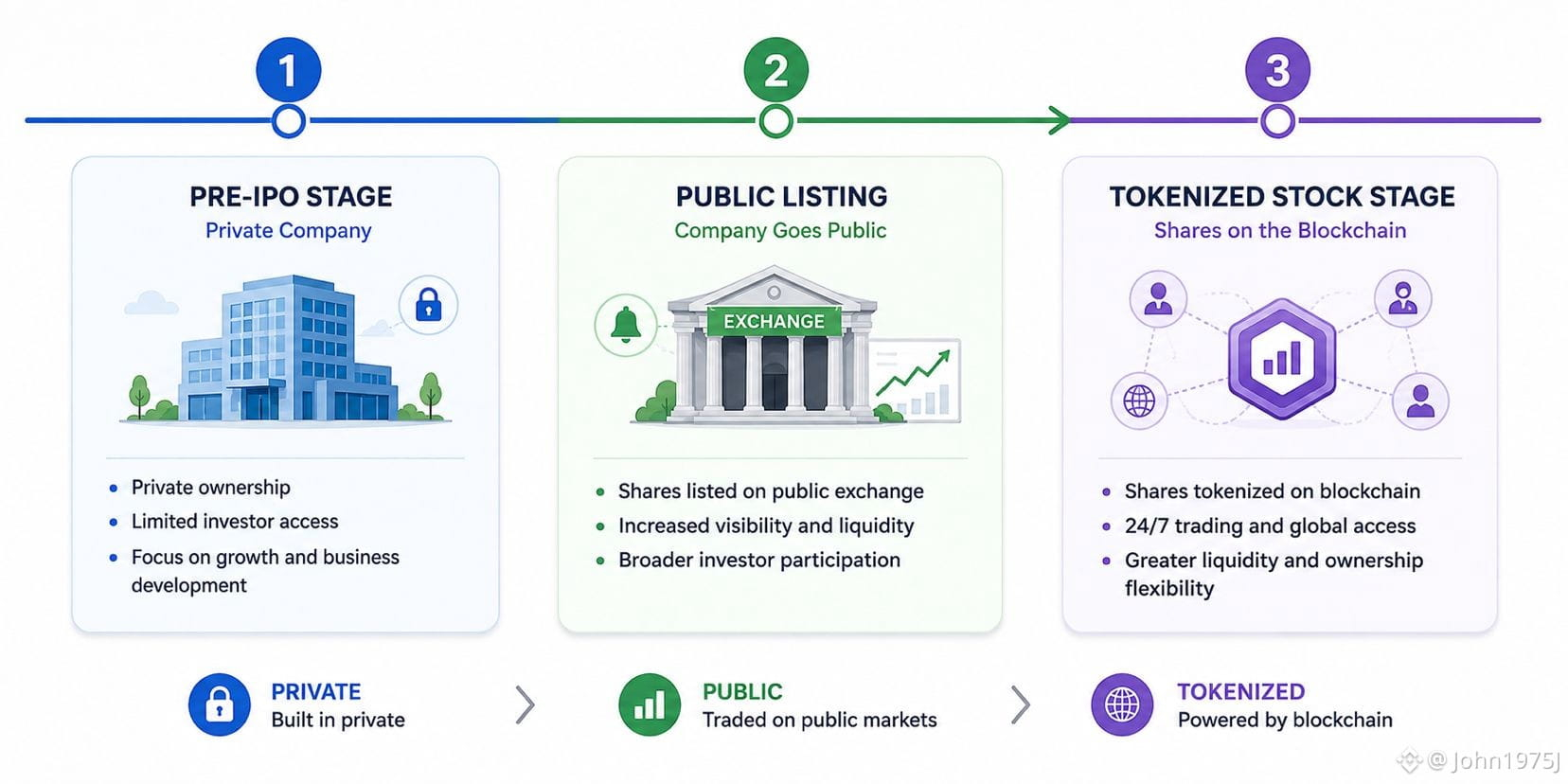
#bStocksCIS — this is not just access to shares. If you look broader, another level of exposure appears alongside it — Pre-IPO Perps, allowing you to track the price dynamics of private companies even before they go public.
It all forms a logical chain:
🔹 Pre-IPO Perps — the ability to gain market exposure to the valuation of promising companies prior to their IPO (via a derivative instrument rather than by owning shares).
➡️ IPO and the public market — after listing, the company becomes available through traditional stocks.
➡️ bStocks — a tokenized format of public shares that combines the familiar stock market with the infrastructure of the crypto ecosystem.
This approach creates a single investment path within one ecosystem: from interest in fast-growing private companies to working with already public issuers.
For investors, this means:
• no need to switch between different services at each stage of a company’s growth;
• you can follow a single company’s history from the private market to the public market;
• traditional stocks become part of a digital infrastructure alongside crypto assets.
@BinanceCIS
It all forms a logical chain:
🔹 Pre-IPO Perps — the ability to gain market exposure to the valuation of promising companies prior to their IPO (via a derivative instrument rather than by owning shares).
➡️ IPO and the public market — after listing, the company becomes available through traditional stocks.
➡️ bStocks — a tokenized format of public shares that combines the familiar stock market with the infrastructure of the crypto ecosystem.
This approach creates a single investment path within one ecosystem: from interest in fast-growing private companies to working with already public issuers.
For investors, this means:
• no need to switch between different services at each stage of a company’s growth;
• you can follow a single company’s history from the private market to the public market;
• traditional stocks become part of a digital infrastructure alongside crypto assets.
@BinanceCIS
I figured out the dividend mechanics more precisely with bStocks — it’s called Multiplier: an on-chain mechanism that automatically tops up your tokens with dividends after taxes are deducted, with not a single extra click. Reinvestment happens on the record date, often earlier than the traditional payout date. @BinanceCIS #bStocksCIS

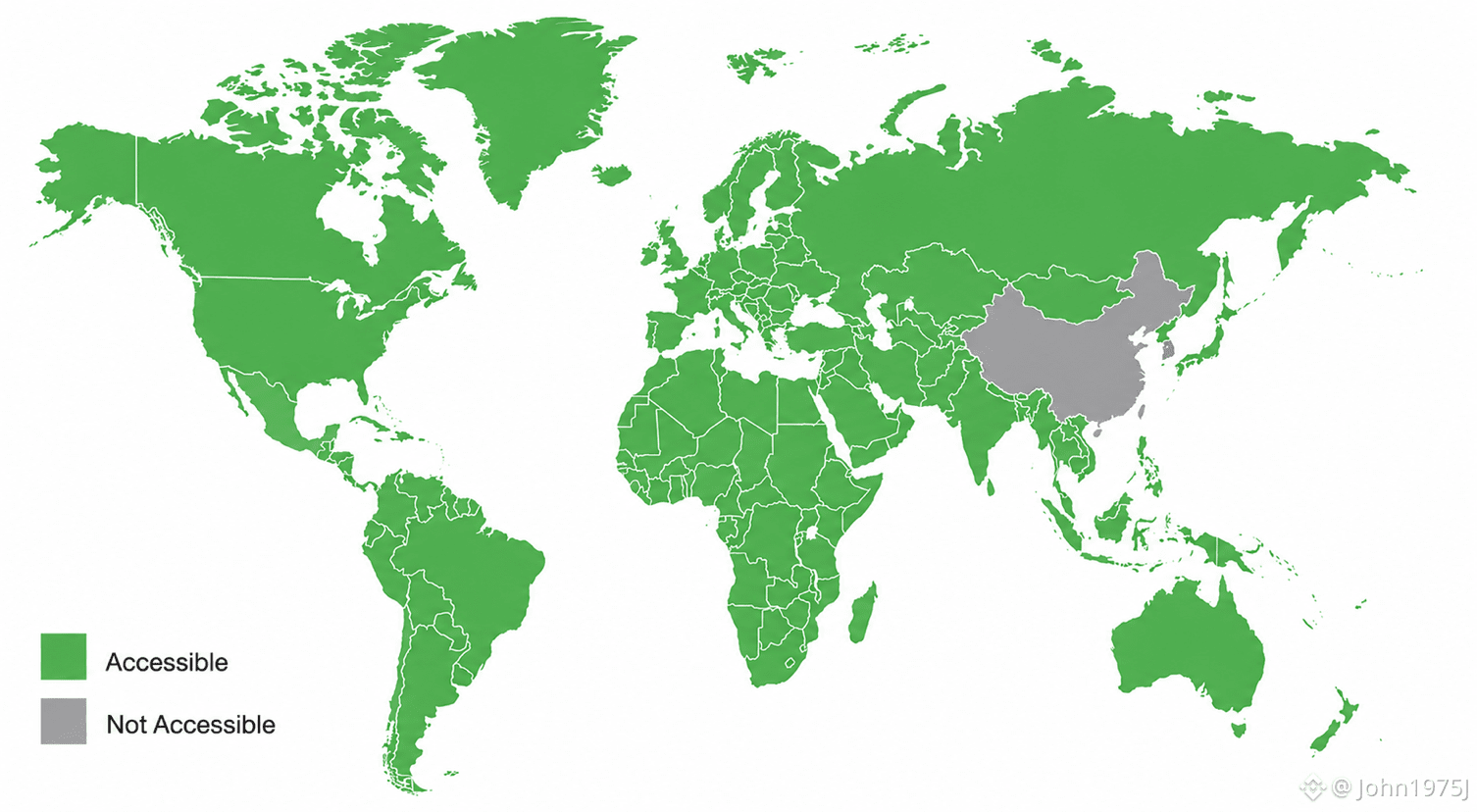
Clarification for those asking in the comments: bStocks are not available in the USA and to US citizens—only users from permitted jurisdictions. It’s worth checking yours before getting into the rest. @BinanceCIS #bStocksCIS
Good projectttt


Binance Square Official
·
--
We now invite users to participate and vote on the second batch of Vote to List projects. The projects below are ranked according to the order of the official announcement.
How to Vote:
- Each user can vote for up to 5 projects, with the option to vote for fewer if desired. Each verified account can only allocate one vote for one project.
- Users must be logged in to their verified Binance accounts and hold a minimum of at least 0.01 BNB in their master accounts throughout the Voting Period for their votes to be eligible.
Vote Period: 2025-04-02 13:30 (UTC) to 2025-04-09 23:59 (UTC)
Disclaimer: While we value and will take into consideration the vote results, they are for reference only and do not determine any decision or action Binance may or may not take. Monitoring of the project is still undergoing evaluation, and the decision will be determined by Binance based on our official review processes and standards. Project description is for reference only.
More details: [[T&Cs and Disclaimers].](https://www.binance.com/en/support/announcement/8c015531bfc34ac3bebfc15b939e4647)
How to Vote:
- Each user can vote for up to 5 projects, with the option to vote for fewer if desired. Each verified account can only allocate one vote for one project.
- Users must be logged in to their verified Binance accounts and hold a minimum of at least 0.01 BNB in their master accounts throughout the Voting Period for their votes to be eligible.
Vote Period: 2025-04-02 13:30 (UTC) to 2025-04-09 23:59 (UTC)
Disclaimer: While we value and will take into consideration the vote results, they are for reference only and do not determine any decision or action Binance may or may not take. Monitoring of the project is still undergoing evaluation, and the decision will be determined by Binance based on our official review processes and standards. Project description is for reference only.
More details: [[T&Cs and Disclaimers].](https://www.binance.com/en/support/announcement/8c015531bfc34ac3bebfc15b939e4647)
Log in to explore more content