
Impuls_ik
35 Posts

Impuls_ik
Report
Block User
Open Trade
High-Frequency Trader
4.1 Years
12 Following
18 Followers
31 Liked
Posts
Portfolio
·
--
#morpho $MORPHO Morpho: a new era of effective and decentralized financial protocols
$MORPHO
In the world of DeFi, more and more projects are trying to solve a key problem: how to combine the security of large lending platforms with high capital efficiency and better returns for users. This mission has been taken on by Morpho — an innovative protocol created by the team @morpholabs, which has already become one of the most notable players in the Ethereum ecosystem.
⸻
What is Morpho?
Morpho is a decentralized lending protocol that operates on top of existing solutions (such as Aave or Compound), enhancing their efficiency and optimizing profitability for both lenders and borrowers.
Its main idea:
🔹 users receive better rates than in base protocols
🔹 meanwhile, the security of the underlying pool is not compromised
🔹 the protocol operates through peer-to-peer matching and automatic optimization
Token $MORPHO
The ecosystem token is $MORPHO.
Its role in the protocol includes:
• participation in governance (protocol management)
• incentivizing liquidity
• potential reward mechanisms in a long-term model
#morpho $MORPHO Morpho: a new era of effective and decentralized financial protocols
$MORPHO
In the world of DeFi, more and more projects are trying to solve a key problem: how to combine the security of large lending platforms with high capital efficiency and better returns for users. This mission has been taken on by Morpho — an innovative protocol created by the team @morpholabs, which has already become one of the most notable players in the Ethereum ecosystem.
⸻
What is Morpho?
Morpho is a decentralized lending protocol that operates on top of existing solutions (such as Aave or Compound), enhancing their efficiency and optimizing profitability for both lenders and borrowers.
Its main idea:
🔹 users receive better rates than in base protocols
🔹 meanwhile, the security of the underlying pool is not compromised
🔹 the protocol operates through peer-to-peer matching and automatic optimization
Token $MORPHO
The ecosystem token is $MORPHO .
Its role in the protocol includes:
• participation in governance (protocol management)
• incentivizing liquidity
• potential reward mechanisms in a long-term model
$MORPHO
In the world of DeFi, more and more projects are trying to solve a key problem: how to combine the security of large lending platforms with high capital efficiency and better returns for users. This mission has been taken on by Morpho — an innovative protocol created by the team @morpholabs, which has already become one of the most notable players in the Ethereum ecosystem.
⸻
What is Morpho?
Morpho is a decentralized lending protocol that operates on top of existing solutions (such as Aave or Compound), enhancing their efficiency and optimizing profitability for both lenders and borrowers.
Its main idea:
🔹 users receive better rates than in base protocols
🔹 meanwhile, the security of the underlying pool is not compromised
🔹 the protocol operates through peer-to-peer matching and automatic optimization
Token $MORPHO
The ecosystem token is $MORPHO .
Its role in the protocol includes:
• participation in governance (protocol management)
• incentivizing liquidity
• potential reward mechanisms in a long-term model
1
41
·
--
#traderumour @trade_rumour in action!
From KBW to Token2049 — everywhere there are only talks about new token drops, partnerships, and insights that have not yet made it to the media. 👀
If you want to be the first to know what the market is preparing — visit Rumour.app and check your favorite #Traderumour.
🧠 Trades start with rumors, but smart money moves even before the headlines.
💬 What’s your favorite #Traderumour lately?
#Crypto #KBW #Token2049 #RumourApp #TradeRumour
#traderumour @trade_rumour in action!
From KBW to Token2049 — everywhere there are only talks about new token drops, partnerships, and insights that have not yet made it to the media. 👀
If you want to be the first to know what the market is preparing — visit Rumour.app and check your favorite #Traderumour.
🧠 Trades start with rumors, but smart money moves even before the headlines.
💬 What’s your favorite #Traderumour lately?
#Crypto #KBW #Token2049 #RumourApp #TradeRumour
From KBW to Token2049 — everywhere there are only talks about new token drops, partnerships, and insights that have not yet made it to the media. 👀
If you want to be the first to know what the market is preparing — visit Rumour.app and check your favorite #Traderumour.
🧠 Trades start with rumors, but smart money moves even before the headlines.
💬 What’s your favorite #Traderumour lately?
#Crypto #KBW #Token2049 #RumourApp #TradeRumour
1
6
·
--
#plumenetwork #Plume $PLUME
Plume is a blockchain project created specifically for the tokenization of real-world assets (RWA) — such as real estate, goods, loans, and other off-chain values — and their integration into the world of decentralized finance (DeFi)
The main idea:
Plume aims to "translate" the real world into digital: to convert physical assets into blockchain tokens so that they can be traded, lent, or staked under the conditions of the crypto world. This simplifies and reduces the cost of access to investments in traditional markets through Web3.
Key features of Plume:
• EVM compatibility: supports Ethereum smart contracts, facilitating the integration of existing DeFi applications. 
• Protocol-level compliance: automated mechanisms for legal compliance. 
• Cross-chain capabilities: the project uses its own SkyLink protocol to interact with different networks.
• Financial instruments: stablecoin pUSD, token pETH, DeFi staking, and solutions for corporate clients.
PLUME is the native token of the network, used for paying fees, voting, liquidity maximization, and participating in DeFi products. Throughout 2025, the project has actively developed: the network is already being used by over 180 projects!
#plumenetwork #Plume $PLUME
Plume is a blockchain project created specifically for the tokenization of real-world assets (RWA) — such as real estate, goods, loans, and other off-chain values — and their integration into the world of decentralized finance (DeFi)
The main idea:
Plume aims to "translate" the real world into digital: to convert physical assets into blockchain tokens so that they can be traded, lent, or staked under the conditions of the crypto world. This simplifies and reduces the cost of access to investments in traditional markets through Web3.
Key features of Plume:
• EVM compatibility: supports Ethereum smart contracts, facilitating the integration of existing DeFi applications. 
• Protocol-level compliance: automated mechanisms for legal compliance. 
• Cross-chain capabilities: the project uses its own SkyLink protocol to interact with different networks.
• Financial instruments: stablecoin pUSD, token pETH, DeFi staking, and solutions for corporate clients.
PLUME is the native token of the network, used for paying fees, voting, liquidity maximization, and participating in DeFi products. Throughout 2025, the project has actively developed: the network is already being used by over 180 projects!
#plumenetwork #Plume $PLUME
Plume is a blockchain project created specifically for the tokenization of real-world assets (RWA) — such as real estate, goods, loans, and other off-chain values — and their integration into the world of decentralized finance (DeFi)
The main idea:
Plume aims to "translate" the real world into digital: to convert physical assets into blockchain tokens so that they can be traded, lent, or staked under the conditions of the crypto world. This simplifies and reduces the cost of access to investments in traditional markets through Web3.
Key features of Plume:
• EVM compatibility: supports Ethereum smart contracts, facilitating the integration of existing DeFi applications. 
• Protocol-level compliance: automated mechanisms for legal compliance. 
• Cross-chain capabilities: the project uses its own SkyLink protocol to interact with different networks.
• Financial instruments: stablecoin pUSD, token pETH, DeFi staking, and solutions for corporate clients.
PLUME is the native token of the network, used for paying fees, voting, liquidity maximization, and participating in DeFi products. Throughout 2025, the project has actively developed: the network is already being used by over 180 projects!
1
5
·
--
#HoloworldAI #holoworldai $HOLO
Holo is a decentralized hosting platform based on Holochain, conceived as “Airbnb for applications.” It allows users to use their resources (computers or special nodes) to support the operation of distributed applications (hApps) and receive rewards in the form of HoloFuel tokens. The project aims to create a new version of the internet where data is controlled by people rather than large corporations.
• 💻 How it works: instead of a traditional blockchain, the Holochain network operates on an agent-centered principle, where each user stores and verifies only their own data, enhancing scalability and privacy. Holo serves as a bridge between hApps and the regular web, making decentralized applications accessible to a broad audience.
• 📈 HOT Token: the primary ERC-20 token that can be traded on exchanges. Later, it can be exchanged for HoloFuel — the internal currency for microtransactions on the network.
• 🫱🫲 Uniqueness: no “mining,” no global consensus – instead, the system uses a distributed hash table (DHT), making the application lighter, faster, and more environmentally friendly than typical blockchains.
#HoloworldAI #holoworldai $HOLO
Holo is a decentralized hosting platform based on Holochain, conceived as “Airbnb for applications.” It allows users to use their resources (computers or special nodes) to support the operation of distributed applications (hApps) and receive rewards in the form of HoloFuel tokens. The project aims to create a new version of the internet where data is controlled by people rather than large corporations.
• 💻 How it works: instead of a traditional blockchain, the Holochain network operates on an agent-centered principle, where each user stores and verifies only their own data, enhancing scalability and privacy. Holo serves as a bridge between hApps and the regular web, making decentralized applications accessible to a broad audience.
• 📈 HOT Token: the primary ERC-20 token that can be traded on exchanges. Later, it can be exchanged for HoloFuel — the internal currency for microtransactions on the network.
• 🫱🫲 Uniqueness: no “mining,” no global consensus – instead, the system uses a distributed hash table (DHT), making the application lighter, faster, and more environmentally friendly than typical blockchains.
#HoloworldAI #holoworldai $HOLO
Holo is a decentralized hosting platform based on Holochain, conceived as “Airbnb for applications.” It allows users to use their resources (computers or special nodes) to support the operation of distributed applications (hApps) and receive rewards in the form of HoloFuel tokens. The project aims to create a new version of the internet where data is controlled by people rather than large corporations.
• 💻 How it works: instead of a traditional blockchain, the Holochain network operates on an agent-centered principle, where each user stores and verifies only their own data, enhancing scalability and privacy. Holo serves as a bridge between hApps and the regular web, making decentralized applications accessible to a broad audience.
• 📈 HOT Token: the primary ERC-20 token that can be traded on exchanges. Later, it can be exchanged for HoloFuel — the internal currency for microtransactions on the network.
• 🫱🫲 Uniqueness: no “mining,” no global consensus – instead, the system uses a distributed hash table (DHT), making the application lighter, faster, and more environmentally friendly than typical blockchains.
2
6
·
--
Bullish
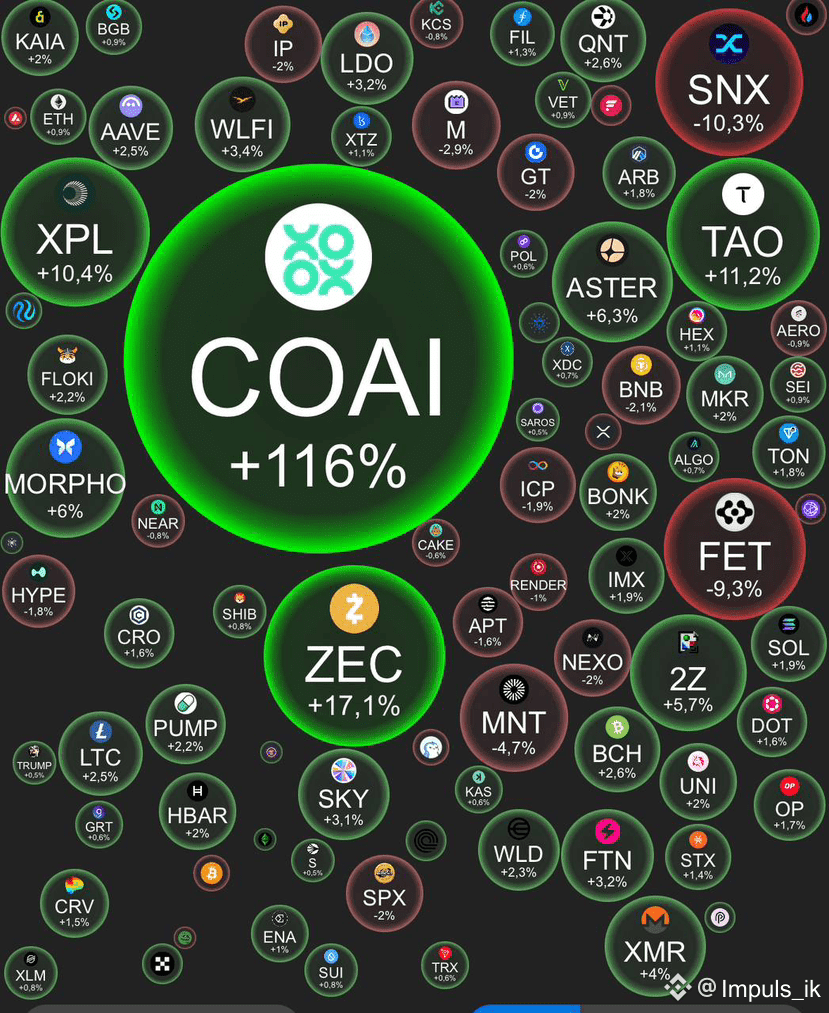
How are you?
Did you profit from the market drop, or did you lose your entire bank?
I mentioned in my first post that Trump manipulates the market when Powell speaks; it's clear that the market will move in one direction or the other, but Trump can cause a very big crash, like he did the day before!
I wish everyone profits; you can show your appreciation with a like;)
#Binance #cryptouniverseofficial #ProfitPotential #TradingSignals #GoodLuck $BNB
How are you?
Did you profit from the market drop, or did you lose your entire bank?
I mentioned in my first post that Trump manipulates the market when Powell speaks; it's clear that the market will move in one direction or the other, but Trump can cause a very big crash, like he did the day before!
I wish everyone profits; you can show your appreciation with a like;)
#Binance #cryptouniverseofficial #ProfitPotential #TradingSignals #GoodLuck $BNB
Did you profit from the market drop, or did you lose your entire bank?
I mentioned in my first post that Trump manipulates the market when Powell speaks; it's clear that the market will move in one direction or the other, but Trump can cause a very big crash, like he did the day before!
I wish everyone profits; you can show your appreciation with a like;)
#Binance #cryptouniverseofficial #ProfitPotential #TradingSignals #GoodLuck $BNB
1
287
·
--
#BAKE/USDT fucking bullshit, I just said it would continue to fall, from that moment it started to grow wildly, this is probably some kind of joke, or fucking idiots are profiting from this
#BAKE/USDT fucking bullshit, I just said it would continue to fall, from that moment it started to grow wildly, this is probably some kind of joke, or fucking idiots are profiting from this
1
1
1
432
·
--
#ETHRally
What is happening in the market now
The price of ETH has jumped by 20-25% just in August, currently trading in the range of $4,300–$4,700, approaching the absolute maximum of 2021 around $4,878. Institutions are actively buying ETH: current volumes of corporate treasuries of ETH reach about $13 billion (3 million ETH), plus flows into strategic ETFs (BlackRock, Fidelity) have exceeded $10 billion. Network activity is at a record level: the daily number of transactions reached 1.875 million — a record in history. Fear and distrust among retail: a large number of small traders are exiting positions in a state of FUD, while the 'whales' are accumulating — this often triggers further growth.
What this means for the trader
1. Sentiment ratings — a classic 'buy the dip' signal
• When retail is closed (a lot of FUD), and institutions are buying — this is a potential precondition signal for continued growth
• On-chain: significant withdrawals of ETH from exchanges indicate long-term holders (accumulation), which usually leads to growth.
2. ETFs as a demand driver
• Significant daily inflows ($1 billion+) strengthen the trend and add confidence among large players
• ETFs also demonstrate legitimate interest, reducing barriers to entry.
3. The emergence of an 'Alt-season'
#ETHRally
What is happening in the market now
The price of ETH has jumped by 20-25% just in August, currently trading in the range of $4,300–$4,700, approaching the absolute maximum of 2021 around $4,878. Institutions are actively buying ETH: current volumes of corporate treasuries of ETH reach about $13 billion (3 million ETH), plus flows into strategic ETFs (BlackRock, Fidelity) have exceeded $10 billion. Network activity is at a record level: the daily number of transactions reached 1.875 million — a record in history. Fear and distrust among retail: a large number of small traders are exiting positions in a state of FUD, while the 'whales' are accumulating — this often triggers further growth.
What this means for the trader
1. Sentiment ratings — a classic 'buy the dip' signal
• When retail is closed (a lot of FUD), and institutions are buying — this is a potential precondition signal for continued growth
• On-chain: significant withdrawals of ETH from exchanges indicate long-term holders (accumulation), which usually leads to growth.
2. ETFs as a demand driver
• Significant daily inflows ($1 billion+) strengthen the trend and add confidence among large players
• ETFs also demonstrate legitimate interest, reducing barriers to entry.
3. The emergence of an 'Alt-season'
What is happening in the market now
The price of ETH has jumped by 20-25% just in August, currently trading in the range of $4,300–$4,700, approaching the absolute maximum of 2021 around $4,878. Institutions are actively buying ETH: current volumes of corporate treasuries of ETH reach about $13 billion (3 million ETH), plus flows into strategic ETFs (BlackRock, Fidelity) have exceeded $10 billion. Network activity is at a record level: the daily number of transactions reached 1.875 million — a record in history. Fear and distrust among retail: a large number of small traders are exiting positions in a state of FUD, while the 'whales' are accumulating — this often triggers further growth.
What this means for the trader
1. Sentiment ratings — a classic 'buy the dip' signal
• When retail is closed (a lot of FUD), and institutions are buying — this is a potential precondition signal for continued growth
• On-chain: significant withdrawals of ETH from exchanges indicate long-term holders (accumulation), which usually leads to growth.
2. ETFs as a demand driver
• Significant daily inflows ($1 billion+) strengthen the trend and add confidence among large players
• ETFs also demonstrate legitimate interest, reducing barriers to entry.
3. The emergence of an 'Alt-season'
107
·
--
#ProjectCrypto
What is Project Crypto?
Project Crypto is a large-scale program of the SEC (U.S. Securities and Exchange Commission) aimed at updating the regulatory framework in the field of crypto assets and integrating financial markets into the blockchain space (on-chain)
🔑 Main goals and directions
• Clear classification of tokens: The SEC is working on rules to determine whether a crypto asset is a security, a commodity, or a stablecoin.
• Token offerings (ICOs, airdrops, tokenized securities): Safe harbors, adapted distribution rules, and public comments from stakeholders are provided.
• Crypto asset custody: Updating requirements, supporting self-custody as a fundamental right of the owner.
• “Super-apps”: Providing a single license for brokers/banks offering various crypto and financial services (trading, staking, decentralized finance, etc.).
• Regulatory flexibility: The implementation of interpretative and exceptional powers of the SEC is planned to remove outdated barriers that hinder innovation.
🚀 Context and strategic significance
• The initiative responds to the report of the President’s Working Group on Digital Asset Markets, published on July 30, 2025.
#ProjectCrypto
What is Project Crypto?
Project Crypto is a large-scale program of the SEC (U.S. Securities and Exchange Commission) aimed at updating the regulatory framework in the field of crypto assets and integrating financial markets into the blockchain space (on-chain)
🔑 Main goals and directions
• Clear classification of tokens: The SEC is working on rules to determine whether a crypto asset is a security, a commodity, or a stablecoin.
• Token offerings (ICOs, airdrops, tokenized securities): Safe harbors, adapted distribution rules, and public comments from stakeholders are provided.
• Crypto asset custody: Updating requirements, supporting self-custody as a fundamental right of the owner.
• “Super-apps”: Providing a single license for brokers/banks offering various crypto and financial services (trading, staking, decentralized finance, etc.).
• Regulatory flexibility: The implementation of interpretative and exceptional powers of the SEC is planned to remove outdated barriers that hinder innovation.
🚀 Context and strategic significance
• The initiative responds to the report of the President’s Working Group on Digital Asset Markets, published on July 30, 2025.
What is Project Crypto?
Project Crypto is a large-scale program of the SEC (U.S. Securities and Exchange Commission) aimed at updating the regulatory framework in the field of crypto assets and integrating financial markets into the blockchain space (on-chain)
🔑 Main goals and directions
• Clear classification of tokens: The SEC is working on rules to determine whether a crypto asset is a security, a commodity, or a stablecoin.
• Token offerings (ICOs, airdrops, tokenized securities): Safe harbors, adapted distribution rules, and public comments from stakeholders are provided.
• Crypto asset custody: Updating requirements, supporting self-custody as a fundamental right of the owner.
• “Super-apps”: Providing a single license for brokers/banks offering various crypto and financial services (trading, staking, decentralized finance, etc.).
• Regulatory flexibility: The implementation of interpretative and exceptional powers of the SEC is planned to remove outdated barriers that hinder innovation.
🚀 Context and strategic significance
• The initiative responds to the report of the President’s Working Group on Digital Asset Markets, published on July 30, 2025.
48
·
--
Chainbasehq #chainbase
Official blog and website of Chainbase (blog.chainbase.com and chainbase.com):
• Regular non-fiction posts: announcements of new products, partnerships (for example, Foundation, Airdrop Season 1, DataCloud), technical deep-dive materials, newsletters with news
• Complete technical documentation: what Chainbase is about, dual-chain architecture, staking, product use-cases like Data Platform, Theia Chat (AI world model), and other core concepts .
📡 Social media channels (X/Twitter / Binance Square / Discord / Telegram)
• X (@ChainbaseHQ): short tweets, links to community posts, promotions, rebranding, evaluations — for example “Not all noise deserves attention — built Tops attention hub”
• Users and Chainbase post promotional messages: but there seems to be some duplication and creative messages from the community, often emphasizing the use of API, indexing, ease of creating dApps, etc. .
🧪 Key content themes:
• Product announcements: DataCloud, Airdrop C-token, Foundation creation,
• Technical guides: how to integrate Sui, Manuscript-CLI/GU I, working with non-EVM networks,
• Technical research: dual-chain, dual-staking, analysis of DeFi/NFT projects,
• AI projects: Theia, TheiaChat — Chainbase AI world model & agent,
• Community and marketing: hashtag campaigns, Binance Square, X, Discord, Telegram.
Chainbasehq #chainbase
Official blog and website of Chainbase (blog.chainbase.com and chainbase.com):
• Regular non-fiction posts: announcements of new products, partnerships (for example, Foundation, Airdrop Season 1, DataCloud), technical deep-dive materials, newsletters with news
• Complete technical documentation: what Chainbase is about, dual-chain architecture, staking, product use-cases like Data Platform, Theia Chat (AI world model), and other core concepts .
📡 Social media channels (X/Twitter / Binance Square / Discord / Telegram)
• X (@ChainbaseHQ): short tweets, links to community posts, promotions, rebranding, evaluations — for example “Not all noise deserves attention — built Tops attention hub”
• Users and Chainbase post promotional messages: but there seems to be some duplication and creative messages from the community, often emphasizing the use of API, indexing, ease of creating dApps, etc. .
🧪 Key content themes:
• Product announcements: DataCloud, Airdrop C-token, Foundation creation,
• Technical guides: how to integrate Sui, Manuscript-CLI/GU I, working with non-EVM networks,
• Technical research: dual-chain, dual-staking, analysis of DeFi/NFT projects,
• AI projects: Theia, TheiaChat — Chainbase AI world model & agent,
• Community and marketing: hashtag campaigns, Binance Square, X, Discord, Telegram.
Official blog and website of Chainbase (blog.chainbase.com and chainbase.com):
• Regular non-fiction posts: announcements of new products, partnerships (for example, Foundation, Airdrop Season 1, DataCloud), technical deep-dive materials, newsletters with news
• Complete technical documentation: what Chainbase is about, dual-chain architecture, staking, product use-cases like Data Platform, Theia Chat (AI world model), and other core concepts .
📡 Social media channels (X/Twitter / Binance Square / Discord / Telegram)
• X (@ChainbaseHQ): short tweets, links to community posts, promotions, rebranding, evaluations — for example “Not all noise deserves attention — built Tops attention hub”
• Users and Chainbase post promotional messages: but there seems to be some duplication and creative messages from the community, often emphasizing the use of API, indexing, ease of creating dApps, etc. .
🧪 Key content themes:
• Product announcements: DataCloud, Airdrop C-token, Foundation creation,
• Technical guides: how to integrate Sui, Manuscript-CLI/GU I, working with non-EVM networks,
• Technical research: dual-chain, dual-staking, analysis of DeFi/NFT projects,
• AI projects: Theia, TheiaChat — Chainbase AI world model & agent,
• Community and marketing: hashtag campaigns, Binance Square, X, Discord, Telegram.
·
--
Bullish
I will send a gift box for a like and comment on this post!!!
I will choose only one!!!
#CryptoClarityAct #XRP
I will send a gift box for a like and comment on this post!!!
I will choose only one!!!
#CryptoClarityAct #XRP
I will choose only one!!!
#CryptoClarityAct #XRP
1
1
·
--
Bearish
$BNB Are you ready for the weekend?
Currently, everyone is preparing for an explosion and taking longs, but it seems to me that we still have a few days until the end of the month to manage to earn on shorts!
I wish everyone successful earnings and a fun weekend!!!
$BNB Are you ready for the weekend?
Currently, everyone is preparing for an explosion and taking longs, but it seems to me that we still have a few days until the end of the month to manage to earn on shorts!
I wish everyone successful earnings and a fun weekend!!!
Currently, everyone is preparing for an explosion and taking longs, but it seems to me that we still have a few days until the end of the month to manage to earn on shorts!
I wish everyone successful earnings and a fun weekend!!!
1
479
·
--
Bearish
#CryptoScamSurge CryptoScamSurge: Surge of Cryptocurrency Scams and How to Protect Yourself
In 2025, an unprecedented rise in cryptocurrency scams is observed — a phenomenon that experts have dubbed CryptoScamSurge. At the heart of this phenomenon is a combination of the high popularity of digital assets, the informational unawareness of investors, and the sophisticated methods of scammers.
What is CryptoScamSurge?
CryptoScamSurge is a term that describes the sharp increase in the number of fraudulent schemes related to cryptocurrencies. This phenomenon encompasses both traditional scams (such as phishing, fake exchanges, Ponzi schemes) and newer forms, including Deepfake persuasion, fake Web3 projects, ghost tokens, and AI-based fraud.
Main Types of Crypto Scams in 2025
1. Fake crypto wallets and exchanges
Scammers create copies of popular services, misleading users through advertisements or phishing links.
2. Rug pull tokens and IDO/ICO projects
Malefactors launch new “revolutionary” tokens, promising astronomical returns. After raising funds, the project disappears.
3. Social engineering
Scammers use Telegram, Discord, or X (Twitter) to impersonate representatives of well-known crypto platforms
#CryptoClarityAct #ETHBreaks3700
#CryptoScamSurge CryptoScamSurge: Surge of Cryptocurrency Scams and How to Protect Yourself
In 2025, an unprecedented rise in cryptocurrency scams is observed — a phenomenon that experts have dubbed CryptoScamSurge. At the heart of this phenomenon is a combination of the high popularity of digital assets, the informational unawareness of investors, and the sophisticated methods of scammers.
What is CryptoScamSurge?
CryptoScamSurge is a term that describes the sharp increase in the number of fraudulent schemes related to cryptocurrencies. This phenomenon encompasses both traditional scams (such as phishing, fake exchanges, Ponzi schemes) and newer forms, including Deepfake persuasion, fake Web3 projects, ghost tokens, and AI-based fraud.
Main Types of Crypto Scams in 2025
1. Fake crypto wallets and exchanges
Scammers create copies of popular services, misleading users through advertisements or phishing links.
2. Rug pull tokens and IDO/ICO projects
Malefactors launch new “revolutionary” tokens, promising astronomical returns. After raising funds, the project disappears.
3. Social engineering
Scammers use Telegram, Discord, or X (Twitter) to impersonate representatives of well-known crypto platforms
#CryptoClarityAct #ETHBreaks3700
In 2025, an unprecedented rise in cryptocurrency scams is observed — a phenomenon that experts have dubbed CryptoScamSurge. At the heart of this phenomenon is a combination of the high popularity of digital assets, the informational unawareness of investors, and the sophisticated methods of scammers.
What is CryptoScamSurge?
CryptoScamSurge is a term that describes the sharp increase in the number of fraudulent schemes related to cryptocurrencies. This phenomenon encompasses both traditional scams (such as phishing, fake exchanges, Ponzi schemes) and newer forms, including Deepfake persuasion, fake Web3 projects, ghost tokens, and AI-based fraud.
Main Types of Crypto Scams in 2025
1. Fake crypto wallets and exchanges
Scammers create copies of popular services, misleading users through advertisements or phishing links.
2. Rug pull tokens and IDO/ICO projects
Malefactors launch new “revolutionary” tokens, promising astronomical returns. After raising funds, the project disappears.
3. Social engineering
Scammers use Telegram, Discord, or X (Twitter) to impersonate representatives of well-known crypto platforms
#CryptoClarityAct #ETHBreaks3700
22
·
--
#CryptoClarityAct What is the CLARITY Act?
Embodied in the bill H.R. 3633, the CLARITY Act is a comprehensive bipartisan bill aimed at eliminating uncertainty about when a digital asset is a security and when it is a commodity, and clearly delineating the powers between the SEC and CFTC
• Digital commodity — an asset "that is intrinsically linked to the blockchain" and whose value depends on the use of that network
• Investment contract asset — a digital commodity that is primarily sold as an investment contract. Importantly: the "investment contract asset" is not considered a security when resold in secondary transactions
⚖️ Delineation of powers between agencies
• CFTC will have jurisdiction over the bulk of digital commodities, including spot trading, exchanges, brokers, dealers
• SEC retains control over primary offerings that involve expectations of profit based on the efforts of others; also regulates alternative trading systems (ATS) and national exchanges that trade tokens up to a certain threshold
Jurisdiction is now based not on the name or method of selling the token, but on its characteristics: a sufficient degree of decentralization (mature blockchain) transfers the asset under CFTC!
#CryptoClarityAct What is the CLARITY Act?
Embodied in the bill H.R. 3633, the CLARITY Act is a comprehensive bipartisan bill aimed at eliminating uncertainty about when a digital asset is a security and when it is a commodity, and clearly delineating the powers between the SEC and CFTC
• Digital commodity — an asset "that is intrinsically linked to the blockchain" and whose value depends on the use of that network
• Investment contract asset — a digital commodity that is primarily sold as an investment contract. Importantly: the "investment contract asset" is not considered a security when resold in secondary transactions
⚖️ Delineation of powers between agencies
• CFTC will have jurisdiction over the bulk of digital commodities, including spot trading, exchanges, brokers, dealers
• SEC retains control over primary offerings that involve expectations of profit based on the efforts of others; also regulates alternative trading systems (ATS) and national exchanges that trade tokens up to a certain threshold
Jurisdiction is now based not on the name or method of selling the token, but on its characteristics: a sufficient degree of decentralization (mature blockchain) transfers the asset under CFTC!
Embodied in the bill H.R. 3633, the CLARITY Act is a comprehensive bipartisan bill aimed at eliminating uncertainty about when a digital asset is a security and when it is a commodity, and clearly delineating the powers between the SEC and CFTC
• Digital commodity — an asset "that is intrinsically linked to the blockchain" and whose value depends on the use of that network
• Investment contract asset — a digital commodity that is primarily sold as an investment contract. Importantly: the "investment contract asset" is not considered a security when resold in secondary transactions
⚖️ Delineation of powers between agencies
• CFTC will have jurisdiction over the bulk of digital commodities, including spot trading, exchanges, brokers, dealers
• SEC retains control over primary offerings that involve expectations of profit based on the efforts of others; also regulates alternative trading systems (ATS) and national exchanges that trade tokens up to a certain threshold
Jurisdiction is now based not on the name or method of selling the token, but on its characteristics: a sufficient degree of decentralization (mature blockchain) transfers the asset under CFTC!
10
·
--
#TrumpBitcoinEmpire
1. A Political Stance or Policy Direction – Donald Trump has recently shifted from his earlier skepticism of crypto to a more pro-crypto stance, possibly as a campaign strategy in the 2024/2025 elections. He’s expressed support for Bitcoin mining, crypto self-custody, and opposing CBDCs (central bank digital currencies), aligning with a “freedom” and anti-government control message.
2. Business Ventures – Trump has already dabbled in blockchain via Trump NFTs on Ethereum and Polygon networks. Some speculate he might launch or support a Bitcoin-focused financial product, fund, or even integrate crypto into his business empire, hence “Bitcoin Empire.”
3. Meme or Satire – The phrase could also be a meme or satirical commentary on how Trump might capitalize on the popularity of Bitcoin among libertarians, Gen Z, and disaffected voters who distrust traditional finance and institutions.
#TrumpBitcoinEmpire
1. A Political Stance or Policy Direction – Donald Trump has recently shifted from his earlier skepticism of crypto to a more pro-crypto stance, possibly as a campaign strategy in the 2024/2025 elections. He’s expressed support for Bitcoin mining, crypto self-custody, and opposing CBDCs (central bank digital currencies), aligning with a “freedom” and anti-government control message.
2. Business Ventures – Trump has already dabbled in blockchain via Trump NFTs on Ethereum and Polygon networks. Some speculate he might launch or support a Bitcoin-focused financial product, fund, or even integrate crypto into his business empire, hence “Bitcoin Empire.”
3. Meme or Satire – The phrase could also be a meme or satirical commentary on how Trump might capitalize on the popularity of Bitcoin among libertarians, Gen Z, and disaffected voters who distrust traditional finance and institutions.
1. A Political Stance or Policy Direction – Donald Trump has recently shifted from his earlier skepticism of crypto to a more pro-crypto stance, possibly as a campaign strategy in the 2024/2025 elections. He’s expressed support for Bitcoin mining, crypto self-custody, and opposing CBDCs (central bank digital currencies), aligning with a “freedom” and anti-government control message.
2. Business Ventures – Trump has already dabbled in blockchain via Trump NFTs on Ethereum and Polygon networks. Some speculate he might launch or support a Bitcoin-focused financial product, fund, or even integrate crypto into his business empire, hence “Bitcoin Empire.”
3. Meme or Satire – The phrase could also be a meme or satirical commentary on how Trump might capitalize on the popularity of Bitcoin among libertarians, Gen Z, and disaffected voters who distrust traditional finance and institutions.
19
·
--
#BTCvsETH Bitcoin (BTC) vs Ethereum (ETH): A Comparison
Bitcoin and Ethereum are the two largest and most well-known cryptocurrencies, but they serve very different purposes and have distinct characteristics. Here’s a side-by-side comparison:
⸻
🟡 Bitcoin (BTC)
Purpose:
• Digital currency / store of value (often called “digital gold”)
Launch Date:
• January 2009
Founder:
• Satoshi Nakamoto (pseudonymous)
Supply Cap:
• 21 million BTC (fixed)
Consensus Mechanism:
• Proof of Work (PoW)
Primary Use Cases:
• Peer-to-peer payments
• Store of value
• Hedge against inflation (for some investors)
Network Focus:
• Security, decentralization, and simplicity
Smart Contracts:
• Limited, not natively supported
Block Time:
• ~10 minutes
⸻
🔵 Ethereum (ETH)
Purpose:
• Decentralized computing platform for smart contracts and dApps
Launch Date:
• July 2015
Founder:
• Vitalik Buterin + others
Supply Cap:
• No fixed supply (but issuance is reduced over time)
Consensus Mechanism:
• Proof of Stake (PoS) since Ethereum 2.0 (Merge in 2022)
Primary Use Cases:
• Smart contracts
• Decentralized applications (DeFi, NFTs, DAOs)
• Token creation (ERC-20, ERC-721, etc.)
Network Focus:
• Flexibility, programmability
Smart Contracts:
• Native and core feature
Block Time:
• ~12 seconds
Investment Perspective
• Bitcoin: Seen as a long-term hedge, like gold. Lower volatility relative to altcoins. More conservative.
• Ethereum: Considered more like a tech platform (comparable to an early-stage internet company), with higher growth potential but also more risk.
#BTCvsETH Bitcoin (BTC) vs Ethereum (ETH): A Comparison
Bitcoin and Ethereum are the two largest and most well-known cryptocurrencies, but they serve very different purposes and have distinct characteristics. Here’s a side-by-side comparison:
⸻
🟡 Bitcoin (BTC)
Purpose:
• Digital currency / store of value (often called “digital gold”)
Launch Date:
• January 2009
Founder:
• Satoshi Nakamoto (pseudonymous)
Supply Cap:
• 21 million BTC (fixed)
Consensus Mechanism:
• Proof of Work (PoW)
Primary Use Cases:
• Peer-to-peer payments
• Store of value
• Hedge against inflation (for some investors)
Network Focus:
• Security, decentralization, and simplicity
Smart Contracts:
• Limited, not natively supported
Block Time:
• ~10 minutes
⸻
🔵 Ethereum (ETH)
Purpose:
• Decentralized computing platform for smart contracts and dApps
Launch Date:
• July 2015
Founder:
• Vitalik Buterin + others
Supply Cap:
• No fixed supply (but issuance is reduced over time)
Consensus Mechanism:
• Proof of Stake (PoS) since Ethereum 2.0 (Merge in 2022)
Primary Use Cases:
• Smart contracts
• Decentralized applications (DeFi, NFTs, DAOs)
• Token creation (ERC-20, ERC-721, etc.)
Network Focus:
• Flexibility, programmability
Smart Contracts:
• Native and core feature
Block Time:
• ~12 seconds
Investment Perspective
• Bitcoin: Seen as a long-term hedge, like gold. Lower volatility relative to altcoins. More conservative.
• Ethereum: Considered more like a tech platform (comparable to an early-stage internet company), with higher growth potential but also more risk.
Bitcoin and Ethereum are the two largest and most well-known cryptocurrencies, but they serve very different purposes and have distinct characteristics. Here’s a side-by-side comparison:
⸻
🟡 Bitcoin (BTC)
Purpose:
• Digital currency / store of value (often called “digital gold”)
Launch Date:
• January 2009
Founder:
• Satoshi Nakamoto (pseudonymous)
Supply Cap:
• 21 million BTC (fixed)
Consensus Mechanism:
• Proof of Work (PoW)
Primary Use Cases:
• Peer-to-peer payments
• Store of value
• Hedge against inflation (for some investors)
Network Focus:
• Security, decentralization, and simplicity
Smart Contracts:
• Limited, not natively supported
Block Time:
• ~10 minutes
⸻
🔵 Ethereum (ETH)
Purpose:
• Decentralized computing platform for smart contracts and dApps
Launch Date:
• July 2015
Founder:
• Vitalik Buterin + others
Supply Cap:
• No fixed supply (but issuance is reduced over time)
Consensus Mechanism:
• Proof of Stake (PoS) since Ethereum 2.0 (Merge in 2022)
Primary Use Cases:
• Smart contracts
• Decentralized applications (DeFi, NFTs, DAOs)
• Token creation (ERC-20, ERC-721, etc.)
Network Focus:
• Flexibility, programmability
Smart Contracts:
• Native and core feature
Block Time:
• ~12 seconds
Investment Perspective
• Bitcoin: Seen as a long-term hedge, like gold. Lower volatility relative to altcoins. More conservative.
• Ethereum: Considered more like a tech platform (comparable to an early-stage internet company), with higher growth potential but also more risk.
63
·
--
#StablecoinLaw What is StablecoinLaw and why is it important for the future of digital finance
In the world of cryptocurrencies, stablecoins occupy a special place. They combine the stability of traditional currencies with the advantages of blockchain technologies. However, the growing popularity of assets such as USDT (Tether), USDC (Circle), or DAI (MakerDAO) raises questions: who has the right to issue them, how should they be backed, and who controls this? This is where StablecoinLaw comes into play — a concept that is increasingly appearing in legislative circles around the world.
What is StablecoinLaw?
StablecoinLaw is a conditional name for legislative initiatives aimed at regulating the stablecoin market. These initiatives may include:
• requirements for reserve backing (for example, 1:1 to the US dollar),
• financial reporting and auditing of issuers,
• licensing of companies issuing stablecoins,
• consumer protection and combating money laundering (AML/KYC).
Why is this important?
Without clear legislation, stablecoins can become a “gray area” of the financial system — a tool for both quick international payments and financial manipulations. At the same time, proper regulation can:
• increase trust in cryptocurrencies,
#StablecoinLaw What is StablecoinLaw and why is it important for the future of digital finance
In the world of cryptocurrencies, stablecoins occupy a special place. They combine the stability of traditional currencies with the advantages of blockchain technologies. However, the growing popularity of assets such as USDT (Tether), USDC (Circle), or DAI (MakerDAO) raises questions: who has the right to issue them, how should they be backed, and who controls this? This is where StablecoinLaw comes into play — a concept that is increasingly appearing in legislative circles around the world.
What is StablecoinLaw?
StablecoinLaw is a conditional name for legislative initiatives aimed at regulating the stablecoin market. These initiatives may include:
• requirements for reserve backing (for example, 1:1 to the US dollar),
• financial reporting and auditing of issuers,
• licensing of companies issuing stablecoins,
• consumer protection and combating money laundering (AML/KYC).
Why is this important?
Without clear legislation, stablecoins can become a “gray area” of the financial system — a tool for both quick international payments and financial manipulations. At the same time, proper regulation can:
• increase trust in cryptocurrencies,
In the world of cryptocurrencies, stablecoins occupy a special place. They combine the stability of traditional currencies with the advantages of blockchain technologies. However, the growing popularity of assets such as USDT (Tether), USDC (Circle), or DAI (MakerDAO) raises questions: who has the right to issue them, how should they be backed, and who controls this? This is where StablecoinLaw comes into play — a concept that is increasingly appearing in legislative circles around the world.
What is StablecoinLaw?
StablecoinLaw is a conditional name for legislative initiatives aimed at regulating the stablecoin market. These initiatives may include:
• requirements for reserve backing (for example, 1:1 to the US dollar),
• financial reporting and auditing of issuers,
• licensing of companies issuing stablecoins,
• consumer protection and combating money laundering (AML/KYC).
Why is this important?
Without clear legislation, stablecoins can become a “gray area” of the financial system — a tool for both quick international payments and financial manipulations. At the same time, proper regulation can:
• increase trust in cryptocurrencies,
1
228
·
--
$SUI What is Sui?
Sui is a level 1 (L1) blockchain created by Mysten Labs, founded by former Meta engineers who worked on the Diem project and Move (programming language).
Sui is designed for scalability, high transaction speed, and low fees. It is based on a unique data processing model: an object model and parallel execution of transactions.
⸻
Advantages:
1. High throughput
Thanks to parallel transaction execution, Sui can process tens of thousands of transactions per second (TPS).
2. Move programming language
It is secure, asset-oriented, and allows for better management of digital objects.
3. Well-funded project
Mysten Labs has raised over $300 million in investments (from a16z, FTX Ventures, Coinbase, Binance Labs, etc.).
4. Suitable for Web3, gaming, NFT
Due to its architecture, Sui is well-suited for dynamic decentralized applications.
Disadvantages and risks:
1. Young network
Sui launched in 2023. This is still an early stage of development, and the project needs to prove its resilience in practice.
2. Competition
It has to compete with other L1s like Solana, Aptos, Avalanche, etc.
3. Price of the SUI token
The price can be very volatile. Like many new projects, SUI has experienced a decline after listing.
$SUI What is Sui?
Sui is a level 1 (L1) blockchain created by Mysten Labs, founded by former Meta engineers who worked on the Diem project and Move (programming language).
Sui is designed for scalability, high transaction speed, and low fees. It is based on a unique data processing model: an object model and parallel execution of transactions.
⸻
Advantages:
1. High throughput
Thanks to parallel transaction execution, Sui can process tens of thousands of transactions per second (TPS).
2. Move programming language
It is secure, asset-oriented, and allows for better management of digital objects.
3. Well-funded project
Mysten Labs has raised over $300 million in investments (from a16z, FTX Ventures, Coinbase, Binance Labs, etc.).
4. Suitable for Web3, gaming, NFT
Due to its architecture, Sui is well-suited for dynamic decentralized applications.
Disadvantages and risks:
1. Young network
Sui launched in 2023. This is still an early stage of development, and the project needs to prove its resilience in practice.
2. Competition
It has to compete with other L1s like Solana, Aptos, Avalanche, etc.
3. Price of the SUI token
The price can be very volatile. Like many new projects, SUI has experienced a decline after listing.
Sui is a level 1 (L1) blockchain created by Mysten Labs, founded by former Meta engineers who worked on the Diem project and Move (programming language).
Sui is designed for scalability, high transaction speed, and low fees. It is based on a unique data processing model: an object model and parallel execution of transactions.
⸻
Advantages:
1. High throughput
Thanks to parallel transaction execution, Sui can process tens of thousands of transactions per second (TPS).
2. Move programming language
It is secure, asset-oriented, and allows for better management of digital objects.
3. Well-funded project
Mysten Labs has raised over $300 million in investments (from a16z, FTX Ventures, Coinbase, Binance Labs, etc.).
4. Suitable for Web3, gaming, NFT
Due to its architecture, Sui is well-suited for dynamic decentralized applications.
Disadvantages and risks:
1. Young network
Sui launched in 2023. This is still an early stage of development, and the project needs to prove its resilience in practice.
2. Competition
It has to compete with other L1s like Solana, Aptos, Avalanche, etc.
3. Price of the SUI token
The price can be very volatile. Like many new projects, SUI has experienced a decline after listing.
149
·
--
The EU has intensified strict regulation of crypto — from legal sanctions and monitoring aimed at combating financial crimes, to the potential use of revenues for climate purposes. In the coming years, further tightening of controls (anonymous wallets, privacy coins) and unification of standards across the union can be expected.
Sanctions for crypto abuse
The European Union has imposed sanctions on nine individuals and six organizations for using cryptocurrencies to circumvent sanctions and spread propaganda, particularly pro-Russian narratives. This indicates the EU's serious stance on protecting against financial threats related to cryptocurrency #cryptouniverseofficial
The EU has intensified strict regulation of crypto — from legal sanctions and monitoring aimed at combating financial crimes, to the potential use of revenues for climate purposes. In the coming years, further tightening of controls (anonymous wallets, privacy coins) and unification of standards across the union can be expected.
Sanctions for crypto abuse
The European Union has imposed sanctions on nine individuals and six organizations for using cryptocurrencies to circumvent sanctions and spread propaganda, particularly pro-Russian narratives. This indicates the EU's serious stance on protecting against financial threats related to cryptocurrency #cryptouniverseofficial
Sanctions for crypto abuse
The European Union has imposed sanctions on nine individuals and six organizations for using cryptocurrencies to circumvent sanctions and spread propaganda, particularly pro-Russian narratives. This indicates the EU's serious stance on protecting against financial threats related to cryptocurrency #cryptouniverseofficial
115
Log in to explore more content
Join global crypto users on Binance Square
⚡️ Get latest and useful information about crypto.
💬 Trusted by the world’s largest crypto exchange.
👍 Discover real insights from verified creators.
Email / Phone number