

Selena_09
3.9k Posts

Selena_09
Report
Block User
455 Following
793 Followers
3.0K+ Liked
Posts
All
Quotes
Videos
·
--
Done trading today, huh? Each day like this is still fun
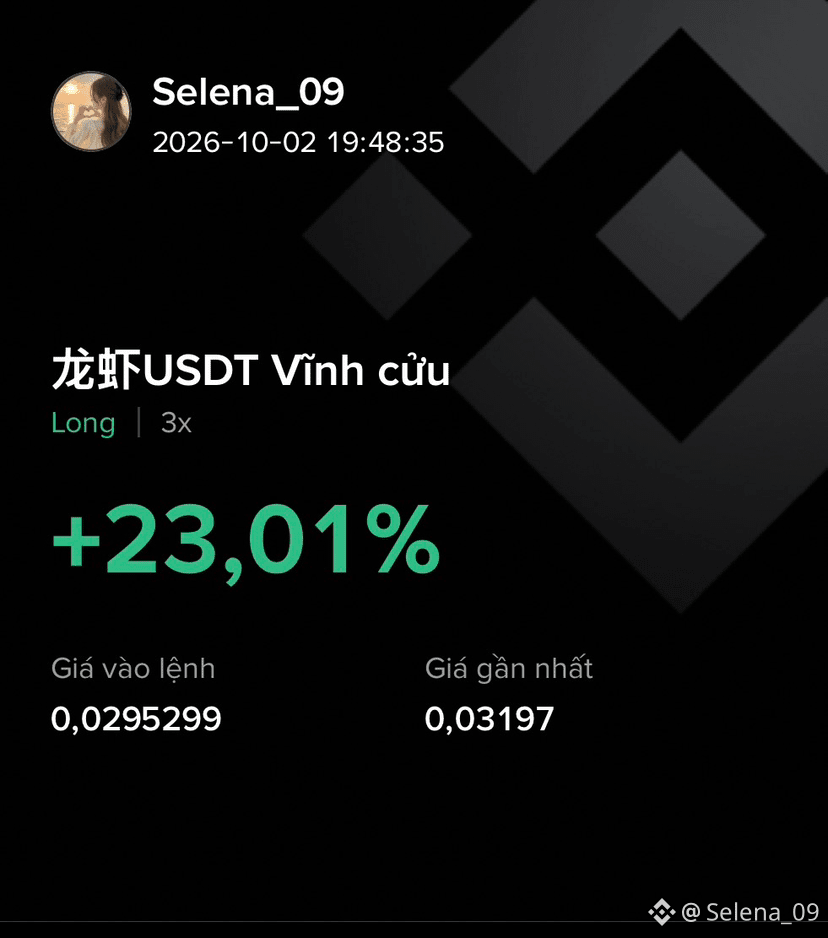
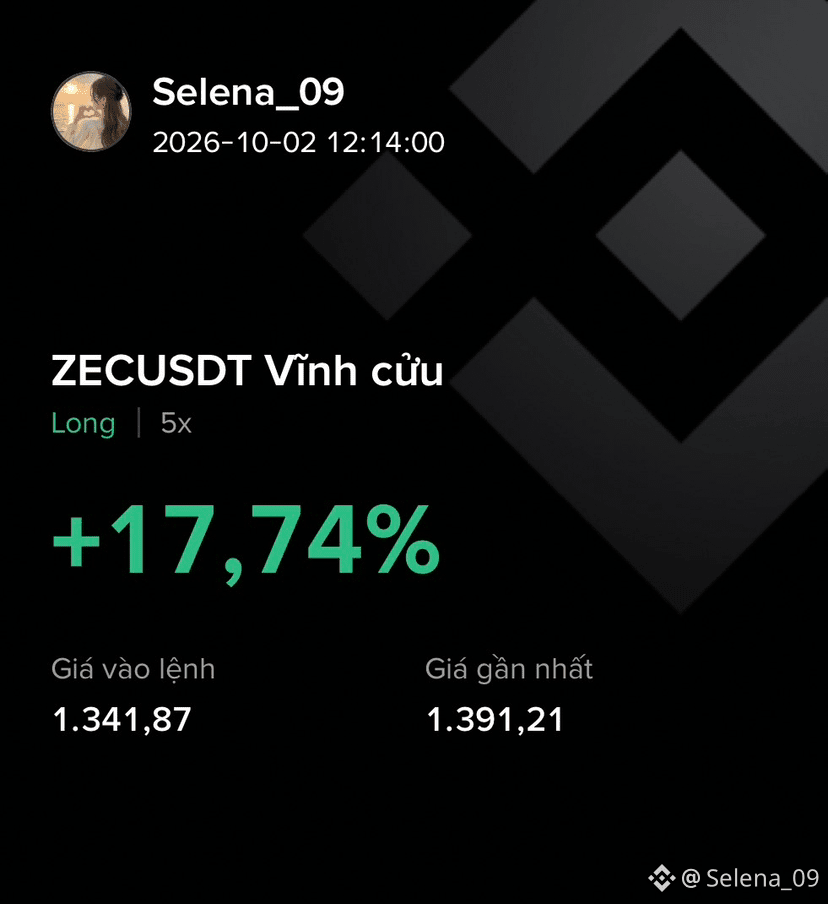
$龙虾 $ZEC đ has given me money for morning coffee tomorrow. I should have bought a bit more with order $SAND , but forget it—let’s do it tomorrow. Now I’ve closed all orders. Good night
{future}(ZECUSDT)
{future}(SANDUSDT)
{future}(龙虾USDT)
Done trading today, huh? Each day like this is still fun
$龙虾 $ZEC đ has given me money for morning coffee tomorrow. I should have bought a bit more with order $SAND , but forget it—let’s do it tomorrow. Now I’ve closed all orders. Good night
$龙虾 $ZEC đ has given me money for morning coffee tomorrow. I should have bought a bit more with order $SAND , but forget it—let’s do it tomorrow. Now I’ve closed all orders. Good night
1
2
998
·
--
Whoa, short and long are damaging to the brain, plus that non $$龙虾 , long 0.02952 to 0.032 can’t hold the trigger—only 23%. Wait until the time comes and it’ll smell great.
Then look on some more: $SAND and $MAGMA to see if there’s anything extra.
Whoa, short and long are damaging to the brain, plus that non $$龙虾 , long 0.02952 to 0.032 can’t hold the trigger—only 23%. Wait until the time comes and it’ll smell great.
Then look on some more: $SAND and $MAGMA to see if there’s anything extra.
Then look on some more: $SAND and $MAGMA to see if there’s anything extra.
892
·
--
Just going back and forth with these price-gumping coins on the leaderboard, scrolling down to the bottom I see $AAVE leo up 185u, guys. After the sell-off $ZEC $ENA xong I didn’t even notice to buy spot :( I guess I’ll wait for a pullback to long AAVE, like what happened with BCH too—wait for it to dip and then long again to eat.
Just going back and forth with these price-gumping coins on the leaderboard, scrolling down to the bottom I see $AAVE leo up 185u, guys. After the sell-off $ZEC $ENA xong I didn’t even notice to buy spot :( I guess I’ll wait for a pullback to long AAVE, like what happened with BCH too—wait for it to dip and then long again to eat.
2
1.8k
·
--
Looking at $MAGMA , you should understand it yourself—there are reasons, so just finalize it, guys. She hasn't even done it yet; after making a 20–30% move like that, even that was already pretty nerve-wracking. Today, the lobster tom $龙虾 is up x4, then divided by 4 right away within the day. $MOVR Yesterday it jumped strongly by over 3, so now it's back to 2. Just know when to stop—everyone.
Looking at $MAGMA , you should understand it yourself—there are reasons, so just finalize it, guys. She hasn't even done it yet; after making a 20–30% move like that, even that was already pretty nerve-wracking. Today, the lobster tom $龙虾 is up x4, then divided by 4 right away within the day. $MOVR Yesterday it jumped strongly by over 3, so now it's back to 2. Just know when to stop—everyone.
1
4.5k
·
--
Twin pair $SAND $MANA when did they start increasing together today? SAND is up 70%€ Mana 20%, $CT still hasn’t fallen and remains at 0.62. Sounds like they’re pushing hard, huh. What’s so hot about this one, lol?
Twin pair $SAND $MANA when did they start increasing together today? SAND is up 70%€ Mana 20%, $CT still hasn’t fallen and remains at 0.62. Sounds like they’re pushing hard, huh. What’s so hot about this one, lol?
1
1k
·
--
$龙虾 tất all is just a scam 😂😂 Early this morning it jumped in a matter of hours, nearly x4, and then after that—nothing anymore. It’s been at the bottom of the bottom. Be careful, but the pump is strong. I also see that $CT $SAND is being pumped as well. Especially, the CT that’s being pumped since the Future list—no one knows when the rug will happen again.
$龙虾 tất all is just a scam 😂😂 Early this morning it jumped in a matter of hours, nearly x4, and then after that—nothing anymore. It’s been at the bottom of the bottom. Be careful, but the pump is strong. I also see that $CT $SAND is being pumped as well. Especially, the CT that’s being pumped since the Future list—no one knows when the rug will happen again.
1k
·
--
This week just listed Future and $CT prices are going up so badly, guys. This morning I saw 0.49 to 0.56, it’s super fast and clean. Today I also saw $AAVE $MAGMA rising steadily. This afternoon I still haven’t gotten a chance to look at any girl to short, huh?
This week just listed Future and $CT prices are going up so badly, guys. This morning I saw 0.49 to 0.56, it’s super fast and clean. Today I also saw $AAVE $MAGMA rising steadily. This afternoon I still haven’t gotten a chance to look at any girl to short, huh?
359
·
--
Oh mango, there’s another one $ZEC reward again for nearly 20% of the long orders in the morning. Then on day 7 it’s just x3, that’s all, everyone ;) so I’ll just lock in again and wait for the next round. This morning I entered right at the ZEC bottom, went short exactly at the top $龙虾 , but I sold early :) now I’m going to check $ENA and see how it goes—wait for it to drop, then it’s a lottery win :)
Oh mango, there’s another one $ZEC reward again for nearly 20% of the long orders in the morning. Then on day 7 it’s just x3, that’s all, everyone ;) so I’ll just lock in again and wait for the next round. This morning I entered right at the ZEC bottom, went short exactly at the top $龙虾 , but I sold early :) now I’m going to check $ENA and see how it goes—wait for it to drop, then it’s a lottery win :)
2
8.7k
·
--
Add more air stocks today, rebounds strongly $SCR , rebounds more than 30%, $龙虾 now it's about to split into 3 from the top 0.12, this morning, $GTC still continues to dominate top 1 by price increase, now it's estimated that whoever buys at the right time will hit 1 strong surge like this kk
Add more air stocks today, rebounds strongly $SCR , rebounds more than 30%, $龙虾 now it's about to split into 3 from the top 0.12, this morning, $GTC still continues to dominate top 1 by price increase, now it's estimated that whoever buys at the right time will hit 1 strong surge like this kk
1
4.8k
·
--
Seeing this kid $US again makes me think of $BTW —pull it up, pull it down, kill both ends, then it’s back; don’t know how to play it. Today I guess I’ll just go a light long $ZEC . Why did it dump so badly? :(
Seeing this kid $US again makes me think of $BTW —pull it up, pull it down, kill both ends, then it’s back; don’t know how to play it. Today I guess I’ll just go a light long $ZEC . Why did it dump so badly? :(
2
3.2k
·
--
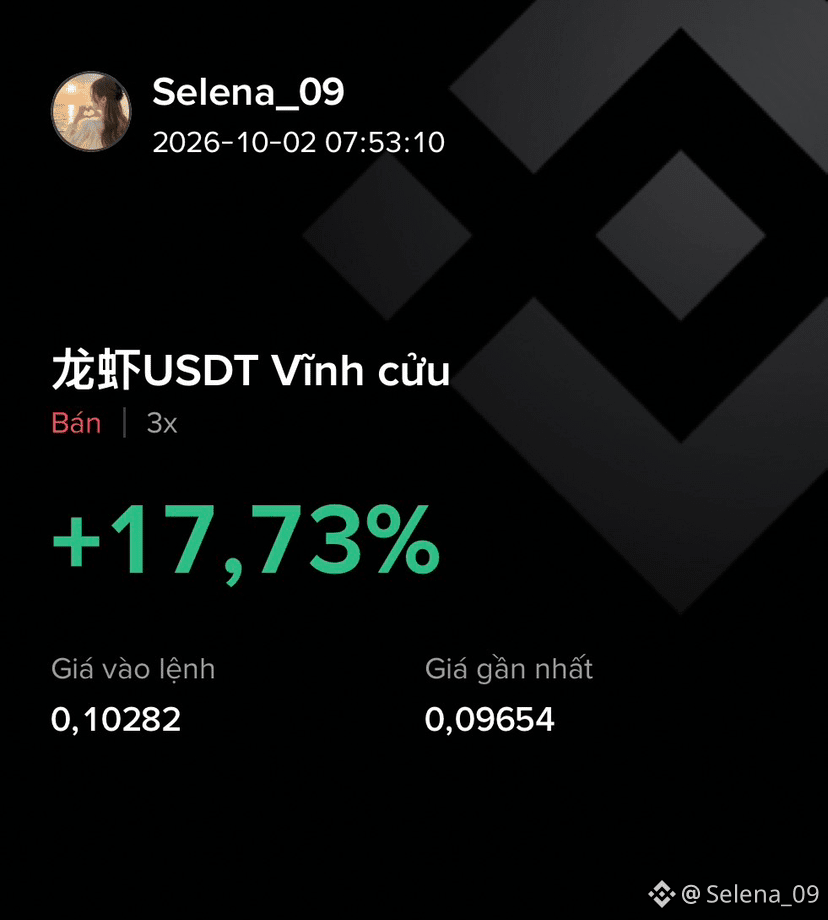
Oh my god, you really are no-stone-courage 😭😭 short $龙虾 , from 0.103 down to 0.096 and it already closed the order. You’ve got 17% though. I’m so pissed off, bro. Today there are $MEGA and $UAI pumb is so strong, over 30% too!
Oh my god, you really are no-stone-courage 😭😭 short $龙虾 , from 0.103 down to 0.096 and it already closed the order. You’ve got 17% though. I’m so pissed off, bro. Today there are $MEGA and $UAI pumb is so strong, over 30% too!
8
2
2.1k
·
--
Winked a few times and it turns out to be real, $龙虾 đ has already gone up to nearly 0.12u, just about to x4 from yesterday’s price; if you say it’s skyrocketing, that wouldn’t be wrong. $MOVR v is still at 2.9 and won’t come down, $GTC c has also increased by more than 50%—it’s probably another day of roller-coaster moves above the bxh rankings
Winked a few times and it turns out to be real, $龙虾 đ has already gone up to nearly 0.12u, just about to x4 from yesterday’s price; if you say it’s skyrocketing, that wouldn’t be wrong. $MOVR v is still at 2.9 and won’t come down, $GTC c has also increased by more than 50%—it’s probably another day of roller-coaster moves above the bxh rankings
1
776
·
--
$MOVR nghỉ ngơi buổi chiều, buổi tối muộn quay lại đường đua cùng $龙虾 làm mưa làm gió trên top tăng giá, MOVR vượt mô d 3.2u, tôm hùm quay lại 0.1u, $US cungz đẩy lại, quyết tâm giết short hay sao vậy?
$MOVR nghỉ ngơi buổi chiều, buổi tối muộn quay lại đường đua cùng $龙虾 làm mưa làm gió trên top tăng giá, MOVR vượt mô d 3.2u, tôm hùm quay lại 0.1u, $US cungz đẩy lại, quyết tâm giết short hay sao vậy?
1
2
1.4k
·
--
$CAP $龙虾 $BTW —there’s unrest, folks, everywhere you go someone’s trying to climb up; CAP and BTW are trying to reach a new peak; the lobster is back to x3 :) who chose the wrong civilization? I’m done for :(
$CAP $龙虾 $BTW —there’s unrest, folks, everywhere you go someone’s trying to climb up; CAP and BTW are trying to reach a new peak; the lobster is back to x3 :) who chose the wrong civilization? I’m done for :(
3
4.6k
·
--
Indeed $龙虾 x3 in tonight’s darkness really :) how come profit has already gone and then took out, so sad, $CT climbed back up 0.5, $ACN increased 30%, shorting lobster is it good yet guys :) keep it blowing out, killed the batch already
Indeed $龙虾 x3 in tonight’s darkness really :) how come profit has already gone and then took out, so sad, $CT climbed back up 0.5, $ACN increased 30%, shorting lobster is it good yet guys :) keep it blowing out, killed the batch already
2
2.3k
·
--
Yesterday I saw $CT go up on Binance Alpha, but I heard that the airdrop is opened 100%—I don’t know if that’s true. I haven’t had time to check, so I didn’t dare to follow. Now it’s gone up to Futures and disappeared. :)
$NOM $MOVR still hasn’t even dropped
Yesterday I saw $CT go up on Binance Alpha, but I heard that the airdrop is opened 100%—I don’t know if that’s true. I haven’t had time to check, so I didn’t dare to follow. Now it’s gone up to Futures and disappeared. :)
$NOM $MOVR still hasn’t even dropped
$NOM $MOVR still hasn’t even dropped
1
1.6k
·
--
With lobster shrimp $龙虾 hỏi what's going on that it’s already been multiplied by x3 by the time we got there, guys, absolutely wild, $BTW 1.4u, $AGT 0.27, way too crazy, so fast
With lobster shrimp $龙虾 hỏi what's going on that it’s already been multiplied by x3 by the time we got there, guys, absolutely wild, $BTW 1.4u, $AGT 0.27, way too crazy, so fast
980
·
--
Indeed, the one that’s supposed to be let out—what kind of son is that? It won’t stop taking off. $BTW x80 times the price I’m selling for—what else could be more depressing? This time, I managed to take in one segment $ENA r, then $ZEC xong, and still didn’t sell it all off—then it took off again, fluttering away proudly :)
Indeed, the one that’s supposed to be let out—what kind of son is that? It won’t stop taking off. $BTW x80 times the price I’m selling for—what else could be more depressing? This time, I managed to take in one segment $ENA r, then $ZEC xong, and still didn’t sell it all off—then it took off again, fluttering away proudly :)
1k
·
--
It’s been a long time since I last looked at $NIGHT $DUSK ; back when the CreatorPad event happened, I sold it for NIGHT at 0.09, I didn’t expect it to drop all the way to 0.01x and then climb back up to 0.04—4x from the bottom—yet it still hasn’t even reached the price I sold it for back then.
DUSK, on the other hand, is the opposite: it went up 50% compared to the price I sold it for after winning the prize. Today it’s currently at the top of the price gain list together with $AGT . Everyone—did anyone manage to grab one of these three coins?
It’s been a long time since I last looked at $NIGHT $DUSK ; back when the CreatorPad event happened, I sold it for NIGHT at 0.09, I didn’t expect it to drop all the way to 0.01x and then climb back up to 0.04—4x from the bottom—yet it still hasn’t even reached the price I sold it for back then.
DUSK, on the other hand, is the opposite: it went up 50% compared to the price I sold it for after winning the prize. Today it’s currently at the top of the price gain list together with $AGT . Everyone—did anyone manage to grab one of these three coins?
DUSK, on the other hand, is the opposite: it went up 50% compared to the price I sold it for after winning the prize. Today it’s currently at the top of the price gain list together with $AGT . Everyone—did anyone manage to grab one of these three coins?
3
2.7k
·
--
Just looking thôi mn ạ, by this time there are about ten creatures leading the board like $AGT $NOM $MOVR , trying to climb up; not sure when they’ll stop, but in my opinion the top 10 will see some collapse down soon
Just looking thôi mn ạ, by this time there are about ten creatures leading the board like $AGT $NOM $MOVR , trying to climb up; not sure when they’ll stop, but in my opinion the top 10 will see some collapse down soon
2
5.4k
Log in to explore more content
Join global crypto users on Binance Square
⚡️ Get latest and useful information about crypto.
💬 Trusted by the world’s largest crypto exchange.
👍 Discover real insights from verified creators.
Email / Phone number