

FEY60
331 Posts

FEY60
Report
Block User
I’m Crypto Enthusiast || Tidak Menerima Titip Dana
29 Following
8.1K+ Followers
9.3K+ Liked
Posts
All
Quotes
Videos
·
--

Article
Rp6.9 Trillion in Crypto Funds Stolen, Bitget Admits Most Will Be Hard to RecoverImagine almost Rp7 trillion in crypto assets being stolen, but the exchange that was attacked says: most of that money is likely not going to come back.
That is what Bitget is dealing with after the cyberattack in September 2026.
CEO Bitget, Gracy Chen, estimates that of around US$387.5 million or Rp6.9 trillion in lost assets, only a small portion may have the potential to be recovered.
Currently, Bitget, along with its investigation team, is still trying to track the movement of the funds. About US$1.1 million in stolen assets has already been successfully frozen.
Rp6.9 Trillion in Crypto Funds Stolen, Bitget Admits Most Will Be Hard to Recover
Imagine almost Rp7 trillion in crypto assets being stolen, but the exchange that was attacked says: most of that money is likely not going to come back.
That is what Bitget is dealing with after the cyberattack in September 2026.
CEO Bitget, Gracy Chen, estimates that of around US$387.5 million or Rp6.9 trillion in lost assets, only a small portion may have the potential to be recovered.
Currently, Bitget, along with its investigation team, is still trying to track the movement of the funds. About US$1.1 million in stolen assets has already been successfully frozen.
That is what Bitget is dealing with after the cyberattack in September 2026.
CEO Bitget, Gracy Chen, estimates that of around US$387.5 million or Rp6.9 trillion in lost assets, only a small portion may have the potential to be recovered.
Currently, Bitget, along with its investigation team, is still trying to track the movement of the funds. About US$1.1 million in stolen assets has already been successfully frozen.
24
·
--
Verified

Article
Blast Network to Close, Fate of US$51 Million QuestionedBlast, one of the Ethereum Layer-2 networks, will be shut down. But there’s one thing that makes this case interesting: there are still around US$51 million in user funds stored on this network.
If you’re not familiar yet, Blast is an Ethereum Layer-2 network. In simple terms, this network is created so that transactions can be carried out at a lower cost than doing so directly using Ethereum.
Blast had once grown very large. In June 2024, the value of assets on its network had reached about US$2.24 billion.
Blast Network to Close, Fate of US$51 Million Questioned
Blast, one of the Ethereum Layer-2 networks, will be shut down. But there’s one thing that makes this case interesting: there are still around US$51 million in user funds stored on this network.
If you’re not familiar yet, Blast is an Ethereum Layer-2 network. In simple terms, this network is created so that transactions can be carried out at a lower cost than doing so directly using Ethereum.
Blast had once grown very large. In June 2024, the value of assets on its network had reached about US$2.24 billion.
If you’re not familiar yet, Blast is an Ethereum Layer-2 network. In simple terms, this network is created so that transactions can be carried out at a lower cost than doing so directly using Ethereum.
Blast had once grown very large. In June 2024, the value of assets on its network had reached about US$2.24 billion.
6
1.2k
·
--
Behind the rapid development of AI, there is another resource that is also needed: water.
For example, this happened in Newton County, Georgia, United States.
There, a family living about 300 meters from Meta’s data center—Beverly and Jeff Morris—reported problems with their well after construction began.
They said the water pressure gradually dropped, the water became cloudy and full of sediment, until finally the water barely came out of the tap.
The family suspected that construction activities such as digging, land clearing, and blasting had disrupted the groundwater conditions around their home.
Even in September 2026, several families sued Meta over the allegations.
But Meta denied it.
Meta said neither its construction activity nor the operation of its data center caused problems for residents’ wells. The company also stated that an independent groundwater study it commissioned found no such impact.
Meta itself said the data center uses water from the local utility network, not groundwater.
So, is it really true that Meta’s data center caused residents’ wells to become problematic?
There is no legal conclusion yet that proves it. The case is still in dispute.
But this case shows one thing: in the AI era, as data centers get bigger, their infrastructure needs are not only electricity and chips—water is also part of the story.
Behind the rapid development of AI, there is another resource that is also needed: water.
For example, this happened in Newton County, Georgia, United States.
There, a family living about 300 meters from Meta’s data center—Beverly and Jeff Morris—reported problems with their well after construction began.
They said the water pressure gradually dropped, the water became cloudy and full of sediment, until finally the water barely came out of the tap.
The family suspected that construction activities such as digging, land clearing, and blasting had disrupted the groundwater conditions around their home.
Even in September 2026, several families sued Meta over the allegations.
But Meta denied it.
Meta said neither its construction activity nor the operation of its data center caused problems for residents’ wells. The company also stated that an independent groundwater study it commissioned found no such impact.
Meta itself said the data center uses water from the local utility network, not groundwater.
So, is it really true that Meta’s data center caused residents’ wells to become problematic?
There is no legal conclusion yet that proves it. The case is still in dispute.
But this case shows one thing: in the AI era, as data centers get bigger, their infrastructure needs are not only electricity and chips—water is also part of the story.
For example, this happened in Newton County, Georgia, United States.
There, a family living about 300 meters from Meta’s data center—Beverly and Jeff Morris—reported problems with their well after construction began.
They said the water pressure gradually dropped, the water became cloudy and full of sediment, until finally the water barely came out of the tap.
The family suspected that construction activities such as digging, land clearing, and blasting had disrupted the groundwater conditions around their home.
Even in September 2026, several families sued Meta over the allegations.
But Meta denied it.
Meta said neither its construction activity nor the operation of its data center caused problems for residents’ wells. The company also stated that an independent groundwater study it commissioned found no such impact.
Meta itself said the data center uses water from the local utility network, not groundwater.
So, is it really true that Meta’s data center caused residents’ wells to become problematic?
There is no legal conclusion yet that proves it. The case is still in dispute.
But this case shows one thing: in the AI era, as data centers get bigger, their infrastructure needs are not only electricity and chips—water is also part of the story.

3
695
·
--
Educational learning apps will be very important for the next generation. Whether it's learning a foreign language, learning about crypto from an early age, AI, and so on. I like GIGGLE ACADEMY. I use it every day to teach my daughter to learn English. 🧡
$GIGGLE
{spot}(GIGGLEUSDT)
Educational learning apps will be very important for the next generation. Whether it's learning a foreign language, learning about crypto from an early age, AI, and so on. I like GIGGLE ACADEMY. I use it every day to teach my daughter to learn English. 🧡
$GIGGLE
$GIGGLE
5
476
·
--
AI that we once only knew for making text, answering questions, or generating images. Now the technology has been advancing far faster than many people imagine.
Recently, Bill Gates, the founder of Microsoft, warned that AI is now extremely powerful. So if this capability falls into the hands of people who truly have malicious intent, the impact could be far greater than with previous technologies.
He even mentioned an extreme scenario: AI could potentially drive an event that causes up to 1 billion people to die. But that doesn’t mean Bill Gates is saying, “AI will kill 1 billion people.”
That number is meant to illustrate how great the potential danger is if extremely powerful AI is misused by someone with malicious intent.
Because the more advanced a technology is, the greater the capability it can give to its users.
The problem is, we can’t assume that everyone will use that capability for good.
And according to Gates, handing everything over to technology companies to oversee themselves isn’t enough.
He suggests there must be safeguards, monitoring, and involvement from the government and law enforcement to set limits and ensure AI is secured.
So the question now isn’t just: How smart can AI be made? But rather: How safe is this AI as its capabilities keep getting bigger?
AI that we once only knew for making text, answering questions, or generating images. Now the technology has been advancing far faster than many people imagine.
Recently, Bill Gates, the founder of Microsoft, warned that AI is now extremely powerful. So if this capability falls into the hands of people who truly have malicious intent, the impact could be far greater than with previous technologies.
He even mentioned an extreme scenario: AI could potentially drive an event that causes up to 1 billion people to die. But that doesn’t mean Bill Gates is saying, “AI will kill 1 billion people.”
That number is meant to illustrate how great the potential danger is if extremely powerful AI is misused by someone with malicious intent.
Because the more advanced a technology is, the greater the capability it can give to its users.
The problem is, we can’t assume that everyone will use that capability for good.
And according to Gates, handing everything over to technology companies to oversee themselves isn’t enough.
He suggests there must be safeguards, monitoring, and involvement from the government and law enforcement to set limits and ensure AI is secured.
So the question now isn’t just: How smart can AI be made? But rather: How safe is this AI as its capabilities keep getting bigger?
Recently, Bill Gates, the founder of Microsoft, warned that AI is now extremely powerful. So if this capability falls into the hands of people who truly have malicious intent, the impact could be far greater than with previous technologies.
He even mentioned an extreme scenario: AI could potentially drive an event that causes up to 1 billion people to die. But that doesn’t mean Bill Gates is saying, “AI will kill 1 billion people.”
That number is meant to illustrate how great the potential danger is if extremely powerful AI is misused by someone with malicious intent.
Because the more advanced a technology is, the greater the capability it can give to its users.
The problem is, we can’t assume that everyone will use that capability for good.
And according to Gates, handing everything over to technology companies to oversee themselves isn’t enough.
He suggests there must be safeguards, monitoring, and involvement from the government and law enforcement to set limits and ensure AI is secured.
So the question now isn’t just: How smart can AI be made? But rather: How safe is this AI as its capabilities keep getting bigger?

4
902
·
--
Banks will shut down and be replaced by blockchain technology. This story has already led many people to misunderstand.
Actually, blockchain isn’t a “replacement for banks.” Blockchain is a technology for recording and verifying transactions digitally.
Think of it like a “new railway track” in the financial system. It doesn’t mean the old railway tracks have to be thrown away, but there is a new route that can make certain processes faster and more efficient. That’s why blockchain doesn’t have to be the enemy of banks.
Even CZ, the founder of Binance, has said why some people think banks need to be afraid of blockchain. In fact, this technology is open and can be used by anyone—including banks.
And the fact is, several major banks around the world are starting to explore blockchain for payments and cross-border transfers.
Banks still have an important function. If there are transaction problems, customers still have customer service (CS), regulations, and protection mechanisms.
Meanwhile, in crypto transactions using self-custody, if you accidentally send your assets to the wrong address, transactions generally can’t simply be canceled.
So it’s not about blockchain replacing banks. It’s about how quickly banks are willing to adapt. Because the future of finance may not be about who replaces whom, but about how the two can complement each other.
What do you think—are banks in Indonesia ready to adapt to this technology yet?
Banks will shut down and be replaced by blockchain technology. This story has already led many people to misunderstand.
Actually, blockchain isn’t a “replacement for banks.” Blockchain is a technology for recording and verifying transactions digitally.
Think of it like a “new railway track” in the financial system. It doesn’t mean the old railway tracks have to be thrown away, but there is a new route that can make certain processes faster and more efficient. That’s why blockchain doesn’t have to be the enemy of banks.
Even CZ, the founder of Binance, has said why some people think banks need to be afraid of blockchain. In fact, this technology is open and can be used by anyone—including banks.
And the fact is, several major banks around the world are starting to explore blockchain for payments and cross-border transfers.
Banks still have an important function. If there are transaction problems, customers still have customer service (CS), regulations, and protection mechanisms.
Meanwhile, in crypto transactions using self-custody, if you accidentally send your assets to the wrong address, transactions generally can’t simply be canceled.
So it’s not about blockchain replacing banks. It’s about how quickly banks are willing to adapt. Because the future of finance may not be about who replaces whom, but about how the two can complement each other.
What do you think—are banks in Indonesia ready to adapt to this technology yet?
Actually, blockchain isn’t a “replacement for banks.” Blockchain is a technology for recording and verifying transactions digitally.
Think of it like a “new railway track” in the financial system. It doesn’t mean the old railway tracks have to be thrown away, but there is a new route that can make certain processes faster and more efficient. That’s why blockchain doesn’t have to be the enemy of banks.
Even CZ, the founder of Binance, has said why some people think banks need to be afraid of blockchain. In fact, this technology is open and can be used by anyone—including banks.
And the fact is, several major banks around the world are starting to explore blockchain for payments and cross-border transfers.
Banks still have an important function. If there are transaction problems, customers still have customer service (CS), regulations, and protection mechanisms.
Meanwhile, in crypto transactions using self-custody, if you accidentally send your assets to the wrong address, transactions generally can’t simply be canceled.
So it’s not about blockchain replacing banks. It’s about how quickly banks are willing to adapt. Because the future of finance may not be about who replaces whom, but about how the two can complement each other.
What do you think—are banks in Indonesia ready to adapt to this technology yet?

3
1.2k
·
--
Bitcoin is actually not 100% anonymous, but more accurately called a pseudonym. Because its transactions are publicly available on the blockchain, anyone can see wallet addresses, transfer amounts, and the destination. The only thing that’s secret is the owner’s name.
But that name can be uncovered if it’s linked to other data, such as identity verification (KTP) on official exchanges, transaction patterns, or specialized analysis tools.
And now, Kazakhstan has even built a National Crypto Analysis Center to strengthen oversight of crypto transactions.
This system is designed to combine fiat and crypto transaction data. So information like customer data, wallet addresses, and transaction activity can be analyzed within one system.
Why is Kazakhstan doing this?
Because crypto activity there is quite significant. Kazakhstan is also known as one of the countries with large Bitcoin mining activity, while the value of crypto transactions in the country has already reached more than US$10 billion.
So the government chose an approach of regulating and monitoring, not just banning.
This shows that crypto is increasingly entering more organized financial systems.
It doesn’t mean that crypto becomes fully monitorable, or that every user’s identity automatically becomes public.
But one thing is clear:
There is a transaction trail on the blockchain, and with the right data and analysis technology, that trail can be traced.
In your opinion, does a system like this make transactions safer—or does it make users feel like they’re being watched too closely?
Bitcoin is actually not 100% anonymous, but more accurately called a pseudonym. Because its transactions are publicly available on the blockchain, anyone can see wallet addresses, transfer amounts, and the destination. The only thing that’s secret is the owner’s name.
But that name can be uncovered if it’s linked to other data, such as identity verification (KTP) on official exchanges, transaction patterns, or specialized analysis tools.
And now, Kazakhstan has even built a National Crypto Analysis Center to strengthen oversight of crypto transactions.
This system is designed to combine fiat and crypto transaction data. So information like customer data, wallet addresses, and transaction activity can be analyzed within one system.
Why is Kazakhstan doing this?
Because crypto activity there is quite significant. Kazakhstan is also known as one of the countries with large Bitcoin mining activity, while the value of crypto transactions in the country has already reached more than US$10 billion.
So the government chose an approach of regulating and monitoring, not just banning.
This shows that crypto is increasingly entering more organized financial systems.
It doesn’t mean that crypto becomes fully monitorable, or that every user’s identity automatically becomes public.
But one thing is clear:
There is a transaction trail on the blockchain, and with the right data and analysis technology, that trail can be traced.
In your opinion, does a system like this make transactions safer—or does it make users feel like they’re being watched too closely?
But that name can be uncovered if it’s linked to other data, such as identity verification (KTP) on official exchanges, transaction patterns, or specialized analysis tools.
And now, Kazakhstan has even built a National Crypto Analysis Center to strengthen oversight of crypto transactions.
This system is designed to combine fiat and crypto transaction data. So information like customer data, wallet addresses, and transaction activity can be analyzed within one system.
Why is Kazakhstan doing this?
Because crypto activity there is quite significant. Kazakhstan is also known as one of the countries with large Bitcoin mining activity, while the value of crypto transactions in the country has already reached more than US$10 billion.
So the government chose an approach of regulating and monitoring, not just banning.
This shows that crypto is increasingly entering more organized financial systems.
It doesn’t mean that crypto becomes fully monitorable, or that every user’s identity automatically becomes public.
But one thing is clear:
There is a transaction trail on the blockchain, and with the right data and analysis technology, that trail can be traced.
In your opinion, does a system like this make transactions safer—or does it make users feel like they’re being watched too closely?

5
2.6k
·
--
Elon Musk predicts: by 2036, money will no longer be important.
Elon says: really, what is it that you’re looking for in money? Not the paper itself, but what that paper can buy—food, housing, transportation, entertainment.
Elon also says: now imagine this—AI and robots are developing as fast as we believe. Until the point where they can produce goods and services in numbers far, far greater than what all the people on Earth could possibly consume.
So if all your needs are already abundant, available, and automatically taken care of by AI, why do we need prices anymore? Why would you need to pay?
That’s the point, according to Elon, where the concepts of “price” and “money” become irrelevant. Not because money is broken or due to an economic crisis. But because scarcity—the thing that has always been the reason everything has a price—is no longer there.
But Elon isn’t really talking about fiat money, inflation, or crypto anymore. He’s imagining a post-scarcity world. A world where AI works for humans, not humans working for money.
That’s Elon’s vision of the future—from a money-based economy to an abundance-based economy.
What do you think—does Elon’s prediction apply to fiat money specifically, or to money in general? Share your thoughts.
Elon Musk predicts: by 2036, money will no longer be important.
Elon says: really, what is it that you’re looking for in money? Not the paper itself, but what that paper can buy—food, housing, transportation, entertainment.
Elon also says: now imagine this—AI and robots are developing as fast as we believe. Until the point where they can produce goods and services in numbers far, far greater than what all the people on Earth could possibly consume.
So if all your needs are already abundant, available, and automatically taken care of by AI, why do we need prices anymore? Why would you need to pay?
That’s the point, according to Elon, where the concepts of “price” and “money” become irrelevant. Not because money is broken or due to an economic crisis. But because scarcity—the thing that has always been the reason everything has a price—is no longer there.
But Elon isn’t really talking about fiat money, inflation, or crypto anymore. He’s imagining a post-scarcity world. A world where AI works for humans, not humans working for money.
That’s Elon’s vision of the future—from a money-based economy to an abundance-based economy.
What do you think—does Elon’s prediction apply to fiat money specifically, or to money in general? Share your thoughts.
Elon says: really, what is it that you’re looking for in money? Not the paper itself, but what that paper can buy—food, housing, transportation, entertainment.
Elon also says: now imagine this—AI and robots are developing as fast as we believe. Until the point where they can produce goods and services in numbers far, far greater than what all the people on Earth could possibly consume.
So if all your needs are already abundant, available, and automatically taken care of by AI, why do we need prices anymore? Why would you need to pay?
That’s the point, according to Elon, where the concepts of “price” and “money” become irrelevant. Not because money is broken or due to an economic crisis. But because scarcity—the thing that has always been the reason everything has a price—is no longer there.
But Elon isn’t really talking about fiat money, inflation, or crypto anymore. He’s imagining a post-scarcity world. A world where AI works for humans, not humans working for money.
That’s Elon’s vision of the future—from a money-based economy to an abundance-based economy.
What do you think—does Elon’s prediction apply to fiat money specifically, or to money in general? Share your thoughts.

1
1
10
7.3k
·
--
Try it—flash back for a moment. The first time you heard someone talking about Bitcoin or crypto, what was your first reaction?
You probably thought to yourself: 'What kind of money-game business is this now? Scam? Ponzi?' It’s funny when you look back, but that was really the reality back then.
At the time, people’s perspective on crypto was definitely very negative. And that makes sense—back then, education was still very limited, the platforms weren’t as many as they are now, and even buying it was still complicated.
So the main job of the industry players back then was purely one thing: introducing this technology to the public and making it clear that it isn’t a scam.
But the story is different now. Based on the latest data, the number of crypto financial asset users in Indonesia has already reached nearly 23 million accounts.
The shift is also very noticeable. From being feared and suspected, it has now become part of investment options.
This is proof that the industry and its regulations have become much more mature. But... there’s a note here. Because access is getting easier and the app is just a download away, our challenges today are different.
It’s no longer about 'what crypto is,' but rather how we can invest wisely—understand the risks—and not just follow the hype.
By the way, what year did you first get to know crypto? Did you ever think it might be a scam back then? Share your experience in the comments section!
Try it—flash back for a moment. The first time you heard someone talking about Bitcoin or crypto, what was your first reaction?
You probably thought to yourself: 'What kind of money-game business is this now? Scam? Ponzi?' It’s funny when you look back, but that was really the reality back then.
At the time, people’s perspective on crypto was definitely very negative. And that makes sense—back then, education was still very limited, the platforms weren’t as many as they are now, and even buying it was still complicated.
So the main job of the industry players back then was purely one thing: introducing this technology to the public and making it clear that it isn’t a scam.
But the story is different now. Based on the latest data, the number of crypto financial asset users in Indonesia has already reached nearly 23 million accounts.
The shift is also very noticeable. From being feared and suspected, it has now become part of investment options.
This is proof that the industry and its regulations have become much more mature. But... there’s a note here. Because access is getting easier and the app is just a download away, our challenges today are different.
It’s no longer about 'what crypto is,' but rather how we can invest wisely—understand the risks—and not just follow the hype.
By the way, what year did you first get to know crypto? Did you ever think it might be a scam back then? Share your experience in the comments section!
You probably thought to yourself: 'What kind of money-game business is this now? Scam? Ponzi?' It’s funny when you look back, but that was really the reality back then.
At the time, people’s perspective on crypto was definitely very negative. And that makes sense—back then, education was still very limited, the platforms weren’t as many as they are now, and even buying it was still complicated.
So the main job of the industry players back then was purely one thing: introducing this technology to the public and making it clear that it isn’t a scam.
But the story is different now. Based on the latest data, the number of crypto financial asset users in Indonesia has already reached nearly 23 million accounts.
The shift is also very noticeable. From being feared and suspected, it has now become part of investment options.
This is proof that the industry and its regulations have become much more mature. But... there’s a note here. Because access is getting easier and the app is just a download away, our challenges today are different.
It’s no longer about 'what crypto is,' but rather how we can invest wisely—understand the risks—and not just follow the hype.
By the way, what year did you first get to know crypto? Did you ever think it might be a scam back then? Share your experience in the comments section!
3
8
3.1k
·
--
BlackRock Keeps Buying Ethereum: Is It a Market Strength Signal? 🚀
If you feel the crypto market has been boring lately, take a look at what the world’s biggest player, BlackRock, is doing.
They just bought Ethereum (ETH) for 9 days in a row without selling a single coin!
💡 3 Key Things Happening Right Now:
- Market Dominance ($1.02 Billion): About 72% of the total money flowing into the Ethereum ETF in the United States comes from a single source: BlackRock (through their product, ETHA).
- Ethereum’s Future Looks Even Stronger: ETHA managed to gather assets worth $10 billion in just 251 days. This is the fastest growth record, second only to Bitcoin ETFs.
- Strategy of “Dipping” (Averaging Down): BlackRock’s average purchase price from the initial capital is around $3,060. When the price of ETH fell to the $2,400–$2,550 range, they didn’t panic—instead, they took advantage of the moment to buy more at a discount.
🔍 So what’s the takeaway?
The gap between institutional interest in Bitcoin and Ethereum is getting narrower. Market narratives often start to shift quietly before the price truly takes off.
💭 What do you think?
Is BlackRock’s dip-buying a sign of high conviction, or a strategy that’s too risky?
👇 Join the discussion in the comments!
#ETH #blackRock #cryptoindonesia #CryptoNews #ETHA
BlackRock Keeps Buying Ethereum: Is It a Market Strength Signal? 🚀
If you feel the crypto market has been boring lately, take a look at what the world’s biggest player, BlackRock, is doing.
They just bought Ethereum (ETH) for 9 days in a row without selling a single coin!
💡 3 Key Things Happening Right Now:
- Market Dominance ($1.02 Billion): About 72% of the total money flowing into the Ethereum ETF in the United States comes from a single source: BlackRock (through their product, ETHA).
- Ethereum’s Future Looks Even Stronger: ETHA managed to gather assets worth $10 billion in just 251 days. This is the fastest growth record, second only to Bitcoin ETFs.
- Strategy of “Dipping” (Averaging Down): BlackRock’s average purchase price from the initial capital is around $3,060. When the price of ETH fell to the $2,400–$2,550 range, they didn’t panic—instead, they took advantage of the moment to buy more at a discount.
🔍 So what’s the takeaway?
The gap between institutional interest in Bitcoin and Ethereum is getting narrower. Market narratives often start to shift quietly before the price truly takes off.
💭 What do you think?
Is BlackRock’s dip-buying a sign of high conviction, or a strategy that’s too risky?
👇 Join the discussion in the comments!
#ETH #blackRock #cryptoindonesia #CryptoNews #ETHA
If you feel the crypto market has been boring lately, take a look at what the world’s biggest player, BlackRock, is doing.
They just bought Ethereum (ETH) for 9 days in a row without selling a single coin!
💡 3 Key Things Happening Right Now:
- Market Dominance ($1.02 Billion): About 72% of the total money flowing into the Ethereum ETF in the United States comes from a single source: BlackRock (through their product, ETHA).
- Ethereum’s Future Looks Even Stronger: ETHA managed to gather assets worth $10 billion in just 251 days. This is the fastest growth record, second only to Bitcoin ETFs.
- Strategy of “Dipping” (Averaging Down): BlackRock’s average purchase price from the initial capital is around $3,060. When the price of ETH fell to the $2,400–$2,550 range, they didn’t panic—instead, they took advantage of the moment to buy more at a discount.
🔍 So what’s the takeaway?
The gap between institutional interest in Bitcoin and Ethereum is getting narrower. Market narratives often start to shift quietly before the price truly takes off.
💭 What do you think?
Is BlackRock’s dip-buying a sign of high conviction, or a strategy that’s too risky?
👇 Join the discussion in the comments!
#ETH #blackRock #cryptoindonesia #CryptoNews #ETHA

2
394
·
--
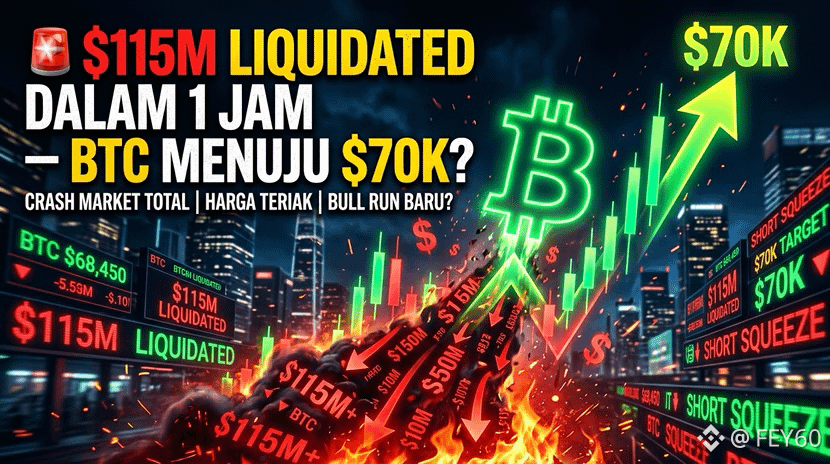
🚨 BTC DROPS TO $76K — $75K IS A LIFE LINE?
Bitcoin just took a hard hit. From around $79.1K → $76.7K in a short time after news of a U.S. attack near the Strait of Hormuz broke out.
Within an hour, around $115 million worth of crypto positions were liquidated. And it’s not just BTC bleeding—long ETH was hit even harder, around $100 million. 💀
The problem is, the pressure is coming from multiple directions:
🛢️ Oil > $90
📈 US 10Y yield 4.81%
💸 BTC spot ETF outflow $236M
😰 Fear & Greed down 81 → 71
But then a plot twist appeared. 👀 Strategy bought BTC again. They purchased 4,603 BTC (~$369.7M) and now hold a total of 845,050 BTC.
So now BTC is at a crossroads:
- $75K holds → chance to bounce back to $78K–$80K.
- $75K breaks → $73.5K–$74.4K becomes the next area.
And if the pressure gets even more brutal? 🎯 $70K–$72K starts to come into focus. The macro picture is still weighing in. Institutions are still buying. Who’s going to win this time? 🐂 vs 🐻
What do you think: hold $75K or $70K next? 👇
🚨 BTC DROPS TO $76K — $75K IS A LIFE LINE?
Bitcoin just took a hard hit. From around $79.1K → $76.7K in a short time after news of a U.S. attack near the Strait of Hormuz broke out.
Within an hour, around $115 million worth of crypto positions were liquidated. And it’s not just BTC bleeding—long ETH was hit even harder, around $100 million. 💀
The problem is, the pressure is coming from multiple directions:
🛢️ Oil > $90
📈 US 10Y yield 4.81%
💸 BTC spot ETF outflow $236M
😰 Fear & Greed down 81 → 71
But then a plot twist appeared. 👀 Strategy bought BTC again. They purchased 4,603 BTC (~$369.7M) and now hold a total of 845,050 BTC.
So now BTC is at a crossroads:
- $75K holds → chance to bounce back to $78K–$80K.
- $75K breaks → $73.5K–$74.4K becomes the next area.
And if the pressure gets even more brutal? 🎯 $70K–$72K starts to come into focus. The macro picture is still weighing in. Institutions are still buying. Who’s going to win this time? 🐂 vs 🐻
What do you think: hold $75K or $70K next? 👇
Bitcoin just took a hard hit. From around $79.1K → $76.7K in a short time after news of a U.S. attack near the Strait of Hormuz broke out.
Within an hour, around $115 million worth of crypto positions were liquidated. And it’s not just BTC bleeding—long ETH was hit even harder, around $100 million. 💀
The problem is, the pressure is coming from multiple directions:
🛢️ Oil > $90
📈 US 10Y yield 4.81%
💸 BTC spot ETF outflow $236M
😰 Fear & Greed down 81 → 71
But then a plot twist appeared. 👀 Strategy bought BTC again. They purchased 4,603 BTC (~$369.7M) and now hold a total of 845,050 BTC.
So now BTC is at a crossroads:
- $75K holds → chance to bounce back to $78K–$80K.
- $75K breaks → $73.5K–$74.4K becomes the next area.
And if the pressure gets even more brutal? 🎯 $70K–$72K starts to come into focus. The macro picture is still weighing in. Institutions are still buying. Who’s going to win this time? 🐂 vs 🐻
What do you think: hold $75K or $70K next? 👇
3
914
·
--
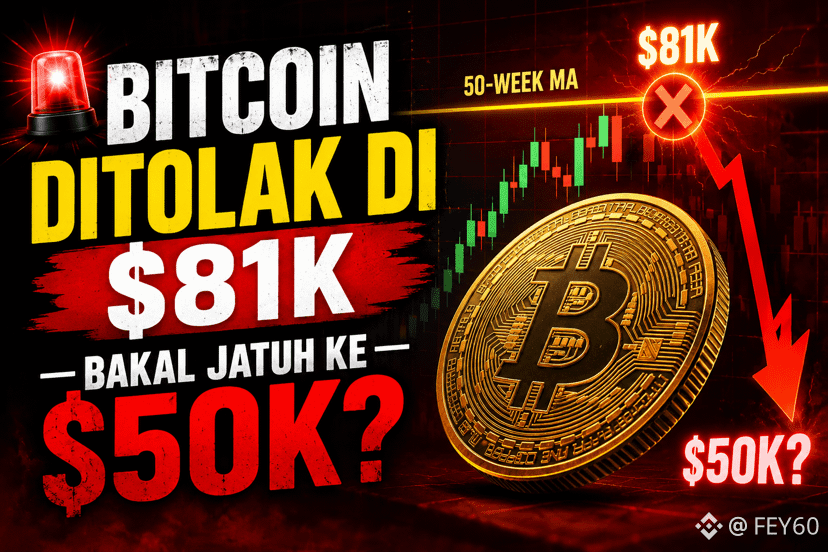
🚨 BITCOIN REJECTED AT $81K — COULD IT FALL TO $50K?
Bitcoin briefly surged to $81,265, but was then rejected right at the 50-week MA area around $81,085. As a result, BTC fell again and slipped back below $80K.
Now a narrative is starting to emerge: “Bitcoin will fall to $50K!” 😳
But… wait a minute.
If you look at the data, $50K is not the market’s main scenario.
Spot Bitcoin ETFs actually recorded inflows for 6 straight days, with funds entering around $337 million on August 24.
Even ETF AUM rose from about $78.67 billion to $98.56 billion in just a week.
So, does the rejection at $81K mean Bitcoin is about to collapse?
Not necessarily.
The path toward $50K is possible, but it’s usually tied to extreme conditions—especially if the Fed suddenly turns much more hawkish than the market expects.
Some projections also paint a different picture:
🔻 Citi: bear case $53K, but their base case is still $82K.
🔻 Galaxy Digital: downside scenario $40–46K.
📈 Standard Chartered: target of $100K by year-end.
📈 Bernstein: even sees potential for $150K.
And interestingly, the chance of BTC touching $50K in August according to Polymarket is only about 2%.
So, in my view, what matters now isn’t just:
“BTC rejected at $81K = it’s going to crash?”
But instead:
Is this rejection only a healthy pullback within an uptrend, or a sign that bullish momentum is starting to lose steam?
Because one thing is certain:
As long as Bitcoin hasn’t lost key support levels, don’t jump to the conclusion that $50K is already right around the corner. 👀
What do you think?
BTC is just taking a breather before continuing higher 🚀
or is this the start of a deeper correction? 📉
🚨 BITCOIN REJECTED AT $81K — COULD IT FALL TO $50K?
Bitcoin briefly surged to $81,265, but was then rejected right at the 50-week MA area around $81,085. As a result, BTC fell again and slipped back below $80K.
Now a narrative is starting to emerge: “Bitcoin will fall to $50K!” 😳
But… wait a minute.
If you look at the data, $50K is not the market’s main scenario.
Spot Bitcoin ETFs actually recorded inflows for 6 straight days, with funds entering around $337 million on August 24.
Even ETF AUM rose from about $78.67 billion to $98.56 billion in just a week.
So, does the rejection at $81K mean Bitcoin is about to collapse?
Not necessarily.
The path toward $50K is possible, but it’s usually tied to extreme conditions—especially if the Fed suddenly turns much more hawkish than the market expects.
Some projections also paint a different picture:
🔻 Citi: bear case $53K, but their base case is still $82K.
🔻 Galaxy Digital: downside scenario $40–46K.
📈 Standard Chartered: target of $100K by year-end.
📈 Bernstein: even sees potential for $150K.
And interestingly, the chance of BTC touching $50K in August according to Polymarket is only about 2%.
So, in my view, what matters now isn’t just:
“BTC rejected at $81K = it’s going to crash?”
But instead:
Is this rejection only a healthy pullback within an uptrend, or a sign that bullish momentum is starting to lose steam?
Because one thing is certain:
As long as Bitcoin hasn’t lost key support levels, don’t jump to the conclusion that $50K is already right around the corner. 👀
What do you think?
BTC is just taking a breather before continuing higher 🚀
or is this the start of a deeper correction? 📉
Bitcoin briefly surged to $81,265, but was then rejected right at the 50-week MA area around $81,085. As a result, BTC fell again and slipped back below $80K.
Now a narrative is starting to emerge: “Bitcoin will fall to $50K!” 😳
But… wait a minute.
If you look at the data, $50K is not the market’s main scenario.
Spot Bitcoin ETFs actually recorded inflows for 6 straight days, with funds entering around $337 million on August 24.
Even ETF AUM rose from about $78.67 billion to $98.56 billion in just a week.
So, does the rejection at $81K mean Bitcoin is about to collapse?
Not necessarily.
The path toward $50K is possible, but it’s usually tied to extreme conditions—especially if the Fed suddenly turns much more hawkish than the market expects.
Some projections also paint a different picture:
🔻 Citi: bear case $53K, but their base case is still $82K.
🔻 Galaxy Digital: downside scenario $40–46K.
📈 Standard Chartered: target of $100K by year-end.
📈 Bernstein: even sees potential for $150K.
And interestingly, the chance of BTC touching $50K in August according to Polymarket is only about 2%.
So, in my view, what matters now isn’t just:
“BTC rejected at $81K = it’s going to crash?”
But instead:
Is this rejection only a healthy pullback within an uptrend, or a sign that bullish momentum is starting to lose steam?
Because one thing is certain:
As long as Bitcoin hasn’t lost key support levels, don’t jump to the conclusion that $50K is already right around the corner. 👀
What do you think?
BTC is just taking a breather before continuing higher 🚀
or is this the start of a deeper correction? 📉
4
895
·
--
If Bitcoin and Ethereum are usually the two names most closely watched, this time XRP is actually surging the fastest.
In a week, XRP is up about 30%, and even within a single day it jumped 20.4%. Meanwhile, Ethereum is up about 25% over the week, with a daily gain of around 17.8%.
Bitcoin is also powering ahead, up about 20% in a week and 10.3% in a day.
So what exactly is driving the crypto market to suddenly draw so much buying?
There are several factors fueling it.
1. Political and U.S. Regulatory Sentiment.
The White House Crypto Summit in the Trump era sent a fairly positive signal about the future of crypto-asset regulation in the United States. This has made investors more confident about entering the market.
2. Institutional Money Starts to Flow In.
Spot Bitcoin ETF inflows are recorded at around $517 million. That means large amounts of fresh capital are entering the Bitcoin market and strengthening overall positive sentiment across the crypto market.
3. Supportive Macro Conditions.
The U.S. Treasury Department’s bond buyback policy helps suppress bond yields. When conditions like this occur, investors may begin shifting part of their funds into riskier assets, including crypto.
5. Short Squeeze.
This is one of the biggest fuels behind this rally. Short positions worth about $2.7 billion are liquidated. Simply put, many traders who previously bet that prices would fall are forced to buy back their assets when prices rise. This forced buying then pushes prices even higher.
Now, what’s interesting is this. The Crypto Fear & Greed Index is currently at level 68 or “Greed,” indicating that market sentiment is fairly optimistic.
If this momentum continues, some levels the market is starting to watch are:
🎯 BTC: $80,000
🎯 ETH: $2,500
🎯 XRP: $1.50
So, XRP’s rise and the current crypto market surge aren’t just due to a single factor. There’s regulatory sentiment, institutional funds, supportive macro conditions, and a short squeeze—all happening almost at the same time.
So, is this the start of a new rally, or is the market just flying too high because of the short squeeze?
If Bitcoin and Ethereum are usually the two names most closely watched, this time XRP is actually surging the fastest.
In a week, XRP is up about 30%, and even within a single day it jumped 20.4%. Meanwhile, Ethereum is up about 25% over the week, with a daily gain of around 17.8%.
Bitcoin is also powering ahead, up about 20% in a week and 10.3% in a day.
So what exactly is driving the crypto market to suddenly draw so much buying?
There are several factors fueling it.
1. Political and U.S. Regulatory Sentiment.
The White House Crypto Summit in the Trump era sent a fairly positive signal about the future of crypto-asset regulation in the United States. This has made investors more confident about entering the market.
2. Institutional Money Starts to Flow In.
Spot Bitcoin ETF inflows are recorded at around $517 million. That means large amounts of fresh capital are entering the Bitcoin market and strengthening overall positive sentiment across the crypto market.
3. Supportive Macro Conditions.
The U.S. Treasury Department’s bond buyback policy helps suppress bond yields. When conditions like this occur, investors may begin shifting part of their funds into riskier assets, including crypto.
5. Short Squeeze.
This is one of the biggest fuels behind this rally. Short positions worth about $2.7 billion are liquidated. Simply put, many traders who previously bet that prices would fall are forced to buy back their assets when prices rise. This forced buying then pushes prices even higher.
Now, what’s interesting is this. The Crypto Fear & Greed Index is currently at level 68 or “Greed,” indicating that market sentiment is fairly optimistic.
If this momentum continues, some levels the market is starting to watch are:
🎯 BTC: $80,000
🎯 ETH: $2,500
🎯 XRP: $1.50
So, XRP’s rise and the current crypto market surge aren’t just due to a single factor. There’s regulatory sentiment, institutional funds, supportive macro conditions, and a short squeeze—all happening almost at the same time.
So, is this the start of a new rally, or is the market just flying too high because of the short squeeze?
In a week, XRP is up about 30%, and even within a single day it jumped 20.4%. Meanwhile, Ethereum is up about 25% over the week, with a daily gain of around 17.8%.
Bitcoin is also powering ahead, up about 20% in a week and 10.3% in a day.
So what exactly is driving the crypto market to suddenly draw so much buying?
There are several factors fueling it.
1. Political and U.S. Regulatory Sentiment.
The White House Crypto Summit in the Trump era sent a fairly positive signal about the future of crypto-asset regulation in the United States. This has made investors more confident about entering the market.
2. Institutional Money Starts to Flow In.
Spot Bitcoin ETF inflows are recorded at around $517 million. That means large amounts of fresh capital are entering the Bitcoin market and strengthening overall positive sentiment across the crypto market.
3. Supportive Macro Conditions.
The U.S. Treasury Department’s bond buyback policy helps suppress bond yields. When conditions like this occur, investors may begin shifting part of their funds into riskier assets, including crypto.
5. Short Squeeze.
This is one of the biggest fuels behind this rally. Short positions worth about $2.7 billion are liquidated. Simply put, many traders who previously bet that prices would fall are forced to buy back their assets when prices rise. This forced buying then pushes prices even higher.
Now, what’s interesting is this. The Crypto Fear & Greed Index is currently at level 68 or “Greed,” indicating that market sentiment is fairly optimistic.
If this momentum continues, some levels the market is starting to watch are:
🎯 BTC: $80,000
🎯 ETH: $2,500
🎯 XRP: $1.50
So, XRP’s rise and the current crypto market surge aren’t just due to a single factor. There’s regulatory sentiment, institutional funds, supportive macro conditions, and a short squeeze—all happening almost at the same time.
So, is this the start of a new rally, or is the market just flying too high because of the short squeeze?

1
3
1k
·
--
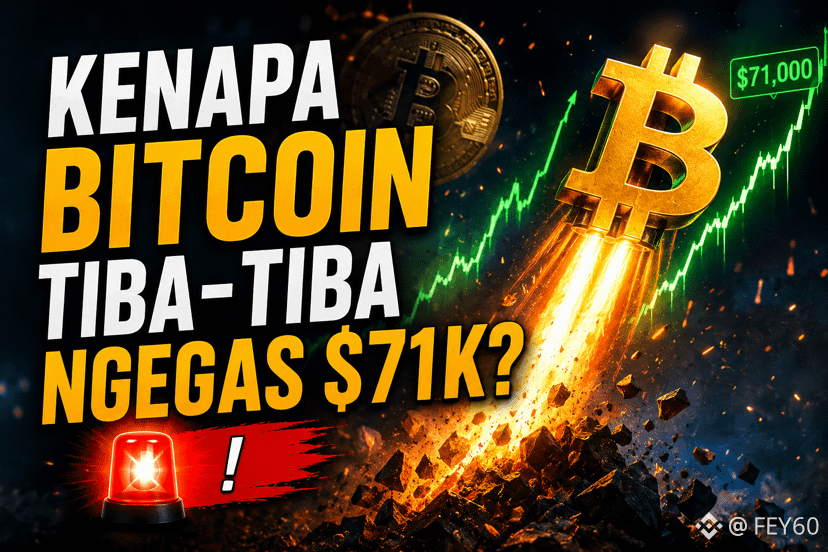
WHY DID BITCOIN SUDDENLY SURGE TO $71K? 🚨
Bitcoin suddenly rallied by more than 10% and finally broke through $71,000. But previously, BTC was still sluggish in the $64–66K range. So what’s actually happening?
There are several fuels coming in almost at the same time.
1. Trump sends bullish signals for crypto again
Trump urged Congress to quickly pass the CLARITY Act, a regulation aimed at providing regulatory clarity for digital assets.
For the market, clearer regulation = less uncertainty. And institutions are usually more comfortable entering when the rules of the game start to look clear.
2. The U.S. Treasury suddenly expands bond buybacks
The U.S. Treasury announced it will increase long-term bond buybacks from around $2 billion to $4 billion per operation.
What’s the impact? Long-term bond yields fall and the dollar also weakens.
Conditions like this tend to make risky assets such as stocks, gold, and Bitcoin more attractive.
3. Bitcoin ETFs start seeing big inflows again
Spot Bitcoin ETFs also recorded inflows of about $517 million in a single day.
Meaning, as prices begin to move higher, demand from investors via ETF products also strengthens.
4. Then came the SHORT SQUEEZE
This is what makes the move brutal. Many traders had been betting that Bitcoin would fall. When BTC breaks through resistance instead, their short positions start to get liquidated.
Shorts get closed = they have to buy BTC. BTC rises → other shorts get liquidated too → buying pressure grows even more → the price keeps climbing.
Domino effect. Market data shows more than $3 billion in crypto short positions were liquidated, with Bitcoin contributing a large share of those liquidations.
So why could Bitcoin suddenly surge? It’s not only because of one piece of news. But because several factors are arriving together:
🇺🇸 Trump & CLARITY Act
💰 Treasury expands buybacks
📉 Yield & dollar weaken
₿ ETF inflows increase
💥 Short squeeze amplifies the rally
Can BTC hold above $70K, or is this just a short squeeze that will soon be met with a correction?
#BTCSurpasses$72000 $BTC
WHY DID BITCOIN SUDDENLY SURGE TO $71K? 🚨
Bitcoin suddenly rallied by more than 10% and finally broke through $71,000. But previously, BTC was still sluggish in the $64–66K range. So what’s actually happening?
There are several fuels coming in almost at the same time.
1. Trump sends bullish signals for crypto again
Trump urged Congress to quickly pass the CLARITY Act, a regulation aimed at providing regulatory clarity for digital assets.
For the market, clearer regulation = less uncertainty. And institutions are usually more comfortable entering when the rules of the game start to look clear.
2. The U.S. Treasury suddenly expands bond buybacks
The U.S. Treasury announced it will increase long-term bond buybacks from around $2 billion to $4 billion per operation.
What’s the impact? Long-term bond yields fall and the dollar also weakens.
Conditions like this tend to make risky assets such as stocks, gold, and Bitcoin more attractive.
3. Bitcoin ETFs start seeing big inflows again
Spot Bitcoin ETFs also recorded inflows of about $517 million in a single day.
Meaning, as prices begin to move higher, demand from investors via ETF products also strengthens.
4. Then came the SHORT SQUEEZE
This is what makes the move brutal. Many traders had been betting that Bitcoin would fall. When BTC breaks through resistance instead, their short positions start to get liquidated.
Shorts get closed = they have to buy BTC. BTC rises → other shorts get liquidated too → buying pressure grows even more → the price keeps climbing.
Domino effect. Market data shows more than $3 billion in crypto short positions were liquidated, with Bitcoin contributing a large share of those liquidations.
So why could Bitcoin suddenly surge? It’s not only because of one piece of news. But because several factors are arriving together:
🇺🇸 Trump & CLARITY Act
💰 Treasury expands buybacks
📉 Yield & dollar weaken
₿ ETF inflows increase
💥 Short squeeze amplifies the rally
Can BTC hold above $70K, or is this just a short squeeze that will soon be met with a correction?
#BTCSurpasses$72000 $BTC
Bitcoin suddenly rallied by more than 10% and finally broke through $71,000. But previously, BTC was still sluggish in the $64–66K range. So what’s actually happening?
There are several fuels coming in almost at the same time.
1. Trump sends bullish signals for crypto again
Trump urged Congress to quickly pass the CLARITY Act, a regulation aimed at providing regulatory clarity for digital assets.
For the market, clearer regulation = less uncertainty. And institutions are usually more comfortable entering when the rules of the game start to look clear.
2. The U.S. Treasury suddenly expands bond buybacks
The U.S. Treasury announced it will increase long-term bond buybacks from around $2 billion to $4 billion per operation.
What’s the impact? Long-term bond yields fall and the dollar also weakens.
Conditions like this tend to make risky assets such as stocks, gold, and Bitcoin more attractive.
3. Bitcoin ETFs start seeing big inflows again
Spot Bitcoin ETFs also recorded inflows of about $517 million in a single day.
Meaning, as prices begin to move higher, demand from investors via ETF products also strengthens.
4. Then came the SHORT SQUEEZE
This is what makes the move brutal. Many traders had been betting that Bitcoin would fall. When BTC breaks through resistance instead, their short positions start to get liquidated.
Shorts get closed = they have to buy BTC. BTC rises → other shorts get liquidated too → buying pressure grows even more → the price keeps climbing.
Domino effect. Market data shows more than $3 billion in crypto short positions were liquidated, with Bitcoin contributing a large share of those liquidations.
So why could Bitcoin suddenly surge? It’s not only because of one piece of news. But because several factors are arriving together:
🇺🇸 Trump & CLARITY Act
💰 Treasury expands buybacks
📉 Yield & dollar weaken
₿ ETF inflows increase
💥 Short squeeze amplifies the rally
Can BTC hold above $70K, or is this just a short squeeze that will soon be met with a correction?
#BTCSurpasses$72000 $BTC
5
2.1k
·
--
Verified
🚨 STRATEGY RISK OF BEING REMOVED FROM THE MSCI INDEX?
Imagine you have 840.447 BTC worth about US$53.5 billion, but suddenly there’s a new issue: MSCI is considering removing Strategy from its index. 👀
Why?
MSCI is proposing a new rule to exclude companies deemed “non-operating companies,” meaning companies whose operating activities are no longer considered the primary focus.
And Strategy reportedly failed to meet at least 4 out of 5 criteria used in that screening.
If Strategy is ultimately removed, the impact doesn’t mean they have to sell Bitcoin.
The issue is in the stock market.
Passive investors tracking the MSCI index may be forced to cut back or exit their positions in MSTR.
💰 Estimated potential outflow?
About US$2 billion.
And if other index providers do something similar, the pressure could grow to around US$8.8 billion.
So this is not a story like:
❌ “Strategy will go bankrupt.”
❌ “Strategy has to sell all its BTC.”
❌ “There’s a liquidation trigger.”
More accurately:
⚠️ There’s potential sell pressure from passive investors.
Strategy, for sure, isn’t staying silent.
They argue that index providers should measure the market—not decide what assets a company is allowed to hold.
So here’s the big question:
Is MSCI maintaining market standards… or is an old financial system struggling to deal with a new type of company model that makes Bitcoin a major part of its treasury?
And if Strategy is truly removed…
Will other Bitcoin treasury companies be hit too? 👀
📅 Feedback: 30 September 2026
📅 Decision: 16 October 2026
📅 Effective: November 2026
What do you think—does MSCI have a valid reason, or is this gatekeeping against Bitcoin treasury companies? 👇
⚠️ NFA. DYOR.
🚨 STRATEGY RISK OF BEING REMOVED FROM THE MSCI INDEX?
Imagine you have 840.447 BTC worth about US$53.5 billion, but suddenly there’s a new issue: MSCI is considering removing Strategy from its index. 👀
Why?
MSCI is proposing a new rule to exclude companies deemed “non-operating companies,” meaning companies whose operating activities are no longer considered the primary focus.
And Strategy reportedly failed to meet at least 4 out of 5 criteria used in that screening.
If Strategy is ultimately removed, the impact doesn’t mean they have to sell Bitcoin.
The issue is in the stock market.
Passive investors tracking the MSCI index may be forced to cut back or exit their positions in MSTR.
💰 Estimated potential outflow?
About US$2 billion.
And if other index providers do something similar, the pressure could grow to around US$8.8 billion.
So this is not a story like:
❌ “Strategy will go bankrupt.”
❌ “Strategy has to sell all its BTC.”
❌ “There’s a liquidation trigger.”
More accurately:
⚠️ There’s potential sell pressure from passive investors.
Strategy, for sure, isn’t staying silent.
They argue that index providers should measure the market—not decide what assets a company is allowed to hold.
So here’s the big question:
Is MSCI maintaining market standards… or is an old financial system struggling to deal with a new type of company model that makes Bitcoin a major part of its treasury?
And if Strategy is truly removed…
Will other Bitcoin treasury companies be hit too? 👀
📅 Feedback: 30 September 2026
📅 Decision: 16 October 2026
📅 Effective: November 2026
What do you think—does MSCI have a valid reason, or is this gatekeeping against Bitcoin treasury companies? 👇
⚠️ NFA. DYOR.
Imagine you have 840.447 BTC worth about US$53.5 billion, but suddenly there’s a new issue: MSCI is considering removing Strategy from its index. 👀
Why?
MSCI is proposing a new rule to exclude companies deemed “non-operating companies,” meaning companies whose operating activities are no longer considered the primary focus.
And Strategy reportedly failed to meet at least 4 out of 5 criteria used in that screening.
If Strategy is ultimately removed, the impact doesn’t mean they have to sell Bitcoin.
The issue is in the stock market.
Passive investors tracking the MSCI index may be forced to cut back or exit their positions in MSTR.
💰 Estimated potential outflow?
About US$2 billion.
And if other index providers do something similar, the pressure could grow to around US$8.8 billion.
So this is not a story like:
❌ “Strategy will go bankrupt.”
❌ “Strategy has to sell all its BTC.”
❌ “There’s a liquidation trigger.”
More accurately:
⚠️ There’s potential sell pressure from passive investors.
Strategy, for sure, isn’t staying silent.
They argue that index providers should measure the market—not decide what assets a company is allowed to hold.
So here’s the big question:
Is MSCI maintaining market standards… or is an old financial system struggling to deal with a new type of company model that makes Bitcoin a major part of its treasury?
And if Strategy is truly removed…
Will other Bitcoin treasury companies be hit too? 👀
📅 Feedback: 30 September 2026
📅 Decision: 16 October 2026
📅 Effective: November 2026
What do you think—does MSCI have a valid reason, or is this gatekeeping against Bitcoin treasury companies? 👇
⚠️ NFA. DYOR.

5
996
·
--
Verified
🚨 CPI DROPS, BUT BITCOIN JUST “B ides”?!
The latest US inflation data is actually quite positive.
📊 July CPI: 3.4% — in line with expectations
📉 Core CPI: the lowest since March 2021
But what was Bitcoin’s reaction? Almost none. 😂
BTC only briefly rose 0.3% to around $64,100, then that increase disappeared.
And this isn’t the first time.
📌 For the third straight CPI release, BTC’s price movement even failed to reach 1%.
Why could that be?
One interesting signal comes from the options market.
👉 The $65,000 level has been tested 6 times between August 5–10, but there hasn’t been a daily close above it yet.
👉 Options traders also priced in this CPI release as a non-event.
👉 Deribit premiums during the CPI day even dropped sharply: from around 25% above baseline at the start of 2025 to now below 5%.
So what does that mean?
The crypto market may be starting to become “immune” to CPI.
In the past, when US inflation data came out → BTC would instantly jump or get crushed.
Now?
Good CPI: 😐
Bad CPI: 😐
Bitcoin: “so what am I supposed to do then?” 😂
So the real question becomes interesting:
🔥 If CPI isn’t moving Bitcoin much anymore, then what will be the next catalyst?
Will the market’s focus start shifting toward The Fed, Jackson Hole, global liquidity, or maybe internal crypto factors instead?
And one more…
Historically, September has an average return of about -4% for Bitcoin.
Will this time repeat history, or is Bitcoin ready to surprise?
What do you think—why does good news keep coming, but BTC stays flat? 👇
⚠️ NFA. DYOR.
🚨 CPI DROPS, BUT BITCOIN JUST “B ides”?!
The latest US inflation data is actually quite positive.
📊 July CPI: 3.4% — in line with expectations
📉 Core CPI: the lowest since March 2021
But what was Bitcoin’s reaction? Almost none. 😂
BTC only briefly rose 0.3% to around $64,100, then that increase disappeared.
And this isn’t the first time.
📌 For the third straight CPI release, BTC’s price movement even failed to reach 1%.
Why could that be?
One interesting signal comes from the options market.
👉 The $65,000 level has been tested 6 times between August 5–10, but there hasn’t been a daily close above it yet.
👉 Options traders also priced in this CPI release as a non-event.
👉 Deribit premiums during the CPI day even dropped sharply: from around 25% above baseline at the start of 2025 to now below 5%.
So what does that mean?
The crypto market may be starting to become “immune” to CPI.
In the past, when US inflation data came out → BTC would instantly jump or get crushed.
Now?
Good CPI: 😐
Bad CPI: 😐
Bitcoin: “so what am I supposed to do then?” 😂
So the real question becomes interesting:
🔥 If CPI isn’t moving Bitcoin much anymore, then what will be the next catalyst?
Will the market’s focus start shifting toward The Fed, Jackson Hole, global liquidity, or maybe internal crypto factors instead?
And one more…
Historically, September has an average return of about -4% for Bitcoin.
Will this time repeat history, or is Bitcoin ready to surprise?
What do you think—why does good news keep coming, but BTC stays flat? 👇
⚠️ NFA. DYOR.
The latest US inflation data is actually quite positive.
📊 July CPI: 3.4% — in line with expectations
📉 Core CPI: the lowest since March 2021
But what was Bitcoin’s reaction? Almost none. 😂
BTC only briefly rose 0.3% to around $64,100, then that increase disappeared.
And this isn’t the first time.
📌 For the third straight CPI release, BTC’s price movement even failed to reach 1%.
Why could that be?
One interesting signal comes from the options market.
👉 The $65,000 level has been tested 6 times between August 5–10, but there hasn’t been a daily close above it yet.
👉 Options traders also priced in this CPI release as a non-event.
👉 Deribit premiums during the CPI day even dropped sharply: from around 25% above baseline at the start of 2025 to now below 5%.
So what does that mean?
The crypto market may be starting to become “immune” to CPI.
In the past, when US inflation data came out → BTC would instantly jump or get crushed.
Now?
Good CPI: 😐
Bad CPI: 😐
Bitcoin: “so what am I supposed to do then?” 😂
So the real question becomes interesting:
🔥 If CPI isn’t moving Bitcoin much anymore, then what will be the next catalyst?
Will the market’s focus start shifting toward The Fed, Jackson Hole, global liquidity, or maybe internal crypto factors instead?
And one more…
Historically, September has an average return of about -4% for Bitcoin.
Will this time repeat history, or is Bitcoin ready to surprise?
What do you think—why does good news keep coming, but BTC stays flat? 👇
⚠️ NFA. DYOR.

4
2.8k
·
--
🚨 ADA YANG “PRINT UANG” 4 MILIAR TOKEN ONE FROM THIN AIR! 🤑
Imagine having digital money, and then suddenly someone finds a loophole and can print billions of new tokens without permission.
That’s what’s suspected to have happened on the Harmony (ONE) network.
About 4 billion ONE is believed to have been created without authorization, or roughly 26% of the total token supply.
What makes it even crazier?
💥 About 2.8 billion ONE were immediately transferred to an exchange
📉 The price of ONE briefly crashed by more than 50%
🚨 Harmony then halted the bridge and patched the validators
🔒 The related wallet was also frozen
So the question is: how could billions of new tokens appear and be moved before the market even reacted?
According to on-chain analyst Juiceberg, those figures appear to come from activity on the blockchain. But to this day, the root cause has not been officially confirmed.
And this isn’t the first time Harmony has faced a major issue.
In 2022, Harmony was hacked and lost about $100 million, which was later linked to the Lazarus Group.
This time, there’s another story that’s adding to the chaos.
ZachXBT is said to have refused to help with the recovery process, citing that there are still unresolved payment issues related to the previous hack case.
So now there are several big questions:
👉 Is this purely a protocol failure?
👉 How could 4 billion tokens be printed without permission?
👉 Why could 2.8 billion tokens reach an exchange so quickly?
👉 And if the funds have already been dispersed, how big is the chance they can be recovered?
Crypto really is decentralized.
But if a single loophole can make 4 billion tokens appear out of thin air, the problem isn’t just the price dropping anymore.
It’s about how strong the system is when it’s truly tested. 👀
What do you think—just a fatal bug, or is there something deeper going on?
👇 Drop your thoughts.
🚨 ADA YANG “PRINT UANG” 4 MILIAR TOKEN ONE FROM THIN AIR! 🤑
Imagine having digital money, and then suddenly someone finds a loophole and can print billions of new tokens without permission.
That’s what’s suspected to have happened on the Harmony (ONE) network.
About 4 billion ONE is believed to have been created without authorization, or roughly 26% of the total token supply.
What makes it even crazier?
💥 About 2.8 billion ONE were immediately transferred to an exchange
📉 The price of ONE briefly crashed by more than 50%
🚨 Harmony then halted the bridge and patched the validators
🔒 The related wallet was also frozen
So the question is: how could billions of new tokens appear and be moved before the market even reacted?
According to on-chain analyst Juiceberg, those figures appear to come from activity on the blockchain. But to this day, the root cause has not been officially confirmed.
And this isn’t the first time Harmony has faced a major issue.
In 2022, Harmony was hacked and lost about $100 million, which was later linked to the Lazarus Group.
This time, there’s another story that’s adding to the chaos.
ZachXBT is said to have refused to help with the recovery process, citing that there are still unresolved payment issues related to the previous hack case.
So now there are several big questions:
👉 Is this purely a protocol failure?
👉 How could 4 billion tokens be printed without permission?
👉 Why could 2.8 billion tokens reach an exchange so quickly?
👉 And if the funds have already been dispersed, how big is the chance they can be recovered?
Crypto really is decentralized.
But if a single loophole can make 4 billion tokens appear out of thin air, the problem isn’t just the price dropping anymore.
It’s about how strong the system is when it’s truly tested. 👀
What do you think—just a fatal bug, or is there something deeper going on?
👇 Drop your thoughts.
Imagine having digital money, and then suddenly someone finds a loophole and can print billions of new tokens without permission.
That’s what’s suspected to have happened on the Harmony (ONE) network.
About 4 billion ONE is believed to have been created without authorization, or roughly 26% of the total token supply.
What makes it even crazier?
💥 About 2.8 billion ONE were immediately transferred to an exchange
📉 The price of ONE briefly crashed by more than 50%
🚨 Harmony then halted the bridge and patched the validators
🔒 The related wallet was also frozen
So the question is: how could billions of new tokens appear and be moved before the market even reacted?
According to on-chain analyst Juiceberg, those figures appear to come from activity on the blockchain. But to this day, the root cause has not been officially confirmed.
And this isn’t the first time Harmony has faced a major issue.
In 2022, Harmony was hacked and lost about $100 million, which was later linked to the Lazarus Group.
This time, there’s another story that’s adding to the chaos.
ZachXBT is said to have refused to help with the recovery process, citing that there are still unresolved payment issues related to the previous hack case.
So now there are several big questions:
👉 Is this purely a protocol failure?
👉 How could 4 billion tokens be printed without permission?
👉 Why could 2.8 billion tokens reach an exchange so quickly?
👉 And if the funds have already been dispersed, how big is the chance they can be recovered?
Crypto really is decentralized.
But if a single loophole can make 4 billion tokens appear out of thin air, the problem isn’t just the price dropping anymore.
It’s about how strong the system is when it’s truly tested. 👀
What do you think—just a fatal bug, or is there something deeper going on?
👇 Drop your thoughts.

1
3
585
·
--

Article
🚨 WHALES BTC GETTING FATTIER, RETAIL SHRINKSSomething interesting is happening on the Bitcoin network.
The number of wallets holding 10,000+ BTC now stands at 90, the highest level in the past 6 months.
More interestingly, 6 new wallets have entered this category in just 8 weeks.
Meanwhile, mid-sized to large wallets are expected to have added about $1.5 billion worth of BTC since July 29.
But on the other hand…
🐳 Whale & mid-size wallets → continue adding BTC
🦐 Micro-wallet → continues to shrink throughout August
So, what’s actually happening?
🚨 WHALES BTC GETTING FATTIER, RETAIL SHRINKS
Something interesting is happening on the Bitcoin network.
The number of wallets holding 10,000+ BTC now stands at 90, the highest level in the past 6 months.
More interestingly, 6 new wallets have entered this category in just 8 weeks.
Meanwhile, mid-sized to large wallets are expected to have added about $1.5 billion worth of BTC since July 29.
But on the other hand…
🐳 Whale & mid-size wallets → continue adding BTC
🦐 Micro-wallet → continues to shrink throughout August
So, what’s actually happening?
The number of wallets holding 10,000+ BTC now stands at 90, the highest level in the past 6 months.
More interestingly, 6 new wallets have entered this category in just 8 weeks.
Meanwhile, mid-sized to large wallets are expected to have added about $1.5 billion worth of BTC since July 29.
But on the other hand…
🐳 Whale & mid-size wallets → continue adding BTC
🦐 Micro-wallet → continues to shrink throughout August
So, what’s actually happening?
4
176
·
--
Article
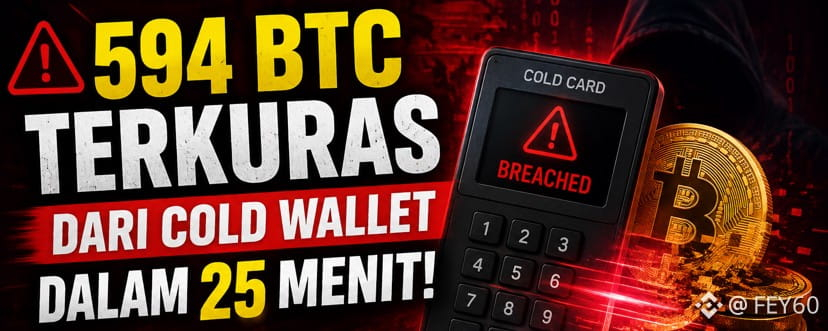
🚨 594 BTC Drained from a Cold Wallet in 25 Minutes!594 $BTC or tens of millions of dollars was successfully stolen in just about 25 minutes.
What makes this case even more interesting: those wallets were never even connected to the internet.
According to security researchers, the problem stems from a bug in the COLDCARD firmware random number generator (RNG). On certain devices, the system actually uses a weaker software generator and uses a value that can be predicted as the seed.
As a result, the seed wallet that should have been secret could be engineered back.
🚨 594 BTC Drained from a Cold Wallet in 25 Minutes!
594 $BTC or tens of millions of dollars was successfully stolen in just about 25 minutes.
What makes this case even more interesting: those wallets were never even connected to the internet.
According to security researchers, the problem stems from a bug in the COLDCARD firmware random number generator (RNG). On certain devices, the system actually uses a weaker software generator and uses a value that can be predicted as the seed.
As a result, the seed wallet that should have been secret could be engineered back.
What makes this case even more interesting: those wallets were never even connected to the internet.
According to security researchers, the problem stems from a bug in the COLDCARD firmware random number generator (RNG). On certain devices, the system actually uses a weaker software generator and uses a value that can be predicted as the seed.
As a result, the seed wallet that should have been secret could be engineered back.
1
6
2.9k
·
--

Article
SpaceX Down 11%, But the Money Runs to Crypto? Hold On—Check the Data First! 📉📊Sudden pre-market trading frenzy erupted after SpaceX shares corrected by around ~11%. Even though their revenue jumped sharply +92% ($7.8M), surpassing expectations.
Unfortunately, Wall Street instead panicked over the ballooning capex reaching $18.4M (vs. an estimated ~$13M) and the news about the release (unlock) of 911 million shares.
Amid the noise of this news, social media timelines suddenly filled with classic narratives: "Money from SpaceX/shares will rotate into crypto!"
But before jumping on the FOMO bandwagon, let’s break down the facts vs the myths based on the data.
SpaceX Down 11%, But the Money Runs to Crypto? Hold On—Check the Data First! 📉📊
Sudden pre-market trading frenzy erupted after SpaceX shares corrected by around ~11%. Even though their revenue jumped sharply +92% ($7.8M), surpassing expectations.
Unfortunately, Wall Street instead panicked over the ballooning capex reaching $18.4M (vs. an estimated ~$13M) and the news about the release (unlock) of 911 million shares.
Amid the noise of this news, social media timelines suddenly filled with classic narratives: "Money from SpaceX/shares will rotate into crypto!"
But before jumping on the FOMO bandwagon, let’s break down the facts vs the myths based on the data.
Unfortunately, Wall Street instead panicked over the ballooning capex reaching $18.4M (vs. an estimated ~$13M) and the news about the release (unlock) of 911 million shares.
Amid the noise of this news, social media timelines suddenly filled with classic narratives: "Money from SpaceX/shares will rotate into crypto!"
But before jumping on the FOMO bandwagon, let’s break down the facts vs the myths based on the data.
2
202
Log in to explore more content
Join global crypto users on Binance Square
⚡️ Get latest and useful information about crypto.
💬 Trusted by the world’s largest crypto exchange.
👍 Discover real insights from verified creators.
Email / Phone number
Trending Topics
BitcoinSpotETFsDraw$6.34BInflowsInQ3
294 views
15 Discussing
🚨 $6.34 BILLION JUST CHASED BITCOIN — BUT THE REAL STORY IS WHAT COMES NEXT
Bitcoin spot ETFs pulled in $6.34 billion during Q3.
That number deserves attention — but not because “institutions are buying Bitcoin” is new.
What matters is the change in money flow.
When billions move into spot ETFs within a single quarter, Bitcoin is no longer relying only on crypto-native traders. A deeper pool of capital is participating through regulated market infrastructure.
And that changes the game.
Think about it:
Bitcoin’s supply does not expand because demand increases.
There will still only ever be 21 million BTC.
So when large pools of capital compete for exposure to an asset with structurally limited supply, the important question becomes:
How much Bitcoin is actually available when everyone wants it at the same time?
That is where things can get interesting.
ETF inflows don’t guarantee the next candle will be green. Institutions can sell just as easily as they buy.
But $6.34B entering in one quarter is not background noise.
I’m watching the flows now more closely than the headlines.
Because sometimes the biggest move starts before retail realizes the money has already moved. 👀
Master CX Watch: Follow the money. Then watch the price.
$BTC #BitcoinSpotETFsDraw$6.34BInflowsInQ3
Master CX
·0 Likes
·32 views
EthereumValidatorExitQueueJumps392%
10,652 views
192 Discussing
IMFApprovesElSalvador$138MWithBitcoinWaiver
900 views
14 Discussing