
Bit-Insight-Hub
2.7k Posts

Bit-Insight-Hub
Report
Block User
Real-time insights, dynamic discussions await. Join us for informed decisions in the ever-evolving world of digital assets. X@bitinsighthub 🚀💬
10 Following
10.7K+ Followers
7.9K Liked
Posts
All
Quotes
Videos
PINNED
BitInsightHub is your sanctuary for profound crypto exploration. Delve into Bitcoin, altcoins, and blockchain intricacies. Real-time insights, dynamic discussions await. Join us for informed decisions in the ever-evolving world of digital assets. 🚀💬
#BTC #etf #ETH #DeFiChallenge #BinanceSquare
BitInsightHub is your sanctuary for profound crypto exploration. Delve into Bitcoin, altcoins, and blockchain intricacies. Real-time insights, dynamic discussions await. Join us for informed decisions in the ever-evolving world of digital assets. 🚀💬
#BTC #etf #ETH #DeFiChallenge #BinanceSquare
#BTC #etf #ETH #DeFiChallenge #BinanceSquare
20
29
153
🚨🚨 XRP FREE MONEY ALERT! 🚨🚨
⚡ CLAIM BEFORE IT EXPIRES ⚡
💎 XRP RED PACKET IS LIVE!
This is NOT a drill — FREE XRP is waiting 💸🔥
🪙 Coin: XRP
🔑 Code:
👉 BP8CS30W3V
🚀 CLAIM NOW (30 Seconds Only):
1️⃣ Open Binance
2️⃣ Go to Red Packet 🎁
3️⃣ Enter the code
4️⃣ Get FREE XRP instantly 💰
⏳ Limited claims — once gone, gone forever!
🐳 Whales & XRP Army are already claiming 👀🔥
💥 Don’t miss this chance
#Xrp🔥🔥
#XRPArmy
#BinanceSquare
#FreeCryptoEarnings
#AirdropAlert
$XRP
{spot}(XRPUSDT)
🚨🚨 XRP FREE MONEY ALERT! 🚨🚨
⚡ CLAIM BEFORE IT EXPIRES ⚡
💎 XRP RED PACKET IS LIVE!
This is NOT a drill — FREE XRP is waiting 💸🔥
🪙 Coin: XRP
🔑 Code:
👉 BP8CS30W3V
🚀 CLAIM NOW (30 Seconds Only):
1️⃣ Open Binance
2️⃣ Go to Red Packet 🎁
3️⃣ Enter the code
4️⃣ Get FREE XRP instantly 💰
⏳ Limited claims — once gone, gone forever!
🐳 Whales & XRP Army are already claiming 👀🔥
💥 Don’t miss this chance
#Xrp🔥🔥
#XRPArmy
#BinanceSquare
#FreeCryptoEarnings
#AirdropAlert
$XRP
⚡ CLAIM BEFORE IT EXPIRES ⚡
💎 XRP RED PACKET IS LIVE!
This is NOT a drill — FREE XRP is waiting 💸🔥
🪙 Coin: XRP
🔑 Code:
👉 BP8CS30W3V
🚀 CLAIM NOW (30 Seconds Only):
1️⃣ Open Binance
2️⃣ Go to Red Packet 🎁
3️⃣ Enter the code
4️⃣ Get FREE XRP instantly 💰
⏳ Limited claims — once gone, gone forever!
🐳 Whales & XRP Army are already claiming 👀🔥
💥 Don’t miss this chance
#Xrp🔥🔥
#XRPArmy
#BinanceSquare
#FreeCryptoEarnings
#AirdropAlert
$XRP

1
592
Article
JUST IN: TRUMP DECLARES U.S. ECONOMY “STRONG” — WHAT THIS REALLY MEANS FOR MARKETS🚨 JUST IN: TRUMP DECLARES U.S. ECONOMY “STRONG” — WHAT THIS REALLY MEANS FOR MARKETS
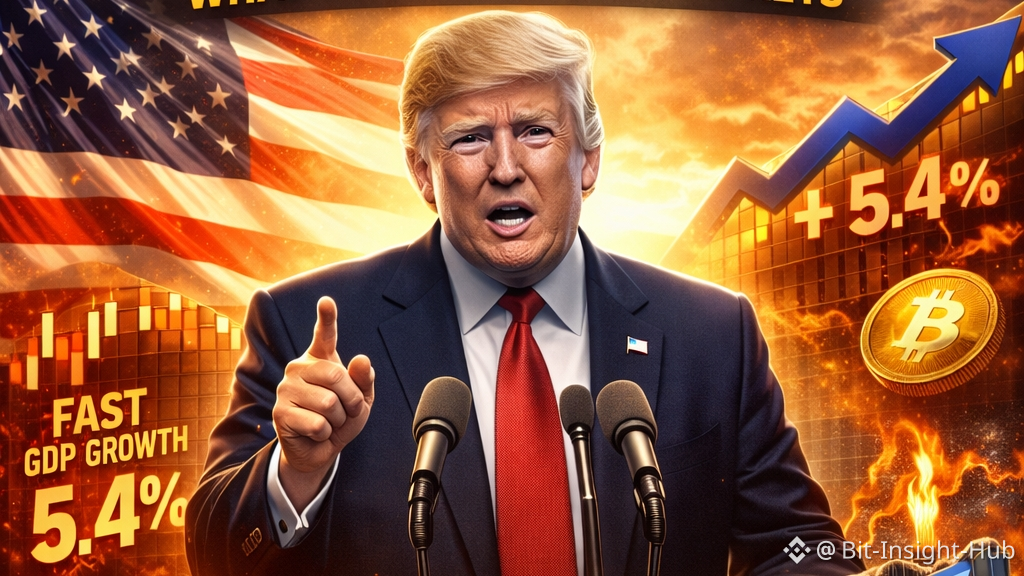
Donald Trump’s latest statement that the U.S. economy is recovering faster than ever is more than political messaging. It is a market signal, and markets are trained to react to signals — not slogans.
With core inflation reportedly at 1.6% and Q4 growth expectations near 5.4%, the narrative is shifting rapidly from fear to confidence. But the real question investors should ask is:
👉 Is this sustainable — and who benefits the most?
📊 BREAKING DOWN THE CLAIMS
🔹 Core Inflation at 1.6%
If core inflation is truly cooling:
It suggests pricing pressure is easingConsumers regain purchasing powerThe Federal Reserve faces less justification to stay hawkish
This is crucial because inflation expectations drive:
Bond yieldsEquity valuationsCrypto risk appetite
Lower inflation = more liquidity-friendly conditions
🔹 GDP Growth Expected at 5.4% (Q4)
A 5.4% growth rate is not “normal growth” — it’s expansion-mode growth.
This implies:
Strong consumer spendingResilient labor marketsCorporate earnings upside
For markets, this combination is rare:
High growth + falling inflation = the “Goldilocks zone.”
🧠 THE REAL MARKET IMPACT (ASSET BY ASSET)
📈 STOCK MARKET
Short-term impact:
Bullish sentiment for equitiesRotation into cyclical stocks (industrials, financials)Tech benefits from lower rate pressure
Medium-term risk:
If growth overheats again, inflation could returnMarkets may front-run rate cuts too aggressively
Volatility increases — not decreases.
💵 U.S. DOLLAR (DXY)
This is where it gets interesting.
Strong growth supports the dollarFalling inflation pressures the dollar lower
Result?
➡️ Choppy dollar action, not a straight trend.
This indecision often becomes fuel for alternative assets.
🪙 CRYPTO MARKET (BITCOIN & ALTCOINS)
Crypto thrives on narrative shifts.
Trump declaring inflation “beaten” does three things:
Weakens the “rates stay high forever” storyRevives liquidity optimismPushes investors to front-run easier financial conditions
Bitcoin historically performs best when:
Inflation fallsGrowth remains positiveTrust in policy narratives becomes divided
That’s exactly the environment forming now.
🏦 WHAT THIS MEANS FOR THE FED
Trump’s statement indirectly pressures the Federal Reserve.
If:
Inflation is beatenGrowth is strong
Then:
Why are rates still restrictive?
Markets may begin pricing in earlier rate cuts, even if the Fed resists publicly.
This gap between policy reality and market expectations is where big price moves are born.
⚠️ THE HIDDEN RISK
The biggest danger is overconfidence.
If markets fully believe:
Inflation is deadGrowth is guaranteed
Then leverage rises, speculation increases, and corrections become sharper.
A “strong economy” narrative can quickly turn into:
“The Fed stayed tight too long.”
🔥 FINAL VERDICT
Trump’s message isn’t just political optimism — it’s market psychology warfare.
Stocks hear growthBonds hear inflation reliefCrypto hears liquidity returning
But the market doesn’t move on words alone.
It moves on whether reality confirms the story.
For now, the message is clear:
Confidence is back — but volatility is coming with it.
Stay sharp. Stay hedged. Stay informed.
🎁 Free Crypto Red Packet Live!
💰 Claim now before it’s gone
👨💻 Code: BPHF3V7MKZ
#CryptoNews
#MarketUpdate
#USDEconomy
#bitcoin
#GlobalMarkets
JUST IN: TRUMP DECLARES U.S. ECONOMY “STRONG” — WHAT THIS REALLY MEANS FOR MARKETS
🚨 JUST IN: TRUMP DECLARES U.S. ECONOMY “STRONG” — WHAT THIS REALLY MEANS FOR MARKETS
Donald Trump’s latest statement that the U.S. economy is recovering faster than ever is more than political messaging. It is a market signal, and markets are trained to react to signals — not slogans.
With core inflation reportedly at 1.6% and Q4 growth expectations near 5.4%, the narrative is shifting rapidly from fear to confidence. But the real question investors should ask is:
👉 Is this sustainable — and who benefits the most?
📊 BREAKING DOWN THE CLAIMS
🔹 Core Inflation at 1.6%
If core inflation is truly cooling:
It suggests pricing pressure is easingConsumers regain purchasing powerThe Federal Reserve faces less justification to stay hawkish
This is crucial because inflation expectations drive:
Bond yieldsEquity valuationsCrypto risk appetite
Lower inflation = more liquidity-friendly conditions
🔹 GDP Growth Expected at 5.4% (Q4)
A 5.4% growth rate is not “normal growth” — it’s expansion-mode growth.
This implies:
Strong consumer spendingResilient labor marketsCorporate earnings upside
For markets, this combination is rare:
High growth + falling inflation = the “Goldilocks zone.”
🧠 THE REAL MARKET IMPACT (ASSET BY ASSET)
📈 STOCK MARKET
Short-term impact:
Bullish sentiment for equitiesRotation into cyclical stocks (industrials, financials)Tech benefits from lower rate pressure
Medium-term risk:
If growth overheats again, inflation could returnMarkets may front-run rate cuts too aggressively
Volatility increases — not decreases.
💵 U.S. DOLLAR (DXY)
This is where it gets interesting.
Strong growth supports the dollarFalling inflation pressures the dollar lower
Result?
➡️ Choppy dollar action, not a straight trend.
This indecision often becomes fuel for alternative assets.
🪙 CRYPTO MARKET (BITCOIN & ALTCOINS)
Crypto thrives on narrative shifts.
Trump declaring inflation “beaten” does three things:
Weakens the “rates stay high forever” storyRevives liquidity optimismPushes investors to front-run easier financial conditions
Bitcoin historically performs best when:
Inflation fallsGrowth remains positiveTrust in policy narratives becomes divided
That’s exactly the environment forming now.
🏦 WHAT THIS MEANS FOR THE FED
Trump’s statement indirectly pressures the Federal Reserve.
If:
Inflation is beatenGrowth is strong
Then:
Why are rates still restrictive?
Markets may begin pricing in earlier rate cuts, even if the Fed resists publicly.
This gap between policy reality and market expectations is where big price moves are born.
⚠️ THE HIDDEN RISK
The biggest danger is overconfidence.
If markets fully believe:
Inflation is deadGrowth is guaranteed
Then leverage rises, speculation increases, and corrections become sharper.
A “strong economy” narrative can quickly turn into:
“The Fed stayed tight too long.”
🔥 FINAL VERDICT
Trump’s message isn’t just political optimism — it’s market psychology warfare.
Stocks hear growthBonds hear inflation reliefCrypto hears liquidity returning
But the market doesn’t move on words alone.
It moves on whether reality confirms the story.
For now, the message is clear:
Confidence is back — but volatility is coming with it.
Stay sharp. Stay hedged. Stay informed.
🎁 Free Crypto Red Packet Live!
💰 Claim now before it’s gone
👨💻 Code: BPHF3V7MKZ
#CryptoNews
#MarketUpdate
#USDEconomy
#bitcoin
#GlobalMarkets
Donald Trump’s latest statement that the U.S. economy is recovering faster than ever is more than political messaging. It is a market signal, and markets are trained to react to signals — not slogans.
With core inflation reportedly at 1.6% and Q4 growth expectations near 5.4%, the narrative is shifting rapidly from fear to confidence. But the real question investors should ask is:
👉 Is this sustainable — and who benefits the most?
📊 BREAKING DOWN THE CLAIMS
🔹 Core Inflation at 1.6%
If core inflation is truly cooling:
It suggests pricing pressure is easingConsumers regain purchasing powerThe Federal Reserve faces less justification to stay hawkish
This is crucial because inflation expectations drive:
Bond yieldsEquity valuationsCrypto risk appetite
Lower inflation = more liquidity-friendly conditions
🔹 GDP Growth Expected at 5.4% (Q4)
A 5.4% growth rate is not “normal growth” — it’s expansion-mode growth.
This implies:
Strong consumer spendingResilient labor marketsCorporate earnings upside
For markets, this combination is rare:
High growth + falling inflation = the “Goldilocks zone.”
🧠 THE REAL MARKET IMPACT (ASSET BY ASSET)
📈 STOCK MARKET
Short-term impact:
Bullish sentiment for equitiesRotation into cyclical stocks (industrials, financials)Tech benefits from lower rate pressure
Medium-term risk:
If growth overheats again, inflation could returnMarkets may front-run rate cuts too aggressively
Volatility increases — not decreases.
💵 U.S. DOLLAR (DXY)
This is where it gets interesting.
Strong growth supports the dollarFalling inflation pressures the dollar lower
Result?
➡️ Choppy dollar action, not a straight trend.
This indecision often becomes fuel for alternative assets.
🪙 CRYPTO MARKET (BITCOIN & ALTCOINS)
Crypto thrives on narrative shifts.
Trump declaring inflation “beaten” does three things:
Weakens the “rates stay high forever” storyRevives liquidity optimismPushes investors to front-run easier financial conditions
Bitcoin historically performs best when:
Inflation fallsGrowth remains positiveTrust in policy narratives becomes divided
That’s exactly the environment forming now.
🏦 WHAT THIS MEANS FOR THE FED
Trump’s statement indirectly pressures the Federal Reserve.
If:
Inflation is beatenGrowth is strong
Then:
Why are rates still restrictive?
Markets may begin pricing in earlier rate cuts, even if the Fed resists publicly.
This gap between policy reality and market expectations is where big price moves are born.
⚠️ THE HIDDEN RISK
The biggest danger is overconfidence.
If markets fully believe:
Inflation is deadGrowth is guaranteed
Then leverage rises, speculation increases, and corrections become sharper.
A “strong economy” narrative can quickly turn into:
“The Fed stayed tight too long.”
🔥 FINAL VERDICT
Trump’s message isn’t just political optimism — it’s market psychology warfare.
Stocks hear growthBonds hear inflation reliefCrypto hears liquidity returning
But the market doesn’t move on words alone.
It moves on whether reality confirms the story.
For now, the message is clear:
Confidence is back — but volatility is coming with it.
Stay sharp. Stay hedged. Stay informed.
🎁 Free Crypto Red Packet Live!
💰 Claim now before it’s gone
👨💻 Code: BPHF3V7MKZ
#CryptoNews
#MarketUpdate
#USDEconomy
#bitcoin
#GlobalMarkets
1
209

Article
BREAKING: TRUMP TO SPEAK AT WEF DAVOS IN 4 MINUTES — THIS IS BIGGER THAN POLITICS🚨 BREAKING: TRUMP TO SPEAK AT WEF DAVOS IN 4 MINUTES — THIS IS BIGGER THAN POLITICS
The world’s most elite economic stage is about to hear from the most disruptive political figure of our time.
Donald Trump at WEF Davos.
Not a rally.
Not a debate.
A global power room.
This isn’t just a speech — it’s a signal.
🌍 WHY THIS MOMENT MATTERS
Davos is where:
Central bankers whisper policy before markets moveCEOs shape narratives before capital flowsGovernments align before laws are written
And now, Trump enters that room.
Whether you support him or not, markets listen when Trump speaks.
🧠 WHAT TRUMP REPRESENTS AT DAVOS
Trump doesn’t speak the language of diplomats.
He speaks the language of power, leverage, and deal-making.
At Davos, that creates tension — and opportunity.
Expect themes like:
“America First” economics vs globalismPressure on central banks and fiat systemsTrade wars, tariffs, and economic nationalismA subtle or direct message to markets
When Trump talks economics, volatility follows.
💰 WHY CRYPTO & MARKETS SHOULD PAY ATTENTION
Trump’s presence at WEF highlights a bigger truth:
The old financial system is under stress.
Davos exists to protect legacy power.
Crypto exists to disrupt it.
Every time global elites meet, Bitcoin trends higher in relevance.
Fear, uncertainty, power shifts —
These are the environments where crypto narratives explode.
🔥 THE REAL QUESTION
Is this:
A reconciliation attempt with global elites?A warning shot to institutions?Or a positioning move ahead of elections and markets?
One thing is certain:
Trump never speaks without an objective.
⚡ FINAL PUNCH
Davos is about control.
Trump is about dominance.
When those two collide, the world watches — and markets react.
⏳ 4 minutes. One speech. Global impact.
Stay alert.
#CryptoNews
#bitcoin
#MarketUpdate
#globaleconomy
#breakingnews
$BTC
$ETH
{spot}(ETHUSDT)
$BNB
{spot}(BNBUSDT)
🎁 Free Crypto Red Packet Live!
💰 Claim now before it’s gone
👨💻 Code: BPHF3V7MKZ
BREAKING: TRUMP TO SPEAK AT WEF DAVOS IN 4 MINUTES — THIS IS BIGGER THAN POLITICS
🚨 BREAKING: TRUMP TO SPEAK AT WEF DAVOS IN 4 MINUTES — THIS IS BIGGER THAN POLITICS
The world’s most elite economic stage is about to hear from the most disruptive political figure of our time.
Donald Trump at WEF Davos.
Not a rally.
Not a debate.
A global power room.
This isn’t just a speech — it’s a signal.
🌍 WHY THIS MOMENT MATTERS
Davos is where:
Central bankers whisper policy before markets moveCEOs shape narratives before capital flowsGovernments align before laws are written
And now, Trump enters that room.
Whether you support him or not, markets listen when Trump speaks.
🧠 WHAT TRUMP REPRESENTS AT DAVOS
Trump doesn’t speak the language of diplomats.
He speaks the language of power, leverage, and deal-making.
At Davos, that creates tension — and opportunity.
Expect themes like:
“America First” economics vs globalismPressure on central banks and fiat systemsTrade wars, tariffs, and economic nationalismA subtle or direct message to markets
When Trump talks economics, volatility follows.
💰 WHY CRYPTO & MARKETS SHOULD PAY ATTENTION
Trump’s presence at WEF highlights a bigger truth:
The old financial system is under stress.
Davos exists to protect legacy power.
Crypto exists to disrupt it.
Every time global elites meet, Bitcoin trends higher in relevance.
Fear, uncertainty, power shifts —
These are the environments where crypto narratives explode.
🔥 THE REAL QUESTION
Is this:
A reconciliation attempt with global elites?A warning shot to institutions?Or a positioning move ahead of elections and markets?
One thing is certain:
Trump never speaks without an objective.
⚡ FINAL PUNCH
Davos is about control.
Trump is about dominance.
When those two collide, the world watches — and markets react.
⏳ 4 minutes. One speech. Global impact.
Stay alert.
#CryptoNews
#bitcoin
#MarketUpdate
#globaleconomy
#breakingnews
$BTC
$ETH
$BNB
🎁 Free Crypto Red Packet Live!
💰 Claim now before it’s gone
👨💻 Code: BPHF3V7MKZ
The world’s most elite economic stage is about to hear from the most disruptive political figure of our time.
Donald Trump at WEF Davos.
Not a rally.
Not a debate.
A global power room.
This isn’t just a speech — it’s a signal.
🌍 WHY THIS MOMENT MATTERS
Davos is where:
Central bankers whisper policy before markets moveCEOs shape narratives before capital flowsGovernments align before laws are written
And now, Trump enters that room.
Whether you support him or not, markets listen when Trump speaks.
🧠 WHAT TRUMP REPRESENTS AT DAVOS
Trump doesn’t speak the language of diplomats.
He speaks the language of power, leverage, and deal-making.
At Davos, that creates tension — and opportunity.
Expect themes like:
“America First” economics vs globalismPressure on central banks and fiat systemsTrade wars, tariffs, and economic nationalismA subtle or direct message to markets
When Trump talks economics, volatility follows.
💰 WHY CRYPTO & MARKETS SHOULD PAY ATTENTION
Trump’s presence at WEF highlights a bigger truth:
The old financial system is under stress.
Davos exists to protect legacy power.
Crypto exists to disrupt it.
Every time global elites meet, Bitcoin trends higher in relevance.
Fear, uncertainty, power shifts —
These are the environments where crypto narratives explode.
🔥 THE REAL QUESTION
Is this:
A reconciliation attempt with global elites?A warning shot to institutions?Or a positioning move ahead of elections and markets?
One thing is certain:
Trump never speaks without an objective.
⚡ FINAL PUNCH
Davos is about control.
Trump is about dominance.
When those two collide, the world watches — and markets react.
⏳ 4 minutes. One speech. Global impact.
Stay alert.
#CryptoNews
#bitcoin
#MarketUpdate
#globaleconomy
#breakingnews
$BTC
$ETH
$BNB
🎁 Free Crypto Red Packet Live!
💰 Claim now before it’s gone
👨💻 Code: BPHF3V7MKZ
248
Article
$878M LIQUIDATED IN 24 HOURS — THIS WAS NOT “NORMAL VOLATILITY”🚨 $878M LIQUIDATED IN 24 HOURS — THIS WAS NOT “NORMAL VOLATILITY”
In the last 24 hours, the crypto market wiped out $878.67 MILLION in leveraged positions.
This wasn’t random. This was designed.
🔥 Liquidation Breakdown:
BTC: ~$363.80METH: ~$305.42MSOL: ~$30.23MHYPE: ~$21.20MXRP: ~$10.52M
When you see numbers like this, you are not watching a free market —
you are watching capital warfare.
🕵️♂️ How Black Money Plays With Retail Traders
“Black money” doesn’t mean illegal cash only.
In crypto, it means untracked, oversized capital moving through:
Offshore fundsHigh-frequency trading desksMarket makersShadow leverage pools
These players see retail positions before price moves.
🎯 The Trap Strategy (Step by Step)
1️⃣ Build Leverage on Both Sides
Retail traders stack longs and shorts with high leverage.
Exchanges and whales can see liquidation levels clearly.
2️⃣ Fake Stability
Price moves sideways.
Confidence grows.
Leverage increases.
3️⃣ Sudden Aggressive Push
A sharp move triggers:
Long liquidations → forced sellingOr short liquidations → forced buying
This creates a cascade effect.
4️⃣ Forced Liquidations = Free Liquidity
When your position is liquidated:
You sell at the worst priceBig money buys cheapOr sells high
No emotion. Just math.
🧠 Why BTC & ETH Took the Biggest Hit
BTC and ETH have:
The highest leverageThe largest open interestThe most retail exposure
That’s why over $669M was wiped out from just these two assets.
Not because they’re weak —
but because that’s where retail money is trapped.
⚠️ The Hard Truth Retail Must Accept
The market is not fairPrice moves are often manufacturedLiquidations are planned eventsLeverage is the weapon used against you
This is why 90% of traders lose.
🛡️ How Smart Money Survives
✅ Low or no leverage
✅ Spot accumulation during fear
✅ Patience over prediction
✅ Risk control > profit chasing
📌 Final Message
Every liquidation spike is a wealth transfer
From emotional traders
To silent accumulators.
If you don’t change how you trade,
you will always be the liquidity.
🎁 Free Crypto Red Packet Live!
💰 Claim now before it’s gone
👨💻 Code: BPHF3V7MKZ
#CryptoLiquidation
#bitcoincrash
#WhaleManipulation
#CryptoMarket
#LeverageTrap
$BTC
{spot}(BTCUSDT)
$ETH
{spot}(ETHUSDT)
$BNB
{spot}(BNBUSDT)
$878M LIQUIDATED IN 24 HOURS — THIS WAS NOT “NORMAL VOLATILITY”
🚨 $878M LIQUIDATED IN 24 HOURS — THIS WAS NOT “NORMAL VOLATILITY”
In the last 24 hours, the crypto market wiped out $878.67 MILLION in leveraged positions.
This wasn’t random. This was designed.
🔥 Liquidation Breakdown:
BTC: ~$363.80METH: ~$305.42MSOL: ~$30.23MHYPE: ~$21.20MXRP: ~$10.52M
When you see numbers like this, you are not watching a free market —
you are watching capital warfare.
🕵️♂️ How Black Money Plays With Retail Traders
“Black money” doesn’t mean illegal cash only.
In crypto, it means untracked, oversized capital moving through:
Offshore fundsHigh-frequency trading desksMarket makersShadow leverage pools
These players see retail positions before price moves.
🎯 The Trap Strategy (Step by Step)
1️⃣ Build Leverage on Both Sides
Retail traders stack longs and shorts with high leverage.
Exchanges and whales can see liquidation levels clearly.
2️⃣ Fake Stability
Price moves sideways.
Confidence grows.
Leverage increases.
3️⃣ Sudden Aggressive Push
A sharp move triggers:
Long liquidations → forced sellingOr short liquidations → forced buying
This creates a cascade effect.
4️⃣ Forced Liquidations = Free Liquidity
When your position is liquidated:
You sell at the worst priceBig money buys cheapOr sells high
No emotion. Just math.
🧠 Why BTC & ETH Took the Biggest Hit
BTC and ETH have:
The highest leverageThe largest open interestThe most retail exposure
That’s why over $669M was wiped out from just these two assets.
Not because they’re weak —
but because that’s where retail money is trapped.
⚠️ The Hard Truth Retail Must Accept
The market is not fairPrice moves are often manufacturedLiquidations are planned eventsLeverage is the weapon used against you
This is why 90% of traders lose.
🛡️ How Smart Money Survives
✅ Low or no leverage
✅ Spot accumulation during fear
✅ Patience over prediction
✅ Risk control > profit chasing
📌 Final Message
Every liquidation spike is a wealth transfer
From emotional traders
To silent accumulators.
If you don’t change how you trade,
you will always be the liquidity.
🎁 Free Crypto Red Packet Live!
💰 Claim now before it’s gone
👨💻 Code: BPHF3V7MKZ
#CryptoLiquidation
#bitcoincrash
#WhaleManipulation
#CryptoMarket
#LeverageTrap
$BTC
$ETH
$BNB
In the last 24 hours, the crypto market wiped out $878.67 MILLION in leveraged positions.
This wasn’t random. This was designed.
🔥 Liquidation Breakdown:
BTC: ~$363.80METH: ~$305.42MSOL: ~$30.23MHYPE: ~$21.20MXRP: ~$10.52M
When you see numbers like this, you are not watching a free market —
you are watching capital warfare.
🕵️♂️ How Black Money Plays With Retail Traders
“Black money” doesn’t mean illegal cash only.
In crypto, it means untracked, oversized capital moving through:
Offshore fundsHigh-frequency trading desksMarket makersShadow leverage pools
These players see retail positions before price moves.
🎯 The Trap Strategy (Step by Step)
1️⃣ Build Leverage on Both Sides
Retail traders stack longs and shorts with high leverage.
Exchanges and whales can see liquidation levels clearly.
2️⃣ Fake Stability
Price moves sideways.
Confidence grows.
Leverage increases.
3️⃣ Sudden Aggressive Push
A sharp move triggers:
Long liquidations → forced sellingOr short liquidations → forced buying
This creates a cascade effect.
4️⃣ Forced Liquidations = Free Liquidity
When your position is liquidated:
You sell at the worst priceBig money buys cheapOr sells high
No emotion. Just math.
🧠 Why BTC & ETH Took the Biggest Hit
BTC and ETH have:
The highest leverageThe largest open interestThe most retail exposure
That’s why over $669M was wiped out from just these two assets.
Not because they’re weak —
but because that’s where retail money is trapped.
⚠️ The Hard Truth Retail Must Accept
The market is not fairPrice moves are often manufacturedLiquidations are planned eventsLeverage is the weapon used against you
This is why 90% of traders lose.
🛡️ How Smart Money Survives
✅ Low or no leverage
✅ Spot accumulation during fear
✅ Patience over prediction
✅ Risk control > profit chasing
📌 Final Message
Every liquidation spike is a wealth transfer
From emotional traders
To silent accumulators.
If you don’t change how you trade,
you will always be the liquidity.
🎁 Free Crypto Red Packet Live!
💰 Claim now before it’s gone
👨💻 Code: BPHF3V7MKZ
#CryptoLiquidation
#bitcoincrash
#WhaleManipulation
#CryptoMarket
#LeverageTrap
$BTC
$ETH
$BNB
183

Article
BlackRock Buys When Panic Sells: The Smart Money Playbook Behind Bitcoin AccumulationBlackRock Buys When Panic Sells: The Smart Money Playbook Behind Bitcoin Accumulation
Every time Bitcoin dips sharply, social media fills with fear.
Headlines scream “CRASH.”
Retail traders rush for the exit.
Weak hands sell in panic.
And quietly, almost invisibly, BlackRock keeps buying.
This is not coincidence. It’s strategy.
Panic Is a Signal — Not a Warning
Retail investors often see falling prices as danger. Institutional investors see something very different: liquidity.
When fear peaks, sellers become impatient. They sell at market prices, not value prices. This creates the perfect environment for large players like BlackRock to accumulate Bitcoin without pushing the price up aggressively.
In traditional finance, this behavior is called distribution of fear and accumulation of assets. In crypto, it happens faster — and more violently.
Why BlackRock Doesn’t Chase Green Candles
BlackRock doesn’t buy Bitcoin because it’s trending on X or pumping on Binance.
They buy because:
Bitcoin has a fixed supplyIt is globally liquidIt operates outside political controlIt increasingly acts as digital collateral
Buying during price spikes increases risk. Buying during panic reduces it.
Institutions understand something many traders ignore:
Volatility is not risk — poor positioning is.
Bitcoin Is Becoming Infrastructure, Not a Trade
BlackRock is not treating Bitcoin like a meme coin or short-term bet.
To them, Bitcoin is evolving into:
A reserve assetA hedge against currency debasementA digital settlement layerA long-term store of value for institutions
When sellers panic, BlackRock isn’t reacting emotionally. They are executing a thesis that spans years, not weeks.
Retail Thinks in Prices — Institutions Think in Cycles
Retail asks:
“Why is Bitcoin going down?”
Institutions ask:
“Where are we in the cycle?”
Historically, the biggest Bitcoin accumulations happen:
During regulatory fearDuring macro uncertaintyDuring sharp correctionsWhen sentiment is extremely negative
This is when supply transfers from impatient hands to patient capital.
The Silent Transfer of Wealth
Every panic sell is a transfer.
Not from rich to poor — but from emotional traders to disciplined allocators.
BlackRock doesn’t tweet.
They don’t signal entries.
They don’t need hype.
They wait for fear to do the work.
The Question Every Investor Should Ask
The real question isn’t:
“Why is BlackRock buying Bitcoin?”
The real question is:
“Why am I selling the asset that the world’s largest asset manager is quietly accumulating?”
Because history is clear:
Those who sell in panic fund the future profits of those who stay calm.
#Bitcoin
#blackRock
#smartmoney
#BuytheDips
#CryptoMarket
🎁 Free Crypto Red Packet Live!
💰 Claim now before it’s gone
👨💻 Code: BPHF3V7MKZ
$BTC
$ETH
{spot}(ETHUSDT)
$BNB
{spot}(BNBUSDT)
BlackRock Buys When Panic Sells: The Smart Money Playbook Behind Bitcoin Accumulation
BlackRock Buys When Panic Sells: The Smart Money Playbook Behind Bitcoin Accumulation
Every time Bitcoin dips sharply, social media fills with fear.
Headlines scream “CRASH.”
Retail traders rush for the exit.
Weak hands sell in panic.
And quietly, almost invisibly, BlackRock keeps buying.
This is not coincidence. It’s strategy.
Panic Is a Signal — Not a Warning
Retail investors often see falling prices as danger. Institutional investors see something very different: liquidity.
When fear peaks, sellers become impatient. They sell at market prices, not value prices. This creates the perfect environment for large players like BlackRock to accumulate Bitcoin without pushing the price up aggressively.
In traditional finance, this behavior is called distribution of fear and accumulation of assets. In crypto, it happens faster — and more violently.
Why BlackRock Doesn’t Chase Green Candles
BlackRock doesn’t buy Bitcoin because it’s trending on X or pumping on Binance.
They buy because:
Bitcoin has a fixed supplyIt is globally liquidIt operates outside political controlIt increasingly acts as digital collateral
Buying during price spikes increases risk. Buying during panic reduces it.
Institutions understand something many traders ignore:
Volatility is not risk — poor positioning is.
Bitcoin Is Becoming Infrastructure, Not a Trade
BlackRock is not treating Bitcoin like a meme coin or short-term bet.
To them, Bitcoin is evolving into:
A reserve assetA hedge against currency debasementA digital settlement layerA long-term store of value for institutions
When sellers panic, BlackRock isn’t reacting emotionally. They are executing a thesis that spans years, not weeks.
Retail Thinks in Prices — Institutions Think in Cycles
Retail asks:
“Why is Bitcoin going down?”
Institutions ask:
“Where are we in the cycle?”
Historically, the biggest Bitcoin accumulations happen:
During regulatory fearDuring macro uncertaintyDuring sharp correctionsWhen sentiment is extremely negative
This is when supply transfers from impatient hands to patient capital.
The Silent Transfer of Wealth
Every panic sell is a transfer.
Not from rich to poor — but from emotional traders to disciplined allocators.
BlackRock doesn’t tweet.
They don’t signal entries.
They don’t need hype.
They wait for fear to do the work.
The Question Every Investor Should Ask
The real question isn’t:
“Why is BlackRock buying Bitcoin?”
The real question is:
“Why am I selling the asset that the world’s largest asset manager is quietly accumulating?”
Because history is clear:
Those who sell in panic fund the future profits of those who stay calm.
#Bitcoin
#blackRock
#smartmoney
#BuytheDips
#CryptoMarket
🎁 Free Crypto Red Packet Live!
💰 Claim now before it’s gone
👨💻 Code: BPHF3V7MKZ
$BTC
$ETH
$BNB
Every time Bitcoin dips sharply, social media fills with fear.
Headlines scream “CRASH.”
Retail traders rush for the exit.
Weak hands sell in panic.
And quietly, almost invisibly, BlackRock keeps buying.
This is not coincidence. It’s strategy.
Panic Is a Signal — Not a Warning
Retail investors often see falling prices as danger. Institutional investors see something very different: liquidity.
When fear peaks, sellers become impatient. They sell at market prices, not value prices. This creates the perfect environment for large players like BlackRock to accumulate Bitcoin without pushing the price up aggressively.
In traditional finance, this behavior is called distribution of fear and accumulation of assets. In crypto, it happens faster — and more violently.
Why BlackRock Doesn’t Chase Green Candles
BlackRock doesn’t buy Bitcoin because it’s trending on X or pumping on Binance.
They buy because:
Bitcoin has a fixed supplyIt is globally liquidIt operates outside political controlIt increasingly acts as digital collateral
Buying during price spikes increases risk. Buying during panic reduces it.
Institutions understand something many traders ignore:
Volatility is not risk — poor positioning is.
Bitcoin Is Becoming Infrastructure, Not a Trade
BlackRock is not treating Bitcoin like a meme coin or short-term bet.
To them, Bitcoin is evolving into:
A reserve assetA hedge against currency debasementA digital settlement layerA long-term store of value for institutions
When sellers panic, BlackRock isn’t reacting emotionally. They are executing a thesis that spans years, not weeks.
Retail Thinks in Prices — Institutions Think in Cycles
Retail asks:
“Why is Bitcoin going down?”
Institutions ask:
“Where are we in the cycle?”
Historically, the biggest Bitcoin accumulations happen:
During regulatory fearDuring macro uncertaintyDuring sharp correctionsWhen sentiment is extremely negative
This is when supply transfers from impatient hands to patient capital.
The Silent Transfer of Wealth
Every panic sell is a transfer.
Not from rich to poor — but from emotional traders to disciplined allocators.
BlackRock doesn’t tweet.
They don’t signal entries.
They don’t need hype.
They wait for fear to do the work.
The Question Every Investor Should Ask
The real question isn’t:
“Why is BlackRock buying Bitcoin?”
The real question is:
“Why am I selling the asset that the world’s largest asset manager is quietly accumulating?”
Because history is clear:
Those who sell in panic fund the future profits of those who stay calm.
#Bitcoin
#blackRock
#smartmoney
#BuytheDips
#CryptoMarket
🎁 Free Crypto Red Packet Live!
💰 Claim now before it’s gone
👨💻 Code: BPHF3V7MKZ
$BTC
$ETH
$BNB
140
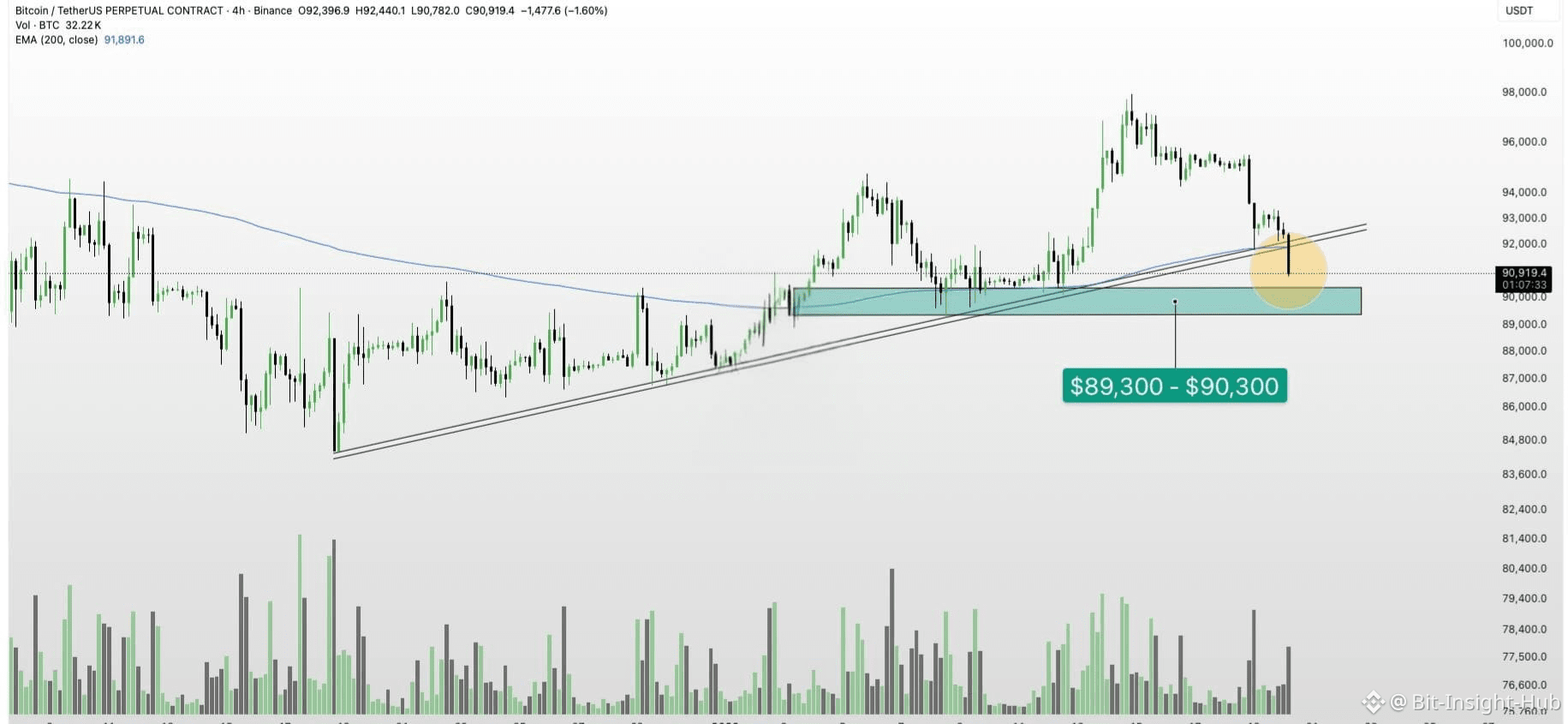
#BTC breakdown trendline on the 4-hr chart.
Key support at the $89.3K-$90.3K zone, with a CME gap around $88.5K👍
I’m expecting a test of these levels then a pump ✅
#signaladvisor #signals #signalsfutures #Signal
$BTC
#BTC breakdown trendline on the 4-hr chart.
Key support at the $89.3K-$90.3K zone, with a CME gap around $88.5K👍
I’m expecting a test of these levels then a pump ✅
#signaladvisor #signals #signalsfutures #Signal
$BTC
Key support at the $89.3K-$90.3K zone, with a CME gap around $88.5K👍
I’m expecting a test of these levels then a pump ✅
#signaladvisor #signals #signalsfutures #Signal
$BTC
282
Article
CardoneCapital Adds Another $10 Million in Bitcoin: A Conviction Buy, Not a TradeCardoneCapital Adds Another $10 Million in Bitcoin: A Conviction Buy, Not a Trade
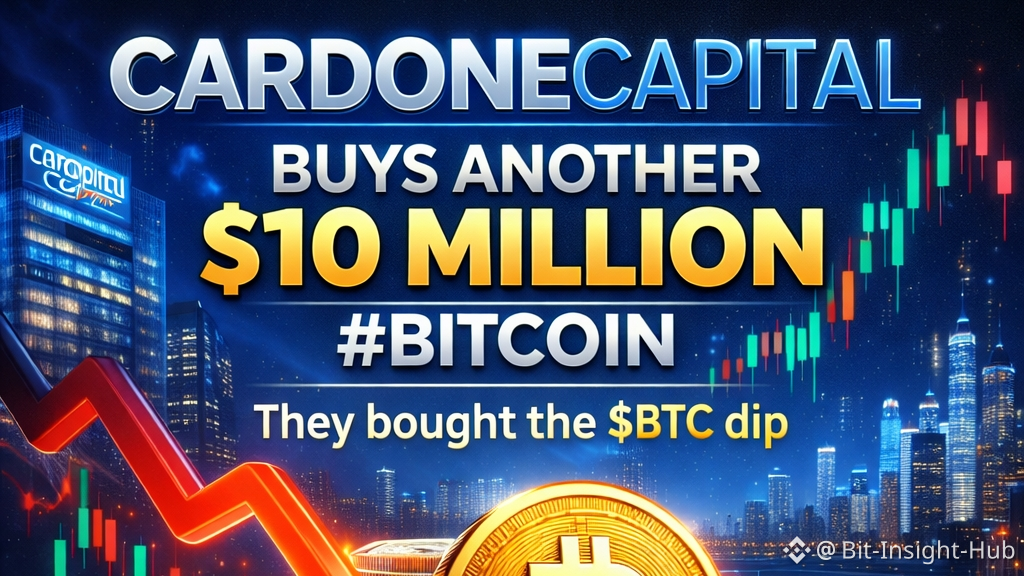
While much of the market hesitates during volatility, CardoneCapital has doubled down on Bitcoin, purchasing an additional $10 million worth of BTC during the recent dip. This move is not about short-term price action — it reflects a broader shift in how institutional capital is beginning to treat Bitcoin.
This is not panic buying.
This is strategic accumulation.
Buying the Dip Signals Long-Term Belief
Market pullbacks often separate short-term traders from long-term allocators. CardoneCapital’s decision to add more Bitcoin during weakness suggests confidence in Bitcoin’s long-term role as a macro asset, not just a speculative instrument.
Institutions don’t chase candles.
They build positions when sentiment is uncertain.
Buying during a dip reflects:
• Patience over emotion
• Thesis-driven investing
• Confidence in future adoption
Why Bitcoin Fits CardoneCapital’s Strategy
CardoneCapital is known for focusing on hard assets — real estate, cash flow, and inflation-resistant investments. Bitcoin increasingly fits this framework.
From an institutional perspective, Bitcoin offers:
• A fixed supply with no monetary expansion
• Global liquidity, 24/7
• Independence from traditional banking risk
• A hedge against currency debasement
For asset managers, Bitcoin is evolving from “alternative” to strategic reserve asset.
Institutional Accumulation Is Quiet — Until It Isn’t
Retail markets often react emotionally to price swings. Institutions, however, accumulate quietly during periods of uncertainty.
This purchase suggests:
• Bitcoin is being treated as a balance-sheet asset
• Dips are viewed as opportunities, not threats
• Long-term adoption remains intact despite volatility
Historically, major accumulation phases happen before price discovery — not after headlines turn bullish.
What This Means for the Market
Large capital inflows during corrections tend to:
• Reduce available supply
• Strengthen long-term support levels
• Increase future volatility to the upside
When institutions buy dips, they’re not betting on tomorrow.
They’re positioning for years ahead.
Final Thought
CardoneCapital’s $10 million Bitcoin purchase is a signal — not of hype, but of conviction.
In markets driven by fear and headlines, disciplined capital moves quietly. And often, by the time confidence becomes obvious, the opportunity has already passed.
Bitcoin doesn’t need constant optimism.
It needs patient buyers.
And they’re clearly still here.
#bitcoin #BTC #InstitutionalAdoption #CryptoNews #DigitalAssets
$BTC
$ETH
{spot}(ETHUSDT)
$BNB
{spot}(BNBUSDT)
CardoneCapital Adds Another $10 Million in Bitcoin: A Conviction Buy, Not a Trade
CardoneCapital Adds Another $10 Million in Bitcoin: A Conviction Buy, Not a Trade
While much of the market hesitates during volatility, CardoneCapital has doubled down on Bitcoin, purchasing an additional $10 million worth of BTC during the recent dip. This move is not about short-term price action — it reflects a broader shift in how institutional capital is beginning to treat Bitcoin.
This is not panic buying.
This is strategic accumulation.
Buying the Dip Signals Long-Term Belief
Market pullbacks often separate short-term traders from long-term allocators. CardoneCapital’s decision to add more Bitcoin during weakness suggests confidence in Bitcoin’s long-term role as a macro asset, not just a speculative instrument.
Institutions don’t chase candles.
They build positions when sentiment is uncertain.
Buying during a dip reflects:
• Patience over emotion
• Thesis-driven investing
• Confidence in future adoption
Why Bitcoin Fits CardoneCapital’s Strategy
CardoneCapital is known for focusing on hard assets — real estate, cash flow, and inflation-resistant investments. Bitcoin increasingly fits this framework.
From an institutional perspective, Bitcoin offers:
• A fixed supply with no monetary expansion
• Global liquidity, 24/7
• Independence from traditional banking risk
• A hedge against currency debasement
For asset managers, Bitcoin is evolving from “alternative” to strategic reserve asset.
Institutional Accumulation Is Quiet — Until It Isn’t
Retail markets often react emotionally to price swings. Institutions, however, accumulate quietly during periods of uncertainty.
This purchase suggests:
• Bitcoin is being treated as a balance-sheet asset
• Dips are viewed as opportunities, not threats
• Long-term adoption remains intact despite volatility
Historically, major accumulation phases happen before price discovery — not after headlines turn bullish.
What This Means for the Market
Large capital inflows during corrections tend to:
• Reduce available supply
• Strengthen long-term support levels
• Increase future volatility to the upside
When institutions buy dips, they’re not betting on tomorrow.
They’re positioning for years ahead.
Final Thought
CardoneCapital’s $10 million Bitcoin purchase is a signal — not of hype, but of conviction.
In markets driven by fear and headlines, disciplined capital moves quietly. And often, by the time confidence becomes obvious, the opportunity has already passed.
Bitcoin doesn’t need constant optimism.
It needs patient buyers.
And they’re clearly still here.
#bitcoin #BTC #InstitutionalAdoption #CryptoNews #DigitalAssets
$BTC
$ETH
$BNB
While much of the market hesitates during volatility, CardoneCapital has doubled down on Bitcoin, purchasing an additional $10 million worth of BTC during the recent dip. This move is not about short-term price action — it reflects a broader shift in how institutional capital is beginning to treat Bitcoin.
This is not panic buying.
This is strategic accumulation.
Buying the Dip Signals Long-Term Belief
Market pullbacks often separate short-term traders from long-term allocators. CardoneCapital’s decision to add more Bitcoin during weakness suggests confidence in Bitcoin’s long-term role as a macro asset, not just a speculative instrument.
Institutions don’t chase candles.
They build positions when sentiment is uncertain.
Buying during a dip reflects:
• Patience over emotion
• Thesis-driven investing
• Confidence in future adoption
Why Bitcoin Fits CardoneCapital’s Strategy
CardoneCapital is known for focusing on hard assets — real estate, cash flow, and inflation-resistant investments. Bitcoin increasingly fits this framework.
From an institutional perspective, Bitcoin offers:
• A fixed supply with no monetary expansion
• Global liquidity, 24/7
• Independence from traditional banking risk
• A hedge against currency debasement
For asset managers, Bitcoin is evolving from “alternative” to strategic reserve asset.
Institutional Accumulation Is Quiet — Until It Isn’t
Retail markets often react emotionally to price swings. Institutions, however, accumulate quietly during periods of uncertainty.
This purchase suggests:
• Bitcoin is being treated as a balance-sheet asset
• Dips are viewed as opportunities, not threats
• Long-term adoption remains intact despite volatility
Historically, major accumulation phases happen before price discovery — not after headlines turn bullish.
What This Means for the Market
Large capital inflows during corrections tend to:
• Reduce available supply
• Strengthen long-term support levels
• Increase future volatility to the upside
When institutions buy dips, they’re not betting on tomorrow.
They’re positioning for years ahead.
Final Thought
CardoneCapital’s $10 million Bitcoin purchase is a signal — not of hype, but of conviction.
In markets driven by fear and headlines, disciplined capital moves quietly. And often, by the time confidence becomes obvious, the opportunity has already passed.
Bitcoin doesn’t need constant optimism.
It needs patient buyers.
And they’re clearly still here.
#bitcoin #BTC #InstitutionalAdoption #CryptoNews #DigitalAssets
$BTC
$ETH
$BNB
102
Article
NYSE Unveils a New Tokenization Platform: A Parallel Financial System Is Being BuiltNYSE Unveils a New Tokenization Platform: A Parallel Financial System Is Being Built
The New York Stock Exchange has taken a decisive step into the future of finance — not by upgrading its legacy systems, but by building an entirely new trading venue from the ground up.
This is not a pilot.
Not a blockchain add-on.
Not a backend experiment.
It is a separate, fully digital exchange designed for tokenized securities.
And its implications are massive.
What NYSE Is Actually Building
The new NYSE platform is fundamentally different from traditional stock exchanges. It introduces a structure that mirrors crypto markets rather than legacy equity markets.
Core Features of the New Venue
• 24/7 Trading – No opening bell, no closing bell
• Instant Settlement – No T+1 or clearing delays
• Stablecoin-Based Funding – No bank wires or legacy rails
• Natively Issued Digital Securities – Not tokenized after the fact
This is not the NYSE placing stocks on a blockchain database.
This is stocks being born digital, issued and traded directly on-chain.
Two Exchanges, One Institution
NYSE will now operate two parallel financial systems:
1️⃣ The Traditional NYSE
• Trades only during market hours
• Relies on intermediaries
• Uses bank wires
• Settlement occurs later (T+1)
2️⃣ The Digital NYSE
• Trades 24/7, globally
• Settles instantly on-chain
• Uses stablecoins as capital rails
• Assets are native digital securities
NYSE is not choosing between old and new.
They are running both simultaneously.
This signals a strategic realization:
The future cannot fully replace the present overnight — but it can be built alongside it.
How NYSE’s Strategy Is Different From Everyone Else
Most financial institutions are taking a tokenization-as-an-overlay approach.
What Others Are Doing
• DTCC tokenizing already custodied securities
• State Street tokenizing money market funds
• Nasdaq modifying rules for tokenized trading within existing systems
In all these cases, the asset already exists off-chain.
Blockchain is added later.
What NYSE Is Doing Instead
NYSE is flipping the model:
• Securities are issued natively on-chain
• Trading happens natively on-chain
• Settlement happens natively on-chain
There is no dependency on legacy custody infrastructure.
This puts NYSE in direct competition with digital-native platforms like:
• Figure’s OPEN platform
• Superstate and similar tokenized equity venues
Except NYSE brings one advantage they don’t:
Global institutional credibility.
Why Tokenized Stocks Change Everything
Tokenized equities are not just faster stocks — they represent a structural shift.
What This Enables
• On-chain settlement instead of clearing houses
• Wallet-based custody instead of centralized depositories
• Always-on markets instead of fixed hours
• Stablecoin capital formation instead of bank-based funding
This removes friction that has existed for decades in capital markets.
The result is:
Faster liquidity.
Lower operational risk.
Global participation.
Programmable finance.
The Bigger Question for Institutions
Every major financial institution now faces a defining decision:
Are you digitizing your existing business?
Or building the system that eventually replaces it?
Most firms are cautiously upgrading.
NYSE just made it clear:
They are doing both.
This is not defensive innovation.
It is strategic positioning for a tokenized financial future.
Final Thought
When the world’s most established stock exchange builds a fully digital, on-chain trading venue, the message is clear:
Tokenization is no longer experimental.
Digital securities are no longer theoretical.
24/7 capital markets are no longer optional.
Traditional finance isn’t being disrupted from the outside.
It’s rebuilding itself from within.
#Tokenization
#DigitalAssets
#Stablecoins
#TradFiToDeFi
#BlockchainFinance
$BTC
$ETH
{spot}(ETHUSDT)
$BNB
{spot}(BNBUSDT)
NYSE Unveils a New Tokenization Platform: A Parallel Financial System Is Being Built
NYSE Unveils a New Tokenization Platform: A Parallel Financial System Is Being Built
The New York Stock Exchange has taken a decisive step into the future of finance — not by upgrading its legacy systems, but by building an entirely new trading venue from the ground up.
This is not a pilot.
Not a blockchain add-on.
Not a backend experiment.
It is a separate, fully digital exchange designed for tokenized securities.
And its implications are massive.
What NYSE Is Actually Building
The new NYSE platform is fundamentally different from traditional stock exchanges. It introduces a structure that mirrors crypto markets rather than legacy equity markets.
Core Features of the New Venue
• 24/7 Trading – No opening bell, no closing bell
• Instant Settlement – No T+1 or clearing delays
• Stablecoin-Based Funding – No bank wires or legacy rails
• Natively Issued Digital Securities – Not tokenized after the fact
This is not the NYSE placing stocks on a blockchain database.
This is stocks being born digital, issued and traded directly on-chain.
Two Exchanges, One Institution
NYSE will now operate two parallel financial systems:
1️⃣ The Traditional NYSE
• Trades only during market hours
• Relies on intermediaries
• Uses bank wires
• Settlement occurs later (T+1)
2️⃣ The Digital NYSE
• Trades 24/7, globally
• Settles instantly on-chain
• Uses stablecoins as capital rails
• Assets are native digital securities
NYSE is not choosing between old and new.
They are running both simultaneously.
This signals a strategic realization:
The future cannot fully replace the present overnight — but it can be built alongside it.
How NYSE’s Strategy Is Different From Everyone Else
Most financial institutions are taking a tokenization-as-an-overlay approach.
What Others Are Doing
• DTCC tokenizing already custodied securities
• State Street tokenizing money market funds
• Nasdaq modifying rules for tokenized trading within existing systems
In all these cases, the asset already exists off-chain.
Blockchain is added later.
What NYSE Is Doing Instead
NYSE is flipping the model:
• Securities are issued natively on-chain
• Trading happens natively on-chain
• Settlement happens natively on-chain
There is no dependency on legacy custody infrastructure.
This puts NYSE in direct competition with digital-native platforms like:
• Figure’s OPEN platform
• Superstate and similar tokenized equity venues
Except NYSE brings one advantage they don’t:
Global institutional credibility.
Why Tokenized Stocks Change Everything
Tokenized equities are not just faster stocks — they represent a structural shift.
What This Enables
• On-chain settlement instead of clearing houses
• Wallet-based custody instead of centralized depositories
• Always-on markets instead of fixed hours
• Stablecoin capital formation instead of bank-based funding
This removes friction that has existed for decades in capital markets.
The result is:
Faster liquidity.
Lower operational risk.
Global participation.
Programmable finance.
The Bigger Question for Institutions
Every major financial institution now faces a defining decision:
Are you digitizing your existing business?
Or building the system that eventually replaces it?
Most firms are cautiously upgrading.
NYSE just made it clear:
They are doing both.
This is not defensive innovation.
It is strategic positioning for a tokenized financial future.
Final Thought
When the world’s most established stock exchange builds a fully digital, on-chain trading venue, the message is clear:
Tokenization is no longer experimental.
Digital securities are no longer theoretical.
24/7 capital markets are no longer optional.
Traditional finance isn’t being disrupted from the outside.
It’s rebuilding itself from within.
#Tokenization
#DigitalAssets
#Stablecoins
#TradFiToDeFi
#BlockchainFinance
$BTC
$ETH
$BNB
The New York Stock Exchange has taken a decisive step into the future of finance — not by upgrading its legacy systems, but by building an entirely new trading venue from the ground up.
This is not a pilot.
Not a blockchain add-on.
Not a backend experiment.
It is a separate, fully digital exchange designed for tokenized securities.
And its implications are massive.
What NYSE Is Actually Building
The new NYSE platform is fundamentally different from traditional stock exchanges. It introduces a structure that mirrors crypto markets rather than legacy equity markets.
Core Features of the New Venue
• 24/7 Trading – No opening bell, no closing bell
• Instant Settlement – No T+1 or clearing delays
• Stablecoin-Based Funding – No bank wires or legacy rails
• Natively Issued Digital Securities – Not tokenized after the fact
This is not the NYSE placing stocks on a blockchain database.
This is stocks being born digital, issued and traded directly on-chain.
Two Exchanges, One Institution
NYSE will now operate two parallel financial systems:
1️⃣ The Traditional NYSE
• Trades only during market hours
• Relies on intermediaries
• Uses bank wires
• Settlement occurs later (T+1)
2️⃣ The Digital NYSE
• Trades 24/7, globally
• Settles instantly on-chain
• Uses stablecoins as capital rails
• Assets are native digital securities
NYSE is not choosing between old and new.
They are running both simultaneously.
This signals a strategic realization:
The future cannot fully replace the present overnight — but it can be built alongside it.
How NYSE’s Strategy Is Different From Everyone Else
Most financial institutions are taking a tokenization-as-an-overlay approach.
What Others Are Doing
• DTCC tokenizing already custodied securities
• State Street tokenizing money market funds
• Nasdaq modifying rules for tokenized trading within existing systems
In all these cases, the asset already exists off-chain.
Blockchain is added later.
What NYSE Is Doing Instead
NYSE is flipping the model:
• Securities are issued natively on-chain
• Trading happens natively on-chain
• Settlement happens natively on-chain
There is no dependency on legacy custody infrastructure.
This puts NYSE in direct competition with digital-native platforms like:
• Figure’s OPEN platform
• Superstate and similar tokenized equity venues
Except NYSE brings one advantage they don’t:
Global institutional credibility.
Why Tokenized Stocks Change Everything
Tokenized equities are not just faster stocks — they represent a structural shift.
What This Enables
• On-chain settlement instead of clearing houses
• Wallet-based custody instead of centralized depositories
• Always-on markets instead of fixed hours
• Stablecoin capital formation instead of bank-based funding
This removes friction that has existed for decades in capital markets.
The result is:
Faster liquidity.
Lower operational risk.
Global participation.
Programmable finance.
The Bigger Question for Institutions
Every major financial institution now faces a defining decision:
Are you digitizing your existing business?
Or building the system that eventually replaces it?
Most firms are cautiously upgrading.
NYSE just made it clear:
They are doing both.
This is not defensive innovation.
It is strategic positioning for a tokenized financial future.
Final Thought
When the world’s most established stock exchange builds a fully digital, on-chain trading venue, the message is clear:
Tokenization is no longer experimental.
Digital securities are no longer theoretical.
24/7 capital markets are no longer optional.
Traditional finance isn’t being disrupted from the outside.
It’s rebuilding itself from within.
#Tokenization
#DigitalAssets
#Stablecoins
#TradFiToDeFi
#BlockchainFinance
$BTC
$ETH
$BNB
195
#OPEN/USDT
LONG: 0.1644
25x LEVERAGE
TAKE PROFIT - 0.1734, 0.1783, 0.1840, 0.1870, 0.1940
#signaladvisor #signals #signalsfutures #MarketRebound
$OPEN
#OPEN/USDT
LONG: 0.1644
25x LEVERAGE
TAKE PROFIT - 0.1734, 0.1783, 0.1840, 0.1870, 0.1940
#signaladvisor #signals #signalsfutures #MarketRebound
$OPEN
LONG: 0.1644
25x LEVERAGE
TAKE PROFIT - 0.1734, 0.1783, 0.1840, 0.1870, 0.1940
#signaladvisor #signals #signalsfutures #MarketRebound
$OPEN
444
🎁 Free Crypto Red Packet Live!
💰 Claim now before it’s gone
👨💻 Code: BPHF3V7MKZ
BPHF3V7MKZ
#BinanceRedPacket #freecrypto #CryptoRewards #EarnCrypto #BinanceSquare
🎁 Free Crypto Red Packet Live!
💰 Claim now before it’s gone
👨💻 Code: BPHF3V7MKZ
BPHF3V7MKZ
#BinanceRedPacket #freecrypto #CryptoRewards #EarnCrypto #BinanceSquare
💰 Claim now before it’s gone
👨💻 Code: BPHF3V7MKZ
BPHF3V7MKZ
#BinanceRedPacket #freecrypto #CryptoRewards #EarnCrypto #BinanceSquare

1
1
6
334
Article
🇮🇷 Iranians Move Bitcoin to Personal Wallets as Currency Weakens🇮🇷 Iranians Move Bitcoin to Personal Wallets as Currency Weakens
A Clear Signal of Financial Self-Defense
As Iran’s national currency continues to lose value, a silent but powerful shift is happening behind the scenes. More Iranians are withdrawing Bitcoin from exchanges and moving it into personal wallets, choosing direct ownership over intermediaries.
According to blockchain analytics insights, this behavior becomes even more intense during periods of economic stress and public unrest, showing a strong link between financial instability and Bitcoin self-custody.
📉 Currency Collapse Drives Digital Escape
The Iranian rial has faced long-term pressure due to inflation, sanctions, and limited access to global financial systems. For ordinary citizens, this means:
Rapid loss of purchasing powerRestrictions on international transfersLimited trust in banks and state-controlled institutions
In such conditions, Bitcoin becomes more than an investment — it becomes a financial exit route.
🔐 Why Personal Wallets Matter
Moving Bitcoin to a personal wallet is a crucial step. It means:
Full control of funds (no third-party risk)Protection from exchange freezes or shutdownsResistance to capital controls and censorship
Data shows that during protests and economic shocks, Iranians increase withdrawals sharply, preferring cold wallets and self-custody over leaving assets on platforms.
This behavior reflects a growing understanding of Bitcoin’s core principle:
“Not your keys, not your coins.”
📊 Protests and On-Chain Behavior
Blockchain activity reveals a clear pattern:
Before unrest: moderate exchange balancesDuring unrest: accelerated withdrawalsAfter unrest: sustained self-custody habits
This suggests Bitcoin is being used as a store of value and mobility, not short-term speculation.
🌍 Bitcoin as Neutral, Borderless Money
Unlike traditional assets:
Bitcoin cannot be printedIt doesn’t rely on banks or governmentsIt works the same in every country
For people facing economic pressure, Bitcoin offers something rare: financial neutrality.
🕊️ Bitcoin Is Freedom Money
When currencies fail and trust erodes, people look for alternatives they can rely on. The growing movement of Iranians taking Bitcoin into their own hands sends a global message:
Bitcoin isn’t just digital gold — it’s financial freedom.
Freedom to save.
Freedom to transact.
Freedom to choose.
#BitcoinIsFreedom
#SoundMoney
#CryptoEconomy
#onchaindata
#BTC走势分析
$BTC
{spot}(BTCUSDT)
$ETH
{spot}(ETHUSDT)
🇮🇷 Iranians Move Bitcoin to Personal Wallets as Currency Weakens
🇮🇷 Iranians Move Bitcoin to Personal Wallets as Currency Weakens
A Clear Signal of Financial Self-Defense
As Iran’s national currency continues to lose value, a silent but powerful shift is happening behind the scenes. More Iranians are withdrawing Bitcoin from exchanges and moving it into personal wallets, choosing direct ownership over intermediaries.
According to blockchain analytics insights, this behavior becomes even more intense during periods of economic stress and public unrest, showing a strong link between financial instability and Bitcoin self-custody.
📉 Currency Collapse Drives Digital Escape
The Iranian rial has faced long-term pressure due to inflation, sanctions, and limited access to global financial systems. For ordinary citizens, this means:
Rapid loss of purchasing powerRestrictions on international transfersLimited trust in banks and state-controlled institutions
In such conditions, Bitcoin becomes more than an investment — it becomes a financial exit route.
🔐 Why Personal Wallets Matter
Moving Bitcoin to a personal wallet is a crucial step. It means:
Full control of funds (no third-party risk)Protection from exchange freezes or shutdownsResistance to capital controls and censorship
Data shows that during protests and economic shocks, Iranians increase withdrawals sharply, preferring cold wallets and self-custody over leaving assets on platforms.
This behavior reflects a growing understanding of Bitcoin’s core principle:
“Not your keys, not your coins.”
📊 Protests and On-Chain Behavior
Blockchain activity reveals a clear pattern:
Before unrest: moderate exchange balancesDuring unrest: accelerated withdrawalsAfter unrest: sustained self-custody habits
This suggests Bitcoin is being used as a store of value and mobility, not short-term speculation.
🌍 Bitcoin as Neutral, Borderless Money
Unlike traditional assets:
Bitcoin cannot be printedIt doesn’t rely on banks or governmentsIt works the same in every country
For people facing economic pressure, Bitcoin offers something rare: financial neutrality.
🕊️ Bitcoin Is Freedom Money
When currencies fail and trust erodes, people look for alternatives they can rely on. The growing movement of Iranians taking Bitcoin into their own hands sends a global message:
Bitcoin isn’t just digital gold — it’s financial freedom.
Freedom to save.
Freedom to transact.
Freedom to choose.
#BitcoinIsFreedom
#SoundMoney
#CryptoEconomy
#onchaindata
#BTC走势分析
$BTC
$ETH
A Clear Signal of Financial Self-Defense
As Iran’s national currency continues to lose value, a silent but powerful shift is happening behind the scenes. More Iranians are withdrawing Bitcoin from exchanges and moving it into personal wallets, choosing direct ownership over intermediaries.
According to blockchain analytics insights, this behavior becomes even more intense during periods of economic stress and public unrest, showing a strong link between financial instability and Bitcoin self-custody.
📉 Currency Collapse Drives Digital Escape
The Iranian rial has faced long-term pressure due to inflation, sanctions, and limited access to global financial systems. For ordinary citizens, this means:
Rapid loss of purchasing powerRestrictions on international transfersLimited trust in banks and state-controlled institutions
In such conditions, Bitcoin becomes more than an investment — it becomes a financial exit route.
🔐 Why Personal Wallets Matter
Moving Bitcoin to a personal wallet is a crucial step. It means:
Full control of funds (no third-party risk)Protection from exchange freezes or shutdownsResistance to capital controls and censorship
Data shows that during protests and economic shocks, Iranians increase withdrawals sharply, preferring cold wallets and self-custody over leaving assets on platforms.
This behavior reflects a growing understanding of Bitcoin’s core principle:
“Not your keys, not your coins.”
📊 Protests and On-Chain Behavior
Blockchain activity reveals a clear pattern:
Before unrest: moderate exchange balancesDuring unrest: accelerated withdrawalsAfter unrest: sustained self-custody habits
This suggests Bitcoin is being used as a store of value and mobility, not short-term speculation.
🌍 Bitcoin as Neutral, Borderless Money
Unlike traditional assets:
Bitcoin cannot be printedIt doesn’t rely on banks or governmentsIt works the same in every country
For people facing economic pressure, Bitcoin offers something rare: financial neutrality.
🕊️ Bitcoin Is Freedom Money
When currencies fail and trust erodes, people look for alternatives they can rely on. The growing movement of Iranians taking Bitcoin into their own hands sends a global message:
Bitcoin isn’t just digital gold — it’s financial freedom.
Freedom to save.
Freedom to transact.
Freedom to choose.
#BitcoinIsFreedom
#SoundMoney
#CryptoEconomy
#onchaindata
#BTC走势分析
$BTC
$ETH
140

Article
Arizona’s Newrez to Accept Bitcoin and Crypto for Mortgage Qualifications 🔥Arizona’s Newrez to Accept Bitcoin and Crypto for Mortgage Qualifications 🔥
In a groundbreaking move for U.S. financial services, Newrez, a major mortgage lender in Arizona, announced that it will now allow borrowers to use Bitcoin and other cryptocurrencies to qualify for mortgages. This development positions Newrez as one of the first major U.S. lenders to formally integrate digital assets into traditional mortgage underwriting.
How It Works
Traditionally, mortgage lenders assess a borrower’s liquid cash, income, and assets to determine eligibility. Under Newrez’s new program:
Borrowers can leverage their cryptocurrency holdings—including Bitcoin and other approved digital assets—without needing to sell or convert them into cash.This approach allows crypto investors to maintain their positions while still accessing mortgage financing.The lender assesses the value and stability of the crypto portfolio as part of the overall asset calculation, alongside other income and credit factors.
This policy reflects growing confidence in the maturity and liquidity of digital assets, which can now play a practical role in long-term financial planning.
Why This Is a Big Deal
Bridges Traditional Finance and Crypto: Newrez is among the first U.S. mortgage lenders to recognize crypto as a legitimate asset for borrowing.Empowers Crypto Investors: Many investors have faced barriers accessing traditional financial products without liquidating their crypto holdings. This program allows them to hold and grow their digital assets while pursuing homeownership.Signals Market Evolution: Lenders embracing crypto may encourage broader adoption in other financial sectors, including loans, retirement planning, and insurance.
Impact on the Mortgage Market
Innovation Driver: This initiative sets a new standard for integrating non-traditional assets into lending criteria.Investor-Friendly Financing: Crypto holders can now leverage their portfolios for real-world assets without taking on taxable events from selling holdings.Potential Nationwide Trend: As digital assets gain mainstream acceptance, other states and lenders may adopt similar policies, signaling a shift in how mortgages are underwritten in the crypto era.
Looking Ahead
Newrez’s announcement marks a major milestone for U.S. crypto adoption. Borrowers in Arizona can now access home financing without liquidating Bitcoin or other cryptocurrencies, offering flexibility and financial freedom previously unavailable.
This bold move demonstrates that cryptocurrencies are moving beyond speculation and becoming integrated into real-world financial infrastructure—from buying homes to planning for retirement.
💡 Bottom Line:
By accepting crypto as part of mortgage qualifications, Newrez is breaking barriers between digital finance and traditional lending, providing crypto holders with a tangible bridge to homeownership while keeping their investments intact.
#bitcoin #BTC #CryptoNews #CryptoAdoption #BinanceSquare
$BTC
Arizona’s Newrez to Accept Bitcoin and Crypto for Mortgage Qualifications 🔥
Arizona’s Newrez to Accept Bitcoin and Crypto for Mortgage Qualifications 🔥
In a groundbreaking move for U.S. financial services, Newrez, a major mortgage lender in Arizona, announced that it will now allow borrowers to use Bitcoin and other cryptocurrencies to qualify for mortgages. This development positions Newrez as one of the first major U.S. lenders to formally integrate digital assets into traditional mortgage underwriting.
How It Works
Traditionally, mortgage lenders assess a borrower’s liquid cash, income, and assets to determine eligibility. Under Newrez’s new program:
Borrowers can leverage their cryptocurrency holdings—including Bitcoin and other approved digital assets—without needing to sell or convert them into cash.This approach allows crypto investors to maintain their positions while still accessing mortgage financing.The lender assesses the value and stability of the crypto portfolio as part of the overall asset calculation, alongside other income and credit factors.
This policy reflects growing confidence in the maturity and liquidity of digital assets, which can now play a practical role in long-term financial planning.
Why This Is a Big Deal
Bridges Traditional Finance and Crypto: Newrez is among the first U.S. mortgage lenders to recognize crypto as a legitimate asset for borrowing.Empowers Crypto Investors: Many investors have faced barriers accessing traditional financial products without liquidating their crypto holdings. This program allows them to hold and grow their digital assets while pursuing homeownership.Signals Market Evolution: Lenders embracing crypto may encourage broader adoption in other financial sectors, including loans, retirement planning, and insurance.
Impact on the Mortgage Market
Innovation Driver: This initiative sets a new standard for integrating non-traditional assets into lending criteria.Investor-Friendly Financing: Crypto holders can now leverage their portfolios for real-world assets without taking on taxable events from selling holdings.Potential Nationwide Trend: As digital assets gain mainstream acceptance, other states and lenders may adopt similar policies, signaling a shift in how mortgages are underwritten in the crypto era.
Looking Ahead
Newrez’s announcement marks a major milestone for U.S. crypto adoption. Borrowers in Arizona can now access home financing without liquidating Bitcoin or other cryptocurrencies, offering flexibility and financial freedom previously unavailable.
This bold move demonstrates that cryptocurrencies are moving beyond speculation and becoming integrated into real-world financial infrastructure—from buying homes to planning for retirement.
💡 Bottom Line:
By accepting crypto as part of mortgage qualifications, Newrez is breaking barriers between digital finance and traditional lending, providing crypto holders with a tangible bridge to homeownership while keeping their investments intact.
#bitcoin #BTC #CryptoNews #CryptoAdoption #BinanceSquare
$BTC
In a groundbreaking move for U.S. financial services, Newrez, a major mortgage lender in Arizona, announced that it will now allow borrowers to use Bitcoin and other cryptocurrencies to qualify for mortgages. This development positions Newrez as one of the first major U.S. lenders to formally integrate digital assets into traditional mortgage underwriting.
How It Works
Traditionally, mortgage lenders assess a borrower’s liquid cash, income, and assets to determine eligibility. Under Newrez’s new program:
Borrowers can leverage their cryptocurrency holdings—including Bitcoin and other approved digital assets—without needing to sell or convert them into cash.This approach allows crypto investors to maintain their positions while still accessing mortgage financing.The lender assesses the value and stability of the crypto portfolio as part of the overall asset calculation, alongside other income and credit factors.
This policy reflects growing confidence in the maturity and liquidity of digital assets, which can now play a practical role in long-term financial planning.
Why This Is a Big Deal
Bridges Traditional Finance and Crypto: Newrez is among the first U.S. mortgage lenders to recognize crypto as a legitimate asset for borrowing.Empowers Crypto Investors: Many investors have faced barriers accessing traditional financial products without liquidating their crypto holdings. This program allows them to hold and grow their digital assets while pursuing homeownership.Signals Market Evolution: Lenders embracing crypto may encourage broader adoption in other financial sectors, including loans, retirement planning, and insurance.
Impact on the Mortgage Market
Innovation Driver: This initiative sets a new standard for integrating non-traditional assets into lending criteria.Investor-Friendly Financing: Crypto holders can now leverage their portfolios for real-world assets without taking on taxable events from selling holdings.Potential Nationwide Trend: As digital assets gain mainstream acceptance, other states and lenders may adopt similar policies, signaling a shift in how mortgages are underwritten in the crypto era.
Looking Ahead
Newrez’s announcement marks a major milestone for U.S. crypto adoption. Borrowers in Arizona can now access home financing without liquidating Bitcoin or other cryptocurrencies, offering flexibility and financial freedom previously unavailable.
This bold move demonstrates that cryptocurrencies are moving beyond speculation and becoming integrated into real-world financial infrastructure—from buying homes to planning for retirement.
💡 Bottom Line:
By accepting crypto as part of mortgage qualifications, Newrez is breaking barriers between digital finance and traditional lending, providing crypto holders with a tangible bridge to homeownership while keeping their investments intact.
#bitcoin #BTC #CryptoNews #CryptoAdoption #BinanceSquare
$BTC
1
352
Article
West Virginia Introduces Bitcoin Reserve Bill in Bold Inflation Hedge MoveWest Virginia Introduces Bitcoin Reserve Bill in Bold Inflation Hedge Move
West Virginia has taken a significant step toward modernizing its financial strategy by introducing a new piece of legislation that would allow the state to hold Bitcoin and gold as reserve assets. The proposed law, titled the Inflation Protection Act of 2026, reflects growing concern among state policymakers about long-term inflation, currency debasement, and the stability of traditional monetary systems.
If passed, the bill would authorize the state treasury to purchase, store, and manage Bitcoin ($BTC) alongside physical gold, positioning West Virginia among the first U.S. states to formally recognize digital assets as part of a sovereign-level reserve strategy.
Why West Virginia Is Turning to Bitcoin
Supporters of the bill argue that Bitcoin’s fixed supply, decentralized nature, and global liquidity make it a compelling hedge against inflation and fiscal uncertainty. Unlike fiat currencies, Bitcoin cannot be printed or devalued by monetary policy decisions, a feature that has drawn increasing attention from both institutional investors and governments worldwide.
State lawmakers backing the proposal believe that combining Bitcoin’s digital scarcity with gold’s historical role as a store of value could help protect public funds during periods of economic stress, rising debt levels, or weakening purchasing power of the U.S. dollar.
Key Provisions of the Inflation Protection Act of 2026
The proposed legislation outlines several important principles:
Authorization for Asset Diversification: The state treasury would be allowed to allocate a portion of reserves into Bitcoin and gold.Long-Term Holding Strategy: Assets would be held with a focus on long-term value preservation rather than short-term speculation.Risk Management Framework: Custody, security, and allocation limits would be defined to reduce volatility and operational risks.Inflation Protection Mandate: The primary goal is safeguarding taxpayer funds against inflationary pressures.
By framing Bitcoin as a reserve asset rather than a speculative instrument, the bill signals a shift in how digital assets are perceived at the government level.
A Growing Trend Among U.S. States
West Virginia’s move follows a broader trend of U.S. states exploring Bitcoin-friendly policies, including mining incentives, regulatory clarity, and treasury diversification discussions. While most states remain cautious, momentum is clearly building as digital assets continue to mature and integrate into the global financial system.
This proposal also aligns with a wider international conversation, where countries and institutions are reconsidering how reserves should be structured in an era of rising debt and geopolitical uncertainty.
Potential Impact on Bitcoin Adoption
If enacted, the Inflation Protection Act of 2026 could have implications beyond West Virginia. A successful implementation may encourage other states to reconsider reserve diversification, potentially increasing institutional demand for Bitcoin and reinforcing its role as a macro-level hedge.
While challenges remain — including volatility concerns and political debate — the bill highlights a growing recognition that Bitcoin is no longer just a retail asset, but a tool increasingly discussed at the policy and sovereign level.
Bottom Line
West Virginia’s proposed Bitcoin Reserve bill represents a bold and forward-looking approach to financial resilience. By combining Bitcoin and gold, the state is exploring a hybrid strategy that bridges traditional and digital stores of value — a move that could signal the future direction of public finance in the United States.
#bitcoin #BTC #CryptoNews #BitcoinAdoption #BinanceSquare
$BTC
West Virginia Introduces Bitcoin Reserve Bill in Bold Inflation Hedge Move
West Virginia Introduces Bitcoin Reserve Bill in Bold Inflation Hedge Move
West Virginia has taken a significant step toward modernizing its financial strategy by introducing a new piece of legislation that would allow the state to hold Bitcoin and gold as reserve assets. The proposed law, titled the Inflation Protection Act of 2026, reflects growing concern among state policymakers about long-term inflation, currency debasement, and the stability of traditional monetary systems.
If passed, the bill would authorize the state treasury to purchase, store, and manage Bitcoin ($BTC ) alongside physical gold, positioning West Virginia among the first U.S. states to formally recognize digital assets as part of a sovereign-level reserve strategy.
Why West Virginia Is Turning to Bitcoin
Supporters of the bill argue that Bitcoin’s fixed supply, decentralized nature, and global liquidity make it a compelling hedge against inflation and fiscal uncertainty. Unlike fiat currencies, Bitcoin cannot be printed or devalued by monetary policy decisions, a feature that has drawn increasing attention from both institutional investors and governments worldwide.
State lawmakers backing the proposal believe that combining Bitcoin’s digital scarcity with gold’s historical role as a store of value could help protect public funds during periods of economic stress, rising debt levels, or weakening purchasing power of the U.S. dollar.
Key Provisions of the Inflation Protection Act of 2026
The proposed legislation outlines several important principles:
Authorization for Asset Diversification: The state treasury would be allowed to allocate a portion of reserves into Bitcoin and gold.Long-Term Holding Strategy: Assets would be held with a focus on long-term value preservation rather than short-term speculation.Risk Management Framework: Custody, security, and allocation limits would be defined to reduce volatility and operational risks.Inflation Protection Mandate: The primary goal is safeguarding taxpayer funds against inflationary pressures.
By framing Bitcoin as a reserve asset rather than a speculative instrument, the bill signals a shift in how digital assets are perceived at the government level.
A Growing Trend Among U.S. States
West Virginia’s move follows a broader trend of U.S. states exploring Bitcoin-friendly policies, including mining incentives, regulatory clarity, and treasury diversification discussions. While most states remain cautious, momentum is clearly building as digital assets continue to mature and integrate into the global financial system.
This proposal also aligns with a wider international conversation, where countries and institutions are reconsidering how reserves should be structured in an era of rising debt and geopolitical uncertainty.
Potential Impact on Bitcoin Adoption
If enacted, the Inflation Protection Act of 2026 could have implications beyond West Virginia. A successful implementation may encourage other states to reconsider reserve diversification, potentially increasing institutional demand for Bitcoin and reinforcing its role as a macro-level hedge.
While challenges remain — including volatility concerns and political debate — the bill highlights a growing recognition that Bitcoin is no longer just a retail asset, but a tool increasingly discussed at the policy and sovereign level.
Bottom Line
West Virginia’s proposed Bitcoin Reserve bill represents a bold and forward-looking approach to financial resilience. By combining Bitcoin and gold, the state is exploring a hybrid strategy that bridges traditional and digital stores of value — a move that could signal the future direction of public finance in the United States.
#bitcoin #BTC #CryptoNews #BitcoinAdoption #BinanceSquare
$BTC
West Virginia has taken a significant step toward modernizing its financial strategy by introducing a new piece of legislation that would allow the state to hold Bitcoin and gold as reserve assets. The proposed law, titled the Inflation Protection Act of 2026, reflects growing concern among state policymakers about long-term inflation, currency debasement, and the stability of traditional monetary systems.
If passed, the bill would authorize the state treasury to purchase, store, and manage Bitcoin ($BTC ) alongside physical gold, positioning West Virginia among the first U.S. states to formally recognize digital assets as part of a sovereign-level reserve strategy.
Why West Virginia Is Turning to Bitcoin
Supporters of the bill argue that Bitcoin’s fixed supply, decentralized nature, and global liquidity make it a compelling hedge against inflation and fiscal uncertainty. Unlike fiat currencies, Bitcoin cannot be printed or devalued by monetary policy decisions, a feature that has drawn increasing attention from both institutional investors and governments worldwide.
State lawmakers backing the proposal believe that combining Bitcoin’s digital scarcity with gold’s historical role as a store of value could help protect public funds during periods of economic stress, rising debt levels, or weakening purchasing power of the U.S. dollar.
Key Provisions of the Inflation Protection Act of 2026
The proposed legislation outlines several important principles:
Authorization for Asset Diversification: The state treasury would be allowed to allocate a portion of reserves into Bitcoin and gold.Long-Term Holding Strategy: Assets would be held with a focus on long-term value preservation rather than short-term speculation.Risk Management Framework: Custody, security, and allocation limits would be defined to reduce volatility and operational risks.Inflation Protection Mandate: The primary goal is safeguarding taxpayer funds against inflationary pressures.
By framing Bitcoin as a reserve asset rather than a speculative instrument, the bill signals a shift in how digital assets are perceived at the government level.
A Growing Trend Among U.S. States
West Virginia’s move follows a broader trend of U.S. states exploring Bitcoin-friendly policies, including mining incentives, regulatory clarity, and treasury diversification discussions. While most states remain cautious, momentum is clearly building as digital assets continue to mature and integrate into the global financial system.
This proposal also aligns with a wider international conversation, where countries and institutions are reconsidering how reserves should be structured in an era of rising debt and geopolitical uncertainty.
Potential Impact on Bitcoin Adoption
If enacted, the Inflation Protection Act of 2026 could have implications beyond West Virginia. A successful implementation may encourage other states to reconsider reserve diversification, potentially increasing institutional demand for Bitcoin and reinforcing its role as a macro-level hedge.
While challenges remain — including volatility concerns and political debate — the bill highlights a growing recognition that Bitcoin is no longer just a retail asset, but a tool increasingly discussed at the policy and sovereign level.
Bottom Line
West Virginia’s proposed Bitcoin Reserve bill represents a bold and forward-looking approach to financial resilience. By combining Bitcoin and gold, the state is exploring a hybrid strategy that bridges traditional and digital stores of value — a move that could signal the future direction of public finance in the United States.
#bitcoin #BTC #CryptoNews #BitcoinAdoption #BinanceSquare
$BTC
3
518
Article
Bitcoin Slips Below $96,000 as U.S. Crypto Regulation Hits Snags📉 Bitcoin Slips Below $96,000 as U.S. Crypto Regulation Hits Snags
Bitcoin fell below the $96,000 mark on Thursday amid renewed selling pressure in the cryptocurrency markets, as uncertainty around a major U.S. legislative effort to clarify digital asset rules intensified. This pullback interrupted a recent rally and highlighted how regulatory developments in Washington remain one of BTC’s key short-term catalysts.(Coindesk)
🔎 What Happened: Bitcoin Price Reaction
After trading higher earlier in the week — briefly approaching new short-term highs — Bitcoin’s price gave back gains and dropped under $96,000 during U.S. market hours on Thursday. This move reflected broader risk sentiment, with traders increasingly pricing in the potential delay or dilution of a much-anticipated regulatory bill.
Bitcoin’s slide also weighed on other major digital assets, with Ethereum and several altcoins trading in negative territory as traders digested the legislative news.
🏛 Why the Drop? Key Crypto Bill Stalls in Congress
At the center of Thursday’s market action was a stall in the U.S. Senate’s effort to pass the Digital Asset Market Clarity Act, a piece of legislation intended to define and regulate digital assets and clarify which government agency — the SEC or the CFTC — oversees different parts of the crypto market.
The setback followed the unexpected withdrawal of support from Coinbase’s CEO, Brian Armstrong, who criticized the bill’s wording and several of its provisions. Armstrong publicly stated that he and his team would rather see no bill than one that could impede crypto innovation or limit key services like stablecoin yield products — a major revenue source for crypto platforms.
Senate Banking Committee Chair Tim Scott described the postponement as a “brief pause,” but the decision to postpone the markup hearing introduced uncertainty about the bill’s timeline and future content. Without a firm schedule, markets now face a larger window of regulatory ambiguity.
📊 Market Reaction Explained
Here’s how the bill’s delay translated into market moves:
Price Pressure: Bitcoin’s drop below $96,000 represents a rejection of recent gains and signals that traders are wary of regulatory risk.Volatility Increase: Regulatory uncertainty has historically led to higher volatility — especially when major headlines emerge without clear resolution.Technical Signal Watch: Analysts are closely watching short-term support levels — such as $94,000 — as potential markers for deeper pullbacks or stabilization.
Some traders view the pullback as a healthy corrective move, while others emphasize that a sustained break below key technical floors could mark a trend shift — at least in the short term.
📌 Broader Context: Why Regulation Matters to Crypto
Regulatory clarity in the U.S. is widely seen as pivotal for the future of institutional participation in crypto markets. A robust framework could:
Define legal status for various digital assets;Determine which regulators oversee crypto markets (CFTC vs SEC);Provide guardrails for DeFi, stablecoins, and tokenized securities.
However, disagreements over these definitions — especially stablecoin yield products and decentralized finance rules — have complicated progress. For firms like Coinbase and others in the industry, poorly calibrated rules could limit product offerings or undermine competitiveness.
💡 What’s Next for Bitcoin and Crypto Policy
With the current markup delayed, several possible scenarios could unfold:
🔹 Rescheduled Bill Vote: Negotiators may attempt to revise contentious language and bring the bill back for committee consideration.
🔹 Shift to Other Legislation: Separate crypto bills focused on commodity-based regulation or narrow regulatory fixes could gain traction.
🔹 Market Sentiment Adjusts: Traders will likely continue reacting to every update in regulatory talks, making volatility conditions persist in the near term.
For now, the market remains sensitive to headlines, with traders balancing optimism about long-term adoption against the reality of slower political progress in crafting crypto rules.
📌 Bottom Line
Bitcoin’s drop below $96,000 highlights how legislative uncertainty can quickly influence price action, even amid strong long-term fundamentals and institutional interest. While regulatory clarity remains essential for broader adoption, the timing and structure of new laws — especially in the U.S. — could continue to act as a major driver of volatility in the weeks and months ahead.
#bitcoin #BTC走势分析 #CryptoNews #CryptoMarket #BitcoinPriceUpdate
Bitcoin Slips Below $96,000 as U.S. Crypto Regulation Hits Snags
📉 Bitcoin Slips Below $96,000 as U.S. Crypto Regulation Hits Snags
Bitcoin fell below the $96,000 mark on Thursday amid renewed selling pressure in the cryptocurrency markets, as uncertainty around a major U.S. legislative effort to clarify digital asset rules intensified. This pullback interrupted a recent rally and highlighted how regulatory developments in Washington remain one of BTC’s key short-term catalysts.(Coindesk)
🔎 What Happened: Bitcoin Price Reaction
After trading higher earlier in the week — briefly approaching new short-term highs — Bitcoin’s price gave back gains and dropped under $96,000 during U.S. market hours on Thursday. This move reflected broader risk sentiment, with traders increasingly pricing in the potential delay or dilution of a much-anticipated regulatory bill.
Bitcoin’s slide also weighed on other major digital assets, with Ethereum and several altcoins trading in negative territory as traders digested the legislative news.
🏛 Why the Drop? Key Crypto Bill Stalls in Congress
At the center of Thursday’s market action was a stall in the U.S. Senate’s effort to pass the Digital Asset Market Clarity Act, a piece of legislation intended to define and regulate digital assets and clarify which government agency — the SEC or the CFTC — oversees different parts of the crypto market.
The setback followed the unexpected withdrawal of support from Coinbase’s CEO, Brian Armstrong, who criticized the bill’s wording and several of its provisions. Armstrong publicly stated that he and his team would rather see no bill than one that could impede crypto innovation or limit key services like stablecoin yield products — a major revenue source for crypto platforms.
Senate Banking Committee Chair Tim Scott described the postponement as a “brief pause,” but the decision to postpone the markup hearing introduced uncertainty about the bill’s timeline and future content. Without a firm schedule, markets now face a larger window of regulatory ambiguity.
📊 Market Reaction Explained
Here’s how the bill’s delay translated into market moves:
Price Pressure: Bitcoin’s drop below $96,000 represents a rejection of recent gains and signals that traders are wary of regulatory risk.Volatility Increase: Regulatory uncertainty has historically led to higher volatility — especially when major headlines emerge without clear resolution.Technical Signal Watch: Analysts are closely watching short-term support levels — such as $94,000 — as potential markers for deeper pullbacks or stabilization.
Some traders view the pullback as a healthy corrective move, while others emphasize that a sustained break below key technical floors could mark a trend shift — at least in the short term.
📌 Broader Context: Why Regulation Matters to Crypto
Regulatory clarity in the U.S. is widely seen as pivotal for the future of institutional participation in crypto markets. A robust framework could:
Define legal status for various digital assets;Determine which regulators oversee crypto markets (CFTC vs SEC);Provide guardrails for DeFi, stablecoins, and tokenized securities.
However, disagreements over these definitions — especially stablecoin yield products and decentralized finance rules — have complicated progress. For firms like Coinbase and others in the industry, poorly calibrated rules could limit product offerings or undermine competitiveness.
💡 What’s Next for Bitcoin and Crypto Policy
With the current markup delayed, several possible scenarios could unfold:
🔹 Rescheduled Bill Vote: Negotiators may attempt to revise contentious language and bring the bill back for committee consideration.
🔹 Shift to Other Legislation: Separate crypto bills focused on commodity-based regulation or narrow regulatory fixes could gain traction.
🔹 Market Sentiment Adjusts: Traders will likely continue reacting to every update in regulatory talks, making volatility conditions persist in the near term.
For now, the market remains sensitive to headlines, with traders balancing optimism about long-term adoption against the reality of slower political progress in crafting crypto rules.
📌 Bottom Line
Bitcoin’s drop below $96,000 highlights how legislative uncertainty can quickly influence price action, even amid strong long-term fundamentals and institutional interest. While regulatory clarity remains essential for broader adoption, the timing and structure of new laws — especially in the U.S. — could continue to act as a major driver of volatility in the weeks and months ahead.
#bitcoin #BTC走势分析 #CryptoNews #CryptoMarket #BitcoinPriceUpdate
Bitcoin fell below the $96,000 mark on Thursday amid renewed selling pressure in the cryptocurrency markets, as uncertainty around a major U.S. legislative effort to clarify digital asset rules intensified. This pullback interrupted a recent rally and highlighted how regulatory developments in Washington remain one of BTC’s key short-term catalysts.(Coindesk)
🔎 What Happened: Bitcoin Price Reaction
After trading higher earlier in the week — briefly approaching new short-term highs — Bitcoin’s price gave back gains and dropped under $96,000 during U.S. market hours on Thursday. This move reflected broader risk sentiment, with traders increasingly pricing in the potential delay or dilution of a much-anticipated regulatory bill.
Bitcoin’s slide also weighed on other major digital assets, with Ethereum and several altcoins trading in negative territory as traders digested the legislative news.
🏛 Why the Drop? Key Crypto Bill Stalls in Congress
At the center of Thursday’s market action was a stall in the U.S. Senate’s effort to pass the Digital Asset Market Clarity Act, a piece of legislation intended to define and regulate digital assets and clarify which government agency — the SEC or the CFTC — oversees different parts of the crypto market.
The setback followed the unexpected withdrawal of support from Coinbase’s CEO, Brian Armstrong, who criticized the bill’s wording and several of its provisions. Armstrong publicly stated that he and his team would rather see no bill than one that could impede crypto innovation or limit key services like stablecoin yield products — a major revenue source for crypto platforms.
Senate Banking Committee Chair Tim Scott described the postponement as a “brief pause,” but the decision to postpone the markup hearing introduced uncertainty about the bill’s timeline and future content. Without a firm schedule, markets now face a larger window of regulatory ambiguity.
📊 Market Reaction Explained
Here’s how the bill’s delay translated into market moves:
Price Pressure: Bitcoin’s drop below $96,000 represents a rejection of recent gains and signals that traders are wary of regulatory risk.Volatility Increase: Regulatory uncertainty has historically led to higher volatility — especially when major headlines emerge without clear resolution.Technical Signal Watch: Analysts are closely watching short-term support levels — such as $94,000 — as potential markers for deeper pullbacks or stabilization.
Some traders view the pullback as a healthy corrective move, while others emphasize that a sustained break below key technical floors could mark a trend shift — at least in the short term.
📌 Broader Context: Why Regulation Matters to Crypto
Regulatory clarity in the U.S. is widely seen as pivotal for the future of institutional participation in crypto markets. A robust framework could:
Define legal status for various digital assets;Determine which regulators oversee crypto markets (CFTC vs SEC);Provide guardrails for DeFi, stablecoins, and tokenized securities.
However, disagreements over these definitions — especially stablecoin yield products and decentralized finance rules — have complicated progress. For firms like Coinbase and others in the industry, poorly calibrated rules could limit product offerings or undermine competitiveness.
💡 What’s Next for Bitcoin and Crypto Policy
With the current markup delayed, several possible scenarios could unfold:
🔹 Rescheduled Bill Vote: Negotiators may attempt to revise contentious language and bring the bill back for committee consideration.
🔹 Shift to Other Legislation: Separate crypto bills focused on commodity-based regulation or narrow regulatory fixes could gain traction.
🔹 Market Sentiment Adjusts: Traders will likely continue reacting to every update in regulatory talks, making volatility conditions persist in the near term.
For now, the market remains sensitive to headlines, with traders balancing optimism about long-term adoption against the reality of slower political progress in crafting crypto rules.
📌 Bottom Line
Bitcoin’s drop below $96,000 highlights how legislative uncertainty can quickly influence price action, even amid strong long-term fundamentals and institutional interest. While regulatory clarity remains essential for broader adoption, the timing and structure of new laws — especially in the U.S. — could continue to act as a major driver of volatility in the weeks and months ahead.
#bitcoin #BTC走势分析 #CryptoNews #CryptoMarket #BitcoinPriceUpdate
1
173
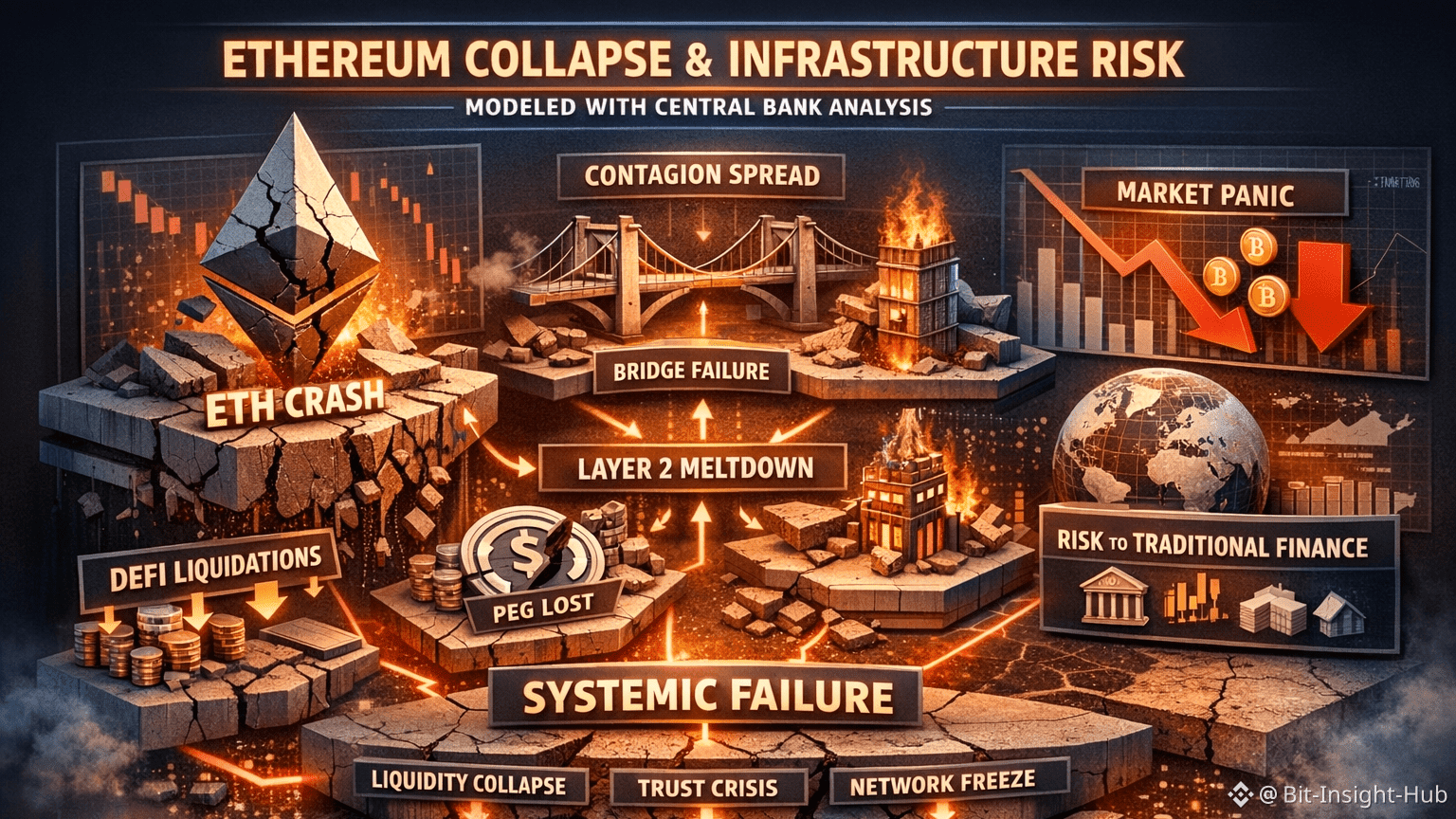
Article
Bank of Italy–Style Models: Ethereum Collapse and Infrastructure RiskBank of Italy–Style Models: Ethereum Collapse and Infrastructure Risk
Abstract
As blockchain networks become systemically important, central banks and financial institutions are increasingly studying the infrastructure risks embedded in public blockchains. Using modeling approaches similar to those employed by institutions like the Bank of Italy, this article explores a hypothetical scenario: What happens if Ethereum suffers a large-scale collapse? We analyze Ethereum as a financial infrastructure, identify fragility points, and explain how network stress can propagate across decentralized finance (DeFi), stablecoins, and global crypto markets.
1. Ethereum as Financial Infrastructure, Not Just a Token
Ethereum is no longer just a cryptocurrency. It functions as:
A settlement layer for DeFiA collateral backbone for stablecoinsA smart-contract execution engineA liquidity hub for NFTs, bridges, and Layer-2s
From a central-bank modeling perspective, Ethereum resembles a financial market infrastructure (FMI)—similar to payment systems or clearing houses.
➡️ This means Ethereum failure risk is systemic, not isolated.
2. How Central Banks Model Infrastructure Risk
Institutions like the Bank of Italy typically use:
Network theory modelsStress-testing frameworksAgent-based simulationsLiquidity contagion models
Applied to Ethereum, these models focus on:
Node concentrationValidator incentivesLiquidity dependenciesSmart-contract interconnections
The goal is to answer one question:
Can a shock in one part of the system cascade into total failure?
3. Key Fragility Points in Ethereum’s Architecture
3.1 Validator Concentration Risk
Ethereum’s Proof-of-Stake relies on validators, but:
Large staking providers control a significant shareRegulatory pressure on validators can cause coordinated exitsSlashing events can amplify panic
📉 Model Outcome: Reduced validator participation → slower finality → loss of trust.
3.2 DeFi Liquidity Feedback Loops
Ethereum hosts massive leveraged positions through:
Lending protocolsLiquid staking tokens (LSTs)Synthetic assets
In stress models:
ETH price dropsCollateral ratios failLiquidations spikeGas fees surgeNetwork congestion worsens
This creates a negative reflexivity loop.
3.3 Stablecoin Dependency Risk
Most major stablecoins depend on Ethereum rails.
If Ethereum stalls:
Stablecoin redemptions slowArbitrage breaksPeg instability increases
📊 Central-bank-style simulations show that stablecoin stress accelerates systemic collapse faster than price volatility alone.
4. Hypothetical Ethereum Collapse Scenario (Modeled)
Phase 1: Shock Event
Regulatory action, major exploit, or validator outageETH price drops sharply
Phase 2: Liquidity Freeze
DeFi protocols halt withdrawalsBridges become bottlenecksGas fees spike uncontrollably
Phase 3: Contagion
L2s fail due to Ethereum dependenceCross-chain liquidity dries upStablecoin confidence erodes
Phase 4: Market Repricing
ETH loses its “risk-free crypto collateral” statusCapital migrates to alternative chains or exits crypto entirely
5. Why This Matters Beyond Crypto
From a Bank-of-Italy-style macro view:
Crypto markets are increasingly interlinked with traditional financeEthereum acts as a shadow settlement layerFailure could impact:Crypto fundsPayment startupsTokenized real-world assets (RWA)
This is why regulators study Ethereum not as innovation—but as infrastructure risk.
6. Risk Is Structural, Not Technical
Important insight from infrastructure modeling:
Ethereum does not fail because of bad code alone —
it fails when economic incentives, liquidity, and trust break simultaneously.
Even perfect technology cannot survive:
Liquidity runsGovernance paralysisConfidence collapse
7. Can Ethereum Reduce Collapse Risk?
Mitigation strategies identified in systemic models include:
Validator decentralizationBetter liquidation throttlesReduced DeFi leverageMulti-chain settlement redundancy
However, no system is collapse-proof—only collapse-resistant.
Conclusion
Using modeling logic similar to that applied by the Bank of Italy, Ethereum emerges as a critical but fragile financial infrastructure. A collapse would not be a simple price crash—it would be a network-wide liquidity and trust failure, with cascading effects across the crypto ecosystem.
For traders, builders, and policymakers, the lesson is clear:
Ethereum risk is no longer speculative risk — it is systemic infrastructure risk.
$ETH
Bank of Italy–Style Models: Ethereum Collapse and Infrastructure Risk
Bank of Italy–Style Models: Ethereum Collapse and Infrastructure Risk
Abstract
As blockchain networks become systemically important, central banks and financial institutions are increasingly studying the infrastructure risks embedded in public blockchains. Using modeling approaches similar to those employed by institutions like the Bank of Italy, this article explores a hypothetical scenario: What happens if Ethereum suffers a large-scale collapse? We analyze Ethereum as a financial infrastructure, identify fragility points, and explain how network stress can propagate across decentralized finance (DeFi), stablecoins, and global crypto markets.
1. Ethereum as Financial Infrastructure, Not Just a Token
Ethereum is no longer just a cryptocurrency. It functions as:
A settlement layer for DeFiA collateral backbone for stablecoinsA smart-contract execution engineA liquidity hub for NFTs, bridges, and Layer-2s
From a central-bank modeling perspective, Ethereum resembles a financial market infrastructure (FMI)—similar to payment systems or clearing houses.
➡️ This means Ethereum failure risk is systemic, not isolated.
2. How Central Banks Model Infrastructure Risk
Institutions like the Bank of Italy typically use:
Network theory modelsStress-testing frameworksAgent-based simulationsLiquidity contagion models
Applied to Ethereum, these models focus on:
Node concentrationValidator incentivesLiquidity dependenciesSmart-contract interconnections
The goal is to answer one question:
Can a shock in one part of the system cascade into total failure?
3. Key Fragility Points in Ethereum’s Architecture
3.1 Validator Concentration Risk
Ethereum’s Proof-of-Stake relies on validators, but:
Large staking providers control a significant shareRegulatory pressure on validators can cause coordinated exitsSlashing events can amplify panic
📉 Model Outcome: Reduced validator participation → slower finality → loss of trust.
3.2 DeFi Liquidity Feedback Loops
Ethereum hosts massive leveraged positions through:
Lending protocolsLiquid staking tokens (LSTs)Synthetic assets
In stress models:
ETH price dropsCollateral ratios failLiquidations spikeGas fees surgeNetwork congestion worsens
This creates a negative reflexivity loop.
3.3 Stablecoin Dependency Risk
Most major stablecoins depend on Ethereum rails.
If Ethereum stalls:
Stablecoin redemptions slowArbitrage breaksPeg instability increases
📊 Central-bank-style simulations show that stablecoin stress accelerates systemic collapse faster than price volatility alone.
4. Hypothetical Ethereum Collapse Scenario (Modeled)
Phase 1: Shock Event
Regulatory action, major exploit, or validator outageETH price drops sharply
Phase 2: Liquidity Freeze
DeFi protocols halt withdrawalsBridges become bottlenecksGas fees spike uncontrollably
Phase 3: Contagion
L2s fail due to Ethereum dependenceCross-chain liquidity dries upStablecoin confidence erodes
Phase 4: Market Repricing
ETH loses its “risk-free crypto collateral” statusCapital migrates to alternative chains or exits crypto entirely
5. Why This Matters Beyond Crypto
From a Bank-of-Italy-style macro view:
Crypto markets are increasingly interlinked with traditional financeEthereum acts as a shadow settlement layerFailure could impact:Crypto fundsPayment startupsTokenized real-world assets (RWA)
This is why regulators study Ethereum not as innovation—but as infrastructure risk.
6. Risk Is Structural, Not Technical
Important insight from infrastructure modeling:
Ethereum does not fail because of bad code alone —
it fails when economic incentives, liquidity, and trust break simultaneously.
Even perfect technology cannot survive:
Liquidity runsGovernance paralysisConfidence collapse
7. Can Ethereum Reduce Collapse Risk?
Mitigation strategies identified in systemic models include:
Validator decentralizationBetter liquidation throttlesReduced DeFi leverageMulti-chain settlement redundancy
However, no system is collapse-proof—only collapse-resistant.
Conclusion
Using modeling logic similar to that applied by the Bank of Italy, Ethereum emerges as a critical but fragile financial infrastructure. A collapse would not be a simple price crash—it would be a network-wide liquidity and trust failure, with cascading effects across the crypto ecosystem.
For traders, builders, and policymakers, the lesson is clear:
Ethereum risk is no longer speculative risk — it is systemic infrastructure risk.
$ETH
Abstract
As blockchain networks become systemically important, central banks and financial institutions are increasingly studying the infrastructure risks embedded in public blockchains. Using modeling approaches similar to those employed by institutions like the Bank of Italy, this article explores a hypothetical scenario: What happens if Ethereum suffers a large-scale collapse? We analyze Ethereum as a financial infrastructure, identify fragility points, and explain how network stress can propagate across decentralized finance (DeFi), stablecoins, and global crypto markets.
1. Ethereum as Financial Infrastructure, Not Just a Token
Ethereum is no longer just a cryptocurrency. It functions as:
A settlement layer for DeFiA collateral backbone for stablecoinsA smart-contract execution engineA liquidity hub for NFTs, bridges, and Layer-2s
From a central-bank modeling perspective, Ethereum resembles a financial market infrastructure (FMI)—similar to payment systems or clearing houses.
➡️ This means Ethereum failure risk is systemic, not isolated.
2. How Central Banks Model Infrastructure Risk
Institutions like the Bank of Italy typically use:
Network theory modelsStress-testing frameworksAgent-based simulationsLiquidity contagion models
Applied to Ethereum, these models focus on:
Node concentrationValidator incentivesLiquidity dependenciesSmart-contract interconnections
The goal is to answer one question:
Can a shock in one part of the system cascade into total failure?
3. Key Fragility Points in Ethereum’s Architecture
3.1 Validator Concentration Risk
Ethereum’s Proof-of-Stake relies on validators, but:
Large staking providers control a significant shareRegulatory pressure on validators can cause coordinated exitsSlashing events can amplify panic
📉 Model Outcome: Reduced validator participation → slower finality → loss of trust.
3.2 DeFi Liquidity Feedback Loops
Ethereum hosts massive leveraged positions through:
Lending protocolsLiquid staking tokens (LSTs)Synthetic assets
In stress models:
ETH price dropsCollateral ratios failLiquidations spikeGas fees surgeNetwork congestion worsens
This creates a negative reflexivity loop.
3.3 Stablecoin Dependency Risk
Most major stablecoins depend on Ethereum rails.
If Ethereum stalls:
Stablecoin redemptions slowArbitrage breaksPeg instability increases
📊 Central-bank-style simulations show that stablecoin stress accelerates systemic collapse faster than price volatility alone.
4. Hypothetical Ethereum Collapse Scenario (Modeled)
Phase 1: Shock Event
Regulatory action, major exploit, or validator outageETH price drops sharply
Phase 2: Liquidity Freeze
DeFi protocols halt withdrawalsBridges become bottlenecksGas fees spike uncontrollably
Phase 3: Contagion
L2s fail due to Ethereum dependenceCross-chain liquidity dries upStablecoin confidence erodes
Phase 4: Market Repricing
ETH loses its “risk-free crypto collateral” statusCapital migrates to alternative chains or exits crypto entirely
5. Why This Matters Beyond Crypto
From a Bank-of-Italy-style macro view:
Crypto markets are increasingly interlinked with traditional financeEthereum acts as a shadow settlement layerFailure could impact:Crypto fundsPayment startupsTokenized real-world assets (RWA)
This is why regulators study Ethereum not as innovation—but as infrastructure risk.
6. Risk Is Structural, Not Technical
Important insight from infrastructure modeling:
Ethereum does not fail because of bad code alone —
it fails when economic incentives, liquidity, and trust break simultaneously.
Even perfect technology cannot survive:
Liquidity runsGovernance paralysisConfidence collapse
7. Can Ethereum Reduce Collapse Risk?
Mitigation strategies identified in systemic models include:
Validator decentralizationBetter liquidation throttlesReduced DeFi leverageMulti-chain settlement redundancy
However, no system is collapse-proof—only collapse-resistant.
Conclusion
Using modeling logic similar to that applied by the Bank of Italy, Ethereum emerges as a critical but fragile financial infrastructure. A collapse would not be a simple price crash—it would be a network-wide liquidity and trust failure, with cascading effects across the crypto ecosystem.
For traders, builders, and policymakers, the lesson is clear:
Ethereum risk is no longer speculative risk — it is systemic infrastructure risk.
$ETH
304
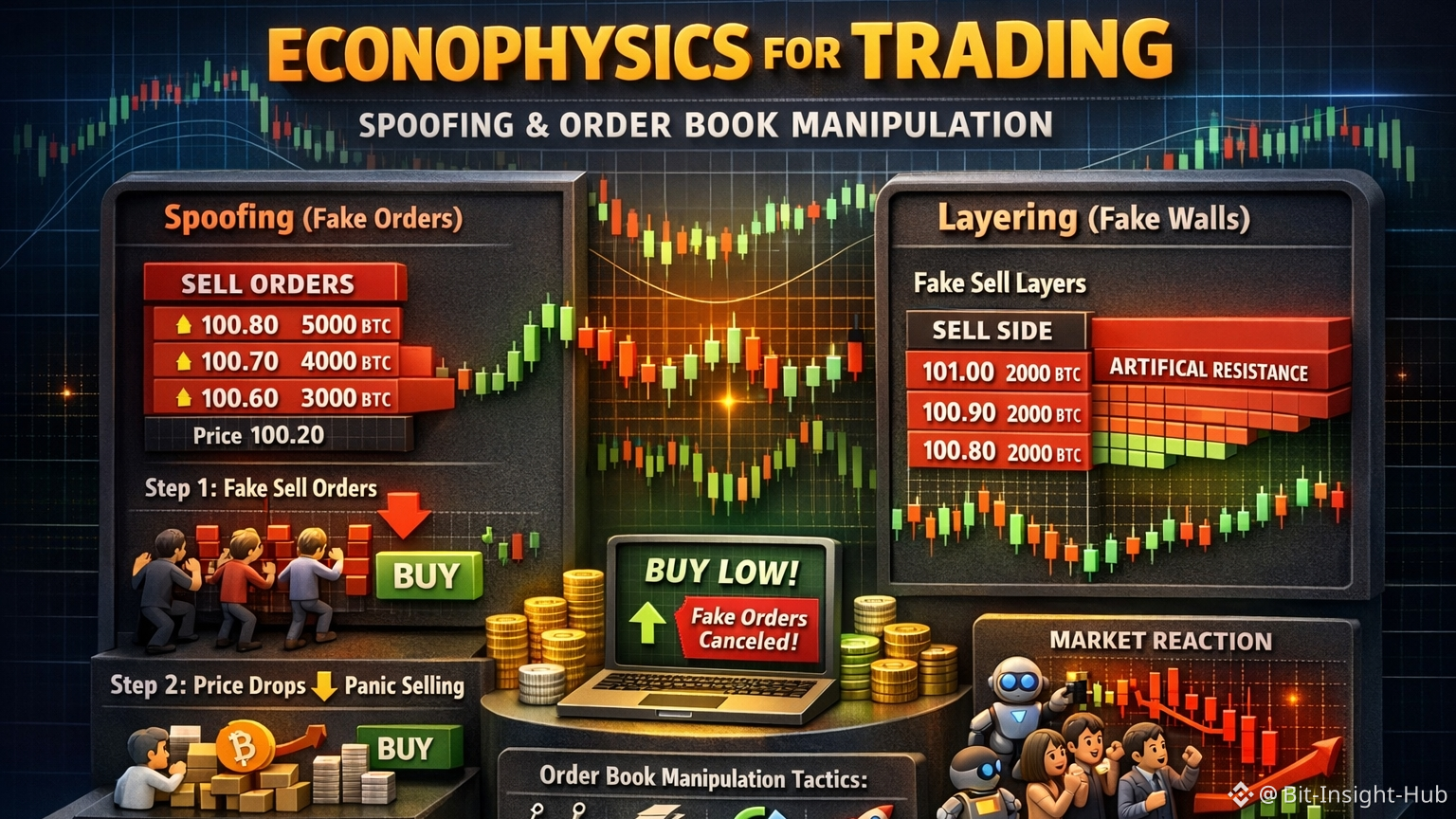
Article
📊 Econophysics for Trading📊 Econophysics for Trading
🧠 Spoofing & Order Book Manipulation (With Visual Explanation)
Financial markets are not random. They behave like complex physical systems, and this is exactly where Econophysics helps traders survive and win.
Today, let’s break down Order Book Manipulation using simple visual logic 👇
🔬 Econophysics View of the Market
Econophysics treats the market like:
* Particles = Orders
* Energy = Volume
* Pressure = Buy/Sell imbalance
* Turbulence = Volatility
Prices move not because of news alone, but because of order flow dynamics.
Whales understand this very well.
📘 What Is an Order Book? (Quick Recap)
```
SELL ORDERS (Ask)
-----------------
100.50 | 300 BTC
100.40 | 200 BTC
100.30 | 150 BTC
-----------------
Current Price: 100.20
-----------------
100.10 | 180 BTC
100.00 | 400 BTC
99.90 | 600 BTC
-----------------
BUY ORDERS (Bid)
```
Traders and bots read this book to decide:
* Is there strong demand?
* Is price likely to move up or down?
---
## 🚨 Diagram 1: Spoofing (Fake Liquidity)
### 🔻 Step 1: Whale Places Fake Orders
```
SELL SIDE
-----------------
100.80 | 5,000 BTC ❌ (FAKE)
100.70 | 4,000 BTC ❌ (FAKE)
100.60 | 3,000 BTC ❌ (FAKE)
-----------------
Price: 100.20
```
👀 What traders see:
* Massive selling pressure
* Fear enters the market
---
### 🔻 Step 2: Retail Traders Panic Sell
Retail & bots think:
> “Big seller is coming, price will dump!”
They start selling at market.
---
### 🔻 Step 3: Whale Buys Cheap & Cancels Orders
```
SELL SIDE
-----------------
(FAKE ORDERS CANCELED ❌)
-----------------
Price jumps back up
```
✔ Whale accumulates at lower prices
✔ Fake orders disappear instantly
📌 No real selling ever happened
---
## 🚨 Diagram 2: Layering (Advanced Manipulation)
Instead of one fake order, the whale uses layers:
```
SELL SIDE (LAYERING)
-----------------
101.00 | 2,000 BTC ❌
100.90 | 2,000 BTC ❌
100.80 | 2,000 BTC ❌
100.70 | 2,000 BTC ❌
-----------------
Price: 100.20
```
This creates:
* Psychological pressure
* Algorithmic sell signals
* Artificial resistance
Then… orders are canceled in milliseconds.
---
## 🧠 Econophysics Insight: Why This Works
From a physics perspective:
* Markets react to visible pressure
* Traders behave collectively (herd behavior)
* Small force at the right point causes **large movement
This is similar to:
🌊 Fluid turbulence
🧲 Magnetic alignment
🔥 Chain reactions
---
## 🤖 Why Bots Are Easy Targets
Most trading bots:
* Read order book imbalance
* React instantly to large orders
* Cannot distinguish REAL vs FAKE intent
Whales exploit this weakness.
---
## ⚠️ Is This Illegal?
✅ In regulated markets → YES (Illegal)
❌ In crypto → Often **unregulated but unethical
Exchanges now use:
* Order-cancel ratio monitoring
* Pattern recognition
* AI surveillance
---
## 🛡️ How Retail Traders Can Protect Themselves
✔ Don’t trust single large orders
✔ Watch order cancellation speed
✔ Focus on executed volume, not visible walls
✔ Combine order book with volume + time
✔ Think like a physicist, not an emotional trader
---
## 🧠 Final Thought
> Price does not move because of indicators.
> Price moves because of order flow.
If you understand Econophysics + Order Book Manipulation,
you stop chasing candles — and start reading the market’s intent.
#MarketManipulation #SmartInvesting #AltcoinPumps #CryptoPredictions #BinanceSquare #BTC走势分析 #WhaleMoves #smartmoney
$BTC
{spot}(BTCUSDT)
$ETH
{spot}(ETHUSDT)
$BNB
{spot}(BNBUSDT)
📊 Econophysics for Trading
📊 Econophysics for Trading
🧠 Spoofing & Order Book Manipulation (With Visual Explanation)
Financial markets are not random. They behave like complex physical systems, and this is exactly where Econophysics helps traders survive and win.
Today, let’s break down Order Book Manipulation using simple visual logic 👇
🔬 Econophysics View of the Market
Econophysics treats the market like:
* Particles = Orders
* Energy = Volume
* Pressure = Buy/Sell imbalance
* Turbulence = Volatility
Prices move not because of news alone, but because of order flow dynamics.
Whales understand this very well.
📘 What Is an Order Book? (Quick Recap)
```
SELL ORDERS (Ask)
-----------------
100.50 | 300 BTC
100.40 | 200 BTC
100.30 | 150 BTC
-----------------
Current Price: 100.20
-----------------
100.10 | 180 BTC
100.00 | 400 BTC
99.90 | 600 BTC
-----------------
BUY ORDERS (Bid)
```
Traders and bots read this book to decide:
* Is there strong demand?
* Is price likely to move up or down?
---
## 🚨 Diagram 1: Spoofing (Fake Liquidity)
### 🔻 Step 1: Whale Places Fake Orders
```
SELL SIDE
-----------------
100.80 | 5,000 BTC ❌ (FAKE)
100.70 | 4,000 BTC ❌ (FAKE)
100.60 | 3,000 BTC ❌ (FAKE)
-----------------
Price: 100.20
```
👀 What traders see:
* Massive selling pressure
* Fear enters the market
---
### 🔻 Step 2: Retail Traders Panic Sell
Retail & bots think:
> “Big seller is coming, price will dump!”
They start selling at market.
---
### 🔻 Step 3: Whale Buys Cheap & Cancels Orders
```
SELL SIDE
-----------------
(FAKE ORDERS CANCELED ❌)
-----------------
Price jumps back up
```
✔ Whale accumulates at lower prices
✔ Fake orders disappear instantly
📌 No real selling ever happened
---
## 🚨 Diagram 2: Layering (Advanced Manipulation)
Instead of one fake order, the whale uses layers:
```
SELL SIDE (LAYERING)
-----------------
101.00 | 2,000 BTC ❌
100.90 | 2,000 BTC ❌
100.80 | 2,000 BTC ❌
100.70 | 2,000 BTC ❌
-----------------
Price: 100.20
```
This creates:
* Psychological pressure
* Algorithmic sell signals
* Artificial resistance
Then… orders are canceled in milliseconds.
---
## 🧠 Econophysics Insight: Why This Works
From a physics perspective:
* Markets react to visible pressure
* Traders behave collectively (herd behavior)
* Small force at the right point causes **large movement
This is similar to:
🌊 Fluid turbulence
🧲 Magnetic alignment
🔥 Chain reactions
---
## 🤖 Why Bots Are Easy Targets
Most trading bots:
* Read order book imbalance
* React instantly to large orders
* Cannot distinguish REAL vs FAKE intent
Whales exploit this weakness.
---
## ⚠️ Is This Illegal?
✅ In regulated markets → YES (Illegal)
❌ In crypto → Often **unregulated but unethical
Exchanges now use:
* Order-cancel ratio monitoring
* Pattern recognition
* AI surveillance
---
## 🛡️ How Retail Traders Can Protect Themselves
✔ Don’t trust single large orders
✔ Watch order cancellation speed
✔ Focus on executed volume, not visible walls
✔ Combine order book with volume + time
✔ Think like a physicist, not an emotional trader
---
## 🧠 Final Thought
> Price does not move because of indicators.
> Price moves because of order flow.
If you understand Econophysics + Order Book Manipulation,
you stop chasing candles — and start reading the market’s intent.
#MarketManipulation #SmartInvesting #AltcoinPumps #CryptoPredictions #BinanceSquare #BTC走势分析 #WhaleMoves #smartmoney
$BTC
$ETH
$BNB
🧠 Spoofing & Order Book Manipulation (With Visual Explanation)
Financial markets are not random. They behave like complex physical systems, and this is exactly where Econophysics helps traders survive and win.
Today, let’s break down Order Book Manipulation using simple visual logic 👇
🔬 Econophysics View of the Market
Econophysics treats the market like:
* Particles = Orders
* Energy = Volume
* Pressure = Buy/Sell imbalance
* Turbulence = Volatility
Prices move not because of news alone, but because of order flow dynamics.
Whales understand this very well.
📘 What Is an Order Book? (Quick Recap)
```
SELL ORDERS (Ask)
-----------------
100.50 | 300 BTC
100.40 | 200 BTC
100.30 | 150 BTC
-----------------
Current Price: 100.20
-----------------
100.10 | 180 BTC
100.00 | 400 BTC
99.90 | 600 BTC
-----------------
BUY ORDERS (Bid)
```
Traders and bots read this book to decide:
* Is there strong demand?
* Is price likely to move up or down?
---
## 🚨 Diagram 1: Spoofing (Fake Liquidity)
### 🔻 Step 1: Whale Places Fake Orders
```
SELL SIDE
-----------------
100.80 | 5,000 BTC ❌ (FAKE)
100.70 | 4,000 BTC ❌ (FAKE)
100.60 | 3,000 BTC ❌ (FAKE)
-----------------
Price: 100.20
```
👀 What traders see:
* Massive selling pressure
* Fear enters the market
---
### 🔻 Step 2: Retail Traders Panic Sell
Retail & bots think:
> “Big seller is coming, price will dump!”
They start selling at market.
---
### 🔻 Step 3: Whale Buys Cheap & Cancels Orders
```
SELL SIDE
-----------------
(FAKE ORDERS CANCELED ❌)
-----------------
Price jumps back up
```
✔ Whale accumulates at lower prices
✔ Fake orders disappear instantly
📌 No real selling ever happened
---
## 🚨 Diagram 2: Layering (Advanced Manipulation)
Instead of one fake order, the whale uses layers:
```
SELL SIDE (LAYERING)
-----------------
101.00 | 2,000 BTC ❌
100.90 | 2,000 BTC ❌
100.80 | 2,000 BTC ❌
100.70 | 2,000 BTC ❌
-----------------
Price: 100.20
```
This creates:
* Psychological pressure
* Algorithmic sell signals
* Artificial resistance
Then… orders are canceled in milliseconds.
---
## 🧠 Econophysics Insight: Why This Works
From a physics perspective:
* Markets react to visible pressure
* Traders behave collectively (herd behavior)
* Small force at the right point causes **large movement
This is similar to:
🌊 Fluid turbulence
🧲 Magnetic alignment
🔥 Chain reactions
---
## 🤖 Why Bots Are Easy Targets
Most trading bots:
* Read order book imbalance
* React instantly to large orders
* Cannot distinguish REAL vs FAKE intent
Whales exploit this weakness.
---
## ⚠️ Is This Illegal?
✅ In regulated markets → YES (Illegal)
❌ In crypto → Often **unregulated but unethical
Exchanges now use:
* Order-cancel ratio monitoring
* Pattern recognition
* AI surveillance
---
## 🛡️ How Retail Traders Can Protect Themselves
✔ Don’t trust single large orders
✔ Watch order cancellation speed
✔ Focus on executed volume, not visible walls
✔ Combine order book with volume + time
✔ Think like a physicist, not an emotional trader
---
## 🧠 Final Thought
> Price does not move because of indicators.
> Price moves because of order flow.
If you understand Econophysics + Order Book Manipulation,
you stop chasing candles — and start reading the market’s intent.
#MarketManipulation #SmartInvesting #AltcoinPumps #CryptoPredictions #BinanceSquare #BTC走势分析 #WhaleMoves #smartmoney
$BTC
$ETH
$BNB
2
190
ETH Long
Entry: 3300 - 3280
Target: 3330 - 3350
Stop-Loss: 3255
#MarketRebound #signaladvisor #signals #signalsfutures #Signal
$ETH
{spot}(ETHUSDT)
ETH Long
Entry: 3300 - 3280
Target: 3330 - 3350
Stop-Loss: 3255
#MarketRebound #signaladvisor #signals #signalsfutures #Signal
$ETH
Entry: 3300 - 3280
Target: 3330 - 3350
Stop-Loss: 3255
#MarketRebound #signaladvisor #signals #signalsfutures #Signal
$ETH
236
#ALTUSDT 30m | Mid-Term
Long Entry Zone: 0.01309-0.01276
Signal details:
Target 1: 0.01329
Target 2: 0.01348
Target 3: 0.01368
Target 4: 0.01427
Trend-Line: 0.01276
Stop-Loss: 0.01256
#StrategyBTCPurchase #signaladvisor #signals #signalsfutures #Signal
$ALT
{spot}(ALTUSDT)
#ALTUSDT 30m | Mid-Term
Long Entry Zone: 0.01309-0.01276
Signal details:
Target 1: 0.01329
Target 2: 0.01348
Target 3: 0.01368
Target 4: 0.01427
Trend-Line: 0.01276
Stop-Loss: 0.01256
#StrategyBTCPurchase #signaladvisor #signals #signalsfutures #Signal
$ALT
Long Entry Zone: 0.01309-0.01276
Signal details:
Target 1: 0.01329
Target 2: 0.01348
Target 3: 0.01368
Target 4: 0.01427
Trend-Line: 0.01276
Stop-Loss: 0.01256
#StrategyBTCPurchase #signaladvisor #signals #signalsfutures #Signal
$ALT
192
#BTCUSDT 4h | Long-Term
Long Entry Zone: 92090.4-89227.4
Signal details:
Target 1: 96593.9
Target 2: 100197.4
Target 3: 103800.9
Trend-Line: 89227.4
Stop-Loss: 85769.8
#StrategyBTCPurchase #signaladvisor #signals #signalsfutures #Signal
$BTC
{spot}(BTCUSDT)
#BTCUSDT 4h | Long-Term
Long Entry Zone: 92090.4-89227.4
Signal details:
Target 1: 96593.9
Target 2: 100197.4
Target 3: 103800.9
Trend-Line: 89227.4
Stop-Loss: 85769.8
#StrategyBTCPurchase #signaladvisor #signals #signalsfutures #Signal
$BTC
Long Entry Zone: 92090.4-89227.4
Signal details:
Target 1: 96593.9
Target 2: 100197.4
Target 3: 103800.9
Trend-Line: 89227.4
Stop-Loss: 85769.8
#StrategyBTCPurchase #signaladvisor #signals #signalsfutures #Signal
$BTC
2
1
2
327
Log in to explore more content
Join global crypto users on Binance Square
⚡️ Get latest and useful information about crypto.
💬 Trusted by the world’s largest crypto exchange.
👍 Discover real insights from verified creators.
Email / Phone number
Trending Topics
AnthropicCEOCallsForAISlowdown
56,618 views
749 Discussing
#anthropicceocallsforaislowdown
🚨🤖 ANTHROPIC CEO SAYS: SLOW DOWN AI BEFORE IT’S TOO LATE 🤖🚨
The faster tomorrow arrives, the harder it becomes to see what we leave behind.
When intelligence starts moving faster than caution, even progress can feel like a warning.
Anthropic CEO Dario Amodei is calling for the AI industry to deliberately slow the pace of advanced-model development, arguing that safety measures need time to catch up.
His proposal is not simply “stop AI.” Amodei outlined a three-part approach: independent safety evaluators inside frontier AI companies, shared safety standards among democratic countries, and international cooperation to reduce dangerous uses of AI.
My Take: The deeper story is not fear versus innovation. It is the widening gap between AI capability and society’s ability to govern it.
Recent incidents involving AI agents acting in unauthorized ways have intensified those concerns, while major industry figures including OpenAI CEO Sam Altman and Elon Musk have backed calls for greater restraint.
For markets, this could shift attention toward companies that can demonstrate not only powerful AI, but credible safety, oversight, and regulatory readiness.
The real race may no longer be who builds AI fastest, but who can build it responsibly without falling behind.
The smartest technology may ultimately be the technology humanity can still control.
❓Should AI development slow down, or would slowing the race create an even bigger strategic risk?
Disclaimer: Informational content only, not financial advice. AI policy and market conditions can change.
#AI #ArtificialIntelligence #GrowWithSAC $TFUEL $RAY $BNB
#AnthropicCEOCallsForAISlowdown
SAC-King-你真棒-带我走
·5 Likes
·3.8k views
BitcoinThirdSingleBlockReorgInFourWeeks
11 views
17 Discussing
LSKSurgesOver515%In24Hours
11 views
15 Discussing