

Only Cryptos
2.9k Posts

Only Cryptos
Report
Block User
DP _ Binancian | Square Creator | Trade | Know Your Crypto | News & Updates | Earn Crypto / Fiat without Investment | Others
3.5K+ Following
1.4K+ Followers
7.8K+ Liked
Posts
All
Quotes
Videos
Live
PINNED
·
--
Bullish
@devang28546 _ DP _ Binancian | Square Creator | Trade | Know Your Crypto | News & Updates | Earn Crypto / Fiat without Investment | Others
Comment "#onlycryptos" to claim 🎁
"Place a trade with us via this post mentioned coin's & do support to reach maximum audience by follow, like, comment, share, repost, more such informative content ahead" _ Thanking you in advance 🤗
#OnlyCryptos #Follow_Like_Comment #Share_or_Quote_This_Post #TrendingTopic #viralpost
$BTC $ETH $BNB
{spot}(XRPUSDT)
{spot}(SOLUSDT)
{spot}(USDCUSDT)
@Only Cryptos _ DP _ Binancian | Square Creator | Trade | Know Your Crypto | News & Updates | Earn Crypto / Fiat without Investment | Others
Comment "#onlycryptos" to claim 🎁
"Place a trade with us via this post mentioned coin's & do support to reach maximum audience by follow, like, comment, share, repost, more such informative content ahead" _ Thanking you in advance 🤗
#OnlyCryptos #Follow_Like_Comment #Share_or_Quote_This_Post #TrendingTopic #viralpost
$BTC $ETH $BNB
Comment "#onlycryptos" to claim 🎁
"Place a trade with us via this post mentioned coin's & do support to reach maximum audience by follow, like, comment, share, repost, more such informative content ahead" _ Thanking you in advance 🤗
#OnlyCryptos #Follow_Like_Comment #Share_or_Quote_This_Post #TrendingTopic #viralpost
$BTC $ETH $BNB

10
2
61
4k
·
--
Market PulseMarket Overview
Michael Saylor’s Strategy acquires 1,142 BTC for a total of $90M, bringing their total holdings to 714,644 BTC.
Binance completes their final tranche of BTC purchases using their SAFU stablecoin reserves, with a total of 15,000 BTC acquired, worth ~$1B.
Stripe integrates payments using the x402 protocol, enabling AI agents to make payments using USDC on Base programmatically.
Narrative of the Week
LayerZero announces their own institutional blockchain, Zero, with partnerships with DTCC, ICE/NYSE, Citadel Securities, ARK Invest and more.
Uniswap collaborates with Securitize to make BlackRock’s BUIDL tradable via UniswapX. As part of the deal, BlackRock has also acquired an undisclosed amount of UNI tokens.
Robinhood launches the testnet for their permissionless Ethereum-compatible L2 blockchain. Builders and users can now interact with the chain and its existing smart contracts.
Major Project Updates
Sonic announces plans to shift into a vertically integrated model, ensuring revenues and utility accrue back to the Sonic token (S), instead of losing value to external developers.
Sui Network launches suiUSDe, a synthetic dollar powered by Ethena. SuiUSDe has already been integrated with DeepBook Margin, enabling margin trading, lending and other DeFi workflows on Sui.
MegaETH mainnet is now fully open the public. Users can bridge into the chain, swap assets, and interact with live apps.
Polymarket partners with Kaito AI to power Attention Markets, a prediction market on mindshare.
Ethereum Name Service (ENS) scrapes plans to deploy ENSv2 on their own chain, Namechain. Instead, ENSv2 will be deployed on Ethereum Mainnet.
Circle partners with edgeX to bring native USDC and CCTP to EDGE Chain, which will enable institutional on/offramps, seamless transfers of USDC between EDGE Chain and other CCTP chains, and more.
DeFi Brief
RWA protocol, Ondo Finance, introduces Ondo Perps, a capital-efficient trading platform for perps on equity and commodities.
Aave proposes the “Aave Will Win” framework, a framework that directs 100% of revenues to the Aave DAO, in a move to align protocol and token holder incentives.
All-in-one crypto exchange and wallet, Backpack, unveils their tokenomics, with 25% to be unlocked on TGE as an airdrop to points and Mad Lads NFT holders.
Sushiswap expands to Solana, with token swaps and cross-chain trading now live. The expansion is supported by Jupiter Exchange and their Ultra API.
Fundraises & Airdrops
Stablecoin payments infrastructure protocol, Levl, raises $7M in a seed round led by Galaxy, with participation from CMCC Global, FalconX, Variant, DeusX, and more.
On-chain credit infrastructure protocol, Birch Hill, raises $2.5M in a pre-seed round led by ParaFi Capital and Castle Island Ventures, with support from FalconX, Nascent, Flowdesk, and more.
USDT issuer, Tether, makes an undisclosed investment into interoperability protocol, LayerZero.
Token launchpad, Bullshot, raises $7.5M in private funding, with investors including Animoca Brands, B1 Ventures, RG Ventures, AWS Cloud, Becker Ventures, and more.
Espresso Foundation opens claims for the ESP token airdrop. Users can now claim and stake their tokens.
Based Foundation introduces the BASED token, which allocates 36% to the community, with the TGE expected in March 2026.
Source: #CoinMarketCap
"Place a trade with us via this post mentioned coin's & do support to reach maximum audience by follow, like, comment, share, repost, more such informative content ahead"
$MSTRon $BTC $BNB #S #SUI #suiUSDe #ENA MegaETH KAITO ENS EDGE ONDO AAVE BP SUSHI SOL JUP USDT ESP BASED
{spot}(USDCUSDT)
{spot}(ZROUSDT)
{spot}(UNIUSDT)
{spot}(ETHUSDT)
Market Pulse
Market Overview
Michael Saylor’s Strategy acquires 1,142 BTC for a total of $90M, bringing their total holdings to 714,644 BTC.
Binance completes their final tranche of BTC purchases using their SAFU stablecoin reserves, with a total of 15,000 BTC acquired, worth ~$1B.
Stripe integrates payments using the x402 protocol, enabling AI agents to make payments using USDC on Base programmatically.
Narrative of the Week
LayerZero announces their own institutional blockchain, Zero, with partnerships with DTCC, ICE/NYSE, Citadel Securities, ARK Invest and more.
Uniswap collaborates with Securitize to make BlackRock’s BUIDL tradable via UniswapX. As part of the deal, BlackRock has also acquired an undisclosed amount of UNI tokens.
Robinhood launches the testnet for their permissionless Ethereum-compatible L2 blockchain. Builders and users can now interact with the chain and its existing smart contracts.
Major Project Updates
Sonic announces plans to shift into a vertically integrated model, ensuring revenues and utility accrue back to the Sonic token (S), instead of losing value to external developers.
Sui Network launches suiUSDe, a synthetic dollar powered by Ethena. SuiUSDe has already been integrated with DeepBook Margin, enabling margin trading, lending and other DeFi workflows on Sui.
MegaETH mainnet is now fully open the public. Users can bridge into the chain, swap assets, and interact with live apps.
Polymarket partners with Kaito AI to power Attention Markets, a prediction market on mindshare.
Ethereum Name Service (ENS) scrapes plans to deploy ENSv2 on their own chain, Namechain. Instead, ENSv2 will be deployed on Ethereum Mainnet.
Circle partners with edgeX to bring native USDC and CCTP to EDGE Chain, which will enable institutional on/offramps, seamless transfers of USDC between EDGE Chain and other CCTP chains, and more.
DeFi Brief
RWA protocol, Ondo Finance, introduces Ondo Perps, a capital-efficient trading platform for perps on equity and commodities.
Aave proposes the “Aave Will Win” framework, a framework that directs 100% of revenues to the Aave DAO, in a move to align protocol and token holder incentives.
All-in-one crypto exchange and wallet, Backpack, unveils their tokenomics, with 25% to be unlocked on TGE as an airdrop to points and Mad Lads NFT holders.
Sushiswap expands to Solana, with token swaps and cross-chain trading now live. The expansion is supported by Jupiter Exchange and their Ultra API.
Fundraises & Airdrops
Stablecoin payments infrastructure protocol, Levl, raises $7M in a seed round led by Galaxy, with participation from CMCC Global, FalconX, Variant, DeusX, and more.
On-chain credit infrastructure protocol, Birch Hill, raises $2.5M in a pre-seed round led by ParaFi Capital and Castle Island Ventures, with support from FalconX, Nascent, Flowdesk, and more.
USDT issuer, Tether, makes an undisclosed investment into interoperability protocol, LayerZero.
Token launchpad, Bullshot, raises $7.5M in private funding, with investors including Animoca Brands, B1 Ventures, RG Ventures, AWS Cloud, Becker Ventures, and more.
Espresso Foundation opens claims for the ESP token airdrop. Users can now claim and stake their tokens.
Based Foundation introduces the BASED token, which allocates 36% to the community, with the TGE expected in March 2026.
Source: #CoinMarketCap
"Place a trade with us via this post mentioned coin's & do support to reach maximum audience by follow, like, comment, share, repost, more such informative content ahead"
$MSTRon $BTC $BNB #S #SUI #suiUSDe #ENA MegaETH KAITO ENS EDGE ONDO AAVE BP SUSHI SOL JUP USDT ESP BASED
Michael Saylor’s Strategy acquires 1,142 BTC for a total of $90M, bringing their total holdings to 714,644 BTC.
Binance completes their final tranche of BTC purchases using their SAFU stablecoin reserves, with a total of 15,000 BTC acquired, worth ~$1B.
Stripe integrates payments using the x402 protocol, enabling AI agents to make payments using USDC on Base programmatically.
Narrative of the Week
LayerZero announces their own institutional blockchain, Zero, with partnerships with DTCC, ICE/NYSE, Citadel Securities, ARK Invest and more.
Uniswap collaborates with Securitize to make BlackRock’s BUIDL tradable via UniswapX. As part of the deal, BlackRock has also acquired an undisclosed amount of UNI tokens.
Robinhood launches the testnet for their permissionless Ethereum-compatible L2 blockchain. Builders and users can now interact with the chain and its existing smart contracts.
Major Project Updates
Sonic announces plans to shift into a vertically integrated model, ensuring revenues and utility accrue back to the Sonic token (S), instead of losing value to external developers.
Sui Network launches suiUSDe, a synthetic dollar powered by Ethena. SuiUSDe has already been integrated with DeepBook Margin, enabling margin trading, lending and other DeFi workflows on Sui.
MegaETH mainnet is now fully open the public. Users can bridge into the chain, swap assets, and interact with live apps.
Polymarket partners with Kaito AI to power Attention Markets, a prediction market on mindshare.
Ethereum Name Service (ENS) scrapes plans to deploy ENSv2 on their own chain, Namechain. Instead, ENSv2 will be deployed on Ethereum Mainnet.
Circle partners with edgeX to bring native USDC and CCTP to EDGE Chain, which will enable institutional on/offramps, seamless transfers of USDC between EDGE Chain and other CCTP chains, and more.
DeFi Brief
RWA protocol, Ondo Finance, introduces Ondo Perps, a capital-efficient trading platform for perps on equity and commodities.
Aave proposes the “Aave Will Win” framework, a framework that directs 100% of revenues to the Aave DAO, in a move to align protocol and token holder incentives.
All-in-one crypto exchange and wallet, Backpack, unveils their tokenomics, with 25% to be unlocked on TGE as an airdrop to points and Mad Lads NFT holders.
Sushiswap expands to Solana, with token swaps and cross-chain trading now live. The expansion is supported by Jupiter Exchange and their Ultra API.
Fundraises & Airdrops
Stablecoin payments infrastructure protocol, Levl, raises $7M in a seed round led by Galaxy, with participation from CMCC Global, FalconX, Variant, DeusX, and more.
On-chain credit infrastructure protocol, Birch Hill, raises $2.5M in a pre-seed round led by ParaFi Capital and Castle Island Ventures, with support from FalconX, Nascent, Flowdesk, and more.
USDT issuer, Tether, makes an undisclosed investment into interoperability protocol, LayerZero.
Token launchpad, Bullshot, raises $7.5M in private funding, with investors including Animoca Brands, B1 Ventures, RG Ventures, AWS Cloud, Becker Ventures, and more.
Espresso Foundation opens claims for the ESP token airdrop. Users can now claim and stake their tokens.
Based Foundation introduces the BASED token, which allocates 36% to the community, with the TGE expected in March 2026.
Source: #CoinMarketCap
"Place a trade with us via this post mentioned coin's & do support to reach maximum audience by follow, like, comment, share, repost, more such informative content ahead"
$MSTRon $BTC $BNB #S #SUI #suiUSDe #ENA MegaETH KAITO ENS EDGE ONDO AAVE BP SUSHI SOL JUP USDT ESP BASED
123
·
--
Market PulseMarket Overview
Michael Saylor’s Strategy acquires 2,486 BTC for $168.4M, bringing their total holdings to 717,131 BTC.
Leading crypto market maker, Wintermute, launches 24/7 tokenized Gold trading (PAXG and XAUt), via their OTC desk.
Peter Thiel fully exits his position in ETH treasury company, ETHZilla, as the company pivots once again to tokenized real-world aviation assets.
Narrative of the Week
DeBridge introduces deBridge MCP, a universal API enabling AI models and agents to automate complex crosschain tasks including trading, position monitoring, research and more.
Interoperability layer, Orderly Network, also unveils their own Orderly MCP, enabling builders and traders to build, manage and trade on perp DEXs all via AI.
Phantom introduces the Phantom MCP server, allowing AI agents to swap, sign and manage addresses across all Phantom supported chains, with support for perps, prediction markets along the way.
Bittensor subnets open up support for AI agents, with Basilica (SN39) enabling one-click OpenClaw deployments, and Hippius (SN75) supporting decentralized storage for OpenClaw deployments.
Major Project Updates
Hyperliquid launches Hyperliquid Policy Center, an independent research and advocacy group to support the development of constructive legislation for DeFi in the USA.
Coinbase L2, Base, leaves the Optimism Superchain, deciding to branch off to build on their own tech stack for faster shipping and a simplified structure.
NFT marketplace, Zora, pivots into attention markets on Solana, enabling users to create and trade “trends” on the platform, predicting changes in mindshare and attention on these trends.
Pump.fun introduces Cashback Coins, allowing creators to direct all creator fees to traders and holders of their token in an irreversible choice before creating the token.
Polymarket introduces 5 minute up/down prediction markets on crypto prices.
Token management infrastructure, Magna, has been acquired by Payward, the parent company behind the Kraken exchange.
DeFi Brief
Money market protocol, Morpho, announces a cooperation agreement with asset management firm, Apollo Global Management Inc., to support on-chain lending markets, with Apollo also acquiring MORPHO tokens in the agreement.
Lending platform, ZeroLend, shuts down after three years of operations. The majority of markets have already been set to 0% LTV, and users should withdraw any remaining funds from the platform.
Solana DEX aggregator, Jupiter Exchange, opens voting for their latest proposal to bring net-new token emissions to zero. Voting remains open until 22nd February.
Fundraises & Airdrops
Tether invests in Dreamcash, a Hyperliquid frontend, in a collaboration with Selini Capital to bring USDT0-collateralized markets to Hyperliquid.
Sports betting platform, Novig, raises $75M in a Series B funding round led by Pantera Capital, with support from Multicoin Capital, Perceptive, Forerunner, Makers Fund, and Edge Equity.
Sports prediction exchange, PRED, raises $2.5M in a seed round led by Accel, with participation from Coinbase Ventures, Reverie, alongside strategic angel investors.
Gaming-focused L1, YOM, raises $3M in a strategic funding round, with investors including Avalanche, Outlier Ventures, CV Labs, Protein Capital, and more.
Source: #CoinMarketCap
"Place a trade with us via this post mentioned coin's & do support to reach maximum audience by follow, like, comment, share, repost, more such informative content ahead"
$MSTRon $BTC $PAXG #DBR #HYPE #BASE #ZORA SOL PUMP MORPHO ZERO JUP
{spot}(XAUTUSDT)
{spot}(ETHUSDT)
{alpha}(560x4e200fe2f3efb977d5fd9c430a41531fb04d97b8)
{spot}(TAOUSDT)
Market Pulse
Market Overview
Michael Saylor’s Strategy acquires 2,486 BTC for $168.4M, bringing their total holdings to 717,131 BTC.
Leading crypto market maker, Wintermute, launches 24/7 tokenized Gold trading (PAXG and XAUt), via their OTC desk.
Peter Thiel fully exits his position in ETH treasury company, ETHZilla, as the company pivots once again to tokenized real-world aviation assets.
Narrative of the Week
DeBridge introduces deBridge MCP, a universal API enabling AI models and agents to automate complex crosschain tasks including trading, position monitoring, research and more.
Interoperability layer, Orderly Network, also unveils their own Orderly MCP, enabling builders and traders to build, manage and trade on perp DEXs all via AI.
Phantom introduces the Phantom MCP server, allowing AI agents to swap, sign and manage addresses across all Phantom supported chains, with support for perps, prediction markets along the way.
Bittensor subnets open up support for AI agents, with Basilica (SN39) enabling one-click OpenClaw deployments, and Hippius (SN75) supporting decentralized storage for OpenClaw deployments.
Major Project Updates
Hyperliquid launches Hyperliquid Policy Center, an independent research and advocacy group to support the development of constructive legislation for DeFi in the USA.
Coinbase L2, Base, leaves the Optimism Superchain, deciding to branch off to build on their own tech stack for faster shipping and a simplified structure.
NFT marketplace, Zora, pivots into attention markets on Solana, enabling users to create and trade “trends” on the platform, predicting changes in mindshare and attention on these trends.
Pump.fun introduces Cashback Coins, allowing creators to direct all creator fees to traders and holders of their token in an irreversible choice before creating the token.
Polymarket introduces 5 minute up/down prediction markets on crypto prices.
Token management infrastructure, Magna, has been acquired by Payward, the parent company behind the Kraken exchange.
DeFi Brief
Money market protocol, Morpho, announces a cooperation agreement with asset management firm, Apollo Global Management Inc., to support on-chain lending markets, with Apollo also acquiring MORPHO tokens in the agreement.
Lending platform, ZeroLend, shuts down after three years of operations. The majority of markets have already been set to 0% LTV, and users should withdraw any remaining funds from the platform.
Solana DEX aggregator, Jupiter Exchange, opens voting for their latest proposal to bring net-new token emissions to zero. Voting remains open until 22nd February.
Fundraises & Airdrops
Tether invests in Dreamcash, a Hyperliquid frontend, in a collaboration with Selini Capital to bring USDT0-collateralized markets to Hyperliquid.
Sports betting platform, Novig, raises $75M in a Series B funding round led by Pantera Capital, with support from Multicoin Capital, Perceptive, Forerunner, Makers Fund, and Edge Equity.
Sports prediction exchange, PRED, raises $2.5M in a seed round led by Accel, with participation from Coinbase Ventures, Reverie, alongside strategic angel investors.
Gaming-focused L1, YOM, raises $3M in a strategic funding round, with investors including Avalanche, Outlier Ventures, CV Labs, Protein Capital, and more.
Source: #CoinMarketCap
"Place a trade with us via this post mentioned coin's & do support to reach maximum audience by follow, like, comment, share, repost, more such informative content ahead"
$MSTRon $BTC $PAXG #DBR #HYPE #BASE #ZORA SOL PUMP MORPHO ZERO JUP
Michael Saylor’s Strategy acquires 2,486 BTC for $168.4M, bringing their total holdings to 717,131 BTC.
Leading crypto market maker, Wintermute, launches 24/7 tokenized Gold trading (PAXG and XAUt), via their OTC desk.
Peter Thiel fully exits his position in ETH treasury company, ETHZilla, as the company pivots once again to tokenized real-world aviation assets.
Narrative of the Week
DeBridge introduces deBridge MCP, a universal API enabling AI models and agents to automate complex crosschain tasks including trading, position monitoring, research and more.
Interoperability layer, Orderly Network, also unveils their own Orderly MCP, enabling builders and traders to build, manage and trade on perp DEXs all via AI.
Phantom introduces the Phantom MCP server, allowing AI agents to swap, sign and manage addresses across all Phantom supported chains, with support for perps, prediction markets along the way.
Bittensor subnets open up support for AI agents, with Basilica (SN39) enabling one-click OpenClaw deployments, and Hippius (SN75) supporting decentralized storage for OpenClaw deployments.
Major Project Updates
Hyperliquid launches Hyperliquid Policy Center, an independent research and advocacy group to support the development of constructive legislation for DeFi in the USA.
Coinbase L2, Base, leaves the Optimism Superchain, deciding to branch off to build on their own tech stack for faster shipping and a simplified structure.
NFT marketplace, Zora, pivots into attention markets on Solana, enabling users to create and trade “trends” on the platform, predicting changes in mindshare and attention on these trends.
Pump.fun introduces Cashback Coins, allowing creators to direct all creator fees to traders and holders of their token in an irreversible choice before creating the token.
Polymarket introduces 5 minute up/down prediction markets on crypto prices.
Token management infrastructure, Magna, has been acquired by Payward, the parent company behind the Kraken exchange.
DeFi Brief
Money market protocol, Morpho, announces a cooperation agreement with asset management firm, Apollo Global Management Inc., to support on-chain lending markets, with Apollo also acquiring MORPHO tokens in the agreement.
Lending platform, ZeroLend, shuts down after three years of operations. The majority of markets have already been set to 0% LTV, and users should withdraw any remaining funds from the platform.
Solana DEX aggregator, Jupiter Exchange, opens voting for their latest proposal to bring net-new token emissions to zero. Voting remains open until 22nd February.
Fundraises & Airdrops
Tether invests in Dreamcash, a Hyperliquid frontend, in a collaboration with Selini Capital to bring USDT0-collateralized markets to Hyperliquid.
Sports betting platform, Novig, raises $75M in a Series B funding round led by Pantera Capital, with support from Multicoin Capital, Perceptive, Forerunner, Makers Fund, and Edge Equity.
Sports prediction exchange, PRED, raises $2.5M in a seed round led by Accel, with participation from Coinbase Ventures, Reverie, alongside strategic angel investors.
Gaming-focused L1, YOM, raises $3M in a strategic funding round, with investors including Avalanche, Outlier Ventures, CV Labs, Protein Capital, and more.
Source: #CoinMarketCap
"Place a trade with us via this post mentioned coin's & do support to reach maximum audience by follow, like, comment, share, repost, more such informative content ahead"
$MSTRon $BTC $PAXG #DBR #HYPE #BASE #ZORA SOL PUMP MORPHO ZERO JUP
126
·
--
Market PulseMarket Overview
Bitcoin rebounds toward $68K as strong spot ETF inflows return, pointing to renewed institutional demand entering the market.
21Shares lists Strategy Yield ETP (STRC) on Euronext Amsterdam, offering European investors ~11% yield exposure tied to Strategy’s BTC-backed preferred stock structure.
ETHZilla rebrands to Forum while selling portions of its ETH holdings, signaling weakening confidence in the pure Ethereum treasury model.
Narrative of the Week
The SEC approves WisdomTree’s plan to enable 24/7 trading and instant settlement for its Treasury Money Market Digital Fund (WTGXX), alongside continuous onchain dividend accrual for more precise yield allocation.
Binance relaunches tokenized stock exposure with Ondo Finance, listing 10 tokenized U.S. equities, ETFs and commodity-linked products on Binance Alpha as the sector approaches the $1B mark.
Tether invests $200M into creator marketplace Whop to expand stablecoin payments, embedding USDT and wallet tooling for a platform with over 18M users.
Meta reportedly explores stablecoin payment integration again, signaling renewed interest in blockchain-based payments at a massive social media scale.
Major Project Updates
The Ethereum Foundation begins staking its treasury ETH, depositing 2,016 ETH with plans to stake roughly 70,000 total while emphasizing minority clients and distributed infrastructure.
Wallet in Telegram rolls out onchain yield vaults for BTC, ETH, and USDT, positioning Telegram’s massive user base as a gateway into DeFi strategies.
World Liberty Financial proposes a staking-focused governance system requiring WLFI holders to stake unlocked tokens for voting rights and incentives.
Flare and Xaman enable one-click DeFi access for over 2B XRP sitting idle in wallets, significantly reducing cross-chain friction.
Three Solana platforms announce shutdowns following a reported ~$40M Step Finance treasury breach.
DeFi Brief
Decibel goes live on Aptos with a fully on-chain perpetuals exchange after a testnet that drew 700K+ accounts and $58M in committed capital.
Aave surpasses $1T in cumulative lending volume, reinforcing its position as DeFi’s dominant credit layer amid institutional expansion.
Ethereum Foundation researchers publish a draft strawmap outlining seven proposed forks through 2029, targeting faster blocks, shorter finality and future privacy upgrades.
Aave governance tensions escalate as ACI and Aave Labs publish competing reports ahead of a major funding and revenue vote.
Fundraises & Airdrops
STS Digital raises $30M to scale institutional crypto derivatives infrastructure and market-making capabilities.
Bluprynt raises $4.25M seed backed by Coinbase Ventures and Robinhood to streamline global crypto compliance tooling.
t54 Labs raises $5M to build a trust layer for agentic finance and AI-driven transactions.
Solana-based TBD raises $3M to build prediction markets centered on verified human opinion using World ID.
Source: #CoinMarketCap
"Place a trade with us via this post mentioned coin's & do support to reach maximum audience by follow, like, comment, share, repost, more such informative content ahead"
$BTC $MSTR $ETH #USDT #WLFI #FLR #XRP SOL APT AAVE
{spot}(BNBUSDT)
{spot}(ONDOUSDT)
{alpha}(560xd7df5863a3e742f0c767768cdfcb63f09e0422f6)
{spot}(TONUSDT)
Market Pulse
Market Overview
Bitcoin rebounds toward $68K as strong spot ETF inflows return, pointing to renewed institutional demand entering the market.
21Shares lists Strategy Yield ETP (STRC) on Euronext Amsterdam, offering European investors ~11% yield exposure tied to Strategy’s BTC-backed preferred stock structure.
ETHZilla rebrands to Forum while selling portions of its ETH holdings, signaling weakening confidence in the pure Ethereum treasury model.
Narrative of the Week
The SEC approves WisdomTree’s plan to enable 24/7 trading and instant settlement for its Treasury Money Market Digital Fund (WTGXX), alongside continuous onchain dividend accrual for more precise yield allocation.
Binance relaunches tokenized stock exposure with Ondo Finance, listing 10 tokenized U.S. equities, ETFs and commodity-linked products on Binance Alpha as the sector approaches the $1B mark.
Tether invests $200M into creator marketplace Whop to expand stablecoin payments, embedding USDT and wallet tooling for a platform with over 18M users.
Meta reportedly explores stablecoin payment integration again, signaling renewed interest in blockchain-based payments at a massive social media scale.
Major Project Updates
The Ethereum Foundation begins staking its treasury ETH, depositing 2,016 ETH with plans to stake roughly 70,000 total while emphasizing minority clients and distributed infrastructure.
Wallet in Telegram rolls out onchain yield vaults for BTC, ETH, and USDT, positioning Telegram’s massive user base as a gateway into DeFi strategies.
World Liberty Financial proposes a staking-focused governance system requiring WLFI holders to stake unlocked tokens for voting rights and incentives.
Flare and Xaman enable one-click DeFi access for over 2B XRP sitting idle in wallets, significantly reducing cross-chain friction.
Three Solana platforms announce shutdowns following a reported ~$40M Step Finance treasury breach.
DeFi Brief
Decibel goes live on Aptos with a fully on-chain perpetuals exchange after a testnet that drew 700K+ accounts and $58M in committed capital.
Aave surpasses $1T in cumulative lending volume, reinforcing its position as DeFi’s dominant credit layer amid institutional expansion.
Ethereum Foundation researchers publish a draft strawmap outlining seven proposed forks through 2029, targeting faster blocks, shorter finality and future privacy upgrades.
Aave governance tensions escalate as ACI and Aave Labs publish competing reports ahead of a major funding and revenue vote.
Fundraises & Airdrops
STS Digital raises $30M to scale institutional crypto derivatives infrastructure and market-making capabilities.
Bluprynt raises $4.25M seed backed by Coinbase Ventures and Robinhood to streamline global crypto compliance tooling.
t54 Labs raises $5M to build a trust layer for agentic finance and AI-driven transactions.
Solana-based TBD raises $3M to build prediction markets centered on verified human opinion using World ID.
Source: #CoinMarketCap
"Place a trade with us via this post mentioned coin's & do support to reach maximum audience by follow, like, comment, share, repost, more such informative content ahead"
$BTC $MSTR $ETH #USDT #WLFI #FLR #XRP SOL APT AAVE
Bitcoin rebounds toward $68K as strong spot ETF inflows return, pointing to renewed institutional demand entering the market.
21Shares lists Strategy Yield ETP (STRC) on Euronext Amsterdam, offering European investors ~11% yield exposure tied to Strategy’s BTC-backed preferred stock structure.
ETHZilla rebrands to Forum while selling portions of its ETH holdings, signaling weakening confidence in the pure Ethereum treasury model.
Narrative of the Week
The SEC approves WisdomTree’s plan to enable 24/7 trading and instant settlement for its Treasury Money Market Digital Fund (WTGXX), alongside continuous onchain dividend accrual for more precise yield allocation.
Binance relaunches tokenized stock exposure with Ondo Finance, listing 10 tokenized U.S. equities, ETFs and commodity-linked products on Binance Alpha as the sector approaches the $1B mark.
Tether invests $200M into creator marketplace Whop to expand stablecoin payments, embedding USDT and wallet tooling for a platform with over 18M users.
Meta reportedly explores stablecoin payment integration again, signaling renewed interest in blockchain-based payments at a massive social media scale.
Major Project Updates
The Ethereum Foundation begins staking its treasury ETH, depositing 2,016 ETH with plans to stake roughly 70,000 total while emphasizing minority clients and distributed infrastructure.
Wallet in Telegram rolls out onchain yield vaults for BTC, ETH, and USDT, positioning Telegram’s massive user base as a gateway into DeFi strategies.
World Liberty Financial proposes a staking-focused governance system requiring WLFI holders to stake unlocked tokens for voting rights and incentives.
Flare and Xaman enable one-click DeFi access for over 2B XRP sitting idle in wallets, significantly reducing cross-chain friction.
Three Solana platforms announce shutdowns following a reported ~$40M Step Finance treasury breach.
DeFi Brief
Decibel goes live on Aptos with a fully on-chain perpetuals exchange after a testnet that drew 700K+ accounts and $58M in committed capital.
Aave surpasses $1T in cumulative lending volume, reinforcing its position as DeFi’s dominant credit layer amid institutional expansion.
Ethereum Foundation researchers publish a draft strawmap outlining seven proposed forks through 2029, targeting faster blocks, shorter finality and future privacy upgrades.
Aave governance tensions escalate as ACI and Aave Labs publish competing reports ahead of a major funding and revenue vote.
Fundraises & Airdrops
STS Digital raises $30M to scale institutional crypto derivatives infrastructure and market-making capabilities.
Bluprynt raises $4.25M seed backed by Coinbase Ventures and Robinhood to streamline global crypto compliance tooling.
t54 Labs raises $5M to build a trust layer for agentic finance and AI-driven transactions.
Solana-based TBD raises $3M to build prediction markets centered on verified human opinion using World ID.
Source: #CoinMarketCap
"Place a trade with us via this post mentioned coin's & do support to reach maximum audience by follow, like, comment, share, repost, more such informative content ahead"
$BTC $MSTR $ETH #USDT #WLFI #FLR #XRP SOL APT AAVE
108
·
--
Market PulseMarket Overview
Michael Saylor’s Strategy acquires 3,015 BTC for $204.1M, bringing their total holdings to 720,737 BTC.
ETH treasury company, BitMine, acquires an additional 50,928 ETH in the past week, bringing their total holdings to 4.473M ETH.
NYSE parent company, ICE, invests into crypto exchange, OKX, at a $25B valuation, amidst a push into blockchain-related stocks.
Narrative of the Week
The “Aave Will Win” proposal has officially passed in a narrow governance vote, with 622K votes in favor against 497K votes against.
Marc Zeller highlights that the proposal was actually rejected by the community, if the votes linked to Aave CEO, Stani, and other Aave team members, are removed from the tally.
Marc Zeller’s, Aave Chan Initiative (ACI), will be leaving Aave in July 2026 in light of escalating governance tensions and increasing centralization of the protocol.
Major Project Updates
Magic Eden sunsets their NFT marketplaces across Bitcoin and EVM networks, as well as the Magic Eden Wallet, doubling down on their casino project, Dicey, instead.
Aptos announces an update to their tokenomics model, pushing for lowered annual inflation, increasing gas fees, hard supply cap, programmatic buybacks, and more.
Binance releases their first set of seven AI Agent Skills, enabling AI Agents to tap into Binance’s market data, token information, on-chain analytics, and more.
Backpack exchange introduces their launchpad, enabling users to gain direct access to IPOs on-chain via infrastructure partner, Superstate.
DeFi Brief
M0 introduces PYUSDx, a collaborative effort between MoonPay and Paypal which enables teams to launch their own custom stablecoins, backed by PYUSD.
Theo Network introduces thUSD, a yield-bearing stablecoin powered by Gold. ThUSD is backed by a long thGOLD position and a corresponding Gold short via futures to maintain delta-neutrality.
The Pump.fun App is expanding to include non-Pump.fun tokens, allowing users to trade a much larger range of tokens, including tokens from other launchpads and favorites such as WBTC, USDC, PENGU, and more.
Fundraises & Airdrops
Crypto execution-only exchange, Crossover Markets, raises $31M in a Series B funding round led by Tradeweb, with participation from DRW Venture Capital, Wintermute Ventures, Virtu Financial, and more.
Stablecoin payments platform, ARQ (formerly, DolarApp), raises $70M in a Series B funding round, with investors, Sequioa Capital and Founders Fund.
Stablecoin payments firm, Cyclops, raises $8M in a funding round from Castle Island Ventures, F-Prime and Shift4 Payments.
AI hardware-backed stablecoin protocol, USD.AI raises $19.4M in an ICO round opened to whitelisted participants based on their early contributions to the project.
Perp DEX, QFEX, raises $9.5M in a seed funding round led by Yuri Sagalov of General Catalyst and Paul Graham of YCombinator, alongside other notable angel investors.
Prediction market project, Opinion, opens claims for the OPN token airdrop. Users can now claim their tokens on the BNB Chain.
Perp DEX, Paradex, opens claims for their DIME token airdrop. Users can now claim and trade the DIME token via Paradex.
Source: #CoinMarketCap
"Place a trade with us via this post mentioned coin's & do support to reach maximum audience by follow, like, comment, share, repost, more such informative content ahead.
$MSTRon $BTC $ETH #BP #PYUSDx #thUSD #PUMP OPN DIME
{spot}(AAVEUSDT)
{spot}(MEUSDT)
{spot}(APTUSDT)
{spot}(BNBUSDT)
Market Pulse
Market Overview
Michael Saylor’s Strategy acquires 3,015 BTC for $204.1M, bringing their total holdings to 720,737 BTC.
ETH treasury company, BitMine, acquires an additional 50,928 ETH in the past week, bringing their total holdings to 4.473M ETH.
NYSE parent company, ICE, invests into crypto exchange, OKX, at a $25B valuation, amidst a push into blockchain-related stocks.
Narrative of the Week
The “Aave Will Win” proposal has officially passed in a narrow governance vote, with 622K votes in favor against 497K votes against.
Marc Zeller highlights that the proposal was actually rejected by the community, if the votes linked to Aave CEO, Stani, and other Aave team members, are removed from the tally.
Marc Zeller’s, Aave Chan Initiative (ACI), will be leaving Aave in July 2026 in light of escalating governance tensions and increasing centralization of the protocol.
Major Project Updates
Magic Eden sunsets their NFT marketplaces across Bitcoin and EVM networks, as well as the Magic Eden Wallet, doubling down on their casino project, Dicey, instead.
Aptos announces an update to their tokenomics model, pushing for lowered annual inflation, increasing gas fees, hard supply cap, programmatic buybacks, and more.
Binance releases their first set of seven AI Agent Skills, enabling AI Agents to tap into Binance’s market data, token information, on-chain analytics, and more.
Backpack exchange introduces their launchpad, enabling users to gain direct access to IPOs on-chain via infrastructure partner, Superstate.
DeFi Brief
M0 introduces PYUSDx, a collaborative effort between MoonPay and Paypal which enables teams to launch their own custom stablecoins, backed by PYUSD.
Theo Network introduces thUSD, a yield-bearing stablecoin powered by Gold. ThUSD is backed by a long thGOLD position and a corresponding Gold short via futures to maintain delta-neutrality.
The Pump.fun App is expanding to include non-Pump.fun tokens, allowing users to trade a much larger range of tokens, including tokens from other launchpads and favorites such as WBTC, USDC, PENGU, and more.
Fundraises & Airdrops
Crypto execution-only exchange, Crossover Markets, raises $31M in a Series B funding round led by Tradeweb, with participation from DRW Venture Capital, Wintermute Ventures, Virtu Financial, and more.
Stablecoin payments platform, ARQ (formerly, DolarApp), raises $70M in a Series B funding round, with investors, Sequioa Capital and Founders Fund.
Stablecoin payments firm, Cyclops, raises $8M in a funding round from Castle Island Ventures, F-Prime and Shift4 Payments.
AI hardware-backed stablecoin protocol, USD.AI raises $19.4M in an ICO round opened to whitelisted participants based on their early contributions to the project.
Perp DEX, QFEX, raises $9.5M in a seed funding round led by Yuri Sagalov of General Catalyst and Paul Graham of YCombinator, alongside other notable angel investors.
Prediction market project, Opinion, opens claims for the OPN token airdrop. Users can now claim their tokens on the BNB Chain.
Perp DEX, Paradex, opens claims for their DIME token airdrop. Users can now claim and trade the DIME token via Paradex.
Source: #CoinMarketCap
"Place a trade with us via this post mentioned coin's & do support to reach maximum audience by follow, like, comment, share, repost, more such informative content ahead.
$MSTRon $BTC $ETH #BP #PYUSDx #thUSD #PUMP OPN DIME
Michael Saylor’s Strategy acquires 3,015 BTC for $204.1M, bringing their total holdings to 720,737 BTC.
ETH treasury company, BitMine, acquires an additional 50,928 ETH in the past week, bringing their total holdings to 4.473M ETH.
NYSE parent company, ICE, invests into crypto exchange, OKX, at a $25B valuation, amidst a push into blockchain-related stocks.
Narrative of the Week
The “Aave Will Win” proposal has officially passed in a narrow governance vote, with 622K votes in favor against 497K votes against.
Marc Zeller highlights that the proposal was actually rejected by the community, if the votes linked to Aave CEO, Stani, and other Aave team members, are removed from the tally.
Marc Zeller’s, Aave Chan Initiative (ACI), will be leaving Aave in July 2026 in light of escalating governance tensions and increasing centralization of the protocol.
Major Project Updates
Magic Eden sunsets their NFT marketplaces across Bitcoin and EVM networks, as well as the Magic Eden Wallet, doubling down on their casino project, Dicey, instead.
Aptos announces an update to their tokenomics model, pushing for lowered annual inflation, increasing gas fees, hard supply cap, programmatic buybacks, and more.
Binance releases their first set of seven AI Agent Skills, enabling AI Agents to tap into Binance’s market data, token information, on-chain analytics, and more.
Backpack exchange introduces their launchpad, enabling users to gain direct access to IPOs on-chain via infrastructure partner, Superstate.
DeFi Brief
M0 introduces PYUSDx, a collaborative effort between MoonPay and Paypal which enables teams to launch their own custom stablecoins, backed by PYUSD.
Theo Network introduces thUSD, a yield-bearing stablecoin powered by Gold. ThUSD is backed by a long thGOLD position and a corresponding Gold short via futures to maintain delta-neutrality.
The Pump.fun App is expanding to include non-Pump.fun tokens, allowing users to trade a much larger range of tokens, including tokens from other launchpads and favorites such as WBTC, USDC, PENGU, and more.
Fundraises & Airdrops
Crypto execution-only exchange, Crossover Markets, raises $31M in a Series B funding round led by Tradeweb, with participation from DRW Venture Capital, Wintermute Ventures, Virtu Financial, and more.
Stablecoin payments platform, ARQ (formerly, DolarApp), raises $70M in a Series B funding round, with investors, Sequioa Capital and Founders Fund.
Stablecoin payments firm, Cyclops, raises $8M in a funding round from Castle Island Ventures, F-Prime and Shift4 Payments.
AI hardware-backed stablecoin protocol, USD.AI raises $19.4M in an ICO round opened to whitelisted participants based on their early contributions to the project.
Perp DEX, QFEX, raises $9.5M in a seed funding round led by Yuri Sagalov of General Catalyst and Paul Graham of YCombinator, alongside other notable angel investors.
Prediction market project, Opinion, opens claims for the OPN token airdrop. Users can now claim their tokens on the BNB Chain.
Perp DEX, Paradex, opens claims for their DIME token airdrop. Users can now claim and trade the DIME token via Paradex.
Source: #CoinMarketCap
"Place a trade with us via this post mentioned coin's & do support to reach maximum audience by follow, like, comment, share, repost, more such informative content ahead.
$MSTRon $BTC $ETH #BP #PYUSDx #thUSD #PUMP OPN DIME
1
103
·
--
Market PulseMarket Overview
Michael Saylor’s Strategy has acquired 17.884 BTC for $1.28B, bringing their total holdings to 738,731 BTC.
MasterCard introduces their new Crypto Partner Program, bringing together 85 crypto companies to collaborate and align innovation.
Wells Fargo files a trademark for WFUSD, covering crypto trading, payments and tokenization services.
Narrative of the Week
Hyperliquid’s HIP-3 markets open interest surge above $1.2B as traders speculate on oil and gold amidst the escalating crisis.
Leading options protocol, Derive, posts a record $1B open interest, with options making up 61% of the value, a shift from the prior month where perps held the majority share.
Hyperliquid launches HIP-4: Outcome Markets, on testnet. Outcome markets are a new financial primitive, allowing traders to bet on outcomes that are settled non-linearly and within a determined range.
Major Project Updates
Across Protocol puts out a temperature check for a proposal to convert the DAO to a U.S. C-Corp, converting tokens to equity 1:1.
Tokenized equity platform, xStocks, partners with Nasdaq and Payward to link the Nasdaq’s tokenized equity markets to blockchain networks.
StarkNet introduces STRK20, enabling any ERC-20 token on StarkNet to be private via the StarkNet Privacy Pool.
Virtuals Protocol and Ethereum collaborate to release ERC-8183, an open, permissionless layer for agentic commerce, with escrow and evaluator attestations.
Pudgy Penguins introduce Pudgy World, a free-to-play browser game, in the latest expansion of the Pudgy Penguins ecosystem.
DeFi Brief
RWA protocol, Theo, opens deposits for their latest yield-bearin stablecoin product, thUSD. The caps are initially set to $100M, which has since been achieved.
KernalDAO introduces KUSD, a yield-bearing stablecoin tied to real-world short-term business receivables, with a targeted base rate of 10%.
Leading protocol, Wildcat Finance, unveils Wildcat 2.5, which introduces modular hooks enabling users to customize vault logic to their own needs.
Sonic introduces USSD, Sonic’s native stablecoin, built in collaboration with Frax Finance to combine institutional-grade backing and permissionless on-chain usage.
Fundraises & Airdrops
Crypto card protocol, Kast, raises $80M in a Series A funding round led by QED Investors and Left Lane Capital, with support from Peak XV Partners, HSG, and DST Global Partners.
Zcash wallet protocol, Zodl, raises $25M in a seed round, with investors including Paradigm, a16z crypto, Winklevoss Capital, Coinbase Ventures, and more.
Data marketplace, Kled AI, raises $5.5M in a seed round, with investors including Aglaé, Parable VC, K5 Global, and notable angels, including Sebastian Thurn (founder of Waymo).
Bitcoin stablecoin infrastructure protocol, Utexo, raises $7.5M in a funding round backed by Tether, Big Brain Holdings, Portal Ventures, and more.
Trading terminal, Based, releases their airdrop checker for the upcoming BASED airdrop. Users can now check their eligibility on their website.
Source: #CoinMarketCap
"Place a trade with us via this post mentioned coin's & do support to reach maximum audience by follow, like, comment, share, repost, more such informative content ahead"
$MSTRon $BTC $HYPE #WFUSD #DRV #PENGU thUSD KUSD USSD ZEC BASED
{spot}(ACXUSDT)
{spot}(STRKUSDT)
{spot}(VIRTUALUSDT)
{spot}(ETHUSDT)
Market Pulse
Market Overview
Michael Saylor’s Strategy has acquired 17.884 BTC for $1.28B, bringing their total holdings to 738,731 BTC.
MasterCard introduces their new Crypto Partner Program, bringing together 85 crypto companies to collaborate and align innovation.
Wells Fargo files a trademark for WFUSD, covering crypto trading, payments and tokenization services.
Narrative of the Week
Hyperliquid’s HIP-3 markets open interest surge above $1.2B as traders speculate on oil and gold amidst the escalating crisis.
Leading options protocol, Derive, posts a record $1B open interest, with options making up 61% of the value, a shift from the prior month where perps held the majority share.
Hyperliquid launches HIP-4: Outcome Markets, on testnet. Outcome markets are a new financial primitive, allowing traders to bet on outcomes that are settled non-linearly and within a determined range.
Major Project Updates
Across Protocol puts out a temperature check for a proposal to convert the DAO to a U.S. C-Corp, converting tokens to equity 1:1.
Tokenized equity platform, xStocks, partners with Nasdaq and Payward to link the Nasdaq’s tokenized equity markets to blockchain networks.
StarkNet introduces STRK20, enabling any ERC-20 token on StarkNet to be private via the StarkNet Privacy Pool.
Virtuals Protocol and Ethereum collaborate to release ERC-8183, an open, permissionless layer for agentic commerce, with escrow and evaluator attestations.
Pudgy Penguins introduce Pudgy World, a free-to-play browser game, in the latest expansion of the Pudgy Penguins ecosystem.
DeFi Brief
RWA protocol, Theo, opens deposits for their latest yield-bearin stablecoin product, thUSD. The caps are initially set to $100M, which has since been achieved.
KernalDAO introduces KUSD, a yield-bearing stablecoin tied to real-world short-term business receivables, with a targeted base rate of 10%.
Leading protocol, Wildcat Finance, unveils Wildcat 2.5, which introduces modular hooks enabling users to customize vault logic to their own needs.
Sonic introduces USSD, Sonic’s native stablecoin, built in collaboration with Frax Finance to combine institutional-grade backing and permissionless on-chain usage.
Fundraises & Airdrops
Crypto card protocol, Kast, raises $80M in a Series A funding round led by QED Investors and Left Lane Capital, with support from Peak XV Partners, HSG, and DST Global Partners.
Zcash wallet protocol, Zodl, raises $25M in a seed round, with investors including Paradigm, a16z crypto, Winklevoss Capital, Coinbase Ventures, and more.
Data marketplace, Kled AI, raises $5.5M in a seed round, with investors including Aglaé, Parable VC, K5 Global, and notable angels, including Sebastian Thurn (founder of Waymo).
Bitcoin stablecoin infrastructure protocol, Utexo, raises $7.5M in a funding round backed by Tether, Big Brain Holdings, Portal Ventures, and more.
Trading terminal, Based, releases their airdrop checker for the upcoming BASED airdrop. Users can now check their eligibility on their website.
Source: #CoinMarketCap
"Place a trade with us via this post mentioned coin's & do support to reach maximum audience by follow, like, comment, share, repost, more such informative content ahead"
$MSTRon $BTC $HYPE #WFUSD #DRV #PENGU thUSD KUSD USSD ZEC BASED
Michael Saylor’s Strategy has acquired 17.884 BTC for $1.28B, bringing their total holdings to 738,731 BTC.
MasterCard introduces their new Crypto Partner Program, bringing together 85 crypto companies to collaborate and align innovation.
Wells Fargo files a trademark for WFUSD, covering crypto trading, payments and tokenization services.
Narrative of the Week
Hyperliquid’s HIP-3 markets open interest surge above $1.2B as traders speculate on oil and gold amidst the escalating crisis.
Leading options protocol, Derive, posts a record $1B open interest, with options making up 61% of the value, a shift from the prior month where perps held the majority share.
Hyperliquid launches HIP-4: Outcome Markets, on testnet. Outcome markets are a new financial primitive, allowing traders to bet on outcomes that are settled non-linearly and within a determined range.
Major Project Updates
Across Protocol puts out a temperature check for a proposal to convert the DAO to a U.S. C-Corp, converting tokens to equity 1:1.
Tokenized equity platform, xStocks, partners with Nasdaq and Payward to link the Nasdaq’s tokenized equity markets to blockchain networks.
StarkNet introduces STRK20, enabling any ERC-20 token on StarkNet to be private via the StarkNet Privacy Pool.
Virtuals Protocol and Ethereum collaborate to release ERC-8183, an open, permissionless layer for agentic commerce, with escrow and evaluator attestations.
Pudgy Penguins introduce Pudgy World, a free-to-play browser game, in the latest expansion of the Pudgy Penguins ecosystem.
DeFi Brief
RWA protocol, Theo, opens deposits for their latest yield-bearin stablecoin product, thUSD. The caps are initially set to $100M, which has since been achieved.
KernalDAO introduces KUSD, a yield-bearing stablecoin tied to real-world short-term business receivables, with a targeted base rate of 10%.
Leading protocol, Wildcat Finance, unveils Wildcat 2.5, which introduces modular hooks enabling users to customize vault logic to their own needs.
Sonic introduces USSD, Sonic’s native stablecoin, built in collaboration with Frax Finance to combine institutional-grade backing and permissionless on-chain usage.
Fundraises & Airdrops
Crypto card protocol, Kast, raises $80M in a Series A funding round led by QED Investors and Left Lane Capital, with support from Peak XV Partners, HSG, and DST Global Partners.
Zcash wallet protocol, Zodl, raises $25M in a seed round, with investors including Paradigm, a16z crypto, Winklevoss Capital, Coinbase Ventures, and more.
Data marketplace, Kled AI, raises $5.5M in a seed round, with investors including Aglaé, Parable VC, K5 Global, and notable angels, including Sebastian Thurn (founder of Waymo).
Bitcoin stablecoin infrastructure protocol, Utexo, raises $7.5M in a funding round backed by Tether, Big Brain Holdings, Portal Ventures, and more.
Trading terminal, Based, releases their airdrop checker for the upcoming BASED airdrop. Users can now check their eligibility on their website.
Source: #CoinMarketCap
"Place a trade with us via this post mentioned coin's & do support to reach maximum audience by follow, like, comment, share, repost, more such informative content ahead"
$MSTRon $BTC $HYPE #WFUSD #DRV #PENGU thUSD KUSD USSD ZEC BASED
211
·
--
Market PulseMarket Overview
Michael Saylor’s Strategy acquires 22,337 BTC for $1.57B, bringing their total holdings to 761,068 BTC.
Kraken pauses plans for its highly anticipated IPO, citing poor market conditions.
Europe’s largest asset manager, Amundi, launches their first tokenized fund, Spiko Amundi Overnight Swap Fund (SAFO), in collaboration with Spiko on Ethereum and Stellar.
Narrative of the Week
MasterCard announces their intent to acquire stablecoin payments solution, BVNK, for $1.8B.
GSR announces the $57M acquisition of Autonomous and Architech, two startups to expand their product offerings into token advisory, go-to-market support, and more.
Polymarket acquires DeFi infrastructure protocol, Brahma.
Major Project Updates
Opensea delays the TGE for the SEA token, citing poor market conditions. A new token launch date has not been announced yet, but the current rewards wave is confirmed to be the last.
Crypto fundraising platform, Tally, shuts down after five years in operation.
Stripe-backed L1, Tempo, unveils their mainnet. Anyone can now build on Tempo, via their public RPC endpoints.
ZKSync launches the Cari Network, a new platform for tokenized deposits, developed in collaboration with five regional banks.
Perpetual DEX, Aster, rolls out Aster Chain, their own purpose-built L1 for derivatives trading.
Pump.fun enables automated token buybacks for tokenized AI agents, allowing creators to allocate a percentage of token revenues for buybacks.
DeFi Brief
Trade[XYZ] and the S&P Dow Jones Indices have partnered up to launch the first official S&P 500 perpetual contract, exclusively on Hyperliquid.
Morpho announces plans to expand their product suite to include Fixed Rate products, designed to expand offerings for institutional participants.
Lending protocol Venus was exploited for $3.7M, targeting a vulnerability involving their CAKE and THE pools.
Fundraises & Airdrops
Crypto financial services platform, MetaComp, raises $13M in a Series A funding round, with investors including Alibaba Group and Spark Venture, among other institutional investors.
AI-native trading terminal, Derivio, raises $6M in a funding round from investors including YZi Labs, and other top investors.
Cross-border payments solution, TransFi, raises $19.2M in a Series A funding round led by Turing Financial Group.
Asset-tokenization protocol, Ironlight raises $21M in a Series A funding round, with investors including Sei Development Foundation, former TD Bank CEO Greg Braca, and LaidLaw Private Equity.
Katana’s KAT token airdrop goes live this week. Eligible users can now claim their KAT tokens and choose to stake, vote and earn with their tokens.
Based announces their TGE and airdrop date for 30th March 2026.
Source: #CoinMarketCap
"Place a trade with us via this post mentioned coin's & do support to reach maximum audience by follow, like, comment, share, repost, more such informative content ahead"
$MSTRon $BTC $ETH #XYZ #HYPE #MORPHO #XVS CAKE THE KAT BASED
{spot}(XLMUSDT)
{spot}(ZKUSDT)
{spot}(ASTERUSDT)
{spot}(PUMPUSDT)
Market Pulse
Market Overview
Michael Saylor’s Strategy acquires 22,337 BTC for $1.57B, bringing their total holdings to 761,068 BTC.
Kraken pauses plans for its highly anticipated IPO, citing poor market conditions.
Europe’s largest asset manager, Amundi, launches their first tokenized fund, Spiko Amundi Overnight Swap Fund (SAFO), in collaboration with Spiko on Ethereum and Stellar.
Narrative of the Week
MasterCard announces their intent to acquire stablecoin payments solution, BVNK, for $1.8B.
GSR announces the $57M acquisition of Autonomous and Architech, two startups to expand their product offerings into token advisory, go-to-market support, and more.
Polymarket acquires DeFi infrastructure protocol, Brahma.
Major Project Updates
Opensea delays the TGE for the SEA token, citing poor market conditions. A new token launch date has not been announced yet, but the current rewards wave is confirmed to be the last.
Crypto fundraising platform, Tally, shuts down after five years in operation.
Stripe-backed L1, Tempo, unveils their mainnet. Anyone can now build on Tempo, via their public RPC endpoints.
ZKSync launches the Cari Network, a new platform for tokenized deposits, developed in collaboration with five regional banks.
Perpetual DEX, Aster, rolls out Aster Chain, their own purpose-built L1 for derivatives trading.
Pump.fun enables automated token buybacks for tokenized AI agents, allowing creators to allocate a percentage of token revenues for buybacks.
DeFi Brief
Trade[XYZ] and the S&P Dow Jones Indices have partnered up to launch the first official S&P 500 perpetual contract, exclusively on Hyperliquid.
Morpho announces plans to expand their product suite to include Fixed Rate products, designed to expand offerings for institutional participants.
Lending protocol Venus was exploited for $3.7M, targeting a vulnerability involving their CAKE and THE pools.
Fundraises & Airdrops
Crypto financial services platform, MetaComp, raises $13M in a Series A funding round, with investors including Alibaba Group and Spark Venture, among other institutional investors.
AI-native trading terminal, Derivio, raises $6M in a funding round from investors including YZi Labs, and other top investors.
Cross-border payments solution, TransFi, raises $19.2M in a Series A funding round led by Turing Financial Group.
Asset-tokenization protocol, Ironlight raises $21M in a Series A funding round, with investors including Sei Development Foundation, former TD Bank CEO Greg Braca, and LaidLaw Private Equity.
Katana’s KAT token airdrop goes live this week. Eligible users can now claim their KAT tokens and choose to stake, vote and earn with their tokens.
Based announces their TGE and airdrop date for 30th March 2026.
Source: #CoinMarketCap
"Place a trade with us via this post mentioned coin's & do support to reach maximum audience by follow, like, comment, share, repost, more such informative content ahead"
$MSTRon $BTC $ETH #XYZ #HYPE #MORPHO #XVS CAKE THE KAT BASED
Michael Saylor’s Strategy acquires 22,337 BTC for $1.57B, bringing their total holdings to 761,068 BTC.
Kraken pauses plans for its highly anticipated IPO, citing poor market conditions.
Europe’s largest asset manager, Amundi, launches their first tokenized fund, Spiko Amundi Overnight Swap Fund (SAFO), in collaboration with Spiko on Ethereum and Stellar.
Narrative of the Week
MasterCard announces their intent to acquire stablecoin payments solution, BVNK, for $1.8B.
GSR announces the $57M acquisition of Autonomous and Architech, two startups to expand their product offerings into token advisory, go-to-market support, and more.
Polymarket acquires DeFi infrastructure protocol, Brahma.
Major Project Updates
Opensea delays the TGE for the SEA token, citing poor market conditions. A new token launch date has not been announced yet, but the current rewards wave is confirmed to be the last.
Crypto fundraising platform, Tally, shuts down after five years in operation.
Stripe-backed L1, Tempo, unveils their mainnet. Anyone can now build on Tempo, via their public RPC endpoints.
ZKSync launches the Cari Network, a new platform for tokenized deposits, developed in collaboration with five regional banks.
Perpetual DEX, Aster, rolls out Aster Chain, their own purpose-built L1 for derivatives trading.
Pump.fun enables automated token buybacks for tokenized AI agents, allowing creators to allocate a percentage of token revenues for buybacks.
DeFi Brief
Trade[XYZ] and the S&P Dow Jones Indices have partnered up to launch the first official S&P 500 perpetual contract, exclusively on Hyperliquid.
Morpho announces plans to expand their product suite to include Fixed Rate products, designed to expand offerings for institutional participants.
Lending protocol Venus was exploited for $3.7M, targeting a vulnerability involving their CAKE and THE pools.
Fundraises & Airdrops
Crypto financial services platform, MetaComp, raises $13M in a Series A funding round, with investors including Alibaba Group and Spark Venture, among other institutional investors.
AI-native trading terminal, Derivio, raises $6M in a funding round from investors including YZi Labs, and other top investors.
Cross-border payments solution, TransFi, raises $19.2M in a Series A funding round led by Turing Financial Group.
Asset-tokenization protocol, Ironlight raises $21M in a Series A funding round, with investors including Sei Development Foundation, former TD Bank CEO Greg Braca, and LaidLaw Private Equity.
Katana’s KAT token airdrop goes live this week. Eligible users can now claim their KAT tokens and choose to stake, vote and earn with their tokens.
Based announces their TGE and airdrop date for 30th March 2026.
Source: #CoinMarketCap
"Place a trade with us via this post mentioned coin's & do support to reach maximum audience by follow, like, comment, share, repost, more such informative content ahead"
$MSTRon $BTC $ETH #XYZ #HYPE #MORPHO #XVS CAKE THE KAT BASED
69
·
--
Bullish
Crypto market news, updates & binance trending coin in breif in usd for 31 Mar 2026
The crypto market on March 31, 2026, showed a mix of recovery and persistent volatility as traders reacted to shifting geopolitical news regarding the Iran conflict and major regulatory developments.
Market Snapshot (USD)
Bitcoin (BTC): Trading at approximately $67,738.93, up 1.51% over 24 hours.
Ethereum (ETH): Reached $2,102.35, a 1.81% increase in 24 hours, attempting its first positive monthly close since August 2025.
Binance Coin (BNB): Dipped to $599.36, down 3.00%.
Total Market Cap: Stood at $2.33T, a 1.20% daily increase.
Trending Coins on Binance
KERNEL: Gained 34%.
G: Increased by 19%.
SKL: Up by 18%.
FTT: Surged 9% following news of FTX's $2.2B redistribution to creditors.
AMP: Rose 9%, likely driven by an AI-triggered copy trading error on news related to the AMP stock ticker.
Key News & Updates
Geopolitics & Macro: Market sentiment spiked on reports that Donald Trump is willing to end the war without reopening the Strait of Hormuz, causing Bitcoin to track U.S. equity futures higher.
Quantum Security Concerns: A "bombshell" Google paper warned that quantum computers might break Bitcoin and Ethereum encryption with just 10,000 qubits, leading to fresh debates on post-quantum protection.
Regulation: Dubai’s VARA introduced a new regulatory framework for crypto derivatives.
U.S. Legislation: Senator Cynthia Lummis is set to introduce the "Mined in America Act," which would offer capital gains tax relief to miners selling BTC to the government.
Token Listings: Binance Margin added new pairs, including APT/USDT, FET/USDT, and WLD/USDT.
"Place a trade with us via this post mentioned coin's & do support to reach maximum audience by follow, like, comment, share, repost, more such informative content ahead"
$BTC $ETH $BNB #G #AMP #APT #FET WLD #OnlyCryptos
{spot}(KERNELUSDT)
{spot}(SKLUSDT)
{spot}(FTTUSDT)
Crypto market news, updates & binance trending coin in breif in usd for 31 Mar 2026
The crypto market on March 31, 2026, showed a mix of recovery and persistent volatility as traders reacted to shifting geopolitical news regarding the Iran conflict and major regulatory developments.
Market Snapshot (USD)
Bitcoin (BTC): Trading at approximately $67,738.93, up 1.51% over 24 hours.
Ethereum (ETH): Reached $2,102.35, a 1.81% increase in 24 hours, attempting its first positive monthly close since August 2025.
Binance Coin (BNB): Dipped to $599.36, down 3.00%.
Total Market Cap: Stood at $2.33T, a 1.20% daily increase.
Trending Coins on Binance
KERNEL: Gained 34%.
G: Increased by 19%.
SKL: Up by 18%.
FTT: Surged 9% following news of FTX's $2.2B redistribution to creditors.
AMP: Rose 9%, likely driven by an AI-triggered copy trading error on news related to the AMP stock ticker.
Key News & Updates
Geopolitics & Macro: Market sentiment spiked on reports that Donald Trump is willing to end the war without reopening the Strait of Hormuz, causing Bitcoin to track U.S. equity futures higher.
Quantum Security Concerns: A "bombshell" Google paper warned that quantum computers might break Bitcoin and Ethereum encryption with just 10,000 qubits, leading to fresh debates on post-quantum protection.
Regulation: Dubai’s VARA introduced a new regulatory framework for crypto derivatives.
U.S. Legislation: Senator Cynthia Lummis is set to introduce the "Mined in America Act," which would offer capital gains tax relief to miners selling BTC to the government.
Token Listings: Binance Margin added new pairs, including APT/USDT, FET/USDT, and WLD/USDT.
"Place a trade with us via this post mentioned coin's & do support to reach maximum audience by follow, like, comment, share, repost, more such informative content ahead"
$BTC $ETH $BNB #G #AMP #APT #FET WLD #OnlyCryptos
The crypto market on March 31, 2026, showed a mix of recovery and persistent volatility as traders reacted to shifting geopolitical news regarding the Iran conflict and major regulatory developments.
Market Snapshot (USD)
Bitcoin (BTC): Trading at approximately $67,738.93, up 1.51% over 24 hours.
Ethereum (ETH): Reached $2,102.35, a 1.81% increase in 24 hours, attempting its first positive monthly close since August 2025.
Binance Coin (BNB): Dipped to $599.36, down 3.00%.
Total Market Cap: Stood at $2.33T, a 1.20% daily increase.
Trending Coins on Binance
KERNEL: Gained 34%.
G: Increased by 19%.
SKL: Up by 18%.
FTT: Surged 9% following news of FTX's $2.2B redistribution to creditors.
AMP: Rose 9%, likely driven by an AI-triggered copy trading error on news related to the AMP stock ticker.
Key News & Updates
Geopolitics & Macro: Market sentiment spiked on reports that Donald Trump is willing to end the war without reopening the Strait of Hormuz, causing Bitcoin to track U.S. equity futures higher.
Quantum Security Concerns: A "bombshell" Google paper warned that quantum computers might break Bitcoin and Ethereum encryption with just 10,000 qubits, leading to fresh debates on post-quantum protection.
Regulation: Dubai’s VARA introduced a new regulatory framework for crypto derivatives.
U.S. Legislation: Senator Cynthia Lummis is set to introduce the "Mined in America Act," which would offer capital gains tax relief to miners selling BTC to the government.
Token Listings: Binance Margin added new pairs, including APT/USDT, FET/USDT, and WLD/USDT.
"Place a trade with us via this post mentioned coin's & do support to reach maximum audience by follow, like, comment, share, repost, more such informative content ahead"
$BTC $ETH $BNB #G #AMP #APT #FET WLD #OnlyCryptos
100
·
--

Article
Google study on crypto security challengesIn a major study released on March 31, 2026, Google Quantum AI warned that quantum computers could break the encryption securing Bitcoin and Ethereum much sooner than previously estimated. The white paper, titled "Safeguarding cryptocurrency by disclosing quantum vulnerabilities responsibly," reveals that advances in algorithmic efficiency have reduced the required quantum resources by 20-fold.
Quantum Computing Threats
Google's researchers identified specific scenarios where quantum machines could compromise digital assets:
On-Spend Attacks (9-Minute Crack): A fast quantum computer could derive a private key from a public key revealed during a transaction broadcast. Google estimates this could take just 9 minutes, which is within Bitcoin's 10-minute block confirmation window, allowing attackers to redirect funds.
At-Rest Risks (Dormant Wallets): Roughly 6.9 million Bitcoin and 20.5 million Ethereum are considered "at-rest" risks. These are largely in older wallet formats (like P2PK) or newer formats like Taproot that expose public keys on-chain.
Lower Hardware Threshold: Breaking 256-bit elliptic curve cryptography might require only 500,000 physical qubits (or ~1,200–1,450 logical qubits), a massive drop from earlier estimates in the millions.
Organizational & Operational Challenges
Beyond quantum risks, Google’s Mandiant and Cybersecurity Forecast 2026 highlight persistent systemic failures:
Hyperfocus on Wallets: Many firms secure wallet infrastructure but neglect basic enterprise security, such as protecting developer workstations.
Rapid Development Cycles: Pressure to launch quickly often leads to "technical security debt" and unmanaged infrastructure, widening the attack surface.
Unmanaged Workforces: The use of freelance developers who work across multiple platforms from unmonitored personal devices remains a critical vulnerability.
On-Chain Cybercrime: Criminals are increasingly migrating operations to public blockchains to make their activities more resilient against law enforcement takedowns.
Recommended Mitigation Strategies
Google urges the crypto community to begin a transition to Post-Quantum Cryptography (PQC) immediately.
Migration Timelines: Google has set a 2029 target for its own PQC migration and is collaborating with the Ethereum Foundation and Coinbase on readiness.
Protocol Upgrades: Recommendations include adopting Pay-to-Merkle-Root (P2MR) to hide public keys and moving toward lattice- or hash-based systems.
Zero Trust Architecture: For organizations, Mandiant suggests strict access controls, multi-signature (multi-sig) requirements, and isolating wallet-signing systems from regular business networks.
"Place a trade with us via this post mentioned coin's & do support to reach maximum audience by follow, like, comment, share, repost, more such informative content ahead"
#GoogleStudyOnCryptoSecurityChallenges #Google #crypto #security $BTC $ETH $BNB
{spot}(XRPUSDT)
{spot}(SOLUSDT)
Google study on crypto security challenges
In a major study released on March 31, 2026, Google Quantum AI warned that quantum computers could break the encryption securing Bitcoin and Ethereum much sooner than previously estimated. The white paper, titled "Safeguarding cryptocurrency by disclosing quantum vulnerabilities responsibly," reveals that advances in algorithmic efficiency have reduced the required quantum resources by 20-fold.
Quantum Computing Threats
Google's researchers identified specific scenarios where quantum machines could compromise digital assets:
On-Spend Attacks (9-Minute Crack): A fast quantum computer could derive a private key from a public key revealed during a transaction broadcast. Google estimates this could take just 9 minutes, which is within Bitcoin's 10-minute block confirmation window, allowing attackers to redirect funds.
At-Rest Risks (Dormant Wallets): Roughly 6.9 million Bitcoin and 20.5 million Ethereum are considered "at-rest" risks. These are largely in older wallet formats (like P2PK) or newer formats like Taproot that expose public keys on-chain.
Lower Hardware Threshold: Breaking 256-bit elliptic curve cryptography might require only 500,000 physical qubits (or ~1,200–1,450 logical qubits), a massive drop from earlier estimates in the millions.
Organizational & Operational Challenges
Beyond quantum risks, Google’s Mandiant and Cybersecurity Forecast 2026 highlight persistent systemic failures:
Hyperfocus on Wallets: Many firms secure wallet infrastructure but neglect basic enterprise security, such as protecting developer workstations.
Rapid Development Cycles: Pressure to launch quickly often leads to "technical security debt" and unmanaged infrastructure, widening the attack surface.
Unmanaged Workforces: The use of freelance developers who work across multiple platforms from unmonitored personal devices remains a critical vulnerability.
On-Chain Cybercrime: Criminals are increasingly migrating operations to public blockchains to make their activities more resilient against law enforcement takedowns.
Recommended Mitigation Strategies
Google urges the crypto community to begin a transition to Post-Quantum Cryptography (PQC) immediately.
Migration Timelines: Google has set a 2029 target for its own PQC migration and is collaborating with the Ethereum Foundation and Coinbase on readiness.
Protocol Upgrades: Recommendations include adopting Pay-to-Merkle-Root (P2MR) to hide public keys and moving toward lattice- or hash-based systems.
Zero Trust Architecture: For organizations, Mandiant suggests strict access controls, multi-signature (multi-sig) requirements, and isolating wallet-signing systems from regular business networks.
"Place a trade with us via this post mentioned coin's & do support to reach maximum audience by follow, like, comment, share, repost, more such informative content ahead"
#GoogleStudyOnCryptoSecurityChallenges #Google #crypto #security $BTC $ETH $BNB
Quantum Computing Threats
Google's researchers identified specific scenarios where quantum machines could compromise digital assets:
On-Spend Attacks (9-Minute Crack): A fast quantum computer could derive a private key from a public key revealed during a transaction broadcast. Google estimates this could take just 9 minutes, which is within Bitcoin's 10-minute block confirmation window, allowing attackers to redirect funds.
At-Rest Risks (Dormant Wallets): Roughly 6.9 million Bitcoin and 20.5 million Ethereum are considered "at-rest" risks. These are largely in older wallet formats (like P2PK) or newer formats like Taproot that expose public keys on-chain.
Lower Hardware Threshold: Breaking 256-bit elliptic curve cryptography might require only 500,000 physical qubits (or ~1,200–1,450 logical qubits), a massive drop from earlier estimates in the millions.
Organizational & Operational Challenges
Beyond quantum risks, Google’s Mandiant and Cybersecurity Forecast 2026 highlight persistent systemic failures:
Hyperfocus on Wallets: Many firms secure wallet infrastructure but neglect basic enterprise security, such as protecting developer workstations.
Rapid Development Cycles: Pressure to launch quickly often leads to "technical security debt" and unmanaged infrastructure, widening the attack surface.
Unmanaged Workforces: The use of freelance developers who work across multiple platforms from unmonitored personal devices remains a critical vulnerability.
On-Chain Cybercrime: Criminals are increasingly migrating operations to public blockchains to make their activities more resilient against law enforcement takedowns.
Recommended Mitigation Strategies
Google urges the crypto community to begin a transition to Post-Quantum Cryptography (PQC) immediately.
Migration Timelines: Google has set a 2029 target for its own PQC migration and is collaborating with the Ethereum Foundation and Coinbase on readiness.
Protocol Upgrades: Recommendations include adopting Pay-to-Merkle-Root (P2MR) to hide public keys and moving toward lattice- or hash-based systems.
Zero Trust Architecture: For organizations, Mandiant suggests strict access controls, multi-signature (multi-sig) requirements, and isolating wallet-signing systems from regular business networks.
"Place a trade with us via this post mentioned coin's & do support to reach maximum audience by follow, like, comment, share, repost, more such informative content ahead"
#GoogleStudyOnCryptoSecurityChallenges #Google #crypto #security $BTC $ETH $BNB
46
·
--
Bullish
Latest News
Eric Trump's Bitcoin Miner Is Sinking _ The mining is working. So why is everything else falling apart?
Bernstein Sees a Bottom for Crypto Stocks _ How much growth are these three stocks looking at through 2027?
Half of All Bitcoin Is Underwater _ What's keeping Bitcoin from a full crash right now?
Bitmine Made Its Biggest ETH Buy of the Year _ Why is Bitmine buying more ETH while everyone else is running?
Midas Just Raised Fifty Million to Fix DeFi _ But what makes their architecture different from everyone else chasing the same problem?
Source: #CoinMarketCap
"Place a trade with us via this post mentioned coin's & do support to reach maximum audience by follow, like, comment, share, repost, more such informative content ahead"
$BTC $ETH
{future}(BTCUSDT)
{future}(ETHUSDT)
Latest News
Eric Trump's Bitcoin Miner Is Sinking _ The mining is working. So why is everything else falling apart?
Bernstein Sees a Bottom for Crypto Stocks _ How much growth are these three stocks looking at through 2027?
Half of All Bitcoin Is Underwater _ What's keeping Bitcoin from a full crash right now?
Bitmine Made Its Biggest ETH Buy of the Year _ Why is Bitmine buying more ETH while everyone else is running?
Midas Just Raised Fifty Million to Fix DeFi _ But what makes their architecture different from everyone else chasing the same problem?
Source: #CoinMarketCap
"Place a trade with us via this post mentioned coin's & do support to reach maximum audience by follow, like, comment, share, repost, more such informative content ahead"
$BTC $ETH
Eric Trump's Bitcoin Miner Is Sinking _ The mining is working. So why is everything else falling apart?
Bernstein Sees a Bottom for Crypto Stocks _ How much growth are these three stocks looking at through 2027?
Half of All Bitcoin Is Underwater _ What's keeping Bitcoin from a full crash right now?
Bitmine Made Its Biggest ETH Buy of the Year _ Why is Bitmine buying more ETH while everyone else is running?
Midas Just Raised Fifty Million to Fix DeFi _ But what makes their architecture different from everyone else chasing the same problem?
Source: #CoinMarketCap
"Place a trade with us via this post mentioned coin's & do support to reach maximum audience by follow, like, comment, share, repost, more such informative content ahead"
$BTC $ETH
66
·
--
Bullish
Top stories of the day:
Dubai Expands Crypto Trading as Bitcoin Faces Macro Pressure, Adoption Surges and Quantum Risk Emerges
Dubai Introduces Regulatory Framework for Crypto Derivatives Trading
Bitcoin Hashrate Drops 6% as Iran Conflict, Rising Yields Weigh on Crypto Market
Crypto Card Payment Volume Surpasses $125 Million in November
Senator Lummis to Introduce Bipartisan 'Mined in America Act' to Boost BTC Mining
Google's Quantum AI Team Highlights Cryptography Vulnerability in Bitcoin and Ethereum
Source: #BinanceNews
"Place a trade with us via this post mentioned coin's & do support to reach maximum audience by follow, like, comment, share, repost, more such informative content ahead"
$BTC $ETH
{future}(BTCUSDT)
{future}(ETHUSDT)
Top stories of the day:
Dubai Expands Crypto Trading as Bitcoin Faces Macro Pressure, Adoption Surges and Quantum Risk Emerges
Dubai Introduces Regulatory Framework for Crypto Derivatives Trading
Bitcoin Hashrate Drops 6% as Iran Conflict, Rising Yields Weigh on Crypto Market
Crypto Card Payment Volume Surpasses $125 Million in November
Senator Lummis to Introduce Bipartisan 'Mined in America Act' to Boost BTC Mining
Google's Quantum AI Team Highlights Cryptography Vulnerability in Bitcoin and Ethereum
Source: #BinanceNews
"Place a trade with us via this post mentioned coin's & do support to reach maximum audience by follow, like, comment, share, repost, more such informative content ahead"
$BTC $ETH
Dubai Expands Crypto Trading as Bitcoin Faces Macro Pressure, Adoption Surges and Quantum Risk Emerges
Dubai Introduces Regulatory Framework for Crypto Derivatives Trading
Bitcoin Hashrate Drops 6% as Iran Conflict, Rising Yields Weigh on Crypto Market
Crypto Card Payment Volume Surpasses $125 Million in November
Senator Lummis to Introduce Bipartisan 'Mined in America Act' to Boost BTC Mining
Google's Quantum AI Team Highlights Cryptography Vulnerability in Bitcoin and Ethereum
Source: #BinanceNews
"Place a trade with us via this post mentioned coin's & do support to reach maximum audience by follow, like, comment, share, repost, more such informative content ahead"
$BTC $ETH
75
·
--
Bullish
Oil rises above
Oil prices have risen significantly on March 31, 2026, with Brent crude trading above $115 per barrel earlier in the day due to supply tightening from the escalating conflict in West Asia. While prices have since experienced volatility, they remain near multi-week highs.
Current Market Prices (March 31, 2026)
Brent Crude: Trading around $107.69 per barrel (up 0.28%) after hitting daily highs above $115.
WTI Crude: Trading at $103.37 per barrel (up 0.48%).
Urals Oil: Rose to $115.98 per barrel as of March 30.
Key Drivers of the Price Surge
Geopolitical Conflict: Ongoing military actions involving the U.S., Israel, and Iran have created the largest supply disruption in history.
Strait of Hormuz Closure: The effective shutdown of this critical energy chokepoint has severely restricted global oil flows.
Monthly Performance: Both Brent and WTI are on track for historic monthly gains, surging roughly 55–59% throughout March 2026.
Market Outlook
Supply Deficit: Global oil supply is projected to plunge by 8 million barrels per day in March 2026.
Emergency Measures: IEA member countries agreed on March 11 to release 400 million barrels from emergency reserves to mitigate economic impact.
Price Volatility: Analysts from Societe Generale warn that prices could
reach $150 per barrel if disruptions persist.
"Place a trade with us via this post mentioned coin's & do support to reach maximum audience by follow, like, comment, share, repost, more such informative content ahead"
#OilRisesAbove$116 #oil #Rise #above $BTC $ETH $BNB
{spot}(XRPUSDT)
{spot}(SOLUSDT)
Oil rises above
Oil prices have risen significantly on March 31, 2026, with Brent crude trading above $115 per barrel earlier in the day due to supply tightening from the escalating conflict in West Asia. While prices have since experienced volatility, they remain near multi-week highs.
Current Market Prices (March 31, 2026)
Brent Crude: Trading around $107.69 per barrel (up 0.28%) after hitting daily highs above $115.
WTI Crude: Trading at $103.37 per barrel (up 0.48%).
Urals Oil: Rose to $115.98 per barrel as of March 30.
Key Drivers of the Price Surge
Geopolitical Conflict: Ongoing military actions involving the U.S., Israel, and Iran have created the largest supply disruption in history.
Strait of Hormuz Closure: The effective shutdown of this critical energy chokepoint has severely restricted global oil flows.
Monthly Performance: Both Brent and WTI are on track for historic monthly gains, surging roughly 55–59% throughout March 2026.
Market Outlook
Supply Deficit: Global oil supply is projected to plunge by 8 million barrels per day in March 2026.
Emergency Measures: IEA member countries agreed on March 11 to release 400 million barrels from emergency reserves to mitigate economic impact.
Price Volatility: Analysts from Societe Generale warn that prices could
reach $150 per barrel if disruptions persist.
"Place a trade with us via this post mentioned coin's & do support to reach maximum audience by follow, like, comment, share, repost, more such informative content ahead"
#OilRisesAbove$116 #oil #Rise #above $BTC $ETH $BNB
Oil prices have risen significantly on March 31, 2026, with Brent crude trading above $115 per barrel earlier in the day due to supply tightening from the escalating conflict in West Asia. While prices have since experienced volatility, they remain near multi-week highs.
Current Market Prices (March 31, 2026)
Brent Crude: Trading around $107.69 per barrel (up 0.28%) after hitting daily highs above $115.
WTI Crude: Trading at $103.37 per barrel (up 0.48%).
Urals Oil: Rose to $115.98 per barrel as of March 30.
Key Drivers of the Price Surge
Geopolitical Conflict: Ongoing military actions involving the U.S., Israel, and Iran have created the largest supply disruption in history.
Strait of Hormuz Closure: The effective shutdown of this critical energy chokepoint has severely restricted global oil flows.
Monthly Performance: Both Brent and WTI are on track for historic monthly gains, surging roughly 55–59% throughout March 2026.
Market Outlook
Supply Deficit: Global oil supply is projected to plunge by 8 million barrels per day in March 2026.
Emergency Measures: IEA member countries agreed on March 11 to release 400 million barrels from emergency reserves to mitigate economic impact.
Price Volatility: Analysts from Societe Generale warn that prices could
reach $150 per barrel if disruptions persist.
"Place a trade with us via this post mentioned coin's & do support to reach maximum audience by follow, like, comment, share, repost, more such informative content ahead"
#OilRisesAbove$116 #oil #Rise #above $BTC $ETH $BNB

1
72
·
--
Bullish
US no kings protests
The "No Kings" protests are a series of massive nationwide demonstrations in the United States directed against the second presidency of Donald Trump. The movement's name, coined by the 50501 Movement, reflects opposition to what protesters describe as Trump's "authoritarian style of governing" and expansion of executive power.
Recent Developments (March 2026)
As of March 31, 2026, the movement has reached its highest level of activity yet:
Third Major Wave: On March 28, 2026, an estimated 8 to 9 million people participated in rallies across approximately 3,300 locations in all 50 states.
Primary Grievances: While originally focused on domestic issues, the March 2026 protests were heavily driven by opposition to the U.S.-led war with Iran. Other key issues include:
Hardline immigration enforcement and ICE raids.
Deployment of federal forces within U.S. cities.
The rollback of transgender rights and rising cost of living.
Notable Events:
Minnesota served as the national flagship site, with thousands gathering at the State Capitol in St. Paul.
High-Profile Support: Performers and speakers at recent rallies included Bruce Springsteen, Bernie Sanders, Jane Fonda, and Robert De Niro.
Protest History and Scale _ The "No Kings" movement has grown significantly since its launch in 2025:
Organization and Impact
Organizers: The rallies are coordinated by a coalition of progressive groups including Indivisible, MoveOn, and the 50501 Movement.
Global Spread: Solidarity protests have expanded internationally to cities like Rome and Paris, where they are sometimes referred to as "No Tyrants" or "No Dictators".
Political Response: The White House and Republican officials have dismissed the protests as "Hate America Rallies" funded by "leftist networks".
"Place a trade with us via this post mentioned coin's & do support to reach maximum audience by follow, like, comment, share, repost, more such informative content ahead"
#USNoKingsProtests #US #NoKings #protests $BTC $ETH $BNB
{spot}(XRPUSDT)
{spot}(SOLUSDT)
US no kings protests
The "No Kings" protests are a series of massive nationwide demonstrations in the United States directed against the second presidency of Donald Trump. The movement's name, coined by the 50501 Movement, reflects opposition to what protesters describe as Trump's "authoritarian style of governing" and expansion of executive power.
Recent Developments (March 2026)
As of March 31, 2026, the movement has reached its highest level of activity yet:
Third Major Wave: On March 28, 2026, an estimated 8 to 9 million people participated in rallies across approximately 3,300 locations in all 50 states.
Primary Grievances: While originally focused on domestic issues, the March 2026 protests were heavily driven by opposition to the U.S.-led war with Iran. Other key issues include:
Hardline immigration enforcement and ICE raids.
Deployment of federal forces within U.S. cities.
The rollback of transgender rights and rising cost of living.
Notable Events:
Minnesota served as the national flagship site, with thousands gathering at the State Capitol in St. Paul.
High-Profile Support: Performers and speakers at recent rallies included Bruce Springsteen, Bernie Sanders, Jane Fonda, and Robert De Niro.
Protest History and Scale _ The "No Kings" movement has grown significantly since its launch in 2025:
Organization and Impact
Organizers: The rallies are coordinated by a coalition of progressive groups including Indivisible, MoveOn, and the 50501 Movement.
Global Spread: Solidarity protests have expanded internationally to cities like Rome and Paris, where they are sometimes referred to as "No Tyrants" or "No Dictators".
Political Response: The White House and Republican officials have dismissed the protests as "Hate America Rallies" funded by "leftist networks".
"Place a trade with us via this post mentioned coin's & do support to reach maximum audience by follow, like, comment, share, repost, more such informative content ahead"
#USNoKingsProtests #US #NoKings #protests $BTC $ETH $BNB
The "No Kings" protests are a series of massive nationwide demonstrations in the United States directed against the second presidency of Donald Trump. The movement's name, coined by the 50501 Movement, reflects opposition to what protesters describe as Trump's "authoritarian style of governing" and expansion of executive power.
Recent Developments (March 2026)
As of March 31, 2026, the movement has reached its highest level of activity yet:
Third Major Wave: On March 28, 2026, an estimated 8 to 9 million people participated in rallies across approximately 3,300 locations in all 50 states.
Primary Grievances: While originally focused on domestic issues, the March 2026 protests were heavily driven by opposition to the U.S.-led war with Iran. Other key issues include:
Hardline immigration enforcement and ICE raids.
Deployment of federal forces within U.S. cities.
The rollback of transgender rights and rising cost of living.
Notable Events:
Minnesota served as the national flagship site, with thousands gathering at the State Capitol in St. Paul.
High-Profile Support: Performers and speakers at recent rallies included Bruce Springsteen, Bernie Sanders, Jane Fonda, and Robert De Niro.
Protest History and Scale _ The "No Kings" movement has grown significantly since its launch in 2025:
Organization and Impact
Organizers: The rallies are coordinated by a coalition of progressive groups including Indivisible, MoveOn, and the 50501 Movement.
Global Spread: Solidarity protests have expanded internationally to cities like Rome and Paris, where they are sometimes referred to as "No Tyrants" or "No Dictators".
Political Response: The White House and Republican officials have dismissed the protests as "Hate America Rallies" funded by "leftist networks".
"Place a trade with us via this post mentioned coin's & do support to reach maximum audience by follow, like, comment, share, repost, more such informative content ahead"
#USNoKingsProtests #US #NoKings #protests $BTC $ETH $BNB
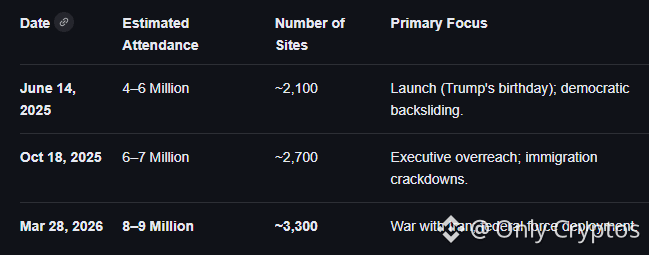
1
63
·
--
Bullish
Crypto market news, updates & binance trending coin in breif in usd for 30 Mar 2026
The global cryptocurrency market cap stands at $2.30T, a slight 0.33% increase over the last 24 hours. Market sentiment remains in the "Extreme Fear" zone (Index: 23), heavily influenced by ongoing geopolitical tensions in the Middle East and the Federal Reserve holding interest rates at 3.50–3.75%.
Market Snapshot (30 Mar 2026)
Major assets saw a modest relief bounce but remain under technical pressure.
Bitcoin (BTC): $67,515 (+1.26%)
Traded in a 24-hour range of $65,000 to $67,946.
Ethereum (ETH): $2,056.54 (+2.71%)
Recently recovered the $2,000 level after five days of ETF outflows.
Binance Coin (BNB): $617.95 (+0.67%)
Solana (SOL): $84.26 (+2.27%)
XRP: $1.355 (+1.37%)
Binance Trending & Top Gainers
Outperformers on Binance for March 30, 2026, include:
D: +36%
NOM: +24%
ONT: +20%
Gravity (G): +23.34%
FTT: +10.04%
Key Updates & New Listings
New Listing: Binance Alpha listed the BASED token, which began trading at approximately $0.115.
New Contracts: Binance Futures launched a USDⓈ-Margined BASEDUSDT perpetual contract with up to 50x leverage.
Upcoming Events: FTX is scheduled to redistribute $2.2 billion to creditors on March 31, 2026.
Institutional Moves: Morgan Stanley revealed a 0.14% fee for its proposed spot Bitcoin ETF, aiming to be the cheapest U.S. offering.
"Place a trade with us via this post mentioned coin's & do support to reach maximum audience by follow, like, comment, share, repost, more such informative content ahead"
$BTC $ETH $BNB #D #ONT #G #BASED #OnlyCryptos
{spot}(SOLUSDT)
{spot}(XRPUSDT)
{spot}(NOMUSDT)
Crypto market news, updates & binance trending coin in breif in usd for 30 Mar 2026
The global cryptocurrency market cap stands at $2.30T, a slight 0.33% increase over the last 24 hours. Market sentiment remains in the "Extreme Fear" zone (Index: 23), heavily influenced by ongoing geopolitical tensions in the Middle East and the Federal Reserve holding interest rates at 3.50–3.75%.
Market Snapshot (30 Mar 2026)
Major assets saw a modest relief bounce but remain under technical pressure.
Bitcoin (BTC): $67,515 (+1.26%)
Traded in a 24-hour range of $65,000 to $67,946.
Ethereum (ETH): $2,056.54 (+2.71%)
Recently recovered the $2,000 level after five days of ETF outflows.
Binance Coin (BNB): $617.95 (+0.67%)
Solana (SOL): $84.26 (+2.27%)
XRP: $1.355 (+1.37%)
Binance Trending & Top Gainers
Outperformers on Binance for March 30, 2026, include:
D: +36%
NOM: +24%
ONT: +20%
Gravity (G): +23.34%
FTT: +10.04%
Key Updates & New Listings
New Listing: Binance Alpha listed the BASED token, which began trading at approximately $0.115.
New Contracts: Binance Futures launched a USDⓈ-Margined BASEDUSDT perpetual contract with up to 50x leverage.
Upcoming Events: FTX is scheduled to redistribute $2.2 billion to creditors on March 31, 2026.
Institutional Moves: Morgan Stanley revealed a 0.14% fee for its proposed spot Bitcoin ETF, aiming to be the cheapest U.S. offering.
"Place a trade with us via this post mentioned coin's & do support to reach maximum audience by follow, like, comment, share, repost, more such informative content ahead"
$BTC $ETH $BNB #D #ONT #G #BASED #OnlyCryptos
The global cryptocurrency market cap stands at $2.30T, a slight 0.33% increase over the last 24 hours. Market sentiment remains in the "Extreme Fear" zone (Index: 23), heavily influenced by ongoing geopolitical tensions in the Middle East and the Federal Reserve holding interest rates at 3.50–3.75%.
Market Snapshot (30 Mar 2026)
Major assets saw a modest relief bounce but remain under technical pressure.
Bitcoin (BTC): $67,515 (+1.26%)
Traded in a 24-hour range of $65,000 to $67,946.
Ethereum (ETH): $2,056.54 (+2.71%)
Recently recovered the $2,000 level after five days of ETF outflows.
Binance Coin (BNB): $617.95 (+0.67%)
Solana (SOL): $84.26 (+2.27%)
XRP: $1.355 (+1.37%)
Binance Trending & Top Gainers
Outperformers on Binance for March 30, 2026, include:
D: +36%
NOM: +24%
ONT: +20%
Gravity (G): +23.34%
FTT: +10.04%
Key Updates & New Listings
New Listing: Binance Alpha listed the BASED token, which began trading at approximately $0.115.
New Contracts: Binance Futures launched a USDⓈ-Margined BASEDUSDT perpetual contract with up to 50x leverage.
Upcoming Events: FTX is scheduled to redistribute $2.2 billion to creditors on March 31, 2026.
Institutional Moves: Morgan Stanley revealed a 0.14% fee for its proposed spot Bitcoin ETF, aiming to be the cheapest U.S. offering.
"Place a trade with us via this post mentioned coin's & do support to reach maximum audience by follow, like, comment, share, repost, more such informative content ahead"
$BTC $ETH $BNB #D #ONT #G #BASED #OnlyCryptos
88
·
--
Bullish
BTC ETF fee race
As of late March 2026, the Bitcoin ETF fee race has reached a new low with Morgan Stanley filing to launch its own spot Bitcoin ETF (MSBT) at a market-leading 0.14% expense ratio. This move significantly undercuts established players like BlackRock and Fidelity, who have maintained fees around 0.25%.
Current Spot Bitcoin ETF Fee Comparison (March 2026)
The following table outlines the current fee landscape for major spot Bitcoin ETFs in the U.S. market:
Key Market Shifts
Bank Entry: Morgan Stanley's MSBT is the first spot Bitcoin ETF issued directly by a major U.S. bank. This leverages their network of 16,000 financial advisors overseeing trillions in assets.
Fee Waivers: Several issuers continue to use temporary waivers to attract initial capital. For example, VanEck's HODL currently has its fee waived entirely for the first $2.5 billion in assets through July 2026.
Distribution Advantage: Analysts suggest the fee race is shifting from "first-to-market" to a battle over distribution and advisor access. Low fees make it easier for wealth managers to justify allocations to clients.
Why Fees Matter Now
As spot Bitcoin ETFs offer nearly identical exposure to the underlying asset, management fees have become the primary differentiator for long-term investors. A difference of even 10 basis points can lead to significant compounding returns over a multi-year horizon.
"Place a trade with us via this post mentioned coin's & do support to reach maximum audience by follow, like, comment, share, repost, more such informative content ahead"
#BTCETFFeeRace #bitcoin #etf #fee #race $BTC
{spot}(BTCUSDT)
{future}(BTCUSDT)
BTC ETF fee race
As of late March 2026, the Bitcoin ETF fee race has reached a new low with Morgan Stanley filing to launch its own spot Bitcoin ETF (MSBT) at a market-leading 0.14% expense ratio. This move significantly undercuts established players like BlackRock and Fidelity, who have maintained fees around 0.25%.
Current Spot Bitcoin ETF Fee Comparison (March 2026)
The following table outlines the current fee landscape for major spot Bitcoin ETFs in the U.S. market:
Key Market Shifts
Bank Entry: Morgan Stanley's MSBT is the first spot Bitcoin ETF issued directly by a major U.S. bank. This leverages their network of 16,000 financial advisors overseeing trillions in assets.
Fee Waivers: Several issuers continue to use temporary waivers to attract initial capital. For example, VanEck's HODL currently has its fee waived entirely for the first $2.5 billion in assets through July 2026.
Distribution Advantage: Analysts suggest the fee race is shifting from "first-to-market" to a battle over distribution and advisor access. Low fees make it easier for wealth managers to justify allocations to clients.
Why Fees Matter Now
As spot Bitcoin ETFs offer nearly identical exposure to the underlying asset, management fees have become the primary differentiator for long-term investors. A difference of even 10 basis points can lead to significant compounding returns over a multi-year horizon.
"Place a trade with us via this post mentioned coin's & do support to reach maximum audience by follow, like, comment, share, repost, more such informative content ahead"
#BTCETFFeeRace #bitcoin #etf #fee #race $BTC
As of late March 2026, the Bitcoin ETF fee race has reached a new low with Morgan Stanley filing to launch its own spot Bitcoin ETF (MSBT) at a market-leading 0.14% expense ratio. This move significantly undercuts established players like BlackRock and Fidelity, who have maintained fees around 0.25%.
Current Spot Bitcoin ETF Fee Comparison (March 2026)
The following table outlines the current fee landscape for major spot Bitcoin ETFs in the U.S. market:
Key Market Shifts
Bank Entry: Morgan Stanley's MSBT is the first spot Bitcoin ETF issued directly by a major U.S. bank. This leverages their network of 16,000 financial advisors overseeing trillions in assets.
Fee Waivers: Several issuers continue to use temporary waivers to attract initial capital. For example, VanEck's HODL currently has its fee waived entirely for the first $2.5 billion in assets through July 2026.
Distribution Advantage: Analysts suggest the fee race is shifting from "first-to-market" to a battle over distribution and advisor access. Low fees make it easier for wealth managers to justify allocations to clients.
Why Fees Matter Now
As spot Bitcoin ETFs offer nearly identical exposure to the underlying asset, management fees have become the primary differentiator for long-term investors. A difference of even 10 basis points can lead to significant compounding returns over a multi-year horizon.
"Place a trade with us via this post mentioned coin's & do support to reach maximum audience by follow, like, comment, share, repost, more such informative content ahead"
#BTCETFFeeRace #bitcoin #etf #fee #race $BTC
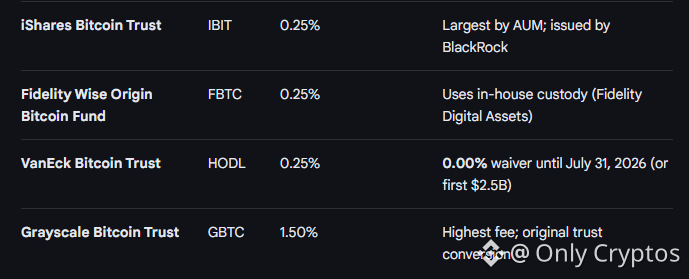
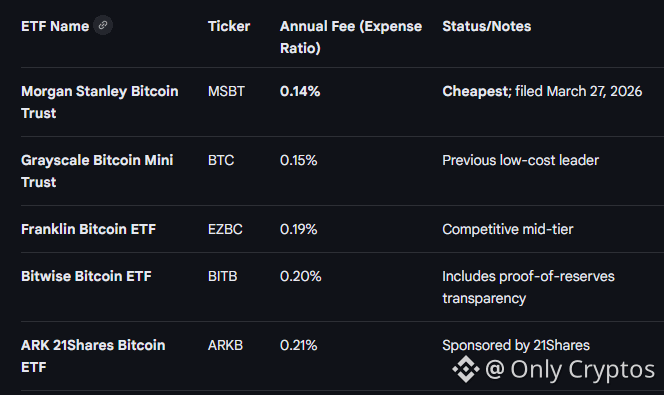
142
·
--
Bullish
Bitcoin prices
The price of Bitcoin (BTC) is approximately $67,717.37 USD as of March 30, 2026.
Current Market Summary
Live Price: ~$67,715 – $67,898 depending on the exchange.
24-Hour Change: Up approximately 1.6% to 2.6%.
Day Range: $64,966 – $68,094.
Market Capitalisation: ~$1.35 Trillion.
24-Hour Trading Volume: ~$32.3 Billion.
Historical Context
All-Time High: $126,272 (reached on October 5, 2025).
52-Week Range: $60,057 – $126,273.
Recent Performance:
1-Week: Down ~1.8%.
1-Month: Up ~1.1%.
1-Year: Down ~18% – 20%.
Recent Market Drivers
Geopolitical Tensions: Prices have been impacted by ongoing conflicts in the Middle East, with traders monitoring threats to energy infrastructure.
Institutional Activity: Major companies like Strategy Inc. (MicroStrategy) and Bitmine Immersion Technologies continue to hold significant reserves.
Regulatory Shifts: Market sentiment is currently influenced by the U.S. "Project Crypto" and anticipated digital asset legislation.
"Place a trade with us via this post mentioned coin's & do support to reach maximum audience by follow, like, comment, share, repost, more such informative content ahead"
#BitcoinPrices #bitcoin #prices $BTC
{spot}(BTCUSDT)
{future}(BTCUSDT)
Bitcoin prices
The price of Bitcoin (BTC) is approximately $67,717.37 USD as of March 30, 2026.
Current Market Summary
Live Price: ~$67,715 – $67,898 depending on the exchange.
24-Hour Change: Up approximately 1.6% to 2.6%.
Day Range: $64,966 – $68,094.
Market Capitalisation: ~$1.35 Trillion.
24-Hour Trading Volume: ~$32.3 Billion.
Historical Context
All-Time High: $126,272 (reached on October 5, 2025).
52-Week Range: $60,057 – $126,273.
Recent Performance:
1-Week: Down ~1.8%.
1-Month: Up ~1.1%.
1-Year: Down ~18% – 20%.
Recent Market Drivers
Geopolitical Tensions: Prices have been impacted by ongoing conflicts in the Middle East, with traders monitoring threats to energy infrastructure.
Institutional Activity: Major companies like Strategy Inc. (MicroStrategy) and Bitmine Immersion Technologies continue to hold significant reserves.
Regulatory Shifts: Market sentiment is currently influenced by the U.S. "Project Crypto" and anticipated digital asset legislation.
"Place a trade with us via this post mentioned coin's & do support to reach maximum audience by follow, like, comment, share, repost, more such informative content ahead"
#BitcoinPrices #bitcoin #prices $BTC
The price of Bitcoin (BTC) is approximately $67,717.37 USD as of March 30, 2026.
Current Market Summary
Live Price: ~$67,715 – $67,898 depending on the exchange.
24-Hour Change: Up approximately 1.6% to 2.6%.
Day Range: $64,966 – $68,094.
Market Capitalisation: ~$1.35 Trillion.
24-Hour Trading Volume: ~$32.3 Billion.
Historical Context
All-Time High: $126,272 (reached on October 5, 2025).
52-Week Range: $60,057 – $126,273.
Recent Performance:
1-Week: Down ~1.8%.
1-Month: Up ~1.1%.
1-Year: Down ~18% – 20%.
Recent Market Drivers
Geopolitical Tensions: Prices have been impacted by ongoing conflicts in the Middle East, with traders monitoring threats to energy infrastructure.
Institutional Activity: Major companies like Strategy Inc. (MicroStrategy) and Bitmine Immersion Technologies continue to hold significant reserves.
Regulatory Shifts: Market sentiment is currently influenced by the U.S. "Project Crypto" and anticipated digital asset legislation.
"Place a trade with us via this post mentioned coin's & do support to reach maximum audience by follow, like, comment, share, repost, more such informative content ahead"
#BitcoinPrices #bitcoin #prices $BTC

1
44
·
--
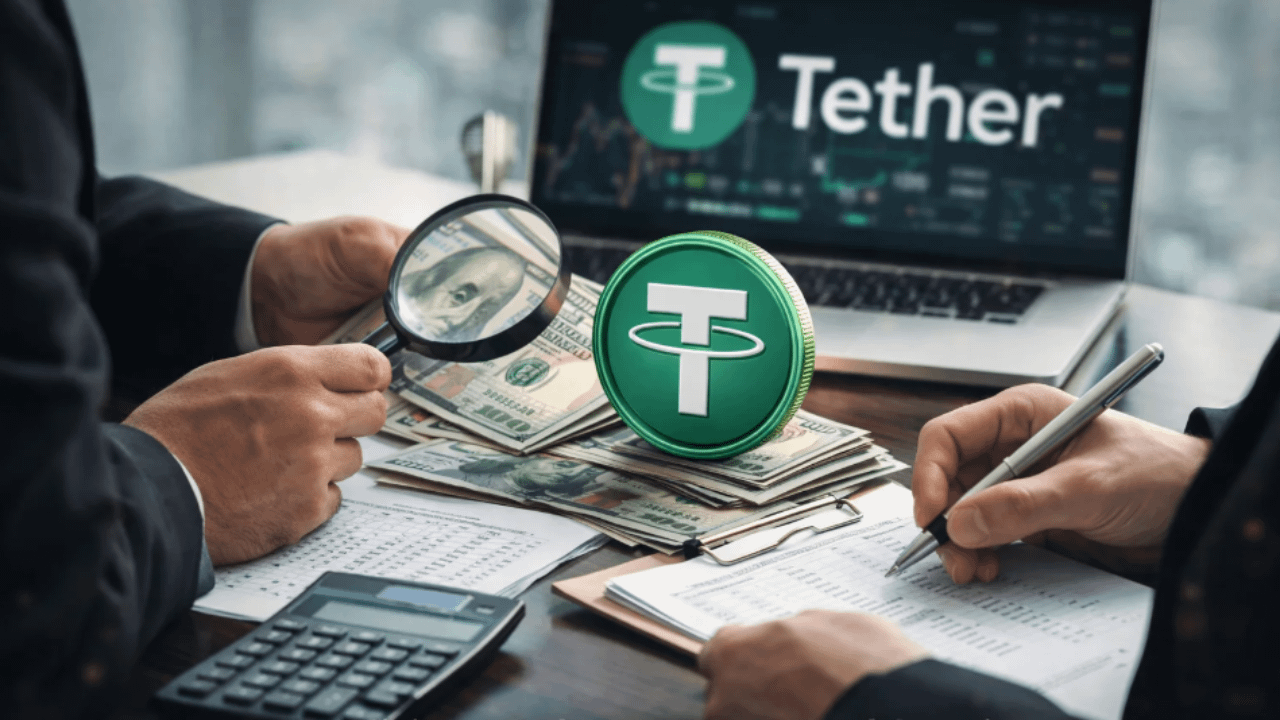
Article
Tether auditAs of March 30, 2026, Tether has officially engaged KPMG to conduct its first-ever comprehensive independent financial statement audit of the reserves backing its USDT stablecoin. This marks a major shift from the "point-in-time" attestations the company has used for years.
2026 Audit Developments
Auditor Selection: After a competitive process, Tether confirmed it has signed a "Big Four" firm, with reports identifying the firm as KPMG.
System Preparation: Tether also hired PwC to help prepare its internal systems and controls ahead of the full review.
Audit Scope: Unlike previous attestations, this full audit will cover assets, liabilities, internal controls, and reporting systems for its approximately $185 billion in USDT reserves.
Timeline: While the process is underway, Tether has not yet committed to a public completion date.
Recent Transparency Reports
Until the full KPMG audit is released, Tether continues to provide transparency via:
Reserve Attestations: Monthly and quarterly snapshots historically performed by BDO Italia.
USAT Attestation: In March 2026, Deloitte issued an independent reserve attestation specifically for Tether’s new U.S.-regulated stablecoin, USAT, confirming it was fully backed as of January 31, 2026.
Daily Updates: Real-time data on tokens in circulation and reserve totals are published on the Tether Transparency Page.
Context of the Shift
The move toward a full audit is driven by:
U.S. Expansion: Tether aims to comply with the GENIUS Act, a federal stablecoin framework signed into law in July 2025.
Fundraising: The company is reportedly seeking to raise $15–20 billion at a $500 billion valuation, an effort that requires institutional-grade audited financials.
Regulatory Pressure: Following past settlements with the NYAG and CFTC, institutional investors have demanded higher standards of verification than the previous "snapshot" attestations provided.
"Place a trade with us via this post mentioned coin's & do support to reach maximum audience by follow, like, comment, share, repost, more such informative content ahead"
#TetherAudit #Tether #Audit #USAT $USDT
{future}(USDCUSDT)
Tether audit
As of March 30, 2026, Tether has officially engaged KPMG to conduct its first-ever comprehensive independent financial statement audit of the reserves backing its USDT stablecoin. This marks a major shift from the "point-in-time" attestations the company has used for years.
2026 Audit Developments
Auditor Selection: After a competitive process, Tether confirmed it has signed a "Big Four" firm, with reports identifying the firm as KPMG.
System Preparation: Tether also hired PwC to help prepare its internal systems and controls ahead of the full review.
Audit Scope: Unlike previous attestations, this full audit will cover assets, liabilities, internal controls, and reporting systems for its approximately $185 billion in USDT reserves.
Timeline: While the process is underway, Tether has not yet committed to a public completion date.
Recent Transparency Reports
Until the full KPMG audit is released, Tether continues to provide transparency via:
Reserve Attestations: Monthly and quarterly snapshots historically performed by BDO Italia.
USAT Attestation: In March 2026, Deloitte issued an independent reserve attestation specifically for Tether’s new U.S.-regulated stablecoin, USAT, confirming it was fully backed as of January 31, 2026.
Daily Updates: Real-time data on tokens in circulation and reserve totals are published on the Tether Transparency Page.
Context of the Shift
The move toward a full audit is driven by:
U.S. Expansion: Tether aims to comply with the GENIUS Act, a federal stablecoin framework signed into law in July 2025.
Fundraising: The company is reportedly seeking to raise $15–20 billion at a $500 billion valuation, an effort that requires institutional-grade audited financials.
Regulatory Pressure: Following past settlements with the NYAG and CFTC, institutional investors have demanded higher standards of verification than the previous "snapshot" attestations provided.
"Place a trade with us via this post mentioned coin's & do support to reach maximum audience by follow, like, comment, share, repost, more such informative content ahead"
#TetherAudit #Tether #Audit #USAT $USDT
2026 Audit Developments
Auditor Selection: After a competitive process, Tether confirmed it has signed a "Big Four" firm, with reports identifying the firm as KPMG.
System Preparation: Tether also hired PwC to help prepare its internal systems and controls ahead of the full review.
Audit Scope: Unlike previous attestations, this full audit will cover assets, liabilities, internal controls, and reporting systems for its approximately $185 billion in USDT reserves.
Timeline: While the process is underway, Tether has not yet committed to a public completion date.
Recent Transparency Reports
Until the full KPMG audit is released, Tether continues to provide transparency via:
Reserve Attestations: Monthly and quarterly snapshots historically performed by BDO Italia.
USAT Attestation: In March 2026, Deloitte issued an independent reserve attestation specifically for Tether’s new U.S.-regulated stablecoin, USAT, confirming it was fully backed as of January 31, 2026.
Daily Updates: Real-time data on tokens in circulation and reserve totals are published on the Tether Transparency Page.
Context of the Shift
The move toward a full audit is driven by:
U.S. Expansion: Tether aims to comply with the GENIUS Act, a federal stablecoin framework signed into law in July 2025.
Fundraising: The company is reportedly seeking to raise $15–20 billion at a $500 billion valuation, an effort that requires institutional-grade audited financials.
Regulatory Pressure: Following past settlements with the NYAG and CFTC, institutional investors have demanded higher standards of verification than the previous "snapshot" attestations provided.
"Place a trade with us via this post mentioned coin's & do support to reach maximum audience by follow, like, comment, share, repost, more such informative content ahead"
#TetherAudit #Tether #Audit #USAT $USDT
74
·
--
Bullish
Latest News
WLD Just Hit an All-Time Low _ How much new supply is about to flood the market, and when?
Morgan Stanley Is About to Shake Up Bitcoin ETFs _ How much of that client money could actually flow into Bitcoin?
Ethereum Is Losing Its Number Two Spot _ What price are analysts watching as the next major target?
BNP Paribas Adds Crypto for Retail _ Why would a retail investor pick an ETN over buying crypto directly?
Ripple CEO Says Stablecoins Are Crypto's ChatGPT Moment _ What's holding it up, and how could it affect XRP?
Source: BinanceNews / Coinmarketcap
"Place a trade with us via this post mentioned coin's & do support to reach maximum audience by follow, like, comment, share, repost, more such informative content ahead"
$WLD $BTC $ETH
{spot}(XRPUSDT)
Latest News
WLD Just Hit an All-Time Low _ How much new supply is about to flood the market, and when?
Morgan Stanley Is About to Shake Up Bitcoin ETFs _ How much of that client money could actually flow into Bitcoin?
Ethereum Is Losing Its Number Two Spot _ What price are analysts watching as the next major target?
BNP Paribas Adds Crypto for Retail _ Why would a retail investor pick an ETN over buying crypto directly?
Ripple CEO Says Stablecoins Are Crypto's ChatGPT Moment _ What's holding it up, and how could it affect XRP?
Source: BinanceNews / Coinmarketcap
"Place a trade with us via this post mentioned coin's & do support to reach maximum audience by follow, like, comment, share, repost, more such informative content ahead"
$WLD $BTC $ETH
WLD Just Hit an All-Time Low _ How much new supply is about to flood the market, and when?
Morgan Stanley Is About to Shake Up Bitcoin ETFs _ How much of that client money could actually flow into Bitcoin?
Ethereum Is Losing Its Number Two Spot _ What price are analysts watching as the next major target?
BNP Paribas Adds Crypto for Retail _ Why would a retail investor pick an ETN over buying crypto directly?
Ripple CEO Says Stablecoins Are Crypto's ChatGPT Moment _ What's holding it up, and how could it affect XRP?
Source: BinanceNews / Coinmarketcap
"Place a trade with us via this post mentioned coin's & do support to reach maximum audience by follow, like, comment, share, repost, more such informative content ahead"
$WLD $BTC $ETH
276
·
--
Bullish
Top stories of the day:
Macro Storm Hits Markets as Fed Signals, Iran Risks, and Crypto Outflows Drive Volatility
Fed Speeches, Jobs Data to Drive Bitcoin and Global Markets in Key Macro Week
S&P 500 Falls 9%, Forms Death Cross as Iran Conflict and NFP Data Weigh on Markets
Crypto Funds See $414M Outflows as Bitcoin, Ethereum ETFs Reverse Amid Fed, Inflation, Iran Risks
Fed Chair Nominee Kevin Warsh Hearing Expected Mid-April Amid Political Pushback
FTX Recovery Trust to Distribute $2.2 Billion to Creditors Amid Economic Reports
Source: #BinanceNews
"Place a trade with us via this post mentioned coin's & do support to reach maximum audience by follow, like, comment, share, repost, more such informative content ahead"
$BTC $ETH $FTT
{future}(BTCUSDT)
{future}(ETHUSDT)
{spot}(FTTUSDT)
Top stories of the day:
Macro Storm Hits Markets as Fed Signals, Iran Risks, and Crypto Outflows Drive Volatility
Fed Speeches, Jobs Data to Drive Bitcoin and Global Markets in Key Macro Week
S&P 500 Falls 9%, Forms Death Cross as Iran Conflict and NFP Data Weigh on Markets
Crypto Funds See $414M Outflows as Bitcoin, Ethereum ETFs Reverse Amid Fed, Inflation, Iran Risks
Fed Chair Nominee Kevin Warsh Hearing Expected Mid-April Amid Political Pushback
FTX Recovery Trust to Distribute $2.2 Billion to Creditors Amid Economic Reports
Source: #BinanceNews
"Place a trade with us via this post mentioned coin's & do support to reach maximum audience by follow, like, comment, share, repost, more such informative content ahead"
$BTC $ETH $FTT
Macro Storm Hits Markets as Fed Signals, Iran Risks, and Crypto Outflows Drive Volatility
Fed Speeches, Jobs Data to Drive Bitcoin and Global Markets in Key Macro Week
S&P 500 Falls 9%, Forms Death Cross as Iran Conflict and NFP Data Weigh on Markets
Crypto Funds See $414M Outflows as Bitcoin, Ethereum ETFs Reverse Amid Fed, Inflation, Iran Risks
Fed Chair Nominee Kevin Warsh Hearing Expected Mid-April Amid Political Pushback
FTX Recovery Trust to Distribute $2.2 Billion to Creditors Amid Economic Reports
Source: #BinanceNews
"Place a trade with us via this post mentioned coin's & do support to reach maximum audience by follow, like, comment, share, repost, more such informative content ahead"
$BTC $ETH $FTT
160
·
--
Bullish
Crypto market news, updates & binance trending coin in breif in usd for 29 Mar 2026
The cryptocurrency market on 29 March 2026 experienced a slight contraction, with the global market cap decreasing by approximately 0.31% to settle at $2.3 trillion. Market sentiment remains cautious, hovering in "Extreme Fear" (index level ~10) as investors weigh geopolitical tensions and upcoming U.S. economic data.
Market Snapshot (29 March 2026)
Bitcoin (BTC): Closed the day at approximately $65,845, down 1.32% in 24 hours after failing to sustain levels above $67,000.
Ethereum (ETH): Traded at $2,000, reflecting a 1.17% decrease.
BNB: Dropped to $599.65, a 2.62% decline over 24 hours.
Solana (SOL): Declined below the $80 mark, trading at $79.99 (-2.56%).
Trending & Top Gaining Coins on Binance
Nomina (NOM): Leading gainer, up 45% to $0.00396.
StakeStone (STO): Surged 45% (reaching $0.149 in early trading).
Ontology (ONT): Increased by 15.52% to $0.0739.
Hemi (HEMI): Up by 16%.
Sentient (SENT): Rose 13.13% to $0.0183.
Key Market Updates
Regulatory Moves: The U.S. Congress introduced the Digital Asset PARITY Act, which proposes extending the 30-day wash-sale rule to digital assets immediately upon enactment.
Institutional Shift: Strategy (MicroStrategy) reportedly paused its 13-week Bitcoin buying streak; its total holdings now stand at 762,099 BTC with an average price of $75,694.
Stablecoin Yields: A new agreement-in-principle for stablecoin yields has drawn mixed reactions from the industry as it moves toward potential Senate markup in April 2026.
Whale Activity: On-chain data indicates significant accumulation by large holders during this consolidation phase, with whales adding roughly 270,000 BTC to their positions recently.
"Place a trade with us via this post mentioned coin's & do support to reach maximum audience by follow, like, comment, share, repost, more such informative content ahead"
$BTC $ETH $BNB #ONT #HEMI #SENT #MSTR #OnlyCryptos
{spot}(SOLUSDT)
{spot}(NOMUSDT)
{spot}(STOUSDT)
Crypto market news, updates & binance trending coin in breif in usd for 29 Mar 2026
The cryptocurrency market on 29 March 2026 experienced a slight contraction, with the global market cap decreasing by approximately 0.31% to settle at $2.3 trillion. Market sentiment remains cautious, hovering in "Extreme Fear" (index level ~10) as investors weigh geopolitical tensions and upcoming U.S. economic data.
Market Snapshot (29 March 2026)
Bitcoin (BTC): Closed the day at approximately $65,845, down 1.32% in 24 hours after failing to sustain levels above $67,000.
Ethereum (ETH): Traded at $2,000, reflecting a 1.17% decrease.
BNB: Dropped to $599.65, a 2.62% decline over 24 hours.
Solana (SOL): Declined below the $80 mark, trading at $79.99 (-2.56%).
Trending & Top Gaining Coins on Binance
Nomina (NOM): Leading gainer, up 45% to $0.00396.
StakeStone (STO): Surged 45% (reaching $0.149 in early trading).
Ontology (ONT): Increased by 15.52% to $0.0739.
Hemi (HEMI): Up by 16%.
Sentient (SENT): Rose 13.13% to $0.0183.
Key Market Updates
Regulatory Moves: The U.S. Congress introduced the Digital Asset PARITY Act, which proposes extending the 30-day wash-sale rule to digital assets immediately upon enactment.
Institutional Shift: Strategy (MicroStrategy) reportedly paused its 13-week Bitcoin buying streak; its total holdings now stand at 762,099 BTC with an average price of $75,694.
Stablecoin Yields: A new agreement-in-principle for stablecoin yields has drawn mixed reactions from the industry as it moves toward potential Senate markup in April 2026.
Whale Activity: On-chain data indicates significant accumulation by large holders during this consolidation phase, with whales adding roughly 270,000 BTC to their positions recently.
"Place a trade with us via this post mentioned coin's & do support to reach maximum audience by follow, like, comment, share, repost, more such informative content ahead"
$BTC $ETH $BNB #ONT #HEMI #SENT #MSTR #OnlyCryptos
The cryptocurrency market on 29 March 2026 experienced a slight contraction, with the global market cap decreasing by approximately 0.31% to settle at $2.3 trillion. Market sentiment remains cautious, hovering in "Extreme Fear" (index level ~10) as investors weigh geopolitical tensions and upcoming U.S. economic data.
Market Snapshot (29 March 2026)
Bitcoin (BTC): Closed the day at approximately $65,845, down 1.32% in 24 hours after failing to sustain levels above $67,000.
Ethereum (ETH): Traded at $2,000, reflecting a 1.17% decrease.
BNB: Dropped to $599.65, a 2.62% decline over 24 hours.
Solana (SOL): Declined below the $80 mark, trading at $79.99 (-2.56%).
Trending & Top Gaining Coins on Binance
Nomina (NOM): Leading gainer, up 45% to $0.00396.
StakeStone (STO): Surged 45% (reaching $0.149 in early trading).
Ontology (ONT): Increased by 15.52% to $0.0739.
Hemi (HEMI): Up by 16%.
Sentient (SENT): Rose 13.13% to $0.0183.
Key Market Updates
Regulatory Moves: The U.S. Congress introduced the Digital Asset PARITY Act, which proposes extending the 30-day wash-sale rule to digital assets immediately upon enactment.
Institutional Shift: Strategy (MicroStrategy) reportedly paused its 13-week Bitcoin buying streak; its total holdings now stand at 762,099 BTC with an average price of $75,694.
Stablecoin Yields: A new agreement-in-principle for stablecoin yields has drawn mixed reactions from the industry as it moves toward potential Senate markup in April 2026.
Whale Activity: On-chain data indicates significant accumulation by large holders during this consolidation phase, with whales adding roughly 270,000 BTC to their positions recently.
"Place a trade with us via this post mentioned coin's & do support to reach maximum audience by follow, like, comment, share, repost, more such informative content ahead"
$BTC $ETH $BNB #ONT #HEMI #SENT #MSTR #OnlyCryptos
1
42
Log in to explore more content
Join global crypto users on Binance Square
⚡️ Get latest and useful information about crypto.
💬 Trusted by the world’s largest crypto exchange.
👍 Discover real insights from verified creators.
Email / Phone number