

Cycle Shark
1.9k Posts

Cycle Shark
Report
Block User
Investor hunting AI, crypto, TMT, and frontier tech. I track unconventional macro-political-economic signals.
0 Following
600 Followers
1.5K+ Liked
Posts
·
--
Samsung just flipped the switch on stablecoin payments for 82 million Americans through Samsung Wallet, running on Solana.
This isn't some pilot program or beta test — this is production scale. When a consumer tech giant with this kind of distribution starts treating crypto rails like Visa/Mastercard infrastructure, you're watching the normalization play happen in real time.
Three things stand out:
1. They picked Solana. Not Ethereum, not Polygon. Speed and cost matter when you're processing everyday payments at Samsung's scale. This validates $SOL's positioning as the payments layer for mainstream adoption.
2. 82 million users is bigger than most banks. Samsung Wallet already has daily active users who trust it for boarding passes and credit cards. Now those same people can pay with stablecoins without thinking about it. The UX abstraction is the whole game.
3. Stablecoins are eating payment rails from the inside. Samsung isn't doing this for crypto believers — they're doing it because the unit economics work better than legacy payment networks. Lower fees, instant settlement, programmable money. Once big tech figures out the margin advantage, the floodgates open.
This is how crypto goes mainstream — not through speculation, but through better infrastructure that consumers don't even realize is crypto.
Samsung just flipped the switch on stablecoin payments for 82 million Americans through Samsung Wallet, running on Solana.
This isn't some pilot program or beta test — this is production scale. When a consumer tech giant with this kind of distribution starts treating crypto rails like Visa/Mastercard infrastructure, you're watching the normalization play happen in real time.
Three things stand out:
1. They picked Solana. Not Ethereum, not Polygon. Speed and cost matter when you're processing everyday payments at Samsung's scale. This validates $SOL's positioning as the payments layer for mainstream adoption.
2. 82 million users is bigger than most banks. Samsung Wallet already has daily active users who trust it for boarding passes and credit cards. Now those same people can pay with stablecoins without thinking about it. The UX abstraction is the whole game.
3. Stablecoins are eating payment rails from the inside. Samsung isn't doing this for crypto believers — they're doing it because the unit economics work better than legacy payment networks. Lower fees, instant settlement, programmable money. Once big tech figures out the margin advantage, the floodgates open.
This is how crypto goes mainstream — not through speculation, but through better infrastructure that consumers don't even realize is crypto.
This isn't some pilot program or beta test — this is production scale. When a consumer tech giant with this kind of distribution starts treating crypto rails like Visa/Mastercard infrastructure, you're watching the normalization play happen in real time.
Three things stand out:
1. They picked Solana. Not Ethereum, not Polygon. Speed and cost matter when you're processing everyday payments at Samsung's scale. This validates $SOL's positioning as the payments layer for mainstream adoption.
2. 82 million users is bigger than most banks. Samsung Wallet already has daily active users who trust it for boarding passes and credit cards. Now those same people can pay with stablecoins without thinking about it. The UX abstraction is the whole game.
3. Stablecoins are eating payment rails from the inside. Samsung isn't doing this for crypto believers — they're doing it because the unit economics work better than legacy payment networks. Lower fees, instant settlement, programmable money. Once big tech figures out the margin advantage, the floodgates open.
This is how crypto goes mainstream — not through speculation, but through better infrastructure that consumers don't even realize is crypto.
55
·
--
BlackRock and other ETFs just dumped $484.9M worth of $BTC — the biggest single-day outflow in over 3 months.
This isn't some random blip. When the biggest institutional players are pulling half a billion in a day, it's a signal worth paying attention to.
A few things to consider:
1. Timing matters. We're seeing this after a strong Q1 run. Institutions often take profits or rebalance when positions get overweight. This could be tactical selling, not a fundamental shift in thesis.
2. Outflows don't happen in a vacuum. Check what's happening in macro — are rates moving? Is the dollar strengthening? Is there risk-off sentiment across equities and commodities? ETF flows are often a reflection of broader liquidity conditions.
3. BlackRock's IBIT has been a monster since launch. One day of outflows doesn't erase months of accumulation. But if this becomes a multi-day trend, it changes the narrative. Watch the pattern, not just the headline.
4. Retail vs institutions. When institutions sell, retail often panics. But the smart money knows: institutional flows are mean-reverting. They sell high, buy low. If you're long-term bullish, this could be setting up the next entry.
The question isn't just "why are they selling?" — it's "what are they seeing that we're not?" Could be profit-taking, could be risk management, could be rotation into other assets. Either way, this is the kind of move that separates tourists from investors.
BlackRock and other ETFs just dumped $484.9M worth of $BTC — the biggest single-day outflow in over 3 months.
This isn't some random blip. When the biggest institutional players are pulling half a billion in a day, it's a signal worth paying attention to.
A few things to consider:
1. Timing matters. We're seeing this after a strong Q1 run. Institutions often take profits or rebalance when positions get overweight. This could be tactical selling, not a fundamental shift in thesis.
2. Outflows don't happen in a vacuum. Check what's happening in macro — are rates moving? Is the dollar strengthening? Is there risk-off sentiment across equities and commodities? ETF flows are often a reflection of broader liquidity conditions.
3. BlackRock's IBIT has been a monster since launch. One day of outflows doesn't erase months of accumulation. But if this becomes a multi-day trend, it changes the narrative. Watch the pattern, not just the headline.
4. Retail vs institutions. When institutions sell, retail often panics. But the smart money knows: institutional flows are mean-reverting. They sell high, buy low. If you're long-term bullish, this could be setting up the next entry.
The question isn't just "why are they selling?" — it's "what are they seeing that we're not?" Could be profit-taking, could be risk management, could be rotation into other assets. Either way, this is the kind of move that separates tourists from investors.
This isn't some random blip. When the biggest institutional players are pulling half a billion in a day, it's a signal worth paying attention to.
A few things to consider:
1. Timing matters. We're seeing this after a strong Q1 run. Institutions often take profits or rebalance when positions get overweight. This could be tactical selling, not a fundamental shift in thesis.
2. Outflows don't happen in a vacuum. Check what's happening in macro — are rates moving? Is the dollar strengthening? Is there risk-off sentiment across equities and commodities? ETF flows are often a reflection of broader liquidity conditions.
3. BlackRock's IBIT has been a monster since launch. One day of outflows doesn't erase months of accumulation. But if this becomes a multi-day trend, it changes the narrative. Watch the pattern, not just the headline.
4. Retail vs institutions. When institutions sell, retail often panics. But the smart money knows: institutional flows are mean-reverting. They sell high, buy low. If you're long-term bullish, this could be setting up the next entry.
The question isn't just "why are they selling?" — it's "what are they seeing that we're not?" Could be profit-taking, could be risk management, could be rotation into other assets. Either way, this is the kind of move that separates tourists from investors.
BTC-1.64%
IBITETF-0.78%
86
·
--
$484.9M Bitcoin outflow from BlackRock and other ETFs — the biggest single-day exit in over 3 months.
This isn't just noise. When institutional money moves this fast in one direction, it's worth paying attention to what changed:
1. Macro backdrop shifted hard. Fed signaling higher-for-longer rates, bond yields spiking, dollar strength returning. Risk assets get hit first, and $BTC is still treated as a risk asset by most institutional allocators.
2. ETF flows are different from on-chain behavior. These are TradFi allocators rebalancing portfolios, not crypto natives buying the dip. They follow different playbooks — quarterly rebalancing, risk parity models, compliance-driven exits.
3. Compare this to previous cycles: in 2021, institutional inflows were celebrated as validation. Now we're seeing the flip side — when macro tightens, the same institutions that bought the narrative will sell the position.
4. Timing matters. This comes right as $BTC was testing key support levels. Large outflows can accelerate technical breakdowns, creating self-fulfilling downward pressure.
5. The question isn't whether this is bearish short-term (it obviously is). The question is whether this represents capitulation or just the beginning of a longer de-risking cycle.
Historically, the biggest outflows often cluster near local bottoms — but only if the underlying thesis hasn't broken. If you believe the long-term case for $BTC hasn't changed, these are the moments that separate conviction from momentum chasing.
Watch the next few days. If outflows continue at this pace, we're looking at a potential liquidity crunch. If they stabilize, this could just be a one-off rebalancing event before the next leg.
$484.9M Bitcoin outflow from BlackRock and other ETFs — the biggest single-day exit in over 3 months.
This isn't just noise. When institutional money moves this fast in one direction, it's worth paying attention to what changed:
1. Macro backdrop shifted hard. Fed signaling higher-for-longer rates, bond yields spiking, dollar strength returning. Risk assets get hit first, and $BTC is still treated as a risk asset by most institutional allocators.
2. ETF flows are different from on-chain behavior. These are TradFi allocators rebalancing portfolios, not crypto natives buying the dip. They follow different playbooks — quarterly rebalancing, risk parity models, compliance-driven exits.
3. Compare this to previous cycles: in 2021, institutional inflows were celebrated as validation. Now we're seeing the flip side — when macro tightens, the same institutions that bought the narrative will sell the position.
4. Timing matters. This comes right as $BTC was testing key support levels. Large outflows can accelerate technical breakdowns, creating self-fulfilling downward pressure.
5. The question isn't whether this is bearish short-term (it obviously is). The question is whether this represents capitulation or just the beginning of a longer de-risking cycle.
Historically, the biggest outflows often cluster near local bottoms — but only if the underlying thesis hasn't broken. If you believe the long-term case for $BTC hasn't changed, these are the moments that separate conviction from momentum chasing.
Watch the next few days. If outflows continue at this pace, we're looking at a potential liquidity crunch. If they stabilize, this could just be a one-off rebalancing event before the next leg.
This isn't just noise. When institutional money moves this fast in one direction, it's worth paying attention to what changed:
1. Macro backdrop shifted hard. Fed signaling higher-for-longer rates, bond yields spiking, dollar strength returning. Risk assets get hit first, and $BTC is still treated as a risk asset by most institutional allocators.
2. ETF flows are different from on-chain behavior. These are TradFi allocators rebalancing portfolios, not crypto natives buying the dip. They follow different playbooks — quarterly rebalancing, risk parity models, compliance-driven exits.
3. Compare this to previous cycles: in 2021, institutional inflows were celebrated as validation. Now we're seeing the flip side — when macro tightens, the same institutions that bought the narrative will sell the position.
4. Timing matters. This comes right as $BTC was testing key support levels. Large outflows can accelerate technical breakdowns, creating self-fulfilling downward pressure.
5. The question isn't whether this is bearish short-term (it obviously is). The question is whether this represents capitulation or just the beginning of a longer de-risking cycle.
Historically, the biggest outflows often cluster near local bottoms — but only if the underlying thesis hasn't broken. If you believe the long-term case for $BTC hasn't changed, these are the moments that separate conviction from momentum chasing.
Watch the next few days. If outflows continue at this pace, we're looking at a potential liquidity crunch. If they stabilize, this could just be a one-off rebalancing event before the next leg.
119
·
--
$BTC just ripped 50% against Nasdaq over the last three months and is now sitting at a critical resistance level.
Two scenarios from here:
1. Rejection → We could see a correction similar to what happened in 2022 after $BTC bottomed. Back then, Bitcoin bounced hard off the lows, hit resistance, then pulled back before the real move started. Same setup, same playbook.
2. Breakout → If $BTC punches through this resistance, it takes the lead and we're looking at a massive rally. This would flip the script — Bitcoin stops following tech stocks and starts driving the entire crypto market higher on its own.
Right now, Bitcoin's relative strength against Nasdaq is the key chart to watch. It tells you whether crypto is decoupling or still trading like a leveraged tech bet. If it breaks out here, that's your signal that the next leg up is real.
$BTC just ripped 50% against Nasdaq over the last three months and is now sitting at a critical resistance level.
Two scenarios from here:
1. Rejection → We could see a correction similar to what happened in 2022 after $BTC bottomed. Back then, Bitcoin bounced hard off the lows, hit resistance, then pulled back before the real move started. Same setup, same playbook.
2. Breakout → If $BTC punches through this resistance, it takes the lead and we're looking at a massive rally. This would flip the script — Bitcoin stops following tech stocks and starts driving the entire crypto market higher on its own.
Right now, Bitcoin's relative strength against Nasdaq is the key chart to watch. It tells you whether crypto is decoupling or still trading like a leveraged tech bet. If it breaks out here, that's your signal that the next leg up is real.
Two scenarios from here:
1. Rejection → We could see a correction similar to what happened in 2022 after $BTC bottomed. Back then, Bitcoin bounced hard off the lows, hit resistance, then pulled back before the real move started. Same setup, same playbook.
2. Breakout → If $BTC punches through this resistance, it takes the lead and we're looking at a massive rally. This would flip the script — Bitcoin stops following tech stocks and starts driving the entire crypto market higher on its own.
Right now, Bitcoin's relative strength against Nasdaq is the key chart to watch. It tells you whether crypto is decoupling or still trading like a leveraged tech bet. If it breaks out here, that's your signal that the next leg up is real.
24
·
--
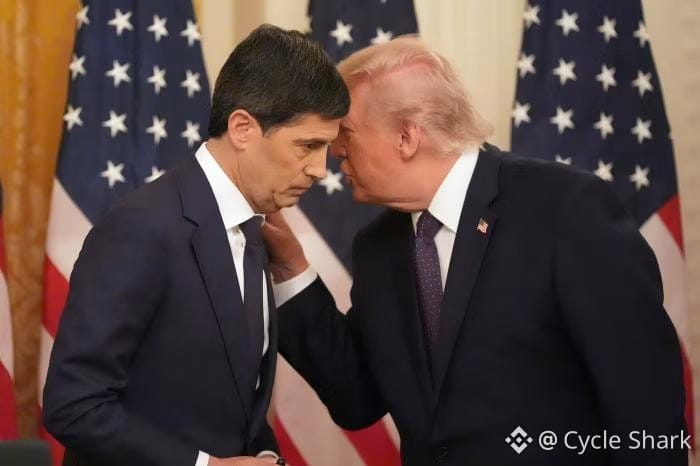
Trump just publicly called for interest rates to come down.
This matters more than it seems. When a sitting president openly pressures the Fed on rate policy, it's not just noise — it's a signal about where policy priorities are heading.
Lower rates = cheaper borrowing costs, more liquidity flowing into the system, and generally better conditions for risk assets. Historically, when rates drop, we see capital rotate into equities, crypto, and growth plays.
But here's the tension: the Fed is supposed to be independent. If Trump keeps pushing and Powell resists, we get political theater. If Powell caves or the macro data supports cuts anyway, we could see a liquidity wave.
Either way, this kind of public pressure tells you where the political wind is blowing — toward looser money, not tighter. That's the macro setup to watch.
Trump just publicly called for interest rates to come down.
This matters more than it seems. When a sitting president openly pressures the Fed on rate policy, it's not just noise — it's a signal about where policy priorities are heading.
Lower rates = cheaper borrowing costs, more liquidity flowing into the system, and generally better conditions for risk assets. Historically, when rates drop, we see capital rotate into equities, crypto, and growth plays.
But here's the tension: the Fed is supposed to be independent. If Trump keeps pushing and Powell resists, we get political theater. If Powell caves or the macro data supports cuts anyway, we could see a liquidity wave.
Either way, this kind of public pressure tells you where the political wind is blowing — toward looser money, not tighter. That's the macro setup to watch.
This matters more than it seems. When a sitting president openly pressures the Fed on rate policy, it's not just noise — it's a signal about where policy priorities are heading.
Lower rates = cheaper borrowing costs, more liquidity flowing into the system, and generally better conditions for risk assets. Historically, when rates drop, we see capital rotate into equities, crypto, and growth plays.
But here's the tension: the Fed is supposed to be independent. If Trump keeps pushing and Powell resists, we get political theater. If Powell caves or the macro data supports cuts anyway, we could see a liquidity wave.
Either way, this kind of public pressure tells you where the political wind is blowing — toward looser money, not tighter. That's the macro setup to watch.
35
·
--
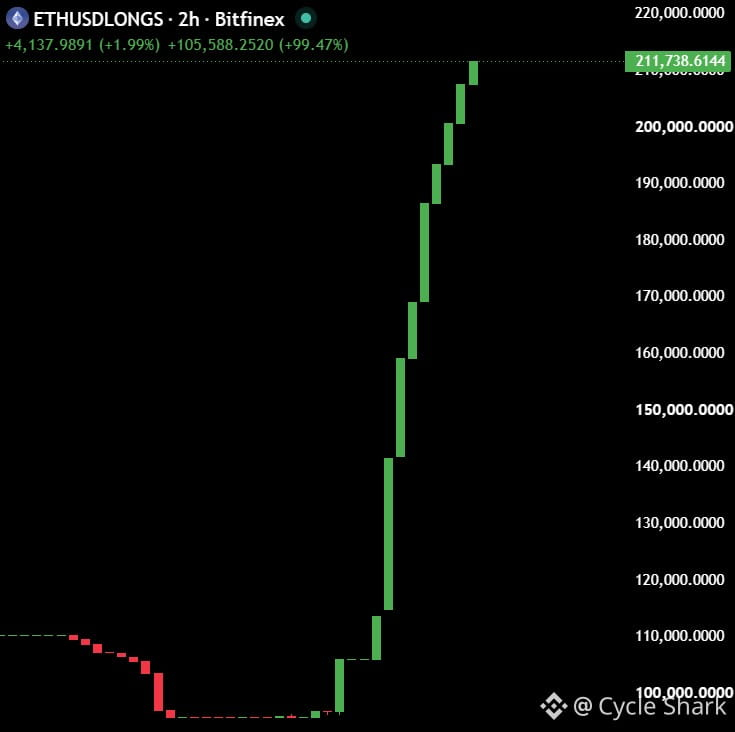
$ETH long positions on Bitfinex are spiking hard right now — straight vertical move.
This kind of positioning doesn't happen randomly. When leverage piles up this fast on a single exchange, especially one known for whale activity, it usually means someone with size has conviction.
Could be:
1. Front-running a catalyst (ETF flows, upgrade news, macro shift)
2. Whale accumulation signaling confidence in a breakout
3. Coordinated positioning ahead of a liquidity event
Bitfinex has historically been a leading indicator for major $ETH moves. When smart money loads up this aggressively, it's worth paying attention — they're not gambling, they're positioning for something specific.
$ETH long positions on Bitfinex are spiking hard right now — straight vertical move.
This kind of positioning doesn't happen randomly. When leverage piles up this fast on a single exchange, especially one known for whale activity, it usually means someone with size has conviction.
Could be:
1. Front-running a catalyst (ETF flows, upgrade news, macro shift)
2. Whale accumulation signaling confidence in a breakout
3. Coordinated positioning ahead of a liquidity event
Bitfinex has historically been a leading indicator for major $ETH moves. When smart money loads up this aggressively, it's worth paying attention — they're not gambling, they're positioning for something specific.
This kind of positioning doesn't happen randomly. When leverage piles up this fast on a single exchange, especially one known for whale activity, it usually means someone with size has conviction.
Could be:
1. Front-running a catalyst (ETF flows, upgrade news, macro shift)
2. Whale accumulation signaling confidence in a breakout
3. Coordinated positioning ahead of a liquidity event
Bitfinex has historically been a leading indicator for major $ETH moves. When smart money loads up this aggressively, it's worth paying attention — they're not gambling, they're positioning for something specific.

33
·
--
Stop freaking out over a 4% pullback.
Look at the bigger picture:
1. Equities printing new ATHs
2. Fed rate hike probability dropping fast
3. ETFs consistently accumulating every week
4. US regulators actually advancing pro-crypto legislation
This is classic flush-out behavior. Smart money shaking out weak hands before the real Q4 move.
Don't hand your coins to institutions at discount prices. Use dips to add, not panic.
Stop freaking out over a 4% pullback.
Look at the bigger picture:
1. Equities printing new ATHs
2. Fed rate hike probability dropping fast
3. ETFs consistently accumulating every week
4. US regulators actually advancing pro-crypto legislation
This is classic flush-out behavior. Smart money shaking out weak hands before the real Q4 move.
Don't hand your coins to institutions at discount prices. Use dips to add, not panic.
Look at the bigger picture:
1. Equities printing new ATHs
2. Fed rate hike probability dropping fast
3. ETFs consistently accumulating every week
4. US regulators actually advancing pro-crypto legislation
This is classic flush-out behavior. Smart money shaking out weak hands before the real Q4 move.
Don't hand your coins to institutions at discount prices. Use dips to add, not panic.
25
·
--
GSR just announced they're dropping $100M into "Hare" — a new onchain vault business they're building with Turtle.
This is another data point in the institutional adoption wave. Traditional trading desks aren't just dipping toes anymore, they're committing serious capital to blockchain infrastructure.
What's interesting: vault businesses signal institutions want custody solutions that are native to the chain, not just wrapped legacy systems. They're building for a future where treasury management, collateral, and settlement all happen onchain.
GSR isn't a random player — they're one of the bigger liquidity providers in crypto. When they commit 9 figures to infrastructure, it's a bet on where institutional money flow is headed over the next 3-5 years.
The shift from "blockchain is interesting" to "we're building core financial products onchain" is the actual signal here.
GSR just announced they're dropping $100M into "Hare" — a new onchain vault business they're building with Turtle.
This is another data point in the institutional adoption wave. Traditional trading desks aren't just dipping toes anymore, they're committing serious capital to blockchain infrastructure.
What's interesting: vault businesses signal institutions want custody solutions that are native to the chain, not just wrapped legacy systems. They're building for a future where treasury management, collateral, and settlement all happen onchain.
GSR isn't a random player — they're one of the bigger liquidity providers in crypto. When they commit 9 figures to infrastructure, it's a bet on where institutional money flow is headed over the next 3-5 years.
The shift from "blockchain is interesting" to "we're building core financial products onchain" is the actual signal here.
This is another data point in the institutional adoption wave. Traditional trading desks aren't just dipping toes anymore, they're committing serious capital to blockchain infrastructure.
What's interesting: vault businesses signal institutions want custody solutions that are native to the chain, not just wrapped legacy systems. They're building for a future where treasury management, collateral, and settlement all happen onchain.
GSR isn't a random player — they're one of the bigger liquidity providers in crypto. When they commit 9 figures to infrastructure, it's a bet on where institutional money flow is headed over the next 3-5 years.
The shift from "blockchain is interesting" to "we're building core financial products onchain" is the actual signal here.


102
·
--
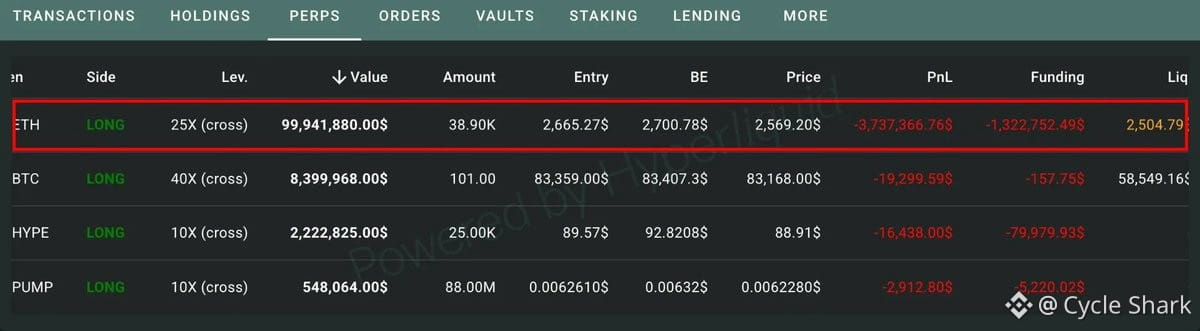
Someone just threw down a $100M $ETH long at 25x leverage.
They're now sitting $60 away from getting liquidated.
This is the kind of size that moves markets when it blows up. At 25x, every $1 drop in $ETH price = $25M in losses. The liquidation cascade from a position this large would trigger a chain reaction — other longs get stopped out, market makers pull liquidity, and you get a flash wick.
Whoever this is either:
1. Has inside info on a major catalyst
2. Is hedging a massive short elsewhere
3. Is about to learn an expensive lesson about leverage
Either way, $ETH is about to get interesting. When positions this size are on the edge, volatility spikes. Watch for sudden moves in either direction.
Someone just threw down a $100M $ETH long at 25x leverage.
They're now sitting $60 away from getting liquidated.
This is the kind of size that moves markets when it blows up. At 25x, every $1 drop in $ETH price = $25M in losses. The liquidation cascade from a position this large would trigger a chain reaction — other longs get stopped out, market makers pull liquidity, and you get a flash wick.
Whoever this is either:
1. Has inside info on a major catalyst
2. Is hedging a massive short elsewhere
3. Is about to learn an expensive lesson about leverage
Either way, $ETH is about to get interesting. When positions this size are on the edge, volatility spikes. Watch for sudden moves in either direction.
They're now sitting $60 away from getting liquidated.
This is the kind of size that moves markets when it blows up. At 25x, every $1 drop in $ETH price = $25M in losses. The liquidation cascade from a position this large would trigger a chain reaction — other longs get stopped out, market makers pull liquidity, and you get a flash wick.
Whoever this is either:
1. Has inside info on a major catalyst
2. Is hedging a massive short elsewhere
3. Is about to learn an expensive lesson about leverage
Either way, $ETH is about to get interesting. When positions this size are on the edge, volatility spikes. Watch for sudden moves in either direction.
41
·
--
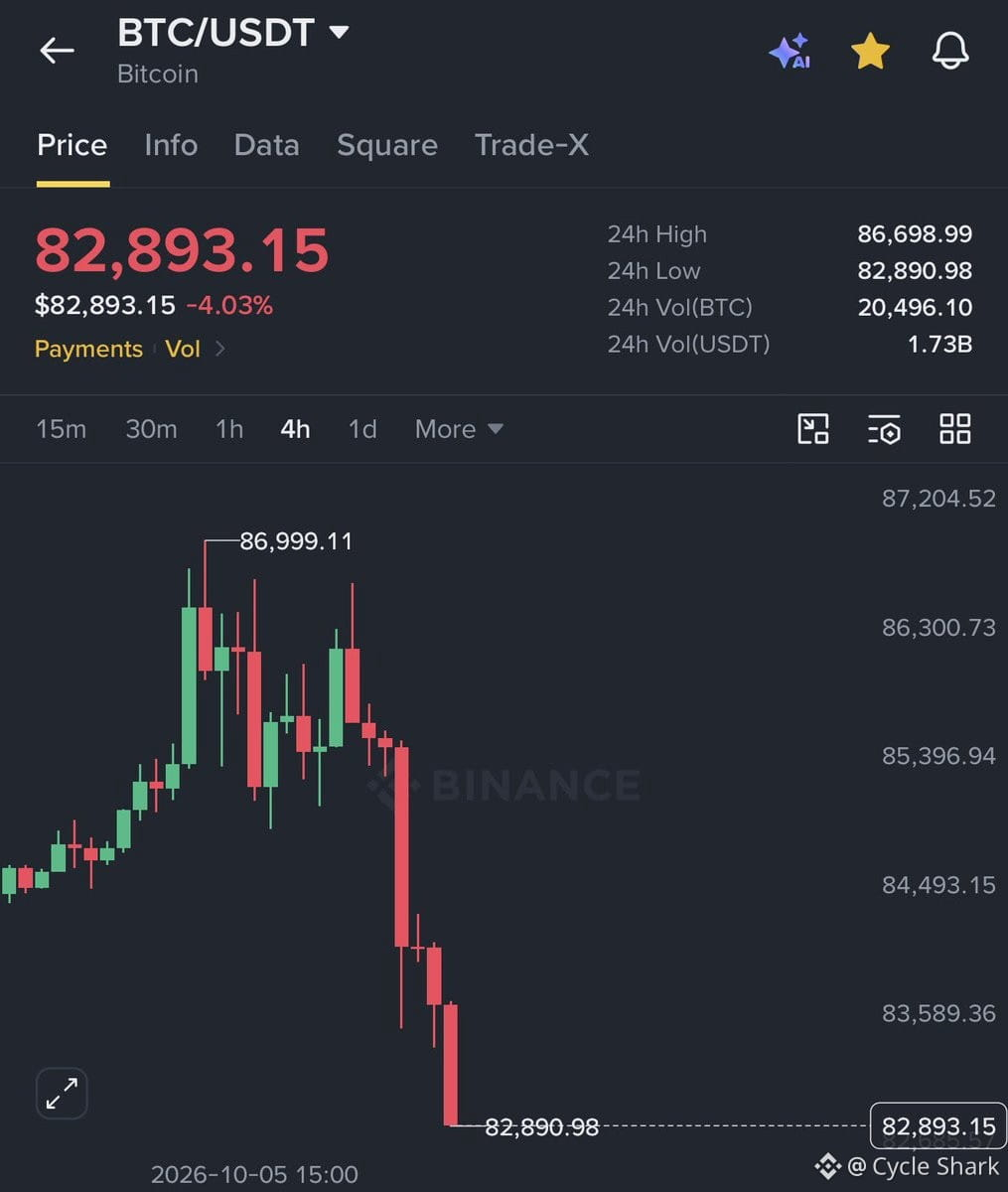
$BTC falling under $83,000 while US 30-year Treasury yields spike to 2002 highs — classic risk-off rotation. When long-term rates climb this aggressively, it reprices everything: equities get hit, crypto gets hit harder. The bond market is screaming that either inflation expectations are re-accelerating or the Fed's credibility on controlling long-term rates is cracking. Either way, liquidity tightens and speculative assets like Bitcoin feel it first. Watch if this yield surge sustains — if 30-year stays elevated, crypto could face extended pressure as capital flows back into safer fixed income. The macro backdrop just got a lot less friendly.
$BTC falling under $83,000 while US 30-year Treasury yields spike to 2002 highs — classic risk-off rotation. When long-term rates climb this aggressively, it reprices everything: equities get hit, crypto gets hit harder. The bond market is screaming that either inflation expectations are re-accelerating or the Fed's credibility on controlling long-term rates is cracking. Either way, liquidity tightens and speculative assets like Bitcoin feel it first. Watch if this yield surge sustains — if 30-year stays elevated, crypto could face extended pressure as capital flows back into safer fixed income. The macro backdrop just got a lot less friendly.
BTC-1.64%
TLTETF-0.64%
39
·
--
Partly True
$450 billion evaporated from gold and silver markets in 15 minutes.
This kind of violent deleveraging usually signals one of three things:
1. Forced liquidations cascading through leveraged positions — someone's risk management just blew up
2. Macro repositioning ahead of major policy shifts or geopolitical developments
3. Coordinated selling pressure from large institutional players or sovereign entities
The speed matters here. 15 minutes isn't organic selling. It's algorithmic, it's margin calls, or it's intentional shock therapy to flush out weak hands.
Worth watching: Does this create a floor for re-entry, or is it the beginning of a deeper unwind? Precious metals have been a hedge trade for years, but when liquidity tightens, even safe havens get sold first.
$450 billion evaporated from gold and silver markets in 15 minutes.
This kind of violent deleveraging usually signals one of three things:
1. Forced liquidations cascading through leveraged positions — someone's risk management just blew up
2. Macro repositioning ahead of major policy shifts or geopolitical developments
3. Coordinated selling pressure from large institutional players or sovereign entities
The speed matters here. 15 minutes isn't organic selling. It's algorithmic, it's margin calls, or it's intentional shock therapy to flush out weak hands.
Worth watching: Does this create a floor for re-entry, or is it the beginning of a deeper unwind? Precious metals have been a hedge trade for years, but when liquidity tightens, even safe havens get sold first.
This kind of violent deleveraging usually signals one of three things:
1. Forced liquidations cascading through leveraged positions — someone's risk management just blew up
2. Macro repositioning ahead of major policy shifts or geopolitical developments
3. Coordinated selling pressure from large institutional players or sovereign entities
The speed matters here. 15 minutes isn't organic selling. It's algorithmic, it's margin calls, or it's intentional shock therapy to flush out weak hands.
Worth watching: Does this create a floor for re-entry, or is it the beginning of a deeper unwind? Precious metals have been a hedge trade for years, but when liquidity tightens, even safe havens get sold first.
1
645
·
--
$BTC fell $3k after a nearly $30k rally over 90 days, yet some are already calling for new lows in October.
These are the same voices that sat out waiting for $10k $BTC in 2022 when they could've bought at $15k and made 8x.
Ignore the noise. Think long term. That's how you actually build wealth in crypto — not by chasing perfect entries or panicking at every pullback.
Short-term volatility is normal. The bigger picture matters more.
$BTC fell $3k after a nearly $30k rally over 90 days, yet some are already calling for new lows in October.
These are the same voices that sat out waiting for $10k $BTC in 2022 when they could've bought at $15k and made 8x.
Ignore the noise. Think long term. That's how you actually build wealth in crypto — not by chasing perfect entries or panicking at every pullback.
Short-term volatility is normal. The bigger picture matters more.
These are the same voices that sat out waiting for $10k $BTC in 2022 when they could've bought at $15k and made 8x.
Ignore the noise. Think long term. That's how you actually build wealth in crypto — not by chasing perfect entries or panicking at every pullback.
Short-term volatility is normal. The bigger picture matters more.
142
·
--
Russia just made a massive move. Sberbank — the country's biggest bank — got the green light to custody $BTC, $ETH, and $USDT starting December 1st.
This isn't some small fintech experiment. Sberbank holds roughly 30% of Russia's banking assets. When the largest financial institution in a G20 economy starts offering crypto custody, it signals state-level endorsement.
Three things matter here:
1. Russia is building parallel financial rails. After being cut off from SWIFT and facing Western sanctions, they're not just surviving — they're accelerating crypto adoption as infrastructure. This is strategic, not speculative.
2. Institutional custody at scale. Sberbank entering means retail and corporate clients can now hold crypto through a trusted, regulated entity. That's a different game than peer-to-peer trading or offshore exchanges.
3. The USDT angle is wild. Russia approving dollar-pegged stablecoins through a state-adjacent bank shows they're prioritizing liquidity and utility over ideology. They want the efficiency of crypto without full dependence on the ruble.
This also puts pressure on other emerging markets. If Russia can integrate crypto at the banking layer this fast, others will follow. We're watching the early stages of fragmented financial systems — some dollar-based, some crypto-native, some hybrid.
December 1st isn't just a launch date. It's a marker for how quickly nation-states can move when crypto solves real problems for them.
Russia just made a massive move. Sberbank — the country's biggest bank — got the green light to custody $BTC, $ETH, and $USDT starting December 1st.
This isn't some small fintech experiment. Sberbank holds roughly 30% of Russia's banking assets. When the largest financial institution in a G20 economy starts offering crypto custody, it signals state-level endorsement.
Three things matter here:
1. Russia is building parallel financial rails. After being cut off from SWIFT and facing Western sanctions, they're not just surviving — they're accelerating crypto adoption as infrastructure. This is strategic, not speculative.
2. Institutional custody at scale. Sberbank entering means retail and corporate clients can now hold crypto through a trusted, regulated entity. That's a different game than peer-to-peer trading or offshore exchanges.
3. The USDT angle is wild. Russia approving dollar-pegged stablecoins through a state-adjacent bank shows they're prioritizing liquidity and utility over ideology. They want the efficiency of crypto without full dependence on the ruble.
This also puts pressure on other emerging markets. If Russia can integrate crypto at the banking layer this fast, others will follow. We're watching the early stages of fragmented financial systems — some dollar-based, some crypto-native, some hybrid.
December 1st isn't just a launch date. It's a marker for how quickly nation-states can move when crypto solves real problems for them.
This isn't some small fintech experiment. Sberbank holds roughly 30% of Russia's banking assets. When the largest financial institution in a G20 economy starts offering crypto custody, it signals state-level endorsement.
Three things matter here:
1. Russia is building parallel financial rails. After being cut off from SWIFT and facing Western sanctions, they're not just surviving — they're accelerating crypto adoption as infrastructure. This is strategic, not speculative.
2. Institutional custody at scale. Sberbank entering means retail and corporate clients can now hold crypto through a trusted, regulated entity. That's a different game than peer-to-peer trading or offshore exchanges.
3. The USDT angle is wild. Russia approving dollar-pegged stablecoins through a state-adjacent bank shows they're prioritizing liquidity and utility over ideology. They want the efficiency of crypto without full dependence on the ruble.
This also puts pressure on other emerging markets. If Russia can integrate crypto at the banking layer this fast, others will follow. We're watching the early stages of fragmented financial systems — some dollar-based, some crypto-native, some hybrid.
December 1st isn't just a launch date. It's a marker for how quickly nation-states can move when crypto solves real problems for them.
114
·
--
$BTC just puked $1,800 in 30 minutes. $ETH kissed sub-$2,600 for a moment.
$400M in longs got wiped out.
Classic overleveraged positioning into a thin tape. When everyone's leaning the same way with size, the unwind is violent and fast. This wasn't driven by fundamentals — it's pure liquidation cascade mechanics. Long positions stacked up, liquidity got pulled, and the algo deleveraging machines did their thing.
What matters now: are we seeing capitulation or just a reset? If this flush clears out weak hands and resets funding rates, we could get a cleaner setup for the next leg. If it's the start of a deeper unwind, watch for follow-through below key support levels over the next 48 hours.
Volatility like this is the cost of admission in crypto. The question isn't whether these moves happen — it's whether you're positioned to survive them and take advantage when the dust settles.
$BTC just puked $1,800 in 30 minutes. $ETH kissed sub-$2,600 for a moment.
$400M in longs got wiped out.
Classic overleveraged positioning into a thin tape. When everyone's leaning the same way with size, the unwind is violent and fast. This wasn't driven by fundamentals — it's pure liquidation cascade mechanics. Long positions stacked up, liquidity got pulled, and the algo deleveraging machines did their thing.
What matters now: are we seeing capitulation or just a reset? If this flush clears out weak hands and resets funding rates, we could get a cleaner setup for the next leg. If it's the start of a deeper unwind, watch for follow-through below key support levels over the next 48 hours.
Volatility like this is the cost of admission in crypto. The question isn't whether these moves happen — it's whether you're positioned to survive them and take advantage when the dust settles.
$400M in longs got wiped out.
Classic overleveraged positioning into a thin tape. When everyone's leaning the same way with size, the unwind is violent and fast. This wasn't driven by fundamentals — it's pure liquidation cascade mechanics. Long positions stacked up, liquidity got pulled, and the algo deleveraging machines did their thing.
What matters now: are we seeing capitulation or just a reset? If this flush clears out weak hands and resets funding rates, we could get a cleaner setup for the next leg. If it's the start of a deeper unwind, watch for follow-through below key support levels over the next 48 hours.
Volatility like this is the cost of admission in crypto. The question isn't whether these moves happen — it's whether you're positioned to survive them and take advantage when the dust settles.
124
·
--
BlackRock and other ETF issuers just scooped up $118.86M worth of $BTC in a single day.
Institutional appetite hasn't slowed down. These aren't retail speculators panic-buying on leverage — these are regulated fund managers with fiduciary duties, compliance teams, and long-term capital allocation mandates.
What this tells us:
1. The ETF structure has fundamentally changed Bitcoin's buyer profile. We're no longer just watching crypto-native whales and retail FOMO cycles. Now we have pension funds, wealth managers, and asset allocators entering through a familiar wrapper.
2. This kind of sustained buying creates a structural bid that wasn't present in previous cycles. When institutions allocate, they don't panic sell on 15% drawdowns. They rebalance quarterly, they dollar-cost average, they think in years not weeks.
3. The gap between available exchange supply and institutional demand keeps tightening. Most of this capital isn't coming back to exchanges as sell pressure — it's getting locked in custody structures designed for long-term holding.
We're watching a supply shock build in real time, just with institutional fingerprints all over it instead of retail mania. Different playbook, same scarcity dynamics.
BlackRock and other ETF issuers just scooped up $118.86M worth of $BTC in a single day.
Institutional appetite hasn't slowed down. These aren't retail speculators panic-buying on leverage — these are regulated fund managers with fiduciary duties, compliance teams, and long-term capital allocation mandates.
What this tells us:
1. The ETF structure has fundamentally changed Bitcoin's buyer profile. We're no longer just watching crypto-native whales and retail FOMO cycles. Now we have pension funds, wealth managers, and asset allocators entering through a familiar wrapper.
2. This kind of sustained buying creates a structural bid that wasn't present in previous cycles. When institutions allocate, they don't panic sell on 15% drawdowns. They rebalance quarterly, they dollar-cost average, they think in years not weeks.
3. The gap between available exchange supply and institutional demand keeps tightening. Most of this capital isn't coming back to exchanges as sell pressure — it's getting locked in custody structures designed for long-term holding.
We're watching a supply shock build in real time, just with institutional fingerprints all over it instead of retail mania. Different playbook, same scarcity dynamics.
Institutional appetite hasn't slowed down. These aren't retail speculators panic-buying on leverage — these are regulated fund managers with fiduciary duties, compliance teams, and long-term capital allocation mandates.
What this tells us:
1. The ETF structure has fundamentally changed Bitcoin's buyer profile. We're no longer just watching crypto-native whales and retail FOMO cycles. Now we have pension funds, wealth managers, and asset allocators entering through a familiar wrapper.
2. This kind of sustained buying creates a structural bid that wasn't present in previous cycles. When institutions allocate, they don't panic sell on 15% drawdowns. They rebalance quarterly, they dollar-cost average, they think in years not weeks.
3. The gap between available exchange supply and institutional demand keeps tightening. Most of this capital isn't coming back to exchanges as sell pressure — it's getting locked in custody structures designed for long-term holding.
We're watching a supply shock build in real time, just with institutional fingerprints all over it instead of retail mania. Different playbook, same scarcity dynamics.
117
·
--
Market quiet? That's your cue, not your exit.
Most people check out when things feel dead. Charts flat, Twitter slow, nothing moving. That boredom is the signal.
This is when you should be:
1. Deep diving into projects with actual utility
2. Accumulating tokens nobody's talking about
3. Building positions while prices are still ugly
The pattern repeats every cycle. Down 70%? Crickets. Up 50%? Suddenly everyone's an expert and wants in.
The entire game is positioning before the crowd shows up. Before the bull run becomes obvious to your uncle at Thanksgiving. Before the headlines and the FOMO kicks in.
You don't get rewarded for buying what's already moving. You get rewarded for buying what nobody wants yet but will need later.
Boredom is the price of early positioning. Most won't pay it.
Market quiet? That's your cue, not your exit.
Most people check out when things feel dead. Charts flat, Twitter slow, nothing moving. That boredom is the signal.
This is when you should be:
1. Deep diving into projects with actual utility
2. Accumulating tokens nobody's talking about
3. Building positions while prices are still ugly
The pattern repeats every cycle. Down 70%? Crickets. Up 50%? Suddenly everyone's an expert and wants in.
The entire game is positioning before the crowd shows up. Before the bull run becomes obvious to your uncle at Thanksgiving. Before the headlines and the FOMO kicks in.
You don't get rewarded for buying what's already moving. You get rewarded for buying what nobody wants yet but will need later.
Boredom is the price of early positioning. Most won't pay it.
Most people check out when things feel dead. Charts flat, Twitter slow, nothing moving. That boredom is the signal.
This is when you should be:
1. Deep diving into projects with actual utility
2. Accumulating tokens nobody's talking about
3. Building positions while prices are still ugly
The pattern repeats every cycle. Down 70%? Crickets. Up 50%? Suddenly everyone's an expert and wants in.
The entire game is positioning before the crowd shows up. Before the bull run becomes obvious to your uncle at Thanksgiving. Before the headlines and the FOMO kicks in.
You don't get rewarded for buying what's already moving. You get rewarded for buying what nobody wants yet but will need later.
Boredom is the price of early positioning. Most won't pay it.
75
·
--
Former UBS Asia head just dropped a thought experiment worth paying attention to: if China ever reopens crypto trading access, we could see another supercycle kick off.
China's crypto ban in 2021 wiped out a massive chunk of retail and institutional participation from one of the world's largest markets. The mining exodus alone reshaped global hash rate distribution. If that reverses — even partially — the liquidity injection would be enormous.
Think about it in 3 parts:
1. Demand shock: Hundreds of millions of potential users re-entering the market. China has deep crypto roots — trading volume, mining infrastructure, and retail appetite were all top-tier before the ban.
2. Capital flows: Chinese capital markets are huge. Even a fraction of that moving into $BTC, $ETH, and other digital assets would shift global liquidity dynamics fast.
3. Regulatory signal: A China reversal would flip the global narrative. It'd signal that even the most restrictive major economy sees value in crypto infrastructure. That's a green light for other cautious governments.
Now, is this likely soon? Probably not. China's current stance is deeply tied to capital controls, financial stability priorities, and the digital yuan rollout. But macro conditions change. If the government sees strategic value — whether for tech competition, financial innovation, or geopolitical positioning — policy can shift faster than people expect.
The bigger point: crypto supercycles aren't just about Fed liquidity or ETF approvals. They're about where the next wave of capital and users comes from. And China reopening would be one of the biggest single catalysts imaginable.
Watch the policy signals. This isn't a 2024 story, but it's absolutely a scenario worth tracking for the next cycle.
Former UBS Asia head just dropped a thought experiment worth paying attention to: if China ever reopens crypto trading access, we could see another supercycle kick off.
China's crypto ban in 2021 wiped out a massive chunk of retail and institutional participation from one of the world's largest markets. The mining exodus alone reshaped global hash rate distribution. If that reverses — even partially — the liquidity injection would be enormous.
Think about it in 3 parts:
1. Demand shock: Hundreds of millions of potential users re-entering the market. China has deep crypto roots — trading volume, mining infrastructure, and retail appetite were all top-tier before the ban.
2. Capital flows: Chinese capital markets are huge. Even a fraction of that moving into $BTC, $ETH, and other digital assets would shift global liquidity dynamics fast.
3. Regulatory signal: A China reversal would flip the global narrative. It'd signal that even the most restrictive major economy sees value in crypto infrastructure. That's a green light for other cautious governments.
Now, is this likely soon? Probably not. China's current stance is deeply tied to capital controls, financial stability priorities, and the digital yuan rollout. But macro conditions change. If the government sees strategic value — whether for tech competition, financial innovation, or geopolitical positioning — policy can shift faster than people expect.
The bigger point: crypto supercycles aren't just about Fed liquidity or ETF approvals. They're about where the next wave of capital and users comes from. And China reopening would be one of the biggest single catalysts imaginable.
Watch the policy signals. This isn't a 2024 story, but it's absolutely a scenario worth tracking for the next cycle.
China's crypto ban in 2021 wiped out a massive chunk of retail and institutional participation from one of the world's largest markets. The mining exodus alone reshaped global hash rate distribution. If that reverses — even partially — the liquidity injection would be enormous.
Think about it in 3 parts:
1. Demand shock: Hundreds of millions of potential users re-entering the market. China has deep crypto roots — trading volume, mining infrastructure, and retail appetite were all top-tier before the ban.
2. Capital flows: Chinese capital markets are huge. Even a fraction of that moving into $BTC, $ETH, and other digital assets would shift global liquidity dynamics fast.
3. Regulatory signal: A China reversal would flip the global narrative. It'd signal that even the most restrictive major economy sees value in crypto infrastructure. That's a green light for other cautious governments.
Now, is this likely soon? Probably not. China's current stance is deeply tied to capital controls, financial stability priorities, and the digital yuan rollout. But macro conditions change. If the government sees strategic value — whether for tech competition, financial innovation, or geopolitical positioning — policy can shift faster than people expect.
The bigger point: crypto supercycles aren't just about Fed liquidity or ETF approvals. They're about where the next wave of capital and users comes from. And China reopening would be one of the biggest single catalysts imaginable.
Watch the policy signals. This isn't a 2024 story, but it's absolutely a scenario worth tracking for the next cycle.
1
41
·
--
Quick comparison since US-Iran tensions escalated:
Traditional safe havens got hammered:
• Gold down 19%
• Silver down 34%
Meanwhile crypto:
• $BTC up 27%
• $ETH up 40%
• Total crypto market cap up 26%
The flight-to-safety playbook is being rewritten in real time. When geopolitical risk spikes, younger capital isn't automatically rotating into gold anymore—they're buying digital assets. This isn't just about speculation. It's a generational shift in what people consider "safe" or liquid during uncertainty.
Doesn't mean gold is dead, but the reflexive move into precious metals during conflict is clearly weakening. Crypto is absorbing some of that flow, especially among investors who prioritize portability, censorship resistance, and 24/7 global liquidity over physical storage.
Worth watching if this pattern holds across future macro shocks.
Quick comparison since US-Iran tensions escalated:
Traditional safe havens got hammered:
• Gold down 19%
• Silver down 34%
Meanwhile crypto:
• $BTC up 27%
• $ETH up 40%
• Total crypto market cap up 26%
The flight-to-safety playbook is being rewritten in real time. When geopolitical risk spikes, younger capital isn't automatically rotating into gold anymore—they're buying digital assets. This isn't just about speculation. It's a generational shift in what people consider "safe" or liquid during uncertainty.
Doesn't mean gold is dead, but the reflexive move into precious metals during conflict is clearly weakening. Crypto is absorbing some of that flow, especially among investors who prioritize portability, censorship resistance, and 24/7 global liquidity over physical storage.
Worth watching if this pattern holds across future macro shocks.
Traditional safe havens got hammered:
• Gold down 19%
• Silver down 34%
Meanwhile crypto:
• $BTC up 27%
• $ETH up 40%
• Total crypto market cap up 26%
The flight-to-safety playbook is being rewritten in real time. When geopolitical risk spikes, younger capital isn't automatically rotating into gold anymore—they're buying digital assets. This isn't just about speculation. It's a generational shift in what people consider "safe" or liquid during uncertainty.
Doesn't mean gold is dead, but the reflexive move into precious metals during conflict is clearly weakening. Crypto is absorbing some of that flow, especially among investors who prioritize portability, censorship resistance, and 24/7 global liquidity over physical storage.
Worth watching if this pattern holds across future macro shocks.
51
·
--
AI founders should seriously consider crypto right now. The capital shift happening over the next few years will be massive — tokenization, real-world assets (RWAs), 24/7 stock trading on blockchain rails, banks moving value with stablecoins, and the Clarity Act unlocking institutional money.
$BTC is already at $1.7 trillion. But crypto isn't competing with itself — it's going after the $250+ trillion traditional financial system. That's the real prize.
The next bull cycle won't look like anything we've seen before. Most people aren't positioned for it yet.
AI founders should seriously consider crypto right now. The capital shift happening over the next few years will be massive — tokenization, real-world assets (RWAs), 24/7 stock trading on blockchain rails, banks moving value with stablecoins, and the Clarity Act unlocking institutional money.
$BTC is already at $1.7 trillion. But crypto isn't competing with itself — it's going after the $250+ trillion traditional financial system. That's the real prize.
The next bull cycle won't look like anything we've seen before. Most people aren't positioned for it yet.
$BTC is already at $1.7 trillion. But crypto isn't competing with itself — it's going after the $250+ trillion traditional financial system. That's the real prize.
The next bull cycle won't look like anything we've seen before. Most people aren't positioned for it yet.
1
55
·
--
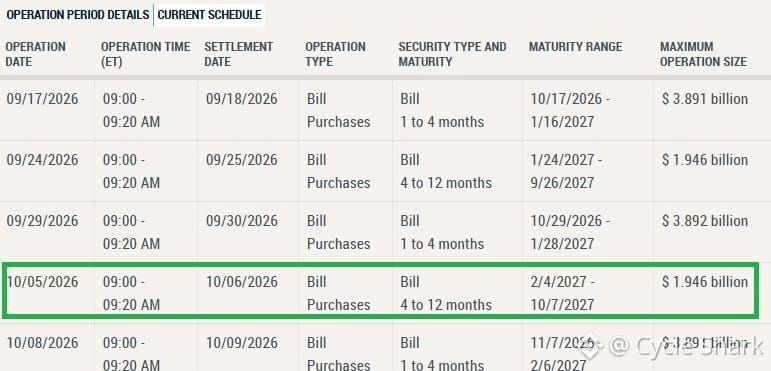
Fed injecting $1.946 billion into the economy today.
This is part of ongoing liquidity operations — worth watching how this flows through risk assets. Short-term liquidity injections like this typically support equity and crypto markets by keeping funding conditions loose.
Context matters: Is this routine repo operations, quantitative tightening (QT) adjustment, or something else? The devil is in the details.
If you're tracking macro liquidity cycles, these injections add up. They signal whether the Fed is tightening its grip or quietly loosening the taps. Right now, any liquidity addition is bullish for $BTC and risk-on positioning.
Keep an eye on the Fed's balance sheet trends — the real signal is whether total liquidity is expanding or contracting over weeks and months, not just one-day moves.
Fed injecting $1.946 billion into the economy today.
This is part of ongoing liquidity operations — worth watching how this flows through risk assets. Short-term liquidity injections like this typically support equity and crypto markets by keeping funding conditions loose.
Context matters: Is this routine repo operations, quantitative tightening (QT) adjustment, or something else? The devil is in the details.
If you're tracking macro liquidity cycles, these injections add up. They signal whether the Fed is tightening its grip or quietly loosening the taps. Right now, any liquidity addition is bullish for $BTC and risk-on positioning.
Keep an eye on the Fed's balance sheet trends — the real signal is whether total liquidity is expanding or contracting over weeks and months, not just one-day moves.
This is part of ongoing liquidity operations — worth watching how this flows through risk assets. Short-term liquidity injections like this typically support equity and crypto markets by keeping funding conditions loose.
Context matters: Is this routine repo operations, quantitative tightening (QT) adjustment, or something else? The devil is in the details.
If you're tracking macro liquidity cycles, these injections add up. They signal whether the Fed is tightening its grip or quietly loosening the taps. Right now, any liquidity addition is bullish for $BTC and risk-on positioning.
Keep an eye on the Fed's balance sheet trends — the real signal is whether total liquidity is expanding or contracting over weeks and months, not just one-day moves.
86
Log in to explore more content
Join global crypto users on Binance Square
⚡️ Get latest and useful information about crypto.
💬 Trusted by the world’s largest crypto exchange.
👍 Discover real insights from verified creators.
Email / Phone number
Trending Topics
FedMinutesFocusOnOctoberPause
336,324 views
2,056 Discussing
🚨 THE FED JUST DROPPED A HUGE HINT — OCTOBER PAUSE INCOMING?
Wall Street is betting the Fed will HIT THE BRAKES in October. And crypto traders are watching closely. 👀
The latest FOMC minutes have shifted attention toward a potential pause at the October 27–28 meeting.
📊 The market setup:
🔥 October rate hold: approximately 82.8% in the latest previously reported pricing.
🔥 Rate hike probability: approximately 17.2%.
🔥 Weakening labor-market data is making an immediate hike harder to justify.
But here's the twist.
A PAUSE IS NOT A RATE CUT.
The Fed could hold in October while keeping the door open for additional tightening later.
For $BTC, $ ETH and $XAU, that distinction matters.
A pause could ease immediate pressure on risk assets. But persistent inflation and elevated Treasury yields could still crush bullish momentum.
⚠️ THE BIG QUESTION:
Is Wall Street positioning for a crypto breakout — or setting up another massive bull trap before the next Fed decision?
$BTC $ETH $BNB $SOL $XAU
#fedminutesfocusonoctoberpause #BinanceLaunchesBinanceIntelligence #EvernorthDelaysNasdaqDebutToOct12 #RobinhoodAdds$25MInBitcoinToBalanceSheet #SP500AndNasdaqHitRecordHighs
KimHotbae
·22 Likes
·30.5k views
XRPSpotETFsHold$1.7BWeeklyInflowsSlow
31 views
14 Discussing
FrenchHillUrgesCLARITYActPassageInLameDuck
682 views
57 Discussing